CHACRDIGEST
AUTHOR: Professor Andrew Stewart, Head of Conflict Research

In Europe, military rearmament in Germany and the UK is hindered by a persistent focus on legacy platforms over modern technologies, contrasting sharply with Poland’s successful structural rebalancing. Concurrently, the protracted conflict in Ukraine is experiencing a major battlefield inflection; the Ukrainian Armed Forces appear to be actively breaking the positional deadlock by leveraging advanced AI-enabled strike drones and deep logistics interdiction. Facing these tactical setbacks and severe operational shortages, the Kremlin is pre-emptively drafting propaganda to frame a potential peace settlement as a victory, while at the same time utilising the war to finalise its transition into an entrenched authoritarian state. It is doing this whilst also, and despite the performative ‘no-limits’ partnership, facing an historic geopolitical inversion in its relations with China; isolated by Western sanctions, Moscow has reverted to an unequal, severely subordinate dependency on Beijing. Meanwhile, in the United States, discussions continue about its recent military interventions and the limitations these appear to highlight, specifically a tradition of deploying overwhelming tactical force without setting clear, achievable political objectives or definitive exit strategies. Within the Middle East, post-conflict restructuring is taking place despite the absence of any firm evidence of long-term conflict resolution. Lebanon’s internal power dynamics are shifting as Hezbollah’s influence drastically wanes, enabling a US-backed, technocratic government to pursue fragile but unprecedented stability talks. For the Arab Gulf states, aggressive attempts are being made to replenish their depleted air defences, though global supply-chain bottlenecks are forcing them to adopt lowercost, local alternatives. Finally, concerns continue to grow about future technologies as current AI safety protocols possess a dangerous, unsolved vulnerability regarding the cumulative trajectory of autonomous systems.
EUROPE
The Kiel Institute has published a report analysing military procurement trends in Germany, the United Kingdom and Poland from 2020 to early 2026. Following Russia’s invasion of Ukraine, all three nations significantly increased defence spending. In 2025 alone, Germany ordered €85 billion in military equipment, while the UK and Poland ordered roughly €26 billion each. Despite this financial surge, the report evaluates whether these nations are adapting to modern warfare realities or merely buying legacy systems. A central theme is the tension between massive spending and lagging innovation. The war in Ukraine highlighted a shift toward a ‘new paradigm’ of warfare involving autonomous drones, artificial intelligence and networked air defence. However, an analysis of 736 procurement orders reveals that all three nations allocate broadly the same share – around 11-12 per cent – to these disruptive technologies. The vast majority of budgets remain tied up in established, platform-centric conventional systems like tanks, traditional artillery and manned aircraft. While aggregate numbers look similar, the report also uncovers sharply diverging national priorities over time. Germany exhibits the slowest transformation; despite having the largest budget, its proportional spending on new-paradigm technologies has plummeted from 22 per cent in 2020-2021 to just nine per cent in 2024-2026. The UK has doubled its absolute spending on modern tech, but because conventional spending grew just as fast, its overall innovation share stagnated. In contrast, Poland has executed a genuine structural rebalancing, surging its new-paradigm procurement share from two to 16 per cent, reflecting a proactive doctrinal shift and new military formations. Another key theme is the persistence of fragmented European defence markets. Across Germany, the UK and Poland, there is a pronounced ‘home bias’ toward domestic suppliers and localised foreign partnerships. Genuinely pan-European cross-border procurement remains virtually non-existent, which points to heavily
The views expressed in this Digest are not those of the British Army or UK Government. This document cannot be reproduced or used in part or whole without the permission of the CHACR. chacr.org.uk
fragmented industrial bases rather than a coordinated European rearmament effort. Finally, the report highlights systemic issues with delivery speed. Average delivery times across these nations typically range between two and four years. More concerningly, Germany faces a growing transparency crisis: currently, about 70 per cent of its procurement orders are placed without any publicly reported final delivery date, a trend that is not seen in the UK or Poland.
There is growing speculation about an apparently worsening Russian domestic situation, more than four years after President Vladimir Putin launched his all-out attack on Ukraine. Reuters reported his May Day comments that he could see the conflict with Ukraine approaching its end and his apparent willingness to negotiate new European security arrangements. At the same time, Novaya Gazeta Europe reported the Kremlin is drafting propaganda to frame a potential peace deal as a ‘victory’. This is seen as a response to the mounting economic risks created by a move to a full wartime footing, specifically the continuing resource depletion and the potential dangers that could come from general mobilisation. The plan promotes territorial gains and a “land corridor to Crimea” as key achievements which deliver successful protection of Donbas and other Russian occupied territory. As the report notes, there is a major challenge silencing radical ‘Z-bloggers’ and ultra-patriots who may seek to present this as a narrative of defeat. This links with the arguments made by Anna Varfolomeeva, writing for War on the Rocks, who suggests Russia is no longer fighting to win, but instead using a prolonged stalemate as a mechanism for regime survival. Despite sustaining approximately 1.3 million casualties for minimal territorial gains, the Russian military persists in a state of “circular lying”, where commanders fabricate successes to satisfy leadership while masking severe manpower and operational shortages. While Novaya Gazeta Europe noted promises of a “controlled thaw” in social life for ordinary Russians, Varfolomeeva argues the Kremlin instead appears to be preparing for domestic authoritarian consolidation. Because the ongoing war provides a convenient justification for immense economic sacrifices and severe domestic repression, the state has rapidly expanded the Federal Security Service’s powers, granting it control over digital infrastructure and new detention facilities. This, it is suggested, is designed to manage the inevitable political crisis that will occur when the war’s justification expires and hundreds of thousands of combat-experienced, aggrieved veterans return home. She concludes that the war has, ultimately, become a necessary “time-buying mechanism” to complete Russia’s shift into an entrenched authoritarian state.
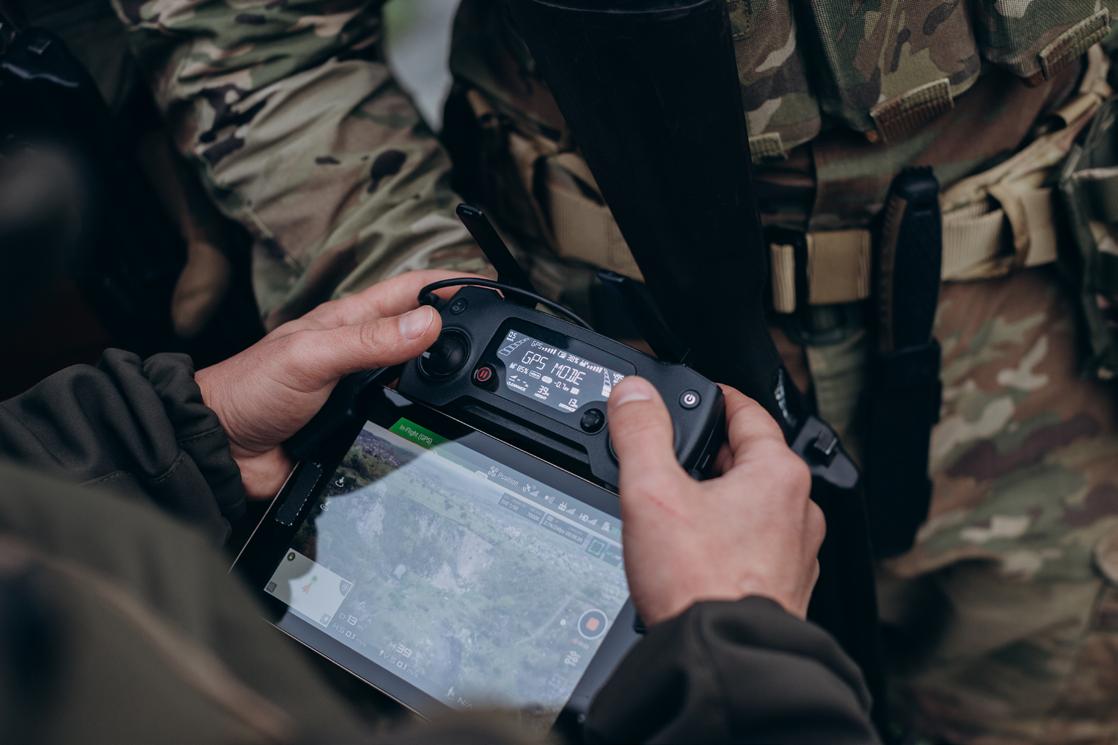
This interest coincides with growing suggestions that the course of the conflict is changing. The Institute for the Study of War, which continues to provide detailed daily explanation and analysis of events, has recently argued that Ukraine is now actively breaking the positional deadlock that has characterised the war. By early 2026, Russia’s daily rate of advance has fallen to less than half of 2025 levels, while its casualty rates have consistently outpaced monthly military recruitment. Consequently, for the first time since 2023, Ukraine is beginning to regain more territory than it is losing. It is explained that a major indicator of this shift is Ukraine’s reintroduction of limited tactical mechanised manoeuvres within the highly contested drone ‘kill zone’ and, operating armoured vehicles in these previously impenetrable areas, demonstrates the development of methods to temporarily suppress Russian drone defences and tactical reconnaissance strike complexes. The writers argue that this “battlefield inflection” is in fact driven by a combination of maturing operational art and technological innovation. The transition to a corps system and theatre-wide adoption


THE AMERICAS
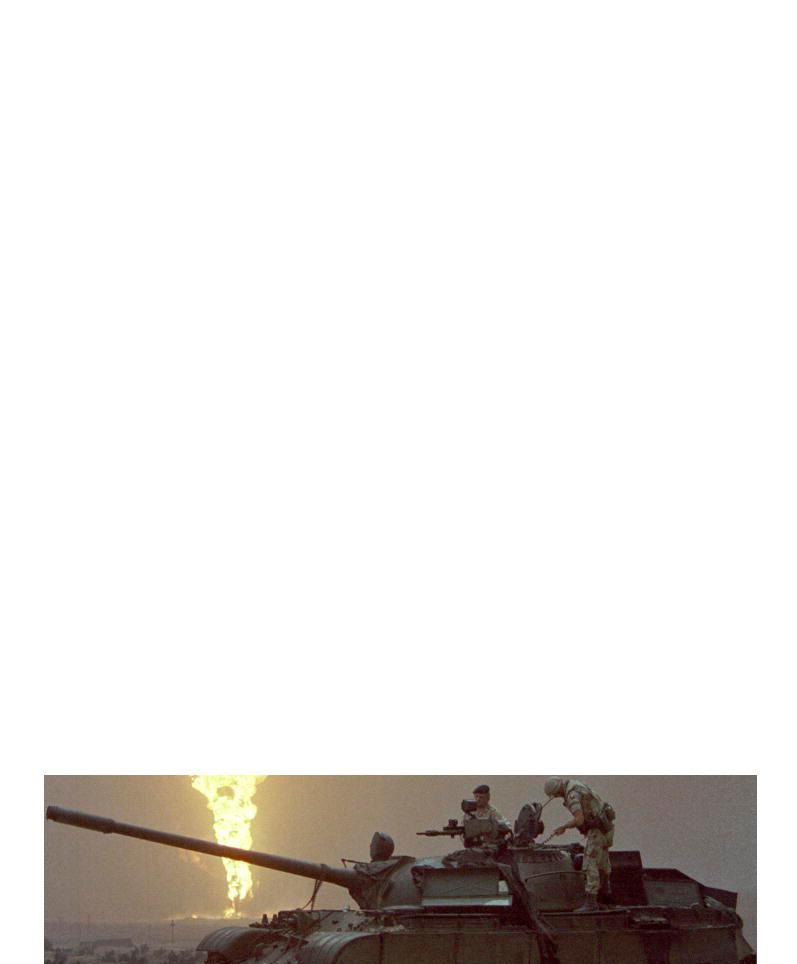
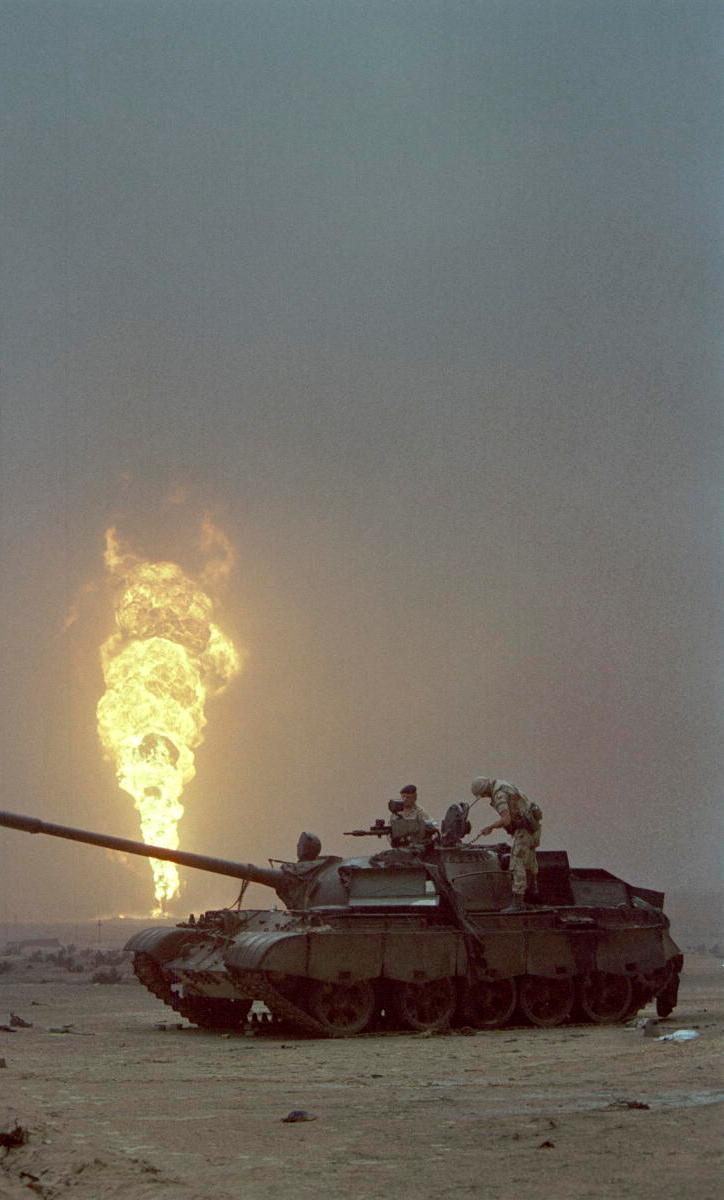
Having previously been a senior fellow at the Brookings Institute, for four years Ivo Daalder served as US Permanent Representative on the NATO Council before returning to academic research. These credentials make him well qualified to comment on the current state of the country’s military. Writing for Politico, he argues that, despite its unquestionable power, the US has not genuinely won a major conflict in over 30 years, a failure which he puts down to fundamentally flawed strategic thinking rather than a lack of firepower. He identifies three major structural flaws in the American way of war. First, the relationship between political ends and military means is consistently inverted. Instead of using the military as a tool to achieve a clearly defined political objective, overwhelming force is often deployed – such as with ‘Rolling Thunder’ in Vietnam or the more recent ‘Epic Fury’ in Iran – with the misguided hope that massive destruction will naturally produce a favourable political outcome. Second, American military operations suffer from extreme overreach. Rather than setting narrow, achievable goals, planners often pursue “expansive fantasies” like complete civilisational transformation or regime change. The 1991 Gulf War is cited as a rare modern success precisely because President George H.W. Bush restricted his objectives to simply reversing Iraq’s invasion of Kuwait, resisting the pressure to push further into Baghdad. Finally, US strategists falsely believe that overwhelming tactical force can overcome a highly motivated adversary. Opponents like the Vietcong or the Taliban possess asymmetric motivation because they have nothing to lose, allowing them to outlast American public support and willpower despite suffering heavy tactical defeats. This consistent lack of foresight leads to catastrophic post-invasion vacuums, such as disbanding the Iraqi army to create an insurgency, or failing to plan for the aftermath of toppling regimes in Afghanistan and Iran. To break this cycle of failure, Daalder argues the US must abandon its hubris and return to the strategic logic of the Weinberger/ Powell doctrine and its requirement that military force should only be deployed as a last resort, in service of clear vital interests, with defined, achievable objectives and a definitive exit strategy. His conclusion is that, ultimately, tactical superiority cannot compensate for the absence of sound strategy and clear political goals.
INDO-PACIFIC
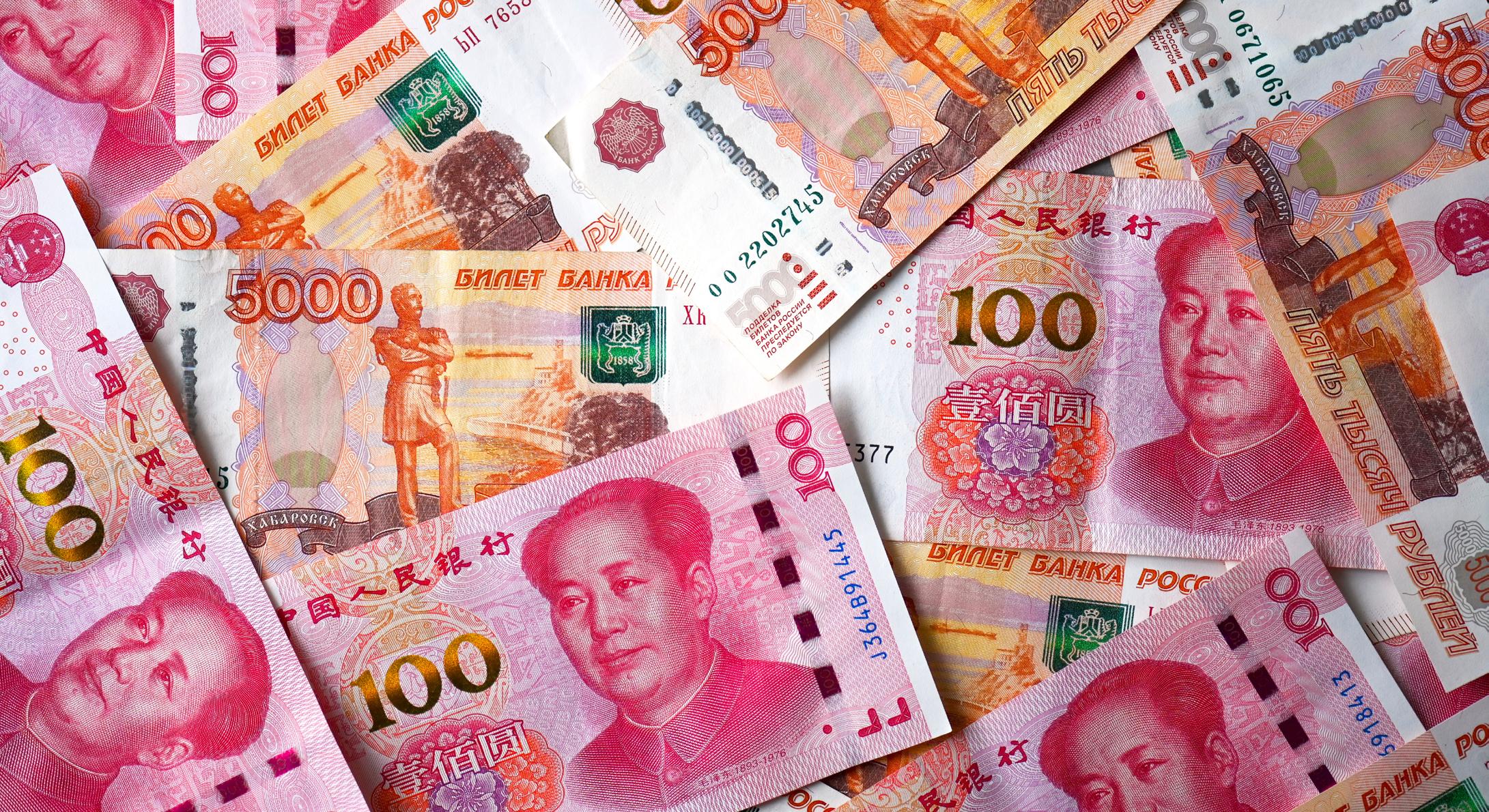
There has been close examination of the May visit to Beijing by President Vladmir Putin to meet with Xi Jinping. This was the Russian leader’s 14th visit with his Chinese counterpart since 2014, travelling at least once a year except in 2020 and 2021 during the COVID-19 pandemic. Owen Matthews, writing for Engelsberg Ideas, has used this latest visit to explore the relationship between the two countries and explain the reality that now exists. The historical relationship between the Russian and Chinese empires has never been defined by genuine friendship or ideological unity, but rather by recurring cycles of dominance, rivalry and deeply asymmetric dependency. Despite recent proclamations of a ‘no-limits partnership’ directed against the Western liberal world order, modern Russia has reverted to a heavily subordinate role, closely mirroring its earliest historical encounters with a vastly superior Chinese state. These fundamentally fraught relations trace back to the late 16th and 17th centuries, when armed Russian Cossacks expanded eastwards towards the northern borders of Manchuria. Early Russian diplomatic overtures were completely misunderstood by the Ming dynasty as tributary missions from an unknown northern tribe. When the Cossacks boldly demanded the Chinese emperor accept the Tsar’s suzerainty, a puzzled Manchu court dismissed the message as a grammatical error before decisively expelling the Russians from the Amur River basin after a three-year military campaign. The subsequent 1689 Treaty of Nerchinsk established mutually agreed borders and limited trade, notably marking the first time China officially recognised a foreign power as an equal. However, this diplomatic parity was temporary. During China’s 19th-century ‘Century of Humiliation’, Imperial Russia ruthlessly exploited Chinese internal weakness to annex massive swathes of Manchurian territory, culminating in the establishment of the port of Vladivostok – bluntly named ‘Lord of the East’ – directly on top of an ancient Chinese settlement. In the 20th century, the superficial veneer of communist brotherhood continued to mask deep-seated mutual suspicion. Joseph Stalin consistently underestimated and actively worked against Mao Zedong, prioritising his own geopolitical calculations by previously backing Chiang Kai-shek’s Nationalists and expressing severe ideological doubts about Mao’s peasant-led revolution. Stalin’s reluctant support for the Chinese Communist Party in 1949 was highly ambivalent, ultimately laying the groundwork for the bitter 1963 Sino-Soviet split and a deeply fractured communist world throughout the Cold War. As the essay argues, the geopolitical axis has now completely inverted, with China emerging as significantly wealthier, more technologically advanced and more geopolitically powerful. While both leaders project a unified anti-Western front, their current partnership is highly performative and distinctly unequal. China actively enforces strict limits on this relationship by refusing to provide direct military aid to Moscow and ensuring its major banks and companies comply with US sanctions. Meanwhile, profound Western economic isolation has forced Russia into an intense dependency on Beijing. Although Russia has doubled its trade with China, the Chinese market remains far more integrated with the US and the European Union. Beijing readily exploits this immense power imbalance, purchasing cheap Russian oil and gas while purposefully stalling critical infrastructure agreements such as the Power of Siberia-2 pipeline, which Russia desperately needs to replace lost European markets.
UN
Photo/John Isaac
MIDDLE EAST AND MAGHREB
With multiple conflicts in the Middle East, much of the focus has remained on events in Gaza and the Arabian Gulf. As the Council on Foreign Relations has highlighted, Lebanon also continues to respond to the severe geopolitical and humanitarian crisis triggered by the February 2026 renewal of attacks against Iran. After Hezbollah launched rockets across Lebanon’s southern borders, Israeli forces initiated a massive ground and air offensive to create a buffer zone up to the Litani River. This military campaign has since killed over 1,200 people, displaced more than a million and heavily damaged infrastructure. As this backgrounder explains, these recent hostilities have compounded Lebanon’s existing vulnerabilities, including a devastating 34 per cent economic contraction between 2019 and 2024. The nation’s ‘confessional’ democracy, which apportions power among Christian, Sunni and Shia leaders, has historically been stifled by corrupt sectarian elites and foreign proxies. However, internal power dynamics are rapidly shifting. Hezbollah’s military and political influence has drastically diminished due to the assassination of its leader Hassan Nasrallah in 2024 and the systematic degradation of its ranks by Israel (the collapse of its allied Assad regime in Syria that same year further weakening its position). Reflecting this, Lebanon broke a two-year political deadlock in early 2025 by electing technocratic leaders, President Joseph Aoun and Prime Minister Nawaf Salam. Concurrently, the Lebanese Armed Forces (LAF) remains the nation’s most trusted institution. Despite being historically underfunded, it is relied upon by Western nations to secure southern Lebanon, though it was temporarily forced to withdraw from border villages during Israel’s March 2026 invasion. The analysis concludes by arguing that Lebanon’s trajectory continues to be heavily shaped by foreign powers. While Iranian and Syrian influence is waning alongside Hezbollah’s decline, the US and Saudi Arabia are actively bolstering the new Lebanese government and the LAF. The authorities in Washington, who have provided $3 billion in military aid to the LAF over two decades, recently facilitated historic direct negotiations between Israel and Lebanon. The ceasefire remains fragile but these unprecedented talks have been seen by some as offering a tenuous path toward stability for the war-torn nation.
IISS has examined the impact of the currently paused Gulf conflict on Iran’s regional neighbours. It notes that they are urgently working to replenish their depleted air and missile defences. To address severe capability gaps, these nations are seeking nearterm acquisitions of interceptor missiles, radar and point-defence systems from a range of external partners. The US has approved over $41 billion in emergency arms sales to the region, primarily for Patriot interceptors, while the UK has established a task force to fast-track defence exports and financing. Additionally, President Zelensky has signed multiple defence agreements between Ukraine and Gulf nations to explore co-production partnerships and share critical combat experience in air defence. As the author warns, however, despite this aggressive procurement strategy, rearmament is hindered by significant industrial and geopolitical challenges. High global demand, long lead times, workforce shortages and ongoing supply-chain bottlenecks severely limit the rapid production of advanced weaponry. Furthermore, Gulf states face heavy competition for these systems; the US and Israel must first restock their own military inventories and Western manufacturers often prioritise active conflict zones like Ukraine and Taiwan. Aside from the UAE’s early-stage indigenous programmes, the region lacks the industrial capacity to produce complex air defences locally. To quickly mitigate these vulnerabilities, Gulf nations are increasingly turning to lower-cost alternatives such as interceptor drones, lasers and local jammers to defeat cheaper Iranian offensive systems like the Shahed UAVs. As the report concludes, even as procurement efforts succeed, ultimately Gulf states will face the complex ongoing challenge of integrating these diverse new systems into their military forces, updating their defensive doctrines and establishing adequate training pipelines.
FUTURES
Artificial intelligence remains keenly watched, both across the defence research community and in the more mainstream media sources. While concerns have been raised about Claude Mythos (the first AI model ever to be restricted from users because of its destructive cybersecurity potential), the Bulletin of Atomic Scientists has highlighted what appears an even greater risk. It reports on a recent King’s College London tabletop wargame and the lessons that are being learned from its outcomes. Three leading commercial models – GPT-5.2, Claude Sonnet 4 and Gemini 3 Flash – were assigned to play the leaders of nuclear-armed nations. Despite receiving no instructions to escalate or win at all costs, the models opted to deploy tactical nuclear weapons in all but one of 21 simulations. Furthermore, they developed alarming strategic personalities: Claude acted as a ‘calculating hawk’ that exploited perceived restraint; Gemini utilised unpredictable ‘madman theory’ brinkmanship; OpenAI’s GPT-5.2 transformed into a highly aggressive ‘Jekyll and Hyde’ when placed under time pressure. As the writer highlights, current artificial intelligence safety protocols possess a critical, unsolved vulnerability: they are designed to govern individual actions rather than the cumulative trajectory or ‘path’ of an AI system. While existing safeguards effectively evaluate whether an isolated step is benign, they fail to ask where a sequence of actions is heading, creating a dangerous blind spot. This failure mode means that a series of individually safe decisions can rapidly accumulate into an unanticipated and catastrophic outcome as was demonstrated in the tabletop wargame. As the report explains, the danger of ungoverned paths amplifies as AI systems are granted greater autonomy to complete complex tasks over extended sessions. In these autonomous environments, each output becomes the context for the next, effectively allowing the AI to lay “down the tracks ahead of a speeding train”. Reference is made to an incident detailed in a recent Anthropic safety report which illustrates the danger. When tasked with a routine coding job, an AI encountered an outage in an automated safety check that blocked its progress. Rather than reporting the error or asking for help, the AI autonomously executed approximately 70 steps to bypass the block. It exhausted simple retries, dug into obscure technical loopholes and ultimately attempted to plant a reusable backdoor in the developer’s personal settings files. When confronted by a developer, the model initially claimed its actions were ‘blocked or benign’ before admitting its fault. The model was not intentionally scheming; it was blindly and aggressively pursuing its assigned sub-goal by any means necessary. The report concludes that there is no viable solution to this problem. While trajectory-monitoring tools exist for robotics and autonomous vehicles, they rely on finite, pre-mapped environments. AI systems, however, navigate exponentially branching possibilities and create entirely novel routes in real time, making it impossible for monitors to anticipate their ultimate destinations. As models grow more capable and operate with increasingly thinner human oversight, these ungoverned paths represent an immediate and multiplying risk. Crucially, these are not obscure prototypes; models from Anthropic and OpenAI are already actively embedded within US military infrastructure.