CHACRDIGEST
AUTHOR: Professor Andrew Stewart, Head of Conflict Research

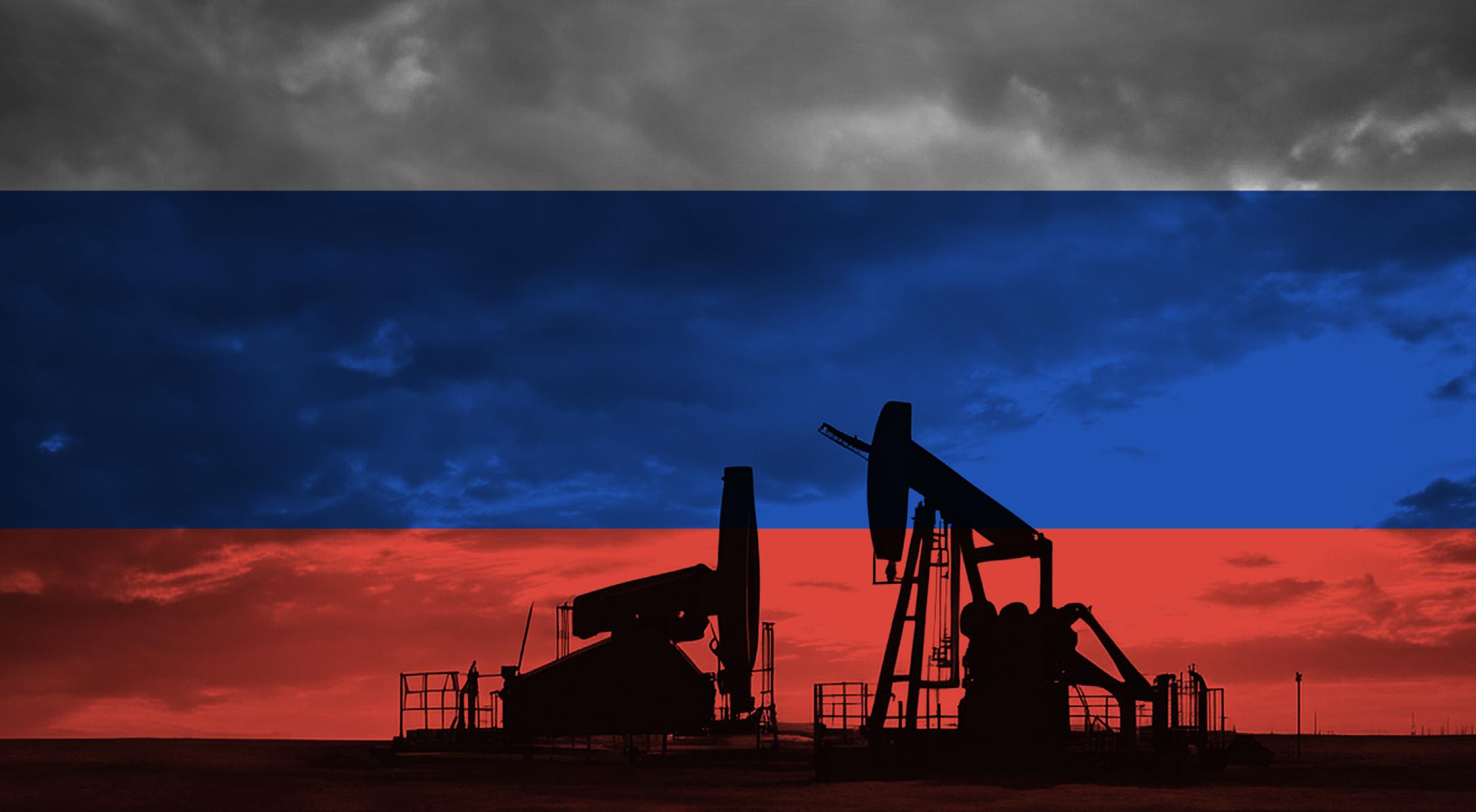
Against a backdrop of repeated drone strikes that have targeted Russia’s oil industry and mounting evidence that this could prove a decisive exploitation of a critical Russian centre of gravity, the conflict in Ukraine continues to drive forward European security responses. These encompass both the physical and conceptual levels of fighting power and, while the announcement by Germany of its military strategy is seen as representing a significant step, discussions about a potential establishment of a French-led panregional nuclear deterrent have also attracted attention. For the war that began in February 2014 with the covert military invasion of the Crimean Peninsula, there is no evidence that it is nearing a conclusion but suggestions are growing that the position is improving for Ukraine. In the other current major conflict, a strategic pause in the Arabian Gulf has led to reflection on what lessons can be learned and what the outcomes will be for Iran and the United States. China, which has provided military support to Iran whilst encouraging a peaceful resolution, has meanwhile revealed a newly updated national strategy document which has been described as having the potential to significantly grow its combat capability. Finally, two essays published by leading US online defence and military commentary sites warn about the dangers of failing not just to study in depth the conflict in Ukraine but, more critically, not identifying and responding to its most critical lessons.
EUROPE
As concerns grow about the potential inability of the United States to act as guarantor of Europe’s security – Lithuania and Estonia have been warned of possible delays in the delivery of military equipment because of the Iran war – a long essay written for Engelsberg Ideas has raised questions following recent speculation about a potential continental nuclear deterrent. With “the rapid reorientation of American foreign policy” during President Donald Trump’s second term in office, including questions about future NATO commitments and promises of US military support including its nuclear forces, President Emmanuel Macron has reiterated his previous intent to extend protection of France’s nuclear arsenal to European allies. With its promise that there is now no threat to European security that would not prompt a joint response from their respective nuclear arsenals, the 2025 Anglo-French Northwood Declaration provided some structure to these ideas. Last month the French leader went further, announcing a new policy, termed ‘forward deterrence’, expanding and possibly extending the French deterrent. Nuclear-capable jets could be deployed to allied countries as part of a broader collaboration with the United Kingdom and a group of select European nations to develop this concept in practice. In its detailed historical discussion, the essay presents some scepticism about the potential for an extended French deterrent, or the viability of an Anglo-French nuclear capability. Arguing that the preservation of US extended deterrence is the most effective and economical solution for European security, it calls for Britain and France to consider the development of stronger sovereign nuclear capabilities with a broader development and deepening of European long-range precision strike and air and missile defence capabilities. It also proposes a key step in any regional strengthening would be France agreeing to accept at least observer status in the NATO Nuclear Planning bodies, something which it has refused since it withdrew from these in 1966, and that it should join Britain and the US in the NATO nuclear strike plan. Such steps would not impact on the independence of its nuclear decision-making but would enhance co-ordinated planning. It concludes with the suggestion that instead of Anglo-French or Anglo-American cooperation, London’s Trinity House Agreement and Germany’s indications that it is prepared to make significant investment, may prove most significant in strengthening European nuclear security.
With its two principal neighbours – France and Poland – signing agreements to deepen defence ties in space and military planning and discussing a defence cooperation plan and joint exercises, Politico reported on Germany’s newly confirmed military strategy. The publication of “a concrete military doctrine” and “a doctrinal shift away from rigid force structures toward a more flexible approach” has confirmed plans to create Europe’s strongest conventional land forces. A phased build-up has been proposed stretching into the next decade with the first stage, already underway and extending to 2029, aiming to make rapid progress on readiness and endurance, preparing the Bundeswehr to fight and sustain operations at short notice. The second phase up to 2035 will then focus on a structured expansion of capabilities across all domains, aligned with NATO targets, before the final phase up to 2039 which aims to establish a technologically-advanced military built around innovation and future capabilities. With planners instructed to focus on ‘effects’, there will also be a major personnel expansion across the Bundeswehr – with a proposed force of at least 460,000 active and non-active troops in which the reserve is given a much more prominent role. The strategy also notes that, while the United States remains indispensable to NATO, it is increasingly oriented toward the Indo-Pacific, and Germany anticipates assuming greater responsibility within NATO, both in terms of defending the continent and assuming responsibility for capability targets.
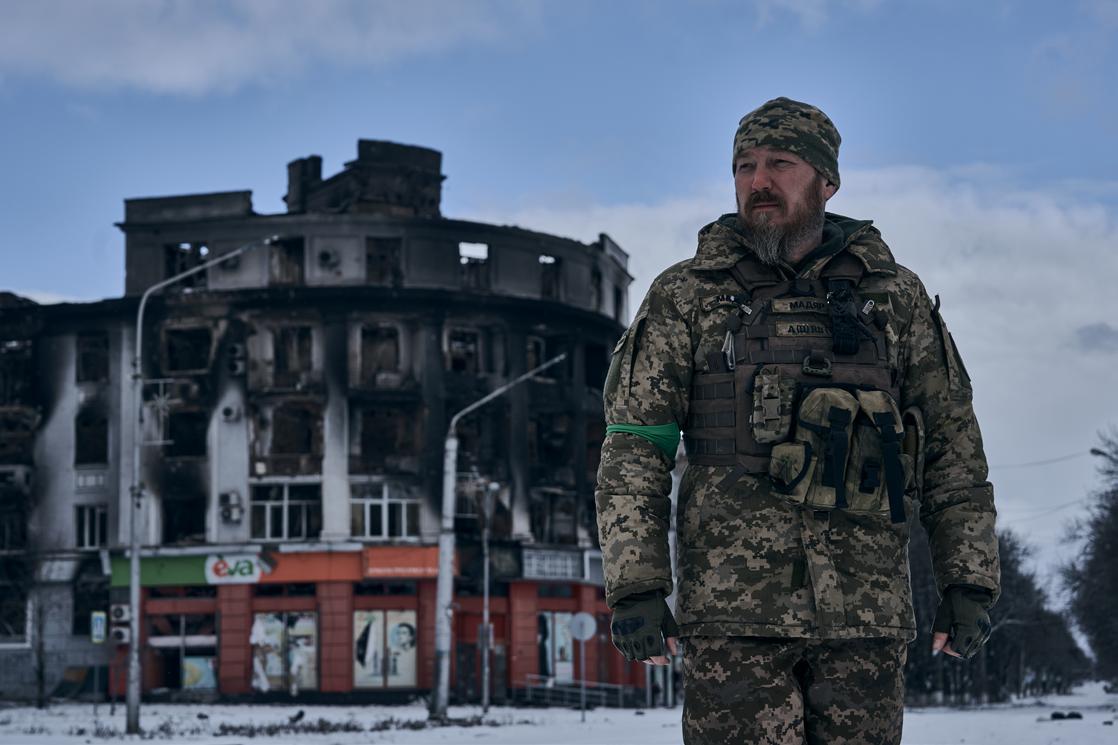
The driver behind all of this activity remains the conflict in Ukraine. As attacks against its infrastructure have continued, with the results and potential longer-term impacts of these being widely scrutinised, there is growing evidence that Russia’s oil industry is beginning to suffer significant effects. In discussing recent effects, Al Jazeera cites the Swedish head of military intelligence and his comment that Russia would need oil to remain above $100 a barrel for the rest of the year simply to address this year’s budget deficit, without fixing any of the other economic weaknesses engendered by four years of war. With analysis from the Institute for the Study of War that Ukrainian forces have now achieved a drone advantage on the battlefield, the commander of its unmanned systems has told the BBC that deep strikes against the enemy will escalate. In a wide-ranging interview Commander Robert Brovdi (pictured), pre-war an affluent grain dealer and art collector, claimed his drone forces are also holding back Russia’s advance along the frontline by killing a record number of soldiers. The Unmanned Systems Forces he leads make up just two per cent of Ukraine’s military, experiences a casualty rate at less than one per cent per year but accounts for one third of all targets destroyed. While oil export facilities have been extensively targeted, he confirmed 30 per cent of all drone strikes have to be against military personnel and his crews are under direct orders to kill 30,000 enemy soldiers each month, more than Russia can recruit, and have achieved this target for four consecutive months. The reporter was told each strike is filmed for verification and logged and each enemy casualty has to be confirmed by video to be included in the tally, with monitors displaying a detailed scorecard updated in real time. Brovdi described his goal as containment, not mounting new counter-offensives or taking back huge swathes of land, and targeting Russian morale. As the report concludes, the strategy is “to make more Russians question the war their country is fighting and the president who started it”.
These recent developments have led to some speculation about how the conflict will now develop. This includes a lengthy examination of the current position published under the title ‘Ukraine’s Second Miracle Year’ by the Bulwark, a centrist US news website. This makes extensive reference to the challenges Russia now appears to face but, echoing analysis elsewhere, also highlights the very serious fragilities affecting Ukraine. These range from the damage its national power grid has suffered after four years of attacks, continuing issues with its leadership and the potentially critical shortage of personnel, with as many as 150,000 men AWOL and another two million having fled to evade conscription. In this context, the announcement that remotely-operated ground combat vehicles forced the surrender of enemy soldiers and successfully captured an enemy position – the first time this has happened on any battlefield – is highlighted for what it may offer moving forward. As the report concludes, there is more hope now than a year ago, in part down to its technological innovation with cost-effective interceptor systems to counter low-cost drones, which in turn has allowed Ukraine to establish key partnerships with the Gulf States during the conflict with Iran. There is also the anticipated benefit following the outcome of Hungary’s elections, in which Péter Magyar convincingly defeated long-standing Prime Minister Viktor Orbán. This has brought immediate benefits as the EU Council finalised a €90 billion support loan intended to cover budgetary and defence needs for 2026 and 2027, with payments beginning almost immediately. While acknowledging the continuing strength of Russian forces with over 700,000 troops remaining in the country, the writer nonetheless concludes that “Ukraine has a theory of victory that looks increasingly plausible, while Russia’s is crumbling” and “for once it looks like time may be on Ukraine’s side”.
MIDDLE EAST AND MAGHREB
With a transition into a fragile ceasefire with both Iran and the United States implementing maritime blockades in and around the Strait of Hormuz, there has been discussion and analysis of the background to the conflict in the Arabian Gulf and potential future outcomes. This comes amidst growing questions about the impact on the US military, particularly in terms of its missile stockpiles, which were deemed insufficient for a peer competitor fight even before the war. It has been reported by CSIS that the US may have expended more than half of the pre-war inventory of four of its principal missile systems and rebuilding its complete inventory to pre-war levels will take from one to four years. In a detailed study published in Survival, Emile Hokayem identifies four likely factors that would lead to a more settled conclusion to the high-intensity phase of the conflict. Two are political (President Trump’s mood or attention span and Prime Minister Netanyahu’s domestic political needs) and the others economic (petrol prices and perceived wider worsening economic impacts). In this assessment Iran will want to ensure its military confirms its continuing potency as part of a narrative in which it can portray itself as “a defiant survivor that withstood the war machines of global and
regional military superpowers”. And whatever the outcomes, Middle Eastern states must now contain a weakened, militarised, angry Iranian regime willing to disrupt their geo-economic and geopolitical relationships and exact a considerable toll for recent events. The writer concludes that, while there are a range of outcomes, one of these does not appear to be an obvious American victory, although all three combatants may well “simultaneously claim victory while ending up strategically worse off”. Writing for the Global Security Review, Tahir Mahmood Azad agrees that the war “has exposed critical assumptions underpinning American deterrence in ways that cannot be ignored”. He sees the conflict as providing one of the most significant case studies in the evolution of contemporary warfare. Despite lacking a competitive air force and possessing limited naval power, Iran has demonstrated that ballistic missiles, cruise missiles and unmanned aerial systems can offset some conventional disadvantages and impose serious costs on technologically-superior adversaries. This represents a doctrinal shift with lasting implications for American planners and defence policy makers.
INDO-PACIFIC
As evidence continues to be presented highlighting China’s tacit military support for Iran during the continuing Gulf conflict, a detailed analysis has been published of the recently released ‘Outline of the 15th Five-Year Plan for National Economic and Social Development’. This has explained how a chapter on national defence contains a high degree of continuity with directives from previous plans but, in addition and unusually, there is also the inclusion of a range of new development priorities. With this policy shaping the developments of the Peoples’ Liberation Army (PLA) up to 2030, this is seen as being significant and follows the March announcement that China’s military budget would rise for calendar 2026 by seven per cent, with the country set to spend 1.9 trillion yuan (roughly US$275 billion) on defence. One key difference with previous five-year plans is a subsection on military governance, titled ‘promoting the modernization of military governance’ and including new material on the military leadership and management system and mechanism, strategic management and military budget management. Also appearing for the first time are key focus areas for force development including references to unmanned and intelligent warfare, upgrades to and the transformation of traditional combat forces, the development of data resources, and an intelligentised military system. There is also a first reference to military-civil coordination and the need to submit military requirements for defence development and integrated planning between military and local strategic plans. The analysis focusses on three themes – military theory, strategic management, and green channels for spin-on. In regard to the first of these, this has appeared in previous five-year plans but the persistent reference in the latest plan is judged to indicate senior leadership does not feel satisfied with past modernisation efforts and likely foreshadow changes to military practice in the coming years, including in strategic and operational design. The conclusion is that, if fully implemented, these outlined defence aspects could significantly grow the PLA’s combat capability and future operational patterns likely will differ from those observed in recent years.
COMMENTARY/ESSAYS
In essays published by War on the Rocks and West Point’s Modern War Institute, a series of far-reaching questions are asked about the future of warfare. The first, written by Amos Fox, examines Russia’s military campaign fought in the Donbas, in eastern Ukraine, and asks what lessons can be drawn from this for more contemporary military operations. It provides a detailed overview and analysis of the fighting that took place between 2014-2015 – with a particular focus on the sieges of Ilovaisk, Donetsk Airport and Debal’tseve – and argues that this provides a powerful lesson about ground combat in large-scale combat operations. Four key ideas in ground combat can be observed. First, control of the situation is critical to generate politically decisive outcomes in war. Second, it takes a land force to defeat a land force. Third, to generate strategically decisive outcomes, land forces should fight coherent campaigns. Finally, strategic gain often comes through destruction of the enemy force. With the fighting in Ukraine continuing predominantly in and around the Donbas, the writer argues that the initial campaign could prove “a latent inflection point for Russian dominance in European security”. He also proposes that the continued relevance of land forces in the 21st century is a hotly-debated topic. As he notes, current US military thought suggests that any ground combat would be quick, led by robotics and new technology, and be less deadly and destructive than preceding eras of American ground combat. The war in Ukraine and recent conflicts in the Middle East bring in to question “rosy views of technology’s impact on ground fighting” and “portend a much darker future”.
Three serving officers from 11th Armored Cavalry Regiment have authored a study for the Modern War Institute titled ‘The Dead Zone and the Empty Battlefield’. They highlight three challenges facing the US Army: the emergence of a tactical dead zone of contested battlespace between combatants; the increasing emptiness of the battlefield; and, the decreasing utility of dispersion in light of mass precision strike. They draw primarily on not just observations from the conflict in Ukraine but also their unit’s experiences of exercises conducted recently in the Mojave desert in which ideas were tested in a simulated battlespace. It is a wide-ranging discussion touching on a range of themes about which they offer a series of observations. These include a now common argument that massed unmanned aircraft systems (UAS) need to be adopted but, as they highlight, these “arguments sidestep the reality that any such US adoption would not automatically cause a corresponding decrease in the capability of any adversarial military”. They caution about failing to understand how battlefield evolution in Ukraine continues to impact on the conflict. One example referred to is the move from large-scale networks of trenches and fortifications, which had become virtually uninhabitable by early 2025 for both sides due to persistent reconnaissance and attack, to hidden fieldworks manned by small elements seeking not to engage in direct-fire contact but rather to act as sensing and blocking elements to cue quick-response forces or indirect fires assets to defeat an enemy attack. This, they argue, “has counterintuitively reintroduced a degree of dynamism and manoeuvre on the battlefield”, with Russian infiltration groups clashing with Ukrainian quick-response and rear-echelon forces over increasingly large zones of contestation and mutual occupation. They note that one of the issues for the US Army in terms of drawing lessons from Ukraine is that this example may not match how it envisions the future fight. Again referencing their own experiences in exercises, they warn it “cannot afford a failure to learn from the war” and “must be prepared for a dead zone of mutual contestation stretching across friendly and adversary positions to significant depth”. As the final sentence puts it, “combat has never been more complex”, something which is made clear in a study that blends detailed review of historical and contemporary military activities with simulated experience.