CHACRDIGEST
AUTHOR: Professor Andrew Stewart, Head of Conflict Research
THIS DIGEST WAS COMPILED BEFORE THE OUTBREAK OF OF


Uncertainty about long-term US goals and ambitions continues to be a dominant theme in domestic and international discussion about global defence and security. President Donald Trump’s often contradictory comments about NATO and the questions raised about how the US would respond to any widening of Russian actions are a cause for considerable anxiety, as was made clear throughout the Munich Security Conference. The question of Greenland’s future featured prominently alongside the situation in Ukraine. With the fourth anniversary of the general Russian invasion which began in February 2022, the conflict’s grim milestones continue. Having lasted longer than the Soviet Union spent fighting Nazi Germany, the scale of Russian military losses is now greater than were suffered during that war and is rising at almost unimaginable levels. Europe, however, has no choice but to look ever more to safeguarding its own security. With questions about continuing support for long-standing NATO missions such as those undertaken in Iraq and Kosovo, regional concerns now also apparently extend to whether protection long provided by the US nuclear umbrella can be counted upon. And with the focus in Britain on political and economic worries along with some evidence of growing concerns about potentially existential European dangers, popular interest in the complicated security dynamics of the Indo-Pacific region is sparse, while the position in Africa – which remains the continent with the most global conflicts – attracts almost no attention.
BRITAIN
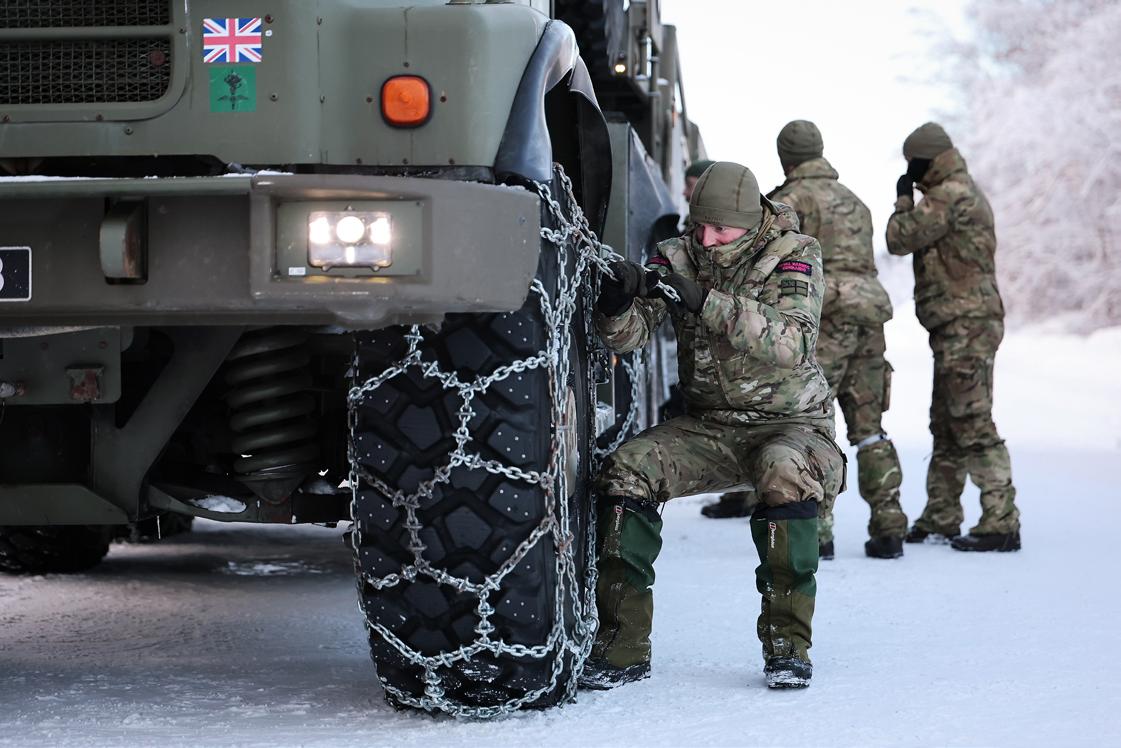
Following January’s parliamentary debate there has been considerable media coverage highlighting increased British commitments to the wider Nordic region. Alongside coverage of several visits made by senior politicians, it was reported by the BBC that the number of troops stationed in Norway will double to 2,000 personnel over the next three years. This is in addition to significant involvement in the newly announced Arctic Sentry mission, NATO’s Exercise Cold Response in March and September’s Joint Expeditionary Force Lion Protector exercise. In a wide-ranging YouGov opinion poll about Britain’s defence and foreign polices, three quarters of respondents considered it important to strengthen the UK’s hard and soft power (including around four in ten who described it as ‘very important’). Only a quarter were willing to see taxes rise or cuts to public spending in order to better fund the armed forces, with one third willing to support more borrowing. More than one third are willing to reintroduce conscription but while 57 per cent of over-65s were supportive, it was only 16 per cent of 18-24 year olds. Even among those who say it is ‘very important’ Britain boosts its hard power, there is still overall opposition to measures that would increase taxes or the cost of living, or require cuts to public services. While the number of Britons who indicated ‘defence’ is a top national issue increased to 25-26 per cent at the height of the Greenland crisis, the overall conclusion of the poll was that Britons believe the country should become more powerful but without any evidence of how this should be funded.
In the London Review of Books, Tom Stevenson considers the degree to which Britain is prepared for a changed security environment and questions whether there is any evidence of a post-Cold War decline in defence spending. He notes that data for the period reveals “an unmistakeable long-term secular decline in military spending from the mid-1950s until 2000”, which only registered a slight increase in the years that followed. This, he suggests, points to there being no evidence of any obvious ‘peace dividend’ but instead a longer-term trend and he questions why military spending remained high from the mid-1950s until the 1970s. He argues that the post-Cold War claims were an “effective propaganda tool for domestic military interests” allowing “uniformed British officers and their allies in the media and defence intelligentsia… to complain that the armed forces were being ‘hollowed out’”. Acknowledging that the military now has fewer personnel than during the Cold War and the British Army would struggle to deploy overseas, he concludes “a reduction in the capacity for international violence” is not a bad thing.
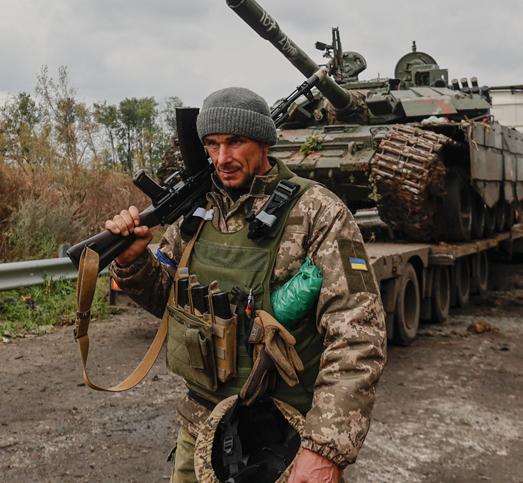
The fourth anniversary of Russia’s expansion of its conflict with Ukraine resulted in considerable media and academic coverage. Within this, there continues to be detailed analysis of open source data which offers speculative conclusions about how the conflict may continue to develop. A report published previously by CSIS had described the “extraordinary price for minimal gains”, noting that, since February 2022, Russian forces have suffered nearly 1.2 million casualties, more losses than any major power in any conflict since the Second World War. At the same time, since 2024 Russian forces have advanced at an average rate of between 15 and 70 meters per day in their most prominent offensives, gaining less than 1.5 per cent of Ukrainian territory, slower than almost any major offensive campaign in any war in the last century. All of this has contributed to its decline as a major power with Russia’s war economy under mounting strain, manufacturing declining, slowing growth of 0.6 per cent in 2025, and no globally competitive technology firms to help drive long-term productivity. Following this report, Bloomberg referenced comments from anonymous Western officials which point to a worsening position. In January Russia reportedly sustained around 9,000 more battlefield losses in Ukraine than it was able to replace and was unable to achieve significant gains on the ground. Ukraine’s top general, Oleksandr Syrskyi, was quoted as saying that Russia had appeared to exceed its goals for military recruitment and the number of its troops on the battlefield had remained steady for six months at as many as 712,000. At the current rate, it would, however, still take Russian troops another two years to fully take the eastern Donetsk region. This at the same time as Ukrainian Defence Minister Mykhailo Fedorov pursues a strategy of trying to increase Russian losses to 50,000 a month by the summer, a figure which is seen as making it difficult for Russia to continue the war without some form of mobilisation.
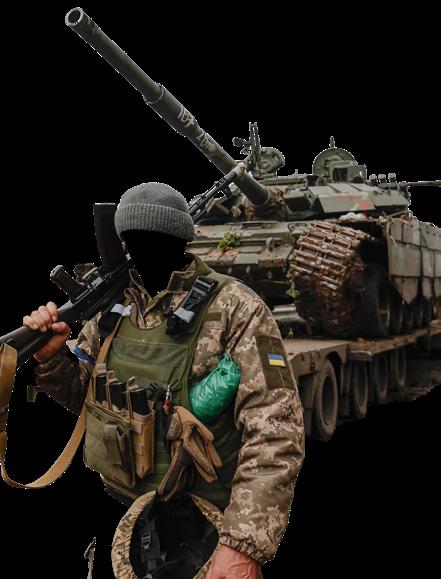
Transatlantic tensions stemming from President Donald Trump’s recent bellicose statements have meanwhile led to expanding reviews of how Europe defends itself. This has now extended to long-standing American nuclear guarantees, in large part because of reduced confidence in the continuing sanctity of NATO’s Article 5. According to a report, leaders in Sweden, Norway, Germany and the Netherlands have held conversations about a European nuclear deterrent to complement the American version. This is in addition to previous German comments suggesting this might be necessary should the United States continue to appear to question its treaty commitments to safeguard regional security. Key to these discussions is the French nuclear arsenal which has always been separate from the US and NATO, unlike the British strategic deterrent which also relies on American technology. French President Emmanuel Macron had previously offered in 2020 to extend a security umbrella using his country’s weapons but is engaging once again with the expectation that a forthcoming speech will mark “a turning point” and describe “how France can allow others to benefit from its deterrence”. One option being considered is to station nuclear-capable Rafale fighter jets under French command in European countries, while NATO officials are reportedly hoping that the authorities in Paris will choose to come into the Nuclear Planning Group. However, an issue remains that neither France nor Britain have smaller tactical nuclear weapons, relying entirely on much larger strategic weapons and making it difficult to respond to a small-scale Russian attack. In addition to any potential pan-European development violating the Nuclear Non-Proliferation Treaty, it would also be extremely time-consuming (a Swedish official acknowledged it would take decades) and costly at a time when some NATO members are struggling to fund the purchase of conventional armaments. There are also fears that the expiry of the New START Treaty, the last remaining pact between the US and Russia to curb nuclear stockpiles, could lead to global nuclear proliferation. And French domestic politics may well prove critical as the far-right National Rally is leading in opinion polls ahead of presidential elections in 2027 and its leadership strongly object to Macron’s nuclear engagement with Europeans.
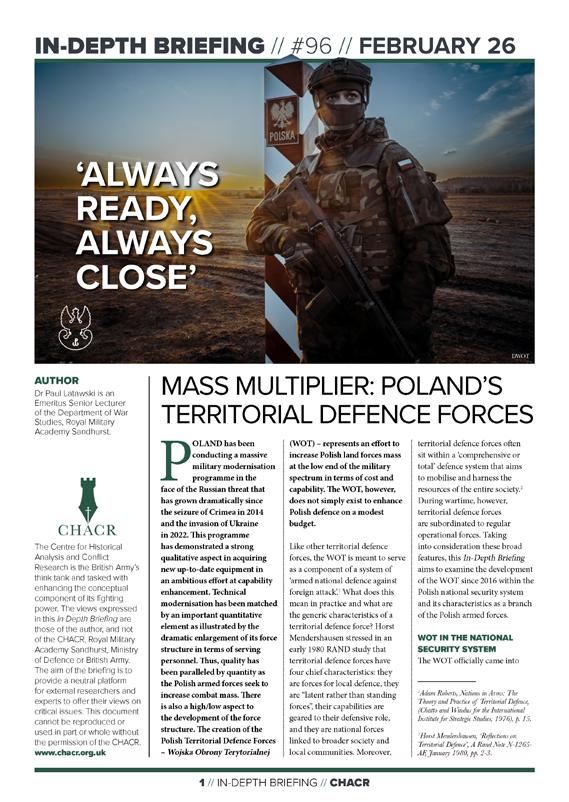
Moves to strengthen conventional postures continue to be led by Poland. A recent CHACR In-Depth Briefing has explained the importance of its Territorial Defence Forces, part of a much larger programme to strengthen the country’s military forces. The Australian think-tank ASPI has explained how the leading NATO member is deliberately building a national capacity for sustained high-intensity war. As part of this strategy it is also treating large-scale conflict no longer as hypothetical but as a baseline assumption and drawing directly on lessons from Ukraine. Three elements have been combined: numerical expansion with a headline figure of 500,000 personnel; universal or near-universal military training; and the rapid integration of advanced strike, drone and AIenabled systems. Its Armed Forces Development Program for 2025-2039 envisages 300,000 active-duty troops supported by 200,000 reservists, including a newly created high-readiness reserve. The analysis argues that this “marks a shift in how Poland understands deterrence” and a move away from blocking or blunting an adversary’s advance to adopting long-range precision strike that can target an opponent’s critical military and infrastructural nodes at risk well beyond the immediate battlefield, potentially extending over a thousand kilometres. Added to this, rapid technological modernisation seeks not to replace manpower but to multiply its effectiveness and “defies long-standing European assumptions that qualitative superiority can compensate for shrinking armies”. The final strand is the emphasis on national resilience with proposals for large-scale military training for every adult male as opposed, at this stage, to a formal return to universal conscription. The costs are significant and Poland already spends more than four per cent of GDP on defence, the highest proportion in NATO, but this funding is directed not only towards procurement but also towards training intensity, reserve readiness and the expansion of domestic defence industry capacity. Demography is a concern, Poland’s population of 38 million is ageing, and sustaining a halfmillion-strong force over the long term will place pressure on labour markets, public finances and social cohesion. Also, there is a danger of a weakening in public support as sustained high defence spending potentially limits other social and economic policy priorities. As the writer also warns, there is a risk that the Polish actions reshape expectations within NATO forcing other member states to follow suit or risk strategic marginalisation. The conclusion is that there although there are questions about if the model can prove sustainable, Poland is already reshaping debates across Western Europe about force structure, reserves and preparedness.
THE AMERICAS
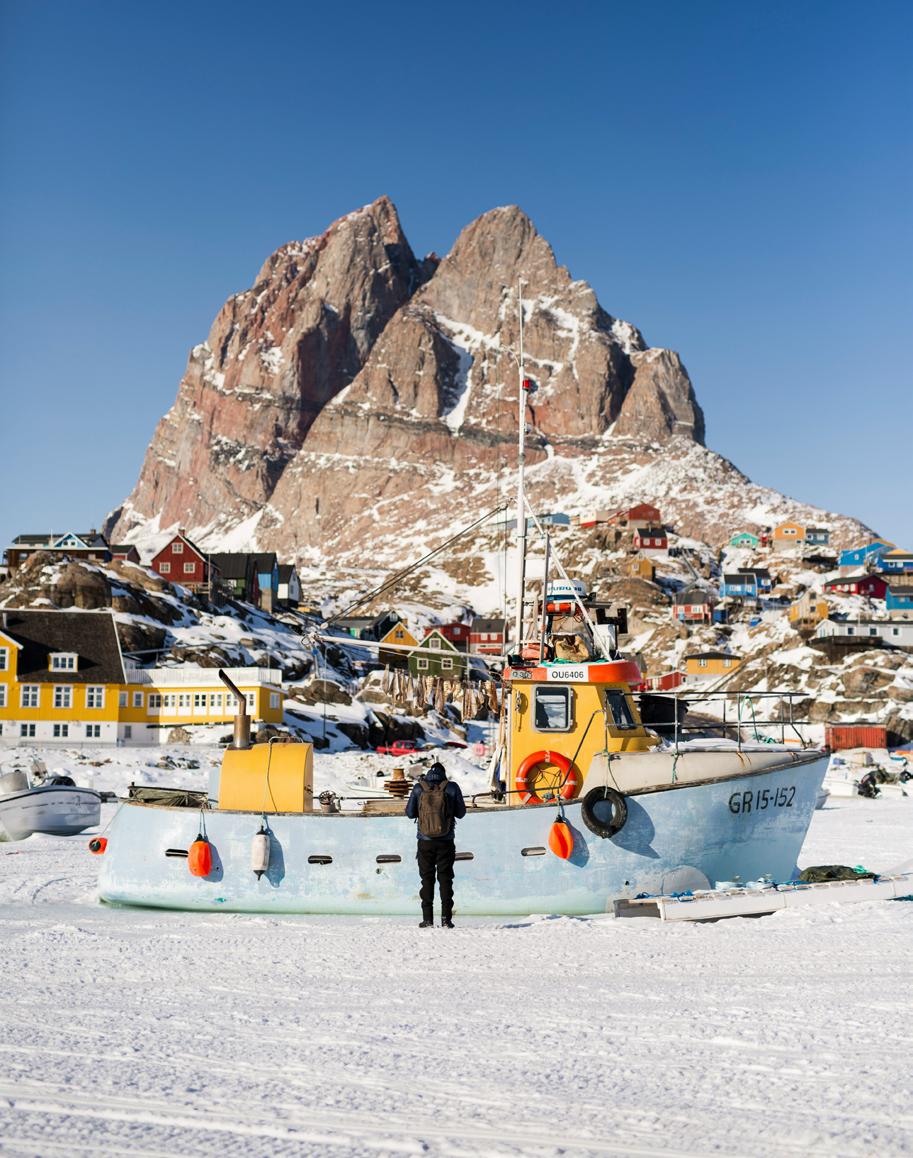
Interest in Greenland has continued following President Trump’s agitation to secure American control. One of his former senior advisers previously referred to the Arctic as the “new great game of the 21st Century” and NATO’s growing focus on the region’s security – as most obviously demonstrated through the newly activated Arctic Sentry led by Joint Force Command Norfolk – has confirmed growing interest in the defence of the High North. In this context, Canada’s own increased interest in Greenland has been interpreted as forming part of its own attempts “to build their own international bona fides and wriggle out of Trump’s shadow”. Since Prime Minister Mark Carney’s widely acclaimed Davos speech – in which he referred to “a rupture in the world order, the end of a pleasant fiction and the beginning of a harsh reality” – there has been growing evidence of what is being called the Carney Doctrine. Central to this is the strengthening of existing political, economic and security relationships. Politico reports that, having opened a Canadian consulate in Nuuk, the capital of the autonomous territory of Greenland, a defence cooperation agreement was concluded with Denmark at the Munich Security Conference. This agreement includes co-operation in Greenland, the Arctic and along NATO’s eastern flank. As the report notes, Carney named it a leading foreign-policy priority when he became prime minister in March 2025, emphasising the importance of a shared history of indigenous people and a shared worry about American overreach in the Arctic. At the reception to celebrate the consulate’s opening, alongside diplomats from Denmark and France – which has also established permanent diplomatic representation – Governor General Mary Simon was in attendance, King Charles III’s representative in Canada.
President Trump has expressed strong opinions about NATO throughout his second term in office calling for member states to make greater financial contributions and strengthen their military forces. According to this Politico report, he is now pushing for the organisation to be viewed as a strictly Euro-Atlantic defence pact and curtail ‘out-of-area activities’ that are beyond the Alliance’s core tasks of defence and deterrence. As part of this, the US has reportedly spent some months lobbying to scale down NATO’s peacekeeping operations in Iraq and Kosovo. This follows comments made by deputy Pentagon chief Elbridge Colby about ‘NATO 3.0’ when he explained that “not every mission can be the top priority” and the priority would be “whether European forces can fight, sustain, and prevail in the scenarios that matter most for the defense (sic) of the Alliance”. This report notes not all NATO members agree with withdrawing or weakening partnerships that are seen as being ‘crucial’, although there is broader agreement that missions such as Iraq should be scaled back but over a longer timeframe, while keeping a smaller operation in place. Greater concerns have been expressed about ending the NATO-led Kosovo Force (KFOR) as the security situation in the western Balkans remains uncertain. Since it was first established in 1999, Britain has been a key contributor to this mission and as recently as last October continuing support was promised until at least December 2028. While all 32 allies need to approve the start and end of missions, a senior policy fellow at the European Council on Foreign Relations is quoted as saying that the mission remains “indispensable” for regional security and, were NATO to withdraw, this could embolden Serbian separatists in northern Kosovo. The US is also reportedly pressing to keep Ukraine and the Alliance’s four official Indo-Pacific partners – Australia, New Zealand, Japan and South Korea – from formally participating in the annual summit scheduled to take place in Turkey in Ankara, although they could still be invited to side events. With the US also looking to reduce financial contributions, NATO will not be holding a Public Forum at the summit, a move which some diplomats have said will be “harmful” and reduce visibility and awareness of the meeting.
INDO-PACIFIC
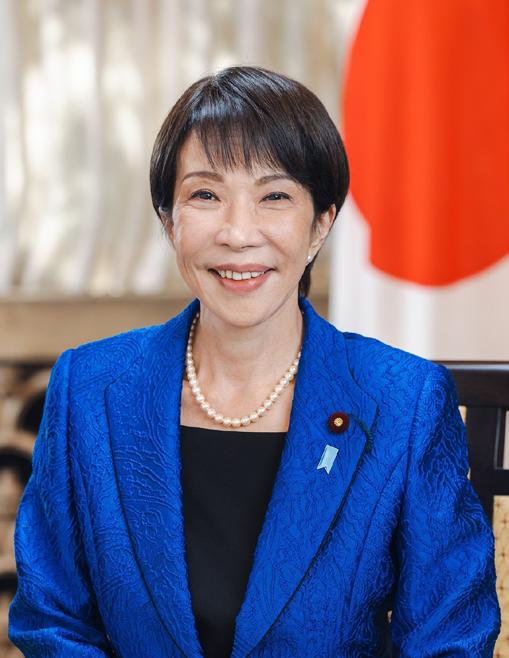
As part of its regular summary of China’s continuing attempts to coerce states which express support for Taiwan, ASPI has highlighted the potentially unexpected impact this has had on Japanese politics. After securing a much improved majority following her decision to call a snap election, Prime Minister Sanae Takaichi (pictured) has emerged more politically secure than ever with her authority considerably boosted. As this report argues, this outcome has demonstrated the diminishing returns of coercion against politically confident middle powers such as Japan and exposed the limits of pressure politics when the target is both economically resilient and politically secure. Last November, Takaichi publicly referenced contingency planning related to Taiwan, stating that “peace and stability across the Taiwan Strait are directly linked to Japan’s security” and that Tokyo “cannot rule out preparing for contingencies that affect our national survival”. Beijing treated the remarks as a direct violation of its red lines under its one-China principle and political denunciations quickly shifted to economic coercion. Travel advisories were issued to restrict and eventually halt the flow of Chinese tourists to Japan while trade flows were disrupted through informal restrictions and suspended bilateral exchanges in a series of ‘visible but deniable’ measures. But, for coercion to work, the target must alter its cost-benefit calculus and, in this example, China misjudged that calculus based around what was only ever limited economic pain. As the writer explains, in trying to sideline Japan, Beijing has elevated Tokyo’s prominence in Taiwanrelated security debates rather than diminishing it. As they conclude, “attempts to deter discussion have instead drawn greater focus to Japan’s role”.

explains. As the writer notes, currently there are more than 50 armed conflicts being fought across Africa, about 40 per cent of the world’s total, displacing 45 million people. Foreign assistance is waning, the appetite for peacekeeping is diminishing and private military companies – such as Russia’s Wagner – are filling the gap. In addition to committing human rights abuses and perpetrating ‘industrial-scale’ smuggling and other criminal activity, they are also recruiting Africans to fight in Ukraine, often through deception. Research by ISS concludes that Africa would probably remain less stable than any other region, at least for a decade, mainly because of its young population, high unemployment and low government capacity. Within this discussion, there was some criticism of the African Union for not doing more, with the example given of its Peace Fund which has collected only $400 million, barely enough to sustain one peacekeeping operation for half a year. At least partly filling the security vacuum is China with military-to-military and police-to-police collaboration. Figures are referenced from the Stockholm International Peace Research Institute which show China has recently become the leading seller of major new arms to Africa, replacing Russia which faces global sanctions and is increasingly focussed on supplying its own war against Ukraine.