
CHACR COMMENTARY // MARCH 2026
BY: Olesia Horiainova, Co-Founder of the Ukrainian Security and Cooperation Center
EUROPEAN intelligence agencies have assessed that Russia is preparing for an attack on the territories of NATO member countries. The Russian economy has been put on a war footing and remodelled in anticipation of a prolonged conflict and
The author of this Commentary leads a flagship Ukrainian Security and Cooperation Center project focused on the development of Ukraine’s national recruiting system, implemented in close partnership with the Ministry of Defense of Ukraine, the General Staff of the Armed Forces, and NATO partner countries. The project aims to strengthen civilian engagement in national defence, modernise recruitment and mobilisation practices, and support reforms aligning Ukraine’s security sector with NATO standards.
a reversion to the policies of peaceful economic development now seems unlikely. European countries must recognise this threat and, most importantly, answer the fundamental question: are they prepared to defend their territories alone if their NATO allies delay taking active measures? Mass youth protests in Germany against the country’s new conscription law, accompanied by opinion polls indicating that 59 per cent of respondents would “probably” or “definitely” refuse to take up arms, suggest significant societal head winds. At the RUSI-hosted Long War Conference, research fellow Hamish Mundell stated that “there is little evidence that the United Kingdom has a plan to conduct a war lasting more than a few weeks”, mainly due to deficiencies in medical infrastructure and slow reserve replenishment.
The containment of the Russian offensive by the Ukrainian
Armed Forces is providing Europe with time to strengthen its own defensive capabilities and, above all, to learn from Ukraine’s deep experience as a mobilised wartime society. This includes most notably: the adaption to high-intensity warfare, societal resilience under conditions of acute and sustained stress, the leveraging of non-governmental organisations to bolster national defence, and the establishment and continued refinement of a wartime recruitment system for the armed forces.
According to the results of a survey conducted by the Kyiv International Institute of Sociology, in the weeks before the 2022 full-scale invasion 57.5 per cent of Ukrainians expressed a readiness to defend their communities in the event of a Russian attack, with 37.3 per cent stating that they were willing to serve in a combat role. This was several percentage
points higher compared with December 2021, when the figures were 50.2 per cent and 33.3 per cent respectively. While this was due in part to the intensifying threat through the new year period, this was less an outpouring of popular emotion, than a result of improved civilian access to information and military training.
On 1 January 2022, under the new law, On the Fundamentals of National Resistance, Territorial Defence Forces were created in Ukraine as a separate branch of the Armed Forces. The structure included 25 brigades (one brigade per oblast), comprised of more than 150 battalions In early January, Ukrainians, both male and female, with ages ranging from 18 to 60, began to enlist, including those who were not liable for military service. A few days before the full-scale invasion, the then Commanderin-Chief of the Armed Forces of Ukraine reported that
the generation of territorial defence battalions in 13 border regions was at least 70 per cent complete. Overall, Ukraine’s military leadership planned to recruit between 1.5 and two million motivated citizens to the territorial defence reserve.
Collective training sessions were conducted on basic weapon handling, field medical training, tactics in combat conditions, land navigation and other disciplines. At the same time, Ukrainians privately enrolled on selfdefence courses encompassing a similar range of disciplines. All these measures, as well as a general increase in awareness of and access to information on national resilience, boosted the confidence of the population and psychologically prepared them for defending their communities. This readiness and the simplification of the Territorial Defence Forces application process directly impacted the first days of the full-scale invasion by augmenting the Armed Forces of Ukraine with motivated fighters.
The first units of the Territorial Defence Forces were able to join the resistance against the advancing Russian forces within three to four hours of the start of hostilities. In many instances it was the volunteer element that was the first to confront the enemy and secure their own villages and towns. By the second month of the war, approximately 110,000 volunteers had joined up. As of December 2025, the Territorial Defence Forces numbered approximately 100,000 (based on open-source analysis and Ukrainian media reporting on what had become an 800,000-strong Armed Forces of Ukraine). They operate within a stable brigade structure and are actively involved in frontline operations, including assaults supported by modern equipment and aerial reconnaissance.
The motivation of Ukrainian volunteers, the professionalism of the Ukrainian army, and the unity of the population were
“[UKRAINE’S] MILITARY AND POLITICAL LEADERSHIP HAVE BEEN ACTIVELY PROMOTING VOLUNTARY ENLISTMENT THROUGH TARGETED RECRUITMENT CAMPAIGNS. THE
OBJECTIVE
IS
TO ATTRACT MOTIVATED FIGHTERS, WITH MEN AND WOMEN ABLE TO CHOOSE A ROLE IN THE MILITARY BASED ON THEIR SKILLS AND EXPERIENCE, AS WELL AS THE SPECIFIC UNIT IN WHICH THEY WOULD LIKE TO SERVE.”
decisive for Ukraine’s resilience in the first months of the full-scale invasion. As a consequence, the Ukrainian leadership frequently identifies the human factor as being the most valuable asset in the army. However, during the fourth year of the war, the qualitative replenishment of the mobilisation base became a key challenge to Ukraine’s defence capability. Public fatigue and the intensity of hostilities along a front line stretching more than 1,200 kilometres negatively affected citizens’ willingness to join the armed forces. According to statements from the office of President Zelensky,
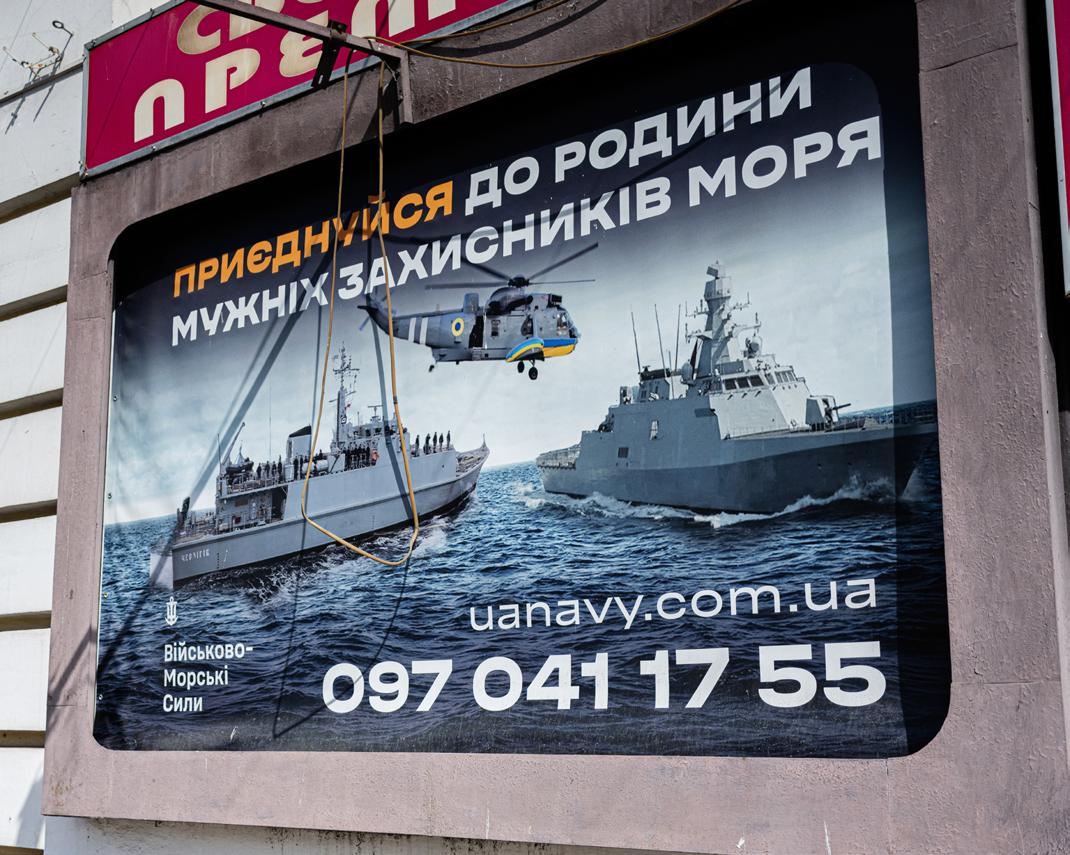
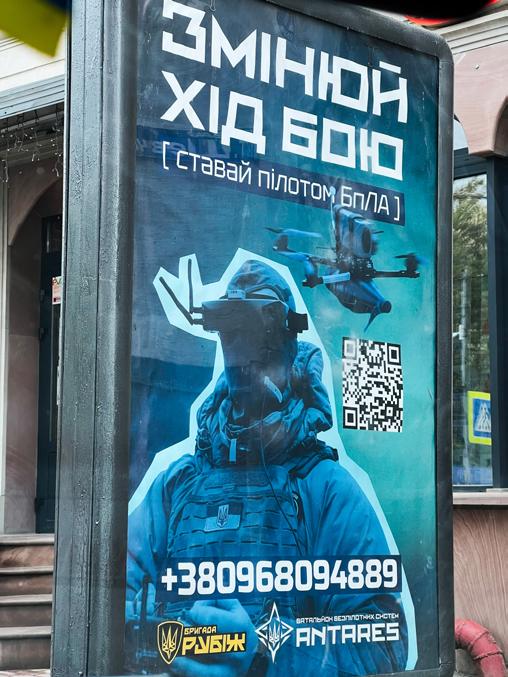
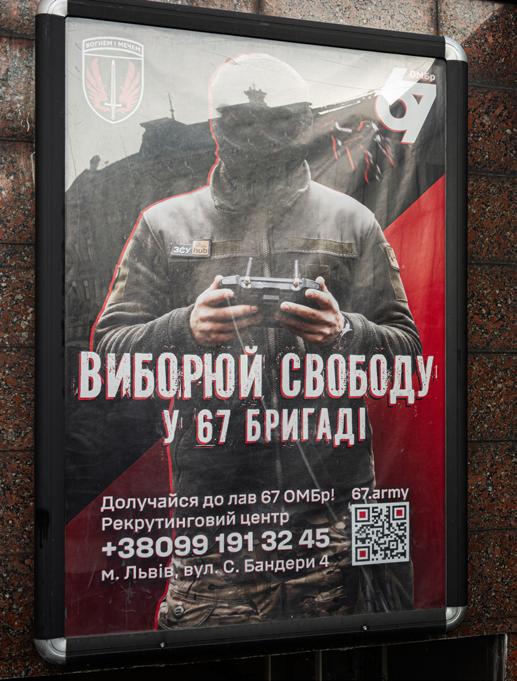
the issue of how to refine the mobilisation process. Since 2024, the country’s military and political leadership have been actively promoting voluntary enlistment through targeted recruitment campaigns. The objective is to attract motivated fighters, with men and women able to choose a role in the military based on their skills and experience, as well as the specific unit in which they would like to serve. The Armed Forces is the largest employer in the country, boasting a broad range of specialisms, with combat positions representing about 20 per cent of the total. The most popular vacancies are those related to drone technology, driving and the infantry.
Ukraine presently mobilises approximately 30,000 men each month The Russian Federation by comparison adds slightly more – somewhere between 30,000 and 35,000 additional personnel to its forces monthly. In practice, however, not all of those mobilised ultimately join the Armed Forces of Ukraine. Some are screened out for medical reasons, while others, fearing for their survival, resort to unauthorised absence from their units.
Ukraine is currently addressing
On 25 November 2024, Commander-in-Chief of the Armed Forces of Ukraine Oleksandr Syrskyi instructed each brigade to establish its own recruitment unit. In addition, 48 Ukrainian Army Recruitment Centres have been established in cities and regional centres across Ukraine, advertising vacancies not only in the Armed Forces but also across Ukraine’s other defence and security services. There are also recruitment centres for specific service branches. Recruiters at these hubs not only advertise vacancies, but also match candidates to positions based on their preferences and maintain personal contact with new recruits until they sign a contract with a particular military unit. Vacancies in the Defence Forces are also widely advertised on online job search platforms, government sites and mobile applications.
In 2025, the Ministry of Defence of Ukraine also announced special recruitment contracts targeting young people aged between 18 and 24 – that is to say, those who have not yet reached conscription age. These contracts are signed for a period of one or two years and offer financial bonuses and comprehensive social benefits. Recruits also have the option of undergoing
intensive training in the most decorated Ukrainian brigades. The aim of the initiative is not only to attract niche skill sets, but also to contribute to the building of a professional army. In early January 2026, Syrskyi acknowledged that units that have implemented recruitment systems demonstrate higher enlistment rates for new recruits compared to other units.
The non-governmental sector and academic community has also been actively involved in promoting recruitment. A good example of this is the Ukrainian Security and Cooperation Center, which has supported recruitment development since 2024, through the Recruitment Support Center project. Applications and recruits have subsequently doubled during the same period. In total, partner-recruitment departments received over 98,000 applications in 2025.
This year is set to see the introduction of flexible contracts of one to five years for all security and defence forces, with annual financial bonuses on offer. General Syrskyi has emphasised the need to improve basic military training and the level of instructors in order to produce “truly combat-ready soldiers”. Other changes are targeting logistics and supplychain efficiency with major bureaucratic reforms. Efforts to decentralise procurement, overseen by the deputy head of the Office of the President of Ukraine, former commander of the 93rd Separate Mechanised Brigade, Colonel Pavlo Palisa, are reportedly being met with some success.
Given the global trend of shifting public trust away from state institutions towards localised peer-to-peer models (as highlighted by the 2025 Edelman Trust Barometer), Ukraine’s approach may offer valuable lessons for Europe. Most
“IT HAS BEEN RECOGNISED THAT UKRAINIAN WOMEN ARE NOT ONLY MOTIVATED BUT ALSO DEMONSTRATE HIGH PERFORMANCE LEVELS, OFTEN WITHOUT PRIOR MILITARY EXPERIENCE.”
importantly, perhaps, an ability to observe transparency in the military application process and personal knowledge of immediate commanders and units has been crucial for Ukrainians – directly influencing their choice of unit and decision to join the armed forces. This has been upheld by several sociological studies.
Despite a general scepticism towards certain state institutions, Ukrainians have demonstrated a proactive desire to contribute to the defence effort. According to a sociological study conducted by the Kyiv International Institute of Sociology on behalf of the Ukrainian Security and Cooperation Center in November-December 2024, more than 80 per cent of men and women expressed a desire to contribute to the war effort, and a similar percentage expressed an interest in gaining certain skills for national resilience. An unpublished 2025 study conducted for military units, and titled Factors Influencing Decisions to Abandon the Path to Military Service
Through Recruitment Centers, demonstrated that the main motivations for joining the army among Ukrainian women and men were: a patriotic desire to defend the country (40 per cent) and a sense of duty or responsibility (20 per cent). Seventeen per cent of volunteers, both women and men, were attracted by the opportunity to join a specific unit.
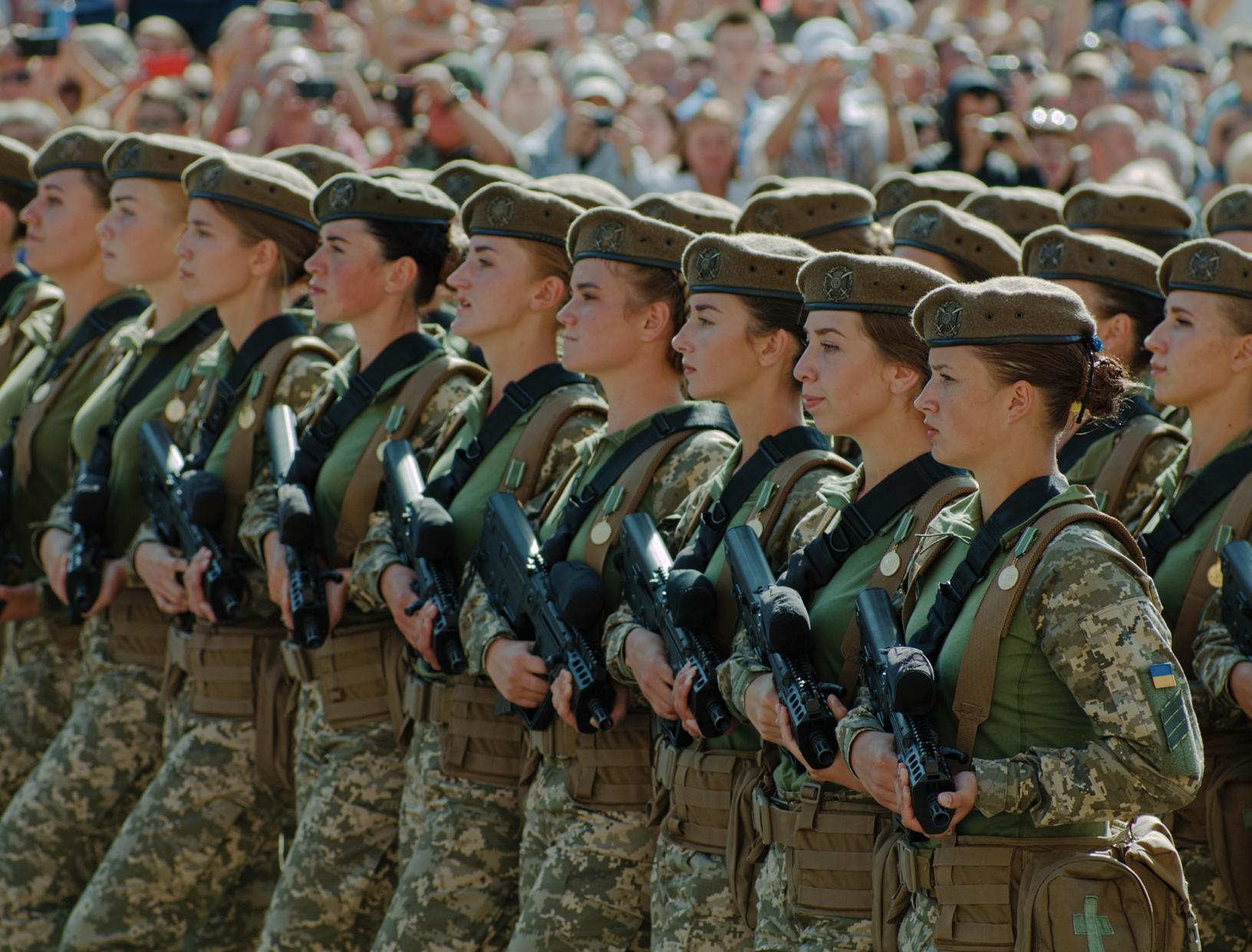
Overall, approximately 20 per cent of candidates applying to regional recruitment centres have been female – a statistic which attracted media attention throughout 2024 and 2025. It has been recognised that Ukrainian women are not only motivated but also demonstrate high performance levels, often without prior military experience. Natalia Hrabarchuk – a former kindergarten teacher who became an anti-aircraft missile operator in the Halychyna-Volyn Radio Technical Brigade – was celebrated for shooting down a cruise missile with an ‘Igla’ man-portable air defence system during her first combat mission.
Such results have underscored the importance of introducing flexible service formats – the ability to choose specific commanders and brigades, as well as the recruitment system in general – for replenishing the Defence Forces.
It should be recognised, therefore, that despite having to confront the full-scale invasion, with daily missile and drone attacks and sometimes up to 300 daily engagements along the front line, Ukraine continues to implement qualitative reforms in its military and to involve motivated civilians in national defence. Ukraine’s experience has set a number of global precedents, and represents an opportunity for European countries, including the United Kingdom. A well-trained army, a motivated society, an effective model for military recruitment and reacting efficiently to the experiences of asymmetric warfare and hybrid threats are precisely the set of measures that can ensure the defence capability of European countries in the face of potential challenges.