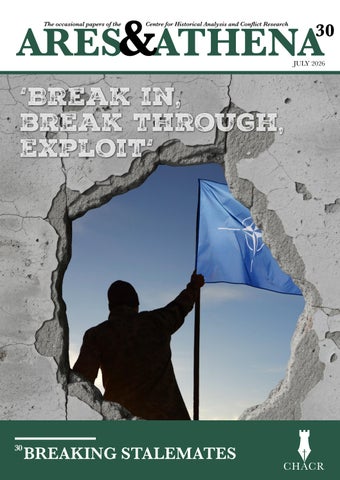
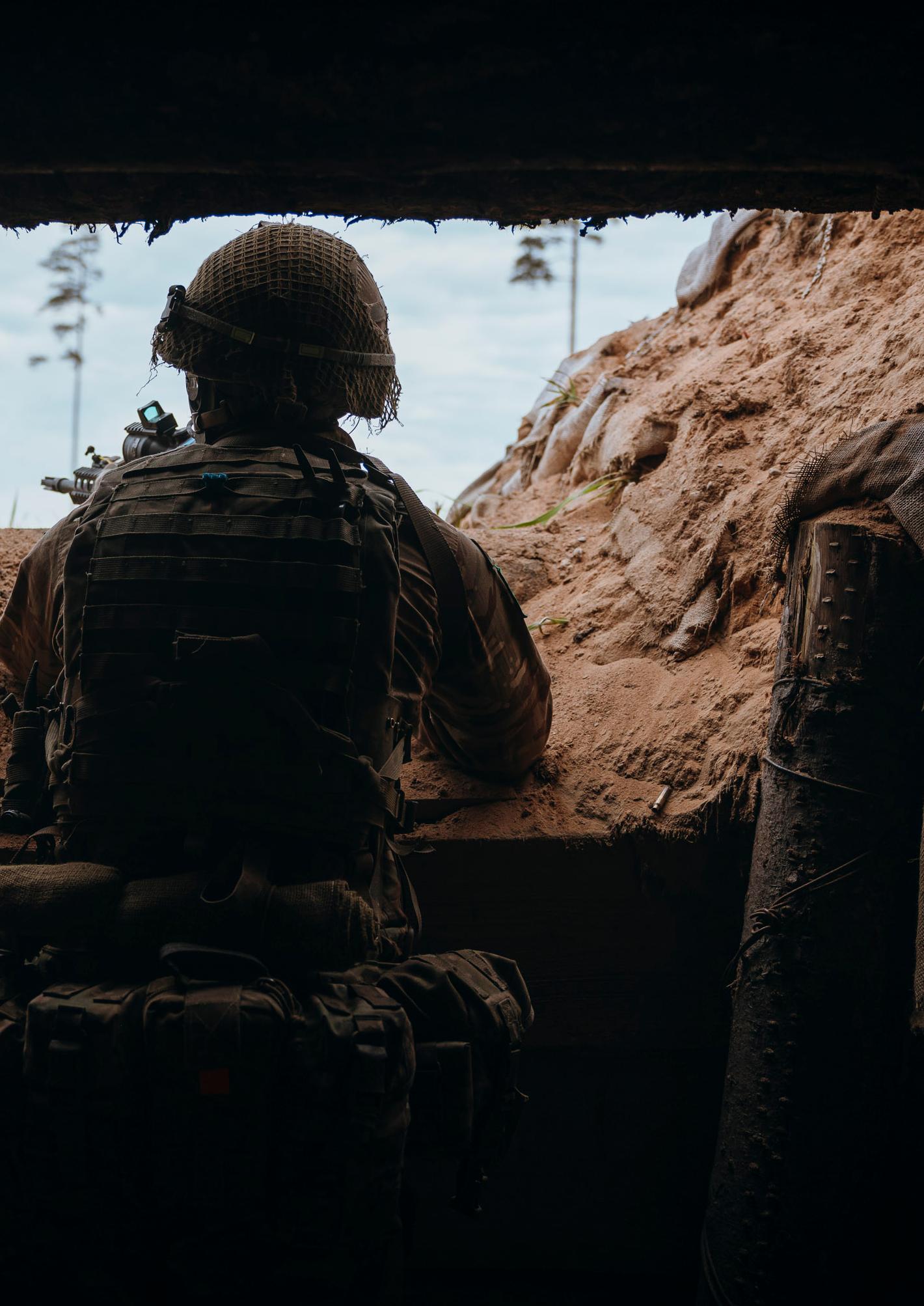
Entrenched thinking? There is a tendency to frame the problem [of stalemates] with neat notions of attrition, static lines of trenches, fortifications, mud and wire, a lack of manoeuvre, hard pounding (by both flesh and ammunition) and, as often as not, poor generalship.
BREAKING STALEMATES: HOW’S OUR THINKING GOING?
Major General (Retd) Dr Andrew Sharpe Director, CHACR
This edition of Ares & Athena is the product of work generated by the Commander of the Allied Rapid Reaction Corps, or the ARRC. Having read The British Army Review special edition that was produced in June 2023 on the subject of Breaking Stalemates, Commander ARRC felt that his Corps, faced with its demanding role as the Supreme Allied Commander Europe’s principal reserve force, and thus charged with being able to break stalemates in order to conduct those complex operations labelled ‘restore missions’, would not only benefit from reading that publication, but from the commissioning of some further research into the history, background and first-order questions that underpin the problem. This research, thereafter, has become the foundation for an exploitation discussion and programme that Commander ARRC is leading in order to inform the Corps’ NATO mission set.
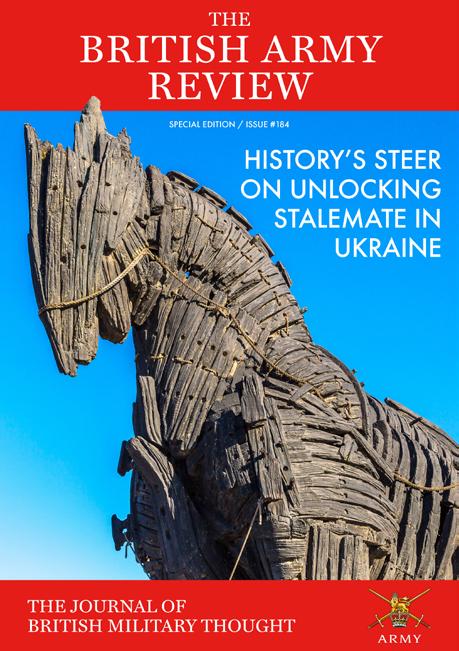
The British Army Review 184, entitled History’s Steer On Unlocking Stalemate In Ukraine, had seen its genesis in work commissioned by the UK Ministry of Defence and Army HQ in cooperation with the Ukrainian Ministry of Defence. Once that study had been delivered, it was suggested by the Army that much benefit could be gained from publishing some of the work done for that study as a British Army Review special edition. Although the critical reader might observe that some of the observations made in its conclusions have been overtaken by events, the more generous would observe that, in the same way, those same observations have been validated by events! Either way, this Ares & Athena builds on the foundations delivered in that publication, and readers of this work are urged to twin it with a (re-)reading of British Army Review 184 in order to derive the most benefit.
resolve the stalemate itself. With that clear headmark (‘what for?’) determined, those faced with the resolution of the next problem can get on with pondering the ‘how?’.
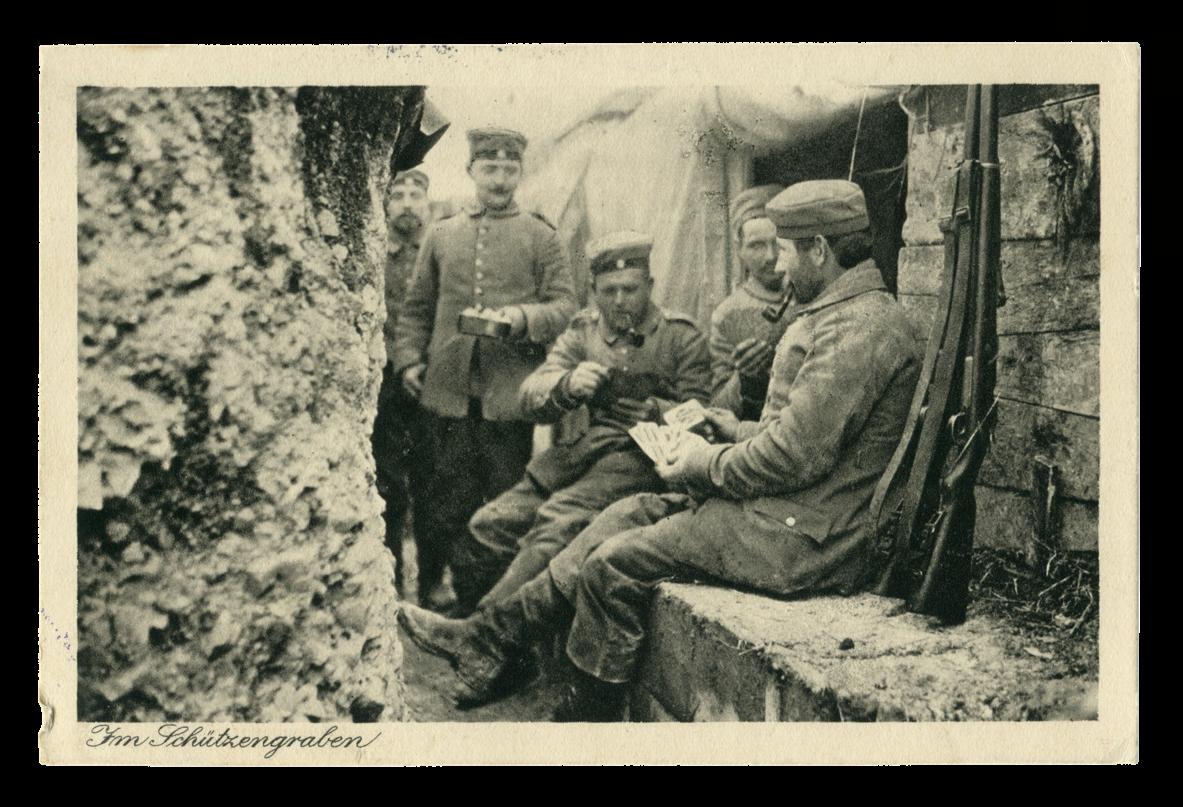
Classically, when considering the notion of a stalemate on the battlefield, the military mind defaults to comparisons with, and discussions of, the First World War. There is a tendency to frame the problem with neat notions of attrition, static lines of trenches, fortifications, mud and wire, a lack of manoeuvre, hard pounding (by both flesh and ammunition) and, as often as not, poor generalship. These are the clichés of land warfare stalemates, but clichés often become clichés because they carry self-evident truths that bear regular repetition. At its most basic, this characterisation of a stalemate has at least one side, but more normally all of those sides involved, held in a frustrated and frustrating check, with manoeuvre at scale inhibited, with all players unable to resort to anything more than mutually blocking meaningful progress while suffering attrition. The First World War sticks in our minds because of the long duration, four years, of static frustration and destruction and loss of life on a huge scale. So surely that’s the apogee of a military stalemate, and therefore a case study worth holding up as the ultimate template against which all other military stalemates can be measured?
In basic terms, a stalemate is simply a situation in which, regardless of the tools apparently available to them, neither side in a conflict can see a way through to advantageous conclusion. The first thing that one should glean from that definition would be that it is fairly fundamental to frame in one’s mind what that ‘advantageous conclusion’ might look like, before embarking on any series of actions, strategic, operational or tactical.
So, as Field Marshal Slim would have it, “think it through to the finish, from the start”. Or, as General and Mrs Clausewitz would have it in their combined efforts of note and footnote, you need to understand that war must be rooted in policy and politics, and therefore to policy and politics it must return; thus for war to have validity as an instrument of statecraft, you must understand, with real clarity, what you are trying to achieve with this awful strategic tool before you use it – on both moral and practical grounds. So, only when you have a clearly identified and articulated goal beyond the stalemate, can you go about thinking about how you might
Certainly, and so we do in this publication, and in the aforementioned British Army Review special edition. But warfare is not that simple, and stalemates come in many forms. For example, it has become fashionable, once again, for military analysts to revisit the period of stand-off in Europe between 1950 and 1990 as a useful comparator for the current European strategic context. The Cold War was absolutely about generating a long-lasting military operational and strategic stalemate for politico-strategic ends. It was a deliberate, desirable (because, through successful deterrence, it prevented a hot war) and long-drawn-out tactic to use the balance of military threat to wear an opponent down through the erosion of his economic and moral foundations. For the NATO allies the designed and desired end-state was a Soviet Union, and, by association, a Warsaw Pact, worn down over time, and economically exhausted to the point of political collapse, through the imposition of a military stalemate brought about by successful deterrence. True ‘winning’, for NATO, was ensuring that the Alliance did not have to fight by demonstrably being ready to fight and, more likely than not, prevail.
The breadth and depth of history offer multiple, and very varied, examples of military stalemates. What about, for example, the Thirty Years War of 1618 to 1648, often seen as the birth of the modern notion of ‘operational art’ that Napoleon, through hard study, would recognise and perfect in his Corps d’Armées system that still underpins our modern thinking? The Thirty Years War was a war of manoeuvre on the grandest of scales, yet was absolutely characterised by a frustrating stalemate in strategic and even operational terms,
where little or nothing was achieved in terms of positive outcomes. Not only does 30 years represent a timespan sevenand-a-half times as long as the First World War, but the scale of destruction and the geographic breadth of the conflict across Europe was vast. Somewhere between six and eight million Europeans died in the conflict – thus about six to eight per cent of the continent’s population at the time were killed (compared to somewhere between four and five per cent of the population of Europe that were killed in the First World War).
In the midst of this war, in the 1630s, there was certainly a familiar stand-off of defensive lines, entrenchments, fortifications, sieges and attrition. But the genius of the two great captains of the day – Gustavus Adolphus with his Swedish/German army, and Wallenstein with his Hapsburg Army reinforced at scale by hardened mercenaries – was to be found in their manoeuvres and counter-manoeuvres on a continental scale. Certainly, it represented a ‘horse and tank’ moment when Gustavus’s highly trained (in the Dutch fashion) army perfected fast volley fire in extended lines, allowing him to out-fight and out-manoeuvre the giant Tercios of the Hapsburg Army that had dominated European land warfare tactics for so long. The tipping of the balance of tactical favour meant that while Gustavus sought to manoeuvre at an operational level in order to bring Wallenstein to battle, his opponent counter-manoeuvred in order to threaten rear areas and avoid those pitched battles. Thus the Swedes, in their agile extended lines, with welltrained, rapidly-firing musketeers, could rarely break the giant unwieldy Tercios of massed pikemen and musketeers who relied on bulk and brute force in contact to prevail. This was not because they were not the professionally and capability-based superiors to their opponents, led by a tactically superior general – they were all of those things – but quite simply because their General’s opponent put his operational art effort into avoiding pitched battle. Wallenstein’s view was that he would almost certainly lose if he confronted this time-honoured problem in a time-honoured way. In this war, like in the Cold War, but in a very different way, the opposing generals wore down the political will to use war as an instrument of policy by eroding the economic and moral will of the politicians to keep going, rather than by engaging in war-winning, or war-losing, decisive battles.
So let us take all of those different generic categories of a stalemate and offer some equally generic actions that must be required of those who are tasked with ‘breaking the stalemate’. First, as we have seen, one needs a very clear understanding of what we wish to break the stalemate for. Thus, post stalemate, what is our ideal objective? Second, how can we stop the current situation from continuing to prevail? Or, in more classic terms, how can we fight the ‘break in battle’ successfully. Third, how can we maintain this new balance in order to facilitate our next actions? Or, again in more classic terms, how can we break through and protect and sustain our charge out into the green fields beyond? And finally how are we then going to exploit and sustain this success to the positive conclusion that we identified at the outset. Positive circle completed. Simple!
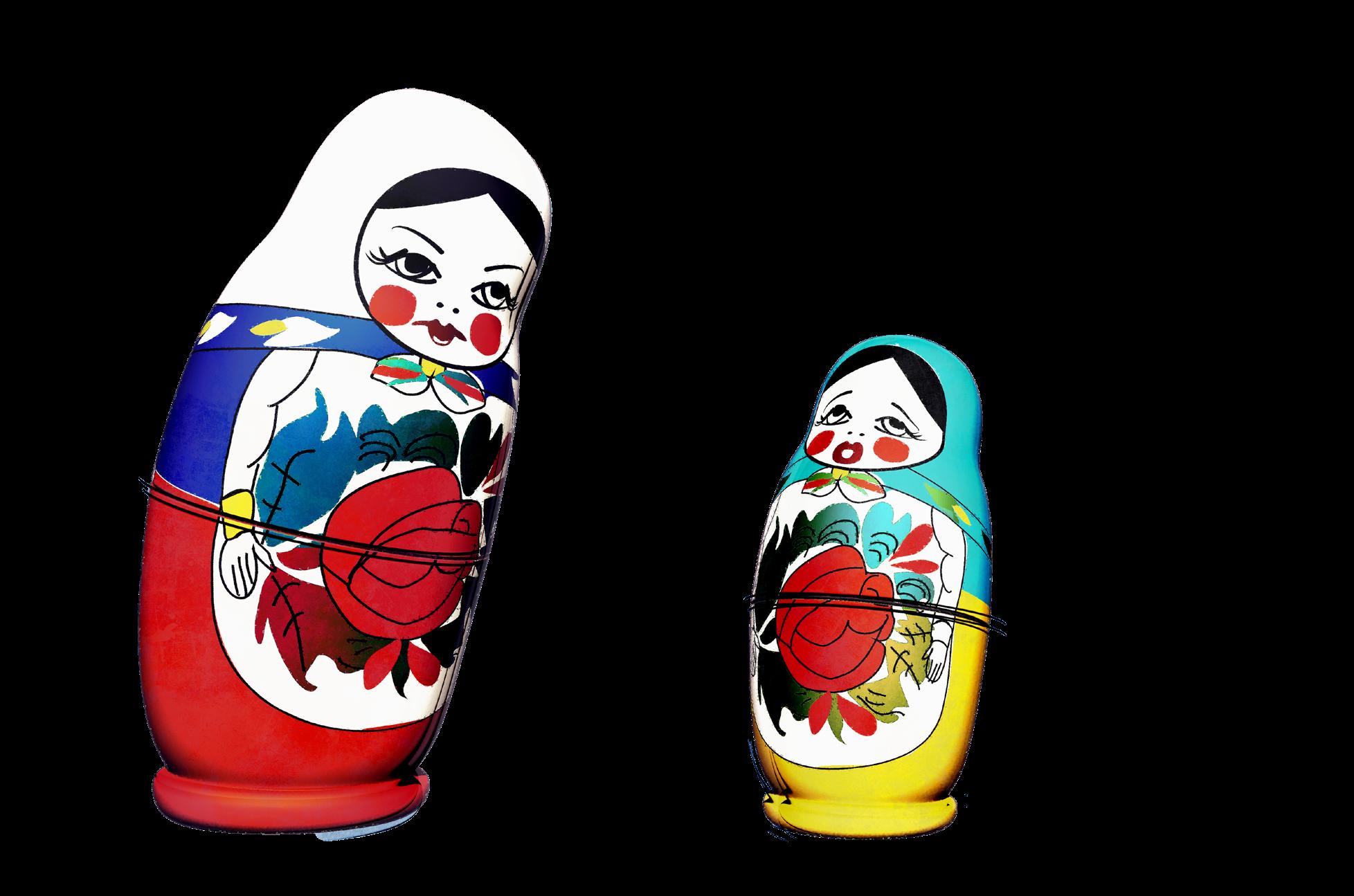
The Catch 22 that has faced the Ukrainian Army, opposed by the strength and depth of the battlefield stalemate that confronts it, is a timeless one.
Or, at least, simple to state and to understand. But fiendishly difficult to achieve, whether by confronting the problem in a traditional or conventional mindset, or by thinking laterally and out of the box. The ARRC’s mission set may well include a task to restore territory seized by an opponent. The war in Ukraine has reminded us, if we needed reminding, that territory seized is territory that is very hard to regain. The Catch 22 that has faced the Ukrainian Army, opposed by the strength and depth of the battlefield stalemate that confronts it, is a timeless one. The breakin battle is immensely challenging and requires enormous resource. The breakthrough-andout battle (and the protection and sustainment of the breakthrough) is equally challenging. Once break-out is achieved, the identified end can only be attained if those who have broken through then deliver the level of resource and capability required to exploit the tactical success through operational manoeuvre to favourable strategic conclusion. The papers in this research publication explore these enduring truths through multiple historical and current lenses: German, British, Russian, Ukrainian and French.
Thus confronted with a military problem that seemed unresolvable (Gustavus will beat me), Wallenstein had used his imagination and skill to apply his army to manoeuvre not on the battlefield but on the campaigning field. It was against this that Clausewitz protested. At the heart of his work, as Napoleon’s combined tactical and operational successes had shown him, is the idea that operational manoeuvre in order to bring about the decisive battle, won through capability and tactical superiority, was the goal of all who sought to be great captains of war. It is a long read, but the team that conducted this research would most strongly recommend to the professionally curious the excellent book The Allure of Battle by Cathal Nolan of Boston University’s International History Institute. In this respect, his examination of what breaks military stalemates and, ultimately, wins wars, is most instructive.1
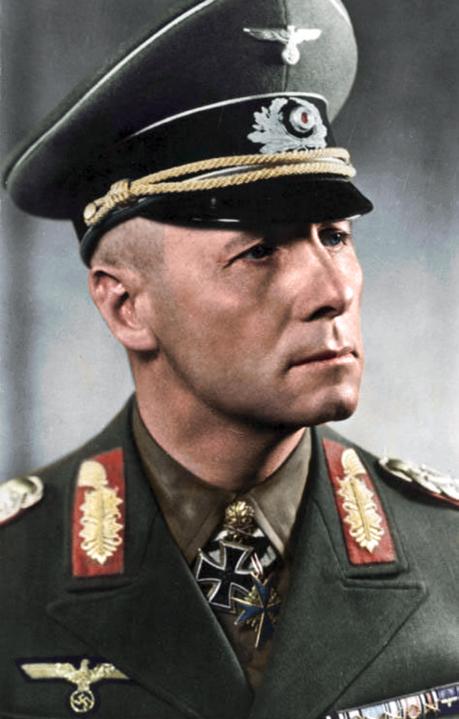
While charged with offering food for thought, rather than presuming to offer clever solutions to this timeless conundrum, we are convinced that the ‘Great Captain’ that severs this particular gordian knot will need to be many things. They will need to be: a tactical innovator (like Gustavus Adolphus, Fuller, Guderian and Liddel Hart); an operational innovator (like Napoleon); a technological innovator (like Tritton and Wilson who designed the first British tanks in the First World War); an individual capable of thinking beyond the obvious and conventional military way of solving a problem, and seeking ways around the problem instead of cracking it head on (like Wallenstein, Hannibal or Hannibal’s nemesis Fabius Cunctator); a hardened and experienced practitioner (like Rommel); and yet also an exasperating pragmatist who understands that mass matters, and that you require enough capability to do what you need to do, and then to exploit what you have done, and not to do anything until you have amassed that capability (like Montgomery). A leader with those collective attributes will be the Captain that prevails over whatever new stalemate confronts them, regardless of its unique character. It’s a big ask!
1Cathal J Nolan; The Allure Of Battle; Oxford University Press; 2017; ISBN 9780190931513.
TACTICAL BREAKTHROUGH OR OPERATIONAL EXPLOITATION?
Professor Matthias Strohn Head of Historical Analysis, CHACR
The 1918 offensives that were designed to win the war – tactical success, operational failure and strategic disaster
Recent operations in Ukraine have forced Western forces to consider how military stalemate in a large conventional war can be broken. This is not a new question. Some time ago, the CHACR published a special edition of The British Army Review which used examples from history to provide insights into how a stalemate can be unlocked.1 The article that you, the reader, have in front of you now, builds on this work and provides more detailed information and analysis on two case studies – the German offensives in the spring of 1918 and Fall Gelb, the German invasion in the west in 1940. One of the main questions within the context of stalemate is how to coordinate the different levels of war: how can you achieve a tactical break-in, widen this into a break-through and then exploit this success at the operational level? What are the challenges in turning such a successful battle into a campaign with strategic consequences? The answers that the German planners found to these questions differed in 1918 and 1940. A comparison of the two campaigns can thus offer wider insights into the question of how a stalemate can be broken by military force.
The First World War is often remembered for the brutal trench warfare that dominated the Western Front between 1914 and 1918. After the early mobile campaigns of the war, both the Allied and German armies became entrenched in defensive positions stretching from the North Sea to the Swiss border. For years, neither side could achieve a decisive breakthrough. Massive offensives such as the Battle of the Somme and Verdun in 1916, and the Third Battle of Ypres in 1917 resulted in enormous casualties but produced only limited territorial gains. The exception to this was the British attack at Cambrai in 1917. Arguably, this was one of only two episodes during the entire war in which an army managed to break through the enemy’s fully established and manned defensive position (the other one being the German 1918 offensive) on the Western Front.
“”
In 1918, the German Army achieved something that had seemed impossible for much of the war. Through a combination of strategic opportunity, new military tactics, improved artillery techniques and carefully planned offensives, Germany temporarily broke the trench deadlock and advanced deeper into Allied territory than at any time since 1914.
1‘History’s Steer on Unlocking Stalemate in Ukraine’, The British Army Review, special edition, Issue 184.
2Many books have been written about the offensives. For a short overview, consult Matthias Strohn, ‘1918: the final year of World War I and its long shadow in history’, in idem: 1918. Winning the War, Losing the War, Oxford 2018, pp. 22-38. For a thorough analysis, see David Stevenson, With our Backs to the Wall. Victory and Defeat in 1918, Harvard 2011.
warfare, the British forces pushed through the German defensive belt. However, the tactical success was squandered by the inability to move to the operational exploitation of this impressive victory.
In 1918, however, the German Army achieved something that had seemed impossible for much of the war. Through a combination of strategic opportunity, new military tactics, improved artillery techniques and carefully planned offensives, Germany temporarily broke the trench deadlock and advanced deeper into Allied territory than at any time since 1914. By the standards of the First World War, Germany conquered a vast area of enemy territory. Although these successes ultimately failed to bring victory, they demonstrated that the deadlock of trench warfare could be overcome.2
The key factor that allowed Germany to attempt a breakthrough on the Western Front was the collapse of Russia. In 1917, Russia experienced revolution and political instability, ultimately leading to the Bolsheviks seizing power. This opened the way for peace negotiations and, in March 1918, the peace treaty of Brest Litovsk officially removed Russia from the war and saw the Central Powers victorious on the Eastern Front. The strategic consequences were enormous. Germany no longer needed to fight a major war on two fronts. Although occupation troops were stationed in the east, nearly 50 divisions could be transferred from the Eastern Front to reinforce German forces in France and Belgium. For the first time since the opening months of the war, Germany possessed a significant numerical advantage on the Western Front. However, German political and military leaders recognised that this advantage would be temporary. American troops had begun to arrive in Europe after the United States had entered the war in April 1917. Although the American Army was still building its strength, German commanders understood that millions of fresh American soldiers would eventually tilt the balance in favour of the Allies.
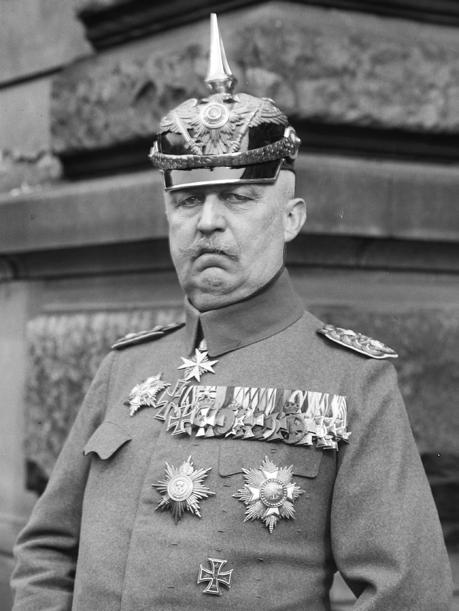
Practically, this left Germany with two military options in the west: first, stay on the defensive and attrit the enemy forces. During the previous battles on the Western Front, the Allies had, generally speaking, lost more men than the Germans, and war weariness was beginning to sink in in Britain and France. This approach could have worked, were it not for the Americans. Sooner or later the German defensive systems would be overcome by the united Allied troops. Therefore, General Erich Ludendorff, First Quartermaster General and effectively the chief strategist of Germany’s war effort, decided to choose the offensive. The window for possible success was small: Ludendorff believed that Germany had only a few months in which to achieve victory, before American soldiers would swing the pendulum of victory from the Germans to the enemy. The German Army therefore prepared a major offensive designed to defeat the Allies before American power could fully influence the conflict.
In order to ensure military victory, the Germans invested heavily in training and new tactical approaches. Training camps were set up for the troops behind the front and every division earmarked for the decisive attack was ordered to practice new tactics and cooperation with the artillery. This was deemed very important because the experience of the German Army in the West had predominantly been that of an army on the defence, and it was felt that many divisions lacked the training necessary for offensive warfare.
and will to fight. Hitting the enemy’s moral component of fighting power became more important than the physical one. In theory, this might reduce overall casualties on the German side, although it was accepted that the stormtroopers would suffer dearly. As a consequence, only unmarried volunteers under the age of 25 were accepted as members of these units.
In the German planning of 1918, artillery still played a crucial role. Earlier offensives had often involved artillery bombardments lasting days or even weeks. Although destructive, these bombardments alerted defenders that an attack was coming. Enemy troops could reinforce threatened sectors, move reserves into position and prepare for the coming fight. By 1918, German artillery officers had developed a different approach. They used brief but extremely intense bombardments designed to achieve maximum surprise. Advanced mathematical calculations allowed artillery units to hit targets accurately without extensive preliminary ranging shots. The bombardments focused on multiple objectives simultaneously. Highexplosive shells targeted artillery batteries and defensive positions, while gas shells disrupted communications and prevented enemy troops from moving freely. Key headquarters and transport centres were also attacked.
Infiltration tactics, which had been trialled and tested since 1916, became the new ideal. Instead of attacking in large formations in the first wave, specialised assault units known as stormtroopers were supposed to be the first ones to go over the top. In the general order of battle, these troops were a minority among the standard infantry, but the German planners expected that this small contingent would have a decisive tactical impact. These soldiers received intensive training and were equipped with light machine guns, grenades, flamethrowers and other modern weapons suitable for close combat. The objective of stormtrooper units was not to capture every enemy position. Instead, they were instructed to identify weak points in the enemy line and penetrate deeply behind the front. Strongpoints that resisted were bypassed and left for followup troops to deal with later. Their actions were to disrupt enemy communications, isolate defensive positions and create confusion among Allied commanders and troops. By attacking command centres, artillery batteries and supply routes they would weaken the overall effectiveness of Allied defences. Using momentum and surprise, the tactical emphasis shifted from the destruction of the enemy to the defeat of the enemy forces, mainly by undermining and shattering their cohesion
Ludendorff believed that Germany had only a few months in which to achieve victory, before American soldiers would swing the pendulum of victory from the Germans to the enemy.
Using these new procedures, the Germans felt confident that the enemy line could be broken. On 21 March 1918, the day had come and Operation Michael began, targeting the British Fifth Army along the Somme sector. 73 German division took part in the attack and, during the course of the battle, troops from 90 division took part in the assault. Throughout, the Germans deployed on average nearly 1.4 million soldiers per day. The offensive began with one of the largest artillery bombardments of the war. Thousands of guns fired millions of shells in a carefully coordinated attack. Gas shells, high explosives and smoke shells struck Allied positions simultaneously. Following the bombardment, stormtrooper units advanced through thick fog that concealed their movements, followed by the line infantry.3 The fog further enhanced the element of surprise and made it difficult for British defenders to coordinate their response. The initial results were dramatic. German forces rapidly penetrated British lines and advanced further in a few days than either side had achieved in years of trench warfare. Entire sections of the Allied front collapsed and thousands of prisoners were captured. The British Fifth Army was forced into retreat. German troops crossed territory that had remained largely untouched since the Battle of the Somme in 1916. For a brief period, it appeared possible that Germany might split the British and French armies, a development that could have had catastrophic consequences for the Allies.
3A good account of the actions during the opening phases of the battle can be gained from Ernst Jünger, The Storm of Steel. From the Diary of a German Strom-Troop Officer on the Western Front, London 1994, pp. 244-281. Originally published in 1920, this is one of the most famous German accounts of the First World War, and it has rivalled in popularity Erich Maria Remarque’s All Quiet on the Western Front.
The German forces were organised into three armies: from the north these were the 17th, 2nd and 18th armies. In Ludendorff’s plan, the centre army was to strike the decisive blow, while the other two were offering flank protection. The battle unfolded differently, however, on 21 March and during
the subsequent days. 18th Army in the south was the most successful and gained the most territory. Ludendorff was now faced with a difficult decision: should he reinforce success and send reserve troops for the successful 18th Army, or should he stick with the original plan and concentrate and renew the attacks in the centre? Ludendorff decided on the former option. As a consequence, the German troops broke through the enemy lines along a front of 80 kilometres and advanced 65 kilometres into enemy territory. By the standards of the trench warfare of the First World War, these were successes hitherto unseen. The church bells were ringing in Germany and victory seemed imminent.
However, the situation soon became difficult for the Germans. One major problem was logistics. German troops advanced so rapidly that supply systems struggled to keep up. Roads had been damaged by years of fighting and transport networks could not adequately support the advancing forces. Soldiers were exhausted, not least because of the malnourishment that they had had to suffer because of the British naval blockade. Many accounts tell of German troops stopping their attacks in order to fill their stomachs and day-sacks with the rations that they found in the British trenches. In addition, and despite new tactical approaches, German casualties had been very high. Between 21 March and 10 April 1918, the German troops deployed in the offensive suffered 303,750 casualties, of whom 35,163 were killed.4 These were casualties that Germany could not sustain.
Arguably the most pressing problem was that the German offensive lacked a clear operational or even strategic aim beyond ‘defeating the enemy forces’. In the preparations for the offensive, the Bavarian Crown Prince Rupprecht, commander of an army group on the Western Front, asked Ludendorff what the operational aim of the offensive was. The general famously replied: “I object to the word operation. We will punch a hole into their lines, and for the rest we shall see. This is how we did it in Russia.” Tactical necessities thus won over operational and strategic considerations. In some ways, the German Army won itself to death: it shattered the British Front lines and came close to defeating the British forces. In the end, the German Army ran out of steam and Allied reinforcements were rushed to the fight. Although impressive territorial gains were achieved, no decisive military target was captured. Operational thinking and strategic aims did not coincide with the tactical emphasis of the battle, and thus tactical gains could not lead to operational or even strategic victory.
On 6 April, Ludendorff terminated the offensive. What had been designed as the last throw of the dice had resulted in impressive tactical success, but no operationally decisive defeat of the enemy was achieved, nor were important targets captured. It was therefore clear that the Michael offensive was a strategic defeat and disaster for Germany. Ludendorff was not willing to accept this and he launched a number of further offensives hoping (more and more desperately) that one of these would result in a conclusive victory. Operation Georgette, lasting from 9 to 29 April, hit the British troops in Flanders and was designed to unhinge the British positions and advance towards the Channel. Once again, some
4Sanitätsbericht über das deutsche Heer im Weltkriege 1914/1918, III. Band, Berlin 1934, pp. 57-59.
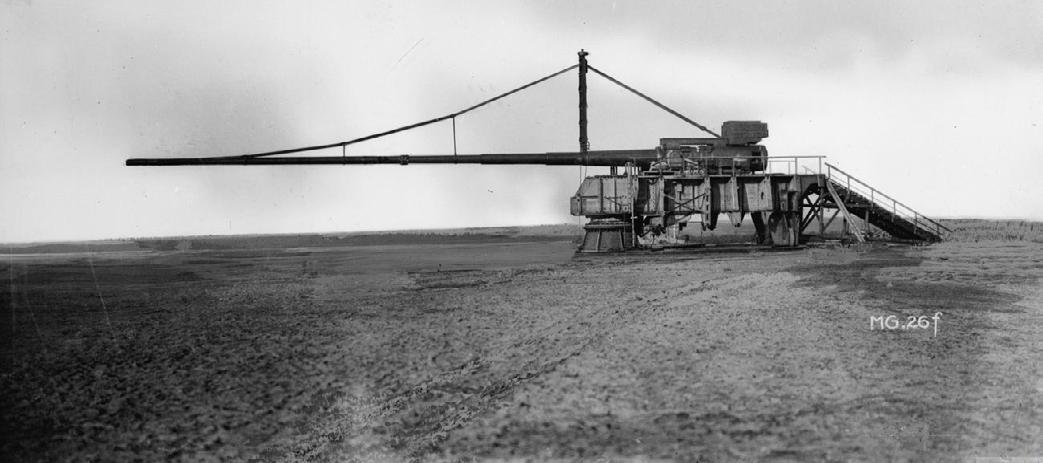
The Germans scored a propaganda victory: at the end of the offensive, German troops stood 92 kilometres away from Paris, and the ‘Paris gun’ was able to shell the French capital. In total just over 200 rounds were fired, of which 97 hit Paris and 62 the suburbs, killing 256 civilians and wounding 620.
tactical gains were made and some propaganda effects were achieved, such as the seizing of the famous Kemmel hill in the Ypres area, but, in the end, this offensive also stalled and was terminated. The casualties were relatively equal with approximately 110,000 on each side, but these were casualties that Germany could ill afford.
On 27 May, 7th Army launched operation Blücher-York (named after two famous German generals from the War of Liberation against Napoleon). In total, 29 German divisions were involved in this offensive, which seemed more successful than Georgette. Once again, territorial gains were impressive. In the first three days, German troops advanced 30 kilometres into enemy territory along a 50 kilometre front line. However, in the end, the attack was also stopped by French and British forces. Once again, no operational or strategically reachable objective had been defined or seized. Nevertheless, the Germans scored a propaganda victory: at the end of the offensive, German troops stood 92 kilometres away from Paris, and the ‘Paris gun’ was able to shell the French capital. In total just over 200 rounds were fired, of which 97 hit Paris and 62 the suburbs, killing 256 civilians and wounding 620.
The last two German offensives, Gneisenau (9-13 June) and Marneschutz-Reims (15-18 July), were not able to replicate the territorial gains of the previous attacks. Only a few kilometres of ground was seized. The Allied counter-offensive at the Marne, begun on 18 July, forced the Germans to abandon the last offensive, and, in August 1918, the Allies began the final major offensive of the war, the Hundred Days Offensive. Using tanks, aircraft, artillery and coordinated infantry attacks, their overwhelming forces pushed the exhausted German forces back across much of the territory gained earlier in the year. German morale declined rapidly. Soldiers recognised that victory was no longer achievable and that the war was lost. Food shortages, economic hardship and political unrest at home further weakened Germany’s position. The military situation deteriorated throughout the autumn. One by one, Germany’s allies surrendered. Faced with inevitable defeat, German leaders sought an armistice.
The German Army temporarily overcame the stalemate on the Western Front in 1918 through a combination of
favourable strategic circumstances, innovative tactics and improved military technology. The withdrawal of Russia from the war allowed Germany to concentrate forces in the west, while stormtrooper infiltration tactics and sophisticated artillery methods enabled breakthroughs that had eluded commanders for years. Operations such as Michael, Georgette and Blücher-York demonstrated that the enemy trench system was not an insurmountable obstacle. German forces achieved dramatic tactical success (albeit with high casualties) and restored mobility to a battlefield that had been static more or less since 1914. For a brief period, it appeared possible that Germany might force the Allies to accept defeat. However, overcoming the military stalemate was not the same as winning the war. Despite the numbers involved, the German offensives remained offensives of tactical, rather than operational or strategic character.5 Germany lacked the resources, supplies and manpower necessary to exploit its tactical successes fully. The arrival of American troops, improved Allied coordination and growing German exhaustion ultimately reversed the situation. Although the 1918 offensives temporarily broke the deadlock of trench warfare, they failed to achieve their ultimate objective of securing victory for Germany. Instead, they exhausted the German Army and paved the way for the Allied victories that ended the First World War.
Fall Gelb and the defeat of the Western Allies in 1940. Tactical ability combined with operational boldness leads to strategic success. How the German Army overcame the stalemate on the Western Front in 1940.
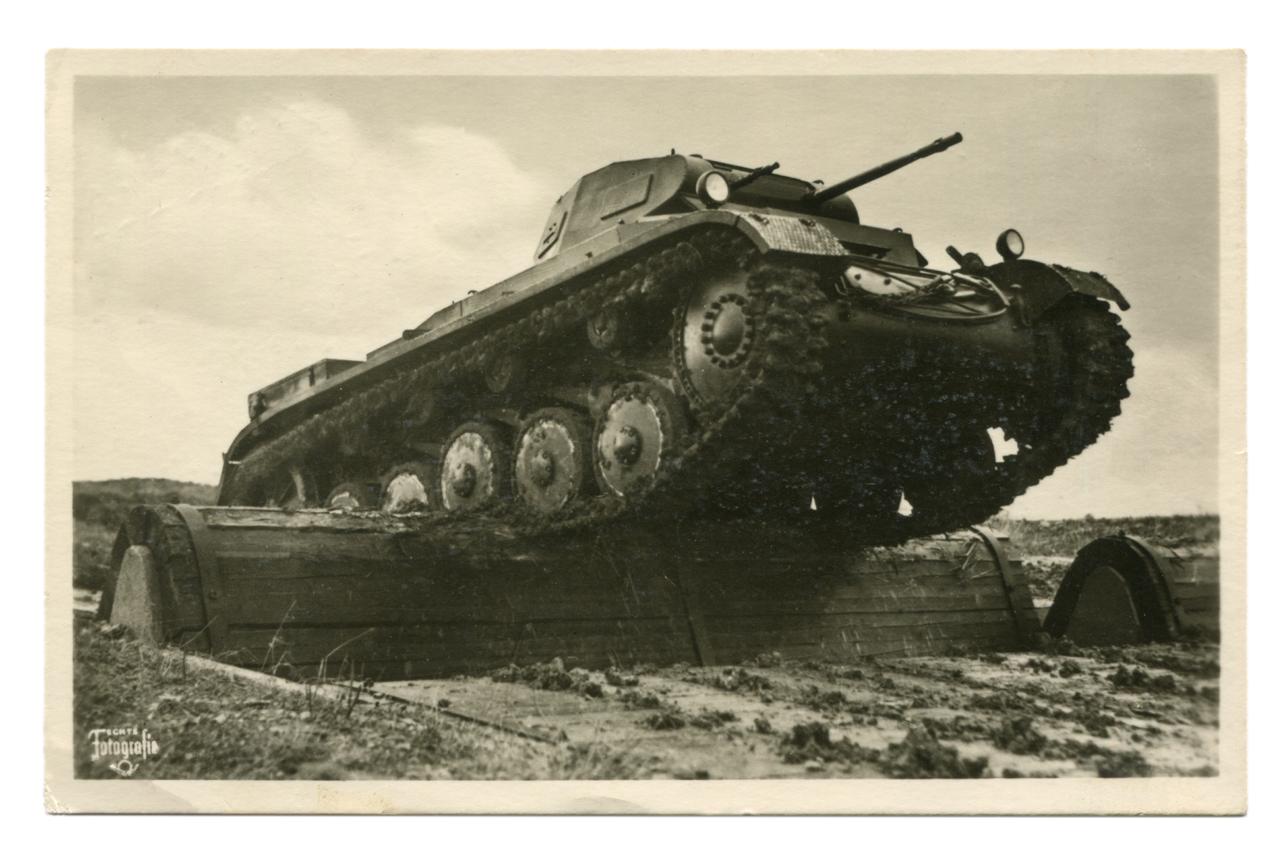
In contrast to the German offensives in the West in 1918, the German offensive in 1940 ended with a military victory. Within six weeks, German forces defeated the British Expeditionary Force and the armies of the Netherlands, Belgium and France, forcing France to sign an armistice on 22 June 1940. The speed and scale of this success shocked the world. France had been regarded as one of Europe’s strongest military powers, possessing a large army, extensive fortifications and the support of Britain. Allied forces were numerically superior; in the first phase of the offensive, 118 German divisions faced 151 Allied divisions (the German divisions later increased to 135). 7,000 German guns faced 14,000 Allied barrels. Even with tanks, the embodiment of German ‘Blitzkrieg’, the Allies held the advantage. In total, approximately 2,400 German Panzer were opposed by 4,200 Allied tanks – many of them better suited for 1940 warfare than the small and weakly armoured and armed
Mark 1 and 2 German tanks.6 And yet, German forces rapidly overcame Allied resistance and transformed the strategic situation in Europe. In the context of this Ares & Athena the campaign is particularly significant because it ended the period known as the ‘Phoney War’ and demonstrated how modern mechanised warfare could overcome the static defensive thinking that had dominated French military planning since the First World War – a thinking that was aimed at creating a stalemate situation similar to that of the First World War. Germany achieved success through a combination of innovative and daring operational planning, concentrated armoured formations, effective use of air power, superior communications and rapid exploitation of tactical and operational breakthrough. Although the term ‘Blitzkrieg’ has often been used to describe these methods, the campaign was the result of a complex interaction of trialled and tested military doctrine, leadership, technology and Allied mistakes.7
When Germany invaded Poland in September 1939, Britain and France declared war in accordance with their treaty obligations. However, little major fighting occurred on the Western Front during the following months. This period became known as the Phoney War, Sitzkrieg (‘sitting war’) or drôle de guerre (‘funny war’). Both sides mobilised large armies but avoided major offensive operations. French military planners expected a long war of attrition similar to the conflict of 1914-1918. Their strategy was heavily influenced by the lessons of the First World War, which had demonstrated the enormous defensive power of trenches, artillery and fortified positions. As the First World War had shown, a ‘re-run’ of the war in the 1940s would lead to an Allied victory, as long as the Germans could be held off long enough for the Allies to mobilise their stronger economic and industrial powers.
France’s confidence rested largely on the Maginot Line, a sophisticated system of fortifications stretching along much of the German-French border. Constructed during the 1930s, the line contained underground bunkers, artillery positions, observation posts and defensive obstacles. French leaders believed these fortifications would prevent a direct German invasion and provide time for mobilisation. Should the Germans attack the Maginot line, it was hoped that the fortifications would prevent large French casualties. This was important because the heavy blood loss of the First World War had scarred the national French psyche. In addition, it was expected that the deterrence factor of the Maginot Line would channel a potential offensive and that the Germans would be forced to invade through Belgium and northern France – similar to 1914. The British Expeditionary Force was deployed to France to support its ally. Together, British and French commanders planned to advance into Belgium if Germany launched an attack through that country. The expectation was that any future campaign would be relatively slow and methodical. Germany therefore faced a strategic challenge. A direct assault against the strongest
5Thorsten Loch, ‘German Operational Thinking in World War I’, in Matthias Strohn, ed., World War I Companion Oxford 2013, p. 44.
6For the figures, see Karl-Heinz Frieser, Blitzkrieg Legend. The 1940 Campaign in the West, Annapolis 2005, p. 65.
7For a recent re-evaluation of the campaign, see Roman Töppel., ed., Manstein. Kriegstagebücher und Briefe, 1939-1941, Paderborn 2025, in particular pp. 254-487
French defences would likely result in heavy casualties and a prolonged war, while an advance through Belgium would be met by the bulk of the Allied forces.
The German Army entered the Second World War with a different understanding of warfare. During the interwar years, German military thinkers studied the failures of the First World War and sought ways to avoid another attritional conflict.8 One of the key developments was the increasing importance of mechanisation, and the tank played an important role in German thinking. Lacking the industrial capacity to fully motorise or mechanise the Army, German officers argued that tanks should be concentrated into powerful formations capable of achieving decisive breakthroughs. In fact, the German Army of 1940 has been compared to a lance: a short metal tip with a long wooden shaft – in 1940, the German Army consisted of 157 divisions (not all of these were used in the 1940 offensive). Of these only ten were tank divisions and six were motorised infantry divisions. The remaining formations would march into battle just like their fathers had done in 1918.9
The development of radio communications was equally important. Radios allowed commanders to coordinate movements rapidly and adapt to changing circumstances on the battlefield. This flexibility gave German units a significant advantage over their opponents who relied more heavily on fixed plans and slower communication systems. Although ‘Blitzkrieg’ was not an official German doctrine, it has become synonymous with a description of the combination of speed, surprise, concentration of force and close cooperation between ground and air units. German commanders sought to disrupt enemy decision-making by moving faster than their opponents could react. In some ways, the military factors employed here were similar to those used in the 1918 offensives. Shattering the enemy’s cohesion and will to fight became the main aim. Defeating, not destroying the enemy could achieve tactical success. There was one difference though: while the 1918 offensives had taken the tactical reality as the key factor in the planning and subsequent execution of the operations, the planners of 1940 concentrated on the operational level of war.
The original German invasion plan resembled the Schlieffen Plan of 1914 and involved a major advance through Belgium. However, this approach was considered predictable and risked encountering the bulk of the Allied forces head on. General Erich von Manstein proposed a more ambitious alternative. His plan recognised that Allied commanders expected the main German attack to occur in northern Belgium, and this belief had been reinforced when the German plans for an invasion through this part of Europe had fallen into Allied hands on 10 January. A plane, carrying the plans for the early version of Fall Gelb, crash-landed in Belgium. If Germany could encourage this belief, Allied forces would move northward to meet the perceived threat. Meanwhile, the main German attack would pass through the Ardennes Forest. This heavily wooded region was considered difficult terrain for
8For a discussion of the German Army in the inter-war period, see Matthias Strohn, The German Army and the Defence of the Reich. Military Doctrine and the Conduct of the Defensive Battle, 1918-1939, paperback edition Cambridge 2016.
9Frieser, p. 39.
Although ‘Blitzkrieg’ was not an official German doctrine, it has become synonymous with a description of the combination of speed, surprise, concentration of force and close cooperation between ground and air units.
large mechanised forces. Many French commanders believed it was unsuitable for tanks and therefore assigned relatively weak forces to defend it. It is no surprise that the Maginot Line also ended in the area, simply because the terrain was regarded as good enough protection against German attacks. Under Manstein’s proposal, German armoured divisions would move through the Ardennes, cross the River Meuse near Sedan, and then advance rapidly towards the English Channel. This manoeuvre would trap Allied armies that had moved into Belgium. Adolf Hitler approved the plan, which became the basis of the German offensive launched in May 1940. The differences to the 1918 plans are striking. In 1940, the Germans chose weakly defended and tactically difficult terrain in order to achieve operational success. The defeat of the Allied forces in northern France and Belgium was the main aim, not merely “punching a hole into their line” as Ludendorff had said in 1918.
The German offensive began on 10 May 1940 with attacks against the Netherlands, Belgium and Luxembourg. German airborne troops played a particularly important role. Paratroopers captured key bridges, airfields and defensive positions. One of the most famous operations involved the capture of the Belgian fortress of Eben-Emael, one of the strongest fortifications in Europe. These attacks achieved their intended effect. Allied commanders interpreted the German advance as confirmation that the main offensive was occurring in the north. British and French forces therefore moved into Belgium according to their pre-war plans. As Allied armies advanced northward, they unknowingly moved into a trap. Their strongest forces were being drawn away from the sector where the decisive German attack would occur.
While attention focused on northern Belgium, the main German armoured formations advanced through the Ardennes. This movement involved enormous logistical challenges. Thousands of vehicles, tanks, artillery pieces and support units travelled along narrow roads through difficult terrain. Despite concerns that traffic congestion might delay the offensive, German units maintained their momentum. The French had not expected such a large force to appear in the region and were unprepared for the speed of the advance. The success of this movement reflected the effectiveness
of German planning and organisation. By the time French commanders recognised the scale of the threat, German forces were already approaching the Meuse River.
The crossing of the Meuse near Sedan became the decisive moment of the campaign. The French expected the river to provide a natural defensive barrier and believed that any German attempt to cross would require significant preparation. On 13 May 1940, German forces launched a massive assault supported by intensive aerial bombardment. In fact, the tactical air support was the strongest (as per aircraft per kilometre) achieved by the Luftwaffe during the entire Second World War. Aircraft of the Luftwaffe attacked French positions, communications centres and artillery batteries. The psychological impact of the bombing was considerable. Many French soldiers experienced confusion and disorganisation, while command systems struggled to function effectively under attack. When the German ground forces attacked, they also achieved an impressive concentration of force. Within a sector that was approximately ten kilometres wide, the Germans had concentrated three out of their ten Panzer divisions – nearly a third of the overall armoured force that the German Wehrmacht possessed at the time. German infantry established bridgeheads across the river and secured positions on the far bank. Engineers quickly constructed pontoon bridges, allowing tanks and vehicles to cross. Once armoured units began moving through the breach, the situation deteriorated rapidly for the French defenders, despite some heavy fighting and valiant French armoured counter-attacks. German forces expanded the breakthrough and advanced deep into the French rear.
Following the breakthrough at Sedan, German armoured forces advanced westward with extraordinary speed. Their objective was to reach the English Channel and isolate Allied forces operating in Belgium. This phase of the campaign highlighted the importance of mobility within the overall operational plan. German Panzer and motorised divisions bypassed many pockets of resistance and focused on maintaining momentum, while the infantry divisions tried to catch up with the motorised troops. On 20 May 1940, German forces reached the Channel near Abbeville. This achievement effectively divided the Allied armies and trapped large numbers of British, French and Belgian troops. The German advance created a crisis for the Allied armies in northern France and Belgium. Cut off from the south, they faced the prospect of destruction or capture. Following the Allied evacuation from Dunkirk, Germany launched the second phase of its offensive, known as Fall Rot (Case Red). French forces attempted to establish new defensive positions along the Somme and Aisne rivers. However, the earlier defeats had severely weakened morale and reduced operational effectiveness. German units breached the new defensive lines and continued their advance. The superiority of German mobility, communications and coordination remained evident throughout the campaign. On 14 June 1940, German troops entered Paris, which had been declared an open city. The French government had already left the city, recognising that continued resistance was unlikely to succeed. Political divisions within France further complicated the situation. Some leaders wished to continue fighting from overseas territories, while others argued that an armistice was necessary. Ultimately, France requested an armistice. The agreement was signed on 22 June at Compiegne, in the
same railway carriage in which the Germans had signed the armistice in November 1918.
The German Wehrmacht overcame the stalemate on the Western Front in 1940 through a combination of innovative planning, mechanised warfare, effective communications and close cooperation between air and ground forces. German operational planning was superior to that of the Allies, although the Allied planning was sound for the type of war they intended to fight. The sickle cut plan exploited Allied expectations and directed the main attack through a sector considered unsuitable for mechanised warfare. Second, the concentration of forces in the Schwerpunkt of the offensive provided overwhelming striking power at operationally decisive points. The campaign demonstrated that momentum and speed could defeat static defensive systems held by numerically superior enemy forces that had dominated military thinking since the First World War. Effective radio communications allowed German commanders to maintain flexibility and exploit opportunities rapidly. In line with traditional German military thought, German leadership encouraged initiative among subordinate commanders. Officers were expected to act independently when circumstances required, increasing tactical and operational flexibility.
Many of these factors had also been employed in 1918. And yet the offensive then had failed, while Fall Gelb was a success. Why was this? In 1918, Ludendorff’s emphasis was on the tactical level, because the lessons of the First World War seemed to suggest that focusing on the operational level was futile if you were not able to achieve the tactical breakthrough in the first place. In 1918, Allied commanders, in particular the French, realised quickly that the German offensives would not result in an operational victory (unless the British forces totally collapsed under the German hammer blows). Their operational understanding of the defensive battle they were fighting was superior to the tactically driven German approach. In 1940, the situation was different; Fall Gelb had a clear operational aim and focus. The Allied plans and their belief that the Wehrmacht would ask for a rematch of 1914 created an operational situation that actually worked in the favour of the Germans. In some ways it might be right to argue that the Allies unintentionally let the Germans win the campaign of 1940.
At the time, the fall of France was seen as one of the most impressive military victories ever. However, it did not lead to peace. Britain refused Hitler’s peace offer after the collapse of France, and Hitler soon turned his attention eastwards to the Soviet Union. Further events of the Second World War have overshadowed the military victory gained by the Wehrmacht in 1940. This might be a final warning point. Tactical success can be turned into operational exploitation and can lead to victory on the battlefield – even against a numerically superior enemy. However, without sound strategic and political thought, even an impressive military operation and success that manages to break stalemate at the front line can be futile, and final defeat can be snatched from the jaws of strategic victory.10
10For the question of what “winning” actually means in war, consult the CHACR book: Matthias Strohn, ed., Winning Wars. The Enduring Nature and Changing Character of Victory From Antiquity to the 21st Century, Oxford 2020.
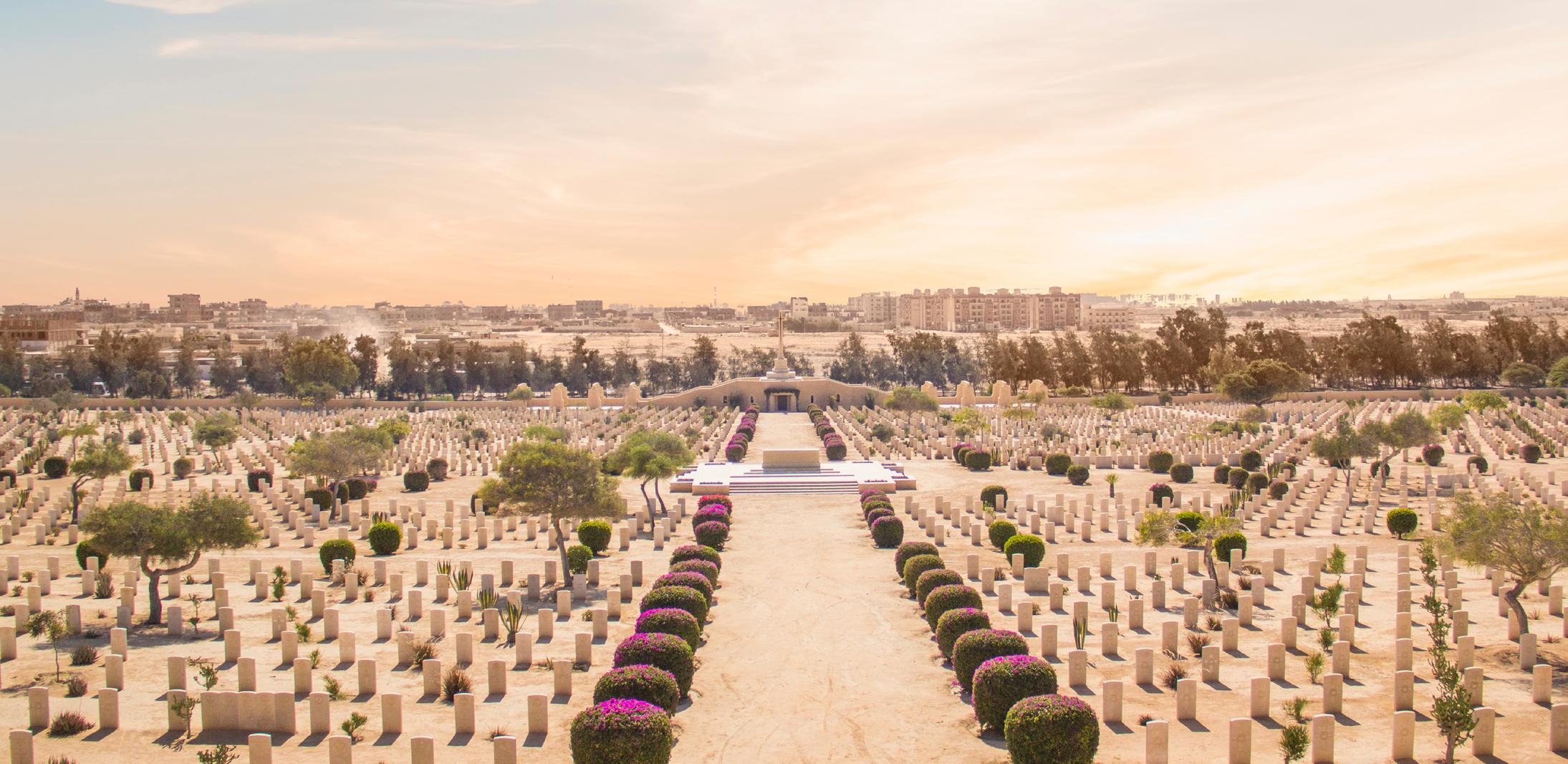
LESSONS FROM THE DESERT: THE BATTLES OF EL ALAMEIN 1942
Barr King’s College London
The concept of breaking through an enemy army’s line to penetrate, disrupt and ultimately destroy an enemy’s formation is probably as old as military history itself. Yet, an assault intended to ‘breakthrough’ has generally been considered as a second or third option – the best alternative has always been to find a way around an enemy line or enemy defences rather than hitting them head-on. Famous examples of manoeuvring around an enemy line include Frederick the Great’s victory at Leuthen in 1757, and the German attack through the Ardennes in 1940, which bypassed the formidable defences of the French Maginot line. Manoeuvring around a defensive line is inherently risky and uncertain – but can have very high rewards if successful. However, there are also numerous occasions where geography, the nature of the defence or the capabilities of the attacker make such manoeuvre impossible.
The concept of ‘breakthrough’ in its modern meaning really emerges from the increasingly complex tactical systems which developed on the Western Front of the First World War. While all armies had emphasised firepower, manoeuvre and decisive action before the conflict, the emergence of the lines of trenches from Switzerland to the sea limited any opportunities for manoeuvre. Manoeuvre around these defences became impossible; the only option was to seek a means of breaking through them. Decisive battle was replaced with deadlock. Battles became month-long struggles of firepower with heavy casualties and little tangible results. Attrition, rather than manoeuvre, became the reality of war in 1916-1917.
Yet, as the effort expended in attempting to break through the defences increased, so did the efforts devoted to defence develop as well. In early 1915, German defences on the Western Front were formed around just one trench line but, by mid-1916, these had grown to three lines. Experience during the gruelling battle of the Somme suggested that holding all three lines strongly simply led to heavy casualties for little gain. By 1917, the German Army had moved towards a modern system of defence which dispensed with a purely linear system altogether. In its place, there were three ‘lines’ which were not continuously held but included ‘pockets’ and ‘goose eggs’ of all-round defensive positions. This defensive
philosophy actively encouraged an enemy to break-in to the defences, where its strength and power would be sapped by these multiple pockets of resistance. While the outpost line was thinly held to break up and delay any attack, the main line of resistance was more strongly held with all-round defences. The reserve line had defences but also ‘jumping off’ points from which counter-attacks could be made to restore the main line.
These defensive innovations were, eventually, matched by offensive techniques which offered the chance of a successful break-in battle. The German Army utilised highly trained ‘Sturmtruppen’ and enormous weights of artillery fire to great effect in the spring offensives of 1918. Similarly, the Allies developed their own combined arms techniques of armour, infantry, artillery and airpower to mount highly successful break-in battles from August 1918 onwards. Yet while forces in the First World War could break-in, the challenge remained how to ‘breakthrough’ or ‘break-out’.
After the First World War, J.F.C. Fuller argued that greater use of technology and, in particular, more imaginative use of the tank, might have broken the deadlock more quickly, while Basil Liddell Hart suggested that the use of his strategy of the ‘indirect approach’ might have avoided major British commitment to the fighting on the Western Front altogether.1 Soviet theorists of the inter-war period criticised the Allied conduct of operations on the Western Front as a ‘pointless system for hammering in nails’.2 Soviet military thinkers proposed their theories of ‘deep battle’ and ‘operational art’ to replace what they saw as the ‘dead end’ of the Imperialist military system. This rejected the idea of a linear front and the search for victory through one decisive battle. Instead, it was suggested that a linked series of successive engagements fought throughout the enemy’s breadth and depth would lead to operational paralysis, which could then be exploited by a second echelon that would wreak havoc in the enemy’s rear. It was the cumulative effect of all these operations that would lead to victory.
1See J.F.C. Fuller, On Future Warfare, Sifton Praed, London, 1928; B.H. Liddell Hart, The Decisive Wars of History: A Study in Strategy, G. Bell, London, 1929, pp.159-231.
2G. Isserson, ‘The Evolution of Operational Art’, in (Harold S Orenstein (tr) The Evolution of Soviet Operational Art, 1927-1991: The Documentary Basis, Volume I Operational Art, 1927-1964, Frank Cass, London, 1995. pp.76.
Professor Niall
At the outset of the Second World War, it seemed that the power of armies to manoeuvre had been restored by airpower, armour, mechanisation and the flexibility offered by wireless voice control. The German Wehrmacht used these techniques to great effect in the early campaigns of Norway and France. Yet it was in the campaign fought in the western deserts of Egypt and Libya that the new forms of manoeuvre warfare were emphasised. This saw operations conducted over hundreds of miles of open desert by the first fully mechanised forces. While the British Western Desert Force first demonstrated the potential for decisive action in the wide sweeping movements of Operation Compass from December 1940 to February 1941, it was the German Afrika Korps (sent to Libya in January 1941 as a ‘blocking force’) which soon gained fame for bold and decisive manoeuvre.
It was in the aftermath of the battle of Gazala, the greatest British defeat in the desert, with the British Eighth Army streaming back towards the Egyptian delta, that General Auchinleck chose the El Alamein position as a last-ditch defence ‘line’. While the defences of the Alamein position were not continuous (or linear), they were selected by Auchinleck because the open desert narrowed to a 40 mile wide ‘gap’ between the Mediterranean Sea and the Quattara Depression, a vast area of salt marsh impassable for large mechanised formations. This limited the possibility of any outflanking manoeuvre, which General Erwin Rommel had utilised to devastating effect on so many recent occasions. Just as significant as the defences at Alamein and the narrow desert ‘gap’ was the ability to concentrate artillery fire on any threatened sector.
The lack of success – on both sides – revealed a new reality: the war in the desert had become a war of attrition and a positional fight rather than one based on manoeuvre. Rommel had placed his army in a precarious situation: thousands of miles from his main supply base and re-supply ports, he could neither go forwards or back.
Rommel threw his exhausted Panzerarmee Afrika at the Alamein defences in an attempt to break through these last defences in the early part of July 1942. Intense fighting erupted for the rest of the month as first the Axis forces, and then the Eighth Army, attempted to dislodge each other from increasingly firm defences. The lack of success – on both sides – revealed a new reality: the war in the desert had become a war of attrition and a positional fight rather than one based on manoeuvre. Rommel had placed his army in a precarious
situation: thousands of miles from his main supply base and re-supply ports, he could neither go forwards or back.
Although British commanders at the time would not have articulated their intentions in the lexicon of ‘deep battle’ or ‘operational art’, nonetheless their plans and activities followed a similar script. The Desert Air Force had wrested air superiority from the Axis air forces and utilised its advantage to interdict Axis ports and supply columns far behind the battlefront. Meanwhile, complex air and naval operations in the Mediterranean utilised Enigma intelligence to target and sink Axis tankers, denying the Panzerarmee critical fuel supplies. Thus, from July 1942 onwards, the Axis forces were being subjected to a ‘deep battle’ which attacked them throughout their depth and breadth.
During the pause in which both exhausted armies gathered their strength for the next phase, General Auchinleck produced the blueprint for what became the final battle at El Alamein. In his final appreciation as commander, he recognised the need for: “a deliberate attack on the extreme NORTH of the enemy’s position”, which would require a deception operation to induce “the enemy to believe that when able to resume the offensive we intend to attack in the SOUTH”. The main operation would require intensive training and rehearsal and the Eighth Army’s motorised and armoured forces would need to be prepared to “take immediate advantage of the break through when made”.3
While Auchinleck’s final appreciation of the situation on 2 August laid the blueprint for the subsequent battle of Alamein, the preparation and conduct of the operation was conducted under the very different hand of Bernard Law Montgomery. The period of stalemate was broken with Rommel’s final offensive in the desert at the end of August 1942 in what became known as the Battle of Alam Halfa. Rommel’s forces broke through the British minefields in the south and attempted to swing around the Eighth Army, but this failed
3Auchinleck, Western Front, Appreciation of Situation, 2 Aug 1942, WO201/556, TNA.
Cassowary
due to stiff British resistance and a lack of fuel to complete the manoeuvre. The final repulse of Rommel’s offensive at the end of August gave the Eighth Army an operational breathing space in which to properly reflect on previous experience and then train, prepare and rehearse in detail for the complex choreography which was necessary to breach the formidable Axis defences.
Even during the days and weeks of stalemate, the Axis engineers had not been idle. They created the most elaborate and sophisticated defensive system hitherto created. Relying on the existing German defensive doctrine of three ‘lines’ of defence, the Panzerarmee also included some real innovations which included mines and wire in depths and concentrations on a then unprecedented scale. What became known as Rommel’s ‘Devil’s gardens’ were extensive areas of ‘lines’, ‘boxes’ and ‘marshes’ of mines extending over five miles deep. Each ‘garden’ was essentially a ‘box’ of terrain filled with mines, wire and defended localities designed to confuse, breakup and ultimately destroy any attempt to ‘break-through’. Interposed amongst the mine ‘gardens’ were infantry and anti-tank gun positions dug-in below the surface of the desert. Behind these defences were two major concentrations of Italian and German armour deployed to counter-attack any breakthrough. Every significant defensive operation since 1942 has essentially used this concept, if not entirely the same practice, ever since.
When we consider the depth and sophistication of such defences, we can see that the doctrinal lexicon of ‘line’ and ‘breakthrough’ had become misleading by 1942. The Eighth Army’s own assaults in July 1942 had failed, sometimes catastrophically, because the co-ordination and co-operation demanded for such breaching operations had been lacking. Eighth Army infantry could assault and breach Axis defences but infantry which then found itself isolated and alone, many miles deep into the Axis defences, were easily destroyed by counter-attacks. Tanks which attempted to drive forward through Axis defences without having paths cleared through the extensive minefields were easily destroyed by mines and concealed anti-tank guns. Any advance without the intimate support of engineers and without fire superiority which could suppress Axis positions and artillery fire was doomed to failure. To breach such defences required a series of linked and sequenced activities and operations, rather than a single movement, while also demanding intimate and sophisticated co-operation between infantry, engineers, artillery, armour, signals and airpower.
While Rommel later referred to the final battle of Alamein as a “battle without hope”, that was not his view at the time. The nature of the Axis defences put at a discount the rough 2:1 superiority in numbers built up by the Eighth Army, and every previous attempt to breach such defences had come to costly grief. It was the intensive period of training, preparation and rehearsal undergone by the Eighth Army in September and October 1942 that ultimately made the difference. The British Middle East Command oversaw the build-up of men, materiel, equipment and weaponry. The Eighth Army staff worked hard on the planning necessary for a major breakin battle. This involved hard work by every arm, from the armoured forces, infantry, artillery and engineers. Forming up points, route discipline and transit were all vital functions performed by the Royal Military Police. The Royal Electrical
and Mechanical Engineers, established in August 1942, played a critical role in keeping this mechanised army maintained. Full scale divisional rehearsals involving live-fire barrages (considerable casualties were sometimes suffered as a result) ensured that all troops understood their part in the plan. While Operation Bertram, the deception operation to fool the Axis into believing that the attack would occur in the south, was not successful – the Axis concentrations of armour were deployed to counter a breakthrough wherever it occurred, the efforts undertaken in camouflage, concealment and deception were nonetheless vital. Axis intelligence had relied on being able to identify artillery batteries moving into position to judge the start of the British offensive. The camouflage and concealment measures taken by Eighth Army meant that the numerous artillery batteries moved forward without being spotted by the Axis; the opening of the offensive came as a surprise to the Axis defenders.
Any assault on a complex defensive system has to be regarded as a multi-phase operation; a break-in battle which should be followed by a break-through battle, which may transform into exploitation and pursuit. The final battle of Alamein certainly followed this pattern even though Montgomery had expected the Axis minefields to be assaulted and gapped in just one night. Launched on 23 October 1942, Operation Lightfoot saw a massive concentration of firepower to suppress and neutralise the Axis defenders, while four infantry divisions advanced into the defences. Along with them, Royal Engineers, utilising a newly devised minefield drill, marked and lifted Axis anti-tank mines, making and then widening gaps through the mine defences. Allied armour drove forward at night along marked lanes to be ready to exploit the ‘gap’. However, even with the extraordinary efforts of the Royal Engineers, it had not been possible to cut gaps right through the Axis minefields in one night. When dawn came on 24 October, British armour found themselves trapped in narrow lanes and under direct fire from the German defences.
In the southern sector, the attack by 7th Armoured Division foundered; across the front the breakthrough remained elusive and what Montgomery called “crumbling” operations had to commence. In essence, the battle became a hard attritional and positional affair with the British fighting to expand their holdings within the Axis defences. At the same time, the Axis armoured counter-attacks failed to drive back the British positions. By the end of October, the 9th Australian Division was launched towards the coast to cut off elements of the German defences and draw the Panzerarmee’s attention away from the sector selected for the next break-through attempt. Operation Supercharge, launched in the early hours of 2 November, saw an enormous superiority of fire deluged on just 4,000 yards square of desert. The infantry assault seized ground but the ‘unleashed’ armoured brigade was confronted with a ring of German anti-tank guns. As had happened on numerous occasions before in the desert war, the British tanks were forced to ‘charge’ the German guns. Even after the sacrifice of an entire armoured brigade, there was no ‘gap’ to exploit. However, the armoured battle which developed on the afternoon of 2 November, saw not only the greatest clash of armour during the battle but also wrote down the last remaining reserves of Rommel’s Afrika Korps. Faced with imminent destruction, Rommel ordered a partial withdrawal on 3 November.
The bitter and costly fighting around El Alamein is a timeless reminder that the best option to defeat a defender remains manoeuvre, but when manoeuvre proves impossible there may be no alternative but to prepare to breakthrough an enemy’s defences – whatever the cost.
This highlights an important dynamic in any break-through battle; the enemy has to oblige by holding its ground. Any break-through attempt can be thwarted by the defender withdrawing before the final blow can be struck. Rommel had withdrawn at the bloody conclusion of the Crusader battles in December 1941 to ensure that his force was not destroyed. On this occasion, Rommel’s freedom to act was removed by a direct order from Hitler to hold his ground. Hitler famously ordered Rommel to: “Hold on, not to yield a step, and to throw every weapon and every warrior who can be spared into the fight… It would not be the first time in history that the stronger will has triumphed over stronger enemy forces. You can show your troops no other road but that to victory or death.” Faced with this impossible order, Rommel’s forces held their ground for a few more hours, before Rommel confirmed the retreat; this vacillation condemned many Axis troops, particularly in the southern sector, to capture. By the morning of 4 November, Axis resistance had visibly weakened and even the sacrifice of the Kampstaffel of the Afrika Korps, a specialised and mechanised unit, could no longer prevent British armoured units breaking out into open desert. Meanwhile, the last of the Italian armoured formations mounted a desperate rearguard action to enable the remnants of the Axis army to withdraw.
The Eighth Army suffered 13,000 casualties during the October and November battle of Alamein. Ultimately, the Eighth Army had inflicted a crushing defeat on the Panzerarmee, which had stood and fought until any further resistance would have resulted in its complete destruction. Even then, the British pursuit experienced many frustrating delays – it took considerable time for units to navigate their way through the now vacant Axis defences and minefields before they could operate freely in the open desert. As it was, in the days following Alamein, the Eighth Army captured tens of thousands of Axis prisoners and the Panzerarmee was reduced to a ghost of its former self which could only seek safety in flight.
While much has changed in warfare since 1942, we must recognise that the military lexicon of ‘lines’, ‘gaps’ and
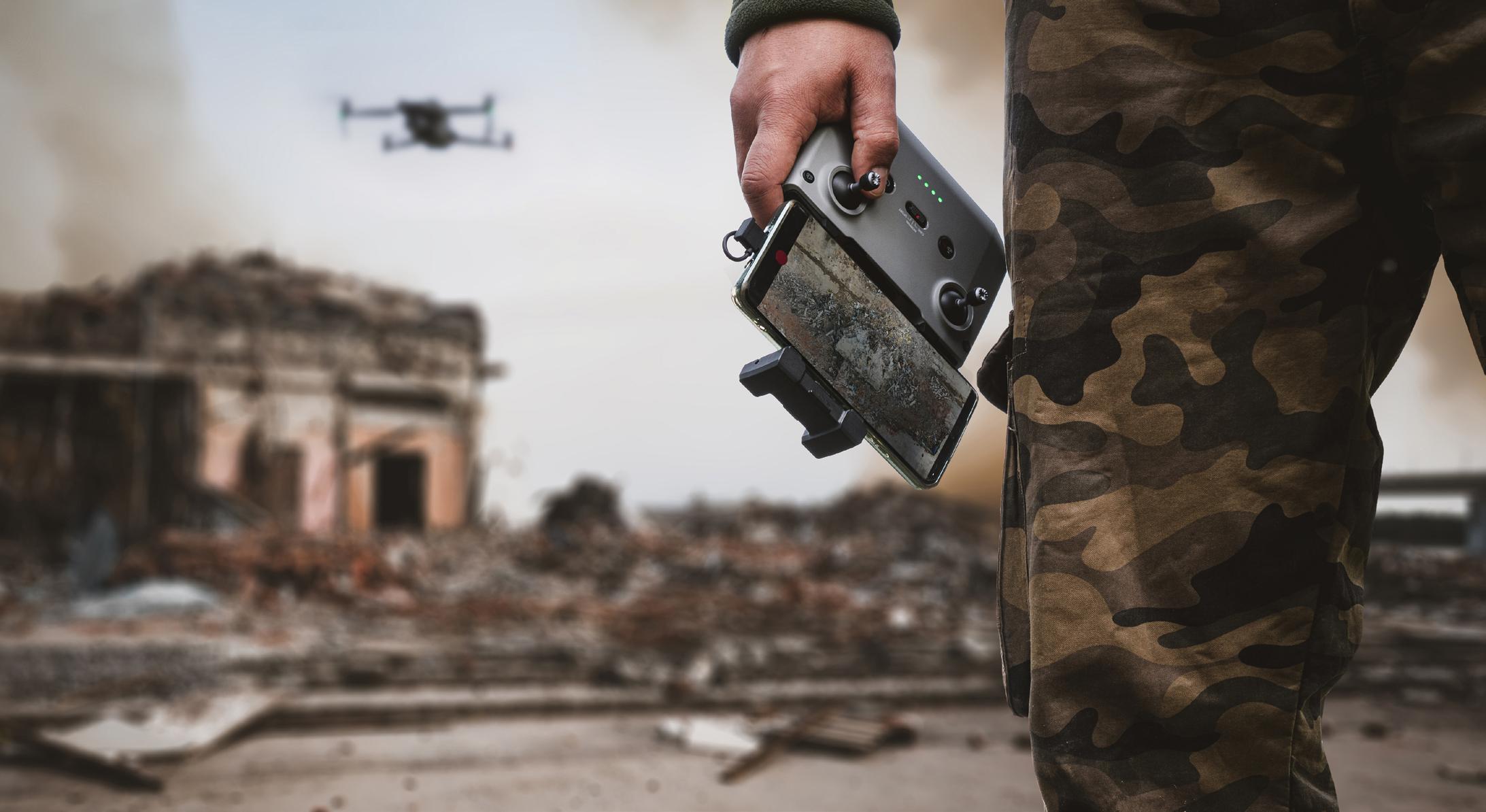
‘breakthrough’ was outdated even then. The sophistication of the defences in 1942 required a complicated sequence of activities to breach and then penetrate them. And while the basic tactical elements of a breakthrough battle remain recognisable, the importance of intelligence, the electromagnetic spectrum and the range, accuracy and effectiveness of deep fires, as well as the coming of age of drone warfare, have all complicated the task of any force seeking to breakthrough an enemy defence.
There is at least one important caveat in any examination of the final battle at El Alamein. Rommel’s Panzerarmee was effectively isolated by October/November 1942 – it was not easily reinforced due to a long complex and interdicted supply line, which ensured that it did not receive vital transfusions of men, materiel and fuel when these became critical. Any defensive ‘line’ which can be easily reinforced with fresh troops and supplies will be much harder to breach. Yet the basic fundamental requirements for breaching an enemy ‘line’ and achieving a ‘breakthrough’ are still the same. Effective preparation, training and rehearsal, which build intimate trust and co-operation between different arms, are essential. Fire superiority to suppress and neutralise enemy drone activity, artillery and deep fires enables all of the other necessary activities. Effective and efficient engineering effort is needed to neutralise and dismantle the enemy’s defences. Finally, an ability to inflict but also sustain heavy casualties and sustain operations until the enemy’s ability to resist has been weakened is paramount. Breakthrough battles are rarely as clean and simple as just achieving a breakthrough and driving into the enemy’s rear; they almost always involve hard fighting to achieve their aim. A determined defence can always slow down an attacker, and in many circumstances, a defender can decide to withdraw if it appears that a breakthrough attempt will succeed.
The bitter and costly fighting around El Alamein is a timeless reminder that the best option to defeat a defender remains manoeuvre, but when manoeuvre proves impossible there may be no alternative but to prepare to breakthrough an enemy’s defences – whatever the cost.
‘WE WILL OVERWHELM THEM’: RUSSIAN EFFORTS TO BREAK STALEMATE
Dr Andrew Monaghan Associate Fellow, CHACR
For Moscow, ‘war’ is the resort to armed force to resolve a policy dispute. Moscow’s approach emphasises seizing the initiative in the ‘threatening’ (immediate pre-war) and ‘initial’ periods of war as potentially delivering a decisive conclusion. The theoretical ideal is that a war should be short: ‘pobedonosnaya, molnienosnaya voina’ (‘victory bringing, lightning war’). Statecraft should ensure as favourable an international environment as possible (the isolation of the adversary, and securing of allies) and the proper resourcing, preparation and deployment of the armed forces in advance of the declaration of war.
This facilitates campaigning characterised by dynamic offensives, with surprise and the weight of blow proving decisive. Brevity in campaigning minimises the chances for something to go wrong in the complex strategic process: unanticipated adversary reactions and a stalled campaign and battlefield stalemate generate the conditions for potentially serious problems, including domestic political unrest or economic stagnation, or a shifting international
environment leading to unmanageable escalation. And Moscow has had some success: to defeat Japan in Manchuria (1945) and to crush the Prague Spring in Operation Danube (1968), and, more messily, to defeat Poland in 1939 and Georgia in 2008.
But such success depends heavily on strategic coordination, correct assessment of the adversary, resourcing and timing at both the state and armed forces levels. And herein lies a persistent problem: as senior Russian officers have repeatedly noted, Moscow has often initiated campaigning from bad positions, imposing overly-ambitious tasks on poorly prepared, coordinated and resourced Russian armed forces.1 In consequence, the adversary has seized the initiative or Russia’s own initial offensives have failed to be decisive, instead being blocked by the adversary or themselves stalling, leading to standstill or deadlock in the campaigning. This, too, is therefore an important question for Moscow’s soldier-thinkers; indeed, they have repeated practical experience throughout the 20th and into the 21st centuries.
Russian views of how to break such standstills and stalemates offer vast potential scope for analysis, even including what ‘stalemate’ really means, as well as the extensive theoretical
1Kvashnin, A. & M. Gareev, ‘Pervoi srazhalas mysl’, Krasnaya zvezda, 4 May 2000.
debate and detailed examinations of specific campaigns and wars.2 Here, the focus is on how Moscow has sought to reignite stalled campaigning to regain the initiative and achieve its political goal, rather than an objective assessment of whether the campaigns were actually ‘stalemates’. The essay offers an illustrative overview, first distilling and sketching some essential theory, then assessing practice, drawing on three examples – the Soviet assault on Finland in 1939-40 (the ‘Winter War’), the Soviet experience of retaking the initiative on the Eastern front in the Second World War, and Russian campaigning against Chechnya. Recognising that each war has its own logic, the conclusions make some observations about Russia’s efforts to break stalemate.
Theorising the breakthrough and exploitation Geography and specific war experience suggest that Russia’s understanding of the problem is distinctive. To a degree this is true: a core Western reference point of ‘stalemate’ is the dense, concentrated and largely static trench warfare of the Western Front that characterised the majority of the First World War. Although trench warfare and assaulting fortified positions were also characteristic features of the Eastern Front, the front was longer and sparser, with more mobile campaigning across greater distances.
Nonetheless, Soviet officers subsequently drew on the experiences of both Eastern and Western fronts (among other campaigns) to shape war fighting theory to break likely future stalemates induced by industrial warfare; Moscow’s thinking in this regard is very much part of the wider European traditions
2Debate about what ‘stalemate’ is has persisted through the campaigning in Ukraine. Freedman, L. “How Long will the war Last?”, Comment is Freed, 27th May 2022, samf. substack.com/p/how-long-will-the-war-last. Much excellent work assesses theoretical development (such as Deep Operations) and specific campaigns, especially examining the Second World War for instance, Glantz, D. Soviet Military Operational Art. In Pursuit of Deep Battle. Abingdon: Frank Cass, 1991; Dick, C. From Defeat to Victory: The Eastern Front, Summer 1944, Lawrence: The University Press of Kansas, 2016; Harrison, R. (Ed.) Operation Bagration: the Rout of the German Forces in Belorussia, 23 June-29 August 1944. Solihull: Helion, 2016.
of strategy and warfighting. Indeed, if ‘standstills’ in Russian campaigning have taken various forms in different wars, from exhaustion through (culminated) campaigning to entrenched defensive fortifications, the core challenge is very recognisable: how to achieve the breakthrough and then subsequently exploit the advantage to regain the initiative and defeat the adversary.
The Brusilov offensive of 1916 was one of the experiences of the First World War that Soviet soldier-thinkers drew upon. Following the sweeping offensives of 1914 and 1915, the Eastern Front had stabilised. Newly appointed to command the Southwestern Front, Alexei Brusilov was to launch an offensive in support of wider campaigning. Using reconnaissance, camouflage and deception and new tactical approaches for artillery and infantry, on 4th June Brusilov launched his four armies in simultaneous assaults all along a 450-kilometre front, achieving surprise. Within two days, his forces ruptured the Austro-Hungarian defences. Lacking wider support and the means to exploit the success, his offensive began to stall in midJuly amidst a regression in tactics and heavy casualties.
Despite its eventual exhaustion and failure, Brusilov’s offensive was one of Russia’s most successful of the war, and became a reference point during the subsequent flowering of Soviet war theory in the late 1920s and early 1930s. The recognition that industrialisation meant both that nations were increasingly resilient in wars and that single battles now extended in time and space led to formulations shaping a series of consecutive operations designed to achieve a decisive result, which in turn became known as operational art. Doctrinal formulation first of ‘deep battle’ then ‘deep operations’ sought to replace the linear, attritional approach to campaigning with a breakthrough assault and then
mobile exploitation with a torrent of power to shift the centre of gravity of operations into the enemy rear.
Breakthrough operations – usually frontal attacks against fortified positions – were recognised to be a costly business, the price to pay to facilitate exploitation. A way to mitigate this was through seizing the initiative by suddenness (vnezapnost) – the combination of concentration of overwhelming superiority and surprise – at the outset. This was to be achieved by careful use of deception (obman). The result of a blend of the commander’s mastery of the art of war and combat support, with deception-facilitated deployment and hidden regrouping, to enhance the sequencing of operations to stun the enemy and prevent effective defence (maskirovka). This deception sought to wrong-foot the enemy and cause a chain reaction in the collapse of their defence: the enemy would be convinced simultaneously to under- and over-estimate the forces arrayed against them and thus deploy defences poorly, and then be obliged to move reinforcements to meet unexpected attacks, thus opening gaps to be struck by subsequent blows in turn.
For many reasons, Moscow’s armed forces have found these theoretical tenets to be difficult to convert into practice. Nevertheless, they illuminate intent, and have, as discussed below, served as reference points for campaigning.
The Winter War, 1939-1940
Joseph Stalin ordered the commander of the Leningrad Military District, Kirill Meretskov, to conduct a short, knockout blow campaign against Finland beginning on 30th November 1939. Despite having considerable superiority in numbers and equipment, by the end of December the Soviets had failed to achieve any major objectives, in the process suffering a number of extremely costly setbacks, and the offensives ground to a halt. The reasons were numerous, including staunch Finnish defences and poor Soviet preparation, reconnaissance, planning and supporting logistics.
understrength Finnish divisions – paused and reorganised during a snowstorm, before recommencing. By early March, Finnish commanders were conceding that because of the attritional effect of organised firepower and numbers, serious resistance was no longer possible. Helsinki signed an armistice on 13th March. In short, to break the stalemate, the Soviets massed men and materials on the axes of the main advance, achieving outright superiority in numbers, and overwhelmed the Finnish defences.
The Great Fatherland War, 1943-45
For Moscow, victory in the Great Fatherland War – the European Eastern Front of the Second World War – represents the pinnacle of Soviet war strategy.3 Having lost the initiative in the first years of the war, Moscow first stalled German initiative in 1942-43 and then subsequently took the initiative. Within this struggle, the campaigning reflected both the successes and the difficulties Moscow has had in breaking stalemates. Early attempts to break both German initiative and the blockade of Leningrad, for instance, were marred by the failure to prioritise and coordinate either command or forces and consequently failed.
For Moscow, victory in the Great Fatherland War – the European Eastern Front of the Second World War – represents the pinnacle of Soviet war strategy.
The Soviet leadership acknowledged that a much greater effort was needed to win the war, primarily to break the Mannerheim Line. During a six-week pause, Moscow reorganised the command, establishing a Northwestern Front headquarters and appointing different officers. Establishing new groups of forces, including special mobile units, and equipping them with new heavy tanks and guns, Soviet forces trained intensively, including against fortifications.
Resuming their assault on 2nd February 1940, Soviet forces began with heavy, accurate rolling barrages and infantry flanking movements. Having achieved a breakthrough by midFebruary, with tank brigades widening the gap, Soviet forces – some 12 divisions and five tank brigades strong against two
Conclusions drawn from the campaigning at Stalingrad in 1942 emphasised the resilience of modern defences when organised in depth and conducted actively to set up a decisive counter-offensive. For the latter, timing, the choice of correct axes of main effort and surprise were essential ingredients, a more complex formula than pre-war theory had implied; in practice, this meant more tanks, guns and men. The lessons were converted into the battle of Kursk in 1943. Prepared defences in strategic depth were to absorb and defeat the German offensive and then Soviet forces launched counter-strikes against the weakened German forces with fresh reserves and reinforcements, one after another along the front from Moscow to the Black Sea.
In 1944, Moscow was able to generate overwhelming superiority in men, artillery, tanks and combat aircraft, and to wrong-foot and then fracture German defences with tremendous blows and then to overwhelm them with fresh offensives. Soviet forces were increasingly able to mount coordinated, simultaneous and echeloned offensives continuously along the whole front from the Baltic to the Danube. By early 1945, the culmination of lessons learnt through three years of campaigning meant that Soviet offensives were able to advance 500 kilometres in 23 days, breaking six sets of defensive lines. Not all offensives succeeded, and the cost in life was enormous. But by achieving density of force to penetrate the tactical defences quickly to open the depth for manoeuvre to split enemy force groupings and to destroy them, the Soviets overwhelmed German forces.
Chechnya, 1994-2009
The third example of ‘regaining the initiative’ is in the long Chechen war. In 1994, Moscow launched what was
3Zolotarev, V. Istoria Voennoi Strategii Rossii, Moscow: Kuchkovo pole, 2000; Gareev, M. Srazheniya na voenno-istoricheskom fronte. Moscow: Insan, 2010.
Moscow... has sought (with uneven success) to muster firepower and forces along the length of the frontlines to grind down Ukrainian defences. President Putin has framed this intent clearly... ‘we will overwhelm them and finish them off’.
intended to be a one month long lightning operation to seize Grozny, the Chechen capital, stabilise the situation in the breakaway republic and ‘destroy armed bandit groups’. The plan almost immediately fell apart because of hasty planning and miscalculations, poor command and control, and poor-quality and insufficient forces. After five months of campaigning, Russian forces finally occupied much of lowland Chechnya, though the highlands remained beyond control. Chechen forces counter-attacked, forcing Moscow into negotiations and an uneasy pause in the fighting leaving the policy dispute unresolved.
The high command – which had not admitted defeat – used the pause to prepare to resume combat operations. Following the kidnapping and murder of a senior Russian official, a wave of bombings in Russia and a Chechen incursion into Dagestan, Moscow sought to unify its power and command structures, gathered as substantial a force as it could, and launched a renewed offensive. In three months of renewed assaults, Russian forces retook Grozny (again) and achieved sufficient military success first for Moscow to reimpose direct control over Chechnya and then to hand over operational control to the Interior Ministry and security services. To regain the initiative, once again Russian forces relied on overwhelming their adversary with firepower. Russian forces suffered heavy casualties, on occasion losing whole units, but Moscow achieved its overall goal of territorial integrity and sovereignty over the Chechen Republic.
Conclusions: overwhelming the adversary Moscow’s answer to the problem of various forms of stalemate is the organisation of sufficiently superior weight of blow and then its delivery: massed men and material on the main axes, assisted by as skilful as possible implementation of suddenness to wrong-foot the adversary and collapse their defences. Delivering a sufficient weight of firepower and forces to overwhelm (dozhat) and finish off (dobit) the adversary
is a two-tier formula: at the state level, to increase the level of strategic effort and to unify command, and at the armed forces level to ‘re-organise, re-equip, re-train and re-assault’, usually along as much of the front as possible.
Moscow’s soldier-thinkers have developed detailed conceptualisations of how to achieve the breakthrough. Yet Russia’s military has often found these theoretical and doctrinal concepts difficult to convert into war-winning formulas in practice. The successful, albeit astonishingly expensive, campaigning in 1944-45 represents a very particular set of examples: a fully mobilised state producing vast quantities of equipment, and armed forces operating at a high level of training, with experienced commanders learning and converting theory into war-winning formulas roughly akin to ‘deep battle’ and ‘deep operations’. This was then translated into the successful lightning campaign against Japan in Manchuria in 1945. More often, however, practice is implemented regardless of theoretical or doctrinal concepts; even in 1942-44, not all these efforts to break stalemate were (uniformly) successful.
Much of this two-tier approach can be seen in Russian campaigning against Ukraine following the failures of its initial assaults in 2022. Moscow established a Government Coordination Council and announced a ‘partial’ mobilisation in late 2022, then a Stavka command in January 2023, and has sought (with uneven success) to muster firepower and forces along the length of the frontlines to grind down Ukrainian defences. President Putin has framed this intent clearly, stating in 2023 that “we will overwhelm them” (my ikh dozhmyom) and again in 2024 that “we will overwhelm them and finish them off”.4
4“Putin: est osnovaniya schitat, shto my dobyom Ukrainu”, RIA Novosti, 23 March 2025, ria.ru/20250328/putin-2007826484.html
AVDIIVKA, UKRAINE: DRONES AND THE COUNTER-ATTACK THAT NEVER CAME
Illya Sekirin1 Drone operator and instructor
The Battle of Avdiivka (10 October 2023-17 February 2024) has been among the bloodiest and most significant engagements of the Russia-Ukraine War to date. It marked a strategic shift from Russian defence to offence, and the wider offensive that began there was still ongoing as this article was being written in early 2026. As the Ukrainian summerautumn counteroffensive of 2023 petered out, Russian forces attempted to break the resulting stalemate by concentrating their best units in the centre of the war’s front line, aiming to execute a pincer movement around the small city of Avdiivka, which had a pre-war population of approximately 31,000 and is located just 15 kilometres north-west of Donetsk.
Using Donetsk’s extensive railway network and abundant warehouses and urban infrastructure as a springboard, the Russian Group of Forces ‘Centre’ – the largest Russian grouping in Ukraine at the time – defeated Ukrainian defences north of the city, at the junction of two Ukrainian operational-strategic groupings (one commanded by General Oleksander Syrsky and the other by Brigadier General Oleksander Tarnavsky). A second pincer formed to the south, but this one became bogged down in defensive belts.
Historically, when attempting to seize a well-fortified city, Russian operational intent followed a consistent pattern: a breakthrough on the flanks, encirclement of the objective, severing of supply lines and the subsequent methodical
1Illya Sekirin volunteered to fight for Ukraine in March 2022 and saw front-line service as a small tactical drone operator and instructor. He went on to become an unofficial adviser to several members of the Ukrainian High Command and authored a paper that informed President Volodymyr Zelensky’s decision to create Unmanned Systems Forces as a separate branch of the Armed Forces of Ukraine. Illya is the author of Rise of the Machines – Drone Warfare in the Russia-Ukraine War: Tactics, Operations, Strategy.
reduction of the city through intense air and artillery bombardment, before ground assaults conducted by small infantry infiltration groups advance to eliminate any organised resistance. This approach was employed at Mariupol, the twin cities of Siverskodonetsk-Lysychansk and Bakhmut, among others. In all cases, with the exception of Mariupol, Ukrainian forces largely managed to break out, albeit at a heavy cost.
Faced with these realities on the ground, what options were available to those tasked with the defence of Avdiivka and defeating the assaulting Russian forces? In my role as a military adviser to Mykhailo Fedorov – former Deputy Prime Minister and Minister of Digital Transformation and current Minister of Defence – I submitted a counter-attack plan to the Stavka (High Command) and the Ukrainian General Staff on 31 January 2024 which called for a never-before-attempted concentration of Ukraine’s drones and supporting electronic warfare assets on a narrow section of the front. The aim was to counter a Russian pincer attempting to envelop Avdiivka, quickly achieve local uncrewed aircraft systems (UAS) superiority over the battlefield, and then provide cover for an attack by Ukraine’s best mechanised infantry formation – the 3rd Assault Brigade (approximately 16,000 personnel strong) – along the ridge and river lines into the flank and rear of an enemy grouping fully engaged in storming and surrounding the city.
The Ukrainians had never previously mounted a wellcoordinated effort to cut off such pincer penetrations. I therefore had reason to believe that the main prerequisite for a successful Avdiivka counterattack – surprise – could be achieved. Traditional preparations for a major attack would have been easily detected by Russian satellites and surveillance drones – a hallmark of the now widely recognised ‘transparent battlefield’ – and so the linchpin of my plan was the concentration of drones. Drones do not require large, easily detectable stockpiles of ammunition and fuel, nor
the physical concentration of combat power in the form of massed armour, artillery or large infantry formations. Indeed, the logistical footprint required to sustain such a concentration is comparatively light. Both sides in Ukraine had struggled to conceal large-scale movements of conventional forces. Satellite imagery, surveillance UAS and increasingly capable open-source intelligence networks meant that even modest concentrations of armour, artillery or infantry were detected within hours, if not minutes. As a result, operational-level manoeuvre increasingly gave way to attritional engagements, with both sides trading losses along relatively static lines. The concentration of unmanned systems has offered a partial solution to this dilemma by enabling the aggregation of combat power without the visible signatures traditionally associated with offensive preparations. In effect, drones have offered a means of restoring operational manoeuvre under conditions of battlefield transparency.
Moreover, the proposed drone concentration was not conceived merely as a supporting fires capability, but as the primary means of shaping the battlespace. By suppressing enemy artillery, interdicting logistics, degrading command-andcontrol nodes and systematically attriting infantry in prepared positions, the drone force would have performed many of the functions historically associated with air superiority and armoured breakthrough formations. This reflected an emerging reality of the war: that control of the near-surface domain had become as decisive as control of the air was in 20th century conflicts. In this sense, the Avdiivka counterstroke was intended as a proof of concept for a new form of operational art, rather than a one-off tactical expedient.
The Ukrainian Unmanned Systems Brigade that I proposed to assemble – consisting of approximately 1,000 drone and electronic warfare crews (around 2,000 operators) equipped with at least 30,000 first-person view (FPV) UAS – would not have been clustered in one location. Instead, they would have been dispersed and concealed along the 30 kilometre perimeter of the Russian salient. The elevated terrain on the
side of the front offered particularly favourable radio horizons for such a mission. In effect, this large drone formation, the first of its kind in the war, would have been tactically dispersed but operationally concentrated.
I estimated the average drone attack density required for a successful operation to be approximately 1,000 UAS per 100 square kilometres, with much higher concentrations deployed in direct support of the ground attack. All enemy strongpoints within the salient would have been subject to crossfire from drone operators, ensuring UAS omnipresence over the sector. The ground attack itself was designed so that each two-tothree kilometre advance would result in enemy encirclements, with up to seven villages encircled by the end of the advance – a process realistically assessed to take 24 hours.
The main drone assets required were FPVs, supported by reconnaissance drones, UAS bombers and fixed-wing medium-range drones to isolate the battlefield out to distances of up to 50 kilometres. Ukraine already possessed the necessary numbers, but these assets at the time were dispersed along the 1,000-kilometre front line. What was required was the concentration of 30-50 per cent of them.
As the massed drone effort would be needed only briefly – perhaps one to two weeks in total – I assessed this as an acceptable risk, even though it would temporarily degrade defensive drone coverage on other sectors of the front. I also believed that seizing the operational initiative would force Russian commanders to concentrate their own drone assets to counter our main effort, but that these would likely arrive piecemeal and too late to meaningfully disrupt the operation.
If successful, the drone blitz would not only have stabilised the situation at Avdiivka but also created a 10-kilometre gap in Russian defences just 15 kilometres from Donetsk, the capital of the Russian-backed breakaway region annexed in 2022. If the intensity of the drone assault proved overwhelming –defeating Russian forces psychologically as well as physically –
Ukrainian
I believed there was a realistic possibility of rapidly capturing Donetsk itself.
That, however, was not to be. In early 2024 I presented my plan to Fedorov and Zaluzhny (then Commander-in-Chief), who accepted it as the basis for an operational action. In the midst of preparations, on 8 February 2024, President Zelensky abruptly dismissed Zaluzhny, ostensibly for lacking a strategic plan for 2024.
I nonetheless believed that the Avdiivka counterstroke could still be executed as planned. As I was not directly involved in staff-level preparations, all I could do was monitor weather forecasts. Optimal conditions required sub-zero temperatures (to facilitate mechanised movement) and minimal wind and fog (to ensure favourable flying conditions for drones). The window of favourable weather, however, came and went. No attack followed.
Meanwhile, Russian forces, sensing weakness, intensified pressure on Avdiivka’s flanks and entered the city from the north – using precisely the pincer we had intended to sever. For reasons unknown to the author, Syrsky showed no interest in implementing the plan and instead directed the 3rd Assault Brigade into the city itself, committing elite Ukrainian troops to brutal urban combat. The brigade came close to encirclement, narrowly avoiding the fate of its sister formation, the Azov Regiment, which had been abandoned to fight surrounded in Mariupol in spring 2022.
Not all units were able to break out or withdraw. By that point Russian forces had severed access to several Ukrainian
positions, most notably Cheburashka and Zenit in the southern sector of the Avdiivka salient. Hundreds of Ukrainian defenders were surrounded and either surrendered or were killed while attempting to escape.
Only a year after I first recommended the creation of a large unmanned systems formation of at least brigade size did Syrsky, the new Commander-in-Chief, finally agree to do so. This occurred on 31 December 2024 and was based on the ‘Birds of Madyar’ UAS group. By then, however, Russian forces had already begun forming large drone formations of their own, and the first-mover advantage was lost. At that stage, achieving a breakthrough and exploitation would have required at least five such formations – perhaps two for breakthrough operations and the remainder echeloned for exploitation – whereas only one brigade would likely have sufficed in early 2024.
A large drone formation is not just a group of pilots operating small quadcopters from the nearest treeline (as some in the West may wrongly assume). It is an operationally integrated large formation that is equipped with dozens of different drone types, including medium-strike drones, land robots, river drones, electronic warfare of tactical and operational ranges, mobile artillery – including rocket artillery – and force protection infantry.
The principal lesson for the British Army from this counterstroke that never happened is that drones can now perform the functions once reserved for tanks and aircraft in 20th-century warfare. Large drone formations can achieve breakthrough and act as manoeuvre forces capable of exploiting success to reach operational or even strategic objectives. It must be stated that a large drone formation is not just a group of pilots operating small quadcopters from the nearest treeline (as some in the West may wrongly assume). It is an operationally integrated large formation that is equipped with dozens of different drone types, including medium-strike drones with a range of 30 to 120 kilometres, land robots (those armed with machine guns and logistical variants for medical evacuation, mine clearing, resupply etc.), river drones, electronic warfare of tactical and operational ranges, mobile artillery – including rocket artillery – and force protection infantry. Drone brigades, or drone divisions, do not just send assault drones at the enemy, they create a continuous drone coverage, or kill zone, on a front of 30-150 kilometres with a depth of 100 kilometres or more. Under this drone umbrella, hundreds of unmanned ground vehicles armed with remotelyoperated machine guns and automatic grenade launchers attack in waves on a front of five kilometres or more, creating a penetration of up to 20 kilometre during the first day of the attack. Mobile teams of infantry, engineers and drone operators then move through this breach, establishing new drone launch sites and control centres in enemy rear areas –thus a large drone formation not only creates a breakthrough, but also acts as an exploitation force, capable of holding ground, being supplied by land robots and large aerial cargo drones. It should also be mentioned that 80 per cent of the drones can be piloted remotely via the internet (Starlink or mesh networks) with artificial intelligence elements (automated navigation and targeting, with a human operator still in the loop). The creation of such units should therefore be treated as a matter of highest priority.
Another lesson is that operational art still matters, and that timing is critical. As Syrsky procrastinated, the Russian northern pincer nearly completed its encirclement. Had he attacked earlier, employing for the first time a large concentrated drone force, a Ukrainian defeat could have been transformed into a major victory – potentially even leading to the capture of Donetsk. As events unfolded, however, the Russians were able to seize the strategic initiative, which they have not relinquished since.
MILITARY BLOCKAGE ON THE UKRAINIAN FRONT: A
POLEMOLOGY ANALYSIS
character of the war imposed by Vladimir Putin, and finally to assess the degree of importance that should be assigned to it.
The dynamic evolution of the conduct of war
“During wartime, we are confronted by an enemy; in times of peace, we are the enemy: it’s by encouraging others to criticize our ideas and actions that we attack and discover our mistakes.”
– Colonel J. F. C. Fuller1
On January 2, 1915, Lord Kitchener told Sir John French: “... we must recognize that the French army is unable to achieve a sufficient breakthrough through the German defensive lines to force the withdrawal of German forces from northern France. If this is so, then the German lines in France must be considered an impregnable fortress.” This concrete historical case, which illustrates the phase of operational stagnation during the First World War, is being reproduced lato sensu almost identically in the Russo-Ukrainian war. Indeed, since the failure of the 2023 Ukrainian offensive, the build-up by General Surovikin of an ‘impassable’ defensive system shows that the Russian soldier, firmly entrenched in defensive, fortified positions, has retained tactical superiority over the Ukrainian attacker – 1.5 million dragon teeth, 2,000 linear kilometers of ditches, 7,000 kilometers of mine fields, 150,000 shelters for military equipment and more than 12,000 armed concrete structures have been built by the Russians.2 The question – once again raised by the current conflict – is therefore in no way new. The Ukrainian war laboratory merely illustrates, in a context of force preservation and limited resources, the duality between the need for protection (and thus often immobility) and mobility, which is the condition for decisive manouevre.
Such a dilemma calls for a polemologic analysis, that is, war understood as a ‘total, global social phenomenon’. That is why, in order to offer an analysis, this war observer and military critic first proposes to place the topic within the dynamic evolution of the conduct of war, then
The proposed analytical framework leads us back to the fundamental elements that describe war from a military standpoint – namely combat. Fire, shock, manouevre and uncertainty constitute its four invariants. These elements apply to a fighting force – that is an army composed of soldiers and their weapons – characterised by its energy and mass, defined in space and time. Throughout the evolution of war, the singular balance made by the general among these main variables alternately leads him to victory or defeat. It is therefore in the arrangement of their proportions that one must seek equilibrium, in order to be the strongest at a precise point on the terrain and at a given moment, so as to cause the rupture of the enemy’s system – and then be capable of exploiting it.
As soon as technical progress allows muskets and cannons to be reloaded so rapidly that they unleash a storm of steel on attackers, firepower stifles the acceleration of movement on the battlefield. This evolution has continued to the present day and, driven by ‘technological determinism’, one can hardly envision its end.
The study of how war evolves over time –which is not an experimental science – shows that each battle becomes a new, bloody and destructive attempt to find a new technological, sociological, demographic, economic and military balance in pursuit of a political objective. Diachrony3 helps clarify the problem. In the 16th century, as Charles V (1500-1558) dominated battlefields thanks to a massive and powerful military organisational model – the tercio – the generalisation of firearms marked a major evolution in the conduct of war. Understanding the effect and its consequences is fundamental. The bullet (firepower), or the cannonball of still-rudimentary artillery, reaches its target more quickly than the assault of panting infantrymen (manouevre and shock). And the denser and more concentrated the volleys, the heavier the losses for the attacker. The resulting problem becomes that of all wars. As soon as technical progress allows muskets and cannons to be reloaded so rapidly that they unleash a storm of steel on attackers, firepower stifles the acceleration of movement on the battlefield. This evolution has continued to the present day and, driven by ‘technological determinism’, one can hardly envision its end. Indeed, the determinant of Western strategic culture continues to rest on the destructive power of its weaponry, and whose dogma still believes in a linear and cumulative technical evolution.
of
The line has led to the construction in Russia of Stalemate of the Ukrainian offensive, June 4th-November 29th, 2023, polemologic analysis, LCL (PHD) Olivier Entraygues, CCF war studies department (BOC), January 2024.
Diachrony: the study of a phenomenon as it changes and develops through time.
Lieutenant Colonel Dr Olivier Entraygues Future Combat Command
Director
the Instruction at the Camberley Staff College, 20th conference, the principles of control, year 1925; archives of the Defence Accademy of the United Kingdom, Shrivenham.
It is interesting to observe that towards the end of the 16th century and during the Thirty Years’ War (1618-1648), reckoning of this fact led to a deviation: the tendency to seek rapid results in battle through the effectiveness of fire ended up blocking the mechanical acceleration of warfare (shock and manouevre aimed at rupture). Shock infantry was held back in order to prolong the action of shooters (firepower). Cavalrymen, paralysed, were even seen advancing by foot, using pistols or arquebuses before mounting. Cavalry ultimately fought through fire without exploiting their mounts. Even though the representation of war at the time was embodied by the mobile citadels of the tercios, Maurice of Nassau, Prince of Orange (1585–1625) – an admirer of Vegetius – was the first great captain to grasp this problem during the final phase of the Eighty Years’ War (1568–1648), also known as the ‘Dutch Revolt’. Although he was waging a defensive and insurrectionary war, his military reform developed a conceptual and organisational innovation. It broke even with the use of large squares – Swiss then Spanish –and conceptualised an offensive order of battle deployed in depth. The Swiss/Spanish tercio was a large, densely-packed, unwieldy formation of infantry – pikemen and musketeers – which had dominated the European battlefield by combining slow-moving impenetrable mass with firepower; Maurice broke that mould by training his infantry to favour rapid fire in fewer but longer ranks, thus reducing mass, but having greater effect by combining firepower with agile infantry manoeuvre. In battle, Maurice advocated the offensive, which alone, in his view, allows one to be strongest at the chosen point and moment in order to secure victory. But this requires lightening the battlefront while paying greater attention to volley fire.
“”
In July 1914, the armament structuring the armies engaged in war was based on the rapid-fire field gun with goniometer and the machine gun. Suddenly, because all major formations combined firepower ineffectively, the defensive bullet once again prevailed over the offensive bullet.
The problem to solve resides in the expression of a ratio: enemy defensive rate of fire/ speed of advance of the offensive force. One should also consider weapon fire range as it directly influences the time spent under fire. During the wars of the Revolution and the Empire, soldiers advancing at two kilometres per hour faced weapons firing at two rounds per minute. The ratio of rounds per minute to attacker’s speed of approach was equal to one.4 The mass required to break the front was therefore the army corps – as illustrated by Marshal Davout’s action at Auerstedt. In July 1914, the armament structuring the armies engaged in war was based on the rapid-fire field gun with goniometer and the machine gun. Suddenly, because all major formations combined firepower ineffectively, the defensive bullet once again prevailed over the offensive bullet. From the very outset of the war, the introduction of the machine gun raised this ratio to 400/2, or 200 – hence the condemnation of the offensive on the Western Front.
4Thus a soldier advancing at 2 kph would cover about 33 meters in the time that his opponent could load and fire. With an effective range of about 100 meters, only becoming accurate even closer in, that would mean that an advancing infantryman could expect to receive two or three shots per firer, of increasing accuracy and likely impact, as he closed with an enemy infantry unit. It was, therefore, still considered effective to use mass to overcome firepower. Only by increasing the rate of fire, and accuracy, could the ratio be tipped in favour of the firers and against the advancing mass.
(20 November 1917) or certain final phases on external theatres in 1918 may be considered exceptions. However, throughout the war, neither doctrine succeeded in achieving decision because neither had accounted for the defining factor of the ratio: defensive rate of fire/ attacker’s speed of movement.
From the Polish campaign in 1939 onward, with the use of armoured vehicles equipped solely with anti-tank guns, the ratio returned to 20/20 – that of the Napoleonic wars. Armour operating within the Panzerdivision restored movement to man and became, thanks to its velocity (mass of the fighting force x speed of movement), the necessary element of rupture.
Today, does research for a new balance in order to escape tactical deadlock not argue for a complete reorganisation of land force structures, of logistical support, of command organisation, and the training of future leaders around two dominant weapons: the drone coupled with artificial intelligence?
The dominant character of war
Although the mud-soaked academy of the Ukrainian battlefield trenches offers an initial, militarilycentred vision of the problem, the theoretical effort must now be pursued in order to recontextualise the war we are observing. To do so, Clausewitz’s advice helps us understand that: “The first, the supreme, the most far-reaching act of judgment that a statesman and commander have to make is to establish the kind of war on which they are embarking, neither mistaking it for, nor trying to turn it into, something that is alien to its nature.”
To grasp the spirit of the war openly proposed by the Russians, it is essential to immerse oneself in Russian military thought. Vladimir Putin’s war – Slavo-Mongol in nature – is part of a continuity. It emanates from the Marxist-Leninist heritage. Lenin, an exegete of Clausewitz, teaches that “in all circumstances, war must be considered an instrument of politics”, that is not as an independent phenomenon. He adds that it is from this perspective that one avoids contradicting the entire history of war. The conduct of war by the Bolsheviks and later the Soviets thus followed a paradigm of campaigns which – since the Russian Civil War (1917-1919) – always combined rapid military occupation with profound political transformation.
Proudhon, Engels, Marx, Lenin, Trotsky, Gramsci, Stalin and Mao – all theorists of Realpolitik – recontextualised better than soldiers the central insight of Clausewitz’s work, which they had studied at length: “War is the continuation of politics by other means.” In light of Putin’s Russia and Xi Jinping’s China, this aphorism now leads one to write that peace itself has become the continuation of struggle by other means. In this sense, Clausewitz’s formula has been progressively and partially inverted. Moreover, since the Cold War taught that nuclear deterrence only deters attacks on vital interests and cannot protect a few acres of territory, the inversion of the ‘war-peace’ opposition has only intensified. From a doctrinal standpoint, with Stalin and Mao yesterday and their heirs today – who retain real influence over the demographic centre of mass of the world – there is a fusion and/or interpenetration of Politics (with a capital P), war and peace into a single, indivisible, continuous whole in space and time. The essence of Russian or Chinese Politics thus seeks to establish permanent interdependence and interaction –within their zones of influence or interest – among political, economic, psychological, propaganda and subversive domains, because Lenin teaches us that “war is part of a whole, and this whole is politics”.5
This is ultimately the message carried by Valery Gerasimov. The Russo-Ukrainian war is a contactless war against the ‘collective West’. The notions of peace and war disappear. Indeed, the Russian Chief of the General Staff tells us: “In the 21st century, the distinction between war and peace tends to blur. Wars are no longer declared, and once begun,
5Thus for the Russians there is no clear distinction between war and peace; there is no ‘threshold’ and ‘sub-threshold’, the entire interaction with others is a state of constant competition in which all tools are useable, and the only imperative is to choose those tools that are likely to have the best effect with the least cost or penalty.
they do not follow the pattern we are accustomed to.” Yet this war, new in its manifestations, is terribly old in form, as it recalls the Cold War. It is an unprecedented combination and articulation of psychological warfare aimed at influencing emotions and public opinion, economic warfare designed to destroy financial stability, guerrilla warfare – the most primitive form of war – and civil war, its most brutal form.
In a climate of nuclear uncertainty, the invariants of war reappear, applied to other fields – namely manouevre in its ideological form, shock in its psychological dimension and primitive fire amplified by extreme robotisation.
Ultimately, are we not, as officers – or even researchers – born and educated in the 20th century, and using the structures, methods and analytical frameworks developed and inherited from the 19th century, attempting to solve the problem of a war unfolding in the 21st century? That is to say according to the Napoleonic paradigm interstate war, with its general staff, centralising, hierarchical, gerontocratic structure, overseen by a military gospel – Vom Kriege? Indeed, the Clausewitzian paradigm is rooted in the political, social and technological context of 1815 and the Vienna Congress. The conduct of war imposes as its overarching objectives: destroy the enemy’s forces, conquer his territory and subdue his will.
What degree of importance should be given to our tactical and theoretical deadlock?
It has just been demonstrated that the dominant character of the problem to be solved is essentially ideological. Yet, since 1917, the new autocrats of the Kremlin have been at war not only with Europe but with the world. The immutable objective of Marxists, then Soviets, has been conquest through ideas. Conquest by shells is impossible. Major General J. F. C. Fuller writes in this regard: “The shell destroys; it does not create; it is sterile, not fertile.” During the Civil War, for example, when General Tukhachevsky entered Poland with 200,000 soldiers, he allegedly dragged behind his army 800,000 men, according to Fervacque – policemen, politicians and looters tasked with Bolshevizing the conquered terrain, executing bourgeois and aristocrats, and leveling wealth. Even if the figure of 800,000 seems exaggerated, it nevertheless illustrates the importance of non-military action in the conduct of this war.
Such was also the political objective of the Soviets after 1949. The tactics of corruption, subversion and communist propaganda had the entire world – except the USSR and its satellites – as their strategic terrain. From this perspective, since March 2014 on Ukrainian territory – on the substrate of a civil war emanating from Maidan 2 or the Revolution of Dignity – Putin has waged a two-level nonlinear war. First, he seeks by all means to divide Ukrainian society. This society, humanly exhausted by war, ultimately becomes vulnerable to Russian – but also Ukrainian – influence operations aimed at fracturing it by all means, including the lever of Orthodox religion, now divided between the Moscow Patriarchate and that of Constantinople, in order to search for peace. The population must therefore be considered the centre of gravity of the war, as it underlays the will to continue or halt armed struggle. Second, Moscow seeks to halt the support of the ‘collective West’ for a Ukraine at war. Such manoeuvring also contributes to the emergence of dissension among Western allies. Divide et impera6 becomes Putin’s political weapon to obtain ‘his Moscow seeks to halt the support of the ‘collective West’ for a Ukraine at war. Such manoeuvring also contributes to the emergence of dissension among Western allies. Divide et impera6 becomes Putin’s political weapon to obtain ‘his peace’.
peace’. Today, the war unfolds along four lines of operation: polemological, telluric, ideological and economic.
In contrast to the Clausewitzian paradigm, Putin’s war follows the Schmittian paradigm, whose stakes are population and control of information. From this perspective, information becomes both our primary commodity and the most destabilising factor of our time. Ralph Peters adds: “Information is both our primary commodity and the most destabilizing nowaday factor. Until now, history has been a quest to acquire information; today, the challenge lies in managing information.”
The general pace of change within our societies is overwhelming, and information is both the engine and the symbol of that change. The continuous flow of information amplifies the psycho-emotional dimension of the conflict, now extended to a planetary scale, becoming the theatrum belli. Within an informational maelstrom, ‘truths’ coexist, overlap and contradict one another without necessarily invalidating each other, while constantly escaping ordinary verification methods. In this unstable, multifaceted war of images – where each side simultaneously seeks to influence the public opinions of both camps – the observer sees his own capacity for judgment altered by the difficulty of objectifying events occurring at the front or within centres of power, their interpretations remaining suspended until final resolution and therefore to the temporal dimension.
But at this moment in time, the student of war, who sorely lacks valid military experience, is nevertheless struck by the tempo of Russian operations. Its pace is initially that of a long and slow war of intensity that does not seem to be subject to the dictates of time. He must then question the Western conception of warfare, which favours immediate results and decisive battles where speed of execution and brevity of operations are factors for success. For the Russian army, this is not the case. Napoleon used to say that “a country’s politics are in its geography”, and this, historically and enduringly, has characterised the Russian way of war. Thus, in order to understand the psyche of Russian warfare, it is necessary
The general pace of change within our societies is overwhelming, and information is both the engine and the symbol of that change. The continuous flow of information amplifies the psycho-emotional dimension of the conflict, now extended to a planetary scale, becoming the theatrum belli.
to recall its main geographical characteristic, namely that of a ‘massive world’ covering 11 time zones (out of 24). Russian generals, who think of war on a continental scale, have a different relationship with time. Time then becomes a multiplier of effects that allows them to train their troops, test their command to remove incompetent leaders, mobilise society, experiment with new equipment and methods, and wage a war of attrition to exhaust external support. And this duration of time traps the enemy in a dilemma: that of fighting without achieving anything and waging war without being able to resolve it.
So, while waiting for peace, do the intellectual stagnation and military deadlock observed on the Ukrainian front not encourage officers to give meaning to ‘the act of thinking’, έννοιά in ancient Greek? But to do so, it is necessary to go beyond the use of analogies and the observation of the past and construct a line of reasoning that allows new problems to be addressed with original, mature and unformatted responses. For in the end, is it not rather the absence of a Gustavus Adolphus, a Maurice of Nassau, a Suvorov, a Bonaparte, a Grant, a Rommel, a Patton... that is lacking on both sides of the front line to turn the tide of war? That is to say, a great captain, a charismatic leader, uninhibited, transgressive and capable of overcoming the impasse by developing the necessary inspiration for ‘the spirit of invention’ beyond the duty to protect. And in the event of tactical victory, strategy submits.
Conclusion
To conclude, we have seen that the Russian view of what constitutes a ‘stalemate’ is almost certainly rather different from our own. Are we thinking about this the right way? Thus, it is undoubtedly appropriate to return the reader to the starting point of this study – that is, a situation of defeat. For if victors write history, historical gains in knowledge are made by the defeated. Concluding his reflections on military talents and on the character of Charles XII, begun on the evening of one of the greatest defeats of the Prussian army, Frederick the Great exclaims: “But, one will say, by what right do you set yourselves up as censors of the most illustrious warriors? Have you yourselves taken the lessons you so liberally dispense to them? Alas, no! I have only one answer to make: we are struck by the faults of others, while our own defects escape us.”
CONCLUSION
Professor Matthias Strohn Head of Historical Analysis, CHACR
The aim of this Ares & Athena has been to discuss how stalemate between two opposing forces can be overcome. Stalemate usually occurs when neither side is able to defeat the enemy on the field of battle, and when military operations have culminated without overall and strategic success. Armies (and nations) now require time to lick their wounds and to prepare for new offensives to end the conflict. Clausewitz argued that the defence is the stronger form of warfare, but that it also has a ‘negative’ character: the defence alone will not be able to defeat or even destroy an enemy force and thus bring about (military) victory. For this, the ‘positive’ aspect of warfare, the offensive, has to be adopted. It is at this stage that overcoming stalemate plays a vital role. As has been shown in this publication, there are different ways to achieve this. In 1918, the Germans concentrated their efforts at the tactical level of war. This led to astonishing battlefield success, but it did not achieve operational or even strategic victory. In 1940, they looked for weaknesses in the operational design of the Allied defences – and they found the weak spot in the Ardennes, enabling the Germans to exploit this Allied ‘chink’ tactically and operationally.
Even this did not come without heavy fighting and casualties on both sides. As Niall Barr reminded us in his article on El Alamein, breakthrough battles are rarely as clean and simple as merely achieving a breakthrough and driving into the enemy’s rear; they almost always involve hard fighting to achieve their aim. The break-in needs to be followed by the breakthrough and subsequent exploitation. Where and how the break-through can be achieved depends on the situation and there is no one-size-fits-all formula. Tactical realities might dictate the approach (like in 1918) or it could be the operational level (like in 1940). But, in essence, tactics, operations and strategy mutually influence each other. It was thus in history and this remains the case today.
solution lie at the tactical, operational, strategic or ideological level? What is more important, firepower or manoeuvre? What is the Schwerpunkt of the operation – is it the enemy force, is it operationally important features, such as cities, or is it the enemy’s will to fight? In good academic fashion, the answer is more grey than black and white: all of these matter and it all depends on the actual situation. Like any military operation, breaking stalemate is a complex issue. The examples and the analysis presented in this Ares & Athena were chosen to highlight these complexities and to make you, the reader, think about them. In addition to ‘pure’ military planning, understanding the historical, political and ideological contexts can and have to shape our thinking, because even at the tactical and operational levels, these can be decisive or, at least, influential. If we bring all of these aspects together, we can be successful in moving from the negative to the positive state of warfare, as Clausewitz would have said. If we do not achieve it, we might, at best, achieve some tactical success without operational or strategically conclusive consequences.
Perhaps the best recent example of a failed action designed to break stalemate is the Ukrainian summer offensive of 2024. It is fair to say that, basically, all of the findings and arguments of this Ares & Athena were ignored. The forces were not strong enough to fight their way through a wellestablished defensive position and then win at the operational level by either over-matching the enemy numerically or by outmanoeuvring the enemy forces. As a consequence, the offensive stalled, resulting in an operational and strategic failure of the operation that had been launched with much anticipation and expectation.
Understanding the historical, political and ideological contexts can and have to shape our thinking... these can be decisive or, at least, influential.
This is shown in the articles by Andrew Monaghan, Illya Sekirin and Olivier Entraygues, which all cover different aspects, but which are all related in their arguments and analysis. At the tactical level, Sekirin develops a scenario for a tactical break-through based on his experiences with drones in the war in Ukraine. Monaghan provides an indepth analysis of the ‘Russian way of war’, which is heavily influenced by historical experiences. As Monaghan states, Moscow’s answer to the problem of various forms of stalemate is the organisation of sufficiently superior weight of blow and then its delivery: massed men and material on the main axes, assisted by as skilful as possible implementation of suddenness to wrong-foot the adversary and collapse their defence. Entraygues follows on from this and he argues that, again based on history, the main questions are not exclusively military, but that the dominant character of the problem is essentially ideological and thus linked to (grand) strategy.
So, how can military formations break stalemates? Does the
The questions our research asked are ‘first order’ ones, analysing the fundamental principles and issues that surround the concept of ‘breaking stalemate’. As such, this publication is not a staff officers’ hand-book that provides tactical solutions for the modern-day Army. Instead, it provides much-needed contextual insights that can and should be used in order to sharpen our understanding of what military stalemate is, how it can be overcome and what the inherent problems would be for the modern British Army if it is faced with similar scenarios to those described in this Ares & Athena.
In the final analysis, the problem can be boiled down into three segments, each of equal importance. To break a stalemate in the battlespace an army on the offensive (and, as discussed, it must be on the offensive to tip the scales for operational and, ultimately strategic, effect) must: break in; break through and exploit. Each is an operation of its own, with the commensurate demands on tactics, resources and momentum. To seize and maintain the initiative, which is the touchstone of resolving operational stalemates, commanders will need to have: the skill, experience, intuition and imagination to employ novel tactical solutions (and to change them as they move from phase to phase); sufficient of the right kind of combat power, and other resources (which they may need to change from phase to phase); and a ruthless focus on maintaining the initiative and dictating the course of events.
CHACR MISSION STATEMENT
To conduct and sponsor research and analysis into the enduring nature and changing character of conflict on land and to be an active hub for scholarship and debate within the Army in order to support the development and sustainment of the Army’s conceptual component of fighting power.