
Pax et Bonum
Principal’s Welcome
Welcome to the Winter 2026 edition of Pax et Bonum.
This year’s College theme is ‘Own Your Story’, and the articles in this publication reveal the important role the College community plays in all our stories.
In these pages you will find insights into our vibrant Arts program, outstanding student academic achievements, the camaraderie built through our many successful extracurricular programs, and the diverse paths our Alumni have taken post graduation.
There are also telling glimpses into the everyday connections that shape the character of our students, from the role of the Educational Leadership Team in Academic Mentoring, to the steady confidence nurtured on our Primary campus.
You will also discover how the newly built Indoor Sports Centre is already adding to our thriving sporting culture, and how CHAC has welcomed a new family that has recently moved to Brisbane.
All these inspiring accomplishments are guided by dedicated staff, supported by high quality facilities, and, most importantly, championed by supportive student peer groups.
These stories are a reminder that our College’s exceptional achievements are strengthened by those around us.
And, as a College, that is a story we can all own.
Pax et Bonum,
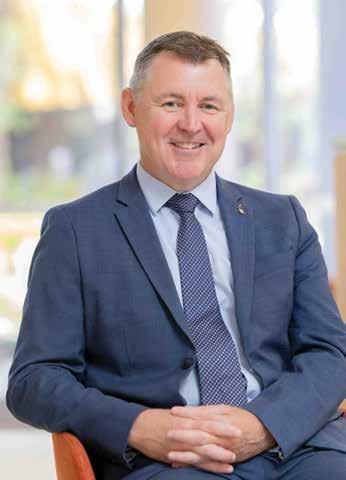
Mr Gary O’Brien PRINCIPAL

We

From the Principal and Deputy Principal
As parents and educators we have always known that adolescence is a time of exploration and identity formation. Young people seek to belong, for purpose and certainty, and seek role models to assist them in working out who they are and who they want to become.
What has changed dramatically over the past decade is where many of these influences are found. While family, teachers and friends remain profoundly important, social media platforms and online influencers now occupy an increasingly significant space in the lives of many of our students. Recent Australian and international research highlight that these digital environments can shape a young person’s understanding of relationships, identity, success, masculinity and belonging in ways that previous generations have never experienced.
A recently published resource from Monash University’s Gender and Family Violence Prevention Hub entitled, “An Introductory Guide to the Manosphere and the Impacts for Young People, Teachers and Schools”, explores one aspect of this broader phenomenon – the growing influence of online communities and influencers that promote rigid and often harmful ideas about masculinity, relationships and gender.
This is not a conversation about blaming boys or creating fear around social media. In fact, the research emphasises that many boys actively reject these harmful messages and are uncomfortable with the behaviours and attitudes they witness both online and among their peers. Yet the research does raise important questions for schools and families alike.
Many young people encounter online content through seemingly harmless pathways such as fitness advice, study tips, gaming communities, financial advice, self-improvement content and humour. Over time, social media algorithms can begin recommending increasingly extreme content, reinforcing particular worldviews and creating what is termed an “online echo chamber”.
Researchers have identified that some online influencers promote ideas that do the following:
• Frame men and boys as victims of social change;
• Encourage hostility towards women and girls ;
• Promote rigid stereotypes about masculinity and relationships;
• Encourage young people to reject traditional sources of authority and expertise;
• Present simplistic explanations for complex social and personal challenges.
For schools, these issues can sometimes manifest in subtle ways. Increased resistance to discussions about respectful relationships, casual sexist humour framed as “banter” or challenges to authority based on ideas encountered online. The aforementioned Monash research also explains that these influences can affect peer relationship, classroom culture and young people’s perceptions of themselves and others.
It is important to acknowledge that many of the underlying needs that attract young people to online communities are completely understandable. Adolescents seek connection, certainty, guidance and purpose. Many online communities are highly skilled at recognising these developmental needs and offering simple answers to difficult questions. As educators and parents, our role is not to demonise technology or social media. Instead, our role is to help young people develop their critical thinking skills, emotional intelligence, digital literacy and resilience necessary to navigate an increasingly complex online world. Some of the most protective factors for young people include, as per the Monash study:
1. Strong and connected relationships with trusted adults;
2. Opportunities to discuss difficult topics openly and respectfully;
3. Explicit teaching about digital literacy and online influence; 4. Positive role models of healthy masculinity and femininity and other;
5. School and family cultures that both promote respect, empathy and accountability.
Perhaps the most reassuring message from the research is that the vast majority of young people want positive relationships and meaningful connections. Our task as parents and educators is to continue to provide guidance, support and opportunities that help develop these qualities while navigating a rapidly changing world.
At CHAC, we remain committed to fostering a community in which all young people feel safe, respected, challenged and supported to become thoughtful, compassionate and critically aware citizens. In an era of increasing online influence, this work has never been more timely.
Mr Gary O’Brien PRINCIPAL
Supporting Our Students’ Biggest Steps Yet
The final years of schooling can be an overwhelming and often confusing time – students not only ask themselves what do they want to do as a career, but how do they get there?
Thankfully, CHAC students and families are not required to navigate this time on their own.
The College’s Academic Mentoring program is designed to ensure Senior Secondary students understand what lies ahead as they plan and progress their post-school pathway.
What sets it apart from other schools is that the College’s most experienced staff – the Principal, the Deputy Principal, Director of Academics, Director of Student Academic Welfare, and Careers Counsellor – take a hands-on role to deliver this important support program to every student from Year 10 onwards.
Director of Academics, Mr Shane Bowden, explained the process is carefully tailored to each student, with a heavy emphasis on data-informed decisions and reflective conversations at key intervals in their senior learning.
“Our focus is on guidance, support and targeted goal setting based on what the students love, what they are good at, and
“Ultimately, students map their own pathway, so as mentors we ensure they have the support they need to achieve their best and feel prepared for their first steps outside the College.”
For the vast majority of CHAC students, that pathway will see them embark on tertiary study at one of Australia’s leading universities, with 95% of the most recent cohort gaining admission to their first or second choice through QTAC in 2025.
As a result, one important component of the mentoring process is eliminating the guesswork, and potential misinformation, regarding Australian Tertiary Admission Rankings (ATAR) predictions.
“Our platforms and data are more accurate than the publicly available ATAR calculators, but we also carefully frame those discussions because the students need to understand the many factors that influence ATAR outcomes,” Mr Bowden explained.

Communicating those nuances requires experience, which is why the College has ensured its most experienced educators take a hands-on role in assisting students with their academic choices and approach to study.
Mentors are chosen for each student based on their interests, academic history and existing rapport to ensure they get the most from the process.
“Connecting with students are what schools are about - it’s why so many teachers get into the job, and academic mentoring is the personification of that,” Mr Bowden said.
Year 12 student Aadi Agarwal is one student benefitting from the experience, insights and support of his academic mentor, Principal Mr Gary O’Brien.
Previously taught by Mr O’Brien in Specialist Mathematics, Aadi explained the Principal’s approachability had laid the foundation for an effective mentoring relationship.
“Usually getting called into the Principal’s Office is not something a student would look forward to, but it has been great to have relaxed conversations in there,” he explained.
“Mr O’Brien has been very supportive of my goals and given me confidence that my study strategies are working, while also keeping me focused and accountable and helping me identify how and where I can improve.”
The intricate interplay of academics with pastoral wellbeing is also a crucial benefit of the Mentoring Program, with all mentors deeply understanding the important role community plays in developing world and work-ready individuals.
“What I have appreciated most is that every conversation is centred on my wellbeing, not just my grades,” Aadi said.
“Finding a balance between studying and other activities in Year 12 is a challenge, and Mr O’Brien encourages me to ensure I do more than just study, such as playing cricket and spending time with family and friends.”
Aadi said he is now confident he is on track to achieve his ambitions of studying law and pursuing a career in social justice.
“I want to be a voice for people who do not have one and advocate for those who are disadvantaged,” he explained.
While the final years at school may begin with uncertainty, academic mentoring ensures CHAC students conclude them with purpose and confidence.
Vocational Pathways Give Students Options
With the future of work more fluid than ever, university is no longer the only pathway – and at CHAC, students have the option to choose what works best for them.
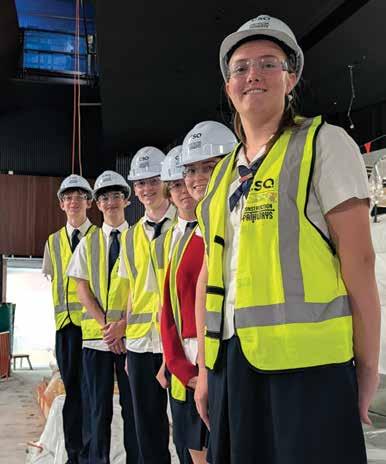
This year, more than 30 Year 12 students will graduate with at least one workplace or vocational qualification alongside their Queensland Certificate of Education (QCE), a milestone achieved by all CHAC graduates in 2025.
Students are completing nationally recognised courses on campus and off-site, partnering with providers such as TAFE Queensland to broaden their options in careers ranging from construction to animal care.
While the vast majority will still secure an ATAR to keep their university options open, many are also gaining practical skills aligned with career interests, making them job-ready from day one.
On campus, CHAC teachers deliver courses including Certificate III in Fitness and Certificate III in Business, keeping learning hands-on, relevant and integrated into the curriculum.
Alternatively, several students commence school-based apprenticeships in construction during Year 12, getting a valuable head start on their future careers.
“There are a range of pathways available to students and we make sure they stay on track and do everything required to succeed,” Mr Bowden explained.
“We want their future employers to see their commitment and follow-through,” he concluded.
Reimagining the Puppet

What is a puppet? It seems a simple question at first, but this year CHAC Arts students saw their assumptions challenged in rewarding and surprising ways.
Through the Dead Puppet Project – the year’s major arts project - they discovered that almost anything has the potential to be a puppet, so long as you bring a little creativity and imagination into the mix.
The project was guided by innovative Brisbane-based performance collective the Dead Puppet Society, an internationally renowned design-led theatre company established in 2009.
Widely considered one of Australia’s most ground-breaking production houses, students engaged in the company’s immersive workshops, led by Youth and Engagement Director Ms Helen Stephens, prior to the showcase final performance.
What resulted was a one-of-a-kind production that saw 30 Senior Secondary students interweave their diverse talents and artistic passions, including visual design, music, drama and multimedia.
The story told of a rock band that go their separate ways after a disastrous concert. On their personal journeys they explore eclectic landscapes and characters before finding their musical epiphanies and ultimately reuniting.
Head of Faculty – The Arts, Dr Malcolm Cole, said the project’s outcomes were greater than anything he could have imagined.
He explained his own introduction to Dead Puppet Society the year prior, through a production incorporating robotics, challenged his own long-held preconceptions of puppetry.
“My definition of a puppet was classical, like marionettes and strings, so I was impressed by how the company reinterpreted what puppetry could be and also confident our students would respond positively.”
And they did more than respond. They exceeded his expectations, with every element of the final performance developed and refined by the students through the workshops.
“There was some apprehension at the beginning because they didn’t know what it was going to be, but for students of The Arts that is an exciting and challenging place to be,” Dr Cole said.
“They
collaborated amazingly well. There was a lot of creativity and problem-solving, working with classic concepts like perspective and movement while engaging with a previously unfamiliar medium.”
He cited an early workshop where students were challenged to bring a simple sheet of paper to life as an illustration of the limitless potential of the project ahead.
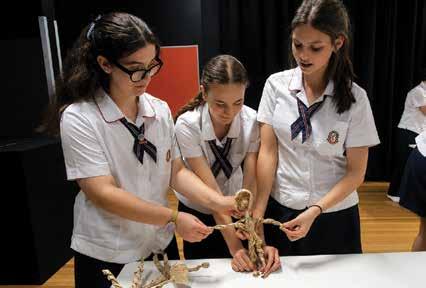
“We made the paper really crinkly and gave it form with a head and limbs, and soon we were able to project life into it – make it breathe, give it weight, bring it to life.”
He added: “Bringing a puppet to life also involves creating a world around them, and that is where the props, the sets, the lighting and the music made for a truly immersive experience.”
He said the project could not have succeeded without the experience of Ms Stephens guiding the students through the creative process.
“Her experience gave a clear understanding of what was achievable within our timeframe, but she never told students what to do – it was their story, their direction, their choices and their creation.
“It really was an open-ended, multi-arts project that left space for students to grow with it along the way.”
The Arts Faculty stages a major musical every second year, with Dr Cole noting that alternate years are purposefully set aside as an opportunity for students and staff to explore new creative directions.
“A musical is a big undertaking, so it is beneficial to space those out by exploring some more niche and abstract areas of The Arts,” Dr Cole said.
Previous to this year, alternate year projects saw students craft dramatic plays, arts camps and tours to major galleries interstate.
“Those experiences are needed because they inform and enrich the following year’s musicals and strengthen the cultural role of The Arts at the College,” he concluded.
So what is a puppet? It is more than an object that moves, it also must move us as well.
Setting The Stage For Connection
Major Arts projects at CHAC do more than allow talented students to explore and showcase their diverse talents – they also build community.
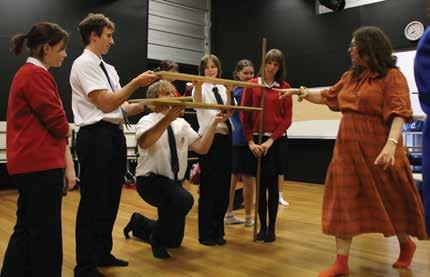
Arts Captains Maya Smith and Anna Stapf said the collaborative workshop experience in the Dead Puppet Project will stay with them just as much as the thrill of the final performance.
“Art can sometimes feel individual, especially when you spend a lot of time creating and refining your own work,” explained Maya, who designed and constructed props and scenery.
“In this project, I had the chance to work with students I’d never worked with before - with different interests and from different year levels - and we really connected by building something together.”
Anna explained the creative process was key to bonding the students, ranging from Year 10 to Year 12, into a working puppetry performance ensemble.
“It was truly open to us to create the show any way we wanted. That was so exciting,” she said.
“With a musical, you have a set script and music, but this was completely different. Everyone contributed ideas, then others would add to them, so what we created we truly created together.”
Both agreed they hadn’t anticipated how their roles would develop and overlap through the production.
“I didn’t go into this project wanting to be an actor,” Maya explained, “But by manipulating the scenery we were bringing action to the story as much as an actor would.
“I was also impressed by the musicians and how quickly they created original music, and even sound effects, to tell the story and build the puppet’s world,” she concluded.
Peter Doherty STEM Award Winner
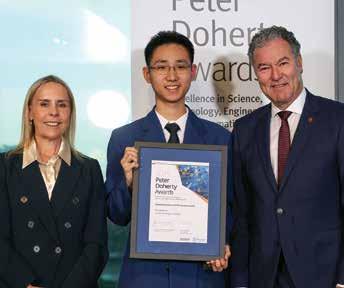
In a remarkable achievement 2025 graduate Zhenghao Ou was recognised as one of Queensland’s top STEM students.
Zhenghao was awarded the prestigious Peter Doherty STEM Award at a ceremony that recognised Queensland’s outstanding academic achievers in Science, Technology, Engineering and Mathematics, timed to coincide with National Science Week.
He was presented the award by Honourable John-Paul Langbroek MP, Minister for Education and the Arts, and is the latest honour in an already impressive list of accomplishments for the passionate science, mathematics and digital technology student.
During his final year at the College, Zhenghao represented Australia at the 2025 Asian Physics Olympiad in Dhahran, Saudi Arabia, Honourable Mention in the rigorous theory and practical exams.
Zhenghao encouraged current students to make the most of the opportunities provided by the College’s Science Faculty.
The Bridge to STEM Excellence
CHAC continues to gain recognition for its excellence in STEM, delivering another impressive showing at the 2025 Queensland Bridge Competition.
Queensland University of Technology hosted the tenth edition of the statewide engineering and design contest and attracted more than 150 teams who built the strongest possible bridge using only dried pasta and glue.
CHAC teams placed first and second, continuing the College’s outstanding record in the competition. The College has now won
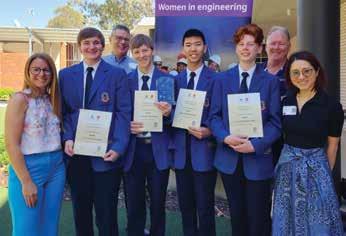
six times in the past decade and placed in the top three every year except one.
The College drew all its entrants from its Exceptional Scientists’ Program (ESP), which offers enriching experiences beyond the standard Science curriculum for high-achieving students passionate about STEM.
Coordinator and Secondary Science Teacher Miss Annette Window oversees the Program and says the College takes pride in its reputation as a consistent front-runner in the competition.
“The results are really due to the enthusiasm and preparation of our ESP students,” Miss Window explained.
“The competition is in Term 3 each year, but our students form teams and start designing, constructing and testing their bridges in Term 1. They even work on them through term breaks.”
Despite its impressive record, Miss Window concedes the College will not rest on its laurels in the competition, as rival schools lift their game every year.
“Our students will need to keep refining and improving to stay ahead – but that’s what science is all about.
“Knowledge never stands still, and there is always more to learn. That’s what makes ESP, and this competition in particular, so exciting for everyone,” she concluded.
The Write Stuff
Writing is often seen as a solitary pursuit, but even the most diligent and reclusive of wordsmiths benefit from the support of a like-minded community.
That is where the Scribbler’s Society comes in, providing encouragement and mentoring for CHAC’s avid writers as they find their voice and explore their craft.
Now in its second year, the Scribbler’s (as it is affectionately known) was conceived by the English Faculty as a way to encourage and engage students with a flair for creative writing.
Head of Faculty - English, Ms Eve Hassall, said she has been overwhelmed by the response to the initiative, with over 30 Secondary students now actively involved in the program.
“We wanted to create a space for those students that are creative and passionate, and often keen readers as well, to express themselves through their writing,” she explained.
A key reason for the program’s growth is the opportunity it provides students to work with mentors, be it an English teacher, another Faculty, or even Marketing staff.
Ms Hassall explained that, unlike a classroom or curriculum, there is no set way to participate in Scribblers and students were responding to that creative freedom.
“It is quite flexible and our meetings are fairly informal. Sometimes we share our most recent reads, other times we share creative writing in groups, and tell students of upcoming writing competitions.”
And it is in those competitions where Scribblers has already made its mark outside the College.
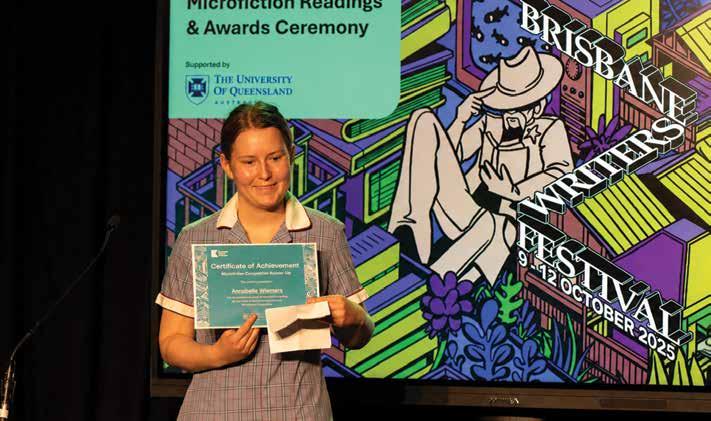
In its inaugural year, Year 12 student Zeta Vayanos was awarded First Prize in the Year 11 and 12 Poetry section of this English Teachers Association of Queensland (ETAQ) Literary Competition.
Two further students, Annabelle Wiemers (Year 8) and Sadie Hambling (Year 10), saw their entries shortlisted at last year’s Brisbane Writers’ Festival Microfiction Competition.
Ms Hassall said while Scribblers’ was about more than winning competitions, it was a welcome acknowledgement of the value of the program.
“As students see their peers succeed with their stories, that is building its own momentum and encouraging more to share their writing.”
She added: “Our students do amazing work in class, but often it doesn’t meet the requirements of the competitions, so we run our own competitions so student work can be submitted for external competitions.”
However, it is the building of a writing community she sees as the true legacy of the Scribbler’s Society.
“I’ve been really pleased to see the connections made between students of different year levels,” she explained.
“They’re often creative but quiet students, but they are discovering they have common interests and I think they are truly finding their tribe.”
And, to that end, the Scribbler’s Society is proof that writing need not be a solitary pursuit after all.
Students Blossom on Japan Tour
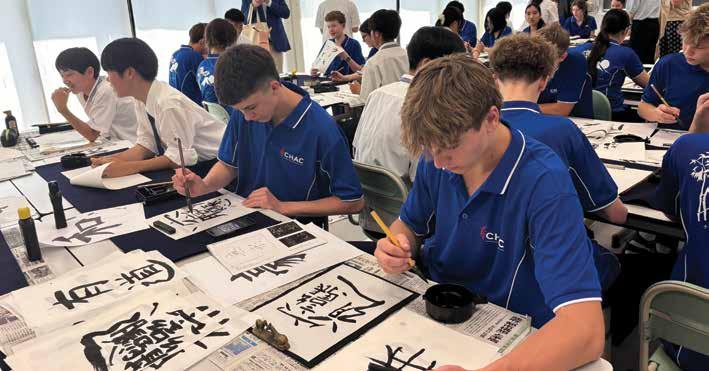
To some it may sound like a holiday, but for CHAC students the biennial Japan Tour offers unrivalled opportunities to discover the confidence and resilience they need to be worldand work-ready.
Every two years, Senior Secondary Japanese students immerse themselves in Japanese language and culture, following an itinerary that includes the iconic and historic cities of Tokyo, Kyoto and Hiroshima.
The College has organised tours to the Land of the Rising Sun for over twenty years, and few are as familiar with the positive student outcomes than Ms Peta Nakamura, Head of Faculty –Languages, who has led five Japan Tours.
“The experience is truly transformative for many students,” she explained.
“Students form strong bonds outside their usual peer groups, take on new responsibilities and come to see themselves differently.
“They meet new people and engage deeply with the language and culture. Two weeks in a foreign country without their parents helps them discover they are stronger than they previously realised.”
The tour is offered to students studying, or intending to study, Senior Japanese and includes structured learning opportunities such as time at the College’s sister school, Seiryo High School.
However, Ms Nakamura describes the four-day homestay with Japanese families as the emotional heart of the experience.
“The homestay allows students to apply both
language skills and cultural understanding in real‑world contexts.”
“They form genuine connections with their host families, and many stay in touch long after the tour. Some even return to Japan as adults to reconnect, which is touching and shows how lasting the impact can be.”
Additionally, the tours also provide exciting opportunities to experience Japan’s unique blend of cutting-edge technology and historic grandeur.
The most recent Japan Tour was packed with iconic stops and experiences, including Takeshita-dori’s daring fashion scene, the bustling Nishiki markets, Kyoto’s iconic Kiyomizu-dera Buddhist temple and the majesty of Tokyo’s Imperial Palace.
However, one of the most powerful stops on the itinerary is Hiroshima’s Peace Park and Museum, where students reflected on the atomic bombing that claimed over 100,000 lives.
“I’m always impressed by the respect and reverence students bring to that experience,” Ms Nakamura said. “It connects deeply with their Year 8 History studies and brings important balance to the tour.”
Student wellbeing remains central to the tour’s success. Extensive preparation ensures staff understand each student’s needs so they are safe, supported and engaged throughout the journey.
While advances in technology and AI continue to shape language learning, Ms Nakamura believes immersive experiences like the Japan Tour will remain invaluable.
“Face-to-face connection will always matter,” she said. “These tours show students the power of learning a language to understand others and connect in meaningful, human ways.”
Languages students will have the opportunity to participate in tours to Japan and France in 2027.
The Small Community That Builds Big Futures
I
n a world that insists bigger is always better, CHAC Primary is instead proving the enduring value of smaller communities in delivering meaningful formative education.
With no more than 56 students in each year level from Prep to Year 6, CHAC Primary’s focus on inclusion and participation ensures every student can discover who they are from an early age.
According to Head of Primary, Mr Steve Baker, it is an environment where every student has room to explore their passions and, more importantly, room to be seen and heard.
“One advantage is that, unlike larger schools, no one gets lost in the crowd and no one misses out on opportunities,” he explained.
“We pride ourselves on being a supportive community and as a smaller school we really get to know our students and families –their abilities, their interests, and their unique personalities.”
“Everyone knows each other. Relationships with staff, and friendships between students, continue right through their school journey.”
That deep understanding and commitment permits the learning experience to be tailored to each individual student.
“Our staff truly understand their students, identifying their strengths and challenges, and differentiating in the classroom to meet their needs,” he explained.
“Whether that’s providing enrichment through the Horizons Program, or some additional support with our Inclusive Education team, every child is seen and every child is valued.”
That extends outside the classroom as well, with opportunities to participate in the Arts, Languages, Sport, and Music programs from the earliest Prep intake.
“We truly value those programs and recognise the role they play in a child’s development. All our Primary students have an opportunity for new experiences and can pursue what interests them.”
A further advantage is the continuity students experience throughout their entire 13-year educational journey. Those who begin in Primary benefit from a consistent approach and shared values that prepare them for the expectations of Secondary School.
Primary students regularly visit the Secondary campus and engage with older students at events and activities, including science shows, library visits, arts performances and Faith services.
“It’s the way our Primary and Secondary come together as one campus that makes the CHAC journey from Prep to Year 12 so unique.”
“Our students find their comfort and security in Lower Primary, discover their passions and interests in Upper Primary, and then carry that right through Secondary to graduation,” he said.
And no matter what the future holds, Mr Baker is confident CHAC Primary will never lose its small school values.
“That sense of community will never leave CHAC Primary because we know it is what makes it a special place for students to learn and grow,” he concluded.
Behind The Music

CHAC families have long delighted in the polish and energy of student performances, but what isn’t often seen is what happens away from the spotlight.
Behind the scenes, a dedicated team of Music Technology students help shape every moment, ensuring each performance looks and sounds as seamless as it feels.
At any given time, around 25 students are immersed in their craft, tackling everything from sound recording and lighting design to staging and live production across the College’s busy events calendar.
It’s hands-on, real-world work, and for many students it can be a defining part of their CHAC experience, with participants required to make a three-year commitment to the program from Year 10 to Year 12.
Director of Performance Music, Mr Geoff Govier, described Music Technology as one of the College’s most distinctive cocurricular offerings, delivering life lessons as well as professional grade skills.
“They are some of the most committed students we have with the time and effort they put in after school, in the evenings and even weekends,” he said.
“It is rewarding to see them grow and mature with that responsibility just as much as the technical skills they are developing.”
He added: “The College is always supportive of finding ways outside the classroom for students to express themselves and, for many, Music Technology is the perfect fit.”
Key to the program’s success is the on-campus Ghostgum Audio facility, where the College’s unrivalled investment in production equipment eclipses many professional venues.
“No other school has anything remotely close to what we have at CHAC in terms of facilities and, uniquely, it is also highly acoustic focused,” he boasted.
“Studio A is one of the largest orchestral recording spaces in Queensland, but we also have all our own lighting and control desks, video and audio mixers for recording, and rigging set-ups.
“Our students are not just working with state-of-the-art equipment, they are gaining a true understanding of how it all comes together for production and performance.”
Further, those skills are instantly marketable after graduation, with many students assembling professional portfolios built off their wide breadth of Music Technology activities.
“What they are learning in Music Technology are real-time, realworld skills that they can use outside the College for the rest of their lives,” Mr Govier explained.
“That might be as a professional career in events or production, but it might also be as volunteers in community theatre.”
Just as importantly, their work binds the CHAC community together, with every assembly, concert and celebration relying on their practical know-how.
You won’t always see them, but you would certainly notice if they weren’t there.
Learn more about Ghostgum Audio at www.chac.qld.edu.au/ghostgum-audio/
CHAC’s New Home Court Advantage
CHAC’s new Indoor Sport Centre is proving a true gamechanger – not just for athletes and coaches, but the whole CHAC Community.
Opened in Semester Two of 2025, following two years of construction, the multi-million dollar facility sits on the site of the former Tuggerah Centre in the heart of the College.
The location was chosen to support more than sport, accommodating Health and Physical Education from Primary through to Secondary, alongside pastoral uses such as cohort development and leadership days.
According to Director of Sport, Mr Mark Spindler, the feedback from the College community was immediate and overwhelmingly positive.
“The students, coaches, teachers, parents, and even visiting teams, have all said the same thing to me – it is a truly great facility,” he said.
Step inside its impressive 2000m2 footprint and it is easy to see why; the dynamic, state-of-the-art, multi-court layout caters for netball, volleyball and basketball, while a fully equipped strength and conditioning gym supports athletes of all levels.
Add in the generous seating and viewing gallery, and fully serviced canteen, and it is as much a space for supporters as it is for those on the court.
“The architects brought some great ideas and we added a few of our own practical touches, and the result is an amazing space that works for the whole College.”
One crucial aspect for Mr Spindler was ensuring it was more than a game day venue, but a genuine home venue that celebrates student success, with Champions’ banners high above the courts, a trophy case and signed jerseys of past Premiership-winning teams lining the walls.
“Those elements show the current students they are part of something bigger than just their team and just this season – they are part of the College’s legacy,” Mr Spindler explained.
“I’ve heard the students say how much they want their names on that wall, they want to add their contribution to the story of CHAC Sport and that can only be a good thing.”
The Indoor Sport Centre is a continuation of investment in CHAC Sport in recent years, with six multi-purpose outdoor sports courts opened in early 2024 to meet the demands of exploding participation numbers.
That hunger to participate is an expression of the philosophy Mr Spindler brought to CHAC over a decade ago - build the right environment and the culture will follow.
“Sport isn’t always about winning, but great facilities create enthusiasm and pride, and that drives the community to actively want to be part of it.
“And, when you build a strong culture of participation, support and enjoyment, then success tends to follow that,” he concluded.

College Captains

CHAC’s 2026 College Captains outline their passion for learning, growth and community.
What do you hope to achieve in your role?
LACHLAN DEBONO-GROSS
From perfecting my public speaking abilities through speaking at assemblies, to building new relationships with people I meet through my role, my list goes on.
The thing that matters most to me, more than anything else, is leaving a lasting impact on CHAC through my actions as a College Captain.
I hope that students, teachers and parents – whether they knew me well as a friend or only as a school leader – will remember me for many years to come for my kindness and my outgoing, friendly character.
I have been able to work towards this goal through my role as a College Captain by becoming a well-known person across the College, among all year levels of students and staff. Students from different Houses and year levels, whom I’ve never met before, have come up to me, said hello, introduce themselves, and then have the nicest conversations. As I continue to work towards my goal as a College Captain each day, I know that even if only one person remembers me in the year after I have graduated, I will have achieved the main thing I set out to do.
What makes for a good leader and who inspires you as a leader?
XI-AN GAIT
We often have a skewed perception of leadership within society today, with the prevailing belief that to be a leader, we must have a title or badge. Yet, leadership cannot be confined to a single definition, and that’s the beauty of humanity.
It is important that we ensure our personality, morals, and values shine throughout our leadership, that we all strive to be our own person, and our own leader.
Whether you can inspire people with your patience and forgiveness like Nelson Mandela, or deliver renowned speeches like President Obama, or even encourage others to “just keep swimming” like beloved Pixar character Dory, everyone has the capacity to lead.
Of the admired, renowned leaders throughout history, one quality remains constant: humility. The recognition that leadership is not a self-serving endeavour, but an opportunity to uplift and empower those around you.
Humility is embracing your humanity, and Charlotte, Austin, Lachlan, and I aspire to lead with humility in 2026, with the CHAC community at the forefront of our minds.
What does being College Captain mean to you?
CHARLOTTE PALMER
This role has truly shaped my understanding of leadership as an influence rather than a position.
For me, being College Captain means upholding my values through my everyday choices, staying true to who I am while striving to be someone that others can rely on.
It
means being actively present, building one-on-one connections, and supporting
the many aspects of the vibrant culture we have at CHAC; so I can give all that I can to a community that has helped me learn so much.
I am honoured to be trusted with this role and have loved shaping it in a way that feels uniquely my own. Every day is both a challenge and an opportunity to make a positive difference, and the support I continue to receive from the College community means the world to me.
I am grateful to share this journey with the other College Captains, who inspire me each day to become a better version of myself, and I cannot wait for what the rest of the year holds.

How do you show Courage and Compassion?
AUSTIN POLLOCK
Having been at CHAC since 2014, I’ve become pretty familiar with the motto of ‘Courage and Compassion’. It’s something we live and breathe every single day.
Since becoming Captain, I have learnt that being courageous doesn’t mean making some huge, Superman-like, heroic gesture; it is far more tame than that. It can look like picking up litter, or simply just setting the standard each day.
Compassion is just as crucial. It’s so important to be able to step into someone else’s shoes every once in a while.
I love working with so many different students across the College. Whether it is helping at events, talking with different year levels, or doing some embarrassing skit on Assembly, it shows me how important compassion and inclusion really are.
This role has given me a greater appreciation for how much people contribute in small ways every day, and I’m so grateful to share this with my fellow Captains.
Charity Means Giving of Ourselves
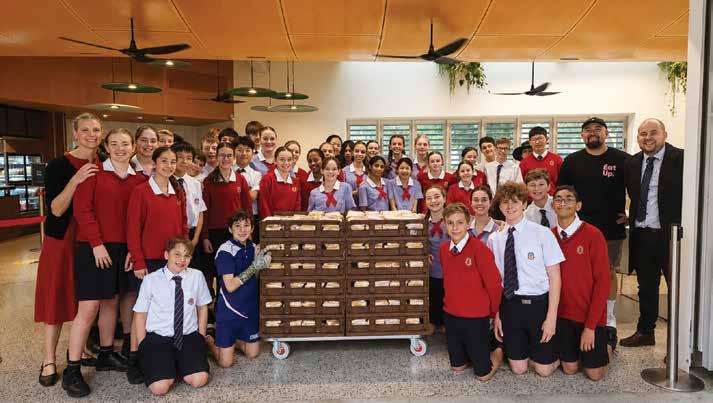
Charity has been at the heart of the Christian tradition from its foundation, and at CHAC a new generation is encouraged to remain true to its spirit of service.
Each year, the College community rallies behind a host of charitable initiatives, advocating for physical and mental wellbeing, environmental stewardship, and practical outreach through food and clothing drives.
College Chaplain and Director of Mission, Brother NathanJames, is a strong advocate for ensuring these initiatives are an opportunity to learn, understand and serve those in need according to Anglican tradition.
“Jesus called on people to serve others and it is important that our community view, interpret and experience the College’s charitable outreach through that lens,” he said.
“The Franciscan tradition, in particular, emphasises providing for those in need. It is also about direct and tangible connections to those communities we assist.
“So we try to ask how our charitable efforts are making the most impact and how our energies are genuinely changing lives for the better.”
Driven by the commitment of students, staff and volunteers, every part of the College plays a role in supporting worthy causes, from Diakonos committees to faculties and departments.
Brother Nathan said Mission leadership’s role is to support these initiatives by encouraging and guiding the College community in the Franciscan spirit.
“It is important that students are actively involved in making a difference, not just giving a gold coin but also giving their time and effort to understand the meaning of charity in its broadest sense,” he said.
“The most heartening thing is that when they are challenged to think and act in those terms, the students really want to be involved. You see that with their enthusiasm for the Social Justice Committee’s work with Zonta, for example.”
Beyond the larger and more visible charities, Brother NathanJames believes some of the most important work is performed by local church organisations supported by the College.
“Many of the outreach programs through local parishes do not receive the same government and business support as their higher-profile counterparts,” he said.
“They are entirely reliant on donations for their good works, with small, dedicated volunteer teams that have a real impact on local communities.
“They do not spend money on advertising, promotion and administration. All their effort goes into the community and that is a truly Christian approach.”
Above all, he said, the generosity shown by the CHAC community continues to inspire those coordinating the College’s outreach efforts.
“Our students, families and staff are compassionate and generous and that is something we are constantly humbled by and thankful for,” he concluded.
Diakonos
Comfort and Relief for Cancer Patients
In a genuine expression of service learning, CHAC students recently partnered with Zonta to assist Mater Hospital breast cancer patients.
The College’s Social Justice Committee worked alongside Zonta volunteers to assemble breast cushions and prepare drainage bags, providing comfort and relief for individuals recovering from surgery.
Students spoke warmly of the privilege of giving back and gained a deeper understanding of how practical acts of service can make a lasting difference.
The experience reflected the College’s Anglican ethos, where faith is expressed through compassion and generosity of spirit.
Breakfast with a Message
The CHAC International Women’s Day Breakfast returned in 2026, as the Girls’ Committee led a morning of conversation and connection.
Under the theme ‘Give to Gain’, families from Year 6 to Year 12 reflected on impactful insights from renowned guest speaker Professor Jackie Huggins AM FAHA.
A historian, author and advocate for Aboriginal and Torres Strait Islander peoples, Dr Huggins encouraged students to consider the impact of their voices and actions on both the seen and unseen members of our community.
The sold-out event was an example of how the CHAC Community unites to share in stories that inspire courage and compassion.
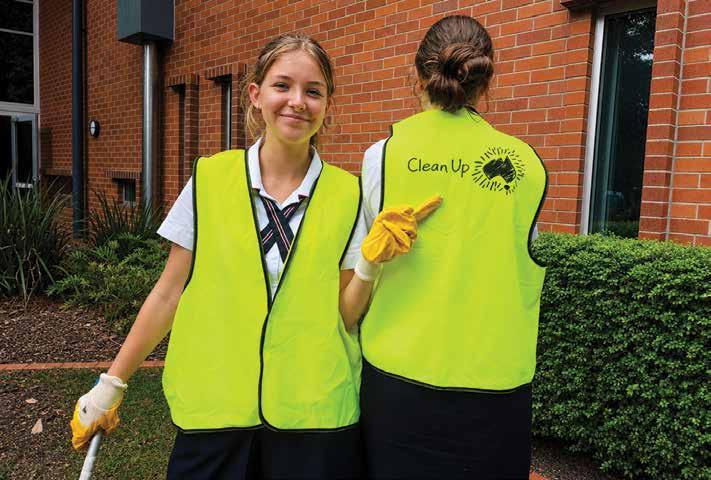
Clean Up Australia Day
Clean Up Australia Day reminded students of the collective responsibility we share to care for our environment.
Eager student volunteers turned out with litter-grabbers, gloves and bags to restore pride in shared spaces through the Primary and Secondary campuses.
They combed playgrounds, gardens and common areas, sorting recyclables and confronting waste head-on.
The Environment Committee were front and centre, guiding the effort and modelling practical sustainability in action.
More than a tidy-up, the day reminded students that small actions add up –benefiting both the wider community and the environment they share.
Why We Chose CHAC

Moving overseas brings a long list of decisions, but few matter more than choosing a new school for your child.
For the Halliwell family, who arrived in Brisbane in February after six years in the United Kingdom, there was plenty to consider for their son, Archie.
With over two decades of experience in recruitment, Michelle Halliwell approached the decision of choosing a school with the same diligence as she would to hiring a potential employee.
She explained that she and her husband, Jonny, were clear on what would help Archie thrive in a new country – and that CHAC ticked all the boxes.
“We wanted Archie to attend a co-educational school with a strong reputation for nurturing each student’s individual aspirations and interests,” she said.
“After a lot of research, it was clear that CHAC was the right choice. Its approach to learning, focus on preparing students for the real world, bushland setting, and facilities all stood out.”
Michelle said that being able to research the College’s interactive online resources and social media provided an important window into the day-to-day student experience.
“I spent many nights on my laptop researching CHAC. Reviewing the academic results, watching the online tour many times over, it was very clear what CHAC could offer.”
With Archie’s first semester now complete, Michelle said the College had exceeded the family’s expectations.
“We have all been really impressed with the class content. The learning is engaging and focused on real life work and the academic standard is very high.
“We have also all been very impressed with the attitude of the students and their desire to learn and better themselves.”
Beyond the classroom, she said the entire family felt truly welcomed by the College community.
“We have attended several parent events and met other parents that have now become close friends.”
Most importantly, she said Archie was thriving academically and personally at CHAC and embracing opportunities in Art and Industrial Design and Technology.
“Archie has met a really nice group of friends who are all focused on learning and have been so supportive.
“We feel that is a testament to the values promoted at CHAC,” she concluded.
In the end, one of their biggest decisions has become one of the biggest reasons Brisbane now feels like home.
Kelly’s Spark For Giving Back

They say a good deed is its own reward, so it comes as little surprise that for CHAC Alumnus Kelly Sparks (2021), fundraising and philanthropy became a deeply rewarding career path.
After four years at the Australian Indigenous Education Foundation, where she launched her career, Kelly recently stepped into a new role at Diabetes Australia, all while studying a double degree in Bachelor of Business and Bachelor of Education at Queensland University of Technology.
As Individual Giving Coordinator, she manages a key fundraising stream, cultivates donor relationships, and delivers engagement programs that drive long-term impact for the foundation.
She acknowledged that students might often overlook the non-profit sector when planning their careers, however she is grateful the path called to her straight out of school.
“It is a highly purpose driven field that attracts young people that are passionate about serving others, creating tangible impacts and using their skills for good.”
She added, “It is incredibly rewarding to convert prospects into regular donors, grow those relationships into major supporters, and ultimately evolve into transformational and legacy donors.
“Being able to nurture that progression and witness the ripple effect of their generosity is a privilege and a reminder of why my work matters.”
Kelly’s compassion and drive were evident throughout her time at CHAC, where she was prominent in the Environment Committee and Social Justice Committee; and her embodiment of the College’s ethos saw her recognised as a recipient of the St Francis and St Clare Shield in her senior year.
It was an accolade that also directly led to her first career opportunity.
“(Former CHAC Board Member) Renee Coffey approached me the week after the presentation and invited me to join her at AIEF in the fundraising team, which she led as Deputy CEO at the time,” she recalled.
However, Kelly emphasises that this opportunity was just one of many formative experiences at CHAC, which encouraged her to explore her passions and challenge herself.
“One standout experience was completing a Certificate III in Business, which gave me practical knowledge early on and made strong use of technology-based learning.
“All my experiences at CHAC helped build my organisation, time management, and teamwork skills, and it prepared me to manage working and studying full-time.
“I would not have achieved my career success to date without CHAC.”
As she nears completion of her tertiary studies, Kelly is now focused on amplifying her ever growing list of experiences in business, education, and philanthropy for ever greater impact.
“I remain open-minded about the journey ahead, but one constant will always be my commitment to making a meaningful difference in the lives of others,” she concluded.
Curiosity Takes Flight for CHAC Alumnus
Adecade after graduating from CHAC, Mitch Lovell (Class of 2014) has built a soaring career in one of the world’s most demanding technical fields. Spreading his wings in the aviation engineering sector.
Now 29 and based in Brisbane, Mitch serves as a Design & Integration Engineer and Project Lead for Emergency Medical Services at Airbus Australia Pacific, where he balances his advanced technical expertise with high-stakes project leadership.
“Half of my time is spent doing project management, and the other half is designing and integrating new equipment onto helicopters,” he explained of the role.
One career highlight came during deployment to Army training exercises in Darwin where he got up close to some of the world’s most advanced and complex helicopters.
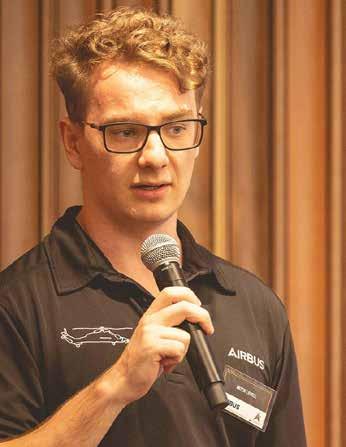
“Getting up to speak with the maintenance team and clambering over helicopters to see what could be improved was awesome,” he recalled.
“The absolute highlight was supporting the Forward Arming and Refuelling Point and loading rockets into the ARH Tiger. Seeing the direct operations that my in-office work supported was great.”
Mitch is quick to dispel some common misconceptions about engineering careers, citing the need to blend precision with creativity and collaboration.
“People assume engineering is purely technical, but so much of it requires good communication and negotiation. You’re always working with departments that often have differing priorities.
“A good engineer needs to articulate and get their point across.”
He added: “You need to deliver quality, timely, and costcompetitive solutions. If you miss any of those pillars, you lose the faith of your customer.”
But despite the varied demands of his work, Mitch said he finds the challenges deeply rewarding.
“Seeing something you’ve worked on come to life is incredibly satisfying. Knowing that your work directly contributes to the operations of complex machines keeps me coming back each day.”
Further, Mitch credits CHAC with instilling and nurturing the curiosity that drives his career to this day.
“The trial-and-error process happens in engineering more than you’d think and we’re always thinking about continuous improvement,” he said.
He added: “My teachers fostered my curiosity and let me really delve into the ‘why’ of a topic. Being able to query and discuss topics prepared me for the self-paced learning expected at university.”
He also fondly recalls the extra-curricular opportunities at the College, including serving as President of the Australian Space Design Competition team in Year 12 that travelled to Florida’s Kennedy Space Centre.
“Going to America, seeing the Smithsonian Aerospace Museum, and competing was awesome.”
Looking ahead, Mitch leaves no doubt that he will continue reaching for the sky.
“My ambition is to step into a leadership role within Airbus and to deliver a world-class flying ambulance cabin to Australia.”
The Serious Side of Funny Business
CHAC alumna Megan Masterton (Class of 2001) has built her career in an industry that thrives on quick wit, big personalities, and seamless behind-the-scenes coordination.
As the General Manager of The Sit Down Comedy Club (SDCC), Australia’s longest continuously running comedy club, the 41-yearold plays a key role in shaping the live comedy landscape nation’s.
Megan’s journey into the world of comedy began unexpectedly in 2016 when she undertook an internship at SDCC as part of her Bachelor of Creative Industries at the Queensland University of Technology.
What was meant to be the last step toward graduating quickly became a turning point in her life, and one she does not regret for a second.
“I had a complete lightbulb moment during that internship,” she recalled. “I just knew comedy was where I was meant to be.”
When no ongoing position was available, she volunteered to return once a week to gain experience, and it wasn’t long before that tenacity and perseverance led to her big break.
“My boss realised pretty fast that I wasn’t going anywhere and, within a few months, he created a full-time job for me, and honestly, I still have no intention of ever leaving.”
Much like the art of stand-up comedy itself, her role is diverse and fast-paced. SDCC annually produces more than 400 live shows, books over 300 local & interstate comedians, hosts international acts, and supports emerging performers through its well-known Open Mic program.
Megan oversees ticketing, marketing, & the customer experience; and supports programming, touring & logistics operations – often all in a single day.
“People think it’s all laughs, but it’s really a huge juggling act. The role is part creative director, part crisis negotiator – but I truly love every bit of it.”

She cites guiding the club through the challenges of COVID-19 lockdowns, travel restrictions and crowd limits as one of her proudest achievements.
“Entertainment was the first industry to shut down and one of the last to come back during the pandemic,” Megan explained. “It was chaotic and stressful, but seeing the club survive, thrive and reconnect with audiences was incredibly rewarding.”
Reflecting on her CHAC days, Megan fondly remembers the strong sense of community in the Class of 2001.
“We had such camaraderie. Even now, our reunion group chat still occasionally lights up with memories and catch-up invites,” she said.
She also recalled teachers who treated students “like young adults,” noting the lasting impact that their respect had on her.
Looking ahead, Megan is passionate about expanding SDCC’s reach and championing homegrown comedy talent.
“I want to help shape the future of Australian comedy for both performers and the audience alike,” she said.
“There’s nothing better than knowing you’ve helped create an experience that makes people genuinely happy.”
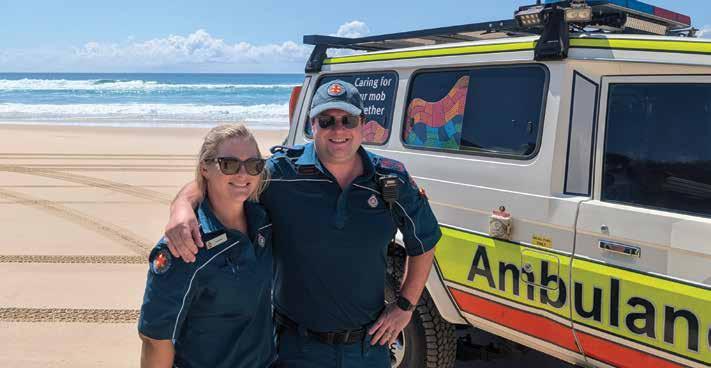
Island Paramedics Reconnect After Two Decades
Two familiar faces recently crossed paths again – not in a classroom, but on the shores of Minjerribah (North Stradbroke Island).
Grant Peterson and Natalie Wann (née Kirkman), both 2004 graduates of Cannon Hill Anglican College, reunited while working for the Queensland Ambulance Service across the Moreton Bay region.
Grant and Natalie, both now 39, followed very different pathways into the same career.
Natalie transitioned directly from school to university, entering on her OP score and moving straight into paramedicine. In contrast, Grant took a less linear route, working several jobs before eventually pursuing university and finding his calling in ambulance services.
“I went straight from school to university with a clear goal in mind,” Grant explained.
“Natalie’s pathway looked different, but we’ve ended up side by side doing the same job which is pretty special.”
Grant currently serves as an Advanced Care Paramedic, primarily based on the Medicat – the ambulance response vessel servicing the Southern Bay Islands.
He explained that working in such a unique and challenging environment brings added complexity to his role.
“Day to day, I assess, treat and transport patients in what can be a very complex environment. Every single day is different. There’s no predictability in the ambulance service, you have to think on your feet.”
Natalie serves as Operations Supervisor for the Moreton Bay Islands, overseeing ambulance operations across the Bay’s many island communities.
“A big part of my role is ensuring our teams are supported and our communities receive the best possible care,” she said.
Both are quick to dispel the biggest misconception about their profession.
“People think it’s all lights and sirens” Natalie shared. “But a lot of what we do is engaging with the community and caring for people with long-term health conditions.”
While the unpredictability can be challenging, they agree it is also what makes the role rewarding.
“The most fulfilling part is seeing the difference you make in someone’s life,” Grant reflected.
“Following a patient’s journey and knowing you’ve played a part in saving their life really stays with you.”
Reflecting on their time at CHAC, both fondly recall the strong sense of belonging they felt at the College.
“The inclusivity of the school stands out,” Natalie said, “You always felt like you mattered.”
They credit the College with instilling a strong work ethic and a desire to serve the community – something that will continue to guide them in their careers and future.
“We both genuinely love what we do,” Grant said. “Working across the Bay Islands is an incredible environment. We feel like we’re exactly where we’re meant to be.”
Thank you to our generous community
Your support of CHAC’s Days of Giving in 2021 and 2022 is truly appreciated.
The Indoor Sports Precinct is now complete and is a remarkable addition to our College that will shape the future of sport at CHAC.
This purpose-built facility features multi-purpose sport courts, new classrooms, student amenities, stadium seating and modern scoring equipment designed to inspire the next generation of CHAC athletes.
2021 Key Supporters
D. Ballard
A. Barnes
T. Clark
J. Clayton Pejski Family
E. Glennon
S. Murray
J. Ngan
S. & P. FitzPatrick
G. O’Brien
J. Pappas
R. Tonkovic
D. Young
J. Zabala
2021 Virtual Brick
Supporters
D. Aish
G. Baird
D. Ballard
T. Barker
D. Beven
Z. & B. Billings
A. Blacker
D. Boyer
H. S. & T. Butler
D. Carton
G. Chesterfield
P. Clark
D. & T. Clough
P. Duggan
K. Eisenreich
P. Elliott Mangan Family
Leonard Family
K. Fox
E. Gay
E. Gill
S. & S. Goldsworthy
L. Gordon N. Gough
Guandalini Family
P. Gull
L. & I. Hankinson
H. & A. Hethorn
D. Hobbs
M. & D. Ingham
R. Jenkin
T. Johnson H, Johnson
V. Johnson
A. Jordan
S. & K. Julien
F. Kowalczyk
M. Lee
A. & V. Leighton
B. Masnjak
K. McClure
N. McLellan B. McLister
M, Micallef
R. Miles
H. Milne
S. Morrison
S. Murray A. Naidoo
G. Niggemann
M. Nottage
S. & H. Orford
S. & R. Owen
B. Paech
A. Paynter
F. Pollock
E. Popoff
R. Pruett
S. Reedman
I. & M. Reid
E. Roberts
D. Russell
J. Schultz
J. Shakles
A. Storey
H. Strain
A. Tran
M. Tran
J. Tran
M. Vale
C. Walker
A. & N. Wallast
Groenewoud
J. Wang
P. Whitcombe
K. , H. & M. Woodford
2022 Key Supporters
D. Ballard
A. Barnes
T. Clark
J. Clayton Pejski Family
E. Glennon
S. Murray
J. Ngan
S. & P. FitzPatrick
G. O’Brien
J. Pappas
R. Tonkovic
D. Young
J. Zabala
2022 Virtual Brick Supporters
D. Aish
G. Baird
D. Ballard
T. Barker
D. Beven
Z. & B. Billings
A. Blacker
D. Boyer
H. S. & T. Butler
D. Carton
G. Chesterfield
P. Clark
D. & T. Clough
P. Duggan
K. Eisenreich
P. Elliott Mangan Family
Leonard Family
K. Fox
E. Gay E. Gill
S. & S. Goldsworthy
L. Gordon N. Gough
Guandalini Family
P. Gull
L. & I. Hankinson
H. & A. Hethorn
D. Hobbs
M. & D. Ingham
R. Jenkin
T. Johnson
H, Johnson
V. Johnson
A. Jordan
S. & K. Julien
F. Kowalczyk
M. Lee
A. & V. Leighton
B. Masnjak
K. McClure
N. McLellan
B. McLister
M, Micallef
R. Miles
H. Milne
S. Morrison
S. Murray
A. Naidoo
G. Niggemann
M. Nottage
S. & H. Orford
S. & R. Owen
B. Paech
A. Paynter
F. Pollock
E. Popoff
R. Pruett
S. Reedman
I. & M. Reid
E. Roberts
D. Russell
J. Schultz
J. Shakles
A. Storey
H. Strain
A. Tran
M. Tran
J. Tran
M. Vale
C. Walker
A. & N. Wallast Groenewoud
J. Wang
P. Whitcombe
K. , H. & M. Woodford