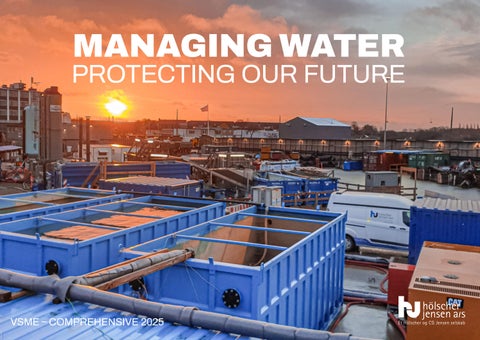
MANAGING WATER PROTECTING OUR FUTURE
CO2 REDUCTION ON TARGET
In 2025 we reduced our overall CO2e emission by 8 %, primarily due to:
• Increased electrification of groundwater solutions
• Increased use of materials with reduced emissions.
CIRCULARITY IN PRACTICE
New partnerships with primary stakeholders to increase circular economy in our business model, including pumps, cables and PEH pipes.
NEW MANAGEMENT TOOL
Improving visual management & phychological and overall safety in the organisation.
NEW TECHNOLOGIES
Replacing sand and activated carbon with new and more sustainable filter media.
GENERAL INFORMATION
Letter from the CEO
Our Journey Towards Water Positive For decades, groundwater has been perceived as an abundant and clean resource. Today, this assumption is increasingly challenged, as water resources are under growing pressure from pollution, climate change, and rising demand.
At Hölscher Jensen A/S, we work with groundwater every day. This gives us both a responsibility and a clear perspective on the challenges ahead. We see first-hand how important it is to manage water resources carefully and responsibly.
Our ambition is to move towards contributing positively to water management through our solutions, including treatment and controlled discharge or reinfiltration of water. This is a long-term ambition, and we are still in the early stages of defining how to measure and achieve it in practice.
We cannot do this alone. Progress depends on close collaboration with our customers, suppliers, and partners across the value chain.
This report marks our first step in structuring and
documenting our ESG efforts. It provides an overview of where we stand today and where we need to improve. Below, I would like to highlight some of the key developments from 2025 and our priorities for 2026.
Highlights of 2025
• Establishment of a baseline approach to sustainability management aligned with recognised frameworks (UNGP and OECD)
• Completion of our first risk analysis, identifying key impacts, risks, and opportunities and defining initial actions
• Initial reduction of CO₂ emissions compared to 2024 (based on available data)
• Introduction of equipment powered by electricity and alternative energy sources
• Improvements in waste handling and sorting practices
• Participation in supplier and industry initiatives, including circular and take-back programs
Priorities for 2026
• Continue mapping and reducing CO₂ emissions across Scope 1–3
• Improve data quality, documentation, and internal processes
• Further develop and apply technologies for groundwater management and water treatment, including handling of contaminated water (e.g. PFAS and similar substances)
• Strengthen resource efficiency and increase focus on material use across the value chain
• Increase transparency and communication on our ESG efforts and progress
We are still early in this journey, but we are committed to taking the necessary steps. I look forward to continuing this work together with my collegues, our partners and stakeholders.
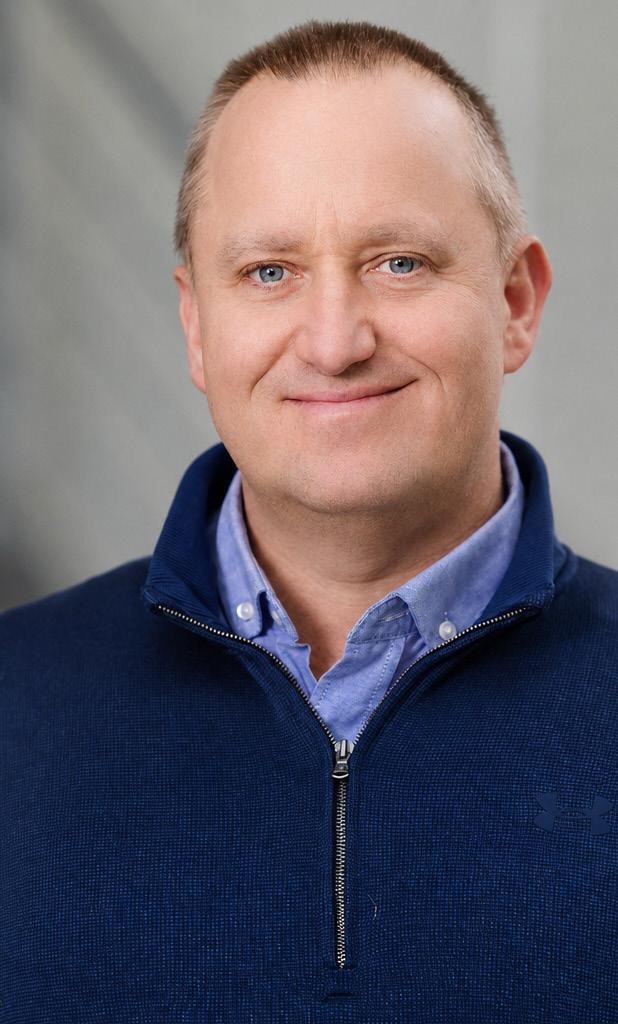
Managing Director, Jan Vognbjerg
The Sustainability Report for 2025 covers our sustainability activities from 1 January to 31 December 2025, which is the same period as our financial reporting year.
The report has been prepared in line with the VSME Comprehensive Module and is presented for Hölscher Jensen A/S as an individual company.
Our approach to sustainability is based on well-established international standards, including the UN Guiding Principles on Business and Human Rights (UNGPs) and the OECD Guidelines for Multinational
Basis for Preparation
Enterprises. These frameworks guide how we manage our responsibilities and impacts.
We identify and manage sustainability risks through a double materiality assessment. This means we assess both how sustainability issues may affect our business and how our activities may impact the environment and society. This assessment covers our own operations as well as our value chain, including suppliers, customers, and other key business relationships, and helps us prevent and reduce negative impacts.
Some information has not been included in the report
because it is commercially sensitive. This applies to our turnover and CO₂ intensity (as referenced in §31).
To ensure that our reporting is consistent and comparable, we use recognised methods and tools, including the UNGP and OECD frameworks, the Danish Klimakompasset, along with other publicly available CO₂e data sources.
All data, including greenhouse gas emissions data, has been prepared by the Sustainability Team at CG Jensen A/S. The reported data and figures have been reviewed internally by Hölscher-Jensen A/S.
Hölscher-Jensen A/S Location and geolocation
Location Address Country Geolocation (Google Maps coordinates)
Administration, (sales & technical support)
Administration (finance)
Storage, (warehouse)
Baldersbuen 38, 2640 Hedehusene Denmark 55.65423, 12.21274
Fabriksparken 37, 2600 Glostrup Denmark 55.68296, 12.37285
Ejbyvej 105, 4632 Bjæverskov Denmark 55.47600, 12.07325
Basic information about Hölscher Jensen A/S
Business Model & Valuechain
Hölscher Jensen A/S is a specialized contracting and service company focused on groundwater lowering and groundwater treatment, including construction site water management. The company creates value through technical expertise, structured project management, and solutions that support safe and efficient execution of construction and infrastructure projects, including treatment of water prior to controlled discharge or reinfiltration into the groundwater system.
The company incorporates elements of circular economy in its operations, including treatment and reinfiltration of water, reuse of equipment where possible, and optimization of resource consumption in project execution.
The company’s value chain includes:
Upstream: Planning, procurement of materials, pumps and technical equipment, and collaboration with suppliers and subcontractors
Own activities: Project execution, groundwater lowering, operation of pumping systems, monitoring, and water treatment processes
Downstream: Delivery of services, discharge or reinfiltration of treated water, documentation, and follow-up with customers and partners
Key inputs and outputs across the value chain include:
Inputs: Groundwater, energy (fuel/electricity), technical equipment (e.g. pumps, pipes, filters), and operational materials
Outputs: Treated and discharged or reinfiltrated water, emissions related to energy use, and residual waste streams from treatment processes
Key elements for maintaining business performance include high quality of delivery, safe operations, skilled employees, efficient resource use, responsible water management, and compliance with environmental and occupational health and safety requirements.







Principles of Circular Economy
Principles of Circular Economy
Our Sustainability Approach – A Six-Step Due Diligence Process
In line with internationally recognised standards for responsible business conduct, the company applies a structured six-step due diligence approach to identify, prevent, mitigate, and account for actual and potential impacts on people and the environment across its operations and value chain.
1. Policies and governance (Commitment and anchoring)
The company has established and approved key governance documents, including a Commitment of Policy and a Code of Conduct, which define principles, responsibilities, and expectations to our stakeholders. These are anchored at management level and communicated across the organization and primary external stakeholders.
2. Identification and assessment of impacts (Risk assessment)
The company has conducted an initial assessment of risks and impacts, including a double materiality assessment completed in 2025. This forms the basis for identifying material ESG risks, impacts, and opportunities across the value chain.
3. Actions to address impacts (Address adverse impacts)
Based on the assessment, the company has developed its carbon footprint and defined CO₂ reduction initiatives across the value chain. In addition, action plans have been established to address identified impacts, risks and opportunities (IROs).
4. Monitoring of effectiveness (Ongoing monitoring)
The company has implemented a structured follow-up process with quarterly reviews to monitor progress on actions, assess effectiveness, and update risk assessments where relevant.
5. Communication (Disclosure and transparency)
The company has prepared its first VSME report and is establishing processes for ongoing external communication on ESG matters, including actions taken and progress achieved.
Remediation and grievance mechanisms (Remedy)
A formal grievance mechanism has been established to enable stakeholders to raise concerns. The process ensures appropriate handling, investigation, and remediation of adverse impacts where relevant.
procedures)
Our Risk Assessment and Identifcation of Material IRO’s
Our risk assessment and evaluation of material IROs
The company has conducted its first double materiality assessment (DMA) to identify and evaluate material impacts, risks, and opportunities (IROs) across relevant ESG topics.
The assessment considers both: the company’s impacts on society and the environment (impact materiality), and the financial risks and opportunities affecting the company (financial materiality).
The results of the DMA are illustrated in the figure to the right, showing the relative significance of each ESG topic across both dimensions.
Based on this assessment, the company has identified and prioritised the following ESG topics as material and will focus on these in 2026:
1. E1 – Climate change and energy
Focus on greenhouse gas emissions, energy consumption, and transition risks, including development of CO₂ reduction initiatives across operations and the value chain.
2. E3 – Water and marine resources
Management of groundwater extraction, treatment, and discharge, including potential impacts on water quality and local water environments.
3. E5 – Resource inflow and usage
Efficient use of materials, equipment, and energy, including reduction of resource consumption and handling of residual materials from operations.
4. S1 – Own workforce
Working conditions, health and safety, and retention of skilled employees, which are critical to operational performance and risk management.
5. G1 – Governance
Business conduct, compliance, and internal controls, including implementation of policies and oversight mechanisms supporting responsible business practices.
The prioritisation reflects where the company has the most significant impacts and where ESG-related risks and opportunities, greatest impact and most likely to affect business performance. The results form the basis for defining actions, policies, and monitoring activities.
(Suppliers and procurement) §47
Upstream value chain
Impacts:
CO₂ emissions and resource consumption from production of machinery, equipment, and construction materials (E1, E5)
Risks:
Dependency on suppliers’ technological development and availability of low-emission equipment, as well as increasing requirements for documentation and responsible supplier management. This includes dependence on suppliers providing specialised treatment technologies and materials capable of removing hazardous substances such as PFAS, PCB, nitrate, and similar contaminants (E1, E3, G1)
Opportunities:
Procurement of more energy-efficient and electric equipment and strengthened collaboration with suppliers on circular solutions and innovative water treatment technologies (E1, E3, E5)
Own activities
(Operations and project execution)
Impacts:
Energy consumption and emissions from operations, as well as impact on water resources through groundwater lowering and treatment, including removal of contaminants such as PFAS, Pesticides, nitrate, and other hazardous substances (E1, E3)
Risks:
Operational risks related to energy use, environmental compliance, and handling of water treatment processes, including treatment and discharge of contaminated water and compliance with regulatory requirements for hazardous substances (E1, E3, G1)
Opportunities:
Optimisation of energy consumption, increased use of electric solutions, and implementation of water treatment technologies (e.g. filtration, adsorption such as activated carbon, and other purification methods) to improve removal of hazardous substances and enable safe discharge or reinfiltration (E1, E3, E5)
Own
§47
Downstream value chain
(Customers and project delivery)
Impacts:
Influence on customers’ environmental footprint through delivered solutions, including water management, treatment of contaminated water, and removal of hazardous substances such as PFAS and other pollutants (E1, E3, E5)
Risks:
Customer and regulatory requirements related to water quality, documentation, and handling of hazardous substances, which may impact project delivery and competitiveness (E1, E3, G1)
Opportunities:
Delivery of solutions that support customers’ climate and environmental targets, including efficient water handling, removal of hazardous substances, and safe discharge or reinfiltration of treated water in accordance with regulatory standards (E1, E3, E5)
Our Policies, Practices and Initiatives
Hölscher Jensen A/S has established and is continuously developing policies, practices, and initiatives to address its material ESG impacts, risks, and opportunities (IROs), as identified through the double materiality assessment (DMA).
The work is anchored in daily operations and covers both the company’s own activities and solutions deliv-
Area
(§§ 26 and 78)
ered to customers. The company has a solid foundation of policies and process descriptions reflecting general principles for responsible business conduct. An overview of implemented policies is provided in the table below, which also shows that the company is still in a development phase, where not all policies, procedures, and guidelines are fully implemented. The company is continuously strengthening its
Hölscher Jensen has put in place a specific policy/ initiative in these areas
approach through initiatives aimed at improving environmental performance, resource efficiency, and governance structures. Selected initiatives are described in more detail on the following pages.
Is the policy/initiative publicly available? Does the policy/initiative contain targets or future initiatives?
Initiatives, Policies and Future Plans for Transition
Hölscher Jensen A/S is progressing its transition towards a more sustainable business through a range of concrete actions and planned initiatives. The work focuses on areas with the most significant impacts and risks and is integrated into both operations and decision-making processes. The table below provides insight into selected initiatives, including ongoing actions and planned activities, as well as their expected impact and associated targets. These reflect both current efforts and areas where further development is required to meet future regulatory requirements and market expectations.
Climate change & Energy
Improvement of data quality of emissions. U-O-D
Water & Marine resources
• > 50% of all data emissions based on activity
All company cars (white plate) to run on electricity O • 100% by 2030
All company cars (yellow plate) to run on electricity O-D
Investment in new drilling rigs (improved engines and e-rigs)
Reduction in transport aligned with deliveries from STARK
Reduction in transport aligned with deliveries of mayor deliveries U-O
Introducing new technologies for groundwater management
Map market for low level CO2 in used materials
Preparation of Procurement Policy
Resource usage & waste handling
Order–to-measure Guidelines
Prepare ONEPAGER to customer – “How to dispose of your pipes” – taking co2 into consideration
U= Upstream O= Own operation D= Downstream
U-O-D
U-O
U-O-D
• 20% by 2027
• 2030 plan
• Mapping and setting goals by 2026
• Mapping and setting goals by 2026
• Test runs/partnerships by end 2026
• Level of CO2 sc. 3 – cat 1 must be decreased by 20% from baseline 2025
• Complete and integrated in operation by end 2026
• 3 new recommendations of best-practice procurement are identified and implemented by end 2026
• ONEPAGER is complete and ready to communicate to customer by end 2026
Overall ”Psycological Safety Initiative”to be implemented.
(To safeguard retention rate and prevent stress).
Own workforce
Evaluate Hölscher School initiaitve and map internal training hours (peer-2-peer).
Policy of Commitment
Code-of-Conduct for stakeholders
Political engagement and lobbying
Governance
Participation in supplier-events
Sustainable water treatment meetings within the organisation of ”Innovationspartnerskab for Teknsik Vand” to share knowledge and influence the sector.
Communication regarding Hölschers experiences, partnerships and solutions for reduced impact of groundwater treatment activities.
Develop and implement a plan to ensure a more balanced and diverse board composition, including improved gender balance when appointing new board members
O O By end 2026: Maintain or improve employer satisfaction rate of 8,3
O-D
U-O-D
Maintain or improve response rate on employer satisfaction survey > 60%
By end 2026
Made public on homepage and communicated to employees by 2026
Incorporated in supplier contracts and general procurement policy guidelines.
Communicated to customers when relevant by 2026
U-O-D
Establish an ERFA group for key players in the dewatering sector and host 2 meetings in 2026.
U-O Map key players for partnerships within main suppliers and attend 4-6 events in 2026.
U-O-D 5 meetings in 2026.
U-O-D LInkedIn communication plan and min 6 posts in 2026
O Plan developed and implemented by end of 2026.
Our Responsibility in the Value Chain
Hölscher-Jensen actively seeks to influence both suppliers and customers to strengthen sustainable practices within groundwater management and water treatment. This includes promoting increased use of effective water treatment solutions and supporting a more sustainable approach across the sector and the company’s core business area.
Hölscher Jensen A/S engages with suppliers, partners, and industry stakeholders to drive development and knowledge sharing. This includes:
• Establishment of an industry ERFA group on dewatering to support exchange of experience and development of best practices
• Active participation in supplier events (e.g. Grundfos, Brdr. Dahl) to strengthen collaboration and align on technological and sustainability developments
• Participation in sustainable water treatment initiatives, including “Innovationspartnerskab for vandteknik”, to support innovation and improved treatment of contaminated water
The company sets clear expectations towards its business relationships through its Code of Conduct for business partners. All suppliers and partners are expected to comply with these principles and to inform Hölscher Jensen A/S if potential adverse impacts are identified in the collaboration.
To support transparency and accountability, the company has established a grievance mechanism and whistleblower scheme, enabling both internal and external stakeholders to report concerns confidentially.
EClimate and environment
Manage climate related risks
Hölscher Jensen is reducing emissions across operations and the value chain through targeted actions, including electrification of company cars and machinery, upgrading drilling rigs, and reducing transport related to deliveries.
At the same time, the company continuously devel-
ops its groundwater solutions to improve efficiency and lower environmental impact. This focus on innovation has been recognized through several industry awards (see pages 24-27 for more details).
As a significant share of emissions originates from upstream Scope 3, collaboration with suppliers is essential. This includes developing lower-emission solutions through partnerships, such as circular initiatives and equipment optimization.
The transition is implemented gradually, with supplier mapping and dialogues, investments in equipment upgrades and low-emission technologies prioritized where the impact is greatest, while ensuring stable operations.
GHG Reduction targets
Methodology and data quality
Hölscher Jensen calculates its greenhouse gas emissions in accordance with the GHG Protocol, covering Scope 1, 2 and relevant Scope 3 categories. The calculations are based on both activity-based and spend-based data.
Improving data quality is a key priority. Currently, 16,61% of emissions are based on activity data, and the company is working to increase this share to strengthen accuracy and decision-making.
Hölscher Jensen has set ambitious climate targets aligned with SBTi principles for near-term and net zero reductions, although the targets are not formally validated by third party. Achieving these targets requires close collaboration across the value chain. The company therefore works actively with suppliers
and partners to develop practical solutions, including circular initiatives such as the Grundfos pump takeback scheme (see page 28).
Key initiatives
Initiated in 2025
• Phasing out fossil fueled company cars and machinery
• Upgrading of drilling rigs (se page 26 for more details)
• Innovation in new technologies
2026
• Investment in electrified drilling rig
• Reduction of transport related to deliveries
• Substitution of high CO₂ materials
• Increase use of made-to-measure processes
• Update procurement policy with CO₂ focus
Energy consumption and CO2e emissions
Emissions performance and development
In 2025, we reduced our Scope 1 and 2 emissions by 87 tCO₂e, driven by targeted operational improvements and initial electrification efforts.
At the same time, Scope 3 emissions decreased by 41 tCO₂e, reflecting initial progress in addressing emissions across the value
chain, despite continued activity and project demand.
Overall, the company achieved a 24% reduction in CO₂ intensity from 2023 to 2025, indicating improved efficiency and a partial decoupling of emissions from revenue growth.
The results demonstrate progress across both operational and value chain emissions, while confirming that continued reductions will depend on further action within Scope 3 and ongoing collaboration with suppliers and partners.
CO2e intensity reduction in 2025 (baseline 2023)
* Includes consumption at location in Bjæverskov ** An average of several types of fuel
Most of Hölscher Jensen’s CO₂ emissions come from upstream Scope 3, mainly from the equipment, materials, and services the company purchases.
This reflects the nature of the business, where a large share of the impact sits with suppliers rather than in own operations.
As highlighted earlier, this makes collaboration across the value chain essential to achieving meaningful emission reductions.
Environmental facts
Resource use and waste
Waste handling and circular economy
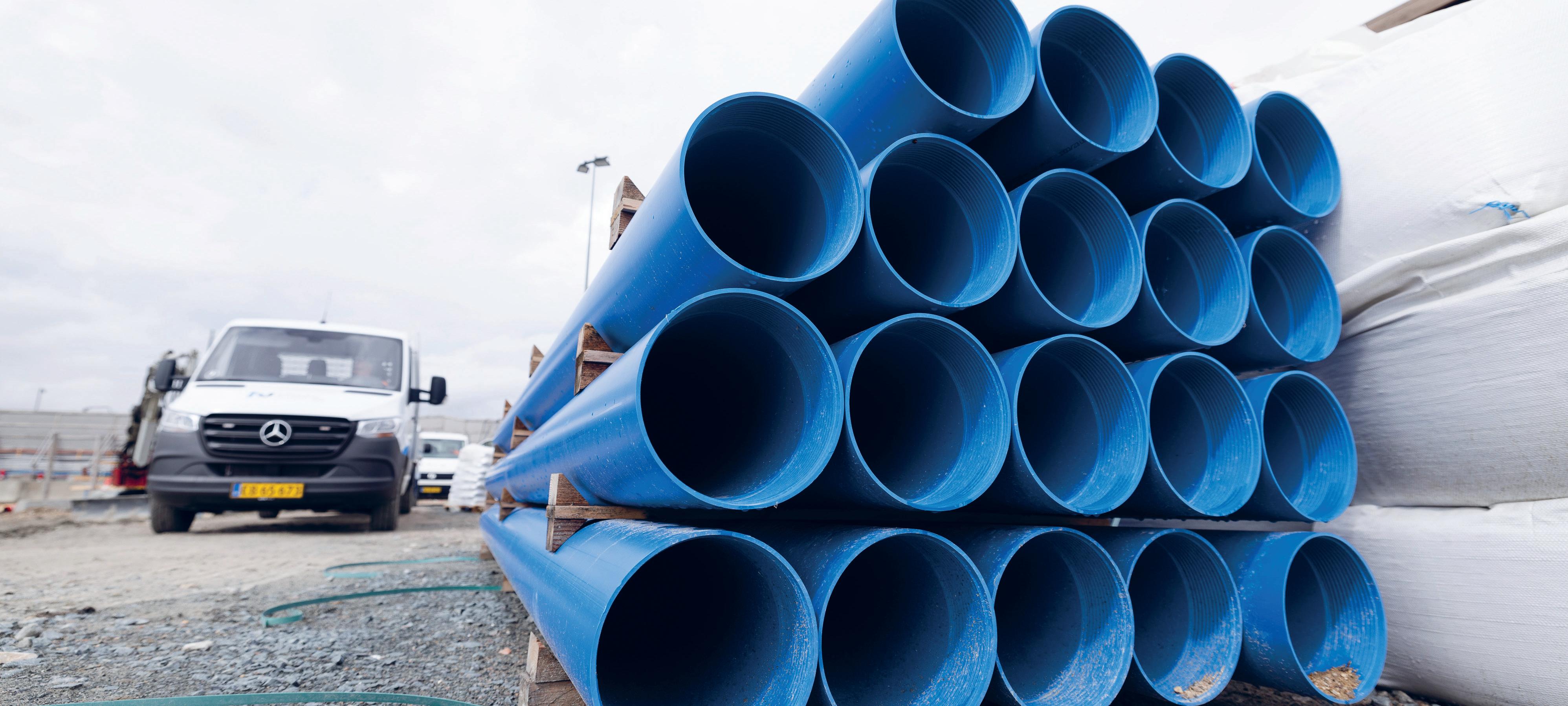
The largest waste stream generated from Hölscher Jensen’s project activities relates to PEH pipes. However, reuse is challenging due to contamination risks and ownership. Any reuse solution must therefore ensure that quality is maintained, and environmental risks are not increased.
In 2026, the company will strengthen its focus on increased material usage through:
• Order-to-measure procurement
• Improved planning of purchases
• Reduced transport of materials
Recycling rate of waste
Material flows
These actions support more efficient resource use and help reduce both waste and related emissions.
Hölscher Jensen’s primary material flows consist of diesel, PEH pipes, and cables, reflecting the company’s core activities. See quantities used in 2025 in the table to the right.
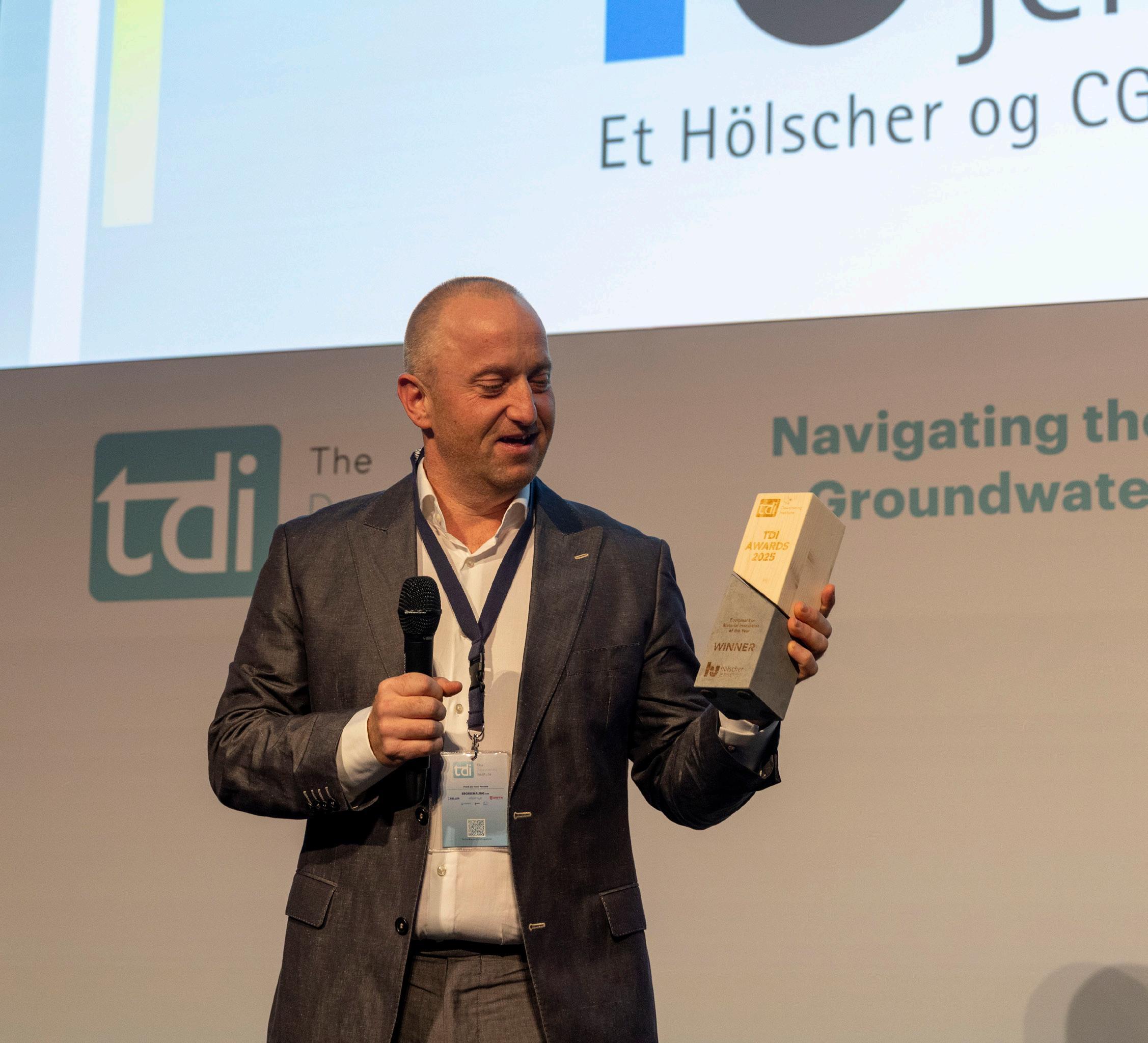
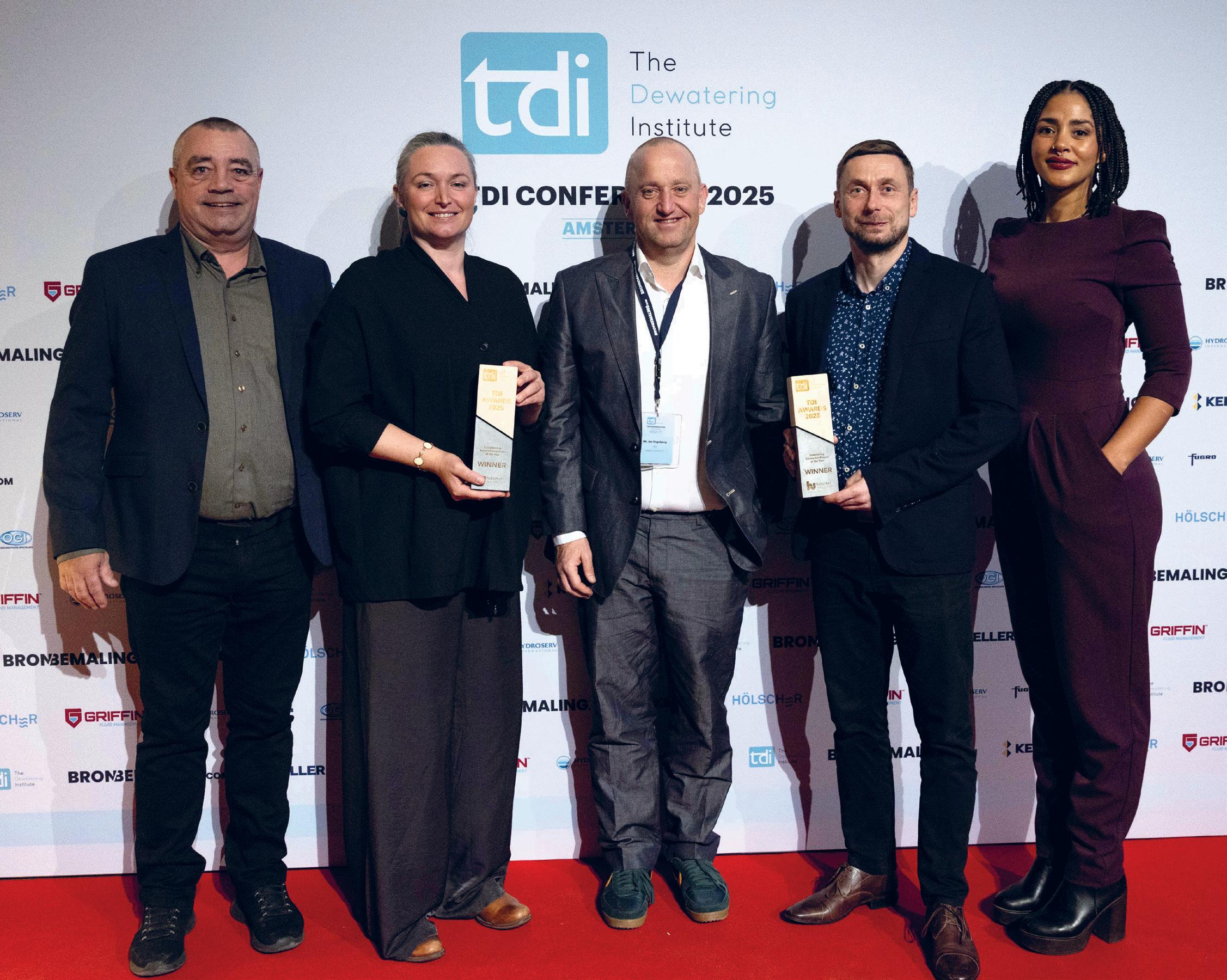
Award winning digital platform: MainOps
Equipment or Material Innovation of the Year
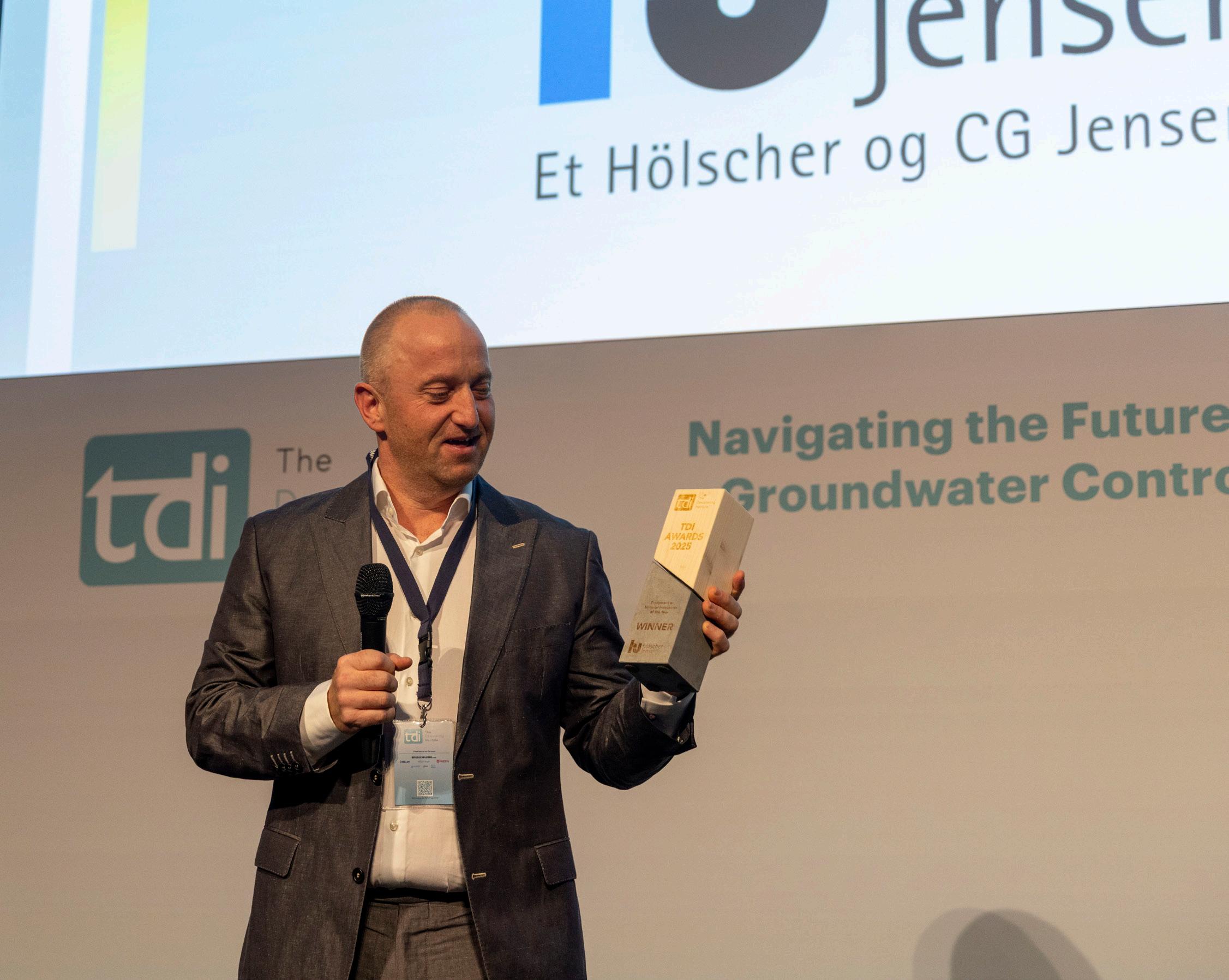
Hölscher Jensen was awarded Equipment or Material Innovation of the Year at the TDI Awards 2025 for the digital platform MainOps, developed in-house to support groundwater lowering and drilling operations.
MainOps integrates planning, documentation, execution, and invoicing into a single digital workflow. The platform supports transparency, traceability, and real-time data capture across all project phases.
Key elements:
• Digital planning, documentation, and invoicing in one platform
• Real-time registration of measurements via QR codes and SCADA integration
• Automated documentation of tests, installations, maintenance, and daily logs
• Increased efficiency, traceability, and data quality across operations
ESG & ESRS contribution:
G (ESRS G1 – Business Conduct): Transparency, traceability, and documented processes
E (ESRS E2 / E3 – Pollution & Water): Reliable data supporting responsible groundwater management
S (ESRS S1 – Own Workforce): Clearer workflows and improved safety and documentation for employees
Award winning dewatering project: Nordhavnstunellen
Dewatering
Contractor
Project of the Year
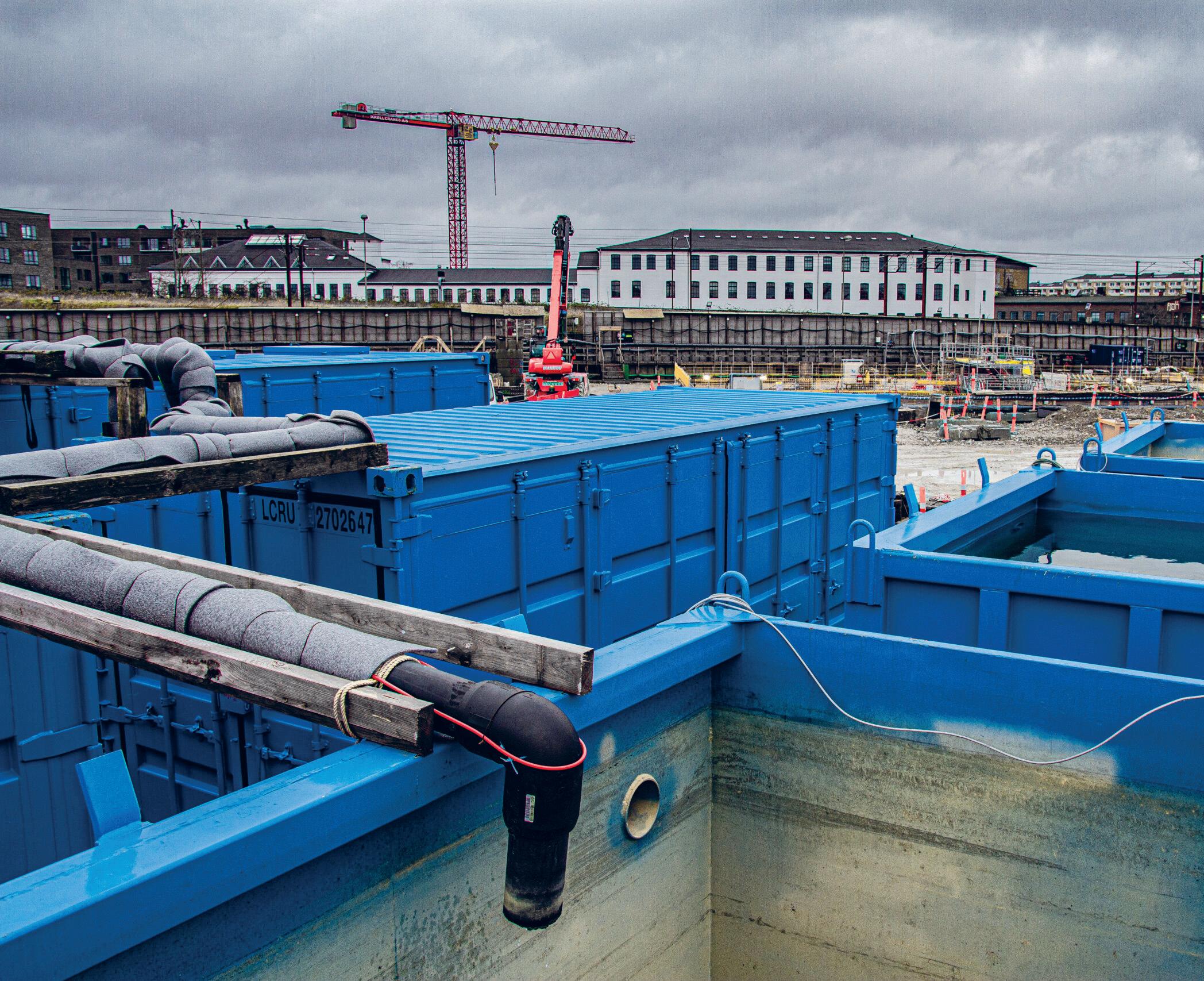
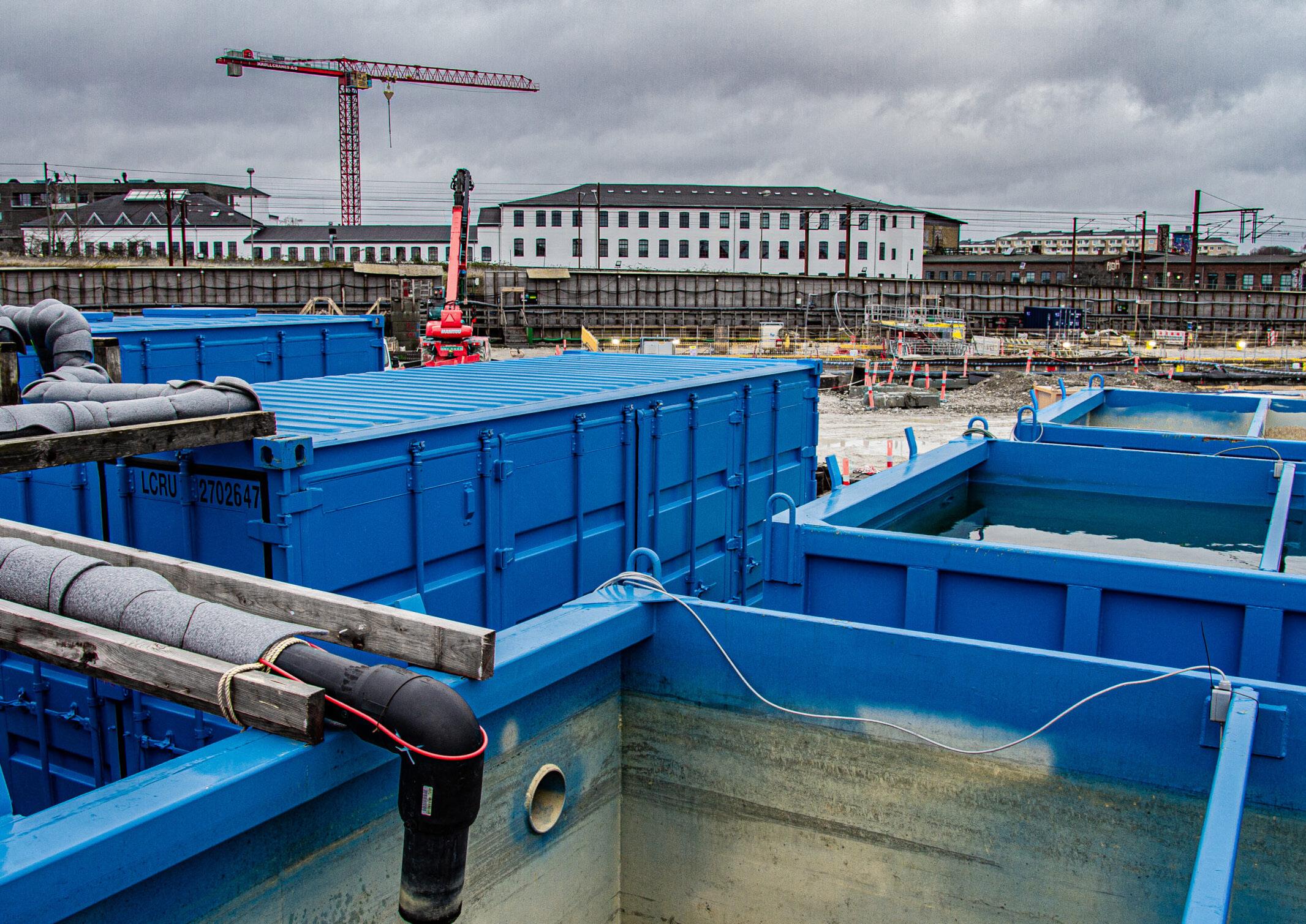
Hölscher Jensen was awarded Dewatering Contractor Project of the Year for its work on Denmark’s largest dewatering project: the Nordhavn Tunnel in Copenhagen.
The project involves large-scale groundwater abstraction combined with targeted reinfiltration to manage geotechnical and environmental risks in a dense urban and marine setting. A risk-led and adaptive approach has been applied throughout the project lifecycle.
Project highlights:
• Large-scale, long-term groundwater lowering in complex conditions
• Use of reinfiltration to stabilise groundwater levels and protect surroundings
• Integrated system of pumping, monitoring, and treatment infrastructure
• Strong focus on safety, environmental protection, and collaboration
About the TDI Awards & The Dewatering Institute
The TDI Awards are presented annually by The Dewatering Institute (TDI) and recognize excellence, innovation, and best practice within the global dewatering and groundwater control industry. The awards are judged by international industry peers and independent experts.
Low-Emission Upgrade of Drilling Rigs
Transition towards lower-emission operations
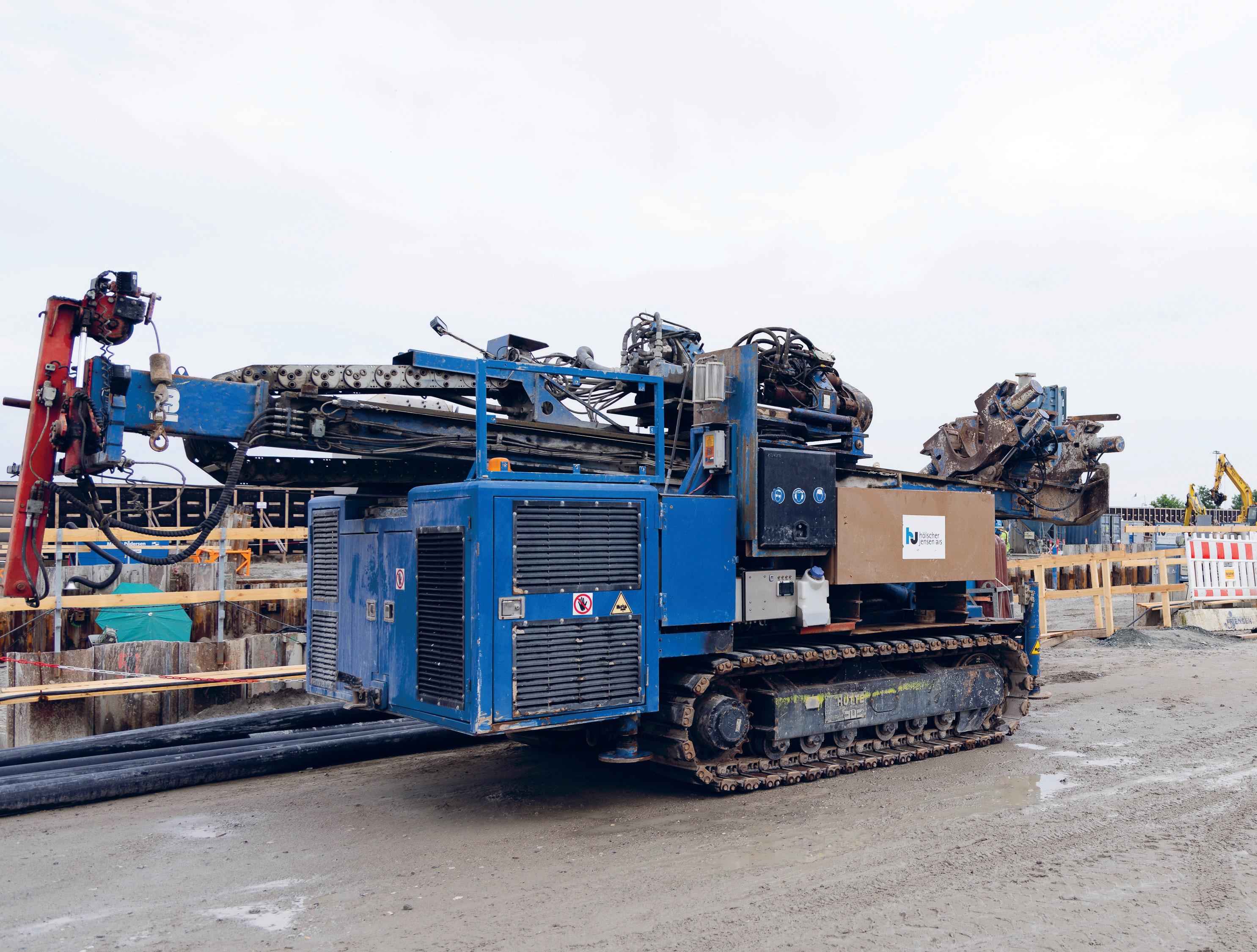
In 2025, Hölscher Jensen upgraded the exhaust systems on its drilling rigs to meet stricter environmental and emission requirements, particularly in urban areas such as Copenhagen. The initiative ensures compliance with local regulations while reducing the environmental impact of drilling activities in densely populated environments.
As part of this transition, the company has also entered into agreements to acquire a battery-powered drilling rig to replace a conventional diesel-powered unit. In addition, a second rig is planned to be replaced with a hybrid solution in 2027, supporting a phased transition towards lower-emission operations.
What has been implemented
Upgrading of exhaust systems on existing drilling rigs
Investment in a battery-powered drilling rig (2025)
Planned replacement of an additional rig with a hybrid solution (2027)
The Benefits:
Environmental performance and compliance
• Reduction of direct emissions (CO₂, NOx and particulate matter)
• Improved air quality, particularly in urban project areas
• Compliance with increasingly stringent local environmental requirements
Operational improvements
• Lower noise levels, improving working conditions on-site
• Reduced disturbance for surrounding communities
• Future-proofing of equipment against regulatory tightening
Strategic and business value
• Strengthens competitiveness in tenders with environmental requirements
• Positions Hölscher Jensen as a low-emission contractor in urban projects
• Supports a gradual transition without disrupting operations
In practice
The upgrade enables Hölscher Jensen to continue operating in environmentally sensitive and regulated urban areas while reducing the impact of drilling activities.
The phased approach – combining retrofitting of existing equipment with targeted investments in new technologies – balances operational reliability with long-term sustainability.
Waste handling and circular economy
From Single-Use to Circular Value
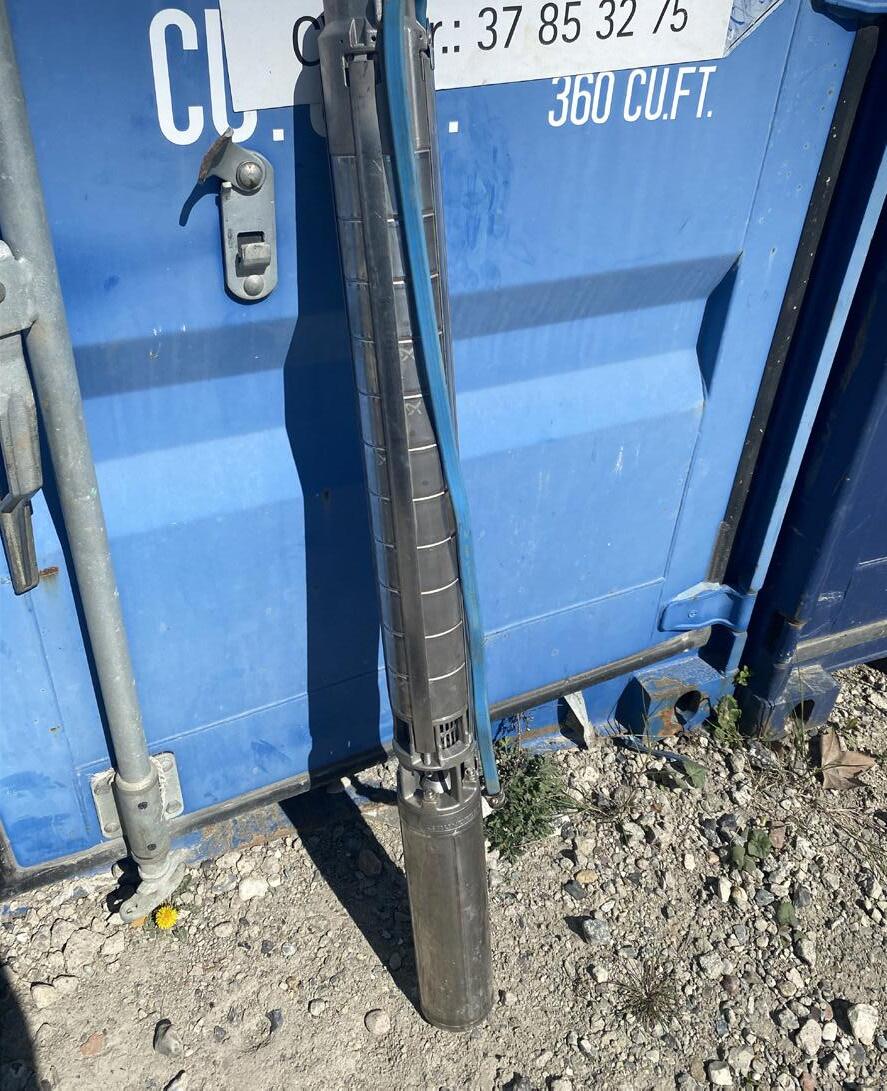
Temporary groundwater lowering places significant mechanical stress on well pumps. Historically, this has led to pumps being discarded after a single project, resulting in unnecessary material consumption, waste generation, and avoidable emissions.
pumps were sent for refurbishment in 2025
To address this, Hölscher Jensen has established a circular business model in collaboration with Brødrene Dahl, Grundfos, and dewatering contractors. The initiative keeps high-quality pumps in circulation for longer through refurbishment and reuse, reducing the need for new production and
How the Model Works
• Used pumps are returned after project completion
• Pumps are refurbished and quality-tested by the manufacturer
• Refurbished pumps are redistributed through the supplier
• Pumps re-enter operation instead of becoming waste
strengthening resource efficiency across the value chain.
The Outputs:
Environmental impact and resource use
• Reduced demand for new materials and components
• Lower waste generation through extended product lifetimes
• Reduced lifecycle CO₂ emissions compared to new equipment
Operational and business value
• Extended lifetime of high-quality equipment
• Reliable performance through certified refurbishment
• More cost-efficient access to premium equipment
Collaboration and scalability
• Strengthened collaboration across contractors, suppliers, and manufacturers
• Shared responsibility for resource use and product lifecycle
• A scalable model for circular practices in a technically demanding environment
In Practice
The initiative makes it financially viable to prioritize quality and durability, while ensuring that equipment remains part of a continuous circular flow. At the same time, structured collaboration and clear roles across the value chain create transparency and support consistent implementation.
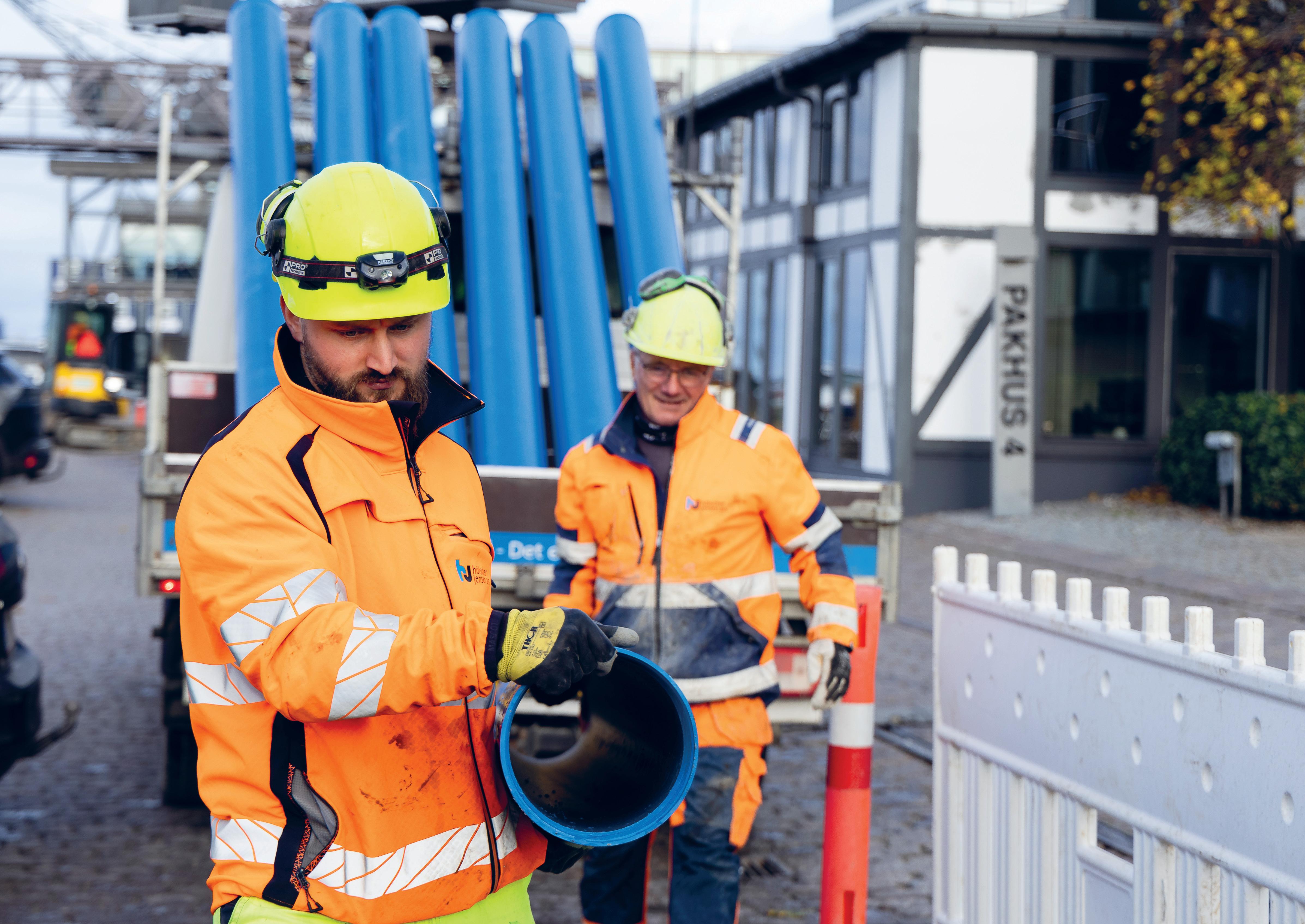
“Many contractors are very interested in this. As a contractor, you want to use Grundfos pumps, which are the best on the market, but they are also at the higher end pricewise. With the new scheme, it makes sense to choose quality over price. At the same time, we will gradually have more Grundfos pumps in circulation, because newly purchased pumps will become part of the circular flow. That is an advantage for everyone.”
— Jan Jensen, Project Manager, Hölscher Jensen
Social Metrics
Our workforce – highlights 2025
Employees, well-being and follow-up
Hölscher Jensen works actively to build a resilient organization with high employee well-being and a strong ability to attract and retain skilled employees. The focus is on creating a workplace with clear communication, involvement, and strong collaboration across functions
At year-end 2025, Hölscher Jensen employed 35 employees (FTE), consisting of:
• 24 blue-collar employees
• 11 white-collar employees
• 4 women and 31 men
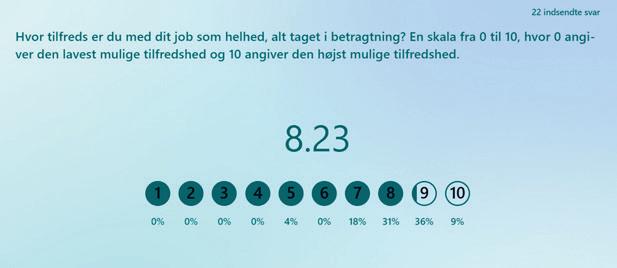
In 2025, the company conducted an employee satisfaction survey with a score of 8.2 (score range from 1-10) which is well above a typical benchmark in the industry of 6.5. This reflects a high level of engagement and satisfaction across the organization.
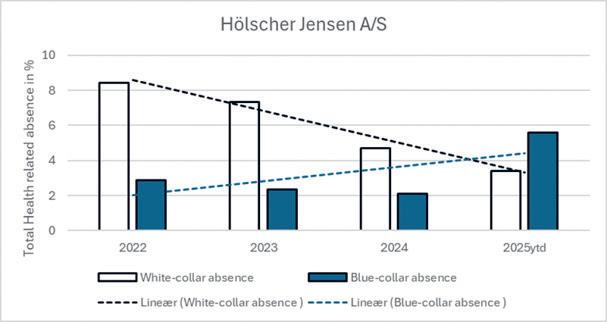
Sickness absence in 2025 was:
• White-collar employees: 3.6%
• Blue-collar employees: 5.8%
Overall, sickness absence has shown a declining trend over time. The increase in 2025 is primarily driven by a small number of long-term illness cases that are not work-related. This underlines the importance of continuous follow-up and close dialogue in daily operations.See the graph on the right.
In 2025, Hölscher Jensen initiated the implementation of a new management approach. The approach is based on:
• Transparent leadership, ensuring clarity on priorities and expectations
• Employee involvement, strengthening engagement and ownership
• Cross-functional job understanding, supporting collaboration and flexibility across roles
Simple visual management tools and regular dialogue between managers and employees are used to follow up on both performance and well-being. This enables early identification of issues and supports a more stable, psychological safe and responsive organization.
See score at question (in Danish - righthand box): “How satisfied are you with your job as a whole, all things considered? A scale from 0 to 10, where 0 indicates the lowest possible satisfaction and 10 indicates the highest possible satisfaction.”
Priorities for 2026
• Reduce sickness absence among blue-collar employees to below 5%
• Repeat the employee survey and further improve satisfaction levels
• Continue implementation of the management approach with focus on transparency, involvement, and cross-functional collaboration
General workforce data
Employee data – health and safety
*In November 2025 we conducted our first employee satisfaction survey based on the DPQ-Card which is an abbreviated version of the Danish Psychosocial Questionnaire (DPQ) from the National Research Centre for the Working Environment (NFA), designed for faster and easier mapping of the psychological working environment and well-being in the workplace. Best score from 1-10
The response rate was 66% and the overall satisfaction rate was well above other sector related companies. The survey will take place annually and the next one is scheduled for November 2026.
Employee data – remuneration, collective agreements and training
Remuneration of employees
*Hölscher-Jensen do not have a collective agreement but follows the agreement for minimum wage set by Danish Industry. 100% of our employees are paid well above the minimum wage set by Danish Industry.
Training of EmployeesWorking with groundwater management and lowering (GWL) is a technically complex discipline with no formal education pathways or standardized training programs. Ensuring consistent quality and safe execution therefore depends on how knowledge is built and shared internally.
Peer-to-Peer Training
We rely on peer-to-peer training across all job functions when onboarding new employees. This approach ensures practical knowledge transfer, close mentoring, and learning rooted in real project experience.
Training is primarily carried out through informal peer-to-peer learning, where experienced employees onboard and support new colleagues through daily project work.
Hölscher Jensen School
Training of employees*
* This table only shows externally training hours and includes both fixed and hourly employed workforce.
In addition to our peer-to-peer training and to ensure that groundwater work is performed to the same high standard every time, we have developed an internal learning program – The Hölscher Jensen School. Status is:
• Framework and teaching materials developed in 2025
• First pilot team began training in January 2026
• Established a shared Hölscher Jensen standard for GWL works
This initiative strengthens skills, consistency, and long-term operational resilience while supporting employee development and engagement.
Read more about The Hölscher Jensen School on page 34-35.
We do not have available data for employees internal training hours, but from 2026, these hours will be systematically recorded and quantified in line with the external training to improve transparency, consistency, and follow-up.
The Hölscher Jensen School
- Building Competence, Consistency and Long-Term Resilience
Groundwater Lowering – Specialized Discipline
Groundwater lowering (GWL) is a technically complex discipline with no formal education pathways or standardized training programs. At the same time, the absence of a shared internal standard at Hölscher Jensen has led to variation in methods, quality, and knowledge transfer across projects.
To address these challenges, Hölscher Jensen has established HJ School as a strategic initiative to formalize learning, strengthen competencies, and ensure a consistent approach to execution.
»The purpose is to streamline our internal skills, and our ability as a company to ensure a standard execution of tasks. Internally we have groundwater technicians with a variation in competences for the various tasks - by creating HJ School we formalize the upskilling of our people.«
A Formalized Standard
HJ School provides a structured framework for developing and maintaining specialist expertise within groundwater lowering. The initiative combines practical training, knowledge sharing, and internal standard-setting to align methods, safety practices, and quality levels across the organization. This reduces dependency on individual experience and supports more uniform project execution.
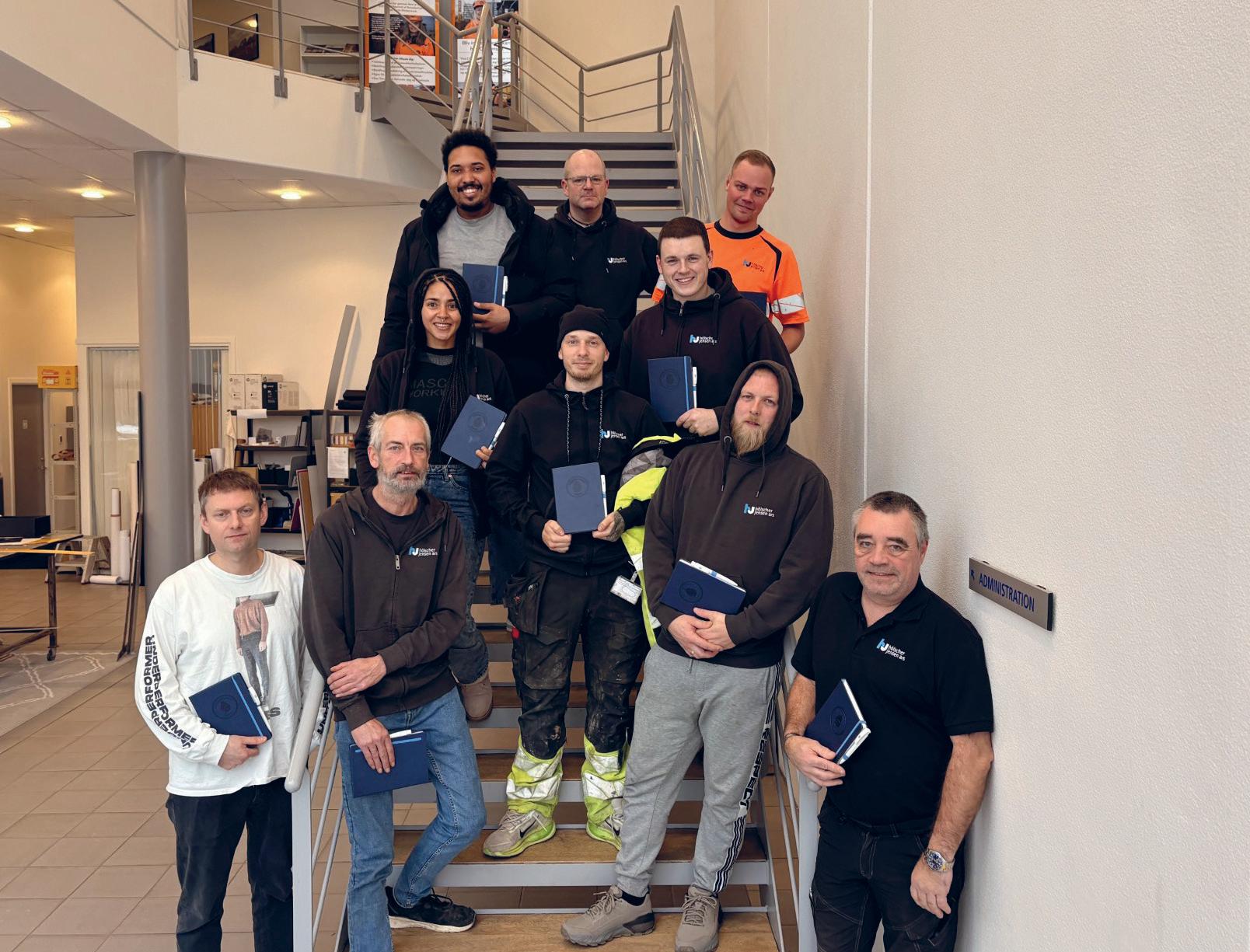
Jan Jensen, Hölscher Jensen who brought the idea to the team
Consistency & Flexibility
By embedding best practices and creating a common technical foundation, HJ School contributes directly to improved operational performance. It strengthens quality assurance, supports safer working conditions, and enhances the company’s ability to deliver consistent results across projects. At the same time, the initiative increases organizational flexibility by enabling employees to take on a broader range of tasks and roles.
Attraction and Retention
HJ School also supports attraction and retention in a niche field with limited external talent pipelines. A clear focus on development and professionalization contributes to higher engagement and job satisfaction, while ensuring that critical knowledge is retained and continuously developed within the organization.
Long-term competitiveness
Overall, HJ School strengthens Hölscher Jensen’s long-term competitiveness by reducing operational risks, improving execution capabilities, and ensuring that specialist knowledge remains a scalable and embedded asset.
The school program so far:
2025:
Hölscher Jensen School framework created with 7 modules
2026:
January: Pilot team started
June: Pilot team graduation
Q3/Q4: Evaluation and roll out for all employees
GGovernance
Business Conduct & Human Rights Violations
Hölscher Jensen operates in a sector with significant impacts on climate, the environment, and people across the value chain. The company is committed to managing these impacts and contributing positively through its core activities in water management, ensuring responsible groundwater handling and long-term access to clean water.
At the same time, Hölscher Jensen works continuously to reduce its CO₂ footprint, both within our own operations and across our value chain in collaboration with our stakeholders.
The company conducts its business in line with internationally recognized principles, including the UN Guiding Principles on Business and Human Rights (UNGPs). These commitments are defined in the company’s Policy of Commitment and Code of Conduct for business relations, which set the framework for responsible behavior across the organization and value chain.
Responsibility is anchored at management level and the board, with processes in place to support ongoing follow-up and integration of environmental and social considerations into daily operations.
Hölscher Jensen expects employees, customers, and business partners to act in accordance with these principles.
During the reporting year, we did not receive any grievances and, to the best of our knowledge, has not been involved in any human rights violations. The company has also not been subject to any legal cases, including convictions related to corruption or bribery nor have we had any fines during the reporting year..
Board composition
The Board of Directors currently consists of 5 male members. The composition reflects the existing ownership and governance structure of the company. Hölscher Jensen will develop and implement a plan in 2026 to ensure a more balanced and diverse board composition, including improved gender balance when appointing new board members
“Managing Water – Protecting our Future”
– Executive Summary
Hölscher Jensen A/S has taken its first structured steps towards ESG integration in 2025, aligned with the VSME standard. The report establishes a baseline for managing the company’s impacts, risks, and opportunities across its value chain.
Business Model and Strategic Direction
The company operates within groundwater lowering and water treatment, playing a key role in construction and infrastructure projects. A clear strategic ambition is to move towards a “water positive” approach, where solutions actively contribute to sustainable water management and increased clean water.
ESG Approach and Maturity
In 2025, Hölscher Jensen implemented a structured due diligence process based on OECD and UNGP frameworks, covering:
*Policies and governance
*Risk assessment (first double materiality assessment)
*Actions and implementation plans
*Ongoing monitoring
*Communication and grievance mechanisms
The company is in an early maturity stage, with core processes established but further development needed in data quality, targets, and operational integration.
Material ESG Topics
The double materiality assessment identifies the following priority areas:
• Climate change and energy (E1)
• Water and marine resources (E3)
• Resource use and circularity (E5)
• Own workforce (S1)
• Governance (G1)
These reflect both operational impacts and business-critical risks.
Climate and Environment
Total emissions in 2025:
• approx. 1,534 tCO₂e, primarily driven by Scope 3
• CO₂ intensity reduced by 24% since 2023
• Key initiatives include electrification, reduced transport, and lower-emission materials
• A key challenge is the high dependency on suppliers, as most emissions originate in the value chain.
Resource Use and Circularity
The company is advancing circular practices through:
• Refurbishment and reuse of equipment (e.g. pumps)
• Reduction of material consumption and waste Partnerships to support circular solutions
• These initiatives support both environmental performance and cost efficiency.
Social Performance
• 35 employees with high satisfaction (8.2/10)
• Focus on health and safety, retention, and employee engagement
• Implementation of a new management approach and internal training program (HJ School)
• There is still room for improvement in diversity
(11% female representation) and structured competence tracking.
Governance
• Code of Conduct and core policies established
• No reported human rights violations or corruption cases in 2025
• Whistleblower and grievance mechanisms implemented
• Governance structures are in place but still developing.
Priorities for 2026
• Improve data quality and ESG processes
• Reduce emissions across Scope 1–3
• Develop technologies for treatment of contaminated water (e.g. PFAS)
• Increase transparency and ESG communication
• Strengthen resource efficiency across the value chain
Thank you for reading our report!
Do you have questions or wish to know more about our work towards Water Positive 2030, please contact Asta Selloane Sekamane at ase@hj-as.dk or +45 21 28 52 59
Hölscher Jensen A/S Baldersbuen 38
2640 Hedehusene
Tlf. 28 88 01 12