u s o ffice: seattle, Wa www.franchisingmagazineusa.com
Welcome to the June 2026 issue of franchising Magazine usa!
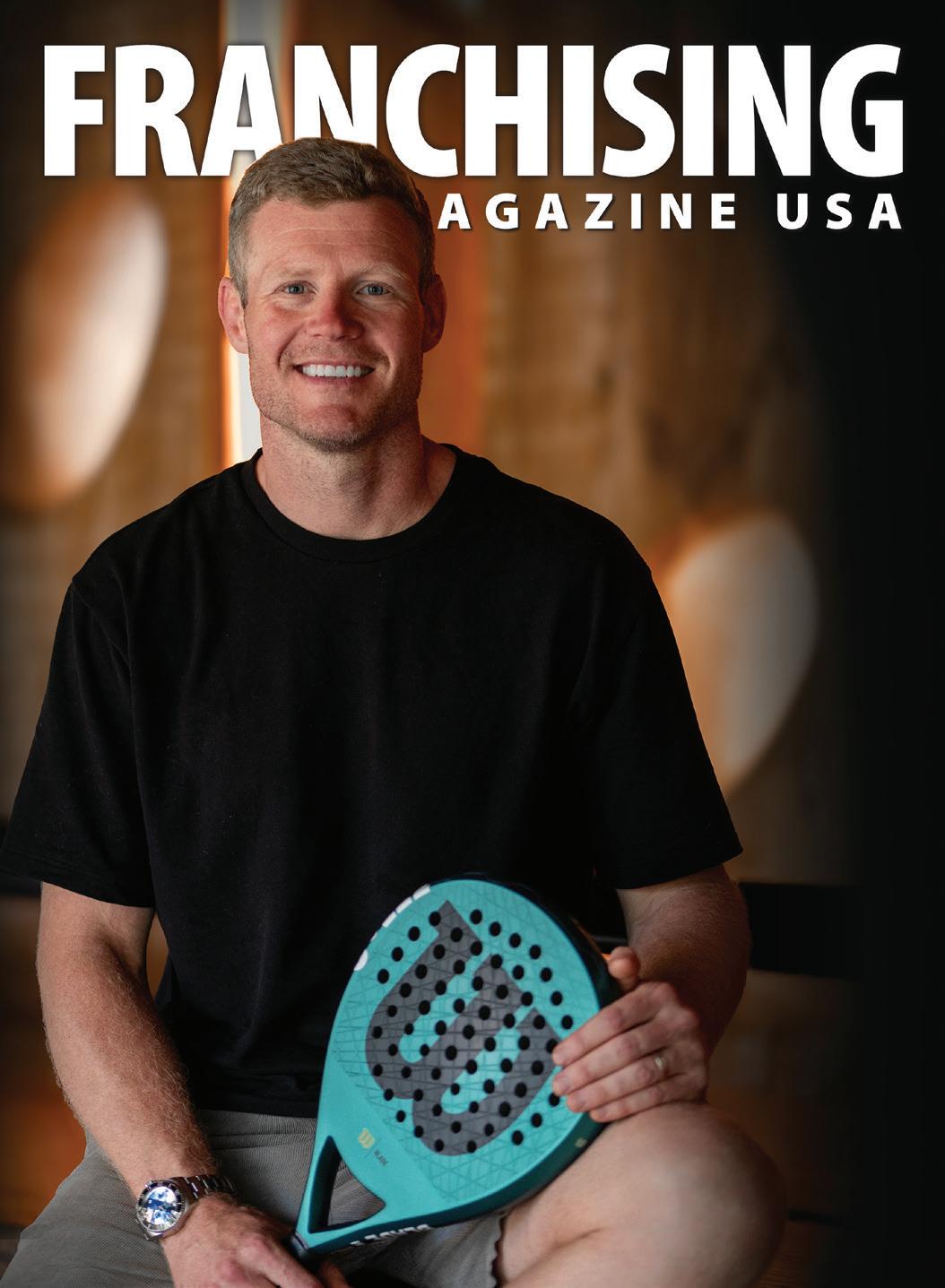
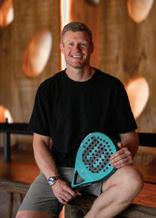
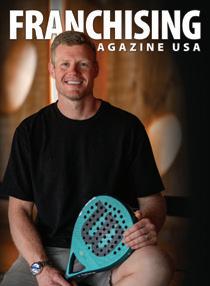
t he franchising world is full of exciting opportunities and in this issue we have no exception, on the front cover this issue we have fitura b rands, not just another fitness franchise, and i had the pleasure of speaking with James h urlock, ceo and founder, one thing became immediately clear: this is not another fitness franchise company chasing the latest trend. What h urlock and his team are building is a sophisticated, future-focused platform designed around where the wellness and performance industry is heading over the next decade — not where it has been.”. turn to page 10 to learn more.
a s usual we have some great topics from our residential experts for example g eorge Knauf discusses the climb most franchisees never make. Lucas Frey asks us to transfer what we know otherwise growth may stall. Evan hackel delves into the power of ownership. i am also happy to have content from some guest writers in this issue such as, bianca Evans, ali Kraus, christopher cornella and Mark nichols, all experts in Franchising.
Our special supplement this issue is on the home services sector of Franchising. chis conner our resident feature expert discusses how longer home ownership is driving growth in the home service franchise. corey b enish President and cEO of h ome Franchise concepts highlights why home services franchising is standing
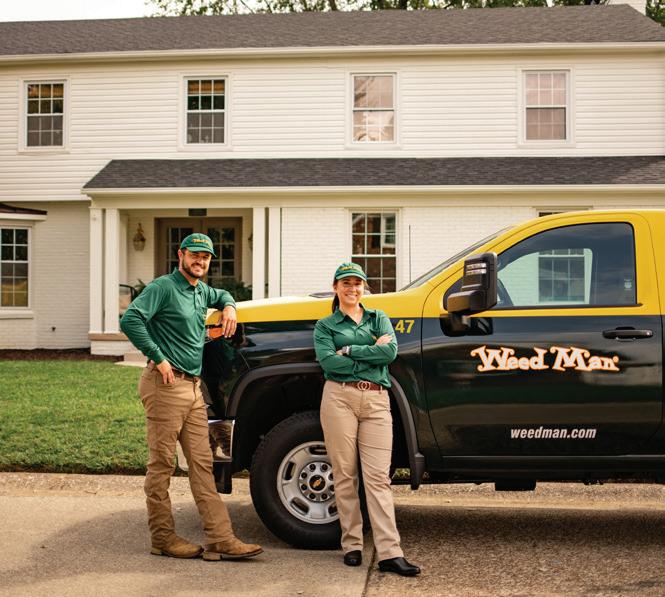
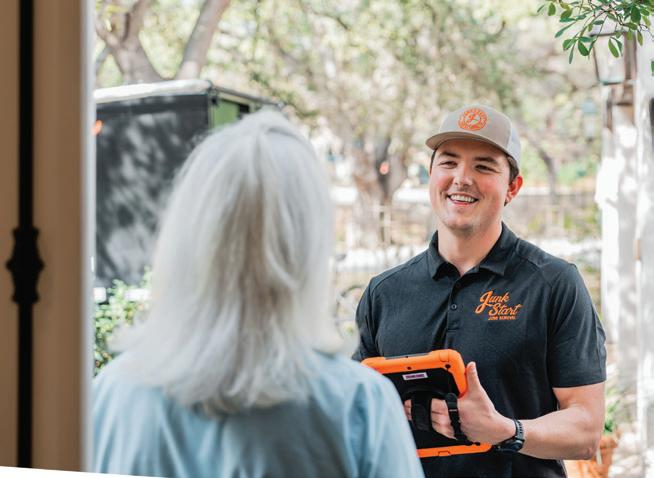
out in 2026. We also feature some great Franchise opportunities, Weed Man, Junk start, Lime Painting, i deal siding and Q& a from cindy sheller of c aring s enior s ervice to name a few.
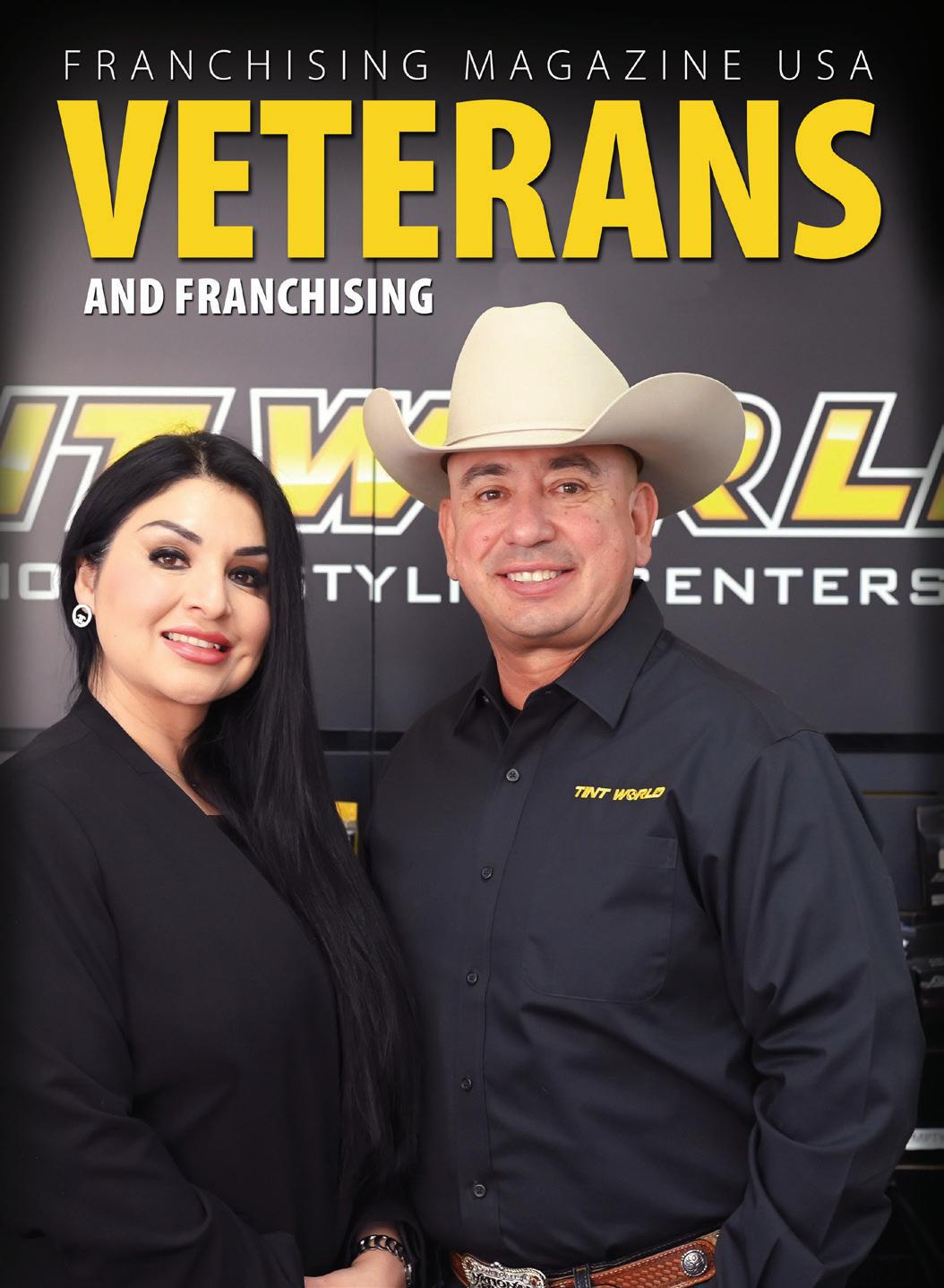
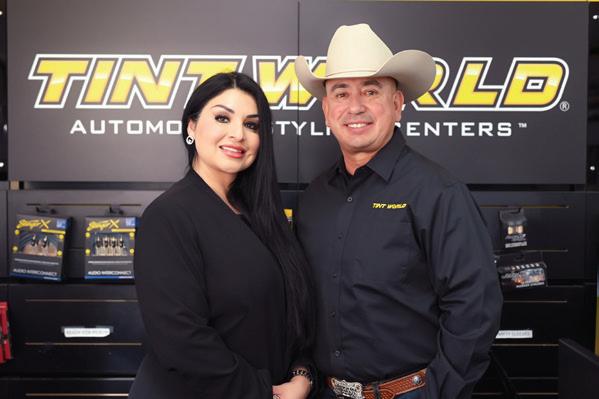
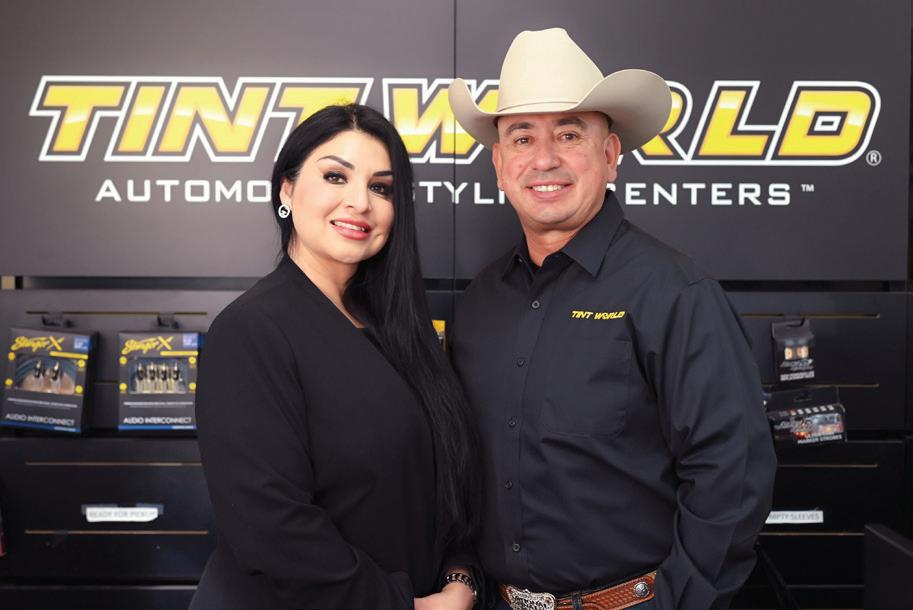
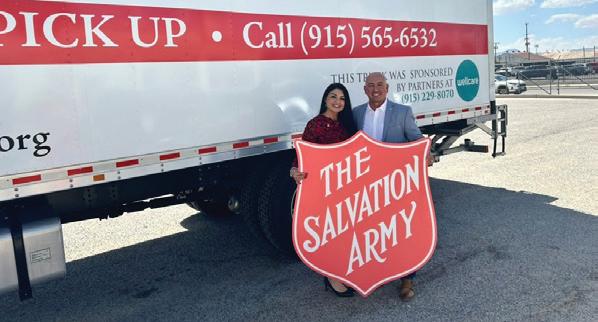
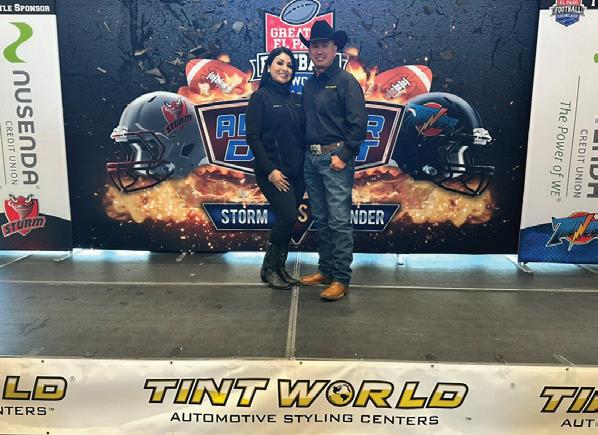
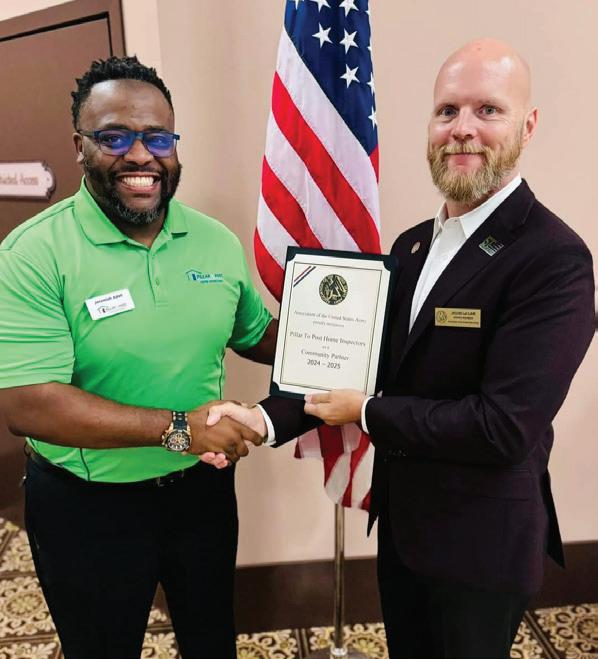
For our veteran readers, t he Veterans in Franchising supplement has t int World El Paso on the cover and we meet Franchisees, alex and Miriam g uerrero who went From s ervice to Ownership, and how they are building community t hrough t int World. You can also read about Jeremiah and Maria adel who between them spent more than 3 decades in the U. s army before becoming a Pillar to Post Franchisee. Jon Franz broaches the subject of why Veterans should consider also buying an existing franchise.
Plus, don’t miss our a-Z Franchise d irectory, which offers a comprehensive guide to exciting franchise opportunities across industries.
happy reading!
Vikki Bradbury | Publisher Franchising Magazine USA
The public and policymakers need to understand franchising.
Our purpose
@OurFranchise is an industry-wide campaign created to spread the word about the value of franchising and share the stories of men and women just like you, who are leading the way as franchisors, franchisees, and franchise employees. The franchise business model has been proven time and time again to work, but it’s threatened when the public and politicians don’t understand how it operates to benefit local, independent franchise establishment owners and their communities. Putting a spotlight on real leaders succeeding with the franchise model is how we’ll ensure franchising is stronger than ever before.
Follow us
Share the tools and resources offered on AtOurFranchise.org/resources
Help us keep the momentum going
Since our launch in June 2016, we’ve reached 1.7 million people through outreach efforts, including events in key cities and states, where we spoke directly with business owners, employees, policymakers, and the media. Additionally, we’ve reached people across America through our website and social media channels, digital advertisements, and the promotion of We the Franchisees on Politico – but there is much more work to do. As a franchisor, franchisee, or franchise vendor, you are a leader in your community – and we need your support, now more than ever.
b a x
Our Franchise @OurFranchise @OurFranchise
You benefit by joining
By joining @OurFranchise, you’ll get access to exclusive stories and resources that can help grow your franchise business, educate employees at all levels about the franchise business model, and share the economic importance of franchising with consumers. You will also have the opportunity to share your franchise success story with your peers.
Visit AtOurFranchise.org
Contact Erica Farage, Senior Director of Political Affairs and Grassroots Advocacy and Multi-Unit Franchisee Engagement International Franchise Association efarage@franchise.org (202) 662-0760
This is just the beginning
Make sure you stay up to date with the campaign’s latest efforts through email updates and social media. Visit our website to read and share the latest stories of franchisors and franchisees making an impact in their communities. Become a franchise advocate to help ensure Americans, now and in the future, have the opportunity to start franchise businesses. Take the lead today!
Cover Story
10 Fitura Brands: the new franchise ecosystem everyone is talking about redefining the Future of Padel, Pilates & recovery
6 What’s New! Announcements from the Industry 31 Special Feature Supplement
Franchisor in Depth
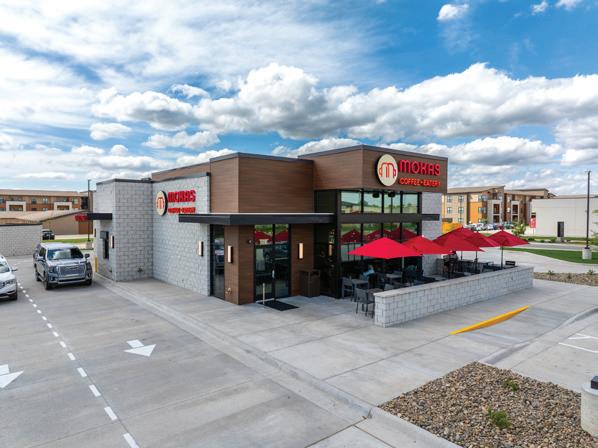
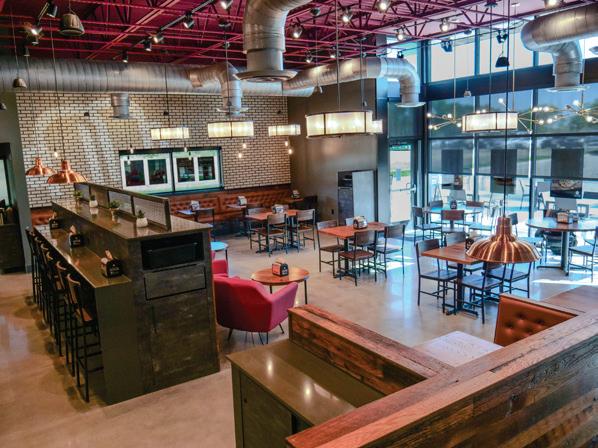
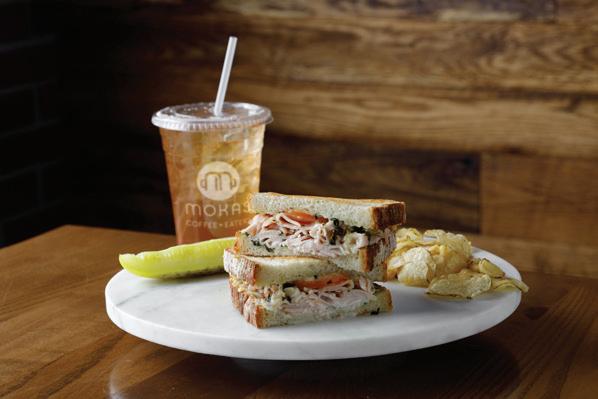
20 Mokas Coffee & Eatery: twenty Years of craft and community Fuel Mokas coffee’s next Wave of growth
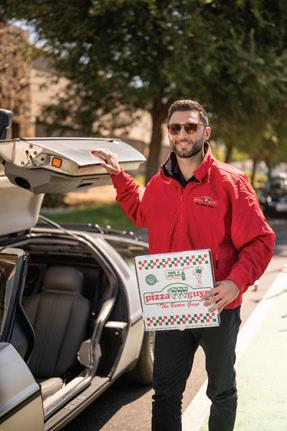
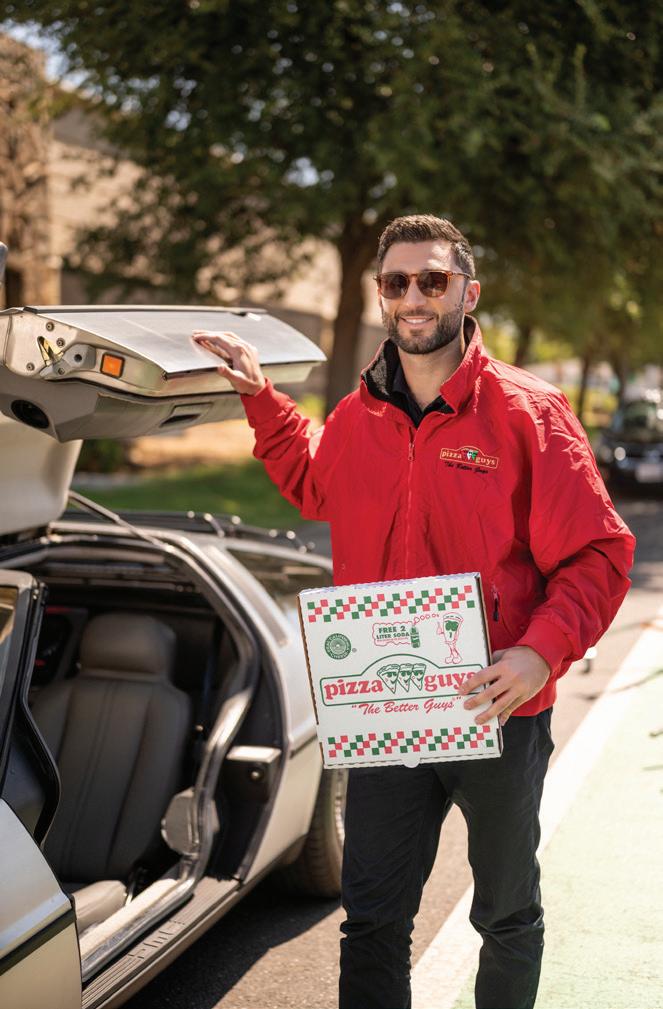
24 Pizza Guys: Pizza guys Leverages growth in 2025 to continue Momentum as it approaches 40th anniversary
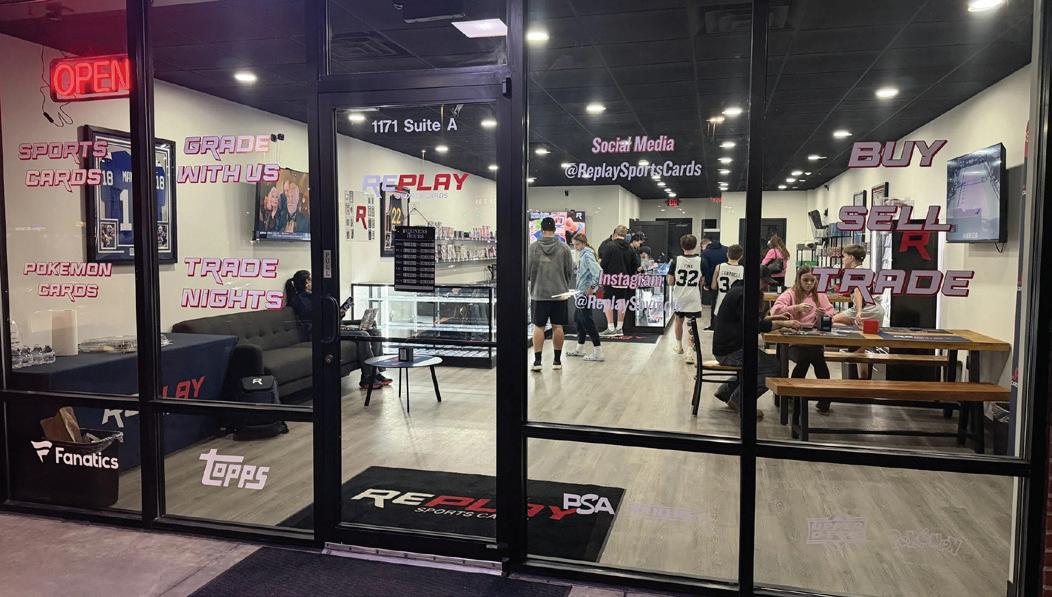
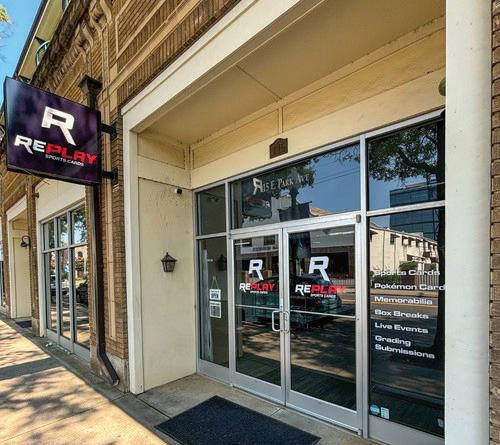
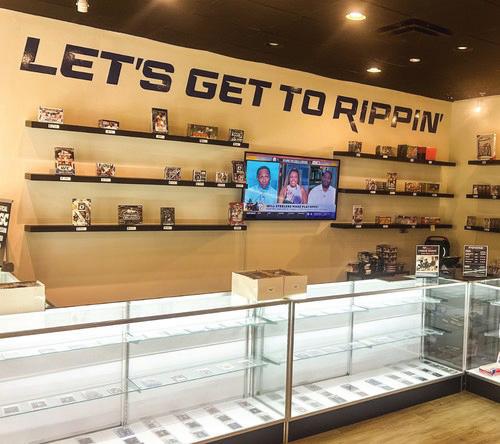
60 Replay Sports Cards: builds Momentum in Q1 with Franchise growth, new Market Expansion, and communityFocused activations
Franchisee in Action
16 HB Protein Smoothies: Four deals. two Months. One new country: hb Protein smoothies Makes its international Move
Have Your Say
28 Tony Romas Mina Haque: Modernizing a restaurant Franchise: tony roma’s strategy for U.s Expansion
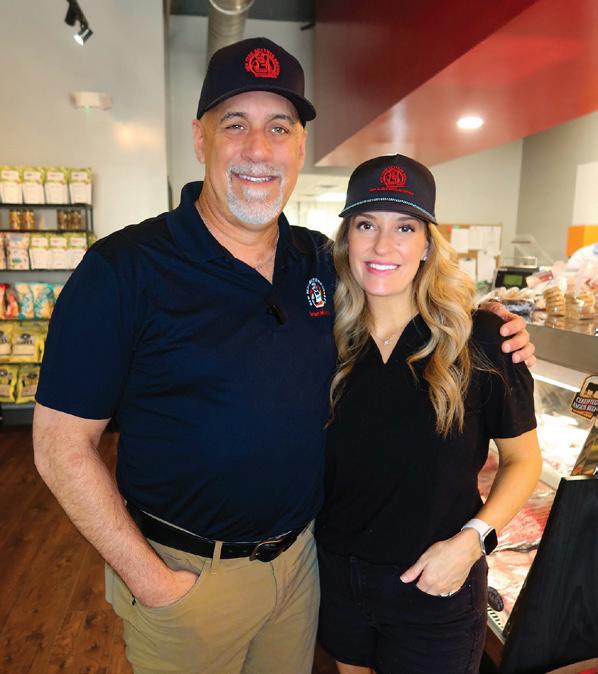
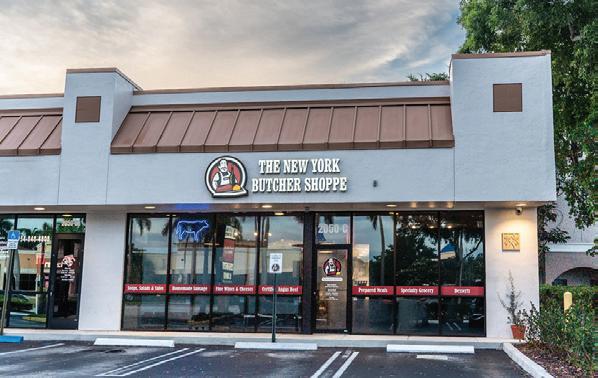
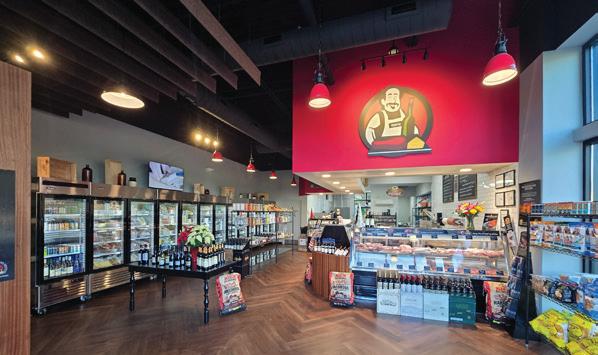
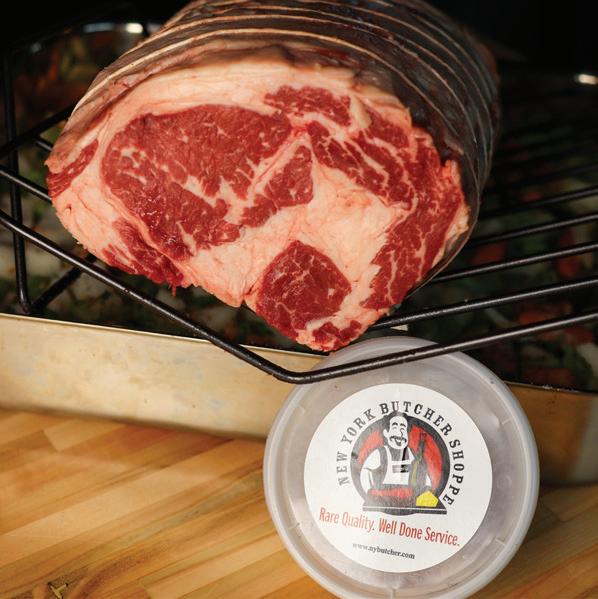
62 New York Butcher Shoppe: strategic Partnership Fuels new York butcher shoppe’s rapid Franchise Expansion in 2026
66 Stride Fitness Shaun Grove: Why the next Fitness boom isn’t Pilates — it’s hybrid training (and Franchisees are cashing in)
Women In Franchising
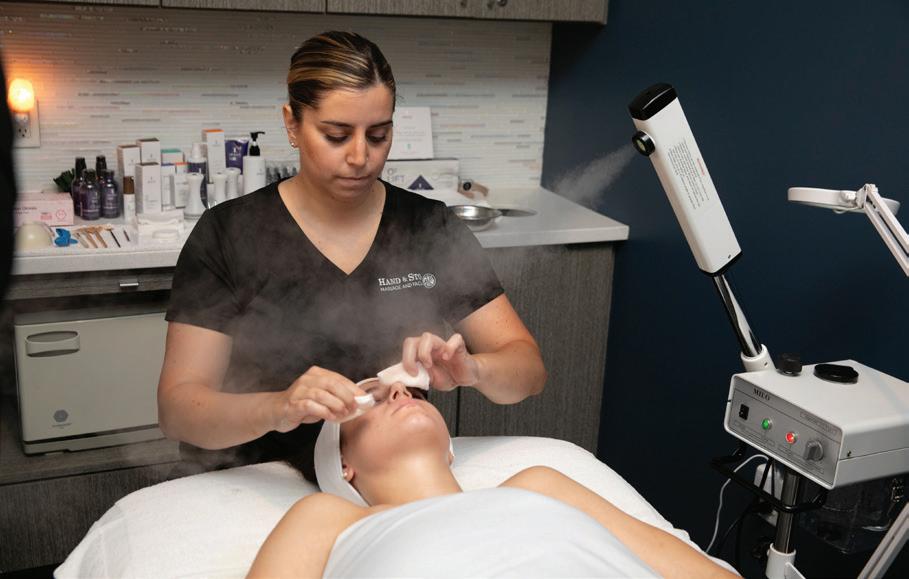
22 Hand and Stone Lisa Rossman: the skin health shift: What it Means for Wellness Franchising Expert Advice
14 Ali Krauss: six things First-time Franchise Owners Wish they’d Known about Funding
18 Evan Hackel: the Power of Ownership: What the Lottery ticket Experiment teaches Us about Engagement
26 Lucas Frey: transfer What You Know or growth stalls
30 Bianca Evans: sellers: getting ready for the introductory call
58 Mark Nichols: Fight Less, Fix More: Mediation in Franchise disputes
64 George Knauf: the climb Most Franchisees never Makes
68 Christopher Cornella: Financing the Modern Franchise business: strategies, structures, and What Lenders really Look For
GolD en corral® Fires Up Summer with NEW Backyard Grill Menu
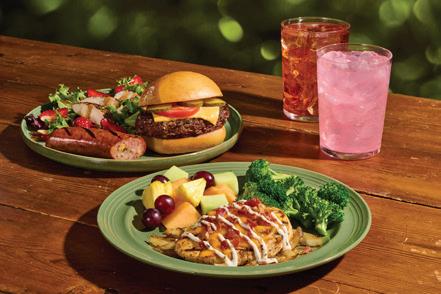
Golden Corral, the nation’s go-to buffet for variety and value, is turning up the heat throughout the summer with its new Backyard Grill promotion, serving up delicious char-grilled flavors that bring the cookout straight to the buffet, available systemwide beginning today.
b ackyard g rill brings an assortment of seasonal offerings across lunch and dinner, including the brand-new g rilled b acon cheddar r anch chicken breast, available during both lunch and dinner hours featuring a grilled chicken breast marinated in r anch dressing, layered with shredded cheddar cheese, crispy bacon, and a drizzle of r anch dressing.
at lunch, guests can enjoy the new spicy s outhwest s ausage, a bold, seasoned option with a kick of southwestern spice, alongside freshly grilled cheeseburgers. at dinner, the brand is highlighting its signature c arved sirloin, a longtime guest favorite, and brand-new g rilled Pork steak with spicy Orange g laze, a tender, char-grilled option finished with a zesty citrusforward glaze.
“g olden corral is focused on delivering a wide range of premium offerings at a price point that works for families across the country,” said Lance trenary, cEO of g olden corral corporation.
to complement the new offerings, g olden corral is also rolling out new d ragon Fruit beverages for a limited time. t he d ragon Fruit lineup includes Lemonade, citrus splash, and tea, offering bright, tropical flavors that pair with the bold, savory menu.
g uests can also enjoy b ackyard g rill items through g olden corral’s Meals to g o options (Weigh & Pay, d elivery, and Online Ordering), making it simple to enjoy these dishes at home or on the go.
t he b ackyard g rill promotion and d ragon Fruit beverages are available systemwide until June 28. Visit their local g olden corral to enjoy these limited-time offerings before the promotion ends. GoldenCorral.com.
Delta c rown Hair e xtensions Celebrates First Franchise Agreements, Marking Early Growth Momentum
Delta Crown Hair Extensions, an emerging leader in premium hair extension services, announced the signing of its first three franchise agreements—marking a significant milestone in the brand’s early expansion.
t he inaugural group of franchisees includes experienced operators allynn shepherd, amit shah, and sarah and Jay
Miller, bringing deep expertise in multiunit ownership, beauty, and service-based businesses.
Established by Jenna bowden in colorado springs, delta crown was recently acquired by head to toe brands, a portfolio of beauty and wellness franchise concepts, to accelerate the brand’s growth. t his milestone underscores strong momentum as the brand begins to scale, attracting seasoned entrepreneurs who recognize its differentiated model and long-term potential.
“What drew me to delta crown was the clear alignment in vision and the opportunity to grow another business that complements what i’m already building,” said allynn shepherd. “a s a multi-unit operator, i’m always looking for concepts that are both scalable and meaningful for clients, and delta crown offers that balance
as i continue to grow in the Metro detroit market.”
With the U.s. hair extension industry generating approximately $538 million in revenue in 2024—and projected to grow at a 2.7% annual rate to reach $626.9 million by 2030— delta crown is entering the market at a pivotal moment of sustained expansion.
“seeing this level of early interest from such experienced, multi-unit operators is incredibly exciting for delta crown,” said Jenna bowden, Founder of delta crown hair Extensions. “ t hese first franchisees truly understand the importance of delivering a premium, consistent service experience, and their commitment is a strong signal of the brand’s potential as we begin to scale.”
For more information about the franchise opportunity, visit franchise.deltacrown.com.
H t eao Partners Again with Alex’s Lemonade Stand Foundation to Support the Fight Against Childhood Cancer
In May, HTeaO is once again partnering with Alex’s Lemonade Stand Foundation (ALSF) to help advance the fight against childhood cancer, continuing a meaningful partnership rooted in the brand’s commitment to Brewing Purpose.
t hroughout the campaign, hteaO swapped out its signature blue straws for yellow straws as a small but visible reminder of aL sF’s lemonade stand roots and a thoughtful nod to gold, the color most commonly associated with pediatric cancer awareness.
alex’s Lemonade stand Foundation is the largest independent childhood cancer charity in the U. s . focused on funding critical research and supporting families. since young founder alex s cott hosted her first lemonade stand in 2000, aL sF has raised over $300 million, funded more than 1,500 research projects at nearly 150 institutions across n orth america and Europe, and helped more than 15,000 families access the care they need through programs like travel For c are.
“ brewing Purpose is about finding real ways to show up for the communities we serve, and our partnership with alex’s Lemonade stand Foundation is a powerful example of that,” said Kelsey McManemin, s enior Vice President of Marketing at hteaO. “after seeing our guests, franchisees and team members rally behind this mission last year, we knew it was something we wanted to continue supporting.
“We are grateful to continue our partnership with hteaO and to see its community of guests, franchisees and team members come together once again in support of children with cancer,” said Liz s cott, alex’s mom and co-Executive d irector at alex’s Lemonade stand Foundation. “Every round-up helps fund the research and family support programs that bring hope to families facing childhood cancer.”
c elebree s c H ool Secures Three-Unit Franchise Agreement to Expand Philadelphia Presence
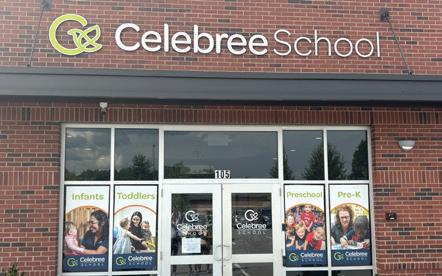
Celebree School, a leader in early childhood education offering infant and toddler care, preschool, before and aftercare, and summer camp programs, is accelerating its growth in the greater Philadelphia area with a new three-unit franchise agreement, bringing its regional pipeline to 19 schools in development across 10 franchisees.
t he new schools will offer a nurturing, curriculum-based environment that supports the physical, social, emotional, and academic needs of children while adhering to Pennsylvania’s early education standards.
“Philadelphia represents a high-impact growth opportunity for celebree, and this agreement builds on the strong foundation we’ve established in the market,” said r ichard huffman, Founder and cEO of celebree s chool. “We’re scaling a model designed to deliver both quality and consistency, expanding access to early education as demand for high-quality childcare continues to grow.”
Pennsylvania remains a priority growth market for celebree s chool, with the greater Philadelphia region offering strong fundamentals for expansion, from population density to a clear and growing need for high-quality childcare.
t his latest agreement builds on celebree s chool’s growing presence in the region, reflecting a focused approach to scaling that expands access while maintaining the consistency and quality that define the brand.
celebree s chool offers franchisees a proven business model, comprehensive training, ongoing operational support, and access to proprietary technology and marketing resources. a s the brand continues its national expansion, celebree s chool is seeking qualified, engaged individuals for both single- and multi-unit ownership opportunities.
Prospects are taking note of the business opportunity, as celebree s chool’s Franchise d isclosure d ocument reports $2.26M aUV for company-operated schools open and operating throughout 2025.*
For more information about Celebree School franchise opportunities, please visit https://franchise.celebree.com/.
PayMore Exceeds 100 Franchise Deals Signed, Signaling Sustained Demand for Scalable Retail Model
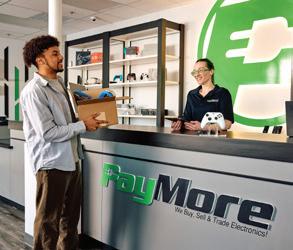
PayMore, the fast-growing electronics resale and recycling franchise, is excited to announce that it has surpassed 100 total franchise deals signed, marking a major milestone in the brand’s rapid expansion. The achievement underscores continued demand from entrepreneurs seeking scalable, service-driven retail concepts rooted in sustainability and value.
PayMore boasts strong first-quarter performance, with 11 new franchise deals signed in Q1 and 15 total deals signed so far in 2026. t he company also opened 19 new locations in Q1, 12 in the United states and 7 in canada, fueled by both new franchise development and existing operators reinvesting in the brand and expanding
their footprint.
“ t his milestone reflects the strength of the model and the confidence franchisees have in the business,” said stephen r . Preuss sr., cEO at PayMore group. “a s demand for affordable, sustainable technology continues to grow, our franchisees are leaning in and expanding to meet that need in more communities.”
“We recently expanded beyond our original deal to secure more territory after seeing the performance firsthand,” said Veer Patel, a PayMore multi-unit franchisee in Pennsylvania. “ t here’s real demand for electronics resale, and it made the decision easy. t he process was smooth, and the corporate team continues to roll out updates that help us improve and scale.”
PayMore’s growth is fueled by a model designed for simplicity, speed, and scalability. t he brand’s positioning as a destination-based business allows operators to secure well-located sites without the high costs typically associated with premium retail spaces.
at the same time, the broader market continues to move in PayMore’s favor. a s consumers look for more affordable alternatives to new electronics and prioritize sustainability, demand for resale and recycling services continues to rise.
visit https://paymore.com/ or https:// fransmart.com/brand/paymoreelectronics-franchise/.
Moe’s s out H west Grill Unlocks Late Night Growth with Extended Hours & Gen Z-Driven Menu Innovation
As the fast-casual category continues to evolve, Moe’s Southwest Grill® is seizing a clear whitespace in the daypart landscape: late night.
Long dominated by quick-service brands, late night has remained largely underdeveloped in fast casual, where operating models have traditionally centered around lunch and dinner. Moe’s is challenging that assumption by treating extended hours as a scalable growth lever rooted in operational simplicity.
b y aligning extended hours with menu innovation and digital access, the brand is demonstrating that late night can drive meaningful incremental transactions when supported by the right operational foundation.
to capture this opportunity, Moe’s introduced an integrated approach combining extended hours, menu innovation and digital availability, all while maintaining operational simplicity for franchisees. r ather than treating late night as a gimmick or limited-time promotion, Moe’s has built a scalable model designed to unlock incremental transactions without new builds or significant operational complexity.
Moe’s is expanding availability during underutilized evening hours that historically constrained demand in fast casual. Early performance indicates the additional hours are driving incremental
traffic, with consistent lift across both the late-evening window and adjacent shoulder periods. t he approach reinforces late night as a sustainable extension of the core business that can strengthen unitlevel performance without meaningful operational strain.
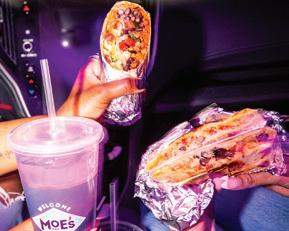
t he strategy also includes the launch of g rilled burrito d ippers, a g en Z-inspired, lower price-point platform designed around growing demand for snackability, value and digital ordering occasions. t he launch is supported by teen podcast creators Md Foodie b oyz, whose socialfirst audience and g en Z appeal help amplify the platform’s relevance for latenight and in-between occasions.
b y leveraging existing infrastructure and aligning extended hours, menu innovation and digital access, Moe’s is building a scalable, franchise-friendly model for sustainable growth.
Frenc H Florist Eyes New York City as Prime Growth Market
French Florist, the best-in-class boutique creating vibrant handcrafted flower arrangements, is targeting a high-volume growth opportunity as the brand sets sights on expanding into the New York City market.
in 2025, new York city welcomed about 65 million travelers and generated about $84.7 billion in tourism economic impact, including $55.6 billion in direct visitor spending. t hat constant movement of residents, visitors, businesses and events creates floral demand well beyond holidays, especially in a city known for corporate gifting, luxury hotels, private events, highend residential buildings and hospitalitydriven floral subscriptions.
“a s we look at priority markets for growth, new York city stands out as an especially strong fit for French Florist,” said glenn anderson, director of Franchise growth at French Florist. “We know our franchise partners are going to have success in nYc, because it is a dynamic, fast-moving market
where consumers appreciate quality, presentation and convenience.
t he floral boutique is initially focused on growth across the nYc metro area, where the brand has approximately 35 territories available for qualified franchise candidates. t he company is aiming to award those territories over the next six to 24 months as it builds out its presence in one of the country’s most commercially active and densely populated markets. by combining high-end floral design with operational systems and tech, French
Florist is able to deliver a more polished, consistent experience for consumers and commercial clients in this market.
With locations generating revenue three times that of traditional florists, French Florist has demonstrated that its support structure and franchise-first approach are driving meaningful results.
“ t he momentum we’re seeing is a reflection of how much whitespace still exists in the floral industry,” said Michael Jacobson, cEO of French Florist. www.frenchfloristfranchise.com.
Pirte K usa Partners with The Leaders Institute® and Heart of Florida United Way for Community Service Initiative at Annual Conference
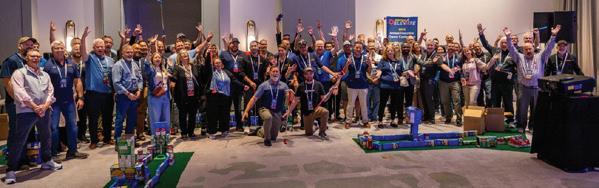
PIRTEK USA, the nation’s leading onsite and retail hydraulic and industrial hose service provider, reinforced its commitment to community impact during its 28th Annual Franchise Owners Conference, PIRTEK ELEVATE, held in Orlando, Florida. As part of the conference, PIRTEK partnered with The Leaders Institute® and Heart of Florida United Way for a high-energy, teambased charitable initiative benefiting local families in need.
d uring the event, Pirt EK franchise owners, operations managers, general managers, and territory s ales r epresentatives ( tsr s) participated in t he Leaders institute’s ace r ace® program, a fast-paced team-building activity in which participants constructed mini golf courses using non-perishable food items. at the conclusion of the event, approximately 1,000 pounds of donated goods were collected and provided to h eart of Florida United Way to support its
network of local food assistance partners.
h eart of Florida United Way serves as a critical resource hub across central Florida, connecting individuals and families with essential services including food assistance, housing support, healthcare, and financial stability programs.
“Our annual conference brings our entire network together, and it’s important that we use that time not only to grow our business, but to give back in a meaningful way,” said James d oyle, chief Marketing Officer of Pirt EK Usa and Pirt EK c anada.
“Partnering with t he Leaders institute and h eart of Florida United Way allowed our team to come together, have some fun, and make a real impact for families in the Orlando community.”
t he ace r ace® program is designed to foster teamwork, collaboration, and energy while supporting charitable causes. For Pirt EK, the initiative reflects the brand’s ongoing commitment to service both in the industries it supports and the communities it serves.
www.pirtekusafranchise.com.
Fitura Brands - the new Franchise ecosystem everyone is talking aB out
R EDEFIn Ing t HE Futu RE o F PADE l, PIl
At ES & R ECov ERY M A k ES
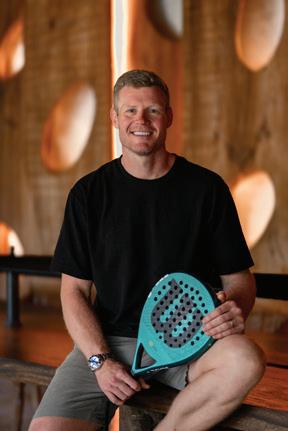
“I recently had the pleasure of speaking with James Hurlock, CEO and Founder of Fitura Brands, and one thing became immediately clear: this is not another fitness franchise company chasing the latest trend. What Hurlock and his team are building is a sophisticated, future-focused platform designed around where the wellness and performance industry is heading over the next decade — not where it has been.”
By Vikki Bradbury | Publisher | Franchising Magazine USA.
At a time when consumers are becoming increasingly selective about how and where they spend both their time and money, Fitura Brands has positioned itself at the intersection of sport, strength, and recovery through a unique three-concept ecosystem that is already generating significant attention across the franchise industry.
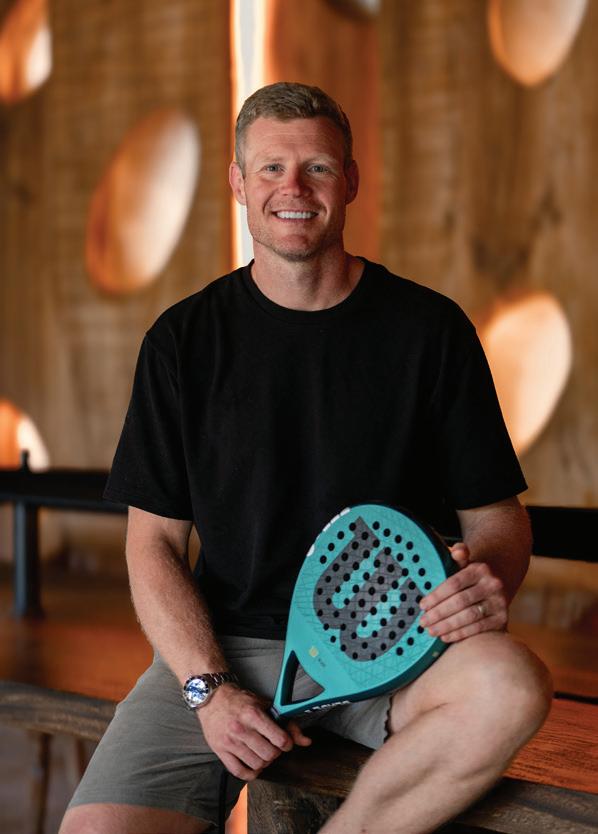
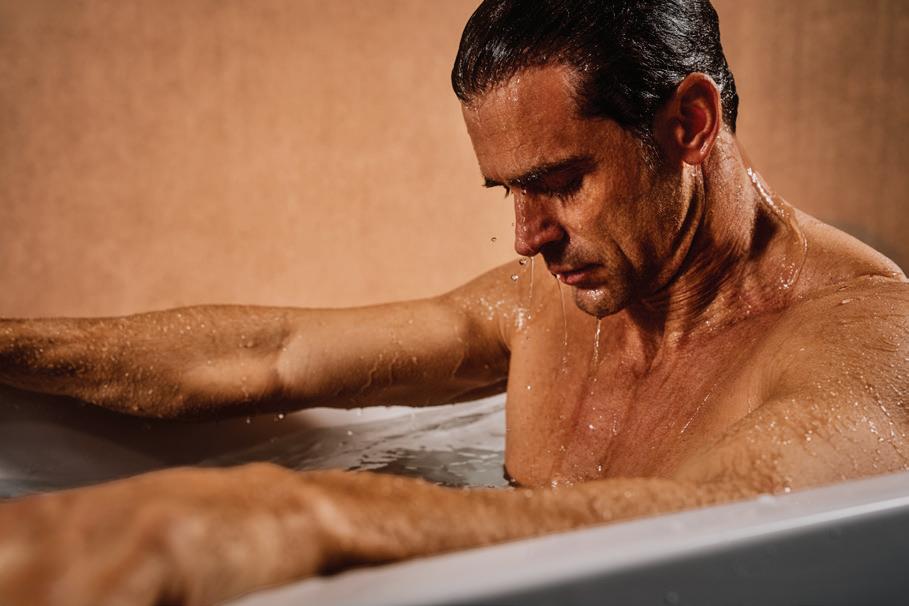
The company’s portfolio consists of Padel SWT, a next-generation indoor padel club concept; Core Precinct, an athletic reformer-based strength training studio; and ContrasTheory, a premium guided contrast therapy and recovery concept. Individually, each brand sits within a high-growth category. Together, they form what Hurlock describes as a “destination ecosystem” built to drive engagement, diversify revenue, and maximize operational efficiency.
“We’re seeing consumers move away from fragmented wellness experiences,” explains Hurlock. “People don’t just want one modality anymore. They want movement, performance, recovery, connection, and community all within a premium, highly curated environment.”
That philosophy has become the foundation of Fitura Brands’ broader strategy.
The company is focused on creating highperforming lifestyle destinations capable of generating traffic across multiple demographics and throughout the entire day. The result is a model that appeals not only to modern consumers, but also to experienced franchise operators seeking scalable, diversified businesses with longterm growth potential.
Hurlock is no stranger to scaling brands within the fitness and franchise space. Prior to launching Fitura Brands, he served in senior executive leadership roles within some of the fastest-growing fitness franchise systems globally, including F45 Training, FS8, and The Picklr. Across those brands, he helped drive franchise development, strategic partnerships, and international expansion during periods of rapid growth
That operational experience is evident in the way Fitura Brands has approached its rollout strategy.
“We’ve built this business infrastructurefirst,” says Hurlock. “Technology, systems, supply chain, programming consistency, real estate strategy, franchise support — those foundations matter.
Great branding gets attention, but operational execution is what creates longterm franchise success.”
It is a message that resonates strongly within today’s franchise landscape, where increasingly sophisticated franchisees are placing greater emphasis on leadership depth, operational support, and scalability before making investment decisions.
One of the most compelling aspects of the Fitura Brands platform is its understanding
of where consumer behavior is evolving. The explosive growth of categories such as recovery, racquet sports, and reformer training has created enormous opportunity, but it has also led to growing fragmentation within the wellness space. Consumers are often forced to maintain multiple memberships across different facilities to satisfy their fitness and lifestyle needs.
Fitura Brands aims to solve that problem through integration.
Padel SWT introduces members to one of the world’s fastest-growing sports through premium indoor clubs designed around competition, hospitality, and social connection. Core Precinct delivers structured, athletic reformer programming positioned well beyond traditional boutique Pilates. Meanwhile, ContrasTheory provides guided recovery protocols built around sauna, cold plunge, breathwork, and nervous system regulation.
Importantly, these concepts are designed to complement one another rather than compete for the same customer behavior.
“You might come in to play padel with friends, recover afterward at ContrasTheory, and then attend a Core Precinct session the following morning,” Hurlock explains. “That creates far greater engagement, stronger retention, and ultimately a much more valuable member ecosystem.”
From a franchise perspective, that integrated model also creates a significant competitive advantage. Diversified offerings allow operators to reach broader demographics while creating multiple revenue streams under one umbrella. It also helps reduce dependence on a single fitness trend or consumer segment.
Equally important is the company’s emphasis on premium experience and community-driven environments.
While many fitness concepts continue to compete aggressively on price, Fitura Brands is intentionally focused on delivering aspirational spaces and elevated member experiences designed to foster long-term loyalty.
“We’re not building transactional fitness,” says Hurlock. “We’re building environments people genuinely want to spend time in. The future of wellness is experience-led.”
That focus extends beyond design and branding into programming consistency and technology integration. Through strategic partnerships and centralized operational systems, Fitura Brands aims to provide franchisees with the tools necessary to deliver a consistent, highquality member experience across every location.
The company has also attracted attention for its disciplined approach to growth.
Rather than pursuing rapid expansion at all costs, Hurlock emphasizes the importance of aligning with experienced, values-driven operators capable of helping shape the long-term future of the platform.
“We’re looking for quality partners, not just volume,” he says. “The right franchisees understand community, leadership, hospitality, and execution. Those are the people we want building this alongside us.”
That selective approach appears to be resonating within the market, particularly among multi-unit operators and entrepreneurs seeking opportunities
beyond traditional boutique fitness models.
As the wellness industry continues to evolve, the broader vision behind Fitura Brands may ultimately prove to be its greatest differentiator. While many operators remain focused on individual modalities, Hurlock and his team are building around an ecosystem thesis — one that recognizes the increasing convergence between sport, fitness, recovery, hospitality, and lifestyle.
It is an ambitious vision, but one grounded in deep industry experience and a clear understanding of modern consumer behavior.
For prospective franchisees exploring the next generation of wellness opportunities, Fitura Brands represents something increasingly rare within the franchise sector: a platform that feels both commercially intelligent and culturally relevant.
And if the company’s early momentum is any indication, it may well become one of the most closely watched emerging franchise platforms in the industry.
www.fiturabrands.com
Redefining the futuRe of Padel, Pilates & RecoveRy Makes
s ix things First-time Franchise o wners w ish they’d k nown aBout Funding
A lot of thought goes into buying a franchise, especially when you are a first-time owner. You are choosing the right brand, the right territory, and the right moment to make the leap.
The funding side of that decision often receives the least amount of forethought, and where things tend to go wrong. Not because first-time buyers aren’t financially savvy, but because franchise financing has unique nuances, and a clear roadmap isn’t always provided upfront, and they weren’t given a roadmap before they started. Here are six of the most common funding mistakes we see, and what new business owners should do differently.
1not reading the FDD closely enough
The Franchise Disclosure Document (FDD) is not optional reading. It contains everything you need to understand what franchise ownership will actually cost: initial fees, territory costs, buildout requirements, grand opening marketing obligations, ongoing royalties, and required training expenses. Too many buyers skim it, or rely on a summary, and build a funding plan around incomplete numbers. Read it carefully before you talk to a single lender. It’s also a good idea to have a franchise attorney review the FDD and answer your questions before moving forward. Your financing strategy should
reflect what ownership actually costs, not what you hope it costs.
2underestimating How Much you really need
Most first-time owners think long and hard about the initial investment figure. Fewer consider what it takes to keep the business running in the first several months, before revenue gains any real momentum. This is the period when buildouts run over schedule, hiring takes longer than expected, and customers don’t always arrive on your timeline.
A smart approach: calculate what you think you need, then add a meaningful buffer on top of it. Unexpected costs are not a possibility; they are a certainty. The owners who come out of year one in the best shape almost always planned for the realistic version of startup, not the optimistic one.
3underborrowing to Feel responsible
There is a well-intentioned instinct to borrow as little as possible. It feels disciplined. In practice, it can be one of the most expensive decisions you make. Coming in underfunded means the business has no margin for error. Every slow week or unanticipated cost becomes a crisis rather than a manageable bump. The right amount to borrow is the amount that gives the business room to breathe, not just the minimum needed to open the doors.
Learn more at benetrends.com.
“ Funding decisions do not happen in a vacuum. Before you commit to any financing, make sure you have done extensive research on the franchise concept. Talk to existing franchisees, outside of the ones the brand refers you to.”
4 not Knowing where your credit score stands
If an SBA loan is part of your funding plan, your credit history matters more than you might expect. Lenders look at your score, your debt-to-income ratio, and your overall financial picture. A score that hasn’t been actively managed can limit your access to the best loan terms or even to the loan itself.
Pull your credit report before you get serious about a brand. If there are issues, address them early. Trying to clean things up after you’ve already committed to a concept and want to move fast is a much harder position to work from.
Ali Kraus is the Chief Marketing Officer at Benetrends Financial, which has helped more than 30,000 entrepreneurs fund their businesses since 1983.
5not e xploring alternative Funding structures
Many first-time buyers assume the choice is between a bank loan and personal cash. The options are actually much broader. For many buyers, the most effective approach combines sources rather than an either-or scenario.
One structure worth learning about is Rollover for Business Startups (ROBS), which allows you to invest existing retirement savings into a franchise without triggering early withdrawal penalties or taking on additional debt. Benetrends Financial has helped thousands of
entrepreneurs use this approach, either on its own or paired with an SBA loan, to fund ownership without carrying more personal debt than necessary. It isn’t right for every situation, but it’s worth understanding before you rule it out.
6skipping Due Diligence on the business itself
Funding decisions do not happen in a vacuum. Before you commit to any financing, make sure you have done extensive research on the franchise concept. Talk to existing franchisees, outside of the ones the brand refers you to. Understand what support looks like
in practice, what the day-to-day actually involves, and how similar-market locations have performed.
A well-structured funding plan won’t make the wrong business work. The research you do before signing protects your investment as much as any financial strategy does. Getting funding right from the jump doesn’t mean you are being overly cautious. It means you are prepared and ready to tackle this adventure. The entrepreneurs who navigate this process most successfully are the ones who understand their options, know their real numbers, and ask the right questions before they commit. v
Four Deals. Two Mon T hs.
o ne new Coun T ry:
HB PR ot EIn S M oot HIES M Ak ES
It S Int ER n At I on Al Mov E
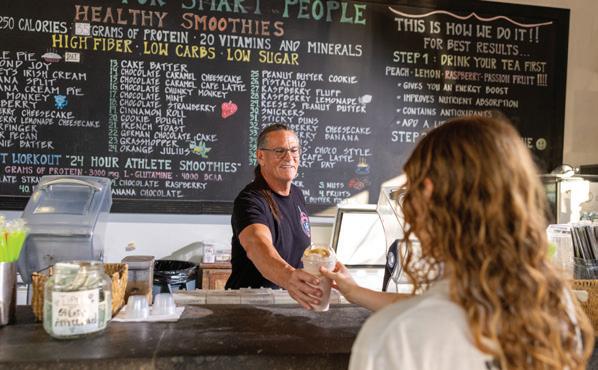
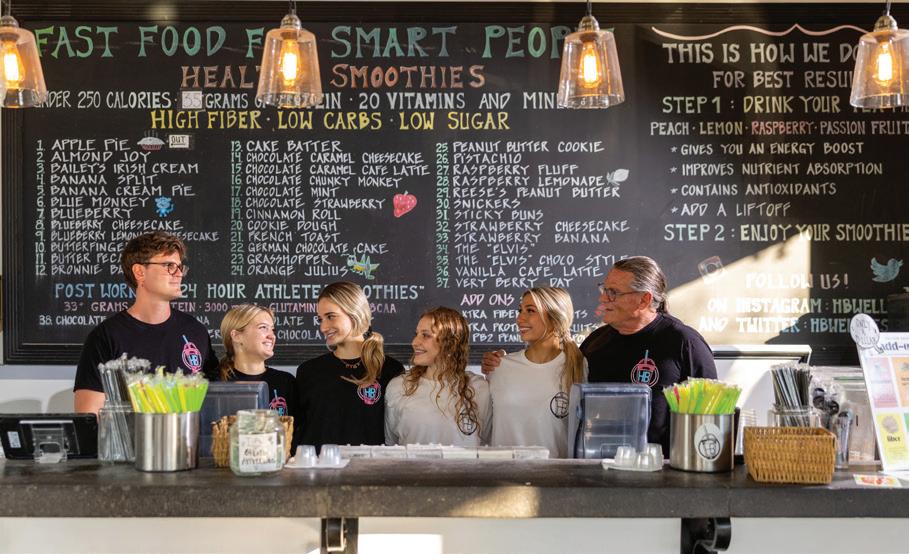
HB Protein Smoothies is going global. After backto-back multi-unit deals in Florida and a commitment in California, the fast-growing brand is now crossing borders. Jay and Carolina Orosa, a seasoned husband-and-wife franchising team, have signed a multi-unit deal for British Columbia, Canada, bringing HB Protein Smoothies to its first international market and capping a remarkable fourdeal multi-unit run within two months.
Jay brings a background in pharmaceutical sales, while Carolina's expertise spans advertising and marketing. Both have always been entrepreneurially driven. After relocating to Canada, the couple owned successful U.S.-based businesses, including a franchise they operated for over a decade. When it came time to choose their next business venture, they looked at several brands, but HB Protein Smoothies was, in their words, "the first one to get them excited."
“I love the feel of the brand; it’s fun, it’s positive, it’s very community-centered,” said Carolina. “The owner, Daniel, has done a really good job of being a brand ambassador — when you meet him, you see that he lives and breathes positivity, health, and wellness.”
Daniel Boone, co-founder of HB, has said he wants to live to 120 years old, a philosophy that runs through everything from the brand's culture to its products.
“The simplicity of a QSR business that had a great product was the greatest draw
for us,” said Jay. “After getting to meet the team in person, that sold us on it.”
For the Orosas, the decision was also personal. “We’ve become focused on healthy choices — eating healthy, living healthy,” said Jay. “We don’t just want to live long, but we want to live well.”
The Orosas say their British Columbia market reflects those same values of wellbeing.
“We live in Vancouver, and it’s a very wellness-focused city,” said Carolina. The
couple noted that the population leans toward outdoor and physical activity — yoga, Pilates, and similar pursuits — making it a natural fit for their target audience and an untapped opportunity for protein smoothies in Canada.
“We see ourselves growing the brand in BC, and making it a household name,” Carolina continued. “There’s an opportunity to make this a habit-forming product.”
Carolina called HB a "category disruptor,” pointing to untapped markets, new flavor possibilities, and drink concepts she believes the brand is uniquely positioned to own in British Columbia.
“HB has a wider application and can cater to a wider market. It has more grams of protein than our competitors, less sugar, and fewer calories, but it is also delicious,” said Carolina.
The Orosas said they were impressed by both the operational simplicity of making the smoothies and the flavor, noting its non-chalky consistency.
“When we tasted it, our minds were blown,” said Carolina. “We felt like we were in an alternate reality, like we were being pranked or something. How could this taste nothing like any protein smoothie we’ve ever tried?”
They sampled two flavors: banana cream pie and a maple flavor currently in
development, the latter feeling especially fitting for their market.
"Canada is all about the maple leaf," said Carolina. “This brand can cater to pretty much everyone who’s looking for a treat where maybe protein is not top of their mind, but it’s an added bonus.”
Having lived in the U.S. before relocating to Canada also gave the Orosas a crossborder perspective they say will be an asset, one that shaped their approach to franchising and business ownership, which they plan to carry into launching HB's international footprint.
"The backing of Fransmart was the number one seller for us," said Carolina. "Plus, the fact that it's operationally simple and in a booming category right now."
Looking ahead, the Orosas are clear about what they envision for the brand.
"I don't want this to become a trendy brand," said Carolina. "I want this to become a brand that sustains its popularity because it's become a part of everyone's routines."
Supported by Fransmart, the franchise development company behind expanding Five Guys, QDOBA, and The Halal Guys, HB Protein Smoothies is actively seeking qualified franchisees.
For franchise opportunities, visit ownanhb.com.
about Hb Protein sMootH ies:
HB Protein Smoothies is a protein-focused smoothie brand built for everyday routines and operational simplicity. Founded by father-and-son team Ethan and Daniel Boone, the concept delivers high-quality, great-tasting smoothies that appeal to health-conscious consumers.
Designed for scalability, HB Protein Smoothies offers a low-overhead, streamlined franchise model with minimal staffing requirements and strong unit economics. Each location provides convenient, high-protein nutrition while supporting franchise partners with a proven system engineered for sustainable growth.
about FransMart:
Fransmart is a leading franchise development company specializing in helping emerging restaurant and retail concepts expand through strategic franchising solutions. Founded two decades ago by Dan Rowe, Fransmart has a proven track record of transforming single-unit stores into successful franchise systems. The company has played an instrumental role in building franchising programs for internationally recognized brands, including Five Guys and The Halal Guys, demonstrating its expertise in scaling innovative concepts from startup to global franchises.
For more information on Fransmart, visit fransmart.com.
the p ower o F o wnership:
W HAt t HE LOtt E ry tICKE t Ex PE r IMEN
t
tEACHES US A BOU t IN g Ag EMEN t
On April 26, 2012, the Harvard Business Review published an article entitled “Increase Your Team’s Motivation FiveFold.” In the years since, the article, which was written by a McKinsey consultant named Scott Keller, has become a classic, widely read by social scientists and leaders who study what motivates people to become invested in their work. Keller, who is a leader of the Strategy & Corporate Finance Practice at McKinsey, tells the following story in his article, which I will summarize for you here . . .
Researchers once ran a simple lottery ticket experiment that produced unexpected results. Some participants in the study were handed lottery tickets that were already printed with random, preassigned ticket numbers. Others were given blank lottery tickets and asked to write down any number they wanted. Then the researchers asked participants, “How much would you sell your ticket for?”
Here’s the unexpected thing that happened. People in the study who had been allowed to pick their own ticket numbers demanded dramatically more money for their tickets – sometimes five times as much for them. In contrast, people who held tickets with pre-assigned numbers were willing to sell their tickets for much less. In fact, some people were practically willing to give their tickets away.
So, what does this experiment tell us? It shows that as soon as people exert an influence on what they do, they feel a powerful sense of ownership.
the Power of ownership
The concept of ownership goes beyond just material possessions; it taps into a fundamental human psychological need to feel a sense of control and contribution. When individuals feel ownership over their work and outcomes, their engagement and commitment skyrocket.
The bottom line? People support what they help create.
the Psychology behind ownership
Two key behavioral concepts explain this phenomenon.
1The Endowment Effect
Nobel Prize–winner Richard H. Thaler has found that people assign higher value to things they perceive as theirs. Once they own something, they defend, protect, and elevate that object or idea. Richard H. Thaler is an American economist and the Charles R. Walgreen Distinguished Service Professor of Behavioral Science and Economics at the University of Chicago Booth School of Business.
2Self-Determination Theory
Psychologists Edward Deci and Richard Ryan discovered that autonomy, competence, and connection drive motivation. When people feel empowered to shape their environment, their motivation soars. Deci and Ryan are renowned psychologists from the University of Rochester. Their work emphasizes that fostering intrinsic motivation requires satisfying three basic needs: autonomy, competence, and relatedness.
From e xperiment to leadership Practice
The simple act of choosing transforms obligation into enthusiasm. Too often, leaders overlook this lesson. They build strategies behind closed doors, finalize decisions, and announce them to their teams — expecting excitement and buyin. But real commitment doesn’t come from being told what to do. It comes from helping decide what to do.
That’s the heart of Ingagement — the leadership philosophy I teach at Ingage Consulting. Ingagement isn’t about doing things to people; it’s about doing things with them. Engagement happens when people are invited to co-create their future, not when they’re asked to comply with someone else’s vision.
Leadership today isn’t about having the best ideas. It’s about unlocking the best ideas in others.
why this Matters More than ever
We’re living in an age of chronic
As an author, keynote speaker, consultant, and entrepreneur, Evan hackel has been instrumental in launching more than 20 businesses and has managed a portfolio of brands with systemwide sales of more than $5 billion. He is the creator of Ingaged Leadership, the author of the book Ingaging Leadership: The Ultimate Edition, and a thought leader in leadership and success.
Evan is the CEO of Ingage Consulting. Visit www.evanhackel.com
disengagement. Gallup reports that only 23% of employees globally are engaged at work (Gallup State of the Global Workplace Report 2023). The rest are either detached or actively disengaged — costing the global economy $8.9 trillion a year in lost productivity. Source: Gallup State of the Global Workplace Report 2023).
some Practical steps to build ingagement and ownership
All this is practical, not theoretical. When you cultivate ownership in your franchise, you dramatically increase your chances of profitability, growth and success.
Here are some practical steps to help make that happen:
• Begin new projects by inviting your franchisees, employees – and everyone else – to contribute their best ideas. Then don’t be the person who selects which ideas to accept or which to reject – get out of the way and let people get started.
• Set up group brainstorming sessions in which you capture all ideas from people on whiteboards, without judging them. Then allow participants to decide which ideas to develop and explore.
• Use what I call Ingaged Listening, in which you never reject ideas, but listen instead for what people are saying that is right, not wrong. Wherever possible, allow people to decide and develop the processes they will apply to bringing their ideas to life.
• Cultivate the practice of hiring people who know more than you do in key areas of expertise. Then get out of the way and let them apply their knowledge.
• Assign work to task forces that are teams of equals, not hierarchical structures
controlled by people who have higher authority.
• Respond to every suggestion and idea that people make regarding their work and processes. When you ignore ideas or let them die a slow death, you kill excitement and motivation through the ranks.
• Apply an open-door policy as a leader and encourage people to share their ideas and input in real time.
• Welcome and relish the opportunity to be proved wrong by the people in your organization.
• Develop a culture of learning in your organization by demonstrating enthusiasm for learning about what is new and better.
• Assign projects to multi-functional teams and give them autonomy. Don’t micromanage. Turn them loose and let them surprise you with what they can do.
• Take time to solicit feedback and input from people in your organization who are on the front lines. The knowledge they bring to your door is usually the most valuable you can find anywhere in your franchise and organization.
This Truth Is Timeless
People don’t fight for what you tell them to do — they fight for what they build.
So, as you go about your daily and weekly routines of leading your franchise, remember the lessons from the Lottery Ticket experiment.
The more you encourage people to put their own stamp on what they do, the more powerfully your franchise organization will grow. v
t wenty y ears o F c raF t and community Fuel m okas
co FFee’s next wave o F g rowth
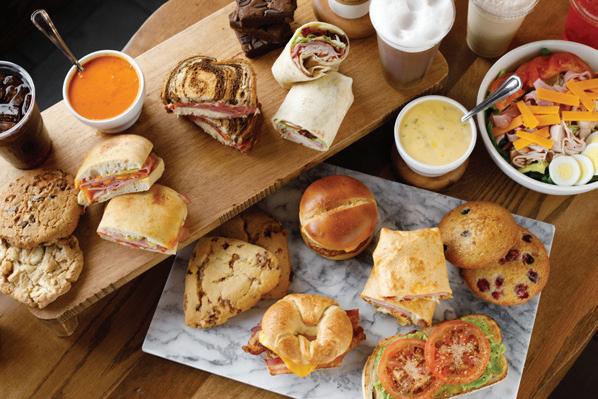
As Mokas Coffee & Eatery marks its 20th year in business, the brand is entering a new phase of growth fueled by rising demand for its made-to-order breakfast and lunch offerings, freshly baked pastries, and fastcasual coffee experience.
Building on two decades of momentum in its home state of Kansas, Mokas is accelerating multi-state development efforts while exploring opportunities to expand into additional high-growth communities across Arizona, Missouri, Oklahoma, and beyond.
From its start as a single café in 2005, Mokas has evolved into a fast-growing regional brand with five corporate-owned locations operating in Salina, Colby, three in Wichita KS, and fifteen more under development in Wichita, Kansas City, and other markets in Kansas. The company’s transition from Mokas Coffee to Mokas Coffee & Eatery in 2024 captured the full scope of what the brand has become: a space where guests can enjoy high-quality coffee and handcrafted food, made-toorder and served with care. As coffee culture continues to thrive, Mokas is wellpositioned to continue its momentum to new markets across the country.
“The evolution from Mokas Coffee to Mokas Coffee & Eatery was a natural reflection of how the brand and our guests have grown together,” said Jason Ingermanson, President of Mokas Coffee & Eatery and CEO of JRI Hospitality. “From day one, Mokas has been about more than coffee; it’s about creating a welcoming space for connection and conversation. As our community’s love for fresh, made-
to-order meals grew alongside our coffee offerings, the transition allowed us to fully showcase what we do best: crafting both exceptional coffee and flavorful food with care.”
Over two decades, Mokas has achieved several milestones that underscore its transformation:
• 2005: First Mokas opens in Salina, Kansas
• 2022: Launch of The Roastery, bringing coffee roasting fully in-house
• 2024: Brand refresh introduces Mokas Coffee & Eatery name and identity
• 2024: Fourth location opens and first franchisee (Christian Coleman) signs a six-unit agreement to bring Mokas to Johnson, Douglas, and Shawnee counties
• 2025: 20 years strong—two decades of growth, quality, and connection
“The past twenty years have been about creating a place where quality and community come together in every cup and every plate,” continued Ingermanson.
“Now, as we look ahead at the next decade, it’s all about growth, and bringing our concept to more communities nationwide. Our foundation is strong, and we look forward to expanding while staying true to what’s gotten us this far: quality, community, and care.”
As the coffee market continues to grow rapidly, with the market expected to reach $430 billion by 2030, Mokas Coffee & Eatery is seeing increased demand for their freshly made food and beverage options. Prospective franchisees will benefit from a proven business model with streamlined
operations, a technology stack designed to enhance efficiency and customer engagement, and a positive, loyalty-driven culture.
Building off this demand, the brand is looking to accelerate its regional expansion with a focused push into nearby high potential markets. The brand is targeting a mix of major metropolitan areas and strong midsized communities across Oklahoma, Arizona, Kansas, and Missouri, creating a cohesive growth corridor that builds on Mokas’ existing regional recognition.
In Oklahoma, Mokas is looking to partner with local entrepreneurs throughout the Greater Oklahoma City and Tulsa metro areas, along with promising surrounding cities such as Bartlesville, Lawton, Ardmore, Muskogee, and Stillwater. The state’s proximity to Kansas allows Mokas to extend its established brand familiarity while tapping into communities experiencing steady population growth and increasing demand for elevated everyday dining.
Simultaneously, Mokas is expanding into Missouri with a development deal in the Kansas City metro, bringing nine units to the area. Building on this momentum, they are seeking additional local entrepreneurs to bring the brand’s handcrafted coffee and community driven dining experience to key markets including St. Louis, Springfield, and Joplin. Missouri’s strong food and beverage sector (responsible for $26.7 billion in economic output and more than 278,000 jobs in 2025, according to the National Restaurant Association) offers a compelling environment for franchise growth.
Mokas is also planning to make development strides in Arizona, focusing on areas in the Phoenix DMA such as Scottsdale, Glendale, and Gilbert.
As Mokas Coffee & Eatery continues to expand its footprint, the brand is building on two decades of proven performance and preparing for its next chapter of growth. With a clear vision, strong community roots, and a commitment to handcrafted quality, Mokas is setting the stage for another twenty years of success. v
the s kin health s hiF t:
w haT I T Means F or w ellness Fran C h IsIng
There’s a shift in how consumers think about their skin, and it’s bigger than a trend.
As an esthetician myself for 18 years, I’ve seen a fundamental shift in how consumers think about skincare, from what they use at home to professional services. For many years and especially in the U.S., professional skincare treatments were treated as a beauty service. Clients came in before a wedding, reunion or vacation, and the appointment was a reward or luxury, not a routine. Today, consumers are showing up more educated about skin barrier function, the effects of environmental stressors and the role of inflammation in skin health. The conversations and questions have also evolved. It’s now less about a quick fix and more about how to protect their skin for the next decade.
This is the esthetics transformation, and it doesn’t end with consumer behavior. It’s reshaping the economics of wellness franchising, and for franchisees evaluating where to place their investment, it’s a shift worth understanding.
From occasion to Maintenance
The shift toward preventative skincare mirrors what we’ve already watched happen across other health categories. Fitness
stopped being a January resolution years ago – it’s now a lifestyle infrastructure. Skin health is following that same path, and professional esthetic services are benefiting directly.
The broader wellness market confirms what practitioners see daily. According to the Global Wellness Institute’s 2025 Economy Monitor, the global wellness economy reached $6.8 trillion in 2024 – growing nearly 8% in a single year and outpacing global GDP growth by a significant margin. In the U.S., Americans now spend more than $6,000 per person annually on wellness. Personal care and beauty is the largest sector within that economy. That’s not a niche trend, but a fundamental realignment of how people prioritize their health spending, and it’s creating a consumer who is investing consistently in professional skincare services.
For franchise systems built on recurring revenue, that consumer is a natural fit for a membership model. The mindset is there, so the question is whether your system is built to meet it.
what the Data inside a wellness Franchise reveals
The numbers tell a compelling story, and they matter directly to franchisee profitability.
about lisa rossMann:
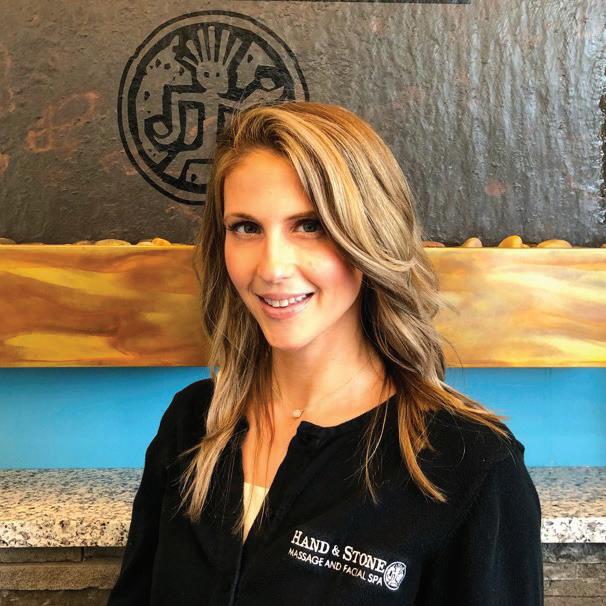
In 2012, Lisa began her career at Hand & Stone as one of the brand’s first Regional Operations Managers. Since then, she has been promoted several times, with her current role now serving as Chief Corporate Spas & Innovation Officer.
In this role, Lisa oversees the P&L for all corporate spas and leads corporate store management – driving these businesses operationally and financially. Lisa also heads service & product protocol, the massage student program, and the brand’s Franchisee Innovation Committee.
At Hand & Stone, skincare services represent approximately onethird of annual systemwide service sales. That’s become a core revenue driver, and the unit economics beneath it are equally strong. A facial room generates $40 to $50 more per service hour than a massage room – a differential with meaningful implications for a franchisee’s bottom line.
This aligns with what the Global Wellness Institute has identified across the industry. Spas, which generated $157 billion in global revenues in 2024, are moving well beyond the traditional massageand-facial model into results-oriented, clinical services. Franchisees who recognize this shift early and build their operations around it will be better positioned to capture the clients driving that growth. What clients choose once they’re in the door reinforces the opportunity. Approximately seven out of 10 facial appointments at Hand & Stone include upgrades, which are customized, targeted skin condition specific treatments and range in price depending on the products or device technology used. That’s not a transactional upsell. It reflects clients who are educated, engaged and trust their esthetician enough to follow their guidance. For franchisees, that translates into higher revenue per visit.
We’ve also seen evidence of what I call dual-modality momentum. About 35% of our membership clients use both massage and facial services. Clients who discover the value of one professional wellness service are genuinely open to others, and that crossover increases per-client revenue, deepens the brand relationship and
makes retention more durable. For franchisees, a client who books both services isn’t just more valuable today – they’re significantly less likely to leave in the future.
why the esthetician’s elevated role is a Franchisee advantage
The consumer shift toward preventative skin health has also changed what clients expect from their esthetician, and that change carries business value for franchisees.
The esthetician’s role used to be more transactional. Today, clients visiting to address redness and irritation, protect against UV damage, manage breakouts or maintain results following a procedure are looking for a trusted advisor. That deeper relationship drives the repeat visits and long-term retention that membership-based franchise models rely on.
For franchisees, investment in esthetician training and career development isn’t just a staffing cost – it’s a revenue strategy. Skilled, confident estheticians build client loyalty faster, generate upgrades and are a primary driver of retention that determines long-term unit performance. In a membership-based business, keeping clients is everything, and a well-trained esthetician protects that.
what Massage-Focused brands need to recognize
For wellness franchises that built their identity around massage, the esthetics shift is worth taking seriously as a genuine growth opportunity. It works best, however, for brands willing to integrate skincare as a true wellness modality and not just another service.
Today’s consumer wants one place to meet their wellness needs. A franchise that can deliver a complete experience – including physical recovery and long-term skin health – becomes a more meaningful, harder-to-replace part of a client’s life. For franchisees, that translates into stronger retention and higher average spend.
Accessible price points make this achievable at scale, reaching the broad middle market of everyday consumers who want highquality wellness services they can integrate into their routine.
When services are structured around consistent care rather than one-off appointments, more clients develop habits that produce real results, and franchisees build the recurring revenue base that makes their business more predictable and valuable.
what this Means for Franchisees
For candidates evaluating a wellness franchise opportunity, the esthetics evolution is a signal worth examining closely. A system that has meaningfully integrated skincare – not as a sole item, but as a revenue category with its own operational infrastructure – is a system with stronger diversification and resilient recurring revenue.
The brands positioned to grow understand what consumers increasingly understand – that skin health is a form of care. For franchisees, a model built around delivering that care consistently and accessibly is worth investing in. v
Award-winning pizza franchise celebrates new openings, operational investments, and continued expansion into 2026
SACRAMENTO, CA – Pizza Guys, a Sacramento-based pizza franchise known for fresh, high-quality food, is wrapping up a strong performance in 2025, fueled by new market expansion, strategic expansion and continued investment in franchise support. With new restaurant openings and operational enhancements, the brand is building momentum in 2026 while staying focused on what matters the most – delivering great food and dependable service for today’s customers.
2025 proved to be a monumental year of growth for Pizza Guys as it expanded its footprint with seven new restaurant openings, strengthening its presence across California, Nevada and Texas. These openings not only helped the brand reach a significant milestone of 100 locations systemwide, but also marked the company’s first restaurant in Texas, signaling a major step forward in its longterm growth strategy.
Locations opened in 2025 include:
• Plano, TX
• Milpitas, CA
• Palo Alto, CA
• Clovis, CA
• Cypress, CA
• Oceanside, CA
• Reno, NV
Building on this momentum, Pizza Guys signed development agreements for six future locations currently in progress across key California markets, including San Jose, Westminster, Tustin, San Diego, Lathrop and Anaheim. These deals position the brand for continued expansion in its existing states for 2026.
To support this growth, Pizza Guys made meaningful enhancements to its business model with a renewed focus on franchisee success. The operations team introduced more structured training for all new franchisees, supported by clear guidelines and proven systems designed to streamline
operations, improve consistency and strengthen profitability across the network.
The brand also strengthened its corporate infrastructure by adding new support roles, including a Franchise Field Representative, a Training Coordinator and a Graphic Designer, reflecting Pizza Guys’ continued investment in operational excellence, brand consistency and franchise development.
“The growth we achieved in 2025 reflects the strength of our franchise partners and the systems we’ve put in place to support them,” said Shahpour Nejad, CEO and Founder of Pizza Guys. By continuing to invest in training, operations and infrastructure, we’re able to grow thoughtfully while staying true to the quality and value our guests expect.”
Pizza Guys efforts have been recognized at both the national and local level, including being ranked #2 on Yelp’s Top 25 Pizza Chains in America for 2025, #26 on Fast Casual’s Top 100 Movers & Shakers list, #319 on Entrepreneur’s Franchise 500 list
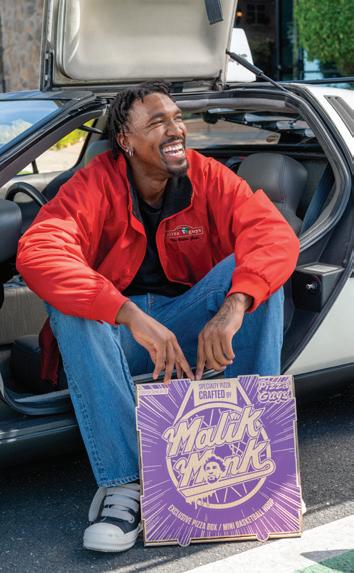
and local honors such as being named a Top 3 Pizza Restaurant in Vallejo. The brand also continued its partnership for a second year with Sacramento basketball star Malik Monk, further strengthening its community presence and brand visibility
As the brand continues to grow, Pizza Guys remains mindful of today’s economic landscape and is committed to helping customers enjoy great food at a strong value. Pizza Guys continues to prioritize affordability without compromising quality by delivering value-driven promotions and simplified, profit-focused operations for franchisees. The brand expects delivery and takeout to remain resilient growth drivers as pizza continues to offer strong value, and anticipates AI-powered ordering tools will play an increasing role in improving efficiency and enhancing customer experience.
With 2026 marking Pizza Guys’ 40th anniversary, the brand is taking time to celebrate the people who made this milestone possible. Guests can expect
special promotions throughout the year, including 40% off deals and additional limited time offers.
“Reaching 40 years is an incredible accomplishment, and we couldn’t have done it without the support of our franchise partners, team members and loyal guests,” continued Nejad “We’re excited to celebrate together and continue building the future of Pizza Guys.”
To learn more about Pizza Guys and view their full menu, please visit: https://www.pizzaguys.com.
about Pizza Guys:
Founded by Shahpour Nejad and Reza Kalantari in 1986 and franchising since 1994, Pizza Guys offers high-quality and delicious gourmet pizzas at a price point that can meet every budget. Each Pizza Guys pizza is handcrafted using freshmade dough, 100% whole milk mozzarella cheese, and a sauce made with freshpacked, California-grown tomatoes. All topped with high quality toppings from trusted brands. The brand currently has 100+ stores open and operating across two states.
For more information about Pizza Guys, please visit: https://www.pizzaguys.com/.
trans Fer what you k now or g rowth s talls
When I started ImageFIRSTCincinnati, I had one delivery truck, a stack of business cards and brochures, a 10’ x 10’ storage unit, and a computer in the basement office. That was the entire operation.
For the first two years, I did everything; sales, deliveries, customer service, billing, and problem-solving. That effort mattered. It got the business off the ground and set the foundation for the next eighteen years. When cash flow allowed me to hire, the first question wasn’t who to hire. It was what function to hire and train someone to do.
That question marks a leadership transition many owners don’t realize they’re entering. Leaders don’t hit a growth ceiling because they stop working. They hit it because they never stop doing the work. Early success rewards execution. Later growth demands design.
That’s where many owners quietly stall. Not from lack of effort, but from staying essential for too long.
employee Habit | Proving Value through output
Employees prove value by:
• Completing tasks.
• Responding quickly.
• Executing what’s assigned. Output is visible. Efficiency is rewarded. Doing feels safe.
Inside an established system, this works. It’s how organizations operate day to day.
Luke frey is a seasoned franchise strategist with over two decades of experience in leadership and business development. His journey from the front lines as a fire chief to the helm of his own successful franchise has equipped him with unique insights into the challenges and triumphs of franchise ownership. As the author of guide to 90-Day Success: the Franchisee’s Strategy for Early Wins, Luke empowers franchisees to achieve early wins and sustainable growth by shortening the steep learning curve of business ownership.
Passionate about helping others succeed, Luke offers actionable strategies that blend practical business acumen with a deep understanding of human dynamics. through his work, he’s committed to shaping the future of franchising, one successful business at a time.
Outside a system, however, output creates dependency. The business becomes reliant on the individual rather than the process. That habit doesn’t disappear when someone becomes an owner. It becomes expensive.
What once made you valuable now limits how far the organization can go without you.
the transition tension owners Feel
Most owners don’t struggle because they lack clarity. They struggle because they are the clarity.
They “just know”:
• How onboarding works.
• What a positive customer experience looks like.
• How problems are solved.
• How daily decisions should be made. That knowledge lives in their head, and nowhere else.
As long as the business is small, this seems efficient. As soon as it grows, it becomes the constraint. The organization doesn’t slow down because people are incapable. It slows down because knowledge isn’t transferred.
owner Habit | Proving Value through clarity
Ownership changes the value equation.
Value is no longer created by:
• Doing more
• Working faster
• Being constantly available.
Value is created by:
• Documenting what works.
• Making decisions repeatable.
• Giving others clarity and confidence to act without you.
Clarity replaces output as the owner’s primary contribution. For high performers, this is uncomfortable. Transfer is slower than action, until scale demands it. Transferring your knowledge is an investment for the business’ long-term growth.
ceo lens | Design beats e xecution at scale
CEOs win by designing work others do consistently. Design answers questions like:
• What should happen every time?
• Who decides this, and how?
• What does “good” look like here?
Execution keeps today alive. Design protects tomorrow. Peter Drucker captured this shift cleanly: “The best way to predict the future is to create it.” Creation at scale happens through intentional design, not sheer effort.
why this Feels like “Doing less” (but isn’t)
Design work feels theoretical. There’s no adrenaline rush from a job well done. Little urgency. No immediate win. And yet, research consistently shows that organizations built on documented processes outperform those reliant on individual expertise.
McKinsey has found that companies with standardized processes and clear decision frameworks can improve productivity by up to 30%, largely by reducing decision friction and rework (McKinsey Global Institute, Organizing for the Future).
Guesswork is where time, consistency, morale, and momentum quietly leak. Design removes guesswork.
the Hidden risk of “i’ll e xplain it as we Go”
When leaders rely on memory instead of documentation:
• Quality varies.
• Training slows.
• Decisions bottleneck.
• Team frustration rises.
This isn’t a competence issue. It’s a transfer issue. If the business can’t operate without your explanations, it can’t scale past your capacity. John C. Maxwell’s “Law of the Lid” puts language to what many owners feel, “Organizations grow only to the level of their leader’s capacity to lead.”
Design raises the lid. Doing reinforces it.
action step | Document one thing you “Just Know”
This month’s action is intentionally small. Identify one process you currently carry in your head. Something you often explain verbally.
Ask:
• Where does this start?
• What are the key steps?
• What does “done right” look like?
Write it down. One page is enough. You’re creating leverage, not bureaucracy.
normalize the shift
Every growing leader goes through this phase. Nothing is wrong with your work ethic. Nothing is broken in your drive. What built momentum early becomes friction later. That’s not failure. That’s transition.
tying the series together
• Strengths set posture.
• Emotions signal pressure.
• Time reveals priorities.
• Systems create stability.
• Design unlocks scale. This is the shift from being essential to being effective.
#LeadershipDevelopment
#CEOGrowth #FranchiseOwner
#FranchiseFounder #BusinessSystems
#OrganizationalDesign
#ScalingLeadership #DecisionMaking
#94XMovement
m odernizing a r estaurant Franchise: Tony r o M a’s sT raT egy F or u.s. e xpansI on
By Mina Haque, CEO, Tony Roma’s, Carlos White, Franchise Attorney, Founder of The Impactor and the first Franchise Impactor Ambassador in the U.S., & Calvin Golden, Co-founder of ScaleWise Franchise
At its peak, legacy restaurant franchise Tony Roma’s operated 200+ domestic units, with international locations in more than 30 countries. Over the past 20 years, however, the brand prioritized international expansion. Now, Tony Roma’s is poised for a major U.S. expansion, focusing on technology to modernize its operating model.
Tony Roma’s has five decades of operations, strong name recognition, a beloved menu, a loyal customer following, and an international platform. We are uniquely combining our established brand equity and technology strategies to drive U.S. growth and position our U.S. franchisees for success.
leveraging a tech strategy to Drive e xpansion
The timing is perfect for Tony Roma’s to modernize – and expand – the brand, and leveraging technology is a vital part of this. We are relying on AI, data, and automation tools that have recently become more
accessible and affordable for mid-sized franchise brands. Plus, we understand that, in the restaurant franchise space, technology only matters when it shows up on the P&L. Therefore, we are linking technologies to specific, measurable operational outcomes. This includes:
• Site selection. We are leveraging AI-driven geospatial analytics that combine trade-area demographics, foot traffic patterns, co-tenant data, and cannibalization risk. This empowers our franchise system to choose locations based more on data – and less on unverifiable instincts.
• Systems integration. Often, brands operate with disconnected systems, which make critical tasks more difficult, costly, and inefficient. At Tony Roma’s, every unit operates on a unified data layer, with one POS architecture, one inventory platform, one labor system, and one source of truth. Integrated systems streamline every aspect of franchise operations, including inventory and scheduling. Importantly, by centralizing data, franchisees can make more informed business decisions to drive ongoing growth and success.
• Back-of-house operations. We use predictive maintenance sensors to monitor ovens, walk-ins, fryers, and HVAC for early signs of failure. This improves our franchisees’ unit economics.
• Guest experiences. Tech is improving personalization at scale, elevating guests’ experiences. Returning guests get recommendations based on their order history and preferences. Loyalty members get offers calibrated to their behavior. This hyper-personalization improves key metrics like customer satisfaction, loyalty, and retention.
• Inventory and prep. With AI-driven forecasting, Tony Roma’s can better predict demand, and more precise ordering has a positive impact on reducing food cost and enhancing our guest experience. Over-prep is waste; under-prep is a walkout. Tech solutions help calibrate accordingly.
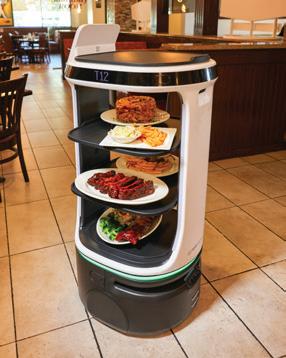
• Employee satisfaction and retention. Given the high turnover associated with the restaurant industry, Tony Roma’s deploys back-of-the-house robotics selectively, to automate tedious, repetitive tasks and reduce
employee attrition. Automation improves consistency, allows employees to focus on delivering exceptional guest experiences, and boosts employee satisfaction and retention.
Giving operators what they need
Technology is just part of Tony Roma’s growth strategy. The brand is also improving the overall franchise system, making deliberate structural changes to attract and retain franchisees. This includes prioritizing:
• Operator preference. Multi-unit franchisees want to work with category leaders with long track records and proven systems – like Tony Roma’s. We have invested in the franchisee support infrastructure: training that covers systems, technology, recipes, and operations; marketing support that includes creative and media deployment; and a team of franchise experts focused on franchisee profitability and growth.
• Real estate. The retail landscape has evolved significantly in recent years. Second-generation spaces are available in trade areas that were locked down a decade ago, and landlords are more flexible on terms than they have been previously. Tony Roma’s is reducing its footprint, moving to a smaller,
more flexible restaurant prototype. The new model is more cost-efficient to build, faster to ramp, and better suited to endcaps, conversions, and nontraditional venues like hotels. It also better accommodates and incorporate off-premise revenue channels.
• Franchise experts. Expanding a franchise brand requires specific skill sets. Tony Roma’s recognizes this, and has galvanized the top franchise experts to help guide this expansion. This includes engaging Calvin Golden, who helped Wingstop developed their foundational franchise program and sell the first 12 Wingstop Restaurants. Brand leadership is working collaboratively with experts in legal, structural, and operational design, as well as technology and growth strategy. Each expert brings deep, specific expertise to help build and scale Tony Roma’s franchise system. Drawing on experience working with other successful restaurant franchise brands, these experts are implementing best practices to drive Tony Roma’s U.S. expansion.
attracting a new Generation of Franchisees
Tony Roma’s understands that today’s entrepreneurs are looking for a unique combination: the stability of established
brands combined with the efficiency of a modern operating model. Tony Roma’s is deliberately positioning in the intersection.
Tony Roma’s offers 50+ years of brand equity, combined with an integrated technology stack, a smaller and more capital-efficient footprint, a detailed playbook outlining the brand’s proven systems and infrastructure, and a strong advisory team with direct experience building successful franchise systems.
This will be a remarkable turnaround story, as Tony Roma’s rebuilds its operating model for the next decade. As we expand in the U.S., we are being deliberate about how we grow – and who we bring into the fold. We are looking for motivated multi-unit operators who understand casual dining, have the capital and operational capacity to develop multiple locations, and see the lucrative opportunities that can result from pairing a proven brand with a modernized system. We invite entrepreneurs looking for casual dining franchise opportunities to visit tonyromas.com/franchise to learn more and get in touch. v
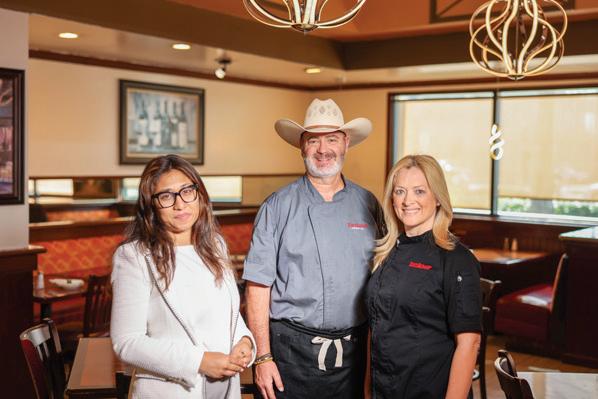
ABOVE: Mina haque is the Ceo of Tony roma’s and a practicing attorney. she is the first woman to lead the brand and is spearheading its u.s. expansion and technology-driven modernization. Franchise opportunities are available at tonyromas.com/franchise.
LEfT TOP: Carlos white is a Franchise attorney and Founder of The Impactor.
LEfT BOTTO m: Calvin golden is Co-founder of scalewise Franchise.
s ellers: gE tt IN g rEADy
FO r t HE IN tr ODUC tO ry C ALL
Business owners are busy people, so one of the first things they want to know about the selling process is the amount of time they’ll have to put into it. That’s one of the primary reasons to work with an experienced broker: they take on most of the preliminary work, allowing the owner to focus on running the business or franchise.
The highest and best use of the seller’s time after listing is keeping the business running profitably. Some owners, after making the decision to sell, tend to take their foot off the gas, letting the business slow down while they’re seeking a buyer. But the more energy they put into the company, the better their offers and terms will be from prospective buyers.
The broker’s job is to gather sufficient information from the seller upfront so that they can address most questions and requests for information from prospects on their own. That usually means a couple of hours’ worth of discovery calls with the seller, and gathering up the essential financial documentation and information a buyer will want to know. That includes information about customers, products, the company’s workforce, equipment, leases, legal agreements, and more. With this, the broker produces a CIM (Confidential Information Memorandum) that, without revealing the business’s identity, gives prospects enough data to decide about whether the company might be a fit for them.
Your broker will do their best to screen out unqualified buyers – those who don’t have the financial means to consummate a deal – and most tire-kickers. The goal is to present only serious candidates with the
Bianca Evans is a Certified Business Broker and Owner of My Florida Business Broker. She has facilitated more than 200 business transactions since 2006 and holds multiple industry designations, including Certified Business Intermediary (CBI), Certified M&A Professional (CM&AP), and Board Certified Intermediary (BCI). Bianca specializes in helping business owners prepare for successful exits through strategic planning, valuation insight, and disciplined deal execution.
financial means and intent to close the deal in a reasonable amount of time.
The number of qualified prospective buyers varies widely with the industry and size of the business, of course. In my experience, if the Seller’s Discretionary Earnings (SDE) is less than $300,000, there will be just a few qualified buyers who express interest. In a much larger company, there may be a couple dozen inquiries to field. Sometimes, when there are a significant number of prospects, the broker will ask for an Indication of Interest letter, a preliminary, non-binding document from a potential buyer. It’s a step beyond a casual expression of interest but less formal and committed than a Letter of Intent (LOI).
Your broker will help manage your
time and resources, so you only have to deal directly with serious and qualified prospects. You’ll meet them virtually or by phone so you know you’re a good fit before you schedule an in-person visit to the business. There will inevitably be some back-and-forth communication and requests for clarification during the discovery period, but your broker will make sure you’re only responding to questions that are material to the negotiation process.
Selling your business or franchise is a complex process, but working with an experienced and professional business broker can make the process much quicker, easier, and more stress-free. v
w hy h ome s ervice f ranchises s tand o ut in 2026 longer h ome ownership i s d riving g rowth in h ome s ervice f ranchises c indy s heller, wanda h oegren & daniel m cc arty ‘s
w hy commercial work i s the n ext f rontier for r esidential f ranchise n etworks
Expert Advice
34 Chris Conner: Longer homeownership is driving growth in home service Franchises
46 Corey Bennish: Why home service Franchises stand Out in 2026
Daniel McCarty: Founder and cEO of Junkstart
Cindy Sheller: caring senior service
Wanda Hoegren: President of gotcha covered
Have Your Say
40 Lime Painting: LiME Painting shares the Most Effective Paint Upgrades for Maximizing Property Value
50 Restoration 1 Kevin Rychel: scaling smart: how home service Franchisees are raising the bar during their busiest seasons is a Winning growth strategy
Franchisor in Depth
36 Weed Man: From Operator to cEO: how Jennifer Lemcke is Leading Weed Man into its next Era
42 Ideal Sidings: Why commercial Work is the next Frontier for residential Franchise networks
48 Grant Carter: Floor Coverings International continuous training to build a competitive Edge: the importance of hands-On Learning in home services
Franchisee in Action
54 76 Fence:
Local Entrepreneurs Expand 76 FEncE in greater cincinnati with two-territory Launch
Homeowners are staying put longer than they once did — and that shift is creating new opportunities across the home services franchise sector.
According to Redfin, the average U.S. homeowner now stays in their home for roughly 12 years, nearly double the average tenure in 2005. As homeowners remain in place longer, many are placing greater emphasis on maintaining, protecting, and upgrading their properties rather than preparing them for resale.
At the same time, rising property values have left many homeowners with significantly more equity at their disposal. According to Intercontinental Exchange’s
August 2025 Mortgage Monitor report, U.S. homeowners held a record $17.8 trillion in home equity in the second quarter of 2025, with roughly $11.6 trillion considered accessible for borrowing while maintaining a 20% equity buffer.
For franchise operators, those trends are helping fuel demand for essential home services — particularly businesses tied to maintenance, infrastructure, inspections, and preventative care. From sewer and drain maintenance to pest control and diagnostic inspection services, homeowners are increasingly treating these services not as optional expenses, but as long-term investments in protecting their homes and avoiding larger repair costs down the road.
the shift to Proactive care
For years, many homeowners approached maintenance reactively, waiting until a problem became impossible to ignore before calling a professional. Overflowing toilets caused by clogged lines, backedup kitchen drains, water intrusion tied to drainage issues, hidden sewer line damage, and termite infestations are often problems that develop gradually before turning into expensive emergencies.
Today, that mindset is beginning to shift. As homeowners remain in their properties longer, many are becoming more proactive about protecting critical home systems and addressing maintenance concerns before they escalate into major repairs. Preventative care — once viewed as
optional — is increasingly becoming part of long-term homeownership.
the rise of the specialized service
That shift is creating more opportunities across several specialized home service categories. Econo Sewer & Drain, for example, focuses on sewer, drain, and infrastructure maintenance services for both residential and commercial properties. The company provides services ranging from septic line clearing and main sewer line cleaning to drain maintenance, gutter cleaning, hydro jetting, and sewer inspections. Many of those services also create recurring maintenance opportunities, particularly for septic systems that require periodic pumping and preventative servicing.
At the same time, Sewer Scope reflects the growing demand for diagnostic and inspection-based services within both the homeownership and real estate sectors. Rather than responding after a major failure occurs, homeowners and homebuyers are increasingly investing in sewer scope inspections to identify hidden issues before purchasing a property or before costly repairs become necessary.
As infrastructure ages across many U.S. housing markets —with an average median age of around 44 years old according to Harvard Joint Center for Housing Studies — preventative inspection services are becoming more common during both home transactions and ongoing property maintenance.
For brands like Sewer Scope, the home-office-based model also provides operational flexibility for franchisees while allowing them to build referral relationships with real estate agents, home inspectors, and homebuyers. Because many sewer line issues remain hidden underground until significant damage occurs, sewer scope inspections can provide buyers with valuable insight before closing on a property, helping them avoid unexpected repair costs while positioning franchise operators as trusted specialists within the home buying process.
Chris Conner has worked in the franchise development industry for almost 20 years and helped over 600 brands franchise their brand and develop franchise distribution channels. He founded Franchise Marketing Systems in 2009, which now includes a team of 27 franchise consultants based in and Canada and supports brands around the world to grow and scale through franchise expansion.
Visit www.fmsfranchise.com for more information
In addition to recurring demand, many of these home service concepts appeal to entrepreneurs because of their operational flexibility and mobile business structure. Unlike traditional retail or restaurant franchises, brands like Econo Sewer & Drain, Sewer Scope, and Cedar Pest Control typically operate without large storefront footprints or extensive product inventory requirements. Instead, franchisees can scale operations gradually through service vehicles, technician hiring, territory expansion, and recurring customer relationships.
Home service concept flexibility can also include emergency and 24/7 service opportunities, allowing operators to respond to urgent customer needs while building scalable service-based businesses over time. Similar operational efficiencies exist across inspection and pest control models, where streamlined staffing structures and route-based service systems can support long-term growth without many of the overhead challenges associated with traditional brick-and-mortar concepts.
Prevention- based services can boost recurring
revenue
The collective move towards preventative property maintenance is also working in favor of pest control services.
Cedar Pest Control operates within a category increasingly tied to long-term home protection, recurring customer relationships, and year-round service demand. Rather than waiting for infestations or structural damage to occur, many homeowners are incorporating routine pest management into their broader approach to protecting property value and maintaining healthier living environments.
Together, these brands reflect a larger evolution taking place across the home services sector — one where homeowners are prioritizing ongoing maintenance, early detection, and preventative care over costly emergency repairs. For franchise operators, this means more opportunities in specialized service categories built around recurring demand and essential homeowner needs.
opportunity is Knocking
As homeowners continue investing in preventative maintenance and long-term property protection, specialized home service franchises are well positioned throughout both residential and commercial markets. These essential-service categories continue to attract entrepreneurs seeking scalable, mobile, recurring-revenue business models tied to ongoing consumer needs rather than discretionary spending.
Franchise Marketing Systems works with a range of emerging and established franchise brands within the home services sector, helping entrepreneurs identify franchise opportunities aligned with today’s evolving homeowner trends. With experience supporting more than 1,500 franchise systems and franchise owners, the company provides franchise development, marketing, and strategic growth support across a wide range of industries.
To learn more about franchise opportunities in the home services sector, visit www.fmsfranchise.com or contact Chris Conner at chris.conner@fmsfranchise.com.
From o perator to ceo:
h
ow JenniFer lemcke is leading
w eed m an into its n ext e ra
Long before Jennifer Lemcke was leading Weed Man, she was learning the lawn care business from the ground up.
Her journey with the Canada-based franchise began 40 years ago, when her father, Roger Mongeon, purchased a singleterritory Weed Man franchise in 1986. Within a decade, Mongeon had grown into the brand’s largest multi-unit operator, and Lemcke began to gain valuable experience as a franchisee within the system.
In 1996, her father’s company acquired the rights to expand Weed Man into the United States, and Lemcke joined the operation to help lead the brand’s U.S. growth. In 2018, they purchased the worldwide rights to Weed Man. By 2020, Lemcke had stepped into the CEO role, bringing with her the rare perspective of someone who had experienced the business from nearly every angle: employee, franchisee and now franchisor.
Since then, Weed Man has grown from
$173 million to over $426 million in systemwide sales and counting. Lemcke is now leading the brand toward an even larger goal: becoming a $1 billion company that sets the standard for excellence in lawn care.
leading with boots-on-theGround roots
Throughout her career, Lemcke has worked across nearly every part of the Weed Man system, from marketing and administration to field operations. She’s experienced the business from both the franchisee and franchisor sides. That range of knowledge shaped the way she leads today, giving her a practical understanding of the decisions, challenges and day-to-day realities that exist at both the local and systemwide level.
That perspective is also reflected across
Weed Man’s head office where most team members have firsthand experience working at the franchise level. As the brand has grown, that operational background has helped shape a support model rooted in real-world experience and a shared understanding of the business.
Lemcke’s philosophy is grounded in servant leadership and the belief that growth at the franchisor level is only possible when franchisees are positioned to grow at the unit level. As Weed Man continues to scale, franchisee success remains the central focus, and investing in the people behind the brand serves as the foundation for its next chapter.
scaling a legacy brand with a clear Vision
Scaling with purpose has always been central to Lemcke’s vision for Weed Man.
Early in her career, she saw firsthand what strategic growth could look like at the unit level, growing her Ottawa franchise from $240,000 upon acquiring it to over $2 million over the course of six years. She carried that same growth mindset into Weed Man’s U.S. launch and later into her leadership of the broader system. Today, Weed Man has become the fastest-growing franchised lawn care company in North America, with nearly 1,000 territories across the US and Canada.
That systemwide growth has been driven in part by strategic mergers and acquisitions, which have helped create larger, more robust franchise groups capable of delivering consistent service and operational excellence across markets. The brand has also made significant investments in operational support, marketing and technology, all designed to help franchisees scale while maintaining the brand’s reputation for high-quality service.
At the unit-level, that growth mindset is reinforced through a culture of friendly competition. When franchisees can see where they stand, how other markets are performing and what is possible within the system, it creates motivation and accountability. That culture of “keeping score” helps owners continue improving while reinforcing the shared pursuit of excellence across the brand.
Lemcke’s overarching vision is for Weed Man to become a $1 billion company. But even as the brand grows, the philosophy behind the business remains simple: every call, every visit, and every conversation starts with one person, one truck and a commitment to providing exceptional care.
Modernizing without losing the culture
For a service brand founded in 1970, modernization is essential. Customer expectations have changed, marketing has evolved and technology is reshaping how service businesses operate. Legacy brands like Weed Man face the challenge of adapting to those changes while preserving the relationships and values that have defined the brand for decades.
Under Lemcke’s leadership, Weed Man is undergoing a period of digital transformation. The company is standardizing how it does business, transforming its technologies and modernizing its data so it can stay competitive across digital and traditional marketing, technology, automation and AI. That type of transformation can be challenging in any franchise system, particularly one with a long history and a deeply established culture. For Lemcke, the key is making sure change is always tied back to franchisee success. New systems, tools and processes are not introduced simply for the sake of modernization, but to help owners operate more efficiently, serve customers more effectively and build stronger businesses.
Even as Weed Man expands, the system remains a tight-knit network. Franchisees support one another, celebrate wins together and share knowledge across markets. That culture has become a competitive advantage, helping the brand maintain alignment through periods of growth and change.
widening the Path for Future leaders
Lemcke’s leadership has also been shaped by her experience as a woman in a historically male-dominated industry.
Early in her career, she was often the only woman in the room. Even as she rose from committee member to board member to executive leadership, she encountered moments where she was delegated administrative tasks rather than immediately recognized as a strategic voice.
Instead of allowing those experiences to limit her, Lemcke used them as motivation. Her father advised her to listen closely, identify gaps and become the person who could solve them. That advice became a cornerstone of her leadership style today.
Today, Lemcke is proud to see more women emerging across the green industry and within the Weed Man system, including franchise owners, employees, corporate leaders and lawn technicians. Her own path from operator to CEO demonstrates what is possible when experience, persistence and opportunity intersect.
For Lemcke, the path forward is about honoring Weed Man’s legacy while building the infrastructure needed for its next era. Her journey reflects the same principle guiding Weed Man’s growth today: sustainable success starts with people who understand the work, believe in the vision and are committed to building something lasting together. v
daniel mccarty Founder and CEO of JunkStart with
Daniel McCarty is the founder and CEO of JunkStart, the first and only pay-by-weight junk removal company in the United States.
Based in San Antonio, Texas, JunkStart is redefining the junk removal industry through transparent pricing, onboard weighing technology, and a franchise growth strategy focused on operational excellence and long-term value creation. Since launching in 2023, the company has expanded rapidly and recently signed its first franchise partner in Omaha, Nebraska as it begins expanding nationally.
what was your background before starting the business?
I grew up in a very entrepreneurial family and got to see firsthand what successful long-term family businesses look like. My
family has been involved in industries like aggregate mining, ready-mix concrete, and waste disposal, and we still own and operate a landfill in the San Antonio market today.
Because of that background, I developed a deep understanding of the waste industry from an early age and learned a lot about operations, customer service, and longterm ownership. That exposure ultimately led me to starting JunkStart after identifying a major gap in the market and an opportunity to innovate in an industry that hadn’t changed much in decades.
when did you launch the company and what stage of growth are you at today?
We launched JunkStart in early 2023, so we’re now a little over three years into building the company. Since then, we’ve grown significantly in the San Antonio
market, expanded our fleet, and built a strong corporate operation around our payby-weight model.
Today, we’ve essentially created a new category within junk removal as the first and only pay-by-weight junk removal company in the country. We recently signed and are launching our first franchisee in Omaha, which is a major milestone for us.
We still feel early, but there’s a lot of momentum behind the brand right now, and we’re excited about the opportunity to scale nationally over the coming years.
what
made you decide to enter the junk removal industry and did you always want to build a franchise brand?
After selling a couple of businesses around 2020 and 2021, I spent time evaluating what I wanted to do next. I ultimately decided I wanted to build something from scratch that was large enough and scalable enough to dedicate the next 20 or 30 years of my life to.
I’ve always been fascinated by franchising and the franchisor model specifically. I love the idea of building a great operating system, constantly testing and improving it, and then partnering with other entrepreneurs to go execute it in their local markets.
From the beginning, I knew I wanted JunkStart to become a franchise brand. Originally, we launched with a fairly traditional model similar to everyone else in the industry. But over time, we realized there was a much bigger opportunity to completely rethink pricing and transparency. That ultimately led us to becoming the first and only pay-by-weight junk removal company in the country.
your company uses a weightbased pricing system instead of the traditional model. what inspired that approach?
A big part of the inspiration came from the operational challenges of the traditional volume-based model.
Early on, we operated similarly to most junk removal companies. That meant our crews not only had to handle the physical work and customer service, but they also
had to become onsite salespeople. Pricing could vary dramatically depending on the employee, the customer, or the situation.
As we grew, I realized that model was difficult to scale well operationally because there were simply too many subjective variables involved.
The breakthrough came when we stepped back and asked a simple question: if disposal is already charged by weight at the landfill, why shouldn’t pricing for the customer work the same way?
That led us to develop our onboard weighing system and become the first and only pay-by-weight junk removal company in the country. The result has been a much more transparent customer experience, a more scalable operating model, and significantly better operational consistency across the business.
what competitive advantages do you believe your business has in the marketplace?
The biggest advantage is differentiation. We are the first and only pay-by-weight junk removal company in the country, with patent-pending technology around our onboard weighing systems.
We can openly explain to customers that the traditional model is often inconsistent and subjective, and instead offer a pricing system that’s transparent, measurable, and based on actual weight. Customers immediately understand the concept because paying by actual weight simply feels more fair and intuitive.
Another major advantage is operational efficiency. Because we charge by weight rather than volume, our truck beds have continued getting larger over time. Our goal is to maximize productive capacity before our crews have to stop and drive across town to dump.
Our model aligns incentives much better for both the customer and the business. Customers get transparent pricing, and we get a more scalable and operationally efficient system.
what has surprised you the most about growing from a local operation into a franchise system?
What surprised me most is probably the
range in quality across franchising as an industry.
There are some truly exceptional franchisors that create enormous value for their franchisees through systems, support, leadership, and operational excellence. At the same time, I’ve also seen concepts where, candidly, I don’t think they should have been franchised in the first place.
That contrast has reinforced how important it is for us to build the right way. We want to create a system that genuinely helps franchisees win by providing real operational support, a strong playbook, differentiated marketing, and a business model that creates value in local communities.
The best franchise systems are much more than a brand name or a licensing model. They’re real operating platforms that help entrepreneurs succeed faster and with less risk than they could on their own.
what qualities do you look for in franchise owners running the brand?
One of our core internal phrases is “hilltakers.” We want franchise partners who see an opportunity, see a hill worth taking, and want to go become the number one operator in their market.
We’re looking for ambitious people who want to scale, lead teams, serve customers well, and build something meaningful over time.
Beyond ambition, we look for highagency people with integrity, resilience, and accountability. Ultimately, we’re looking for people who are competitive, dependable, growth-oriented, and excited by the challenge of building a great business the right way.
what kind of training and support do franchisees receive?
We’re extremely focused on building a strong support system for our franchise partners.
That starts with initial training, operational playbooks, systems, and ongoing coaching around how to run a high-performing business. We want franchisees to have a very clear roadmap rather than having to figure everything out from scratch.
One major differentiator for us is our
centralized revenue and customer support infrastructure. We also provide marketing support including websites, local SEO, digital advertising guidance, and vetted marketing partners to help franchisees grow efficiently.
Commercial and recurring B2B accounts now represent over 50% of our business, so commercial sales is another major focus for us. Our goal is to provide franchisees with real operational leverage and revenue-driving support so they can focus on execution and growth in their local markets.
what has been your approach to building customer trust and brand awareness?
For us, customer trust starts with the business model itself.
When we shifted to pay-by-weight pricing, we intentionally positioned ourselves as a challenger brand. We openly explain how traditional volume-based pricing works and why we believe a transparent pay-byweight system is better for the customer.
Our messaging is built around being fair, fast, and easy. We want customers to immediately understand what makes us different and why that difference benefits them.
So building trust has really been a combination of transparent pricing, differentiated branding, operational execution, and consistently trying to do right by the customer.
what have been some of your biggest lessons learned so far as an emerging franchisor?
One of the biggest lessons has been realizing that building a truly great brand is possible if you stay disciplined and execute consistently over a long period of time.
I’ve also learned that building a business takes significantly more time, money, and effort than almost anyone expects. Everything takes longer. Everything is harder. But that’s also what makes it rewarding.
At this stage, I’m incredibly optimistic about what we’re building. We have a differentiated model, strong positioning, talented people, and a business that resonates with customers. v
lime painting s hares the m ost eFFective paint u pgrades For m aximizing property value
home improvements for sellers and value-focused owners alike. According to Open Door, exterior painting can increase a home’s value by 2% to 5%, while professional paint work often yields some of the highest returns on investment of any improvement project (sometimes exceeding 100% ROI.)
“Every homeowner wants to maximize the value of their property, whether they’re preparing to sell or simply investing in its long-term appeal.” said Nick Lopez, Founder and CEO of LIME Painting. “A well-executed painting and refinishing job not only elevates the look of a home, but it also signals to buyers that the property has been thoughtfully cared for and maintained.”
LIME Painting recommends the following expert strategies for increasing home value:
• High-Quality Exterior Painting — A fresh, professionally applied exterior paint job instantly revitalizes a home’s facade, protects it from weather and wear, and strengthens curb appeal. A key factor in buyer interest and offers.
• Cabinet Refinishing & Painting — Refreshing kitchen and bathroom cabinetry with premium paints and finishes provides a modern, updated feel without the expense of a full renovation, delivering strong ROI.
• Stucco & Masonry Painting and Sealing — Painting and sealing exterior stucco, brick, and stone surfaces enhances visual appeal while adding protective benefits that can reduce maintenance costs over time.
boosting commercial Property Value
As homeowners across the country seek impactful ways to boost their property’s market value, LIME Painting, the nation’s premier painting and restoration franchise, is sharing expert guidance on how targeted painting upgrades can significantly enhance curb appeal and resale potential.
With a focus on high-quality residential painting and a strong commitment to craftsmanship and customer satisfaction, LIME Painting helps homeowners enhance curb appeal and protect long-term property value.
boosting residential Property Value
Industry research shows that professional paint projects are among the most effective
Painting is one of the most cost-effective ways to increase a home’s sale price, with the National Association of Realtors estimating that interior painting offers up to a 107% return on investment (ROI). A fresh, neutral paint job helps a home appear well cared for and move in ready, which can draw in more buyers and potentially increase the final sale price by as much as 5–10%.
“Business owners often underestimate how much their physical environment
impacts customer behavior and sales,” said Nick Lopez, Founder and CEO of LIME Painting. “By investing in professional painting, refinishing, and design enhancements, businesses can not only elevate their aesthetic but also create a space that builds trust, engagement, and long-term loyalty.”
LIME Painting recommends the following expert strategies for businesses looking to revamp their presence and drive revenue:
• Exterior and Facade Upgrades — A fresh, high-quality exterior paint job immediately elevates curb appeal, attracts new customers, and signals professionalism and care.
• Interior Color Refreshes & Brand Alignment — Updating interior walls, accent features, and signage colors in line with brand identity creates a cohesive, inviting space that enhances customer experience.
• Specialty Surface Refinishing — Refinishing counters, cabinetry, and other high-touch surfaces improves aesthetics and longevity, ensuring a modern, welcoming environment without costly full renovations.
• Surface Protection & Longevity Solutions — Applying premium coatings and sealants protects surfaces from wear and tear, maintaining a polished look that supports long-term business credibility.
High-Quality Paint to Match a High-Quality Job
When it comes to boosting property value, what your paint is made of is just as important as what it looks like. Using eco-friendly paint can help a commercial or residential space sell for more, or at least faster, by appealing to modern buyers who prioritize health, sustainability, and “turnkey” properties. While painting in general can increase a home’s value,
utilizing low-VOC (Volatile Organic Compound) or zero-VOC paint provides a competitive edge in eco-conscious markets.
As such, LIME Painting is leading the way with sustainable paints and coatings that reduce energy costs, improve indoor air quality, and deliver the quality finishes homeowners expect:
• Low- and zero-VOC paints that reduce harmful emissions and protect indoor air quality.
• Greenguard Gold Certified coatings that meet rigorous standards for safety and sustainability.
• Air purifying paints that help capture VOCs and eliminate common household odors.
• EPA-registered antimicrobial paints that inhibit bacteria and mold growth on painted surfaces.
• LEED-compliant products that contribute to more sustainable construction and design.
Beyond these core services, LIME Painting’s expertise in color consulting, surface preparation, and premium coating systems along with 40+ additional specialized services ensures lasting results that appeal to today’s discerning buyers.
After discovering his passion for home improvement while owning his first painting LLC, Nick Lopez founded LIME Painting in 2013 to set the standard of excellence in painting luxury residential and commercial properties. Five years later, he put his perfected business model to the test and began franchising to provide high-quality interior and exterior painting, coating, and other restoration services to maintain the aesthetic and integrity of luxury properties across the country. LIME Painting currently serves luxury home and business owners in all 90+ locations in 21+ states.
For more information, go to https://limepainting.com/.
why commercial work i s the next Frontier For r esidential Franchise networks
Franchise networks grow in stages. The first is local: you prove the model in one market, refine it, and replicate. The second is geographic: you expand into new regions, recruit operators, and build the operational depth to support them. The third stage is less talked about but increasingly common across home services franchising. It is the moment when demand starts pulling your franchisees into newer project categories.
For our network, that moment arrived sooner than expected. Ideal Siding was built as a residential renovation franchise, and for most of our history that has been the lane. Our owners work directly with homeowners and execute with a standardized playbook that has helped us scale to more than 95 locations across the
United States and Canada. Over the past few years, however, our franchisees have been receiving inquiries from a different kind of customer: general contractors managing townhome developments, property managers overseeing multi-family complexes, and commercial owners with mid-sized buildings due for re-siding.
Those opportunities were difficult to ignore. They were also difficult to execute without a different kind of support.
commercial work is not a bigger Version of residential
There is a common assumption inside home services that commercial projects are simply larger residential jobs. They are not. The work itself, the materials, the crews, the techniques, those translate. Everything that surrounds the work does not.
A residential project begins with a homeowner, a quote, and a contract that fits on a few pages. A commercial project begins with a set of architectural drawings, a request for proposal, a scope of work
written by someone other than the buyer, and a more robust contract. The estimator needs to read the drawings correctly. The proposal needs to be structured in a format the contractor expects. The franchisee needs to coordinate with general contractors, property managers, architects, and sometimes municipal permitting offices simultaneously.
The risk profile is also different. A misread on residential pricing is usually recoverable. A misread on commercial pricing, applied across an 18-unit complex, is not.
That gap, between the operational competence our franchisees already have and the procurement environment commercial work demands, was the problem we set out to solve.
building operational infrastructure, not a Marketing layer
We recently launched our Commercial Support Program designed specifically
to close that gap. We approached it as operational infrastructure for the network, structured around four areas of support.
The first is pipeline development. We help franchisees identify and build relationships with general contractors and property managers in their territories, including introductions to bidding opportunities they would not have access to alone.
The second is pre-construction support. Our team works alongside our franchisees to review construction documents, develop accurate estimates, and structure proposals in the formats commercial buyers expect.
The third is contract and risk navigation. We provide guidance on contract review, permit coordination, documentation
requirements, and determining whether a commercial project is profitable and what the risk level associated with it is.
The fourth is a centralized framework. Previously, commercial work in our network was handled case-by-case, which meant every franchisee was effectively reinventing the wheel. Our new program standardizes the approach so that knowledge gained in one market becomes accessible to operators in every market.
Local ownership and accountability remain central to our model. The program adds the back-office capability that surrounds that local expertise, so commercial scope becomes a realistic option for operators who want to pursue it.
early results in the Field
The first projects under the program are already in motion. In Texas, franchisee Aaron Lay is leading an approximately $800,000 siding replacement on an 18-unit apartment complex, a project significantly larger than anything in his original residential pipeline. In Hamilton, Ontario, a franchisee recently completed a $500,000 commercial project. Several additional projects are progressing across markets in the United States and Canada.
Aaron's reflection on the experience captured something we hear consistently from franchisees who have entered the program: a project of this scale comes with a lot of moving parts, and having support with estimating, proposals, and contract details lets the operator stay focused on execution. That is the outcome the program was designed to produce.
what this Means for Franchisors looking ahead
For franchisors operating in mature or maturing systems, demand will often expand before the support model does. Franchisees do not encounter commercial opportunities because the brand decided to enter that space. They encounter them because their reputation, their relationships, and their visibility in the market grow with time.
The question is whether the franchisor responds to that demand by leaving operators to figure it out individually, or by building infrastructure that converts a category of work into a repeatable capability across the system.
Commercial work is a natural evolution for any residential franchise that has reached real network density. The systems that benefit will be the ones that treat that evolution as an operational project, with the same rigor applied to documentation, pricing discipline, and risk management that the original residential model required. For our network, the months ahead will be about scaling the program responsibly: onboarding more franchisees, refining the documentation, and building case studies that help operators understand what commercial work actually looks like inside their territory. v
with
cindy sheller
o wner of caring senior service of tucson, arizona; caring senior service of dallas northwest; caring senior service of dallas mid- cities; and caring senior service of las vegas
what initially drew you to senior care, and how did that passion influence your decision to invest in this type of business?
I’ve been in the healthcare field in some capacity since 1994 and specifically in home healthcare since 2004. My passion for senior care was shaped both by personal experiences with family members and my professional background.
Over time, I realized I wanted to be in the driver’s seat as an owner, not an employee. I also saw a growing gap in how care was being delivered and managed day to day. With the increasing global demand for senior care, I saw an opportunity to build something more strategic, compassionate
and scalable that would allow me to serve more seniors in my community and beyond.
you operate across multiple states. what made you confident in scaling your business beyond a single market?
My confidence in scaling came from having proven operational systems, strong IT infrastructure and diversified revenue streams that help mitigate regional risk. I also knew that our model was highly replicable—from training and marketing to care delivery—which allows us to maintain a consistent client experience across markets.
As a leader, I’ve been intentional about building teams and leveraging both technology and existing staff to support growth, whether remotely or in person.
Many professionals today are rethinking traditional career paths. what advice would you offer them?
In many traditional professional settings, success is measured by efficiency and profit. In home care, the shift is that our “product” is serving people. If you lead with a genuine passion for serving others, the financial results will follow. If profit is the only focus, you may encounter challenges that can’t be solved through traditional business thinking alone.
How do you balance building a successful business while staying focused on purpose and impact in the communities you serve?
In home care, there is always a balance between profitability and purpose. If you focus only on the numbers, your culture will suffer. If you focus only on the “heart,” you won’t have the margins to sustain your mission.
Your caregivers and staff are your most valuable asset, so how you hire,
compensate, support and lead them directly impacts both your culture and the quality of care delivered. That’s why it’s equally important to measure both the human side and the business side of caregiving.
Tracking both hard and soft KPIs provides the operational insight needed to make informed decisions and pivot when necessary, ensuring you can grow sustainably while still delivering a quality service.
what
are some of the biggest misconceptions about investing in a people-first business like senior care?
One common misconception is that you need to be a healthcare professional to own a senior care business. In reality, many successful and compassionate owners come from non-healthcare backgrounds. The key is strong leadership, marketing and relationship-building skills.
Another misconception is market saturation. While there may be many providers, the market is still underserved when it comes to high-quality, compassionate care. Demand continues to outpace the supply of excellent providers, and that need is expected to grow significantly over the next decade.
There’s also a belief that massive capital is required. While adequate capitalization is important—especially in a franchise system—it is possible to start and scale with disciplined investment and strong execution.
Finally, some assume the industry is behind technologically. In reality, senior care is rapidly evolving, with technology and AI playing an increasing role in both operations and care delivery.
can you share a moment in your career that reinforced why meaningful work matters just
as much as financial success?
A defining moment for me was the
passing of my husband in 2022. It was an incredibly difficult time, and my youngest son was just 14. In that moment, I realized how important it was to be connected to meaningful work.
If I hadn’t built a business I truly believed in, I likely would have stepped away. Instead, the purpose behind what we do gave me a reason to continue. I was also deeply supported by my family and the Caring Senior Service community, who stepped in to help both personally and professionally. That experience reinforced for me that success isn’t just financial; it’s about impact, purpose and the people around you.
looking ahead, how do you see demand for senior care and values-based business ownership continuing to evolve?
The demand for senior care will continue to grow significantly. Today, approximately 90% of seniors prefer to age in place at home, and the first Baby Boomers turn 80 in 2026.
We’re also seeing a shift toward more value-based, high-precision care models. Higher-acuity care in the home is expected to increase substantially, while the availability of family caregivers is not keeping pace. Private pay is becoming more common as families seek more personalized and immediate care solutions. But organizations with strong values and purpose will have a competitive advantage, particularly in recruiting and retaining caregivers. A values-driven culture attracts higher-quality talent, which ultimately supports sustainable growth.
Finally, technology will also play a major role, driving efficiency in operations and enhancing care delivery. v
why h ome s ervice Franchises s tand o ut in 2026
The home services sector entered 2026 against a backdrop of continued financial pressure for many consumers, from higher everyday expenses like gas and groceries to broader economic uncertainty. While discretionary and trend-driven spending has softened in some categories, one area where consumers continue to prioritize spending is essential home services. Demand has remained steady as homeowners continue investing in the services that support the safety, comfort, and function of their homes and daily lives.
What makes this category especially compelling is that it isn’t built on fleeting trends. It’s grounded in durable consumer needs and supported by long-term behavioral shifts. As expectations and technology evolve, including the rise of AI becoming embedded in everyday experiences, the brands that invest in innovation, training and consumer experience are positioned to lead the next era of growth.
I believe there are several forces shaping the category and that will define the top home-service franchises to own in 2026 and beyond:
Home services are backed by Market Dynamics and consumer behavior shifts
The strength of home-service franchising today is rooted in several macro-
economic conditions that are reshaping how Americans think about their homes. An aging housing stock, slower newconstruction starts and higher interest rates compared to recent years mean homeowners are staying in their properties longer. As a result, they are more willing to reinvest in comfort, efficiency and functionality rather than entering a challenging housing market.
When combined with these market dynamics, the ongoing shift from a “do it myself” mindset to a “do it for me” society becomes even more powerful. Consumers are increasingly trading money for time and expertise, outsourcing household projects and specialized tasks so they can focus on income-earning potential or reclaim personal time. That shift is accelerating across every demographic. This behavior change increasingly favors home services that are tied to the functionality, maintenance, and daily use of the home. Categories such as window coverings, kitchen and bath remodeling, garage and closet organization, restoration, housecleaning, and pet care are becoming essential components of how consumers invest in their living environments and care for their families and pets. Home Franchise Concepts is strategically positioned within high-use areas of the home and service categories that tend to be less exposed to
seasonality, discretionary retail trends, or broader economic cyclicality, supporting more durable and consistent consumer demand over time.
In challenging economic times, consumers may adjust the size or timing of projects, but the underlying need remains. Homes still require updates to remain functional, efficient and enjoyable. That’s why home-service franchising continues to outperform categories that rely more heavily on discretionary spending or trenddriven consumer behavior.
why Home services continue to see steady consumer Demand
While many trend-driven and retail-facing concepts can be highly sensitive to swings in consumer confidence, the home services sector has demonstrated comparatively steadier demand, likely attributable to three stabilizing forces.
First, many of these services are driven by essential, needs-based demand. When a pipe bursts or a pet needs grooming, consumers don’t typically delay those purchases. These services are tied to the ongoing maintenance, functionality, and care of the home and family.
Second is recurring and long-term value. Homeowners continually invest in
Corey Benish joined Home Franchise Conceptis in 2025 with the focus on growing and innovating our family of brands. He came to Home Franchise Concepts from our parent company, JM Family Enterprises, where he held several positions since 2022. He has a Bachelor of Arts degree in business from Concordia College and attended the Executive Education program at Columbia Business School.
comfort, efficiency and aesthetics. Window coverings, kitchen and bath updates, and garage or closet improvements all contribute to long-term home enjoyment. Lastly, home services have historically remained relatively stable through periods of economic uncertainty because many projects and repairs are difficult for homeowners to defer indefinitely. While consumers may become more selective, delay larger projects, or look for ways to manage costs, they continue prioritizing the maintenance and upkeep necessary to support their homes and overall homeownership experience.
This combination creates a level of stability and performance that trend-driven concepts simply can’t replicate.
consumer e xpectations are evolving. this is How strong brands are responding
Today’s consumer expects home projects to be easier, more transparent and more personalized. They want the ability to book, visualize and manage their services digitally. They want clarity in pricing and confidence in the experience.
Across the Home Franchise Concepts portfolio, we’re innovating to meet those expectations, starting with the products and services themselves. In categories like window coverings, we’re expanding into outdoor living solutions as homeowners extend their indoor comforts outside. In kitchens, baths, garages and closets, we’re broadening offerings to support the way people use their homes every day. These expansions strengthen the value proposition for franchisees and deepen the relevance of our brands in high-use areas of the home.
At the same time, AI is becoming embedded in every part of the consumer journey, shaping how homeowners discover, evaluate and purchase home services. It’s not a standalone initiative, it’s becoming a way of working.
We’re working to integrate AI-powered visualization and quoting tools that allow consumers to see their project before they commit tolevating the buying experience and improve closing rates. We’re also using AI to develop richer, more targeted marketing content that helps franchisees reach the right consumer with the right
message. And we’re leveraging AI for realtime sales coaching, giving franchisees timely insights and suggestions during the sales process to improve performance in the moment.
These investments in product expansion, consumer experience and embedded technology are designed to help franchisees operate more efficiently, present more compelling options and convert interest into revenue.
what Makes Home service
Franchises attractive for owners today and in the
Future
For first-time franchise owners, home services can offer a strong mix of operational consistency, scalability and steady consumer demand. Years of deep technical experience in the home services space is not necessary to get started because we have strong training programs and proven systems that are designed to support new franchisees.. What matters most in starting an independently owned and operated franchise business is leadership, growth-minded ownership and the ability to execute a plan. We’re looking for savvy operators who want to scale their business and grow, not just run a single territory.
The franchise owners who thrive in this category are those who embrace collaboration. They bring energy, curiosity and a willingness to innovate. They value clear playbooks, real-world feedback and the chance to help shape the future of the system. They also appreciate the stability that comes from operating in a category driven by essential needs rather than trends.
Looking ahead, the top home-service franchises will be the ones that deliver operational excellence while creating a seamless consumer experience and investing in data, training and innovation. Brands that stay aligned to real demand signals and create value for consumers, franchisees, partners and associates will offer the strongest long-term opportunities for new and experienced owners. v
continuous training to Build a competitive e dge: the i mportance o F h ands- o n learning in h ome s ervices
The home services industry has entered a new phase of growth. As demand continues to rise across commercial and residential sectors, franchisors continue to prioritize growth in an effort to capture market share and meet evolving expectations of both consumers and franchisees. But as brands scale, competition heightens, and franchisee evaluations become more critical.
Today’s franchise owners are seeking brands that they can parter with to sustain long-term growth, navigate operational complexities, and build adaptable systems.
In response, a clear white space has gained exposure as a major differentiator across home services franchising: continuous, hands-on training.
Traditionally, many franchise systems approached education primarily as a onetime onboarding event to get owners open and operational as quickly as possible. While foundational training remains crucial in opening businesses, the reality is that continuous education is necessary to keep those businesses operating.
The brands that recognize this shift and reinvest in their teams will ultimately build long-term sustainability. In building systems around ongoing coaching, immersive field experience, and network development, these brands are building more resilient franchise networks. At Floor Coverings International, we pride ourselves
on our robust training program, handing franchisees a clear roadmap to long-term operations.
the limitations to traditional training Models
The home services industry is inherently operational. From managing teams and coordinating consultations to overseeing the customer experience and driving local marketing, franchisees are simultaneously responsible for ensuring multiple systems are operating smoothly and cohesively. Yet historically, most training is structured through static classroom instruction, and while there is value in these resources, they cannot comprehensively prepare owners for the realities of running a business dayto-day.
Franchisees benefit most when they have an opportunity to see firsthand how systems should operate, apply concepts in real-time, practical settings, and receive hands-on coaching to navigate challenges. Experiential learning through ride-alongs, shadowing opportunities, mentors, and live simulations allow franchisees to develop skills faster while minimizing operational error and reinforcing consistency systemwide. Rather than learning through trial and error after opening, franchisees get a head start, opening with more confidence and operational readiness.
building well- rounded training Programs to strengthen Franchisee autonomy
Many franchisees enter the home services industry without prior experience in the space, but many skills directly translate in creating a successful franchisee. What many lack in past industry experience, they often make up for in leadership ability, strong communication skills, and passion.
A key aspect of training is creating an environment where franchisees can build operational confidence to lead their business effectively. Well-rounded training programs that go beyond teaching technical processes set all franchisees up for success, in allowing them to strengthen their skills while acquiring new ones.
continuous coaching to create long-term stability
The biggest misconception in franchise training is that it ends once a location opens. The key to sustainable franchise growth is continuous development. Market conditions, consumer behavior, and technology are constantly evolving, forcing franchisors and operators to adapt to new expectations. Building ongoing support structures aids franchisees in that evolution, so they can grow alongside the brand as a whole.
The strongest brands are the ones that treat coaching as a long-term partnership rather than an initial phase of launch.
Regular operational check-ins, transparent communication on brand standards and expectations, advanced education programs, and leadership development initiatives hold franchisees accountable for their operations, as well as motivate them to continue to grow. As operators mature, personalized coaching allows them to expand even further, without reaching a ceiling for growth.
Continuous coaching is crucial in improving franchisee retention and overall system health. When owners are constantly engaging with their brands, they are better equipped to overcome unprecedented obstacles. In the home services space where brand reputation hangs on consistency, that alignment is everything.
leveraging top Performers to scale the system
Peer-led learning has taken on a larger role in franchise training. Top-performing franchisees are becoming active participants in the development of the brand and new owners, adding credibility to brands and establishing a collaborative culture systemwide.
New franchisees are given the opportunity to learn firsthand from operators who have been in their shoes and have faced similar day-to-day challenges. Rather than operating independently, franchisees are joining a community that is focused on shared success. As the system grows, leveraging experienced operators allows franchisors to expand their support infrastructure, aiding in efficient scaling.
training as a long-term Growth strategy
As the home services sector continues to expand, the long-term differentiator between franchisors will ultimately come down to how effectively brands set franchisees up for long-term sustainability. The systems that invest in immersive learning, ongoing coaching, and collaborative development are positioning themselves to build stronger, more consistent operations and customer experiences. v
s caling s mart:
h ow h ome s ervice
Franchisees are r aising the Bar d uring their
Busiest s easons
There’s a moment every restoration franchisee knows well. The phone starts ringing before sunrise. A storm rolled through overnight, and by 8 a.m. your inbox is full, your techs are already dispatched, and three more calls are sitting in voicemail. You built this business to help people during one of the most stressful times of their lives, but ensuring that all customers are being prioritized without dropping the ball is franchisees biggest priorities.
technology that works while you sleep
One of the biggest shifts we’re seeing in high-performing locations is a move toward smarter intake systems. When service requests spike, the first thing that breaks down is triage, determining what needs to happen right now versus what can wait until tomorrow morning.
Automated intake tools solve that problem before an employee even picks up the phone. The system reads each new request, applies simple preset rules such as a burst pipe is an emergency, a clogged drain is a priority, and a routine inspection is scheduled accordingly, and the system routes the job automatically. That means your team isn’t making judgment calls at 6 p.m. on a Friday when they’re exhausted.
Paired with a clear Service Level Agreement (SLA), SLA, this becomes even more powerful. An SLA is simply a written promise: emergencies get a response within two hours, priority jobs within 24 hours, routine work within three business days. When those timelines are built into your system, every open job has a countdown clock, and managers get an alert before anything slips through the cracks. Customers know what to expect and your team knows what’s required.
Tools like call tracking software capture every incoming call and show you exactly where it came from, so no lead goes cold and no request sits in voicemails. Virtual receptionist services can handle overflow and after-hours calls, collecting details and creating a ticket. And when calls, web forms, texts, and live chats flow into a single dispatch hub, your team is working from one list instead of sifting through five different inboxes.
The result is faster response times and an
organized, calm customer experience, even on your busiest days.
building your staffing roster before you need it
If technology handles the intake, employees handle the work that makes the impact. In the home services industry, demand doesn’t arrive on a predictable schedule, it arrives when a pipe bursts in January, when a hurricane hits in August, or when spring flooding catches an entire region off guard. That surge in work requires a surge in employees, and franchisees who wait until the rush hits to start hiring are already behind.
The franchisees doing it best aren’t waiting until they’re overwhelmed with intake calls. They keep a ready list: potential seasonal hires, reliable subcontractors, and referrals from current team members. When demand picks up, they make calls. They don’t start from scratch.
They also advertise where real people actually look, such as local Facebook groups and trade school job boards. Keeping the job post simple is key: clear pay, hours, and a quick-start bonus incentive. Some owners are even moving to same-day pay, which has become a genuine competitive advantage in markets where workers have options and won’t wait two weeks to see their first paycheck.
Once they’re in the field, pairing new seasonal hires with an experienced technician for their first five to ten jobs is one of the most valuable investments you can make. That mentorship window is where real learning happens, not just the technical steps, but the judgment calls, and clear customer communication. It also gives your senior staff a sense of ownership in the quality of work being completed in the community.
Holding the standard when the schedule is Full
Here’s where a lot of franchises struggle: they scale their volume but not their quality. The calls get answered, the jobs get booked, and somewhere in the rush, standards may slip.
Restoration 1’s brand promise doesn’t come with an asterisk that says “except during busy season.” Protecting that promise as a home service franchise when you’re fully booked takes intentional systems, not good intentions.
The most effective ones are also the simplest. A one-page checklist for each job type including covering safety steps, brandrequired procedures, and a customer signoff, creates accountability without adding complexity. Requiring before-and-after photos on every job means managers can verify work remotely without riding along. Dispatching the right tech to the right job including matching skills, location, and current workload, increases first-time fix rates and reduces costly callbacks.
Adding a 30-minute buffer on complex jobs isn’t wasted time. It’s the difference between a job done right and a callback the next morning.
A manager who reviews three completed jobs per day catches problems early. A 10-minute morning huddle that surfaces yesterday’s top issues and today’s current priorities keeps the whole team aligned. Weekly SOP refreshers, even just a short video or a quick walkthrough, keep brand standards top of mind before they drift. When subcontractors or seasonal employees are assisting during the company’s busiest times, they need to be held to the same bar. Require them to use your checklists, take photos, and work within your app. Audit them regularly. Your name is on every job they touch.
the Foundation underneath it all
What separates the franchisees who scale well from those who struggle isn’t access to better tools or a larger labor pool. It’s the discipline to build real systems including clear SOPs, consistent training, and the accountability to hold both, and then actually apply them every day, on every job.
When your systems are solid, a busy season isn’t a crisis. It’s a business handled well. v
wanda hoegren President of Gotcha Covered with
If you think premium window treatments are primarily relevant to new construction, think again. Blinds, shades and other window coverings can provide value to homeowners before their move-in day and for years to follow. As such, window treatments can be an economically sound option for a franchise owner.
Wanda Hoegren, brand president for Gotcha Covered, spoke with us about the unique benefits of the window treatment industry, explaining all the ways in which the franchise model supports new or firsttime owners, even through shifting market conditions.
why do window treatment businesses see sustained demand after new housing developments are completed?
New construction creates the initial moment, but it rarely captures the full opportunity. Homeowners move in with varying priorities — privacy, light control, energy efficiency, aesthetics — and those priorities often aren't fully formed until after they've lived in the space for a while. Then life changes: remodels happen, families grow, people move again. Each of those moments is a fresh opportunity for a window treatment business.
What that means practically is that operators aren't dependent on a single transaction or a single construction cycle. Window treatments are a recurring home improvement category. Owners who build relationships and stay in front of their customers over time find that one home often becomes several rooms, and one client often becomes several referrals.
How do population growth and new residential construction drive longterm demand for window coverings?
Every new household represents multiple windows, multiple rooms, and multiple decision points, most of which unfold over months or even years, not all at once. Population growth sustains that pipeline, and the demand compounds when you factor in move-up buyers, downsizers, and investors refreshing properties for resale.
New construction sparks initial interest, but the longer-term opportunity comes from the ongoing relationships owners build within their markets. That's where the real value accumulates.
what advantages do established window treatment business models offer owners entering fastgrowing markets?
High-growth markets can create a false sense of ease. Demand seems abundant, so new operators assume they can figure
out the execution as they go. That's where gaps show up. Without established vendor relationships, pricing frameworks, and proven sales processes, even well-funded operators can struggle to convert demand into consistent revenue.
Owners who enter a proven model skip that trial-and-error phase entirely. The vendor networks are already in place, the sales and consultation process is already tested, and the marketing infrastructure is already running. That allows them to focus on building customer relationships and closing
business from day one, rather than building the foundation while trying to operate.
How do shared systems and centralized support help window treatment businesses remain stable beyond construction cycles?
Consistency is what separates businesses that perform reliably from those that rise and fall with local market conditions. Shared systems, whether that's CRM infrastructure, vendor networks, or
centralized marketing, give owners a stable operational foundation regardless of what's happening in new construction locally. Equally important, that foundation provides flexibility. Owners with the right infrastructure in place can shift attention between new construction projects, retail homeowners, and commercial opportunities without losing momentum. They're not reacting to market shifts; they're positioned to move with them.
why are window treatments considered a strong service category for first-time business owners?
A few factors make this category particularly well-suited for first-time owners. There's no retail storefront to manage, no significant inventory to carry, and the overhead profile is lean relative to the revenue potential. What you're really running is a high-ticket, consultative sales business. It’s all about working directly with homeowners to solve real problems around light, privacy, energy efficiency, and aesthetics.
That model rewards relationship-building and process discipline more than prior industry experience. Owners who follow a structured sales and consultation approach, and who stay consistent in how they show up for customers, build confidence and revenue quickly. The learning curve is real, but it's manageable, and the upside is meaningful.
How
do proven operating playbooks help window treatment owners convert new homeowners into repeat and referral customers?
The playbook eliminates guesswork at every stage, from initial consultation through installation and post-install followup. When customers have a consistent, professional experience, trust builds naturally. And trust is what drives the second call: the additional room, the next home, the referral to a neighbor or realtor.
We know from experience that the owners who invest in follow-up — seasonal check-ins, proactive outreach after installs — consistently build stronger repeat and
referral pipelines than those who treat each job as a one-time transaction. Over time, that base of repeat and referral customers becomes the most reliable part of the business.
what role does national infrastructure play in helping window treatment businesses scale efficiently at the local level?
Local traction builds faster when owners aren't starting from zero. Brand recognition, vendor relationships, technology tools, and marketing support all take years to build independently. When they're already in place, owners can direct their energy toward serving customers and growing their local presence rather than constructing the foundation.
That's the underlying logic of the franchise model done well: owners operate independently and build something that's genuinely theirs, while benefiting from infrastructure that would be costprohibitive to replicate on their own.
why are window treatment businesses viewed as a lowerrisk option during periods of economic uncertainty?
The category sits at the intersection of need and want, which is a durable place to be. When budgets tighten, homeowners tend to prioritize improvements that enhance comfort or help manage costs. Window treatments address both. Energy efficiency, light control, and privacy are practical considerations that don't disappear in a downturn.
The business model supports that resilience. Low overhead, no inventory, and a flexible cost structure mean operators can adjust to shifts in demand without carrying the weight of a high fixed-cost operation. That combination of category durability plus model flexibility is what makes this an attractive option for owners who want both stability and long-term growth potential.
Wanda Hoegren is the Brand President for Gotcha Covered, a Five Star Franchising brand.
local e ntrepreneurs e xpand
76 Fence in g reater c incinnati with t wo-territory l aunch
(May 4, 2026) CINCINNATI, OH — 76 FENCE, one of the fastest-growing fencing franchise brands in the country, is continuing its Midwest expansion with the launch of two territories in the Greater Cincinnati market under the ownership of business partners Andrew Ford and Dan Menninger.
The two-territory agreement marks the brand’s entry into the Cincinnati region and reflects continued strategic growth into strong residential markets where established neighborhoods, active real
estate activity and steady population trends drive sustained demand for professional home services.
Ford and Menninger bring complementary professional backgrounds rooted in leadership, operations, technology, and relationship management. They were drawn to the opportunity to build a scalable business and collaborate with skilled professionals across the industry to deliver a high level of service and consistency for customers.
“Cincinnati is a market we know well and believe in,” said Andrew Ford. “It’s a city built on strong neighborhoods and long-term homeownership. We saw an opportunity to introduce a more disciplined, process-driven approach to
fencing that prioritizes communication, reliability, and authenticity.”
Their decision to align with 76 FENCE was also driven by the brand’s infrastructure and growth model. “We were looking for a business with real systems behind it,” said Dan Menninger. “76 FENCE offers structured training, operational support and technology that allow us to scale thoughtfully across multiple territories. The two-territory commitment gives us room to grow while maintaining a strong local focus.”
Cincinnati’s diverse housing stock, mix of historic properties and new development, and consistent demand for privacy, safety and property enhancement make fencing an essential service category. The region’s
PhOTO (left to right): 76 fEnCE Cincinnati franchise Owners Andrew ford and Dan menninger
suburban communities in particular continue to see steady investment and renovation activity.
“Cincinnati is a strong and stable market that aligns well with our long-term expansion strategy,” said Ed Samane, president of 76 FENCE. “Dan and Andrew bring operational discipline and a clear vision for growth. Their two-territory launch is an important step as we expand our footprint into Ohio.”
The new Cincinnati territories will provide residential and commercial fencing installations supported by 76
FENCE’s proprietary systems, streamlined estimating and installation processes, and customer-first service standards. Ford and Menninger plan to focus early efforts on building installation capacity, establishing vendor relationships, and integrating into the local business community.
“Our goal is to build something sustainable,” Ford said. “We want to create a reputation in Cincinnati for doing what we say we’ll do, delivering quality work, and setting the standard for excellence.”
Community engagement will be central to their growth strategy.
“Cincinnati values relationships and trust,” said Menninger. “We intend to be active in the communities we serve and build long-term partnerships, not just complete projects.”
The Cincinnati launch continues 76 FENCE’s disciplined national expansion as the brand strengthens its presence across high-demand residential markets.
Additional updates regarding service availability and grand opening plans will be announced in the coming weeks. For more information, please visit www.76fence.com/cincinnati.
about 76 Fence:
76 FENCE is a leading provider of premium fencing solutions, offering both residential and commercial fencing installations. The company is known for its commitment to delivering a superior customer experience through quality products, efficient service, and a seamless installation process. 76 FENCE’s current footprint includes 129 territories in 11 states (Alabama, Delaware, Florida, Georgia, Illinois, Iowa, North Carolina, Ohio, Pennsylvania, Tennessee, and Texas). 76 FENCE franchisees receive comprehensive training and ongoing support to help them succeed in their local markets. For information about franchise opportunities nationwide, please visit: 76fence.com/ franchise. Disclaimer: The information provided is not intended as an offer to sell, or the solicitation of an offer to buy, a franchise.
threshold Brands appoints lauriena rideout as chie F operating o FFicer
Veteran Multi-Brand Franchise Executive Joins Home Services Leader to Strengthen Portfolio Growth and Franchisee Support
Threshold Brands, an industry leader in home services franchising, has appointed Lauriena Rideout as its chief operating officer. Rideout brings over 20 years of franchise operations and growth experience across multi-brand platforms to the role and will lead operational strategy, shared services and performance across Threshold Brands’ portfolio of best-in-class home services companies.
Based in Bucks County, Pennsylvania, Rideout most recently led operations at WOWorks, a multi-brand franchise platform, where she simultaneously held brand leadership roles across multiple concepts before being named chief operating officer, building scalable systems, strengthening shared services and creating performance visibility across the portfolio. Earlier in her career, she led operations at Rita’s Italian Ice. Throughout her career, she’s driven disciplined growth and unit economics while championing franchisee profitability across quick service, fast casual and multibrand franchise systems.
“Lauriena’s track record of building shared capabilities while preserving what makes each brand unique aligns perfectly with Threshold Brands’ vision,” said Chief Executive Officer Ted DeMarino. “Her expertise in portfolio scaling and franchisee operations will be instrumental as we strengthen our position in the home services space.”
Rideout’s background in building shared services across multibrand platforms made Threshold Brands’ opportunity immediately compelling. When asked what excites her most about the role, she puts it this way:
“What attracted me to Threshold was the opportunity to build stronger systems and shared capabilities across a portfolio of truly unique brands,” said Rideout. “There’s real potential to stand out by strengthening our operations, sharpening our systems and transforming our onboarding. I love collaborating across brands and teams to turn strategy into action, and Threshold Brands is exactly where I want to channel that energy.”
Rideout’s operating philosophy in franchising centers on clarity, consistency and listening. She believes franchisees should know what success looks like, have the tools and training to execute and feel confident the system is working in their favor.
“In a franchise system, there are constant needs from franchisees and internal teams, and it is important that we show up with
urgency and follow through,” Rideout said. “Answering the call means being responsive, accountable, action-oriented and getting ahead of challenges before they materialize. For me, that’s not just a purpose statement. That’s how I operate, and it’s what our franchisees deserve.”
For more information about franchising opportunities with Threshold Brands and its award-winning portfolio companies, visit thresholdbrands.com.
about tH resHolD bran Ds:
Threshold Brands is a collection of best-in-class home services companies united by a common purpose: to protect and care for people’s most valuable investment, their home or business, while making a real difference in their lives. Threshold Brands empowers its franchise owners to build and scale their companies through comprehensive support in marketing, technology, training and business coaching. The leading home services franchise features trusted and essential brands, including Granite Garage Floors, Heating + Air Paramedics, MaidPro, Men In Kilts Window Cleaning, Miracle Method Surface Refinishing, Mold Medics, PestMaster, Plumbing Paramedics, Sir Grout and USA Insulation. More information about Threshold Brands and its franchising opportunities is available at ThresholdBrands.com.
Fight less, Fix m ore: m ediation in Franchise d isputes
A franchisee is afraid to tell their field support representative that they are struggling to pay the bills. The franchisor is afraid to tell the franchisee they’re in breach of their franchise agreement. Mediation serves as a safe place for both parties to come to the table, work through the dispute, and resume their amicable partnership, so this kind of breakdown doesn’t occur in the future.
While “virtual” mediations have become popular, I will always advocate for inperson mediations. There is something cathartic about knowing that, in a mediation, you will have the other party’s undivided attention for multiple hours. Agreements are rarely settled to everyone’s satisfaction with a hastily fired-off email or a pre-scheduled 30-minute Zoom call that one side has to cut short because they have a “hard stop.”
when Disagreements become Disputes
Change is always hard, but in a system that depends on standardization, it can
be especially challenging. Successful franchisees tend to get comfortable with the day-to-day look, feel, and operation of the business, and when the franchisor steps in and tries to exercise its reasonable business judgment in making improvements, franchisees can be strongly averse to that change. Most often, however, franchisees initiate disputes when they feel there’s been some pre-sale misrepresentations or other violations of state or federal franchise laws.
Franchisor-initiated disputes, meanwhile, tend to involve payment disputes and unit closures prior to the expiration of the term.
Most will try to settle the issue between themselves, but there are two signs that indicate the parties are unable to do so and need help.
When one side hires an attorney, the other knows they feel particularly aggrieved –and as legal costs mount, they’re less and less likely to give anything; it feels like wasting money to compromise rather than take the whole win.
The other sign comes when some or all of the franchise system knows about the dispute and is watching the outcome. As the franchisor, you worry about copycats. If the franchisee is defending in a way that you think might cause others to follow suit, initiating a mediation can show you’re serious about resolving the dispute and will sometimes discourage others from following the same approach.
time to work it out
When the dispute goes to mediation, the mediator will explain the process in an opening statement, including the requirement for confidentiality. Nothing said in the negotiations can be used against the other party at a later date.
Both sides speak through counsel, who give brief position statements about the dispute and what they think a settlement would look like. The parties will generally go into different rooms, and the mediator will spend one hour with one party and then one hour with the second party, to clarify understanding of their positions and get additional information.
The mediator goes back and forth with offers, trying to narrow the disputed issues into undisputed points of agreement, until it ends with an impasse for a final mediated settlement agreement. Most mediators will not want the parties to leave until the attorneys actually draft the final settlement agreement, with all parties’ signatures.
what success looks like
No one gets everything they want in a disagreement; a good result is one where both parties feel some pain. Compromises are key. That’s how one of our mediations succeeded – and how another failed without it.
The first case began because a franchisee
mark nichols is g eneral Counsel at United Franchise group, a globally recognized leader in franchising and home to an award-winning family of brands and franchise consulting services with over 1,600 franchises across more than 60 countries.
bought a second business, which he didn’t think was competitive. The franchisor insisted it was and sent a cease-and-desist order demanding the two businesses be combined so that gross revenues from both stores would go through the franchise business. The franchisee refused, saying he would lose all the goodwill the second business had built up over many years. In mediation, each side gave a little and got a little: The franchisee got to keep the appearance of two stores but agreed to run all sales through the franchisor’s point of sale and to pay new flat fees for the remainder of the franchise agreement term. In the second case, a franchisee bought a second location and stopped making fee payments to the franchisor after a few months. Default letters were ignored, and the franchisee was subsequently terminated. The franchisee then hired counsel and initiated mediation, requesting a return of all franchise fees and arguing she had failed because the franchisor gave no support. The franchisor provided significant proof of support but offered a partial refund. The franchisee rejected the offer and wouldn’t budge from her numbers. The mediation ended in an impasse, and the franchisee never brought a lawsuit.
Another mark of success is a resolution that solves the problem at hand and doesn’t try to tackle non-existent issues. When there’s a loss of trust, you’ll see negotiations move from “How do we fix this?” to “How do we prevent this from happening again?” Starting to negotiate a resolution for a problem that does not yet exist is a lesson in futility; both sides can come up with ridiculous hypotheticals about new iterations of new problems, and you run the risk of not settling what’s actually going on.
communicate before you Mediate
The ideal mediation is the one you never had to go to in the first place. Proactive communication, on both sides, is critical in resolving franchise disagreements or misunderstandings.
Most franchisors allocate resources to franchisees who are vocal about discontent, so silence is interpreted as contentment. If you’re a struggling franchisee and you feel you need support, speak up.
Franchisors should not assume that “silence is golden,” however. Don’t wait to be asked for help; do a profit & loss review with every franchisee, give sales and marketing assistance at every location, and take other steps to identify issues before they blow up into real problems. If you do a full compliance review and support checklist with every franchise owner, you may catch problems the franchisee doesn’t know about or is uncomfortable sharing with you.
If you do go to mediation, take the process seriously. If one party shows up with no intention of coming to a resolution or being so rigid that the prospect of a resolution is low, they’ve wasted everyone’s time and money, and more likely than not taking a bad problem and making it worse.
Understand that there is no winning the mediation. The odds of one party even getting 60 percent of their “best day” outcome are highly unlikely.
Finally, realize that successful mediation takes multiple hours of the parties sitting together, in the same location, with the same goal: coming to a resolution that isn’t perfect but is something both sides can live with. v
r eplay s ports c ards Builds m omentum in Q1 with Franchise g rowth, n ew m arket e xpansion, and community-Focused activations
The First and Only Franchise for Collectors Continues to Expand as Hobby Gains Strength Across Categories
Replay Sports Cards (“Replay”), America’s first national franchise dedicated to the hobby, capped off a strong first quarter marked by franchise development, a new store opening, community engagement, and continued momentum in one of the country’s most active collecting categories.
Growing store count and community influence
During Q1 2026, Replay announced two new franchise agreements to bring the brand to the Nashville market and Salina, Kansas, as well as the opening of its first Indiana location in Seymour. The brand also launched a new partnership with Davidson Wildcats baseball program for the second annual Trade Day at The Ballpark, as well as in stadium giveaway activations. Together, the announcements
reflect Replay’s continued strategy of pairing measured franchise growth with local community engagement and an approachable, full-service card shop experience.
“Q1 was about proving that Replay’s model resonates in multiple markets and with multiple types of collectors,” said Mike Weinberger, Co-Founder and Director of Franchising of Replay Sports Cards. “We continued expanding into new communities, opened our first franchise
location, and kept building the kind of hobby experience that feels welcoming, trustworthy, and fun. That combination is what sets Replay apart.”
More recently, Replay announced a partnership with Kroenke Sports & Entertainment to grow its presence in the Denver market. At select Colorado Avalanche and Denver Nuggets home playoff games, young fans in attendance will get the chance to participate in various challenges for the chance to win a rare trading card. It’s one of the many ways Replay is making the hobby more accessible, especially for children.
Momentum behind the Hobby
The company’s Q1 momentum comes as the broader trading card hobby continues to show strong engagement across sports and adjacent collecting categories. Recent industry reporting points to continued strength in demand driven by breakout athletes, major product releases, and growing interest across sports cards and other trading card segments. New licensing developments and continued investment across the category also signal sustained enthusiasm for the hobby heading into the rest of 2026.
“We’re seeing strong energy across the hobby, from seasoned collectors to families and first-time buyers walking into our shops,” said Brent Schepel, Co-Founder of Replay Sports Cards. “That is what makes this such an exciting time for Replay. As the category keeps evolving, we’re focused on creating stores and experiences that feel
credible, accessible, and deeply connected to the communities they serve.”
Replay’s business model continues to center on a full-service hobby experience that includes buying, selling, trading, and grading, supported by physical retail, major card shows participation, online sales, and multiple weekly livestreams on Whatnot. This works in conjunction with the 16 hours of streaming their team does on TikTok, along with recently launching on eBay Live. The company’s goal remains the same as it expands: modernize the traditional local card shop while preserving the heart of the hobby.
even More in store
Looking ahead, Replay is focused on carrying its Q1 momentum into an active year for the hobby, with opportunities to connect with collectors through highprofile moments and fan activations still to come. As excitement builds around the 2026 FIFA World Cup and this summer’s Fanatics Fest in New York City, Replay sees additional opportunities to engage collectors, celebrate the global energy around sports, and bring the hobby to new audiences through live events, in-person experiences, and community-driven programming.
“We believe the long-term opportunity in this space is tied to trust, consistency, and community,” said Mike Martin, Co-Founder of Replay Sports Cards. “Collectors want a local shop experience that feels modern and credible, whether they are buying their first pack, grading a key card, or building a serious collection.
That is exactly what Replay is designed to deliver.”
With new stores in development, a growing franchise pipeline, and continued collector engagement across retail and digital channels, Replay enters the remainder of 2026 focused on building on the foundation established during the first three months of the year. Replay continues to expand by pairing an elevated retail environment with deep hobby expertise and strong engagement through major card shows and digital channels, while supporting communities through initiatives like Replay Gives Back.
For those interested in making their mark in the growing trading card community, visit replaysportscards.com/ franchise for more information.
Replay Sports Cards is the first-ever sports card shop franchise, offering a full-service experience that includes buying, selling, trading and grading. With four shops across the U.S. and a strong presence at major card shows nationwide, Replay delivers an approachable, trustworthy environment for collectors of all ages and experience levels. The franchise is designed to make card collecting accessible, exciting, and meaningful, blending modern retail with a deep love for the hobby. Originally founded as One Stop Sports, Replay Sports Cards combines deep industry knowledge with a community-first mindset, both in-shop and through weekly livestreams on Whatnot (@ReplaySportsCards) and TikTok, (@ReplaySportsCards). To learn more, visit replaysportscards.com
s trategic partnership Fuels
n ew york Butcher s hoppe’s r apid Franchise e xpansion in 2026
New York Butcher Shoppe, a neighborhood butcher and specialty market known for its Certified Angus Beef® steaks, fine wines, and chef-crafted meals, is making strides in their franchise development goals for 2026.
The news follows a recent announcement of a strategic investment partnership with The Foundry Group, which brings hands on operational expertise to strengthen the
company’s foundation and support scalable, nationwide franchise growth. Through this partnership, The Foundry Group began implementing enhancements across key areas of the business (operations, training, marketing, supply chain, and development) to elevate New York Butcher Shoppe into a best-in-class franchise platform. The initiative reflects an active equity approach, combining strategic capital with operational execution to drive predictable, accelerated growth and long-term value creation.
Together, the companies are advancing a robust development pipeline, with nine planned openings set to bring New York Butcher Shoppe to 50 locations this year and extend its footprint into key markets including Virginia, Maryland, and South Florida.
“This is a defining moment for our brand,” said Jim Tindal, Chief Executive Officer, of New York Butcher Shoppe. “We were intentional in selecting a partner that brings more than capital. The Foundry Group shares our vision and has the operational expertise to help us scale in a thoughtful, disciplined way. Together, we’re building a platform for sustained, long-term growth.”
New York Butcher Shoppe currently operates 42 units across 10 states and is quickly advancing toward its 50th location, set to open by the end of the year. The brand’s development pipeline is robust, with nine new stores slated to open across a variety of franchise-friendly states, including:
• Texas
• North Carolina
• South Carolina
• Florida
• Georgia
• Tennessee
This year, the brand also has plans to enter two new states, Virginia and Maryland, reflecting the growing demand for the concept and the strength of its franchise system. Additionally, the brand is finalizing 2 multi-unit deals in Alabama and St. Louis, MO, agreements that signal steady growth and expanding market reach as the brand moves into new territories.
“The growth we’re seeing right now is
a direct reflection of the confidence our franchise partners have in this brand and the business model behind it,” said Joseph Giordano, VP. Corporate & Franchise Development. “As we expand into new states and welcome more multi unit operators, it’s clear that The New York Butcher Shoppe offers a rare combination of strong unit economics, operational support, and a concept that truly resonates in every community we enter. The opportunity ahead of us is tremendous, and we’re just getting started.”
Several operators in Dallas, Franklin, and Clarksville have seen strong success with their first stores, and their confidence in the New York Butcher Shoppe brand and franchise model has inspired them to expand into second and third units.
“We chose The New York Butcher Shoppe because it felt like the perfect blend of premium offerings and a proven business model, but just as importantly, we knew it would be a true partnership. From the beginning, it was clear they were just as invested in our success as their own,” said Ruth Nokes, Owner of New York Butcher Shoppe of Colleyville. “Opening our second location is a big milestone for us; and it validates what we’ve built with our first store and gives us the chance to expand that same passion into a new community.”
Ideal candidates bring a customer service mindset, a commitment to quality, and previous business, retail, or restaurant experience. New York Butcher Shoppe looks for hands on operators or investors with a designated operating partner, along with a minimum net worth of $350,000 and $50,000 in liquid assets. Securing retail space between 1,400 and 3,000 square feet and having strong ties to the local community further strengthen a candidate’s fit as the brand continues expanding into new markets.
New York Butcher Shoppe is advancing a robust development pipeline, with nine planned openings set to bring New York Butcher Shoppe to 50 locations this year and extend its footprint into key markets including Virginia, Texas, Maryland, and South Florida.
For more information, visit https://www.nybutcher.com/franchise.
the c lim B m ost Franchisees never m ake
Level 3 is not a destination. It is the job you bought twice — unless you do the work that turns an owner-operator into an owner-executive.
Last month I introduced Knauf’s Hierarchy of Franchising — six levels from Employee to Legacy Owner. This month I want to take you to the level where most franchisees stop. Not because they fail. Because nobody told them there was another level to climb.
Level 3 is the Multi-Unit Operator. It is also the line where a franchisee becomes a franchise investor. Cross it, and you are
building an asset. Stay short of it, and you have purchased yourself a very expensive job.
what level 3 actually is
A Multi-Unit Operator owns more than one location within a brand. That is the surface definition. The real one is harder.
A Multi-Unit Operator has made the identity shift from owneroperator to owner-executive. They are no longer essential to the daily operation of any single unit. They have built a management
layer that runs the business better than they did. They read multi-unit P&Ls. They set compensation structures. They hire managers who hire managers. The business no longer requires their hands. It requires their head.
That shift is harder than the shift from employee to owner. The first required courage. This one requires identity.
Level 2 made you an owner. Level 3 requires you to stop being the operator.
why most franchisees never make it
Three reasons, in order.
One — they built Unit 1 around themselves. Not deliberately. By default. They were the closer, the trainer, the fixer, the person who showed up at 6 a.m. when the manager called out. Every system and every customer expectation pointed back to them. That works at one unit. It cannot scale. The owner who opens Unit 2 without first removing themselves from Unit 1 ends up with two struggling units instead of one strong one.
Two — they confused profitability with stability. Unit 1 made money, so they assumed the model was proven. A profitable unit that depends on the owner is not stable. It is fragile and producing income at the same time. Before Unit 2 is signed, the systems, the training, and the financials all have to be clean enough that a buyer would find them credible. Most franchisees skip past that because the cash flow looks good. The cash flow is not the test.
Three — nobody told them there was a Level 3. The franchise sales process delivered them to Level 2 and stopped. The franchisor was thrilled to sell the first agreement. The consultant collected the commission. Validation calls celebrated the cash flow. Nobody handed them a map that went further. So they assumed they had arrived. They had not arrived. They had finished basic training.
george Knauf is a Franchise Investment Strategist with thirty years in franchising and twenty-two years as a buyer-side franchise consultant. He is the creator of Knauf’s Hierarchy of Franchising, founder of MyPerfectFranchise.com and Orca Franchising, and author of The Last Employee: The Rise of Ownership (MyPerfectFranchise Publishing, 2026). He was the keynote speaker at the inaugural IFA World Franchise Show and is an expert columnist for Franchising Magazine USA.
A profitable Level 2 unit is not a destination. It is a foundation.
why the climb is worth making
At Level 2, an exit is a small-business sale. Buyers are other operators. Multiples are modest. Three to six times EBITDA. The deal is built around what you personally produce.
At Level 3 — with multiple units, a real management layer, and institutional-grade financials — the buyer pool changes. You are now sellable to sophisticated regional operators, to family offices building franchise platforms, and at the higher end, to private equity firms running roll-up strategies. The multiple changes with the buyer. The asset changes with the multiple.
This is the difference between selling a job and selling a business. Most franchisees die at the boundary between those two outcomes because nobody warned them the boundary existed. The financial argument for the climb is not theoretical. It is the entire reason the Hierarchy exists in the first place.
the level 3 question
There is one question I ask every candidate who tells me they are ready for a second unit. The honest answer determines whether they are about to build a multi-unit business or buy themselves a second job twice as exhausting as the first.
Can this business operate for thirty days without a single decision from you?
If the answer is no, Unit 2 is premature. Not impossible — premature. The work
that needs to happen before that second agreement is signed is the work that turns an owner-operator into an owner-executive. Systems. Documentation. Manager development. P&L discipline. The boring, unglamorous work almost nobody does because the cash flow on Unit 1 is good and the franchisor is already on the phone selling territory rights.
Do that work, and Level 3 is a destination. Skip it, and Level 3 is a trap with two units in it.
where the Hierarchy goes from here
Level 3 is not the end of the Hierarchy. It is where the climb starts to compound. Above it sits Level 4 — Multi-Brand Portfolio. Above that is Level 5, the Franchise Portfolio Enterprise, the level I named because the industry had no word for it. And above that, Level 6, the Legacy Owner.
Every level above 3 requires that the operator first become an executive. There is no shortcut.
If you are a single-unit owner reading this, the most important decision you make this year is not which brand to add. It is whether to do the work that makes you ready to add anything at all. If you are already a multi-unit operator, the harder question is whether you actually crossed the line — or whether you just opened a second location with the same ownerdependency baked into both.
You are not stuck because the market is hard. You are stuck because nobody told you the climb continued.
why the next Fitness Boom i sn’t pilates — it’s h y Brid training
( and Franchisees are c ashing in)
Over the last several years, Pilates has unquestionably been one of the most dominant modalities in the boutique fitness industry. As the President of Club Pilates from 2015-2021, I was very much involved in cultivating the Pilates movement. Reformers became social currency.
Studios multiplied across suburban shopping centers and urban retail corridors alike. Investors rushed in. Franchise groups expanded aggressively. Consumers embraced the low-impact, aesthetic-driven promise of longer and leaner physiques. It was an amazing time to behold.
But as the fitness industry moves into
its next chapter, there are growing signs that single-modality concepts, including Pilates, are approaching a saturation point. The issue is not that Pilates lacks value. Pilates remains an effective and beneficial form of training with loyal members and meaningful physical benefits. The issue is that today’s fitness consumer is no longer seeking just one dimension of wellness. They are looking for efficiency, versatility, personalization, and recovery - all within one ecosystem.
This shift in consumer demand is reshaping the future of fitness franchising. The modern consumer has fundamentally changed the way they think about exercise. Five years ago, members were willing to piece together multiple memberships: perhaps a yoga studio for flexibility, a cycle studio for cardio, a gym for
strength training, and maybe a massage appointment once a week for recovery. Today, consumers want consolidated wellness experiences that fit into increasingly busy schedules and support a broader definition of health.
Fitness is no longer simply about calories burned or aesthetics achieved. It is about energy, longevity, stress reduction, mobility, recovery, community and sustainability. Consumers want workouts that challenge them without breaking them down. They want strength and conditioning together. They want intensity balanced with restoration. And increasingly, they want concepts that satisfy all of those needs simultaneously. Which is exactly why hybrid and multi-modality concepts are gaining momentum across the fitness industry.
The rise of hybrid training reflects what exercise science has supported for years: the human body responds best to varied stimulus. Cardiovascular conditioning improves endurance and heart health. Strength training supports metabolism, bone density, and functional movement. Mobility and recovery reduce injury risk and improve long-term consistency. Consumers are becoming more educated about these benefits, and they are demanding programming that reflects a more complete approach to fitness. The success of these hybrid concepts lies in their ability to solve multiple consumer goals at once. Rather than specializing in only one training style, multi-modality concepts, like STRIDE Fitness, offer a more comprehensive solution. With these concepts, a member can improve cardiovascular fitness, build lean muscle, enhance mobility, and recover properly, without needing to visit four different facilities.
In an economy where discretionary spending is increasingly scrutinized, consumers are evaluating wellness value differently. A single-modality studio that only delivers one narrow type of workout can become harder to justify when compared to brands offering broader functionality. Hybrid fitness concepts deliver value by creating a more complete member journey. They recognize that today’s consumer does not live inside rigid fitness categories. Someone may want endurance training one day, strength training the next, and active recovery after both. The brands that can fluidly integrate those needs are positioning themselves for stronger long-term retention and broader market appeal.
Recovery, specifically, may become the single most important differentiator in the next generation of fitness franchising. For decades, recovery was treated as secondary to training. Fitness culture glorified exhaustion, soreness, and overtraining. “No pain, no gain” became an industry mantra. But consumers today are far more informed about the consequences of chronic stress, burnout, inflammation, and injury. They recognize that physical progress does not happen solely during the workout itself - it happens during recovery. This cultural shift is fueling the explosive growth of recovery-focused
wellness services. Cold plunges, saunas, red light therapy, compression therapy, mobility work, stretching studios, percussion therapy, and self-guided recovery programming are moving from niche offerings into mainstream fitness expectations.
The smartest fitness franchises are paying attention. Rather than viewing recovery as separate from fitness, brands like STRIDE Fitness, are integrating it directly into the member experience. This is a critical evolution because recovery increases not only performance, but consistency. Members who recover better, feel better. Members who feel better train more consistently. And members who train consistently stay longer. That directly impacts retention economics for franchise owners.
The future of boutique fitness is not simply about delivering the hardest workout in the market. It is about delivering the smartest and most sustainable one. Consumers increasingly want to leave workouts energized rather than depleted. They want intensity paired with intentional recovery. They want programming that supports longevity rather than short-term burnout. This is especially important as fitness demographics broaden. Boutique fitness is no longer dominated exclusively by younger consumers chasing aesthetics. Today’s market includes working professionals, aging populations, recovery conscious athletes, and wellness focused consumers who prioritize functional health over extreme performance. These groups often value balance more than intensity alone. Single-modality concepts face challenges in this environment because specialization can create limitations. While a dedicated single modality may attract initial interest, long-term engagement often depends on variety, progression, and adaptability. Consumers eventually seek broader physical development or supplemental training elsewhere. Hybrid concepts naturally create more opportunities for progression because they can evolve alongside changing member goals. The next major growth phase in fitness franchising will likely belong to brands that successfully blend modalities while integrating recovery and wellness into a unified experience. The winners in this next chapter will not necessarily
Sal Calautti is the owner of Fully Promoted of Southern New Hampshire (FPSNH). He has over three decades of management experience across an array of industries and serves on the boards of various regional groups and industry associations. FPSNH the third largest Fully Promoted franchise in the U.S., offering comprehensive branding solutions with an impressive lineup of top names in apparel, thousands of unique products, and expert embroidery and printing services.
shaun g rove is a seasoned fitness franchising executive, entrepreneur, and strategist renowned for scaling boutique fitness concepts into global brands. Shaun’s path into fitness entrepreneurship is rooted in a diverse professional journey. He began his career as an attorney and briefly trained with the FBI before returning to law as general counsel for LA Boxing. There, he discovered his passion for the fitness industry, eventually becoming a multi-unit franchisee and gaining firsthand experience in franchise operations and ownership. Recognizing the power of replicable fitness models, Shaun partnered with business leader Anthony Geisler to establish the Club Pilates’ franchise system, prioritizing consistent branding, operational support, and a robust onboarding process for franchisees.
Shaun was instrumental in building Club Pilates from a niche boutique concept into one of the world’s largest Pilates franchises, growing the brand from 25 locations to over 700 studios worldwide in six years. Under his leadership as President, Club Pilates achieved massive global expansion and became a categorydefining franchise. Across his career, Shaun has been a franchise attorney, franchisor, franchisee, and corporate leader – a blend of perspectives that uniquely positions him to drive sustainable growth, empower franchise partners, and shape the future of boutique fitness worldwide. In his latest role, as CEO of STRIDE Fitness, Shaun brings his deep experience in franchise leadership, operations, and brand expansion to strategically grow one of the most exciting new concepts in boutique fitness today.
be the brands with the trendiest workout - i.e. Pilates. They will be brands that understand how modern consumers actually live, train, recover, and sustain healthy habits over time. They will create environments where strength, cardio, mobility, recovery, and community coexist seamlessly. v
about sal c alautti :
Financing the m odern Franchise Business:
Str At E g IES, Str UC t U r ES, AND W HAt L ENDE r S rEALLy LOOK F O r
The franchise sector has evolved into one of the most dynamic segments of the small business economy. Once viewed as a traditional route into food service or retail ownership, franchising has expanded into healthcare, home services, fitness, education, logistics, and professional services.
Today’s franchise businesses are more systemized, data-driven, and scalable than ever. Strong brand recognition, proven operating models, and centralized support structures have made franchising
a preferred asset class for both lenders and investors.
With thousands of franchise locations generating consistent cash flow across the U.S., capital has naturally followed. Banks, SBA lenders, and private investors are increasingly active in franchise financing. However, despite the relative stability of franchise systems, financing remains nuanced. Each deal depends on brand strength, operator experience, unit economics, and structure. For franchisees and multi-unit operators, success is not just about securing funding—it’s about structuring capital intelligently to support long-term growth.
why Franchising Has become a Financing Priority
From a lender’s perspective, franchises offer several key advantages.
First, franchises operate under proven business models. Unlike independent startups, franchise units benefit from standardized operations, training systems, and brand recognition, which significantly reduces risk.
Second, many franchises generate predictable cash flow supported by recurring customer demand, memberships, subscriptions, or repeat service needs. This consistency strengthens underwriting confidence.
Third, franchise brands often have established track records across multiple locations, allowing lenders to benchmark performance with greater accuracy.
Finally, franchise businesses are typically backed by strong collateral structures, including equipment, leasehold improvements, and in some cases, real estate.
Despite these strengths, lenders still apply strict underwriting standards based on operator capability and unit-level performance.
the capital stack: How Franchise Deals are structured
Most franchise financings are not funded through a single source. Instead, they rely on a layered capital stack designed to balance risk, liquidity, and scalability.
1. SBA LOA nS : THE FOunDATiOn OF Fr A nCHiSE FinA nCinG
SBA loans are the most commonly used financing tool in franchising, particularly the SBA 7(a) program.
SBA 7(a) loans can be used for:
• Franchise acquisitions
• Start-up costs
• Equipment purchases
• Working capital Loan amounts can reach up to $5 million, depending on qualifications.
Key benefits include:
• Low down payments (typically 10–15%)
• Long repayment terms (up to 10–25 years depending on use)
• Competitive interest rates
Because many franchise systems are SBA-approved, this financing route is often the primary entry point for new franchise owners.
2. COnv EnTiOnAL BA nK FinA nCinG
Traditional bank loans remain an important option for strong franchise operators, especially multi-unit owners and established brands.
Banks typically provide:
• Term loans for acquisitions or expansions
Christopher Cornella is the Vice President of Business Development at US Professional Funding, where he specializes in providing tailored financing solutions for franchise owners, developers, and investors nationwide. With extensive experience in financing, acquisitions, expansions, equipment, refinancing of existing debt, and ground-up construction start-ups, Chris works closely with operators across the franchise industry to help them scale efficiently and maximize profitability.
Chris can be reached at: chris@usprofessionalfunding.com, 848-231-8464 https://usprofessionalfunding.com/industries/franchises/ https://usprofessionalfunding.com/ and https://usmedicalfunding.com.
• Revolving lines of credit
• Refinancing options
However, banks tend to require:
• Strong personal credit profiles
• Proven management or franchise experience
• Solid historical cash flow (for existing units)
• Lower leverage tolerance
Relationship banking is especially important in franchising, and experienced operators often work with multiple banks to optimize terms.
Many franchise systems rely heavily on equipment depending on the industry— whether it’s fitness machines, restaurant kitchens, medical devices, or service vehicles.
Equipment financing typically covers:
• Fitness and wellness equipment
• Restaurant and food service systems
• Cleaning or service vehicles
• Technology and POS systems
There are two primary structures: integrated Financing
Equipment is included within SBA or bank loans, simplifying payments and consolidating debt.
Standalone Equipment Financing or Leasing
Separate financing tied directly to equipment, often aligned with its useful life.
Each structure has trade-offs between cash flow efficiency and long-term cost.
4. WOr KinG CAPiTAL LinES OF Cr EDiT
Franchise businesses often require ongoing
liquidity to manage operations effectively. Working capital needs are driven by:
• Payroll cycles
• Marketing and royalty fees
• Inventory purchases
• Seasonal fluctuations
Asset-based or unsecured lines of credit help franchisees maintain operational stability and absorb short-term cash flow gaps.
For many franchise operators, liquidity management is just as important as acquisition financing.
5. EquiTy A nD inv ESTOr CAPiTAL
Equity plays a key role in larger franchise platforms and multi-unit expansion strategies.
it is commonly used for:
• Multi-unit acquisitions
• Regional development deals
• Fast growth rollouts
• Brand scaling strategies
While equity reduces leverage and strengthens balance sheets, it also introduces ownership dilution. However, strategic equity partnerships can accelerate expansion far beyond what debt alone allows.
6. SELLEr FinA nCinG A nD Hy BriD STruCTur ES
Seller financing is frequently used in franchise resales and multi-unit transfers.
Benefits include:
• Reduced upfront capital requirements
• Easier deal structuring
• Alignment between buyer and seller
Most franchise acquisitions involve a combination of SBA debt, seller financing, and buyer equity to bridge valuation gaps and reduce lender risk.
what lenders actually look For
Even though franchising is considered lower risk than many independent businesses, lenders still conduct detailed underwriting.
1. CASH FLOW A nD DEBT SErviCE COv Er AGE
The primary question remains:
Can the franchise support its debt obligations?
Key metrics include:
• EBITDA stability
• Net margins by unit
• Royalty and fee structure impact
• Operating expense control
Lenders often normalize earnings to reflect true cash flow performance.
2. Fr A nCHiSE Br A nD STr EnGTH A nD uniT ECOnOMiCS
Not all franchise systems are equal. Lenders evaluate:
• Proper capital structure drives long-term growth
When executed correctly, financing becomes a strategic advantage—allowing franchise owners to expand faster, operate more efficiently, and build multi-unit enterprise value. v
VE t E rans s UPPLEME nt
Cover Story
74 Tint World El PASSO: From service to Ownership: how alex and Myriam guerrero are building community through tint World
Expert Advice
78 Jon Franz: Why Veterans should consider buying an Existing Franchise
Franchisor in Depth
80 Hotworx: building a smarter studio: Why hOt WOrX built an ai coach into the Member Experience
Franchisee in Action
76 Pillar to Post: From combat to closings: how an army Veteran couple built an award-Winning home inspection business
Snapshot
82 Aroma Joe’s: aroma Joe’s announces a J’s cares Foundation
84 Code Ninjas: code ninjas Expands dallas Footprint with new Franchise agreement
From service to ownership:
H OW A LE x AND Myr IAM gUE rr E r O
Ar E B UILDIN g COMMUNI ty
tH r OU g H tint world
When Alex and Myriam Guerrero opened their Tint World store in El Paso, they were not simply stepping into business ownership. They were building a platform rooted in leadership, service and community impact.
Alex, a 28-year military veteran, and Myriam, a longtime finance and workforce development leader, brought more than professional experience to the brand. Through Tint World, the couple found a franchise model that aligned with their values while creating an opportunity to
strengthen the community they call home.
As Alex transitioned from military service, the Guerreros began exploring franchising as a pathway toward business ownership and long-term growth. They were not looking for just another business opportunity. They wanted a model with structure, scalability and leadership they could trust — one that would allow them to build something meaningful while staying deeply connected to their community.
Tint World quickly stood out.
After reviewing the franchise system, meeting Founder and CEO Charles Bonfiglio and learning more about the brand’s growth trajectory, the Guerreros
saw an opportunity that aligned with their business goals and personal mission.
“Tint World gave us the structure of an established brand while still allowing us to build something that reflected our values,” said Myriam Guerrero. “For us, that meant creating a business rooted in service, community and opportunity.”
For Alex, many aspects of franchising mirrored the leadership principles he developed throughout his military career: structure, accountability, team development and mission-focused execution. Tint World’s systems provided a roadmap, while still allowing the Guerreros to lead the business in a way that reflected their own culture and vision.
“Leaving the military does not mean you stop wanting to lead or serve,” said Alex Guerrero. “For me, franchising became a way to continue building something bigger than myself while supporting my family, my team and my community.”
Since opening their first location, the Guerreros have focused on building more than a successful automotive styling business. They have intentionally used the business as a platform to
create opportunity and strengthen local connections throughout the Borderplex region.
Their store culture is rooted in trust, quality and genuine customer care. Rather than relying on high-pressure sales tactics, the Guerreros have built a reputation centered on education, relationships and long-term service. That approach has helped position their store as one of the region’s most recognized names in automotive styling and protection.
Beyond the customer experience, the Guerreros have also focused heavily on workforce and community impact. Through partnerships and local involvement, they have supported workforce pathways, reentry opportunities and mentorship initiatives designed to help individuals build sustainable careers and long-term stability.
Myriam’s professional background in workforce development and leadership has deeply influenced the way they approach
business ownership. In addition to serving as Chief Financial Officer for Workforce Solutions Borderplex, she remains active in numerous community and leadership organizations throughout the region, including The Salvation Army of El Paso, the El Paso Community College Foundation, Borderplex Community Capital, the Women’s Business Border Center Advisory Council and the Specialty Equipment Market Association (SEMA). Together, Alex and Myriam have embraced franchising as a tool for economic mobility, entrepreneurship and generational impact. Their leadership within the franchising industry was nationally recognized when they were named the International Franchise Association’s 2024 Franchisees of the Year. In 2026, the Guerreros were also recognized by the U.S. Small Business Administration as the SBA VeteranOwned Small Business of the Year, further highlighting the impact their business had made both within the franchising industry and throughout the El Paso community.
Through their work, they hope to help others — particularly veterans, women and underserved communities — see business ownership as something attainable. Their leadership has also expanded beyond their Tint World store. In 2026, Myriam founded the International Franchise Association (IFA) Franchise Business Network (FBN) El Paso Chapter, bringing franchise owners, franchisors and suppliers together to strengthen the franchise ecosystem across the Borderplex region. Looking ahead, the Guerreros view their first Tint World location as only the beginning. As multi-unit franchise owners, they are continuing to expand their footprint with a second El Paso location scheduled to open in September 2026. While growth remains a major focus, they remain grounded in the same values that shaped their journey from the start: leadership, service, community and opportunity.
“Alex and Myriam are exactly the type of franchise owners who strengthen the Tint World system,” said Charles Bonfiglio, Founder and CEO of Tint World. “They lead with integrity, invest in their people and have built a business that reflects both strong operational leadership and a deep commitment to their community.”
For the Guerreros, franchising became more than business ownership. It became a way to continue serving — this time through entrepreneurship, workforce impact and community leadership. v
From com Bat to c losings:
H OW AN Ar My V E t E r AN COUPLE B UILt AN
AWA r D -W INNIN g H OME I NSPEC t ION B USINESS
Between the two of us, we spent more than three decades in the United States Army. We deployed to Iraq, Afghanistan, and South Korea. We commanded teams, supported families through repeated separations, and learned the same lesson that gets reinforced on every deployment: mission first, people always.
When the time came to take off the uniform, we wanted to keep serving in a new way. In 2023, we found that next mission in Pillar To Post Home Inspectors. Eighteen months later, we were named Rookie of the Year.
The path between those two points was not a straight line. It included a torn bicep tendon, a hurricane that knocked our regional housing market offline, and the steepest learning curve either of us had faced since basic training.
a shared starting Point
Jeremiah served 22 years on active duty, including multiple deployments to Iraq, a tour in Afghanistan, and assignments in South Korea. He began his career in Military Intelligence, later became a Field Artillery captain, and then transitioned to the Signal Corps, where he went on to command two signal companies. He was awarded the Bronze Star for service in combat.
Maria spent 10 years in the Army and was part of the early deployments into Iraq.
She also carried the load at home through Jeremiah’s later tours. We met overseas, married, and have spent the last 20 years building a life that now includes five children.
Augusta, Georgia became home after Jeremiah’s final assignment at Fort Gordon. When he retired, we wanted something local, something that would let us put roots down for our kids, and something that would let us keep serving people. Franchising made sense, but the question was which one to open.
why Pillar to Post Home inspectors
When we evaluated franchise options, we focused on values. Did the brand stand for something? Did its leaders talk about families and communities the same way we did? Did the system give a new owner a real path forward, or just a logo and a manual?
Pillar To Post Home Inspectors answered those questions. The model is built around helping homebuyers make confident, informed decisions about the largest purchase of their lives. The training is structured. The standard operating procedures are clearly documented. The support is consistent. For two people coming out of an organization that runs on SOPs, that structure felt like home.
We purchased our franchise in 2023, completed training that year, and launched in 2024.
operating as a team
Our husband-and-wife dynamic is a competitive advantage. We’ve spent two decades learning how to work alongside each other under stress, and we know what we’re good at.
Jeremiah leads our operations, inspections, and day-to-day execution. Maria leads the relationships, marketing, and community engagement. She also completed home
inspection training herself, because she wanted to understand the product well enough to speak credibly with referral partners. Real estate is a relationship business, and Maria has the kind of presence that turns strangers into long-term clients inside a single conversation.
two tests in the First year
About ninety days into the launch of our business, Jeremiah arrived early to an inspection, went to pull a ladder out of his trunk, and tore his bicep tendon. He finished that inspection, and a second one the same day. Then he went to the emergency room and into surgery.
Our second test was bigger. When Hurricane Helene hit the Southeast in September of 2024, our area was not supposed to take a direct hit. It did. Power went out. Roads were blocked.
We did what veterans do. We looked for a way to be useful. We offered discounted inspections to homeowners who needed someone to assess storm damage and tell them whether their houses were safe to live in. We partnered with a local roofing company to inspect repair work and help homeowners document conditions for insurance. We shared food with neighbors who had none. We waited out the recovery alongside everyone else, and we kept showing up.
That period did two things at once. It kept our business running through a market that had effectively shut down, and it introduced us to a community of homeowners who now know exactly who we are and what we stand for.
advice for Veterans considering Franchise ownership
The transition from military service to civilian life is genuinely hard. Everyone tells you that, and it is still true when you are living it. To any veteran weighing franchise ownership, we would offer a few things we have learned.
Find a brand whose values match yours. Read the system carefully and ask yourself whether you can execute it. Lean on the support structure. For us that has meant weekly startup calls, monthly regional director check-ins, and a network of other owners who pick up the phone. The structure that made you effective in uniform is the same structure that will make you effective as an owner.
Then put in the work. Success in any business does not arrive overnight. Network locally. Show up at open houses. Get creative when conditions change. Keep going when it gets quiet. The franchise model gives you a proven playbook, but you still have to run the plays. v
why v eterans s hould consider Buying an e xisting Franchise
Research and experience have shown that veterans make great franchise owners and that the business model is a gateway to entrepreneurship, prosperity and success for those who’ve served. Veterans make up 14 percent of all franchise owners, with 97 percent of franchisors viewing them as excellent franchisees. They leave the military with the leadership and teamwork skills to run a business, and they ’ve thrived in a large and structured system throughout their careers.
Learning, training, and executing standard operating procedures is what they do better than almost anyone else. Perseverance and discipline gained through years of service, combined with the entrepreneurial spirit, make for a perfect combination, and franchisors know it.
Veterans who buy an existing franchise (resale) unit have a faster and smoother path to success. Here’s why:
An existing franchise has a proven track record of success. Buying an existing franchise offers immediate cash flow, an established customer base, and trained staff, significantly reducing startup risk, stress, and time investment. As a franchise resale buyer, they’ll have access to all the information they need to make an informed decision about buying the business. By law, franchisors must
provide audited financial statements for the last three years. They must also disclose the current franchisor’s background, litigation history, and all the initial fees, estimated investment, ongoing royalties, training, advertising, and restrictions.
Buying an existing unit gives a buyer access to the owner’s experience and best advice. Some franchise buyers worry that if an owner is selling the business, it must be in decline. The truth is that most franchisees sell when they’ve achieved financial success but don’t have as much
Jon franz is the founder of Franchise Clearly, where he oversees all company transactions and works closely with sellers to set clear expectations and simplify the franchise resale process. Since 2015, he has led more than $110 million in closed sales and developed proprietary software that brings transparency to every deal; he holds an MBA in Finance from the University of Central Florida and is a Certified Business Intermediary.
gas in the tank for growing the business. Many sell because they’re retiring and ready to take their payday; they want to travel, relocate to their dream home or a tropical beach somewhere, or spend more time with the people they love. They’ll be honest with prospective buyers about their reason for selling, what it’s like to work with the franchisor, the required time commitments for running the business, financial and other lessons learned, and the talent and clientele the buyer will inherit.
The new owner might have a steep learning curve, but they’ll also have experienced staff who can provide business continuity. Buying an existing franchise offers immediate cash flow, an established customer base, and trained staff who know the business and their roles, significantly reducing startup time. The new owner won’t have to worry about sourcing, recruiting, and onboarding staff while learning the business. Buying a successful franchise unit with a sound management structure allows owners to focus on growing the business rather than spending all their time running it. Veterans will appreciate the fact that they can trust the staff to do the job – that’s one of the cornerstones of military leadership.
An established franchise unit will yield a faster return on investment. With established operations, you can often reach the break-even point sooner. You can analyze past performance, revenue trends, and costs to make more accurate, evidence-based decisions about operational improvements. And purchasing a franchise
is probably more affordable than you think. The SBA’s 7A loan program doesn’t always require collateral or a large personal net worth. Plus, over 500 franchisors offer veterans reductions in franchise fees.
Veterans don’t need a huge amount of cash. If you see a business for sale for a million dollars, you don’t need nearly that much in cash. Through the Small Business Administration (SBA) you can apply for the 7(a) program. These loans feature competitive, SBA-negotiated interest rates and longer repayment terms, making them ideal for commercial real estate, working capital, equipment, and business acquisitions. Better yet, veterans get:
• Reduced Fees and sometimes fees are waived entirely (for certain express loans under $1 million).
• Loan Amounts: Up to $5 million ($500,000 for SBA Express loans).
• Lower Equity: Veterans may secure loans with as little as 10% equity.
• Competitive Terms: Long-term financing up to 25 years.
• Faster Approval: SBA Express loans offer turnaround times within 36 hours.
The franchise model is attractive to many entrepreneurs. It offers plenty of advantages for both new and experienced business owners, including a strong brand’s proven track record and the structure and support provided by the franchisor. It is also the chance to build a second career and secure future after leaving military service. v
Building a s marter s tudio:
W H y HOt WO rx B UILt AN AI COACH
IN tO t HE M EMBE r Ex PE r IENCE
When we opened the first HOTWORX studio in Marrero, Louisiana in 2017, the concept was straightforward: combine infrared heat, exercise and infrared energy into a single 3D Training Method that delivers a more efficient workout in less time. The model resonated. Over the past 9 years, HOTWORX has grown to more than 800 studios worldwide, surpassed 400,000 members and earned a #58 ranking on Entrepreneur's 2026 Franchise 500.
Growth at that pace forces a question every franchisor eventually has to answer: how do you scale the member experience without diluting it? Every new studio, every
new market and every new franchisee adds operational complexity. The brands that thrive at scale are the ones that invest in systems that make the experience more consistent, not less.
That is the framework behind our latest innovative tool, TrainingTRAX, an AIpowered personal training system built directly into the HOTWORX Burn Off App for our Sweat Elite members.
why ai, and why now
Members today expect more from a fitness brand than a simple workout. They expect guidance, accountability and visible progress. They want to know what to do, when to do it and whether it is working. For most studios, delivering that level of personalization at scale is cost-prohibitive. A human personal trainer cannot follow every member through every session, and a static workout plan cannot adapt to a member's pace, history or goals.
AI changes the math. With TrainingTRAX, members complete a goal-setting flow when they activate the feature, choosing their top three priorities. From there, the system generates a customized 90-Day Plan aligned to the HOTWORX 90-Day Challenge, sequencing infrared sauna sessions and FX Zone workouts into a structured routine. The AI coach tracks workout history, monitors trends and uses our proprietary Burn Rate algorithm to keep members accountable to the path they set. An always-available AI Coach Chat layers on real-time guidance and HOTWORX-specific recommendations between sessions.
That structure matters. Rarely is effort the reason members lose momentum. More commonly, it’s due to uncertainty about what to do next. Removing that uncertainty is one of the most underrated levers in fitness retention.
the body Vision layer
One of the more interesting features inside TrainingTRAX is Body Vision. Members upload a selfie and a few key data points, and the system generates a personalized avatar of their current physique alongside a projection of their 90-Day goal. We are clear with members that this is not a clinical body scan; it is a motivational tool grounded in the psychology of transformation.
The value is behavioral, as people tend to stay engaged when they can see the destination. By giving members this visual anchor for their goals, we are reinforcing
the same accountability loop that the AI coach is supporting on the programming side.
This builds on the same logic that drove last year’s launch of DietTRAX, a nutrition tracking tool that uses voice and image recognition to simplify meal planning. Programming, nutrition, visualization and coaching now live inside one singular app, which means members have one place to go to plan, execute and measure.
where the Growth is Headed
The investment in technology is tied to a broader expansion plan. In 2025, we awarded over 215 franchises and opened
nearly 100 locations, including our first studios in Canada and Dubai. We also signed Master Franchise Agreements in Mexico and Quebec. We’re proud to have been recognized for this tremendous growth in several Entrepreneur rankings, such as #28 on the 2026 Fastest-Growing Franchises list, #57 on Top Brands for Multi-Unit Owners and #75 on Top Franchises for Veterans.
For franchise owners, the value of an investment like TrainingTRAX is what it does to the unit economics. Structured engagement tools like 90-Day Plans, AI coaching and Body Vision are built to extend member tenure. Because the coaching experience is delivered through the app, franchisees anywhere in the world can offer the same level of personalization without hiring an additional roster of trainers. That consistency is what protects the brand promise as we scale.
Our target is 1,000 open studios by the end of 2026, but perhaps the larger objective is reaching that number without compromising the experience that drove the brand to this scale in the first place. Smart franchising expands capacity and quality at the same rate.
a connected Fitness ecosystem
What TrainingTRAX represents, more than any single feature, is a shift in what a HOTWORX membership actually provides, extending well beyond 24-7 access to a studio. With the addition of TrainingTRAX, a HOTWORX membership now includes a connected fitness ecosystem that plans workouts, tracks nutrition, visualizes progress and coaches members 90 days at a time. The studio is the physical anchor of that ecosystem, and the ecosystem extends into every member's pocket through the Burn Off App.
For franchisors weighing technology investments, my advice is to focus on tools that deliver value on both sides of the equation. The best investments simultaneously serve the consumer and franchisees; that alignment is what keeps a franchise system durable as it scales. The brands that get that alignment right are the ones positioned to lead the next decade of fitness franchising. v
aroma Joe’s announces a J’s c ares Foundation
Aroma Joe's, a leading handcrafted beverage franchise, is excited to announce that its AJ’s Cares Foundation has been officially approved as a 501(c)(3) nonprofit organization. This new status will allow the foundation to further its mission of positively impacting local communities.
The AJ's Cares Foundation focuses on several key pillars to achieve its mission and donates to organizations that align with these pillars:
• Supporting Children's Growth: Help children grow up healthy, safe, and prepared for the future through after-school programs, mentorship, and other services. They also work to fulfill special wishes for children facing serious challenges, creating moments of joy through events, gifts, or special experiences. Examples include supporting the Make-A-Wish Foundation to help grant wishes to local children and raising money for kids in local communities who
are fighting cancer, such as the Cole Strong campaign in Swansea, Mass., which raised over $2500.
• Fighting Childhood Hunger: Ensuring children and their families have reliable access to nutritious food through initiatives like food drives and meal programs. Stores have conducted food drives to donate to nonprofits located near them.
• Creating Educational Opportunities: Provide baristas and children in the community with the tools and support needed to succeed in school and higher education. Examples include tutoring, scholarships, and providing school supplies.
• Serving Veterans and Their Families: Working closely with the Travis Mills Foundation to address basic needs, improving their quality of life, and honoring their service. This includes providing access to meals, housing assistance, and mental health support. Also supports The Dan Healy Foundation Memorial 5K each year in its founding state of New Hampshire.
• Caring for the Environment: Through
community cleanups, recycling programs, and garden projects, the foundation teaches simple ways to protect the outdoors and keep communities clean. Examples include volunteering for the Clean River Project in Methuen, Mass., pulling multiple items from the river including two TVs, a mattress, picnic tables and more, and cleaning up the Marie Strese Conservation Area in Mansfield, Mass.
Funds are primarily raised through local franchisees hosting community donation days in which a percentage of sales goes to a specific organization that supports one of the following pillars, as well as through private donations, community events and sales from merchandise. Later this year, point-of-purchase campaigns will launch for Aroma Joe’s customers to support the foundation by donating funds when they buy their daily beverages.
"We are incredibly proud to announce the AJ's Cares Foundation's recognition as a 501(c)(3) organization," said Dave Tucci, President of Aroma Joe's. "This is the natural next step in furthering the Aroma Joe's mission, and we look forward to the foundation positively impacting people throughout Aroma Joe's growing footprint and beyond."
To learn more, visit https://aromajoes. com/ajs-cares/. Donations can be made directly on the website
GLOBAL expansion
E xp ANSION
We can help to put your franchise system in an operational position to attract successful
We are members of the IFA and other respected organisations.
The transition process can be daunting, but we know the trusted business and legal players who can take you through the first minefield.
Constant changes within the codes of conduct can create a massive challenge to franchise systems wanting to move outside of their established markets.
code n in Jas e xpands dallas Footprint with n ew Franchise agreement
• Continued growth brings Code Ninjas to a key Texas market
• New ownership group led by experienced technology executive and military veteran • Expanding access to hands-on coding and STEM education for local families
Code Ninjas, the world’s largest kids’ coding franchise offering coding and technology education for kids ages 5-14, is continuing its expansion with a new franchise agreement in the Dallas area.
The center is slated to open in mid-August in McKinney and will be led by seasoned technology executive and military veteran Kenneth Johnson, alongside his business partner, Calvin Thomas.
Together, the duo brings a shared vision to deliver hands-on STEM education and equip local youth with future-ready skills.
“Dallas is a priority market for our continued growth, where we’re seeing strong demand from both families and prospective franchisees,” said Navin Gurnaney, CEO of Code Ninjas. “As demand for real-world STEM skills continues to accelerate, we’re focused on expanding in markets where we can deliver both meaningful student outcomes and strong unit-level performance. With Kenneth and Calvin leading this location, we’re confident in our ability to bring a high-quality, community-driven experience to Dallas.”
From enterprise technology to business ownership
Johnson began his career with 12 years in the military before transitioning into government contracting and later the private sector. He has held leadership roles at several Fortune 100 companies, including Vice President of Engineering for data loss prevention at JPMorgan Chase and leading solution engineering across the Americas at Microsoft.
The Dallas venture brings together a longtime friendship and
shared vision, with Johnson and Thomas building the Code Ninjas together in McKinney.
“We were very intentional about finding the right opportunity, and Code Ninjas kept rising to the top,” said Johnson. “We spent a lot of time thinking about what the next generation needs to be successful, and this felt like a way to be part of that. Code Ninjas is a brand we believe in, and one that helps kids build skills that will carry with them long term.”
The location is currently under development, with construction underway and a focus on creating a high-energy, welcoming environment where kids can learn to code through engaging, hands-on experiences.
Meeting Demand for Future- ready skills
Demand for coding and technology education continues to accelerate as families seek programs that go beyond traditional enrichment and prepare kids with real-world skills in AI, robotics, and programming. Code Ninjas is seeing that momentum firsthand, with continued franchise growth and new center openings across the U.S. and internationally.
The broader franchise industry reflects this shift, with child services emerging as one of the fastest-growing sectors heading into 2026. As part of this growth, Code Ninjas continues to evolve its curriculum, offering hands-on exposure to emerging technologies and helping students understand how coding, AI, and robotics intersect in real-world applications.
a Franchise opportunity built for Growth
Code Ninjas continues to attract both first-time and experienced operators seeking a business that delivers recurring revenue, community engagement, and long-term scalability. Its membership-based model provides consistent income streams, while a hyper-local approach enables franchisees to build strong connections with families, schools, and community organizations.
With ongoing development across key markets and a focus on multi-unit growth, the brand is well-positioned to expand its footprint while delivering meaningful local impact.
Code Ninjas is actively seeking qualified franchise partners across the Midwest and Southern U.S., with a continued emphasis on strategic territory development.
For more information on franchising opportunities, visit https://connect.codeninjas.com/franchising/home.
a ro M a Joe’s
Founded in 2000, aroma Joe’s is a coffee and beverage destination known for handcrafted drinks, signature a J’s rUsh ® Energy drinks, and all-day food served in a friendly, upbeat environment. headquartered in scarborough, Maine, the brand has grown to more than 100 locations across the East coast and continues to expand.
aroma Joe’s is committed to positively impacting people through passion, caring, and commitment to excellence. its proprietary coffee is craft roasted and rainforest alliance certified, ensuring it is sustainably
batteries Plus
batteries Plus is the nation’s leading battery and power solutions service center, offering a comprehensive selection of products, technical expertise, and customized services through a nationwide network of over 800 locations open and in development. headquartered in hartland, Wisconsin, and
b ritis H s wi M s c H ool
british swim school is a leading swim education franchise dedicated to building confidence in every stroke and safety for life. With over 45 years of experience, british swim school empowers swimmers of all ages and abilities with essential water survival skills that last a lifetime.
serving communities across the United states and canada, british swim school offers expert-led swim lessons through a progressive, skill-building program designed to meet swimmers where they are, whether they are just getting comfortable in the water or refining advanced techniques. Lessons are held at
c a MP bow wow
camp bow Wow is the premier dog care franchise, built upon a proven, scalable business model successfully operating for 25 years. recognized as a leader in brand awareness, we offer an emotionally rewarding and robust business opportunity through four key revenue streams: d oggy daycare, Overnight boarding, grooming, and training/Enrichment.
t he “campLife” experience is defined by an uncompromising focus on safety and fun. d ogs
grown and ethically sourced. in partnership with its roaster, the company also supports a coffee Farmers group of 40 family-owned farms in honduras, each audited annually for environmental, social, and economic standards.
Focused on genuine connection, every customer is greeted by a barista and served with a smile. With flexible build-out options, strong community engagement, and multi-unit franchise opportunities, aroma Joe’s
For more information contact a shley sidney at: franchising@aromajoes.com franchising.aromajoes.com
owned by Freeman spogli, batteries Plus is dedicated to providing reliable, commercial and residential power solutions – including batteries, lighting, and repair services – to help organizations and customers minimize downtime and maximize efficiency.
For more information about batteries Plus and its franchising opportunities visit batteriesplusfranchise.com.
convenient, accessible pool locations and taught by highly trained instructors in a warm, welcoming environment.
british swim school’s inclusive approach ensures that everyone, from infants and toddlers to adults and individuals with special abilities, has the opportunity to become a safe and happy swimmer. t hrough trusted instruction and a proven method, british swim school helps families swim smarter, safer, and stronger at every age and every stage.
For more information contact a shley gundlach at: Phone: 844-576-2796
enjoy supervised, all-day play in dedicated yards, overseen by our certified camp counselors® who are trained in pet first aid and cPr . We provide pet parents peace of mind with 24/7 live-streaming webcams. With over 220 locations and high multiunit ownership, camp bow Wow offers a strong, established system for entrepreneurs passionate about dogs.
For more information contact Mark L. Jameson at : Phone: 214-346-5679
a-Z Listings are a great way to promote your business, giving you a presence within our publication and also the Franchising Usa website.
Each detailed, full colour a-Z listing comes with a 150 word write up and your logo.
Excellent for branding and recognition. choose a 12 or 6 month package or simply add the a-Z directory onto your Focus, Profile or ad! to learn about the a-Z directory or any other products please contact Vikki bradbury: advertising@cgbpublishing.com or 778-426-2446
cornwell Quality tools co MPany
cornwell Quality tools has been “ t he choice of Professionals®” since 1919. For more than 100 years, we’ve been building a reputation for producing the best tools and equipment around, trusted by professionals across the automotive, heavy-duty, and related repair industries.
We proudly manufacture quality tools and storage equipment that’s built to last. and we make it convenient for automotive technicians and shops to purchase what they need, so they can spend more
c reati V e a rts ManaG e M ent i nc.
robodrone’s work is incredibly interesting and certainly additive to the wider conversation and growth of the digital art and nF t market”- Matthew rubinger, g lobal head of corporate & digital Marketing, christie’s (world’s most famous art gallery and auction house).
he was awarded 9 Us patents (1997-2001) for digital inventions by the Us Patent & trademark Office and has licensed, all the technologies in them to some of the largest Us tech companies in the world between 2007 and 2012.
robodrone pioneered social Media-Enabling art, from
Fitura b ran D s
Fitura brands is a next-generation wellness and performance franchise platform built for the modern consumer. headquartered in Park city, Utah, the company is developing a portfolio of categorydefining concepts positioned at the intersection of fitness, recovery, longevity, hospitality, and social wellness.
its brands include Padel//sW t, a premium indoor padel and performance club; core Precinct, an athletic reformer Pilates concept focused on precision movement and strength; and contrast heory, a structured recovery and contrast therapy studio
For D ’s GaraG e
t he franchise offered is for a Ford’s garage restaurant that offers Prime burgers and craft beers alongside a full menu and full bar.
Ford’s garage gives customers the vibe of being in a 1920’s service station/ prohibition bar with its old-style brick, dark
Freeway i nsurance
b ecoming your own boss is a wish held by many, and franchising makes that possible. t he insurance industry is an incredible option with a unique mix of limitless potential and true security: People will always need insurance — no matter the state of the economy.
choosing your insurance franchise partner relies on forming an alliance with a company that shares your values, growth expectations and, most of all, offers you the life you envision. Freeway insurance guarantees a franchise model built with your success
time focusing on getting their job done.
Our franchisees become the go-to source for these professionals in their communities, offering them the tools and equipment they want at competitive prices. Our franchise owners provide excellent, reliable customer service, meeting the demand as they expand and manage all aspects of their tool truck franchise.
For more information contact andrew scott at: Phone: 330-336-3506
2012, based on some of his digital technology inventions including official collaborations with and exhibitions at Meta-Facebook and twitter-X hQ’s in London.
robodrone’s social Media-Enabling art, has been used and celebrated by some of the biggest stars in hollywood, LOVE isL and reality t V and members of Monty Python.
2.3 billion people, worldwide, have viewed/shared robodrone’s giFs via giphy.com, the world’s largest library of animated gifs.
For more information:
Ph: 1.574.500.6515
Email: velma@camdc.org
Web: robodrone.cam
centered around heat, cold, and breathwork experiences.
Unlike traditional fitness franchisors, Fitura brands is building an integrated ecosystem designed around how people train, recover, connect, and perform today. t he platform combines elevated design, centralized marketing infrastructure, operational support, and scalable franchise systems to create premium wellness destinations with long-term category relevance.
Founded in 2025, Fitura brands is preparing for franchise expansion across the United states beginning in 2026.
colors, rich wood and hand-hammered copper bar tops.
t he atmosphere allows customers to enjoy music, sports on the big-screen, and a delicious meal with friends or family.
For more information contact david ragosa at: dragosa@fordsgarageusa.com Fordsgarageusa.com
as top priority. Freeway’s winning culture revolves around people first: You, your customers and your community. simply put, we deliver the best cost, choice and convenience. t hat’s our customer trifecta.
With Freeway insurance’s established franchise model, focus on diversity and accessibility, and continuous support, we will turn your passion into a winning business.
For more information contact alex trachtman at: Phone: 214-505-6973; Email: alex.trachtman@confie.com or visit www.freewayfranchise.com
Heart to Ho M e Meals
heart to home Meals delivers nutritious, chefcurated meals directly to the homes of older adults.
With 150+ menu options tailored to a range of dietary needs, heart to home helps seniors age in place with dignity and ease. since launching in the U. s. in 2019, heart to home Meals is where local teams deliver more than just meals by fostering meaningful personal connections
Ku M on n ort H aM erica i nc.
high school math teacher toru Kumon developed the Kumon Method of learning more than 60 years ago in Japan, when his son was struggling with second-grade arithmetic.
realizing that a strong foundation in the basics-addition, subtraction, multiplication and division-was essential for higher-level math, Kumon created a series of math worksheets for his son to work on after school.
n er D s toGo
Build a future with the computer service industry pioneers and accomplish your business dreams with NerdsToGo!
computers, handheld devices, tablets, and mobile phones are all things that only continue to grow and change the landscape of the technology industry in the 21st century. t hat is why nerdsto g o is such a lucrative concept. With businesses, homeowners, and individuals continuing to rely
Penn s tation e ast coast s ubs
Penn station is a fast-casual sandwich franchise built on craveable flavor, operational discipline, and a commitment to doing things right. For more than 40 years, the brand has been known for grilled-to-order subs, classic deli sandwiches, fresh-cut fries, and fresh-squeezed lemonade—made with care by teams who take pride in the food they serve. Penn station meets guests where they are, offering sandwiches, wraps, salads, and kid meals, with options available grilled or served cold as deli classics. customers can order in-store, online for pickup, or delivery, and enjoy
Pillar to Post Ho M e i ns Pectors
at Pillar to Post we are the leader in the home inspection industry, as we have more owners and inspectors than any other home inspection company, highest average invoice, more million-dollar producers, more innovations, more hours of training, and more coaches than any other brand.
We offer an executive model, where the franchise business owner has full-time involvement in the business but does not have to be a home inspector.
in addition to customers paying privately for our meals, heart to home Meals also partners with various Medicaid and Medicare advantage insurances, underscoring our dedication to health equity and further emphasizing our mission to provide nutritious and delightful meals effortlessly.
For more information contact richard Peroe at: Phone: 757-818-5088
Email: richard.peroe@hearttohomemeals.com
Web: https://hearttohomemealsfranchiseusa.com
With daily practice, Kumon’s son gradually expanded his mastery of mathematical skills and by sixth grade was able to solve differential equations and integral calculus problems. today, at locations throughout north america, Kumon franchisees apply this method of daily practice and self-paced advancement to children’s math and reading skills.
Phone: 201-928-0444
Website: Kumonfranchise.com
on technology, handling the repairs, computer service and support, and other computer services that can accompany a technologically based society seems like second nature. t his means franchise owners can tend to the high demands of a reliable customer base and reap the financial benefits by taking advantage of a constantly innovative, inventive, and lucrative industry. contact us today to learn why nerdsto g o is one of the fastest growing computer service and technology franchises in the United states!
a welcoming, energetic in-restaurant environment.
b ehind the scenes, the brand is deeply focused on franchise owner profitability, investing heavily in training, operations support, marketing, and technology. Penn station strives to turn customer love into repeat visits, stronger sales, and long-term, sustainable growth for its franchisees.
contact: Jane McPherson
Phone: 513-474-5957 EX t 107
Email: Jane.mcpherson@penn-station.com
Website: https://www.penn-station.com/
t he owner is focused on building a scalable locale team.
With an established brand of 450+ franchises in the Us and canada, with a reputation for integrity and professionalism, inspiring our clients to trust us in every market. b y focusing on these values, we have become the largest home inspection franchise in north america and we’re proud of our rapid growth. We are also under the First service brands umbrella alongside Floor coverings international, certaPro Painters, Paul davis, and california closets. https://franchise.pillartopost.com/
r an Dy’s Donuts
Randy’s donuts: a franchise built on i conic history and fresh o pportunity
Founded in 1952, randy’s d onuts is world-famous for its giant rooftop donut and handmade treats. t he brand has grown from a southern california icon to a global sensation featured in film, t V, and pop culture. since 2015, under the Kelegian family’s leadership, randy’s has modernized operations while preserving its legacy of quality and freshness. With over 70 years of donut-making expertise, the brand has earned top franchise rankings and continues expanding through
rH ea l ana’s Franc H isin G
s yste M s, i nc.
rhea Lana’s is the nationally recognized, awardwinning children’s consignment franchise that helps families save money, earn income, and shop highquality items for their kids.
Founded in 1997, our mission is to serve families with excellence by hosting seasonal, week-long consignment events that feature gently used, name-brand clothing, toys, baby gear, and more at a fraction of retail prices. consignors earn a generous percentage on their items, while shoppers enjoy
r o D izio Grill
Established in 1995, rodizio grill® t he brazilian steakhouse™ is the first authentic brazilian steakhouse in the U.s
Founded by ivan Utrera, who wanted to bring this popular brazilian churrascaria concept, along with cherished family
s tratus b uil D in G s olutions
stratus building solutions offers one of the most powerful Master Franchise opportunities in the industry.
ranked consistently among the top commercial cleaning franchises, stratus empowers entrepreneurs to build scalable businesses by granting exclusive regional rights to develop their own network of unit franchisees.
a s a Master Franchise Owner, you step into a proven $100+ billion industry with multiple recurring revenue streams, low overhead, and recession-resistant demand. stratus provides unmatched training, marketing,
t int worl D®
t int World® automotive styling centers™ is a leading automotive styling and window tinting franchise providing customization, protection and enhancement solutions for automotive, marine, residential and commercial customers. Founded in 1982 in tamarac, Florida, the brand began as a window tinting concept and has grown into a fullservice franchise system with more than 250 locations open or in development. t int World specializes in window tinting, protective films, vehicle wraps, audio and security systems, car and truck accessories, wheels and tires, detailing ceramic coatings and
a proven hub-and-spoke model ideal for multi-unit investors. Franchisees benefit from flexible formats, no corporate markups on supplies, and hands-on training and support.
From onboarding to grand opening and beyond, randy’s provides tools, proprietary recipes, and ongoing guidance to help owners thrive. b acked by strong brand recognition, a focus on quality, and multiple revenue streams, randy’s d onuts offers a one-of-a-kind opportunity to grow with one of the most beloved brands in the world.
https://randysdonuts.com
incredible value. With locations nationwide, rhea Lana’s has become a trusted name in communitybased resale, combining a professional, organized shopping experience with a heart for giving back through charitable donations. Our proven business model offers franchise owners flexibility, profitability, and the opportunity to make a meaningful impact in their communities.
For more information contact riley norman at:
Ph: (501) 499-0009
Email: rileynorman@rhealana.com
Web: www.rhealana.com
recipes, to the Usa from his home country of brazil. rodizio grill’s all-inclusive menu offers unlimited brazilian sides, over 30 gourmet salads, and rotisserie grilled meats and grilled items, carved tableside by rodizio gauchos.
For more information, visit rodizio.com.
technology, and back-office support so you can focus on growth, recruiting and leadership.
t his isn’t just another franchise it’s a business empire in a box. With more than 93 Master Franchise territories awarded across north america, stratus is changing the way ambitious professionals enter franchising, offering stability, scalability and true legacy-building potential. if you’re ready to control your future, stratus is the opportunity that puts you at the top.
For more information contact rob Lancit at: Phone: 516-551-4773
Email: rlancit@stratusclean.com
Web: www.stratusfranchsing.com
professional installation services. t hrough t int World® Mobile services™, the company also offers residential and commercial window film, solar energy-saving films, security films, decorative films, graphics films and related installation services. built around premium products, professional service, clean facilities and a customer-first experience, t int World delivers style, protection, comfort, safety and performance for vehicles, homes and businesses.
For more information contact Michael glick at: Phone: 888-629-8777
The era of employment as a path to security is ending. Four forces are converging — and most will miss it.
u AI DISPLACEMENT
Knowledge-worker roles disappearing now
u THE BOOMER TRANSFER
Largest business handoff in US history
u THE TRADES BOOM
Structural shortage, defensible assets
u FRANCHISING MATURED
Institutional-grade exit pathways open
By George Knauf
Franchise Investment Strategist & IFA Keynote Speaker Creator, Knauf’s Hierarchy of Franchising
30 Years in Franchising · 22 Years Buyer-Side
Foreword by Vikki Bradbury, Publisher, Franchising Magazine USA
aV ailable May 1, 2026
G et t H e boo K
“I’ve known George Knauf for decades and he’s a big picture genius in the franchising industry. He sees complicated situations and trends with a crystal-clear vision that allows him to cut through the fog and produce hard hitting analysis and advice. Best of all, he knows how to explain things in a way that creates easy understanding and a definite plan of action. If you want to WIN BIG in the next decade, you need to read this his book, The Last Employee, right now.”
- Jeff Elgin, Founder, FranChoice
“George is uniquely positioned, and The Last Employee hits the right chord of what entrepreneurship is all about and how franchising can support that journey. It is a great read if you are looking to take control of your future.” - Paul Flick, CEO, Premium Service Brands