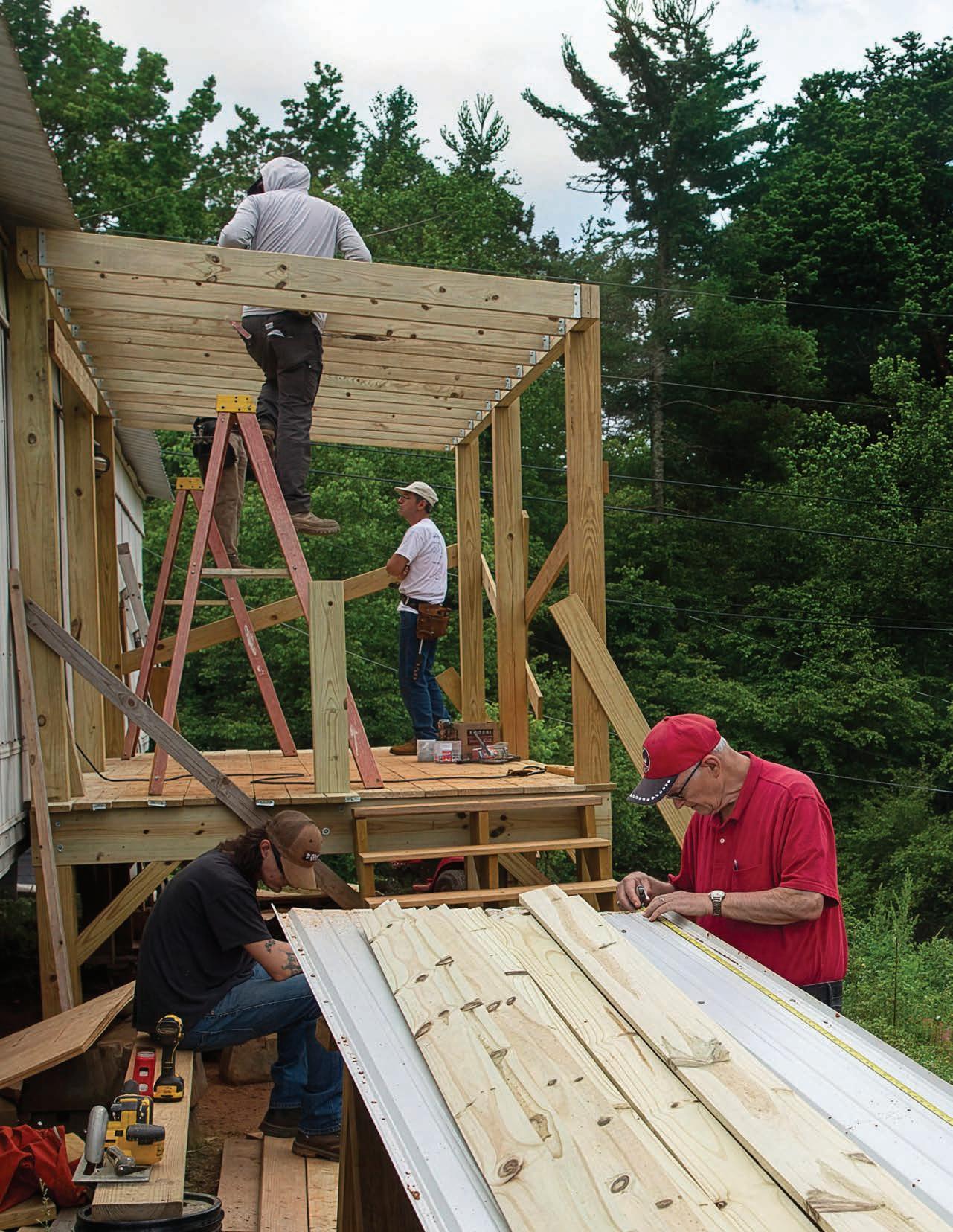
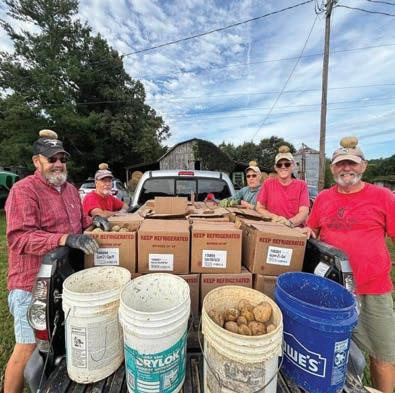
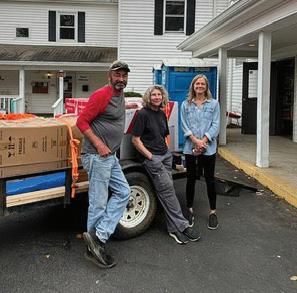
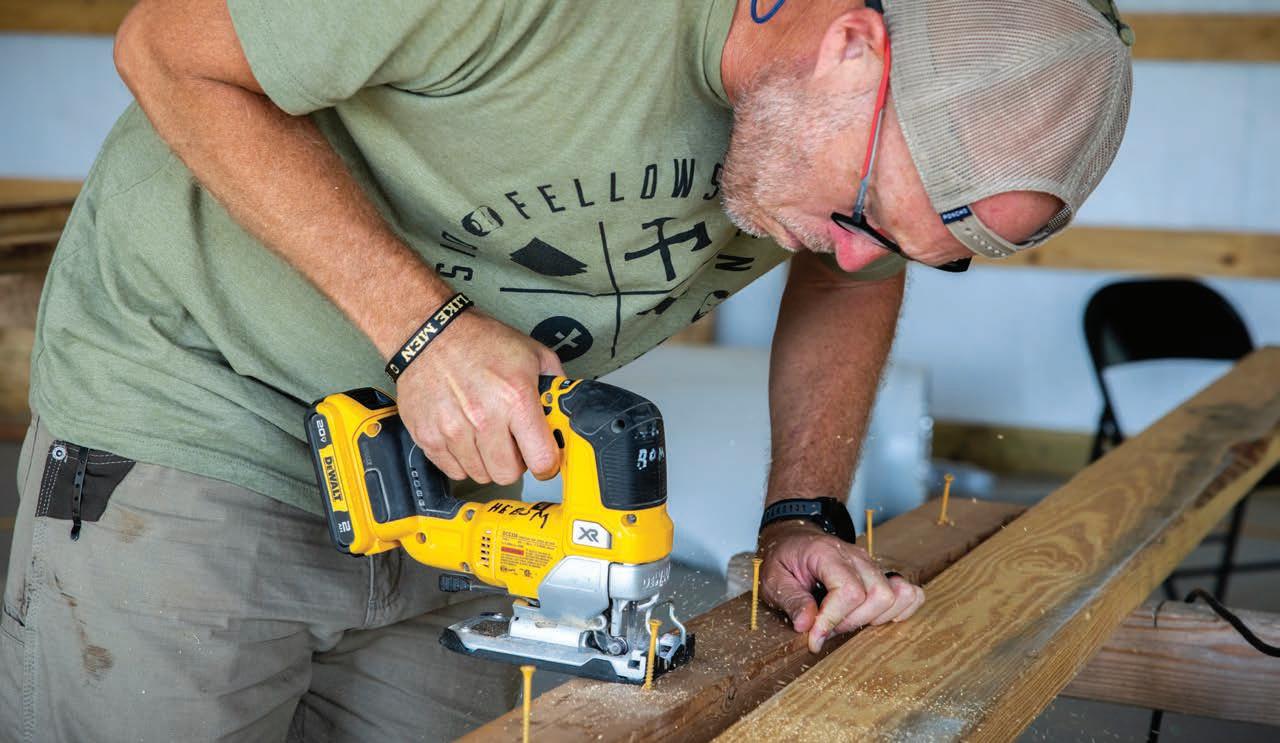
Asheville Area Habitat for Humanity received $544,131 in Emergency & Disaster Response funding to rebuild its office and ReStore facility located along the Swannanoa River following Helene. Habitat also utilized a $25,000 grant to support the costs associated with client homeowner assessments and damage repairs. As the scale of need became more apparent, Habitat received $1,000,000 to hire staff, increasing its capacity to complete assessments beyond Habitat homeowners and supporting construction expenses of the Asheville Regional Coalition for Home Repair. ARCHR is a coalition of organizations coordinating requests for home repair assistance to low-income Buncombe and Madison County residents. In addition to Habitat, ARCHR
are Mountain Housing
and
Photo courtesy of Habitat
Evolving + Learning
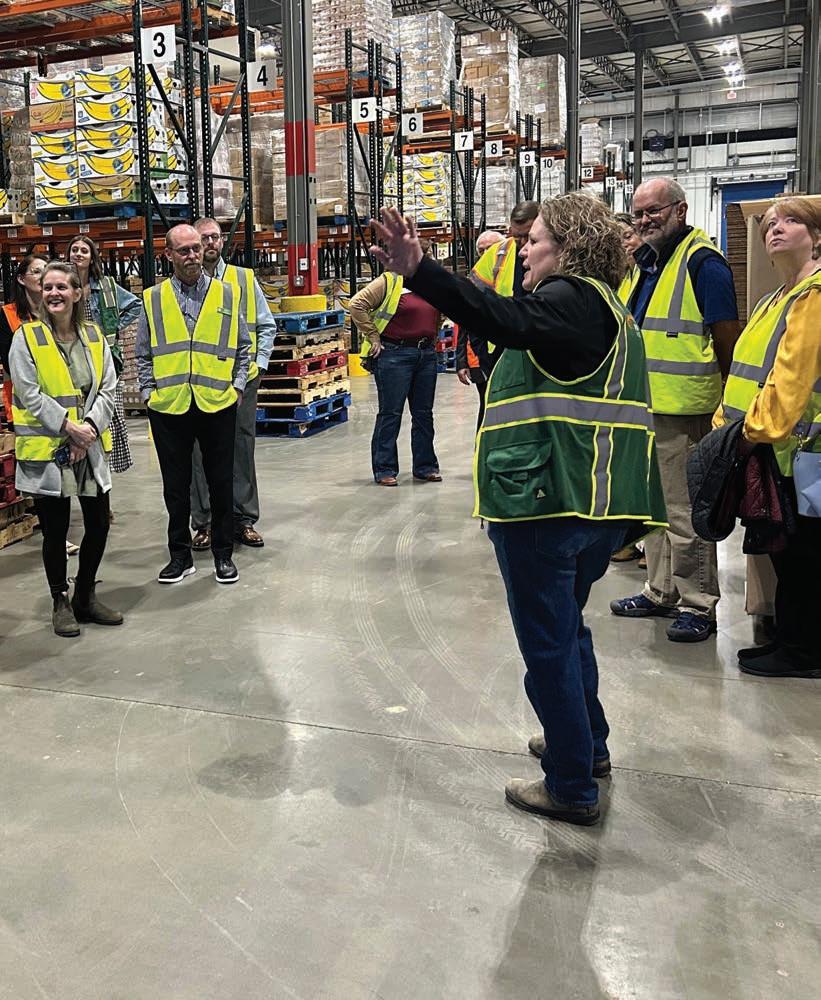
Over the past few months, I have been uplifted by celebrations of milestones with Asheville Area Habitat for Humanity and MANNA FoodBank. Following severe hurricane damage to both organizations’ facilities, they strengthened their partnership and shared commitment to support each other in responding. MANNA offered office space in its new facility to Habitat; Habitat ReStore staff worked alongside MANNA in the warehouse to support food distribution.
This collaboration highlights the strength of a united response and how housing, food insecurity, and basic needs are linked. These organizations, and dozens more, many that also suffered extensive storm damage, assessed what was needed and did what was necessary to continue to serve.
Witnessing the region’s recovery from the storm –the unevenness of it, the overlapping and sometimes confusing funding streams, the generosity, the mutual aid networks – I realized that as part of this region and effort, the outcome belongs to all of us. We can’t control what happens, especially regarding federal and state funds, but we can choose how we show up for each other and our communities. We have agency in the aftermath of big changes.
There are organizations building our “what’s next” with a focus on fairness, dignity, and respect. Without a doubt, people are tired, but they recognize that now is the time to shape what we become together, and they persevere
by cleaning waterways, repairing homes, supporting farmers, and envisioning the future.
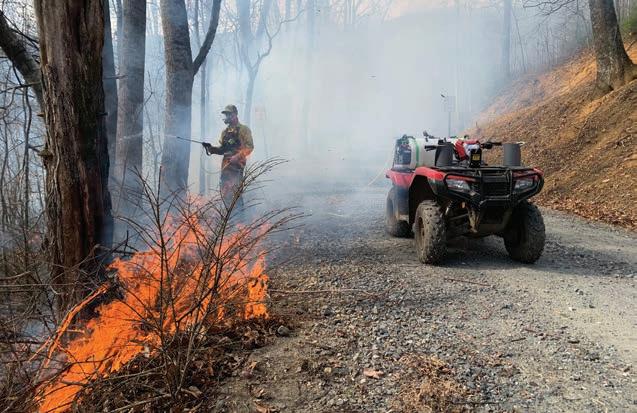
Progress is incremental; the list of homes and bridges waiting for repairs is long; there is dry timber everywhere as we head into summer; we face serious funding gaps. Helene exposed fractures, lacks, and needs that cannot be ignored.
But we know what can happen when we recognize our power and work together, and full circle moments bring hope. Drones are seeding landslides, riverbanks, pastures, and fields. Mutual aid hubs have grown into long-term recovery groups that are building capacity, connection, and resilience.
We know long-term commitment produces results. We see that in the return of the Nikwasi Mound to the Cherokee people after 250 years, and in the decades-long work of land trusts protecting contiguous landscapes, building trails, and safeguarding species. Efforts like these remind us that meaningful change is often gradual, collective, and enduring.
Work centered in service. Everyone doing their part. An outcome that belongs to us all. It’s not easy or fast, but it’s the way forward.
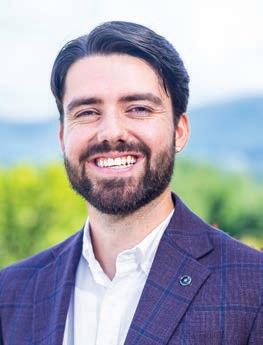
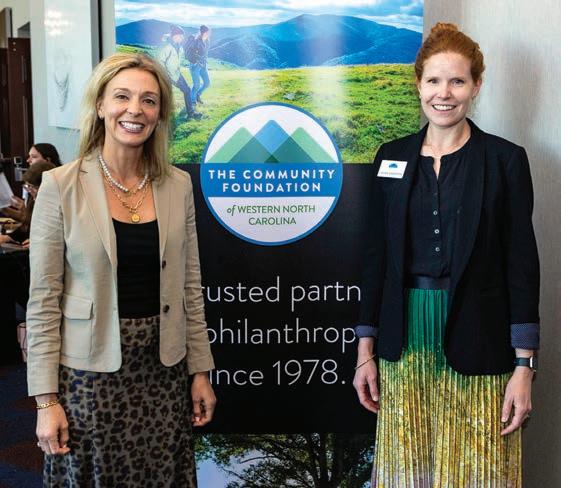
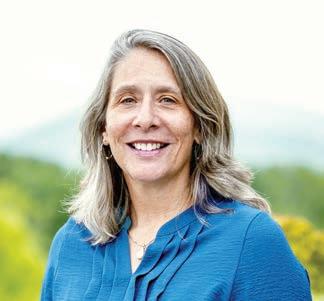
Elizabeth Brazas, President
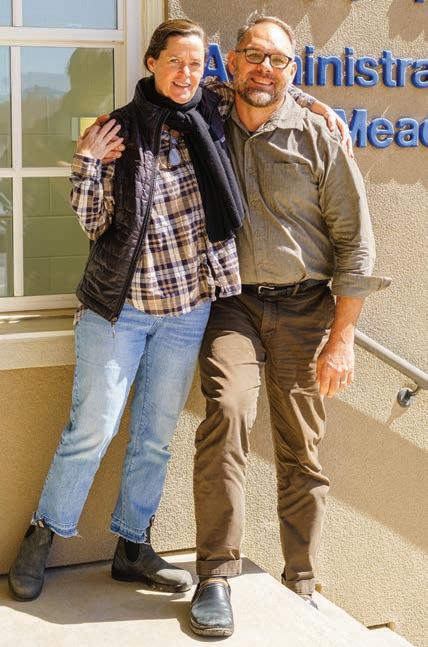
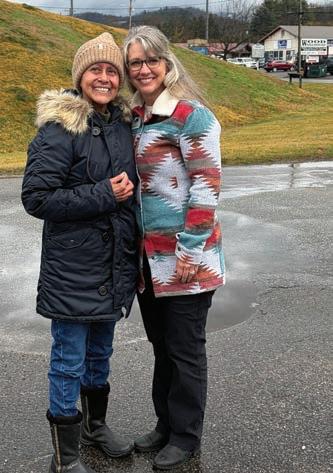
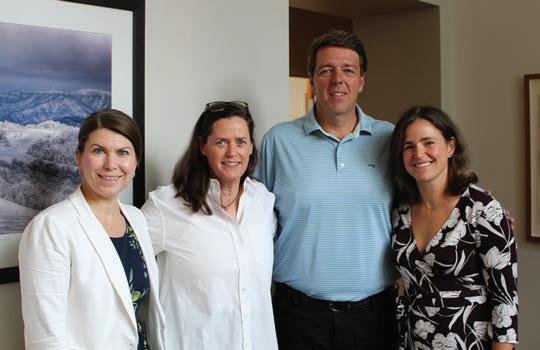
Elizabeth Brazas with Asheville Area Habitat for Humanity CEO Andy Barnett; photo courtesy of Habitat
A Full Circle Moment
When the historic Nikwasi Mound returned to Cherokee ownership last month after more than 250 years, it felt like a full-circle moment. As the Mayor of Franklin and the Principal Chief of the Eastern Band of Cherokee Indians (EBCI) signed the deed at the public ceremony, I was reminded that some of the most important work in our region begins with an investment in relationships.
In this case, that investment began years ago through the quiet philanthropy of The Community Foundation of Western North Carolina.
In 2015, the Town of Franklin used herbicide on the Mound to reduce maintenance costs. The dead grass drew attention, but the deeper issue was about stewardship and respect for a site sacred to the Cherokee people. Conversations about the Mound’s future had circulated for years, but progress was slow and trust between partners was fragile.
Land trusts typically focus on conserving land. But in the heart of the Cherokee homeland, conservation also means honoring cultural heritage. At Mainspring Conservation Trust, we believed we had built relationships with all parties, but bringing them together required resources and a neutral starting point. That’s when CFWNC stepped in.
Their early funding allowed us to convene community leaders from the EBCI, the Town of Franklin, and Macon County. Over time, trust grew, walls came down, and the groundwork
for reconciliation was laid, eventually forming a collaborative group working together toward shared goals.
A decade later, that early investment helped make the return of Nikwasi Mound possible.
It’s often difficult to secure funding for the behind-thescenes work that makes meaningful change possible. We are grateful for trust and relationship that allows us to share our vision and needs with CFWNC staff. They see the long view and support ideas that may take years to be realized.
That’s the power of quiet philanthropy. Thanks to the vision of CFWNC and the generosity of its donors, we’ve been able to turn unique ideas into lasting change – restoring relationships, honoring history, and shaping a stronger future for our region.
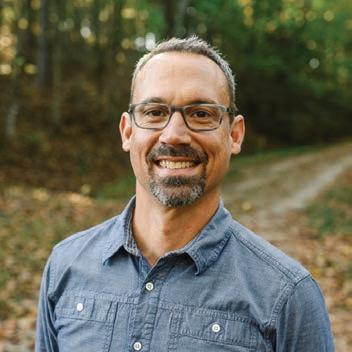
Ben Laseter PhD, Deputy Director, Mainspring Conservation Trust
7/1/25 – 3/31/26
$30,656,879
Above: former CFWNC Board Member Juanita Wilson and Tara Scholtz, photo courtesy of CFWNC Right: Photo courtesy of Mainspring
Photo by Michael Oppenheim
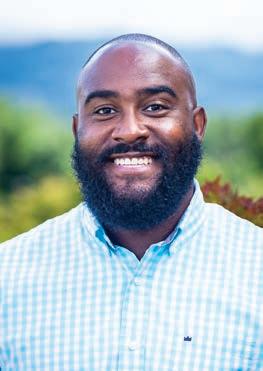
Welcome New Staff - Jeremy Lett, Program Officer
Best thing about living in WNC? There are two things: first, my house is minutes away from Lake Julian, so nine months out of the year I can do some catfishing; next, as a pickleball player, there is a large community of players and many places that I can play competitively.
Something surprising about CFWNC? Working in the Program Department, I have access to my colleagues’ extensive knowledge of the region and our nonprofit partners, information that you could only have from doing this work for an extended period.
Welcome New Staff - Daniel Bascuñan-Wiley, Program Associate
Best thing about living in WNC? The proximity to the Blue Ridge Parkway and the ease of access to such stunning natural areas is a magnificent privilege of living here.
Something surprising about CFWNC? Something refreshing was just how committed everyone here is to getting the work done. There’s a real emphasis on authentic, purposeful actions that keep the mission and vision in focus.
CFWNC, with Dogwood Health Trust and Mountain Projects, received the Frontline Philanthropy Award by the Smoky Mountain News. The release said, “Recovery from Hurricane Helene showed clearly that resilience is built not just by government plans on paper but by people and organizations rooted in community and commitment.” We couldn’t agree more and are grateful to our partners and supporters.
When you are not at work? You can find me on the soccer field! I love going to pick up soccer during the week and playing in three different leagues on the weekends. I started playing when I was four and haven’t stopped since.
Best part of your job? With my professional background primarily based in Buncombe County, I enjoy developing a deeper understanding of the region so that I can continue our work of actively responding to regional challenges and opportunities.
Affiliate Funds Award Grants
CFWNC’s nine affiliate funds awarded grants totaling $907,112. Affiliate funds extend philanthropy across the region and support local projects with local dollars.
Black Mountain – Swannanoa Valley Endowment Fund - $125,240
Cashiers Community Fund - $168,880
The Fund for Haywood County - $76,055
Highlands Community Fund - $105,605
The McDowell Endowment - $56,950
The Fund for Mitchell County - $56,890
Rutherford County Endowment - $95,550
Transylvania Endowment - $100,632
The Yancey Fund - $121,310
Photo by Michael Oppenheim
Food is Love
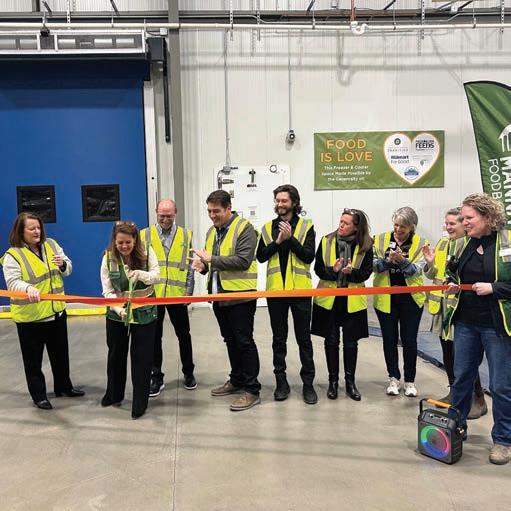
In March, MANNA FoodBank celebrated the official opening of its new freezer and refrigerator building - a 16,000 square-foot extension to its warehouse that increases its capacity to store and distribute fresh, nutritional food by 233 percent.
For nearly 500 days after Hurricane Helene, MANNA stored its produce, meat, dairy, and eggs in refrigerated trucks that were never designed to operate full time. The trucks allowed MANNA to provide critical protein and nutrition during the planning and building, but the new building enables it to better meet demands and to scale up in times of crisis.
CFWNC and the North Carolina Community Foundation partnered to award MANNA a $7 million emergency grant to update its new facility after their previous one was destroyed by Hurricane Helene.
Photos courtesy of CFWNC
Board News
Volunteers are crucial to CFWNC’s work, from scholarship committees to service on the Board of Directors. Michael Fields and J. Chris Smith completed their Board service on July 1, and Juanita Wilson resigned for health reasons in November. We are enormously grateful for their guidance, expertise, and time over the years. The following new board members have been elected to serve:
Lauren Pierce Flickinger is a Principal at Hatteras Venture Partners and Fund Manager for the Pisgah Fund. She was a Vice President in investment banking with Morgan Stanley in New York and worked in economic and infrastructure consulting, advising the World Bank and other international financial institutions. Lauren joined the Investment Committee in July 2023 and serves on an Advisory Board for the UNC Asheville Business School.
Jochen Lucke is an experienced realtor, broker, general contractor, and developer. He is deeply involved in his community and is past chairman of both the HighlandsCashiers Hospital Foundation and The Village Green boards and has served on the boards of the Highlands-Cashiers Hospital, the Fidelia Eckerd Living Center, CFWNC’s Cashiers Community Fund, and the Highlands Performing Arts Center. He joined the WNC Real Estate Foundation, a supporting organization of CFWNC, in 2024.
L. Ashley Saville-Amtower is a partner at Roberts & Stevens with a focus in real estate, commercial transactions, and trusts and estates. Prior to joining the firm in 2017, she worked for a large law firm with an extensive presence in the mid-Atlantic region. Ashley has been a member of the Professional Advisory Committee and the Women for Women giving circle since 2023. She is the Secretary and a Board member of Blue Ridge Public Radio.
THRIVE Appalachia Means Business
Burnsville-based teen entrepreneurship program THRIVE Appalachia provides youth, aged 12-18, with learning opportunities to explore their interest and talents, cultivate new skills, and attend highquality classes with professionals in their field. The program is based on Four Pathways to Properity - Hands-On Learning, Entrepreneurship Projects, Apprenticeships, and Leadership Development. Over 100 teens travel as much as an hour from 5 counties to participate in the free classes and projects. In 2025, teens made and sold 515 gallons of ice cream, 267 gallons of soup, and more than 1,100 scones. They hosted five Kid’s Cafes, built and sold a timber shed, launched a women’s fashion line using natural indigo, and more. They earned nearly $25,000 but the skills they gained are much more valuable. The Yancey Fund awarded $10,000 to purchase supplies. THRIVE also received a $25,000 Women for Women and a 2026 $25,000 Human Services grant.
Photo courtesy of CFWNC
Photo
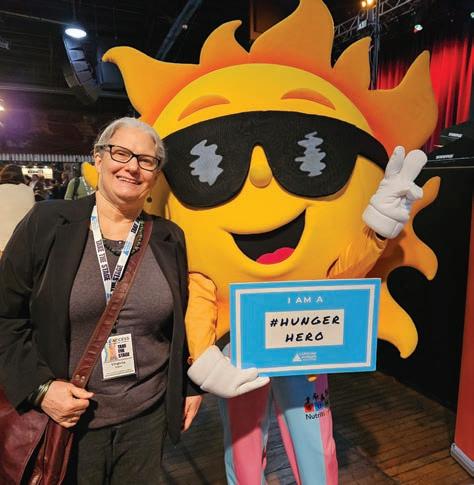
NC Child Hunger Conference
In March, the NC Child Hunger Leaders Conference, organized by the Carolina Hunger Initiative (CHI), was held in Asheville for the first time. With support from Dogwood Health Trust, CHI is launching a project to better understand child hunger in the region and develop strategies to reduce it. Food insecurity affects as many as 1 in 4 children in Western North Carolina, and this crisis has not been fully reassessed since Hurricane Helene.
NC Attorney General
Jeff Jackson delivered the keynote, highlighting how his office and the Department of Health and Human Services worked together to deliver SNAP benefits to families during the federal government shutdown.
Food insecurity affects as many as 1 in 4 children in Western North Carolina, and this crisis has not been fully reassessed since Hurricane Helene.
SNAP brings about $2.8 billion in federal funds to NC each year. However, the federal budget reconciliation bill (HR1) recently cut SNAP funding by approximately 20%, the largest reduction in the program’s history. The bill also increases the share that states must pay in the future and imposes additional penalties based on states’ SNAP payment error rates. If states and counties cannot absorb these added costs, SNAP benefits could be further reduced or potentially eliminated.
SNAP is especially vital in rural counties, where it helps sustain local grocery stores and brings essential revenue to farms and businesses. Enrollment in SNAP also determines eligibility for several child nutrition programs. Children in SNAP households are automatically enrolled for free school meals and the summer SUN Bucks program. Lower SNAP enrollment also affects whether schools qualify to serve free breakfast and lunch to all students through the Community Eligibility Provision.
Child hunger is not a new challenge. MANNA FoodBank, Communities in Schools, and Appalachian Sustainable Agriculture Project’s Growing Minds program are just a few of the many nonprofits addressing this issue in WNC. A sobering reality remains, however: for every meal provided by charitable organizations, SNAP provides nine. Nonprofit organizations cannot fill this gap.
Virginia Dollar, Senior Program Officer
Photo courtesy of CFWNC
Cultural Resources - $95,000
General Operating Grants
WNC History and Places of Cultural Significance –Eight awards totaling $40,000
Altapass Foundation
Avery Riverwalk Quilt Guild
Swannanoa Valley Museum & History Center
Historic Gilboa Foundation
Martin Luther King Jr. Committee of the New Hope Community
Smoky Mountain Community Theatre
Stecoah Valley Arts Crafts and Educational Center
Swannanoa Valley Martin Luther King Jr. Memorial Corporation
Visual Arts – Eleven awards totaling $55,000
Art League of Henderson County
Asheville Art Museum
Asheville Creative Arts
Black Mountain Center for the Arts
Cherokee County Arts Council of NC
Lamplight AVL
Preserving A Picturesque America Incorporated
RADA Foundation
Swannanoa Valley Art League
Tryon Painters and Sculptors
Upstairs Artspace
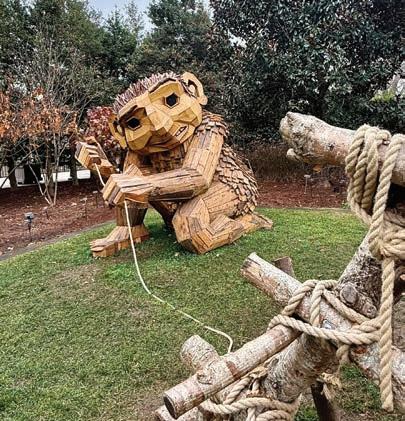
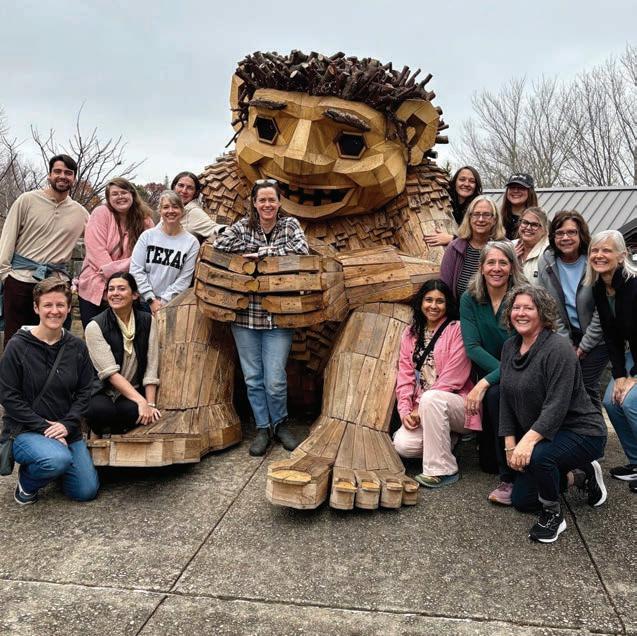
“Thomas Dambo’s ‘Trolls: A Field Study,’ was an unprecedented success for The North Carolina Arboretum, with more than 250,000 guests estimated to have seen the whimsical creatures. We are so grateful for the community contributions including support from The Community Foundation. The Arboretum is thrilled by the enthusiasm for this display and its ability to bring people back into nature during a time when winter keeps a lot of folks indoors, and we reached the highest number of new members since before Helene. The trolls were a wonderful way to start a new year of connecting people with plants and places.” – Drake Fowler, Executive Director
Education
Twenty-five Education grants totaling $573,585, with coinvestment of $256,250, were awarded to nonprofits serving people across the Foundation’s 18-county service area in November 2025. The following content highlights results from grants awarded the previous fiscal year.
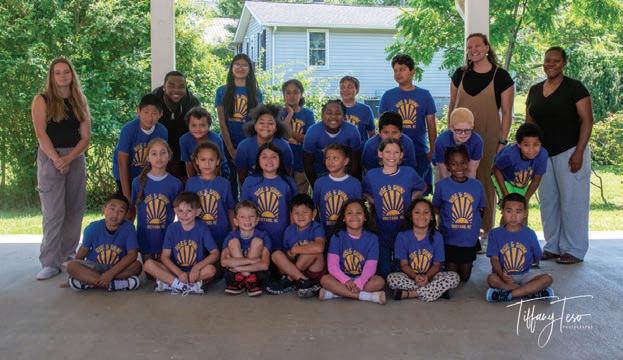
Rise & Shine received $20,000 to provide a structured and supportive learning environment to prevent summer learning loss for low-income and minority students in Transylvania County. Students benefited most from small-group instruction, daily routines, and the integration of socialemotional learning with academics.
Photo
Photo courtesy of Rise & Shine
Photos courtesy of CFWNC
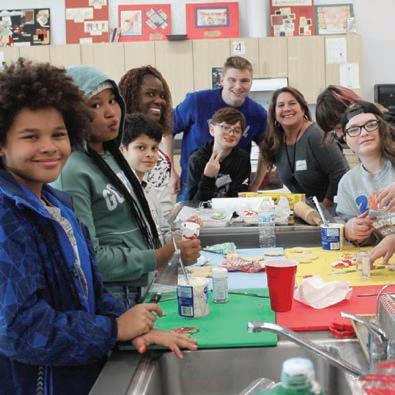
The Asheville City Schools Foundation received $25,000 to support the In Real Life After-School and DREAM Team programs that serve students on a leadership continuum by providing a pathway that fosters connection, builds community, and strengthens foundational skills for growing young leaders.
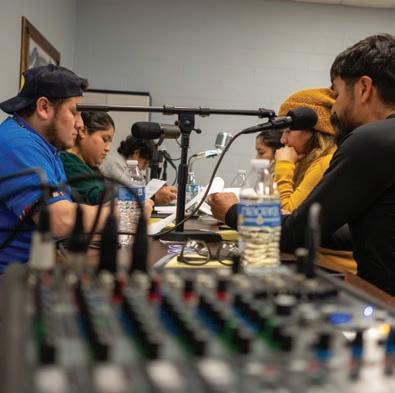
JMPro Media was awarded $25,000 to train community reporters to connect their communities to vital information, resources, and services. The Community Reporter Certification Program was launched at McDowell Technical Community College and expanded to A-B Tech. These programs open learning opportunities to more people and amplify the voices of marginalized communities.
CFWNC awarded 63 Learning Links
grants totaling $126,566 to regional schools in November. The grants provide public school teachers with funding to provide experiential or “hands-on” learning projects that make required coursework engaging and relevant for students. This grant cycle saw an increase in applicants and funds requested, with many applications referencing the impact of Hurricane Helene on students.
Human Services
Fifty-three Human Services grants totaling $1,259,504, with co-investment of $540,093, were awarded to nonprofits serving people across the Foundation’s 18-county service area in November 2025. Two proactive grants addressing food access totaling $128,615 were approved at the February 2026 board meeting.
The content below highlights results from grants awarded the previous fiscal year.
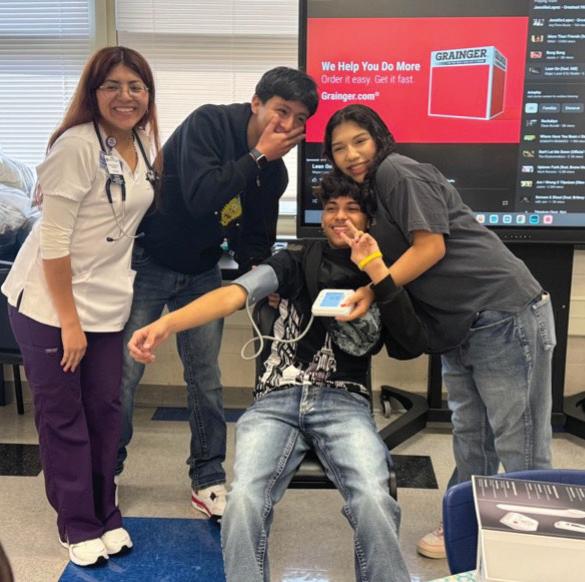
The Center for Native Health was awarded $25,000 for a Medical Careers and Technology Pathways (MedCaT) Mentorship Program for Native and Rural Youth. The pilot resulted in four high school seniors being awarded scholarships to local colleges in health-related programs, and students reported personal and professional growth. Participants recommended the program to their peers, underscoring its potential to foster a new generation of healthcare professionals from rural and Indigenous backgrounds.
Hunger Coalition of Transylvania County was awarded $15,000 for a storage expansion project that transformed its capacity to serve food-insecure families, doubling the reach to serve 18,000 households in 2025.
Photo courtesy of JMPro Media
“Before our expansion, gleaning days meant we would harvest two tons of beautiful vegetables, but our cold storage couldn’t hold it. By early afternoon, we would post urgent messages: “Free vegetables! Come get them today!” The response was immediate, but often from folks with time, transportation, and resources, not our most food-insecure neighbors. Our struggling neighbors - the single mom working two jobs, the elderly couple without transportation, the family choosing between gas and groceries - couldn’t drop everything for same-day produce. Now, gleaning day looks different. We still harvest two tons, but we sort and store it in our walk-in cooler. When it’s time for the Thursday mobile market, we can offer fresh, gleaned produce. The expansion aligned our operations with our values: serving our most vulnerable neighbors with dignity, consistency, and nutritious food.” – Barbara Grimm, Hunger Coalition of Transylvania County
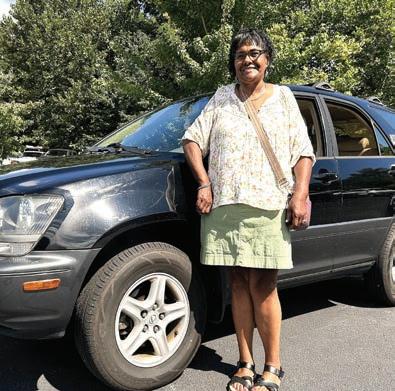
Rolling Start received $25,000 to refurbish and award ten donated vehicles to economically disadvantaged people in Jackson County and the Qualla Boundary. A safe, reliable vehicle provides access to essential resources and reduces disparities in healthcare access. Reliable transportation can also increase employment opportunities and improve educational attainment by overcoming transportation barriers to schools and training programs.
In FY 2025, Sudden and Urgent Need (SUN) Grants of $125,151 were awarded to help nonprofits meet unexpected needs. The funds replaced ovens, HVAC systems, trucks, freezers, security systems, and more. Small but crucial and quick, SUN grants are awarded on a rolling basis.
Natural Resources
Mainspring Conservation Trust was awarded $60,000 to support short-term stewardship needs to improve public safety and ecological protections for the 94-acre Slickens Creek tract, the last critical inholding within the Nantahala National Forest’s Panthertown Valley backcountry area. The 6,300 acres stretch along the Eastern Continental Divide, offering more than 25 miles of trails that wind through granite domes, mountain bogs, trout streams, and waterfalls. Surrounded entirely by public land and intersected by two popular trails, the tract will expand safe, managed public access to the region, known as the “Yosemite of the East”. The funds will support site assessment, demolition, and cleanup; road and trail improvements; and the restoration of an existing hand-hewn pole barn.
Photo courtesy of The Center for Native Health
Photo courtesy of Mainspring
Photo courtesyofRolling Start
WE RISE
More than $39.7 million was distributed from the Emergency and Disaster Response Fund to support WNC following Hurricane Helene, continuing the recovery work across the region.
Largely rural Avery, Mitchell, and Yancey counties experienced widespread damage to infrastructure, people, homes, roads, bridges, and the land itself. As relief transitioned to recovery, several organizations banded together to invest in equipment and efforts to support farmers and landowners and to mitigate fire risk.
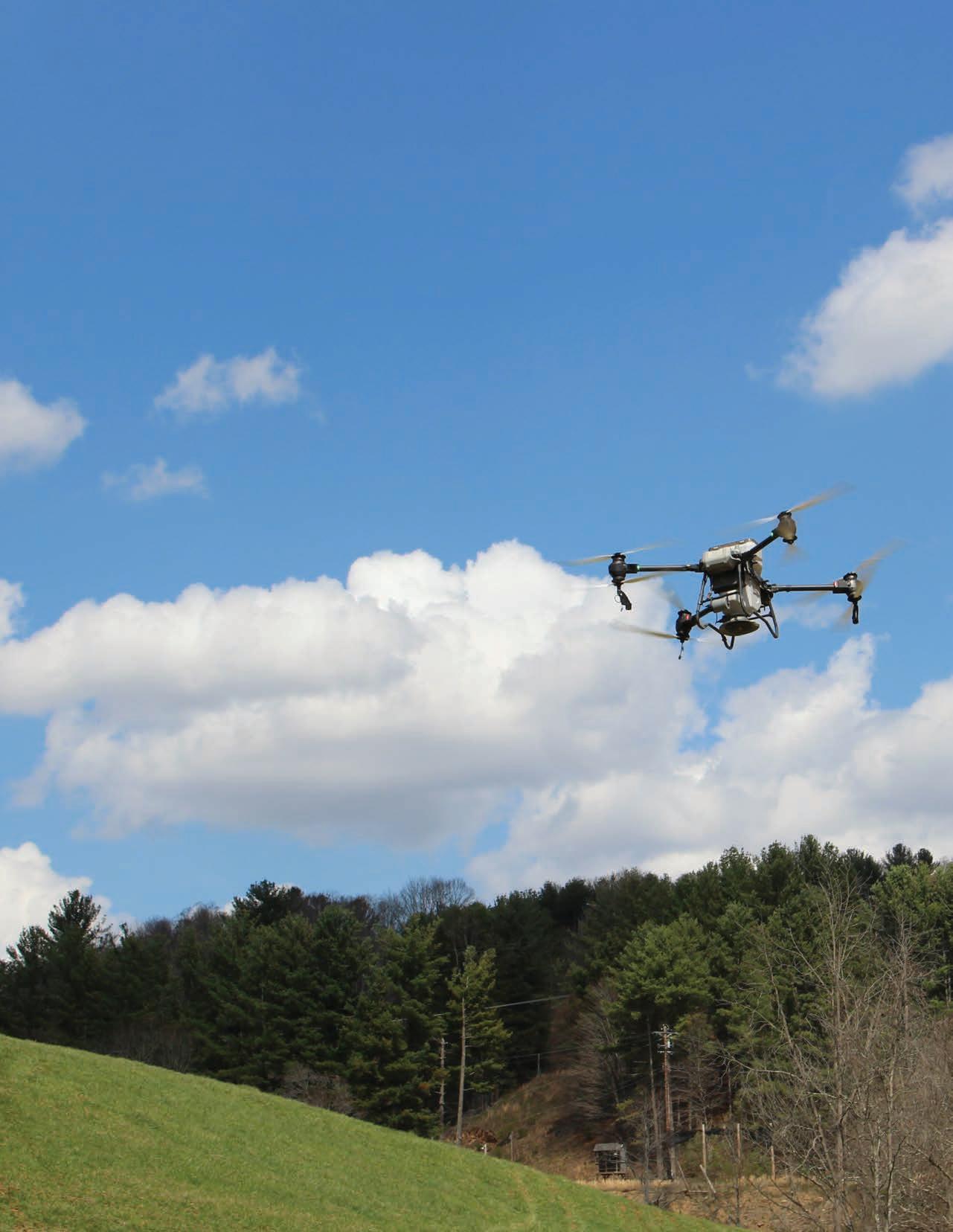
“In collaboration with Beacon Network and Blue Ridge Resource Conservation & Development, Yancey County Cooperative Extension purchased a T50 Agri-spray Drone with a seed spreader system to help pastures, fields, landslides, and riverbanks stabilize and recover. Grant funds also purchased $60,000 worth of seed.
This drone is used weekly and has assisted 92 farmers, homesteaders, and landowners with planting 453 acres of annual forage, 712 acres of permanent forage, 28 acres of cover crop, and roughly 18 acres of native grasses, which were planted in efforts to restore streambanks and repair areas damaged by landslides.” – David Davis, Yancey County Extension Director.
Yancey County Cooperative Extension was awarded two grants totaling $80,000.
Photo
Blue Ridge Resource Conservation & Development has been engaged in essential forest recovery and wildfire mitigation.
“For most of our wildfire fuel reduction projects we used pile burning to safely remove debris left from flooding or blowdown. We executed multiple broadcast burns in areas with heavy blowdown and forest damage. Our chainsaw crew worked with landowners in Yancey and Mitchell Counties to reduce accumulated woody debris and damage below homes, resulting in a lower fuel density and an increased wildfire buffer. Our saw crew opened obstructed trails, enabling landowners to assess their storm damage while creating firebreaks and restoring access for wildland firefighters.
Nearly 20 Firewise education events shared best practices from the National Fire Protection Agency, NC Forest Service, Firewise USA, and the Appalachian Fire Adapted Communities Coalition. The presentations focused on the post-Helene risk of wildfire, fire resistant landscaping, home-hardening techniques, and community planning to improve public safety. At each event we advertised our free Wildfire Risk Assessment program, which has now been completed with nearly 60 homeowners.” - Jonathan Hartsell, Executive Director
plants, including threatened River Cane that provides erosion control and flood mitigation, and the creation and distribution of over two hundred cubic yards of mulch to the South Toe community for restoration and soil building.
Working with the South Toe Stewards, Blue Ridge RC&D, MountainTrue, Yancey and EBCI Agricultural Extension Agents, County Planners, and the Yancey Long Term Recovery Group, Beacon helped guide long-term planning that considers flood, erosion, and safety, but also the future ecological health and resilience of the region. Because of this collaboration, Yancey County has maintained environmentally sound debris removal practices to the greatest extent possible, and many ecosystems and areas have been positively impacted.
In addition, donor advised grants contributed to the launch of a Winter Weatherization Campaign, which resulted in the weatherization of 120 campers housing hurricane survivors across WNC.
“The storm brought us together in ways we will never forget. We know that connected communities fare better in any weather. Let’s nourish that connection and build a lasting network of impactful intention and mutual aid.”
– Jared Dubin, Executive Director
The Beacon Network was awarded two grants totaling $125,000.
Blue Ridge Resource Conservation & Development was awarded three grants totaling $125,000.
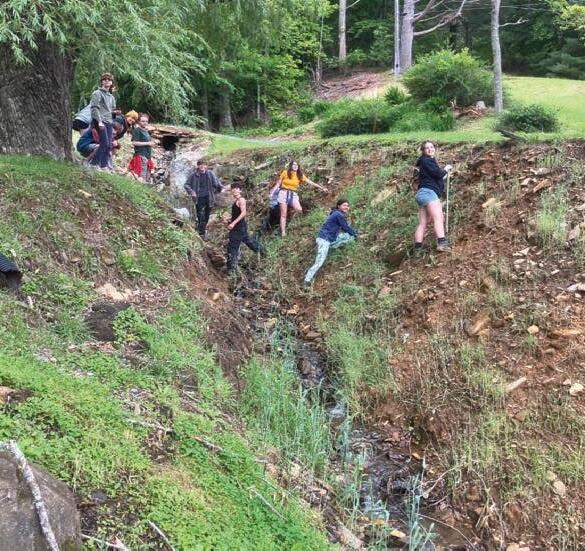
Beacon Network deployed grant funds to remediate and repair rivers and streams damaged by the hurricane by recruiting and coordinating more than 500 volunteers. Results include the removal of more than 70,000 pounds of trash and debris from waterways and land, the planting of 2,000+ native
Photos courtesy of Blue Ridge RC&D
Accessibility for All
“We want people to know that exploring and adventuring doesn’t have to stop when the pavement ends.”
Photo courtesy of North Carolina Spinal Cord InjuryAssociation
People love the outdoors in WNC and understand the emotional and physical health benefits of spending time in nature. For people with disabilities, access to the outdoors is more complicated, and nonprofits and advocates are working to address the limitations and barriers and to expand access.
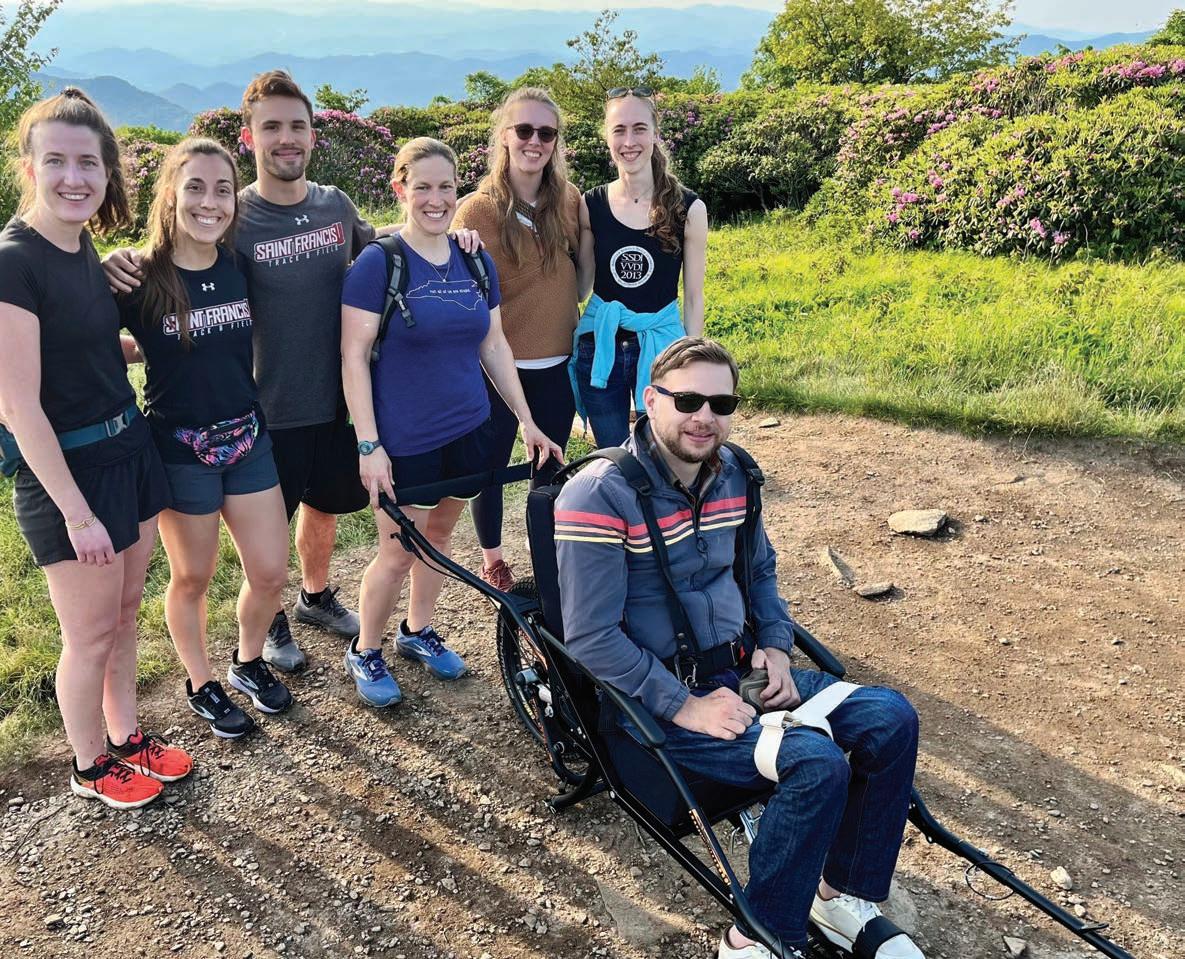
“I can’t tell you how many people are shocked when they see me out on trails,” said CFWNC Board Member and fundholder Matt Lee. “It would be nice to eventually normalize it.” Matt and many others are raising awareness and building networks to ensure that more accessibility is incorporated into projects in early stages, rather than as an afterthought.
Greenways provide safe and convenient access to shared use and often paved paths. Especially in more urban or developed areas, greenways make it easier for people to enjoy the health benefits of connecting with nature.
CFWNC supported Conserving Carolina’s work on the Ecusta Trail, a rails to trails project connecting Hendersonville to Brevard, which now is partially open. In June 2025, the Saluda Grade Trail coalition, including Conserving Carolina, purchased the historic railroad to begin the project that will connect upstate South Carolina to WNC’s mountain communities. Both projects will open more miles to people of all abilities.
“Greenways do offer more accessibility without the need for adaptive equipment or travel to more remote hiking areas,” explained Lee. “I think there’s an idea of what ‘accessible’ is supposed to mean and what places are meant for people with disabilities. It gets complicated away from built environments, and there are a variety of needs and interests.”
“The folks at Waypoint Adventure do amazing work with outdoor recreation and guided adventure programs and they offer much needed equipment rentals,” said Lee. “Access to adaptive equipment is a key factor since many everyday
wheelchairs and mobility aids are not necessarily equipped to handle the rough terrain on most trails.”
The Black Mountain – Swannanoa Valley Endowment Fund has supported Waypoint Adventure in providing adventure education programming for public school students with intellectual, developmental, and physical disabilities. The NC Wildlife Resources Commission also offers a free trackchair rental program across the state including a Mills River location, and Catalyst Sports loans GRIT Freedom Chairs at no cost at the Oconoluftee Visitors Center in Cherokee.
“Understanding which trails are accessible continues to be a work in progress, especially post-Helene,” said Lee. “Wild Access Collective is a volunteer-led grassroots project that I’m involved in focused on access to unpaved trails and the barriers that exist for people with disabilities and mobility limitations. It was born out of the lack of an aggregated list of accessible trails, signage, and knowledge of potential obstacles. We want people to know that exploring and adventuring doesn’t have to stop when the pavement ends.”
Collaborative efforts to expand the areas that everyone can explore are good for people and for the outdoor economy. Planning for and providing information about facilities, trails, and access allows individuals to make informed decisions and to participate more fully in WNC’s abundant recreational opportunities.
LEARN MORE catalystsports.org conservingcarolina.org counterflowasheville.com
waypointadventure.org
Friends + Neighbors + Philanthropists
Funds Created between January 1 and December 31, 2025
Charitable Gift Annuities allow donors to make a future gift and receive income and tax advantages now.
Jane Tara Cicchetti Charitable Gift Annuity 5
Kimmel Charitable Gift Annuity 3
Kimmel Charitable Gift Annuity 4
Bob Pace Charitable Gift Annuity
Designated Funds support specific nonprofits named when the fund is established.
Black Family Fund
Brame-Mattox Designated Charitable Fund 2025
Broadwell Designated Fund 2025
Enka Schools’ Foundation Endowment
Ted Ghiz and Ronnie Mill Charitable Fund 2025
Hembree Designated Fund 2025
Hibbard Philanthropic Fund #9
Susie Hamrick Jones Designated Fund 2025
Kimmel Guest Designated Fund 2025
John Bush Rogers Designated Fund 2025
Sciara Designated Fund 2025
Nancy Senneff Designated Fund 2025
And one anonymous fund
Donor Advised Funds allow donors to make a charitable contribution, receive an immediate tax benefit, and recommend grants over time.
ANC Community Fund
Blomberg Patton Grimes Family Fund
Virginia Koonce Craig Fund
Falling Creek Campership Fund
Nicholas R. Henderson Charitable Fund
Amy Holloway Community Fund
Ellen Kaczmarek Fund
REC Fund
Irene Dillingham Richards Family Fund
Rubin Blose Family Fund
Scarborough Family Charitable Fund
Lizabeth Stickle Schoenheit Gift Fund
Watson and Elisabeth Sims Fund
Willow Charitable Fund
ZOT Fund
And one anonymous fund
Expectancy Funds are established to receive assets at a later time, typically through an estate plan, charitable gift annuity, or charitable trust.
In Loving Memory of Andy, The Best Dog Ever Fund
The Ark Animal Fund
Michael D. Ashby Fund for Conservation Flander Fund
David and Jane Frye Fund, in Memory of Helen Parrish Yates
GJB/MSM Charitable Fund
Goresh Family Charitable Fund
Graham - Purinton Fund
Amy Hollifield Fund
Houha! Charitable Fund
Krarup Legacy Fund
MacFarland Family Charitable Fund
Proal Perry and Constance Mield-Perry Charitable Fund
RippleRoot Fund
Rebecca Robertson’s Fund for Good Summit Advancement Fund
Courtland & Cathie White Fund
And three anonymous funds
Fields of Interest Funds support a broadly-defined area such as the arts, the environment, or health.
Jean Marty - Evan Kress Fund
Memorial Funds are a simple, meaningful way to honor a life.
James L. Oliver Charitable Fund
Nonprofit Organization Funds are created to invest and steward a nonprofit’s long-term or endowed assets.
George and Sara Briggs Family Endowment for Art, Landscape & Inspiration
FCNC Easement Stewardship Fund
FCNC Preserve Stewardship Fund
International Friendship Center of Highlands Fund
James Lowder Fund for Ending Homelessness
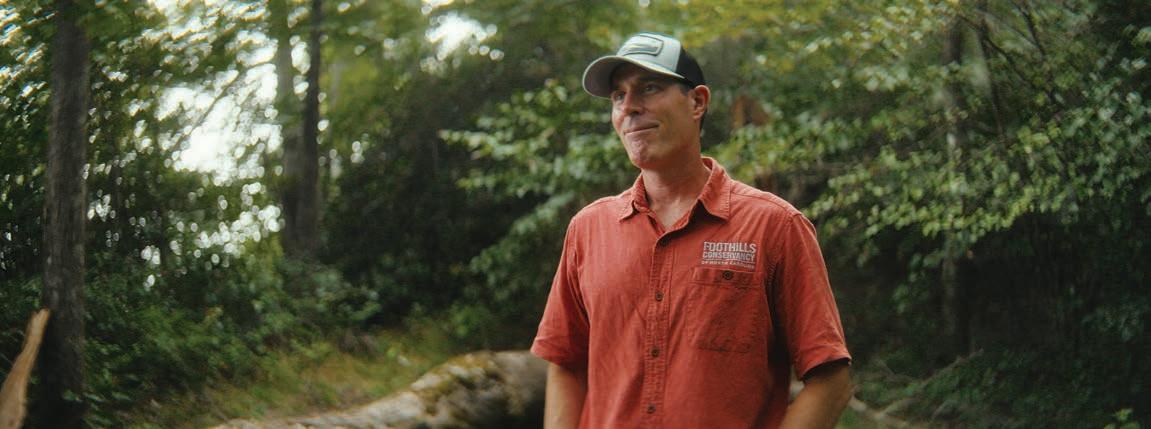
Foothills Conservancy of NC Celebrates 30 Years
“Reaching 30 years is a story of people - landowners, partners, and community members - who have believed in our work, financially supported our projects, operations and growth, and put their trust in our ability to achieve conservation outcomes.
Initially focused on the South Mountains, FCNC has grown into a leader well-positioned to take on complex projects shaping the region’s future. Each advances our long-term vision to conserve working forests and farms, protect clean water at its source, preserve expanses of unbroken forest, and expand access to trails and outdoor recreation. We are currently advancing nearly thirty unique projects.
Within our South Mountains to Blue Ridge Conservation Corridor, we expanded our Pinnacle Mountains Preserve in McDowell and Rutherford counties to nearly 4,200 acres in size, land that connects eastward to nearly 60,000 acres of contiguous conservation land.
FCNC is also working to protect Hickorynut Mountain – a vast, 12,000-acre, unbroken forested landscape. When this land is protected in the next few years, the Conservation Corridor will grow to nearly 80,000 acres and will host the Wilderness Gateway State Trail. We are currently constructing the initial ten miles of this statedesignated trail, and at least twenty additional miles will be ready for public use in the next two years. It will be
unique because it will be built to adaptive standards to provide more universal user access.
Connected lands are vital for wildlife movement, clean water, and climate resilience. Helene was a powerful reminder of just how connected our landscapes are and how essential conservation is in the face of natural disasters. Recovery funding from CFWNC provided us with time and financial support to repair widespread damage that would have taken us years to complete on our own.
Having a partner who can respond in moments of need - like after Helene, or to help fill a funding void for an important conservation project - while also helping us plan for our land trust’s future financial stability is incredibly valuable.
FCNC recently transferred some of our endowment funds to CFWNC because of the values and goals we share. Partnering with CFWNC allows us to plan strategically, think beyond the immediate, and invest in our long-term stability. That kind of support ensures that we can continue protecting land, building relationships, and thinking and acting at a landscape scale.”
Andrew Kota, Executive Director
Photo courtesy of Crossnore.
Photo courtesy of FCNC
Asheville Merchants Fund Awards
$780,000 to Buncombe County Nonprofits
The Asheville Merchants Fund awarded a total of $780,000 to eight Buncombe County organizations to support innovative economic approaches that invest in emerging local economies and entrepreneurship, quality jobs and workforce training, and social infrastructure supporting family economic success and the ability of employees to participate fully in the workforce.
“Western North Carolina Community Health Services (WNCCHS) is deeply grateful for this multi-year grant, which allows us to invest in our people and strengthen the essential roles that make high-quality, whole-person care possible. It will expand access to life-saving services for those who need them most and deepen our commitment to serving the most vulnerable in our community.” – Anita Case, Chief Executive Officer
The recent grants are:
$105,000 over three years to Appalachian Sustainable Agriculture Project to support the economic recovery and resiliency of homegrown businesses and small farms.
$105,000 over three years to Asheville-Buncombe Community Christian Ministry to improve the economic prospects for homeless women living at Transformation Village.
$75,000 over three years to Children First/Communities in Schools of Buncombe County to support its afterschool and summer programming provided at no cost to families, allowing parents to participate in the workforce.
$75,000 over three years to IFB Solutions, Asheville Division to expand a workforce development initiative that helps blind or visually impaired individuals gain the skills needed to advance into higher-wage positions.
$105,000 over three years to Irene Wortham Center to launch a workforce initiative addressing the shortage of specialized early childhood educators serving children with intellectual and developmental disabilities or medically fragile conditions.
$105,000 over three years to Pisgah Legal Services to provide free legal assistance that removes workforce participation barriers by restoring driver’s licenses and expunging eligible criminal records for low-income individuals.
$105,000 over three years to Western North Carolina Community Health Services to provide on-the-job training and credentialing that allows staff to earn higher wages in high-demand, mission-critical positions.
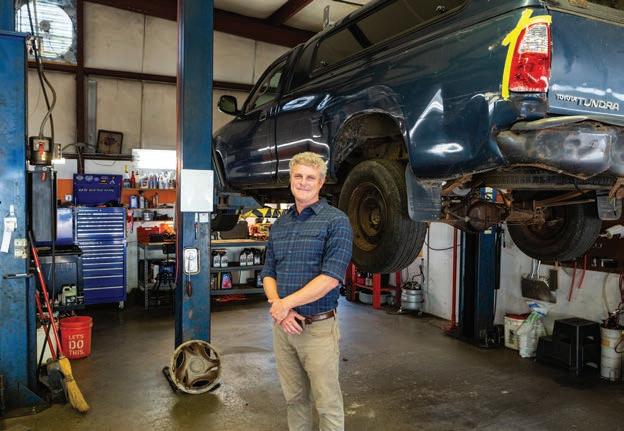
$105,000 over three years to Working Wheels to provide affordable automotive repairs to help low-income residents and families stay employed, stable, and self-sufficient.
With this cycle, the Asheville Merchants Fund grant period has been extended to three years. The next opportunity to apply will be in 2029.
Working Wheeels; Photo by Michael Oppenheim
Funds + Planned Giving Options
WAYS TO GIVE
When you give through CFWNC, you join thousands of like-minded individuals committed to the region and to giving back.
Give Now
You can make a contribution to any of these funds, knowing that your support helps WNC.
Fund for Western North Carolina Affiliate Funds
Fund for Animal Welfare Fund for the Arts Fund for Education
Emergency and Disaster Response Fund Fund for the Environment Fund for Health Fund for Human Services Fund for Scholarships
Fund for Strong Communities
Women for Women Endowment Fund
The Women’s Fund
Create a Fund
We can help you develop a plan that is personal, thorough and effective.
Become a Fundholder
A donor advised fund, named or anonymous, may provide tax benefits and a convenient way to consolidate your giving. You can open a fund that benefits a favorite nonprofit or supports students or a particular cause.
What to Give
You can give cash, marketable securities and mutual fund shares, closely held stock, retirement accounts, interest in a limited liability partnership, life insurance, real estate, or private foundation assets. Your professional advisors partner in this process, ensuring coordination across your planning.
Give Later
A bequest is the simplest way to leave a legacy for the issues, organizations, or community most important to you. Other options include Charitable Gift Annuities or Charitable Remainder Trusts.
Mark Your Calendars!
This year, the 34th Annual Professional Seminar will be held in November rather than in May.
Tuesday, November 17
8:30 am to 12:15 pm
We can help. Please call or email us to discuss ways to meet your charitable goals.
bdavis@cfwnc.org
Photo by Michael Oppenheim
4 Vanderbilt Park Drive, Suite 300 Asheville, NC 28803
To receive future newsletters electronically and to subscribe to CFWNC E-News, please send an email with “subscribe” in the subject line to enews@cfwnc.org
cfwnc.org / 828-254-4960
Rebuilding Homes and Hope
Following Helene, Baptists on Mission received an Emergency and Disaster Response Fund grant of $1.5 million to support the operating costs of five rebuild sites in Buncombe, Haywood, Henderson, Mitchell, and Yancey counties. The sites allow Baptists on Mission to mobilize, house, and host volunteers that will repair and reconstruct homes that were damaged by the hurricane. As of April 21, 875 rebuilds had been completed, 200 rebuilds are in progress, and one new home has been completed with 19 more underway. The organization has made a long-term commitment to the region and plans to remain for three to five years. There are 700 homes on its waiting list.