InHouse



Members









Members
As one of New Zealand’s largest trade merchants with over 80 stores nationwide, there’s a Mitre 10 Trade near you, open seven days a week. With a range of purchasing options including in-store, online, delivery or ready to collect, you’ll get everything you need, when you need it.

ONE OF MY FAVOURITE parts of this role is calling members, letting them know they are receiving honorary or life memberships to the Association. Even better is having the chance to sit down with those recipients, and hear the stories behind their careers and contribution to the industry.
In April, I travelled to Whangārei to meet this year’s honorary membership recipient, Howard Harnett. Howard exemplifies the strong sense of community that continues to set NZCB apart. Spending time with him was a good reminder that while the industry continues to evolve, the values that underpin good building – professionalism, mentorship and commitment to quality –remain constant. I encourage members to read Howard’s story on page 36 and watch the video.
Howard’s sense of professionalism has become even more important in recent months as builders navigate renewed economic uncertainty. At the start of the year, the outlook appeared positive, supported by the December 2025 Construction Pipeline Report and the number of NZCB Building Contracts and Employment Agreements being downloaded across the first two months of 2026.
However, events shifted rapidly in March with the conflict in the Middle East and the resulting fuel crisis creating fresh cost pressures across the sector.
Escalating material prices, Fuel Adjustment Factor (FAF) charges and softer consumer confidence have all added new complexity for builders managing projects and client relationships.
What this disruption has reinforced is the value of having robust contractual protection in place. NZCB’s Fixed Price and Cost + Mark Up contracts were specifically designed to help members manage unforeseen market changes, including the ability to pass on legitimate increases in material and freight-related costs. In early April, the National Support Office also issued a Guidance Note to help members have what can often be difficult conversations with clients about
these additional costs.
Even as these contracts have been supporting members through market volatility, NZCB has been strengthening the service behind them. We have expanded our relationship with Martelli McKegg, the authors of NZCB’s Building Contracts, to ensure our contract suite evolves more quickly alongside changing legislation and market conditions.
A key part of this partnership remains the Legal Helpline, which members consistently rank among the most valuable benefits of NZCB membership. From 2026 onwards, Martelli McKegg will also undertake annual reviews of NZCB’s 11 Building Contracts, replacing the previous four-to-five-year review cycle. This more responsive approach will ensure members have access to contracts that remain current, practical and legally robust.
The recent increase in Building Contract pricing from $20 to $50 per contract from 1 March 2026 directly supports this additional investment, including both the annual legal reviews and the IT platform enhancements required to implement ongoing updates.
The partnership will also extend into member education, with Martelli McKegg assisting the NZCB Education Team to develop future contract law learning modules for NZCB Learn. These resources will be made available to members as part of their membership benefits.
While providing tools and protections for members is a core function of any trade association, effective advocacy is equally important. One of NZCB’s current priorities is to encourage the Government to strengthen the Licensed Building Practitioner framework through the creation of a higher-tier Carpentry licence category.
When the LBP system was introduced in 2007, it was envisaged that future entrants into the profession would ultimately require recognised qualifications. Nineteen years later, a qualification is still not mandatory for obtaining an LBP Carpentry licence. At the same time, recent and proposed legislative
changes – including consent exemptions for granny flats and potential self-certification pathways – would allow builders to undertake increasingly significant work with reduced regulatory oversight.
We believe those changes must be matched by stronger safeguards and clearer quality signals for consumers. Over the past 12 months, we have therefore been advocating for what we have termed an “LBP+” tier, an advanced licensing category similar to Australia’s iCERT star system, that would allow skilled builders to undertake more complex work with lower levels of Building Consent Authority oversight.
I have been discussing this proposal with
MBIE officials, the Minister and industry stakeholders, including at the Building Officials Institute of New Zealand Conference in May. Encouragingly, the concept has been well received, with a formal paper now before the Building and Construction Minister and discussions continuing with Minister Penk and his office. Ultimately, the thinking behind LBP+ aligns closely with what we recognise through honours such as the Honorary Membership awarded to Howard Harnett. As an industry, we should continue creating pathways that not only lift standards, but also properly recognise those builders –like Howard – who consistently demonstrate them.


NZCB’s Fixed Price and Cost + Mark Up contracts were specifically designed to help members manage unforeseen market changes, including the ability to pass on legitimate increases in material and freight-related costs.







Exclusive member benefits and practical support — we’re wholeheartedly committed to building stronger Kiwi businesses from the ground up.












InHouse magazine, including the wrap, is 100% recyclable. InHouse is printed on PEFC-certified paper, supporting the growth of responsible forest management worldwide. The press used to print InHouse utilises a UV light drying system (LED), meaning there is no solvent to evaporate, and no environmental pollutants are formed. It also uses less power than traditional technology, which helps reduce overall CO2 emissions.





The contents of InHouse may not be reproduced in any form, either in whole or in part, without written permission of the Editor. All material received will be assumed to be intended for publication unless clearly labelled 'Not for Publication' and will be published at the discretion of the Editor. Views expressed in articles in InHouse are not necessarily those of New Zealand Certified Builders Association. While every effort has been made to ensure the accuracy of the information included in this publication, the designers, publishers, and Editor take no responsibility for errors, omissions or for any consequences of reliance on this information. Articles are not intended to be relied upon as legal advice.


InHouse
Published quarterly in print and online, InHouse is the official magazine for New Zealand Certified Builders Association (NZCB). InHouse aims to educate and inform our members and their staff of the latest news from the Association and the Building and Construction Industry.
New Zealand Certified Builders PO Box 13405, Tauranga Central, Tauranga 3141 10 Marsh Street, Tauranga 3110
07 927 7720 0800 237 843 nzcb.nz
EDITOR
Andrew Smith andrew.smith@nzcb.nz
NZCB PARTNERSHIPS AND SERVICES
Nicola Airey nicola@nzcb.nz
ADVERTISING
Linda Moody linda@nzcb.nz
DESIGNERS
School Road Publishing
PRINT AND DISTRIBUTION
Kale Print Ltd kaleprint.co.nz
MAILING LIST
If you have received a copy of InHouse and wish to opt out, you would prefer to receive it via email, or would like to update your details please email membership@nzcb.nz









Congratulations to all our NZCB members who are celebrating significant membership milestones this year. Your longterm support of the Association is deeply appreciated by everyone at NZCB, and we look forward to working with you for many more years to come.



20-YEAR
Auckland
Christopher Harris
David Grant
David Robertson
Gavin Whitmore
Gordon Evans
James Hunter
John Beanland
Kuldip Singh
Mark Kayes
Mark Puddick
Michael Thom
Peter Parris
Robert Fyfe
Scott Ethell
Terrence Hicks
Timothy Smith
Bay of Islands/
Far North
Brett Switzer
Richard Shrubshall
Stephen Crene
Canterbury
Carl Lange
Carl Janssen
Daniel Huggins
Eric Janssen
Grant West
Hamish Byrne
Jason Norris
Patrick Coughlan
Steve Handley
Gisborne
Phillip Claffey
Hawkes Bay
Grant Clauson
Kelvin O’Dwyer
Manawatū
Jason Manning
Otago
Nigel Lawson
Roderick Densem
Taranaki
Aaron Hotter
Gene Larsen
Paul Tofts
Taupō
Dean Stewart
Tauranga Districts
Ronald Butcher
Simon Linton
Waikato/ Coromandel
Garrick Simpson
Gerard Williams
Hayden Begovich
Randall Swenneker
Roger Tims
Shayne Stephens
Wellington
Craig James
Derek Lee
Michael Friday
Nigel Bingham
Whangārei
Mark Kokich
Richard Hilton-Jones
10-YEAR
Auckland
Alexander Jeffery
Andrew Prendiville
Benjamin Hollins
Brian Smith
Christopher Dodd
Daniel Hendy
Daniel Strong
David Scragg
Duncan McRobie
Dylon Walsh
Fredrick Verbeek Van
der Sande
Gavin Laird
Hamish Macnab
Hao Zhang
Hugh Nisbet
Jaime Semmen
James Davies
Jemahl Cattermoul
Joel Macreadie
Joseph Pitovao
Karl Blackledge
Laszlo Imre
Matthew Nicholls
Michael Cross
Mike Imre
Owen Strawbridge
Reuben Shirtcliffe
Sanjay Wallabh
Shane Kenny
Timothy Henry
Yi Sun
Yu Yang
Bay of Islands/ Far North
Sean Frieling
Shane Yardley
Blenheim/ Marlborough
Callan Hendriks
Canterbury
Aaron Stewart
Andrew Gillespie
Bodie Seymour
Brett Armstrong
David Peach
Glenn Rouse
Hamish Wright
Nathaniel Purdie
Simon Mayes
Simon McRae
Central Otago
Brent Pullar
Doug Anderson
Mark Anderson
Gisborne
Samuel Gavin
Hawkes Bay
Malcolm Robson
Matthew Jack
Nathan Carroll
Nelson Bays
Clay Hoskin
Otago
Brad Christie
Edward White
Mathew Christie
Rhys Heatley
Trevor Bentley
South Canterbury
Bradley Pattullo
Paul Dunstan
Taranaki
Paul Hamlin
Tauranga Districts
Andrew McDowell
Anthony Morgan
Gareth Brown
Luke MacGibbon
Michael Crosby
Tane Brott
Waikato/ Coromandel
Matthew Seymour
Samuel Woodham
Wellington
Benn Dawson
Hadley Gardner
Ryan Freer
Scott Barnett
Scott Jones
Shane DeMenech
West Coast
Paul Reeves
Whakatane
Brenton Perry
Lynton Nillesen
Phillip Brierley
Whangārei
Cole Ringrose
David Adams
Paul Stanaway
Wayne Scown






















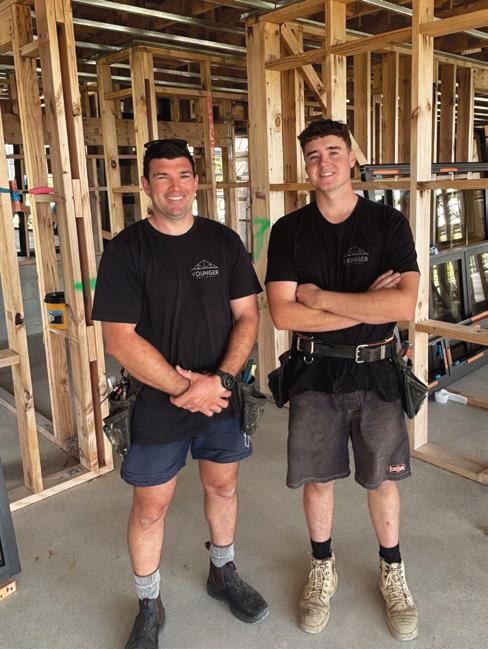
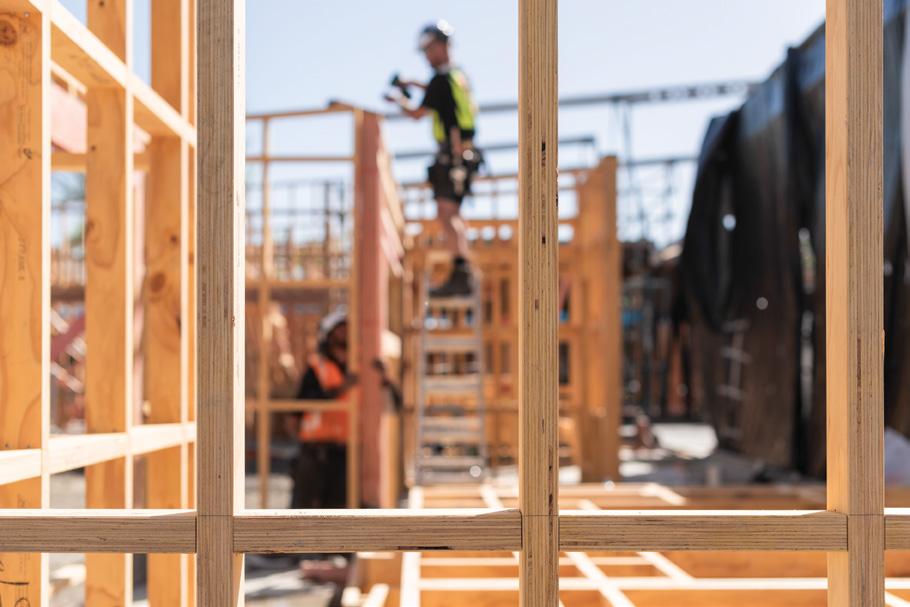
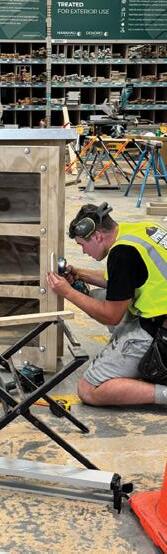
After taking out the Whangārei heat of the NZCB Apprentice Challenge, Caidan Brien is heading to the national final guided by boss Hamish Younger, who knows the value of patience, hands-on learning, and trusting the process.
MASTER
Hamish Younger
u Director and Founder, Younger Builders
u Established 2021
u High-end/architectural residential builds
APPRENTICE
Caidan Brien
u Apprentice at Younger Builders
u Winner of Whangārei heat of NZCB Apprentice Challenge
MASTER: Hamish Younger
InHouse: Your apprentice Caidan Brien has just taken out the Whangārei heat of the NZCB Apprentice Challenge – how did that feel to watch?
Hamish Younger: Oh, it was hard to watch because I was very nervous. I had a feeling that he would do well, because he’s been performing so well on site, but I was probably about as nervous as he was! It was pretty exciting to see him come away with the win.
IH: What stood out to you most about Caidan’s performance on the day?
HY: I think he just got in the zone and kept a level head, stayed quite calm and worked methodically.
IH: You must be very proud.
HY: Oh definitely. Caidan was the first apprentice that I actually took on because our company’s quite young – only about five years old. He’s sort of like my protege. We got him through a Gateway course when he was 17. He’d left school, had done some work experience and seemed keen, so we signed him up.
IH: Competitions like the Apprentice Challenge can be high-pressure. How do you prepare an apprentice for that kind of environment?
HY: We did have a bit of a practice run-through. Caidan was away and was supposed to come back just before the competition but his flights got cancelled and he got home a day late, so we only had a day to prepare. We hit the ground running though, and got stuck into it. I was basically just a sounding board for Caidan. He worked out how he was going to approach it and I helped him with a few minor details.
IH: What’s the dynamic like between you two on site day-to-day?
HY: I don’t actually get to work with the staff as much as I used to because the company has grown and I employ eight builders now. With Caidan, I like to check in and see what he’s up to, what he’s got planned, how he’s attacking the day-to-day tasks. I usually will see him on site and just say, ‘what are you working on today, mate?’ I’ll have him explain to me the processes, and then leave him to it.
IH: How did you first get into building yourself?
HY: I grew up on a farm, so I always thought I was going to be a farmer, to be honest. We had a few renovations done on our house as we were growing up, and I would just hang around and annoy the builders. I would get home from school and ask if I could help out doing something and they’d give me a little job to do. After I’d done the job, I would straighten out all the old used nails and give them back.
IH: Well, you’ve got to start somewhere right?
HY: It’s funny actually, because being a farmer’s son, I would watch Dad straighten and reuse nails, but the builders at our house were just looking at me funny like, ‘we don’t do that, we just use new ones’. When I finished seventh form (Year 13), I had the option to go and study at university, but it didn’t interest me much. It just so
u

happened that our family friend, who also did the renovations on our house, was looking for an apprentice. So he asked if I wanted to come and be a builder and I thought I’d give it a crack. And here I am.
IH: What were some of the toughest lessons you had to learn as an apprentice?
HY: I guess just growing up a bit. You’re just a boy at school and then you’re getting into the workforce and you have
to hold your own. My boss was quite renowned for his temper, so I had to step up and take on a bit more responsibility. I always had a good work ethic from growing up on the farm and I was not shy of a bit of hard work, so I was able to keep up. Learning the skills of the trade though probably was the hardest challenge. You’re a bit uncoordinated, so trying to swing a hammer or hold bits of material – really working on your actual skill set – takes a while. I remember one of my first days on the job trying to cut things with a skill saw which jammed and gave me a hell of a fright, and the boss wasn’t happy. I learned very quickly after that how to use my tools properly.
IH: Do you use a similar ‘tough love’ approach to mentoring young builders or is your style a bit different?
HY: A bit different. You know, I try never to get agitated. Obviously, sometimes, there are some high-stress situations but I try not to take it out on the boys. I am tough in some areas, and I do get a bit grumpy if things aren’t going right but I definitely don’t think there’s any need for people to be yelled at.
IH: What do you enjoy most about mentoring young builders?
HY: I like to see them develop into capable young people and to see the progress they have made. With Caidan, seeing the growth in him and what he’s been able to achieve is pretty awesome.
IH: Can you tell me about a project or moment with Caidan that really sticks with you?
HY: Back when Caidan began with me he would just do a couple of days a week. One time he was nogging a wall out, and his nogs were all over the place, with nails skewing out everywhere. And I said, ‘Mate, you’re going to have to tidy that up, and you’ve got to learn how to use your nail gun a bit better than that’. That day sticks with me quite a bit. To see what he was like compared with what he’s capable of now; he’s a completely different person.
IH: What advice would you give to young apprentices starting out, and likewise to builders taking on apprentices for the first time?
HY: Be patient. I do take it for granted that I’ve been building for 15 years now and it’s second nature to me. But for these new kids, you assume that they should just know how to do things but then you think, ‘actually, he’s probably never picked up a nail gun in his life’. So you need to be able to have the patience to teach them how to do it and trust the process. I don’t try and put pressure on the guys to learn the book-work side of things until a bit later down the track. I feel like young men in particular are very practical hands-on learners, so I have them learn how to use the tools, work with the materials and figure out how it goes together, and then the theory starts to make sense. I think it’s a massive patience game.
APPRENTICE: Caidan Brien
InHouse: Congratulations on winning the Whangārei heat of the NZCB Apprentice Challenge. What was going through your head when they called your name?
Caiden Brien: I was pretty stoked. I didn’t go in expecting to win. It was an awesome learning experience.
IH: What part of the challenge pushed you the most, and how did you handle that pressure on the day?
CB: I think the most challenging part was just the timeframe. Hamish and I worked on it the night before, which really helped. I thought we were going to have two days to practise and then my flights got cancelled and I only ended up having one day. But that turned out to be enough.
IH: You must be looking forward to the final. How are you preparing for that?
CB: They run a weekly Zoom call to help us prepare and know what to do. I’m also planning to talk to one of the previous winners about how he went in the competition. He won it last year
so I will get some advice from him. I just want to know what I’m getting myself into.
IH: So what inspired you to pursue building as a career?
CB: As a young kid, my cousin and I were always building things on the farm. I think that sparked a bit of a passion for building and I just really enjoy the hands-on, outdoor work.
IH: What were your first impressions of Hamish? Did you find him tough as a boss or did you think he was pretty cool?
CB: Yeah, I thought he was a pretty good boss. He knows when to be tough and when not to be. I also thought it was pretty cool that he would take us fishing when we were meant to be working sometimes!
IH: What’s the biggest thing you’ve learned from Hamish since starting your apprenticeship?
CB: Just always chasing perfection, really. Not being prepared to settle for less.
IH: Where do you feel you’ve improved the most – both in your skills and your confidence?
CB: Probably just opening up a bit more and not being as shy. I feel like when I started with Hamish, I wouldn’t even speak. I didn’t have a clue what I was doing when I started.
IH: Do you have any good memories on site that stick with you?
CB: I always remember in my early days on the job being chased by a cat under a house. Hamish had a good laugh about that!
IH: Looking ahead to the national final in Auckland, what are you hoping to get out of the experience and what would it mean to you to win?
CB: I’m just excited to get out of my comfort zone and learn a bit more. To win would be a big bonus. My parents will go and I think my grandparents are pretty keen to be there too. My grandfather is a builder, so I think he’s pretty proud.

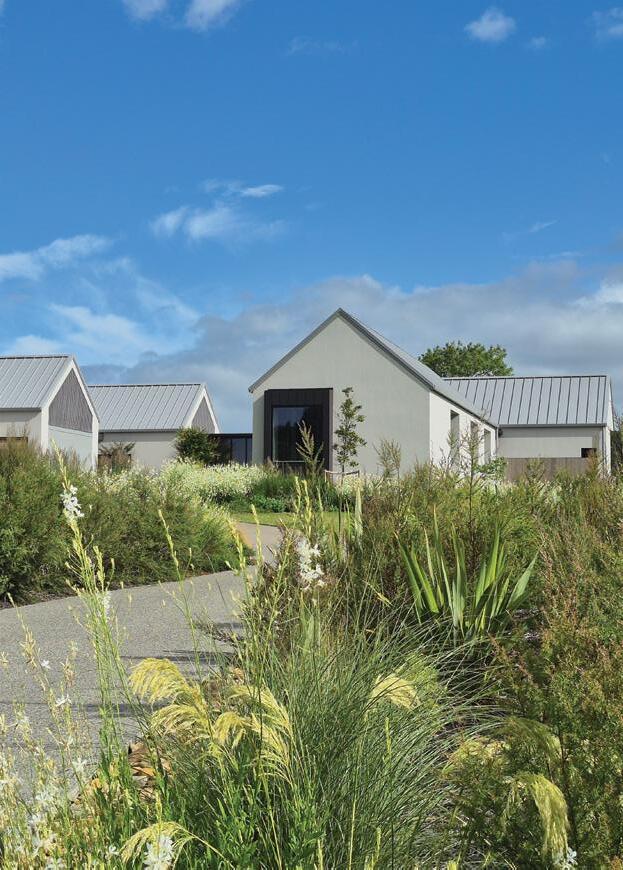
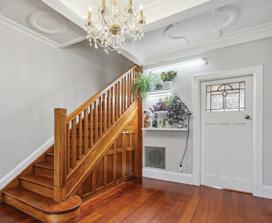
Working with character homes requires just that: a strength of character that recognises what it takes to do good by these classic centenarians.





BUILDER: Craig Holmes Development
LOCATION: Palmerston North, Manawatū
WHEN THE OWNERS of this two-storey beauty, designed in 1928, commissioned heritage architects Salmond Reed for a modern extension containing a new kitchen and living zone, they needed a builder who could breathe authenticity into the update. BJ Craig of Craig Homes Development was their man.
Set on a prestigious street lined with elms, where interwar planning rules dictated a set-back from the road and no front fencing, the house features half-timbered gables, stucco cladding and red-brick detail. Inside, a striking timber staircase in the lobby, matai flooring and leadlight windows speak of pure craftsmanship.
Surprisingly, the owners remained in situ for the job. “The first week in, our old kitchen was ripped out, but BJ designed a makeshift one in the storeroom to keep us going,” explains Liz Easton.
The new kitchen, dining and living area is filled with light through banks of bi-fold sliders that connect to a deep deck, lawn and pool. “In the dining zone, we had to develop bulkheads to hide the structural steel required to support the roof and floor above,” says BJ. Flooring rescued from a house demolition in the same street integrates seamlessly.
For the owners, their faith in BJ to celebrate the history of their home was well-founded. “He had the best crew, including the local sub trades, and was an amazing project manager, who kept us well informed,” says Liz. “He was also so careful with the logistics of how you work within the space. He treated the house as if it was his own.”








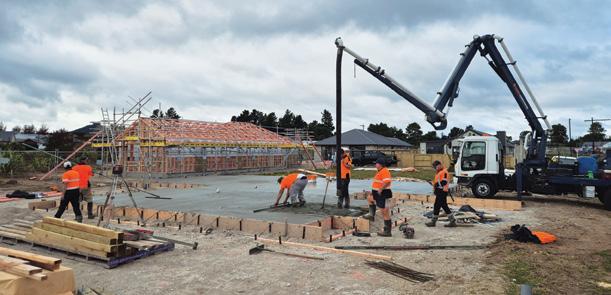
Going out on your own is the easy part. Building a business that lasts takes a little more grit. Two NZCB members share the highs and lows of running their own businesses, and what they’ve learned along the way.







AT SOME POINT, almost every builder thinks about going out on their own.
You’re on someone else’s site, working on someone else’s project, building someone else’s margin. Eventually, you start wondering, ‘Would I be better off working for myself?’
But going out on your own means stepping beyond the tools. Suddenly, you’re responsible not just for the quality of the work but for everything that goes along with it: pricing, deadlines, client relationships, compliance, cashflow, staff. The learning curve can be steep, and the pressure, at times, relentless.
Most builders who set up their own businesses think they’re going to get rich. Paul Riedel of Straight Up Construction Taupō – who has been in the industry long enough to know otherwise – puts it plainly: “It’s very, very unlikely that’s going to happen.”
That’s not a reason not to do it. It’s a reason to go in with your eyes open, and a plan that looks beyond landing the next job. The question isn’t really whether to make the move. It’s whether you’re ready for what comes with it.
The reasons for going it alone are rarely just financial.
For Whangārei builder and NZCB regional president Josh Welsh of Welsh Construction, it came down to something more personal.
“I wanted the freedom to have a nice work-life balance rather than working for the man,” he says. “I wanted to be the man. I wanted the luxury of being able to go to work but then when things are good, being able to enjoy more time with family or friends.”
Josh got his qualification in 2022 and made a deliberate decision not to rush into anything. Rather than launching a full company straight away, he started as a sole trader, contracting to others while he found his feet.
“I talked to a lot of people and that’s what they said: do a little bit of time under someone before you dive straight in, because then if you do have any issues, you’ve still got someone there above you so it doesn’t fall solely on you,” Josh says.
For Paul, the path looked different: seven years doing his apprenticeship in the army, three years overseas, then back in New Zealand and running his own business within nine months. That business has since flourished, but the early challenges then were the same ones every new business owner faces now.
“Building up trust with clients is very hard, and I don’t think it’s something that has got any easier,” he says.
“You’re trying to convince clients to spend huge amounts – that’s the most money they’re going to spend on an item, their house – so trying to get them to trust you when you’re very young, that’s the hard part.”
The practical foundations to starting a business matter more than most people expect. Getting your LBP certification; establishing the right company structure; getting contracts that protect you, and insurance that covers the work – public

liability and contract works catch people out more than almost anything else.
But perhaps the most important early step is finding an accountant you trust from day one.
Josh is unequivocal on that. “Find a good accountant. If you don’t get your financials in check, you can get into a lot of trouble.”
Beyond the paperwork, it’s about building the right network before you need it. Josh found that his NZCB connections gave him a head start that money couldn’t buy.
“I had the opportunity of talking to a lot of well-established businessmen through the contacts I’ve made through NZCB. They explained what to look out for. So I haven’t really been caught out by anything because I’ve had such a good network to lean on.”
The stuff nobody warns you about
But even with good preparation, there are things you can’t control. For Josh, it wasn’t the business itself that caught him out, it was the market.
“The biggest hurdle probably wasn’t
the first year, but the second. The industry was still recovering from Covid, so the workflow was a bit up and down.”
Josh decided to align himself with builders who could offer steady work, trading some independence for stability while he built his foundations.
Cashflow and wearing many different hats can be hard when you’re just starting out. But then there’s the mindset trap that Paul has watched catch out more than a few good operators.
“Most of us can set up a business and earn an income, and that’s great. It’s tempting to just want bigger and bigger jobs – we think we’re going to make more and more money. But the basics have to be right. All you need to do is make enough to live off, plus some extra.”
The long game
So what should you do with that bit extra you’re hoping to earn?
Paul’s philosophy is straightforward, and it starts with a question he reckons most young builders don’t ask themselves early enough.
“Are you going to buy a flash vehicle, a flash boat, and potentially a flash

For him, the answer to this question has always been in property, and the logic for builders is hard to argue with.
“I still think property is the best thing for builders to invest in, because you can add value to it and look after it quite easily with all the skills you’ve got.”
He says futureproofing comes down to two things.
“One is to work for clients and to make some money. The second thing is to gain assets.” And he believes more people in the trade should consider this angle.
“Sometimes as builders we’re a bit downbeat. We’ve got to look after the subbies, we’ve got to do this, we’ve got to do that. Well, you’ve also got massive ability to create assets.
“A Ford Ranger is not an asset, by the way.”
None of it happens fast, though, and Paul cautions that many young builders might go into business for themselves expecting miracles.
across the line is so hard sometimes.
“We’ve also just finished a $2.5million project for ourselves – it’s four industrial units. But it’s taken us 25 years to get here. You don’t do that in your first year of business.”
Josh agrees building a name takes patience and perseverance.
“Building a company is good, but it’ll take you ten years to just be recognised within the community.”
His answer to business ownership has been to look at buying into an established business with a proven track record and reputation, rather than building that from scratch.
“If you can shortcut that, then you’re already ahead of the game.”
Both Josh and Paul point to the advantages the NZCB community offers if you know how to make the most of it.
“It’s nice to be part of NZCB and attend the conferences and know there are people out there doing either similar stuff to you or who have had the same problems,” says Paul.

“You have to be really patient. Even now, I’ve just done a development and it’s taken two years. Trying to get things
u house? Or are you going to invest in something?”
“Locally, we’ve got quite a tight-knit
Josh and Paul’s tips for new business owners:
u Get your LBP qualification sorted before you go out on your own
u Find a good accountant early on
u Get your insurance in place from day one
u Build a network of quality tradies you trust
u Use your NZCB membership actively: go to meetings, talk to experienced people, gain mentors in the industry
u Consider marketing and social media time and costs
u Make the most of NZCB Learn’s online and in-person courses on the Toolshed
u Separate your business and personal finances from the start
u Think beyond income: what assets are you building alongside your business?
group of guys – about four or five of us –and we’ll ring each other up about problems. And if one of us has too much work, we can pass it on to the others.”
Paul’s advice to anyone starting out is clear: don’t just join the Association, but get actively involved in it.
“Go to meetings and rub shoulders with people that have been in the industry for 20 years. In New Zealand, a huge number of builders are going to retire in the next 10 to 15 years. There’s a massive opportunity for young guys to take that over.”
Josh says taking on the NZCB Whangārei regional presidency was a deliberate move to put himself outside his comfort zone and keep expanding his network.
“I said, I want a little bit of a challenge. I knew it would be scary, but I try and keep a positive spin on things so I don’t get so overwhelmed.”
Having the National Support Office behind him hasn’t hurt either. “If you’ve got any issues, they’ll sort them out –or they’ll know the right person for you to talk to.”
The bottom line
Out at One Tree Point Marina, Josh recently worked on a 630-square-metre home build on what had been just a bare patch of grass.
“It’s cool to see something come out of nothing. It was just a slice of grass, and now it’s a multi-million-dollar home, so it’s pretty rewarding,” says Josh.
“I’ve always been a firm believer that life throws what it wants to throw at you. So I think it’s all about how you take what comes towards you, not being afraid of opportunities, and putting yourself out there.”
Paul adds that it’s important for all potential business owners – actually, anyone in the trades – to take a step back and not to become too consumed by work and the push for success.
“Don’t just limit yourself to just getting old and tired. Find something outside of work that you’re passionate about, too. Take care of your mental health.”


Providing
Expert Technical and Sales Support
Helping you avoid costly delays or callbacks






NZCB’s membership process is designed to ensure every member has the skills and professionalism to uphold the Association’s reputation.

WHETHER YOU’RE JUST starting out on your own or you’ve been in the building game for years, NZCB business membership means more than just a logo you can put on the side of your ute. It signals professionalism, reliability, and a commitment to doing things properly.
NZCB members are some of the best builders in New Zealand, and our brand is seen as a mark of quality for homeowners looking for a builder they can trust.
That means there’s a lot of pressure on Membership and Technical Manager Scott Rasmussen to make sure we only offer membership to builders with the skills and experience to uphold those standards.
So what sort of business credentials and experience do Scott and his team look for when they’re considering an application?
More than just a qualification
The starting point is clear. Every applicant business must have a trade-qualified owner or director, typically at NZQA Level 4 or an international equivalent.
From there, the focus quickly shifts to experience. NZCB generally looks for at least two years’ post-qualification work experience.
Those first two years are when newly qualified builders start learning how to manage clients, handle variations, deal with subcontractors, and navigate the day-to-day pressures of running jobs.
“You hear it all the time,” Scott says. “You learn more in your first year out of your apprenticeship than you do during it. That’s when the responsibility really hits.”
As well as having two years of postqualification experience, ideally applicants will also have around two years’ experience running their own business. But as Scott points out, that experience can take different forms.
“We’re looking to see whether you have experience dealing with things like IRD obligations, ACC, invoicing, cash flow. So even if you’ve been contracting for two years rather than running a full business, you still have those responsibilities and that experience counts.”
The goal is not to exclude newer builders, but to ensure they’re not set up to fail. For those who show potential but lack depth in certain areas, NZCB offers a probationary membership pathway.
This provides access to tools, resources, and training, particularly around business basics like contracts, finance, and compliance. Once probationary members have shown they meet the standards, they can move to a full membership.
“It’s about support as much as it is assessment,” Scott says. “We want to help people build a solid foundation.”
One of the most important parts of the application process is the reference stage. Applicants are asked to provide contacts across three key groups: clients, subcontractors, and suppliers.
Each group is approached with tailored questions, giving NZCB a well-rounded view of how the applicant operates.
“What were they like to work with? Were they organised? Did they communicate well? Did they pay on time?” Scott says. “You start to build a picture pretty quickly.”
References can be a challenge for newer builders, particularly those who haven’t yet led projects under their own business. In those cases, NZCB can consider alternatives such as seeking the support of existing members, or friends and family for whom the candidate might have done work over the years.
“We understand that not everyone has a long client list straight away,” Scott says. “So we look at what they do have, and how that demonstrates their ability.”
For more established builders, the expectation is different. A longer track record should bring stronger, more consistent feedback.
Beyond reputation, Scott’s team also looks at applications through a financial lens.
NZCB uses independent credit reporting to assess the health and history of a business. This goes beyond assessing profitability or turnover and looks at patterns of behaviour as a business owner.
“We’re looking at whether the business is a viable going concern,” Scott explains. “Are they paying their suppliers? Are there any defaults? Are there links to other companies that raise questions?”
It’s a safeguard, both for the builder’s future clients and for the Association. Poor financial management can quickly lead to bigger issues on site, and that can ultimately damage the reputation of NZCB as a whole.
At the same time, Scott emphasises that context matters. A past business failure doesn’t automatically disqualify someone.
“Construction has been through some tough cycles,” he says. “The GFC, Covid, supply chain issues. A past liquidation can be an obstacle but doesn’t always mean someone’s a bad builder. We just need to understand what happened.”
That involves digging into the previous company to make sure the liquidation proceedings have concluded and that there are no outstanding or aggrieved creditors, and that NZCB understands how the applicant has moved forward since. Several years of positive trading in any new entity will be required in these instances.
For more experienced builders, particularly those joining later in their careers, the assessment often includes a simple question: why now?
“Sometimes it’s about a shift in direction,” Scott says. “They might want to diversify out from renovations to new builds or start offering warranties. Other times it’s about formalising what they’ve been doing for years.”
In some cases, there are also warning signs to look for. Repeated company changes, unclear histories, or patterns that suggest an attempt to avoid liability.
“We’re mindful of those situations,” he says. “It’s about protecting the integrity of the membership.”
That integrity is tested at various stages of the application process. Typically, NZCB’s Territory Managers meet applicants early on, building a relationship and providing initial feedback. Applications are then compiled, reviewed, and, where needed, escalated for further input.
“There are several sets of eyes on each application,” Rasmussen says. “It’s not a rubber stamp.”
According to Scott, the ultimate goal of the application process is not to catch people out. It’s there to ensure every member is equipped to deliver on the promise that comes with the NZCB name.
“We’re not just ticking boxes,” Rasmussen explains. “We’re putting people forward as some of New Zealand’s best builders. That comes with a responsibility to make sure they’re ready.”




When you’re setting up your own business, marketing can often slip down the to-do list, even though it’s essential for bringing in work. Check out this guide for simple marketing strategies designed for new and established businesses alike.
WRITER: KIRSTE-LEE FLOYD, NZCB MARKETING AND COMMUNICATIONS COORDINATOR
IF YOU’RE SETTING UP your own business and you’re an NZCB member, you’ve already taken a major step towards bringing in regular work.
The media is full of stories about cowboy builders so your NZCB membership automatically sets you apart as a quality builder.
to spend a lot of money you might not have when you’re starting out. The good news is marketing doesn’t have to be complicated, or particularly expensive, to be effective. The key is consistency. A small amount of marketing done regularly will always outperform short bursts of activity followed by months or years of silence.
No matter where you’re at in business, this simple three-month plan will help you get the fundamentals right. It’s not about large budgets or complicated strategies. It’s about being clear, consistent, and strategic about how you market your business.
What is marketing (and why do you need it)?
Marketing is about giving clients the confidence to choose you for their project. Every potential client is asking the same questions: do I trust you; do I know what you do; and why should I choose you over someone else?
It’s easy to think of marketing simply as buying an ad in the local paper or setting up a social media account, but the way you operate every day can also be a powerful marketing tool. Turning up when you say you will, communicating clearly, presenting yourself professionally, and being easy to deal with all shape how people perceive your business.
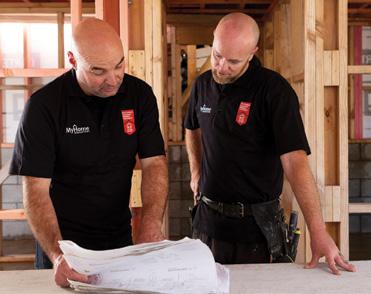
ABOVE: Neat, well-branded uniforms like those used by MyHome Renovations create a positive impression of the business.
But your individual business still needs to back that up with your own marketing. How you present yourself, communicate with clients, and show up professionally all influences whether a homeowner gets in touch.
Marketing can seem a bit mysterious and it’s easy to be tempted
Building confidence with clients takes time, and usually begins long before they get in touch. Clients might see your vehicle signage around the neighbourhood, hear about you from a previous client, and check out your website or social media before they ask you for a quote.
MONTH 1: GET SET UP
Confirm your business name and logo
Define your target work and audience
Set up a Google Business profile
Register on NZCB Find a Builder
MONTH 2: GET VISIBLE
Organise uniforms and signage
Launch a simple website
Update your business documents and templates
MONTH 3: BUILD MOMENTUM
Ask clients for testimonials
Attend an NZCB or industry event
Share project updates regularly
Review what’s working and keep it sustainable
WHAT ESTABLISHED BUILDERS SHOULD KEEP DOING
Update your website with recent projects and photography
Keep Google Business information current
Refresh signage and branded materials when needed
Share project updates or milestones on social media
Ask for testimonials and referrals
Stay active in local and industry networks
Review your branding every few years to ensure it still reflects your business today.
That’s why marketing works best when it’s an ongoing process. Not something you think about when you run out of work, but something that keeps your business visible and front of mind before clients are ready to get started on their build.
Start with the basics
Before investing time or money into marketing, get clear on your business direction. Define the type of work you specialise in, the projects you want more of, where you operate, and who you compete with locally. This helps shape how you position your business and who you’re trying to reach.
For example, a builder focused on renovations will market themselves very differently to a builder specialising in new builds. The clients, budgets, and expectations are likely to be slightly different, so your marketing should reflect that.
The next step is to work out the essentials: a clear business name, a professional logo, contact details, and a straightforward description of your services.
Even established builders should revisit these fundamentals regularly. You may now specialise in different work, operate in new areas, or have branding that no longer reflects the projects you deliver. If so, it’s time to work out what needs to be updated There’s nothing more frustrating for a client than to look at your website, decide you’re the builder for them, and then be told you don’t really do that work anymore.
As an NZCB member, remember to also update the Find a Builder tool on










our website. Keep your profile current, include accurate contact details, and clearly explain the type of work you specialise in.
First impressions matter, especially when clients are inviting you into their homes and trusting you with significant budgets.
One of the biggest missed opportunities for builders is the marketing that happens through everyday operations. Your vehicles, uniforms, signage, paperwork, and even the way your team presents themselves all influence how people perceive your business.
parked outside a project, it should be obvious who you are and how to contact you. These details can help turn everyday visibility into a marketing opportunity.
It’s not about overcomplicating things. Consistency and attention to detail matter most. A tidy, professional appearance signals reliability and pride in your work. It also helps build familiarity in your local area, making your business easier to recognise and remember over time.
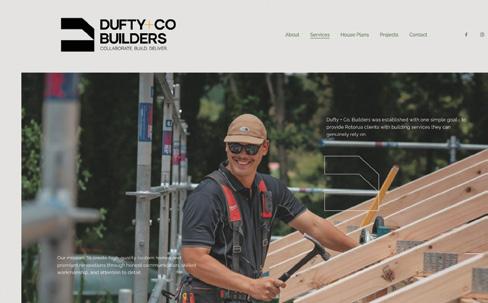
ABOVE: Most clients will look you up online. What they find should reinforce the impression you’ve created out in the real world. The Dufty+Co Builders site is a great example.
A good place to start is by reviewing the assets your business already has, for example, vehicles and trailers, uniforms, site signage, business cards, quote and invoice templates, and email signatures.
If someone notices your vehicle
Professional documentation is equally important. Clear, wellpresented quotes, invoices, and communication templates reinforce trust and make it easier for clients to engage with you.
Most clients will look you up online. What they find should reinforce the impression you’ve created out in the real world.
A simple, well maintained digital presence is usually all that’s needed. This starts with a professional website and an up-to-date Google Business profile.
When checking out your business, homeowners are generally looking for a few key things. They want to see professionalism through clear and accurate business information, along with examples of your work through quality photos and testimonials. They’re also looking for legitimacy, including your qualifications, experience, and who is behind the business.
Just as importantly, they want to know whether you can deliver the type of project they have in mind. Being clear about the style and scope of work you specialise in helps set the right expectations from the start. For example, if you mainly complete new builds but your website only shows fencing and deck projects from years ago, potential clients may move on before contacting you.
The same principles apply to social media. Make sure it accurately reflects what you’re doing now, rather than what you were doing when you first set up the account. You don’t need to post every day, but sharing occasional project updates, completed builds, or team milestones helps show your business is active and builds trust.
Avoid committing to platforms or content you won’t maintain. A simple and consistent presence will always outperform something more ambitious that quickly becomes outdated. Good examples are website News or Blog sections that haven’t been updated in a few years. These might have seemed a good idea at the time, but do you have the capacity to post these updates regularly?
If you want to set up or refresh your digital marketing, NZCB partners with AdWorks and Sailor Creative Agency,
who can support members with logo design, website development, and social media marketing.
One of the oldest and most powerful forms of marketing is word-of-mouth. You can tell people to trust you but nothing beats recommendations from a potential client’s friends, family, and neighbours.
Of course, those recommendations only come when clients have a positive experience working with you. But as well as delivering quality work, you also need to be proactive about asking for testimonials and referrals. It’s easy to move on from a client once a project is wrapped up but, assuming everything went well, these are some of the best sales reps you’ll ever have, so ask them for their help and stay in touch with them if you can.
Attending local and industry events also helps you stay connected and build strong relationships with clients, suppliers, and other trades all while putting your name out there. These connections often create opportunities that advertising alone can’t generate.
One example is the NZ House & Garden Tours earlier this year, where NZCB members had the opportunity to volunteer on our stand and connect directly with homeowners looking to renovate or build, turning conversations into leads in the process.
At the end of the day, you are the face of your business. Price is not the only – or even the most important thing – clients consider when choosing a builder. Above all, they want confidence that the builder they’re working with can do the job well, and will be good to deal with.
Consistent, professional marketing doesn’t need to be complicated. Often, it’s the builders who continue doing the basics well that stay top of mind when the next project comes along.












THE PAST YEAR has tested the resilience of both the construction sector and the Association.
As members faced subdued demand, constrained pipelines, and continued cost pressures, the Board remained acutely conscious of its responsibility to ensure NZCB stayed financially strong, strategically focused, and firmly aligned to members’ long-term interests.
Against that backdrop, I am pleased to report that the NZCB group has emerged from 2025 in a sound and stable position. While the Association itself felt the effects of static membership numbers and reduced subscription income, the overall group’s financial performance was strengthened by the continued success of Halo. This result reflects disciplined governance, prudent investment decisions taken in earlier years, and the value of maintaining a diversified group structure that supports the Association through economic cycles.
2025 also marked the conclusion of NZCB’s 2023–2025 Strategic Plan. From the Board’s perspective, this plan delivered strongly on its core intent: lifting NZCB’s visibility, credibility, and influence.
In particular, the growth in public awareness of the NZCB brand, alongside deeper engagement with industry and government stakeholders, has materially improved the Association’s standing and effectiveness. These gains did not occur by chance; they were the product of clear strategic direction, strong executive leadership, and a highly committed National Support Office team.
The Board has been especially encouraged by the tangible outcomes achieved through NZCB’s advocacy efforts during the year. Constructive engagement on vocational education
and training settings, and on liability reform, demonstrated the importance of having a credible, well-resourced industry voice at the table.
These are changes that go to the heart of how our members operate their businesses and manage risk, and they underline the value of NZCB membership beyond day-to-day services.
With the completion of the previous strategic plan, the Board has approved a new plan for the 2025–2030 period. This plan builds on recent progress while deliberately shifting focus toward deeper member engagement, stronger regional and sector connections, and practical support that helps members succeed as the market recovers. Central to this approach is preserving and strengthening the sense of community that distinguishes NZCB from other industry bodies.
While uncertainty remains in the wider economy, there are grounds for cautious optimism. NZCB is well positioned, financially and strategically, to support members through the next phase of the cycle and to capitalise on the opportunities that lie ahead.
On behalf of the Board, I would like to thank our Chief Executive Malcolm Fleming and the National Support Office for their leadership and dedication throughout a challenging year. My thanks also go to our Regional Presidents and their committees, whose ongoing dedication and work at a regional level are essential to the strength of our organisation.
I would also like to acknowledge the commitment of our members, whose continued support enables NZCB to advocate effectively on their behalf.
Finally, my sincere thanks go to the Board for their work and the time and expertise they continue to give.
In particular, the growth in public awareness of the NZCB brand, alongside deeper engagement with industry and government stakeholders, has materially improved the Association’s standing and effectiveness. These gains did not occur by chance; they were the product of clear strategic direction, strong executive leadership, and a highly committed National Support Office team.


MALCOLM FLEMING NZCB Chief Executive
DESPITE FORECASTS THE economy would return to a firmer footing in 2025, it proved to be another difficult year for the construction industry and for our members.
Having said that, there were encouraging signs towards the end of the year. In December, the annual National Construction Report was published by MBIE, BRANZ, and Pacifecon. The report calculated the value of residential building to have fallen from $29.2b in 2024 to a low of $26.1b in 2025, but also forecast this value to rise from early 2026 to $32.3b in 2030. This seemed to be borne out anecdotally, with NZCB members towards the end of the year reporting an increase in the level of building project enquiries following a flat 2025.
As with our members, it was a difficult year financially for the Association with static membership numbers, and member subscriptions reducing as members realigned their member categories to reflect lower turnovers, due to the tough economy. Fortunately, the financial position of the overall NZCB Group (comprising the NZCB Association, Halo Guarantees Limited, and the Apprentice Trust) is again very positive, reflecting the strong performance of Halo and vindicating the decision nearly three years ago for the Association to invest further in Halo and to set it up for success.
On a strategic level, 2025 marked the completion of NZCB’s 2023-2025 Strategic Plan. While short in duration, it successfully delivered on its objective of increasing NZCB’s brand awareness, while building an effective political and industry stakeholder engagement programme.
Some of this activity was highly visible, for example the ‘Find a Builder you Click With’ advertising campaign that launched in April 2025 and was targeted at putting NZCB members front and centre for homeowners considering upcoming building projects. We saw the fruits of this campaign in increased use of the Find a Builder search tool on the NZCB website, and a dramatic increase in NZCB’s profile in the media more generally.
There was a lot of work done behind the
scenes as well, particularly with a view to building our profile and influence with key decision makers. We were very engaged with proposals put forward by Minister for Vocational Education Penny Simmonds, arguing for a central role for the previous Industry Training Organisations (ITOs). We were very happy to see this work pay off, with BCITO returning to industry ownership on 1 January 2026.
Even more significant was our extensive engagement with MBIE officials around liability settings for the industry. This work continued over a period of six months and culminated in Building and Construction Minister Chris Penk announcing a shift from joint and several liability to proportional liability on an NZCB member’s site in November. The Halo 10-Year Guarantee is an example of the sort of home warranty that will be mandatory for homeowners to take out once legislation is passed and enacted (expected September 2027), and we expect these changes to drive a major uptick in Halo business.
Another key focus of the 2023-2025 Strategic Plan was to reimagine the Association’s education offerings to its members, the result being the development of a dedicated internal education resource that created the NZCB Learn platform. Membership engagement with the NZCB Learn online learning modules grew strongly across 2025.
Attention now shifts to 2026 and the years beyond. We have established our Strategic Plan for the 2025-2030 period, which focuses on cementing the hard-won gains in NZCB’s public profile, advocacy, and industry position, while adopting a member-centric view that empowers members to succeed in the business of building, and increasing NSO touchpoints with members. Doing that will amplify the aspect of NZCB that is so compelling – its sense of community – and will position us well for when the economy picks up.
Thank you to all our members for their ongoing support of the Association over the past year, and we look forward to a more prosperous 2026.
286 New members
$567k
Group operating profit
$2.15m
Group equity
8,224
Halo policies in force
119 Regional events
335
Media mentions

ROGER TAYLOR Chairperson Halo Guarantees Ltd

SHAUN RILEY Chief Executive Halo Guarantees Ltd
THE 2025 FINANCIAL YEAR was a great one for Halo, with a positive underwriting profit and strong investment returns. Combined with a well-diversified investment portfolio of more than $10m and claim reserves of $2.6m, we are well placed to grow and to deal with future claims as and when they arise.
Over the course of the year, we increased the number of policies in force from around 6,279 in 2024 to more than 8,224 in force now. We expect these numbers to increase significantly over the next year or two as the Government’s proposals to require building warranties become law from mid-2027.
We worked closely with NZCB in the final quarter of 2025 on what this requirement might mean for our business, and we will be doing a lot of work over the course of the 2026 financial year to ensure Halo Guarantees Limited is ready to take advantage of this policy shift when it comes into force.
Over the course of the year, we received a lot of claim enquiries. In most of these cases, the member was or is in liquidation and in cases where the member was still trading, the issue was generally resolved.
Of the 50 claims formally lodged, four were declined, 23 were paid out, provisions were allocated on a further 10, and the remainder were resolved with the builder. In total we paid or provisioned for claims totalling just over $200,000.
The 2026 financial year will be
a busy one for the Halo Guarantees team. As mentioned, we are ensuring our applications and claims processes are ready for a steady increase in inquiries and policies due to the mandatory guarantees requirement. In addition, we are introducing deposit and noncompletion covers, which makes our guarantee even more attractive to builders and homeowners.
As a consequence of these new covers and the general increase in building costs over recent years, we will be putting up the cost of the Halo Guarantee by 5%. It has been several years since this cost has increased and, since the Guarantee lasts for ten years, we need to ensure that we have sufficient reserves to cover future losses based on inflation adjusted costs. Even with this increase, however, the guarantee remains very competitive price-wise against the Master Build equivalent.
The Board and I are deeply grateful to the Halo team for their hard work during 2025.
I would also like to thank the directors for their time, effort and expertise in helping guide and shape the company and to considerably enhance the Guarantee.
Finally, I would like to thank NZCB and its members for their continued trust and support which has resulted in a successful year. Halo is very well positioned for the future, with a busy and interesting year ahead.
Over the course of the year, we increased the number of policies in force from around 6,279 in 2024 to more than 8,224 in force now. We expect these numbers to increase significantly over the next year or two as the Government’s proposals to require building warranties become law from mid-2027.
Get ready to bring premium performance into your next build with Bosch appliance solutions across refrigeration, cooking, dishwashing and laundry. Talk to your dedicated Trade Account Manager to learn more about the commercial range and to access commercial trade pricing.
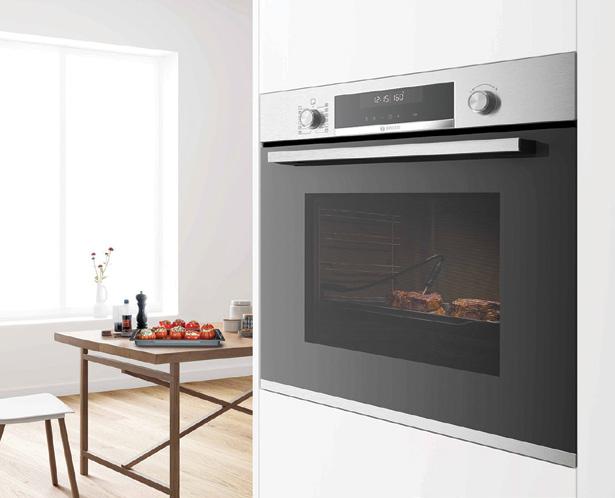
THE BOSH RANGE INCLUDES
Refrigeration Laundry
Cooking
Dishwashers
NZCB is proposing a review of the LBP regime and a new LBP+ tier to strengthen qualifications and client confidence.

This elevated licence tier would serve as a quality mark for consumers looking for qualified builders.
FOLLOWING ON FROM NZCB’s work with MBIE and the Building and Construction Minister around the introduction of proportional liability, we are now shifting our advocacy efforts towards a review of New Zealand’s LBP regime.
The current LBP occupational licensing classes were introduced in 2007. The Government of the day took the view that requiring a carpentry qualification for LBP Carpenter would be unreasonable for builders operating at that time, many of whom had practised for years without a formal qualification.
The Government took a ‘grandfathering’ approach, which exempted currently practising builders
from the need to hold a qualification, while signalling that any builders seeking an LBP Carpentry licence in an unspecified future, would be required to meet this requirement.
However, this formal qualification requirement was never implemented. To this day, the online application form for an LBP licence states “a qualification is not essential to obtain your licence”.
NZCB believes that the current licensing regime for builders in New Zealand is insufficient as it currently stands, and does not provide sufficient reassurance for clients that their builder has the requisite qualifications and experience to undertake complex building work.
We have begun discussions with MBIE and the Minister about introducing a new tier of LBP –tentatively named LBP+ – which would require builders to hold a trade qualification, and an agreed number of years post-qualification experience, among other requirements.
This elevated licence tier would serve as a quality mark for consumers looking for qualified builders. It could also be used as a qualifying threshold for some of the regulatory innovations introduced or proposed recently for the benefit of builders, such as consent exemptions for granny flats, rights to self-certify, and to be allowed to submit remote inspections.
These reforms to the LBP regime will take time and with an election coming up in November, the political climate is uncertain. Regardless of the results of the election, we will continue this advocacy work, and will keep members informed of progress with this proposal.

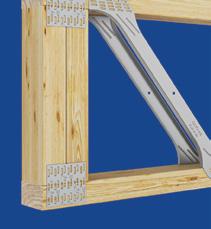
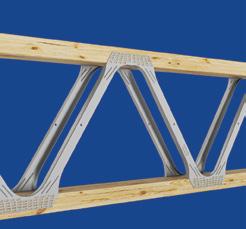


Posi-Strut® has always delivered design flexibility - for services, spans and performance. Now, with PS24 & PS29, that flexibility goes further, while keeping floor depths consistent.
The expanded Posi-Strut® range makes it easier to standardise floor design across a project - without compromising on span capability, load performance or layout complexity.
The result:
→ Fewer design compromises
→ Consistent floor zones across levels
→ Easier coordination with structure and services
→ Greater freedom without redesign
Rather than designing around limitations, Posi-Strut® now enables a more streamlined, repeatable and efficient approach - from concept through to fabrication and installation.
With PS24 & PS29 now available, rethinking floor design just got simpler.
Talk to us today or contact a MiTek Licensed Fabricator www.mitek.co.nz

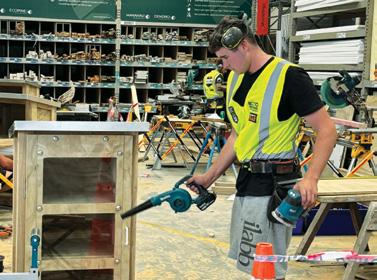
In April, more than 100 apprentices put their carpentry skills to the test at the regional heats of the NZCB Apprentice Challenge, held at 14 venues around the country.
“The Challenge gives apprentices the chance to test their skills, sharpen their craft, and stand out in the industry. It also reflects the dedication of the employers, training advisors, and whānau who have put time and resources into developing the next generation of tradespeople.”
– JASON HUNGERFORD
THE CHALLENGE SAW apprentices test their carpentry skills in a head-to-head, eight-hour build of a pātaka (community sharing cupboard) designed by ADNZ student, Matt Brown. Judges evaluated workmanship, build accuracy, material efficiency, safe working practices, and the ability to follow a detailed plan.
Apprentices built in a public setting, working under time pressure while employers, colleagues, and family watched on to see who would come out on top.
NZCB Chief Executive Malcolm Fleming says the event builds confidence in emerging builders and can be a pivotal milestone early on in their careers.
“We’ve got apprentices here who show real potential to lead the industry as trade-



qualified, certified builders. Against the backdrop of a difficult few years in the sector, the Challenge is a reminder that the industry has a bright future and that we must keep investing in our apprentices.”
Building and Construction Industry Training Organisation (BCITO) Chief Executive Jason Hungerford, an event partner, said the Challenge is a real-world testament to the hard work invested by both employers and apprentices.
“The Challenge gives apprentices the chance to test their skills, sharpen their craft, and stand out in the industry. It also reflects the dedication of the employers, training advisors, and whānau who have put time and resources into developing the next generation of tradespeople.
“Many of our BCITO apprentices were encouraged to participate in the Challenge by their employers, and we’re excited to see now what all the participants will do with that opportunity.”
Event partner Mitre 10 TRADE, along with Makita, sponsors a range of prizes for the Challenge. Mitre 10 Head of Trade, Mark Moffit, said the experience was a rewarding one.
“We’re pleased to be a major sponsor of this year’s Challenge. Hosting most of the regional heats and providing a space for apprentices to showcase their skills was a great way to engage with the builders of the future.”
The regional winners were competing at the NZCB Conference and Expo after this issue of InHouse went to print, with the overall winner taking home a $10,000 prize package, thanks to Mitre 10 TRADE, and the title of the country’s best apprentice. Full details of the final will be published in the next issue.















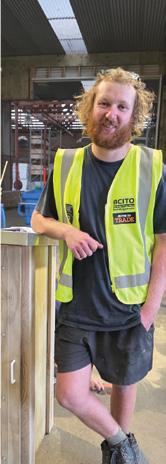


Long-time NZCB member and former Whangārei regional president Howard Harnett has been awarded honorary membership of NZCB, in recognition of his years of contribution to the Association. Here’s Howard in his own words, reflecting on his career, and his time with NZCB.

I started when I was 16 in 1965. My first job was way up north at a place called Whananaki North. The floor had just been put down in the house – a tongue and groove floor. My first job was to nail punch the floor for two or three days, and you learned pretty quick after a day of having a bloody finger with plasters all over it.
My time finished in 1969, and I went away overseas for quite a period of time, and that’s where I met my future wife. So I brought my wife out to New Zealand, and Whangārei was like a cowboy town. I remember the hitching rails for horses at the local Drummond’s hardware stores.
We started Harnett Builders properly in about 1991. We had all sorts of dreams. It was just me, two tradesmen, and I think we had a couple of apprentices going. They were rugby guys and it became known that if you work for these builders, you had to be a rugby player and you had to like fishing.
bringing to the industry.
When they first engaged, I was wanting to see positive stuff happening, I was not wanting to see negative stuff. First meeting I went along to, I thought ‘these guys are positive. This is what I want to be involved with’. I think Certified is a very positive organisation and they look after their members.
I hadn’t even been there for two years when I took on the presidency. So we embraced that. We tried to make our meetings fun and everyone felt involved. We used to have dress ups. I thought, ‘well, this is a way to get guys together, get the families along, the wives’. And it used to go down well with all the guys up north here.
There’s a young fella, he’s only 16. Four years later – he’s a man, a trained carpenter and he's got a future. I really love seeing that. Scan the QR code to
Getting involved with NZCB [Howard heard about NZCB from former Whangārei regional president Mark Dobbs] I saw the light. You had to be trade qualified. And I thought, ‘right, this is an organisation I want to be involved with’. And so I became involved because I saw the value of Certified and what they were
What I’m most proud of, I would say, is training apprentices. There’s a young fella, he’s only 16. Four years later – he’s a man, a trained carpenter and he’s got a future. I really love seeing that.
I feel proud of belonging to Certified for all these years. Long may I still be here!














Many builders engage labour as ‘contractors’ but getting the classification wrong can be expensive.

McGregor

WITH RECENT CHANGES to employment law introducing a new “Contractor Gateway Test” (effective 21 February 2026), now is the time to review your contractor arrangements and ensure they stack up.
Contractor vs employee: what’s the difference?
In simple terms:
EMPLOYEES
Ashcroft Mitchell McGregor operates the NZCB Employment helpline, offering specialist advice, representation and support across employment, immigration and health and safety law, to businesses throughout New Zealand. Visit ammlaw.co.nz
Work under an employment agreement (‘contract of service’);
Are paid wages or salary (often hourly);
Are typically directed by the business (hours, site, methods of work);
Are entitled to statutory benefits (annual leave, sick leave, minimum wage); and
Can raise personal grievances.
CONTRACTORS
Operate under a ‘contract for services’;
Are genuinely in business on their own account;
Usually invoice for completed work or milestones;
Have greater control than employees over how work is done; and
Can work for multiple clients.
In a building context, a genuine contractor might be a builder who:
Runs their own business;
Supplies tools and insurance;
Prices jobs independently; and
Can send someone else to complete the work.
By contrast, a labour-only worker who is paid hourly and works under your direction on your sites may look much more like an employee, regardless of how they are described in the contract.
Why getting it wrong is risky
Assuming a worker is a contractor when their employment is closer to that of an employee can lead to significant liability.
If a contractor is later found to be an employee, you may be liable for:
Backpay (minimum wage, holiday pay, sick leave);
Penalties and legal costs; and
Tax consequences (including PAYE obligations).
The courts are increasingly willing to look past written agreements, which might claim workers are being hired as contractors, and assess the real nature of the working relationship. In recent cases in the construction sector, many so-called ‘contractor’ arrangements have not held up under scrutiny.
The new gateway test sets out when a worker is a contractor, and is designed to give businesses certainty about the status of their workers.
It’s important to note that workers can only be considered contractors if all the following criteria are met:
Written agreement. The contract must clearly state the worker is an independent contractor.
Freedom to work elsewhere. You cannot restrict a worker from working for others.
Control over availability. You cannot require a worker to be available at set times or days, unless they are free to subcontract the work.
Freedom to decline extra work. You cannot terminate a worker for turning
down additional jobs that you offer.
Opportunity for independent advice. They must have had a real chance to get independent advice before signing the contract.
If even one of these criteria is missing, the gateway test fails and the worker can argue they are an employee, regardless of what their contract says.
What builders should do now
Given these changes, we recommend:
Review your contractor agreements, especially labour-only arrangements.
Check how the relationship works in practice and not just what the contract says.
Avoid ‘employee-like’ control over contractors (set hours, attendance, supervision).
Ensure genuine independence, or consider whether employment is the safer option.
If you’re unsure whether your contractors would meet the new test, it’s worth getting advice now before employment issues arise. Contact the NZCB helpline on 0800 354 821 for guidance.
Ashcroft Mitchell McGregor delivers specialist advice, representation and support across employment, immigration and health and safety law to businesses throughout New Zealand. We can provide advice and guidance pertaining to any of the changes mentioned above. Visit ammlaw.co.nz to subscribe to our newsletter, gain access to our free webinars, receive invitations to our workshop and seminar series and stay up to date with the latest developments.
Disclaimer: Information published in this article is not intended to be comprehensive. No person should act in reliance on any statement in the article and the Building Disputes Tribunal accordingly does not accept any responsibility. Readers are advised that specialist legal advice should be sought in relation to all matters covered in this article.




Rising fuel costs are putting pressure on project margins and highlighting the importance of understanding risk.



WHEN FUEL PRICES JUMP, the big question on any job is simple: who pays for the increase?
NZCB building contracts allow builders to pass on these sorts of price increases. But if you’re not using one of these contracts, things can be a bit more complicated, particularly if you’re working under a NZS 3910 contract.
What is NZS 3910?
NZS 3910 is one of the most common standard construction contracts used in New Zealand. Councils, government agencies, and large private clients use it for civil and building projects.
have risen sharply in recent months, and many contractors priced their jobs long before these increases hit. If the contract doesn’t allow for cost escalation, the contractor may have to absorb the extra cost – even if it wipes out their margin.
Does your contract allow for price escalation?
Under NZS 3910, cost escalation (referred to as ‘cost fluctuations’) is optional. However, unless the parties opt out of the relevant provisions, they will apply.
The BDT provides guidance to parties and their advisers as to the most appropriate dispute resolution process for their dispute. Call 09 486 7143 or 0508 284 534, email registrar@buildingdisputestribunal.co.nz or visit buildingdisputestribunal.co.nz
It sets out the rules for how the job is run, including variations, payments, risks, and responsibilities. But importantly, many are varied so that contractors are not protected from rising costs. The parties have to agree to include those protections.
The most recent version is the NZS 3910:2023.
Fuel, transport, and freight costs
Since Covid, many principals have removed these clauses to keep prices fixed. If your contract doesn’t include a fluctuation clause, you generally carry the risk of rising fuel prices.
What type of contract are you working under?
It’s important to understand the effect that different types of contracts have on your exposure to increasing costs.
If you’re working under a lump sum
contract and it doesn’t contain a fluctuation clause, you’re usually stuck with the increased fuel or transport costs. By contrast, a cost-reimbursable contract means that the principal pays your actual costs. In other words, fuel increases can normally be passed on, but only if you follow the notice and paperwork requirements in the contract.
Have you given an early warning notice?
NZS 3910 requires contractors to give early warning notices when something may: increase the contract price; or delay the job.
A sudden spike in fuel costs is likely to require this notice. Early warnings help both parties consider their options before the issue becomes a dispute.
The best approach: talk early, talk openly
Fuel price volatility is now a normal project risk. The sooner contractors and
principals talk about it, the easier it is to find a practical solution. Reviewing the contract together and agreeing on how to handle unexpected increases can prevent tension later.
If disagreements do arise, BDT is here to help.
The BDT administers alternative dispute resolution (ADR) procedures such as adjudication under the Construction Contracts Act, arbitration and expert determination for parties looking for a quicker and cheaper alternative to the courts. For those new to ADR, the BDT’s team of dedicated registrars can work with you through your dispute and recommend a procedure that best fits your unique situation.
BDT has a 30-year record of managing construction disputes, and is recognised as the leading independent, nationwide provider of specialist dispute resolution services to the building and construction industry. The BDT does not provide legal advice.





If the contract doesn’t allow for cost escalation, the contractor may have to absorb the extra cost - even if it wipes out their margin.
Disclaimer: Information published in this article is not intended to be comprehensive. No person should act in reliance on any statement in the article and the Building Disputes Tribunal accordingly does not accept any responsibility. Readers are advised that specialist legal advice should be sought in relation to all matters covered in this article.







Success in business ownership comes down to strong systems, smart support and the right tools.


WHEN YOU’RE A TRADIE, making the shift from being an employee to being a business owner is often a bigger transition than you might think.


FreeUp/Released is a NZCB National Partner (Starter) and tech advisor for builders – making the process quick and easy, from selecting the right software to setting up the system to training staff. FreeUp/Released also operates the NZCB Technology and Software helpline for members. Contact us at 09 887 9950 or hello@freeup.co.nz or visit freeup.co.nz
Without meaning to put anyone off, a decision that’s made with the intention of gaining more freedom and autonomy over your work can quickly lead to tradies getting bogged down in administration and responsibility.
Thankfully, there are tools available to make business ownership not only tolerable but rewarding and even enjoyable.
The key to success when making this switch is to understand the fundamental difference between tradie and boss. If you’re thinking it’ll be pretty much the status quo, except with a bit of extra bookkeeping in the evenings, think again. The added administrative burden is enough to surprise any newly
minted business owner, and it comes with the pressure of being the one with whom the buck stops. If you’re employing people, you’re responsible for their livelihoods as well as your own.
To build a business rather than a job, you need to be thinking of big-picture systems and solutions that are not just “I’ll do it myself”. That line of thinking can lead to evenings and weekends stolen by paperwork, errors caused by exhaustion or lack of experience, and reputational harm. When you’re overwhelmed, customer communications, quick follow-ups, and even accuracy fall down the list of priorities.
Outsourcing some administrative tasks to an expert – whether an employee or a contractor – can relieve some of the burden. It also frees you up for more income-earning work that you’re qualified to do. However, having
good systems, software, and procedures in place from the start ensures that you’re only paying for what you need. With the right foundations and planning, you can balance profitable work and the added responsibility of being the boss without putting your free time, family, sanity, and long-term success in jeopardy.
As business support professionals supporting small trades businesses across New Zealand for more than a decade, the Released team has seen all of the ways in which the switch from employed to business owner can go wrong. These are just a few of the small mistakes that are easy to make as a first-timer:
u Employment law compliance (or lack thereof). Before business ownership, most tradies are not up to date with this area of law. And why would they be? Paying someone as a contractor when they should actually be treated as an employee, for example, could get you in trouble with the IRD and you can be held liable for back-paid holiday pay and KiwiSaver contributions. Lack of knowledge in this area can be costly.
u Quoting and pricing errors. Verbally agreeing to variations and forgetting to record and bill for them is a profit-suck, but it’s a common mistake new business owners make as they’re finding their feet. Quality administrative support and software with the right pricing features will make this a lot easier.
u Bookkeeping blunders. A classic example of the sort of accounting error you can make when you’re new to running a business is seeing a big payment come in, and forgetting about the bills you’re going to need to put money aside for. Imagine spending up on a new ute and then being hit with the GST bill you’d forgotten was coming.
u Letting down your clients. Your reputation with clients is one of your biggest marketing assets: happy
clients bring repeat business, recommendations, and referrals. When you’re swamped by bookkeeping, payroll, and other pressing issues, it’s all too easy to let prompt and professional communication with customers fall by the wayside.
These are just a few examples of some of the mistakes new business owners can make when they’re just starting out. But if you get yourself set up with the right people, systems, and software tools from the start, you can avoid these pitfalls.
While a move as big as starting your own company is never going to be entirely smooth sailing, there are ways to set yourself up for success.
Often, it comes down to strategic support and having the right software. Having an expert hand take over the trickiest parts of your business administration – the parts that you really don’t want to get wrong – is a very smart investment.
Whether it’s bookkeeping and payroll or customer communications and invoicing, the speed and accuracy that comes with outsourcing to experienced providers can change the game. Doing it all yourself might seem cheaper, but it comes at the risk of mistakes, reduced income-earning hours, and unnecessary mental and emotional strain.
Digital tools, when they are matched well to your operations, can minimise the time spent on your administration and make your systems much more seamless. They can also provide easy, accurate financial tracking and reporting to guide decision-making and planning. The Released team offers trade businesses software strategy services, helping owners to pick, implement, and train staff on the software that will create simple and smooth workflows.
Want to build an efficient and profitable business on a solid foundation? Head to released.co.nz and get in touch with the team!

Rising construction costs are increasing the risk of underinsurance, making realistic Contract Works cover more important than ever.

VOLATILITY IS SADLY the new normal within construction.
Between fluctuating supply chain costs and the ongoing impact of fuel prices, the budget you set at a project’s inception can quickly become obsolete.
For many in the building community, the real danger isn’t just budget blowouts; it’s the silent risk of being severely underinsured by not factoring these changes into your insurance policies.
ICIB Brokerweb is the trusted insurance broker for NZCB and is proud to be celebrating 50 years of doing business in New Zealand. For a review of your commercial vehicle cove, call us on 0800 644 444 or visit icib.co.nz
Most standard Contract Works insurance policies include a limit for ‘increased costs during construction’. The standard limit for this is 5% which, on the surface, might feel sufficient. However, as many builders would agree, that limit is increasingly detached from reality.
We have observed major building suppliers reporting individual supplier increases of up to 15% due to the current economic environment.
If your project suffers a major loss and requires a full rebuild, a 5% allowance for increased costs may not cover the gap between your original contract value and today’s inflated prices. You could therefore find yourself facing a massive shortfall.
The good news is that this gap is bridgeable and usually at a relatively low cost. Here are some practical things you can do to manage this.
Adjust your sub-limits. Allow a minimum 10% sub-limit for the ‘increased costs’ portion of your Contract Works policy. This is an optional increase to discuss with your broker.
Allow for a variations limit. If included within your contract value (or separated out as a clear separate limit), this is a cost-effective way to provide a buffer at the start of the policy. It is often cheaper to do this at the start than adding it in later. For example, allowing an extra $50,000 on top of your contract value as a variations limit can help insulate you from costly increases later if your client requests variations mid-build requiring increased insurance.
Implement a variations buffer. Ask your broker to include a dedicated variations or ‘buffer’ line of cover within the policy. Aiming for a buffer that accommodates a 10 to 20% increase over the life of the build provides a vital safety net, helping to protect you from being severely underinsured following a major loss.
There is a persistent myth that waiting until the slab is poured to secure insurance will save on premiums.
In reality, this strategy often backfires and the consequences are becoming more severe.
Insurers are taking an increasingly firm stance on late applications for Contract Works insurance, so it is worth taking note of the following:
No guarantees. Applications made after a build has commenced are no longer guaranteed coverage. We have seen insurers outright refuse to offer cover for projects that have already broken ground, unless an exceptionally strong case is made. The additional work to secure insurance can lead to higher fees.
Increased costs. If an insurer does agree to cover a late application, they are almost universally applying a ‘late application penalty’. This is typically an additional 10% premium.
Claims risk. Beyond the added expense, late applications create significant friction during the claims process. Investigations into the exact
dates of events can lead to agonising delays and, in some cases, result in claims being declined entirely due to the lack of continuous coverage.
Protect your project from day one
Insurance is the foundation of your risk management strategy.
By planning for realistic cost
fluctuations and ensuring coverage is in place before the first truck turns up on site, you aren’t just saving money in the long run – you are protecting your professional reputation.
Furthermore, you are ensuring that if disaster strikes, the path to recovery is clear, not mired in disputes and shortfalls.
ICIB Brokerweb is the trusted insurance broker for NZCB and has been helping to insure Kiwi businesses for over 50 years. Give us a call on 0800 644 444. icib.co.nz


We have observed major building suppliers reporting individual supplier increases of up to 15% due to the current economic environment.


Starting your own building business means you need strong systems, sound financial management and the right support around you.


STARTING YOUR OWN building
business is a big milestone. It often comes after years on the tools, backed by solid technical skills and a strong reputation. But running a business is a very different challenge. What many new owners don’t realise is just how quickly the role expands beyond building.
all the hats


My Smart Office can help you get more done in less time. Then you can focus on what matters: growing your business. Amanda Chisholm runs a successful residential building company with her husband and has over 20 years of experience working with customers, sales and marketing, bookkeeping and administration. For more advice contact MySmartOffice on 021 886 120 or visit: mysmartoffice.co.nz
You’re no longer just a builder. You’re an estimator, project manager, salesperson, bookkeeper and sometimes even a debt collector. It’s a constant juggle, switching between site work and office tasks.
Many business owners work late nights and weekends just to keep up. Quotes need to be prepared and sent, invoices chased, suppliers paid and clients updated. It’s rewarding, but it can also be exhausting when everything falls on your shoulders.
You don’t know what you don’t know
One of the biggest challenges is the unknown. It’s not just about doing the work well, it’s understanding everything that sits behind it - like pricing jobs properly, managing cash flow, navigating
contracts and staying compliant.
Gaps in knowledge are common early on, but not fully understanding your obligations around employees, tax or filing requirements, and issuing valid payment claims that meet the requirements of the Construction Contracts Act, can lead to penalties, unexpected costs and even legal action.
Many new business owners only discover their knowledge gaps after something goes wrong. That learning curve can be steep, time consuming and expensive.
will cost you
Mistakes are part of learning, but in business they can come with a price tag. Underquoting a job, missing a variation, or failing to track costs properly can turn what looked like a profitable project into a loss.
Cash flow is another common pressure point. You can be busy on site but still struggle to cover wages, suppliers and tax obligations if money isn’t coming in on time. Without clear systems, it is easy for things to slip through the cracks.
Put tax aside from day one
One area that often catches new business owners off guard is tax, particularly
provisional tax. In New Zealand, your second year of business is a ‘Double Payment Year’. You’re required to pay last year’s terminal tax plus your second year provisional tax instalments in advance.
If you don’t set money aside from the start, this can come as a shock. A good rule of thumb is to treat tax as a regular expense, not an afterthought. Putting money aside from every payment you receive will make a big difference when those due dates roll around.
You don’t have to do it alone
Many business owners think they need to handle everything themselves to save money. In reality, trying to do it all can cost more in the long run through mistakes, inefficiencies and lost opportunities. Engaging experts is not an expense, it’s an investment. For example:
A good accountant can help you understand your numbers and stay ahead of tax obligations.
A bookkeeper can keep your records


accurate and up to date.
An HR specialist can help with employment contracts, staff management, performance issues and workplace processes.
Business advisors, mentors and industry professionals can provide guidance that helps you avoid common pitfalls.
Surrounding yourself with the right support frees up your time to focus on what you do best and where you add the most value.
a better business
Running a business is complex, and it takes time to find your rhythm. The key is to recognise that success is not just about being a great builder. It is about strong systems, understanding your numbers and making informed decisions.
By planning ahead, seeking advice and putting the right support in place, you can reduce stress, avoid costly mistakes and build a business that is not only sustainable, but enjoyable to run.


Many new business owners only discover their knowledge gaps after something goes wrong. That learning curve can be steep, time consuming and expensive.






After leaving a career in software to take up carpentry, Christchurch apprentice Brent Butler is finding meaning not only on site, but through giving back to his community.
WRITER: COURTNEY WHITAKER

IN THEIR LATE 30s, most people are well-established in their careers. For Brent Butler, he was getting ready for something entirely new.
After eight years spent behind a desk as a software tester, Brent says the move from computer screen to construction site has been a challenge worth taking on.
“I was sitting at the computer every single day for nine hours and it just wasn’t stimulating,” he says.
Retraining as a carpentry apprentice at 37 has given him a renewed sense of purpose, and, three years on, he hasn’t looked back.
So what prompted the shift?
“It was simple,” says Brent. “I was finding software testing becoming very boring.”
“I thought about what I really, really wanted to do. I’ve always wanted to be a builder since I was young, so I chose that.”
Years of desk-bound work was starting to take its toll on Brent, so a career switch could not have come at a better time.
“Everybody thinks getting into building was this huge leap, but it wasn’t. I think my body’s made for building. So it wasn’t just helping my mind, but also my body.
“It was obviously a learning curve using new tools and dealing with new environments, but after I worked that all out, it was smooth sailing.”
There was an adjustment period involved in going back into a learning environment – something Brent hadn’t experienced in years – but it was one he embraced.
“I hadn’t been at school in a long time. So it was quite enjoyable. But in terms of building, there’s so much scope and so much detail that you need to work out.
“In building we’ve got this 100ml trick where you read the wrong side of the line, and at the beginning, I was always either 100ml too long or 100ml too short. But you learn.
As it turns out though, not everything about the transition into carpentry was unfamiliar.
“There is a lot of critical thinking and analysing in software testing –there’s a lot of maths as well – so these things are all useful in carpentry.”
Putting skills to the test
That ability to think methodically and problem-solve on the fly has already proven valuable on site –and beyond.
Brent put it to the test when he entered this year’s NZCB Apprentice Challenge, where he placed third in the Canterbury heat. For him, the experience was as much about personal growth as it was about performance.
“I really enjoyed it. I also learned a lot of things about myself, for example what I’m doing, good and bad.

I actually really want to do it again.”
As part of the challenge, competitors were tasked with building a pātaka – an outdoor community sharing cupboard –to be donated to a community organisation. It was a brief that gave Brent the chance to combine his developing skills with something more meaningful.
After some thought, he chose to donate his pātaka to Ngā Hau e Whā National Marae.
“When I was at Ara, I visited the marae and I really liked all the Māori architecture. I thought, I’m going to support them because it’s also part of New Zealand. I asked them first to see if they were interested and they were, so I sent it to them.”
It’s a gesture that reflects the
broader shift Brent has made from working behind a screen to creating something tangible.
For now, Brent’s path ahead is still taking shape but the direction is clear. Having found his feet on site, Brent is focused on continuing to develop his skills and build a long-term future in the trade.
“Everything’s open. I definitely want to be a Licensed Building Practitioner.”
And for anyone considering a late-stage career change, his advice is simple.
“Do something you enjoy. If you’re not enjoying what you do now, are there other ways you can use your existing skills?
“What’s important is not just that you feel like a change; it’s that you’re really motivated to do it.”
Everybody thinks it was this huge leap, but it wasn’t. I think my body’s made for building. So it wasn’t just helping my mind, but also my body.
When it comes to your decorating projects it helps to know you’ve got the right painter for the job as well as the right paint. So when you choose the services of an approved Resene Eco.Decorator you can be sure that the paintwork will be just as good as the paint.
Starting a building business comes with a steep learning curve but NZCB Learn courses help make the process that much easier.


The NZCB Learn platform is available exclusively to NZCB members, and it brings flexible learning to you. Access it via the NZCB Toolshed and find a range of day courses, online learning and health and safety resources. If you need extra support or have questions, email learn@nzcb.nz or call Marcie Hintz on 021 365 947
AFTER SEVERAL YEARS contracting, NZCB member Richard Smith in Hokitika decided to take the plunge and launch his own business, RP Smith Builders. Like many stepping into business ownership, he wanted to make sure he was setting things up right from day one. That led him to NZCB Learn.
“I just wanted to cover off the basics and make sure I was doing everything properly from the start,” he says.
Over the past month, Smith has worked through a wide range of courses on the platform, focusing on both business fundamentals and technical updates. For him, the value has been in having everything in one place – clear, accessible, and easy to revisit.
“A lot of it is stuff you already know, but it’s good to have it there to refresh,” he says. “You can go back if you’re not quite sure about something.”
From contracts through to health and safety, NZCB Learn has given him confidence he’s getting his business off to the best possible start.
“It’s quite handy having that support there,” he says.
As well as the Business Basics courses, Smith has also made use of more specialised content, including courses covering areas like granny flats and current regulatory requirements. Staying up to date with what’s happening with regulations, he says, is an ongoing challenge, but one that’s easier to manage with the right tools.
Now he’s looking at building up his knowledge further by attending an in-person course.
“Having the chance to follow up a point with some questions and talk about things in person will be really good,” Richard says.
For builders thinking about setting up their own businesses, there’s a lot to get your head around. Where the work is going to come from; how to manage staff; staying on top of all the paperwork.
The good news is you don’t need to do it on your own. With NZCB Learn’s online courses, you can get the information you need, at a time that suits you.
Check out the full range available on the Toolshed.












Use it for fast curing, anchoring of threaded rods and reinforcing bars in both cracked and un-cracked concrete.
˺ Consumption Calculator APP? YES
˺ Free online how-to-use course? YES
SCAN QR CODE or visit SIKA.CO.NZ








BAY OF ISLANDS JOSH ALLEY
Regional presidents and committees have been confirmed for the 2026-2028 term, following a nomination process earlier this year.
A BIG THANK YOU to everyone who put themselves forward for these positions and congratulations to the successful candidates. NZCB depends on these committees to help coordinate a huge range of activities around the country, and their work is greatly appreciated.
Here are the presidents for each region but many of the regions still need volunteers to help or to join the committees. Please contact the regional president in the first instance or Scott Rasmussen at National Support Office if you would like to find out more.
The term for the new committees began at the Presidents Forum on 4 June, held alongside the NZCB Conference and Expo. Their term will run until the equivalent Presidents Forum in 2028.
WEST COAST RICHARD POFF
CENTRAL OTAGO MARK DUFFY
SOUTHLAND TBC
AUCKLAND PAUL WEBSTER-YOUNG
WHANGĀREI JOSH WELSH
WAIKATO SHAUN BEGOVICH
TARANAKI CHAD NIWA
NELSON ANDY WELLS
ROTORUA ERIN POPE
TAUPŌ CHRIS SMITH
MANAWATŪ CRAIG WHITTON
MARLBOROUGH MARK THOMPSON
CANTERBURY ZIGGY CONROY
SOUTH CANTERBURY JOHNNY RIVE
OTAGO SACHA GRAY
TAURANGA SHANE HUTCHINSON
WHAKATĀNE JAMIE MUNN
GISBORNE DIGBY TOOTHILL
HAWKE’S BAY JESSE DRINKROW
WAIRARAPA PAUL BASHFORD
WELLINGTON BRIAN LUDLOW + ADRIAN REID


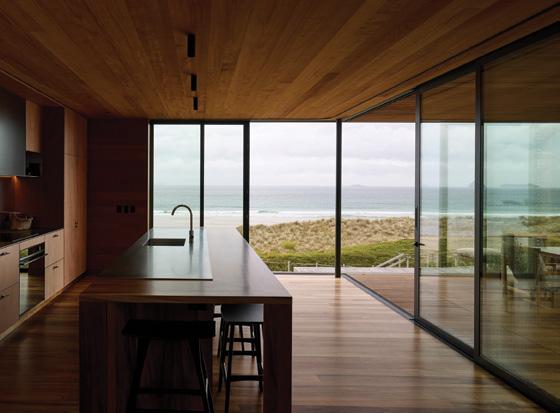




Regional committees have been hard at work over the past few months, organising a fantastic series of events. And there’s plenty more to come.
IN MARCH, Waikato members enjoyed a Hamilton Beers, Bowls and BBQ evening, while Nelson hosted a Members Breakfast, bringing members together to connect and share updates. Down south, Otago members gathered for a local catch-up, alongside member catch-ups in Gisborne and Manawatū/Wanganui.
April delivered a great balance of social and industry-focused activity. Highlights included the Blenheim Summer Bowls & Banter, alongside Builders Breakfasts in Rotorua and the Bay of Islands. The calendar also featured a Whakatāne catch up, while Auckland and Whangārei hosted additional member sessions and networking opportunities.
A special mention for the Auckland region’s Charity Golf Day, which as well as being a fantastic day out, raised an incredible $10,500 for the NZCB Apprentice Trust. A huge thank you to our generous sponsors whose support made the day possible. And, of course, a massive well done to the committee for putting together such a fantastic event, and to everyone who attended to support such a worthy cause.
In May, the events programme has remained just as active. Members have come together at the Blenheim Members Get Together, the Tauranga Members Get Together, and the well-supported Whangārei Catch Up and Chat. In Nelson, members have had the opportunity to attend both a Granny Flat Consent Exemption session and an ‘Open Home’ event, while Waikato delivered an online education session, adding a new way to do things.
Looking ahead, there is plenty on the horizon. In June, Whakatāne members can look forward to the Tauranga GIB Factory Tour and members catch-up at NZCB headquarters (18 June). Meanwhile, Auckland members have Beer Burgers and Banter with The Resident Builder podcast host Peter Wol amp (23 June), and the LBP Education Day at the Logan Campbell Centre, Auckland Showgrounds (15 July), held in partnership with BuildNZ.
For more information on these and more events and to register, check out the Events tab on The Toolshed, or contact your regional president.


ABOVE: Auckland’s Charity Golf Day raised money for the Apprentice Trust in April.
LEFT: Peter Wol amp will join Auckland members for Beer Burgers and Banter in June.
BELOW: Whakatane members will check out the Tauranga GIB factory in June, and visit NSO.


When specifying door hardware, builders need confidence that a product will perform on site and stand up to everyday use. To understand how Yale Unity® Slim delivers in real‑world conditions, Yale spoke with Joe Ravenhall, Sales Manager at Window Makers, a New Zealand joinery manufacturer working with Unity Slim across residential builds.
Developed specifically for New Zealand conditions and narrow aluminium door profiles, Unity Slim has moved quickly from product launch to mainstream specification. Its uptake reflects changing expectations from both homeowners and the building industry.

“It’sabouthavingsomething that’ssecure,simple,and integrateswellintoeverydaylife.”
As smart technology becomes standard in homes, clients increasingly expect the front door to deliver the same convenience and control as lighting, alarms, and cameras. For builders, that means specifying solutions that are reliable, easy to use, and won’t create issues after handover.
“Convenience is a big driver,” Joe explains. “Builders want something that works reliably for clients once they move in.”

While smart features attract interest, security remains the primary reason homeowners choose a smart lock. Unity Slim combines digital functionality with strong mechanical security, giving homeowners confidence and builders
peace of mind. Features such as remote locking, access codes, and notifications are intuitive for end users, helping reduce call‑backs post‑handover.
Although most commonly specified on front entry doors, Unity Slim is also well suited to back and secondary external doors. With multiple backset options available, builders can deliver consistent security across all entry points without compromising door design.

Multipoint locking is a key advantage, particularly for larger or architectural doors. By securing the door at multiple points, it improves sealing, compression, and overall door performance — critical for long‑term durability.
From a manufacturing and installation perspective, Unity Slim integrates seamlessly into industry‑standard locking systems. Local powder coating, assembly, and supply support accurate finish matching, shorter lead times, and straightforward after‑sales support.
Today, around 70 percent of Window Makers’ entry door hardware includes digital locks, highlighting how smart security has become the new standard. For builders, Yale Unity Slim offers a proven solution that’s easy to specify, reliable on site, and designed for long‑term performance.





Recognised for its outstanding design and innovation, the Unity Slim Smart Lock earned Silver at the 2025 Best Design Awards and won the Innovation category at the 2025 Window & Glass Association NZ Design Awards.







For many builders in New Zealand, the transition from working on the tools to running a business brings opportunity but also responsibilities for managing people, risk, and continuity.

SCOTT JACOBS Chief Customer Officer, Habit Health

THE CONSTRUCTION SECTOR
remains one of the highest-risk industries in New Zealand, with more than 31,000 work-related injury claims lodged with ACC in 2024 alone.

Habit Health brings together a wide network of complementary healthcare services under one trusted name. From physiotherapy and rehabilitation, to mental health and workplace wellbeing support, to specialist services in hand therapy and counselling, our integrated approach means clients benefit from seamless referrals, consistent quality, and a team that works together to achieve the best outcomes.
Alongside physical injuries, the industry is also facing growing pressure from less visible health challenges, including fatigue, stress, and mental health concerns.
While the sector makes up around 9.5% of the national workforce, it accounts for nearly 30% of workforce suicides, highlighting the scale of pressure many workers are operating under. Younger men and Māori workers continue to be disproportionately affected and, according to Mates in Construction, around one in four workers report work-related mental health concerns.
The numbers point to a broader shift happening across the industry. Health
in construction is no longer just about preventing accidents on site. It is increasingly about identifying risk early, supporting recovery well, and creating workplaces where people can stay physically and mentally well over the long term.
The gap between injury and recovery
Traditionally, workplace health systems have been built around events. When an injury occurs, the worker is referred for treatment, attends appointments, and is eventually cleared to return to work. This approach focuses on individual touchpoints rather than the full recovery journey.
In reality, recovery happens over time. It is shaped by how quickly support begins, how well it is coordinated, and how connected the worker remains to their workplace.
When these elements are not aligned, recovery can become prolonged and uncertain, creating flow-on effects for both the individual and the business.
For construction businesses, particularly smaller operators, even a single injury can have a noticeable impact. Project timelines shift, workloads are redistributed, and financial pressure increases.
Regardless of whether we’re talking about physical or mental health, early intervention is key. This involves identifying risk early, providing the right support sooner, and maintaining a clear pathway through recovery.
This can include early clinical assessment, access to physio, EAP counsellors, GPs, and clarity around work capacity planning that keeps workers engaged in suitable duties wherever possible.
The benefits are clear. The earlier the intervention, the faster the recovery and the more sustainable it proves to be. Time away from work is reduced, which means businesses have less disruption and there is greater clarity around what to expect.
Equally important: early and well-coordinated support builds trust. Workers are more likely to stay engaged when they feel supported rather than removed from the workplace.
Not all risks are physical. Long hours, tight margins, and an unpredictable work pipeline all contribute to fatigue, and the stress that comes with financial pressures.
These pressures may not be immediately visible, but they influence performance, decision-making, and overall wellbeing. When mental health concerns are not addressed early, they often surface later as absenteeism, reduced productivity, or more complex recovery following an injury. For business owners, this extends the challenge beyond compliance into how workplace culture is shaped. Creating an environment where people feel able
to speak up, access support early, and remain connected to work is becoming an essential part of running a sustainable business.
If we want to see change that’s meaningfully built into work design, then leadership matters.
What responsibilities do we put on our project leaders, site managers and other team leads to encourage and reward an offer of early intervention support or calling out bad practices? Rather than operating worksites with a ‘she’ll be right’ attitude, foremen and site managers need to act like ‘lighthouses’ to help flag early warning signs of physical or mental harm risks and take action when these appear.
For builders, managing health needs to sit alongside day-to-day operations. That means having a clear plan when something goes wrong, including who steps in and when, and how to keep workers connected with suitable duties while they’re recovering.
At Habit Health, we support this through integrated physiotherapy, health monitoring and preemployments, rehabilitation, and EAP counselling support. The goal is simple: earlier support, clearer pathways, better outcomes for your team.
Habit Health is New Zealand’s largest integrated health provider, offering physiotherapy rehabilitation, health monitoring and pre-employments, counselling through EAP services and fitness clubs.
Supporting over 1.2 million people through EAP services, we also provide an extensive range of specialised health, fitness and personal welfare services along with a comprehensive national footprint, allowing Habit Health to optimise the health and well-being of Kiwis at home, in the workplace or at one of more than 100 locations offering 100% coverage of New Zealand.
Visit www.habit.health to learn more.

Moving your business towards a digital-first approach is about efficiency, and HazardCo is a great solution.

EVETTE McCLURE Senior Health and Safety Advisor at HazardCo

HazardCo are your trusted safety partner, providing you with the tools and support you need to #SortYourSafety. They also operate the NZCB Health and Safety helpline for members and can be contacted on 0800 555 339
IN THE CONSTRUCTION industry, making your business better usually means finding ways to be more efficient, more professional, and more profitable. We spend a lot of time looking at new gear or tighter project management to get there, but health and safety is often overlooked as an effective way to streamline your business.
Let’s be honest, nobody gets into the trades because they love paperwork. You got into this to build, to manage projects, and to run a successful crew. Yet, for many, health and safety still feels like a mountain of admin that you just don’t have time for.
paperwork
When health and safety is a struggle, it’s usually because the system is clunky. A dusty folder in the glovebox doesn’t help anyone when a risk pops up on the second floor of a site. That’s why the shift toward a digital-first approach isn’t just about going paperless; it’s about business efficiency.
A streamlined system like HazardCo is designed to do the heavy lifting for you. It’s about ditching the back-andforth and the ‘fluff ’ so you can focus on the real work. When you move your H&S to an app in your pocket, you can: Scan onto site in seconds. No more chasing down subbies to sign a physical register.
Log risks while you’re looking at them. Real-time reporting means hazards are handled before they become incidents.
Keep the team updated. Everyone stays on the same page without the need for constant phone calls or meetings.
Beyond the day-to-day efficiency, a solid safety system is a massive trust-builder.
In today’s market, your reputation is your currency. Clients, homeowners, and contractors want to work with professionals who have their act together.
When a client walks onto your site and sees a crew that’s inducted, risks that are logged, and a system that actually works, it sends a clear message: you’re a professional outfit. It shows you care as much about the people on the tools as you do about the quality of the finish. That’s how you win the next job and keep your best people on board.
The proof is in the numbers
We often talk about ‘best practice’, but the real goal is simple: making sure everyone gets home safe.
The data shows that having the right system in place makes a massive difference to the bottom line. In fact, HazardCo members are currently six times safer than the national average in New Zealand.
That’s not just a feel-good statistic; it’s a business metric. Being that much safer means fewer project-halting incidents, less downtime, and a much more predictable workflow. It means you’re protecting your margins just as much as you’re protecting your crew.
Sorting your safety – once and for all
Making your business better shouldn’t be a struggle. It’s about having a system that’s straightforward, digital, and easy to use. By taking the stress out of health and safety, you’re not just ticking a box, you’re building a more efficient, more trustworthy, and more resilient business.
New to HazardCo? NZCB members save 10% on their first year’s membership. Call 0800 0555 339 to redeem this offer today.
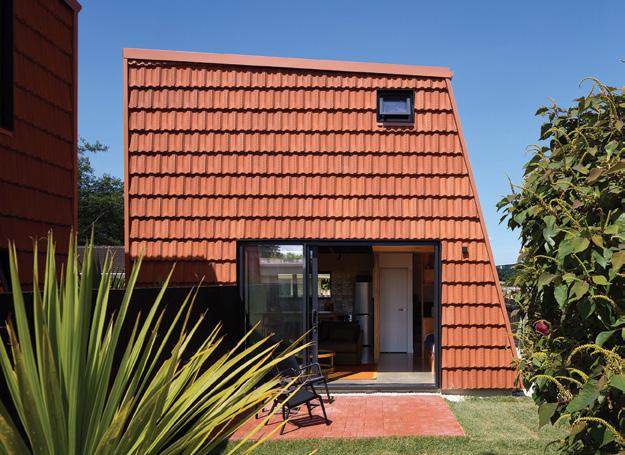



WE BELIEVE THAT BUILDING a better NZ is a team effort. We’re committed to supporting the amazing men and women who shape our country’s future, every day.
We know that building can be tough – from navigating complex regulations to dealing with unexpected setbacks. But we’re here to help. Let’s build a brighter future, together.
Our new factory is designed to make your life easier, with fast and reliable delivery of the products you need, and backed up with all the technical expertise you want.
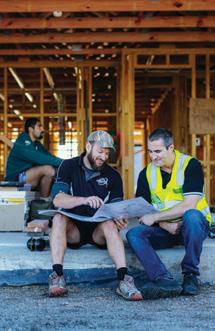
We’re dedicated to helping you overcome any challenges you come across, and achieve your goals. You’re building the homes, schools, and communities that make NZ a great place to live. And we’re here to help in any way we can. Let’s Build.
Learn more at gib.co.nz


BUNNINGS TRADE can supply you with commercial-grade products across pre-fabricated timber frames and trusses, flooring, joinery, doors, cladding, kitchens, appliances, windows, facades, plumbing, lighting and more. And, if they don’t stock it, they’ll do their best to source it for you. Their team will work with you to develop product solutions to fit your specifications, including high-end categories and specialist products.
Bunnings Trade’s services are designed to help builders from foundation to finish, including the ability to supply frame and truss, and their full estimation and take off service.
With over 60 Account Managers on the road across New Zealand, their team provide hands-on support wherever and whenever it’s needed. The dedicated Bunnings Trade team can provide support with quotes, product sourcing and project management, to build the right solutions. Supporting the team of Account Managers and their customers, the Commercial Services Team keeps
keep the wheels moving, ensuring projects stay on track and customers get what they need, when they need it.
On the job site, PowerPass members can access fast, reliable support by calling 0800 134 872 for quotes, pricing, stock availability, orders, deliveries and general trade enquiries. When shopping in-store, knowledgeable Trade Specialists are available to assist with everything from product advice to managing trade orders and organising deliveries.
Get in touch with their dedicated team of Account Managers, Trade Specialists and 134 Trade team members who are ready to help tackle your next job, on the road and on the phone, Bunnings Trade are here to support you.
Learn more at trade.bunnings.co.nz/ about-us/builders-hub


As a builder you carry the consequences of product choices, whether they’re your own or your client’s. With more and more window and door systems being imported into New Zealand, the risk of a non-compliant product ending up on your site has never been higher. Here’s what you can do to protect yourself.

ROB CAMPION Technical Manager, Window & Glass Association NZ

The landscape has changed The government’s Overseas Building Products legislation, introduced in 2025, was aimed at making imported building products more accessible and reducing construction costs. The reality is that windows and doors were already being imported so the legislation was more about putting some rules, regulation, and structure around them. Its implementation coincided with a rise in imported windows, doors, and glazing – some of it compliant, some of it not.

The compliance issues aren’t always obvious. They arise when evidence is thin, when claims are misunderstood, or when the product’s tested scope doesn’t match what your site requires. And the prices can look very attractive. Last month I was asked to assess windows being offered to an Auckland project at a price lower than the cost of the raw materials in a locally made equivalent. When pricing falls well below the cost of materials, that’s your signal to stop and look more closely.
Two types of compliance –both matter
Windows and doors must respond to multiple Building Code clauses. For the
windows and doors sourced and delivered to your site, compliance breaks into two distinct categories:
u PRODUCT COMPLIANCE
Every window and door sold in New Zealand must carry a performance classification based on testing – typically to NZS/TS 4211 or AS 2047 – and since 2023 all suppliers have had to make this information publicly available through a BPIR (Building Product Information Requirements) statement on their website. The simplest check: look for a classification label on the window or door frame.
No label? You’ll need complete, legitimate test evidence for each relevant configuration, and those test reports should be reviewed before installation, not after. u PROJECT COMPLIANCE
Even a properly tested, labelled product can be non-compliant if the site conditions exceed the product’s tested scope. For example, a window or a door tested and certified for a Medium wind zone cannot be used on a High wind zone site, regardless of what the label says or how good it looks.
CodeMark certification adds another layer of complexity. A CodeMark means BCAs must accept the product as
meeting the Building Code but only within the certified scope. We regularly see products marketed with impressive imagery of large-format installations on exposed sites, where the CodeMark only covers a Low wind zone. That’s almost nowhere in the Auckland region.
Check for non-compliance before it becomes your problem
Ask these questions before the joinery goes on the truck – not when the consent is being queried or the inspector is on site.
u Performance label. If there’s no label, request the test reports or supporting documentation.
u Wind zone match. Does the wind zone on the label/test reports meet or exceed your site?
u Authentic test reports. Check they’re from the company supplying the windows; that all the pages are included; all the logos are the same; the PDF properties match.
u BPIR statement. Does the supplier have a statement available on their website?
u Certification scope. Are the windows and doors within the scope set within the CodeMark, Appraisal, Engineers report?
u Door sill height. Flat or low-profile door sills often have difficulty passing tests for higher wind zones.
u Mullion depth. Flat or shallow mullions often have difficulty passing tests for larger windows and doors.
u Supplier credibility. Do background checks on suppliers you don’t know.
When in doubt, check before installation
Request the test reports. Check the label. Confirm the scope. Make sure the wind zone classification matches your site, your exposure conditions, and the sizes being used. A legitimate supplier will have no issue demonstrating how and why their product is fit for purpose. If they can’t or won’t – walk away.
The Window & Glass Association NZ is available to assist with any technical questions around window and door compliance. Contact us at wganz.org.nz
Request the test reports. Check the label. Confirm the scope. Make sure the wind zone classification matches your site, your exposure conditions, and the sizes being used. A legitimate supplier will have no issue demonstrating how and why their product is fit for purpose. If they can’t or won’t – walk away.
• Interlocking 14mm thick panel
• Subtle, refined texture to add depth
• 325mm width in 3000mm / 4200mm lengths
• Can be painted a range of colours, even darker shades
• CodeMark Certified, BRANZ Appraised
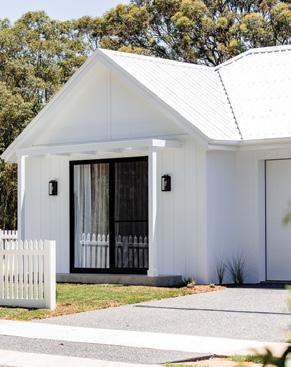

Designed with aesthetics and performance in mind, the FMI Building Innovation Window Shroud System is a clean, modern architectural solution built specifically for New Zealand conditions.
Customisable to suit a range of design requirements, the system features different depth shroud options and spans up to 2400mm – offering flexibility without compromising on finish. Coupled with the new Shroud Fixing Bracket, it integrates effortlessly into contemporary residential and commercial façades. Available in all standard colour finishes, the system adapts to any project palette.
Engineered for the New Zealand market, the FMI Building Innovation Window Shroud System delivers a polished, practical solution for builders and designers looking to elevate façade detailing on their next project.
Ask your local Fairview or NEXT fabricator about the Window Shroud System today.
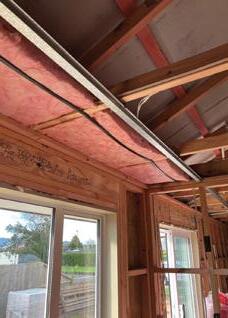

Managing the cost of residential insulation just got easier. Accommodating the required insulation thickness to meet the higher R value for roofs often meant “raised heels”, driving up costs for framing and cladding, and height in relation to boundary challenges. Alternatively, achieving an R3.3 value required edge compression of the insulation and an insulation guard, at additional cost.
With the sixth edition of H1 in effect, and roof minimum R value at R2.6, you can now comply using Comfortech’s new Pink® Batts® Perimeter solution. At 100mm thickness, it fits within standard truss chord depth, eliminates the need for raised heels, and slashes installation time. All while meeting the ventilation requirements of NZS 4246.
Visit pinkbatts.co.nz/h1-hub to learn more.

Sambara is JSC’s latest interior timber solution, designed for builders wanting a premium-looking finish that also delivers versatility and value. Its lighter, more consistent appearance allows stains and coatings to land more evenly across walls, ceilings, battens, and feature details - helping create a more refined result while reducing the challenges that can come with heavier natural variation.
Whether the project calls for darker architectural tones, bright and vibrant colours, or more natural timber finishes, Sambara takes stain exceptionally well and provides greater flexibility across residential, commercial, and retail interiors.
Available in a range of profiles suited to walls, ceilings, battens, and feature details, Sambara is easy to work with across multiple applications while helping streamline installation and design consistency. Pair it with JSC Coda Lux Wax to achieve a wide range of interior looks while still keeping the natural grain and character visible.
To learn more or request a sample, visit jsc.co.nz
When it comes to getting a clean, accurate finish, it all starts with your framing. That’s where J-Frame from Juken makes a difference. Made from renewable Radiata Pine, J-Frame is designed to deliver the strength, straightness, and consistency builders rely on every day.
Its CodeMark certification gives added confidence that it will perform as specified, while its on-site reliability helps reduce time spent correcting twists, bows, or inconsistencies. The result? Easier installs, truer walls, and a smoother path through to linings and finishing.
Available in a wide range of sizes and lengths, J-Frame suits everything from standard residential builds to larger commercial projects.
For builders who value efficiency and getting it right the first time, J-Frame helps set the job up for success from the very beginning.
Metro Performance Glass introduces SunX™ Reflect Low E double glazing, designed to manage solar gain without compromising natural light or design.
As larger windows become standard in modern homes, overheating and glare are common challenges – especially on sun exposed elevations. SunX™ Reflect combines a reflective outer layer with Low E technology to reduce solar heat gain by up to 71% compared to standard double glazing, while improving thermal insulation by up to 61%. The result is more consistent indoor temperatures – cooler in summer, warmer in winter – and less reliance on mechanical heating and cooling.
A beautiful reflective finish enhances daytime privacy while maintaining a clean, contemporary look. Designed for New Zealand conditions, it’s a smart, future-focused glazing solution that helps builders deliver homes that perform as well as they look.
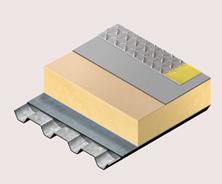
Viking RoofRevival offers a smarter, more sustainable way to refurbish ageing roofs without the need for full replacement. Designed specifically for occupied buildings – including schools, hospitals, apartments and commercial facilities – it extends roof life while minimising disruption, waste and downtime. Advanced overlay and warm roof systems allow existing roofs to remain in place, significantly reducing landfill waste and maintaining watertightness throughout the installation process.
Viking’s refurbishment solutions can also deliver meaningful thermal performance upgrades, improving energy efficiency and occupant comfort without the cost or complexity of structural rebuilds. On existing low-slope metal roofs, this can be achieved by installing a warm roof system that places high-performance polyiso insulation “fingers” neatly into the roof troughs, creating a continuous thermal layer.
Innovative overlay technologies –including fleece-backed membranes, induction welding and hook-and-loop attachment systems – allow faster, cleaner, solvent-free installation, making them ideal for sensitive and fully occupied environments.
All Viking RoofRevival systems are installed by approved applicators and supported by up to 20-year product warranties, delivering long-term performance, compliance and complete peace of mind.
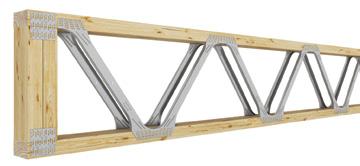
MiTek expands Posi-Strut range with two new sizes
Available now from MiTek, two new Posi-Strut web sizes – PSW4524 and PSW4529 - have been developed in direct response to New Zealand market requirements. Designed to align with common timber depths, these new options enable trusses at 240mm and 290mm, making it easier to integrate MiTek Posi-Struts alongside solid timber without the need to redraw plans or adjust floor heights.
This development reflects MiTek’s ongoing commitment to supporting builders, designers and fabricators with practical, buildable solutions. It creates a smoother pathway for adoption at the design stage, while continuing to deliver the core benefits Posi-Strut is known for, including flexible layouts, efficient service integration and reliable compliance with New Zealand standards.
Backed by MiTek’s local expertise and network of fabricator partners, these new sizes provide a smarter, more streamlined way to build with confidence.








We’ve given our packaging a fresh new look to make it easier for you to grab the right product, fast. Simple design, clear labels, and strong application icons mean less guesswork on the job. New look, same professional performance.
So what’s changing?
New branding: We’re moving from Gorilla to Soudal.
Clearer labels: Stronger product and application icons so you can spot what you need at a glance.
Name updates: Multipurpose is changing to Fill & Paint, and Smart Foam is changing to Genius Foam.
Our new packaging can be found in stores now.


Eliment insulation is designed for a wide range of wall, ceiling, mid-floor and skillion applications. It is manufactured using recycled glass and employs a phenolic resin-based binder that incorporates a natural anti-formaldehyde ingredient. Eliment insulation is available to order nationally from ITM, PlaceMakers and professional installers.
New Zealand Certified Builders (NZCB) would like to thank our Strategic Partners who play a vital part in assisting in supporting our Association and the wider building community. Their contributions enable us to deliver key initiatives for members, including training, professional development, new programmes, marketing, and communications. They also bring valuable expertise and support at a national level, with opportunities to engage directly with members through a wide range of activities.


NZCB is proud to partner with the following companies, who are aligned with the Association to bring our members discounted services and products.




New Zealand Certified Builders (NZCB) is proud to partner with the following companies who align with our Association and give NZCB members access to a wealth of expertise and support throughout New Zealand.
NATIONAL PARTNER (PREMIUM)
APL Window Solutions aplnz.co.nz
Carters carters.co.nz
Enveloped Solutions Ltd enveloped.co.nz
MiTek New Zealand miteknz.co.nz
Red Stag Timber redstag.co.nz
Resene Construction Systems reseneconstruction.co.nz
NATIONAL PARTNER (PROFESSIONAL)
ACC acc.co.nz
ASSA ABLOY Opening Solutions New Zealand assaabloy.co.nz
James Hardie New Zealand jameshardie.co.nz
Milwaukee Tool New Zealand milwaukeetools.co.nz
PlaceMakers placemakers.co.nz
Resene Paints Ltd resene.co.nz
Utecture New Zealand Ltd utecture.com
NATIONAL PARTNER (STARTER)
Altus NZ Ltd altus.co.nz
Bowers Brothers Concrete Ltd bowersbrothers.co.nz
Builda Price (2016) Ltd buildaprice.co.nz
Comfortech Building Performance Solutions pinkbatts.co.nz
Connected Spaces connectedspacesjoinery.co.nz
CS Cavity Sliders cavitysliders.com/nz
CSR Building Products (NZ) Ltd csr.co.nz
FMI Building Innovation aslnz.co.nz
FreeUp/Released freeup.co.nz
Glass Vice Products glassvice.com
Independent Building Supplies ibs.co.nz
Juken New Zealand Ltd jnl.co.nz
JSC Premium Architectural & Building Solutions jsc.co.nz
Kingspan Thermakraft Ltd thermakraft.co.nz
Laminex New Zealand laminexnewzealand.co.nz
Marley New Zealand Ltd marley.co.nz
Marshall Innovations Ltd mwnz.com
Metro Performance Glass metroglass.co.nz
My Smart Office Ltd mysmartoffice.co.nz
New Zealand Panels Group nzpanels.co.nz
Open2view open2view.co.nz
Paslode New Zealand paslode.co.nz
Productspec Ltd productspec.net
Proven Systems Ltd (DVS) dvs.co.nz
Rave Build Management ravebuild.co.nz
Red LBP Ltd redlbp.co.nz
Schneider Electric pdl.co.nz
Simx Ltd simx.co.nz
Soudal Ltd soudal.co.nz
Viking Roofspec vikingroofspec.co.nz
Your QS Ltd yourqs.co.nz