


Welcome to Ceres Rural’s Health & Safety Bulletin. Each quarter, we update you on industry news, topical issues, and safety alerts with the aim of supporting you in achieving best practice on your farm or estate.
This edition reviews guidance for the operation of userworked level crossings on farmland and identifies precautions to take when turning cattle out to graze in fields with public access. The bulletin outlines the steps to follow when working in areas controlled by others and provides instruction on the safe use of seed and fertiliser bags. It concludes by reviewing three recent examples of enforcement activity and their application to the agricultural industry.

Every year, farm machinery and workers are struck by trains while operating userworked level crossings on farmland. In January 2018, there were 2,239 such crossings in the UK. With farm traffic movements increasing during the spring, it is worth remembering the simple rules published by the Office of Rail Regulation to prevent deaths and injuries.
✓ Follow the instructions given on the signs at the crossing every time you cross.
✓ Always open the gates on both sides of the railway before taking a vehicle over the crossing. Make sure your exit from the crossing is clear.
✓ Always close the gates on both sides of the railway immediately after use. This will prevent the next user driving straight across the railway without stopping.
✓ If you employ staff or contractors or invite visitors, make sure that you have told them how to use the crossing safely.
✓ If you get stuck on the crossing, get yourself and passengers out of the vehicle and clear of the crossing immediately. Inform Network Rail (or relevant railway operator) of the circumstances as quickly as possible.
X Never attempt to cross if you can see or hear a train approaching and never stop your vehicle on or close to the railway lines.
X Train speeds are deceptive. Don’t be fooled into thinking that you can ‘beat’ an approaching train. The train will not normally be able to stop.
X Abnormal loads, including vehicles that are unusually slow moving, require special arrangements to be made. You should contact Network Rail (or relevant railway operator) who will make arrangements to allow the vehicle to cross the line safely.
✓ Refer to Railway Level Crossings on Farms Safety Notice for further information.
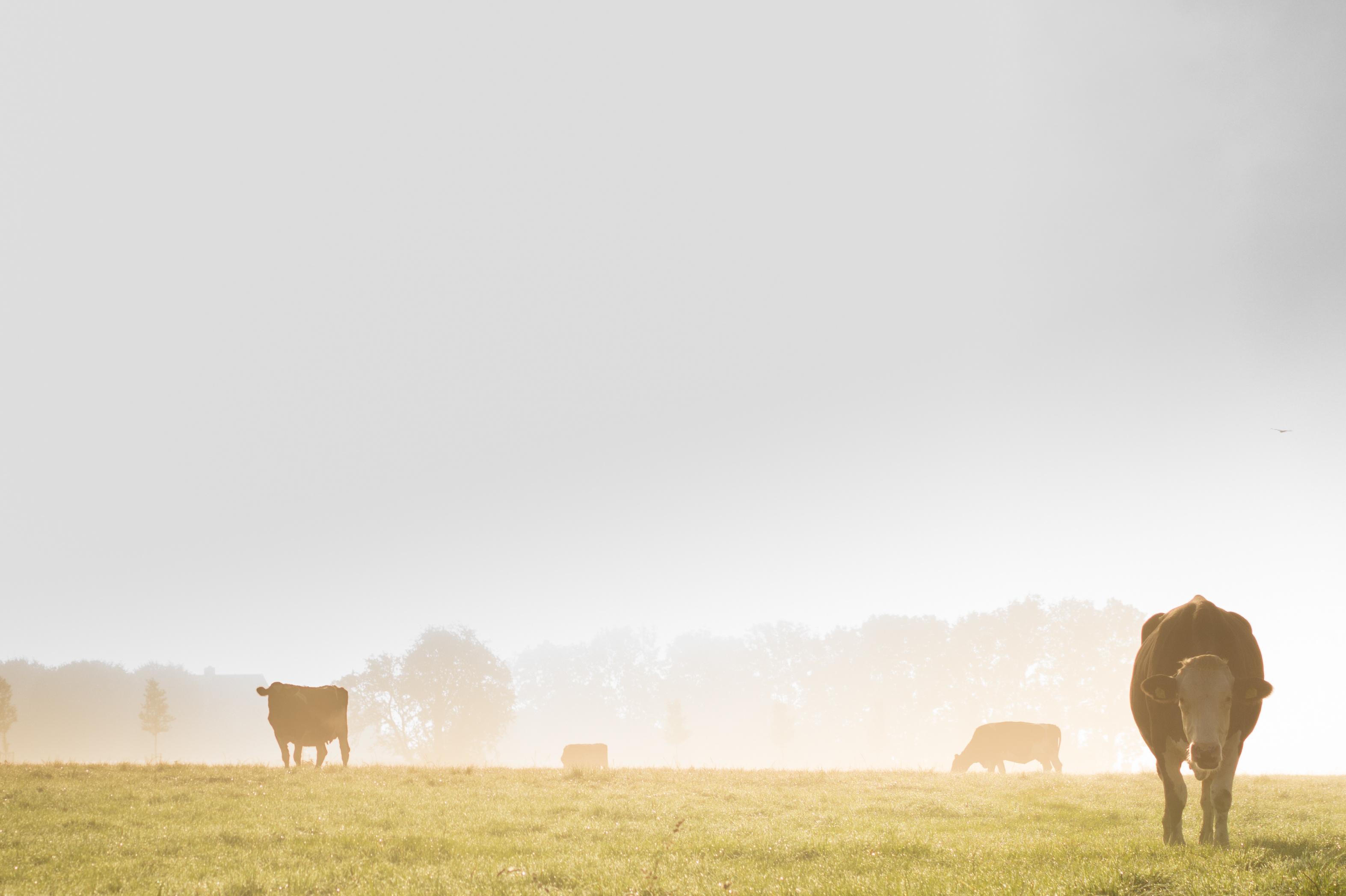
Spring cattle turnout can be a time of year when the hard work of daily indoor bedding and feeding comes to an end, but it can also signal the start of a period of increased risk associated with grazing livestock coming into contact with members of the general public in the landscape.
In 2020-21, 11 people were killed when injured by an animal and this included four members of the public aged between 56 and 82 who were trampled and killed by cattle, some with calves at foot.
Public use and enjoyment of the countryside was arguably at an escalated level due to the Coronavirus pandemic, but in 2021-22 a further two people were killed, including an 85 year old who suffered serious chest injuries when he was surrounded and trampled by cattle.
There are some key precautions to take, which we'll outline here.

Where possible, keep cattle in fields that do not have public access
Clearly mark paths so that users do not enter fields without public access.
Use signs to alert the public to the presence of livestock in fields but ensure these are removed when animals are not present to prevent them being ignored
Use signs to highlight routes that are best integrated with livestock management.
Locate handling and feeding areas away from public rights of way.
Temporarily fence public rights of way to segregate cattle and people if possible.
Offer or provide an alternative route but bear in mind the public are still entitled to use the public right of way
Agree responsibilities where the landowner and grazier are separate parties.
Do not graze bulls of recognised dairy breeds (e.g. Ayrshire, Friesian, Holstein, Dairy Shorthorn, Guernsey, Jersey, Kerry) in fields with public access
Check other bulls on hire, lease or loan are suitable to be kept in fields with public access. If in doubt, house or graze elsewhere for regular observation.
Avoid fields with public access for calving or cows with calves at foot
Accompany beef bulls with cows or heifers in fields with public access.
Monitor the health, demeanour, temperament and behaviour of cattle, identify those that are placid and well behaved, and remove any aggressive or unpredictable animals from fields with public access.
Check on cattle and fences surrounding fields regularly, at least once each day.
Enclose cattle with stock-proof hedging or fencing at least 1.3m high, capable of retaining the animals and restricting access by children Consider erecting an electric fence 0.5m inside the external perimeter to provide a greater degree of security, and fit gates of equal height and strength as fencing, which cannot be opened by cattle or children.
Refer to the Health and Safety Executive’s AIS17EW Cattle & Public Access in England & Wales for further information.
As spring work progresses, employees of businesses providing contract services will be sent to work in areas controlled by others. In such situations, the owner may retain the control and use of much of the farm yard, including for other diversified enterprises, although the grain and pesticide stores may be utilised by the contractor
Work activities undertaken in such circumstances will broadly follow those which are performed at the employee’s usual place of work and therefore, standing risk assessments and safe systems of work should be followed. Employees should be instructed and empowered to withdraw and seek advice from their line manager before or during work activities, if the employee considers the risks to their health and safety to be too great.
As the contractor, you should request the host employer or site controller to provide risk assessments, or safe systems of work, relevant to the tasks undertaken by your employees. The operator of the site needs to be mindful of their duties under section 3 of the Health & Safety at Work etc. Act 1974 and to advise both their own employees and any other persons who may be affected by their operations, of any local hazard and site safety rules before and during work activities. It is important that you, as an employer and user of the site, inspect it and take appropriate precautions and implement risk assessments where necessary to protect your workforce
In practical terms, health and safety should be a standing agenda item at every farm and contract farming meeting. Segregation of vehicles and pedestrians, and of agricultural and non-agricultural activities should be considered, especially where use of the site is divided between farming and diversified enterprises Welfare facilities, first aid and personal protective equipment should all be present, and if employees are working away from their main base and on their own, appropriate measures should be implemented for safe lone working.

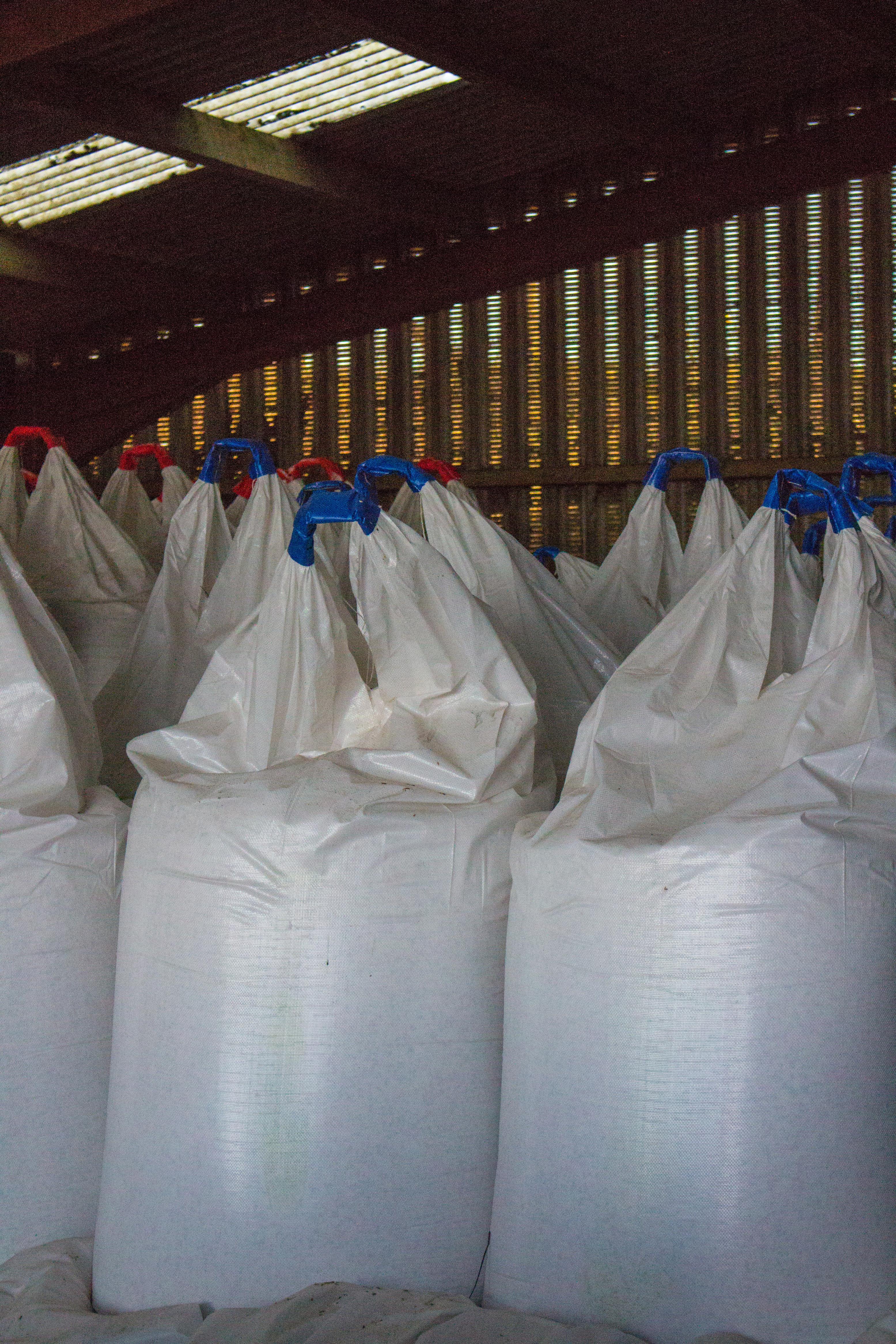
Spring drilling and fertilising is well underway Certified seed is being delivered and homesavedseedprocessed.Fertiliserisbeingtakenfromstoragetothespreaderor field and within a few months, deliveries for next season will start to be made to farm.
Seed and fertiliser bags are large, heavy objects which can cause injury to operators and damage to machines if not handled appropriately. Seed bags will contain both grain dust and chemical residue of seed treatments, and fertiliser bags will similarly containdustoftheproductwhichiscorrosive.
One key hazard arises when filling seed and fertiliser hoppers, whereby operators can be trapped and crushed between bags and machinery if the bags fall or move unexpectedly.
PRECAUTIONSTOFOLLOWINCLUDE:
Approach bags carefully, check condition prior to lifting, only lift if bags are undamaged,andusethededicatedliftinghoops.
Ifabanksmanisbeingusedtopositiontheliftinghoopsoverthebaglift,ensure theyarevisible,andtheirmovementsmonitoredatalltimes.
Liftbagssmoothlywithoutsnatching,jerkingoranysuddenmovements.
Carrybagsclosetothegroundtopreventthemachinebecomingunbalanced. Neverfillhopperswithina10mhorizontaldistanceofoverheadpowerlines.
Lift bags slowly over the hopper, ensuring nobody is on the drill or spreader whilethebagisbeingmanoeuvredandpositioned.
Locate bags centrally above the hopper at a height accessible by the operator butwithoutthecontentsblowingawayinhighorgustywinds.
Emptybagsusingeitherthedischargechuteoralongpoleandblade. Onceemptied,bagsshouldbedisposedofappropriately
Operators should use appropriate personal protective equipment including overalls,goggles,glovesandsafetyfootwear;firstaidfacilitiesincludingeyewash shouldbeavailable.
The following are examples of recent prosecutions – this bulletin focuses on three cases from outside of agriculture, but with clear learning outcomes for the industry.
ArmAmputationResultedFromLackofGuarding
A Kent-based food production company has been fined after an employee had to have his right arm surgically removed following an incident.
The 26 year old worker was removing filling ingredients from an industrial paddle mixer at the site in Sheerness in September 2021 when his arm became entangled in the unguarded machinery. The Health & Safety Executive found that control measures to prevent contact with moving parts were ineffective. Specifically, the guarding on the paddle mixer was not routinely replaced after cleaning. Furthermore, the interlocking system had been defeated, meaning the food mixer could still operate even though the front guard was not in place. CCTV revealed that many employees, including managers and supervisors, had used or seen the machine in the six weeks prior to the incident, when the guard was not in place, but not one person had taken any action or raised it as an issue.
The business pleaded guilty to breaching Regulation 11(1)(b) of the Provision & Use of Work Equipment Regulations 1998 (PUWER) and was fined £858,000 and ordered to pay costs of £8,000.
The HSE commented that, “every year, a significant proportion of accidents, many of them serious and sometimes fatal, occur as a result of poorly guarded work equipment. To prevent and reduce the risk of serious or fatal injury adequate arrangements and system of work are required.”
PUWER relates to agriculture just as it relates to this food production company. Regulation 11 requires the provision of fixed guards enclosing every dangerous part of machinery, as well as information, instruction, training and supervision in the safe use of machinery, including the role played by guards.
Guards must be suitable for the purpose for which they are provided, of good construction and sound material and adequate strength, maintained in an efficient state, efficient working order and good repair, and not be easily bypassed or disabled.

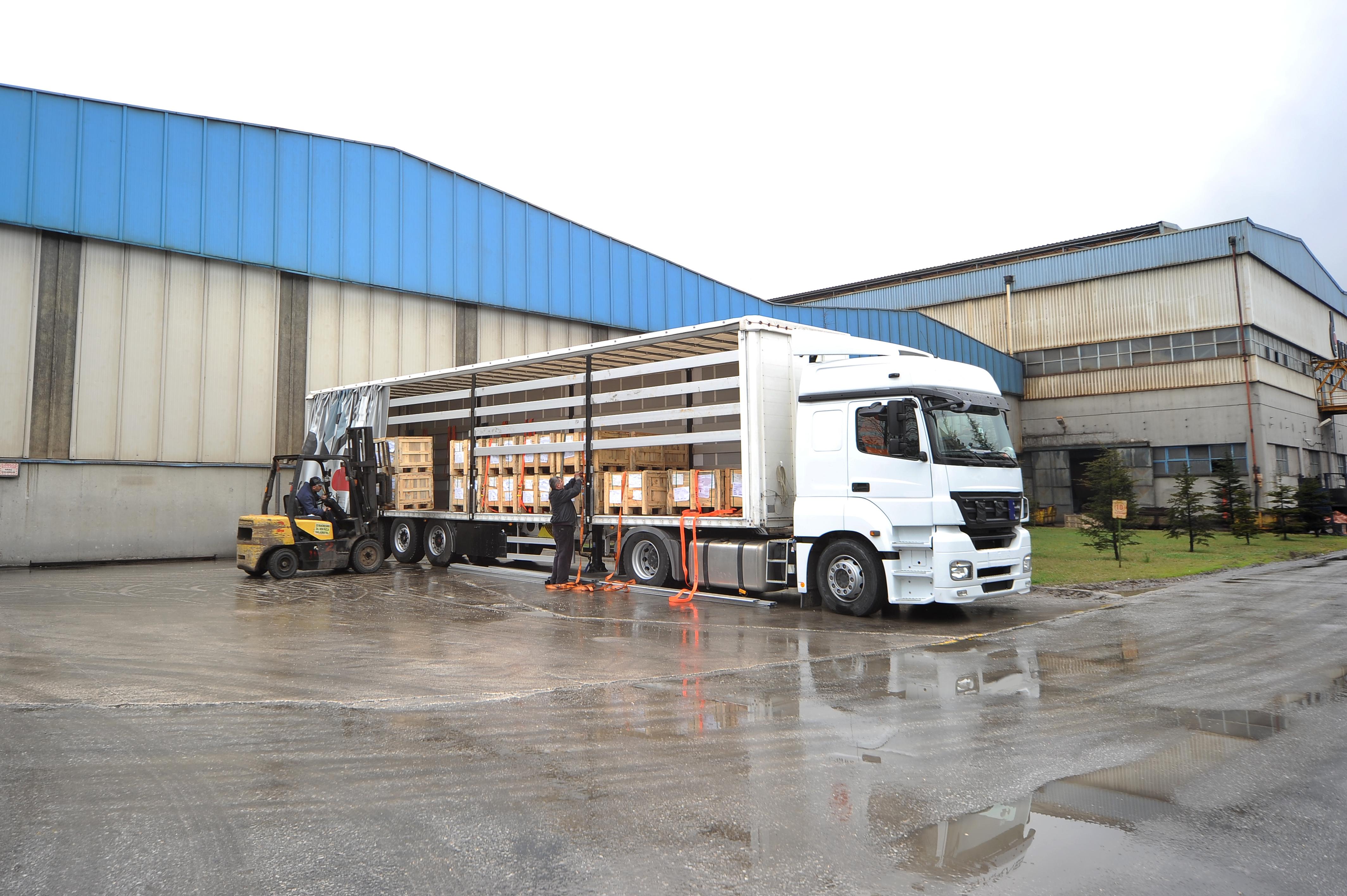
A lorry driver died from his injuries after falling from his load onto the concrete yard below.
After arriving on site to deliver doors, the 69 year old opened the curtains to his trailer and released the load-securing straps. However, some of the straps – which were suspended from the roof of the trailer – were tangled. The driver’s attempts to free them from ground level failed, so he climbed onto the trailer’s cargo bed and then onto the load itself to try again.He inadvertently stepped backwards off the load, and fell 2.3m onto the concrete surface of the yard below. He was taken to hospital but died of his injuries the following day.
The Health & Safety Executive found that the company operating the lorry had failed to make a suitable and sufficient assessment of the risks to employees, particularly when working at height on trailer beds during loading and unloading operations. Due to the lack of safe systems of work, employees were forced to devise their own systems to unload deliveries. This included the company’s failure to identify the possibility that out of reach straps could become tangled and had therefore not set out procedures to deal with such an eventuality.
The company pleaded guilty to breaching section 2(1) of the Health & Safety at Work etc. Act 1974 and was fined £480,000 and ordered to pay costs of £12,053.
Risk assessments should clearly assess all the risks relating to work at height, particularly working on trailers and working on loads.There should be an absolute prohibition of working on the trailer load or deck area without suitable measures in place. Safe systems of work should be implemented, such as the use of a telescopic pole to untangle suspended straps from ground level. Working on trailers and loads is particularly pertinent given the forthcoming spring drilling and fertilising campaign.
An employee who was dismissed by his employer for requesting a suitable work chair was the victim of disability discrimination, a tribunal has ruled.
The employee claimed he had been "discriminated against because of a protected characteristics, namely disability". The tribunal heard that the employee had a number of illnesses and impairments, and the employer conceded that two – asthma and osteoarthritis of the knee, and knee and leg pains that resulted in restricted leg mobility – were disabilities under the provisions of the Equality Act 2010.
The tribunal found that the employer failed to make reasonable adjustments under the Equality Act 2010, meaning that the disabled employee was placed at a "substantial disadvantage" when compared with non-disabled employees. It ordered the employer to pay the claimant £11,062.50 in loss of earnings, plus £15,000 for injury to his feelings. His total compensation (including interest of £3,558.29) was £29,620.79.
The Equality Act came into force on 1st October 2010 and provides a legal framework to protect the rights of individuals and advance equality of opportunity for all. The Act requires employers to make ‘reasonable adjustments’ that will allow disabled people to access the same opportunities and services as non-disabled people. But what is reasonable for one organisation may be impossible for another. Farming is frequently a physically and mentally demanding industry and although sometimes involving heavy machinery, specialised infrastructure and fixed equipment, it is essential that employers are aware of the Equality Act and appropriately interpret its requirements for disabled individuals.
If you would like to discuss any topics raised in this issue of the Health & Safety Bulletin, do not hesitate to contact our Healthy & Safety Guidance expert.
ROBERTGAZELY PARTNER|SAFFRONWALDEN
robert.gazely@ceresrural.co.uk 07592 041 617