HEALTH&SAFETY BULLETIN


Welcome to Ceres Rural’s Health & Safety Bulletin. Each quarter, we update you on industry news, topical issues, and safety alerts with the aim of supporting you in achieving best practice on your farm or estate. This edition provides dos and don’ts for the safe use of abrasive wheels, and an outline of the requirements of the Workplace (Health, Safety and Welfare) Regulations 1992 for meeting legal duties and supporting staff. It continues by considering manual handling before explaining what health surveillance is and when it might be required on farms and estates. The bulletin then provides practical pointers for managing noise effectively and concludes by discussing the importance of managing contractors on farms and estates, assessing and appointing them with care and diligence to ensure work is undertaken safely.

Abrasive wheels – used for cutting, grinding, sharpening and shaping metal or stone – are common tools across farms and estates. Although versatile, they also present significant hazards when poorly selected, fitted or operated. Every year, serious injuries occur due to wheel breakage, flying fragments, entanglement, eye injuries and loss of control. Safe set up and correct use are essential to prevent these incidents.

DO select the correct wheel for the task, ensuring compatibility with the machine’s speed rating.
DO make sure only trained and competent staff mount abrasive wheels.
DO check that wheel guards are fitted, correctly positioned and securely fastened.
DO inspect wheels before each use for cracks, chips, wear or contamination.
DO ensure flanges, washers and spindles are clean, undamaged, and the right size for the wheel.

DO secure workpieces firmly to prevent movement during cutting or grinding.
DO wear appropriate personal protective equipment (PPE) including eye protection, face shields, gloves, hearing protection and sturdy clothing. Ensure that jewellery is removed and loose hair is tied back to avoid entanglement.
DO allow bench grinders to run up to full speed before applying the workpiece.
DO maintain tool rests and spark guards at the correct distance (typically 2–3mm).
DO keep the work area clear of fuel, dust, solvents and other flammables.
DO store abrasive wheels in dry, secure, frost-free conditions to avoid damage and prevent unauthorised use.
DO follow the manufacturer’s instructions and keep maintenance records.

DO NOT use makeshift, modified or damaged wheels.
DO NOT use wheels that have been dropped, chipped or show signs of cracking
DO NOT exceed the maximum revolutions per minute (RPM) marked on the wheel.
DO NOT remove or bypass safety guards
DO NOT wear jewellery, loose clothing, gloves with frayed cuffs or anything that could catch in the wheel.
DO NOT force the tool – let the abrasive wheel do the cutting or grinding.
DO NOT grind on the side of a wheel unless it is specifically designed for side-loading.
DO NOT use the wrong wheel for the material (e.g. cutting steel with a masonry disc).
DO NOT allow untrained staff to change wheels.
DO NOT work in poorly lit or unstable conditions that could compromise control.
DO NOT use angle grinders or bench grinders without effective dust control, especially indoors.
DO NOT forget to unplug or isolate equipment before changing wheels. For further information, see: Safety in the Use of Abrasive Wheels.
Providing good welfare facilities isn’t just a matter of best practice on farms and estates – it is a legal requirement. The Workplace (Health, Safety and Welfare) Regulations 1992 set out the minimum standards all employers must provide for staff, covering a wide range of basic health, safety and welfare needs. These Regulations apply to most workplaces, including agricultural ones, and expand on employers’ general duties under the Health & Safety at Work etc. Act 1974.
Under the Regulations, employers must ensure that suitable and sufficient welfare facilities are available for all staff engaged in work activities. This includes both permanent as well as temporary and seasonal workers and for some businesses (e.g. in the horticultural and fresh produce sectors) will therefore range widely in the required capacity at different times of year. Key requirements include:
Clean, accessible toilets must be provided with adequate ventilation, lighting and hygiene standards. Separate facilities for men and women are required unless each convenience is in a separate, lockable room.
Hand basins with hot and cold (or warm) running water, soap or other washing agents and drying methods must be available close to the sanitary facilities. Shower facilities should be provided where work is particularly dirty, dusty or hazardous.
An adequate supply of clean, fresh drinking water must be available and clearly marked. Suitable cups or drinking vessels should also be provided. The drinking water supply should be free from contamination and preferably from the public water supply.

Where workers are required to change into special work clothing (e.g. protective or contaminated clothing), adequate changing rooms, lockers or storage must be provided. These areas should allow personal and work clothing to be kept separately.
Staff must have a safe place to rest and eat meals away from contaminants such as chemicals, dust or animal waste. Facilities should enable workers to boil water and prepare food, particularly for remote or field based agricultural staff.
Workplaces – including welfare facilities – must be kept clean, well lit and at a reasonable temperature, with adequate ventilation. These general environmental conditions play a key role in worker comfort and welfare.
While meeting welfare obligations is a legal requirement, investing in proper facilities where staff can congregate, rest and possibly hold meetings or undertake training, brings wider benefits including:
Improved staff morale and motivation: Staff who have clean, comfortable welfare facilities feel valued, which supports productivity and reduces fatigue.
Better staff retention: High quality welfare standards help attract and recruit high‑calibre individuals and retain experienced staff, particularly in sectors reliant on skilled machinery operators, livestock staff and seasonal pickers.
Enhanced reputation: Staff in dirty or dusty clothing sitting in their own cars to eat their lunch isn’t a great look! Farms and estates that provide good welfare facilities are more attractive to new staff as well as contractors and visitors and demonstrate compliance with modern agricultural assurance standards.
Reduced sickness and injury rates: Clean, well designed welfare areas help prevent disease spread and reduce exposure to contaminants common in farm environments.
Ultimately, good welfare facilities are not a luxury – they are a fundamental part of running a responsible, efficient and legally compliant agricultural business.
For further information, see: Welfare at Work - Guidance for Employers on Welfare Provisions.
animals move unpredictably. Environmental constraints such ground, poor lighting and limited space – which are common in further increase the danger by compromising balance and co carrying tasks. Without proper risk management, manual become chronic, life-limiting conditions that affect both the indi the resilience of the farm business.


The Health & Safety at Work etc. Act 1974 requires employers to ensure, so far as is reasonably practicable, the health, safety and welfare at work of employees. The Management of Health & Safety at Work Regulations 1999 require employers to assess the risks to the health and safety of employees at work and where this identifies hazardous manual handling of loads, the Manual Handling Operations Regulations 1992 (as amended by the Health & Safety (Miscellaneous Amendments) Regulations 2002) must also be satisfied. These require employers to avoid manual handling operations so far as is reasonably practicable, assess the risk of injury to staff from manual handling that cannot be avoided, and reduce the risk of injury to staff from manual handling to as low as is reasonably practicable.
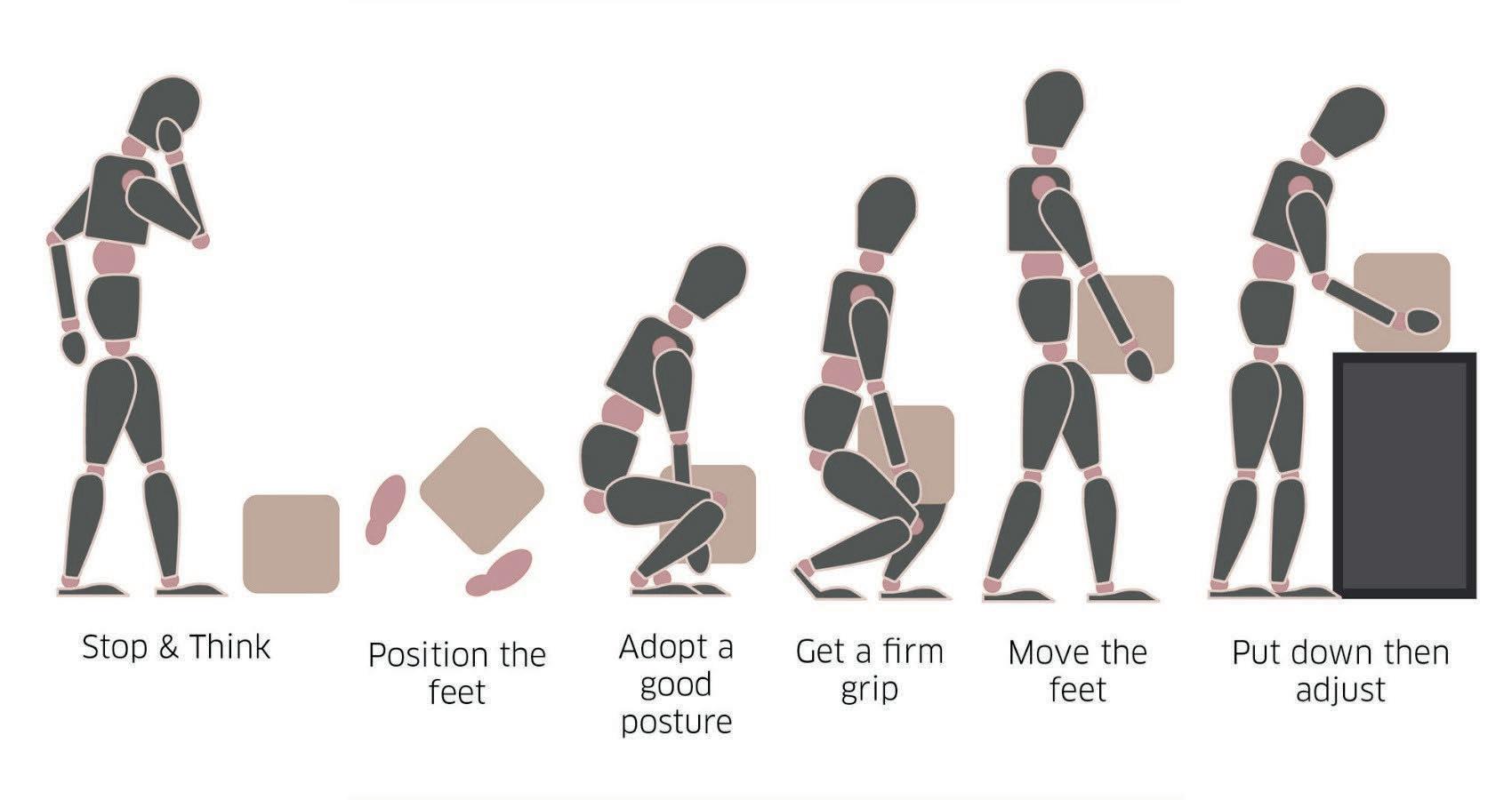
Although good technique does not replace the need to eliminate risk, it can significantly reduce injuries where manual handling is still required. In agriculture, the question that should be asked is whether manual handling can be eliminated or reduced with the assistance of mechanical aids such as telehandlers, forklifts, pallet trucks or trolleys. Thereafter and for manual handling that cannot be avoided, key principles are provided on the following page.
Planning the lift and clearing the route.
Being aware of environmental factors (e.g. uneven or slippery ground, poor lighting).
Breaking loads into smaller units where possible.
Storing heavy items at waist height, avoiding handling at floor or head height.
Keeping the load close to the body.
Adopting a stable stance.
Bending slightly at the hips and knees, but avoiding deep squats or full stoops.
Avoiding twisting and instead turning using the feet.
Moving smoothly and not jerking the load.
Minimising the distance (e.g. handle to and then use a mechanical aid).
Putting the load down before repositioning it.
Rotating tasks to reduce repetitive strain disorders.
Providing training and encouraging early reporting of symptoms.
Manual handling is unavoidable in some farm and estate contexts but the risks can be significantly reduced through better task design, mechanical aids, elimination or reduction of manual handling, safe techniques and compliance with the Manual Handling Operations Regulations 1992. The benefits are clear: fewer injuries, reduced absenteeism, sustained productivity, a more capable workforce and a more efficient, resilient farm business.
For further information, see: Manual Handling at Work.
Health surveillance is often misunderstood by farms and estates. Many agricultural businesses recognise the term but are unsure what it involves, when it is legally required or how it fits into everyday operations. This confusion is common and entirely understandable. Unlike more familiar safety duties such as machinery guarding or chemical storage, health surveillance concerns monitoring the ongoing effects of work on staff health, which makes it feel less obvious but no less important. For farms and estates with small teams or seasonal staff, it can feel daunting to know where to start. Yet health surveillance is a core duty under UK health and safety law and crucially, a vital tool for protecting the long-term wellbeing of staff.
The HSE defines health surveillance as “a scheme of repeated health checks which are used to identify ill health caused by work.” It must be carried out when staff remain exposed to certain health risks even after the employer has put control measures in place. This requirement arises because control measures – no matter how well designed – can occasionally fail, degrade over time or be used incorrectly. Health surveillance therefore acts as a safety net to detect harm early and prevent long-term damage.
Historically, many sets of regulations have required employers to provide health surveillance including for asbestos, lead and ionising radiation. These continue to apply today and require statutory medical surveillance by an HSE appointed doctor. In addition, the Management of Health & Safety at Work Regulations 1999 broadened this requirement such that if a risk assessment identifies that exposure to a hazard could cause identifiable ill health and a valid technique exists to detect it, health surveillance must be provided. This means health surveillance is mandatory not only under specialist regulations, but also under general risk-based duties such as the Control of Substances Hazardous to Health Regulations 2002, Control of Noise at Work Regulations 2005 and Control of Vibration at Work Regulations 2005.
Health surveillance is not the same as health screening, general health monitoring or wellbeing initiatives. It should only be used for staff who need it, provides feedback about actions that may need to be taken to prevent further harm and protect staff, allows staff to raise concerns about how work affects their health, and creates the opportunity to reinforce staff training and awareness.
Health surveillance typically involves initial baseline health questionnaires or assessments, regular follow-up questionnaires or checks, clinical examinations related to the identified risk (see below), and clear documentation and record keeping of results and actions taken.
Agriculture contains many of the hazards for which health surveillance is legally required. Examples include:
Noise from grain dryers and fixed equipment, air compressors, machinery and workshops requiring surveillance through audiometric testing.
Vibration from forestry operations, fencing, landscaping and estate gardening with handheld tools such as chainsaws, strimmers and hedge cutters requiring surveillance through hand-arm vibration syndrome assessments.
Respiratory risks from grain dusts, hay and straw dusts, poultry dusts and soil and workshop dusts requiring surveillance through symptom questionnaires and lung function tests (spirometry)
Chemicals including plant protection products, fertilisers, seed dressings and footbaths requiring surveillance through symptom questionnaires and targeted clinical reviews.
Skin exposures to veterinary medicines, disinfectants, silage effluents, plant protection products, fuels, oils and lubricants requiring surveillance through dermatitis questionnaires and skin inspections.
While formal surveillance may not always be required, employers should still consider outdoor working risks such as exposure to sunlight, temperature extremes and allergens, and assess whether checks or monitoring are needed based on risk assessment findings.
When considering health surveillance, farms and estates should carry out risk assessments to identify health hazards, determine whether risks remain after control measures are in place, and, where necessary, implement health surveillance appropriate to the hazard. A competent occupational health provider should be used to design and deliver the scheme, with action taken on results to improve working practices. Health surveillance should not be treated as a tick‑box exercise; its value lies in using results to improve workplace health and prevent long term harm. As with other sectors, agricultural businesses must keep most COSHH related health records for 40 years due to the long latency periods of some diseases.
Effective health surveillance brings clear operational advantages for farms and estates including:
Early detection of work‑related ill health.
Reduced sickness absence and associated costs.
Improved productivity as staff capability.
Stronger risk control and better targeted interventions.
Stronger safety culture and staff confidence.
Beyond financial benefits and legal compliance, there are moral and ethical responsibilities: farming is physically demanding and sometimes involves hazardous substances and dirty and dusty environments. Staff should never suffer long term illness simply because early signs were missed. Health surveillance helps protect the people who keep farms and estates operating – often family members, long serving employees or seasonal staff who rely on the employer’s duty of care. Implementing health surveillance where appropriate is not just a legal requirement: it is an act of respect. It demonstrates that the farm or estate values its workforce, wants to prevent suffering and is committed to safe, sustainable working conditions.
For further information, see: Health Surveillance.
Noise is an often-overlooked hazard on farms and estates, yet many routine tasks –including machinery operations, grain drying, workshop repairs and livestock handling – easily exceed safe exposure levels. Prolonged or repeated exposure can lead to irreversible hearing loss, tinnitus, fatigue and reduced concentration, all of which can affect safety and wellbeing in agricultural businesses.
Identify noisy tasks and machinery as part of routine risk assessments, paying particular attention to seasonal peaks such as grain drying and shearing.
Measure or estimate noise levels to understand where exposure may exceed the lower or upper exposure action values of 80 and 85dB respectively.
Provide suitable hearing protective equipment (HPE) and ensure it is comfortable, accessible and properly maintained.
Train staff on the risks associated with noise and how to correctly fit and look after their hearing protection.
Maintain machinery and equipment to minimise unnecessary noise from worn bearings, loose fixings, damaged exhausts or poorly lubricated components.
Keep machinery cab doors and windows closed to reduce exposure during operation.
Consider engineering controls such as acoustic panels, insulated compressor housings or quieter tool alternatives where practicable.
Plan work so that high noise tasks are rotated between staff to reduce individual daily exposure.
Establish clear, marked high noise areas and provide signage to remind staff and visitors to use HPE.
Offer regular hearing checks for staff who are routinely exposed to high noise levels.
Keep clear records of risk assessments, control measures, maintenance and health surveillance.
For further information, see: Noise at Work: a Brief Guide to Controlling the Risks
Contractors play a vital role in modern farming, bringing specialist skills, equipment and seasonal labour for crop production and fulfilling functions including machinery servicing, building construction and electrical and gas installation and remedial works. But while contractors can make operations more efficient, they also introduce additional risks. Farms and estates remain legally responsible for the safety of everyone on site, including contractors, and poor control can lead to serious accidents, costly delays and enforcement action. Effective management of contractors ensures work is carried out safely, to the right standard and without putting staff, visitors or the public at risk.
Agricultural work often involves hazardous environments: moving vehicles, operating machinery, work at height, livestock, chemicals, silos, confined spaces and uneven ground Contractors may be unfamiliar with the site, the specific risks present or the systems of work you expect them to follow. Clear management helps to ensure contractors understand the hazards present on the farm or estate, prevent unsafe behaviours or incompatible working practices, protect staff and other contractors working nearby, demonstrate legal compliance and reduce liability, and avoid costly incidents, equipment damage or environmental harm.
Without proper management, contractors can quickly enter dangerous areas, work unsafely around machinery or undertake tasks without appropriate controls. Failing to manage contractors properly can cause various implications, covered overleaf.
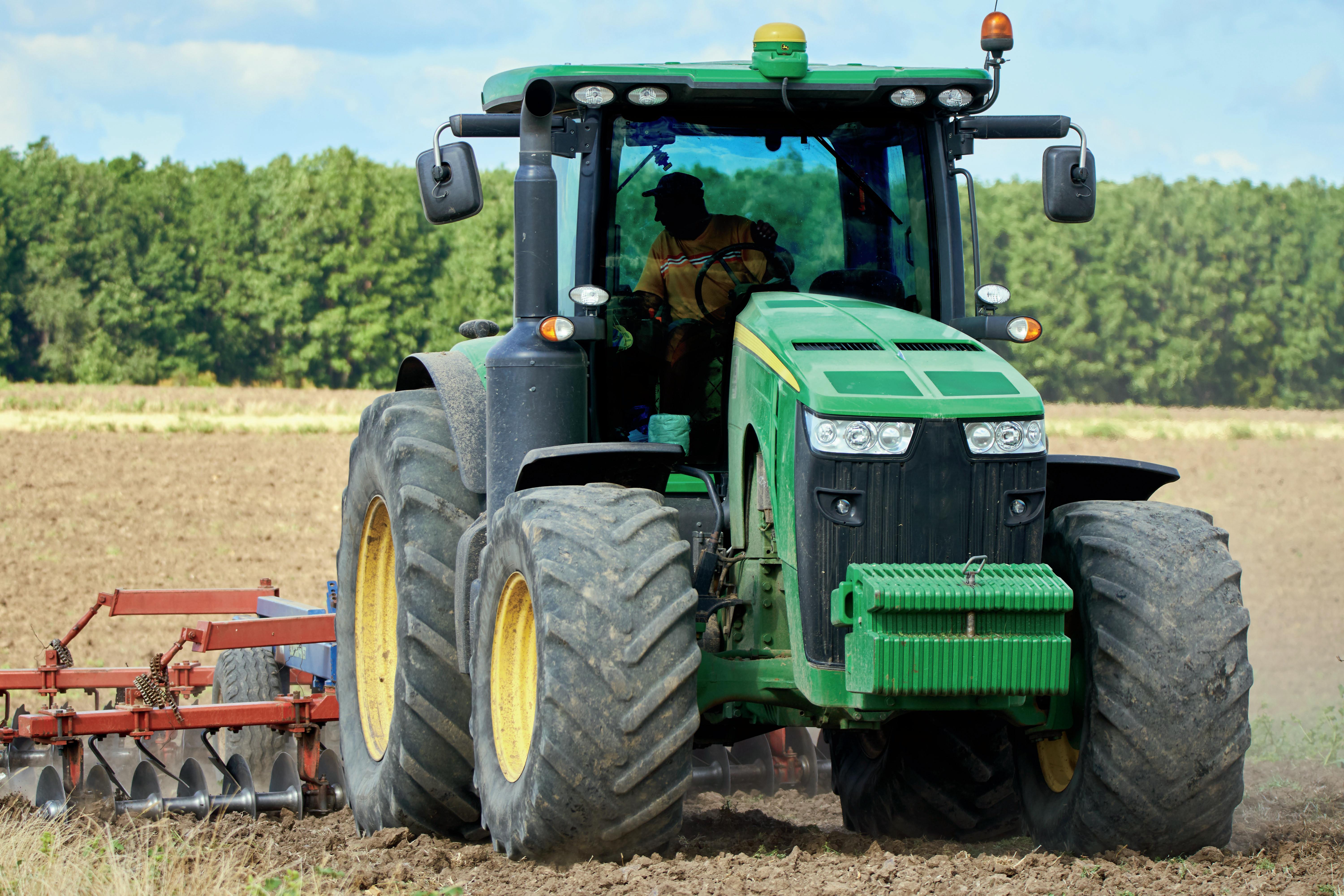
Contractor accidents often stem from misunderstandings: who controls what, how work should be done and what site rules apply.
Farms and estates should assess contractors’ competence, safety and suitability for the work to be undertaken. Contractors should then be appointed in a formal manner which confirming expectations, responsibilities and lines of reporting. Information to gather from contractors typically includes:
This information enables farms and estates to evaluate competence before instructing contractors and to record the information and documentation that has been received and reviewed in reaching this decision
Once appointed, contractors must be briefed and supervised appropriately to include a site induction covering access and traffic routes, hazards, biosecurity rules, emergency procedures, welfare facilities and prohibited areas. Site rules should be communicated clearly and enforced consistently for staff and contractors alike Activities should be planned and coordinated so contractors are not put at risk by farm or estate operations. Work should be periodically monitored to ensure it is being carried out safely and in line with agreed methods. Any changes to the scope of work should be recorded and risk assessments updated if needed. Lastly, good communication before, during and after the job is critical to ensuring safe and efficient work.
If you would like to discuss any topics raised in this issue of the Health & Safety Bulletin, do not hesitate to contact our Health & Safety Guidance expert.