

Welcome to the Ceres Rural Farming Update, a publication that provides independent insights on agricultural issues, reports on policy, grant and administrative updates and key market information.
To discuss any of the topics raised, please contact one of the team.
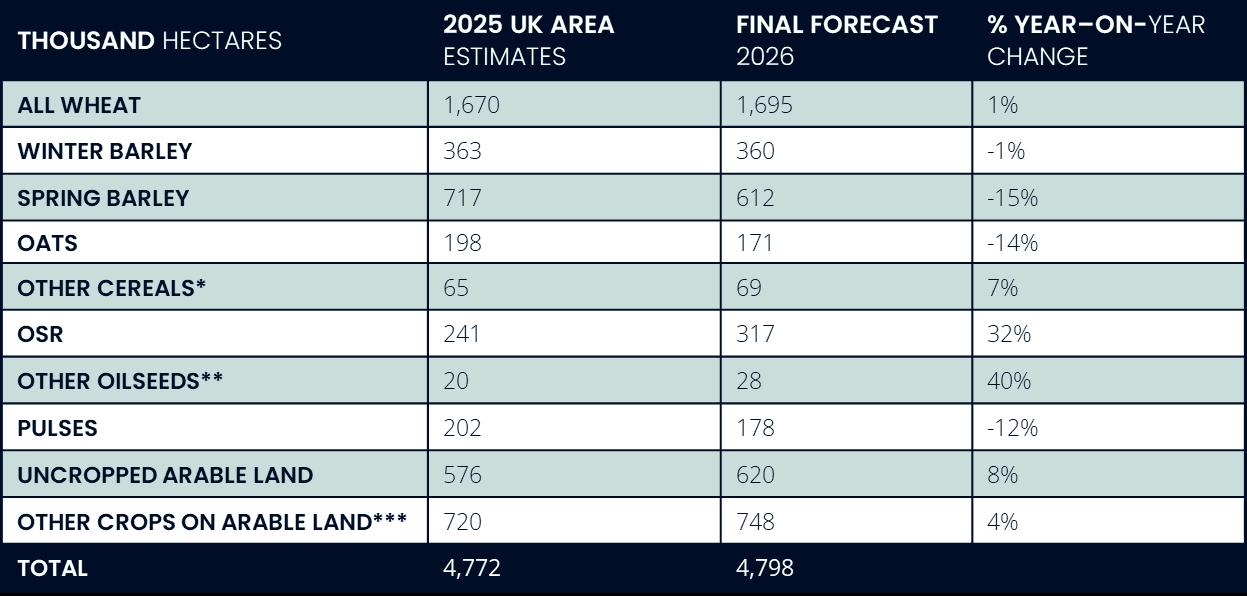
The Early Bird Survey, conducted by AHDB, took place in Autumn 2025. National cropping intentions show a big increase in the area for oilseed rape (OSR) as compared to the year before. Though this is not surprising considering such a good harvest 25 driven by improved establishment, low cabbage stem beetle pressure and favourable conditions at flowering and pod setting stages. Whilst a big increase yearon-year, actually the rise is from the 42-year low recorded in 2025, and the 2026 projection is still much below 2023’s 391 Kha.
Drilling conditions in the autumn provided a good start weather-wise, but markets are challenging with little hope for a price increase. Wheat plantings for harvest 26 are forecast to increase (albeit small), with the largest rise in hectarage in the South East. Spring wheat remains a small proportion of the total area, with a sharp drop in planned plantings as compared to elevated levels in 2025. Lower areas of barley, oats and pulses are expected. Overall, a final forecast for 26 of 244 Kha lower than 2025.
Rainfall in the past few seasons has been lower than the past five-year average for quite some time, though the slightly drier conditions last Autumn were welcomed to help with drilling conditions. Recent rains in January and February were 27mm and 33mm higher than last year respectively, causing some challenging conditions for winter beans in particular. It has been a mild start to the year, with temperatures in January on average recorded at 4.1 degrees but warming up to 7.2 degrees in February in East Anglia.
Autumn conditions created a favourable window for autumn drilling, allowing many growers to establish crops into moisture and achieve strong even emergence. The timely rainfall and mild temperatures meant seedbeds held together well and early root development has generally been good.

For farms dealing with higher grass-weed pressure, the season also offered a valuable opportunity to delay drilling without sacrificing crop performance. The conditions enabled growers to wait for an extra flush of weeds to chit and be controlled, while soils remained friable enough to support later drilling dates. As a result, many of these later sown fields have still gone in under ideal conditions, giving growers a better platform for managing blackgrass and other grassweed species.
Some growers across Hertfordshire and Essex are reporting exceptionally high levels of gout fly in earlier drilled cereal crops. This increase aligns with wider observations that gout fly activity has been unusually high, with a warm late summer and early autumn conditions encouraging earlier adult emergence and egg laying. At the same time, yellow rust is in crops, raising concern that infections could escalate if mild, humid conditions persist.
The next priority for many growers is turning to early nitrogen applications, especially as crops begin to move and the demand builds. After a wet start to 2026, soils are finally beginning to dry out in some areas, giving growers the first opportunity to travel without causing damage. Improving weather conditions will enable spring land preparation to begin ahead of drilling shortly.
OSR crops have generally pushed on well and many fields are showing the benefits of the mild autumn. Earlier drilled crops grew away rapidly and developed into large and leafy, forward canopies. While this strong early growth was encouraging, it did leave some crops more exposed to disease.
Periods of wet, unsettled weather and high disease pressure, including phoma and light leaf spot in some areas, knocked the forward crops back slightly. However, the recent improvement in conditions has allowed them to recover well, with fresh new growth now visible across most fields.
Winter beans have seen a tricky start to the year after continued wet and mild conditions; one of the worst starts in recent memory. High precipitation caused the waxy layer on leaves to wear away and allow chocolate spot to take hold. Field conditions are mixed, although improving by the day, with some crops severely damaged but others presenting only light infection. Where entire plants are brown with no green leaf area, recovery is unlikely; these crops may not justify any/further fungicide investment. However, crops that still have viable green tissue should be treated. With the recent dry and warmer temperatures, some crops are showing new clean leaves. This might offer some hope that the crop hasn’t been lost and that they may stay clean now the weather is improving. This early infection in the season has shown the importance of drilling date in winter beans, with later drilled crops presenting a much healthier picture than those earlier planted.
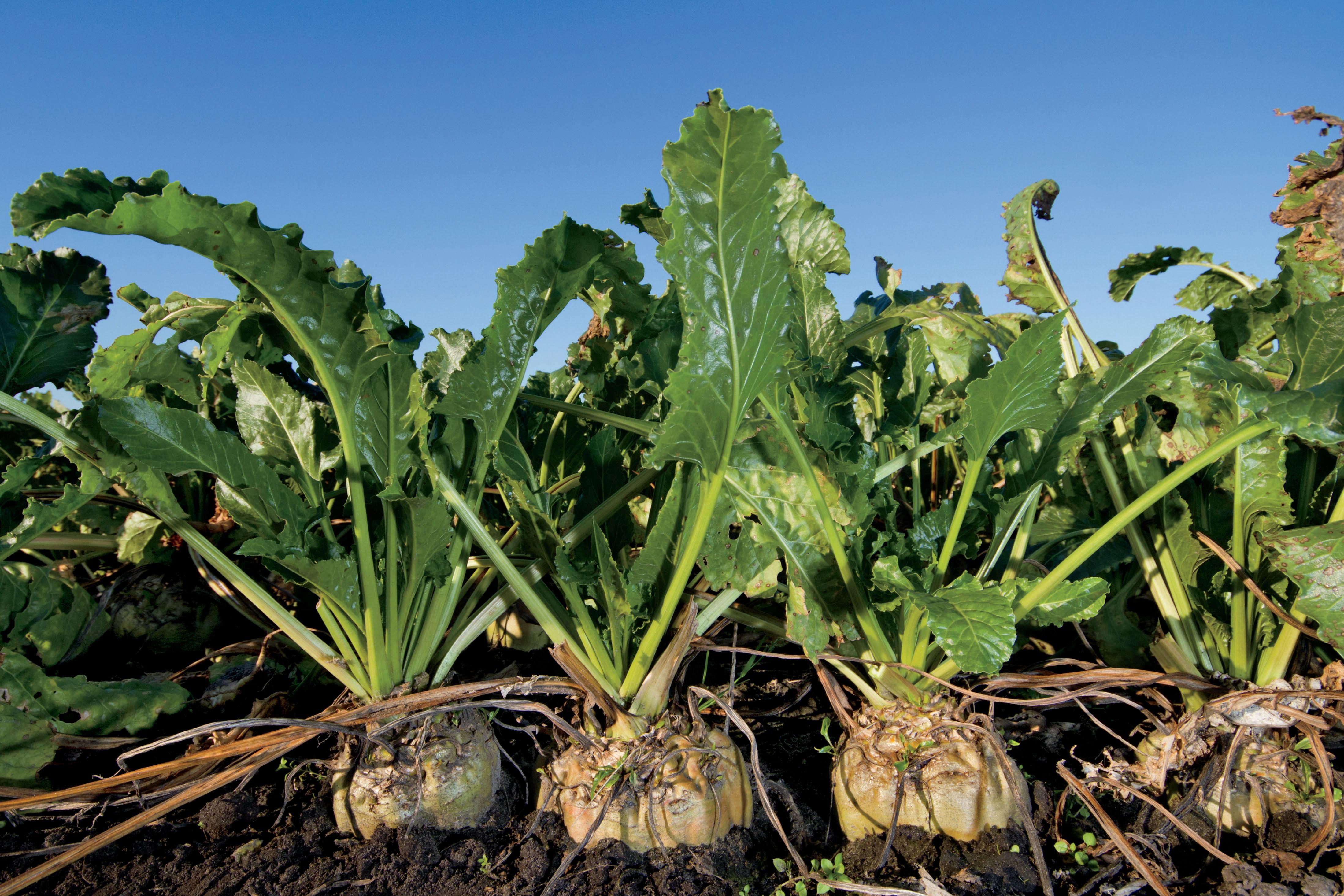
Unlike last year, we aren't drilling just yet Although later drilling will likely increase the risk of Virus Yellows, land must be in a good condition first to ensure even establishment; wait for consistent soil temperatures above 5 degrees for a few days and make sure the seedbed is even.
Contract values for 2026/27 have softened again, with fixed price options now well below levels seen only a few years ago We have seen contracts for 65% on a oneyear fixed contract at £30/t, or a one-year contract with guaranteed £25/t base, plus market-linked bonuses. The expectation is that contracts will level out at around £28/t.
Most growers will be targeting around 120 kg/ha of nitrogen, but over application risks both lower sugar percentages and amino N issues Early applications are safest before canopies become too large, reducing scorch risk on young plants.
With no neonic seed treatments, managing aphids and virus yellows risk is now an annual challenge. Mild, wet winters often elevate early season pressure and so we urge growers to continue monitoring through Rothamsted and British Beet Research Organisation (BBRO) updates, as well as regular crop walking Rothamsted Research predict aphid migration will start on 22 April, with forecasts estimating 62% of the eastern region becoming infected in the absence of any controls from a 30 March drill date. In more positive news, 15 new varieties have been recently added to the BBRO Recommended List for 2027. This means there will now be 35 varieties available to growers; varieties promoted for their high yields and improved tolerance against beet cyst nematode and/or virus yellows. Though BBRO point out that some of the new varieties, such as Rotterdam, are unsuitable for early drilling and so there is a trade-off in places.
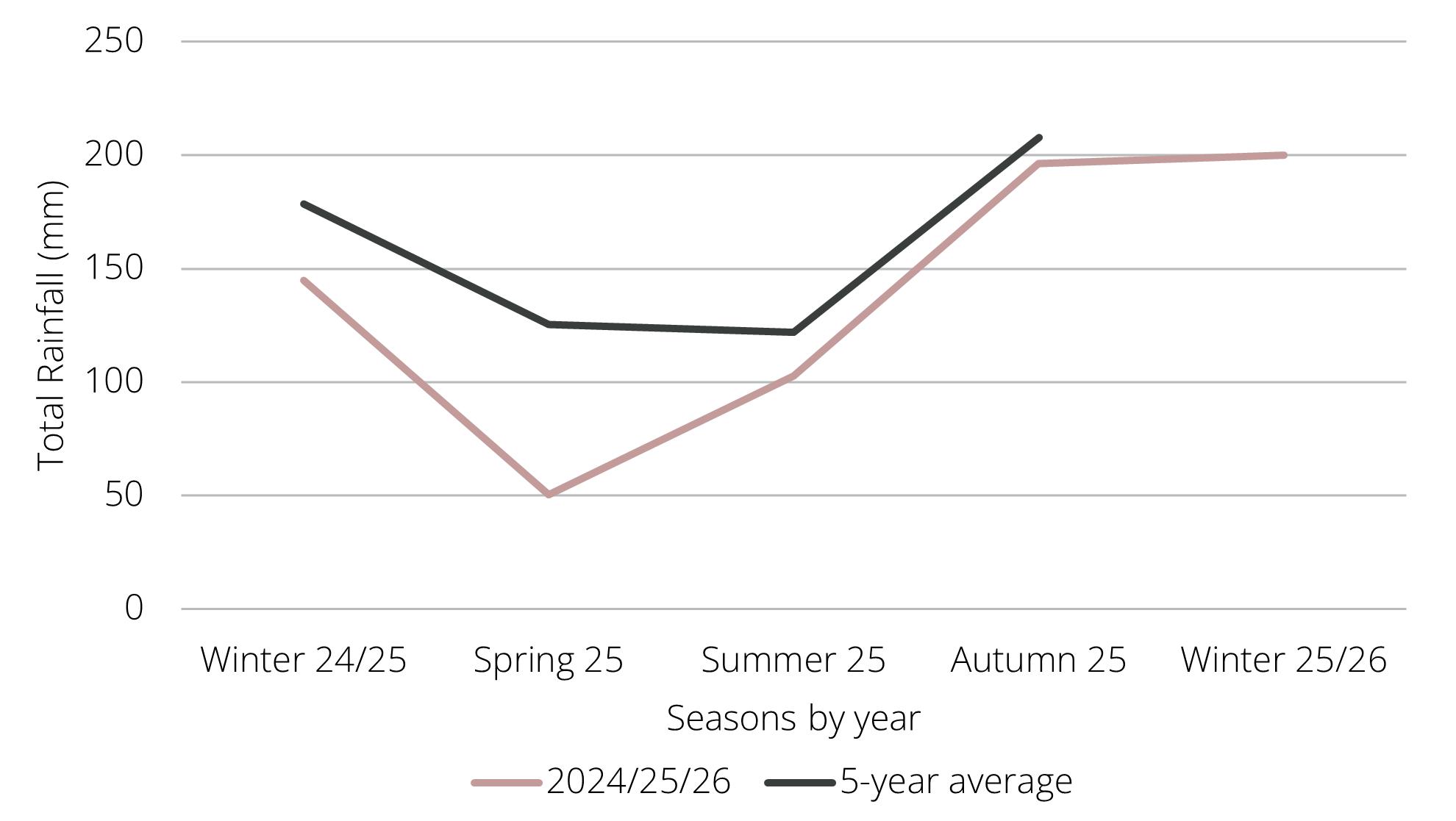
Rainfall in the West has shown a similar story to the East with regards to the wet start to the year. National rainfall figures for January reached 117% of the long-term average, with the South West and South Wales region registered as 156% of the average. Temperatures in January and March were 4.8 degrees and 7.4 degrees Celsius respectively; the latter being nearly 2 degrees warmer than this time last year.
The high rainfall and mild temperatures have seen soils becoming increasingly saturated in several areas, particularly between tramlines. As a result, some cereal crops are showing yellowing consistent with temporary waterlogging stress. These symptoms should ease as conditions dry, but early nitrogen applications will be important once ground conditions permit travel.

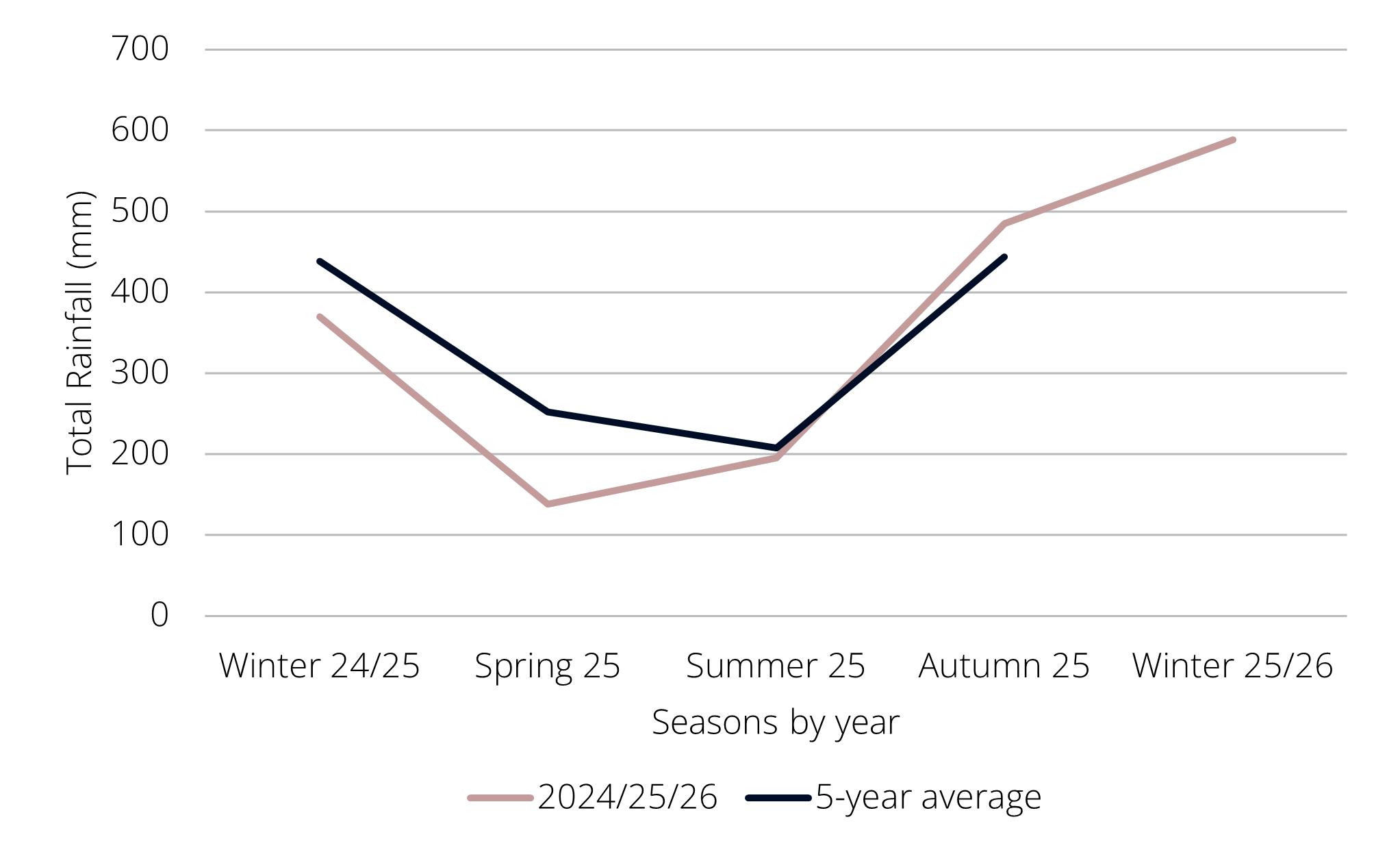
Figure 2 Total rainfall by season compared with the previous five-year average in the South West/South Wales (Source: Met Office)
FIG 2 AVERAGE CEREAL YIELDS (T/HA) FROM 2021-25 2025 YIELDS LABELLED ABOVE THEIR BAR
Winter cereal crops remain generally well established and forward, reflecting the favourable drilling conditions and early establishment last autumn. Applying the first split of nitrogen should be prioritised as soon as is practical. Rust is currently at low levels, though continued monitoring is advised. Rust pressure is expected to influence T0 decisions, especially in susceptible varieties. Septoria is present in the majority of crops regardless of variety. Wet weather and dense canopies have encouraged early development. While active now, it may be most effectively targeted at T1, where chemistry can deliver stronger, more sustained control.
As for grassweeds, treatments should be applied ahead of T0 where possible. This ensures herbicides perform optimally and avoids compromising PGR applications scheduled for the same timing. Most cereals will benefit from a T0 PGR. Early regulation will support improved rooting and tiller retention - critical for maintaining the strong biomass built over winter and help reduce lodging risk later in the season.
Growers should now consider fungicide treatments for Light Leaf Spot. Current crop structures and seasonal conditions make this a timely point to protect yield potential. Overall crop prospects remain positive, with strong plant stands and good yield potential. Continued progress, however, will depend on a necessary shift to drier weather to allow spring field operations, nutrient applications, and early-season sprays to move ahead as planned.
Following announcements at the NFU Conference last month, a marked shift in both the structure and financial framework of the Sustainable Farming Incentive (SFI) is expected. Indications suggest that the new offer:
Will be limited to 71 actions (down from 102 previously). Have a maximum funding cap of £100,00 per holding. Only one SFI agreement will be permitted per holding.
Management payments from new SFI agreements will be removed.
Reduced payment rates for several commonly used actions including herbal leys, legume fallow and winter bird food.
Actions offered on a 3-year agreement as opposed to the previous 5-years.
The revised 2026 SFI offer is expected to open through two application windows, with an initial phase for smaller farms and first time applicants in June, followed by a wider rollout in September. Further information can be found here. This comes following the announcement of increasing the inheritance tax relief for family farms, with the Agricultural and Business Property Relief threshold increasing from £1 million to £2.5 million per person, meaning couples can pass on up to £5 million tax-free.
Ceres Research Members can access this easy-to-use summary of the 2026 SFI options, highlighting 25% capped actions, plus actions with reduced and increased payment rates on the website.
Capital Grants are expected to open in July of this year, with an additional £225 million to be released (as compared to the £150 million in 2025). While full guidance has yet to be disclosed, the 2026 scheme is likely to be similar to previous rounds of funding. This funding will back initiatives including hedgerow establishment, upgrades to slurry storage, natural flood‑management measures, and projects aimed at improving water quality. Despite the increased budget, it is expected that the scheme will be oversubscribed as before and therefore will only be available for a short duration. 7
The UK–EU discussions on a new Sanitary and Phytosanitary (SPS) agreement are bringing “dynamic alignment” into sharp focus, with proposals that could see the UK match EU plant health and pesticide rules from June 2027. While this may ease export friction and provide access to additional EU approved biopesticides, the implications for growers are significant. Alignment could accelerate the loss of GB only active ingredients, tighten glyphosate restrictions, and create serious MRL risks for crops treated legally pre alignment but exported afterward; potentially leaving some produce unsellable. Farmers should begin planning for regulatory shifts that could influence crop protection strategies, stored grain markets, and wider business resilience. Ceres Research has provided a detailed explanation of the Dynamic Alignment proposal as well as potential scenarios that may arise. Additional information can be accessed here.

Since the latest SFI, FETF and Capital Grant updates, there are some key funding opportunities for vineyard businesses.
Key options from the SFI 2026 offer include:
CIPM2: Flower rich grass margins, (£798/ha), CIPM1: Pollen and nectar mix, (£739/ha), or CASM2, (£129/ha), all of which could be grown between the vines to promote pollinators and help to reduce frost risk.
For land surrounding vines, options such as AHL2: winter bird food, (£648/ha), AHL3: grass field corners, (£590/ha), may offer financially rewarding alternatives. The new scheme also offers particularly attractive options for those running or converting to organic systems, including OFM5: organic land management, (£707/ha) and several options for organic conversion.
Items to note from the FETF funding include tractor mounted flail mulchers, drones for applying horticultural chemicals, intra row weeders and UV-C light treatments for mildew, all of which receive a percentage of fundings towards the cost of the items.
Whilst specific Capital Grant items haven’t been released yet, previous funded items relating to vineyards included support for concrete yard renewals, hardcore tracks, and fencing and hedgerow planting.
For more information on grant schemes or support with vineyards, please contact Beth Speakman (beth.speakman@ceresrural.co.uk) or Louise Penn, (louise.penn@ceresrural.co.uk).
Recent dry weather will be welcome news for grassland and manure management ahead of the grazing and forage season. However, care should be taken to avoid excessive applications with some very forward grass crops in places, potentially picking up residual nutrients from the dry year previously. Although, the weather has likely presented risks for disease with health and welfare planning being paramount as ever, especially over the upcoming spring period with lambing and spring cattle calving.
The UK livestock industry as a whole is operating in a period of structural contraction, with cattle and sheep numbers continuing to fall, particularly within the beef breeding and sheep sectors. While the dairy herd has remained broadly stable, and poultry production continues to expand, overall red meat supply is tightening, placing increasing pressure on processing capacity and future throughput.
Livestock prices, especially for beef and lamb, remain historically high, largely because of constrained domestic supply rather than underlying growth in consumer demand. Protein feed costs remain high and focus on home-grown forage quality and crop choices are key for managing margins. Forward purchasing of feeds should continue to be monitored against milk and meat prices, as well as energy costs – especially for intensive dairy herds. Milk prices softened in late 2025, in some instances below the cost of production eroding dairy margins and highlighting ongoing volatility across all sectors.
Although input costs have stabilised and feed prices have generally eased, profitability remains fragile, leaving producers exposed to renewed cost inflation or price corrections. This is compounded by persistent animal health risks, including avian influenza and endemic disease pressures such as bovine TB.
Overall, the sector is being supported by tight supply rather than strong market fundamentals, with resilience increasingly concentrated in poultry and, to a lesser extent, dairy. Without renewed confidence, investment and policy stability, the industry faces ongoing challenges around capacity, succession, and longterm sustainability.
The Spring Statement from Chancellor Rachel Reeves was delivered in the last week or so, framing the economic forecast and its impact on inflation and business investment. Among some of the key messages was the increased likelihood of significant upward pressure on heating, fuel and electricity for farms and processors. Oil and gas prices have already increased in the last week or two, impacting the UK sooner than initially anticipated.
Delayed interest rate cuts are expected, which could keep financing costs high, contributing further to tight business margins. There is now a renewed sense of uncertainty around demand across domestic food markets as the cost-of-living squeeze heightens again.
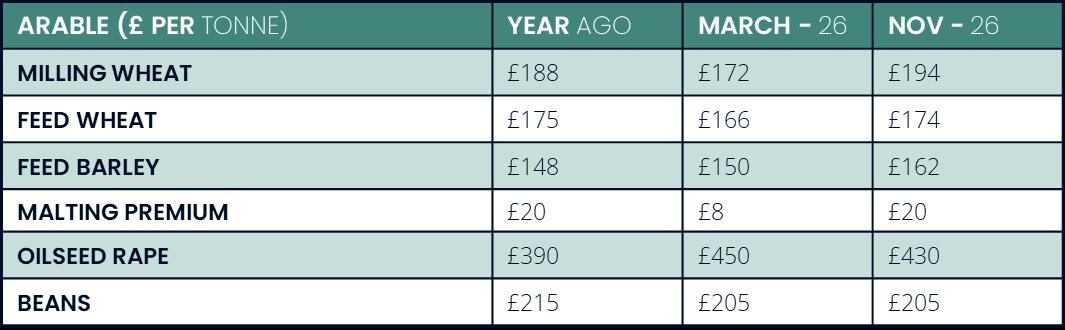
Arable market values reflect this sentiment, remaining below year-ago levels across most commodities which doesn’t paint an inspirational picture. Wheat prices remain solemn, a significant factor being the falling demand from processors. Human and industrial cereal consumption is forecast to fall (by 1.315 million tonnes) to the lowest levels in 20 years, due to reduced activities related to brewing/distilling, weaker consumer demand, and the closure of major bioethanol plants that previously consumed large volumes of wheat. Whilst Vivergo closed last August, Ensus the other major processing facility, has remained offline since September 2025 without any offer to reopen without government support.


Malting premiums have seen a significant drop compared to this time last year (down £12/t), a vast difference from the distant memory of £40/t seen in 2024. AHDB forecasts human and industrial barley usage will be down 214,000 tonnes from last season – the lowest level recorded since digital records began in 1990/91. With limited export opportunities, changing drinking habits and consumer spending, and rising costs, there is no wonder there is increasing pressure capping premiums.
OSR prices have remained strong in comparison. Strong global vegetable oil markets, biofuel demand, and tighter oilseed supplies in some exporting regions can be attributed to these values. Whilst there was a big increase in OSR growing area in AHDB’s 2025 Early Bird Survey, it’s still at an all-time low in comparison to years before, contributing to the higher prices.
The bean market is as quiet as before, which is largely due to limited export competitiveness and strong competition from alternative protein feeds. Although steady domestic feed demand continues to provide a baseline level of support.
Table 2 Source: Hertfordshire ex farm bids (as of 9 March 2026) th
The farmland market ended 2025 in better shape than many had anticipated. Despite sustained pressure on farming incomes, uncertainty around the future of government support and inheritance tax reforms, values held firm and buyer appetite was generally undeterred. The clearest theme to emerge was one of polarisation: well-located farms with good quality soils continued to attract strong interest and still achieved premium sale prices, whilst more remote or lower-quality holdings required greater patience and a sympathetic guide pricing from vendors. That dynamic is likely to persist.

The confirmation that Agricultural and Business Property Relief thresholds are to increase to £2.5m per individual has been welcomed with open arms by the farming community. It is worth noting, however, that these changes do not take effect until April 2026 and any tangible impact on vendor behaviour and consequent supply to the marketplace is yet to materialise. However, one clear consequence of Labour’s IHT policy shift (intentional or not) is that many farm businesses are reviewing their structures and succession plans. Those unable to restructure may need to release capital through land sales to meet resulting liabilities, which could increase the supply of farmland coming to market over the next few years.

As the spring marketing season gets underway, we will gain a clearer picture of what 2026 holds. By all accounts, buyer sentiment remains strong and, as ever, the farms that will inevitably perform the best will be those that are priced to reflect the market sentiment and are backed by a focused, wellexecuted marketing campaign.


Safe charging of batteries remains a major focus this quarter, following repeated incidents involving fires, explosions, acid burns and toxic gas exposure - almost all of which stem from preventable charging errors. We stress the importance of correct charging locations, avoiding ignition sources and never charging damaged or incompatible batteries. Over charging, unattended overnight charging (unless specifically designed for it) and trailing cables across access routes are also significant risk factors.
Key findings in the latest Health & Safety Executive Annual Report emphasise regulatory expectations for farms and estates over the year ahead. The report outlines updates on COSHH regulations, reminding businesses of the importance of maintaining accurate risk assessments, ensuring safe handling procedures for hazardous substances and keeping training records up to date.
Encouraging a stronger reporting culture is also an ongoing important consideration. Near‑miss reporting is often overlooked, yet plays a vital role in preventing future incidents. Farms are urged to adopt simple reporting systems and ensure that lessons learned are shared across teams so that significant hazards are identified before accidents occur.
During these wet and muddy months, we remind farms to address this seemingly trivial health and safety risk with significant consideration. Practical measures - such as regular road checks, signage, wheel cleaning and proactive communication with neighbours - are recommended to minimise the risk of road accidents linked to farm activity.
The full Health and Safety bulletin can be found here, which also includes case studies illustrating recurring themes in recent agricultural accidents and HSE prosecutions. These include machinery isolation failures, poor maintenance, and inadequate supervision - areas where relatively small changes could significantly reduce risk.
For any queries please contact Robert Gazely on 07592 041617 or robert.gazely@ceresrural.co.uk.
Ceres Research Members have full access to the Farming Update ‘Plus’. A publication that takes a deeper dive into some of the topics covered in the Ceres Rural Farming Update. This Spring edition discusses the wet start to the year, waterlogging issues and why field drainage matters more than ever. The publication finishes with practical steps for farmers and growers to future-proof agricultural land drainage and support improved margins.
Read the Farming Update ‘Plus’ here.
Become a Ceres Research Member today to access this ‘Plus’ publication, as well as many other insights and tools to help you and your business. Remember, existing Ceres Rural Agronomy clients get 25% off the membership. Speak to Danni, Research and Knowledge Exchange Assistant, for further information.
Bedfordshire YFC - 16 May th
Essex Young Farmers Show - 17 May th
Hertfordshire County Show - 23/24 May th
Suffolk Show - 27/28 May th
Cereals - 10/11 June th
Lincolnshire Show - 17/18 June th
Norfolk Show - 24/25 June th
Groundswell - 1/2 July nd
Save the date and register your interest:
Ceres Agristrategy Conference - 3 December rd
Want to discuss any of the topics in this issue of the Farming Update? Contact the project leaders, Annis Cousins, Peter Mason, Huw Jenkins or Dr Dannielle Robb.