


Welcome to the Ceres Rural Farming Update, a publication that provides independent insights on agricultural issues, from policy and grant funding, to administrative updates and key market information.

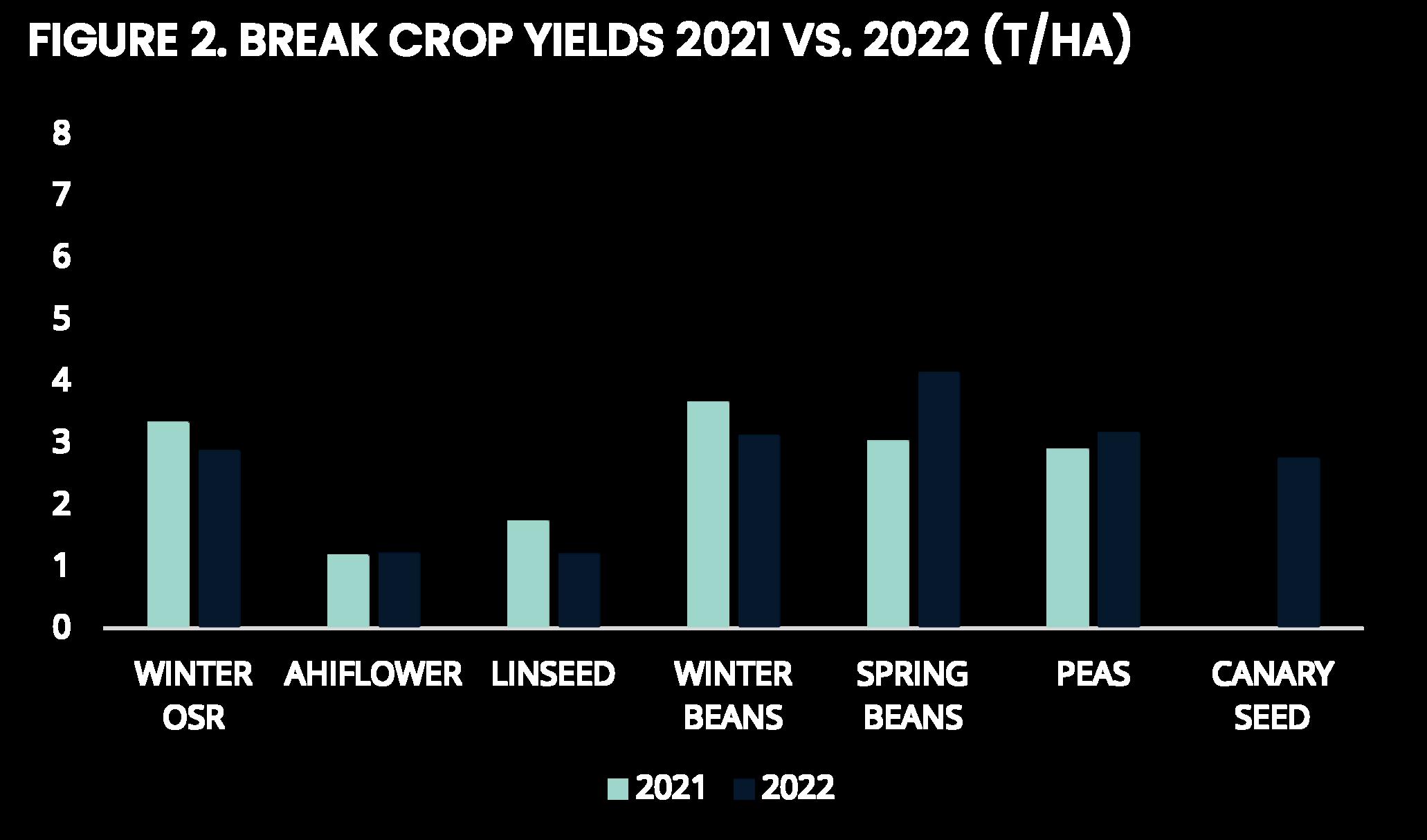
The 2022 Ceres Rural yield survey attracted a total of 137 respondents, offering a snapshot of yields primarily from farms in the central/eastern counties. The data collected shows 2022 was a more productive harvest than 2021, with the exception of spring pulses and spring wheat, which both suffered from the hot, dry conditions.
The two figures below detail the differences in yields for both cereal crops and break crops from 2021 to 2022.
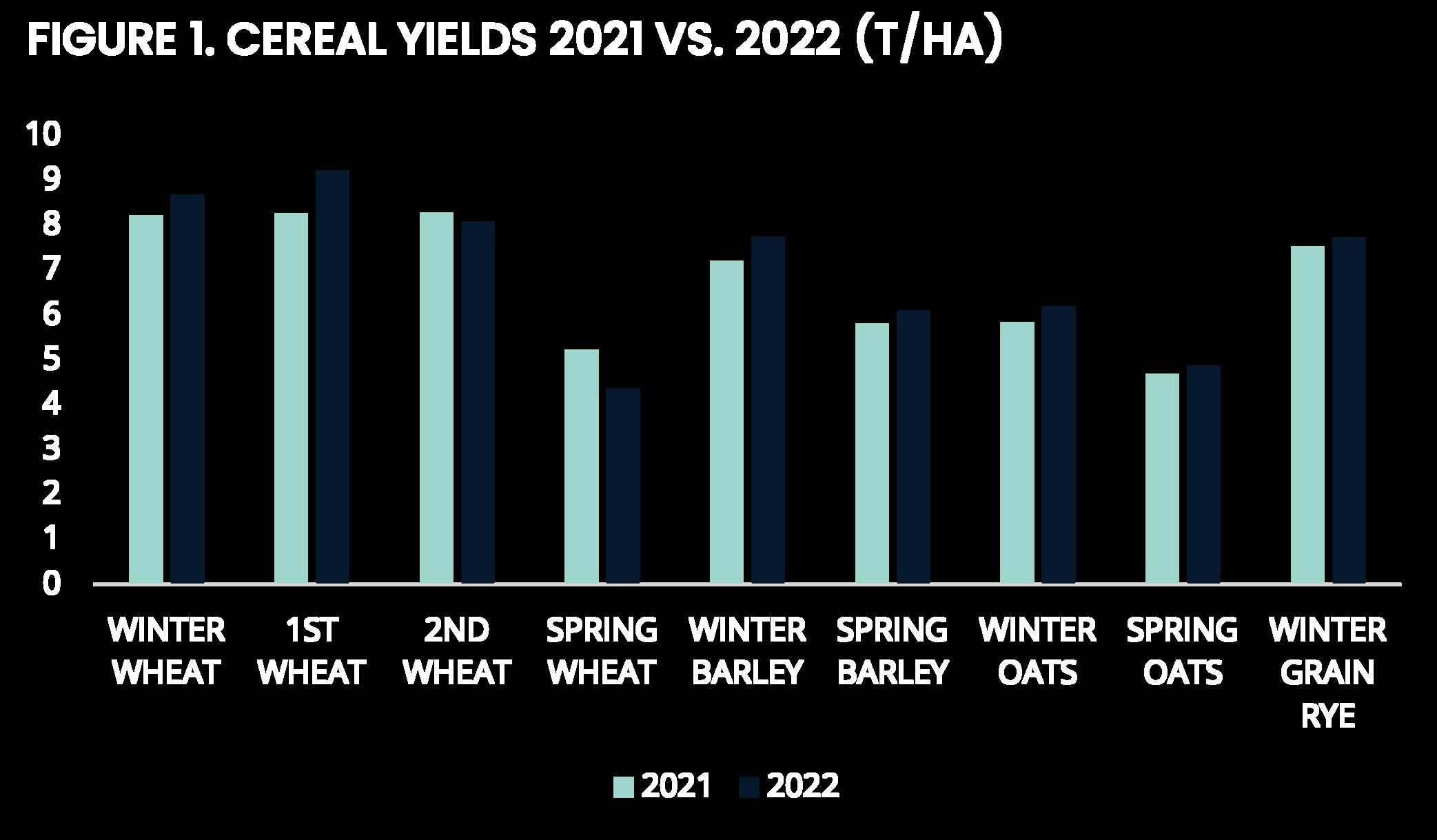
With such a range in nitrogen regimes, it’s fascinating to see the average 2022 wheat yield within the respondents is 8.7 t/ha – c. 0.5t/ha higher than 2021. First wheat yields (112 crops) averaged 10% higher than in 2021 at 9.2 t/ha with second wheat yields similar to 2021.
Break crops had mixed performances in comparison with 2021. Oilseed rape yields were 14% up year-on-year, which from small seed suggests yield came from better stands with more pods. The biggest casualty of 2022 was spring beans, which suffered in the spring temperatures and drought, meaning flowering was cut short. The outcome was an average of 3.0t/ha, a 37% reduction from the 2021 yield.
Winter beans had the opposite fortune, primarily assisted by low disease incidence. Early planting followed by early harvesting of the crop is fitting in better with the unpredictable autumns and dry springs, hence a yield uplift of 15% to 3.66t/ha.
If you would be interested in comparing your farm results vs. the Ceres Rural harvest data, and receiving a full breakdown of each crop, please get in touch.

The results in the Ceres Rural yield tables have been seen on a national scale, as shown by the provisional data released by Defra:
Total cereal production has increased by 9.4% to almost 21 million tonnes.
The total wheat harvest is estimated at 14.4 million tonnes, showing an increase of 12% from 2021, which is primarily driven by yield – up 11% to 8.6t/ha.
Total barley harvest is estimated at 5.2 million tonnes, an increase of 6.6% from 2021. This is largely driven by a 20% increase in the winter barley area, offsetting a 5% fall in spring barley.
Oilseed rape production has increased substantially by approximately 43% to 1.2 million tonnes. This has been driven by both a 20% increase in area and a 19% increase in yield, with an average yield of 3.7t/ha across England.
Following on from the previous quarterly update, the AHDB, as well as other independent groups, have released their 2022 harvest results for winter wheat varieties.
See a snapshot of the AHDB Treated Winter Wheat Recommended List harvest results below
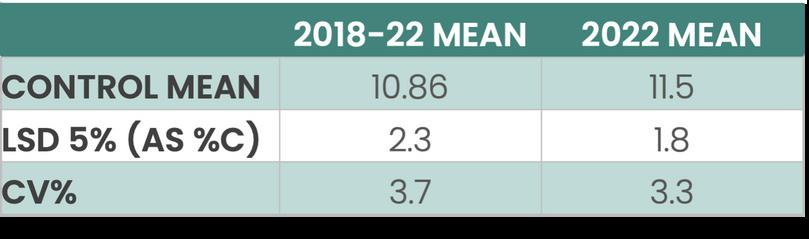
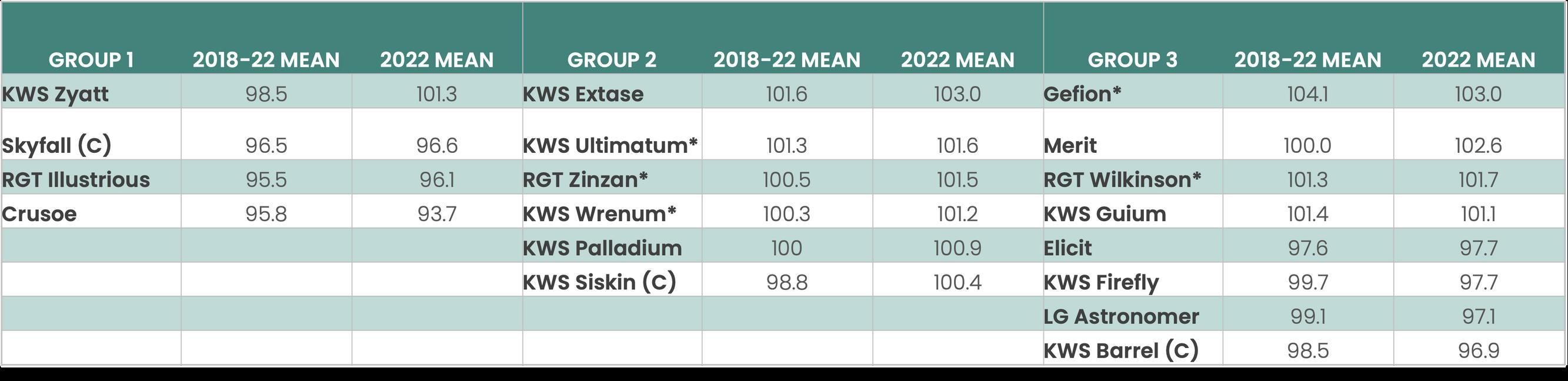
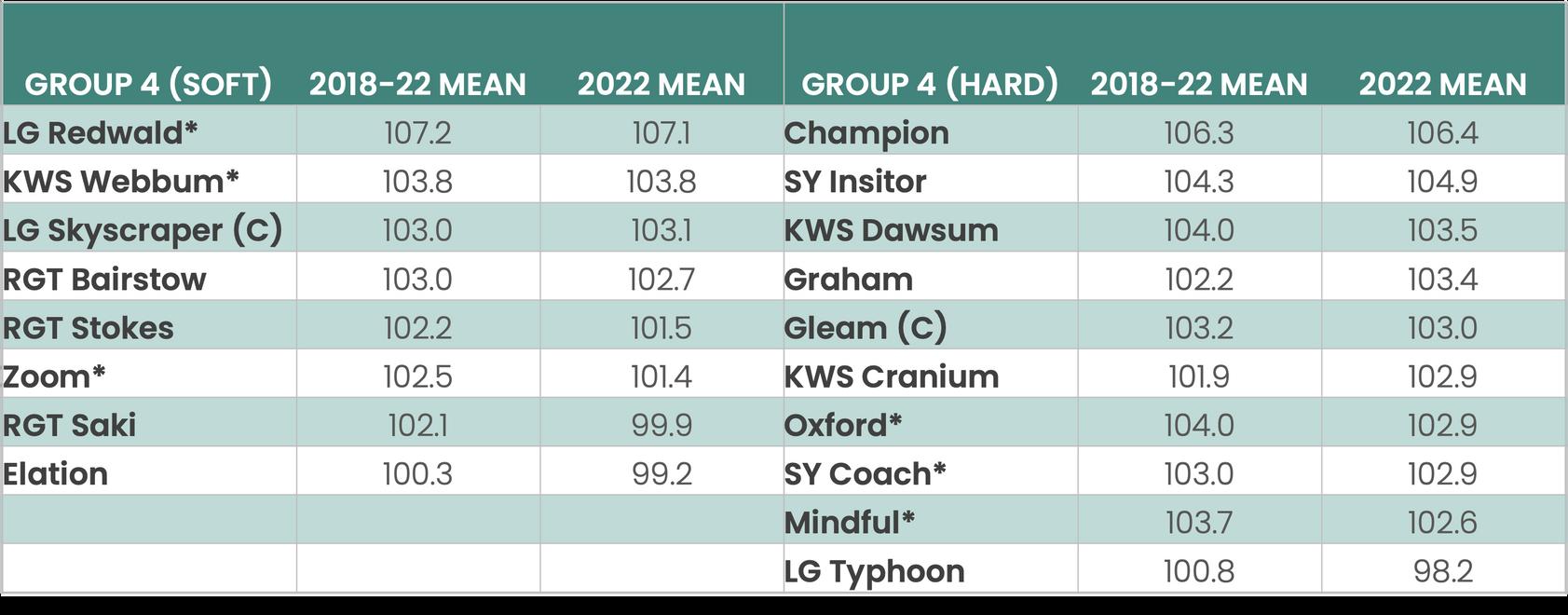
*denotes candidate variety (C) denotes control
Source: These tables use the AHDB’s recommended list variety trial results
With no new varieties in Group 1, KWS Zyatt was the highest yielder However, as most growers would attest to, in a reasonably disease-free year, yellow rust proved to be a big issue in this variety.
AHDB trial results showed a mean incidence of yellow rust of 36.0% in KWS Zyatt, compared with Skyfall at 39.2%. This is reflected in Zyatt’s fungicide yield response – 8.26t/ha untreated verses 11 65t/ha treated, a 41% uplift in yield This demonstrates the importance of using a robust, well-timed fungicide programme with this variety, but also the cost of gaps in rust protection for next harvest
For the Group 2s, KWS Extase was the highest yielding variety, followed by three candidate varieties of bread-making potential The much talked about KWS Palladium slightly outdid its five-year average whilst returning robust results for both yellow rust and Septoria.
The candidate variety Gefion led the yield results in the Group 3 varieties, with a 2022 yield of 103, with Merit being the best performing recommended variety.
In the Group 4 soft varieties, the candidate variety LG Redwald performed incredibly well with a yield result of 107, whilst maintaining strong results in both yellow rust (0.6%) and Septoria (10.0%).
The highest yielding recommended variety was LG Skyscraper at 103, in-line with its five-year average.
The Group 4 hard varieties provided the strongest results overall
Newly recommended Champion and KWS Dawsum both performed well with 106.4 and 103 5, respectively However, the longer-standing varieties of SY Insitor, Graham, Gleam and KWS Cranium all performed better than, or in-line with, their five-year average.
The most disappointing result was the newly recommended LG Typhoon, which scored 98.2.
These results will undoubtedly have informed growers' decisions for next harvest.
Looking ahead to the 2023 harvest, the continuing lack of rainfall throughout the spring, summer and early autumn of 2022 remains a concern.
Using MetOffice statistics for East Anglia, only one month this year has exceeded the 20-year average, with a total reduction from average rainfall of 175.88mm, up to the end of September. This is echoed by the National Drought Group (NDG), forecasting that the drought may continue beyond spring 2023. The NDG noted the lack of moisture has led to significant agricultural impacts across the country.
The rains in the latter half of October may change the picture in some areas of the country and impact drilling.

Growers have largely taken the opportunity to establish winter cereals early, with many starting in mid-late September and completing in early October. With the lack of rainfall over the summer, seedbed quality has been mixed. For those farmers who waited for moisture with the aim of producing better seedbeds, the recent rain has helped, but drilling has been delayed
One of the largest unanswered questions is regarding weed burden. With low rainfall and consequent lack of chit, the pre-drilling glyphosate has had marginal value, hence much reliance is now on high efficacy of pre-emergent and peri-emergent herbicides. As ever, good cultural controls and high attention to detail with spraying application can help alleviate weed pressure, nonetheless it is undoubtedly a disappointing start to blackgrass control.
With many growers drilling in mid-late September, and crop emergence prior to the end of September, attention should be paid to the 170 day degrees guidance for BYDV control. These calculations begin on the day of emergence or following a pyretheroid application and the tool provided by the AHDB is useful for monitoring when the T-Sum is met.
Another useful tool is the Aphid Alert text messaging service provided by Rothamsted Research Centre. Recent week-on-week bird-cherry aphids went from 549 to 1076 in the East of England, showing that populations are on the rise With temperatures forecast to remain high through to the start of November, aphids are certainly a large concern. Growers are urged to check crops regularly for wingless aphids, using T-sum as a guide to application timing.

Looking at oilseed rape establishment continues on the theme of limited rainfall. Many growers who were initially attracted to high prices were put off by the severe lack of moisture in early August and little prospect of rain forecast
Some growers took the gamble – the crops drilled into moisture which received subsequent rainfall, were able to get away well and are now marching on. The other side of the story is far less promising The crops that didn't receive rainfall and had minimal seedbed moisture, have ultimately suffered. These crops have often had patchy emergence, requiring re-drilling, whilst being hammered by cabbage stem flee beetle. Any marginal crops that are kept are likely to be plagued by different pests throughout the growing season, particularly pigeons in the winter and larvae in the spring. Ultimately, the decision to destroy OSR crops, if not already actioned, will have to be made before committing to applying propyzamide. Early estimates signal that up to 20% of the OSR drilled has failed
Winter beans have primarily been the go-to alternative when avoiding OSR. There are quite a few benefits with this approach, with beans being a genuine break, not distorting the rotation and having minimal fertiliser requirements – a particularly welcome perk in the current climate.
Winter beans drilling has also begun earlier than in previous years. The main concerns with the earlier date of emergence are; the opportunity of pre-emergence herbicides, higher disease pressure later in the growing season, and additional susceptibility to harsh winter conditions. Ultimately, having the opportunity to get winter beans drilled in better conditions than previous years will hopefully pay dividends in terms of better emergence and tillering, and consequently yield. However, with soil temperatures being higher than typical, emergence has been rapid, catching some growers out for pre-emergent applications
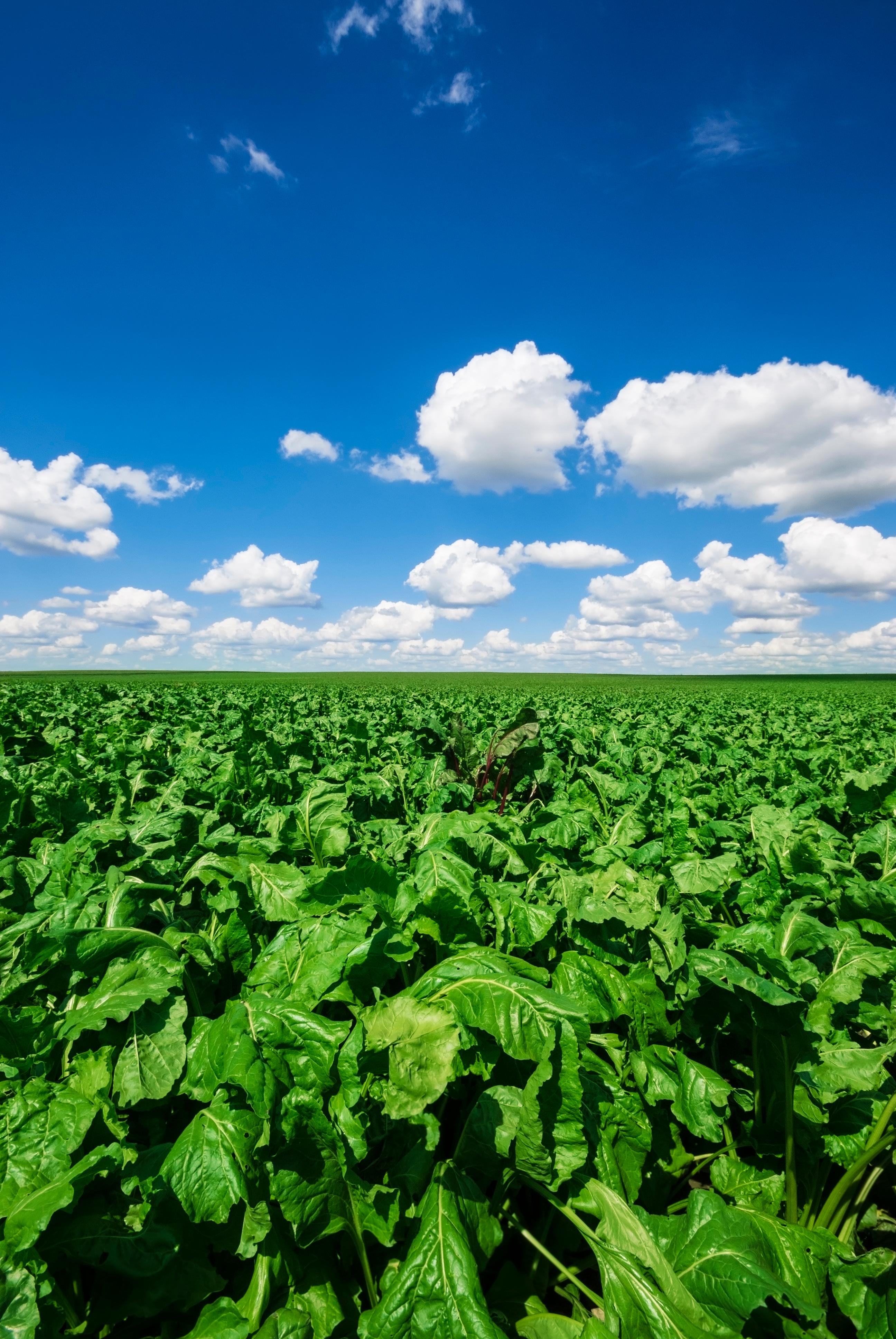
Once again, the story with sugar beet primarily centres around the lack of rainfall and incredibly hot periods. However here, beet moth has also played a role.
The recent mild conditions with higher humidity have favoured foliar diseases, such as rust, but it hasn’t been warm enough for Cercospera development. As well as foliar disease, an increase in root rots has been detected – it’s important to monitor these and record field of origin to spread the rotation and hopefully prevent future outbreaks.
There has been a number of reported cases of beet moth – predominantly within a small corridor along the A14 from Cambridge to Stowmarket, spreading across parts of East Anglia. The main evidence of the pest is black frass deposits on the crown by larvae, and subsequent re-growth of the leaves. Beet moth is generally a bigger issue on the continent, however there is no recognised method of control, with insecticides having limited efficacy. The BBRO have stated that ploughing down beet remnants after lifting may help to reduce incidence in 2023. It is largely thought that the pest is a product of the warm, dry weather, and hopefully won’t be as large a problem if next summer returns to relative normality.
Regardless, sugar beet lifting has begun with mixed results being reported.

The previous update included information pertaining to the roll-out of the first standard off the Sustainable Farming Incentive (SFI) –the Arable & Horticultural Soils standard (as well as the Grassland Soils Standard).
As a brief re-cap – only the introductory and intermediate levels have been made available, with emphasis being placed on testing soils for organic matter, improving soils organic matter and ensuring a minimum of 70% green cover over winter. The separation between introductory and intermediate is with the 20% requirement for multi-species winter cover. Please read this summary for more details.
At the end of September, some media outlets reported that the government were looking to scrap the Sustainable Farming Incentive altogether. This was (relatively) quickly rebutted by Defra who maintain their commitment to ELMS and the SFI – please see this blog post.
However, regardless of whether Defra will stick with the scheme, uptake has been low. Recently the media has claimed that as few as 1,000 farmers have signed up to the SFI since opening in June. This will be incredibly disappointing for Defra, considering both the time period since the SFI's inception, and it being a far-cry from the target of 70% farmer uptake by 2028.
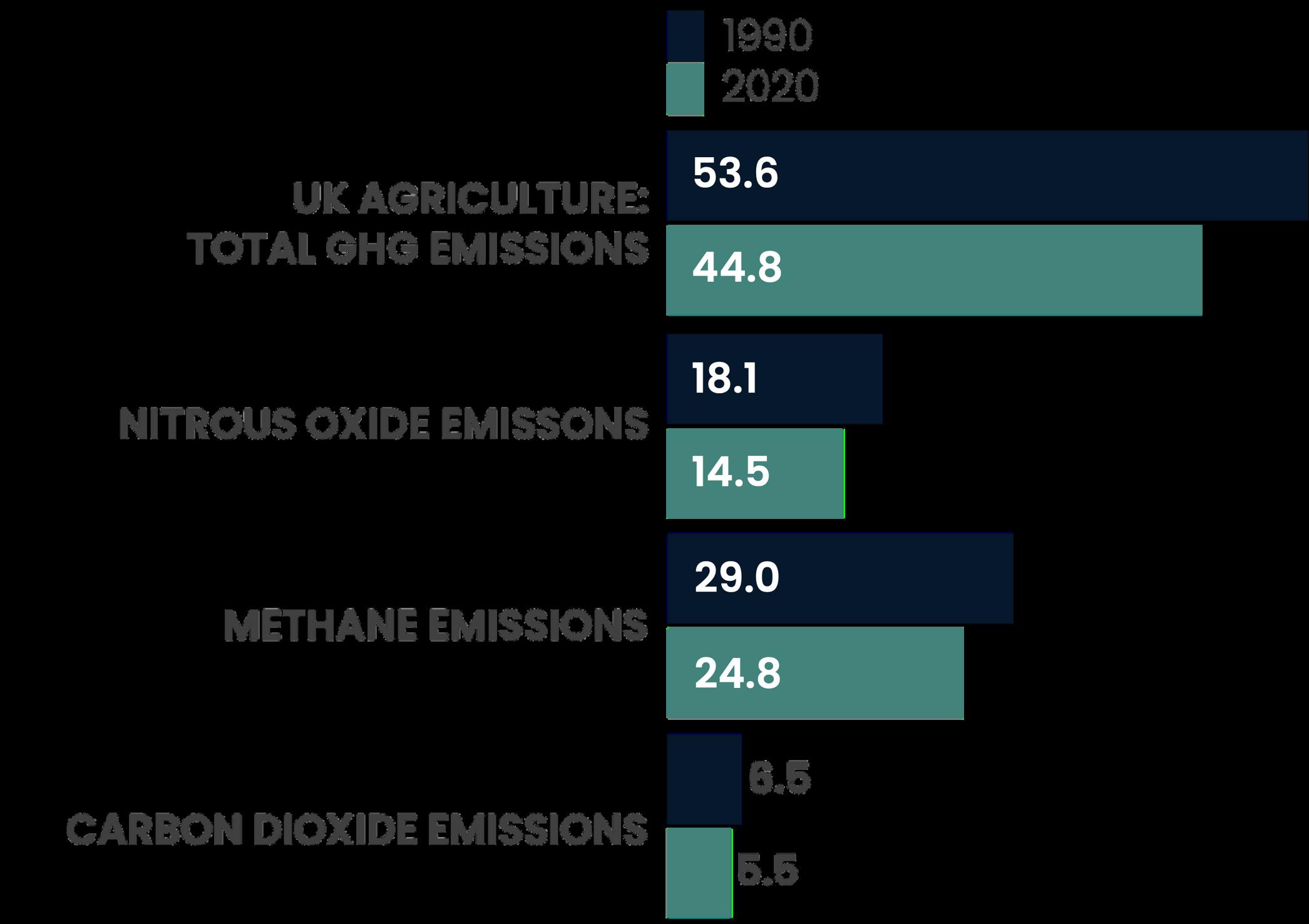
Defra has recently released the Agri-climate report for 2022 which shows greenhouse gas emissions from 1990-2020 across the UK agricultural sector.
Figure 3. UK estimated GHG emissions for agriculture, 1990 and 2020 (million tonnes carbon dioxide equivalent, MtCO2e)
Source: UK greenhouse gas emissions, Department for Business, Energy and Industrial Strategy
The report shows that all greenhouse gases have had an overall reduction of 16.4% over this period, with nitrous oxide emissions reducing by just under 20%.
The report found that 58% of farmers were taking action to reduce their GHG emissions, with the most frequent action being recycling waste materials, improving energy efficiency and improving nitrogen fertiliser application accuracy (82%, 78% and 63% of farms, respectively).
Both Defra and the NFU have previously outlined the ambition of the industry becoming carbon neutral, the NFU stating this aim is for 2040.
It was announced on the 19th October that the UK had hit the highest rate of inflation for the last 40 years, reaching 10 1% in the 12 months up to September (Consumer Prices Index) One of the headline drivers for this has been the rise in food prices, reported at 14.6% and 13.1% in the year to September, for CPI and RPI respectively.
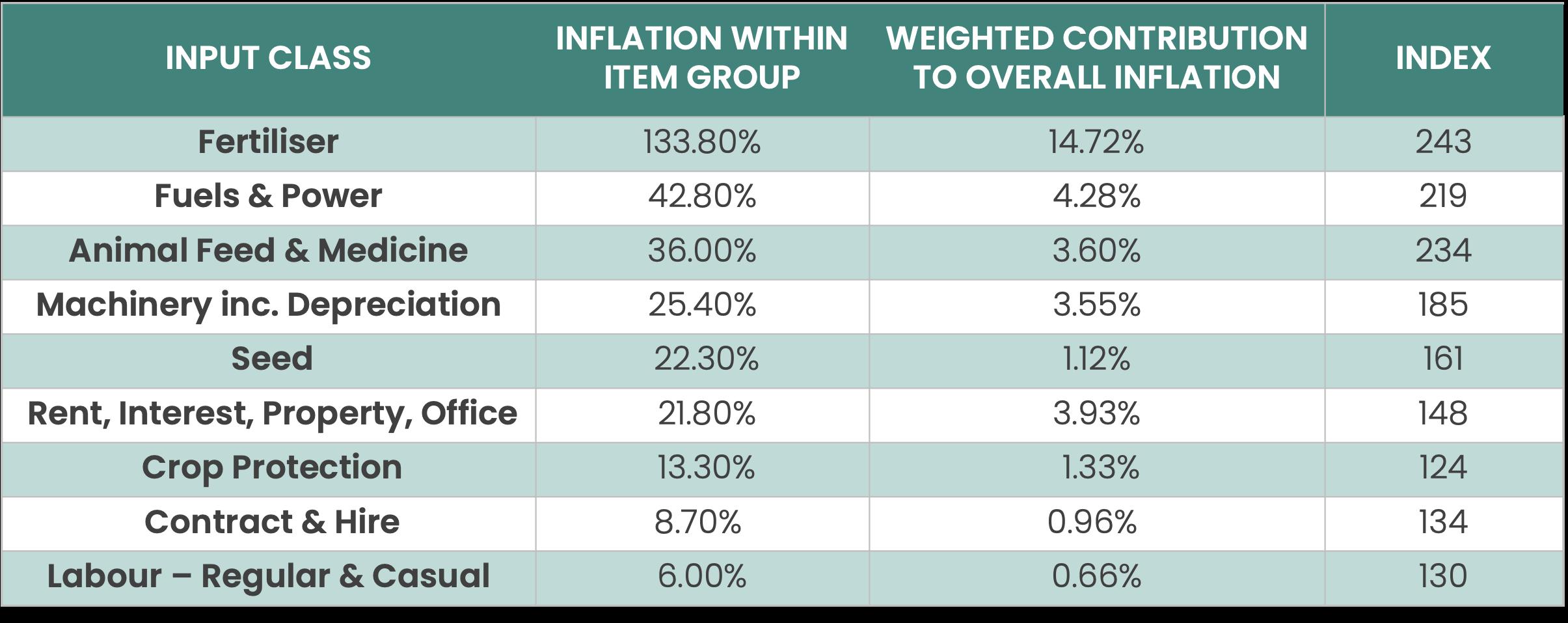
Anglia Farmers recently published their Annual Agricultural Inflation Index from September 2021 to the end of September 2022. The report shows that agricultural inflation for the period is 34.15%, on top of the previous increase of 22% recorded up to the end of September 2021.
This will come as no surprise to farmers who are incredibly aware of rising bills across the board. The breakdown of rises shown in the table below makes interesting reading.
Unsurprisingly, fertiliser has had the highest price increase at 133.8%, and also makes up the largest contribution to the overall ag-inflation figure. Fuel and power also shows a worrying increase of 42 8%, likely impacting cultivation decision making this season Crop protection continues to rise, however behind that of the other main contributors, at 13.3%.
Source: Anglia Farmers
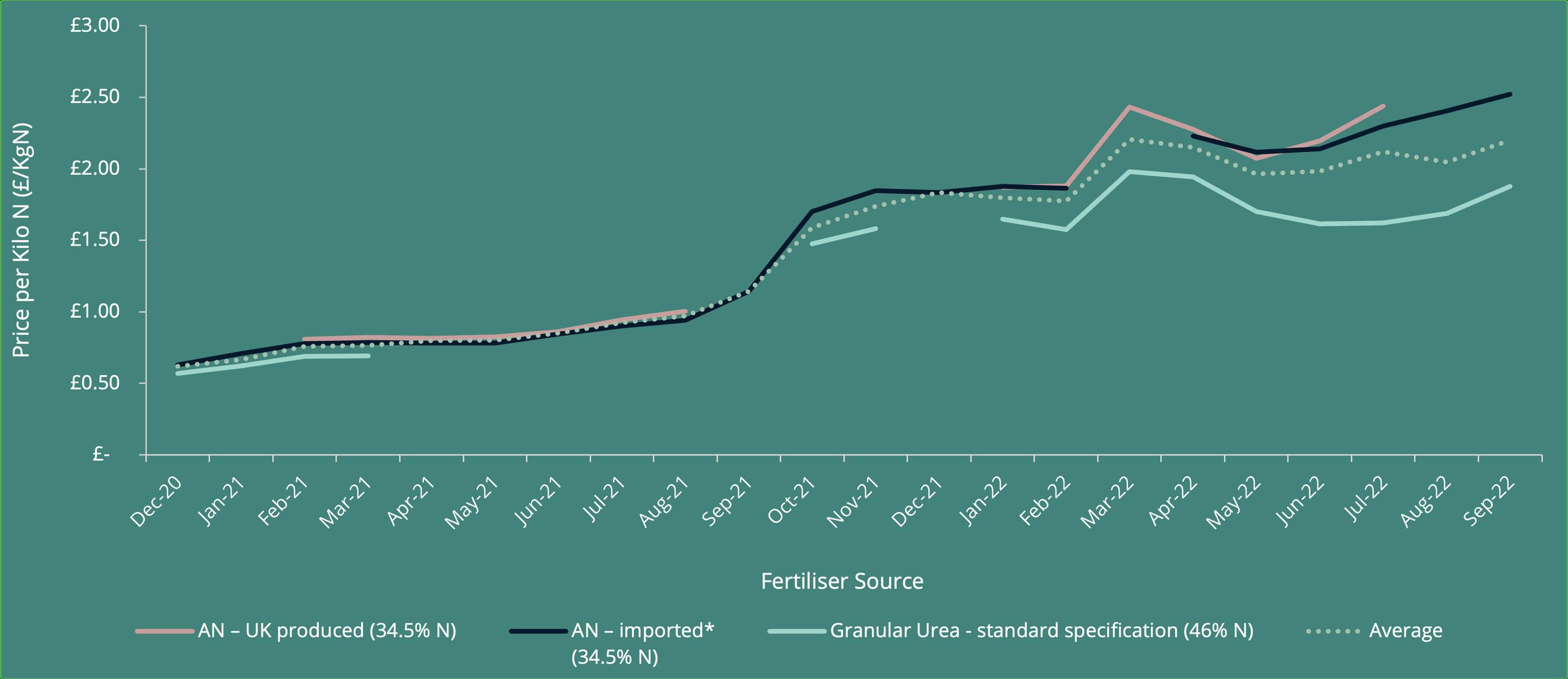
Having a deeper look at fertiliser prices from December 2020 up to last month for UK and imported ammonium nitrate and granular urea, the hike in prices in less than two years is pretty startling. Back in December 2020, the price per kilogram of N was approximately £0.60 with minimal differences between products Less than two years on and the latest available price for UK ammonium nitrate (July 2022) works out at £2.44/KgN. Imported ammonium nitrate is at £2.52/KgN and granular urea offers relative value at £1.88/KgN. In terms of average price per kilogram nitrogen, December 2020 was £0.62/KgN, versus the current £2.20/KgN, representing an increase of 255%.
Figure 5. Nitrogen fertiliser price per kilogram nitrogen from December 2020 to present.
Source: AHDB
Looking further at the current fertiliser situation – early purchased nitram has been arriving on farm from CF via respective merchants Since the start of September, the spot price for gas has been consistently falling to more reasonable levels, however the long-term gas price hasn’t seen reductions to the same level. Consequently the profitability of fertiliser production has returned, but remains uncertain. CRU fertilisers stated last week that ammonia production is only 37% reduced, versus a low of 67% reduction
The urea price was expected to rise following recent tenders from India and Pakistan, but this hasn’t been the case, which makes the next few weeks quite uncertain. In positive news, urea availability is good with product either being on vessels or in ports currently.
Regarding ammonium nitrate, there are limited supplies of both nitram and lithan available, with the current price making this prospect unattractive. Even taking into account the possibility of volatilisation, urea (or even protected urea) is currently at better value.
The most clear price shift has been within TSP and MOP, which has seen a large fall in recent weeks, largely due to a major supplier correcting global prices
Ultimately the global position regarding supply, demand and stocks remains unclear with the ongoing Ukraine war and resulting sanctions upon Russia.
Ceres Rural has been successful in securing funding from Defra to offer free business advice to support farmers and land managers through the Agricultural Transition. From October this year to March 2025, the FFRF enables Ceres Rural to carry out a range of consultancy services which can guide you through the main opportunities and challenges to consider, and help you identify how to adapt your business to maximise its resilience in the new era.
In this phase our diversified offering enables farmers to choose from one of the below services:
A farm resilience report or carbon audit
A benchmarking report or business plan
A new or follow up half day business review
Ceres Rural has already helped over 400 farm businesses in the previous round of the FFRF and the feedback has been overwhelmingly positive, as it provides the opportunity for a fresh review of the business at no cost.
To discuss which service would be best suited to you and your business please register your interest.



The second round of the Farming Equipment and Technology Fund (FETF) is due to launch this autumn. The grant provides investment towards specific items of equipment which will improve productivity and efficiency for farming, horticultural and forestry businesses. Last year popular items included 6m direct drills, cover crop rollers and grain stirrers – all of which we believe will feature again.
Farmers, horticulturalists, and forestry owners in England can apply. Contractors can also apply if they have a registered business address in England. The grants are for a minimum of £2,000 and a maximum of £25,000 for items listed. With the deadline for claims from the first round already passed, we estimate round two will open soon.
If a grower applied and was successful in round 1 of the fund, this does not prohibit reapplication in the second round. The maximum combined claim from both rounds is £50,000.
RURALENGLANDPROSPERITYFUND
Defra has announced a new £110m fund aimed at supporting projects that will boost the rural economy and create jobs.
The funding is solely aimed at capital projects, using grants on lasting assets such as buildings and equipment. They must also be used for business or community projects, and must be in a rural area.
A list of interventions, objectives, outputs and outcomes is available, which outlines the types of projects that will be considered – please find this here
Funding will be available from April 2023 to March 2025, however if you are interested in applying for a grant it would be sensible to start preparing the application sooner rather than later. Please contact a member of the team for a consultation on a possible funding project.
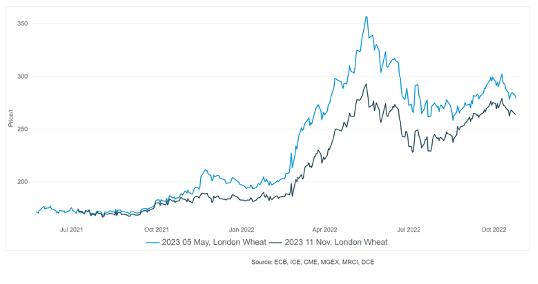
Since the previous update in July, markets have remained consistently volatile. The peak seen in mid-May is still a long way off, with the spot price currently sitting at £258/t. It hasn’t been unusual to see prices fluctuate hugely within a day since the war in Ukraine began in February.
Since the 10th October, London wheat has come off slightly, owing to the ‘strengthening’ in the pound, but also according to the markets requirement for constant fresh news, which has been in shorter supply.
However, the grain corridor is due to expire on the 19th November, with an extension yet to be agreed. Undoubtedly this decision will further impact prices. The October World Agricultural Supply and Demand Estimates (WASDE) Report stated that the global wheat outlook for 2022/23 is for reduced supplies, consumption, trade and stocks.

With harvest 2022 safely in store, growers should have an accurate understanding of their cost of production and hence can take a view on whether the current price is attractive. As mentioned earlier, although quality for Group 4 wheats has consistently been very good, this isn’t true of the Group 1 milling wheats where, although specific weights have often been above 80kg/hl, proteins are rarely above 13%.
It is important to have a good understanding of the quality of your wheat across the shed and make sure it goes to the most appropriate homes. With milling premiums at c.£45/t, and a lot of mills taking wheat down to 12% protein (with a £1 a point penalty), even at 12% protein this is a considerable premium. Good, honest communication with merchants is essential here to maximise profitability.
Regarding cost of production, this might also be partially true for harvest 2023. With cultivations complete, drilling largely finished, and many farmers having already bought a large proportion of their fertiliser early (due to lessons learnt from the previous year), a lot of the costs influencing production are already known. Therefore, it is again possible to take a view on whether the current forward price offers a reasonable profit, and hence whether it’s worth taking a bit of risk. That being said, we still have a long way to go.
6. London Wheat Grain Futures from June 2021 to present
Source: AHDB
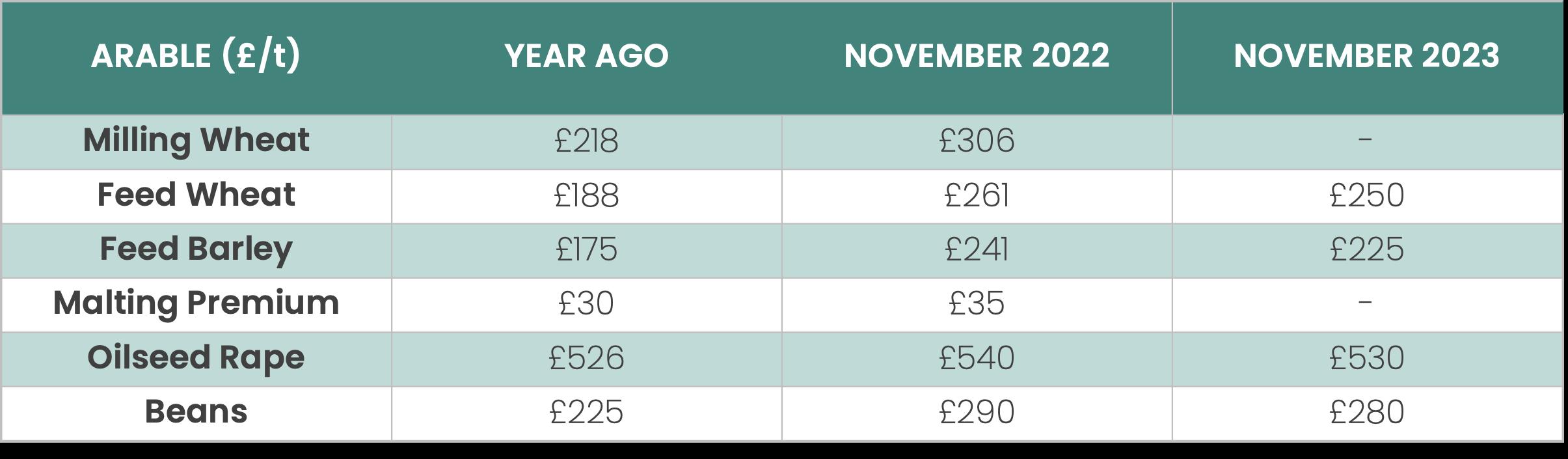
Source: Merchant East Anglia ex. farm bids (as of 3rd November 2022)
With autumn drilling largely complete, now is an opportune time to carry out an annual review of health and safety policy and practice. Machinery should be serviced and maintained and records kept of the work carried out, PPE will need restocking after harvest, and fire extinguishers that might have been discharged or moved from their normal location during the summer should be replaced. Checks should be made on first aid kits and PTO covers after autumn use.
The winter months provide an ideal opportunity to catch up on training and refresher training requirements, particularly following the backlog that arose during the Covid-19 pandemic. Learning outcomes from field and machinery fires during the dry harvest included the use of what3words to identify access points into fields and nearby sources of water for firefighting, the danger of unexpected changes in wind direction if attempting to cultivate around a fire, and the need to ensure that any farm employees involved in the incident wear respiratory protective equipment. Emergency procedures should be reviewed and updated to reflect these scenarios.
The Rail Accident Investigation Branch (RAIB) recently released its report into the collision between a train and agricultural equipment in Cambridgeshire in August 2021. The train was travelling at 66mph and, together with the rail infrastructure, suffered extensive damage. Miraculously, both the tractor and train drivers suffered only minor injuries. According to the report, the tractor driver failed to telephone the signaller for permission to cross before crossing the railway. He had not been briefed on this safe working procedure and believed he could safely cross by looking for approaching trains. The RAIB has written to several farming organisations asking them to remind members of the importance of following the correct crossing procedures.
Please see the latest Ceres Rural Health & Safety Bulletin here, and if you would like to discuss any topics in further detail, please contact Rob Gazely (07592 041617).

On the Farm with Ceres Rural – 8th to 11th November. Email claire.motyczak@ceresrural.co.uk for more information and to book your space.
CropTec 2022 – 23rd to 24th November
LAMMA – 10th to 11th January 23
Agri Technica – 12th to 18th November 23
IIf you would like to discuss any of the topics covered in this issue of the Farming Update, do contact a member of the Team, or speak to the project leader, Ben Bates, via the details adjacent.

ben.bates@ceresrural.co.uk 07788 724 179