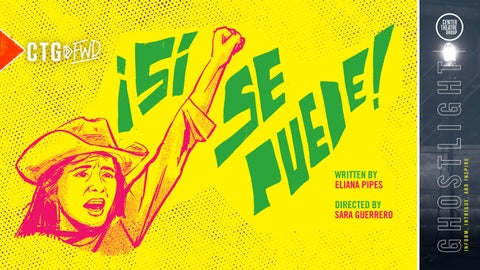
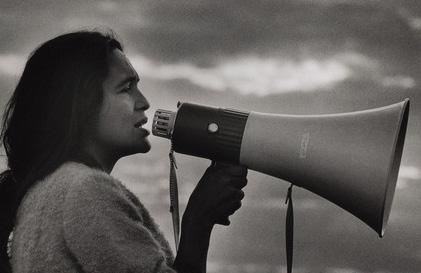
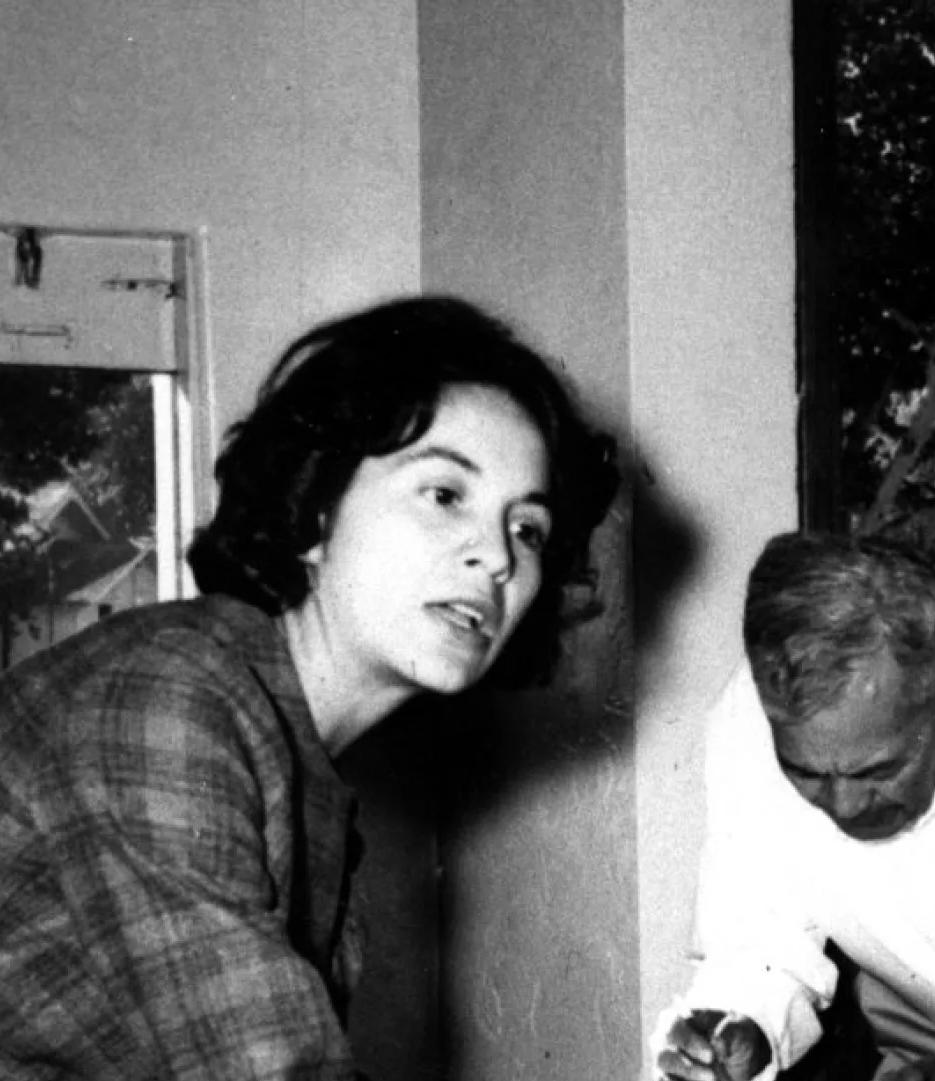
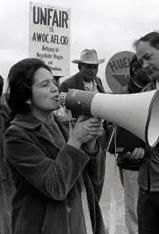
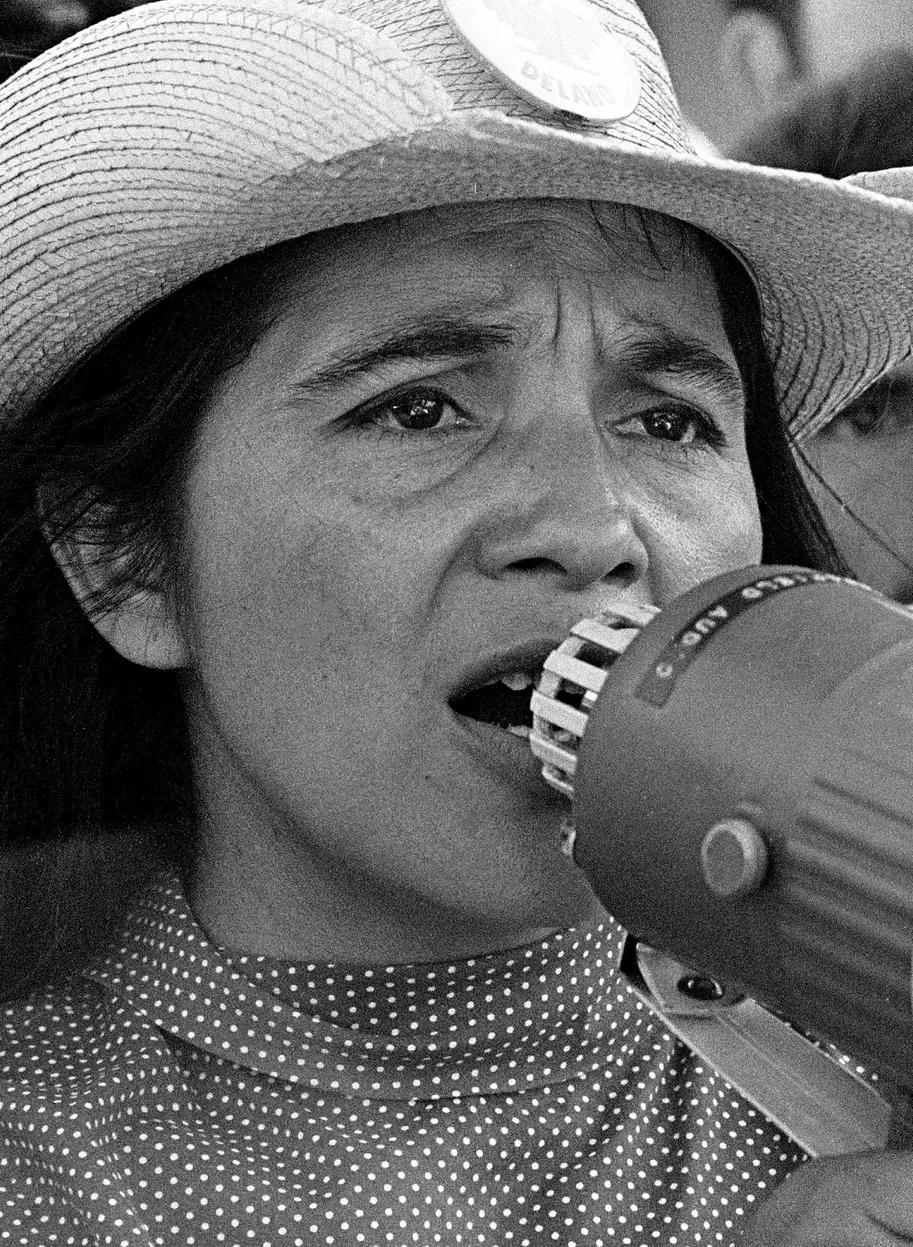
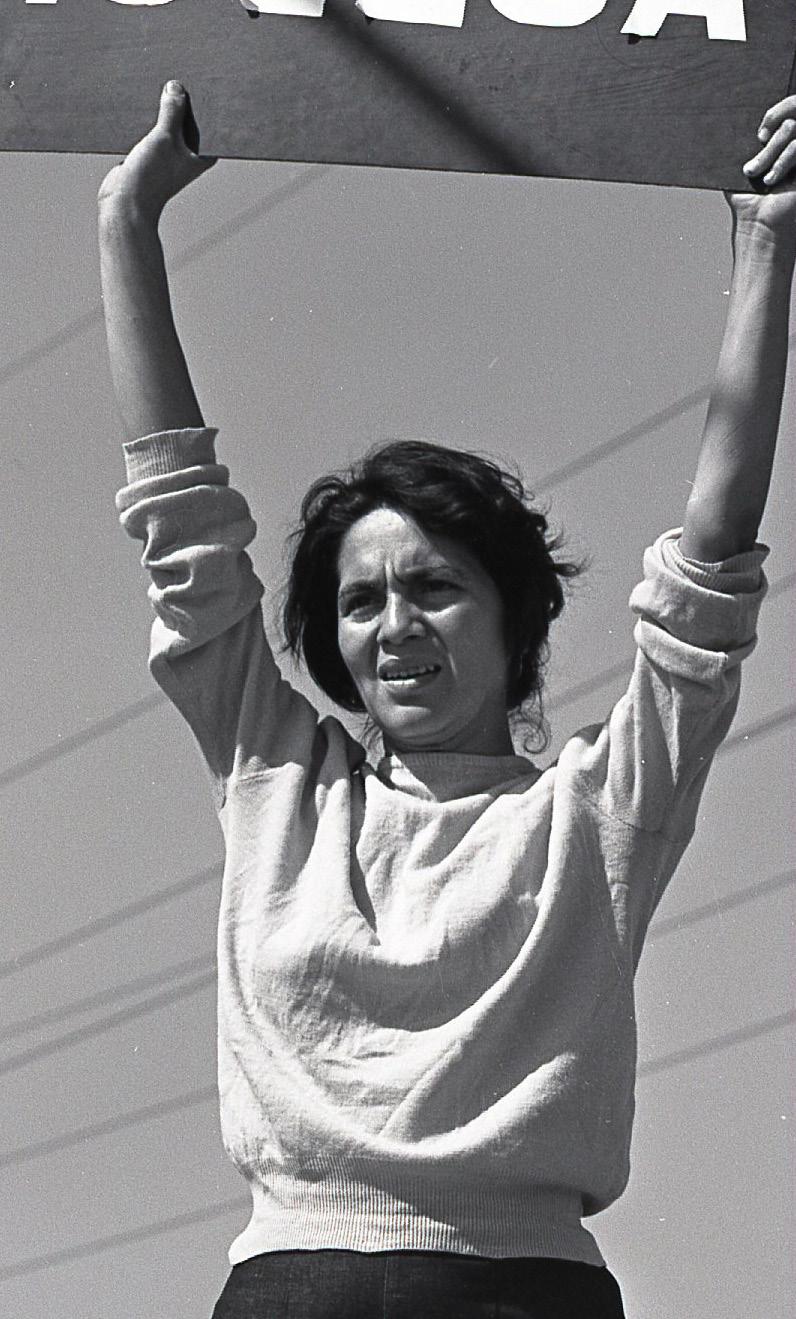
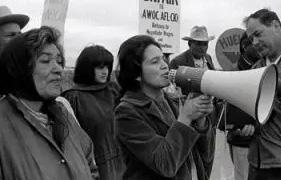
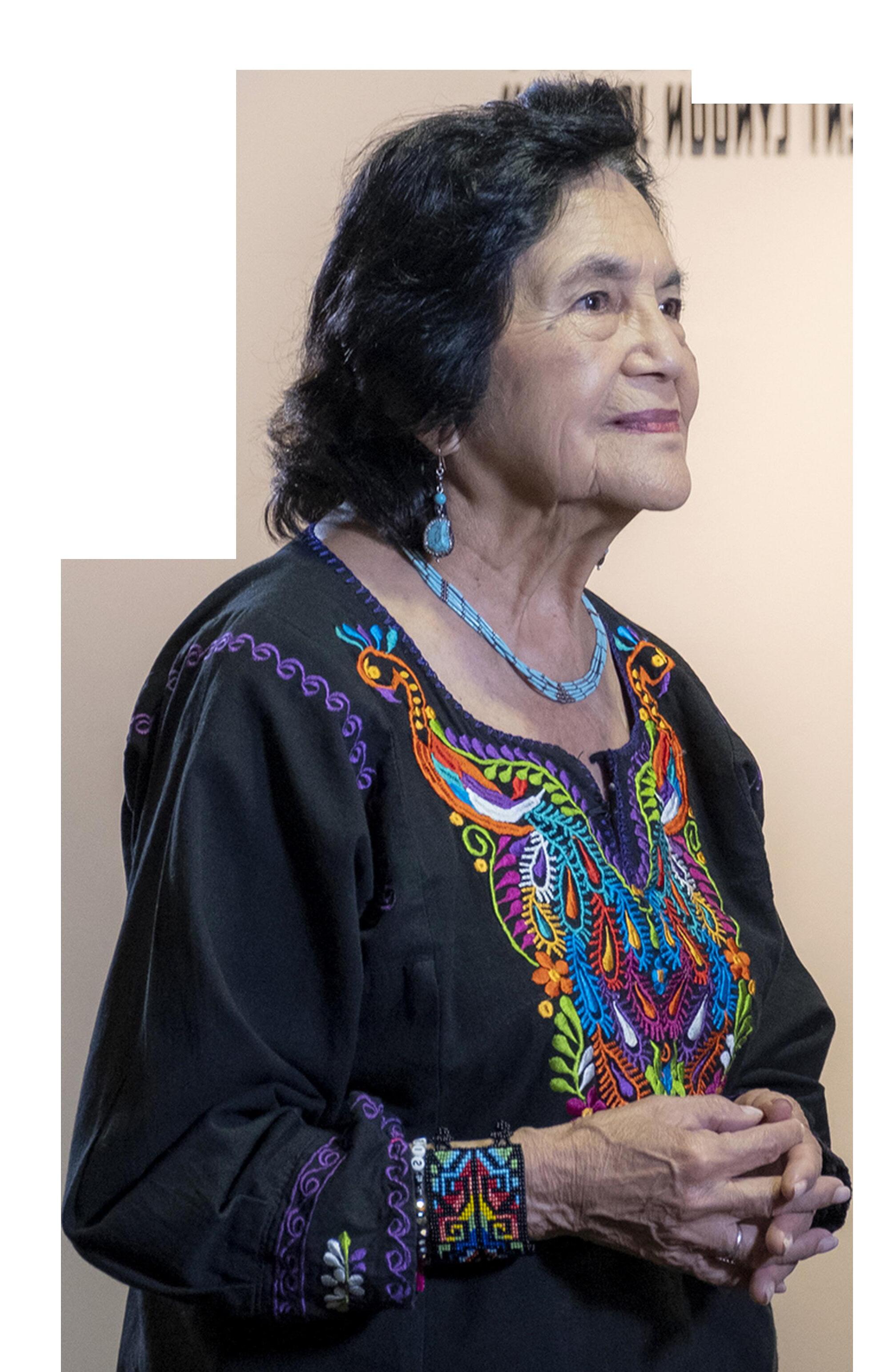
Follow trailblazing activist, Dolores Huerta, on her journey to improve conditions for farm workers. From co-founding the United Farmworkers with Cesar Chavez and Larry Itliong, to boycotts, marches, and high-stakes negotiations—her unwavering commitment to justice changed the course of history.
Through a blend of movement, music, and actos inspired by El Teatro Campesino, experience the powerful transformation that can be achieved when we come together to demand change.
Why this story and why now?
Welcome to the magic of theatre and the incredible story of Dolores Huerta. It’s been a long time since CTG toured a play throughout Los Angeles and I’m thrilled that we’re doing it with ¡SÍ SE PUEDE! by Eliana Pipes.
This short play has it all, music, singing, drama, comedy, historical moments, and it’s for the entire family. Dolores Huerta is a Californian we all need to know and be inspired by.
She’s a mother, activist, and leader who continues to push for change and the rights of all people. Her life is an example for all of us to find courage and work together to make a better world.
¡Sí se puede! is not just a slogan, it’s a call to action.
A Note from Jesus A. Reyes, Director of Learning and Community Partnerships
Bienvenidos a la magia del teatro y a la increíble historia de Dolores Huerta. Ha pasado mucho tiempo desde que CTG realizó una gira teatral por Los Ángeles, y me emociona que lo hagamos con ¡SÍ SE PUEDE!, de Eliana Pipes.
Esta obra corta lo tiene todo: música, canto, drama, comedia, momentos históricos y es para toda la familia. Dolores Huerta es una californiana que todos debemos conocer y de quien debemos inspirarnos. Es madre, activista y líder que continúa luchando por el cambio y los derechos de todas las personas. Su vida es un ejemplo para que todos encontremos el valor y trabajemos juntos para construir un mundo mejor.
¡Sí se puede! no es solo un eslogan, es un llamado a la acción.
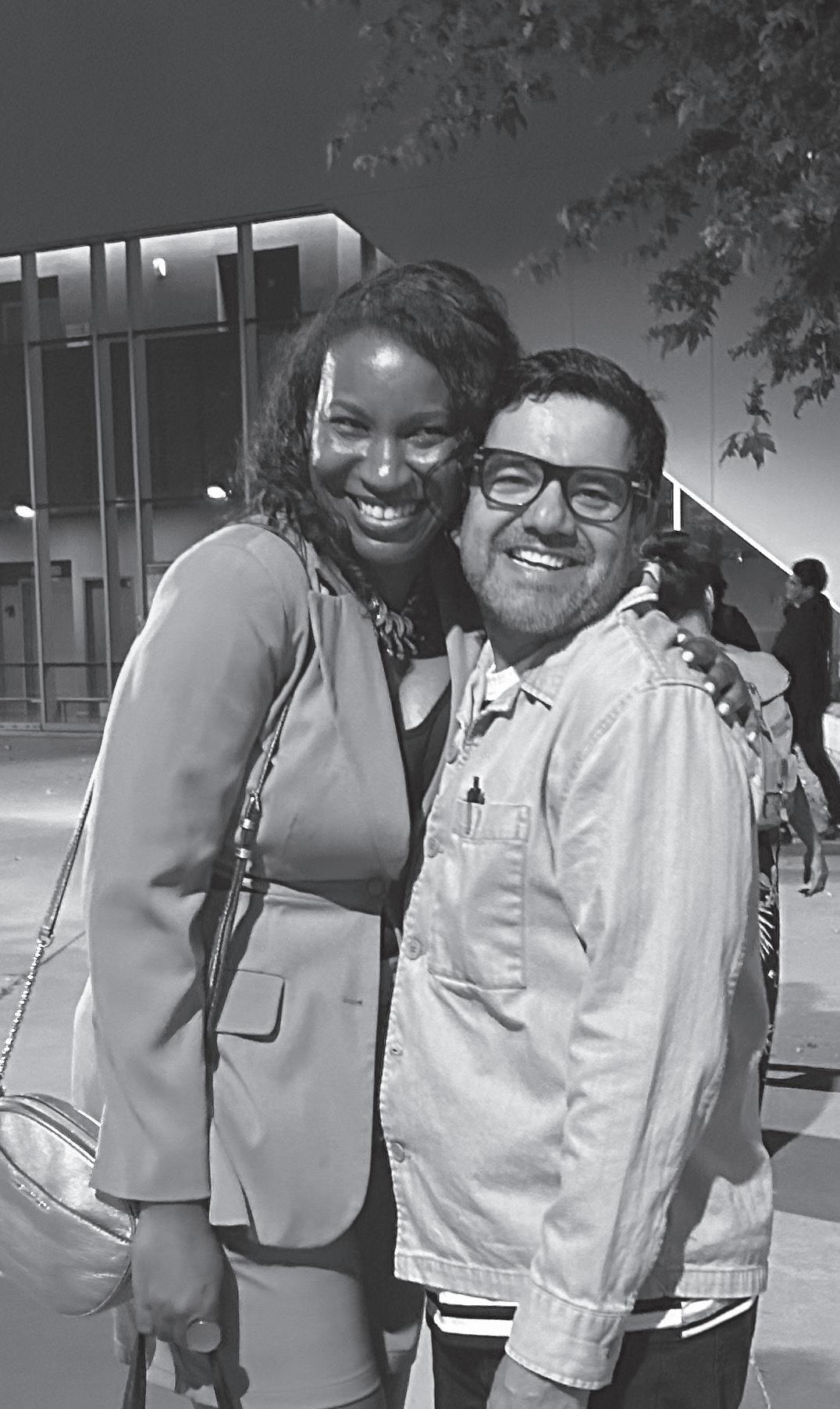
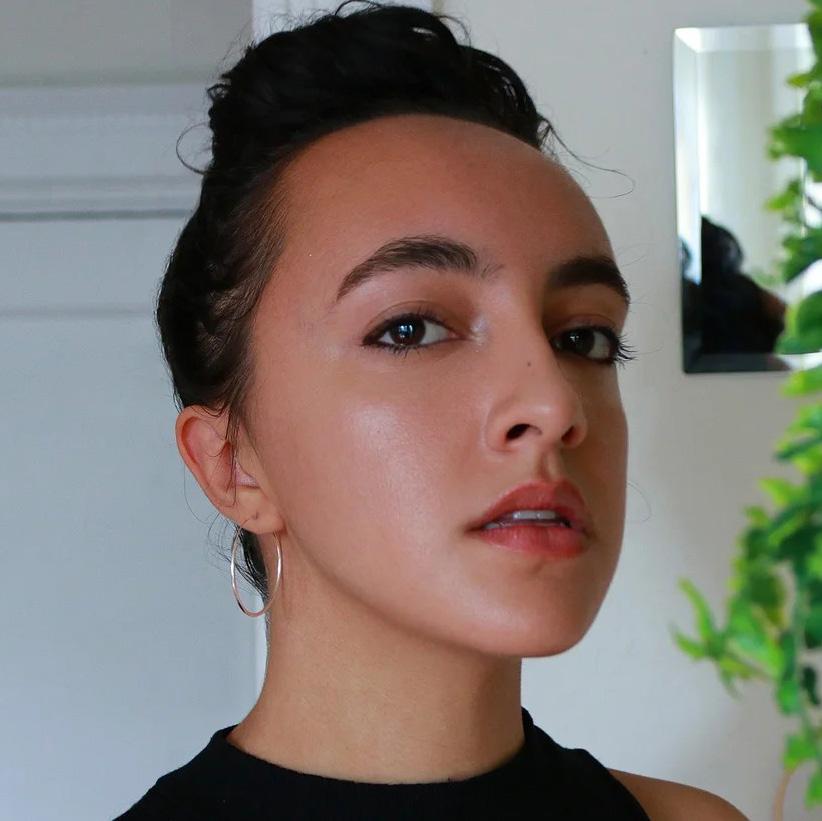
Aja Houston & Jesus Reyes
photo by Javier Vasquez
the Creative Team
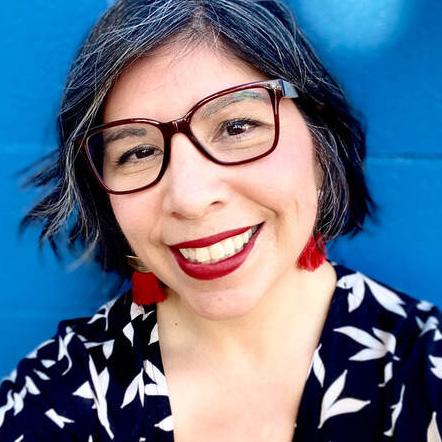
Eliana Pipes, the Playwright
Eliana Pipes is a writer based in her hometown of Los Angeles. Her plays include Bite Me (Off-Broadway WP Theater & Colt Coeur); DREAM HOU$E (co-production Alliance Theatre, Long Wharf Theatre, and Baltimore Center Stage); Hoops (Milwaukee Chamber Theater, also produced with Company One Theater and Boston Playwright’s Theater). Awards include the Academy Gold Fellowship, Dramatists Guild Foundation Fellowship, Alliance Kendeda Prize, Leah Ryan Prize, KCACTF Harold and Mimi Steinberg Prize. Her work has been developed or presented at
the NYTW Dartmouth Residency, Atlantic Mixfest, Playwright’s Realm Scratchpad Series, South Coast Repertory PPF, and more.
Eliana’s journey into the arts was in large part thanks to CTG’s Education programs. Her parents took her to workshops, Student Ambassadors programs, the College Fairs and attended student matinees. She was an August Wilson Monologue Competition finalist, and represented CTG on Broadway. It’s an honor now to collaborate with CTG as a playwright with SÍ SE PUEDE!
More at www.elianapipes.com.
Sara Guerrero, the Director
Sara Guerrero is a versatile theater artist and educator. The founding executive artistic director of Breath of Fire Latina Theater Ensemble (BOFLTE), she and the ensemble are artists-in-residence of (CSUF) Cal State University, Fullerton Grand Central Arts Center in Santa Ana.
Under her leadership, BOFLTE serves as an incubator for voices that have been historically excluded in theater by providing free programming in the guidance of storytelling. BOFLTE is an awardee of The National Latinx Theater Initiative, a three-year grant. As a CSUF
theatre faculty, Guerrero oversees a new play develop ment program that engages the local community, students and alumni. She has a long history with CTG and has participated as a teaching artist, mentor, actor and director across several Education and Community Partnership programs.
Connection to Dolores
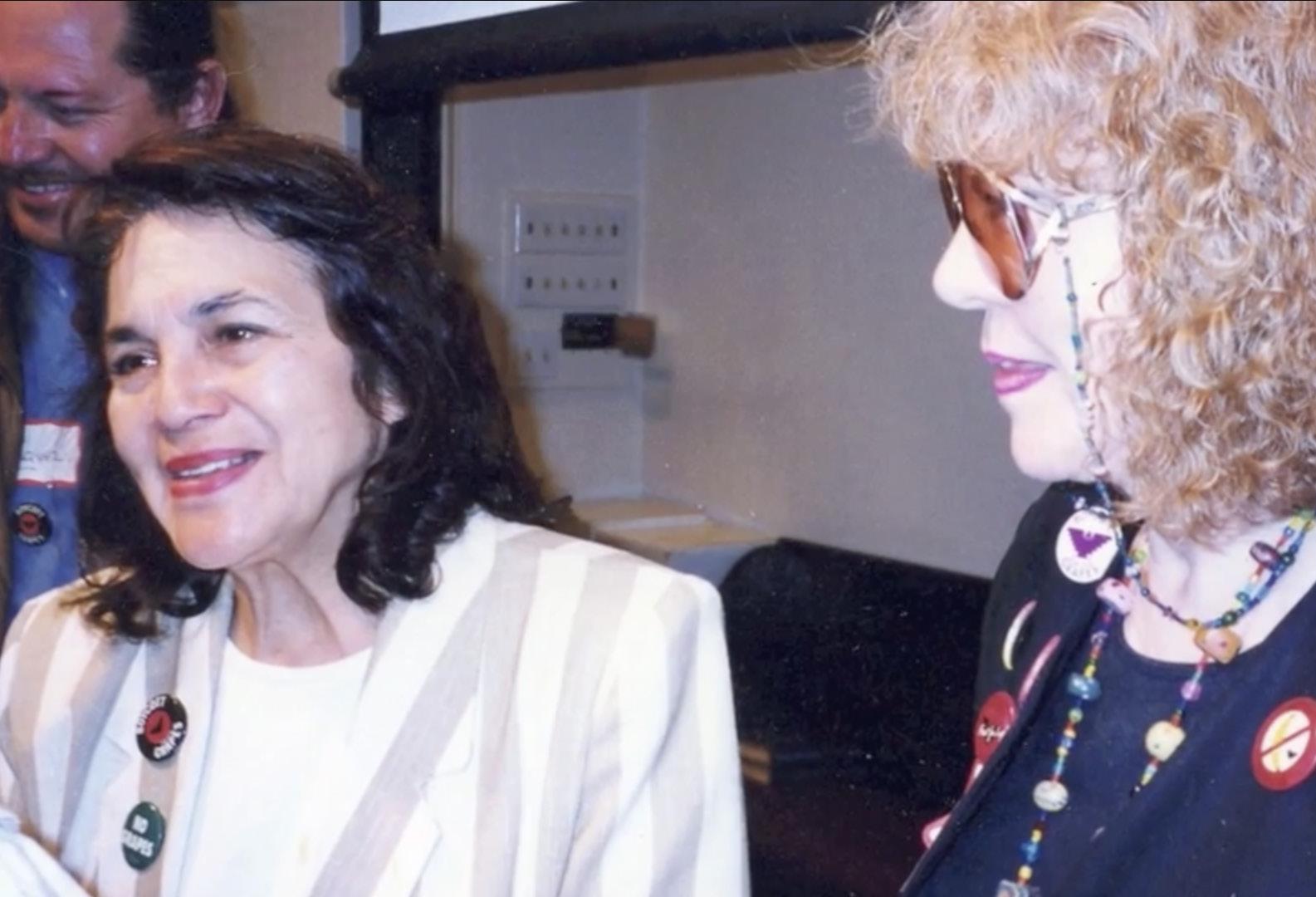
My grandmother, Maggie Pipes, grew up bilingual in a small border town in Texas where she witnessed inequality that led her to a lifetime of activism around immigration and civil rights. She made her home in Los Angeles and worked with Dolores Huerta to support the United Farm Workers movement for over three decades.
Maggie marched, demonstrated, “worked the telephones,” and translated to galvanize networks of support within the Santa Monica Unitarian Universalist ministry to which she belonged, and which became a meeting place for the movement.
During the United Farm Workers’ “1,000 Mile March” up the coast of California in 1975, the marchers rested for the night at my grandmother’s house.
When I wrote ¡SÍ SE PUEDE!, I included the “No Grapes” scene in the grocery store as an homage to my grandmother, and the networks of grassroots community organizing that supported Dolores.
Eliana Pipes, the Playwright
As a Chicana, I’m honored and thrilled to direct this powerful and spirited call-to-action play inspired by the life of the incredible Dolores Huerta. She’s a true inspiration—fighting against gender and racial bias, championing labor rights, coining the slogan “SI SE PUEDE” (Yes, we can), and still doing the work at 95!
Working with playwright Eliana Pipes has been such a joyful journey. I’m in love with our cast and deeply grateful to our CTG Artistic Crew and Production Team. This kind of work feeds my soul and reminds me I’m on the right path. ¡SI SE PUEDE!
Sara Guerrero, the Director
Characters
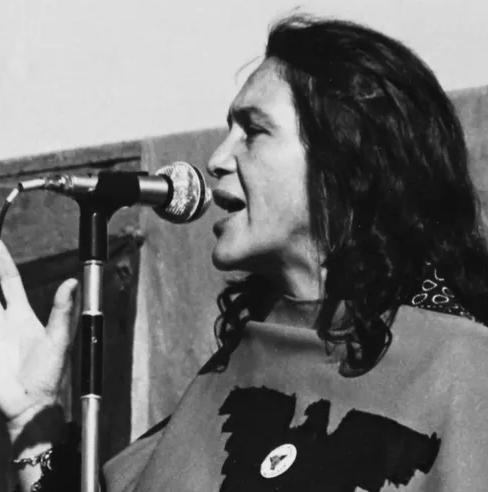
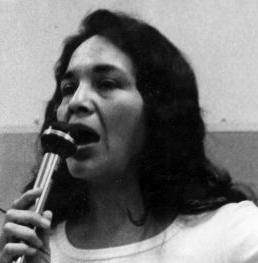
Dolores Huerta
The main characters that we follow in ¡SÍ SE PUEDE! are monumental historical figures in the US Labor Rights and Civil Rights Movements.
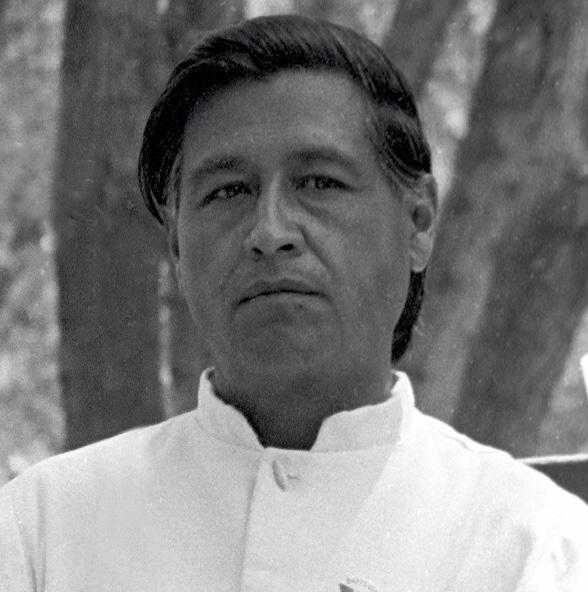
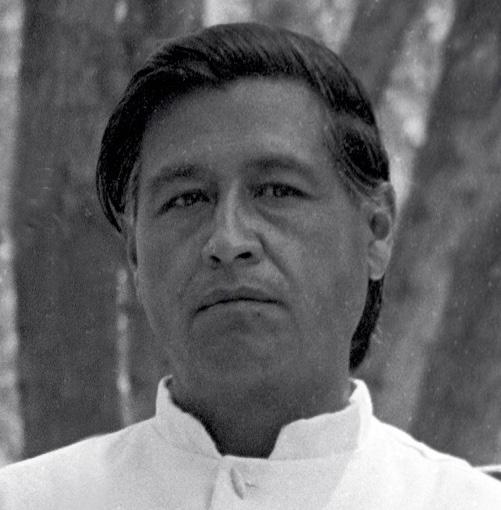
Cesar Chavez
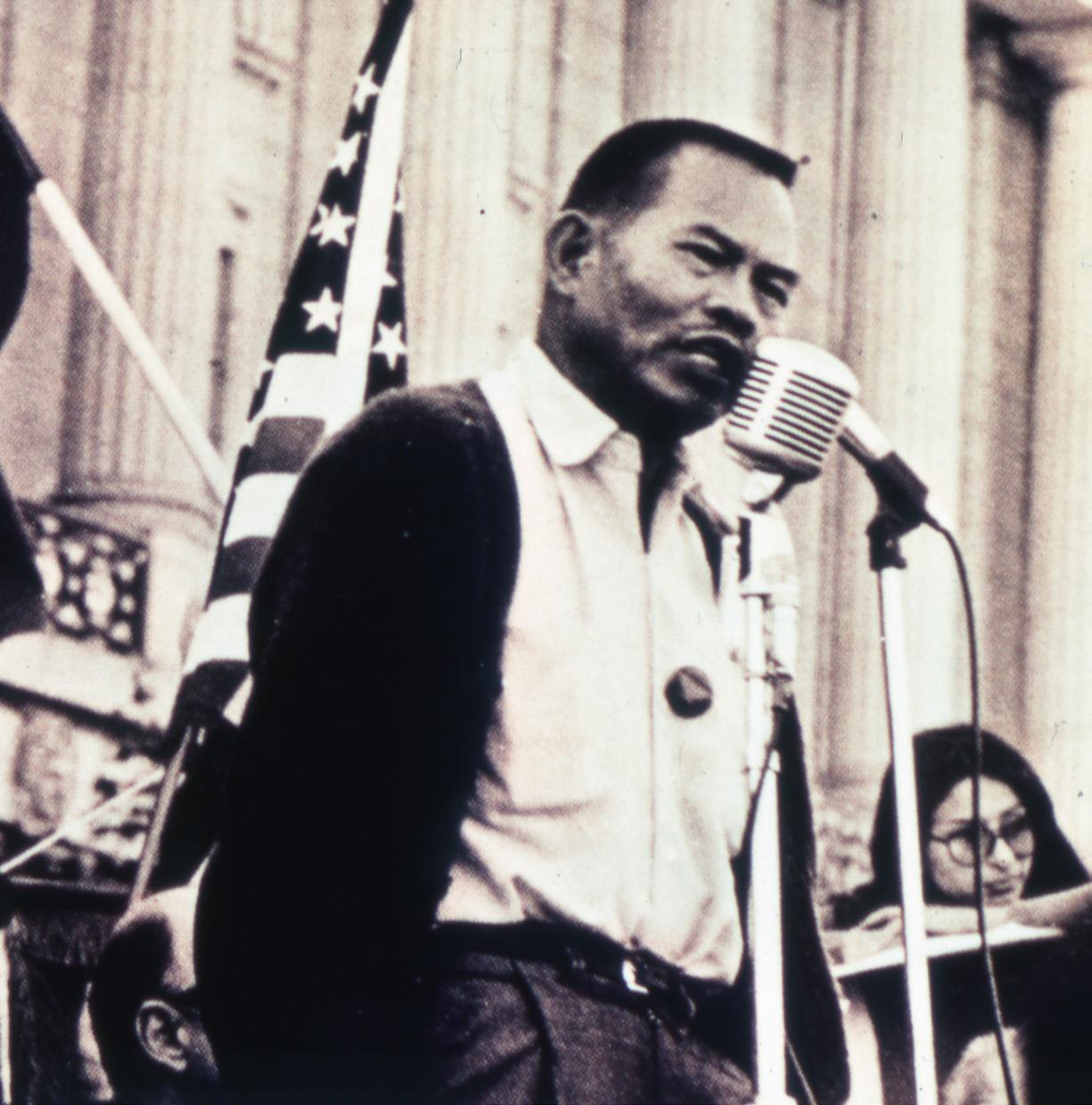
Larry Itliong
pronunciation: EET-lee-AW-ng
(1930-) (1927-1993) (1913-1977)
“It was really hard for them to intimidate me. They felt I was intimidating. One of the growers had a name for me: I think it was ‘dragon lady’ or something like it.”
– Dolores Huerta
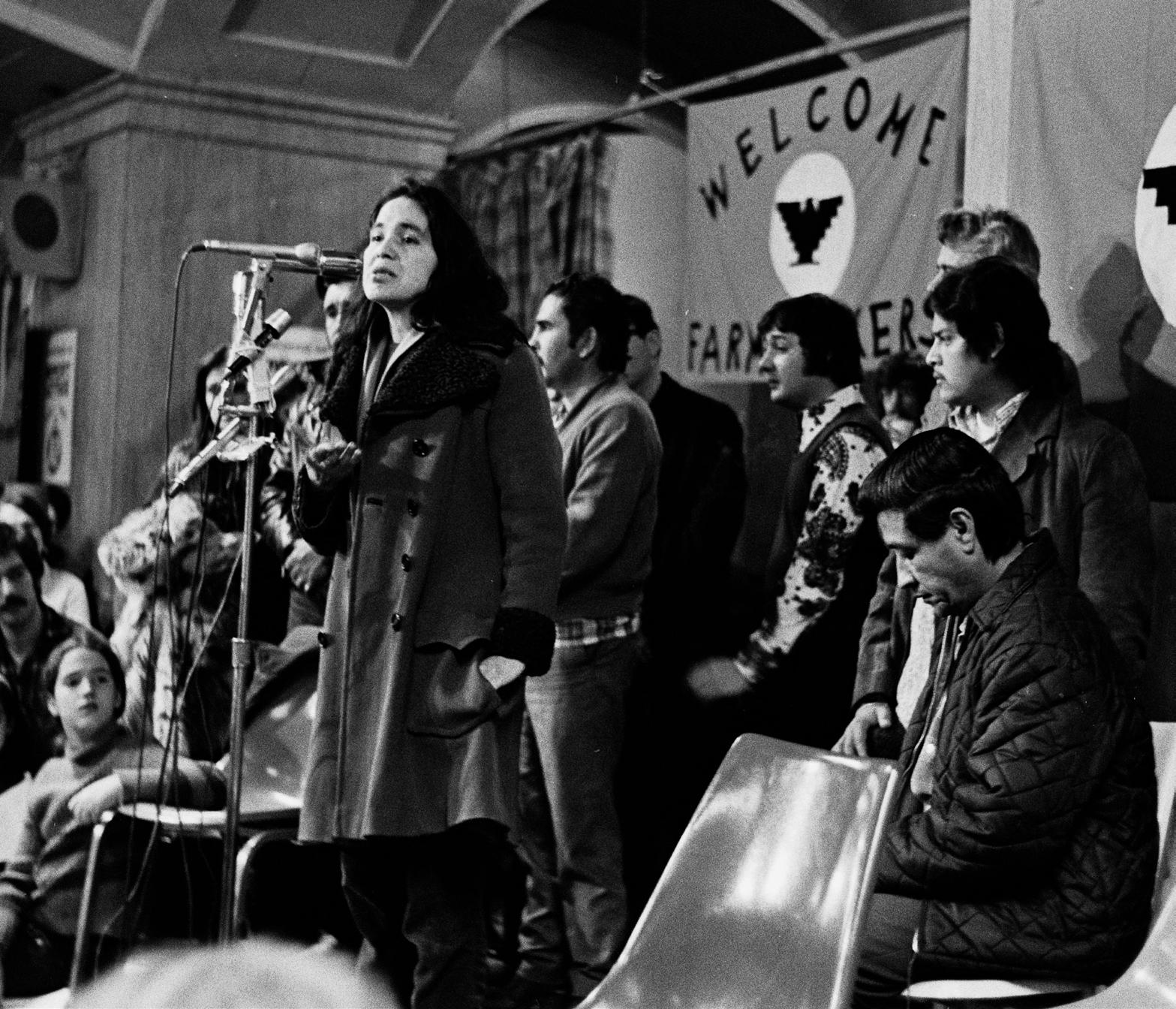
Renowned American labor leader and Chicano civil rights activist who co-founded the United Farm Workers Association alongside Cesar Chavez and Larry Itliong to improve social and economic conditions for farm workers and to fight discrimination. Skilled organizer and negotiator.
“Grant me courage to serve others; For in service there is true life.”– Cesar Chavez
An American labor leader and Chicano civil rights activist and one of the co-founders of United Farm Workers Association. Dynamic leader and speaker.
“I fight for the rights of the poor people because I know how it is to be poor. I’m not afraid to tell the truth.” – Larry Itliong
A Filipino American labor leader and civil rights activist who played a central role in the founding of the United Farm Workers union alongside Cesar Chavez and Dolores Huerta.
An ensemble of four actors will also play the following: Grower, Workers(s), Dolores’ Mother, Student, Politician, Newscaster, Housewife, Toddler
Style and Genre of the Play
“th E strikes had takEn a toll on th E workers, spirits werE low. so we did what people always do to raise their spirits. we turned to art!”
– Dolores, ¡SÍ SE PUEDE!
¡SÍ SE PUEDE! is written in the style of El Teatro Campesino – or The Farmworker’s Theater, which gave birth to the Chicano Theatre movement.
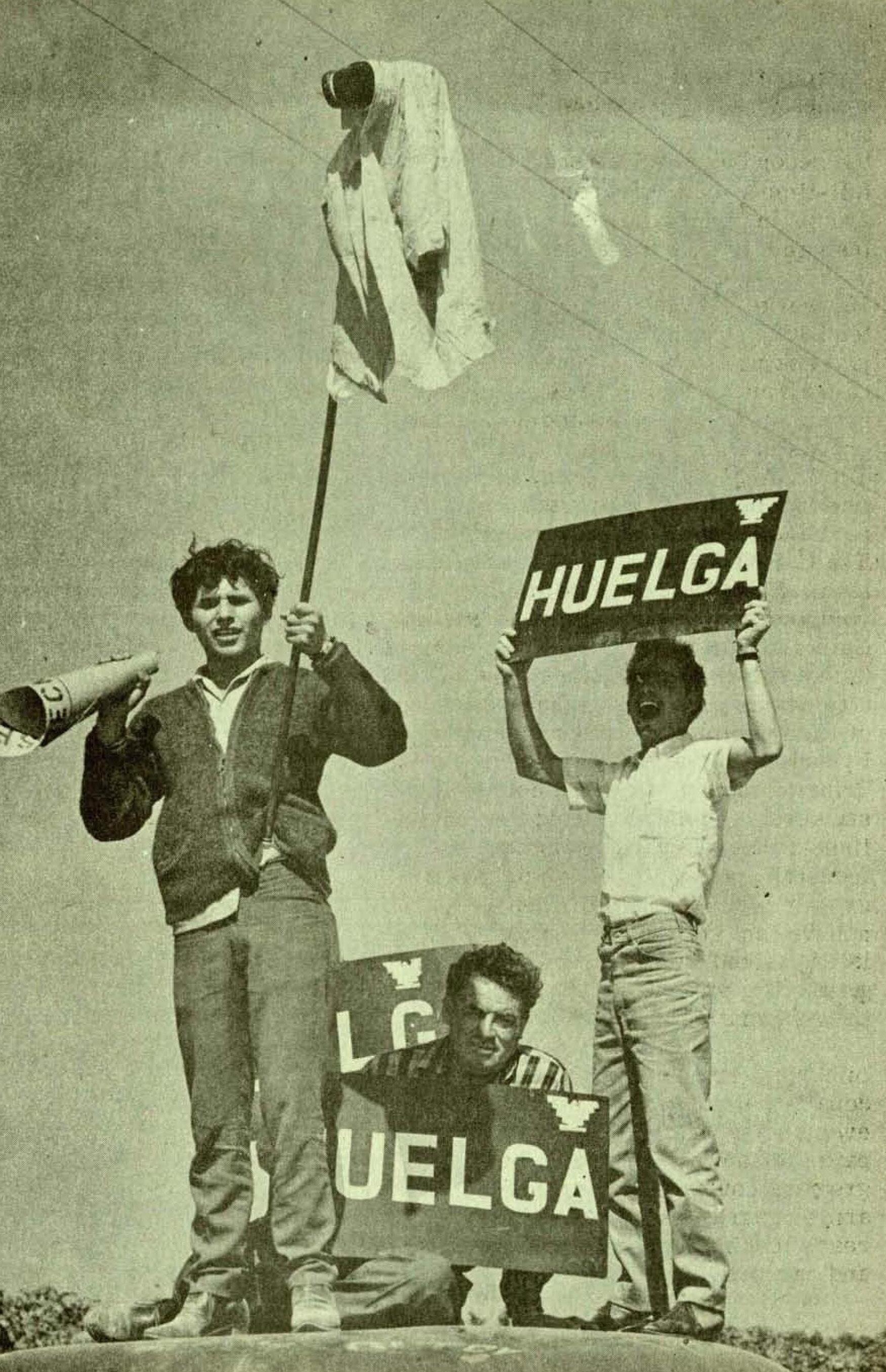
Founded in 1965 by Artistic Director Luis Valdez, a playwright and farmworker himself, the revolutionary form of theater began on the Delano Grape Strike picket lines of the United Farm Workers Union.
Drawing on traditional Mexican arts such as the carpa, the company created and performed “actos,” or short skits, on flatbed trucks and in union halls, employing satire, humor, improvisation, and participation with limited financial resources and an aesthetic that reflected the period’s sociopolitical urgency.
Carpa (Spanish for “Tent”) were popular traveling tent shows that flourished in Mexico and the Southwestern US during the 1920s and 1930s. A form of working-class entertainment, it blended vaudeville-style comedy, circus acts, music, and social satire, often featuring the pelado (underdog) character to address political and cultural issues.
Improvisation performing a piece in front of a crowd without practicing it beforehand, but instead creating the performance on the spot.
Satire the use of humor, irony, exaggeration, or ridicule to expose and criticize contemporary politics and other topical issues.
Audience Participation the active involvement of viewers or listeners in a performance to increase engagement, collaboration, and satisfaction.
Center Theatre Group proudly has a long history of collaborating with El Teatro Campesino. In 1977, they created Zoot Suit, written by Luis Valdez for the Mark Taper Forum. It was one of the most successful, critically acclaimed plays ever to originate in Los Angeles. CTG produced a revival in 2017. Other collaborations include Valley of the Heart and Bandido!, which were both written by Luis Valdez, as well as puppet spectacle Popol Vuh: Heart of Heaven, written by Kinan Valdez. Currently El Teatro Campesino performs plays addressing contemporary struggles such as corporate control and the environmental movement.
Dolores Timeline in the play
“walk the street with us into history. get off the sid Ewalk.”
– Dolores Huerta
Worked as a teacher; left in 1955 to help hungry, impoverished children of farm workers.
Began her career in activism by joining the Stockton Community Service Organization (CSO), focusing on voter registration and economic improvements.
Co-founded the Agricultural Workers Association (AWA).
Co-founded the National Farm Workers Association (NFWA) with Cesar Chavez, which later became the United Farm Workers (UFW).
Led the national boycott of California table grapes, forcing growers to negotiate.
Negotiated the first contract between the UFW and a major agricultural enterprise (Schenley Wine Company).
Before it winds up on your table
Most of us don’t realize the many steps and the hard work of many hands it takes to bring our food to our kitchen table.
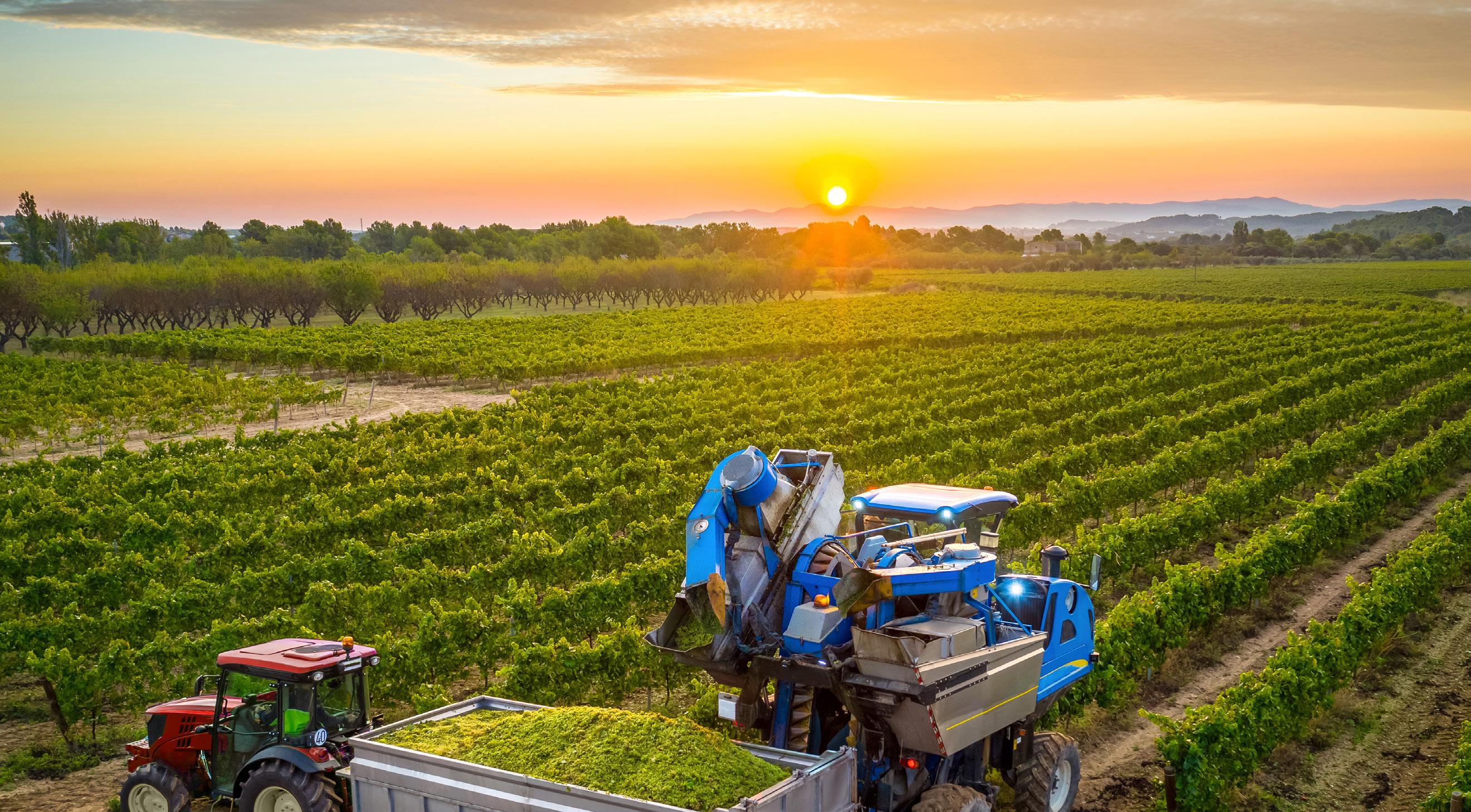
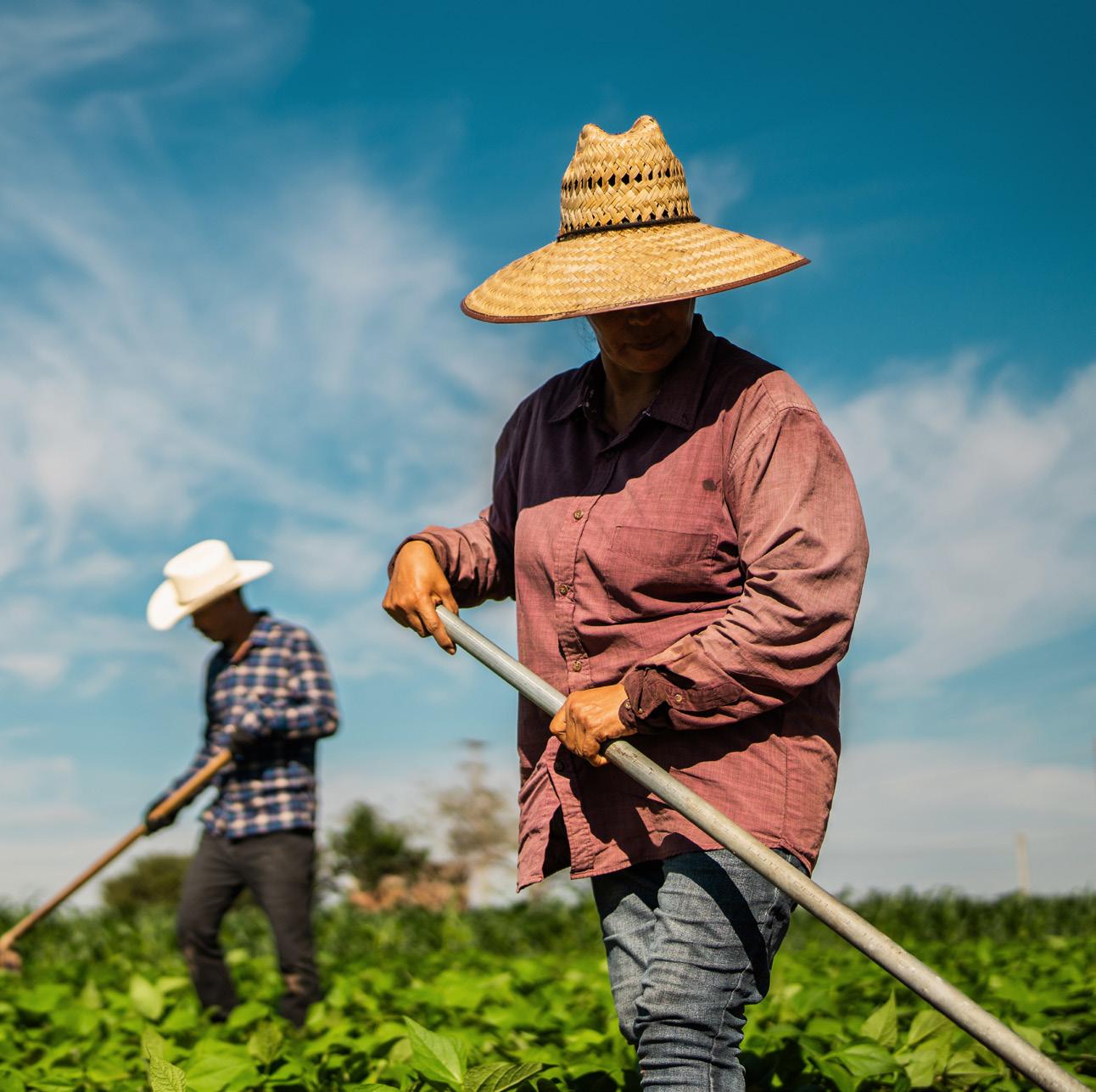
Food begins on farms, where crops (grains, vegetables, fruits) are grown or livestock are raised (meat, dairy, eggs). Farming might include planting, monitoring growth, and harvesting by hand. Those harvesting hands are farm workers.
Between and ½ of all farmworkers in the US reside in California. They are vital to the production of the state’s massive agricultural sector, which includes most of the country’s fruits, vegetables, and nuts.
Despite their essential importance to the success of agribusiness, during the 1960s, farm workers, although predominantly Latino, also included Filipino and Black people, often faced poverty, substandard housing, and exploitation at the hands of their employers, the growers.
Today, California has a significant pay disparity, with farmworkers often earning around $30,000 per year, much less than most Californians who make between $70,000$87,000.
Grower a large-scale garden, farm, or horticulture specialist who oversees the growing of crops.
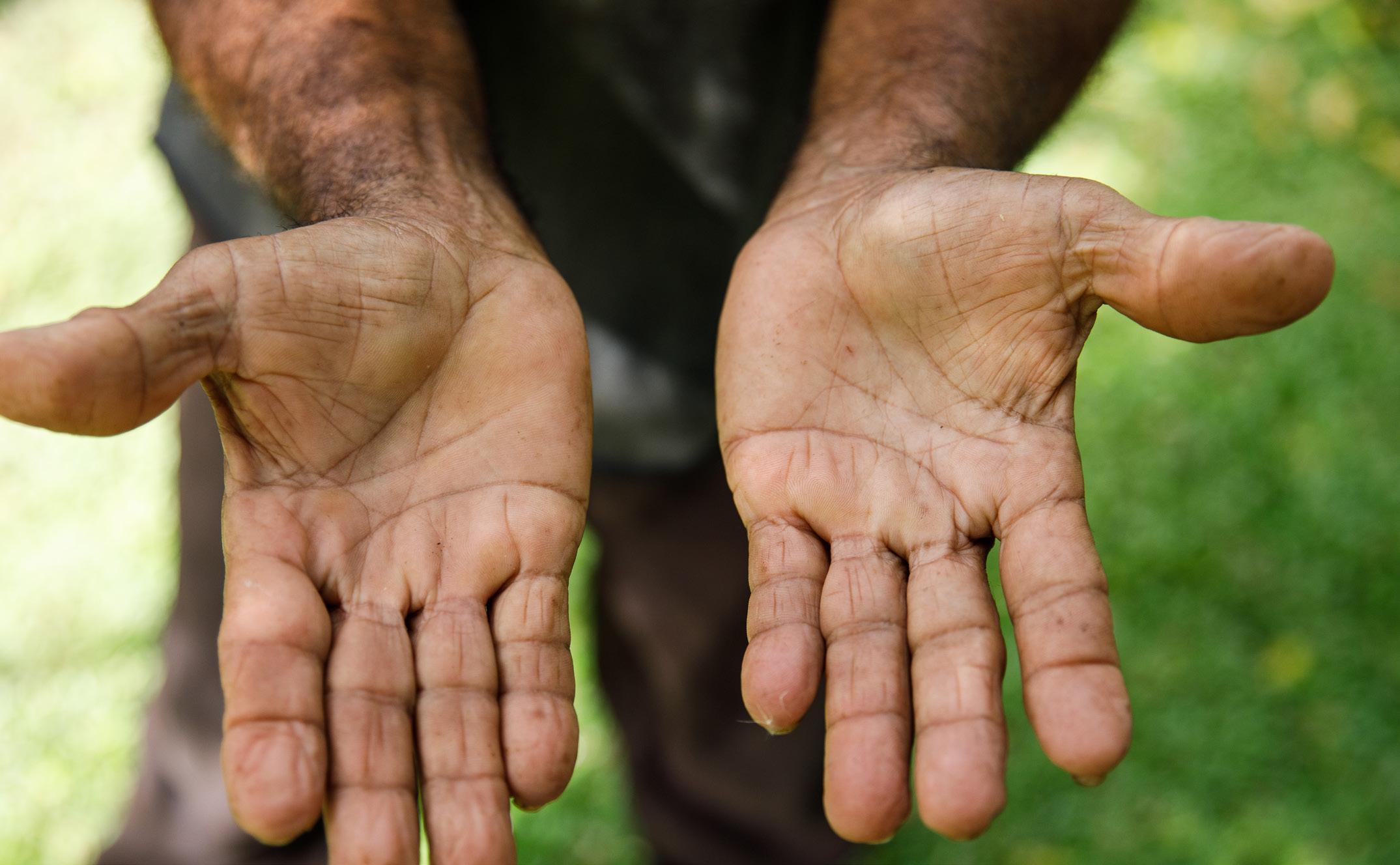
“honor th E hands that harvest your crops.”
– Dolores Huerta
Agribusiness combines
agricultural production with commercial business activities to produce, process, and distribute food.
Dolores Huerta
“th E sorrow of the fiElds calls to me… i’ll answer to my destiny”
– Dolores, ¡SÍ SE PUEDE!
Dolores grew up in Stockton, California, a working-class farming town. After graduating with an associate degree in teaching from Pacific’s Delta Community College, Dolores began teaching in 1954. However, by 1955, she resigned from teaching to do more impactful work towards the betterment of her community.
“most of them had nevEr seen a woman lobbyist bEfore –let alone a chicana! but i was persistent.”
– Dolores Huerta
Soon after her departure, Dolores joined the Community Service Organization, which advocated for economic improvements for the Chicano community. Initially, she participated in women’s clubs, but with the encouragement of Fred Ross, a founding member of the CSO, she took on more active leadership roles. By the late 1950s, she helped found new CSO chapters, including one in Stockton.
During this time, she also worked as a lobbyist. Notably, testifying before the California State Legislature in support of giving retirement benefits to noncitizens and health coverage to farm workers.
Other work included advocating for neighborhood improvement projects, teaching citizenship classes, and organizing voter registration drives.
Lobbyist a professional advocate paid to influence government decisions, legislation, or regulations on behalf of specific organizations, industries, or interest groups.
House Meeting
Dolores’ house meetings were a cornerstone of her grassroots organizing strategy, developed with Fred Ross and employed from 1962 to 1965 to build the National Farm Workers Association.
Small meetings in people’s homes provide a safe space to identify community needs, discuss issues, and take collective action.
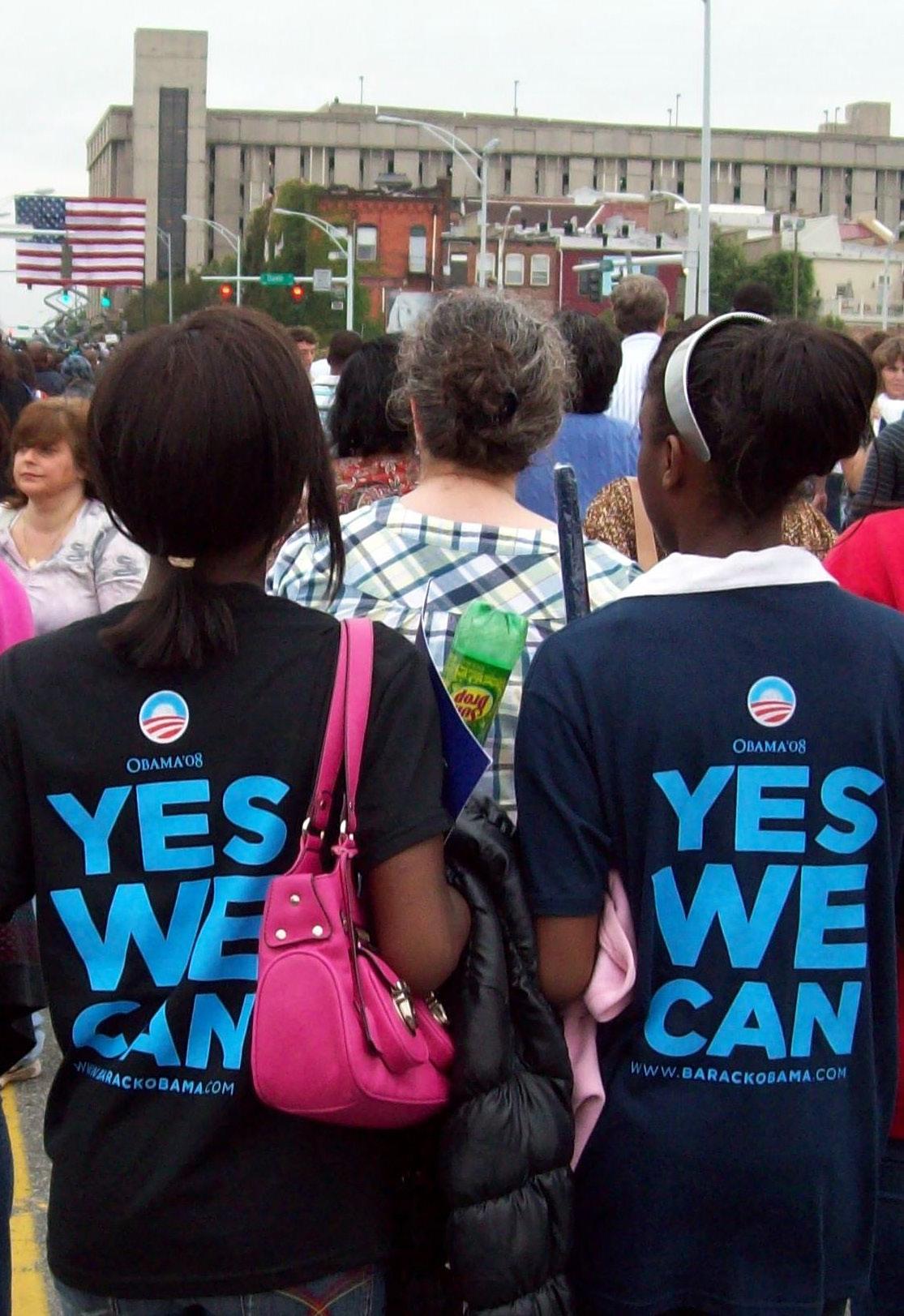
House meetings have played pivotal roles in countless organizing and political campaigns such as Barack Obama’s 2008 presidential campaign whose slogan was, “Yes We Can!”
“th E first step in building a community is for peoplE to h Ear each oth Er’s stories”
Key Aspects of the Strategy:
• Methodology: A host would invite 6–8 neighbors, where Huerta would explain the project and, from that meeting, gain another, creating a chain of meetings to build a solid base.
• Purpose : To transform passive community members into active participants, focusing on empowerment to solve local issues while also organizing farmworkers and registering voters.
• Impact : Directly led to the formation of the United Farm Workers, secured improvements in communities and was used to fight for labor rights.
• Endurance : Even today, the Dolores Huerta Foundation utilizes this method for leadership training and community advocacy, sometimes adapting it to virtual “Zoom house meetings” to reach hundreds of people.
– Dolores, ¡SÍ SE PUEDE!
Braceros
“am Erica needs you! ...wE’ll lEt you com E to the u.s. . . . temporarily – you can help our farms in harvest sEason, and in return? you’ll get good pay that you can take back to your families at hom E!” – Politician, ¡SÍ SE PUEDE!
During World War II, the United States faced a national agricultural labor shortage. To address this issue, U.S. President Franklin D. Roosevelt entered into a series of diplomatic agreements with Mexico that led to the establishment of the Bracero Program in 1942.
Millions of Mexican laborers were permitted to legally work in the U.S. on cheap, short-term (6 months) labor contracts administered by the U.S. Department of Agriculture and independent farmer associations such as the Council of California Growers.
Unfortunately, the U.S. economic downturn in the 1950s fostered further racial discrimination against Mexican laborers, labeled with the derogatory term “wetbacks”, accusing them of taking American jobs.
This sparked President Dwight Eisenhower to enact “Operation Wetback” the largest mass deportation in U.S. history to date.
The Bracero Program concluded on December 31, 1964, as farm mechanization became more widespread. Ultimately, the program resulted in an influx of 4.5 million Mexican nationals, documented and undocumented laborers.
The troubled legacy of the Bracero Program is evident in the contemporary political debate of labor and immigration policy in the U.S.
The 2024 Trump administration’s immigration policy, Protecting The American People Against Invasion, parallels the Eisenhower administration’s mass deportation policy in 1955.
Bracero
One who works using his arms.
United
By the 1960s, California’s farm workers were a racially and ethnically diverse group, including Mexican, Puerto Rican, Black, white, and Filipino workers. However, growers kept these groups segregated in the fields and in labor camps.
They intended to keep these groups isolated from one another to deter mutual understanding of their shared plight. They instead encouraged suspicions and fear of each other to take root.
Philip Vera Cruz, a Filipino farm worker and cofounder of the United Farm Workers, recounted that “each group is completely a stranger to the other even if both worked for the company for years.”
Union an organized group of workers who join together to collectively negotiate with employers for better wages, benefits, safety, and working conditions.
Growers were able to manipulate the Filipino union, Agricultural Workers Organizing Committee (AWOC), and the Mexican union, The National Farm Workers Association (NFWA), into undercutting each other’s strike efforts for better working conditions, fair wages, and antidiscrimination, essentially acting as a “scab” to each other’s efforts.
“it’s the only way that wE can stick it to the growers. force them to give us fair pay and negotiate with us. we want you two, and th E campEsinos, to stand with us”
– Larry, ¡SÍ SE PUEDE!
Scab a derogatory term for a worker who undermines a labor union’s efforts by crossing a picket line during a strike or working for lower wages/conditions than union-negotiated standards, effectively breaking the strike and weakening collective bargaining power.
Strike
“But what if we win! wE can win this, cesar! as long as wE stand togEth Er”
– Dolores, ¡SÍ SE PUEDE!
Although Dolores, Larry, and Cesar successfully mobilized large numbers of farmworkers during the strike effort, they did not achieve their objectives.
The legacy and spirit of the Delano Grape Strike and its unification of the Agricultural Workers Organizing Committee (AWOC) and National Farm Workers Association (NFWA) unions are alive and well in the labor activism we see in Los Angeles.
Although the U.S. has experienced a general decline in unionization, Los Angeles has re-emerged as a leading U.S. “Union Town” and leader of national strike action. The movement has been in response to the high cost of living and wealth disparities, which are the biggest in U.S. major cities.
In the 2020s, there has been a surge in strikes by municipal workers, hotel staff, and entertainment industry with each sector supporting the other in their fight for human dignity.
In 2023, striking Writers Guild Association (WGA) workers marched in solidarity with the Ritz-Carlton workers of the UNITE HERE Local 11 hospitality union.
Strategy
Cesar
“we neEd spectacle, symBolism, something to catch the world’s attEntion”
“no no no, wE n Eed to get a law passed, go straight to the politicians”
Dolores
With the stall in the strike’s momentum, in early February 1966, the leadership of the NFWA and AWOC met about how to revitalize their movement.
Cesar was inspired by the strategies of the Black Civil Rights Movement, such as nonviolent protests. The highly publicized Selma-to-Montgomery march of 1965, led by Dr. Martin Luther King, aimed at securing voting rights for Black southerners, was a prime example of how galvanizing supporters can pressure lawmakers to pass legislation.
Dolores believed in advocating for farm workers by changing legal policy, a stance informed by her early work as a lobbyist which led to dismantling of the Bracero Program and securing retirement and SNAP benefits for undocumented people. She was known for her firebrand rhetoric and moving speeches, and she was the Union’s first lead contract negotiator.
The United Farm Workers Delano to Sacramento March 5-Step Strategy:
· Publicity and Moral Pressure: The march aimed to highlight poor working conditions, effectively turning a local strike into a statewide moral issue.
· Non-Violent Protest: Modeled from Mahatma Gandhi and Martin Luther King Jr., the marchers maintained a strict policy of nonviolent protest.
· Cultural and Religious Symbolism: Framed as a pilgrimage, or peregrinación, it featured the banner of Our Lady of Guadalupe and incorporated music from El Teatro Campesino to boost morale.
· Building Alliances: The UFW intentionally sought to unite Filipino and Mexican American workers and to secure support from churches, students, and other community organizations.
· Targeting Legislators: By marching on Sacramento, the state capital, the UFW pressured politicians to notice the workers’ demands for union recognition and improved labor conditions.
March
“and
every day from dawn to sunsEt, we walked – and walked, and walked, and walked”
– Dolores, ¡SÍ SE PUEDE!
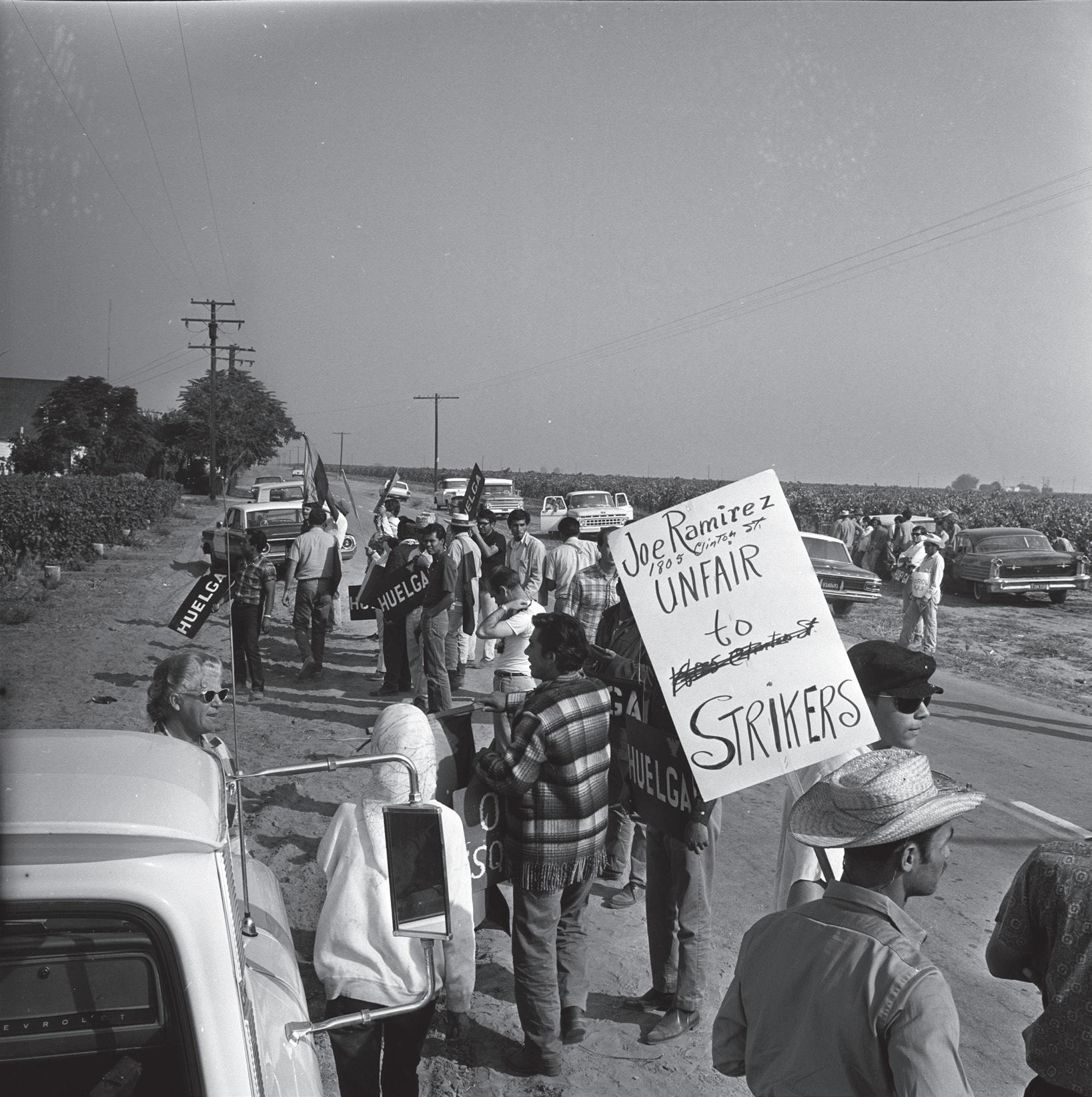
On the morning of March 17, 1966, nearly a hundred striking farmworkers, with a banner of Our Lady of Guadalupe at their head, set out on foot from the small town of Delano. They were bound for the state capital in Sacramento, nearly 300 miles to the north.
As they passed through the dusty highways and farming communities of the Central Valley, they were joined by student activists, union organizers, civil rights workers, and members of the clergy, all drawn to the remote regions of California in support of the farmworker struggle.
At points during the 25-day march, Luis Valdez would read the Plan of Delano, a document the NFWA created as a manifesto for the Delano strike, followed by El Teatro Campesino performances.
The march ended on April 10, 1966. Although it garnered press and support, it did not, at that time, get them a meeting with legislators, one of their main objectives.
Four months after the march to Sacramento, the two groups merged to form the United Farm Workers and continued their fight. In 2022, the UFW union marched to Sacramento once more, fighting for union voting rights.
Want to track Dolores’ route up to the Capitol? Click the link!
Mapping Change, from Delano to Sacramento
The Media and Women’s Work
¡SÍ SE PUEDE! intentionally centers Dolores Huerta, who coined that passionate rallying cry, in the story of the UFW labor movement because Cesar Chavez overshadowed her equal contributions to the fight in history books.
Dolores was not the first or only Chicana labor leader to be a pivotal, vital force in the movement. The names of Luisa Moreno and Emma Tenayuca should also be etched in labor rights history.
Things Women Weren’t Allowed to Do in the 1960s
“i
started rEally noticing, more and morE, how men will plagiarize and takE credit for wom En’s work... i’vE noticed that it just happEns a lot”
When Dolores co-founded the United Farm Workers in 1962, she was a 32-year-old mother of seven on her second divorce. Understanding the challenges and benefits of these intersecting personal and professional identities, she encouraged families to participate in the movement together.
The UFW had more female members than all other U.S. unions combined. So, in support, the union created a daycare for mothers on the picket line- the first of its kind in California.
Not all women in the movement were on the front lines of protest, but participated in other methods of activism that were just as vital. In 1962, many rights were denied to women, which limited what they could do, but they couldn’t be stopped from contributing to the movement.
• Get a credit card: In the 1960s, a bank could refuse to issue a credit card to an unmarried woman; even if she was married, her husband was required to cosign.
• Serve on a jury: It varied by state, but the main reason women were kept out of jury pools was the belief that caregiving was their primary role.
• Take birth control: By 1960, the pill was approved for use as a contraceptive. However, it remained illegal in some states and could only be prescribed to married women for purposes of family planning.
– Dolores Huerta
Boycott
“EvEryone is experiencing the sam E poison – just in a differEnt dosE. an injustice that affEcts any of us affEcts all of us. ”
– Dolores, ¡SÍ SE PUEDE!
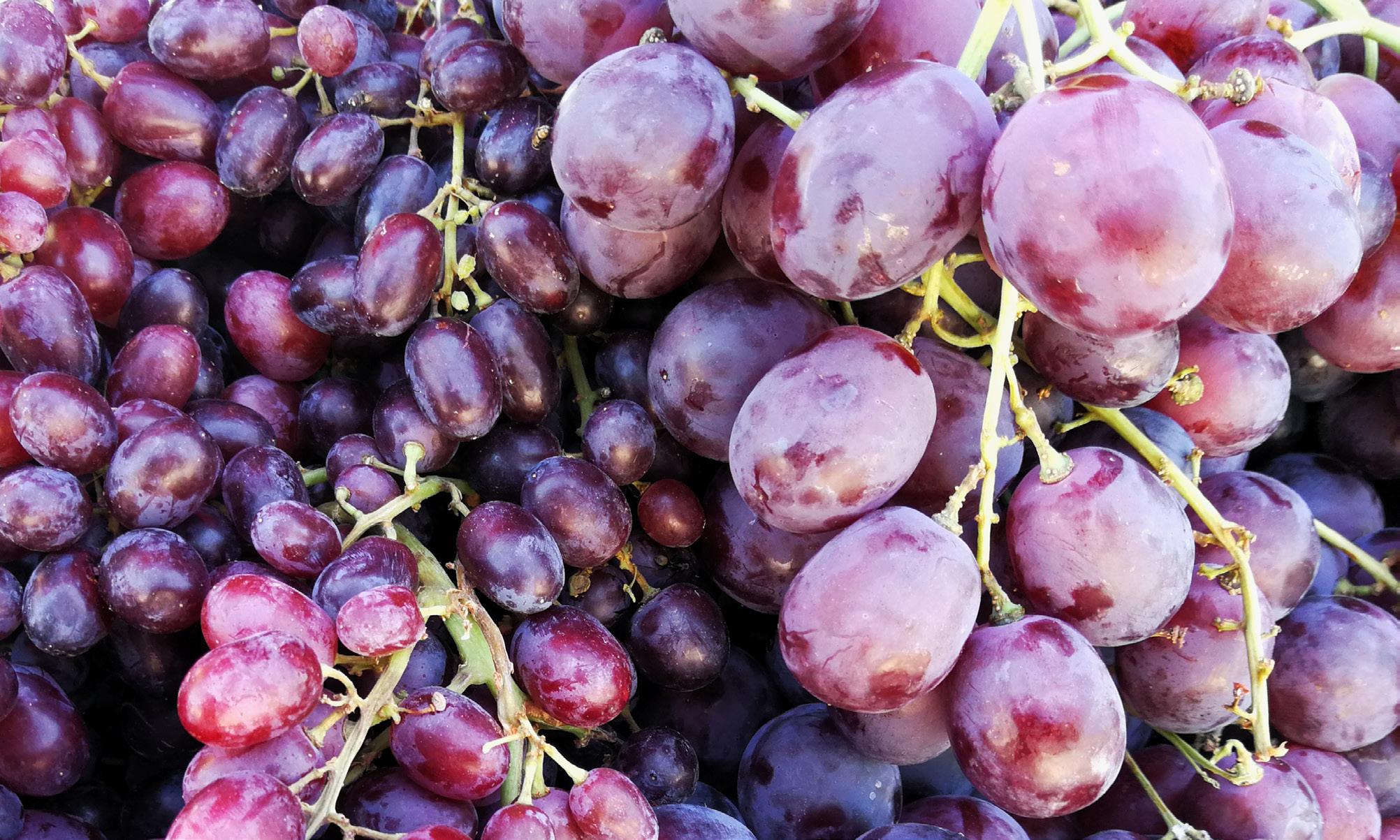
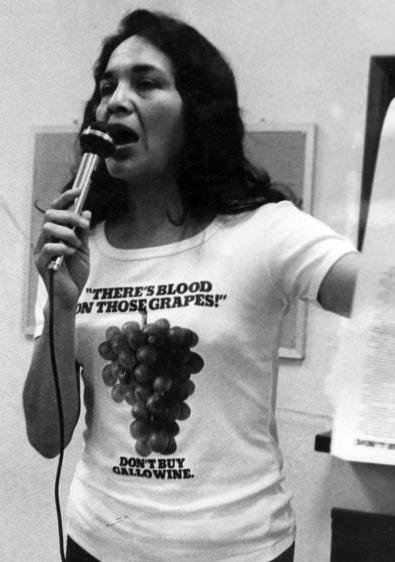
UFW’s five-year Delano “No Grapes” Boycott, beginning in 1965, was in response to the harmful health effects on farmworkers and their families from picking growers’ crops sprayed with the DDT pesticide. They targeted the two largest corporations involved in the Delano grape industry: Schenley Industries and the DiGiorgio Corporation. The UFW framed the issue as affecting not only the health of California farmworkers and their families but also grape consumers nationwide. This was a successful tactic for recruiting people to join the boycott and spread awareness.
National support began to grow in 1968. Black Civil Rights groups joined the boycott, pressuring grocery stores in the southern states to remove non-union grapes. Other unions, such as the UAW and AFSCME, helped spread awareness.
The mayors of major cities such as New York, Baltimore, and Philadelphia pledged their support, altering their cities’ grape purchases to support the boycott.
Opposition to this movement included the U.S. government, where growers had a sizable influence. Undercutting measures, such as the Department of Defense and the Department of Agriculture purchasing boycott grapes, were employed to break the movement.
Ronald Reagan, then the California governor, even called the boycott “immoral.”
However, they could not derail the boycotts’ success. At its peak, 14 million Americans participated in the grape boycott.
¡no uvas! no grapes!
WE WON
Dolores
Larry Cesar we did it!
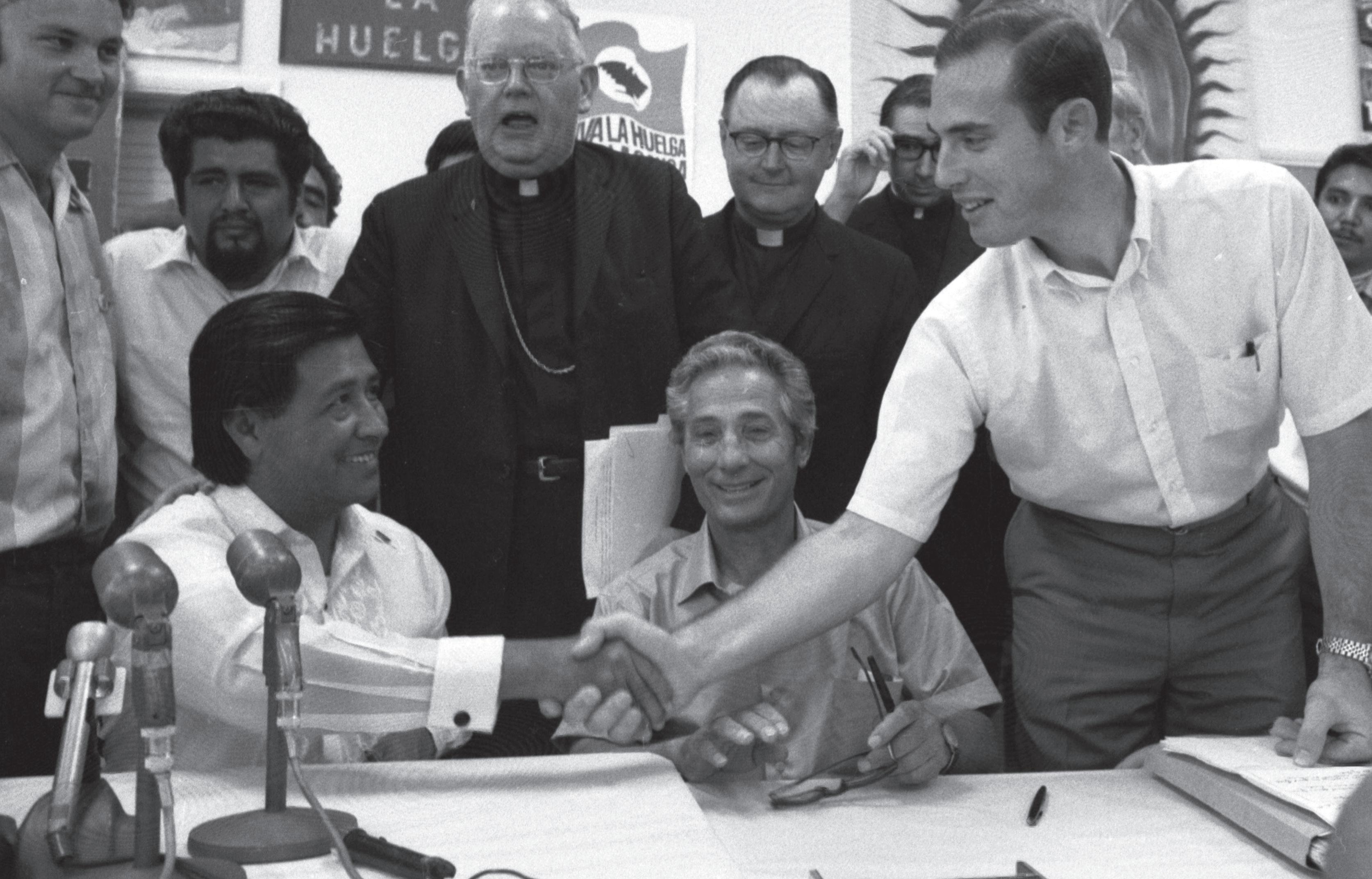
The nationwide “Boycott Grapes” campaign reduced sales by 43%, forcing 26 of California’s largest table grape growers, including Schenley Industries and DiGiorgio Corporation, to sign UFW union contracts that met the UFW demands in 1970.
In 1972, the U.S. Environmental Protection Agency (EPA) officially banned the use of DDT.
These wins served as the foundation for the California Agricultural Labor Relations Act of 1975, which established collective bargaining for farmworkers.
This success would not have been possible without the unifying collaboration of Filipino and Mexican farmworkers. Unfortunately, after the strike ended, the voices and needs of Filipino UFW members, who were the smaller minority, went unheard. Itliong and other Filipino leaders departed the union–their cause and immense contributions to the movement forgotten.
There were two subsequent UFW grape boycotts in 1973 and 1984, but they never evoked the same door-to-door spirit of the first.
Dolores Now
always thought it was wrong for m E to takE credit for the work that i did. don’t think that anymorE.”
– Dolores Huerta
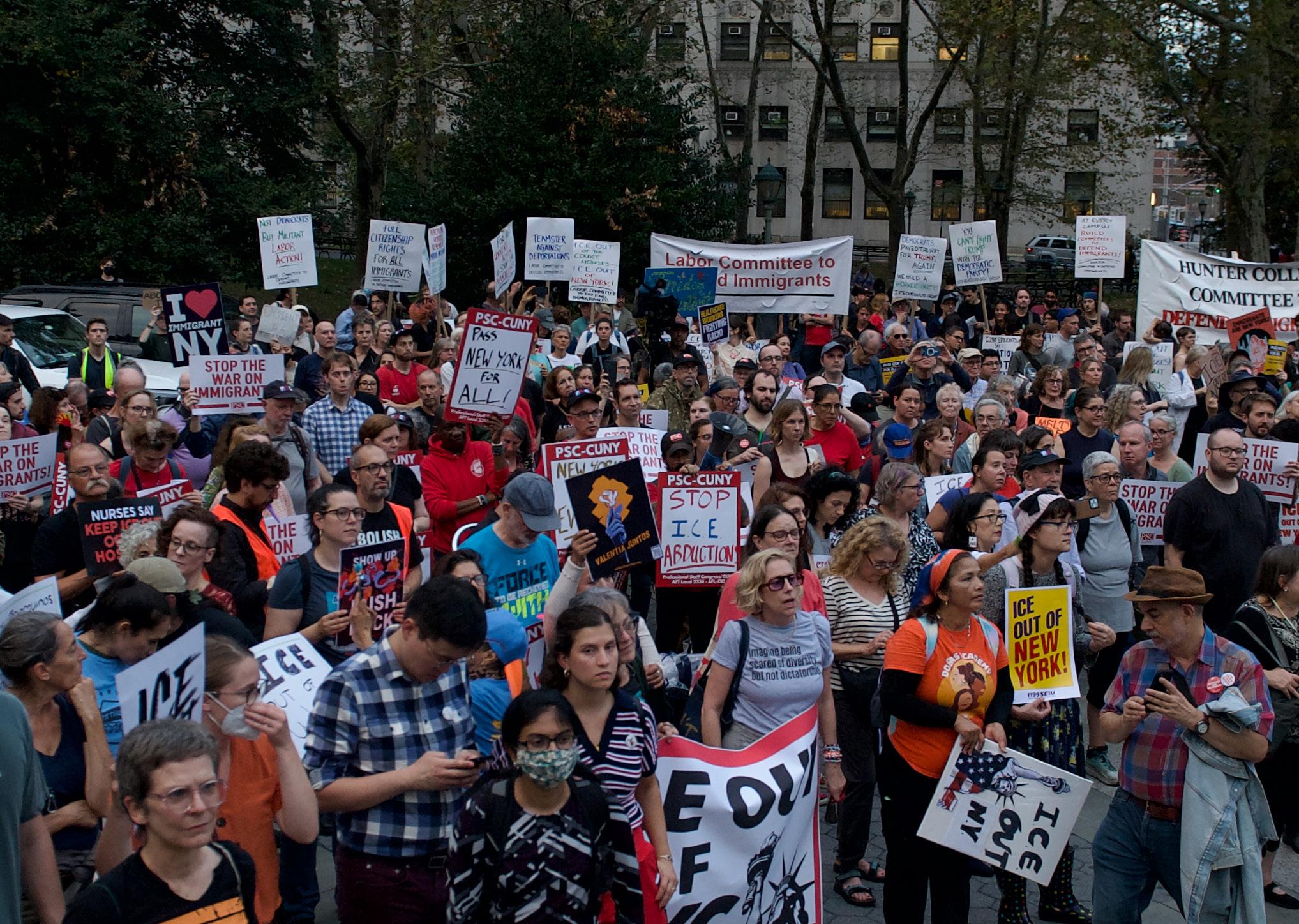
At 95 years young, Dolores continues her lifelong activism as founder and president of the Dolores Huerta Foundation. Her current work centers on defending immigrant rights, promoting women’s rights, and promoting civic engagement.
In early January 2026, she participated in local actions in Bakersfield, CA, advocating for community safety and protesting against injustices.
In 2025, in response to the intensifying ICE raids, she joined the Dolores Huerta Foundation with People for the American Way to release a dramatized short film, “The People United”, depicting neighbors who join together in nonviolent civil disobedience to protect an immigrant elder from being disappeared by ICE.
This film was released before the No Kings rally in June 2025. She has often denounced the ICE raids of Trump’s administration as “a form of ethnic cleansing.”
Her legacy as a prominent labor rights leader, once overshadowed, has become widely recognized in recent years.
When she received the Presidential Medal of Freedom in 2012 from President Obama, he expressed indebtedness for borrowing her famous slogan and organizing strategies for his 2008 “Yes We Can” presidential campaign.
“Dolores”, a 2018 documentary that delves into her life, work, and legacy, is one of the many celebrations of her activism.
Connections: Art of Protest
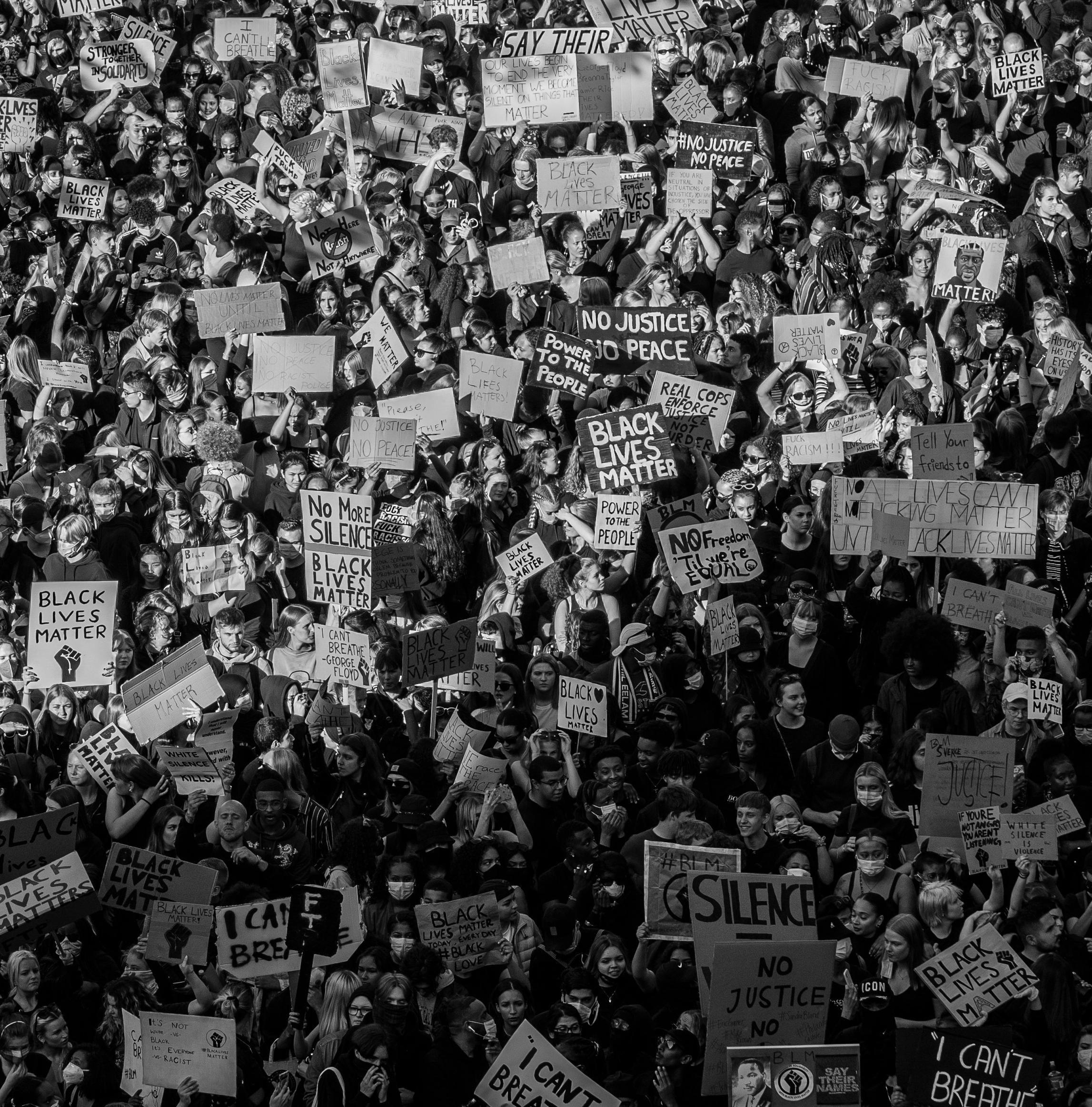
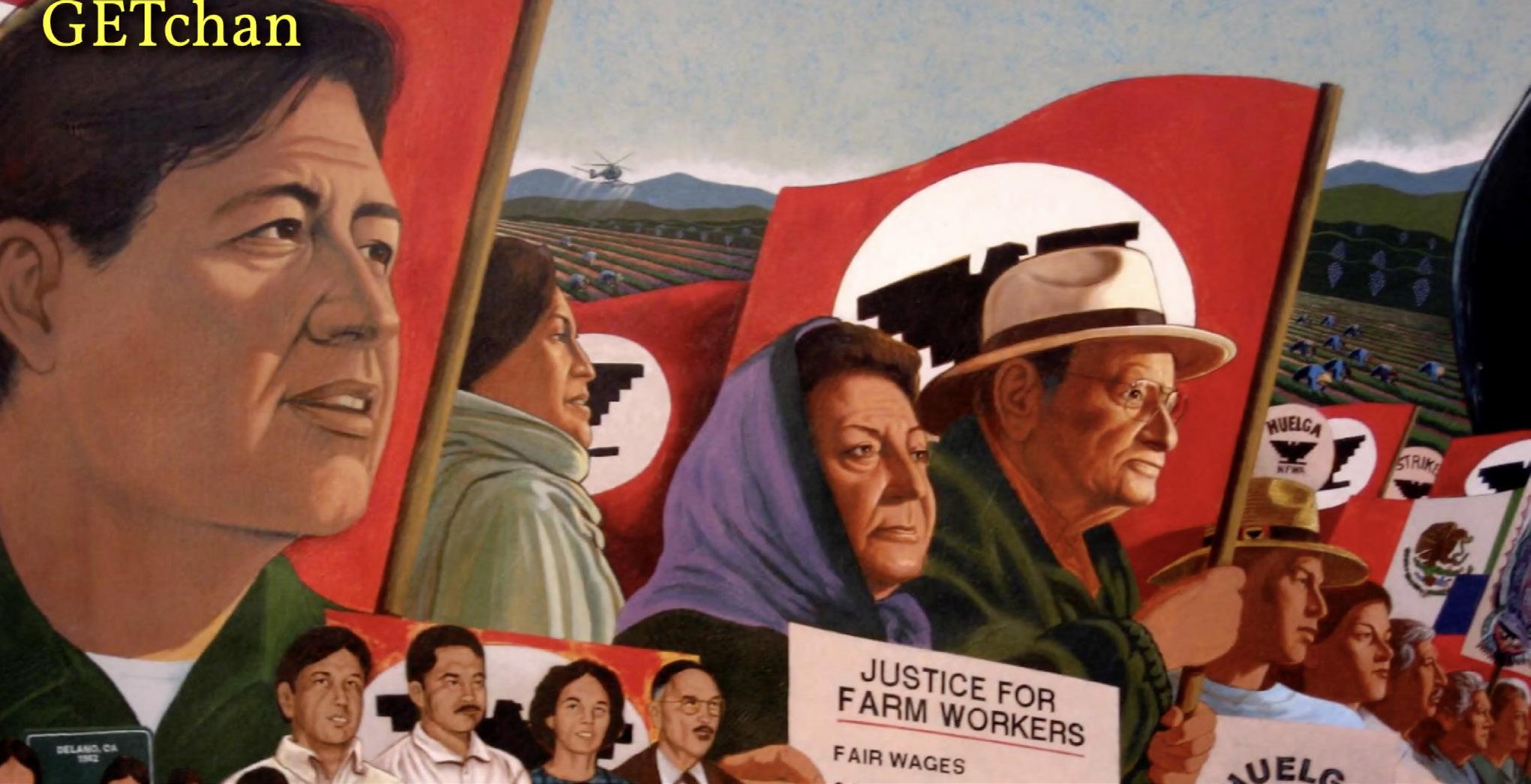
The Delano Strike and Boycott featured iconic protest art, including the United Farm Workers flag and Boycott Grapes poster. Throughout history, protest art has been used effectively in social movements to challenge systems of oppression. Art allows underrepresented people, often affected by these unjust systems, space to make themselves seen and heard as they contribute to social change.
Music is another art form that is used for protest. Iconic songs such as the Civil Rights anthem “We Shall Overcome”, John Lennon’s “Imagine”, and Kendrick Lamar’s “Alright” are prime examples.
The simple act of wearing a T-shirt, hanging a poster in your locker, or holding up a sign can show solidarity or raise awareness of an issue. Even if you are not the one holding the sign on the picket lines, you can be the one who creates it.
what is the cause that is calling to you?
havE you seen any art made about it?
if you were to design a t-shirt or sign for a protEst, what would it say? what colors, texturEs, or images would it include?
are th Ere artists that have made you aware of an issue or inspirEd you to work for changE? what made th Eir work EffEctive?
why do you think artists arE so connected to social movements?
Connections:
Where Does Your Food Come From?
Did you know California grows half of the country’s vegetables, over three-quarters of the country’s fruit and nuts and is the country’s biggest milk producer? Of all the crops grown in the U.S., 19 of them are exclusively grown in California.
The state ranks as the world’s fifth-largest supplier of food. In 2024, the average Californian farmer fed 155 people, up from just 19 people per farmer in 1940. A shortage in California farm labor would mean that eating would become a lot more expensive and less healthy for most Americans. The health of our country is tied to the health of our farm workers.
can you guess any of the 19 fruits, vegEtaBles, and nuts sold in the u.s. that are only grown in california?*
do any fruits or vEgetables grow near you? if you’ve traveled around california, what crops or farm animals have you seEn?
what rEsponsibilities do you think consumers havE towards the people that grow their food? what choic Es could they make to crEatE a healthier food system?
Jesus Reyes Director of Learning & Community Partnerships
Marta Portillo Teaching Artist
Cheyne Gallarde Graphic Designer
Natalia Quintero-Riestra Program Associate
Carolina San Juan Interim Director of Arts Education
Special Thanks
¡SÍ SE PUEDE! is a part of the CTG:FWD initiative, a series of special events and programming that began in 2023 with Brindell & Milton Gottleib Artistic Director Snehal Desai’s tenure at CTG. This play is generously supported by Eastside Arts Initiative, Blue Shield, and the CTG Affiliates. The Culver City Julian Dixon Library performances are made possible in part by the City of Culver City and its Cultural Affairs Commission, with support from Sony Pictures Entertainment and Culver City Arts Foundation. And a special thank you to our partners at Los Angeles Public Library, LA County Library, City of Los Angeles Department of Recreation and Parks, the County of Los Angeles, East Los Angeles College, and El Teatro Campesino.
• Bill of Rights Institute (29 Aug 2021) The Art of Protest: The United Farm Workers and the Delano Grape Strike Bill of Rights Institute YouTube Channel
• Blakemore, Erin (31 Oct 2025) The Largest Mass Deportation in American History History.com
• Brimm, Katie (15 Nov 2018) Black Migrants: Photographs of California’s Forgotten Agricultural Past, civileats.com
• Bustos, Roberto, Montgomery, Molly (8 Sept 2022) The Road to Sacramento –thepointmag.com
• California Department of Food and Agriculture cdfa.ca.gov
• California Museum (1 Apr 2025) Larry Itlong: Labor Activist – California Hall of Fame Californiamusuem.org
• Center for Sacramento History Film Clips from the Farm Labor Movement1960s-1970s Center for Sacramento History YouTube Channel
• Center Theatre Group “Popol Vuh” Phase 4 | Center Theatre Group
• Center Theatre Group YouTube Channel
• César Chávez Foundation, chavezfoundation.org/
• CGTN America (10 Nov 2025) Undocumented Farmworkers in California: Living and Working in Fear CGTN America YouTube Channel
• Chen, James (23 Aug 2025) Agribusiness - Definition, Challenges, and Market Conditions investopedia.com
• Chicanismo Today (2 Oct 2022) The Meaning Behind The United Farm Workers Flag Chicanismo Today YouTube Channel
• CSUN Universal Library Farmworker Movement March to Sacramento (Last Day) farmworkermovement-csun.org
• CSUN University Library Fred Ross csun.org
• Democracy Now! (20 October 2025) “This Is Ethnic Cleansing”: Civil Rights Icon Dolores Huerta Decries Trump’s Targeting of Immigrants democracynow.org
• Dolores – The Documentary Trailer
• Dolores Huerta Foundation doloreshuerta.org
• El Teatro Campesino elteatrocampesino.com
• Facing History and Ourselves (1 Aug 2025) Farm Working Conditions in 1960s California facinghistory.org
• Farm Journal California’s Farm Labor Crisis: Can Immigration Reform Save Agriculture? Farm Journal YouTube Channel
• FarmworkerDocProject 06 March to Sacramento 1966 00 22 01 09 – FarmWorker DocProject YouTube Channel
• HISTORY.com Editors (27 May 2025) Selma to Montgomery March history.com
• NBC News Learn (1 May 2020) The Bracero Program NBC News Learn YouTube Channel
• Note to Self: Dolores Huerta Looks Back on Her Fight for Farm Workers – CBS Interview 2025
• Ojeaburu, Amy Californian Grapes and a Workers’ Union That Advocated for a New Vision of Consumption releasepeace.org
• Ordaz, Leticia (31 Mar 2025) Sacramento workers head to Delano to honor civil rights activist Cesar Chavez kcra.com
• PBS News Hour (Sep Sept 2024) A Labor Day story of migrant farmworker Larry Itliong’s fight for better conditions PBS.org
• PBS NewsHour (14 Mar 2017) ‘Zoot Suit,’ a classic play about discrimination, finds renewed purpose PBS NewsHour YouTube Channel
• Pedro Pablo Celedón (21 Oct 2011) Luis Valdez - Founder “El Teatro Campesino” Pedro Pablo Celedón YouTube Channel
• Perfect Gardens (7 Nov 2023) DDT - From SAFEST PESTICIDE To ENVIRONMENTAL HORROR Perfect Gardens YouTube Channel
• Perkins California: the state that feeds America perkins.com
• Piccinini, Monica (9 May 2023) Who Controls What We Eat medium.com
• Pineda, Dhanika (28 May 2024) If only he knew: The legacy of labor leader Larry Itlong Yappie.com
• Project Agriculture California How Does Food Get From Farm To Table – Project Agriculture projectagriculture.ca
• Rainey, James (22 Nov 2000) Farm Workers Union Ends 16-Year Boycott of Grapes latimes.com
• Rainey, Libby (5 Sept 2023) LA’s Labor History - From anti-union town to ‘Hot Labor Summer’ laist.com
• RETRO REPORT (16 May 2025) What the World War II-Era Bracero Program Reveals About U.S. Immigration Debates | Retro Report RETRO REPORT YouTube Channel
• Reuters (30 Jun 2025) Up to 70% of Farmworkers Not Returning to California Farms following ICE Raids thepacker.com
• Richards, Paul (1 May 2011) Hasta Sacramento Paul Richards YouTube Channel
• Rolling Stone The 100 Best Protest Songs of All Time Playlist spotify.com
• SEIU (3 Jun 2023) What is a labor union? How do unions work? Find out now. SEIU YouTube Channel
• Shaw, Randy (9 Jun 2022) Celebrating the 70th Anniversary of Historic House Meeting beyondchron.org
• Smithsonian American Art Museum Boycott Grapes, Support the United Farm Workers Union americanart.si.edu
• Stull, Carolyn, The Editors of Encyclopedia Britannica Luisa Moreno Biography, britannica. com
• ThamesTv (21 Nov 2016) (Ronald Reagan - Grape Pickers Strike - California - 1969 ThamesTv YouTube Channel
• The National Farmworker’s Association (1 Aug 2025) El Plan de Delano (the Plan of Delano), facinghistory.org
• The New York Historical (3 Nov 2020) Emma Tenayuca: Latina Labor Activist (WAMS E08) The New York Historical YouTube Channel
• The New York Historical Women & the American Story - Women’s Activism and Social Change nyhistory.org
• The White House – Trump Administration (20 Jan 2025) Protecting The American People Against Invasion whitehouse.gov
• TIME (28 Jan 2021) Latinas in the Labor Movement | The History You Didn’t Learn TIME TIME YouTube Channel
• U.S. Department of Labor Filipino Labor Leaders of the Delano Grape Strike Hall of Honor Induction dol.gov
• Union Coded (12 Dec 2023) What is a Scab: Understanding the Role and Impact unioncoded. com
• United Automobile, Aerospace and Agricultural Implement Workers of America uaw.org
• United States Environmental Protection Agency (11 Sept 2025) DDT - A Brief History and Status epa.gov
• USA Today (16 May 2024) Lobbying and U.S. politics: How does it work? | USA TODAY USA Today YouTube Channel
• V&A Museum There’s Blood on those grapes poster -V&A collection vam.ac.uk
• V. Alexandra de F. Szoenyi (5 Feb 2021) 10 Chicana Activists Who Fought for Equal Rights in the Chicano Movement hiplatina.com
• Vankin, Jonathan (16 Mar 2025) How California Agriculture has Shaped the State and the Country californialocal.com
• VHS Therapy (24 March 2023) No Grapes (1992) VHS Therapy YouTube Channel
• Vox (29 Jul 2019) The dark history of “gasoline baths” at the border - Vox Vox YouTube Channel
• Vox (9 Aug 2022) The Fall (and rise?) of unions in the U.S. Vox Video Vox YouTube Channel
• Wattenberg, Richard (Sept 1998) From “Horse Opera” History to Hall of Mirrors: Luis Valdez’s Bandido! china.utppublishing.com
• We Are Family Foundation (26 Nov 2019) Faith Florez: The Latina Legacy Foundation and The Calor App We Are Family Foundation YouTube Channel
• Weber, Brandon (12 Nov 2014) About 50 years ago, 14 million Americans stopped eating grapes — for a very good reason. upworthy.com
• White, Rachel (3 July 2018) Fight like a girl: How women’s activism shapes history lifeandletters.la.utexas.edu
• Wozniacka, Gosia (6 July 2022) What the Story of DDT, America’s Most Notorious Chemical, Can Teach Us Today civileats.com
GHOST LIGHT
A ghost light is an electric light bulb that theatres leave burning onstage whenever a theatre is dark. The light ensures that nobody accidentally hurts themselves in the dark building. Some superstitious theatre folks also believe that a ghost light keeps any spirits who may live in the theatre happy and at ease.
“¡sí, se puede! ¡sí, se puede! the fight for justicE is long when we unite we are strong!”