How Can a Bed Bug Exterminator Help Eliminate an Infestation?
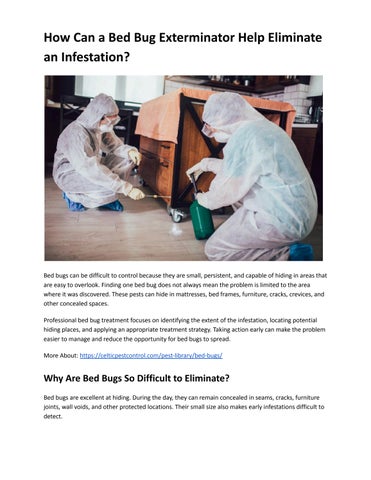
Bed bugs can be difficult to control because they are small, persistent, and capable of hiding in areas that are easy to overlook. Finding one bed bug does not always mean the problem is limited to the area where it was discovered. These pests can hide in mattresses, bed frames, furniture, cracks, crevices, and other concealed spaces. Professional bed bug treatment focuses on identifying the extent of the infestation, locating potential hiding places, and applying an appropriate treatment strategy. Taking action early can make the problem easier to manage and reduce the opportunity for bed bugs to spread. More About: https://celticpestcontrol.com/pest-library/bed-bugs/
Why Are Bed Bugs So Difficult to Eliminate? Bed bugs are excellent at hiding. During the day, they can remain concealed in seams, cracks, furniture joints, wall voids, and other protected locations. Their small size also makes early infestations difficult to detect.
Bed bugs can spread through homes, apartments, hotels, offices, and other environments when they are transported through luggage, clothing, furniture, bedding, or personal belongings. Simply cleaning the room or replacing a mattress may not resolve an infestation because bed bugs can remain hidden elsewhere on the property.
What Are the Common Signs of Bed Bugs? Recognizing the signs early can help property owners seek professional assistance sooner. Possible indicators include: ● ● ● ● ● ● ● ●
Live bed bugs around sleeping areas Small dark spots on mattresses or bedding Shed skins or eggs Blood spots on sheets Small reddish stains Bed bug eggs in cracks or crevices An unusual odor in areas with significant activity Repeated unexplained bites
Not every sign confirms a bed bug infestation. Proper identification is important because several insects can be mistaken for bed bugs.
Where Do Bed Bugs Hide? Bed bugs typically remain close to areas where people spend extended periods, especially while sleeping or resting. Common hiding locations include:
Mattresses and Box Springs Bed bugs can hide along mattress seams, folds, tags, and edges. Box springs may also provide numerous concealed spaces.
Bed Frames and Headboards Cracks, joints, screw holes, and other small spaces around bed frames can provide suitable hiding areas.
Furniture Bed bugs may also hide inside couches, chairs, dressers, nightstands, and other furniture located near sleeping or resting areas.
Cracks and Crevices Small openings around walls, baseboards, electrical areas, and flooring can provide additional hiding places, particularly when an infestation has spread.
Why Should You Hire a Professional Bed Bug Exterminator? DIY treatment can sometimes make an infestation more difficult to manage if products are used incorrectly or bed bugs are unintentionally dispersed into other areas. A professional inspection can help determine where activity is occurring and whether the infestation extends beyond the location where bed bugs were first noticed. Professional treatment also allows the strategy to be selected according to the property, infestation level, and conditions found during the inspection.
What Does Professional Bed Bug Treatment Involve? An effective treatment program begins with preparation and inspection rather than immediately applying products.
Inspection The property is evaluated for visible bed bugs, eggs, signs of activity, and potential hiding areas. The inspection helps determine the likely extent of the infestation.
Treatment Planning Treatment recommendations are based on the inspection findings and the property's specific circumstances. Different environments may require different methods and levels of treatment.
Targeted Treatment Appropriate treatment methods are applied to areas where bed bugs are likely to be present. Following professional instructions before and after treatment is important for achieving the best possible results.
Follow-Up Bed bug control may require monitoring and follow-up because eggs and hidden insects can make complete elimination challenging. Additional treatment may be recommended depending on the level of activity and inspection results.
How Can You Prepare for Bed Bug Treatment?
Preparation can make professional treatment more effective. Property owners should follow the exterminator's specific instructions because preparation requirements can vary according to the treatment method. Common preparation steps may include: ● ● ● ● ● ●
Removing clutter from affected areas Washing and drying bedding as instructed Moving items away from walls where requested Reducing unnecessary items around sleeping areas Following instructions for clothing and personal belongings Avoiding unauthorized insecticide applications before professional treatment
Do not discard furniture or mattresses without professional guidance. Moving infested items can sometimes spread bed bugs to other areas.
Can Bed Bugs Return After Treatment? Bed bug treatment can eliminate an existing infestation, but reinfestation is possible if bed bugs are introduced again from another source. Travel, used furniture, shared living spaces, and belongings can provide opportunities for bed bugs to enter a property. Regular inspection and early action can help reduce the chance of a small problem developing into a larger infestation.
What Should You Do After Finding a Bed Bug? Avoid moving to another bedroom or relocating furniture unnecessarily. Doing so may cause bed bugs to spread to additional areas. Instead, carefully document where the insect was found and contact a qualified pest professional for identification and inspection. Early professional evaluation can help determine whether additional evidence of infestation is present.
Frequently Asked Questions 1. What does a bed bug exterminator do? A bed bug exterminator inspects the property, identifies signs of bed bug activity, determines potential hiding areas, develops an appropriate treatment plan, and may provide follow-up services to monitor the infestation.
2. Can bed bugs be completely eliminated?
Bed bugs can be difficult to control, but professional treatment can effectively address an infestation when the appropriate methods are used and preparation and follow-up instructions are followed carefully.
3. How long does bed bug treatment take? Treatment time varies depending on the size of the property, severity of the infestation, treatment method, and number of affected areas. A professional inspection is needed to determine the appropriate scope of service.
4. Should I throw away my mattress if I find bed bugs? Not necessarily. Throwing away a mattress does not address bed bugs hiding elsewhere in the room or property. Speak with a pest professional before disposing of furniture or bedding so the infestation can be evaluated properly.
5. Can bed bugs spread from one room to another? Yes. Bed bugs can move or be transported between areas through furniture, clothing, luggage, bedding, and personal belongings. Prompt inspection and appropriate treatment can help limit their spread.
Conclusion Bed bugs can be persistent pests that require careful identification, thorough inspection, and an appropriate treatment strategy. Because they can hide in numerous locations, treating only the area where a bed bug was discovered may not address the full problem. Working with a professional bed bug exterminator can help property owners understand the extent of an infestation and determine the most suitable course of action. Early intervention, careful preparation, professional treatment, and appropriate follow-up can all contribute to more effective bed bug management.