2025 - 2026
2025 - 2026
Cellar Door is the oldest undergraduate literary journal at the University of North Carolina at Chapel Hill. The magazine has continually published the best poetry, fiction, creative nonfiction, and art of the undergraduate student body since 1973. It welcomes submissions from all currently enrolled undergraduate students at UNC.
To the Creative Writing Program and Department of English and Comparative Literature, for their ongoing support of student writers, editors, and readers.
To Bland Simpson, for his benevolent support of Cellar Door and other undergraduate literary causes.
To Michael McFee for his decades of dedication to Cellar Door.
To Melissa Faliveno for taking on the mantle, including distribution of copies to the campus racks, and storage of boxes in their office.
To the artists and writers who create every day, for letting us share their work with the rest of campus, and beyond.
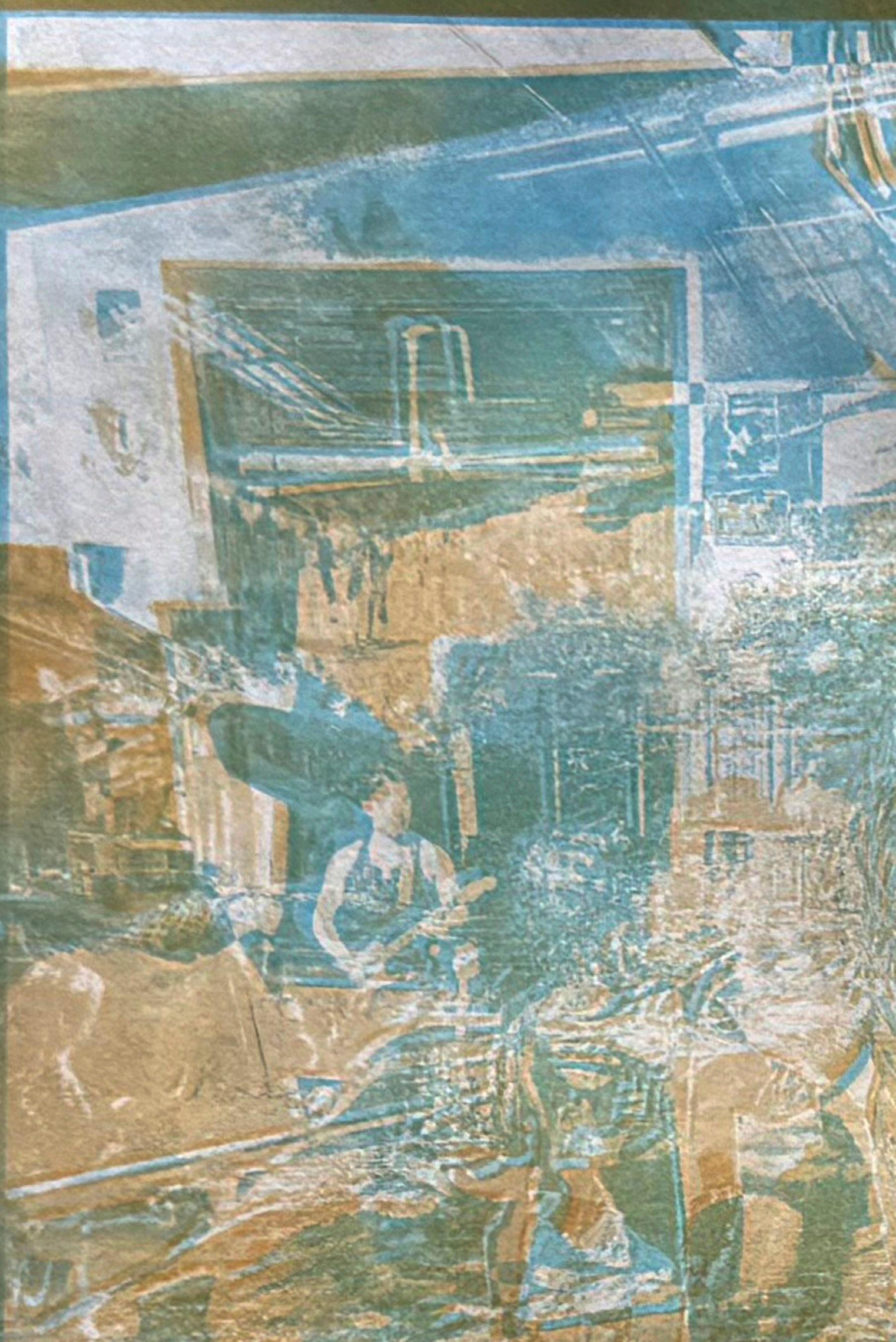
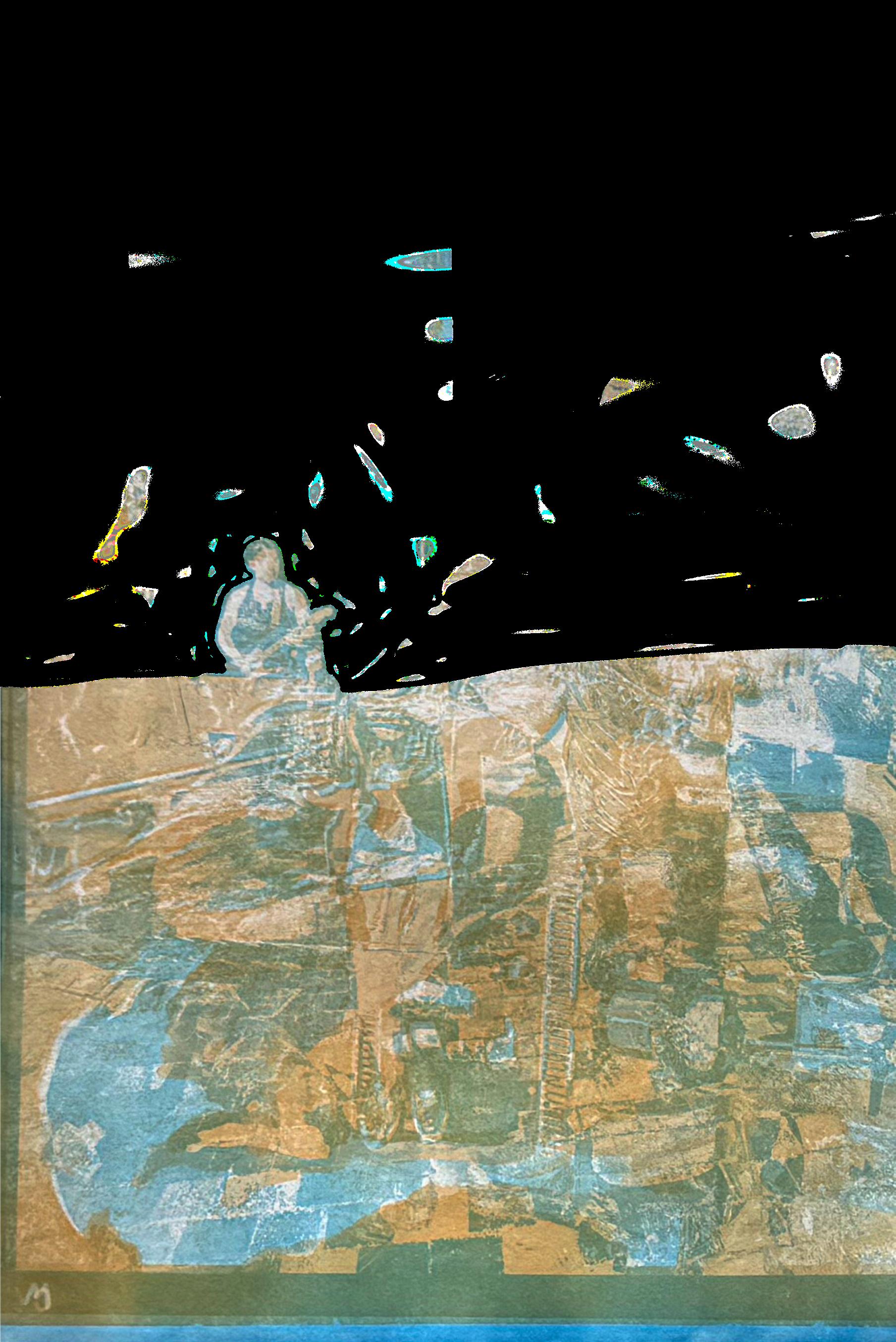
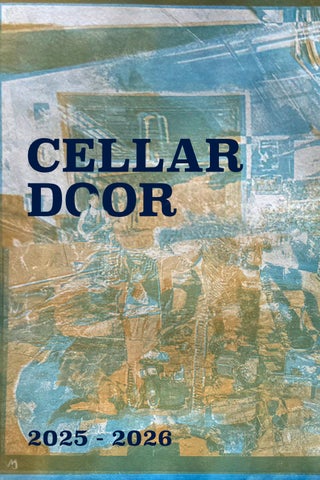
Cover © Jesse Patete
Dear Reader,
At three years old, I sat pressed against my mom’s side. Her reading to me, and me crying because I didn’t know how to read. It wasn’t fair. It wasn’t fair that I couldn’t understand the swimming combinations of letters on the page that she somehow could. From that moment on, I was determined to read, and read I did. Little did I know how far that moment would take me, or the endless adventures that were to unfold in each word, each line, each paragraph. How thankful I was then, and am now for the larger than life, idiosyncratic emotion we are lucky enough to experience through each page turned within our favorite piece of writing. With this edition of Cellar Door, I hope that you too, will be overcome with the same fervor that reading brings to me — the pining I felt at just three, even before I was made aware of the limitless possibilities literature can bring.
Before coming to Carolina, I would never have guessed that I would lead the university’s oldest undergraduate literary magazine. With this said, I could not be more grateful for the experiences it has provided me with, and, more importantly, the people I am surrounded by who have worked so diligently to craft the wonderful collection of poetry, fiction, nonfiction, and art that I hope will soon enthrall you. I am endlessly grateful for the most dedicated staff readers and editorial team. Carly, Syd, Brooke, Samiha, Cathy, Sophie, Samantha, Lauren, and Michelle — thank you. I extend my thanks to the kindness and support of Melissa Faliveno, who despite her recent professional achievements, has prioritized my success in my first year of leadership, and helped facilitate the ultimate success of Cellar Door. You all have impacted this edition — and me — in ways too large to describe. Thank you.
Finally, I give my overflowing thanks to all of our contributors and all those who submitted work to be considered for this year’s edition. Though we must select only a limited number of pieces, we would not be here without your ongoing creativity and the possibilities it brings. Without you, Cellar Door could not exist.
As you read, I encourage you to remember all that literature, art, and creativity can bring — whatever that may mean to you. I hope you can find another version of yourself as you read, and escape through the pages of this year's edition. As I flip through the pages, I remember the little girl I once was, crying, begging, yearning to read.
Best,
Savannah Bishop Editor-in-Chief
ART
FIRST PLACE
SECOND PLACE
THIRD PLACE
My Little Sugarplum
Olivia Rombak
He Fishes
Olivia Rombak
Shadow
Virginia Van de Riet
FICTION
FIRST PLACE
SECOND PLACE
THIRD PLACE
Mud Town
Lily Solomon
The Cyborg
Virginia Warner
Two Funerals & A Baseball Game
Aleksander Lindsay Dickens
NONFICTION
FIRST PLACE
SECOND PLACE
THIRD PLACE
Halo-Halo
Mia Nordstrom
What you should know about the Kyleena IUD
Masha Dixon
Paisley Park
Emily Gessner
POETRY
FIRST PLACE
SECOND PLACE
THIRD PLACE
Persimmon Tree
Ella Deans
Genesis Blues
Sarah Grace Elliott
Selfsame
Jasper Elia
Olivia Chester is a UNC Alumni who is pursuing a career in Art Direction. She graduated from the UNC Hussman School and the UNC Art Department in 2025. Raised in a family of painters, musicians, dancers, and singers, Chester grew up with art in her bones and expression in her blood. Olivia will be attending the Denver Ad School for Art Direction in the Fall of 2026. She welcomes challenges as opportunities to grow, and brings her unwavering values into every project she takes on — creating work that reflects not only who she is, but what she stands for.
Omaria Sanchez Pratt is a Black trans writer from North Carolina. They earned an M.F.A. from the University of Kentucky where they were a recipient of the 2018 Nikky Finney Fellowship. They have received fellowships from Tin House Summer Workshop, Community of Writers, Periplus Mentorship Collective, Kimbilio for Black Fiction, Lambda Literary, Roots. Wounds. Words. and the Hurston/Wright Foundation. Their work can be found in the 2023 Emerge Anthology, Taint Taint Taint Magazine, StoryMagazine issue 9, and the Anthology of Appalachian Writers-VolumeXII, where they were nominated for a Pushcart Prize.
Born in Calcutta and raised in New Delhi, Sayantani Dasgupta is the author of the essay collection Brown Women Have Everything: Essays on (Dis)comfort and Delight. She has been awarded a Centrum Foundation Fellowship, a Pushcart Prize Special Mention, and the WILMA Woman of the Year award in Arts for 2022. Two of her essays, “Rinse, Repeat” and "In Case of an Active Shooter Attack" were named Notable Essays of 2023 and 2022 by Best American Essays. She is a contributing editor for Assay: A Journal of Creative Nonfiction and the founder of Write Wilmington. An Associate Professor of Creative Writing at UNC Wilmington, Sayantani has also taught writing in India, Italy, Colombia, and Mexico.
Donovan Livingston is an award-winning educator, spoken word poet, and public speaker. In 2016, his Harvard Graduate School of Education convocation address “Lift Off” went viral, reaching over thirteen million views and prompting Hillary Clinton to praise, “It’s young graduates like [Livingston] who make it clear that America’s best days are still ahead.”A believer in the enormous opportunities that education provides, Dr. Livingston inspires students, educators, and communities with his conviction that every child has the right to “lift off” and achieve their dreams. Drawing on personal experiences as well as scholarship, Livingston examines the role of culture, hip-hop and spoken word poetry in student experiences in higher and postsecondary education. More specifically, Dr. Livingston is interested in understanding how poetics – rooted in Black lyrical and oral traditions – serve as a catalyst for student success and systemic change in colleges and universities.
EDITOR-IN-CHIEF
Savannah Bishop
ART EDITOR
Cathy Wang
FICTION EDITOR
Brooke Xu
NONFICTION EDITOR
Samiha Bala
POETRY EDITOR
Syd Partyka
TREASURER
Carly Barello
PUBLICITY EDITORS
Lauren Miller
Michelle Seucan
DESIGN EDITORS
Samantha Brenneman
Sophie Strickland
Carson Buie
Violet Frost
Sophia Katz
Cecilia Lapetina
Addisyn McLaurin
Lana Olarte
Lanna Read
Kendall Robbins
Cal Stoke
Katelyn Wang
Sheridan Barry
Sabrina Hu
James Huffman
Neha Jonnalagedda
Kiran Manikumar
Nakayla McCounnaughey
Anabella Platt
Lekha Singh
Eva Vega
Campbell Warren
Uredo Agada
Zahra Alqudaihi
Helen Dehnert
Natalie McCarthy
T'mia Powell
Faith Skowronnek
Donnie Wilkie
Melody Zeng
Audrey Briggs
Luke Coker
Hope Carter Davis
Olivia Gamache
Anthony Guerra-Flores
Caroline Hurlbert
Willow Lawson
E'lyn Murphy
Tara Penman
Spencer Thomas
Melissa Faliveno
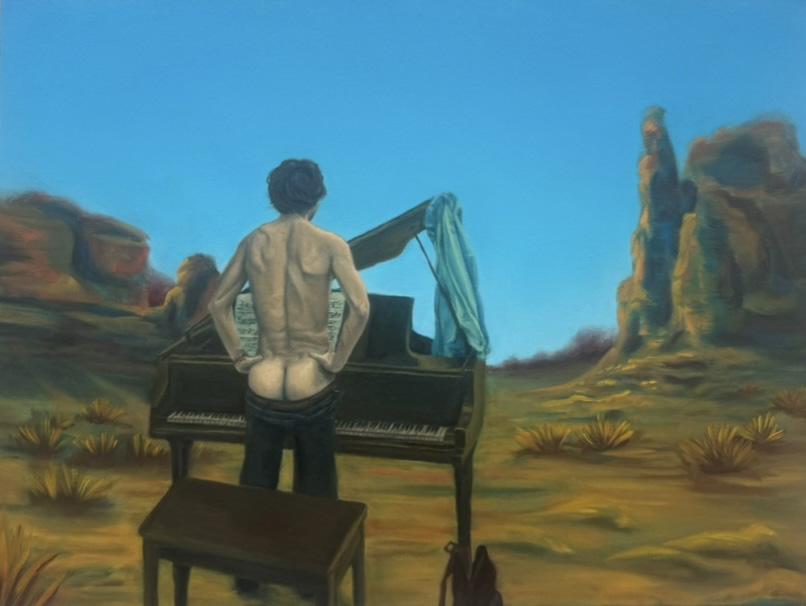
Rat Pack
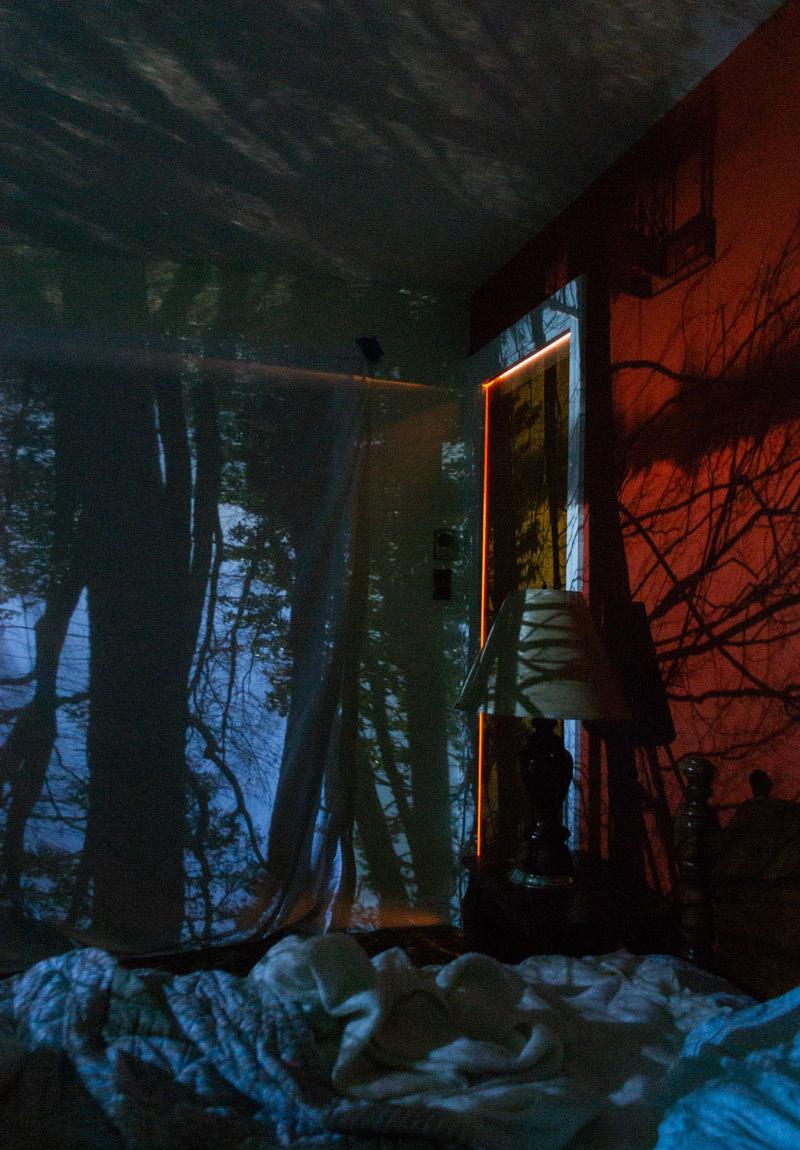
Camera Obscura
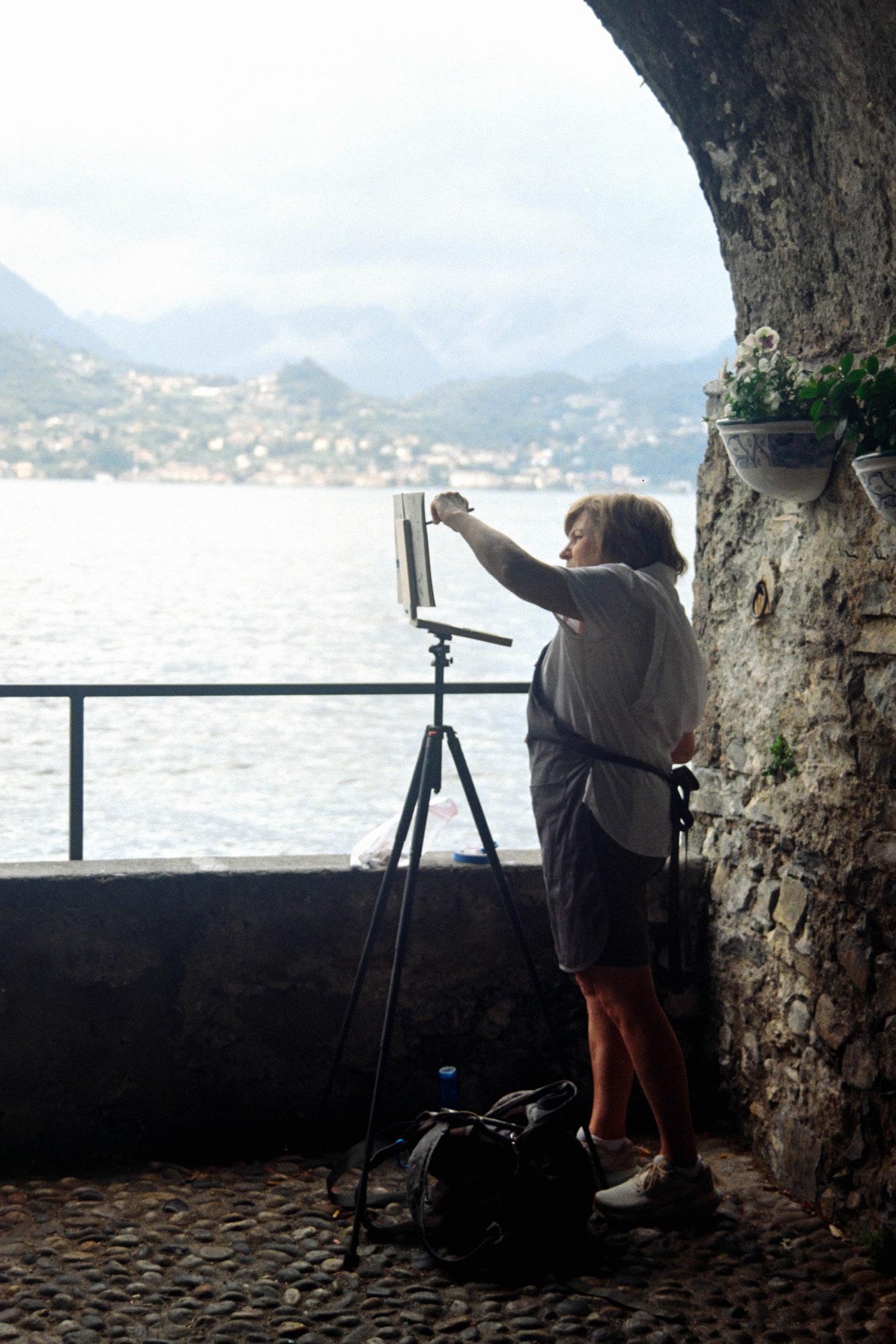
Varenna
Sunday Morning
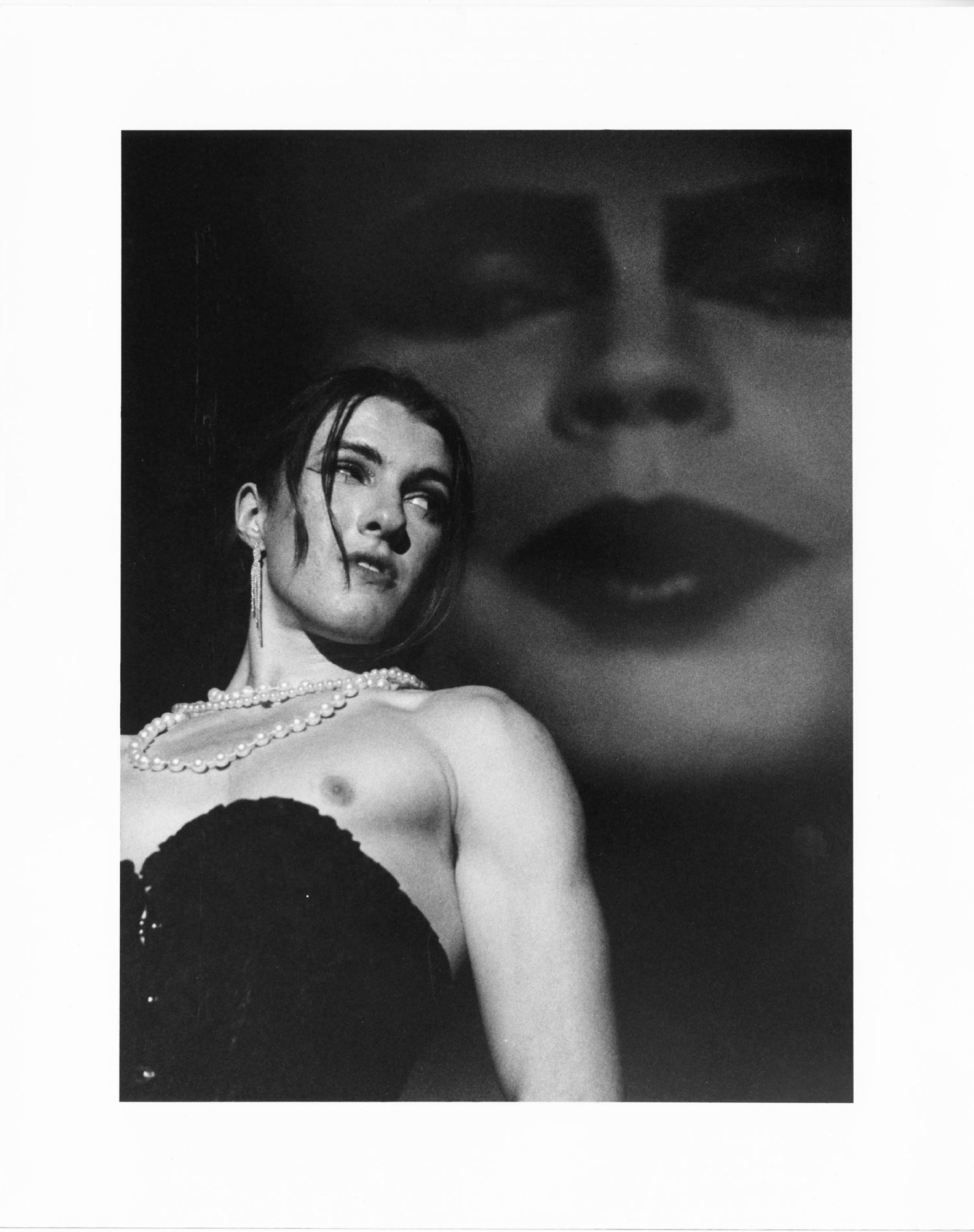
My Little Sugar Plum Shadow
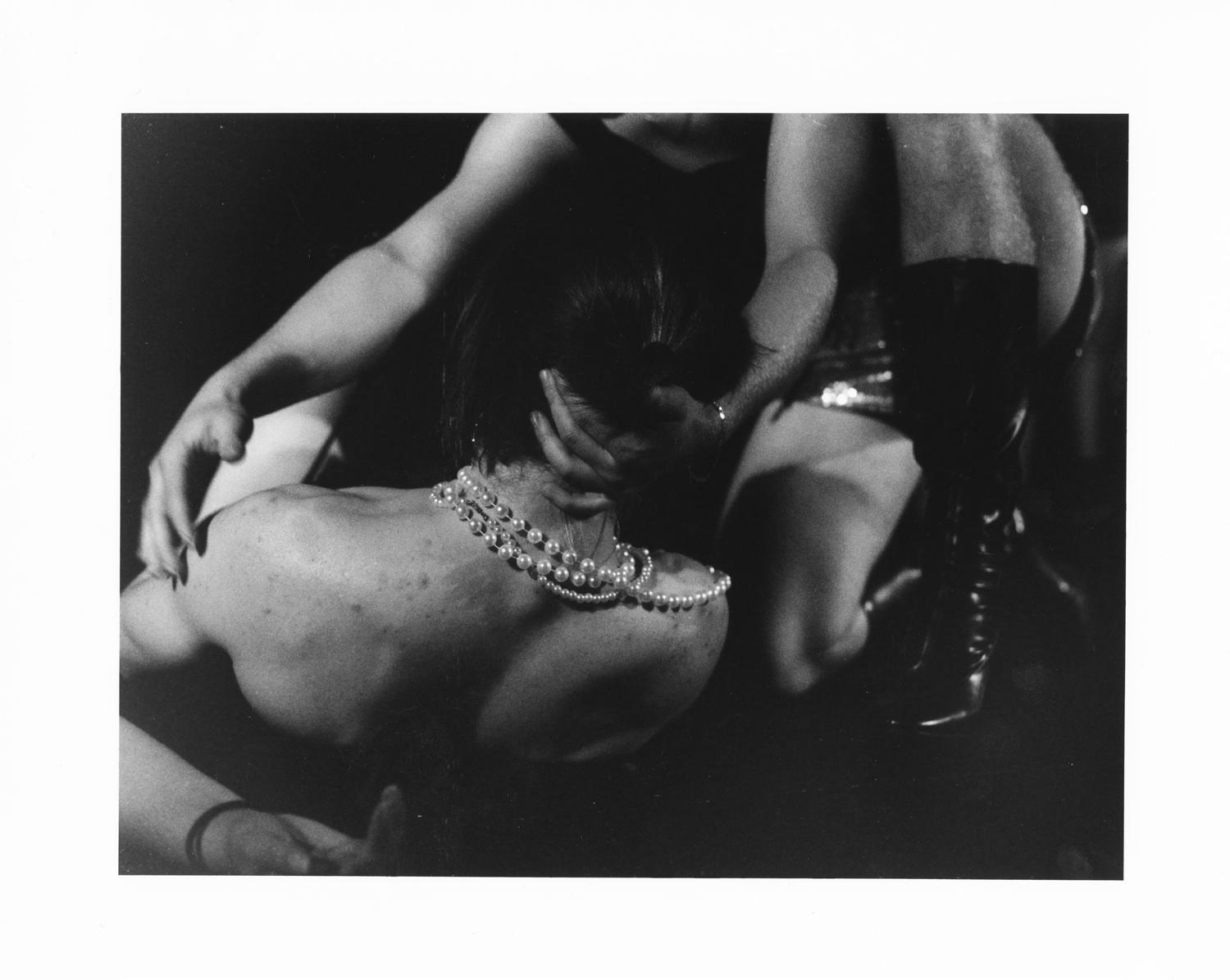
Not Yet
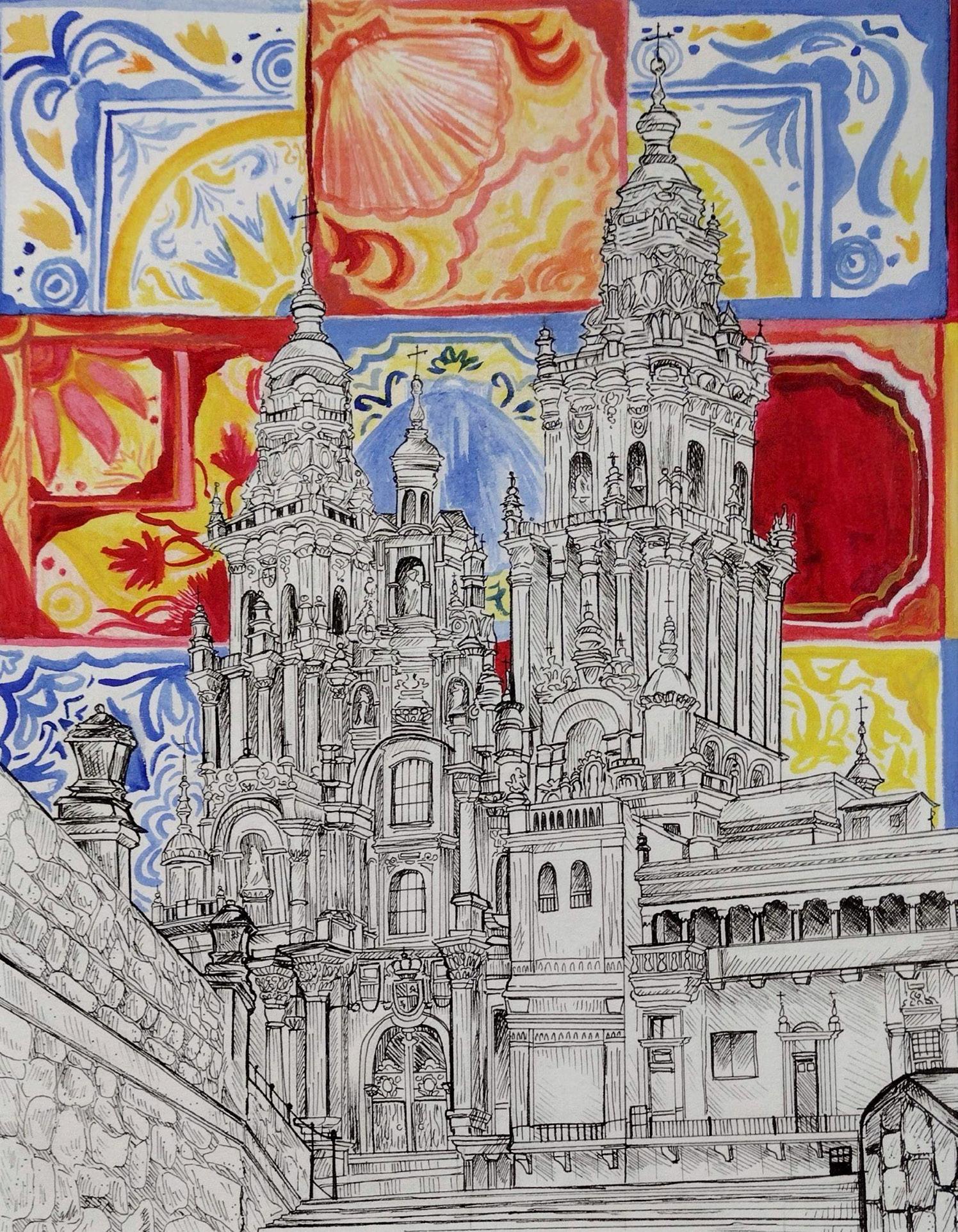
Camino de Santiago Night
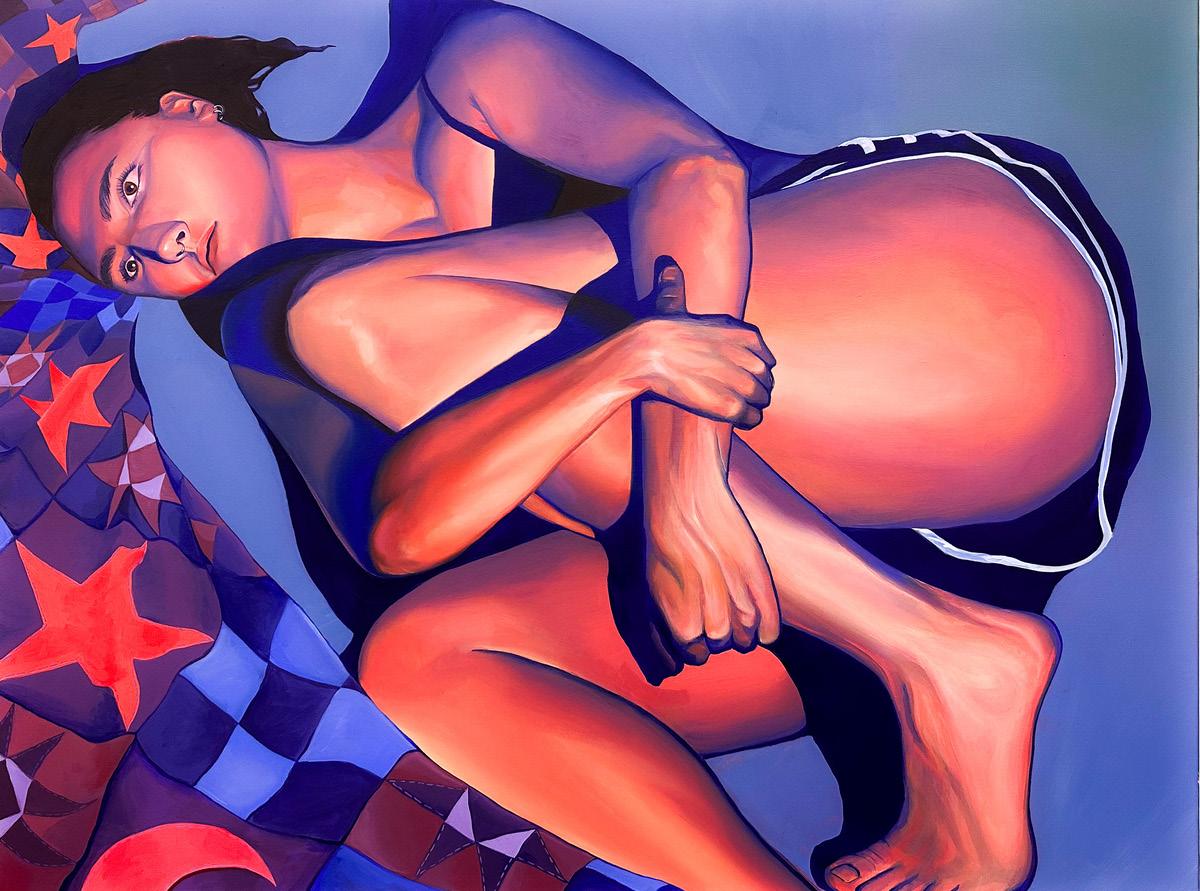
I've Got Rhythm
Good Morning
He Fishes
Jack the Horse Smoke
Evening in Wilmington
Park
What you should
about the Kyleena IUD
Letter to an Old Friend
Halo-Halo Flower Picking
Jesse Patete
Maura Trivette
Virginia Van de Riet
Helaina-Rose Ball
Olivia Rombak
Virginia Van de Riet
Virginia Van de Riet
Sofia Sande Fernandez
Olivia Rombak
Helaina-Rose Ball
Alexandra Cvetkovski
Olivia Rombak
&
The Unclean Gift (or, Things We Do Instead of Saying I Love You) Persimmon Tree
Because you said you’d take it all back if you could Family, Reunited (in 4 parts)
Genesis Blues
A dissection of Ndé Biyáti’, or the way my heart dropped for Oak Flat, or how to be in the 21st century
Jasper Elia where indigo is concerned evident
Clifton Virginia Van de Riet
by Mia Lu
where indigo is concerned, every version of this story endswith misery. maybe in the trick of the light, hue as blue as rot—i can splinter the changes, say sorry for the things i never wanted to do.
i feel like indigo, in the december of a neverending hunt, rabbithearted when i cannot recover even by wintering in the wedge between girl and regret
carve it well, indigo is a tapestry of a good fight, an unasked effort an animal gnawing its own leg off, a metaphor for persisting relief in the familiarity of it all, free falling into a dream. i can feel it: inevitable; in the chorus, in the frost. i won’t tell anyone where i have been.
when i’m licking my teeth for the traces of ink-blot, bone-weary stains aching to outrun tomorrow. and tomorrows thereafter, i wish for a flight that does not burn, a chase that does not ache—a place to peel my oranges and, reluctantly, someone to share them with.
strangerfriend, estrayed creature: again, i am alone at the dinner table—
indigo slows the appetite, like venom through the veins. i feast with adagio, sorrow as sustenance, passing through a wound i’m bleeding through and through; this feeling is in the digestion, in the pocket of love’s jacket. put it on, walk it off.
forgiveness is a lonely thing and i would never feed it into someone else’s mouth. indigo is wishing not to endure, living a long life—singing despite. despite & despite as far as indigo is concerned, the story goes like this: i will keep forgetting why singing hurt in the first place— it is the inevitability of being human: prey-shaped, song-blessed.
by Aleksander Lindsay Dickens
We are staying in a house with no history. Or maybe too much of it, seeped into wallpaper or hiding in the damp under floorboards. Either way, it's not ours. I don't ask questions, because the answers are always worse than the silence. Momma hasn't moved from the bed in a week. Her breath rattles when I check on her like wind through the old attic; but if she were dying, I decide that someone would have told me. I cook when Dad’s away. The stove is broken, so it’s things I can make in the microwave—plain instant rice, stolen gas station ramen. John burns his tongue every time. Abby calls him stupid every time. It’s a ritual.
In the backyard, there’s a couch half-swallowed into cracked concrete, wet from last night’s rain, its stuffing swollen and mold-thick. It belonged to whoever lived here last, though no one bothered to take it with them. When I press my palm against it, my skin comes away damp and gray with something I tell myself is just mildew. Small salamanders flicker across its surface like restless ants or skipping stones; John spends many evenings catching them in plastic tupperware and forgetting them under his bed. As we try to move the couch for more space on the pavement, John lifts a cushion and gasps. A nest. Three birds.
"Well, clearly we have to take care of them," Abby declares, hands on her hips like a teacher scolding a class. "Their mom is gone. It’s our responsibility.”
“I want that one.” Lauren plucks the leftmost bird from the nest, cupping it carefully in her hands. It leaks a soft sound between a sigh and a sob.
“We should all have one,” Abby says. “There’s three, and there’s three of us.”
There’s five of us. Bella is always in bed with momma, too young to argue. I watch more than I speak. This doesn’t count as participation.
Lauren, who hates the feel of feathers, digs through the house until she finds a scrap of fabric to wrap her bird in. “What should we name them?” she asks, not looking up.
They name them. The birds are placed in the dollhouse in our closet so our parents won’t see, as if a house can be a home if you pretend hard enough.
Aleksander Lindsay Dickens
Lauren’s bird is the first to die.
She crouches by the plastic kiddie pool, algae-slick and long since strangled by vines, and lowers the tiny thing into the water. "I want to be a good mom and wash it," she says.
She ruffles its feathers with wet fingers. For a moment, it twitches in her palm. Then the bubbles start.
"Wait, I think it's drowning!" she exclaims, still holding it under, eyes going wide with the drama of it. "Help me! It's drowning!"
She’s smiling when she says it. When she finally lifts her hands, the bird is limp. Its small, dark eye is a bead of glass staring up at nothing. Lauren cries.
John’s bird is next.
Three of us play poker on concrete, betting foraged gas station items— lighters, gum, peanuts. Lauren and Abby absentmindedly feed the peanuts to the birds, though they never eat them.
"John!" Lauren calls. "We're about to start a new round!"
There’s a shuffle inside. A muffled "Coming!" Then, the sound of him running—too fast, too careless. The slap of bare feet against concrete. The sick squish of something soft and wet underfoot. Silence.
John makes a sound low in his throat—a sound somewhere between a laugh and a gag. The bird is gone, but its shape is still there, a smear of guts and feathers clinging to the sole of his foot. His face curdles.
Lauren cries, again. “You killed it.” Abby tells him he’s an idiot, that he should be more careful, that he shouldn’t be allowed to have anything. It’s a ritual. John tries to take Abby’s bird in retribution. “It was an accident,” he argues. “I am a much better parent than all of you combined.”
He really thinks they’ll believe him.
"Accidents don’t make things any less dead," Lauren says.
The last bird goes the next day.
We are eating lunch when Abby sets her spoon down with a sharp snap. “Well,” she says, “what do all good momma birds do?”
No one answers. She grins like it’s obvious. “They teach their babies to fly.”
So we climb onto the roof. The shingles shift under us, loose and crumbling, the wood underneath soft. Abby has been playing baseball. She thinks she understands how to make something fly.
She settles into the shingles, her shifting feet finding place. An arm curls into her chest, baby bird in hand, before arching backwards with her leg lifted off the roof a flamingo. Her arm seems to misshape when fully extended, pushing far past what should be considered normal. The moment her hand releases, it’s entirely silent on the roof. It does not fly. It hits the ground an overripe peach. Blood bursts across the pavement in a perfect arc, almost pretty. A nearly silent gasp comes from the hunched Lauren, legs splayed out against the angled tile near mine before the sharp crack of a cry. It’s a ritual. Reactions do not come from our sides, where John wipes off his dusty knees with a sound like a welp, and Abby scrunches her face a disappointed child in a candy store.
The next day is for mourning. They drape themselves in grief a fur-lined coat. They refuse to speak, as if silence fossilizes grief into something presentable. If grief were useful, they’d have something to show for it by now. The birds were always going to die. They just got there a little faster than they expected. I would’ve done better.
Then the mother comes. Late and useless. She lands on the fence, dark-eyed and sharp-beaked, her feathers fluffed up something dangerous. I watch her. She watches me. Then she moves fast, furious, a thing made of claws and hunger. She smells death on John, or she just knows a failure when she sees one. He screams as she tears at his hair, his skin. He swats at her, but she doesn’t care. I wait to see how long he lasts. Abby laughs. Lauren cries.
Somewhere, in the synthetic dollhouse, the nest is still empty. Abby now has something under her own wings. Lauren folds herself into the blankets, playing corpse like she’s waiting to be buried too. I don’t know who she thinks will come to mourn her. John doesn’t come back. And our parents are in the ground.
by Emily Gessner
My grandmother always made microwave bacon for us when we came to visit. A pile of it would sit on the counter all day long, and as we passed by, we would grab a piece. My siblings and I grew up visiting the ranch-style house on Paisley Park over summer and on holiday weekends. My parents packed up the car Friday afternoons and piled us three kids in the backseat.
For a few hours we would travel south from Raleigh, North Carolina to Sumter, South Carolina where accents are a little more drawn out and voices add a “p” to Sum(p)ter. Even now, years after my grandparents moved out of that home, I still pronounce the Southern “p.”
The hours in the car were taken up by reading billboards and playing the alphabet game until all the signs started advertising South of the Border, a questionable roadside attraction, and we knew we were getting closer. If you were asleep, the bumps of the Palmetto State’s roads would rock you awake. From South of the Border to Sumpter, the land beyond the car window turned to marsh and slowly to swamp. Until finally, we pulled into my grandparents’ driveway on Paisley Park.
The house backed up onto a small section of swamp where wetland trees like bald cypress and water tupelo clawed their way into the water. In the dark, they rose menacingly into the sky, dripping with cloaks of Spanish moss. But in the day, the sweet Southern breeze would push them around in a swinging dance, and you could almost hear the blues music singing through the air.
My grandma would greet us at the door with wide arms and a smile no matter the time of day. She smelled of old Clinique samples and hairspray so potent you could taste it in the air around her. She was a leading contributor to the hole in the ozone layer. She would guide us into the house, a wind of old makeup following in her wake. Late into the night she would have dill Havarti cheese and Wheat Thins waiting for us on the counter. The green linoleum tiles creaked and smiled under our feet, a house full of people again. My grandpa would chuckle as he pulled us in for hugs, his potbelly a bouncy ball between us.
My grandmother is from Waco, Texas. And she makes sure you know it, if you couldn’t already tell from her Texan drawl. While you eat, she hovers around, humming and picking at her neat finger nails. Anything to make her grandchildren happy.
Emily Gessner
My grandmother only wears gold and brown and tan. She is never without her signature colors. The first time I saw her wear the color blue, and just a hint of it hidden in hues of gold and orange, I was late into my teenage years – and shocked.
My grandmother drinks upward of twelve cups of coffee a day. I’m not convinced that her veins aren’t full of it at this point. That might just be the secret to a long life: Maxwell House and Folger’s Coffee injected into your bloodstream.
My grandmother’s full name is Charlene Williams Young. Charlene is pronounced with a hard “ch” instead of a soft “sh.” Her father, my great-grandfather, wanted a son. And he wanted to name him Charlie. My grandmother, my mother, and eventually my sister, inherited the female form of that name for themselves. We call my grandma Chacha. That’s all I’ve ever known her as. It fits her perfectly, like an expensive silk glove.
My grandmother suffered from an eating disorder at the start of her marriage at twenty-one years old. I suspect it latched onto her at an even younger age. I suspect it lingers now, a personal parasite following her through the decades. Another thing I didn’t see until my teenage years, when genetics caught up and I started drinking black coffee and looking at food with wary eyes too.
But when I was little, I lived in a blissful trance.
After the car was unpacked, and the cheese and crackers were finished, and the journey had been thoroughly discussed, we would head to bed. My siblings and I always stayed in the room my mom grew up in. There was a treadmill in the corner that no one ever used, except me when I wanted to watch Disney Channel on the television right above the equipment.
In the quiet as I fell asleep, I could hear the song of the South outside my window. Birds called softly in the night while crickets and cicadas screamed to each other. Carolina wind soothed the heat of the day and beckoned in the dew of the morning. The water settled on the branches of the cypress and moss, ensuring the light of day would heat the dew drops into a humid bath.
In the days leading up to our arrival, Chacha would drive all over Sumpter preparing for us. She would go to the grocery store to stock up on bacon and coffee ice cream — which she knew I loved and was definitely the beginning of my coffee addiction — and to Murray’s Donuts. A popular donut shop, a Sumpter classic, which serves pastries that would be delicious were they fresh, but ended up being dry and stale from the days waiting on the counter for grandchildren to arrive.
We would walk down the street to the duck pond in the afternoon with sandwich loaf bags full of stale bread. The sun would beat down on our heads and
Emily Gessner
shoulders and hair, touching my scalp and lining my formerly blonde hair with late summer sun highlights. I never paused to wonder why there was so much leftover bread. How it all ended up stale. And why the ducks remained fat while Chacha remained thin and unchanged.
My grandmother came of age in the 1950s, when canned food and package dinners became a novelty. An era of prosperity and the “American Dream.” She got married young during the housewife era. She was wowed by the bright packaging of anything “New!” and was the perfect victim for gimmicky grocery store items. She thought to accumulate food and keep it was a sign of success and plenty. Which is why her pantry at Paisley Park was a death trap. The shelves were overflowing with Campbell Soup cans, Jell-O packages, funky birthday candles, and everything else unsafe for human consumption. One visit, my siblings and I tried to clean out the pantry. We spent hours holed up, sinking into floors covered in empty, unused Tupperware and drowning in expiration dates. One can expired in 1985. It was the early 2010s by that point. I wondered how it all didn’t just go crashing down.
Food, or the idea of food, engulfed Paisley Park. From the moment you stepped out of the car to the moment you stepped back in, meals were almost all you thought about. Chacha would always make some kind of dessert for us. After dinner she would bring it to the table and serve generous portions of whatever it was to everyone. Cake, pie, or ice cream were shared generously, no matter the protestations. But Chacha would only serve herself “a sliver.” Everything was always just a taste or a bite for her, but plenty for everyone else. Like she enjoyed watching everyone eat around her because she felt like she couldn’t herself. From the dozens of magnets hanging off the fridge to the corded phone drooping on the wall and the small, staticky television sitting in the corner of the counter, there was tension buzzing within the walls of the house. The streets of Sumpter hummed with secrets of Southern charm. It was years before I recognized the tension of the food sitting on the counters. I now tell people that I do not like bacon, that years of eating it made me tire of the taste. I think some part of me knows that I stopped eating bacon because of the grease and fat that surrounds and fills it, because of the idea that red meat is bad. I still don’t eat bacon, I don’t think my grandmother ever did either. But as a child, I would always grab a piece as I passed by the plate. Piece by piece the pile would shrink until just the crumbs and grease remained sitting in the middle of the old counter in the old kitchen on Paisley Park in Sumpter, South Carolina.
how often i dream— drowning in all my muscle, elastic tissue.
i've tried to entomb this myopia: drowning in amalgamations of all my limbs skinned pink and red like flamingos’ feathered chests, necks. but how often i dreamed of drowning instead of losing in high school i hated being the slow black swimmer, remembering the looks on my broad as daylight shoulders.
“if i had your arms dude…”
projecting blue light on whiteboard on white brick wall, purpling my face,
by Koen Ifill
the class google slides, through the roasting jewel of the projector, glued pupils to the lynched body— the pixelated throat broken like water, revealing the rainbow of their wonderment.
by Aleksander Lindsay Dickens
I fed the birds every day. Same time, same handful.
Unremarkable seed from an unremarkable brown paper bag, tossed onto the unremarkable windowsill, crumbs at a duck pond.
I didn’t name them. But I knew them— the one with the split beak, the one who limped, the one that always waited until the rest had left before she landed, like she feared being seen needing anything.
There’s a remarkable holiness in being witnessed that quietly.
The morning it appeared, it had rained damp with apology. And there, among pebbles and husks and bits of shell & dollar bill, was a finger.
A clean slice at the base. No blood, no trail, just flesh gone pale and cold with memory of movement.
It felt like the way a cat leaves its kill in the doorway, looking back just once to see if you’ll understand. Like: I cannot say the thing, but I will bleed it. I will bring it to you still-warm, because you keep the fire alive in your hands and I do not know what else to give.
Aleksander Lindsay Dickens
I stood there for a long time. The kettle boiled over. I wrapped it in muslin, buried it under the hawthorn out back, left three red berries in a dish beside the roots.
A fair trade, I think. A shared secret. The kind you don’t touch.
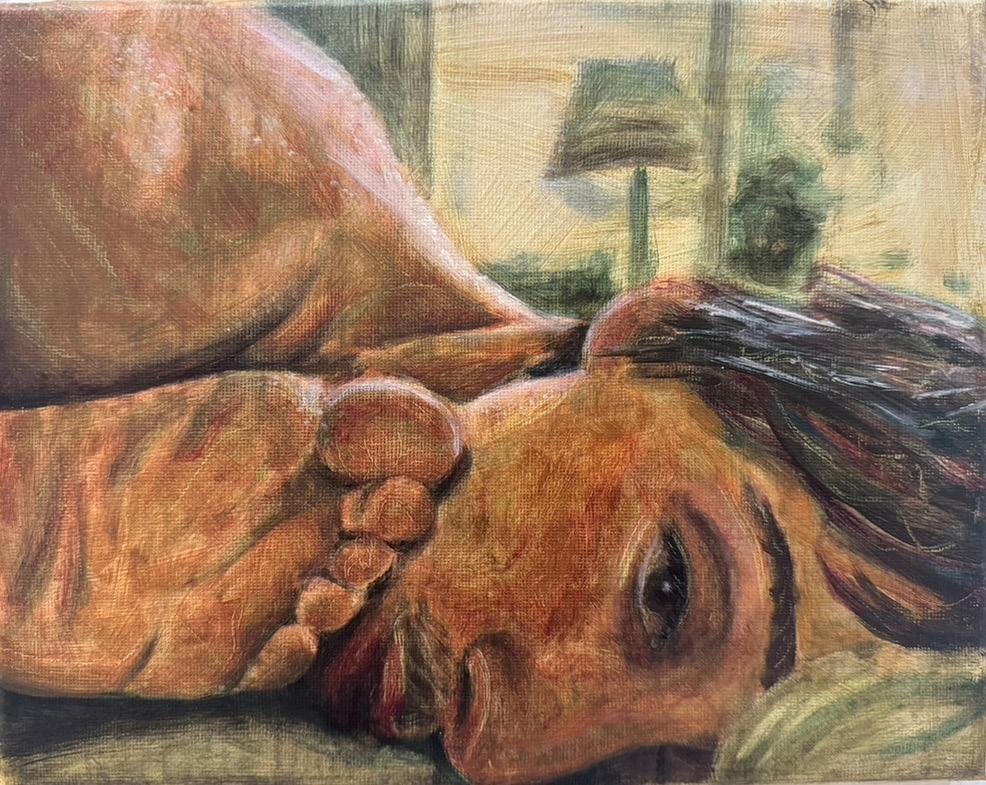
Sunday Morning
By Virginia Warner
What do they do with a cyborg after the animal part dies?
They drove away in the middle of the night. They carried the body down the fire escape. They swung and threw! Heaved it in the back of the van. They ground the engine to life and sped away, but to where? Where do they take a cyborg after the animal part dies?
It had been a woman, once. She died long before her body ever did. You could see it in her eyes—an absence, a glassiness, a stainless-steel approximation of a gaze. You could see it when she dipped her head at you as you held the lobby door open for her, with her gloves up past her elbows—innocent, white gloves that snagged on the metal joints of her wrists as she reached for the elevator button. She should have been beautiful, in her furs and hats and silk tights, but her lipstick never smudged and her eyebrows never gathered and her nose never twitched and her chest never rose, never fell. Did she breathe? You used to wonder that, did she breathe? How much of her was muscle and bone, and how much of her was machine?
There weren’t many cyborgs around yet. At least not many quite as cyborg as she was. When she first moved into the penthouse, she was young, a real young, a vibrant young, a vulnerable young, her cheeks flushed and bumpy, manicure chewed, the backs of her legs spotted purple-blue. How soon after she moved in must she have had the first operation, then? It was the hands, wasn’t it? A few weeks in, and the white gloves appeared, singing her secret to the world. And just before the elevator doors sealed her in, you saw. She pulled off one of the chattering gloves and stretched out silver fingers. She caught your eyes at the last moment and dropped her hand. You dipped your head and the elevator closed around her secret, a secret you would keep, a secret you would pretend not to know. But why? What were you protecting?
Then came the legs, and after that it must have been the eyes. Things they promised the machine would make better, would use better than any organic body ever could. For a few weeks, she walked strangely, as if on stilts. She nearly fell, coming through the door, and you caught her elbow, her steel elbow, cold beneath her glove. She moved away quickly, but not before dipping her head at you. Not before her eyes flashed in the restless afternoon sun, and you saw green symbols
Virginia Warner
flicker across the whites. Tiny glass screens. There were tiny glass screens, separating her gaze from the world, the world from her brain.
You began to read about the cyborgs that evening, as you sat in your narrow apartment with your back against one wall and your feet pressed against the other, a greasy box of takeout warming your lap as the heatless air pricked your skin. The light seeped from your screen into your retinas. What would it feel like to never be able to switch it off? Cyborganics began as a philanthropic project intended to improve prosthetics and other disability aids, you read. How long did that mission last? How quickly did it become a tailoring service?
You didn’t mean to count the changes. You didn’t mean to pay attention. But slowly, relentlessly, she reconstructed herself from the outside in. Hands, arms, legs, eyes, cheeks, mouth. Who was she? Who was she becoming? One evening while you scrolled through article after article, you discovered an advertisement for stomach removal. Later you awoke—Oh! You had fallen asleep at the desk again—as she burst out of the elevator and ran towards the lobby doors. She didn’t make it halfway before crumpling to the floor, her back heaving as she retched up air. She was muttering something, was she crying? Could she still cry? You approached her slowly. The lobby was saturated with darkness, but the moonlight through the glass caught her in all her silver glory. The white gloves were abandoned, as were the furs and the capes and the fabrication. She lay curled on the floor in nothing but a thin shift that covered what would have been a body but was instead a steel sculpture, a landscape of metal seams and flickering lights and function. As the flesh of her throat convulsed with failed attempts to summon acid from an absent stomach, the computers in her seemed to cross their legs and sit back, to wink at you, playful. This wretchedness, they chuckled, is our proof. Animal obsoletion.
“Get it all out—"
She was muttering.
“They said they would—Get it all out. They said the hunger—They said— They said there would be—nothing left.” She tripped over those words, nothing left, nothing left, nothing left, over and over again, a broken song—a short-circuiting machine?—until the sound transformed the heaving into rocking, and the rocking into sleep. You carried her back, up the elevator, down the hall, and just through the open penthouse door. You didn’t look inside, you didn’t look. You just left her propped against the wall of the entrance. Her body weighed nearly more than you could bear. But how could you just leave a person suffering like that? Yes. She was a person. She was wires and fiberglass, but there was her throat, fragile, shaking with animal fear.
She didn’t emerge for several weeks.
Life was a molten pane of glass, a sadistic sculptor’s masterpiece, the meaning always fluid, the vision always changing, the promise always hanging just in the periphery, the promise that there was something to see through to, that there was something waiting on the other side. Whole lives were spent looking, looking.
There was a leak in your ceiling again. Thrice in the same hour, you were addressed by the wrong name. The tenants smiled as they said it.
Whole lives spent forgetting to see
It rained endlessly, and you stood strangely in between, a ferryman. You held the door, half drenched and half dry, as resident after resident dashed from life to rest.
And you hung there, looking.
You counted minutes until numbers melted through your mind in transparent mesh. Somewhere, in some distant hemisphere, the sound of humming trailed through the air. It wasn’t until the white gloves disappeared around the street corner that you realized it was her.
Your whole life spent looking through the glass of the doors, and you had forgotten to see.
If you had seen, would you have understood what was coming next? She returned different. She walked back through the doors with a frigid sense of finality. She was ethereal, she was seamless, she was gone. She was smiling, humming, the machine thrumming beneath her skin, a thriving empire. She dipped her head at you, and you thought of the scent of stale leather, of claustrophobic perfume, of clammy bodies as she brushed past. She smelled nothing like that. She smelled like nothing at all. You heard the chime as the elevator doors opened, the hiss as they began to slide shut again. You couldn’t help it, you had to look up. As the golden lips sealed around her, you saw her mouth open.
“I’m clean now,” she told you.
And her throat, a shadowy plain beneath her high collared coat, didn’t move at all.
How often did you see her after that? Rarely. Gone was the dashing in, dashing out. She floated through the lobby with her head towards the sky, a hazy, worshipping smile etched into the stone of her face. Cyborg surgeries were appallingly expensive; reversal surgeries morbidly so. You couldn’t sleep, the air in your apartment too bitterly cold, the walls too damp, so the reading became your slumber. You sank into a silver stupor as the words on the screen bled into your mind, as you pulled and pulled at the unending rope tying you to her. Botched
surgeries. Protests. Lawsuits. Mortality rates. Suicide rates. Could she breathe? Was she breathing? The questions were an ocean you stood on the shore of, watching from the precipice as she descended behind those elevator doors, coming up for air with less and less regularity, her smile beginning to take on the pallid hue of strangulation, until the night you stood like a living shadow, a black silhouette against the alabaster moon, and watched them swing that body into the van and drive away.
You felt your body go slack. You had no more rope to pull. The clouds swallowed the moon and the world disappeared.
What had finally done it? Lists of possibilities tumbled through your mind, lists of sickening headlines. Vengeful spasms from phantom organs. The implosion of the nervous system. Cellular civil war. Bodily expulsion. Jagged chunks of metal on a bloody kitchen floor. So that was it. That was it. You began to walk. You went, aimless, through the featureless jungle, the shadowy overgrowth of silhouettes, the city at a quarter past four in the morning. That was it? That was it. It was over. What a terrible secret you had kept, her life. What a terrible secret you had now, in your hands, in your eyes, her death. Dragged down the fire escape in the middle of the night, and only you there to see it.
What do they do with a cyborg after the animal part dies?
You couldn’t go back. You wandered forward until you came to a small park boxed in between towering buildings, and you sank onto an old wooden bench. Would they recycle her? Recycle it? What was left of her? What hadn’t succumbed to it, to that smirking machine?
With a strange echo, as if from another world, an owl hooted. With a hollow scrabbling, two squirrels chased each other up from the gutter. An ant crawled over your shoe.
Then the clouds began to melt away from each other, and the moon, the full, sunlit moon thumbed through the shadows and laughed at the darkness, laughed at you. You realized then, as the clouds melted and the moon laughed, you realized that not once had you asked the right question. You should have been asking, what do they do with the animal parts when they bring the cyborg to life?
Because there, in front of your eyes, as the moon laughed and laughed, tears dripping down her cheeks and melting through the clouds, and as the ghost of the owl sang, and the bodies of the squirrels swam through space, and the ant crawled over your shoe, you saw the strangest thing: a hand, dancing on its fingers down the street. Two legs, bumpy and bruised, hopping forward, left right, left right. Limb after limb, part after part bobbing along, a whole flight of body, marching to the
music of the moon.
A person on parade.
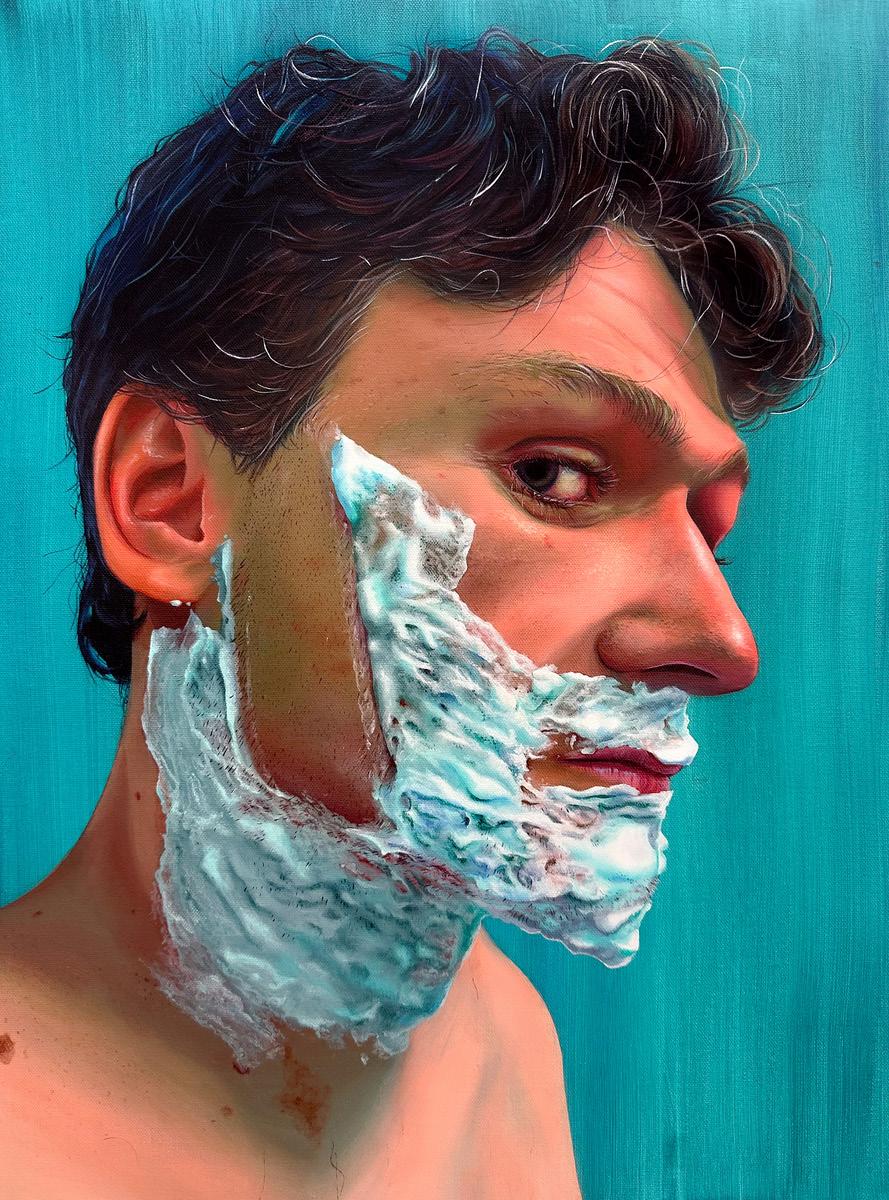
By Masha Dixon
Kyleena is a pill-free birth control option
A Kyleena IUD is what you approach your mother with, hesitantly. The same way you first asked for a razor, when you noticed the other girls at school with their shiny, hairless legs. You sat atop the steps of your dusk filled living room, pinching yourself and repeating the sentence in your head. Your footsteps sank into the soft carpet of the staircase as you descended to meet your mother. She lounged on the couch, unaware of your pounding heart. You asked for a razor quietly. You did not elaborate. You remember the way she turned, as if seeing you for the first time.
When you tell your mother about the Kyleena IUD, you will be halfway around the block, walking your dog beside her. You will have spent the walk rambling about the summertime before finally mentioning your appointment; because you are still stuck there, atop the stairs, pinching yourself and staring at your legs with their soft peach fuzz. Underneath the streetlamps, outside of some stranger’s house, your mother will give you the same look, and it will startle you. You will feel her eyes on you, and you will stare silently into her gaze like those deer you saw earlier and scamper off into the shadows of the looming houses.
Placement and Healthcare Provider Options
You will drive yourself to the gynecologist, your hands gripping the steering wheel, knuckles white, like the inside of the cold office. You will have signed your life away, penning your name underneath lines that read: You understand the following and We are not liable for and The patient will agree to and You must not and Do not. You will have spent the morning googling ‘What to wear to the gynecologist’ but the nurse will hand you scrubs and tell you to get naked. You will sit like a stripped Barbie, plastic ass against parchment paper, the seat releasing waxy crinkles as you breathe.
The doctor will enter, and you will blush, and she will pull out her metal weapons and she will roll out the post-war tanks of nitrous oxide, and it will feel
like that time you were at swim camp, standing atop the highest diving board, trying to work up the nerve to jump. Except this time, you will lay back on your sticky vinyl throne, you will breathe in the laughing gas, and you will begin to see stars.
The Kyleena IUD is comparable to the size of a paperclip, or an earplug. Halfway through the procedure, your gynecologist will ask if you want to see it. And you will peer between your legs, like some mother in labor, greeting her daughter. The plastic t-shaped IUD will look unassuming and pathetic, arms raised to its sides like a person trapped between two hurtling cars, yelling out for them to stop.
After placement, your gynecologist will walk you through some safety procedures following your insertion. She will steady you as you stand up, still wobbly from the laughing gas. She will escort you out of the office with a complimentary pad and a brochure with miniscule writing, detailing all the ways you will suffer. It will be pouring rain as you leave, and you will run to your car like a fawn in an open field. When you shut the car door, you will be soaked and shivering. The rain will beat against the metal of the car, a torrential reminder of what was washed away.
You may feel occasional cramping as the Kyleena IUD grows accustomed to your uterus. You will not be able to feel the Kyleena IUD once it is inside your uterus. Before bed, your eyes will glow like an animal in the dark, and you will imagine the plastic pressing into the walls of your insides, like the way people lose arms, and still feel them beside their body.
The Kyleena IUD affects every individual differently. You may experience a range of side effects, including but not limited to cramping, bloating, acne, bleeding, and dizziness. Your period may become irregular following Kyleena insertion.
You may be walking down a street in New York City, and your body may simmer quietly, as the black circles of stale gum littering the ground may become
indistinguishable from the black dots littering your vision. If pain is a concern for you, ask your healthcare provider about taking over-the-counter pain medication before and after your procedure. You may find yourself, miraculously, across the street from the nearest Walgreens, and you may stand in line, gripping the overpriced bottle of aspirin like an anchor, as if that could prevent your drifting off. You may walk up to the cashier, and with your pleases and thank-yous, you may still be performing as you try not to black out.
You may be laying in the dark, next to him, with the window blinds cutting slivers of streetlight, and he may turn to you. His hand may be on your cheek, and he may say, Are you still on your period? and you may nod and you may lay there, bleeding, and angry, and starving. He may fall asleep, and you may stay awake for however long, staring at his back. His back may glow golden like some crescent moon, and you there, in the dark beside him, like some unknown planet an entire blanket-universe away.
You may be in the car with your friends, stopped at a red light with the windows down and the music playing. An old woman may roll down her window and yell out, You girls have fun tonight! And you may all turn, shouting choruses of thank-yous as the night billows out in front of you. Your boldest friend may reach across her seat, her necklaces dangling in your lap as she sticks her head out the window, Come with us! It’s a free concert just down the street! The woman may laugh, suddenly so young again, and then she may sigh, Oh, girls, I worked all day, I’m tired! I’m too old! But you girls have fun for me! She may smile sadly, as if seeing herself in you, and you may smile back, as if seeing yourself in her. A motorcycle may rev in the distance, and for a moment you may understand all the things she still wants and cannot have. The light may turn green, and she may drive away, and the air may blow quietly through the windows as you step on the gas.
You may be in a therapy session, and you may be venting, and you may say something like I feel like I am carrying the weight of all women upon my shoulders. You may feel ridiculous once you say this, because your therapist may smile, and ask Why do you think you are carrying the weight of all women upon your shoulders? This may be repeated back at you with a twinge of sarcasm and worn-out pity. You may begin to wonder about all the other women who come in, with their billion problems, and their billion statements. You may stare at this woman, in her beige
office with her downturned eyebrows – as if to say I understand you – and you may begin to understand that she does not really understand you at all. You may fiddle with your pen, twisting the handle back and forth, and you may glance at the clock, and realize you have fifteen minutes left of your session. It may dawn on you that you will never have enough time to explain what you mean. You may swallow your statement, and you may cap your pen, and you may huff out a laugh, and you may say you were only being dramatic. She may nod, sympathetically, and you may sit there quietly. In her beige office, as the time in your session trickles out, you may still feel an unexplainable weight upon your shoulders.
Only you and your healthcare provider can decide if Kyleena is right for you.
By Ella Deans
Auburn tongue, flesh of my mother, brush against me til I wilt. Lick my sweetness
til the tongue-sap runs dry or stains the ravines of my cheek purple. Your cartographer teeth
trace rivers in my hollow spine, flirting without diving for marrow–I wouldn’t
allow it anyway; I’ve never been excavated before. The thing is, I know I want to be consumed, & still I am afraid of
openings: in mouths & silences & soft gums that feel like wounds & the prying jaws of a Brimley’s chorus frog, singing of
his love for me. Because I know that once I hold him, he’ll start looking sick–that a head bowed, whether in mourning or reverence, still dies. But sometimes, I can’t help it: I hold fragile things & they wilt & my tears are tangerine-scented & glorious & never stop falling.
Ella Deans
I wonder if the worst thing is not a regretful lip or tongue; if it is a hollow cheek & cement mouth, or the ache –an old friend–surging through the root of my chest with no room to sprout. I wonder if I cut myself open to expose the thousand little shames, whether I would be able to rest in the arms of my beloved & trust I am the bloom they meant to water. If they would not regret me even when my fruit sours or I am too much because I will be & I am.
Ella Deans
At twenty eight, I will have brushed out all the knots in my teeth. Blooming warm skin will bundle over my gut, softening me with its protection, & I will let it. I do not have to be strong.
Dawn will break me every day, when I pluck apples & revel in the squirm of chipmunks without idolizing evasiveness. I’ll appreciate a lot of things—the crush of pistachios in the crook of my elbow & the bearing down, heaviness of my love. I do not want to lose it. I’ll have decided to stand in front of cracked mirrors only & try to picture the divinity of my god-body without bloodshed, only to realize that I can’t. When my tears fall, they’ll still be tangerine-scented & glorious & will water your midnight eyes, sunflower seeds
growing in the garden of my body until I rot. I won’t mind that my hands still bleed each time I taste something sweet and reminiscent of you, like a shard. I do not know how to release
potential. I’ll decide that maybe I can hold uncertainty like a sunrise, gentle warmth without the risk of burning alive. We won’t have spoken in six years. We probably never will again.
By Virginia Van de Riet
The word “heartbreak” never felt quite right to me.
“Broken” feels like glass–like small hands, a cup wobbling, falling, slicing slivers glittering
across a kitchen floor in front of my bare feet, my mother telling me to stay still, else you’ll step in it.
Like a nest in the branches, shards of a speckled egg twelve feet below.
Like a bone snapped in two.
“Broken” feels too sudden, too brittle. The heart wouldn’t shatter—it’s muscle, it’s soft.
I’ve always pictured it tearing.
Like you’d have to grip it in your hands and rip the bleeding flesh-halves apart.
Like each red fiber would try to hold, stretch itself thread-thin, give way to empty space.
Like you’d have to dig in your fingernails, strain your arms, use your teeth if you had to.
Like it wouldn’t be an accident. Like you’d really have to mean it.
Not Yet
By E'lyn Murphy
1. Tell me about the light that shines through my fingers over your eyes, which are closed.
2. How the flesh is soft and has gaps that let the sun in. How it glows orange under your eyelids through the dark.
3. Trev Cimenski wrote a poem about this once. He called it Apricot, and in it he asked, “Do you see how we are not curtains? Do you see how we are kennels for sunlight and starlight and we might be memories by morning?” And when I remember your eyelashes brushing the insides of my hands, I know what he means. And when I put my palms over my open lids, I know what he means.
4. The space of my body is dark unless illuminated. The space between us is bright and never-ending. We are the cat in the box.
5. We will never open the box.
6. I wrote your mother a letter once — asked her why she kept us apart. And all she said was that you had the help you needed, and you were getting better. I didn't know then that you had made the choice. I didn't know then that you didn’t really have one.
7. Tell me about the feeling of soggy grass under your soles, the heel blisters from those Vans I used to wear. The ones with the holes in the back from walking down long sidewalks. Did you like the scent of wet pavement like I used to? Did your feet get wet?
8. “Tell me about the dream…”
9. Where your short hair still smelled like pineapple. I used to think of the days when I would bury my face into the curls after school and pray that everything would work out. There was always a pit in my stomach then, filled with rocks up to my chest as our legs pushed us uphill. A few years later, I read The Myth of Sisyphus.
10. Camus’s words rang in my head: “One always finds one's burden again. But Sisyphus teaches the higher fidelity that negates the gods and raises rocks. He too concludes that all is well.” This revelation was not a new one for me — that all suffering can be transferred in the mind and designated a result of all life’s actions. We, too, can conclude that all is well. And I did. The rock kept rolling.
11. Tell me about the part we called relativity — when it was not so much our faith that mattered but the distance between our faces when I hung upside down from the monkey bars. Remind me of the effort it took to hold my weight on the undersides of my knees. How cold the metal was, even in the summer.
12. My dad once told me that the Lord would bring us back together if that was his will. I didn’t believe it then. It was the Lord, in fact, who kept us apart.
13. About a year after the last time we spoke, you sent me a letter. It was the day before Halloween. You said you owed me an apology. I dressed up as Spider-Man that year.
14. There is some degree of change that shifts the frame of recollection. My forgiveness is the jagged scar on your left thumb. A reminder of the stitches that have disappeared. A reminder that I’ve forgotten the dull, radiating pain in my head.
15. I wrote your mother a letter once. I don’t remember what it said. But I remember how much I wanted it to matter— how much it didn’t.
16. In, I have come to realize that our attempt was futile. Nevertheless, your attempts at my company have found themselves satisfied.
17. If you asked me the reason for my compliance, I’d tell you it was because I wanted you to know I was still there if you needed me. But when I stare at the droplets on the shower wall, I am afraid that somewhere between you and me, I started believing in God again.
18. When I was seventeen, the first poem I ever memorized was “Scheherazade” by Siken, and it went like this: “Tell me about the dream where we pull the bodies out of the lake / and dress them in warm clothes again.”
19. We were always pulling bodies out of the lake. We are still pulling them out. Here I am with my line, heaving. Our backs and shoulders hurt from the effort. My mother still doesn't like your mother, and my dad still doesn’t like your dad. The blame has not yet been adequately allocated — it never will be; the complexity has not been lost.
20. Tell me about the things that keep you awake in the night — I am listening. Tell me about the time you stuck your tongue in my mouth, and all I could feel was your cold hand under my shirt.
21. Tell me about your mother, who once told me how beautiful my blue eyes were through the drive-thru window at my old job. Tell me about the silence that pretended it didn’t know her.
22. I once told someone I was writing a book, and I thought it was about you. I was — writing about you. I’m still writing about you. How your hair has gotten longer and how I’ve gotten taller. And we walk in circles, almost like a dance, feet tapping around on the same ground. I think I have been burning up from the inside, but I can’t bring myself to speak first.
E'lyn Murphy
23. Isn’t it strange how our bodies have grown around that old sadness — how they have twisted and bent up closer to the sky?
24. Tell me about the bleeding apricot color you saw when I thought your eyes were closed. Tell me about the clock that just now strikes noon.
By Mia Lu
after The Odyssey telemachus
i always mean to tell you, one stranger to another, connected by a red thread— i am sorry. i am to you what the thorn is to the lion,
i am. no better. father, giver, old king in a world of gods, somehow you evade me more than any sign of the divine could.
more than anything, i want you here to bless the head of the table.
i catch you in the solarium with your longing, weeping more than mother ever did in the twenty years it took ithaca to forget your face. damn me for my asking:
does the adventure occupy you still? do you wish you could go back?
penelope
dawn appears with rosy fingers, taunting me in the interim
i catch myself this daybreak and every other, chasing the crest of your thoughtful silences
i turn from my weaving, and i swallow back the call of your name. pitiful and proud.
the men gather in your halls. my home. they pull chairs where they do not go, further
buying you time costs me the space from right between my hips—
i wait, archer of my heart, at the precipice where the ocean meets the shore
gods strike me down, hear me as i say: when my time twilights, i will either be in your arms or limp where the axes end.
oh!
has the day come?
great storyteller, grand reader, tell me true, does my nose deceive me with a sending-off mirage,
or it is a conjuring of my puppy heart that the reason for my being born stands in front of me today!
let it be, let me see my red and bone cannot take any more, but i know you forever, in darkness, in death by the tread of your sandals i would never forget
do you see?
i have kept your strength right here, a small eternity with my paws on the coast, keeping watch
trust, good friend we both look different, but i have outlived the fleas and the flowers, i know you. i know the salt of your tears.
welcome home. farewell.
i now know it to be graver than any certainty, of the few i hold: it is a terrible thing, to die far from home. a fate worse than disgrace—spare knuckles buried in a foreign land, a father made to outlive his son. anticlea, just a war ago, sweet like a lily, caught sight of a fleet across the horizon. upon filling her heart with joy to the brink, i had no air of awareness about it, when she took to the ocean to spill her grief. had her whimpers reached my ears, i fear i would have suffered the same fate. alas, i sanctioned my punishment to the garden, half weeding, half aching to throw myself into the grave i’d dug for my son. i knew then that penelope was weaving my funeral shroud. it was a matter of the first when: when would i perish, when would i next see odysseus. in the underworld, crossing the river, or after i had lived to witness the decay of my own kingdom. tell telemachus, that poor boy, that i do not wish my slow heartbeat upon him. i hope that lively child dies in the cradle of his own home, quick and furious, as i hope the father before him did. transplant some bud of my shade into the ground here. if there is a chance my boy makes it back, let the figs drop on his head. knock some sense into that jokeful fool, for making me wait. but let the fruit fall, let there be a man beneath for it to fall upon. let him come bother my rest, gray in the head, holding an excuse on his lips. i am too sure hope is the cruelest goddess of them all, but still. that, another certainty i hold, is the deathlessness of love.
Night
I've Got Rhythm
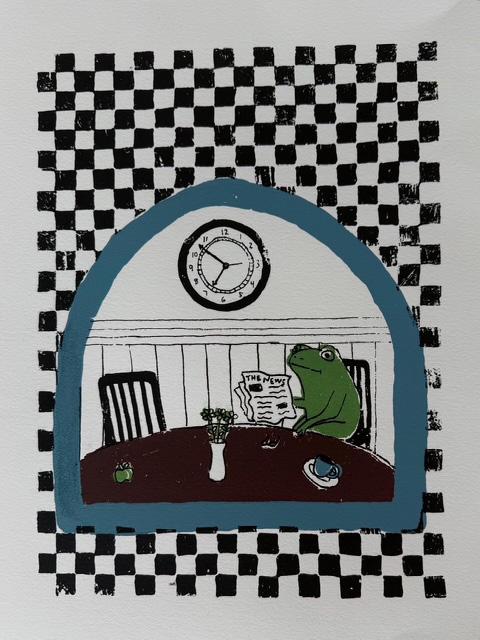
Good Morning
Alexandra Cvetkovski
Screen print
By Sarah Grace Elliott
The old boombox tells ghost stories to the bugs vibrating atop the floorboards, sends love to
the cross on the wall—It slants a little to the left, aching to jump down off its nail and worship with the rest of us. To get messy with the bones of my bones, the flesh of my flesh. Electric meditation; the kind of buzzing that tickles up your throat with a nervous gust of truth you did not anticipate
humming today. Tomorrow you listen to “Love Love Love” for the one hundredth time, wonder
if Donny Hathaway believed in God, and hot breath from your thoughts engulfs my ears until chaotic,
rumbling, peaceful silence is all that is left. We watch the ants as they worship the ground in front of them. Marching to salvation, lusting over sustenance. We know good and we know evil. We no evil. We only know how to feel as we do and this is our sin. Audre Lordes’ Erotic worships—kneels at the alter
where apple cores age; where ants and aunties are delivered. “That was Mama’s spot. And when she passed we
cut into the fleshy pew, and made crosses of her.” They slant to the left and watch over us as
we sin. God forbid we dance in the shade of her prayer. God forbid our living room mimic that of Eden and for a moment we ingest the words of Amy and Donny as some forbidden truth. And on the one hundred and first time, you will realize that it doesn't matter if Donny believed in God. Because I hear organs and hymns in the cracks of your voice and know that you pray to something. Turn to Lorde and ask her what her ribs are made of.
By Mia Nordstrom
I don’t remember the last time I went to the Filipino store, but I do remember how much I loved it, how often I begged my mom to make the forty-minute drive, how much I craved its strangeness against the Harris Teeters littered in my corner of suburbia. I would skip through the narrowest of aisles, pick up bright green calamansi, be told to put them down, run my fingers along unrecognizable spices in clear bags with a dark red font, take a turn into the ceramics aisle just to see the “If you break it, you buy it” sign with a terrible grammatical error that made me laugh and that I no longer remember.
My mom would fill that comically small cart with frozen meats she could only find there, ingredients for recipes she used to cook with my Nana and that she now cooked for me. Pusit, different cuts of beef, longganisa for the lazy Sunday morning. I would drag my mom to the constantly whirring refrigerator in the produce section and check to see if the duck eggs were there, regardless if she told me they were out of season. When they were there, I loved the way my mother brimmed with laughter and pride as she exclaimed to the shop owner, a store clerk, or another customer that her young daughter loved eating balut. “Not all Filipinos eat balut, you know!” they’d tell me. And when they’d call me brave, I would look up at my mother and brim with pride too.
But the main event was never the produce, or the spices, or the duck eggs, but the buffet in the back run by a few smiling, middle-aged and constantly chattering Filipino women. I loved the rhythmic way Tagalog rolled off their tongues — something I only heard when my Nana was still alive. My mom never spoke Tagalog after Nana died, not really, except while in this line. I loved the sound of the Oo spoken by her lips, and the way she would mix English and Tagalog words in a singular sentence, as if she were reaching back, back, back along some remaining tether that connected her to the distant place of her childhood.
I had no tether. Nothing to connect me to the stories of my mother and Nana and the great grandmother I never met but whose name I inherited – just the slightly paler color of my skin and the features floating in the middle of my face. But I had this place, and my mom, and a collection of diffuse memories of my lips forming around the names of dishes when my mother and Nana began introducing
me to the flavors of our people, flavors that did not exist in the aisles of Harris Teeter..
And so I would beg my mom to make that forty-minute drive to the store that wasn’t a store for me. Fidgeting foot from foot, tongue thick, the tingles of anticipation bubbling in my chest, I would resist the urge to press my face against the glass as my mom pointed between glistening metal containers of pancit, karekare, adobo, bulalo, some pork-tofu dish, and many more I never knew the names of.
“What do you want, sweetie?”
Sometimes it was lumpia, which my father loves. Other times it was salted, crispy fish eaten with their small bones still intact, whose sodium content made my youthful cheeks even rounder for the next two days. Sometimes I wanted noodles and other times rice accompanied with sauteed meat in a savory sauce… or maybe a vinegar-based sauce… or even a broth.
An “I don’t know” was never rushed, not when this store just off Capitol Boulevard still operated on island time. Not when the women behind the counter would simply wave their hand and point to a dish with that certain confidence recognizable to anyone who knows a Southeast Asian woman. I’d nod enthusiastically and smile, and in all of my memories, they’d smile back.
But my indecision over food never stretched into dessert. Next to the buffet, a counter jutted out from the wall with a variety of delicious baked goods – puto, pandesal, a custard-tapioca pudding, yema. Yet the dessert I always wanted, especially when North Carolina summer retched the air warm and humid, had to be ordered after our meal.
I know on this day, halo-halo is what I was waiting for as my hips shifted in my tiny metal chair, elbows propped up on the creaky white foldout table in front of me. Halo-halo: layers of sweet, sugary colonization dumped into a tall plastic cup. Halo-halo: which translates literally to “mix-mix,” served with a special, long plastic spoon to do just that. A bottom layer of red and mung beans, then various jellied fruits, evaporated milk, shaved ice, ube ice cream, coconut ice cream, flan, whipped cream, topped with a maraschino cherry. It was too sweet for my mother, but I would rush through my meal, saving room for that burst of sweetness and the youthful joy of digging with that long plastic spoon through half melted layers of ice and dairy to search for my favorite jellies, skillfully avoiding those red beans along the way.
Stomach warm and full, I watched my mother dip her plastic spoon into her
Mia Nordstrom
half-eaten meal, and I dreamed of the shaved ice and ice cream concoction that was waiting for me just behind the counter, where the nice Filipino aunties would hand it to me with a smile, or perhaps, a joke.
This is when the man decided to sit next to my mom. I don’t remember the color of his eyes, or what he was wearing, but I do remember the tightness in my chest and the way his white, round face glistened pink like that of a roast pig.
He was eating his own food, commenting about a long ago military station in Manila, how he still enjoys Filipino food.
“Oh!” my mom probably said. “How long were you stationed there?”
I don’t remember exactly what he said, but perhaps it was a long time. Perhaps it was longer than the time my mother lived there as a child.
I don’t remember exactly what he said, or how or when he transitioned into making those weird comments about Filipino women, but I remember the way my eyes darted back and forth between him and my mother, thoughts unable to form around the newfound uncomfortableness settling into the air. I remember the way I hid my silence behind sips of lukewarm coconut water, the way my hips once again shifted in my chair, although no longer from anticipation.
I don’t remember exactly what he said, but I do remember how I hated the shape of his skinny lips as they spoke about wanting a Filipino wife. I hated the way his sweaty, beady eyes bore into my mother, despite the wedding ring on her hand. But most of all, I hated the way my mother kept eating, the way she politely laughed at his jokes, the way my mother’s eyes didn’t hold the same fear as my own.
I remember that I didn’t want my halo-halo.
My mom eyed me as we walked towards the car, the gravel crunching underfoot matching the slow, thudding beat of my heart as I looked over my shoulder. When we got in the car and I heard the click of the locking doors, I breathed out a sigh of relief, proudly proclaiming that I made sure we weren’t followed. I hated the way she blinked at me. I hated the way she said she hadn’t noticed and laughed.
I hadn’t understood my confusion and anger then. Hadn’t understood why I didn’t want my halo-halo, why I stopped begging to go to the Filipino store as often. My mother had said she hadn’t noticed and laughed, like two weeks ago when I told my friends how a man on Franklin Street pointed at my boobs and started leering when I was on my way to their house, and how I laughed with them when the guys in the group told me to take it as a compliment. Because I said it as a joke, because it felt like a joke, because it can only be a joke when being followed down a street has not happened just once or twice, but many times, and it has not happened just
to me, but to all my friends, my mother, my grandmother, and probably her mother too.
I don’t remember the last time I went to the Filipino store, but perhaps that day was it. I don’t know when my mind hardened like the mind of my mother and why I laugh with my friends as we exchange tales of abusive exes, getting roofied, getting groped in clubs, of men pointing at our boobs in the street. But I do know that one day, that rude awakening occurred. One day, when I didn’t blink an eye when strange men began making gross comments in the street, when boys my age on Tinder began commenting about my dick-sucking lips, when it was my turn to be followed, and groped, and have an abusive ex. One day, when I realized that half of dating is figuring out which boys are normal when they find out you’re Asian and maybe one day, when I wondered if I should even care.
I don’t remember the last time I went to the Filipino store, but I do remember that I couldn’t drive. I’m twenty-two now, so I guess I haven’t had halo-halo in over seven years. I wonder if it would be too sweet for me now.
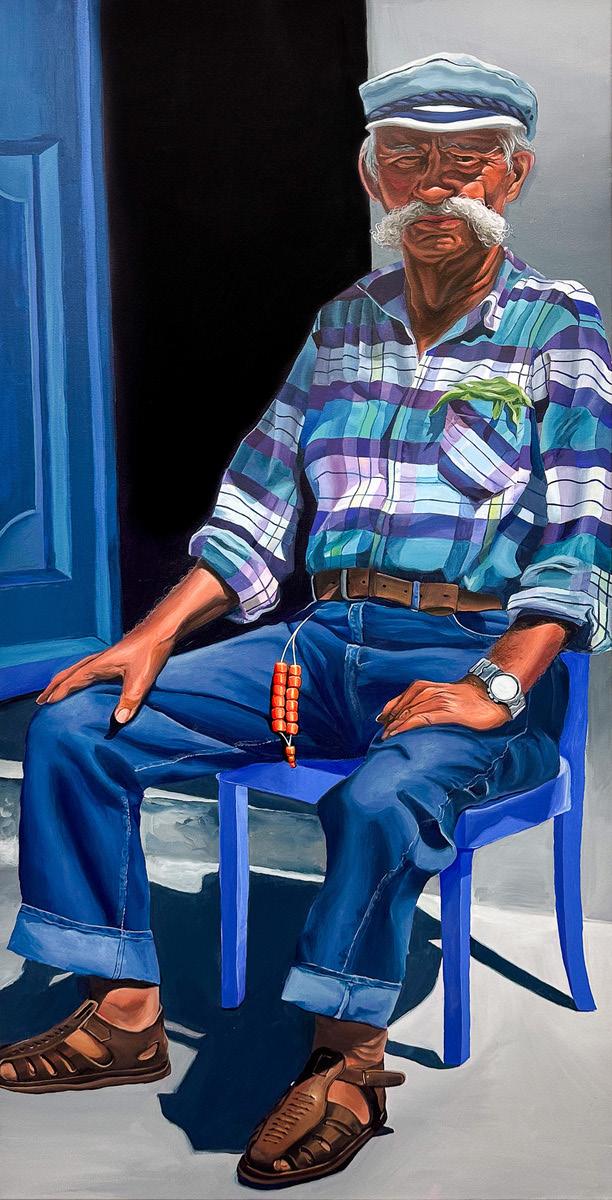
By Lily Solomon
The road into Upper Shut-In had been blocked off with palettes and long blocks of cement for nearly 15 years before the people decided it had been long enough and began to let their kids down it again. No one lived there anymore; all the houses had long since rotted to their beams and crumpled in on themselves. It was down Upper Shut-In the water had gotten the highest and risen the fastest, and even after the rest of the town of Pitfall, North Carolina was dry, it took weeks for the river to recede back, leaving only shells of houses and waterlogged floor boards. No one spoke of it. Something about that part of town made people go quiet. Not in fear, exactly, not even sadness anymore, but in a kind of reverence that comes from knowing a thing once held life and doesn’t anymore. However, once the 15 year mark had passed, it seemed the town collectively agreed without ever speaking of it that it was time to move on. There was no use avoiding it, and the kids in town had gotten restless. Most of them weren't even alive during the flood, and those who were had been babies, still hanging on to their mothers, and they couldn't remember.
Thirteen people died down Upper Shut-In. A few were too old to leave. They had generational roots buried deep in the mountains. Tendrils around their ankles that all but shackled them to their century-old floorboards even as the water pruned their skin and filled their lungs. Some just couldn't get out quick enough. One house was low enough to the water they hadn't even the time to wake up before it wrapped around, disappearing them entirely. There were no bones of wood left behind, just a plot of dirt, like a sink hole had come and swallowed it whole. Even now, half a century after the flood, the kids call Upper Shut-In Mud Town. A fitting title for the lost addition to that town. What was once wood, grass, road now was deep crusted mud no rain could wash off, sun bleached and gray from the years stuck on. Sometimes when you walked through Mud Town, it felt like walking through a stone forest, and even the sky shifted to that grey brown. Things that had the shape of houses, trees, and roads, but were swallowed up by a seamless crust the color of old bones and ash. Where pavement once ran straight, there’s now only a winding sprawl of hardened, rippled, sun-baked dirt like the surface of some long-dead river. And where you walked, it crunched like dead leaves, with brittle
skin of dried earth that shifts and flakes like scabs. The trees were tall and leafless and they rose like pillars in a ruined temple, their trunks entirely entombed in the mud that hardened in long, slow drips down the bark, giving them the look of candle wax left too long in the sun, their branches bare and skeletal. They said all the ghosts lived in Mud Town, and if you went on the right day, you could see them walking around. Some of the younger ones, dragged by older siblings to play, said you could hear sounds in the mud if you stood still long enough. A quiet bubbling like a breath caught under wet sheets. Once, as a boy, I swore I heard soft music, like piano keys tinkling under the ground. When I told my grandmother, she slapped me so hard I didn’t speak for two days. She’d lost her sister in the flood 51 years before. Their whole family had crawled up onto their roof, but her sister had stood in a rotted spot and fallen right through. After that, no one in the family said her sister’s name. Not once. It was like the river hadn’t just killed her, it had erased her. Maybe that’s why Grandma hit me. Maybe she thought I was trying to bring something back that wasn’t supposed to return. Like I was opening a door she’d spent her whole life nailing shut. Afterwards, she hugged me without saying a word, then sent me off to bed, but I could hear her crying in the next room over.
When I moved from Pifall, I wanted to go to the biggest city I could get to. But when I was rejected from NYU, I settled for a New York state college in Buffalo with a 56% acceptance rate and a tuition my grandmother couldn't afford without dipping into the small amount of savings my parents left behind. I think I had some grand idea about what college was. I spent the first 18 years of my life thinking I was smarter than the rest of the world, only to find I was smarter than just about 44%. I had thought it would mean more to me. Like once I got there, the rest of my life would click into place. Like I’d become someone else, someone brighter, sharper, more real. Like everything I had done before was the build up to this great moment. It hit hard in little ways. Like the first time I sat in a philosophy class and realized I had nothing new to say. Or the night I stood at a house party and couldn’t think of a single interesting way to introduce myself, so I just said I was “undeclared” and sipped cheap beer out of a Solo cup that tasted like metal. I told myself I’d only be in Buffalo for a year. Get my GPA up, reapply, go somewhere else. Anywhere else. But one year bled into two, and then I was just… there. I didn't feel special. Just dull. Like I forgot I was meant to move. Maybe some of the mud had gotten stuck to my shoes and was holding me in place.
I stopped telling people where I was from. Not because I was ashamed,
Lily Solomon
exactly. Just because I didn’t know how to explain it. I also wore it on my sleeve with an accent I didn't know I had. I once told a girl in my class about Mud Town. I don't know why I was so angry when she laughed at it. I hardly liked Pitfall, and had spewed much more hatred and vitriol about that town that a simple laugh could barely compare. It wasn’t even cruel laughter. Just reflexive. Like I’d said something made up. And I guess it did sound made up. She asked if it was a ghost story or something from an Appalachian folk tale. I told her it was real. She said, “Sure, but like, metaphorically.”
After that, I stopped trying to tell the story out loud. I’d carry it around like a penny in my pocket. Useless, but familiar. Sometimes I’d pull it out and turn it over just to feel the weight of it. I don’t even know what I wanted people to do with it. I just wanted someone else to carry a corner. The weird thing is, it started showing up in my dreams again. My grandma used to say I had nightmares. Said I'd wake her up screaming and kicking. She said she'd figured it was something I'd done to make God mad, so I would pray with her a while before she'd tuck me back in. I asked her if she ever had nightmares about Mud Town as well, and she said she didn't know what I was talking about and to not call it that again. The nightmares weren't often, just now and then. Like a bad habit you thought you’d broken. I’d wake up in my dorm room, sheets twisted, heart racing, with that old gray light stuck behind my eyelids. I wouldn’t remember the whole dream, just pieces: the sound of dripping water, the cold pull of water around my ankles, a flash of something just beneath the surface.
And sometimes—I swear this is true—I’d wake up and my socks would be soaking wet.
At first I thought maybe I was sleepwalking. I asked my roommate if he’d seen me up in the night. He said no, but started locking his side of the closet. I guess I looked off. Pale and tired. I told him I was just homesick. That was technically true.
One morning my freshman year, I found something under my bed. Just sitting there. A small piece of wood, swollen and split at the grain like it had been soaked in water for a long time. I touched it, and it left mud on my fingers. Real mud. I thought maybe it had fallen out of my bag, but then again, I had never seen a thing like it before. I called my grandma a few weeks after, turning the piece of wood over in my palm and asked her what she thought it meant. She said she didn't know and asked if I wanted to come home for a little bit. I told her yeah, maybe. I didn't go home. Not once my freshman year. Nor sophomore or junior,
Lily Solomon
and I won't this year. Not for holidays. Not for birthdays. I didn't even go back last month for Grandma's memorial. I didn't think it would make any difference to her if I came or didn't come. We hadn't had much to tell each other towards the end anyway.
I'm busy with life here. And every time I think about going back, my chest kinda feels like it's going cold. Like when you stay in the bath too long and the heat turns lukewarm, and you don’t notice how heavy your limbs feel until you try to move them. It’s that same weight. That same pressure behind the ribs that kind of makes it hard to breathe deep. Sometimes I get so scared I’d go back only to wake one morning to find the muddy earth swallowing me like it swallowed the porch steps, and the steeple, and the windows and beds and lives of all the people who died in Mud Town. Pulling me under, never letting me out until I myself laid out petrified under the dirt. I’ve seen it happen. To my cousins. My classmates. People who swore they were gonna get out, go somewhere, be something. And now they work the night shift at the plant or bag groceries or bartend at the same dive their parents used to drink at. They tell themselves it’s just for now, just until they save up. But “just until” turns into ten years and then a mortgage on a trailer with soft walls and a busted AC unit. And by then, it’s too late. The mud’s already up to their knees. People live like dropped stitches in Pitfall. You don’t always notice when it happens. Just one small loop missed, something that slips between the needles and gets left behind. But give it enough time, and the whole thing starts to unravel. I wonder if the stitch has already slipped for me. If it happened while I wasn’t paying attention. And I’m just waiting for the rest to come undone.
So I don't go back. Instead, I keep the wood in my desk drawer, wrapped in a handkerchief embroidered with wildflowers. Sometimes I wonder if the piece of wood is changing. Like it’s softer than before. Or darker. The grain looks deeper, almost like something’s been carved into it, though I can’t make out what. I try not to look at it too long. Once I caught myself tracing it with my thumb, whispering something I didn’t even know I remembered. I think it was an old hymn my grandma used to hum while folding laundry, “Shall we gather at the river…,” soft and out of tune.
I haven’t talked to anyone about it. Not since my grandma. Not even the girl I’ve been sort-of seeing. Maria is quiet and thoughtful. She studies art history and paints little things on her jeans when she’s bored. One night, she fell asleep on my shoulder during some indie film she picked, and for a second I thought about telling her. Just blurting it out. About Mud Town, the dreams, the wood. About
how I sometimes wake up thinking I’ve swallowed half the river. But I didn’t. I just let her sleep and watched the movie without hearing a word of it.
She asked me once what I was most afraid of. A late-night dorm room question, tossed out while we ate dry cereal from the box. I told her I wasn’t sure. I didn’t want to say, “Being forgotten,” because that felt too much like a quote you’d see in a poetry book. Plus I didn't care much for burying myself in the annals of history. I didn’t want to say, “Drowning,” because I knew she’d ask why. So I just said, “Going back.” She looked at me for a long time, then said, “You mean like, home?” And I nodded, because that was close enough.
There’s something about the way people say “home” when they don’t really know what yours looks like. They picture swing sets and Thanksgiving and the smell of cookies. They don’t picture lines etched into drywall like rings in a tree, or hum of box fans pushing damp air through a shotgun house, or a town where everyone knows how old you were when your mommy and daddy died and what color the casket was. They don’t picture old women walking around with ghosts in their pockets. They sure as hell don’t picture Mud Town.
But no matter how far I get from Pitfall, it's like something stayed tethered. I have my own personal vampire hanging off my neck, draining from me just enough to make everything feel a little dimmer than it should. I try not to care much anymore. But sometimes, late at night, when the wind rattled the windowpanes just right, I thought I could hear faint music notes drifting through the air, plucking and hard, like someone just learning sheet music. I told myself it was the city playing tricks on me, the way it tends to when it recognizes you as not one of its own. But maybe Pitfall has a better memory than I do. Maybe it’s been keeping the score, marking the days since I left, holding onto that small splinter of me like a keepsake, the way I do it. Or maybe it's just Mud Town saying hello.
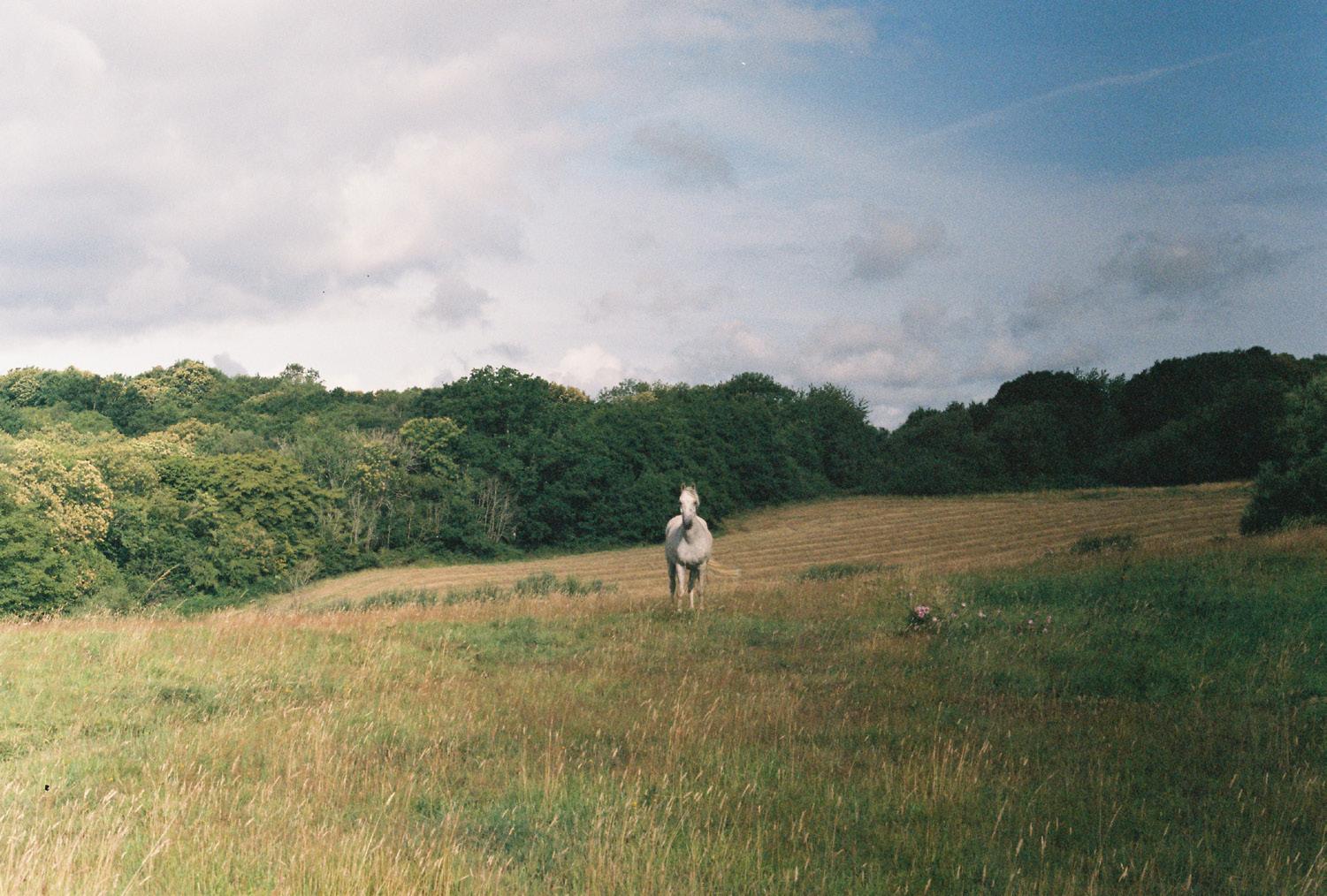
or the way my heart dropped for Oak Flat, or how to be in the 21st century
By Alexis Clifton
When I want to say the word illness, the phrase in Ndé Biyáti’ is kaa nagháá. A defining part of the word is ‘kaa’, which can also be found in words like kaa há’áhí, which means debt, and kaa ná’iłgani, which means tuberculosis. But by itself, as a partial piece of a word, standing alone, it is used to speak about a fourth person, an outsider. They. In cutting apart stems and pulling them, threading them, gluing them to other parts of words there are new things to be found. When you say kaa nagháá, there is an added word that can come after, sometimes forgotten in informal settings. Kaa nagháá nt’éé, which means a chronic disease, something that will not end. This is the phrase used when the ache will not leave. This is the phrase used when whatever seems to fester beneath the surface, never leaving, breathing down the necks of the red-faced patients must be spoken about. But by itself, n’téé loses the second é, and becomes nt’é, which on its own only means ‘what.’ An n’té hát’įį? What does she want? N’máá nt’é holzéé? What is your mother’s name? When you want to say, perhaps, ‘what is the chronic illness?’ it is something like this:
Alexis Clifton
If you look between the pencil markings of brightly colored ledger lines, my friend says, you can see where the graphite was smudged by a left handed general who kept our men locked up in cages in St. Augustine. There’s a little man with dark skin perched on a fine-lined Appaloosa and while he jumps across the blue patched body of some Mackenzie disciple he takes a bullet to his shoulder, and blood is trailing down next to locations and dates and the names of all those prisoners who saw it as another thing we’d have to get through
even if it meant all that would be left of them were these drawings. There was a deep dark crevice shaped like the eye of an otter tucked inside the soft skin of someone’s nose, where it was surrounded by little white crystals, countable, leaving the brown skin sheen like the only snow we ever saw in Santee. It was Mid-December and the snow came down so hard we hid out in a two-bed piece of darkness just by the highway and waited til it was laid out like blankets so we could make a game out of cold red hands that cease to move. When his eyes rolled back and forth like the slots of a casino I couldn’t help but see three guns click into place, one by one, gun metal ringing in the payout tray. But the load and bang is just a cop rapping at the door, and I tell him it’s just another thing we are going to get through. So he leaves, gun holster on his hip.
Alexis Clifton
Kaa nagháá nt’é át’éé sįh? I ask, maybe, in a hospital. In 1981 there were only two fully fluent speakers of the Lipan Apache language left on the Mescalero Apache Reservation. Everyone left behind knows the language only in stems, in pieces pulled apart and glued together by whim. Kaa nagháá nt’é át’éé sįh? I ask, my body leaned against the opened door of a pickup, my head throbbing, the little bits and pieces falling from my tongue in an accent that fights against the stronger Spanish and English. They don’t know, they say, their words structured in harsh English. The chronic illness waits, like a dying language, quiet and moving under the cover of lightning and heavy rain, creeping through brown bricks and aluminum like a great black snake. Like the ones those elders, those last speakers, spoke about when the fire was lit—the great black snake that would creep across Indian Country, eating everything, creating a hellscape of what had once been beautiful. The word for snake in Ndé Biyáti’ is ch’osh, but only in summer. There are many words in our language that are tentative to the changing of the seasons, to the shift and pull of the land we once kept. In winter it is tł’iish. But for that old prophecy, when they talk about the great black snake, they say ch’osh diłhiłi, the summer variation tagged along with our word for the color black. In the burning heat, under a sun that is relentless, while the days become increasingly hotter and lose their tenderness, this is when ch’osh diłhiłi leaves the burrow. Kaa nagháá nt’é át’éé sįh? What is the chronic illness? The black snake?
The skin that turns red turned towards the sun is skin that has been passed down through a lineage of people that extends beyond copper or oil. Here, in this world I live in now, the orange dirt is something given grief, it is something hated, something desired for change. The clay, they say, does not hold enough water, kills the crops, makes for a bad harvest in those summer months when the rain is a scarcity.
But when I see the clay dirt, caked against shoes and boots, clinging towards us, as though wanting something, I can see a valley that stretches down into oak trees and sagebrush, into greasewood and willow, into rocks where the isdzánzhááhí took turns jumping the farthest distance from one to the other.
I can see the first girl who took to her age, clad in buffalo skin and shells, waiting as the bright light broke past the mountain range that dips and turns like an old car. Once the light is full, encompassing the faces with their high cheekbones, their strong noses there is celebration, and for a moment it is no longer another thing we must get through.
Alexis Clifton
But there is a great black snake coiled in the cool metal of the beast, the creature within the greater one made of the men who do not understand this history, what it means to us to have this land.
It is enough to cry for, I say, it is enough to die for, I say, as I watch the the little girls who don’t know the words, who don’t know how to say isdzánzhááhí raise painted pieces of cardboard towards the wind. It comes down heavy while the beast itself bears down, trying to leave the print of an approval stamp dipped in warm blood.
Big bold letters that read THIS
pressed down by a pale hand, the wrist wrapped by the chronic illness, the great black snake, the very center of the ache that never leaves. There is a pain in my chest, a kaa nagháá, so to say, there is a summer that will soon be chronic and while I know this is another thing we are going to get through…
When you take that phrase, kaa nagháá, there is another change that can be made, something that alters the meaning once more, curling in on a new definition the way a river bites into the earth. Nagháá, on its own, means ‘she is walking’, becoming a verb rather than a noun, gaining motion. From nagháá comes the conjugation nasháá, to say ‘I’ rather than ‘she’—nasháá, to suggest that there is something I am going to do, there is something in relation to me that is actively rolling down hills and into valleys, there is something gaining heat, even burning. Kíłááhíí dí’ nasháá, I am from the land of many houses. Dádiłzh’ą,go nasháá, I am here and I am covered in blood. Or, what I say, as I look down into a land that has long been the fight of our lives, as I look back on those ancestors who died so that we may live—-dáhazh’į’ nasháá doleeł. Which means, I hope I may live a long time. From this phrase we gain doleeł, which means, simply, future. A word created out of a hopefulness, a desire, a desperation for those little girls I watch protest on the streets, their hair braided back, their faces tear stricken. A future with something left for them, even if not for me. All we have left is this. The chronic hope.
By Virginia Van de Riet
There is a door (you know this) and a window.
There is something outside, something you cannot touch.
There are many long hours ahead of you. Long. Lonely.
Look down— there they are on the dimpled surface.
You are watching. Earth is watching. Time is watching. you miss them. For 48 minutes there is nothing.
There is a footprint now, for the first time. There are words—
And they are there on the moon without you.
Fourteen orbits, the same silence each time.
And they are there on the moon without you.
But you know this. Tell me, Michael, how can you stand it?
How deeply do you ache to be there, too?
Tell me how to keep your fist from pounding at the door.
Tell me how it doesn’t just gut you, watching it all.
Twenty-seven hours is a long time alone.
I would know. I am no stranger to loneliness.
Mine, too, is a life of doors and windows.
I know what it’s like to sit and hold my tongue and watch and fix whatever they leave behind. You know, Michael,
Mine is a long orbit and a keen eye. my friends dance away in pairs despite it all, what a view it must be.
Must be stunning. A Michael’s-eye view, all yours.
Glowing Earth-home floating on the dusty silver horizon.
Or maybe that’s just a desperate excuse. Sorry.
Maybe I just want there to be a reason. Some starry solace.
Some starry solace. We all need something good to do in the wretched meantime. those long, silent hours. We could sit together
Maybe I could join you in that dark, lonely flight, and watch that bright, distant blue dome pass us both by.
By Jadyn Alexander
“Fireflies are cold.”
“I know.”
“Cause, you know, they emit somethin called cold light. Like a hospital room, baby.”
“I know.”
“Gotta catch one with me one of these days. You need to see em. Need your first look at somethin that looks warm, but it’s cold.”
“I already saw,” I said to Maw Maw.
“When?”
Remember three days ago, sixth of July, when the po-po came at midnight and hauled Paw Paw from his tool shed out back where he laughed and rocked and drank bourbon? When I was supposed to be sleepin? Yeah, I saw, then. A firefly in the dark.
I didn’t tell her that, though, cause Maw might’ve dug for a switch from her shrubs to whoop my behind with, if I brought up the night they caught Paw. And I didn’t think she needed reminding.
I shut my mouth.
We sat on a craggy porch that whined when we stood. Maw didn’t like that. When I’d bounce round on its wood planks like the baby I was, she’d press her teeth shut until they crackled. So, I sat, still as could be. She rocked in Paw’s old chair, slow as could be.
Course, it made me sleepy, but it was alright. It’d been step five in my bedtime routine, those past three days and two nights. Eat, pray, wash myself, get my teeth right, come outside and listen to grandma. When she finished, I could sleep.
I had tiny bones, though, and the stillness made them ache. That night, when Maw finally preached, “Alright, get up. I need to show you fireflies,” I jumped up and cracked them loud and long.
Maw Maw’s teeth crackled.
“Sorry,” I hiccupped out, then I rolled back on my heels so I wouldn’t make no more creaks. She caught me by the wrist with a bony, chicken-like hand. Her hold was too tight, fingertips hot like little irons to my skin.
Jadyn Alexander
“Listen, boy. Fix yourself. I’m tryna tell you somethin real.”
She sighed and fished a cigarette out of the breast pocket of her nightgown.
“Now, we’re going to go find some damn fireflies!”
She lit the bud with a lighter I didn’t see her get, and it busted with flames like a firefly’s tail.
The light looked warm.
I was so cold, so tired, in my flannel pajamas, that I wanted to fly right into it. But, that way, there’d be no one to listen to Maw. And what if going closer to Maw and her cigarette turned out the same as trusting a firefly? Looks warm, but gives you cold light.
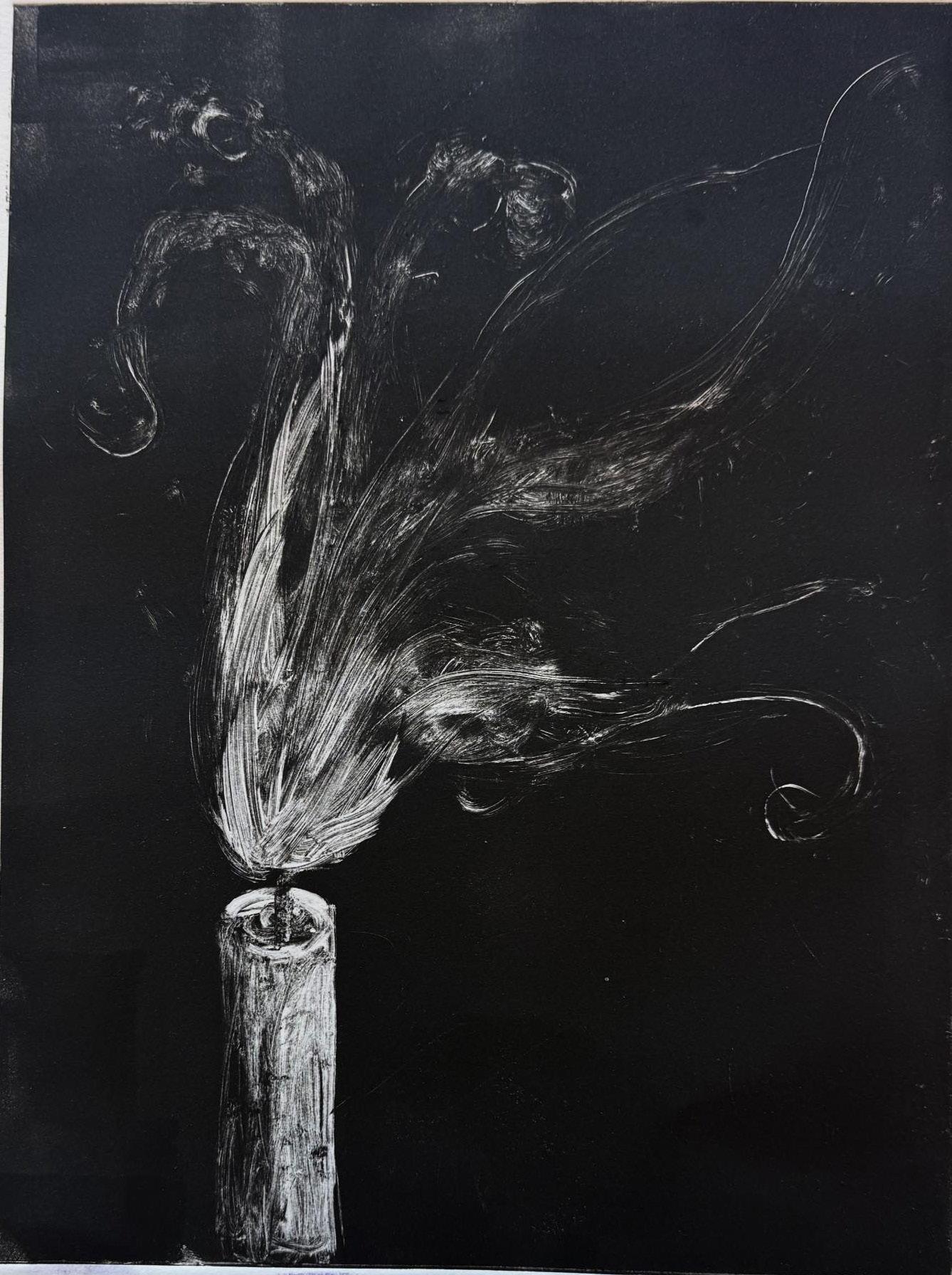
Alexandra Cvetkovski
Monotype print
By Ella Sharpe
Nestled between the tomatoes and crookneck squash, zinnias explode with colorful blooms: yellow, pink, orange, and white. Grandma grows them every summer. She gets up early to beat the North Carolina heat, scatters the seeds, waters them, and harvests them when her country church needs an arrangement for the altar. Some summer nights, God paints a sunset behind the barn to match them.
The day I left for school this fall, I saw my grandparents’ cherry red Chevrolet parked out back. Grandma was in the garden, hunched over her zinnias, wearing her white cotton shirt, her tomato-stained pants, and her gardening hat that shields the back of her neck from the sun. She left me a bouquet nestled in the weeds at the end of the row. I noticed a lone flower that had fallen further down.
“You dropped one!” I said.
“I know, if I don’t cut them off, they’ll quit growing,” she explained. So I followed her down the row, picking up all the flowers she left in her wake.
Years before, Addie, Rujul, Bridget and I gathered in the garden around a bonfire made up of the carcasses of trees Dad cut down. We took pictures of each other, faces hidden by masks we pulled all the way up to our eyes to keep it from getting too hot, only pulling them down to shove molten marshmallows and chocolate into our mouths.
Our outings almost always revolved around sweets: we waited in line for a new store opening that wrapped halfway down the strip mall to get a free chocolate chip cookie. We had a Valentine’s Day picnic in the Arboretum, washing heartshaped sugar cookies down with pink lemonade.
The day after Addie died, we ate cookies in Bridget’s kitchen. She’d been up all night baking five batches of two different recipes of chocolate chip cookies. I had managed to cry myself to sleep. ***
I grew up going to the farmer’s market to sell vegetables from the garden: weighing vegetables, bagging bouquets, and making change with cash from the cigar box under the table. Grandma is eighty-seven and Papa is ninety now, but they only stopped selling there a few years ago.
Ella Sharpe
I still go when I’m home on a summer Saturday morning, like that summer Saturday after freshman year when I stopped at the light across from the market to see Bridget’s text: “I don’t know how to tell you this because I don’t really understand it either, but Addie passed away last night.” I read it the way you read street signs, without consciously meaning to do so.
I don’t remember pulling my car into the gravel lot, but I remember sitting there, at first in shock, then heaving sobs. I crawled out of my Accord onto the bank of the creek which ran next to the market building. The flower vendor walked past me. She said hi. I’m not sure if I responded.
The summer after Addie died, I left zinnias on her mother’s doorstep with a card that said we miss her too. She spent her last summer working in Yellowstone National Park, surrounded by mountains clothed in lush green foliage, geysers spewing life into the air, with wolves and rivers wandering through it all She was a homebody, so her family and friends were pleasantly surprised that she chose to work there over the summer. I imagine her waking up early to go on hikes with coworkers and staying up late around bonfires, making s’mores. Bridget said Addie met a boy, but I’ll never know his name. Then I imagine the mucus sinking into her lungs that night. I wonder if she knew that was the end, or if she dreamt her way into the next universe where God paints zinnia-colored sunsets.
By Jasper Elia
From now on, I’m done writing about cutting myself open. About my body like a bullet casing, all harsh and unyielding lines–blood like a lease, subway map scars criss-crossing over cheap, misplaced flab
I am done being the tenant of a skinsuit apartment, a husk: useful, in that it connects the soul, the dissociation, to sunlight
because I am not a broken-in, lived-in separation, but selfsame: a fractal of my own arms crossed over my own chest an unfurling mandala a Mobius strip of mind, body, and soul
and so, I reach out and clasp your hand, and I–not fingers in detachment, not palm moat-bound from metaphysical heart–touch you
because I, in my being, include my skin
To put it another way, I am the orange, not fruit inside peel. and if my blood is a river there are tributaries and tributaries and tributaries that let me give myself to you.
And so, by the miracle of arms around my neck, you are able to hold me.
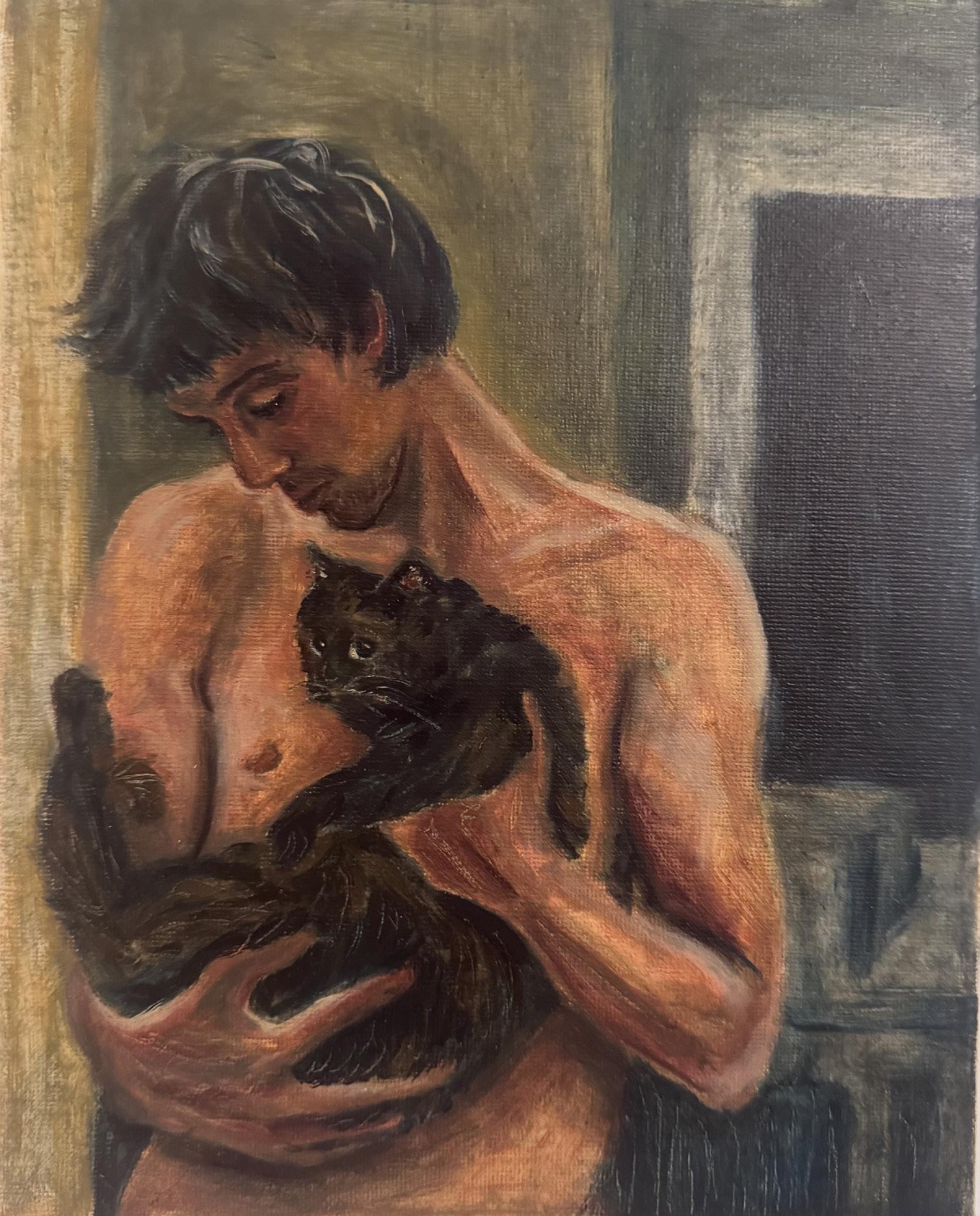
Uredo Agada is a senior studying history, information science, and creative writing. Her résumé has been called eclectic, and she likes it that way.
Jadyn Alexander is a second-year student at the University of North Carolina at Chapel Hill studying medical anthropology, data science, and creative writing. She enjoys writing, music, and researching obscure topics—she believes knowledge and storytelling offer the best escape from reality.
Helaina-Rose Ball is an emerging visual artist and junior at UNC studying studio art and computer science. Her passions include art, music, geography, and reading. She specializes in oil painting and ink with watercolor and aspires to pursue an MFA after graduation..
Alexis Clifton is a Native American (Lipan Apache, Wixárika) and Spanish writer who loves bonfires, fried catfish, costume parties, and the people in her life. She has been previously published in magazines like Bending Genres, The Amazine, and more, and was recently longlisted for the Redbud Writing Coppice Prize and won first place in UNC's Fiction Mini Max.
Alexandra Cvetkovski is a junior at UNC from Charlotte, NC. She is studying biology with a minor in studio art, focusing on printmaking.
Aleksander Lindsay Dickens is a disabled transgender neuroscience student from Nashville, TN. His inspiration comes from his identity & religion, following authors such as Yeats, S. Heaney, and Rilke. His research focuses on the origin of transgender disability and ethical engagement with modern paganism.
Masha Dixon is a third-year student at the University of North Carolina at Chapel Hill pursuing a Bachelor of Science in biology and minoring in creative writing. In her free time, she is curled up reading with her roommate’s cat, even though she’s more of a dog person.
Ella Deans is a senior majoring in English and comparative literature with a focus in creative writing. Outside the classroom, she can be found hiking, writing and performing music with her band Juniper, and working on the second draft of her debut young adult fantasy novel.
Jasper Elia is a queer and transgender poet from Durham, North Carolina. He primarily writes exploratory, freestyle poetry but tinkers with other genres as well.
Sarah Grace Elliott is an interdisciplinary artist and actress working from a Black feminist perspective, exploring the body, grief, and acts of remembering.
As a first-year UNC student studying studio art, Sofia Sande Fernandez is looking forward to pursuing a career in the arts. For her, making art tends to become a research project, as she often draws from historical references and mythology. Her artwork frequently features her Spanish heritage and familial themes.
Emily Gessner is a senior at UNC studying journalism and English. She is passionate about writing, reading and sharing stories with others.
Koen Ifill is a senior at the University of North Carolina at Chapel Hill. He is obtaining his bachelor's degree in political science and English with a focus in poetry. He loves the music in poetry and taking long walks in the woods with his dog, Nike.
Mia Lu is a proud holder of a sensitive heart. She feels deeply, often, and even more often for the plight of fictional characters. Alas, poetry and writing is a wonderful escape.
E’lyn Murphy is a writer and photographer typing away from a disgustingly orange chair in a corner of his dorm room in HOJO. He spends his free time playing the song Plastic Jesus on guitar and thinking about how much he misses his dog, Otis. His more relevant work includes authoring a zine collection called I Found A Zine, overseeing communications for Apotheca Literary, and reading for the poetry section of Cellar Door.
Mia Nordstrom (she/her) is a graduating senior studying psychology and English. She likes dancing to techno with her shades on and reading outside in a breeze that is slightly too cold.
Jesse Patete is an up-and-coming artist from Asheville, NC. His two favorite media are printmaking and ceramics. Following graduation, he hopes to teach K-12 art or attend an MFA program, with his ultimate goal of becoming a professor.
Olivia Rombak is a watercolor and acrylic artist from Southeastern Wisconsin studying fine art and biology. Specializing in portraiture, Olivia creates narrative-driven works inspired by her lived experiences. She has freelanced for a number of years, illustrating a best-selling children’s book and operating an online business during the time. Between May and August of 2025, she became an Arts Internship Honors Fellow, painting a six-piece series of artwork as an artist resident at the Milwaukee Artist Resource Network. The residency concluded with Olivia’s debut art show, Threshold, which featured artworks inspired by her qualitative research on Great Lakes culture. After completing her undergraduate studies, she plans to pursue medical illustration, fusing her interests in science and art.
Ella Sharpe is a senior from Greensboro, NC, studying English and psychology. Outside of school, she enjoys playing volleyball, taking care of her many plants, and dreaming about adopting a cat post-graduation.
Lily Solomon is a sophomore majoring in English and political science. She enjoys reading and writing as a hobby and intends to study law in the future.
Maura Trivette is a junior at UNC Chapel Hill. She is a media and journalism major and a studio art minor.
Virginia Van de Riet is a senior at UNC studying advertising & public relations with minors in studio art and creative writing. She is currently pursuing an honors thesis in poetry. Her favorite animals, in order, are octopuses, bears, and snakes.
Virginia Warner is a creative writing student who primarily writes fiction, but also dabbles in poetry and screenwriting. She loves writing in the science-fiction and fantasy genres, mostly because she is rather addicted to spending time in other worlds. This is her first piece to appear in print.
Guidelines for submission can be found online at www.unccellardoor.com. Please note that staff members are not permitted to submit to any section of Cellar Door while they work for the magazine.
All undergraduate students may apply to join the staff of Cellar Door. Any openings for positions on the poetry, fiction, nonfiction, or art selection staffs will be advertised online.
Your gift will contribute to publicity, production, and staff development costs not covered by our regular funding. Contributors will receive copies of the magazine through the mail for at least one year.
Please make all checks payable to “Cellar Door” and be sure to include your preferred mailing address.
Cellar Door
c/o Melissa Faliveno Department of English UNC-CH Greenlaw Hall, CB 3520 Chapel Hill, NC 27599-3520
thecellardoor.unc@gmail.com www.unccellardoor.com Facebook: www.facebook.com/cellardoorunc Instagram and Twitter: @unccellardoor
The publication of this issue of Cellar Door was made possible by the generous financial support of the UNC Undergraduate Senate.
© CELLAR DOOR ALL RIGHTS RESERVED 2026
Printed by Bookmobile. 210 Edge Place, Minneapolis, MN 55418.
Typefaces are 11 and 12 point Minion Variable Concept Regular and Semibold for body copy, 30 point Adobe Kis Caption Bold for headings, 22 and 15 point Adobe Kis Caption Bold for subheadings, 26 point Adobe Kis Caption Bold for titles, and 11 point Minion Variable Concept Semibold for bylines.
Book pages are printed on 60# Boise offset white. Cover printed on 10 pt C1S/white stock with gloss layflat lamination.
Created using Adobe InDesign.
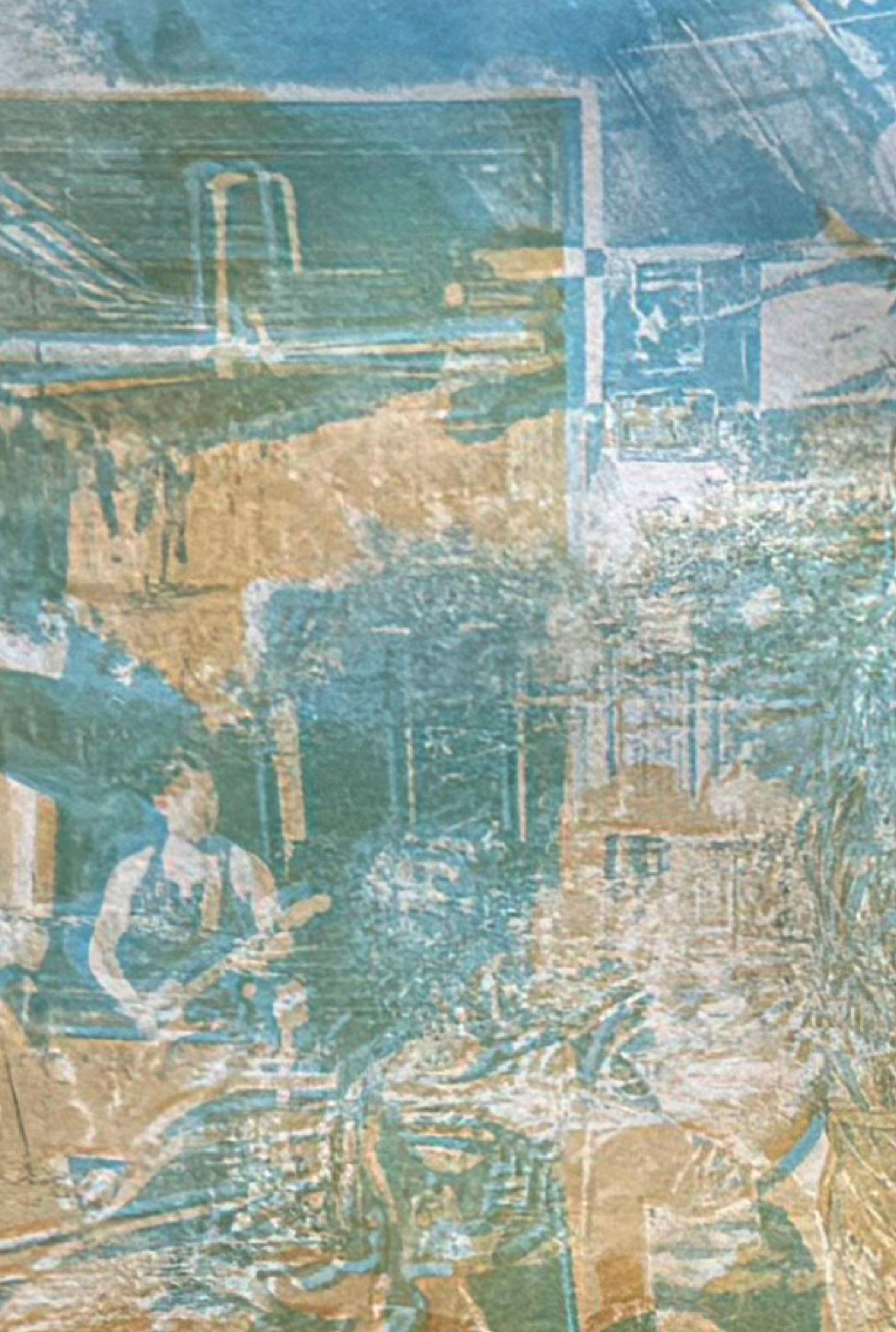
UREDO AGADA
JADYN ALEXANDER
HELAINA-ROSE BALL
ALEXIS CLIFTON
ALEXANDRA CVETKOVSKI
ELLA DEANS
ALEKSANDER LINDSAY DICKENS
MASHA DIXON
JASPER ELIA
SARAH GRACE ELLIOTT
SOFIA SANDE FERNANDEZ
EMILY GESSNER
KOEN IFILL
MIA LU
E'LYN MURPHY
MIA NORDSTROM
JESSE PATETE
OLIVIA ROMBAK
ELLA SHARPE
LILY SOLOMON
MAURA TRIVETTE
VIRGINIA VAN DE RIET
VIRGINIA WARNER