














Co-presented b :
We are changing the conference experience Register





Co-presented b :
We are changing the conference experience Register

Dear Readers,
Business today is defined by fluidity. Markets shift, technologies evolve, disruptions emerge without warning, and yesterday’s playbooks can quickly lose relevance. In such an environment, leadership cannot remain static. It demands dynamism—the ability to read change early, adapt with agility, make decisions amid ambiguity, and continually recalibrate without losing sight of the larger purpose.
It is against this backdrop that our August Cover Story turns the spotlight on the leaders of tomorrow, drawing upon the wisdom and experience of those evaluating them today.
In the first part, Jury Members of the Under-30 Supply Chain Awards 2026 reflect on the lessons that shaped their own journeys, the leadership qualities they believe will define the coming decade, and the choices that can accelerate—or impede—a young professional’s growth.
The second part brings perspectives from our Under-40 Awards Jury on the capabilities that will distinguish the next generation of business leaders—from navigating digital disruption and harnessing AI responsibly to building trust, resilience and future-ready talent.
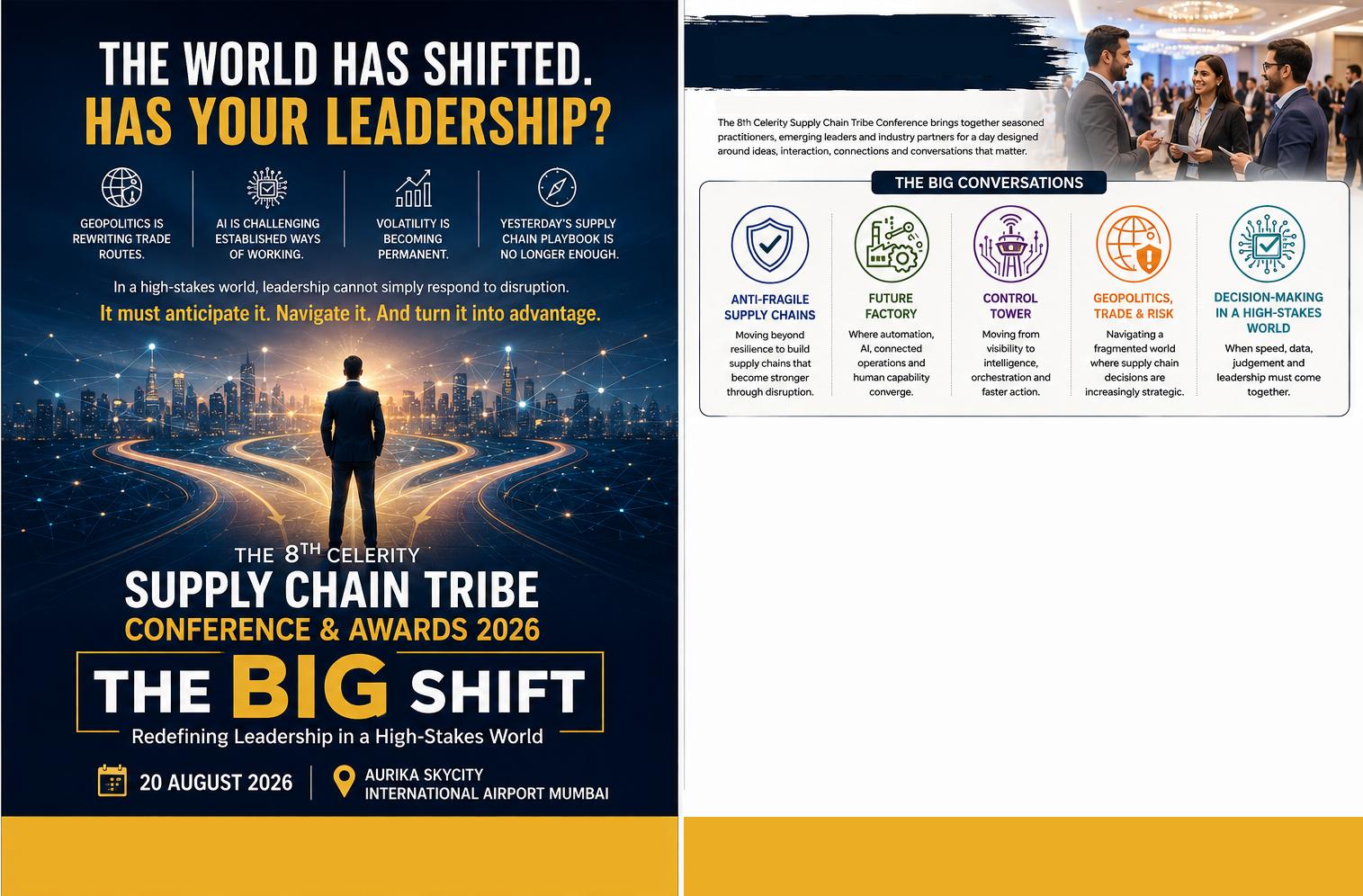
This conversation on leadership continues at the 8th Celerity Supply Chain Tribe Conference & Awards 2026, through our theme, “The Big Shift: Redefining Leadership in a High-Stakes World.” As the stakes rise and the rules of business continue to shift, we bring together industry leaders to debate, challenge conventional thinking and share perspectives on what leadership must become next.
Do check out the agenda at www.supplychaintribe.events and join us for some engaging discussions.
Happy Reading!
Charulata Bansal Publisher Charulata.bansal@celerityin.com
www.supplychaintribe.com
Published by: Charulata Bansal on behalf of Celerity India Marketing Services
Edited by:
Prerna Lodaya e-mail: prerna.lodaya@celerityin.com
Designed by: Lakshminarayanan G e-mail: lakshdesign@gmail.com
Logistics Partner: Blue Dart Express Limited
Every generation inherits a different business landscape—and with it, a different set of expectations. It is this philosophy that brings together the Celerity Under 30 and Under 40 Awards juries in this special feature. Representing two distinct vantage points within the leadership journey, they offer perspectives that are complementary rather than contrasting. One reflects the aspirations, mindset and momentum of a new generation stepping into greater responsibility; the other draws upon years of building teams, shaping organizations and evaluating the qualities that create lasting impact.
UNDER-30 The New Leadership Code
UNDER-40 Capability Over Credentials
The Pilot Worked. The Programme Rarely Does.
In this thought-provoking perspective, procurement transformation leader Palash Mukherjee challenges a common misconception, revealing why trust, governance, and human behaviour—not algorithms—usually determine whether AI programmes scale successfully or quietly unravel.
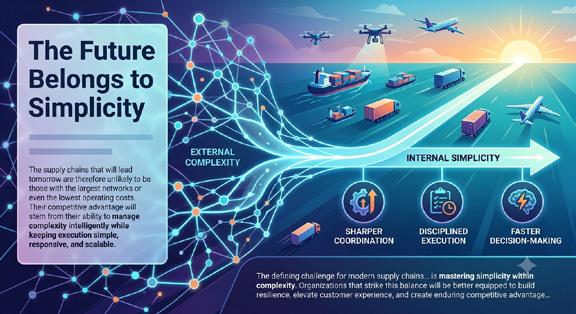
Dr. Radha Mohan Gupta, Adjunct Professor, IMT Ghaziabad, remarks that as complexity becomes the new normal, the ability to simplify execution is emerging as a decisive competitive advantage.

“Quick commerce has transformed India’s Food & Beverage industry, shrinking replenishment cycles to hours and making supply chain performance the new measure of brand trust,” highlights Ronit Verma, Head – Supply Chain Management, Storia Foods and Beverages.




Every generation inherits a different business landscape—and with it, a different set of expectations. While the context may evolve, the pursuit of exceptional leadership remains a constant. The most enduring organizations recognize that preparing for the future requires more than identifying emerging talent or celebrating established success in isolation. It demands a continuous exchange of perspectives, where fresh ambition is informed by experience, and experience remains open to new ways of thinking. It is this philosophy that brings together the Celerity Under 30 and Under 40 Awards juries in this special feature. Representing two distinct vantage points within the leadership journey, they offer perspectives that are complementary rather than contrasting. One reflects the aspirations, mindset and momentum of a new generation stepping into greater responsibility; the other draws upon years of building teams, shaping organizations and evaluating the qualities that create lasting impact.
Together, these conversations present a holistic view of leadership in transition—capturing not only how expectations are changing, but also how excellence is recognized, nurtured and sustained across generations. More importantly, they remind us that the future of supply chain leadership will be shaped as much by dialogue between generations as by the achievements of any one of them.
THE definition of leadership is evolving in step with the world of work. Artificial intelligence is accelerating decisionmaking, supply chains are navigating unprecedented volatility, and the pace of business leaves little room for conventional playbooks. In this environment, leadership is no longer defined solely by experience or expertise; it is increasingly shaped by learning agility, execution, emotional intelligence, and the ability to create clarity amid complexity.
The leaders featured in this section have built their careers during this very period of transformation. As esteemed members of the Celerity Supply Chain Tribe Under-30 Awards jury, they bring a perspective that is both contemporary and credible—having recently navigated many of the same career milestones, opportunities, and challenges confronting today's young professionals. Their experiences offer a unique lens on what it takes to transition from being a high-performing individual contributor to becoming a leader who influences people, drives outcomes, and embraces change with confidence.
In this Cover Story, they reflect on the lessons that have shaped their own journeys, the leadership qualities they believe will define the next decade, and the choices that can accelerate—or
hinder—a young professional's growth. More than career advice, these are thoughtful reflections from a generation of leaders helping shape the future of supply chain leadership, offering practical wisdom to those preparing to write the next chapter of the profession.
As a young leader yourself, how do you think leadership expectations have changed for the new generation entering the workforce today?
Nikhil Puri, Senior Vice President – Direct Purchase, ATC Tires Pvt. Ltd.: The expectations of leadership have undergone a fundamental shift. Today's professionals are no longer driven solely by financial security or conventional career milestones. While compensation remains important, they place equal—if not greater—value on mental well-being, meaningful work, flexibility, and a sense of purpose. They want to understand the 'why' behind what they do rather than simply executing instructions. This generation also seeks leaders who coach rather than command, offering continuous, two-way feedback instead of relying on traditional hierarchical reviews. Leadership today is less about authority and more about creating an environment where people feel heard, empowered, and connected to a larger purpose.
Swetha Sampath, Services Supply Chain Transformation Director, Schneider Electric: Leadership today is less about directing work and more about
enabling people to do their best work. The new generation expects leaders to provide purpose, transparency, and opportunities to grow, not just instructions. They value authenticity, inclusivity, and continuous feedback. In a world of constant change, leaders are expected to create clarity amidst ambiguity, empower teams to experiment, and foster an environment where people feel heard, valued, and inspired to contribute.
Hareesh Viswanathan, Principal Sourcing Category Manager, Boston Scientific: Leadership today is no longer measured solely by experience or authority—it is measured by the ability to inspire innovation, navigate uncertainty, and empower people to solve increasingly complex problems. The new generation enters the workforce with fresh perspectives, digital fluency, and the confidence to challenge conventional thinking. Rather than expecting leaders to simply provide answers, they look for mentors who encourage experimentation, foster collaboration, and create opportunities for continuous learning. In today's environment, the most effective leaders are those who combine strategic thinking with empathy, adaptability, and the courage to embrace change.
Varun Kakkar, Senior General Manager – Supply Chain, Grasim Industries Ltd. (Birla Opus Paints): The expectations from emerging leaders have evolved significantly as businesses operate in an increasingly volatile, uncertain, complex, and ambiguous
(VUCA) environment. Traditional leadership theories and management frameworks that worked in relatively stable markets do not always translate into success today. Modern leaders are expected to be far more agile, adaptable, and responsive, making decisions with incomplete information while continuously recalibrating their approach based on changing customer expectations, competitive dynamics, and market realities.
Equally important is the ability to lead diverse, multi-generational teams. As workplaces transition from being dominated by Millennials and Gen X to increasingly including Gen Z and, in time, Gen Alpha, leadership is becoming more people-centric than ever before. Understanding different aspirations, communication styles, and motivations is no longer optional—it is essential. At the same time, technology has moved from being a support function to becoming an integral part of every business decision. Today's leaders are therefore expected to possess not just business acumen but also a strong degree of technological literacy, enabling them to leverage digital tools and AI effectively while leading transformation with confidence.
Shreyas Dhore, General Manager – Supply Management Shared Services, John Deere India Private Ltd.: Leadership expectations have changed quite significantly. When I look back at the early years of my career, leadership was often seen as giving

direction, managing output, and having the final answer. The new generation expects something deeper. They look for leaders who are transparent, approachable, and genuinely invested in their growth. Today, leadership is less about authority and more about creating clarity, trust, and purpose. Young professionals want to understand the why behind the work. They want space to contribute ideas, challenge old ways of working, and build meaningful careers. As leaders, our role is to remove friction, create psychological safety, and help people see how their work connects to a larger impact.
Siddharth Anand, Sr. General Manager - Planning & Distribution, Raj Petro - A Member of the Shell Group: As Gen Z enters the workforce, organizations are becoming increasingly multi-generational, making it clear that leadership can no longer rely on a one-size-fits-all approach. Today's leaders need to recognize that different generations are motivated by different aspirations, expectations, and ways of working. Empathy has therefore become a defining leadership capability— understanding each individual's context and supporting their need for a healthy work-life balance is no longer a nice-tohave, but a prerequisite for building highperforming teams.
My own leadership approach has evolved alongside this shift. Earlier, my focus was primarily on aligning teams around a shared purpose and
Nikhil Puri, Senior Vice President –Direct Purchase, ATC Tires Pvt. Ltd.
driving collaboration towards common goals. While that remains important, I've realized that today's workforce seeks a deeper understanding of the intent behind decisions. Explaining the 'why' has become just as important as defining the 'what' and the 'how'. When people understand the purpose behind a decision, they are far more likely to engage with conviction, contribute meaningfully, and take ownership of outcomes.
Nikul Dholu, Deputy General Manager – Supply Chain Excellence, Godrej Agrovet Ltd.:
Leadership expectations have evolved significantly over the last decade. Earlier, leadership was often associated with authority, experience, and decision-making from the top. Today, especially in a diverse and digitally connected workforce, leadership is increasingly defined by influence, adaptability, and the ability to inspire collaboration.
Young professionals entering the workforce expect transparency, purpose, continuous learning, and a culture where their voices are heard. They look for leaders who can navigate uncertainty, embrace technology, and demonstrate empathy. In the Indian context, where organizations are balancing rapid growth with social and environmental responsibilities, leaders are expected to create both business value and broader societal impact. The new generation is not simply looking for managers; they are looking for mentors, coaches, and
Never stop challenging the status quo and never lose your appetite for learning. The pace of change today means that yesterday's achievements cannot guarantee tomorrow's success. Adaptability, curiosity, and the willingness to continuously upskill are what will keep professionals relevant in an increasingly dynamic world. Rather than becoming complacent with past accomplishments, keep raising the bar for yourself, embrace new challenges, and focus on becoming better with every opportunity that comes your way.

Leadership today is less about directing work and more about enabling people to do their best work. The new generation expects leaders to provide purpose, transparency, and opportunities to grow, not just instructions. They value authenticity, inclusivity, and continuous feedback. In a world of constant change, leaders are expected to create clarity amidst ambiguity, empower teams to experiment, and foster an environment where people feel heard, valued, and inspired to contribute.
role models who can help them grow in an increasingly complex world.
What skills or experiences have contributed most to your growth and accelerated your leadership journey?
Nikhil Puri: Stakeholder management and problem-solving have been the two defining pillars of my leadership journey. Early in my career, learning to navigate diverse stakeholder expectations helped me appreciate that every challenge has multiple perspectives. Understanding the priorities, constraints, and aspirations of different stakeholders enabled me to move beyond transactional interactions and build collaborative solutions that created value for everyone involved. An equally important source of learning came from observing leaders throughout my career. Interestingly, some of my greatest lessons came not from what they did right, but from understanding what not to do. Leadership conversations often focus on best practices, but recognizing behaviours that erode trust, discourage teams, or limit collaboration can be equally transformative. Those observations have significantly shaped my own leadership philosophy and the way I engage with people today.
Swetha Sampath: My growth has been shaped by the diverse experiences I've had across the supply chain, from manufacturing and procurement to logistics, network design, analytics,
strategy, and services transformation. Working across these functions helped me develop an end-to-end perspective and appreciate how interconnected every part of the value chain is.
Equally important has been learning to lead through influence rather than authority. Much of my career has involved driving large-scale transformation initiatives that required bringing together cross-functional teams and stakeholders without direct reporting relationships. These experiences strengthened my ability to build trust, align diverse perspectives, navigate change, and deliver results through collaboration. A strong sense of curiosity and a commitment to continuous learning have further helped accelerate my leadership journey.
Hareesh Viswanathan: The biggest contributor to my growth has been an unwavering curiosity and willingness to step outside my comfort zone. Every career move—from consumer electronics to connected mobility and now healthcare manufacturing—has exposed me to new challenges, technologies, and ways of thinking. Those experiences taught me that leadership is built by continuously learning, embracing change, and seeing opportunities where others see uncertainty. Equally important has been building strong relationships across cultures, functions, and organizations. Technical expertise may open doors, but collaboration, trust, and adaptability are what create long-term leadership impact.
Varun Kakkar: Looking back, two
qualities have had the greatest influence on my leadership journey—the willingness to take ownership of difficult assignments and the ability to remain composed while navigating uncertainty and complexity. Challenging situations often become the greatest classrooms for leadership because they force you to think differently, make decisions with limited information, and build resilience. I have consciously focused on building strong teams and robust processes instead of chasing short-term outcomes. Sustainable results are rarely driven by individual brilliance alone; they come from creating systems that consistently deliver performance. Another principle that has shaped my career is developing deep expertise within my industry rather than constantly pursuing the next trend or the fastest career move. Over time, this has helped me build credibility, earn trust across stakeholders, and establish a strong professional reputation based on consistent delivery rather than visibility alone.
Shreyas Dhore: For me, the biggest growth has come from being placed in very different supply chain chapters, each one teaching me something the previous one could not. Designing inout sourcing strategy at Siemens taught me the discipline of manufacturing decisions. Setting up supply chain for a greenfield Powertrain plant at General Motors taught me what it means to build from the ground up. Transforming services supply chain planning and logistics at Avaya taught me speed,
customer commitment, and regional complexity. At John Deere, working on cost transformation and digital value creation has brought all those lessons together at enterprise scale.
My journey through the Accelerated General Management Program at IIM Ahmedabad also reshaped how I evaluate global supply chains. It pushed me to look beyond short-term operational fire drills and think more deeply about long-term resilience, business models, and systemic value creation. Beyond the classroom, what truly accelerated my path was learning to look at supply chain networks through the lens of the Theory of Constraints. Whether it is a process bottleneck, a data gap, a capability gap, or a human dependency, identifying the weakest link and improving it methodically can transform supply chain from a reactive cost center into a strategic differentiator.
Siddharth Anand: The first eight years of my career were in operations, where I built a strong foundation in manufacturing, cost management, and operational efficiency. That experience gave me a deep understanding of how supply chains function end-to-end and, more importantly, how to distinguish activities that truly create value from those that do not. Equally transformative were the leadership lessons I learned on the shopfloor. Leading and learning alongside large teams of workmen, supervisors, and manufacturing leaders reinforced a simple but enduring truth: sustainable results are built on trust,
collaboration, and respect for people. Looking back, my strongest growth enabler has been an unwavering commitment to continuous learning. Being curious, embracing new challenges, and learning with every role have enabled me to expand my capabilities, deliver meaningful impact, and evolve throughout my career so far.
Nikul Dholu: Three factors have played a particularly important role in my leadership journey. First, exposure to diverse business situations and crossfunctional experiences has helped me understand how different parts of an organization work together to create value. Second, learning to work with people from varied backgrounds and perspectives has strengthened my ability to collaborate, influence, and build trust. Third, embracing continuous learning— whether through new technologies, industry trends, or feedback from colleagues—has enabled me to remain adaptable in a rapidly changing environment. Leadership growth is rarely the result of a single achievement. It is often shaped by taking ownership of challenging assignments, learning from setbacks, and consistently stepping outside one's comfort zone.
Young professionals are entering an AI-enabled world of work. How can they balance technological fluency with the human side of leadership?
Nikhil Puri: AI is rapidly becoming
an indispensable part of the modern workplace, and young professionals must embrace it wholeheartedly. Building technological fluency is no longer optional—it is becoming a foundational skill. However, technology delivers its greatest value when combined with human judgment. The future belongs to leaders who understand the concept of 'human in the loop,' where AI enhances decision-making without replacing empathy, critical thinking, and ethical judgment.
As professionals become increasingly digital-first, they must consciously preserve the qualities that technology cannot replicate—listening deeply, demonstrating empathy, building trust, and communicating with transparency. AI can accelerate productivity, but it is these distinctly human capabilities that inspire teams, strengthen relationships, and define exceptional leadership.
Swetha Sampath: AI will increasingly help us make faster and better decisions, but leadership will always remain a human endeavour. Young professionals should embrace technology and develop strong digital and analytical skills, while also investing in capabilities that machines cannot easily replicate—empathy, critical thinking, communication, collaboration, and judgment. The real advantage will come from knowing when to rely on data and when to rely on human insight. Technology can inform decisions, but trust, inspiration, and meaningful relationships are what drive teams to achieve extraordinary outcomes.
Stay curious enough to keep learning, humble enough to keep listening, and courageous enough to embrace opportunities that weren’t part of your original plan. Careers are journeys, not predetermined roadmaps, and some of the most meaningful opportunities appear when you’re willing to explore the unexpected. Invest in building genuine relationships, because your professional network is not just a pathway to career growth—it’s a lifelong source of mentorship, collaboration, and shared learning. Finally, never stop creating value. Titles may open doors, but the impact you leave on people, organizations, and the problems you solve is what ultimately defines your leadership legacy.
Hareesh Viswanathan: AI will fundamentally transform how organizations forecast demand, optimize inventory, identify risks, and make decisions—but it will never replace the human element that defines exceptional leadership. In supply chain, technology can recommend suppliers, predict disruptions, or optimize logistics, but it cannot build trust with a strategic partner, negotiate a complex agreement, inspire cross-functional teams, or make ethical decisions under uncertainty. The future belongs to professionals who know how to leverage AI as a strategic co-pilot while strengthening the skills that technology cannot replicate: communication, emotional intelligence, relationship building, critical thinking, and sound judgment. The greatest competitive advantage won't come from choosing between AI and people—it will come from mastering both.
Varun Kakkar: One encouraging trend I observe is that young professionals are naturally comfortable with technology. They adapt quickly to new digital platforms, AI tools, and emerging technologies, and with the right learning mindset, they can become highly productive in a relatively short span. However, technology alone does not make a leader. Leadership fundamentally remains about people. My advice to young professionals is to spend as much time as possible with their teams, especially during the early years of their careers. Being present on the shop floor,

understanding operational challenges firsthand, listening to employees' concerns, and observing how work actually gets done develops empathy and practical judgment that no classroom or AI tool can teach.
Similarly, staying close to customers helps build emotional intelligence and a deeper appreciation of business realities. The leaders who will stand out in the future will be those who combine technological competence with strong interpersonal skills, empathy, and the ability to inspire people. AI can enhance decision-making, but it cannot replace human trust, collaboration, or leadership.
Shreyas Dhore: I see technology as a force multiplier. AI, analytics, automation, and digital tools can help us make faster decisions, improve productivity, and remove repetitive work. But technology cannot replace judgment, empathy, ownership, or trust. Young professionals should become comfortable with AI and data, but they should also remember that data often tells us what is happening. Understanding why it is happening still requires listening, asking good questions, and engaging with people on the ground.
In an AI-enabled world, technological fluency must also come with ethical maturity. Young professionals should learn how to use AI responsibly, question the quality and bias of data, protect trust, and remember that faster decisions are not always better decisions unless they are also fair and thoughtful. The best leaders will use technology to become
Senior
more effective, but they will use their human skills and values to bring people along.
Siddharth Anand: Young professionals should take AI as an enabler, not view it as a threat. It is most valuable when it helps eliminate repetitive work, accelerates learning, and provides insights that support better decisions. As technology continues to handle more routine and data-driven tasks, the qualities that will define exceptional leaders will be distinctly human. The ability to stay curious, empathize with others, make principled decisions, and inspire people toward a common purpose cannot be replicated by AI.
Nikul Dholu: AI will undoubtedly transform how we work, make decisions, and solve problems. Therefore, technological fluency is becoming a foundational skill rather than a specialized capability. Young professionals should actively embrace digital tools, data analytics, automation, and AI-driven decision-making. However, technology cannot replace the human qualities that define exceptional leadership. Empathy, ethical judgment, communication, resilience, creativity, and the ability to build relationships will remain critical differentiators. The leaders who thrive will be those who can combine data-driven insights with human understanding. While AI can help answer questions faster, leaders must still ask the right questions,
Two qualities have had the greatest influence on my leadership journey—the willingness to take ownership of difficult assignments and the ability to remain composed while navigating uncertainty and complexity. Challenging situations often become the greatest classrooms for leadership because they force you to think differently, make decisions with limited information, and build resilience. I have consciously focused on building strong teams and robust processes instead of chasing short-term outcomes. Sustainable results are rarely driven by individual brilliance alone; they come from creating systems that consistently deliver performance.

Build your career around three Ps: Purpose, People, and Performance. Purpose helps you understand why the work matters. People remind you that leadership is about building capability, trust, and confidence in others. Performance ensures that good intent translates into business results through deep business understanding, technology adoption, and uncompromised operational excellence. Do not chase titles too early. Focus on building capability, credibility, and trust. Take roles that stretch you, work across functions, learn the language of data, technology, finance, and operations, and take ownership of your own learning.
understand stakeholder concerns, and make decisions that balance business outcomes with human impact.
From your perspective, what mindset will separate future leaders from the rest of the talent pool?
Nikhil Puri: The leaders of tomorrow will distinguish themselves through empathy, transparency, and an unwavering commitment to continuous learning. They will recognise that leadership is not about having all the answers but about fostering an environment where people can learn, innovate, and grow together. Equally important, future leaders will expand their perspective beyond organisational success. They will think holistically about customers, partners, communities, and society at large, understanding that sustainable leadership is measured not only by business outcomes but also by the positive impact they create across the broader ecosystem.
Swetha Sampath: The foundational qualities of leadership such as character, vision, drive, emotional intelligence, decision-making, and adaptability will always remain important. However, what will set future leaders apart is their ability to continuously learn, unlearn, and relearn. In a world shaped by rapid technological advancement and evolving customer expectations, expertise alone
has a shorter shelf life than ever before. Future leaders will be those who stay curious, embrace change, seek diverse perspectives, and step outside their comfort zones to grow. The leaders who thrive will combine learning agility with resilience, using uncertainty not as a barrier but as an opportunity to innovate, create value, and inspire others to do the same.
Hareesh Viswanathan: The leaders of tomorrow will be distinguished by their ability to think beyond traditional boundaries. They won't simply optimize existing processes—they'll reimagine them. They'll challenge long-held assumptions, embrace calculated risks, and remain curious enough to explore solutions others haven't considered. In an increasingly interconnected world, innovation often happens at the intersection of disciplines, industries, and diverse perspectives. Future leaders will see disruption as an opportunity to create value, not merely a challenge to overcome. Those who continuously learn, adapt, and innovate will shape the future rather than react to it.
Varun Kakkar: With technologies like AI making knowledge, frameworks, and strategic insights accessible to almost everyone, the traditional advantage of simply possessing information is rapidly diminishing. The real differentiator will no longer be knowing what needs to be done—it will be the ability to execute
effectively.
Future leaders will distinguish themselves through their execution capability: translating ideas into measurable outcomes, solving problems under constraints, and delivering results despite ambiguity and limited resources. They will demonstrate resilience, accountability, and an unwavering focus on outcomes rather than getting caught up in endless planning or theoretical discussions. In the years ahead, a resultsoriented mindset, combined with the discipline to consistently execute, will separate high-impact leaders from the broader talent pool.
Shreyas Dhore: The mindset that will separate future leaders is ownership with resilience. Future leaders will not wait for perfect information, perfect timing, or perfect conditions. They will learn quickly, take accountability, and make the best possible decision with the information available. Future leaders will also need the humility to unlearn. Many practices that worked in stable environments may not work in today's VUCA and BANI world. The leaders who stand out will be those who can let go of outdated assumptions, learn new practices faster than change itself, and still stay anchored in values.
I also believe the role of a leader is not to solve every problem personally. It is to build teams that can solve problems with confidence, accountability, and extreme ownership. In a volatile world, resilient

As Gen Z enters the workforce, organizations are becoming increasingly multi-generational, making it clear that leadership can no longer rely on a one-size-fits-all approach. Today’s leaders need to recognize that different generations are motivated by different aspirations, expectations, and ways of working. Empathy has therefore become a defining leadership capability—understanding each individual’s context and supporting their need for a healthy work-life balance is no longer a nice-to-have, but a prerequisite for building high-performing teams. My own leadership approach has evolved alongside this shift.
leaders create clarity, empower people, and keep the organization moving forward even when the environment is uncertain.
Siddharth Anand: The most effective leaders will be those who combine the speed and scale of AI with the wisdom to ask the right questions, challenge assumptions, and make decisions that consider both business outcomes and human impact. The leaders who thrive in the AI era will be those who are as committed to developing emotional intelligence and character as they are to building digital capability.
Nikul Dholu: The defining mindset will be that of continuous adaptability. Future leaders will recognize that change is no longer an occasional event—it is the normal state of business. Whether it is technological disruption, supply chain volatility, climate-related challenges, or shifting customer expectations, leaders must remain curious, agile, and willing to learn throughout their careers. Equally important is a growth mindset—the belief that skills can be developed through effort, learning, and experience. Those who remain open to new ideas, seek diverse perspectives, and view challenges as opportunities for growth will be better positioned to lead in uncertain environments.
What is one common mistake young professionals make that can limit their long-term growth
Nikhil Puri: One of the biggest barriers to long-term growth is becoming comfortable too early. It is easy to settle into familiar routines once a certain level of success is achieved, but true leadership demands continuous evolution. Young professionals should consistently challenge the status quo, seek experiences outside their comfort zone, and remain curious enough to question their own assumptions. The willingness to embrace discomfort often becomes the catalyst for meaningful personal and professional growth.
Swetha Sampath: One common mistake is focusing only on excelling in their current role without intentionally building breadth of experience and relationships. Technical excellence is important, but leadership requires understanding the broader business, collaborating across functions, and developing a strong network. The professionals who grow fastest are often those who seek challenging assignments, welcome feedback, and volunteer for opportunities that stretch their capabilities, even when those opportunities feel uncomfortable.
Hareesh Viswanathan: One of the biggest mistakes is becoming comfortable too early. Many talented professionals focus on mastering a single role, function, or industry without seeking experiences that broaden their perspective. True
leadership comes from embracing unfamiliar challenges, working across different functions, collaborating with diverse teams, and learning from failure as much as success. The most successful careers are rarely linear—they're built by saying "yes" to opportunities that stretch your capabilities and redefine what you believe you're capable of achieving.
Varun Kakkar: One of the most common mistakes I see is prioritizing short-term salary growth over long-term capability building. Many young professionals are eager to change jobs frequently to maximise compensation relative to their peers. While this approach can deliver financial gains in the initial years, it often comes at the cost of developing deep domain expertise and demonstrating sustained impact.
Leadership roles, particularly at the mid and senior levels, demand far more than technical competence. Organizations look for professionals who have stayed long enough to understand the business, lead transformation, build teams, and deliver measurable outcomes over time. Frequent job changes can result in fragmented experience, making it difficult to build credibility or showcase meaningful achievements. My advice would be to focus first on mastering your domain, creating tangible value, and building a track record of execution. Long-term career growth is usually a by-product of sustained capability, not frequent movement.
Shreyas Dhore: One common mistake is waiting too long to speak up. I have seen many bright professionals hold back because they feel they need to become complete experts before sharing a point of view or challenging an existing process. In reality, fresh thinking is one of their biggest strengths. Experience is important, but curiosity, preparation, and courage also matter. Young professionals should not confuse lack of tenure with lack of value. If they have done the work, understood the problem, and have a thoughtful perspective, they should bring it forward with confidence and humility.
Siddharth Anand: In my view, too many role changes done too frequently continues to be a common young professional mistake which prevents in-depth learning and can be a limiting factor in full development of their leadership potential.
Nikul Dholu: One common mistake is focusing too narrowly on short-term career progression while overlooking longterm capability building. Many young professionals understandably seek rapid advancement, but sustainable leadership is built through depth of knowledge, credibility, problem-solving ability, and strong relationships. Sometimes the most valuable experiences come from taking on challenging assignments, learning new functions, or working in demanding environments that may not provide immediate recognition. The most successful leaders invest in learning and

capability development first; career growth typically follows as a natural outcome.
What advice would you give to young professionals seeking to build meaningful careers and emerge as leaders in a rapidly evolving world?
Nikhil Puri: Never stop challenging the status quo and never lose your appetite for learning. The pace of change today means that yesterday's achievements cannot guarantee tomorrow's success. Adaptability, curiosity, and the willingness to continuously upskill are what will keep professionals relevant in an increasingly dynamic world. Rather than becoming complacent with past accomplishments, keep raising the bar for yourself, embrace new challenges, and focus on becoming better with every opportunity that comes your way.
Swetha Sampath: Stay curious, stay adaptable, and never stop learning. Seek experiences that broaden your perspective rather than only deepen your expertise. Find mentors who challenge your thinking, build strong relationships, and focus on delivering meaningful impact wherever you are. Most importantly, view your career as a journey of growth rather than a race to the next title. Leadership is not defined by position; it is built through consistent actions, credibility, resilience, and the positive impact you have on people around you.
Hareesh Viswanathan: Stay curious enough to keep learning, humble enough to keep listening, and courageous enough to embrace opportunities that weren't part of your original plan. Careers are journeys, not predetermined roadmaps, and some of the most meaningful opportunities appear when you're willing to explore the unexpected. Invest in building genuine relationships, because your professional network is not just a pathway to career growth—it's a lifelong source of mentorship, collaboration, and shared learning. Finally, never stop creating value. Titles may open doors, but the impact you leave on people, organizations, and the problems you solve is what ultimately defines your leadership legacy.
Varun Kakkar: Meaningful careers are built over time through deliberate choices rather than quick wins. My advice to young professionals would be centred around a few enduring principles. a Never hesitate to take on assignments that others are reluctant to accept. Difficult projects often provide the fastest learning and become defining milestones in your career. They build both capability and reputation. a Remain open to diverse roles, cross-functional experiences, and geographical mobility, particularly during the early years when personal responsibilities are relatively fewer. Every new environment broadens your perspective and strengthens your adaptability. a Invest in long-term capability building
Nikul Dholu, Deputy General Manager – Supply Chain Excellence, Godrej Agrovet Ltd.
The defining mindset will be that of continuous adaptability. Future leaders will recognize that change is no longer an occasional event—it is the normal state of business. Whether it is technological disruption, supply chain volatility, climate-related challenges, or shifting customer expectations, leaders must remain curious, agile, and willing to learn throughout their careers. Equally important is a growth mindset— the belief that skills can be developed through effort, learning, and experience. Those who remain open to new ideas, seek diverse perspectives, and view challenges as opportunities for growth will be better positioned to lead in uncertain environments
rather than immediate rewards. Stay in roles long enough to demonstrate ownership, create measurable impact, and establish yourself as a dependable professional. Leadership is built on credibility, and credibility comes from consistency.
a Continuous learning is equally critical. Industries are evolving rapidly with advancements in technology, AI, automation, and changing customer expectations. Staying updated and being intellectually curious will ensure your skills remain relevant throughout your career.
a Never underestimate the value of relationships. The network you build during your college years and throughout your professional journey often becomes one of your strongest career assets. Meaningful professional relationships create opportunities, foster collaboration, and continue to add value long after formal education has ended.
Shreyas Dhore: My advice would be to build your career around three Ps: Purpose, People, and Performance. Purpose helps you understand why the work matters. People remind you that leadership is about building capability, trust, and confidence in others. Performance ensures that good intent translates into
business results through deep business understanding, technology adoption, and uncompromised operational excellence. Do not chase titles too early. Focus on building capability, credibility, and trust. Take roles that stretch you, work across functions, learn the language of data, technology, finance, and operations, and take ownership of your own learning.
Along with learning, build the habit of unlearning. Do not become too attached to one way of working, one technology, or one definition of success. The world will keep changing, and your ability to adapt without losing your values will matter deeply. Also, never compromise on ethics. In a complex and uncertain world, ethical leadership is not a soft topic; it is the foundation of trust, credibility, and long-term impact.
Siddharth Anand: If I had to offer two pieces of advice to young professionals, they would be these. First, never underestimate the value of a good mentor. No matter how talented or driven you are, the guidance of someone who has navigated similar challenges can significantly accelerate your learning, broaden your perspective, and help you avoid common pitfalls. Seek out mentors early in your career and be intentional about learning from their experiences.
Second, cultivate a mindset of
lifelong curiosity. We live in a world where technologies, business models, and customer expectations are evolving faster than ever before. Your ability to remain relevant will depend less on what you already know and more on your willingness to continuously learn, unlearn, and adapt.
Nikul Dholu: My advice would be to focus on three areas.
a First, remain relentlessly curious. The half-life of skills is shrinking, and continuous learning is becoming essential for long-term success.
a Second, build both competence and character. Technical expertise may open doors, but integrity, reliability, humility, and trustworthiness determine how far you can go as a leader.
a Third, seek purpose beyond personal success. The most impactful leaders create value not only for their organizations but also for customers, communities, and society at large. In India's growth story, there will be tremendous opportunities for young professionals who can combine innovation with responsibility, ambition with empathy, and performance with purpose.
Nikhil Puri: For the next generation, leadership will be less about control and having all the answers, and more about empathy, adaptability, and empowering people to thrive in a constantly changing world.
Swetha Sampath: For the next generation, leadership will be less about authority and more about influence, adaptability, and enabling others to succeed.
Hareesh Viswanathan: For the next generation, leadership will be less about hierarchy and more about collaboration across ecosystems and empowering people.
Varun Kakkar: For the next generation, leadership will be less about theory and more about execution, problemsolving, and creating measurable impact in an increasingly complex world.
Shreyas Dhore: For the next generation, leadership will be less about having all the answers and more about building resilient, empowered, and ethical teams that can learn, unlearn, and create meaningful impact through change.
Siddharth Anand: For the next generation, leadership will be less about experience and more about adaptability.
Nikul Dholu: For the next generation, leadership will be less about having all the answers and more about bringing together people, technology, and purpose to solve meaningful problems.
THE benchmarks of professional success are being fundamentally redefined. As businesses grapple with AI-led transformation, interconnected supply chains, geopolitical uncertainty and an increasingly dynamic talent landscape, credentials and technical expertise alone are no longer enough to create enduring impact. Organizations are placing greater value on capabilities that transcend functional excellence—strategic thinking, sound judgment, adaptability, collaboration and the ability to lead through ambiguity. The conversation is no longer about who has the strongest résumé, but who can consistently create value in an environment of constant change.
Viewed through this lens, the role of the Jury of the Celerity Supply Chain Tribe Under-40 Awards extends well beyond evaluating achievements. Comprising accomplished business leaders with decades of collective experience across diverse industries and supply chain functions, the jury brings a discerning perspective on what truly distinguishes highpotential professionals from highimpact leaders. Their views are shaped not only by the organizations they have led, but also by the talent they have hired, mentored and developed through periods of transformation.
In this Cover Story, the esteemed jury members share their perspective
on the capabilities that will define the next generation of business leadership— from navigating digital disruption and harnessing AI responsibly to building trust, cultivating resilience and developing future-ready talent. Together, their insights offer a strategic framework for organizations seeking to build stronger leadership pipelines and for professionals aspiring to create influence that extends far beyond credentials.
As leadership expectations continue to evolve, what do you believe distinguishes highpotential professionals from highimpact leaders in today's business environment?
Arush Kishore, Vice President, Reliance Industries Ltd.: The true test of leadership has remained remarkably consistent: the ability to deliver outcomes that create lasting value. While potential is often recognised through capability and promise, impact is demonstrated through sustained execution. What has evolved is the expectation of what effective delivery entails. Business performance today is measured not only by efficiency, but also by safety, sustainability, agility and resilience.
For supply chain leaders, these expectations have become significantly more demanding. Technology adoption is no longer viewed as a future capability but as an operational imperative. The increasing frequency of geopolitical shifts, economic volatility and supply disruptions requires leaders who
can rapidly translate technological advancements into business outcomes while strengthening organizational resilience. Leadership today is defined by the ability to adapt without compromising operational excellence.
Sanjeev Suri, SVP - Global Omni Channel Logistics, CS & North, Amway India: High-potential professionals excel at delivering results within their own area of responsibility. High-impact leaders create value far beyond their individual contributions by inspiring teams, fostering collaboration, and driving meaningful organizational change. The distinction, to me, is simple, high-potential professionals deliver outcomes, while high-impact leaders build a robust ecosystem for people to consistently deliver those outcomes effectively. At Amway, we strongly believe that leadership is about empowering people to succeed. Whether it's enhancing our customer experience, strengthening our supply chain, or driving innovation, our leaders are encouraged to think beyond functional boundaries and work collaboratively across markets and teams.
Importantly, in today's environment, high-impact leadership is also defined by adaptability and purpose. The pace of change in consumer behavior, technology, and business operations requires a leader who must stay agile, lead with clarity, and remain anchored to a larger purpose. Highimpact leaders don't simply execute, they create an environment where innovation, accountability, and customer focus become part of the culture. At the heart
The coming decade will be characterised by sustained technological advancement and continuous business transformation. Success will belong to professionals who embrace learning as a lifelong discipline and remain adaptable in the face of constant change. Empathy, sustainability and intellectual curiosity will become defining leadership attributes alongside technical expertise. The ability to learn, unlearn and apply new knowledge with speed will shape future leadership more than conventional experience alone. Supply chain professionals have consistently demonstrated resilience through periods of disruption, and the next generation is well positioned to lead the transformation of increasingly intelligent, agile and sustainable value chains.
of it, high-impact leadership is measured not by what you achieve individually, but by the success you enable in others by empowering them and the lasting impact you leave behind.
Sukanta Das, President & Chief Logistics Officer, Hindalco Industries Ltd.: High-potential professionals excel because of what they know and how quickly they learn. Highimpact leaders go a step further; they create an environment where others can perform at their best. They build trust, make difficult decisions with clarity, stay calm during uncertainty, and consistently put the team’s success ahead of personal recognition. In supply chains, especially, leadership is tested not when everything goes according to plan, but when it doesn’t. The leaders who make the biggest impact are those who can simplify complexity, inspire confidence, and keep people aligned when the pressure is highest.
Devendra Rawat, Head – Strategy & Special Projects, Huhtamaki India: The distinction is quite significant. Highpotential professionals are exceptional at delivering results within their own domain, but high-impact leaders create success through others. They build teams that are aligned around a shared vision, foster collaboration across functions, and consistently translate strategy into business outcomes. What truly differentiates a leader is the ability
to develop people while delivering performance. They create an environment where individuals are empowered to grow, take ownership, and contribute beyond their defined roles. Ultimately, the true measure of leadership is not just the results one delivers personally, but the number of capable future leaders one develops along the way. Sustainable organizations are built by leaders who multiply leadership.
Sanjay Desai, Independent Director and Mentor: High-potential professionals excel in their specific areas. They're dependable, knowledgeable, and they deliver results. High-impact leaders, however, go further: they unite teams, make tough calls, and keep the business moving even when the path isn’t clear.
In today’s fast-paced environment, leaders don’t wait for perfect data; they use judgment, connect insights, and bring people along with them. They are ready to take calculated risks and bring their learnings from their past. I've seen these traits being taught very early at companies like Unilever. The senior leaders treated sustainability as part of everyday operations, not a paper project or lip service. That kind of longterm, decisive thinking is what sets true leaders apart.
Supply chains are becoming increasingly digital and interconnected and unpredictable. What leadership capabilities will
be most critical for navigating the next decade?
Arush Kishore: The interval between major disruptions—once considered exceptional events—continues to narrow. Supply chains now operate in an environment where uncertainty has become a structural reality rather than an occasional challenge. Leadership over the next decade will demand an enduring commitment to learning and the ability to accelerate the adoption of emerging technologies. Operational discipline, efficiency and strategic clarity will remain fundamental differentiators. Successful leaders will also be measured by their ability to align organisations behind a common direction, enabling teams to respond with speed while remaining focused on long-term objectives. Agility and resilience will increasingly define leadership effectiveness.
Sanjeev Suri: The supply chains of tomorrow will require leaders who can seamlessly combine technology, data, and human judgment. Digital tools, AI, and automation will continue to transform operations, but leadership will remain essential in making informed decisions during uncertainty. Technology can process information, but it is human judgment that provides context, empathy, and foresight and that balance will define the next decade of supply chain leadership.
At Amway, we are continuously
investing in digital transformation to create a more agile and connected supply chain while enhancing the experience for our distributors and their customers. As part of this journey, we have introduced AI-driven capabilities, including our first intelligent chatbot and process automation solutions, enabling faster resolutions, greater operational efficiency, and improved user experiences. Looking ahead, we plan to further integrate AI to deliver hyper-personalized support and enable more data-driven decisionmaking. But technology alone is not enough, its true value is unlocked only when guided by the right leaders who embrace innovation, make data-driven decisions, anticipate disruptions, and build resilient operations while keeping the customer at the center of every decision.
Sukanta Das: The future will demand leaders who are equally comfortable with technology and people. Digital tools and AI will improve decision-making, but leadership will continue to be about judgment, collaboration, and execution. Leaders will need systems thinking to understand interconnected networks, resilience to navigate disruptions, the courage to make timely decisions with imperfect information, and the humility to continuously learn. Above all, they must be able to bring diverse teams together around a shared purpose because no supply chain challenge is solved in isolation.

Devendra Rawat: The next decade will demand leaders who are comfortable operating in an environment defined by constant change and increasing complexity. Adaptability, systems thinking, data-driven decisionmaking, and the ability to lead through uncertainty will become fundamental leadership capabilities.
Digitalization, AI, automation, and advanced analytics are rapidly reshaping supply chains, but technology alone does not create competitive advantage. Leaders must possess the digital fluency to understand where these technologies create meaningful business value while also bringing together diverse stakeholders to drive organizationwide adoption. The ability to balance technology with collaboration, agility, and strategic thinking will determine how effectively organizations build resilient, responsive, and future-ready supply chains.
Sanjay Desai: The future of current supply chains will demand leaders 1) who are comfortable with digital tools and 2) skilled at managing people across borders. You don’t need to be a techy expert, but you must understand what the data is telling you and how to turn raw data into smart analytics for quick decisions. Today, teams are often spread across countries and cultures. As a leader, you need to work across different countries, cultures and time zones challenges to connect with people,
provide direction, and ensure alignment for business sustainability. Mr. Satya Nadella is a good example. He drove digital transformation while fostering a culture where people felt heard and respected, a combination that proved successful.
As someone assessing emerging talent, what qualities or behaviours consistently stand out among future leaders?
Arush Kishore: Leadership fundamentals rarely change, irrespective of technological progress. Integrity, respect, ownership, commitment to excellence and an unwavering focus on customer value continue to distinguish individuals with long-term leadership potential. Organisations frequently invest in systems and processes, yet culture ultimately determines whether those investments generate meaningful outcomes. Future leaders must therefore create environments that encourage learning, embrace change and support continuous improvement. An organisation's ability to adapt will increasingly depend on leaders who can cultivate a culture aligned with both immediate execution and long-term strategic priorities.
Sanjeev Suri: Technical competence is the starting point, not the destination. What consistently stands out is curiosity, ownership, and a willingness to learn
Sanjeev
The supply chains of tomorrow will require leaders who can seamlessly combine technology, data, and human judgment. Digital tools, AI, and automation will continue to transform operations, but leadership will remain essential in making informed decisions during uncertainty. Technology can process information, but it is human judgment that provides context, empathy, and foresight and that balance will define the next decade of supply chain leadership. At Amway, we are continuously investing in digital transformation to create a more agile and connected supply chain while enhancing the experience for our distributors and their customers.
Professionals must cultivate the mindset to learn, unlearn, and relearn throughout their careers. In a world where change is constant, adaptability will remain the defining leadership trait, and those who remain curious, resilient, and open to continuous reinvention will be best positioned to lead the future.
beyond one's defined role. Future leaders actively seek feedback, embrace challenges, collaborate across diverse teams, and demonstrate integrity in both decisions and actions. They don't want to be told what to do, but identify opportunities, take initiative, solve problems proactively, and hold themselves accountable for outcomes. It is this sense of ownership that sets future leaders apart from the rest.
Equally important is emotional intelligence, the ability to lead with empathy, listen actively, and bring people along, especially in moments of change or uncertainty. Increasingly, the leaders who stand out are those who can balance the confidence to drive results with the humility to keep learning. Perhaps the most valuable quality is a mindset of continuous learning. In a rapidly changing world, the ability to unlearn, relearn, and adapt will define leadership success. At Amway, we consciously encourage people to take ownership, experiment, and grow, because the leaders of tomorrow are built by the culture we create today.
Sukanta Das: The people who consistently stand out are those who remain curious, take ownership beyond their defined role, and demonstrate the willingness to learn from both success and failure. I also value individuals who ask thoughtful questions, collaborate across functions, and show genuine respect for people at every level of the organization. Technical competence opens doors, but attitude, integrity, and consistency determine how far someone goes.
Devendra Rawat: The qualities that consistently distinguish future leaders are curiosity, learning agility, ownership, analytical thinking, and the ability to influence without relying on formal authority. These individuals actively seek opportunities to learn, question established ways of working and continuously expand their capabilities. What impresses me most is a proactive mindset. Future leaders do not simply identify problems—they take initiative to solve them. They demonstrate a strong bias for action while keeping the larger

Sukanta Das, President & Chief Logistics Officer, Hindalco Industries Ltd.
organizational objective in perspective. They are equally comfortable working with data, collaborating across teams, and making thoughtful decisions in ambiguous situations. Above all, they display accountability and the willingness to step outside their comfort zone to create impact.
Sanjay Desai: As a P&L manager overseeing multiple regions for over 30 years, I’ve seen three themes consistently 1) Curiosity, 2) Ownership, and 3) Ability to work across teams.
Leaders who are inquisitive and passionate ask questions and challenge the status quo professionally. They don’t wait for perfect clarity; they take ownership and act based on their experience and instinct. Today we know that success in supply chains depends on working across procurement, R&D, quality, marketing, logistics, and finance for achieving corporate goals. A good example is GE, where speed of work is determined by team collaboration rather than working in silos.
The people who consistently stand out are those who remain curious, take ownership beyond their defined role, and demonstrate the willingness to learn from both success and failure. I also value individuals who ask thoughtful questions, collaborate across functions, and show genuine respect for people at every level of the organization. Technical competence opens doors, but attitude, integrity, and consistency determine how far someone goes.
High-potential professionals are exceptional at delivering results within their own domain, but high-impact leaders create success through others. They build teams that are aligned around a shared vision, foster collaboration across functions, and consistently translate strategy into business outcomes. What truly differentiates a leader is the ability to develop people while delivering performance. They create an environment where individuals are empowered to grow, take ownership, and contribute beyond their defined roles. Ultimately, the true measure of leadership is not just the results one delivers personally, but the number of capable future leaders one develops along the way. Sustainable organizations are built by leaders who multiply leadership.
AI and automation are reshaping the workplace. Which human skills do you believe will become even more valuable as technology advances?
Arush Kishore: Centuries ago, René Descartes observed, “I think, therefore I am”. That principle remains profoundly relevant in an era shaped by artificial intelligence. The ability to question assumptions, frame complex problems, exercise sound judgement, demonstrate empathy and place information within the appropriate context will continue to distinguish human leadership. Creativity expressed through ideas, language, design, art, music and innovation remains uniquely human and continues to create enduring value.
Within organisations, these capabilities assume even greater strategic significance. Leadership will increasingly involve establishing guardrails for AI adoption, challenging outputs where necessary and providing the judgement required to guide technology towards meaningful business outcomes. Strategic thinking and human insight will remain indispensable.
Sanjeev Suri: As technology automates routine tasks, uniquely human capabilities become even more important. In many ways, the rise of AI is not diminishing the value of human skills, it is amplifying them. Critical thinking,
emotional intelligence, creativity, ethical judgment, communication, and relationship-building will continue to distinguish exceptional leaders. AI can process vast amounts of information, but it cannot replace empathy, inspire trust, or lead people through uncertainty. Nor can it replicate the wisdom to ask the right questions, the moral compass to make the right choices, or the ability to bring people together around a shared purpose. The leaders of tomorrow will not compete with AI; they will learn how to collaborate with it while amplifying the human qualities that technology cannot replicate.
Sukanta Das: As AI becomes better at processing information, uniquely human capabilities become even more important. Empathy, critical thinking, ethical judgment, creativity, communication, and the ability to influence without authority cannot be automated. Technology can recommend the best decision, but only people can build trust, manage conflict, inspire teams, and make balanced decisions when multiple stakeholders are involved. The future belongs to leaders who know how to combine human judgment with technological capability.
Devendra Rawat: As AI becomes deeply embedded across business functions, the first essential skill will be AI and data fluency—the ability to
understand how data can be translated into business value and where technology can genuinely improve decisionmaking and performance. Equally important, however, are the distinctly human capabilities that technology cannot replicate. Critical thinking, creativity, emotional intelligence, ethical judgment, and the ability to build trust will become even more valuable. As automation increasingly takes over routine and transactional activities, human differentiation will lie in solving complex problems, fostering collaboration, inspiring people, and driving innovation responsibly. The future belongs to professionals who can combine technological understanding with human-centered leadership.
Sanjay Desai: Let me start by saying technology isn’t everything. It’s a tool that needs to be understood and implemented correctly with the right people and framework. Over past three decades, I’ve seen many IT projects fail when people and processes weren’t aligned. Machines can process data, but people design systems, write programs, and manage change. Automation is more about people skills and change management than on technology itself. Companies like IBM have shown that even with strong technology, a focus on user experience, empathy and a true human touch makes all the difference.
What is the biggest talent challenge organizations must address to build resilient and future-ready leadership pipelines?
Arush Kishore: One of the defining talent challenges lies in combining digital fluency with institutional wisdom. Organisations require leaders who are comfortable leveraging data and artificial intelligence while possessing the judgement developed through managing complex operations across multiple business cycles. As experienced leaders transition from the workforce, preserving decades of operational knowledge becomes increasingly important. Building leadership pipelines that successfully integrate technological capability with practical experience will determine how effectively organisations navigate future uncertainty.
Sanjeev Suri: One of the biggest challenges is preparing leaders who can continuously adapt rather than simply excel in today's environment. Organizations must provide crossfunctional exposure, encourage innovation, and create opportunities for experiential learning. Future leaders need to understand the broader business ecosystem instead of operating within functional silos.
At Amway, we strongly believe in nurturing talent, and investing in continuous learning and development of our employees throughout their career

journey. Leadership development is not viewed as a one-time intervention but as a continuous process of learning, mentoring, capability building, and creating opportunities for growth. We actively encourage collaboration across operations, customer experience, technology, and commercial teams because the best solutions emerge when diverse perspectives come together. By exposing employees to real business challenges, empowering them to make decisions, and fostering a culture of continuous learning, we are building resilient leaders who are equipped to navigate the future with confidence. Because in the end, an organization’s ability to stay future-ready depends entirely on the strength and adaptability of the people who lead it.
Sukanta Das: The biggest challenge is preparing leaders for uncertainty rather than preparing them only for predefined roles. Organizations need to provide broader cross-functional exposure, encourage calculated risk-taking, and create opportunities for emerging leaders to solve real business problems early in their careers. Equally important is investing in coaching and mentoring because leadership develops through experience, reflection, and feedback –not classroom training alone.
Devendra Rawat: One of the biggest challenges is preparing leaders who can continuously evolve rather than
simply excel within today's operating environment. The pace of technological advancement and business disruption means that leadership capabilities can no longer remain static. Organizations need to move beyond traditional succession planning and create deliberate pathways that expose future leaders to cross-functional experiences, diverse business challenges, and digital transformation initiatives. Equally important is nurturing a culture of continuous learning, experimentation, and adaptability. Leadership pipelines should not merely identify successors— they should continuously develop leaders who are equipped to navigate uncertainty, embrace change, and lead organizations through future disruptions.
Sanjay Desai: The biggest challenge is building strong, diverse teams throughout the organization. Without it, organizations risk repeating the same mistakes they made in the past. You need diversity in gender, functions, qualifications, technical skills, and experience, which enhances decisions and reduces blind spots. Some companies, like Salesforce, have invested in mentoring and structured development, helping them to create a bench strength of future ready managers.
As leadership continues to evolve, what should today's young professionals start doing now to prepare for the challenges and
As a P&L manager overseeing multiple regions for over 30 years, I’ve seen three themes consistently – Curiosity, Ownership, and Ability to work across teams. Leaders who are inquisitive and passionate; ask questions and challenge the status quo professionally. They don’t wait for perfect clarity; they take ownership and act based on their experience and instinct. Today we know that success in supply chains depends on working across procurement, R&D, quality, marketing, logistics, and finance for achieving corporate goals. A good example is GE, where speed of work is determined by team collaboration rather than working in silos.
Centuries ago, René Descartes observed, “I think, therefore I am”. That principle remains profoundly relevant in an era shaped by artificial intelligence. The ability to question assumptions, frame complex problems, exercise sound judgement, demonstrate empathy and place information within the appropriate context will continue to distinguish human leadership. Creativity expressed through ideas, language, design, art, music and innovation remains uniquely human and continues to create enduring value.
opportunities that will define the next decade?
Arush Kishore: The coming decade will be characterised by sustained technological advancement and continuous business transformation. Success will belong to professionals who embrace learning as a lifelong discipline and remain adaptable in the face of constant change. Empathy, sustainability and intellectual curiosity will become defining leadership attributes alongside technical expertise. The ability to learn, unlearn and apply new knowledge with speed will shape future leadership more than conventional experience alone. Supply chain professionals have consistently demonstrated resilience through periods of disruption, and the next generation is well positioned to lead the transformation of increasingly intelligent, agile and sustainable value chains.
Sanjeev Suri: My advice is simple: Stay Curious, Stay Humble, And Never Stop Learning.
Build expertise, but don't limit yourself to one domain. Understand technology, business, customer expectations, and the broader ecosystem in which your organization operates. Develop strong communication skills, cultivate resilience, and always seek opportunities to solve meaningful problems. Most importantly, focus on building trust. Careers are built on competence, but leadership is built on credibility, character, and the ability to positively influence others.
The next decade will reward professionals who embrace change with optimism, continuously upgrade their skills, and lead with purpose. Those who combine technical excellence with genuine commitment to people and customers will shape the future of business. My belief is that the most successful leaders of tomorrow will not just be those who achieve the most, but those who lift others as they rise.
Sukanta Das: Don’t chase job titles – build capabilities. Stay curious, keep learning, embrace technology, and seek experiences beyond your comfort zone. Build relationships across functions, understand the business end-to-end, and develop the habit of solving problems rather than merely identifying them. Most importantly, build your reputation on integrity and reliability. Skills may get you your next opportunity, but character determines whether people will trust you with leadership.
Devendra Rawat: Young professionals should view learning as a continuous journey rather than a milestone. Investing in new skills, seeking diverse experiences, embracing emerging technologies, and working across functions will help build both competence and perspective. At the same time, technical expertise alone is no longer sufficient. Strong collaboration, effective communication, and the ability to influence diverse stakeholders are becoming equally important. Most importantly, professionals must cultivate the mindset to learn, unlearn, and relearn
throughout their careers. In a world where change is constant, adaptability will remain the defining leadership trait, and those who remain curious, resilient, and open to continuous reinvention will be best positioned to lead the future.
Sanjay Desai: Great question. The young professionals must do something today to prepare for tomorrow.
a First and foremost, listen well, understand what you hear, and learn from others. Apart from academics and training courses, most learning (about 70%) happens on the job. To make this possible, you need to develop listening skills, patience, and the desire to take one step at a time. Leadership is a marathon, not a sprint.
a Second, cultivate flexibility and patience. In today’s rapidly changing world, roles change, companies merge, and new business structures form. If you’re too rigid, you might miss opportunities that come in various forms.
a Lastly, build both hard and soft skills. Understand data, systems, and technology, but also learn how to communicate, influence, and collaborate with people at all levels. At the end of the day, we all work with people, and they work with others, creating an ongoing chain of collaboration
I strongly feel that those who remain open, keep improving, and take ownership will thrive, no matter what changes come.
Every AI transformation has its moment of triumph—a successful pilot, enthusiastic users, and a compelling business case for scale. But a pilot proves only that the technology works under ideal conditions, not that an organisation is ready to depend on it. In this thought-provoking perspective, procurement transformation leader Palash Mukherjee challenges a common misconception, revealing why trust, governance, and human behaviour—not algorithms— usually determine whether AI programmes scale successfully or quietly unravel.
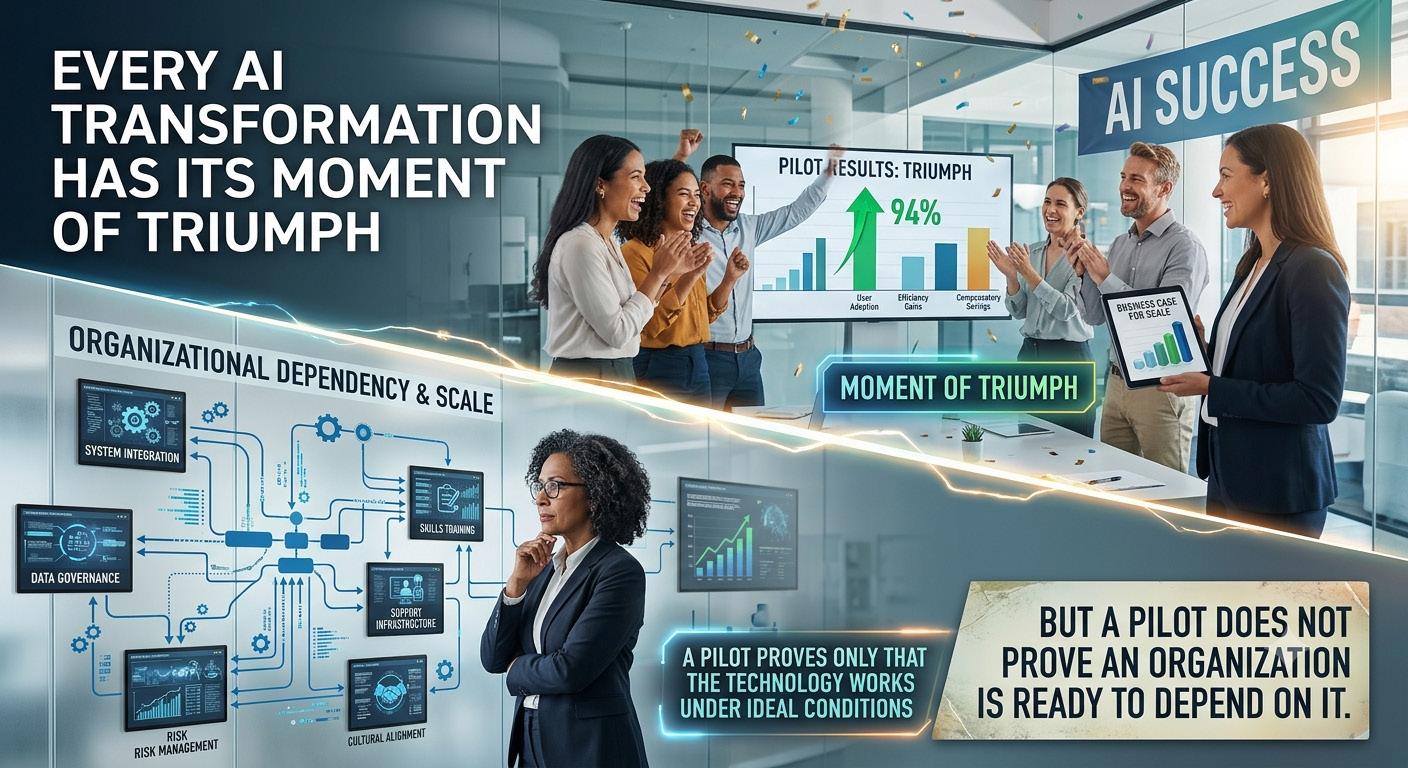
I’VE sat through a lot of AI demos in procurement over the last three years. Most of them are good. Genuinely good. The classification is sharp. The routing is fast. The dashboard looks like something out of a vendor’s fever dream of what procurement could be. And almost every one of those demos will disappoint someone, eighteen months later, in a steering committee meeting nobody wants to be in. Not because the technology failed. Because the demo was never what needed proving.
A demo is built on the vendor’s best data. It runs the vendor’s best scenario.
It’s presented by the vendor’s best people, to an audience primed to be impressed. It is, by design, the easiest possible version of the problem. That’s not dishonest. It’s how demos work. Every experienced buyer in the room technically knows this. What they forget, under the pressure of a live decision and a budget cycle, is simple. The gap between “the pilot worked” and “the programme works” isn’t a scaling problem. It’s a completely different set of problems wearing the same trousers. I was in the room for one of these. The pilot had run beautifully. Three months. One clean category. One cooperative business unit. Hand-picked

data. The recommendation to scale was unanimous. Eleven months later, the same tool was live across the full spend base. And nobody trusted its output enough to act on it without checking it manually first.
Nothing about the AI had changed. Everything around it had.
That gap — between the thing that gets approved and the thing that gets delivered — is where most procurement AI programmes quietly go to die. And almost nobody names it before it happens.
Here’s the uncomfortable part. A successful pilot proves the model works. It doesn’t prove the organisation is ready for it to act.
Those are different claims. Procurement leaders routinely blur them — not out of carelessness, but because the pilot is designed to answer the first question and stays silent on the second. Nobody asks, “did we prove this will hold up outside a controlled environment?”
The pilot was never built to test that. It was built to get funding for the next stage. So, the business case gets written on pilot evidence. The steering committee approves scale on pilot evidence. The vendor’s success story is the pilot. The organisation walks into full deployment having genuinely proven something true. Just not the claim everyone assumed they’d proven. This isn’t a criticism of pilots. It’s a criticism of what we let a pilot stand in for.
When a procurement AI programme stumbles after a strong pilot, the cause is almost always one of three things. And they rarely get discussed at the point where discussing them would help.
Data heterogeneity. The pilot ran on one clean category, hand-picked precisely because it was clean. Scale means every category. The messy ones. The ones with three overlapping taxonomies. The ones where “IT Services” and “Tech Consulting” and “Professional Fees” all describe the same spend. Nobody’s incentivised to
volunteer the ugly category for the pilot. The vendor wants a win. The internal sponsor wants a win. So the pilot quietly avoids the exact conditions it will eventually have to survive.
Stakeholder cooperation collapses. The pilot business unit was chosen because someone there already believed in the initiative. A willing sponsor. An engaged team. People who wanted this to succeed and behaved accordingly. Scale means the business units with no stake in the outcome. The ones who never asked for this. The ones whose workarounds were already working fine, thank you. One cooperative team is not organisational buy-in. It’s a sample of one, dressed up as evidence.
Trust decays under real stakes. This is the one that gets talked about least. It’s also the one that actually killed the programme I watched. In a pilot, a wrong output is low-consequence. It’s a sandbox. Nobody’s supplier relationship gets damaged. Nobody’s budget gets misallocated. Nobody must explain a bad commercial decision to their CFO because the pilot’s output was wrong. At scale, a wrong output has weight. So users start manually checking everything — quietly, individually, without ever raising it as an issue. And the checking becomes the new normal. The automation is technically live. Nobody’s relying on it.
Of the three, trust decay is the most dangerous. It’s invisible until it’s structural. Data problems show up in error rates. Stakeholder resistance shows up in adoption metrics. Trust decay shows up nowhere — until you notice, eighteen months in, that the tool is running and everyone’s still doing the job manually alongside it.
The pilot had been a genuine success by every measure anyone had agreed to measure. One category. Three months. An engaged sourcing team that had wanted an AI-assisted classification tool for years and treated the pilot like the answer to a prayer. The output was accurate. The team trusted it within about two weeks, because they understood the category well enough to sanity-check
the early recommendations. And the recommendations kept being right. The business case for scale wrote itself. Full spend base. All categories. Twelve-month rollout.
By month six of the rollout, the tool was live and technically functioning across the estate. Classification accuracy, measured the way the vendor measured it, hadn’t dropped. But in a steering committee update, someone from a different category team — not the pilot team, a team that had inherited the tool without ever asking for it — mentioned, almost in passing, that they’d started running a manual check on anything the AI classified with less than full confidence. Nobody challenged it. It sounded reasonable. Prudent, even.
Three months later, that “just to be safe” habit had spread. Not because anyone decided it should. Because nobody had ever explicitly said when the organisation was supposed to stop checking. The pilot team’s confidence had been earned through weeks of direct, hands-on validation in a category they knew intimately. Nobody had built an equivalent trust-building process for the teams who came after them. So each new team, arriving cold, defaulted to the only sensible response to a tool they didn’t yet trust: check it manually until proven otherwise. Except “until proven otherwise” never arrived. Because nobody owned that transition. The programme had a data migration plan, a change management plan, a training plan. It didn’t have a plan for the specific moment a team was meant to stop double-checking and start relying.
Eighteen months in, the tool was processing the same volume it always had. The manual checking layered on top of it had become permanent, unbudgeted, invisible shadow work. Procurement doing the job twice — once by the AI and once by habit. Nobody in the governance structure had visibility into it, because nobody had ever asked the question: who owns the moment we start trusting this? The AI hadn’t failed. The organisation had simply never finished the job of deciding when to believe it.
Here’s something worth naming
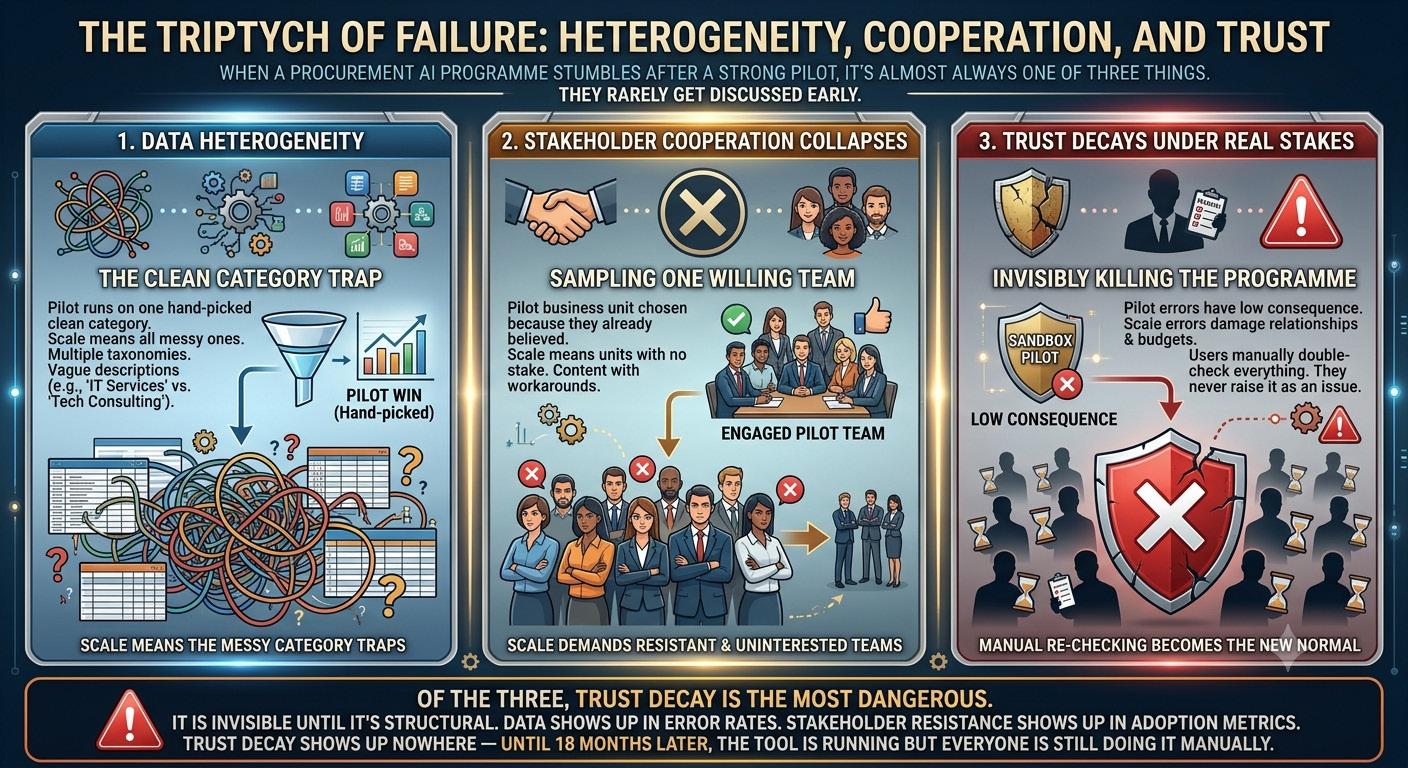
plainly, because it explains why this pattern repeats across so many organisations rather than being a oneoff. Nobody in that steering committee was being dishonest. Nobody was hiding a problem. Each individual decision — hire more reviewers, add a manual check, keep the old spreadsheet running “just for now” — made sense in isolation. The failure wasn’t a decision. It was the absence of one.
That’s a harder problem to fix than a bad decision, because there’s no single moment to point to. No one signed off on shadow work. It simply accumulated, one reasonable choice at a time, until the programme was running two systems in parallel and calling it one.
This is why the fix can’t be a training session or a reminder email. It has to be a structural decision, made deliberately, before go-live — not discovered afterwards in a steering committee update that nobody thought to question.
None of this means the pilot-to-scale gap is unmanageable. It means it needs to be treated as a distinct set of design problems, not an inevitable side effect of getting bigger. Three shifts matter most, and they map directly onto the three breaks above.
Include a messy category in the pilot,
deliberately. Not as a stress test to be endured. As evidence that gets built into the business case. If the pilot only ever proves the tool works on easy data, the business case is only ever proven for conditions that won’t exist at scale. Choosing one unglamorous, genuinely difficult category for the pilot costs a few weeks of a harder result. It buys a business case that’s actually representative of what’s coming.
Put a resistant business unit in the pilot cohort. Not the enthusiast — the team that’s territorial, sceptical, or has something to lose. Not the team that’s been asking for this for years. Their reaction, not the enthusiast’s reaction, is the one that predicts what adoption looks like across the other eleven business units who didn’t volunteer.
Name someone as owner of the trust transition — before go-live, not after. This is the one almost nobody does. It’s also the one that would have changed the story above. Somebody needs explicit accountability for the specific moment a team is expected to move from “checking everything” to “trusting the output, checking exceptions.” That’s not a training deliverable or a change management workstream in the generic sense. It’s a named decision point, with a named owner, built into the programme plan with the same seriousness as a go-
live date.
Get these right and the pilot stops being a demo of what’s possible in ideal conditions. It becomes a genuine rehearsal for the conditions the programme will actually face.
THE QUESTION NOBODY ASKS BEFORE SIGNING OFF SCALE
Every procurement AI business case I’ve reviewed answers the question “does the model work?” Very few answer the question that determines whether the programme succeeds: what happens the first time it’s wrong at scale — and whose job is it to notice?
Not whose job is it to fix the model. Whose job is it to notice that trust is quietly eroding. That a workaround is becoming a habit. That the automation everyone signed off on is technically running, while the organisation has, without ever deciding to, gone back to doing the work by hand.
That question won’t show up in a demo. It won’t show up in a pilot’s success metrics, because pilots are explicitly designed to be low-stakes. That’s what makes them safe to run. It’s also precisely what makes them unrepresentative of what comes next.
Before you scale your next pilot, ask the question the demo never had to answer: what happens the first time it’s wrong — and does anyone know whose job it is to notice?
Modern supply chains are under pressure to be faster, smarter, and more customer-centric than ever before—without sacrificing operational efficiency. As complexity becomes the new normal, the ability to simplify execution is emerging as a decisive competitive advantage, decodes Dr. Radha Mohan Gupta, Adjunct Professor, IMT Ghaziabad.
FOR decades, supply chains were largely designed around one central objective—cost reduction. Efficiency was the dominant philosophy. Organizations focused on optimizing procurement, minimizing inventory, improving asset utilization, standardizing operations, and reducing logistics costs. The most successful supply chains were those that consistently delivered products at the lowest possible cost. That model worked well in a relatively stable world.
Today’s markets, however, are far more dynamic, fragmented, and unpredictable. Consumer preferences evolve rapidly, product lifecycles continue to shrink, and technology is constantly reshaping buying behaviour. More importantly, customer expectations are no longer driven by price alone. Increasingly, they are driven by convenience.
As highlighted by recent NielsenIQ research, the rise of the “convenience economy” is redefining consumer choice. Speed, flexibility, omnichannel access, real-time visibility, and seamless buying experiences are becoming critical differentiators, particularly among Gen Z consumers who have grown up in a digital-first environment. For them, convenience is not an added advantage— it is a basic expectation.
Customers today expect faster deliveries, personalized choices, multiple fulfilment options, flexible return policies, and complete visibility across their purchase journey. More
significantly, many are willing to pay for these conveniences, fundamentally altering the economics of supply chain design.
This shift challenges the traditional philosophy of building supply chains around the principle of “least cost.” While cost efficiency remains essential and will always influence competitiveness, it is no longer sufficient to win markets. Responsiveness, flexibility, resilience, and customer experience have become equally important. The supply chains of tomorrow will compete not merely on efficiency but on relevance.
Consequently, supply chains are no longer functioning simply as backend operational systems. They are increasingly becoming strategic differentiators and direct enablers of business growth. In many industries today, the customer experience itself is shaped by supply chain capability. A delayed delivery, product stock-out, poor returns process, or lack of visibility can directly influence customer loyalty and brand perception. Conversely, agile and responsive supply chains strengthen customer trust, improve retention, and can even justify premium pricing.
This transformation is also reflected in McKinsey & Company’s research, which increasingly positions supply chains as strategic sources of resilience, competitive differentiation, and longterm value creation rather than merely operational support functions.

leaders while advising organisations on strategy, transformation, and operational excellence.
The growing emphasis on customercentricity is fundamentally changing the architecture of supply chains. Traditional supply chains were relatively linear and predictable. Products moved through established networks—from supplier to factory, factory to warehouse, warehouse to distributor, retailer, and finally to the customer. Optimization was comparatively straightforward because both supply and demand patterns were relatively stable. Modern supply chains, however, are becoming increasingly
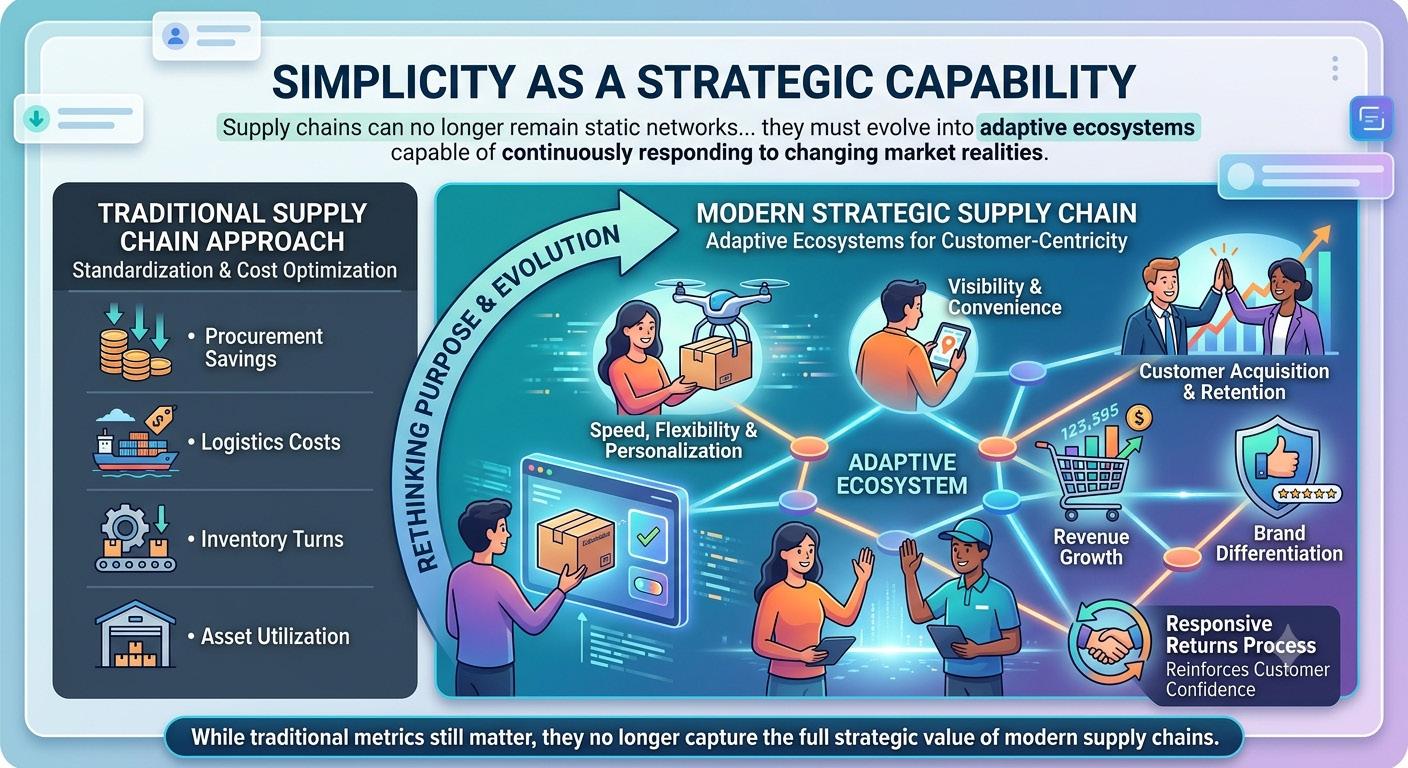
adaptive and interconnected.
Organizations today continuously redesign sourcing strategies, inventory locations, fulfilment models, transportation networks, and distribution flows to align with rapidly changing market requirements. The rapid expansion of omnichannel retail, quick commerce, micro-fulfilment centres, platform-based ecosystems, and flexible sourcing arrangements has significantly increased the complexity of supply chain operations.
Every additional sales channel, fulfilment option, sourcing location, or product variant creates another layer of operational complexity. SKU proliferation increases planning challenges. Faster deliveries require denser fulfilment networks. Personalization fragments demand. Multiple channels create inventory dispersion, while dynamic sourcing introduces greater coordination requirements. Simultaneously, customers expect complete visibility and immediate responsiveness across every touchpoint.
In many organizations, operational complexity is growing faster than the managerial capability required to manage it effectively. Yet this is precisely where the defining paradox of modern supply chains emerges. Markets are compelling organizations to become more flexible,
agile, and customer-centric, while businesses continue to expect lower costs, lean inventories, and higher operational efficiency. Supply chains are therefore expected to absorb increasing external complexity while delivering internal simplicity.
The challenge is no longer about avoiding complexity—an increasingly impossible objective—but about managing it intelligently without allowing it to overwhelm execution. When left unchecked, complexity often manifests in excessive SKU proliferation, fragmented processes, overlapping technologies, duplicated workflows, slower decisionmaking, and rising operational costs. Ironically, many initiatives introduced to improve customer responsiveness eventually reduce agility because they create unnecessary organizational burden. The real question, therefore, is not how to eliminate complexity, but how to simplify execution despite rising complexity.
That requires a very different philosophy of supply chain management—one that recognises complexity as an inevitable outcome of serving increasingly sophisticated markets while ensuring that internal operations remain disciplined, coordinated, and scalable.
For years, organizations pursued simplification primarily through standardization and cost optimization. Those principles remain important, but today’s markets demand a more nuanced approach. Customers expect speed, flexibility, personalization, visibility, and convenience—often simultaneously. Supply chains can therefore no longer remain static networks optimized solely for efficiency; they must evolve into adaptive ecosystems capable of continuously responding to changing market realities. This evolution is also forcing organizations to rethink the very purpose of supply chains.
Traditionally, supply chain performance was measured through procurement savings, logistics costs, inventory turns, and asset utilization. While these metrics continue to matter, they no longer capture the full strategic value of modern supply chains. Increasingly, supply chains influence customer acquisition, retention, revenue growth, and brand differentiation.
A fast and reliable delivery experience strengthens customer loyalty. Flexible fulfilment models improve conversions. Better product availability directly supports revenue growth, while
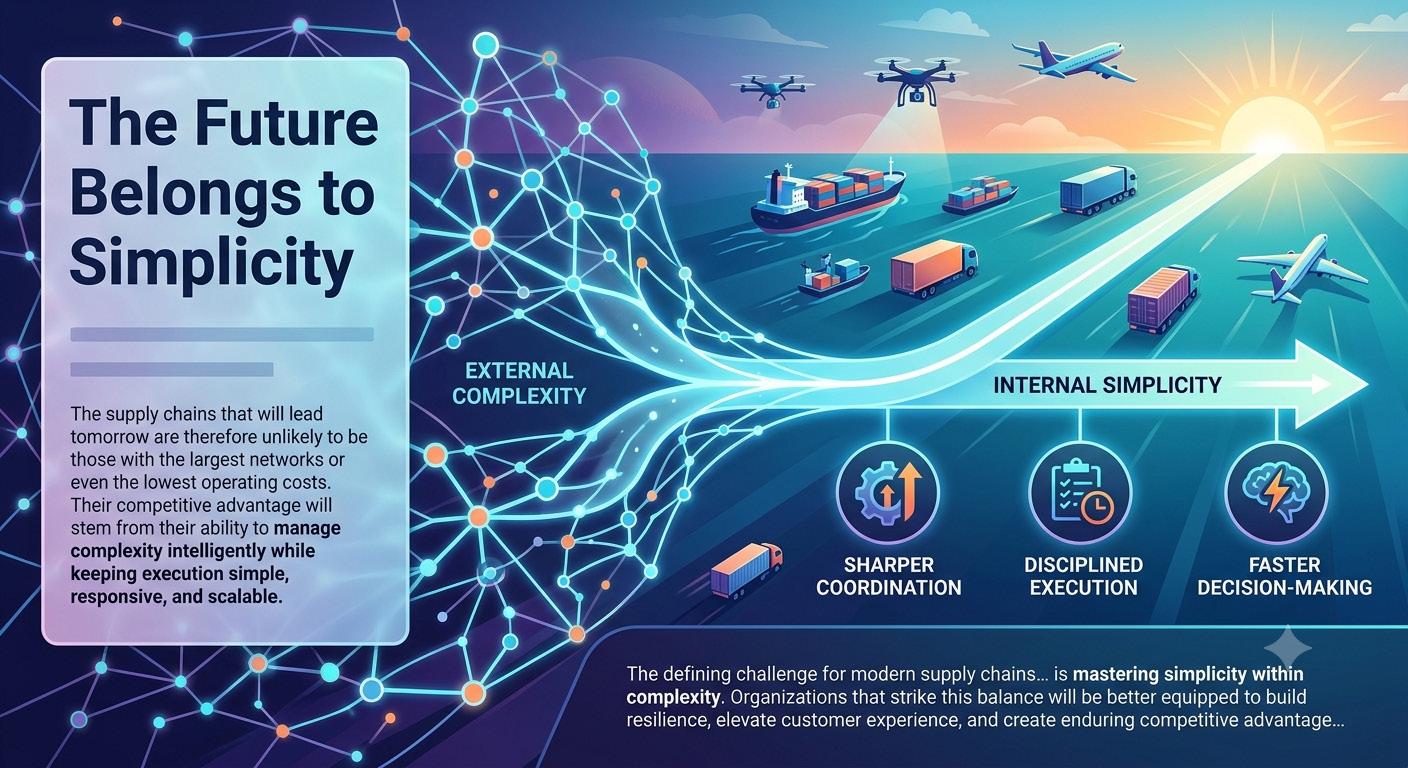
responsive returns processes reinforce customer confidence. In many industries, customers may never see a manufacturing plant or distribution centre, but they experience the supply chain every time they interact with a brand.
As supply chains become central to competitive positioning, organizations must also guard against the unintended consequences of pursuing convenience at any cost. Every new fulfilment model, sourcing option, technology platform, or customised process introduces additional operational complexity. Unless carefully governed, excessive SKU proliferation, fragmented networks, overlapping digital systems, and duplicated workflows can reduce agility rather than enhance it. Complexity, if left unmanaged, begins to consume the very efficiencies organizations are striving to protect. This is precisely why simplification is regaining strategic importance—not as a rejection of complexity, but as the means to manage it intelligently.
Simplification today is no longer about reducing options or enforcing rigid standardization. It is about creating clarity amid complexity. It requires integrated planning, end-to-end digital visibility, intelligent automation, data-
driven decision-making, and governance models that enable organizations to adapt continuously without creating operational chaos.
Equally important is developing the discipline to distinguish between necessary and unnecessary complexity. Every additional product variant, fulfilment channel, sourcing arrangement, or technology investment should create measurable value for customers or strengthen business competitiveness. If it merely adds operational burden without enhancing customer outcomes, it becomes a hidden cost that ultimately weakens resilience and scalability.
The supply chains that will lead tomorrow are therefore unlikely to be those with the largest networks or even the lowest operating costs. Their competitive advantage will stem from their ability to manage complexity intelligently while keeping execution simple, responsive, and scalable.
In many ways, the future supply chain will continue to embody a paradox. Externally, it will need to become increasingly agile, interconnected, and responsive to fragmented customer expectations. Internally, however, it
will require greater simplicity, sharper coordination, disciplined execution, and faster decision-making to remain sustainable.
The defining challenge for modern supply chains, therefore, is not managing complexity alone. It is mastering simplicity within complexity. Organizations that strike this balance will be better equipped to build resilience, elevate customer experience, and create enduring competitive advantage in an increasingly dynamic marketplace.
Quick commerce has transformed India’s Food & Beverage industry, shrinking replenishment cycles to hours and making supply chain performance the new measure of brand trust. As Ronit Verma, Head – Supply Chain Management, Storia Foods and Beverages, notes, consumers now demand instant availability, uncompromised freshness, and sustainable practices — all delivered at razor-thin margins. In this environment, leadership must evolve beyond operational wins to embed intelligence, agility, and resilience into every node of the system. The future belongs to those who design supply chains that deliver speed without chaos, freshness without compromise, and sustainability without margin erosion. An excerpt…
In a market shaped by quick commerce, demand volatility, and compressed replenishment cycles, how must supply chain architecture evolve to support speed without structurally inflating costs?
The Indian beverage market today operates on a paradox – consumers expect fastest availability, yet the economics of fast-moving, perishable SKUs leave razor-thin room for cost mismanagement. The answer lies not in building more infrastructure, but in building smarter infrastructure.
What to do? The design principle is clear – speed must be structurally built in, not operationally improvised. This demands a shift from a linear, push-based model to a distributed, demand-signaldriven architecture. Preference should be on investing in strategic micro-fulfilment nodes closer to consumption clusters — metros, Tier-1 cities, and emerging Tier2 corridors — reducing last-mile transit time without the capex burden of largeformat warehouses across every pin code.
The quick commerce revolution, led by platforms like Blinkit, Zepto, and Swiggy Instamart, has fundamentally compressed replenishment windows to hourly based expectations. Responding to
that at scale requires slotting discipline, SKU rationalisation at the dark-store city level, and dynamic inventory allocation driven by real-time sell-through data. Speed without embedded intelligence is simply expensive chaos. The architecture must therefore simultaneously optimise for responsiveness and working capital and that balance is what separates supply chain leaders from supply chain followers.
“Speed is not a logistics upgrade - it is an architectural decision. Build it in or pay for it forever.”
As brands scale rapidly across markets, what structural mistakes do you see companies making in their supply chain design?
The most consequential mistake in scaling FMCG and beverage brands in India is mistaking distribution width for supply chain depth. Brands rush to add cities and outlets, often without the foundational logistics backbone, inventory visibility, or demand planning capability to sustain that footprint. The result is a classic ‘Expand and Break’ cycle – service levels deteriorate, product freshness is compromised, and working capital gets trapped in the wrong
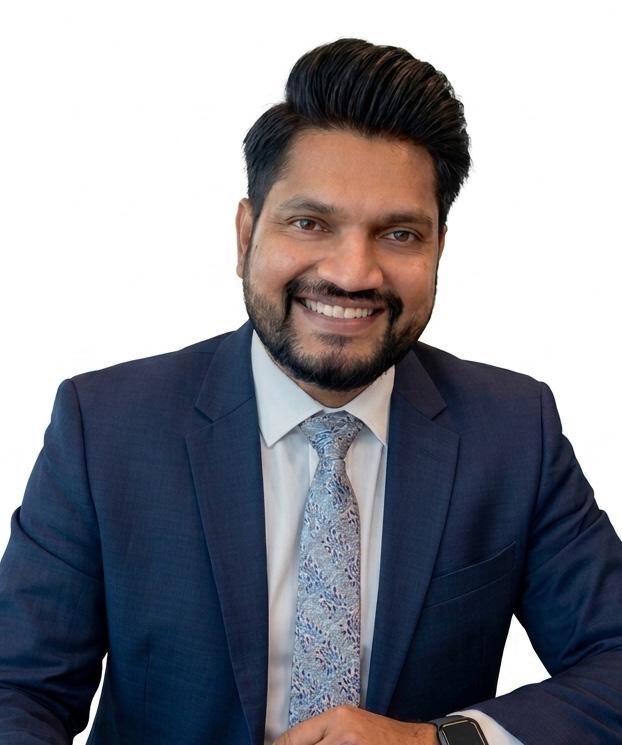
With over 19 years of experience in supply chain and logistics, Ronit Verma has built a career that blends operational excellence, strategic thinking, and strong people leadership. At Storia, Ronit overseas end-to-end operations, covering planning, procurement, production, warehousing, logistics and distribution. His focus remains clear: delivering the right product, at the right cost, to the right place – every single time. Academically, Ronit continues to sharpen his strategic edge as a Senior Management Programme participant at IIM Calcutta, complemented by an International MBA in SCM.
The second critical error is underinvesting in primary and mid-mile infrastructure while over-indexing on last-mile heroics. In a country as geographically diverse and logistically fragmented as India – from the Himalayan foothills to coastal Tamil Nadu – you cannot build a reliable supply chain on the back of aggregated thirdparty trucking alone. Deeply integrated mid-mile capabilities are non-negotiable at scale.
Third, and perhaps most damaging long-term, is building supply chains that mirror the organisational structure rather than the customer’s consumption pattern. Siloed planning between sales, operations, and finance leads to misaligned inventory positions, missed fill rates, and avoidable write-offs. Supply chain design must follow the flow of demand, not internal reporting lines.
“Distribution width without supply chain depth is not scale - it is exposure at scale.”
How do you balance working capital discipline with service excellence in a category where freshness and availability are critical?
This is the central tension every beverage supply chain professional navigates daily - and there is no universal formula. What we have learned is that freshness and availability are not competing objectives if your inventory architecture is right.
The discipline begins at the SKU level. We focus on maintaining velocity-based differentiation – high-velocity SKUs carry lean, rolling stock aligned to 15–21 day coverage; slower or seasonal variants are managed on a more responsive, demandtriggered replenishment model. This prevents the classic trap of uniformly high safety stocks across the portfolio,
which inflates working capital while masking poor forecasting.
On the service side, the commitment to freshness is non-negotiable in a segment where consumers are increasingly labelliterate. Our aseptic processing and coldchain integrity give us a good shelf life without preservatives - but that shelf life must be protected through disciplined FEFO management throughout the distribution chain. The metric we should track closely is Days of Freshness Delivered - not just fill rate. A product delivered at 90% of its remaining shelf life is not a supply chain win. Balancing this requires a mature conversation between commercial and supply chain teams, and that conversation must be grounded in data, not just gut instinct.
“Freshness is not a supply chain constraint - it is the brand promise your supply chain must never break.”
Supply chains are no longer optimized for yesterday’s patterns — they must self-adapt. What operating capabilities are most critical to embed responsiveness at the core of the system?
Responsiveness is not a technology capability - it is an organisational
The ability to sense demand more accurately, respond faster, allocate capital more precisely, and learn continuously from market signals is a compounding capability that grows more powerful with time and data. Brands that invest consistently in building proprietary data assets, demand sensing capability, and predictive analytics today are building competitive moats that will be very difficult to replicate in 2030. geographies.
capability enabled by technology. The most critical building blocks are:
Demand sensing over demand forecasting: Traditional statistical forecasting is structurally backwardlooking. In a market where a viral social media moment, a cricket season, or a heatwave can spike demand by 40% in just 48 hours, you need real-time sellout signal integration – from retail POS data, quick-commerce dashboards, and distributor secondary sales - feeding directly into replenishment triggers.
Integrated Business Planning (IBP) with short-cycle cadences: Weekly S&OP reviews are no longer sufficient. We should run rolling 13-week demandsupply reviews supplemented by a rapid-response protocol for demand spikes or supply disruptions. This keeps the entire value chain – procurement, manufacturing, logistics, and commercial - aligned on a single number.
Supplier and co-manufacturer agility: Your supply chain’s responsiveness is bounded by the least responsive node within it. This means investing in supplier development, lead-time compression at source, and maintaining
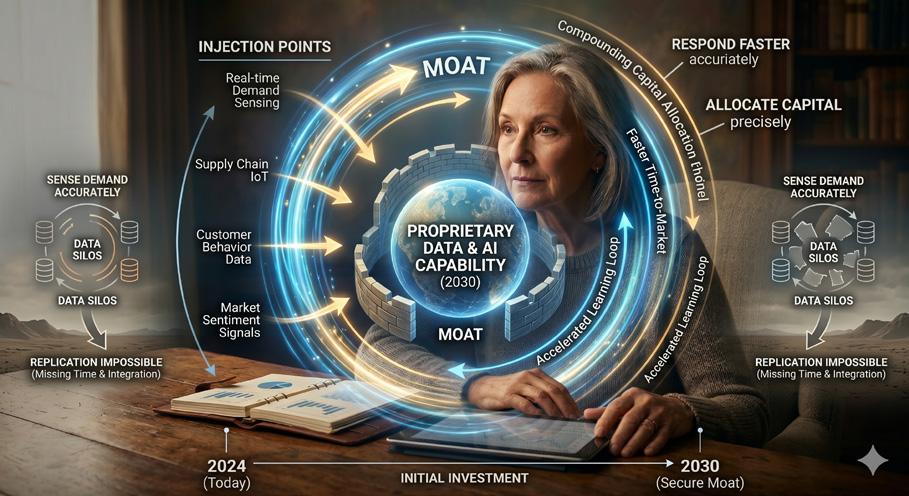
Supply chain has always held a seat at the strategy table. As we scale toward deeper national penetration and new category entries, decisions on manufacturing footprint, co-packer partnerships, distribution architecture, and sustainability commitments are supply chain decisions first – and commercial decisions second. That integration of supply chain thinking into strategic planning is what I believe defines the most competitive consumer brands in India today.
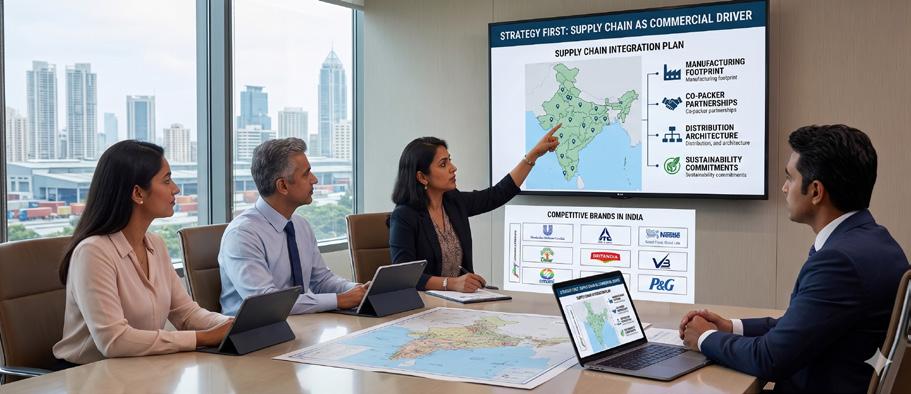
pre-committed surge capacity with key co-manufacturing partners.
Empowered frontline decisionmaking: Centralized command-andcontrol supply chains are inherently slow. Building decision rights and exceptionbased management at the distribution and warehouse level multiplies the system’s response speed without proportional cost.
“A supply chain that reacts to yesterday’s data is not responsive — it is perpetually late.”
With geo-political shifts and regional manufacturing realignments underway, how are you rethinking sourcing strategy beyond the traditional cost-versus-risk equation?
The cost-versus-risk binary is increasingly inadequate. We now evaluate sourcing across a three-dimensional lens: Cost, Resilience, and Strategic Optionality.
The post-COVID and ongoing geo-political disruptions – from Red Sea shipping volatility to shifting USChina trade dynamics – have had direct implications for the Indian F&B industry, particularly for brands which source globally. Import happens from multiple international origins, each of these sourcing lines should be re-evaluated not just on landed cost but on supply
continuity risk, lead-time variance, and the strategic value of geographic diversification.
The broader India narrative works in favour. Atmanirbhar Bharat and the PLI schemes for food processing are accelerating domestic ingredient development. F&B Industry actively building partnerships with domestic ingredient suppliers as parallel sourcing lines – not as a wholesale replacement for international procurement, but as a structural hedge that also strengthens the India manufacturing ecosystem.
The emerging principle is: source global for uniqueness and quality differentiation; source domestic for resilience and speed. That dual-track approach is what a future-proof beverage supply chain in India must embed.
“In a fractured world, the most expensive sourcing decision is the one that leaves you with a single point of failure.”
When footprint expansion decisions are taken today, what trade-offs do you weigh between speed of reach, capital intensity, and supply predictability?
Footprint expansion in India is deceptively complex. The allure of 50,000 or 100,000 outlet coverage numbers can obscure the underlying supply chain costto-serve reality. The trade-off framework to be applied considers three variables
simultaneously:
Speed of reach is assessed not just as geographic coverage but as productive reach - outlets where product is stocked, rotated, and sold regularly, not simply listed. Phantom distribution – where outlets carry the product on paper but face chronic stockouts – is a silent killer of brand equity and supply chain efficiency alike.
Capital intensity must be weighed against asset utilisation economics. A warehouse in a new geography that operates at 40% utilisation for the first 18 months may be strategically justified if it unlocks a high-potential market cluster, but that decision must be made consciously, with a defined payback horizon, not reactively under commercial pressure.
Supply predictability is where many brands underestimate the challenge of expansion into India’s Tier-2 and Tier-3 markets. Road infrastructure, ambient temperature variability, cold-chain gaps, and distributor capability are all nontrivial variables. Expansion playbook now includes a supply readiness assessment for every new geography before commercial activation – ensuring the supply chain is never the constraint that limits a market’s potential.
“Productive reach is the only reach that matters - a listed outlet that stockouts is not distribution, it is a missed promise.”
Data is widely discussed, but execution varies. How is analytics practically improving forecasting accuracy and inventory positioning in your organisation?
The honest answer is that analytics value is realised in execution, not in the sophistication of the models. Our
analytics journey has been deliberate and grounded in business impact rather than technological ambition for its own sake.
The most meaningful improvement comes from integrating secondary sales data - distributor offtake, quickcommerce platform sell-through, and key modern trade POS data – into demand planning cycle. This shift from shipmentbased forecasting to consumptionbased sensing reduces forecast error meaningfully, particularly for seasonal beverage SKUs, which exhibits strong weather and occasion-driven demand patterns across India.
On inventory positioning, usage preferred of ABC-XYZ segmentation to differentiate stocking strategies across distribution network. High-velocity, predictable SKUs are managed with tight replenishment parameters; highvalue but volatile SKUs carry strategically positioned buffer stocks at regional level rather than at the outlet or distributor level. This allows to improve product availability while reducing overall system inventory - the classic efficiencyservice trade-off being resolved not by compromise but by precision.
The next frontier for is predictive analytics for expiry risk management using sell-through velocity data to proactively redirect or liquidate inventory before it becomes a write-off. In a freshness-critical category, this is one of the highest-ROI applications of supply chain analytics.
“Analytics without execution context is intelligence wasted. The real measure is whether your planners make better decisions every morning because of it.”
In your view, what separates digital investments that transform supply chains from those that simply automate existing inefficiencies?
This is a question every supply chain leader must ask with unflinching honesty before signing a technology investment. The graveyard of FMCG / F&B supply chains is littered with expensive ERP implementations, warehouse management systems, and digital dashboards that automated broken processes without fixing the underlying design.
The defining differentiator is whether the digital investment changes what
decisions are made or merely speeds up the same decisions. True transformation means the system surfaces insights that were previously invisible – demand signals you couldn’t see, supply risks you couldn’t anticipate, cost structures you couldn’t diagnose at the SKU-lanecustomer level.
A real-time view of secondary sales across 50,000+ outlets, integrated with production and logistics status, delivers more business value today than a stateof-the-art AI forecasting engine running on siloed, stale data. Build the data foundation first. Then apply intelligence.
The second litmus test is adoption at the operational level. A tool that the supply chain planner uses every morning to make better replenishment decisions is transformational. A beautiful analytics dashboard reviewed monthly by leadership is an expensive reporting exercise. Transformation lives in the daily decision-making rhythm of your execution teams.
“Automating a broken process faster is not transformation - it is precision failure at scale.”
How do you institutionalize supplier collaboration to move beyond transactional procurement toward strategic partnerships?
Transactional procurement treats suppliers as interchangeable inputs. Strategic partnerships treat suppliers as extensions of your own capability — and in a high-growth, innovation-led business, that distinction is existential.
The institutionalisation begins with supplier segmentation based on strategic value, not just spend. Co-manufacturing partners, who are integral to production capacity and geographic reach, are managed under a fundamentally different engagement model than commodity packaging suppliers. With strategic partners, we can share demand forecasts, capacity plans, quality roadmaps, and even product innovation pipelines. This mutual transparency creates the conditions for suppliers to invest in capability on our behalf - something no purchase order can mandate.
You can have this formalised through quarterly business reviews with key partners, joint problem-solving on quality and yield challenges, and in
some cases, shared investment in process improvement initiatives. The return on this investment is measured not just in cost savings but in supply assurance, lead-time reliability, and the speed of new product introduction – all of which are critical competitive levers in the fastmoving beverage segment. The cultural shift required is from buyer-supplier to co-creator – and that shift must be visible at the leadership level, not just in procurement policy documents.
“A supplier who shares your ambition will outperform a supplier who merely fulfils your purchase order - every single time.”
What metrics truly reflect supply chain excellence today, beyond traditional KPIs like cost per case or fill rate?
Cost per case and fill rate remain necessary but are no longer sufficient measures of supply chain excellence. The metrics that truly reflect competitive capability in today’s F&B environment are:
Freshness Index – the percentage of product delivered to end consumers with a defined minimum remaining shelf life. This is a brand equity metric as much as a supply chain metric.
Demand Forecast Accuracy at the SKU-Region level – not at aggregate portfolio level, where averaging masks critical misallocations between geographies and channels.
Perfect Order Rate – delivered on time, in full, without damage, with accurate documentation. A composite metric that reflects the true end-to-end experience of the customer.
Working Capital Velocity – Days of Inventory Outstanding (DIO) as a system-level metric, including distributor and channel inventory, not just at the manufacturing node.
Supply Chain Carbon Intensity per case – as sustainability accountability becomes non-negotiable, this is rapidly entering the boardroom KPI set.
Quick Commerce Fill Rate by Platform – a new metric born from the
q-commerce era, measuring our ability to maintain in-stock positions on Blinkit, Zepto, and Swiggy Instamart across cities and time windows.
The supply chain of 2026 is evaluated on customer experience delivered as much as operational cost incurred.
“The supply chain that only measures what it costs has not yet understood what it is worth.”
Sustainability is increasingly tied to competitiveness. How can food and beverage supply chains realistically embed environmental responsibility without eroding margins?
The framing of sustainability as a margin threat is, in my view, an outdated and strategically dangerous lens. The question should be: how do we design supply chains where sustainability and efficiency are the same decision?
For the brands which are committed to natural, preservative-free products is not simply a brand positioning, it shapes every supply chain decision, from ingredient sourcing to packaging specification to cold-chain design to lastmile. Products without preservatives require more supply chain precision – tighter temperature management, shorter replenishment cycles, more disciplined FEFO execution – but that precision also reduces waste, and waste reduction is directly margin-accretive.
On the packaging front, the shift toward sustainable materials is increasingly economically viable at scale in India. The GST and extended producer responsibility (EPR) frameworks are creating both compliance imperatives and economic incentives for brands to invest in recyclable and reduced-plastic packaging.
The most tangible near-term opportunity is in logistics decarbonisation – route optimisation, load consolidation,
Supply
and the gradual transition of primary and secondary distribution fleets to CNG and EV options. These investments typically show positive ROI within 3-4 years, making them economically defensible.
Sustainability embedded in supply chain design is not a cost centre - it is a resilience and efficiency multiplier for the decade ahead.
“Sustainability is not a tax on efficiency - it is the discipline that reveals where your supply chain was wasteful all along.”
With rising omnichannel complexity and quick-commerce models, how must supply chains redesign fulfilment models to stay competitive?
The era of the single-channel, singlefulfilment-model supply chain is definitively over. Today, we serve general trade kirana stores, modern trade supermarkets, institutional channels, e-commerce platforms, and quick-commerce dark stores – each with fundamentally different service requirements, order profiles, and replenishment logics.
The design imperative is channeldifferentiated fulfilment within a common inventory pool. This means maintaining consolidated inventory at strategic regional nodes, with the lastmile routing and service parameters customised by channel. Running separate inventory silos per channel is operationally inefficient and capitaldestructive at scale.
For quick commerce specifically, the critical design elements are: accurate dark-store inventory visibility (ensuring our products are stocked and available in real-time, not just listed), rapid replenishment agreements with platform partners for fast-moving SKUs, and SKU pack-size alignment to the consumption patterns of quick commerce shoppers
who typically purchase single-serve or small-format units.
The broader organisational shift required is in integrated demand visibility across channels. When quickcommerce sales spike for key SKU during a heatwave in Mumbai, that signal must instantaneously flow back to production planning and raw material procurement. Omnichannel fulfilment excellence is ultimately an information and integration challenge as much as a physical logistics challenge.
“One inventory pool, many fulfilment expressions - that is the architecture of the omnichannel era.”
Is supply chain leadership gaining greater voice in boardroom strategy discussions? What is driving this shift?
Unambiguously, yes - and the pandemic was the watershed moment that catalysed this elevation globally and in India. For years, supply chain was perceived as an operational function –a cost to be managed, not a capability to be invested in. COVID-19 exposed the catastrophic vulnerability of that perception when global supply chains fractured simultaneously.
In the F&B Industries, several additional forces are accelerating this shift. The explosive growth of quick commerce has made supply chain responsiveness a brand differentiation factor - consumers now associate a brand’s reliability with its supply chain performance in ways that were previously invisible to them.
Investor scrutiny of FMCG and food-tech companies has sharpened considerably on unit economics and working capital management - both of which are fundamentally supply chain outcomes. Founders and boards are learning, sometimes painfully, that
predictability is where many brands underestimate the challenge of expansion into India’s Tier-2 and Tier-3 markets. Road infrastructure, ambient temperature variability, cold-chain gaps, and distributor capability are all non-trivial variables. Expansion playbook now includes a supply readiness assessment for every new geography before commercial activation – ensuring the supply chain is never the constraint that limits a market’s potential.
commercial growth without supply chain discipline is a value-destruction exercise.
Supply chain has always held a seat at the strategy table. As we scale toward deeper national penetration and new category entries, decisions on manufacturing footprint, co-packer partnerships, distribution architecture, and sustainability commitments are supply chain decisions first – and commercial decisions second. That integration of supply chain thinking into strategic planning is what I believe defines the most competitive consumer brands in India today.
“When supply chain breaks, the boardroom notices. The best organisations don’t wait for the break - they give supply chain a seat before the crisis earns it one.”
For young professionals entering the supply chain domain today, what core capabilities and mindset should they prioritize to remain futureready?
The supply chain professional of the future in India must be genuinely multi-lingual - fluent in data analytics, comfortable with technology platforms, operationally grounded, commercially aware, and deeply curious about the human and physical systems that make supply chains function.
The technical capabilities I would prioritise are: demand planning and statistical forecasting fundamentals, supply network design thinking, and working capital management. These form the analytical spine of any supply chain leadership role.
But the differentiating capability – the one that no algorithm can replicate - is structured problem-solving under ambiguity. India’s supply chain environment is inherently complex: fragmented trade, infrastructure variability, diverse regulatory frameworks across states, and the pace of market change that is unlike anywhere else in the world. Young professionals who can decompose complex problems, build pragmatic solutions, and adapt rapidly will consistently outperform those with strong technical knowledge but limited contextual agility.
I would also emphasise crossfunctional empathy. The best supply chain professionals I have encountered
understand what a sales manager needs to win in the market, what a CFO needs to protect working capital, and what a manufacturing team needs to run efficient operations – and they design supply chain solutions that honour all three simultaneously. Finally, invest in building your external network within the supply chain community.
“The supply chain professional who only understands logistics will be managed by the one who also understands the business.”
If you were to define the next frontier of supply chain excellence in India, what would it look like?
The next frontier of supply chain excellence in India is the Intelligent, Inclusive, and Integrated Supply Chain - and these three dimensions are deeply interdependent.
Intelligent – Powered by real-time data flows from farm to shelf, with AIassisted decision-making embedded at every planning and execution node. Not artificial intelligence as a buzzword, but applied intelligence that makes every supply chain planner, warehouse manager, and logistics partner demonstrably more effective in their daily decisions.
Inclusive – Extending supply chain capability and digital access to the vast informal tier of India’s distribution ecosystem: the 14 million kirana stores, the regional distributors, the last-mile delivery agents. India’s supply chain excellence cannot be confined to the top decile of modern trade and e-commerce. The brands that unlock efficient, dataconnected supply chains into India’s mass market will define the next generation of FMCG success stories.
Integrated – Dissolving the boundaries between supply chain, commercial, finance, and sustainability functions into a genuinely unified operating model. The siloed functional organisation is a structural liability in a market that demands coordinated, rapid response to continuous change.
Next frontier means scaling our intelligence infrastructure to match our geographic ambition - ensuring that as we deepen penetration across India’s cities and towns, every supply chain
decision is as informed, efficient, and consumer-aligned as it would be in our strongest markets today.
“The next frontier is not a faster supply chain or a cheaper one - it is an intelligent supply chain that learns faster than the market changes.”
Looking toward 2030, do you see competitive advantage being driven more by infrastructure scale or intelligence-led optimization?
By 2030, intelligence will be the durable differentiator - infrastructure scale will be necessary but not sufficient. The economics of supply chain infrastructure in India are evolving rapidly. The PM Gati Shakti initiative, National Logistics Policy, and the ongoing build-out of dedicated freight corridors, multimodal logistics parks, and cold-chain infrastructure across the country are progressively commoditising access to physical infrastructure. What was once a decisive competitive advantage - owning a network of warehouses or a large captive fleet - will be increasingly replicable by brands of all scales through asset-light, third-party models.
Intelligence, however, is not a commodity. The ability to sense demand more accurately, respond faster, allocate capital more precisely, and learn continuously from market signals is a compounding capability that grows more powerful with time and data. Brands that invest consistently in building proprietary data assets, demand sensing capability, and predictive analytics today are building competitive moats that will be very difficult to replicate in 2030.
The supply chain leaders who will define the decade are those who recognise that the physical network and the intelligence layer are not alternatives – they are multipliers of each other. A brilliant intelligence system running on a fragile physical network is unreliable. A robust physical network operating on blind intuition is wasteful. The winning formula is both: built with discipline, integrated with purpose, and relentlessly oriented toward delivering excellence to the consumer.
“Infrastructure gives you the right to compete. Intelligence determines whether you win.”

Email: tech@celerityin.com | Mobile:
Website: www.supplychaintribe.com www.supplychaintribe.events