Instant digital products (PDF, ePub, MOBI) ready for you Download now and discover formats that fit your needs...
Start reading on any device today!
(Ebook) Eternity by the Stars: An Astronomical Hypothesis by Louis-Auguste Blanqui; Frank Chouraqui ISBN 9780983697299, 0983697299
https://ebooknice.com/product/eternity-by-the-stars-an-astronomicalhypothesis-7246358
ebooknice.com
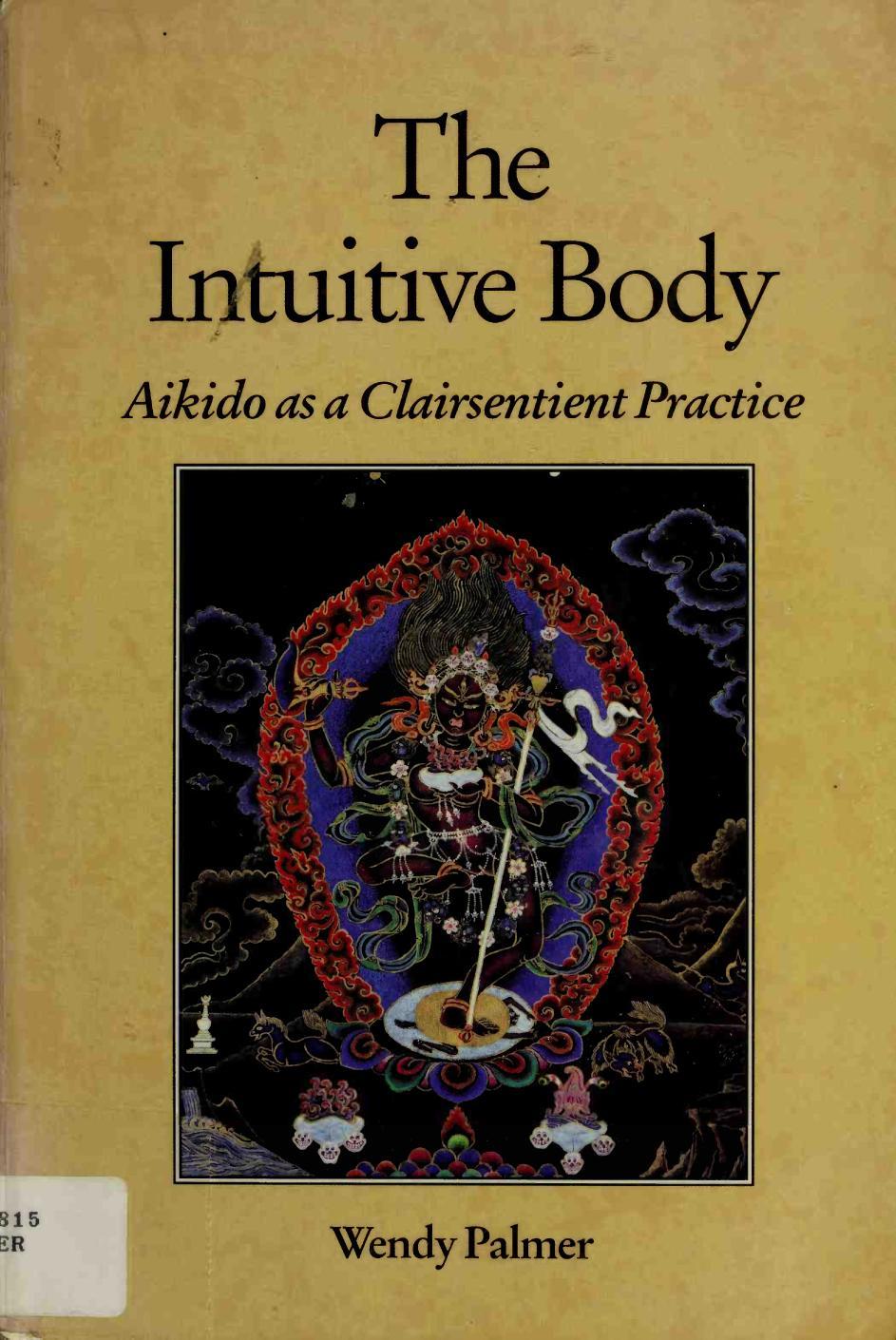
(Ebook) The Intuitive Body: Discovering the Wisdom of Conscious Embodiment and Aikido by Wendy Palmer ISBN 9781583942123, 1583942122
https://ebooknice.com/product/the-intuitive-body-discovering-the-wisdom-ofconscious-embodiment-and-aikido-33791452
ebooknice.com
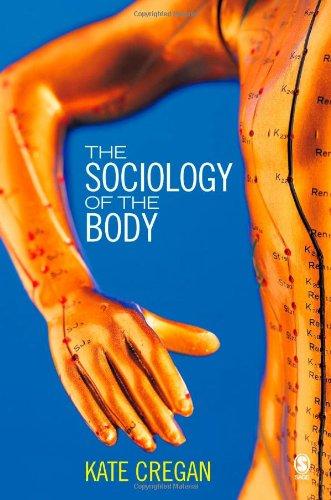
(Ebook) The Sociology of the Body: Mapping the Abstraction of Embodiment by Kate Cregan ISBN 9780761940241, 0761940243
https://ebooknice.com/product/the-sociology-of-the-body-mapping-the-abstractionof-embodiment-2443256
ebooknice.com
(Ebook) Ambiguity and the absolute : Nietzsche and Merleau-Ponty on the question of truth by Chouraqui, Frank; Merleau-Ponty, Maurice; Nietzsche, Friedrich Wilhelm ISBN 9780823254149, 9780823261116, 0823254143, 0823261115
https://ebooknice.com/product/ambiguity-and-the-absolute-nietzsche-and-merleauponty-on-the-question-of-truth-5261664
ebooknice.com
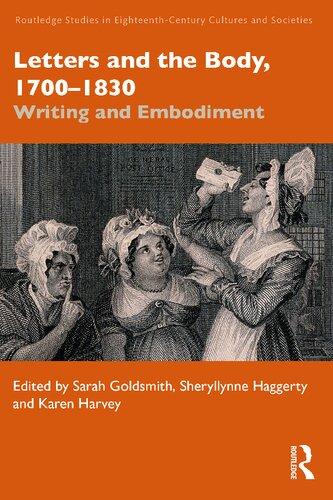
(Ebook) Letters and the Body, 1700–1830: Writing and Embodiment by Sarah Goldsmith, Sheryllynne Haggerty, Karen Harvey, (eds.) ISBN 9780367461515, 036746151X
https://ebooknice.com/product/letters-and-the-body-17001830-writing-andembodiment-50821732
ebooknice.com
(Ebook) Envisioning the Cosmic Body of Christ: Embodiment, Plurality and Incarnation by Aurica Jax (editor), Saskia Wendel (editor) ISBN 9780367356088, 0367356082
https://ebooknice.com/product/envisioning-the-cosmic-body-of-christ-embodimentplurality-and-incarnation-35152370
ebooknice.com
(Ebook) The Garb of Being: Embodiment and the Pursuit of Holiness in Late Ancient Christianity by Georgia Frank ISBN 9780823287024, 0823287025
https://ebooknice.com/product/the-garb-of-being-embodiment-and-the-pursuit-ofholiness-in-late-ancient-christianity-51413944
ebooknice.com
(Ebook) The Body in Language : Comparative Studies of Linguistic Embodiment by Matthias Brenzinger; Iwona Kraska-Szlenk ISBN 9789004274297, 9004274294
https://ebooknice.com/product/the-body-in-language-comparative-studies-oflinguistic-embodiment-51319026
ebooknice.com
(Ebook) Biota Grow 2C gather 2C cook by Loucas, Jason; Viles, James ISBN 9781459699816, 9781743365571, 9781925268492, 1459699815, 1743365578, 1925268497
https://ebooknice.com/product/biota-grow-2c-gather-2c-cook-6661374
ebooknice.com
CHAPTER ONE Introduction
You have a body. So do I. This is why we’re here, you reading and I writing. Take this away from us, and my thoughts would never reach you. Take this away from us, and we will never meet, through words on the page, through shaking hands or staring into each other’s eyes. Having a body is our way of being here. But of course, we’re not both here, or if we are, we are here in different senses: I am here writing, and you are here reading. Probably I am here writing before you are here reading, and probably, the place is different. I am here writing at my desk, in my study, but most likely, you’re here, as I wish for you and for this book, on a sunny terrace, with a coffee cup at hand. And yet, it is not absurd to say that right now, we are encountering each other. Except, we are encountering each other indirectly, via objects in the world, ink on the page, vibrations in the air between the pages and your eyes, on your side, and on my side, via my fingers typing, via the keyboard, the computer, and inbetween, via the entire production process of a book, chemical reactions, cogwheels, the mechanics that only bodily things can know. So our bodies make us present to each other, and with it
This is true at the collective level: there is a modern, Western way of living in our bodies, which is loosely identifiable, but identifiable nonetheless, with its rhetoric of domination, with its organisation around aesthetic, gendered, racial and age lines, one which is probably most marked by conflict and oppression. Conflict between myself and my body, but also conflict between identifying with our bodies and rejecting our affiliation with it, resulting for example in attempts to glorify our bodies, to repossess or to beat them into submission, through practices where the one becomes hard to distinguish from the other; think of plastic surgery, fitness practices, fashion, tattoos, scarification, makeup, and so on. This is also something that can be regarded individually, and I hope that perhaps your relationship with your own body could become a touch clearer to you thanks to this book, as I hope mine does to me. Some of the tropes we explore, tropes that were either created or taken up and systematised by the sleepwalking philosophical heroes this book is devoted to, have left their trace inside us, some of their conflicts of ideas have resulted in existential conflicts within us, some of us carry our bodies in defiance of the Platonic-Christian order, some of us in defiance of the materialism that sought to eradicate that order, and most of us are living in our bodies in composite ways, trying to find breathing room at the heart of these tensions between the conflicting and incompatible crushing noises of commands, theories, demands and injunctions all based on some fantastical interpretation of this simple fact: you have a body. The result is this creature limping through life, dragging their bodies along, letting them drag them along, remaining out of step with themselves, this creature with their constant exposure to fracture: you and me.
This book traces the history of the philosophy of the body in the West, it provides a narrative line to contextualise the most determinant moments in this tradition. What allows me to unify a diverse, rich, and often divergent tradition in such a way is, I think, the previous point related to cultural history. In spite of such
differences, and distinctions, we still meaningfully (if admittedly, not correctly) talk of the “Western tradition,” “Western culture,” and the like, to refer to a diverse, rich, changeable and Protean cultural context which although it is loosely defined, remained identifiable. Our thinking about the body, in the same way, has been passed down to us through a selective process that has organised it in coherent ways, and made certain key changes count not as ad hoc philosophical innovation, but as paradigmatic ones. As a consequence, any talk of a narrative must be, if it is to be responsible, general enough to accommodate a number of divergent views, and precise enough that it allows us to order what would otherwise look like chaotic diversity.
* * *
Thisbookgivesusabasistothinkofthebodyinnewways,outside the Western tradition. This book focuses on the Western tradition with a view to establishing its strengths and weaknesses, its arbitrary turning points as well as the ways this tradition has had a normalising impact on our lives. As such, its intention is not to reinforce or glorify this tradition, but rather, to offer some clues and insight on how, given the tradition we inherited, new ways to think of embodiment, and therefore new ways to live in our bodies are possible. The paradigm we inherited, one that hesitates between sanctifying and criminalising the body, one that hesitates between dominating, repressing and embracing embodiment, and one that fostered a sense of alienation from our bodies as well as a host of practices to care for them, is succumbing before our very eyes under the weight of its own contradictions. Two current developments could serve as examples of the pressure that has been applied to these contradictions. The first is the increased interaction between embodiment and technologies, including questions regarding plastic surgery, restorative surgery, cloning, transplants, and the like. The second is the increased claims of those minority communities defined in relation to their embodiment, body practices, racial features, gender or sexuality. The moral and political decisions that
on the body and embodiment, it does so by emphasising some texts over some others, and some ideas over some others. It does so according to two criteria, the first is accuracy and representativity, and the second is usability. The two criteria often clash: some of the most useful insights gathered by reading an author may not be the insights found in the author themselves. The first three chapters, which emphasise the insights gained by the failure of some authors to do away with the body, are an example of this. Some other times, the important insight is implicit, or peripheral to a given author, like when Freud acknowledges only implicitly and to an extent anticipates the insights of the phenomenology of the body. This doesn’t take anything away from the importance of these thoughts.
So, this book forced me to carry out a selection between authors, texts and insights, and to bring out a narrative line whose purpose is to square the circle of presenting the history of thought as it is on the one hand, and making sense of it on the other, that is to say, using each part of it as a context in which the other parts fit. This is, of course, a cause for suspicion: with such tools in hand; by granting myself such discretion, I may have allowed many biases to sneak in: philosophical biases, historical ones, ethnocentric ones, gendered ones as well as pedagogical ones. This is the quandary of any guide: they guide you by making choices for you. All that can be done is to point out what these choices are, and hold oneself accountable to the one criterion that’s left: does my experience of being embodied become clarified, even ever so slightly, by reading this book?
* * *
The grand arc of the book is simple: it chronicles the way an entire tradition moved from making the separation of body and soul a fundamental dogma to making their unity—embodiment fundamental. The book is organised in three sequences. The first sequence (chapters 2–4) explores the initial thrust of Western philosophy in terms of an attempt at reducing the fact of embodiment to another, more fundamental fact, be it the soul, god, or the duality of body and soul. The second (chapters 5–8) explores
the consequence of the failure of this attempt, and how the resistance of embodiment forces a refoundation of metaphysics in general: not only the meaning of being human must now change, so too does the meaning of the world and the meaning of truth. The third sequence (chapters 9–12) explores the consequences of embodiment for political thought. It argues that just like the fact of embodiment changes our view of the world, it should also change our view of politics. In particular, it changes what we call ‘power’ by questioning the notion of sovereignty.
Part I
The common idea according to which the Platonic-Christian tradition represents a sustained effort to avoid the fact of embodiment is correct. However, we find in the same authors the roots of a thread of thought that recognises the paradoxes that dualism entail and the difficulties involved with both an integrated and a dualistic account, leading into a much more serious engagement with embodiment. Part I examines the thoughts of three of the great architects of the Western worldview. It begins with Plato’s attempts at reducing the body to a mere restriction of the soul, and his realisation that such a reductive project is doomed to failure. It continues with Augustine’s Christian reworking of Plato and his realisation that embodiment is best seen as a possibility of self-determination which Augustine calls “sin” and which is itself irreducible. Finally, we examine Descartes’ attempts at presenting embodiment as secondary by emphasising that mind and matter are naturally distinct, and we chronicle how this attempt also fails. Taken as a whole, this first sequence shows ad absurdum that any attempt at doing away with the fact of embodiment leads to an impossible worldview. This results in the insight that (a) embodiment is a primary fact, and (b) this fact carries consequences for not only an account of the body, or of the human, but of the world itself.
Part II
The minor thread in Platonism-Christianity proposed (mostly in order to reject them) a series of discussions surrounding what the unity of
Chapter 11 examines the case of the racialisation of bodies (and therefore of the embodied experience of racialised people) as a historically constructed mode of embodiment which expresses and reinforces political oppression not via domination but via internalisation. Chapter 12 examines the same trope as it plays out in the case of gender and the oppression of women’s embodied experience.
As a whole, this journey yields three kinds of insights: historical, cultural and philosophical. Historically, it substantiates the claim that Western philosophy is organised around an ambivalence towards the fact of embodiment. Culturally, it shows that this theoretical ambivalence in turn has become embodied, leading to a certain discomfort of the Western subject, caught in the crosshairs of the supposed rivalry between body and mind, subjectivity and objectivity, passivity and activity. Philosophically speaking it shows that:
• Embodiment is best understood as localisation and commensurability.
• The body changes everything: the self and the world are coembodied.
• The body is best understood as a force rather than a thing, and therefore that the body is a theme that has the potential to dissolve the traditional oppositions of subject and the object, the self and the other, the active and the passive.
• As a result, the body problematises the idea of power as sovereignty.
Using This Book
This book is designed to be useful to students and anyone with an interest in asking the question of embodiment from a theoretical point of view. It is also designed to be used as a course companion. Indeed, this is how I’ve used this material over the years. As such, it covers a typical thirteen sessions semester, and each chapter is
PART I FOUNDATIONS AND PARADIGM
CHAPTER TWO
The Irreducibility of the Body 1: Plato
Readings
Plato, Cratylus, 399a–400d.
Plato, Phaedo, 69e–72d and 95a–104c.
Plato, Phaedrus, 246a–250d.
Beginning with Plato: A Disclaimer
We begin with Plato. Although it remains the right place to start, it requires a few explanations. Beginning with Plato has been a tradition in Western philosophy, ever since Plato himself. But of course, it contains its share of philosophical and cultural assumptions, several of which are relevant to the way philosophy has treated the body. The first problem when beginning with Plato is that this presumes that the beginning of philosophy is the beginning of Western philosophy in Greece. This de facto places any non-
3. The third insight we can gather from examining Plato’s struggles with the notion of embodiment is Plato’s failure to maintain the first two positions, and how as a consequence, Plato’s doctrine of the body is ambiguous, expressed less through arguments than through examples, myths and stories, and in the end, how the body cannot be fully explained if we maintain its inferiority to and dependence on the soul. In the same way as Augustine and Descartes later, Plato turned out to be unable to overcome the fact that the body needs a separate account and that this account changes everything: we can no longer account for the soul, for the truth, for the world or for human nature without referring to the body.
As you can already see, the first two of these claims (the dualist claim and the account of the Fall) offer a clear and familiar view of the relations between body and soul, one that fits the now widespread complaint that Western thought throws a stigma on the body. The last one makes things more complicated and goes against much of what Platonism has come to mean for us.
Plato’s Ambivalence
As discussed in the introduction to this book, a commonplace idea is that we live in our bodies in a Judeo-Christian way, but one can only say this if we begin Christianity with Plato. Indeed, this has become a common view. A lot of philosophers, starting in ancient times, thought that Plato had Christian revelations before the fact. That’s how closely Platonism and Christianity are weaved together—from a cultural perspective at least. In fact, we should say that the link between Platonism and Christianity concerns only one strand of Platonism, the one that emphasises the first point: the soul and the body are naturally distinct, the body threatens the purity of the soul, and the soul should dominate the body. However, there is another strand of Platonism, which doesn’t settle for such a division, but emphasises the problems involved with the relation of body and soul. That strand hasn’t been taken up by Christianity. Yet, it needs to be done justice to as well. For Plato
begins with a paradox, as a way to build intellectual energy, by arousing our curiosity. Before proposing the hierarchical account that will be taken up by Christianity, Plato’s initial concern is about the body and the soul as different yet related entities. There are two things, body and soul, that need to be put together (because we encounter them together in our everyday life), but whose union at the same time cannot be understood. So, Plato’s first contribution is to raise a problem. Here already, we move from the sort of dogmatic reading of Plato that says Plato is about repressing the body, to a more generous reading, that says, Plato is confronted with a problem, for which he does not have a simple solution.
In order to take a broad view of Plato’s contribution therefore, we must understand the three views outlined previously and investigate how (and to what extent) they belong together. To see this, we will focus on three texts (with some help from others): The early Cratylus, the middle Phaedoand the later Phaedrus. We will also use context from the Symposium, the Menoand the Republic.1
Many people are most familiar with the Republic, so let’s begin there. In the famous myth of the Cave and related passages, the Republicinformed us that there are ways to move from the visible to the invisible, from illusion to truth. In the myth of the cave, the philosopher is seen goingup towards the light. There seems to be a difficult, but linear and unbroken path between the world of illusion and the world of truth. Indeed, Plato claims that the cave dwellers are not plagued with ignorance, but with partial knowledge. They contemplate shadows of imitations of the real things. This is lowlevel knowledge to be sure, but the difference between this low-level knowledge and the knowledge acquired through the philosopher’s ascent towards the light is a difference of degrees. In other words, there is a linearity between the shadows, the imitations, and the real things, between illusion and truth. This is important because it already means that Plato will have to work to show how the body which is the seat of illusion, is not disconnected from the soul, which is the seat of theoria, truthful contemplation. Alongside Meno and even Phaedo, therefore, the Republic establishes a linearity which