FOV Engelsk 4
Textbook
Forberedende opplæring for voksne
Welcome to Engelsk 4
Learn to use this textbook
This textbook has six chapters about English in daily life. You read, talk and write about topics related to school, work and society. Each chapter includes four texts. Photos, illustrations, figures and questions help you understand the content. In this way, you prepare for the English exam after Module 4.
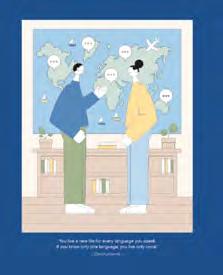
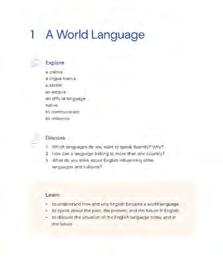
The chapter entry includes an illustration, a quote, keywords, discussion questions and learning goals that introduce the topic. Work together in class and share what you already know. Study the illustration and the quote Find the meanings of the words under ‘Explore’ and discuss the questions.
Answer the questions under ‘Before reading’. They prepare you for the text.
The magnifying glass shows that these are important words in the text. Learn what they mean in your own language or in Norwegian.
The introductions explain what the texts are about , so you can talk about them without reading the whole text.

After each text , you work on your own. These questions make you think about your own experiences and opinions.
Under ‘Team thinking’, you discuss the questions with your classmates. You share your experiences, opinions and knowledge.
When you have read all the texts in a chapter, you will find more questions with sentence starters Practice asking and answering them with a classmate.
At the end of each chapter, you use what you have learned to create role-plays, interviews, videos, presentations or other creative tasks.
In the last task of each chapter, you study the same quote as at the beginning. You will notice how much more you know about the topic.
We hope this book will interest you and make your English learning enjoyable.
Good luck!
A World Language
From Colonies to English-Speaking Nations
English in America
The English-Speaking World
The Future of English
Are you ready for questions?
Creative Corner
Sum Up!
My Future Plans
English at School and Work
Vocational and General Studies
The Importance of Everyday
English at Work
Reaching Your Goals
Are you ready for questions
Creative Corner
Sum Up!
Understanding Differences
Formal and Informal English
Accent and Identity
Listen Up! By Gulraiz Sharif
Voices and Accents:
Social Media Debate
Are you ready for questions?
Creative Corner
Sum Up!
4 Healthy Body, Healthy Mind
Mind and Body
Being Active Together
Discrimination and Health
Health Tips and Everyday Life
Are you ready for questions?
Creative Corner
Sum up!
5 Indigenous Peoples
Indigenous Voices
Climate Change and Indigenous Cultures
Native Americans: Then and Now
A Must-Read
Are you ready for questions?
Creative Corner
Sum Up!
6 Democracy and Your Voice
Democracy and Everyday Life
Freedom of Speech
Talking about Politics
Still I Rise By Maya Angelou
Are you ready for questions?
Creative Corner
Sum up!
Are you ready for more challenging questions?
Learning Strategies
‘You live a new life for every language you speak. If you know only one language, you live only once.’
Czech proverb ~
A World Language
Explore
a colony
a lingua franca
a settler
an empire
an official language native
to communicate
to influence
Discuss
1 Which languages do you want to speak fluently? Why?
2 How can a language belong to more than one country?
3 What do you think about English influencing other languages and cultures?
Learn
• to understand how and why English became a world language
• to discuss the situation of the English language today and in the future
• to speak about the past , the present and the future in English
Before reading ‘From Colonies to English-Speaking Nations’
1 What do you think ‘a world language’ means?
2 Why do you think people speak English in different ways?
3 Which countries have English as an official language?
administration • an expression • both • greatly independence • since • the British Empire • to colonise
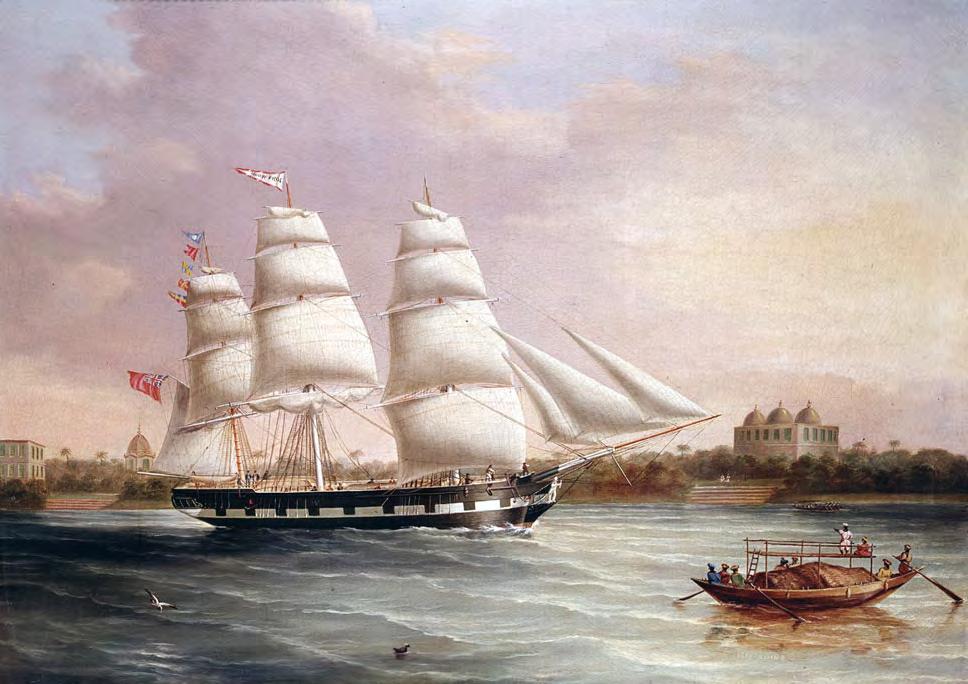
Sailing ship approaching Bombay, India.
From Colonies to English-Speaking Nations
The British Empire was a period when Great Britain ruled
many parts of the world. Alisha, Maaka, and Chinara all come
from different countries that were part of the British Empire
and were therefore controlled by Great Britain in the past
They explain the role English has played in their countries
and why it is still important.

Alisha from India
In 1600, the East India Company arrived in India In the beginning, only traders and officials spoke English. →
By the 1800s, English was used in both education and
administration, becoming the language of power. The languages
spoken in India mixed with English, and new languages
developed, such as Indian English or Hinglish Since India gained
independence from the Empire in 1947, English has continued
to be an important language in education and business.
What does Alisha mean when she says new languages developed?
Maaka from New Zealand
Our land changed greatly when the British colonised New Zealand in the 1800s. They brought new systems and laws, and English became the language of power. Before the colonisation, Māori was our native language. It was how we told stories and shared our culture and knowledge. Today, Māori and English are both official languages and many of us are proud to speak both.
What does ‘a native language’ mean?

Chinara from Nigeria
Nigeria became a colony of the British Empire in 1914, and
English was used in administration, business, and education.
We got our independence in 1960, and we made English our
own instead of just speaking like the British. Nigerian English
is full of local words and expressions. One example is ‘How you dey?’ , which means ‘How are you?’

Work on your own
1 What do Alisha, Maaka, and Chinara have in common?
2 How did English become a world language?
3 Why do you think English sounds different in India, New Zealand, and Nigeria?
Team thinking
1 Discuss if it was good or bad that English became an important language in India, New Zealand, and Nigeria.
2 What role does English have in your home country?
3 What role does English have in your lives?
Before reading ‘English in America’
1 What do you already know about American English and British? How are they similar, and how are they different?
2 How do you think one language can influence another?
3 Which words are almost the same in English and in your first language or in Norwegian?
originally • the American Dream • to arrive to influence • to trade
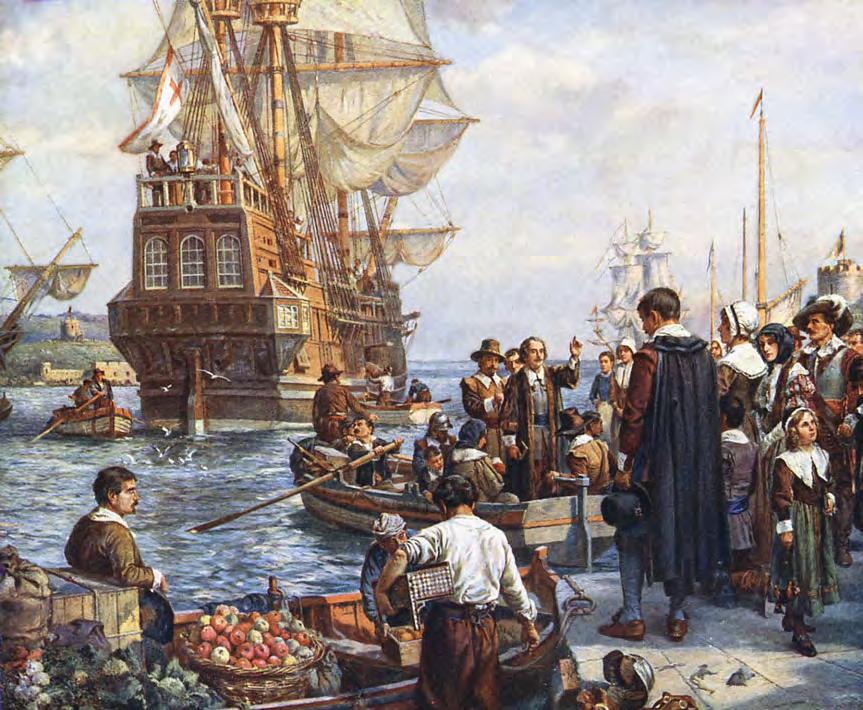
The sailing ship Mayflower leaves England in 1620.
English in America
Jim is from the United States. He explains how English became
the main language there. English settlers came from Britain in
1607 and made thirteen colonies They met Native Americans who spoke different languages. In 1776, the colonies became
independent and formed the United States. People used English
in schools, government, and at work.
Later, immigrants from countries like Germany, Italy, and
France added new words, such as ‘kindergarten’, ‘pizza’, and
‘café’ . Today, American English is used all over the world in music, films, literature, and online.
Teacher Jim’s Presentation
Hello students!
My name is Jim, and I am originally from the United States.
Today, I am here to tell you about how English became the language of my country.
Did you know that the US was once part of the British Empire?
It all began when about one hundred English settlers, men and boys, left their homeland. They travelled by ship from England
to North America and built a settlement in Virginia in 1607
Later, more settlers arrived They built houses and farms and
eventually established thirteen colonies.
How do you think the settlers communicated with the natives?
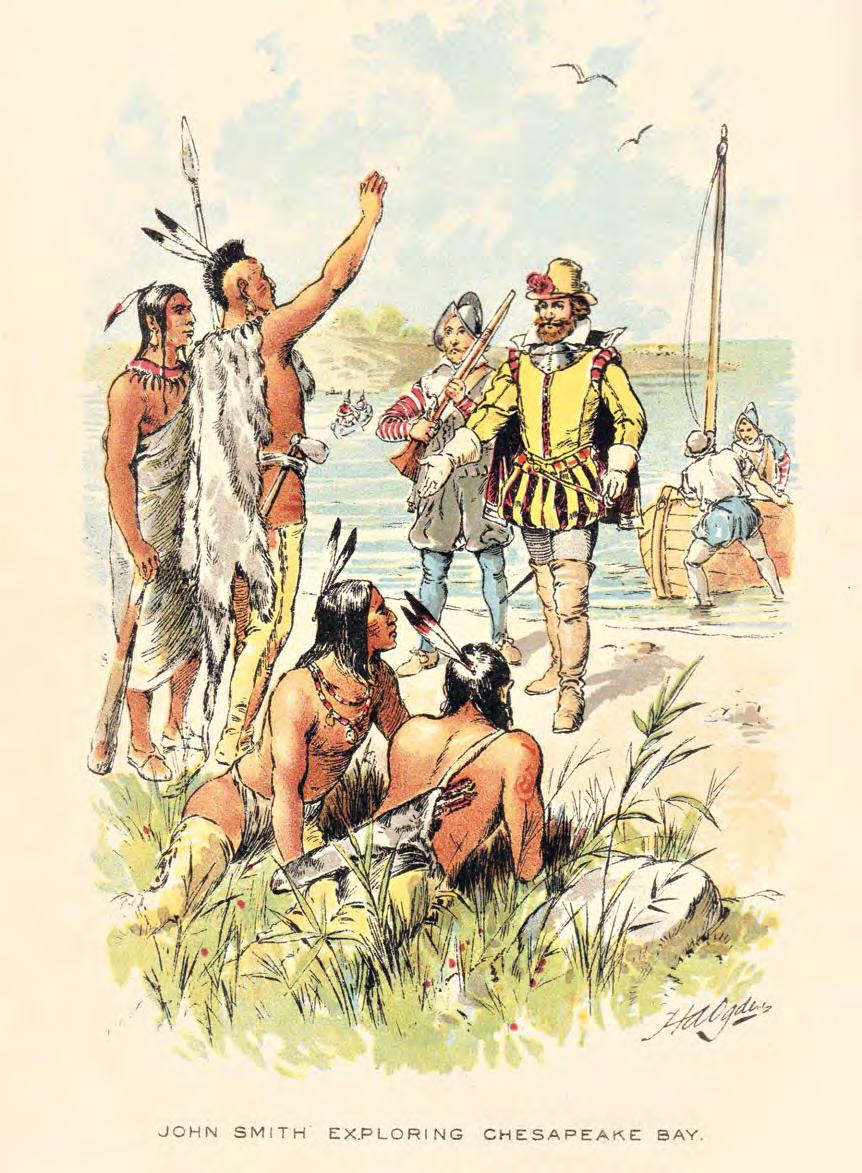
Native Americans greet English explorer John Smith and his crew, Chesapeake Bay.
The settlers met Native Americans, who had their own
languages and did not understand English. When they traded, they communicated with simple words from each other’s
languages, along with body language It must have been a challenge for them to understand each other.
Then, in 1776, the colonies became independent from the British Empire. English became the language people used in schools, government , and business, and soon it was established as the main language of the new country, the United States of America
Later, in the 1900s, many immigrants arrived from countries such as Germany, Italy, France, and Norway. They came in search of work and a better life. Perhaps you have heard of the American Dream?
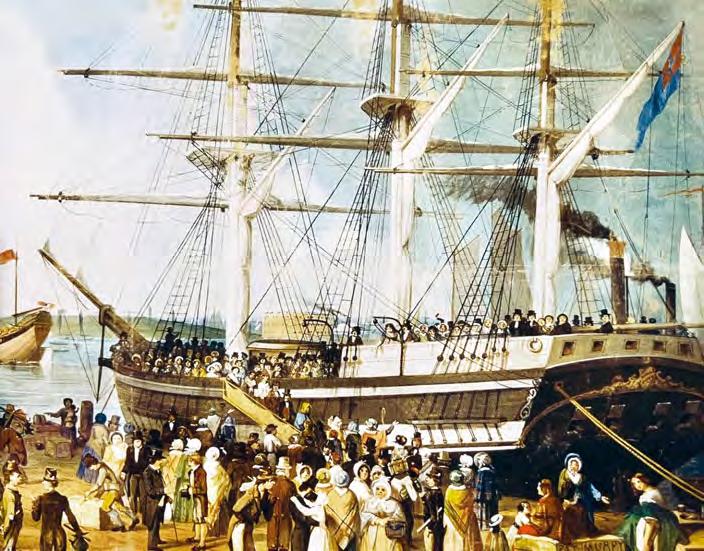
European emigrants arrive in New York.
How do you think immigrants from different countries communicated with each other?
Over time, words from these languages mixed with English
‘Kindergarten’ , for example, comes from German, ‘pizza’ from
Italian, and ‘café’ from French. These language influences made
American English different from British English. Today, American
English is everywhere You can hear it in songs and films, and
read it in books, newspapers, and online.
Thank you for listening, and feel free to ask questions
Work on your own
1 Why is body language important?
2 How did Native Americans and English settlers communicate?
3 Look up the word ‘kindergarten’ in a dictionary and find out
what it means. What is the word for it in Norwegian and in
your language?
Team thinking
1 How do you think the meeting between the Native Americans
and the English settlers might have felt for both groups?
2 Which languages is your first language influenced by?
3 Why do languages often mix?

Before reading ‘The English-Speaking World’
1 What do you know about where in the world people speak English?
2 What do you think it means that English is a foreign language in Norway and an official language in India?
3 Do you know about other world languages people use when they do not speak the same language?
first language • a second language • expanding inner • outer • to consist • within
Most people in Britain speak English as their first language.
The English-Speaking World
Today, about 1.5 billion people in the world speak English.
These people belong to three main groups:
1 The Inner Circle: people who speak English as their first
language.
2 The Outer Circle: people who speak English as an official
language in their country.
3 The Expanding Circle: people who learn English as a
foreign language
In the world today, there are more than 1.5 billion people who speak English Within this group, less than one third of the people are native speakers. About two thirds are non-native speakers.

Many people in India learn English because it is an official language.
The Inner Circle consists of the countries where English is
the native or the first language. In this circle, there are about
380–400 million speakers.
The Outer Circle consists of the countries that were part of the
British Empire In these countries, English is an official language
and is used as a second language in addition to their native official
languages. In this circle, there are about 200–300 million speakers.
The Expanding Circle consists of all countries where English is taught as a foreign language. This means that children start
learning English at school The Expanding Circle includes about
1 billion speakers across the world. English is a lingua franca, a common language that people use to communicate when they do not speak the same native language.
Look at the illustration. Why is the Inner Circle the smallest?
Expandin Circle
Outer Circle
e . . Malaysia , Sin apore , India andPhilip ines I nner C irc l e and C anada
e . . Japan , China, orea , NorwayandBrazil
(Source: Kachru 1985)

All over the world, people learn English as a foreign language
Work on your own
1 Explain which of the three circles you belong to and why?
2 Which circle do you believe will be the largest in the future?
3 Do you think people in different circles learn or use English in the same way? Why or why not?
Team thinking
1 Discuss why English has become the most important world language, a lingua franca.
2 What can happen to small languages when many people use English?
3 How do people in Norway use English today at school, at work, on social media, and in entertainment?

Before reading ‘The Future of English’
1 Take a quick look at the following text. What kind of text is it?
2 Where and when do you hear or read English during the day?
3 What do you think will happen to the English language in the next fifty years?
elderly • everywhere • maybe • surprising the future • to grow • to hear • to wonder
The Future of English
Sam and Karoline are speaking on the phone about how they use English in their daily lives and what they think about the future of English. Karoline is from Norway, and Norwegian is her native language. Sam is from the United States, and English is his native language.


Sam Did you hear or read any English today?
Karoline Yes, I do every day! There is English everywhere, on the bus, in shops, and even on my phone
Sam That’s cool! I see it all the time too, but since I live in the US, that is not so surprising.
Karoline I often wonder why English is used so much and is so important.
Sam Me too! What do you think it will be like in fifty or even a hundred years?
Karoline I think English will keep growing. So many songs, films, and books are in English. And because so many of us learn it, it makes sense to use English
when we write and speak so that more people can understand and enjoy it.
Have you seen or heard anything in English around you today?
Karoline Maybe English will be the only language in the world in a hundred years.
Sam Really? I am not sure I think it will still be important, and people will keep learning it. But there are other big languages too.
Karoline Yes, like Spanish, Arabic, and Mandarin Chinese. Mandarin has the most native speakers in the world
Sam Exactly! Maybe one of those will be the language most people speak in the future

Work on your own
1 What other language in the world do you think could become a language of power? Explain why.
2 In what situations could you use English in the future?
3 What would be the advantages and disadvantages if everyone in the world spoke the same language?
Team thinking
1 Talk about situations in the past week when you saw or heard English.
2 What are some situations in your own life where English is more useful than other languages?
3 What would happen if people could only speak their own language?
Are you ready for questions?
Ask and answer questions. Take turns. Use the sentence starters
if you need help. If you want more of a challenge, listen to your
partner asking the questions without looking in the book.
1 Why did the English language spread around the world?
The British Empire was
The English language spread because of …
I learned that …
2 What is a colony, and what does it mean to colonise?
To colonise means to
When the British …
Many countries were …
3 What do the countries Alisha, Maaka, and Chinara come from have in common?
The countries were all
What they had in common was …
Alisha, Maaka, and Chinara come from …
4 What does ‘native language’ mean?
A native language is
People usually learn their native language when …
My native language is …
5 When do you use English in your daily life?
I use English …
I also use English when …
I would like to use English when
6 In what ways can English connect people?
English can be used to …
Without English, we …
Some examples are
7 What could be the future of English?
In the future, English will be …
I think that depends on …
If English became less important , it would mean that …
8 Could you explain what the three circles of English are?
The three circles are …
English is divided into …
These circles describe …
9 What does it mean to give a presentation?
It means that …
You talk about …
When I give a presentation, I …
10 Why does English have words like ‘kindergarten’, ‘pizza’, and ‘café’?
Because English borrows words …
These words come from …
English has many words that
More questions on page 148.
Creative Corner
Your task
Create a video presentation to show what you have learned in this chapter.
Learn
• to organise information clearly, using headings, sections, and visuals
• to use presentation skills, such as looking at the camera, speaking clearly, and using your own words instead of reading from a sheet of paper
Step 1
Review what you have learned in this chapter. Look at the
pictures and headlines first. Read the texts again and decide
what you found most interesting. Look at the tasks you have
done to remind yourself of your ideas
Step 2
Find pictures you want to include in your presentation.
Step 3
Organise your information. Divide it into four sections based
on the four texts in the chapter.
Another way to structure the information is to talk about:
• something you already knew
• something new you learned
• something you found interesting
Step 4
Record a video of yourself giving your presentation. Try different
ways to present your work. When you watch the video, decide
where you could improve your presentation skills. Make changes
until you are happy with your work
Practise in front of other students and give each other
feedback on what could be improved.
Check
• Did you include all the information you wanted from this chapter?
• Did you use headings, sections and pictures?
• Is it easy to understand what you are saying in the video?
Step 5
Finally, present your video to your classmates.

Sum Up!
At the beginning of this chapter, you studied this Czech
proverb or saying:
‘You live a new life for every language you speak. If you know only one language, you live only once.’
Understand the words
1 What do these words mean?
live • new life • every • language • speak • know • only • once
2 Match some of the words with pictures you find on the
internet or with your own drawings
3 Write a sentence for each word.
4 Try to say the proverb in your own words. What is the
Czech proverb trying to tell us about language?
Your experience
5 How has your experience of learning a new language been?
6 Share your thoughts with your learning partner and discuss
each other’s experiences. What has been similar, and what
has been different?
7 After sharing with your partner, share your experiences
with the class. Write a few words on the board that illustrate
what you have discussed.
Use your imagination
8
Draw a mind map of what learning a new language feels like
for you. Take a moment to think about what your learning
process has been like and what emotions you have felt.
Try to show that in your mind map.
9 Explain your mind map to your learning partner. Then swap
roles and ask questions about your partner’s mind map.
‘The best way to predict the future is to create it.’ ~ Peter Drucker ~