

FAGDEL Citizens YF
Engelsk for Salg, service og reiseliv
THERESE HOLM
MONICA OPØIEN STENSRUD
Materialet i denne publikasjonen er omfattet av åndsverklovens bestemmelser. Uten særskilt avtale med Cappelen Damm AS er enhver eksemplarfremstilling og tilgjengeliggjøring bare tillatt i den utstrekning det er hjemlet i lov eller tillatt gjennom avtale med Kopinor, interesseorgan for rettighetshavere til åndsverk. Enhver bruk av hele eller deler av utgivelsen som input eller som treningskorpus i generative modeller som kan skape tekst, bilder, film, lyd eller annet innhold og uttrykk, er ikke tillatt uten særskilt avtale med rettighetshaverne. Bruk av utgivelsens materiale i strid med lov eller avtale kan føre til inndragning, erstatningsansvar og straff i form av bøter eller fengsel.
Design og sats: Welt, Erlend Askhov Omslagsdesign: Erlend Askhov Omslagsillustrasjoner: Jon Arne Berg
Forlagsredaktører: Birger Nicolaysen og Patricia Kathleen Bronte
Bilderedaktør: Birger Nicolaysen
Trykk: Livonia Print Sia, Latvia 2026
Utgave 1
Opplag 1
ISBN 978-82-02-89709-3
Papiret i Cappelen Damms bøker er hentet fra bærekraftig skogsvirke. Ingen av forlagets produkter bidrar til avskoging eller forringelse av skog. Cappelen Damm arbeider for å redusere miljøbelastningen fra våre bøker så mye som mulig.
Les mer om Cappelen Damms miljøarbeid ved å scanne QR-koden: www.citizens.cdu.no www.cdu.no
Referring to this textbook using APA 7th
In a text:
(Holm & Stensrud, 2026, p. 000)
000 = the page number where the quote/information is found
In List of References: Holm, T. & Stensrud, M.O. (2026). Citizens YF Fagdel – Engelsk for Salg, service og reiseliv. Cappelen Damm.
Preface
We are pleased to present an English textbook created especially for you as a student of Sales, Service and Tourism. As you work through the different topics in this book, we hope you will find them interesting, relevant to your studies and helpful for developing your skills so you can become a confident English user in your future profession.
The textbook is organised into three main chapters, each focusing on essential aspects of your education and future working life. At the end, you will find a vocational glossary to support your language learning, with definitions of terms and Norwegian translations.
Chapter 1: Careers
This chapter explores a variety of jobs within your field. You will meet people working in different professions, learn about day-to-day tasks and key skills, and reflect on your own ambitions and career choices. You will also have the opportunity to practise writing a job application and to consider what makes work meaningful and rewarding.
Chapter 2: Tools & Procedures
Here you will learn about the tools, equipment and procedures used in your line of work. The chapter covers workplace vocabulary and provides practice in understanding and following written and oral instructions. You will also reflect on the importance of clear communication in the workplace and see how English is used in professional situations.
Chapter 3: Caution!
The final chapter focuses on challenges and safety issues in your future profession. You will explore important topics such as health and safety routines, how to recognise occupational hazards, reporting accidents and dealing with workplace problems. Through real-life stories, scenarios and tasks, you will reflect on responsibility, reputation and how to handle difficult situations. The chapter helps you develop language for risk assessment and promotes safe, professional working habits. Other topics include workplace challenges related to ethical behaviour, for example professionals who “cut corners” at work.
Each chapter offers a variety of texts and tasks to help build your English skills and professional competence. At the end of each chapter, you can review your progress and reflect on what you have learned. Throughout the book, you will find opportunities to develop speaking, reading, listening and writing skills – always connected to your education programme.
Our hope is that this textbook will support you as you improve your English, and that you enjoy the learning experience.
We wish you every success in your studies!
Monica & Therese
Chapter 1: CAREERS
Chapter 2: TOOLS & PROCEDURES

Chapter 3: CAUTION!
Vocational Glossary
Note:
→ Listening texts and recordings of reading texts: citizens.cdu.no
→ Challenging tasks are marked with a darker colour like this:
→ Exam preparation: information, examples of exam tasks and useful tips for answering them at citizens.cdu.no

Careers

Focus
In this chapter, you will:
→ listen to, understand and use words and phrases related to your future profession
→ learn about different professions within Sales, Service and Tourism
→ reflect upon various aspects of careers in Sales, Service and Tourism
→ learn how to write a job application
Reflect
Discuss with a partner:
A What is most important to you when choosing a future career: good pay, good colleagues or interesting work?
B Is it important for you to work where you already live, or would you like to travel to work somewhere else?
C Have you always known what you want to become, or are you curious and open to possibilities?
Chapter keywords
→ career
→ profession
→ occupation
→ task
→ skill
→ quality
→ professional
→ workplace
→ job application

Why Did You Choose this Education Programme?
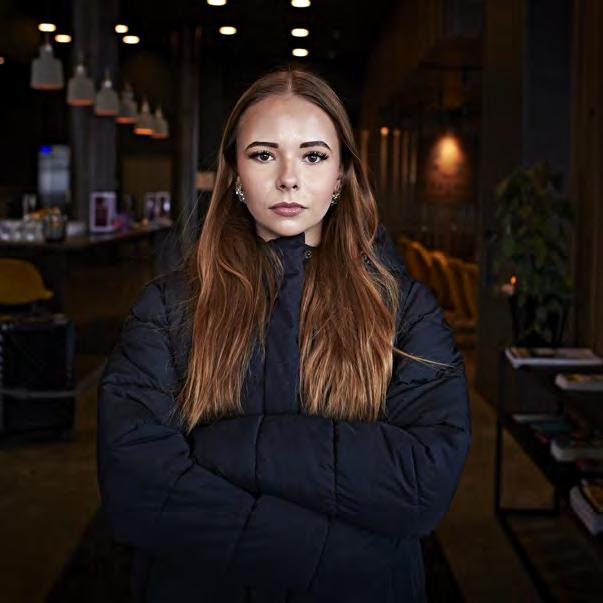
Here is an interview with two students from Sales, Service and Tourism. The interview was carried out when the students were almost done with their first year.
Glossary: see p. 104
Why did you choose Sales, Service and Tourism?
LUCAS (17): I have been a car fanatic ever since I was a little kid. My father jokingly says that my first word was “Lamborghini”. It wasn’t, but this joke shows you that I’ve had a lifelong love of cars. When I was looking for ways to work with cars, I quickly realised that being a mechanic was not my thing. Selling cars, however, is right up my alley. So I decided to apply to Sales, Service and Tourism to become a sales representative and work in a car dealership later on.
SANDRA (17): When it came time for me to apply for upper secondary school, I had no idea what I wanted to do. A friend of mine was a student at Sales, Service and Tourism and liked it, so that’s where I ended up. During the school year, I have found out that I want to become a security guard in a shopping mall or at an airport. I like the idea of keeping people safe, and I think I will enjoy a job where there is some action from time to time.
What would you like to work as, and how will English be relevant for you in your future profession?
LUCAS: As I said, I feel confident that selling cars is a job I will enjoy and be good at. Being able to communicate properly in both Norwegian and English is a must when working in a car dealership in Norway. It’s not enough to know a few words and phrases in English, because the job involves persuading people to spend a lot of money on a car.
SANDRA: Since I want to be a security guard, communicating in English will be important for me. In a shopping mall or at an airport, there will be people who don’t speak any Norwegian, and then good English skills will be valuable and necessary.
What have you learned about the importance of communication within your future profession?
LUCAS: You must convince people you are trustworthy and confident if you want to inspire them to buy the product you are selling. This means that you need good communication skills. You should also show the customers that you know a lot about the product you are selling, and that is hard to do if your vocabulary is limited to “car works well” and “buy car now, please”.
SANDRA: In stressful situations, a security guard needs to be able to calm people down using both words and body language. This means that you must be aware of both what you say and what you do, and you must give people information quickly and clearly.
1 Understand: True or False?
Are the statements below true or false? Correct the false statements with information from the interview.
�� Lucas chose Sales, Service and Tourism because his father told him to.
�� Sandra wants to be a security guard.
�� Lucas thinks that communication skills have no value to a sales representative.
�� Sandra chose Sales, Service and Tourism because her friend told her it was a very stressful education programme.
�� Lucas believes that English will be very important in his future profession.
�� Sandra does not think that nonverbal communication will be important in her future profession.
2 Interact: Interview
�� In pairs, interview each other using the questions below. While your partner is speaking, take notes rather than writing full sentences.
Question 1: Why did you choose Sales, Service and Tourism?
Question 2: What would you like to work as, and how do you think English will be relevant for you in your future profession?
Question 3: When and why do you use English outside the classroom?
�� After you have finished the interview, use your notes to write a short text in the same style and structure as the ones you have just read. Make sure your text includes the key information from the interview and is written in complete sentences.
Here are a few examples of occupations within Sales, Service and Tourism:
Here are a few examples of occupations within Sales,
and
Glossary: see p. 104


Travel
Key
Travel agent


Tourist
1 Create: Quiz
�� On your own, make a quiz with five questions based on the mind map. Example: In which occupation do key tasks consist of preventing unwanted incidents? ( Answer: security guard)
�� Swap quizzes with a partner. See who can answer the most questions correctly.
2 Create: Mind map
The mind map on pp. 8–9 includes general occupations within Sales, Service and Tourism. Choose two of the more specific jobs listed below and create a mind map with the same kind of information as in the mind map you have studied.
bodyguard – social media marketing manager – bus tour guide – school front desk receptionist – video game sales assistant
3 Practise: Listening
My chosen occupation
Look at the questions below and make sure that you understand what they mean before listening to Satinder Singh Sandhu from India at citizens.cdu.no.
�� What is the text mainly about?
1 A man who wants to quit his part-time job.
2 A man who wants to work in marketing.
3 A man who dislikes talking on the phone.
�� What is the main purpose of this text?
1 To inform about what it is like to work at a call centre.
2 To present Satinder’s job choice.
3 To persuade more people to work with marketing.
�� What is true about Satinder?
(More than one answer is correct.)
1 He studies marketing and sales.
2 He does not learn anything by working in the call centre.
3 He wants to work in marketing.
4 He thinks that there will be a growing need for people with marketing skills.
There are many different jobs within Sales, Service and Tourism. Here you can check out some of them. Note: a job can also be called an occupation, a profession, a career, a vocation or a trade.
What Are They Doing?
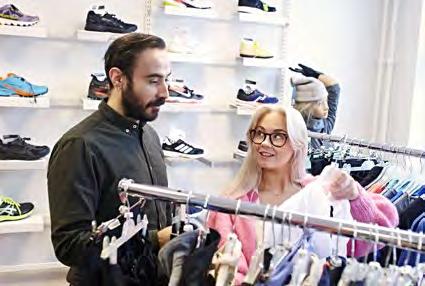
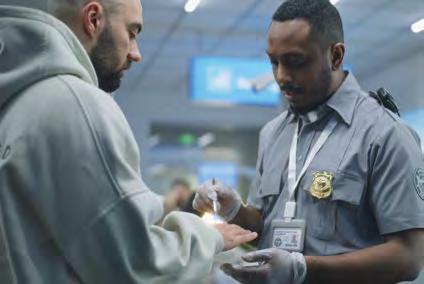
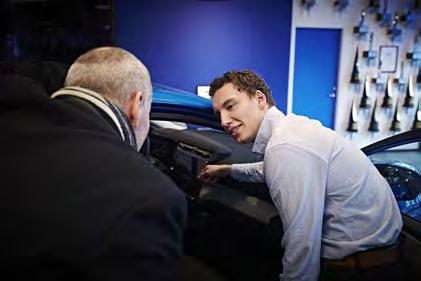
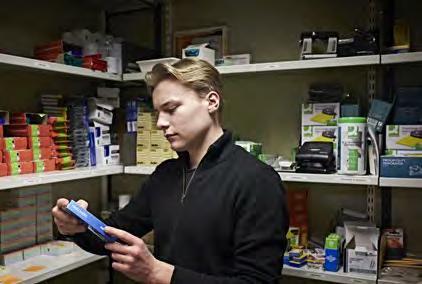

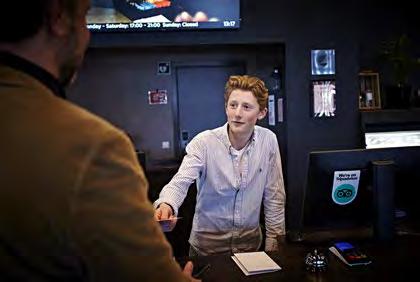

1 Practise:
Workplace vocabulary
Who does what? Which picture matches each description?
�� A sales representative is trying to sell a car to a customer.
�� A service and administrative worker is checking supplies in a storeroom.
�� A service and administrative worker is having a meeting with the company’s Human Resources (HR) division.
�� A hotel receptionist is helping a guest check in.
�� A travel agent is trying to persuade a customer to buy tickets for a tour.
�� An airport security guard is conducting a hand swab screening on a passenger.
�� A sales representative in a sporting goods store is providing customer service.
2 Practise:
Workplace vocabulary
�� On the next page, you will see a list of possible occupations you can choose as a student of Sales, Service and Tourism. Match the Norwegian title with the correct English translation. There are four main professions within Sales, Service and Tourism: sales representative, travel agent, security guard and service and administrative worker, but within each main profession there are many possible jobs.
Examples:
A service and administrative worker can work as a hotel receptionist.
A sales representative can work as a car salesperson.
A. sales representative1. resepsjonist på kontor
B. security guard 2. salgsmedarbeider i klesbutikk
C. service and administrative worker 3. kundeansvarlig
D. travel agent 4. hotellresepsjonist
H. hotel receptionist 5. vekter
I. car salesperson 6. service- og administrasjonsarbeider
J. sales representative in a grocery store 7. arrangementsplanlegger
G. sales representative in clothing store 8. reiselivsmedarbeider
H. office receptionist 9. salgsmedarbeider
I. event planner 10. salgsmedarbeider i matbutikk
J. key account manager11. bilselger
�� Here are short descriptions of some of the jobs in task 2A. Find out which job matches each description:
1 Protects property and people, deals with disturbances and communicates with law enforcement about incidents.
2 Welcomes guests, manages check-ins and check-outs, handles reservations and takes care of customers’ needs.
3 Helps clients plan and book trips and activities.
4 Helps customers find a vehicle that suits their driving needs and price range.
5 Provides customer service, schedules office activities and answers phones and emails.
3 Create: Writing
Write a caption (bildetekst) for each of the photos on the right. Describe what is happening in the photo, and who is doing it. Write the captions using the -ing form. Example: A receptionist is answering the phone.
Use the name of the correct occupation for each photo, and combine it with one of the verbs:
Occupations: office receptionist – security guards – sales representative – service and administrative worker
Verbs: patrol – type – show – sign
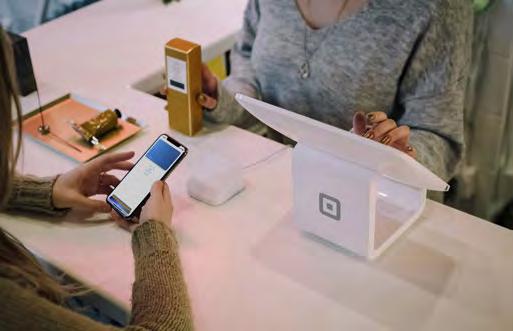

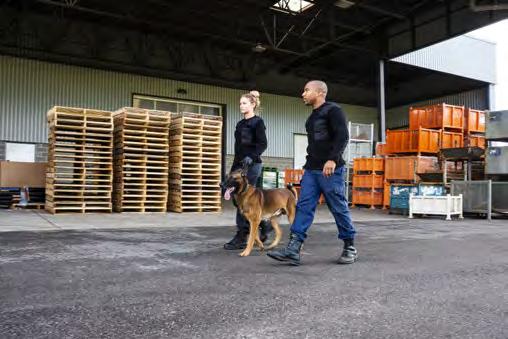

Practise:
Vocabulary
A In pairs, divide the words and phrases below between you and find out what they mean. Use each word in a sentence to show that you understand its meaning.
Student 1: sales figures – knowledge – sales representative – duties – security guard
Student 2: service and administrative worker –employee – hotel receptionist – competent – efficiency
B Then explain the words to each other, using your sentences as examples.
Four Occupations
As a student in the programme for Sales, Service and Tourism, you have a variety of options when you start to specialise in a certain occupation. When you choose what you want to work with in the future, your decision should be based on both job opportunities and personal interests. For instance, maybe you are the kind of person who just loves to offer good customer service.
Glossary: see p. 104
The text on the next pages gives short descriptions of four occupations, including information about each job and the skills it requires.

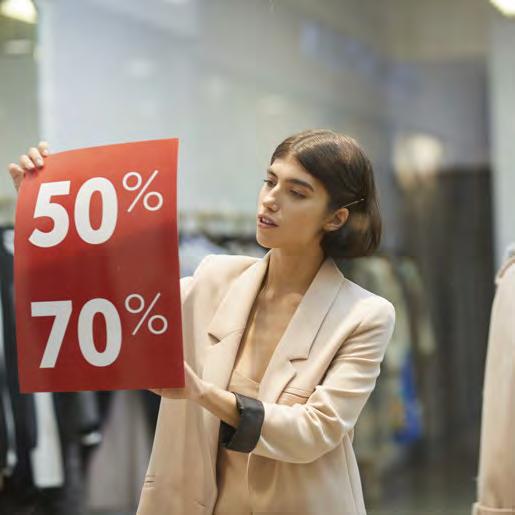
SALES REPRESENTATIVE
What do they do?
For a sales representative, it is necessary to sell as many products as possible, for example, clothes or cars. This is important because if they do not sell enough products, the shop will not make enough money to survive. In addition, a sales representative must remember that “the customer is always right”. This means that you must offer excellent customer service and answer all kinds of questions from customers, in order to reach the sales figures you want. The goal is to make customers choose your shop and decide to buy your products.
What qualities or skills do they need?
To be a successful sales representative, you should enjoy working with people and persuading them that what you have to offer is the best option on the market. This must be done in a polite way that suits the customers, so good communication skills are important. You must also have expert knowledge about your products or services and be confident when talking to customers. Finally, you must tolerate a high level of activity, and even stress, because busy shops are successful shops.
SERVICE AND ADMINISTRATIVE WORKER IN AN OFFICE
What do they do?
The role of a service and administrative worker in an office is often more important than you might first think. All managers and directors rely on efficient administration, and therefore office workers are essential. Without service and administrative personnel who handle daily tasks such as managing telephone calls, emails and post, scheduling, accounting and secretarial duties, both the management and the company as a whole would face difficulties.
What qualities or skills do they need?
As an office worker, you must maintain structure and order, both in your thinking and at your desk. Even on busy days with many tasks to keep track of, you cannot ignore or forget important business matters. For example, consider the consequences if you did not confirm the dates for a crucial meeting with businesspeople from several different companies. Efficiency and the ability to work confidently with various computer systems are also key qualities required of a competent office worker.

a Name two tasks carried out by a sales representative and two tasks carried out by a service and administrative worker in an office.
b Why do you need good communication skills in these two occupations?

HOTEL RECEPTIONIST
What do they do?
Being a hotel receptionist means being the person who always offers excellent service to guests and is at the heart of the hotel’s daily operations. The receptionist is the first person guests meet when they arrive at the hotel, so it is important that receptionists welcome them in a professional manner. Hotel receptionists also make sure all the other hotel employees have necessary information about check-ins, check-outs, breakfast orders, cleaning and complaints. Without the receptionist, hotels would not be able to operate professionally.
What qualities or skills do they need?
To succeed as a hotel receptionist, you need to have a genuine interest in taking care of others. You must take the initiative, be open-minded and like to communicate with other people. A good command of English is also necessary, because you will meet guests from many different countries.
SECURITY GUARD
What do they do?
Security guards work for private companies, public institutions or specialised security services. They are responsible for protecting people, property and facilities. Some tasks include patrolling areas at all hours of the day, controlling access to buildings, checking identification, observing suspicious behaviour, responding to alarms and reporting incidents. They also inspect and maintain safety equipment and make sure that rules and procedures are followed.
What qualities or skills do they need?
First of all, it is important to stay calm and focused in stressful situations, because unexpected events could happen at any time. You need to be observant and alert, notice details quickly and make the right choices in a split second. In this profession, you must be able to work in teams as well as individually. You need to communicate clearly, show respect towards others and handle conflict in a sensible way. Good physical health and emotional stability are also required.

a Name two tasks carried out by a hotel receptionist and two tasks carried out by a security guard.
b Why do you need good communication skills in these two occupations?
CHECKLIST: Go to citizens.cdu.no to find a list of the most important points from the text you have read.
1 Understand
According to the text, who …
�� needs good physical health and emotional stability?
�� should have a genuine interest in the well-being of others?
�� needs to welcome guests in a professional manner?
�� can work for private companies and public institutions?
�� must remember that “the customer is always right”?
�� needs to know how to use various computer systems?
�� needs to know how to maintain safety equipment?
�� needs to be able to stay calm in stressful situations?
�� handles daily tasks such as phone calls and scheduling?
�� should focus on selling as much as possible?
2 Create: Word bank
�� Read through the text again to find words. Copy the table below and write at least four words in each category.
Word list A I know what these words mean.
Example: quality –egenskap
Word list B I think I know what these words mean. Check in a dictionary or ask someone.
Word list C I do not know what these words mean. Check in a dictionary or ask someone.
Example: facility Example: suspicious
�� Write a sentence for each word you have written in word lists B and C.
�� Choose two words from your list B and two words from your list C. Write an explanation in English for each word.
Example: suspicious → Suspicious means feeling that someone has done something wrong or even illegal, but without having proof to back it up.
3 Create: Writing
Choose an occupation within Sales, Service and Tourism which was not mentioned in this text and write a similar text about it, answering these two questions:
→ What do they do?
→ What qualities or skills do they need?
4 Practise & Interact: Workplace vocabulary
�� Here are some of the objects you can see in the illustration below. Work together to translate the words into Norwegian.
checkout counter / payment reader / cash register / shopping bag / sales representative / customer / shelf display / clothing rack / merchandise / hanger / shopper
�� Play I Spy with one or more partners. I Spy is a guessing game where one player chooses an object on the illustration and announces to the other player(s) that “I spy with my little eye something beginning with ...”, naming the first letter of the object (in English). The other player(s) tries to guess what the first player is spying. You get one point for each correct guess. Take turns.

Understand & Mediate
Work in pairs. One of you chooses two and the other one chooses three different people from the five professionals in the text that follows.
A Individually, read the texts and write down 4–5 keywords about each of the people you have chosen.
B Use the keywords to tell your partner about the people you have read about.
Professional Pride
pro·fes·sion·al·ism
noun
The competence or skill expected of a professional. The key to quality and efficiency is professionalism.
OXFORD ENGLISH DICTIONARY
Having professional pride means being proud of your work. Here, five workers in jobs within Sales, Service and Tourism explain what makes them feel proud of the work they do.


Glossary: see p. 104
IBRAHIM NAZIRI:
As a sales representative in a fashionable clothing store, I spend my days talking to customers and trying to make sales. Some of my co-workers reserve their best customer service for people who look like they have a lot of money. This kind of behaviour has always annoyed me. Some weeks ago, an older gentleman came in looking for a gift for his wife. Two of my colleagues completely ignored him, probably because of the way he was dressed, but I hurried over to let him know that I was more than happy to help. I spent more than an hour with him, listening to his sweet stories about his wife, and he ended up buying a beautiful cashmere scarf. I wrapped it up in our nicest wrapping paper and sent him on his way. The next day, he returned with a bouquet of flowers for me, and a card that read: “Thank you for making me feel welcome”. I will continue to take pride in giving good service to everyone.
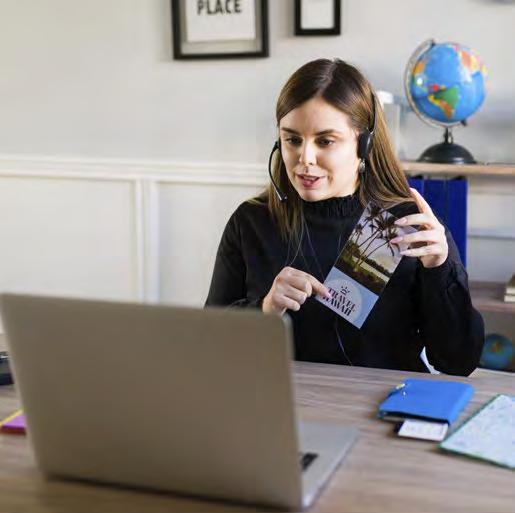
KATHY ROSS:
When I decided to become a security guard, I had this fantasy that every day would be action-packed, and I would help prevent crime and stop illegal activities every day. This is not the case at the shopping mall I work at. Don’t get me wrong: I don’t mind escorting elderly women out to their car, telling teenagers to take their skateboards outside or helping newly single dads find the toy store. But when there is some extra action at work, I do enjoy it. Like last month, when I caught a shoplifter red-handed while she was stealing a pair of expensive shoes. I caught her, took her to my office and called the police. They told me that she had been stealing in stores in the area for months without getting caught. I went home from work feeling a little prouder that day.
JENNY WILLIAMS:
I have been a travel agent for a few years, and I really love helping people make their travel dreams come true. Once there was a woman in her late seventies who came to the agency with such a dream. She had been saving up for ages to go to Nigeria, and I eventually managed to fit the trip to her limited budget. When I called to tell her the tickets were ready, she was very excited. This made me feel great, and what made me even happier was that I had managed to ask some favours and get her a free upgrade to business class on the plane. In addition, her hotel room had been upgraded to a junior suite. Making this woman’s dream holiday even more special gave me a real sense of pride.


ALEX FIRESTONE:
My new job as a hotel receptionist was quite hectic in the beginning because the person who had the job before me had forgotten to write down a reservation for a wedding reception made a year in advance. I only found out when the father of the bride called two weeks before the big day to make sure everything was going according to plan. To my surprise, I discovered that the wedding he was calling about was not the same wedding that I had been informed about when I started two days earlier. Two wedding receptions were scheduled for the same weekend, and we have only got one function room! I tried to remain calm, courteously asked if I could call him right back and ran as fast as I could to my manager’s office to inform him of this catastrophe. Long story short: we managed to convince the other couple to have their reception at a neighbouring hotel, while we covered 30% of their expenses. I am proud to have managed to keep a clear head in that situation.
PATRICIA TAYLOR:
I currently work as an assistant for a very successful event planner. Last week, we were preparing for a book release party when the venue we had reserved was severely damaged due to water leakage. It was just hours before the start of the party, and chaos broke out. We managed to find a new venue and reroute the guests, the caterers and the DJ. The chairs and tables, however, were delivered to the old venue which was located 30 minutes away by car. This was discovered three hours before the party was supposed to start. Of course, this all happened on a Sunday, so renting a delivery truck was not easy. Then I remembered that I have a friend who works as a delivery driver, and he has access to his company truck on weekends too. I called him, and soon we were driving across town. We picked up the chairs and tables, got them to the new venue and were able to set them up just in time for the big happening. I patted myself a little extra on the back after that event. Crisis averted!

CHECKLIST: Go to citizens.cdu.no to find a list of the most important points from the text you have read.
1 Understand & Reflect
After working in pairs and presenting the different people to each other, you should now be able to discuss the following questions:
�� What do these people work with? What kinds of skills does each of them need in their job, do you think?
�� What makes them feel proud of their professions?
�� In your opinion, who has the best reason to feel proud? Explain your answer.
2 Practise:
Workplace vocabulary
�� Match the person/job with the correct work-related keywords. It is likely that some of the words are new to you, so use dictionaries and other sources for help.
Kathy, security guard barcode reader, receipt printer, shopping bag, lint roller Ibrahim, sales representative mobile phone, Bluetooth earpiece, laptop, cleaning wipes Terry, service and administrative worker flashlight, first-aid kit, two-way radio, uniform
�� Translate the work-related keywords into Norwegian.
�� Work in pairs. Write the names of all the items in the list in task 2A on pieces of paper. Place the pieces face down on the table. Student A chooses a piece and tries to describe the item to Student B who tries to guess what it is.
3 Create: Writing
Choose one of the following tasks:
�� Write a text about an imaginary person who is one of the following: tour guide, sales representative in a sporting goods store, front desk receptionist at an upper secondary school, or service and administrative worker at a plumbing company. Use the texts on pp. 17–19 as models.
You should include:
→ what tasks this person performs at work
→ what skills this person needs to do this job
→ what makes this person feel proud at work
�� Write a text about having pride in the work you will do in the future. Include the following:
1 Introduction: Describe the job you have chosen to focus on. What tasks will you have to do? What skills and knowledge will you need? Make sure to include at least one sentence telling the reader what your short text is going to be about.
2 Second paragraph: Write about one aspect of the job that you think will make you feel proud. Explain this part of the job clearly and give examples to show why you think it will make you feel proud.
3 Third paragraph: Write about another aspect of your job that you believe will make you feel proud. Explain how and why this aspect is important to you.
4 Conclusion: Sum up your ideas from paragraphs two and three. Reflect on how being proud of your work can make you a better employee.
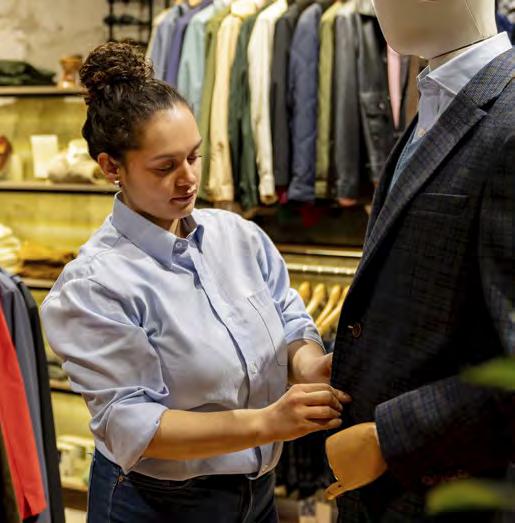
Dressing mannequins is a task some sales representatives must master.

→ Practise:
Vocabulary
Match up these words from the text with the correct translation:
vocational – security guard – destination –travel agent – responsibility
ansvar – vekter – yrkesfaglig/yrkesfagleg –reiselivsmedarbeider/reiselivsmedarbeidar – reisemål
Interview: Learning a Trade
In this interview, you will meet two young Norwegians who are talking to a British journalist. He is in Norway to write an article about vocational courses offered in Norwegian upper secondary schools. To find out more about this, he has decided to meet two students of Sales, Service and Tourism.
INTERVIEWER: I’m here with two dedicated students who both want a future within the service trades. Jon is an apprentice travel agent, and Linda is studying to become a security guard. Jon, you’re already an apprentice in your field of work. What is it like to work as a travel agent?
JON: I love it!
INTERVIEWER: What is it that you love about it?
JON: Well, I can use my knowledge about the world and different cultures. I love travelling myself, and as a travel agent I can use my experience. I find both the research and the actual planning and booking equally interesting and rewarding.
INTERVIEWER: OK, so being a travel agent means that you have specialised in the processes of designing and making tour packages? Could you be a bit more specific about what travel agents actually do?
JON: Yes, of course. Believe it or not, there are many options within this line of work. Some travel agents put together specialised trips for football supporters, whereas others work for big tour operators offering holidays to a wide range of destinations all over the world. Anyway, it’s necessary for a travel agent to be able to handle a wide variety of requests, both traditional family holidays and holidays for more adventurous travellers, like safaris, for example.
INTERVIEWER: To be honest, I used to think that the traditional travel agency is something that belongs in a museum and that the internet has taken over. But you’re saying that travel agents still have an important role in the tourism industry these days?
apprentice lærling experience erfaring rewarding givende/givande tour package pakketur, reiseopplegg
option valg, mulighet / val, moglegheit
destination reisemål request forespørsel, ønske / førespurnad, ønske
to customise å skreddersy / å skreddarsy to pursue her: å satse på attitude holdning, innstilling / haldning, innstilling to arise å oppstå responsibility ansvar emergency krise, nødsituasjon apprenticeship lære(tid), lærlingkontrakt
JON: Oh, yes, the internet may have taken over many of the flight and hotel bookings, but if people are looking for special trips, they do still tend to contact a traditional travel agency. When it comes to customising tours based on personal interests, real travel agents still beat the internet! We also provide smoother booking and planning for groups of people travelling together because we can help ensure that they are placed in rooms close to each other, are booked on the same flights and get good group rates. They also have one point of contact; no need to contact the airline or hotel for information and updates since I do that for them and communicate this directly to the travellers.
INTERVIEWER: Good point. Is this the line of work that you want to pursue in the future, too?
JON: Right now, it’s very satisfying. Still, I would love to work in an even more dynamic and international environment. As mentioned, I love travelling, so maybe I could work at a travel agency abroad one day.
INTERVIEWER: That sounds really interesting! I guess both of you need a friendly smile and a professional attitude towards other people. Isn’t that right, Linda?
LINDA: That’s for sure! Being friendly and professional is very important for a security guard as well. However, to us, being professional is also about handling difficult situations that may arise if somebody, for example, tries to steal something from a shop, breaks in somewhere or acts threateningly in one way or another. Dealing with such situations requires certain skills and comes with specific responsibilities.
INTERVIEWER: What kind of responsibilities?
LINDA: We’re responsible for people’s safety, responding to alarms, identifying crimes and handling fires and medical emergencies. And of course, we always have to deal with such situations in a calm yet efficient way. A security guard who panics is not doing their job.
INTERVIEWER: This sounds both interesting and challenging. When you’ve finished your studies and your apprenticeship, how do you picture your working life, Linda?
LINDA: My dream is to get a job in an exciting and interesting place, like the Norwegian parliament or in another important official building or office. Handling security for important people is something I see as a really interesting job.
INTERVIEWER: To me, it sounds like both of you are well prepared for working life. Thank you for your time!
1 Practise:
Reading for information
Answer the questions in complete sentences.
�� What does Jon enjoy most about working as a travel agent?
�� What are two examples of different types of holidays travel agents might arrange?
�� What qualities and/or skills does Jon believe are important for becoming a travel agent?
�� According to Linda, what does it mean to be professional as a security guard?
�� Name three responsibilities a security guard might have.
�� Where would Linda like to work in the future?
2 Create: Writing
Choose one of the tasks below.
�� Write a short text where you explain the differences between the two occupations presented in the interview.
�� Based on the interview, which of the occupations do you find more interesting? Write a short text in which you explain why.
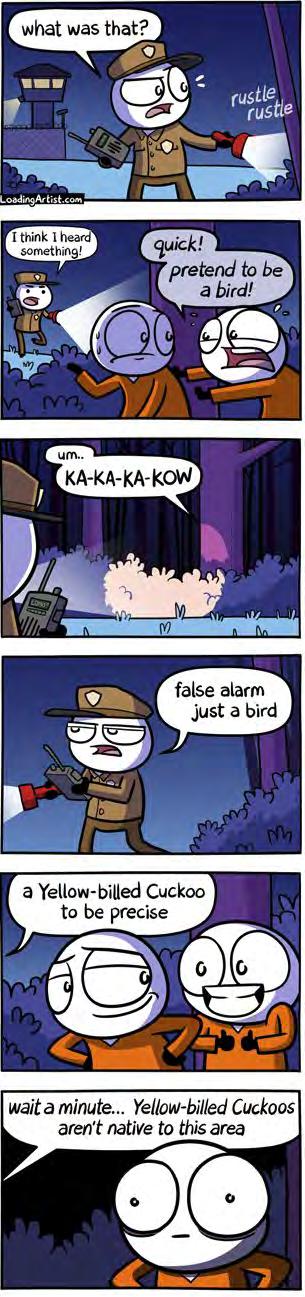
3 Understand & Reflect: Cartoons
Look carefully at the cartoons and read the speech bubbles. Then answer the questions.
CARTOON 1:
�� Where does the story take place? Provide two clues from the cartoon.
�� What job does the person with the flashlight have? How do you know?
�� Why do you think the fugitives decide to make a bird noise?
�� Why does the security guard think it is a false alarm?
�� Why does the last picture suggest that something is wrong?
�� Write an ending to the story. What happens next? Write 100 –150 words.
CARTOON 2:
�� Write a summary of the cartoon in your own words.
�� What is the message the cartoonist tries to give his readers? Explain your opinion.

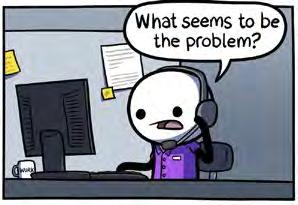



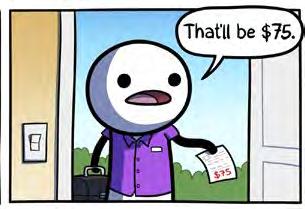
Reflect
Think about how social media influences the way people travel today. Answer the questions below in pairs. Make notes from your discussion.
A How can social media be useful when planning a trip?
B Are there any potential problems with using social media to choose travel destinations? If so, give examples.
C Do you use social media to research possible travel destinations? If so, explain how.
How Social Media Shape Our Travel Plans C H A LLE N GE

In the age of Instagram, TikTok and Pinterest, travel has changed completely. Social media platforms have transformed the way we explore the world, turning ordinary vacations into extraordinary adventures. From hidden gems to iconic landmarks, the digital age has made it easier than ever to discover and share the most breathtaking destinations.
What is social media influenced travel?
Social media influenced travel is a phenomenon where people plan their trips based on the content they see on social media platforms. Whether it’s a stunning sunset over a remote beach, a vibrant street market in a bustling city, or a serene mountain retreat, these images and videos inspire travelers to seek out and experience the same moments for themselves. The influence of social media on travel decisions is profound, shaping itineraries, accommodation choices and even the activities we engage in.
The impact of social media on travel
Social media has revolutionized the travel industry in several ways. According to a survey, 74% of travelers use social media accounts to research their destinations, and 49% of millennials say social media influences their travel decisions. Here are a few other ways that social media influences travel:
→ INCREASED TRAVEL FREQUENCY:
Social media has made travel more accessible and desirable, leading to an increase in the frequency of trips. A study found that 53% of travelers are more likely to take a trip after seeing someone else’s travel photos.
→ NEW DESTINATIONS:
Social media has brought lesser-known destinations to the forefront, making them popular. For example, the small town of Hallstatt in Austria saw a 300% increase in visitors after becoming a viral sensation on Instagram.
→ TRAVEL PLANNING:
73% of travelers say influencer recommendations have shaped their booking decisions for their trips, from finding the best local restaurants to discovering hidden attractions. This has led to a more personalized and curated travel experience.
However, the surge in travel frequency and the popularity of new destinations driven by social media can also lead to overtourism, where the influx of visitors overwhelms local resources and communities. This not only degrades the travel experience but can also result in unexpected disruptions, such as protests or strikes, which can suddenly cancel or alter travel plans. In such scenarios, having travel insurance becomes highly recommended, providing you with financial protection and added confidence during your travels.
p. 24
to transform å forvandle, å endre vacation ferie hidden gem skjult skatt destination reisemål
content innhold/innhald serene fredelig/fredeleg profound dyp, betydningsfull / djup, viktig itinerary reiserute accommodation losji accessible tilgjengelig/ tilgjengeleg
desirable ønskelig, attraktivt / ønskjeleg, attraktivt sensation her: oppsikt surge kraftig oppsving, økning / kraftig oppsving, auke influx tilstrømning/tilstrøyming to degrade å ødelegge, å forringe / å øydeleggje, å gjere mindre verdifull insurance forsikring
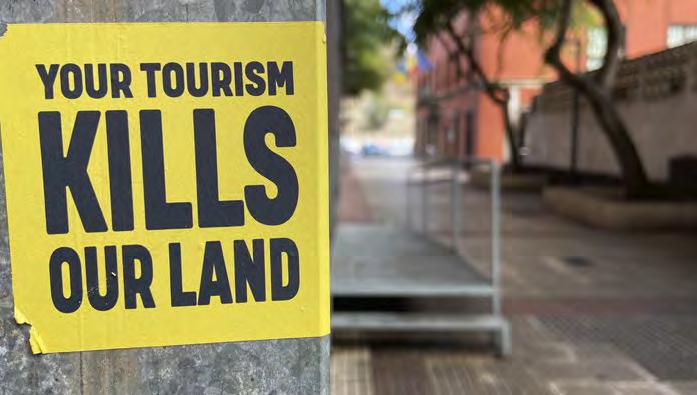
Poster on a street in Tenerife, Spain
Top five social media influenced destinations

SANTORINI, GREECE
Why it’s popular: The iconic whitewashed buildings with blue domes, the breathtaking sunsets and the crystal-clear waters of the Aegean Sea make Santorini a dream destination for many. Instagram is flooded with photos of the island’s picturesque views, and it’s easy to see why.
Adventure tip: Explore the ancient ruins of Akrotiri, hike from Fira to Oia and try the local wine at a vineyard.
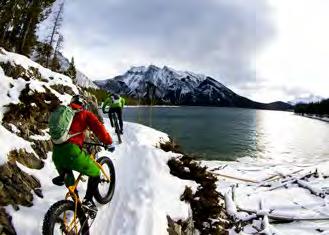
BANFF, CANADA
Why it’s popular: The stunning natural beauty of Banff National Park, with its turquoise lakes, snow-capped mountains and vibrant wildlife, has made it a favorite among nature enthusiasts and adventure seekers.
Adventure tip: Take a gondola ride to the top of Sulphur Mountain for panoramic views, go ice skating on Lake Louise and hike the Johnston Canyon trail.
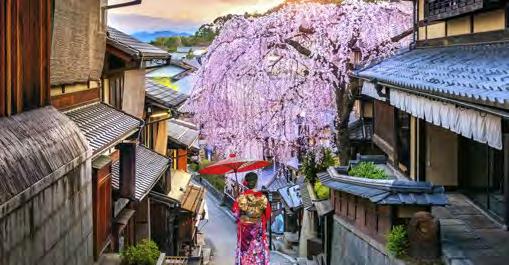
KYOTO, JAPAN
Why it’s popular: Kyoto’s traditional architecture, serene gardens and rich cultural heritage have made it a must-visit for those seeking a blend of modern and ancient experiences. The city’s cherry blossoms and autumn leaves are particularly popular on social media.
Adventure tip: Stroll through the Arashiyama Bamboo Grove, visit the Fushimi Inari Shrine and experience a traditional tea ceremony.
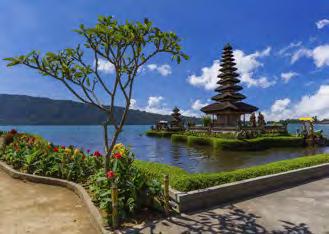
BALI, INDONESIA
Why it’s popular: Bali’s lush landscapes, serene temples and vibrant culture have captivated the hearts of many. The island is a haven for spiritual retreats, yoga classes and beachside relaxation.
Adventure tip: Visit the Tegalalang Rice Terrace, explore the Uluwatu Temple and try surfing at Kuta Beach.

CAPPADOCIA, TURKEY
Why it’s popular: The unique rock formations, hot air balloon rides and ancient cave dwellings of Cappadocia have become a symbol of adventure and exploration. The region’s otherworldly landscapes are a photographer’s paradise.
Adventure tip: Take a hot air balloon ride at sunrise, explore the underground cities and visit the Goreme Open Air Museum.
(Excerpts – source: see p. 106)
CHECKLIST: Go to citizens.cdu.no to find a list of the most important points from the text you have read.
1 Understand
�� What is meant by social media influenced travel?
�� How does social media affect the way people choose destinations and plan trips?
�� What do the statistics in the text tell you about the strong influence of social media on travel decisions?
�� Why have some lesser-known destinations become very popular in recent years?
�� What problems can social media cause for local communities?
2 Reflect
Discuss in pairs or groups:
�� Look at the “Top five social media influenced destinations” on p. 26. Which of them would you most like to visit? Give reasons for your opinion.
�� What are your dream destinations to travel to? Agree on three destinations and then have a vote in your class to find the top three choices for a class trip.
3 Reflect & Present
Work with a partner and prepare a short presentation (2–3 minutes) about social media influenced travel.
→ St art with the notes you wrote in the pre-reading task (p. 24).
→ Include your own experiences and opinions.
→ Include information from the text “How Social Media Shape Our Travel Plans”.
→ Go online to find more information.
p. 26: picturesque malerisk, pittoresk / målande, pittoresk gondola taubane trail sti, løype to captivate å fascinere, å fenge / å fascinere, å fengje haven tilfluktssted/tilfluktsstad cultural heritage kulturarv blossom blomst/blomster ancient eldgammel/eldgammal cave hule, grotte / hole, grotte otherworldly overjordisk
In your presentation, answer these questions:
→ How does social media influence travel today?
→ What are some positive effects of social media on tourism?
→ What problems can social media influenced travel create?
→ How can travellers reduce negative impacts like overtourism?
4 Create: Writing
@TravelWithMe has read the text about social media influenced travel and shared a comment online. Write a response to her comment. In your response, refer and respond to the text and contribute your own perspectives. Comment on and question, agree and/or disagree, with what has already been written.
The recommended length for this text is 150 –200 words.
@TravelWithMe:
I love how social media makes it easier to discover amazing destinations. Without Instagram and TikTok, I would never have heard of places like Hallstatt or Cappadocia. At the same time, I also think social media is ruining travel in some ways. Too many people visit the same places just to take photos, and the local people often suffer because of overcrowding. Travellers should be more respectful and maybe choose less popular destinations instead.
5 Practise: Vocabulary
The words below are related to travel and media. In each line there is one word which has nothing to do with the other three. Can you find the “odd one out” in each line? Make sure you know what the words mean and be prepared to defend your choices to the rest of the class afterwards.
�� destination itinerary filter journey
�� influencer tourist traveller resident
�� crowded popular overrun peaceful
�� explore discover share repair
6 Research & Create
Work individually or in pairs.
�� Research: Choose a travel destination that is popular on social media. Use platforms such as Instagram, TikTok, Pinterest or YouTube to research the destination. Take notes on:
→ what kind of images and videos are shared
→ what experiences are highlighted
→ whether problems such as overcrowding, pollution or high prices are mentioned
→ how influencers or travel accounts present the destination
��
Create: Make at least two social media posts about your chosen destination. You do not need to publish them on your real account, but you should take screenshots of the posts you create. You can choose to:
→ encourage people to travel there or
→ discourage people from travelling there because of problems like overtourism, pollution or negative impact on local communities
�� Share: Present your posts in class and discuss which posts were the most convincing and why.

Application Letter
An application letter is a document where you state your interest in a job, scholarship or something similar. Competition can be tough, so your application letter needs to stand out. Here is what you should include. (Note that some companies use standardised formats that you fill in when you apply for a job there.)
Structure of the text:
This is one way your application letter can be structured if it is sent as a separate document attached to an email, e.g. in Word or as a PDF.
1 The address and contact information of the sender. If you are writing an email, you include your contact information at the bottom, after your signature.
(2 The address of the receiver – if this is mentioned in the advertisement)
3 The date
4 A polite greeting, for example: Dear Sir/Madam, Dear Mr Brown, Dear Mrs Johnson
5 a) Explain why you are writing the letter and introduce yourself
b) Information on your background
c) Explain why you think you are suitable for the job/ scholarship/position
d) If applying for a part-time job, you should include when and how much you are able to work
6 Closing politely, for example: I am looking forward to hearing from you, Thank you for your consideration
7 Polite ending, for example: Sincerely, Yours sincerely
8 References: the names of people a potential employer can contact to find out more about you, for example a former employer or teacher.
It is always important to tailor your application letter to what you are applying for. Some advertisements (ads) may require you to provide specific information. Read the ad carefully to make sure you include what is asked of you.
What you should include in all application letters:
→ Polite phrases that show respect for the person you are addressing. This is very important in formal letters.
→ Linking words that tie the text together.
→ Positive words that help you “promote” yourself.
Do not:
→ use abbreviations: write “do not” and “I am”, not “don’t” and “I’m”.
→ w rite much longer than a page. The purpose of an application letter is to get you an interview, so it should be short and precise.
Example ad and application letter
Jenny is looking for a part-time job. She wants to work mainly on weekends. Jenny studies Sales, Service and Tourism, and would like a job in relation to this. She sees this notice in her local newspaper:
ASSISTANT RECEPTIONIST WANTED
The Mayflower Hotel is looking for an assistant to help out at the reception desk on weekends and during busy periods. You will carry out tasks like:
→ Making reservations
→ Checking guests in and out
→ Helping with other tasks when needed, such as serving breakfast and assisting in the fitness room
Full training will be given, but it is important that you have good people skills and a thorough knowledge of Birmingham.
Apply to: manager@mayflowerhotel.co.uk
Sender →
Jenny’s application letter:
Date →
Opening greeting → Why she is writing →
Jenny Payne
27 Colmore Row
Birmingham B3 2EW
Jennypayne@hotmail.com
Telephone: (020) 8384 6454
14 September 2026
Dear Sir or Madam
I wish to apply for the position as assistant receptionist at the Mayflower Hotel as advertised in the Birmingham Gazette. My name is Jenny Payne, I am 17 years old and I go to City College Birmingham. Here I am studying Sales, Service and Tourism, and hope to become a certified receptionist when I am finished.
Background: work experience →
Background: interests →
Why she is suitable →
I have previously worked as a babysitter, which I enjoyed a lot. Furthermore, I have had a summer job at the desk in a hair salon in Yorkshire, where I helped in all the practical tasks and learned a lot about customer service As a result, I have excellent references you may call.
My interests are travelling, reading and cooking. I have lived in the city my whole life, and I know it like the back of my hand. I would love to help customers pick good restaurants and see Birmingham’s fantastic attractions. In addition, I have good cooking skills, which may come in handy in the breakfast room.
I think the position as an assistant is perfect for me. I have a true passion for customer care. Also, I am a quick learner, and this job will be an excellent opportunity to learn more about reception work. I am service minded and structured.
What kind of employment she is looking for →
Closing politely →
Polite ending →
Signature →
References →
I am looking for a job on weekends, although I am flexible. If there are busy periods I can help out on weeknights and during holidays as well.
I am looking forward to hearing from you at your earliest convenience.
Yours sincerely, Jenny Payne
References:
Louise Carruthers, babysitting client: 07700 901042
Miriam Lewis, employer at hair salon: 07700 909183
Sikander Singh, teacher: 07700 901278
TASKS
1 You are applying for a job as a sales representative (or another profession, see p. 100 for job titles in English). The employer wants to know what kind of person you are and why they should hire you. Write a short paragraph (80 –120 words) where you describe yourself using positive words (adjectives).
What to include:
Who you are (a short introduction) – What you are good at (skills and qualities) – Why you would be a good worker for this job
Helpful adjectives you can use (look them up if you are uncertain of what they mean): hardworking – reliable – responsible – motivated – skilled – flexible – friendly – eager to learn – precise –meticulous – adaptable – quick learner – respectful – trustworthy – patient – innovative – team-oriented – honest – safety-conscious – attentive – diligent –determined – punctual
Sentence starters you can use:
→ I am a … person who …
→ My friends and teachers say that I am …
→ I am good at …, and I always …
→ I believe I would be a good employee because …
2 A representative from your local job centre is visiting your school and leaves behind a leaflet for the students attending vocational courses. The leaflet advertises an apprenticeship programme for the company WorkStart Placements.
Write an application letter, using the structure shown on p. 30 and vocabulary you have practised in this chapter.
LOOKING FOR AN APPRENTICESHIP?
We are looking for students who want to work in professions within Sales, Service and Tourism. As we represent a range of employers in a variety of European countries, we would like to get in touch with students wanting an apprenticeship outside Norway.
We are looking for someone who:
→ is a vocational student
→ is hard-working and responsible
→ has good references from former employers/ teachers
→ is enthusiastic about their field of study
Please send your application letter and CV to: WorkStart Placements c/o Mandy Peters mpeters@workstartplacements.org
We look forward to hearing from you!
3 When you have finished writing your application letter in task 2, swap with a partner and give each other feedback by pointing out two things the application does well and one thing that can be changed to improve it.


Chapter 1
1 Review:
Focus points
Use this scale to describe your level for each of the “I can …” statements below:
Very well – Well – Needs some work – Needs lots of work
→ I can understand and use words and phrases related to my future profession.
→ I can talk and write about many different professions within my education programme.
→ I can reflect upon various aspects related to professions within my education programme.
→ I can write a job application suited to the job I am applying for.
2 Review:
Key terms
A In pairs, divide the keywords on page 5 between you and find out what they mean. Use each word in a sentence to show that you understand its meaning.
B Then explain the words to each other, using your sentences as examples.
3 Review:
Discussing and writing paragraphs
A Discuss with a partner: In which of the occupations in this chapter would you most like to work, and in which would you least like to work?
B Write a short reflection note (two to three paragraphs) explaining the choices you discussed in task 3A.
4 Create: Poster
Make a poster presenting your future occupation using text and pictures.
Target audience: Students in years 9 and 10
Purpose(s): To inform and convince
Your poster should include:
→ a description of what the work involves and typical workplaces
→ a short explanation of the education and training you will need
→ skills you need in this occupation
→ relevant illustrations
When finished, present your poster to your classmates in groups of four. (You may also want to display your posters in your classroom for the rest of the class to see.) For relevant words and phrases that you might need, see pp. 96 –103.
Tools & Procedures
Focus
In this chapter, you will:
→ learn about different tools and pieces of equipment used in Sales, Service and Tourism
→ reflect upon the importance of being able to use English as your language of work
→ listen to, understand and use words and phrases related to your future profession
→ create oral and written texts relevant to your future profession, such as instructions and procedures
Reflect
A How do you think good English skills could be useful in your future workplace?
B What are some tools or equipment you might use in your future job?
C Why is it important to follow specific procedures or instructions at work?
Chapter keywords
→ tool
→ procedure
→ equipment
→ communication
→ instructions
→ customer service
→ workplace vocabulary
→ sales process