Photographers and photo credit noted where applicable
Additional photographers not listed at the discretion of the collaborators may be provided upon request
Contributor and Content Development
Shiwon Oh
Design and Layout
Emily Dunn
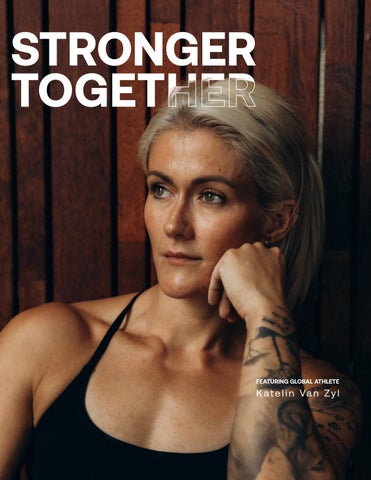
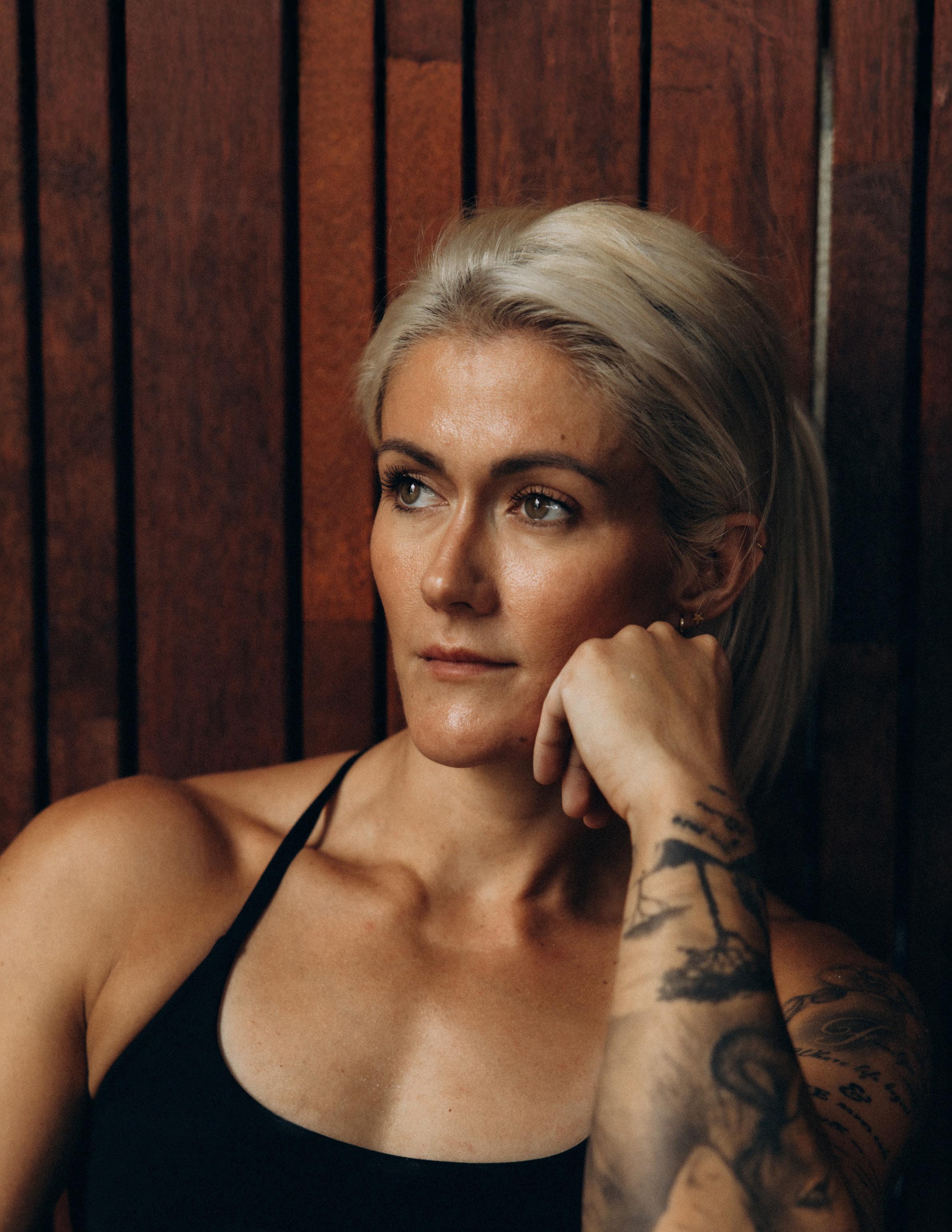
Cover Photo Credit: Chrystal Rose Photography
Artwork has been created using an AI tool
WELCOME TO THE WORLD OF CCWOMEN
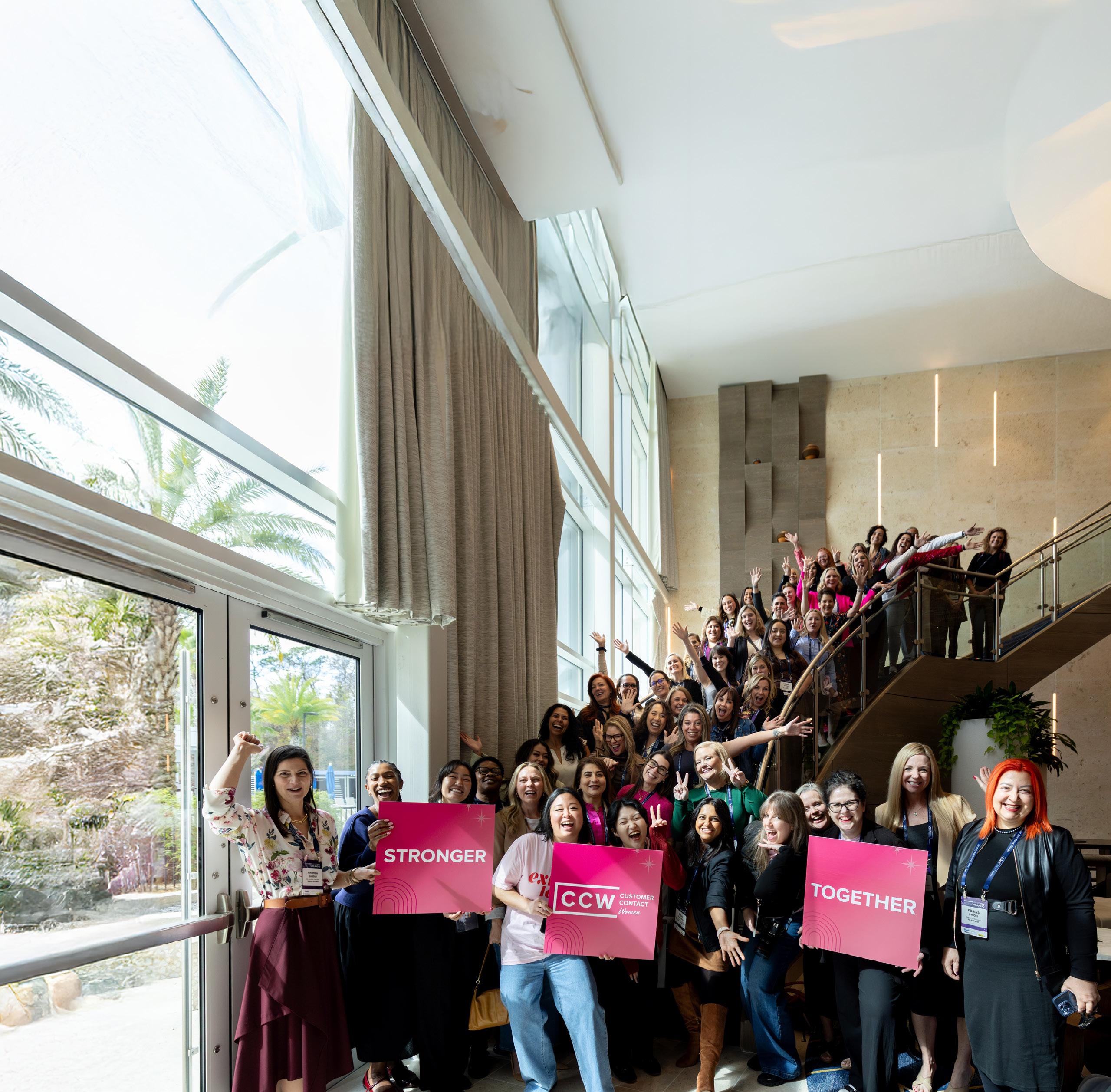
By women, for women and allies, CCWomen is a networking group committed to mutual empowerment.
We’re here to tell a story.
In 2018, Sandy Ko Fonseca hosted an impromptu mimosa breakfast at a CCW flagship event. There, she broke bread with several accomplished customer contact executives who, with decades of industry expertise, unveiled a dire need for a space where women could share their experiences and spark unbridled inspiration.
Women’s successes deserve recognition, so why not create a platform for it? CCWomen became a light for that stage. Now, we operate as a fully-fledged team, continuously working to foster an authentic community that embodies excellence and advocates for gender equity.
We’re on a mission to revolutionize the customer contact and business world, one woman at a time, and we’d love for you to join us.
SHIWON OH EDITOR IN CHIEF CCWOMEN
EMILY DUNN HEAD OF MARKETING CCWOMEN
INGRIT MARENA MEMBER ADVISOR CCWOMEN
HUMAN-CENTERED EXPERIENCE ISSUE 5
This issue of Stronger Together is our invitation to pause and remember what we’ve always known: people are not metrics. Culture cannot be templated. No tool, however brilliant, can replicate what it feels like to be truly seen and what it feels like to truly belong.
The leaders, thinkers, and storytellers in these pages have lived that truth. They’ve chosen empathy when efficiency would have been easier. They’ve stayed human in spaces that tried to make them otherwise. And they’re sharing those moments not because they have it all figured out, but because honesty and vulnerability are how we move forward.
That’s what CCWomen has always been about.
Not perfection or performance, but the kind of courageous, candid humanity that changes how we work, lead, and treat one another.
Welcome to Issue five. We’re so glad you’re here, exactly as you are.
Sandy Ko Fonseca FOUNDER, CCWOMEN
LETTER FROM THE EDITOR
No matter how innovative or industry-breaking, if a solution doesn’t have the human in mind, I believe it’s set up for failure. All of us have a responsibility to create and leave behind a better world—one defined by empathy, curiosity, endless learning, and compassion. It’s inspiring to see that women, despite obstacles like gender inequity, continue to model the next generation of leaders who can guide us toward greatness without compromising humanity.
This issue spotlights everyone from customer care executives to partnership directors to award-winning athletes. All their stories highlight a common theme: society succeeds when communities thrive, and in collective thriving, we, too, experience a type of growth that makes us more resilient and caring.
Thank you for picking up our fifth issue, and for continuing to journey alongside us. CCWomen wouldn’t be what it is without you. Shiwon Oh
CONTENTS
IMPACT | 6
Celebrating women’s impact in the workplace and the world
Marilyn Johnson on Nurturing Sustainable, Purpose-Driven Organizations
Dr. Ebony M. Anderson’s Mission to Transform Higher Education—and Redefine the Business World
How Gina Reilly Coates Developed a People-First Leadership Philosophy
Athlete Katelin Van Zyl on Using Adaptive Leadership to Build Resilience
COMMUNITY | 23
Spotlighting leaders and organizations that pay it forward
Multiply Diversity and Inclusion
By Nurturing a People-First Culture with Kamana Khadka
Why Jennifer Chan Makes Employee Engagement Her Leadership Compass
Defining Human-Centered Experience with Pichchenda Redmond, Dana Goldsholle, and Tanisha Parker
INNOVATION | 37
Exploring current tech trends and future-proof leadership
Paving the Path for Ethical AI: Stacey Ingram Kaleh Envisions a Human-Driven Future
Jennifer Lee on Why the Human Touch Is the Secret to Scaling Customer Care
Driven by Empathy and Support, Lauren Miller Takes Her Marketing Team to New Heights
IMPACT
CELEBRATING WOMEN’S IMPACT IN THE WORKPLACE AND THE WORLD
MARILYN JOHNSON ON NURTURING SUSTAINABLE,
PURPOSE-DRIVEN ORGANIZATIONS
Marilyn Johnson is the Chief Sustainability Officer of Go Big Strategies and a Life in Motion wellness coach. Guiding leaders through system change, ethical business, and positive social impact is her expertise— and she continues to be a sounding board for those seeking to increase their company health and engagement.
Shiwon Oh: Your mission is to “transform how people and organizations thrive.” Can you share what inspired you to do this type of work?
Marilyn Johnson: All throughout my career, I’ve taken roles that for me, were about making the world a better place through individual action. I’ve always focused on health, as it’s foundational to our overall wellness and what we can achieve in the world. So, naturally, I thought about going into the medical field; however, I quickly realized I didn’t want to be on the curative side of health, and pivoted toward the preventative and proactive. I ended up pursuing Health Sciences, with a focus on Environmental and Occupational Health, which addresses the long-term consequences of workplace exposures, and that led me to the broader field of corporate sustainability.
Sustainability can be broken into environmental, social, and governance factors. Within governance, for example, cybersecurity and supply chain are critical. The environmental dimension of course addresses how we impact the planet, and the social dimension is all about people — both within an organization and beyond, into our communities, and future generations. Systems thinking and an integrated approach is critical to managing and having impact on such a broad array of business issues.
There are always problems to fix. If we approach them proactively, we can build the future more efficiently. I didn’t want to focus on repairing issues after they happened, but work on preventing them from the very beginning.
SO: What does it look like to prioritize sustainability and wellness in the workplace? Do you have any specific examples?
MJ: As I shift into personal health and well-being coaching, I prioritize a future-oriented lens. I focus on what is possible, as an accountability partner, encouraging and working with clients to consider possibilities: what is working? What could be better and how? What actions, behaviors and choices will help get us there? How can I help an organization operate more successfully than today, with positive intention, so we’re thriving for generations to come?
I once worked at an integrated forest product company that, at the time, had about 45,000 employees globally. It’s a natural resource-based business, so I learned the importance of protecting the planet. I was in the environmental health safety department, and I noticed we spent a lot of time, energy, and costs protecting animals like the spotted owl. We were among the first to start reforestation efforts, because without trees, there’s no forestry company. Protecting the resource is essential for long-term success.
SO: We live in a hyper-consumerist, quickly evolving landscape that can sometimes feel overwhelming, especially when workers feel more like cogs in a machine. How can leaders slow down
and engage their workforce more strategically?
MJ: Let’s use the fashion industry as an example. It’s always about having the newest, latest, and greatest, and a lot of this sentiment is superficial. How much do we really need?
Leaders must return to organizational purpose. Creating spaces where everyone can show up sustainably is unique; some do a good job, others can be better. No one is ill-intended, because we can easily get caught up in day-to-day business, forgetting that business is run by people. And when you forget, employees become burnt out and stuck, and you notice a more drone-like culture.
Our life on this planet isn’t long; the work we do matters. Workforce engagement requires intention. Not every leader has the skills or resources to navigate it—and while individual contributions play a role, you can only work within the structure you’re in.
SO: What are some top characteristics of businesses that are deeply shaped by their core values?
MJ: Why does a business exist? What problem is it solving? Starting with that question, leaders must build from there and consider the values that humans would live by. Corporations should aim to embody responsibility, integrity, and respect for their employees, suppliers, partners, and colleagues. They should also prioritize honoring the planet, like I said before.
At its core, a business should be people-first. When you’re deeply embedded in a corporation, its culture can shape you—not necessarily in a bad way, but it makes you wonder how much of your thinking is influenced by your environment. If you’re in a less healthy workplace, your habits can change insidiously. A simple example: in some organizations, meetings tend to begin five to ten minutes late. Over time, this becomes accepted as “just the way things are,” but it also represents an opportunity. Culture, like any meaningful outcome, thrives when it’s intentional. It’s designed for the
people and shaped by the people within that organization or group. When approached this way, even small shifts can unlock significant impact.
Leaders should intentionally live out their core values, not just write them down and put them on a wall. If you say you value respect and inclusion, then your decisions should reflect that.
SO: If leaders feel that they’ve disconnected from their values, what tips do you suggest to get them back on track?
MJ: If you feel disconnected from your company’s values, consider it a call to lead. Your team likely
feels it too, making this the perfect moment to start meaningful conversations and rebuild alignment together. Culture isn’t created alone, but is strengthened through shared ownership.
In every organization I’ve been a part of, values mattered, and the most impactful leaders brought them to life. At one company, our CEO and executive team personally connected with employees through a mission, vision, and values tour—because as organizations grow, alignment doesn’t happen by chance. It happens through intentional leadership that keeps everyone moving in the same direction towards a common vision.
DR. EBONY M. ANDERSON’S MISSION TO TRANSFORM HIGHER EDUCATION—AND
REDEFINE THE BUSINESS WORLD
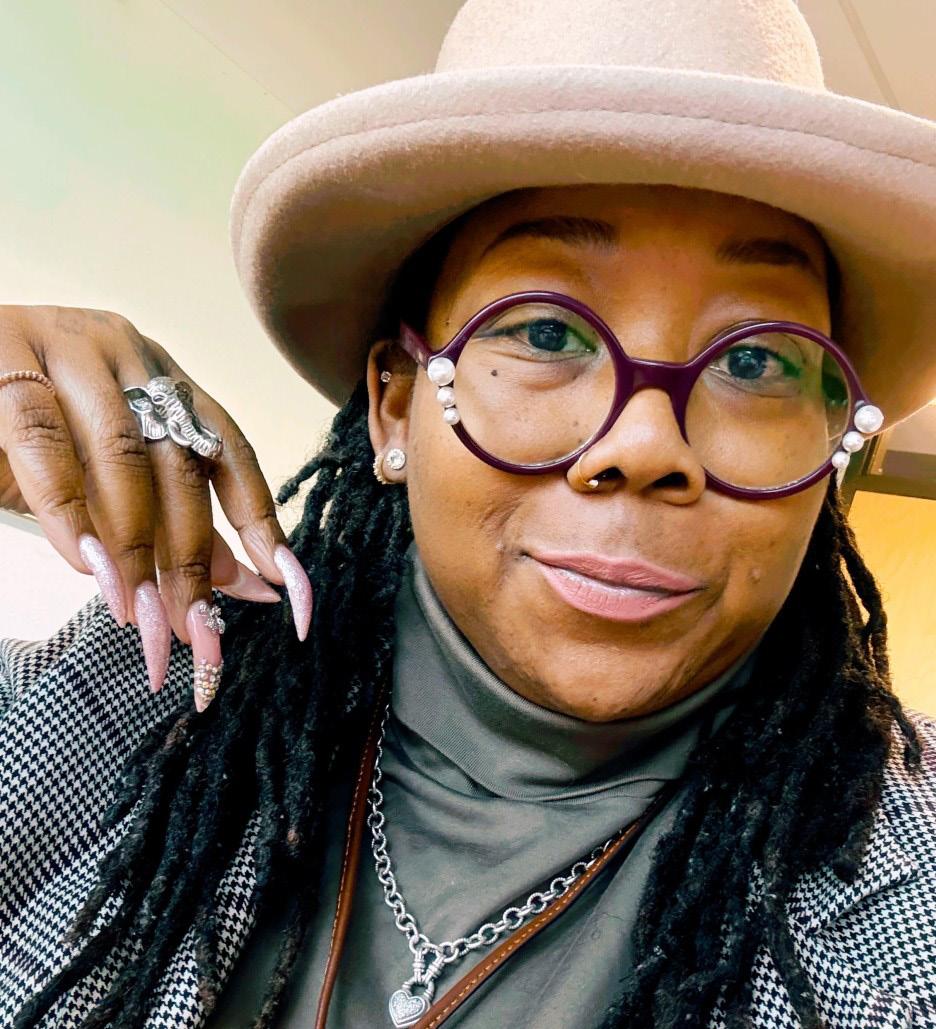
Dr. Ebony M. Anderson is the Interim Dean of Students at GateWay Community College, adjunct professor, and CEO of Authentic Pathways to Leadership. Passionate about driving equity in higher education, she uses her voice, story, and authority to nurture a newer, more inclusive definition of professionalism.
Shiwon Oh: How has your philosophy shaped the way you advocate for equity in higher education? What are some milestones you’re proud of?
Ebony M. Anderson: My philosophy is rooted in creating meaningful opportunities for individuals to become their best and highest selves. This belief has directly shaped how I advocate for equity in higher education. I approach equity not just as access, but as intentional action—developing strategic initiatives that remove barriers, promote inclusion, and ensure that every student has the support needed to succeed. My work focuses on aligning systems, resources, and people in ways that create sustainable pathways for student achievement, particularly for those who have been historically underserved.
Equally important to me is fostering a workplace culture where employees feel valued, supported, and equipped to grow. I am deeply committed to cultivating competencies that contribute to a holistic and enriching environment, because when educators and staff thrive, students benefit.
There are several milestones in my journey that I am especially proud of. I began teaching at the college level at the age of 21, which ignited my
passion for higher education early on. By 25, I had stepped into an executive role within the automotive industry, gaining leadership experience that broadened my perspective. Earning my doctorate at 35 was a defining accomplishment, and shortly thereafter, I was honored to serve as a Dean. Each of these experiences has shaped my leadership, resilience, and commitment to impact.
I am driven, determined, and purpose-focused— qualities instilled in me by my momma. That foundation continues to guide my work and fuels my dedication to advancing equity and excellence in higher education.
SO: How does your career journey define authentic leadership? What are some common misconceptions you want to debunk?
EA: My career journey defines authentic leadership as the courage to show up fully as who I am—unapologetically and without compromise. The best thing about me is that I am a Black woman. I am melanated, with locs, ancestral tattoos, and piercings—all expressions of my identity, my history, and my truth. My leadership is grounded in that authenticity. I don’t separate who I am from how I lead.
Authentic leadership, for me, is rooted in character over charisma. It’s about integrity, consistency, and purpose—not performance. I walk into every room with an inherited sense of value, and I expect respect—not because of a title, but because of who I am and what I bring. My journey has taught me that true leadership is not about fitting into predefined
molds, but about expanding them.
One of the biggest misconceptions I aim to debunk is the idea that leadership or professionalism must conform to a narrow, traditional standard—one often designed to make the majority feel comfortable. I challenge that notion. Professionalism is not a onesize-fits-all construct, and leadership does not have a single look or voice.
I am not here to shrink myself to fit the room. Instead, I challenge the room to examine why my presence might feel uncomfortable in the first place. That discomfort often reveals deeper assumptions about identity, power, and belonging. Authentic leadership means confronting those assumptions, creating space for diverse expressions of excellence, and redefining what leadership truly looks like.
SO: In one of your thought leadership posts, you ask: who are you when the title is gone? Who are you without the applause? What would your personal answer be?
EA: When the title is gone and the applause fades, I am still rooted in who I am at my core. I believe deeply in the power of self-understanding—knowing what intrinsically drives you versus relying on external validation. That awareness is what sustains you when recognition is no longer present.
For me, that’s the difference between power and authority. Power often shifts. It can control, and it frequently depends on titles or positions to be rec-
ognized. Authority, on the other hand, is internal. It’s grounded. It’s earned through lived experience, integrity, and truth.
I don’t walk in pursuit of power—I move with authority. My voice is shaped by my life experiences, my community, and even my pain. Those elements have refined my perspective and strengthened my influence. I lead and speak from a place of truth, and that’s where my impact comes from.
At the end of the day, I don’t desire power—I desire ownership of my voice, because when you truly own your voice, you don’t need a title or applause to validate your presence. You already know who you are.
SO: How do you reinvigorate leaders who feel disconnected from their purpose?
EA: I remind leaders that their purpose is driven by who they are, not where they work. Titles, roles, and organizations can change, but your “why” is yours to own. When leaders feel disconnected, the first step is to reconnect with that internal purpose: the reason they started, the values that guide them, and the impact they want to make.
I also encourage them not to ignore the feeling of disconnection. That feeling is not something to dismiss; it’s information. It can be revealing, even necessary. It often signals that something is out of alignment, whether it’s the environment, the expectations, or how they are showing up in their role.
Reinvigoration comes from realignment. When you
get honest about what matters to you and where you are, you can make intentional decisions about how to move forward.
And sometimes, the answer is simple: work where you are honored. Period.
SO: What best practices do you suggest for organizations that prioritize equity-driven leadership development? How can executives provide tangible career resources that meet people where they’re at?
EA: Equity-driven leadership development starts with intentionality. Equity is not accidental—it requires a deliberate commitment to fairness in both access and opportunity. Access for all may be fair, but how individuals receive that access is what makes it equitable.
One of the most important best practices is to recognize that there is both qualitative and quantifiable data in every room. Organizations don’t always need to look outside for answers—often, the insight they need already exists within their people. Ask them. Listen to them. Truly understand who your people are and the work they do. That level of awareness allows leaders to design development strategies that are relevant, inclusive, and impactful.
Executives can provide tangible career resources by meeting people where they are. This means moving beyond one-size-fits-all approaches and creating pathways that reflect diverse experiences, skill levels, and aspirations. Mentorship and peer shadowing are powerful tools—not only for skill-building, but also for fostering connection, confidence, and morale.
Additionally, expectations are shaped through meaningful experiences. When organizations invest in opportunities that stretch, support, and affirm individuals, they cultivate leaders who are both capable and committed.
Ultimately, the goal is to build a culture for people, not on people. When leadership development is rooted in understanding, intentionality, and respect, equity becomes more than a concept—it becomes a lived experience throughout the organization.
HOW GINA REILLY COATES DEVELOPED A PEOPLE-FIRST LEADERSHIP PHILOSOPHY
Having traversed numerous industries, Gina Reilly Coates is a people-first executive who balances performance with empathy and authentic connection. She reflects on the experiences that have defined her leadership approach, each role and team pushing her to be more inclusive, innovative, and above all, human-centered.
Shiwon Oh: How has your career journey helped influence your leadership identity?
Gina Reilly Coates: My journey has spanned several industries, from retail to education to fulfillment operations to tech. Truthfully, I thought I was a leader at three years old. I’d been telling the other students what to do, and my teachers called home to set that straight.
In each industry I’ve entered, I’ve served as an operational leader and a leader of people. Along the way, I’ve internalized what I value as a person: how I want to be treated, what I need to know, and what winning looks like for me as a leader. I’ve taken each working experience (and there have been many) and found the teachable moments.
If processes existed and no one could explain why, I’d start digging. If managers (and I use that term intentionally) referred to employees as labor or headcount, I would correct them and ensure that my teams always knew I saw all of us as human beings.
I make decisions through a human-centric lens and consider how new processes, tools, and decisions will actually impact their work. What do they need to know to be successful, and when do they need to know it? What opportunities do my teams need to
stretch their capacity and develop their talents? How do I provide feedback to ensure my team knows I’m committed to their success and our success? What information can my team handle at what time?
This doesn’t make me a soft or easy leader. On the contrary, I have high standards and expectations. As a human-centric leader, that means those high standards are attainable, supported, and communicated in a timely and clear manner. And when those standards aren’t being met, that is communicated transparently as well.
SO: Can you share a moment where you identified low employee morale and overcame it? How did you personalize your engagement strategy?
GRC: Fresh out of my MBA program (post-initial career), I worked for Amazon through their Pathways Operations Program. I chose to work for a large, non-robotic building because I knew I would be learning in a tougher environment and would be required to focus on leadership skills and on moving people forward to succeed. My first team was arguably the largest by headcount, and it faced cultural struggles that significantly impacted the customer experience.
Essentially, this could make or break my career. The feedback from the team on prior leaders wasn’t always positive for specific reasons: lack of leadership visibility, being treated like “labor”, and favoritism.
From day one, I made sure my teams knew who I was and how I would lead. I spent the first week or so walking the lines in my department and introducing
FROM DAY ONE, I MADE SURE MY TEAMS KNEW WHO I WAS AND HOW I WOULD LEAD.
myself to each one of my 225 team members. From that point on, I packed boxes with my team during contests or times of need. If I had work to do on my laptop, I situated myself near their stations for their access and rotated through my entire floor. I learned who made up my team, and identified their strengths and needs. I gave them their voice back, shared the why behind certain decisions, clarified goals, and highlighted their progress and its impact on their bottom line.
When someone flagged a complaint, I made sure the employee knew how we addressed it and prioritized follow-ups. I publicly and positively thanked team members for flagging issues, ensuring the whole team knew how we were adjusting. I was transparent and consistent in my leadership; my team quickly learned that I applied the same rules to each employee in a balanced, fair way.
SO: Why is it important for businesses to personalize their employee approach for a healthier, more inclusive culture?
GRC: Each employee, regardless of role or span of control, is unique. One key piece of information many forget is that everyone who isn’t the owner is an employee. Personalizing your approach doesn’t mean that, if there are 1000 employees, there will be 1000 different ways to train. That would be unscalable and unsustainable.
It does mean, however, that you know your team by name, tailor developmental conversations to each individual, and lean into your team’s motivations and expectations. Because of my investments and connections, I’ve driven substantial impact and secured buy-in where my colleagues and counterparts could not. My teams learned that I truly listened. I was transparent, valued their input, and if something didn’t work, I worked with them to find a different approach.
When employees are engaged and connected to the work they do and who they do it for, their experience will show in the results. Similarly, when they’re disengaged and disconnected from the work they do and who they do it for, their outcomes will speak volumes.
SO: What are some practices you don’t recommend to leaders committed to personalization—for both their teams and their customers?
GRC: Overpromising is the nail in the coffin of employee and customer engagement, especially if your company tends to use a “flavor of the month” approach to its goals and priorities. There should be a line that companies don’t cross. For instance, the investment may be more costly than the potential return, or it may not align with the company’s direction and identity.
SO: What does it look like to put humans at the center of every experience? Can you share a personal example?
GRC: Putting humans at the center of every experience means including yourself in the analysis. What do I need to be successful? How would I respond to change? How would my customer respond? Leaders must view their actions through the lens of a person and not just the business.
The business may dictate a need to reduce costs, and how you strategize those reductions is where a human-centric approach can pay off. By putting yourself into the analysis, you have the opportunity to see the decisions and experience through the eyes of your customers, whether they are external or internal. Having led in both established and startup environments, I’ve delivered on my fair share of cost reductions, including reducing how we spend on supplies, allocating time and materials to training, and ensuring the correct employee headcount.
As our economy has shifted, cost savings reviews have become more commonplace. In a prior role, senior leaders were approaching cost reduction company-wide. For the teams reporting to my leadership, this meant a collective analysis of which work needed to be kept in-house and which would benefit from leveraging partner resources.
This analysis allowed us to focus on work that truly benefited from being handled by more senior and tenured team members, and on work that did not. In making the next decisions, we anticipate the questions our team may have and the potential friction they would experience.
Proactive, collaborative planning reduces the negative impact on the customer experience. And in this case, customer experience includes team members, internal stakeholders, and external customers.
ATHLETE KATELIN VAN ZYL ON USING ADAPTIVE LEADERSHIP TO BUILD RESILIENCE
Team sports demonstrate some of the best aspects of human-centered leadership: every athlete plays a role that contributes to their shared victory. If there’s discordance, no amount of strategy can help on the field. People must learn how to rely on others to make a goal or cross the finish line.
Katelin Van Zyl is a former hockey player who has been immersed in the sports world since she was four years old. She explains, “[Sports] has taught me so much about teamwork, leadership, communication…it’s been the biggest blessing to carry these beautiful life lessons as I age and showcase them to my peers.”
Of course, just as athletes celebrate their wins, they endure their share of losses. It’s an up-and-down journey that requires self-compassion, patience, and resilience, just as it does for any emerging leader.
When reflecting on her past, Van Zyl notes:
“I’ve had many hurdles, both good and bad, throughout my career. I’ve had to work so much on my mental toughness and not allow an injury or setback to define me—instead, I deal with the situation and make
plans to move forward and get the best out of it. So much of [resilience] comes down to your mindset.”
In this interview, she explores her philosophies and how certain milestones have shaped her unique commitment to empowering others through personalized strength training and injury support.
Van Zyl’s Undying Spirit in Physical Asia
Currently, Van Zyl is a crossfitter, mindfulness coach, and mom of two, but I first saw her as a contestant on Physical Asia, a competitive fitness show featuring athletes from eight countries. Van Zyl was one of six Australians who proudly demonstrated their strength in the face of some of the most strenuous challenges.
Team Australia wore their confidence on their sleeve and—what I found most memorable—cheered for others just as enthusiastically as they supported their own. Their camaraderie was palpable, even amid tense moments.
Physical Asia demonstrated the importance of rapport and collaboration. Every contestant had to work
with their strengths strategically, trusting that their team members would fill the gaps. Similarly, leaders must also put their faith in others, whether it be their associates or cross-departmental colleagues. Relinquishing control is terrifying, but it allows people to take ownership and shine or practice humility after making a mistake. Diverse experiences provide growth opportunities, and when teams continue to pursue a shared sense of purpose, success is never too far behind.
Van Zyl was a firestorm to be reckoned with. Her resilience shone during several team races and again when she and two others pushed a rotating 1200kg pillar. Although the outcome wasn’t what they expected, Van Zyl left the competition staying true to her spirit and inspiring audiences with her authenticity: amicable but fierce, vulnerable but unwavering, and humble, but unapologetically loud.
“My community inspires me to keep working on myself as I help the next generation to build confidence about themselves and their bodies,” says Van Zyl. “I love being able to change lives just by being me.”
I WANT TO EMPOWER OTHERS TO REALIZE THEY’RE FAR MORE CAPABLE THAN THEY THINK.
The Long-Lasting, Empowering Impact of Self-Belief
Historically, women have minimized their presence and refused to take up space. We often undermine our achievements for the sake of humility, prioritizing other voices over our own. But self-assurance isn’t arrogance; when we trust our judgment and advocate for ourselves, we set an example to follow.
Be it an industry-disrupting technology or unprecedented organizational restructuring, adaptive leaders ground themselves first, knowing what to focus on and what’s outside of their control, then guide others in creating solutions. Adaptivity doesn’t falter amid crises and uncertainty, steadying teams that risk capsizing. And it’s not an innate skill, but something built by experience and accumulated wisdom.
“I want to empower others to realize they’re far more capable than they think,” says Van Zyl, “and that their resilience can carry into every area of their lives.”
As we embed adaptivity into our community culture, we must also consider its impact, even long after we’re gone. What do we want to leave behind for the next generation? How do we want them to learn from our mistakes while taking the best of our advice to be change-makers of their own right?
One leader’s confidence—and her steadfast commitment to building herself and her people—can be all it takes to turn the tide. No longer will women shrink; existing loudly will come naturally, and without a debilitating fear of rejection or scorn.
When asked about a leadership legacy strengthened by her trials, Van Zyl concludes,
“I’d like to be remembered as someone who changed the way people see themselves by improving their performance, and building a discipline and self-belief that positively impacts them and their loved ones.”
LEADERS AND ORGANIZATIONS THAT PAY IT FORWARD
...BELONGING IS NOT A FEELING YOU HOPE PEOPLE HAVE. IT’S A CONDITION LEADERS DESIGN FOR “
MULTIPLY DIVERSITY AND INCLUSION BY NURTURING A PEOPLE-FIRST CULTURE WITH KAMANA KHADKA
After 15 years of experience navigating corporate DEI, Kamana Khadka realized the need for inclusion to expand beyond one department. Now, as Founder and Chief Multiplication Officer of Inclusion Multipliers, she equips leaders with actionable, results-driven practices to create safe, diverse workplaces.
Shiwon Oh: What drives your inclusion work?
Kamana Khadka: My inclusion work didn’t start in a boardroom. It started in a hospital waiting room. As a volunteer ad hoc interpreter for Nepali-speaking refugees from Bhutan, I spent my early years in the U.S. watching people in my community struggle to access basic healthcare because no one could understand them. A mother couldn’t explain her child’s symptoms. An elderly man couldn’t consent to his own treatment. These were humans being rendered invisible by systems that weren’t designed with them in mind.
That experience lit something in me that has never gone out. I went on to found Arizona’s first systematized, professional refugee-led medical interpreter microenterprise, training over 65 interpreters across 29 languages, specifically designed to give refugees both health access and a sustainable career path through a Nina Mason
Pulliam grant and under the Asian Pacific Community In Action—because I learned early that access isn’t a nice-to-have. It’s the difference between someone being seen as a full human being or being reduced to a problem.
When I moved into corporate DEI, that same fire carried me forward. Over 14 years across non-profit, healthcare, and corporate settings, I kept seeing organizations investing in awareness training while the underlying systems—who gets hired, who gets developed, who gets heard—remain unchanged. People were being centered in mission statements but sidelined in practice.
What drives me now is a simple conviction: belonging isn’t something you train people into. It’s something leaders create conditions for, or accidentally destroy. That’s why I built the Inclusion Multipliers™ framework. I want to give leaders something they can use on Monday morning to create environments where every person can contribute their full intelligence, take meaningful risks, and perform at their peak because the system is designed for them.
At its core, what drives me is this: every person deserves to work somewhere that treats them as a whole human being, not as a headcount, demographic category, or checkbox. I believe leaders
have far more power to make that vision real than most of
SO: What does it look like to nurture systemic inclusion versus training one DEI expert?
This is the question that reshaped my entire career. For years, I was the DEI expert, or the single person an entire organization relied on to “do DEI.” I managed advisory boards, built dashboards, and led conversations from the frontline to the C-suite. And I was excellent at it. But no matter how effective I was, the moment I left a room, the impact left with me. The expert model is additive, not multiplicative.
Think of it this way: if you train one DEI expert and they touch 100 people a year, you’ve added 100 touchpoints. But if you develop 20 leaders who each nurture belonging in their own teams, and those leaders develop others who do the same, they multiply. It’s how there’s actual cultural change.
Systemic inclusion means embedding the capabilities for inclusive leadership into the people who already own team outcomes—the managers, directors, and VPs who set the tone every day. It means moving the work out of HR’s hands and into the business’s operating rhythm. It looks like a director redesigning her team’s meeting structure so that quiet voices get heard before loud ones. It looks like a VP building feedback loops into his hiring process so bias surfaces. It looks like a frontline manager creating psychological safety, not because they attended a workshop, but because they’ve developed the capability to read their team and respond accordingly.
In my Inclusion Multipliers™ framework, I teach five capabilities: Performance Catalyst, Intelligence Amplifier, Risk Navigator, Systems Architect, and Talent Multiplier, be-
cause these are the actual levers that make inclusion self-sustaining. When leaders develop these capabilities and then develop other leaders in the same way, you get exponential impact. The work no longer depends on one person or one department. It becomes how the organization operates.
If your inclusion strategy collapses when one person leaves, it was never a strategy. It was a dependency.
SO: Can you debunk some common diversity training myths?
KK: Myth #1: “Awareness creates change.”
This is probably the most expensive myth in the industry. Organizations have spent billions on unconscious bias training, and the research consistently shows it doesn’t change behavior. In some cases, it actually worsens situations by giving people moral license. For instance, they may think, “I attended the training, so I’m one of the good ones.”
Awareness without system change is entertainment. Leaders don’t need to feel differently about inclusion; they need to be equipped to lead differently. They must change how meetings run, decisions are made, talent is developed, and performance is measured.
Myth #2: “DEI is an HR function.”
When inclusion lives exclusively in HR, it becomes a program rather than a practice. The leaders who control team dynamics, project assignments, and development opportunities are the ones who actually shape whether someone experiences belonging or exclusion every day. I’ve seen this firsthand when I managed 95 Culture Captains across an organization, and the biggest breakthroughs didn’t come from the programs I designed. They came when individual leaders started owning the culture on their teams. HR should enable and measure; leaders should own and model.
Myth #3: “You need to use DEI language to do DEI work.”
This myth has become especially damaging in the current political climate. Many organizations have frozen their inclusion efforts because they’re afraid of the acronym. But belonging, engagement, and high performance don’t require a label—they require intentional leadership. I help leaders reframe this work in terms of performance, talent strategy, and risk
management, language that resonates with skeptics and supporters alike. The goal is to anchor results.
Myth #4: “One big event creates lasting culture change.”
A powerful keynote or a company-wide summit can spark energy, but it cannot sustain transformation. Culture changes through daily leadership behaviors repeated over time: how a manager responds to a mistake, whether a leader seeks dissenting opinions before making a decision, and whether new employees feel welcome to contribute, or are politely sidelined. The organizations making lasting progress are those that treat inclusion as an operating system rather than another calendar event.
SO: What are some of the most impactful outcomes you’ve seen come out of your leadership methodology?
KK: The outcomes I’m most proud of are the ones that show up in business results. At one organization, we reduced attrition among the company’s largest ethnic employee group by 5% year-over-year. In an industry where replacing a single employee can cost 50-200% of their salary, that translates directly to millions saved. We also achieved 44% female hires and 39% ethnically diverse hires in a single year, broadening the talent pipeline in ways that strengthened leadership bench strength across the board.
But some of the most meaningful outcomes are harder to quantify. I built a culture program that achieved 62% associate engagement with 100% executive participation, including the CEO. When you get every senior leader actively participating, not just sponsoring from a distance, it sends a signal through the entire organization that this isn’t optional or peripheral. It’s how we lead.
I facilitated a program called #JoinTheConversation where associates at every level, from frontline technicians to the CEO, shared their personal stories in a structured, safe setting. One session featured a frontline worker talking about navigating her identity in a male-dominated field. The room was silent afterward—not uncomfortable silence, but the kind that comes when people realize they’ve just heard something that changes how they see a colleague. That’s the kind of moment that no training module can manufacture.
In one operation, we successfully increased the
number of female technicians in a role that had been almost exclusively male for decades. It happened because leaders redesigned their outreach, reconsidered what “qualified” looked like, and created environments where women could see themselves succeeding.
What all of these outcomes share is that they weren’t dependent on me being in the room. They were the result of leaders developing the capabilities to create these conditions themselves. That’s the multiplication effect, and it’s the only kind of impact that lasts.
SO: How can leaders take concrete steps to transform their company culture with diversity and inclusion at the forefront?
KK: I always say to stop trying to transform the whole culture at once and start with the system you control. Here are five concrete steps any leader can take starting this week:
First, audit your meetings. Meetings are where inclusion lives or dies in real time. Ask yourself: who speaks first? Who speaks most? Whose ideas get built upon and whose get politely acknowledged and forgotten? Redesign one meeting this week so that input is structured—have people write before they speak, rotate who leads the discussion, and explicitly ask for dissenting views before closing a decision. This is the Intelligence Amplifier capability in action, and it costs nothing.
Second, ask the uncomfortable question. Sit down with three people on your team this week and ask: “What’s blocking your best work?” Then actually remove one barrier. This is what I call being a Performance Catalyst—creating conditions where people
can contribute their full capability. Most leaders assume they know what’s getting in the way. They’re almost always wrong.
Third, redesign one system, not a mindset. Pick one process—hiring, onboarding, performance reviews, project assignments—and examine it for where it unintentionally filters people out or reinforces sameness. The best leaders I work with don’t try to change how everyone thinks. They redesign the system so better outcomes happen naturally, regardless of individual bias. This is the Systems Architect capability, and it’s where lasting change actually lives.
Fourth, develop leaders, not programs. Identify two or three people in your organization who already create belonging naturally—the leaders whose teams have lower turnover, higher engagement, or stronger innovation. Study what they do, make it visible, and give them the platform to develop others. This is the Talent Multiplier at work: instead of building another program, you’re building a pipeline of leaders who multiply the culture you want.
Fifth, make the business case personal. Every leader has had a moment where they felt unseen, unheard, or undervalued at work. Connect inclusion to that lived experience. When leaders understand that creating belonging is the condition under which their team produces the best work, they stop seeing it as a mandate and start seeing it as a competitive advantage.
The thread connecting all of these steps is simple: belonging is not a feeling you hope people have. It’s a condition leaders design for. And when leaders develop the capability to do that—and develop others to do the same—you get something far more powerful than any training program: a culture that multiplies.
WHY JENNIFER CHAN MAKES EMPLOYEE ENGAGEMENT
HER LEADERSHIP COMPASS
Jennifer Chan is the Chief People Officer of FRAME. True to her title, her expertise and passion lie in employee engagement. Here, she explores how companies can help their people grow independently while offering safe, respectful, and authentic work environments that spark inspiration.
Shiwon Oh: Based on your professional journey, what is a strong work community, and what isn’t?
Jennifer Chan: A strong work community is one where people feel genuinely empowered to be curious, ask the questions that others are afraid to ask, make mistakes without being defined by them, and learn out loud without embarrassment. It’s an environment where growth isn’t just encouraged in theory but protected in practice.
When people feel that kind of empowerment, they stop playing it safe and start bringing their best thinking to the table. The healthiest teams
I’ve been a part of weren’t the ones with the most talent; they were the ones where people felt free enough to fully use their talent. That freedom is what separates a good team from a truly great one. It’s less about the perks and more about the culture of care and trust that leaders model every single day.
What a strong work community isn’t is one with-
out accountability. I’ll be honest. I’ve grown weary of “psychological safety” being used as a shield for unkind behavior. True community isn’t a blanket permission slip to say whatever you want in the name of authenticity. Bringing your whole self to work is a beautiful thing, but your whole self should still include respect for the people around you. The strongest teams I’ve seen aren’t the ones where anything goes. They’re the ones where people feel safe to be honest and human, while still holding themselves to a standard of how they treat others.
Belonging and accountability aren’t opposites. The best communities hold both.
SO: Can you describe a moment you experienced workplace belonging and how it empowered you to excel?
JC: My answer to the first question is a real-life example. I didn’t make up that feeling of empowerment I described, where you can freely be curious, test and fail, and never feel foolish for your decisions. I lived it. Early in my career, a leader and a team gave me that gift, and it opened me up to a growth mindset I carry to this day.
Fresh out of college and into the workforce, I was usually the youngest person in the room. I had ideas,
but quickly learned that ideas without tenure were often met with polite dismissal. So when I hit a wall or faced a challenge, I’d go to my leader, and instead of just giving me the answer, he’d turn it right back around by asking, “How do you think you should handle this?” Every single time. He asked questions, supported my thought process, and then backed my decisions.
What this practice did for me was profound. It helped solve the problem and built something in me. I developed an internal framework and a habit of asking myself the right questions before jumping into action. My confidence compounded over time. I stopped second-guessing myself and started trusting my own instincts.
He invested in my career by investing in my ability to think, and that’s a gift that has never left me.
SO: What do you hope will be a cultural norm for the next generation of workers?
JC: I hope the next generation learns not just to be curious, but to do something with that curiosity. There’s a difference between having questions and going to find the answers, and that gap is where learning stalls and momentum dies.
What I want to see become the norm is the ability to independently fish for information—to think critically about what you’re hearing, reading, and observing, and fact-check your own understanding before accepting it as truth.
The workplace will always have mentors and leaders willing to guide, but waiting to be taught everything is a lag that costs both the individual and the team. The best professionals I’ve seen at every level are the ones who don’t wait for information to come to them. They pursue and pressure-test it, and then they act.
Curiosity is the spark, and initiative is what turns it into growth. I hope that combination becomes the expectation.
SO: How do you personally invest in your team members to set them up for present and future success?
JC: I start by getting genuinely curious about each person: what they’re good at, and what lights them up. Those aren’t always the same, and the gap between them is where a lot of talent quietly burns out. So I observe closely, ask questions, and listen for what they may not even be saying out loud yet.
From there, I lean in. I provide guidance on career decisions and development, not by telling people what to do, but by helping them see their own path more clearly. I want them walking away from our conversations with more confidence in their direction and less dependence on mine.
But the part I am most intentional about is helping them build their career brand. It’s one thing to believe in someone. It’s another to make sure the right people believe in them, too. I actively work to help others see the same potential I already see. That means advocating in rooms they’re not in, creating visibility for their wins, and positioning them for opportunities before they even know to ask for them.
SO: What are some best practices you would recommend for leaders seeking to cultivate an uplifting work environment?
JC: First and foremost, know your audience and what they need—and understand that what people need and what they want are not always the same. Needs are the foundation. They are what stabilize the environment, create consistency, and give people solid ground to stand on.
When you lead with meeting needs first, you build. You create the stepping stone from which everything else becomes possible.
Once that foundation is set, the wants naturally follow. The desires people reach for become earned rewards built on top of something real and sustainable.
Second, lead with accountability, yours included. If you want a team that owns its mistakes and learns from them, you have to go first. Normalize saying, “I got that wrong, here’s what I’d do differently.” It’s the single fastest way to give your team permission to be human.
Third, make recognition specific and intentional. Vague praise is almost worse than none at all because people can feel when it’s hollow. But telling someone exactly what they did and why it mattered sticks in their memory. That’s what makes people want to bring their best again tomorrow.
And finally, listen to understand, not to respond. Your team will tell you everything you need to know to lead them well. The question is whether you are truly present enough to hear it.
DEFINING HUMAN-CENTERED EXPERIENCE WITH DANA GOLDSHOLLE, TANISHA PARKER, AND PICHCHENDA REDMOND
When leaders prioritize empathy, they develop solutions with a pulse. And time and time again, no matter the technological advancement, people gravitate toward what feels most alive. We asked a few of our CCWomen+ members how they center their customers in every aspect of their work. Here are their thoughts.
Dana Goldsholle: We all share something in common: we’re all customers, and we’re all human. We know the difference between a fast answer and a meaningful interaction. Sometimes, the issue isn’t just “Where is my order?” It is frustration, confusion, or simply the need to feel heard.
You cannot offer a human-centered product or service without also offering human-centered support. When a customer feels a genuine connection with a first-line agent, they feel more connected to your brand overall. Human-centered experience means designing systems, processes, and interactions that elevate empathy, judgment, and connection while giving people the tools to succeed. When employees feel empowered, supported, and capable, the experience improves for both the customer and the workforce.
Pichchenda Redmond: For me, a human-centered experience starts with remembering that there’s always a real person on the other side of the interaction. Every interaction represents someone who took time out of their day because they needed help, clarity, or support. In financial services especially, people often reach out when they’re already navigating some level of stress or uncertainty, so how we design those interactions matters. A human-centered approach means creating systems and processes that respect people’s time, communicate clearly, and ultimately, make things easier for them.
It also requires organizations to truly listen. Customer feedback, service interactions, and operational data all tell a story about how people experience our products and services. When leaders take the time to listen and act on those signals, experiences become more thoughtful and more supportive. At the end of the day, human-centered experience is about making sure people walk away feeling like their time mattered and that someone genuinely cared about helping them.
Tanisha Parker: Human-centeredness means never losing sight of the fact that behind every ticket, call, and data point, there’s a person—a real human being who took time out of the day because they needed something. Human-centered experience, to me, is the commitment to honoring that. It’s not a framework or a buzzword. It’s a standard.
The difference shows up in how people feel when they hang up the phone, close a chat window, or walk away from an interaction. Did they feel seen? Did they feel heard? That’s the real scorecard. Technology can power the experience, but humans give it meaning.
HOW TO MERGE TECH AND HUMAN-TO-HUMAN CONNECTION
Tanisha Parker: Stop treating them like they’re in competition. Technology, when deployed thoughtfully, should be doing the heavy lifting so that your people can do what technology never will: connect, empathize and make someone feel like they matter. AI and automation can help streamline repetitive and transactional tasks. That’s not a threat; that’s a gift. It frees your agents to show up fully for the conversations that actually need a human touch.
The merge happens when leaders are intentional about where technology ends and humanity begins. Map that handoff carefully, because if a customer has fought through an interactive voice response (IVR), navigated a chatbot, and finally reached a live agent, that agent better be empowered, informed and ready to make it worth the wait.
Dana Goldsholle: Merging technology and human connection requires intentionality. Technology is best for speed, scale, and data, while humans bring judgment, empathy, and complex problem solving. When these roles are unclear, both efficiency and connection suffer. When they are defined thoughtfully, both thrive.
In the contact center, AI should reduce friction, not replace people. Let automation handle routine inquiries, but provide clear pathways to live agents when nuance or emotion is involved. Equip agents with real-time insights, suggested next steps, and knowledge tools so they can respond confidently and authentically rather than robotically. By using technology to support employees rather than replace them, interactions become more accurate, responsive, and meaningful for customers while allowing agents to perform at their best.
Pichchenda Redmond: Technology should make the human part of our work better—not replace it. When used thoughtfully, technology removes friction from the experience by handling repetitive or administrative tasks. Automation, AI, and digital tools can streamline things like routing, data collection, and basic troubleshooting, which allows employees to focus more on the moments where empathy and understanding really matter.
Technology also helps organizations listen at scale. Data from service interactions, feedback channels, and customer behavior provides valuable insights that help teams improve experiences and anticipate needs. But every data point ultimately represents a human interaction, and that context is important to remember. When technology and people work together in the right way, the result is an experience that feels both efficient and personal.
NURTURING FUTURE-READY, EMPATHETIC CUSTOMER AND EMPLOYEE JOURNEYS
Dana Goldsholle: I started my career as a customer service agent at 19, and one of the biggest lessons I’ve carried forward is that setting realistic expectations leads to better outcomes. The same principle applies to teams. Technology is evolving rapidly, and employees can feel anxious about their role in the change. The worst thing a leader can do is ignore that concern. Modeling authenticity and creating psychological safety by inviting dialogue, acknowledging change, and being honest about challenges allows employees to feel seen.
Leaders must also develop people alongside technology. Future-ready does not mean fewer humans; it means more skilled, confident humans. When agents are included in the process, understand how technology supports their work, and see clear paths for growth, fear turns into ownership. Employees become excited to help shape the future of the industry. When teams feel invested, supported, and part of a bigger mission, that energy translates into richer, more meaningful experiences for customers. Cultures rooted in trust, growth, and teamwork make authenticity, empathy, and vulnerability into lived experiences, not just aspirational ideals.
Tanisha Parker: Leaders nurture future-readiness and empathy by modeling them themselves. You cannot build a culture of authenticity if leadership is polished to the point of being unreachable. You cannot ask your frontline employees to lead with empathy if they’ve never experienced it from their own managers. Vulnerability has to start at the top, or it won’t exist anywhere.
Future-ready journeys are built on trust, and trust doesn’t come from a training module. It comes from leaders willing to say “I got that wrong” and from organizations that treat their people well enough that those people naturally treat customers the same way. Authenticity isn’t a soft skill. It’s a competitive advantage. Build the journey you’d actually want to be on. That’s where it starts.
Pichchenda Redmond: Future-ready experiences start with culture. Leaders set the tone for how people treat each other internally, and that culture naturally extends to how customers are treated. If organizations want employees to lead with empathy and authenticity, those values have to exist inside the workplace first. When people feel supported, trusted, and heard, they bring that same mindset into the way they serve customers. That’s something we are very intentional about at Happy Money. Our values of love, trust, and hustle shape how we work together, and that internal culture becomes the foundation for how we show up for the people we serve.
Listening also plays a critical role. Feedback from both employees and customers provides meaningful insight into what’s working and where experiences can improve. Organizations that take the time to listen—and then act on what they hear—create stronger, more human journeys over time. At the end of the day, customer experience isn’t just about solving problems—it’s about how people feel while we’re solving them.
INNOVATION
EXPLORES CURRENT TECH TRENDS AND FUTURE-PROOF LEADERSHIP
PAVING THE PATH FOR ETHICAL AI : STACEY INGRAM KALEH ENVISIONS A HUMAN-DRIVEN FUTURE
Stacey Ingram Kaleh is the Associate Director of Partnerships and Programs for UT Austin Research. With a focus on ethical AI, she develops diverse partnerships to accelerate further research on today’s tech. Here, she shares her perspective on future-readiness and how people can balance innovation with inclusion and positive social impact.
Shiwon Oh: How has your commitment to future-readiness elevated your career experience?
Stacey Ingram Kaleh: For me, a commitment to future-readiness means a commitment to open-mindedness, curiosity, creativity, continuous learning, and relationship-building. These values have driven me throughout my life and work, leading me to seek connections, build impactful collaborations, and adapt time and again to support the people and causes I believe in.
I do feel that my career trajectory has benefited from these core values and meaningful, lasting relationships that open new opportunities for growth and collective impact. By keeping an open mind, continuing to learn, and focusing on audience-centered communications and partnership development across fields, I’ve been fortunate to work with many
amazing community and research leaders and to support a wide range of cause-oriented organizations.
After starting in the arts and museums, I led community-wide campaigns to support nonprofits across Central Texas and now work with a team of incredible, ethics-driven AI researchers at UT Austin who are designing AI technologies that benefit society. My connective thread is doing work that helps people collaborate to serve our greater community.
SO: What milestones are you most proud of in your exploration of how AI contributes to a community?
SIK: In my work with Good Systems — Ethical AI at UT Austin, I help facilitate research collaboration, design public programs, and build a connected community to support stakeholder-centered and stakeholder-engaged research and innovation. I’m proud to play a role—alongside many colleagues and partners—in building an interdisciplinary and cross-sector network of academic researchers, industry and nonprofit experts, government leaders, and community members to explore some of the most pressing ethical questions at the intersection of AI and society. The research that comes from collaborative,
stakeholder-centered processes creates ripple effects in terms of positive impact and better ensures that communities’ needs are met.
I also feel proud to be able to help our team offer educational events that bring together many different perspectives on key ethical questions in AI, from the importance of trust and transparency in AI systems to how AI is changing the way we think about art and creativity, to the role of human agency in the age of AI agents, to responsible AI adoption in higher education, and more.
All of our programs are free and open to the public, and we want our greater community to join us in learning, growing, and shaping the future of AI together. My favorite moments are when our community shows up for these discussions and when people make connections that ignite fruitful collaborations.
SO: When considering the future of work, why is ethical AI a vital issue that leaders should invest in solutions for?
SIK: It’s important that we think through ethical considerations as we develop, deploy, and use AI technologies to ensure that no one is harmed or left out, and that we do not create or exacerbate inequities. We have a great opportunity to really, critically think about what we value collectively as a society, and how we can build the future we wish to see by helping one another.
The stakes are high when it comes to the potential benefits and harms of AI. In my perspective, it’s risky not to have an ethics-driven, people-centered strategy because doing good is also good for business. There’s no better time to be having these conversations because the potential is incredible if we steer the technologies toward doing good for people and good for society. We can imagine and build new and better pathways, and AI tools can assist us with this human-driven work.
SO: How do you use strategic language to make new tech more digestible and user-friendly, especially for communities passionate about social change?
SIK: I am passionate about helping people understand complex concepts in ways that are accessible and engaging. I also love finding and creating opportunities for people to connect, collaborate, and take action to advance the causes they feel are important. I typically
start my communications planning by asking audiences and key stakeholders about their interests, goals, concerns, and communications preferences. I aim to personalize communications as much as possible, meet people where they are, and constantly adapt and adjust to better respond to audience needs.
We have a lot of data and communications platforms at our fingertips, and we can put them to good use! It’s truly a creative and ever-evolving process, but I believe wholeheartedly that it’s important to start by getting to know your audience and to make the time for personal, meaningful, and ongoing conversations. This creates a continuous feedback loop that allows for growth all around.
As far as language goes, I think you can be smart, serious, fun, educational, and accessible simultaneously. I recommend adapting your style based on the context and what you know about your audience. I find that it helps to tell stories that involve a deeply human element and example paired with a data-informed, research-backed element. I try to help audiences imagine the impact of ethics-driven AI research in their own lives as well as the impact for society at large, and take them on a journey that is memorable and informed, while providing pathways to get involved.
The key ingredients are to be clear, accurate, and to communicate consistently and reliably. Then, you can start to build trust with your audience and everyone has access to the information and a foundation that allows you to propel shared goals forward.
SO: How can leaders nurture future-proof businesses that prioritize and value the customer/audience’s voice?
SIK: Commit to stakeholder-centered strategies. Start by asking your customers what they need from you and why they support you, respond to their needs and feedback, build a brand that brings your why and their why together, stay in touch, and consistently follow-through on brand promises.
Talk about ethics and core values with your employees on an ongoing basis. Devote work time to assessing the risks and benefits of using AI technologies in a structured way that advances shared goals and values.
Keep learning. Ask the tough questions, follow your curiosity, try new AI tools mindfully to assess what works well and what doesn’t, and be open to adapting
your strategies to better serve your audience time and time again.
Forge partnerships. Create a network of stakeholders, colleagues in other fields, and leaders in your field to foster a community of practice to help navigate the changing nature of work in service of the public good. Collaboration yields greater impact. New and diverse perspectives help us grow. We’re in this together.
JENNIFER LEE ON WHY THE HUMAN TOUCH IS THE SECRET TO SCALING CUSTOMER CARE
Jennifer Lee is a seasoned adtech leader and growth expert whose work is always informed by the customer. Passionate about innovative leadership and human-centric personalization, she explains what it takes to deliver consistent experiences that make people feel heard and valued—on both the customer and employee sides.
Shiwon Oh: How has your leadership philosophy evolved from the beginning of your career to present day?
Jennifer Lee: Early in my career, my leadership approach was very execution focused. I took pride in being hands-on, solving problems quickly, and proving that I could deliver results. That foundation mattered, but it was also centered on what I could personally drive.
As my roles expanded and the organization scaled, my perspective shifted. I started to realize that my impact was less about doing more myself and more about creating the conditions for others to do their best work. That meant building strong teams, bringing clarity to complexity, and designing systems that allowed the organization to operate more effectively at scale.
Today, I think about leadership through three lenses:
consistency, context, and commitment. Consistency in how I show up, especially during moments of change. Context in making sure teams understand the why, so they can make strong decisions independently. And commitment not just to outcomes, but to each other and to the standards we set as a team.
SO: You had to scale as your organization grew across multiple functions. What were some top leadership practices you learned along the way?
JL: As the organization scaled, one of the biggest les-
sons was that what works early does not always work at scale. The speed, flexibility, and individual ownership that drive early success can quickly turn into friction as complexity grows.
That forced a shift from optimizing what exists to constantly challenging it. Instead of fixing issues one by one, I learned to step back and reimagine how the system should work more holistically.
A clear example of that was during periods where resources were tight. The default response is often to add headcount, but that approach breaks quickly. Instead, I focused on redesigning the service model itself. We restructured teams, clarified ownership, and introduced more specialized roles so work could flow more efficiently and consistently.
That shift changed the conversation from capacity constraints to operating leverage.
Scaling, in my experience, is not about adding more. It’s about designing better.
SO: What were the most rewarding aspects of managing human-centered client partnerships?
JL: The most rewarding part is building relationships that go beyond the transaction.
At the start, every partnership is grounded in delivering results. But over time, the goal is to build enough trust that it becomes more personal and more open. You get to a place where you can pick up the phone, talk candidly, and work through challenges together in a more direct and collaborative way.
Those are the relationships I valued most. Not just when things were working well, but when there was enough trust to navigate the harder moments honestly. That’s often where the partnership deepens the most.
I also found it incredibly rewarding to really understand how my clients operated: what mattered to them, where they felt pressure, and how they made decisions. That context allows you to show
up differently, with more empathy and more relevance in how you support them.
SO: How do you balance trust, innovation, and personalized experiences while still pursuing innovation?
JL: Brands that deliver truly memorable, human-centered experiences start with a genuine understanding of the people they serve. That requires staying close to real customer needs and continuously listening and adapting as those needs evolve.
But that understanding cannot happen in a vacuum. To create experiences that feel authentic, the perspectives shaping them need to reflect the diversity of the customers themselves. As a minority, this is something I have seen firsthand. The most resonant messaging and experiences come from having different voices in the room, challenging assumptions, and bringing lived experiences into how products and stories are developed.
Consistency is also critical. Memorable experiences are not defined by a single moment, but by how every interaction feels connected and intentional over time.
When brands combine deep customer understanding, diverse perspectives, and consistent execution, they create experiences that feel real, relevant, and lasting.
SO: What must leaders prioritize when striving to deliver memorable customer and employee journeys?
JL: Leaders need to prioritize trust above all else. Memorable experiences are not just built on great products or standout moments. They’re
shaped by how people feel in their interactions with a company over time.
I’ve been thinking a lot about RQ recently, or relational intelligence. It builds on EQ and goes a step further. RQ is the ability to understand people in context, read dynamics, and build genuine connections across customers, teams, and partners. Leaders with strong RQ create environments where people feel seen, understood, and valued, and that translates directly into better experiences.
That applies internally as much as externally. The employee experience ultimately shapes the customer experience. When teams feel trusted, supported, and clear on how they contribute, they show up differently with customers.
Consistency also plays a critical role. Trust is built in small moments, repeated over time. It comes from doing what you say you will do, communicating clearly, and showing up in a way that is dependable.
In a world becoming more automated, these human elements matter even more. The leaders who stand out will be the ones who lead with trust and apply relational intelligence consistently. That is what turns interactions into relationships, and experiences into something people come back to.
DRIVEN BY EMPATHY AND SUPPORT, LAUREN MILLER TAKES HER MARKETING TEAM TO NEW HEIGHTS
As the Head of Marketing at CMP, Lauren Miller has lived many lives guiding her team through unprecedented change and scalable growth. Forever inspired and strengthened by her loved ones, and fueled by unwavering confidence, she tackles every challenge with a knack for creative solution-building. Here, she spotlights the moments and people who’ve defined her leadership approach.
Shiwon Oh: When in your career did you begin to define yourself as a leader? Working cross-departmentally and overseeing a growing team, how has your definition of leadership evolved since then?
Lauren Miller: I began to define myself as a leader four years ago in 2022 when I took on my current role as Head of Marketing at CMP. When I started my career, I knew one day this was the role I wanted to be in. Whenever I was asked the question, “where do you see yourself in five years?” I knew the exact path I wanted my career to take. I think that’s what’s helped drive my career the most to this point.
In 2022, I took on management of a team that was on a growth trajectory pre-pandemic, got hit very hard during the pandemic, and was in the midst of redefining paths forward post-pandemic. It was a challenge. I needed to work quickly to understand team dynamics, what motivated them and made them tick, and
how to partner with them to identify completely new targets, goals and strategies.
In the first year or two of this role, leadership, to me, was exuding confidence in myself and my team, generous support on future strategic thinking and goal setting, team restructure and rebuilding, and new technology exploration. It felt like the very beginning stages of major growth.
Fast forward to now, I have a very confident, smart team that loves a challenge as much as I do. They think strategically, execute successfully, and set very high targets for themselves. We’re currently going through a brand transformation, an internal tech stack transformation, and a full website relaunch, all at once, and I’m impressed and proud of the grip the team has on navigating the future of our business.
My leadership role has changed quite a bit over the last five years but the themes have arguably stayed the same:
Confidence is key. Your team must trust that you have their best interests and the best interest of the business in mind at all times and in every decision.
Consistent support, accountability, and growth. You’ll have to adjust how you support your team over the years, hold them accountable for their work and per-
YOUR TEAM MUST TRUST THAT YOU HAVE THEIR BEST INTERESTS AND THE BEST INTEREST OF THE BUSINESS IN MIND AT ALL TIMES AND IN EVERY DECISION.
formance, and be very transparent about both business and individual growth opportunities.
Clear communication. When there’s a breakdown in team collaboration or cohesion, it almost always comes down to communication. It’s important to both deliver a high level of communication and expect the same in return from both your team members and colleagues.
Continued improvement. Most of the time, growth doesn’t come from doing the same thing year after
year. Leaders are responsible for challenging the status quo, identifying new opportunities, new technologies, and new ways of doing things. This also allows a leader to expect the same from their team, too.
SO: What are some leadership traits you’re proud of, and how did they help you overcome obstacles in the workplace that women often face?
LM: I always go back to empathy. Empathy drives so much of my leadership style. It’s both my secret
weapon but also who I am to my core. I care about others, I love to see others win, and I feel rewarded when my team succeeds. If you can put yourself in someone else’s shoes, understand their perspective and how they receive information and what motivates them, you’ll be more efficient and productive towards your end goal.
I became a loud voice at the table. I spent time observing everyone else in the room (see point above), then figured out how to talk to get everyone to listen. I spoke clearly, concisely, and with intention. I demanded an audience when I had something important to say. You can sense when you’re at the point that people are leaning in more, looking for your perspective and your decisions. As a woman, it’s important to create that moment, then take it and run with it.
SO: What kind of culture do you strive to cultivate for yourself, and why?
LM: Culture has and will always be so important to me as a leader. A business starts with its people.
As I mentioned above, I strive for an empathic, understanding environment.
I strive for open dialogue, my team knows they can come to me with anything. I love when the team proactively reaches out to share their wins so we can celebrate. If they come to me with a problem, they know they will also need to come to me with a solution. A solution-minded team is the most productive.
I strive for a space to fail. I push my team to try new things, have new ideas, and present new strategies and tools. Every new idea can’t be a success, so when the team fails, they can learn from the experience and improve for next time.
Lastly, I strive for an expectation of accountability. It’s important the team can clearly measure their performance and benchmark against their targets. I set regular check-ins and demand a high quality of work, and the structure and organization of accountability helps team members stay on track.
SO: How has your community—your colleagues, mentors, sponsors, and loved ones—empowered you to show up authentically?
LM: My mom has been my biggest supporter my entire life. She was a single mom who worked hard to
support me and my sister in school, our extracurriculars, and as we went off to college and beyond. Because of her, I have felt like there’s nothing I can’t do if I don’t work hard and set my mind to something.
I’ve had inspiring female managers who helped me grow, pushed me to be better, challenged me, and showed me what I can do with my career. I’m lucky to have been able to follow in their footsteps.
Lastly, I have an incredible group of women on my team at work, and on my team in my personal life. They are equally inspiring, supportive, and hardworking, and it’s been great to be on my career journey alongside them.
I do think showing up authentically has been a personal choice. In my 30s, I’ve worked hard on myself as a leader, manager, friend, daughter, and partner. The work I’ve put in allows me to feel confident in who I am and what I bring to the table, which in turn lets me be so authentically me every single day.
SO: How can professionals future-proof their leadership in an industry that moves quickly and requires adaptability?
LM: I’m consistently looking to be better, learn more, do more, try new things, challenge the status quo, and not settle for anything below a standard I’ve set for myself and my team. The key is to not stay stagnant and ‘fine’ with the way things are. I’m consistently talking and networking, reading and researching, and looking for new opportunities to build upon my current skillset for continued growth in the future.
WHAT CUSTOMER CONTACT INNOVATION ACTUALLY REQUIRES
In considering how businesses can innovate responsibly without compromising the human touch, strategic decisions begin well before the technology selection phase.
At CCW Orlando earlier this year, CCW Digital presented a workshop titled “CX Buzzwords and Clichés We’re Sick Of Hearing.” Our contemporary business practices demand a shorthand, but platitudes and jargon have become the dominant language of our space. The sense of urgency to adopt AI in order to remain competitive has resulted in expedited rollouts and suboptimal results. Over the last three years, 63% of contact center leaders abandoned at least 10% of their technology stack due to insufficient impact and ROI. At the same time, only 51% of leaders are confident their technology solutions are living up to expectations.
With AI playing an increasingly dominant, but misunderstood role in our work, it is alarming how often language falls short. Complex ideas, when communicated inadequately, are reduced to empty oversimplifications. If adoption of AI continues to outpace institutional knowledge and understanding of AI, outcomes will continue to disappoint.
This is one way of describing the loss of “the human touch” we speak about so frequently in customer contact. It does not just refer to AI-led customer interactions or digital interfaces that feel robotic, it’s the diminishing of the essence that makes experiences vibrant, unique, and memorable. When used exclusively as a cost lever, the proliferation of AI and
BY AUDREY STEEVES, CONTENT ANALYST, CMP
automation erodes the vitality of experiences, scaling back creativity in favor of optimization. This is top of mind for most practitioners, with 56% saying cost and efficiency is a top priority for technology investments, and 71% saying customer service and experience are priorities.
As CX leaders, balancing technology-led innovation with a preservation of the human touch is our prerogative. But where the “human touch” comes into play is not necessarily in-the-moment empathy or hightouch service, but a more ephemeral understanding that the experience has meaning and intention. With that in mind, we identified some of the more ambiguous misconceptions common in evaluating the role of humanity as emergent technology continues to shape experiences.
Failing to disclose where AI is taking the lead
Recognizing that the human touch is the essence of customer service is paramount. No matter what technology is capable of, customers inherently expect that there is another human being on the other side of the channel they’re communicating in. They may not be expecting an emotional or sentimental interaction, but if they become aware that there is no one on the other end–just an amorphous brand and not a real person–trust plummets.
According to CCW Digital data, 92% of customers rate transparency in AI usage as important and 67% feel deceived when they use a chatbot under the guise that it is human. This is as important as it
is avoidable: clear disclosures of where and when AI is used will serve as a commitment to honesty and accountability.
Using generalized information to make decisions
There is no shortage of evidence that AI can transform and elevate CX. CCW Digital serves as an aggregator for information on how this is transpiring, bringing together technical capabilities from solution providers, practical case studies from industry leaders, and of course, data-backed insights from our analyst team. While there is tremendous value in familiarizing oneself with industry knowledge, it also leads many to making a major mistake.
The mistake is simple but remarkably common. Leaders start the transformation process with generalized information about what AI can do for their organization, and choose best-in-class technology at a price that makes sense. Then, after months of implementation and onboarding, they find themselves with lackluster results. This is because “moving the needle” carries little to no value when it’s not moving in the right direction; it may not even be the right needle.
Alternatively, when leaders identify a gap, inefficiency, or specific metric to improve and build their AI strategy around this, progress follows.
Acknowledging that AI drives business outcomes through specific and tactical ways, and not as a force of progress shrouded in mystery, is a powerful mindset shift that can have multivalent effects across the organization. In this way, technology augments strategy that is led by human ingenuity and creativity, ultimately keeping the human element at the forefront even as automation takes on more work.
When it comes to leaders’ intended outcomes of new AI solutions, only 19% emphasize cost and efficiency metrics, while 42% value customer satisfaction metrics. This indicates how intrinsically tied to the success of the business customer satisfaction has become. As we look towards technology to do the work of enhancing experiences, from speed to quality to creativity, the optimistic assumptions we make about how this takes place is what results in disappointing results.
JOIN THE COMMUNITY WHERE IMPACT IS THE OUTCOME
Unlock a world of exclusive industry events, meaningful networking opportunities, and personalized career guidance.