CUSTOMER




CUSTOMER
For customer contact teams, AI has long been positioned as a method of augmenting rather than replacing. The goal was to extend human capacity, enabling employees to focus on resolving more complex matters, forming emotional connections, and growing customer lifetime value.
As 2026 reaches its midpoint, a contrarian perspective is beginning to emerge. Some technology providers and thought leaders are proposing a more autonomous model in which AI agents independently handle the endto-end customer experience. In this vision, employees would pivot away from customer support.
Customer contact leaders are rejecting this proposition, reiterating their commitment to AI as a vehicle for employee enablement rather than elimination. New research commissioned by CCW Digital and Diabolocom finds that 89% of contact center and operations leaders still expect humans to play a key role in the support process.
But if organizations want to preserve – and amplify –the human workforce, they will have to rethink their technology frameworks.
Based on how they are approaching their AI investments, many contact centers are bottlenecking their ability to maximize returns. They are specifically neglecting employee experience concerns, leading to a scenario where agents will face heightened customer expectations yet lack empowerment for rising” with “situation in which agents will face heightened customer expectations yet lack the empowerment to rise to the occasion. And if employee performance is inhibited, customer experience quality” with “hindered, the quality of the customer experience will be jeopardized.
Driven by the aforementioned research, this report dives deep into the vision for the AI-human balance, the factors that are thwarting success, and the best opportunities for getting” with “thwarting success and the best opportunities to get ahead.

To benchmark organizations’ desire and ability to augment employee performance, CCW Digital and Diabolocom partnered on a comprehensive market research survey. Customer contact, customer experience, and operations professionals completed the survey in the spring of 2026.
Key demographic highlights:
• Seniority: 67% of respondents hold director-level titles or above
• Company size: Midsize organizations (250-499 employees) represented the largest respondent segment
• Industry: Technology, healthcare, manufacturing, retail, and banking were the most represented represented industries
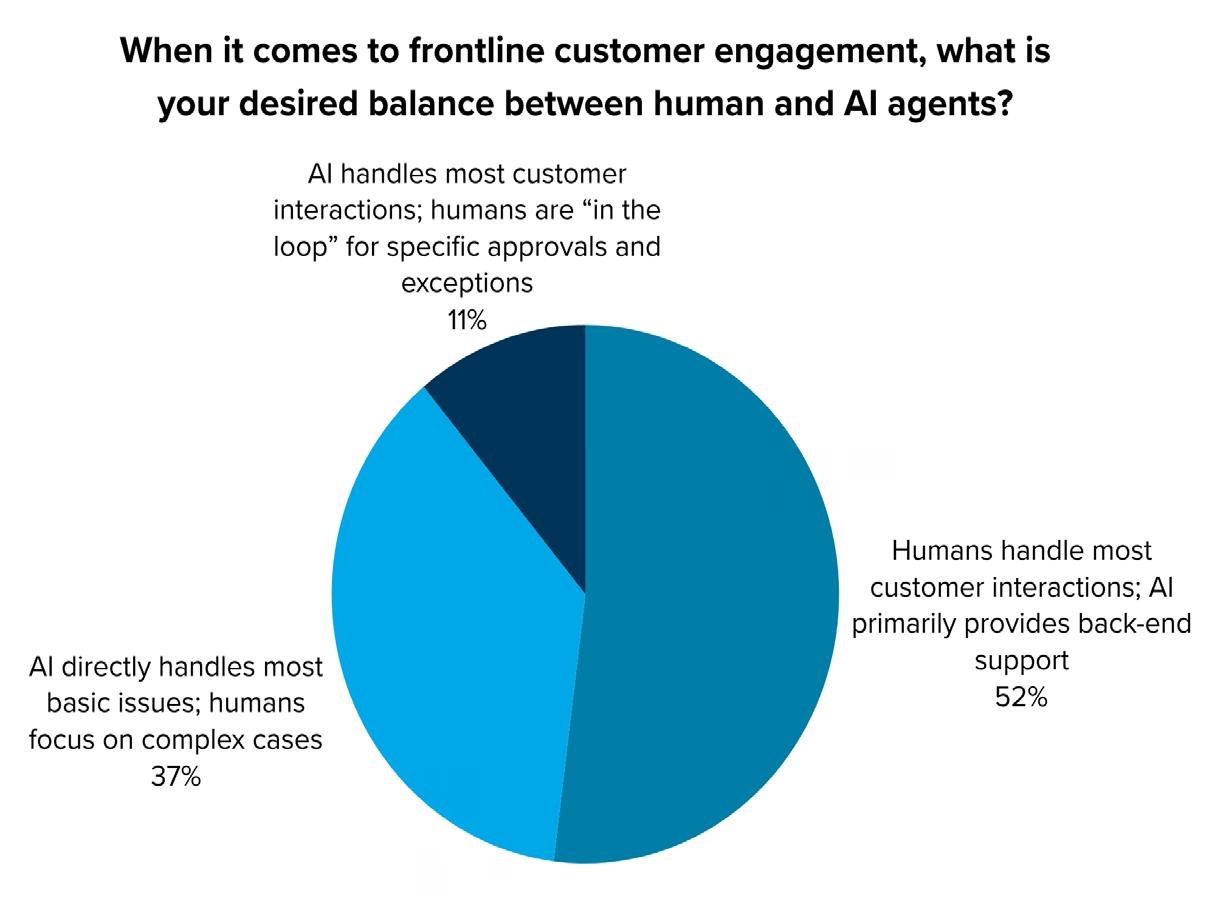
Conversation about agentic AI may be unavoidable, but customer contact leaders still see human involvement as non-negotiable. Only 11% believe AI agents will meaningfully replace human ones on the service frontlines.
“ [In our industry] Virtual agents may not be the answer right now. People like human interactions. There has to be a balance, and you have to feather the AI in, ” said Chris Dorn, Chief of Staff at Bison Wealth, a fast-growing investment firm.

Given their belief that humans will remain a fixture of the frontline support process, it should come as no surprise that few anticipate headcount reduction. Just 27% expect to meaningfully eliminate contact center representatives, and a nontrivial number actually expect to increase their workforce.
Why are leaders optimistic about retaining or even adding employees to their contact center teams?
The answer begins with a fundamental rejection of AI as a replacement mechanism. Leaders instead view AI as an empowerment tool designed to make employees more productive, more confident, and more empathetic in customer interactions.
Many, moreover, are confident that they will experience enough business growth to offset any newfound efficiencies. AI may help organizations optimize today’s tasks (and even eliminate some frontline inquiries), but it will not fully address the new tasks that emerge as the business expands its operations.
As part of their growth plans, they specifically anticipate a rise in opportunities for customer engagement opportunities. With more customers to support, and more opportunities to engage with them, contact centers will still rely on human employees across a myriad of use cases. From onboarding conversations, to winback opportunities, to proactive outreach, to emotionally intense support situations, humans will have plenty of work even if AI self-service eliminates some traditional service inquiries.
Befitting this vision, nearly 37% of leaders believe employees will primarily focus on complex cases.
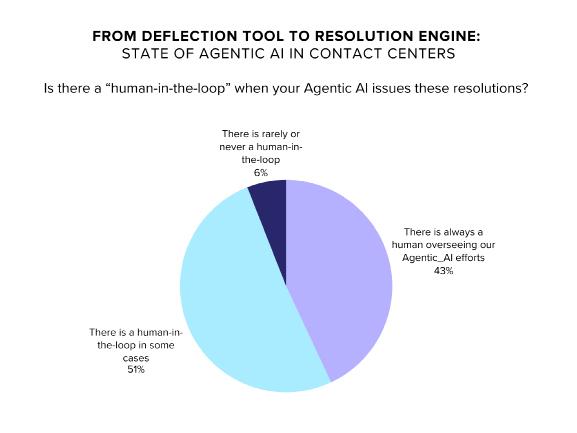
Some also recognize the fundamental difference between letting AI agents take the lead in an interaction and letting them handle all facets of the process autonomously Even when AI takes a prominent role in the conversation, leaders still expect to have humans “in the loop” for oversight, escalation, and exceptionhandling. This perspective further quells any fear of substantial headcount reduction.
Customer contact leaders are not simply looking to retain their human agents amid the rise of AI. They want to augment performance and unlock quantifiable results.
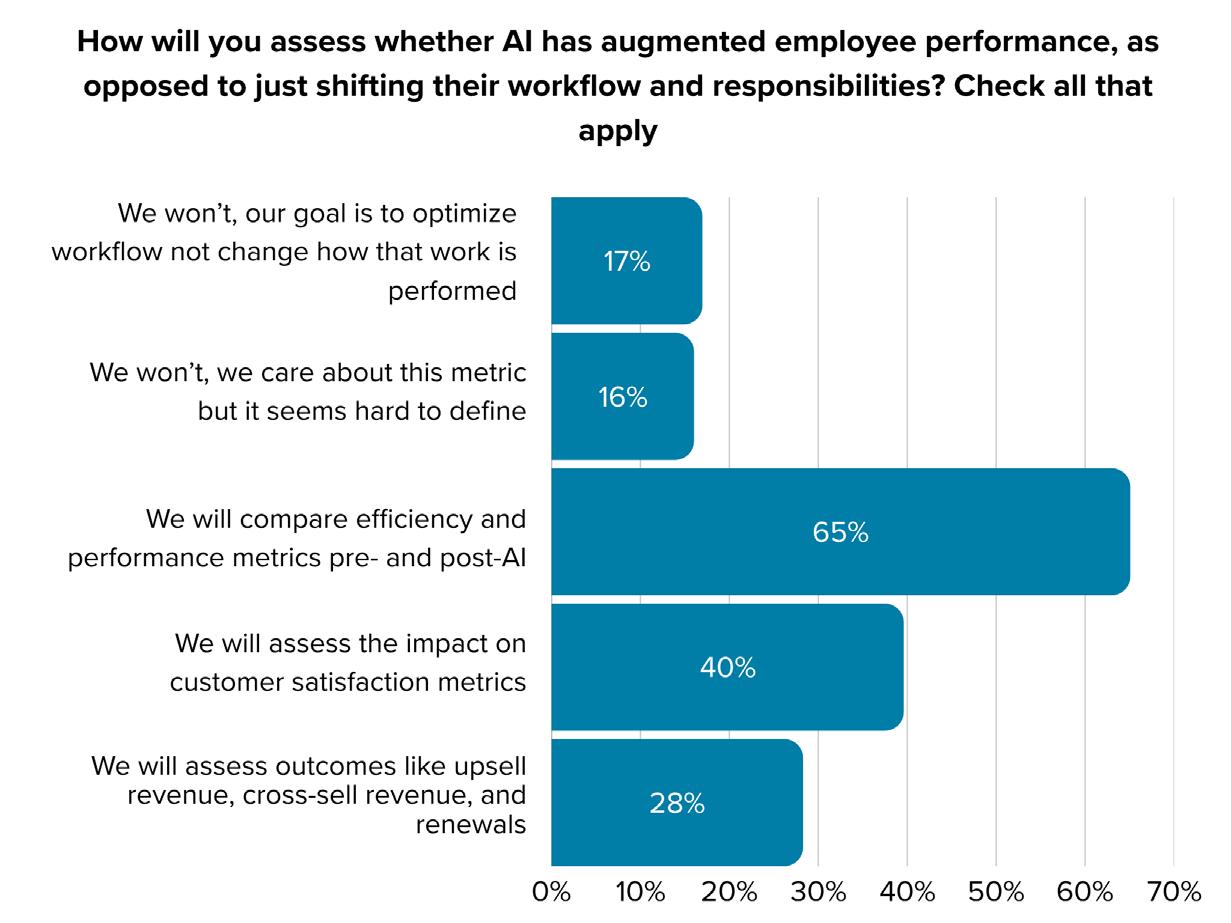
More than 65% seek tangible gains in efficiency and performance, while 40% will assess the impact on customer satisfaction. Hopeful that augmented agents will cultivate more lucrative customer relationships, 28% expect to see increases in revenue from new sales, cross-sells, upsells, renewals, and other growth opportunities.
These goals are admirable, but they may be unattainable in today’s typical contact center.
For all the talk of “employee empowerment,” today’s experiences are the opposite. They introduce friction and frustration, adversely affecting employee sentiment and performance.
And if these operational pain points are troubling now, when employees are still handling a significant amount of repetitive, low-stakes work, they will become downright devastating amid the pivot to less predictable, more complex interactions.
“Single sources of truth” and “seamless experiences” make for great rhetoric, but they do not reflect the reality of today’s contact center environments.
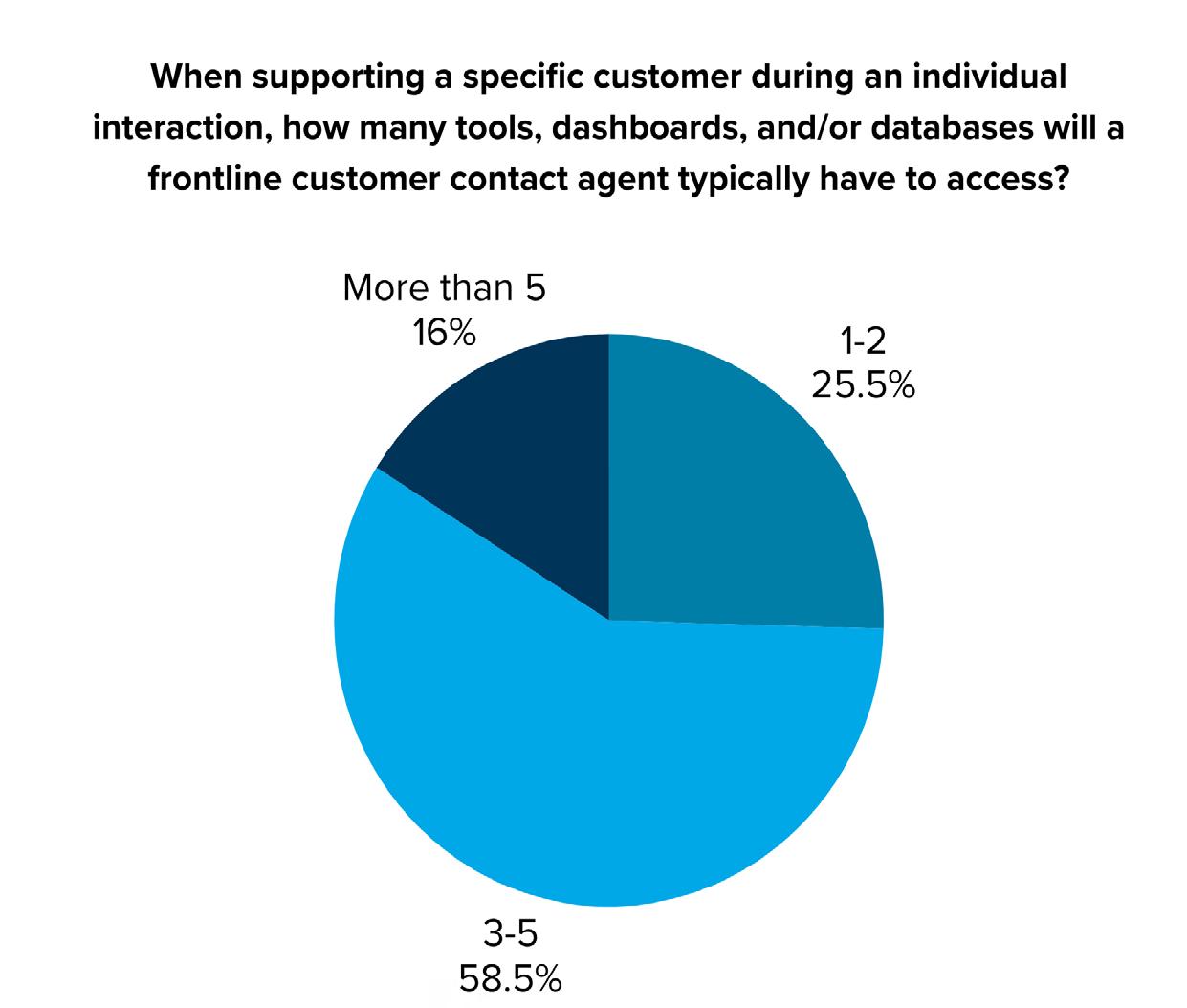
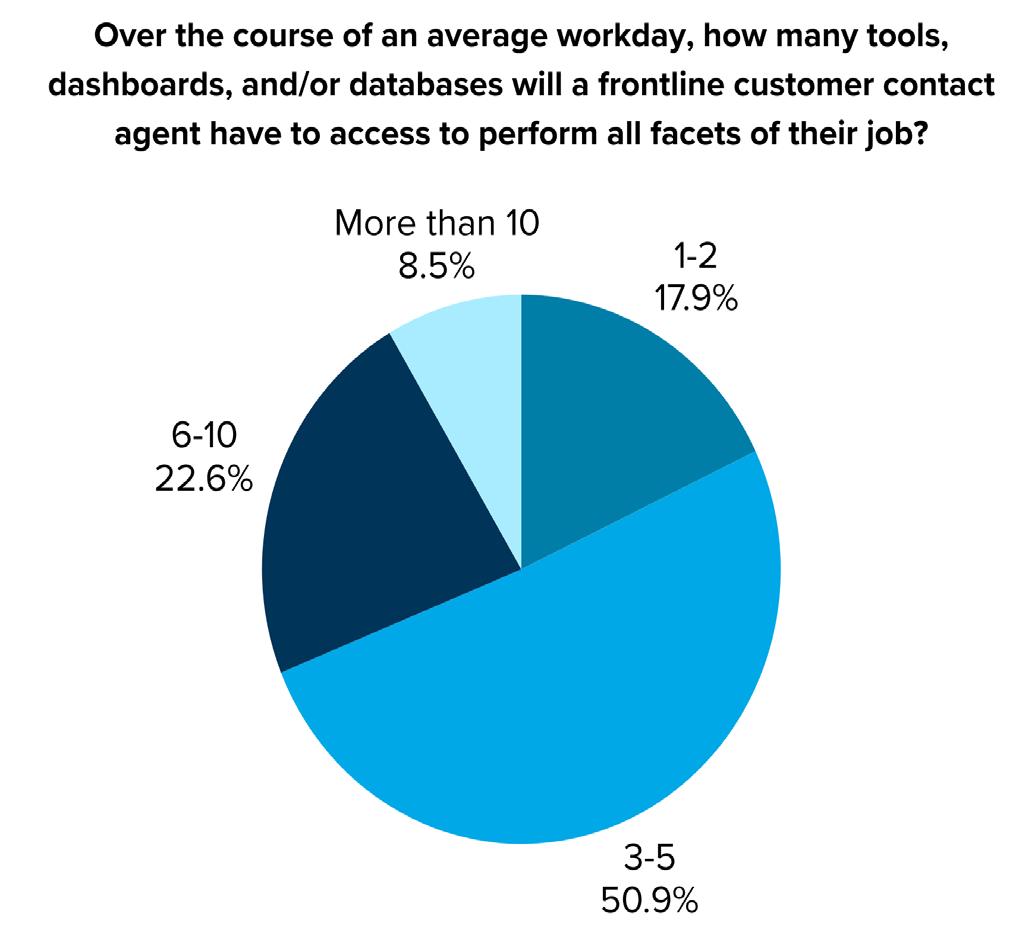

More than 82% of leaders say employees have to access multiple systems throughout their workday; 9% say they must access more than 10 separate platforms.
Sadly, it does not even take a full workday for employees to experience this friction; 74% of contact centers require representatives to access multiple screens within a single interaction.
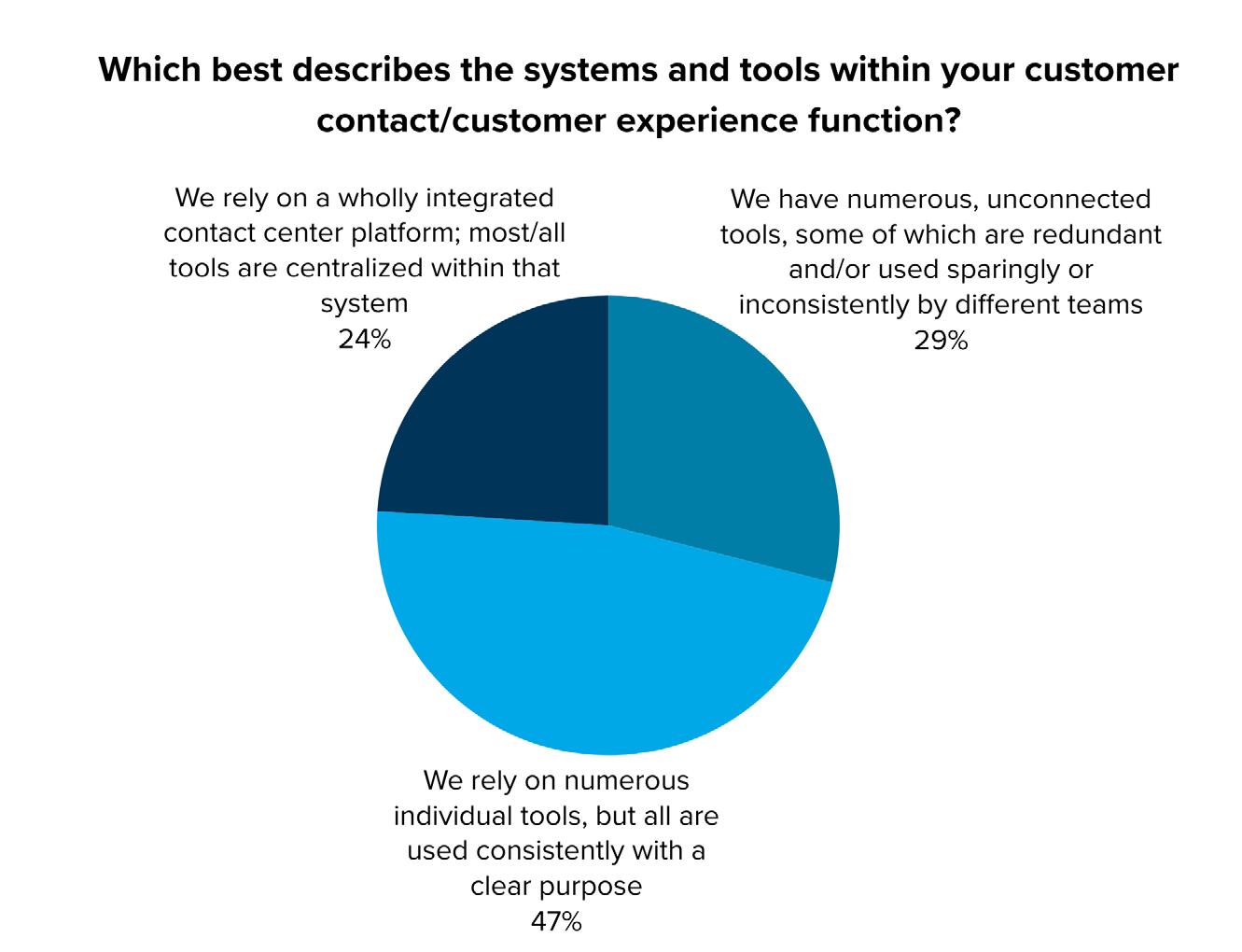
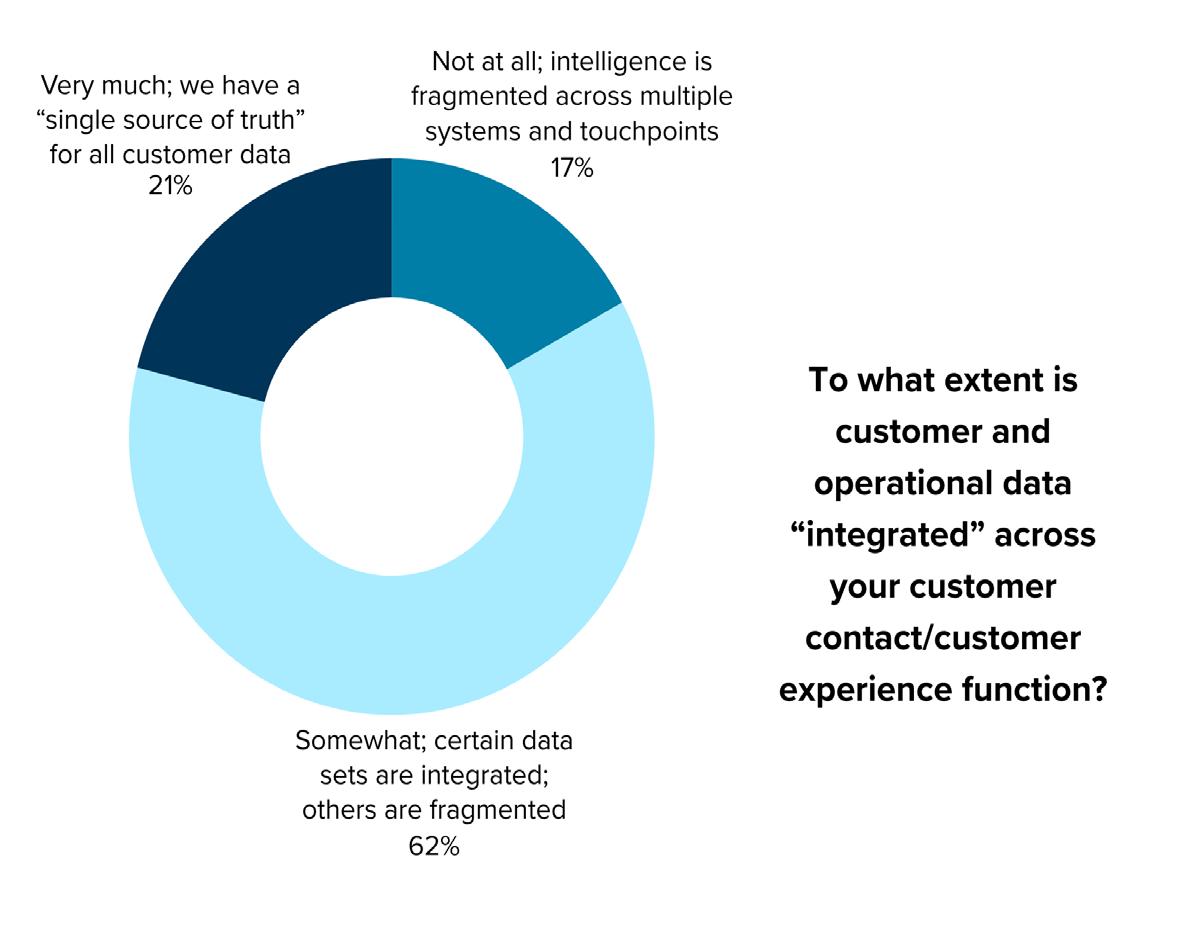
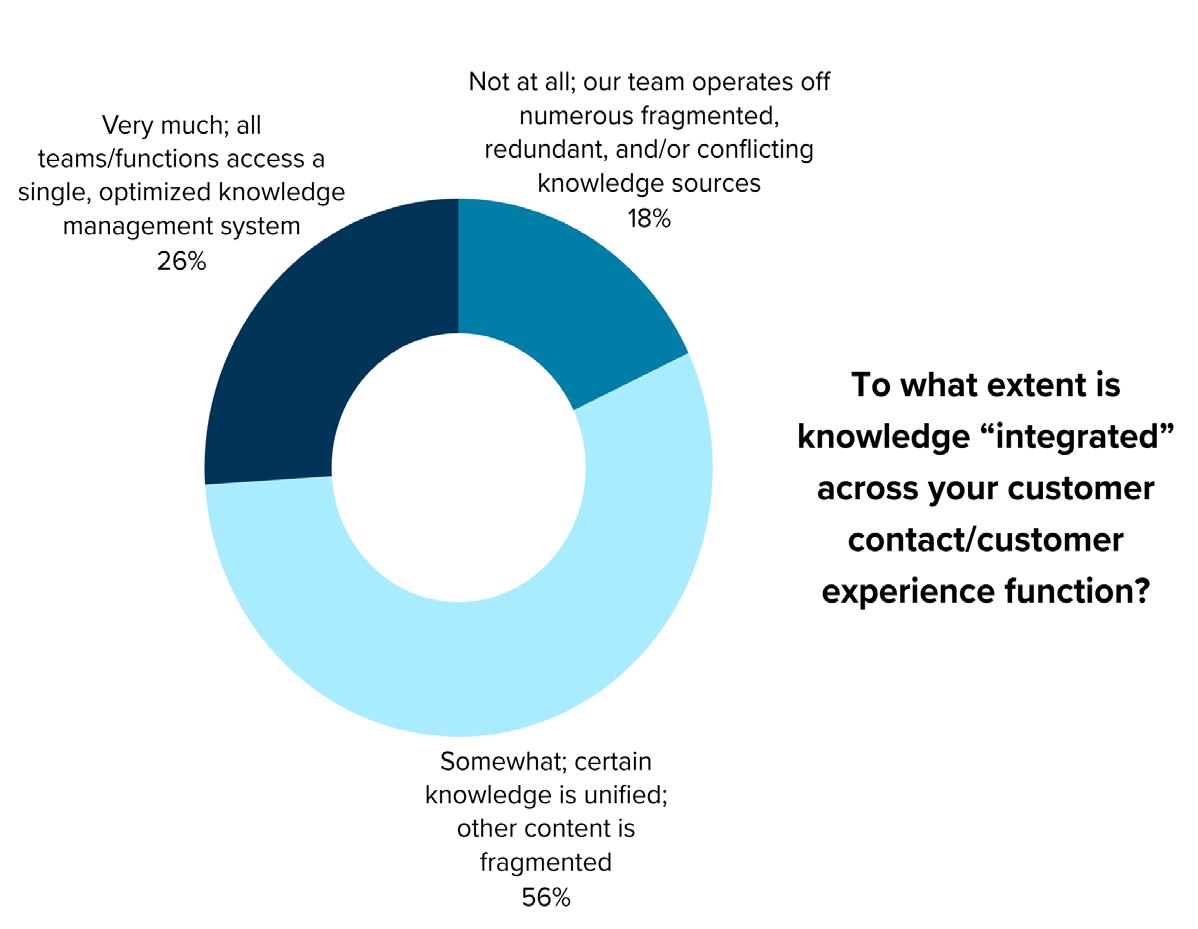

To make matters worse, these systems are largely disconnected. Only 24% of contact centers have an integrated contact center platform, only 21% have a single source of truth for customer data, and only 26% feel their knowledge is integrated.
This means that after all the effort employees exert in navigating the various tools and interfaces, they may still be left with incomplete or inconsistent information. They may still be unable to deliver accurate, let alone highly personalized, support for customers.
Talk of operational silos, convoluted systems, and conflicting data has dominated business discourse for decades. The fact that contact center experiences remain so fragmented reflects an even harsher reality: organizations have not done enough to these pain points.
Only about one-third of organizations, for example, have taken steps such as investing in integrated contact center platforms, performing data hygiene, or eliminating redundant tools.
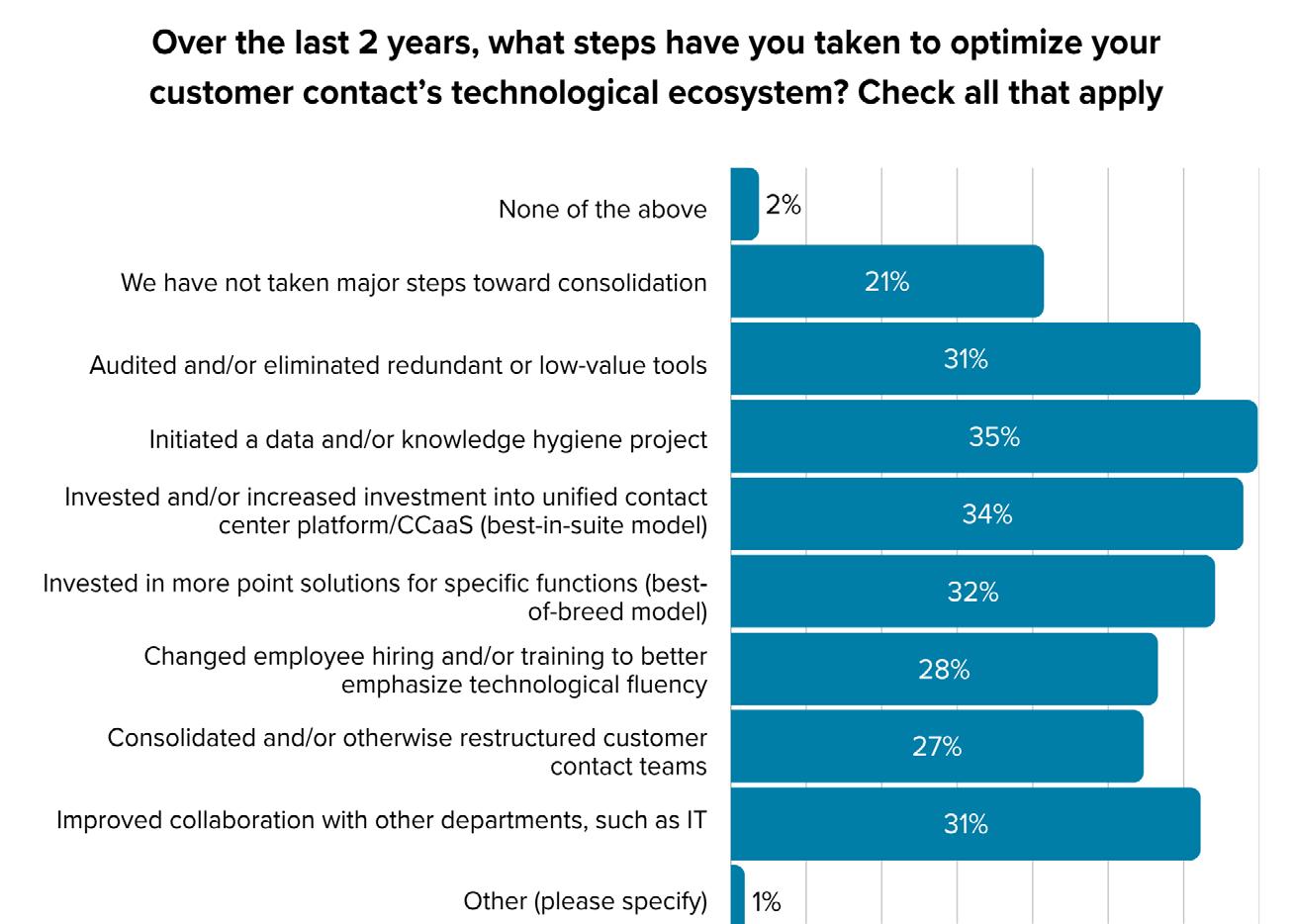
Even more alarmingly, more than 20% say they have taken no steps whatsoever to unify their ecosystem and streamline employee experiences.
There is also reason to question whether leaders are demonstrating sufficient accountability for combating this inertia –and finally unifying their operational framework: only 26% are actively measuring “employee effort.”
Without a quantifiable window into how systems affect employee performance and sentiment, leaders may downplay how urgently they need to fix their broken systems. And even if they do take action, they have little ability to assess whether the new technologies they are implementing and the new initiatives they are pursuing are actually making a favorable impact.
Fragmented platforms are a problem, but they are not the inhibitor to stellar performance. They are not the only factor preventing employees from excelling as consultative, empathetic, relationship builders.
There is also a significant competency gap. Even though employees may have an inherent flair for human connection (and thus inherent advantages over AI agents), they have not been sufficiently activating this ability in their day-to-day role. They have not been actively listening to customer nuance, empathizing with their concerns, or delivering outsidethe-box resolutions.
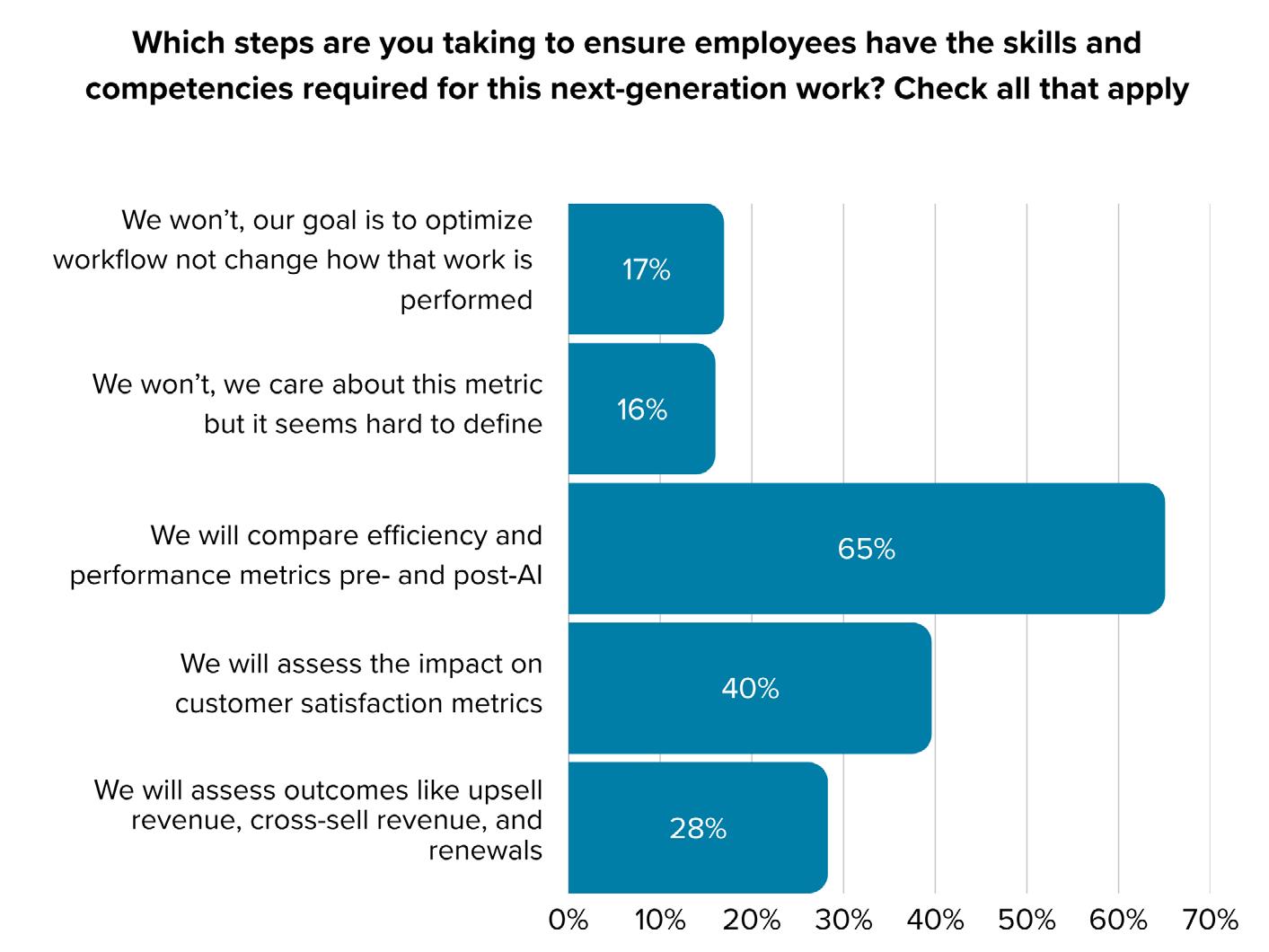
As a result, only 17% of leaders believe their employees are ready to handle next-generation work. This number almost precisely mirrors a 2024 CCW Digital finding, indicating that leaders have squandered two years of opportunity to improve hiring, training, and performance coaching.
System and skills gaps naturally go together. Ineffective tools and procedures take up time, limiting employees and leaders from engaging in meaningful coaching. Additionally, the time available for training often needs to be spent on helping employees handle current challenges instead of focusing on future opportunities.
Further, fragmented systems prevent supervisors from acquiring an accurate view of employees and their impact on customer experiences. This limitation stifles leaders’ ability to thoroughly assess and optimize employee performance, neutering the relevance and impact of training efforts.

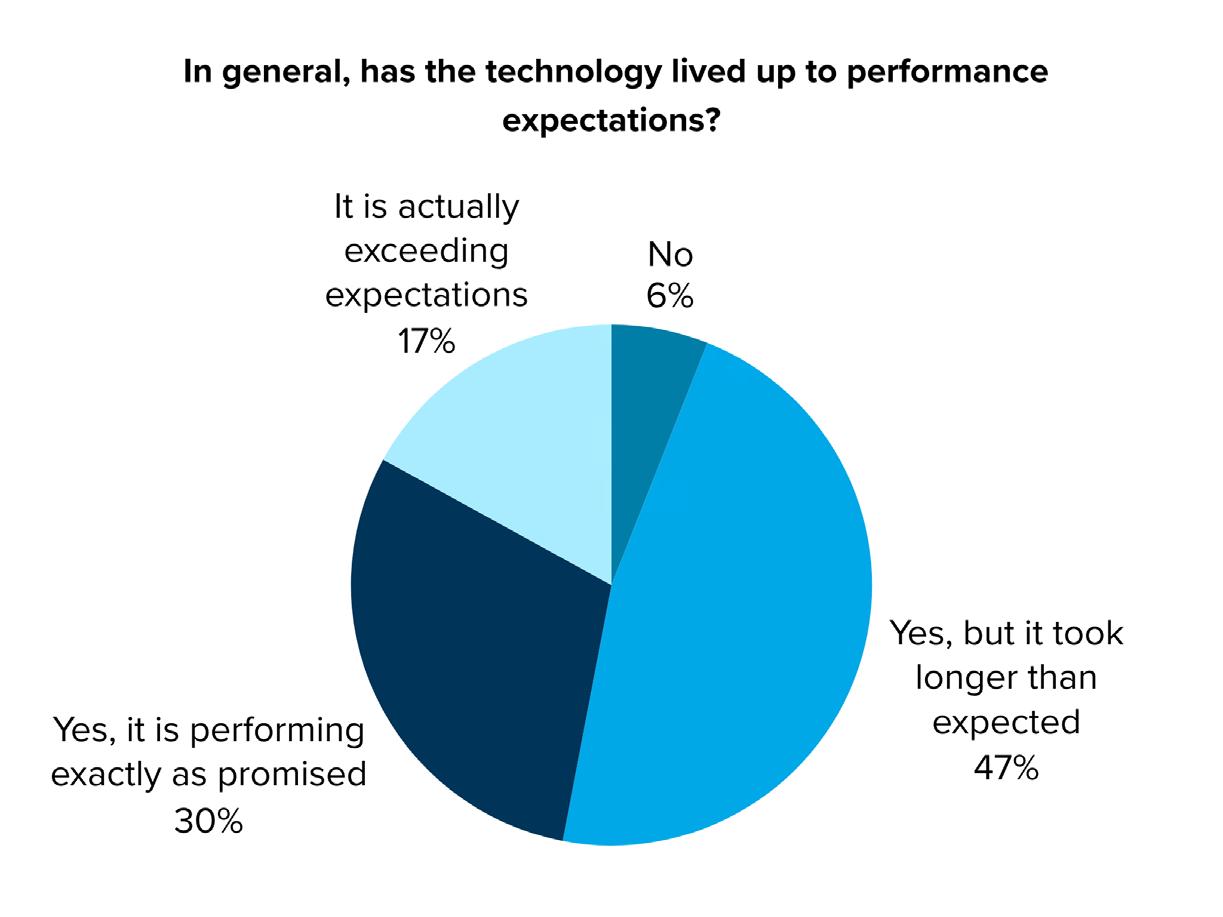
From a holistic perspective, customer contact leaders have thus far been encouraged by their AI investments. Only 6% feel their investments have totally missed the mark, and 47% feel performance has either met or exceeded expectations.
The problem is that the investment strategy –and the ROI calculation – markedly ignores the employee experience. As a result, organizations have not been sufficiently augmenting employees. They have not been empowering their teams to properly handle more complex workflows or successfully generate more customer loyalty.
Given the end-to-end nature of today’s experiences, there is value in cross-departmental collaboration. Multiple stakeholders should be involved in AI technology decisions.
“ You’ve got to be careful, because a lot of people use the term AI and don’t really know what they’re saying. ” Chris Dorn, Bison Wealth
But there is a difference between including multiple voices and excluding the voice of the contact center, which serves as a proxy for the voices customers (and the employees who serve them). Presently, most organizations are on the wrong side of that line.
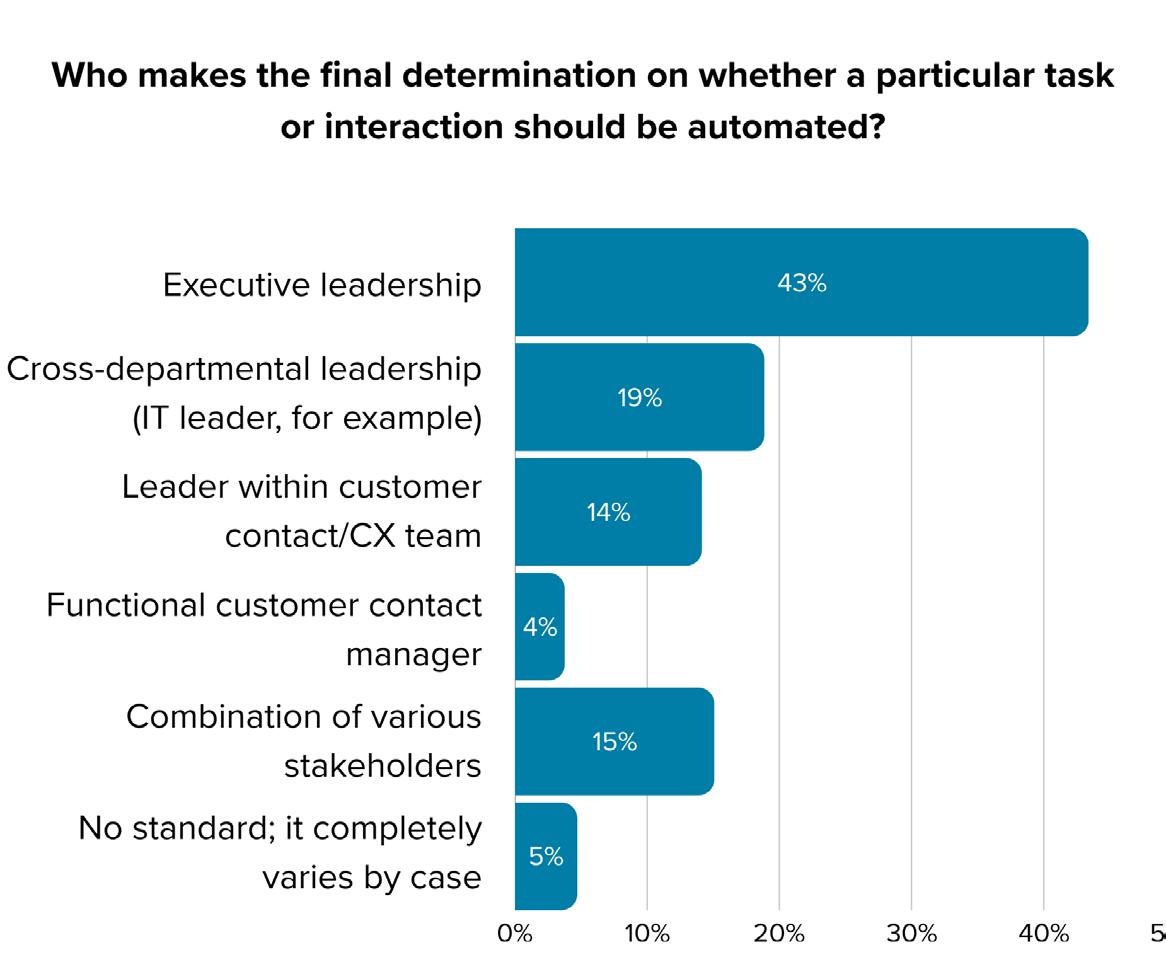
Sixty-one percent (61%) say that final automation decisions are made wholly outside the contact center function. This heightens the likelihood that technology will be purchased without sufficient regard for its ability to eliminate many sources of friction and/or to simplify the new responsibilities facing today’s customer contact employees.
That concern is exacerbated bywith the knowledge that employee training/development and employee usability/time-toproficiency are the two lowest-ranking AI investment considerations.
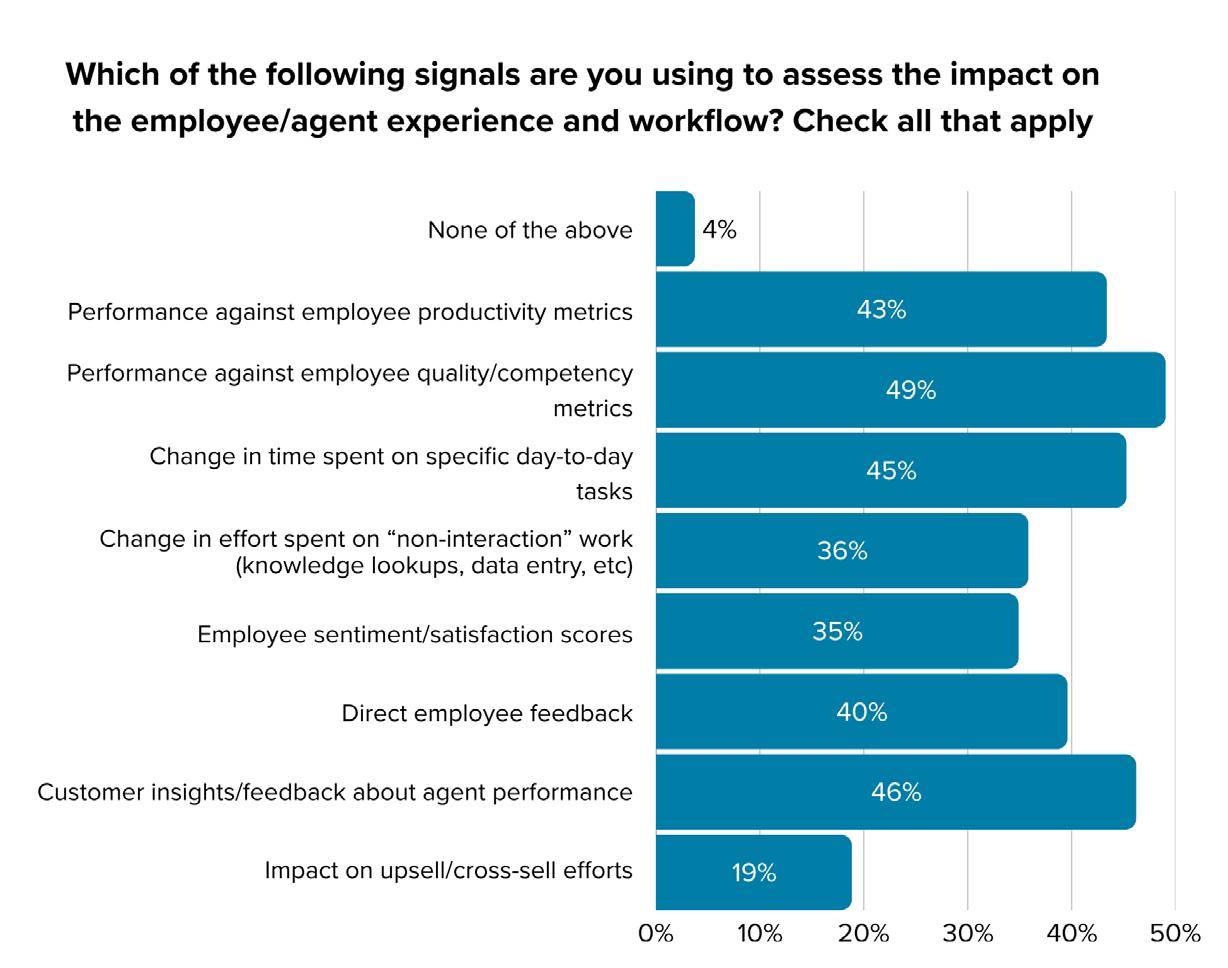
Many organizations are also downplaying employee voices after implementation. Just 34% are measuring employee sentiment about AI’s impact on workflow, and just 39% are actively listening to their feedback.
Collectively, these statistics expose a major disconnect between vision and execution.
In theory, customer contact leaders say they primarily view AI as an opportunity for augmentation a way to empower human employees to stay more engaged, become more productive, and deliver more impactful service.
In practice, these leaders are inadequately considering whether AI is actually improving employee experiences or competencies. They are neither meaningfully prioritizing employee needs in technology selection nor meaningfully courting employee sentiment during technology evaluation.
Given this approach, there is no reason to believe historical AI investments will remedy the aforementioned pain points that prevent agents from efficiently navigating their workflows or developing next-generation competencies. There is similarly no reason to believe these investments will feel employee-centric enough to overcome fears of job loss, let alone create the resoundingly happy employees who create happy customers.
Beyond downplaying its impact onhow it affects today’s employee experiences, today’s AI strategy fails to account for what it means for the future of human work.
Despite wanting employees to take on higher-value work and acknowledging a competency gap, fewerless than half of organizations have introduced new training programs.
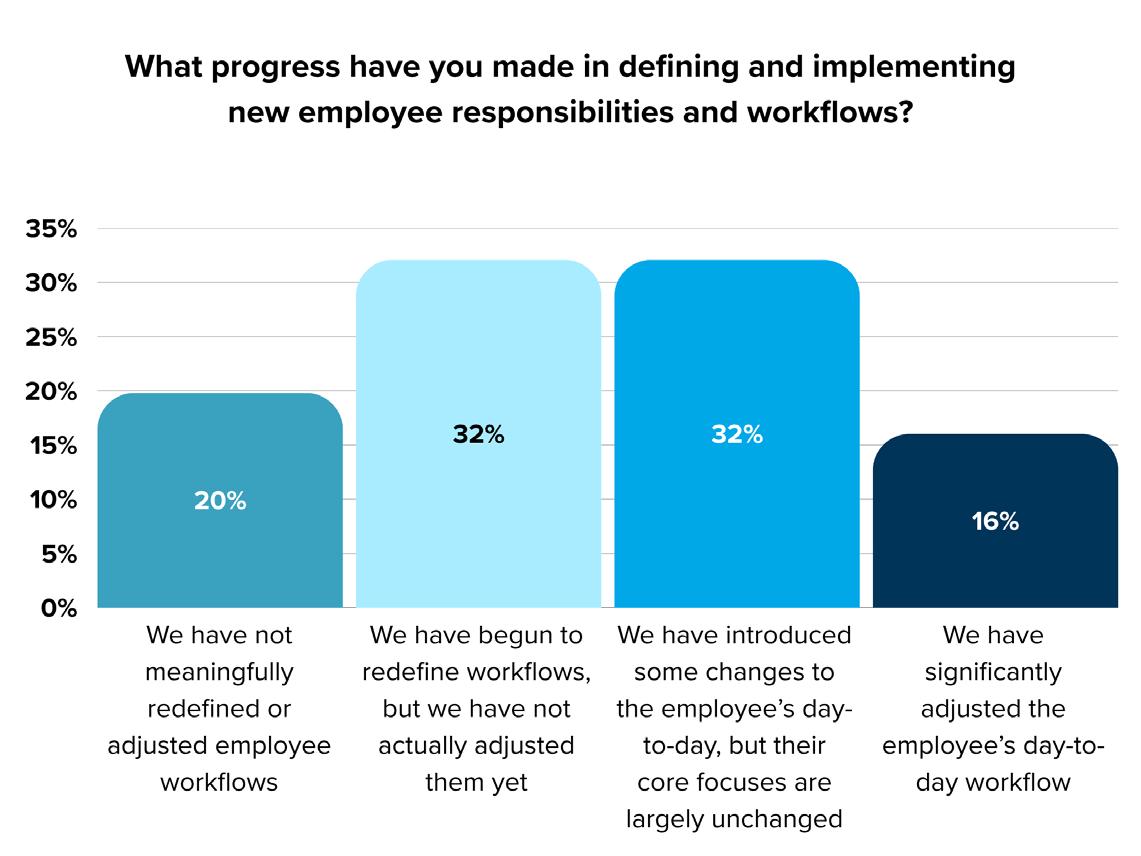
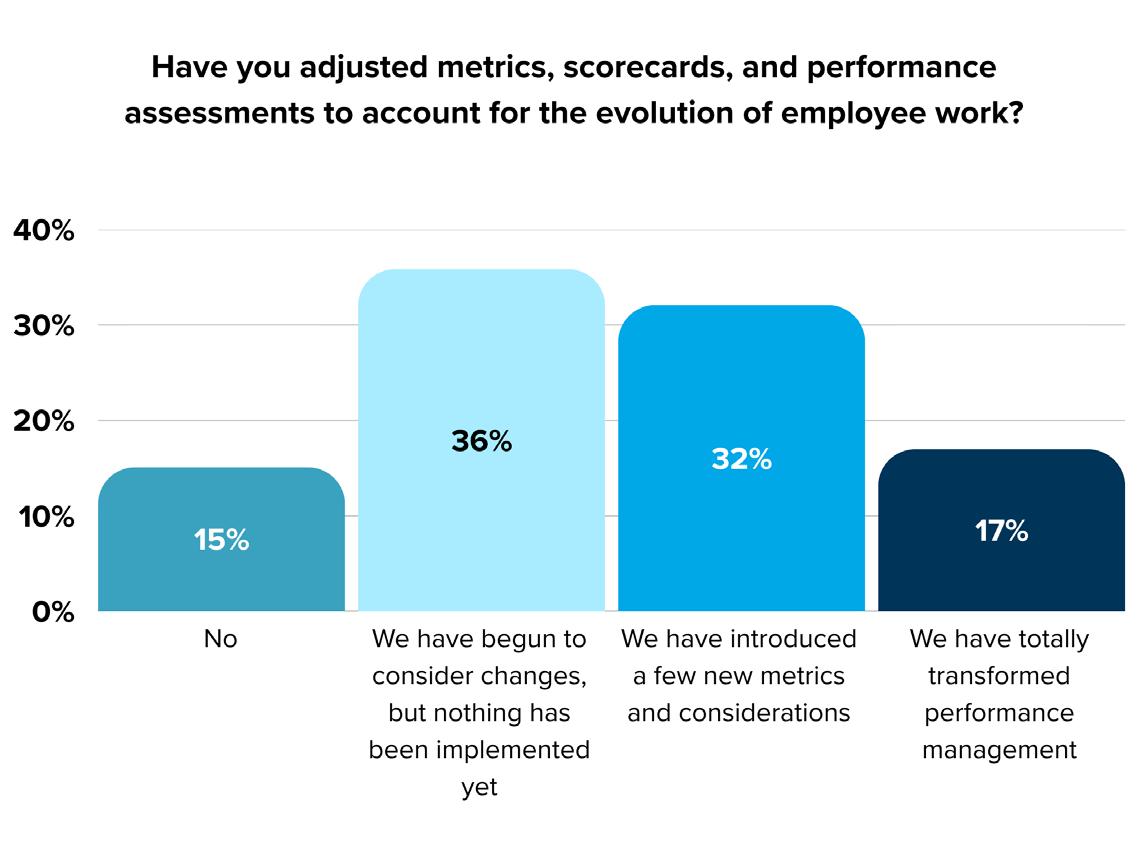
Despite expecting employees to contribute in new ways, only 16% have meaningfully adjusted workflows, and only 17% have introduced new performance scorecards.
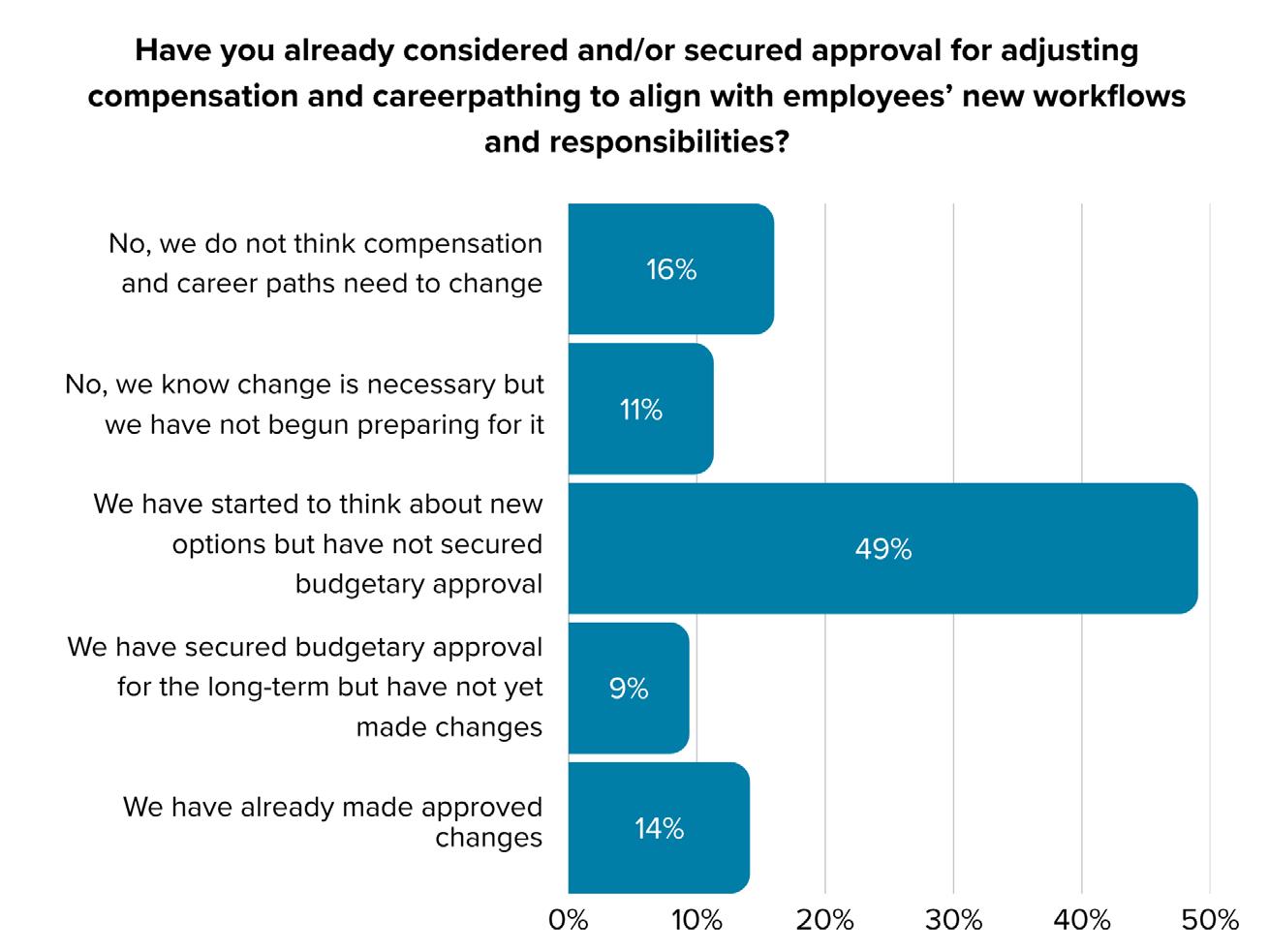
And despite being asked to take on a deeper role within their operations, 77% have not yet seriously re-evaluated their compensation and career paths. Only 21%, meanwhile, have moved the needle on performance and development incentives.
If they are neither involving them in the AI sourcing process nor collaborating with them on the future of their role, can contact center leaders seriously claim that they are investing in employee empowerment?
More importantly, can they seriously expect to be successful?


“ Every person we talk to is a different puzzle to figure out and help. Every client is different, ” said Chris Dorn of Bison Wealth about the intrinsic complexity of customer interactions.
On the surface, this research endeavor may seem negative. It highlights a massive gap between expectation and execution. Leaders clearly want AI to augment human ingenuity, but they are not taking the necessary actions to reduce employee friction, elevate employees’ skill sets, and enable real-time success.
A silver lining nonetheless, comes from the fact that the technology is fundamentally capable of achieving these goals. The best AI solutions are already automating low-value inquiries, optimizing contact center workflows, gathering and sharing critical customer context, surfacing real-time knowledge and guidance, supporting employee skill development, and elevating quality scoring.
By following some clear steps, organizations can avoid historical pitfalls, activate this promising technology, and set employees on a course for lasting success. They can turn their human teams from script readers into relationship builders.
Today’s leaders know that employees face undue friction in completing their jobs. They know it is difficult for them to access the data and knowledge they need to be successful, and they know that burden will only grow as customer expectations rise and issues become more complex.
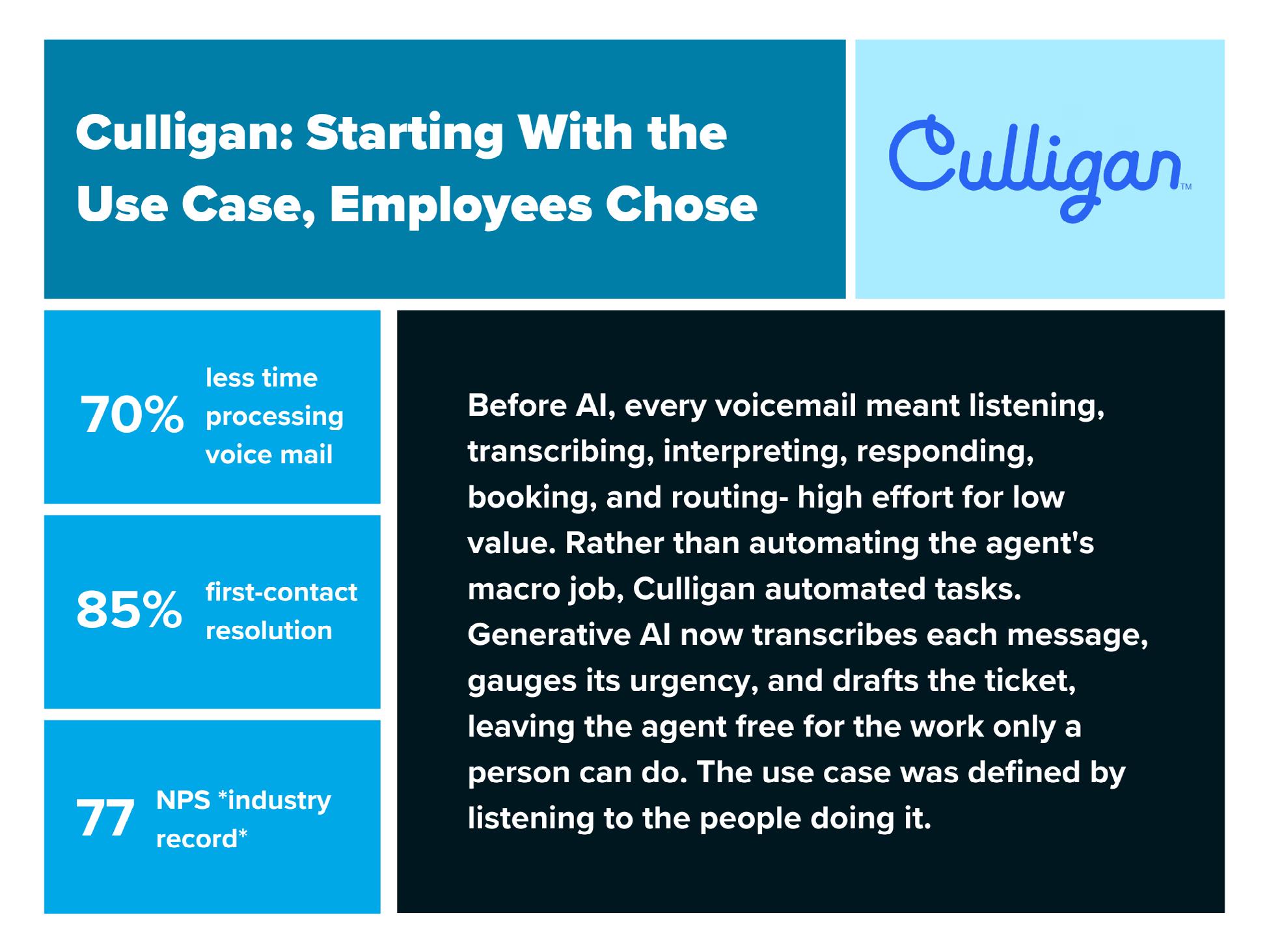
Solving this problem requires actively listening to the employee’s voice of the employee. It involves having employees identify the biggest roadblocks they face in their jobs and highlighting ways to better connect with customers.
It also requires actively measuring the impact of AI on employees and their workflows. How does the prevalence of AI self-service change the types of issues (and types of customers) human employees handle? How much time do employees spend navigating different systems, and how does that impact the overall experience? How helpful are AI knowledge and insight prompts?
Step Two: Adopt a more thorough approach to AI tests, pilots, and implementations
There is no substitute for continuous observation, measurement, and innovation, but there is a way to better forecast (and prepare for) the likely impact: a savvier implementation process.
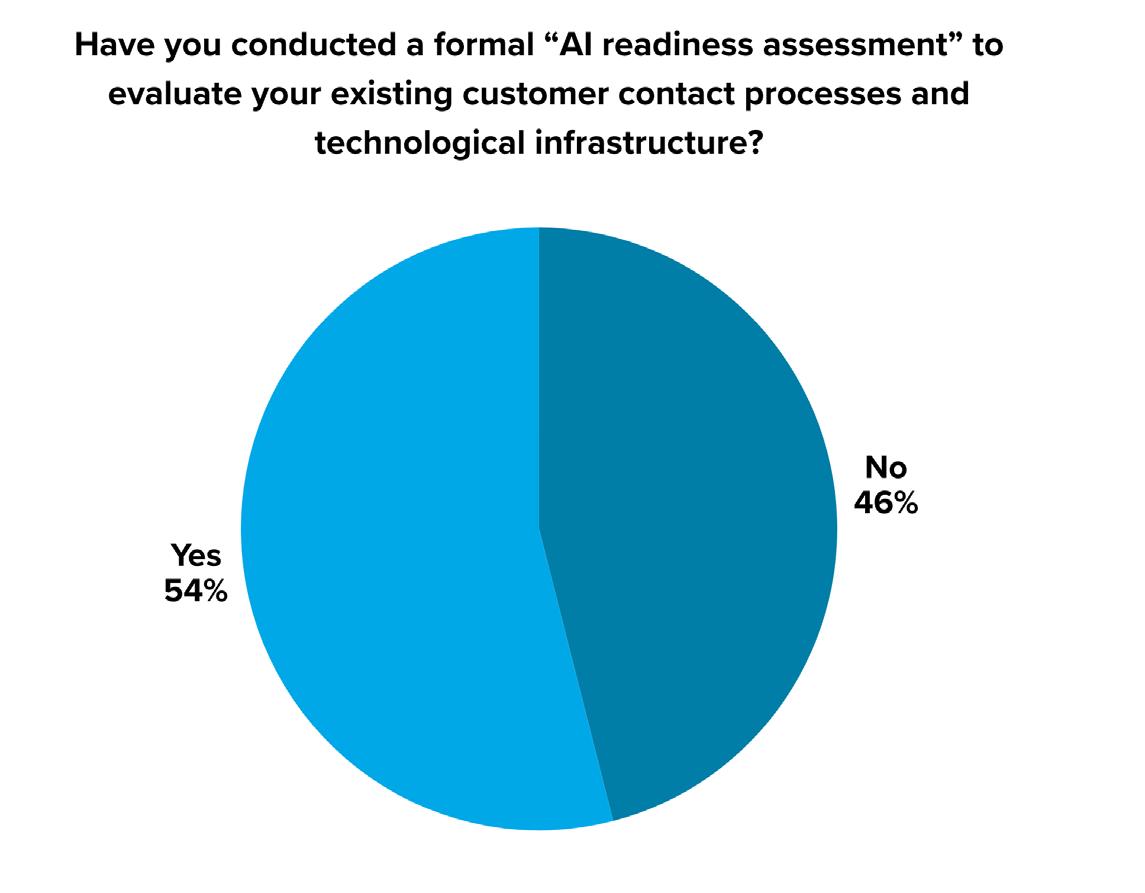
Currently, only 46% of contact centers report having undergone an AI readiness assessment.
Only 48% went beyond basic testing before, rolling out their AI projects. Just 19% actually conducted comprehensive, real-world pilots.
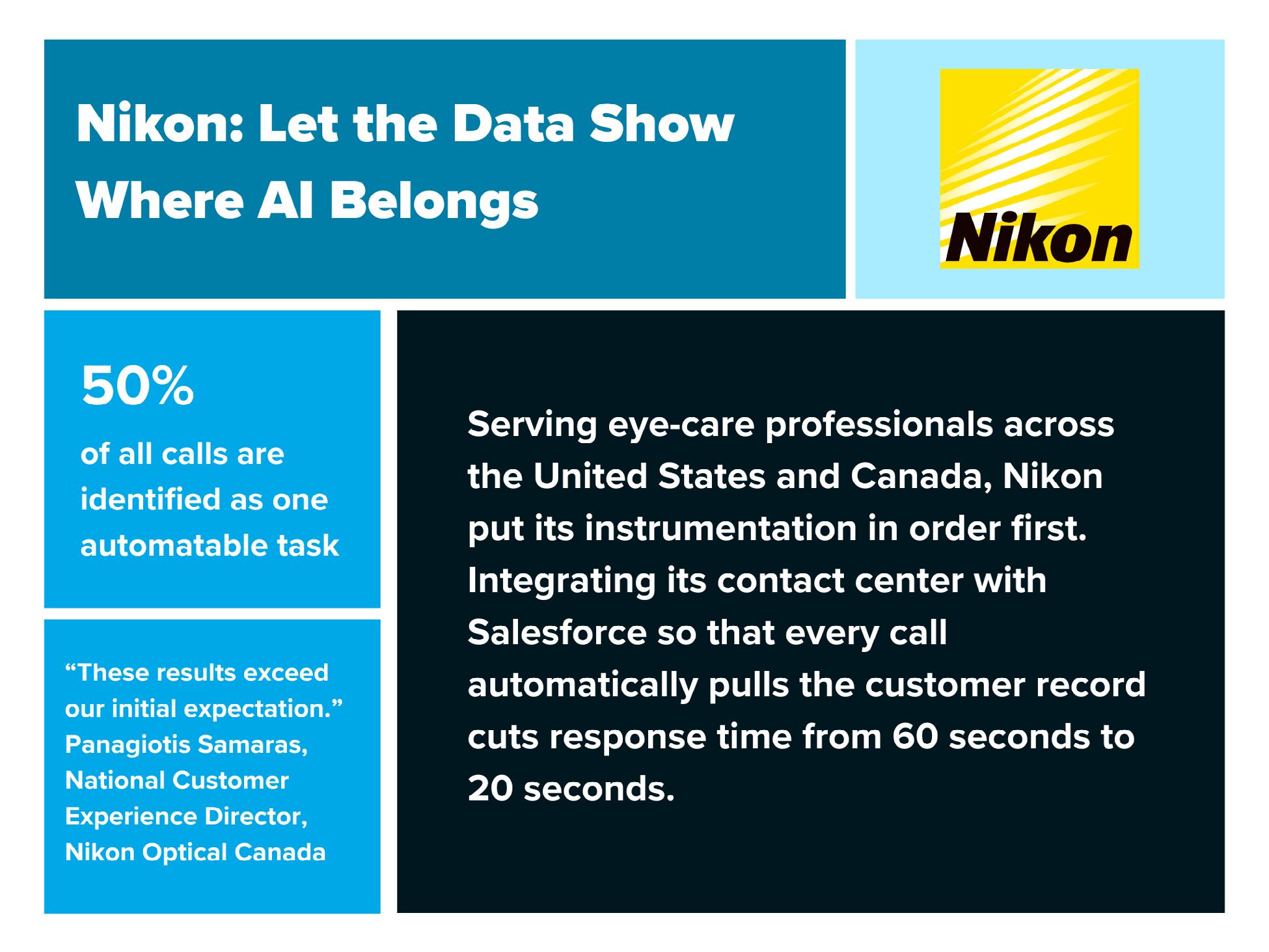
By reversing this trend and committing to a more robust testing and assessment project, organizations will gain a clearer understanding of what AI means for their human workforce. This will enable them to start unifying systems, addressing necessary data disharmonies, and rethinking training before workflow changes become too burdensome.
More broadly, it will allow them to identify and remedy holistic implementation concerns, such as the integration issues that have undermined so many AI projects.

One who believes AI will “augment rather than replace” believes humans will still play a vital role on the front lines.
Even in this scenario, AI will still dramatically affect the customer experience. AI will still be analyzing customer data, surfacing critical knowledge, and guiding on potential responses. It will still autonomously process certain transactions and handle key steps in complex conversations.
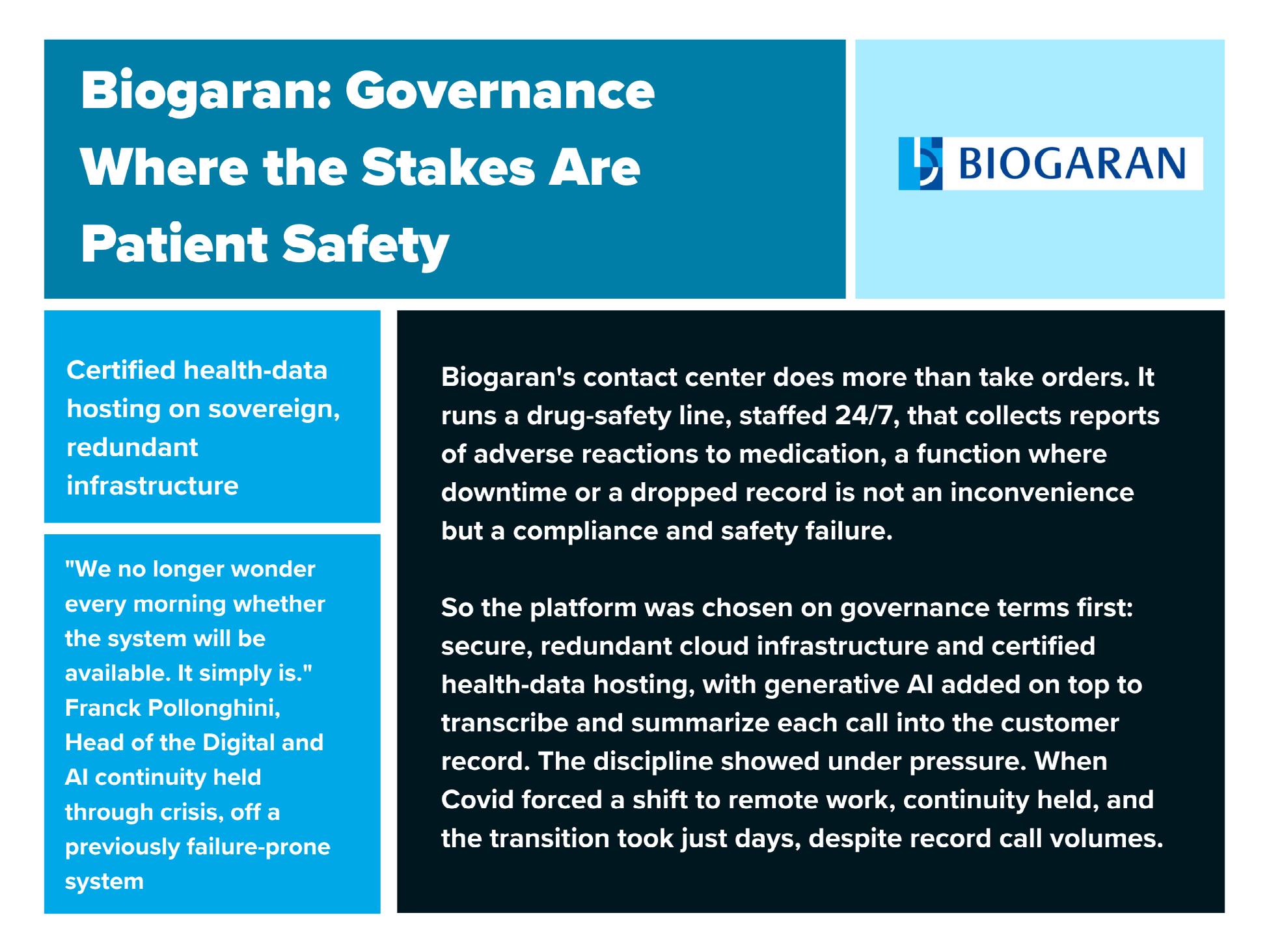
All of these functions carry significant strategic risks and strategic ramifications, underscoring the importance of having a clear AI governance strategy. An organization needs a clear mechanism for implementing AI, optimizing deployments, managing potential risks, and preparing for the net operational impact.
That impact, notably, includes considering what AI will mean for customer and employee journeys. Customers will be asked to behave differently and that “ask” will change how they phrase questions, respond to resolutions, and set overall service expectations. Employees will be asked to handle new responsibilities – and that “ask” will change how they expect to be supported and compensated.
The right governance strategy proactively anticipates and addresses these transformations.

Brian Cantor, Principal Analyst & Director, CCW Digital
Brian Cantor is the Managing Director of Customer Management Practice’s Digital division. Driven by a passion for helping brands better empower their employees and more meaningfully connect with customers, Brian oversees research, product development, editorial vision, and commercial strategy for properties like CCW Digital and Customer Engagement Insider. Reaching a community of almost 200,000, these digital properties offer industry-leading commentary, research reports, and virtual event sessions.
Far from a “boardroom manager,” Brian routinely speaks at leading customer contact events and directly engages with global enterprises and innovative start-ups via training and advisory services sessions.

Brooke Lynch
Divisional Director, Principal Analyst
CCW Digital

Ben McClymont
Divisional Sales Director
E: ben.mcclymont@cmpteam.com

Audrey Steeves Content Analyst
CCW Digital

Simon Copcutt Head of Strategic Accounts
E: simon.copcutt@cmpteam.com