FRESH POURS
17 26 34
Learn What You Love Conn students embark on an educational journey that unites passion, purpose and possibility.
Fresh Pours Four alumni entrepreneurs are shaking up the beverage industry.
Down the Rabbit Hole Patty Reilly ’75 rehabilitates orphaned and injured bunnies and teaches others how to help.
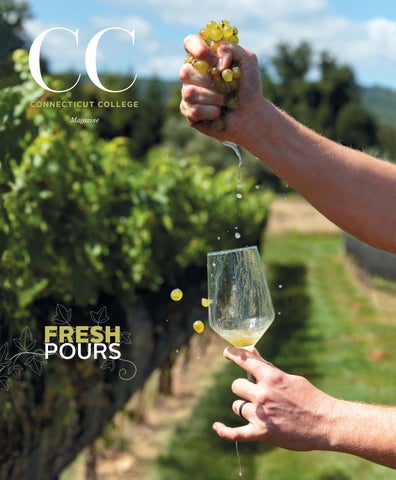
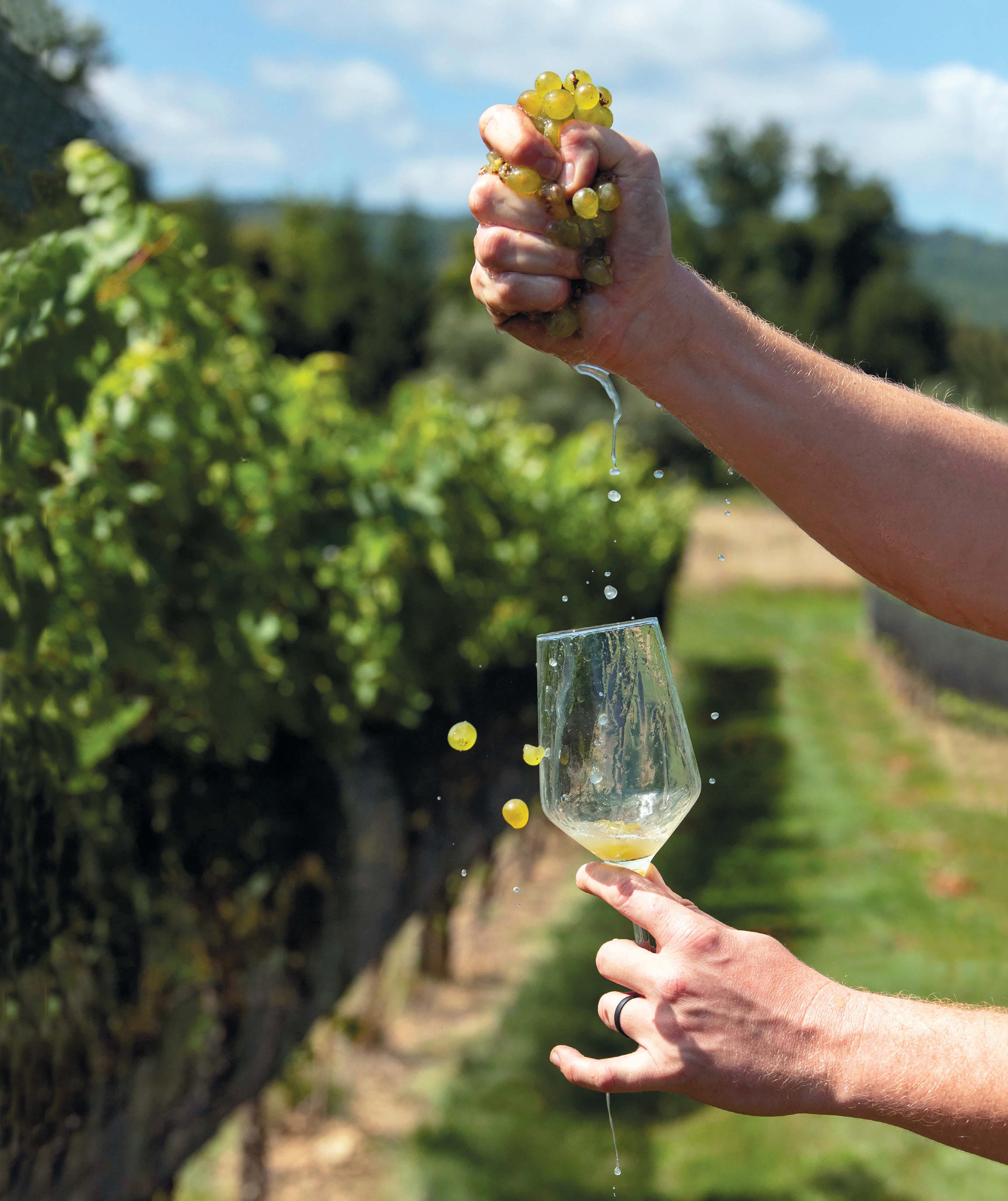
On the cover: Winemaker Conor Quilty ’15 squeezes freshly picked grapes.
Story on page 26. Photo by Lindsey Hurley Photography, courtesy of Meadowbrook Winery
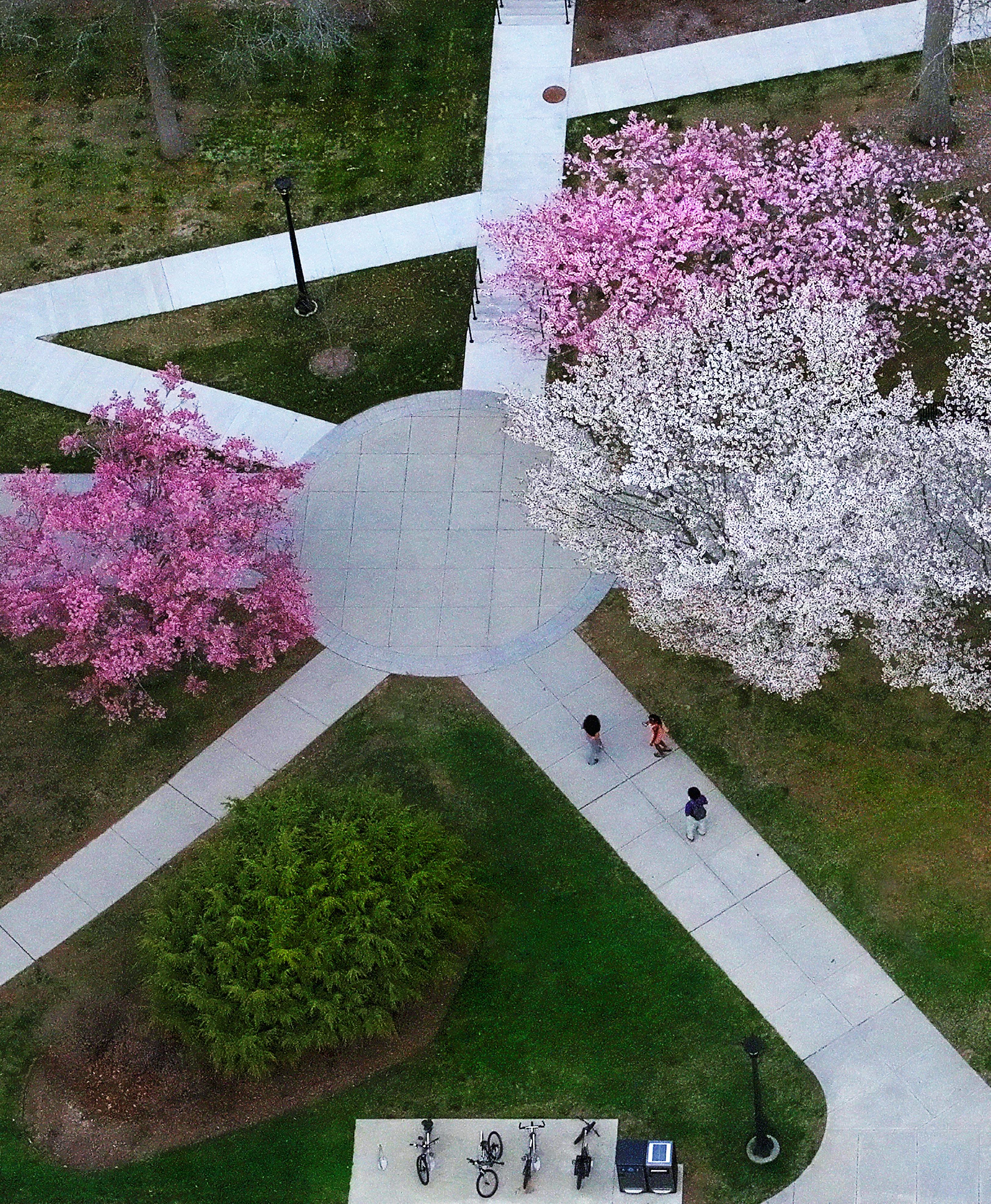
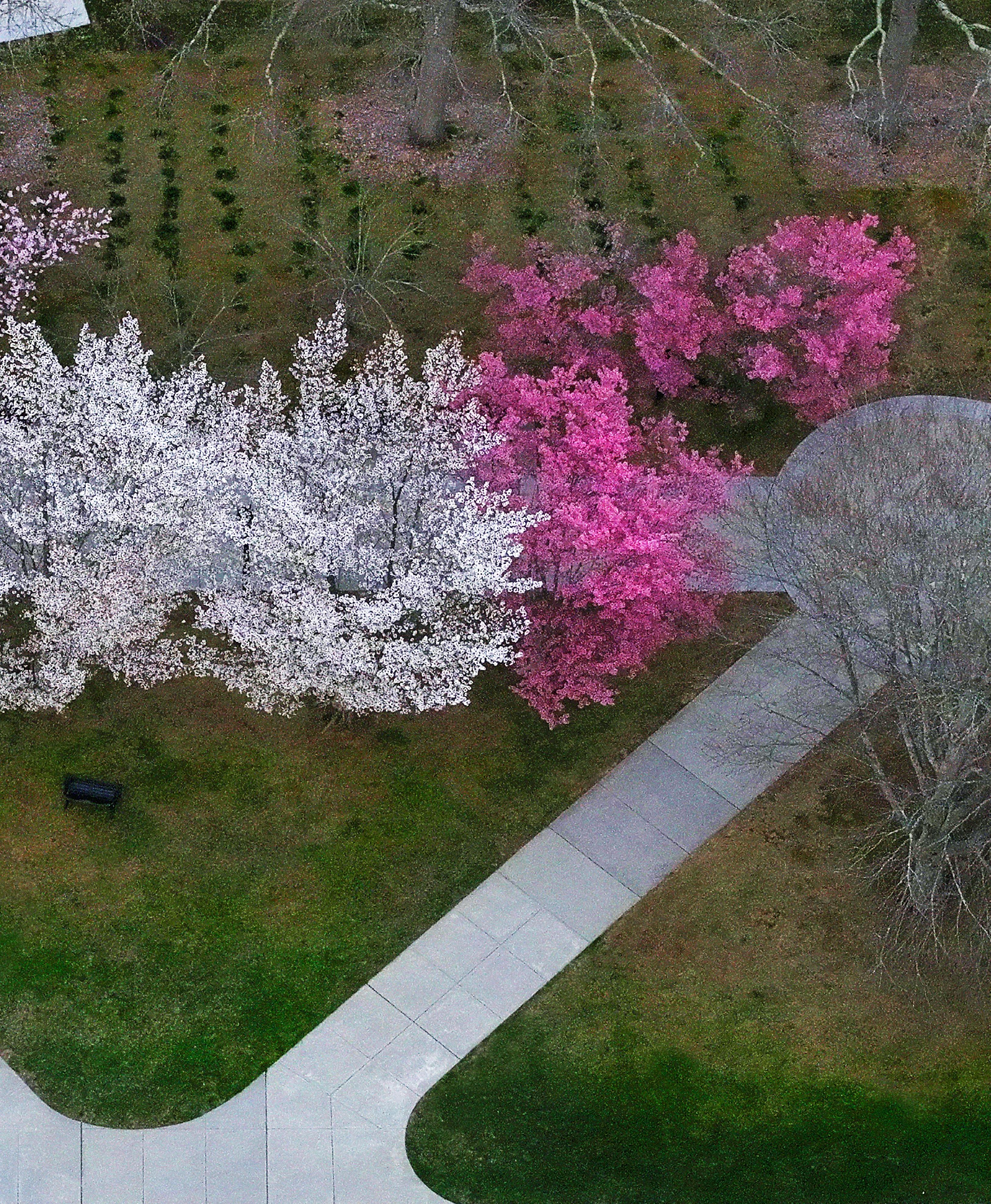
On this page: Japanese cherry trees bloom in front of Shain Library in April. Photo by Sean D. Elliot
This issue of CC Magazine ofers a panoramic view of what a Connecticut College education makes possible, not only in the classroom, but across a lifetime. It also marks an important anniversary. Ten years ago, Conn’s faculty launched Connections, a reimagining of the liberal arts curriculum grounded in the College’s mission and built around a simple but powerful idea: Students learn best when they are the authors of their own education.
In many ways, Connections captures what has always been at the core of a Conn education. During your time at Conn, if you found yourself pursuing a question you hadn’t expected to ask, or discovered an area of study you hadn’t anticipated, you already know the possibilities revealed through Connections.
Connections allows students to chart an educational course through a curriculum that is uniquely their own. Students do not simply move through a set of requirements. Their own interests and questions carry them across disciplines, into faculty-mentored research, global service and internships, and toward an integrative project that demonstrates not just what they have learned, but how they think. Research consistently shows that personalized, experiential, interdisciplinary education, grounded in a liberal arts foundation and anchored by strong mentoring relationships, results in deep and holistic learning that leads to a lifetime of professional success and personal growth and fulfllment. The recent graduates in “Learn What You Love” powerfully demonstrate that.
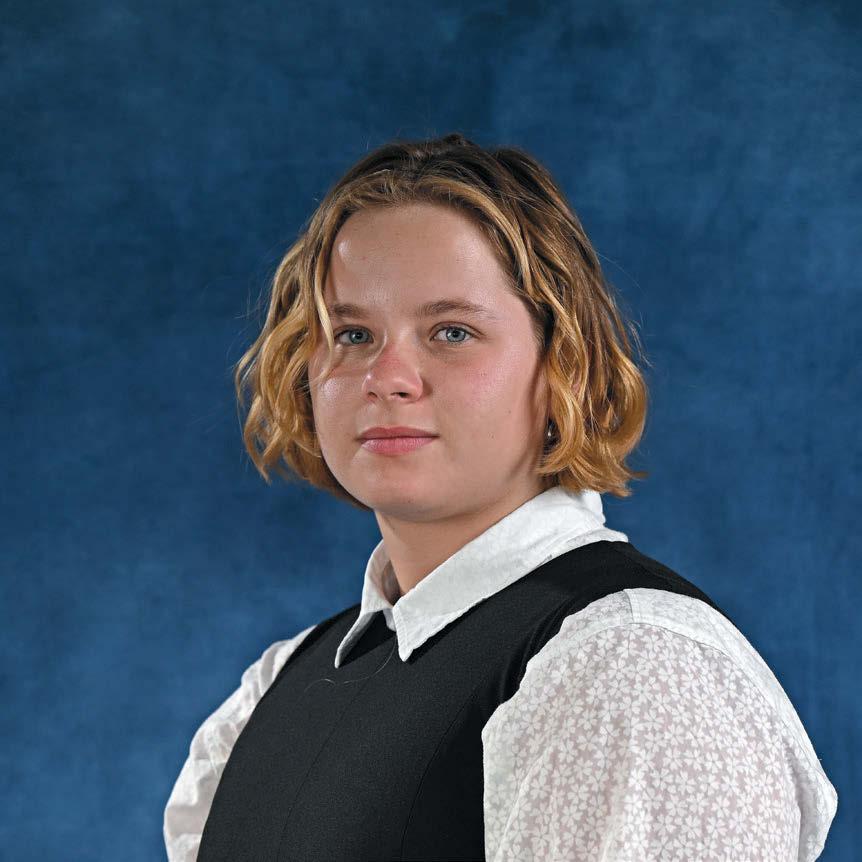
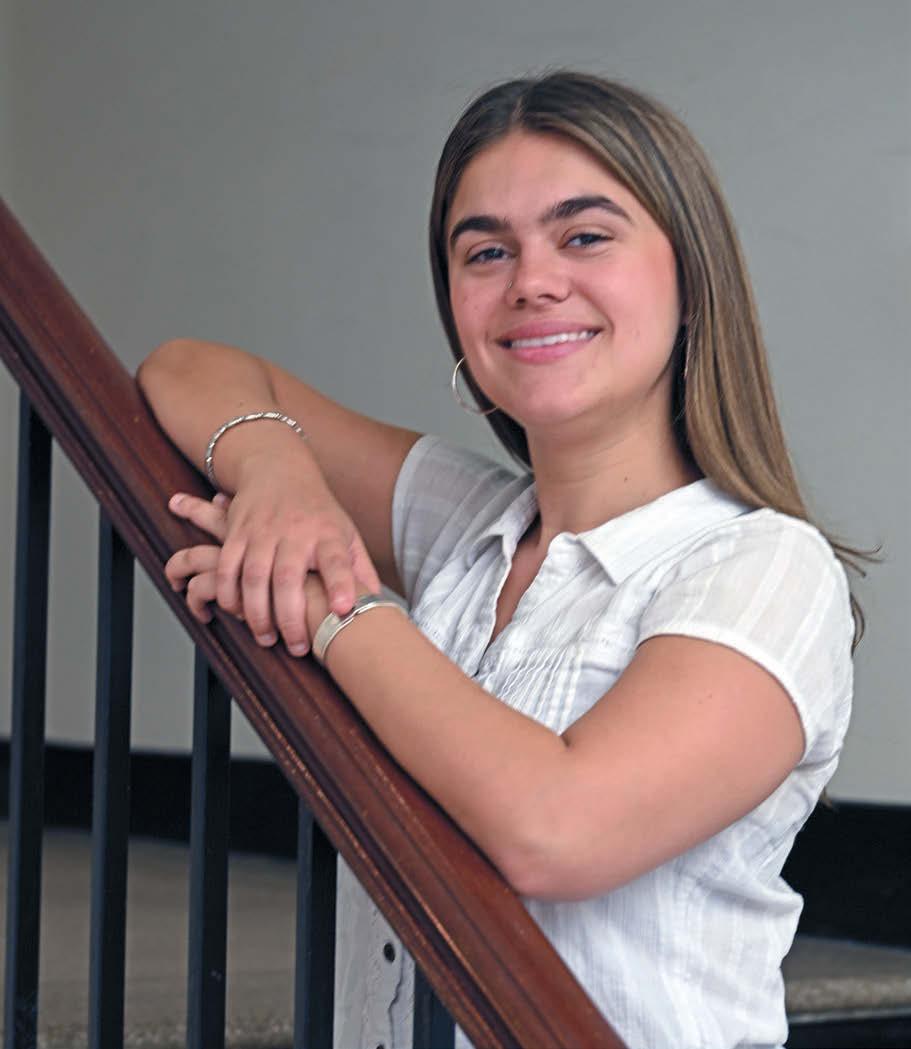
I’m excited for you to meet Roman Perrotto ’26, who arrived studying Spanish and lef having conducted original research, in Japanese, on intergenerational trauma among atomic bomb survivors in Hiroshima; Anna Taylor ’26, who turned a hesitation about Classics into a thesis on how political extremists weaponize ancient history; and Rita D’Agostino ’26 and Declan Hunter ’26, whose paths wound through courtrooms, endangered rivers and communities they felt called to serve.
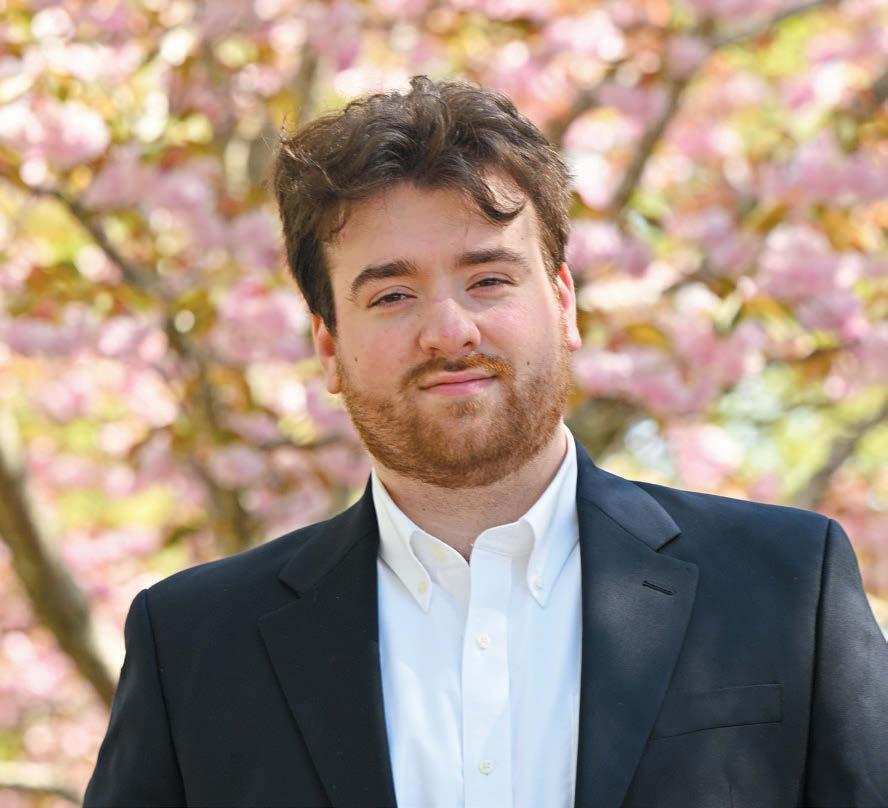
As the stories in these pages illuminate, Conn has long been a place where unexpected connections become defning ones, unlocking passions, potential and purpose. In “Fresh Pours,” you’ll see how Adam Romanow ’07, Rose Schweikhart ’04, Conor Quilty ’15 and Ayla Bystrom-Williams ’07 have forged creative and entrepreneurial careers in industries that reward experimentation and resilience, each following a road no one could have predicted from their frst days on campus. In “Down the Rabbit Hole,” Patty Reilly ’75 reminds us how a life of consequence can keep evolving, from immunology research at Yale and Harvard to establishing a wildlife rehabilitation center and leading a 475-member statewide organization dedicated to protecting the animals that share our ecosystem.
You will also read about alumni and faculty who are shaping communities, advancing knowledge and challenging assumptions, refecting lives of engagement and impact.
Connections is not only about academic excellence, although that foundation is essential. It fundamentally prepares students to live and work with intention, to integrate knowledge, adapt to change and contribute substantively in whatever direction they choose, wherever it may lead.
For many of you, the moment of discovery—when a question led somewhere unexpected and an unimagined alternative suddenly came into focus—happened organically. Connections is designed to ensure it happens intentionally, for every student who walks through our doors.
In 2016, Connections was a bold and innovative reimagining of the curriculum by Conn faculty to put the liberal arts into action. Now, we envision expanding access to this level of dynamic learning for all students. Whether it be serving as a mentor, ofering an internship or contributing resources that support our students as they chart their own Connections course, we invite your engagement and support.
Thank you for your continued engagement. It is a reminder that a Conn education doesn’t end with graduation, and neither do the connections it creates.
Warmly,
Andrea E. Chapdelaine, Ph.D.
From the President CC
CONNECTICUT COLLEGE Magazine
EDITOR: Amy Martin
ART DIRECTOR: Benjamin Parent
STAFF PHOTOGRAPHER: Sean D. Elliot
SENIOR WRITER: Melissa Babcock Johnson
CLASS NOTES COMPILED BY: Alumni Relations
CC Magazine is published by the Ofce of Marketing and Communications. We are committed to covering a diverse group of stories in order to profle the human condition as seen through—and sometimes written by—our alumni, faculty, students and staf; we strive to publish features and photography that illuminate the College’s story.
CC Magazine (ISSN 1060-5134) (USPS 129-140) is published in winter, spring and fall, and is mailed free of charge to Connecticut College alumni, parents and friends of the College. Standard rate nonproft postage paid at New London, CT, and at additional ofces.
Contributions: CC Magazine will consider, but is not responsible for, unsolicited manuscripts, proposals and photographs. Address correspondence to:
Editor, CC Magazine, Becker House, 270 Mohegan Avenue, New London, CT 06320-4196 Phone: 860-439-2526
Email: ccmag@conncoll.edu
Alumni: Send address changes to: Alumni Ofce Connecticut College 270 Mohegan Ave. New London, CT 06320-4196 or email to alumni@conncoll.edu
Postmaster: Send address changes to: CC Magazine, 270 Mohegan Ave., New London, CT 06320-4196
CONNECTICUT COLLEGE BOARD OF TRUSTEES
Seth W. Alvord ’93, Chair, Jessica L. Archibald ’95, Maria Wyckof Boyce ’85, Vice Chair, Bellaluna Castellanos Palacios ’25, Young Alumni Trustee, Andrea E. Chapdelaine, President, Loulie Sutro Crawford ’89, Lawrence B. Damon III ’93, Marisa G. Fariña ’93, Hannah E. Gonzalez ’23, Young Alumni Trustee, Kim-An Hernandez ’99 P’28, Jonathan A. Krane ’90, Sydney L. Lamb ’21, John D. Linehan P’18 ’23 ’24, Erica L. Lovett ’14, Jennifer Lapan Mann ’94, Sarah A. Mudho ’98, Devon Danz Preston ’93 P’28, Leslie Rosen ’02, Peter D. Skaperdas P’17, Vice Chair, Dwayne C. Stallings ’99, Vice Chair, Jonathan S. Stavin ’85, Diane E. Stratton ’91, Randall T. Sufolk ’90, Maarten D. Terry ’83, Anne A. Verplanck ’80, Shawnia A. Yon ’24, Young Alumni Trustee, Tamah Nachtman Wiegand ’68, John S. Zeiler ’74
ALUMNI ASSOCIATION BOARD OF DIRECTORS
Angela Bannerman Ankoma ’97 P’27, Taylor Austin ’24, Laila Bera ’23, Michael Boswell ’10, Vice President, Alexandra Felfe ’10, Daniel Garcia ’02, Susan Mabrey Gaud ’68 P’07, Emily Mond Gurry ’09, Susan Peck Hinkel ’65, M. Grant Hogan ’07, Deion Jordan ’17, Julia Kaback ’18, Betty Fluegelman Kahn ’68 P’92, Jennifer Lapan Mann ’94, President, Natalie Fine Margolis ’91, Nicholas G. McLaughlin ’25, Rasheed Mitchell ’13, Samantha Capen Muldoon ’88, Matthew C. Murdock ’13, Steve Owen ’80 P’12, Allan Rogers ’14, Katrina Sanders ’92, Annie M. Scott ’84, Tamsen Bales Sharpless ’89, Secretary, Michael S. Stryker ’86, Aidyn Urena ’10, Richard Vancil ’82 P’13, Veronica Venture ’86, Vice President, Yoldas Yildiz ’18
CC Magazine Copyright 2026 by Connecticut College, all rights reserved. Reproduction in whole or in part without written permission is prohibited. Views expressed herein are those of the authors and do not necessarily refect ofcial policy of the College.
For Class Notes submissions: classnotes@conncoll.edu
Visit us online at ccmagazine.conncoll.edu.
CC Magazine is printed on Rolland Enviro 100, a 100% PCW recycled paper. Printed by Lane Press, a FSC/SFI certifed printer in Burlington, Vermont.
Sean D. Elliot
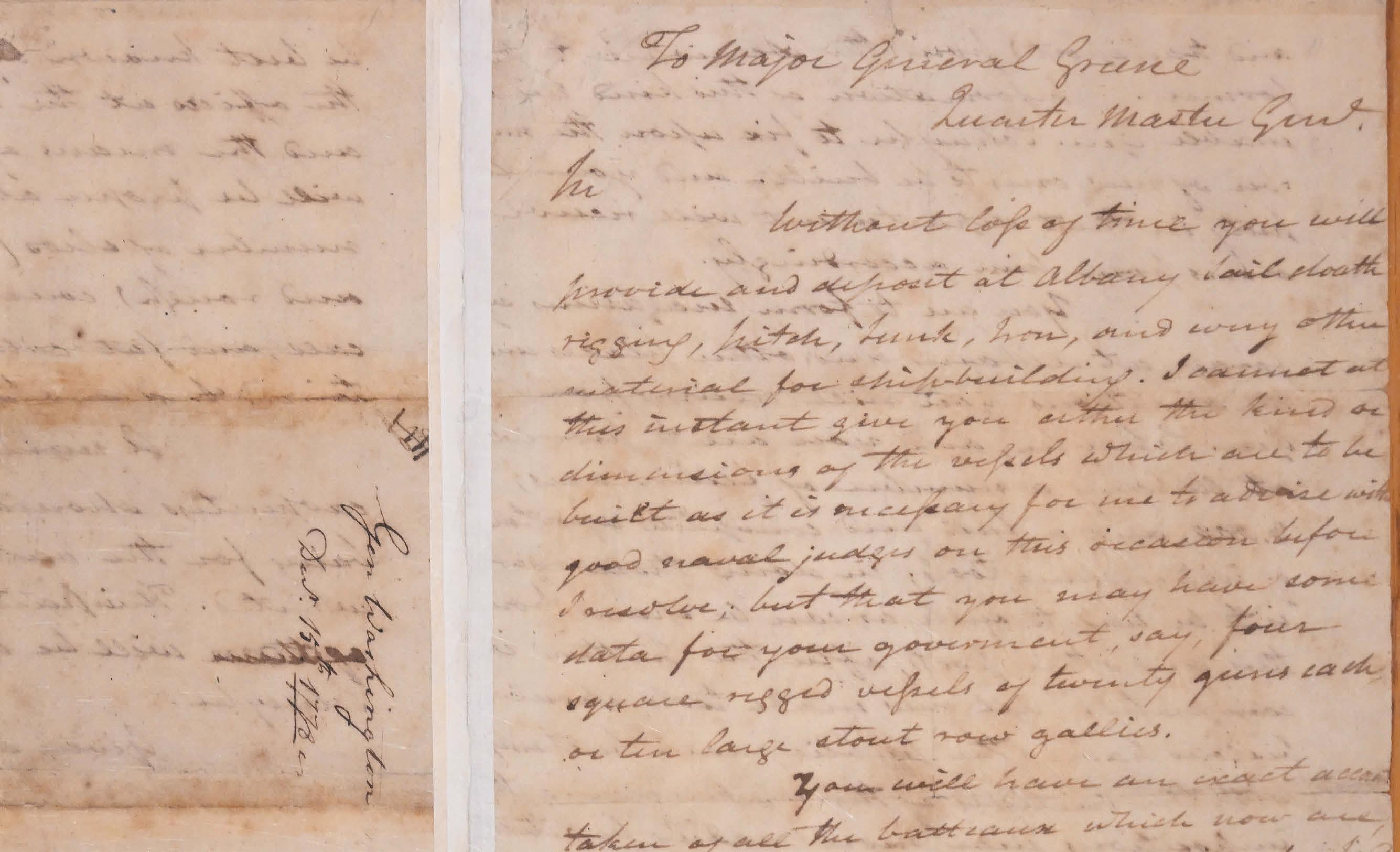
A letter, by George!
“Withoutloss of time,” the letter begins, “you will provide and deposit at Albany sail cloth rigging, pitch, junk, iron, and every other material for shipbuilding.”
These are the words sent by Gen. George Washington, then the commander in chief of the Continental Army, to Maj. Gen. Nathanel Greene on Dec. 15, 1778, to prepare for a planned invasion of Canada in the midst of the Revolutionary War.
Signed by Washington’s hand, the letter has been part of Connecticut College’s Linda Lear Center for Special Collections and Archives since 1945. “We think this might be one of the frst letters ordering the building of a United States Navy ship,” said Linda Lear Special Collections Librarian Bailey Rodgers.
Washington eventually called of the planned expedition, and that particular ship was never built. (The frst U.S.-built Navy ship wouldn’t be completed until
1797.) He had been unenthusiastic about invading Canada afer a failed attempt in Quebec during the winter of 1775-1776, Rodgers explained, and he felt the Army still lacked the necessary weapons and supplies four years later.
But the letter survives and is kept in Shain Library thanks to trustee emeritus Bernhard Knollenberg, who donated it to Conn. “I am giving it as one of the members of the Friends of the Library of Connecticut College, and hope it may be a China egg to attract other gifs,” he wrote in a letter accompanying the donation.
A historian with degrees from Cambridge and Harvard, Knollenberg became one of the nation’s top tax lawyers. He retired from practicing law in 1938 and became director of Yale University’s library until 1943. Until his death in 1973, he continued doing what he loved most: studying history, writing about the Revolutionary War and
collecting antiquarian documents relating to it. The Connecticut College Librarians Ofce is dedicated to him.
As America celebrates the 250th anniversary of the signing of the Declaration of Independence, visitors to the Linda Lear Center are invited to make an appointment to view Washington’s letter to Gen. Greene, as well as a frst edition of founding father Thomas Paine’s highly infuential pamphlet, Common Sense, printed in Norwich in 1776 by Judah Spooner and sold in New London by his brother-in-law, Timothy Green. Paine’s arguments for independence from Great Britain famously fueled the Revolutionary War. Also in the collection is an original Colony of Connecticut shilling printed by Green at his own printing press in New London.
Contact the Linda Lear Center at learcenter@conncoll.edu to make an appointment.
Sean D. Elliot
In the Round 160 ▼
Camel student-athletes named to the 2026 NESCAC Spring All-Academic Team—a Conn record.

TRAVELING ARTISTS
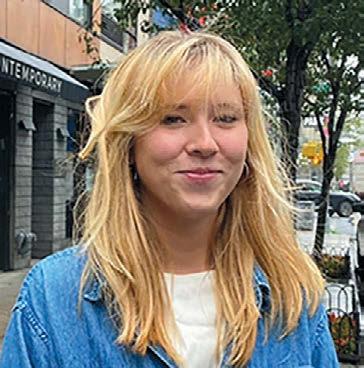
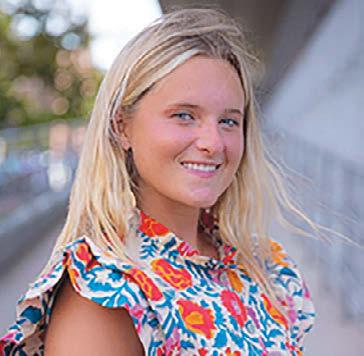
Ciara McNamara ’24 and Sophia Rey ’26 have each been awarded a $19,000 Mortimer Hays-Brandeis Traveling Fellowship, which provides support for travel and living expenses outside of the U.S. for visual and fne artists. McNamara will explore the cultural formation and tradition of Austrian biodynamic mountain farming through a series of paintings and drawings and a visual ethnography, while Rey will spend her fellowship year in Valencia, Spain, exploring a multidisciplinary project that examines the resurgence of far-right rhetoric through the intimate lens of portraiture and personal narrative.
A CUI FACILITY DESIGN AWARD
Conn has been honored with the 2026 Association of College Unions International Facility Design Award for the transformation of the College Center at Crozier-Williams into a modern social hub designed to meet the needs of today’s students. Conn and its design partner, KSS Architects, were honored in the category for projects costing less than $25 million.
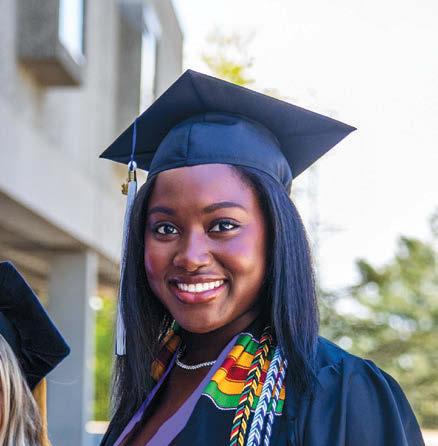
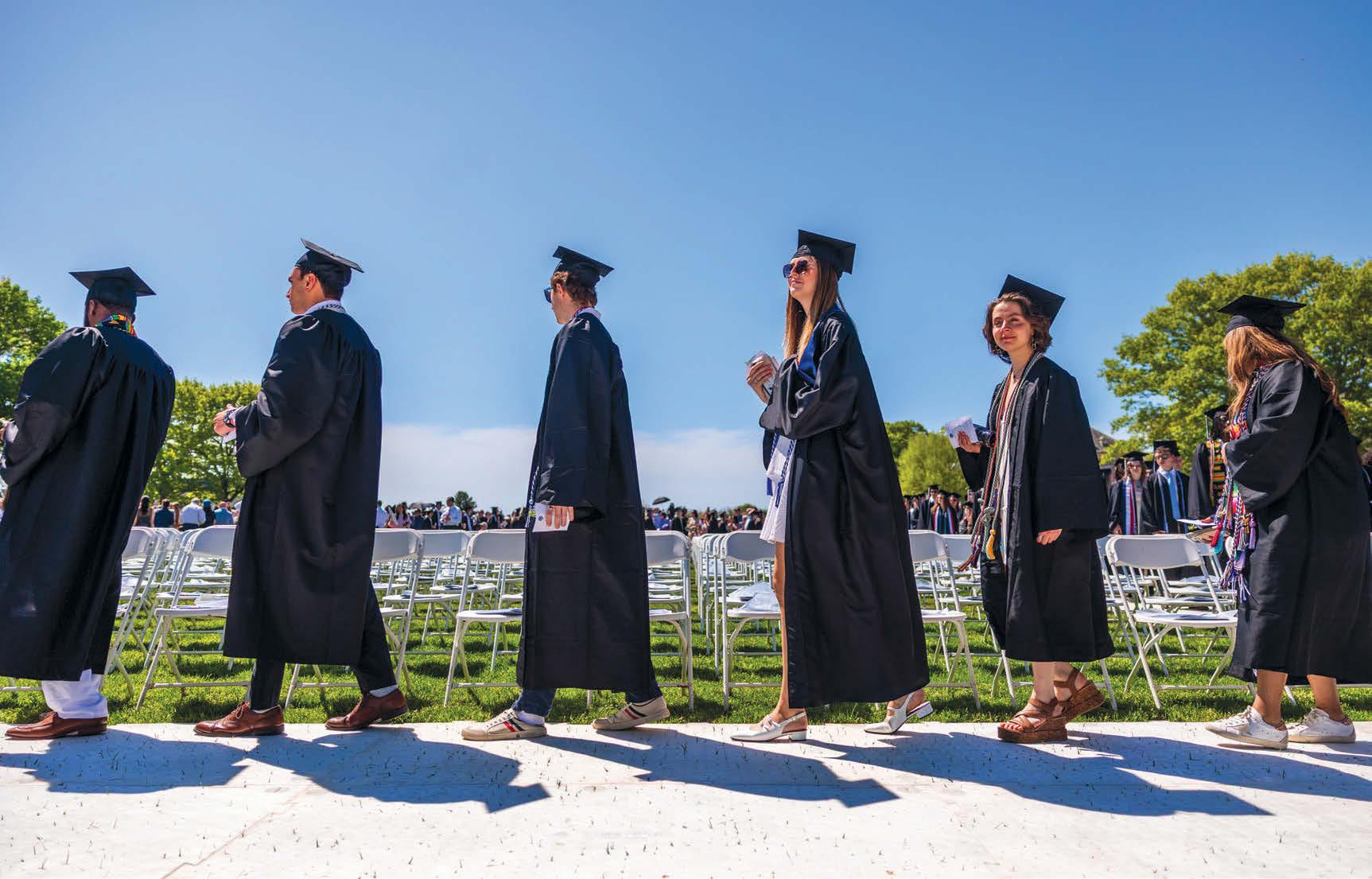
We are beautiful symbols of growth.
—SENIOR SPEAKER ZOE PATRICIA WATTS ’26 TO HER FELLOW GRADUATES
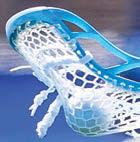
Elise Molloy ’27 navigates an infatable obstacle course during Camelympics on Tempel Green in April. Other events included hula hoop, cornhole, snapshot challenge and more.
Sean D. Elliot
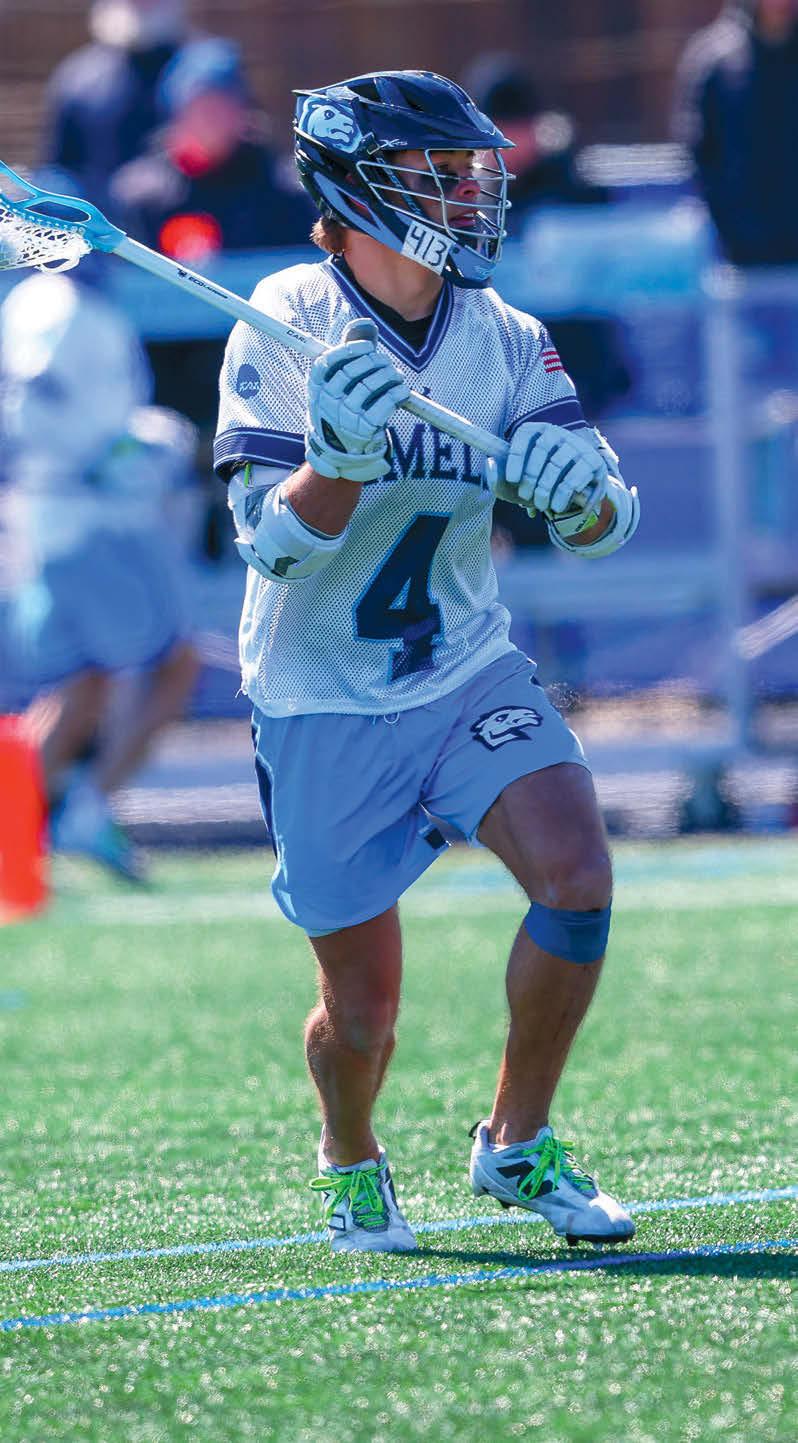
◄ Isaiah Kozub ’27 is one of 20 Men’s Lacrosse players who earned a spot on the NESCAC Spring All-Academic list.
ROOKIE OF THE YEAR ▶
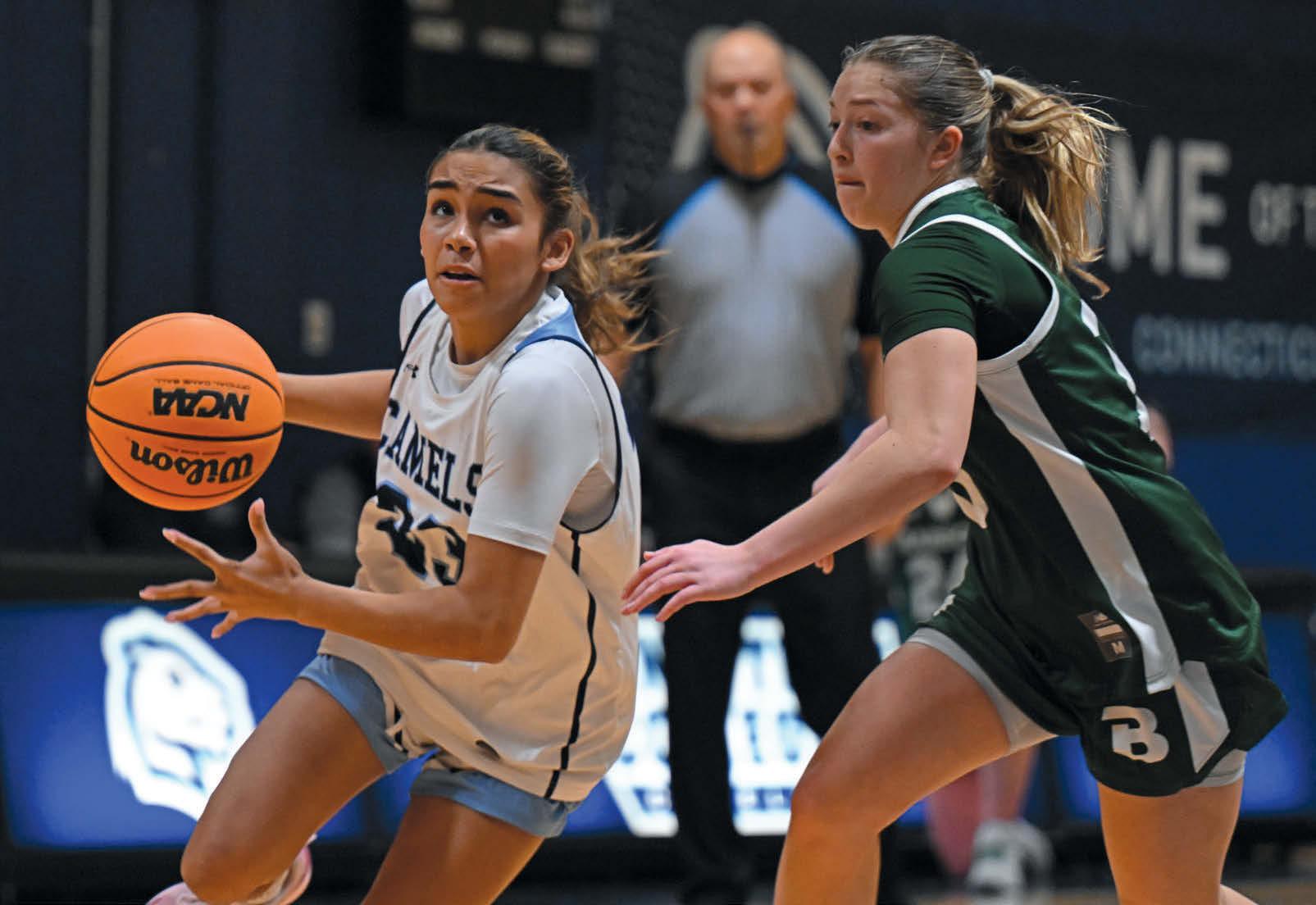
Sofa Tavarez ’29, who hails from Cortlandt Manor, New York, was named NESCAC Rookie of the Year for Women’s Basketball. The point guard also earned a spot on the All-NESCAC Second Team; she is the frst Conn rookie ever to earn all-conference honors. Tavarez led the team and ranked third in the NESCAC in scoring at 15.2 points per game, and also paced Conn in assists (66) and steals (34). She scored in double fgures in 19 of 25 games and netted 20+ points in seven. She tallied a season-high 31 points against both Wesleyan and Bates, and was the only player in the conference to record multiple 30-point games.
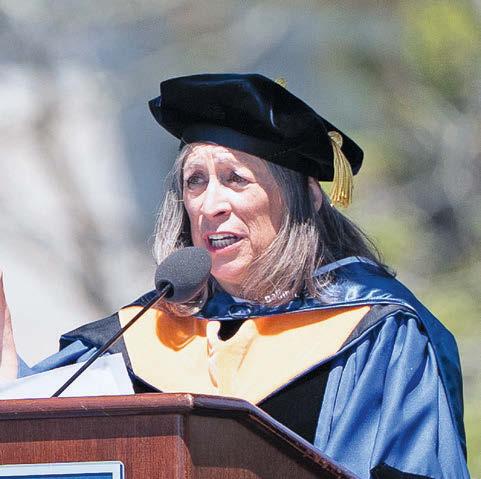
– CHIEF
MUTÁWI MUTÁHASH (MANY HEARTS) MARILYNN MALERBA TO THE CLASS OF 2026
$1,000,000
Given to the Child Development Lab School by Margie B. Gillis Ed.D. ’73, the founder of Literacy How, to expand access to preschool and support services for local children.
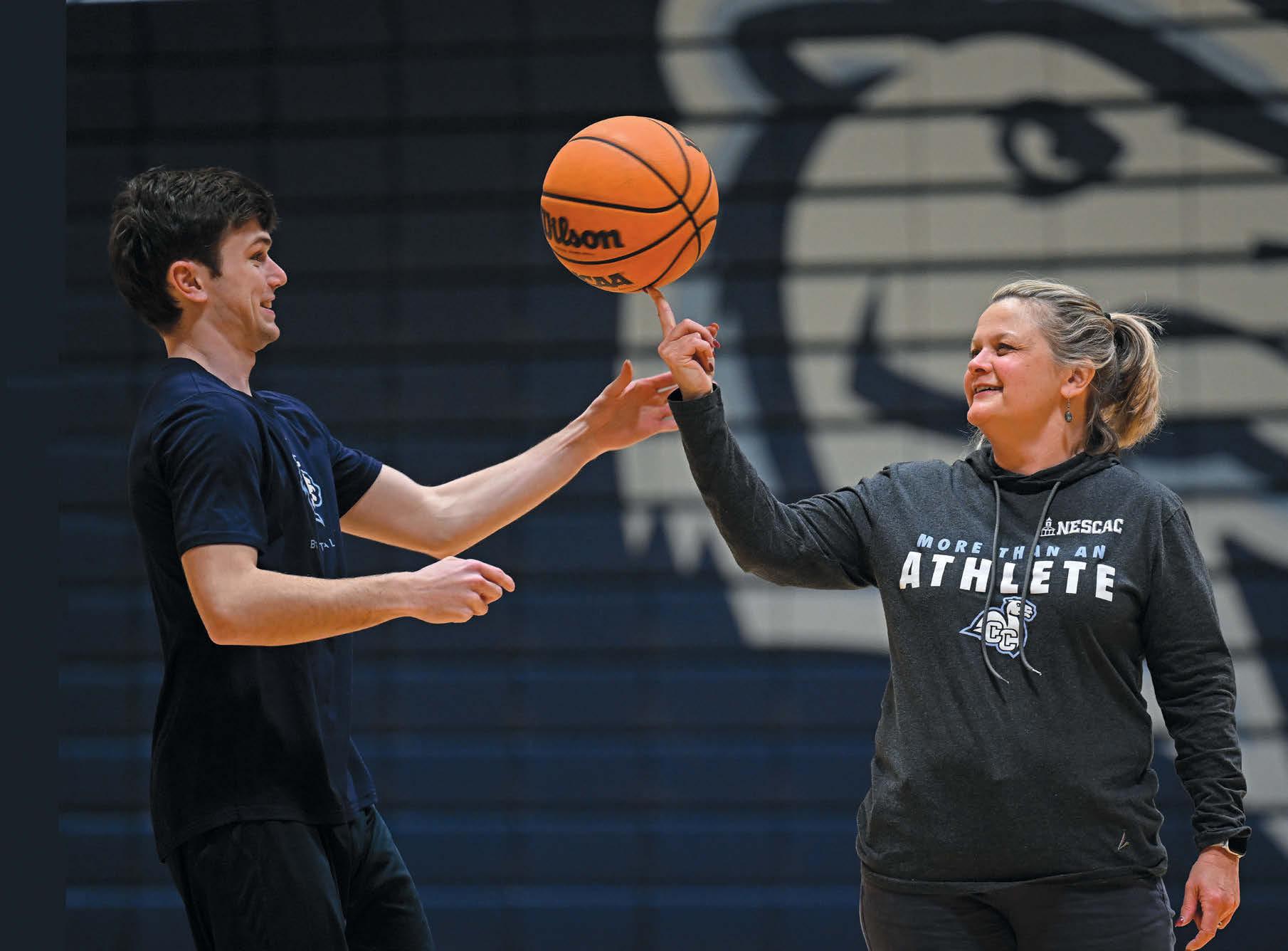
“President” R.J. Casey ’26 teaches “student-athlete” Andrea E. Chapdelaine to spin a basketball on her fngertip during the annual Chap Swap event, in which Chapdelaine swaps places with
SeanD.Elliot
NCAA Champion: Carrick Shea ’28 wins 200 breaststroke

For the second time in program history and the frst time since 1989, Conn’s Women’s Track & Field team won the New England Division III Outdoor Track & Field Championships, scoring 100 points across two days of action in early May.
Grace McDonough ’26 won the 5,000 meters with a time of 16:48.86 and the 1,500 meters with a time of 4:31.90 and was honored with the Debbie Aitken Award for Most Outstanding Track Performer at the meet.
Alexa Estes ’26 successfully defended her title in the 800 meters, fnishing in 2:10.72, and Blessing Kieh ’28 won her second consecutive New England title in the 100-meter dash, fnishing with a time of 12.01. Kieh also fnished second in the 200-meter dash and fourth in the long jump with a school-record distance of 5.66 meters.
Other points were scored by Kiera Tallas ’27 and Abby Fernald ’26, who
Carrick Shea ’28 took frst place in the 200 breaststroke on the fnal night of competition at the 2026 NCAA Division III Swimming & Diving Championships in March, earning his frst career national title and the sixth in program history.
Shea’s performance was a dominant one, as he led from start to fnish and touched the wall nearly 2.5 seconds before his nearest competitor. His time of 1:54.45, which broke school and NESCAC records, ranks as the third-fastest ever in NCAA history. The win capped an impressive weekend for the sophomore from Grafon, Massachusetts, who also fnished third in the 100 breast and ninth in the 200 IM.
All fve Conn swimmers competing at the championships earned All-America status, and the Camels fnished 15th in the team standings with 78 points over the four-day meet. It marked Conn’s highest fnish since 2014.
Women’s Track & Field wins
New England DIII Championship
fnished second and fourth, respectively, in the 5,000 meters; Alina Newman ’27, who fnished second in the 400-meter hurdles with a school-record time of 1:03.51; Mary Lonergan ’27, who fnished second in the 10,000 meters; and April Schilling ’27, who fnished seventh in the 800 meters.
The 4x800 relay of Schilling, Tallas, Fernald and Estes added another victory for the Camels, crossing the line in a time of 9:18.06; and the fnal points were scored for the Camels in the 4x400 relay, in which Alexis Melvin ’28, Kailin Fuller ’27, Naomi Brightman ’27 and Newman fnished third.
“One of the best parts about running track are these rare moments when we can work together as a team toward a big goal like winning a championship,” Estes refected. “To watch these women work hard every day and accomplish their goals has been so much fun and an absolute joy to be a part of.”

SeanD.Elliot
Blessing Kieh ’28
Sean D. Elliot
Two win $10,000 Davis Projects for Peace grants
Elaine Sandoval Carrasco ’28, an international relations and history double major and scholar in the Toor Cummings Center for International Studies and the Liberal Arts; and Tahsi Rabbani ’29, a statistics and data science major and psychology minor, have each won a $10,000 Davis Projects for Peace grant to promote peace through education and community building this summer.
Sandoval Carrasco’s winning project, “Classroom of the Totorales: Peace and Heritage for Huanchaco,” outlines her plan to address child vulnerability to poverty and xenophobia by implementing an open-air environmental curriculum taught in the totorales (reed wetlands) of her hometown, the seaside Peruvian resort city of Huanchaco.
“Because caregivers must migrate for work, children spend long hours unsupervised in unmonitored coastal zones such as beaches, street vending spots and markets, making them vulnerable to child trafcking,” Sandoval Carrasco said. “They need safe recreational and learning spaces.”
Rabbani will use her funding to realize her project, “Shanti Corner: School-Based Mental Health Support Systems” at Char Fakira High School in the Companiganj region of Bangladesh, where she is from. Shanti Corner will be the frst dedicated mental health and well-being support space in a rural Bangladeshi school.
“A student who can manage distress, seek help without shame and support their peers is a citizen who can contribute to a more stable and peaceful community,” Rabbani said. “Ultimately, equipping a generation with emotional literacy, coping skills and a trusted place does more than improve individual lives; it helps build a healthier, more harmonious and productive society.”
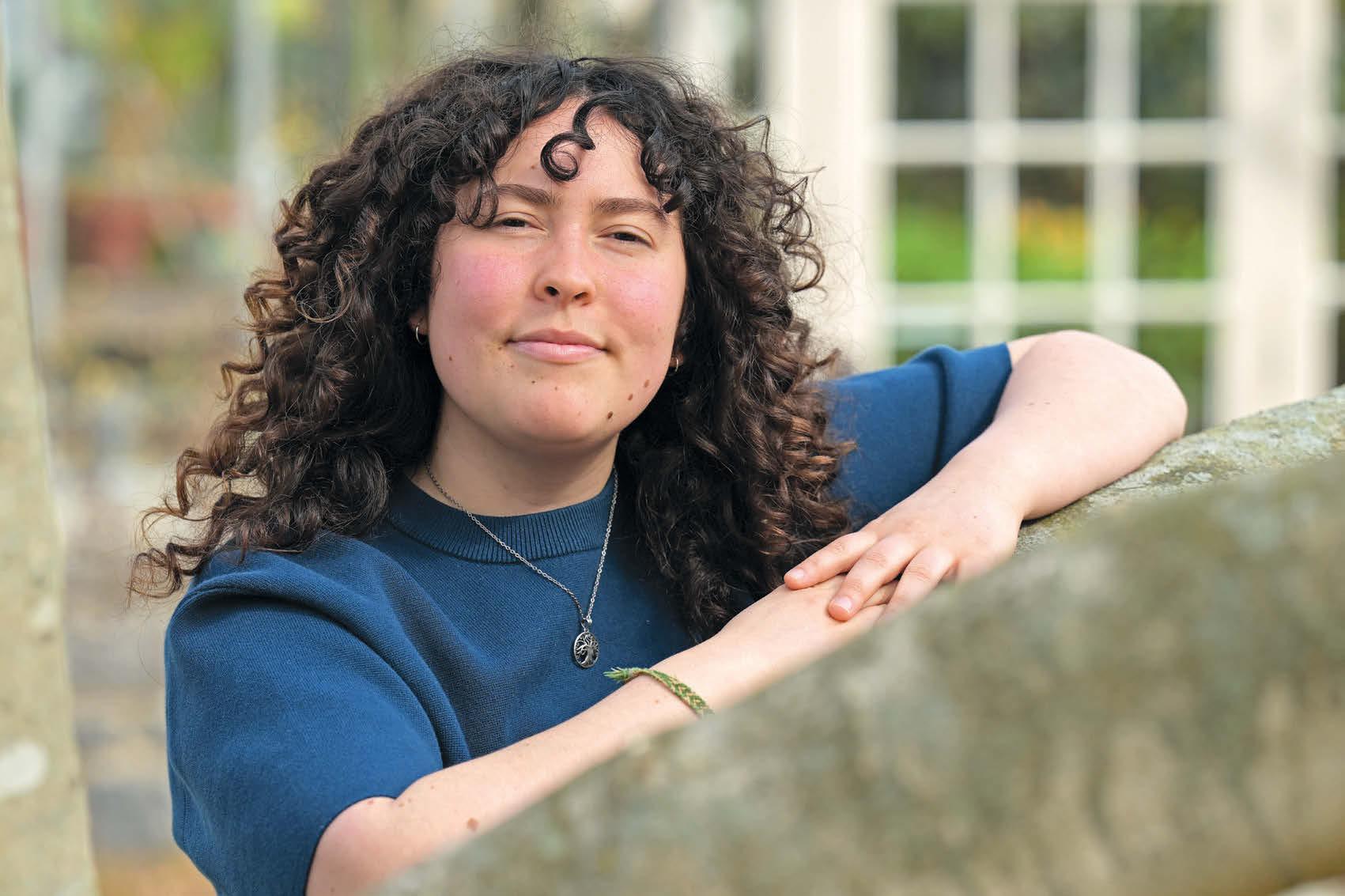
Paloma Doyle ’26 wins Watson to explore urban forestry
PalomaDoyle ’26, a botany major, art minor and scholar in the GoodwinNiering Center for the Environment from Austin, Texas, will spend the next year exploring urban forestry in Mexico, South Africa, France, Australia and Japan afer winning a $40,000 Thomas J. Watson Fellowship. Doyle is Conn’s 10th Watson winner in fve years.
“Trees ofer a solution to many problems faced in an urban environment—they reduce heat, improve air quality and create a biodiverse habitat. They contribute to community well-being as recreational spaces, improving health and reducing stress. But these benefts don’t happen on their own. Communities need to invest in urban forests for them to thrive,” Doyle said.
“I want to dive in deeper to explore what I have come to think of as the root of urban forestry: how people value trees. I want to know what motivates communities to engage in urban forestry, and how we get individuals to care about trees. I want to see how these investments come to life in urban forestry projects around the world.”
Doyle will travel to Mexico City to explore indigenous land-sharing systems and one of the largest urban parks in Latin America; to Johannesburg to study environmental justice initiatives to redesign urban landscapes; to Paris, where eforts are underway to convert 50% of the city to public greenspace by 2030; to Sydney and Melbourne to see how the cities are working to mitigate the impacts of climate change with nature-based solutions; and to Tokyo to learn more about innovative approaches to urban forestry.
“The countries I have selected represent an array of community values, including indigenous knowledge, environmental justice, climate resilience, ecological knowledge, community wellbeing and intrinsic beauty. Through cultural immersion, I aspire to explore the symbolic, spiritual and practical values that connect communities to their environment and infuence the cultural landscape,” Doyle said.
Following her Watson fellowship, Doyle plans to pursue a graduate degree and ultimately hopes to become a college professor.

Building the ARC
The Academic Resource Center ofers free, comprehensive support for all students.
BY MELISSA BABCOCK JOHNSON
Sean D. Elliot
If a student comes in and says, ‘I’m working on X, can you help?’ The answer is almost always, ‘Yes!’
—NOEL GARRETT, EXECUTIVE DIRECTOR OF THE ACADEMIC RESOURCE CENTER
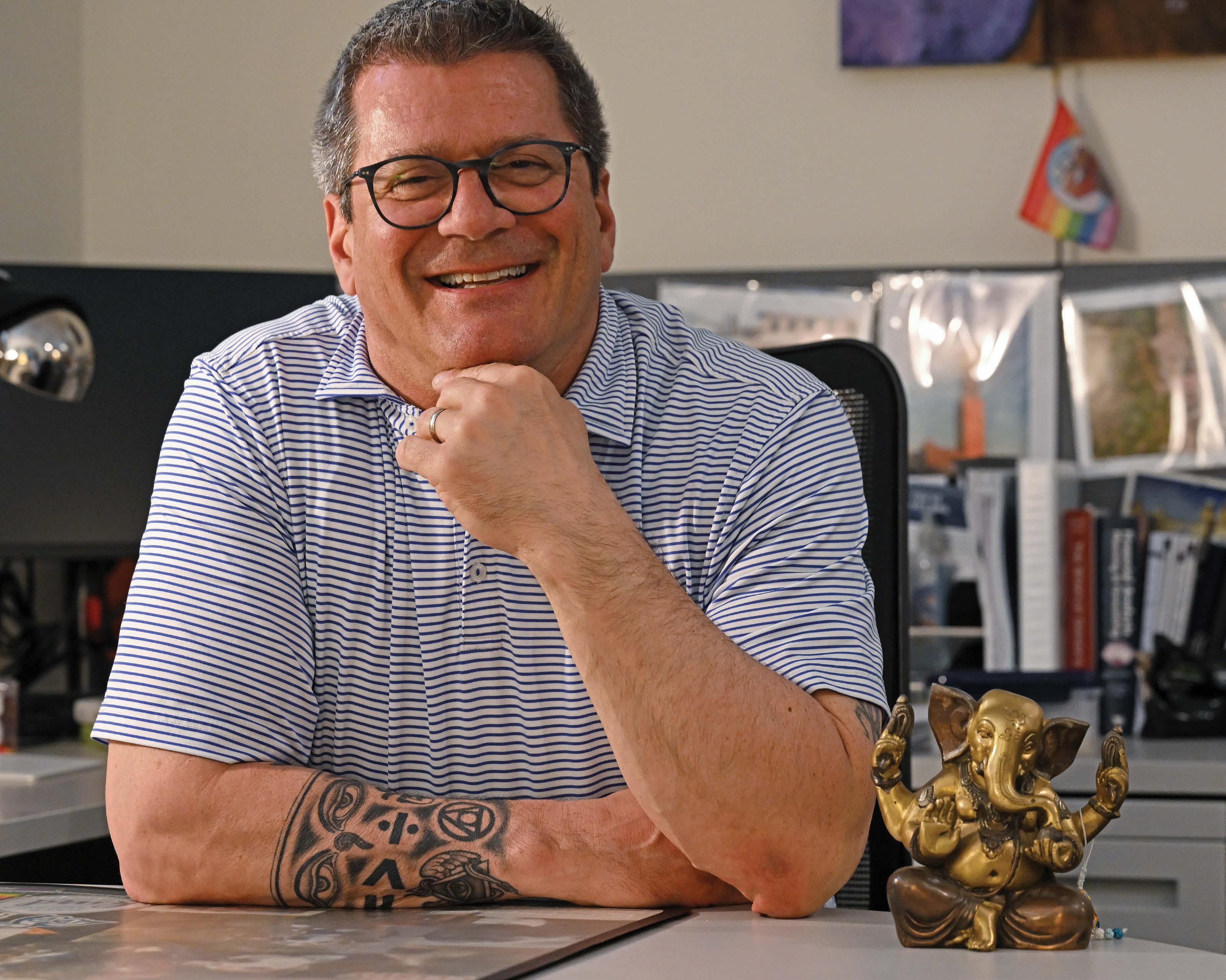
From his spot high on a wall, Ganesh, the elephant-headed Hindu deity known as the remover of obstacles, gazes down upon the desk of Executive Director of the Academic Resource Center Noel Garrett. He’s not alone—more than a dozen Ganesh fgures can be found throughout Garrett’s ofce.
“Pretty much everywhere you look, you’ll see Ganesh,” says Garrett, who also serves as Conn’s dean of academic support. “I like having him here, because I can talk to students about what Ganesh stands for—removing obstacles.”
The Academic Resource Center— more commonly known on campus as “the ARC”—isn’t your typical tutoring center. It’s designed not just to help students who are struggling, but also to ensure all students reach their full potential. Professional staf, peer mentors and tutors ofer support and skill development in everything from time management to exam prep, presentation development to public speaking, and, well, just about anything they need.
“If a student comes in and says, ‘I’m working on X, can you help?’
The answer is almost always, ‘Yes!” Garrett says.
Since its opening in 2013 following an $11 million gif from anonymous donors, 100% of the student body has worked with the ARC in some capacity,
and three out of four students use it on a regular basis throughout their time at the College. All services are free.
“The donors made sure students never have to pay for a single hour of tutoring. I really want to make sure people know how grateful we are,” says Garrett, who served as the ARC’s inaugural director.
In 2019, the ARC received a second gif of $10 million from the donors, allowing it to expand to include the Roth Writing Center, the Quantitative Center and, recently, Student Accessibility Services. All of the services are united under the Ofce of Academic Support. And while they are primarily for students, faculty and staf have access, too.
Garrett points to the Quantitative Center as an example. “It has a student focus, but it is also here to support faculty,” he says. “We help them scafold quantitative assignments, and we create workshops and supplemental support for faculty and students.”
Libby Kotei-Fearon ’26, a neuroscience major with a double minor in education and Africana studies, says the study skills and time management techniques she learned through the ARC have been instrumental to her success in college.
“Coming straight from high school, you’re used to having a structured
schedule, but now you’re structuring your own time. Getting guidance in how to navigate that really helps to solidify what you should be doing to stay on top of everything,” she says.
“The staf really do care, and they do want you to succeed, and there’s really good resources available. It makes the biggest diference in succeeding in these rigorous classes. You don’t have to wait until you’re struggling.”
Kimball Bryant ’29, a member of the Men’s Soccer team who plans to major in psychology and minor in economics, frst learned about the ARC and met Garrett—who also serves as a staf liaison to a few of the athletic teams—before classes even started.
“One of the frst things our coach wanted us to do was meet with Noel and know he’s there for help. I take my exams in the ARC, and Noel and [Assistant Director of Operations] Tricia [Walsh] are great resources to go to when I need help with literally anything,” he says.
Even the ARC’s location—on the second foor of Shain Library, in the heart of campus—is specifcally designed to be accessible to all. Many colleges hide their resource centers, if they have one, Garrett notes. Not Conn. “We don’t look at this as a place where you need to be private. Students have a sense of pride in coming here.”
‘Eva’s
Promise’
Susan Endel Kerner ’67 P’02 helps a Holocaust survivor keep a decades-old promise to her brother.
BY MELISSA BABCOCK JOHNSON
On a train bound for AuschwitzBirkenau, a teenager named Eva made a promise to her older brother, Heinz. Packed into a cattle car with their parents, Erich and Fritzi, and other Jews in May of 1944, the siblings were scared. Afer a tip from a double agent, German soldiers had followed Eva and her mother during a visit to her father and brother hiding in a diferent house 10 minutes away. The family was captured on May 11, Eva’s 15th birthday. They had no idea where they were headed.
“[Heinz] told me that his paintings and his poems were hidden under the
foorboard in the house where they were hiding,” Eva Geiringer Schloss recalled in an interview almost 80 years later. “He said, ‘Please, Eva, please go and pick it up and show to the world what I had achieved in my short life.’ And I said, ‘Of course, you will survive. I survive, you survive, and we go together.’ He said, ‘But promise me that you will go even if I’m not there.’”
Schloss died in January 2026 in London at the age of 96. An Austrian Jew, she lived across the street from Anne Frank in Amsterdam’s Merwedeplein neighborhood in the early 1940s. While much of the world knows
the story of Frank—thanks to the eforts of Frank’s father and Schloss’s mother, who married in 1953—Schloss tells her own family’s story in the hourlong 2022 documentary Eva’s Promise. The flm was co-produced by Susan Endel Kerner ’67 P’02, professor emerita of theater at Montclair State University in New Jersey. Conn co-hosted a screening of the flm on campus in February, followed by an in-person conversation with Kerner and the flm’s director, Steve McCarthy. Afer the frightened Geiringers arrived at Auschwitz-Birkenau 82 years ago, mother and daughter were separated from father and son for nearly a year. Afer being forced to march from Auschwitz to Mauthausen, Heinz and Erich were sent to Ebensee, a satellite concentration camp in Austria where they were forced to do slave labor hiding German armaments in mountain caves. Both men died there. Schloss and her mother survived, and Schloss was determined to keep her promise to her brother. Two years afer their liberation, Schloss and her mother knocked on the door of her brother’s hiding place and, afer the new owners reluctantly allowed them in, Schloss lifed a foorboard and retrieved the hidden treasures.
For more than 40 years afer the Holocaust ended, the bereaved Schloss internalized her pain and moved on with her life. She married, had children and became a grandmother. But she realized there was more to keeping her promise than rescuing her brother’s
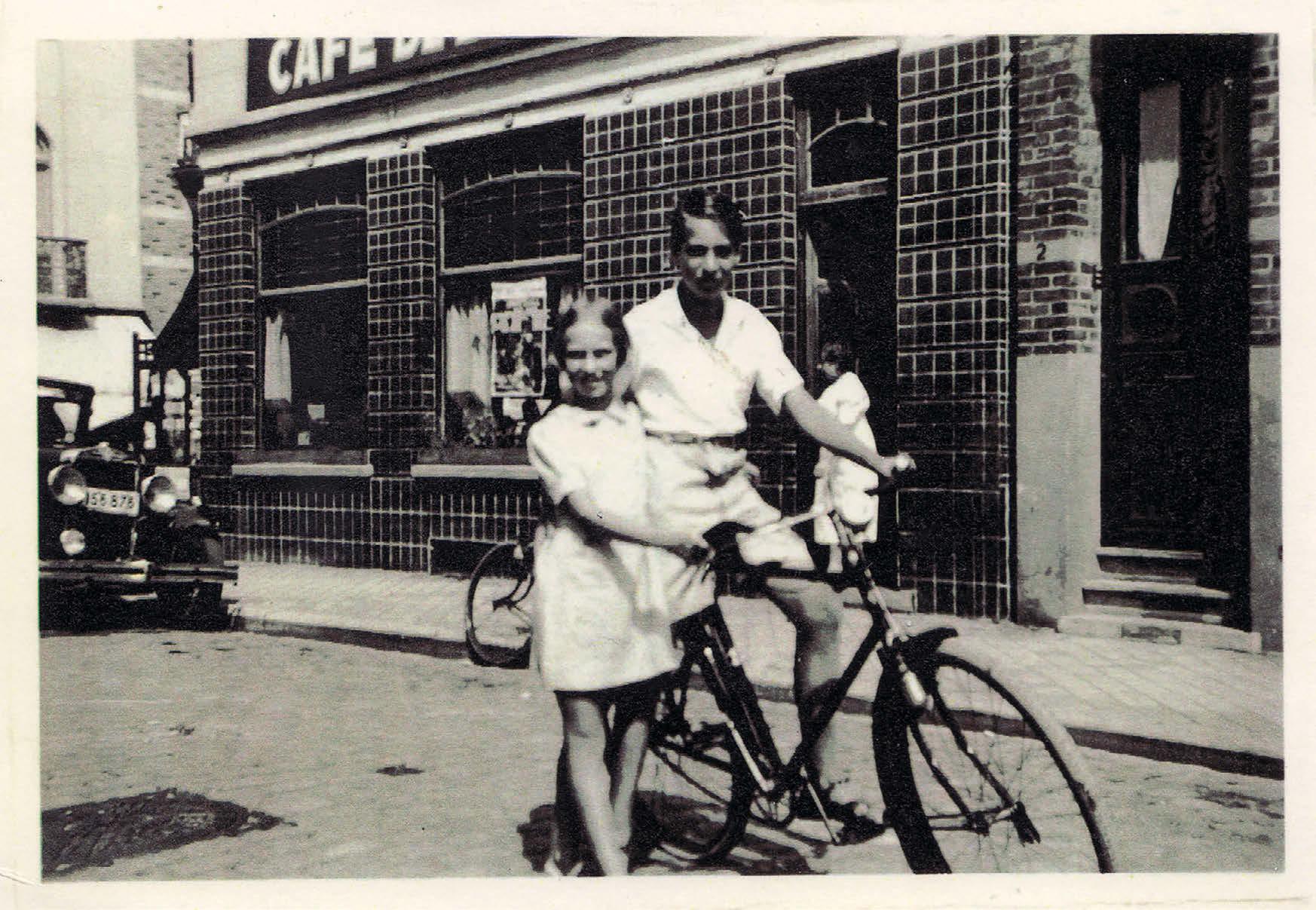
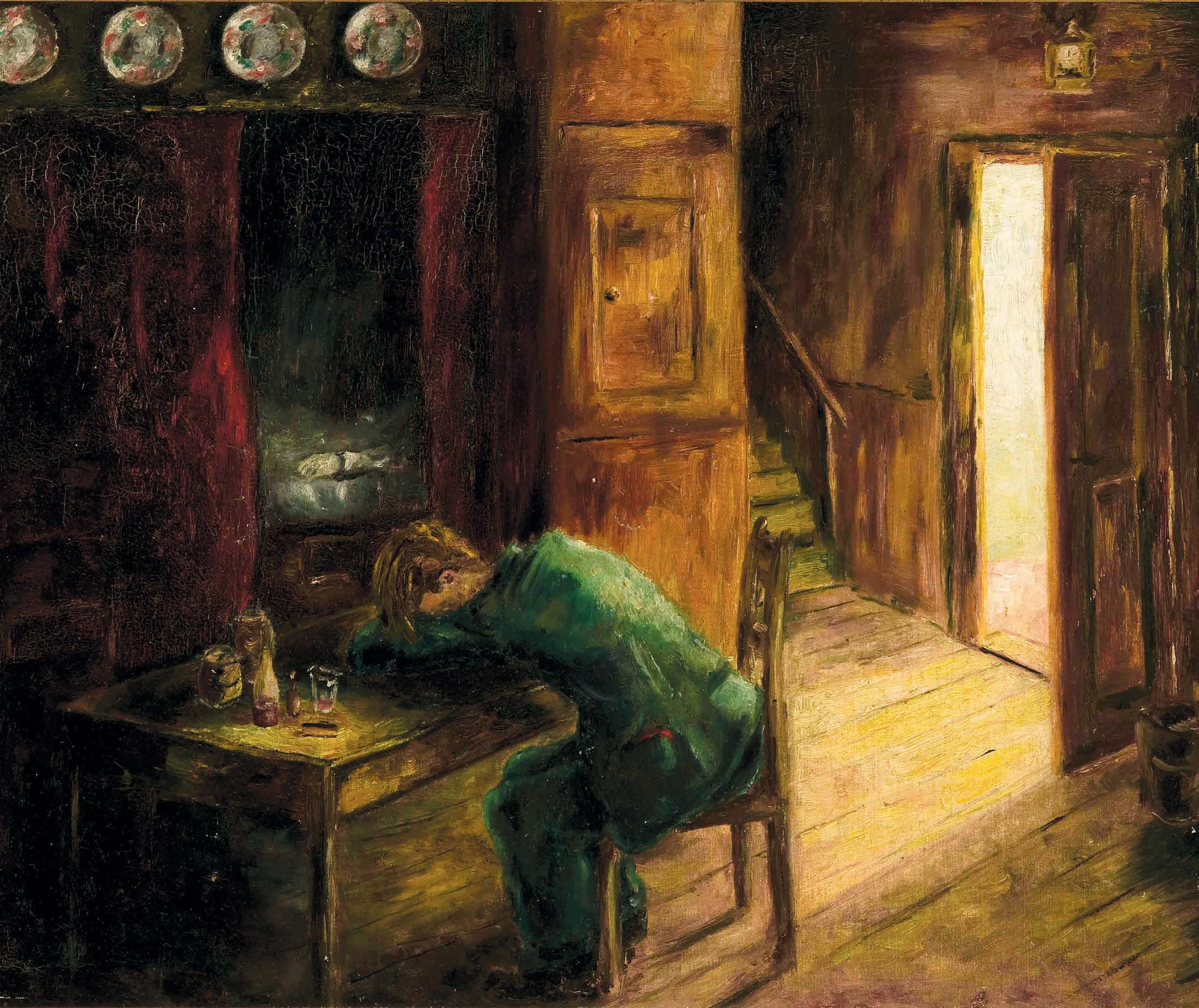
Eva Geiringer Schloss and Heinz Geiringer in Brussels, Belgium, in 1939.
Photo
art from beneath a dusty foorboard. Eventually she wrote three books about her family’s experience during and afer the Holocaust. “She toured Europe, Asia and the United States as a Holocaust educator,” Kerner explains in the flm. “Her focus now is on the story of her brother and sharing his legacy with the world.”
Kerner and Schloss frst met 30 years ago when Kerner directed the world premiere of the play And Then They Came for Me: Remembering the World of Anne Frank, which is about two surviving friends of Frank: Schloss and
Ed Silverberg, who was Frank’s teenage boyfriend before the Frank family went into hiding in 1942.
Some of Kerner’s distant relatives lef Europe in the 1930s, she said. “I imagine their lives in pre-war Germany were very similar to those of the Frank and Geiringer families.”
That connection was part of what drove Kerner to help Schloss tell her own story.
“As a theater educator, I believe in the power of the arts to express deep emotion and to change people’s lives. Heinz and Erich resisted Nazi persecution through
their painting and poetry. Their artistry gave them the strength and the hope they needed to survive two years in hiding during terrifying times,” Kerner said.
“In producing Eva’s Promise, my frst flm, it was my intention to keep this remarkable story alive, especially as we lose connection to the people and the events of a consequential period in our history. And, most personally, I loved Eva and it will always be the honor of my life that she trusted me to tell her story.”
Visit evaspromise.com for more information.
This self-portrait of Heinz Geiringer, set in an imaginary room while he was hiding in Amsterdam, is one of the paintings recovered by Eva Geiringer Schloss after the end of the Holocaust.
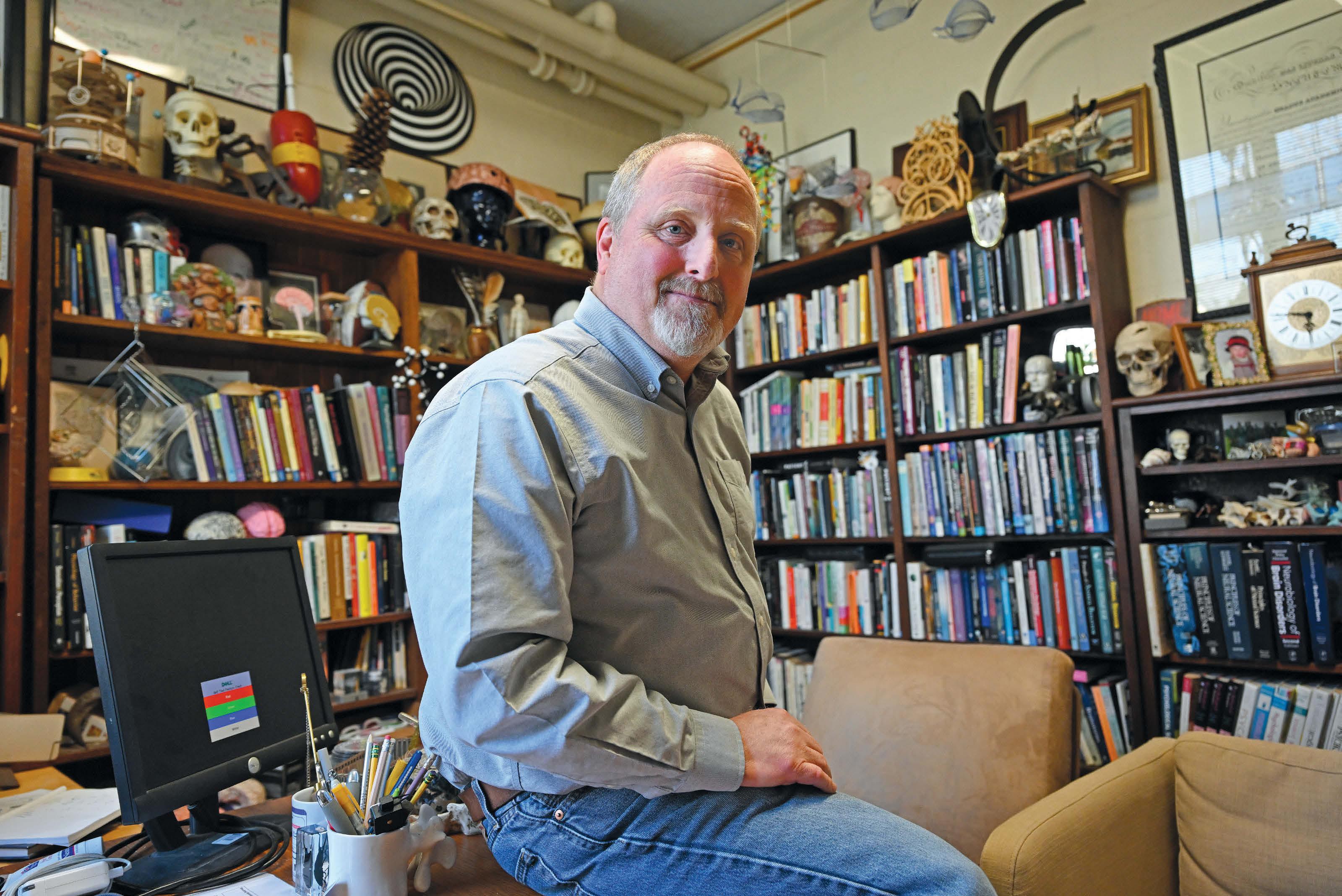
Professor of Psychology Joe Schroeder, who teaches neuroscience courses, has occupied his third-foor ofce in Bill Hall since he joined the faculty of Connecticut College in 2004. That means he’s had 22 years to accumulate an array of artifacts and decorations refecting his professional and personal lives.
“I’ve gradually been collecting things over the years to make my ofce in 86-year-old Bill Hall more visually appealing, since I’m in here a lot. I use many of them in my classes. Some models are used in my ‘Systems Neuroscience’ course, where students learn about brain anatomy, blood supply, internal structures, bones of the skull. Most of it has a utilitarian purpose, and some of it is gifs. I could probably tell you the personal or professional connection to virtually everything in this ofce.”
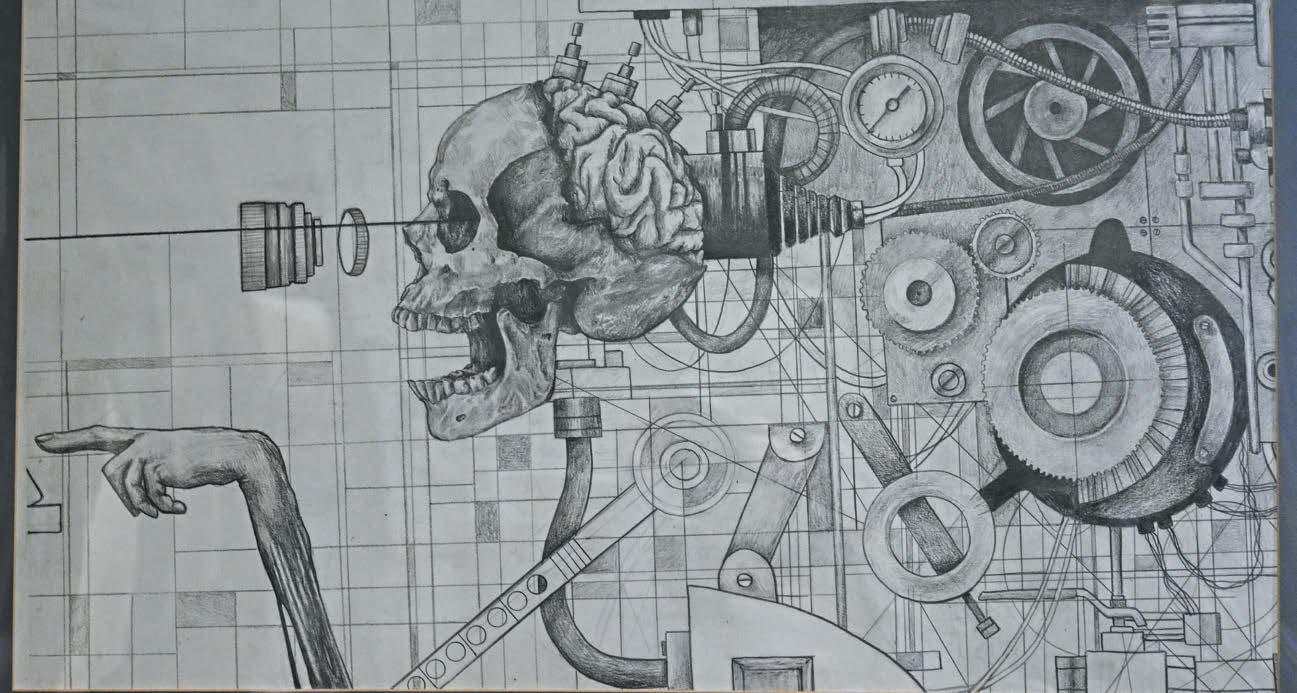
PENCIL DRAWING ▶“That piece was done by Jax Perry ’22 a few years ago. She was an art and neuroscience double major, and I ended up purchasing that from her portfolio. (See more at www.jaxartist.com.)
What’s in Your Ofce?
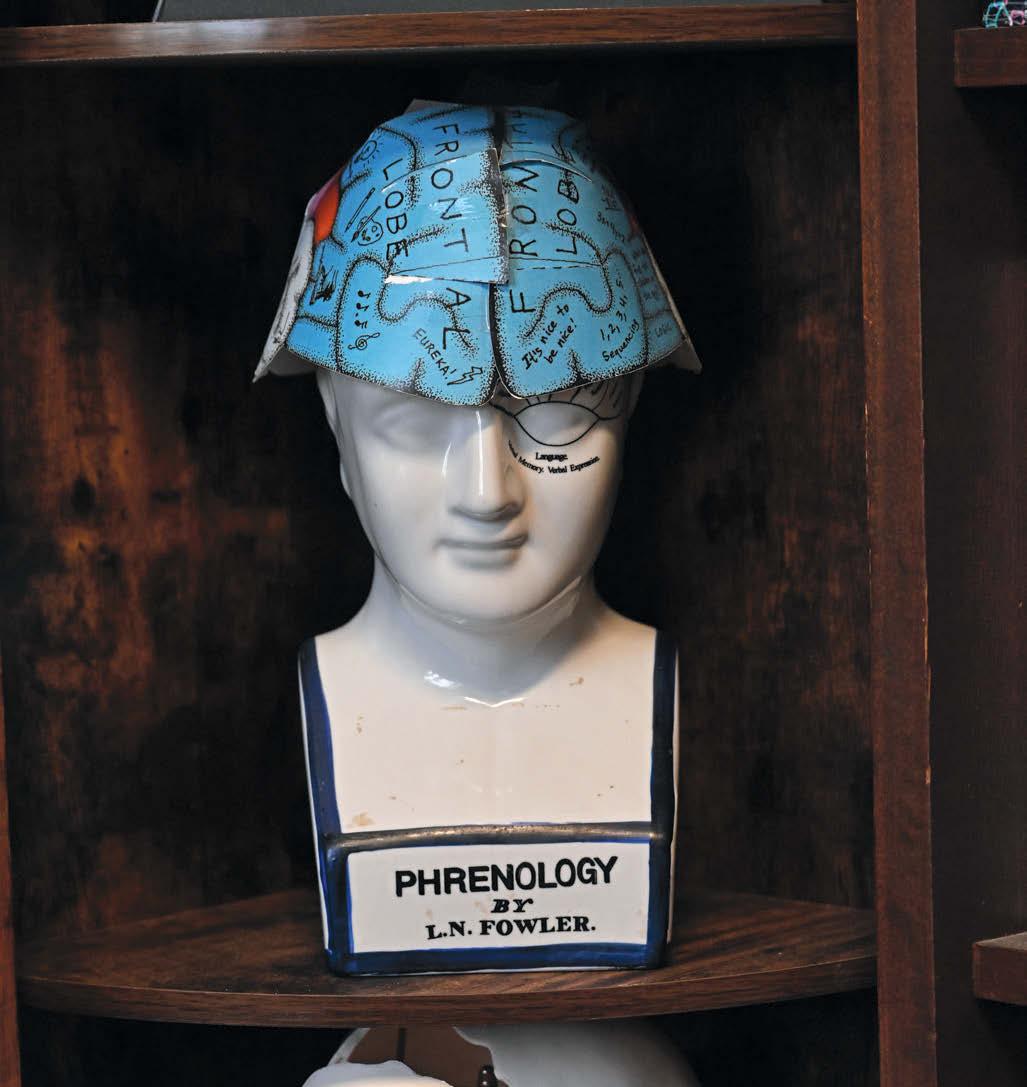
PHRENOLOGY SKULL ◄ “A phrenologist would basically feel the bumps on your head and predict your future. ‘You’ll be a fne, upstanding citizen,’ or ‘You’re destined for unemployment and the gutter.’ Now we know that the frontal lobe is for decision making, and the hippocampus is for memory, and a certain part of your brain is for vision, and so forth. So they were on the right track in terms of the relationship between structure and function, but on the wrong track in terms of mapping personality to the brain based on the bumps on your head.”
A new, occasional CC Magazine series explores the close quarters of some of our most expansive minds.
BY MELISSA BABCOCK JOHNSON
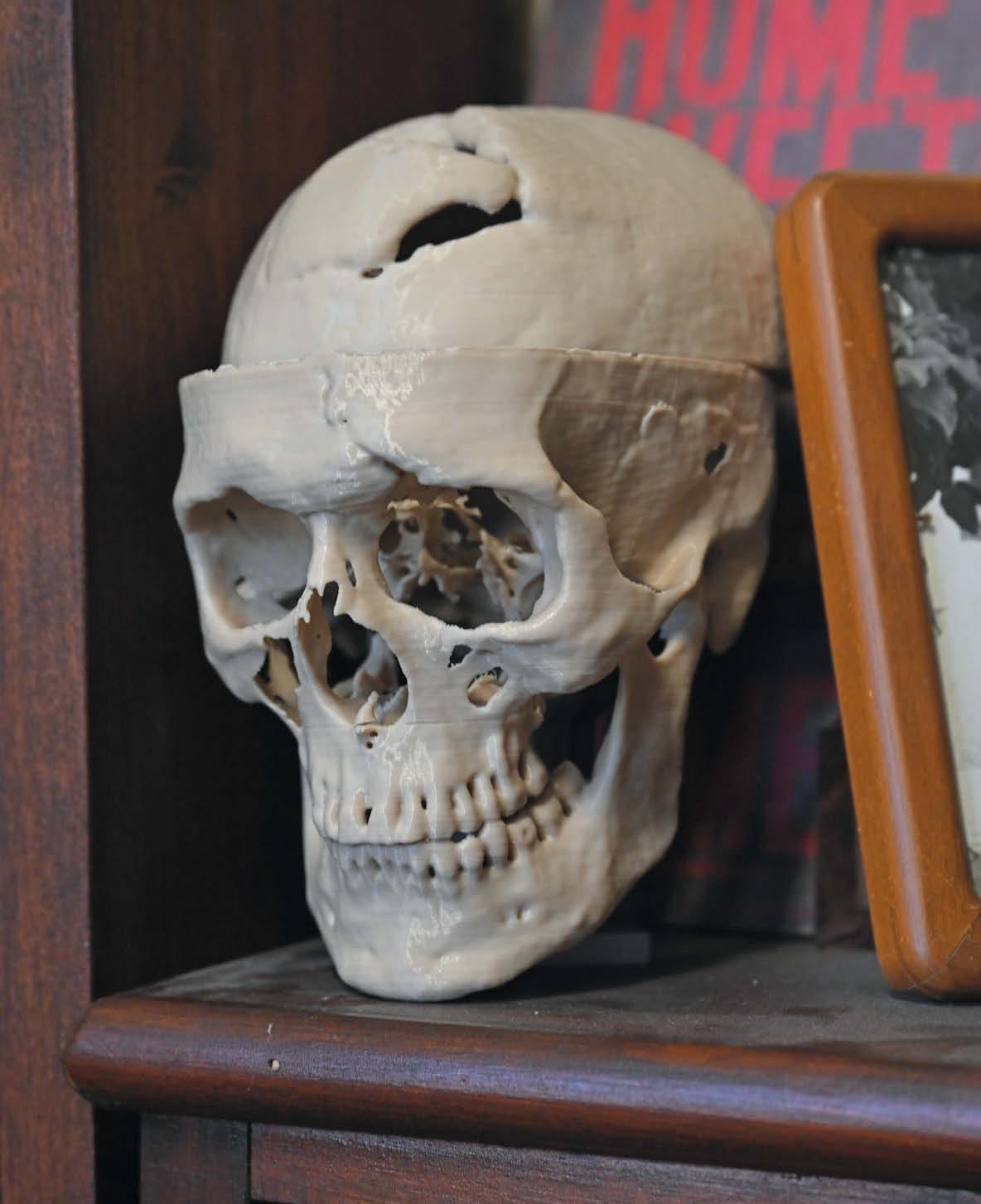
3D PRINTED SKULL ▶ “Oh, this is one of my favorite things. This is a 3D model from an MRI of the skull of a notorious individual in psychology named Phineas Gage. He survived an accident in the 1800s when he was dynamiting rock for a railroad bed and the tamping iron went through his cheek and out of the top of his head. They took his actual skull out of the case at Harvard Medical School, scanned it and made a 3D-printer fle so that anybody can make a model. The reason he’s important in psychology is that before his accident, which destroyed his frontal lobe, he was a responsible, well-liked guy. The frontal lobe is the rational, decision-making part of your brain that allows you to act appropriately in social situations. So aferward, he was unable to hold a job and became irascible and profane. He overreacted to negative situations and started lots of fghts with people because of that injury.”
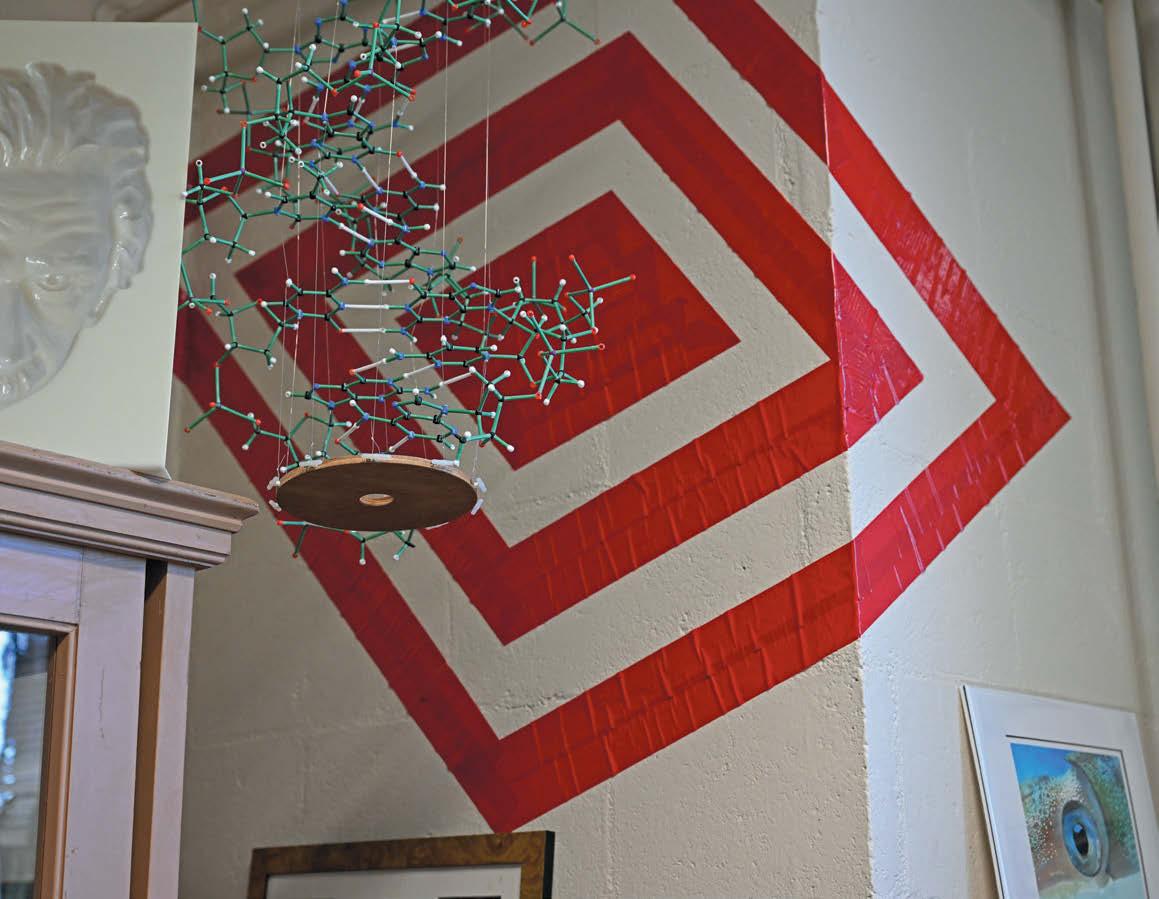
RED TAPE ▶ “I did that. Have you seen those artworks that look distorted because they go around a corner? If you view this from the exact right spot, it’s supposed to look like uniform concentric boxes. I teach a course on sensation and perception, and we use a lot of visual illusion. The DNA double helix model hanging next to it was a gif from my son Allen, a chemical biologist.”
IRISES ▼ “That’s my daughter’s eye and my eye. We had it done at Concrete Iris in Mystic. You can see my iris is all blue and she has a little bit of blue. We should have had my wife do it, too.”
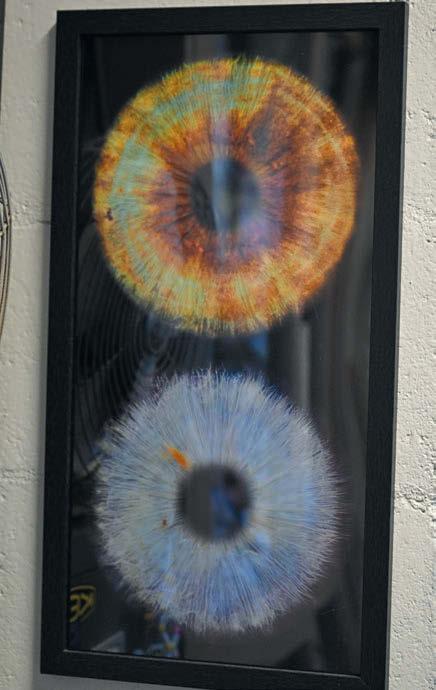
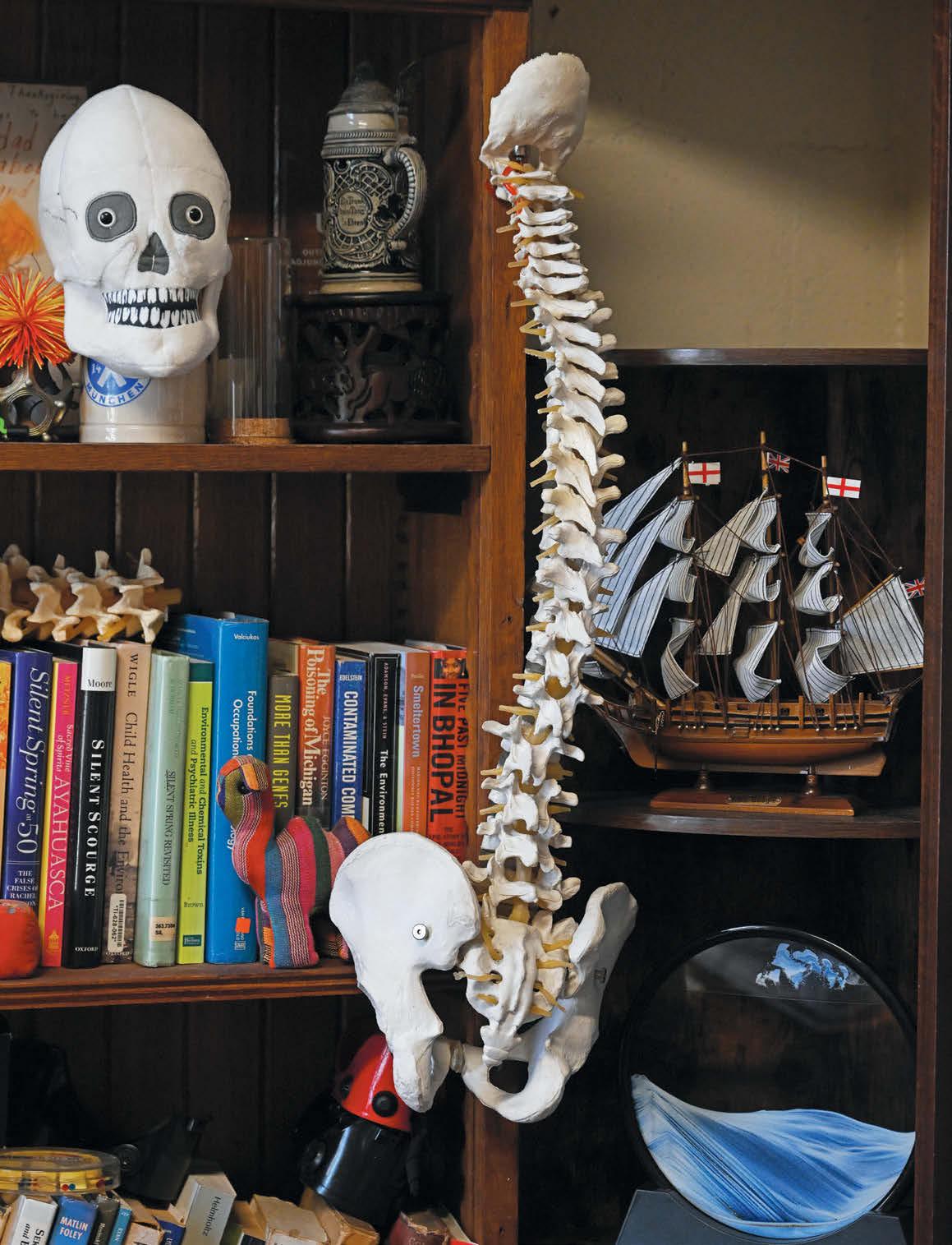
SHIP ▶ “That’s the HMS Beagle, which Charles Darwin sailed on during a surveying trip around South America from 1831 to 1836. That trip played a big role in helping him develop his theory of evolution. I teach ‘Evolutionary Psychology: Origins of Mind and Behavior,’ and we talk a lot about what made us who we are today and what primal instincts are based on our evolutionary history.”
SPACE TALK

In addition to his work in the classroom, Associate Teaching Professor of Astronomy and Campus Director of the Connecticut Space Grant Consortium Alex Gianninas educates the public on social media, through a YouTube series called Celestial Happenings, and as an expert regularly quoted in traditional media. He sat down with astronomy enthusiast and Senior Writer Melissa Johnson to answer some of CC Magazine’s most pressing questions.
Melissa Johnson: What are some of the most common misconceptions people have about space?
Alex Gianninas: Meteors are ofen referred to as shooting stars, but they’re not actually stars. Stars are huge balls of gas very far away that last billions of years, like our own sun. “Shooting stars” are basically small hunks of rock that have
Astronomy Professor Alex Gianninas is on a mission to debunk common misconceptions about space.
BY MELISSA BABCOCK JOHNSON
entered the Earth’s atmosphere at very high speed and get extremely hot from friction with our atmosphere. If they’re small enough, they’ll completely burn up, which is the trail of light that you see. And certain “constellations” are actually asterisms, or parts of larger constellations. The most classic example is the Big Dipper, which is the hind quarter and tail of Ursa Major, the Big Bear. Another common asterism is the Summer Triangle, which is made up of three very bright stars, Altair, Vega and Deneb, that each belong to diferent constellations but form a bright triangle visible in the summer in the Northern Hemisphere.
MJ: And aren’t half of the “single” stars we see actually double stars orbiting each other?
AG: Yes. We love to show our astronomy students a very well-known star called
Albireo, because when you see it through a telescope or binoculars, you see the two stars. It’s visually striking, because one is bluish and one is reddish. And one of the stars is itself a triple star system. So it gets funky, but half or more of the stars people see when they look out at night are multiple stars together, which actually makes sense because stars tend form in groups. The closest star to us besides the sun, Proxima Centauri, is part of a triple star system a little over four light-years away.
MJ: The Northern Lights have been visible from campus multiple times in the last few years. Is there a reason for the uptick in visibility this far south?
AG: Aurora, or Northern Lights, are more frequent and intense during the peak of the 11-year solar cycle, which happened last summer. During this peak, more
Statistically, I don’t see how there isn’t any other life form out there. Space is big—really big.
—ALEX GIANNINAS, ASSOCIATE TEACHING PROFESSOR OF ASTRONOMY AND CAMPUS DIRECTOR OF THE CONNECTICUT SPACE GRANT CONSORTIUM
powerful eruptions at the surface of the sun, called coronal mass ejections, can produce aurora that are visible farther south than usual because they hurl a greater quantity of charged particles toward the Earth that colorfully interact with the planet’s magnetic feld and its atmospheric gases. The next solar cycle is expected to peak in 2035.
MJ: What do you see as the biggest mystery or problem to solve in the feld right now?
AG: Only about 5% of the universe is the regular matter that we can see. The nature of dark matter and dark energy, which together make up about 95% of the matter and energy budget of the universe, is still unknown a hundred years afer we discovered it. Right now, all we know is that dark matter is sort of the glue holding galaxies and galaxy clusters together, and dark energy is the same stuf that is causing the universe to expand at an ever-increasing rate. It’s tricky to study because we can’t see dark matter or dark energy directly; we can only see their efects on the light and objects around them. We have some ideas of what they could be, but we haven’t been able to confrm anything so far.
MJ: Isn’t it crazy how so much of what we know about astronomy has only been discovered in recent decades? I don’t think we even knew about any planets beyond Pluto (RIP) until the 1990s.
AG: That’s right, the frst exoplanet, or planet outside of our solar system, was discovered in the mid-’90s. The observation that exoplanets and exoplanetary systems are common is, I think, the most exciting discovery
in recent decades. The Kepler Space Telescope and now TESS (Transiting Exoplanet Survey Satellite) have completely transformed our understanding of how planets form and the great diversity of planets that exist.
MJ: What do you see as the next big development?
AG: To me, one of the next logical steps is to establish a permanent presence on the moon. The far side of the moon is a phenomenal place to set up a remote telescope. It’s in the dark for 14 days straight and has no weather or atmosphere. I’m not saying it would be simple or cheap, but if we can fgure out how to pull it of, the beneft would be incredible.
MJ: Your research has focused on white dwarf stars. What are they?

Professor Gianninas’s Space Favorites:
MOVIE: Interstellar
TV SHOW: Star Trek: Deep Space Nine
BOOK: Dune (the entire series!)
SONG: Figli Delle Stelle (Children of the Stars) by
Allan Sorrenti
AG: White dwarf stars are the dense, cooling remnants sun-like stars leave behind afer they exhaust their nuclear fuel. My most cited work involves large-scale spectroscopic surveys, or light-spectrum analysis, of white dwarfs. Arguably, my most signifcant work involved obtaining and analyzing data from the visible light waves of over a thousand white dwarfs as part of my Ph.D. thesis. It was an important study that produced refned measurements of efective temperature (T_ef) and surface gravity (log g) for hundreds of DA white dwarfs, which have hydrogen-dominated atmospheres. And it helped clarify the socalled “log g problem” where the hydrogen warps the measurements we take of this type of star based on the light it emits, making its gravity appear stronger than it is. That was a puzzle in the feld for years.
MJ: That’s exciting. Now, I would be remiss if I didn’t take this opportunity to ask you about aliens. So … are they out there?
AG: I believe that, yes, at some point we will fnd some form of alien life. What will that look like? I have no idea. We have exactly one example of a place where life developed in a specifc way under specifc conditions. Right now, people are looking for what they know based on our planet, which is that you need water and oxygen for life. That doesn’t mean life can’t develop somewhere else under diferent conditions using diferent chemistry. The last 20 years of research have revealed that most stars have planets, and those planets are really diverse. And we’ve only surveyed a small portion of our own galaxy, never mind beyond. Statistically, I don’t see how there isn’t any other life form out there. Space is big—really big.
In Defense of Indoctrination: The Liberal Arts and the Myth of Thinking for Yourself
By Simon Feldman, Associate Professor of Philosophy
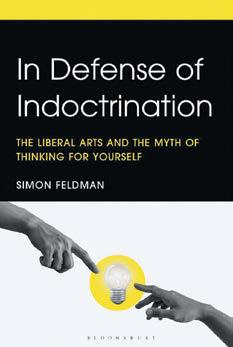
Considering charges that liberal arts institutions indoctrinate their students, this book investigates the conceptual connections between critical thinking and intellectual independence and between epistemic values and social-political values. Feldman argues that neither charges of indoctrination from political conservatives nor professorial boasts of teaching critical thinking recognize the full range of values embedded in liberal arts education; most faculty want both to teach certain social values and to nurture students’ intellectual independence. Yet the indoctrination charges do raise deep questions about the ethics of teaching and learning, and they take place amid growing concerns about the social, political and economic viability of liberal arts institutions themselves.
Liars Society: A Secret Escape
By Alyson Gerber ’06

The game starts now. Jack and Weatherby—the newest members of Last Heir, the most powerful secret society in the world—have landed at an exclusive prep school in the Swiss Alps, ready to win big. Last Heir is ofering the chance of a lifetime: millions of dollars, a private island and a powerful spot in the society’s inner circle. Not everyone has the same reasons for playing, but with money, power and infuence up for grabs, everyone wants to win. Too bad they’re not all playing by the same rules. The third book in Gerber’s New York Times bestselling young adult mystery series, A Secret Escape will immerse readers in a world of dangerous riddles, friendship and betrayal, and an addictive search for the truth.
SASQ’ET
By Maxim Langstaf ’81
Upon the death of a grandfather she never knew, Mallory Glessner, a small-
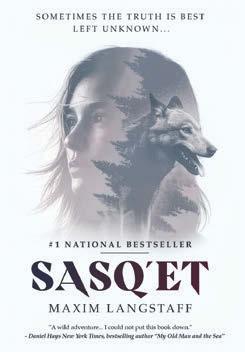
town New Hampshire veterinarian, fnds herself the sole benefciary of his massive fortune. Lef with an unmarked envelope containing a mysterious key, she unlocks a secret that has haunted her family for more than 50 years. Intertwined across three generations and four continents, SASQ’ET is a story of redemption and discovery, love and survival. The book is flled with people you may recognize, both historical and contemporary, and challenges the reader to rethink their relationship to the natural world.
Who’s Hiding? Under the Sea
By
Janet Lawler ’74; illustrated by James WestonLewis
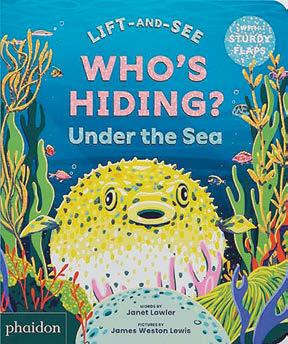
Guess who’s hiding under the sea in this lushly illustrated, rhyming read-aloud guessing game! This playful lif-the-fap book takes toddlers on an underwater adventure, introducing them to the wonderfully weird creatures of the ocean and shows how their unique features are what make them amazing.
The Wash-Ashores
By Hannah McKinnon ’94
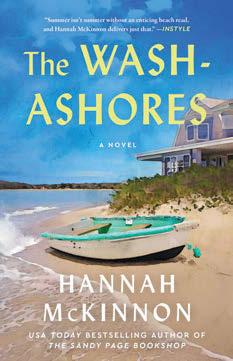
With only one summer to turn things around, 30-year-old Holly fnds herself fghting to hold together the one place that’s always felt like home. She’s inherited the historic Cranberry Inn on Cape Cod from her grandmother Francine. Only Francine is not dead. At least not yet. And she’s not fully convinced the Cranberry Inn is the right ft for Holly. Besides, she has an ofer from a developer that she’s not sure she can turn down. Can Holly pull everyone together to ensure that her beloved Cranberry Inn will survive another summer?
Gabby Finds Her Voice
By Blair Nichols Chandler ’83
Gabby doesn’t think her voice matters until she begins a journey of self-discovery that helps her fnd the courage, strength and confdence that were inside her
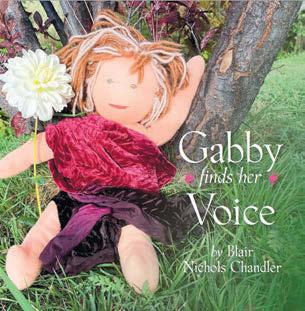
all along. This powerful and heartwarming children’s picture book about confdence, self-esteem and speaking up is designed for kids ages 4-8 who are learning to believe in themselves.
Sea Glass Beach: A Promise of Hope
By Mary Jane Costello Rufo ’80
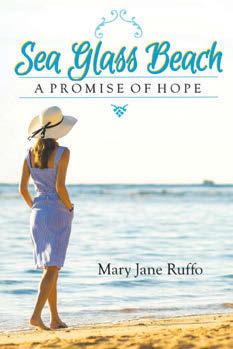
Afer seven blissful years of marriage, Miranda Roberts abruptly becomes a widow following a tragic accident. With her faith shaken, she has lost all hope. Despite the support of her sister and members of a bereavement group, Miranda closes her heart, choosing to live in the past. While waiting for her new home to be built, she enters into an unwritten contract with Josh Turner, the kind, handsome owner of The Beach Rose Inn. Miranda’s resolve to remain devoted only to her deceased husband wanes as her heart begins to sofen toward Josh and his delightful daughter, Ellie. When her new home is completed, Miranda must make a choice. Will she remain a prisoner of the past, or will she risk a second chance at love?
Cece Downing’s Start Over Summer
By Soon Wiley ’09
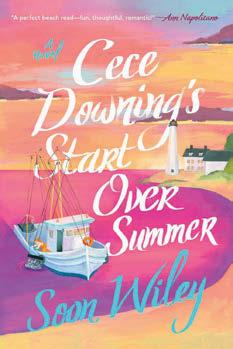
Recently fred from her job as an actuary and recovering from a messy breakup, 32-year-old Cece Downing is holed up for the summer in New London, Connecticut. Mounting debts soon force Cece to take the frst job opportunity that comes her way one she’s wholly unsuited for as a deckhand on an oyster boat. Surprisingly, she fnds herself loving the job, and despite her mother’s pleas to reunite with her wealthy fancé, Cece plunges into an ill-advised romance with a handsome shipyard worker named Morgan. When a proposal to expand the oyster farm pits wealthy waterfront owners against blue collar workers, Cece is caught in the middle and must come to terms with what she’s willing to sacrifce for the life she wants to live.
Publish a book? Send Ink submissions to ccmag@conncoll.edu.







LEARN WHAT YOU LOVE
At Conn, students embark on a personalized educational journey that unites passion, purpose and possibility.
BY AMY MARTIN
Ten years ago, Conn’s faculty ushered in a new era of integrated learning—one that encourages students to personalize their education and dig deep into a topic or question that animates and intrigues them. Students weave their passions and interests into their coursework, their internships and research, and their study away experiences. They learn what drives them and what impact they want to make on the world. And they are supported at every step of the way by faculty, staf and their fellow students. We call it Connections, and we invite you to follow the paths of four of the 512 graduating seniors who have made it their own. ▶
PhotosbySeanD.Elliot
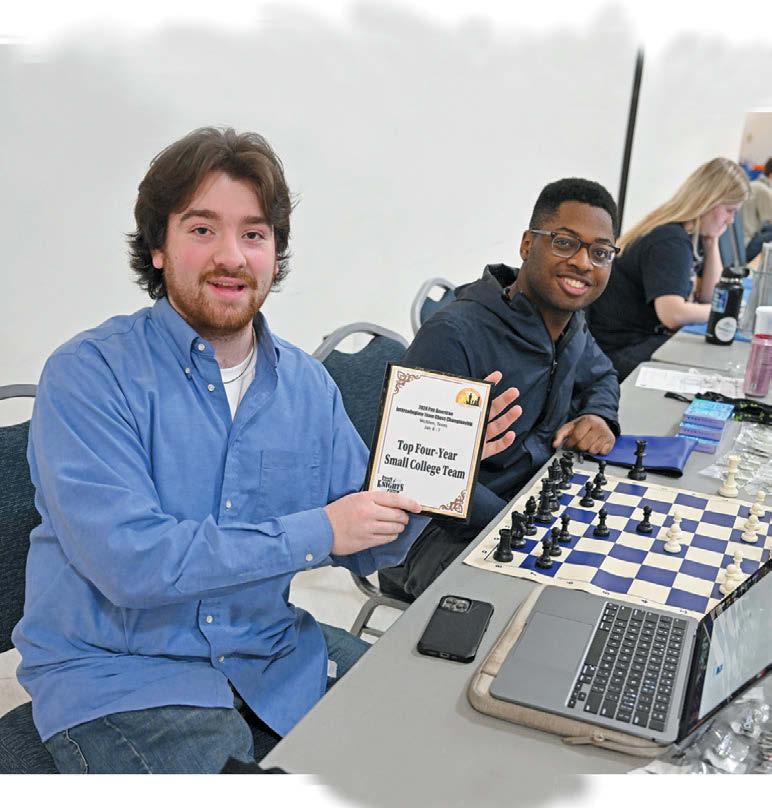
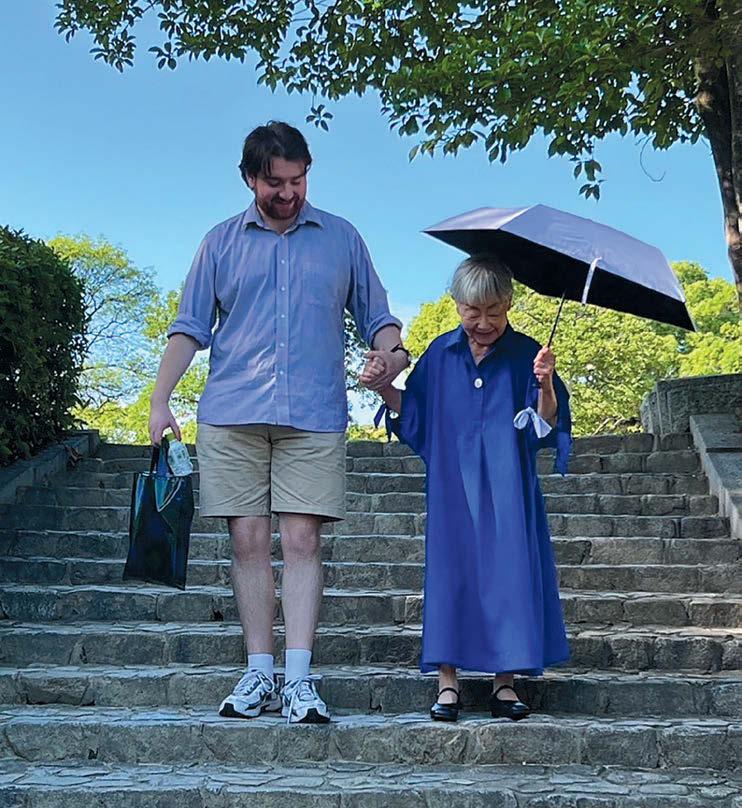
Studied abroad at Doshisha University in Kyoto, Japan ●
●
Extracurriculars:
● Chess Club
● President, Psi Chi
International Honor Society in Psychology
● ● Co-Chair, Psychology and Neuroscience
Student Advisory Board
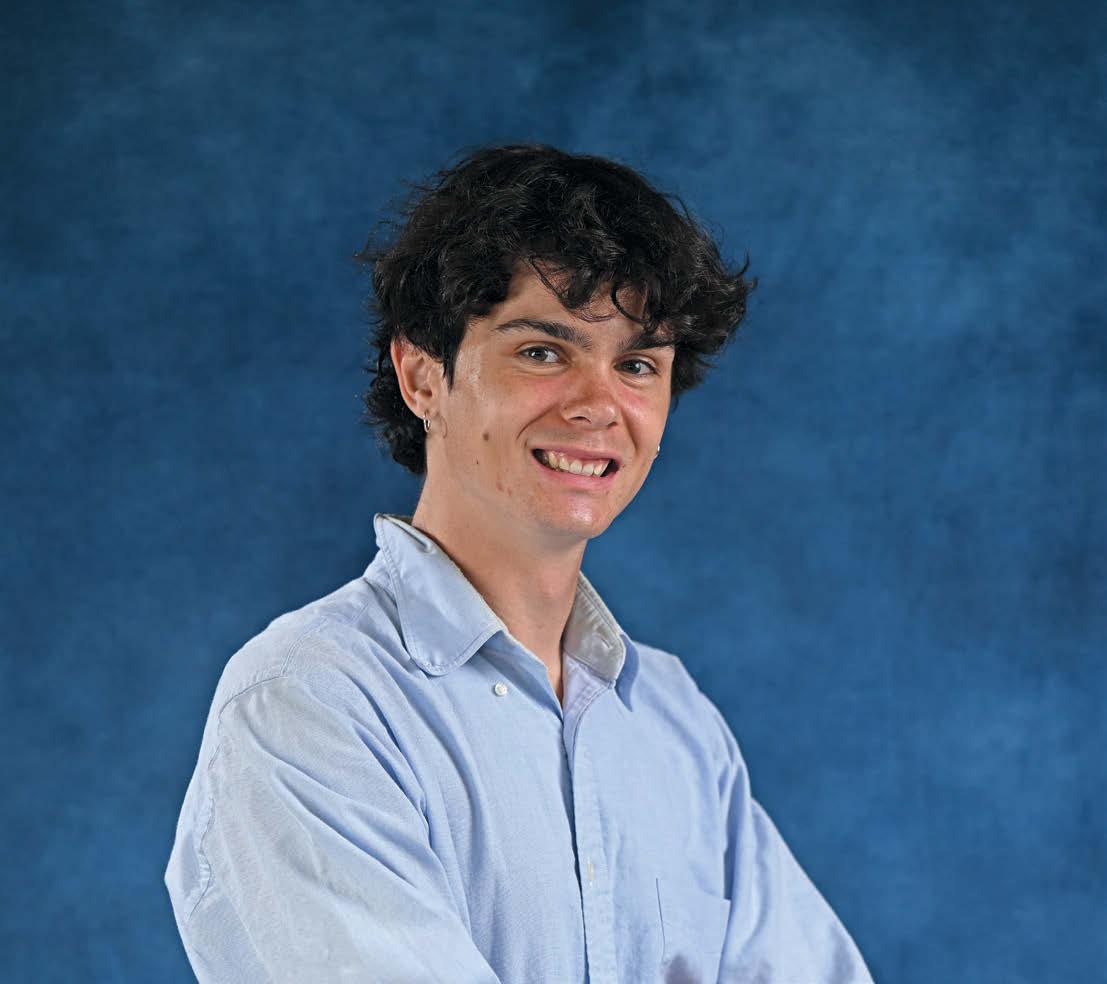
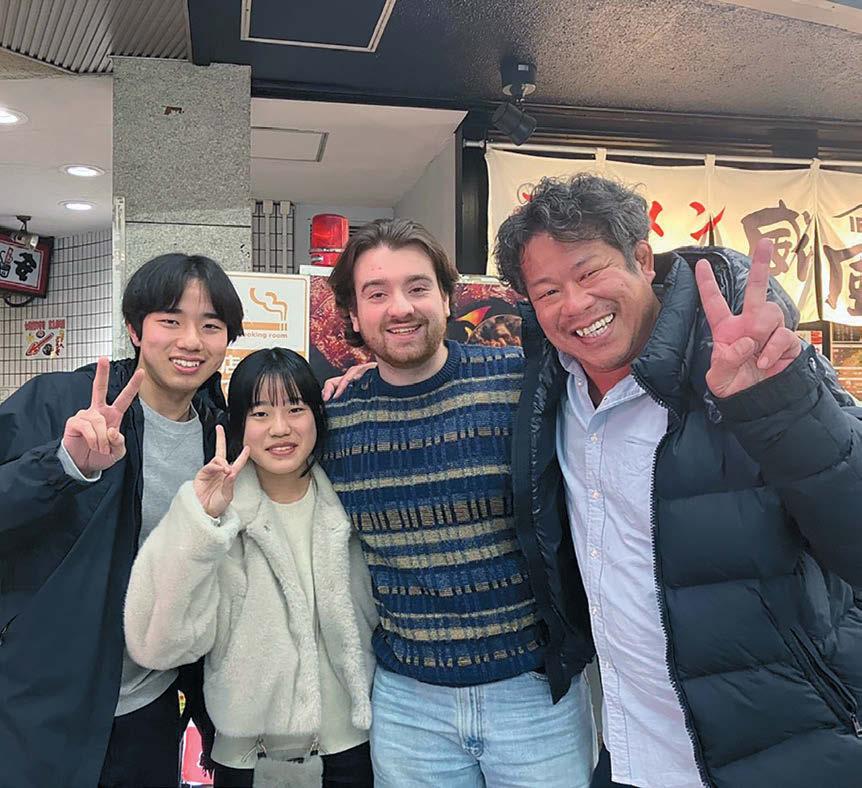
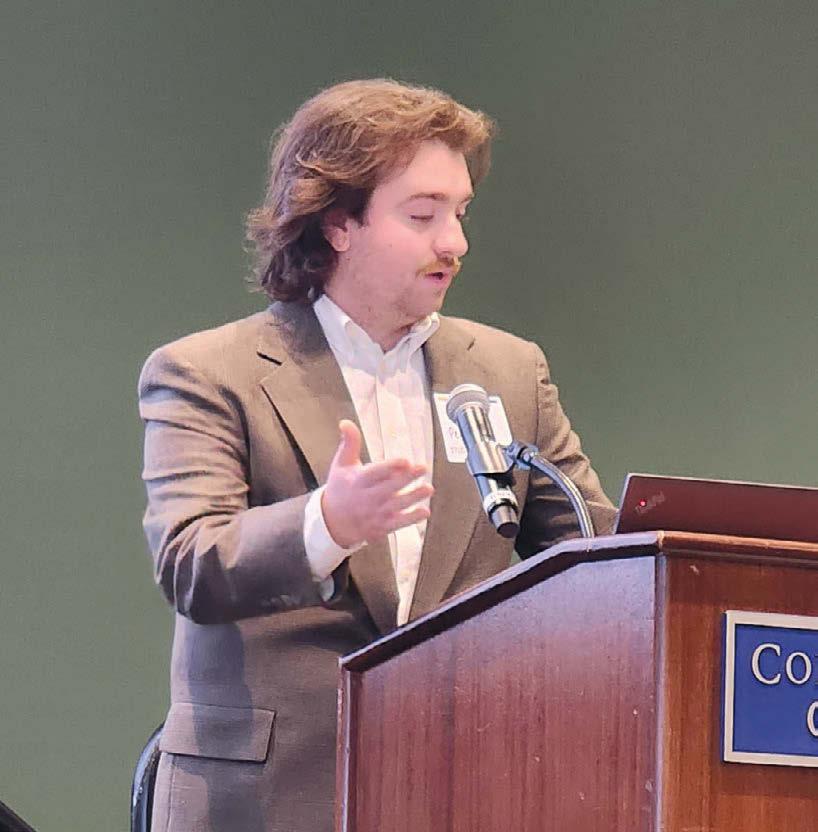
ROMAN PERROTTO ’26 JUNIORYEAR
Hometown: Albany, New York
Majors: Psychology and East Asian Studies
Center: Toor Cummings Center for International Studies and the Liberal Arts
● ● Connections Ambassador


Integrative interest: Transmission of intergenerational trauma in atomic bomb survivor families



Internship ● ANT-Hiroshima in Japan
Consequential courses:
●
Japanese Language
● Cognitive Behavioral Therapy
● Semi Clinical/Community
Psychology Practicum

● First-Year Seminar: Refugees: Law, Politics, Representation
● Began studying Japanese
FIRST YEAR
Once I realized I wanted to study intergenerational trauma in the families of Hiroshima survivors, I started looking into the literature. And there was really no literature at all.
I had taken Spanish in high school, and I wanted to challenge myself with something new, so I thought it’d be interesting to study Japanese. And I really fell in love with it. And then I started to think about how I could combine my interests in psychology—and particularly the transmission of intergenerational trauma—and Japanese language and culture.
● Intensive summer language study at Senshu University in Tokyo, Japan
Funded Sophomore Summer Research ● Program grant for independent study on atomic bomb literature
SOPHOMOR E Y E AR
I conducted independent qualitative research on intergenerational trauma among atomic bomb survivor families in Hiroshima. My work involved interviewing more than 30 survivors (hibakusha) and their descendants— in Japanese—to explore how trauma is transmitted across generations.
Presented at the All-College Symposium ●
SEN I O R YEAR
My goal is to become a clinician, researcher and professor who studies, treats and teaches about trauma, particularly in cross-cultural and intergenerational contexts.
● Honors thesis: Trauma, Memory, and Narrative Identity: Intergenerational Efects in Atomic Bomb Survivor Families
FUTURE PLANS:
Will pursue a clinical psychology Ph.D. at the University of Albany in the fall
I was initially hesitant to major in Classics. But my First-Year Seminar helped me realize that Classics, while focused on one specifc timeframe and geographic region, is also broad and interdisciplinary—you’re studying language, history, archaeology, culture, politics, comparative religion.
Extracurriculars:
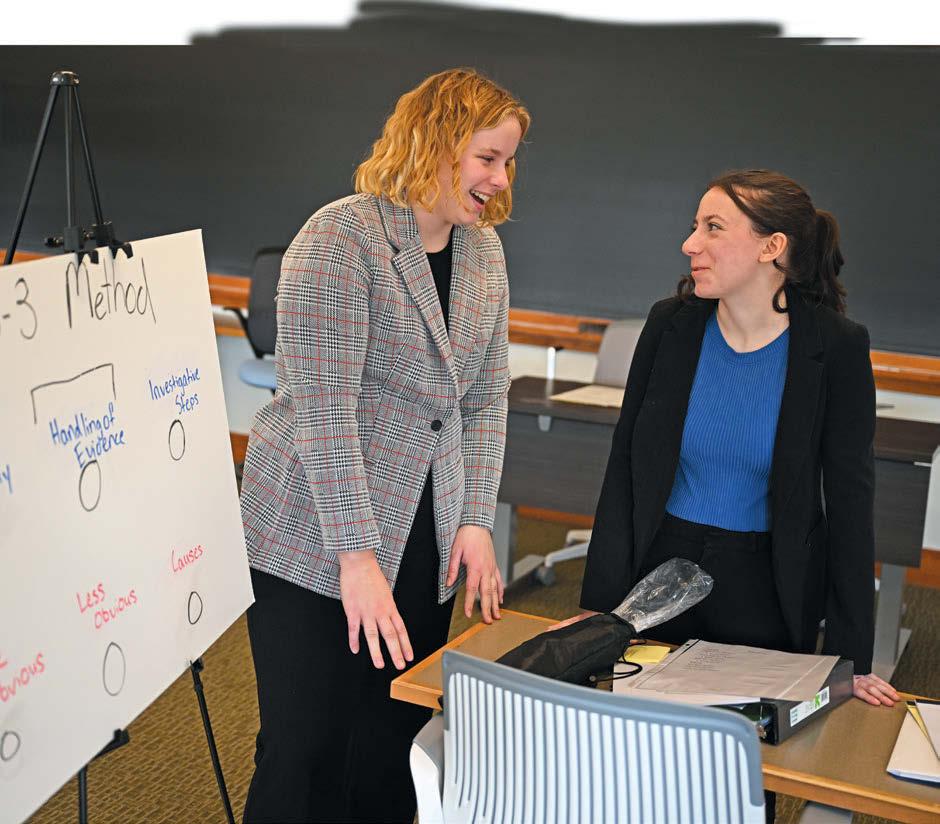
● ● ● ● Mock Trial (● VP ● Captain ● President)
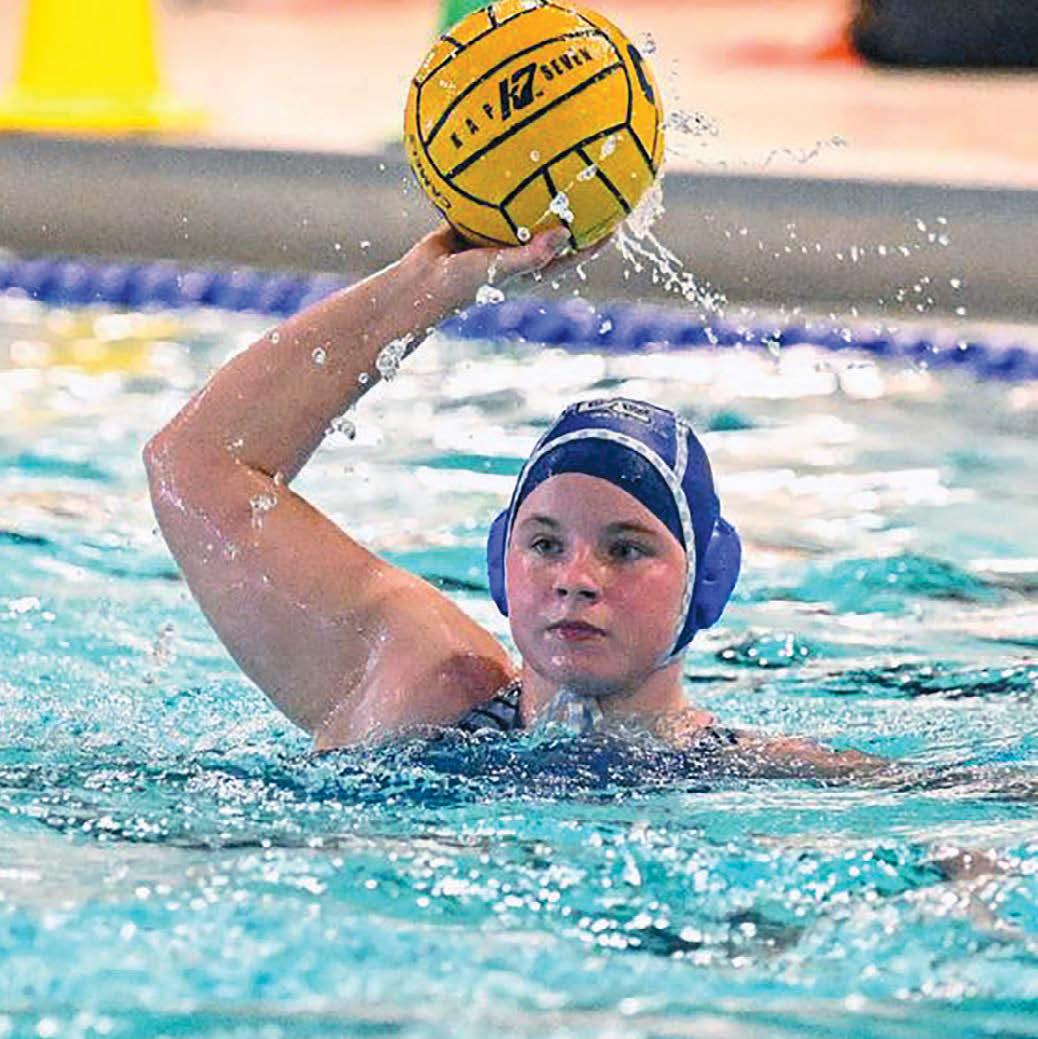
● ● ● ● Varsity Women’s Water Polo
● Co-Chair, Classics Student Advisory Board
Completed 10-week ● Summer Greek Workshop at UC Berkeley
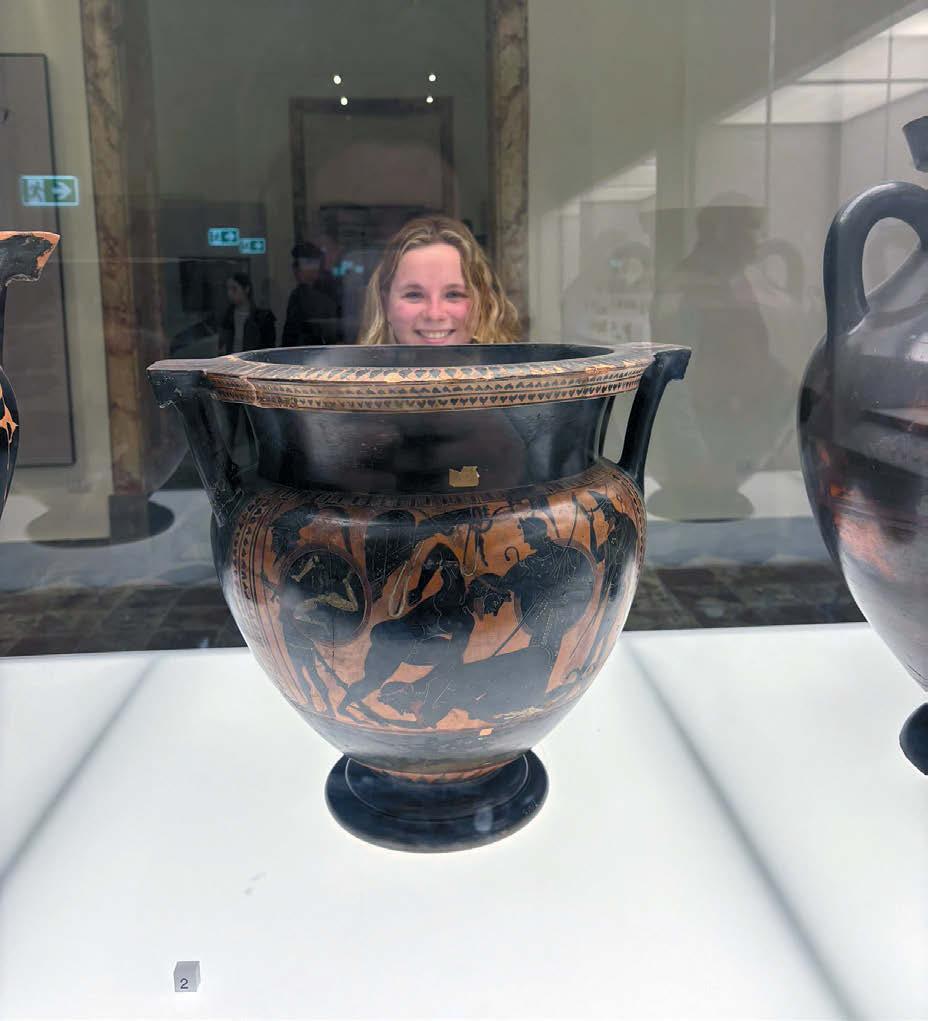
Consequential
courses:
● Roman Political Culture
● The Ancient City
● First-Year Seminar: As The Romans Say
F I R S T YEAR
● Studied abroad at the Intercollegiate Center for Classical Studies in Rome, Italy
I took Latin; ‘Conservation of the Material Heritage of Rome,’ which was taught by a mosaic conservator for the Vatican; and ‘The Ancient City,’ which was taught onsite at diferent museums and archaeological sites all across Rome.
JUNIORYEAR
● Politics and Culture in the U.S. Since 1945
● Civil Wars
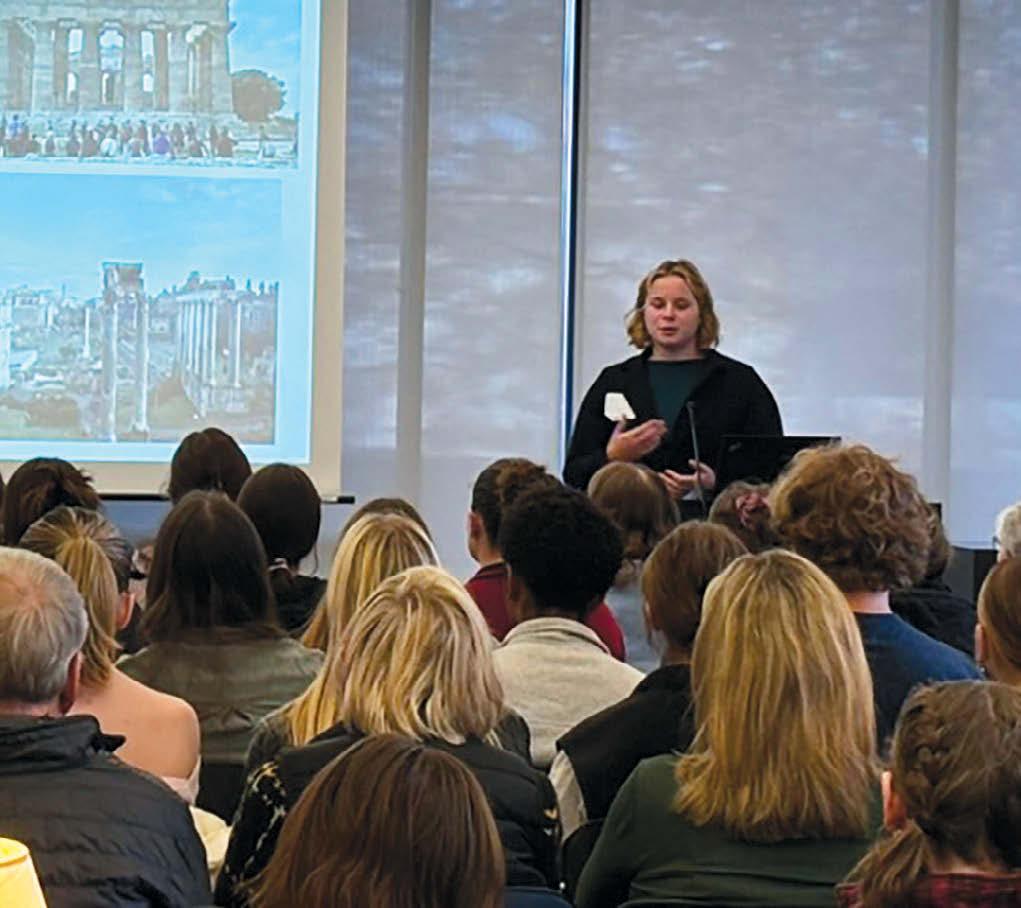
I took a class called ‘The Roman World,’ and we spent a day on the modern political weaponization of Classics. Classics have always been highly infuential on political institutions—our mottos are in Latin, our political systems are based on the political systems of ancient Rome. I started thinking about the institution of Classics and its perception in 21st-century America as deeply conservative, and I wanted to explore that.
SOPHO M O R E
Awards
● Regent's Fellowship for graduate study at UC Santa Barbara
● ● ● ● Collegiate Water Polo Association Outstanding Scholar-Athlete
● ● ● NESCAC All-Academic honoree
Honors thesis: Casting Long Shadows: Political Infuence on Classical Scholarship in the 20th and 21st Centuries ●
● Presented at the All-College Symposium
On water polo: The team has been really supportive. My coach is very clear about, ‘You’re a student-athlete—the student comes before the athlete.’ I’ve had the opportunity to visit some really great places, do a lot of cool things and play the sport I love.
● Honors Seminar in Constitutional Interpretation at American Enterprise Institute in Washington, D.C.
Y E A R
I hope to become a professor and continue interrogating the questions that have engaged me throughout my academic career, as well as support students to pursue their interests as my professors have supported me.
Pursuing a Ph.D. in Classics at UC Santa Barbara YEAR
FUTURE PLANS:
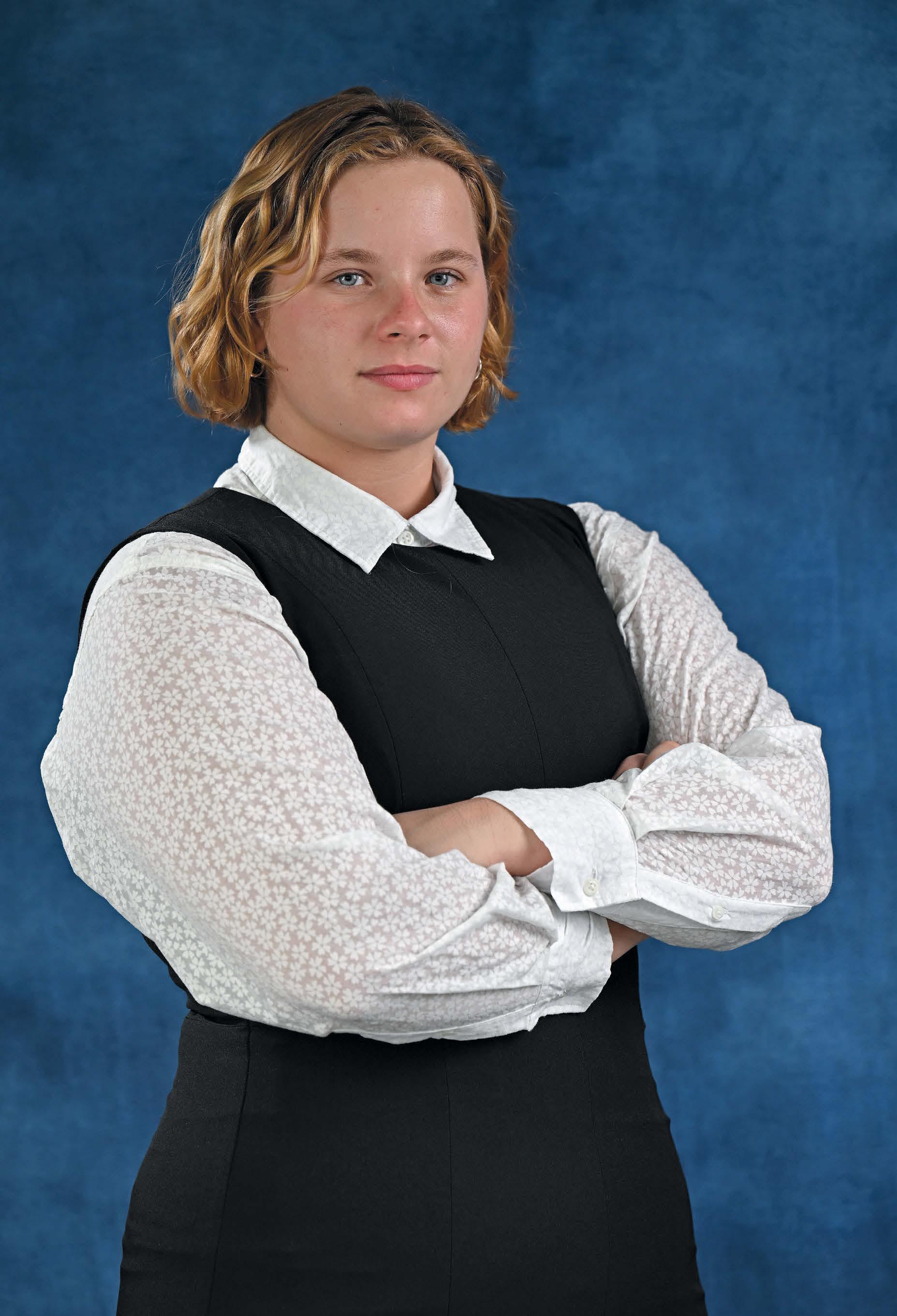
ANNA TAYLOR ’26

Hometown: Pleasanton, California
Majors: Classics and Government; History minor
Pathway: Peace and Confict
Integrative interest: How have political extremists weaponized Classical history, and why does it matter?





● First-Year Seminar: American West New Perspectives
● Interned with the attorney for the Child Unit at the Legal Aid Society of Rochester, New York
● ● ● American Studies Student Advisory Board ( ● President)
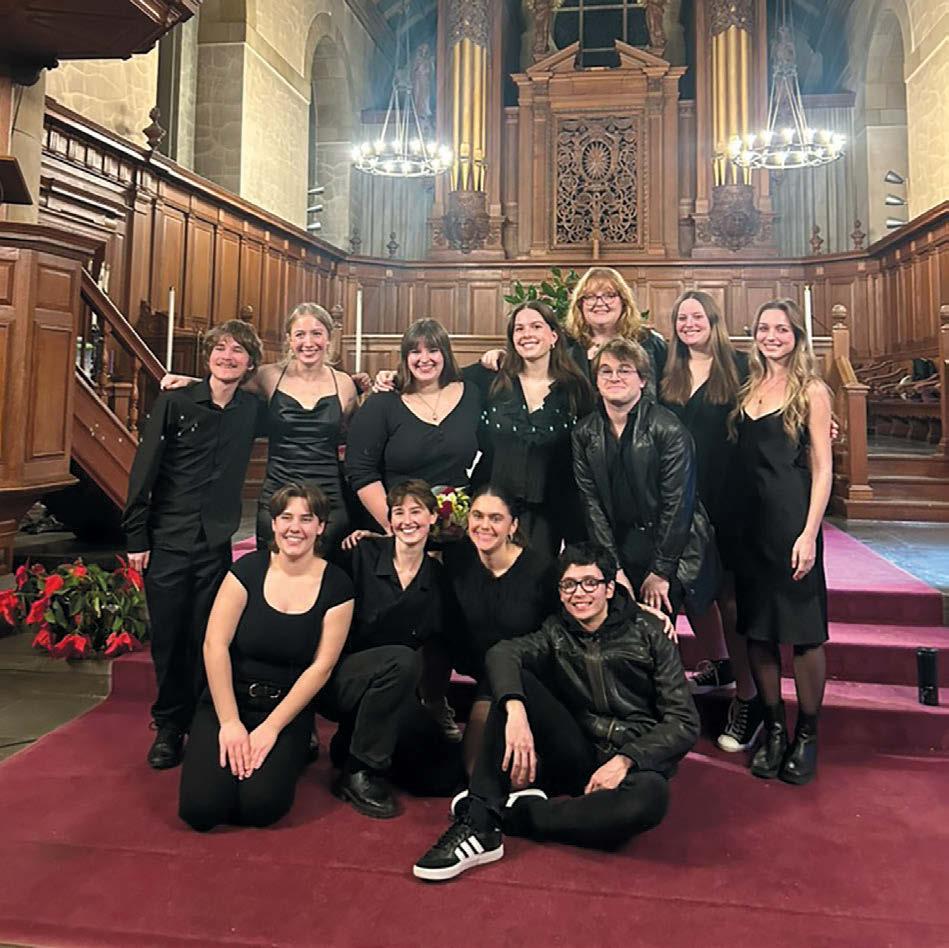
● ● ● ● Williams Street
Mix (● ● ● President)
● ● CC Spin instructor
● Member, Pi Sigma Alpha

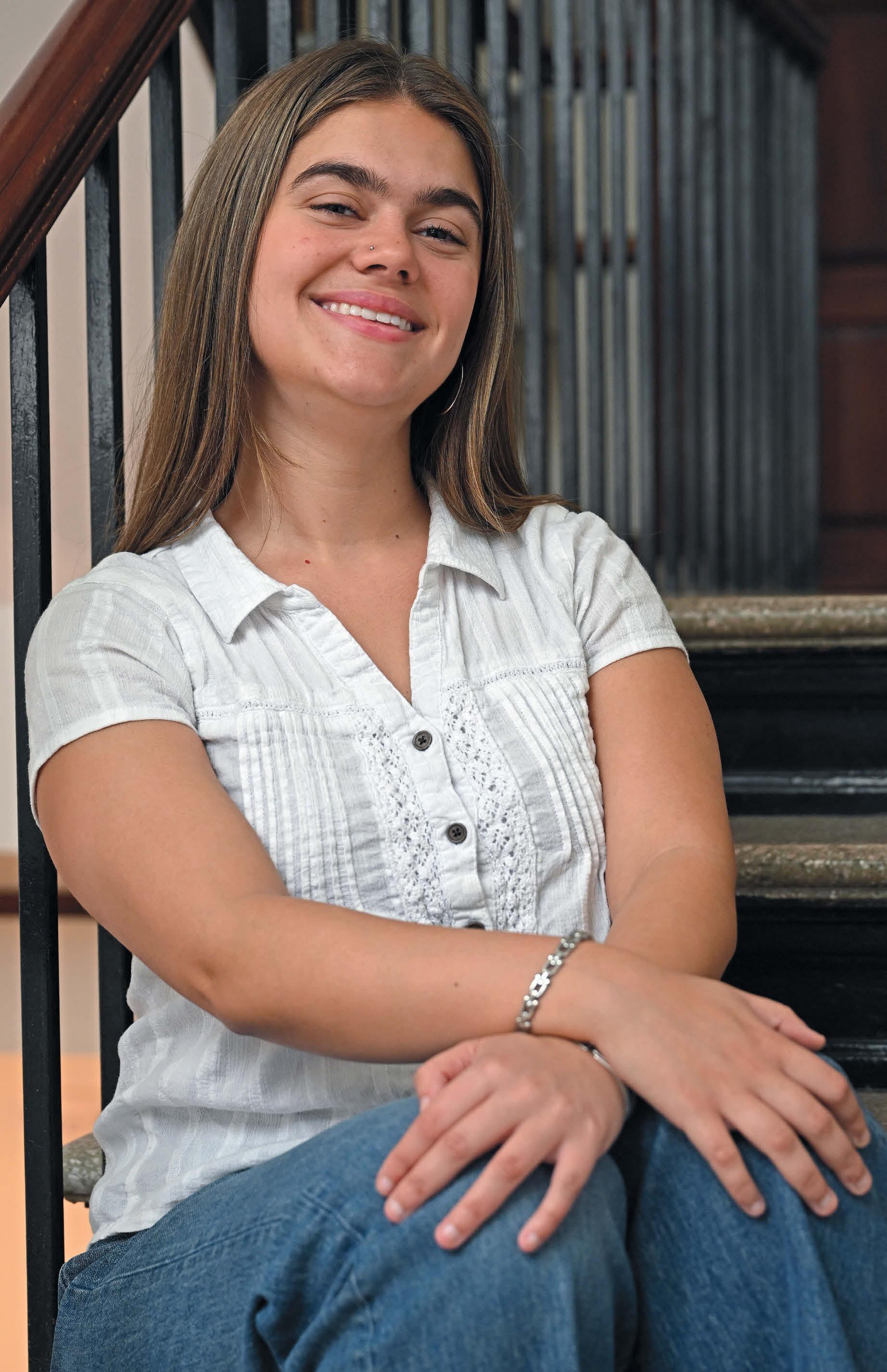
RITA D’AGOSTINO ’26
Hometown: Rochester, New York
Majors: American Studies and Government
Center: Holleran Center for Community Action and Public Policy
Integrative interest: Power and inequity in family court systems
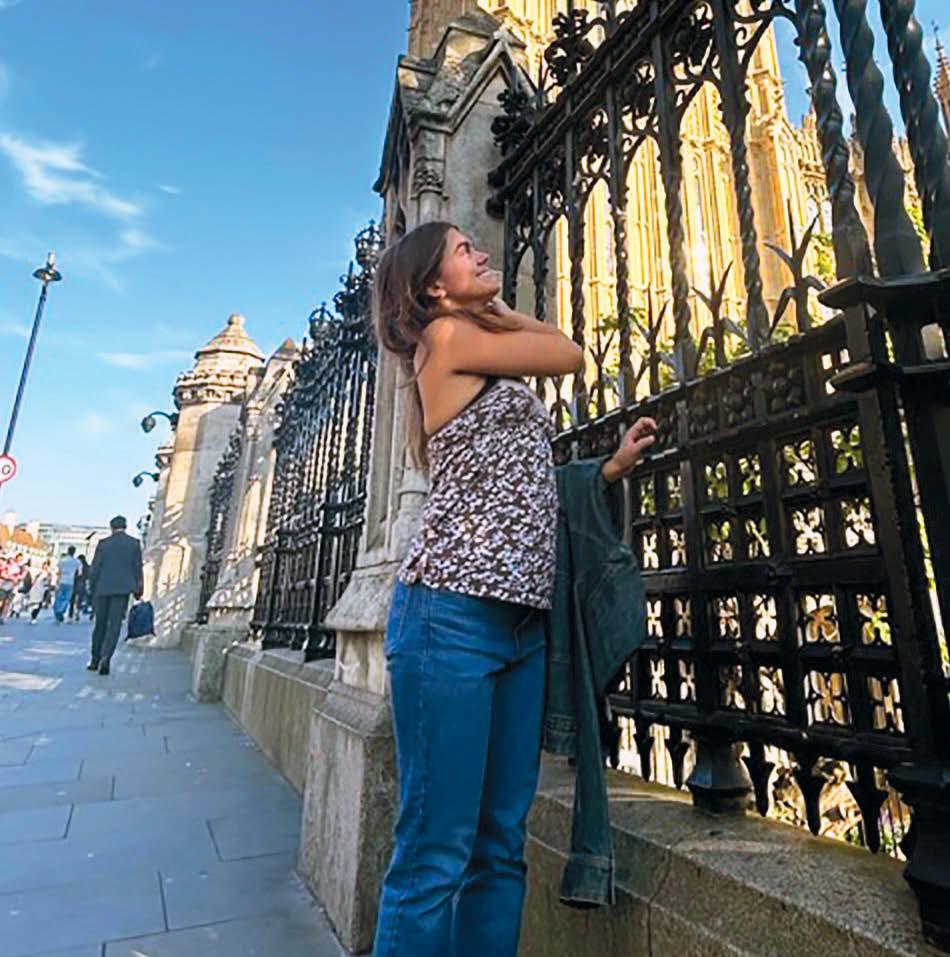
I have had the best professors and the best mentors at Conn. At a larger institution, you’re fghting with 10 other students to get a professor’s attention. Here, you have 10 professors behind you at every step of the way.
At the Legal Aid Society, I really fell in love with the clients and the people I got to work with, and I became both academically and emotionally invested in the family court system.
F I R S T Y E A R
Consequential courses:
● Introduction to African American Literature
● Constitutional Law: Civil Rights and Civil Liberties
● Children, War, and Peace

Conducted research ● with Associate Professor of Government Daniel Moak on temporary assistance funding in Connecticut
SOPHOMOREYEAR
All three of my internships were in family court, but each allowed me to explore a diferent part of the system, frst from the attorney for the child perspective, then from the side of the parents’ representation, and fnally from the side of the decision makers.
● Studied abroad at Queen Mary University in London, England
● Summer research: Conducted interviews with family court legal experts
● Interned in the Monroe County Hall of Justice and New York State Supreme Court Justice
Presented at ● the All-College Symposium
Honors thesis: ● All Roads Lead to Family Court: Power, Inequality and the Courts
● Interned in the Monroe County Public Defender’s Ofce in the Family Court Bureau

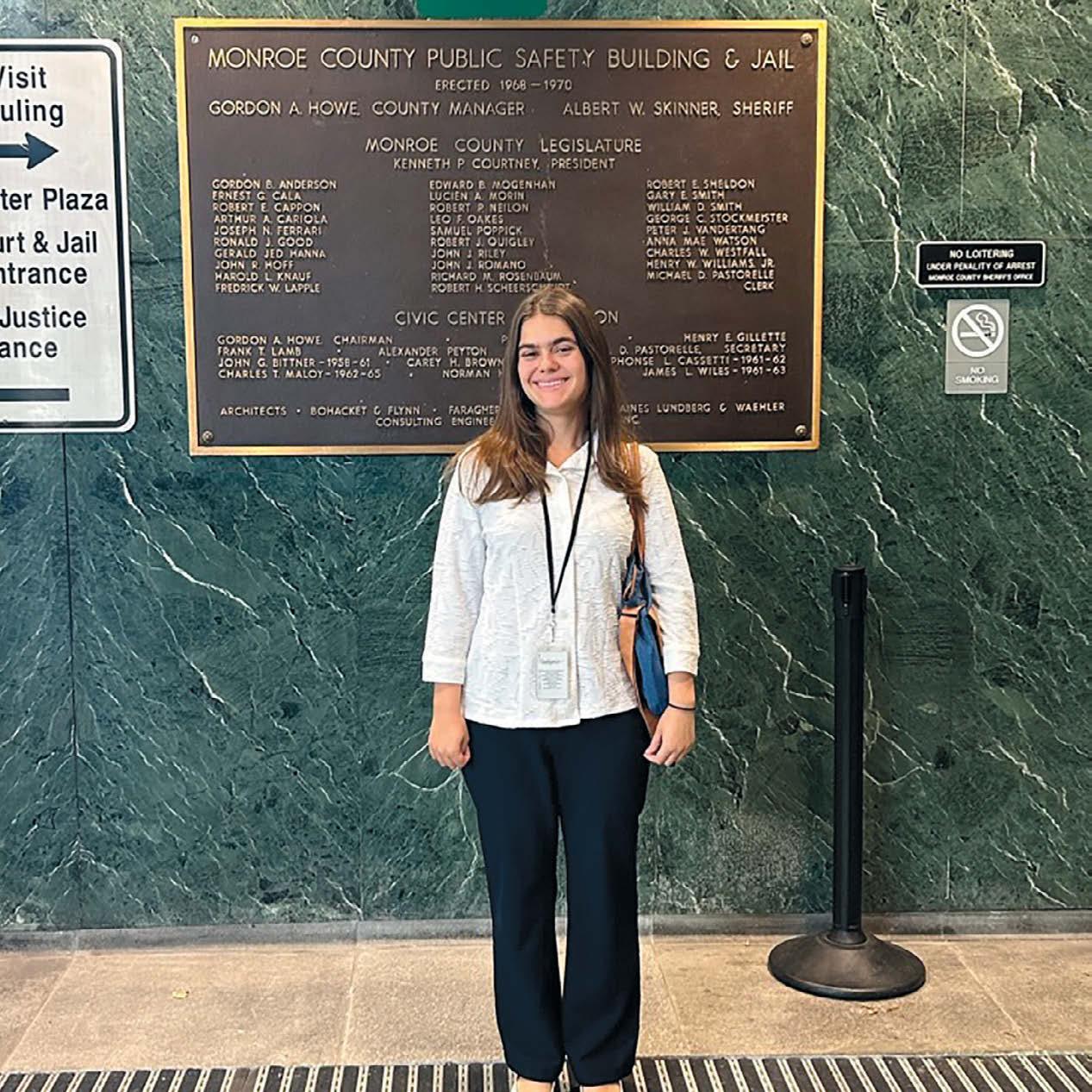
Family court is a very woman-dominated space, which you don’t see very often in law. It’s been great having all of these really strong female supervisors and mentors.
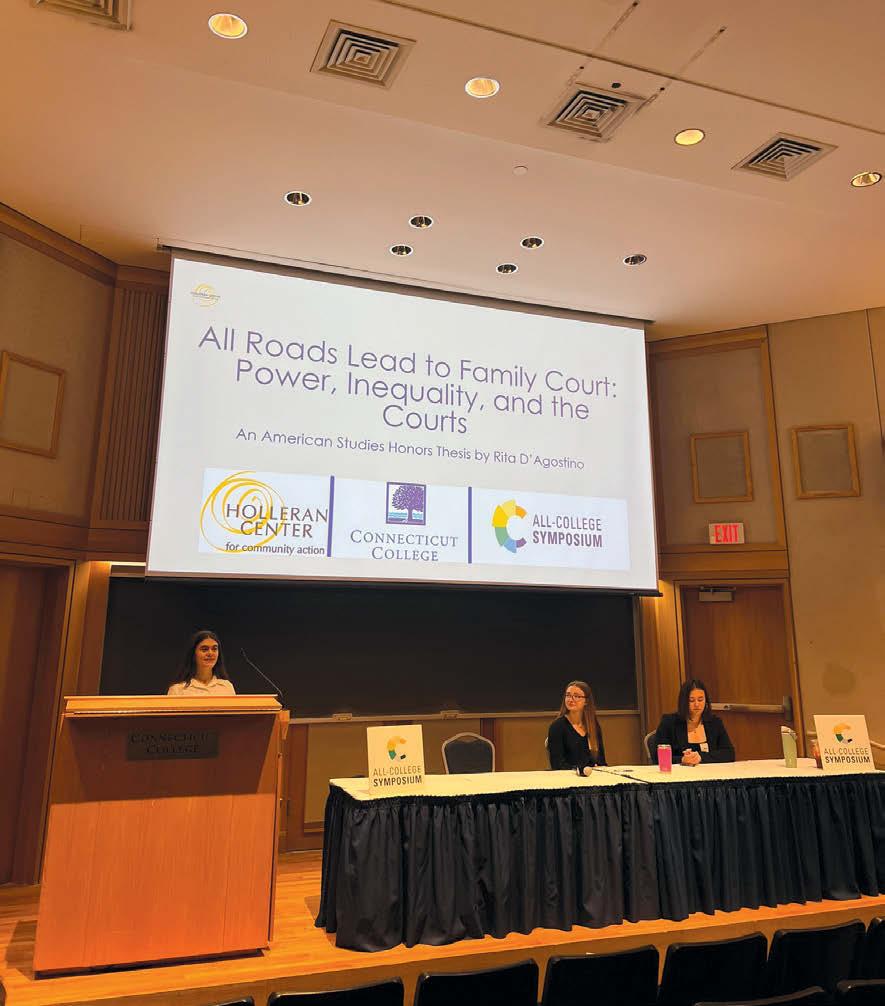
FUTURE PLANS:
Work as a paralegal or legal assistant in the Boston area; attend law school; become a family law attorney
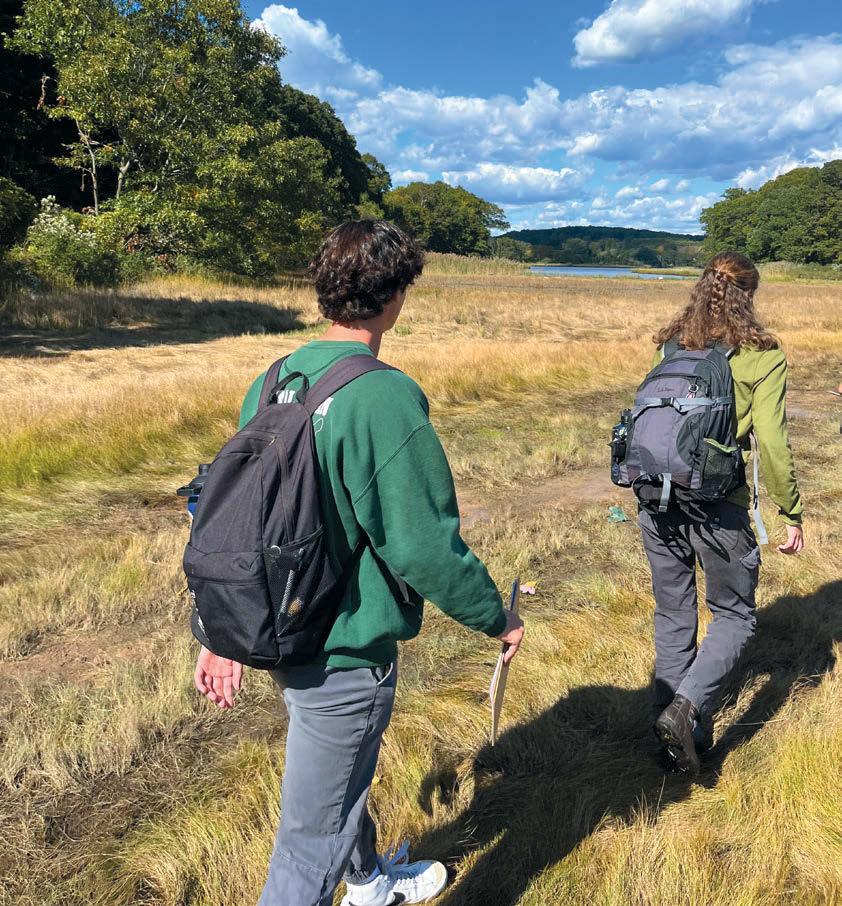
Connections encouraged me to connect my specifc interests in water conservation and education and tie them together in ways I wouldn’t have thought to otherwise. It was a really cool experience to fnd the connections between these two diferent felds of study and then be able to share what I’ve learned.
Extracurriculars:
First-Year Seminar: Health and Social Justice ●
FIRST YEAR
● Attended the Middlebury School of the Environment in Monterey, California
I learned a lot about the ways California is addressing its water conservation challenges. We visited the Agriculture and Land-Based Training Association, a nonproft that educates local farmers on sustainable practices, as well as the water purifcation plant Monterey One Water, which is especially important given the amount of farming they do in that region—it’s known as the ‘Salad Bowl of the World.’ We also visited community farms, went whale watching and had a membership pass to the Monterey Bay Aquarium, which is absolutely incredible.
SOPHOMOR E Y E AR
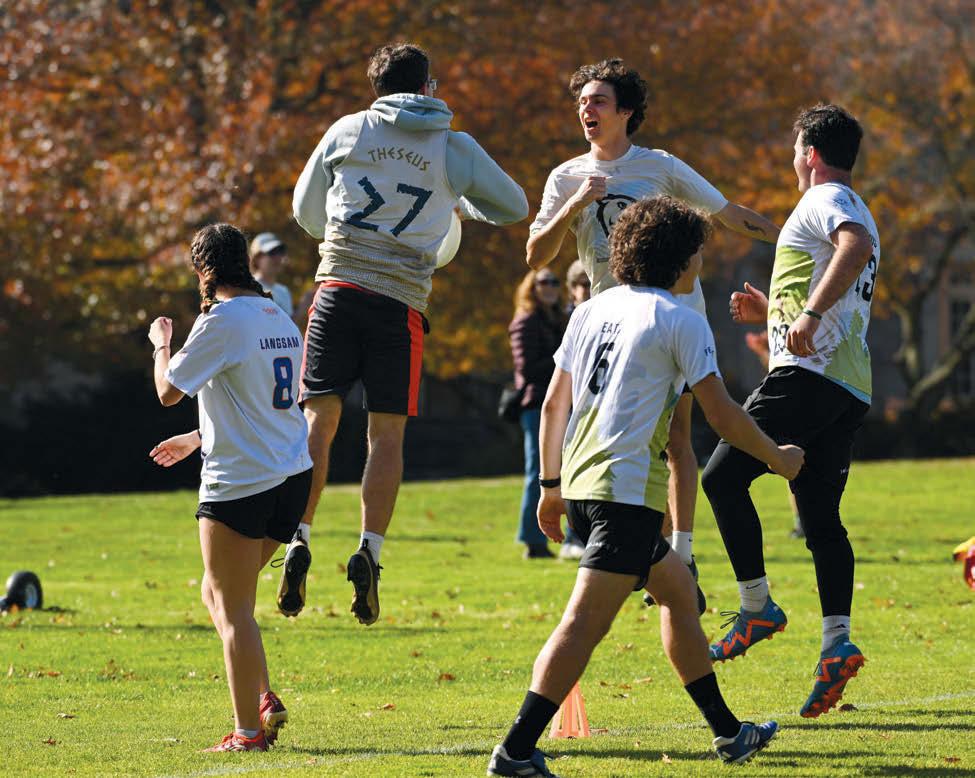
● ● ● ● Ultimate Frisbee (● Captain)
● ● Arbo Project Coordinator
● Connections Ambassador
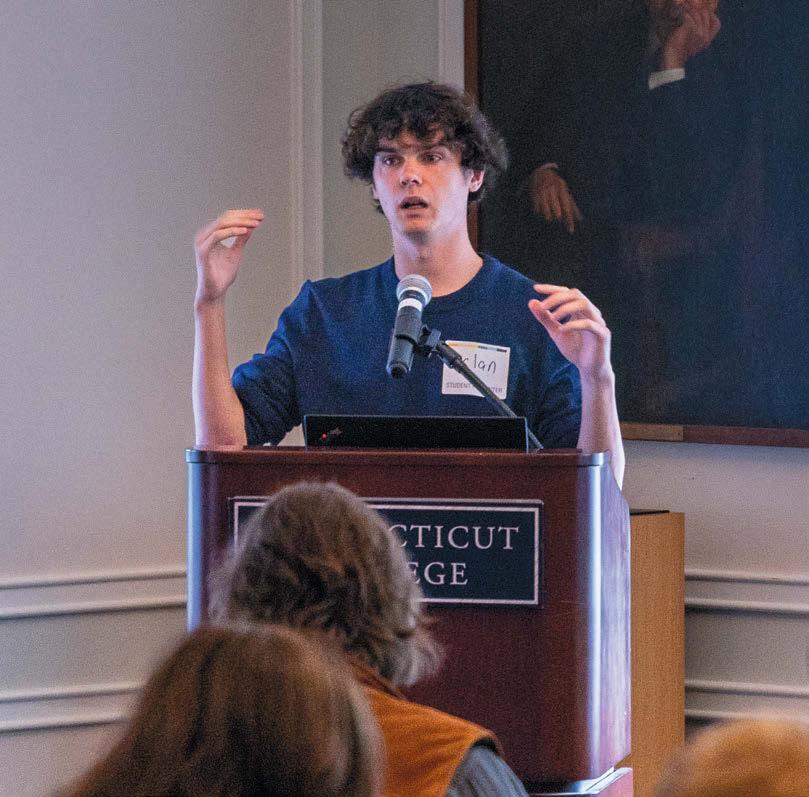
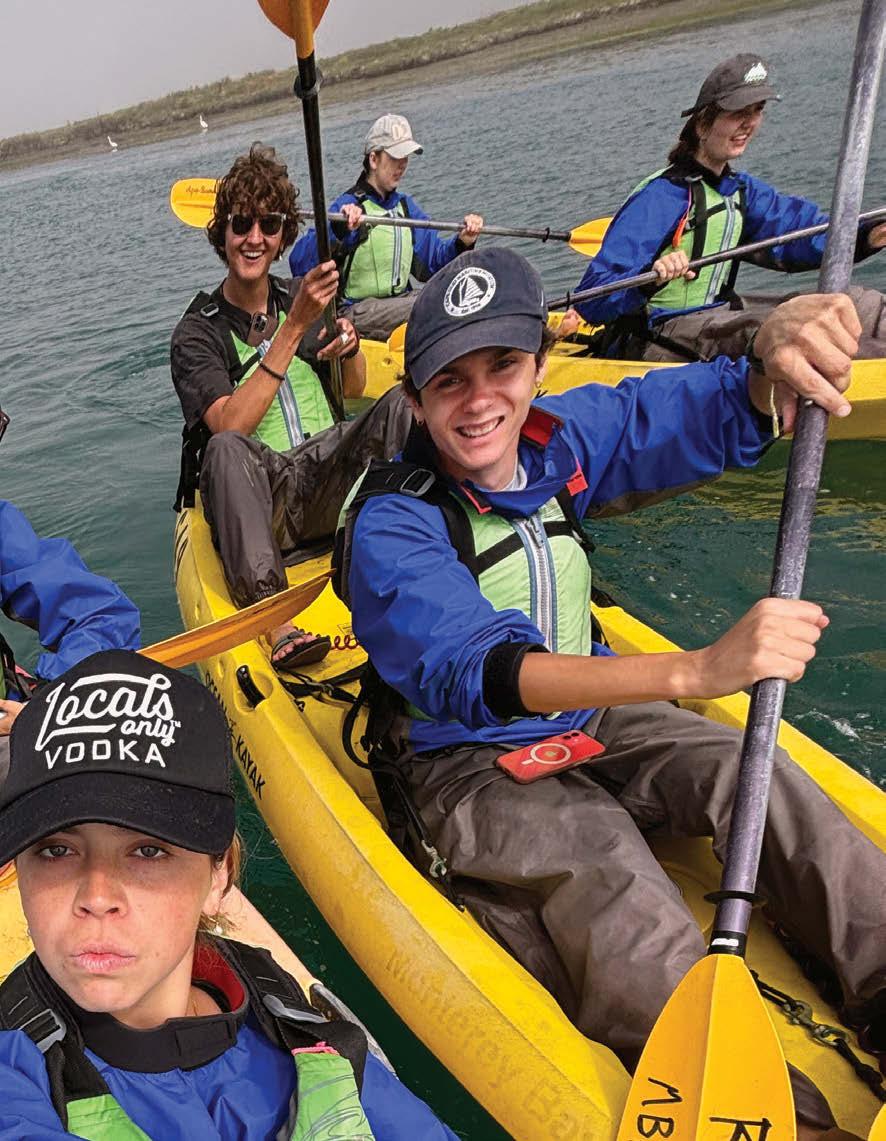
The Ipswich River was named as one of the 10 most endangered rivers in the U.S. in 2021, mainly because of the amount of residential water use by the suburban communities that surround it. I spent the summer leading educational kayak tours. We would discuss the natural environment and the threats the river is facing.
S E N I O R YEAR
● Symposium presentation: Avoiding Day Zero: Water Conservation Education for a Brighter Future
I’ve always been interested in environmental science—the environmental studies program is one of the things that drew me to Conn in the frst place. I’d love to teach environmental science at any level.

Consequential courses:
● Living on a Changing Planet
● Teaching for Social Justice
● Environmental Education
● Environmental education internship at the Ipswich River Watershed Association in Mass.
JUNIORYEA
FUTURE PLANS:
Work in environmental education with plans to become a environmental science teacher
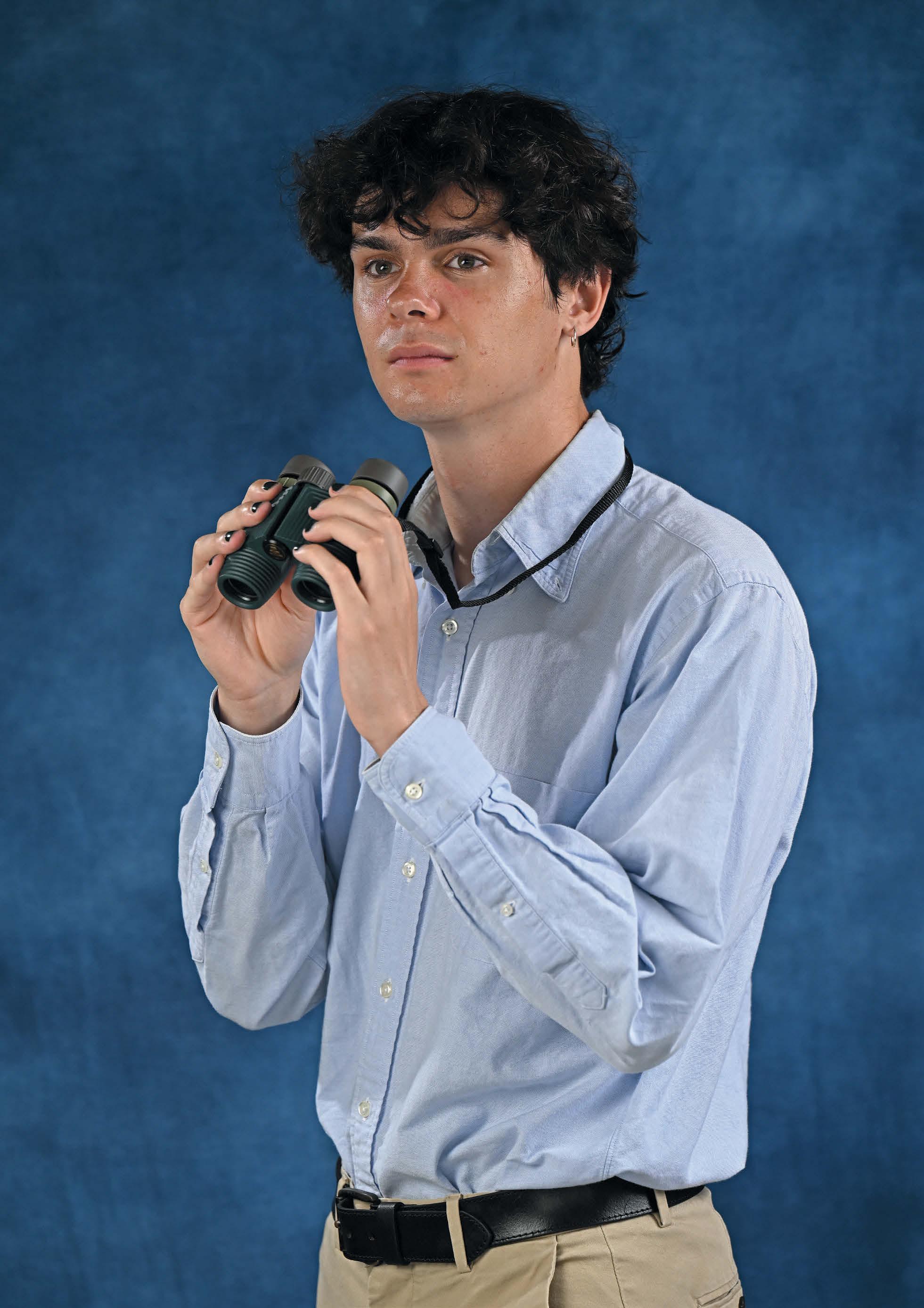
DECLAN HUNTER ’26
Hometown: Fairfeld, Connecticut
Majors: Environmental Studies and Education; Africana Studies minor
Pathway: Social Justice and Sustainability
Integrative interest: How can efective water conservation education produce positive humanitarian and environmental outlooks?

By AM y MARTIN
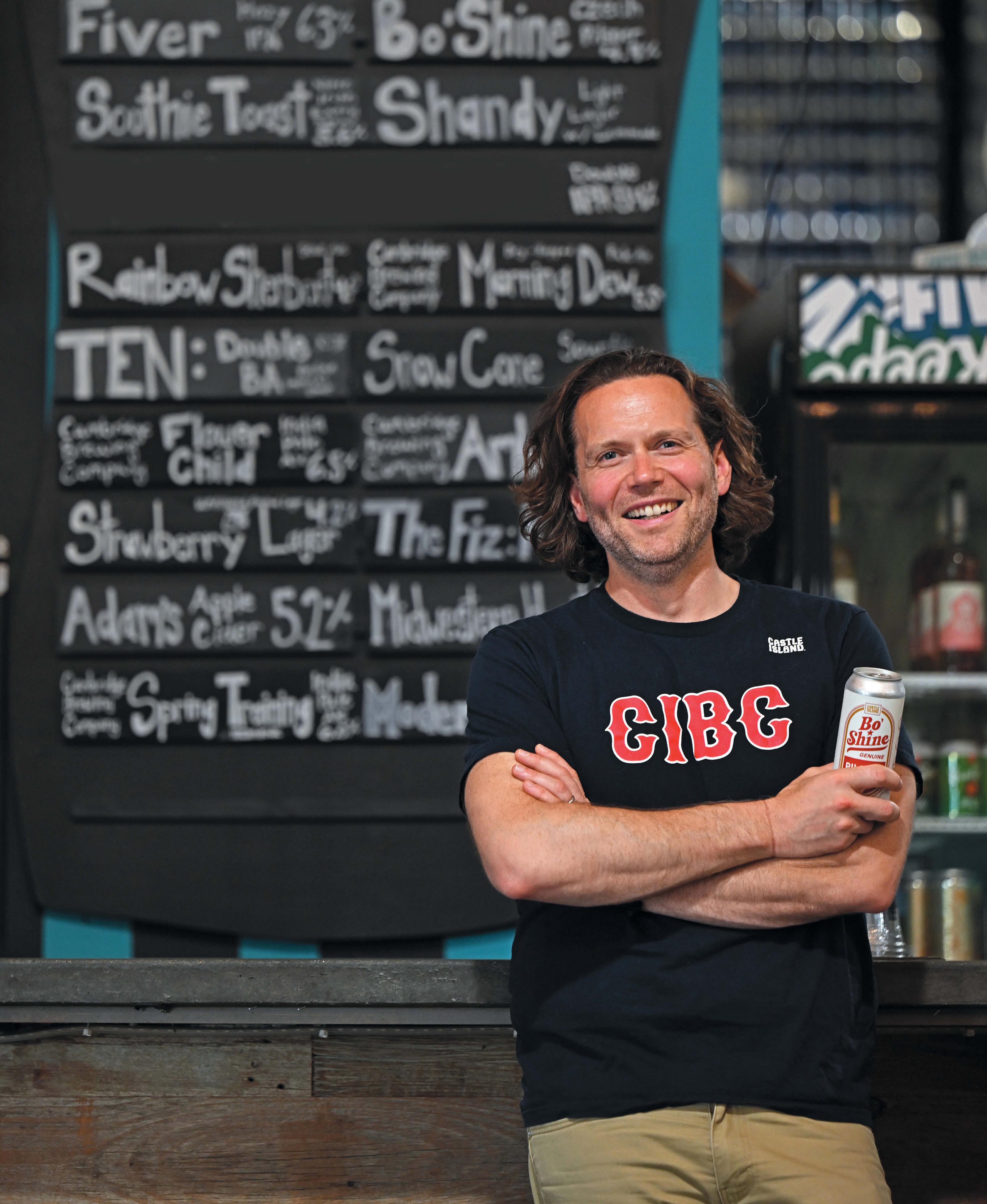
Adam Romanow ’07
Founder and CEO of Castle Island Brewing Company Norwood, Massachusetts
Sean D. Elliot
Adam Romanow ’07 ‘brings people joy’ with award-winning brews
It was 2010, and Adam Romanow ’07 was three and a half years into his career at an executive compensation consulting frm. He didn’t love it.
“We were in the middle of the fnancial and housing crisis, and we were writing $50+ million pay packages for C-suite executives at Fortune 500 frms, while a whole generation was losing their retirement, losing their homes. And I just didn’t want to be part of that system anymore,” he says.
So he quit. An avid home brewer, he decided to take a six-month unpaid apprenticeship at a brewery while he fgured out his next move, which the economics and philosophy major assumed would still be something in business or fnance.
“Day one I was scrubbing and sweeping foors. But by month six, I had created my own recipe under their label, but with my name on it. We had an event at the brewery, and I was handing samples to people and watching them drink this product, and watching these smiles light up on their faces, and I just felt this amazing, visceral, emotional experience of watching my product bring joy into people’s lives. And I said, ‘That’s the feeling I want for the rest of my life.’”
So, in 2013, Romanow set out to open his own brewery. “I had a vision of what I wanted the brand to be,” he says. “There were a lot of breweries opening around that time that were super focused on hype and exclusivity, and that, to me, was very antithetical to beer. Beer is supposed to be the great unifer, an afordable luxury. It’s not supposed to drive people apart. It’s supposed to bring people together.”
it look like? What should it feel like?’ But also, ‘What’s the occasion? Where do we see ourselves drinking this beer?’ And from there, we use our knowledge and a little bit of science to work backward to develop the recipe.”
Romanow and his team aren’t afraid to get creative, and inspiration can come from anywhere. “Within the four walls of our taproom, we can kind of do whatever we want, and at any given time we have some oddball styles on the map. We just kicked the keg of our orange cranberry clove sour, but we have a new one—a strawberry mango sour that was actually inspired by the yogurt that our kids like to eat,” he explains. “It’s such a unique favor combination that you don’t see in the world at the adult level. We thought, ‘Let’s put it in a beer and see what happens.’ We have fun with it.”
And while beer is his business, Romanow says he was originally a “wine guy”—and that has made him a better brewer.
Anyone can make a good beer once— the skill is in making it every single time.
“I did a semester abroad in Barcelona when I was at Conn, and I got super into wine, especially Spanish wines, which I still maintain are the best wines on the planet,” he says. “I’ll frequently draw inspiration from wine and spirits. There’s a lot that they can do in terms of process and technique and ingredients that we can, if not copy, at least take inspiration from on the beer side.”
— ADAM R OMANOW ’07
Castle Island Brewing Co. ofcially opened two years later, and Romanow and his team have been “cranking out awardwinning beers for the Boston area and beyond” ever since. Fan favorites like Keeper IPA and Bo’ Shine pilsner can be found in package stores, restaurants and bars throughout New England, and the brewery has two busy taprooms—one in South Boston and one in Norwood, Massachusetts—where guests can sample creative limited oferings like Rainbow Sherbet sour and 10: SNICKERS Russian imperial stout.
Recipe development is one of Romanow’s favorite parts of the job. “I always say, ‘You’ve got to make a lot of bad beer to make a good beer. And anyone can make a good beer once—the skill is in making it every single time,” he says.
“When we think about recipe development, we always start at the end. We start at, ‘What’s the style we’re looking for, what’s the strength? What should

Running a brewing company is about a lot more than just making good beer, though, and it isn’t for the faint of heart. Romanow advises anyone who is interested to spend lots of time working in the industry to learn not just about production, but also sales, marketing, operations and regulation compliance.
“We’re in the manufacturing business. We’re in the distribution and wholesale business. We’re also in the retail game. There are a lot of moving parts,” he says.
But while the work is challenging, Romanow fnds it extremely rewarding.
“There are very few people in this business who couldn’t make more money and take on less stress in a totally diferent feld, and yet we’re all still here. We’re very motivated by passion, and we all love what we do. We’re there for celebrations. We’re there to lif people’s spirits. We exist to bring people joy,” he says.
“As a philosophy major, I spent a lot of time just thinking about life and what’s important,” he adds. “Conn prepared me, most importantly, for a life where I love what I do.”

Licensed rehabilitators play an important role in mitigating the efects of people on wildlife, include poisonous lawn chemicals, domestic pet attacks and car strikes.
Rose Schweikhart ’04 runs the only brewery in a national park
The natural thermal spring water of Hot Springs, Arkansas, has been attracting visitors—including the likes of Al Capone, Babe Ruth and President Harry Truman—for hundreds of years. People would come from all over to taste the 143-degree water or soak away their ailments in one of eight bathhouses. The springs were so valued that in 1921, the area was declared a national park.
Rose Schweikhart ’04, then a professional tuba player and homebrew hobbyist, frst visited when she moved to the area in 2011. And while millions had come before her, Schweikhart was the frst to try the famous water and ask: Could I make this into beer?
“I thought, ‘What are the chances I could open a brewery here?’ So I reached out to the National Park Service and just sent this insane email that said, ‘Hi, my name is Rose, and I’m wondering if it’s possible to make beer with your water.’ And a couple hours later, I got a response, ‘Yes, it is possible.’”
Afer two years of negotiations and careful planning—“I am manufacturing alcohol on federal property,” Schweikhart points out—she signed a 55-year lease on a historic 1916 bathhouse and began renovations before ofcially opening Superior Bathhouse Brewery, the frst and only brewery in a U.S. national park and the frst and only brewery in the world to use thermal spring water.
all over the world, including, as Schweikhart points out, “people who aren’t familiar with craf beer but just want to try the water in a new way.” The broad selection includes golden ales and lighter pilsners for those who are used to “domestic fzzy yellow beers.” But the more adventurous can sample season selections like Spicy Ride, a medium-bodied jalapeño ale, or Foul Play, a rich oatmeal stout featuring chocolate and tofee favors. Space Force, a hazy IPA made with hints of blood orange and tropical fruits, is a staple favorite. Schweikhart also recommends Superior’s Belgian beers. “We make a Belgian golden ale, a Belgian strong quad, which is about 10% ABV. It’s dark in color with really delicious favors from the Belgian yeast.” The brewery also ofers a full food menu, so guests can pair their selections with delicious fare like a bacon smashburger, a steak sandwich or a sweet potato salad.
Schweikhart says she has learned much over the last 13 years. “I’ve become quite the plumber and electrician and fxer of equipment. Something is always breaking when you have a busy business in a historic building,” she says. Superior now has more than 50 employees, and it continues to grow.
Brewing beer is like making music, and your brewery and your equipment are your instruments.
— ROSE SCHWEIKHART ’04
“Beer is 95% water, so it is the main ingredient,” Schweikhart explains. “If you try diferent spring waters from around the world, you get a diferent favor profle, a diferent mouthfeel. Chemical-wise, our spring water is very similar to the water in the Düsseldorf region of Germany, which is famous for beer-making.”
The spring water is hot enough to kill harmful bacteria— making it naturally potable—and Hot Springs National Park has an enclosed system to collect it from 47 springs, test it for safety and pipe it directly into the bathhouse-turned-brewery. “We turn a valve and 143-degree spring water comes out and we send it right into our brewing vessels,” Schweikhart says. “We have to heat it just a little bit further to 168 degrees for brewing, and the pH is slightly higher than ideal, so we drop the pH by adding a small amount of food-grade acid to each batch. If we are making a very hoppy beer, like a double IPA, we will add some minerals to the water, like sodium, calcium, magnesium and potassium, to get more of that hop character, but for most of our beers, we make very few adjustments to the water. We just pump it in and start making beer.”
At any given time, visitors will fnd 18 diferent beers on tap. Because of its unique location, the brewery attracts guests from
“Being a business owner is really cool because you have this long-term vision, and then you take these incremental steps toward your goals. Now, I look back at what my dreams were 10 years ago, and I’ve been able to check of almost every single one. It’s really satisfying.”
Making beer her business wasn’t always the plan. Schweikhart studied the tuba as a music major at Conn, and she went to graduate school at the Royal Northern College of Music in Manchester, England. “Tuba players like to drink beer, naturally,” she says with a laugh. “I fell in love with the beers around Europe and England, and beer became a hobby of mine.”
She started her career at a university in Illinois, but changed course afer moving to Arkansas with her then-husband and launching the brewery. And while she’s now retired from the tuba, Schweikhart draws strong parallels between music and beermaking.
“Studying music and playing in ensembles really teaches you teamwork. It teaches you how to respond and pay attention in real time to what other people are doing. Music is really a collaborative mathematical process to get to the sounds you want and the way you want the music to end up,” she explains. “Brewing beer is like making music, and your brewery and your equipment are your instruments. The music you create is the beer you are making. There’s an infnite number of ingredients and combinations. It’s an artistic process for sure.”
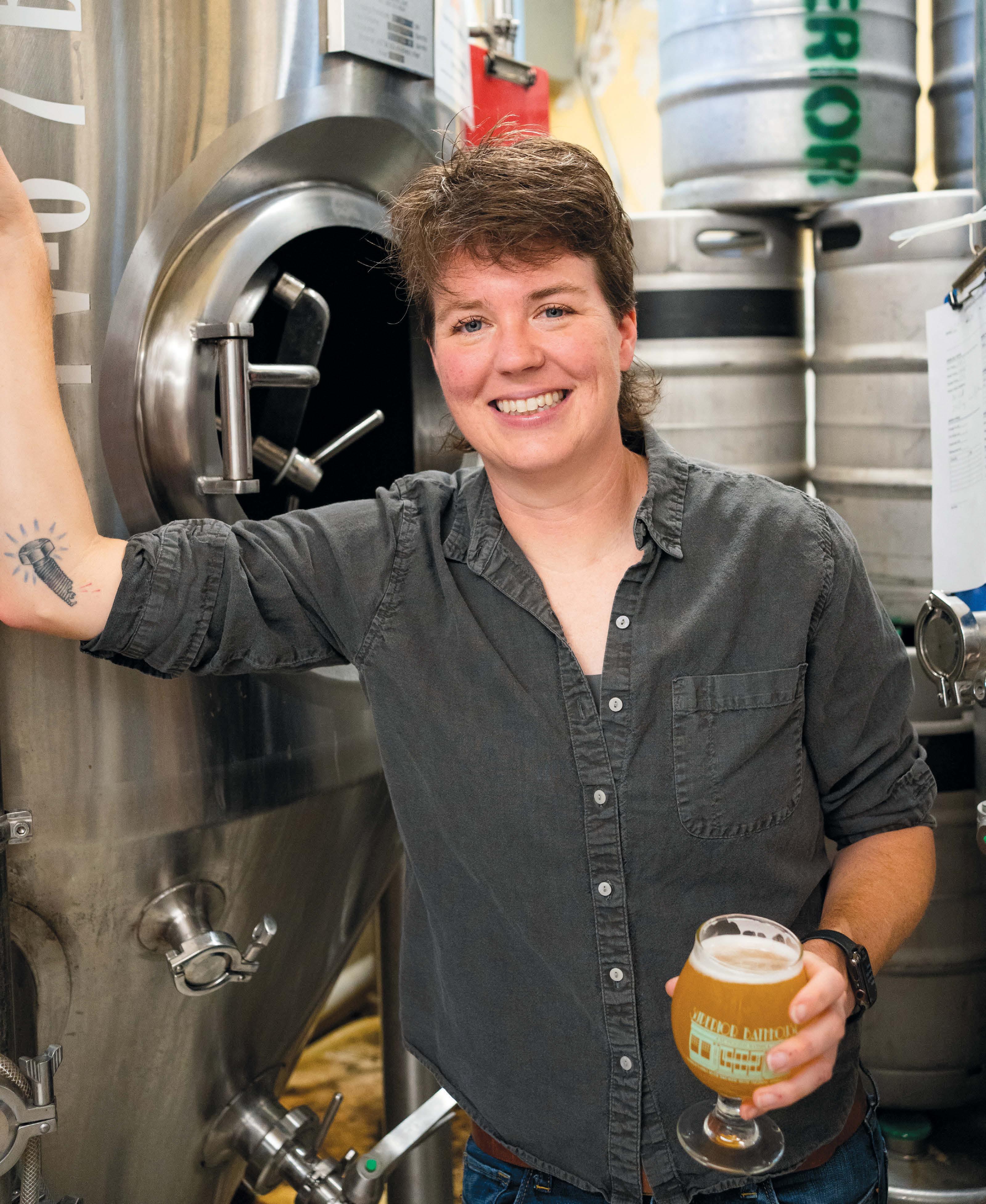
Rose Schweikhart ’04
Owner of Superior Bathhouse Brewery Hot Springs, Arkansas
Photo courtesy of Superior Bathhouse Brewery
If I were to have gone to a major university, I defnitely wouldn’t be in the same position I’m in right now.
— CONOR QUIL TY ’15
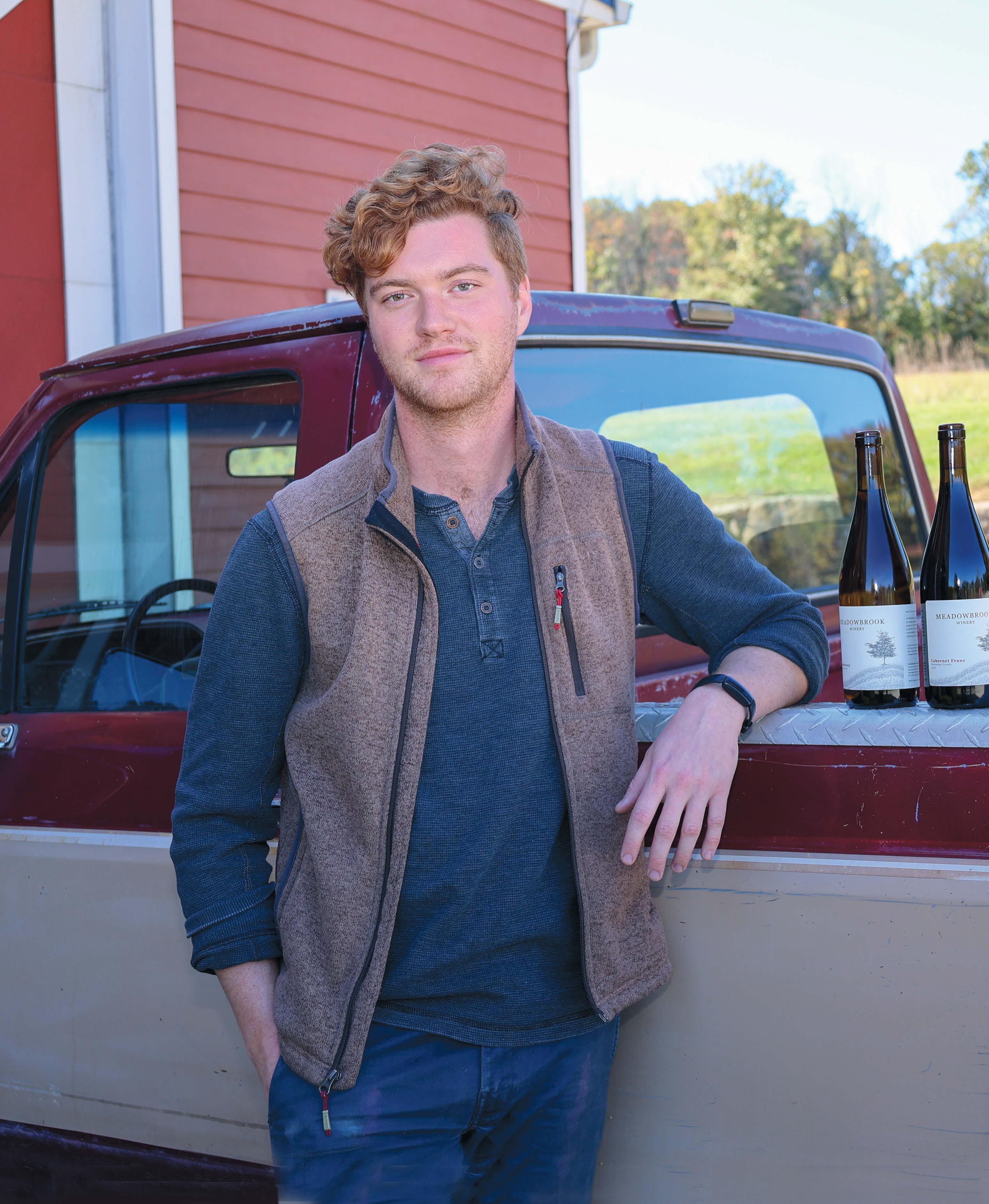
Conor Quilty ’15
General Manager and Winemaker at Meadowbrook Winery Oldwick, New Jersey
Conor Quilty ’15 is putting New Jersey on the viticultural map

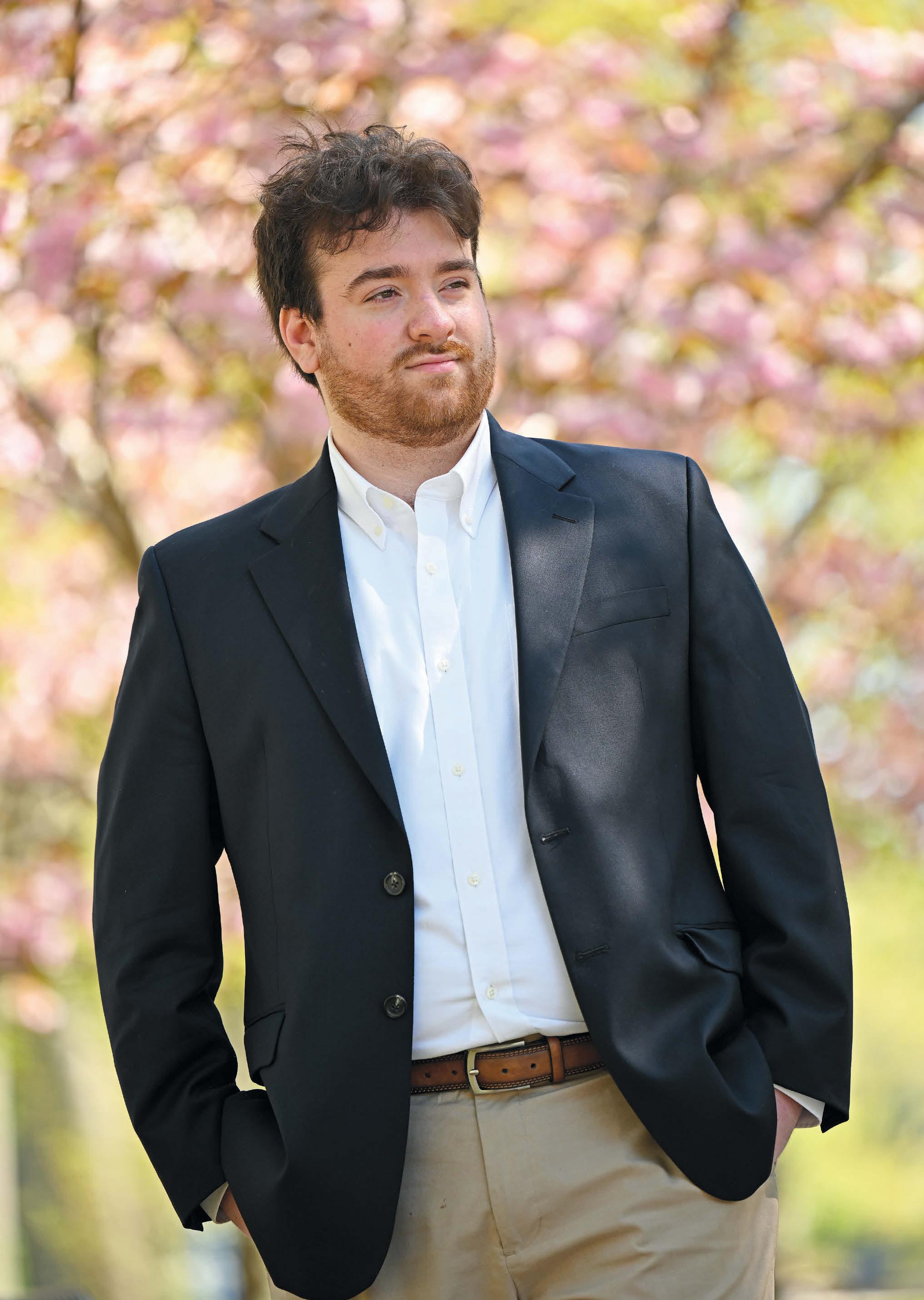
Winemaker Conor Quilty ’15 couldn’t have asked for a better start to his career. Afer graduating from Conn with a degree in botany, he spent two years learning his trade in California and Australia. Then he got a full-time position under the outgoing winemaker at well-established Unionville Vineyards in Ringoes, New Jersey. Very shortly, he was promoted to lead winemaker, making him “almost certainly” the youngest head winemaker at any vineyard in the country.
He quickly made a name for himself in the burgeoning New Jersey wine scene. “Unionville had a great portfolio, and it was fun to be able to experiment and to learn the region,” Quilty says. “I always say that if you can make good wine on the East Coast, you could make good wine anywhere, because it’s a lot harder here than in the Mediterranean desert-like climates.”
Quilty could have coasted in the job he says he essentially lucked into, but more serendipity was on the way. At a Unionville tasting in early 2020, he met Frank Schwab, who had a large swath of land in northern New Jersey and was hoping to start his own winery. The two got to talking, and Schwab invited Quilty to visit his 170-acre property and serve as a boots-on-theground consultant.
“He had this concept where he wanted his winery to be high touch and experience based, and he wanted it to be about a real appreciation for the land. We met when the vines were about a year old, so he was just getting started. We had a really nice rapport and a similar mindset, and he ofered to have me come in and take over as general manager and basically start everything from scratch,” Quilty says.
It was certainly a risk, and while Quilty was clearly a talented winemaker, there was so much more to building an entire winery from the ground up that he didn’t know. But with the encouragement of his wife, Amanda Quilty ’18—and the bravado of youth—he took the leap in March of 2021.
“I was young enough that I was still cocky, like, ‘I got this. What’s there to learn?’ It’s so funny to look back on now. I had no idea how much I didn’t know about the business side or even how much more I could learn about growing and winemaking,” he says.
Quilty proved a quick study, and Schwab had laid a great foundation based on meticulous research into which grapes and wine styles would be the best ft for his land.
“We came into the project knowing we wanted to be very focused, to grow fve varieties and make 10 wines we can make every single year. Our vineyard is designed so if we have a hurricane in September, I can still put out a production for the year. It’s about growing the right things and understanding how you’re growing them to make the styles of wine you are
trying to make,” Quilty explains. “A lot of the work is done in the vineyard, and I try not to do too much in the cellar besides some stylistic techniques and working with the vessels that lend themselves well to the styles we are making.”
By 2023, Quilty had begun building Meadowbrook’s portfolio, and the winery got quite the introduction to the Garden State wine scene when his 2022 Reserve Cabernet Franc won the 2024 Governor’s Cup for the Best Red Vinifera Wine. “It was great to get some recognition right of the bat,” Quilty says.
Now, wine enthusiasts can visit the winery—the closest farm winery to New York City—and sample Quilty’s creations in the newly constructed tasting room, which boasts sweeping views of the vines and rolling hills of Hunterdon County and ofers guests a premium tasting experience. The wines, all served by certifed sommeliers, are paired with local fares like cheese and sourdough.
Among Meadowbrook’s portfolio is an Albariño, a white variety with notes of peach, apricot and passionfruit coupled with bright acidity. “Albariño is typically grown in the Rías Baixas region of Spain. It’s a really cool variety and people really respond to it. It’s our bestselling wine in the tasting room because it’s not something you usually see, especially in New Jersey.”
One of the newest oferings is their Blanc de Blancs, a traditional method sparkling wine. “Frank is a big champagne guy, and he thought that because it gets so cool here, we could probably grow champagne grapes, so those were some of our frst plantings,” Quilty says. “I didn’t have a lot of experience in the traditional method of sparkling winemaking, so it’s been awesome learning about diferent blends and diferent techniques and what we can do.”
Quilty, who initially came to Conn planning to pursue a premed track, credits the Botany Department with helping him fnd his true passion, and says it was his broad liberal arts education set him up for success at a very young age.
“I was so excited to learn what I was learning—I thought every single botany class was just the greatest thing ever. I also had an English literature minor and I studied environmental science and anthropology. In my line of work, I use my writing and critical thinking skills almost as ofen as I use the botany part of my education,” he says. “I know if I were to have gone to a major university and gotten a Bachelor of Science in plant biology, I defnitely wouldn’t be in the same position I’m in right now.”
And Quilty is exactly where he wants to be. “It’s been so rewarding to see what we’ve been able to build at Meadowbrook. It’s a great time to be in the wine industry, and I’m excited to see how much more we can do.”

Ayla Bystrom-Williams ’07 positions hard kombucha to be the next big thing
yla Bystrom-Williams ’07 had a bold idea. A craf beer lover from her days in New England, she had moved west, gotten into yoga and was looking for a drink that would better ft her new lifestyle. A friend introduced her to kombucha, a fermented, fzzy, teabased drink that traditionally contains trace amounts of alcohol.
It was the mid-2010s, and the beverage market was shifing. Younger drinkers especially were looking for lower-alcohol options and functional beverages, which provide some beneft to the imbiber. A hard kombucha would be perfect, BystromWilliams thought, and she launched Honeymoon Brewing Co. in 2014.
But producing alcoholic kombucha at a commercial level would be tricky—no one had been able to bring such a product to the market before. So Bystrom-Williams, who was now living in her native New Mexico, turned to the Los Alamos National Laboratory for help.
“We have access to world-class scientists with this rare technical resource that happens to be in New Mexico. The labs are mostly known for weapons defense work, but they also have a technical assistance program,” Bystrom-Williams says. “I reached out and got partnered with a bioorganic chemist who happens to love beer brewing.”
Over the next several years, Bystrom-Williams and her partner, James Hill, worked together to develop a two-part, teabased fermentation process to brew gluten-free kombucha with 4.8-5.5% ABV.
“Kombucha is really fascinating, because it’s an aerobic fermentation,” a process that uses oxygen, usually in an openair environment, Bystrom-Williams explains. “So you have this unique environment where you get all of these organic acids and probiotic profles that make it more of a functional beverage. But then to do the alcohol component was the trick for us. Figuring out a way to execute it took a lot of trial and error.”
In 2016, Honeymoon Brewing won a $220,000 prize from Miller Lite’s Tap The Future competition to scale up production, and the team opened a taproom in Santa Fe in 2018. The seven diferent favors included bestseller Cereza Negra, a dark cherry with a juicy tannic backbone that would go on to win the silver medal at the 2023 World Kombucha Awards in Barcelona; La Moneda, featuring grapefruit, Himalayan salt and lime; and Flor, which has tart hibiscus made with an extra steeping process. Soon, the products were fying of the shelves at New Mexico Whole Foods and other local retailers.
In the meantime, Bystrom-Williams and Hill applied for a patent for their unique brewing system.
“Patents are pretty unusual in the beverage industry, because the processes, even for kombucha, are ofen thousands of years old, so they’re well known and not proprietary,” Bystrom-
Williams says. “We thought what we were working on was unique enough, but we didn’t really expect to get a patent.”
By 2023, Honeymoon was maxed out on production. “We were selling every drop we could make, and our next move was to either expand manufacturing in a small market like New Mexico or partner with a much larger company to comanufacture.”
As Bystrom-Williams explored those options, she made the difcult decision to close the taproom. And then, on July 15, 2025, she got the news that would change everything: The United States Patent and Trademark Ofce had ofcially awarded her patent number US 12,359,149 B2 for the systemlevel brewing method to produce kombucha-based alcohol with consistency, integrity and favor.
With the patent in hand, the newly renamed Honeymoon Beverage Co. is working with companies both large and small to license the proprietary technology and bring its award-winning brews to new shelves and audiences.
“It’s quite exciting, because it changes our whole business model,” says Bystrom-Williams, who earned an MBA from American University last year and is also serving as a consultant for other beverage startups.
“I just love this feld and I love talking to other entrepreneurs in the beverage space,” she says. “I studied sociology, and Connecticut College gave me this exceptional education and way of deeply thinking about the world, and one of the things I’ve realized is that fermentation and alcohol have a such a long history with humans. There’s this inherent relationship stemming perhaps originally from our need for access to easy calories, and then there’s the concept of almost needing a psychological state change just to survive being human. Alcohol is really a fundamental lens through which you can look at humanity.”
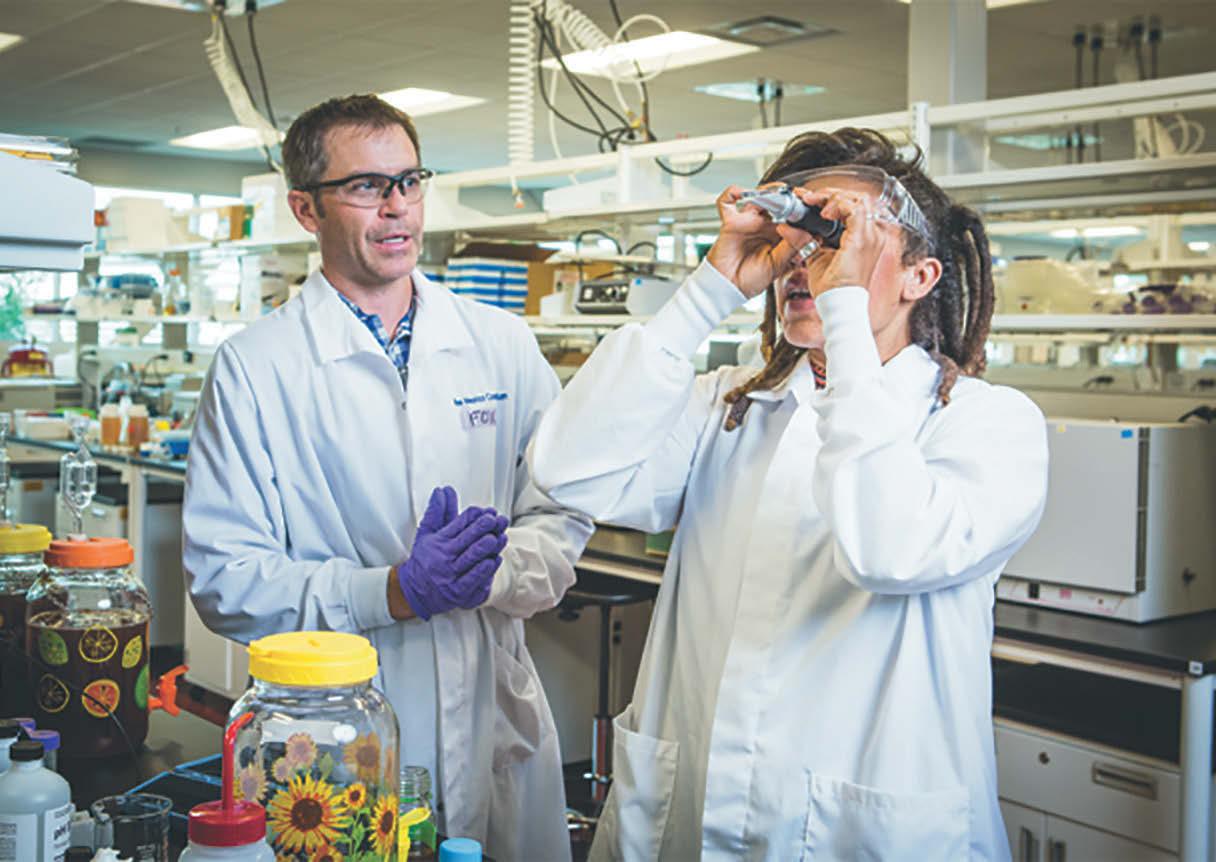
Ayla Bystrom-Williams ’07, right, developed a patent-protected process for brewing hard kombucha.
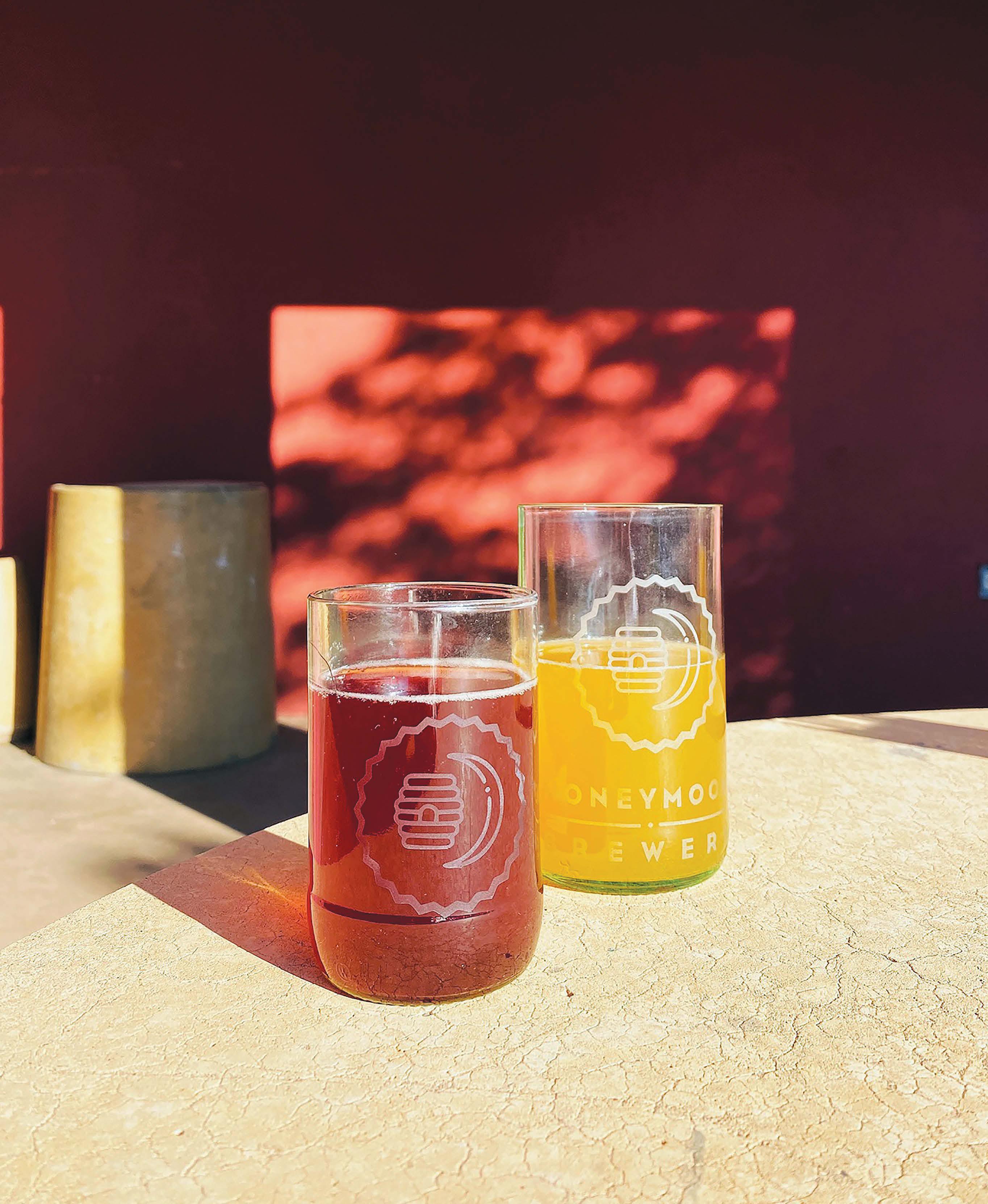
Patents are pretty unusual in the beverage industry, because the processes, even for kombucha, are often thousands of years old.
— AYLA B YSTROM-WILLIAMS ’07
Ayla Bystrom-Williams ’07
Founder and CEO of Honeymoon Beverage Company Santa Fe, New Mexico
Courtesy of Ayla Bystrom-Williams ’07, Honeymoon Beverage Co.
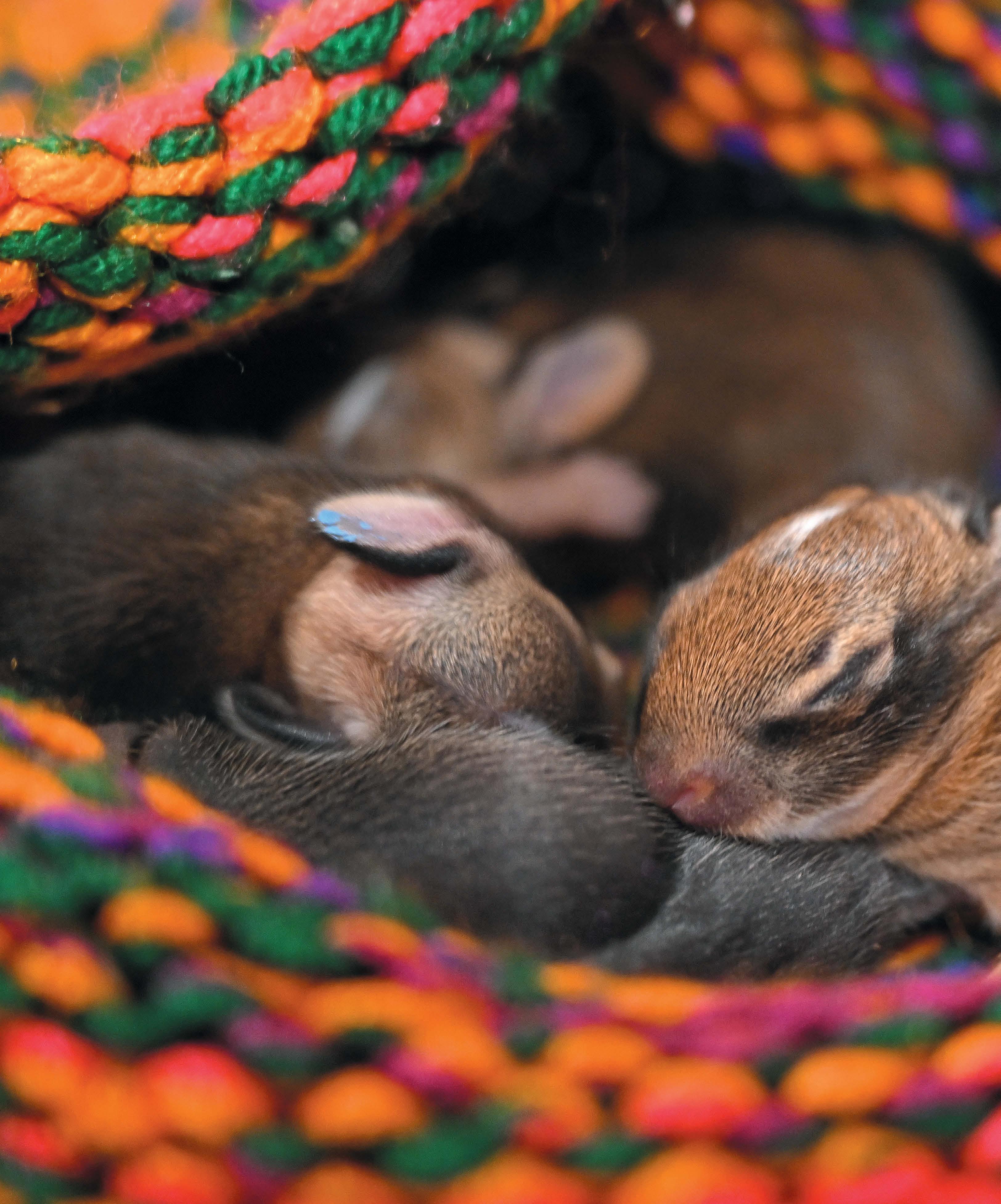
Patty Reilly ’75 rehabilitates orphaned and injured bunnies and teaches others how to help wildlife.
Sean D. Elliot
DOWN THE RABBIT HOLE
By Melissa Ba B cock Johnson
t’s a sunny afernoon in early May and Patty Reilly ’75 is in her living room in Marshfeld, Massachusetts, when her cell phone rings. It’s the town animal control ofcer.
“Hi, how are you doing?” Reilly says by way of casual greeting, already fairly certain of the reason for the call. Sure enough, the ofcer sounds urgent on the other end of the line. “Eyes open or eyes closed?” Reilly asks. “That sounds good,” she says afer a beat, before hanging up.
“Four more bunnies are coming, and they’re healthy,” Reilly explains. “Their mother just got killed right next to the nest.”
The bunnies are a week old and will join the fve already being cared for in Reilly’s nonproft wildlife rescue, North River Wildlife Rehabilitation, Inc. Before the ACO arrives about 20 minutes later, Reilly will have a fresh cage and an intake form ready for her tiny new guests. A remodeled and insulated shed next to her house is fully equipped with cages, food, water bowls and other supplies, including a microscope Reilly uses to check rabbit droppings for diseases. The setup amounts to an impressive rehab center for wounded and orphaned cottontail rabbits.
She even stocks medicine, including antibiotics and pain medications, for injured rabbits that enter her care. “Amazingly, raw honey, especially Manuka honey native to New Zealand, is ofen used on wounds since it has both antibacterial and anti-infammation properties,” Reilly notes. She also has her own experts at the ready. “For more serious injuries, I consult with my veterinarian of record for X-rays and decisions about possible outcomes.”
It took a lot for Reilly to get here. While living in Connecticut, she earned her state license afer working at Wildlife Umbrella, a private wildlife station where she completed the required animal-care training. “I learned a lot about how to deal with a whole bunch of diferent animals, and started to take in squirrels and raccoons and rabbits. I did that for about 20 years.”
animals in need and works to advocate for their well-being. Members who are licensed in wildlife rehab take in a variety of creatures, including birds, turtles, possums, deer—just about any animal in need.
Licensed rehabilitators play an important role in mitigating the efects of people on wildlife, Reilly explains. “Humans cause a lot of trauma. Nature does not include car strikes, dogs digging out nests, poisonous chemicals on lawns, bait boxes and cat attacks. All these species have a special place in the food chain and ecosystem. Making sure that they can maintain their presence and balance in nature is really important.”
Part of educating the public involves driving home the fact that injured and orphaned wild animals must be handled with care and handed over to a professional as soon as possible. “They need help very quickly—not two days later—especially little animals,” Reilly says. Not to mention, their diets are very diferent than those of your cat, dog or hamster.
“It’s difcult to understand nutritional needs for wild animals,” Reilly explains. “The formulas are carefully balanced so that they are getting the right food. If that doesn’t happen, animals can get metabolic bone diseases that cause abnormal development. My rabbits are fed formula that comes from Australia and is specifcally formulated for them.”
These are wild animals and should not be caged for life or trained to be domestic.
— PA TTY REILLY ’75
Then she moved to Massachusetts, where she studied at New England Wildlife Hospital, earned that state license, passed her inspection and had to pick a favorite. “At frst, I was taking in squirrels and rabbits here out in the shed. The squirrels were a lot of fun, but they were so noisy that they drove the rabbits crazy,” Reilly recalls. “I really only had room for one type of animal, and I decided on bunnies. I’ve been rehabbing them here for about seven years.”
In 2025, Reilly was elected president of the 475-member nonproft Wildlife Rehabilitators Association of Massachusetts afer serving as vice president of the organization for four years. “I originally joined the group years ago just to help out with the newsletter, and then realized I loved their whole goal,” she said of her initially unexpected rise through the ranks. WRAM educates its members and the public about how to help wild
And if someone who isn’t trained tries to feed a baby animal, it can aspirate fuids into its lungs. “This happens all the time and the animals get pneumonia and die, so we always tell people to call a wildlife rehabber as soon as possible.”
In most states, it’s also illegal for the average citizen to care for or keep a wild animal as a pet. “We’re always so grateful that there are so many people who want to help, and they have really good intentions,” Reilly says. “But these animals are the property of the state and not the citizens.”
That adorable baby squirrel you found is no candidate for a pet anyway, Reilly warns. “These are wild animals and should not be caged for life or trained to be domestic. Many species start out as cute babies but as they get older, they become more aggressive and difcult, and once that happens it’s usually too late for the animal to return to the wild. It has imprinted on humans and cannot fnd food for itself.”
THE BUNNY WHISPERER
In many ways, Reilly is perfect for WRAM’s mission. Afer attending high school in New Haven during the civil unrest of the late 1960s and early 1970s, the science-minded student came to Connecticut College in 1971 and majored in zoology. “Conn really just was the other side of the universe from where I came from. It was quiet and beautiful and had great classes. I really loved it,” she said.
“We had one professor, Dr. John Kent, who taught six of us in ‘Cell Biology’ how to use an electron microscope. I can’t believe he allowed us to touch it. It was such a huge expense for the College, and he trusted us that we wouldn’t break it. I’ve always been a very visual person, so looking in an electron microscope was just incredible. Knowing how to use one helped me get jobs.”
Afer fipping her tassel on Tempel Green in May of 1975, Reilly began her career as a research scientist. She studied immunology at Yale and Harvard medical schools and at Boehringer Ingelheim Pharmaceuticals, an R&D and manufacturing company that develops medicine for humans and animals.
I graduated in 1975 and everybody was busy being hippies and stuf.
— PA TTY REILLY ’75
While there, she established a science program for fourth and ffh graders, arranging frst-hand science experience and classroom visits from real scientists. Before she retired in 2022, she worked as a research analyst, building databases to track cell and gene therapies for a company that tracks worldwide clinical trials and drug development.
The WRAM president was also no stranger to politics. While still in Connecticut, Reilly was elected chair of the Town Council of Watertown and ran for state representative of her district. And she’s been president of Conn’s Class of 1975 for almost 20 years, another role she says fell in her lap. “I graduated in 1975 and everybody was busy being hippies and stuf,” she said with a laugh. “Nobody really wanted the job. Afer our last president resigned, a few people contacted me and suggested I become the next one.”
Her varied leadership experience has given her a strong voice to advocate for animals, including working to ban certain types of animal repellent. “First- and second-generation rodenticides work,” she says. “They kill the rodents but the rodents die outside, and then other things eat the rodents and then they die. We have a really big problem in Massachusetts with raptors such as owls, foxes and coyotes sufering from rodenticide poisoning, and they die horrible deaths. They basically bleed to death because it’s a blood thinner. It is very important to release healthy animals back into the wild that are free of pesticides so that no poisons move up the food chain.”
WRAM has joined forces with several groups, including Mass Audubon, to urge the state legislature to ban these poisons. “So far it’s moving along, but the lobby for animal trappers and others who use those is pretty strong, and they have deep pockets.”
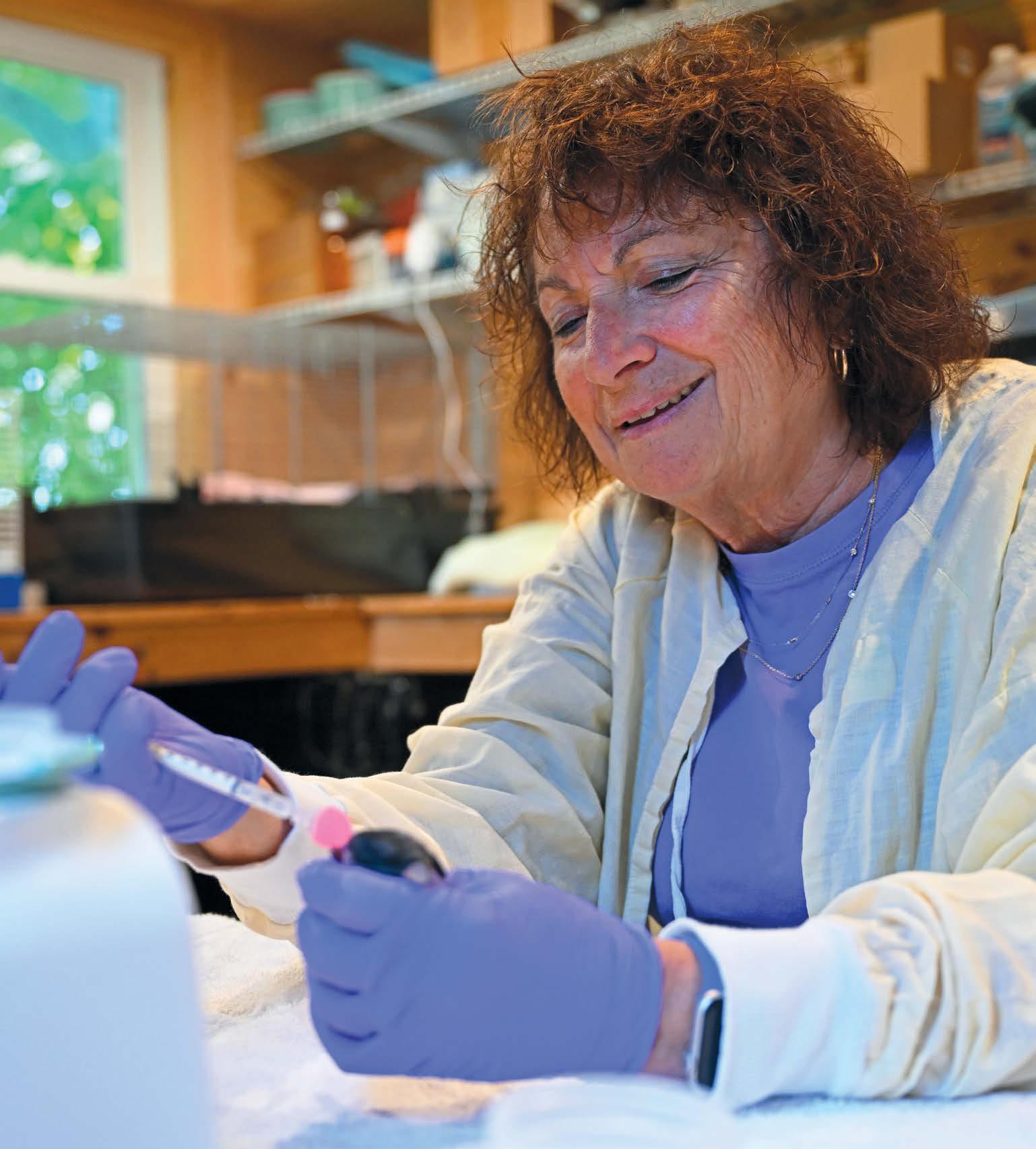
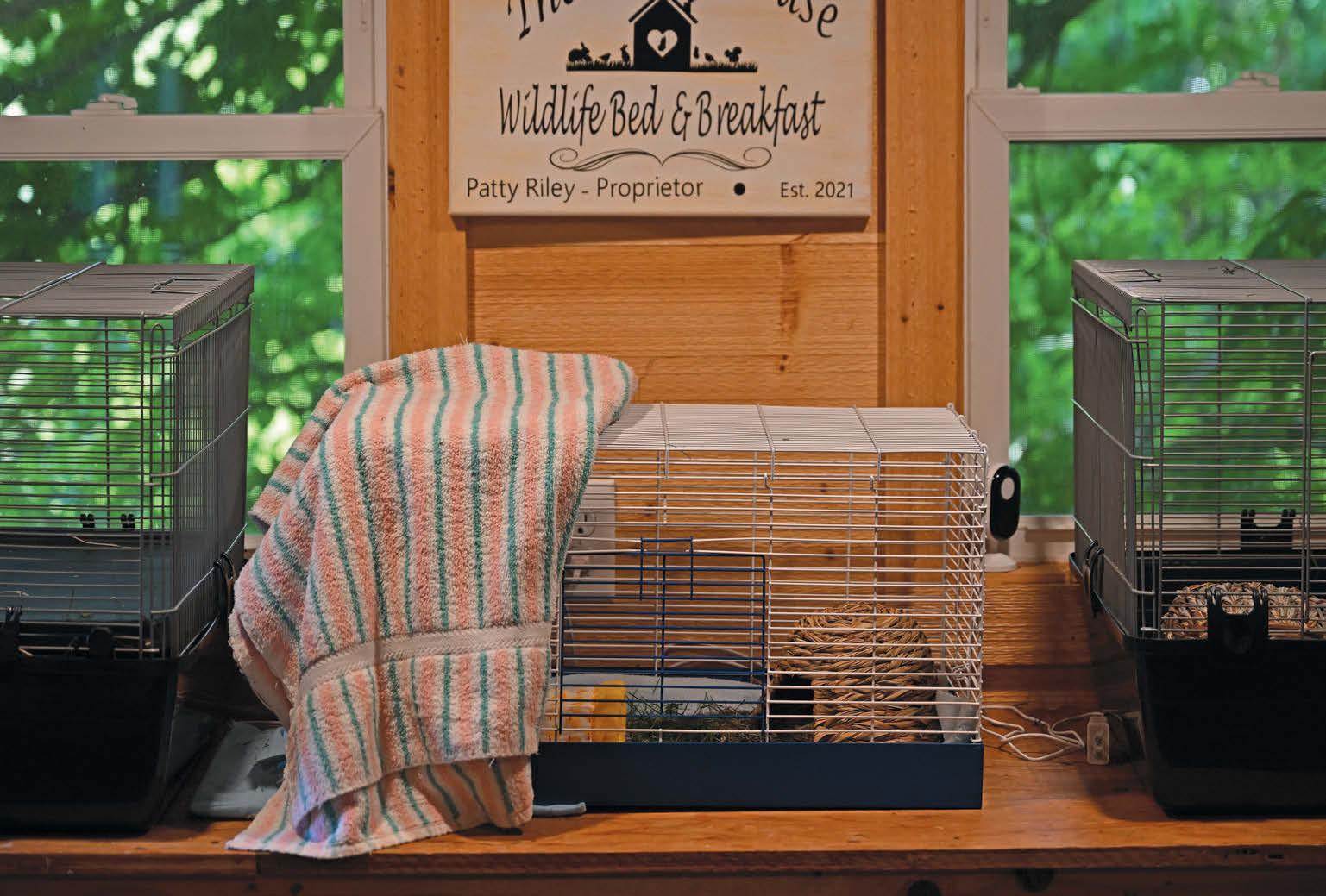
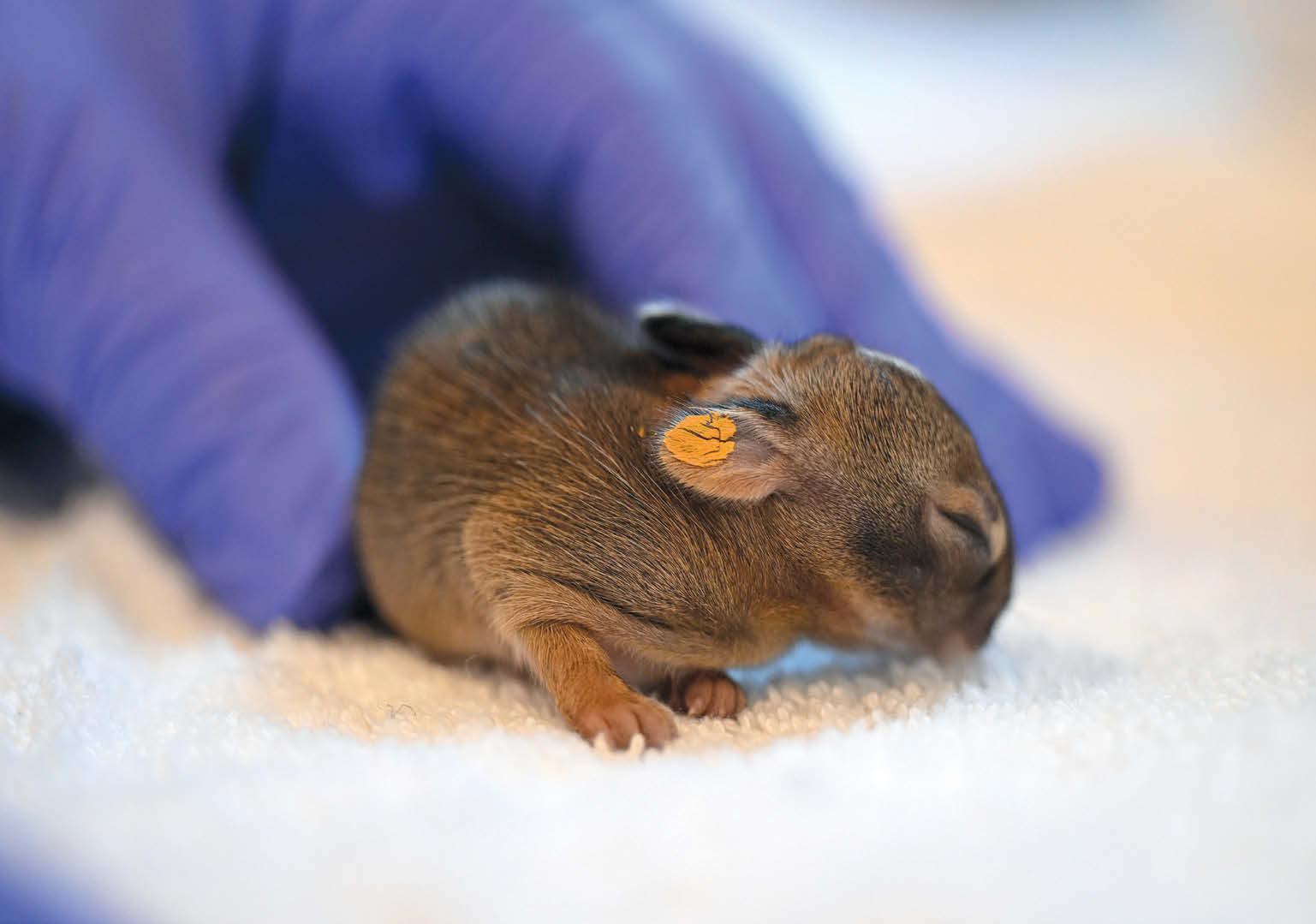
Photos by Sean D. Elliot
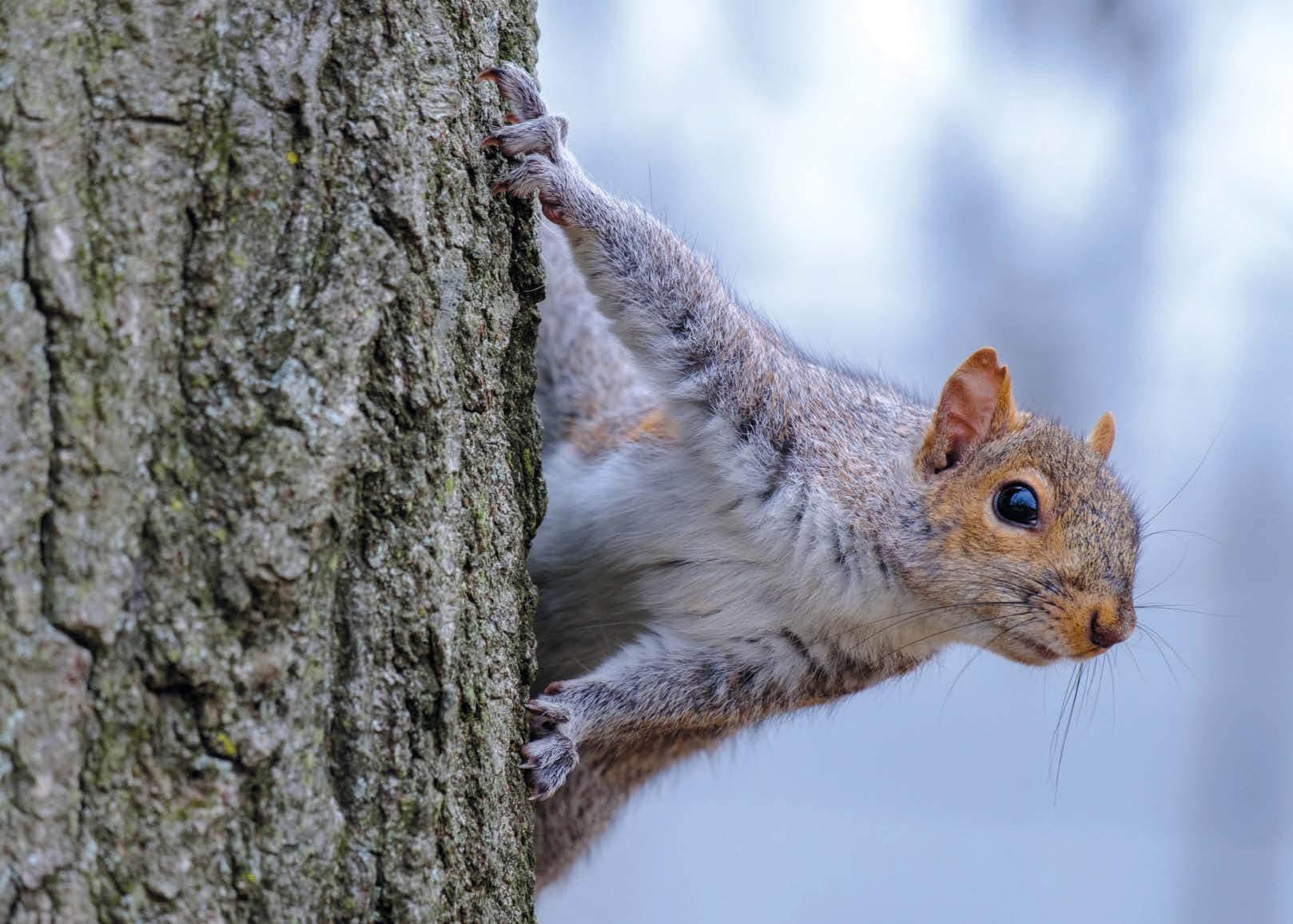
What to Do If You Find a Sick or Injured Non-Carnivorous Animal
(Do not attempt to rescue a carnivorous animal yourself— call a trained professional right away!)
1. Protect yourself. Wear a thick pair of gloves and a thick jacket to avoid being bitten, licked or scratched.
2. Prepare a container. Have a sturdy box with a lid, like a garbage can, recycling bin or thick plastic container, or animal carrier ready to contain the animal. Make sure the box has air holes in the lid.
3. Capture the animal. Place a thick towel over it, pick it up and place it immediately in the box with a secure lid. (If you are trying to capture a porcupine, do NOT use a towel. Use a board or other sturdy object to slowly herd the porcupine into the container.)
4. If you cannot transport the animal right away:
■ Keep the animal in a warm, dark and quiet place.
■ Do not give it food or water.
■ If the animal is cold, keep it warm by putting one end of the container on a towel over a heating pad set on low. If you don’t have a heating pad, you can use microwaveable heat bags or a bottle flled with hot water placed inside the box.
■ Do not handle the animal. Leave the animal alone.
■ Keep children and pets away.
5. Transport the animal to a licensed wildlife rehabilitator. For further assistance on where and how to transport, call your town’s animal control ofcer or fnd a local wildlife rehabilitator on your state’s website. During transport, keep the car quiet with the radio of.
*Adapted from Tufts University’s Cummings School of Veterinary Medicine
They don’t want to be near me, which is good! I want them to hate me.
— PA TTY REILLY ’75
RELEASE DAY
When we met in early May, Reilly had already rehabbed and released 13 bunnies this season, and by the end of the day, she’d have nine more in her care. “The litters seem to come in waves,” Reilly remarked later. “The newest ones are all the same age, which is helpful because they can all live together. They are all doing well and are very frisky.”
Rabbits are most active at dawn and dusk, so baby bunnies eat once in the morning and once at night. In the wild, mothers only visit the nest briefy to feed before quickly leaving to avoid attracting the attention of predators. “Baby bunnies have no scent so that predators can’t detect them,” Reilly explains, “so nests cannot be moved because the mother would not be able to fnd them.”
To prevent the bunnies from getting too used to humans, Reilly, like a mother rabbit, only visits her bunny shed in the morning and evening, and keeps a quiet environment for the babies. “Rabbits are very fragile,” she cautions. “They can literally scare themselves to death—it’s called ‘capture myopathy’ and it causes all their organs to shut down. So I am very careful about keeping the bunnies calm and quiet. I am very happy when they run away from me and hide.”
The bunnies are ready to leave when they weigh at least 120 grams, are of formula and are eating greens completely on their own for at least three days. Reilly sends them back into the wild on land trusts and conservation land around the South Shore of Massachusetts, where she knows they’ll be away from people and pets, including her two large dogs. “I can usually tell when it’s time. They start to climb the sides of the cages, and they don’t want to be near me, which is good! I want them to hate me. I want them to be totally independent,” she insists.
“The best day is when I get to release them. But then I worry about them.”
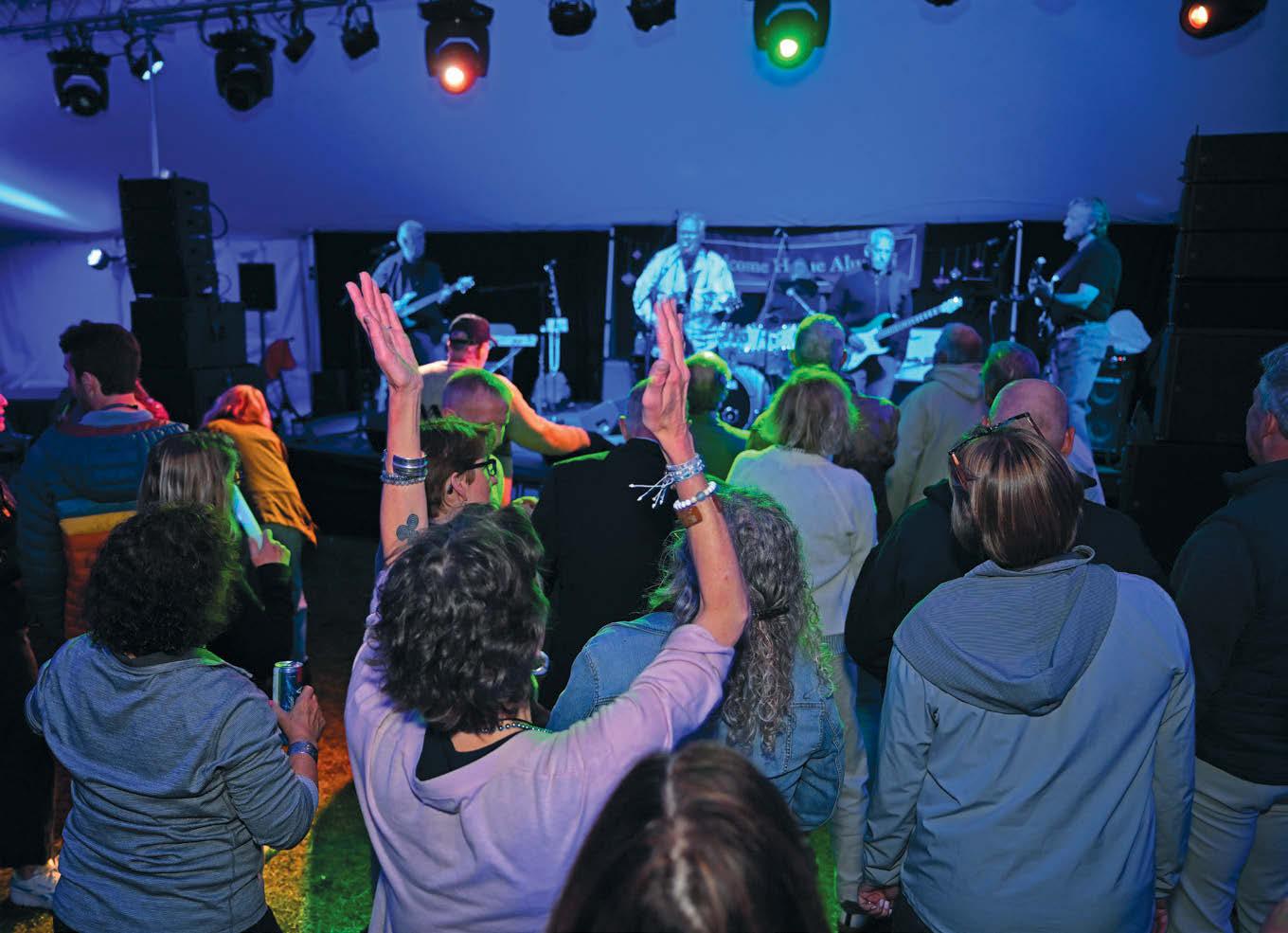
Photos by Sean D. Elliot
CC Magazine welcomes your Class Notes and submissions. Please contact your class correspondent, email notes to classnotes@conncoll.edu or submit Class Notes online at: conncoll.edu/news/cc-magazine
denotes a Reunion class year. The next Reunion is June 4-6, 2027.
Correspondent: Mona Gustafson Afnito, 723 Water St., Apt. 1001, Excelsior, MN 55331, forgivenessoptions@earthlink.net, 612-760-5007 Each issue, I fear we will reach the point where you’ll be reading a monologue about me. But once again, I was overjoyed to hear from classmates proving we are still alive and kicking. Josephine Pelkey Shepard noticed that our class has made it to the top of the alumnae list; she shares that all’s well with her and her family as long as she avoids reading the paper or listening to the news. She fears that her grandchildren and great-grandchildren may grow up in an autocracy if something isn’t done about the frightening administration with which we live. Having a supportive, loving family has been Jo’s bedrock. Her three children are now 69, 71 and 73, and she relishes the joys of grandparenting. The downside is that they live on the opposite side of the country. Being a great-grandmother has been an added joy for her: “These dear children range from 6 months to 6 years old—one boy and four girls! Very precious!” Her daily life is “pretty good, health OK-ish (bad disc at L3),” but she still drives, attending Pilates twice a week. Mabel, her 9-year-old cat, is a devoted companion. Social life is fne. At this point, most of her friends are younger. “That’s important,” she observes, ofering her advice to “cultivate younger friends as you age! Lots of advantages!” And then Jo sent this addendum: “How could I have omitted my dear grandchildren? Oldest is Ben (41!), an artist who lives in various places—Thailand at the present with his husband, Job. Ben’s brother, Sam, lives in Brooklyn with wife Rebecca Distler and their 17-month-old daughter, Sadie. Nick Shepard (41) and wife Maggie have children Ossie (3) and Alida Rae (6 months). Nick’s sister, Annie Shepard, is single and works in advertising in Seattle. Then there’s Talia Gusfeld and husband Scott Schafer and their two daughters, Eliana (6) and Shaina (3). Finally, the youngest is Talia’s sister, Shira, who is single but a devoted aunt.” [Note from Mona: I am delighted to include these details because I’m so impressed with how life has changed since we graduated in 1951. Do you remember Jo’s booklet This Too Shall Pass? Obviously still relevant.] Helen Johnson Haberstroh celebrated her 96th birthday in November with a visit from three generations of her Arizona family. The lower level of her unit was transformed from an art studio to “camping,” with daughter Jessica and her husband, Brion; son Eric; and his 2-year-old daughter, Freya. Air mattresses suffced for bedding. Nonstop movement hither and
yon, up and down, signifed hyperactive humans whose ADHD was documented (and read by the adults) in a recent National Geographic magazine. Brion, Eric and Freya were the genetic examples of a healthy family coping with this neurologically divergent condition. I sat safely in a corner observing the controlled chaos for six days! Happily exhausted.” Helen called Marjorie Erickson Albertson with, “Those were the days, my friend” dancing in her head afer seeing a small photo of their group of eight at CC’s 50th reunion, remembering the good times, starting at Knowlton dorm and moving to East for junior and senior years. “Marge has been well cared for at her retirement home in Vero Beach, FL, for 12 years. Her three children are scattered far and wide: Iowa, Maine and northern Florida. She cheerfully claims, ‘I’m hanging in there!’ relying on talking books for her daily reading. A beloved aide spends 12 hours each day tending to Marge’s needs in the face of being legally blind and walker-dependent. We two are the last of that diverse and wonderful octet, still counting our blessings, aging in place.” And I, Mona Gustafson Afnito, am remembering Phyllis Hofmann Driscoll’s regular contributions to this column; her death on Dec. 28, 2025, will be included in the In Memoriam section of this issue, leaving behind another CC ’51 contribution to the goodness of our world. Personally, I am anticipating future cruises to the Arctic and the Caribbean, and I look forward to the publication in late spring or summer of How Could These Lovely People Have Let it Happen? A Psychologist’s Intimate Journal
54
Correspondent: Joanne Williams Hartley, 69 Chesterton Road, Wellesley, MA 02481, jodihartley69@icloud.com, 617620-9385; Sally Ashkins Churchill, sachurchill@ comcast.net Hi, ladies: I just returned from a visit with Kathryn Hull Easton in Naples, FL. She lost her husband of 62 years, Captain Peter Bigelow Easton. Theirs was a long, beautiful relationship; they had known each other since childhood, children of naval ofcers, or “Navy Juniors.” Peter had a most distinguished career as a naval pilot and ofcer afer the Naval Academy, and although he and Kathy were Navy Air, we remained close friends while my husband was in the Submarine Force post-Academy. Once we retired, we traveled together and remain close to this day. Our freshman year at CC we were assigned to North Cottage; our dorm friend, Janice Smith Post, now lives in the same retirement community in
Florida as Kathy and Peter, and they see each other ofen. Sadly, Cynthia Linton Fleming lost her husband a few months ago. Bob helped create the beautiful facility in Arizona where they have lived for some years; she is very grateful because now there is a long wait-list to get in. She is feeling well and drives a bit; we plan to stay in touch. I was pleased to reach Barbara Popiolek Hayes While she came from New London, she has lived in California for some time. She is recovering from a stroke; her speech has been afected but not her sense of humor—“Have you ever heard of a woman who couldn’t speak?” I gave her warm wishes from us all and will report back in the next issue. Some of us move and don’t think to forward a new phone number or address to the school or to me. If you read this and haven’t gotten a call from me in recent years, please call my number listed above so that I can reach out. Our college years were great, and it is nice to hear about old friends, including you. As I wrote this, Irene Ball Barrack P’81 ’85 GP’18 called. She had a wonderful year, with a family wedding, a new baby, and family for Thanksgiving and Christmas. The new year rolled in; she promptly took a fall in her own kitchen from standing up and got a hairline fracture in her hip. She is healing well afer surgery, but it was a blow to start the new year. She is still in her own home and has the help she needs. Louise Klump Tanner is still in her home, aided by her children, who take turns dropping in on her on weekends. She and her family rent a place for March each year, coming and going as they are able. This spring they planned to head to Palm Springs, CA, for the month, looking forward to leaving the snow behind for a few weeks.
Correspondent: Elaine Diamond Berman, 100 Riverside Blvd., Apt. 20C, New York, NY 10069, elainedberman@ comcast.net Judy Hartt Acker, one of our most active class members, passed away Feb. 6. She served as class president and reunion chair numerous times. A funeral service was held for her at
Three Conn alums! Mary Waterman Harris ’56 P’80 GP’14 with daughter Ellen Harris ’80 P’14, Caroline Knoblock Myers ’14, and great-grandsons Liam and Weston Myers
Jodi Williams Hartley ’54 P’87, Jan Smith Post ’54 and Kathy Hull Easton ’54 in Naples, FL
the end of March at St. John’s Church in Niantic, CT, where Judy spent countless hours volunteering. Afer graduation from Conn, Judy earned a master’s degree in elementary education from the University of Bridgeport and subsequently taught at Dufy Elementary School in West Hartford, CT. Judy met and married Alfred Acker Jr. in 1963. She became a stay-at-home mom afer her two sons were born. Following Al’s retirement in 1992, he and Judy renovated Al’s family’s beach house in Niantic, where the Ackers continued to live. Aside from serving as reunion chair and class president, Judy also served on the CC Board of Directors for seven years, as class gif ofcer and on the Athletic Hall of Fame Committee. She also found time for golf and duplicate bridge. Judy is survived by two sons and their families, including seven grandchildren. She was predeceased by her husband afer 55 years of marriage. Ann King Petroni P’80 died in Los Angeles on Jan. 13. Ann was born in New York, adopted by Mary Robinson King and Gerston Tyler, and raised in Sherborn, MA. She lived an extraordinary life flled with travel, adventures, and love for family and friends. She spent more than 20 years living in Santa Ynez, CA. She dedicated herself to the community, volunteering at the Veterans’ Association, Children’s Institute, Planned Parenthood, and the Ethics Commission under Mayor Riordan. She is survived by four children, 10 grandchildren and two great-grandchildren. Eleanor Heston Shipley died Feb. 18. She spent two years at CC and then transferred to Hood College in Frederick, MD. Her father was director of development at Hood. At Hood, she met and married Dick Shipley, a footballer. Norrie and Dick had four children, many grandchildren and two great-grandchildren.
58
Judith Ankarstran Carson, P.O. Box 5980, Eagle, CO 81631, djcarson35@ gmail.com, 508-642-1949 In Maine, Jane Maurey Sargent’s health is good except for some A-fb. She still drives, lives on two foors, keeps an eight-bedroom house running and loves to work in her gardens, now all fowers. She also hopes never to have to take an airplane ride—it is wonderful to be able to house her crowd so that they all come to her. Jane had a call from Sue Garcelon Lawton in Vancouver, BC, Canada, who is fne; she has a partner and two daughters with families who live nearby. Marilyn Leach Cassidy never sent Christmas cards this year. Why? Such a beautiful fall that all of a sudden the holiday was here and she hadn’t seen it coming. She blames it all on aging. Aging really is lousy; we all had so much fun, good marriages, great kids, etc., along the way—we didn’t see this coming either. She keeps “busy, busy, probably too busy,” still managing the family property, playing bridge and chattering in (teaching) Spanish one day a week with the Explorers Lifelong Learning program. “Not a job; more like fun.” All the sports that were really fun have gone by the board, but she takes pleasure in watching her great-grandchildren act out life. Speaking of progeny, Lynn’s 11 grandchildren are at the wedding stage: Two are married and have fve children between them. Also, there’s book club, an interesting group—some like historical fction and books
for learning, others like the fufy stuf. (Sounds familiar.) Recommended: The Cemetery of Untold Stories by Julia Alvarez. Your correspondent for the last 40 years or so has only three surgeries to report in the past year, the last being another knee replacement in January. So glad we only have two. Our main concern in the Southwest is drought: Only 50% of normal snowpack in the Rockies, so we worry about fre season and insufcient water for us and for the seven states that rely on the Colorado River. Your vegetables are grown with that water. Meanwhile, some of you are dealing with extreme storms, foods or too much snow. “So it goes.” (Kurt Vonnegut) So … If you’d like to read more ’58 news, SEND SOME. As Lynn Leach Cassidy says, “Those of us above the earth shouldn’t be dead yet!” Wishing you all the best!
60Correspondent: Millie Price Nygren, 1048 Bedford St., Fremont, CA 94539,m. nygren@att.net, 408-464-2907 Nancy Waddell is doing well, though the losses of some younger friends have been sad. She stays close to home on Whidbey Island, WA; volunteers online with the Red Cross and in person at her Methodist church; and enjoys following sports on TV. “Go Seahawks!” Neighbors and friends watch out for her and several delis feed her well, so she doesn’t have to cook much and can continue to live alone. But she loves to get phone calls! Reach her on her landline at 360-321-2581. Barbara Paust Hart is in assisted living but doing very well. She has become a great-grandmother: “It is a great deal of fun to have a baby in the family again.” She is active in her church, and her three children and their spouses are all well, as are her eight grandchildren, who are “doing exciting things that are fun to hear about.” Marion Fitz-Randolph Coste’s husband, Bill, passed away last spring, so she missed the reunion in May but was able to get to Niantic, CT, in the fall to visit her former roommate, Nancy Bald Ripley. They had a great time visiting the campus and seeing the Albrecht Dürer exhibit at the Lyman Allyn Art Museum, and she enjoyed getting her “New England fx.” She added, “The campus looks beautiful with the new pedestrian walkway, and I’m always impressed with all the innovative programs going on.” Marion lives in an “active senior development” in Melbourne, FL, and enjoys having someone else take care of all the home repairs, landscaping, etc., so that she can indulge in fun retirement activities. She stays in touch with Lenore Fiskio and Nancy Waddell. “Hard to believe we go back 65 years!”
Correspondent: Bonnie Campbell Billings-Wauters, 1348 Winding Oaks Circle W, Vero Beach, FL 32963, bsq22@ aol.com, 802-734-1876 Afer such good participation from so many of you, I’m sure you were as disappointed as I was when you opened the Winter 2026 issue and found no 1963 Class Notes. It seems to have been a singular snafu; please don’t let it discourage you from future submissions! Hopefully, you all received an email of the omitted Winter notes. Greater participation may refect the increasing importance of longstanding relationships that many of us feel. I certainly relish the contact with so many of you, ofen more
extensive than can be reported here. And most classmates say they would welcome contact from others. From our class alone, we are (at least) fve in Vero Beach, FL. There are many other CC alums in the area. I ran into Marcia Mueller Foresman in the aisles of Publix, and my husband, Joe Wauters, and I recently entertained classmates Aggie Cochran Underwood, Sue Kellogg Grigg and husband Charlie, and others for a fun and lively evening. Aggie, Sue and I are planning a local lunch with Marcia and Nancy Feuerstein Milsten Joe’s and my summer would not be complete without our trip to Deer Isle, ME, to visit Bill and Lanny Anderson. During that visit, we ran into Linda Osborne’s brother, Woody! Roberta Slone Smith and I have been friends since high school, and the bond continues. We get together several times in the summer when I am back in Vermont. I recently caught up by phone with Gale Flannery Tunnell, who lives in San Francisco, as do her two sons and three granddaughters, all Harvard students or grads. She and partner Mike do a great deal of traveling, mostly on cruises now. Occasional departures from Florida allow us visits in person. Lonnie Jones Schorer writes of a year flled with public speaking, outdoor activities (many adapted to the accessibility requirements of husband Davey), family visits (short and long term), and community commitments. “With daughters Kim and Kristie, I trekked from Dublin to Belfast, by the Irish Sea and through the Mourne Mountains. We visited a third cousin at the 1840s family homestead in Castleblayney and explored the Titanic Museum.” Among Lonnie’s recent achievements: the Women in History medal, bestowed by the Daughters of the American Revolution at their state convention; an article published in American Spirit Magazine, “Chasing Amelia” (Earhart, the subject of much scholarly work by Lonnie); and a contribution to the Explorers Club book Letters from the Edge. Now living year-round in the Winnipesaukee area of New Hampshire, Lonnie has suggested a get-together this summer for us northern New Englanders. Looking forward to that, for sure! Please contact Lonnie or me if you live in, or may be visiting, New Hampshire, Vermont or Maine this summer. Barbara Drexler Lockhart is “still alive and kicking and in touch every few weeks, via Zoom, with Connie Cross, Susan Young Achenbach, Helen Frisk Buzyna, Wally Coates Paprocki and Chantal LeHouerou. I’m still living in western Massachusetts at the Treehouse, an amazing small community that consists of us old folks and families who have adopted or are fostering children. Right now, I’m looking at about four feet of snow, and it’s still snowing. I stay busy with music: I have two rehearsals a week with the Young at Heart Chorus and one rehearsal with a small group called Panharmonium, where I play the fute. We play Eastern European music for the most part and play out for dedicated dancers once a month in Amherst.” Marcia Mueller Foresman and husband Charles celebrated their 60th anniversary with a Silversea Cruise from Iceland to New York City. They are planning a “fnal” cruise from Venice to Lisbon this summer—“air travel is such a hassle; we’ll stay closer to home afer that.” Marcia is now well recovered from surgery for peripheral artery
2026 ALUMNI AWARDS
Mach Arom ’89 Award
Zachary Larson ’16
Director in the AssetBacked Finance Group at MUFG
While rising through the ranks at one of the world’s largest fnancial institutions and providing strategic fnancing to a premier portfolio of clients, Larson still fnds time to connect with current Conn students through the Hale Center for Career Development. His efforts to recruit and mentor students has helped further the College as a prestigious “target school” for MUFG, promoting exciting opportunities in the fnancial world for new graduates. Larson continues to support the Peggotty Investment Club, has raised money for charity while running two NYC marathons, and mentors high schoolers on fnancial literacy.
“I want to contribute to the College’s success so that it can continue to provide students with the same opportunities and exciting memories that I had and have.”
Agnes Berkeley Leahy Award
Robert Shea ’91 P’26
Founder and Chief Executive Offcer, GovNavigators, LLC
Adjunct Professor at the University of Pennsylvania
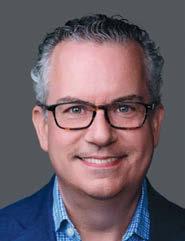
Shea’s commitment to public service started with his involvement with the SGA at Connecticut College and continued to be a theme throughout his career. He is founder and CEO of GovNavigators, LLC, and an adjunct professor at the University of Pennsylvania, where he teaches domestic public policy. Over a 25-year career, he has worked to improve government performance, serving in both the legislative and executive branches as well as the private sector. Robert has remained engaged with Connecticut College through volunteer roles for his
During Reunion Weekend, the College celebrates exceptional alumni. This year’s award winners share favorite memories and what Conn means to them. For descriptions of the award categories, please visit www.conncoll.edu/reunion/alumni-awards/
class, admissions, and the Parent and Family Council.
“Connecticut College is a beautiful place to learn and to grow. It offered abundant leadership opportunities that gave me the confdence to seek out and embrace leadership roles throughout my career.”
Harriet Buescher Lawrence ’34 Award
Emily Callahan
Hazelwood ’11 Co-founder of Blue Latitudes, LLC
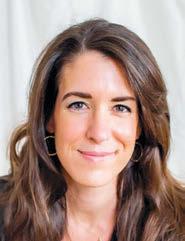
Hazelwood is a trailblazing marine environmental consultant and co-founder of Blue Latitudes LLC, a women-owned frm celebrating a decade of navigating the intersection of offshore energy and ocean conservation. A Forbes 30 Under 30 honoree, Hazelwood has spent over 14 years developing sustainable solutions for global subsea challenges. Through the Blue Latitudes Foundation, she champions STEM equity using VR and ROVs to bring ocean education to thousands of students. A dedicated Connecticut College alumna, Hazelwood frequently returns to campus as a guest lecturer and Career Informed Learning partner. Whether as a PADI Ambassador or a TEDx speaker, Hazelwood is committed to elevating scientifc literacy and mentoring the next generation of environmental leaders.
“The education, mentorship and opportunities I received at Conn continue to infuence how I lead, collaborate and contribute to my feld today.”
Harriet Buescher Lawrence ’34 Award
Mary Ash Lazarus ’71 CEO of Vestiges, Inc.
Lazarus is a distinguished business pioneer with a storied career in retail leadership. She broke new ground as the COO of Caldrea, where she helped transform Mrs. Meyer’s Clean Day into a household name and a leader in the organic cleaning industry. Lazarus continues to pair her entrepreneurial spirit with a deep commitment to service. A proud member of the class of 1971, Lazarus helped champion an endowed scholarship fund to support
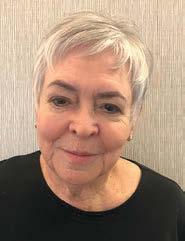
frst-generation Connecticut College students. In her home state, she serves on the boards of the Minnesota Orchestra, Minnesota Opera, and the Minneapolis College of Art and Design, exemplifying a lifetime of leadership and generosity.
“Conn made me curious. I have continued to pursue many of the subjects that I studied at Conn. The experience made me a well-informed individual.”
Goss Award
An-Ming Sze Truxes ’71 Lead Planning Analyst at the CT Department of Social Services, Retired
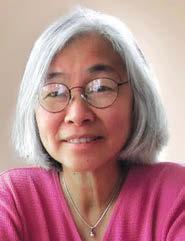
Truxes is a distinguished advocate for the arts and education. Throughout her career, she held leadership positions at the Connecticut Alliance for Arts Education, the CT Commission on Culture & Tourism, and the CT Department of Social Services. Beyond her professional roles, she has served on numerous boards in her local community, as well as at the state and national level. At Connecticut College, Truxes’s 10-year tenure as Class President was marked by her innovative response to the pandemic. She launched a “signature” series of virtual events that reunited long-absent classmates, leading to a record-breaking virtual 50th reunion. Her commitment as a Class Offcer, Reunion co-chair, and her sixyear service on the Alumni Association Board of Directors demonstrate her passion for Connecticut College and dedication to her classmates.
“The challenges I faced as a foreign student at Conn cultivated in me determination, discipline, resilience, and expanded my horizons to see and explore what is possible so that I could make a difference in the communities in which I live, work and volunteer.”
Alumni Tribute Award
Kenneth Kabel ’76 P’12 President and Owner of Oak Hills Carton Co., Retired
Kabel is the retired president and owner of Oak Hills Carton Co., a business he successfully led for nearly three decades. His devotion to Connecticut College is profound, highlighted by
his tenure as a Trustee and Alumni Association Board President. Kabel’s extensive involvement includes serving as a Class Gift Offcer, Reunion Chair, and Career Mentor at Conn. Beyond Connecticut College, he has offered his time and leadership to several organizations in his community including Cincinnati Housing Partners, The Literary Board, the Jewish Federation of Cincinnati, and the YMCA.
“My Conn experience broadened my horizons and laid the foundation for both a fulflling career and happy life. I want others to have that same experience. One of the ways I can do that is by continuing to be of service to the College.”
The Unity Award
Veronica Ann Venture ’86 Deputy Offcer at the Offce for Civil Rights and Civil Liberties, Dept. of Homeland Security, Retired
Over a distinguished 35-year federal career, including leadership roles at the Department of Homeland Security’s Offce for Civil Rights and Civil Liberties, the EEOC, and FBI, Venture has dedicated herself to ensuring the rule of law and the equitable treatment of all citizens. Today, in her community, she serves as a Court Appointed Special Advocate for children in foster care to advocate for those who do not have anyone to speak up for them. As an undergraduate, she was a member of Umoja in Unity House and SOAR (Society Organized Against Racism). A devoted alumna, she is serving her second term on the Alumni Board, currently in the role of Vice President, and has served on various committees and in roles such as CCAC, Unity Committee, Reunion Committee, PreLaw Advisory Committee, a Class Gift Offcer, and Regional Host.
“As a student of color, when there were so few of us on campus at that time, being at Conn was not always the easiest experience for me. I try to mentor students, particularly those of color, who are having a tougher time to see the good things about Conn. I am trying to help the current students to see themselves as ‘belonging’ at Conn, and to create the sense of community that they may feel is missing for them.”
disease and is back playing golf and starting croquet. Her passion for bridge continues, and she plays the piano regularly, including for events at their Riomar Country Club. “We are both blessed with relatively good health, a fabulous family, caring friends and a wonderful place to live, Oak Harbor Club in Vero Beach, FL.” From Milbrey Wallin McLaughlin: “In the more than a decade since I retired from the Stanford faculty (education and social policy), I have remained in substantive contact with former students and colleagues—enjoying their ideas, new projects, papers and books. These ongoing interactions are a former professor’s abiding treasure and delight. This past summer brought joy from a diferent kind of relationship—reconnection afer 62 years with Joan Brown Herrmann (aka “Brownie”). She lef Conn afer her junior year to marry; I had not seen her since. I tracked her down through Facebook, and we arranged to meet while I was East for a wedding last summer. Now retired from a career in intimate-apparel buying, specializing in mastectomy products, Joan indulges her longterm passions for photography and gardening. Over the years, she put her math/econ majors to good use as a day trader (“just playing,” she says) on the New York Stock Exchange! As the family matriarch, Joan regularly convenes family celebrations, holidays and gatherings in her Gloucester, MA–area home. What an amazing, energizing reconnection! It was so easy to pick up with each other afer more than six decades. And we both look just the same!” Linda Osborne remains as spirited as ever, despite her “darned macular degeneration—can’t drive, can’t read books, that sort of thing. My handyman’s wife is my driver: errands, to the gym, etc., and since I live near the plaza (in Santa Fe, NM) I can walk to meet friends and am at an easy location to be picked up.” Linda is on the board of the local animal shelter and is very proud of her own “darling dachshund-mix rescue puppy, Wally, aka Mr. December in the local paper’s 2026 calendar. That happened because I asked everyone I know, and others I just met on the street, to vote for him, at $1 per vote. Kind of how I got elected president of our class, junior year!” Pat Said Adams has been a widow for 25 years and since 2008 has lived in an apartment attached to her daughter’s home near Charlotte, NC, where she enjoys some of her nine grandchildren. “I have my health challenges, which I’m addressing with physical therapy, but my life and fulfllment really revolve around a new Substack blog that I started in October 2025, The Creation Story Is Our Story, Too. The underlying purpose is to awaken us to the incredible life we are given by God to live on this planet Earth, to be aware of the destructive impact of global warming and to remind human populations that we are meant to live in community with other species so we all can thrive.” Pat Johnson Terry feels her life “has come full circle, and it’s been quite a ride. I married a year afer graduation and got an MA in English at UConn. Afer raising two sons, I returned there for my law degree, then spent 20 years in higher ed administration. Afer retiring, I taught college law classes. And now I’m back in Branford, CT, where I grew up, living in an over-55 apartment building. Proximity to Yale provides a rich intellectual environment. I’m part of a study group rereading Joyce’s
Ulysses. I am grateful every day for the love of learning that Conn instilled in me.” Bobette Pottle Orr and husband Bill celebrated their 50th anniversary. Bobette is still enjoying skiing as much as ever. “Bill and I took a ski week in January and have another planned for March. And we’ve been riveted to the Olympic skiing events.” Molly O. Lore Wagner attended a reception for President Chapdelaine at the High Museum of Art, in Atlanta. “Our host was Randall Sufock ’90, president of the museum and a member of the CC Board of Trustees. Attendees included a nice mix of College administrators, parents and alums, and it gave me a sense of the campus today. My life certainly changed when Jack died eight years ago, and I am grateful for friends and family. Seven terrifc grands try to keep me up to date. Personally, I am doing all the same things as many of you: book clubs, church, fowers, golf and bridge. As I struggle to fnd appropriate ways to support those who are challenged, it is my privilege to be a member of a team supporting the Al Beej family, refugees from Syria. This summer will be our 61st summer on Block Island, RI, so we are still connecting to Connecticut.” Jay Cannon Rufe writes: “We continue to enjoy Vermont and all it has to ofer. This fall and winter, I have had the privilege of getting to know and help some of the eight Afghan women who graduated from Middlebury College at the end of January. They were truly inspiring and will surely make a diference in the world. February has brought signifcant snowfall and great cross-country skiing opportunities. And of course, keeping in touch with our seven grandchildren, scattered from Vermont to California to New York to Ohio to Israel, is a joy, as always. And I’m so happy to still be in contact with Gail Martin Reed, Wally Coates Paprocki and Diana Sherman Peacock. So much fun to share what we are up to now, as well as memories of our CC days. Elana “Lanny” Brown Anderson and her EMT husband, Bill, now living year-round in Deer Isle, ME, spend a lot of time just trying to fnd stuf, “such as our phones, car keys, that sort of thing. We LOL about it being too dang cold to get outdoor exercise. Even our Havanese dog, Jasmine, refuses our pleas to take a little walk. We also play too much duplicate bridge (badly—‘It’s just a game, darling husband/partner!’). My writing group is ticking along, having recently published a third volume of its anthology. We both do quite a few volunteer jobs on this small island: church, theater, schools, and then there is the maintenance on this old house, which is unending. We are so fortunate to have so many of our
big, close family nearby, especially as we, er, age.” Connie Cross is still active on the board of her local land trust, which protects land in the northern Sebago Lake region in Maine. “Last summer at the annual meeting, the trust honored me with the frst annual Connie Cross Volunteer Award, which will be given each year to another volunteer for land conservation. Nice things happen when you get old! Am also still enjoying bimonthly Zoom visits with Barbara Drexler Lockhart, Helen Frisk Buzyna, Susan Young, Wally Coates Paprocki and Chantal Le Houerou.”
Correspondents: Susan Peck Hinkel, 1064 N. Main St., Danby, VT 05739, rerob@mac.com; Pat Antell Andrews, 2800 S. University Blvd., Unit 4, Denver, CO 80210, pandre0615@gmail.com Carole McNamara Malcolmson is happy to report that her children are fnally back in the Boston area and that she has become a grandmother! Twin granddaughters are expected to expand the count in April. She keeps busy volunteering at the Museum of Fine Arts and taking and giving courses at the Harvard Institute for Learning in Retirement (HILR). She taught a course on daily life in ancient Egypt at HILR last semester. “What a lot of work to prepare to teach your peers!” But Carole also relayed sad news: “I was in Georgia in October to see Jenny Bartlett Fricks, who was sufering from cancer and died later in the fall. She was such a good friend. I miss her.” Jenny spent much of her life in education, focusing on children with special needs. She also wrote, produced and starred in educational programming for PBS (WDCN). Pam Byecrof Wetherill, who still spends most of the year in Princeton, NJ, wrote, “Life for Dave and me is busy keeping up with family activities. Currently, we are spending almost a month at Hillsboro Beach in Florida playing tennis and croquet in warm weather.” They enjoyed having their eldest grandson at the university for four years. She adds, “Sending love and best wishes to the Class of ’65.” Chris Metcalfe has returned to the East Coast from California and fnds herself challenged by icy sidewalks and wondering if maybe she pushed the desire to return to her New England roots a little too early. Her small rat terrier can’t see over the snowdrifs, but the streets get packed down and are
Members of the Class of ’65 met for lunch in February. L to R: Nancy Martin Casey Peavy, Judy Reich Grand, Betsy Casey Herold, Gina Herold Myntinnen
Beth Overbeck Balkite ’65 models her Reunion 2025 hat while cruising the Nile.
walkable. She is “taking up needlepoint to keep myself busy and spending a lot of time on Netfix (guilty pleasure).” An anonymous classmate, who is now in good health afer a series of challenging treatments, reminds us to take advantage of all cancer-screening opportunities. Marge Tupling Knyper is still involved with the Daughters of Norway, a national organization of women united to celebrate their Norwegian heritage. She serves as treasurer of her chapter and enjoys monthly art get-togethers to study and paint Norwegian rosemaling. “We meet in the Norwegian Seamen’s Church high on a hill in San Francisco, with beautiful views of the Bay. It keeps me going!” Rin Barnes Morway responded to the article about Richard Goodwin and The Nature Conservancy: “He was one of my very favorite professors. Because of his talks about the Conservancy, I have been a steady member since college. I minored in Biology because of him and Dr. Niering, so I was very happy when the new environmental center at CC was named afer those two great teachers.” Beth Parsons adds, “Great to have this bit of conservation history of an organization that I’ve been a member of—and to know that Conn supported Goodwin’s work. At this time, when some question the importance and relevance of the liberal arts in colleges today, this is strong evidence of their necessity and their good work!” Beth has fve grandsons: “Holidays are fun and boisterous, needless to say!” Sonya Paranko Fry, who didn’t know Mr. Goodwin, remembers that “the Arboretum was such a special place for us when we were students.” Betsy Casey Herold welcomed Nancy Martin Casey Peavy, Judy Reich Grand and Gina Herold Myntinnen for lunch in Stuart, FL, where they enjoyed a leisurely time reminiscing. Gina has moved to the Briarwood Retirement Community in Worcester, MA, and has already met other CC graduates, including one from the Class of ’49. Class correspondent Sue Peck Hinkel has decided to step down from the CC Board of Directors afer serving for almost nine years. Beth Overbeck Balkite wore her 60th reunion hat while touring Egypt recently. Afer careers in marine biology and as a pediatric nurse practitioner and a medical-surgical nurse, Susan Heller moved into a retirement community in San Diego, CA, where she has her own little patio home with a view of the sea. She continues to meet with friends from the Sierra Club for walks on the beach, a 40-year tradition. She is a longtime member of a volunteer group that has provided care in mountain communities in Baja California, and afer 30 years of efort, they have fnally completed a medical clinic in San Francisco de la Sierra. They proudly announce the grand opening next month.
Correspondents: Carol Chaykin and Bridget Donahue Healy, ccnotes66@ gmail.com Rill Bellantone Reuter writes: “Larry and I have been in Winona, MN, for over 45 years. We retired from teaching (biology and chemistry, respectively) at Winona State University over a decade ago. Larry does a fair bit of work maintaining the family farm, 60 miles from here. We rent out the land, but there is always far too much to do. I am on the WSU Foundation board of trustees, and I am involved in various political activities. Daughter Vicki teaches math
at the University of Wisconsin-Platteville, roughly three hours from here.” Ann Gulliver Flinn P’96 ’94 and Jill McKelvie have been enjoying themselves in Delray, FL. Both are avid gardeners. Ann’s garden in New Canaan, CT, is a highly regarded achievement of design. The Flinn Native Pollinator Garden was catalogued in the Smithsonian’s Archives of American Gardens in 2024 (bit.ly/finn-garden). Jill is recovering from a ruptured spine. When home in Washington, D.C., she joins with foreign-policy friends in discussions and interviews regarding world events. From Kathy Legg: “Our group from Plant House still meets monthly—virtually. It includes Susan Rothschild, Bernice Abramowitz Shor, Mardi Walker, Ann Kiley, Ivana Obst Turner, Carol Lewis Mehlenbeck and Lisa Altman Pintzuk. We help each other weather the many challenges of old age, but we all agree that (to steal a phrase from Judith Viorst) we are not too old to go ahead and reupholster the furniture. I visited the campus in January and was surprised to see the congregate dining, among other changes.” Last summer, while walking along a hiking trail on the shores of Lake Superior, Ellen Schwartz Allington saw a man wearing a Boston T-shirt. She asked where he was from: “Connecticut.” Ellen exclaimed excitedly, “Where? My husband and I attended college in New London!” His response, “Ahhhh, Conn College and CGA.” He turned out to be a CC ’82 graduate. They had a fabulous time sharing stories. Who would have anticipated such an encounter on the isolated shores of Lake Superior? In February, Betsey Staples Harding wrote, “A few weeks ago I went with my son and daughter-in-law to Galapagos, learning all the time from all the naturalists who explain so much so well on National Geographic expeditions.” We send condolences to the family and friends of Andrea “Andi” Ansell Bien P’93, who died Dec. 7, 2025. Andi’s children have planned a memorial service to be held on May 30 in Rockville, MD. Thank you to Andi’s roommate and lifelong friend, Danielle “Dani” Dana Strickman, for sharing the unhappy news with us. Dani is sad that she won’t be at Andi’s memorial service or at Reunion; she will be at her eldest granddaughter’s high school graduation that weekend. “Our lives are too busy!” Please continue sending your updates and photos. We want to share your news!
Correspondents: Deborah Greenstein, debbyg837@verizon.net; Marcia Hunter Matthews, marciamatthews3@gmail. com Eva’s Promise, the flm co-produced by Susan Endel Kerner about Eva Geiringer Schloss’ search for her brother’s artwork afer WWII, was screened at the College and co-presented by the Jewish Federation of Eastern Connecticut and the Lyman Allyn Museum in February (see page 10). Liz Deane Loutrel and her husband visited Lindley Beetz Briggs’ and husband Jef’s open
studios in Newburyport, MA. They loved the art that was displayed in the studios in the Briggses’ house and barn and throughout their living space. “An immersive experience!” Liz and Steve still live in Carlisle, MA, and ofen travel to the Alps of central Switzerland to visit their son and his family. Last summer, their daughter and her partner joined them in Switzerland to celebrate Liz’s birthday. Ethel Bottcher Cullinan traveled with daughter Megan to Paris and Germany. Son Michael’s next assignment is Abidjan, Côte d’Ivoire, so Ethel is brushing up on her French. She loves her continuing-care retirement community and doesn’t miss cooking, looking at recipes, going to the grocery store, putting lefovers away and cleaning the kitchen. Betsey Nodler Pinkert and husband Dale visited Brien Mutrux Chelminski P’98 and husband Rudy in Montigny, outside Paris. The two couples have stayed in contact throughout the years. Brien and Rudy are permanent French residents. Debby Greenstein did a two-week driving tour of Arkansas, Tennessee, Mississippi and Alabama. All four states ofered wonderful things to see and do, as well as great meals along the way. Marcia Hunter Matthews and her husband, Bill, attended a luncheon in Venice, Florida, featuring President Andrea Chapdelaine. Marcia reports that the president made a wonderful impression on everyone in attendance; the group lef feeling incredibly optimistic and proud of the strong leadership she is providing for the College. Our class president, Rita York Fogal, has already started thinking about our 60th reunion, to be held June 4-6, 2027. Save the date! If you want to help plan, contact ritafogal@verizon.net.
Correspondent: Susan Cannon, susecannon@icloud.com Joan Hosmer Smith wrote that they have been hunkered down in Groton Long Point, CT, watching the snow blow furiously during a classic nor’easter blizzard. Her husband, Doug, turned 80, and she
Liz Deane Loutrel ’67 and Lindley Beetz Briggs ’67 in Newburyport, MA
Lee and Rita York Fogal ’67 with California grandchildren
Wallis Lindburg Nicita ’67 turned 80 at Nobu in the Indian Wells Tennis Garden with her son, Jesse.
Betsy Staples Harding ’66 and her son Dexter Harding in the Galapagos, February 2026
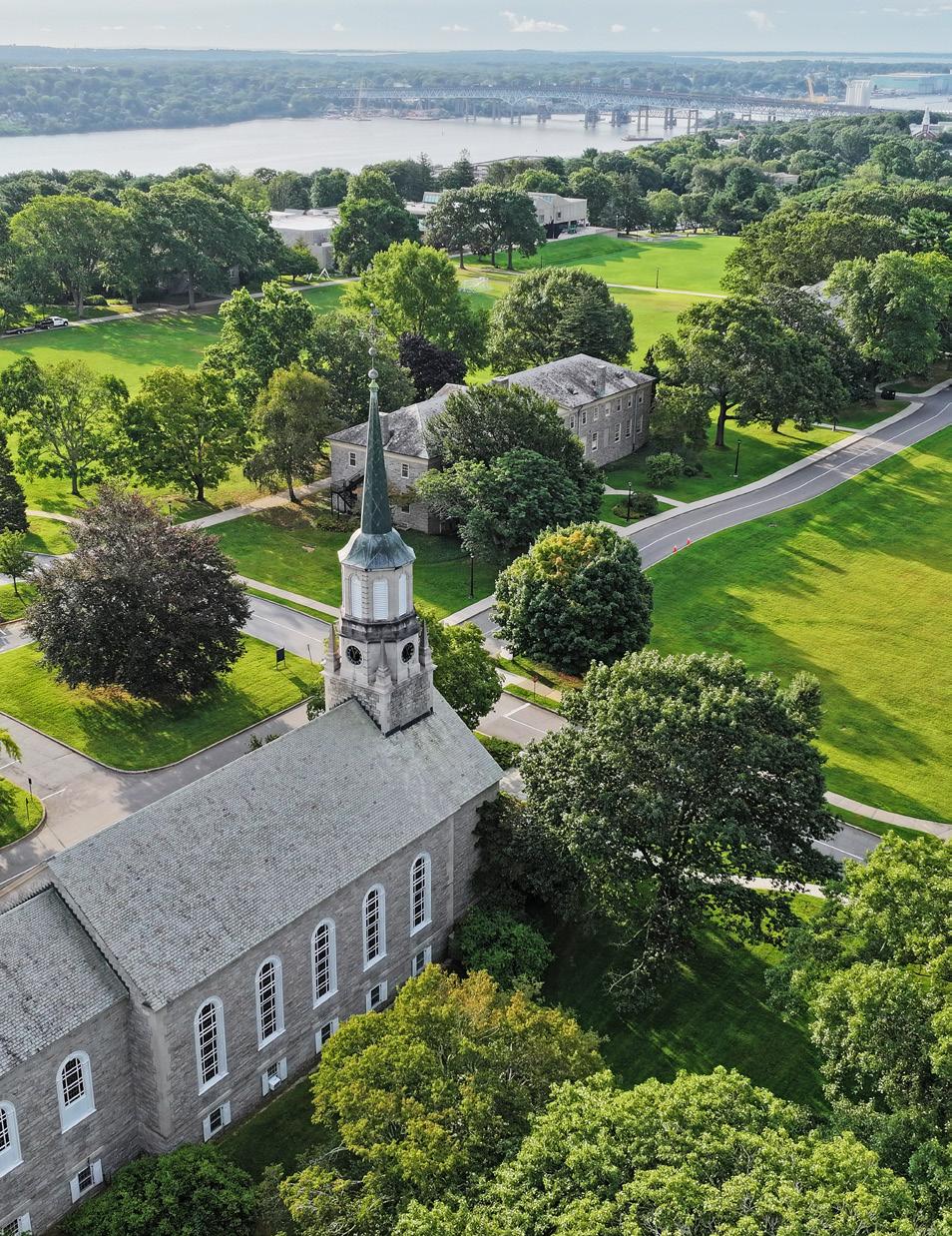
ANSWERING THE CALL
Why should YOU leave a legacy at Connecticut College?
Because you have a sense of gratitude for the opportunities Conn provided to you, and you want future Conn students to achieve the same success you have achieved, expand their world and become leaders of tomorrow. A bequest gift is more than just a document from your estate. It speaks to your beliefs and your values.
When is the best time to fnalize your estate plans?
NOW! Whether you are just beginning or thinking of revisions, age 25 to age 85, there is no better time to solidify your plans and peace of mind.
How is this achieved?
The easiest way is to name Connecticut College as a benefciary of your retirement plan, life insurance policy or other account. Any asset can be used as a statement of your beliefs.
Already have Conn in your estate plans? Tell us! We would love to welcome you to the Rosemary Park Society. Considering your legacy and want to add Conn in your plans? We can work with you!
wonders where the time went. She has taken up playing bridge to challenge her brain and have a social activity for aging in place. In the meantime, she keeps moving, including cross-country skiing. Son Derek and grandson Rook live on Vashon Island in Seattle. Mary Garlick St. George wrote
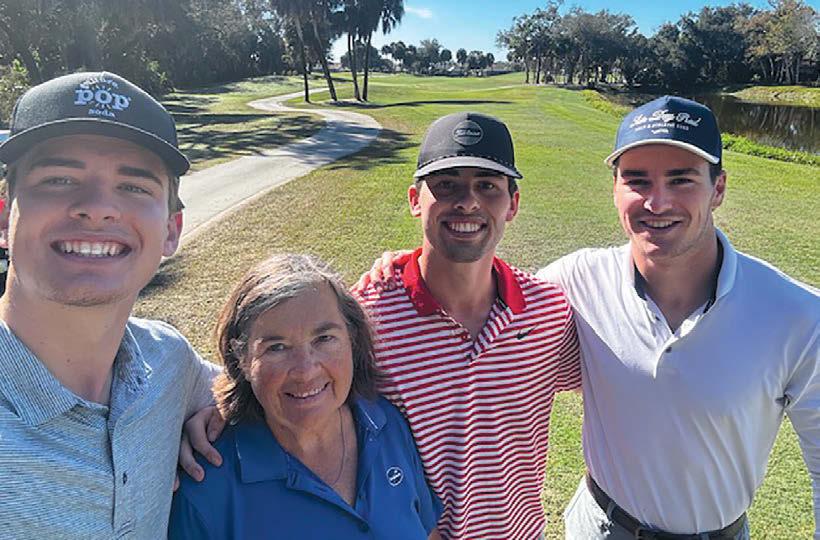
that Portugal sufered extreme rain and wind for over two months this past winter. Her internet was knocked out for two weeks. She enjoys singing in a large choir with orchestra in a production called Voyage to Broadway (Viagem à Broadway) She fnds it heartwarming to hear Portuguese
voices and musicians belting out tunes from The Lion King, The Phantom of the Opera, West Side Story, etc.! Memories of yesteryear! On Feb. 25, Kathleen MacInnis Kichline and Alice K. Boatwright met up in Seattle for cofee at a local bookstore, carrying their books. Terrance McPhee and the Toy-Eating Tree is Kathleen’s debut children’s book, and Alice recently released Look Both Ways, her collected short stories. Kathleen, who was a longtime Seattle-area resident and now lives in Arkansas, was back in town to give a talk on women in the Bible, the subject of her other books. Alice lef the next day for a mystery fan conference in San Francisco, where she was on a panel talking about her Ellie Kent mysteries. The fourth book in that series, Summer’s End, will be out in October. Judi Bamberg Mariggio appreciates the changing seasons in northwest Italy. She’s recently enjoyed day trips to Turin, Asti and Aosta, and local lectures on the history of the atom and traditional cooking. She participates in weekly aquagym and personal training sessions, and she still volunteers with adults who want to improve their English. “That, reading The New York Times and doing Wordle every day are defnitely helping me maintain my own English profciency!” Babette Gabriel Thompson shared that volunteering at her local food bank helped her deal with depression over the current state of afairs in this country. Susan Cannon enjoyed seeing 29 classmates on our February Zoom call, where we discussed signifcant turning points in the lives of a number of classmates. Stay tuned for future Zooms.
Pat Roos Frutig ’67 visited Jeanne Ealahan Touvell ’67 on her way to Canada.
Marcia Hunter Matthews ’67 celebrated her 81st birthday by playing golf with three grandsons in Florida.
Debby Greenstein ’67 and Sarah Bobrof Bolon ’67 had lunch with President Andrea E. Chapdelaine in West Palm Beach, FL.
Betsey Nodler Pinkert ’67 and Dale with Brien Mutrux Chelminski ’67 P’98 and Rudy in Montigny, France
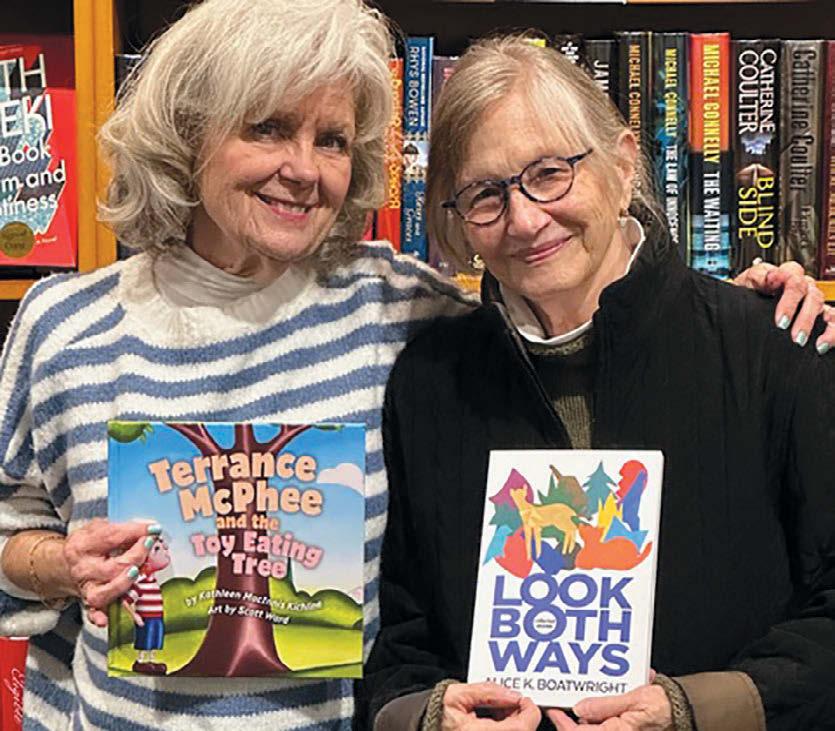
Correspondent: Myrna Chandler Goldstein, myrnacgoldstein@gmail.com After 52 years, Regina O’Brien Thomas retired from the law frm of Ballard Spahr. She noted that when she frst joined the Philadelphia frm, she only needed a yellow legal pad and a pencil, and female lawyers were “scarce indeed.” Today, the frm is a “large national one” flled with tech and equally populated by women, many in leadership positions. She and her husband, Frank, continue to fuss over their 40-year-old garden, nicknamed Camp Thoreau by their grandchildren. Though the maintenance is “daunting,” they are still unable to give it up. Lisa Richter continues to work part-time in her research/marketing
consulting frm in St. Louis, MO, and is allying with new partners to determine how to market research in this age of AI and the constant fow of generic customer-experience surveys. She serves on the board of Memory Care Home Solutions, which supports caregivers of family members and friends diagnosed with dementia and helps other caregivers receive information and support. Lisa enjoys her four grandchildren in St. Louis and Minneapolis and spends “free time” taking piano lessons, exercising and enjoying the outdoors as ofen as possible. Rachel Sherbourne Cooney is working part-time as a therapist at Delta Consultants of South County, in South Kingstown, RI, specializing in working with neurodiverse clients. In addition, she runs a B&B out of her home in Newport, with a 10 percent discount for Cocoforwo visitors (www.cooneycottage.com). She enjoys seeing her adult children and grandchildren and helping her daughter at her local boutique, Marcellina, on Thames Street in Newport. Retired since 2015, Barbara Dion Buchner enjoys spending time at their summer Cape home and keeping busy with volunteer work. She is on the board of the Hopkinton Women’s Club and the SOAR Management Consulting Group. (SOAR is a nonproft that provides pro bono management consulting to small nonprofts in the greater Boston area.) It allows her to leverage her corporate experience in the nonproft world. As far as travel, Barbara and her husband ofen travel with Conn alum Judy Hamilton and her husband. They were in Italy together last fall and in Bali in March. Judy and her husband have been working on their travel bucket list. Their son, daughterin-law, daughter and two grandsons live nearby.
They are fortunate to see the family ofen. One grandson is a senior in high school, and the other is a sophomore. “They have grown so quickly!” Karen Kuskin-Smith wrote that Amelia Lee Marks passed away on Nov. 15, 2025, afer a short illness. An art history major, Lee was the owner of Lee Marks Fine Art, which represented international photographers. She was a regular participant in our reunions and organized the presentation “Two Artists and a Dealer,” which showcased some of our classmates’ ceramics, paintings and other artwork for our virtual 50th reunion. Lee leaves behind her husband, John Deprez, and many family members and friends in Indiana and Massachusetts. According to Karen, Lee was one of her frst-year roommates and the dearest of friends ever since. Myrna Chandler Goldstein P’96 and Mark Goldstein P’96’s most recent book, Digestive System Diseases and Disorders: Understanding Symptoms and Treatments, was published on Jan. 8 by Bloomsbury Publishing. Afer an initial outline of the digestive system, it discusses 30 diferent diseases and disorders of the digestive system. It is available at Amazon and other online sources. You might also wish to check your local library.
71
Correspondents: Lisa McDonnell, 79 Audubon Ave., Binghamton, NY 13903, mcdonnell@denison.edu; Lois Olcott Price, 933A Alto St., Santa Fe, NM 87501, loprice@ yahoo.com Anne Sigmond Curtis is still working on getting back in shape afer her broken ankle. Progress, but slower than expected. Adding acupuncture to the therapy regimen has been surprisingly helpful! Meanwhile, John’s vertigo is a

On Feb. 25, Kathleen MacInnis Kichline ’69 and Alice K. Boatwright ’69 met up in Seattle for cofee at a local bookstore carrying their books. Terrance McPhee and the Toy-Eating Tree is Kathleen’s debut children’s book, and Alice recently released Look Both Ways, her collected short stories.
lot better. He’s been on several ski trips in spite of less-than-perfect snow conditions. Kids are all doing well. Her eldest granddaughter will be getting married in August—afer she returns from a semester in Los Angeles studying flm, graduates, goes to Chile on a school trip and takes the LSATs! Anne’s second daughter is moving to Ireland in July. They are building a house in her husband’s hometown of Clonaslee. “Certainly will miss them!” Anne and John are planning a trip to Philadelphia in April as neither has been there. “Looking forward to the history and art museums.” In November, they will go to Southeast Asia: Cambodia, Vietnam, Thailand and Laos. An-Ming Sze Truxes hopes for a banner turnout at our 55th reunion. Memories of our time together at the 50th/51st reunion have fueled her appetite to reunite with classmates. The CC campus has undergone a remarkable transformation, which will certainly be a topic for lively conversation. Closer to home, An-Ming’s husband, Tom, fnally retired from university teaching last August. They are now free to travel and no longer tied to an academic calendar. Recently, they spent two weeks in the Côte d’Azur, a week in Madrid, and visited children in Santa Monica, CA; Reston, VA; and Brooklyn, NY. An-Ming and Tom are expecting their seventh grandchild around Reunion time. As opposed to the frigid and snowy weather the East Coast experienced this past winter, Lois Olcott Price reports that Santa Fe has been dry (not good) and warm (pleasant, but also not good). “Hoping for a wet spring and summer.” Her clay adventures have continued, with two works in an exhibition in late March and service on the board of the New Mexico Potters and Clay Artists. “Working with clay has become therapy and escape from the current national insanity, though I plan to attend a No Kings rally on March 28.”
72Correspondents: Barbara White Morse, barbarawmorse@gmail.com; Ann Tousignant, anntousignant@gmail. com Class President Merrily Gerrish reminded us: “Believe it or not, our 55th reunion is only a year away. Our 50th was so much fun. Let’s do it again! It’s not too early to get our pals psyched about coming back. There have been so many campus improvements since our last reunion; it will be great to see them.” Beth Alpert Nakhai retired in 2024 afer nearly 40 years with the Arizona Center for Judaic Studies at the University of Arizona, in Tucson. She is quite happy to sign work emails “professor emerita”! Her career unfolded in a way unanticipated when she was at CC, but it turned out to be a perfect ft. Fascinated with the archaeology of Israel, she received her MTS at Harvard Divinity School and her Ph.D. at the University of Arizona in Near Eastern archaeology and Biblical studies. She excavated sites in Israel, worked in a wonderful department with amazing people, and has had the opportunity to travel and to collaborate with people from around the world. Currently, she is working on a book about women in Levantine archaeology. She and her husband, Farzad, celebrated their 40th anniversary in March. Daughter Mandana lives in Colorado with her husband, Krystian, and their daughter, Noa. Spending time with them is Beth and Farzad’s greatest joy! Afer chairing
(for the umpteenth time!) the Marblehead Festival of Arts Literary Festival over the four days surrounding the Fourth of July, Margo Reynolds Steiner treated herself to a monthlong vacation in Marrakech, Morocco during September and October 2025. She found it refreshing that very little had changed since her frst trip, in 1979. That trip was ofered through the Cambridge Center for Adult Education. Margo simply could not “not go,” as the 10-day trip, including airfare and hotel, was a whopping $279! Norma Walrath Goldstein has failed retirement many times. At age 76, she is still sought to train boards of trustees for community, technical and tribal colleges and universities. Afer she and husband Allen returned from Cancun in March, her project was to develop a curriculum for boards. Norma and Allen’s next adventure will be a monthlong stay to
I feel like we might be in our 50s. But mid-70s? No way.
— CAROL BLAKE BOYD ’72
take cooking classes in Vietnam, Cambodia and Thailand with their Seattle International Dinner Club. She keeps busy helping to organize social events and cruises at Corinthian Yacht Club in Shilshole Bay in Seattle. Carol Blake Boyd provided an update on her recovery from her horrible accident last year, in which her car was rear-ended by a speeding vehicle clocked at 167 mph, was sent airborne, and landed in a canal. Her recovery took every bit of six months, although she is still doing physical therapy and she just had some minor corrective surgery. She feels that she has been extraordinarily lucky and is grateful for wonderful medical care. Plans for 2026 include two international trips: Italy in May, and then Malta, the Dalmatian coast, Istanbul and Athens in October. Carol visited Barbara Zaccheo Kohn in January in Connecticut while attending Margorie Johnson Hewett’s 75th birthday celebration. “Where has the time gone? I feel like we might be in our 50s. But mid-70s? No way.” Carol sends good cheer and happy thoughts to all our classmates. Mary Ingoldsby enjoys retirement and keeps busy teaching English as a second language (ESL), working in a Hartford food bank, teaching religious education at her church, and volunteering for IRIS, a Connecticut agency that helps recently arrived refugees. When not volunteering, she enjoys traveling with her family. Recent trips include D.C., Florida and the Bahamas. An avid gardener, she has displayed her dahlias in the Connecticut Dahlia Society Flower Show. She keeps in touch with Barbara Ainslee Settembrini and Helen Crispe Hesselgrave Amy Lewis Tabor sold her home of 36 years on Long Island and moved onto the campus of SUNY Purchase, where a senior continuing-care community was built on 40 acres. She is busy with lectures, exercise classes and college courses. She notes that, far from being a retirement community, this is a place where people have come to reinvent their lives and remain active. Thanks to the wonders of Zoom, she “meets” weekly with close college classmates from all corners of the globe: Martha Cogswell, in Massachusetts; Jinx Stuart Ather-
ton, in Australia; Suzanne “Suzi” MacDonald Horan, in Indiana; and Linda Havens Moore ’73, in New York. Last summer they gathered on Cape Cod for a long weekend of conversation, sightseeing and theater. Amy’s 2026 travel plans include trips to Ireland and the Canadian Maritime Provinces. Deborah Hansen Hollenberg just completed funding a lectureship in radiology at Mass General Brigham in memory of her late husband, Norman K. Hollenberg, MD, Ph.D. She hopes to fund an additional lectureship in endocrinology related to his research in hypertension and kidney disease. She continues to focus on painting and photography, writing a children’s book about a rescue dog, and exploring Israeli poetry. On the evening of Feb. 28, her birthday (and that of her late twin brother), she observed the rare event of a planetary parade, six planets lining up in the night sky and becoming visible. “We must all look up and embrace the awe, beauty and vastness of our Universe, thus putting into perspective our actions on our planet.” Deborah also shared, “I try to give love every day. When I asked my late husband what I could do for the rest of my life to make him proud, he said: ‘Love.’” Summer plans for 2026 for Ann Tousignant and David Gute ’73 include a return to the French Alps, which will be the site of the 2030 Winter Olympics and where David continues to teach at the Tufs University European Center. Planned excursions include Turin, Italy; Basel, Switzerland; Lyon, France; and a week in Paris. Since the end of the pandemic, and even when she is in France, Ann participates in twice-weekly French classes with three other Francophiles.
73
Correspondent: Hester Kinnicutt Jacobs, djacobs@midrivers.com Pam Barnett Bakal hosted a party for husband Curt’s 75th birthday, where he and bandmates performed for 60 local friends; her son, daughterin-law and grandson joined them. Curt played a new guitar bought in Nashville. Pam’s son sang a song with the band and danced with her and her grandson. Things got exciting when an uninvited rooster briefy walked into the venue. Brian Robie attended a CC reception at the High Museum in Atlanta on Feb. 16; President Chapdelaine was in attendance. Joe Srednicki continues to take organ lessons and is in his fourth semester of taking ancient Greek at Harvard Extension School. Coming out of retirement part-time, Joe is an interim organist at Trinity Church in Bridgewater, MA. The church has a late-19th-century tracker organ that the parish has maintained in excellent
(L to R) Linda Havens Moore ’73, Amy Lewis Tabor ’72 P’99 ’05, Martha Cogswell LaMontagne ’72, Suzanne “Suzi” MacDonald Horan ’72 and Jinx Stuart Atherton ’72 enjoyed a reunion on Cape Cod.
shape. Last summer, Ellen Ficklen and husband Paul Zador moved from D.C. to Hamden, CT, where they’ll be nearer to family. Her return to Connecticut has her hearing Joni Mitchell singing about going “round and round in the circle game” and keeping an eye out for painted ponies going up and down. I, Hester Kinnicutt Jacobs, am still happy in Montana. Health has become an issue for me lately, but we intend to remain in our house 90 miles from Billings. We have rented an Airbnb in Billings to live in during the week while I am in treatment. We look forward to being back home for good on March 20. In October, we joined my siblings (including Valerie Kinnicutt Powell ’70) and their partners in Waterville Valley, NH, for a reunion. We fnally made it to the top of MT Washington on the Cog Train!
Correspondents: Kenneth Abel, 334 West 19th St., Apt. 2-B, New York, NY 10011, kenn616@aol.com; Susan Hazlehurst Milbrath, P.O. Box 3962, Greenwood Village, CO 80155-3962, shmilbrath@gmail.com Craig Barth sold his private audiology practice the summer of his 70th birthday and loves retirement! His new hobbies include barbershop harmony singing and substitute preaching at Presbyterian Church (U.S.A.) churches. He has no plans to leave New Jersey and has started the massive job of downsizing. Speaking of downsizing, Craig shed 70+ pounds to his precollege weight thanks to a GLP-1 inhibitor. “No grandbabies yet; always hopeful.” Nadine Earl Carey attended a luncheon in New Haven in April 2025 to celebrate the life of poet Amy Clampitt. She was thrilled to see Cindy Crooker ’75 there. “It was wonderful to catch up with Cindy afer many years.” The end of May marks nine years since Charlie Fitzhugh retired from the U.S. Postal Service. He worked part-time as a bagger at a local grocery store for four years and retired from that almost four years ago. Now he keeps busy with music, which he didn’t have much time for when he was a mailman. Since 2018, he has played piano and organ at a nearby church, joined two local orchestras as a percussionist, and continued singing in the chorus he joined in 2004. He was a music theory and composition major during his time (three semesters) at Conn; some of his compositions are occasionally performed by his choir (most recently in January), and two pieces were sung by another area chorus at their Christmas concert. All three were arrangements. Charlie also volunteers weekly at a local food bank, picking up and bagging donated produce and delivering it to area families. He has witnessed two total solar eclipses
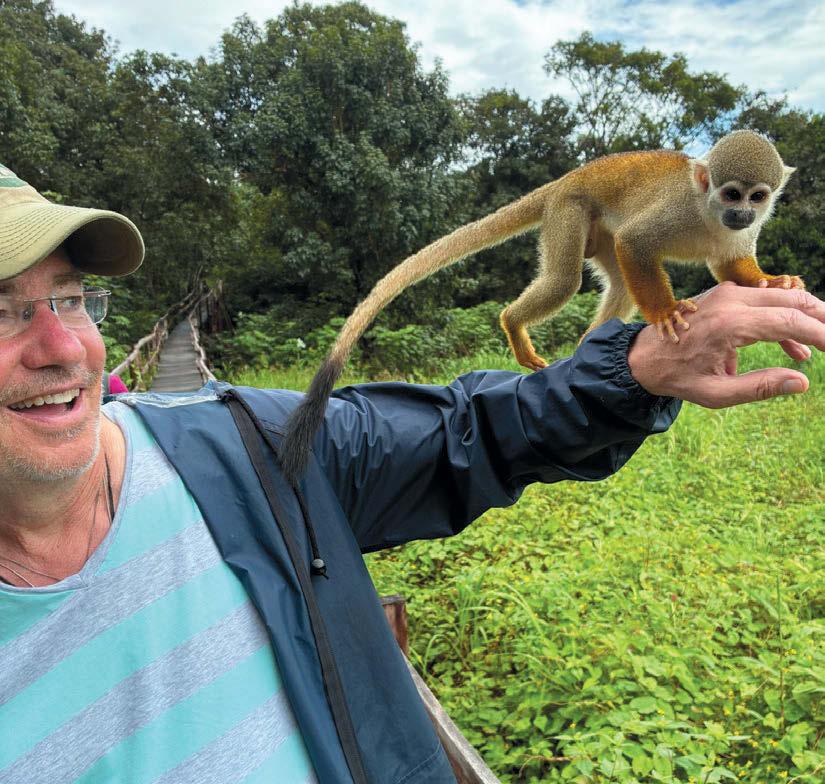
since retiring—in Nashville in 2017 and Vermont in 2024. He and his wife have taken two cruises in the past three years and traveled to Scotland in 2024. Charlie looks forward to Reunion with Class of 1976 friends for the frst time in 10 years!
77
Correspondent: Stuart Sadick, stuart.sadick@gmail.com Tom Howland has been a pensioner in England for nine years now and keeps busy with volunteer work, playing tennis, acting with a local theater group, attending productions in London and traveling. Last year he visited Hawaii, Costa Rica, Spain, Iceland and Turkey. So far this year, he has been to Brazil, the Falkland Islands, and Chile. More trips are planned for the future.
78
Correspondent: Laurie Heiss, laurieheiss@gmail.com; Susan Greenberg Gold, sbggold@gmail.com Happy 70th birthday to all! Plan now for Class Reunion 2028. Elizabeth Ashforth Bacon sends greetings to all classmates, along with congratulations on reaching our 70th year in whatever way, shape or form! “Great memories of our times together (and the ruckuses we created) abound!” Conn has played a multigenerational role in her life, including wonderful friends and family grads. Elizabeth was thrilled to spend a week in Colmar, France, with Alison MacMillan and Georgette Dionne Jebb in summer 2025. The ruckus lives! Molly Hoyt Cashin is feeling fortunate, with a 40-year anniversary with husband Steve approaching, along with a full life in Albuquerque, NM (past); Washington, D.C. (current); Vinalhaven, ME (as much as possible); and various countries in East and West Africa (ongoing). Staying in the non-
proft space, she got her MPA from NYU (1986) and her MALS (2009) from Georgetown. For decades, she has been engaged in work on behalf of refugees worldwide through Jesuit Refugee Service. Her three kids are thriving, with Brooklyn, NY-based Oliver following in his dad’s footsteps and focusing on African fnance; Madeleine (until recently at Milken Institute) and her husband, Monte Lippert, nearby in Alexandria, VA, with grandson Liam; and social worker Ben and his pediatrician wife, Jenna Buckleitner, enjoying Portland, ME. The only personal downer was that Molly broke her kneecap in May 2025; she says, “Don’t do it!” As of Barry Gross’s milestone birthday in April, he was still working as a sales director for a U.S. mattress manufacturer. He and wife Cindi are excited to travel to Calgary and Banf in June. Barry looks forward to our 50th class reunion! In 2025, Alan Goodwin celebrated his 69th birthday (May 28) in the Swiss Alps. In 2026, he and wife Darlena will head back to Europe to spend a couple of weeks in southern Italy. Alan will turn 70 somewhere over the Atlantic, landing in Rome on the morning of his birthday. He’s been learning Italian for the past few months and can’t wait to try it out with native speakers. Julie Kalt Gale reported that Peter Gale celebrated one of the earlier class birthdays, on Jan. 24, in Los Angeles. His lavish Korean BBQ birthday feast is pictured among this issue’s photos. Jane Kappel Mannheimer and husband Jack, normally ensconced in Maine, met up with their grown kids, Ben and Micki; Jane’s brotherin-law; and close friends in Boston in mid-March. Jane has one of the last 70th birthdays, on Dec. 14. Laurie Heiss celebrated her Groundhog Day birthday in Long Beach, CA, with former IBM buddies, who also commemorated their initial meeting exactly 47 years prior, in Atlanta-based training. Surprise … her son Connor Grealy appeared from Denver, as did her guy from Connecticut. Endless toasts, and much better weather than at her Redding, CT, farm!
80Correspondents: Connie Gemmer, chgemmer58@gmail.com; Lois Mendez Catlin, fabulois824@gmail.com Hillary Perl Schoenfeld shares that her Conn FFL is Jean Hinkley Rodie. They were assigned as roommates in a Windham quad during their frst
Nadine Earl Carey ’76 with Cindy Crooker ’75 in New Haven, CT, in April 2025
In Los Angeles on Jan. 24, Peter Gale ’78 celebrated his 70th birthday at the frst Korean BBQ restaurant in the United States.
Elizabeth Ashforth Bacon ’78 P’07 ’09 was with Alison MacMillan ’78 and Georgette Dionne Jebb ’78 in Colmar, France, in summer 2025.
Tom Howland ’77 with a spider monkey in the Amazon rainforest
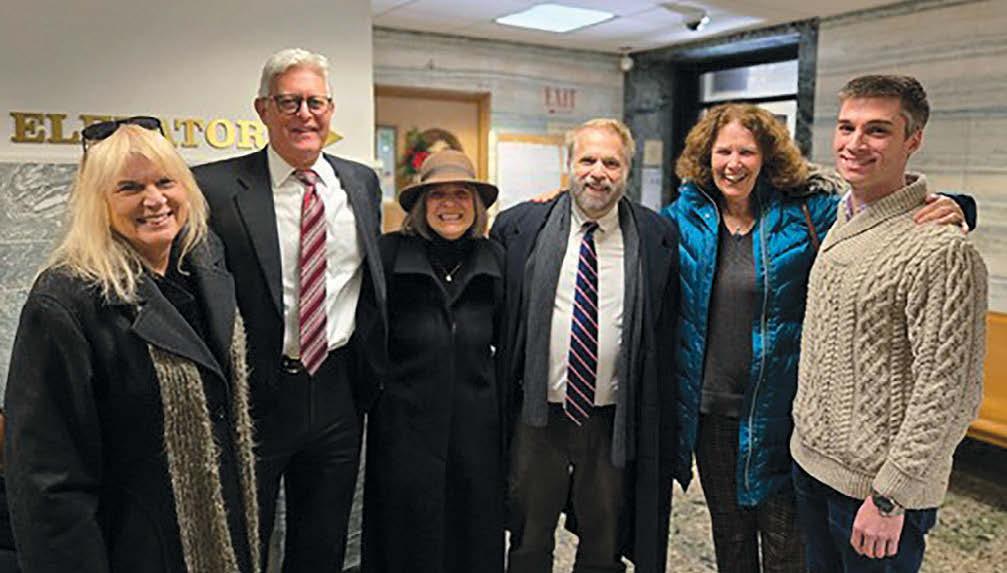
year and went on to live together for the next three years. Although she has lost touch with their other two roommates, Hillary has remained close with Jean. They don’t see each other ofen, but they stay in touch—talking about both the big, important things and the small, everyday ones. When Hillary received her cancer diagnosis a little over two years ago (she’s doing well now), Jean was the frst person she wanted to call afer her immediate family. “The older you get, the more you need that village around you. Sometimes it can be hard to fnd and maintain, but that one friend can make all the diference.” Ginny Houston Lima went to New Zealand and Australia this past October with fellow retirees and will head to Japan in April with her two daughters. Fred Kuehndorf and Aimee Hamelin Kuehndorf ’95 saw Frank Diaz-Balart and Nick Chandler here in Naples, FL, over the February winter break. Fall 1976 marked the beginning of what has become an almost 50-year friendship between Lois Mendez Catlin and Denise Lori Wheeless. They met in the Plex during their frst year, when they lived on the same foor, and they have been close ever since. Even living at opposite ends of the East Coast hasn’t kept them apart. They connect through a biweekly Zoom call and get together in person as ofen as possible. Over the years, they have supported each other through life’s obstacles and celebrated its many triumphs. Refecting on her friendship with Denise, Lois writes: “A
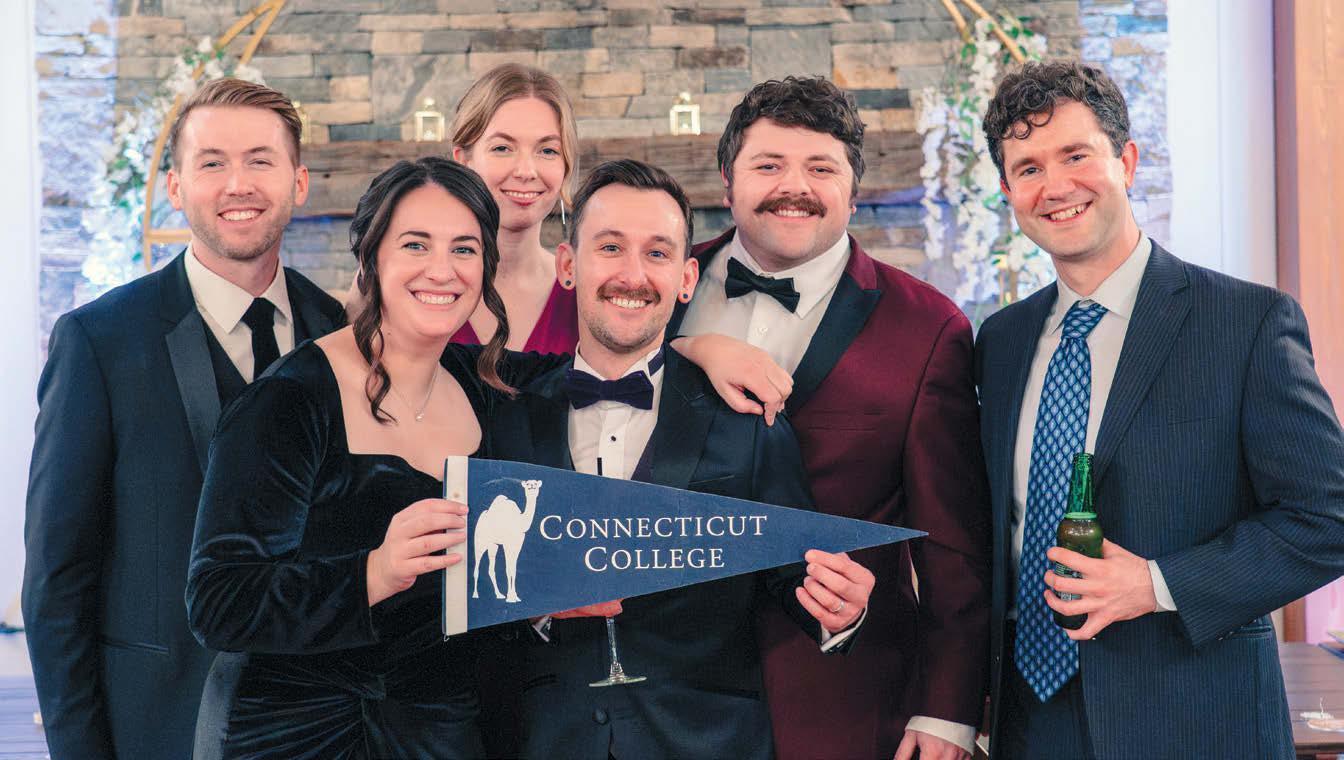
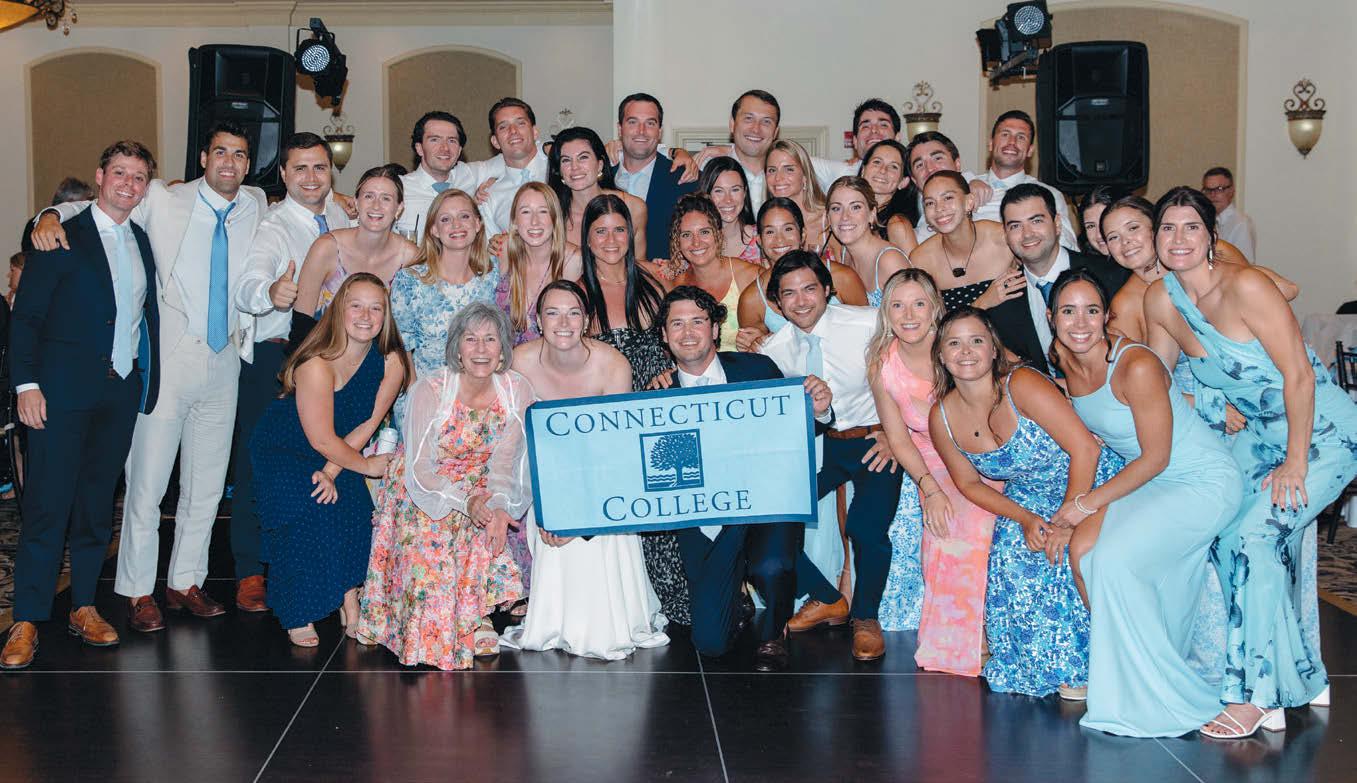
Steele ’18 and Ethan Ufand ’17 were married in York, Maine, on Aug. 23, 2025, surrounded by fellow Camels. L-R: Connor Poetzinger ’18, Bobby Mullins ’18, Evan Gaudio ’16, KJ Sinclair ’15, Tim Covel ’17, John Cunningham ’17, Mack Dowling ’17, Ethan Feldman ’17, Alex Calabro ’17, Alex Bukovac Torres ’18, Haley Keegan Brewer ’18, Lily Connolly Nemes ’18, Jordan Cross Cunningham ’19, Max King ’17, Abby Fagan Gaudio ’16, Ellie Smith ’20, Caroline Kelleher ’18, Bryanna Montalvo ’18, Alexa Tribelli ’18, Michy Medina ’18, Maggie Hardcastle ’18, Laura Nascimento ’19, Dylan Chase ’19, Livi Block ’18, Colbi Vaillancourt ’18, Mackenzie Kingston ’18, Kiley Wilkes ’20, Joyce Rubino ’78, Lauren Steele ’18, Ethan Ufand ’17, Ryan Glantz ’18, Meghan Lembo Boucher ’18, Berklee Vaillancourt ’18, Nicole Medina ’18
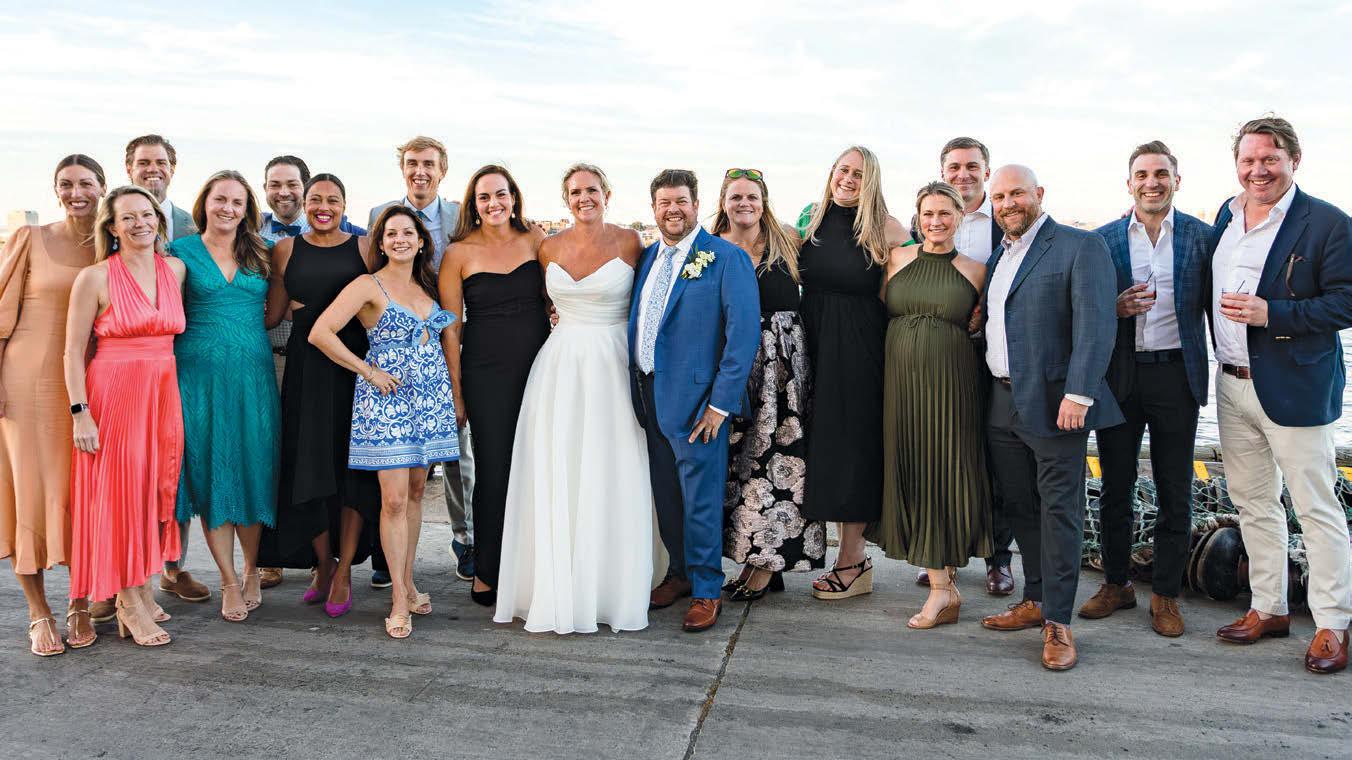
On Sept. 20, 2025, Katherine McCord ’06 married Bill Adam surrounded by friends, family and many Camels. Front row, L to R: Makena Cahill ’06, Ginny Fuller Marinaro ’06, Lindsey Abbey Lane ’06, Shayna Crowell Lambrechts ’06, Marisa Olsen ’06, Meghan Lucy Holt ’07, Katherine McCord ’06, Bill Adam, Erin Riley ’06, Lee Roberts ’06, Emily Whipple Delneky ’06, Ned Leutz ’06, Joe DePoala ’06, Will Grosvenor ’06. Back row, L to R: Graham Lincoln ’06, Pete Levitan ’06, Nate Dooley-Hayes ’06, Brendan Rampi ’06. On Jan. 1, 2026, Bill passed away unexpectedly due to a sudden illness. A celebration of life was held on Feb. 22 and Katherine continues to be surrounded by Camels and loved ones.
Camels gathered to celebrate at Michael Sweeney’s wedding. L to R: Colin Lang ’14, Casey Hagerty ’15, Jennifer Jackson ’15, Michael Sweeney ’15, Erik Lafrance ’14, Toren Ballard ’15.
CC Class of ’79 had a strong presence at the 50th reunion of Scarsdale High School’s Class of 1975. L to R: Bram Fierstein, Steve Gutman, David Fiderer, Richard Goddard, Michael Brettler, Brad Rost.
Six happy Camels: Maria Santini Cann ’80, Peter Bellotti ’79, Lucia Santini-Field ’80, John Santini ’84, Ginny Houston Lima ’80, Sam Field ’12
Frank Diaz-Balart ’80 and Janice Barefoot ’80 at Miami Beach (where Janice lives). They have been friends for 40 years and are like family.
Close friends Lois Mendez Catlin ’80 and Denise Wheeless ’80
Lauren
true friend sees your authentic self, accepts you where you are, and ofers WOWs (Words of Wisdom) to help refne and defne your path. Young Camels, you can fnd your person at Conn and nurture that friendship so that they become part of your village—and possibly your personal board of friends. Denise is my board chairperson and a true sister-friend. If it weren’t for Connecticut College, we may never have met.”
Correspondent: Brooke Perry Pardue, bppardue@gmail.com Having completed the Camino de Santiago walk last year, Rusty Spears visited the Philippines with Tom Allen, a frequent travel partner, in February. On a recent planning call for our upcoming reunion, Rusty ofcially requested that the karaoke-night playlist include “Mack the Knife” (the Sinatra version). Nancy Lundebjerg continues to lead the American Geriatrics Society with a focus on bolstering programs and policies that help support all of us to remain at home as we age. She is recently back from a trip that took her from Kenya to India, where she (fnally) saw the Taj Mahal. She looks forward to Reunion (there will be a mini-Floralia!) and was happy to reconnect with classmates Rusty Spears, Paul Escoll and Brooke Perry Pardue on the planning call. Nancy Smith Klos is an artist, photographer and arts educator. She owns Atelier Nan Gallery and is working on organizing a West Coast reunion in Portland, OR, in early November. Please reach out to her at nancyklos@gmail.com if you are interested in getting together. Brooke Perry Pardue visited with Talie Ward Harris at her home in Hilton Head, SC. They had a great time catching up while their husbands hit the golf course. Last October, Scott Hefer, Rick Gersten and Kevin Sullivan went on an adventure to Morocco with their wives. In addition to visiting ruins,
early 2025,
’84,
years after graduating as members of the Class
into each other on the tennis courts in Boca Grande, FL (yearround population <1,000), where they both enjoy spending time in the winter with their respective spouses. The unexpected meet-up was auspicious, as the friends and former classmates now play doubles tennis as a team, even participating this year in the Gasparilla Island Tennis Classic!
mosques and street bazaars, they rode camels into the desert (how appropriate). The trip concluded with three days in the Canary Islands with some golf and well-deserved relaxation—anyone who plays golf with Rick for three days understands the “well-deserved relaxation” part. And fnally, they met up with old friend Chris Galanto, who jetted in to grace them with his presence. A good time was had by all! 85
Correspondent: Sue Brandes Hilger; submit info to tinyurl.com/42kw95wf Scott Brenner and his wife retired a few years ago and now spend time with family and traveling the world. Their three daughters are (fnally) done with grad school and have embarked on their careers. Scott keeps busy playing pickleball and working on house projects. Drawing on his decades in sofware engineering and cybersecurity, he also runs The Online Safety Zone, where he shares cybersecurity tips to help people stay safer online. Reach him at webwiz@gmail.com. Thanks to social media, these notes have been gathered for you. A number of our classmates have retired recently: Sue Funkhauser, Duncan Robertson (who enjoyed skiing this winter), Lucy Marshall West, Cushing Anderson, Tim Richards and wife Anne Kiely Richards, and Eric Kaplan. Bet each has some exciting info about embracing their life of leisure! Linda Cusack Libbey is getting noticed at TD Bank with her promotion last year. Tina Libenson Axelrad is consulting out of Denver for a land-use and real estate consulting frm. Molly Goodyear has probably had a fair amount of travel while cheering on her son, a champion Nordic skier—no doubt she’s got some amazing stories. Lisa Sohmer continues to make a big diference in the lives of teenagers applying to university; I’ll bet she’s been speaking at some conferences. She gets together with Wendy Hermann Steele all the time; Wendy is celebrating the 25th anniversary of her amazing nonproft, Impact100—our alumnae may want to check out a chapter in their area. John Bartolomei has been successful in Georgia, leading for a time at Nationwide (“He’s on our side”—pardon the jingle). Living the dream on Cape Cod, Lisa Swansey continues to make the world a more beautiful place with her exceptional landscaping skills. Deb Low-
ry MacLean served on the U.S. board of Children of the Most High Ministry for 23 years, doing good around the world; wonder what adventures she’s had in Zambia and elsewhere? Sharon Ephraim continues to assist organizations with her CFO mastery—if you need help in that department, she’s the person to call, for sure. I wonder what our activist classmate Kathy Paxton has been up to in the Northwest. Andy Tulin Houlihan and husband Dana make treks from Burlington, VT, to NYC to visit their son, who’s thriving in the theater world as a successful producer. Speaking of the Big Apple, we’ve got a couple of New Yorkers: Judi Burger, with her extraordinary gif of design, and Jill Strickman, with her company, Genuine (love that she was quoted in The New York Times a while back for her insight on building a trustworthy brand!). And I, Sue Brandes Hilger, have been traveling and getting my son’s startup, Space Grid AI, of the ground—to the Florida coast, Germany (bonus of seeing my mom and my sister and her family!), Australia, and soon the Gulf— and I’ve been loving it; I’ll catch up with my daughter in Perth in May. Care to contribute to these notes? Use the link at the top of the column to send an update and even a photo if you want.
Correspondent: Jenifer Kahn Bakkala, 51 Wesson Terrace, Northborough, MA 01532, jkbblue@gmail.com, 508523-8930 Dawn Ellingboe Carleton has two granddaughters: Vivienne (3) and Serena (2). “Grandparenting IS all that they say it is!” Dawn lives in California, where she currently works in Napa but will soon take on a new role in Marin County in the North Bay Area. Peter Bakkala “leveled up” to a new age group in running: 60+! He ran marathons in Rome and Chicago last year, bringing his marathon grand total to 16. “It’s a great way to travel and see the world,” he writes. “I mostly run to socialize with friends, and I like to pretend it keeps me young, but I’m
Fred Kuehndorf ’80 and Aimee Hamelin Kuehndorf ’95 with Frank Diaz-Balart ’80 in Naples, FL
Class of ’89 friends Michele Matthes, Kim Krasko Brockway, Jamie Glanton Costello and Anne Mickle sport their Connecticut College hats during a recent visit in Providence, RI.
Peter Bakkala ’87 ran a marathon in Rome, Italy, in October 2025.
From left: In October 2025, Kevin Sullivan ’81, Scott Hefter ’81, Chris Galanto ’81 and Rick Gersten ’81 met up in the Canary Islands for some golf and fellowship.
In
40
of
Tricia Giovannone Mansfeld and Sally Everett bumped
not running any faster and I have yet to win any races.” Peter lives with (me!) Jenifer Kahn Bakkala, in Northborough, MA, near their two children and three grandchildren, ages 2, 2 and 5.
89
Correspondent: Deb Dorman Hay, camel89news@gmail.com Afer many years of procrastination, Kieran Murphy is fnishing up a Ph.D. in creative writing at University College Cork, in Ireland, and working on selling a novel. Sarah Wilson sent this tribute to our Class of ’89 January freshmen. “In January 1986 we started at Conn with just 16 of us. Our couple-hour orientation was sitting around the foor in Dean King’s ofce. No bells, no whistles, none needed. The foundation of lifelong friendships started that evening. I cannot imagine better friends through the years. We don’t see each other ofen and yet there is unconditional support through all of life’s downs and celebrations of all of life’s ups. Never a shortage of good cofee and laughter, so much laughter—at one another and ourselves. Thank you, Jennifer Caulfeld Johnson and Kate Grant Glennon—the best is yet to come.”
90
Correspondent: Kristin Loflad Sullivan, kls.sullivan@gmail.com From Riye Aoki: “Beth Samels Cuoco, Greg Fleischmann and I got together in January to celebrate the holidays with all of our family members. Our kids are like cousins now, which is always a joy to see. I keep in close touch with Mari Saegusa ’89 (living in San Francisco), Masako Tamura ’92 (Seattle), Julie Coltof Adler ’89 (Boston) and Dr. Jeferson Singer.” Nick Brown writes, “As a real estate agent working at Sotheby’s, I’m active in the Hamptons and NYC markets and do referral business in other markets,” including Connecticut. Nick relocated from NYC to the Hamptons when his “ancient” parents moved there full-time during COVID. “They are now the children I never had. I have newfound respect for all you parents! It’s hard work, but I am lucky to have this time.” This year’s goal is to spend more time in the city, where he has an apartment and a partner who lives there fulltime. “I would love to hear from old friends. You can check out what I am up to in all the usual social media spots and my website (hampton-
snickbrown.com).” Rahi “Charles” Chun had a good reason for missing Reunion: “I got married, and my wife’s house sold ahead of schedule, so we drove from Boston to Los Angeles in May instead. Afer 25 years in flm and television, I stepped into an entirely diferent arena. For the past decade, I’ve been immersed in somatic sexual education and developed a specialization in genital de-armoring—a body-based approach to releasing deeply held tension patterns in the pelvis that most people don’t even realize they’re carrying. The work sits at the intersection of neuroscience, fascia, trauma resolution and intimate embodiment—and it’s taken me around the world teaching and certifying pelvic-care practitioners both online and in person, with my podcast Your Body Remembers Pleasure hitting 50,000 downloads last year.” On the road west, he stayed with Les Williams ’88 and saw Warren Cohen ’89 in NYC. A few years ago, he met up with freshman roommate Geof Schaefer in Amsterdam afer reconnecting in Santa Monica, CA. “Here’s to making the 40th—and seeing what stories we’re all carrying by then.” Ellen Cole writes, “Most

Riye Aoki ’90, Beth Samels Cuoco ’90 and Greg Fleischmann ’90 and their families
Class of ’90 friends Andrea Squibb Harper, John Francis, Rachel Mass and Allyson Smith
Don White ’89 (left), Allyson Smith ’90 and Jef Lewis ’90
Alumni of Color had a Unity meetup in January, celebrating Martin Luther King Jr.’s birthday at The Russell, in Hartford, CT: Andrea Rowe Crittenden ’86; Keisha Freckleton ’99; Warren Wells ’92; Leslie Williams ’88; LaShawn Jeferson ’88; Franklin Tuitt, Ed.D. ’87; Daniel Hardrick ’90; Deidre
Christine Owens
Annie Scott
Altressa Cox-Blackwell
Jacqueline Springer
Maarten
Colman
Elise
Joan Edwards ’87; Annette Boykins Terry ’83; Andrew Musoke ’04; Jonathan Musoke ’00; Rochelle Cruz Duyan ’02; Lizabeth Gonzalez Quinones ’00; Alexis Rodriguez ’22; Tyler Boisette. (Not
classmates will not remember me. Though only a few years older than the rest of you, I was an RTC (return-to-college) student, already married and living of campus during our time at Conn. But I took classes with you, wrote for the Voice and walked at Commencement like everyone else. Since graduation I’ve continued to live in southeastern Connecticut and have worked as an editor at Yale’s alumni magazine since 1991. My husband and I have three grown children (one still at home, trying to fnd the right career/life path for her) and a golden retriever named Huck. Looking forward to retirement in the not-too-distant future and hoping we’ll be able to aford it!”
Laura Francoeur writes: “In February, I attended Hurts Whole Lot, a 2026 solo painting exhibition by artist and provocateur Miles Ladin at the Hudson Guild Gallery in NYC. The exhibition features acrylic paintings, such as Operation, which critique the American health care system using imagery inspired by classic children’s board games. It was really great to catch up with Miles,
Mia Blue Becto ’89, Renee Coleman-Mitchell ’83, Shawnia Yon ’24, Sandy Grande, Saran Stewart.) H
Emily Kessler and Mark Noonan to muse that we all were sufering from at least one of the ailments depicted in the paintings (except for tête de fromage, which actually sounds somewhat appealing). I highly recommend that you check out the exhibit if you’re in the NYC area.” Laura is celebrating 26 years as the wildlife biologist for the Port Authority of New York and New Jersey airports and is also the chair for Bird Strike Committee USA, an aviation-safety industry group. She hopes to get some spring hiking in with Emily Kessler afer winter clears up. Laura closes her update with fond memories of rowing at Conn and wonders if she should pick it up again in retirement. (As a former coxswain, my unsolicited two cents is, DO IT!). Reporting from Portland, OR, Frances Grifn Phillips writes: “My husband and I will soon be empty nesters” now that their third child will be heading back East for college (following in the geographic footsteps of her other two children). Until then, she extends an open invitation to look her up if any classmates
Your CC Fun d gif empowers
stu d ent s to turn potenti a l into purpose.
With support from our donors, our students do more than simply study the liberal arts—they live them, fully embracing the College’s mission to put knowledge into action as engaged citizens in a global society
More than a gif, your contribution is the beginning of something extraordinary
Before the academic year ends on June 30th, help us imagine—and build what’s next for Connecticut College.
are in Portland/Pacifc Northwest. “It is always great to catch up with fellow CC alums.” Nick Holahan writes, “I am in the midst of yet another infamous New England winter. Hand-shoveling a 60-plus-foot driveway … so ‘fun’! Counting my blessings, though. Our three (!) older kids are in college or beginning their careers. Our young guy is basking in extra TLC at home, though he misses his siblings. My family law practice is thriving, and Lisa’s clinical work with couples is also doing very well. (There is a dark joke to be made there somewhere, but I would prefer to look forward to a sunny, warm spring.) Catching up with everyone at our 35th was a blast. See you all at our 40th!” (Thanks for the early all-call for Reunion, Nick!) Daniel Johnson is awed by new life on the Nature Coast of Florida, despite the middle-aged men in Walmart wearing T-shirts emblazoned with spec drawings of handguns reading “Welcome to Florida!” He relies on Conn friends like Melissa Skates Pinero, Tim Ziegler ’89 and Julia Stonestreet Smith ’91 to guide the process of adjustments … Melissa with gardening tips, Tim with auto advice and Julia keeping up the inspiration of new possibilities. Dan is turning his massive lot into a bird sanctuary of sorts and receives regular visits from a friendly wood stork. He is also taking ceramics, thinking back to the ’80s under the instruction of the immeasurably talented Peter Leibert P’00. Speaking of Conn faculty who have made a big impact, Dan was saddened to learn of the recent loss of Russian-studies guru Marijan Despalatovic P’90 ’92, via fellow Abbey denizen Jennifer Leimgruber Abbe Bartlett Lynch writes: “How is life so busy and not so ‘newsworthy’?!? Keeping busy with things related to saddles—bikes and horses. My husband, daughter and I are all going to the same bike race in Sequim, WA: Tour de Dung (for Dungeness crab, not the other kind of dung). Sarah and I
Support Ideas. Inspire Action. Give Today. ►

Hardrick ’91;
’84;
’83;
Terry ’83;
Long ’01;
Vazquez-Long ’89;
Morgan ’87;
’84;
pictured:
Shani Collins (center), Professor of Dance and Director of Africana Studies, with students in Adom Falls, Ghana
have never done road racing before, so it will be an interesting 36 miles; I plan to draf of her the entire time. If that doesn’t totally squash the last competitive bone out of my body, I’ll do some racing on our local velodrome this summer. Otherwise, I will continue to just pedal, smell the fowers along the way and play with the 13 horses in the barn where I work.” Rachel Mass recently spent quality time catching up in Los Angeles with Allyson Smith and Andrea Squibb Harper. The three also had dinner one night with John Francis. These updates go to show that a little bit of Conn reconnection invites more! Get together, people. Speaking of Allyson Smith, she watched Quinnipiac beat Harvard in hockey with Don White ’89 and Jef Lewis. They sat in the Quinnipiac section thanks to head coach Rand Pecknold, who has been coaching with the school for 31 years(!). Victoria Shaw enjoys running her business in Chelsea as an art appraiser and advisor and seeing visitors to NYC and other alumni in the area. Since January, she has been a member of Cohort 47 of the Goldman Sachs 10,000 Small Businesses program, which is like getting a mini MBA for free. (Way to go, Vic!) In her spare time, she tries to convince our spirited class correspondent to come with her to “every single Conn alumni event in NYC.” Packing bags in 3, 2, 1…
06
Correspondent: Julia Jacobson, julia.jacobson@gmail.com On Sept. 20, 2025, Katherine McCord married Bill Adam surrounded by friends, family and many Camels. On Jan. 1, Bill passed away unexpectedly due to a sudden illness. A celebration of life was held on Feb. 22, and Katherine continues to be surrounded by Camels and loved ones.
15
Colin Lang ’14, Casey Hagerty, Jennifer Jackson, Erik Lafrance ’14 and Toren Ballard gathered to celebrate at Michael Sweeney’s wedding. Alexandra Sloan Friedman is thrilled to share that she has joined the Royal Norwegian Consulate General in New York as their new arts and culture advisor. She works to foster the cross-cultural exchange between Norway and the U.S. to create new opportunities for the visibility and growth of Norwegian artists working across the visual arts, performing arts and crafs.
18
Letter from the CCAB President to Alumni
Jennifer Lapan Mann ’94
What are the odds that someone who was originally placed on the wait-list at Conn would become president of the Alumni Association? There I idled (impatiently) until another school ofered me admission and a 24-hour deadline on a response. I dialed Admissions at Conn to explain the other acceptance and express my sincere preference to attend. Afer a brief hold, I was ofered a spot and a promise to put the ofer in writing. I would become a Camel afer all!
From that moment forward, I considered Conn’s gesture a debt I could never adequately repay. Yes, I would have generous grants, a campus job, loans that would take years to satisfy, and ultimately spend the maximum my parents and I could aford. But to be at a school like Conn was a dream, and I would work two jobs every summer to make it reality.
As a sign of respect to my professors and my parents’ investment, I missed only fve or six classes over four years. Dean Hampton and Professors Ferrari, Kushigian, Zabel, Niering, McDowell, Juli, Zimmer, Rose, Vogel, Smalley, Frasure, Borrelli and more shaped my individual academic journey and, in turn, my future. They stimulated my critical-thinking skills, polished my ability to express myself logically and directly, challenged and reordered my assumptions, cultivated my creativity, and pointedly nudged me outside of my academic comfort zone by suggesting I take a course that scared me. Hello, “Opera 101.”
And thanks to Coach Bresnahan, I walked onto the sailing team afer I lost the election for senior class president to a most worthy and qualifed candidate (and perhaps also because I prioritized a weekend at Middlebury College to see the 10,000 Maniacs concert over campaigning at Conn). Above all, I loved working in the alumni ofce with Kris Stahlschmidt Lambert ’69 and Martha Clampitt Merrill ’84, foreshadowing my current service to alumni and the College. At a small school like Conn, you can always start something new … no matter how late in the game.
Every future alum chooses to matriculate at Conn for their own reasons, and we must continue to cultivate an energetic alumni herd ready to ofer introductions and unlock the power of our networks. Beyond that, our engagement with—and support of—the College should match the high expectations we hold for every student’s Conn experience. Stay connected by taking part in the many programs and gatherings ofered throughout the year, from virtual conversations to opportunities to connect with fellow Camels near and far. Finally, thank you to all who joined us for Reunion Weekend as we celebrated our community and the lifelong connections that make Conn so special. Thank you for every way you show up for Conn.
Whether you, too, received fnancial aid or not, the generosity of others created the campus where we each experienced our Connecticut College education. To those alumni and friends of the College, I remain incredibly grateful. My time, expertise and fnancial gifs will never fully repay the value of Conn’s “yes,” but I’ll keep trying for decades to come.
Lauren Steele and Ethan Ufand ’17 were married in York, Maine, on Aug. 23, 2025, surrounded by fellow Camels Connor Poetzinger, Bobby Mullins, Evan Gaudio ’16, KJ Sinclair ’15, Tim Covel ’17, John Cunningham ’17, Mack Dowling ’17, Ethan Feldman ’17, Alex Calabro ’17, Alex Bukovac Torres, Haley Keegan Brewer, Lily Connolly Nemes, Jordan Cross Cunningham ’19, Max King ’17, Abby Fagan Gaudio ’16, Ellie Smith ’20, Caroline Kelleher, Bryanna Montalvo, Alexa Tribelli, Michy Medina, Maggie Hardcastle, Laura Nascimento ’19, Dylan Chase ’19, Livi Block, Colbi Vaillancourt, Mackenzie Kingston, Kiley Wilkes ’20, Joyce Rubino ’78, Ryan Glantz, Meghan Lembo Boucher, Berklee Vaillancourt and Nicole Medina.
Class of 1994 candidates seeking ofce senior year. L-R: J. Manning Weir, Lee Rawles, Neil Maniar, Joel Kress, Jen Lapan Mann, Chris McDaniel, and the late Raymond Flynn
Photo courtesy of The College Voice
Julia Kaback ’18 and Josh snap a selfe in Paris in 2024.
‘We Are Still Here’
Eastern Pequot Tribal Nation council member Kiana Scruggs ’02 continues the fght for federal recognition.
BY MELISSA BABCOCK JOHNSON
History is a staple in every American school. But growing up in Connecticut, Kiana Scruggs ’02, a member of the Eastern Pequot Tribal Nation, noticed some glaring omissions.
“I learned about Christopher Columbus and his three ships. I didn’t hear about my own people,” she says.
Four hundred years ago, thousands of Pequots lived in the coastal areas along Long Island Sound, including on the land that is now home to Connecticut College. They had thriving political, social and business networks. They grew “the three sisters” (corn, beans and squash), strawberries and grapes and produced wampum—beads made from various types of shells—creating elaborate beadwork and jewelry that they initially traded amicably with the newly arrived Europeans. But tensions rose afer the Pequot Sachem was kidnapped for ransom by Europeans and subsequently murdered—afer the ransom had been paid—in 1634. Eventually, the Europeans declared war on the Pequots, which culminated in the 1637 massacre of hundreds of Pequot men, women and children in a single day. Only two small groups of Pequots survived; Scruggs descends from the group that retreated to the east.
She and her classmates learned none of that in school.
“My mom instilled our Pequot history in us, because it wasn’t in the history books. I did not understand that as a child: I had to learn European history and a lot of other histories, but no one had
to learn ours? My education about my people came from my parents, from my people and from going to tribal events like our traditional powwows.”
Today, Scruggs is in the midst of her second three-year term as an elected council member for the Eastern Pequot Tribal Nation. Established in 1683, the tribe’s reservation, located about 15 miles northeast of Conn’s campus, is one of the oldest in the United States and has been
I have the responsibility and the privilege to share our story and tell people about my bloodline, because I’m very proud of it.
— KIANA SCR UGGS ’02
continuously occupied since the 1670s. But unlike the Mashantucket Pequots— descendants of the other group of surviving Pequots—and the neighboring Mohegan tribes, the Eastern Pequots lack the federal recognition needed for tribal sovereignty and access to federal benefts and protections, including aid for economic development, education, healthcare and housing.
Scruggs is a vocal advocate in her people’s “archaic and long and arduous” fght for federal recognition, which began in 1978. They briefy won—federal
recognition was granted to the Eastern Pequots in 2002, only to have it revoked in 2005 amid political fear they would build a third casino in the region. It was a devastating blow, as tribes denied federal recognition are banned from repetitioning, but a limited exception to the ban is in discussion as of 2025.
Scruggs has also gladly taken on the shared duty of helping to educate the public, especially about the Eastern Pequots and the two other area tribes lacking federal recognition: Schaghticoke and Golden Hill Paugussett.
“I have the responsibility and the privilege to share our story and tell people about my bloodline, because I’m very proud of it. They tried to eradicate us, but we are still here,” she says.
A LONG LINE OF HELPERS
A self-proclaimed “talker,” Scruggs was born into a legacy of helpers that reaches back for many generations. Her late mother, Brenda, constantly encouraged Scruggs and her sister, Shonda, to help others. “Volunteering is a part of our DNA,” Scruggs says.
As kids, the sisters were candy stripers, volunteering in Lawrence + Memorial Hospital’s cofee shop and daycare. As a student at The Williams School, Scruggs co-chaired a community service committee. The windows of her high school classrooms overlooked Conn’s 750-acre campus, where her father, Willie, worked as a maintenance supervisor. While she was initially tempted to pursue college farther from home, she ultimately
decided to become a Camel—a decision she is grateful for every day. “There’s a lot to Conn’s approach to education that has been really helpful in my journey,” she says.
She continued to help others as an undergrad, working with the Holleran Center’s Ofce of Community Partnerships, and as a reading tutor at the Interdistrict School for Arts and Communication (ISAAC) in New London.
She had a lot of fun, too, she says. She spent a lot of time at Unity House and with Conn’s vivacious but shortlived cheerleading team in 1998, which she helped keep going until she graduated. “Shout out to the Camel cheerleaders!” she says with a smile. “They know who they are.”
As for her studies, Scruggs originally planned to follow the pre-med track. “I wanted to be a pediatrician because I love kids and I love helping. So, my freshman year, I took biology and chemistry, and learned that what I didn’t love was science,” she recalls with a laugh. “But what’s great about Conn is it’s the liberal arts, so they’re going to expose you to all of the disciplines.”
Taking “Introduction to Psychology” as an elective with Professor Audrey Zakriski changed the course of her life and her studies, Scruggs says, especially as a Black and Native American woman raised by her mother to be proud of her dual heritage and strong in the face of adversity and oppression. “Psychology helped me understand people and myself. I learned there are other ways to process trauma, and we don’t always have to be strong,” she explains.
Scruggs changed her major and graduated with her psychology degree in 2002. She soon found a position at Reliance House (now Reliance Health), working with clients who had been de-institutionalized from Norwich State Hospital. The process involved moving patients to a group home, which Scruggs describes as “a necessary but traumatic and difcult transition” for the four women she was assigned to assist. “I called them my Golden Girls,” she recalls fondly.
Meanwhile, faraway horizons still beckoned, so Scruggs moved with a friend to Las Vegas on a whim in 2004 and stayed for 14 years, working at a Nevada state agency for clients with developmental disabilities. “I fell in love with that population and found my niche there.”
Ever the helper, she moved back home in 2018 when her parents developed health issues. She found similar work, starting out as a case manager for the Connecticut Department of Developmental Services (DDS). She earned her Master of Public Administration in 2021 and now supervises 11 DDS case managers supporting more than 400 clients of all ages throughout southeastern Connecticut.
Despite her packed schedule, Scruggs stays connected to Conn. Last spring, she participated in a meeting of the [Un] Freedom Colloquium, a series hosted on campus that focuses on inequalities in New London. The March event was
titled “[Un]Freedom in Tribal Nations: The Politics of Food and Housing Security.” And by invitation of the College as it expands its partnership with the tribe, the Eastern Pequot Tribal Council meets on campus every Tuesday at Unity House until the tribe’s community center construction is fnished, likely by the end of 2026.
“The [Un]Freedom Colloquium was such a great opportunity to interact with members of the college community and greater New London and share my lived experience as a member of both communities,” Scruggs says.
At the same time, she continues to work for the legacy and future of her people.
“We think in terms of the seven generations yet unborn,” she says, referring to the Indigenous wisdom that decisions should be made in consideration of the impact on descendants far into the future.
“The important part is to never stop fghting. Those seven generations are coming. We owe it to them to leave them something better.”
In Memoriam
1940s
Margaret Hulst Jenkins ’47 died November 25, 2025
Elizabeth Marsh Carstensen ’48 died December 9, 2025
Elizabeth Leith-Ross Mow ’48 died February 7, 2026
Ann Perryman Burke ’49 died February 3, 2026
1950s
Jean Gries Homeier ’50 died February 20, 2026
Artemis Blessis Ramaker ’50 died February 22, 2026
Phyllis Hofmann Driscoll ’51 died December 28, 2025
Janet Schmitz McCauley ’52 died February 11, 2026
Mary Lackey Stowell ’52 died February 23, 2026
Mary-Zita Flaherty Smith ’53 died February 15, 2026
Marian Goodman Rabinowitz ’54 died December 23, 2025
Lloyd Camp Parker ’56 died January 24, 2026
Judith Hartt Acker ’57 died February 6, 2026
Ann King Petroni ’57 P’80 died January 13, 2026
Eleanor Heston Shipley ’57 died February 18, 2026
Signa Irwin Houghteling ’58 died November 7, 2025
Carol Taylor Lake ’58 died December 6, 2025
Cassandra Clark Westerman ’58 died December 31, 2025
1960s
Maryan Marshall ’60 died December 29, 2025
Margaret Domingue Bernache ’61 died January 20, 2026
Margaretta Conderman Arnold ’62 died December 28, 2025
Roberta Yellin Barron ’62 died February 14, 2026
Catherine Rogers Stokes ’62 died January 30, 2026
Marilyn Kraj Sanford ’64 died October 4, 2025
Deborah Robottom Dahlseid ’65 died June 24, 2025
Patricia McCoy ’65 died November 30, 2025
Juanita Camp Simmons ’65 died December 2, 2025
Katharine Weeks White ’65 died January 25, 2026
Andrea Ansell Bien ’66 P’93 died December 7, 2025
Arlene Metz Moretz ’66 died April 26, 2025
Annabel Morgan Edge ’68 died February 11, 2026
Dilys Blum ’69 died December 27, 2025
1970s
Virginia Nelson ’70 died January 16, 2026
Sandra Farnum Francis ’71 died February 6, 2026
Marianne Delorme Calo ’74 died December 16, 2025
Ann Goldthwaite Moore ’74 P’01 died January 14, 2026
David Biro ’76 died October 10, 2023
Mary Yoshimura ’76 died August 21, 2024
Christopher Bushnell ’77 died December 31, 2025
Valerie Danforth Fast ’77 P’10 died January 5, 2026
1980s
Pamela Sargent Ryley ’88 died January 30, 2026
Carol Buchanan Wainwright ’89 died January 18, 2026
1990s
Cecile Lewis ’92 died January 28, 2026
Faculty
Alan Bradford, professor emeritus of English, died May 3, 2026
Deaths as reported to CC between 12/9/2025 and 3/2/2026


ccmagazine.conncoll.edu
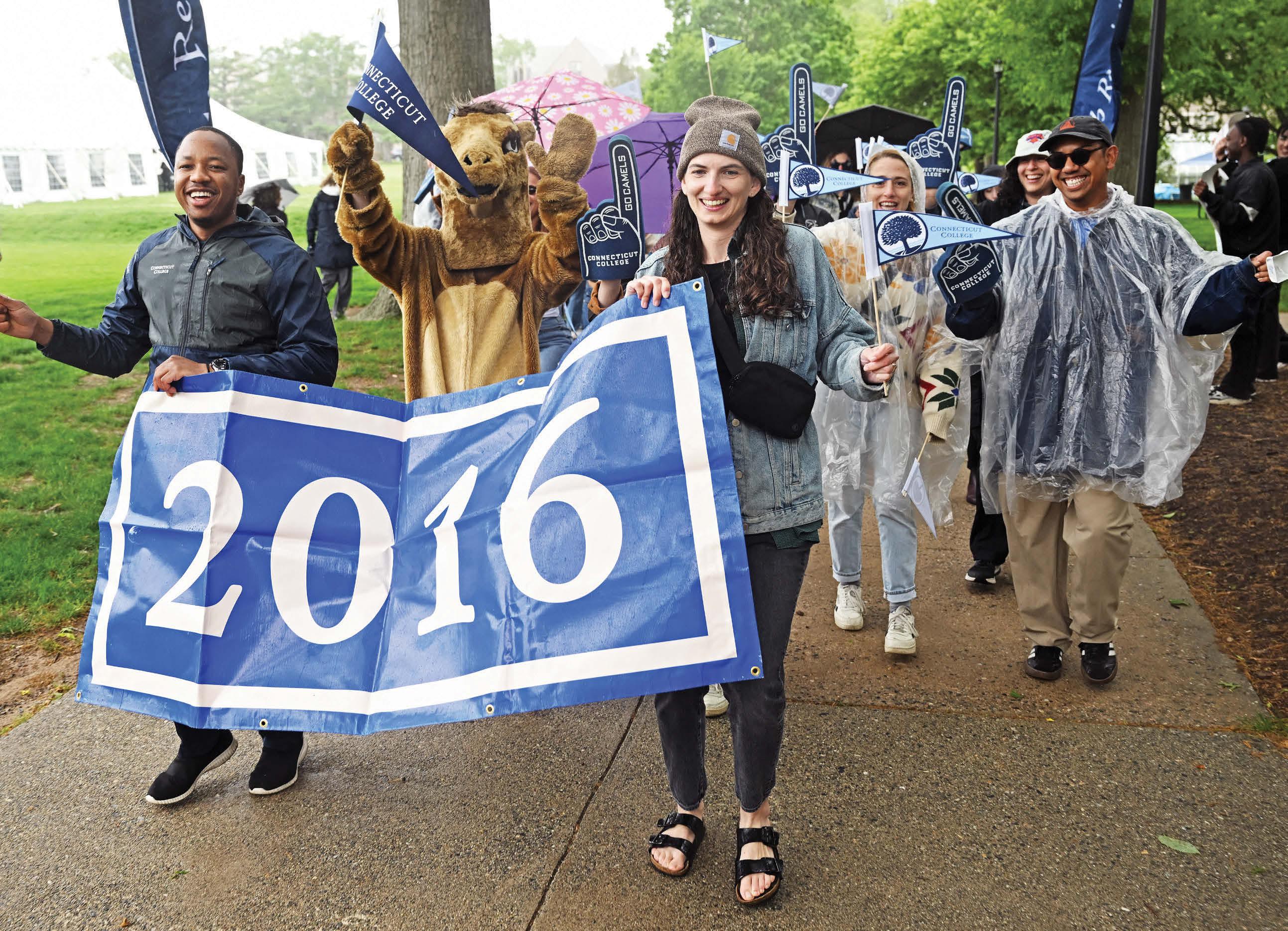


A little rain couldn’t stop the fun at Reunion 2026. More photos on page 39.
Sean D. Elliot