

Through changing decades, trends, and styles, Creek’s party scene has always been a constant. Yet despite a persisting culture, no two party experiences are the same.


POWER WEEK PEP: At Student Senate’s Power Week fundraiser pep assembly on Feb. 13, junior pom Chloe Savela (right) performs for the student body. The assembly capped off a record-breaking week, which raised $68,280 for Bags of Fun, a charity that buys care packages of toys and treats for chronically ill children.
PHOTO BY PETER PHILPOTT

In this issue, you’ll see a slew of important topics, from party culture, to grief, to our campus’s upcoming construction. But there’s something special about this issue. It was led and produced by our section editors and future leaders. Rather than an Editor-in-Chief-produced In-Depth, they had the chance to prove their skills in design, writing, and photography throughout the magazine. They all stepped up and produced a fantastic issue.
In News, you’ll get a first look at the future of Creek: new buildings, refreshed interiors, and facilities.
Our Features staff delved into nail culture, and two students’ passions in it.
Sports spotlighted two of our coaches and their pasts in pro sports, along with a student making his mark in America’s hottest sport.
A&E looked forward to summer with an ode to flip-flops.
Opinions hit several important topics as our writers explored grief, feminism, and our school’s culture of competitiveness.
Our Staff Editorial encourages all to exercise passion, effort, and gratitude in all of the mundane moments.
We are so proud of this staff’s adaptiveness—they took a new level of responsibility and rose to the occasion, crafting a cohesive, engaging piece we think you’ll all enjoy.
- Editors-in-Chief Izzy Krauss & Peter Philpott
Party culture has always been a large part of student culture at Creek, and through the decades it has distinctly evolved. Differences in fashion and music make each decade distinctive. Many aspects of parties have evolved with the years.
But even in the same era no two party experiences are the same. Kids who go to the same school and maybe even the same party can have completely different stories to tell. Some may end the night throwing up or blacking out. Others have a great time completly sober.
So with all these differences in between eras, and even differences in between the eras how has party culture at Creek evolved?
Staff
Editors-in-Chief
Izzy Krauss
Peter Philpott
Managing Editor
Sophia Hady
News Editor
Oliver Scala
Features Editor
Serenity Hurtado
Sports Editors
Andrei Machado
Kellen Ringland
A&E Editor
Dhanya Rajendiran
Opinions Editor
IV Collier
Video & TikTok Manager
Ella Fishman
Assistant Editors
Aleena Gopalani
Avery Exley
Berkeley Bowler
Clay Biskner
Elise Dougherty
Havana Amanlou
Keagan Hong
Staff Writers
Claire Crawford
Cyprus Jimenez
Ethan Catlow
Hope Porter
Lauren Laskowski
Sarmat Saparov
Visakha Dahal
Winslow Davis
Advisors
Seth Fine
Joya Haskin
Purpose:
The Union St. Journal is the official online and print news source for Cherry Creek High School. We are a student-run publication distributed to the students, faculty, and staff of Creek, and serve as an information source and two-way communication forum for both the school and community. We welcome guest opinion writers. Content does not necessarily represent the views of Cherry Creek High School or the Cherry Creek School District. Opinion articles do not necessarily represent the overall views of The Union St. Journal, CCHS, or CCSD.
Letters to the editor are accepted and can be submitted via email to usj.editorinchief@gmail.com Letters may be edited for clarity.
BY KEAGAN HONG & DHANYA RAJENDIRAN Asst. News Editor & A&E Editor
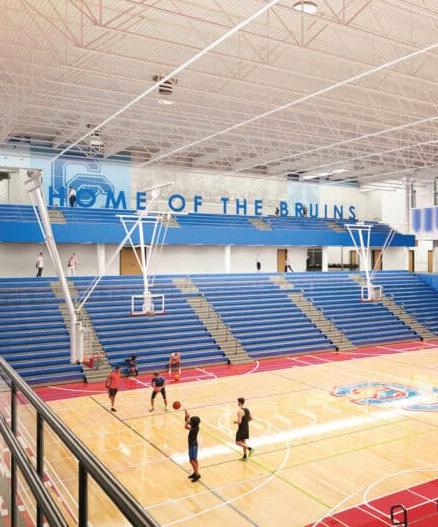
Creek’s long-awaited campus transformation and modernization is beginning. With the current admin building’s demolition already set in motion. The first of the plan’s two phases are expected to be completed by the summer of 2028.
The reconstruction was included in the 2024 Mill and Bond budget measure and the first phase mainly focuses on the West building.
The redesign splits West, Creek’s biggest building, into two specialized structures.
“So we’ll have an academic building and another building that will house all the PE, health and athletic facilities,” Principal Ryan Silva said.
The academic building will have three floors, with the second and third floors organized by department, while the first will provide a variety of services.
“Ideally, all of our science is on the third floor, all of math is on the second floor, and on the first floor is all the administration offices, business, our nurse, bookkeeping, cafeteria,” Campus Administrator Brynn Thomas said.
The other major part of phase one focuses on the new addition of an athletics building, which will house the range of athletic equipment and facilities.
“Some of that includes our locker rooms, health classrooms, all of our gyms, our weight room, team rooms, the
athletic offices, and we’ll have a dance room,” Thomas said.
The construction starting on campus means that many construction zones will pop up around Creek affecting areas here at school next school year.
“Students can expect to see clearly marked construction zones, safety signage and occasional changes to pedestrian routes,” CCSD Director of Strategic Communication and External Affairs Ashley Verville said. “Students should be mindful of posted detours and barriers, avoid entering fenced or restricted areas and stay alert around the west side of campus.”
These new construction areas will also occupy a part of Creek’s parking, so new temporary parking situations are being made available for students and staff. Discussions over how to manage parking passes and reduced space are still unfinished.
“We are working on some realistic parking solutions to allow all of our staff to have parking spots for sure, all of our seniors, and we are working to make
sure that we can accommodate the majority of our juniors,” Thomas said.
Creek students and staff will continue to use the current West building until the new buildings are completed. Passing periods will accommodate the longer walk from the current buildings.
“We’ll continue to have classes and athletic events that normally are hosted in our west building until the completion and unveiling of the two new builds, then, then we’ll move and transition into having school there,” Thomas said.
With all of the changes coming to Creek, Thomas explains that this temporary period of construction will have some challenges before the new west side of campus is complete.
“We’re gonna experience some discomfort, all teachers, staff, students, are going to need to be prepared for that and be able to look ahead at what the reward is going to be in the end,” Thomas said. “Because it’s going to be beautiful in the end, but it’s gonna be a little challenging to live through.”



BY PETER PHILPOTT & OLIVER SCALA Editor-in-Chief & News Editor
Superintendent Christopher Smith announced his sudden retirement on Jan. 28, ending his nearly five-year tenure at the helm of one of Colorado’s largest school districts.
This was immediately following the publishing of a Jan. 13 investigative article and TV report published by Denver7 that put his degree of professionalism into question. According to the investigation, Chris Smith
and his wife, district Human Resources director Brenda Smith, were allegedly responsible for using their seats of power to foster an atmosphere of intimidation across the district administrative apparatus.
An anonymous source, speaking to Denver7, said “the superintendent is leveraging his relationship with his wife as head of HR to make staffing decisions that benefit him.”
Other sources, many of whom chose to remain anonymous due to fear of reprisal, reported (among other things) that an HR conference room became dubbed ‘the crying room,’ indicating a hostile environment surrounding district HR.
“The Board of Education announced they are aware of the issues raised and they will discuss further at the next study session,” district Communications Director Lauren Snell said.
Chris Smith had not just been battling unpopularity from a faculty angle, as many students felt that his dodging of student meetings proved a percieved neglect of student concerns. Just after the publishing of Denver7’s article, Chris Smith cancelled a previously scheduled meeting with Creek’s
Young Democratic Socialists of America (YDSA) chapter, citing medical issues.
Senior Abby Shimelis, chapter founder and head of Creek YDSA, was immediately skeptical of the superintendent’s rationale for his absence.
"I was very suspicious," Shimelis said. “I was told he had an issue with his ribs, but the same night, the article dropped.”
Meanwhile, his cancelling of the YDSA meeting, to Shimelis, was the perfect metaphor for students’ perceived disconnect with the district.
“The whole point is teaching students and making sure they have a good experience until they've graduated,” Shimelis said. “If officials are unable to communicate or aren’t open to feedback, the district will only struggle.”
The school board has selected Dr. Jennifer Perry to be interim superintendent. She had previously served as deputy superintendent under Chris Smith from July of 2021.
“Her understanding of CCHS is solid,” Silva wrote in the email. “She asks questions when she wants to learn more about our students, staff, and community."
BY HAVANA AMANLOU Asst. Opinions Editor
Since 2010, Arena scheduling has been an opportunity for students to change their schedule at the beginning of each semester. But, starting next year, Arena will no longer be available..
Arena allowed students to wait in line once a semester to request scheduling changes with department coordinators and finalized with a counselor. These requests often allowed students to freely swap out any semester long class of their choice.
One of the reasons for discontinuing arena stems from the ability for students to change their schedule without the input from their parents or teachers, unlike the pre-registration process the previous year.
“So much time and effort is put into
pre-registration, where we have you talk to your teacher, get the parent signatures, spend the three week process, having that interaction,” Counselor Coordinator Christine Snow said. “Arena defeats that whole process.”
Over time, concerns and frustrations have risen amongst department coordinators, regarding arena.
“This has been a topic of conversation all four school years that I've been in this office, the inefficiencies and the frustration of arena schedule changes because of the volume of changes” Registrar Marcus Mcdavid said.
The impact isn’t simply staff-oriented, students have shown their frustration and Principal Ryan Silva understood the system was creating more problems than it was solving.
“It was misleading people to think you just had the ability to make all these changes,
when the reality is there's very few opportunities to make changes because there's not a ton of space in classes,” Silva said.
While Arena is ending, schedule changes will still be possible for “repairs” rather than preference-based swaps. Repairs include graduation requirement issues, duplicate classes, failed courses, or academic placement errors.
As students finish selecting their courses for next year, administrators say the removal of Arena marks a shift toward greater accountability and long-term planning. Rather than relying on last-minute changes, the new system is designed to ensure schedules are built thoughtfully from the start.
That’s why we’re pushing so hard right now to make sure you’re really thoughtful,” Silva said. “If you sign up for a class, you need to understand that you’re going to be stuck in it.”

BY CLAIRE CRAWFORD Staff Writer
Usually, substitute teachers’ names and presences don’t always have a strong impact on high school students. But longtime substitute teacher Michael Storin usually gets positive and compelling reactions from the students under his care.
“Storin is one of Creek’s favorite substitutes,” senior Raene Mascarenas Reese said.
He’s been subbing at Creek since 2013 and is known for his spontaneous stories, inspiring monologues, positive attitude, and playful humor. In his teaching, he focuses on building strong, supportive connections with both students and colleagues.
“It's when I see a sparkle in their eye, or a smile on their face, then I know that we have connected in a positive manner,” Storin said.
Storin has a strong love and passion for teaching. Which stems all the way back to when he attended Coe College in Cedar Rapids, Iowa, which is where
he started teaching science in 1974 at Wilson Junior High.
He has taught at multiple schools throughout Colorado, including West Middle School and Prairie Middle School, where he taught for 33 years before retirement. As well as being a retired teacher, Storin has two kids, which he believes assists in his relationship with students.
“I want people to understand science is such a cool [topic] to learn,” Storin said. “I [also] want them to appreciate everyone in this department.”
With Storin being a part of Creeks community for over 10 years, he recognizes the work that goes into being a teacher, especially at Creek.
“Full-time teachers have so much more responsibility,” Storin said. “The whole preparation just for class time is so much more intense now than it was when I was a teacher.”
Before he became a substitute, Storin used to coach wrestling at Prairie Middle School. His old student, math teacher Rob Matuschek, has since worked and learned alongside him for many years.
Storin’s ability to help students grow and mature has never faltered over the years. His guidance helps many kids with ambition and inspiration for their lives, proving that it’s in their hands and they can be whatever and whoever they want to be.
“He gives me hope for the future,” senior Sofia Gutierrez said.
Many students also feel that his advice gives them important new standpoints on their lives.
“He definitely has a bigger impact than he thinks he does,” senior Hazel Kemp said.
“There was a lot of character development that the coaching staff would do,” Matuschek said. “He was really good at nurturing, yet motivating and inspiring.”
Storin thinks that recognizing kids he has only substituted for once, smiling at kids he has never met before, and joking with kids he's familiar with are ways he can connect to the community with an irregular schedule.
“I hope we all can learn something from him, about having an impact on people and always knowing to take a positive outlook on things, no matter how tough it gets,” Matuschek said.


BY ALEENA GOPALANI Asst. Features Editor
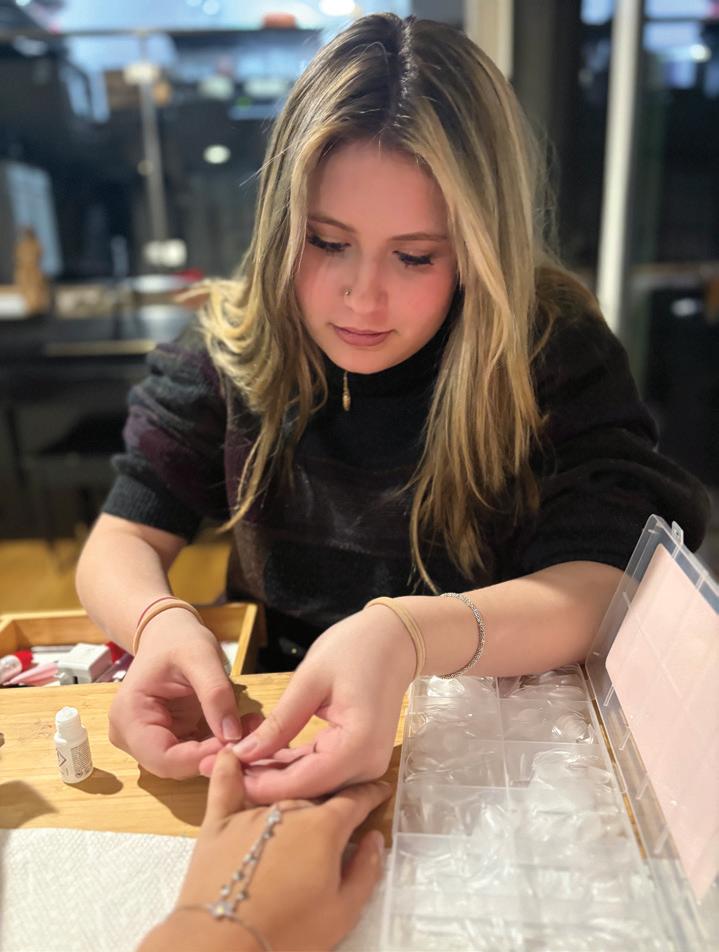
Around last year, sophomore Jette Breese realized how much she loved getting her nails done, but how unaffordable the cost was of constantly getting a manicure. This sparked the idea of learning how to do them herself.
As expected when starting a new skill, Breese found doing nails to be difficult and discouraging at first, but was able to persevere.
“[Doing nails] was hard at first. I had to save up a lot of money to buy supplies, and in the beginning, I wasn’t very good,” Breese said. “I felt like I was wasting money. But over time, I talked to people, learned new techniques, and kept practicing.”
Although Breese considers herself a beginner, she has a wide variety of skills and is willing to do anything the clients ask. Breese is able to do acrylic, Gel, and Gel X.
Only taking about two months to become confident in her skills, Breese was able to stretch her abilities in a short amount of time.
“She has a lot of charms and colors and can do everything, if you just give her the time,” sophomore Sela Kahn said.
Breese doesn’t even need that much time to do the nails, which makes her even more appealing to clients. A basic set of acrylic nails for Breese only takes her around an hour. More intricate designs usually take about an hour and a half. According to Bela Beauty College, this is relatively quick as compared to the 1.5-2 hours it takes for other nail technicians to do.
Starting by only doing her friends’ nails, her first client was Eden Weisberg, a junior at Denver School of the Arts.
“Her artistic skill has definitely helped her, and whenever she does my nails, the
design looks exactly how I envisioned it,” Weisberg said. “People should come to her because she’s fun to be around, can do custom designs, and will do a good job executing what you have in mind.”
In addition to being pretty good for a beginner, Breese believes people should come to her because of her prices.
“Nail salons are really expensive now, and an average set at a salon costs about $60–$70,” Breese said. “I’m more affordable, and I’ll do my best to make sure you’re happy with the outcome.”
Breese understands the financial status of an average high school student, hence why she charges less.
“I get that kids don’t want to pay too much. I have another job as well and understand that,” Breese said. “Since I’m still new, I charge around $20 for a basic set because I don’t want to be too expensive while I’m still growing as a nail tech.”
Rather than just viewing it as a job to make money she truly loves doing nails.
“My favorite part is getting to know people and talking while doing nails,” Breese said. “I also love seeing the different designs people come up with. Every design is unique and interesting.”
Breese is very proud of her growth, and her clients believe she will continue to be

great.
“Her willingness to execute exactly what I’ve shown her has been awesome,” Weisberg said.“She has so much potential.”

BY BERKELEY BOWLER Asst. Features Editor
When sophomore Harper Giery started her nail business, it was first about feeding into her creativity, but after almost two years of doing nails, she discovered a true passion. In the beginning, Giery started watching TikTok videos of people embodying their creativity through nail designs, which led Giery to pursue a passion for designing and doing nails.
“They were bad at first, but I slowly started to get better, and I enjoyed doing them,” Giery said.
Through TikToks and YouTube videos, Giery took her skills from beginner to intermediate to advanced.
“When I look back on my first-ever sets, and I’m like, ‘how did my friends ever let me do that on them?’” Giery said.
In eighth grade, Giery started doing other people’s nails. She had to fund her supplies, so she asked her parents to help, and they happily agreed.
“They’re actually pretty supportive of it,” Giery said. “Both my parents want me to go to cosmetology school.”
After getting her business started, she now provides for her supplies by herself. Her interest started when Giery’s passion for creative body art started with people online and noticed that a less permanent option is nails, so she started on her friends.
“Its just another way of expressing my creativity and I love sharing it with people,” Giery said.
Most of her clients are people she sees on a regular basis. She admires all of her work, especially when she sees people love it as much as her or more.
“[I love] seeing someone’s nails [that I did] and seeing them every day,” Giery said.
Giery has experienced many complications when learning how to do
nails. She did not know how to use chemicals and properly clean up. She ruined her AirPods with the use of acetone and gave herself contact dermatitis. But now she has found out how to use the correct safety precautions.
“But of course, with trial and error, I gained experience,” said Giery.
She has expanded her knowledge and is now very perceptive with these chemicals. Now Giery knows how to properly sanitize and is very experienced with anything that comes her way.
“She has clearly been doing this for a long time, and you can tell because the designs are really good,” sophomore Maddie Patton said.
Giery has done Patton’s nails many times. She loves the comfort Giery’s home salon offers, especially due to the fact that it is in a private spot in her own home, with many describing it as having a cozy feeling. The difference between Giery’s salon versus other nail salons is that she cares for her clients and can relate to them because of her similar age.
“I just understand wanting to have your nails done. I’m also the same age as most of the girls,” Giery said.
Right now, her favorite nail designs are polka dots and anything funky and unique. She loves experimenting with new designs and loves it when people are creative and show her something she has never seen before.
“I charge $30-40 a set, it doesn’t matter what design, and an extra $10 for a soak off,” Giery said.
Her prices are

lower than most salons; according to Style Set, acrylic nails can run between 25 and 120 dollars.
Giery is only just starting her adventure in nails and she hopes to have a future in cosmetology school where she will expand her skills and become more advanced. She also hopes to start her own business of practicing nails.
“I want to go to cosmetology school and also go to college for business and get a degree in business so I can start my own business,” Giery said.

CRAFTMANSHIP: Harper Giery’s artwork on display, which takes her two hours to complete.

BY SOPHIA HADY, ANDREI MACHADO, & IV COLLIER
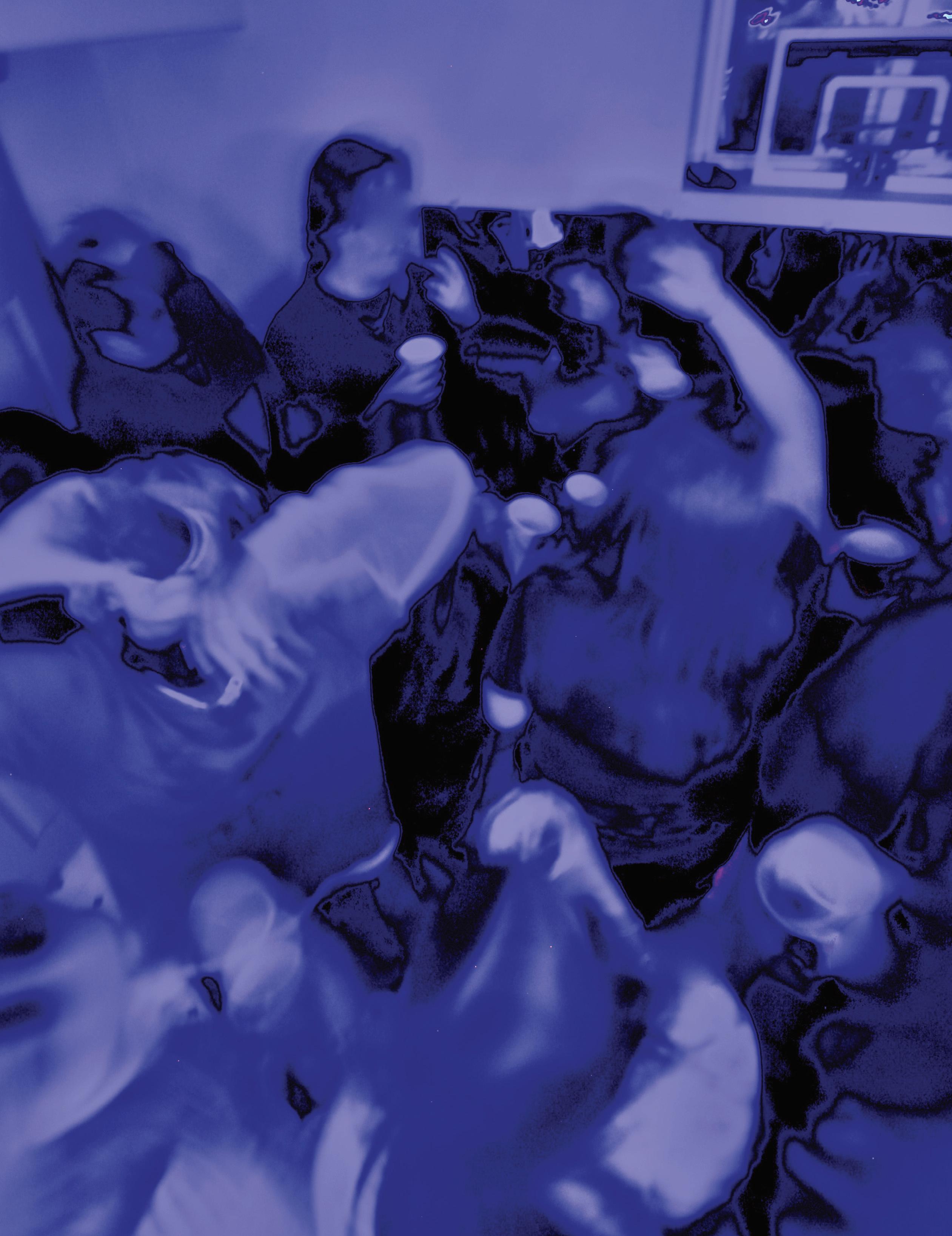
CREEK’S PARTY CULTURE: For decades creek students have partied. they have built a party culture that has transgressed through the ages.
BY
“We didn’t have phones so we would go to the McDonalds... and that’s how everyone would find out where the biggest parties were.”
- 1992 graduate Kerry Moyer
“We had friends that lived in Glenmore Country Club... [and] they would go take the golf cart out on the golf course at two in the morning.”
- 2001 graduate D. Duman
“[Themed parties] were usually hosted at someones house... some students started a DJ business and would play music at parties.”
- 2002 graduate Becky Simon
“I was in high school when Juul vaping became a big thing... you could buy nicotine or tobacco products when you were eighteen.”
- 2017 graduate Maxwell Tidyman
THE TOP:
Artists: Michael Jackson and Madonna
Dance Moves: The moonwalk created by Michael Jackson
Fashion: Lycra Power Suits and the ‘Americana’ look

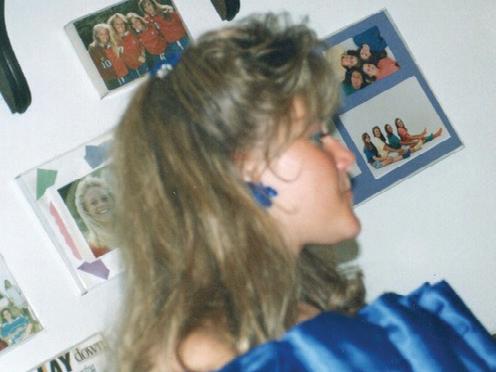
THE TOP:
Artists: Backstreet Boys and Nirvana
Dance Moves: The Macerana created by The Bayside Boys
Fashion: The ‘laid back’ look, slip dresses, and button-ups


THE TOP: Artists: Britney Spears, Eminem, Coldplay
Dance Moves: Krumping created in South Central Los Angeles
Fashion: low rise flared jeans, von dutch trucker hats, and leather jackets
THE TOP: Artists: Taylor Swift and Drake
Dance moves: Gangnam Style created by PSY
Fashion: Athleisure wear, cable knit sweaters, and the feminine silhouette




March 2026
For junior G.G. a Halloween party resulted in a depression-induced drug haze.
“I was already not feeling great, I’d been [depressed] for about a year at this point and just progressively getting even worse. I really wanted to go to this party and I really just wanted to let go for the weekend. But then [my ex] and I were drunk and high and it freaked me out, and I was super uncomfortable with the situation and just gave up on myself. Nobody would ever accept this from me but I went to the bathroom and did

cocaine. And that really got me going, I was wired. But then when that wore off I genuinely couldn’t care less about myself and I threw everything away that night. So I went back to the bathroom and I did acid. I made a lot of mistakes that night that I can’t come back from. A lot of people saw me in a different way and they’ll never be able to unsee that version of me.”

After having the cops shut down the party he was at, and having one too many drinks, junior L.C’s thought process wasn’t the best.
“Doing the only thing that made s“Doing the only thing that made sense to me at the time, I got into a complete stranger’s car with no phone, no communication to my friends who are at the old party and I was just gonna see where the wind took me… Once I finally got in this car, we drove around for a bit they said that they were gonna go to a party in Arvada, but since I had no phone and no ride home and I kind of knew the area I was just like ‘yo let me out’…So there I was, sitting in a random neighborhood. After a while I got out onto a main
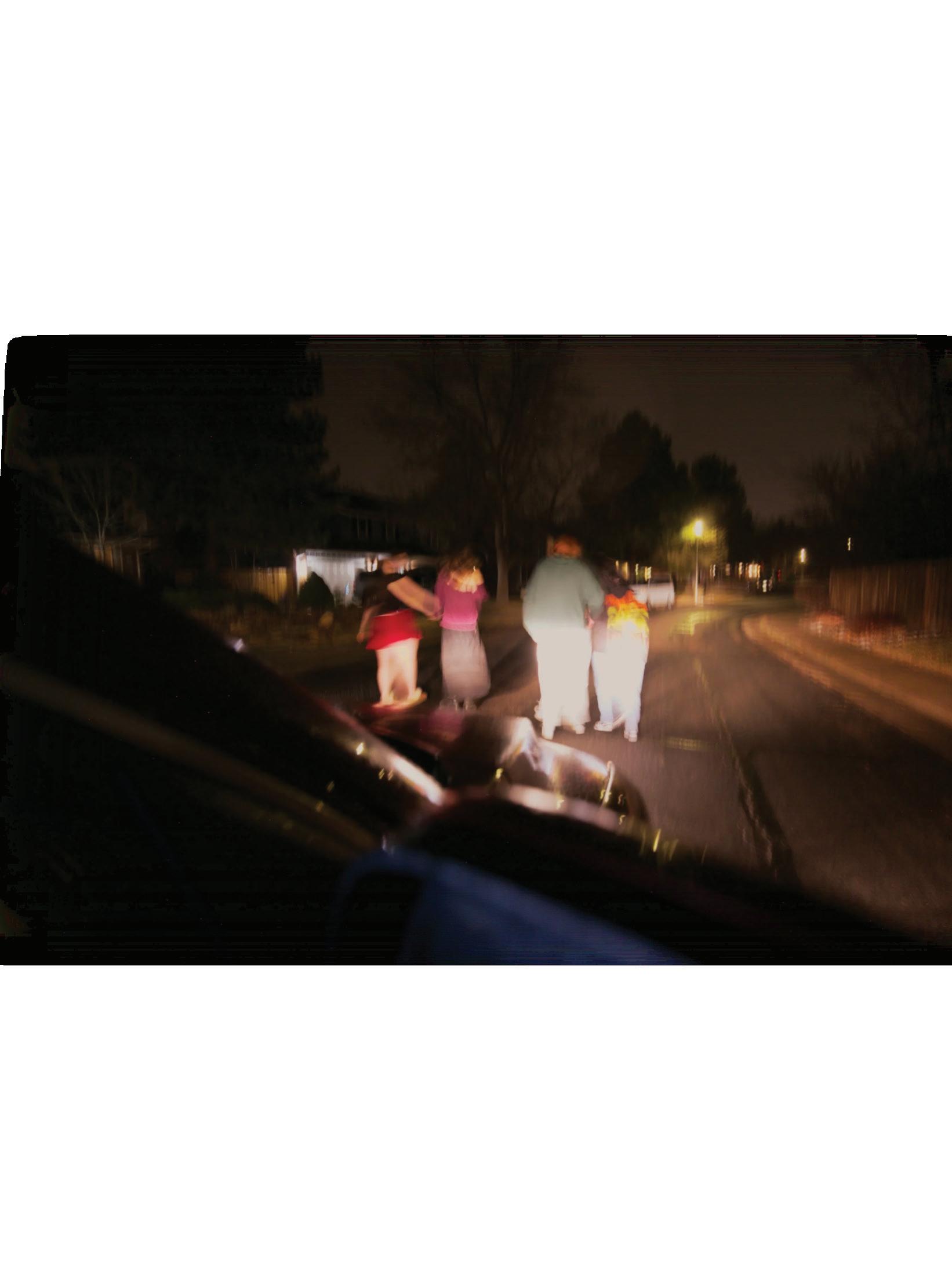
road and I realized I was by my old middle school, so I ran three miles back to the old party to see where my friends were. But on my way there I passed this park and I decided I was just gonna sit there for a bit and think about life…as I’m sitting there about a block away from the party where my friends were and as I’m sitting there, I heard a weird noise. I looked to my left, and about 20 feet away, I saw what looked to be a flare and it was shooting red smoke. None of [the fireworks] hit me thankfully and I didn’t really realize what happened until five seconds later when I looked over to where the party was… And another firework goes off at ground level so I start sprinting over there.”
.
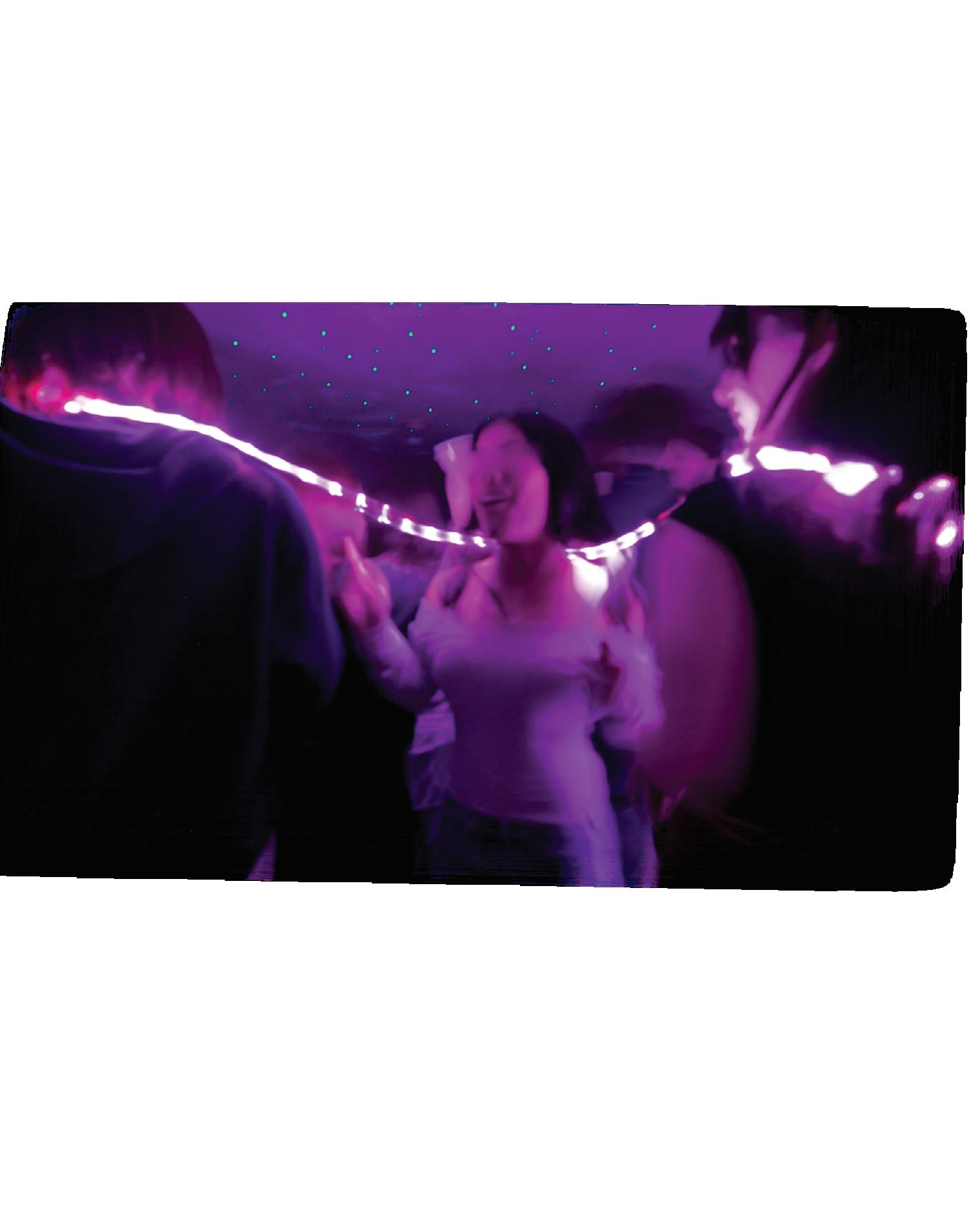
Unlike the other stories, sophomore Sela Kahn’s party experience did not involve alcohol or drugs, but rather an impromptu rap battle.
“I went outside looking for my jacket, and I came back in and everyone was like ‘where were you? You missed the rap battle!’ And I was really sad I missed the rap battle so everyone redid their raps and that just meant a lot to me. My rap got lots of applause. I was really happy with myself. It was just fun, everyone had so much energy and everyone was into it. And that’s

DPone of the reasons I like going to parties, it’s a lot less pressure when you’re meeting people because like you already have something in common by being there and it’s a very relaxed social setting…like there’s lot of energy but I think everyone’s guards are a little bit down and it’s a lot easier to like get to know people and like make friends and just be a little more outgoing. Usually I don’t talk to people outside my social circle very much and it’s an opportunity for me to do that without stressing out because there’s so much less pressure.”
arties have been a big part of Creek’s culture for decades, but how do they look now? There’s no definite answer to that as everyone’s experience at parties varies wildly. Here are four students each with their own stories from parties. Initials were used for some students to protect their identities.
ressed up and puking was not how senior R.H expected her ‘Halloweekend’ to end.
“I was getting ready for a Halloween party and I was pregaming with my friends. As we’re getting ready, I had around three shots of vodka Tito’s. So I go in already a bit tipsy and bold, and I see a guy I vaguely knew and he has a beer in his hand and so I ask where he got that and he leads me out to the backyard where there was a stash of beer behind a bush. So I start drinking this [hard apple cider], and I’m still talking to this guy and he offers me a Zyn and I’ve

never taken a Zyn before. I was not in the right mindset, but also I was like ‘oh people take Zyns all the time at school and I’ve done weed before like this can’t be that bad.’ And so I take it and I finish my beer and as I’m continuing talking to this guy, I start to zone in and out of reality. I was feeling really off-balance and had to sit down on the ground and I threw up. I wasn’t able to stand in heels and [the host mom] asked ‘do you wanna go upstairs and borrow some of my shoes?’ And so I went upstairs and passed out on the floor of her bedroom, then she helped nurse me back and called my mom.”
BY CLAY BISKNER Asst. Sports Editor
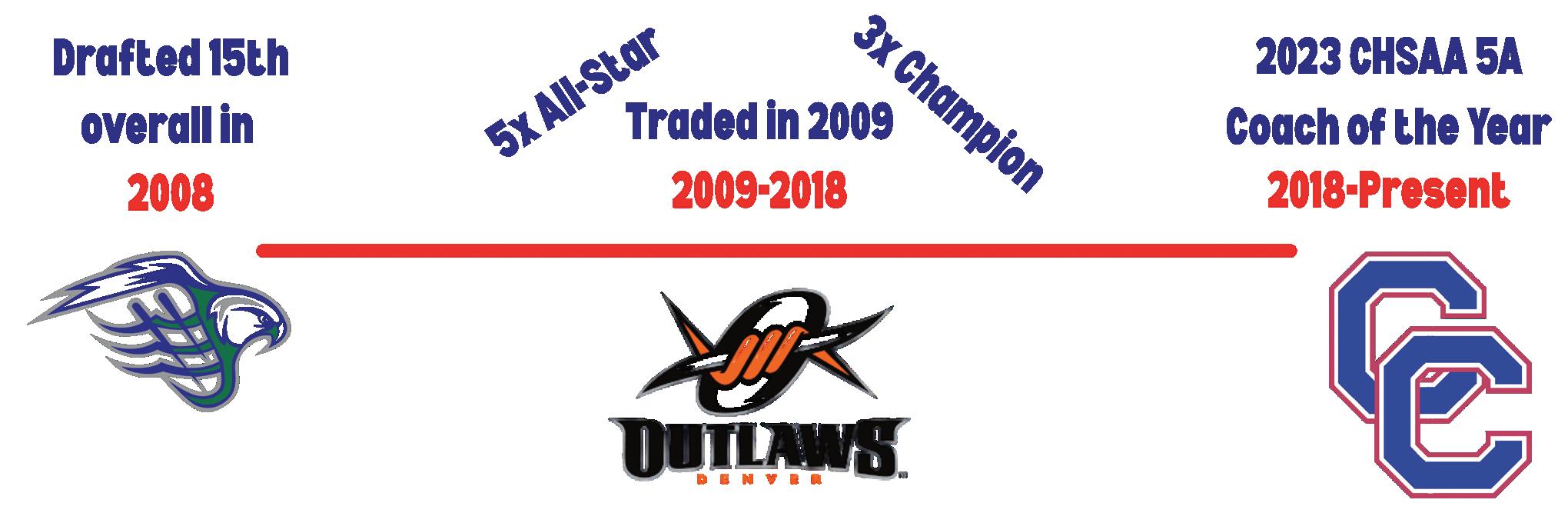
With the 25th overall pick in the 2008 Major League Lacrosse (MLL) draft, the Baltimore Bayhawks selected Matthew Bocklet, the Creek boys’ lacrosse coach for the past nine years.
During his 11-year profes

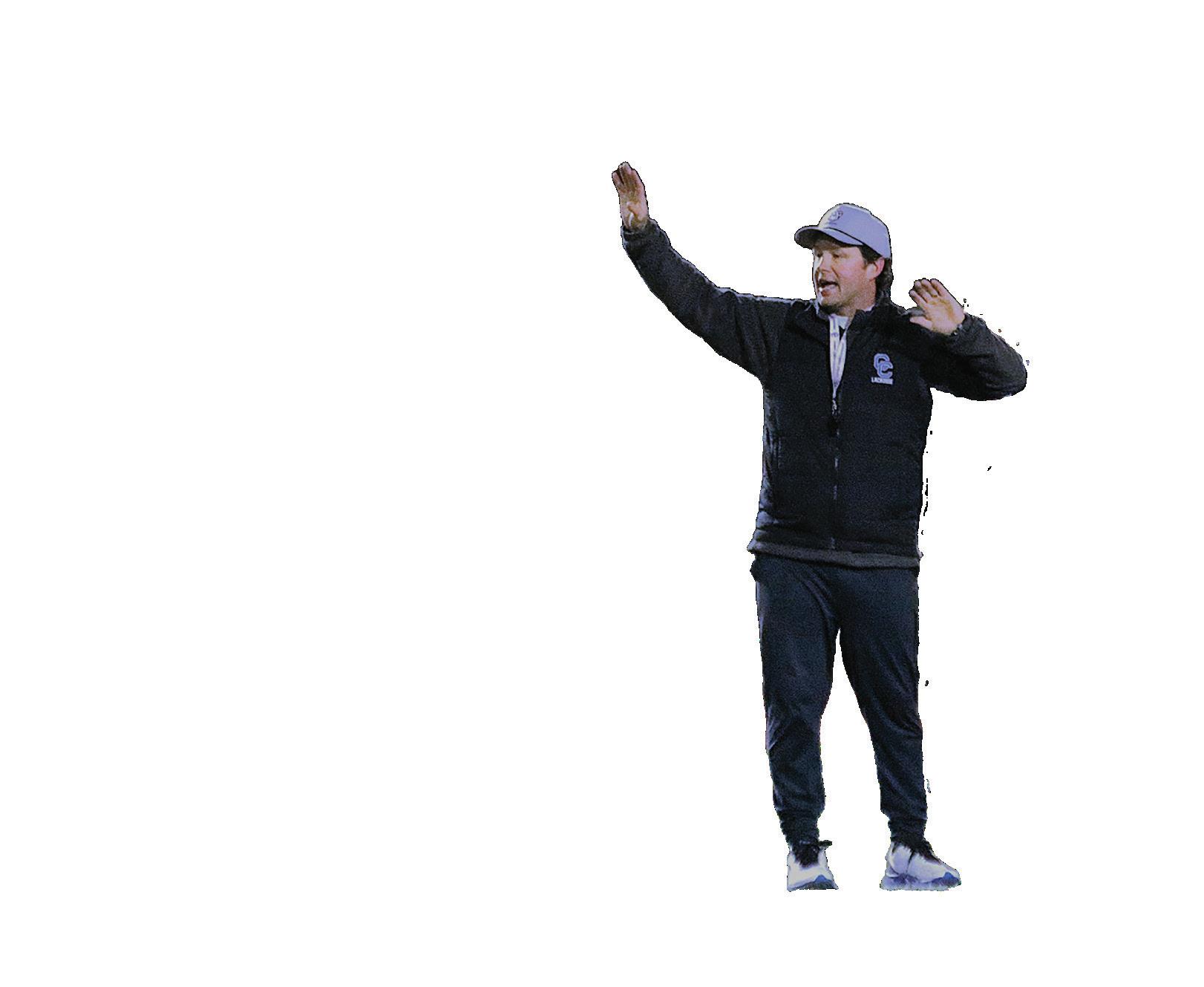
a locker room and his players trusting him as a coach, they look to learn from him.
“Everyone respects him incredibly,” Billings said. “That sort of thing in the locker room creates a sense of camaraderie and a mindset that everyone’s ready to learn because he’s so knowledgeable.”
As players look to him to improve, he draws on his own experiences to
Using his experiences to build a community in his locker room.
“I love being a part of a team,” Bocklet said, “a group of people working together to become the best version of themself and to reach a common goal.”
Building a family off the field helps create chemistry on the field as they prepare for the upcoming season. “The team has been working extremely hard this offseason,” Bocklet said. “It should be a great season.”
BY ANDREI MACHADO

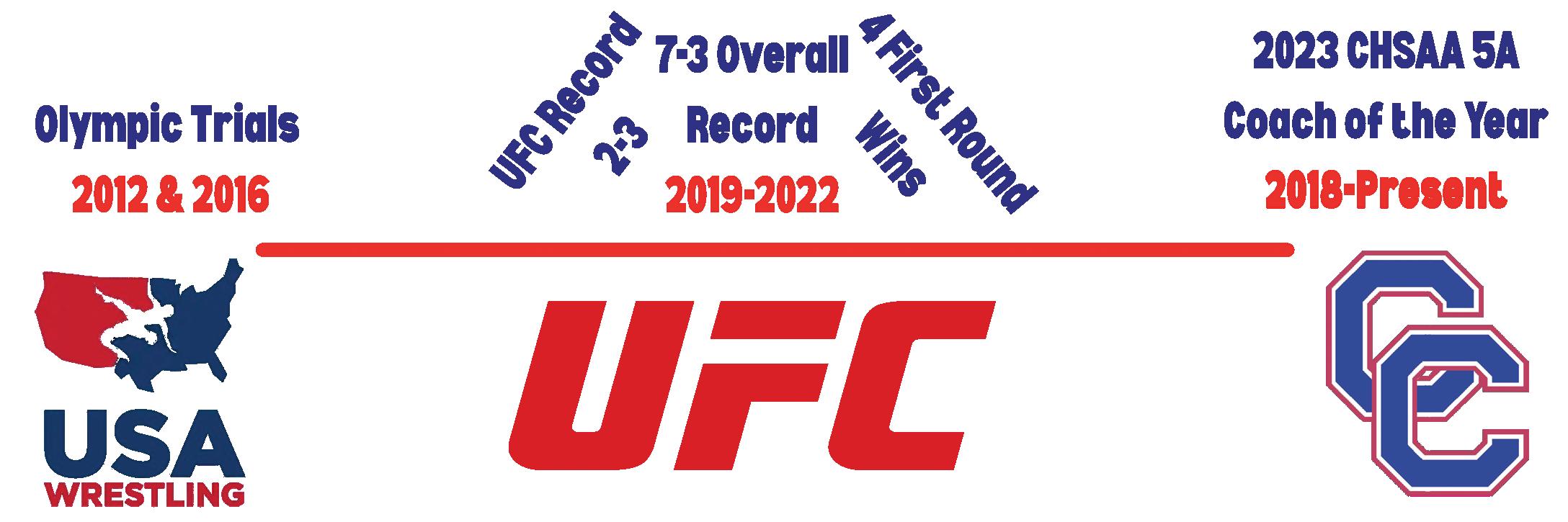
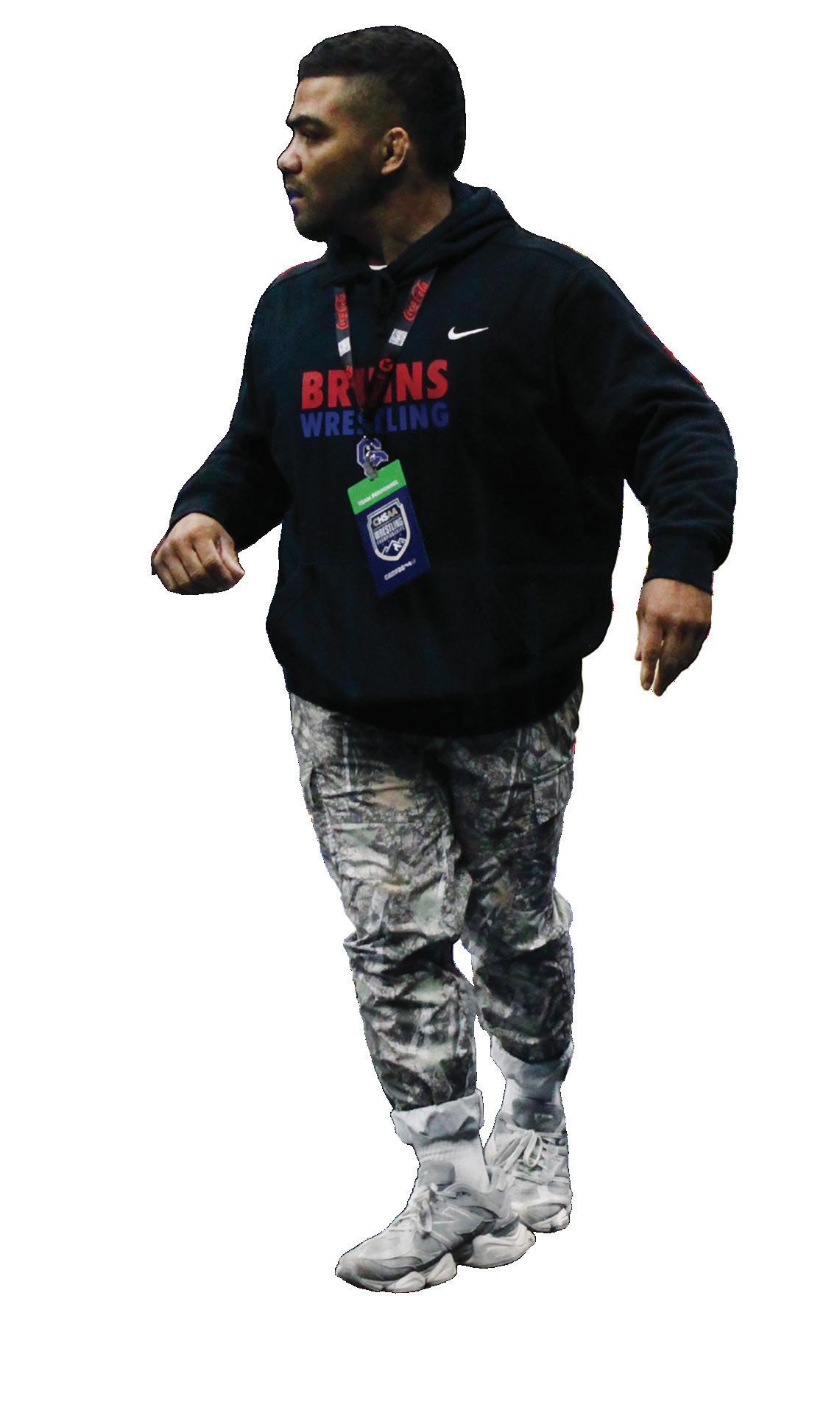
or the first time in over two decades, the Wrestling team has a new head coach, and to fill that position comes in someone with a more than qualified resume. With a passage through the UFC, and a professional MMA record of 7-3, Deron Winn is Creek’s new
In his professional career, Winn climbed up the ranks quickly, going pro right away, skipping the amateur level and making the UFC very early on. “I made it to the UFC in five fights and under three years total doing MMA,” Winn said. “Then I was in the UFC for another three years where I racked up a record of 2–3. It was tough, I was learning
His professional resume doesn’t stop there however, as he’s also been a part of the U.S. national team for freestyle wrestling and tried out for the Olympic team in 2012 and 2016.
“This I say would be more beneficial for [coaching] than the background in fighting,” Winn said. “Either way I have prepared, trained and been around coaches at the highest level.”
Beyond his professional career, Winn has a lot of high school wrestling experience under his belt. He won three state championships in his home state of Missouri as a student. He coached a high-ranking team at Gilroy High School
in California.
With Winn’s extensive history with the sport through his entire life, choosing him to lead Creek’s wrestling team made sense.
“He obviously has a very strong record as a wrestler, so he’s got a lot of history,” said Athletics Director Jason Wilkins, who was on Winn’s hiring committee.
His experience isn’t the only reason he’s been chosen to take up the coaching position with him having many recom mendations for the position.
“When wrestling people recom mended him, Mr. Silva liked him, I liked him, that just leads you to be ex cited,” Wilkins said.
Winn’s first season coaching at Creek has already shown promise, with four wrestlers qualifying for state. Two of them, senior Xzavier Tixier and junior Oz Nowick, making it to semifinals.
“My first season coaching at Creek was great, but challenging,” Winn said.
“I wasn’t used to being the guy in charge, but I’m doing my best to learn to be more efficient next year.”
With his first season down, he can look to the future and plan ahead and set goals for Creek’s wrestling program.
“My ultimate goal for Creek wrestling is to not only be the best team in the state, but one of the best in the country,” Winn said. “It will take a little time but I got all the ingredients to make it happen.”
BY ALEENA GOPALANI Asst. Features Editor
The fastest-growing sport in the U.S., pickleball, is continuously sweeping the nation and its youth. While it’s difficult to go pro in any sport, especially at a young age, sophomore Kaleb Perez is well on his way as he climbs through the pickleball ranks.
The sport piqued Perez’s interest in eighth grade after first playing with friends. He began to frequent local courts to play several times a week, sometimes even eight hours a day. The sport stuck after he discovered and joined EPIC Pickleball Club.
“My first tournament, I ranked 4th,” Perez said. “[It] really impressed me because there were 35 people in my division and 800 participants total.”
Playing in tournaments six months after he began playing showed Perez had a natural talent.
Now playing for around three years, Perez scored a 4.0 on the Dynamic Universal Pickleball Rating (DUPR). Since the
DUPR scale rates professional players a 5.0 or higher, Perez is already considered a semi-professional.
But his impressive feat is overlooked due to pickleball’s stereotype as an old person sport, sometimes being disregarded as a sport entirely. But he doesn’t mind facing backlash for loving such a categorized sport.
“[Kaleb’s] someone who isn’t afraid to be called weird for playing a sport that isn’t too mainstream,” said Perez’s friend Oliver Ngyuen, a sophomore on the CU Boulder pickleball team.
Perez embraces the adversity off and on the court.
“When he started, he’d be playing with folks in their 60s, but he didn’t care,” Perez’s dad, Ken Perez said. “Even if he’s playing against people that are much better than him, he doesn’t care.”
After hopping around several different clubs, Perez began to get sponsored. After his first sponsor, Komodo Pickleball,
“I’ve
opened up future opportunities with other sponsors, his career took off. He’s currently sponsored by Holy Performance, UDRIPPIN, I1won, Game Set Match, and EPIC Pickleball Club.
“I’ve played a lot of sports, but because pickleball is fresh, it feels more like a community rather than [a clique],” Perez said.
He cares enough to leave a lasting impact, striving to make changes for others.
“When he was a freshman, he was set on making pickleball more available for high school kids,” Ken Perez said. “He cares about the sport a lot.”
Finding a connection in pickleball, Perez’s unique and sociable identity has created new environments and chances for players, no matter their level.
played a lot of sports, but because pickleball is fresh, it feels more like a communnity rather than [a clique]”
- Sophomore Kaleb Perez

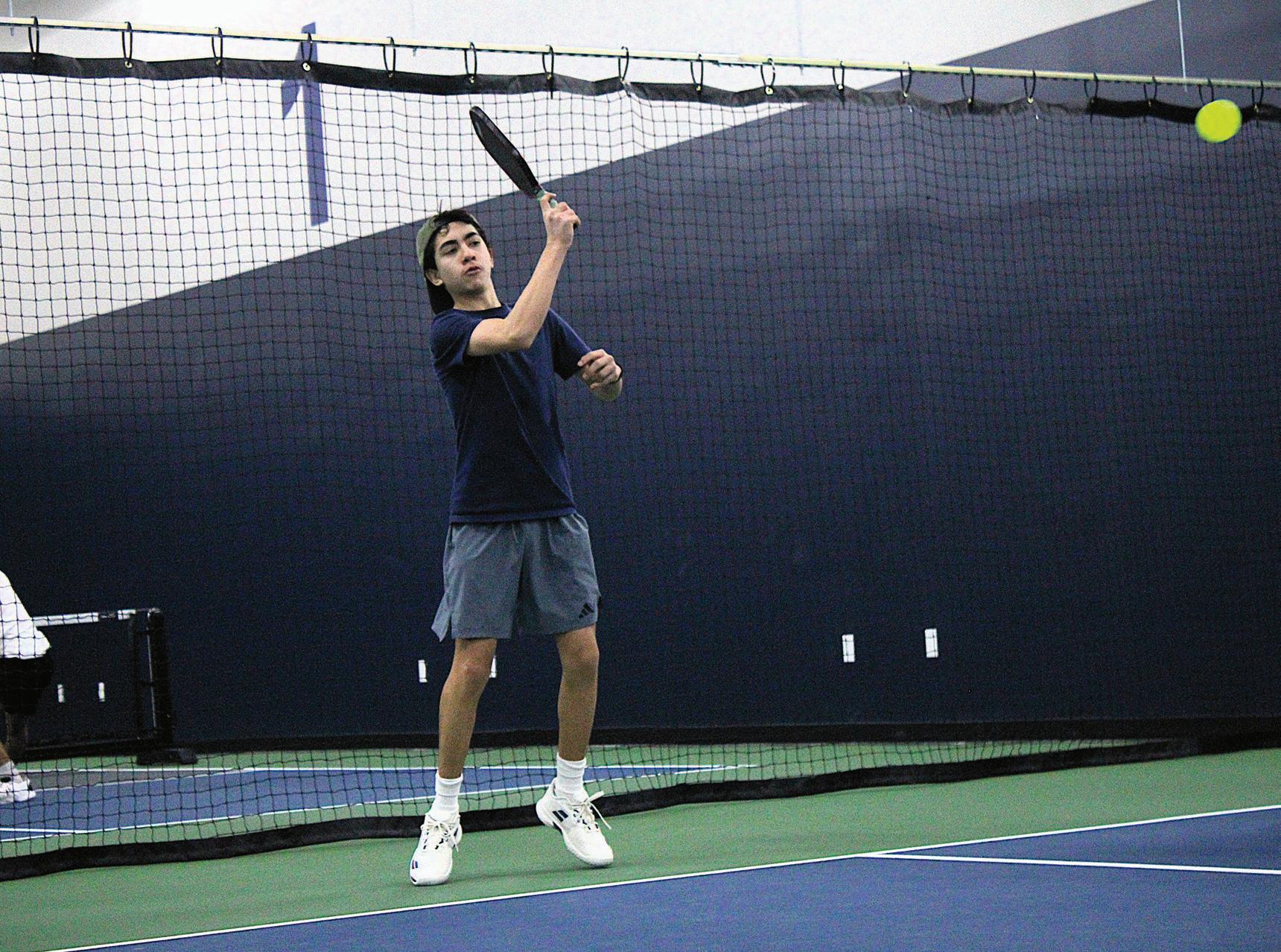
Perez’s ingame performance demonstrates the talent he has for pickleball that some athletes aren’t dedicated enough to learn.

“At some point, you have to realize that talent beats skill,” Ken Perez said. “Kaleb has that talent.”
“I think he has all the [assets] necessary to [go] pro,” Nguyen said.
The other key aspect in Perez’s performance and reputation lies in himself.
“A lot of what his success is his confidence,” Ken Perez said. “He takes [it] into everything he does.” Perez’s hopes for a future in pickleball stretch throughout college. “If it’s in the cards, I’d definitely consider [going pro],” he said. “[Pickleball’s] something I love doing, and [it] would make me a lot of money.”
Those who hope for Perez’s skill to blossom want what’s best for him and his possible future audience.
“He’s a great kid,” Nguyen said. “It’s important for the world to know it’s people like [Kaleb] that make the difference.”
COMMITMENT: In the midst of an intense match on Jan. 31, sophomore Kaleb Perez plays hard to win a match at 3rd Shot Pickleball
BY KEAGAN HONG Asst. News Editor
Super Smash Bros, also known as Smash, is a Nintendo fighting game series featuring iconic characters from various franchises.
With themed stages where the goal is to knock opponents off instead of depleting their health. Each
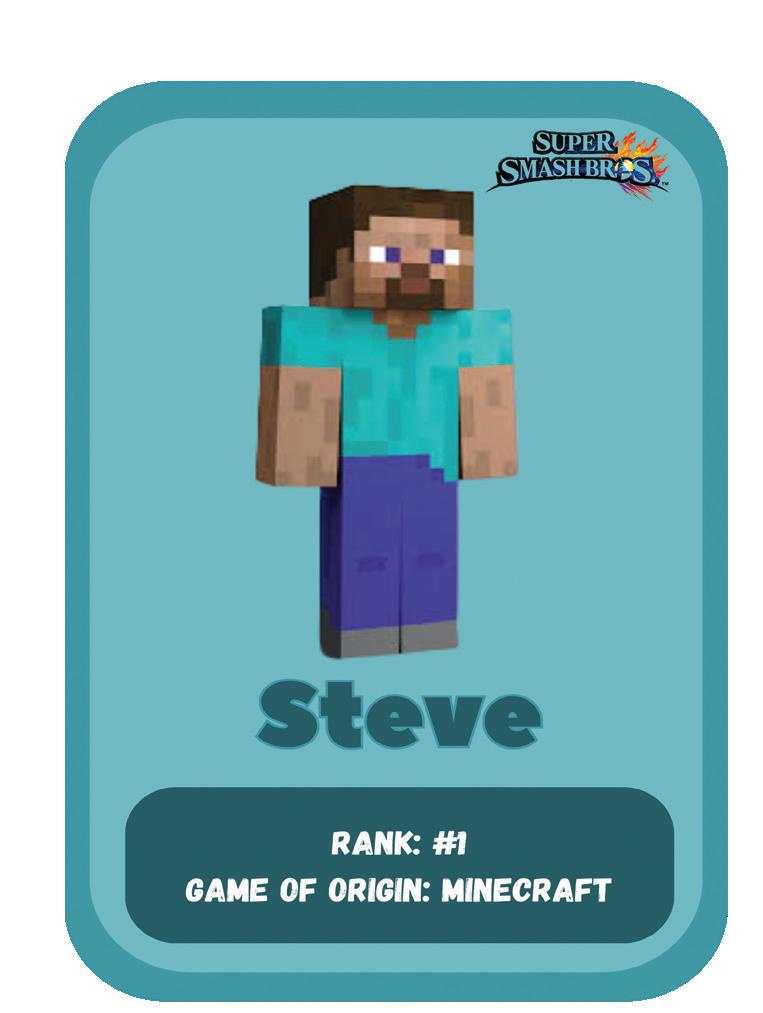


S+ TIER
First appearance: Fighters Pass Vol. 2 on Oct. 1. 2020
“I enjoy the macro block ability, you place a macro block above you and if someone is on a platform above you, or falling down towards you,” junior Tristen Lee said. “You catch them in a loop.”
Weaknesses: predictability, slow run speed, low jumps.
“People sometimes don’t like Steve because of how good and powerful his character is in general,” said Lee.
Moves/Abilities: Minecart side special, TNT trap down special, Elytra recovery, mining for better weaponry.
character has their own unique move set based on their abilities from their respective games. They are often ranked throughout of the 82 characters. We asked Esports members which character they main and what is so special about each character.



First Appearance: Super Smash Bros for Nintendo 64 (1999)
“He’s just a really simple and chill character,” junior Levin Vang said. “I also really liked his skin which is why I started maining him in the first place.”
Weaknesses: large hit box, poor recovery, weak shield, lacks projectiles, super heavyweight.
“I use the Giant Punch often which just lets him hit really hard with a lot of force,” Vang said.
Moves/Abilities: Cargo throw, Meteor Special: buries opponents on the ground, Hand Slap: creates shock waves.

C- TIER
First appearance: original Super Smash Bros. for Ninendo 64 (1999)
“He uses a remote bomb which is useful since you can use it whenever you want,” junior Brode Comegys said.
Weaknesses: predictable recovery, poor mobility, low air speed, hihg lag on aerial attacks, self-damage through bombs.
“He’s pretty cool and I wanted to see if I could make that work,” Comegys said.
Moves/Abilities: Hero’s Bow: fires charged arrows, Gale Boomerang: pulls enemies back, Spin Attack, Bomb Loops.
BY SOPHIA HADY Managing Editor
As 70-degree days become more and more abundant, and I get to put my feet in flip-flops more and more, I begin to love and become ever more grateful for flipflops.
I worked as a lifeguard this summer, as one does when they only want to wear bikinis and sit in the sun, not understanding they’d have to endure constant heckling from pre-teen boys and Karen mothers, but I digress. I kid you not, I don’t think I wore closed-toed shoes once. I’ve never felt freer than in those 3 months where my feet were free from socks.
Listen, maybe you’re reading this and
cold, and if I try to stop being too hot, I’m too cold and vice versa. But when I wear flip-flops, it feels like I keep a perfect body temperature.
Also, flip flops are so cheap; if my flip flops break and deteriorate, that’s $10 that has already left my bank account breaking, but when my Converse falls apart, that’s $60 falling apart. Yes, I’m aware some flip flops can cost upwards of $30, but that might just be a buyer issue, not a product issue. I’m saying that as if I didn’t just drop $44 on a pair of Havaianas. But nevertheless If you’re spending more than $20 on flip-flops, unless they are Birkenstocks or Tori Burch, I’m judging you.
When it comes to fashion, flip-flops are such a cute statement piece. They go with everything: jeans, leggings, wide-legged sweatpants, shorts, etc. I have so many is-
We asked students: What are your favorite brand of flip-flops?
Junior Chloe Savela: Tory Burch
“They look cute with every outfit and are comfortable,”
Sophomore Saanvi Kataria: Birkenstocks
“They are really comfortable and I love wearing them during the summer,”
Sophomore Iris Felix: Havainas “They’re so comfy to wear,”


would have been absolutely burning piping hot in my head, but after discovering the comfort of flip-flops, I have become a reformed woman. To put it simply, I was pretentious and thought flip-flops were a sign of a future frat boy, which, honestly, I still

For the love of all things good, If you are going to wear flip-flops, make sure your feet don’t look like they are carrying 500 different diseases. Have them clean and nice. It might not hurt to get a simple pedicure or a little paint on those nails.
Now that the temperature is increasing, my feet are being forced into the constraints of socks and sneakers less and less. Putting my feet in shoes is like I’m forcing my toes into an un-
But, flip-flops are truly amazing and I love wearing them. I think that I should be able to wear them all the time, though that’s highly unlikely with Colorado weather. Nonetheless, flip-flops remain my favorite type of shoe and they deserve so much more pop-

BY AVERY EXLEY

The Bechdel test, created by Alison Bechdel in 1985, is a test that looks for three key factors in a movie or television show to see how women are represented.
Have more than two named female characters



Two female characters named: Neytiri (Zoe Saldaña), Grace (Sigourney Weaver), among others
Interact with each other: Sometimes unintelligible since it’s in a different language
Talk about something other

Let’s see if some of the highest grossing movies of the past three decades actually pass this test. For a piece of media to pass the Bechdel test it needs to:

The female characters have to talk to each other They have to talk about something other than a man


Two female characters named: Nala (Beyoncé), Sarabi (Alfre Woodard)

Interact with each other
Talk about something other than a man: they only talk about Simba (Donald Glover)


Two female characters named: Barbie (Margot Robbie), Sasha (Ariana Greenblatt) and many others

Interact with each other
Talk about something other than a man: Margot Robbie had 49.85% of screen time

Two female characters present: Arwen (Liv Tyler), Eowyn (Miranda Otto)

Interact with each other: they operate in different subplots
Talk about something other than a man


Two female characters named: Gamora (Zoe Saldana) and Nebula (Karen Gillan), among many others

Interact with each other
Talk about something other than a man: Gamora and Nebula share many sisterly conversations


Two female characters named: Cassandra (Emma Corrin), Laura (Dafne Keen)
Interact with each other: don’t ever talk to each other

Talk about something other than a man
March 2026


BY IV COLLIER Opinions Editor
looming through our bras but rooted in our souls is the oversexualization of women from years of oppression.
People want to separate modern bra struggles from the long-standing and often unconscious belief that women must have ‘perfect bodies,’ but it isn’t, and never will be, that simple.
Women are judged by other women for buying bras or underwear that are cute because that must mean they want someone to see them. They’re also judged for choosing items that are comfortable because then they don’t look attractive enough. And nothing with push-ups is permitted because cleavage is promiscuous. But bras without structure make cleavage look ‘saggy.’
Women are told they have freedom, yet when they take off their bra they are still criticized over something as simple as a nipple. Something every single person has.
Though men are not rid of fault, it’s ridiculous that we continue to foster a climate where women judge other women for wearing or not wearing
certain clothing. For trying or not trying to succeed in a career. For choosing to become leaders or followers. However, this isn’t our fault. It’s the constant pressure of our history.
As women, many struggles we face are somehow tied to how the world rates our bodies on a scale from one to 10. In the Victorian era, women were taught to see themselves and each other as ‘erotic objects.’ That mindset still shapes expectations today: how much cleavage is considered acceptable, and even why it’s seen as ‘proper’ for women to sit with their legs closed.
For centuries, men have used these norms to pin women against each other. In the Victorian era, 1837-1901, women were taught to label each other as ‘loose women,’ a term used for a woman who has premarital sex. They feared the idea of losing their innocence because men would no longer desire them, creating purity culture. Like Jean-Jacques Rousseau, an enlightenment philosopher, wrote: “Women have the same desires as men, but do not have the same right to express them.” While women were shamed men were described to simply be expressing their sexual desire. In the current century, many women call each other bops, hoes, and sluts as ways to degrade each other and boost their own morality. It may not be the same words as were used in the Victorian era, but there is still the same painful idea that follows women wherever they
go: our only worth is made in the eyes of men.
But for centuries, our feminist ancestors have fought for our right to choose. The choice to dress ‘revealing’ or ‘modest,’ the choice to cross our legs or ‘man spread,’ and many more are choices that define the ‘modern woman’. Yet, many women are still held back by a simple rebrand of internalized misogyny that has followed between generations. From corsets to bras, and petticoats to pants, the same judgment is held within the seams.
Men have always used this idea of modesty as a guise of ‘protection,’ that exposing our bodies was dangerous for other men. But according to the New York Times, in countries like Egypt where 90% of women wear a hijab or Islamic head coverings, women still face the same amount of sexual harassment.
It’s never been about protecting women, it’s always been about controlling them. We have the ability to break that cycle of woman versus woman. We have the ability to praise each other’s accomplishments and fight along each other not against. It’s not about liking one another, it’s about respecting and standing up for what’s right. There should be an understanding that we are all fighting for the same thing. It’s far beyond bras and corsets. It’s burning down the belief that women are inferior. It’s a freedom of choice and expression that has been taken from us for far too long.

BY SERENITY HURTADO Features Editor
Grief blindsides you.
Life throws challenges at all of us, yet no one really teaches us how to face them, especially grief. Schools love to say that they are “preparing us” for the real world one day, but almost everyone experiences grief without anyone to show us what to do with the weight it leaves behind. In this society grief is treated as a private matter instead of a universal human experience. And that silence has consequences.
There are many different kinds of grief that often go unrecognized and unspoken. It’s not just about death, it can come from transitions, changes in identity, major life shifts, or the quiet losses that people experience without support. According to The Loss foundation Research shows that about 40 percent of people experience what’s called “disenfranchised grief,” meaning grief that isn’t socially recognized or validated at all
is worth teaching, discussing, and understanding, with the help of community.
If we talked about grief openly and honestly, people would feel less afraid to be vulnerable. Imagine if students grew up learning how complex grief can be, how to support a friend who is struggling, and how to ask for help without feeling weak. We would develop healthier ways to cope and create a more compassionate, understanding community.
When you’re grieving the world doesn’t just pause, it keeps moving no matter what. And the normal sayings don’t help, but empathy and awareness can help bridge the gap for people who haven’t experienced the same grief.
Grief no matter the situation is an incredible test of strength. It’s not a countdown. It’s not a wound that you can just magically heal. It’s not just the death of a person you love. It’s an insane process that’s messy, unpredictable, and deeply personal.
At a time when anxiety and burnout are increasingly normalized, gratitude offers a grounding way to move around it.
We should be taught what grief actually is. We should have a support system that doesn’t shame us for what we are grieving or how long it takes. Ultimately the truth is grief doesn’t follow a time or a specific pattern. And pretending it’s incredibly isolating for people who are already hurting.
Grief it’s treated as something that we are meant to deal with alone. As a society we have created a culture where grief is something to hide because it’s ‘too scary’ and ‘too much’ and not something to explore. Meanwhile, an estimated six million children in the U.S. will lose a parent or sibling by age 18, according to national bereavement model. It’s so essential that we start treating grief as something that
We need to teach that grief can look like anger, exhaustion, numbness or even laughter. We need to teach that healing isn’t the same for all and isn’t linear. We need to teach that asking for help isn’t a weakness, but a strength. Grief doesn’t just mean forgetting and moving on.
We need a space and an opportunity to build support systems that doesn’t shame. Grief is not a timeline or something that you can ‘get over,’ it’s something that you constantly live with.
If we taught people about how to show up for each other regardless of what our
grief looks like, we would create a more compassionate world.
High school books talk about death, but they keep it distant and disconnected from what students actually feel. Meanwhile, children’s literature tackles every big emotion except grief. That absence sends a message: grief is too messy to name. Yet books like “The Rabbit Listened” by Cori Doerrfeld prove that even very young kids can understand loss when it’s presented with honesty and care. We should be introducing grief early, through stories that show the real aftermath, the anger, the confusion, and the rebuilding.
It’s time for educators and curriculum leaders to act. Add grief-centered books. Create space for honest conversations. Stop treating grief like a taboo and start giving young people the tools they already need.
Grief is not a sign that something is wrong with you, it’s a sign that something really mattered. When something mattered to you, of course it’s going to hurt when it changes or disappears. That pain is certainly not a weakness; it’s a love in another form.
We can’t prevent grief. But we can prepare people for it. We can teach how to support each other through it. We can make space for the conversations we’ve been avoiding for too long.
Life will always bring challenges. Loss will always be part of the human experience. But no one should have to navigate grief alone. It’s time we stop pretending grief is something to hide and start treating it like the curriculum it should be.


BY BERKELEY BOWLER Asst. Features Editor
Icame from a non-feeder school into Creek, and whenever I mentioned that I was going here my friends all gasped and wished me luck.
Before high school even started, rumors of Creek’s reputation were rolling around.
During middle school, I was so scared to come to such a big campus and with my friends telling me that Creek was a bad
BY SOPHIA HADY Managing Editor
Iunderstand the critique that Creek might be too cocky, but ca you really be too cocky when you’re the best in the state?
The answer to that is no.
We didn’t become the best by being humble, we became the best by working hard and building up our programs.
While some schools may preach of
school, I got even more freaked out. But now that I’m at Creek, I’ve realized that though we have the right to be a little cocky we can’t let it turn into pure aggression.
But, there’s a line of humility to be drawn.
With such a competitive culture where we need to know we’re the best, we always flaunt our excellence around other schools. At sports games, we are straight up ruthless. We yell, we mock, we jeer at the players, and we have specific taunting chants for each school we go against.
A little competition is healthy, but there is a difference between targeting certain players and fighting for the quality of your
Creeks arrogance, nationally sites preach of our greatness. We were noted as having the best athletic program in the nation by MaxPreps in 2025.
So I think our lack of humility is completely validated, and our attitudes towards our competitors simply adds to the buzz and culture of Creek.
As for our Barstool account, which unfortunately keeps being removed, the post they make against other schools are hilarious and the highlight of my day. Especially when were going against Regis, because “Thank Jesus I don’t go to Regis” (one of Creek’s most popular chants). Not to mention that other schools post the same con-
team. While other schools will push the line with their similar aggression, Creek will run though it like it’s the end of a marathon.
However, there is a level of respect that we need to learn in order to have courtesy among other competitors.
Normalizing humility will take time and effort, but it will be worth it. We need to focus more on positivity, and not take anger out on students or players. We should focus our aggression on cheering for our own team. We need to learn to embrace our positivity and end Creeks bad reputation.
tent against Creek, and it’s more friendly rivalry than hateful antics.
So other schools can marinate in their jealousy, and we’ll continue to prove why we’re the best.
Creek’s cockiness is a key part of our culture surrounding not just sports but other programs, and it’s safe to say that we’ve earned our attitude and superiority complex.
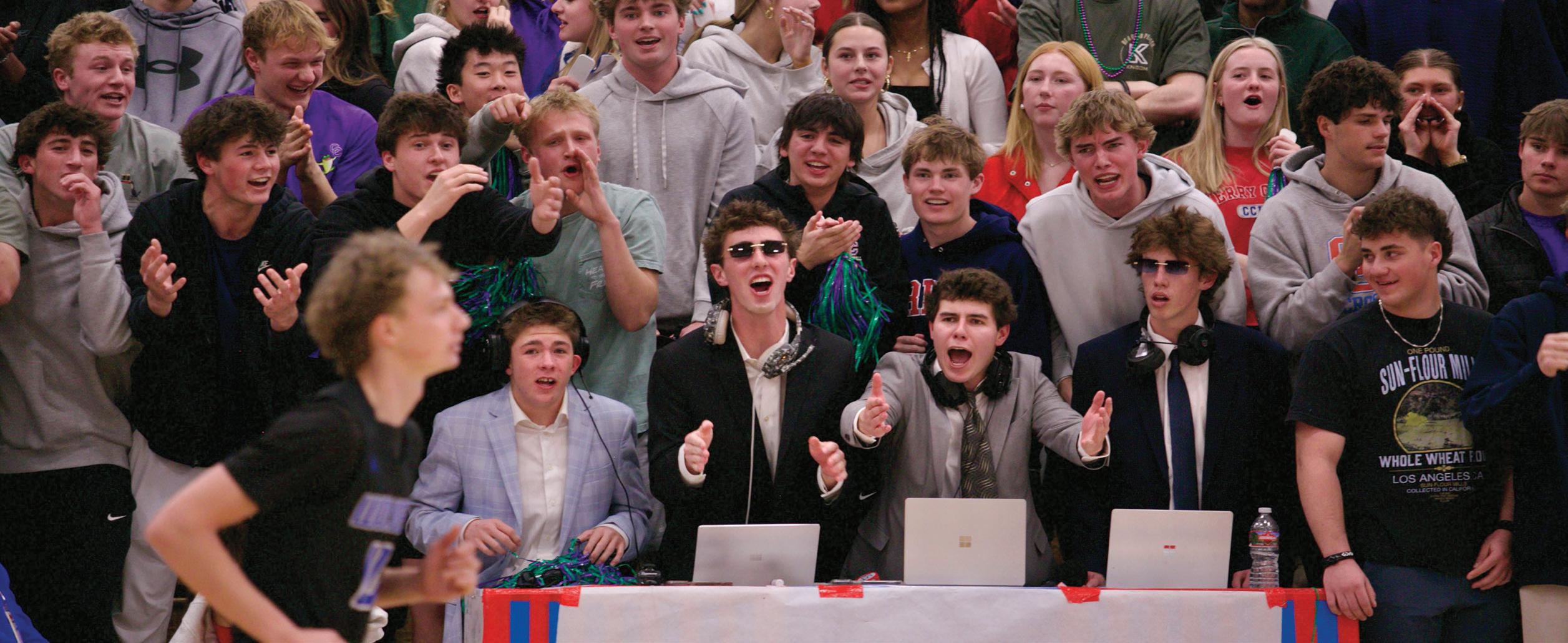
CREEK’S COMPETITIVE CULTURE: The student section heckles a Grandview player at a Feb. 11 game. Our confidence, however warranted can sometimes border on unsportsmanlike.
There are a lot of tedious tasks in life. Our daily routines aren’t easy, and there are roadblocks and inconveniences that fatigue us little by little, but we couldn’t operate without them.
Yet rather than putting minimal effort into these tasks and simply trudging through the day, we should put in passion and care.
We’ve all been in the classic high school situation: a group project. The worst part about group projects is that you’re often surrounded by slackers, and you end up taking the burden of the load. If we all had a common social contract to put in effort and care in our work, we could achieve so much more. Put some effort into a visually engaging presentation. Add some more color to that poster. Slip in a few funny quips into your speech. Your class will appreciate it, your teachers will appreciate it, and you’ll all feel a better sense of accomplishment with a more efficient division of labor. And your PowerSchool will reflect the hard work, too.
tion we’ll need for the rest of our lives. It teaches us how to cope with stress and workload. It teaches us how to collaborate and be a good leader. It teaches us life skills that are infinitely valuable in any line of work. The effort you put into your daily workload will pay off in the future. Good habits put you leaps and bounds ahead of your peers in college and make you the premier pick in a job search later on.
And there’s something else happening when we slow down enough to care. There’s a quiet revolution in our minds and bodies when we actually notice what we have instead of what we lack. Gratitude isn’t just found on Thanksgiving—it’s a daily practice with deep benefits.
At a time when anxiety and burnout are increasingly normalized, gratitude offers a grounding way to move around it.
Putting in that effort does take more time, though. A chronic trait of high schoolers is procrastination; many have an extreme problem with delaying obligations out of stress, anxiety, or laziness.
“What procrastination does is rob us of enjoying the present moment, because we’re thinking about the things we’re not doing in the back of our minds all the time,” school psychologist Lisa Geissler said.
By removing stressful factors earlier, we experience joy in so many little ways. Geissler says that putting work before leisure makes the leisure ever sweeter.
“They talk about triggers in terms of stress…the antidote to that are called glimmers…those things that make you go, ‘that was such a lovely moment that just happened,’” Geissler said.
There are a lot of assignments that seem like pointless busy work. You might never need to know iambic pentameter or the unit circle ever again, but that’s not the point. High school doesn’t just teach necessary informa-
According to an article by the American Brain Association, gratitude practices are linked to lower levels of stress, improved emotional regulation, and better overall mental health.
At a time when anxiety and burnout are increasingly normalized, gratitude offers a grounding way to move around it. It’s a way to interrupt rumination and redirect attention toward stability rather than scarcity. When we pay attention to gratitude—even for just a few minutes a day—we are activating parts of the brain tied to emotional regulation and well-being, wiring positive neural path ways that make resilience more natural over time. When we feel grateful, we trigger neu rotransmitters in areas of the brain associated with higher-order thinking, emotional aware ness, and motivation. Practicing gratitude boosts the production of dopamine, leading to a higher overall positive outlook.
The benefits extend beyond short-term wins. A NIH study of older adults found that those who consistently felt grateful had about a nine percent lower risk of dying over the next few years compared with those who felt less thankful—even after accounting for life style and health factors. Gratitude could be part of a healthier, longer life.
It also strengthens our relationships and communities. When we acknowledge oth ers and express genuine thanks, we build social support that lifts us up when life gets hard. We’re proven to sleep better, feel more
This is an opinion piece written by the Editorial Staff of the Union St. Journal. Staff editorials serve as a way for members of the magazine to give commentary on a community-wide issue. The views expressed represent the opinions of the editorial staff, not those of CCHS or CCSD.
The USJ’s Editorial Board voted on the subject of this staff editorial.
grounded, and cope with adversity more effectively when gratitude becomes part of our daily life—not just an afterthought.
And here’s the surprising part: gratitude doesn’t require huge effort. It doesn’t demand perfection. You don’t need a mountain retreat or to become a mindfulness guru. Start simple—write down three things you’re grateful for each morning, say “thank you” with intention, or send a message to someone who made your life better. Over time, these small acts will reshape how you see your world.
In a culture obsessed with hustle and constant achievement, practicing gratitude slows you down long enough to notice the little
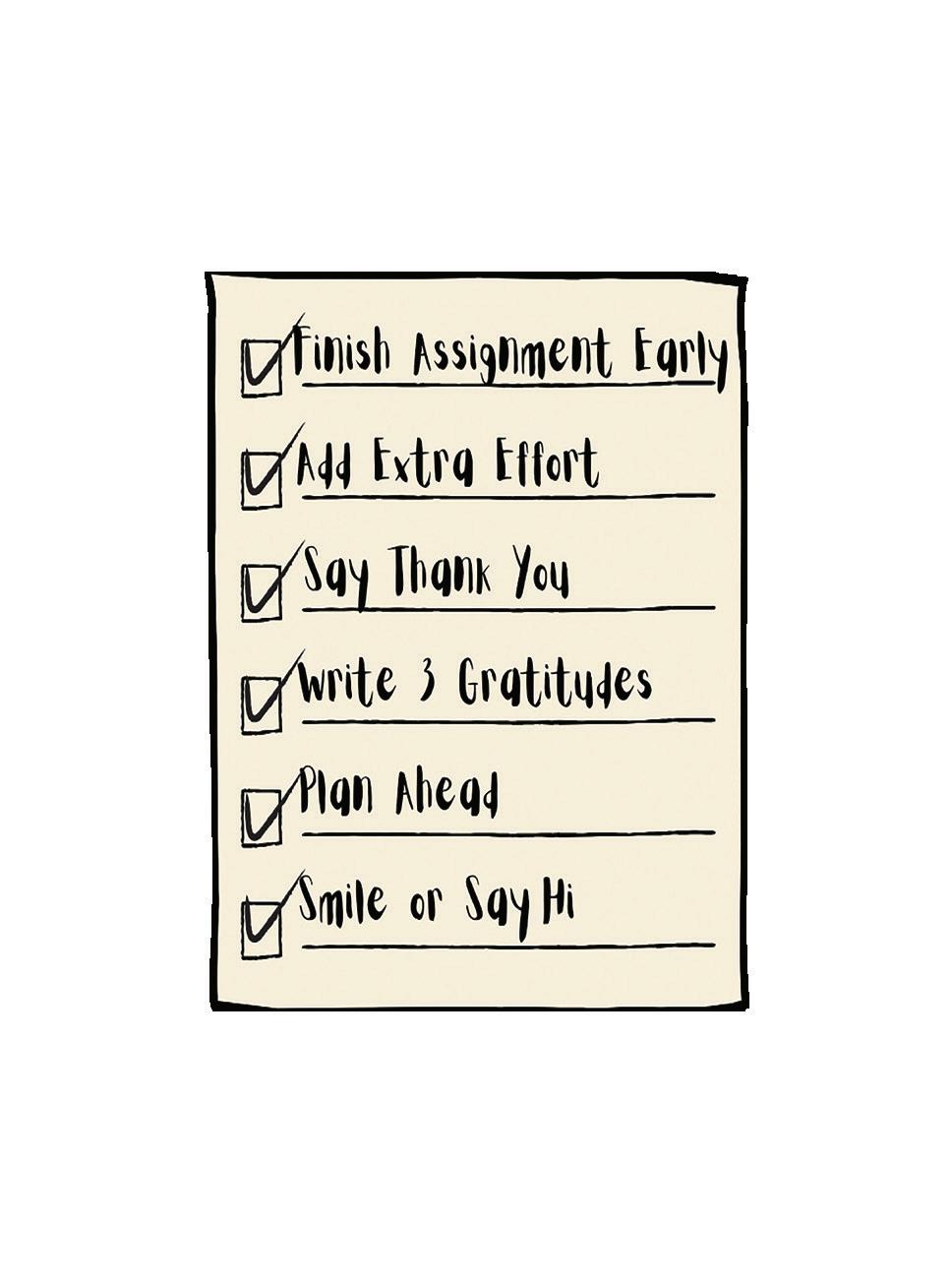
ART BY HAVANA
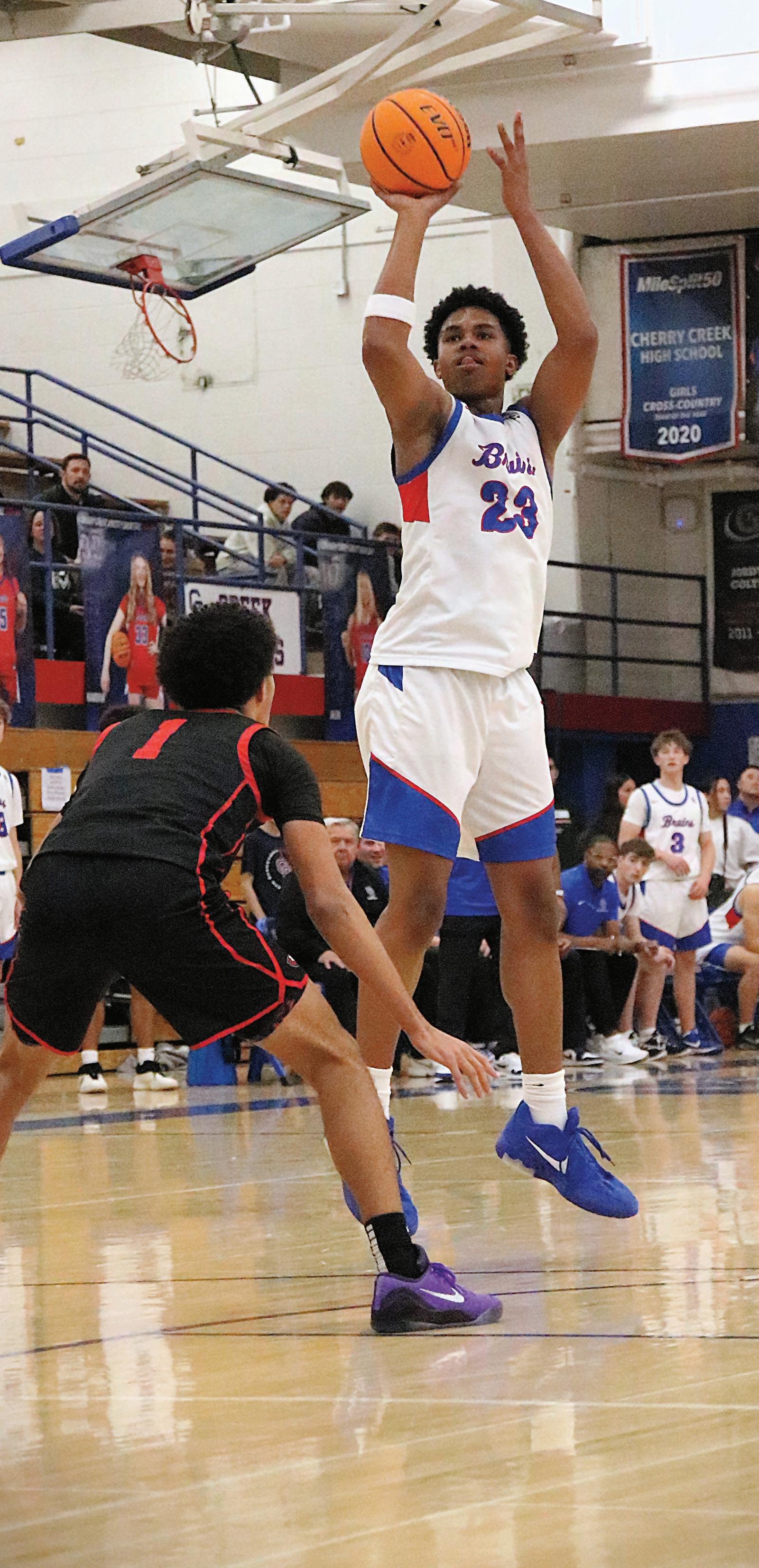
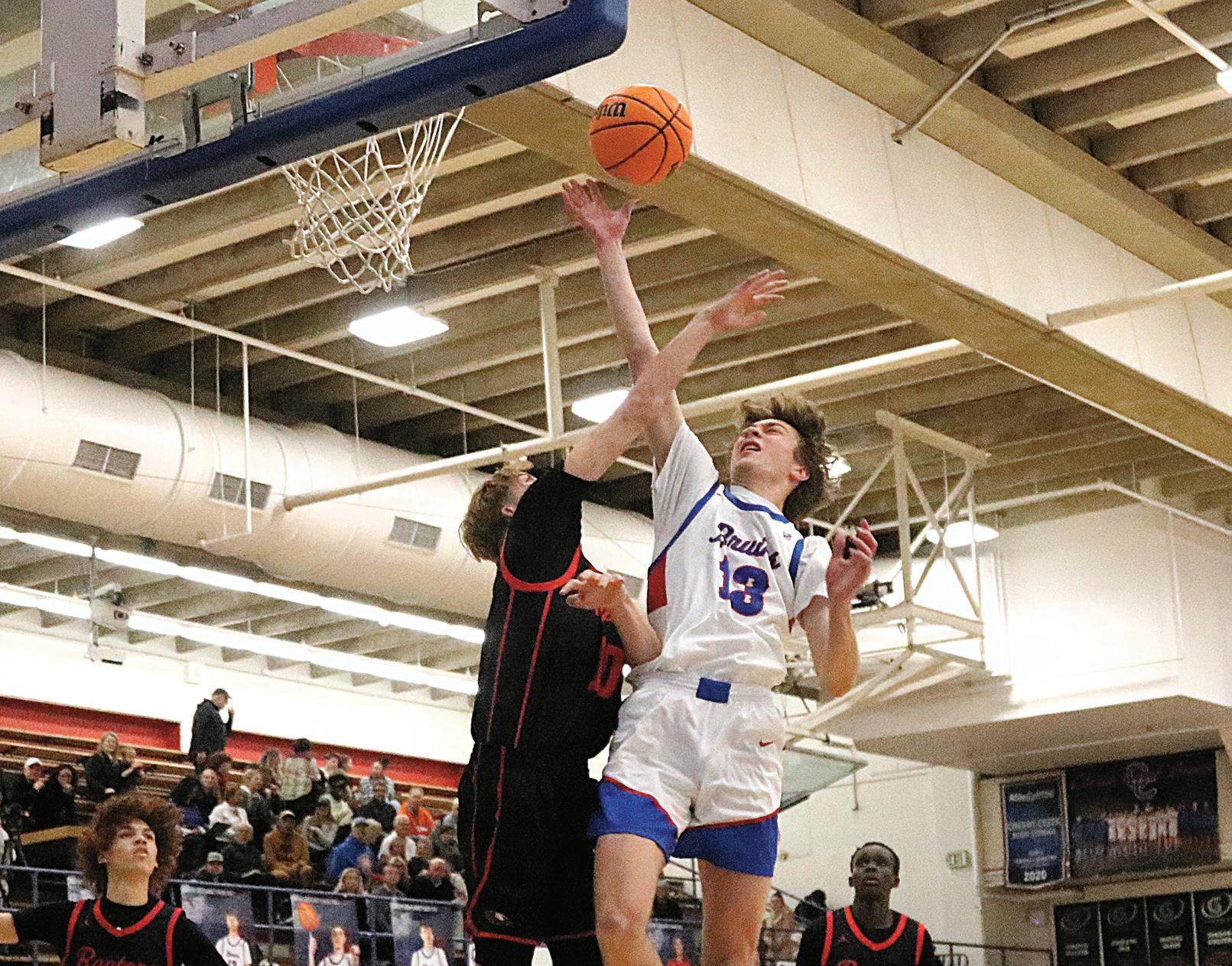
After posting a 10-15 record and a firstround exit in 2025, Creek boys’ basketball entered this season ranked 43 in the state. They ended up winning the Centennial League (6-1) on their way to a 16-4 season record. Lead by senior leaders Aleks Birkins, Luke Zurcher, and sophomore standouts Monate Johnson and Kayden Patrick, the team ended the season as the ninth best team in the state.
Record: 16-4 PPG: 64.5 PD: +13. 9 League Rank: #1