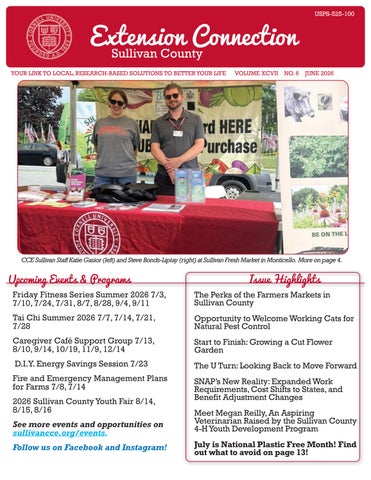

Extension Connection
Sullivan County

Upcoming Events & Programs
Upcoming Events & Programs
Friday Fitness Series Summer 2026 7/3, 7/10, 7/24, 7/31, 8/7, 8/28, 9/4, 9/11
Tai Chi Summer 2026 7/7, 7/14, 7/21, 7/28
Caregiver Café Support Group 7/13, 8/10, 9/14, 10/19, 11/9, 12/14
D.I.Y. Energy Savings Session 7/23
Fire and Emergency Management Plans for Farms 7/8, 7/14
2026 Sullivan County Youth Fair 8/14, 8/15, 8/16
See more events and opportunities on sullivancce.org/events.
Follow us on Facebook and Instagram!



The Perks of the Farmers Markets in Sullivan County
Opportunity to Welcome Working Cats for Natural Pest Control
Start to Finish: Growing a Cut Flower Garden
The U Turn: Looking Back to Move Forward
SNAP’s New Reality: Expanded Work Requirements, Cost Shifts to States, and Benefit Adjustment Changes

Meet Megan Reilly, An Aspiring Veterinarian Raised by the Sullivan County 4-H Youth Development Program
July is National Plastic Free Month! Find out what to avoid on page 13!


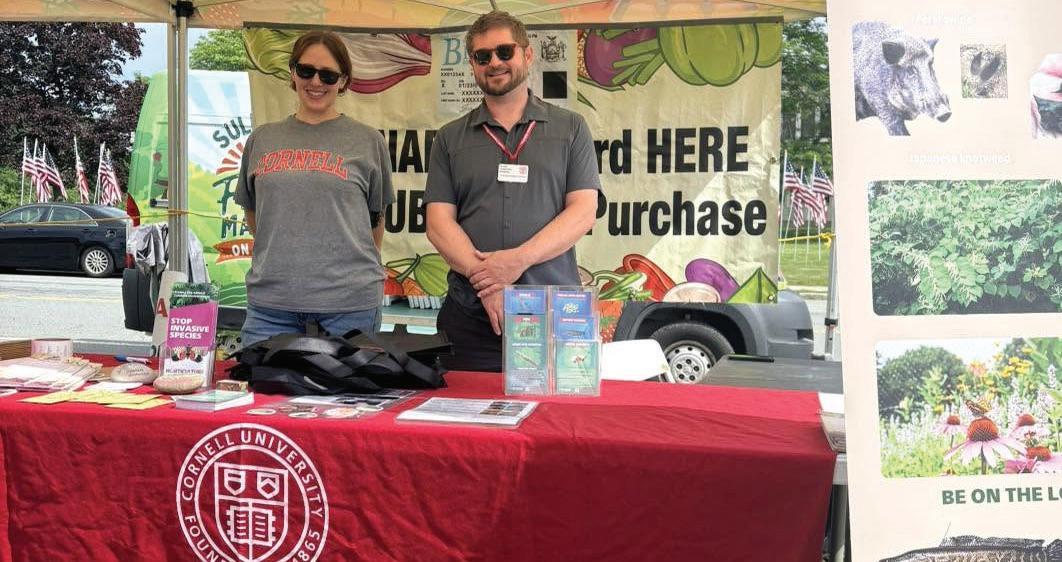
CCE Sullivan Staff Katie Gasior (left) and Steve Bonds-Liptay (right) at Sullivan Fresh Market in Monticello. More on page 4.
Welcome to the Issue!
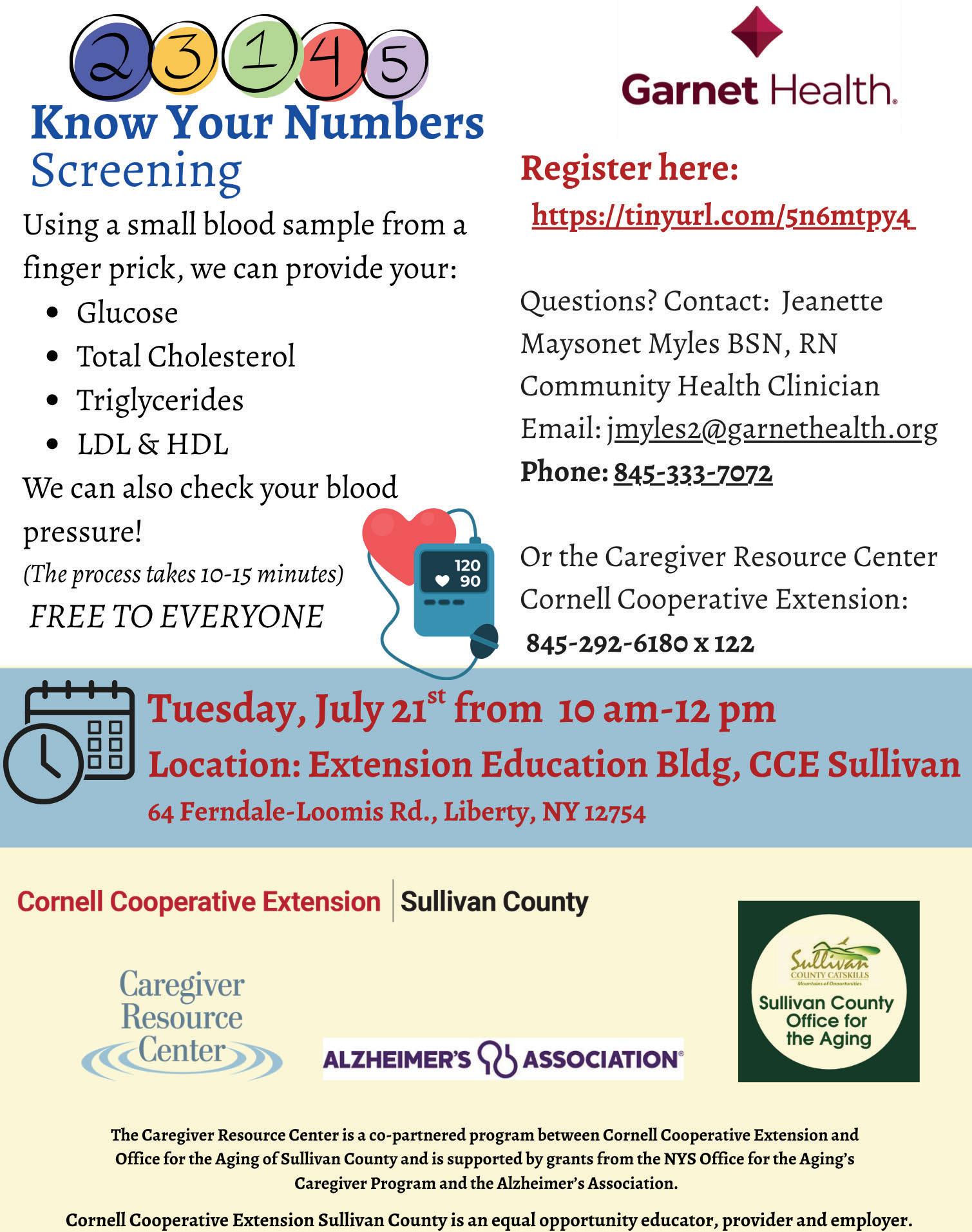
Page 3 Know Your Numbers
Screening Event
Page 4 The Perks of the Farmers Markets in Sullivan County
Page 6 Opportunity to Welcome Working Cats for Natural Pest Control
Page 7 Start to Finish: Growing a Cut Flower Garden
Page 9 The U Turn: Looking

Back to Move Forward
Page 11 CCE Spotlights! Page 12 Fast Facts & DHI Report
Page 14 SNAP’s New Reality: Expanded Work Requirements, Cost Shifts to States, and Benefit Adjustment Changes
Page 16 CHSC Recognizes Daycare Providers
Page 18 Visit the Sullivan

Table
Table
O&W Rail Trail
Page 20 Caregiver Resource Center
Upcoming Events
Page 21 Meet Megan Reilly, An Aspiring Veterinarian Raised by the Sullivan County 4-H Youth Development Program
Page 22 Sharing
Strengthening Families Program Success

NotifyCCESullivan if you have
Notify CCE Sullivan if you have a change of address: 845-292-6180
sullivan@cornell.edu
OFFICE HOURS
Hours: Mon - Fri | 8:30 am to 4:30 pm
Phone: 845-292-6180
E-mail: sullivan@cornell.edu
Website: www.sullivancce.org
Facebook.com/ccesullivanagfood Instagram.com/ccesullivan
YouTube: bitly.com/ccesullivan
BOARD OF DIRECTORS
Dawn Parsons.......................President
Alex Alorro...................Vice President
Robert Kaplan.......................Secretary
John Garigliano.....................Treasurer
Brian McPhillips...........Legislative Rep.
Patricia Claiborne.............Cornell Rep.
Stacey Johnson
John (JP) Lang
Erika Malmgreen
Mark McLewin
Jennifer Mitchell
Meaghan Mullally-Gorr
Laura Quigley
Gary Silver
Gary Silverman
Diana Weiner
PROGRAM COMMITTEE
Heather Brown
Roberta Chambers
Nu El
Courtney Hanback
Carmela Hugel
Cathi Paci
Carol Roig
Stephen Stuart
Eugene Thalmann
Deborah Worden
EXTENSION CONNECTION
Produced by: Cornell Cooperative Extension Sullivan County
Edited by: Aaron Denman, Katie Gasior & Nicole Slevin Nikolados
Cornell Cooperative Extension Sullivan County provides equal program and employment opportunities.
NOTICE: Official endorsement of advertisers and their products is not intended by the acceptance of their sponsorships for the Extension Connection.
STAFF MEMBERS
Colleen Monaghan..............................................................................Executive Director
Tracy Broyles...............................................................................SALT Program Manager
Alan Carroll...................................................................Food Systems Program Manager
Luciana Carvo.................................................................STNY/4-H Program Coordinator
Lynn Colavito..............................................Community Cupboard Program Coordinator
Martin Colavito...........................................................Prevention Programs Issue Leader
Wanda V. Cruz...............................................Healthy Communities Program Coordinator
Aaron Denman.........................................................Association Operations Coordinator
Jessica Doyle.............................................................................4-H Program Coordinator
Drew Fuller........................................................................ Prevention Program Educator
Katie Gasior........................................................................Horticulture Subject Educator
Jenna Gangel...................................................................Shop Taste NY Market Manager
Joy Leon.................................................................Nutrition & Physical Activity Educator
Isabel Lutz.......................................................................................................................Custodian
Kim McDonnell............................................................................................TNY Market Manager
Nancy McGraw.................................Team Leader/Educator, Caregiver Resource Center
Melinda Meddaugh.......................................................Ag & Food Systems Issue Leader
Tess Isabel Molina Bayly.............................FORx Youth Prevention Program Coordinator
Barbara Moran................................................4-H Youth Development Program Manager
Luis Ocasio........................................................................Prevention Program Coordinator
Patricia Ocasio...................................................................Prevention Program Coordinator
Shanice Owens..............................................Community Cupboard Program Coordinator
Abyssinia Pla El...................................................................................Finance Coordinator
Monica Ponce-Agredano ...............................................................Ag. Program Assistant
Michelle Proscia...........................................................Ag. Production Program Manager
Nicole A. Slevin Nikolados.............................................Senior Administrator, Operations
Tara VanHorn.........................................................................................Finance Manager
Malinda Ware.................................................Statewide Strategic Engagement Specialist
John Wilcox..........................................................................................Facilities Manager
Veronica Yangis.........................................................................Taste NY Operations Coordinator
Hailee Crum, Julieth Melendez, Billy Wells.............................................Ag Market Coordinators
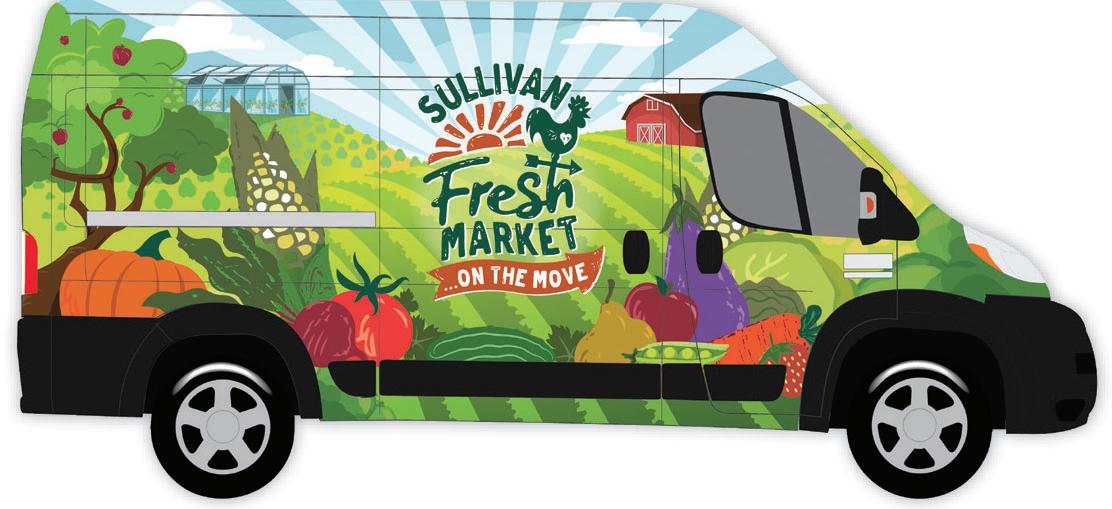
THE PERKS OF THE FARMERS MARKETS IN SULLIVAN COUNTY
Written by Alan Carroll, Food Systems Program Manager
Farmers market season is upon us, and Sullivan County is fortunate to have so many to choose from. With the warm second half of spring, markets spring to life across the local region and beyond. Sullivan County’s economy has long been rooted in both agriculture and tourism, and the wide array of farmers markets is a testament to the collaboration between these two industries.
Markets throughout the county serve different purposes, depending on the communities they support. One function they all share, however, is helping to promote food security in an increasingly unpredictable world. Today, alongside the markets, several programs are available to help residents struggling with rising food costs and encourage them to shop locally while supporting area farmers.
Many markets in Sullivan County accept EBT/SNAP benefits, including the Sullivan Fresh Monticello Farmers Market and Mobile Markets, the Liberty Farmers Market, the Rock Hill Farmers Market, and the Callicoon Farmers Market. Markets that accept EBT/SNAP can also offer FreshConnect checks, a New York State matching
program that doubles SNAP benefits—up to $50—on eligible purchases.
The Sullivan Fresh Mobile Markets also participate in Double Up Food Bucks, a similar matching program that provides up to $50 in additional benefits, specifically for fruits and vegetables.
In addition, the Farmers Market Nutrition Program (FMNP) provides coupons for seniors and WIC participants. These coupons, distributed in booklets, can be used at farmers markets throughout the county and are a valuable resource for accessing fresh, locally grown foods.
Another initiative, FreshRx, is a prescription-produce program run through Garnet Health. Available to qualifying individuals, FreshRx can be earned by participating in diabetes prevention classes or attending cooking and nutrition demonstrations, such as those offered at the Sullivan Fresh Monticello Farmers Market through Cornell Cooperative Extension. Programs like these not only improve access to healthy food but also help local community members build long-term knowledge about nutrition and wellness.
Beyond affordability and access, shopping at farmers markets offers
another important benefit: freshness. Locally grown food is often harvested just days—or even hours— before it is sold, meaning the food options last longer and retain more flavor. Shoppers can find a wide variety of seasonal products, from fresh vegetables and fruits to meats, eggs, baked goods, honey, and handmade items. By purchasing directly from local farmers and producers, residents not only stretch their food dollars but also invest in the health and resilience of Sullivan County’s agricultural community.
Lastly, these markets are community hubs. When you shop at a farmers’ market, you can meet friendly vendors, enjoy live music, make connections, and learn more about food, nutrition, and local events. Many markets host familyfriendly activities, cooking demonstrations, and opportunities to engage with local organizations, making each visit both educational and enjoyable. Farmers markets strengthen the connection between producers and consumers, helping people better understand where their food comes from and how it is grown. This season, take the time to explore a local market, support your neighbors, and experience the many benefits firsthand.



EVERY WEDNESDAY
Village of Woodridge Municipal Lot

Green Ave. & Dairyland Rd. • Woodridge, NY
July 1st – August 26th
10:00 AM –11:00 AM +
Fallsburg Town Hall 19 Railroad Plaza • South Fallsburg, NY

EVERY THURSDAY

July 1st – October 28th
12:00 PM –1:30 PM +


June 25th – September 24th 10:00 AM –1:00 PM 10 Jefferson St., Monticello, NY


Behind the Ted Stroebele Recreation Center



Loch Sheldrake Public Parking Lot
Corner of Hasbrouck Rd. & Route 52



Loch Sheldrake, NY

July 1st – October 28th 3:00 PM –4:30 PM









































OPPORTUNITY TO WELCOME WORKING CATS FOR NATURAL PEST CONTROL
Dear Friends and Community Partners,
My wife Judy and I are writing on behalf of the Neighbors Loving Cats Project, a new community initiative in the Town of Fallsburg dedicated to humane, responsible care of neighborhood cats. Over the past two years, a group of approximately twenty cats has been living together in our subdivision. With the full support of the Town of Fallsburg Town Board, our Animal Control Officer, Care Rescue of Sullivan County, and the nonprofit All Paws Matter, we have been actively trapping, neutering, spaying, and vaccinating these cats through the TARA mobile clinic in Liberty and Monticello.
We are now at the stage where many of these cats—healthy, social with one another, and accustomed to outdoor living—are ready for placement in safe rural environments where they can live productive, stable lives. We are reaching out to farms, barn owners, homesteads, and rural property stewards in Sullivan, Ulster, Dutchess, and Orange
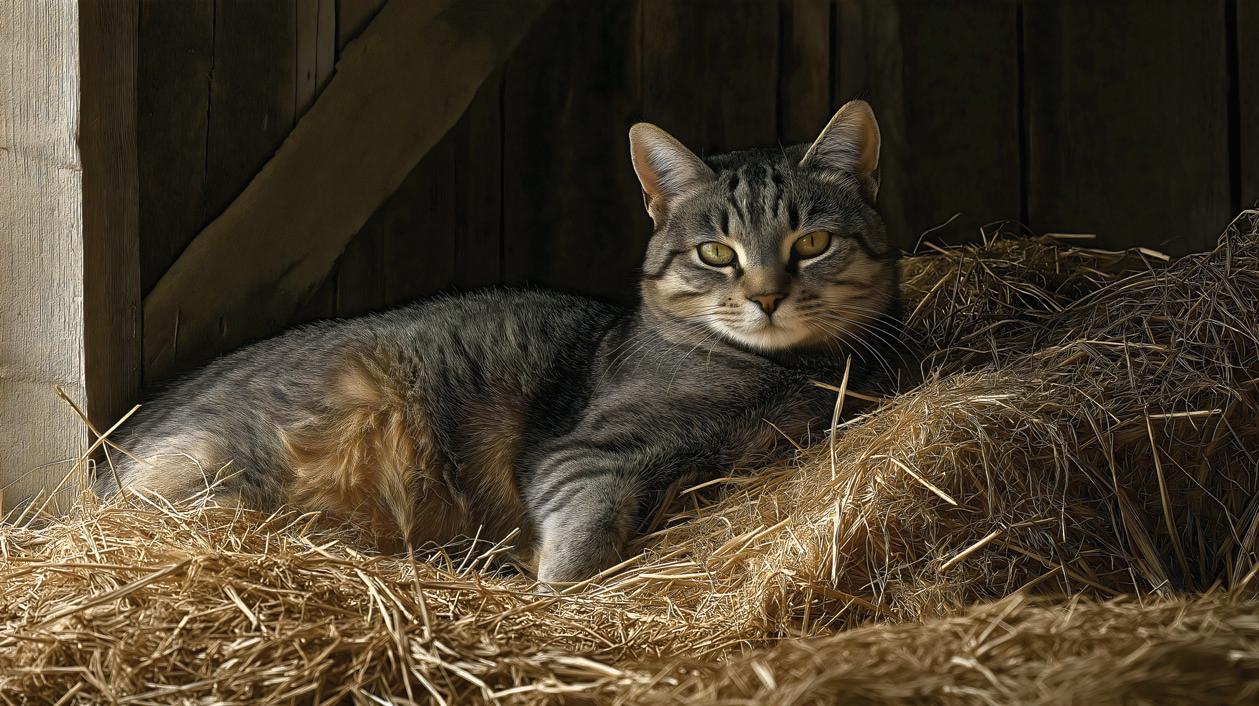
Counties who may benefit from the presence of working cats for natural pest control.
These cats have lived peacefully together for several years. Before our trapping efforts began, two or three litters were born, and many of the young adults remain bonded with their siblings or parents. We prefer to place them in pairs or groups of three, keeping family units intact to reduce stress and support successful acclimation.
If you have a barn, outbuilding, farm, homestead, or rural property that could welcome a pair or small group of working cats, we would be grateful to speak with you. Your participation helps our community sustain a humane, effective approach to managing neighborhood cat populations while giving these animals a
meaningful, safe life.
We also welcome referrals to other farms, agricultural associations, equestrian centers, or rural property owners who may be interested. If you can provide one or two large bags of dry cat food per month that would be helpful.
Thank you for considering this partnership. Together, we can create a model of compassionate stewardship that benefits our community, our environment, and the animals who share it with us.
Warm regards, Lawrence & Judy Schafman Neighbors Loving Cats Project Loch Sheldrake, NY 12759 (845) 807-8401 Neighbors12759@gmail. com
START TO FINISH: GROWING A CUT FLOWER GARDEN
Written and submitted by Katie Gasior, Horticulture Subject Educator
If you love having vases full of fresh flowers around the house, but not the price tag cut flower gardening is for you! A little planning now will have your home full of unique floral arrangements all summer long.
First off, what is a cut flower? A cut flower is simply any flower or flower bud that is cut from the plant and used decoratively in fresh or dried vase displays, wreaths and garlands.
In a sunny spot: Most cut flower plants prefer the sun
Close to water: Make sure your site has an easily accessible water source
Somewhere you’ll see them often: Flowers mature quickly, so plant somewhere convenient to be able to cut them at the right time.
The right soil: It’s always recommended you get a soil test to understand the soil that’s at your site before you plant and any amendments you might need to make. Raised beds are great if you don’t have high-quality soil or you like the convenience. Ground beds are better for large amounts of flowers. Or, you can incorporate cut

flowers into your existing landscape to save space. Some flowers need stakes to help them grow straight so consider that when planning a site.
What flowers should you grow?
That depends – do you want to grow from seed or transplants? Seeds are cheaper and more varieties are available, but
you need an appropriate place to start seeds indoors. Transplants are more expensive, but they save time and space. Whatever you chose, try to stagger what you plant by bloom times so you always have flowers available.
Annuals: Many are easy to start from seed ahead of time or to direct seed into a sunny spot in the garden. Examples: Zinnia,
Strawflower, Celosia, Gomphrena, Amaranthus, Cosmos, Black-eyed Susan, Sunflowers.
Bulbs: Many require staking for support. Examples: Spring Flowering: Tulips, Daffodils, Lily of the Valley; Summer Flowering: Dahlias, Gladiolus, Lilies.
Perennials:
Spring Flowering: Hellebores, Bleeding Heart, Peonies, Lady’s Mantle;
Summer Flowering: Iris, Liatris, Coneflowers, Eryngium, Poppies, Astilbe, Clematis, Yarrow, Garden Phlox;
Late Summer/Fall Flowering: Autumn Joy and Similar type Sedum, Mums,
Perennial Black-Eyed Susan.
What type of maintenance is needed in a cut flower garden?
Weeding – you didn’t think you’d get out of this one, did you? To prevent weeds, use mulch or landscape fabric. Watering needs will vary depending on what you’re growing. Consider soaker hoses or drip irrigation. Some flower plants may need pinching, disbudding and pruning.
What’s the best way to harvest cut flowers?
This depends on the flower. Some are best to

cut as buds or before the blooms fully develop and some are best cut when they’re fully open. It’s best to cut flowers in the late afternoon or evening. Cut the stems longer than you will need and place in cool water for one to two hours to let them take up enough water.
Cut Flower & Care Handling
Always use a clean container. Use a container that doesn’t have straight sides to make it easier and the proportion should be 1:1 for container to flower height.
Remove any foliage that will be in the water.
Use a floral preservative: Sugar, Acidifier, Bactericide. At-home preservatives can be made, but they need to include those components.
Place in a cool location away from sunlight.
Change water frequently – and enjoy fresh cut beautiful blooms all season long!
Source:
Gucker, Douglas, and Candace Anderson.“Start to Finish: Growing a Cut Flower Garden | Know How, Know More | Illinois Extension | UIUC.” Extension. illinois.edu, 24 Apr. 2020, extension.illinois.edu/blogs/ know-how-know-more/2020-04-24-start-finishgrowing-cut-flower-garden. Accessed 10 July 2024.
THE U-TURN: LOOKING BACK TO MOVE FORWARD
Written by Malinda Ware, Statewide Strategic Engagement Specialist
Life rarely travels in a straight line.
It unfolds through unexpected twists, sudden detours, difficult crossroads, and moments that change everything. Along the way, we gather experiences, lessons, successes, disappointments, and wisdom that shape who we become. Yet in our constant pursuit of what’s next, we rarely pause to consider a powerful question:
What if we could take a U-turn and look back over the road we’ve traveled?
Not to dwell on mistakes.
Not to become trapped in regret. But to gain a clearer perspective on how we can create a better future for ourselves and those around us.
Looking Back Isn’t Always Looking Behind
Many people view looking back as a sign of weakness or indecision. We hear phrases like “don’t live in the past” and “keep moving forward.” While there is wisdom in those words, there is also value in reflection.
Every mile of life leaves clues.
The relationships that flourished and those that faded. The opportunities we embraced and those we ignored. The moments we spoke up and the moments we remained silent. The
risks that paid off and the fears that held us back.
Looking back allows us to see patterns that were invisible while we were living them.
Sometimes the greatest lesson is not found in where we succeeded, but in understanding why we struggled.
What Would We Change?
If life offered us a chance to make a U-turn and review our journey, many of us would identify areas where we could have chosen differently.
Perhaps we would have spent more time with loved ones and less time chasing things that ultimately didn’t matter.
Maybe we would have

forgiven sooner, listened more carefully, worried less, or taken chances that fear convinced us to avoid.
We might have invested more energy into building meaningful relationships rather than proving ourselves to others.
We may have realized that some of life’s greatest treasures were never achievements at all they were people, moments, and opportunities to serve.
The Gift of Changing Our Perspective
The true power of a U-turn is not changing the past; it is changing how we see it.
Life’s challenges often reveal their purpose only after time has passed. The setback that felt devastating may have redirected us toward a better path. The failure that embarrassed us may have taught us resilience. The disappointment we wanted to avoid may have become the catalyst for growth.
A shift in perspective can transform pain into wisdom and mistakes into guidance.
When we change how we view our experiences, we change how we approach our future.
Making Life Better for Ourselves and Others
The lessons we gain from reflection are not meant to remain personal. They become tools we can use to improve the lives of those around us.
Imagine a world where more people paused long enough to learn from their journey. Where leaders reflected before making decisions. Where parents shared wisdom instead of repeating mistakes.

It may simply require changing our view.
Where communities chose understanding over judgment.
Where individuals measured success not only by what they accumulated, but by what they contributed.
Small changes in perspective can create profound changes in behavior.
And better behavior creates stronger relationships, healthier communities, and more meaningful lives.
The U-Turn We All Need
The most important U-turn in life may not involve changing direction at all.
Seeing our experiences through the lens of growth instead of regret. Seeing people through the lens of compassion instead of criticism. Seeing opportunities where we once saw obstacles.
Life will continue to surprise us with new ideas, unexpected turns, and moments that challenge what we believe. The question is whether we are willing to learn from the road behind us as we travel the road ahead.
Because sometimes the greatest step forward begins with a thoughtful look back.
And sometimes the U-turn that changes everything happens not on the road, but in the mind.
CCE Sullivan Spotlights
WELCOME
JESSICA DOYLE, 4-H PROGRAM
COORDINATOR
Jessica Doyle joins Cornell Cooperative Extension Sullivan County as the 4-H Youth Development Program Coordinator. A lifelong Sullivan County resident, Jessica brings a strong background in youth development, leadership, and community engagement. She holds an Associate of Science degree in Early Childhood Education and
is currently completing her bachelor’s degree in Child Studies, with an anticipated graduation date of December 2026.
Jessica is a former TriValley FFA member and has spent many years serving her community through leadership roles with the Grahamsville Little World’s Fair and the Roscoe-Rockland Fire Department. Her passion for agriculture, education, and volunteerism has helped shape her commitment to providing meaningful opportunities for young people.


Jessica is excited to work with Sullivan County youth, families, and volunteers to strengthen and grow 4-H programs while helping young people develop. leadership, life skills, and connections that will serve them throughout their lives.








July Focus: Fast Facts, Cool Tools, & News to Use













July is National Plastic Free Month! Find out what to avoid in your daily errands!















My challenge choices GETTING STARTED
WHAT TO AVOIDHOW TO AVOID ITYOUR IMPACT
Fill your bin with plastics for ‘recycling’
Pre-packed fruit and veg
Lightweight plastic bags
Pre-packed meat or fish
Takeaway drink straws
Takeaway coffee cups
Avoid as much plastic packaging as you can
Choose loose products (skip the little plastic bag or put in a reusable bag)
Remember your reusable shopping bags or use a cardboard box
Shop at the deli counter or butcher or fishmonger for paper wrapped cuts or BYO reusable container
Refuse plastic straws (or opt for a paper straw if they have them). BYO reusable straw
Bring your reusable cup or sit and enjoy a real cup
Takeaway utensils and containers Support vendors offering compostable alternatives (bamboo or card), BYO reusables or sit and enjoy ‘dine-in’
Bottled water
Bottled soft drinks
Bin liners (or ‘reusing’ plastic shopping bags)
Plastic food wrap for leftovers and sandwiches
Littering: cigarette butts, balloons
Fill a reusable bottle from the tap
Reduce the amount (helps your health), or make your own with a soda maker/ carbonator or choose glass bottles (and recycle)
Have a sealed container for ‘wet’ scraps and compost or freeze until bin day. Line the kitchen bin with paper
Use a reusable lunch box to store food, store food in containers or use beeswax wraps
Dispose of cigarette butts in the bin (they are plastic and wash into the ocean environment) Avoid releasing balloons (what goes up, must come down)


OCEAN LANDFILL GLOBAL WARMING
SNAP’S NEW REALITY: EXPANDED WORK REQUIREMENTS, COST SHIFTS TO STATES, AND BENEFIT ADJUSTMENT CHANGES
Written by Zixia Huang, Wendong Zhang, and Alan Hinds, Dyson School of Applied Economics and Management, Cornell University Overview
The One Big Beautiful Bill (OBBB), signed into law in July 2025, makes the largest changes to SNAP in over a decade. The Congressional Budget Office estimates federal SNAP spending will decline by $186 billion over the next ten years. Three provisions account for more than 90% of the estimated declines in spending: expanded work requirements, a new federal-to-state cost shift, and restored costneutrality for benefit adjustments.
1. Expanded Work Requirements
The OBBB raises the age ceiling for ablebodied adults without dependents (ABAWDs) from 55 to 65 and narrows the dependentchild exemption from under 18 to under 14. These changes expose older workers, parents of teenagers, and formerly
waived populations to strict time-limited benefit rules requiring 80 hours of monthly work or training. Adults in their late 50s and early 60s often face health challenges, caregiving demands, and age discrimination in hiring, which makes compliance harder in practice.
2. Federal Costs Shift to States
States previously bore
50% of administrative costs and 0% of benefit costs. Under the OBBB, states’ administrative cost share rises to 75%, and most states must now share between 5–15% of benefit (allotment) costs based on their SNAP payment error rate from three years prior. States with error rates at or above 10%—often those serving more complex, diverse populations—face the steepest penalties.

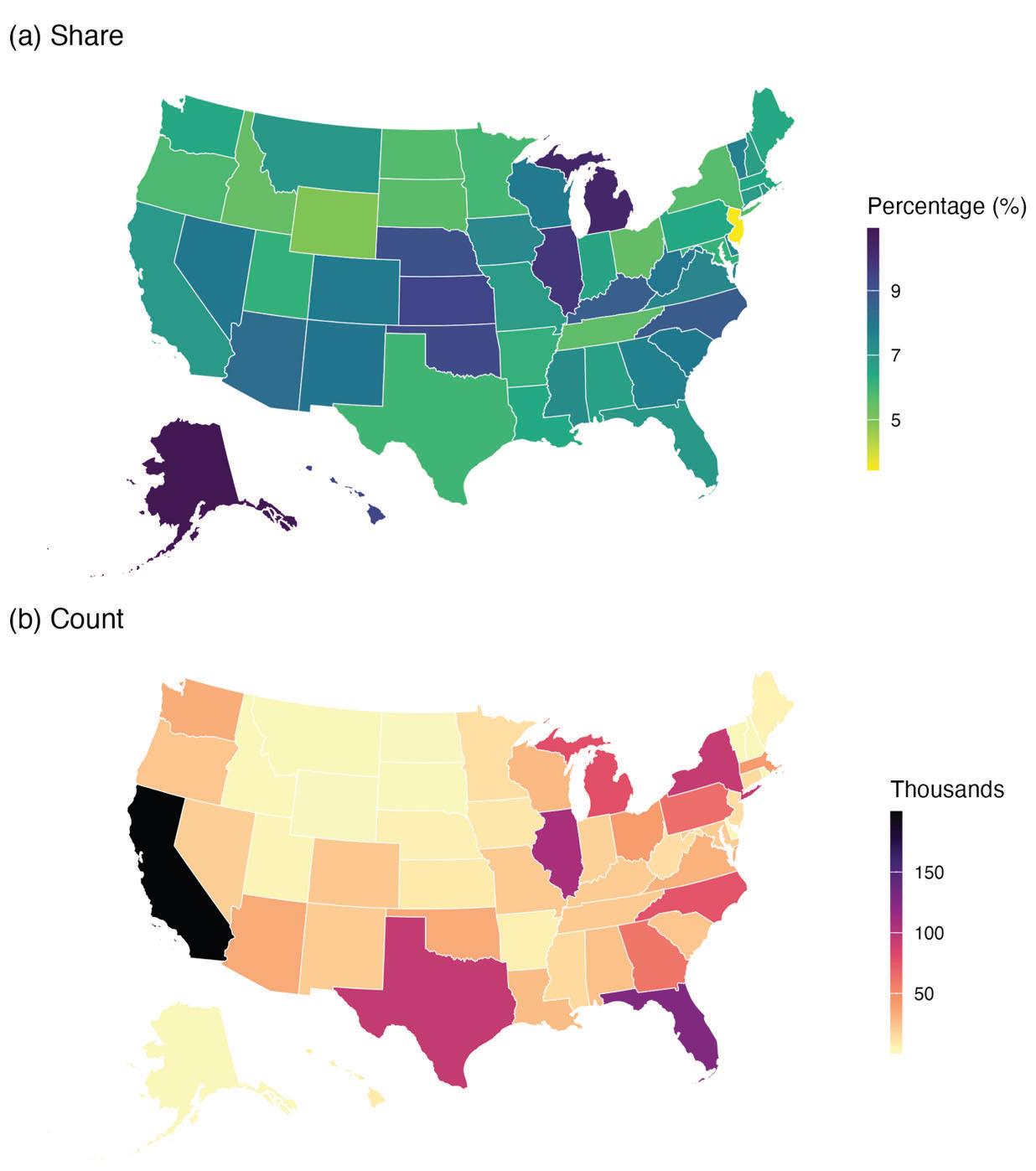


California faces an estimated $2.5 billion in annual SNAP obligations; New York, $1.9 billion; Florida, $1.3 billion; Texas, $1 billion. Budget pressures may lead states to cut SNAP outreach or tighten eligibility and will undermine SNAP’s countercyclical role during recessions.
3. Return to Cost-Neutral Benefit Adjustments
The 2021 Thrifty Food Plan (TFP) reevaluation, mandated by the 2018 Farm Bill, raised maximum SNAP benefits by 21% by abandoning the historical cost-neutrality requirement. The OBBB restores that requirement and postpones the next TFP reevaluation until October 2027, limiting future benefit adequacy adjustments to general CPI-U inflation, which often lags food price inflation.
Policy Implications
SNAP remains one of the most critical safety net programs, but these reforms represent a meaningful reduction in its reach and support. Community organizations such as food banks and pantries would anticipate a notable influx of new users as households lose SNAP eligibility or see
their benefits reduced. Advocates, extension educators, and local officials have an important role in connecting affected families to remaining resources, monitoring gaps in food access, and making the case to state and federal policymakers when the safety net falls short.
“Dyson Extension Briefs” is a series of news articles for Cornell Cooperative Extension publications
and for local newsletters and other local media. It reviews elements critical to the food and agricultural industry. Past articles are available at: https://dyson. cornell.edu/outreach/ dyson-extension-briefs/.
Sources:
Huang, Z., Zhang,W., & Hinds, A. (2026). SNAP’s New Reality: Expanded Work Requirements, Cost Shifts to States, and Benefit Adjustment Changes. Applied Economics Teaching Resources. https://doi. org/10.71162/aeee.155443


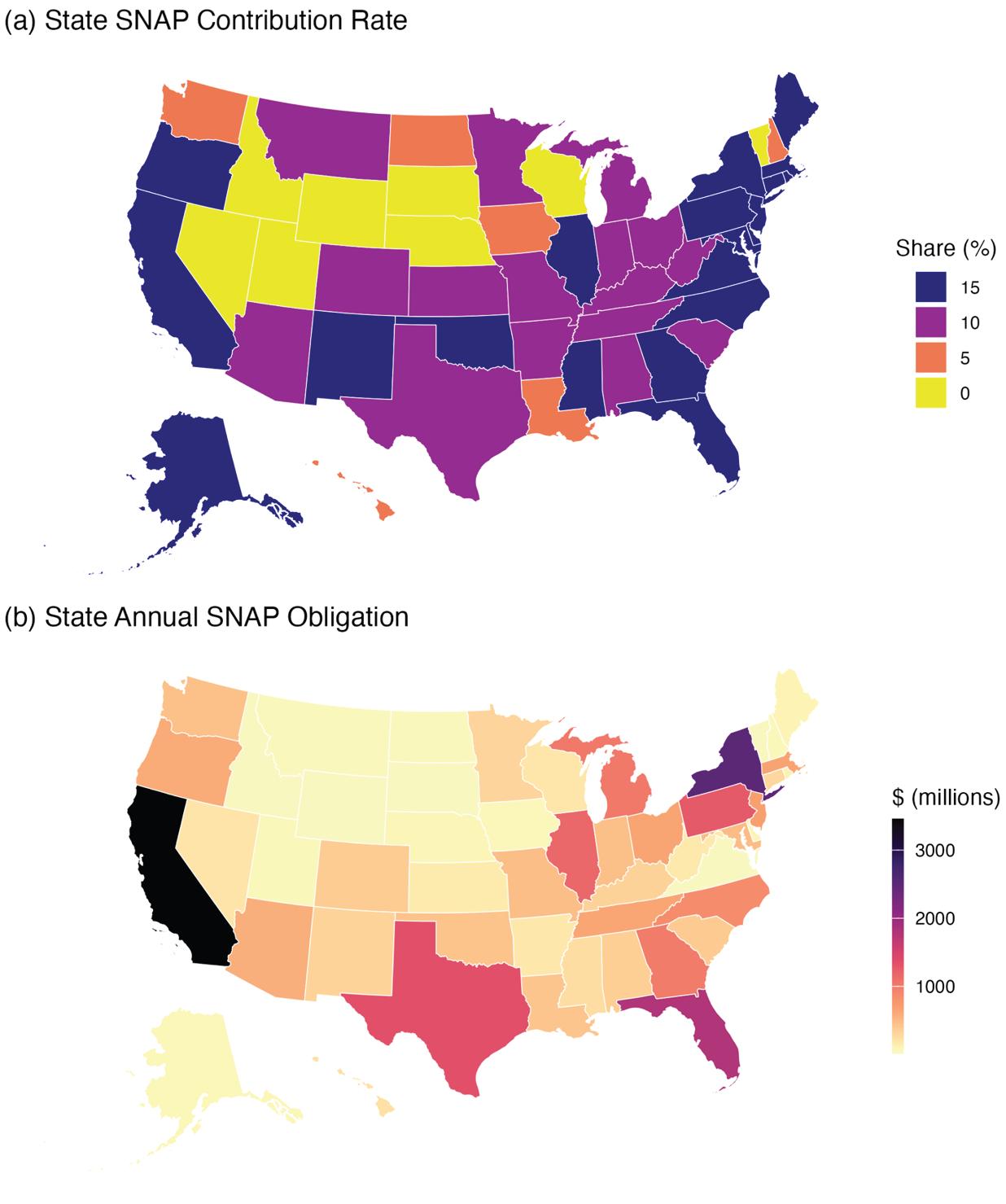


Figure 2. State SNAP contribution rate (a) and estimated annual SNAP obligation (b)
Source: USDA-FNS SNAP Payment Error Rates FY 2024; Plata-Nino and Rosso (2025).
July 2026
CHSC recognizes daycare providers
Written by Nancy McGraw, Team Leader & Caregiver Resource Center Educator
In May, CCE Sullivan celebrated 10 years of Creating Healthy Schools and Communities initiatives. However, a few providers were unable to attend. As a follow up in June, joint visits were made to the daycare homes in coordination with the Sullivan County Childcare Council to show appreciation by presenting them with a certi cate and a giant keepsake check representing the recent $1,000 funding award they received for their work during the past year of the CHSC grant.

Above: Devon Conklin, owner of Devon’s Daycare in Liberty, with her $1,000 CHSC sustainability award which enabled her to continue to implement policies to improve physical activity and nutrition for children in her care.
By receiving $1,000 each for their sustainability plans, daycare providers have been able to purchase items to improve physical activity and nutrition in their daycare homes and centers. Toys purchased were all centered on helping young children below the age of ve (5) years in their care to develop gross motor skills, which are critical to healthy development and learning.
Sustainability Awards in Early Childhood Education settings








Above: A $1,000 sustainability award and certi cate of achievement for working to improve physical activity and nutrition for children in her daycare is presented to Rachel Rausch, owner of Rachel’s Angels Daycare in Liberty by Nancy McGraw, CCE Team Leader/Educator.
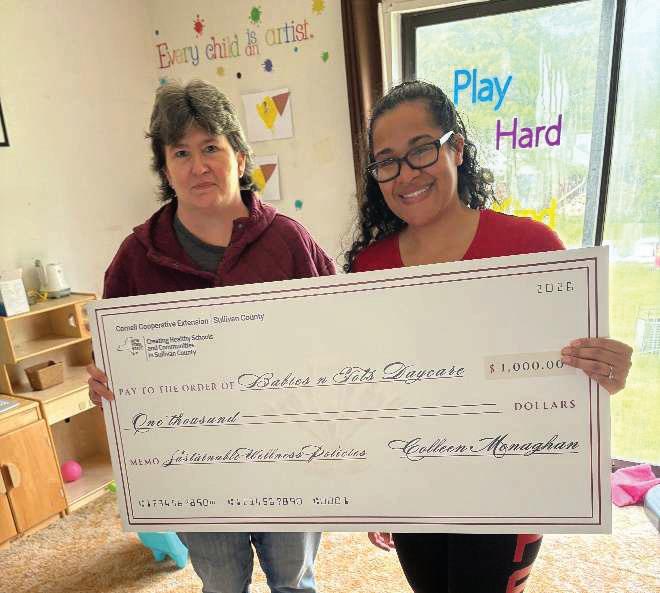
Above: A $1,000 sustainability award and certi cate of achievement for working to improve physical activity and nutrition for children in her daycare is presented to Gianni Morales, owner of Babies n Tots Daycare in Liberty.
Below: Gianni enjoys using her new blender to o er fruit smoothies to the children in her daycare. She involves them by letting them pick out the fruit and prepare the ingredients.
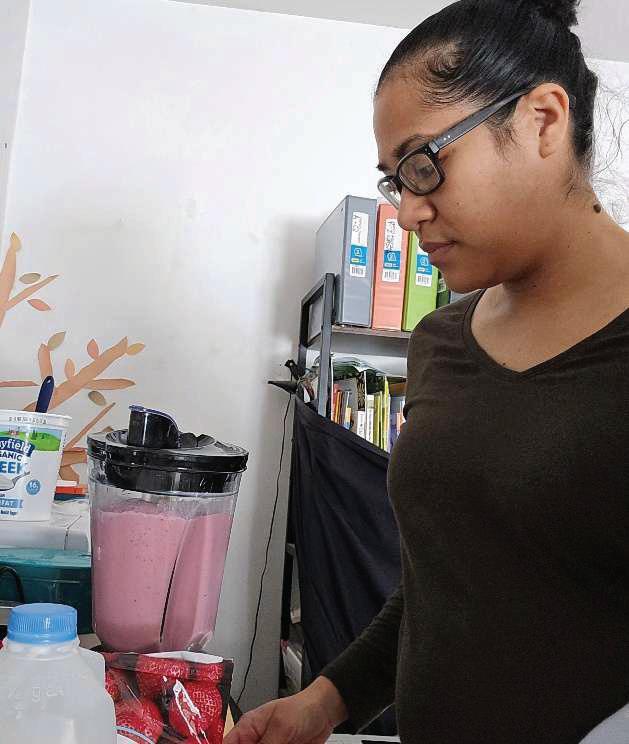


Above: Children at Babies n Tots Daycare enjoying the fruit smoothies. CHSC funding provided a new ninja blender to enable easier preparation of fruits, vegetables and other recipes for nutritional o erings.
Visit the Sullivan O & W Rail Trail
Written by Wanda V. Cruz, Creating Healthy Schools and Communities - Healthy Communities Coordinator.
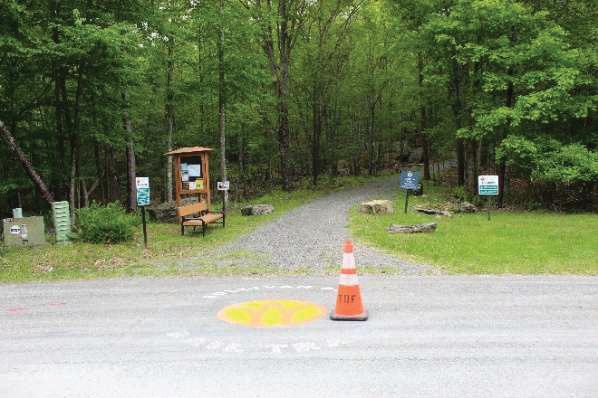
CHSC funding provided to municipalities for trail enhancements, signage and more. Read more below to see many of the examples.
Pictures speak louder than words. I suggest you all take some time to visit all the Sullivan O & W Rail Trails in Sullivan County. You may be surprised at the wonderful locations you will encounter.
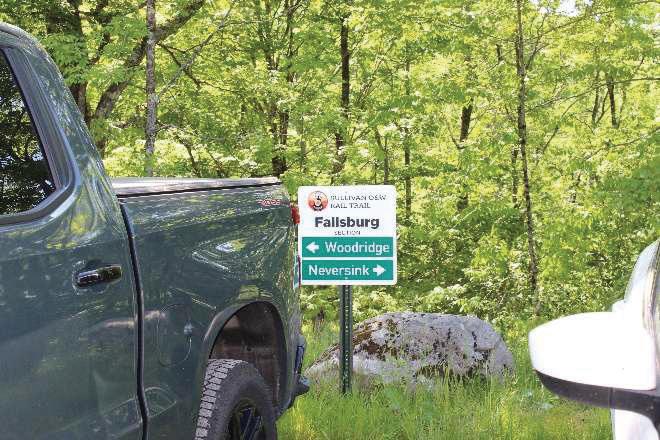
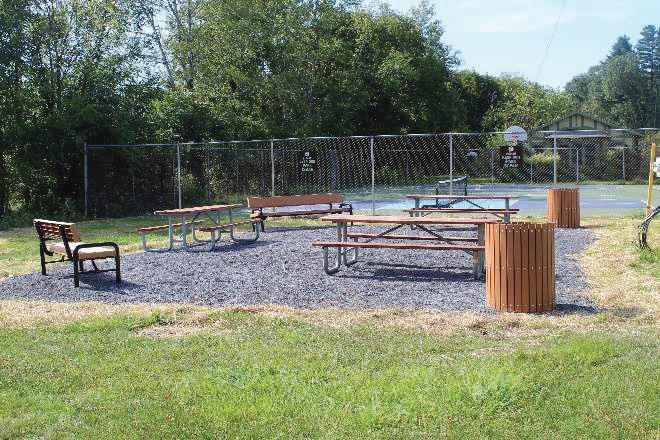
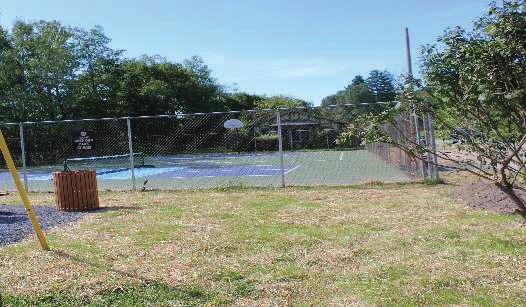
Each access point is unique with its own charm and connections to so many di erent areas. If you think about it, you can see that it’s also an alternative form of transportation to business districts, schools, residential areas, and much more. If you’re in Fallsburg, depending on which access point you choose to take, you may encounter parks and playgrounds, theater, museums, convenience stores, shops, restaurants, cafés and kosher foods, and much more.
The icing on the cake is nding a picnic area or historic tunnel on the trail which is the access point shown below. It will also take you to residential areas and to the Neversink bridge which leads to the Village of Woodridge.







Pictured directly below is the parking lot
Mountaindale O & W Rail Trail.
The access point below will soon be a destination point with a children’s park.
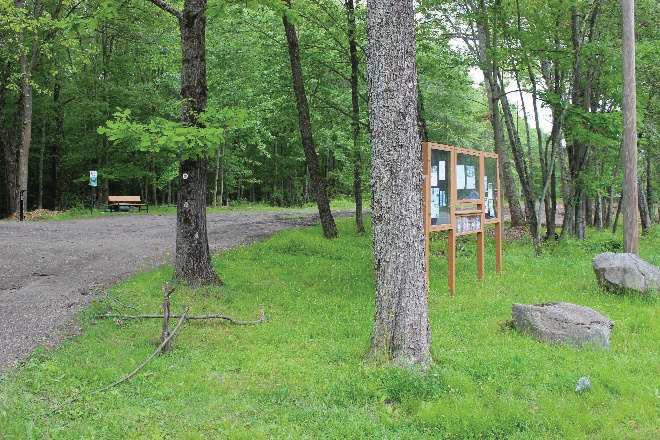

Shown next are access points accessible through Vista Drive in South Fallsburg.

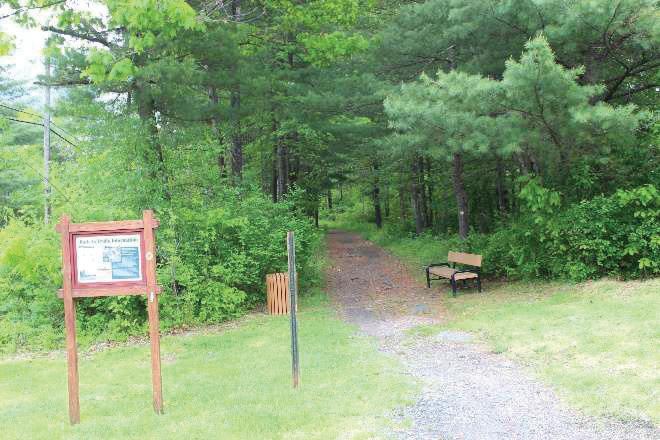
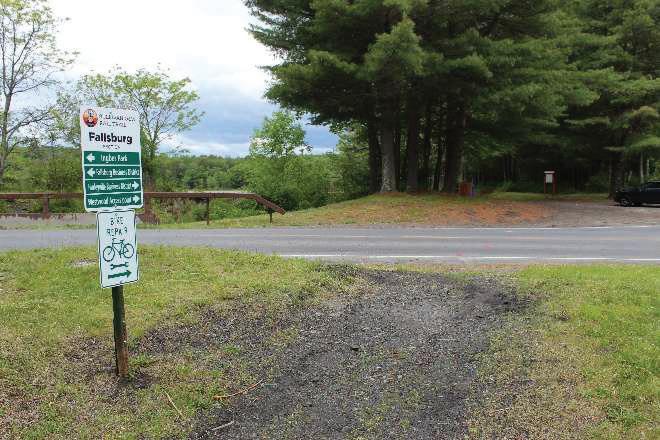
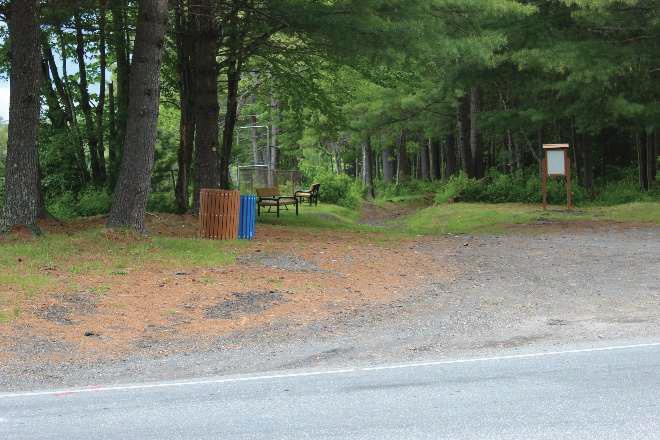
And if you continue the trail, you will reach Westwood Drive with a variety of access points that will take you to Hurleyville.
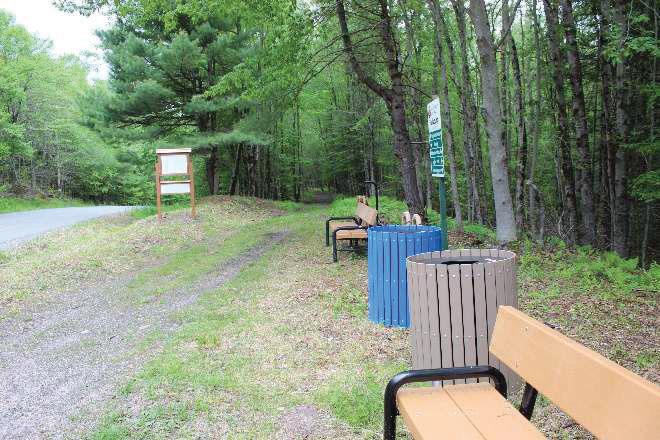


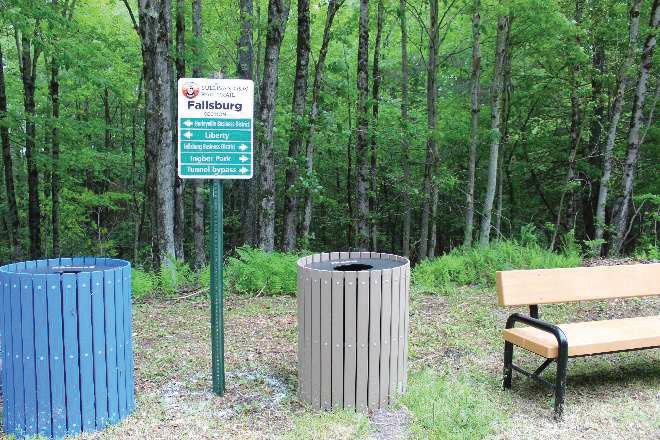
Benches for resting, bike repair stations, bike racks, receptacles, directional signage, and message boards; all you need to rest from biking or walking before you start again.

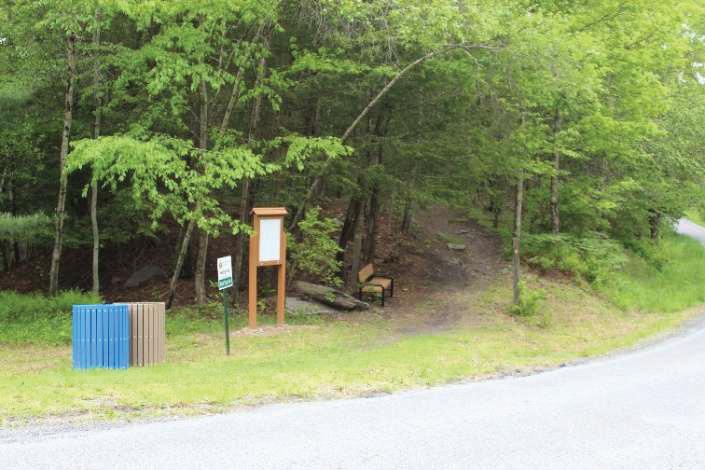
The above access point was once an area where many came to dispose of their old and unwanted tires. Most had no idea that it was part of the O & W Rail Trail. Now it’s a visible access point that connects to the Hurleyville business district or to South Fallsburg.
Upcoming Events
Wellness Initiative for Senior Education (WISE) -A six-week WISE series is under way at the Town of Highland senior center from June 22nd – July 27th. The class is full with 13 seniors registered.
Know Your Numbers – a free health screening (see yer on page 3) in collaboration with Garnet Health will be held July 21st from 10-12pm at the Extension Education Center. The Caregiver Resource Center, along with the Alzheimer’s Association and the Sullivan County O ice for the Aging, is promoting regular screening for cholesterol (LDL & HDL), glucose, triglyceride levels and monitoring your blood pressure. Registration is suggested but not required at https://tinyurl.com/5n6mtpy4
According to the Alzheimer’s Association, a growing body of research has demonstrated that lifestyle interventions can protect cognitive function. The Association's U.S. POINTER study, their single largest research investment, found that a lifestyle program targeting physical activity, nutrition, cognitive engagement, andhealth monitoring improved thinking and memory in older adults at risk of cognitive decline, with even greater bene t from a more structured intervention. (Alzheimer’s Association, www.alz.org, 2026).
TheCaregiverResourceCenterprovides
The Caregiver Resource Center provides community workshops and brief presentations on various topics to interested senior groups throughout the county, including topics from the Alzheimer’s Association.

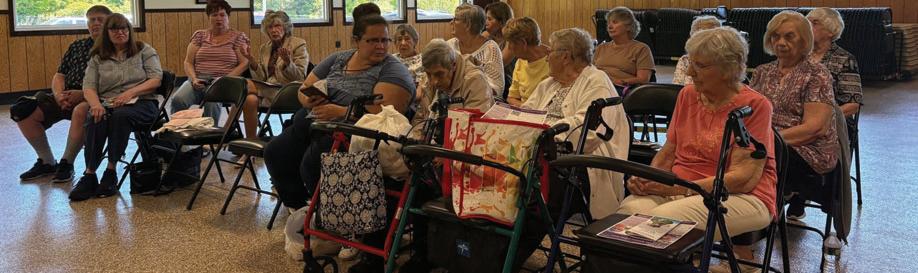

Above: Seniors at the Loch Sheldrake Senior Center listened to an overview of a workshop presentation on Building Brain-Healthy Habits held on June 3.
CAREGIVER SUPPORT GROUPS
Caregiver Café: Changing to the 2nd Monday each month starting in July. From 10-11am at CCE Sullivan’s Board Room. Dates: July 13, Aug. 10, Sept. 14
Virtual support group: (3rd Wednesday each month) July 15th, Aug 19th from 6-7pm
Parkinson’s Support Group held the 1st Wednesday of each month from 4-5:30 pm at CCE Sullivan. Note: July’s meeting is cancelled , please call the Caregiver Resource Center at 845292-6180 x 122 or email sullivancrc@cornell.edu for more information on upcoming meeting dates.
INFORMATION & ASSISTANCE
If you are looking for information about community resources to help you in your caregiving role for a loved one, or want to learn about available services and programs for individuals age 60 and older, please call the Caregiver Resource Center at 845-292-6180 ext. 122.

MEET MEGAN REILLY, AN ASPIRING VETERINARIAN RAISED BY THE SULLIVAN COUNTY 4-H YOUTH
MEET MEGAN AN ASPIRING DEVELOPMENT PROGRAM
Submitted by Barbara Moran, 4-H Youth Devleopment

Submitted Barbara Moran, 4-H Youth Program Manager a educational goals. Certificate curriculum 225 hours of hands-on
Megan Reilly has been a 4-H member for more than a decade. Her involvement has included club membership, public presentations, community service, annual fair still exhibits, and the Artisan Fair. Through 4-H opportunities and the mentorship of Barb Moran in animal science activities, Megan’s love for animals developed into a passion for animal science. These experiences provided hands-on learning and helped shape her
At Barb Moran’s suggestion, Megan enrolled in the Texas A&M University Veterinary Science Certificate Program. This nationally recognized self-paced course includes 200 hours of curriculum lessons, 225 hours of hands-on apprenticeship, and competency in 100 different skills. The program is designed to provide a platform for students pursuing degrees and careers in veterinary science by expanding understanding of animal care, handling, and medical procedures.


Megan completed the course over a period of two years, and this spring completed the required clinical hours under the supervision of a local veterinarian. She has now successfully passed the exam under the guidance of Barb Moran and received certification as a Veterinary Assistant

Megan completed the course over a period of the exam under the of Barb Moran and (VA).


experiences 4-H, mentorship, and
A 2026 homeschooled high-school graduate, Megan will attend SUNY Delhi to obtain a veterinary science degree. Veterinary science is a challenging field, but Megan believes her experiences through 4-H, mentorship, and training have prepared her for the opportunities ahead.


SHARING STRENGTHENING FAMILIES PROGRAM SUCCESS

Written and submitted by Patricia Ocasio, Prevention Program Coordinator, & Aaron Denman, Association Operations Coordinator
Families to of p evidence-based y y
Strengthening Families Program (SFP) lives up to its name: families connect by understanding the mysteries of adolescence and the struggles of being an adult. Developed by Dr. Karol L. Kumpfer, the original evidence-based SFP 14-session program came to fruition in 1982 on a National Institute of Drug Abuse grant for substance-abusing parents with children ages 6 to 11 years (SFP 6-11). The purpose of the grant was to discover what skills parents needed to keep their kids from using alcohol and drugs. Since then, SFP has been replicated by multiple agencies in the USA and Europe for the past 30 years with outstanding results. SFP is now taught in all 50 U.S. states and 36 other countries.
The Strengthening Families Program has also found its way into our curricula and the Monticello community. This spring, a group of families from Monticello successfully completed the series at the Ethelbert B. Crawford Public Library under the tutelage of Prevention and CCE staff including Martin Colavito (Prevention Programs Issue Leader), Patricia Ocasio (Prevention Program Coordinator), Andrew Fuller (Prevention Program Educator), and Tess Isabel Molina Bayly (FORx Youth Program Coordinator). All families received certificates to commend the effort each member, youth or adult, put into their learning process.
SFP 14-session came to fruition in 1982 on a National Institute of pyp Abuse for with children 6 to 11 years parents alcohol and Since then, SFP has y pp p ppp multiple past p results. SFP is now in all 50 U.S. states and 36 pyp pp other countr ies. y and the Monticello This spr ing, a group of f amilies from gggy ypggp yp yg (g) (g)(g )yy(g) or put into their process. gygg and interested in ygyp gyp

“It was a great turnout,” says Patricia Ocasio. “Families were engaged and the youth were amazing, all actively participating. The families are all very happy and interested in future programs.”



For more information on the Strengthening Families Program and the CCE staff who bring it to the local communities, you can visit our website at sullivancce.org/prevention
For more information on the Families and the CCE staff who br ing it to the local you can our website at g p .
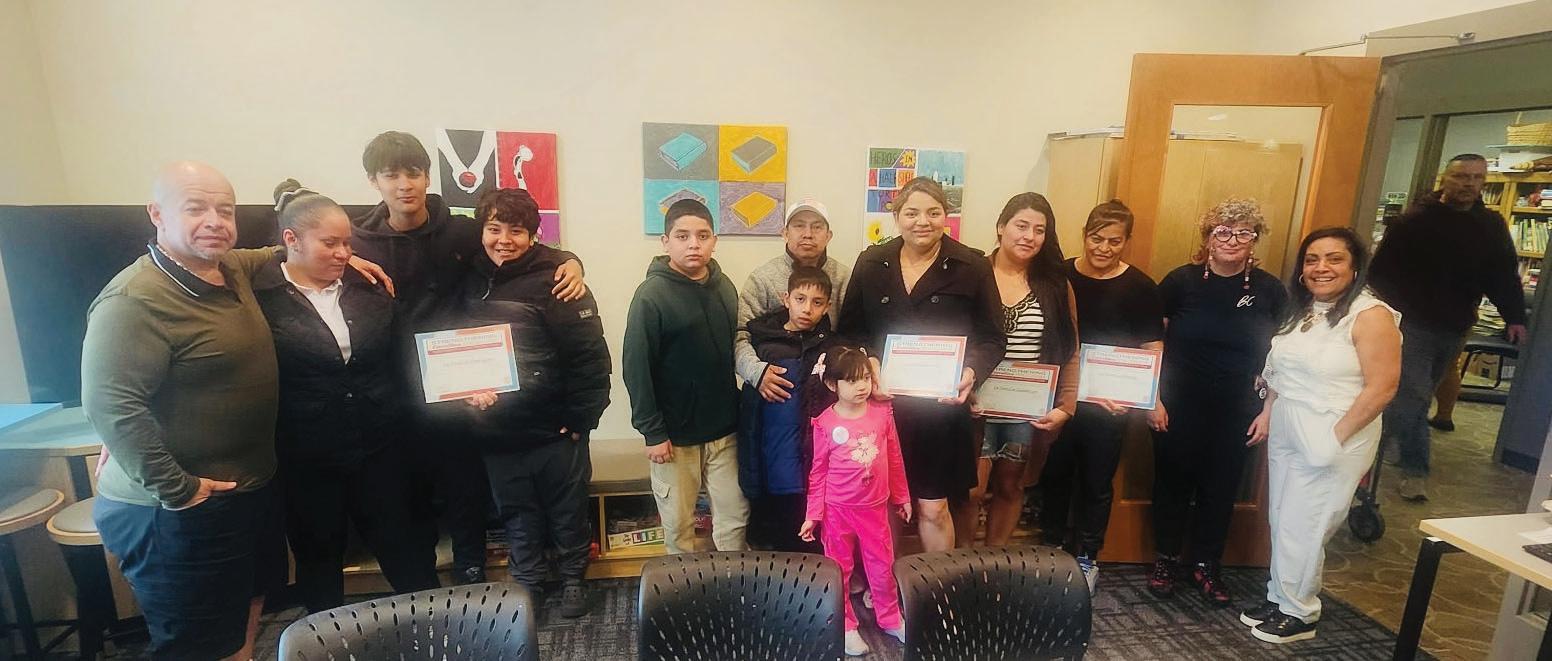





CCE Prevention staff Andrew Fuller (last person on right), Patricia Ocasio (second to last on right), and Tess Isabel Molina Bayly (third to last on right) celebrating with the students who successfully completed the Strengthening Families Program.