LEAD Attendees Deliver The People Advantage: Our industry’s competitive edge for long-term success.
Photo by Steve Woltmann/ASA
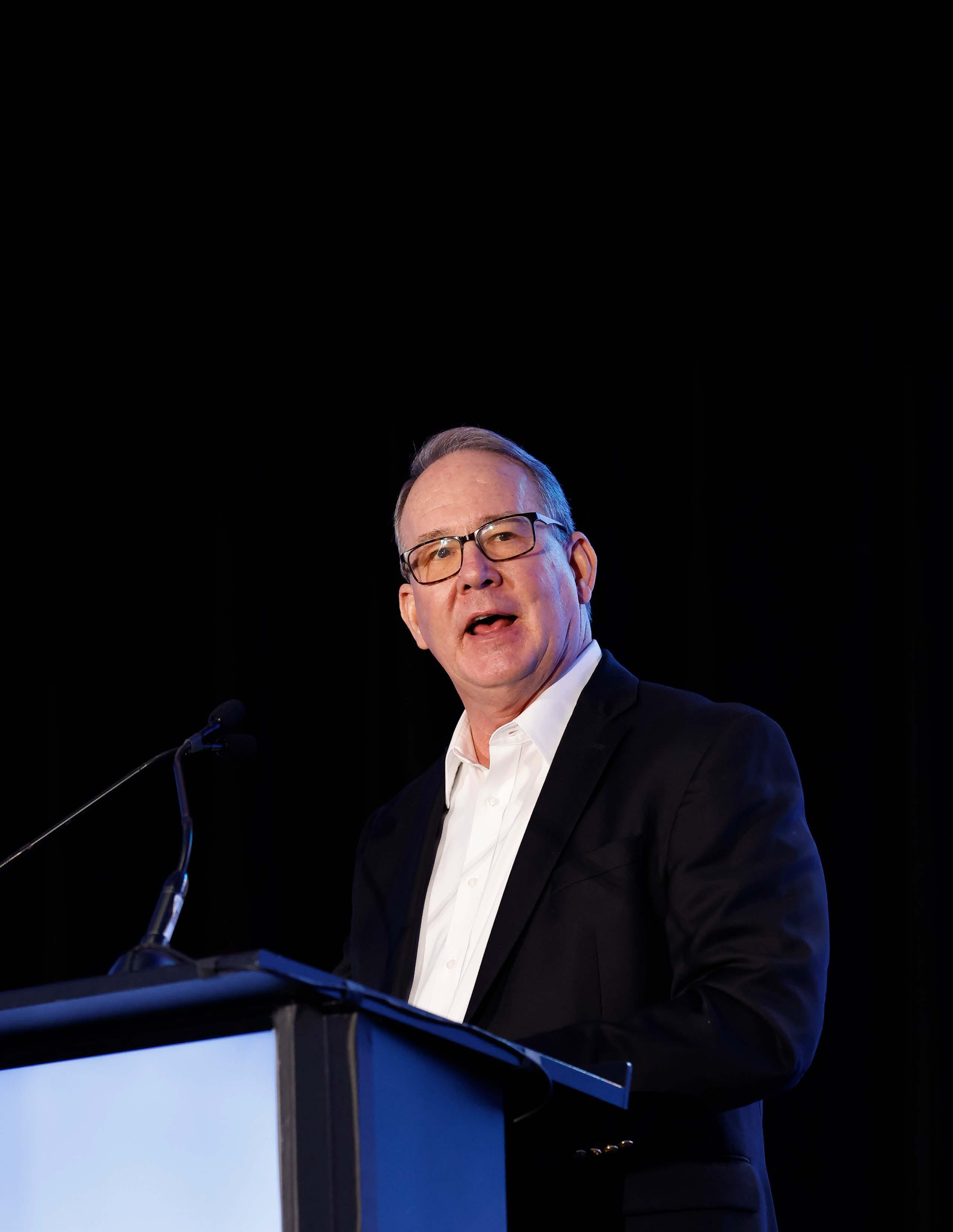
2026 ASA President Kip Miller (Eastern Industrial Supplies)

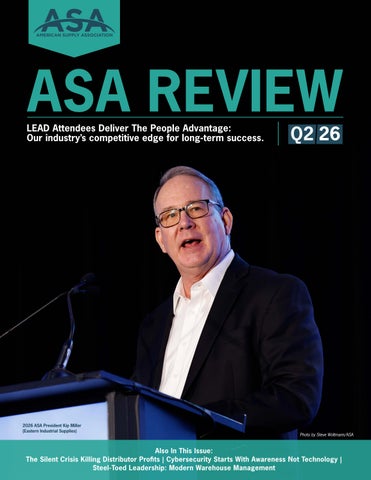
LEAD Attendees Deliver The People Advantage: Our industry’s competitive edge for long-term success.
In an industry defined by constant change — shifting supply chains, evolving technologies, and rising customer expectations — distributors need more than just data. They need clarity, leadership, and a trusted source of insight.
The American Supply Association (ASA) has firmly established itself as that source: a unified voice championing the success of distributors while delivering thought-provoking information that shapes the future of our industry.
The articles we deliver in each issue of ASA Review provide distributors with great content without all of the clutter often found in other publications. In fact, the leaders of every distributor firm operating today are now receiving ASA Review and the quality content we deliver.
ASA and ASA Review have become a collective voice for a complex vast and diverse industry, spanning plumbing, HVAC, industrial, and mechanical supply chains. Individually, companies face unique challenges — but collectively, they share common concerns: workforce development, economic pressures, digital transformation, and regulatory shifts, all issues where ASA is leading.
ASA serves as the central platform where these voices converge. By representing the interests of distributors at a national level, the association amplifies their concerns and ensures they are heard by policymakers, manufacturers, and industry stakeholders. This unified advocacy not only strengthens the position of individual businesses but also elevates the entire distribution ecosystem.
Beyond advocacy, ASA distinguishes itself through its role as a knowledge leader. Distributors today must navigate uncertainty with agility, and ASA and the articles in each issue of ASA Review provide the insights needed to do just that.
Through economic forecasts, industry research, and trends analysis, ASA equips members with forward-looking perspectives rather than reactive information. Whether it’s anticipating market shifts, understanding supply chain disruptions, or exploring emerging technologies, the content delivered in ASA Review challenges conventional thinking and encourages distributors to stay ahead of the curve.
Our educational programs, publications, and events foster a culture of continuous learning — helping leaders not only adapt but innovate.
Information alone is not enough; it must be actionable. ASA bridges this gap by translating complex data into strategic guidance. Members gain access to benchmarking tools, performance metrics, and best practices that allow them to make informed decisions with confidence.
This ability to connect insight with execution is what transforms ASA from a resource into a strategic partner. Distributors are not just informed — they are empowered.
Another critical aspect of ASA’s role is fostering connection with the entire industry. In a competitive industry, collaboration can be a powerful driver of growth. ASA creates spaces — both physical and virtual — where distributors, manufacturers and reps can exchange ideas, share challenges, and learn from one another. This sense of community reinforces the association’s position as a unifying force. One that only ASA can deliver. It’s not just about delivering information; it’s about creating dialogue that pushes the industry forward.
Leading the industry into the future
As distribution continues to evolve, the need for a trusted, forward-thinking voice becomes even more essential. ASA stands at the intersection of advocacy, education, data and innovation — guiding distributors through complexity with clarity and purpose.
By serving as both a megaphone for industry concerns and a beacon for strategic insight, the American Supply Association remains indispensable.
It is not merely an organization that distributors belong to — it is the voice they rely on and the source they trust to navigate what comes next.
Mike Adelizzi CEO




Simplify your sales, from client mgmt to order processing. Centralize your data, improve efficiency, & make better decisions with Distifabric.
in


By Leah Lopes Manager of Member Engagement llopes@asa.net
The American Supply Association, the only national trade association serving wholesalers, manufacturers and independent manufacturers’ representatives in the PHCP-PVF industry, announced recently Beaumont, Texas-based Coburn Supply Vice President Christy Maloney as the recipient of the 2026 ASA Alice A. Martin Woman of the Year Award.
The prestigious honor recognizes outstanding leadership, industry impact, and a commitment to advancing women across the PHCP-PVF channel.
Maloney’s career spans decades of leadership, adaptability, and service. She joined Coburn Supply in 2011, bringing with her a strong foundation from a successful career in commercial banking, where she served as vice president of the Commercial Lending Division at Bank of America.
Earlier in her journey, she spent time abroad managing her family’s expatriate life in Singapore and Buenos Aires — an experience that further shaped her global perspective and leadership style. Having first been introduced to the industry during her high school and college years, Maloney ultimately returned with a deep appreciation for its people and potential.
A passionate advocate for professional development and inclusion, Maloney has made a lasting impact through her leadership within ASA’s Women in Industry Division. She served as vice chair (2017–2018), chair (2019–2020), and continues to contribute as the chairwoman of the group’s membership subcommittee.
In 2025, Maloney completed ASA University’s Master of Distribution Management (MDM) program, further demonstrating her commitment to continuous growth and excellence. Her industry involvement extends across numerous organizations, including leadership roles with the Southern Wholesalers Association and active participation in several women-focused professional groups.
Colleagues describe Maloney as a leader who brings both purpose and positivity to all she does.
“This award recognizes Christy for more than professional excellence — it honors a woman who leads with heart,” one industry peer shared. “She brings joy into every room, makes others feel instantly welcome, and inspires women in leadership by the example she sets each day.”
Another colleague reflected: “From the first time I met her, she made me feel seen. Throughout the years, she has remained supportive, approachable, and a true advocate for women in our industry.”
Maloney’s influence is felt not only through her professional accomplishments, but through the way she elevates others. Known for her authenticity, warmth, and ability to connect, she continues to inspire the next generation of leaders while strengthening the industry as a whole.
ASA proudly recognizes Christy Maloney for her exceptional leadership, unwavering advocacy, and meaningful contributions to the industry.
The Woman of the Year Award is named in honor of NIBCO’s Alice A. Martin, who served as president and cofounder of the Rex and Alice A. Martin Foundation, a charitable foundation headquartered in Elkhart, Indiana, which donates to major projects for children. A champion of women’s rights, Martin founded the Women’s Leadership Group at NIBCO.
Past recipients of the Alice A. Martin Woman of the Year Award include: 2019 Ashley Martin (NIBCO), 2020 Katie Poehling Seymour (First Supply), 2021 Robyn Brookhart (Liberty Pumps), 2022 Suzanne Chreene (Delta Faucet), 2023 Karla Neupert Hockley (Consolidated Supply), 2024 Rebcca Falish (InSinkErator) and 2025 Mi c helle Lewnes-Dadas (Preferred Sales).
The ASA Women in Industry Division's ELEVATE2027 conference takes place March 30-April 1 in San Antonio, Texas. Mark your calendars!

By Nils Swenson Director of Innovation and Technology nswenson@asa.net
For many distributors, cybersecurity still feels abstract. It shows up in headlines, vendor conversations, and insurance questionnaires, but rarely in a way that leadership teams feel equipped to evaluate directly. When it’s unclear where to start, progress often stalls.
To help close that gap, the ASA Cybersecurity Task Group has released two new resources designed to be used together: the ASA Cybersecurity Checklist and Common Cyber Attacks Facing Distributors. Taken as a pair, they offer a practical way for distributors to assess their cybersecurity exposure and understand the real-world risks those gaps can create.
The checklist keeps the focus on one simple question: Where are we today? The cyberattacks guide addresses the natural follow-up: What could happen if we’re not prepared?
Used together, they move cybersecurity out of theory and into something leadership teams can engage with.
The ASA Cybersecurity Checklist is intentionally framed as a self-assessment tool, not an audit, certification, or compliance requirement. Its purpose is to help organizations understand
their current cybersecurity maturity and identify realistic areas for improvement over time. Cybersecurity is progressive by nature, and the checklist reflects that reality.
The checklist is organized into three maturity levels: minimal, average, and advanced. At the minimal level, the focus is on essential controls that reduce common, preventable risks. These include multi-factor authentication, basic phishing awareness training, endpoint protection, reliable backups, documented incident response planning, and data loss prevention.
As organizations mature, the checklist introduces more structured practices such as centralized logging, vendor risk assessment, network segmentation, and privileged access management. Advanced maturity reflects a higher level of resilience, including managed detection and response, immutable backups, and regular third-party testing.
Just as important as what’s included is what the checklist does not try to be. It does not prescribe specific tools. It does not expect perfection. And it explicitly encourages organizations to mark only the controls that are meaningfully in place today, not aspirational goals.
That design choice matters. The checklist is written so executive teams can use it as a starting point for informed conversations with internal IT staff, managed service providers, or trusted partners without needing to be cybersecurity experts themselves.
Still, a checklist alone can feel academic. Checking a box doesn’t always make the risk feel real.
That’s where Common Cyber Attacks Facing Distributors comes in.
This companion resource walks through the most common cyberattacks distributors face using plain language and familiar business scenarios. It covers threats such as phishing and credential theft, business email compromise, ransomware, malware delivered through attachments or downloads, data leakage through cloud and file-sharing tools, and risks introduced through compromised vendors or third parties.
Each scenario explains what the attack is, how it typically shows up in day-to-day operations, why distributors are targeted, and what’s at stake if the attack succeeds. The tone is intentional. The goal is to build awareness without fear, blame, or unnecessary technical detail.
What makes this resource especially effective is that each attack scenario is explicitly tied back to related controls in the Cybersecurity Checklist. The attacks describe what can happen. The checklist outlines the practices organizations use to reduce exposure across increasing maturity levels.
This pairing is intentional. Together, the two resources create a simple, practical workflow:
Start with the checklist to identify which controls are meaningfully in place today.
Then use the cyberattacks guide to understand how gaps in those controls could be exploited in the real world.
That connection helps translate cybersecurity from a technical concern into a business risk discussion. It reframes controls as safeguards against operational disruption, financial loss, and erosion of customer trust, not just IT requirements.
Another important aspect of both documents is restraint. They are not meant to replace formal cybersecurity frameworks, audits, or professional services.
Instead, they focus on the most common risks distributors face today and present them in a way that encourages informed action rather than overwhelm.
For many organizations, the greatest cybersecurity risk isn’t lack of sophistication, its inaction driven by uncertainty. When leaders don’t know where to begin, nothing moves forward. These resources are designed to lower that barrier.
Over time, distributors can revisit the checklist to track progress, use the cyberattacks guide to educate leadership teams, and ground conversations with vendors, insurers, and service providers in shared terminology and expectations. Together, they provide a practical baseline that organizations can build on as their needs evolve.

Cybersecurity is increasingly a foundational capability. It underpins digital transformation, data sharing, AI adoption, and operational resilience. Without it, innovation becomes fragile.
The ASA Cybersecurity Checklist and Common Cyber Attacks Facing Distributors are available now in the ASA resource library ( Accessed by going to www.asa.net , clicking Innovation and then clicking Cybersecurity). They are designed to be used together, revisited over time, and adapted to fit the realities of each organization.
If cybersecurity has felt like something happening to your business rather than something you can actively manage, this is a practical place to begin.
Don’t miss attending ASA’s Innovation Summit Nov. 9-10 at Caesars Palace in Las Vegas, the day before NETWORK2026 begins. To learn more about the Innovation Summit, visit www.asa.net/Innovation-Summit

the PHCP/PVF
Retirements continue to be a key concern.
By Steve Edwards Director of Recruitment Marketing sedwards@asa.net
ASA recently conducted a survey of its members to gauge the current condition of recruitment in the PHCP/PVF industry.
Talent attraction has been a consistent area of concern in the industry for several years which precipitated the launch of Project Talent, an ASA initiative to increase awareness of the industry among job seekers and provide recruitment tools and resources for ASA members.
A market study conducted in 2025 showed that a third of the industry’s workforce is over the age of 55 and 10 percent is 65 or older. It also showed there has been an increase in women joining the industry and a slight uptick in younger workers being hired, but not enough to fill the gap created by ongoing retirements.
In this recent survey, results show a continued concern with the aging workforce and additional areas of concern, while providing more insight into the specific roles ASA members are trying to fill.
More than half of the respondents said the hiring environment has not changed or has become slightly to noticeably more difficult.
Who completed the survey?
80 percent of the survey responses came from distributors with manufacturers and rep firms equally representing the remaining 20 percent, with a generally equal mix of small, medium, and large firms. Additionally, responses came from a good mix of
companies that sell PVF and PHCP supplies, or both. Finally, responding firms included those serving customers locally, regionally, and nationally.
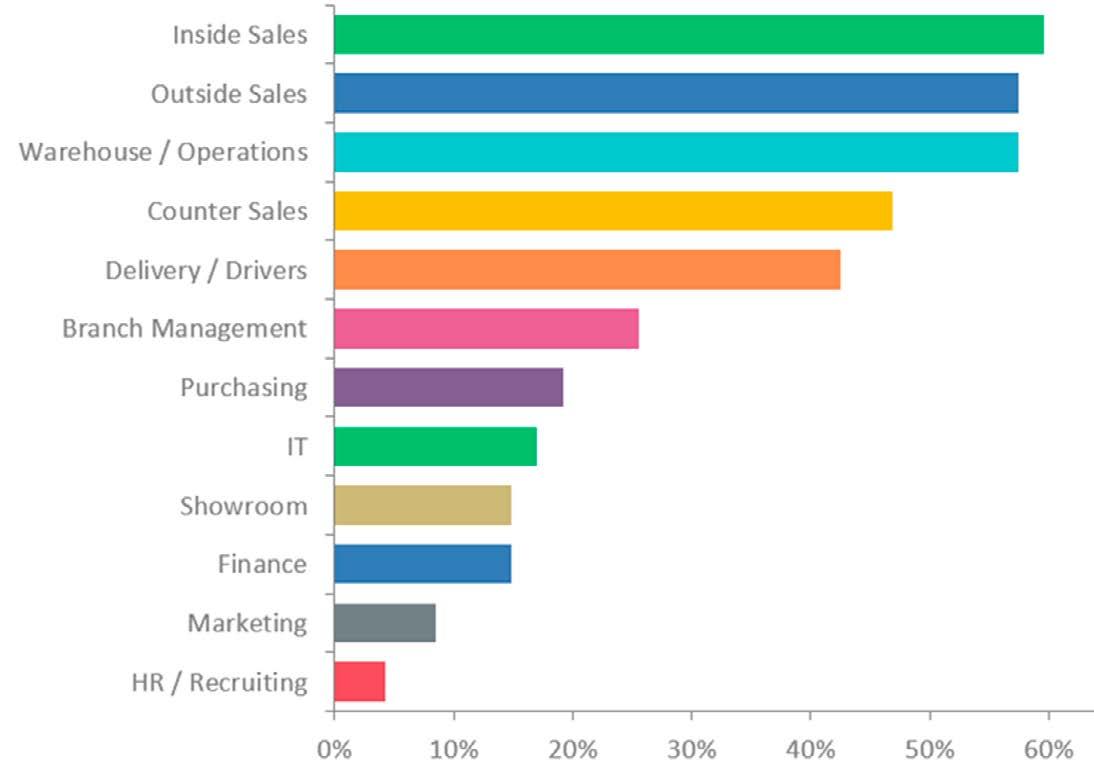
on survey response, more than half said their hiring needs are somewhat
with around 20 percent stating their needs are very urgent.
According to the responses, inside sales, outside sales, and warehouse/operations roles make up most of the current open positions, followed by counter sales and drivers.
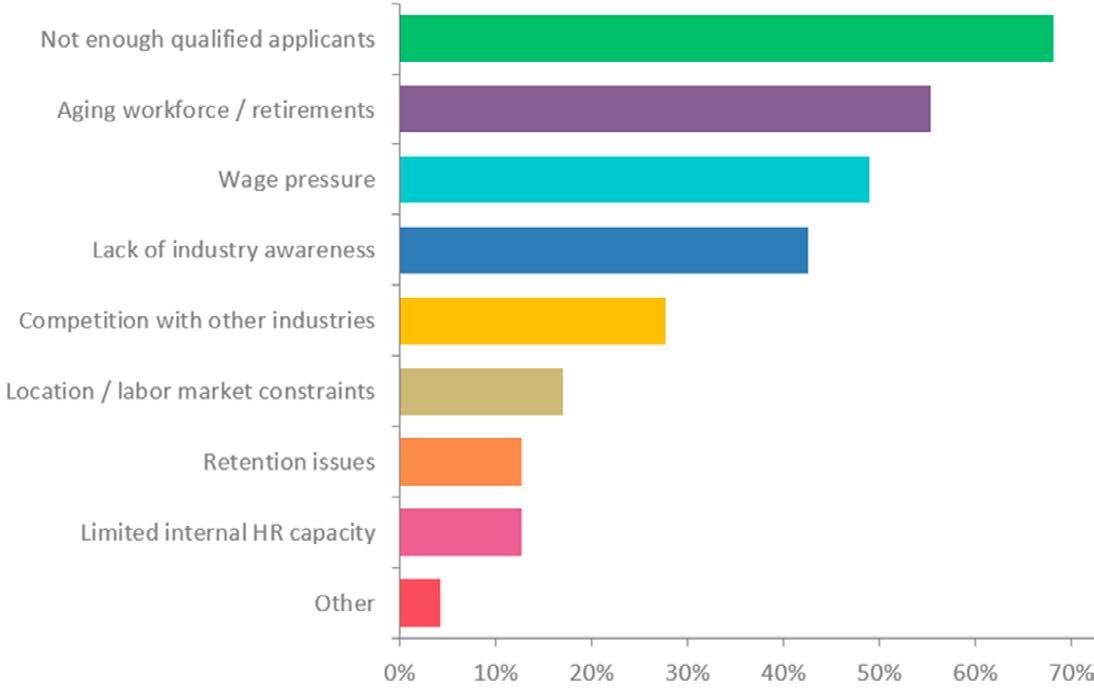
When asked about the biggest hiring challenges ASA members encounter, the number of qualified candidates was listed by nearly 70 percent of respondents. This was followed by an aging workforce, wage pressure and a lack of industry awareness.

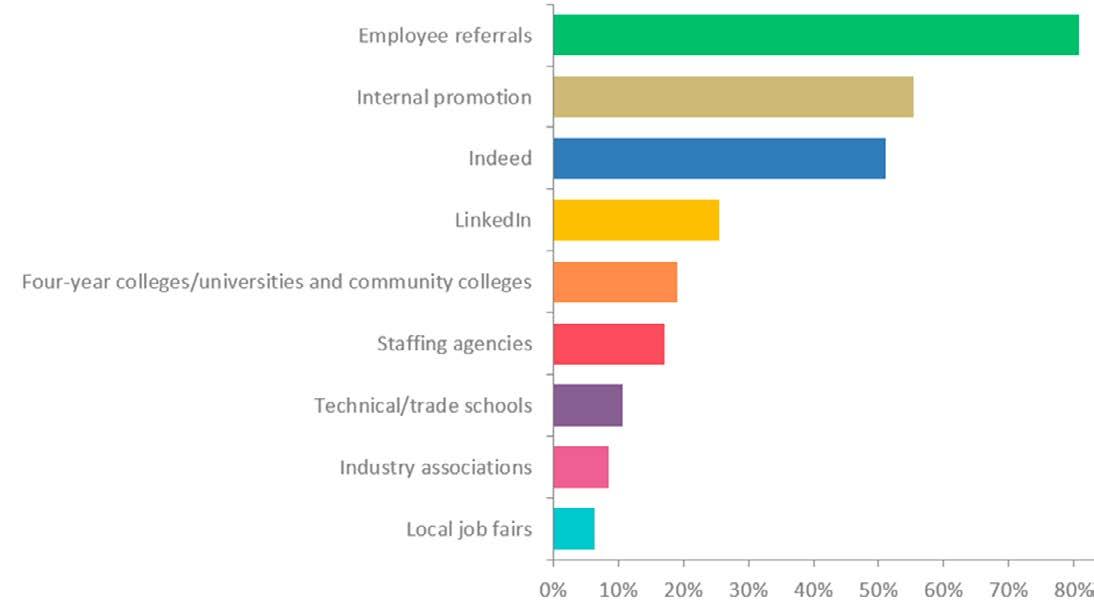
Two-thirds of ASA members believe their current recruitment efforts are somewhat effective and believe their best candidates come from a mix of various tactics with employee referrals, internal promotions, Indeed, LinkedIn, and four-year and community colleges leading the responses.
While some ASA members feel like there has been slight improvement in their ability to attract talent, more than half said the hiring environment has not changed or has become slightly to noticeably more difficult.
On the topic of retirements and succession planning, less than 20 percent had no concerns. Conversely, more than 80 percent have worries ranging from slightly to very concerned.
When asked which workforce trends will impact their business, ASA members responded that retirements continue to be the top trend they believe will impact their business. This was followed by increased wage pressure and difficulty in attracting younger workers.
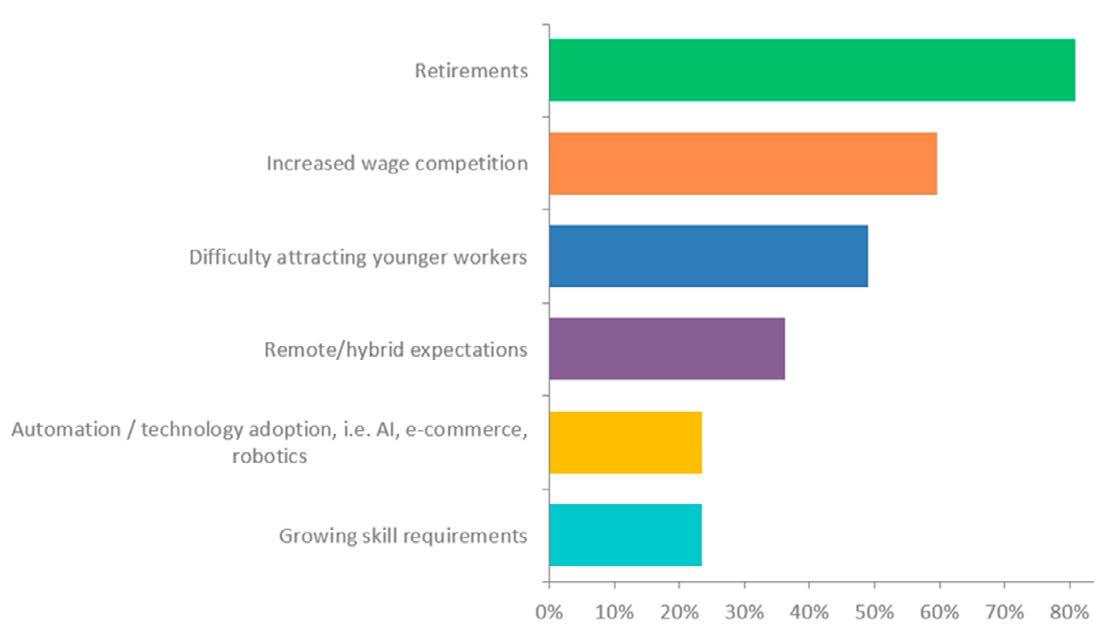
The survey allowed for additional comments from respondents. Several addressed the need for member support such as “provide resources for small companies that don’t have dedicated HR or recruiters,” or “hold recruitment seminars that would benefit the recruiting staff.”
Others included “sharing best practices,” and holding “webinar sessions for HR point people informing them of all the tools and resources.”
The good news is, via ASA’s Project Talent, many of these resources are available for members in the Recruiter Toolbox, available on ASA.net .
Prewritten job description templates, more than 10 recorded webinars on key recruitment topics, employer brand best practices, an internship program guide, and more are available within the Toolbox.
To learn more about ASA’s Project Talent, please visit the program’s page on ASA.net and the Recruiter Toolbox. Also be sure to check out supplyindustrycareers.com, a website targeted to job seekers, and follow the program’s Facebook, Twitter (X), and Instagram accounts.

By Mike Adelizzi CEO madelizzi@asa.net
ASA’s Women in Industry Division, along with its events and programming, delivers far-reaching value that extends beyond individual participants to influence the overall strength, resilience, and reputation of our industry.
While its foundational purpose is to support and elevate women, its broader impact is organizational and economic.
At a structural level, these divisions help address systemic gaps that have historically limited access to advancement. By offering formal networking events like ELEVATE, educational and sponsorship opportunities, and leadership pathways, they create clearer routes for career progression. This is especially important in industries where women may be underrepresented in senior or technical roles.
Events such as leadership and networking events, workshops, and speaker series provide both skill-building and visibility — two critical factors in professional advancement.
Beyond development, these initiatives play a key role in shaping workplace culture. A dedicated Women in Industry division signals that inclusion is not an afterthought but a strategic priority. This can influence company policies, from pay equity and parental leave to flexible work arrangements and inclusive hiring practices. Over time, these cultural shifts contribute to higher employee satisfaction and stronger retention across the board — not just for women.
The external impact is equally significant. Industries that actively promote gender inclusion tend to be more attractive to investors, partners, clients and career seekers who prioritize environmental and social considerations.
Women-focused events, such as ASA’s annual ELEVATE conference, also create platforms for thought leadership, allowing industries to showcase innovation, highlight emerging talent, and position themselves as forward-thinking.
Another often-overlooked benefit is data and insight generation. Through events, surveys, and community engagement, these divisions like ASA’s Women in Industry gather valuable information about workforce trends, challenges, and opportunities. This data can inform better decision-making at both the organizational and industry levels.
Finally, the sense of community fostered through events like ELEVATE cannot be understated. Professional isolation can be a barrier to success; creating spaces where women feel supported, heard, and empowered leads to greater confidence and participation. That energy often translates into stronger leadership, more active engagement, and a willingness to drive change from within.
ASA’s Women in Industry Division is not simply a support network — it is a catalyst for cultural transformation, talent optimization, and long-term industry growth.
ELEVATE2026, presented by ASA’s Women in Industry Division in Boston earlier this spring, brought together more than 400 women from across the industry for an inspiring and empowering experience. Centered on the theme “Forward Together,” the conference focused on progress, collaboration, and collective growth.
Attendees gained valuable insights from thought-provoking speakers, participated in engaging sessions, and built meaningful connections to strengthen both career and community. Whether looking to grow as a leader, expand your network, or be part of a supportive group of women driving the industry forward, ELEVATE2026 provided the tools and inspiration to take the next step together.
The ASA Women in Industry Division is a dynamic and growing force, dedicated to elevating the visibility and impact of women professionals in the PHCP-PVF industry. The division offers a platform for connecting with driven women, fostering networking opportunities, and leveraging educational resources to achieve personal and professional goals.
ASA’s Women in Industry Division is not simply a support network — it is a catalyst for cultural transformation, talent optimization, and long-term industry growth.
Companies can benefit from ongoing membership and active participation in the Women in Industry Division.

If your company is not yet signed up to be a part of this exciting group, visit www.asa.net and see how you can engage the women in your company or email ASA’s Leah Lopes at llopes@asa.net
Next year’s ELEVATE2027 takes place March 30-April 1, 2027 in San Antonio, Texas at the JW Marriott Hill Country.





By Sue Weiler-Doke
The construction industry is standing at a crossroads.
As experienced owners and senior leaders approach retirement, many companies face an uncomfortable truth: succession planning is often informal, incomplete, or nonexistent. Whether the plan is to pass the business to children, sell to a larger firm, or simply step away, the absence of intentional succession planning puts organizational sustainability, employee trust, and legacy at risk.
Succession planning is not just about naming a replacement. It is about preparing people, processes, and mindsets for a leadership transition that protects the organization and honors the outgoing leader’s contributions.
The succession dilemma in construction Construction companies are uniquely vulnerable during leadership transitions. Many firms are closely held, familyowned, or built around the expertise and relationships of a single leader. When that leader exits suddenly or without preparation, institutional knowledge, decision-making authority, and cultural stability can disappear overnight.
Owners often face three common scenarios:
1. Passing the business to children who may or may not have received formal leadership training.
2. Selling to a larger organization, which requires clean structures, documented processes, and stable leadership pipelines.
3. Exiting without a plan, driven by burnout, health concerns, or a desire for relief —often leaving chaos behind. Each path requires thoughtful preparation, yet many leaders delay planning because retirement feels distant, emotionally difficult, or tied to personal identity.
Preparing the next generation for leadership Effective succession planning begins long before a title changes hands. Preparing the next generation — whether family members or internal successors — requires more than technical competence. Leadership readiness involves decisionmaking authority, emotional intelligence, and the ability to lead others rather than “do the work.”
Key strategies include:
Deliberate mentorship and knowledge transfer: Outgoing leaders must actively mentor successors, sharing not only what decisions are made, but how and why they are made.
Progressive responsibility: Successors should assume increasing levels of authority over time, allowing mistakes to become learning opportunities rather than crises.
Clear role definitions: Successors need clarity around expectations, outcomes, and accountability to avoid power struggles or role confusion.
Leadership development, not just training: Technical skills do not automatically translate into leadership capacity. Coaching, feedback, and exposure to strategic decisionmaking are critical.
In family-owned businesses, this preparation is even more important. Familial trust does not replace leadership readiness. Clear boundaries, transparent expectations, and formal development pathways help preserve both the business and family relationships.
One of the most overlooked aspects of succession planning is preparing the outgoing leader to let go. Many construction leaders have spent decades building their companies, tying personal identity and self-worth to their role. Without intentional preparation, leaders may struggle emotionally, linger operationally, or unintentionally undermine their successors.
Preparation for retirement includes:
Psychological readiness: Leaders must reflect on who they are beyond their role and envision a meaningful next chapter.
Role clarity during transition: If leaders remain involved temporarily, responsibilities must be clearly defined to prevent confusion or micromanagement.
Shift from authority to advisory capacity: Successful transitions require leaders to relinquish decision-making authority while remaining available as mentors or advisors.
Open dialogue about timing: Clear timelines reduce anxiety and allow the organization to plan with confidence. Retirement should not be treated as a sudden end date, but as a gradual transition that respects both the leader and the organization.
and the transition into retirement
Offboarding is more than an exit checklist — it is a strategic process that bridges leadership transition and retirement. Thoughtful offboarding allows organizations to retain institutional knowledge while giving leaders space to step away with purpose and dignity.
Effective offboarding and transition strategies include:
Phased retirement arrangements: Reduced hours, project-based roles, or mentoring responsibilities allow leaders to contribute without carrying full operational weight.
Knowledge documentation: Capturing processes, relationships, and historical insights prevents institutional memory loss.
Defined sunset roles: Temporary roles should have clear goals, timelines, and endpoints to support closure.
Celebration and closure: Recognizing contributions reinforces organizational culture and honors legacy.
Offboarding also signals to employees that leadership transitions are intentional, respectful, and well-managed — strengthening trust and morale.
Succession planning as a sustainability strategy
Succession planning is not just a leadership issue — it is a sustainability strategy. Organizations that plan for transitions reduce risk, retain talent, and maintain momentum during

change. They are better positioned for growth, acquisition, or long-term independence.
Construction companies that invest in succession planning benefit from:
Stronger leadership pipelines
Reduced disruption during transitions
Preserved institutional knowledge
Increased organizational resilience
Most importantly, succession planning gives leaders the freedom to exit on their own terms — confident that what they built will endure.
Whether you plan to pass your company to the next generation, sell to a larger firm, or step away entirely, succession planning is not optional — it is responsible leadership. Preparing successors, supporting outgoing leaders, and designing intentional offboarding processes protect both people and performance.
Succession is not about endings. It is about continuity, stewardship, and building something strong enough to last beyond any one leader.
Sue Weiler-Doke, EdD, is a senior consultant with D. Brown Management, where she works with construction leaders across the country on succession planning, leadership development, and organizational sustainability and scalability. With decades of experience in the construction industry, Sue specializes in helping companies prepare for leadership transitions, retain institutional knowledge, and design intentional offboarding and pre-retirement strategies. She can be reached at sue.w@dbmteam.com
Our industry’s competitive edge for long-term success.
By Mike Adelizzi CEO madelizzi@asa.net
The PHCP-PVF industry is entering a period of rapid consolidation and technological change.
While products, technology, and capital will continue to evolve, the industry’s long-term success will ultimately depend on the strength of its people and leadership practices. That’s because human capability and culture remain the industry’s enduring advantage. One that will allow our members to compete against the onslaught of AI well into the future.
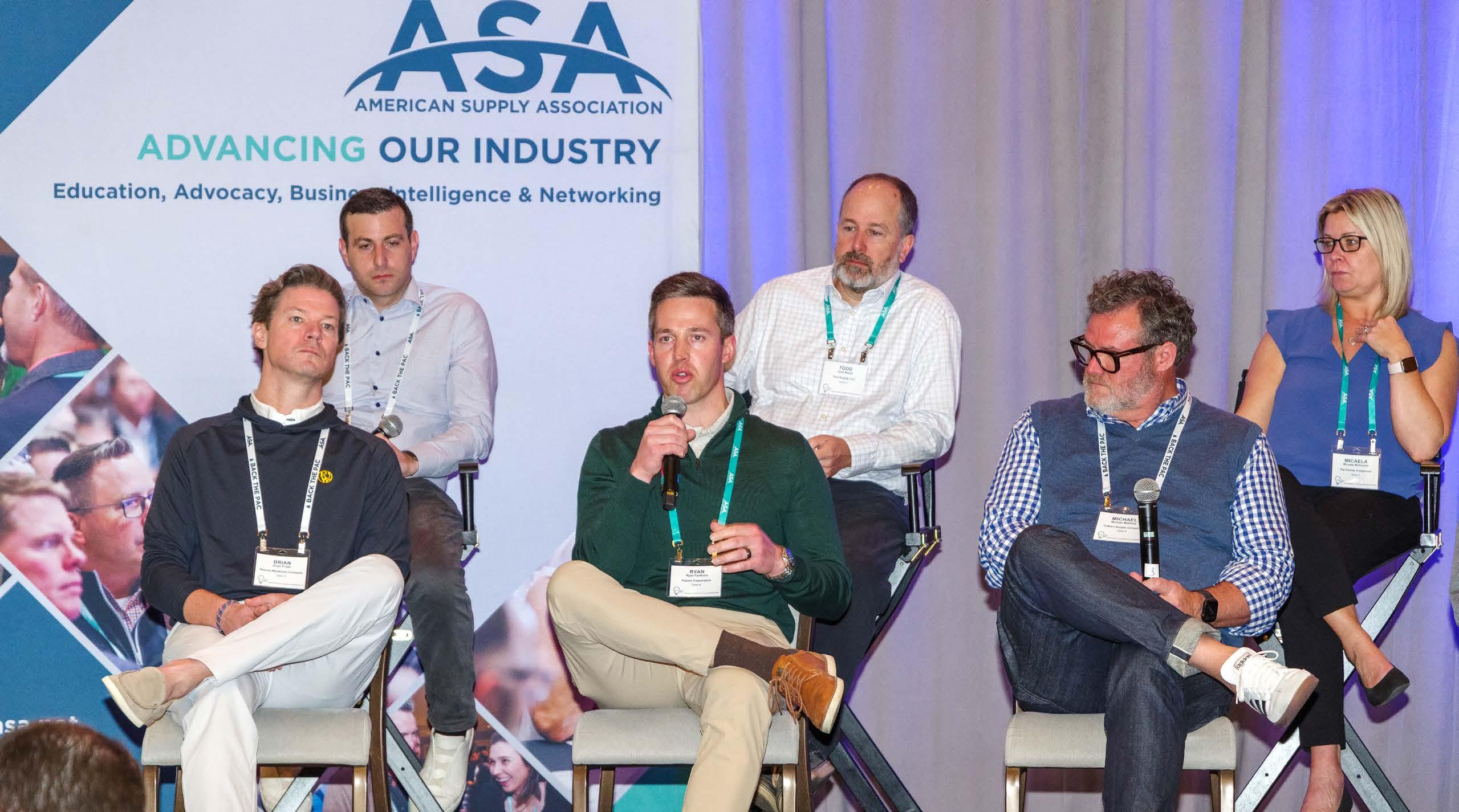
At the latest ASA LEAD Strategic Leadership Summit, an issue strategic action team (ISAT) of next-generation leaders brought this issue into consideration. The response confirmed what many already know intuitively: people-first leadership is embedded in the DNA of this industry.
The opportunity now is not to invent humanity — but to define it, strengthen it, and operationalize it at scale.
Based on the next-gen ISAT presentation in St. Petersburg, Florida, LEAD attendees focused much of their work on a
foundational belief for the industry that a shift from a contrasting view of defining people as “our greatest asset” to one of “our employees are our greatest strength” is necessary.
The consistent message from the volunteers at LEAD was clear: The industry does not want ideology. It wants a structure — a way to develop, scale, and measure our human advantage so we do more than compete. We lead.

Viewing team members as assets is the more traditional mindset of seeing people as expendable, transactional, shortterm contributors — something no longer viable in a laborconstrained, trust-dependent industry.
Instead, viewing employees as more of a STRENGTH mindset elevates:
Self-realization (helping people pursue their potential)
The ability to thrive (creating conditions where they flourish)
Respect
Empathy
Nurturing
Growth
A sense of togetherness — coming together for a common cause
A human-centric purpose and impact
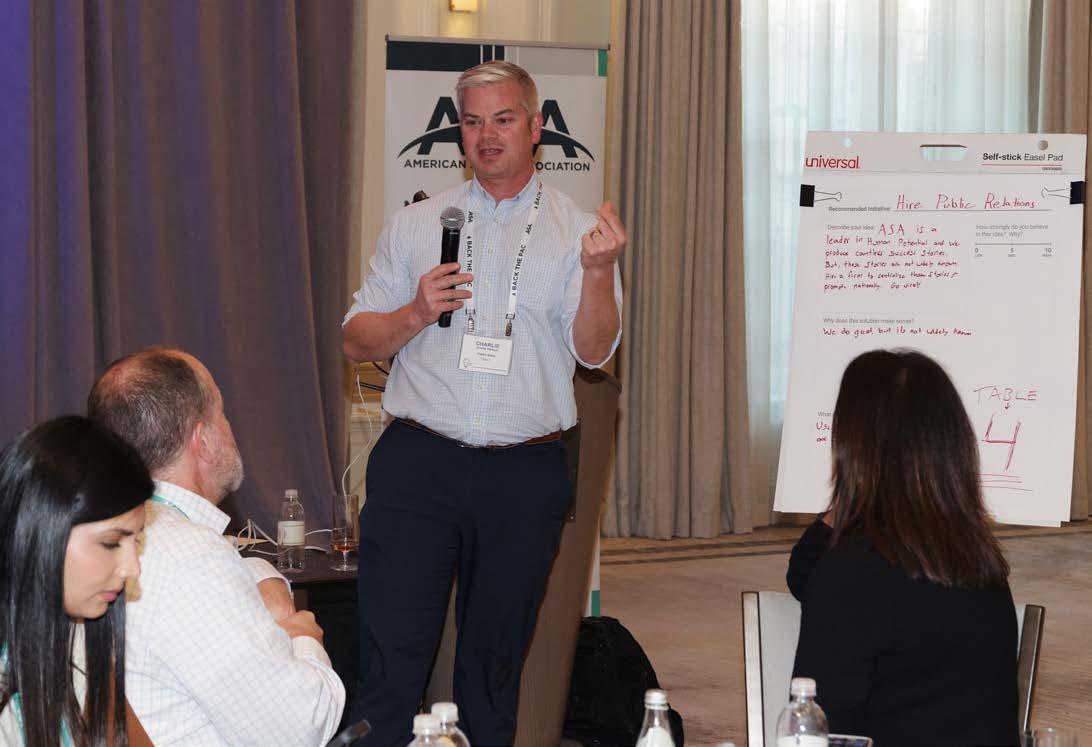
This conversation helped the LEAD group articulate the philosophical shift required: people cannot be treated as or even called assets, but instead are strengths that can be developed — providing a more wholistic approach of humanity.
This shift to a more STRENGTH focus can be transformational for members in developing their teams, keeping their teams together, and especially in attracting the new teams required for growth and success.
In fact, that shift in focus will pay dividends to the association’s ongoing effort to attract the nation’s best talent directly to our members’ websites.
ASA has an opportunity to help define what a great workplace in our industry looks like and provide member companies with practical tools to improve profitability by strengthening cultures, developing their teams, and attracting future talent.
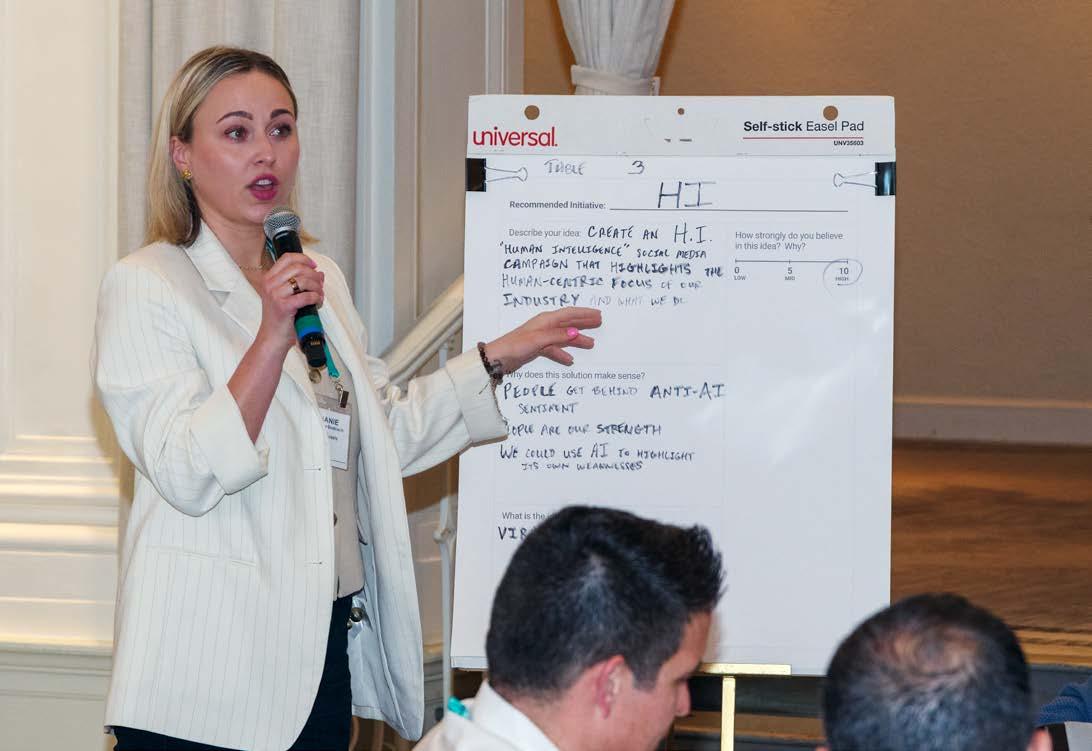
The goal of this effort is to help transition the industry from viewing employees as assets to recognizing them as strengths that drive long-term success.
To support this goal, ASA will launch The People Advantage, a structured effort designed to:
Identify and document best workplace practices across the industry.
Provide tools to help member companies strengthen leadership and culture.
Create a framework companies can use to measure progress.
Recognize companies that demonstrate excellence in developing and supporting their people.
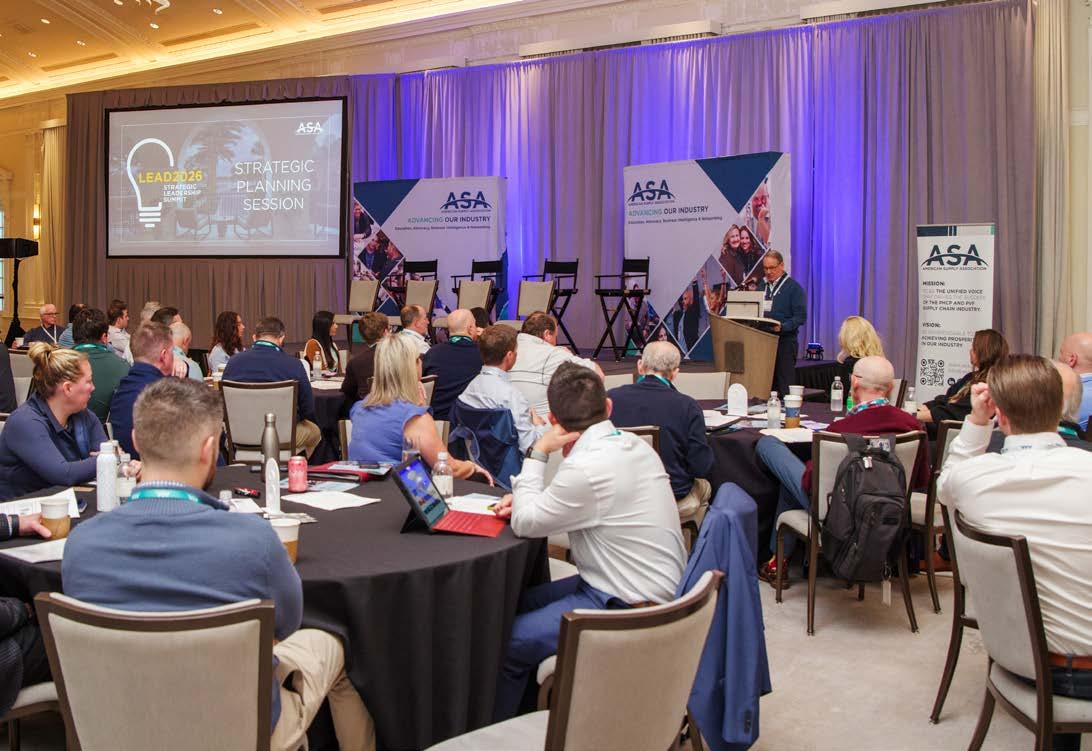
This effort will be supported by ASA volunteer leadership, with key strategic councils, including Operational Excellence, Workforce Development, and Embracing the Future, helping guide development, pilot testing, and industry rollout. Keep an eye out for more details on ASA's The People Advantage in the coming months.

The silent crisis killing distributor profits.
By Randy MacLean WayPoint Analytics
For years, distributors have blamed the “small order problem” for shrinking margins and disappearing profits.
Over time, most companies have simply accepted it as the nature of the business. But that assumption has allowed a much deeper, more damaging issue to fester unchecked — one that is quietly costing distributors millions every year.
In fact, it’s the real reason so many companies have lost their historic profit rates and are having such a difficult time getting them back.
The 'small order' misnomer
For decades, everyone has been aware of the “small order problem” in distribution. Many (including myself) have studied it in detail, but any kind of action plan to effectively address it has been elusive.
Much of the thought leadership came from the early foundational work by researchers including James L. Heskett and later detailed in Lambert et al. (1983), building on case insights from Bruce Merrifield.
These papers sparked thinking that was very advanced for their time. However, the industry lacked today’s detailed linelevel analytics tools. As a result, researchers misidentified the real nature of the problem.
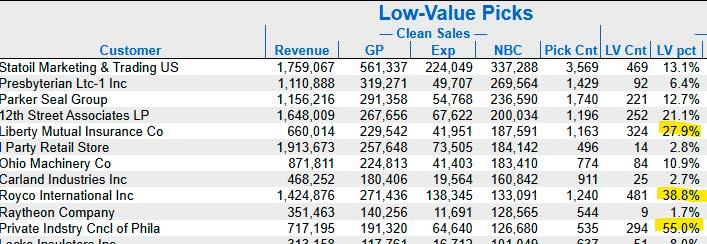
A little more than a year ago, we tackled the issue again and took it much further. We drilled down to look at profitability at the individual pick level, using both our quantum analysis capability (looking at line-level profitability), and utilizing our enormous (hundreds of billions) pool of industry data.
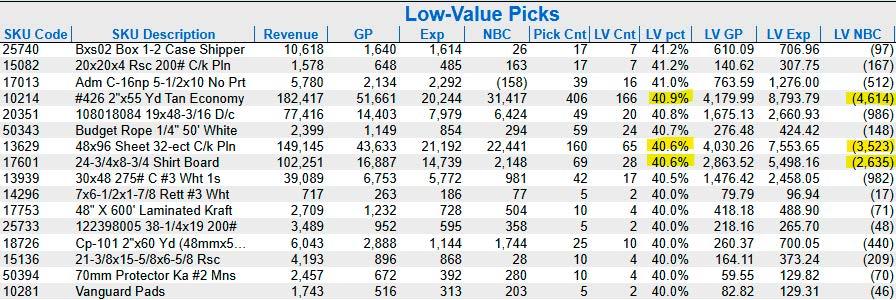
We found that the real issue isn’t small orders at all. It’s lowvalue order lines — specifically, picks that cost more to fulfill than the gross profit they generate. These are the quiet killers of profitability. They hide inside everyday activity, making them extremely difficult to spot and even harder to fix without the right tools and strategies.
We analyzed $725 million in detailed data across 10 distributors, drilling all the way down to the individual line level. We analyzed year-over-year change to see what impact their actions were having. Our goal was simple: identify what separated the distributors that were pulling ahead from those falling behind. What we discovered brought new clarity to profit strategy and inspired powerful new analytics for our clients.
These companies weren’t edge cases. They were representative distributors across different markets and sizes, from smaller independents to large regional players. We divided them into two groups, based on whether or not they were actively addressing the small-pick issue.
The first group — five companies that had not taken targeted action — showed signs of steady and significant decline:
Average order value dropped 13.4%, falling from $81.89 to $73.34
Pick expenses rose 8.9%, from $46.01 to $51.79
Number of money-losing picks increased 1.6%, from 753,363 to 765,578
Operating profit collapsed by 41.9%, dropping from $47.4 million to $27.5 million
The companies showed erosion in several metrics that drive small losses. However, the factors combined to crush profitability. In total, these five companies lost nearly $20 million in profits in just 12 months. These aren’t the kind of numbers any business can absorb for long — not in a highcost, low-margin industry like ours.
The second group told a very different story. These five distributors took targeted action using detailed cost and profit data. The results were impressive:
Average order value rose 19.3% (from $145.47 to $187.87)
Pick expenses increased only 2.9% (from $98.40 to $109.53)
Losing picks fell 29.6% (from 251,420 to 176,989)
Profits jumped 53.8% (from $20.5 million to $31.5 million), adding more than $11 million
Surprisingly, sales for the companies in both groups were relatively steady with no significant sales growth or decline.
The Group 2 companies weren’t necessarily spending more, selling more, or working harder. They were working smarter — targeting the right accounts, tightening fulfillment dynamics, and making small, high-impact operational changes based on data.

And in case you’re wondering whether this only applies to large firms, consider the standout performer in our study: a $4 million distributor that used the same techniques. In just one year, they:
Increased order value by 38.5%
Held pick expense nearly flat, with just a 3.7% increase
Reduced total pick count by 18.7%
More than doubled profit, from $359,000 to $923,600 — a 157% increase in one year
Their story proves this isn’t just a strategy for the big guys. It’s about focused action, not size.
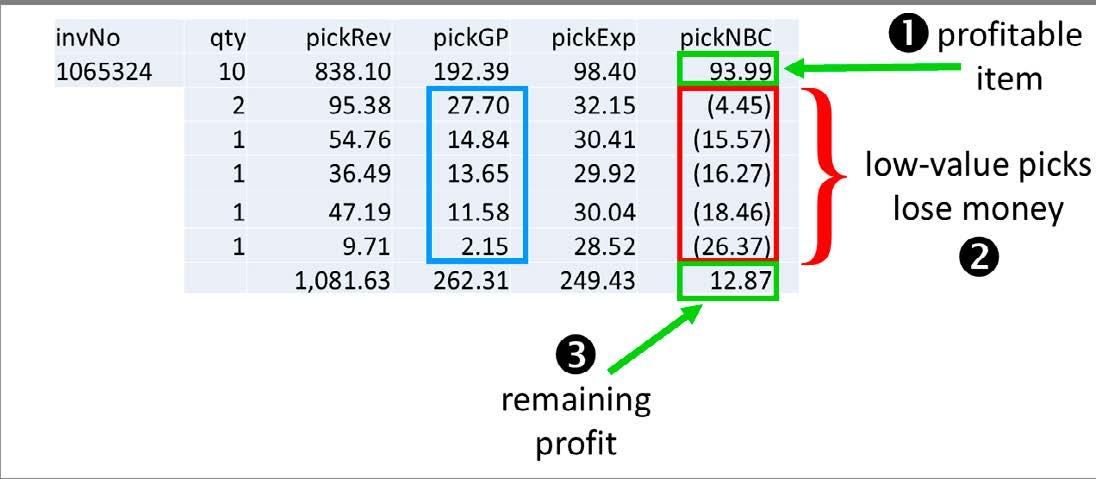
In one example: we looked at an invoice from a particular customer. Out of six order lines, only one produced meaningful profit — $94 on a high-value pick. (1) The other five lines, each representing low-quantity, low-value picks, were unprofitable. (2) After adding it all up, the invoice only netted $12.87 in operating profit, despite more than $1,000 in revenue. (3) The rest was wiped out by costly handling.
And it gets worse. A week later, the same customer placed another order with the same low-value lines — but without the one profitable item. (4) That invoice lost $76.67. (5) The two invoices produced a combined loss of $63.79. (6) The two invoices combined to produce an outright loss.
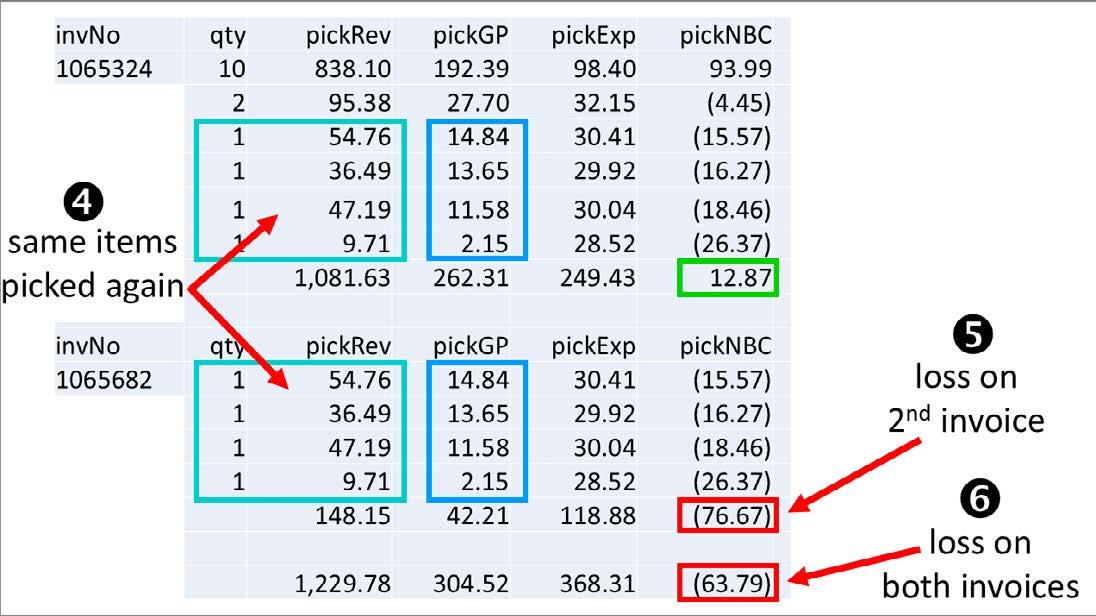
The two invoices combined to produce an outright loss.
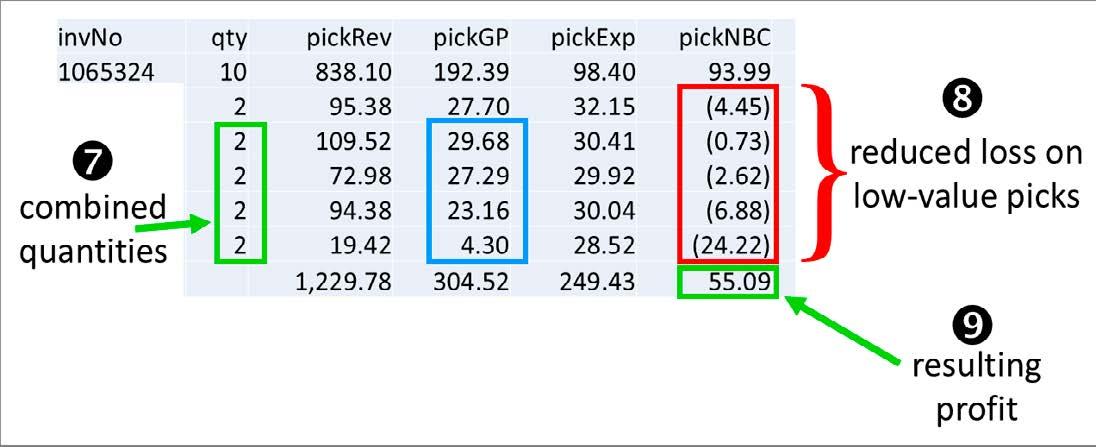
If those two orders had been combined (7), losses on the low-value items would have been substantially reduced with increased product value sharing the picking and delivery costs (8), and the company would’ve seen a $55.09 profit (9) instead of a combined $63.79 loss. That’s a $119 swing — on just two invoices.
In this company, the low-value picks occurred 177,352 times in one year! Now you can see the scale of the damage — and the potential for cost savings and profit gains. Collected up across a year, addressing the small pick problem is worth roughly $4.6 million in additional profits for this one mid-sized distributor!
This can’t be solved by “selling more” or “increasing margins” or any of the other old strategies that have stopped working.
Deeper research revealed these chronically unprofitable picks clustered in specific customer accounts and certain products. Even more importantly, we discovered that money-losing picks were often hidden inside orders that still looked profitable overall. That explains why efforts to fix the “small order problem” have consistently fallen short.
The shocking finding was the sheer scale of the issue. In every case, there were huge numbers of these small losses accumulating, causing millions in hidden profit drains for the
companies. In all cases, this was the single largest cause of lost cash flow and lost profits.
The first step in addressing the issue is the identify where it’s happening. What customers? What products?
We added new analytical tools so our clients could quantify the number and scale of losses internal to every customer account. We also added low-value pick analysis by product, so action plans could be developed for items that were chronically ordered in quantities too low to be profitable.
reducing
Once the significant clusters of low-value picks are identified, focused action generally:
Limits picks with very small quantities (or increases quantities for the picks)
Stop breaking cartons
Set minimum order quantities for the items
Combine orders / shipments
Reduces or eliminates costs
VMI programs
Increase price/margin
On very small quantities
On low-volume accounts
These are just a few of the more than 40 tactics that are used to restore profits lost due to low-value picks.
So, what made the difference? It wasn’t heroic sales efforts or aggressive margin hikes. The winning companies succeeded because they followed two essential steps:
First, they understood the real problem: They didn’t just accept the “small order” label. They dug deeper and uncovered the specific customer behaviors and product interactions responsible for the profit drain.
Second, they used the right analytics to focus their efforts: They pinpointed the customers and products driving losses. And once they knew where to act, they could move quickly and decisively.
The strategies they used weren’t complicated, but they were powerful:
Identified the sources of the low-value picks (in customers and products)
Profit-value segmentation to identify accounts that consistently produce losses
Minimum Order Quantity (MOQ) reviews to eliminate lowvalue, loss-generating picks
Increased pricing on accounts generating disproportionate levels of low-value picks
Profit conversion analysis to see which revenue actually drives bottom-line results
Increased penetration selling into high-conversion accounts
Policy changes on value-adds like delivery charges — aimed to shape customer behavior
These aren’t theoretical exercises. They produce immediate, permanent improvements — and in most cases, involve no negotiation or customer pushback. Just clarity, planning, and follow-through. And they produce permanent gains year-after-year.
We no longer think about the “small order problem.” That’s a holdover from a time when we didn’t know any better. The real threat is small picks — order lines where the cost of service is higher than the margin value of the product. These hidden losses are happening at scale, and they’re what’s dragging down profits across the industry.
Most legacy reporting systems simply aren’t built to reveal this level of detail. They deliver high-level summaries instead of the underlying mechanics. As a result, leadership often flies blind — relying on averages, assumptions, or gut instinct. That approach may have worked when margins were high and costs were stable. It doesn’t anymore.

We need more precision. And the distributors that are using advanced analytics to look deeper are proving what’s possible. They’re cutting out unprofitable transactions. They’re reshaping customer behavior. They’re redirecting efforts to the places where profit lives.
And most importantly — they’re getting results.
If you're ready to stop guessing and start growing, it’s time to stop chasing the wrong problem — and start solving the right one.
Harvard Papers: Heskett, James L. (or Heskett Research Group). Paper Distributors, Inc. (E): “ The Small Order Problem ”. Harvard Business School Case, Spring 1978; Lambert et al. (1983) "Solving the Small Order Problem " in the International Journal of Physical Distribution & Materials Management.
Randy MacLean founded WayPoint Analytics which has been delivering detailed cost and profit analyses to distributors and manufacturers for more than 15 years. His best-selling “Profit-Driven” book series have been a vital guide for industry executives and managers, bringing effective tactics for boosting profit rates to companies across the industry. The WayPoint Analytics online system, and Randy’s insights and techniques are widely used, as the most successful distributors have adopted data-driven approaches to their profit strategies. Discover more or contact Randy at www.waypointanalytics.net .
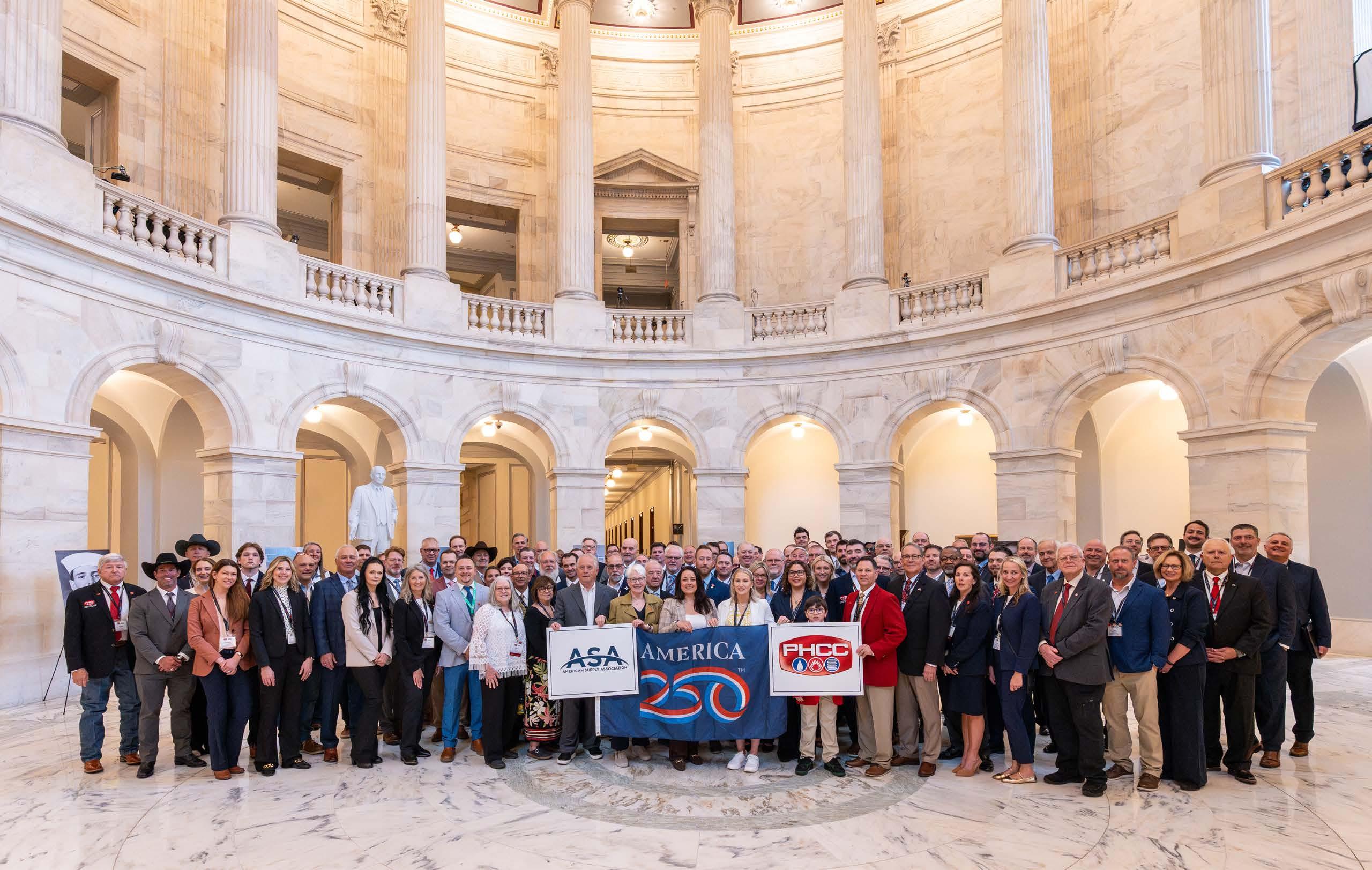
More than 120 industry leaders participated in 127 meetings with lawmakers to advocate for workforce development and energy policy priorities.
By Natalie Forster Director of Communications nforster@asa.net
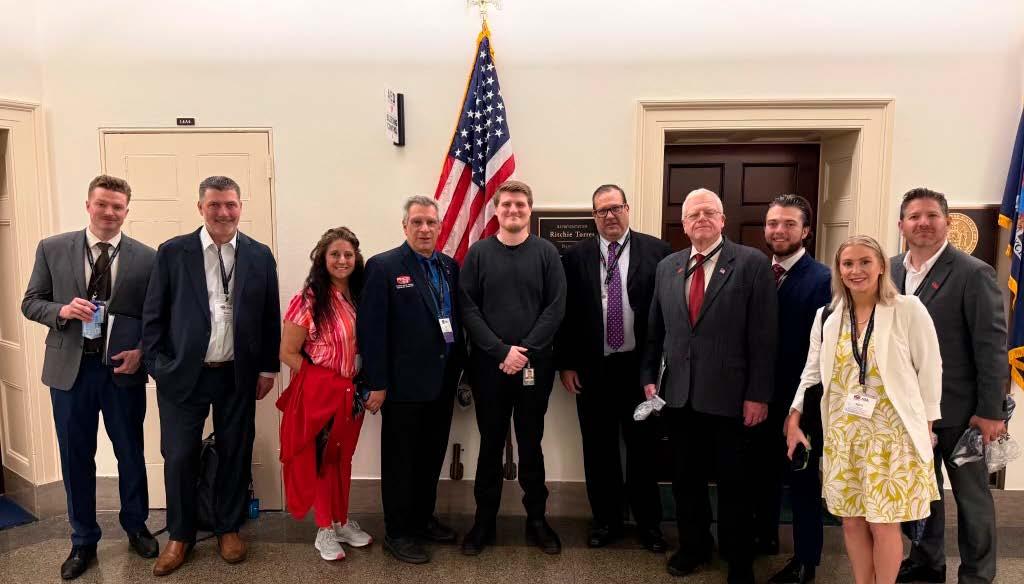
ASA and Plumbing-Heating-Cooling Contractors — National Association (PHCC) welcomed more than 120 industry professionals to Washington, D.C., last month for the 2026 ASA-PHCC Legislative Conference, where participants met directly with lawmakers and congressional staff to advocate for policies impacting the future of the PHCP-PVF supply chain and plumbing and HVAC industries.
Over the course of the two-day event, attendees participated in 127 meetings with legislators and staff on Capitol Hill, discussing key priorities centered around workforce development and energy policy reform.
The conference brought together distributors, manufacturers and contractors from across the country to provide a unified industry voice on issues directly affecting the plumbing, heating, cooling, and pipe-valve-fitting sectors. PHCC counts 3,300 plumbing and HVACR open shop and union businesses and 65,000 technicians among its membership, while ASA features 300 market-leading wholesalers, operating more than 4,400 branch locations while generating nearly $80 billion in annual sales.
Having representatives from across the entire channel participating this year strengthened our message and allowed us to speak with a unified voice on behalf of the industry.
- Mike Adelizzi, ASA CEO
Among the primary topics discussed during congressional meetings was the need to strengthen workforce development initiatives and expand pathways into the skilled trades. Attendees advocated for increased support for apprenticeships, career and technical education programs, and expanded Pell Grant eligibility for short-term workforce training programs designed to help address the growing labor shortage impacting the industry.
Members encouraged lawmakers to support modernization and strengthening of the Workforce Innovation and Opportunity Act (WIOA) to better connect workers with in-demand skilled trades careers and employer-led training opportunities.
Industry members also met with legislators to discuss energy policy priorities, including support for the Energy Choice Act, the Energy Distribution Systems Act (EDSA), and the “Freedom to Choose” amendment to the Energy Policy and Conservation Act (EPCA), which would preserve consumer choice and prevent federal overreach related to fuel selection and appliance standards.
this year strengthened our message and allowed us to speak with a unified voice on behalf of the industry.”
PHCC Vice President of Legislative Affairs Mark Valentini emphasized that the partnership between associations, to be blunt, simply makes sense. “Being together in Washington demonstrates the importance of the relationship between contractors and their suppliers,” he said. “Our legislative conference underscored the unity of the supply chain in its support of a modernized national energy strategy protecting consumer choice and robust workforce programs promoting the skilled trades.”
ASA and PHCC will continue to advocate on behalf of the plumbing and HVAC industries on legislative and regulatory issues impacting workforce development, energy policy, supply chain operations and the long-term health of the industry.
Participants emphasized the importance of policies that allow homeowners and businesses to choose the energy solutions that best fit their needs while supporting infrastructure reliability, affordability and innovation. Members also highlighted the importance of protecting and modernizing natural gas infrastructure systems that continue to play a critical role in safely delivering affordable energy to homes and businesses nationwide.
“With 15-20% of Congress turning over each election cycle, it is critically important for our industry to come to the nation’s capital and educate elected leaders on the vital role the PHCP-PVF industry plays in the health, safety and wellbeing of our country,” ASA CEO Mike Adelizzi said. “Having representatives from across the entire channel participating
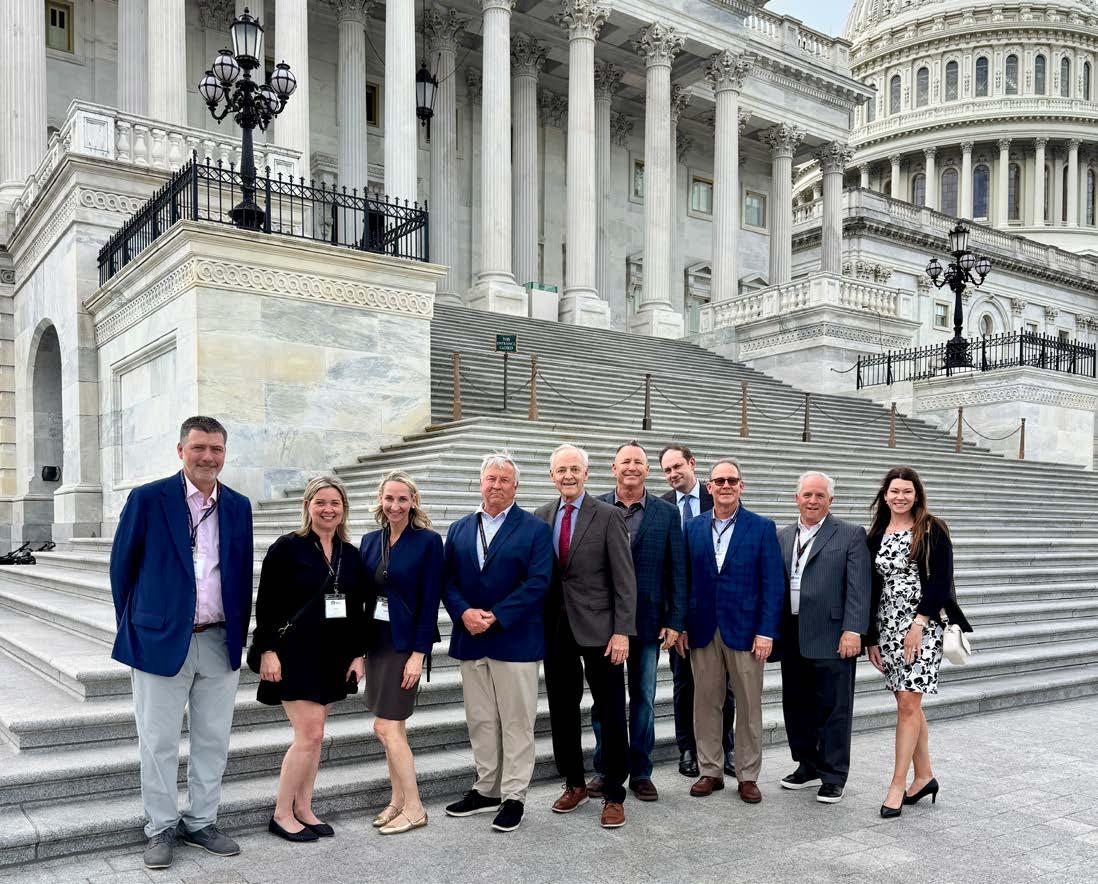
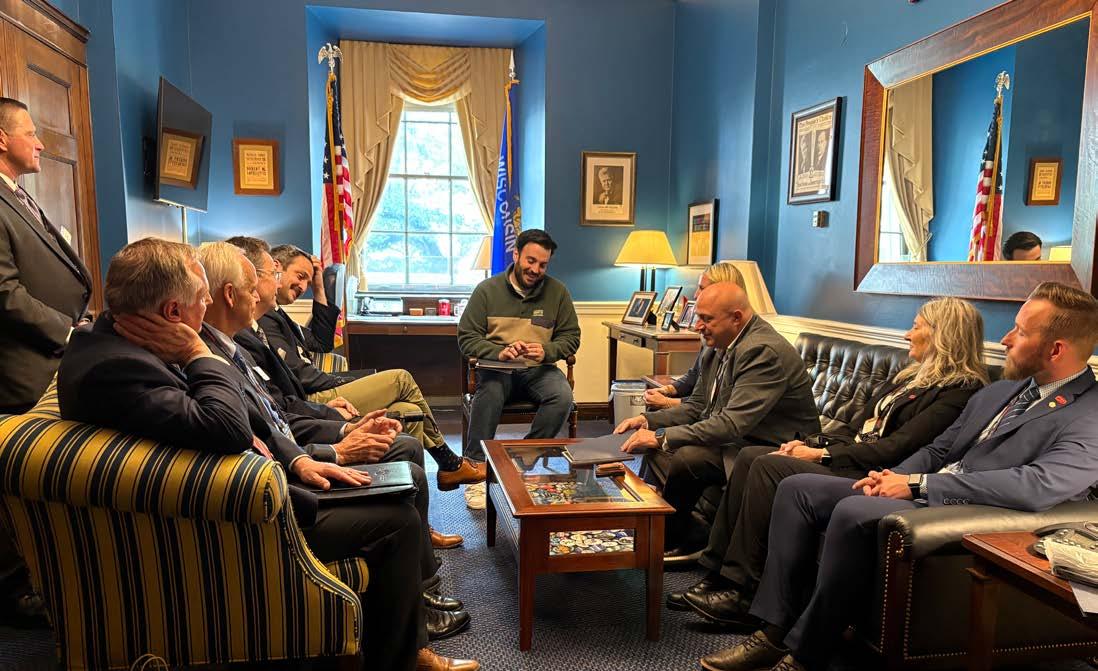
ASA and PHCC members conducted 127 meetings with legislators and staff during the recent joint ASA-PHCC legislative fly-in on Capitol Hill.

What does ‘AI Ready’ actually mean for distributors, suppliers and reps?
By Nils Swenson Director of Innovation nswenson@asa.net
Many companies are asking, “What AI tool should we buy?”
A better question is whether the organization is ready for AI to work.
Across the PHCP-PVF supply chain, interest in artificial intelligence has accelerated. Leaders are exploring pilots, vendors are expanding feature sets, and internal teams are experimenting. The assumption often feels logical: if AI is powerful, the next step is to purchase it.
But AI is not the starting line. It is the multiplier. If underlying data, processes and systems are inconsistent, AI will not fix them. It will amplify them. When workflows are structured and disciplined, AI can produce measurable improvement. When they are not, it simply scales the same inefficiencies.
So what does “AI-ready” actually mean?
It is not a budget threshold. It is not a hiring plan. It is not a software decision.
AI readiness is organizational maturity. It is the operational discipline that allows AI to produce reliable, repeatable results.
An AI-ready distributor, manufacturer or rep typically demonstrates five foundational characteristics: structured data, defined workflows, system discipline, focused use cases and organizational alignment. These are management disciplines long before they are technology decisions.
Clean product and customer data form the base layer. AI depends on structured input. It does not reason independently; it predicts based on patterns in the information it receives. If product descriptions vary across branches, attributes are inconsistently defined, or naming conventions shift from spreadsheet to spreadsheet, AI cannot reliably
interpret that data. The output will reflect the inconsistency.
In many cases, this begins with agreeing on shared product attributes and definitions across trading partners rather than allowing each location or supplier to structure data differently. The same applies to customer information. If CRM adoption is uneven, fields are optional and ownership is unclear, AIdriven insights will be equally uneven. This is not primarily a technology issue. It is a data governance issue.
Defined workflows are equally important. AI improves processes that are already understood. If quoting practices differ by branch or by salesperson, AI cannot optimize them. If order handling lacks a clear escalation path, automation simply accelerates uncertainty.
Organizations that are ready for AI can map their sales cycle end to end. They can explain how a quote becomes an order and how exceptions are managed. That clarity creates the structure AI requires in order to add value.

System discipline is the next layer. AI layered onto fragmented systems produces automated confusion. If ERP data integrity is weak, CRM usage is inconsistent and shadow spreadsheets drive daily decisions, adding AI will not solve the fragmentation. It will operate on unstable ground.
System discipline does not require perfect data. It requires consistent usage, clear ownership and steady improvement.
Focused use cases separate successful initiatives from stalled pilots. One of the most common missteps is attempting to deploy AI everywhere at once. Without a defined friction point, projects drift and expectations misalign.
AI-ready organizations identify a constrained problem, such as quote turnaround time, customer service deflection or inventory forecasting accuracy. They define success before deployment, measure results after implementation and scale only once impact is demonstrated. AI performs best when aimed at something specific.

Organizational alignment ties these elements together. Leadership sponsorship matters. Operator buy-in matters. Expectations matter. If executives anticipate transformation in 30 days, frustration follows. If operators view AI as an abstract initiative disconnected from daily realities, adoption suffers.
AI readiness includes cultural clarity. Why are we doing this? What problem are we solving? How will we measure success? What AI readiness does not require is equally important. It does not demand hiring a team of data scientists. It does not mean replacing your workforce or rebuilding your entire technology stack. It does not require perfect data across every system.
AI readiness includes cultural clarity. Why are we doing this? What problem are we solving? How will we measure success?
It requires disciplined operations and a willingness to improve foundational processes before layering on advanced tools. For distributors, manufacturers and reps evaluating AI, the starting point is not a product demonstration but an internal audit. Review product data consistency. Map one core workflow end to end. Identify a single high-friction use case and define what improvement would look like. Pilot narrowly. Measure impact. Refine before scaling.
This approach may feel slower than purchasing software, but it is more durable. AI will continue to evolve, and features will expand. The organizations that benefit most will not simply be those who move first. They will be those who build the right foundation.
AI is not the starting point. It is the multiplier. For companies willing to strengthen their operational discipline, readiness is not abstract. It begins with the systems and data already in place.

The most powerful leadership tool in your building is not on your screen.
By Will Quinn
There is a leadership practice so fundamental that it predates every management framework, every certification program, and every software platform ever built for the warehouse industry.
It costs nothing. It requires no budget approval. It produces results that no dashboard can replicate. And in the years since the pandemic reshaped how we work, it is disappearing from distribution centers at an alarming rate. It is called walking the floor.
Not the quick lap between meetings. Not the obligatory hard-hat tour when a customer visits. The real thing: unhurried, intentional time spent alongside your managers, supervisors, and frontline employees, watching what they actually face every day, asking questions, and then staying quiet long enough to hear the answers.
Steel-toed leadership starts there. Not in the boardroom. Not on the org chart. On the floor.
Before March 2020, most operations leaders had a natural rhythm that kept them close to the work. You walked in, you touched the floor, you felt the pulse of the building before you ever opened a laptop. That rhythm was interrupted, and for many leaders it never came back.
What replaced it was the calendar. Back-to-back video calls, all-hands meetings, vendor reviews, budget cycles, and cross-functional syncs stacked from 8 a.m. to 5 p.m. with no air in between. Leaders who once spent two or three hours a day in the operation now spend two or three hours a week, if that.
The building did not stop needing them. It just stopped expecting them.
That is the danger. When your people stop expecting to see you on the floor, they also stop saving things to tell you. Problems get worked around instead of fixed. Frustration compounds quietly. The gap between what leadership
believes is happening and what is actually happening grows wider every week, and nobody sounds the alarm because nobody is sure anyone is listening.
Why the floor tells you what the reports cannot
A KPI dashboard will tell you that pick accuracy dropped two points last Tuesday. What it will not tell you is that the lighting in aisle 14 has been flickering for three weeks, that the label printer closest to the high-velocity zone jams every 40 minutes, or that the new slotting configuration put the heaviest items at the worst possible height for the smallest members of the team.
Those things live on the floor. They live in the 10-second pause a picker takes before grabbing a product that is not quite in the right location. They live in the workaround your best supervisor invented six months ago that nobody ever documented. They live in the conversation your dock lead is not having with you because the last time someone brought up a problem, nothing happened.
When you show up consistently, with curiosity rather than a clipboard, something shifts. People start to trust that you are there to understand, not to inspect. And once you have that trust, the information flows. Not just complaints. Solutions. Your frontline employees are the closest people in your organization to the actual work, and many of them have already figured out what needs to change. They are waiting for a leader who will listen.
Make it deliberate or it will not happen
Here is the hard truth: good intentions do not survive a full calendar. If you are waiting for a free hour to appear so you can walk the floor, you will be waiting a long time. You have to protect the time the same way you protect a customer meeting or a board presentation.
Block it. Put it on the calendar as a recurring commitment, three times a week minimum, 30 minutes each. Treat it as non-negotiable. Do not bring your phone as a distraction. Bring it as a tool for taking notes on what you hear.
Go without an agenda. Ask open questions. "What is slowing you down today?" "What is one thing that, if we fixed it, would make your shift easier?" "What have you been working around that we should know about?" Then listen. Not to respond. To understand.
The fastest way to destroy floor credibility is to ask for input and never act on it. The fastest way to build it is the opposite.
one thing. Fix it. Say thank you
The fastest way to destroy floor credibility is to ask for input and never act on it. The fastest way to build it is the opposite.

When someone gives you a real problem and a possible fix, take it seriously. Evaluate it. And if it is sound, make it happen. Then go back to that person, look them in the eye, and thank them by name. Not in a company-wide email. In person, on the floor, where the work happens.
That moment does more for your culture than any engagement survey ever will. It tells your people that this building is worth caring about, that their experience matters, and that leadership is not something that happens to them from a conference room.
It happens with them, in steel-toed boots, on the floor.

up consistently, with curiosity, something
Will Quinn, known throughout the warehouse industry as The Distribution Guy, has spent his career at the intersection of people, process, and technology. With more than 25 years of hands-on experience leading and optimizing distribution centers for organizations, including Coca-Cola, Grainger, MSC Industrial Supply, Capstone Logistics, and Infor, Will has seen the full evolution of warehouse life, from manual paper picking to AI-driven automation. Check out his new book “Modern Warehouse Management: Steel-Toed Leadership That Drives Performance,” available on Amazon.