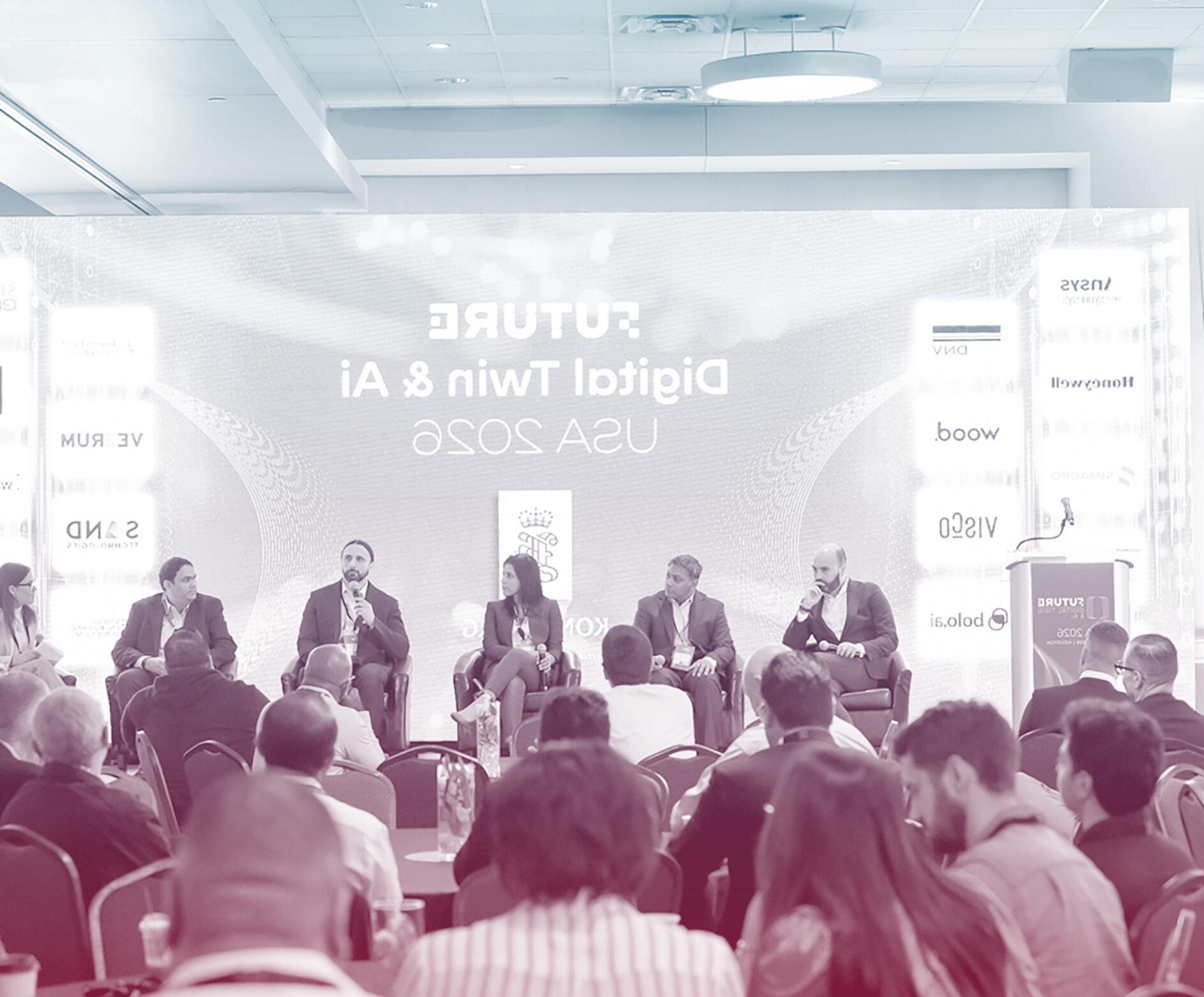



It was great to welcome industry leaders, innovators, and technology specialists to Houston for the fourth edition of Future Digital Twin & AI (USA). Bringing together experts from across the energy value chain, the event provided an opportunity to explore how digital twins and artificial intelligence are shaping the future of industrial operations.
The discussions throughout the day reflected an industry that is moving beyond experimentation and focusing on practical application. Across the programme, speakers shared insights into how digital twins and AI are being integrated into operations, engineering, and asset management, with a growing emphasis on delivering measurable business outcomes.
One theme that came through clearly was the importance of getting the foundations right. Governance, interoperability, cybersecurity, data quality, and organisational alignment were all recurring topics, highlighting the need to build digital capabilities that are trusted, scalable, and fit for long-term use.
The relationship between AI and digital twins was also a major focus. Rather than being developed in isolation, these technologies are increasingly working together to provide deeper operational
insight, improve decision-making, and support more efficient and reliable performance across assets and facilities.
There was also a strong recognition that technology alone does not drive transformation. Conversations around workforce enablement, change management, and Human-AI collaboration reinforced the importance of ensuring people remain at the centre of the digital journey.
Looking ahead, discussions around agentic AI, autonomous operations, and connected digital ecosystems offered a glimpse into the next stage of industrial innovation. Whilst the opportunities are significant, there was a shared understanding that progress must be guided by clear objectives, strong governance, and a focus on real operational value.
On behalf of Cavendish Group International, I would like to thank our advisory board, speakers, sponsors, partners, exhibitors, and delegates for their contribution to Future Digital Twin & AI (USA) 2026. Your expertise, support, and willingness to share knowledge helped make this year’s event a success, and we look forward to continuing these important conversations in the future.
Adam Soroka CEO, Cavendish Group International
The Future Digital Twin & AI USA conference, returned to Houston on 13th May 2026 for its fourth edition, once more providing a vibrant forum for industry experts to exchange insights on the fast changing digital landscape across the oil and gas sector.
More than 300 delegates from over 160 organisations packed into the Norris Conference Center to take advantage of the learning and networking opportunities on offer.
The event attracted attendees from across the energy industry, bringing together leading figures from operators, oilfield service companies, AI solutions providers and other technology innovators, along with energy institutes and associations and academic institutions. High profile companies sharing their expertise included ExxonMobil, Shell, bp, Chevron, Siemens Energy, Wood Group, Dow Chemicals and DNV, among many others,
The degree to which AI is now being integrated at every level of the energy industry was clear at the event. Discussions embraced diverse topics ranging from the benefits and challenges of digital twin implementation to data management and governance, via the latest thinking on how AI can best empower the workforce and how crossindustry collaboration is making the use of digital technologies more effective.
Adam Soroka, CEO, Cavendish Group and Future Events, said the conference had demonstrated once again how much appetite there was among influential people in the energy industry to collaborate and learn from each other.
“Digital twins and AI-driven processes had moved from being niche tools to really something foundational in the oil and gas industry. But, of course, the digital twin and AI journey does not come without challenges. That’s what makes these events so important, by providing the chance, not just to discuss the success stories, but also to share how early failures were surmounted to get to those successes,” he said.
He also reinforced the message of numerous speakers at the event on that humans would remain the lifeblood of the industry, despite greater automation:
“For all the brilliant technology, if your people aren’t with you – from the boardroom to the oilfield, from your AI experts to non-specialist end-users – the journey is going to be wasted. In Houston, we heard how AI needs to be understood as an advance that can amplify what the workforce is doing, not replace it.”

Here’s what some of the experts said at Future Digital Twin and AI USA 2026:

JAYANTH NAIR
Senior Data & GenAI Lead, Wood Group
“Don’t use AI just for the sake of it: clearly identify your desired business outcome first.”

HOLLY FRANKENFIELD
Chief Transformation Officer at Energy Point Consulting
“The future isn’t humans or AI. The future is humans plus AI.”

PRASANNA TANKHIWALE
Senior Manager, Digitalisation, Motiva Enterprises
“Invest in people as much as you invest in technology.”

TARUN DHALL
Head of Digital Advisory & Consulting , Siemens Energy
“Democratization of data is better for propagation of AI systems.”
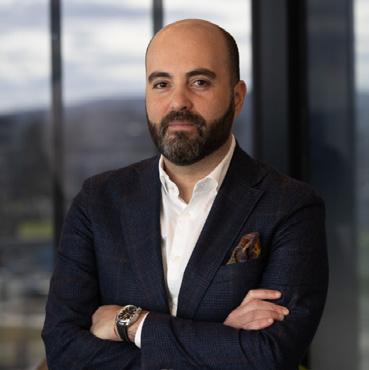
PEDRO ALCÂNTARA
EVP and Chief Revenue Officer at Falkor
“We need to train our workforces to know when to trust the system.”

JESSICA HANCOCK
Director, IT/OT Data Management Business Process Director at Dow Chemicals
“Challenging the status quo and speaking up when things are not working well with AI are OK.”
300+ Attendees
Don’t use AI just for the sake of it – have clear goals
Have a clear idea of what AI deployment is expected to achieve in your work, Jayanth Nair, Senior Data & GenAI Lead, Wood Group, told delegates.
“Do you have a clearly defined business outcome or are you just trying to use AI for the sake of using AI? If you can identify a clearly defined bottleneck you’re trying to overcome, then the chances are the AI solution will be adopted and used.”
Speakers also stressed the need to understand what value digital twins and other AI-driven innovations would bring.
Elizabeth Huang, Senior Manager, Data & Digital Innovation, at Shell also stressed the need to understand the value of digital twins and other AI-driven innovations.
“If we have the right mindset and we have the right culture, then we can adapt to the new technologies becoming available to us to realize our business goals. Understanding where and how value is created in the business is important to keep in mind when it comes to the AI transformation. We need to have line of sight to the value at the end of the day,” she said.
The benefits to the energy industry of AI adoption are starting to feed through to the bottom line.
As one senior director at a global digital technology firm said at the event:
“We are seeing is the ability to shrink the time and work needed between data and decision-making through using AI. We have seen improvement in the cost and time needed to modernize certain software by more than 40%, which is remarkable.”
Pedro Alcântara, EVP and Chief Revenue Officer at Falkor told delegates that calibrating trust on the use of AI within the workforce is an ongoing focus at his company.
“To use an aviation analogy – pilots are trained to trust intelligent systems over intuition in areas where, statistically, human knowledge will fail compared to systems, but they are also trained to override automation when needed. We need to train our workforce in a similar way so that they will know when to trust the system, and when to apply human judgment,” he said.
Part of the solution is to make sure the workforce is well informed about how AI arrive at its conclusions. As Michiel Van Haersma Buma, CCO of Whitespace Solutions said:
“Explainability is important. Initially, users experienced our well design software like a bit of a black box, so we designed an agent that allows the user to interrogate the software on different aspects the design decisions, radically changing the way they experience the software.”
Companies have invested heavily in digital twins, analytics, and other digital technology, but struggle to realise the full potential of those investments due to the impact of data silos, proprietary platforms, interoperability problems and problematic integration with existing systems.
Collaboration within and between organisations is seen as vital if those bottlenecks are to be removed – and progress is being made towards greater sharing of breakthroughs and data without compromising proprietary solutions.
Groups such as the Open Digital Ecosystem Working Group within the ARC Advisory Group, and the Digital Twin Consortium are among organisations doing the pioneering work.
“Part of the drive towards standardisation is greater openness and collaboration between organisations,” one digital technology leader at a major oil and gas company told attendees.
Meaghan Snethlage, VP of Business Development, VEERUM explained the benefits of allowing users to access data via conduits such as digital twins.
“We leverage insights to drive value, reduce cost, improve safety, and enhance operational performance. By putting that data directly into users’ hands through technologies like digital twins, organizations gain a clear line of sight into which data matters most, where the gaps are, and how to continuously improve it,” she told the conference.
Tarun Dhall, Head of Digital Advisory & Consulting , Siemens Energy, also made the case for democratization of data.
“Usually with a strategic asset in the energy sector, the instant reaction is protection, but data is very different. You cannot just lock it down and protect it. More democratization of data is better for propagation of the AI systems,” he said.
“Invest in people as much as you invest in technology. I think that’s the most important aspect of developing AI applications across the organization. I think that’s going to make or break the deal,” Prasanna Tankhiwale, Senior Manager, Digitalisation at Motiva Enterprises, told the event.
Holly Frankenfield, Chief Transformation Officer at Energy Point Consulting, emphasized that human input would remain crucial in the AI age.
“The future isn’t humans or AI. The future is humans plus AI. The organizations that win in AI won’t necessarily be the ones with the most advanced technology, they’ll be the ones that figure out how to combine technology with human expertise: how to align it, how to embed it, and how to sustain it,” she said.
Autonomous AI-driven operations are gaining traction – up to a point
In the same way the world is coming round to autonomous driving, the energy industry is likely to become more accepting of a certain level of autonomy from AI applications, depending on the context, even if caution is the watchword for now.
“It’s like a dial we are turning, where gradually we’re getting more comfortable outsourcing certain levels of decisions. That’s going to go up over time as the tech becomes more capable,” Whitespace Solutions’ Michiel Van Haersma Buma said.
You can be great at problem solving, and solution building, but terrible at change management. Don’t think you can do it all by yourself, Marty Dytrych, Director, Bolo AI told attendees
“Looking in the mirror has been quite important for us. We realized we were not at all good at change management, so we have partnered with people who are, whether they are internal stakeholders or companies we work alongside. That allowed our technology to shine, but also to communicate that success and develop an effective strategy moving forward. Since we’ve made that shift, things have just started to pop,” he said.
Organizations are starting to get a better understanding of what a data governance strategy means in the context of AI deployment, but there is still some way to go, Siemen’s Energy’s Tarun Dhall told attendees
“Oil and gas has been a very conservative industry from a change point of view – data governance for AI has been a massive change for us. We ‘re very good on governance for safety and other things, but we are not prepared for data governance. We are getting there, but we’re not there yet.”
People need to feel free to criticise AI, if it isn’t working
AI promises to revolutionise the workplace, but it is there to assist people, not be imposed on them. If it isn’t improving outcomes, it isn’t doing its job, and people need to have the freedom to criticize it.
Jessica Hancock, Director, IT/OT Data Management Business Process Director at Dow Chemicals, told the event:
“People need to be able to speak up if the solutions being provided aren’t working for them or they don’t find them effective to get their jobs done. We need to create a space where challenging the status quo and speaking up when things are not working well with AI is OK.”
“Future Digital Twin & AI was real, with a well-rounded programme, exceptional people, and zero AI buzzwords. Just real-world experience and hard challenges exchanged openly, exactly the kind of cross-industry collaboration that promotes meaningful progress.”
Bernardo Braunstein, Manager, Operational Technology, OT Data, Noble Corporation
“What makes Future Digital Twin & AI stand out is the balance between visionary thinking and practical operational discussions. The conversations go beyond technology hype and focus on the real challenges organisations face around trust, adoption, governance, workforce readiness, and scaling transformation successfully.”
Julie Thyne, Global Improvement Director, Dow
“It was great to participate again this year. An amazing event to learn from others, share insights, and network with both industry leaders and those supporting the sector.”
Jeff Ackerman, Business Development Director - Oil & Gas, Sand Technologies
Khaled Al Blooshi, VP, Digital Projects & Innovation, ADNOC
Martin R. Gonzalez, PhD, Innovation & Technology Principal, bp
Michael Hotaling, Executive Advisor, ExxonMobil
Julie Thyne, Global Improvement Director, Dow Chemicals
Athicha Dhanormchitphong, Digital Realities Ecosystem Architect, ExxonMobil
Ram Seetepalli, Director, Data & Analytics & Digital Innovation, Motiva Enterprises LLC
Rolf Einar Saeter, Global Digital Twin Innovation Lead, Shell
Dr.Edmary Altamiranda , Business Transformational Technology & R and D Lead, Controls & Systems Engineering Aker BP
Adam Williams, Senior Manager, Engineering Technology & Design, Motiva Enterprises LLC
Justin Piwetz, Asset Management Lead, bp
Seth Taylor, Digital Twin Advisor and Technical Manager, Chevron
Shane McArdle, CEO, Falkor

Adam Williams, Senior Manager, Engineering Technology & Design, Motiva Enterprises LLC
Seth Taylor, Digital Twin Advisor and Technical Manager, Chevron
Julie Thyne, Global Improvement Director, Dow Chemicals
Ram Seetepalli, Director, Data & Analytics & Digital Innovation, Motiva Enterprises LLC
Cristi Nastase, Senior Principle Enterprise Architect, GenAI, ExxonMobil
Bernardo Braunstein, Manager, Operational Technology, OT Data, Noble Corporation
Prasanna Tankhiwale, Senior Manager, Digitalisation, Motiva Enterprises LLC
Chris Whillmore, Digital Manager, Guyana Digital Alliance, ExxonMobil
Elizabeth Huang, Senior Manager, Data & Digital Innovation, Shell
Jessica Hancock, Director, IT/OT Data Management Business Process Director, Dow Chemicals
Bharat Marwaha, Process Data Analytics & Condition Monitoring Lead, Covestro
Shivaprasad Sankesha Narayana, Lead Cloud & AI Architect, bp
Omar Omar, Senior Advisor, AI Engineering, Phillips66
Dipti Sankpal, Manager, IT Analytics & AI Enablement, Oxy
Lisa Sacco, North America Commercial Brand & Marketing Manager, ExxonMobil
Reza Khaninezhad, Data Science Manager, Apache
Jayanth Nair, Senior Data & GenAI Lead, Wood Group
Jay Yun, Founder and CEO, SIMACRO
Shane McArdle, CEO, Falkor
Meaghan Snethlage, VP of Business Development, VEERUM
Donna King, CEO, Energy Point Consulting
Dr. Gerhard Koch, Chief Software & Product Officer, Siemens Energy
Tarun Dhall, Head of Digital Advisory & Consulting , Siemens Energy
Prashant Jagarlapudi, Senior Director, Portfolio Management, Honeywell Process Automation
Jeff Ackerman, Business Development Director, Oil and Gas, Sand Technologies
Vitor Lopes Pereira, Regional Sales Manager, Missions, Systems & Digital Twin Solutions, Synopsys
Kenneth Bhalla, Ph.D., SVP & CTO, Stress Engineering Services
Trevor MacMaster, CCO, Oli
Michiel Van Haersma Buma, CCO, Whitespace Solutions
Ove Heitmann Hansen, Senior Principal, Transformational Trust, Digital, DNV
Joe McDonald, CEO, Hazid Technologies
Eric Johnsen, Director, Business Development, Niantic Spatial
Marty Dytrych, Director, Bolo AI
Holly Frankenfield, Chief Transformation Officer, Energy Point Consulting
Abhishek Balakrishnan, CTO, DNV
Andy Rafal, CEO, Oli
Official Digital Twin Partner
Sponsor