201 Ne 45th Street Seattle, wa 98105 (206) 547-2704
www.caulifloweralleyclub.org
ExEcutivE Board
brian blair, Ceo/President
Morgan Dollar, VP
Dean Silverstone, Secretary/Treasurer
Gloria lovell
David buckler
royal Duncan, editor, ear
benevolent fund:
Karl lauer, benevolent fund chairperson
Past PrEsidEnts
Nick bockwinkel 2007-2014
red bastien 2000-2007
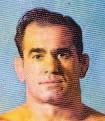
lou Thesz 1992-2000
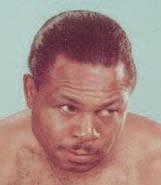
archie Moore 1991-1992 "iron" Mike Mazurki 1965-1991
* as with any project this size, photos are provided with no copyright or unknown photographer. we appreciate and thank the photographers that have taken these photos.
Program Published by:
7620 N. Harker Drive
Peoria, il 61615
www.royalpublishing.com
ProGraM dEsiGn/LaYout
royal Duncan/Chris Jones
thE PrEsidEnt’s ProsPEctivE
welcome to our 52nd reunion, a message from our CaC President/Ceo
Dear friends,
Thank you so much for attending our 52nd reunion here in las Vegas!
we certainly hope you’ve enjoyed yourselves, met many friends and continue to make new friends.
it is heart warming to see all the smiles and laughter each and every year we are together; i find myself inadvertently wishing away time, as the 53rd will not get here soon enough.
as we culminate this week's excellent Games, Stars and Seminars with this evening’s banquet; the realization that it may be another year before many of us meet again is bitter/sweet… but no matter what, we have been able to do just that… and this to me is priceless.
Please realize that without you, our members, guests and Honorees, we would not be able to assist the numerous people from the wrestling industry, that have fallen on difficult financial times… our board of Directors and myself, cannot thank you enough… you are the “back-bone” of CaC’s mission!
enjoy this evening; be safe in your travels and to borrow a phrase from a great song by the eagles, “you can check out anytime you like but you can never leave”… you will never leave our Hearts nor the memories created at this 52nd CaC reunion!
Healthy, happy wishes,
“b” brian brian blair President/Ceo
BockwinkEL BLowout BanquEt on tuEsdaY MaY 2nd awards BanquEt on wEdnEsdaY MaY 3rd
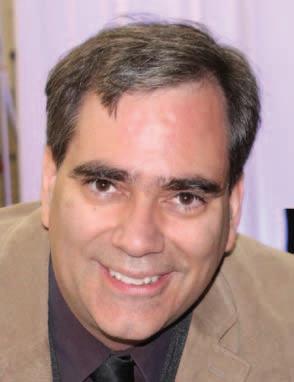
david Buckler
Greg oliver
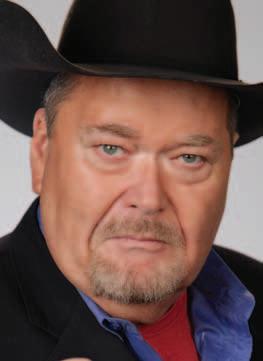
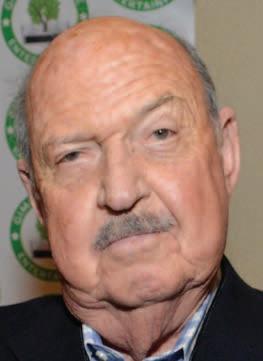
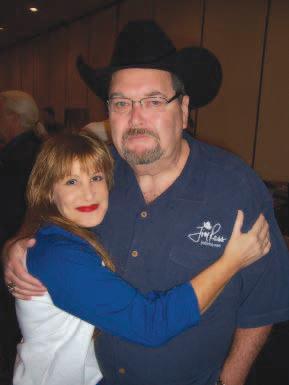
Jim "Jr" ross Gene okerlund
AWARDED
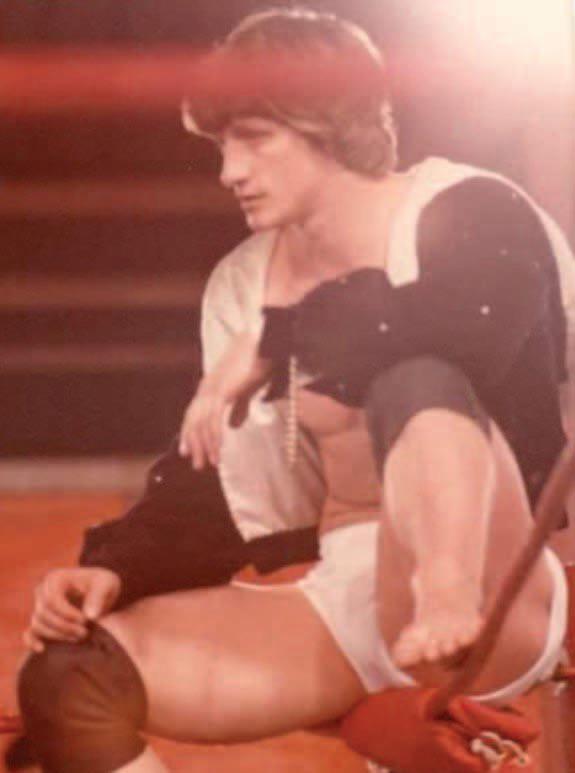
TO: KEVIN VON ERICH
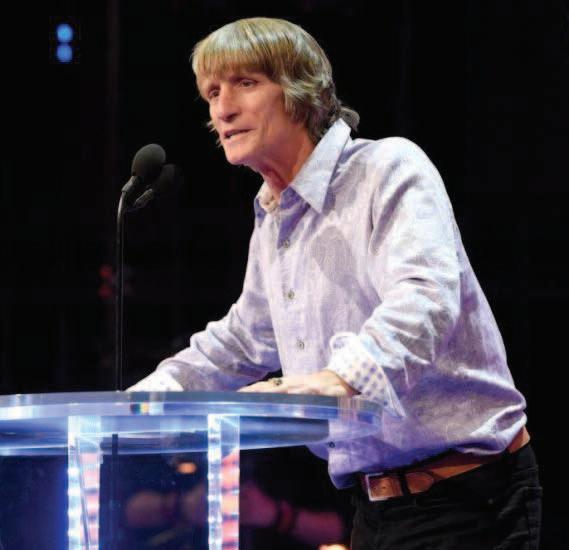
Kevin Von Erich always saw his future on the gridiron, despite his father’s legendary status and stature in the wrestling industry. But fate had other plans.
Born into the Von Erich family, Kevin Adkisson took to the green as a fullback for North Texas State University. As is the case for many football-players-turned-wrestlers, knee injuries derailed that career endeavor. However, it set him up for fortune and fame in his father’s World Class Championship Wrestling, based in Dallas, where he officially was christened as a Von Erich.
Debuting in 1976, Kevin quickly became a fan favorite, adored the world over, and known for his penchant for barefoot wrestling.
Kevin, along with siblings, Kerry, Chris, David and Mike, took Texas by storm under the tutelage of their father, Fritz. He teamed up with his brothers in the 1980s to wage war against the Fabulous Freebirds in arguably one of the greatest feuds in the industry. The dueling stemmed from a cage match between Kerry and then-NWA World Heavyweight
Champion Ric Flair, in which Michael “P.S.” Hayes served as an “enforcer.”
Kevin also had a notable singles feud with “Gentleman” Chris Adams, a frequent tag partner for the Von Erichs, in WCCW.
“We loved what we did, you know, so we’d kick hard, and hit hard, and in the morning you get up and you’re stiff and you felt tired, you felt like you’d been in a football game,” he said. “The early days for us were learning the holds, get in the ring and work that hold, and then wrestling changed.”
The Von Erichs were also a draw in St. Louis in Sam Muchnick’s Wrestling at the Chase. Kevin’s acrobatic style, along with his strength, made him a commodity the nation over. He was known to bust bags of wheat while perfecting his body-scissors hold, much like three-time world heavyweight champion Joe Stecher. Once, in a post-match interview with Wrestling at the Chase announcer Larry Matysik, Kevin demonstrated how he can maneuver an opponent into the hold, as well as how to transition the body scissors into a pinning combination. The family hold, the Iron Claw, also was a staple in his repertoire, alongside the dropkick and flying body press.
The Von Erich boys also helped usher in the era of the chiselled physiques, faster-paced matches and the meshing of professional wrestling with rock ’n’ roll. Specifically, Kevin was known for making his way to the ring while Ted Nugent’s “Stranglehold” blasted through the sound system.
AWARDED TO: TULLY BLANCHARD
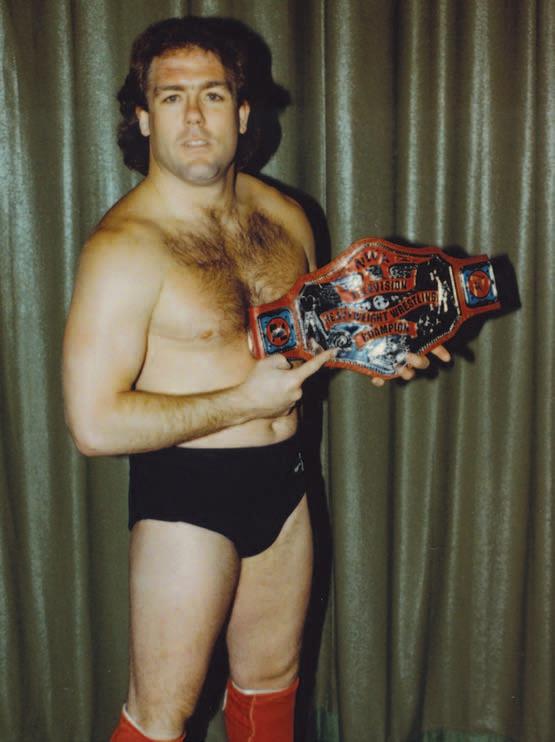
Tully Blanchard had all the attributes of the traditional hero—son of the local promoter, a good-looking football quarterback, a small build perfect for winning sympathy against bad boy behemoths. And none of it did him much good at the box office till he went for what came naturally. “Whenever he was trying to be a babyface, it was very contrived and you could see through it,” said Dr. Tom Prichard. “It was Tully’s nature to be a heel. He was arrogant and he was cocky.”
An original member of wrestling’s Four Horsemen, Blanchard had a clear idea of what he wanted to accomplish, estimating he’d control little more than 15 percent of a competitive match, and spend the rest of the time flying around for his opponent. “My goal was to make them scream,” he said. “That was my goal every night for 13 years. They don’t scream when heels are beating up babyfaces. They sit down. They want their hero to win. They want their hero to be winning.”
Born in 1953, Blanchard was in the wrestling game early, peddling peanuts and soda pop for his father’s promotion in San Antonio. First, he followed his dad’s other path — Joe Blanchard starred on the football team at Kansas State and for the Edmonton Eskimos of the Canadian Football League. Tully started at SMU and ended up as a wishbone quarterback at West Texas State from 1974 to 1976. But at 5-foot-11 and no more than 200 pounds, a career as a pro signal caller was out of the question.
Tully refereed for Southwest Championship Wrestling and got his face kicked in by old-timers who wanted to teach the kid a lesson. A couple of out-of-state sojourns to the Carolinas and Florida added some seasoning. In 1979, Blanchard did the unthinkable, turned heel, and eventually formed a snotty, hotshot tag team with Gino Hernandez. “He was a natural villain,” Joe said. “They hated him even while they loved me.”
By 1984, San Antonio was reeling after Vince McMahon’s WWF snatched its timeslot on the USA Network, and Blanchard headed to the Mid-Atlantic, where intensity was more important than his size. Though a certified heel, Blanchard said he tried not to act like one out of the ring, so fans would understand he broke rules as a last resort. “When I came into a building, I always signed autographs. I always smiled. I said, ‘How are you doing?’ I wasn’t a bad guy. When I walked into the ring, I was the same way until I got outwrestled. I didn’t cheat until I had to. I didn’t heel till he outwrestled me. In essence, I said, ‘I’m a chicken and nobody likes a chicken.’ ”
Steven Johnson Jon langmead Pat laprade
Dan Murphy
Greg oliver Kari williams
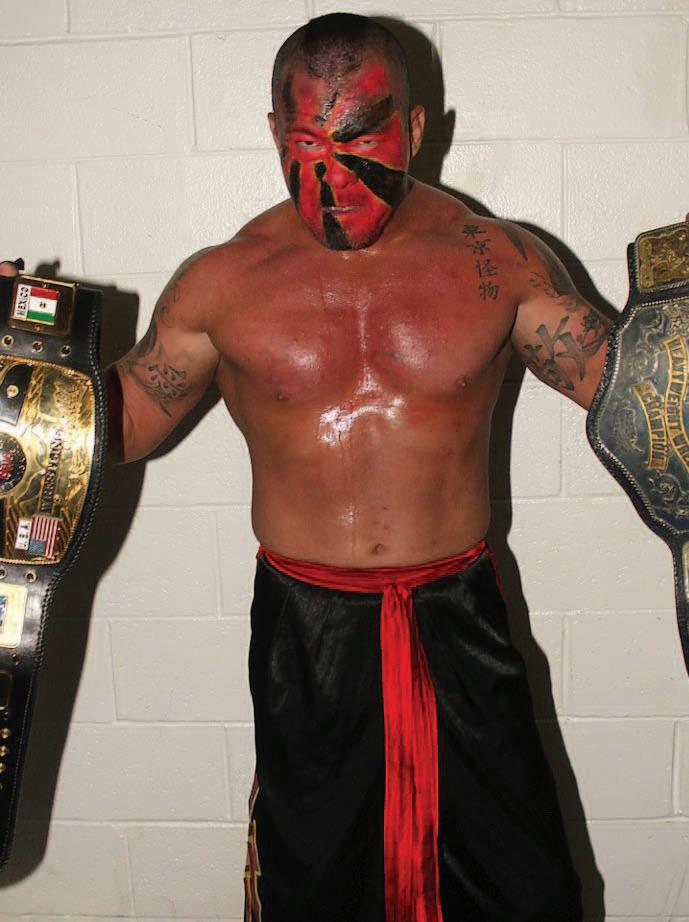
AWARDED TO: KAHAGAS
Kahagas wrestled worldwide for nearly 20 years and for the past six has made a full-time living from the world of professional wrestling. Before that, he was a small business owner in the retail pet industry in Sebring, Fla., and that was his main source of income for 26 years, 16 of those as the shop owner. But once his calendar filled up with wrestling commitments, he left that industry behind. “It was kind of like a no-brainer to me,” Kahagas said. “I was staying busy and doing good.”
Yet Kahagas, the 2017 recipient of the Cauliflower Alley Club Men’s Wrestling Honor, is one of a handful of award recipients who has not worked for one of the current “big three” companies—WWE, TNA or ROH. He also is touted as one of the most-booked wrestlers for the past two decades, having worked throughout the United States and breaking into Panama, the Dominican Republic and Mexico. “It’s like being appreciated for what I’ve done and [being] able to actually make a career out of the independents and being able to be acknowledged for it,” Kahagas said.
His opportunity to venture to Central America came through Hugo Savinovich, a former member of the WWE Spanish announce team. “He gave me the name Tokyo Monster,” Kahagas said. “Through Panama, I was immediately working in Puerto Rico.” The Dominican Republic and Mexico soon followed.
Being christened the Tokyo Monster helped build Kahagas’ Japanese character. “I kept building. Building the gimmick. Building the name,” Kahagas said. “[And that’s how I] became who I am.”
Evolving his character while staying true to its origin, lends itself to Kahagas’ longevity, along with his work ethic, which ultimately resulted in becoming the first NWA Triple Crown winner—that is, the first to hold the company’s National, World and North American heavyweight championships. “To achieve that, there again, it was something not expected,” Kahagas said. “It was not a goal. It’s just something that happened. To be able to do that, it’s just one of those things. Of course, it’s been an honor to be involved in the NWA and be part of its history carrying their major titles.”
And still, the Tokyo Monster also said he is thankful for promoters who bring him in and trust him to help represent their company. “Stuff like that really gets me as far as appreciation,” Kahagas said. “I’m an indie guy. No one needs to fly in an indie guy… I’m really, really glad to be able to say that promoters were able to look at me to help
AWARDED TO:
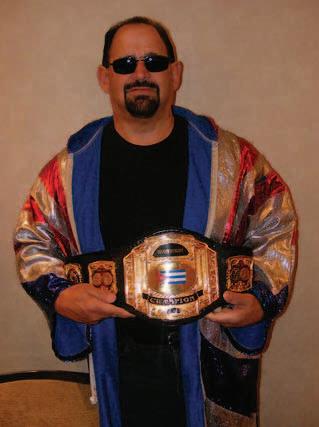
THE CUBAN ASSASSIAN
No matter what people told him, Fidel Sierra knew he was going to be successful as a professional wrestler. Sierra fell in love with wrestling as a child in Tampa, Florida, where his family settled after leaving Cuba when he was less than a year old. Beginning work in 1978, Sierra developed a career that carried him through multiple countries and brought him into contact with the finest promoters and performers of the last 50 years. “Wherever I went, I was ready,” Sierra said. Each step of the way, whether as a babyface or a heel, on the top of the card or opening the show, under a mask or in army fatigues, Sierra’s versatility, hard work and toughness in the ring earned him steady work and wrestling success.
Sierra debuted in Texas as David Patterson, and travelled the state working for Paul Boesch, Fritz Von Erich and Joe Blanchard. Heading to the Carolinas, he worked for the Crocketts and George Scott as part of that territory’s rich talent pool. “I was so lucky because I was working with Ricky Steamboat and Jay Youngblood. It really made it great,” he said. “Sgt. Slaughter, Roddy Piper, Blackjack Mulligan; it was unreal. It was such a great crew of guys that it was hard not to have great matches.”
Moving into Eddie Graham’s Florida territory, he adopted the name David Sierra and was able to work with Dory Funk, Jr., Jack Brisco, and a number of other legends he admired as a teenager. He also developed a close relationship with Hiro Matsuda. “Hiro took me under his wing. Hiro saw that I had more potential.”
Matsuda sent Sierra to work in Japan, where he wrestled Antonio Inoki, Tatsumi Fujinami and Andre the Giant. Sierra was tested physically but able to give as good as he got. “If you let those guys beat the hell out of you your first night there, the rest of the tour you were going to have your hands full,” he said. “And they did put me to the test.”
Working for Don Owen in Portland, he adopted a number of characters and masks. Working as both The Destroyer and The Assassin and later as Top Gun, he held multiple titles in the area, including the Pacific Northwest Heavyweight belt. In World Championship Wrestling, as the Cuban Assassin, he engaged in a memorable feud with “Hacksaw” Jim Duggan. “People were so into anything against the United States,” said Sierra. “And back then, Cuba wasn’t open. I used a lot of ‘Castro’ and that I loved him. That got me a lot of heat.”
Working for Carlos Colon in Puerto Rico, Sierra similarly enraged fans. “Anything they could get their hands on they would throw at you and that was when you had to lighten
tom drake
december 5, 1930 - February 2, 2017
ruth silverstone May 10, 1946 - april 21, 2016 bless us all... bless us all... The heavy, the light, and the small. bless our flat noses and cauliflowered ears, for we are the ones whom They stood up and cheered.
Jan ross 1972 - March 22, 2017
Now we're saying 'So long' to us all, The long, the short, and the tall. May God keeps us busy, we'll see you next wednesday; Stay cheered, guys and dolls, bless us all.
–
lyrics by Guy burNeTT sung to old Navy chant, "bless us all"
Mike Mazurki
archie Moore
lou Thesz
red bastien
Nick bockwinkel
brian blair
AWARDED TO: DAVE MELTZER
For more than 30 years, Dave Meltzer has been covering professional wrestling and mixed martial arts through The Wrestling Observer. Meltzer always covered wrestling like it was any other sport. He started rating matches, created year-end awards and established the renowned Wrestling Observer Hall of Fame.
Considered both a historian and journalist, Meltzer started watching wrestling as a kid, and at age 9 went to his first show in San Jose. He began sitting at ringside to take photos and the older kids who were regulars started talking to him. Just by listening he figured out much of what made wrestling tick. By age 10, he had a newsletter going, and traded audio cassettes with friends across the country.
Wrestling phased down in the late 1970s in Northern California, so Meltzer’s interest level wasn’t the same, although he kept following the business through magazines and trading. In 1979, Georgia Championship Wrestling went national on WTBS and he got back into it. Around 1980, he got his first VCR and started to trade tapes. One
person told him that his reports were so good that he should start doing his own newsletter.
“I told myself, ʻI did a newsletter before, maybe I could sell it and send it to the magazines to see if people would buy it.’ By this point, I was getting tapes from Mid-Atlantic and Central States in St. Louis among others. And that was kind of like how the idea for the Observer got started.”
After earning a journalism degree at San Jose State, Meltzer started a career as a sportswriter, and his newsletter was hobby. He ultimately had to make a choice. “I never even considered making a living out of it until 1986,” he recalled. “Because when I was working as a sportswriter and doing the wrestling and not sleeping at all, and it’s one of these things where you’re so exhausted and you have to chose one or the other, and the logic would have been to just stay in sportswriting.”
Instead, he chose the Observer, and by 1988, he was making a full-time living at it. When he was tapped by Frank Deford to cover pro wrestling for the start-up National Sports Daily his fame and influence increased.
He changed with the times, going from a typewriter to computer, adding mixed martial arts, dabbling with a hotline, then podcasting, and as the world expanded through the internet, so did his fanbase. “My subscriptions exploded due to PayPal. So by 2003 I knew that the Observer was going to be fine no matter what.”
In 2008, Meltzer finally conceded that he couldn’t do it all himself, and added Bryan Alvarez, who had published the Figure Four Weekly newsletter, to the mix. “It was a risk for
AWARDED TO: BOBBY SIMMONS
The Charlie Smith Referee’s Award is pretty special to Bobby Simmons, more because it has Charlie’s name on it than the fact that his own time as a referee is being recognized. “I started to work for the Atlanta wrestling office running errands when I was 14 years old, and that’s when I first met Charlie, and I’ll be 62 this year,” said Simmons, who calls Atlanta home. “Charlie is the guy that actually trained me.”
But Simmons will admit that giving credit to the third man in the ring is the right thing to do. “Anybody that’s ever wrestled, they know that the referee can’t necessarily make the match, but they can sure tear it down. They can destroy it.” The first booker that he ever worked under, Tom Renesto, shared a simple fact with Simmons: “Bobby, remember you are not part of the show unless I say you’re part of the show.”
Like a wrestler, a referee needs mentors and teachers to perfect his craft, so Simmons learned from the likes of Charlie Smith and Ronnie West, and when he got to see wrestling in other territories, he’d watch his striped colleagues.
Most of Simmons’ career was spent in and around Atlanta, where he started as a ref for Ann Gunkel’s All-Star Wrestling Alliance promotion during the Georgia wrestling wars. He later went to work for Georgia Championship Wrestling and refereed some of the most historic matches of the 1970s and 1980s. A few bouts really stand out. “The greatest match I was ever involved in was between Jack Brisco and Dory Funk Jr. Those two guys just amazed me. They were doing the loop after Jack won the title,” he said. “They would go an hour and never call a spot. They just knew what the other guy was going to do. All I had to do was stay out of the way.”
Simmons was more than a referee, though that isn’t always widely known. He wrestled a number of matches, primarily in Florida under a mask in preliminary bouts, assigned there by the Georgia office to help out another promotion; since Simmons also doubled as an employee in the Georgia office, he knew what was best for business. He also knew that the business could be nasty at times. When Jim Barnett, the primary shareholder in the Atlanta office, was pushed aside in 1983, Simmons found it hard to work with new boss Ole Anderson. He tried, but the business had changed. “It was like running a daycare center for adults by that time. We were doing the tours up north. I was getting phone calls in the middle of the night where guys were trying to drive Lincoln Continentals down a railroad track,” he recalled. “I walked away, but I kept my hand
KEVIN VON ERICH
(from page 5)
Kevin left wrestling full-time while in his 30s — his active career lasting a little more than two decades. The tragic deaths of all his siblings has left him the sole survivor of family that changed the professional wrestling business.
During his career, Kevin stood on his own merit, elevating himself with a high-flying approach in the ring compared to his father’s more grounded style. He also can lay claim to nearly 10 tag team championship reigns, 11
TULLY BLANCHARD
(from page 7)
Usually accompanied by valet Baby Doll—Nickla Roberts, an old friend from Texas—Blanchard’s best singles run came in 1985, when he held the world TV title, the U.S. title, and squared off with Magnum TA in a famous “I Quit” match at Starrcade.
Blanchard spent most of his time in tag team matches after 1987, sliding over to replace Ole Anderson as Arn Anderson’s partner in the Horsemen. The duo went to New York in 1988 and 1989 as the Brainbusters, but Blanchard’s
KAHAGAS
(from page 9)
carry their companies.”
But to be recognized by his peers in the CAC with the men’s wrestling honor means more than its namesake expresses. “You can’t even say it’s an honor,” Kahagas said. “It’s more than that.”
The recognition is like the part of a dream that “hap-
THE CUBAN ASSASSIAN
six-man tag team championships and five runs as the NWA American Heavyweight champion.
Kevin retired in 1993 and now resides in Hawaii on his farm. The father of four now sees his sons, Ross and Marshall, don the family name in the squared circle. They debuted in 2012.
—Kari Williams
return to the National Wrestling Alliance was blocked by a failed drug test that essentially ended his career. At a low point in his life in 1989, he turned to God, and became a well-known lecturer and minister, specializing in prison ministry. His daughter, Tessa Blanchard, makes for a thirdgeneration wrestler.
—Steven Johnson and Greg Oliver
pens unexpectedly,” according to Kahagas, who now finds himself in the history books alongside the likes of Paul Orndorff, Ken Patera and Jake Roberts.
—Kari Williams
(from page 11)
up the heat. You had people in your hands but you had to be careful.”
Sierra has enjoyed a career that as a child he was only able to dream about. He followed his dreams, though, and they carried him around the world. He is pleased to be
DAVE MELTZER (from page 13)
both of us, but believe me, it was the best business—and mental—decision, I had ever made in my life. It allowed me to stay at Yahoo, and the podcast thing became really popular too. And after one week, the subscription numbers showed that it was the best decision ever. I told Bryan that we should have been doing this years ago.”
Working from his home in Campbell, Calif., he works every day on his newsletter—not always easy with a wife
BOBBY SIMMONS
(from page 14)
in it. I refereed a little bit for some of the independents. Ole would call me from time to time when he couldn’t figure something out, he’d want to know how this worked or that worked. It was what it was.” Simmons also worked briefly with Gunkel again as she tried to restart in 1985.
Post-wrestling, Simmons tried the insurance business before getting hired by RR Donnelley in Atlanta as a dispatcher, where he worked for 31 years, recently retiring. In 1991, he “felt the call into the ministry and I started pastoring churches.” Faith Baptist Church was home for
honored by the Cauliflower Alley Club. “To see all the guys who paved the road before me, and the road that I paved for some of the guys after me, it means the world to me.”
− Jon Langmead
and two kids. “I put endless hours every week and I write tons every day. I have my one day with my family, but even then, I will do my writing in the morning and then whenever I come back, late at night, I catch up with whatever happened that day. It’s really hard to manage both this and a family life.”
Pat Laprade
17 years, and then he moved to the church he grew up in, Friendship Baptist Church. Though still very busy, Simmons finds time for friends—including running occasional gatherings of wrestling friends for a potluck at his church—and especially, family, treasuring his time with grandkids since he was away from his own son and daughter so much. “I’ve had a full, busy life and I have been blessed beyond measure.”
Greg Oliver
AWARDED TO: MATT CIMBER
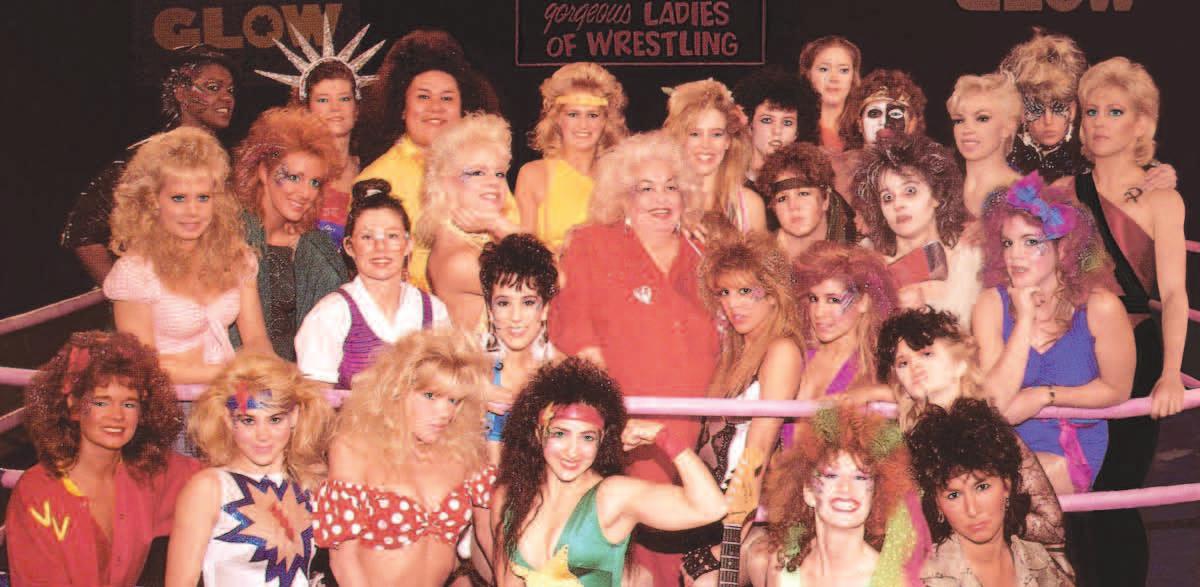
While the on-air talent made Gorgeous Ladies of Wrestling so memorable, from Mountain Fiji and Colonel Ninotchka to teams like Hollywood and Vine, and the Heavy Metal Sisters, Spike and Chainsaw, there were key figures behind the scenes.
David McLane, who grew up on Indianapolis pro wrestling, had the name of the show, and wanted to shoot at the Riviera Hotel & Casino in Las Vegas. The hotel's owner, Meshulam Riklis, knew who he wanted to run the show— veteran Matt Cimber.
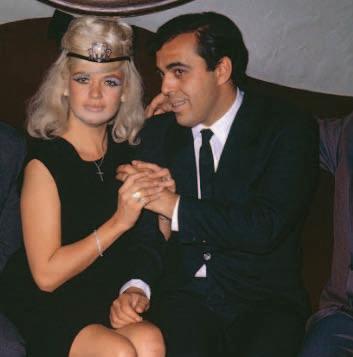
Born Thomas Vitale Ottaviano in New York City, Cimber grew up in show business from the time he was 14 and as a young man directed off-Broadway plays. He was married to silver screen legend, Jayne Mansfield, who convinced him to move west to Hollywood and learn the film business.
An early friend was Cauliflower Alley Club founder Mike Mazurki, who he introduced himself to in the 20th Century Fox commissary. “I didn't even know what his name was, but I had seen him in I don't know how many films, because I was a film buff when I was a kid,” recalled Cimber. His film resume grew quickly, and today includes directing 19 feature films, plus numerous documentaries and shorts, as well as writing and producing. His best known work is 1982's Butterfly, which he wrote, produced and directed, and was nominated for three Golden Globe Awards. Riklis put up the money for the GLOW pilot and 13-show initial run, and needed someone to see the idea through to fruition. With Steve Blance as the other writer, GLOW came to being. “In four years, we wrote 1,750 comedy sketches,” said Cimber, who purposefully steered the product as a
television entity, not a sporting competition. “We did musical comedy numbers, we did rapping.”
A fan of satire, like Mad Magazine, and understanding the appeal of shows like Laugh-In and Hee-Haw, Cimber wanted GLOW to stand out compared to other wrestling on the air. “If you look at GLOW carefully, especially the first two years, GLOW is existentialist. The paintings on their faces, the symbolism of their characters, they're off the wall. And yet, the one thing is I always stayed in a guideline, make sure the audiences understands them. Don't make it so heady and so arty that people think it's a bunch of crap.”
The comic-book characters purposefully covered all aspects of society, and got him in trouble more than once. A pastor started a protest about the devil worshippers on the show, but Cimber listened to his complaints and adjusted. The Jewish Defense League hated his stereotypical New York City team of the Housewives.
Cimber was in control all four seasons that GLOW was on the air, with a reach over 100 stations, often upsetting his talent with his headstrong, dictatorial style. They had to follow his rules and improve through acting and wrestling lessons. But he knows who the real stars were, still in awe of the amount of mail the show got as feedback. He's happy to be at CAC, especially because of his connection with Mazurki, but the honour is not about him. “The girls are also getting the award, because my work could never have reached where it did reach without them,” he said. “The girls have gotten such endurance from their characters.”
—Greg Oliver
AWARDED TO: GLOW
Created in 1985, Gorgeous Ladies of Wrestling was a campy, wrestling-based variety show developed by producer David B. McLane to capitalize on the growing popularity of pro wrestling and the success of the WWF and WrestleMania.
McLane wasn’t an outsider to the wrestling business as he had previously worked in Indianapolis for Dick the Bruiser as a ring announcer and commentator among other things. In partnership with Jackie Stallone (the mother of Sylvester Stallone), who owned a women’s gym, and with Matt Cimber as the head writer, he cast a crew of actresses, models, stuntwomen, and dancers and signed them up for a crash course in wrestling under the tutelage of Mando Guerrero. The GLOW girls were taught the basics of wrestling and given names such as Americana (the patriotic All-American girl), Susie Spirit (the cheerleader), Little Egypt (the belly dancer), and the punk rock Valley girl tag team of Hollywood and Vine. There were farmer’s daughters in Daisy Duke shorts, California girls in bikinis and tube tops, and Southern belles . . . essentially, every type was represented. Guerrero was only there at the beginning though.
“If I would have kept on going, they would have been a lot better, a lot better, because I taught them the way I was taught. I didn’t go straight to wrestling. I’d give them drills first, the way they stand,” he said.
plenty of cleavage and low-cut tights. GLOW did recognize a championship, a tiara was used as opposed to a traditional title belt. Because of the show’s popularity, the GLOW girls were invited to appear on celebrity editions of Family Feud, which was a clear sign of the show’s success. Matilda the Hun (who also wrestled as Queen Kong) had a bit part in Aerosmith’s “Love in an Elevator” music video in 1987.
GLOW survived for four seasons, making 104 episodes and ultimately featuring a cast of more than 60 women. A handful of GLOW girls continued wrestling after the show concluded, working for either the AWA or the WWF: Olympia Hartauer, Brandi Mae, Killer Tomato, Princess Jasmine, and most notably Tina Moretti, who performed as Tina Ferrari in GLOW and went on to wrestle for the WWF as Ivory for several years.
Subsequent attempts at revivals never quite got off the ground. In 2011, several of the GLOW girls reunited for a documentary titled GLOW: The Story of the Gorgeous Ladies of Wrestling, which went on to receive glowing reviews on the film festival circuit. “Little Egypt” Angelina Altishin organized a reunion of the GLOW cast at the 2011 Cauliflower Alley Club Reunion, which proved to be a difficult task.
Episodes were filmed at the Riviera Hotel in Las Vegas, and Gorgeous Ladies of Wrestling debuted in syndication in 1986. Short wrestling matches were interspersed with comedy skits and interview segments, and each GLOW girl performed her own rap theme song, inspired by the success of the 1985 Chicago Bears’ “Super Bowl Shuffle.” Intentionally hokey, GLOW was more Hee-Haw than pro wrestling, with skits that saw the girls visiting the official GLOW physicians “Dr. Fiel” and “Dr. Grope” and other cornball comedy and double entendres. But the show quickly attracted an audience who regularly tuned in to watch the GLOW girls in their revealing outfits, featuring
“One of the oddities of the GLOW shows is that we were given characters and then we were given fictitious names to go along with those characters,” Altishin said in an interview with David Buckler for Diva-Dirt. “So that when we were working in those seasons, we never referred to each other by our real names. We always referred to each other by our character names.” In 2016, it was announced that the creators of the hit series Orange Is the New Black were working on a comedy series for Netflix based on GLOW, in which actress Alison Brie and comedian Marc Maron will star. Coincidentally, Mando Guerrero’s nephew, Chavo Jr., was hired to train the actresses, the same role his uncle had. Although it was a polarizing and nontraditional program, GLOW proved to be one of the most prominent and popular female wrestling promotions of all time.
— Excerpted from Sisterhood of the Squared Circle: The History and Rise of Women’s Wrestling, by Pat Laprade and Dan Murphy
2017
Matt Anoa'i (Rosey) - April 17, 2017
Pretty Boy Larry Sharpe (Larry Weil) - Apr. 10, 2017