b. Saint Nicholas Owen B782.indd 6
04/04/2025 11:11
The Persecuted Church
T
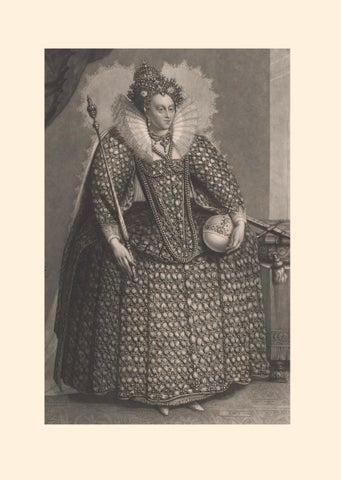
he noose had been tightening around the neck of English Catholic life throughout the sixteenth century. First had come King Henry VIII’s break with the Catholic Church, then a more determinedly Protestant era with the short reign of Edward VI (1547-53). Hope dawned under the rule of Queen Mary I, but this was short lived – less than six years. With Mary’s death on 17 November 1558, her halfsister, Elizabeth, acceded to the throne, and the hopes of a restored Catholic England were reduced to ashes. It was during the reign of Queen Elizabeth I that Catholics became known as ‘recusants’, a term that was coined from the Latin word recusare – to refuse, due to their refusal to attend the services of the Established Church. The Act of Uniformity of 1559 imposed as law the obligation to attend these services, a mandate that was reinforced by subsequent statutes. Recusants could be prosecuted, fined, and imprisoned in their own homes; priests faced more dire censure. On 25 February 1570, Pope St Pius V issued a bull, Regnans in Excelsis, excommunicating Queen Elizabeth. 7
b. Saint Nicholas Owen B782.indd 7
04/04/2025 11:11
The bull referred to the Queen as ‘the pretended Queen of England and the servant of crime’ and thundered against her rule: She has removed the Royal Council, composed of the nobility of England, and has filled it with obscure men, being heretics; oppressed the followers of the Catholic faith; instituted false preachers and ministers of impiety; abolished the sacrifice of the Mass, prayers, fasts, choice of meats, celibacy, and Catholic ceremonies; and has ordered that books of manifestly heretical content be propounded to the whole realm and that impious rites and institutions after the rule of Calvin, entertained and observed by herself, be also observed by her subjects. The bull finally declared, ‘We charge and command all and singular the nobles, subjects, peoples, and others afore said that they do not dare obey her orders, mandates, and laws. Those who shall act to the contrary we include in the like sentence of excommunication’. The reaction of the Queen and her government can be imagined. In 1585, an act made it treasonable for Jesuits, seminary priests, ‘and other such like disobedient persons’ to be in England. Such a climate demanded that English priests be trained abroad. If they returned, and anyone was found to have ‘harboured’ a Catholic priest – that is given him shelter or food – that person would also be guilty of high treason. English Catholics therefore found themselves at risk of 8
b. Saint Nicholas Owen B782.indd 8
04/04/2025 11:11
bringing upon themselves the same fate as England’s first martyr, St Alban, who gave refuge to a Christian priest and was sentenced to death for allowing him to escape and for refusing to renounce his Christian faith. This is the context of the life of St Nicholas Owen, who did more than anyone else to see that priests could be hidden from the ‘pursuivants’, those who hunted them down. Having constructed scores – maybe hundreds – of ingenious hiding places for priests, Nicholas Owen would have known that, should he be caught, his captors would show no mercy until they had extracted information about the location of the priests’ hides, who had commissioned them, and who had used them. The barbarism that the martyr was to suffer was to no avail for the authorities as he betrayed no one. The story of St Nicholas Owen is one of the finest examples of the courage and resistance that was lived out by thousands of English laity throughout the tempestuous times of the sixteenth and seventeenth centuries. Due to the necessarily clandestine nature of his life, it is not possible to chart his progress from house to house or from year to year with great clarity, yet thanks to the accounts of others, we do know with certainty how important his work was and how bravely he laboured for the glory of God.
A Faithful Catholic Family The exact date of Nicholas Owen’s birth is not known, but is reckoned as being around 1562. His family lived near the 9
b. Saint Nicholas Owen B782.indd 9
04/04/2025 11:11
castle in Oxford, and Nicholas was the second of four sons of Walter Owen; Nicholas’s brothers being John, Walter, and Henry, born in 1561, 1568, and circa 1571 respectively. The name of Nicholas’s mother is unknown. The family was certainly a religious one as all of Walter’s sons were to be highly committed practising Catholics throughout their lives. The brothers also had a younger sister, Elizabeth, about whom little is known. In 1566, the Owen family moved to No. 3 Castle Street, a property that they leased from Magdalene College. The street was even closer to the castle than their previous home, and their house was also the carpentry workshop of Walter Owen. From a very early age, Nicholas would have watched and learnt from his father the carpentry skills that he was later to master. Walter’s work would have taken him to various building sites, and as Nicholas grew older he would have also accompanied his father. Nicholas’s brothers, meanwhile, were setting out on very different paths of life. John graduated from Trinity College, Oxford, in 1580, leaving the university town three years later with his fifteen-year-old brother, Walter, to travel to the newly established Douai College, where the two trained to become priests. It is likely that Nicholas also considered becoming a priest, but it is also probable that being so unusually short – he was known under the pseudonyms of ‘Little John’ or ‘Little Michael’ throughout his life – disqualified him from such a vocation; in that time, 10
b. Saint Nicholas Owen B782.indd 10
04/04/2025 11:11
his height would have been considered a handicap that was not admissible in a future priest. With there not being any possibility of becoming a priest, Nicholas spent approximately the next seven years of his life as an apprentice to the Oxford joiner, William Conway, starting on 2 February 1577. The work of a joiner was different from that of a carpenter – the latter was involved in the construction of houses, where the finer elements of working with wood were not necessary. A joiner, however, made the furniture and wooden panelling with which many fashionable houses in the Tudor era were decorated. This kind of work required great precision and beautiful finishes. Next to nothing is known of the years of Nicholas Owen’s apprenticeship or the years immediately following, but significant events were happening around him. His elder brother, John, was completing his seminary training, and in 1585 he was sent back to the English Mission as a priest. Meanwhile, Walter Owen, Nicholas’s younger brother, was transferred from Douai to the new English seminary in Valladolid, Spain, where he died in 1591. The youngest brother of Nicholas, Henry, became a printer and was soon secretly printing Catholic literature, a mission for which he was arrested and imprisoned.
11
b. Saint Nicholas Owen B782.indd 11
04/04/2025 11:11
Two Catholic Heroes
St Edmund Campion
I
n English Catholic life, the arrival back in England of the newly ordained Jesuit priest, Edmund Campion, was of the greatest significance. He had been educated at St John’s College, Oxford, and it was in Oxford that he accomplished one of his most daring feats in 1581. Campion had written and clandestinely printed copies of his Challenge to the Privy Council, a work better known as Campion’s Brag. This was a defiant work. In it he clearly stated his intentions: My charge is, of free cost to preach the Gospel, to minister the Sacraments, to instruct the simple, to reform sinners, to confute errors – in brief, to cry alarm spiritual against foul vice and proud ignorance, wherewith many of my dear countrymen are abused… And touching our Society, be it known to you that we have made a league – all the Jesuits in the world, whose succession and multitude must overreach all the practice of England – cheerfully to carry the cross you shall lay upon us, and never to despair your recovery, while we 12
b. Saint Nicholas Owen B782.indd 12
04/04/2025 11:11
have a man left to enjoy your Tyburn, or to be racked with your torments, or consumed with your prisons. The expense is reckoned, the enterprise is begun; it is of God; it cannot be withstood. So the faith was planted: so it must be restored. Campion’s zeal knew few bounds, and so copies of his next publication, Decem Rationes (‘Ten Reasons’), a defence of the Catholic Faith, were scattered over the benches of St Mary’s, the University Church, before a university ceremony to the amusement of Catholics and the anger of Protestants. The text was brazen in its language: ‘Listen Elizabeth, mighty Queen,’, St Edmund thundered, ‘the prophet in speaking to thee is teaching thee thy duty’.
Arrest and Martyrdom At this very time, John Owen was studying at Trinity College, and would undoubtedly have been aware of Campion’s provocation to the university and the Queen. It is even possible that the Owen brothers were present when Campion preached at Lyford Grange, Berkshire, the moated manor house of Edward Yate and his family, and a twelve mile walk from Oxford. It was July 1581. In the congregation there was a government spy, George Elliott, who swiftly raised the alarm with the local Justice of the Peace. Lyford Grange was surrounded and stormed by at least fifty armed men, interior walls were smashed and wooden panelling ripped asunder through the Sunday afternoon and 13
b. Saint Nicholas Owen B782.indd 13
04/04/2025 11:11
b. Saint Nicholas Owen B782.indd 14
04/04/2025 11:11
night. It was only the next day that the Justice caught his prey. What happened next must have been told to Nicholas Owen, and was surely one of many stories that helped him hone his joinery skills in constructing priest holes. Near to abandoning hope of apprehending the priests, priest hunters were reported to have found: A chamber near the top of the house, which was but very simple, having in it a large great shelf with divers tools and instruments both upon it and hanging by it, which they judged to belong to some cross-bow maker. The simpleness of the place caused them to use small suspicion in it and they were departing out again; but one of their company by good hap espied a chink in the wall of boards whereto the shelf was fastened, and through the same he perceived some light. Drawing his dagger he smit a great hole in it, and saw there was a room behind it, whereat the rest stayed, searching for some entrance into it, which by pulling down a shelf they found, being a little hole for one to creep in at. For St Edmund and those caught with him, their fate was to be taken to London, imprisoned, racked (tortured), and eventually, tried and found guilty of treason. They were condemned to the most hideous execution of being hung, drawn, and quartered. Standing near the scaffold at Tyburn where St Edmund and his companions were martyred was St Henry Walpole, who was himself to become a Jesuit and 15
b. Saint Nicholas Owen B782.indd 15
04/04/2025 11:11
die for the Faith. It is said that he was splashed by some of St Edmund’s blood, blood that he was later to contemplate among the verses of his poem, ‘Why do I use my paper and ink’: You thought perhaps when lerned Campion dyes, his pen must cease, his sugred tong be still, but you forgot how lowde his death it cryes, how farre beyounde the sound of tongue and quil, you did not know how rare and great a good it was to write his precious giftes in blood. If the government thought that such a death as the one St Edmund suffered would discourage others from following in his footsteps, it was quickly disabused of the notion. As the Oxford Regius Professor of Divinity observed to the Earl of Leicester, ‘It used to be said, “Dead men bite not”; and yet Campion dead bites with his friends’ teeth…in the place of the single Campion, champions upon champions have swarmed to keep us engaged’. Undoubtedly, Campion’s death stiffened the already great resolve of the Owen brothers in their various vocations as Catholics.
To Catch a Priest The ‘champions’, however, were not too difficult for the authorities to capture. By the second half of 1586, only 130 of the 300 seminary or Jesuit priests who had returned to England were at liberty to minister to the beleaguered 16
b. Saint Nicholas Owen B782.indd 16
04/04/2025 11:11
Catholics. Some had died either in prison or of natural causes, thirty-three had been martyred, fifty were in prison, and around sixty had been arrested and banished or fled to the continent before being discovered. While there were some priest holes in Catholic houses before 1586, there were not many, and they tended not to have been purpose-built nor to have been truly the most secret knowledge of just a few. From 1586, however, many more were carefully constructed. These new hiding places were built for the priests, vestments, books, chalices, and other items needed to say Mass. One priest that knew Nicholas Owen well – John Gerard – recorded that at the beginning of his years of mission in England in 1588, his hosts seldom had such items as were needed to say Mass, but after a few years, they all seemed to have vestments, etc. As this was so, they clearly had secret places to hide them. As John Gerard mused, ‘When God will protect, he can hide a Felix between two walls, and make spiders his workmen to cover the entry with their webs’.
Hide and Seek The tricks that the fanatical priest hunters employed to discover priest holes ranged from the methodical measuring of walls inside and outside the buildings they were examining, to thrusting swords though panelling, with John Gerard noting that ‘some priests have escaped very hardly of being wounded or slain’ when this happened to 17
b. Saint Nicholas Owen B782.indd 17
04/04/2025 11:11
a panel behind which they were concealed. Sometimes, the searchers would creep about silently in the hope of hearing a stray cough, at other times they would pound away on the floor yelling that they had found their quarry and then suddenly go silent in the hope of hearing some movement from the priest. Children could be threatened in order to try to extract information about the whereabouts of priest holes and Catholic activities in their home, or, when seeking to enter the house for a search, the pursuivants might start by gentle knocking on the door rather than alerting the whole household to the impending search by loud crying of demands for the gates and doors to be opened in the name of the Queen. Nicholas Owen knew the grave risk that priests were taking in returning to England. In 1596, his brother, John, who had been ordained a priest, was arrested less than a year after returning to the English mission. Incarcerated in the Marshalsea, London, John was tried and sentenced to death but recanted, taking the Oath of Supremacy and thus saving his life. It would seem that his recantation was soon recanted itself, as it is known, from the correspondence of Fr Henry Garnet, that Nicholas was sending his priest brother much of his earnings. The same letter reveals that another recipient of Nicholas’s generosity was his younger brother, Henry. Henry had become a printer, and it is probably through him that Nicholas met Garnet shortly after Garnet had arrived back in England as a Jesuit priest. 18
b. Saint Nicholas Owen B782.indd 18
04/04/2025 11:11