


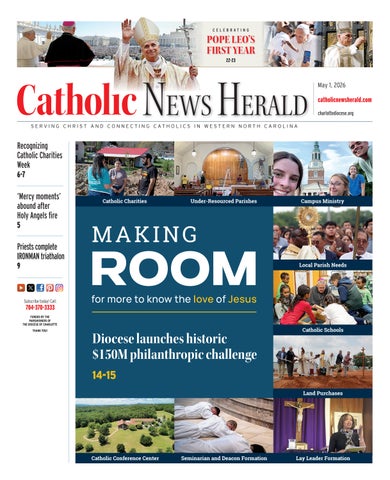
MAY 1, 2026
VOLUME 35 • NUMBER 15
1123 S. CHURCH ST. CHARLOTTE, N.C. 28203-4003 catholicnews@rcdoc.org 704-370-3333
PUBLISHER
The Most Reverend Michael T. Martin, OFM Conv., Bishop of Charlotte
hile we honor all mothers in May, the month has a special place in the heart of Catholics for its focus on the Blessed Virgin Mary. As Pope Francis said in a Nov. 13, 2024, Vatican address, “Our Lady helps us see Jesus. She opens doors.” This month, make an effort to step through that door and deepen your devotion to Mary in any of the following ways.
May’s calendar is filled with Marian feast days – there are at least 34 celebrated across the globe. Here in the United States, we celebrate Our Lady of Fatima on May 13, Mary Help of Christians on May 24 and The Visitation on May 31. These feasts present an opportunity to learn more about Mary as described in Scripture, her apparitions, and her role in safeguarding our lives and souls. Spend some time this month reading one or more books about Mary’s many feasts and what they represent. Start with our list online.
While the rosary is said to be Mary’s favorite prayer, there is no shortage of prayers about and for the Blessed Mother. From the Angelus, whose words are pulled from Scripture, to the Memorare, which seeks the intercession and help of the Blessed Virgin Mary, there are prayers that are appropriate for just about every situation. Take the time this month to learn a new one.
EDITOR: Trish Stukbauer
704-370-3392, tmstukbauer@rcdoc.org
ADVERTISING MANAGER: Kevin Eagan
704-370-3332, keeagan@rcdoc.org
MULTIMEDIA DESIGNER: David Puckett 704-808-4521, dwpuckett@rcdoc.org
EDITORIAL TEAM: Kimberly Bender
704-370-3394, kdbender@rcdoc.org Lisa Geraci 704-370-3294, lmgeraci@rcdoc.org
Troy C. Hull 704-370-3288, tchull@rcdoc.org
Christina Lee Knauss 704-370-0783, clknauss@rcdoc.org Amelia Kudela 980-374-3411, arkudela@rcdoc.org Brian Segovia 704-370-3235, bmsegovia@rcdoc.org
COMMUNICATIONS ASSISTANT/CIRCULATION: Maria De Ugarte 704-370-3333, catholicnews@rcdoc.org
COMMUNICATIONS DIRECTOR: Liz Chandler 704-370-3336, lchandler@rcdoc.org
ASSISTANT COMMUNICATIONS DIRECTOR: Patricia L. Guilfoyle 704-370-3334, plguilfoyle@rcdoc.org
THE CATHOLIC NEWS HERALD is published by the Roman Catholic Diocese of Charlotte 26 times a year.
NEWS: The Catholic News Herald welcomes your news and photos. Please e-mail information, attaching photos in JPG format with a recommended resolution of 150 dpi or higher, to catholicnews@rcdoc.org All submitted items become the property of the Catholic News Herald and are subject to reuse, in whole or in part, in print, electronic formats and archives.
ADVERTISING: Reach 165,000 Catholics across western North Carolina! For advertising rates and information, contact Advertising Manager Kevin Eagan at 704-370-3332 or keeagan@rcdoc.org. The Catholic News Herald reserves the right to reject or cancel advertising for any reason, and does not recommend or guarantee any product, service or benefit claimed by our advertisers.
SUBSCRIPTIONS: $17.25 per year for registered families of the Diocese of Charlotte and $25 per year for all others
POSTMASTER: Periodicals Class postage (USPC 007-393) paid at Charlotte, N.C. Send address corrections to the Catholic News
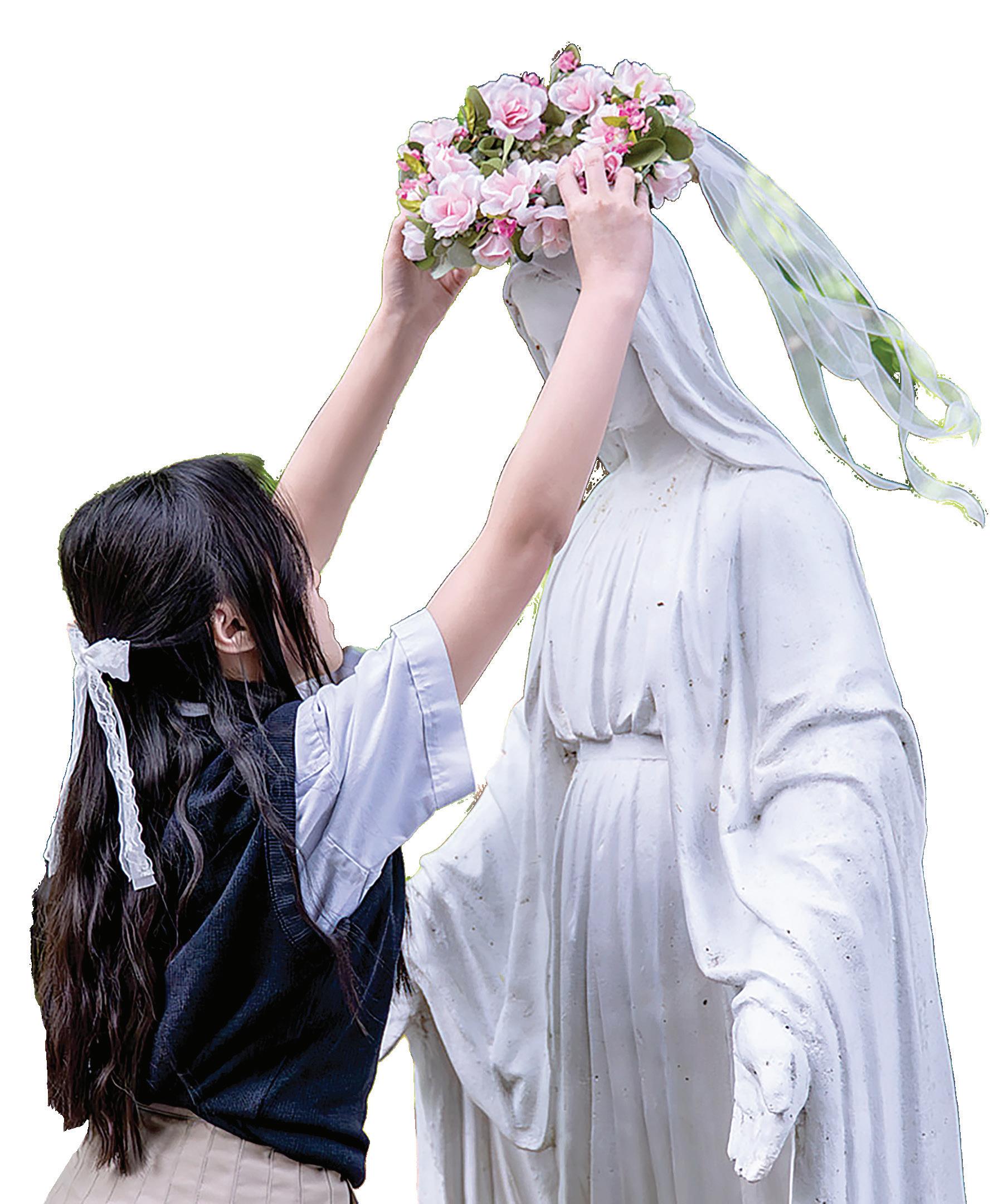
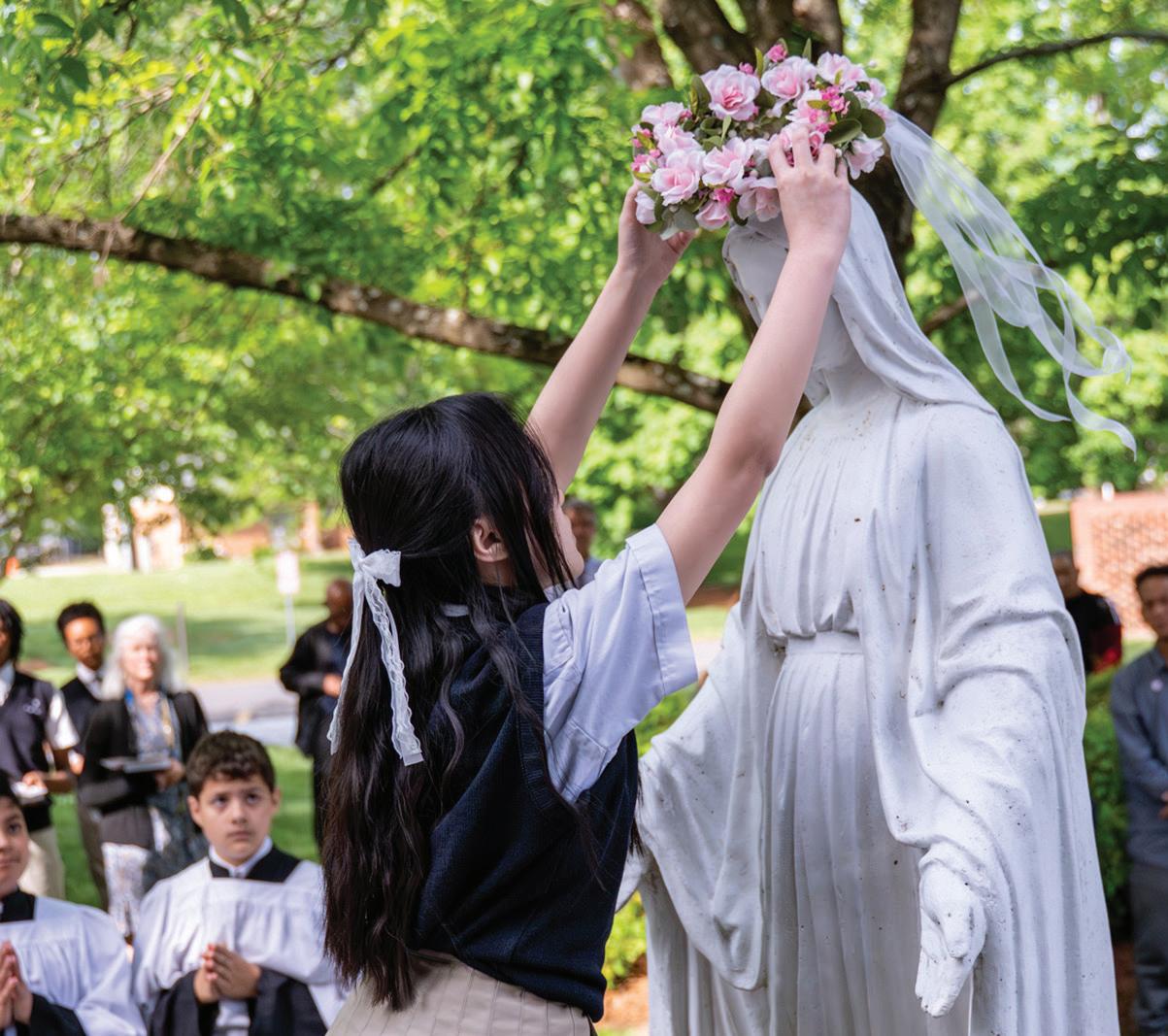
Parishes and schools honor Our Blessed Mother this month with May crownings. While the origins of the tradition are said to reach back to the 16th century, images of Mary and Jesus wearing gold crowns can be found much earlier in early Eastern iconography. In the West, the practice of publicly crowning a statue of the Blessed Mother gained popularity in the 19th century. To do a May crowning in your own home, visit websites like www. TheReligionTeacher.com that list prayers and delve into the reasons behind the act of devotion.

ESPAÑOL
VIÑEDO DE RAQUEL: ¿Usted o alguien cercano está buscando sanar las secuelas de un aborto anterior? Retiros de fin de semana son ofrecidos por Caridades Católicas para hombres y mujeres en todas las regiones de la Diócesis de Charlotte.Para obtener más información, comuníquese con Lorena Haynes al 828-585-0483 o por correo electrónico a lorena_haynes@yahoo.com.
EVENTS
MEN’S CLUB KICKOFF: St. Matthew Church is launching a Men’s Club, to meet at 6 p.m. Friday, May 1, in the Parish Center Family Room, 8015 Ballantyne Commons Pkwy., Charlotte. Enjoy a relaxed evening of good food, meaningful conversation and strong fellowship. Dinner provided. Can’t make this
one? The Men’s Club will gather on the first Friday of each month.
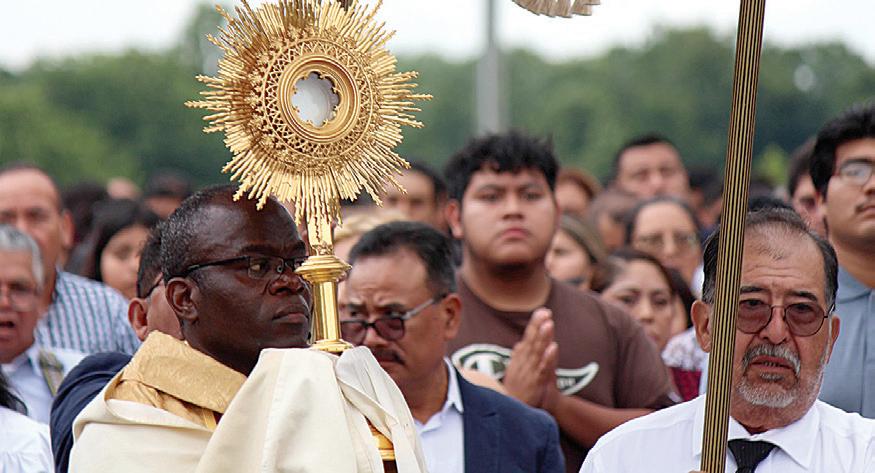
2026 NATIONAL EUCHARISTIC PILGRIMAGE : The 2026 pilgrimage will make various stops through our diocese beginning Saturday, May 30, at Our Lady of Lourdes Church in Monroe and continuing May 31 at St. Vincent de Paul Church in Charlotte and June 1 at churches in Statesville and Greensboro. Go to www. charlottediocese.org for details.
VIGIL OF THE TWO HEARTS : Vigil begins with 8 p.m. First Friday Mass on Friday, May 1, followed by Eucharistic Adoration and concludes with 8 a.m. First Saturday Mass May 2. St. Patrick Cathedral, 1621 Dilworth Road East, Charlotte. For details, go to www.defendthefamily.org/two-hearts.
Gabriel Church, Charlotte MAY 4 – 6 P.M.
Patrick Cathedral, Charlotte MAY 6 –
Greensboro
participate in the following events over the coming weeks:
Mass, Charlotte Catholic High School St. Matthew Church, Charlotte
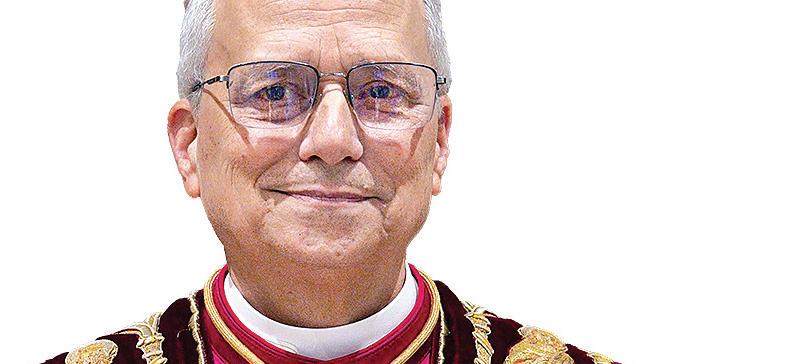
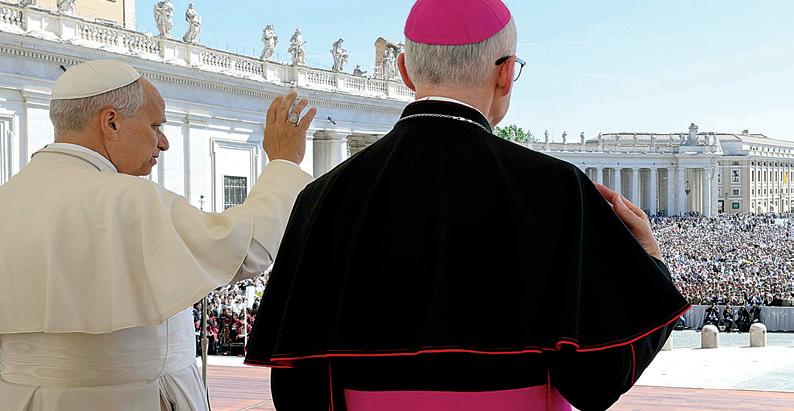
Pope Leo XIV wanted his journey to Africa to highlight the serious injustices continuing there and propose a message of peace to a world marred by conflict and violations of international law.
“At the same time, the apostolic journey gave people in Africa a chance to make their voices heard and to express the joy of being God’s people,” he said.
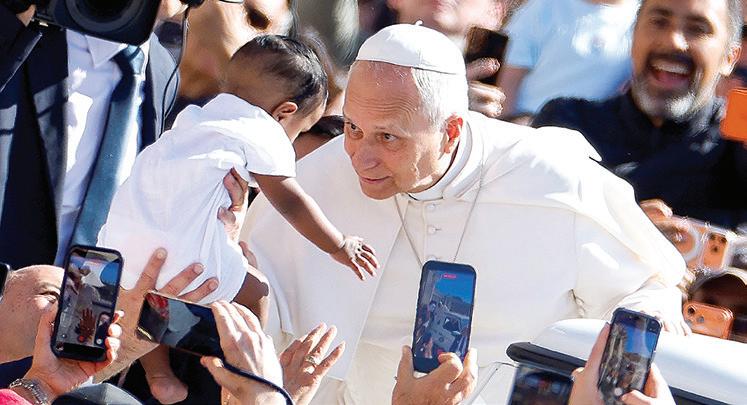
As had been customary by his predecessors, Pope Leo used his first general audience after his April 13-23 trip to four nations in Africa to tell people about the purpose of his visit and what struck him most about his travels.
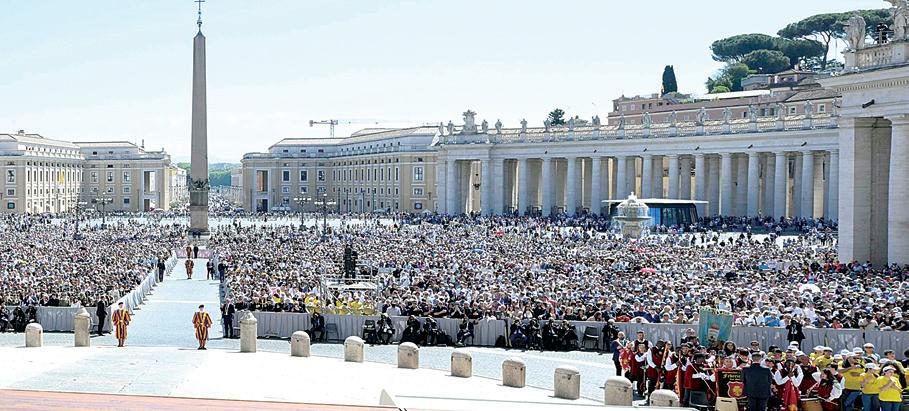
Addressing thousands of people in St. Peter’s Square April 29, Pope Leo said his time there “was meant to offer the world a message of peace at a moment marked by conflicts and frequent violations of international law.”
“Along with the call for peace, I also denounced the grave injustices that exist in those countries that are so rich in natural resources, urging the international community to overcome neo-colonial attitudes and engage in authentic collaboration,” he said.
On his journey, the pope visited Algeria, Cameroon, Angola and Equatorial Guinea.
In Algeria, a predominantly Muslim country, the pope said he wanted to “show the world that it is possible to live together as brothers and sisters, even of different religions, when we recognize ourselves as children of the same merciful Father.”
The northern African country is also the birthplace of his “spiritual father,” St. Augustine, and by “revisiting the roots of my spiritual identity,” it offered a way to highlight the saint’s legacy, he said. “He is a master in the search for God and for truth. A testimony that is more important than ever today for Christians and for every person.”
The other three countries were predominantly Christian, he said, and “I, therefore, found myself immersed in an atmosphere of celebration of the faith.”
Whenever a pope visits a country, it is a chance for Catholics to “express the joy of being God’s people and the hope for a better future, of dignity for each and every one,” he said.
Francis Spellman: A dramatic, hard-fought rise to the top
RUSSELL SHAW OSV News
EDITOR’S NOTE: This is part of a series profiling great American Catholics ahead of the July 4 celebration of the 250th anniversary of the signing of the Declaration of Independence.
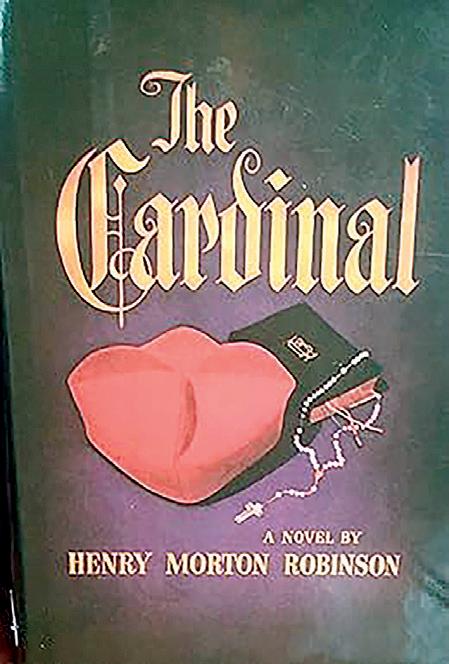
Many cardinals have had books written about them, but few have become the fictionalized heroes of best-selling novels. Cardinal Francis J. Spellman, archbishop of New York from 1939 to 1967, was one – possibly the only one.
The novel was called “The Cardinal.”
The work of Catholic author Henry Morton Robinson, it topped the best-seller list for many months after its publication in 1950. Later it was made into a movie.
With many embellishments, the story mirrored the real-life career of Cardinal Spellman – hard-fought climb to the top of the hierarchical ladder, trusted adviser to a pope and a president, behind-the-scenes unofficial diplomat engaged in sensitive wartime missions.
When Time magazine, marking his elevation to cardinal, featured his cherubic features on the cover of its Feb. 25, 1946, issue, the artist situated the dome of St. Peter’s Basilica and a spire of St. Patrick’s Cathedral in the background. They might have tossed in the White House, too – for Cardinal Spellman embodied the fusion of Americanism and Catholicism.
ROOTS OF FAITH
Francis Joseph Spellman was born May 4, 1889, in Whitman, Massachusetts, the oldest of five children of William and Ellen Conway Spellman. Young Francis attended the local high school, where he was manager of the baseball team, and Fordham University in New York, graduating in 1911.
By then he’d decided to become a priest. As a seminarian of the Boston archdiocese, he studied at the Urban College in Rome, exhibiting a talent for cultivating friendships with men who would rise to high positions in the Roman Curia. Ordained a priest in 1916, he returned to Boston. There he appears to have had a falling-out with Cardinal William O’Connell, who ruled the archdiocese with an iron hand. Father Spellman spent the next several years in a series of temporary assignments.
THE
Even so, he kept up his Roman contacts. The breakthrough came in 1925, when he accompanied a pilgrimage group to Rome. There he secured a post in the Vatican Secretariat of State.
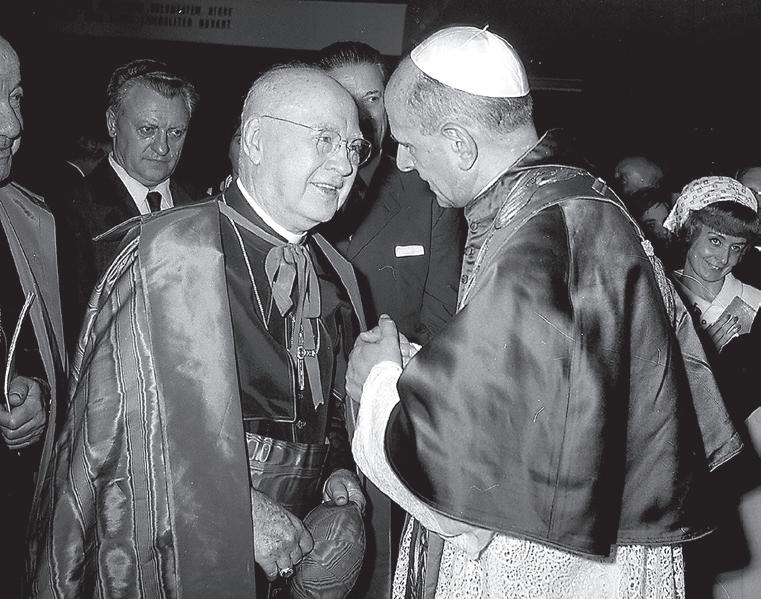
He also made friends with American Catholics Count Enrico Galeazzi, a Vatican insider, and Archbishop Eugenio Pacelli.
When Pope Pius XI in 1931 issued an encyclical critical of Benito Mussolini’s fascist regime, the fascists wouldn’t allow its publication in Italy. Father Spellman’s superiors assigned the young American priest to smuggle the document to Paris.
In 1932, Father Spellman was named auxiliary bishop of Boston and ordained in St. Peter’s by newly appointed Cardinal Pacelli. While he was a hero in Rome, it was a different story in Boston. Cardinal O’Connell sent him to a parish with as little public visibility as possible.
But Bishop Spellman was not easily thwarted. With funding from his friend, Boston multi-millionaire Joseph P. Kennedy, he organized a 1936 U.S. visit by Cardinal Pacelli. A high point of the trip was a meeting between the cardinal and President Franklin Roosevelt.
Cardinal Pacelli soon became Pope Pius XII and appointed Spellman archbishop of New York.
As the world plunged into war and the United States edged toward entering the
conflict, Roosevelt turned to Archbishop Spellman as an adviser on Catholic affairs. At the end of 1939, Pope Pius XII named him to the post of Military Vicar.
In January 1943, Archbishop Spellman prepared for the first of what would be a series of annual trips to visit servicemen overseas. Roosevelt gave him an additional mission whose nature became clear when on Feb. 12 he met with Spanish dictator Francisco Franco. The session was credited with helping ensure Spanish neutrality during the war.
During this remarkable trip, Archbishop Spellman lunched with Winston Churchill in London. In Rome, he appears to have met with high-ranking officials. In Istanbul, he made the acquaintance of Archbishop Angelo Roncalli – later, Pope St. John XXIII. Returning to the United States, he urged Roosevelt to treat Rome as an “open city” and refrain from bombing it – a plea that had only partial success.
During the war, Pope Pius named no new cardinals, but it was no surprise when Archbishop Spellman was part of the first post-war class, elevated to the College of Cardinals on Feb. 18, 1946.
In the years that followed, Cardinal Spellman was a champion of anticommunism. At the Second Vatican Council, he supported ecumenism and strongly backed Vatican II’s endorsement of religious liberty.
He died in New York on Dec. 2, 1967.

For the latest news 24/7: catholicnewsherald.com
New deacon assigned to diocese’s Scouting program
CHARLOTTE — Bishop Michael Martin, OFM Conv., recently announced the appointment of Deacon Charles “Chuck” Hindbaugh as spiritual advisor to the Diocese of Charlotte Catholic Scouting program, effective March 10, 2026.
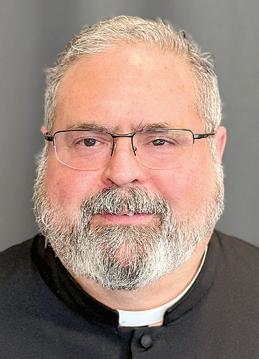
Ordained in 2021, Deacon Hindbaugh serves at Our Lady of the Americas Parish in Biscoe. He and his wife Mary are originally from Michigan and moved to North Carolina in 2008.
Deacon Hindbaugh succeeds Deacon Martin Ricart III, who served nearly 12 years as spiritual advisor to the Catholic Scouting program.
“I was active as a Cub Scout when I was young, and I love the fact that I’m coming back to Scouting,” he said. “I look forward to helping our young people better understand their faith.”
Deacon Hindbaugh formally began his duties at the 2026 Catholic Camporee on April 17-19, assisting at the concluding Mass and being introduced to Scouts and their families.
The Catholic Scouting program is overseen by the Charlotte Diocese Catholic Committee on Scouting.
— Patricia L. Guilfoyle
BELMONT — Just a few months shy of the United States’ 250th anniversary, more than 150 people attended “Ireland and the American Revolution,” an April 8 lecture at Belmont Abbey College.
The event featured Dr. Patrick Griffin of the University of Notre Dame and Dr. Melissa Walker of Converse University in Spartanburg, South Carolina. Hosted by Belmont Abbey College’s History Department, it was co-sponsored by the Consulate General of Ireland, the Ancient Order of Hibernians, the Notre Dame Club of Charlotte and the Charlotte Irish Connection.
— Mike FitzGerald
CHARLOTTE — A former Catholic Charities employee has been charged in connection with $13,000 in unauthorized personal expenses on a business credit card.
Leah Margaret Stewart, 46, of Charlotte was arrested April 26 and charged with felony embezzlement and money laundering. She was released the next day on a $25,000 bond. Stewart was hired in December 2024 as a disaster case management supervisor in Catholic Charities’ Charlotte office.
In June, the diocese said, an audit found that a credit card issued to Stewart was used to pay for $13,001.65 in unauthorized personal expenses between March and May. Stewart was terminated July 1, 2025. The diocese reported the matter to Charlotte-Mecklenburg Police and is seeking restitution.
BELMONT — Belmont Abbey College is marking its 150th anniversary with a year-long celebration that began on its Founders’ Day, April 21, which commemorates the 1876 arrival of the first Benedictine monk and students who came to establish a monastery and college in North Carolina.
“For 150 years, Belmont Abbey College has formed generations of students to think critically, lead faithfully and serve others with purpose,” said Dr. Jeffrey Talley, president of the college. “Since 1876, we have remained dedicated not only to preparing students for successful careers but also to forming lives rooted in truth and virtue.”
Belmont Abbey College is the region’s only Catholic private liberal arts college. (Editor’s note: Read a perspective about the importance of Catholic education on page 26.) This fall, the college announced the highest total enrollment in its history – 1,741 students. The college offers 30 undergraduate and seven graduate programs and has more than 17,000 alumni.
Throughout its anniversary year, the college will host events bringing together students, faculty, staff, alumni and the surrounding community.
The year kicked off with a Founders Day celebration honoring the college’s Benedictine legacy that included Vespers followed by a German Festival featuring food, music, games and a biergarten.
Beyond education, the college and abbey have been instrumental in helping to establish and invigorate the Church in North Carolina.
“Beginning with our first abbot, Bishop Leo Haid, who was responsible for the Catholic Church in the entire state of North Carolina, Belmont Abbey has played an active role in the Church in the Southeast,” said Benedictine Abbot Placid Solari, the current abbot of Belmont Abbey.
Unique in American Catholic history, Belmont Abbey existed as an independent diocese from 1910 until its incorporation
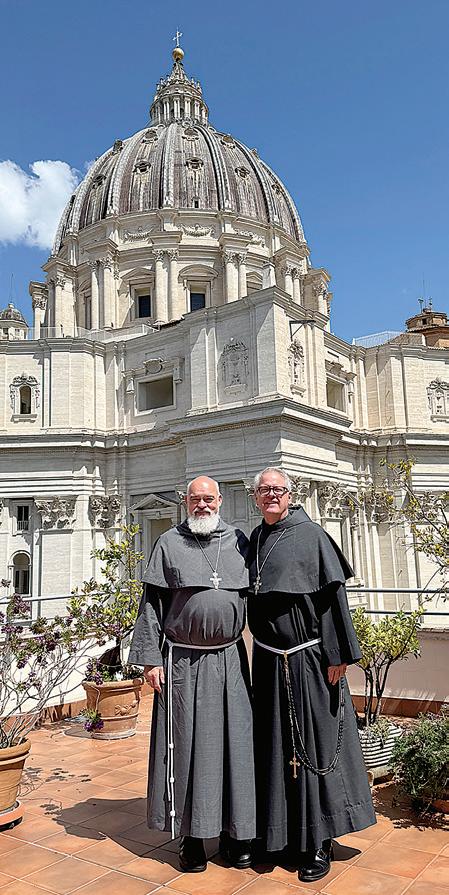
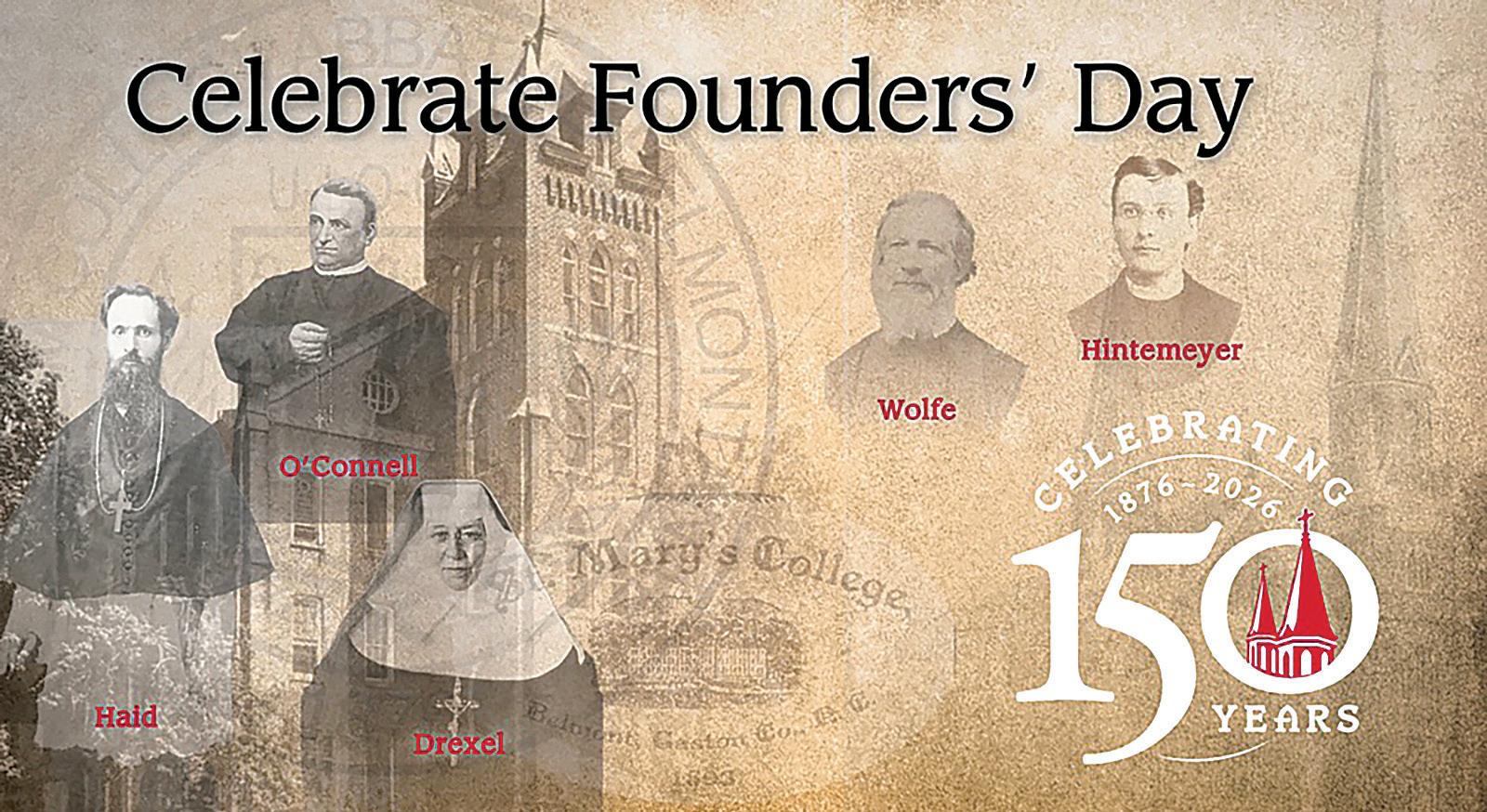
ILLUSTRATION PROVIDED BY BELMONT ABBEY
Belmont Abbey College’s annual Founders Day Celebration took on added meaning this year as the college reflected on the roles played by its trailblazing leaders who shaped the faith of the diocese and the school.
into the Diocese of Charlotte in 1977.
Early leaders such as founder Benedictine Father Herman and patrons including St. Katharine Drexel devoted themselves both to building up the Church and founding a college.
“Together with the Sisters of Mercy,” Abbot Placid noted, “the monks began Catholic education in North Carolina and established monasteries and schools also in Florida, Georgia and Virginia.”
Belmont Abbey College continues to earn national recognition for academic excellence. It ranked 12th among regional colleges in the 2026 “U.S. News & World Report” rankings, placing it in the top 10%. It was also ranked second for undergraduate teaching among regional colleges for the second year in a row.
The college plays a significant role in the Diocese of Charlotte by providing academic formation for seminarians at nearby St. Joseph College Seminary and for candidates studying to become permanent deacons for the dioceses of Charlotte and Raleigh.
The campus regularly hosts diocesan
events, including the Bishop’s Youth Pilgrimage, as well as vocational discernment retreats such as Duc in Altum and Quo Vadis Days. Over the years, many of its alumni have served the Church as bishops, priests, deacons and consecrated religious.
Building on a strong Honors College, a vibrant NCAA Division II athletic program and new initiatives such as the American Semester in Washington, D.C. – which offers students internships, study and firsthand experience in the nation’s capital – the college continues to expand opportunities for student formation.
As Talley said, “As we celebrate this milestone, we remain committed to our founding mission and to the graduates who carry that mission into the world each day.”
— Catholic News Herald and Belmont Abbey College
More online

At www.bac.edu/150 : Learn more about the 150th anniversary events and activities
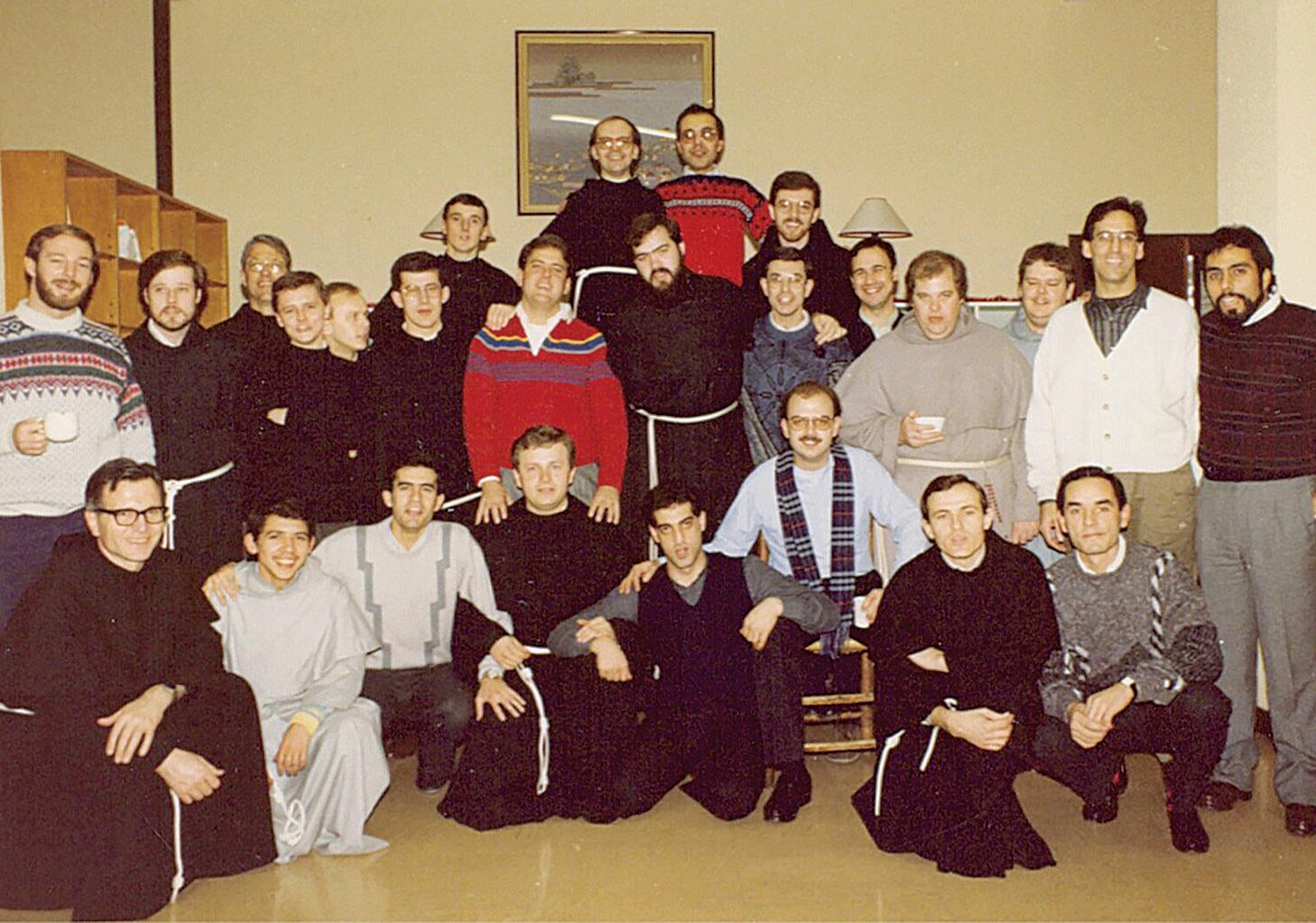
ROME — Bishop Michael Martin was in Rome in mid-April, where he reunited with his fellow Franciscan and classmate Dominique Mathieu, now the Cardinal Archbishop of Tehran-Isfahan, Iran. The cardinal was forced to evacuate to Rome because of the war in Iran. He shared descriptions of rising tension in his country as threats of war loomed, followed by the sound of planes overhead and then explosions. In the early 1980s, the two studied together at the Seraphicum, the international study center for the Conventual Franciscans in Rome. The two confreres struck a similar pose to a photo from their school days (Bishop Martin, center, in the red sweater, and the cardinal to his left).
PHOTOS PROVIDED
KIMBERLY BENDER AND TRISH STUKBAUER catholicnews@rcdoc.org
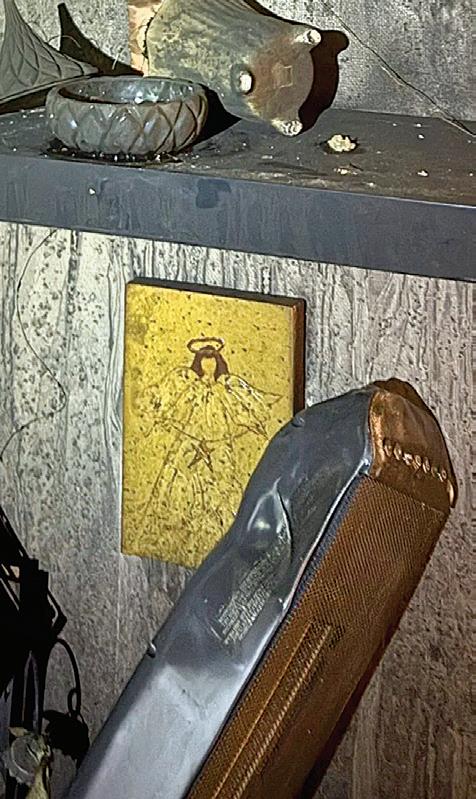
BELMONT — One picture survived a fire that destroyed an office and displaced 20 residents with intellectual and developmental disabilities at Holy Angels’ Belmont campus: a painting of a guardian angel.
Throughout the April 17 fire, guardian angels showed up in the form of rescue and medical workers and staff.
The nonprofit, sponsored and founded by the Sisters of Mercy, calls these times when help unexpectedly arrives “mercy moments.”
The first mercy moment came when an employee at Holy Angels, which provides care for 83 residents ranging in age from 3 years to 84, took a different path to her destination and noticed a faint smell of smoke in the Morrow Center. She immediately sounded the alarm, and staff quickly, calmly and safely began moving medically sensitive residents to another building that had the electricity necessary to run their medical devices and that was out of harm’s way.
However, there was smoke damage throughout the facility, which in addition to residents also houses many of Holy Angels’ core programs – from school classrooms to main medical facilities, medical and food storage, and commercial kitchens. Twenty residents were displaced and more than 50 staff are now without a workstation.
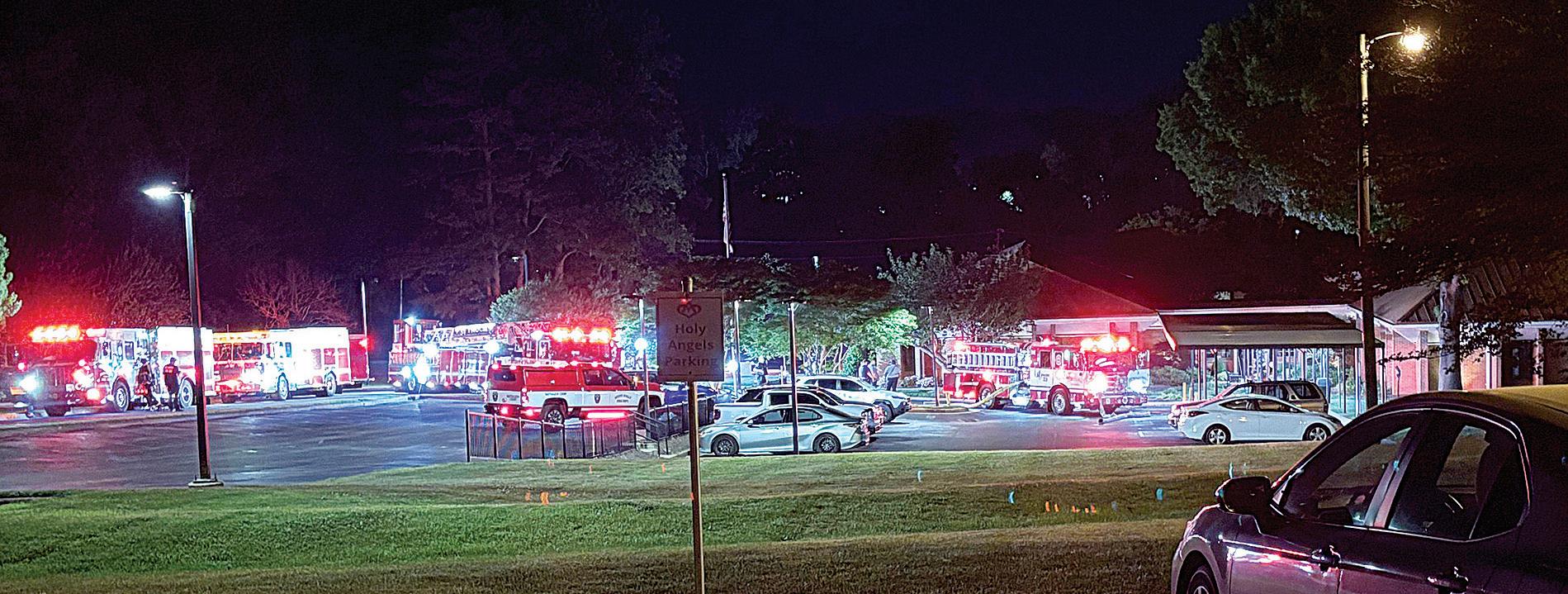
The fire was attributed to a blown transformer on Wilkinson Boulevard, according to preliminary reports. A surge that happened when power was restored damaged some medical equipment and started a small blaze. Once the alarm was sounded, seven fire trucks from Belmont, Mount Holly, New Hope, Cramerton, West Mecklenburg and Gaston County arrived and quickly brought the blaze under control. The power surge also damaged equipment across the campus.
The displaced residents are staying in other homes around campus as well as at a Sisters of Mercy house.
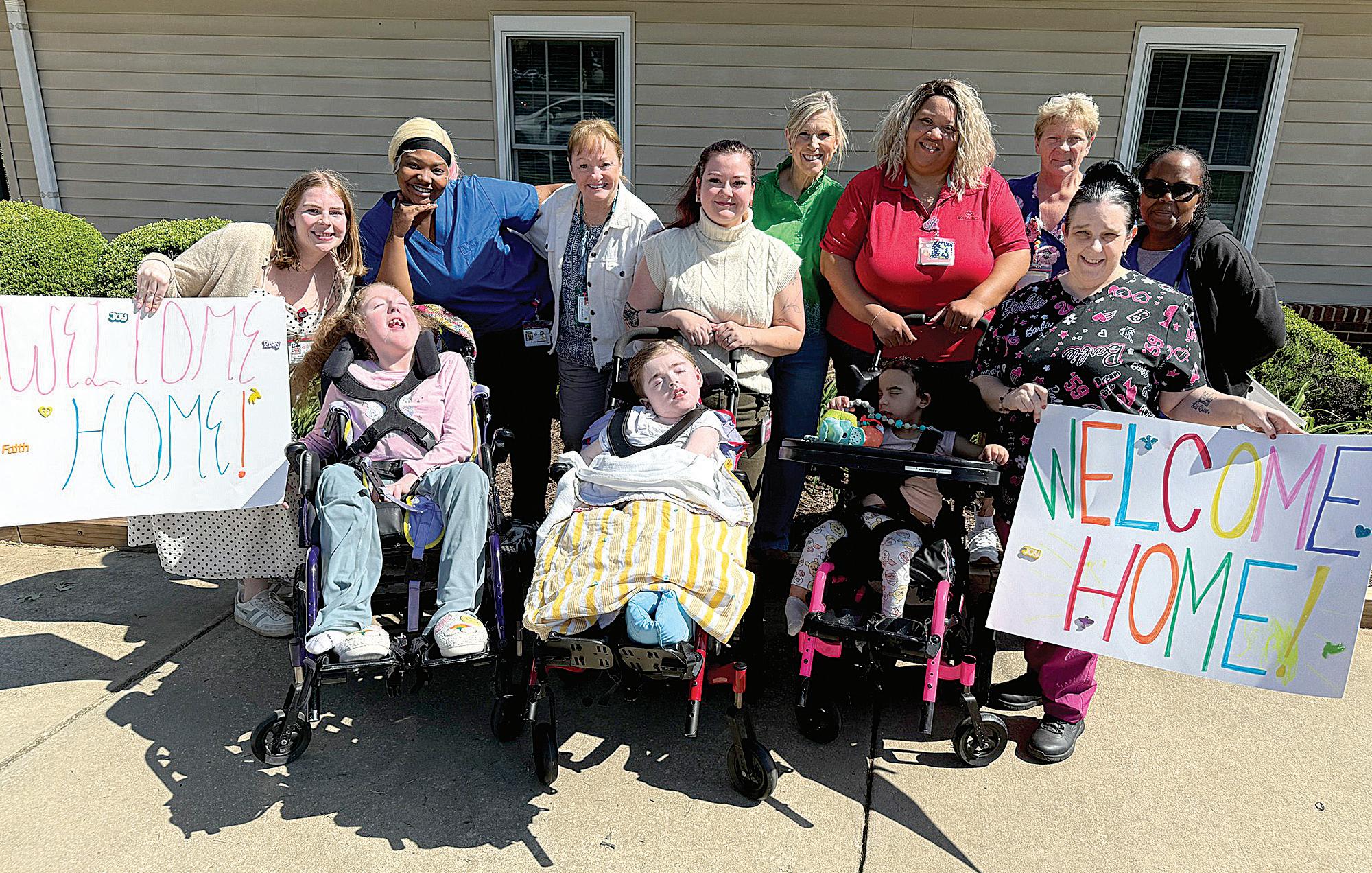
Immediately following the fire, medical partners at Atrium and CaroMont provided another mercy moment by allowing seven of the most medically sensitive residents to stay in their hospitals, giving them comfort and critical access to the equipment they needed. Three have returned to Holy Angels and the other four were expected to return this week.
Back at the Morrow Center, the literal and figurative heart of the campus, the fire was contained to one interior office. Firefighters said the blaze was held back by a door that stopped the flames from spreading.
“We are doing all we can to make the most of our space and ensure our residents continue to receive the loving, high-quality care they deserve, delivered by nurses and direct support staff who know them best,” said Chief Communications Officer Samantha Story.
The organization is in the midst of the first phase of a $21 million Children’s Campus Expansion, which will add three residences for its most medically fragile residents currently housed at the Morrow Center and will ultimately see that building used as a skilled nursing facility for aging residents.
As work to assess and repair the damage begins, the organization
said it is thankful for moments supporters have taken to help.
“Words cannot capture the gratitude we have for the thoughtfulness and quick action of our staff, for the adaptability and care from our families, and the love and support from our
community, who have shown up for us in big and small ways,” Story said. “It is beautiful to see how this community wraps its arms around our residents –considering them, loving them, and keeping them safe not only today, but every day.”
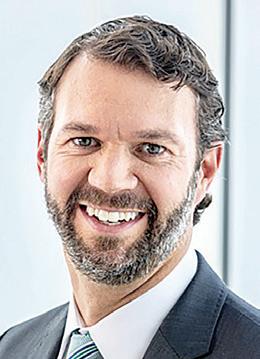
CHARLOTTE — The Diocese of Charlotte’s Finance Council will expand under new bylaws approved by Bishop Michael T. Martin, OFM Conv., who also appointed Patrick Hoefling as the council’s new chair.
The changes were formally adopted at the finance council’s April 22 meeting.
The updated bylaws establish a more layered governance approach that includes eight standing subcommittees to support the Finance Council – aligning the diocese with governance models already in use at many of the nation’s large dioceses, notes Matthew Ferrante, the diocese’s chief financial officer.
Among the changes, eight standing
subcommittees were created: Audit; Financial Planning and Analysis/Benefits and Insurance; IT Systems and Data Management; Real Estate and Facilities; Membership and Governance; Development; Legal; and Investment.
Under Church law, every diocese must have a finance council made up of members of the Christian faithful who are experienced in financial matters. The finance council’s significant expansion builds on its strong foundation by
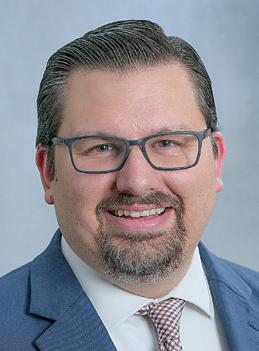
bringing in additional expertise, Ferrante said.
“This new structure allows for much greater engagement in our processes with industry leaders who are among the lay faithful and who serve on our committees,” he said.
“By creating these specialized subcommittees, we are able to bring in professionals with deep expertise in areas like real estate, investments, legal affairs and technology – people who are committed to the mission of the Church and who want to contribute their talents to
its stewardship,” Ferrante said.
Each committee will be led by a finance council member and may include additional clergy and lay experts. The committees will be introduced in phases over the next year, with all expected to be in place by the end of 2027.
Hoefling is chief financial officer of Charlotte-based global investment firm Barings. He has more than 20 years of experience in the financial sector and holds a B.S. in Accountancy from Villanova University and a Master of Accountancy from North Carolina State University. He is a member of St. Gabriel Parish in Charlotte.
CHRISTINA LEE KNAUSS clknauss@rcdoc.org
CHARLOTTE — Five days in May provide the chance to highlight the work of an agency staffed by people who serve as the hands and feet of Christ across Western North Carolina.
May 4-8 is Catholic Charities Week, and it focuses on the ways the workers and volunteers of Catholic Charities Diocese of Charlotte help people in need while serving as a beacon of God’s love in difficult times.
For more than 75 years, the agency has been helping thousands of people across western North Carolina deal with life’s struggles and build better futures. In 2025, Catholic Charities served 25,032 people across the 46 counties that make up the Diocese of Charlotte.
This year, rising costs of food, rent and gasoline have forced people who were already struggling to seek aid from the agency’s food pantries in Asheville, Charlotte and Winston-Salem. In 2025, the pantries distributed 413,666 pounds of food to 14,729 people in need, according to its annual report.
The agency’s work has reached people of all ages facing a wide variety of challenges. About 1,000 older adults benefited from services provided by its Elder Ministry, 650 refugees continue to be supported, 139 veterans in need secured stable housing, 184 people received assistance for dignified burials, and 224 people received more than 2,400 hours of mental health counseling, the agency reported.
Catholic Charities has helped people recover from natural and spiritual storms.
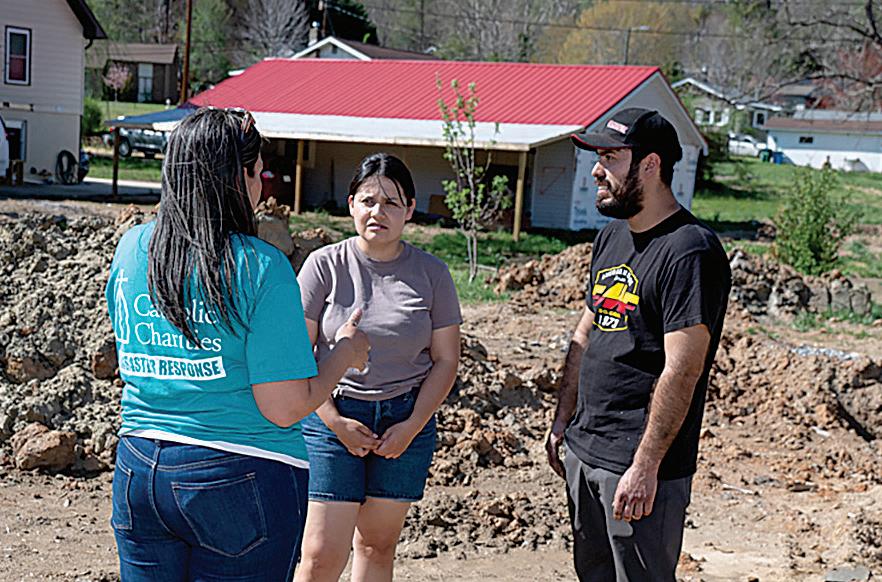
Since October 2024, the agency has been a major force in the ongoing recovery from Hurricane Helene. Disaster relief case workers in the Asheville region have helped clients with everything from housing assistance, food and basic supplies to mental health care. The agency is collaborating with longterm recovery groups in some of the hardest hit – and most difficult to access – areas.
Since 2025, the agency repaired, rebuilt or replaced 170 homes
Endowments benefit Catholic Charities and its vital work throughout the Diocese of Charlotte
The diocese has 25 endowments in the Foundation of the Diocese of Charlotte that people can support to benefit Catholic Charities. They have a market value of more than $7.8 million.
destroyed by Helene. This past winter, the agency helped more than 250 families still living in campers to insulate them for colder weather and supplied 619 households in seven mountain counties with propane for heating.
In March, the agency gave 50 Asheville artists $5,000 grants in an ongoing effort to revitalize the River Arts District, a key piece of the city’s economic and cultural life.
“The funds were for whatever the person needed to get back to where they can create their art,” said program coordinator Grace Kunik.
“Some people are using the funds for studio rent, others for supplies or to pay their mortgage so they can get back into a safe space to live and produce their work.”
Catholic Charities offers help at all stages of life. Its Charlottebased pregnancy support office
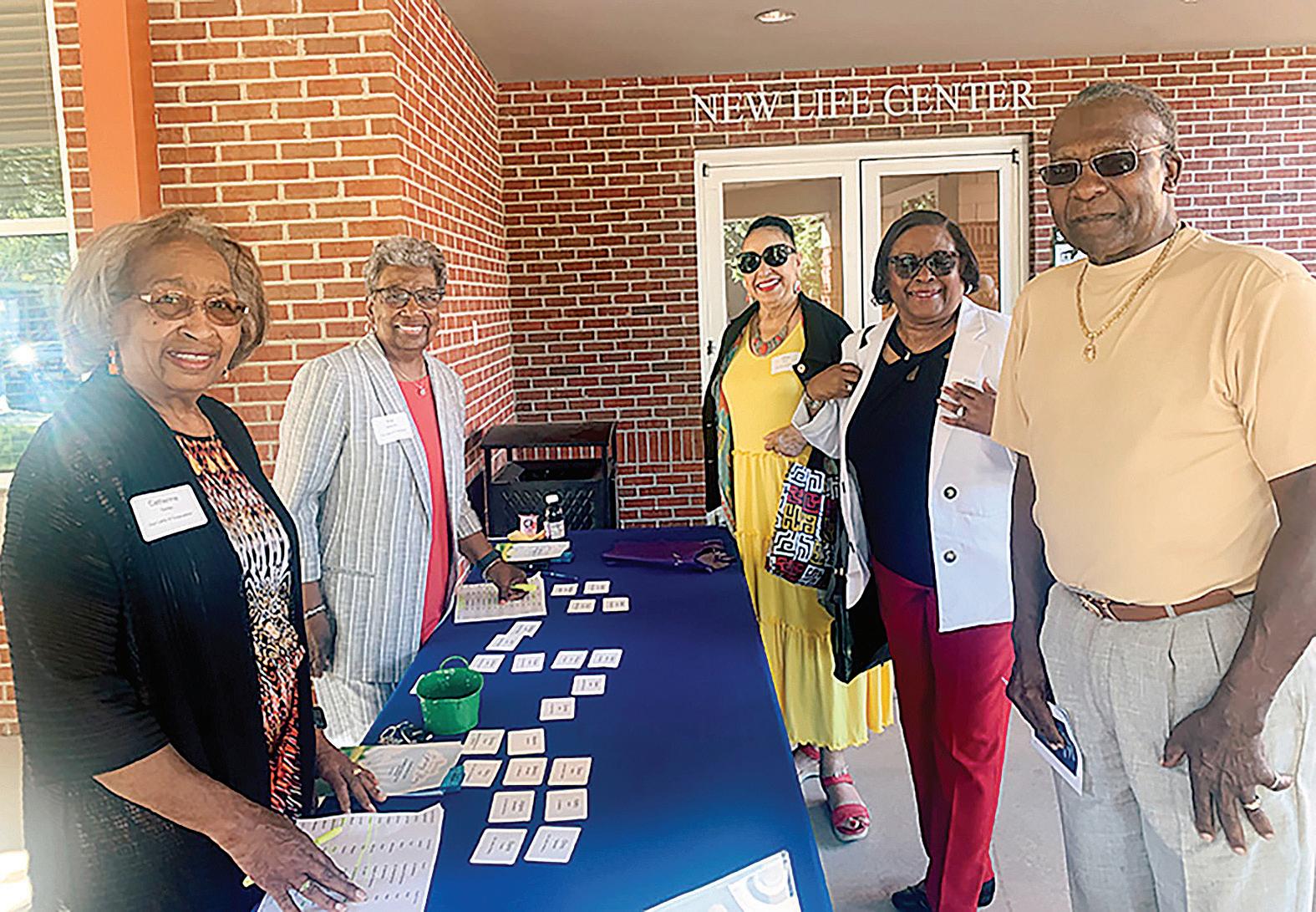
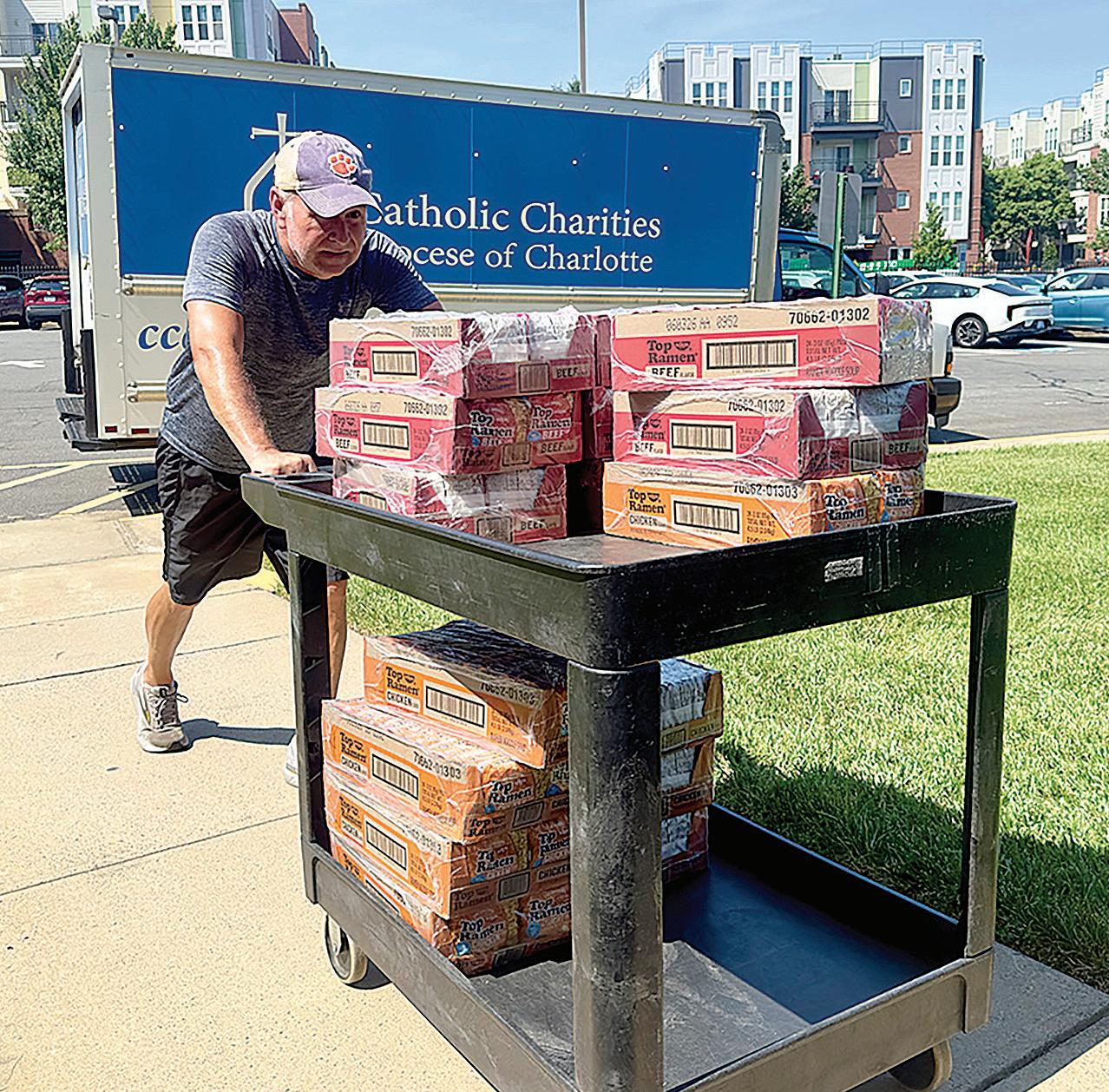
can’t afford the costs,” said Annia Colas, who works with the program in Winston-Salem. “It’s a gratifying thing to be able to help them get services.”
Colas talked about a woman who needed help to lay her sister to rest with dignity.
For years, she cared for her sister full-time as she battled a brain tumor – putting her own life on hold to be by her side. When her sister passed away, Carolina realized she would not be able to afford even a simple funeral.
Your donations enable Catholic Charities to serve people in need across the diocese. Donations can be made online at www.ccdoc.org or by mail to Catholic Charities, 1123 South Church St., Charlotte, NC 28203-4003.
Catholic Charities offers services to people across western North Carolina. Email info@ccdoc. org or reach out to your local Catholic Charities office:
Asheville: 828-255-0146
Charlotte: 704-370-3262
Greensboro: 336-288-1984
Lenoir: 828-434-5710
Murphy: 828-835-3535
North Wilkesboro: 828-434-5710
Winston-Salem: 336-727-0705
People who need assistance can also call 2-1-1 to find up-todate information on community services that may be available. 2-1-1 helps connect people to information about food pantries, medical resources and possible changes to government benefits.
and Jefferson to Albemarle.
Even before the office has opened, clients have already been served. A mother of four who was facing eviction was able to obtain rent support and has done financial planning and budgeting work with a case worker.
helps moms and dads deal with the challenges of parenthood.
“We want to see the families be whole and we want to see healthy babies be delivered,” said Sharon W. Davis, the agency’s director of pregnancy support and adoption services. “We also continue the journey once the child has been born – the work does not end at the birth of the baby. We’re there to accompany them as long as they need our respectful and compassionate support.”
n Catholic Charities Endowment Fund: provides for the general needs of this diocesan ministry across the western half of North Carolina
n Catholic Charities Asheville Endowment Fund: provides for the general needs of the ministry in Asheville
n Catholic Charities Burial Assistance Endowment Fund: provides for the burial assistance program in Mecklenburg County
The agency’s Burial Services program, offered across the diocese, helps families who have lost a loved one. Catholic Charities partners with a network of local funeral homes to provide burial or cremation at reduced costs and offers financial assistance to families who cannot afford the full expense.
“Funeral costs keep going up, and many families come to us because they don’t have life insurance or are living paycheck to paycheck and
n Catholic Charities Charlotte Endowment Fund: provides for the general needs of the ministry in Charlotte
n Catholic Charities Refugee Endowment Fund: provides for the general needs of this ministry across the western half of North Carolina
n Catholic Charities Winston-Salem Endowment Fund: provides for the general needs of this ministry in Winston-Salem
“The life insurance wasn’t enough to cover the costs,” Colas shared. “We were able to help her make payments for a cremation and a service.” Now, after years of caregiving, Carolina is back at work – entering a new chapter of her life.
Recognizing the need to meet the demands of a growing population, a new office in Salisbury is slated to open in June. Deacon Jeff Font, the agency’s new regional director of external engagement, is connecting with parishes and community organizations to learn about local needs, which stretches from Boone
n Bishop William G. Curlin Endowment Fund for the Poor: benefits the poor in the Diocese of Charlotte
n Marion Michael and Mary Ann DeMelfy Endowment Fund: provides support for the elderly in parishes in Hickory and those west of Hickory through Catholic Charities
n FFHL Catholic Charities Diocese of Charlotte Endowment Fund: provides financial support for Catholic Charities in the Diocese of Charlotte
“We’re trying to build relationships,” Deacon Font said. “Every day I am getting the word out to our local parishes about the programs and services we offer to those in need. I am also connecting with other local and regional organizations to ensure that if someone needs a service that is outside of our scope, we can direct them to another organization that can help them directly. And I want other organizations to be able to do the same thing with us. We all offer unique programs so that as a community we can collectively address the needs of those less fortunate. More information about the new Salisbury office will be available in the coming weeks.”
n Maureen Reinehr Gigler Endowment Fund: provides for diocesan multicultural ministry needs in the western half of North Carolina
n Elizabeth Grace Endowment Fund: provides for the programmatic needs of Catholic Charities in the Diocese of Charlotte
n Granzow Family Endowment Fund: provides for Catholic Charities to serve the poor
CHRISTINA LEE KNAUSS clknauss@rcdoc.org
CHARLOTTE — Cinco días en mayo brindan la oportunidad de destacar el trabajo de una agencia integrada por personas que sirven como las manos y los pies de Cristo en todo el oeste de Carolina del Norte.
Del 4 al 8 de mayo se celebra la Semana de Caridades Católicas, que pone de relieve las formas en que los trabajadores y voluntarios de Caridades Católicas de la Diócesis de Charlotte ayudan a las personas necesitadas, al tiempo que sirven como un faro del amor de Dios en tiempos difíciles.
Durante más de 75 años, la agencia ha ayudado a miles de personas en el oeste de Carolina del Norte a enfrentar las dificultades de la vida y a construir un futuro mejor. En 2025, Caridades Católicas atendió a 25,032 personas en los 46 condados que conforman la Diócesis de Charlotte.
Este año, el aumento en los costos de alimentos, alquiler y gasolina ha obligado a personas que ya enfrentaban dificultades a buscar ayuda en las despensas de alimentos de la agencia en Asheville, Charlotte y WinstonSalem. En 2025, las despensas distribuyeron 413,666 libras de alimentos a 14,729 personas necesitadas, según su informe anual.
IMPACTOS AMPLIOS
El trabajo de la agencia ha llegado a personas de todas las edades que enfrentan una amplia variedad de desafíos. Aproximadamente 1,000 adultos mayores se beneficiaron de los servicios proporcionados por su Ministerio para Personas Mayores, 139 veteranos necesitados consiguieron vivienda estable, 184 personas recibieron asistencia para entierros dignos y 224 personas recibieron más de 2,400 horas de asesoramiento en salud mental, informó la agencia.
Caridades Católicas ha ayudado a las personas a recuperarse de tormentas naturales y espirituales. Desde octubre de 2024, la agencia ha sido una fuerza importante en la recuperación continua del huracán Helene. Los trabajadores
n Aurelia I. Guffey Catholic Charities Endowment Fund: provides for the programmatic needs of Catholic Charities in the Diocese of Charlotte
n Peter J. and Catherine P. Hickey Endowment Fund: provides for the adoption programs of Catholic Charities
n Lawrence and Patricia Hollett Family Endowment Fund: provides for the general needs of Catholic Charities in Winston-Salem
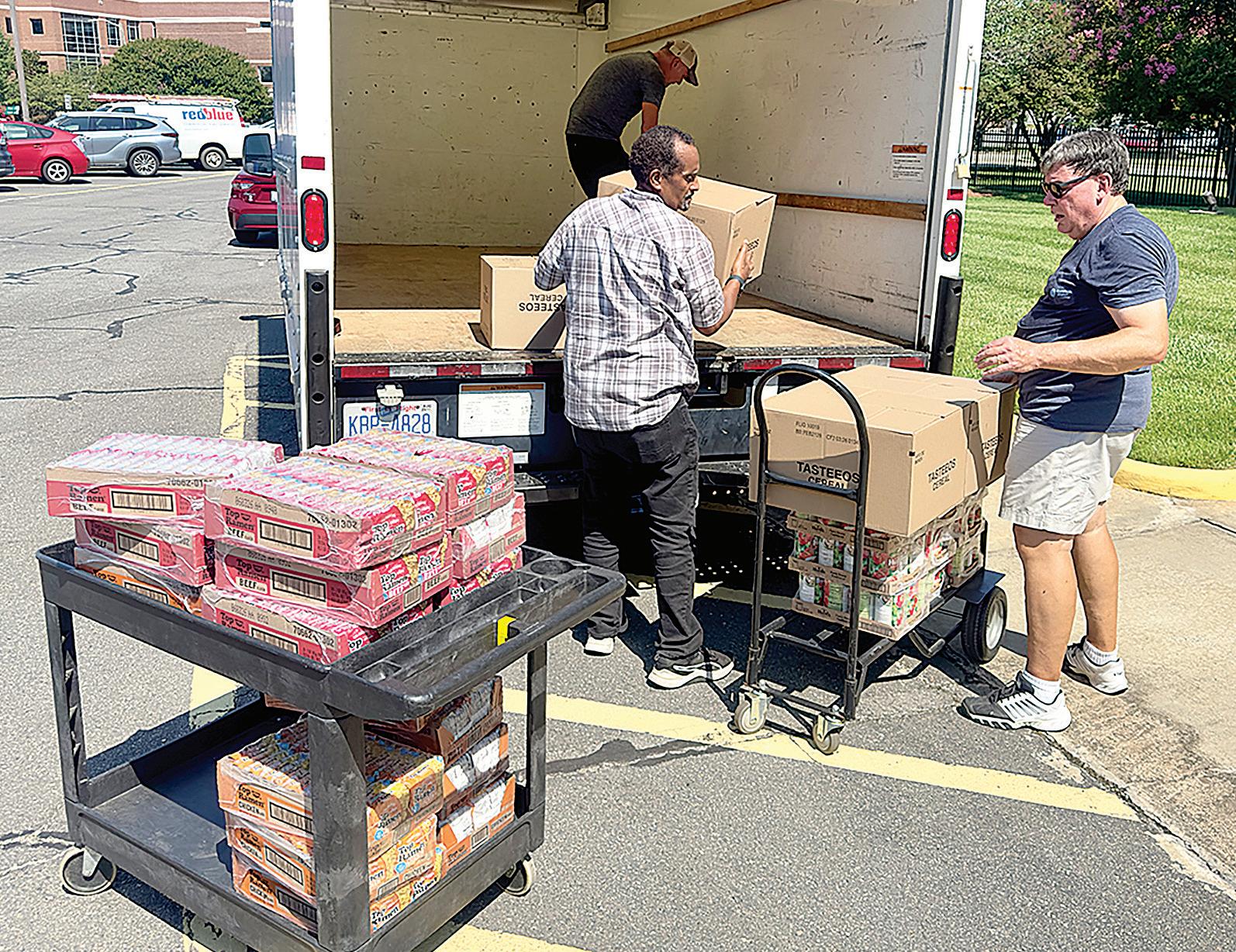
TROY C. HULL | CATHOLIC NEWS HERALD
Caridades Católicas de la Diócesis de Charlotte patrocina despensas de alimentos en toda la diócesis (arriba) y colabora con organizaciones como el Sistema Escolar del Condado de Clay y para organizar “Cookies with Santa”, un evento que atendió a 68 familias.
de casos de ayuda en desastres en la región de Asheville han ayudado a los clientes con todo, desde asistencia para vivienda, alimentos y suministros básicos hasta atención de salud mental. La agencia está colaborando con grupos de recuperación a largo plazo en algunas de las áreas más afectadas – y de más difícil acceso –, incluidas Chimney Rock y Bat Cave.
En 2025, la agencia reparó, reconstruyó o reemplazó 110 viviendas destruidas por Helene.
Este pasado invierno, la agencia ayudó a más de 250 familias que aún vivían en casas rodantes a aislarlas y prepararlas para el clima frío, y suministró propano para calefacción a 619 hogares en siete condados montañosos.
continuamos el acompañamiento una vez que el niño ha nacido; el trabajo no termina con el nacimiento del bebé. Estamos allí para acompañarlos todo el tiempo que necesiten nuestro apoyo respetuoso y compasivo”.
El programa de Servicios Funerarios de la agencia, ofrecido en las oficinas del condado de Mecklenburg, Winston-Salem y Asheville, ayuda a las familias que no pueden costear los gastos finales de un ser querido. Trabajan con una red de funerarias locales para proporcionar entierros o cremaciones a costos reducidos. “Los costos funerarios siguen aumentando, y muchas familias acuden a nosotros porque no tienen seguro de vida o viven al día y no pueden afrontar los gastos”, dijo Annia Colas, quien trabaja con el programa en Winston-Salem. “Es algo gratificante poder ayudarles a obtener estos servicios”. Colas habló sobre una mujer que perdió a su hermana por enfermedad después de cuidarla en casa durante años.
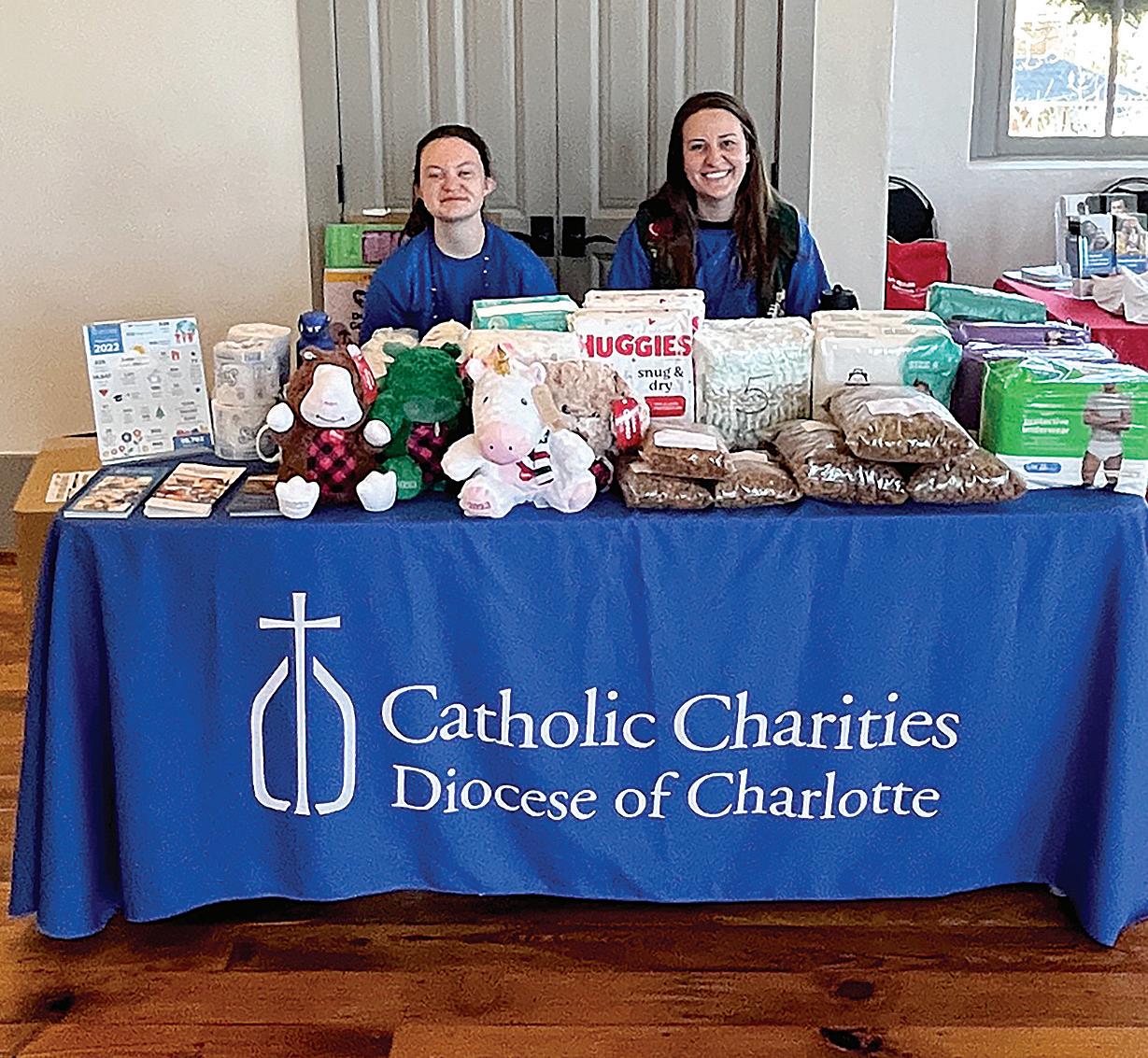
volver a un punto en el que pudiera crear su arte”, dijo la coordinadora del programa, Grace Kunik.
“Algunas personas están usando los fondos para el alquiler de estudios, otras para suministros o para pagar su hipoteca y poder regresar a un espacio seguro donde vivir y producir su trabajo”.
AYUDA PARA MUCHAS NECESIDADES
En marzo, la agencia otorgó subvenciones de $5,000 a 50 artistas de Asheville como parte de un esfuerzo continuo para revitalizar el River Arts District, una pieza clave de la vida económica y cultural de la ciudad.
“Los fondos eran para lo que la persona necesitara para
n Marcaccio Family St. Anthony Bread Endowment Fund: provides for St. Pius X Catholic Church and Catholic Charities Piedmont and Asheville Offices
n Robert H. Moeller Memorial Endowment Fund: provides housingrelated financial assistance for the elderly across the western half of North Carolina
n John S. Monahan Endowment Fund: provides for the general needs of
Caridades Católicas ofrece ayuda en todas las etapas de la vida. Su oficina de apoyo al embarazo con sede en Charlotte ayuda a madres y padres a enfrentar los desafíos de la crianza.
“Queremos ver a las familias completas y queremos ver que nazcan bebés sanos”, dijo Sharon W. Davis, directora de apoyo al embarazo y servicios de adopción de la agencia. “También
Catholic Charities in Charlotte
n John and Marlene Olenick Endowment Fund: provides for the pregnancy support services of Catholic Charities Piedmont/Triad
n George and Jane Pfaff Endowment Fund: provides for program needs of Catholic Charities within the Diocese of Charlotte
n San Lorenzo Ruiz Philippine Heritage Endowment Fund: provides for the unrestricted general needs
“El seguro de vida que tenían no era suficiente, y pudimos ayudarla a hacer pagos para una cremación y un servicio”, dijo Colas. “La hermana sobreviviente ahora ha vuelto a trabajar porque no pudo hacerlo durante todos esos años en que cuidó de su hermana”.
NUEVA OFICINA
La labor de alcance está expandiéndose mediante una nueva oficina en Salisbury, cuya apertura está prevista para junio en un antiguo consultorio médico remodelado. El diácono Jeff Font, nuevo director regional de participación externa de la agencia, está estableciendo vínculos con parroquias y organizaciones comunitarias en una amplia zona que se extiende desde Boone y Jefferson en el noroeste hasta Albemarle en el sureste. Incluso antes de que la oficina haya abierto, ya se ha atendido
and for the refugee/immigrant assistance of Catholic Charities in Charlotte
n Sarmiento-Lang Family Endowment Fund: benefits Catholic Charities pregnancy support services
n Lee and Allan Thurbee Memorial Endowment Fund: provides financial support for Catholic Charities in the Diocese of Charlotte
n Kathleen A. Troy Memorial Endowment Fund: provides for burial
Sus donaciones permiten a Catholic Charities servir a miles de personas necesitadas en toda la Diócesis de Charlotte. Las donaciones pueden hacerse online en www.ccdoc.org o por correo a Catholic Charities, 1123 South Church Street, Charlotte, NC 28203-4003.
¿NECESITA AYUDA?
Caridades Católicas ofrece servicios a personas en todo el oeste de Carolina del Norte. Envíe un correo electrónico a info@ccdoc.org o comuníquese con su oficina local de Caridades Católicas:
Asheville: 828-255-0146
Charlotte: 704-370-3262
Greensboro: 336-288-1984
Lenoir: 828-434-5710
Murphy: 828-835-3535
North Wilkesboro: 828-434-5710
Winston-Salem: 336-727-0705
Las personas que necesitan asistencia también pueden llamar al 2-1-1 para obtener información actualizada sobre los servicios comunitarios disponibles. El 2-1-1 ayuda a conectar a las personas con información sobre despensas de alimentos locales, recursos médicos y posibles cambios en los beneficios del gobierno.
a clientes. Una madre de cuatro hijos que enfrentaba un desalojo pudo obtener apoyo para el alquiler y ha trabajado en planificación financiera y presupuestos con un gestor de casos.
“Estamos tratando de construir relaciones”, dijo el diácono Font. “Quiero dar a conocer lo que ofrecemos y también poder trabajar de manera colaborativa con otras organizaciones para asegurar que, si alguien llama a mi puerta necesitando ayuda y es algo que no puedo proporcionar, pueda orientarlo hacia quién sí puede. Y quiero que otras organizaciones puedan hacer lo mismo, acudir a nosotros. Como organizaciones, necesitamos estar ahí unos para otros como comunidad cristiana”.
assistance and general needs of Catholic Charities in the Diocese of Charlotte
n Mary Jane Winfrey Catholic Charities Endowment Fund: provides for the general needs of Catholic Charities
For information on establishing or contributing to an endowment, contact Gina Rhodes at 704-3703364 or gmrhodes@rcdoc.
BRIAN SEGOVIA AND AMELIA KUDELA catholicnews@rcdoc.org
CHARLOTTE — Throughout the Diocese of Charlotte, an unmistakable momentum is building among young adults.
Once considered a difficult group to engage – those in their 20s and 30s navigating careers, relationships and identity – young adults are rapidly becoming one of the most active and vibrant sectors of diocesan and parish life.
For some, an upbringing in the Catholic faith catches fire in college, where demand for Campus Ministry is growing. More than 800 college students are regularly attending Mass through campus ministries across the diocese – double the attendance of a decade ago. And hundreds more young people attend diocesan fellowship activities and retreats, not to mention many more participating in parish-based young adult ministries.
The growing interest reflects a surge in adults of all ages joining the Church locally and nationally. In the Charlotte diocese, the number of adults entering the Church jumped 43% for two straight years and this Easter season is expected to meet or surpass last year’s 1,743 new members, the highest in at least a decade.
Nationally, the Catholic prayer app Hallow reported a 38% average annual increase in adults entering the Church this year.
Although ages aren’t tracked, dioceses across the country are anecdotally reporting a noticeable increase in young adults.
“In the last two years, a switch was flipped,” Arizona State University’s Father Bill Clements told Catholic News Agency. The college received more than 100 students, a record, into the faith this year. “I think people are tired of crazy. They’re hungry for some direction, truth, goodness and beauty.”
Organizations are increasing efforts to reach young adults, especially those who have grown up in the Church and may be drifting.
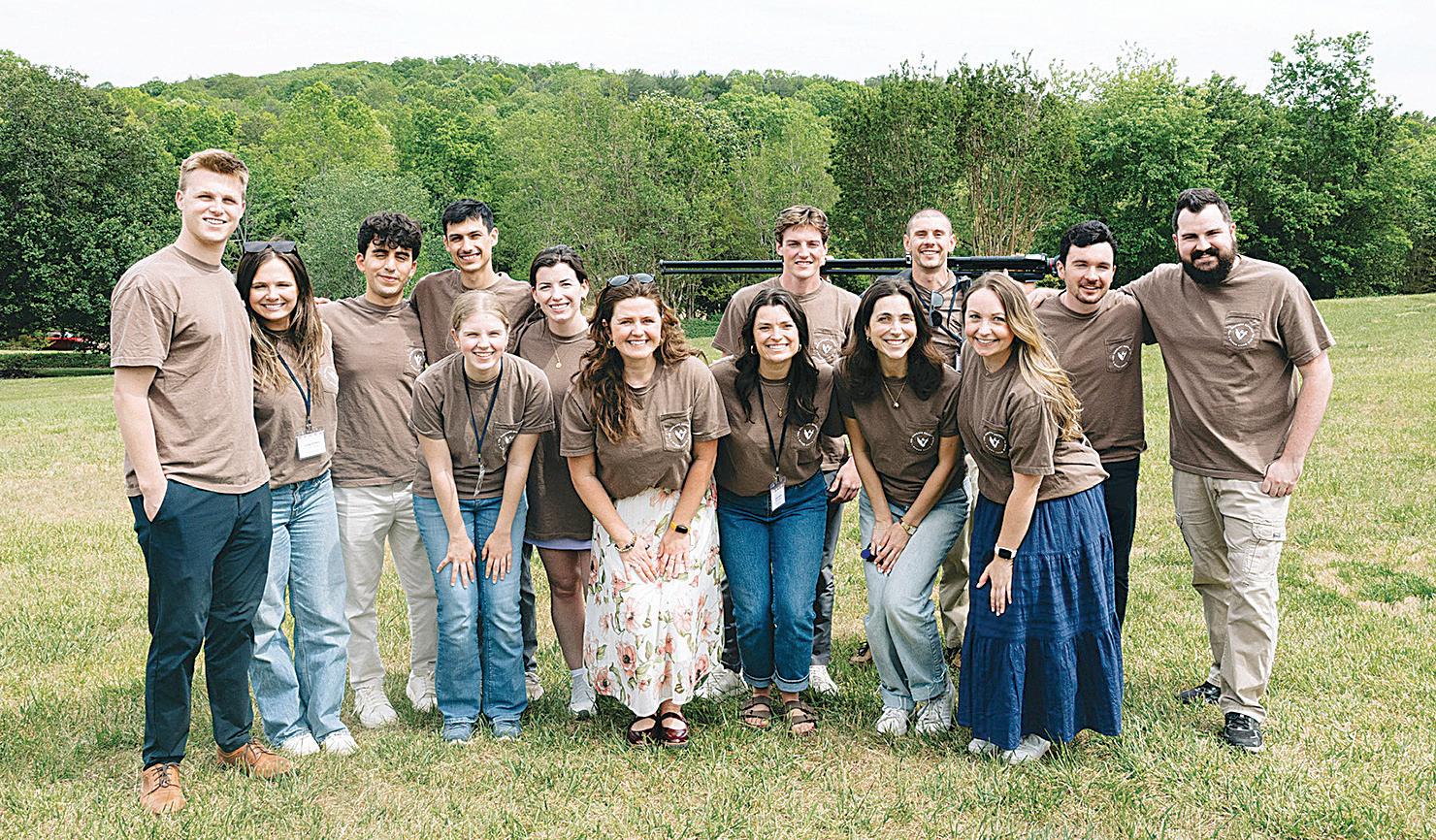
Among them is Young Catholic Professionals, a national nonprofit founded in 2010 that connects young adults through networking events, mentorship and faith formation. The group started its Charlotte chapter in October 2023 and has seen solid growth since.
“Catholic Sports,” a new sports league catering to young people, launched in January and has hosted more than 80 players in their first, six-week session of beach volleyball.
And “SEARCH,” an evangelization ministry of Franciscan friars in Charlotte, hosts “Friar Fridays” and “Brews and Good
News” events at bars and other out-and-about locations, offering fellowship and information about the Catholic faith in casual social settings. The three friars behind the ministry identified Charlotte as the best place to start their unconventional ministry partly because of the large number of young adults living in – and moving to – the city. The median age of those living in Charlotte’s South End and Uptown is 29 to 32.
With more than 30 years of working with young people in Catholic education, Bishop Michael Martin is beefing up support for Youth Ministry and Campus Ministry, and has called on parishes across the diocese
to focus more attention on reaching young adults. He spent more than three decades in high schools and colleges, including time as director of the Duke (University) Catholic Center in Durham.
From the day he was announced as Bishop of Charlotte, Bishop Martin has emphasized the impact young people can and should have on the local Church. He has noted that when you bring their energy and enthusiasm together with the Good News of the Gospel, wonderful things happen in the Church.
At the parish level, more young adult groups have steadily emerged over the past decade – adding to longtime mainstay ministries at St. Gabriel, St. Matthew and other parishes. The groups are appealing because they offer opportunities for fellowship, faith formation and service.
Among newer groups are “CASA” at St. Ann and “Aquinas’ Finest” at St. Thomas Aquinas in Charlote, as well as ministries at churches from Hendersonville to the Triad.
These initiatives, often spearheaded by lay leaders, have expanded beyond Bible studies to include retreats and outreach initiatives that meet young adults where they are and invite them into deeper participation in the life of the Church.
At St. Ann Parish in Charlotte, one annual event is indicative of this growth.
Five years ago, parishioner Katie Cosby recognized an unmet need for deeper connection in the young adult community.
“I was seeing people live both in the world and then in the faith,” Cosby said. “I just really wanted to bring those together and inspire people to become the great saints that they’re meant to be.”
That motivated her to create the Vigilant Retreat. Founded in 2022 with 90 attendees, the weekend retreat has nearly doubled in size – to 150 this April – and has had a waiting list for the past two years.
Speakers typically include a mix of young adults, clergy and religious. This year Catholic influencer Ana Munley spoke at the retreat.
“Every year, I am amazed by how much of an impact it has on the individuals who attend,” said Katie Sholtis, who has attended every retreat since the beginning. “I’ve seen the fruits of this retreat extend past the weekend and can’t wait to see its continued impact on the Charlotte community and beyond.”
The Hispanic community is also seeing strong growth in young adult engagement. Since the pandemic, a cluster of parishes launched dedicated young adult ministries for their Spanish-speaking populations.
At St. John Neumann Parish, “Nueva Alianza” (“New Covenant”) formed in January. It is led by parishioners Juan Sánchez and Martin Rubi Leodegario, who were already involved in the parish’s other young adult ministry, but started Nueva Alianza to serve those whose primary language is Spanish.
“Last year when I became a parishioner, I joined the (English-speaking) group but having such a large number of native Spanish speakers, we decided it was best to create our own group,” Sánchez said. “We also wanted a way so that we could be meet more often, and like that, the group was born.”
The ministry has grown from four to 20 members in a matter of months. Nueva Alianza, which meets every Wednesday at 7:30 p.m. focuses on prayer, reading scripture and talking about the faith.
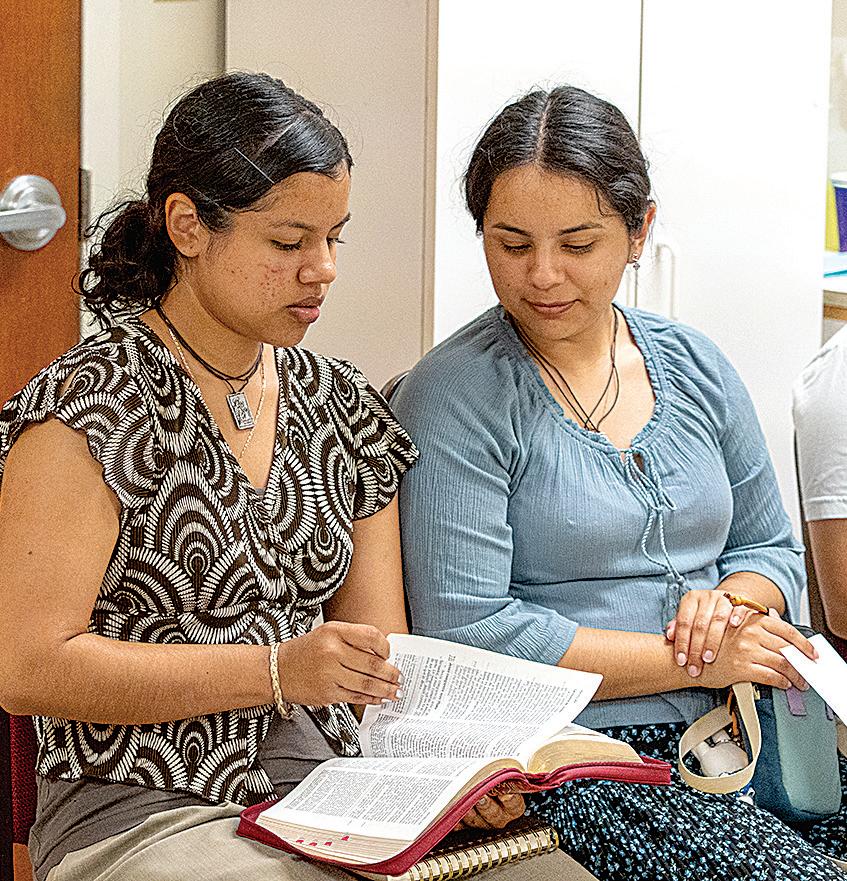
“This has helped me discover more about the Church,” said Yeimy Sánchez, 25, who grew up a Jehovah’s Witness but converted to Catholicism four years ago. “In this group we
YOUTH, SEE PAGE 21
LISA M. GERACI lmgeraci@rcdoc.org
CHARLOTTE — As the 50th anniversary year of the Fall of Saigon drew to a close April 30, Amy and Long Nguyen from Our Lady of Assumption Church recalled their harrowing escape from the Communist regime in North Vietnam.
The couple met at the church in Charlotte in the 1990s. Coincidentally, they both worked as mechanical engineers at IBM and both fled Saigon.
“Every time we have Black April, I thank God to be able to live freely in America,” said Amy Nguyen. “It is a day to remember and a day to thank God for saving us. We lost our country, but we didn’t lose our faith.”
The couple separately witnessed the
terror of war but now carry a lighter load through their shared faith.
They tell their stories, representing the estimated 8,000 registered Vietnamese parishioners sprinkled across the diocese’s 93 parishes but primarily centered at two Vietnamese churches, St. Joseph in Charlotte and Holy Family Mission in Greensboro.
Long Nguyen turned 23 the week of the Fall of Saigon in 1975, a week that would forever change the trajectory of his life.
He was in seminary, preparing to make his vows, but as tensions increased, his religious order instead started plotting an evacuation. The order secretly purchased a boat, bought a plane, hired a pilot and secured a vehicle to get them there.
The plan was to escape by plane, but the pilot took off with the plane and the money.
With the North Vietnamese forces closing in, Long and 52 nuns and priests left on a small boat he didn’t know how to drive before they were rescued at sea … read more online.
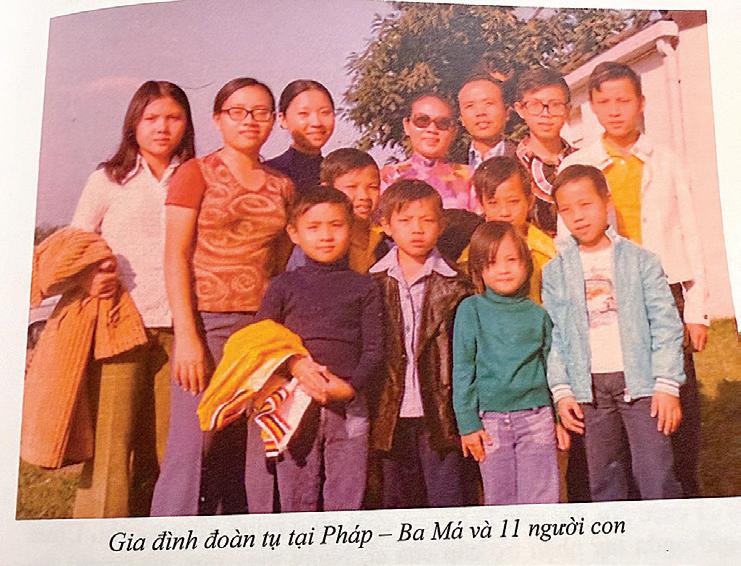
Amy Nguyen was a teenager during the Fall of Saigon. After a failed attempt to escape by boat, her parents obtained fake documentation saying they each had a spouse who resided in France. It took two years for their paperwork to get approved. They arrived in France in 1977, and the entire 13-member family reunited.
“We believe the faith kept us alive, and God carried us the whole time,” she said.
More online
At www.catholicnewsherald : Read the full stories of the couple’s escapes
LISA M. GERACI lmgeraci@rcdoc.org
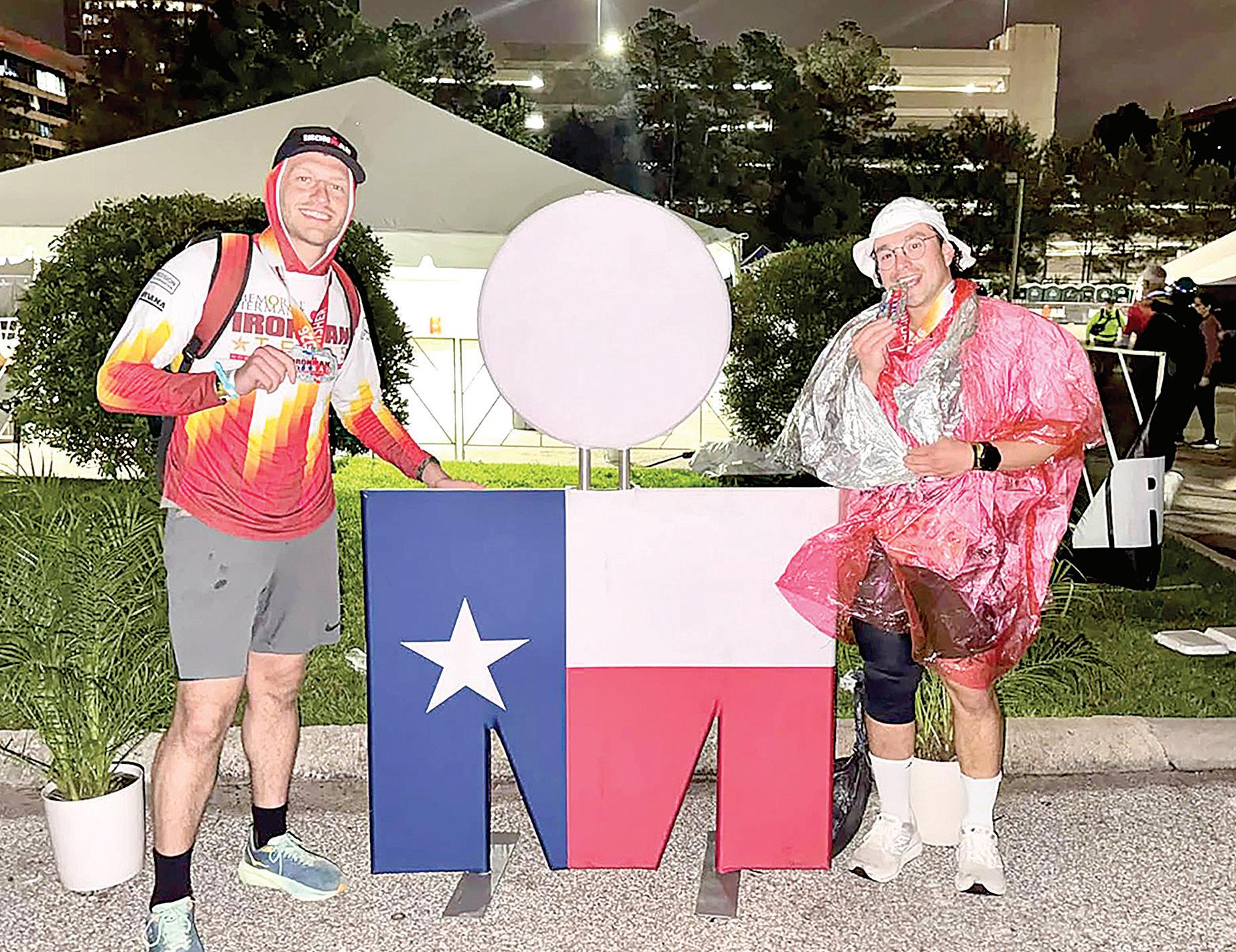
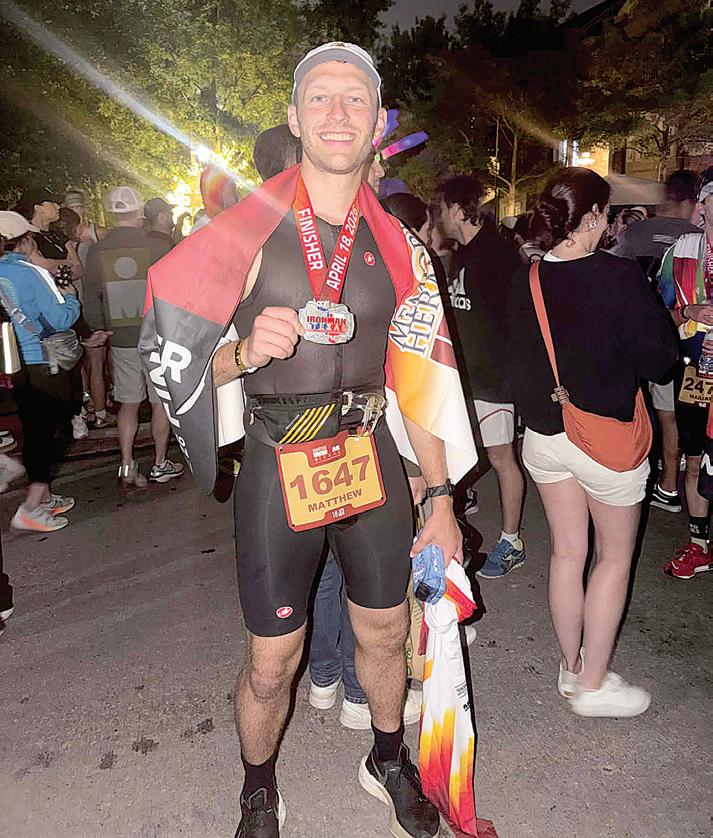
HOUSTON — Two Diocese of Charlotte priests, Father Matthew Harrison and Father Kevin Martinez, competed in the grueling 140-mile 2026 Memorial Hermann IRONMAN Texas triathlon April 18.
The “IRON PRIESTS” arrived in the Texas city early to scope out the course where they ultimately ran 26.2 miles, biked 112 miles and swam 2.4 miles – all in one day.
While technically a triathlon, for the priests it was a pilgrimage that also inspired their flocks.
“I am not an athlete and then a triathlete. I am a priest of Jesus Christ first,” said Father Martinez, parochial vicar of St. Mark Parish in Huntersville.
They spent much of the race praying, blessing bikes, helping others and talking to people about faith.
Saturday started at 6:30 a.m. with a murky morning swim through a tight canal. Father Martinez volunteered to be the last of the 3,100 contestants to start the swim – a place no one wanted.
As Father Martinez told the announcer, he is a Catholic priest and, “I am not scared to be last. The last should be first.”
The bike portion was a two-loop stretch of flat highway where both priests ran into challenges.
“My seat came loose,” said Father Harrison, the campus minister for High Point University. “I fastened it back at a weird angle, so it was kind of mentally brutal because I was sitting at this weird angle for six hours.”
Father Martinez almost mentally shut down.
“It gets lonely out there. You are out there for hours. It was like you versus you, and it crossed my mind to stop,” Father Martinez said. “But I was offering the race up for so many – my parishioners, my eighth-graders, my children who were receiving their (sacrament of) confirmation that morning, the bishop, the diocese –that is what fueled me.”
Several sporadic downpours
Father Matthew Harrison’s journey toward endurance started at age 19, during his first year in the seminary, when he walked the nearly 500-mile Camino de Santiago that follows the route of the Apostle James through Spain.
Two years later, he and his brother, seminarian John Harrison, walked from Greensboro to Maryland, praying the rosary and stopping at churches along the way to St. Elizabeth Ann Seton’s memorial. They took backpacks and a $100 bill.
A few years later he realized the importance of getting back to those healthy habits. While serving at Mass after he was ordained a deacon, he stepped down from the altar and felt his leg buckle.
drenched competitors.
“Everybody slowed down dramatically,” Father Harrison said. “It helped because it cooled you down but also slowed you down. At that speed (around 19 mph), it felt almost like hail.”
Father Martinez gave a competitor stuck on the side of the road his spare tire.
To finish the event, they ran a three-loop course, cheered on
“My legs were so weak because I had not been exercising, and I had gained a lot of weight. I just thought, ‘Wow, I am only 25, and I can’t serve at the altar the way I need to,’” he remembered.
He started running, training and participating in marathons, placing second in the 2024 Flying Pig Marathon in Cincinnati, Ohio, among his age group.
As Father Harrison said, “It is my hope when the students see their spiritual father pushing himself that it will inspire them to push through hard things, both spiritually and physically, and to seek God through it and learn how to love the Cross.”
by thousands of fans. The noted “Hippie Hallow” section of the track and its boisterous fans revitalized the priests.
“On mile 20, when you go through that tunnel of people cheering you on, banging trash cans and dressed up like hippies, it energizes you for the next mile or two,” Father Harrison laughed.
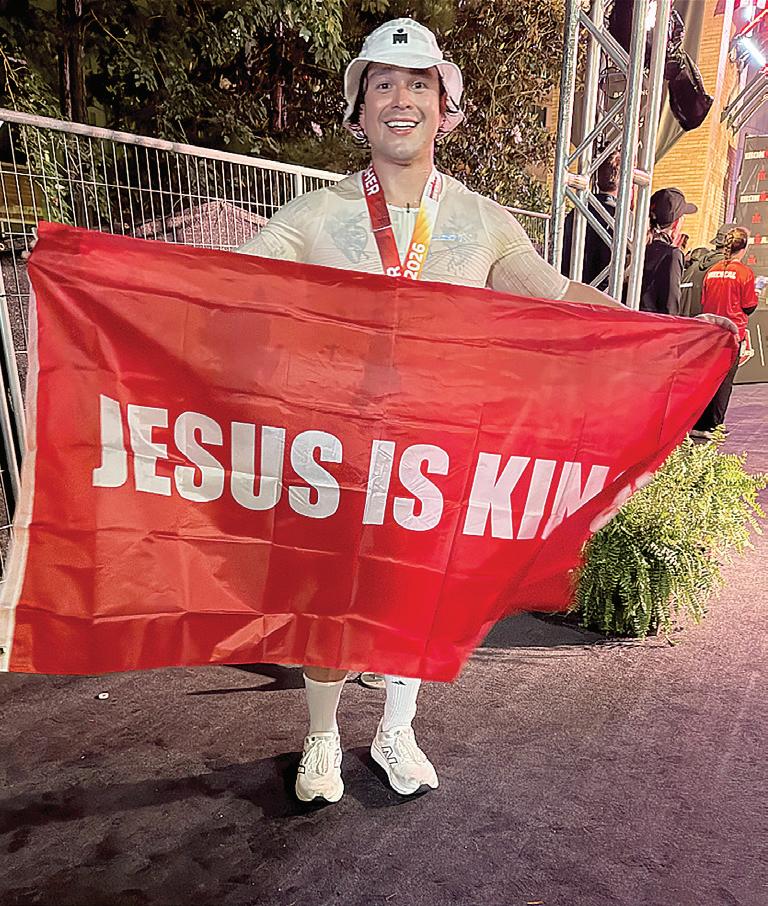
The finish line was the best part for Father Martinez. He crossed it
The best part of Father Kevin Martinez’s finish was being surrounded by family and friends – the same ones who supported him when he couldn’t support himself.
Two years ago, before his ordination, Father Martinez was not in good health. He had knee surgery and shortly after had an intestinal blockage, which triggered multiple emergency surgeries.
“I was in the hospital for a month connected to tubes, all cut up,” Father Martinez recalls. “I had to literally learn how to walk again.”
Once discharged, he had to use a walker. His last surgery was just six weeks before he was ordained a priest.
‘IRONMAN is an earthly title. When I die, that ends here, but I am always going to be a priest of Jesus Christ for all eternity.’
Father Kevin Martinez
with his red “Christ is King” flag, and the announcer remembered him from the start.
“Father Martinez is going to church tomorrow as an IRONMAN,” she announced.
The winner of the competition, a triathlon powerhouse from Norway, Kristian Blummenfelt, placed the medal around Father Martinez’s neck at the finish line and took a photo beside him holding the flag.
“Finishing a race like this was a good accomplishment, but it was not as fulfilling or nearly as satisfying as the day I was ordained a priest,” Father Martinez said. “IRONMAN is an earthly title. When I die, that ends here, but I am always going to be a priest of Jesus Christ for all eternity.”
More online
At www.catholicnewsherald.com : Read more about the priests’ road to the Ironman competition
After healing, Father Martinez felt God granted him a season of good health, and he was ready to use it. He started skateboarding, playing tennis and eventually running. That’s when he fell in love with endurance sports.
“There is no limit to what the human body can do. It is in your mind where the limitations are,” he said. “If you tell yourself you can do it, you can really achieve it, as long as you put your faith in God and really push yourself.”
LISA M. GERACI lmgeraci@rcdoc.org
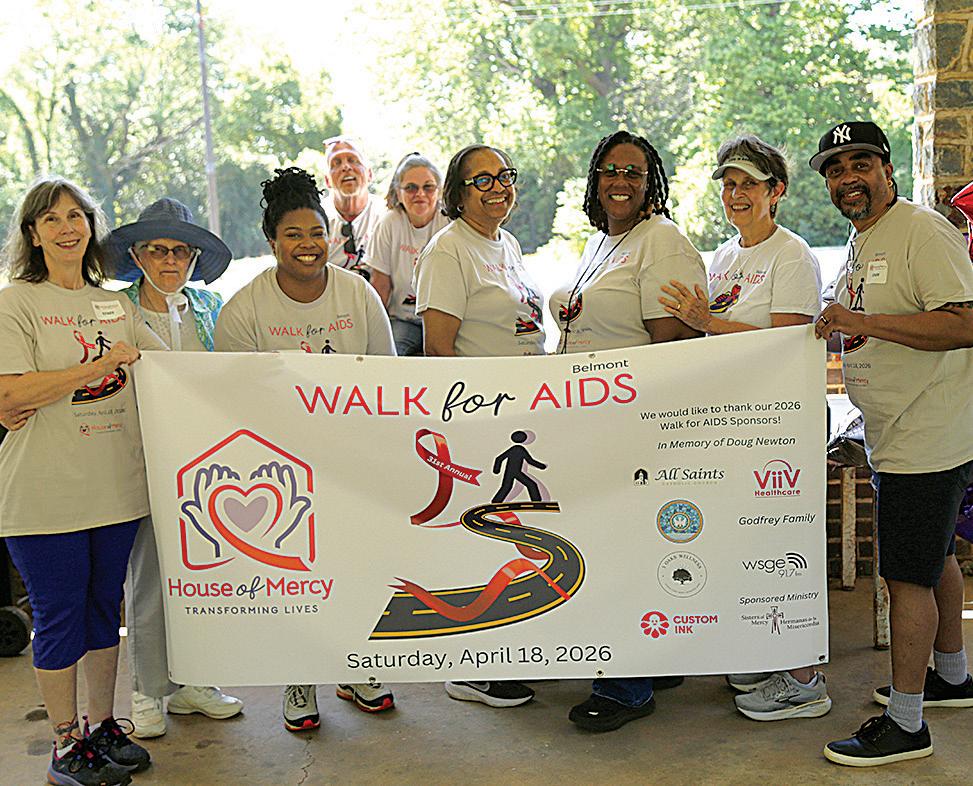
BELMONT — More than 40 supporters gathered April 18 at the House of Mercy on the Sisters of Mercy campus for the 31st annual Walk for AIDS.
Founded by the sisters in 1991, the House of Mercy responded to the AIDS crisis when many were stigmatized and abandoned – providing housing, respite and dignified care without judgment.
The six-room home still delivers wrap-around services for residents and others living with HIV/AIDS, but thanks to medical advances, staff and volunteers are now focused on teaching clients to lead relatively normal lives.
“This walk is about how we get to be individuals that lift the community up and fight against discrimination,” President Latoya Gardner said. “We carry the names of those we lost in our hearts. We carry the hope of those still fighting. Let’s walk together for a future where everyone living with HIV has a place to call home and a community that loves them.”
Oratorian Father Charles Tupta, pastor of All Saints Church in Lake Wylie, South Carolina, started the walk with a prayer and shared his experience as a chaplain at Rush Presbyterian Medical Center in Chicago when the AIDS epidemic emerged.
“Their families would disown them,” Father Tupta recalled. “A lot of times when they passed, no one came to claim the body, and there was really nothing medically that could be done at the time.”
Father Tupta walks for former patients like Joel, whose last breaths were made trying to reconcile with his estranged father, who in return told Joel that God did not love him.
That day still brings tears to Father Tupta’s eyes. “He said to me, ‘I will never stop loving my father. I had trouble figuring all this out, so how could I expect him to? … I know that God loves me because God does not make junk.’”
Other participants shed tears looking back at a history that didn’t treat their loved ones with the respect they deserved.
Gardner got involved after the death of her brother, who died from AIDS but mentally declined long before that.
“Technically he passed from an AIDS-related illness, but it was the stigma and discrimination that killed him before anything else,” Gardner said. “My brother was 21 when he passed away because he could not foresee living a life where people knew about his illness and treated him differently.”
Though dying from AIDS is less common now due to pharmaceuticals that suppress the virus to the point that it is undetectable, the stigma lingers.
This was the case for Mercy resident Kurt (last name withheld for privacy), who found out he had full-blown AIDS after a doctor’s visit for a small rash last August. The diagnosis sent him spiraling into depression, leaving
him homeless, hopeless and lonely with nowhere to go. He didn’t want to tell his family about his condition, so he suffered quietly with his secret.
“This place means a lot because I was not in a good spot,” Kurt said. “They were here to help me, and they actually cared.”
Through it all he still rests in his faith, he said. “I grew up in the Church, and I know He wouldn’t put on me more than I can handle. I pray all the time.”
Former resident Robert (last name withheld for privacy) still volunteers and attends every fundraiser. He recalls how his year’s stay at the House of Mercy rescued him from both sickness and homelessness.
“When you have HIV, you get so consumed with medication and taking care of yourself that sometimes you forget to take care of yourself financially,” Robert said. “When I got here, I learned how to live with the virus, not just medication-wise, but day-to-day. If it wasn’t for the House of Mercy, I don’t know where I’d be today.”
Such progress is possible due to staff such as Kimberly Hunter, a parishioner of St. James the Greater in Concord whose nephew died from anxiety the disease caused.
“If Jason would have had a House of Mercy, everything would have been so different. He wouldn’t have been depressed, hungry and living on the streets. This is something I never want to happen to anyone else,” Hunter said. “I feel like I was led here. I love what we do. We can’t save everyone, but we can help people get better, get them undetectable and help them see the future, which is what Jason didn’t see.”
For staff, volunteers, participants and residents, a future without AIDS may soon be possible, but for now, they will continue walking toward a stigma-free community.
“We aren’t just providing housing,” Gardner said. “We are providing a sanctuary and a community where our residents are seen as people, not just a diagnosis.”
More online
At www.thehouseofmercy.org Get help or support the House of Mercy in its mission
Patrick Martin finds inspiration in teaching students
CHRISTINA LEE KNAUSS clknauss@rcdoc.org
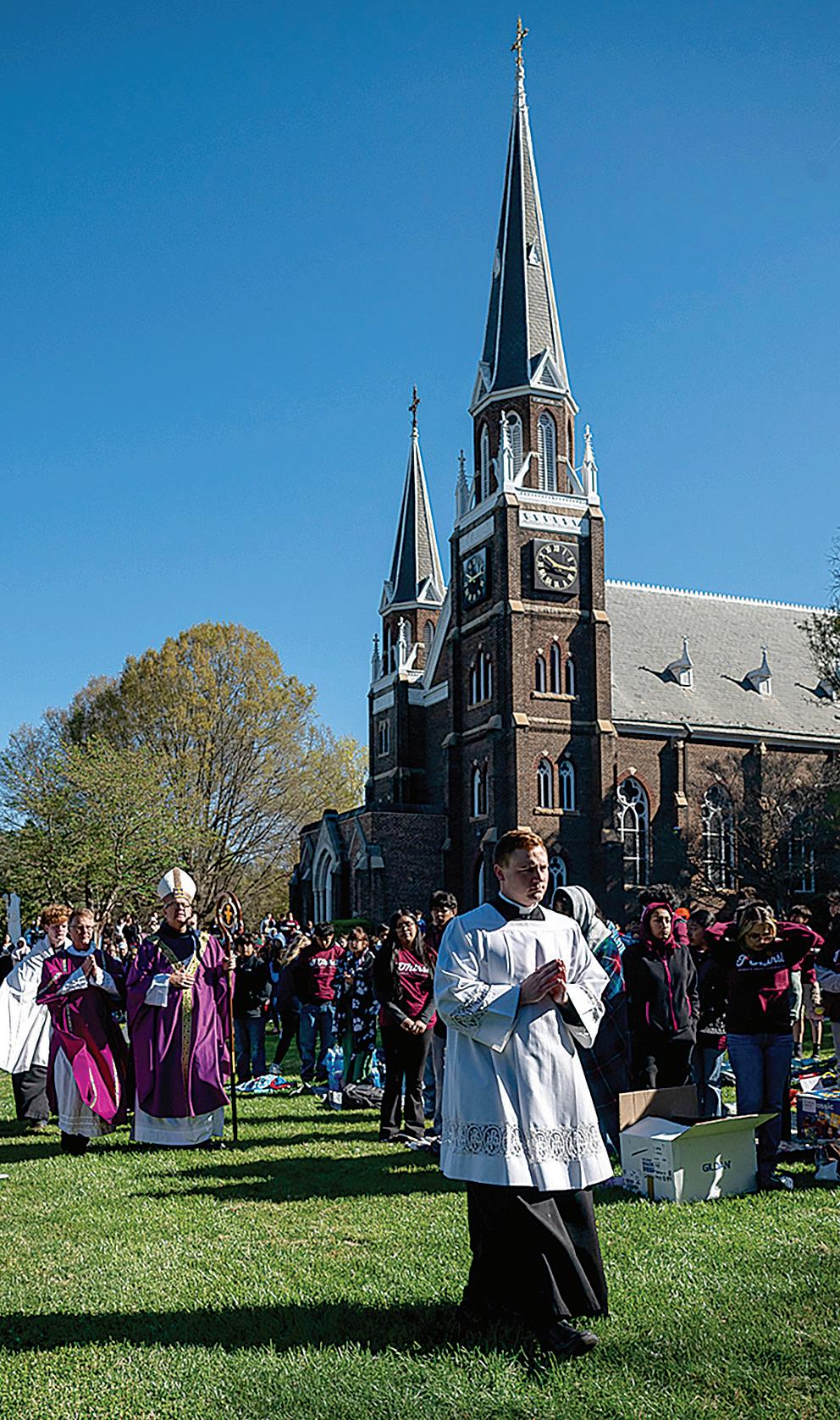
HUNTERSVILLE — Teaching young Catholics about one of the works of a famous author has opened up new perspectives on the road to the priesthood for seminarian Patrick Martin.
Martin has recently been teaching Catholic teens at a Cincinnati parish about “The Screwtape Letters,” a Christian apologetic novel by legendary author C.S. Lewis, best known for his “Chronicles of Narnia” series.
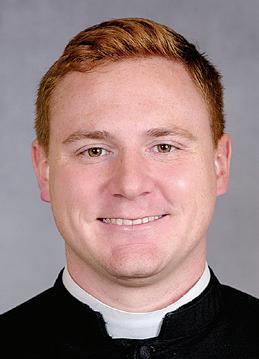
In the novel, written as a series of letters, a senior demon named Screwtape teaches a junior “tempter” about ways to undermine humanity’s faith, illustrating the many ways that a lack of faith can harm a person’s relationship with God.
The class not only helps Martin, whose home parish is St. Mark in Huntersville, develop his skills in teaching the faith to others, but it also helps him tie together and apply things he has learned during his years in the seminary.
“It’s a different style of book than they’re used to studying, and it honestly wasn’t a book I had been meaning to read,” Martin said. “I’d read other things by Lewis and had attempted to read this book years ago but got too busy, so I’m learning the book at the same time I’m teaching it. It’s an exciting
way of applying both my philosophy and theology studies in seminary to the material, helping to explain it and break it down.”
It’s the second class for young people that Martin has taught at the Ohio parish, close to where he is studying theology at Mount St. Mary’s Seminary in Cincinnati. He previously taught a course on Theology of the Body.
He completed philosophy studies at St. Joseph College Seminary in Mount Holly before studying in Ohio, and will be ordained as a transitional deacon – a step on the journey to becoming a priest – on May 23.
In an interview with the Catholic News Herald, Martin shares more about his life:
CNH: What was your journey to discernment like?
Martin: It started when I was young – I was blessed to be home-schooled, and my mother made the effort to bring me to daily Mass along with my siblings. That daily experience really helped me to build a relationship with the Mass and also to see how the priests approached the sacrifice of the Mass as well as their approach and interaction with people.
I felt a call to the priesthood but then during middle school stepped away from discerning priesthood and thought God was calling me to be a married man. I thought about getting a business degree and working to provide for a family. … Then during high school I felt like I needed to reassess and re-approach discernment, and Father John Putnam at St. Mark invited me to be the sacristan there. As sacristan, I really experienced the brotherhood
of the priests and their love for the Lord and for people. I thought about it and discerned strongly and, through the advice of the priests I knew, I entered seminary after high school.
CNH: What are your hobbies?
Martin: I’m really big into athletics. I grew up playing soccer and swimming and still like to play soccer in seminary – I spend time playing with my brother seminarians, and we have a makeshift team. I’ve also gotten into weight lifting and in recent years got into marathon running – I started that my first year here in Ohio. I train with fellow seminarian Connor White, who is an avid runner. The training is a great way to let our brains reset. It helps me to regulate and re-engage. Every spring I’ve been running a marathon called the Flying Pig here in Cincinnati, which takes its name from the city’s history as a leader in the pork industry.
CNH: Who is your favorite saint?
Martin: The saint I hold most dear is St. John the Evangelist – I have a statue on my desk of him looking at me right now. I chose him as my confirmation saint, and he’s been my go-to saint on multiple levels since then. I’m the middle child of my family and the youngest boy, and seeing John the Evangelist, John the Beloved, as the youngest of the apostles was impactful to me, because as the youngest boy I felt some competition growing up. I saw that John was the youngest but was also impactful. He has a special relationship with Christ, a closeness to our Lord, and was particularly there with Him during the Passion. He was the one who helped Our Lady through the Passion.
LISA GERACI lmgeraci@rcdoc.org
CHARLOTTE — More than 100 Birthright of Charlotte supporters gathered April 16 at the Fine Arts Center at Charlotte Catholic High School for its inaugural gala to celebrate two years and 700 area mothers served.
“This is amazing and life-changing for both mothers and babies in our local community,” said Executive Director Hank Chardos.
Chardos and his wife opened Birthright in Columbia, South Carolina, in 1980, and after seeing the overwhelming need, started the Charlotte chapter in 2024. Nationwide, the organization’s 170 chapters assist expectant mothers with pregnancy support resources.
During the gala, the Diocese of Charlotte and Victory Christian Center were presented with Louise Summerhill Awards – named after the Birthright founder – for supporting the Charlotte chapter.
Its cozy office is a home located on Monroe Road that is not just built of brick and mortar, Chardos said, but of faith and love. Its walls are covered with photos of smiling babies, small testimonials of the miracles that can happen with God’s help.
As Chardos said of the moms who walk in its door, “We want to find out who she is, what her needs are, and after that connect her with lots of resources. Before she leaves, she knows that we want to help.”
“When you walk in, you feel welcome,” volunteer Nicole Schrift said. “There is no shortage of hugs, there is no shortage of prayers … but one thing is for certain: every beautiful
LISA M. GERACI | CATHOLIC NEWS HERALD
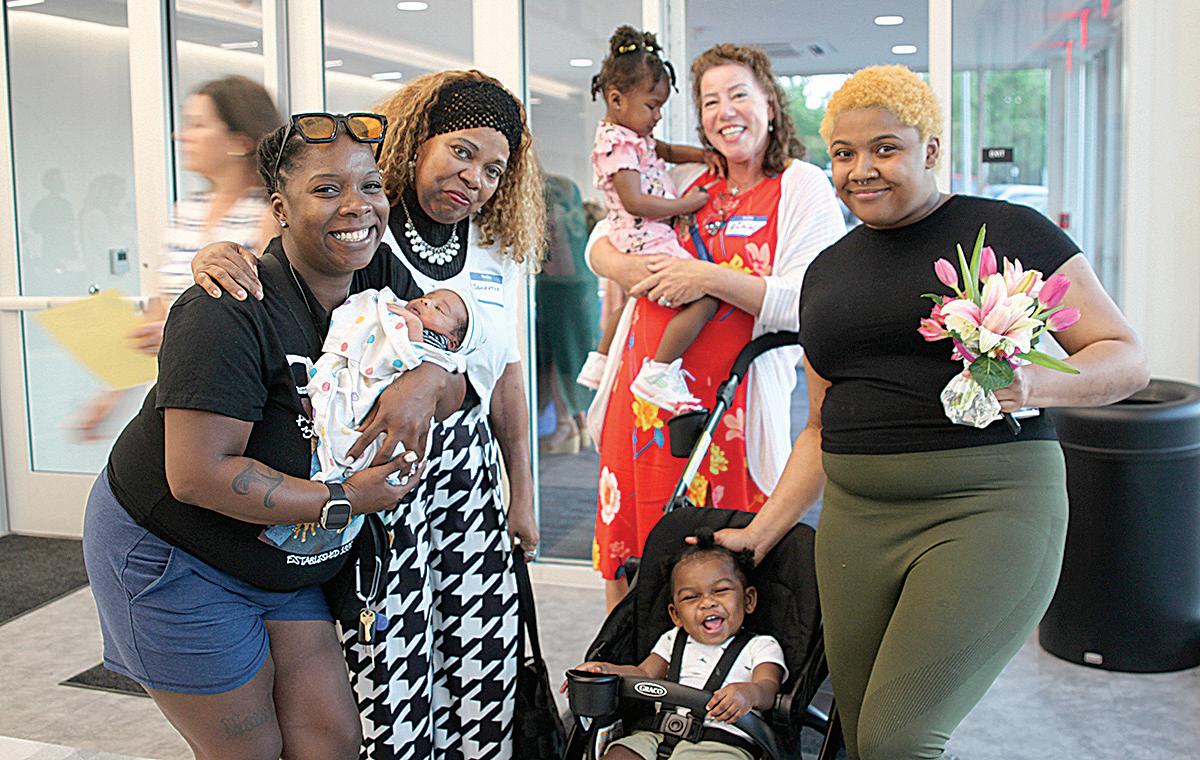
Moms who received help from Birthright of Charlotte gather with supporters April 16 to celebrate the impact of the pregnancy support organization that has helped more than 700 moms since its inception.
woman I have encountered becomes brave, fierce and resolute.”
Two of those mothers, Jordan Myers and Ta’Nya Mays, attended the gala to share stories of the guidance, support and love they received from Birthright.
“When I first connected with Birthright, I was at a place where I was overwhelmed, uncertain, and honestly alone,” Myers confessed. “Life didn’t look the way I thought it would, and I was trying to figure out how to move forward while carrying so much weight.”
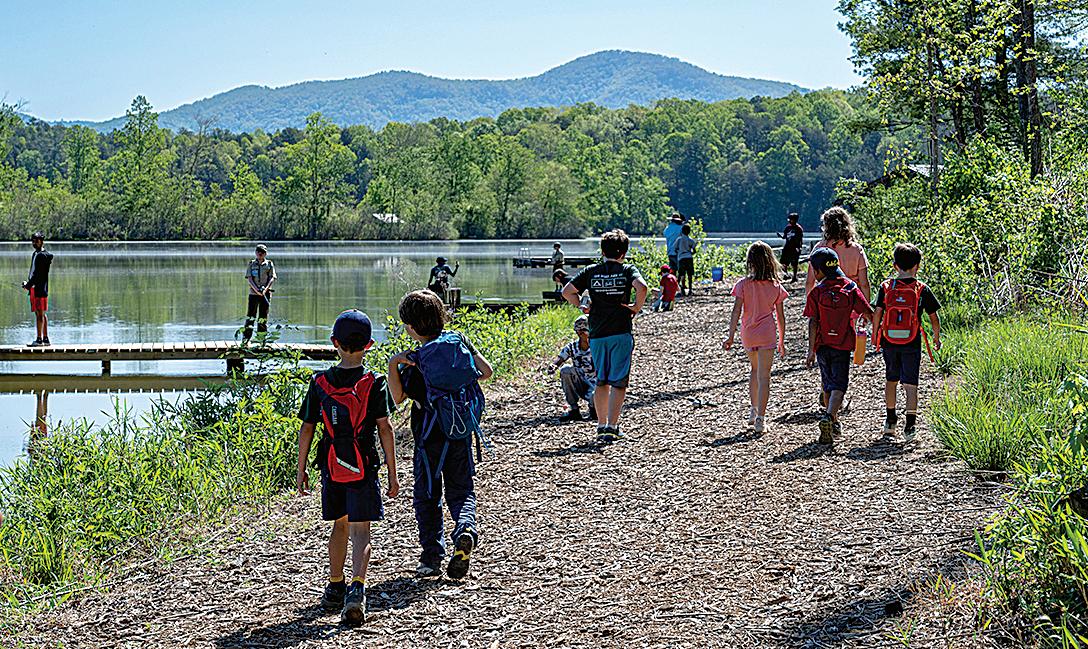
NEBO — Catholic Scouts across the Diocese of Charlotte celebrated faith, fun and the historic election of Pope Leo XIV at the 2026 Catholic Camporee April 17-19. Organized every spring by the Charlotte Diocese Catholic Committee on Scouting, the weekend of fellowship and adventure brought together more than 300 Scouts, parents and leaders. Highlights included popular scouting activities such as fishing, climbing, kite-flying and giant slingshots, Catholic-themed faith activities about the new American pope, an evening program with skits and songs, and closing Mass offered by retired Father Dennis Kuhn and assisted by Deacon Charles “Chuck” Hindbaugh, the newly appointed spiritual advisor to the diocese’s Catholic scouting program.
After the Mass, several Scouts were recognized for earning their Catholic religious emblems. Several adult leaders were also honored for their exceptional efforts in Scouting, including Bronze Pelican recipients Debbie Johnson (St. Patrick Cub Scout Pack 9), David Dorsch (St. Patrick Scout Troop 9), Russ Anderson
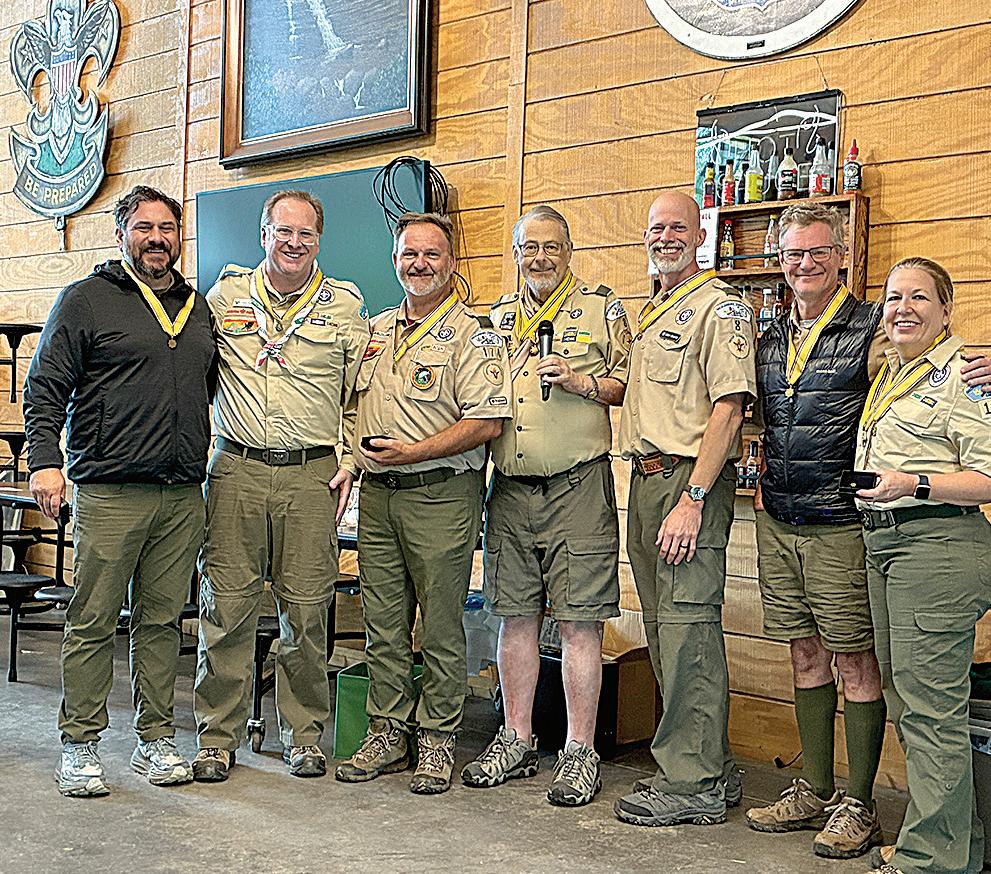
(St. Gabriel Scout Troop 174), and James Bolling, Edan Idzerda and Basil Lyberg (St. Matthew Scout Troop 8); and St. George emblem recipients Frank Schofield of St. Matthew Scout Troop 8 and Leslie Tesch of St. Gabriel Scout Troop 1174. The photo shows some of the award winners with Mike Nielsen, chairman of the Charlotte Diocese Catholic Committee on Scouting.
As a mother of two small children, she did not have the luxury of falling apart, she said. There were days she did not know how she would make it or where to turn.
“They didn’t judge me. Birthright stepped in with compassion and support,” Myers said.
Just as they do with every client, Birthright’s 16 volunteers offered essentials such as food, diapers and wipes, provided emotional support, and connected her with resources. The team topped it all with prayers from the more than 250 people on its prayer line.
“When someone shows up for you like that, it is truly life changing. Because of Birthright, I didn’t feel alone anymore,” Myers said. “I felt seen and supported. I felt like I had a village behind me. They reminded me that I can keep going even on those days when I didn’t believe it myself.”
Birthright provides hope, she said. The “village” transforms a mother’s journey to joy rather than fear. Whether it is Uber rides, hospital visits, a 3 a.m. prayer request, a home-cooked meal or a hand to hold – Birthright is there.
St. Mark parishioner Gina Bertucci loves giving back through Birthright. As a single mother of two children, she empathizes with the moms she assists.
“If everyone helps a little, it helps a lot,” Bertucci said. “Not all our moms come in happy, but once they have that baby in their arms and they have that support, they are suddenly overjoyed. They need to be embraced and loved.”
More online
At www.birthrightofcharlotte.org : Volunteer or give to support expectant moms
His Excellency
Michael T. Martin, OFM Conv. Bishop of Charlotte
requests the honor of your presence at the
Mr. James Isaac Johnson IV
Mr. Bradley Thomas Loftin
Mr. Patrick Michael Martin
Mr. Connor Jaeger White of
Saturday, the 23rd day of May
Two thousand twenty-Six at nine o’clock in the morning
Saint Mark Catholic Church 14740 Stumptown Road Huntersville, North Carolina
Light reception immediately following Monsignor Joseph A. Kerin Family Center
LISA GERACI lmgeraci@rcdoc.org
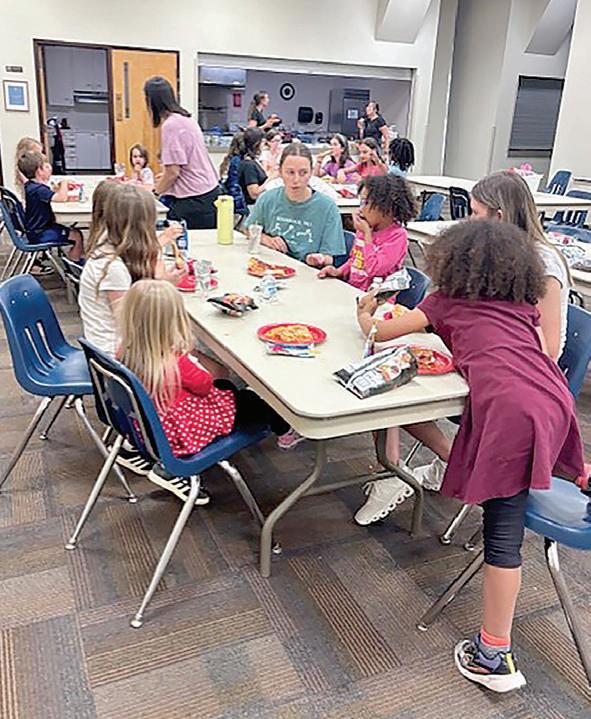
CLEMMONS — The Circle of St. Joseph, a new ministry of Holy Family Parish, launched its flagship event, a respite night to afford local foster parents a break on April 17.
About a dozen foster parents dropped their children off at the church for a night of fun, pizza and a movie while they enjoyed a few free hours for date night, alone time or a chance to catch up with friends. Youth volunteers from American Heritage Girls, Holy Family faith formation members and Bishop McGuinness High School students babysat, hosted the games and helped assemble crafts with the children.
According to Circle of St. Joseph founder Greta Argenta, these little windows of freedom are a great way to give back to the foster community.
“The parents and children loved it and were asking when we can do it again,” Argenta said. “I hope to start doing these nights on a regular basis, now that we know what to expect.”
The need is great. Forsyth County has more than 270 children in foster care, yet there are only 14 licensed foster parents. Those who are not placed with area families are placed with foster
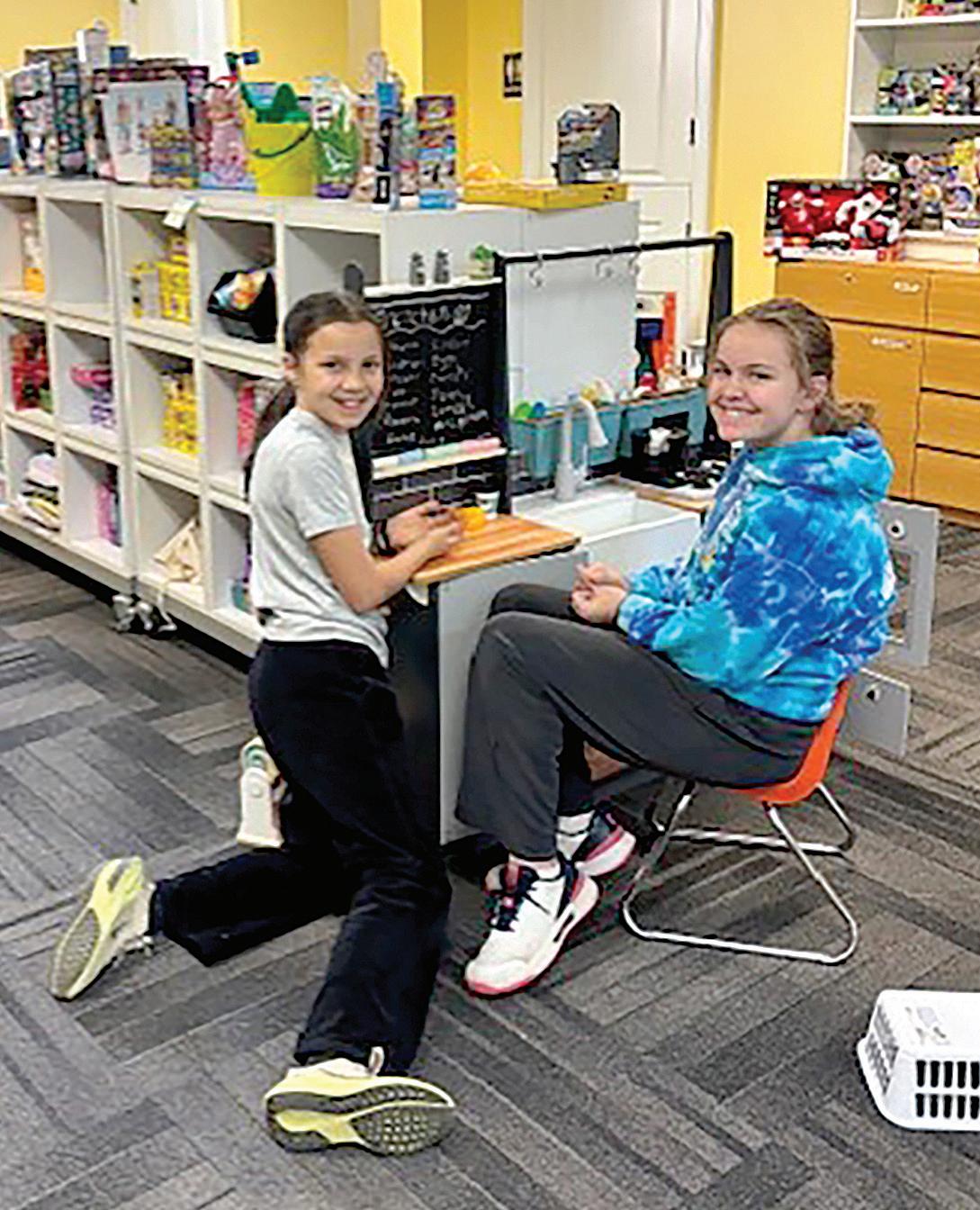
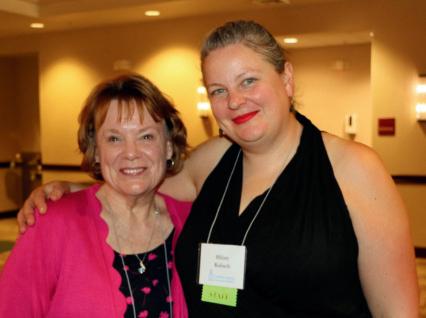
Ahead of May, which is foster care awareness month, the Circle of St. Joseph, a new ministry focused on helping foster parents, holds a respite night to give parents a few hours to themselves. Volunteers from multiple church groups came together to host the children — playing games, assembling crafts, providing pizza and keeping them entertained.

Lifting Lives Throughout Western NC
For Argenta, it’s not just a governmental crisis but also a Catholic one.
“We can’t rely on the government to take care of children. That is the Church’s job – that is our job. That is what we do,” she said, citing the example of Church-run orphanages from decades ago. “Once they stopped doing that, I feel like we forgot the importance of taking care of the orphans and the children left behind.”
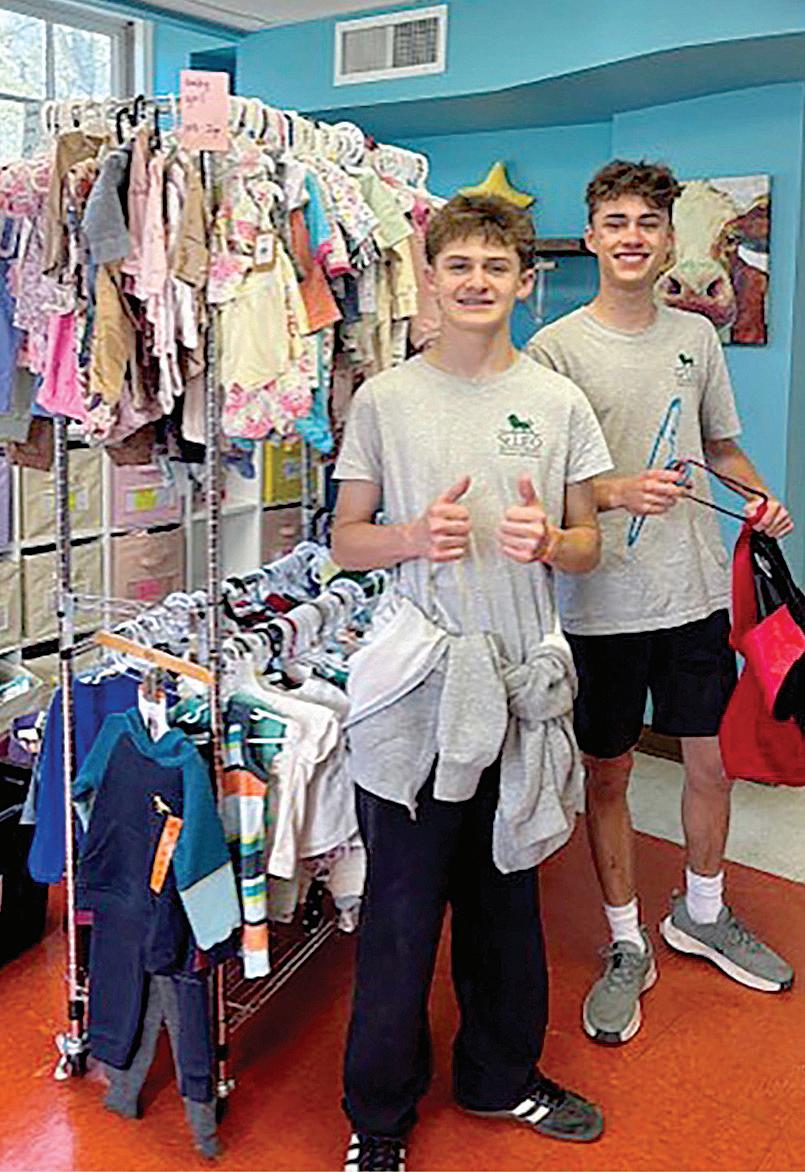
The Circle of St. Joseph ministry, named after Jesus’ foster father Joseph, steps in to provide prayer, donations and serve as a Catholic connection to Argenta’s larger nonprofit, Fostering Families Resource Center. That organization assists foster parents in Winston-Salem with basic needs and meals and hosts events to support families and social service workers.
Argenta, a mother of five – three biological and two adopted foster children – has been involved with the foster care network for the past 20 years.
“I feel like God gave that to me. The foster community has always been on my heart,” she said. “Even when I was a kid, I used to play Annie and pretended I had my own orphanage. It
: Learn more about the Fostering
CHRISTINA LEE KNAUSS clknauss@rcdoc.org
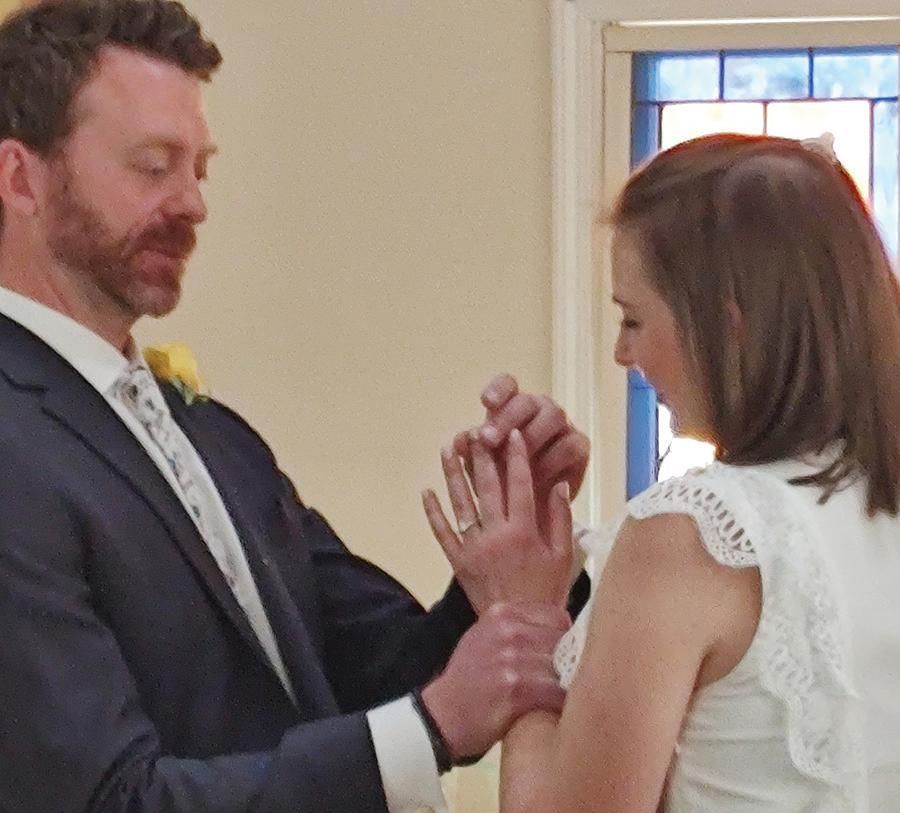
MARS HILL — Blue skies and the green of spring spreading across the Blue Ridge Mountains made April 19 a beautiful day for a wedding in Mars Hill. For five happy couples gathered at St. Andrew the Apostle Church, it was a chance to bring their existing marriages into full recognition in the Catholic Church.
The parish hosted a special Mass that included convalidations of marriage for five couples celebrated by their pastor, Father Anthony Mbanefo of the Missionary Society of St. Paul.
Convalidation is the process by which a couple who has been married civilly brings their marriage into the Church, validating it according to Church law and making it a sacramental union. After the Easter Vigil, when one or both members of a couple have received the sacrament of initiation, churches often celebrate ceremonies for multiple couples.
What was unusual was the number at this small parish. Four of the couples attend St. Andrew and one attends Sacred Heart, its mission in Burnsville.
Father Mbanefo recognized the impending need and planning for the convalidation began, said Mercy Sister Peggy Verstege, who has served at St. Andrew for more than 40 years and was instrumental in organizing the ceremony.
“Really the journey toward this day started
last year when we began OCIA classes for those who came into the Church this year,” Sister Peggy said. “We talked about convalidation and decided to do a group ceremony, so we got all the paperwork done, agreed on the readings. This is such an important day because it’s a celebration of marriage and life, and also hopefully offers an important witness for others to follow.”
The five couples whose marriages were convalidated are Mitch and Jamie Cline,
MARRIAGE, SEE PAGE 18
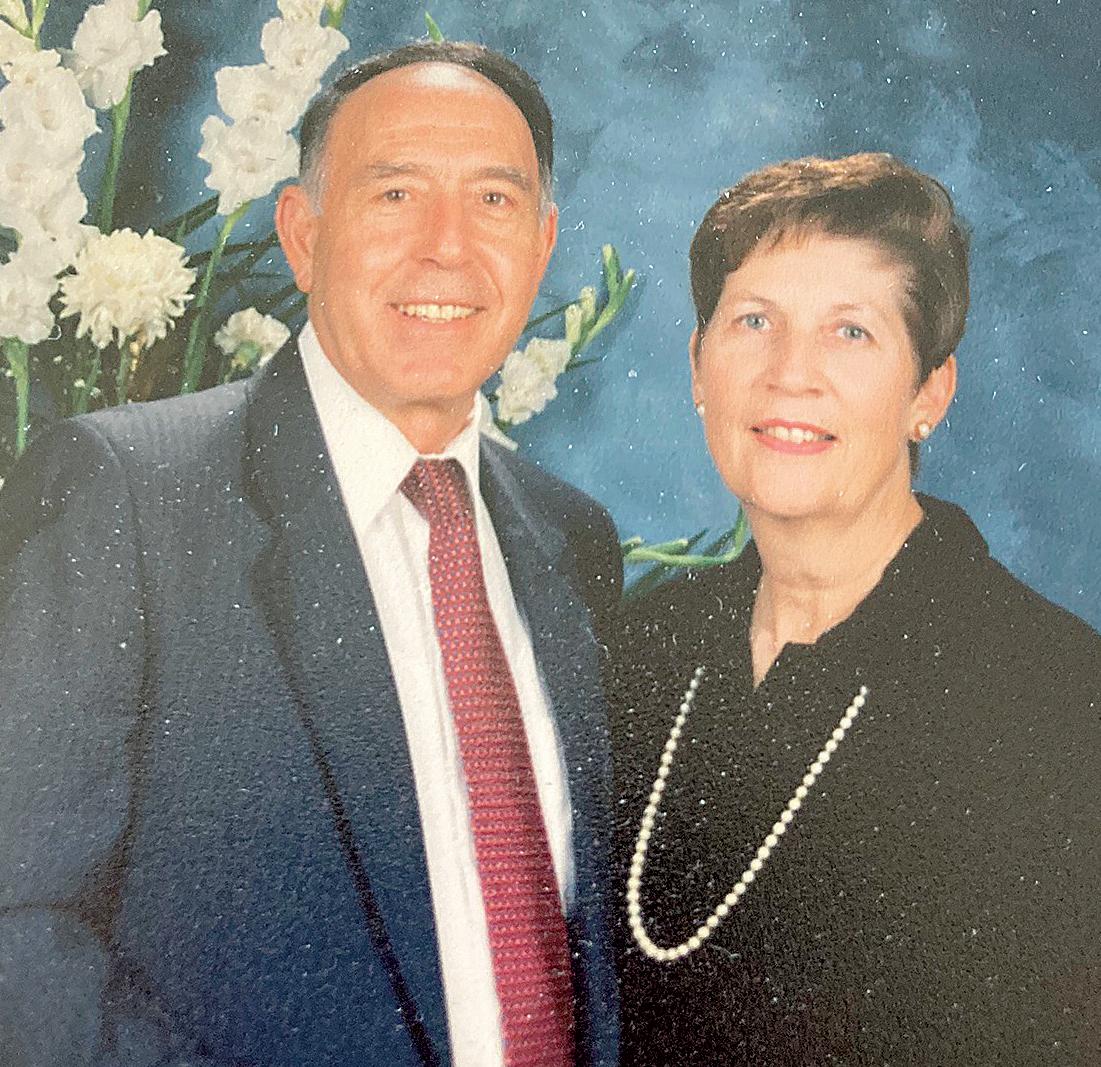
CHARLOTTE — Wherever life took Dr. Joseph and Anita Joan Di Pietro, the Catholic community was always at its center. “No matter where we were, we always supported our Church, priests and seminarians,” said Anita Di Pietro.
After Joseph passed away on Feb. 14, 2016, Anita chose to honor him in a way that she knew would speak to his heart. She established the Di Pietro Family Foundation, from which she established an endowment in the diocesan foundation to support St. Joseph College Seminary in Mount Holly. That substantial gift has helped fund seminarian formation, sacred music and liturgy, art and architecture, cultural events and other similar programs at the seminary.
The couple came to Charlotte after traveling the world. Joseph Di Pietro was born in Messina, Italy, and came to the United States with his parents when he was 16. Anita Di Pietro was born in Baltimore and attended Catholic school from elementary grades through college. After they were married, Joseph’s career as a chemist kept them on the move, including an eight-year stint in Italy.
After his retirement, the couple was looking for a strong Catholic community. They were drawn to St. Vincent de Paul Parish in Charlotte and became vibrant members of the congregation.
“Joseph loved to cook for our priests, and we frequently entertained them at our house,” Anita Di Pietro recalled.
“I became interested in the seminary after joining the Charlotte Catholic Women’s Group,” she said. “The group supported seminarians with prayers and gift cards for Christmas and Easter. Our new priests were asked to introduce themselves at our monthly meetings.”
That experience sparked a connection to the seminary and seminarians that she wanted to nurture.
“Mrs. Di Pietro has long been a friend and supporter of the seminary,” said Father Matthew Kauth, rector of the seminary. “Anita doesn’t just donate money, she comes to the seminary frequently bringing gifts and a hearty laugh. We are blessed to have her as a member of our seminary community.”
“She has contributed to the buildings necessary for
formation but now has also, in honor of her husband Joseph, given us an endowment for the purposes of cultural and artistic enrichment of the seminary and the seminarians themselves,” Father Kauth said.
“An endowment fund is the gift that keeps giving,” Anita Di Pietro said. “I would encourage anyone who is able to establish an endowment fund.”
An endowment is a permanent fund, the principal of which is invested – not spent – that generates income to help pay for projects and programs specified by the donor. Endowments are tax deductible and help sustain the
LISA M. GERACI
lmgeraci@rcdoc.org
CHARLOTTE — Homeless Relief Ministry, a grassroots ministry that provides furniture, housewares and decor items to families transitioning out of homelessness, completed its 440th move-in on April 17, furnishing an apartment for a single mom and her five children.
For the past 11 years, three Charlotte parishes – St. Matthew, St. Peter and St. Vincent de Paul – have collaborated to furnish one family’s dream at a time.
Furniture and housewares are primarily donated by parishioners or sometimes retailers like Costco and, when needed, purchased by the parishes. The ministry of more than 90 volunteers is committed to doing whatever it takes for their clients.
“I do this because they need it. We’ve got this crisis in this country as far as homelessness. This happened to them, as it could have happened to me,” St. Vincent de Paul parishioner and long-standing volunteer Nancy Kopfle said, as she plugged in a new coffee maker and showed off plastic children’s plates in a freshly stocked cabinet.
“This gives them dignity because now they will have their own belongings,” Kopfle said. “The point of all this is for them to have the tools to pick themselves back up. This makes their new place into a home. It is very moving.”
On move-in day, an HRM team typically meets early at St. Matthew’s warehouse in
Wesley Chapel to load their moving truck with furniture and beds that match the client’s needs, while other members of the team load their cars with housewares and bedding that is stored in large closets at St. Vincent de Paul Church. The teams roll out and converge on their destination. There, they spend several hours moving in and arranging furniture, assembling beds and cribs, hanging pictures and shower curtains, plugging in lamps, and providing all the little details that create a cozy living environment.
Client Denise, whose last name is withheld to preserve her privacy, was introduced to the Homeless Relief Ministry by The Relatives, a local nonprofit that is one of many partner organizations that provide wrap-around services for clients.
For about seven months, Denise and her children were living in an unstable environment, moving from place to place, spending nights with relatives or at hotels. She moved here from Georgia to get her life together, but the neighborhood she was barely able to afford was riddled with violence to the point where she fled in fear for her children’s safety.
“There were shootings and loud noises; people were outside all night,” she said. “It was just a bad situation.”
Her caseworker, Shanetta Black from The Relatives, works with 17 clients, helping to remove barriers so clients become financially stable enough to pay
Interested in setting up – or adding to – an endowment to benefit your parish or Catholic school? You can establish an endowment in the Diocese of Charlotte Foundation by leaving a bequest in a will, a beneficiary designation from a retirement plan, a trust or annuity, or a gift of real estate, life insurance, cash or securities.
For details, contact Gina Rhodes at 704-370-3364 or gmrhodes@rcdoc.
strength and viability of the diocese and its entities, paying for capital improvements, charitable outreach, education and parish operations.
“I find this a good way to donate,” she explained, noting that donors can designate where funds will go and what areas they can be used for, They have the security of knowing that funds are invested by the diocesan financial team and donors receive ongoing information about the fund’s performance from the development team.
“While we have many parishioners who are establishing endowments in their estate plans, more individuals like Anita are deciding to establish the endowment during life and then add to that endowment in their estate plan,” said Jim Kelley, diocesan development director. “The advantage of this is that people can see good things happening with the distributions from their endowment now and by doing that, they are encouraging more people to follow their example. We are grateful for Anita and all those who are establishing or adding to endowments in our foundation.”
As Anita Di Pietro explained, “We do have a responsibility to do what we can. We can’t just go to Sunday Mass and say, ‘Well, that’s it.’”
— Courtney McLaughlin
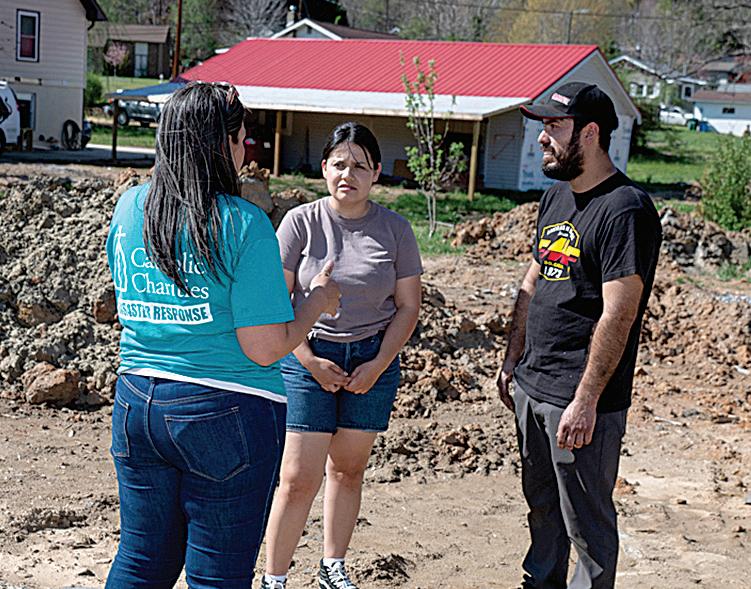
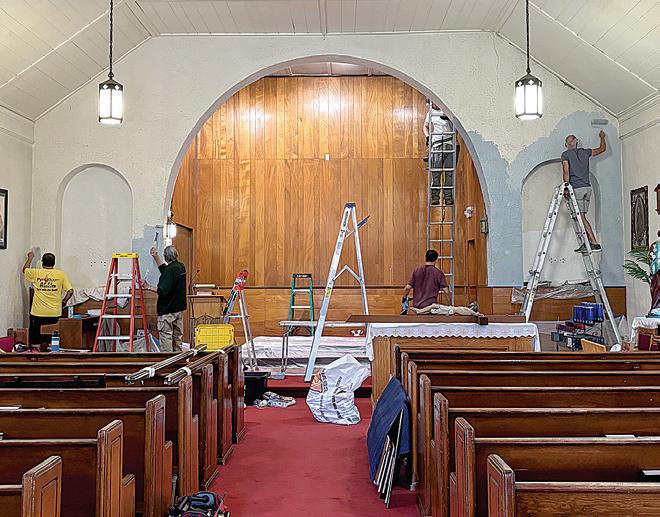
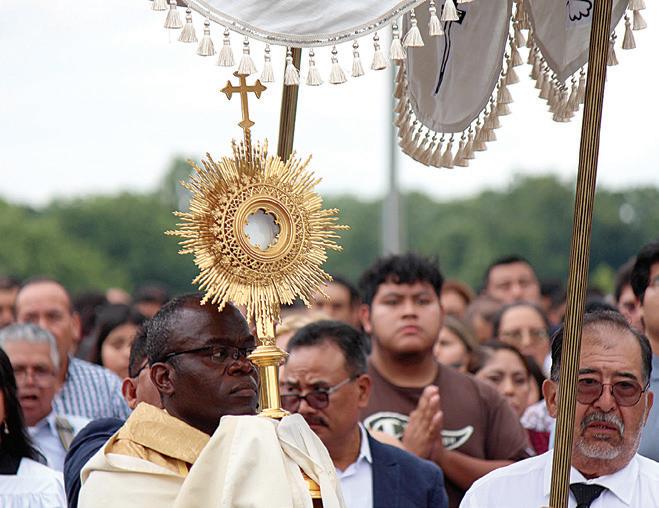
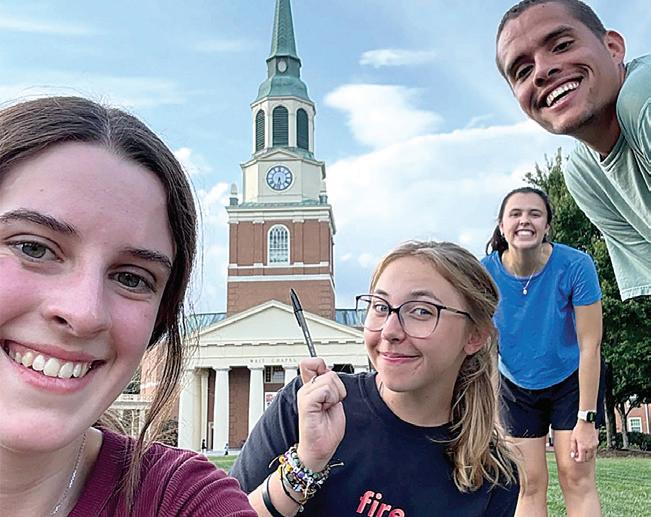
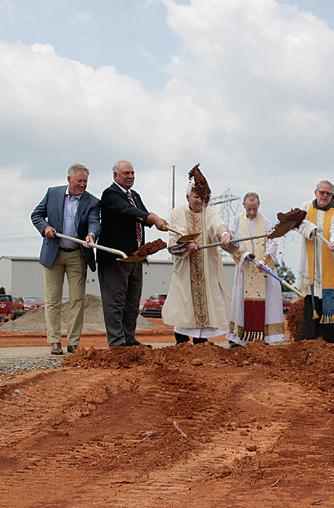
PATRICIA L. GUILFOYLE plguilfoyle@rcdoc.org
TheDiocese of Charlotte is launching a major philanthropic effort aimed at strengthening parishes, expanding charitable outreach and responding to rapid growth across the western half of North Carolina.
“Making Room – for More to Know the Love of Jesus” aims to raise $150 million, the largest fundraising initiative in the diocese’s 54-year history. It also emphasizes stewardship – inviting people to reflect on how God has blessed them and the diocese, and to participate in a spirit of gratitude and discipleship.
Nicknamed the “Making Room Challenge,” the effort comes in response to the region’s significant growth and pastoral needs arising from that growth. The diocese’s increasingly diverse Catholic population now exceeds 575,000 – a gain of nearly 11% over the past five years.
“We stand at a pivotal moment in western North Carolina,” said Bishop Michael T. Martin, OFM Conv., in a letter introducing the challenge. “Our rapid growth, enriched by many cultures and languages, compels us to strengthen our local Church and ensure that every person has the chance to encounter Jesus Christ.”
The effort is inspired by Bishop Martin’s broader pastoral vision for the diocese to be a place where “Everyone so loves Jesus, we share Him with others,” which emphasizes moving beyond passive participation in the faith toward active discipleship and outreach.
Already, generous donors have contributed $24.2 million in “leadership gifts” spearheaded by the bishop.
Guided by extensive feedback from clergy and thousands of donors and parishioners, the “Making Room Challenge” will invest in parishes, Catholic Charities, Catholic schools, under-resourced parishes and land acquisition for future growth. It focuses on three key pillars:
n Outreach to people in need ($42 million): The challenge earmarks $29 million for the diocese’s Catholic Charities agency, including $19 million to expand “its physical presence and the reach of its life-changing programs in communities where demand continues to grow,” the diocese said in information materials. The remaining $10 million for Catholic Charities will be set aside in an endowment to help sustain and grow its programs. This pillar also designates $13 million for under-resourced parishes for urgent needs or chronic challenges.
‘The success of this moment is not simply measured by dollars raised, but rather by how we engage with the Church and how we reflect God’s grace in all aspects of our lives.’
Bishop Michael Martin, OFM Conv.
n Strengthen faith communities ($63 million): This pillar allocates $50 million to support parishes. Money will go toward construction, repairs and expansion projects to help to meet growing demand for worship and education space. Some funding will be set aside in endowments to generate revenue for ongoing program support. This pillar also designates $5 million to support Campus Ministry, and $8 million for strategic land purchases for future growth.
n Secure the Church’s future ($45 million): With enrollment in Catholic schools up 20% over the past five years, this pillar allocates $20 million for endowments that will generate funding for financial aid, teacher training and enhanced learning environments. It also designates $10 million for more lay leader and catechist training, and $3 million for formation of seminarians and deacon candidates. And $12 million will go to expand the Catholic Conference Center in Hickory as a retreat center for parishes and groups.
Every parish and mission will benefit from this diocesewide effort, diocesan officials said, with parishes keeping 50% of the funds they raise for local capital projects, ministry needs and endowments. Parishes that hit certain stretch goals will also retain 100% of any additional funds.
“It’s true that many pastors are not always eager to talk about finances, but we all understand what it takes to sustain a parish and help it thrive,” said Father Patrick Cahill, chair of the “Making Room” clergy advisory board and pastor of St. Matthew Parish in Charlotte. “In my role as chair, I’ve seen a genuine enthusiasm for this initiative – not simply as a fundraising effort, but as an opportunity to strengthen each parish’s mission. There is a shared recognition that, together, we can multiply the good being done both locally and across the diocese.”
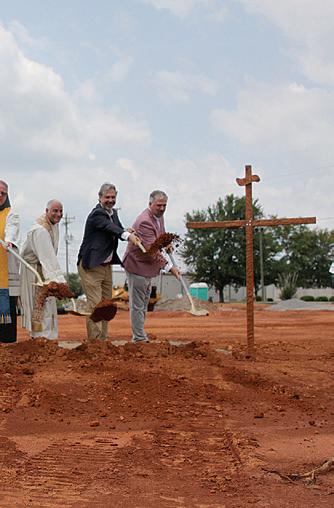
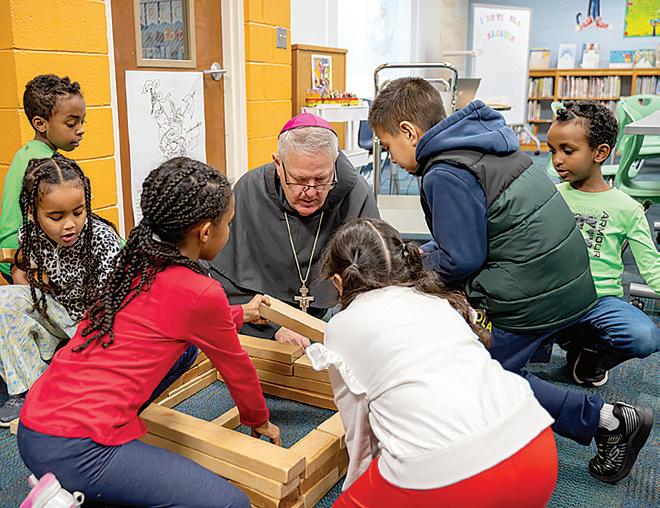
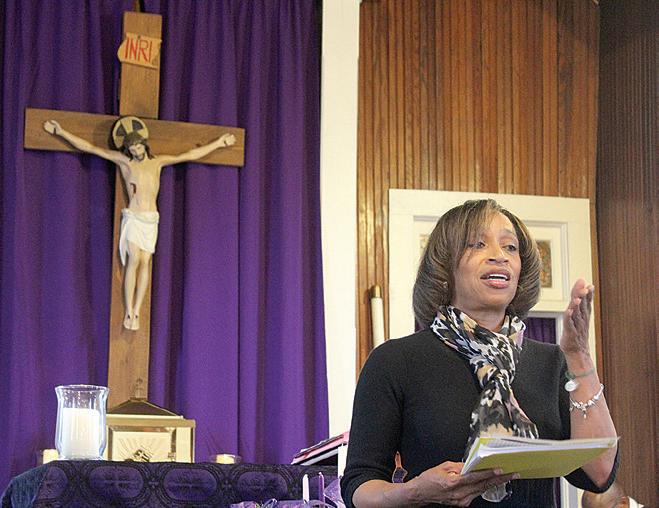
Effort aims to benefit parishes, manage growth and inspire discipleship
The “Making Room Challenge” will be conducted at all 93 churches in four phases over the next two years. Seven pilot parishes will kick off their campaigns in June: Holy Angels in Mount Airy, St. Aloysius in Hickory, St. Eugene in Asheville, St. Joseph in Asheboro, St. Margaret of Scotland in Maggie Valley, St. Therese in Mooresville and St. William in Murphy.
The effort will continue in groups of 25-30 parishes every six months through June 2028.
The diocese’s first campaign of this scale was conducted over a decade ago and raised $55 million. “Forward in Faith, Hope, and Love” focused its support, among other things, on parish ministries and renovations, Catholic Charities, Hispanic Ministry, seminarian education and priests retirement, and Catholic school building projects and financial aid.
The new initiative responds to growing pastoral needs of an increasingly diverse Catholic population moving to western North Carolina from around the world. More than half of the diocese’s Catholics are Hispanic, and Vietnamese communities in Charlotte and Greensboro are also growing.
Demand for Catholic education and charitable assistance also continues to rise, even as some parishes – particularly in rural or impoverished communities – struggle to meet basic needs.
Like the previous campaign, the “Making Room Challenge” also emphasizes endowments and planned giving, designed to provide ongoing support for parishes and ministries well into the future. Half of the $150 million is earmarked for endowments, and parishes are encouraged to put 25-50% of the funds they raise into endowments.
“Planned giving and endowments turn a moment of generosity into a legacy of faith,” says diocesan development director Jim Kelley. “They help sustain the work of the Church long after the fundraising challenge ends.”
Bishop Martin and Kelley also stress the “Making Room Challenge” is more than about financial giving – it’s about forming disciples, engaging with others and sharing responsibility for the Church’s mission in the western half of North Carolina. People will be invited to participate through prayer, engagement and a financial pledge as well as a planned gift in their estates – all with the goal of expanding the Church’s ability to serve a growing and changing community.
“The success of this moment is not simply measured by dollars raised,” Bishop Martin said in his letter, “but rather by how we engage with the Church and how we reflect God’s grace in all aspects of our lives.”
“Its greatest spiritual fruit,” he said, “will be witnessed when each Catholic in our region takes these steps in faith: Prayerfully reflect on the blessings God has given me (Psalm 136), determine to give back not from my surplus, but from my want (Mk 12:41-44), (and) know that the God of plenty will bless me even more when I trust Him (Jer 17:7-8).”
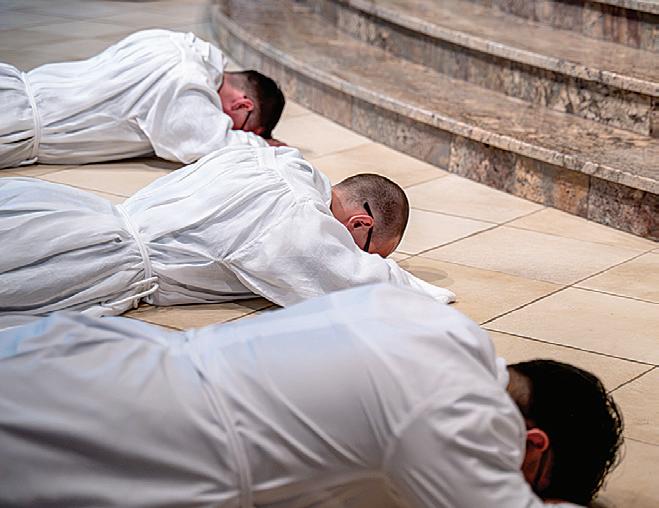
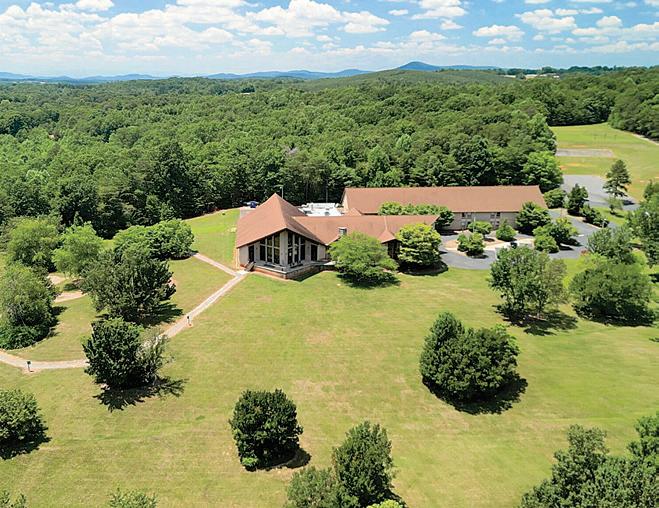
CHRISTINA LEE KNAUSS clknauss@rcdoc.org
CHARLOTTE — From robots forced to survive in the wilderness to the true story of Norwegian children who smuggled millions of dollars in gold past Nazi soldiers during World War II, Diocese of Charlotte students got swept up in adventures to prepare for the St. Jerome Book Battle.
The annual Book Battle sees teams of students from Catholic schools face off against each other at MACS Fine Arts Center at Charlotte Catholic High School. It’s similar to Quiz Bowl, a national competition that tests knowledge of general academic subjects. The difference is these questions are focused on literature – a book lover’s dream.
Dru Edwards, a fourth-grader at Sacred Heart School in Salisbury, said the contest helped him get out of his reading comfort zone.
“I like reading, and through this I read a lot of books I would not normally have been interested in, but discovered were really
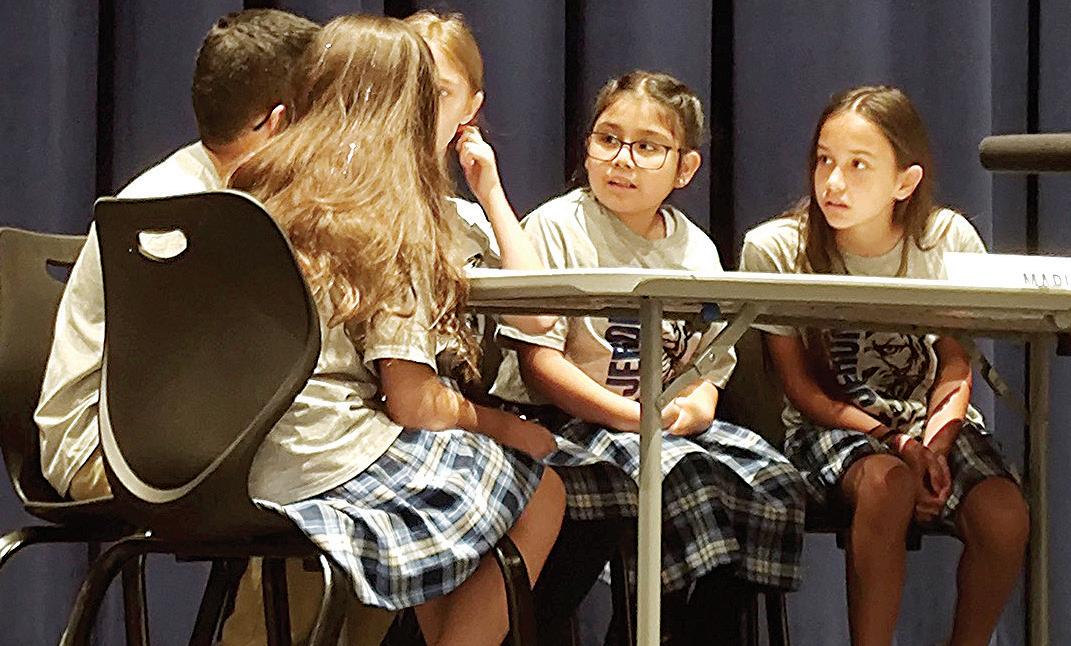
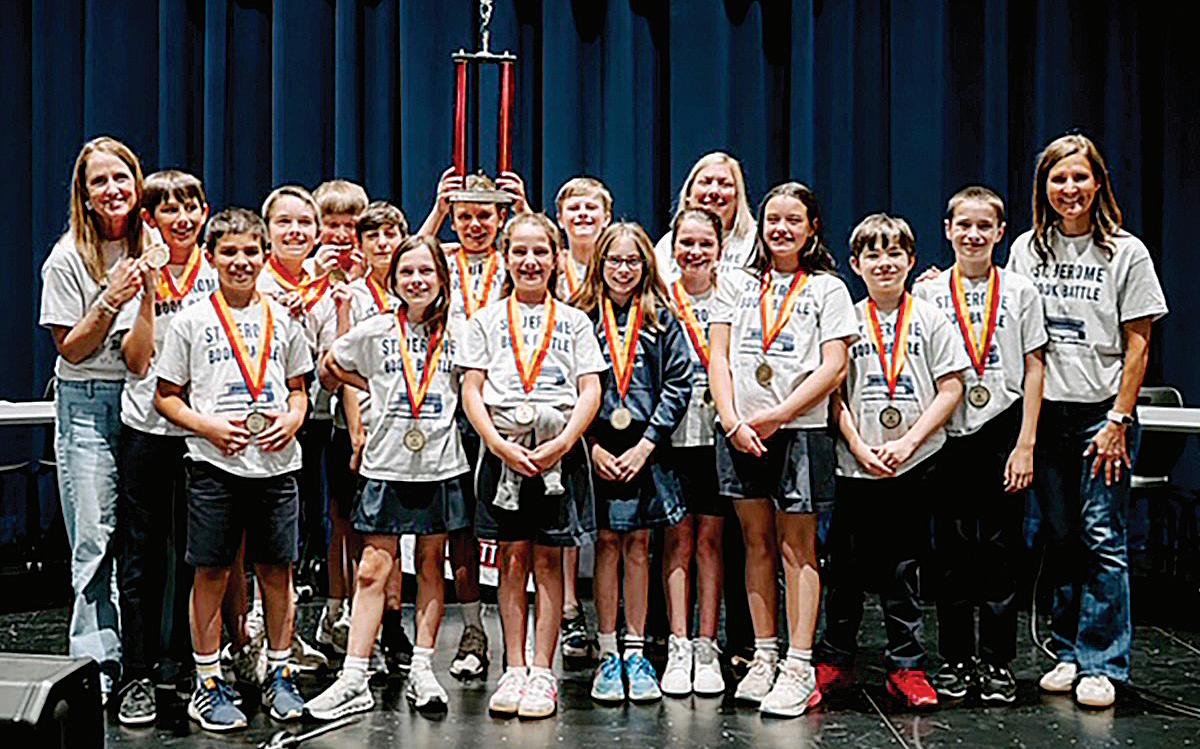
provided for fourth- and fifth-grade students and sixth- through eighth-graders. Guided by team coaches, the students spend months reading the books and participating in activities to increase their understanding of
such as faith, family, resilience, community, friendship and loyalty.
For Monday’s Book Battle, each school sent one team of 12 students who were asked questions about their books and awarded points for their answers. Teams competed against each other in preliminary rounds.
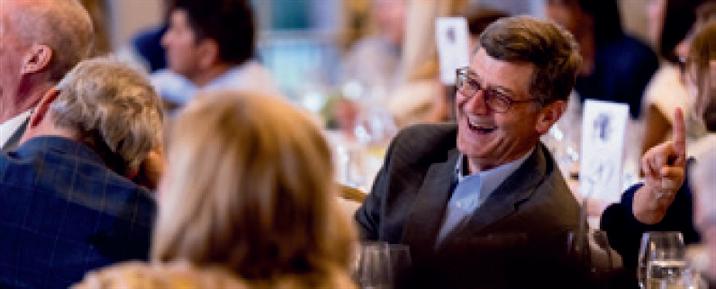
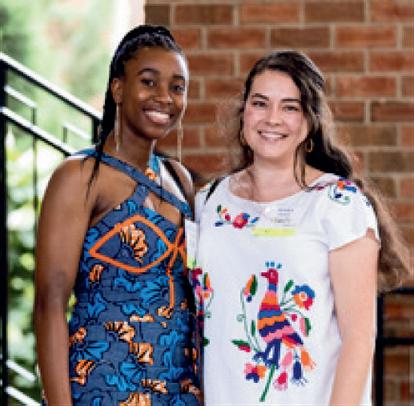
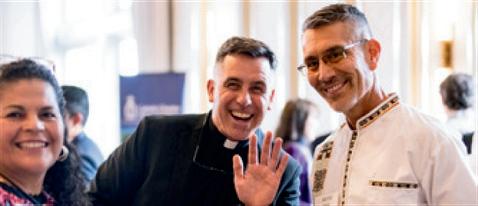
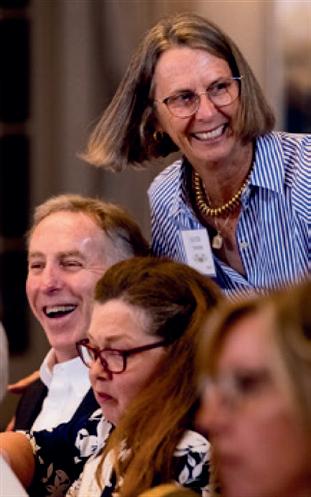
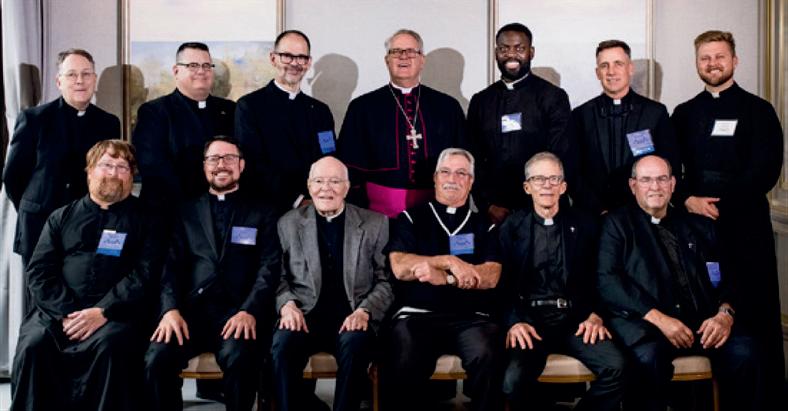

The two highest scoring teams from the preliminary rounds competed head-to-head in a championship round.
Defending fourth- and fifth-grade champion St. Ann School edged out St. Mark in a sudden death match to reach the championship round. St. Ann then won first place in the competition, with Our Lady of the Assumption School as the runner-up.
Holy Trinity Middle School in Charlotte won the middle school competition held on March 9, and the runner-up was St. Mark School in
During a break between rounds, the team from Sacred Heart enjoyed snacks and talked with coach Leigh Yelton about how things were going. A book lover herself, Yelton teaches third grade but volunteered to handle the fourth- and fifth-grade team because it gives her a chance to interact with many of her former students.
“I’ve got a real love for literature and the language arts, so this is a wonderful thing to do,” Yelton said. “It honestly takes a lot of time and effort because our students start by reading the books the previous summer, and then our team meets frequently to prepare for the competition.”
Peyton Bloxsom, 11, a fourth-grader at Sacred Heart, said she enjoys the Book Battle because it not only gives her a chance to read but also to make some new friends.
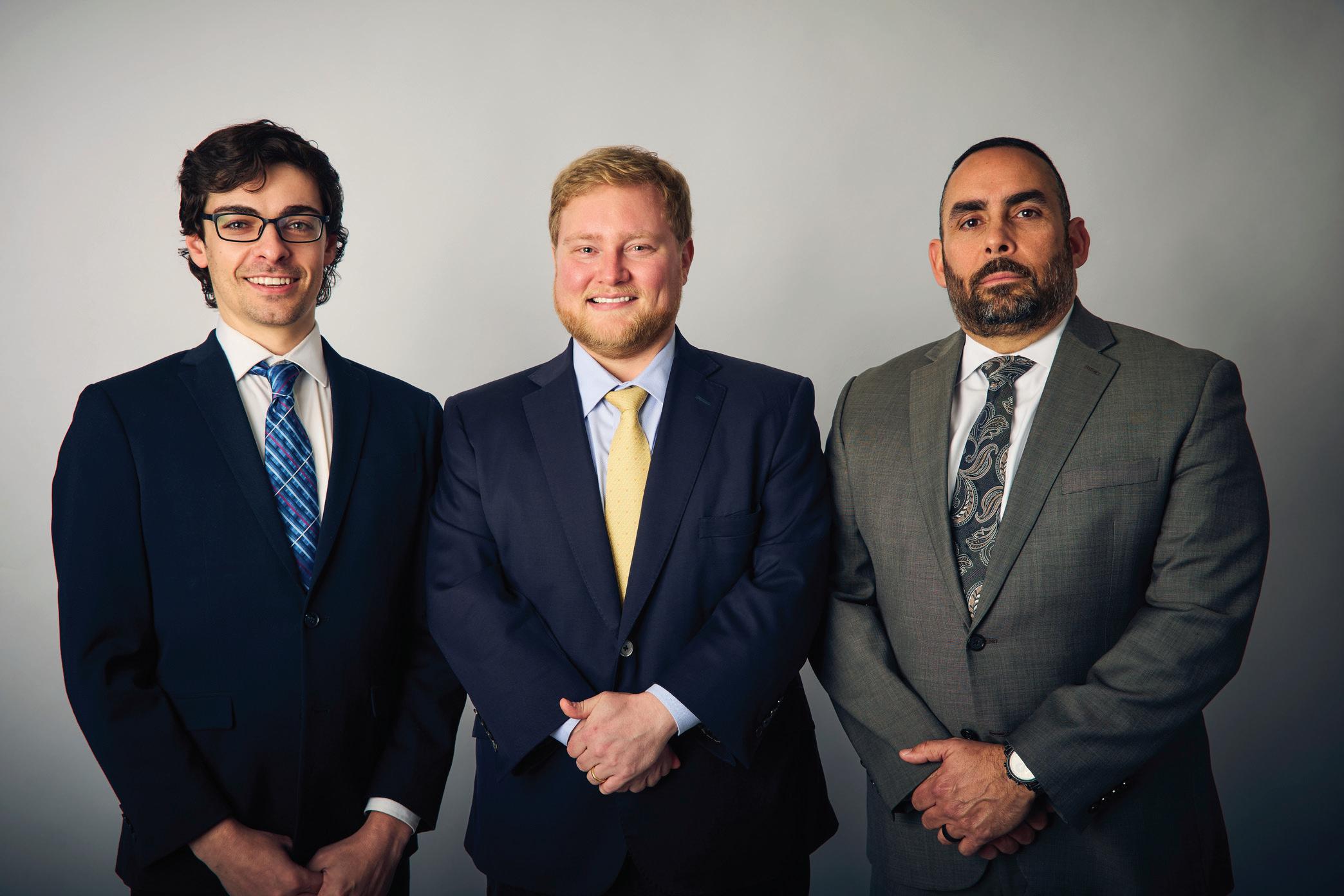

CHRISTINA LEE KNAUSS clknauss@rcdoc.org
CHARLOTTE — A class trip turned into an emotional and personal encounter with history for eighth-grade students and a teacher from Our Lady of the Assumption School in Charlotte as they got to do something normally done by presidents and dignitaries: placing a wreath at the Tomb of the Unknown Soldier.
Twenty-seven students along with staff and faculty members visited Washington, D.C., on a whirlwind three-day tour beginning March 30 that took them to several museums, nine monuments, the Basilica of the National Shrine of the Immaculate Conception and Arlington National Cemetery.
At Arlington, several students were able to lay a wreath at the Tomb of the Unknown Soldier, described by many as the most hallowed grave on U.S. soil. It is the burial site of unidentified service members who died in World War I, World War II, the Korean War and the Vietnam War. The tomb is guarded 24 hours a day, seven days a week by soldiers from the 3rd U.S. Infantry Regiment, also known as “The Old Guard.”
Individuals, veteran’s organizations, school groups and others can apply to lay wreaths at the tomb. It involves a moving ceremony that includes guidance from a Tomb Guard and the playing of taps. By laying a wreath, the eighth-graders followed in the footsteps of U.S. presidents and other high-profile dignitaries who have also placed wreaths there.
Auggie Kojis, 13, was one of the students who placed the wreath.
“Just to be at Arlington and see all of these graves that represented all these lives that have defended our country made me really emotional,” Kojis said.
While visiting Arlington, second-grade teacher James Moore took time to pause and reflect at the grave of his grandfather, Michael Ramon Silva, who served in the U.S. Army in Vietnam.
Moore said he knew his grandfather while growing up in California and made the trip to Arlington when Silva was buried there in 2020. However, he had not
Caring for Charlotte Area Catholic Families in Their Hour of Need Since 1926
FUNERAL SERVICE, INC.
Charlotte 704-334-6421
Pineville 704-544-1412
Mint Hill 704-545-4864
Derita 704-596-3291
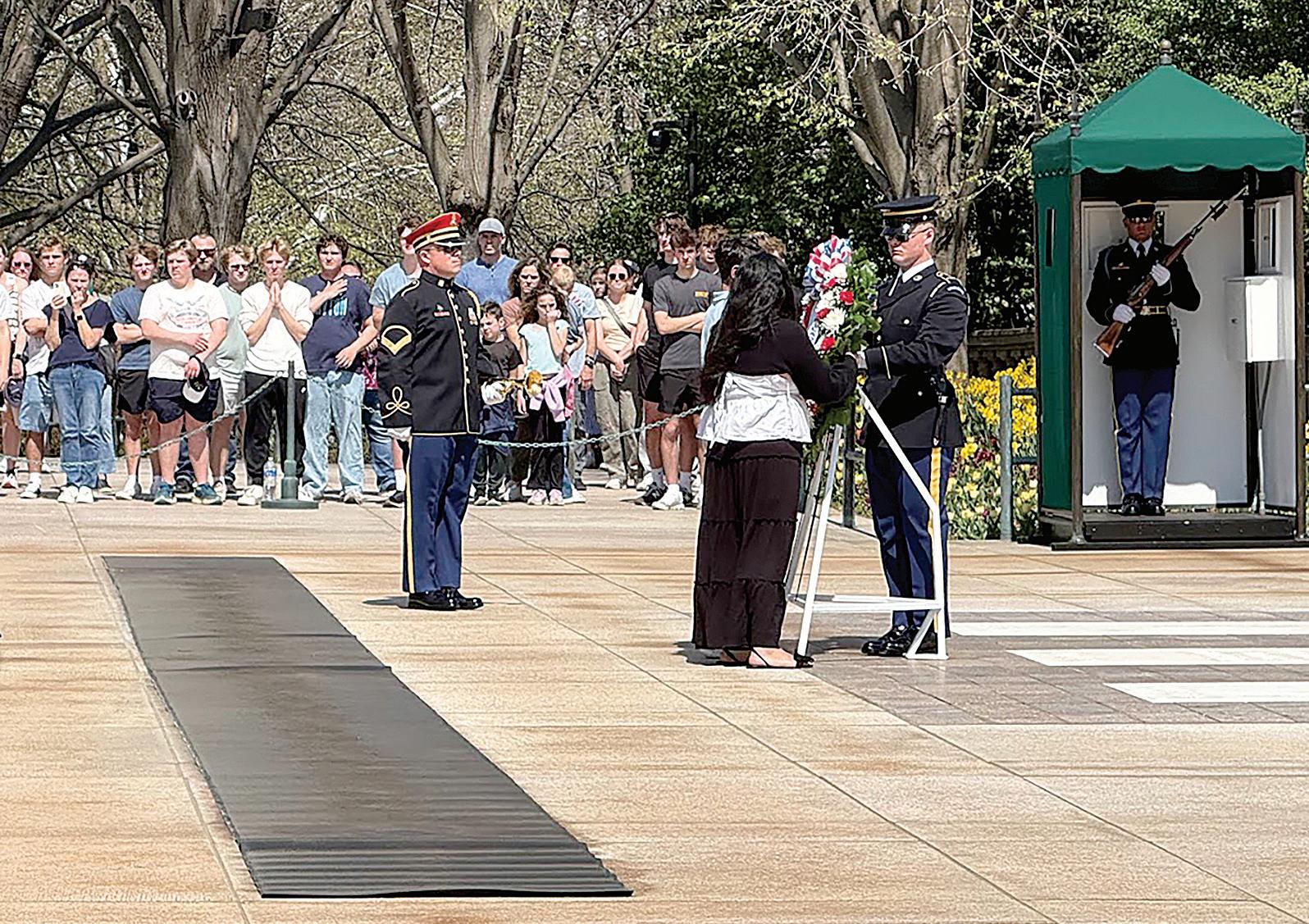
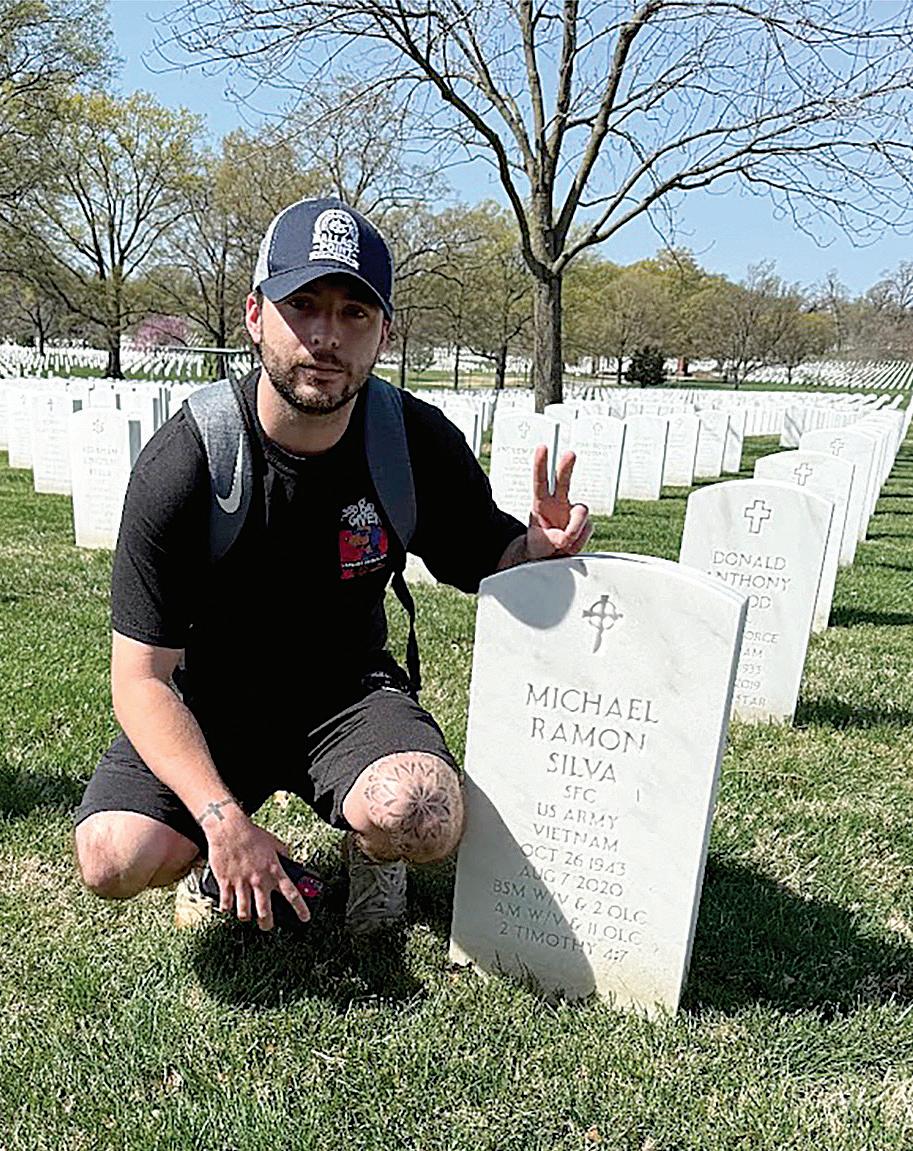
seen the headstone with his grandfather’s information on it until this trip.
The inscription on the headstone includes “2 Timothy 4:7,” a Bible verse written by St. Paul when he was imprisoned that reads, “I have fought the good fight, I have finished the race, I have kept the faith.”
“It was really nice to be able to see the headstone for the first time,” he said. “It was also great to have that moment to share with the students. This was a good way for them to make the connection with history, to realize that these were real people with real families, and that their service for our country impacted other people. This headstone was connected with me, someone
they actually know.”
Lindsay Palma-Salmeron, 14, who placed the wreath with Kojis, was moved by the chance to see Silva’s grave.
“We’re all like a big family at this school, so seeing him visit his grandfather and getting to learn about him was very
Please pray for the following priests who died during the month of May:
Rev. Ramon Berg 2003
Rev. Henri Blanc 1972
Rev. Anthony E. Cahill, OSB 1985
Rev. Hugh Hagerty, OSB 1979
Rev. Edmund Kirsch 2001
Rev. Michael T. Kottar 2021
Rev. Francis J. McCourt 1982
Rev. William McShea 1973
Rev. Matthew McSorley, OSB 2012
Rev. James J. Noonan 1992
Rev. Msgr. Michael O’Keefe 1994
Rev. Edward C. Smith 1983
Rev. James A. Stuber 1985
by the Knights of Columbus www.kofcnc.org
special,” she said.
Students were also awestruck by the visit to the basilica, where they attended Mass and visited its many chapels. They also saw chairs used by former popes when they visited, as well as the 1963 papal coronation tiara of Pope Paul VI, which was gifted to the United States in 1968 and is the only papal tiara on permanent display outside the Vatican.
Giving appreciated stock to your parish, Catholic school, agency, the diocese or the Foundation creates a gift that will benefit your desired beneficiary and provide you tax benefits.
For more information, go to www.charlottediocese.givingplan.net or call Gina Rhodes at 704/370-3364.
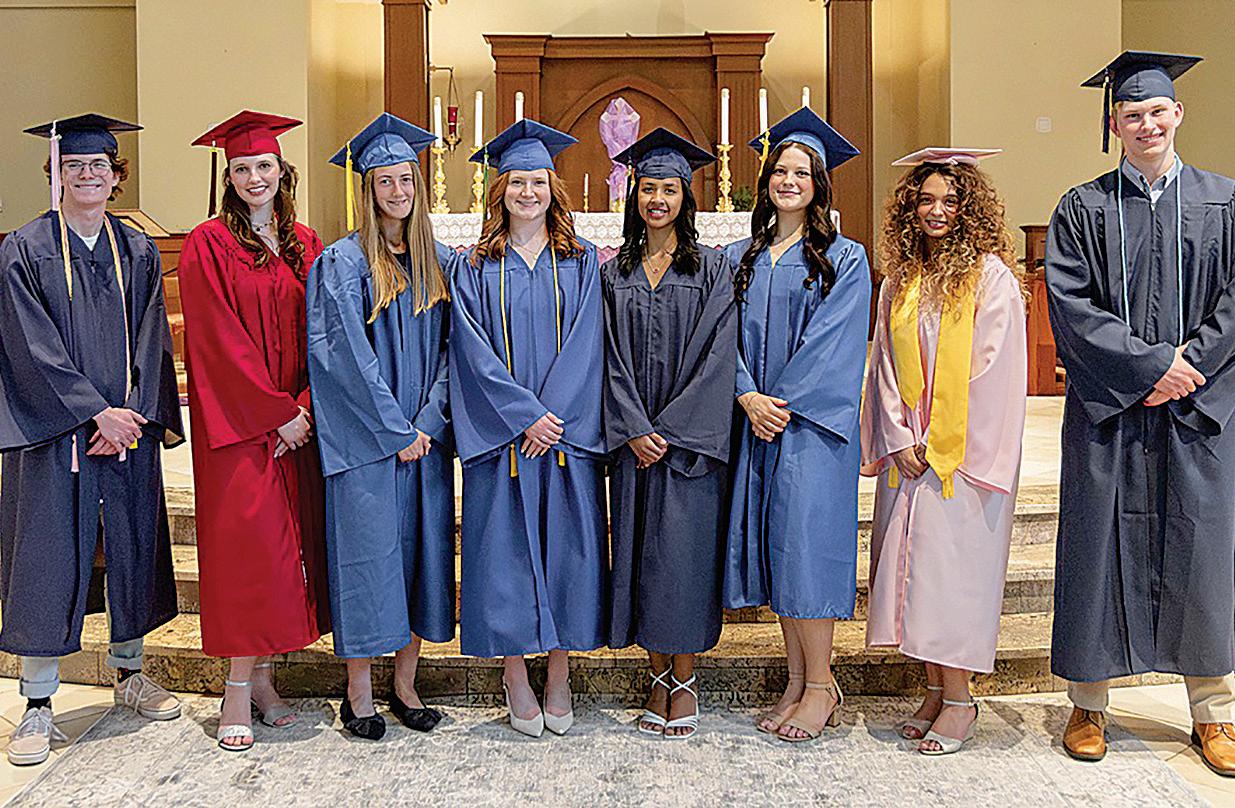
HUNTERSVILLE — St. Mark Parish’s Homeschool Ministry announces the upcoming graduation of nine students this year from homeschool programs in the Diocese of Charlotte. The graduation ceremony will be held at 10 a.m. Saturday, June 6, in the Monsignor Kerin Family Center at St. Mark Church. The graduates are (from left): William Aiden Bolstad of Fiat Academy, Hannah Rose Laskowski of Divine Mercy Academy, Maria Isabela Tapia of School of the Holy Family, Sarah Cecilia Martin of Saint Patrick’s Academy, Diamondra Ramarijaona of Holy Family Catholic School, Mary Elizabeth Pressley of Holy Spirit Homeschool, Lillian Mary Mancusi of Saint Joseph Homeschool, Justin Ellis King of St. Anne’s Academy and Jose Nicholas Felten of Notre Dame Catholic Homeschool (not pictured).
— St. Mark Parish’s Homeschool Ministry
FROM PAGE 12
Stephen and Kelly Hansen, Kathryn and Matthew Papay, Michael and Cressida Shelton, and Zachariah and Kelsey Symons. During the ceremony, the couples renewed their wedding vows and exchanged rings.
Father Mbanefo offered a moving homily about the importance of Catholic marriage and its many benefits, including the focus on bearing and raising children and the chance for couples to grow closer to each other and to Jesus through their marriage.
He reminded the congregation that Jesus started His public ministry at a wedding feast at Cana in Galilee, as described in the Gospel of John. There, at the bidding of the Blessed Mother, He changed ordinary water into wine.
“This was the first miracle of Jesus Christ where He shared with us that He is truly from God,” Father Mbanefo said. “The full presence of God was at the feast of a wedding. That was not accidental … the marriage covenant had been messed up by sin, and God sent His Son into the world to restore things to their proper
FROM PAGE 13
their rent and other bills. Yet, she notes this is not a homelessness problem but a housing problem.
“You have people who work two to three jobs but still stay outside because they don’t make three times their rent monthly (a common lease requirement), so they can’t afford to live,” she said.
With the average monthly rent in Charlotte at $1,600 or more, according
order. The union of a man and a woman is something that God created. Marriage is a divine institution. … It came from God and it is God who blesses it.”
After Mass, a reception featured a luncheon at which the couples gathered around a large cake and took turns cutting it.
The Clines have been married for 17 years, and both came into full communion with the Church at the Easter Vigil.
“We finally get a chance to get it right at this beautiful ceremony,” Jamie Cline said. “It’s such a beautiful blessing to be able to do this.”
The ceremony was a special experience for parish secretary Kelly Hansen, whose husband Stephen Hansen came into the Church at the Easter Vigil after more than a decade of inquiry and study, she said.
“We had no witnesses or friends at our civil wedding 30 years ago, so it was a special blessing to share this celebration with friends who feel like family,” she said.
The celebratory mood of the day carried out into the parking lot, where a message scrawled on the back window of one of the couple’s vehicles conveyed the true message of the day: “Just Married!”
to RentCafe.com, the scenario is not uncommon, so Homeless Relief Ministry works to ensure that once those in need find a safe place to live, they can move into a comfortable, fully furnished home.
“I like going to ground zero and helping from there,” said volunteer and St. Matthew parishioner Bill LeMay. He lives by Mother Teresa’s philosophy by finding his own Calcutta – a place where people need help – right in Mecklenburg County.
“Like Sister Teresa said, the people that need help are here, so that is where I love and help them.”


BRIAN SEGOVIA bmsegovia@rcdoc.org
CHARLOTTE — En toda la Diócesis de Charlotte, un impulso inconfundible está creciendo entre los adultos jóvenes.
Antes considerados un grupo difícil de involucrar, aquellos en sus 20 y 30 años que navegan carreras, relaciones e identidad, los adultos jóvenes se están convirtiendo rápidamente en uno de los sectores más activos y vibrantes de la vida diocesana y parroquial.
Para algunos, la formación en la fe católica se enciende en la universidad, donde la demanda de la Pastoral Universitaria está creciendo. Más de 800 estudiantes universitarios asisten regularmente a misa a través de ministerios universitarios en toda la diócesis, el doble de la asistencia de hace una década. Y cientos más de jóvenes participan en actividades diocesanas de convivencia y retiros, sin mencionar muchos más que participan en ministerios parroquiales para adultos jóvenes. El creciente interés refleja un aumento de adultos de todas las edades que se unen a la Iglesia a nivel local y nacional. En la Diócesis de Charlotte, el número de adultos que ingresan a la Iglesia aumentó un 43% durante dos años consecutivos, y se espera que esta temporada de Pascua iguale o supere los 1,743 nuevos miembros del año pasado, la cifra más alta en al menos una década.
A nivel nacional, la aplicación católica de oración Hallow reportó un aumento promedio anual del 38% en adultos que ingresan a la Iglesia este año. Aunque no se registran las edades, diócesis de todo el país informan de manera anecdótica un aumento notable en adultos jóvenes.
“En los últimos dos años, se activó un cambio,” dijo el padre Bill Clements de la Universidad Estatal de Arizona a la Agencia Católica de Noticias. La universidad recibió a más de 100 estudiantes en la fe este año, una cifra récord. “Creo que la gente está cansada de la locura. Tienen hambre de dirección, verdad, bondad y belleza.”
Las organizaciones están incrementando los esfuerzos para llegar a los adultos jóvenes, especialmente a aquellos que crecieron en la Iglesia y pueden estar alejándose.
Entre ellas se encuentra Young Catholic Professionals, una organización nacional sin fines de lucro fundada en 2010 que conecta a adultos jóvenes a través de eventos de networking, mentoría y formación en la fe. El grupo inició su capítulo en Charlotte en octubre
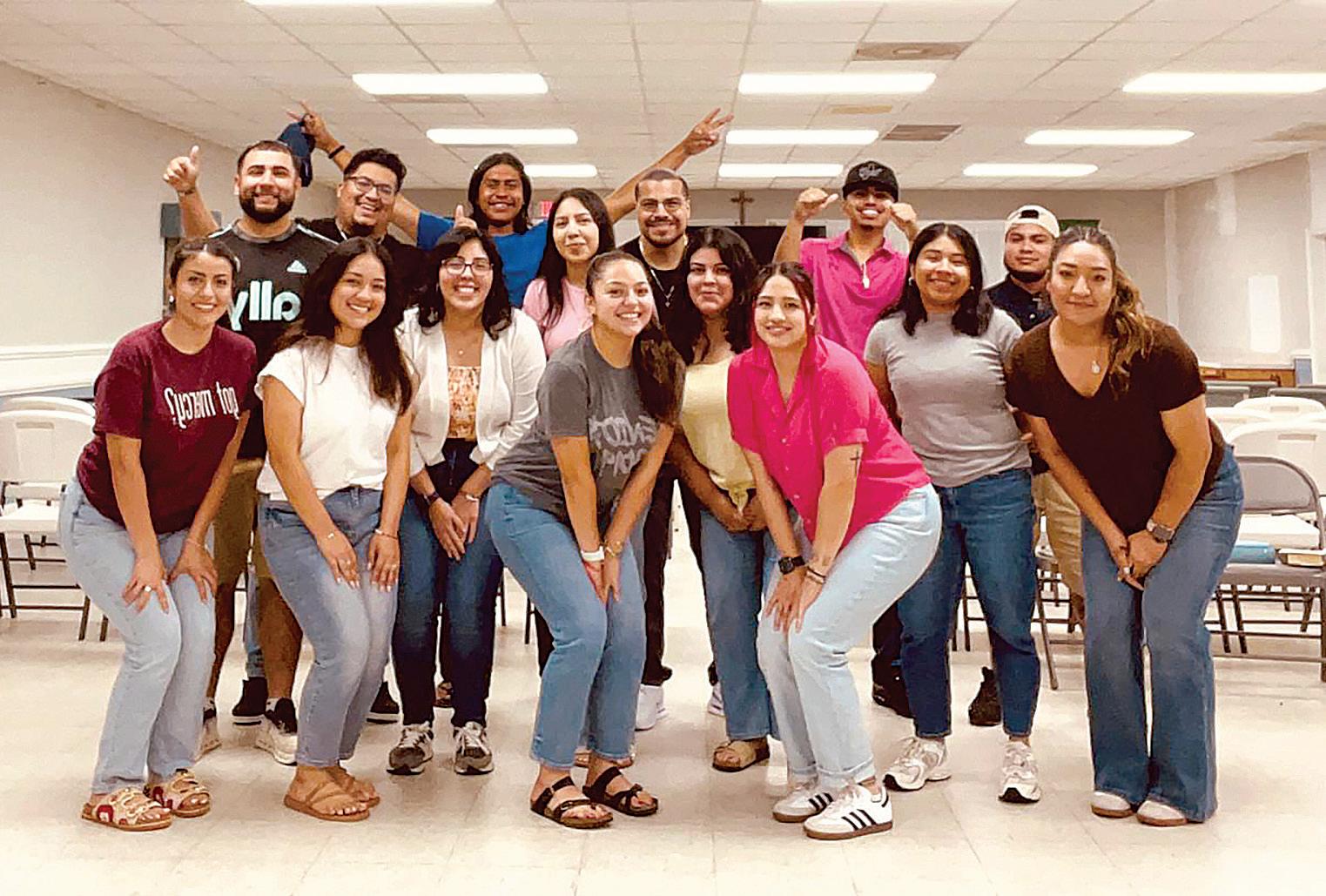
El grupo de adultos jóvenes de la parroquia Nuestra Señora de los Caminos en Thomasville lleva varios años reuniendo a adultos de entre 18 y 30 años cada dos martes para actividades de fe y vida social.
de 2023 y ha visto un crecimiento sólido en los últimos dos años. “Catholic Sports”, una nueva liga deportiva dirigida a jóvenes, se lanzó en enero y ha reunido a más de 80 jugadores en su primera sesión de seis semanas de voleibol de playa.
Y “SEARCH”, un ministerio de evangelización de los frailes franciscanos en Charlotte, organiza eventos como “Friar Fridays” y “Brews and Good News” en bares y otros lugares, ofreciendo convivencia e información sobre la fe católica en un ambiente social. Los tres frailes detrás del ministerio identificaron a Charlotte como la mejor ciudad para iniciar su ministerio poco convencional, en parte por la gran cantidad de jóvenes adultos que viven y se mudan a la ciudad. La edad promedio de quienes viven en el barrio de South End y Uptown de Charlotte es de 29 a 32 años. Con más de 30 años de experiencia trabajando con jóvenes en la educación católica, el obispo Michael Martin está reforzando el apoyo a la Pastoral Juvenil y Universitaria, y ha instado a las parroquias de toda la diócesis a enfocarse más en llegar a los adultos jóvenes. Pasó más de tres décadas en escuelas secundarias y universidades, incluyendo tiempo como director del Centro Católico de la Universidad de Duke en Durham. Desde el día en que fue anunciado
Estos grupos resultan atractivos porque ofrecen oportunidades de convivencia, formación en la fe y servicio. Entre los grupos más recientes se encuentran “CASA” en St. Ann, “Aquinas’ Finest” en St. Thomas Aquinas y SJN Young Adults en St. John Neumann en Charlotte, así como ministerios en iglesias desde Hendersonville hasta la región del Triad. Estas iniciativas, a menudo impulsadas por líderes laicos, se han expandido más allá de estudios bíblicos para incluir retiros e iniciativas de alcance comunitario que encuentran a los jóvenes adultos donde están e invitan a una participación más profunda en la vida de la Iglesia.
VIGILANT RETREAT
como obispo de Charlotte, el obispo Martin ha enfatizado el impacto que los jóvenes pueden y deben tener en la Iglesia local. Ha señalado que cuando se une su energía y entusiasmo con la Buena Nueva de Jesucristo, suceden cosas maravillosas en la Iglesia. A nivel parroquial, muchos grupos de jóvenes adultos han surgido de manera constante en la última década, sumándose a ministerios ya establecidos en parroquias como St. Gabriel, St. Matthew y otras.
En la parroquia St. Ann en Charlotte, un evento anual refleja este crecimiento. Hace cinco años, la feligresa Katie Cosby reconoció una necesidad no satisfecha de una conexión más profunda dentro de la comunidad de adultos jóvenes. “Veía a personas viviendo tanto en el mundo como en la fe,” dijo Cosby. “Realmente quería unir esas dos cosas e inspirar a las personas a convertirse en los grandes santos que están llamados a ser.”
Eso la motivó a crear el Vigilant Retreat. Fundado en 2022 con 90 asistentes, el retiro casi ha duplicado su tamaño —hasta 150 este abril— y ha tenido lista de
‘Esto me ha ayudado a descubrir más sobre la Iglesia. En este grupo nos apoyamos mutuamente en nuestro camino de fe.’
Yeimy Sánchez, 25
espera durante los últimos dos años.
Los ponentes suelen incluir una mezcla de jóvenes adultos católicos, clero y religiosos. Este año, la influencer católica Ana Munley habló en el retiro.
“Cada año me sorprende cuánto impacto tiene en las personas que asisten,” dice Katie Sholtis, quien ha participado en cada retiro desde el inicio. “He visto que los frutos de este retiro se extienden más allá del fin de semana y no puedo esperar a ver su impacto continuo en la comunidad de Charlotte y más allá.”
ADULTOS JÓVENES HISPANOS
La comunidad hispana también está experimentando un fuerte crecimiento en la participación de adultos jóvenes. Desde COVID-19, un grupo de parroquias comenzó ministerios dedicados a adultos jóvenes para sus poblaciones de habla hispana.
En la parroquia St. John Neumann, “Nueva Alianza” se formó en enero. Está dirigido por los feligreses Juan Sánchez y Martin Rubí Leodegario, quienes ya participaban en otro ministerio de jóvenes adultos de la parroquia, pero iniciaron Nueva Alianza para servir a quienes tienen el español como lengua principal.
“El año pasado, cuando me convertí en feligrés, me uní al grupo en inglés, pero al haber un gran número de hispanohablantes nativos, decidimos que era mejor crear nuestro propio grupo,” dijo Sánchez. “También queríamos una forma de reunirnos con más frecuencia, y así nació el grupo.” El ministerio ha crecido de 4 a 20 miembros en cuestión de meses. Nueva Alianza, que se reúne todos los miércoles a las 7:30 p.m., se enfoca en la oración, la lectura de la Escritura y en compartir una comprensión más profunda de la fe. “Esto me ha ayudado a descubrir más sobre la Iglesia,” dijo Yeimy
Diez años después de su muerte en un devastador terremoto en Ecuador, la hermana Clare Crockett —una ex aspirante a actriz que una vez bromeó diciendo que se convertiría en “una monja famosa”— es ahora recordada por católicos de todo el mundo como una evangelizadora llena de alegría.
La hermana Clare, una monja irlandesa de 33 años, murió el 16 de abril de 2016, cuando un terremoto sacudió la región costera de Ecuador, derrumbando la escuela donde enseñaba música.
Nacida en Derry, Irlanda del Norte, la hermana Clare había soñado alguna vez con la fama en Hollywood. Amigos y familiares recuerdan que desde joven mostró un gran potencial como actriz y presentadora de televisión, hasta que una experiencia de conversión dramática durante un retiro de Semana Santa en España a los 17 años cambió el rumbo de su vida.
Poco después ingresó en las Siervas del Hogar de la Madre, abrazando la vida religiosa con la misma intensidad con la que antes había perseguido una carrera en el mundo del entretenimiento.
“El Señor transformó su alma y ya no anhelaba nada más que tener a Cristo como su único amor”, dijo la hermana Kristen Gardner, postuladora de la causa de canonización de la hermana Clare, a OSV News en enero de 2025.
SIERVAS DEL HOGAR DE LA MADRE | OSV NEWS
La hermana Clare Crockett, miembro de las Siervas del Hogar de la Madre, aparece en una fotografía de 2011. La causa de canonización de la religiosa irlandesa, que murió en Ecuador durante un terremoto en 2016, se abrió en Madrid el 12 de enero de 2025.
La hermana Kristen enfatizó que la causa “no está impulsada por la razón humana”, sino por “el deseo de dar gloria a Dios”. En enero de 2025, la diócesis de Alcalá de Henares, cerca de Madrid, abrió formalmente la fase diocesana del proceso de beatificación de la hermana Clare, nombrando un tribunal para investigar su vida y virtudes.
A medida que se acercaba el décimo aniversario de su muerte, las Siervas del Hogar de la Madre lanzaron un proyecto en YouTube que mostraba que su camino hacia

la santidad estuvo marcado por una fe tan profunda como su sentido del humor.
Jacob Wagner, quien conoció a la hermana Clare cuando se preparaba para su Primera Comunión en 2006, recordó su inusual combinación.
“Ella tenía como un interruptor… estaba divirtiéndose jugando con la pelota y luego cambiaba ese interruptor cuando entrábamos en… un lugar como la iglesia o la capilla de adoración”, dijo Wagner. “Y como niño, al verla y notar eso, piensas: está bien, hay un tiempo para jugar y un tiempo para rezar”.
Otros recuerdan su manera distintiva de comunicar la fe mediante gestos simples y memorables.
“Mi recuerdo principal de la hermana Clare sería al final de sus frases. Siempre decía: ‘OK’, o decía: ‘Amén’”, dijo Gracie, quien la conoció de niña en Florida, en el video de YouTube. “Y si no respondíamos ‘Amén’, lo decía más fuerte… y teníamos que responder con ‘Amén’”.
“Amén significa: ‘Así sea’”, añadió. “Así que eso creo que describe perfectamente a la hermana Clare’”.
La última canción que estaba tocando antes del terremoto fue, de hecho, “Que todo el pueblo diga Amén”.
La hermana Clare tenía una habilidad poco común para hablar sobre cuestiones morales difíciles de una manera que conectaba con los jóvenes, dijo el padre Fred Parke, quien fue párroco de la Iglesia de la Asunción en Jacksonville, Florida. La hermana Clare vivió durante un tiempo en la comunidad de las Siervas en Jacksonville.
“Sabías que… hablaba del respeto por la vida, del aborto y de la moral”, dijo el padre Parke. “Pero lo hacía de tal manera que no la rechazaban… querían escuchar más de ella”.
Amigos también señalaron su discernimiento para equilibrar la alegría y la seriedad en el ministerio.
Según su congregación, su muerte en el terremoto la llevó al “tan esperado encuentro final con el Señor”.
— OSV News
VIENE DE LA PÁGINA 19
Sánchez, de 25 años, quien creció como Testigo de Jehová pero se convirtió al catolicismo hace cuatro años. “En este grupo nos apoyamos mutuamente en nuestro camino de fe.”
En Greensboro, la parroquia St. Mary estableció su primer grupo de jóvenes adultos en 2022 y hoy cuenta con unos 25 miembros. A medida que su alcance en la comunidad ha crecido, parroquias vecinas se han inspirado para formar sus propios ministerios de adultos jóvenes.
“He visto cómo este grupo ha permitido a cada persona expresar su fe con confianza,” dijo el fundador del grupo de St. Mary, Honorio Valle-Carvajal. “Esto los atrae porque se siente como una familia.”
Slaterk Pérez, de 26 años, quien regresó recientemente a su fe católica tras haberse alejado de la Iglesia, cree que las redes sociales han impulsado la curiosidad sobre la fe entre los adultos jóvenes, muchos de los cuales están en búsqueda de algo.
“Ahora tenemos acceso fácil a tanta información sobre la fe; creo que eso está impulsando a la Generación Z a intentarlo,” dijo Pérez. “Estar aquí te hace sentir más orgulloso de ser católico.”
El Papa León XIV deseaba que su viaje a África pusiera de relieve las graves injusticias que persisten en la región y transmitiera un mensaje de paz a un mundo marcado por los conflictos y las violaciones del derecho internacional.
“Queridos hermanos y hermanas, la visita del Papa es, para las poblaciones africanas, una ocasión para hacer oír sus voces, para expresar la alegría de ser pueblo de Dios”, dijo el Santo Padre. Siguiendo la costumbre de sus predecesores, el Papa León aprovechó su primera audiencia general tras su viaje del 13 al 23 de abril a cuatro naciones africanas para explicar a la gente el propósito de su visita y lo que más le había impactado de su recorrido. Dirigiéndose a miles de personas en la Plaza de San Pedro el 29 de abril, el Papa León dijo en inglés que su estancia allí “tenía como objetivo ofrecer al mundo un mensaje de paz en un momento marcado por los conflictos y las frecuentes violaciones del derecho internacional”.
“Junto con el llamado a la paz, también denuncié las graves injusticias que existen en esos países tan ricos en recursos naturales, instando a la comunidad internacional a superar las actitudes neocoloniales y a comprometerse en una colaboración auténtica”, dijo.
En su viaje, el Papa visitó Argelia, Camerún, Angola y Guinea Ecuatorial.
“Desde el inicio de mi pontificado, había pensado en un viaje a África”, dijo en su discurso principal en italiano. “Doy gracias al Señor, que me ha permitido realizarlo como Pastor para visitar y animar al pueblo de Dios”.
En Argelia, un país predominantemente musulmán, el Papa dijo que quería “mostrar al mundo que es posible vivir juntos como hermanos y hermanas, incluso de religiones distintas, cuando nos reconocemos hijos del mismo Padre misericordioso”.
El país del norte de África es también el lugar de nacimiento de su “padre espiritual”, San Agustín, y al “comenzar desde las raíces de mi identidad espiritual”, le ofrecía una forma de destacar su legado, dijo. “Él es maestro en la búsqueda de Dios y de la verdad. Su testimonio es hoy de gran importancia para los cristianos y para cualquier persona”.
Los otros tres países eran predominantemente cristianos, dijo, y “por tanto, me he sumergido en un ambiente de fiesta de la fe”.
También fue un poco similar a “lo que le sucedía a Jesús con las multitudes de Galilea: Él las veía sedientas y hambrientas de justicia, y les anunciaba: ‘Bienaventurados los pobres en el espíritu, bienaventurados los mansos, bienaventurados los que trabajan por la paz’”, dijo el Papa,

Beloved Catholic kids series ‘Chime Travelers’ now on TV
HOLLYWOOD — The beloved children’s book series “Chime Travelers” has made a leap from page to screen with its development into an animated TV series, bringing its imaginative world to life.
Known for its blend of adventure, time travel and meaningful life lessons, the Catholic series has captivated young readers with its charming characters and heartfelt storytelling for more
than 10 years.
Written by Catholic author Lisa Hendey, “Chime Travelers” follows twins Patrick and Katie as they travel to different places and time periods – thanks to some magical church bells –to learn valuable life lessons from the saints.
Developed by Family Theater Productions and Herald Entertainment, the animated series depicts the same stories from the books and includes episodes on St. Patrick, St. Francis of Assisi, St. Clare of Assisi, St. Kateri Tekakwitha, and the Holy Family.
NEW ORLEANS — A federal appeals court on April 21 narrowly upheld a Texas law requiring public school classrooms to display the Ten Commandments.
In a 9-8 ruling, the 5th U.S. Circuit Court of Appeals reversed lower court decisions that found the law violated the First Amendment. The ruling rejected arguments that the law established a religion, arguing that it “requires no religious exercise or observance.”
“Students are neither catechized on the Commandments nor taught to adopt them,” it said. “Nor are teachers commanded to proselytize students who ask about the displays or contradict students who disagree with them.”
Supporters of such laws often argue that the Ten Commandments have historical and cultural significance, while opponents argue they are an unconstitutional display of faith in a public setting.
— OSV News and Catholic News Agency
support one another in our faith journey.”
In Greensboro, St. Mary’s Parish established its first young adult group in 2022 and today has about 25 members. As their reach in the community has grown, neighboring parishes have been inspired to form their own young adult ministries.
“I have seen how this group has allowed each person to express with confidence

their faith,” said St. Mary’s group founder, Honorio Valle-Carvajal. “This attracts them because it feels like a family.”
Slaterk Pérez, 26, who returned to his Catholic faith recently after distancing himself from the Church, believes social media has fueled curiosity about the faith among young adults, many of whom are searching for something.
“We now have easy access to so much information about the faith, I believe that it is pushing Gen Z to give this a try,” Pérez said. “Being here, you become prouder of being Catholic.”

SIMONE ORENDAIN OSV News
CHICAGO — One of the first things Pope Leo XIV said from the balcony of St. Peter’s Basilica upon his election May 8, 2025, was “I am a son of St. Augustine, an Augustinian.”
The statement signaled to the world and its 1.4 billion Catholics that they were going to experience a papacy heavily influenced by a Church Father and Doctor of the Church – one whose extensive writings have endured for 16 centuries and continue to shape the Church.
Pope Leo’s brothers in the Order of St. Augustine have said their patron’s way has marked, and so far defined, the pope’s leadership over his first year.
A CALL TO FRIENDSHIP
“While it is true that Augustine is an intellectual giant, particularly when we think of his theological and doctrinal contributions, I also see his pastoral contributions – which are grounded in the human experience and his understanding of the human experience,” said Augustinian Father Kevin DePrinzio, who serves in Rome an assistant general for Englishspeaking provinces of the Order of St. Augustine.
Father DePrinzio pointed to St. Augustine’s “Confessions” and said the book highlights the saint as “one of the first (theologians) to begin to articulate a Christian understanding of friendship” and “that somehow in and through relationship, God is found.”
“This, I believe, contributes to Leo’s pastoral approach. We hear Leo often speaking about being ‘together,’ and the importance of not going at it alone,” he said.
An example of that call was evident in Pope Leo’s first video message to young people, which aired June 14, 2025, in Chicago’s Rate Field at the Archdiocese of Chicago’s celebration for the first American pope’s election. He described the Trinity as a community of love, and told young
As the one-year anniversary of Pope Leo XIV’s election to the papacy approaches on May 8, here is a selection of quotes from the pontiff on various topics:
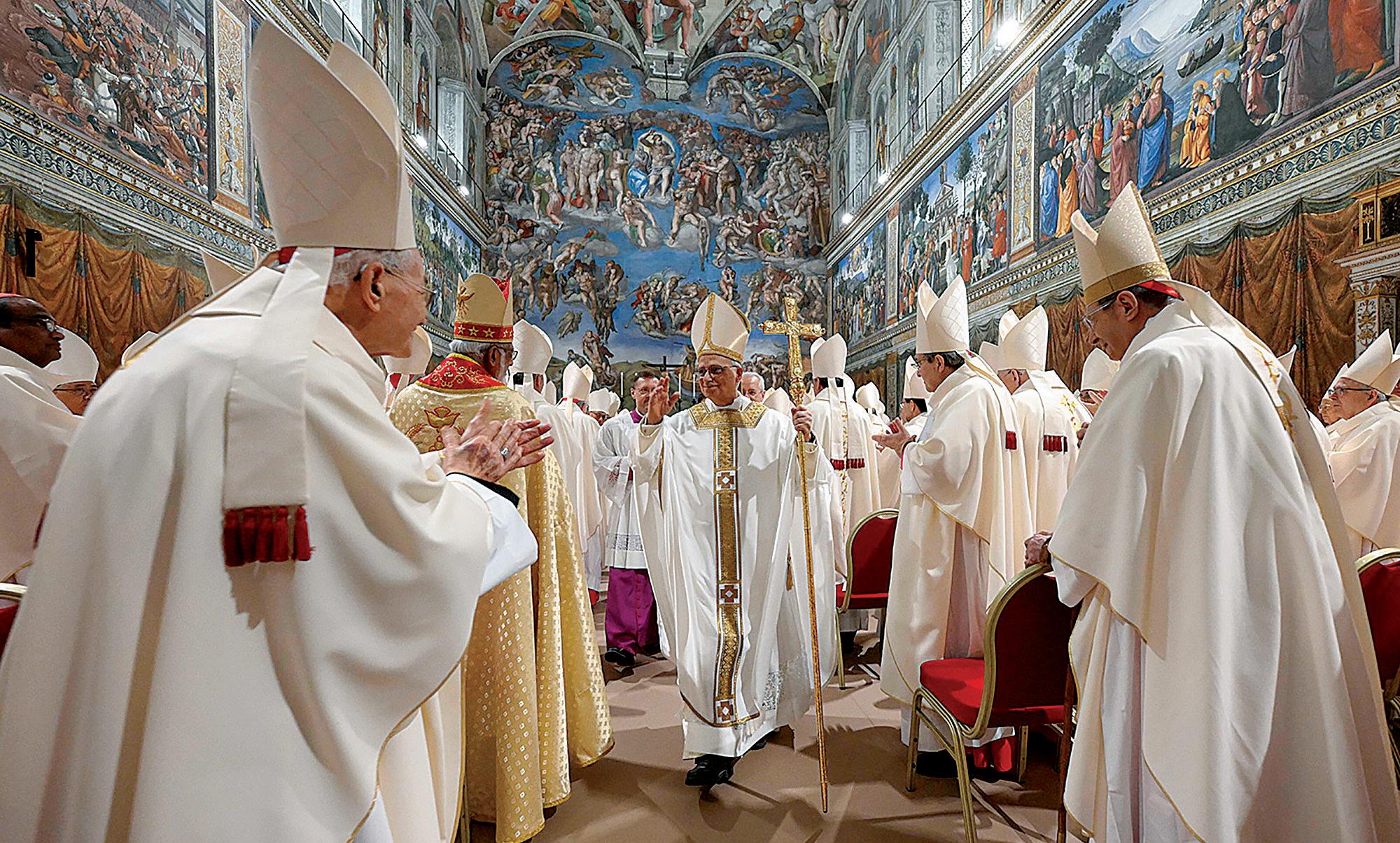
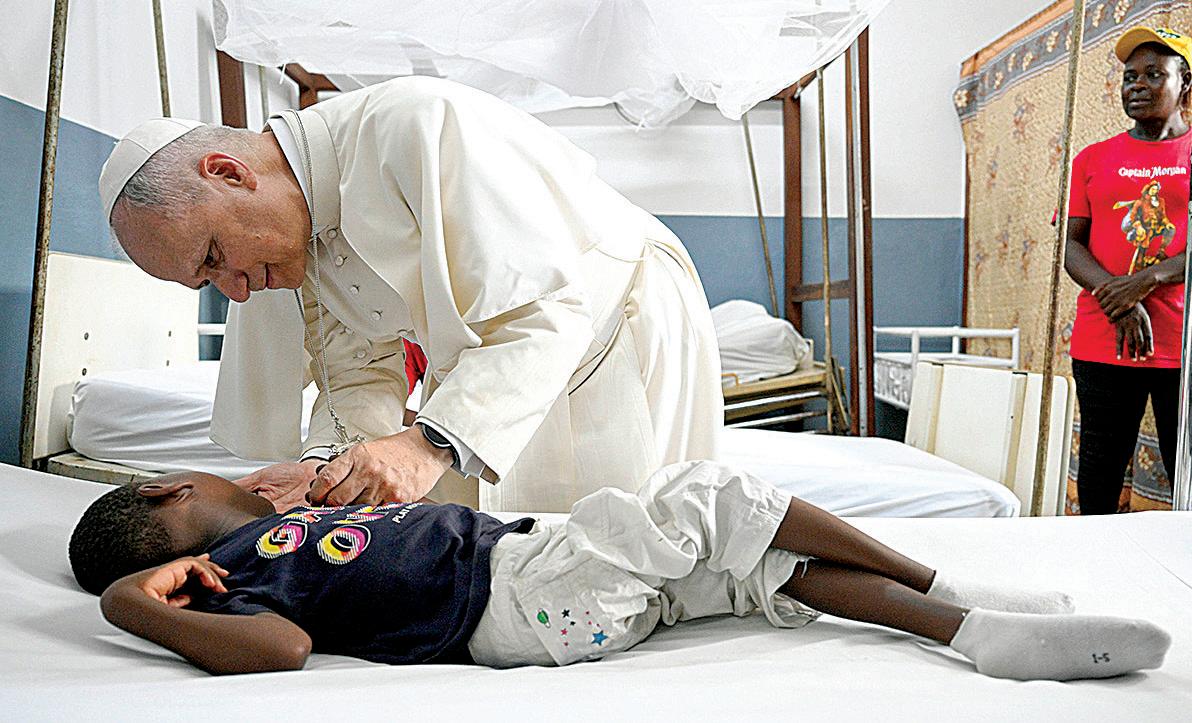
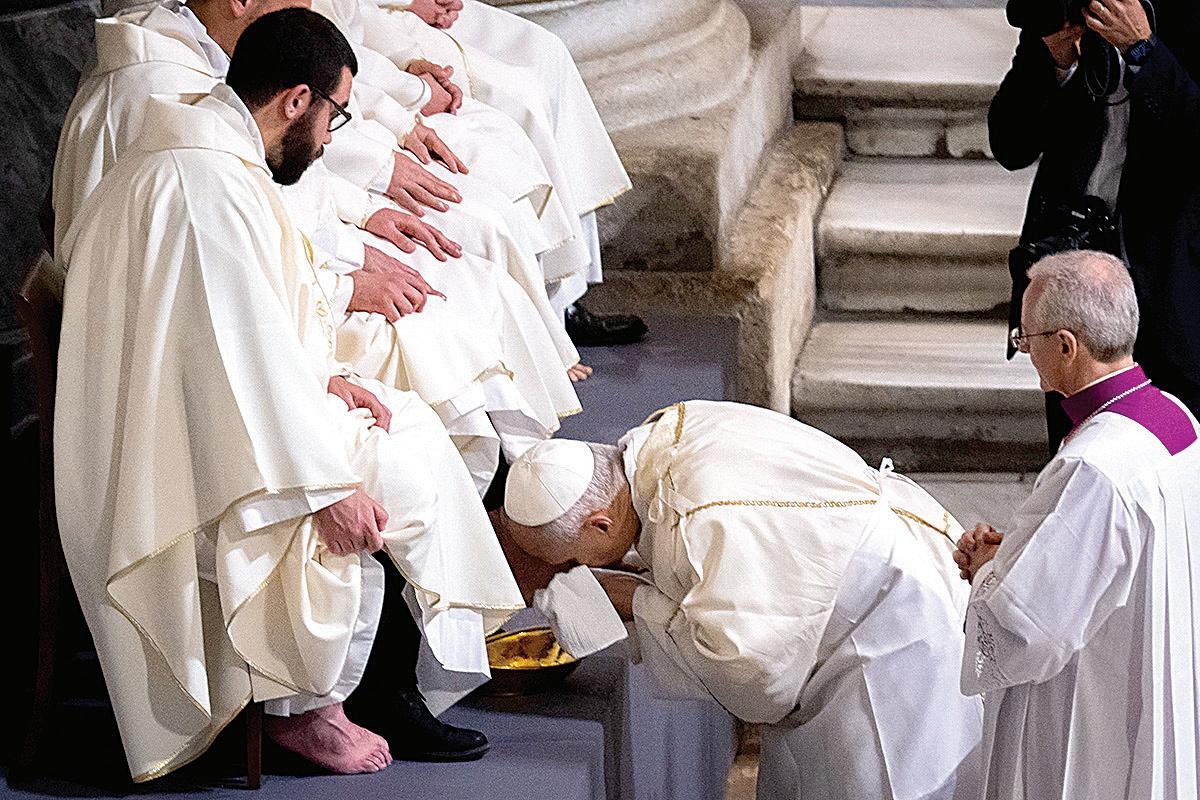
people to “continue to build up community, friendship as brothers and sisters, in your daily lives, in your parishes, in the archdiocese and throughout our world.”
FAITH THAT ‘TOUCHES THE HEART’
Augustinian Father Allan Fitzgerald, an Augustine scholar and former director of Villanova’s
n “I am a son of St. Augustine, an Augustinian, who said, ‘For you I am a bishop, with you, I am a Christian.’ In this sense we can all walk together toward that homeland that God has prepared.” – in his first address from the balcony of St. Peter’s Basilica May 8, 2025
Augustinian Institution, said Pope Leo is teaching that “faith doesn’t just touch the head. It also touches the heart.”
“Augustine learned to be a person of heart,” he explained.
He said the saint’s mother, St. Monica, was “a person of heart” and his father was an “irascible” businessman, yet St. Augustine
n “Brothers and sisters, I would like that our first great desire be for a united Church, a sign of unity and communion, which becomes a leaven for a reconciled world.” – at his inaugural Mass as pope May 18, 2025
saw his parents eventually come to be “on the same page.”
“And I think that’s what is, in fact, happening in the life of Pope Leo at this point.”
His fellow Augustinians have observed the way Pope Leo has maintained the strong sense of Augustinian community throughout his pastoral journey.
n “Migrants and refugees remind the Church of her pilgrim dimension, perpetually journeying towards her final homeland, sustained by a hope that is a theological virtue.” – message for the Oct. 4-5 111th World Day of Migrants and Refugees July 25, 2025
n “Be agents of communion, capable of breaking down the logic of division and polarization, of individualism and egocentrism. Center yourselves on Christ, so as to overcome the logic of the world,
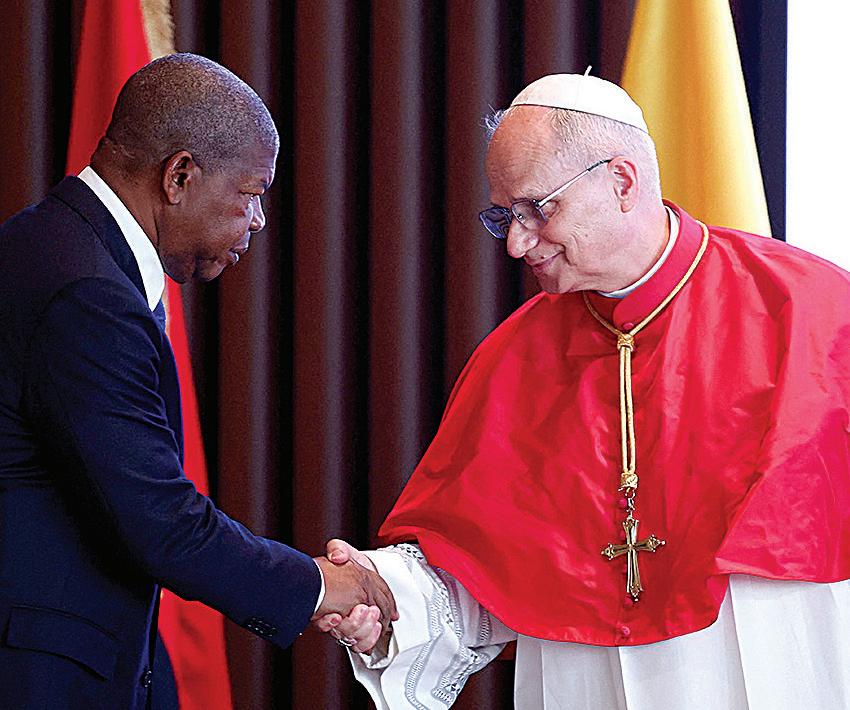
On the world stage, Pope Leo also has not shied away from directly addressing the U.S.-Israel war with Iran and other conflicts around the world, by vehemently calling for peace.
And he said he would continue to “speak loudly of the message of (peace of) the Gospel” even in the face of President Donald Trump’s scathing post April 12 on his Truth Social account regarding the pope’s call for peace in Iran.
The pope has also spoken out about the U.S. government’s immigration crackdown.
Father Fitzgerald said the times call for the pope speaking out on what is morally wrong. Talking about morality amid “so-called political decisions is really just a way of being human,” Father Fitzgerald said.
With Pope Leo on the world stage, “we will see (and have already seen) Leo call for encounter and dialogue, engage difference, gather, bring together and cut through polarization,” he said.
“It’s in his bones to be this way, and it’s up to us and the world to listen attentively to this invitation to go deeper together, to walk together, as St. Augustine urged his followers 1,600 years ago.”
That, Father DePrinzio said, is also reflected in Pope Leo’s motto, drawn from one of St. Augustine’s sermons: “In Illo uno unum,” or “In the One, we are one.”
of fake news, of frivolity, with the beauty and light of truth.” – address to Catholic digital missionaries and influencers July 29, 2025
n “When a tool controls someone, that person becomes a tool: a commodity on the market and, in turn, a piece of merchandise. Only genuine relationships and stable connections can build good lives.” – at a vigil for the Jubilee of Youth Aug. 2, 2025
SIMONE ORENDAIN OSV News
CHICAGO — A year into his papacy, Pope Leo XIV is still enjoying rockstar-like fame, especially in Chicago, his hometown. Beyond the pop-culture interest, some of the faithful told OSV News his message of peace, dedication to the faith and outreach to young people have stood out.
After Easter morning Mass, Victoria Mendez and her family stopped to talk at St. Rita of Casica Church on Chicago’s South Side.
“I think we’ve seen a lot of people fall in love with Catholicism, seeing that their pope is from Chicago,” said 24-year-old Mendez.
She has the sense, while anecdotal, that Pope Leo is drawing interest in the faith. She has observed more youth in church since his election. She also mentioned an uptick in conversions to the faith.
told OSV News Pope Leo has “done a very good job” for the Church and the world because of “his repeated calls for peace and not backing down from that.”
Pyden said of Pope Leo that he was “so very proud that he’s from the U.S.”
A passerby who said she was on her way to her nearby mainline Protestant church shouted over her shoulder, “I think he’s doing a great job! Love him! Just love him!”
“He’s just very good with people. He’s very into creating peace within different forms of Catholicism. And he’s just so open-minded. And he cares about everybody,” said Mendez.
Mendez pointed out Pope Leo also “connects with the younger generation” through his social media posts and stories of his youth told by his brothers about growing up in suburban Chicago.
Born and raised on Chicago’s South Side herself, Mendez said “it makes me happy” that Pope Leo is relatable to even nonCatholics, especially as a fellow fan of the South Side-based Chicago White Sox.
At Holy Name Cathedral, Tom Pyden was descending the cathedral’s steps when he
Retired Bishop Daniel T. Turley of Chulacanas, Peru, a native Chicago South Sider and Pope Leo’s past Augustinian superior, said Pope Leo’s solid upbringing in the faith and missionary life in Peru, beset with domestic terrorism, influenced Pope Leo’s leadership.
“(He) is a pope at a very time of crisis, so he brings to his papacy a great deal of balance, of joy, but also a message asking for peace, asking for nonviolence, asking to respect the dignity of life throughout the world, and asking countries to search out ways of unity. And he is a pope that is trying to build bridges,” he told OSV News.
Bishop Turley said a “Leo effect” might be having some impact on the faithful coming into the Church or returning.
He has celebrated numerous large-group confirmations over the past year, and pastors at those parishes have observed increased numbers of those entering rites of initiation.
“There’s a ‘Leo effect,’” he said. “It’s rippling through the United States of America because he’s the first American pope in the history of the Church.”

a Mass at Rate Field in Chicago June 14, 2025.
n “Friendship with Christ, which forms the basis of faith, is not just one aid among many others for building the future; it is our guiding star.” – at the Jubilee of Youth vigil Aug. 2, 2025
n “On the wounded faces of the poor, we see the suffering of the innocent and, therefore, the suffering of Christ Himself.” – in his first apostolic exhortation “Dilexi Te” (“I have loved you”), promulgated Oct. 9, 2025
n “Marian spirituality is at the service of the Gospel: It reveals its simplicity. Our affection for Mary of Nazareth
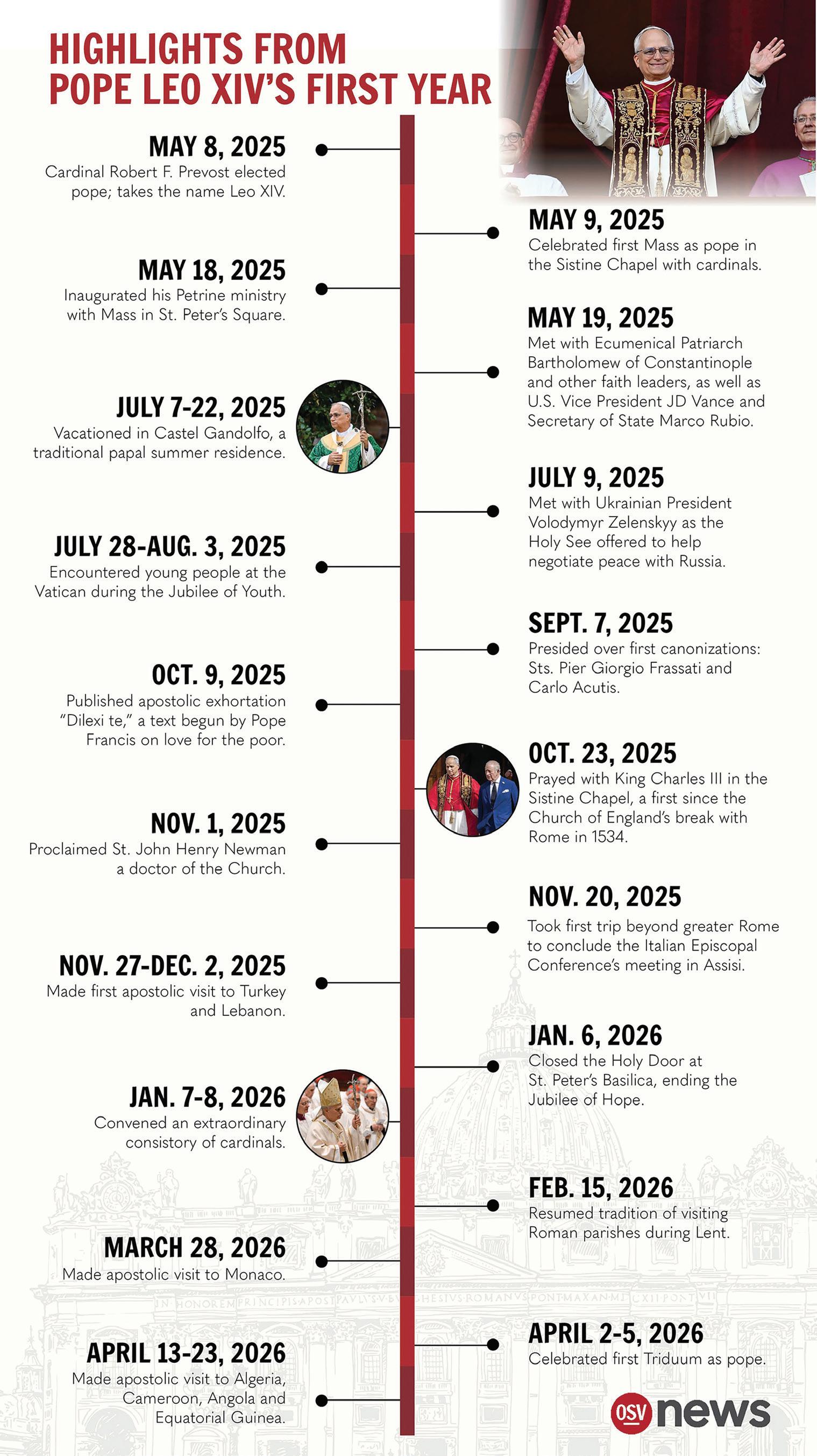
At www.catholicnewsherald.com : Read more coverage of Pope Leo XIV’s first anniversary
leads us to join her in becoming disciples of Jesus.” – at the Jubilee of Marian Spirituality Oct. 12, 2025
n “When we consider the great material, cultural, scientific and artistic treasures, faith shines not because these goods are to be undervalued, but because without faith they lose their meaning.” – at the canonization of seven saints Oct. 19, 2025
n “AI can process information quickly, but it cannot replace human intelligence. And don’t ask it to do your
homework for you. It cannot offer real wisdom.” – at a digital encounter with youth during the 2025 National Catholic Youth Conference in Indianapolis Nov. 21, 2025
n “Peace, in fact, cannot be decreed: It must be embraced and lived. It is a gift from God, which unfolds through patient and collective effort. It is everyone’s responsibility, beginning with civil authorities.” – meeting with authorities in Yaoundé, Cameroon, April 15, 2026

LOLA GOMEZ | CATHOLIC NEWS SERVICE People cheer and wave flags as Pope Leo XIV arrives at the Basilica of the Immaculate Conception in Mongomo, Equatorial Guinea, April 22.
Pope softens
MALABO, Equatorial Guinea — In the final leg of his apostolic journey to Africa, Pope Leo XIV struck a measured tone, delivering a message to the faithful while navigating a politically sensitive environment.
Spending less than 48 hours in Equatorial Guinea – a country of roughly 1.8 million people and among the least visited in the world by tourists – the pope delivered five speeches and celebrated two Masses, emphasizing human dignity while avoiding the sharper political language that marked earlier stops on his trip.
The Central African nation, which includes a mainland territory and several islands, has remained relatively isolated due mostly to its strict visa requirements and limited tourism infrastructure. Public criticism of the government is rare, and President Teodoro Obiang Nguema Mbasogo has ruled since 1979, making the 83-year-old one of the world’s longest-serving leaders.
CHICAGO — Pope Leo XIV sent a message of support to participants at a DePaul University event marking 15 years since the abolition of the death penalty in his home state of Illinois.
In a two-minute video released April 24, Pope Leo addressed those on hand for the gathering, which featured anti-death penalty activist Sister Helen Prejean and former Illinois Gov. Pat Quinn, who in 2011 signed the state bill abolishing capital punishment.
“The Catholic Church has consistently taught that each human life, from the moment of

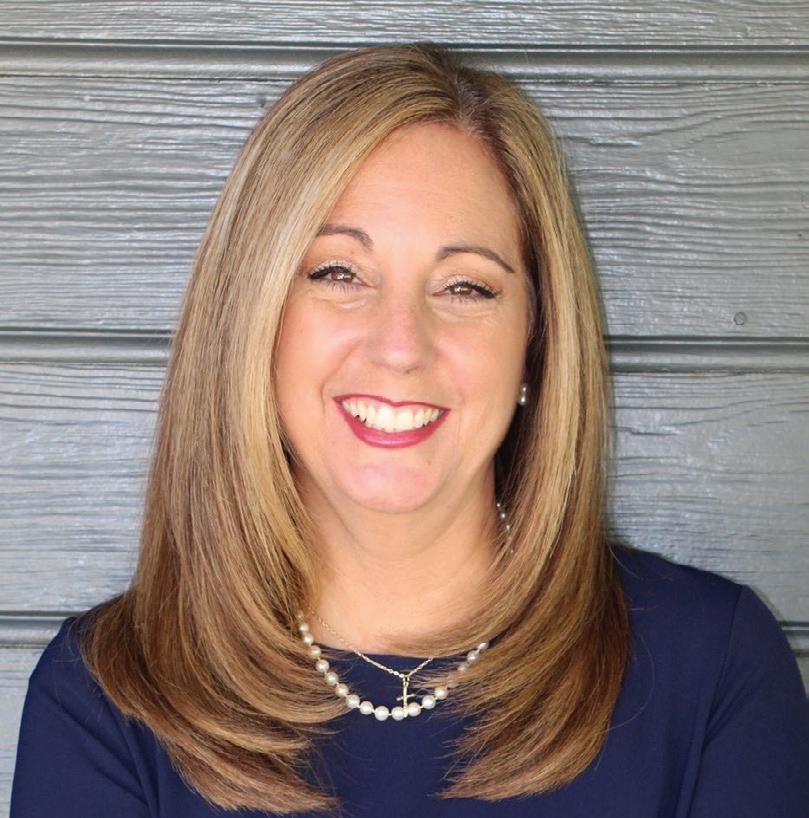
conception until natural death, is sacred and deserves to be protected,” Pope Leo said.
He summarized the Church’s position on the death penalty, the formulation of which Pope Francis clarified in 2018, revising paragraph 2267 in the Catechism of the Catholic Church –a move that built on St. John Paul II’s frequent calls to abandon the death penalty.
“In this regard, we affirm that the dignity of the person is not lost even after various serious crimes are committed,” said Pope Leo.
On the same day, the U.S. Department of Justice announced plans to expand various forms of administering the federal death penalty, directing the Federal Bureau of Prisons to reinstate the use of the firing squad, the lethal drug pentobarbital and “additional manners of execution” including electrocution and lethal gas.
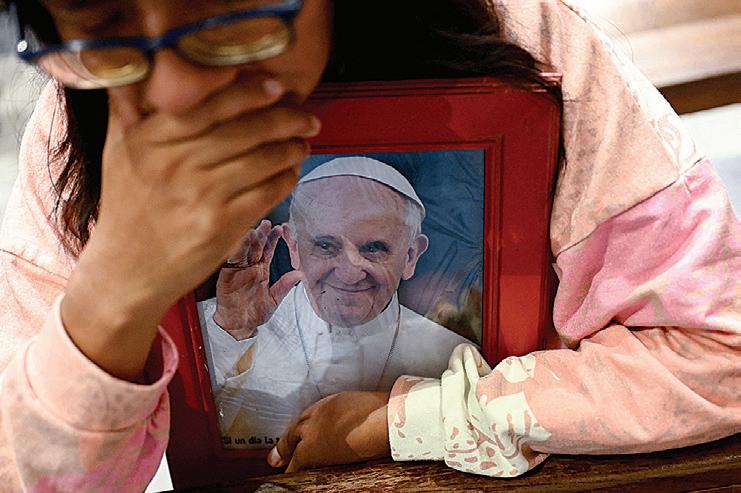
ABOARD THE PAPAL PLANE — Aboard a papal flight over central Africa on April 21, Pope
Leo XIV paused to honor Pope Francis on the first anniversary of his death, recalling a legacy rooted in mercy and closeness to the poor.
Speaking to journalists en route from Luanda, Angola to Malabo, the capital of Equatorial Guinea, the pope highlighted Pope Francis’ witness through “his life, his testimony, his word and his gestures.”
Pope Francis, born Jorge Mario Bergoglio, led the Church from March 13, 2013, until his death on April 21, 2025, a day after his final Easter blessing in St. Peter’s Square.
Marking the anniversary, a Mass was held at the papal Basilica of St. Mary Major, where Pope Francis is buried.
Pope Leo, nearing the end of his African journey, also pointed to the Church’s growth on the continent, calling it a renewed invitation to evangelize through the “joy of believers” and the attraction of faith rather than proselytism.
CURAHUARA DE CARANGAS, Bolivia — St. James Church in the town of Curahuara de Carangas in Bolivia, which has earned the moniker the “Sistine Chapel of the Andes” due to the murals adorning its walls, is going to be restored.
The project was announced April 21 during a press conference given by Bolivia’s deputy minister for the Promotion of Sustainable Tourism, Andrés Aramayo; the bishop of Oruro, Cristobal Bialasik; and Debra Hevia, chief of mission at the U.S. embassy.
The U.S. will make an investment of $66,240 toward the restoration of the historic church, which dates back to the early 17th century. Hevia said the funding comes from the U.S. Department of State’s Cultural Preservation Fund.
— OSV News and Catholic News Service
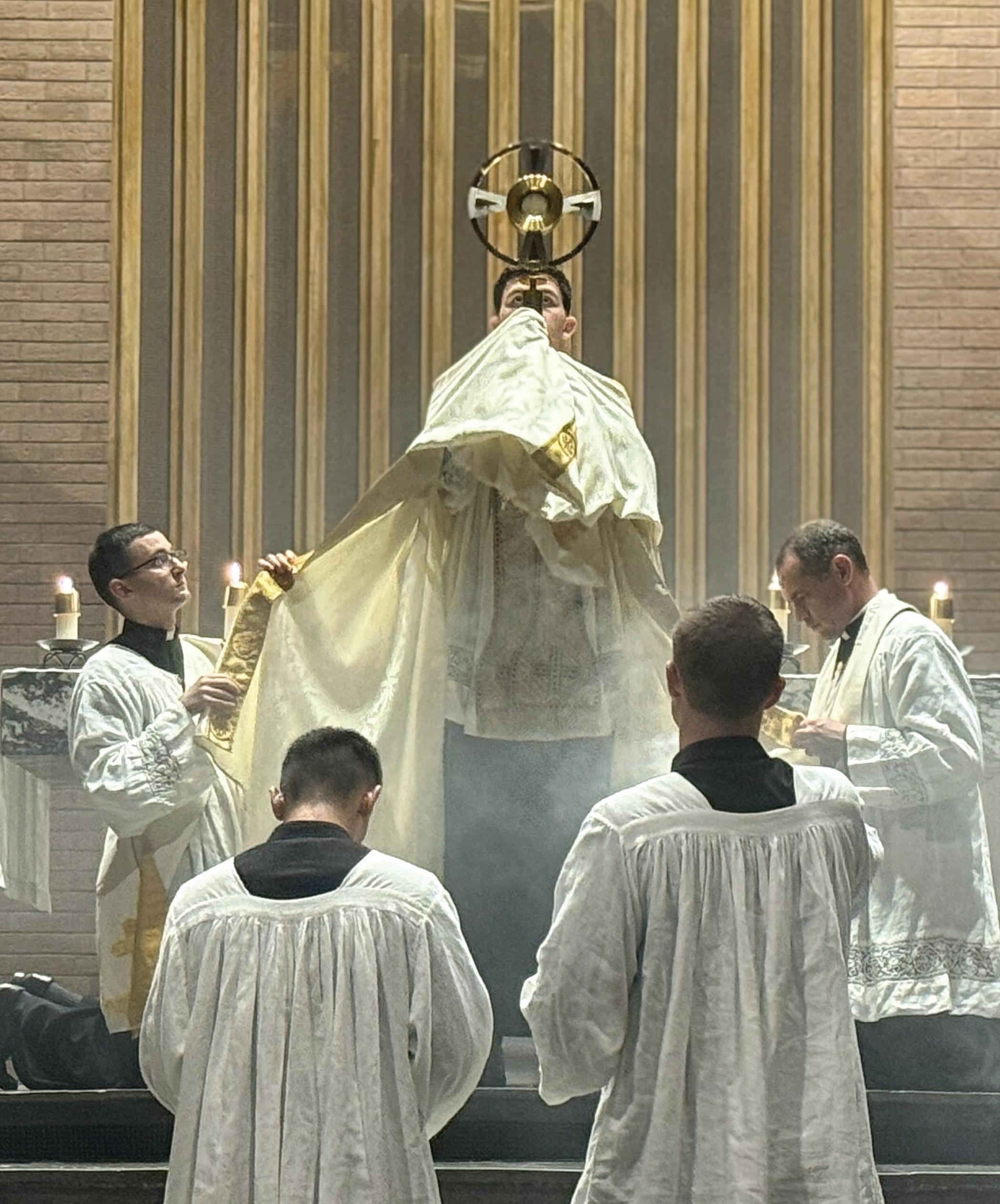
Deacon William S. Melton Jr.
As the old saying goes, sometimes we can miss the forest for the trees.
It’s like the old story of a king who lived in a kingdom plagued by thievery. And the thieves weren’t just thieving, they were also smuggling what they stole out of the country. So the king decided to post guards at all the border crossings leading out of the country with orders to search everybody and everything that came through.
At one checkpoint, the guards noticed a boy who came through every day pulling a wagon. Each day the boy had a different load in his wagon. One day it was sticks. The next, rocks. The next, dirt, and so on. The guards dutifully searched the boy and his wagon each time he came through and never found anything that was stolen.
But the boy was stealing … wagons!
MISSING THE POINT
This story came to mind a while back when I suddenly discovered I’d missed the mark when came to the meaning of the peace of Christ. Just like the guards in the story, I’d totally and completely missed it, even though it was right in front of me the whole time.
The problem came from the fact that there are two kinds of peace: worldly peace and spiritual peace. Worldly peace comes in two forms. The first is a broad, overarching peace that specifically involves the lack of war. This type of peace is at best an uneasy peace that never lasts long on those rare occasions when it actually occurs. The second form of worldly peace is personal in nature and tends to run along the lines of domestic tranquility, getting along with our families, our coworkers, our neighbors and the like. It’s most often closely associated with the word “quiet,” especially for those who are parents. And it’s just as fleeting as the other.
My understanding of peace was completely fixated on worldly peace. It was the load I kept searching through in the wagon each day, and it was completely concealing the meaning of spiritual peace – the peace of Christ – that was right there in front of me. Verses like Matthew 10:34 – where Jesus says, “Do not think that I came to bring peace on the earth, I did not come to bring peace, but a sword” – didn’t help. In that case Jesus was talking about worldly peace and warning His followers that they won’t get much of it if they choose to follow Him.
But it suddenly became clear one day as I was reflecting on John 14:27, when Jesus tells His disciples, “Peace I leave with you; My peace I give to you; not as the world gives do I give to you. Do not let your heart be troubled, nor let it be fearful.” I had completely missed the point that Christ was talking about a different kind of peace – a spiritual peace grounded in faith in Him. This is the peace St. Paul refers to in Philippians 4:7 when he says, ”And the peace of God, which surpasses all comprehension, will guard your hearts and minds in Christ Jesus.”
Archbishop Fulton Sheen explains it this way. He says the peace of Christ isn’t the peace and quiet of worldly peace, but is rather an active, vibrant inner peace that comes from our relationship with Jesus Christ. In other words, it is a lived faith, a faith lived in action in the trenches of the spiritual combat we face in every aspect of life.
Archbishop Sheen gives us Job as the perfect example of the peace of Christ. Job was a man who had everything a person could possibly ask for – family, wealth, good health and complete faith in God. Through no fault of his own, he suddenly loses everything –family, wealth, even his health. Everything except for his faith in God. And through his sufferings, Job never wavered in that faith. Job clearly lives in action this peace of Christ, which does very clearly pass all our human understanding. It is the peace that guards our hearts and minds in Christ. It is the peace that assures us that no matter what comes our way or happens to us, even if it kills us, everything will be all right because of our faith in Christ.
A theologian reflects on the way forward for
What should Catholic education look like today? As universities move toward more efficient and technical processes in higher education, is there still room for seeking truth and knowledge for its own sake? These are some of the questions explored by Timothy P. O’Malley, theology professor and director of education at the McGrath Institute for Church Life at the University of Notre Dame. OSV News’ Charles Camosy spoke with him recently about the state of Catholic higher education and his vision for its reform.
Charles Camosy: How would you describe the typical contemporary university and higher education in the U.S. today?
Timothy O’Malley: If you read the Chronicle of Higher Education, nearly every issue uses the term “crisis.” It’s true that higher ed (whether Catholic or not) is in crisis. There is the crisis of the demographic cliff, the crisis of the sudden disappearance of research dollars, and the crisis of a loss of authority – who trusts the university?

But of course, the word “crisis” need not be understood negatively. Luigi Giussani often said that a crisis is ultimately a decision point, an occasion of discernment.
Does the college or university want to be a space of encounter between students and truth? Between students and professors? Or are we OK with the “machinification” of the university? Learning and research alike are slow and often inefficient processes. A student’s insight into a text or some mathematical theorem only occurs after false starts. Research comes about through years of contemplative study on the part of faculty members. But there is a push for immediacy that interrupts both processes.
Several years ago, I read what I suspect was supposed to be a utopian vision of the future university that was highly efficient. Students no longer relied upon professors or texts for learning, but everywhere they went, there was a hot spot that enabled them to ask questions to a generative AI bot. Catholic universities have a specific vocation here: We possess a vision of the human person, knowledge and the truth that does not conform to “machinification.” We can be bastions of a contemplative, even sacramental way of being and knowing, but we must possess the courage to swim against the stream.
MUST LEARNING BE EFFICIENT?
Camosy: Your new co-authored book on this topic draws on figures like Josef Pieper and St. John
Henry Newman. Why focus on these thinkers?
O’Malley: I first read Pieper as an undergraduate, opening up his “Happiness and Contemplation” in a second-level theology course. What I discovered in this work was a radical proposal: Human beings are made to be happy, happiness involves knowing, but knowledge is ultimately a contemplative act rather than a matter of technique.
Pieper believes it’s OK to take up a leisurely, useless form of knowledge. Not everything can be efficient or, for that matter, immediately useful. Sometimes, human beings read literature, produce art, write a poem or gaze at a sunset – and the result is not something you can later put on your resume.
Camosy: Can you give a summary of the positive view for reform of Catholic education you propose?
O’Malley: The book’s suggestion is to slow down. Give more time for grading (and let universities actually reward that encounter between student and teacher). Gather faculty together across disciplines to read each other’s work. Reward a leisurely pace to university life, recognizing that teaching is not reducible to knowledge transfer but is instead always a slow, contemplative encounter.
We can’t keep up with the machines, so let’s stop trying. But that requires possessing a universal vision of what the university is up to. We need a philosophy for the whole university, something that unites the biologist, economist, nursing professor and theologian together in a common pursuit. Without that, we’re not really a university anymore.
Camosy: Does any of what you propose have legs outside of a Catholic context?
O’Malley: I think so! In fact, I suspect that it’s the vocation of Catholic higher education to offer another possibility for all university life.
There are so many different types of Catholic colleges or universities – including the small liberal arts institution, the community college or technical school and the mega-research university. What we share in common is a vision of the human person as a creature made to behold, wonder, discover and delight in the gift of the world. We believe that this is how we recognize the dignity of each person in our community of learning: We are made to discover truth as a gift. We are free to enact that truth that we discover in communities committed to the common good.
Yes, this is a Catholic approach to reality – but it’s also one that is prophetically humane.
For millennia, colleges and universities have first been about cultivating humble wonder at the pursuit of truth in a community of friends, seeking together to know and enact the good.
We can’t become sectarian entities, refusing to talk to peers at other types of institutions. From the heart of the Church was born the university, and the renewal of the university (whether Catholic or not) will involve a renewed way of contemplative knowing across all universities.
Catholic colleges or universities need a renewal of all colleges or universities – we depend on each other.
On a snow-covered winter day in 1842, Father Edward Sorin stood before a frozen lake in northern Indiana and did something audacious. He consecrated the land, the institution he was about to found and every soul who would ever study or work there to the Blessed Virgin Mary – and he did this not as an afterthought or pious decoration, but as the founding act itself.
That consecration wasn’t merely symbolic, something to be noted in the university’s founding documents and then quietly set aside. It was – and remains –constitutive of what Notre Dame is.
Which is why the McGrath Institute for Church Life has just released “Mary, Icon of the Church,” a new short film that explores what it means for a university to be consecrated to Our Lady, and what that consecration reveals about the inseparability of Marian devotion from authentic Christian worship.
Here’s what we sometimes forget: Mary isn’t an optional add-on to Christianity. She’s not a Catholic peculiarity that other Christians can ignore. Devotion to Mary is intrinsic to Christian worship because she shows us what it looks like to receive God.
BEARER OF CHRIST TO THE WORLD
Think about the Annunciation. The angel came with a message that defied every category of human understanding – a virgin would conceive by the power of the Holy Spirit, and the child born of her would be the Son of the Most High, the one in whom God’s promises to David would find their fulfillment.
This is the hinge upon which all of salvation history turned, the moment when eternity broke into time and the Word prepared to take flesh. And Mary, confronted with this utterly worldshattering proposition, said yes – not because she understood the mechanics of what God was asking, but because she trusted the One asking it of her.
Her fiat was the supreme act of freedom, the moment when a human being aligned her will so completely with God’s that she became the very means by which the Incarnation occurred. As the Second Vatican Council’s “Lumen Gentium” puts it, by her obedience she “became the cause of salvation for herself and for the whole human race.”
That’s the pattern. That’s what the Church is supposed to look like: receiving the Word of God, pondering it, letting it take flesh in us. Mary is the icon of the Church because she’s the first and most perfect instance of what every Christian is called to be – a bearer of Christ to the world.
EDUCATION ENTRUSTED TO TRUTH
In his founding letter, Father Sorin wrote, “A special consecration was made to the Blessed Mother of Jesus, not only of the land that was to be called by her very name, but also of the Institution that was to be founded there.”
He’s entrusting the entire enterprise to the one who knows what it means to receive truth and let it transform you. Because that’s what education is supposed to be – not just the transfer of information, but the formation of persons.
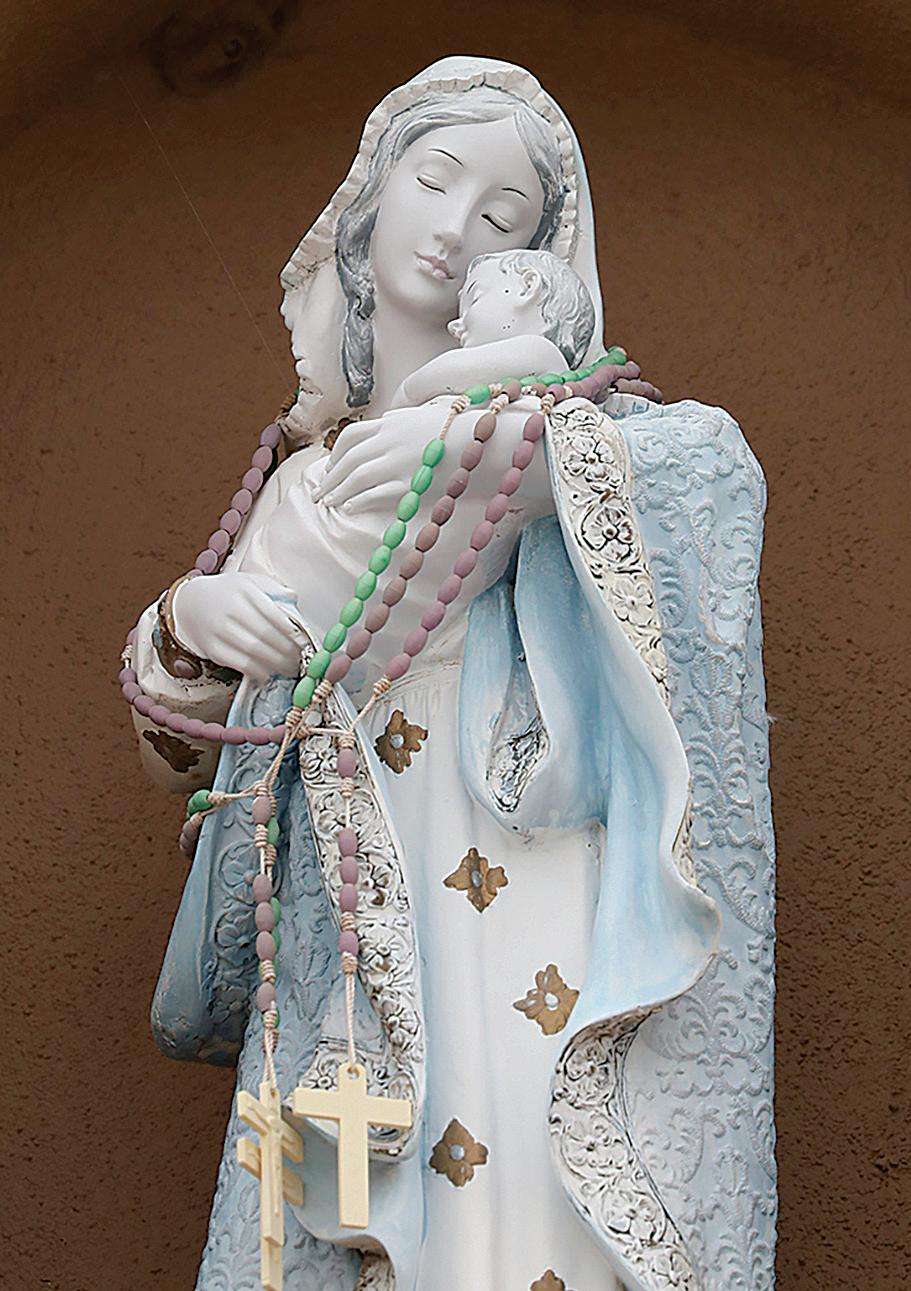
Mary stands as the supreme model of this integration. In her pondering heart we see what it looks like to encounter truth not as information to be processed, but as mystery to be inhabited. She held the Word of God with both rigor and wonder, both mind and heart. That’s what Catholic education aims to form: people who can do the same.
A SOCIETY MORE HUMAN, MORE DIVINE
This matters because we live in a time when the intellectual and the spiritual are assumed to be in tension. That assumption produces universities that train really smart people who have no idea what they’re for. It produces churches that are devotionally rich but intellectually shallow. It produces a culture that’s lost the ability to see the world as charged with meaning.
Father Sorin understood that a university consecrated to Mary would be different. It would insist that the various lines of Catholic thought intersect with all forms of human knowledge. It would form students whose learning becomes service to justice and whose lives build a society that is, in the university’s own words, “at once more human and more divine.”
That society is precisely the horizon Marian devotion opens. Because Mary shows us what humanity looks like when it’s fully receptive to God. She’s the proof that saying yes to the Almighty doesn’t diminish us. It completes us.
Watch the film. It’s available on YouTube. Let it remind you of what Father Sorin knew: that every pursuit of truth, every effort to serve the Church happens under Mary’s mantle. We’ve all been presented to her. The question is whether we’ll receive the gift.
LEONARD J. DELORENZO is a professor of the practice in the McGrath Institute for Church Life and concurrent professor in the department of theology at the University of Notre Dame. You can find his writing at www.leonardjdelorenzo.com.
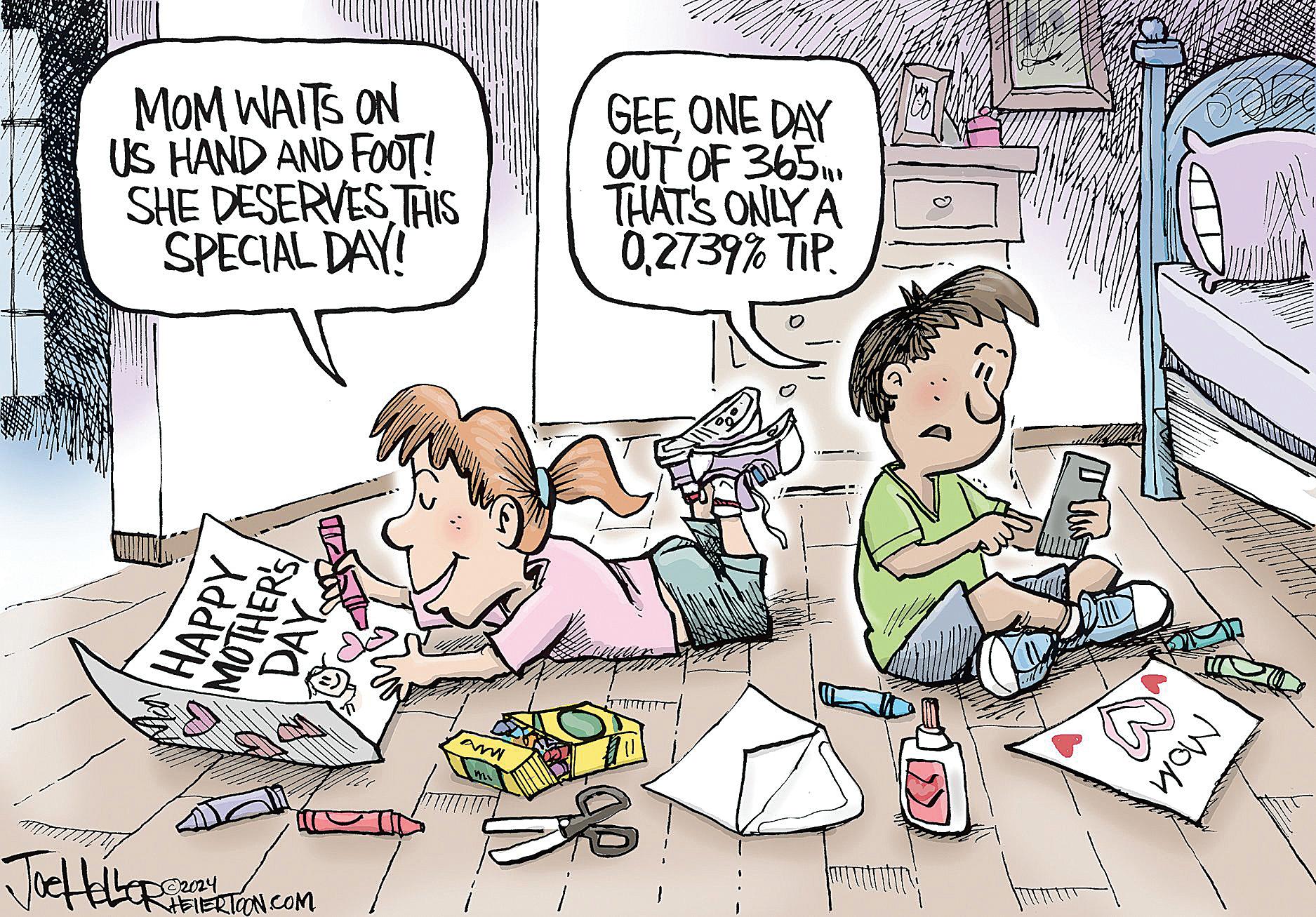
Thanks so much for including Elizabeth Scalia’s article in your April 17 edition’s Viewpoints section. In matters of morality, the pope’s words should never be doubted. When a political figure is placed above the pope by Catholics, then the Catholic Church is in grave danger. God bless Pope Leo!
STEVEN GOODE lives in Stanley.
The Catholic News Herald welcomes letters from readers. We ask that letters be originals of 250 words or fewer, pertain to recent newspaper content or Catholic issues, and be written from a perspective of Christian charity.
To be considered for publication, each letter must include the name, address and daytime phone number of the writer for purpose of verification. Letters may be condensed due to space limitations and edited for clarity, style and factual accuracy.
The Catholic News Herald does not publish poetry, form letters or petitions. Items submitted to The Catholic News Herald become the property of the newspaper and are subject to reuse, in whole or in part, in print, electronic formats and archives.
E-mail: catholicnews@rcdoc.org
Mail: Letters to the Editor Catholic News Herald 1123 S. Church St. Charlotte, N.C. 28203
‘Today more than ever, especially when statistics seem to indicate a divide between people and the Church, keep the door open!’
Pope Leo XIV
From online story: “Pope Leo to new priests: Keep Church door open, don’t be an obstacle”

The Catholic News Herald reached the Facebook and Instagram feeds of more than 1.4 million people in English and Spanish in the last month. The most talked about post? Coverage of Holy Week. Join the conversation: www.facebook.com/CatholicNewsHerald.
On YouTube through April 27, videos produced by the Catholic News Herald have been viewed more than 30,000 times. The most popular video? Meet our priests-to-be. Watch the series on @dioceseofcharlotte on YouTube.
So far this month through April 27, 40,000 visitors to www.catholicnewsherald.com have viewed a total of 55,000 pages. The top trending headlines are:
n