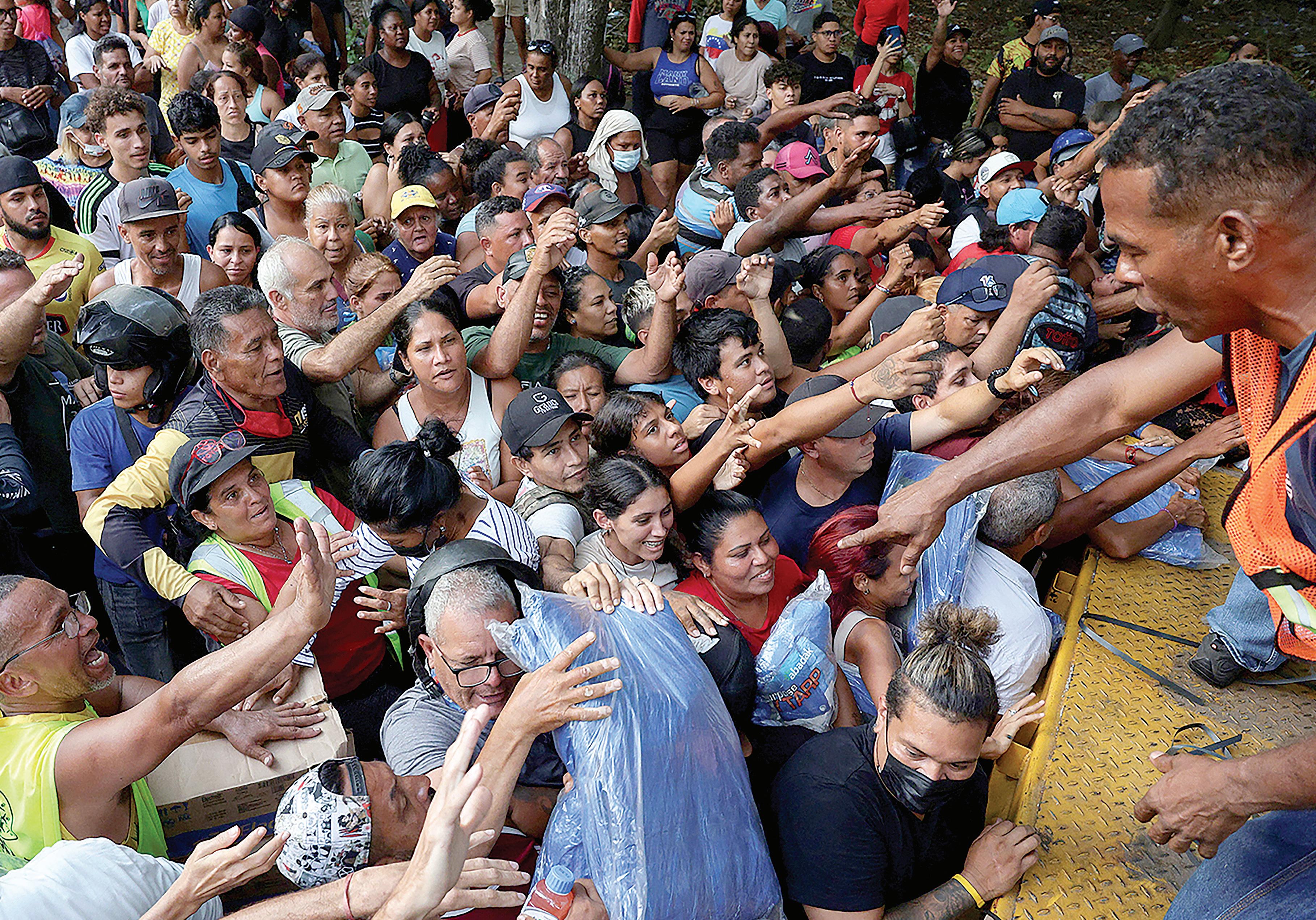
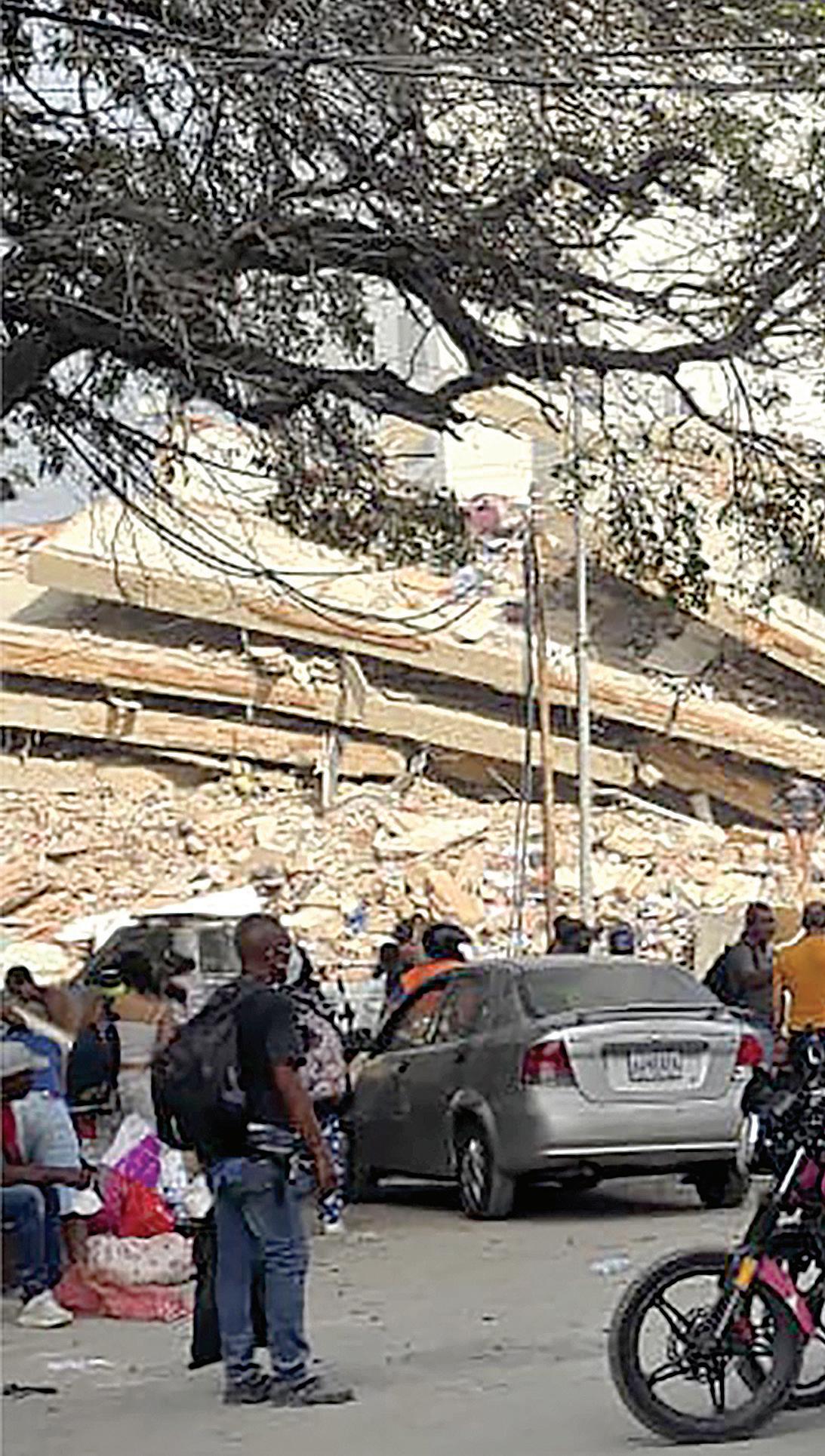
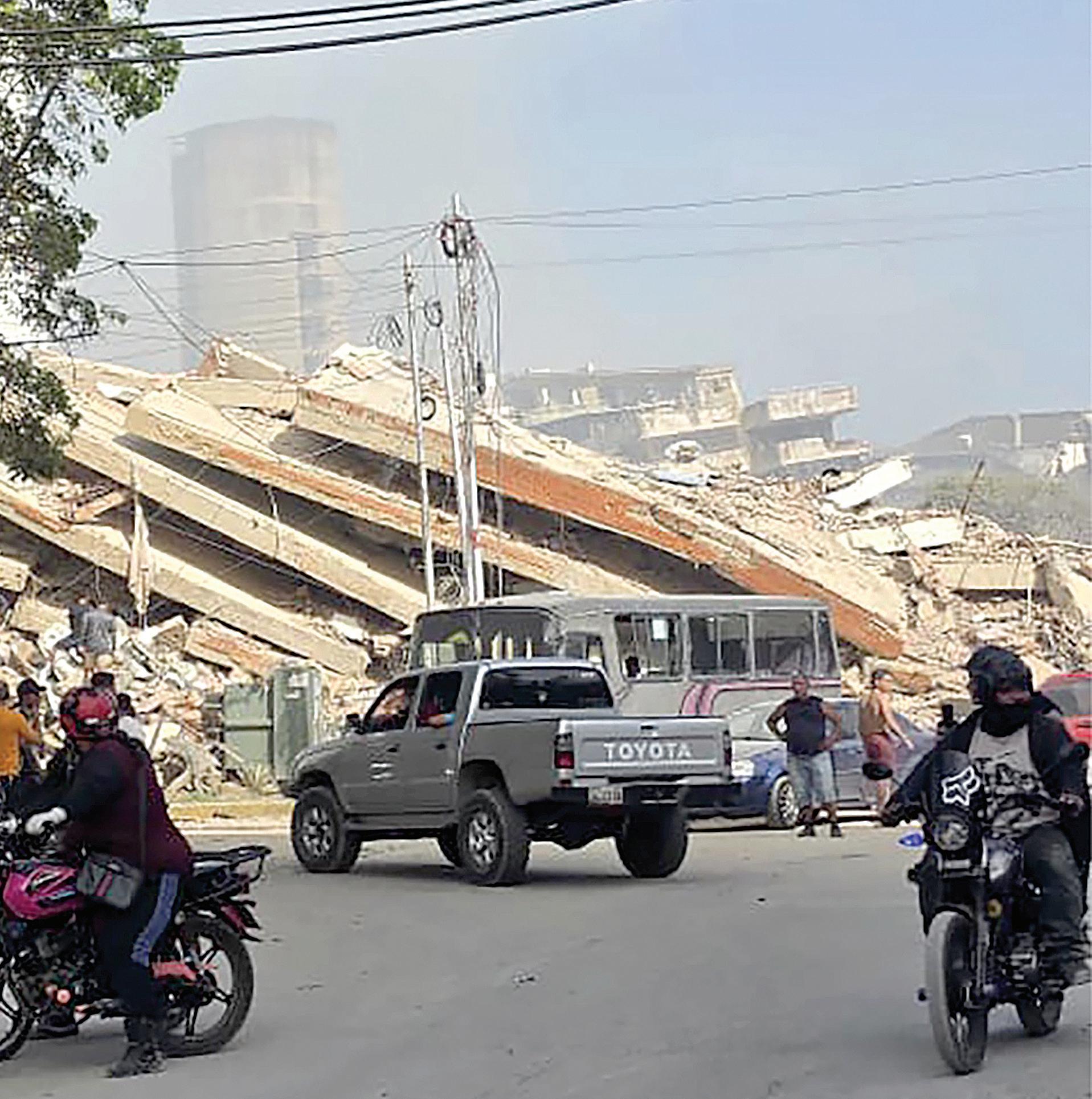
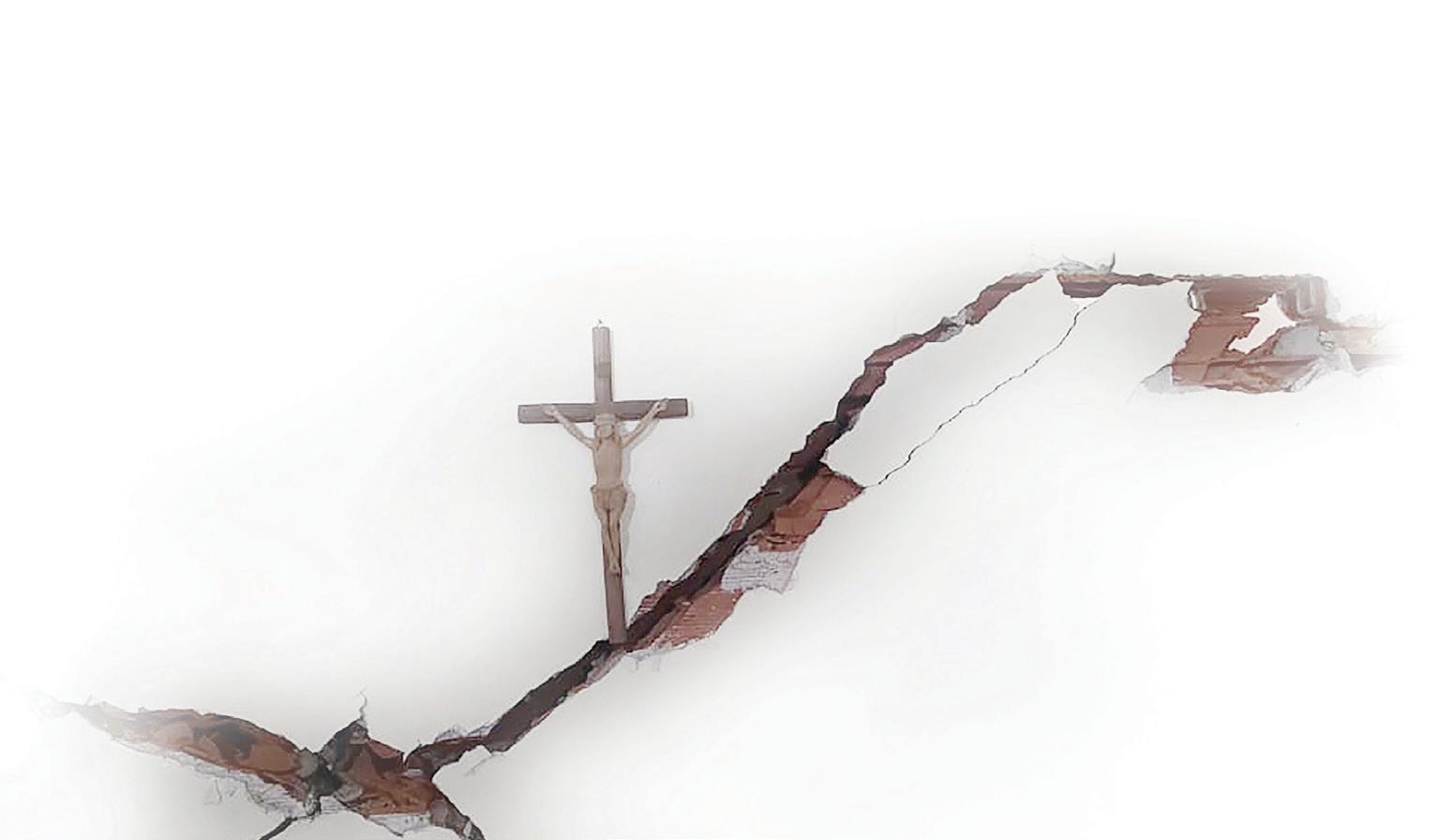
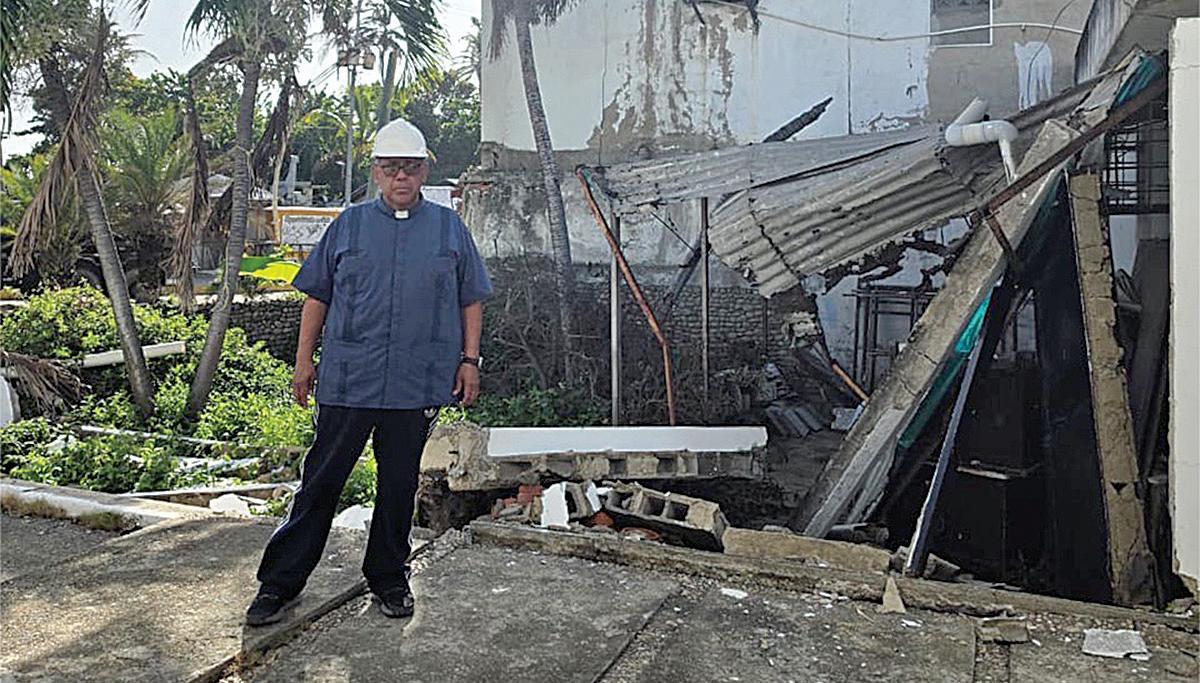
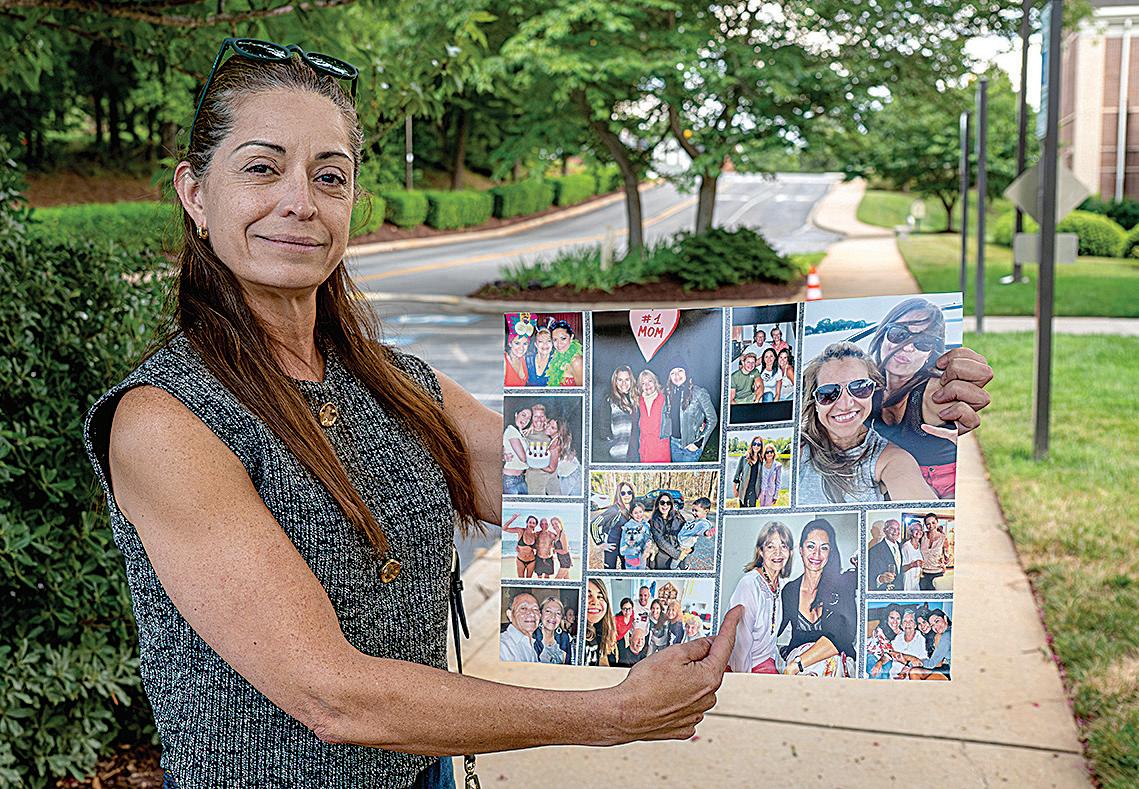
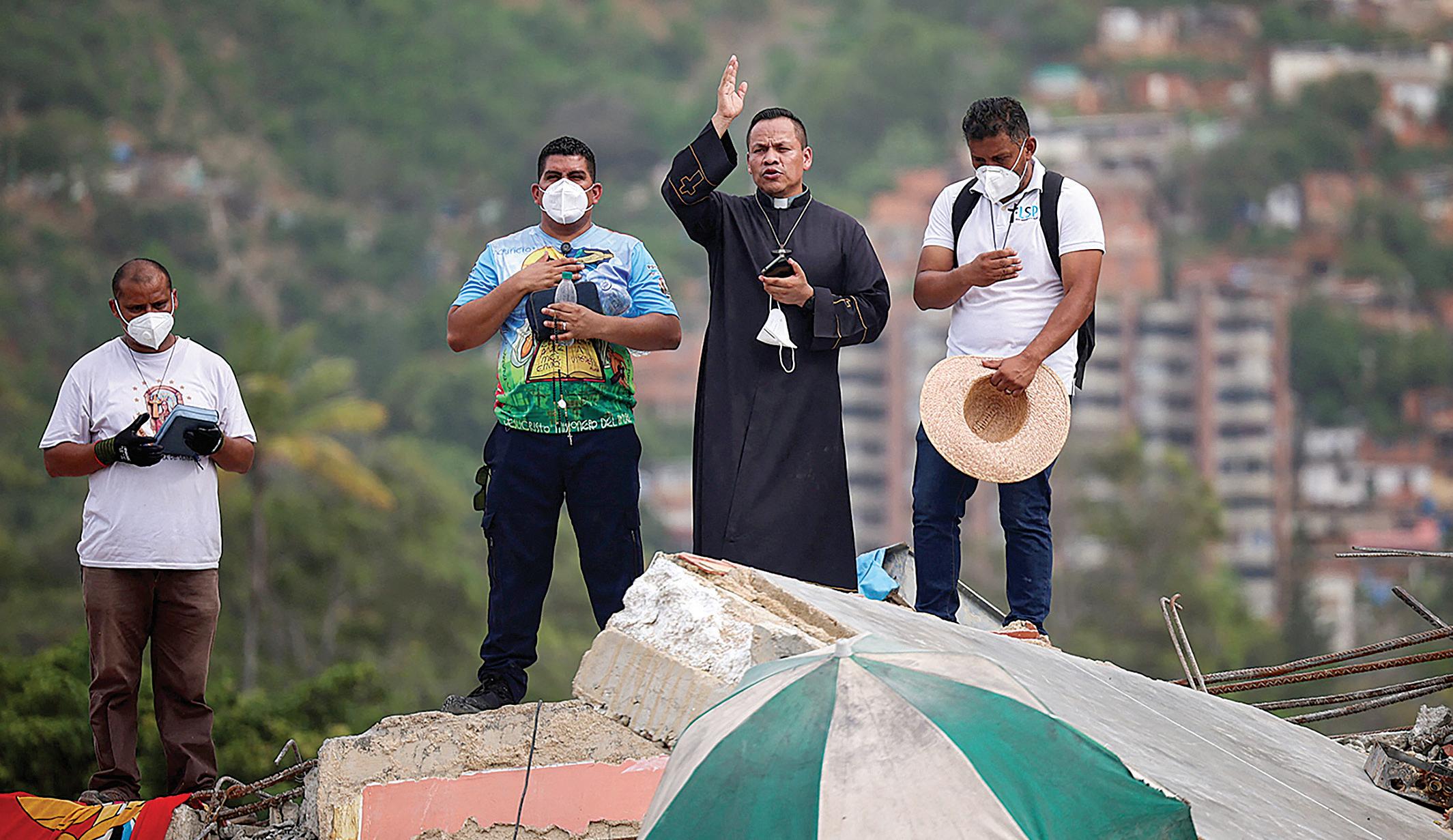
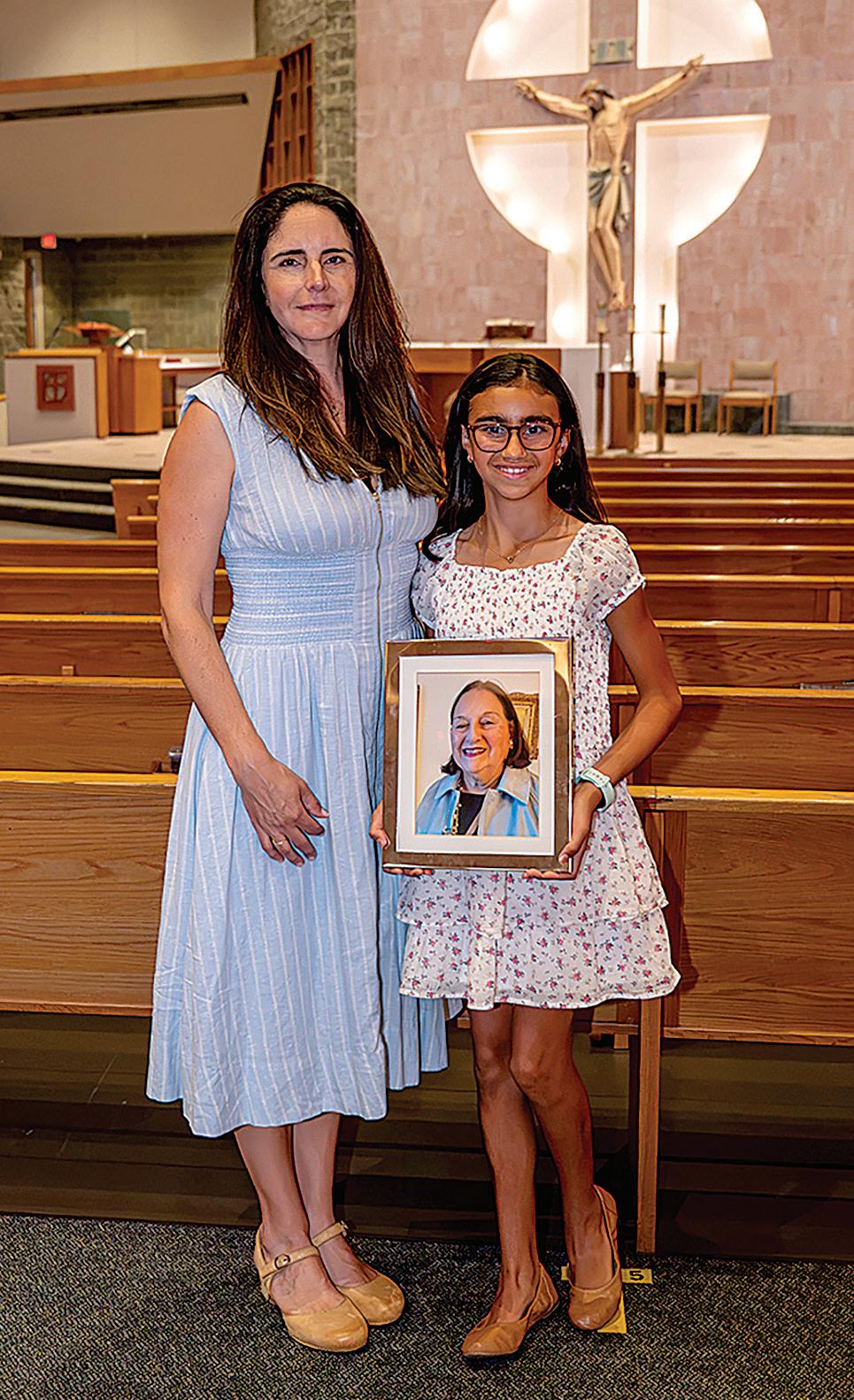
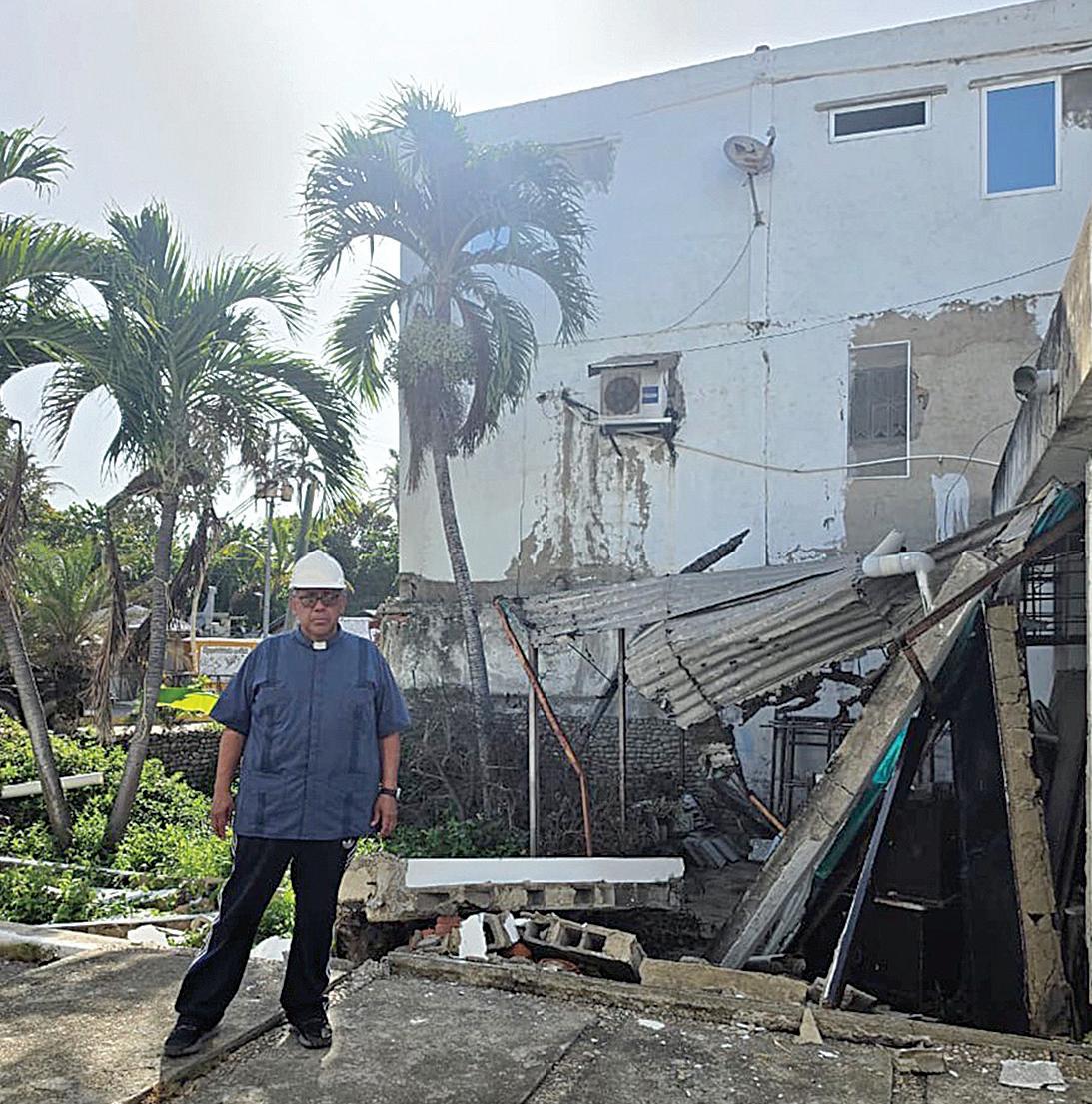
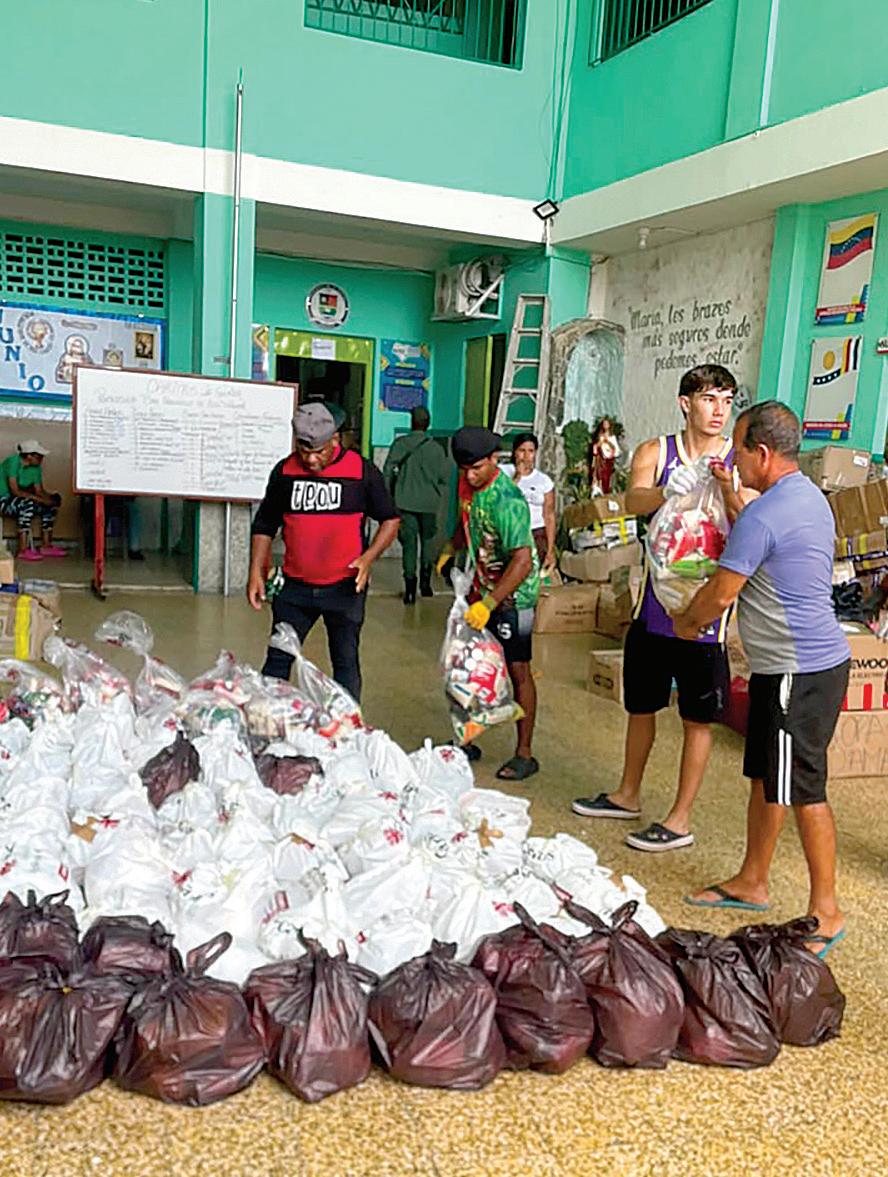
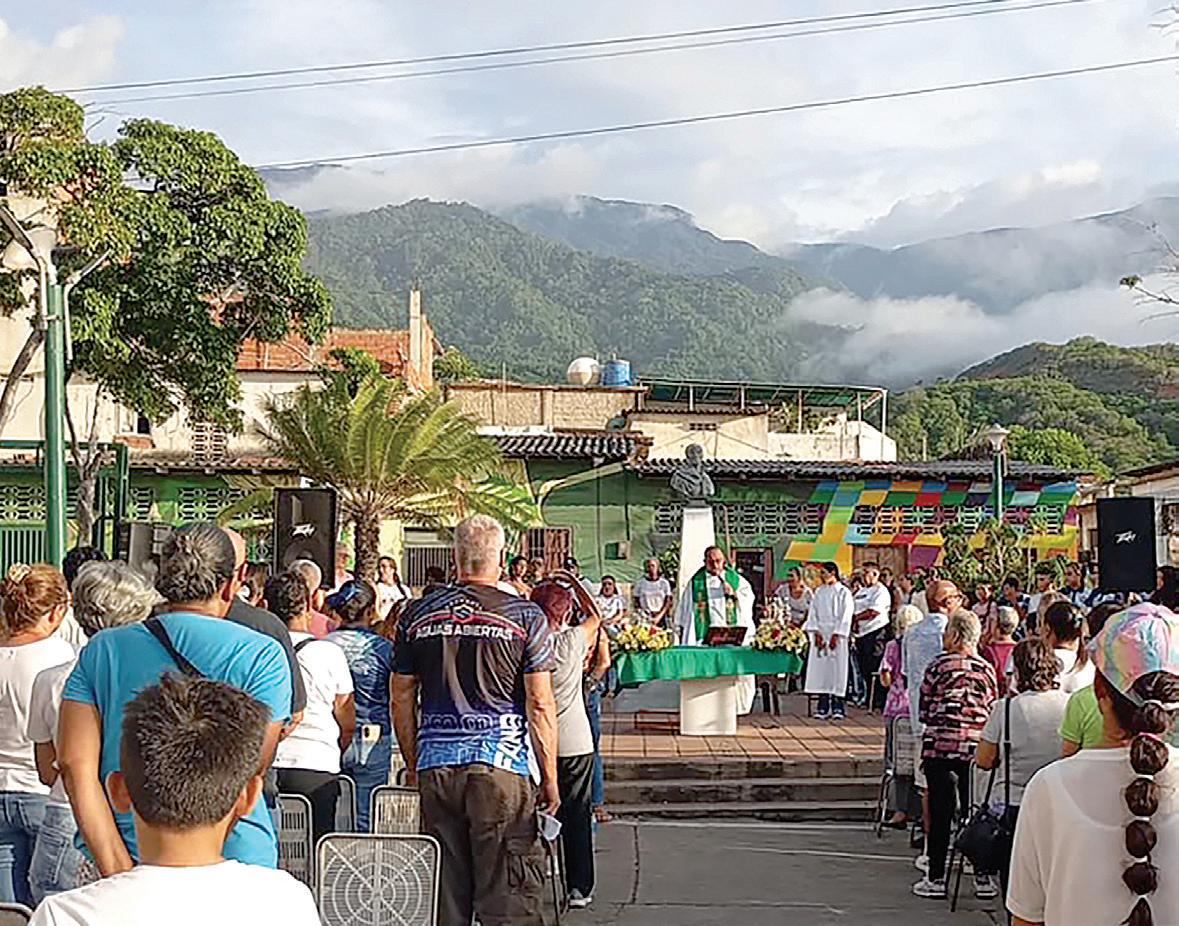
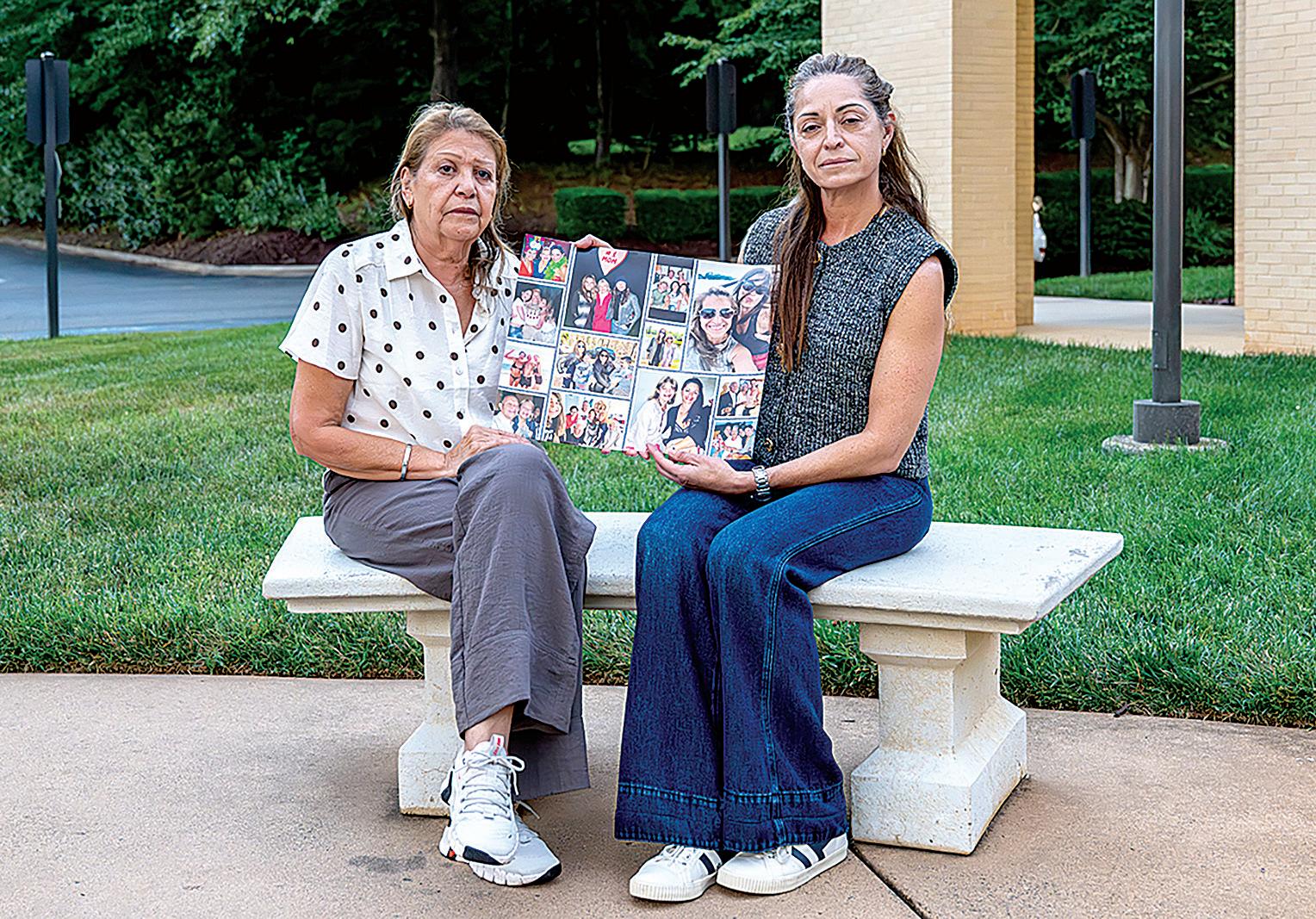
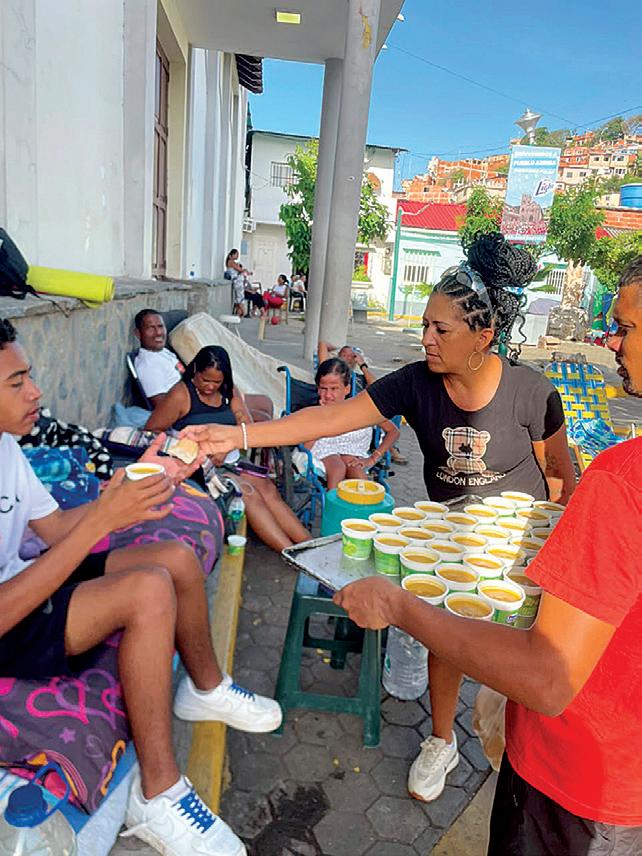
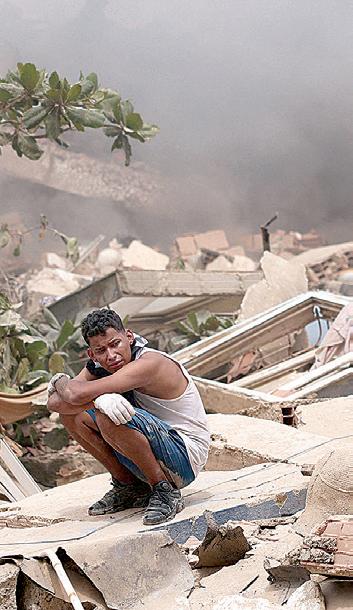
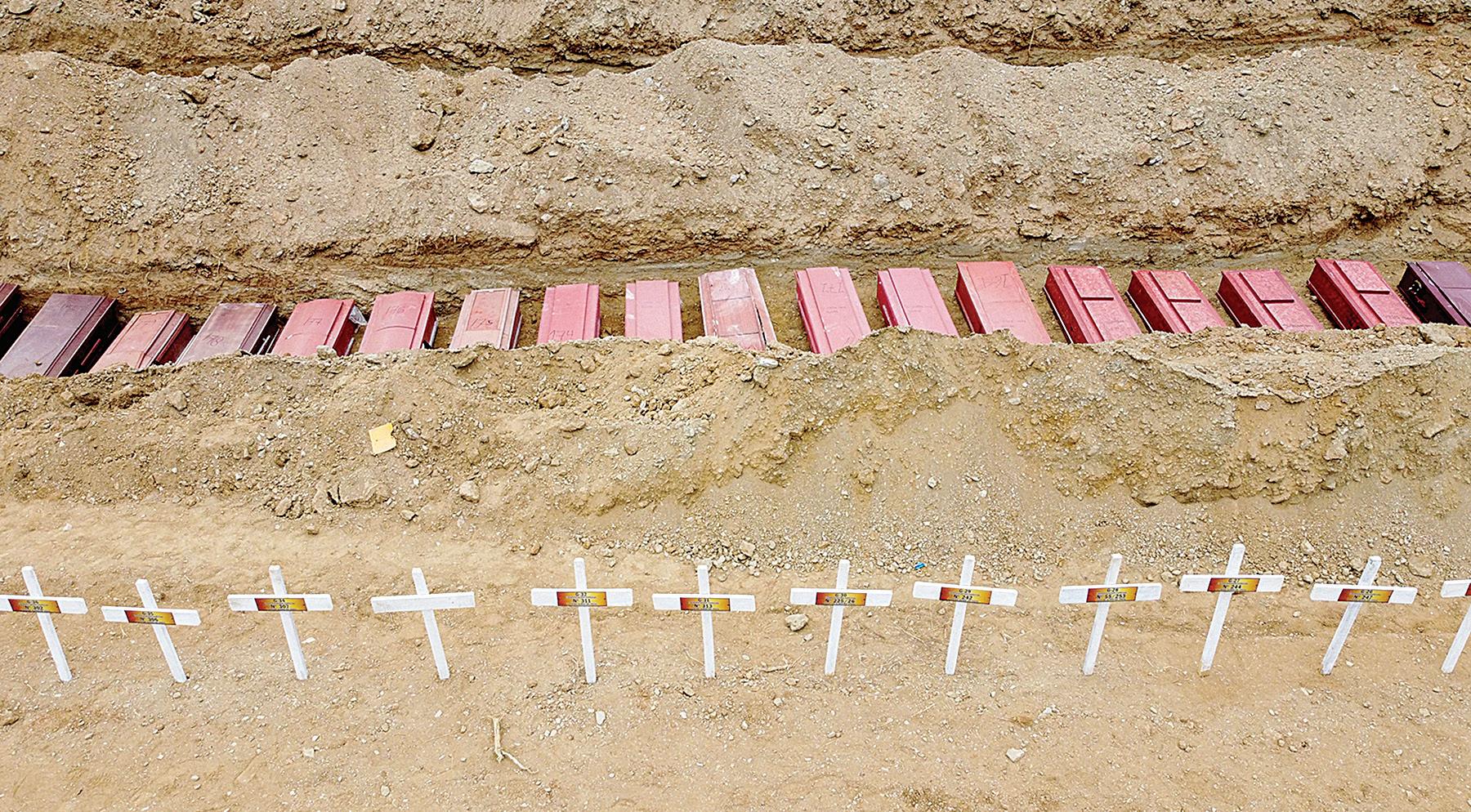
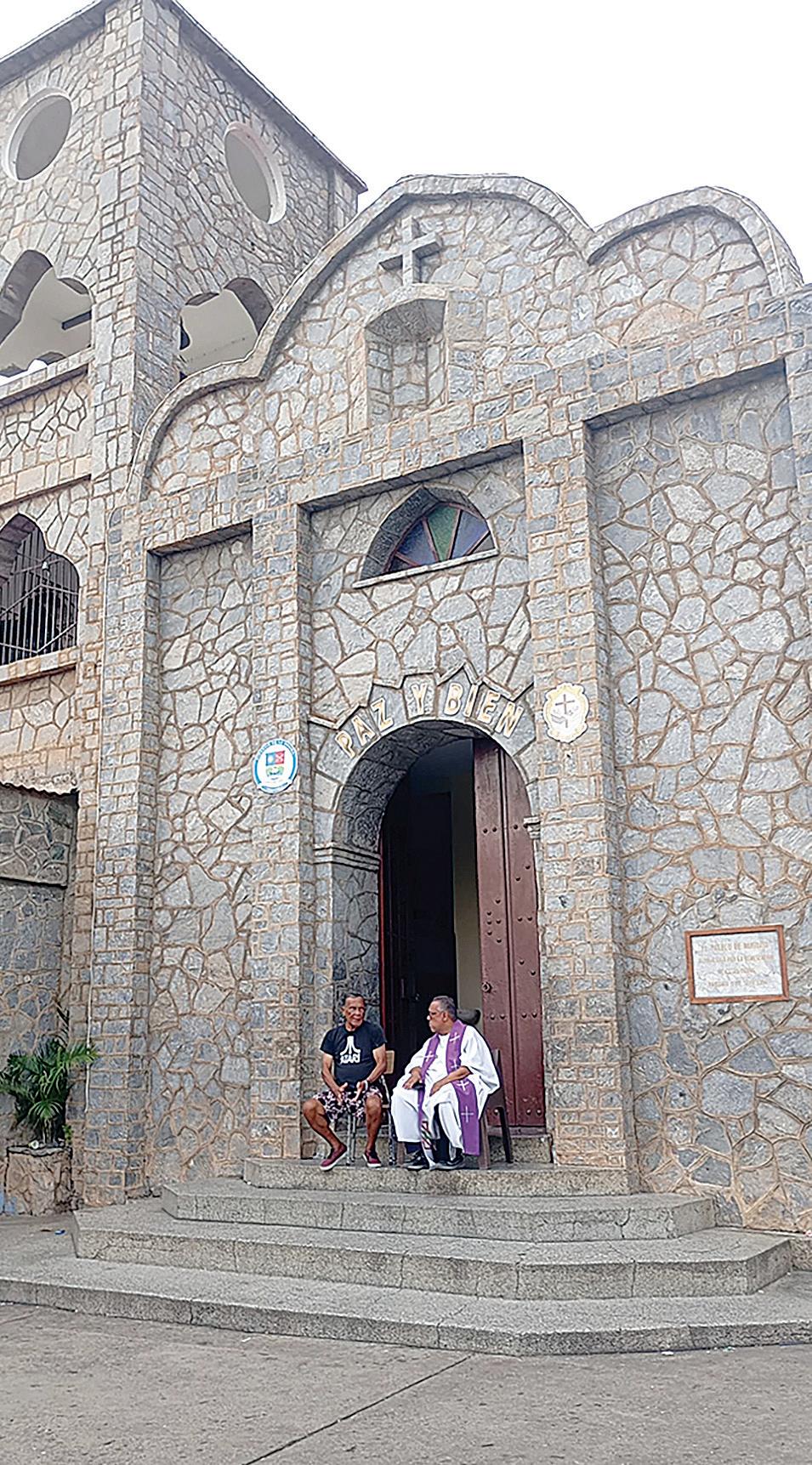
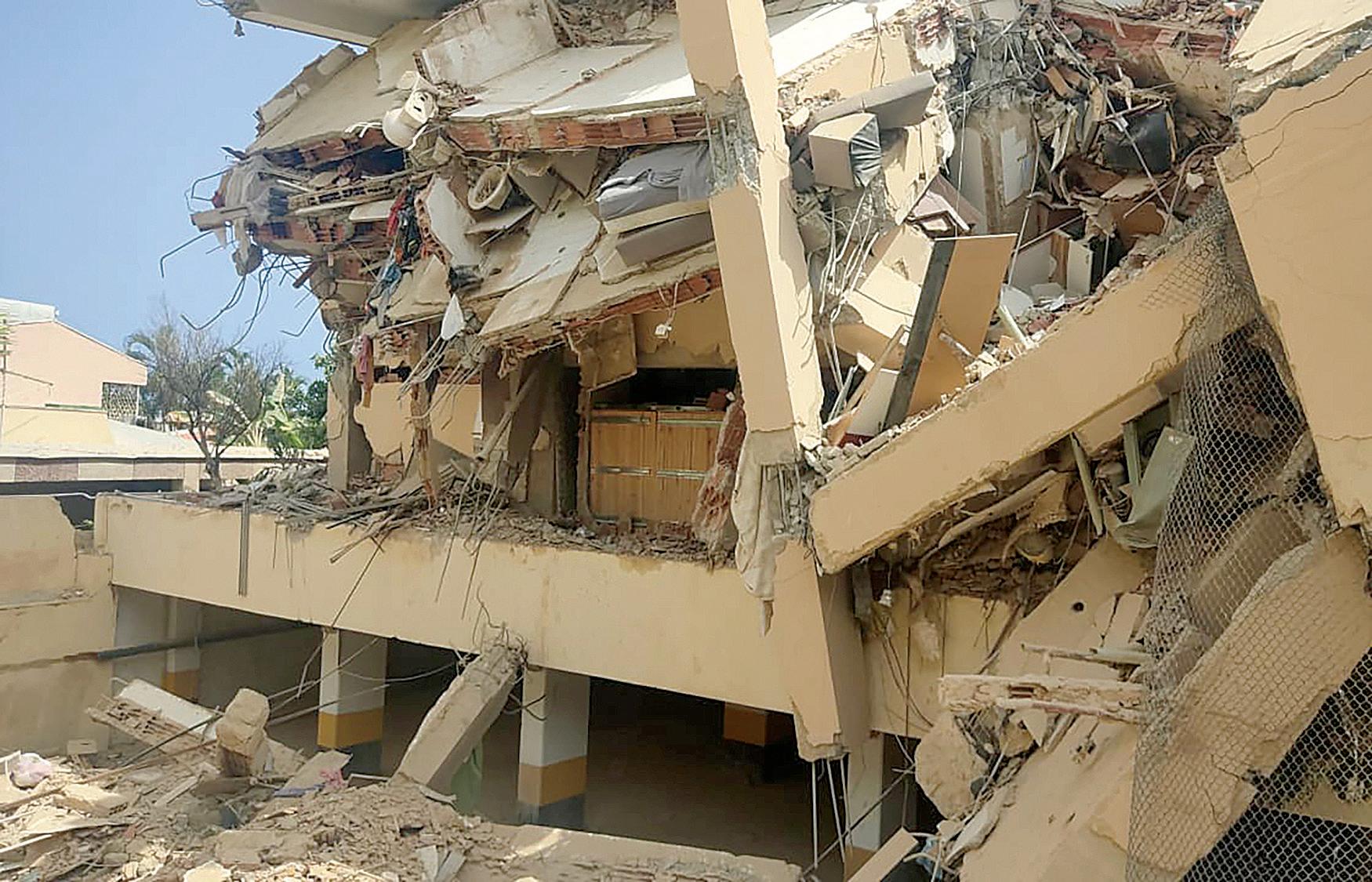
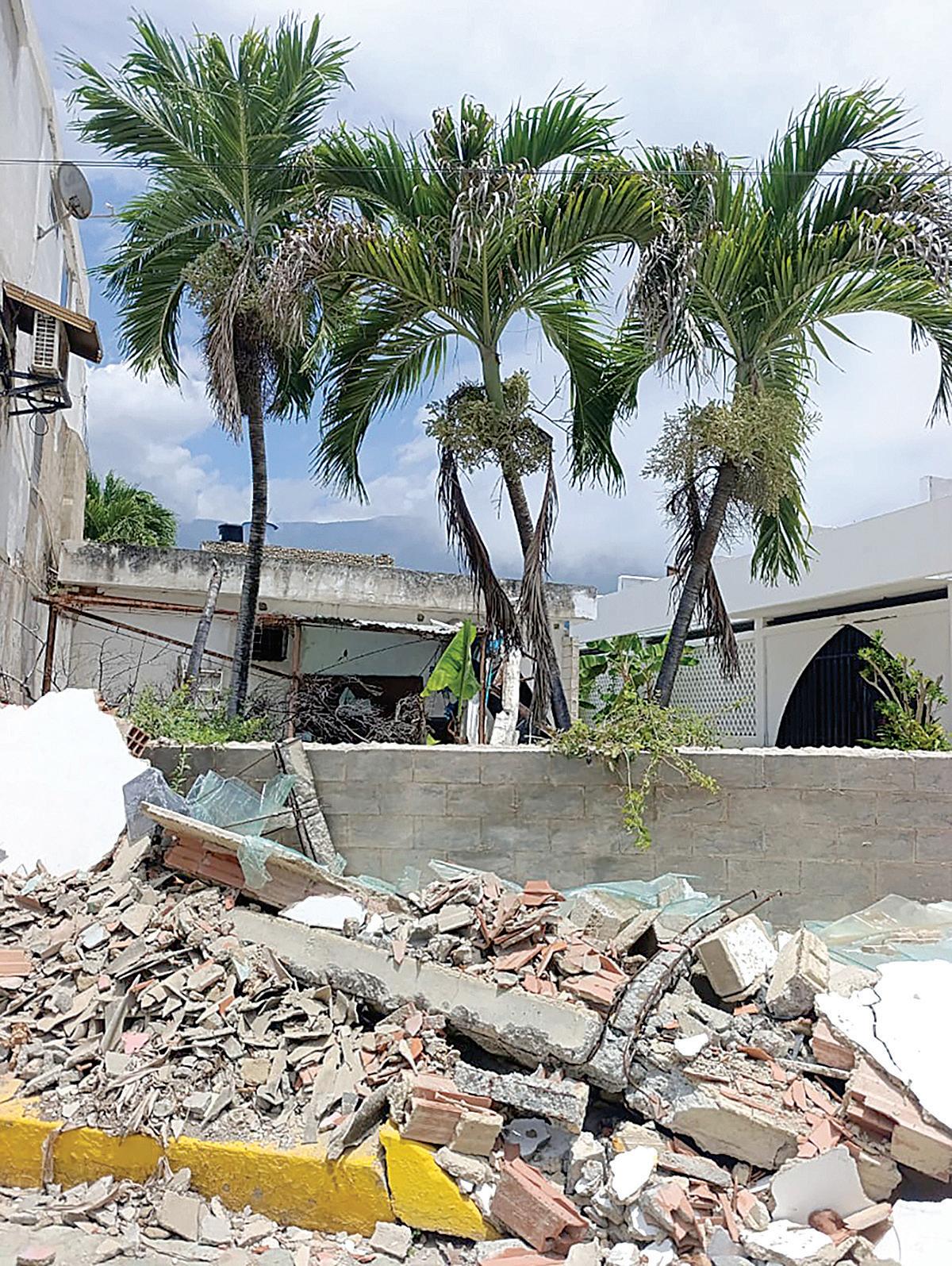
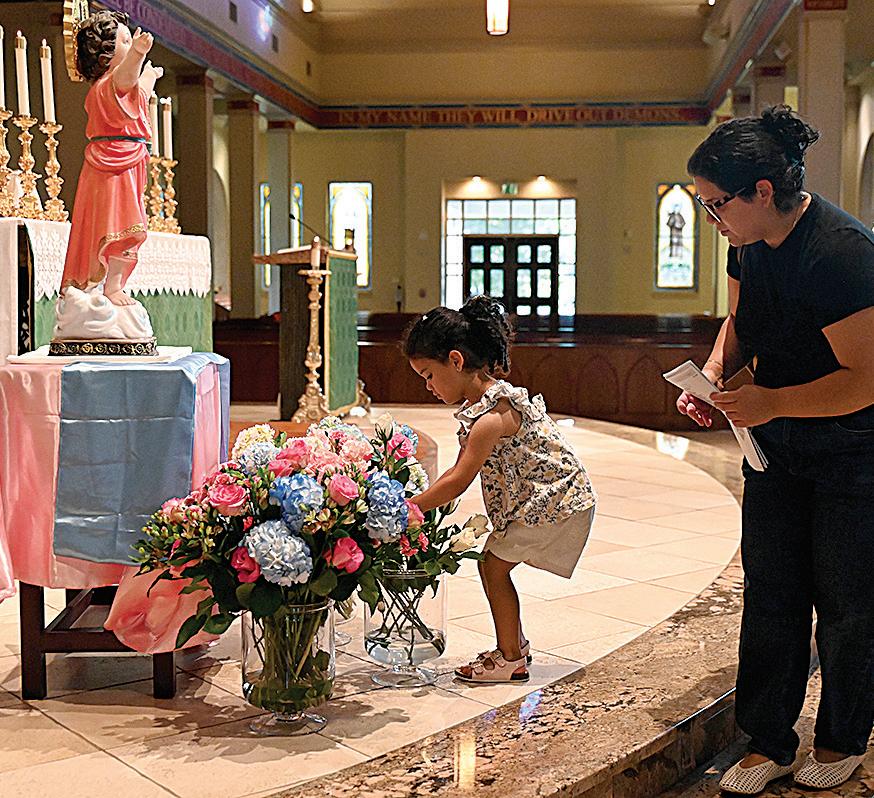
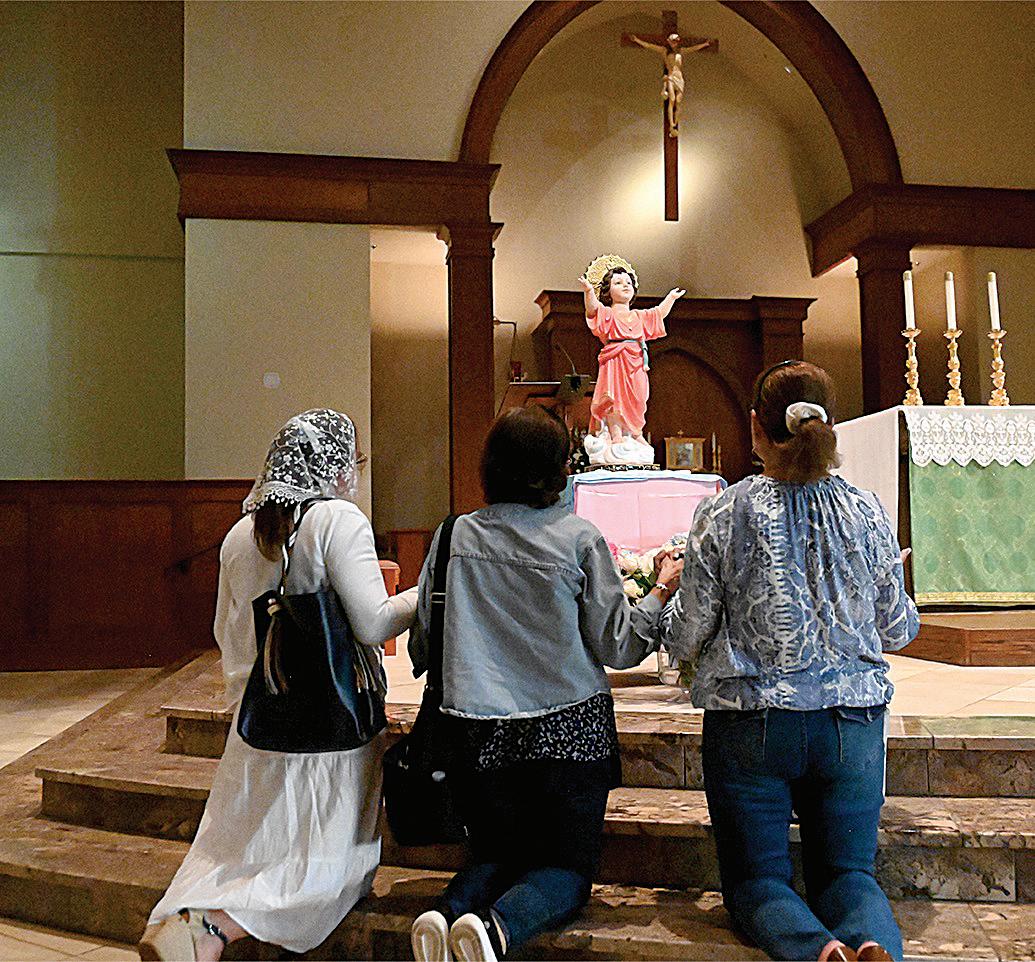
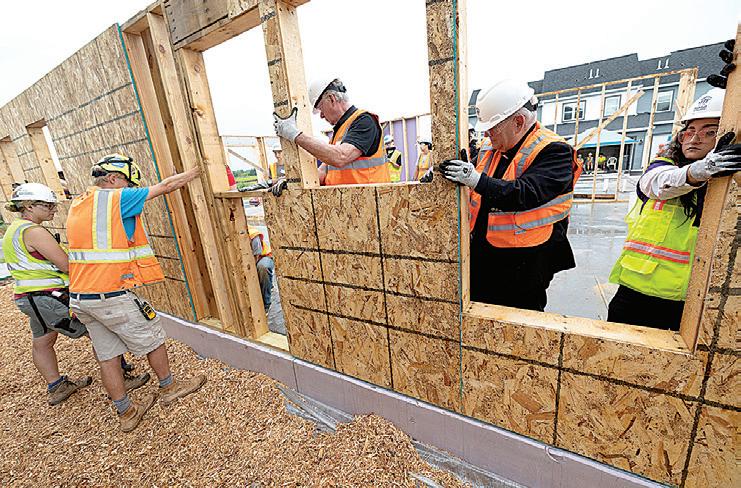
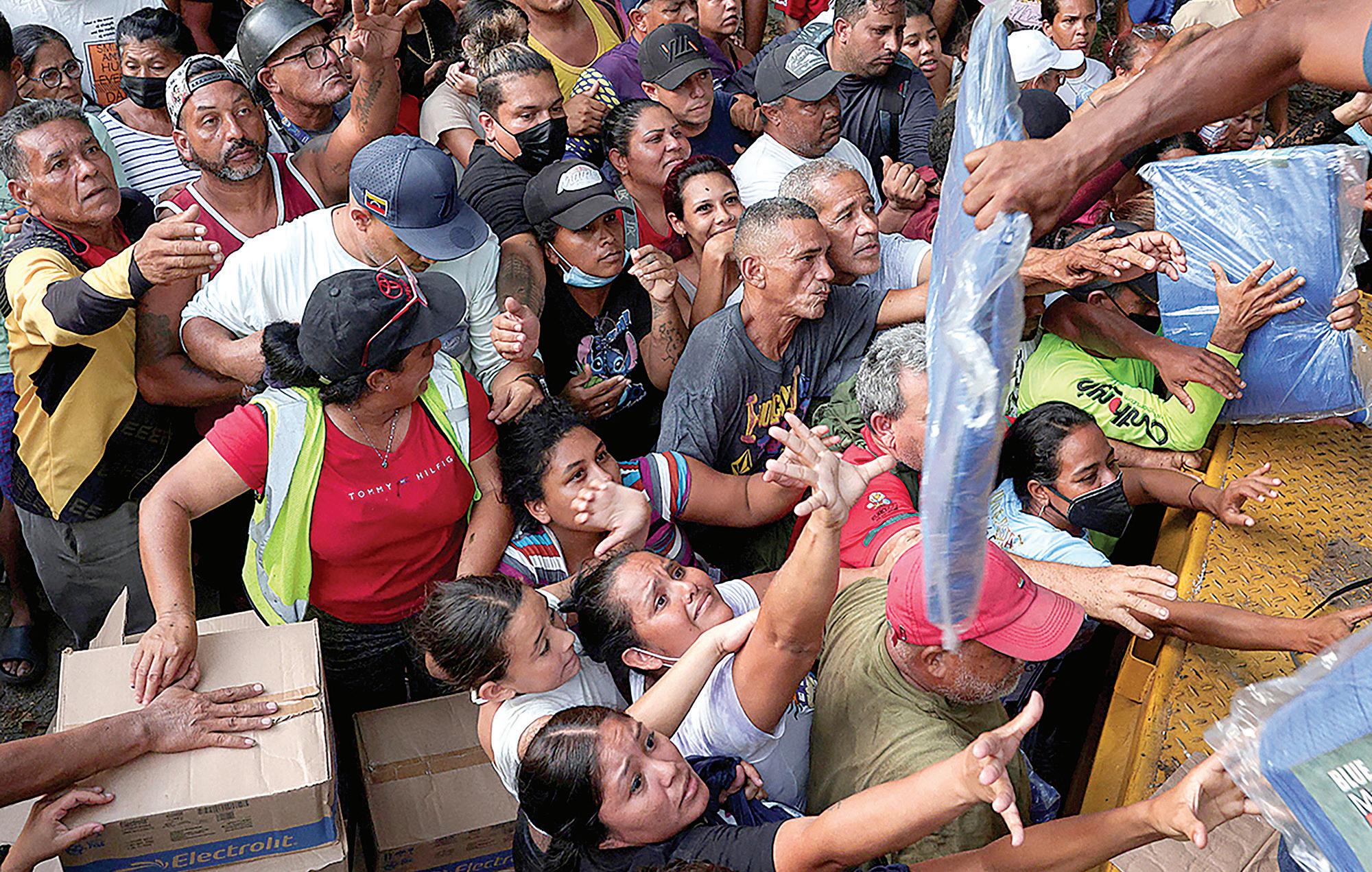
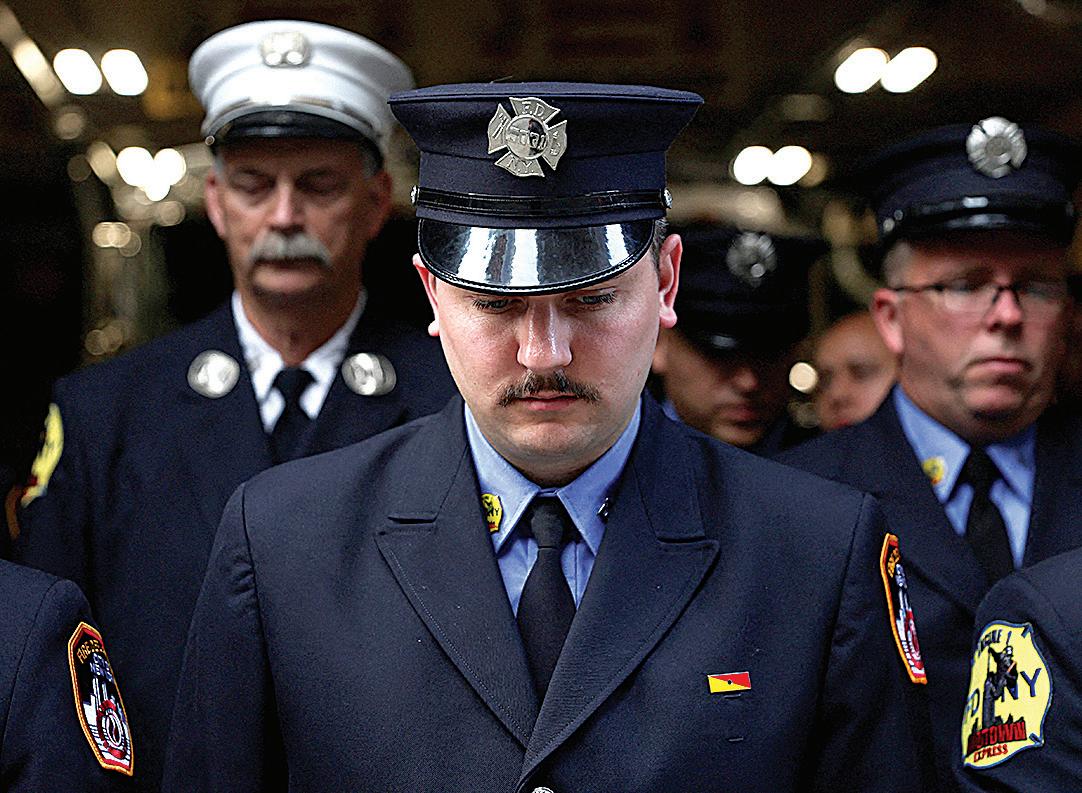
Local Catholics search for relatives and assist Venezuela parishes; world rushes to help – 14-15, 24
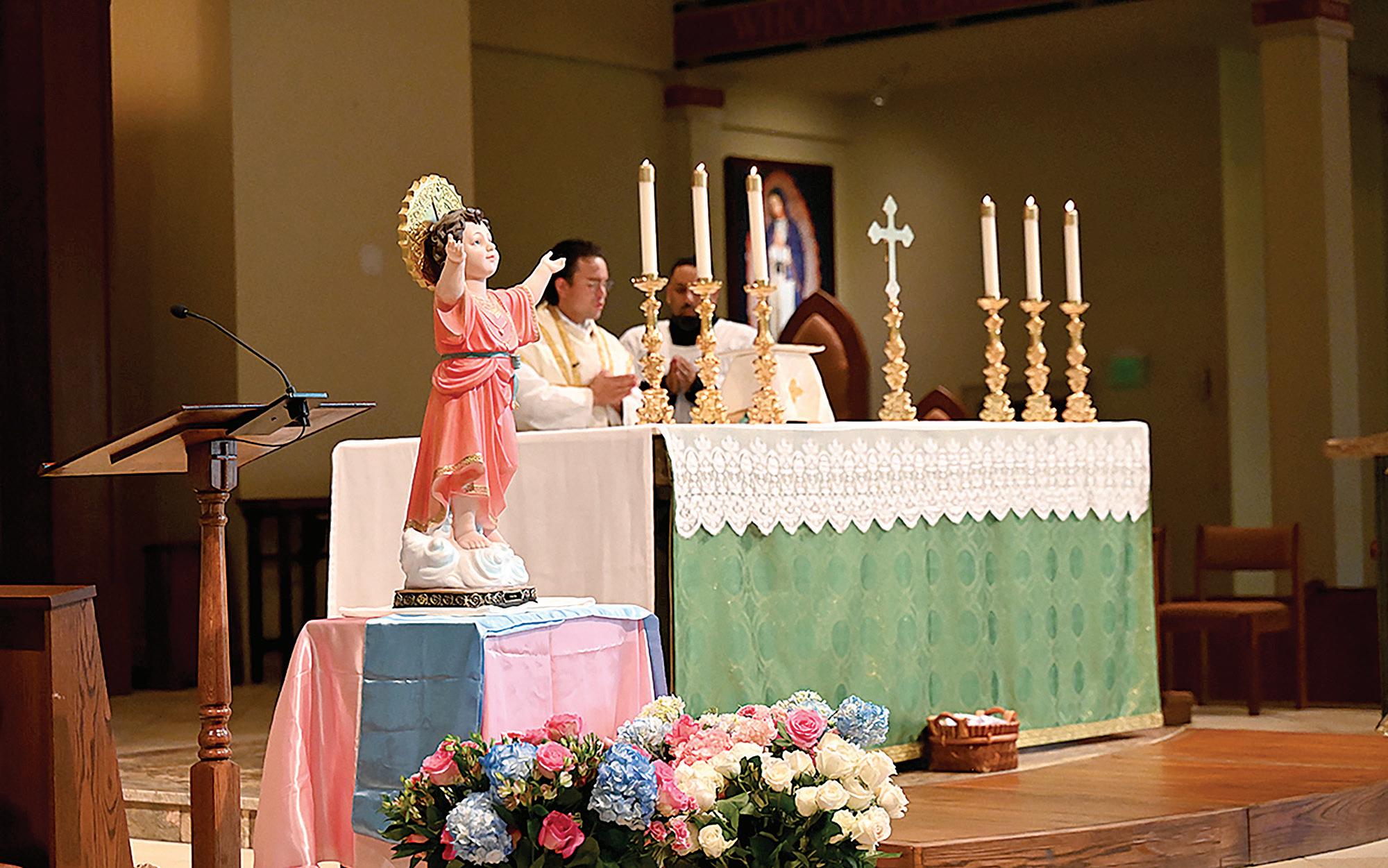
Los católicos de Charlotte buscan a sus familiares y ayudan a las parroquias afectadas por los terremotos en Venezuela – 16-17
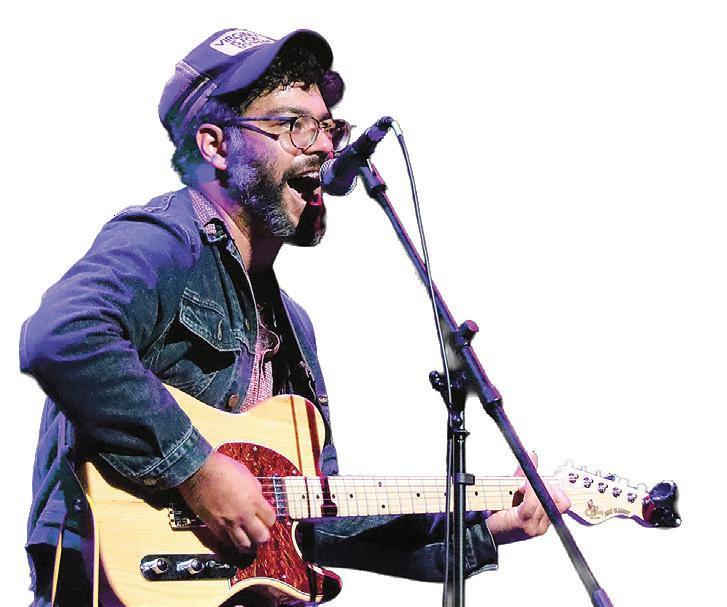
Folk artist sets Flannery O’Connor’s spirit to music 13
OLC parishioner first African American to lead Catholic Daughters of the Americas 9
May lay people be ordained to officiate weddings? 3
At a glance
JULY 24, 2026
VOLUME 35 • NUMBER 20
1123 S. CHURCH ST. CHARLOTTE, N.C. 28203-4003 catholicnews@rcdoc.org 704-370-3333
PUBLISHER
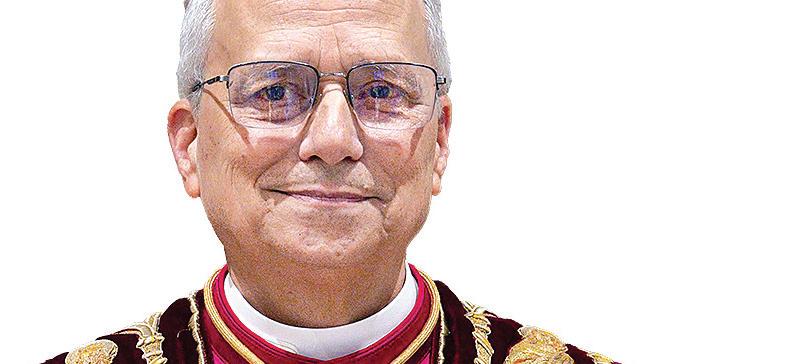
The Most Reverend Michael T. Martin, OFM Conv., Bishop of Charlotte
FCATHOLIC ALL WEEK
Timely tips for blending faith & life
rom the Apostolic Palace of Castel Gandolfo, where he moved to enjoy a period of rest, Pope Leo invited Catholics on July 12 to follow his lead and make time for quiet and prayer during the busy summer months. Here are a few creative ways to savor the season while you bolster your faith.
EDITOR: Trish Stukbauer
704-370-3392, tmstukbauer@rcdoc.org
ADVERTISING MANAGER: Kevin Eagan
704-370-3332, keeagan@rcdoc.org
MULTIMEDIA DESIGNER: David Puckett 704-808-4521, dwpuckett@rcdoc.org
EDITORIAL TEAM: Kimberly Bender 704-370-3394, kdbender@rcdoc.org Lisa Geraci 704-370-3294, lmgeraci@rcdoc.org
Troy C. Hull 704-370-3288, tchull@rcdoc.org Christina Lee Knauss 704-370-0783, clknauss@rcdoc.org Amelia Kudela 980-374-3411, arkudela@rcdoc.org Brian Segovia 704-370-3235, bmsegovia@rcdoc.org
COMMUNICATIONS ASSISTANT/CIRCULATION: Maria De Ugarte 704-370-3333, catholicnews@rcdoc.org
ASSISTANT COMMUNICATIONS DIRECTOR: Patricia L. Guilfoyle 704-370-3334, plguilfoyle@rcdoc.org
THE CATHOLIC NEWS HERALD is published by the Roman Catholic Diocese of Charlotte 26 times a year.
NEWS: The Catholic News Herald welcomes your news and photos. Please e-mail information, attaching photos in JPG format with a recommended resolution of 150 dpi or higher, to catholicnews@rcdoc.org All submitted items become the property of the Catholic News Herald and are subject to reuse, in whole or in part, in print, electronic formats and archives.
ADVERTISING: Reach 165,000 Catholics across western North Carolina! For advertising rates and information, contact Advertising Manager Kevin Eagan at 704-370-3332 or keeagan@rcdoc.org. The Catholic News Herald reserves the right to reject or cancel advertising for any reason, and does not recommend or guarantee any product, service or benefit claimed by our advertisers.
SUBSCRIPTIONS: $17.25 per year for registered families of the Diocese of Charlotte and $25 per year for all others
POSTMASTER: Periodicals Class postage (USPC 007-393) paid at Charlotte, N.C. Send address corrections to the Catholic News Herald,
GRAB THE GOOD BOOK
In his remarks, Pope Leo encouraged people to spend some time with Scripture. “Let us therefore resolve, especially during these summer days of vacation, to make room for listening to, reading and meditating on the word of God, thereby fostering – together with rest and wholesome recreation –meaningful moments of silence and prayer,” he said. Whether you do so by reading the Bible, listening to a favorite podcast (we have listed a few on our website) or spending some time meditating in Eucharistic Adoration, invest in your spiritual growth.
RETREAT INTO NATURE
There are few better ways to enjoy silence than by disconnecting and getting away. Whether your preferred setting is a drive along the Blue Ridge Parkway, a beach escape, hiking at a local park or exploring the campuses of Belmont Abbey or the Catholic Conference Center in Hickory, take time to reflect on the beauty of God’s creation.
Diocesan calendar of events
EVENTS
45+ SINGLES FELLOWSHIP EVENT: Join St. Mark Parish’s 45+ Singles for fellowship and fun 5-8 p.m. Sunday, July 26, at H2 Public House, 19906 N. Cove Road, Cornelius. Get more info and RSVP to ensure seating: 45plussingles@gmail.com.
COMMUNITY BABY SHOWER : Moms-to-be can attend this baby shower to pick up free pregnancy gifts and support materials 1-3 p.m. Sunday, Aug. 16, at Birthright of Charlotte, 4435 Monroe Road, Charlotte. Details: 803-543-8144.
PRAYER SERVICES
IGBO MASS: 1 p.m. Sunday, July 26, Our Lady of Consolation Church, 1235 Badger Ct., Charlotte. Celebrated by Bishop Michael Martin. Igbo is the native language of many Nigerian Catholics. Call 336-707-3625 for details.
HAVE A SWEET TREAT
Did you know there was a gelato flavor created for Pope Leo? World champion Italian gelato maker Eugenio Morrone created a Roman hazelnut cheesecake gelato featuring Chicago-style cheesecake (in honor of the pope’s hometown), Roman hazelnuts (for the seat of the papacy) and a passion fruit and mango sauce (that nods to his time as a missionary). While a trip to Rome may not be on your calendar, a visit to a local ice cream parlor can make late summer a bit sweeter – and cooler. — Catholic News Herald and OSV News
SINGLES MASS : 5:30 p.m. Sunday, July 26, St. Matthew Church, 8015 Ballantyne Commons Pkwy., Charlotte. A light reception and time to meet and mingle will follow.
MASS FOR THE OPENING OF THE SEMINARY YEAR : 4 p.m. Friday, July 31, Sacred Heart Church, 375 Lumen Christi Lane, Salisbury. All are welcome.
VIGIL OF THE TWO HEARTS : Vigil begins with 8 p.m. First Friday Mass on Aug. 7, followed by Eucharistic Adoration and concludes with 8 a.m. First Saturday Mass Aug. 8. St. Patrick Cathedral, 1621 Dilworth Road East, Charlotte. Details: www.defendthefamily.org/ two-hearts.
MASS FOR ANOINTING OF THE SICK : 10 a.m. Saturday, Aug. 22, St. Luke Church, 9800 Fairview Road, Mint Hill. For those who wish to receive the sacrament of anointing of the sick, sponsored by the parish’s HOPE Committee. Refreshments served after Mass. For details, call 704-545-1224.
activities
Bishop Michael Martin, OFM Conv., will participate in the following events over the coming weeks:
Scan the QR code for this week’s recommended prayers and
Our faith
God’s kingdom grows in the ‘little things of daily life’
Catholics from every continent gathered in Castel Gandolfo July 19 as Pope Leo XIV led the Angelus prayer from the papal summer palace, where the pope reflected on how the kingdom of God grows through “the little things of daily life.”
Pope Leo, speaking to pilgrims, said the kingdom of God “comes like the smallest of seeds and thus calls for patience in accompanying these processes, so that we can recognize it in the little things of daily life and in the simplicity of ordinary existence.”
He said Christians sometimes long for God to act dramatically, “to intervene from on high, immediately uprooting the weeds of evil,” but that God’s kingdom instead “grows invisibly like yeast in flour.”
“In fact, He is always with us, and His love is always ready to help us,” he said.
As Pope Leo made his way through the crowd after leading the Angelus prayer, he blessed rosaries, clasped hands and accepted a scout neckerchief from a scouting troop from Brittany, France.
Pope Leo, quoting Cardinal Josef Ratzinger, the future Benedict XVI, told the crowd that the path of the Gospel lies in embracing “the logic of the seed – which is not that of success and greatness, but that of making ourselves small and serving others.”
“In this way, we will become like small seeds of the Gospel that sprout, and leavens of love that transform the dough of the world,” Pope Leo said.
The pope’s words resonated with Salesian Sister Ruth del Pilar Mora, originally from Colombia.
“I think Pope Leo being a missionary, he will continue to encourage all of us to be disciples, missionaries ready to go ... and to communicate the joy of the Gospel,” Sister Ruth said.
EDITOR’S NOTE
Following the practice of previous pontiffs, Pope Leo is taking time off in July. His weekly general audiences – which provide the content for his column on this page – will resume Aug. 5. His column this week was adapted from his July 19 Angelus address given at Castel Gandolfo, Italy.
May Catholic lay people be ordained to officiate weddings?
CHRISTINA LEE KNAUSS clknauss@rcdoc.org
Imagine this: you – a Catholic lay person
– get a call from a relative or a close friend who wants to get married on the beach at the Outer Banks, and they ask if you would officiate at their wedding. They’re not particularly religious, but they love and respect you and would like you to do the honors.
You can even get “ordained” to do it, they suggest, by getting a certificate from an online “church” or other groups that have sprung up in recent years for this purpose.
There are three simple words you should remember: Just say no.
A variety of organizations offer online “ordinations” to anyone who fills out a registration form to officiate a wedding.
According to figures compiled by the University of California, the Universal Life Church has ordained more than 20 million people globally, while American Marriage Ministries has ordained more than 1.7 million people. The trend has grown as more people opt for non-church weddings or choose to host destination weddings in exotic places, where they aren’t connected to any particular church or clergy.
It is important that you respectfully and politely decline such a request, Catholic leaders say, because the Church teaches that only validly ordained clergy who have received the sacrament of holy orders may
officiate at a marriage ceremony.
Participating in this trend would put a lay Catholic at odds with Church law, says Father John Putnam, judicial vicar for the Diocese of Charlotte and pastor of St. Mark Parish in Huntersville. As judicial vicar, Father Putnam is the diocese’s chief judge and handles the local Church’s legal affairs, such as marriage annulments and other matters involving the rights of the faithful. Here’s what you need to know about this trend and what the Church says about it:
Why are Catholics discouraged from doing this?
The Church teaches that marriage is a sacrament – a lifelong covenant between a man and a woman that they make with vows in the presence of God. Each spouse consecrates themselves to the other, and the grace of the Holy Spirit they receive in the sacrament fortifies them and their life together. As a sacrament, marriages must be officiated by clergy, who have the authority of the Church to administer the sacraments.
“Ordinations” offered by online services or non-Catholic organizations – which require no formation, doctrinal adherence or ecclesial authority – are not valid in the eyes of the Church, Father Putnam said.
How would being “ordained” online harm a Catholic?
Accepting such a credential, even for a single occasion, risks simulating a sacrament and placing one in imperfect communion with the Catholic Church, Father Putnam said.
Daily Scripture readings “Though they fight against you, they shall not prevail, For I am with you, to deliver and rescue you, says the Lord. I will free you from the hand of the wicked, and rescue you from the grasp of the violent.” — Jeremiah 15:20-21, part of the daily readings for July 29
How can it impact the couple?
In North Carolina, reliance on instant online ordinations carries substantial legal risk. Courts have repeatedly questioned their validity, which may render a marriage vulnerable to later challenge with serious consequences for the couple.
So as a lay Catholic, what do you do if asked to get one of these certificates and officiate at a wedding?
If the person asking you is a Catholic, or marrying a Catholic, encourage them to explore the Church’s teachings on marriage and consider getting married in their parish. Catholic clergy and parishes in the Charlotte diocese “stand ready to assist with preparation and referrals to authorized officiants and formation on the beauty of Christian marriage,” Father Putnam said.
If the person is not Catholic, respectfully decline. Accompany the couple with genuine charity and support them in their marriage.
In either case, use the moment as an opportunity to spread the Gospel and encourage the couple to consider whether they want God at the center of their marriage – a gift the Church can help deliver.
I know only ordained priests or deacons can officiate at sacramental weddings, but can a Catholic officiate at a civil ceremony?
Yes. If a Catholic has the legal authority
MARRIAGE, SEE PAGE 19
Snap the QR code (right) to get the Mass readings for every day, in English or Spanish, online at the U.S. Conference of Catholic Bishops’ website.
Pope Leo XIV
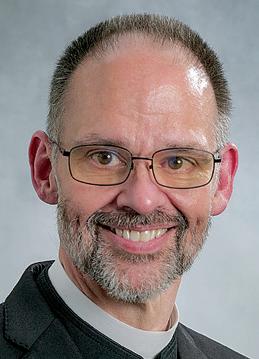
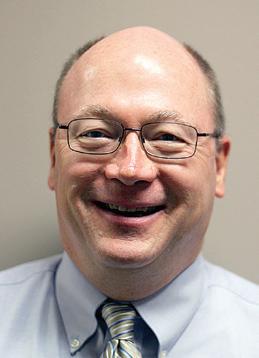
Putnam
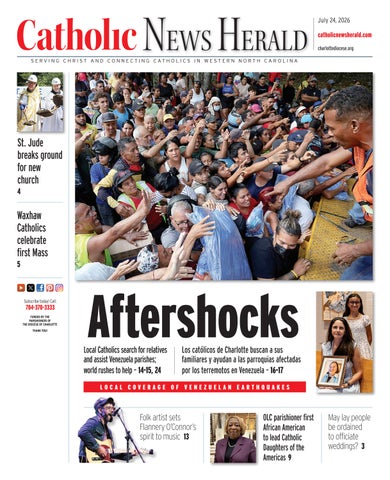
St. Jude breaks ground for new church
CHRISTINA LEE KNAUSS clknauss@rcdoc.org
SAPPHIRE — Construction is set to begin soon on a new church in the mountain town of Sapphire, where St. Jude Parish is expanding to serve its growing Catholic community.
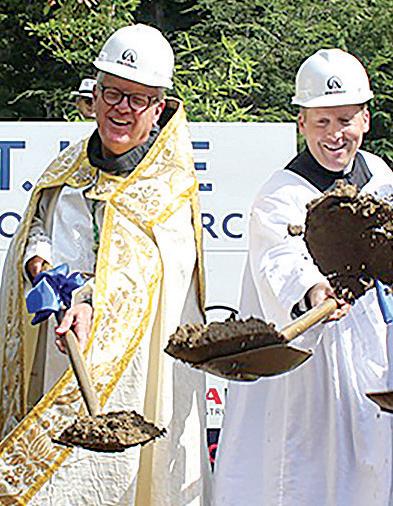
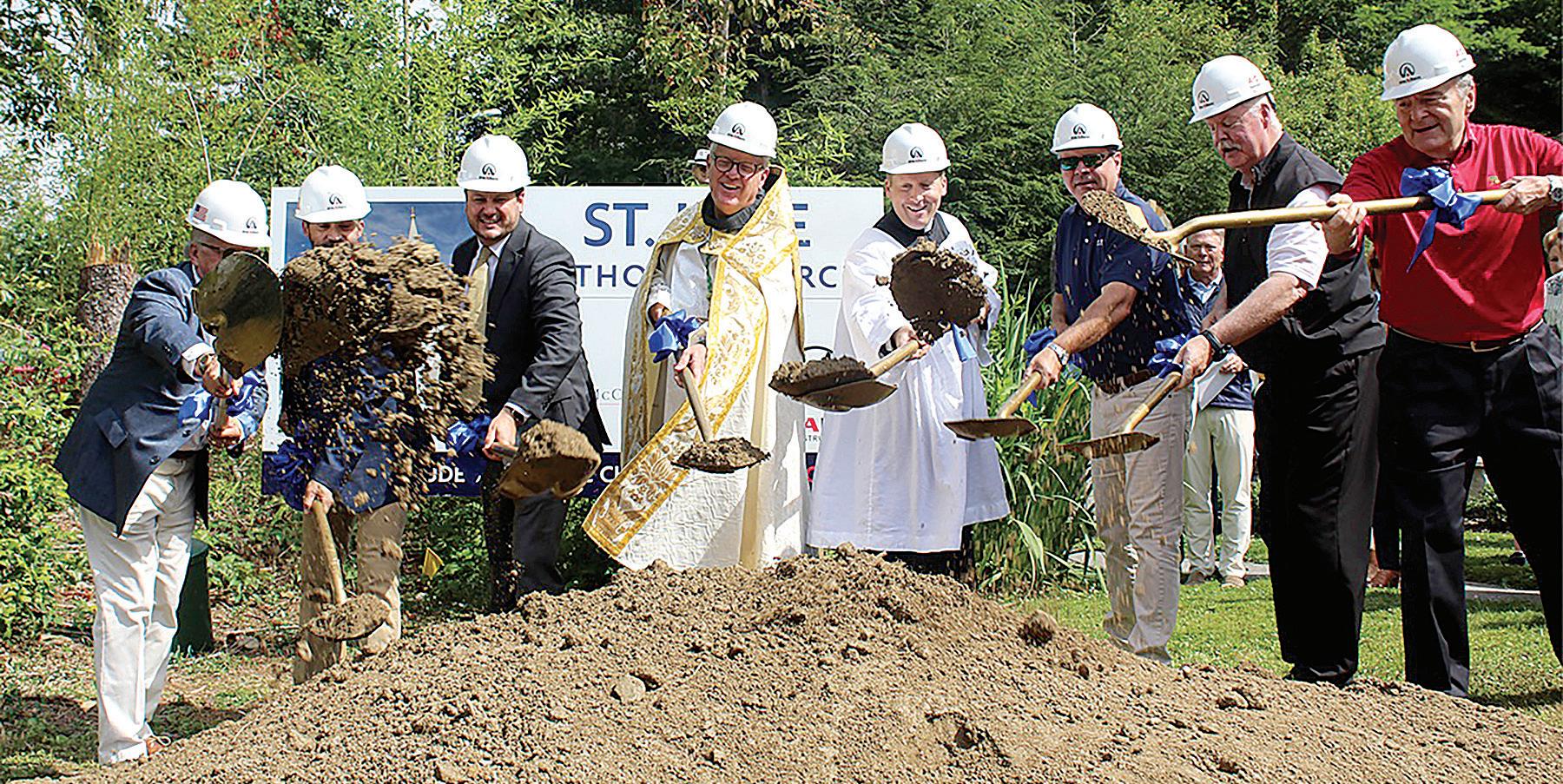
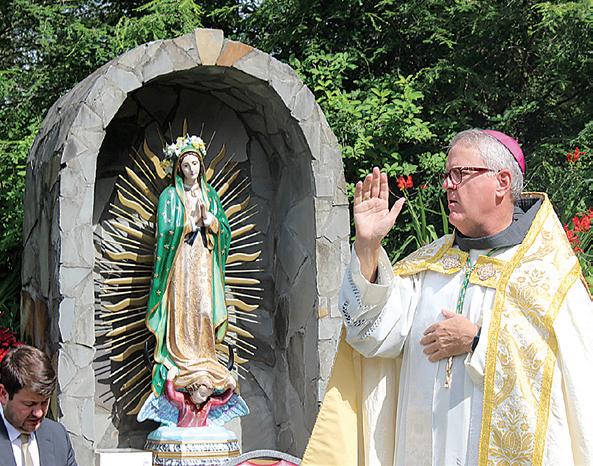
The parish celebrated the start of the building project on June 28, when Bishop Michael Martin joined parishioners for a groundbreaking ceremony.
A standing-room-only congregation attended the 9 a.m. Mass offered by Bishop Martin, who confirmed five young people and then joined Father Jason Barone, pastor, for a groundbreaking event adjacent to the existing church along U.S. 64, a picturesque fieldstone building that was dedicated in 1972 by thenBishop Michael Begley, the first bishop of Charlotte.
“This church has been such a source of grace and goodness for the local community here,” Bishop Martin told the crowd gathered for the groundbreaking. “Over the next few years, many of you will drive by on this road and you will see the construction, the dirt being moved, and you’ll say, ‘I was there when it was blessed.’”
Bishop Martin encouraged the people to take the holiness they receive from attending Mass at St. Jude out into the larger world.
“What we need to do is take what this building means out into our community, to be the Church in the world, to be the living stones in our workplaces, in our marketplace and in our homes in particular,” he said.
Father Barone said breaking ground on the new church is a significant move for a community that has been a parish for only four years. St. Jude, formerly a mission of Sacred Heart Parish in Brevard,
was elevated to parish status July 5, 2022, and Father Barone, formerly its administrator, was elevated to pastor.
According to statistics compiled by the parish, Sapphire and the surrounding area are expected to grow 10-13% by 2030, as more retirees and year-round residents move into the area. Several large residential communities are being built nearby, and the number of seasonal visitors continues to rise.
The existing church currently averages about 125 attendees at winter Masses and more than 400 during the summer.
“I’m extremely proud of this little community,” Father Barone said. “Just a few years ago we were a little mission, and now we’re a big boy parish building a church. I’m very proud of all of you who have made this a reality and humbled you have trusted my leadership of this project. I want
to thank our Lord, our most Holy Mother and St. Jude, our patron.” Funds for the new church are being raised through a campaign called “Building Our Future Together.” About $11.3 million has been pledged so far, with a goal of about $13.4 million to complete the new church.
Construction drawings are nearly ready, and construction is expected to begin this fall, according to Emmett Sapp,
director of construction and real estate for the Diocese of Charlotte. Once completed, the new church will seat about 300 people on the main level and 28 in the choir loft.
A RICH HISTORY
The new church will be a far cry from the early days of Catholic worship in the Sapphire Valley, where Mass was first celebrated in 1964 in the meeting room of the Sapphire Valley Inn. In 1969, the congregation outgrew the meeting room. One of the original members, Marty Howerdd, the wife of Gene Howerdd Jr. , became ill and prayed to St. Jude that if she could recover, she would do everything she could to raise funds for a Catholic chapel in the Sapphire Valley and have it named in his honor.
Father Charles Mulholland, then the pastor in Brevard, petitioned the Bishop of Raleigh for
permission to establish a mission, call it St. Jude and begin planning to build a church. Permission was given. Howerdd set out to complete her pledge, which she did by gifting several acres along U.S. 64 for the new church property.
Father Mulholland’s brother, a professor at The Catholic University of America, arranged for architectural students there to submit designs for the chapel as a class project. One – an octagonal chapel of fieldstone – was chosen as the perfect complement to the mountain setting.
Construction started in 1971 and was completed in 1972. Classrooms, a parish hall and offices were added in 2001. Once the new church is completed, plans call for the current church to be turned into a parish hall.
This is not the only construction project on Father Barone’s plate. He also serves as pastor at Our Lady of the Mountains in Highlands, about 30 minutes away. Ground was broken for a new church there in summer 2024, and construction is nearly complete. Bishop Martin is slated to dedicate the new Highlands church over Labor Day weekend. Flooring and pews will be installed after the dedication.
The cost of the Highlands project is expected to be about $15.8 million, Sapp said.
The architect on both projects is McCrery Architects of Washington, D.C.
R.W. Allen Construction out of Augusta, Georgia, is the contractor for the project at St. Jude, and J. Davis Construction of Greenville, S.C., is the contractor in Highlands.
As Father Barone noted, “It’s all for the glory of God, who will not ask us how many churches we built, but how we built up the living stones in the image and likeness of God.”
The nation’s largest community-driven Catholic Hunger Drive celebrates its 24th year
CHARLOTTE — St. Matthew Parish’s 24th annual Monsignor McSweeney World Hunger Drive invites people to reach out to help impoverished people worldwide –including a church in Venezuela nearly destroyed by twin earthquakes last month.
This year’s campaign will send financial aid to San Francisco de Asís Parish in Naiguatá, which has ties to the Charlotte parish, as well as aid to communities in Haiti, India and Puerto Rico.
“Nobody is fully prepared for a disaster of this magnitude, especially not Venezuela during this period of political transition. But we as the World Hunger Drive evolve through experience to respond quickly in emergency situations,” said St. Matthew parishioner Bruce Anderson, who is coordinating assistance in Venezuela.
(Editor’s note: Read more on page 14.)
This year’s goal is to raise more than
$400,000 and pack 300,000 meals for the destitute in Haiti, India and Puerto Rico. Additionally, approximately 10% of funds support local needs in the diocese.
“This is an opportunity for us to put the Gospel into action for those on the margins,” said Father Patrick Cahill, St. Matthew’s pastor.
The World Hunger Drive is a multi-week effort: An initial donation drive kicked off July 11. A “Hoops for Hunger” three-onthree basketball tournament is set for Aug. 1, and one of the nation’s largest mealpacking events will take place Aug. 15.
This year, organizer Pat McBride notes, “Our newest area of focus is Puerto Rico, where poverty remains a significant challenge. Approximately 43% of residents and 80% of children live below the poverty line, highlighting the urgent need for continued support.”
‘This is an opportunity for us to put the Gospel into action.’
Father Patrick Cahill Pastor of St. Matthew Parish
Container shipments have become an expensive impossibility in some countries due to the political climate, excessive duties and gang activity. In response, organizers are sending funds to Venezuela, Haiti and India, while shipping food to Puerto Rico. Inspiration to launch the World Hunger
Food Drive came from St. Matthew’s former pastor, Monsignor John McSweeney, whose words still hang in the memory of parishioners like Anderson and McBride.
“Monsignor McSweeney, in one Sunday homily, said, ‘I have to report to you folks that we are well aware we have a serious illness, it’s contagious and rapidly spreading through our community – it’s called affluenza. We are affluent, and we are not sharing,’” Anderson remembered. “His words really set the tone.”
Over the past 23 years, St. Matthew parishioners have provided more than 4.7 million pounds of food and millions of dollars to local and global relief.
— Lisa M. Geraci More online
At www.stmatthewcatholic.org/
CHRISTINA LEE KNAUSS | CATHOLIC NEWS HERALD
Spurred by an influx of retirees and projected growth of more than 10% by 2030, the Catholic community in Sapphire is expanding its church. Bishop Michael Martin encouraged St. Jude parishioners to take the grace received inside the church out into the larger world.
Waxhaw Catholics celebrate
Father Roberts offers first Mass for the newly formed Catholic Community of Waxhaw
LISA GERACI lmgeraci@rcdoc.org
WAXHAW — With a resident priest and a growing congregation, the Catholic Community of Waxhaw is entering a new chapter as it moves toward becoming the Diocese of Charlotte’s newest parish.
Father Benjamin Roberts celebrated his first Mass as priest-in-charge July 1, drawing laughter and applause less than a minute into his homily at the church on Waxhaw-Marvin Road.
“In the last 12 years, many priests have stood at this altar, many priests have celebrated Mass, and many priests have introduced themselves to you, and I get to say something that none of them ever did – I live here,” Father Roberts said.
Father Roberts serves as priest-in-charge of the Catholic Community of Waxhaw alongside Father Patrick Cahill, pastor of St. Matthew Parish. The thriving former satellite campus of St. Matthew Parish is taking steps toward becoming a separate parish in response to the area’s growth. Together, the two priests will work with parishioners through the process of establishing the new parish.
The Catholic population in the Waxhaw area continues to grow rapidly. About 2,600 registered Catholic families already live within the immediate area, and Father Roberts said projections indicate the community could grow to 7,000 Catholics by 2035.
Mass attendees received green wristbands reading “Catholic Community of Waxhaw” on one side and “Growing with the Love of Christ” on the other – a theme embraced by the congregation of about 1,600, which has worshiped at the Waxhaw campus for more than a decade.
Father Roberts quickly put his new flock at ease, joking, “I would have preferred that the Gospel reading (Matthew 8:28-34) for the evening did not end with the words, ‘but when they saw Him they begged Him to leave.’”
After shared laughter, he explained that Jesus was asked to leave because His presence required a mission the people of Gadara were unwilling to embrace. But “every grace that God gives comes with some kind of mission. It comes with some kind of response,” he said.
SAYING
‘YES’ TO GOD
Father Roberts pointed to his own assignment as an example. After serving as pastor of Our Lady of Lourdes Parish in Monroe for 14 years, Bishop Michael Martin asked him to take on the new role. At the time, he was staring at an image of Our Lady of Perpetual Help
in his living room. After some discernment, Father Roberts looked to the Blessed Mother and humbly accepted.
“I am living proof that saying yes to God’s call brings about God’s grace,” he said.
Though surprised by the assignment, he trusted God had something more in mind.
“The work that we are about to do together is the work that God graced us with,”
Father Roberts said. “It is not the work God does in me, it is
not the work that God does in you, it is the work that God does in us. “To build up His Church. To
What’s next for the Catholic Community of Waxhaw?
When will it officially become a parish?
No date has been set, but the goal is about a year from now, Father Benjamin Roberts said. The timeline depends on establishing parish and finance councils, staffing and finances. What will the new parish be called?
That has not yet been decided. Bishop Michael Martin has indicated the parish name will be chosen through a collaborative process, and Father Roberts said he hopes to develop details to announce soon.
Who will belong to the new parish?
The Diocese of Charlotte will establish parish boundaries, likely centered on the 28173 ZIP code and a small portion of Wesley Chapel. Catholics outside those boundaries, including those in nearby South Carolina, will also be welcome to worship in Waxhaw.
Will the new parish start from scratch?
build a church. But ultimately, to grow with the love of Jesus. That is why I feel sorry for the people that asked Jesus to leave, because they never got to know the joy of being loved by Him ... but what they missed is ours.”
A FAMILIAR FACE
Father Roberts, who grew up in nearby Lancaster, South Carolina, is already a familiar face to many Catholics in the area.
Nancy Weber, who has attended Mass at the Waxhaw campus for six years, said the occasion was especially meaningful because she had known Father Roberts since his time at Sacred Heart Parish in Salisbury.
“I have known Father Benjamin since he entered seminary. I love him, and where he goes, I would be willing to follow. He is wonderful,” she said. “We are thrilled this will become a parish. It is long overdue.”
Pam Machaud, who has been reluctant to call any particular church her home, said she believes she has finally found it.
“We sort of bounced around.
… Two weeks ago, we were introduced to Father Benjamin and got extremely excited,” she said. “We never built a parish, and it is something that I am in awe of. … Father Roberts sounds so positive about us coming together as a church. It is not just his Church, or our Church, it is all our Church together. … You always find the home you are supposed to be at, and this is the home where we are supposed to be.”
No. Once the boundaries are finalized, a proportional share of St. Matthew Parish’s assets will transfer to the new parish, providing a financial foundation as it plans for future growth. Father Roberts notes, “We are responsible for building our church and everything else we are going to build. But we will have a firm footing.”
What happens before the parish is officially established?
The community will form the leadership and infrastructure every parish needs, including a pastoral council, finance council and staff. Until then, baptisms, weddings and funerals for community members will continue through St. Matthew Parish. What happens to the current church property?
The entire 32-acre campus will be part of the proportionate division of assets that will transfer to the new parish. What changes can parishioners expect now?
The Blessed Sacrament will remain reserved in the church, and a schedule for Mass, Adoration, confessions, rosary and Bible study was recently announced. More information is online at www.stmatthewcatholic.org/ccow. Why create a new parish?
The Catholic population in the Waxhaw area continues to grow rapidly. About 2,600 registered Catholic families already live within the immediate area, and Father Roberts said projections indicate the community could grow to 7,000 Catholics by 2035. But a parish is more than a building, Father Roberts explains. “We are thinking about something that will be very big, but more than that, we need to be a reflection of the heart of Jesus Christ. A community rooted in Christ, which means we are rooted in welcome, compassion and growth.”
— Catholic News Herald
PHOTOS BY TROY C. HULL | CATHOLIC NEWS HERALD
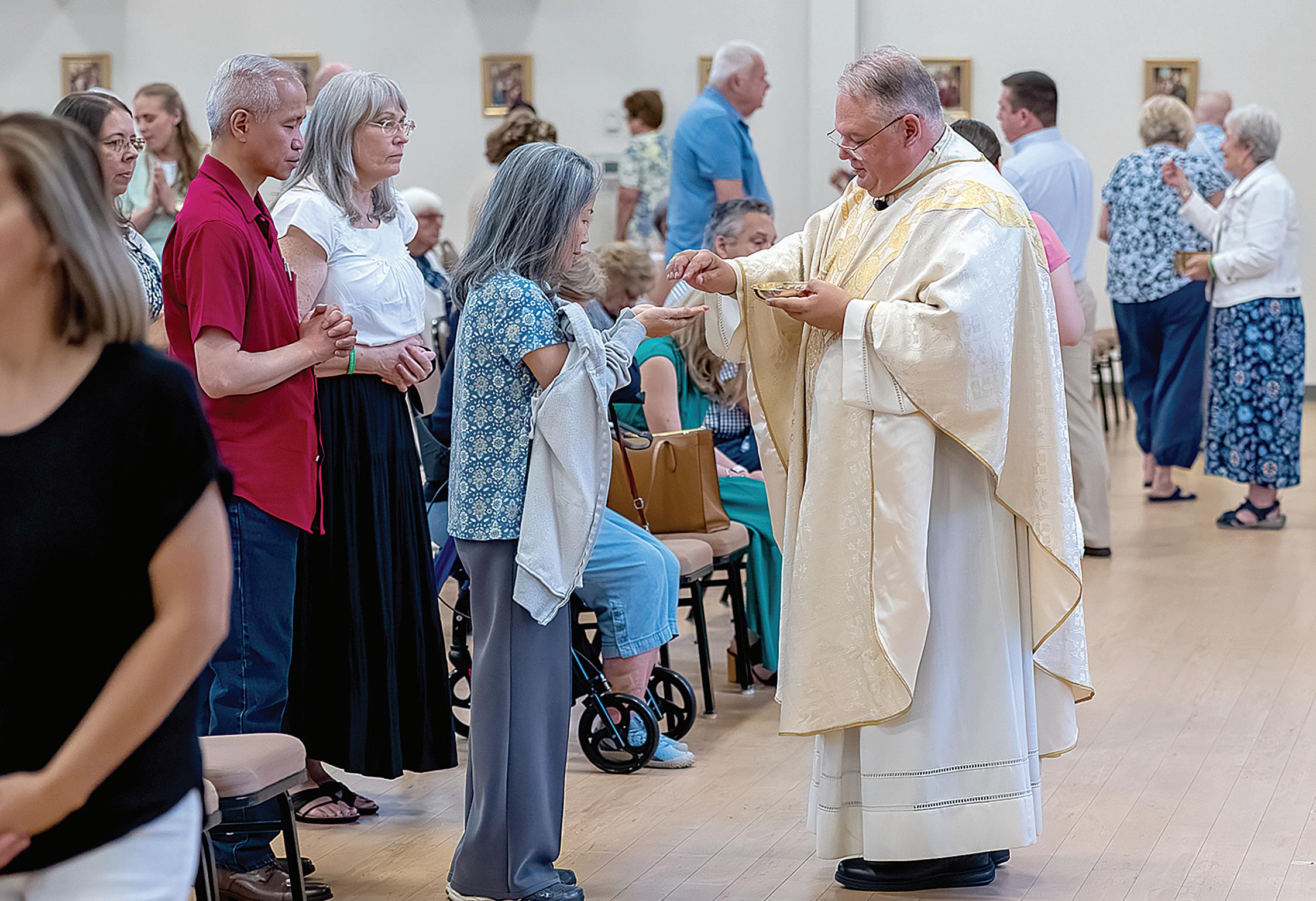
Father Benjamin Roberts distributes Holy Communion during his first Mass July 1 at his new assignment as priest-in-charge at the Catholic Community of Waxhaw. He is already working on setting up a regular schedule for Mass, Eucharistic Adoration, confessions and building hours.
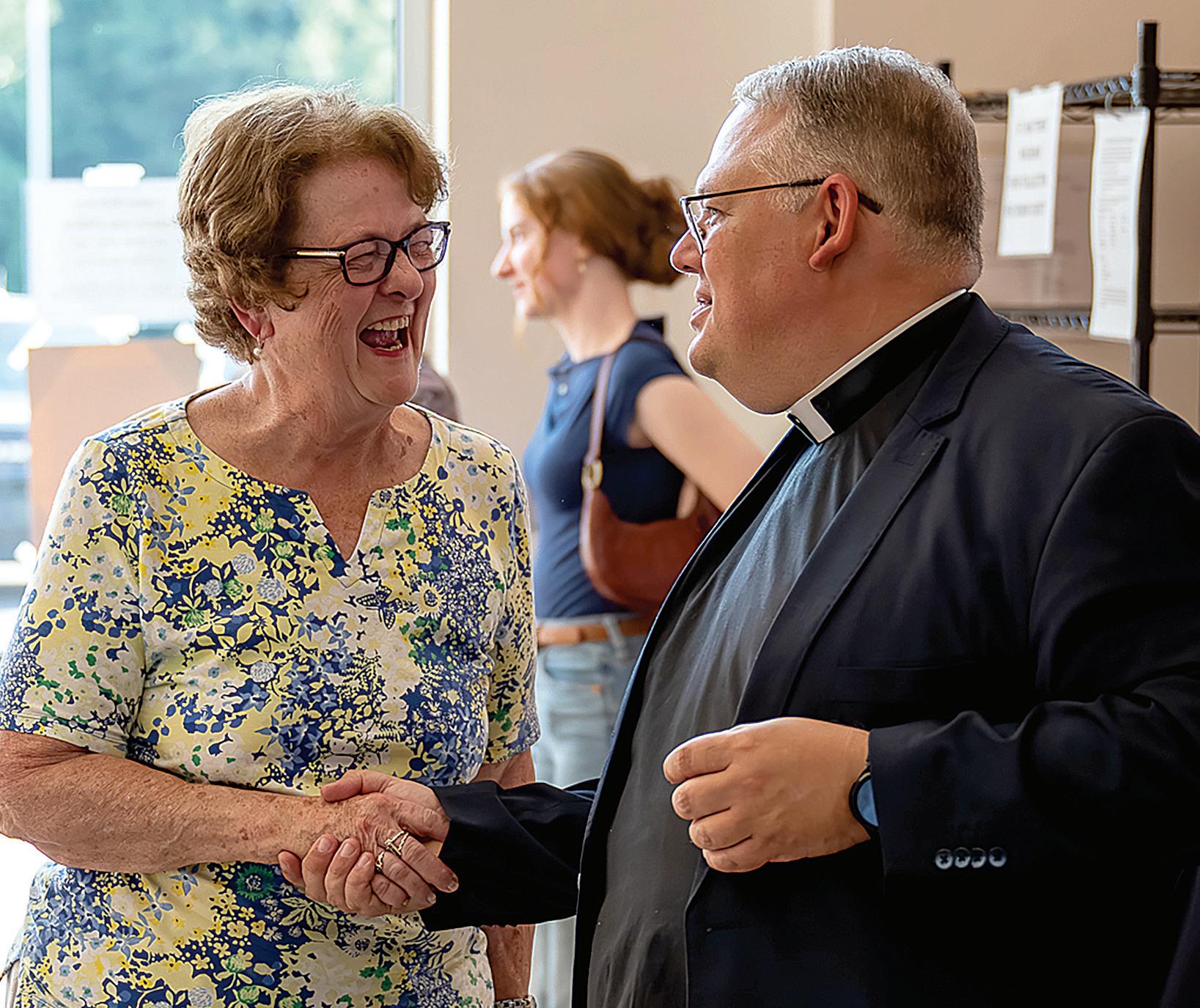
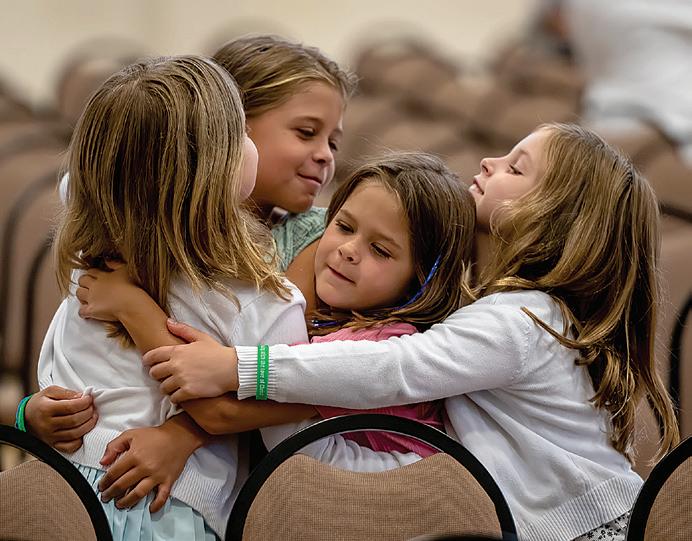
Community members greet Father Roberts after Mass to offer congratulations and well wishes. (Below) Tim and Lisa Maloy and their four children are looking forward to helping build the new parish community in Waxhaw. “It is very cool to get to help start something,” said Lisa Maloy.
In Brief
Cathedral issues social media fraud warning
CHARLOTTE — St. Patrick Cathedral recently issued a fraud alert to warn Catholics about a fake Facebook page that entices people to send money and someone posing as a Catholic priest.
“Please be warned of a fraud involving an individual or group of individuals who pose as a Catholic priest using the name ‘Father Arturo Lopez,’” the cathedral posted. “The fraudulent priest uses Facebook, YouTube, WhatsApp and other social media, and offers to perform exorcisms and other rituals in exchange for money. The fraudsters have created a fake Facebook page that looks very similar to the official page of the Cathedral of St. Patrick.
“‘Father Lopez’ is not a Catholic priest and has no association with the Cathedral of St. Patrick. The false Facebook page is not authorized by the Cathedral. This person or group is not providing any legitimate service and seeks only to defraud vulnerable victims. Do not send money or otherwise interact with them.”
The cathedral and the Diocese of Charlotte have contacted Facebook and law enforcement, and a lawsuit is being filed. If you have information, questions or have been victimized, please call the law firm of Terpening Law PLLC, which the diocese has retained, at 980-265-1700.
— Catholic News Herald
Learn how trails connect us to God and His creation
CHARLOTTE — Looking to connect with God in nature close to home? Ashton Lamb, trail development manager for Catawba Lands Conservancy-Carolina Thread Trail, will present “Weaving Communities & Destinations Together,” a talk exploring how trails connect people to creation and inspire its stewardship. The free event, sponsored by Catholic Charities and the Sisters of Mercy, will be held from 11:45 a.m. to 1 p.m. Wednesday, July 29, at the Diocesan Pastoral Center, 1123 S. Church St., Charlotte. A light lunch will be provided. RSVPs are required by July 27 to scaeducation@ccdoc.org.
— Joseph T. Purello
Knights give back to police
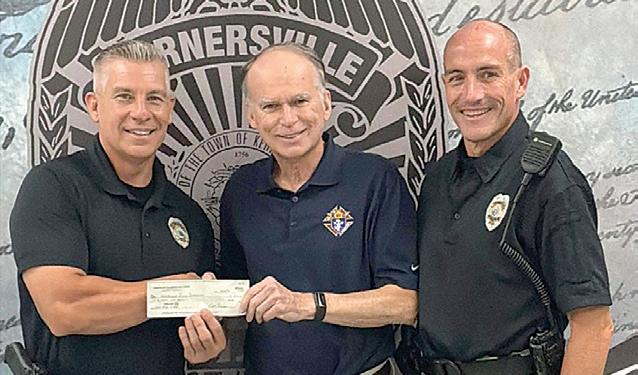
KERNERSVILLE — Knights of Columbus Council 8509 of Holy Cross Parish recently donated proceeds from its annual charity golf tournament to the Kernersville Police Department’s “Shop with a Cop” program, which helps make Christmas brighter for local children. The Knights have supported the program for more than a decade. Pictured are Chuck Tierney of the Knights with Kernersville Police Chief Jason Tilley and Lt. James Deeney.
— Chuck Tierney
Bishop Martin appeals to SSPX faithful:
‘The door of the Church is open’
PATRICIA L. GUILFOYLE plguilfoyle@rcdoc.org
CHARLOTTE — Bishop Michael Martin has joined a number of bishops across the United States in urging Catholics associated with the Society of St. Pius X to return to full communion after the Vatican’s declaration that the traditionalist group has broken away from the Catholic Church.
In a special pastoral letter issued July 17, Bishop Martin personally invited local followers of the SSPX to return to the Church and cautioned Catholics in the Diocese of Charlotte not to participate in liturgies of the now-schismatic society.
“I write as your bishop and spiritual father,” he said. “I recognize the sincerity of many who have been drawn to the Society over the years. Your desire for holiness, fidelity, prayer, and devotion is not in question.”
“At the same time,” he continued, “authentic Catholic faith is never separated from communion with Peter and the bishops united with him. The unity of the Church is not merely an administrative arrangement; it is a gift of Christ Himself.”
“Dear brothers and sisters,” he told SSPX followers, “the door of the Church is open. The heart of Christ is open. As your bishop, I welcome every effort toward reconciliation and assure you of my prayers, my affection and my pastoral support.”
VATICAN DECLARES SSPX IN SCHISM
Bishop Martin’s message echoed statements issued by other bishops and the Vatican after the Society of St. Pius X’s July 1 consecration of four bishops without papal approval in Ecône, Switzerland.
Just days earlier, Pope Leo XIV had issued an unusual personal appeal to the society’s leaders, warning them that going ahead with the consecrations would constitute a schismatic act and could deprive the faithful of valid access to the sacraments.
“I pray for you, because to tear the seamless garment of Christ is a sin of extreme gravity,” the pope said. “I plead with you and ask you with all my heart: please turn back!”
After the consecrations, the Vatican’s Dicastery for the Doctrine of the Faith declared the society’s bishops had incurred
automatic excommunication and clergy belonging to the SSPX “are in schism and therefore must be considered schismatics.”
Accompanying the Vatican’s July 2 decree was a note explaining that sacraments requiring the Church’s jurisdiction –including confession and marriage – are now invalid when celebrated by SSPX clergy.
SSPX leaders ignored the pope’s personal plea, dismissed the excommunication decree, and have filed an appeal with the Dicastery for the Doctrine of the Faith.
A MOVEMENT AT ODDS WITH VATICAN II
Founded in 1970 by French Archbishop Marcel Lefebvre, the SSPX emerged in opposition to the Second Vatican Council. Although the society is best known for celebrating the Traditional Latin Mass, it rejects key teachings and reforms
that participating in liturgies at SSPX chapels “could be construed as a schismatic act and should therefore be avoided.”
At the same time, he emphasized the Church’s desire for reconciliation.
“I invite all who have been attending Society chapels to prayerfully examine their relationship with the Catholic Church and to consider returning fully and visibly to communion with the Successor of Peter and the Church throughout the world,” he said.
“To those who may be fearful, uncertain, or wounded by these events, I say: do not be afraid. The Church desires not punishment but reconciliation; not exclusion but communion.”
A PATH BACK TO COMMUNION
The Vatican has released instructions outlining a path for SSPX adherents to return to the Church and has emphasized
‘If you have been attending a chapel of the Society of Saint Pius X and are now uncertain about your place in the Church, know that you are loved. ... We desire to walk with you, answer your questions honestly, and help you experience the peace that comes from full communion with the Catholic Church. The door is open, and you are welcome.’
associated with Vatican II, including those concerning religious liberty, ecumenism, changes to the liturgy and liturgical calendar, broader participation by the laity, and the Church’s relationship with the contemporary world.
The current conflict dates back to 1988, when Archbishop Lefebvre consecrated four bishops without the approval of then-Pope John Paul II. Decades of talks failed to resolve the society’s objections to the authority of the Church and the legitimacy of Vatican II.
The society operates three chapels in North Carolina: one west of Charlotte in Mount Holly, and two near Raleigh. They are not in communion with the Catholic Church and are not under the jurisdiction of the Charlotte or Raleigh dioceses.
Bishop Martin cautioned local Catholics
FAQ for faithful returning from the Society of St. Pius X
Q: If I have attended an SSPX chapel, does the Church consider me excommunicated?
A: The Holy See has distinguished between those who have formally adhered to the Society and those whose degree of involvement and responsibility must be assessed individually. The recent guidance from the Dicastery for the Doctrine of the Faith specifically notes that questions of personal culpability and responsibility are to be evaluated on a case-by-case basis. No one should presume his or her own canonical status without speaking to a priest or diocesan representative. However, Catholics are now called to refrain from participation in liturgical celebrations and activities of the SSPX.
Q: Must I accept the authority of the pope, the Second Vatican Council, and the Mass promulgated by St. Paul VI?
A: Yes. Full communion with the Catholic Church includes fidelity to the Roman pontiff and the bishops united with him, acceptance of the Second Vatican Council as a legitimate ecumenical council, and
Martin
that penalties for lay Catholics associated with the society are not automatic but must be evaluated case by case.
According to the Holy See, laypeople who formally embrace the society’s positions, promote its separation from the Church, or knowingly and persistently reject the authority of the pope and bishops have incurred automatic excommunication. By contrast, Catholics who have attended SSPX chapels out of confusion, family obligation or attraction to traditional worship are not presumed to be excommunicated.
Church law notes that excommunication is intended to call people to repentance and reconciliation, not simply to punish them. Those who incur the penalty remain
SSPX, SEE PAGE 18
recognition that the Mass celebrated according to the liturgical books promulgated by Sts. Paul VI and John Paul II is valid and legitimate. The reconciliation norms issued by the Holy See require a profession of faith and adherence to the Church’s magisterium.
Q: What about baptisms, confirmations, marriages and confessions previously received at SSPX chapels?
A: Questions concerning the validity and canonical status of particular sacraments can involve important distinctions. Anyone with concerns should consult a priest or the diocesan tribunal so that his or her individual circumstances can be carefully reviewed.
Q: Will I be judged or treated harshly if I come forward?
A: No. The Church seeks to accompany persons with charity, patience and understanding. Many who attended SSPX chapels did so because of a sincere desire for reverent worship and fidelity to the Catholic faith. The bishop and his priests desire to assist all who seek communion with the Church.
Bishops of the Atlanta Province meet to discuss local Church issues
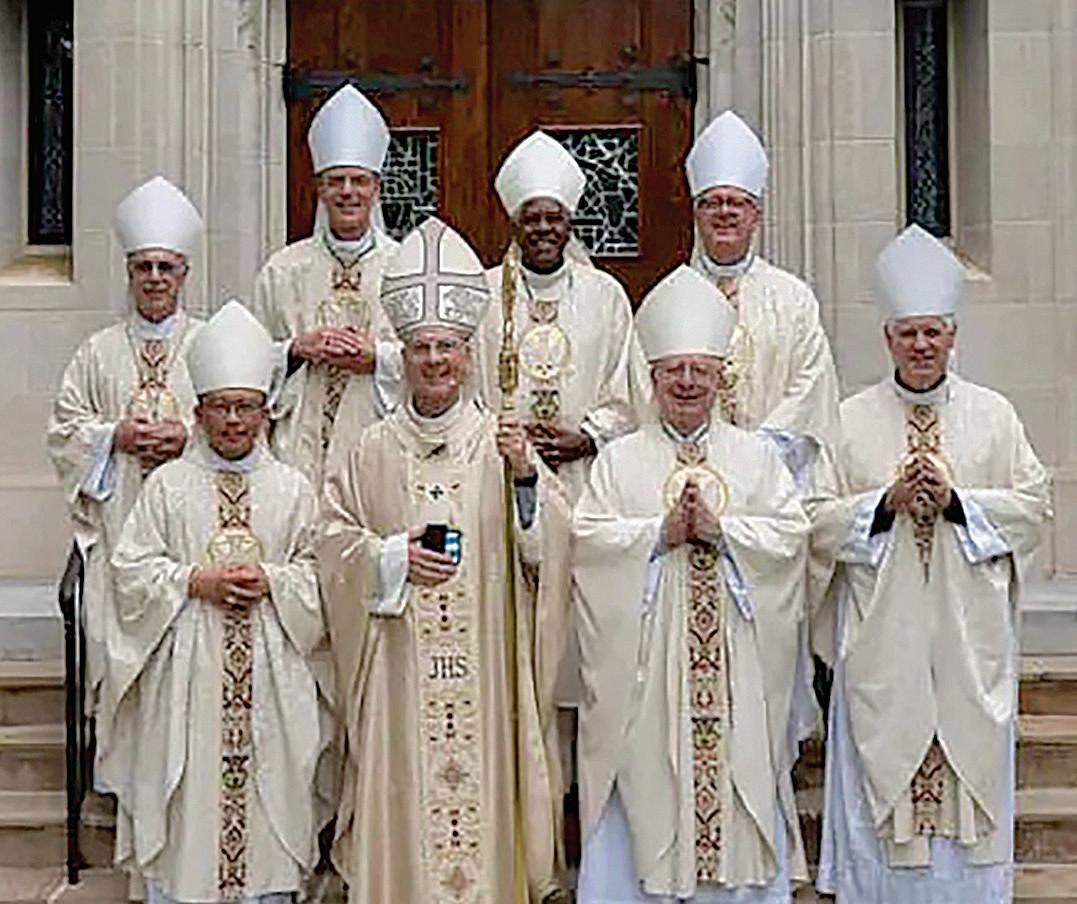
ATLANTA — Bishop Michael Martin, OFM Conv., joined the bishops of the Atlanta Province June 2426 for their annual gathering, in which the bishops of Georgia and the Carolinas came together for prayer, fellowship and discussions about the life of the Church in the region. During a June 25 Mass at the Cathedral of Christ the King, Archbishop Gregory J. Hartmayer, OFM Conv., reflected on Jesus’ parable of the wise builder, reminding the bishops that their ministry must be rooted in a deep relationship with Christ and built on the solid foundation of faith.
The gathering also included discussions on the Vatican’s ongoing synodal process, the rapid growth of the Church in the Southeast, and ways to strengthen support for clergy, religious and the faithful.
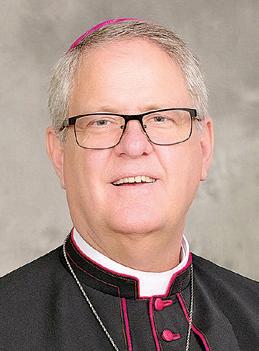
Pictured after the Mass are (front row from left) Bishop John N. Tran, Archbishop Hartmayer, Bishop Joel Konzen, SM, and Bishop Bernard Shlesinger III; (back row) Bishop Luis Zarama of Raleigh, Bishop Stephen Parkes of Savannah, Bishop Jacques Fabre-Jeune, CS, of Charleston, and Bishop Martin.
Honoring newly beatified Vietnamese priest, ‘messenger of truth’
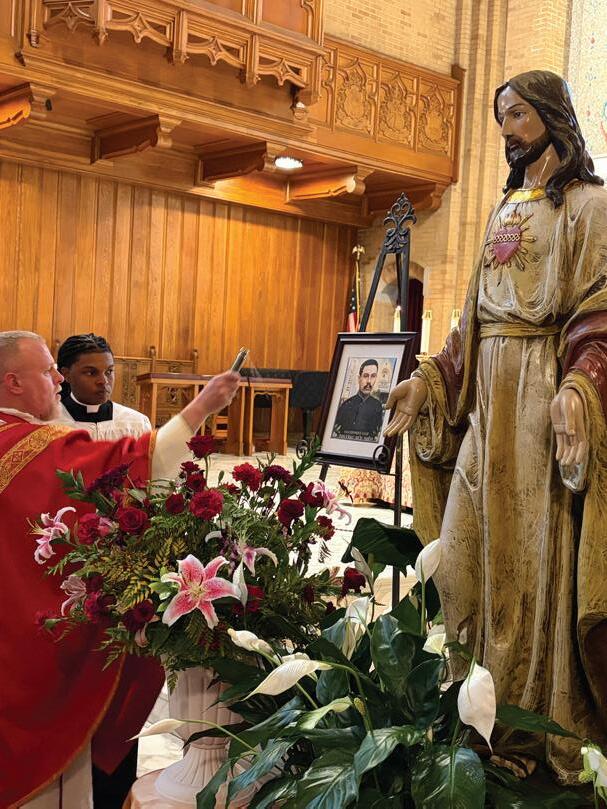
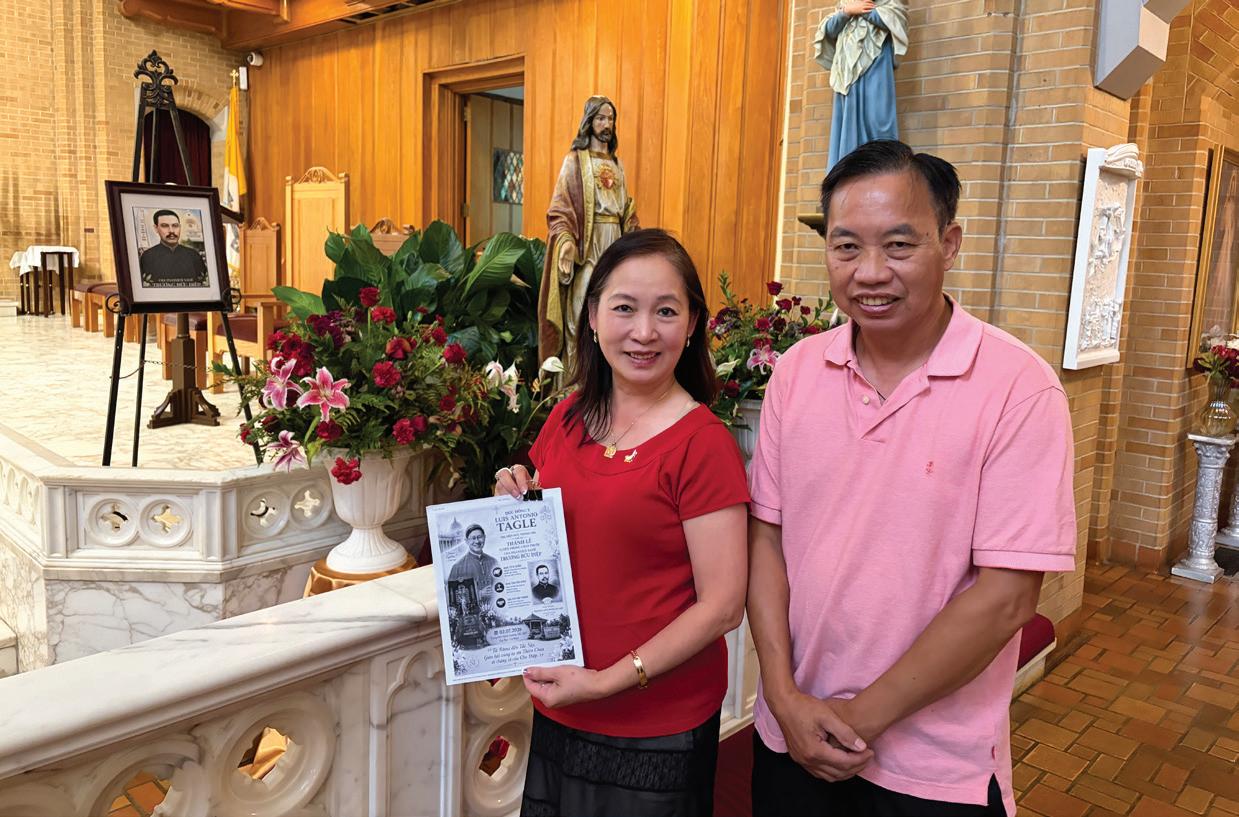
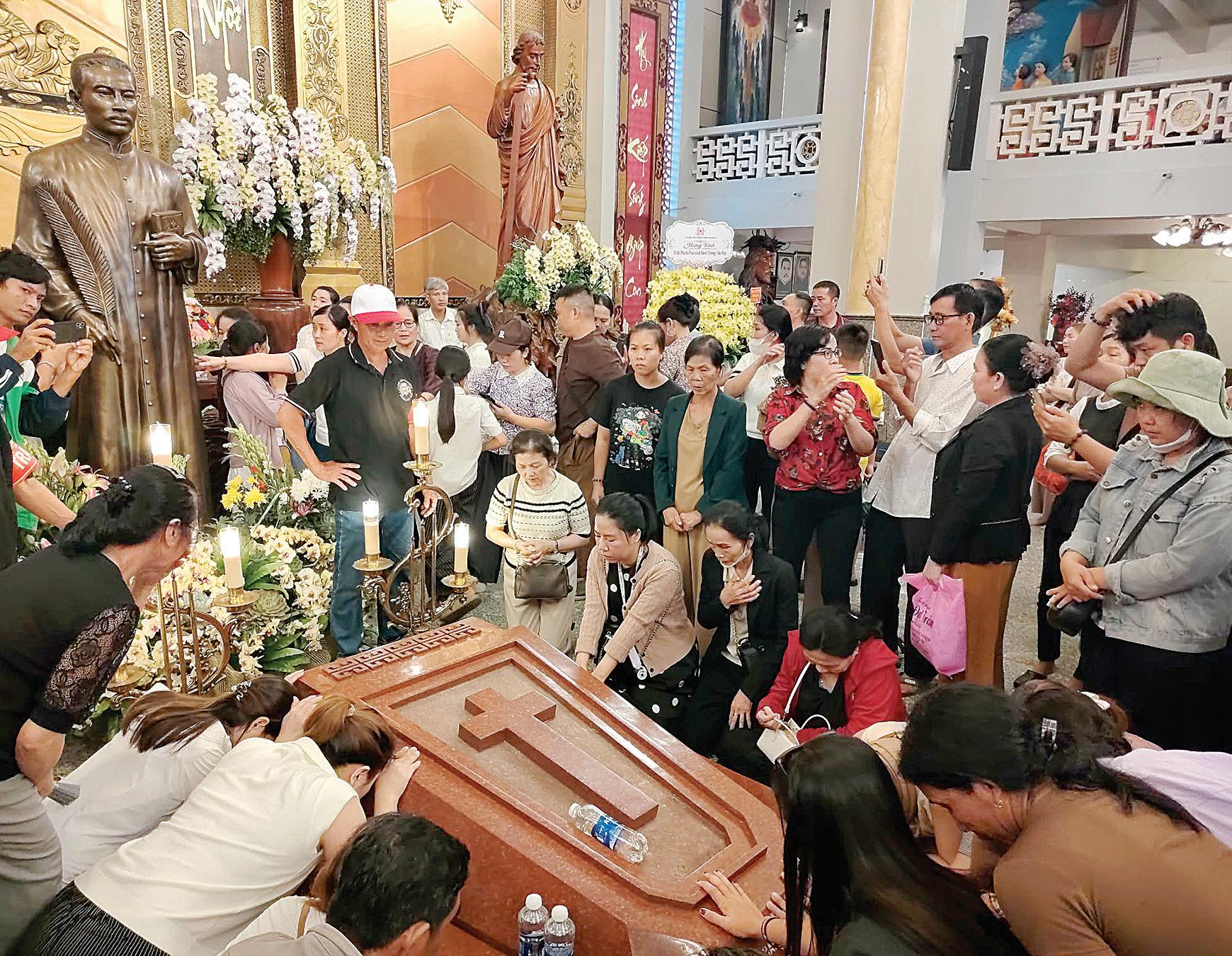
GREENSBORO — Vietnamese Catholics at Our Lady of Grace Church joined millions around the world July 2 in celebrating the beatification of
Father Francis Xavier Truong Buu Diep, the beloved Vietnamese priest and martyr who gave his life in 1946 to save members of his flock. (Above) Father
Casey Coleman, pastor, celebrated a Mass of thanksgiving, reminding the faithful that every saint became holy by responding generously to God’s grace and encouraging them to follow Blessed Diep’s example of courageous faith and selfless love.
The local celebration coincided with the historic beatification Mass (left) at Tac Say Pilgrimage Center in southern Vietnam, where more than 70,000 pilgrims gathered for the first beatification celebrated on Vietnamese soil.
Presiding over the Mass, Cardinal Luis Antonio Tagle, Pope Leo XIV’s special envoy, urged the faithful to become “messengers of truth” in today’s world and said, “True devotion to Blessed Francis Xavier means imitating him in daily life through justice, charity, compassion for the poor and commitment to Jesus.”
Long revered throughout Vietnam for his care of the poor, the sick and those on the margins, Blessed Diep is venerated by Catholics and many non-Christians alike as a witness to Christ’s sacrificial love.
Event to explore poverty’s impact on healthcare resources
BELMONT — Deacon Clarke Cochran, Ph.D., will be the keynote speaker at “Sick, and Tired: Our Health – System Challenges to Mercy and Justice,” a program exploring how rising healthcare costs affect families and public resources and how Catholics can advocate for a more just healthcare system.
The free event, sponsored by Catholic Charities and the Sisters of Mercy in partnership with St. Peter Parish in Charlotte, will be held from 10 a.m. to noon Saturday, Aug. 8, in Curtin Hall on the Sisters of Mercy campus, 101 Mercy Dr., Belmont. RSVP by Aug. 5 to scaeducation@ccdoc.org.
— Joseph T. Purello
Sister of Providence with ties to Asheville area celebrates her 60th jubilee
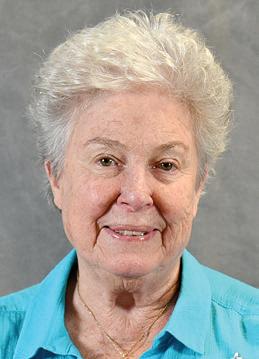
SAINT MARY-OF-THE-WOODS, Indiana — Sister Linda Thompson, formerly a nurse and medical volunteer in the Asheville area, is celebrating her 60th jubilee with the Sisters of Providence of Saint Mary-of-the-Woods. A native of St. Joachim Parish in Costa Mesa, California, she entered the congregation in 1966 and professed final vows in 1978. She earned a bachelor’s degree in special education from Indiana State University as well as a registered nursing degree from Northeastern University. In the Diocese of Charlotte, she served as a registered nurse and supervisor at several healthcare and retirement communities in Asheville, Black Mountain and surrounding areas from 2008 to 2021, and she volunteered at the Asheville VA Medical Center.
She also served in Massachusetts and Indiana.
She now serves as a volunteer as needed for the Sisters of Providence of Saint Maryof-the-Woods, which was founded by St. Theodore Guerin in 1840.
Today, the Sisters serve in 13 states, the District of Columbia and Asia.
— Jason Moon
Event examines harmful effects of abortion pill
HUNTERSVILLE — Families gathered June 18 at St. Mark Church for “Protecting Our Daughters from Gender Ideology and the Abortion Pill,” a presentation by Mary Summa, a St. Ann parishioner and general counsel for the N.C. Values Coalition in Raleigh.
Summa discussed safety concerns surrounding mifepristone, the drug used in chemical abortions, as well as the growing prevalence of gender ideology and the effects of drugs, hormonal treatments and surgeries used in gender-transition procedures.
The event was organized by the Carolina Family Coalition, founded by local Catholics to promote the sanctity of life and the family.
— Mike FitzGerald
PHOTOS BY GEORGIANNA PENN | CATHOLIC NEWS HERALD; OSV NEWS | JOACHIM PHAM
PHOTO PROVIDED BY THE GEORGIA BULLETIN
Thompson
Does diet impact Natural Family Planning? The latest science says yes
CHARLOTTE — When Catholics think about Natural Family Planning (NFP), scientific, natural and moral methods of planning a pregnancy are what typically come to mind. During National NFP Awareness Week (July 19-25), an annual campaign by the U.S. Conference of Catholic Bishops, it’s good to note that NFP resources can also help couples prepare for a healthy pregnancy.
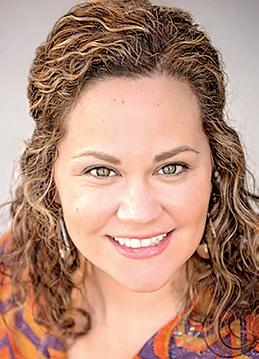
Amanda Rohwedder, M.S., is a Charlotte-based nutritionist who founded Temple and Table in 2017 to evangelize through nutrition. As part of that ministry, she guides women to optimize nutrition for the phases of their menstrual cycles. She shared her insights on food trends and the connection between food and fertility with the Catholic News Herald.
“In recent years, there has been a rising interest in fertility nutrition,” Rohwedder said. “Increased research in the field has linked diet quality, for both men and women, with fertility. Fertility-supportive recipes and fertility-supportive foods have been in higher demand.”
THE SCIENCE-BACKED FOUNDATION
“Research consistently shows the benefits of following a balanced diet based on whole foods,” she said.
A balanced diet includes vegetables, fruits, whole grains, healthy fats and moderate protein to support female and male fertility, according to a study on “The Influence of Diet on Fertility and the Implications for Public Health Nutrition in the United States” published in Frontiers in Public Health. Diets high in processed foods, including refined carbohydrates, added sugars and trans fats, were associated with reduced fertility, according to a study on “How Food Choices Impact on Male Fertility” in the medical journal Current Nutrition Reports.
Key nutrients that optimize fertility include folate – or folic acid – iron, healthy fats such as omega-3 fatty acids and complex carbohydrates, Rohwedder said. Folate is essential for healthy ovulation and fetal development and is found in dark leafy greens, legumes and fortified grains.
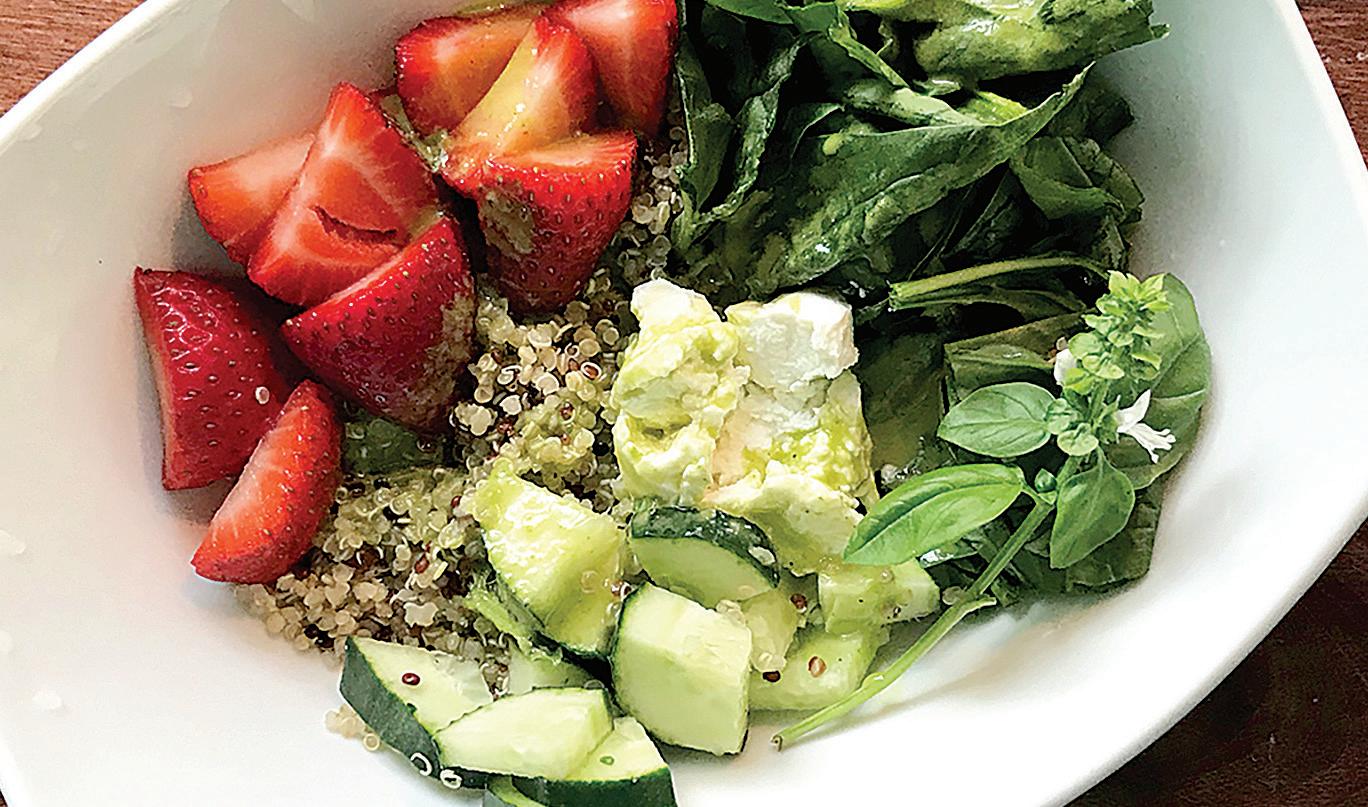
Summer quinoa bowl
This quinoa bowl is easily prepared, refreshing and features summer seasonal ingredients. This recipe serves one, but can be easily multiplied to serve a larger group. Quinoa is one of the highest plant-based protein sources, making it an excellent option for vegetarians or vegans. Combined with the vegetables, strawberries and goat cheese, it balances macro nutrients to keep you satisfied and energized.
Ingredients
T. = tablespoon | t. = teaspoon
n 1/2 c. cooked quinoa
n 1 c. spinach leaves
n 1/4 large cucumber, cubed (about 1/4 c.)
n 3-4 medium-size strawberries, sliced or chopped
n 1 T. goat cheese (can substitute plain Greek yogurt or cottage cheese)
n Salt and pepper, to taste
Lemon basil dressing
n 1/2 c. fresh basil
n Juice of 1 lemon
n 1/3 c. extra virgin olive oil
n 1/4 c. apple cider vinegar
n 1/2 t. salt
n 1/4 t. black pepper
Iron has been shown to lower the risk of ovulatory infertility. Omega-3 fatty acids, found in fish, nuts and seeds, support hormone regulation and sperm health.
Complex carbohydrates are good sources of fiber, which helps support stable blood
Instructions
Cook quinoa according to package directions. Allow to cool.
Arrange quinoa, spinach, cucumber, strawberries and goat cheese in a bowl. Season with salt and pepper to taste.
Blend together all Lemon Basil Dressing ingredients in a food processor or small blender.
Drizzle quinoa bowl with 2-3 T. dressing.
Best served chilled.
Serves 1 | Protein: 8.3 g | Fat: 5.1 g | Carbohydrates (net): 21.9 g
sugar and hormone balance.
DOES MARKETING MATTER?
“The uptick in interest around fertility nutrition and emerging research has impacted how food is marketed and
produced,” she said. “It is much more common to see foods marketed for hormone balance and fertility support, especially in convenience foods like snacks, bars and smoothie drinks. Men are also being marketed to in the ‘fertilitysupportive’ foods category.”
New products containing ingredients with healthy fats, such as nut and seed bars, seeded breads and chia pudding are gaining popularity. Others are highlighting hormone-healthy micronutrients such as zinc and selenium on their packaging.
Rather than following trends, Rohwedder advocates focusing on a balanced, wholefood diet, meaning lots of fruits and vegetables, whole grains, legumes, healthy fats and adequate protein.
“We are seeing a trend towards products marketed for hormone balance or fertility support, which may mirror nutrients shown to support fertility and therefore suggest value, but these are best viewed as complements not replacements of whole foods,” she said. “Always check ingredient labels for additives and preservatives.”
Rohwedder also recommended exercising caution around plant-based meat substitutes as protein sources, as these products can be highly processed. She reiterated, “Choose whole foods whenever possible.”
Fertility is complex: diet is just one piece of the puzzle, along with age, activity level, environment and medical history, to name a few.
“While diet is not a silver bullet,” she notes, “it is an important factor that is in your control. It is especially effective when combined with other healthy lifestyle habits like adequate sleep, hydration and daily physical activity.”
— Amanda Rohwedder and Catholic News Herald
More online
Catholic News Herald wins 8 state press awards
CHARLOTTE — For the third consecutive year, the Diocese of Charlotte’s news outlet made a strong showing in the N.C. Press Association awards while competing against the largest circulation print and digital news organizations in the state.
The Catholic News Herald received a total of eight awards for its work published in 2025 among publications with a circulation of more than 20,000.
Awards recognized ongoing reporting of Tropical Storm Helene recovery, coverage of priest and deacon ordinations, and videos that captured the excitement of a new street ministry and a principal’s final day.
“We are blessed to share the news that impacts our growing diocese – from Tropical Storm Helene and earthquakes in Venezuela to exciting plans for new churches and ministries and the special moments that bring us all together as a community of faith,” said Trish Stukbauer, editor. “We are grateful to our parishes, schools and ministries for entrusting us with those stories.”
The NCPA contest was judged by the Wisconsin Newspaper Association.
Awards will be officially presented Sept. 10 at the NCPA’s annual convention in Cary.
The Catholic News Herald won:
At www.charlottediocese.org/faith-life/ marriage-family-and-life/natural-familyplanning : Access resources, support and classes in English and Spanish through the Diocese of Charlotte Marriage, Family and Life Office.
At www.templeandtable.com : Learn more about Rohwedder’s ministry and find recipes, articles and items for your home kitchen.
n Second place – Magazine or Niche Publication: “Diocese of Charlotte Annual Report,” by David Puckett and Catholic News Herald staff
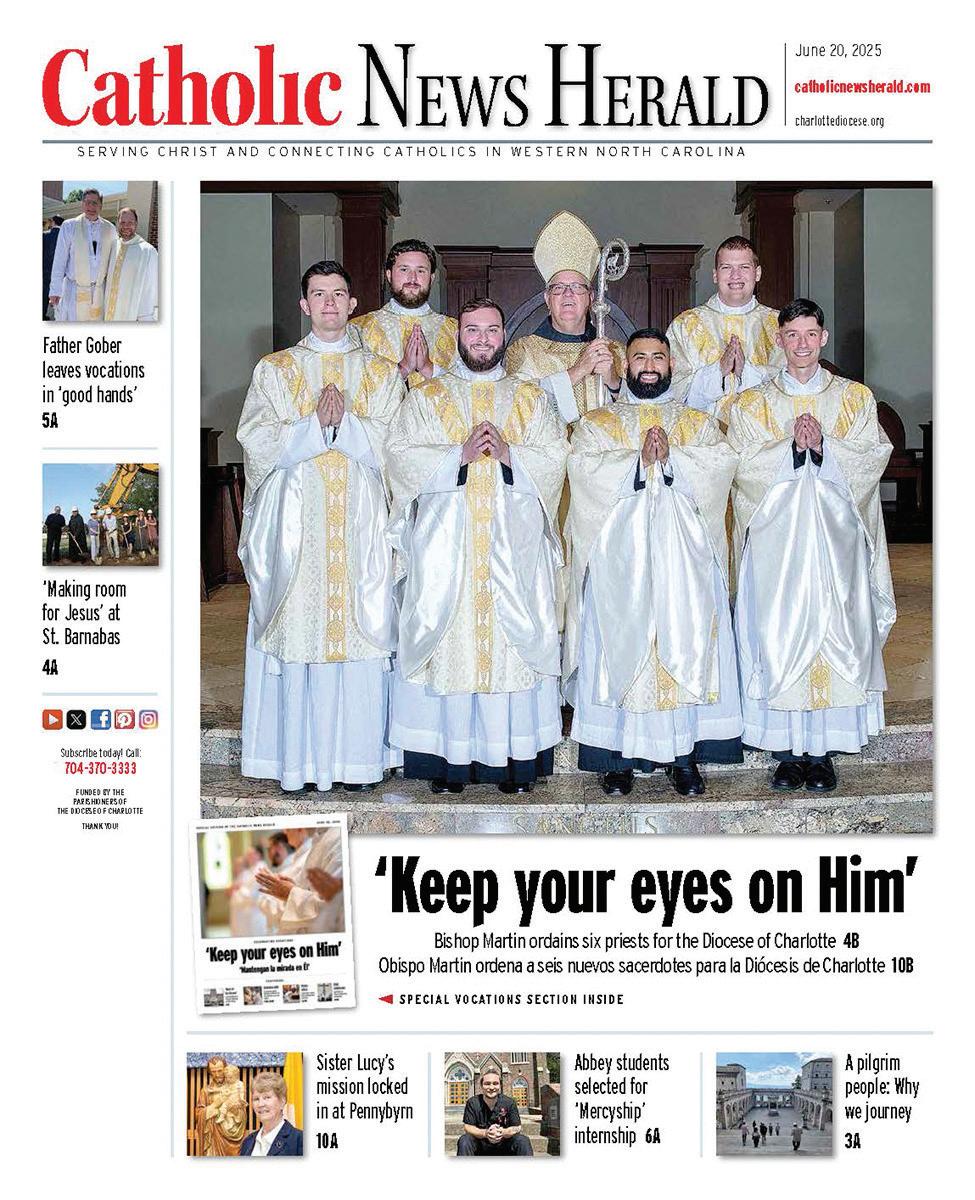
n Second place – Special Section: “Celebrating Vocations: ‘Keep your eyes on Him,’” by Catholic News Herald staff
n Second place – News Feature Writing: “Sister Lucy’s mission: As sisters depart diocese, their legacy continues at Pennybyrn,” by Lisa Geraci
n Second place – Video: “St. Matthew principal transitions to assistant superintendent,” by Troy C. Hull
n Third place – General News Reporting: “Gratitude and need remain great in WNC,” by Liz Chandler, Christina Lee Knauss
n Third place – Profile Feature: “Faith and perseverance: Retired Father Collins continues to serve,” by Lisa M. Geraci
n Third place: Sports Feature Writing: “Touchdown moment melts hearts, fulfills dream,” by Christina Lee Knauss
n Third place – Video: “SEARCH — A New Franciscan Ministry,” by William Creter
CNH also won national awards for print and digital content from the Catholic Media Association in June.
Bishop Michael Martin, OFM Conv., serves as publisher of the Catholic News Herald and cites good communication among his top priorities. The news outlet publishes content daily on its website and social media channels, and mails a print edition every two weeks to more than 65,000 registered households across western North Carolina.
— Catholic News Herald
One of the Catholic News Herald’s award-winning editions.
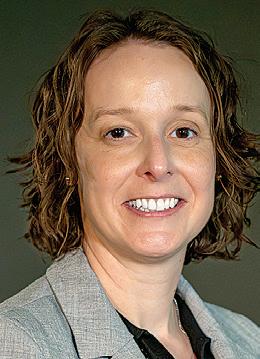
Rohwedder
OLC parishioner becomes first African American to lead Catholic Daughters of the Americas
LISA M. GERACI lmgeraci@rcdoc.org
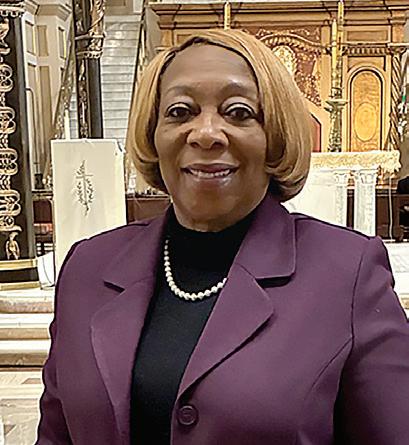
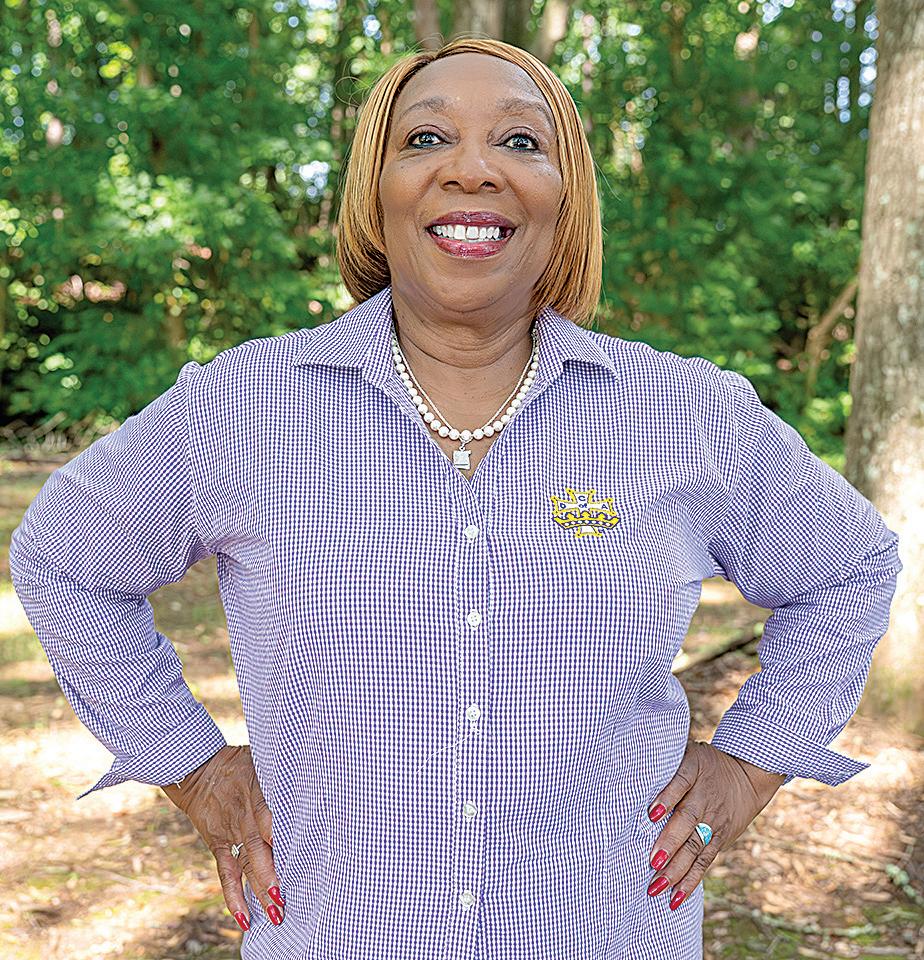
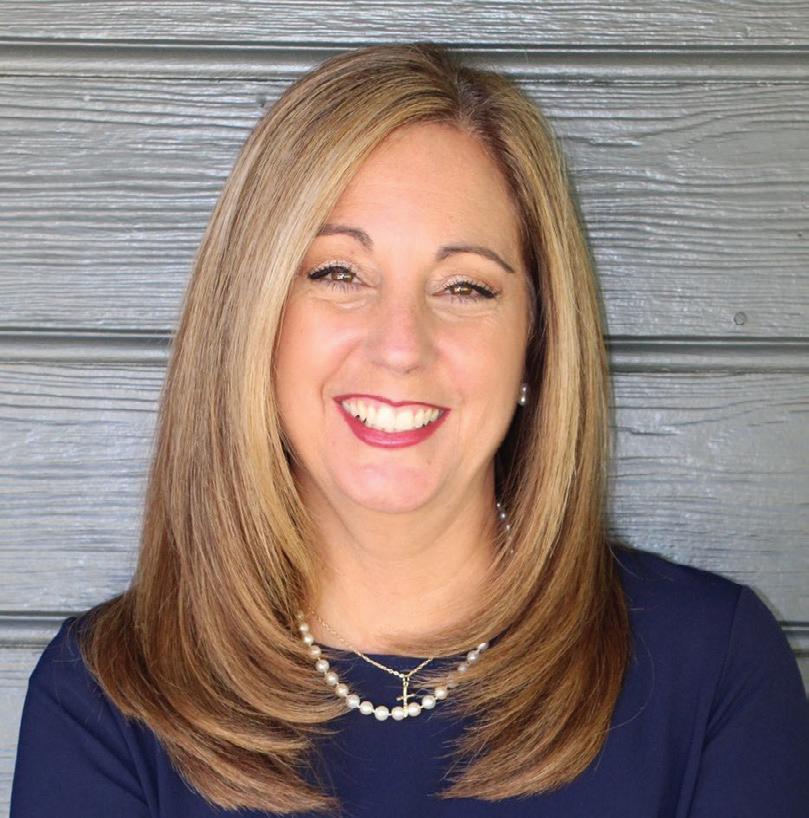
SALISBURY — The Catholic Daughters of the Americas has a new leader: Essie Walker, from Salisbury Court 1759, who’s a long-time parishioner of Our Lady of Consolation Parish in Charlotte.
The Catholic Daughters of the Americas was founded in 1903 to enable Catholic women to join together in sorority within their communities through works of charity, unity and love.
Walker breaks barriers by being the first African American and the first North Carolinian to hold the position in the century-plus history of the organization.
Her formal installation will take place July 25 at the group’s 61st Biennial National Convention in Iowa.
“I am deeply humbled and honored to serve as the 29th national regent of the Catholic Daughters of the Americas,” Walker said. “It is a blessing and a great opportunity to take this two-year journey with a group of women of faith who believe in our motto: ‘Unity and Charity.’”
As national regent, Walker will oversee the organization of more than 53,000 members. She will manage nationwide charitable projects, scholarships and spiritual initiatives and create its bylaws. This move to leadership was a long time in the making.
“I have been climbing up this mountain for over 30 years,” Walker said. “One position at a time. I first went through all the ranks of the local court, and I was encouraged to continue. So, I kept going.”
“Keep going” is a mantra Walker has lived out time and time again throughout her life. And though the position may be challenging, she is confident in her leadership.
“I am not worried about anything,” she said. “When I am presented with a challenge, I just take it to God, figure it out, and then keep moving.”
HEADING UPWARD
In April 1994, Walker was new to the Charlotte area and looking for a Catholic parish to join. After a couple of trial runs, Our Lady of Consolation hit all the marks.
While making new friends after Mass one day, parishioner Addie Dew invited her to go to a Catholic Daughters of the Americas meeting.
Walker had never heard of the organization, but as she listened to Dew talk enthusiastically about the service work they did, and how their mission was to promote justice, equality and the advancement of human rights, Walker was already interested in joining before she stepped foot into her first meeting.
During that first meeting at the local Charlotte Court 1199, Walker felt at home. But more than that, she felt
inspired. She saw herself getting involved with this work.
“I loved this group of women who love the same things that I do. We played together, we cried together, we served together,” she said.
Her leadership ability and the Court’s trust surfaced quickly. Soon after she joined, she was elected treasurer.
As the years went by, Walker continually advanced, first serving as the regent of the local Charlotte Court – a position that is comparable to an organization’s chapter president.
“By then, I had my sights focused on serving on the state level,” she said.
The Catholic Daughters of the Americas agreed, electing her state regent of North Carolina. She stayed in that role for four years, all the while traveling to national conferences as a delegate. Of course, she couldn’t stop there.
“I aspired to serve on the national level,” Walker said. “I came to see my journey as a mountain climb. I could see the top. But to get there, it was imperative that I took one step at a time. I felt that if I had rushed up the mountain, I would have missed something important along the way.”
She landed her first national role in 2016 as national director – the second African American to carry the title, following Lucretia Coates, now deceased. She was re-elected to serve a second term. Two months later, she climbed to a new appointment as national treasurer.
“Serving in this position was an honor and gave me a deeper understanding of the business side of Catholic Daughters,” Walker said.
In 2020, COVID struck the Charlotte Chapter hard and they were forced to disband. Walker joined the closest chapter, the Salisbury Court, which is now at 99 members.
Walker was elected second vice national regent, then first vice national regent just two years later. She continued climbing to the summit. While the steps got wider and steeper, her goal was in sight.
In 2024, she was elected national regent-elect, a position comparable to vice president. After serving for two years, the national regent-elect automatically steps up to serve as the national regent – the leader of the entire organization.
RAISED TO LEAD
Walker grew up hearing she was a natural-born leader.
She explained, “We sometimes forget that in order to be a leader, one must also know how to follow. It is important to remember that a true leader serves others, values clear communication, shows respect and leads with gratitude.”
Those have been words she has lived by ever since she could remember.
Walker, one of the oldest of 12 children, felt her call to service young. Raised in Whiteville as a “down home country girl,” she couldn’t make it to school too often because she had diapers to change and meals to cook. Somebody had to look after her younger siblings while her parents were working and trying to put food on the table.
“It wasn’t that I couldn’t make it through school. I just couldn’t get there every day,” Walker said. “I was babysitting when I was 6 years old.”
So, after she graduated high school, she packed her bags and headed to Brooklyn, New York, for her studies. She studied for two years before making the move to join the U.S. Marine Corps.
She entered the military as a single Protestant. Due to a medical condition, she left 10 months in with a new husband, a new Catholic faith, and a baby on the way. But she wasn’t finished. Ten years later she returned, eventually retiring after 25 years of service.
When Walker believes in a dream, she sees it through, and just as she did with the Marines, she pursued completing her education when she was able. In her later years, she graduated from Belmont Abbey College with a business degree.
WALKER, SEE PAGE 18
Diocese hires development leader to chart the future of stewardship
TRISH STUKBAUER tmstukbauer@rcdoc.org
CHARLOTTE — Veteran Catholic Church fundraiser Patty DiSandro has joined the Diocese of Charlotte to eventually serve as director of development as Jim Kelley transitions into a new role after 40 years at the department’s helm. DiSandro brings 20 years of nonprofit and Church fundraising experience and has begun her career locally as deputy director of development with Kelley continuing as director for several months for training and collaboration as each prepares for their new role.
Over the next year, DiSandro will
assume the director position as well as Kelley’s function as president of The Foundation of the Roman Catholic Diocese of Charlotte. Kelley will continue working fulltime to deepen his one-on-one work with donors and play a key role in the diocese’s historic $150 million “Making Room” fundraising initiative.
“It’s a dream come true to succeed the legendary Jim Kelley as chief fundraiser for the Catholic Church in the Diocese of Charlotte,” DiSandro said, “and while I’m ready for this important position, I am glad we’ll have Jim around with his history and relationships.
“I am particularly impressed by Bishop Martin’s vision and the emphasis
he’s placing on development and stewardship,” she said. “The people of this diocese clearly recognize the importance of generously supporting the work of the Church across the western half of North Carolina.”
DiSandro has worked in development for a variety of organizations that include an Illinois university, an Ohio children’s hospital, a South Carolina aquarium, and the Salvation Army in Florida. She most recently worked for eight years as executive director of the Catholic Foundation of the Diocese of St. Augustine in Florida, which oversaw fundraising across the diocese’s 17 counties and nearly doubled the endowment assets of its foundation. In that role, she and Kelley got to know one another – and she was the first person who came to mind last year when he began planning for succession.
“I’ve been here over 40 years, and I’m 70,” Kelley said. “It made sense to put together a succession plan that will help preserve donor relationships and institutional knowledge – while also capturing a new generation of thinking about development and stewardship.”
As development director, DiSandro will be responsible for fundraising for the diocese’s operations and capital improvements, and as foundation president she will oversee the organization that supports diocesan ministries through estate gifts and endowments.
Kelley will continue his work with the diocese’s “Making Room – for More to Know the Love of Jesus” fundraising initiative through June 2028, then will move toward working exclusively
DiSandro Kelley
TROY C. HULL | CATHOLIC NEWS HERALD
Essie Walker plans to grow the Catholic Daughters of America in her role as national regent of the service-driven organization.
One Church, many cultures
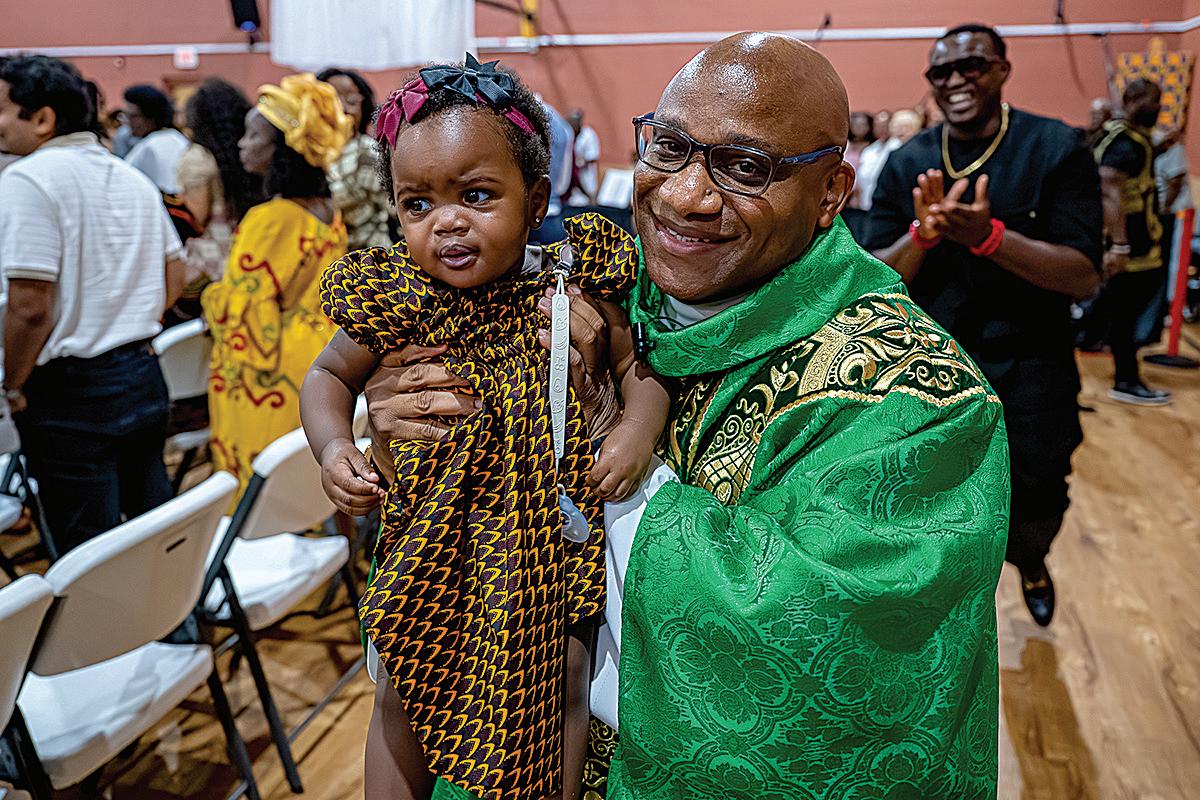
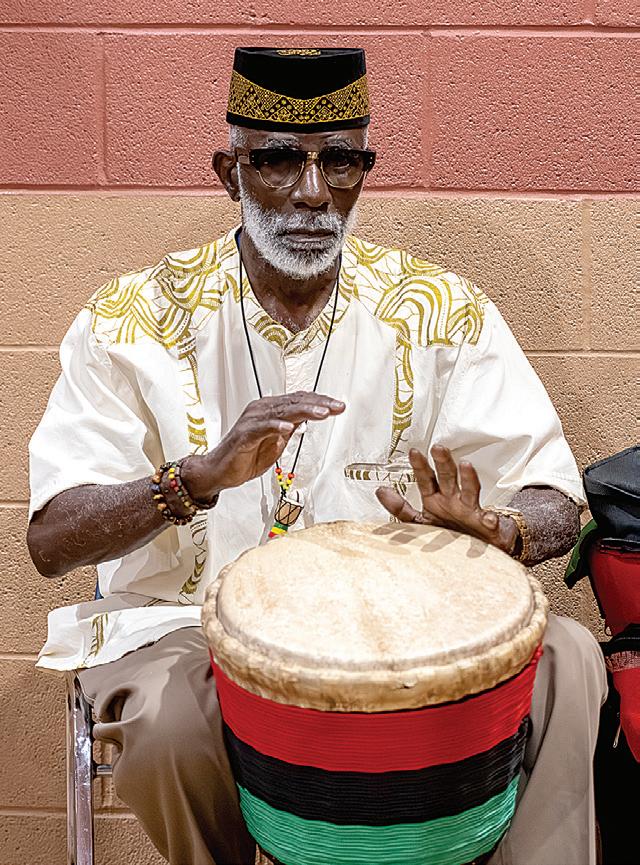
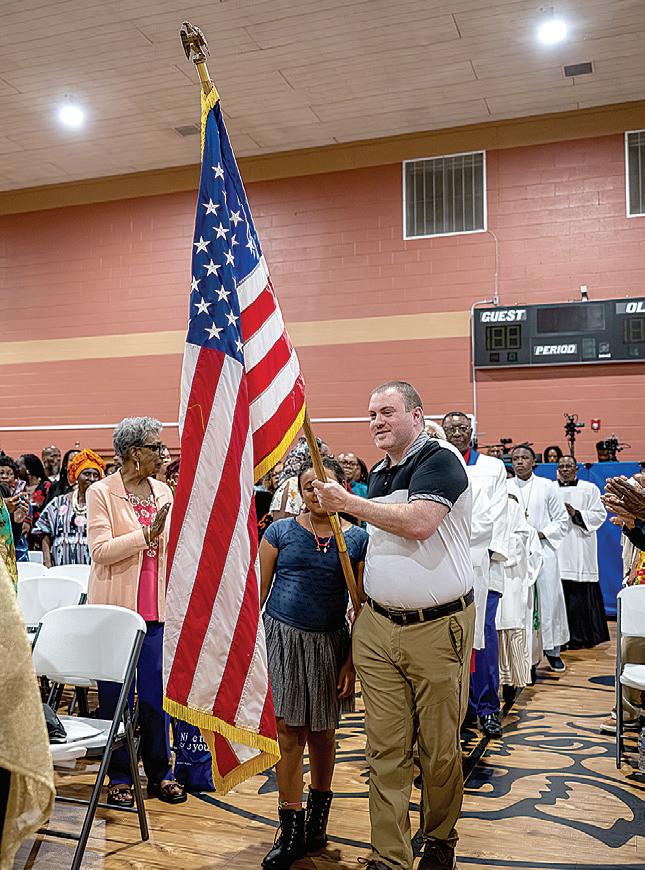
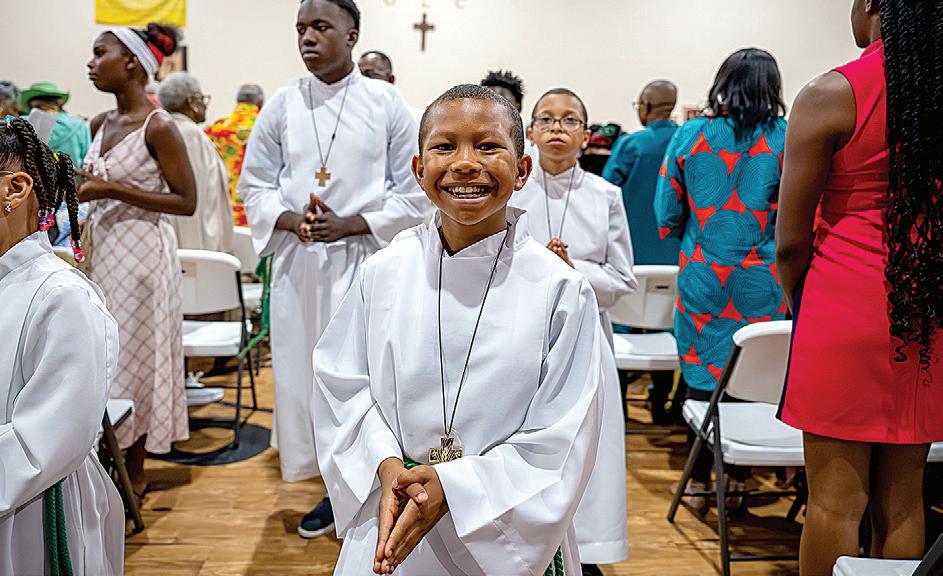
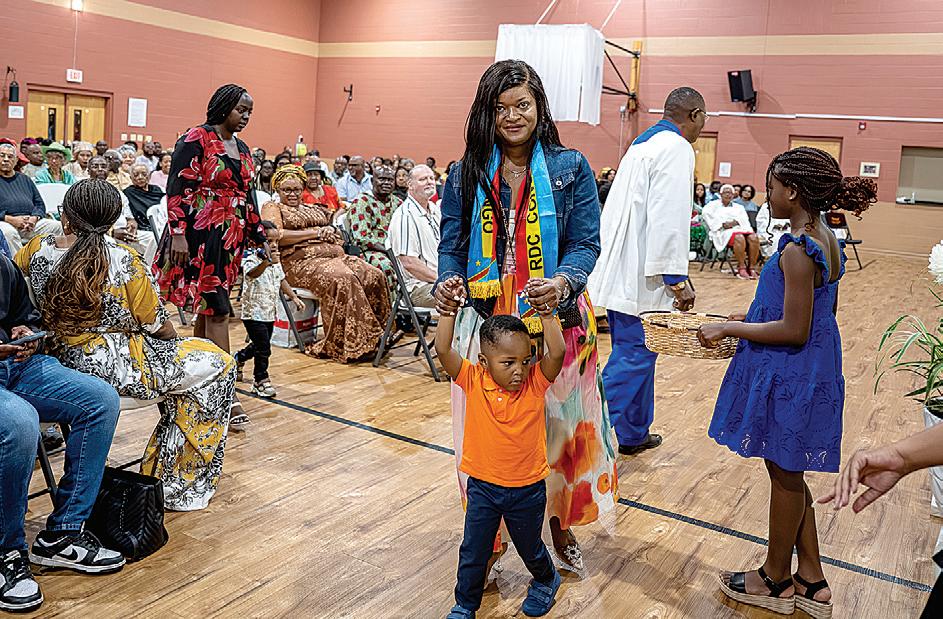
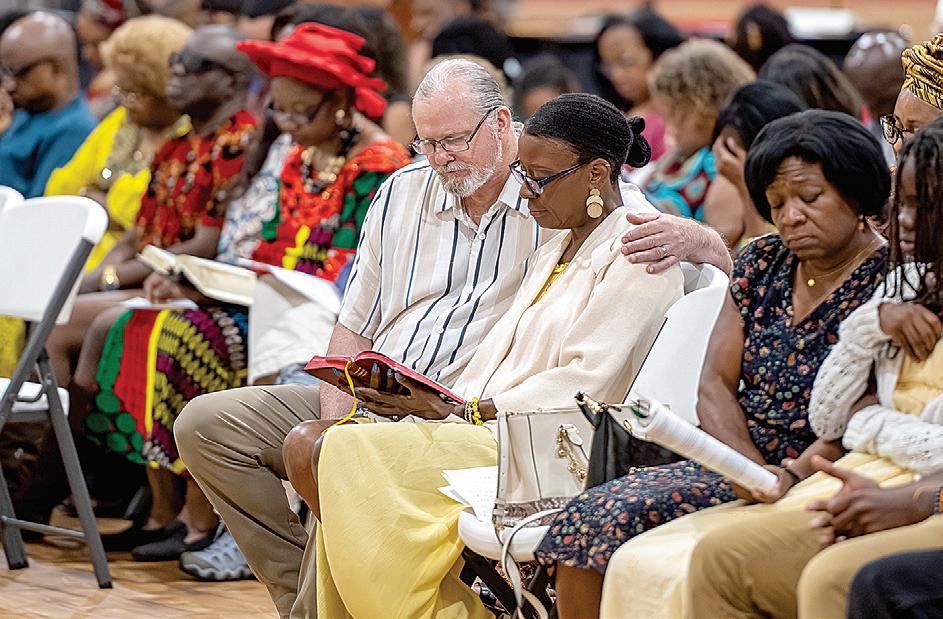
CHARLOTTE — Parishioners gathered to celebrate International Day June 28 at Our Lady of Consolation Church in traditional dress, with a colorful flag procession and a shared meal featuring flavors from around the world. The day was a joyful reminder that the Catholic Church is enriched by the many cultures, languages and traditions that come together as one family in Christ.
Don’t miss the opportunity to grow closer to Christ
Sept 11-12 2026
Eucharist Congress: Called. Formed. Sent. Exhibit Booth #416 – Charlotte Convention Center
Sept. 19
Grand Ultreya – Dan Nicholas Park, Salisbury NC Activities, food, friendship and reflection 5:00 p.m. Mass with Bishop Michael Martin
Oct. 9-10
Region VII Fall Encounter (Registration required) St. Paul the Apostle, Greensboro, NC
Learn more at www.CharlotteCursillo.com/Events
Make a friend. Be a friend. Bring a friend to Christ.
Director of Development for Catholic Schools
The Diocese of Charlotte Development Office has an opening for a full-time Director of Development for Catholic Schools. The candidate must be a college graduate with a degree in marketing, communications, or related field. He or she must have at least five years of experience in development and/or fundraising.
Responsibilities include:
Working closely with all 20 diocesan Catholic schools and assisting them in developing and carrying out annual school fund development plans including but not limited to annual giving campaigns, major gift efforts, and planned giving activities.
Candidate will meet regularly on site with all schools to support and coordinate their fund development efforts.
Please submit cover letter and resume to:
Patty DiSandro, Development Office pkdisandro@rcdoc.org
PHOTOS BY TROY C. HULL | CATHOLIC NEWS HERALD
Deacon Strominger of St. Philip the Apostle Parish passes away at 74
STATESVILLE — Deacon James Richard “Dick” Strominger, 74, passed away peacefully on June 21, 2026, at Gordon Hospice House.
A Funeral Mass was celebrated June 26, 2026, at St. Philip the Apostle Church in Statesville.
Deacon Strominger will be remembered with deep respect and lasting affection –as a beloved presence whose steady faith, generous spirit and devotion to those he loved shaped the lives around him.
Known for a warm sense of humor and an easy way of bringing lightness into everyday moments, he carried himself with kindness and selflessness, offering support quietly and consistently.
Born in Shelby County, Ohio, on July 10, 1951, he was the son of the late Richard Gilbert Strominger and Martha Ann Strominger. He attended Troy High School in Troy, Ohio. He owned his own plumbing company, bringing pride and diligence to his work.
For 23 years, he was married to the late Jayne Greer Strominger.
Later, he pursued studies to become a deacon in the Catholic Church, an expression of the faithful commitment that guided his life.
He was ordained for the Diocese of Cincinnati in 2019, where he worked in counseling with high school students, the RCIA and adult faith formation program, and bringing Communion to senior citizens. He also was active with the Knights of Columbus, St. Vincent de Paul Society and Choosing Hope ministry. In 2023, Deacon Strominger moved to
Statesville to be closer to family and was assigned to St. Philip the Apostle Parish.
At St. Philip, his ministries included Bible study, OCIA and visiting the homebound.
Deacon Strominger remained active in the church community and in the lives of friends and family, always present, always engaged and always ready with a joke. Above all, family was what he cared for and loved the most.
Besides his parents and wife, he was preceded in death by his son, John Remley; brothers, Tom Strominger and Ted Strominger; sisters, Susie Robillard and Mary Strominger; and grandchild, Samuel Marsh.
Those left to cherish his memory are his daughters, Tracie Marsh (Mike) and Angie Connell (Shawn); daughter in-law, Natosha Remley; brothers, Steve Strominger (Vicki), Dave Strominger (Lynn), Ron Strominger (Joanie), Mark Strominger (Marsha), Ken Strominger (Gina), and Mike Strominger (Mary Lou); and sister, Phyllis Shade (Tom).
Also left to cherish his memory are his grandchildren, Bailey Alvarez (Jovan), Kayla York, Hannah Gutierrez (Joseph), Peyton Remley, Lucy Remley, Toby Marsh, Nora Remley, Elise Connell, Ethan Connell, and Nyla Marsh; four great-grandchildren; sister-in-law, Linda Strominger; sister and brother-in-law, Janice and Rob Bullock; brother-in-law, Tom Robillard; and many other extended family members.
Condolences may be shared with the family at www.bunchjohnsonfuneralhome.com.
Memorial donations may be made to Hospice of Iredell County, Fifth Street Ministries of Statesville, or Shriners Children’s Hospital of Greenville, South Carolina.
Bunch-Johnson Funeral Home was in charge of the arrangements. — Catholic News Herald
Scholarship fund awards $60,000 in college tuition to 20 students
COURTNEY MCLAUGHLIN catholicnews@rcdoc.org
Twenty Catholic college students from parishes across North Carolina have received a total of $60,000 in scholarships from the George Pitman Endowment Fund. Created with an estate gift of $1.2 million by the late George Warren Pitman, scholarships from the George Pitman Endowment Fund are available to collegebound applicants who live in Mecklenburg County or the City of Dunn.
Pitman was a renowned designer who operated his firm, George Pitman Inc., from his home for more than 30 years until his death in 2007 at the age of 79. He was a graduate of Mount St. Mary’s College in Maryland and the Bright School of Design in Chicago.
Through the scholarship fund, collegebound Catholic students may apply for renewable scholarships of up to $3,000, with award amounts based on the type of institution they attend, including two-year, four-year and vocational schools.
Of the 20 scholarship recipients this year, six are first-time recipients attending N.C. State University, UNC Wilmington,
Are you 70
An IRA rollover gift to your parish, the diocese, Catholic school, agency, or the Foundation provides meaningful support without impacting your checkbook, and can maximize your giving potential.
For more information, go to www.charlottediocese.givingplan.net or call Gina Rhodes at 704/370-3364.
Foundation of the Diocese of Charlotte
NOW HIRING FAMILY MINISTRY AND SACRAMENTS COORDINATOR
NOW HIRING FAMILY MINISTRY AND SACRAMENTS COORDINATOR
the University of Alabama, The Catholic University of America, Elon University and Western Carolina University. The remaining 14 students received renewable scholarships and attend UNC Chapel Hill, the University of South Carolina, the University of Notre Dame, Auburn University, the University of Tennessee, Denison University, American University and Clemson University.
“Mr. Pitman’s transformative gift continues to benefit Catholic students to attend a college or university of their choice,” said Jim Kelley, diocesan director of development.
“We are thankful for the generosity of more and more people across the diocese who are remembering the Church in their estate plans. Those gifts – from thousands to millions – have a tremendous impact on the lives of students.”
Since its inception in 2018, the Pitman Scholarship Fund has awarded $273,000 in scholarships.
Donors like Pitman who make a planned gift to the diocese or one of its parishes, schools, ministries or agencies become members of the Catholic Heritage Society, which now includes more than 1,800 members.
St. Therese Religious Education is hiring for a Family Ministry and Sacraments Coordinator This full-time position (40 hours) is a mission-oriented person who will foster a culture of discipleship for families and students The ideal candidate will work in collaboration with the Faith Formation team to prepare, organize, teach, execute and coordinate the sacramental programs of initiation (Confirmation, First Reconciliation/Communion and Baptism) catechetical programs and events that support families in their faith journey (including family catechesis, marriage enrichment, family enrichmenht and family ministry)
Candidate must be a practicing Catholic in good standing
St Therese Religious Education is hiring for a Family Ministry and Sacraments Coordinator This full-time position (40 hours) is a mission-oriented person who will foster a culture of discipleship for families and students The ideal candidate will work in collaboration with the Faith Formation team to prepare, organize, teach, execute and coordinate the sacramental programs of initiation (Confirmation, First Reconciliation/Communion and Baptism) catechetical programs and events that support families in their faith journey (including family catechesis, marriage enrichment, family enrichmenht and family ministry) Candidate must be a practicing Catholic in good standing
If Interested, or for additional information, please email a cover letter, resume and/or questions by Friday, July 31, 2026 to Kelli Olszewski, Director of Religious Education at kolszewski@sainttherese.net
If Interested, or for additional information, please email a cover letter, resume and/or questions by Friday, July 31, 2026 to Kelli Olszewski, Director of Religious Education at kolszewski@sainttherese net
MORE INFORMATION ABOUT ST THERESE CATHOLIC CHURCH AND THIS POSITION, PLEASE VISIT OUR WEBSITE:
APPLY BY July 31, 2026 FOR MORE INFORMATION ABOUT ST THERESE CATHOLIC CHURCH AND THIS POSITION, PLEASE VISIT OUR WEBSITE:
WWW.SAINTTHERESE.NET
Strominger
Local student wins AI competition at Catholic University
WASHINGTON, D.C. — A member of St. Mark Parish in Huntersville is one of two students to win a $5,000 prize at The Catholic University of America’s Busch School of Business inaugural AI vibecoding competition, “How Crazy Can You Get?”
Carter Virsik, a junior from Huntersville, developed “Pulse,” a gym membership management platform that tracks member activity, attendance and membership status.
Daniel Vincent, a senior from Pflugerville, Texas, created “Cosmas,” an AI tool that helps medical device manufacturers detect defects and prevent product recalls.
Vibe coding uses natural language prompts to enable AI to generate code instead of requiring programmers to write it manually.
Students were challenged to identify a real-world problem, build and deploy a working application with AI capabilities, and maintain a transparent development history on GitHub. Projects were judged on functionality, AI integration, code quality, user experience and business impact.
Virsik was inspired to create his platform after he noticed that gym employees were too bogged down with busy work to assist clients.
“I decided to build an AI application that could make those employees more efficient at their jobs, which would in turn allow them to spend more time faceto-face with customers, which therefore would improve satisfaction and reduce member churn,” he said.
He encountered some technical challenges during the process that ultimately enhanced the product.
“I was able to find workarounds and ended up finding bigger and better features to add to my application that
I never would have thought of if the difficulties never presented themselves,” he said.
Virsik noted that faith plays a key role in his life and he believes that, when used properly, AI can be a tool for good.
“Artificial Intelligence is inherently – by design – ‘artificial,’” he said.
“However, my relationship with Jesus is genuine and very much real.”
‘If I can create more genuine, human-to-human interactions through the use of AI, I believe I am using it the right way.’
Carter Virsik St. Mark Parishioner and AI contest winner
“I am able to use AI to build many things – applications which I hope can be used as a force for good to help as many people as possible. If I can create more genuine, human-to-human interactions through the use of AI, I believe I am using it the right way. My faith has allowed me to look at AI as a way to use my skills to benefit others, and I am just at the tip of the iceberg.”
Participants learned the technique in 30 days with guidance from judges including professors, executives and alumni.
The competition was sponsored by David and Courtney Eisen of LuxRally Travel. David Eisen, a 2013 Catholic University alumnus, praised the students for delivering functioning products rather than simply proposing ideas.
— Catholic News Herald
Director of Annual Giving
The Diocese of Charlotte Development Office has an opening for a full-time Director of Annual Giving. The candidate must have a Bachelor’s degree in marketing, communications, or a related field, a minimum of 5 years of experience in stewardship/development and marketing. A knowledge of Blackbaud Raiser’s Edge database is preferred. Must have excellent written, interpersonal and public speaking skills.
Responsibilities include:
Study break with the pope
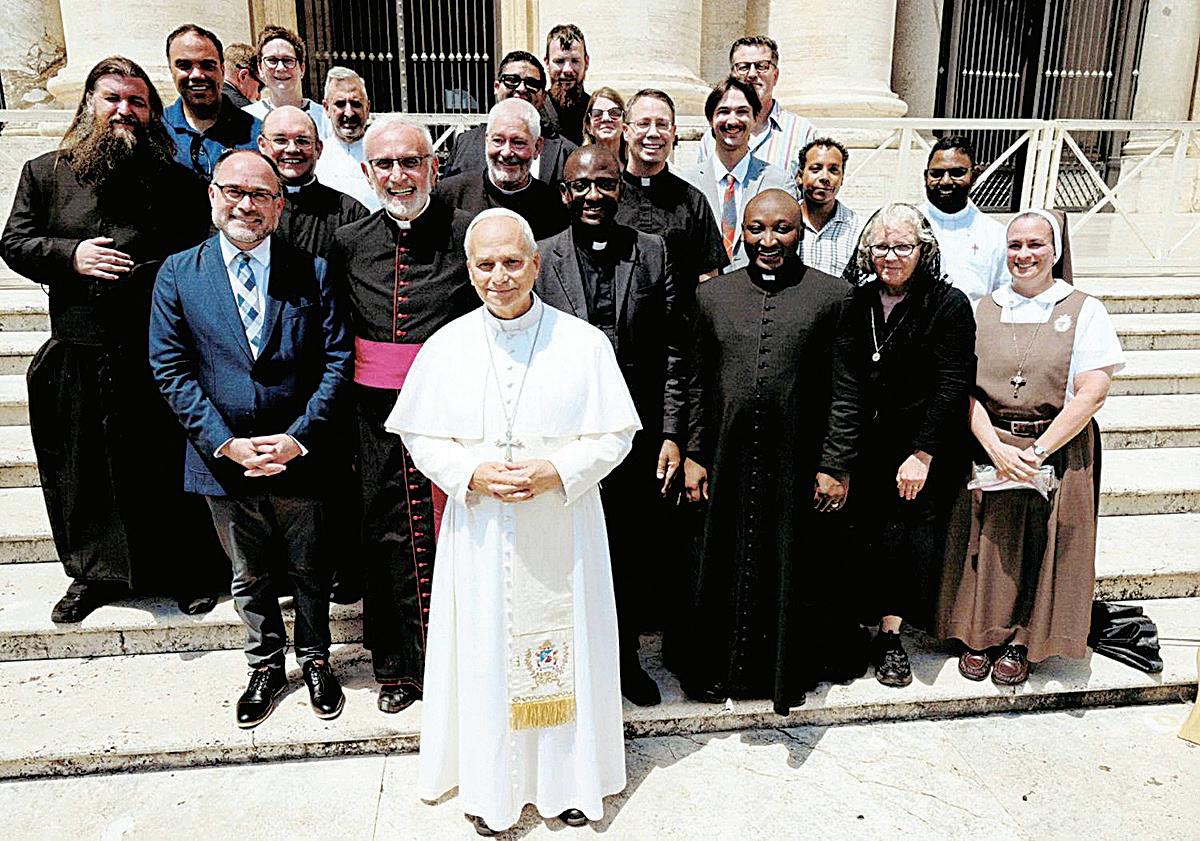
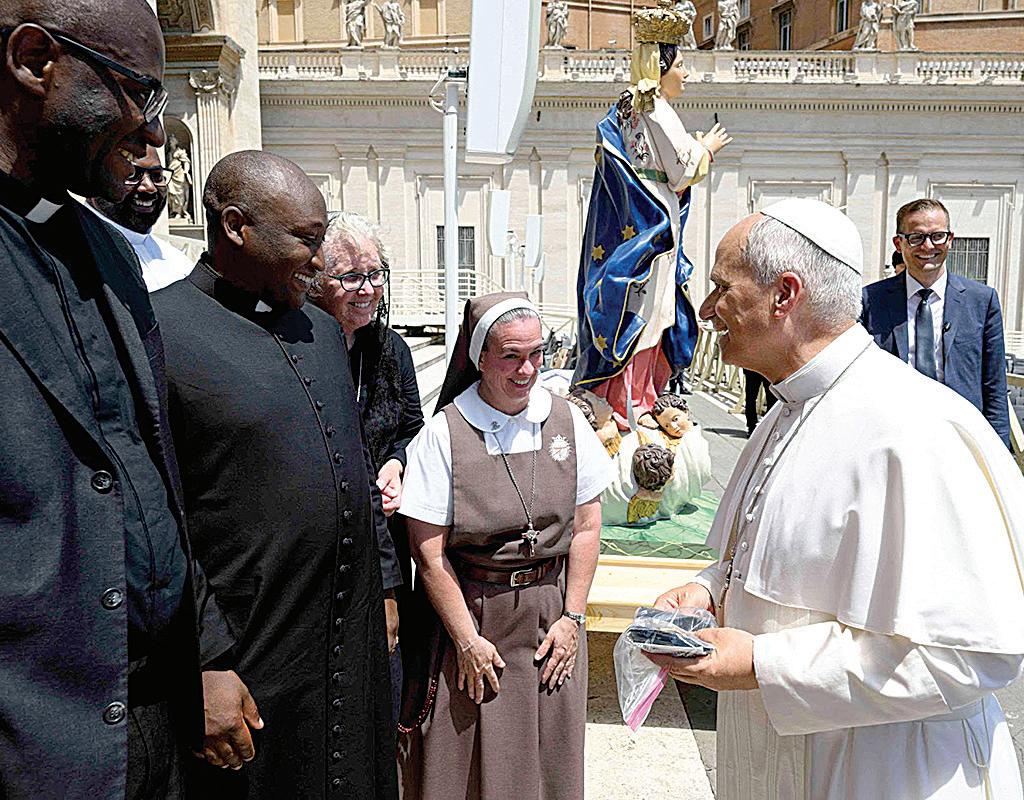
ROME — Time in Rome was even more meaningful than anticipated for Father Melchesideck Yumo, parochial administrator of St. Benedict the Moor Parish in Winston-Salem, when he had the chance to meet Pope Leo XIV. Father Yumo was completing his final two weeks of study to receive a master’s degree in law and an ecclesiastical degree in canon law when the pope stopped by to meet the students.
Coordinating all diocesan appeals, including the Diocesan Support Appeal, promoting all special collections including the priests’ retirement and benefits collection, and coordinating parish stewardship efforts. Also oversees the diocesan database and office webpages.
Please submit resume to: Patty DiSandro Development Office, pkdisandro@rcdoc.org. or mail to 1123 South Church Street, Charlotte, NC 28203-4003.
Virsik
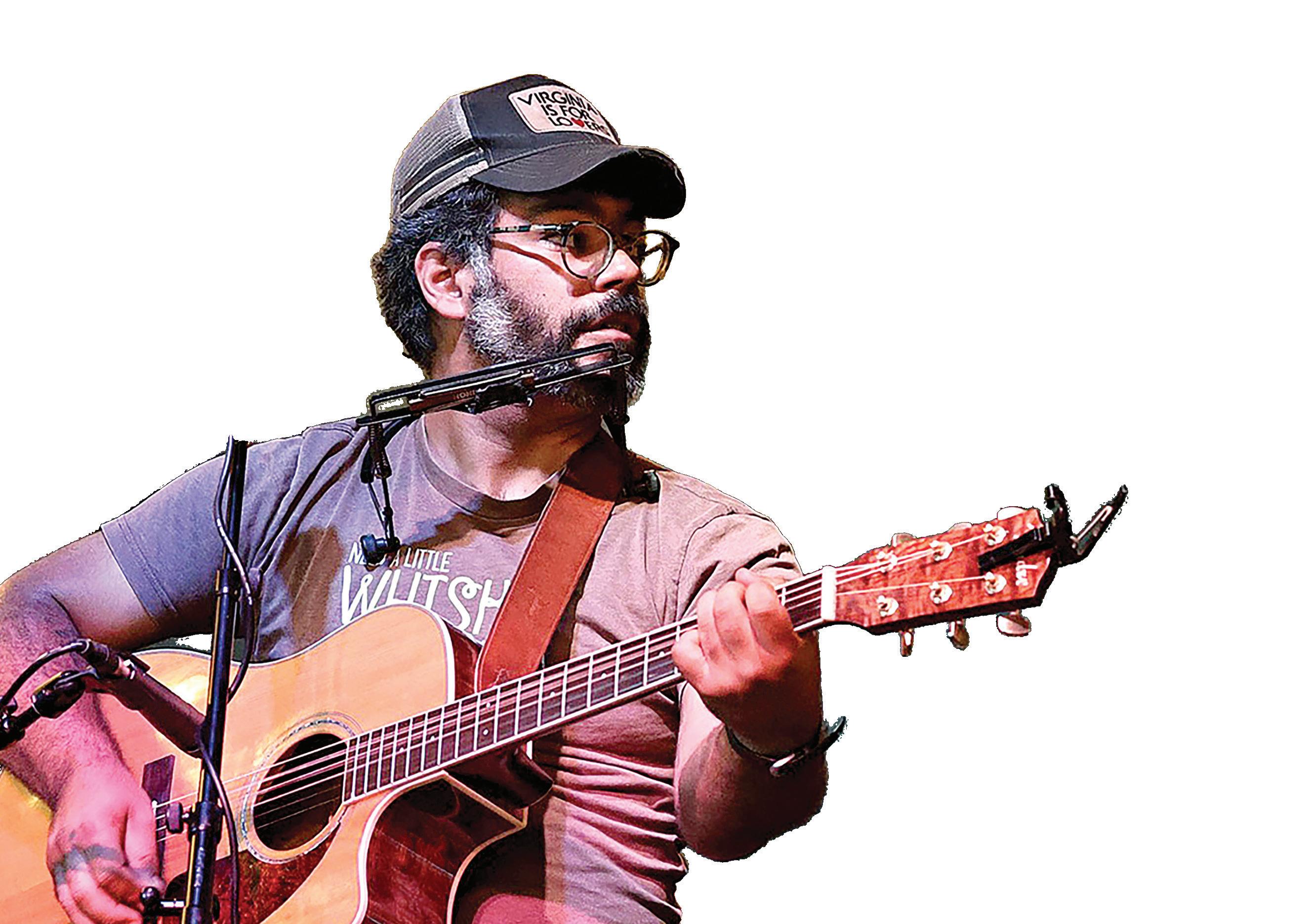
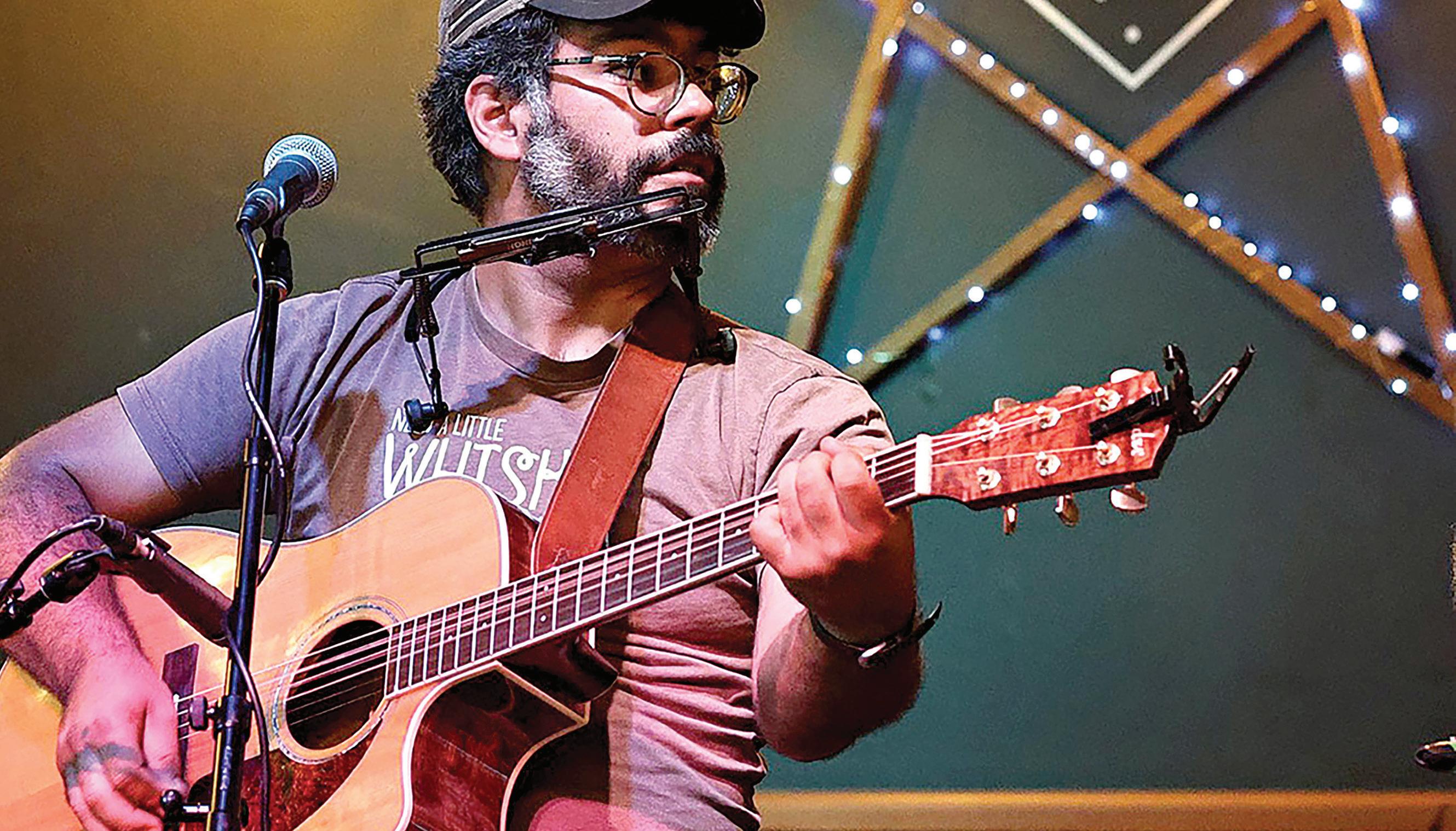
Greensboro-based songwriter, poet and musician Colin Cutler is one of five headlining acts at the Kingfisher Folk Festival. Cutler has received critical acclaim for his “Tarwater” album inspired by a famous Catholic writer.
Arts & entertainment
CANDLER — Few people would think of writing songs about the multilayered, often dark and violent short stories and novels of Southern Catholic writer Flannery O’Connor.
Greensboro-based songwriter, poet and musician Colin Cutler accepted the challenge. The result was his critically acclaimed 2023 album “Tarwater,” named after the main character in O’Connor’s novel “The Violent Bear It Away.”
Cutler and his band The Hot Pepper Jam will be one of the featured performers at the third annual Kingfisher Folk Festival Saturday August 1 in Candler. Other artists include Hightop Mountain Harmony; Tolkmith, an Irish folk band made up of students from St. Joseph the Worker College in Steubenville, Ohio; sea shanty-singing pirate band Nelson’s Blood; and returning headliners The Hillbilly Thomists, a group of Dominican friars who play bluegrass and folk music.
An Army veteran who traded his rifle for a banjo and guitar, Cutler found a home in Greensboro, where he teaches English at Guilford Technical Community College and is a vital part of the region’s folk and oldtime music community.
On “Tarwater,” the songs draw from a variety of O’Connor’s works, from the novel it’s named after to short stories like “Parker’s Back,” which follows a man who tattoos the image of Christ’s crucifixion on his back during a time of spiritual transformation.
Cutler shared his thoughts about O’Connor and Catholic spirituality with the Catholic News Herald:
CNH: What led to your interest in Flannery O’Connor?
Formed in 2024 by organizer Andrew Tolkmith, the festival benefits Canongate High School and emerged from his desire to raise awareness about the small Catholic high school while highlighting the connection between Catholic and traditional mountain cultures.
“At Kingfisher, there are two main aspects – the folk and the music,” Tolkmith told the Catholic News Herald in 2025. “Folk obviously means people, and the main goals we have tried to celebrate and cultivate at the festival are our understanding of what it means to be a human being, a Catholic creature of God and the art that we make.”
Tolkmith’s words describe what O’Connor did in her stories, and what Cutler explores through songs focused on her writing.
Cutler: I first encountered her while doing undergraduate work on major Christian authors, and I knew her writing was good but didn’t know if I liked her. Then I had eight months between graduation and infantry school, and I did a self-study of her essays and letters and other work, and by the end of it I said “I get what she’s doing and I like what she’s doing.” Her stories are focused on the human element and on revelation. She can draw an image in just a few lines. Her stuff is very dark, but I think a lot of artists inspired by her miss the undercurrent of love and questioning that is there in her work. I think her work shows a deep love for her characters and the people around her.
CNH: What is your spiritual background?
Cutler: I grew up Pentecostal, but my greatgrandmother was a devout Catholic and my mom was raised Catholic. I started OCIA classes for a bit when I was over in England and attended Catholic Masses, and even though I didn’t end up coming into the Church, the faith has certainly been a big influence on me.
CNH: What shone out for you about O’Connor’s spirituality?
Cutler: I think the big difference between
BY CHRISTINA LEE KNAUSS clknauss@rcdoc.org
Cutler is one of five featured artists at upcoming Kingfisher
Protestant sensibility and Catholic spirituality is that Protestant theology tends to be more propositional – how do you answer the question of what must you do to be saved? Whereas for Catholics it’s more about the event of the Incarnation, the union of body and soul and the Word made flesh. Those two things aren’t separate, and that shows up in her art.
CNH: What do you think the Catholic faith meant to O’Connor?
Cutler: I think it was absolutely central to her identity as a person and as a writer. I think it gave her the courage and the confidence to explore the human in a way that some of her Southern contemporaries did not. I like to compare O’Connor to William Faulkner. Faulker explored these big ideas with a lot of these almost disjointed images, whereas O’Connor was
O’Connor Review. It’s been fascinating to see how the different worlds have received it – both the folk music world and Catholic, academic and Southern literature spaces.
CNH: How would you describe the link between the Catholic imagination and folk music?
Cutler: A lot of folk songwriters are very solid storytellers, and we even see that in the words of traditional folk songs that don’t have a specific author. They are very incarnational storytellers that draw a picture while they tell a story, and there’s a lot of meaning under the words of the song. We especially see that in Black folk music where there’s a lot of coding to the meaning, where people outside of that community might understand the bones of the story but not catch all of the significance. That is also something that a lot of Catholic art carries with it – there
Don’t miss this Catholic-inspired mountain
music festival
Featured performers: The Hillbilly Thomists, Colin Cutler and The Hot Pepper Jam, Hightop Mountain Harmony, Tolkmith, and Nelson’s Blood
Other activities: Vendors, dancing, food trucks and pirate-themed activities
When: Noon to 8 p.m. Saturday, Aug. 1
Where: The Oaks at Daniel Ridge, 818 Monte Vista Road, Candler
How much: $25 general admission, $35 premium seating, $75 family admission For advance tickets and T-shirts: Go to www.kingfisherfest.com
more focused on telling the story and letting her ideas shine through in her depictions of humans and their actions. I think her faith also helped her writing in the aspect of how the Catholic faith places the human in relation to the divine.
CNH: How was the album received?
Cutler: The music and songs have been well received, and I’ve also heard that it’s led more people to read Flannery O’Connor. In most spaces I will at least mention her and there’s usually at least one person in the audience who says they love her. There are also a lot of people who don’t like her – she’s definitely a polarizing writer. ... Folks in the music industry also thought the album was a really cool concept, and it’s been well-received on the academic side of things. It even received a nice review in the Flannery
are layers of meaning that not everyone might understand if they aren’t Catholic, but they still evoke a response.
CNH: How did you come to be a performer at Kingfisher?
Cutler: I met Andrew Tolkmith at the Catholic Imagination Conference in 2024 up at Notre Dame because I was there to give a presentation and perform with the band. Andrew saw me and liked the music and what I had to say and reached out to me.
upcoming shows.
COLIN CUTLER MUSIC
Two devastating earthquakes leave families in Charlotte searching for loved ones in Venezuela as entire neighborhoods collapse into rubble. Amid heartbreaking loss and miraculous survival, two Catholic communities create a lifeline of hope.
LISA
GERACI AND BRIAN SEGOVIA catholicnews@rcdoc.org
CHARLOTTE — It was just after 6 p.m. when Veronica Rodriguez settled in to watch the World Cup on TV and the phone rang.
There’s been an earthquake.
Your mother’s home in Venezuela was hit.
It’s bad.
“Oh my God,” Veronica said to herself, “I’ve got to call my mother.” No answer.
Veronica flipped to follow the news on social media: Two earthquakes, 7.2 and 7.5. Buildings collapsed. People were killed.
“It was terrifying,” says Veronica, a St. Matthew parishioner who moved to the U.S. 15 years ago. “The buildings looked like Legos falling down – and my mom was right in the most affected area.”
Veronica’s mother, Beatriz Borregales, lives in the capital city
More inside
PAGE 4: St. Matthew food drive to assist
PAGES 16-17: See additional photos
PAGE 24: Humanitarian aid flows into Venezuela
Caracas but often spends weekends and holidays at a family home in Naiguatá, a small fishing and tourist town on the Caribbean, 25 miles east of Caracas. June 24 was a national holiday in Venezuela, so Veronica wondered if her mother might be there.
A similar scramble for information was unfolding among other St. Matthew parishioners. For the past eight years, the Diocese of Charlotte’s largest parish has supported a soup kitchen at the Catholic parish in Naiguatá.
Texts flew among parishioners: Is anyone hurt? Is the soup kitchen OK? Has anyone heard from Padre Martin?
Padre Martin Vegas is pastor of San Francisco de Asís Parish, where he oversees two churches and a Catholic school that hosts the soup kitchen. He wasn’t answering calls or texts either. The twin earthquakes had wiped out communications and devastated structures at a time when most people were at home in Venezuela, celebrating the holiday. So, as night fell on June 24, the people of St. Matthew could only watch and wait.
IS MY MOTHER ALIVE?
Finding it impossible to sleep, Veronica turned to her Catholic chat group on WhatsApp and found similar panic among her Venezuelan friends now living in Charlotte. Everyone wanted information.
One friend, Dulce Peña, a parishioner at St. Mark in Huntersville, wrote that she too was looking for her mother. Her aunt, her brother and his wife were also unreachable. The four family members lived on the 13th and 14th floors of a high-rise condo building named “Riomar” on the edge of Naiguatá (pronounced Nye-gwahTAH).
“We were on the phone with one another the whole night, praying,” Veronica says of her friend Dulce. “We promised whoever found their mother first would then help the other.”
Across Charlotte, Bruce Anderson’s heart sank as it became clear that Naiguatá had been among the areas hardest hit. He helps organize St. Matthew’s support for the soup kitchen, and he stayed up late searching online for any word of Padre Martin and the Venezuelan parish. Before midnight, Veronica made a clever connection: She managed to reach an errand runner in Caracas and hired him to go look for her mother the next morning.
“I needed to know if she was alive,” Veronica says. It was Veronica and her mother who
7.2 and 7.5
Unshaken
(Clockwise, from top) Volunteers from the soup kitchen supported by St. Matthew Parish give out food and relief supplies. Devastated buildings of Naiguatá, one of the hardest-hit communities, prompting the Diocese of Charlotte to hold a special collection for humanitarian
Padre runs the parish and its soup kitchen, leads a procession through the streets. (At right) Dulce Peña holds a photo sheet of her missing family
originally connected St. Matthew with Venezuela’s San Francisco de Asis Parish back in 2018. The two had learned about St. Matthew’s efforts to combat hunger, so they asked parish leaders to include the Naiguatá soup kitchen in its annual food-and-funds drive.
“People are eating out of trash cans,” Veronica had explained to leaders of St. Matthew’s Monsignor McSweeney World Hunger Drive, which last year raised $430,000 to aid people in eight countries.
A GROWING CATHOLIC BOND
The Venezuelan economy had collapsed under the authoritarian rule of Nicolas Maduro, she said, and people needed help. Her mother sent photos of hungry children lined up at the parish soup
kitchen, which operated on a shoestring.
“We knew we could have an impact,” says Hunger Drive leader Steve Favory, who vividly remembers Veronica’s presentation. “The fact that this mother and daughter were reaching out, they were so sincere and grateful, and sending photos of the priest feeding the children – it touched our hearts.”
St. Matthew sent $1,000 that first year and has steadily increased its support –with parishioners donating $74,000 so far.
The soup kitchen has fed about 150 people a day from two locations.
Naiguatá is a modest, working-class town that benefits from tourists who come for its mountain-to-sea views, but significant poverty has crept in.
The day after the quakes, Bruce
and get about Naiguatá.
“Your friends at St. Matthew Catholic Church in Charlotte, Carolina, USA, are concerned your community following earthquake,” he wrote. able to communicate with the situation, we would your needs are. You are Bishop Castillo responded that day: “The state remains electricity or communications, significant loss of life damage to buildings, homes, and infrastructure. … been able to contact Father
PROVIDED AND TROY C.
relief.
TROY C. HULL | CATHOLIC NEWS HERALD Veronica Rodriguez poses with her daughter and a photo of her mother after the earthquakes sparked a desperate search for her in Venezuela.
Anderson emailed Padre Bishop Alberto Castillo had survived
Unshaken bonds
Padre
Padre Martin and Castillo to see if they any information
Matthew Charlotte, North concerned about following yesterday’s wrote. “When you are with us regarding would like to know what are in our prayers.” responded later remains without communications, with and material homes, churches, I have not yet Father Martín
CHARLOTTE
children, assistance, Children’s Fund
25 of 100 Churches in the Archdiocese of Caracas that sustained damage
Vegas to learn about the damage sustained by the San Francisco de Asís parish, the church facilities, and the soup kitchen. However, I have heard from others that the priest is alive and well.”
‘COUNTING
ON YOUR PRAYERS’
“We are counting on your prayers,” the bishop wrote, “and any assistance you might be able to provide.”
With that, St. Matthew sprang into action, immediately preparing to wire $27,000 for whatever food and supplies were available. Within days, they would also be working to increase funding earmarked for the parish during this year’s World Hunger Drive, which kicked off July 11.
“St. Matthew has a big heart for people in need,” says Father Patrick Cahill, “and this time, one of own parishioners – Veronica Rodriguez –was dramatically impacted.”
SEARCH FOR THE MISSING
The errand runner set out early the morning after the earthquakes to search for Veronica’s mother. On a motorbike, he navigated streets clogged with debris and desperation, from Caracas to Naiguatá, weaving around collapsed homes, damaged roadways and people digging through the rubble by hand for loved ones.
He had the address and a photo of Veronica’s mother on his phone. He also had a picture of the colorful mural that adorned the wall in front of Beatriz Borregales’ home, depicting Our Lady of Coromoto, Venezuela’s patron saint. It was a landmark. Hoodlums stopped painting graffiti on the wall when the mural went up. “People are very Catholic there,” Veronica says. Finally, the errand runner was
PHOTO PROVIDED
A crucifix still hangs on a damaged wall at Nuestra Señora de la Soledad Church, despite two earthquakes that left the Naiguatá church a near total loss.
HULL | CATHOLIC NEWS HERALD buildings line the streets
Martin Vegas, who family members.
Iglesia San Francisco de Asís Iglesia Nuestra Señora de la Soledad 1 2
PHOTO PROVIDED
Padre Martin Vegas stands at the site of his church, Nuestra Señora de la Soledad Church, which was left in ruins by the earthquakes. The pastor also oversees San Francisco de Asís Church in Naiguatá.
Lazos inquebrantables
Dosdevastadores terremotos dejan a familias en Charlotte buscando desesperadamente a sus seres queridos en Venezuela, mientras barrios enteros quedan reducidos a escombros. En medio de pérdidas desgarradoras y supervivencias milagrosas, dos comunidades católicas crean un puente de esperanza que se convierte en un salvavidas para quienes más lo necesitan.
LISA GERACI AND BRIAN SEGOVIA
catholicnews@rcdoc.org
CHARLOTTE — Eran poco después de las 6 p.m. cuando Verónica Rodríguez se acomodó para ver el Mundial por televisión y sonó el teléfono. Hubo un terremoto.
La casa de su madre en Venezuela fue afectada. Es grave.
“Dios Mío,” pensó Verónica, “Tengo que llamar a mi mamá.”
No hubo respuesta.
Verónica cambió a las redes sociales para seguir las noticias: dos terremotos, de magnitudes 7.2 y 7.5. Edificios derrumbados. Personas fallecidas.
“Fue aterrador”, dice Verónica, feligresa de St. Matthew que se mudó a Estados Unidos hace 15 años. “Los edificios parecían piezas de Lego cayéndose, y mi mamá estaba justo en la zona más afectada”.
La madre de Verónica, Beatriz Borregales, vivía en la capital, Caracas, pero con frecuencia pasaba los fines de semana y los días festivos en una casa familiar en Naiguatá, un pequeño pueblo pesquero y turístico en la costa del Caribe, a 25 millas al este de Caracas. El 24 de junio era un día festivo nacional en Venezuela, por lo que Verónica temía que su madre estuviera allí.
Una búsqueda similar de información se desarrollaba entre otros feligreses de St. Matthew. Durante los últimos ocho años, la parroquia más grande de la Diócesis de Charlotte había apoyado un comedor comunitario en la parroquia católica de Naiguatá.
Los mensajes de texto iban y venían entre los feligreses: ¿Hay alguien herido? ¿El comedor sigue alimentando a la gente? ¿Alguien ha sabido del Padre Martín?
El Padre Martín Vegas era el párroco de la Parroquia San Francisco de Asís, donde supervisaba dos iglesias y la
Un sacerdote imparte una bendición mientras permanece entre los escombros de un edificio derrumbado en La Guaira, Venezuela, el 1 de julio, tras
terremotos catastróficos sacudieron Venezuela en rápida sucesión el 24 de junio.
escuela católica que alberga el comedor comunitario. Él tampoco respondía llamadas ni mensajes.
Los dos terremotos habían destruido las comunicaciones y devastado las estructuras justo cuando la mayoría de las personas se encontraban en sus hogares celebrando el feriado. Así que, al caer la noche del 24 de junio, la
comunidad de St. Matthew solo podía observar y esperar.
¿ESTÁ VIVA MI MADRE?
Incapaz de conciliar el sueño, Verónica recurrió a su grupo de chat católico en WhatsApp y encontró el mismo pánico entre sus amigos venezolanos que ahora viven en Charlotte. Todos buscaban información.
Una amiga, Dulce Peña, feligresa de la parroquia de San Marcos en Huntersville, escribió que ella también estaba buscando a su madre. Su tía, su hermano y la esposa de este también estaban incomunicados. Los cuatro familiares vivían en los pisos 13 y 14 de un edificio residencial de gran altura llamado “Riomar”, también ubicado en Naiguatá.
“Pasamos toda la noche hablando por teléfono y rezando”, dice Verónica sobre su amiga Dulce. “Nos prometimos que quien encontrara primero a su madre ayudaría después a la otra”.
Al otro lado de Charlotte, el corazón de Bruce Anderson se encogió al quedar claro que Naiguatá había sido una de las zonas más afectadas. Él ayuda a coordinar el apoyo de la parroquia de San Mateo al comedor comunitario y permaneció despierto hasta tarde buscando información en internet y esperando con angustia noticias del padre Martín y de la comunidad parroquial venezolana.
Antes de la medianoche, Verónica encontró una solución ingeniosa: logró comunicarse con un mensajero en Caracas y lo contrató para que fuera a buscar a su madre a la mañana siguiente. “Necesitaba saber si estaba viva”, dice Verónica.
UN VÍNCULO CATÓLICO
CADA VEZ MÁS FUERTE
Fueron Verónica y su madre quienes originalmente conectaron a St. Matthew con la parroquia San Francisco de Asís de Venezuela en 2018. Ambas habían conocido los esfuerzos de St. Matthew para combatir el hambre y pidieron a los líderes parroquiales que incluyeran a Venezuela en su campaña anual de recolección de alimentos y
TROY C. HULL | CATHOLIC NEWS HERALD, AND PROVIDED
Verónica y su hija posan con una fotografía de su madre, con quien no pudieron comunicarse después de los terremotos del 24 de junio. El padre Martín Vegas se encuentra en el sitio de su iglesia, Nuestra Señora de la Soledad, que quedó en ruinas tras los terremotos. El párroco también está a cargo de la iglesia San Francisco de Asís, en Naiguatá.
VENEZUELA, PASA A LA PÁGINA 17
ADRIANO MACHADO, REUTERS | OSV NEWS
los terremotos de junio. Dos
VENEZUELA
fondos.
“La gente está comiendo de los basureros”, había explicado Verónica a los organizadores de la campaña Monsignor McSweeney World Hunger Drive de St. Matthew, que el año pasado recaudó 430,000 dólares para ayudar a personas en ocho países.
La economía venezolana se había derrumbado bajo el gobierno autoritario de Nicolás Maduro, explicó, y la población necesitaba ayuda. Su madre enviaba fotografías de niños hambrientos haciendo fila en el comedor parroquial, que funcionaba con recursos muy limitados.
“Sabíamos que podíamos marcar una diferencia”, dice Steve Favory, líder de la campaña contra el hambre, quien recuerda vívidamente la presentación de Verónica. “El hecho de que esta madre y esta hija se acercaran con tanta sinceridad y gratitud, enviando fotos del sacerdote alimentando a los niños, nos conmovió profundamente”.
Ese primer año, St. Matthew envió $1,000 dólares y desde entonces ha aumentado de forma constante su apoyo. Hasta ahora, los feligreses han donado $74,000 dólares.
El comedor comunitario ha alimentado a unas 150 personas al día desde dos ubicaciones. Naiguatá es un pueblo modesto de clase trabajadora que recibe turistas atraídos por sus paisajes entre montañas y mar, aunque la pobreza ha ido aumentando.
Al día siguiente de los terremotos, Bruce Anderson envió un correo electrónico al Padre Martín y al obispo Alberto Castillo para conocer la situación en Naiguatá.
“Sus amigos de la Iglesia Católica St. Matthew en Charlotte, Carolina del Norte, Estados Unidos, estamos preocupados por su comunidad tras el terremoto de ayer”, escribió.
“Cuando puedan comunicarse con nosotros para informarnos sobre la situación, nos gustaría saber cuáles son sus necesidades. Están en nuestras oraciones”.
El obispo Castillo respondió ese mismo 25 de junio:
“El estado permanece sin electricidad ni comunicaciones, con importantes pérdidas humanas y daños materiales en edificios, viviendas, iglesias e infraestructura... Aún no he podido comunicarme con el Padre Martín Vegas para conocer los daños sufridos por la parroquia San Francisco de Asís, las instalaciones de la iglesia y el comedor comunitario. Sin embargo, otras personas me han informado que el sacerdote está vivo y se encuentra bien”.
“Contamos con sus oraciones”, escribió el obispo, “y con cualquier ayuda que puedan brindarnos”.
Con ese mensaje, St. Matthew actuó de inmediato y comenzó a preparar una transferencia de $27,000 dólares para comprar alimentos y suministros disponibles. En cuestión de días también trabajarían para aumentar los fondos destinados a
la parroquia durante la campaña World Hunger Drive de este año, iniciada el 11 de julio.
LA BÚSQUEDA DE LOS DESAPARECIDOS
El mensajero partió temprano la mañana siguiente para buscar a la madre de Verónica. En motocicleta recorrió calles llenas de escombros y desesperación, desde Caracas hasta Naiguatá, sorteando
viviendas derrumbadas, carreteras dañadas y personas que excavaban con las manos en busca de sus seres queridos.
Llevaba la dirección y una fotografía de Beatriz Borregales en su teléfono. También tenía una imagen del colorido mural que adornaba el muro frente a la casa, representando a Nuestra Señora de Coromoto, patrona de Venezuela.
Era un punto de referencia. Los grafiteros dejaron de pintar la pared cuando apareció el mural.
“La gente allí es muy católica”, comenta Verónica.
El trayecto, que normalmente dura una hora, se extendió a cuatro mientras el mensajero esquivaba escombros y preguntaba a desconocidos si sabían dónde estaba el mural.
Finalmente llegó a la modesta casa de Beatriz Borregales, ubicada en una hermosa propiedad heredada de su padre, Germán Borregales, líder político anticomunista que fue candidato presidencial en varias ocasiones durante la década de 1960.
Beatriz había cuidado esa propiedad desde la muerte de su padre en 1984 y dividía su tiempo entre su apartamento en Caracas y la antigua casa familiar en Naiguatá, donde había llevado a Verónica de vacaciones y donde ahora organizaba reuniones para la comunidad parroquial de San Francisco de Asís.
Borregales abrió la puerta con cautela. Sonrió cuando el mensajero le mostró una fotografía de Verónica. Él le pidió permiso para tomarle una foto y grabar su voz, de modo que pudiera enviar evidencia a Verónica cuando hubiera señal. “Prueba de Vida”, como lo llamó Verónica. Beatriz se sentía bendecida de estar viva. La noche de los terremotos estaba viendo televisión cuando comenzó a sentir mareo mientras el piso se movía. Miró hacia afuera y vio una ola de unos cuatro pies saliendo de la piscina.
“La gente comenzó a bajar desde la parte alta del pueblo gritando:
Escala de los daños
7.2 y 7.5
Magnitud de los dos terremotos que ocurrieron el 24 de junio, devastando la ciudad capital de Caracas y el estado costero de La Guaira.
5.208
Número de fallecidos al 21 de julio.
16.740
Número de personas heridas.
70
Número estimado de personas sin hogar, de las cuales más de 23.820 viven en refugios temporales.
58.000
Edificios dañados o destruidos.
$37 mil millones
Estimación inicial de los daños a viviendas e infraestructura.
650.000
Personas, incluidos 234.000 niños necesitan asistencia humanitaria, según el Fondo de las Naciones Unidas para la Infancia (UNICEF)
25 de 100 Iglesias de la Arquidiócesis de Caracas sufrieron daños.
— ONU, OSV News y Catholic News Agency
VENEZUELA, PASA A LA PÁGINA 19
FOTOS PROPORCIONADAS
Dulce Peña, feligresa de la parroquia San Marcos, y su tía sostienen una hoja con fotografías de sus familiares desaparecidos en Venezuela. Voluntarios distribuyen alimentos a las víctimas del terremoto en las calles de Naiguatá.
VIENE DE LA PÁGINA 16
FOTOS PROPORCIONADAS
Voluntarios ayudan a distribuir bolsas con alimentos, productos de higiene, botellas de agua y ropa. El padre Martín Vegas celebra la misa al aire libre en la Plaza Bolívar de Pueblo Arriba, cerca de la iglesia de San Francisco de Asís, en Naiguatá.
FROM PAGE 15
standing outside Beatriz Borregales’ modest home on a picturesque parcel passed down from her father, Germán Borregales, an anti-communist political leader who had run unsuccessfully for president of Venezuela several times in the 1960s.
Beatriz Borregales had maintained the property since his death in 1984 and frequently vacationed there with Veronica and her siblings, and now hosted gatherings for her San Francisco de Asís Parish community.
Borregales guardedly answered the door. She warmed up when the errand runner flashed a photo of Veronica, smiling. He asked if he could take Borregales’ picture and record her voice, so he would have evidence to send Veronica when a signal became available. “Proof of life,” Veronica had called it.
Borregales felt blessed to be alive. On the night of the quakes, she’d been watching TV and suddenly felt dizzy as the floor began to move. She looked outside and saw a four-foot wave of water splashing from her swimming pool.
“People began coming down from the higher part of town shouting, ‘Earthquake! Earthquake!’” she told the Catholic News Herald. “I remained calm, praying, and asking God to protect us. All night, everyone stayed out in the streets – children, mothers, entire families.”
It was around 2 p.m. on June 25 – 20 hours after the quakes – when Veronica’s phone buzzed with good news. She wept.
“My mother was overwhelmed, but she was safe,” Veronica says. “Everything around her collapsed. The house was the only thing left intact, but she was alive.”
He would also send photos of a collapsed high-rise with nothing but its sign remaining: Riomar, where Dulce Peña’s mother lived.
FEEDING THE HUNGRY
A day later, on June 26, Padre Martin Vegas finally replied to Bruce Anderson:
“Thank God, we are alive. The church and the parish house have been rendered unusable and have suffered severe structural damage,” he wrote of Nuestra Señora de la Soledad Church.
“We need basic supplies: water, lighting, medicines, and non-perishable food. … Aid is not reaching us due to the distance and the difficulty of access.
“We need your prayers.”
On the same street as the church, Padre Martin later said, 12 people had died. But the parish school and the soup kitchen were still standing, so he had relocated there along with 120 of his parishioners who had lost their homes.
Padre Martin restructured the soup kitchen. Instead of serving hot meals, he instructed parishioners to start packaging food and hygiene products. They went door to door delivering goods and taking a head count to see who was missing.
In the first week, Padre Martin said, “We have been able to assist people with 2,953 bags of food, hygiene kits, drinking water, and clothing. Despite everything we have experienced, people have shown great solidarity. … We have also seen many signs of hope. The church may have suffered damage, but the faith of the people remains standing.”
To Anderson, the devastation felt like Hurricane Helene all over again, just further away. Still, St. Matthew would be there in support.
A MOTHER’S NEW PURPOSE
With no services or supplies, Veronica’s mother decided to drive back to her apartment in Caracas on June 26.
“If one nail hit any of her tires,” Veronica laments, “she would have been stranded in the middle of nowhere.”
Indeed, the trip was traumatic, Borregales said. High-rises lay in rubble. Friends were missing. Sadly, she realized people were trapped beneath debris and no search parties were coming.
“I saw the reality with my own eyes. Completely collapsed buildings, like an accordion. People in the streets. Destroyed roads. Fallen bridges,” she said. “I was praying the entire time, asking my guardian angel to accompany me.”
When she reached Caracas hours later, she called Veronica with new purpose: She wanted to use the family property in Naiguatá for an orphanage or maybe a seminary, since the quakes had destroyed the Diocese of La Guaira’s seminary.
“She was heartbroken,” Veronica recalls. “She especially wanted to take care of the kids. These kids no longer had homes, no beds, no food. … All she has there is some property and a will to help. Helping others is a priority for her as a Catholic.”
A CALL TO UNITY
It would be another six days after the quakes, June 30, before Dulce Peña got news of her mother. A search team digging through rubble had found a woman’s body. In a photo, Peña and her sister recognized the striped pajamas and the rosary-style necklace the woman wore.
Yes, this was Dulce Avila Peña, age 88.
While there was still no word on her aunt, Peña was relieved to learn that her brother Julio and his wife had survived.
“It’s a miracle,” she says, “they fell down 14 floors. When they woke up, they were buried under bricks and dust and columns, and it was dark. My brother and his wife started screaming. They could hear each other but they couldn’t see each other.”
Peña would later learn her aunt Gladys had perished alongside her mother. Last weekend, July 18-19, St. Mark Church added their names to the Prayers of the Faithful at all six Masses.
As promised in their group chat, Veronica is reaching out to Dulce, recently hosting her for dinner.
Now, both women are asking for everyone to help provide relief to Venezuela – echoing the words of Padre Martin, whose soup kitchen has survived.
“Regarding the tragedy that has struck us with this double earthquake, which has caused so many deaths and destruction throughout the diocese, we too have been severely affected,” Padre Martin advised St. Matthew by email. “We have a team of very valuable servants who are ready to serve our brothers and sisters.
“In this moment of emergency and contingency, we would like to use the (St. Matthew) resources to serve the entire community,” including “neighbors sleeping in the square” because of damaged homes.
“So far, we have spent three days providing them with breakfast, lunch, and dinner, until our resources run out.”
“Any help you can send us at this time,” he wrote, “would be designated to address this emergency in the food sector.
“We are immensely grateful for your prayers and your charity, turned into solidarity. United in prayer.”
— Liz Chandler contributed
FROM PAGE 6
baptized Catholics but are barred from receiving the sacraments and from exercising certain ministries or offices in the Church.
The Vatican’s guidance states that Catholics seeking to return to full communion must profess the Catholic faith and affirm their adherence to the pope and the Church’s teaching authority under the direction of their local bishop.
In his pastoral message to SSPX followers, Bishop Martin emphasized the diocese “stands ready” to help anyone who wishes to return or affirm their communion with the Church.
He advised those associated with the society not to presume their status in the Church and to seek guidance from a priest or diocesan representative.
“I ask our priests to be available with patience and charity to anyone seeking guidance,” he said. “I also ask all the faithful of the Diocese to pray for those affected by these developments, for the priests and faithful associated with the Society, and for the restoration of unity in the Church.”
— Additional reporting by OSV News and
FROM PAGE 9
“Oh, I am very persistent, you know. I do whatever I like to do as long as I am not hurting anyone or taking anything away from anyone,” Walker laughed.
FUTURE GOALS
As the newly elected national regent, she plans to grow the Catholic Daughters of the Americas.
“I want to come up with a way to get more African Americans and young adults involved,” Walker said. “Being the first African American to reach this position, I feel like I can reach this community. Also, the youth. Sometimes, young women have difficulty committing to something like this because they have families and have to work, so it is difficult for them to come to the meetings. I think we can do better. I also hope to bring more unity to the order.”
She intends to restart the Charlotte chapter and other disbanded groups and has a 10-year plan to increase membership by 20 percent.
She wants to inspire the Daughters to pray the rosary every day and to continue their culture of unity, charity and love.
“My life has been good, so I believe in giving to those in need,” she said. Walker backs that commitment with her actions.
In her “free time,” she volunteers for the Elder Ministry and Burial Assistance Ministry at Catholic Charities. She helps at the Ronald McDonald House in Charlotte and Victory Junction in Randleman. Walker’s reception Mass will be celebrated on Sept. 12 at Holy Name of Jesus Cathedral in Raleigh.
Vatican News.
ADRIANO MACHADO, REUTERS | OSV NEWS
Crosses mark caskets at a mass burial site for earthquake victims at a cemetery in La Guaira, Venezuela. The two catastrophic earthquakes left at least 5,208 dead, which experts fear is an undercount.
PHOTO PROVIDED
Padre Martin Vegas hears confessions on the front steps of San Francisco de Asís Church. The church suffered less damage than its sister church across town, allowing some functions to continue.
FOTO PROPORCIONADAS
La devastación en el pueblo de Naiguatá ha dejado a “vecinos durmiendo en la plaza” debido a los daños en sus viviendas, dijo el padre Martín a sus amigos de la parroquia St. Matthew, en Charlotte.
VENEZUELA
FROM PAGE 17
‘¡Terremoto! ¡Terremoto!’”, contó al Catholic News Herald. “Permanecí tranquila, rezando y pidiéndole a Dios que nos protegiera. Toda la noche la gente permaneció en las calles: niños, madres, familias enteras”.
Eran alrededor de las 2 p.m. del 25 de junio – 20 horas después de los terremotos – cuando el teléfono de Verónica vibró con buenas noticias. Rompió en llanto.
“Mi madre estaba profundamente afectada, pero estaba a salvo”, dice Verónica. “Todo a su alrededor se derrumbó. La casa fue lo único que quedó intacto, pero ella seguía con vida”.
ALIMENTANDO A LOS NECESITADOS
Un día después, el 26 de junio, el Padre Martín Vegas finalmente respondió a Bruce Anderson.
“Gracias a Dios, estamos vivos. La iglesia (La Soledad) y la casa parroquial han quedado inutilizables y presentan graves daños estructurales”, escribió.
“Necesitamos suministros básicos: agua, iluminación, medicamentos y alimentos no perecederos... La ayuda no está llegando debido a la distancia y la dificultad de acceso.”
“Necesitamos sus oraciones.”
Más adelante, el Padre Martín informó que 12 personas habían muerto en la misma calle donde se encuentra la iglesia. La escuela parroquial y el comedor seguían en pie, por lo que se trasladó allí junto con 120 feligreses que habían perdido sus viviendas.
El sacerdote reorganizó el comedor comunitario. En lugar de servir comidas calientes, pidió a los feligreses preparar paquetes de alimentos y productos de higiene. Iban de puerta en puerta entregando ayuda y verificando quiénes seguían desaparecidos.
Durante la primera semana, explicó:
“Hemos podido asistir a las personas con 2,953 bolsas de alimentos, kits de higiene, agua potable y ropa. A pesar de todo lo que hemos vivido, la gente ha mostrado una enorme solidaridad... También hemos visto muchos signos de esperanza. La iglesia pudo haber sufrido daños, pero la fe del pueblo sigue en pie.”
Para Bruce Anderson, la devastación le recordó al huracán Helene.
UN NUEVO PROPÓSITO PARA UNA MADRE
Sin servicios ni suministros, la madre de Verónica decidió regresar a su apartamento en Caracas el 26 de junio.
“Si un solo clavo hubiera pinchado una de sus llantas”, lamenta Verónica, “habría quedado varada en medio de la nada”. El viaje fue traumático, relató Beatriz. Había edificios altos reducidos a escombros. Amigos desaparecidos. Comprendió con tristeza que había personas atrapadas bajo los restos y que nadie llegaba a rescatarlas.
“Vi la realidad con mis propios ojos”, dijo. “Edificios
escombros de la
FOTO PROPORCIONADAS
completamente colapsados, como un acordeón. Personas en las calles. Carreteras destruidas. Puentes caídos. Estuve rezando todo el tiempo, pidiéndole a mi ángel de la guarda que me acompañara.”
Cuando finalmente llegó a Caracas, llamó a Verónica con un nuevo propósito: quería utilizar la propiedad familiar en Naiguatá para abrir un orfanato o quizá un seminario, ya que los terremotos habían destruido el seminario de la Diócesis de La Guaira. “Estaba desconsolada”, recuerda Verónica. “Sobre todo quería cuidar de los niños. Estos niños ya no tenían casa, ni cama, ni comida... Lo único que tiene allí es un terreno y la voluntad de ayudar. Como católica, ayudar a los demás siempre ha sido su prioridad.”
UN LLAMADO A LA UNIDAD
Pasarían otros cuatro días, hasta el 30 de junio, antes de que Dulce Peña recibiera noticias. Un equipo de rescate que removía escombros encontró el cuerpo de una mujer. En una fotografía, Dulce y su hermana reconocieron el pijama de rayas y el collar tipo rosario que llevaba puesto.
Sí, era Dulce Avila Peña, de 88 años.
Aunque seguía sin haber noticias de su tía, Peña sintió alivio al saber que su hermano Julio y la esposa de él habían sobrevivido.“Es un milagro”, afirma. “Cayeron desde el piso 14. Cuando despertaron estaban enterrados bajo ladrillos, polvo y columnas, y todo estaba oscuro. Mi hermano y su esposa comenzaron a gritar. Podían escucharse, pero no podían verse.”
Más tarde supo que su tía Gladys también había fallecido junto a su madre. Este fin de semana, la Iglesia St. Mark incluirá sus nombres en las Oraciones de los Fieles durante sus seis misas. Tal como se prometieron en su chat grupal, Verónica ya invitó a Dulce a cenar.
Ahora ambas piden que todos colaboren para brindar ayuda a Venezuela, haciéndose eco de las palabras del Padre Martín, cuyo comedor comunitario logró sobrevivir.
“Con respecto a la tragedia que nos ha golpeado con este doble terremoto, que ha causado tantas muertes y destrucción en toda la diócesis, nosotros también hemos sido gravemente afectados”, escribió el Padre Martín a St. Matthew por correo electrónico.
“Tenemos un equipo de servidores muy valiosos, listos para servir a nuestros hermanos y hermanas.”
“En este momento de emergencia y contingencia, queremos utilizar nuestros recursos para servir a toda la comunidad.”
Eso incluye a “los vecinos que están durmiendo en la plaza” porque sus viviendas resultaron dañadas.
“Hasta ahora hemos pasado tres días proporcionándoles desayuno, almuerzo y cena, hasta que se agoten nuestros recursos.”
“Cualquier ayuda que puedan enviarnos en este momento”, dijo, “será destinada a atender esta emergencia en el área de alimentación.”
“Les agradecemos inmensamente sus oraciones y su caridad, convertida en solidaridad. Unidos en oración.”
— con contribución de Liz Chandler
DISANDRO
FROM PAGE 9
with individuals and couples on estate-planning, major gifts and endowments.
Since joining the diocese in 1986, Kelley has helped raise close to $1 billion.
“I’ve enjoyed my job every day for 40 years, and I am grateful because I know most people can’t say that,” Kelley reflected. “I’m thrilled about this new opportunity to continue serving the Church I love and the clergy, parishioners, staff and Church leaders who have shaped my life and career.”
The Catholic News Herald celebrated his 40-year anniversary with a special profile in its Feb. 20, 2026, edition, recapping his storied career: “Steward of Stewardship: Jim Kelley celebrates 40 years of giving to God.”
A FOUNDATION OF SERVICE
DiSandro welcomed the opportunity to work in the diocese: “It’s an exciting time to be in the Diocese of Charlotte,” DiSandro said. “With the vision Bishop Martin has cast, I am most excited about the opportunity to work with our clergy and parishioners.”
Originally from southern Illinois, DiSandro grew up on a farm. She attended Olivet Nazarene University in Bourbonnais, Illinois, on a volleyball scholarship, earning a bachelor’s degree before later completing her MBA. She is also a Certified Fundraising Executive. DiSandro and her husband, Jeff, have two teens and a rescue dog named Bear.
She and Kelley share a common vision for the diocese’s stewardship efforts.
“We want people to understand how blessed they are by God, to be grateful, and to give back a portion of their time, talent and treasure,” Kelley said. DiSandro embraces that philosophy, too.
“God has given us so much, and we are blessed with the opportunity to help others using whatever gifts we have,” she said. “What a joy it is to respond in this generous way.” — Courtney McLaughlin contributed
MARRIAGE
FROM PAGE 3
to officiate as part of their job as a judge, justice of the peace, magistrate or other official as designated by their home state, they are permitted to officiate at legal civil ceremonies.
Can Catholics have destination weddings?
Catholic weddings must take place inside a Catholic church or chapel and fulfill all the canonical and paperwork requirements of the diocese where the wedding is taking place. However, other locations may be permitted with special dispensation from the bishop.
More online
At www.charlottediocese.org/faith-life/ sacraments/marriage : Learn more about requirements for getting married in the Diocese of Charlotte and find resources to help your marriage
Los
cercana Iglesia de Nuestra Señora de la Soledad se funden con el paisaje de devastación en Naiguatá tras los terremotos.
Háganse como niños
Queridos hermanos y hermanas: Si vemos los Evangelios, encontramos un tema que se repite una y otra vez. De una manera u otra, el Señor habla de los niños.
¿Por qué lo hace?
En el Evangelio según san Mateo, capítulo 18, Jesús nos dice que si no nos convertimos y nos hacemos como niños, no entraremos en el Reino de los Cielos.
¿Y qué significa esto para nosotros?
Significa que debemos volver a esa inocencia con la que vivíamos cuando éramos niños. Si recordamos nuestra infancia, seguramente podemos recordar también esa pureza, esa inocencia que existía antes de que el pecado fuera marcando nuestra vida. Por eso necesitamos aprender dos cosas de los niños: la inocencia y la dependencia.
La inocencia, porque no entraremos en el Reino de los Cielos si no nos hacemos como niños.
Debemos volver a esa inocencia con la que fuimos bautizados, cuando las aguas del Bautismo nos limpiaron y nos hicieron hijos de Dios.
Y también la dependencia. Esto no lo podemos hacer solos. Es necesario depender de Dios, confiar en Dios y también en las personas que Él ha puesto en nuestra vida para ayudarnos.
Así está el Divino Niño, con sus manos abiertas hacia el cielo, como un niño que levanta sus brazos hacia su papá o hacia su mamá pidiendo ayuda. De la misma manera, nosotros también tenemos que levantar nuestras manos y pedirle ayuda al Señor.
Porque solos no entraremos en el Reino de los Cielos. Solos es difícil; más aún, es imposible volver a esa pureza y a esa inocencia que una vez tuvimos.
Por eso, aprendiendo de Jesús y siguiendo el ejemplo de los niños, aprendamos también a depender de Dios, para que, con su ayuda, podamos regresar a esa inocencia y entrar en el Reino de los Cielos. En el nombre del Padre, del Hijo y del Espíritu Santo. Amén.
EL PADRE KEVIN MARTÍNEZ es vicario parroquial de la iglesia San Marcos en Huntersville. Esta es su
Los feligreses se reunieron para celebrar la Fiesta del
de muchos católicos hispanos. En Colombia, la celebración se centra en el
en procesiones, Misas y fuegos artificiales.
Feligreses de St. Mark celebran al Divino Niño Jesús
HUNTERSVILLE — Una multitud se reunió el 21 de junio en la iglesia St. Mark para celebrar una querida devoción colombiana: el Divino Niño Jesús.
La Misa anual, celebrada en español por el padre Kevin Martínez, vicario parroquial, honró esta fiesta del Divino Niño Jesús, que conmemora la infancia y niñez de Jesús.
Durante su homilía, el padre Martínez reflexionó sobre la invitación de Jesús a hacerse como niños pequeños, recordando a los fieles que la vida cristiana está marcada por la inocencia, la confianza y la dependencia total de Dios.
“Debemos volver a esa inocencia con la que vivíamos cuando éramos niños,” dijo el padre Martínez. “Si recordamos nuestra infancia, seguramente podemos recordar también esa pureza, esa inocencia que existía antes de que el pecado fuera marcando nuestra vida.”
También debemos aprender a depender de Dios, aconsejó.
“Esto no lo podemos hacer solos. Es necesario depender de Dios, confiar en Dios y también en las personas que Él ha puesto en nuestra vida para ayudarnos,” dijo el padre Martínez. “Así está el Divino Niño, con sus manos abiertas hacia el cielo,
como un niño que levanta sus brazos hacia su papá o hacia su mamá pidiendo ayuda. De la misma manera, nosotros también tenemos que levantar nuestras manos y pedirle ayuda al Señor.”
Los feligreses se reunieron para colocar flores alrededor de la imagen del Divino Niño Jesús y hacer una pausa para un momento de oración.
La fiesta ocupa un lugar especial en la vida de fe de muchos católicos hispanos.
En Colombia, la celebración se centra en el Santuario del Divino Niño Jesús en Bogotá, donde miles de personas se reúnen para participar en procesiones, Misas y fuegos artificiales.
Aunque allí la fiesta oficial se celebra el primer domingo de septiembre, el 20 de julio –Día de la Independencia de Colombia y fiesta patronal del barrio – también es un día de celebración.
FOTOS PROPORCIONADAS POR AMY BURGER
Divino Niño el 20 de julio en la Iglesia de St. Mark, en Huntersville. La fiesta ocupa un lugar especial en la vida de fe
Santuario del Divino Niño Jesús en Bogotá, donde miles de personas se reúnen para participar
homilía del 20 de junio durante la Misa del Divino Niño.
Padre Kevin Martínez
El reino de Dios crece en la ‘pequeñez de lo cotidiano’
Católicos de casi todos los continentes del mundo se reunieron en Castel Gandolfo el 19 de julio mientras el Papa León XIV dirigía la oración del Ángelus desde el palacio papal de verano en la pequeña localidad italiana situada en una colina, donde el Papa reflexionó sobre cómo el reino de Dios crece a través de “la pequeñez de lo cotidiano”.
Para muchos de los presentes en la multitud que se extendía desde la plaza del pueblo frente al palacio hasta su calle principal, era la primera vez que veían al pontífice nacido en Estados Unidos.
“Es la primera vez que salimos de Brasil. Así que todo es increíble”, dijo a OSV News Vínicius Marques Diniz, de 22 años, quien viajó desde Campo Grande, Brasil, con su familia. “Estoy muy contento con este nuevo Papa”. El Papa León, dirigiéndose a los peregrinos bajo el sol de verano frente al palacio veraniego, dijo que el reino de Dios “viene como la más pequeña de las semillas y, por eso, exige la paciencia de saber acompañar los procesos, reconociéndolo en la pequeñez de lo cotidiano y en la sencillez de la vida ordinaria”.
Comentó que los cristianos a veces anhelan que Dios actúe de manera espectacular, “que intervenga desde lo alto arrancando de inmediato la cizaña del mal”, pero que, en cambio, el reino de Dios “crece de manera invisible, como la levadura en la harina”.
“En realidad, Él siempre nos acompaña y su amor siempre está actuando en nuestro favor”, dijo el Papa. Mientras el Papa León se abría paso entre la multitud tras dirigir el rezo del Ángelus en latín, bendijo rosarios, estrechó manos y aceptó un pañuelo de explorador de una tropa católica de Bretaña, Francia, que había acampado durante la noche en un campo de fútbol cercano para estar presente en la oración con el Papa.
“Fue absolutamente increíble. Le estreché la mano”, dijo Jack Lebon, de 15 años, un estudiante de secundaria de The Highlands School en Irving, Texas. El Papa León, citando al cardenal Josef Ratzinger – el futuro Benedicto XVI– dijo a la multitud que el camino del Evangelio consiste en abrazar “la lógica de la semilla, que no es la del éxito ni de la grandeza, sino que nos pide que nos hagamos pequeños y que sirvamos a la vida de las personas”.
“De este modo, nosotros mismos llegaremos a ser como una pequeña semilla del Evangelio que germina y como una levadura de amor que transforma la masa del mundo”, dijo el Papa León.
‘En cada persona que sufre veo el rostro de Cristo.’
St. María de Jesús Sacramentado
La primera santa mexicana: María de Jesús Sacramentado
María de Jesús Sacramentado nació en Zapotlanejo, Jalisco el 8 de setiembre de 1868. Hija de un matrimonio muy numeroso -ella fue la doceava hija- desarrolló durante su juventud un estilo de vida que la acercó a la plena consagración al Señor.
En noviembre de 1905 asistió, en Guadalajara, a una jornada de ejercicios espirituales donde aceptó dócilmente ser sierva del Señor, ingresando luego a un instituto religioso que recién se había creado, las Hijas del Sagrado Corazón de Jesús, fundada por el canónigo Atenógenes Silva para atender a los enfermos abandonados y a los menesterosos.
El 25 de enero de 1921 se realizaron las primeras elecciones canónicas de la congregación, siendo entonces electa superiora general; este nombramiento aumentó su fidelidad al deber. De 1926 a 1929, durante la crudelísima persecución religiosa, mantuvo con firmeza la vida espiritual y la disciplina del instituto a ella confiado y redactó las constituciones de su congregación, aprobadas por el arzobispo de Guadalajara, Mons. Francisco Orozco y Jiménez.
El 8 de setiembre de 1930, fiesta de la Natividad de María, ella y las hermanas elegidas, formularon sus votos perpetuos; su nombre, Natividad, lo cambió por el de María de Jesús Sacramentado. Durante 33 años, hasta 1954, fecha en que dejó la dirección a ella confiada, fundó dieciséis casas para atender enfermos y ancianos desvalidos. Durante su vida prodigó cuidados verdaderamente maternales a los enfermos y a las religiosas puestas bajo su tutela; su fortaleza la atribuía a la recepción cotidiana de la Sagrada Eucaristía.
Los últimos años de su vida, marcados por la enfermedad y decrepitud, dio ejemplo de abnegación y entereza. Murió en Guadalajara el 30 de julio de 1959, cuando contaba con 91 años de edad en el hospital del Sagrado Corazón de Guadalajara donde se guardan sus restos. Ella fue la primera mujer nacida en México en ser canonizada por el Papa Giovanni Paolo II en el año 2000. — ACI Prensa
Saludo Jesus Sacramentado
Oh Jesús, verdadero Dios y verdadero hombre, aquí presente en el Santísimo Sacramento del altar, creo todo lo que Vos, mi Señor, me habéis revelado. Arrepentido de todos mis pecados, esperando en Vos que nunca permite que sea confundido, agradeciendo por este don supremo, amándoos sobre todas las cosas en este Sacramento de vuestro amor, adorándoos en el misterio profundo de vuestra humildad, os manifiesto y hago patente todas las heridas y miserias de mi pobre corazón y os pido me deis todo lo que necesito y deseo. Pero tan solo os necesito a Vos, oh Dios mío, tan solo os deseo a Vos, vuestra gracia y la gracia de usar debidamente vuestras gracias, poseeros en esta vida y poseeros en la otra. Bendito seáis, oh poder divino de vuestro paternal Corazón, que aunque todo lo podéis, sin embargo, no podíais darnos un don más
precioso que este Santísimo Sacramento.
Sacramento y por su dedicación al cuidado de los pobres y los enfermos. FOTO PROPORCIONADA
Oh Pan celestial, gran Sacramento, os adoro y os alabo en todo momento. (repítase después de cada alabanza.) Bendita seáis, oh Sabiduría del Verbo Divino, que todo lo sabéis y lo ordenáis, y sin embargo no sabíais prepararnos una comida más exquisita, que este Santísimo Sacramento. Bendito seáis, oh Dios mío, que en vuestra inefable dulzura de amor os habéis transformado en este pan para dárosnos como el más dulce manjar. Bendito seáis, oh Dios mío, que habéis encerrado todos vuestros misterios en esta humilde forma de pan terrenal.
¡Oh Trinidad Santísima! —
Catholic Online Prayers
Papa León XIV
Santa María de Jesús Sacramentado fundó la Congregación de las Hijas del Sagrado Corazón de Jesús y es la primera mujer santa de México. Es conocida por su profunda devoción al Santísimo
En palabras de san Juan Pablo II durante su canonización, María de Jesús es “un ejemplo elocuente de entrega total al servicio de Dios y de la humanidad que sufre.”
FOTO
Catholics offer prayers, express solidarity over ICE shooting deaths
GINA CHRISTIAN OSV News
Two U.S. Catholic bishops are lamenting recent deadly immigration enforcement encounters, calling for God-given human dignity to be respected in every individual.
“As Catholics, we believe that all persons are created in the image and likeness of God and, therefore, grieve all situations where human life is brought to an unnatural end. This is a core teaching of our faith and one we can never grow weary of proclaiming as disciples of Our Lord Jesus Christ,” said Bishop Daniel E. Garcia of Austin, Texas, and Bishop Brendan J. Cahill of Victoria, Texas.
The two issued a July 20 joint pastoral reflection as chairs, respectively, of the U.S. Conference of Catholic Bishops’ Subcommittee for the Promotion of Racial Justice and Reconciliation and the USCCB’s Committee on Migration.
Their statement follows three separate deaths recorded days apart in July amid operations by Immigration and Customs Enforcement officers as they implement the Trump administration’s hardline crackdown on immigration.
Lorenzo Salgado Araujo, a 52-year-old Houston area man, was fatally shot en route to work in his vehicle July 7 during an ICE traffic stop. On July 14, ICE agents shot and killed 26-year-old Johan Sebastián
Durán Guerrero, a Colombian, after being stopped by ICE agents near a laundromat.
Juan Jairo Coronilla Durán, a 28-year-old man from Mexico, was struck and killed by a tractor trailer July 15 in St. Augustine, Florida, while fleeing ICE and Homeland Security agents on foot.
In their statement, Bishops Garcia and Cahill quoted from the USCCB’s November 2025 special pastoral message on immigration: “We are disturbed when we see among our people a climate of fear and anxiety around questions of profiling and immigration enforcement.”
Drawing on the USCCB’s 2018 pastoral letter on racism, “Open Wide Our Hearts,” the bishops stressed that “racial profiling in particular violates God-given dignity,” adding the practice “also inflicts profound harm on individuals, families, and communities by fostering fear, eroding trust, and increasing the risk of unjust and even tragic outcomes. “
“Our pastoral concerns are distinct from what the civil law itself may permit,” said the two bishops. They warned that “acts that diminish or disregard the dignity of any person or group of people should never be normalized in our society,” pointing to both “the dehumanization of immigrants, regardless of their legal status” and “the vilification of law enforcement officers” as examples.
Bishops Garcia and Cahill said they “continue to affirm the legitimate role of civil authorities to implement the law in a humane manner and with respect for fundamental human rights, including the rights to life and due process.”
Underscoring that “the power of the state must always be exercised within the limits of the moral law,” they called for “accountability, transparency, and justice, which require that meaningful reforms be made to our immigration system.”
Elementary School Teacher – Full Time
Join our dedicated team at St. Leo Catholic School! We are looking for a passionate and qualified teacher to inspire and educate our students.
■ Bachelor’s degree required (Masters preferred)
■ North Carolina or Diocesan Teaching License required
■ 5+ years of teaching experience preferred
After School Care Assistant - Part Time (3 pm - 5:30 pm)
The After School Care Assistant supports the supervision and care of students (PK–8) during after school hours. This individual helps provide a structured, safe, and welcoming environment while assisting with activities, homework time, and daily routines.
To apply please contact: Susie Douglas, Auxiliary Services Supervisor -sdouglas@stleocatholic.com
To apply please contact: Katie Nance, Principal - knance@stleocatholic.com St. Leo Catholic School - Winston-Salem, NC – www.stleocatholic.com
A man makes the sign of the cross at a makeshift memorial during a vigil July 11 in Houston in response to the fatal shooting of a Mexican motorist by an Immigration and Customs and Enforcement agent during a vehicle stop.
ANTRANIK TAVITIAN, REUTERS | OSV NEWS
BRETT DAVIS, REUTERS | OSV NEWS
Argentina’s Lionel Messi celebrates after his team defeated England 2-1 during the FIFA World Cup 2026 semifinal at Atlanta Stadium July 15. Argentina lost to Spain in the World Cup Final on July 19.
Faith joins football as Spain and Argentina faced off for World Cup
EAST RUTHERFORD, N.J. — As Spain and Argentina prepared for the July 19 World Cup final, the match also highlighted the Catholic faith shared by both footballing nations.
Spain, which won the title, is led by coach Luis de la Fuente, whose public witness to the faith has drawn praise from Spanish bishops. Images of him praying before a crucifix ahead of Spain’s 2024 European Championship victory became a symbol of his emphasis on humility, teamwork and trust in God.
Argentina has likewise embraced visible signs of faith throughout the tournament in 2026. The team’s dressing room includes a prayer altar honoring Our Lady of Luján, while players have carried Marian images and received religious gifts from supporters.
Captain Lionel Messi has repeatedly spoken about his gratitude to God, saying after reaching the final, “I am grateful for everything He has given me.”
The tournament itself also has Catholic roots. French Catholic Jules Rimet founded the World Cup with a vision of promoting human dignity, social justice and unity through sport.
Isabelle de Chatellus, program director for sports at the French bishops’ conference, told OSV News that Rimet’s vision of the tournament was shaped by Catholic social teaching and a desire to promote human dignity and social cohesion through sport, particularly among the working classes.
USCCB urges administration to ‘advance real solutions,’ not IVF
WASHINGTON, D.C. — The U.S. Conference of Catholic Bishops and other Catholic groups submitted public comments in opposition to a proposed regulation that would expand insurance coverage for in vitro fertilization. IVF is a form of fertility treatment opposed by the Catholic Church because it separates procreation from the marital act and often involves the destruction of human embryos, among other concerns.
The proposed regulation, announced in May by the U.S. Departments of Labor, Health and Human Services, and the U.S. Treasury, aims to help implement President Donald Trump’s February 2025 executive order to expand IVF access, the departments indicated. It would establish a new category of limited excepted benefits.
In a July 13 public comment addressed to the Labor Department, the USCCB’s Office of the General Counsel wrote that the government should consider instead promoting what they called restorative reproductive medicine.
“In contrast to restorative reproductive medicine, in vitro fertilization does not aim to
treat the underlying causes of infertility but seeks to bypass them – in a sense, overriding the symptom,” the USCCB’s comment said. It also called for the final rule to include conscience protections for employers. The National Catholic Bioethics Center, the Catholic Medical Association and the National Association of Catholic Nurses USA filed a similar public comment.
During a papal audience at the Vatican June 24, former White Sox catcher A.J. Pierzynski presents Pope Leo XIV with “the Ball” from the final out of Game 1 of the
How a baseball rosary found its way
to Pope Leo XIV
NEW HAVEN, Indiana — Kevin Workman remains in awe as to how a Chicago White Sox-inspired gift became the centerpiece of an unexpected encounter between the humble craftsman and Pope Leo XIV.
The 65-year-old human resources manager, who resides in New Haven with his wife, Julie, began making rosaries seven years ago as a hobby, giving them away at his parish, St. Peter’s, on the southeast side of Fort Wayne. He later expanded his craft by learning to make wire rosaries and eventually began selling them online.
Some weeks ago Catholic Athletes for Christ commissioned Workman to create a Chicago White Sox-themed rosary intended for the pope. After a few arm pinches to assure himself that he wasn’t dreaming, Workman embraced the assignment.
On June 24, his meticulously completed work reached the Vatican through a visit by former Chicago White Sox catcher A.J. Pierzynski. Along with presenting Workman’s rosary, Pierzynski gifted the pope – an ardent White Sox fan – the baseball from the final out of Game 1 of the 2005 World Series.
Workman told OSV News he was “in tears” when he first learned the rosary had reached the pope. “This is the biggest thing that’s ever happened in my little world.”
Donning hard hats, Archbishop Hebda, students help raise wall for Pope Leo Village in St. Paul
ST. PAUL, Minnesota — The archbishop of St. Paul and Minneapolis and students from St. Catherine University in St. Paul donned hardhats and work gloves July 8 to help raise a wall of the first duplex being built in the Twin Cities as part of a national Habitat for Humanity initiative called the Pope Leo Village. Inspired by Pope Leo XIV’s commitment to
service and social justice, an anonymous donor to Habitat for Humanity began discussions about the initiative with the Georgia-based nonprofit in 2025, Habitat officials said. With that donor’s assistance, Twin Cities Habitat for Humanity is the latest of 20 affiliates across the country to join as a partner in Pope Leo Villages, with the chapter building two duplexes and a single-family home.
“We’re able to build something that’s far larger than ourselves and that helps humanity,” Archbishop Bernard A. Hebda said.
Twin Cities Habitat for Humanity has built 74 single family homes and duplexes at The Heights and plans to build 74 more. Twenty homes are now occupied. Nationally, Pope Leo Villages are being built in cities including Chicago (Pope Leo XIV’s hometown and the first Pope Leo Village site), Cleveland, Cincinnati, Detroit, Philadelphia and Portland.
Catholic leaders’ U.S. tour highlights grassroots’ impact
MINNEAPOLIS — A small delegation from the Vatican-supported World Meeting of Popular Movements has completed its visit to cities across the U.S., where members said they have been struck by the love and compassion people showed for others.
The delegation was scheduled to leave the U.S. July 30, but “unforeseen circumstances” led them to reschedule the trip’s second half.
While the delegation’s members hope to return in the fall or winter for a second visit, they described a rich experience that may inform new ministry initiatives.
The delegation included Father Mattia Ferrari of the Archdiocese of Modena-Nonantola in north-central Italy; César Piscoya, a Peruvian theologian and adviser to the Latin American and Caribbean Episcopal Council; and Luca Casarini, the Italian founder of Mediterranea Saving Humans.
The three Church leaders arrived in the U.S. June 20 and met with communities in Los Angeles, Seattle, Denver, Houston, Pittsburgh and elsewhere. They met with people affected by the U.S. government’s immigration enforcement crackdown, residents of a contaminated mining neighborhood, and those facing other challenges from living on society’s margins. Father Ferrari called the tour inspiring.
“To see a Church in a so deeply moving way alongside those who suffer – this is a strong witness of love,” Father Ferrari said.
New Pope Leo XIV medal honors care for the poor, creation
VILLANOVA, Pennsylvania — Villanova University, Pope Leo XIV’s alma mater, has announced a new award recognizing those who integrate care for the poor and the care of creation – and the pope himself will confer the inaugural honor in October just outside of Rome.
The biennial Pope Leo XIV Sustainability Medal was announced July 20 by Villanova and its Office for Sustainability, which oversees a whole-of-university effort to foster care for creation and the common good through academic research and overall university life.
The pope will present the medal at Borgo
Laudato Si’, in Castel Gandolfo, amid the Oct. 12-15 Villanova International Sustainability Conference in Rome.
The recipient will be announced in September, with the university noting that nominees had been assessed in a “rigorous” process by members of Villanova’s Sustainability Leadership Council.
The university stressed that the medal is “distinct from secular awards,” since it prioritizes “the ethical mandate of caring for the marginalized,” while “bridging the gap between rigorous science and moral conviction.”
Medal recipients, who “may come from any field or discipline,” will be chosen for their “demonstrated impact in advancing a more sustainable and equitable world,” Villanova said.
date for the Franciscan friars' beatification has been set for Oct. 31, 2026, in Savannah.
Interest surges in the U.S. beatification of Georgia martyrs who died defending marriage
SAVANNAH, Ga. — The beatification Mass for the Georgia martyrs – 16th-century Franciscan friars from Spain who died defending marriage – is changing spaces within the Savannah Convention Center to welcome roughly 12,000 people instead of the 2,000 originally planned. Information on how to get tickets to the event will be in an upcoming issue of the Catholic News Herald.
The move comes as Catholics across the country and from Spain have expressed interest in attending the Oct. 31 event.
Pedro de Corpa, Blas Rodríguez de Cuacos, Miguel de Añon, Antonio de Badajoz and Francisco de Veráscola traveled from Spain to minister to the native Guale people in presentday Georgia in the late 1500s, ultimately dying for their faith in 1597.
Their violent murders began after Friar Pedro de Corpa forbade the heir to a Guale chiefdom, a baptized Christian, from following his culture's custom and taking a second wife.
“The martyrs stood up for the sanctity of marriage,” Bishop Stephen D. Parkes of Savannah, Georgia, told OSV News. “It gives us an opportunity really to … reinforce the Church's teaching on marriage.”
SIMONE RISOLUTI, VATICAN MEDIA | OSV NEWS
2005 World Series.
DAVE HRBACEK, THE CATHOLIC SPIRIT | OSV NEWS
CLORINDA GALDOS BELL | OSV NEWS
This oil on canvas of the five Georgia martyrs, titled “Faith breaks language barriers of the five Martyrs,” was created in 2021 by artist Clorinda Galdos Bell. A
Pope Leo invites U.S. to cultivate ‘moral greatness’
GINA CHRISTIAN OSV News
PHILADELPHIA — Religious liberty
“holds sacred the inner sphere of the person where convictions are formed and where conscience can guide the decisions made in the intimacy of the human heart,” said Pope Leo XIV, as he accepted a major civic award for upholding freedom of belief on the nation’s 250th anniversary.
The first U.S.-born pope shared his thoughts – which centered religious liberty within a vision of God-given human dignity, and which called the nation back to shared founding ideals – during an acceptance address for the Liberty Medal, bestowed by the National Constitution Center in Philadelphia.
Established in 1988 to mark the bicentennial of the U.S. Constitution, and hosted by the center since 2006, the Liberty Medal honors both individuals and organizations “who strive to secure the blessings of liberty to people around the globe.”
The July 3 ceremony took place at the center, a private nonprofit that promotes constitutional education and civic debate, with Pope Leo speaking via livestream from the Vatican. He received a standing ovation from attendees, among them numerous faith and civic leaders.
Pope Leo is the second religious leader to receive the Liberty Medal, preceded by 2015 recipient the 14th Dalai Lama of Tibet.
“This honor is a fitting recognition of the Holy Father’s long-standing dedication to advancing liberty for all people throughout the world, particularly the gift of religious freedom,” said Archbishop Nelson J. Pérez of Philadelphia during the event.
Describing himself as “a son of this great country,” Pope Leo joined him in asking “God’s blessings upon America’s future, that the lofty ideals enshrined at the beginning of the Declaration of Independence may continue to guide the flourishing of the nation in unity, justice and peace.”
“As every American knows, however, the path to building a society that would embody those high ideals of liberty and justice for all was not always easy and, in many respects, is still a work in progress,” he said. “Indeed, the effort to realize this vision is one that must be taken up anew in each generation and in the face of ever new challenges.”
The nation’s 250th anniversary, he said, offers “the opportunity to reflect once again on the nation’s founding principles in the hope that America will remain ever true to the dream that has earned it the title of ‘land of the free and home of the brave.’”
The pope enumerated the rights “enshrined by the nation’s founders,” noting that the first was “the right to life” itself.
Pope Leo noted that “the moral greatness of a nation is manifested, above all, in its capacity to support, protect and cherish the lives of all, especially the most vulnerable and those whose worth is questioned.”
Along with the right to life, said the pope, “liberty was and is preeminent among the principles revered by the men and women who have sought within this nation’s borders a new beginning, often equating it with previously undreamed-of hope.”
People receive humanitarian aid in Tanaguarena, Venezuela, on July 14 in the aftermath of the June 24 earthquakes. The
the two catastrophic earthquakes killed thousands and flattened buildings.
Humanitarian aid flows into Venezuela
JUNNO AROCHO ESTEVES OSV News
Twin earthquakes in Venezuela that left more than 5,000 people dead, according to government officials, have triggered a massive mobilization of humanitarian aid organizations.
In a July 21 update, National Assembly President Jorge Rodriguez announced the latest figures, confirming that the death toll from the back-to-back disasters had reached 5,208.
The twin earthquakes, which struck the northern Venezuelan state of La Guaira in the evening of June 24, measured 7.2 and 7.5 in magnitude – the strongest to hit Venezuela in more than a century.
According to the figures released by Rodriguez, the number of injured was currently at 16,740. The earthquakes left 17,907 people homeless, with 23,820 individuals seeking shelter across more than 100 temporary camps. The infrastructure damage included 856 affected buildings and 190 structural collapses.
Emergency crews have rescued more than 6,000 individuals from the disaster zones, and seismologists have recorded 1,284 aftershocks. In a report published July 16 by UNICEF, the United Nations Children’s Fund, the hundreds of aftershocks have continued to increase risks and hamper recovery efforts.
The earthquakes’ extensive damage, especially to homes and schools, the organization noted, has created “a major child-focused humanitarian emergency” as well as hardships for vulnerable
groups, including pregnant women and people with disabilities.
Catholics around the world – including in the Diocese of Charlotte – have launched efforts to raise funds to assist Venezuelans struggling to find basic supplies, food and medicine.
The Latin American and Caribbean Episcopal Council, known as CELAM, posted a video on X July 15, urging Catholics to donate to Caritas Venezuela, following the launch of their campaign, “Tras el temblor, el amor” (“After the earthquake, love”).
The campaign includes progress reports on the humanitarian aid the Catholic charitable organization has received and where it is distributed. In its July 10 report, Caritas Venezuela said it distributed 13,050 metric tons of aid in the 10 days following the twin earthquakes.
Water made up the largest share of the distributed aid at 5,612 tons, followed closely by 5,220 tons of food items. The organization also distributed 1,305 tons of hygiene products and 914 tons of donated clothing.
One of Caritas Venezuela’s partners helping to distribute the aid is Catholic Relief Services – the U.S. Conference of Catholic Bishops’ official overseas humanitarian and development agency.
As part of the Church’s worldwide response, funds from a special collection taken up this month at churches across the Charlotte diocese will go to CRS’ relief efforts.
“Our diocese will answer the call for Catholics and all people of goodwill to stand in solidarity with those affected in
Venezuela,” Monsignor Patrick Winslow, the diocese’s vicar general and chancellor, wrote in a letter to pastors announcing the special collection.
CRS is “working extremely closely” with its in-country partner, the U.S. agency’s spokesperson, Brittany Wichtendahl, told OSV News July 8.
Arriving in the Latin American nation July 9, Robyn Fieser – who is coordinating CRS emergency communications on the ground – found “there were literally blocks of buildings that were just pancaked onto themselves. There was massive destruction for blocks.”
“It looked a little bit like a war zone,” said Fieser, speaking to OSV News from Venezuela in a July 13 call. She asked people to “keep Venezuelans in their hearts.”
In Bolivia, Caritas announced a nationwide collection set to take place in parishes July 26, urging donations that would provide food, medicine and temporary housing to victims in Venezuela.
In a July 16 statement, Bishop Heiner Wilmer of Hildesheim, president of the German bishops’ conference, called on Catholics in the country to pray for Venezuelans and encouraged them to donate to Caritas Venezuela.
Initial donations made by German parishes and individuals, he noted, were “received with great gratitude in Venezuela” and distributed by Caritas. “Through them, our aid reaches those in need directly. We must not abandon the victims of the earthquakes and must help now,” Bishop Wilmer said.
GABY ORAA, REUTERS | OSV NEWS
international focus has shifted to relief after
Our Lady of Gietrzwald mosaic
unveiled in Vatican Gardens ahead of
2027 Jubilee
WARSAW — A new mosaic of Our Lady of Gietrzwald has been unveiled in the Vatican Gardens, with Polish church leaders calling it a symbol of closer ties between Poland and the Holy See and renewing an invitation for Pope Leo XIV to visit the Marian shrine.
At the June 30 ceremony, Cardinal Pietro Parolin and Archbishop Tadeusz Wojda, president of the Polish bishops’ conference, highlighted the spiritual significance of the image ahead of the 150th anniversary of the Gietrzwald apparitions in 2027. Archbishop Wojda said the mosaic represents Poland’s faith and serves as a heartfelt invitation for the pope to visit the country.
Often called the “Polish Lourdes,” the shrine commemorates the 1877 apparitions in which the Virgin Mary is said to have appeared about 160 times to two young girls, speaking to them in Polish during a period when the nation’s language and identity were under pressure.
According to historical accounts, the visionaries engaged in multiweek conversations with Mary, addressing theological questions –including the Immaculate Conception – and the practical concerns of daily life. Church leaders hope the anniversary of the apparitions will renew Marian devotion and attract pilgrims from around the world to the sanctuary.
Pope Leo shares meal with vulnerable guests at retreat
ROME — Pope Leo XIV shared lunch with about 200 people experiencing social vulnerability at Borgo Laudato si’ in the Pontifical Gardens of Castel Gandolfo on July 11, highlighting the Church’s mission of welcome and solidarity.
The gathering, which included nearly 40 children from the Diocese of Rome, began with Mass before guests toured the gardens and shared a meal with the Holy Father.
Speaking without prepared remarks, Pope Leo said he came with “hunger for justice” and for “a Church that truly knows how to open its doors,” calling Christians to build bridges, promote reconciliation, and address the root causes of poverty and injustice.
The annual initiative, launched after the pope’s first meeting with vulnerable people in 2025, will invite a different diocese each year to bring people living in poverty, migrants, refugees and others facing hardship to meet the pope. Church leaders said the event reflects the Gospel through closeness, shared meals and hope.
Encyclical a ‘clarion call’ for prevention of AI-driven warfare
ROME — Nobel laureates in Rome on July 16
praised Pope Leo XIV’s encyclical “Magnifica Humanitas” as they signed the Rome Declaration on an Unarmed and Disarming Peace in the Age of Artificial Intelligence and Nuclear Weapons. The declaration urges a global treaty banning
AI from nuclear launch systems and insists that “meaningful human control” remain over any decision to use nuclear weapons.
Nobel laureates described the encyclical as “a document for humanity,” with Maria Ressa calling it “a clarion call for leadership” and James E. Muller calling its critique of nuclear deterrence “a giant step forward.”
The declaration warns humanity faces “a defining moment” as AI and nuclear weapons converge and concludes, “We appeal as human beings to human beings: remember your humanity, and forget the rest,” adding that “our survival and the survival of future generations are at stake.”
Cardinals participating in the summit underlined that life-and-death decisions must never be left to autonomous systems.
Father Andrea Ciucci, the president of the Pontifical Academy for Life, said he was proud of the event because “the leaders of the different religions demonstrate that we can work together … in favor of humanity.”
Peru, Uruguay advance preparations for papal visit
LIMA — Anticipation is building across South America for Pope Leo XIV’s expected visit this November. In Peru, President-elect Keiko Fujimori met with Church leaders on July 16, pledging full government cooperation for the upcoming papal trip. The country’s bishops’ conference confirmed the future administration wants to ensure the U.S.-born pontiff connects with as many local communities as possible to spread his message of unity.
While the Vatican has yet to release an official itinerary, outgoing Peruvian President José María Balcázar indicated the trip could last up to 10 days, with stops including Lima and Cusco. Meanwhile, neighbors in Uruguay are also preparing. Cardinal Daniel Sturla of Montevideo announced that the Vatican is expected to confirm the schedule by late July.
“Almost 40 years ago, we experienced the unforgettable visit of St. John Paul II. Now we welcome Pope Leo with enormous anticipation. It is a joy for the Church, but also for all of Uruguay,” the cardinal said.
The proposed itinerary features a potential stop in the marginalized Casavalle Basin, highlighting the pope’s characteristic closeness to peripheral communities.
French bishops decry vote legalizing ‘assisted dying’
PARIS — France’s bishops are strongly criticizing a “radical choice” made by French lawmakers to legalize “assisted dying.”
A watershed vote by the National Assembly July 15 legalized assisted dying, including euthanasia and assisted suicide in certain cases. Lawmakers approved the measure by a vote of 291 to 241, allowing doctors or nurses, under specific conditions, to administer a lethal substance.
French President Emmanuel Macron welcomed the result, saying he had fulfilled a campaign commitment.
Cardinal Jean-Marc Aveline, president of the French bishops’ conference, called the vote a “serious turning point,” arguing it abandons France’s tradition of caring for people until natural death.
The bishops warned the law could pressure vulnerable people and eventually expand eligibility for assisted dying while weakening palliative care. They also expressed concern that Catholic hospitals and nursing homes could face legal challenges if they refuse to allow assisted dying on their premises.
The legislation now faces review by France’s Constitutional Council before it can take effect.
The bishops reiterated their call to the nation’s Catholics to “bear witness that another path is possible – one of faithful presence and attentive care that alleviates physical or psychological suffering, without ever abandoning anyone.”
OSV News
For over 140 years, the Knights of Columbus has been committed to helping families plan their nancial future and achieve economic security, a tradition carried on today through its insurance products.
a complimentary financial needs analysis today.
ViewPoints
AI shortcuts block our path to education, wisdom
Someone recently asked me, “Is it OK to use AI to summarize Pope Leo’s new encyclical letter on AI?”
It’s a humorous question, but one worth asking.
Chatbots like Claude or ChatGPT can easily reduce “Magnifica Humanitas,” which runs to more than 100 pages, to a few paragraphs.
Reading such an AI-generated summary might seem like an efficient way to glean a few of the pope’s insights.
But one of the main points of Pope Leo’s letter is that efficiency is not always the most important factor in human life.
This is particularly true in education, which the pope observes is “a long journey requiring patience, which therefore needs time for development and for engagement with reality beyond appearances.”
There is a reason for the length of the encyclical – the pope wants to educate us about the Christian vision of human dignity and social life before teaching us how to apply this vision in the field of AI. It takes time to develop this vision, and it takes time for a reader to understand and engage with it.
Artificial intelligence might promise a shortcut, but Leo warns that when we use these tools, “The speed and ease with which answers or summaries can be obtained risk extinguishing the desire to ask questions, which is a process that bears fruit only over time.”
Even if AI were to quickly give us the “answers,” we might find that we have not yet learned to ask the questions that prepare us to understand them.
Reading “Magnifica Humanitas” in its entirety will help us to avoid this superficial engagement with the issues it addresses.
MEET THE AUTHOR
Another reason to prefer the full document over an AI summary is that reading Pope Leo’s writing is a way of encountering Pope Leo himself.
As the pope pointed out in a recent address to the Vatican Publishing House, reading is a way of encountering other human persons – the author and other readers of the same work.
In this way, “a book is a bridge to others, a source of dialogue that enriches us, a stimulus to expand our own perspective.”
Human beings use language not just to transmit information but to form relationships.
As “Antiqua et Nova” (“Ancient and
new”), another Church document on artificial intelligence, observes:
“As social beings, we seek relationships that involve mutual exchange and the pursuit of truth, in the course of which, people ‘share with each other the truth they have discovered, or think they have discovered, in such a way that they help one another in the search for truth.’”
In contrast, while “Generative AI can produce text, speech, images and other advanced outputs that are usually associated with human beings,” this technology “must be understood for what it is: a tool, not a person.”
Because it is not a person, a generative AI model cannot be an author.
It cannot share with a human reader the truth it has discovered, because it does not know what truth is.
It cannot join the reader in a shared quest for wisdom, because it has no desire for wisdom.
MIMICRY, NOT A SHARED SEARCH
Such tools only mimic human speech by reproducing statistical relationships among words commonly seen in texts written by human authors.
But a book or an essay written by a human author uses language to build a relationship with its readers, making them partners in a shared search for wisdom.
If we reduce Pope Leo’s writing to an AI summary, we will lose our chance to join him in this conversation.
Pope Leo notes that education in the use of AI involves knowing not only how to use the technology but also when not to use it.
He identifies education as an area where we should exercise particular restraint in the use of such tools.
And the pope urges us to read books not only to gain information but also to encounter others.
We can follow his advice by reading his encyclical rather than being satisfied with AI summaries or social media excerpts.
This will require effort and patience. But it will teach us to think carefully and deeply about human dignity, development and social life in the age of AI.
It will educate us in the wisdom of the Church, which is deeper and richer than summaries and excerpts can communicate.
It will prepare us for the slow, patient work of building a civilization of love.
Five times to pray on the go
As Catholics, we are meant to constantly turn our hearts to the Lord. As parents, we are meant to teach our children how to do the same. That can feel impossible, especially in the summer.
For us, summer is even busier than the school year. Between camps, sports and swim team, we are constantly on the go, and we rarely keep the same schedule week to week. That can make it hard to find a rhythm, especially for prayer time.
But it’s possible, and easier than you think, to cultivate a habit of prayer in the busiest of seasons, for yourself and for your children.
Here are five times to slide prayer into your family’s day this summer that will deepen your prayer lives and be easy to keep up when school rolls back around. In fact, you’ll notice that these are all “on-the-go” moments. This comes with a bonus: Prayer in the car means fewer distractions. Car time opens up opportunities for our kids to ask us questions and for us to understand their hearts more fully.
You will likely have to step out of your comfort zone a little. I know I did. Praying aloud may not feel natural but is the best way to teach your kids, and I promise it will bear fruit.
Our family says a prayer when we:
1. PASS A CATHOLIC CHURCH
Every time our family drives or walks past a Catholic church, we make the sign of the cross and say this short prayer: “Jesus, I love you.”
Acknowledging Christ truly present in the tabernacle reinforces for our children that the Eucharist is the source and summit of our faith, and it helps them understand the importance of our belief in the Eucharist. Though it might sound simple, this practice has opened up many conversations with our children. It’s given us the chance to explain Eucharistic theology, the differences between different denominations and even the importance of a reverent sign of the cross, a powerful prayer in itself.
2. HEAR SIRENS
Anytime our family hears a siren, we pause whatever we’re doing and say, “Dear Jesus, please help the paramedics, the police officers, the firefighters and everyone they are going to help.”
Short and succinct, this prayer models
for our kids the importance of looking beyond themselves, of seeing the needs of others and lifting them up in prayer. Over the years, we’ve found that our kids notice others in need and ask us to join them in prayer. I am often amazed at what their eyes see that I may have overlooked. Intercession has become a habit.
3. SEE A HOMELESS PERSON
Our family has the habit of praying for the homeless we see along our drives. If it’s safe, we’ll stop and ask for their name so that we can pray for them specifically.
As Catholics, we believe in the inherent dignity and worth of every person. Pausing long enough to really see the people on the margins of society, taking the time to recognize them as individuals, and offering up a prayer for them gives our children a powerful witness and shapes how they treat others. We have had wonderful conversations with our kids about the corporal and spiritual works of mercy and Catholic social doctrine, and we have watched our children grow in love and respect for all they meet.
4. PASS A CEMETERY
This habit I learned from my grandmother. When driving past a cemetery, we say a Hail Mary for the souls of those buried there, still undergoing purification in purgatory. Souls in purgatory cannot pray for themselves, but rather they rely on the prayers of others.
This simple habit has allowed us to explain the communion of saints in a real and tangible way to our children and given them the chance to pray for those who might not have anyone left to pray for them.
5. WITNESS BEAUTY
We try to slip prayer into our daily lives when we see something beautiful in the natural world. In those moments, we’ll offer a prayer of gratitude out loud for whatever it is. “Thank you, Jesus, for this stunning sunset.” “Thank you, Father, for the smell of fresh cut grass.”
Whatever you feel grateful for, vocalize it. This was the hardest one for me to feel comfortable with, but it’s also borne so much fruit in my children that I’m grateful I pushed through the awkwardness of my first attempts.
Cultivating a life of prayer for your family doesn’t have to be complicated. These small on-the-go moments will blossom into bigger conversations, longer moments of prayer and a deeper understanding of the gift that is our Catholic faith.
COLLEEN PRESSPRICH is the author of “The
Father Peter Ascik
Jesse Tree for Families” and “Marian Consecration for Families with Young Children.” She writes from Michigan.
Colleen Pressprich
FATHER PETER ASCIK is pastor and rector of St. Patrick Cathedral in Charlotte.
Pursue happiness by caring for others
St. Jeanne Jugan is often portrayed looking quite solemn, but she was actually very joyful. She was known to exclaim, “What happiness to be a Little Sister of the Poor!” and to counsel the young Little Sisters that “making the elderly happy is what counts.”
The idea of happiness featured prominently in our country’s founding document, the Declaration of Independence: “We hold these truths to be self-evident, that all men are created equal, that they are endowed by their Creator with certain unalienable Rights, that among these are Life, Liberty and the pursuit of Happiness.”
‘Our Founding Fathers would have recognized their ideas in Pope Leo calling us to improve society by supporting the lives of others.’
As Little Sisters at the service of the elderly, we have daily experience of the right to life. In the past decade, we’ve also had extensive experience with the right to religious liberty. But what of the pursuit of happiness? Today, many people define happiness as a good feeling, an experience of worldly pleasure or enjoyment. But Thomas Jefferson, the author of the Declaration of Independence, meant more than this. Numerous authors assert that, as someone educated in ancient philosophy, Jefferson was referring to the Greek idea of “eudaimonia,” a state of flourishing through good character, the practice of virtue and active participation in civic life.
CLIMBING UPWARD TOGETHER
I recently saw an illustration of the pursuit
of happiness that portrayed a rather comical figure chasing smiley faces with a butterfly net. This didn’t really do it for me. I see it more as an upward climb, made in the company of others, where the strong extend a hand to lift up the weak or as a circle of individuals creating a work of art together.
In 1787 Jefferson wrote to his daughter, giving her advice on how to find meaning in life. He encouraged her to develop “those principles of virtue and goodness which will make you valuable to others and happy in yourselves, acquiring those talents and that degree of science which will guard you at all times against ennui, the most dangerous poison of life. A mind always employed is always happy. This is the true secret, the grand recipe for felicity.”
We have recently received Pope Leo XIV’s first encyclical, Magnifica Humanitas” (“Magnificent Humanity”). It will take months to plumb the depths of the Holy Father’s thought, but even a superficial reading of the encyclical highlights the grandeur of humanity and the truth that human flourishing is impossible without fraternity.
“History can … change when individuals truly take the dignity of everyone seriously,” Pope Leo wrote, citing the American civil rights movement and the figure of Martin Luther King Jr.
‘MARTYRS OF EVERYDAY LIFE’
The pope described “martyrs of everyday life” who “care for, educate, accompany and comfort without fanfare, such as parents, nurses, doctors, volunteers and those who remain alongside an elderly person or an outcast.”
“For centuries, the Christian tradition has maintained that human beings are not confined by the boundaries of their own nature; rather, they are called to selftranscendence, not through an escape from reality or a contempt for their limitations, but through their fulfillment in love,” the pope wrote.
“We become fully human when we become more than human,” he wrote. “What saves humanity is not enhanced self-sufficiency but a relationship that liberates, a communion that transforms. ... A person’s future is not calculable but depends on one’s freedom – elevated by the inexhaustible grace of God – and on the relationships cultivated.”
Our Founding Fathers would have recognized their ideas concerning the pursuit of happiness in these passages of Pope Leo calling us to improve society by supporting the lives of others.
May we honor the unalienable rights to life, liberty and the pursuit of happiness by accompanying and remaining alongside the very young, the elderly, the stranger and the most vulnerable among us.
SISTER CONSTANCE VEIT is the communications director for the Little Sisters of the Poor in the United States and an occupational therapist.
Most-read stories on the web
‘The Gospel is not a novel. The Gospel is a way of life; it is a guide to our lives.’
Luca Casarini, the Italian founder of Mediterranea Saving Humans
From online story: “Catholics pray rosary, invoke power of prayer outside planned ICE facility in Eastern Colorado”
The Catholic News Herald reached the Facebook and Instagram feeds of more than 717,000 people in English and Spanish so far this month. The most talked about post? Coverage of the Venezuela earthquakes and the Church’s call for aid to the victims. Join the conversation: www.facebook.com/CatholicNewsHerald
On YouTube so far in July, videos produced by the Catholic News Herald have been viewed nearly 6,000 times. The most popular video? “Free for a Purpose: Bishop Michael Martin on America’s 250th birthday”
Over the past 30 days ending July 22, 39,000 visitors to www.catholicnewsherald.com have viewed a total of 170,000 pages. The top trending headlines include:
n 2026 priest assignments announced ............................................................................................. 2,183
n Bishop Martin appeals to SSPX faithful: ‘The door of the Church is open’ 712
n Amid losses in Venezuelan earthquakes, Charlotte shares stories of panic and hope .......624
n Summer camps help teens explore vocation options
547
n Father Roberts celebrates his first Mass with the Catholic Community of Waxhaw 407 Join the conversation online
Letters policy
The Catholic News Herald welcomes letters from readers. We ask that letters be originals of 250 words or fewer, pertain to recent newspaper content or Catholic issues, and be written from a perspective of Christian charity.
To be considered for publication, each letter must include the name, address and daytime phone number of the writer for purpose of verification. Letters may be condensed due to space limitations and edited for clarity, style and factual accuracy.
The Catholic News Herald does not publish poetry, form letters or petitions. Items submitted to The Catholic News Herald become the property of the newspaper and are subject to reuse, in whole or in part, in print, electronic formats and archives.
E-mail: catholicnews@rcdoc.org
Mail: Letters to the Editor Catholic News Herald 1123 S. Church St. Charlotte, N.C. 28203