

AUGUST 7, 2026
VOLUME 35 • NUMBER 21
1123 S. CHURCH ST. CHARLOTTE, N.C. 28203-4003 catholicnews@rcdoc.org 704-370-3333
PUBLISHER
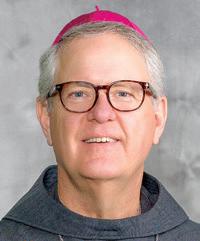
The Most Reverend Michael T. Martin, OFM Conv., Bishop of Charlotte
days are the perfect time to catch up on your reading list, whether you are sitting on the sand or sheltering in air-conditioned comfort. Rather than settling for a pop culture title that might not reflect religious values, why not dig into the writings of a Christian author? Here are a few well-known 20th-century authors and the perfect “gateway” works to help you see the world – and faith – through their eyes.
HILAIRE BELLOC
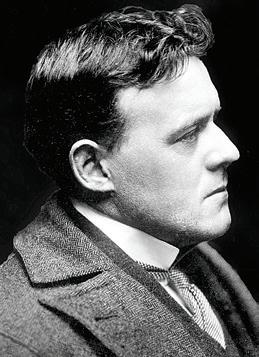
Hilaire Belloc is widely known for his famous quote: “Wherever the Catholic sun doth shine, there’s always laughter and good red wine.” The orator, political activist, essayist and poet wrote more than 150 books. His versatility as a writer and lively sense of humor make him a pleasure to read. “The Path to Rome” is a travelog about walking from France to Rome to reaffirm his faith that blends anecdotes, philosophy and reflection with humor. His children’s verses, including “The Bad Child’s Book of Beasts and Cautionary Tales” may remind you of Roald Dahl or the Lemony Snicket stories.
J.R.R. Tolkien is often called the father of modern fantasy, but his worldview was rooted in his Catholic faith and he regarded the story of salvation as the greatest tale ever told. His hobby of inventing languages and accompanying myths gradually led to the epic adventures of “The Hobbit” and “The Lord of the Rings.”
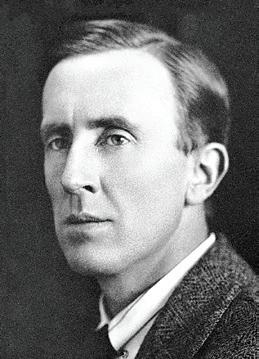
To dive into a shorter work by Tolkien, read his essay “On Fairy Stories,” which gives insights into his philosophy on fantasy. “Leaf by Niggle” is a short allegory about life and redemption that explores the bond between an artist and God.
C.S. LEWIS
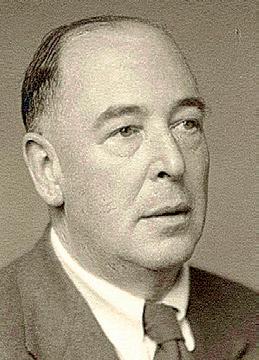
C.S. Lewis was a reluctant Christian convert –conversations with his friend, J.R.R. Tolkein, brought him to faith – who experts say has arguably done more to explain Christianity than any other modern author. Lewis understands the human condition. No matter the audience, from children to those who share his initial skepticism, he is able to find the perfect example to illustrate his point. His classic “The Chronicles of Narnia” is worth re-reading at any age, while his science fiction trilogy for adults, which begins with “Out of the Silent Planet,” takes theological underpinnings into outer space. A less well-known story is “The Great Divorce,” which is about a bus ride from hell to heaven that is both inspirational and enlightening.
EDITOR: Trish Stukbauer 704-370-3392, tmstukbauer@rcdoc.org
ADVERTISING MANAGER: Kevin Eagan 704-370-3332, keeagan@rcdoc.org
MULTIMEDIA DESIGNER: David Puckett 704-808-4521, dwpuckett@rcdoc.org
EDITORIAL TEAM: Kimberly Bender 704-370-3394, kdbender@rcdoc.org Lisa Geraci 704-370-3294, lmgeraci@rcdoc.org Troy C. Hull 704-370-3288, tchull@rcdoc.org Christina Lee Knauss 704-370-0783, clknauss@rcdoc.org Amelia Kudela 980-374-3411, arkudela@rcdoc.org Brian Segovia 704-370-3235, bmsegovia@rcdoc.org
COMMUNICATIONS ASSISTANT/CIRCULATION: Maria De Ugarte 704-370-3333, catholicnews@rcdoc.org
COMMUNICATIONS DIRECTOR: Liz Chandler 704-370-3336, lchandler@rcdoc.org
ASSISTANT COMMUNICATIONS DIRECTOR: Patricia L. Guilfoyle 704-370-3334, plguilfoyle@rcdoc.org
THE CATHOLIC NEWS HERALD is published by the Roman Catholic Diocese of Charlotte 26 times a year.
NEWS: The Catholic News Herald welcomes your news and photos. Please e-mail information, attaching photos in JPG format with a recommended resolution of 150 dpi or higher, to catholicnews@rcdoc.org All submitted items become the property of the Catholic News Herald and are subject to reuse, in whole or in part, in print, electronic formats and archives.
ADVERTISING: Reach 165,000 Catholics across western North Carolina! For advertising rates and information, contact Advertising Manager Kevin Eagan at 704-370-3332 or keeagan@rcdoc.org. The Catholic News Herald reserves the right to reject or cancel advertising for any reason, and does not recommend or guarantee any product, service or benefit claimed by our advertisers.
SUBSCRIPTIONS: $17.25 per year for registered families of the Diocese of Charlotte and $25 per year for all others
POSTMASTER: Periodicals Class postage (USPC 007-393) paid at Charlotte, N.C. Send address corrections to the Catholic News Herald, 1123 S. Church St., Charlotte, N.C. 28203.

Scan the QR code for this week’s recommended prayers and activities

WORLD HUNGER DRIVE : The 24th Annual Monsignor McSweeney World Hunger Drive at St. Matthew Parish takes place from 8 a.m. to 5:30 p.m. on Aug. 15. To register for the event or to donate, visit www.stmatthewcatholic. org/worldhungerdrive.
MARY DAYS : An eight-day series of reflections and the rosary honoring the Blessed Virgin Mary will be led by different priests. Daily at 7 p.m. from Aug. 15-22 at St. Thomas Aquinas Church, 1400 Suther Road, Charlotte.
COMMUNITY BABY SHOWER: Moms-to-be can attend this shower to pick up free pregnancy gifts and support materials 1-3 p.m. Sunday, Aug. 16, at Birthright of Charlotte, 4435 Monroe Road, Charlotte. Details: 803-543-8144.
45+ SINGLES FELLOWSHIP EVENT: Join St. Mark Parish’s 45+ Singles for fellowship and fun 5-8 p.m.
Sunday, Aug. 30, at Torrence and Knox, 20936 Torrence Chapel Road, Cornelius. Sign up or email 45plussingles@ gmail.com with questions.
EUCHARISTIC CONGRESS : Friday-Saturday, Sept. 11-12, Charlotte Convention Center. Enjoy dynamic speakers, inspirational music, one of the largest Eucharistic processions in the U.S., confessions, Adoration and Mass with the bishop and priests of the diocese, free screenings of “Cabrini” and 100-plus Catholic exhibitors. Details: www.goeucharist.com.
PRAYER SERVICES
MASS FOR ANOINTING OF THE SICK : 10 a.m. Saturday, Aug. 22, St. Luke Church, 9800 Fairview Road, Mint Hill. For those who wish to receive the sacrament of anointing of the sick, sponsored by the parish’s HOPE Committee. Refreshments served after Mass. For details, call 704545-1224.
— Catholic News Herald and OSV News

Helen Mission, Gastonia
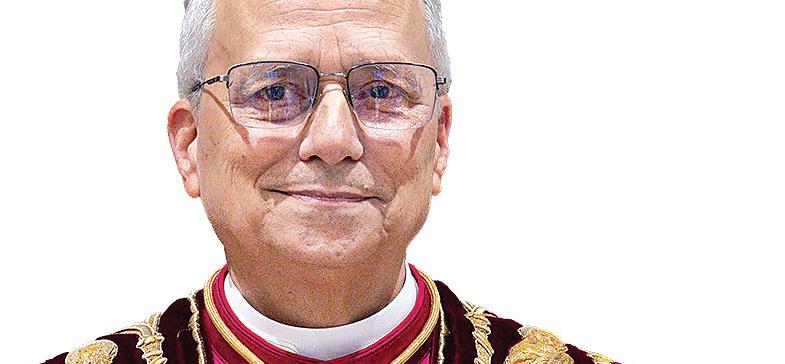
Returning to his weekly general audiences after a monthlong summer break, Pope Leo XIV urged Catholics to embrace the Liturgy of the Hours more fully in their daily lives, saying the Church’s public prayer is an antidote to a world shaped by technology, consumerism and an efficiency-driven mindset.
“Every week and every day, the Eucharist and the Liturgy of the Hours are the breath of the life of the Church, which makes the Holy Spirit circulate through her Body,” he said.
Continuing his series on the documents of the Second Vatican Council, Pope Leo reflected on “Sacrosanctum Concilium,” the Constitution on the Liturgy. He said “it is the Holy Spirit who teaches us to pray,” and that Christians unite themselves with Christ in offering praise and thanksgiving to God through the power of the Holy Spirit.
Bound to the Eucharist, the Liturgy of the Hours sanctifies the rhythm of the day, the pope said, beginning with morning prayer, continuing at midday and evening, and ending with night prayer as the faithful entrust themselves to God’s peace.
“Each hour is an act of hope,” he said.
The Liturgy of the Hours is the Church’s official daily prayer, consisting of psalms, Scripture readings, hymns and prayers recited at designated times throughout the day. Pope Leo said the tradition of prayer is “no longer passed on” even in many Christian families, even though prayer is a “fundamental dimension of our humanity.”
In societies “dominated by an efficiency-driven and consumerist mindset,” prayer can seem “pointless and trivial,” the pope said. In a world “where science and technology claim to provide all the answers,” he added, prayer may appear to be a form of escapism.
“Far from avoiding the world and its needs, all prayer, especially in the entire liturgy, is the essential dimension of our humanity,” he said.
The pope’s encouragement comes after the Vatican approved a new English-language edition of the Liturgy of the Hours in November 2025.
MEGAN MARLEY OSV News
he theme of this year’s World Day for Grandparents and the Elderly draws on a powerful promise from Scripture: “I will never forget you” (Isaiah 49:15). In his message for the sixth celebration of the day, Pope Leo XIV reminded Catholics that this promise should shape how all treat the older adults in their lives.
“The painful feeling of being forgotten is, unfortunately, shared by many people, and among them are quite a few elderly people,” Pope Leo wrote, echoing his predecessor’s reasons for establishing the day in 2021.
While the celebration normally falls on the fourth Sunday of July near the July 26 feast day of Jesus’ grandparents, Sts. Joachim and Anne, in the United States it is transferred to the first weekend after Labor Day (Sept. 12-13 in 2026), coinciding with a pre-existing national holiday that celebrates grandparents.
Here are a few practical takeaways from Pope Leo’s message for the day.
Take time to see the unique person and remember their worth as a child of God.
Pope Leo warns that the elderly can become invisible as they age, becoming isolated in their homes or becoming just a bed number or an illness in a care home. Observing the World Day for Grandparents and the Elderly is “an opportunity to rediscover that the Church is called to be a mother to all and that at any age it is always possible to recognize ourselves as sons and daughters of God.”
Make a real human connection, not just a digital one.
“The digital culture multiplies connections and offers new opportunities for interaction; yet, the human heart retains an irrevocable need for genuine closeness,” Pope Leo wrote, quoting from his encyclical on humanity in an age of technology, “Magnifica Humanitas.”
Pope Leo encouraged young people to “revive the beautiful custom of visiting their grandparents,” elderly family members and “even those who have no one to visit them.”
It’s never too late to turn to God.
“For many, the discovery of God’s tenderness takes place over the course of their lives, sometimes even in its final stages,” Pope Leo wrote. “Old age
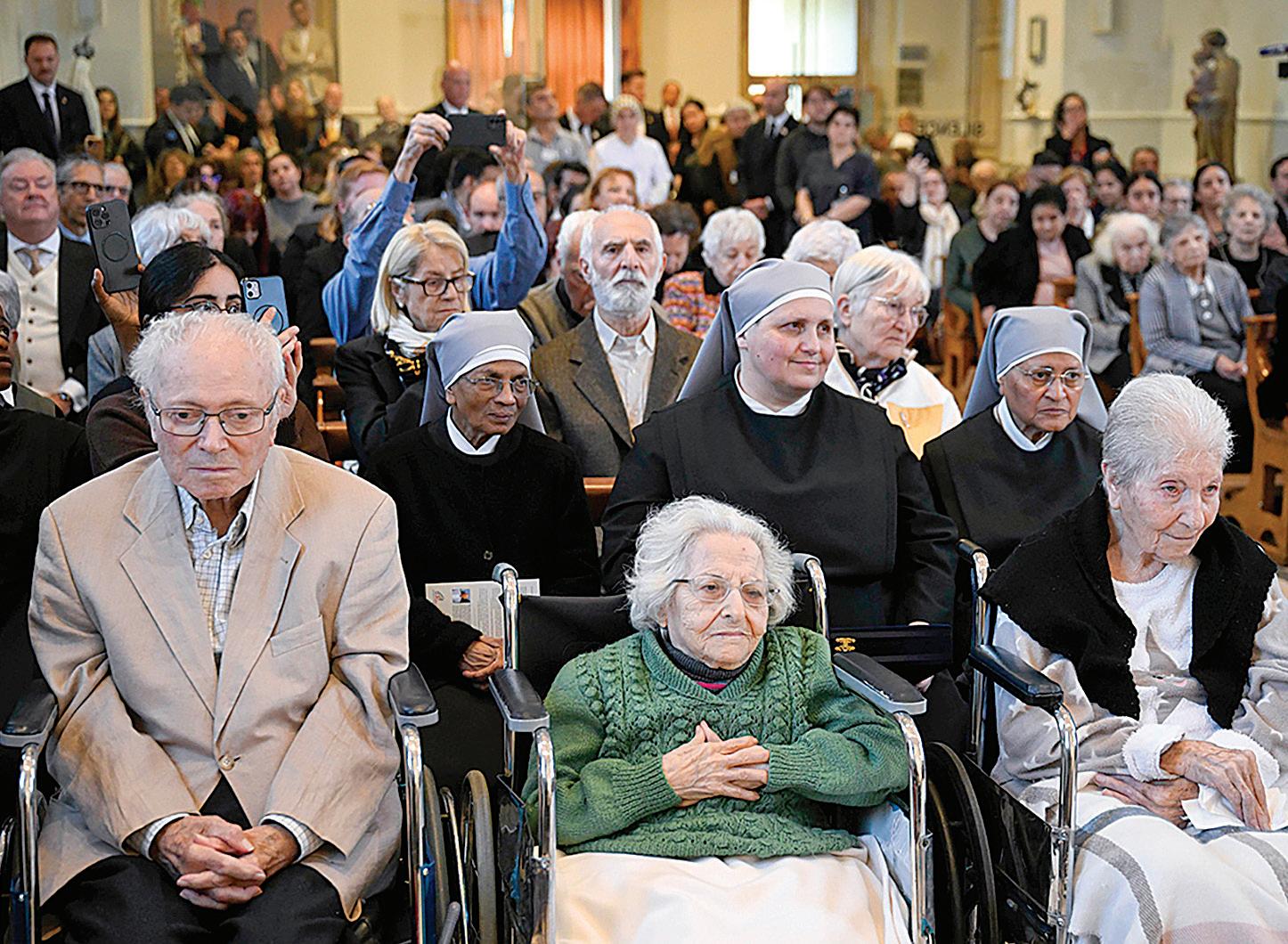
on Sept. 13.
– beginning with the questions that arise with greater urgency during this season of life – can become the right time to begin or resume a spiritual life.”
He added: “To God, who draws near to us and whom we learn to recognize in His tenderness, we can now turn with filial trust in prayer. It is never too late to begin turning to Him.”
Don’t be afraid of human frailty.
“It is precisely this weakness that holds within itself a new potential that also illuminates the other stages of life,” wrote Pope Leo.
All people are in need of one another, the pope said, and embracing this need is a strength that can “become an invitation not to resort to the ways of arrogance and power to ensure human coexistence, but to the ways of reconciliation and true peace.”
Pray and work for peace across generations.
“In this time, so harshly marked by the violence of war and social unrest, many wonder what the world in which their grandchildren will grow up will be like,” the pope wrote. “I urge you, dear friends, to join me in praying earnestly that peace may soon come to the whole world.”
Lord Jesus, you were born of the Virgin Mary, the daughter of Sts. Joachim and Anne. Look with love on grandparents the world over. Protect them! They are a source of enrichment for families, for the Church and for all of society. Support them! As they grow older, may they continue to be for their families strong pillars of Gospel faith, guardians of noble domestic ideals, living treasuries of sound religious traditions. Make them teachers of wisdom and courage, that they may pass on to future generations the fruits of their mature human and spiritual experience.
Lord Jesus, help families and society to value the presence and role of grandparents. May they never be ignored or excluded, but always encounter respect and love. Help them to live serenely and to feel welcomed in all the years of life which you give them. Mary, Mother of all the living, keep grandparents constantly in your care, accompany them on their earthly pilgrimage, and by your prayers, grant that all families may one day be reunited in our heavenly homeland, where you await all humanity for the great embrace of life without end. Amen!
— Catholic Grandparents Association
Snap the QR code (right) to get the Mass readings for every day, in English or Spanish, online at the U.S. Conference of Catholic Bishops’ website.

For the latest news 24/7: catholicnewsherald.com
Father Cesa to retire
CHARLOTTE — Bishop Michael T. Martin, OFM Conv., announces that Father Dean Cesa is retiring effective Aug. 12, 2026.
Father Cesa has served as pastor of St. Joan of Arc Parish in Candler since 2013. He also formerly served as pastor of Our Lady of the Mountains in Highlands, St. Barnabas in Arden, and St. John the Baptist in Tryon. Ordained in 1998, he also had assignments at St. Patrick Cathedral in Charlotte and St. Leo the Great in Winston-Salem.
Father Yves Kennedy Ilapi will temporarily serve the parish until a new pastor is named.
— Catholic News Herald
Help make the 2026 Eucharistic Congress a welcoming experience for everyone!
We’re looking for volunteers to serve in a variety of roles on Sept. 11–12. Most shifts are just 1-3 hours, so you’ll have plenty of time to enjoy the Congress while helping others encounter Christ. All volunteers receive free parking, and ushers and youth track volunteers also receive a free T-shirt.
Ready to serve? Sign up today: www. goeucharist.com/get-involved
Deadline to sign up is Monday, Aug. 10.
— Catholic News Herald
Hispanic ministry coordinator hired for the Albemarle Vicariate
SALISBURY — Dr. Nydia E. Román Rodríguez, Ed.D., has been hired as the Hispanic Ministry Coordinator for the Albemarle Vicariate, effective Aug. 3, the Diocese of Charlotte’s Hispanic Ministry Office has announced.
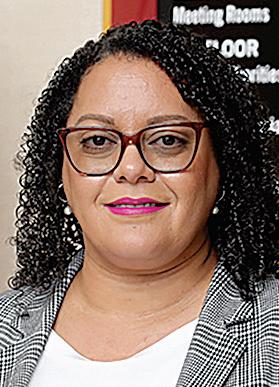
Originally from Puerto Rico, Román moved to North Carolina in 2018 with her husband after he accepted a position in the textile industry. She holds both a doctorate and a master’s degree in Education, from the University of Puerto Rico.
At Sacred Heart Parish in Salisbury, she has served as a lector and leader for the Liturgy of the Hours and participated in the Emmaus movement. Dr. Román hopes to bring her background in education and her passion for the Liturgy of the Hours to her new role.
“Teaching comes naturally to me, and I believe I can use that gift to help strengthen and educate the Hispanic community,” Román says.
— Brian Segovia
LISA M. GERACI lmgeraci@rcdoc.org
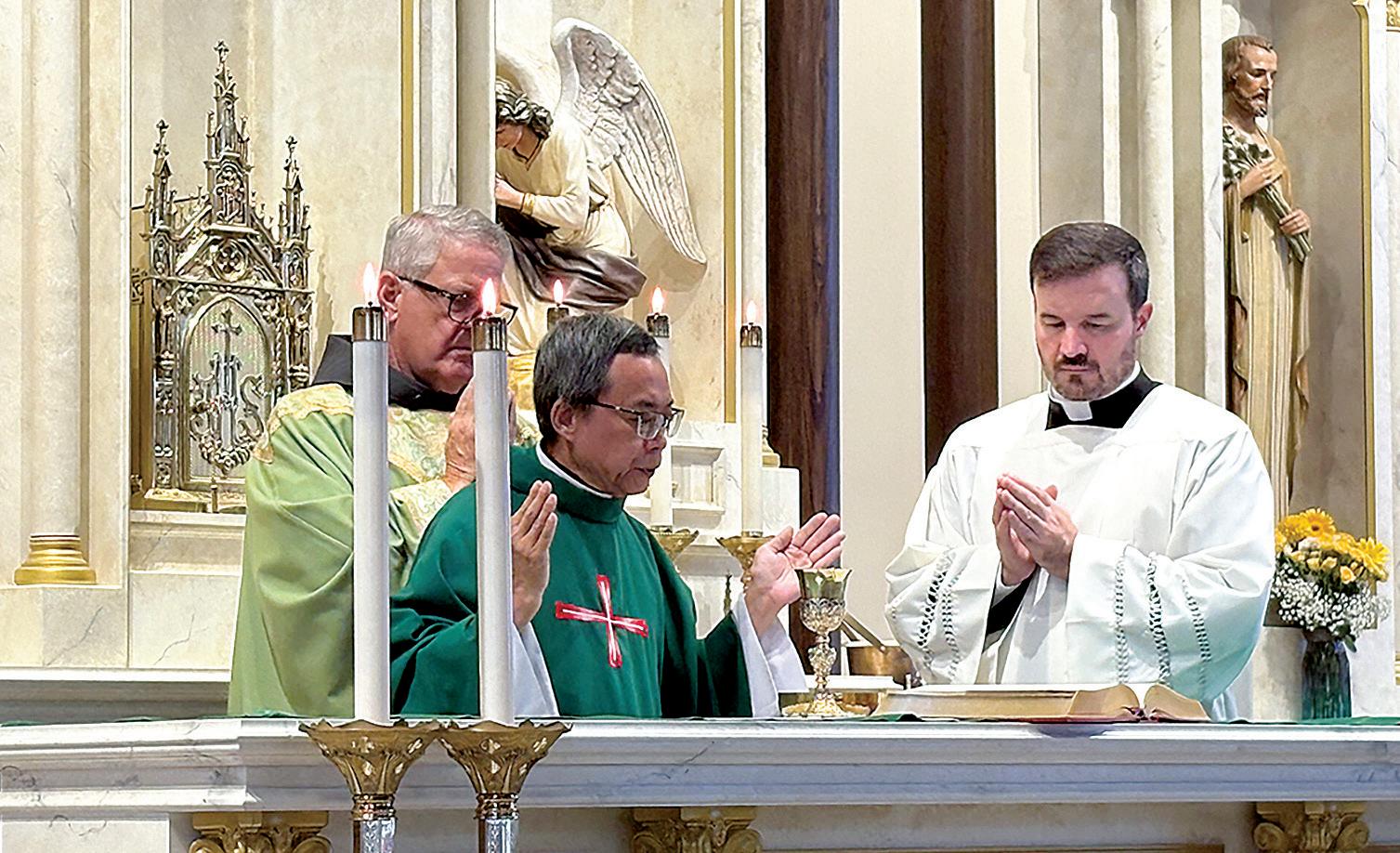
GREENSBORO — The 270-member congregation of St. Benedict Parish, the mother church and oldest parish in the Triad, celebrated 125 years on July 25.
While treasuring the past, they welcomed a future full of hope.
“Some of you have been here 30 or 40 years. You stayed with me every Sunday and every weekend,” said Father “Duc”
James Duong, who has shepherded the church for the past 22 years. “Even though we are a very small parish in this area, we are proud to be a good example to the Lord’s people.”
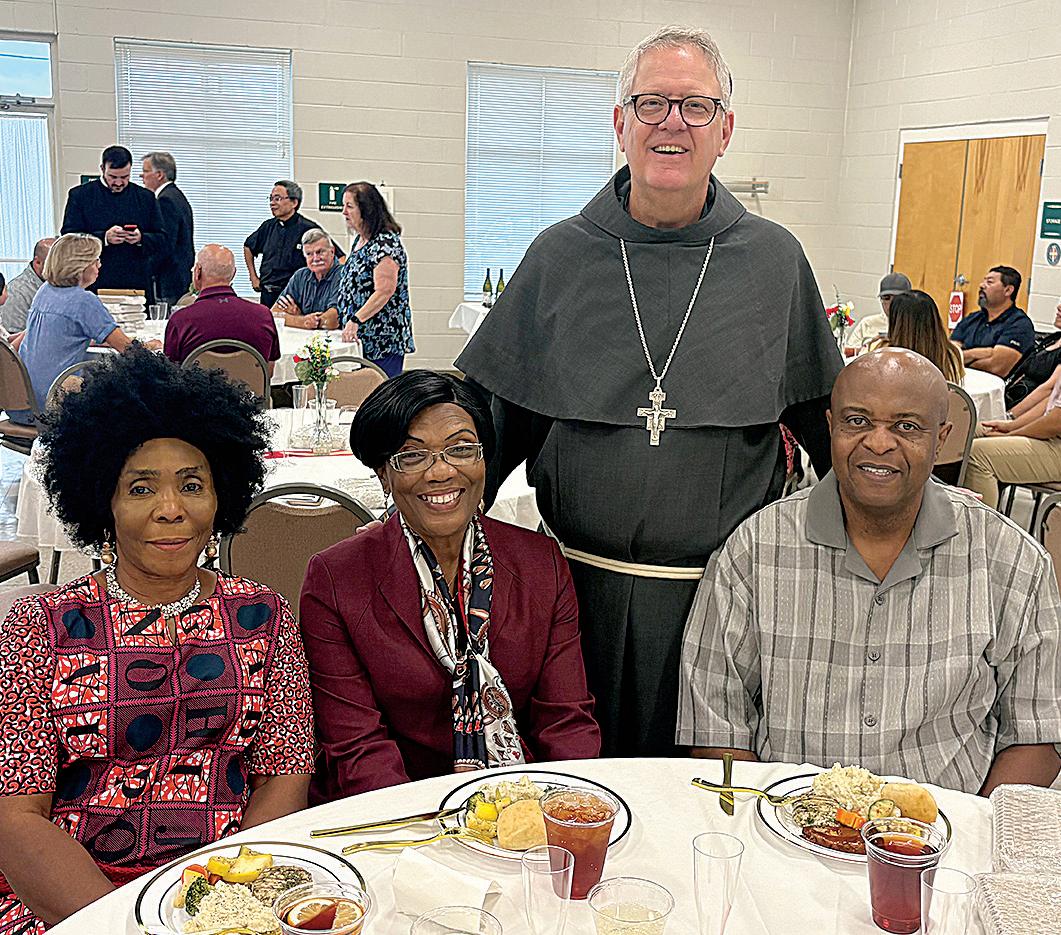
More than 100 parishioners rejoiced with their beloved pastor and alongside celebrant Bishop Michael Martin while they marveled at the large Catholic community in the Triad that has been built from their small cornerstone.
The parish was founded thanks to the persistence of nine Catholic families who in 1869 decided they wanted better access to Mass and the sacraments. With open ears and hearts, the Benedictine monks of Belmont Abbey heard their pleas and responded in a big way, serving the parish into the late 20th century.
“To this day, people around this city still refer to us as the Benedictines,” Father Duong told the bishop, laughing along with his congregation.
HISTORY OF SAINTS
Not many parishes can compete with the history of St. Benedict, with its cornerstone laid by a cardinal, Cardinal James Gibbons, in 1877 and its building partially funded by a saint, St. Katharine Drexel. It was then pastored by Benedictine monks, including two future abbots and a long line of monsignors – including Monsignor Joseph Showfety, a founding father of the Diocese of Charlotte.
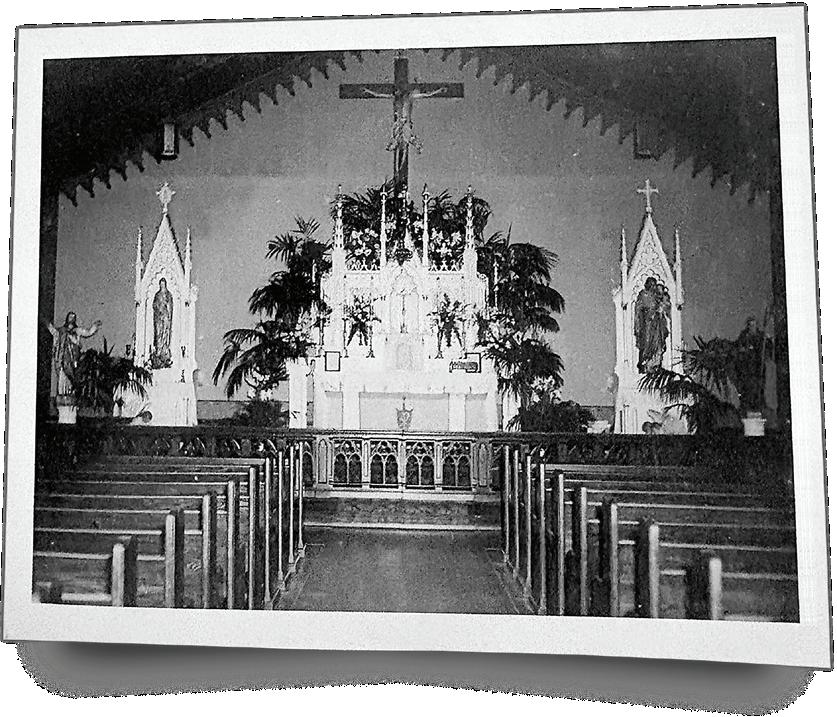
Tom Garcia, a parishioner since 1998 and an expert on its history, believes this faith community is the pearl of great price mentioned in the reading from the Gospel of Matthew.
“In 1899, these families desired a larger church, pooled their money, sold their land, fundraised and bought a lot in the exact center of downtown Greensboro on Smith Street,” Garcia said.
Mother Katharine Drexel addressed the shortfall in funds needed to build the church on one condition – that all people, regardless of race, could freely worship.
“This was over 60 years before the famous sit-in of 1960 right down the street in Greensboro,” Garcia said.
Over the next century, schools, a hospital and Catholic churches steadily sprang up around St. Benedict with the help of the Sisters of Charity of St. Vincent de Paul and the continued dedication of the Benedictine monks. St. Benedict Parish was the cornerstone that is now surrounded by more than 35,000 Catholics in the Triad.
‘BUILD SOMETHING GREATER’
“Could they ever have imagined what would transpire over the next 125 years?
Probably not,” Bishop Martin said during his homily. Though their history continues to evolve – like the sanctuary they were sitting in, which was restored to its original
splendor in 2017 – the bishop urged the faithful to continue to flourish.
“Because we were given the gift of our predecessors that took their faith life seriously in a challenging world,” he said, “we, too, have to take our faith life seriously and build something greater for the future.”
“If we aren’t growing, we are dying,” he said, and then he asked the congregation to repeat the message.
He then asked, “What example will St. Benedict be in 125 years from now? It starts today, and it starts with us. We better be fired up for what’s coming. Are you fired up?”
“Yes!” they excitedly yelled back.
Many St. Benedict parishioners pass four other Catholic churches and drive miles out of their way to sit in the same pews as their ancestors, old friends and late clergymen, the bishop noted, finding their treasure within its walls and people. Bishop Martin ended his homily by instructing them to recommit daily by going “all-in” on the treasures they have found over their history at St. Benedict.
“We found life in Christ here in this parish community,” the bishop said. “Put your whole heart in on sharing that with the people that are not here – to show the people that their lives are nowhere as good or blessed and as awesome as they could be if they allowed Christ to be in the center of it.”
“We determine the next 125 years. Have we found the pearl of great price?” he asked.
Of course, a resounding “Yes” bounced off the high ceiling and into the choir loft.
After Mass, the church celebrated in the same parish hall Monsignor Showfety designed.
“Monsignor Showfety used his own savings and his family’s savings to dump $100,000 into building this building right here,” Garcia said while he gave a brief history of the parish.
After reviewing that history, Father Duong said he can’t become an abbot because he is not a monk, nor the bishop because a new bishop, Bishop Martin, one he is quite happy with, was recently installed.
“Maybe a monsignor?” he joked. “I enjoy being here with all of you. I appreciate many of you and your ministry. I have been here for 22 years, and this year is my 25th anniversary as a priest. … I appreciate your presence here at St. Benedict.”
Parishioners like Garcia are excited to see what the seeds they are now sowing will produce.
As he said, “We hope that someday 125 years from now, there will be a group in here celebrating just as we are today.”
More online
At www.catholicnewsherald.com: Read more about the church’s history and 2017 restoration
CHRISTINA LEE KNAUSS clknauss@rcdoc.org
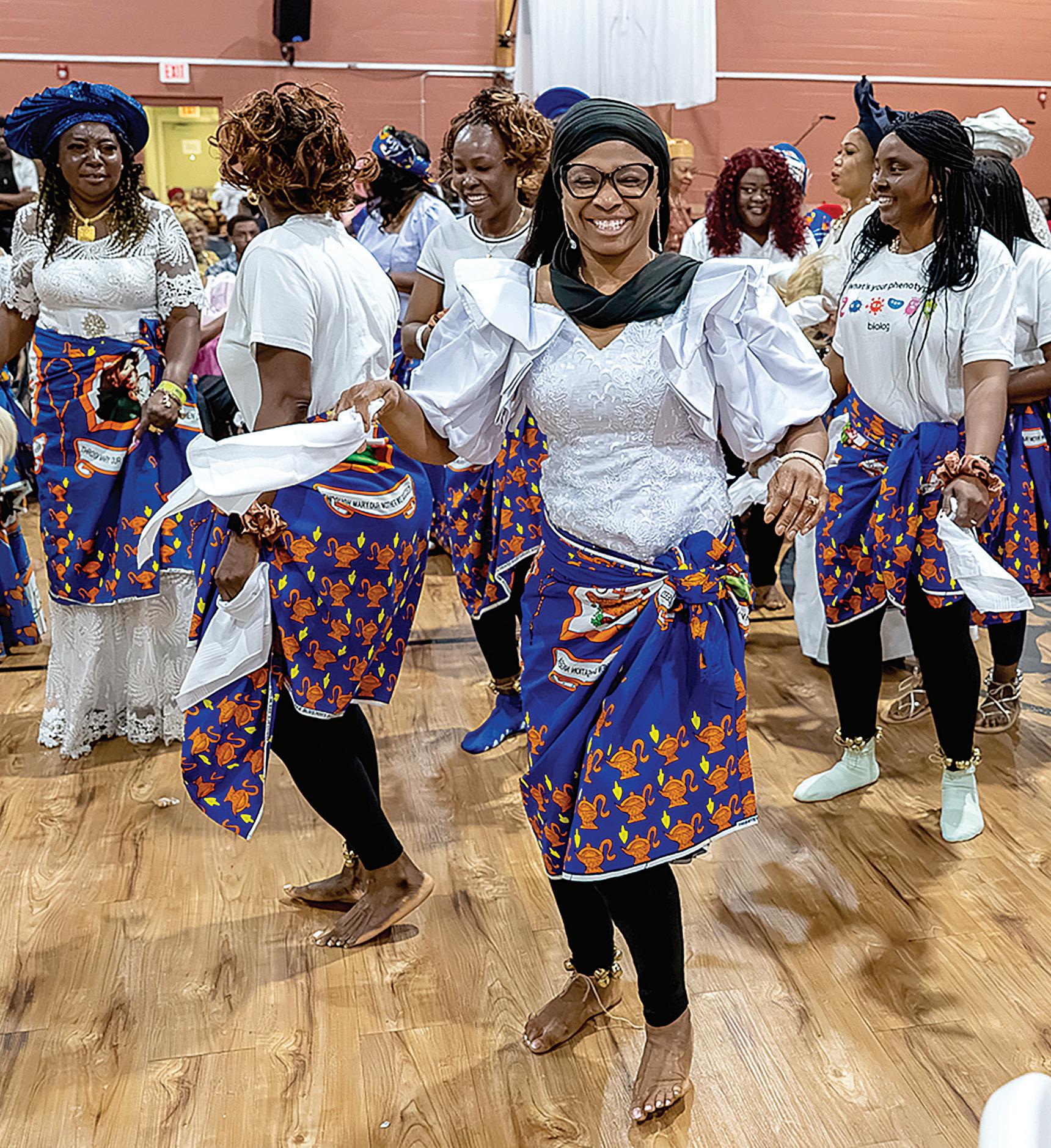
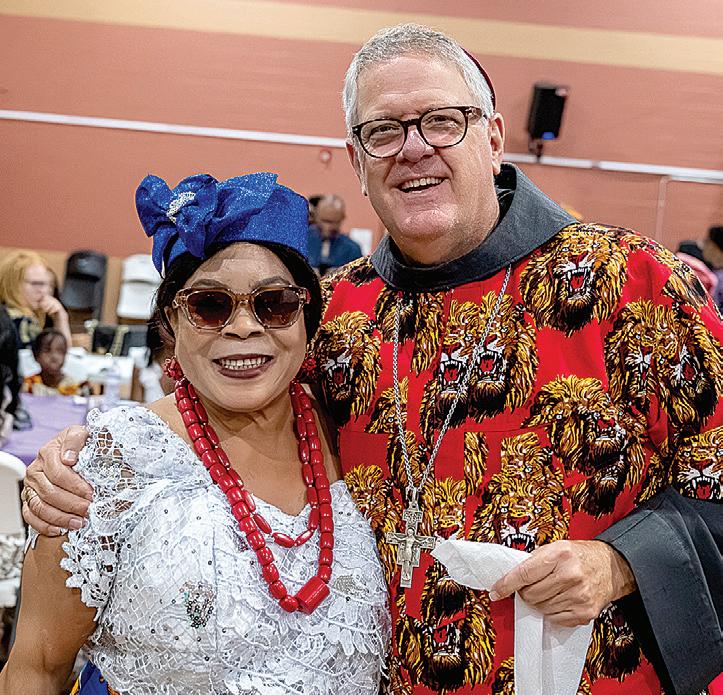
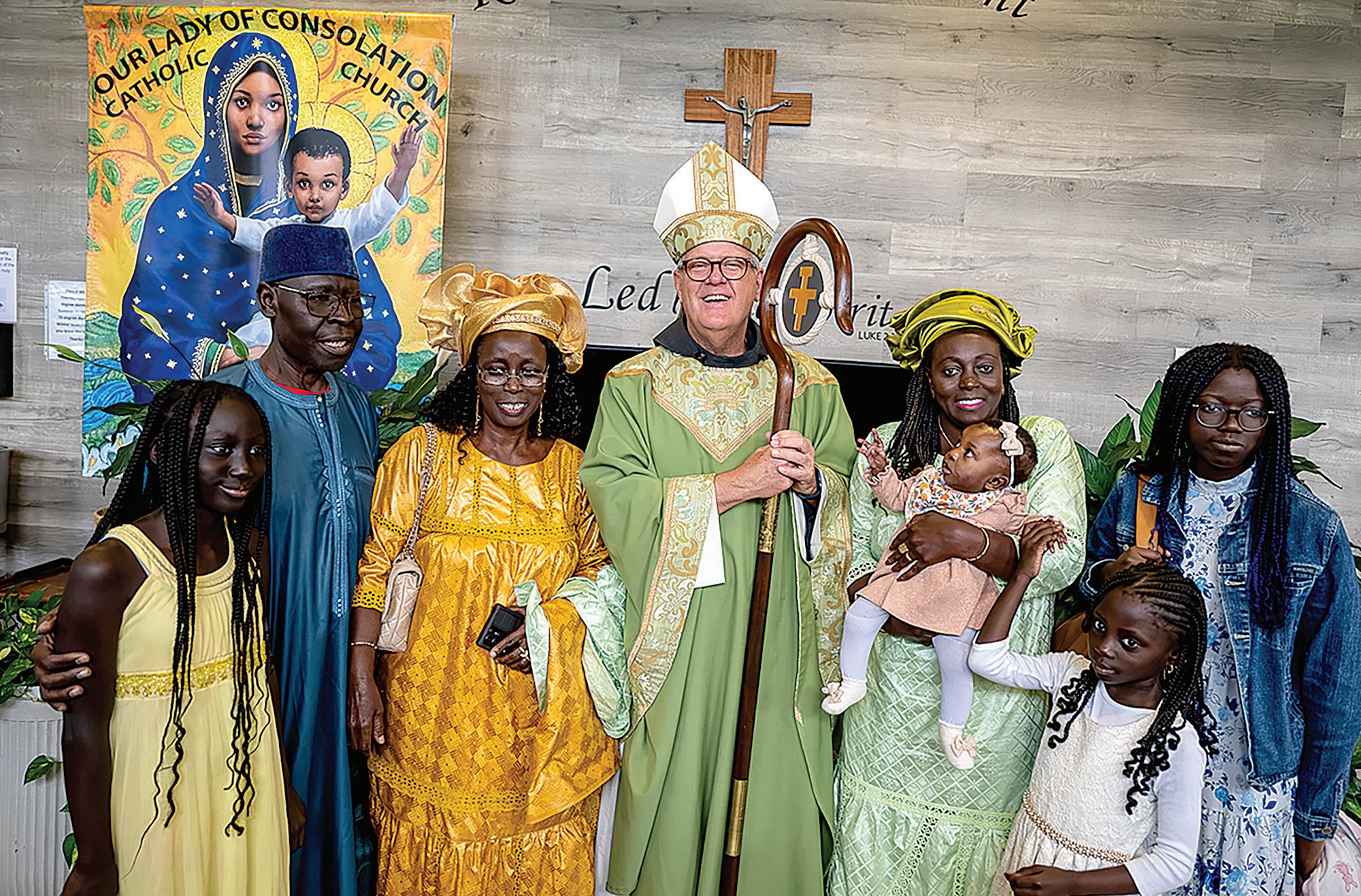
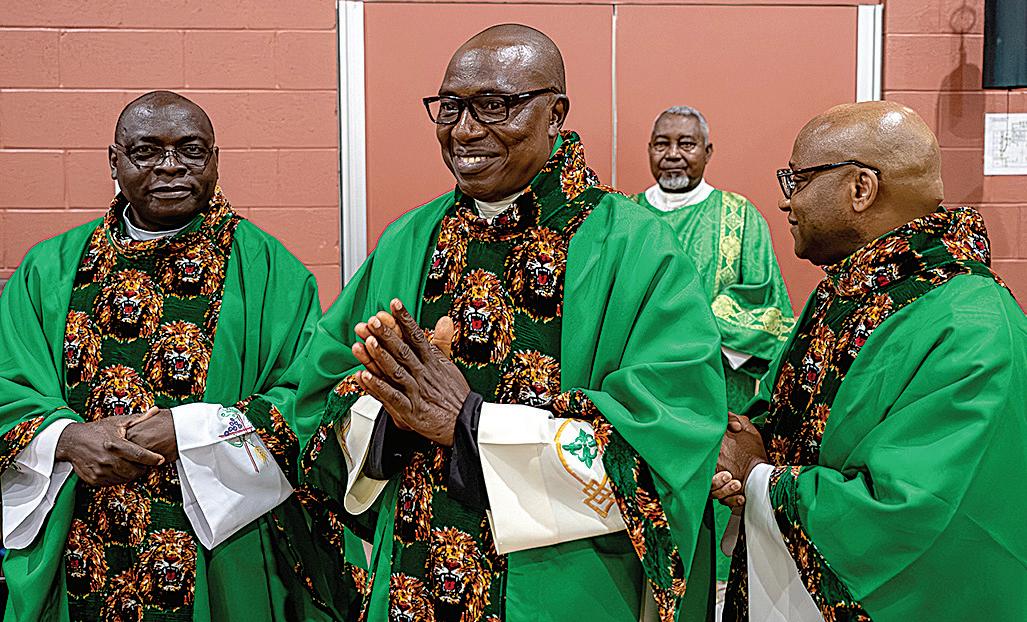
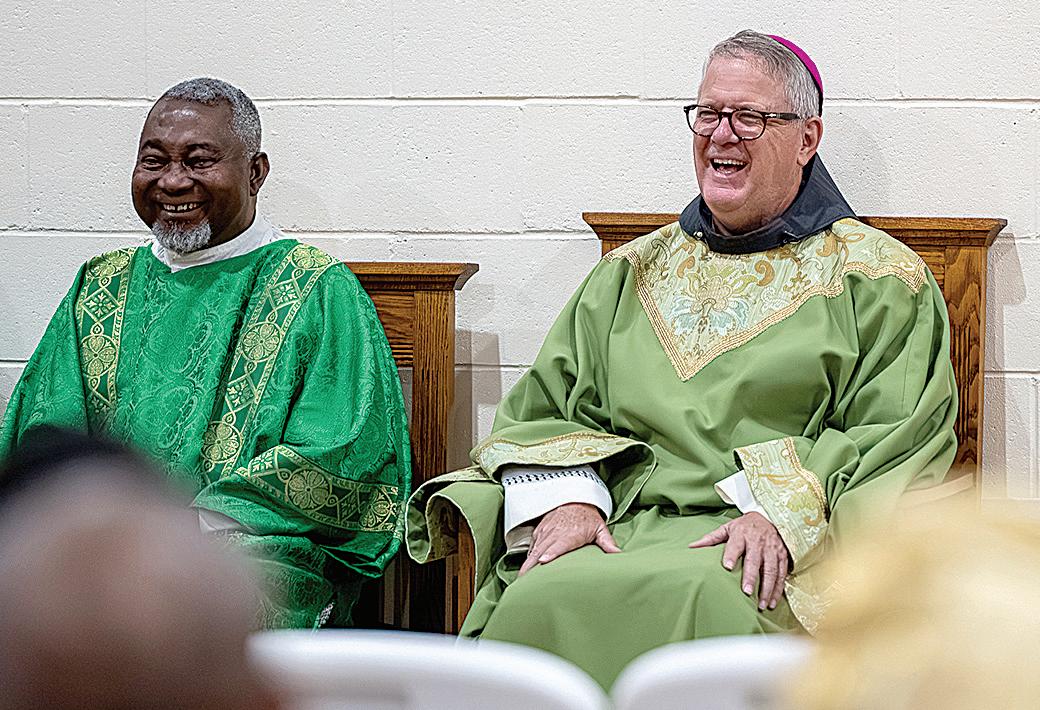
CHARLOTTE — Nigerian Catholics of Igbo heritage experienced a milestone July 26 at Our Lady of Consolation Church in Charlotte as Bishop Michael Martin visited to celebrate Mass.
“What a joy it is to be here,” Bishop Martin told the congregation. “I’m blessed to be able to share this day with all of you.”
It was the first time a bishop has celebrated Mass for the Igbo community since it was organized in the Diocese of Charlotte 12 years ago, and it was also Bishop Martin’s first visit to one of the community’s Masses.
The Igbo people come from the Igboland province in southeastern Nigeria, which is predominantly Christian and has Catholicism as its largest faith community. Currently, Igbo people in the diocese meet for Mass both in Greensboro and Charlotte.
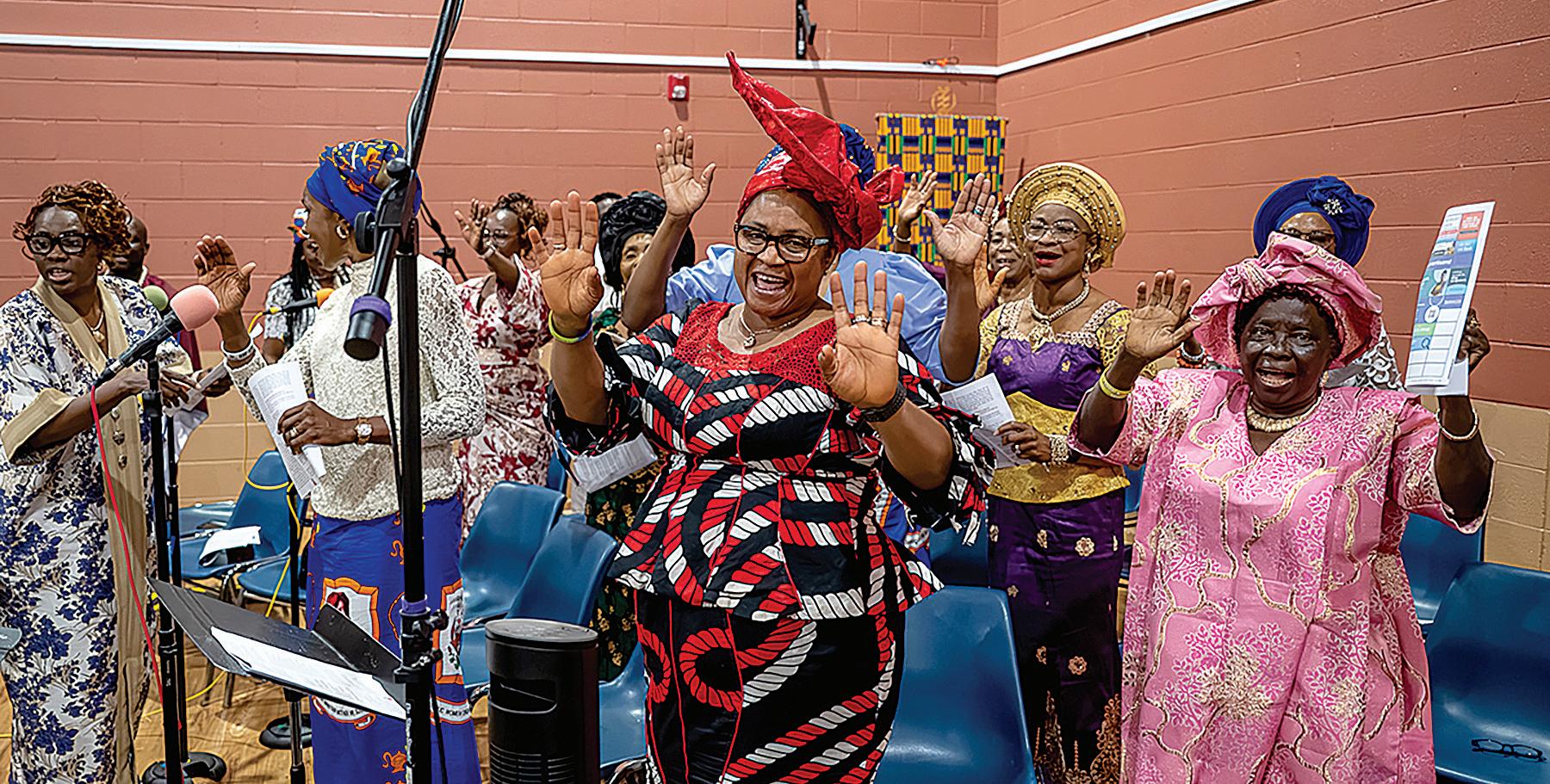
Men, women and young people in bright traditional dress sang responses and hymns in the lyrical Igbo language, set to music and sung by a choir of musicians drawn from around the diocese. Bishop Martin gave the congregation of more than 250 a greeting in Igbo, but confessed he only knew that one word. Still, his homily in English drew laughter and nods of approval.
“The beauty of our liturgical life in the Catholic Church is that even if I don’t understand the words, I know what the words are, and so there’s a communion in our midst regardless of the language we speak, the culture that we embrace,” Bishop Martin said. “Despite it all, God desires for us to be one.”
FOCUS ON UNITY
The bishop’s homily focused on connection and unity among Catholics and the importance of sharing the good news of Christ with the world. He reminded the congregation that while it is good that they are able to come together as Nigerian Catholics, they also need to share the truth of the Gospel with the world at large.
“You treasure your culture and yet you’ve come to another culture,” the bishop said. “You have the richness of living in two worlds and showing that Christ is alive in both and wants to be shared in both.”
Igbo people have settled in western North Carolina for many years, but there was no Catholic Mass in their native language until Nigerian Catholics met with retired Cardinal Francis Arinze, also of Igbo heritage, during his 2011 visit to the diocese’s Eucharistic Congress.
He encouraged them to find a way to worship in their language. The first Igbo Mass in the diocese was celebrated in 2014 by a priest from Raleigh at St. Mary’s Church in Greensboro.
Father Marcel Amadi, pastor at Our Lady of Consolation Parish,
has served as the community’s spiritual director since 2015. The first Igbo Mass in Charlotte, which has a growing Nigerian community, was held in November 2025.
After the Mass, Bishop
Martin stopped for photos and conversation and then attended a reception that included a vibrant dance performance by women from the community.
During the offertory, Winner
‘Despite it all, God desires for us to be one.’
Bishop Michael Martin
Ndukuba of Monroe, dressed in a beautiful purple dress, presented her 9-week-old baby David to the bishop for a blessing.
“I feel like this whole Mass was a blessing, both receiving a visit from the bishop and just having the chance to worship together,” she said afterward. “Without this Mass, the only time we would
have worship like this is if we went back to Nigeria for a visit. This is a great chance for us all to come together, and it’s wonderful to worship in our language.”
Attendees said the Igbo Masses build up the community and help to pass on their culture.
“It’s important for our children to both experience their lives as Americans and also learn about their Igbo traditions – the worship and language,” said Theresa Isibor, a member of St. James the Greater Parish in Concord. “Being able to come to these Masses is important for me because this is my community, and having the bishop here with us made today’s Mass extraordinary.”
“These Masses are a chance not only to worship but to come together,” said Godfrey Uzochukwu, professor at North Carolina A&T University in Greensboro and communications director for the community. “It’s important to have the chance to worship in Igbo because there are more of us moving to the area, and not everyone who comes speaks English. Access to the Igbo Mass helps make our community stronger, and the faith of our community helps make the diocese stronger.” More online
LISA M. GERACI AND LIZ CHANDLER catholicnews@rcdoc.org
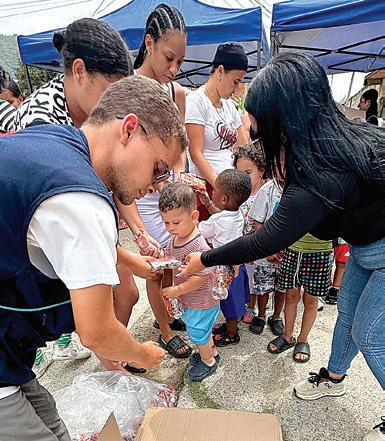
CHARLOTTE — The Diocese of Charlotte is rallying around victims of the Venezuelan earthquakes, embracing those locally who lost loved ones and raising money for those trying to rebuild lives in Venezuela.
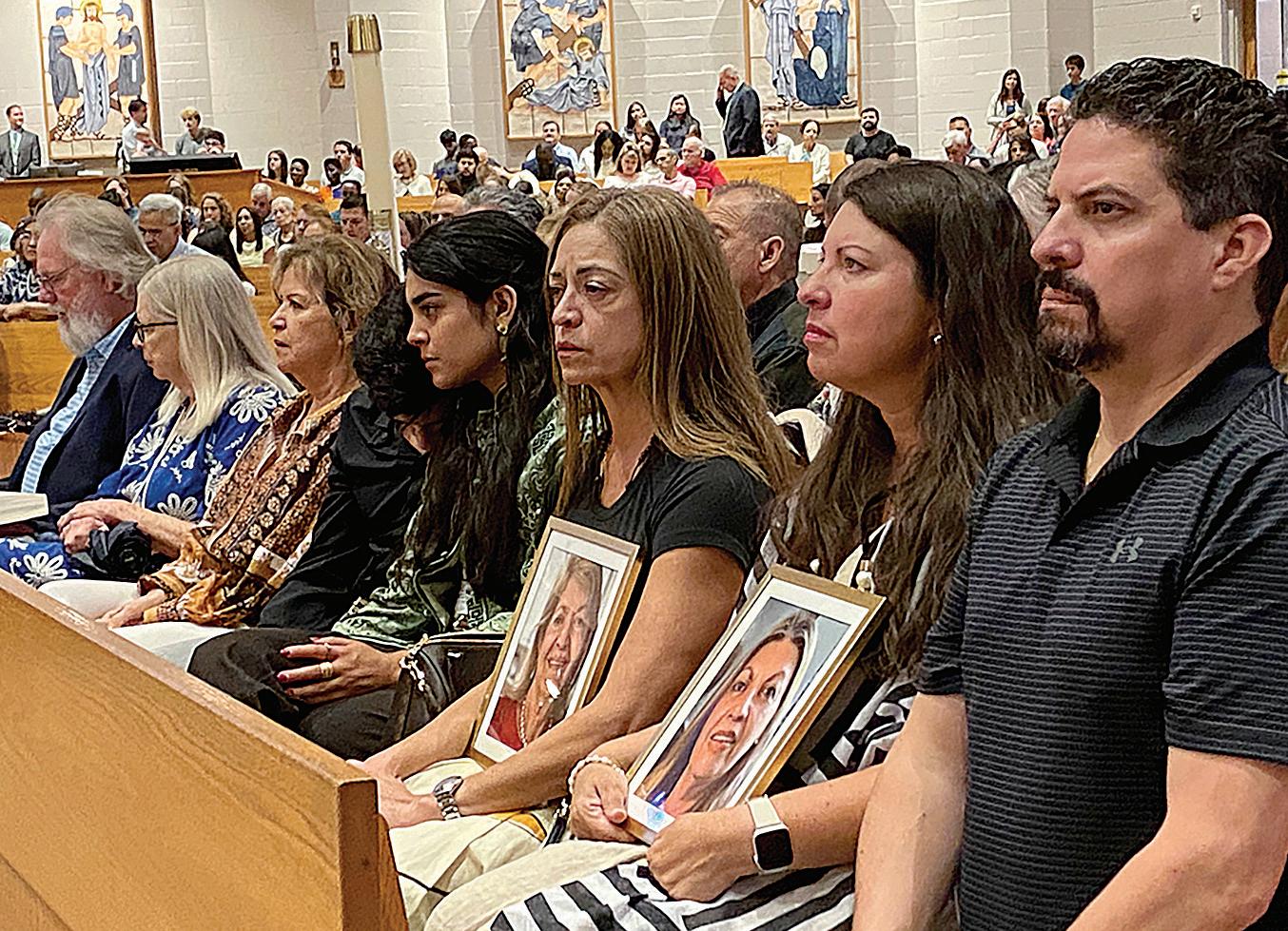
St. Matthew Church on July 26 hosted more than 50 Venezuelan friends and families of people who lost their lives and homes in the June 24 earthquakes, with dozens of parishioners greeting them and the entire church praying for them.
“Please know that we meet you and all the suffering in Venezuela on the altar of this Mass …,” Father Patrick Cahill, pastor, told the group in his homily. “In a special way, we pray over all the deceased there and all that were affected.”
St. Matthew added the names of two women who died in the collapse of a high-rise in Venezuela – Dulce Avila Peña and Gladys Avila – to their Prayers of the Faithful, as relatives held pictures of the women in the front pews.
Father Cahill reiterated his parish’s commitment to the people of Naiguatá, Venezuela, where St. Matthew supports a
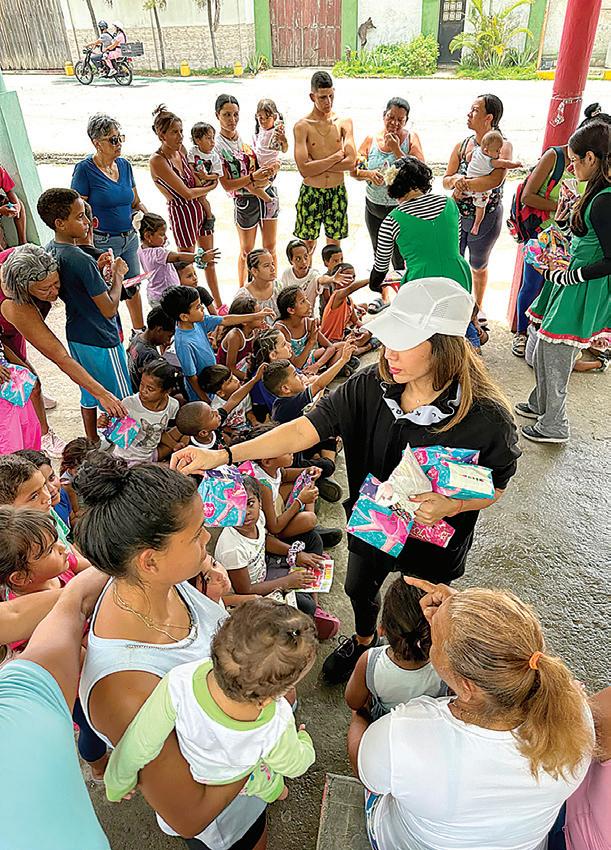
hygiene products and medical care – aiding the sick and injured, homeless and jobless, while still delivering the sacraments.
“The main challenge facing Naiguatá lies not only in the visible structural damage to buildings or in the tragic material losses and direct loss of human life, but in the severe social and economic crisis that ensued immediately afterward,” Padre Martin wrote.
“The earthquake has completely paralyzed this economic engine. … Hunger and the lack of basic supplies threatened to devastate our community far more than the earthquake itself.”
LISA M. GERACI lmgeraci@rcdoc.org
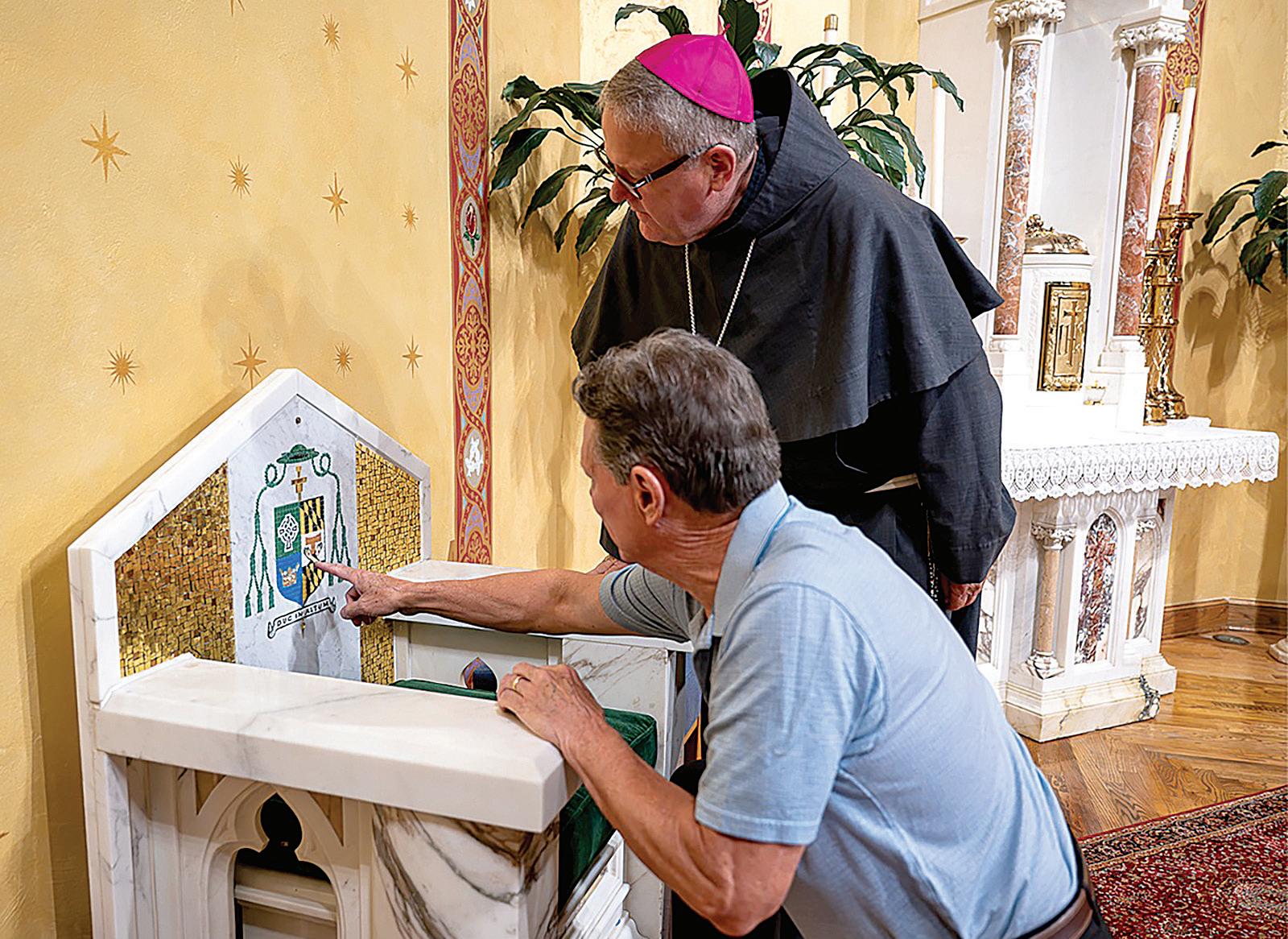
CHARLOTTE — Christ the King High School fine arts teacher Greg Stump is used to assigning projects to his students, but he was given a unique assignment from his own religious instructor – the bishop. His task? Updating the coat of arms on the bishop’s chair.
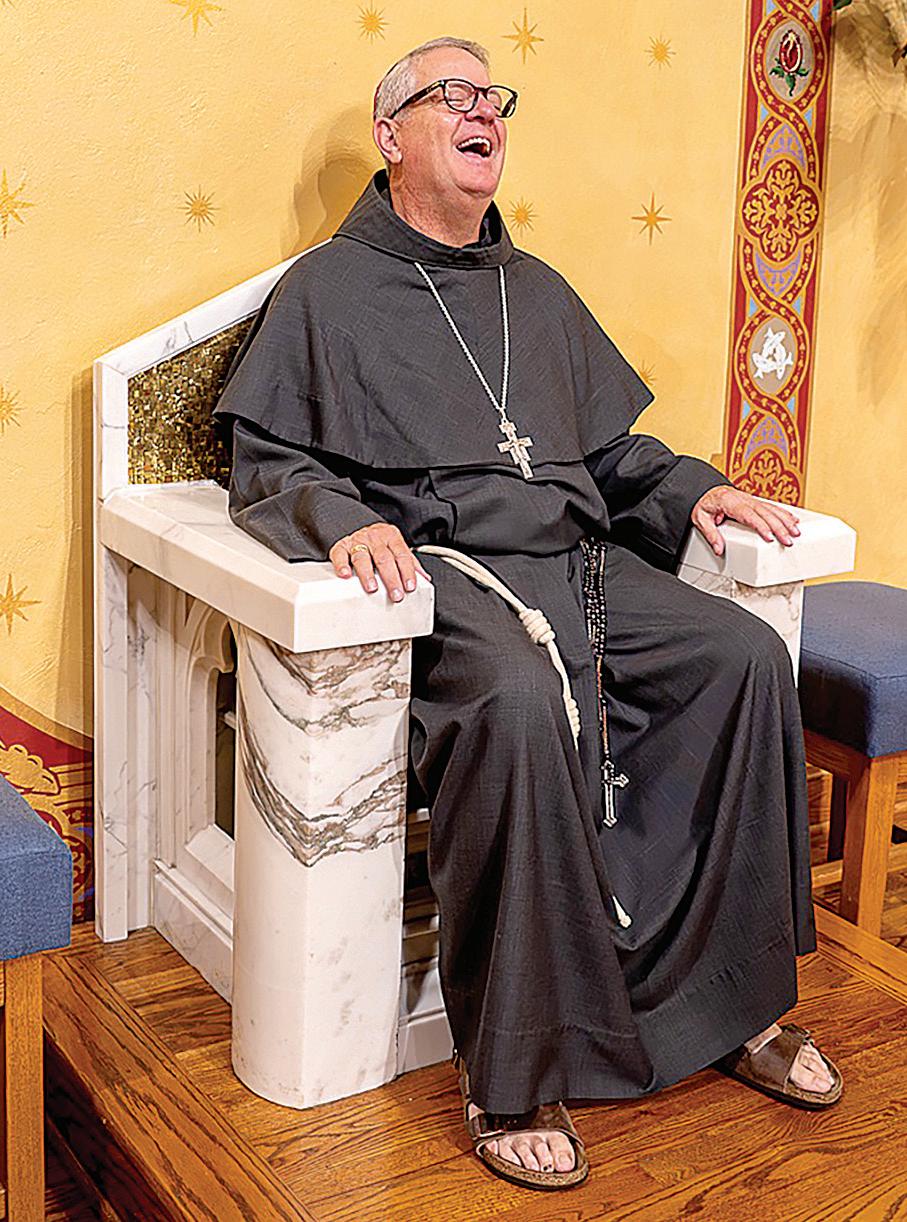
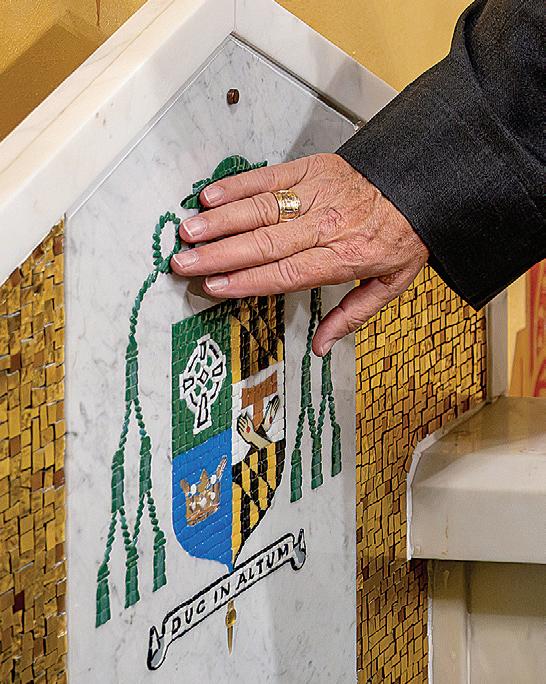
St. Patrick Cathedral in Charlotte is known as “the seat of the bishop” metaphorically and literally with its marble chair, called the cathedra, that symbolizes the bishop’s leadership. The seat is made from marble pieces of the old high altar, which was removed during a 1979 renovation. The cathedra was used by Bishop William Curlin and Bishop Peter Jugis, and now by Bishop Michael Martin. The engraved marble backrest is updated to reflect each bishop’s personal coat of arms – a tradition stemming from the 14th century.
“I am just amazed by Greg’s craftsmanship and the artistic quality of the piece,” Bishop Martin said as he blessed the completed work on July 23, a little over two years after he was installed as the fifth bishop of Charlotte.
“It has such detail that it is painstaking,” Bishop Martin said. Diocesan leaders wanted to keep the commission “in the family,” and Stump, with 20 years of experience in stained glass
soup kitchen through its annual Monsignor McSweeney World Hunger Drive. The parish is immediately sending $27,000 so the soup kitchen, run by San Francisco de Asís Church, can continue to feed people.
Across the Diocese of Charlotte, parishioners have contributed $232,718 to date to Catholic
Relief Services through a special collection for the earthquake victims at Masses July 18-19. St. Mark Church also paid tribute to the two deceased women, as one was the mother of St. Mark parishioner Dulce Peña.
From Venezuela, Padre Martin Vegas sent a six-page letter on July 22 that detailed the situation on
the ground and the aid his parish has been able to provide, thanks to support from St. Matthew. Included were photos, a list of 46 streets where food and supplies had been delivered, and the number of families they’d served: 3,583.
The letter also spelled out how the Venezuelan parish is using funding to deliver food,
The bishop’s seat is set in stone by local artist
art and previous commissions around the diocese, was the perfect fit.
Stump, who has worked at Christ the King High School for 13 years, crafted pieces there as well as the Our Lady of Guadalupe mosaic at St. James the Greater Church in Concord and multiple stained-glass windows at St. Mark Church in Huntersville.
Yet the cathedra was Stump’s first armorial-bearing commission and his first experience engraving marble.
“I enjoy the challenge of working with a brand-new
medium,” Stump said. “But it is a time-consuming process that requires a lot of patience.”
Over the past six months, he spent weeks delicately carving the white Italian Carrara marble – the same type used by Michelangelo to carve The Pietà – to inlay small hand-cut pieces of mosaic tile, gold-leaf glass and stained glass.
“You can’t make a mistake. If you fracture the marble, it is game over, and you have to start over,” Stump said.
He practiced on different materials so he wouldn’t fracture
In closing, he wrote: “We reiterate our immense gratitude to the Diocese of Charlotte for becoming a living manifestation of Divine Providence. Your generosity not only satisfies physical hunger and relieves illness for thousands of Naiguatá residents, but also restores hope and dignity to a people who felt abandoned.”
More online
At www.catholicnewsherald.com : See more photos of relief efforts.
the stone, but he did run into other challenges. The two crossed arms bearing the nail wounds of the stigmata – the bare arm signifying Jesus and the sleeved arm of St. Francis of Assisi were ‘painstakingly’ intricate,” he said.
“The arms were cut out of stained glass and kiln-fired to get the details of the blood drops and the outlines,” Stump noted. “I had to drill holes where the stigmata is and put red glass in there.”
With a smile and laughter, the bishop enthusiastically embraced the intricate artwork.
“When you look at the small details, you realize the time it takes to do something like this,” Bishop Martin said. “I am in awe of the craftsman.”
Stump credits God with his ability to create sacred art and prays this endeavor will help him on his next project, the Blessing Hand of God – a threedimensional image he hopes to sculpt out of marble.
“Sacred art is the most meaningful art to me and gives me the most pleasure,” Stump said. “It brings people a little closer to the divine. And I like the longevity. … It is nice to think it will still be there one day when maybe I am not around.”
More online

At www.charlottediocese.org
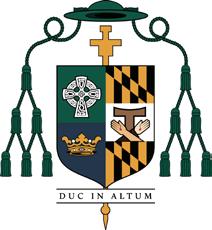
Read about the meaning behind the bishop’s coat of arms and motto
LISA M. GERACI lmgeraci@rcdoc.org
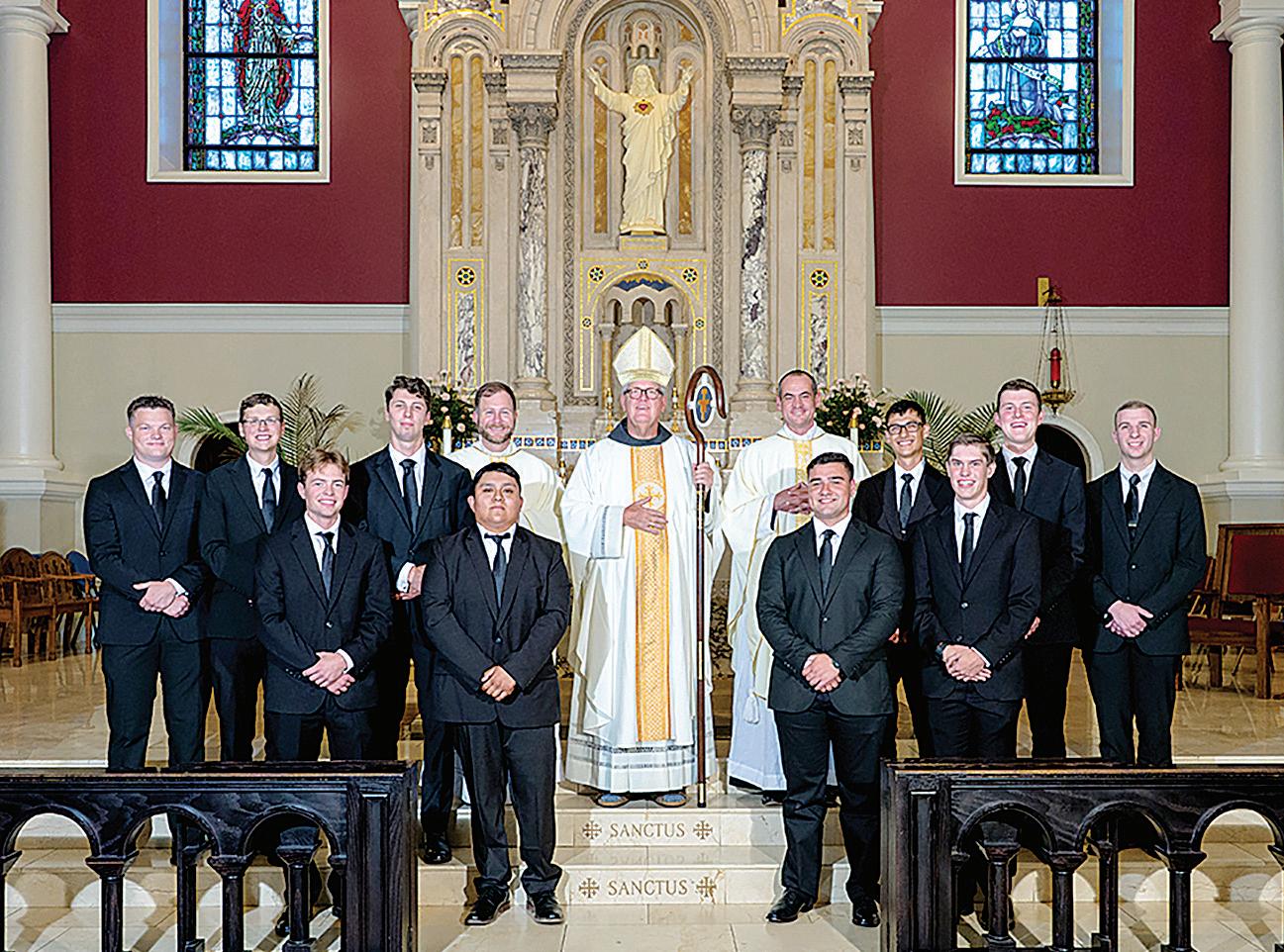
SALISBURY — The Diocese of Charlotte celebrated another leap for vocations July 31 as 10 young men entered St. Joseph College Seminary.
“It is a huge blessing,” said Father Brian Becker, the diocese’s vocations promoter. “It all ties into the growth we have had as a seminary and a diocese. This was the 10th anniversary of St. Joseph. We ordained 10 men to the priesthood this year, and now 10 new men to the seminary.”
Priests, deacons, consecrated religious and seminarians from all corners of the diocese came together for Mass at Sacred Heart Church in Salisbury to celebrate the new seminarians: Jonathan Azamar (Our Lady of Lourdes, Monroe), Matthew Belanger (St. Barnabas, Arden), Michael Grant (St. Ann, Charlotte), Darrell Keller III (St. Mary, Help of Christians, Shelby), Mark Pressley (St. Mark, Huntersville), Anthony Quintero (St. Gabriel, Charlotte), John Townsend (St. Ann, Charlotte), Dominic Vogelbacher (Our Lady of the Mountains in Highlands), and Andrew Weyrauch and Ethan Winborn (both from St. Bernadette in Linville).
The 10 new men of “Kilo class” join 17 others already enrolled at the college seminary.
Established in 2016, St. Joseph College Seminary in Mount Holly offers undergraduate men the opportunity to discern a possible vocation before taking the step of enrolling in a major seminary for specific formation to the priesthood for the diocese. Students pursue a bachelor’s degree at nearby Belmont Abbey College while experiencing a Benedictinestyle communal life on their path of discernment.
Bishop Michael Martin, OFM Conv., presided over the Mass for the opening of the seminary year, jumpstarting the men’s discernment process with his homily.
‘WHAT GOD HAS IN STORE FOR YOU’
During the Mass, offered on the feast day of St. Ignatius of Loyola, he invited the men to embrace their new path.
“Just maybe, like Ignatius, the thing you thought you would be doing may not necessarily be the thing you are doing,” he said. “What God has in store for you no one else can imagine. … You are not
in this world by yourself, you are part of something larger.”
He told them to approach this process with open eyes and hearts.
“In order for you to be able to stand on this altar, to be here in this priesthood and serve, as you have been called to serve … you need to take time to dig more deeply into who each and every one of you are.”
He went on to say that the world’s values are often not aligned with what Christ is calling them to do.
“Christ gives us the crucifixion,” Bishop Martin said. “You are not only called to embrace it, you’re called to tell the rest of us to embrace it. To do that, you better be willing to deny yourself completely all the things that you dreamt of, and of the things you imagined yourself doing. You got to let it go. The seminary can only do so much. You have to do the rest.”
He told them not to be afraid that they don’t have what it takes because they don’t, but, he said, “The Holy Spirit does.”
After Mass, hugs and laughter were
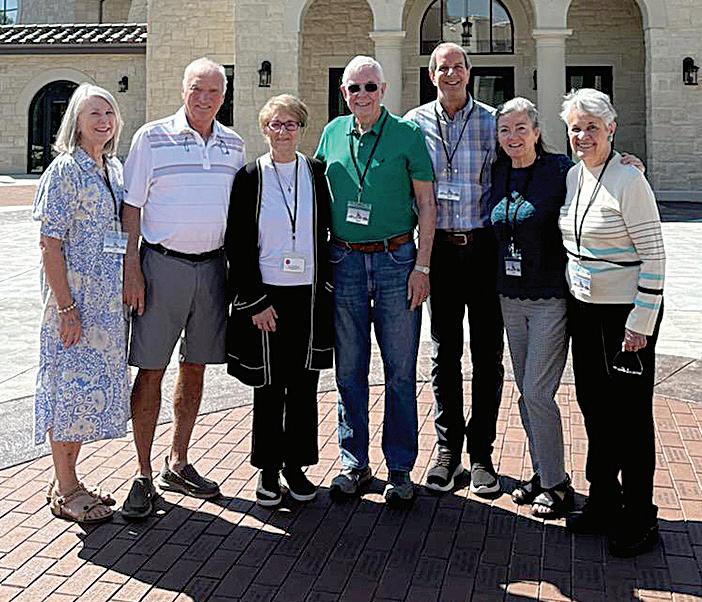
STEUBENVILLE, Ohio — In this Jubilee Year of St. Francis, seven parishioners from St. Elizabeth Parish in Boone spent part of their summer vacation at Franciscan University in Steubenville, Ohio.
(From left) Rose and Craig Bridgeman, Julie and Tom Trueman, Greg and Cheryl Corallo, and Kay Borkowski attended the university’s Applied Biblical Studies conference July 29-31. The annual summer event featured speakers including renowned author Scott Hahn, who focused on deepening participants’ understanding of Scripture through the lens of the Catholic Church, prayer and the sacraments. The university has been hosting Catholic educational conferences since 1975.
PHOTO
contagious as everyone reunited on the church steps.
‘KEEP DOING WHAT YOU’RE DOING’
Vocations director and Sacred Heart’s pastor, Father John Eckert, said this large class is the result of God working through the prayers of the diocese.
“God is good, and we are very blessed,” Father Eckert said. “The good people of the Charlotte diocese, please keep doing what you are doing, praying for vocations and all our young men and women discerning vocations.”
Proud dad Adrian Quintero stayed back
in the church, watching his son Anthony stand next to the bishop.
“It is a joy to be able to know that your child has encountered the Lord so profoundly with a desire to respond to the calling – to step out in faith and trust,” he said.
After Mass the Townsend brothers broke bread with family and friends, adding an additional last name to the growing list of siblings pursuing vocations in the diocese.
“I feel a mixture of nervousness and excitement. I am starting a new chapter,” new seminarian John Townsend said. “A couple of years ago, I felt the call to come to the seminary. I fought it for a few years, but eventually God won, like He always does, and now I am here.”
His brother, Father Peter Townsend, parochial vicar of St. Joseph of the Hills in Eden and Holy Infant in Reidsville, gives God all the credit.
“I didn’t do anything, it was all the Lord that has placed this desire in his heart to discern the priesthood,” Father Townsend said. “It is very exciting to see your younger brother go and follow the same seminary path.”
Seminary rector Father Matthew Kauth couldn’t stop smiling as he credited the prayers of the diocese, the homegrown seminary and a strong support system for the continued boom of men called to priestly ministry.
“I would do the entire enterprise again just for 10 guys total,” Father Kauth said. “Over these 10 years we have had so many. To have our largest class after 10 years is a great sign of God’s blessing and fidelity of what we attempted to do.”
Enrollment in the diocese’s 2026-2027 vocations program also includes 16 men who are studying in major seminaries in Ohio or Rome, or taking a pastoral year to teach – bringing the total number of seminarians who are in priestly formation for the diocese to 43.
The Diocese of Charlotte Development Office has an opening for a full-time Director of Annual Giving. The candidate must have a Bachelor’s degree in marketing, communications, or a related field, a minimum of 5 years of experience in stewardship/development and marketing. A knowledge of Blackbaud Raiser’s Edge database is preferred. Must have excellent written, interpersonal and public speaking skills.
Responsibilities include:
Coordinating all diocesan appeals, including the Diocesan Support Appeal, promoting all special collections including the priests’ retirement and benefits collection, and coordinating parish stewardship efforts. Also oversees the diocesan database and office webpages.
Please submit resume to: Patty DiSandro Development Office, pkdisandro@rcdoc.org. or mail to 1123 South Church Street, Charlotte, NC 28203-4003.
LISA M. GERACI lmgeraci@rcdoc.org
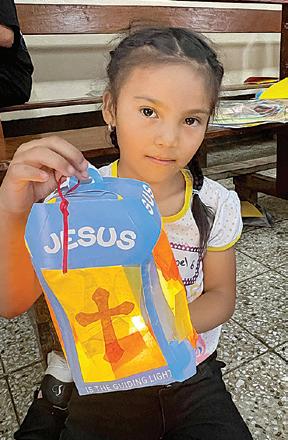
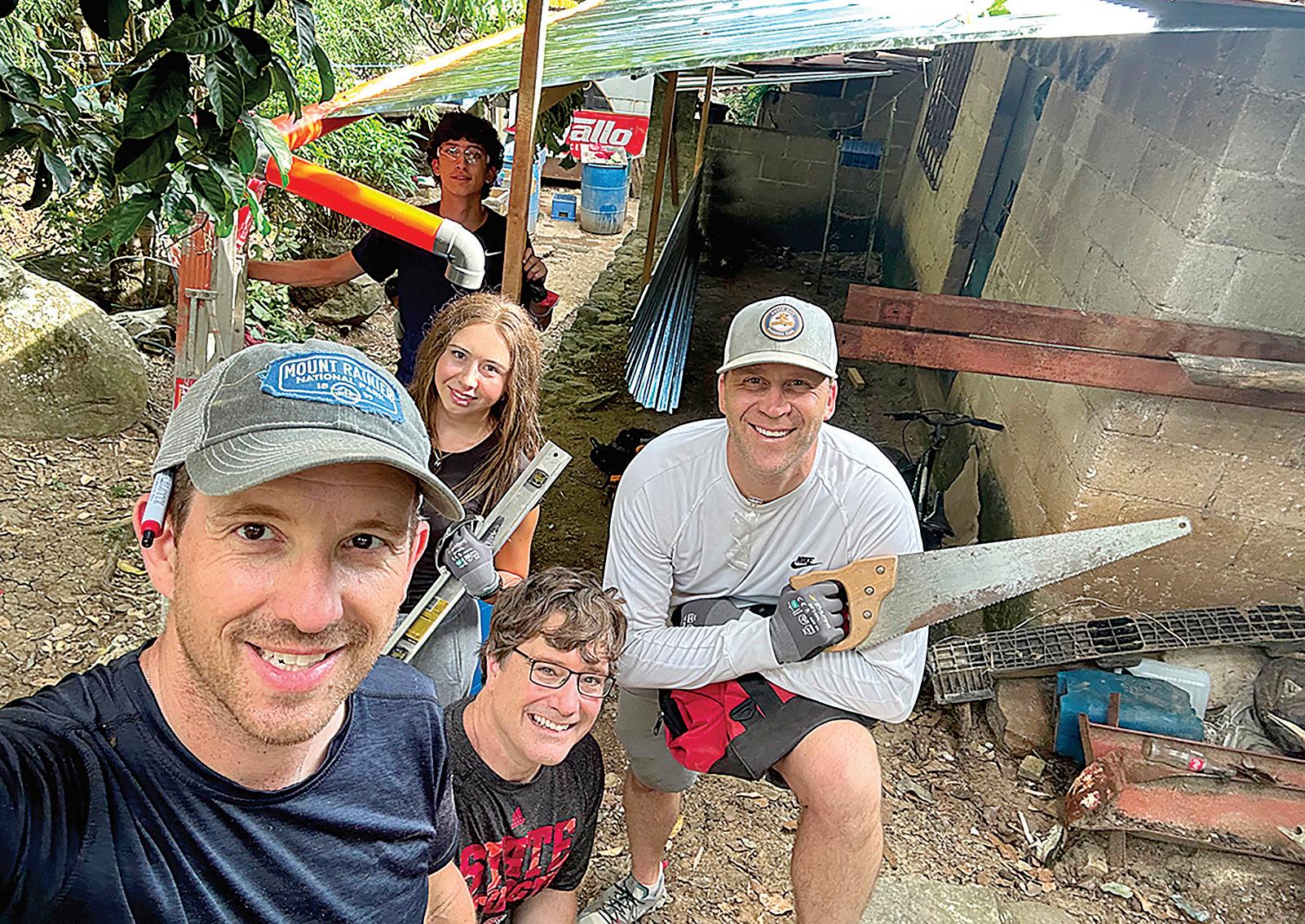
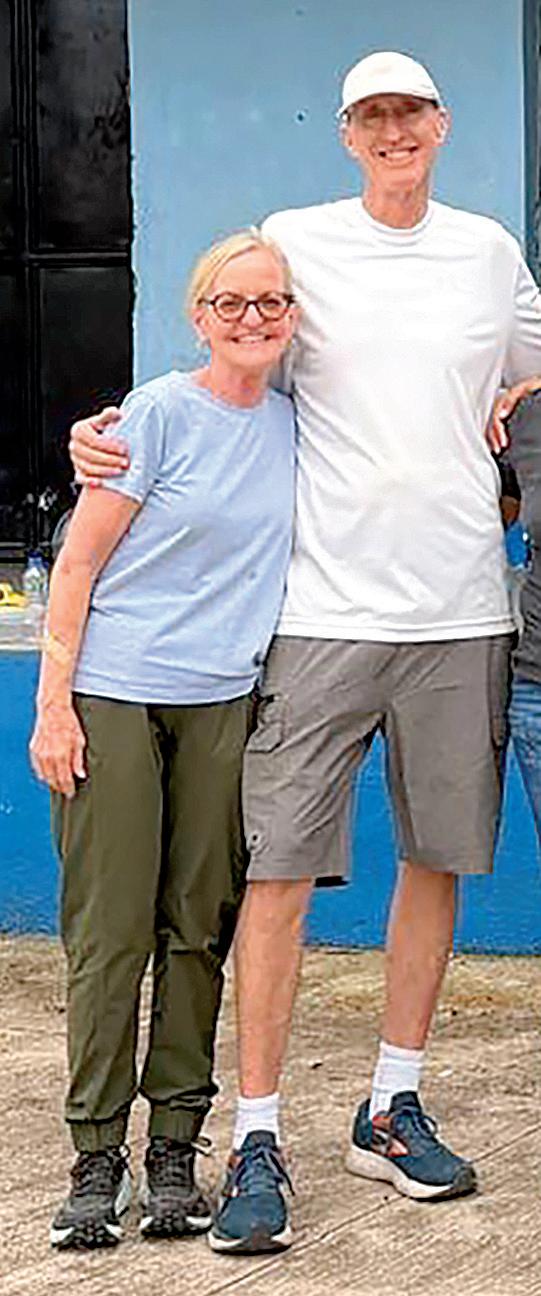
This July, 17 missionaries from three Diocese of Charlotte churches, including eight students from Charlotte Catholic High School, traveled to support continued mission efforts in El Cerinal, Guatemala, and to aid in preparations to dedicate a church they began in 2022.
Father Joshua Voitus, pastor of St. Vincent de Paul Parish in Charlotte, led the week-long trip, bringing two other new clergy members, Deacon Daren Bitter from St. Matthew Parish in Charlotte and Father Juan Miguel Sanchez, priest-secretary to Bishop Michael Martin.
The trip originated with St. Gabriel Church in Charlotte in 2022, when organizers Chris Turley and John Bonner formed relationships in the village and started campaigning for a new church.
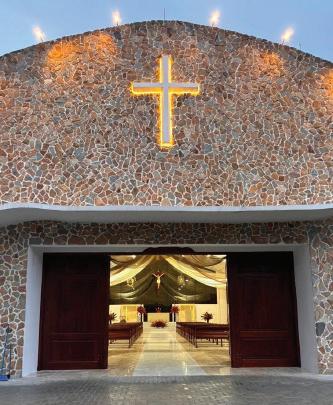
On this trip, Bonner and Turley introduced a new group of missionaries to an almost completed Our Lady of Mount Carmel Church and a village filled with Catholics desperate to thrive physically, mentally and spiritually.
“God was staring at us through the eyes of the Guatemalan people as we became the hands and feet of Christ,” said Deacon Bitter, who recounted the missionaries’ recent work in the impoverished town in southern Guatemala, not far from the Pacific Ocean.
“It’s fascinating because you can verbally say we are building a church. And yes, it’s the building and the pews, but it’s ultimately the people. In both avenues, we’re building a facility for Christ,” he said.
Amid the breathtaking landscapes of hills covered with coffee bean
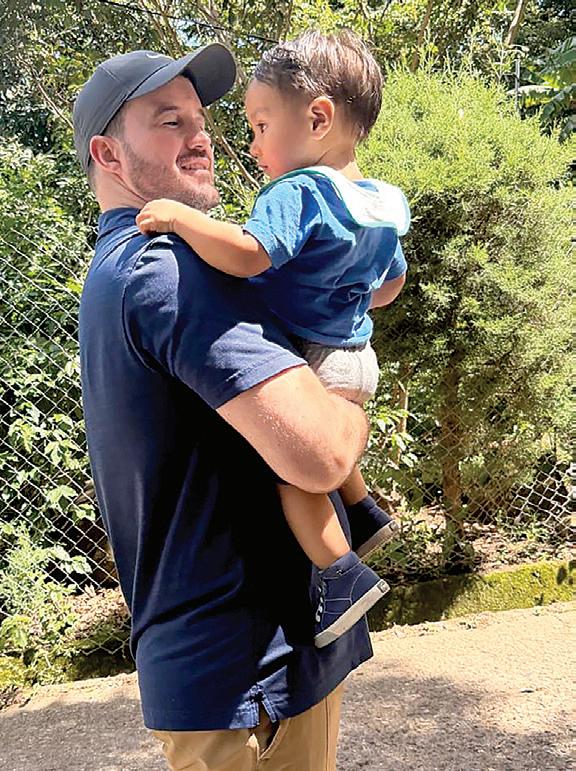
plants and the misty waters of the Laguna el Pino lies the hamlet of El Cerinal. Its small huts have tarps as doors and dirt for floors. Electricity
LISA M. GERACI lmgeraci@rcdoc.org
The Guatemala mission started in 2022, when a group of St. Gabriel Church parishioners visited the hamlet of El Cerinal.
Then first-time missionary John Bonner fell in love with the people, as did Chris Turley.
“I always wanted to be a missionary, but when I graduated from college, life somehow got in the way. So, when this opportunity came up, I jumped,” Bonner recalled. “It feels like the path I was intended to be on.” Turley felt similarly and shared, “God is in control there, not me. It is the grace of God that keeps everything moving, and the joy of the children keeps me going back.”
During that trip, on a donated three-acre parcel of a coffee farm owned by Catholics who employ most of the villagers, the missionaries left a physical cornerstone for a church, unsure if they would return. After they left, the idea of building that church grew. Through parishioners at St. Gabriel and St. Matthew, the group raised $500,000.
in the village is spotty, and the water that occasionally flows from the tap is undrinkable.
While 85% of the population of the small town is Catholic, the tiny church also has a spiritual drought with only one priest serving 10 parishes scattered across the province of Santa Rosa.
One Mass is celebrated at 6 a.m. every Sunday. Confession, daily Mass, Eucharistic Adoration and anointing of the sick – like the water – are inaccessible luxuries.
A WEEK OF LOVE AND CHARITY
Father Voitus and Father Sanchez celebrated daily Mass in Spanish.
A smiling villager named Don Chilo walked an hour and a half each way on his one leg and crutches to attend each day.
“It was touching to see,” Deacon Bitter said.
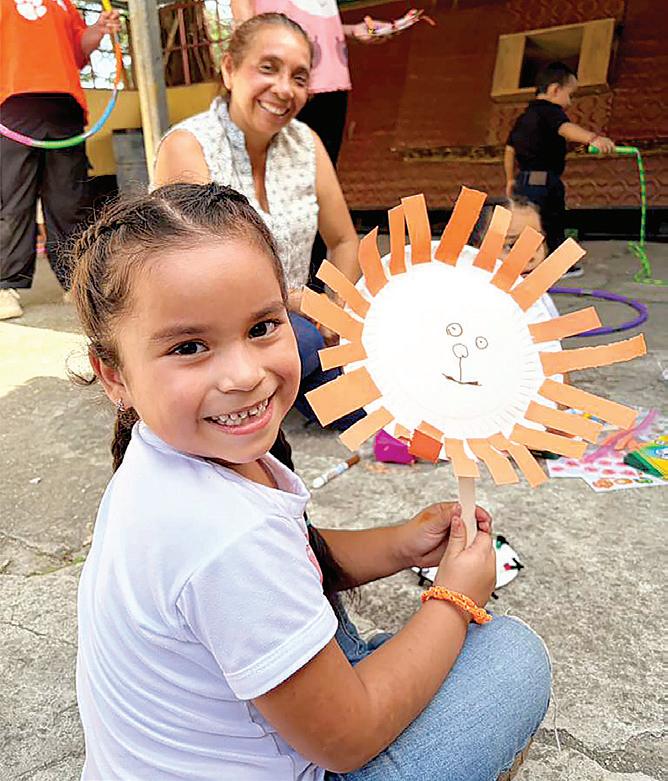
More than 60 children ran,
skipped and jumped their way down to the church every day for coloring, crafts, songs and faith-based lessons at Turley’s Vacation Bible School.
Bonner and his team installed 21 home water filtration systems.
Clergy traveled the dirt paths, stopping at doorsteps to pray, drop off medication and assess needs.
Small acts of God were evident.
One occasion stuck with Turley, who was with Father Voitus when they came across hysterical women kneeling next to a casket.
“They were praying for a priest because they had been unable to find one to perform the funeral for their family member,” Turley said.
Father Voitus immediately celebrated a funeral Mass.
“To me, it felt like a miracle that he appeared exactly when they were praying for a priest,” she said.
Father Sanchez and Father Voitus blessed homes, anointed the
homebound and heard confessions.
“When you have extra priests, the community feels blessed. As we made our rounds to visit families, 90 percent asked for blessings or prayers,” Father Sanchez said. “The homes are not comfortable by U.S. standards, but the people are happy. That is the striking part. Sometimes we associate happiness with luxury and comfort, but in reality, it comes from the heart.”
Erika Lopez, a native of Guatemala, longed to share memories of home with her children. As she traveled with her son, she was reduced to tears of appreciation for her almost-lost culture.
“The connection was immediate – there was no pretense, just a shared sense of love,” Lopez said. “It brought back those childhood memories of this foreign little place that I used to know.”
By week’s end, even though there were spurts with no electricity, no air conditioning and no water, the group had difficulty saying goodbye, shifting to “hasta luego” (“I’ll see you later”) at that final Mass. The tears flowed freely and were abundant, Deacon Bitter noted. In 51 weeks, the group plans to return with more missionaries from more churches and schools. In 10 years’ time, Turley envisions visiting four times a year, operating from the cornerstone they laid once upon a time in the small hamlet with little hope but overwhelming faith.
“This trip is more than just people who want to go off the grid, put down their phone, and commit time, money and energy,” Deacon Bitter said. “It is spreading the love of Christ through prayer, through experience as one human family, and making the world a little smaller.”
To connect on a more personal level when they reunited, Bonner and Turley started taking Spanish classes. Turley focused on designing lesson plans for the children, while Bonner focused on home construction
projects and water filtration systems. Each time they returned, they were revitalized by the growth of that small cornerstone.
And in 2024, when the priest who introduced them to the ministry left St. Gabriel Church, they kept going –taking a handful of missionaries twice in 2025. When Father Joshua Voitus, pastor of St. Vincent de Paul Church in Charlotte got involved, Turley thought it was an answer to prayer.
Between visits, the cornerstone grew as the people of El Cerinal rallied behind construction efforts, adding a roof and a crucifix and finishing the walls.
By the time the missionaries returned this year, the church dedication was the talk of the town –despite its lack of indoor plumbing, electricity and stained-glass windows.
“We certainly don’t have the funds to finish the church at this point in time, but I don’t know any of us that’s worried about that,” Bonner said. “The Holy Spirit seems to want the church done, and so it’s moving along.”
The bishop of Santa Rosa de Lima, Bishop José Cayetano Parra Novo, met with Bonner, Father Voitus,
Deacon Daren Bitter from St. Matthew Parish in Charlotte and Father Juan Miguel Sanchez, priest-secretary to Bishop Michael Martin to break bread and thank his friends.
“The purpose of the church is to bring people together. It’s large enough to invite people who don’t live in the immediate community,” Bonner said. “The people here are Catholic, and the bishop wanted to use this as a central church, with meeting rooms in the basement for retreats –especially for young men and women discerning religious life. It’s very important to the diocese.”
The bishop told the men that the needs across Santa Rosa were as vast as priests were scarce. Villages just like El Cerinal dotted the landscape, some even more impoverished. Throughout the hills were people without clothing, without food and without frequent access to the sacraments – all people they could help through the new church.
As Bonner said, “This is about moving people from relief to sustainability. The language and faces may change, but the needs remain the same.”
CHRISTINA LEE KNAUSS clknauss@rcdoc.org
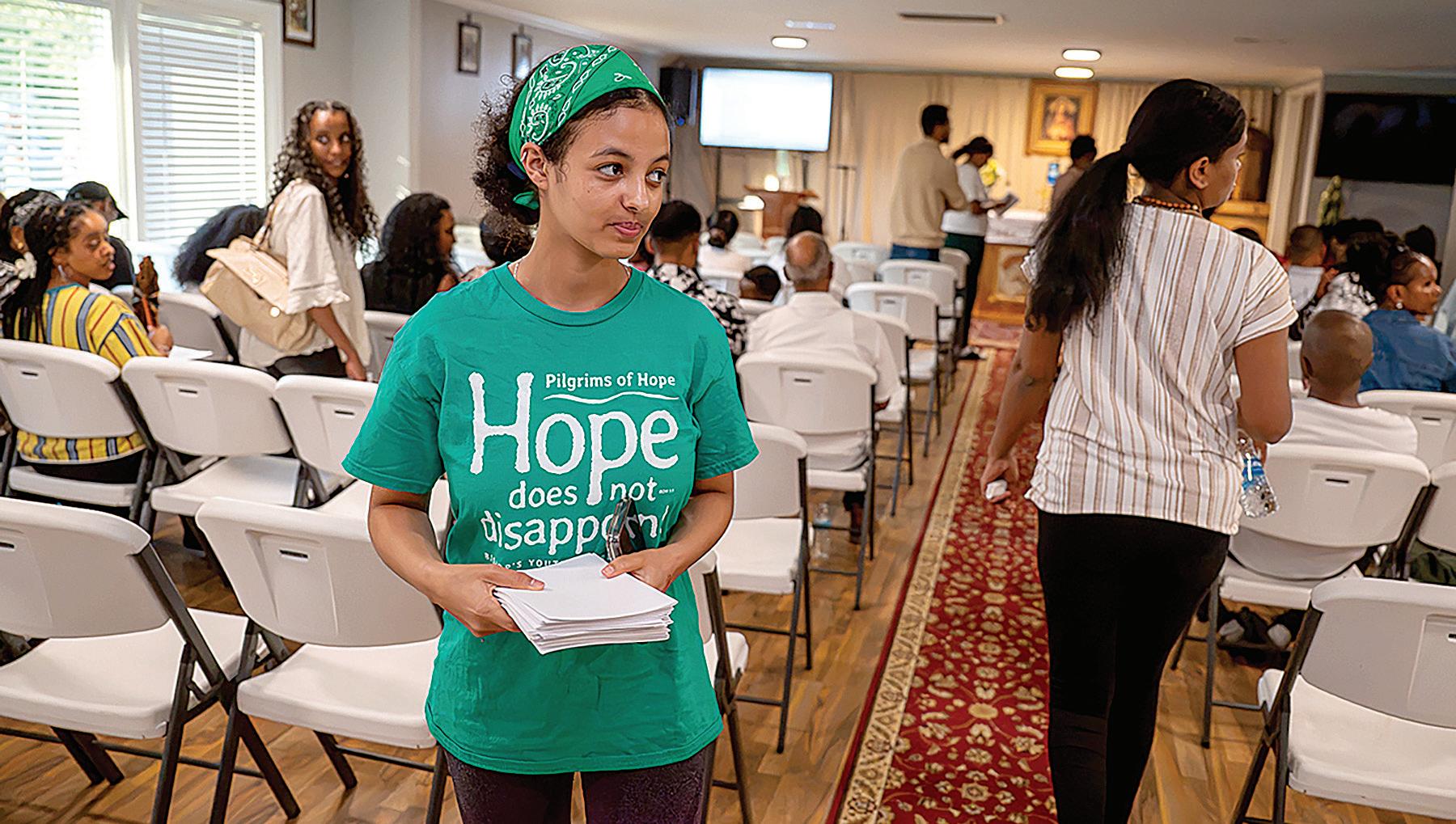
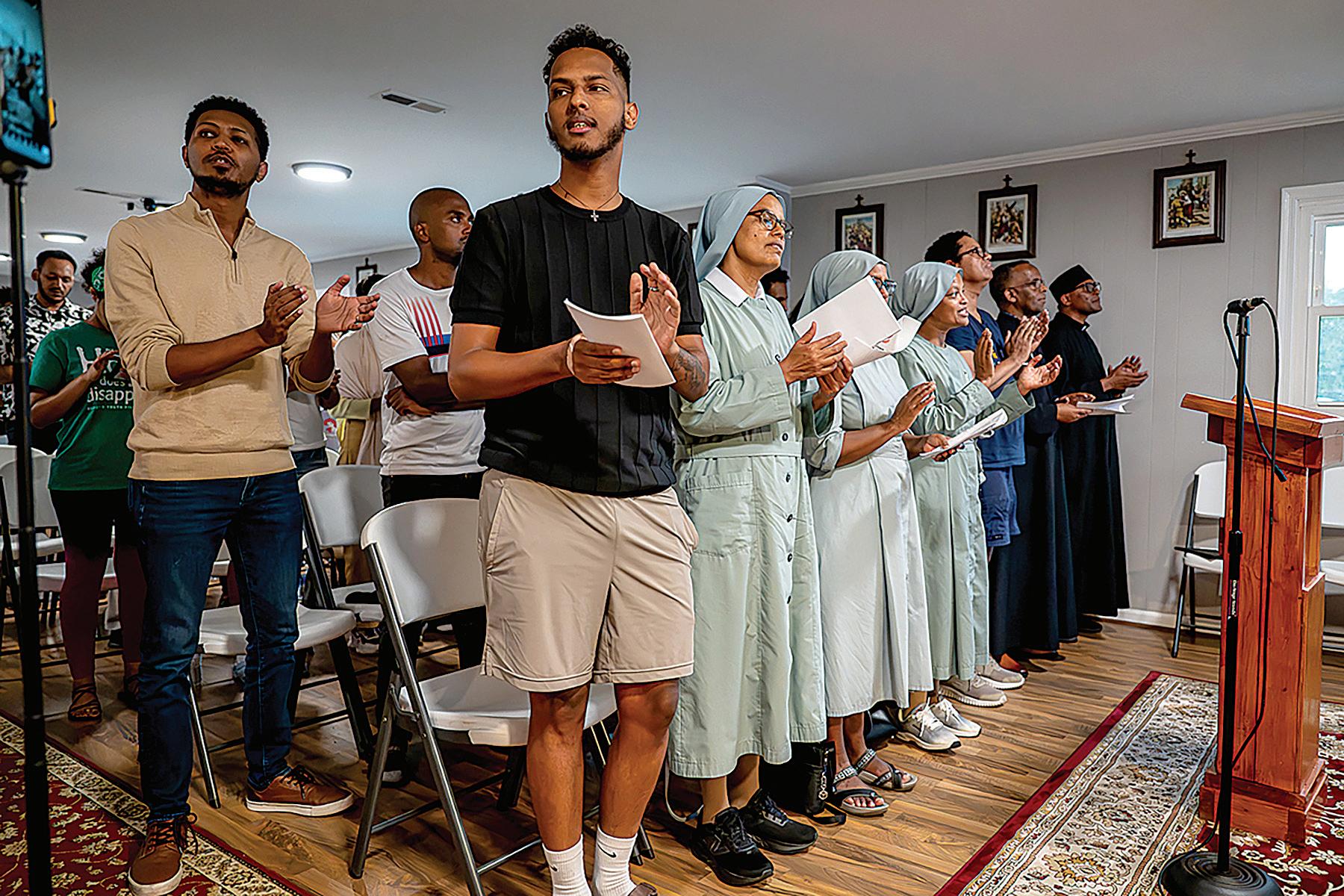
CHARLOTTE — Eritrean Catholics from around the country spent a joyful weekend focused on family, community and worship as the annual Eritrean Catholic National Conference came to Charlotte. The event was held July 31-Aug. 2 at the Charlotte Eritrean community’s property in Mint Hill and at St. Vincent de Paul Church, drawing more than 400 people from North Carolina, Atlanta, Ohio, Indiana and Washington, D.C. Attendees spent three days worshiping and praying together, enjoying traditional foods, seeing old friends and making new ones, and attending workshops on faith and topics such as mental health.
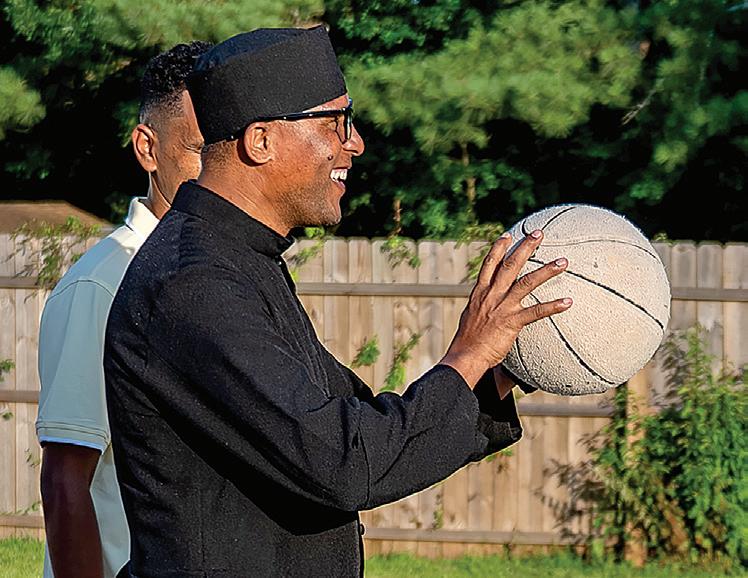
On Saturday and Sunday, the pews inside St. Vincent de Paul were packed as hundreds attended Mass celebrated in the Ge’ez Rite, the traditional form of Catholic worship in Eritrea and Ethiopia. Rooted in the Alexandrian rite of Egypt, the liturgy often lasts close to three hours and is celebrated in Ge’ez, an ancient court language from the period when Ethiopia first adopted Christianity. It is no longer commonly spoken but is still used in sacred worship and texts. Young musicians from Atlanta and Washington, D.C., punctuated the beautiful chants in Ge’ez with upbeat hymns accompanied on keyboards.
The Divine Liturgy on Saturday was celebrated by Father Kidanemariam Gebrehiwot, known to his flock as Father Kidane, who is based in Atlanta. Being in Charlotte was a homecoming of sorts for him, because he used to travel to the diocese regularly to celebrate Mass and the sacraments for the Eritrean community when it was based at St. Gabriel Church.
“This is an important chance for all of us to come together, to get to know each other and to learn from one another,” Father
Kidane said.
The conference started more than a decade ago as a way for Eritrean Catholics to make connections and to pass on the Ge’ez rite, said Tesfatsian Sareke of Columbus, Ohio. The idea for a national gathering became important as Eritrean Catholics realized their traditions weren’t being handed down to the next generation.
“The members of our community who were born here can feel disconnected from those who came over from Eritrea, because most of the younger people have grown up practicing in the Roman rite,” he said. “This is a way both to maintain our traditions and help build a bridge between the generations. It gives the young people a chance to build connections with each other and with their heritage.”
Eritreans have fled their home nation for decades because of famine, natural disaster and persecution, and they have formed large communities across the United States, primarily in California, Atlanta and Washington, D.C. They have been coming to Charlotte for more than 20 years, and that growth prompted the 2018 formation of the Ge’ez Rite community in the Diocese of Charlotte.
The conference rotates regularly between Atlanta, Ohio, Washington, D.C., and Charlotte. The COVID-19 pandemic disrupted it in 2020, but organizers quickly got it back up and running within a year, Sareke said.
In between events at St. Vincent de Paul, there was a palpable sense of joy in the air as people of all ages shared meals. Friends who had not seen each other in more than a year embraced and laughed, children played and people gathered around a table selling commemorative T-shirts and other items.
During the weekend, community members also came together for Mezmur – lively prayerful music and song sessions conducted in Tigrinya, one of the primary languages spoken in Eritrea.
The weekend featured seminars in Tigrinya and English. The Tigrinya workshops drew mostly adults who heard talks on maintaining a lively Catholic faith and the importance of mental health.
The sessions in English were geared toward students in elementary through high school as well as young adults, and focused on topics relevant to their lives as young Catholics navigating a secular world – including internet safety.
Sister Ghennet Ogbamichael of the
Daughters of St. Anne spoke to the young people about the role of Mary the Blessed Mother in the Church and how she can be a role model for the faithful. Sister Ghennet was born in Eritrea but has been living in the Washington, D.C., area for 13 years, where she teaches religion classes at the parish level.
“This event is so close to my heart because I
get to share the important role of Mary in our lives with these young people,” she said. “This is an important chance for them to come together and renew their faith, to remember the importance of walking in faith every day. I want to help the Eritrean Catholic youth learn to take responsibility for their faith and to see God in everything they do.”
The Diocese of Charlotte Development Office has an opening for a full-time Director of Development for Catholic Schools. The candidate must be a college graduate with a degree in marketing, communications, or related field. He or she must have at least five years of experience in development and/or fundraising.
Responsibilities include:
Working closely with all 20 diocesan Catholic schools and assisting them in developing and carrying out annual school fund development plans including but not limited to annual giving campaigns, major gift efforts, and planned giving activities.
Candidate will meet regularly on site with all schools to support and coordinate their fund development efforts.
Please submit cover letter and resume to:
Patty DiSandro, Development Office pkdisandro@rcdoc.org
SAVANNAH, Georgia — Catholics from across the Southeast are invited to witness a historic moment in the life of the Church when five Franciscan missionaries known as the Georgia Martyrs are beatified this fall.
The beatification Mass will be celebrated Oct. 31 at the Savannah Convention Center. It is free to attend, but registration is required due to limited seating.
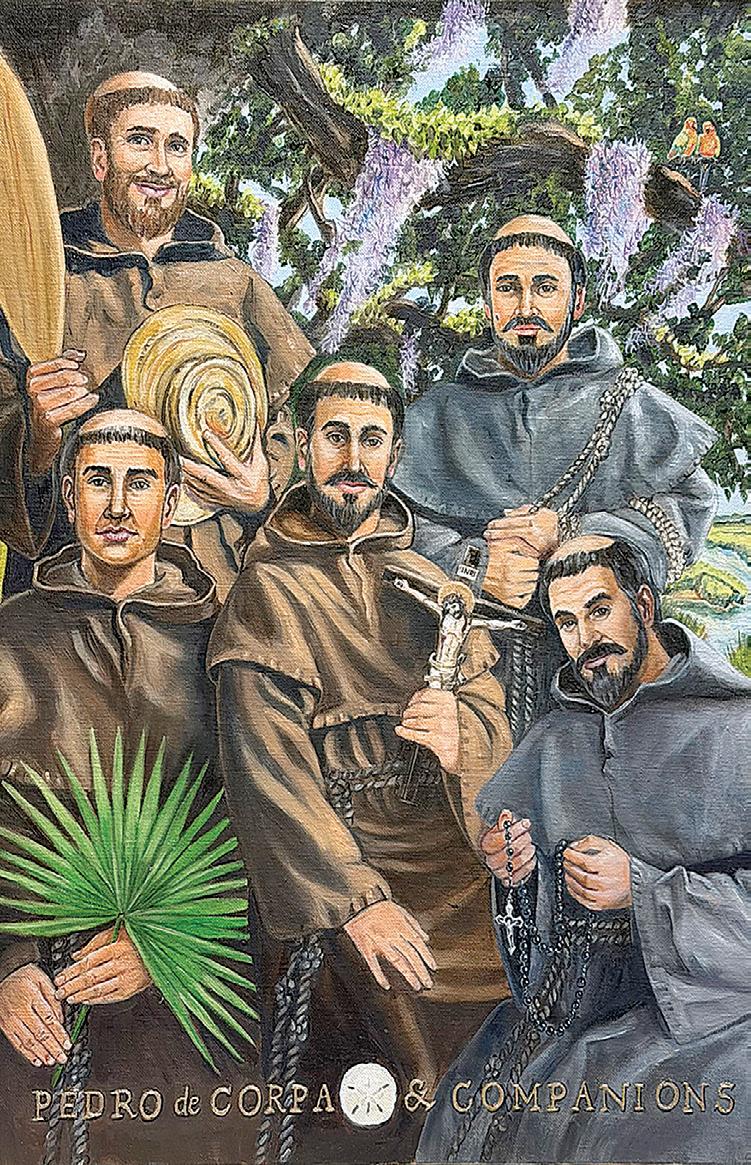
The five Spanish friars – Pedro de Corpa, Blas Rodríguez de Cuacos, Miguel de Añon, Antonio de Badajoz and Francisco de Veráscola – were martyred in coastal Georgia in 1597 while evangelizing the indigenous Guale people. They were killed after Friar Pedro de Corpa refused to approve a baptized Guale leader’s decision to take a second wife, remaining faithful to the Church’s teaching on the sanctity of marriage.
The Holy See formally recognized the friars’ martyrdom in 2025, clearing the way for their beatification. Their beatification will be only the sixth ever celebrated on U.S. soil.
Savannah Bishop Stephen Parkes said the martyrs’ witness remains deeply relevant today, especially as Catholics seek to strengthen marriage and family life.
Be part of this historic celebration
The Georgia Martyrs will be beatified during a special Mass Oct. 31 at the Savannah Convention Center. The event is free, but reservations are required.
Registrants will be entered in a
drawing to receive one of 10 prints of the official Beatification image of the Georgia Martyrs, to be unveiled at the Beatification Liturgy.
To learn more about the Georgia Martyrs
“I hope they will inspire new generations as intercessors for marriage and family life,” he told OSV News, encouraging families to ask for the martyrs’ prayers and to keep Christ at the center of their families.
The Diocese of Savannah has also established places of pilgrimage connected with the martyrs’ legacy, including an outdoor shrine at Nativity of Our Lady Mission in Darien, near the area where several of the missionaries served and died. Archaeological research continues at former mission sites along the Georgia coast, uncovering new insights into the earliest Catholic presence in what is now the United States.
— Catholic News Herald. OSV News contributed.
This depiction of the five Georgia Martyrs titled “Pedro de Corpa & Companions” was painted by artist Teresa Satola-Coey in oil on Belgian linen and when completed will be displayed at The Good Samaritan Catholic Church in Ellijay, Georgia. The Franciscan friars’ beatification will take place on Oct. 31 in Savannah.
TERESA SATOLA-COEY | OSV NEWS
and get tickets to the beatification Mass, go to www.thegeorgiamartyrs.org Questions? Please call Nathan Ware at 912-201-4046.

CHRISTINA LEE KNAUSS clknauss@rcdoc.org
More than 8,000 students are gearing up to return to Catholic schools across the Diocese of Charlotte beginning Aug. 17, with many to be greeted by improved facilities, new programs, new leaders and new families.
The diocese’s only standalone middle school has a new name to
reflect its new approach: Holy Trinity Catholic Academy in Charlotte has begun its transition toward blending the advantages of single-sex and co-ed classes for a more tailored educational experience. Other schools from the mountains to the Triad will unveil new athletic and other facilities, including Charlotte Catholic, Christ the King and Bishop McGuinness high schools.
Enthusiasm for Catholic education continues to remain high, school officials said, with enrollment in diocesan schools holding steady. Many schools are near capacity following years of continued growth.
“There is a great deal to be excited
about,” said Dr. Greg Monroe, superintendent of Catholic schools. “Our schools are continuing to grow in different ways, but what is most encouraging is the strong culture taking shape across the diocese.”
He stressed the important contribution Catholic schools make in educating both the mind and the spirit of students.
“We have excellent educators, committed families and school leaders who understand that Catholic education is about strong academic achievement –but also about something more. It’s about forming young people in faith, character
and wisdom as disciples of Christ.”
In western North Carolina, the second school year after Hurricane Helene is feeling more like a return to normal.
Last year, some school families had to leave to find new homes or employment after residences and businesses were damaged or destroyed, said Margaret Beale, principal of Immaculata Catholic School in Hendersonville.
This year, “we’re still seeing some impacts, a few school families that are having to move particularly because a parent’s job never came back after the storm, but in general, everything has settled down,” Beale says. “Everything here is busy, and we’re excited to begin the new year.”
What’s new for 2026-27:
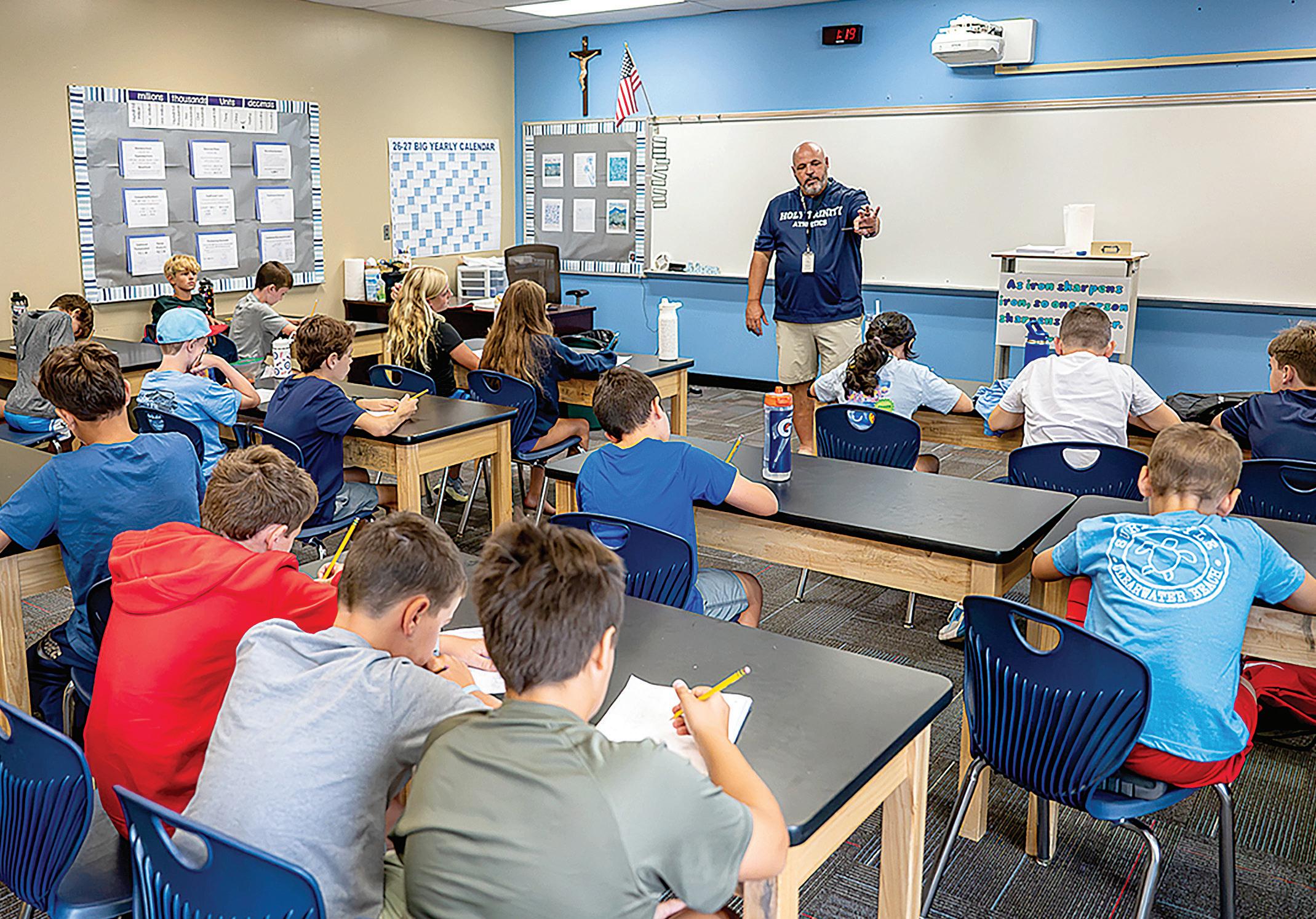
Holy Trinity Catholic Academy’s shift toward blended education embraces different learning styles to provide students the best of both worlds, school leaders say. Beginning with sixth graders only this year, single-sex instruction will be offered in core classes such as English and math, while co-ed instruction will continue in electives and extracurricular activities. This approach will phase in over three years, with seventh and eighth grade following over the next two years.
The school is also seeing progress on its three-phase, $11.7 million enhancement project. Thanks partly to a grant of more than $1 million from Shea Homes, the existing athletic field has been regraded, and new drainage and synthetic turf will go in this fall, along with lighting and team benches. As part of the project, the fine arts classrooms are being upgraded with modernized flooring, lighting and instructional equipment.
“While our name has changed, our mission remains the same,” said Kevin Parks, who is beginning his second year as Holy Trinity president after 17 years as principal. “Our new name reflects our enduring commitment to academic excellence, intentional faith formation, and preparing students to lead with confidence, compassion and integrity.”
Parks will work alongside Principal Robert “Bobby” Conrad, beginning his second year in the role, to see that the exciting changes are successful.
UPGRADES AT HIGH SCHOOLS
Charlotte Catholic High School is completing the first phase of an $8.5 million program of improvements that include upgrading the football field and sideline to premium artificial turf and renovating its media center into a multifaceted student life center. Both will be ready for students’ return, said Kurt Telford, who is returning to his role as principal after a two-year stint as head of school. Michael Seeley joins Telford as the school’s president, a role that focuses on long-range planning, community relationships, financial and operational management and fundraising.
Charlotte Catholic has also been raising money to help transform a recently acquired building next to the campus into a Computer, Technology and Engineering Innovation Center, which will house career and technical education. Telford said work on that project is expected to begin this fall.
Christ the King High School in Huntersville will have a new playing surface for its athletic field with expanded bleachers that seat more than 1,000
‘We have excellent educators, committed families and school leaders who understand that Catholic education is about strong academic achievement, but also about something more.’
Dr. Greg Monroe Superintendent of Catholic schools.
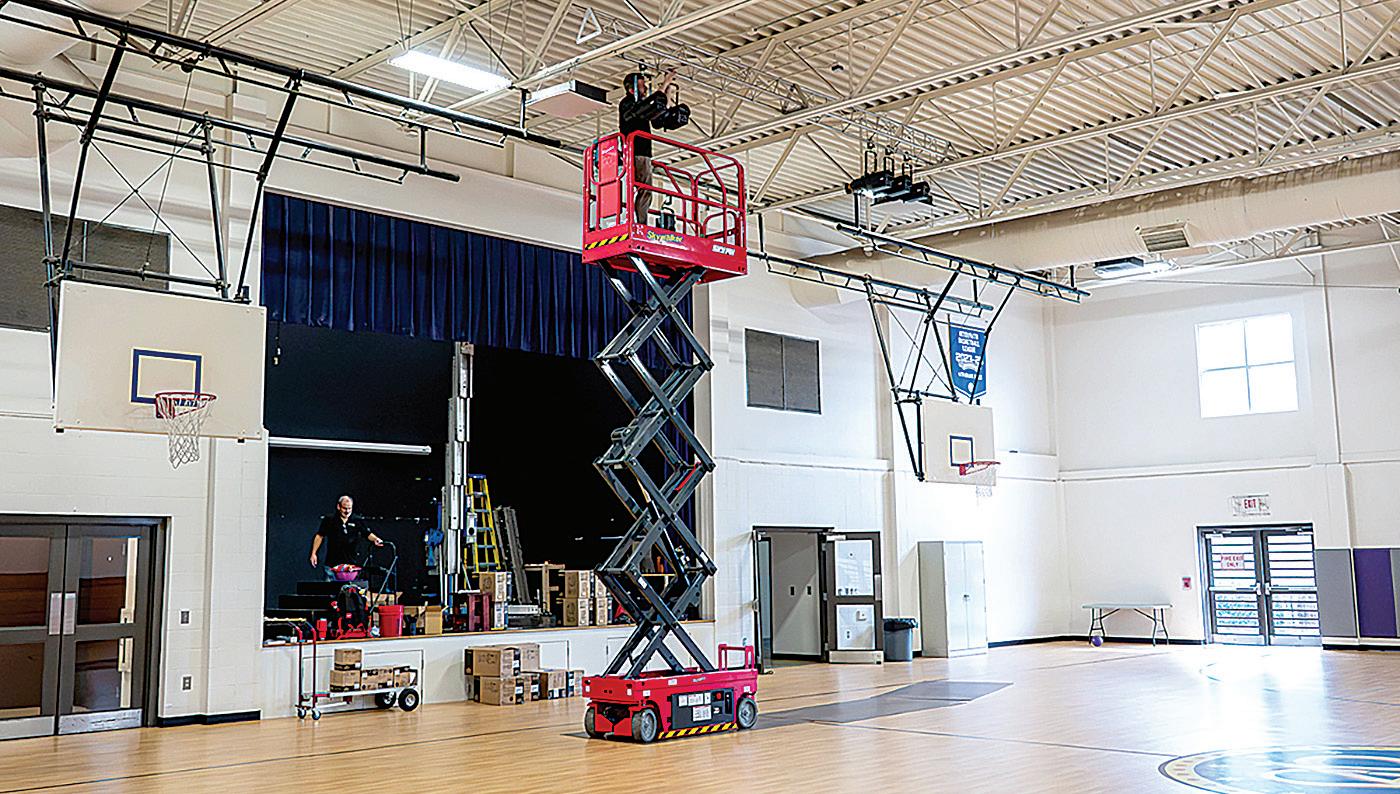
people, as well as new restrooms and better accessibility. Teams will begin using the new facilities this fall, and a ribboncutting is set for Sept. 11.
“Everything is going along better than ‘according to plan,’’’ said Principal Mark Tolcher. “It’s going along great!”
Work is progressing on its $12 million expansion that will increase the school’s footprint by 21,000 square feet to 73,271.
The project includes adding a new entry to the gym and a north lobby equipped with concession stands, ticketing booths and a Crusaders Spirit Store for the school’s athletics, band, musical and theatrical events.
Other perks include an expanded weight training area, a chorus and band studio, two additional classrooms, an industrial design workspace and a larger cafeteria with a full kitchen to prepare meals on site. The expansion is expected to be completed after Christmas break.
“The expansion offers us not just an increased footprint but also the ability to offer different programming and an enhanced education experience for both students and faculty,” Tolcher said.
Bishop McGuinness High School is hitting a milestone this year with enrollment reaching more than 500 students for the first time in about 15 years, said President Jared Rashford.
After a successful start last year, Bishop McGuinness is also expanding its St. Gabriel Program, which serves students with intellectual disabilities, to cater to a broader range of learners.
“Through individualized instruction, dedicated teachers and an expanded peer partner program that fosters both academic and social inclusion, we are helping students with diverse learning needs become fully integrated members of the Bishop McGuinness community,” said Principal Claire Willis.
Improvements to the school’s athletic facilities are expected to be complete by the end of August, including construction of six lighted tennis courts and outdoor restrooms and picnic facilities, Rashford said. The gym floor was replaced and seating increased to accommodate about 800. New flooring is also being laid in the chapel, and the chairs are being reupholstered.
Immaculata Catholic School in Hendersonville recently began renovations of the St. Elizabeth Ann Seton House on Oakland Avenue, adjacent to the campus. It serves as home for Principal Beale and several religious sisters and eventually will be used to house teaching interns.
Students at St. Patrick School in Charlotte will return to classrooms with gleaming restored wooden floors. Over the summer, carpet in all the classrooms was removed and the original cedar floors, which are more than 90 years old, were restored, said Principal Nicholas Calametti.
At St. Gabriel School, students are returning to new furniture in 14 classrooms, a retiled lobby floor and ongoing athletic field improvements including a new track, new sod and an irrigation system, said Assistant Principal Deven Dickerson.
St. Leo School in Winston-Salem underwent a $2.2 million replacement of its roof and HVAC system. “It is a major project that has long been needed, and it is expected to be done before school starts,” said Emmett Sapp, director of construction and real estate for the Diocese of Charlotte.
Mark School in Huntersville
CHARLOTTE — Catholic school communities in Charlotte and Huntersville are welcoming new presidents and a principal this fall, while a veteran educator has transitioned into a position in the Catholic
Schools Office.
Dr. Carl Semmler is moving from his leadership roles at Christ the King High School in Huntersville into a new administrative position designed to increase collaboration
Semmler, who served as Christ the King’s principal for six years and as president for the past three, will be the diocese’s new executive director of Catholic Identity, Operations and Capital Improvements for Catholic Schools.
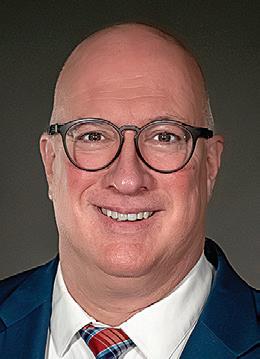
He will work closely with leaders across all 20 Catholic schools to strengthen Catholic identity, support school operations, and oversee facilities planning and capital improvement initiatives.
During his tenure at Christ the King, Semmler oversaw the quadrupling of the school’s footprint and a 73% increase in enrollment. He brings 30 years of experience in Catholic education across three dioceses, including more than two decades in educational leadership.
“Dr. Semmler is a respected Catholic educator whose experience, leadership and commitment to our mission have already had a tremendous impact on our diocese,” said Dr. Greg Monroe, superintendent of schools.
“Having served successfully as both a principal and president, he understands the opportunities and challenges our schools face each day. I am grateful for his willingness to serve in this new role and know he will be a tremendous resource for our principals and school leaders.”
“We are blessed with exceptional teachers and school leaders, and I look forward to partnering with them as we continue strengthening Catholic education across the Diocese of Charlotte,” Semmler said.
in the diocese’s growing school system. Meanwhile, three recent hires from across the country have been chosen to lead at Christ the King and at Charlotte Catholic High School and St. Matthew School in Charlotte.
After a national search, Christ the King looked across the state line to name veteran South Carolina educator Shaileen Riginos as its new president.
Riginos, who is the first female high school president in the diocese, holds a Bachelor of Arts in elementary education and a Master of Arts in educational leadership from Stetson University in DeLand, Florida.
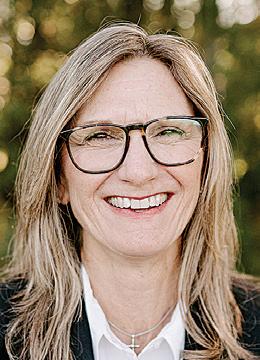
Most recently, she served as associate superintendent for the Diocese of Charleston, where she provided strategic leadership across 32 Catholic schools, supporting pastors, diocesan leaders and school administrators. She previously spent 10 years as principal at St. Anne Catholic School in Rock Hill.
“Christ the King has long been a model of what a thriving Catholic high school can be,” Riginos said. “While leading the expansion of St. Anne Catholic School into the first PK-3 through 12 school in the Diocese of Charleston, I often looked to CTK as an example of strong Catholic identity and student formation. To now have the privilege of serving as its president feels like it is coming full circle.”
“Mrs. Riginos brings broad experience at both the diocesan and school levels, along with strong expertise in strategic planning and relationship building, which will serve the Christ the King community well as the school continues to grow,” Monroe said.
DI OCESE OF CHARLOT TE CATHOLIC
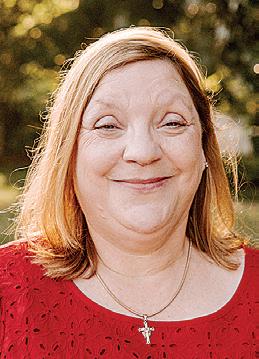
Veteran educator Tonya Eaton has been named principal at St. Matthew School in Charlotte. Eaton brings nearly three decades of experience in Catholic education, serving as a teacher, principal and diocesan leader. She holds a master’s degree in school leadership from St. Louis University and a Bachelor of Arts in business education from the University of Nebraska at Omaha. Eaton previously served as director of educational services for the Diocese of Des Moines, supporting schools in curriculum development, professional learning and student services. In 2014, she served as the first principal of St. Luke the Evangelist Catholic School in Ankeny, Iowa, guiding the school through its early development and growth.
“It was clear from our first conversations that Mrs. Eaton has a real love for her faith and a genuine joy in working with children,”
PRINCIPALS, SEE PAGE 10
Immediate openings for teachers, teacher assistants, and substitute teachers at all schools.
Our schools are immersive, accessible, and authentically Catholic environments where you’ll be surrounded by caring and dedicated faculty, staff and families.

Positions are still available. Contact your local Catholic school to inquire about openings. https://newdioceseweb.wpengine.com/schools/join-us/
Diocese of Charlotte Schools encompass 20 schools in different models: Mecklenburg Area Catholic Schools (MACS), parish-based schools, a diocesan-based high school, and an affiliate.
Navigating the application process for the diocese’s parish-based schools and for the Mecklenburg Area Catholic Schools system (MACS) is a straightforward online process.
The admissions process begins in October for MACS and continues as space is available. All schools work on a rolling admissions basis until all spots are filled. All students entering pre-K-3 must be 3 years old on or before Aug. 31. All kindergarten students must be 5 years old on or before Aug. 31. All transitional kindergarten students must be 5 years old on or before Oct. 1.
Details for MACS can be found online at www.discovermacs.org/ admissions/apply-now. Details for each parish-based school can be found on their respective websites.
Questions? Please call the individual school or the MACS Office any time in the application process at 704-370-3273
Step 1: Take a Tour
Bishop McGuinness Catholic High School in Kernersville serves the Triad area.
Bishop McGuinness Catholic High School 1725 N.C. Hwy. 66 South, Kernersville, NC 27284 336-564-1010 www.bmhs.us Grades: 9-12
Canongate Catholic High School
109 Crescent Hill Road, Arden, NC 28704 828-712-8924
www.canongatecatholic.org Grades: 9-12
This includes 9 schools serving kindergarten through eighth grade and, in some instances, preschool. While each school is part of the diocese’s Catholic Schools system, they are directly administered by a corresponding parish. For admissions info, contact the specific school.
Asheville Catholic School 12 Culvern St., Asheville, NC 28804
828-252-7896 www.ashevillecatholic.org Grades: PK-8
Immaculata Catholic School 711 N. Buncombe St., Hendersonville, NC 28791
828-693-3277 www.immac.org
Grades: PK (ages 3-4), K-8
Immaculate Heart of Mary Catholic School 4145 Johnson St., High Point, NC 27265
336-887-2613
www.ihm-school.com Grades: PK-8
Our Lady of Grace Catholic School 201 South Chapman St., Greensboro, NC 27403 336-275-1522 www.olgsch.org Grades: PK3-8
Our Lady of Mercy Catholic School 1730 Link Road, Winston-Salem, NC 27103 336-722-7204 www.ourladyofmercyschool.org Grades: PK-8
Sacred Heart Catholic School 385 Lumen Christi Lane, Salisbury, NC 28147 704-633-2841 www.salisburycatholicschool.org Grades: JK-8
St. Leo Catholic School 333 Springdale Ave., Winston-Salem, NC 27104 336-748-8252 www.stleocatholic.com Grades: PK-8
St. Michael Catholic School 704 St. Michael’s Lane, Gastonia, NC 28052 704-865-4382 www.stmcsg.org Grades: PK-8
St. Pius X Catholic School 2200 North Elm St., Greensboro, NC 27408 336-273-9865 www.spxschool.com Grades: PK-8
Step 2: Complete Application Form
• Though not a required step, it is recommended to take a tour before officially applying to a school.
• An in-person tour is a great way to ask specific questions about the curriculum, what is offered, and what the facilities feature for your child.
A centralized, regional system of schools in the Charlotte area that includes 9 schools (2 high schools, a middle school, 4 elementary schools, some with PK and TK, and 2 K-8 schools):
Our Lady of the Assumption Catholic School
4225 Shamrock Dr., Charlotte, NC 28215
704-531-0067
www.olacatholic.org
Grades: PK-4-8
St. Ann Catholic School 600 Hillside Ave., Charlotte, NC 28209
704-525-4938
www.stanncatholic.org
Grades: PK-4, TK and K-5
St. Gabriel Catholic School
3028 Providence Road, Charlotte, NC 28211
704-366-2409
www.stgabrielcatholicschool.org
Grades: K-5
St. Mark Catholic School 14750 Stumptown Road, Huntersville, NC 28078
704-766-5000
www.stmarkcatholicschool.net Grades: K-8
St. Matthew Catholic School 11525 Elm Lane, Charlotte, NC 28277
704-544-2070 www.stmattwildcats.com Kevin O’Herron, principal Grades: TK-5
St. Patrick Catholic School 1125 Buchanan St., Charlotte, NC 28203 704-333-3174
www.saintpatrickschool.org
Grades: PK-3, PK-4, PK-5
Holy Trinity Catholic Academy 3100 Park Road, Charlotte, NC 28209 704-527-7822 www.holytrinitybulldogs.org Grades: 6-8
Christ the King Catholic High School 2011 Crusader Way, Huntersville, NC 28078 704-799-4400 www.ctkchs.org Grades: 9-12
Charlotte Catholic High School 7702 Pineville-Matthews Road, Charlotte, NC 28226 704-543-1127 www.charlottecatholic.org Grades: 9-12
Step 3: Pay Application Fee
Step 4: Complete Checklist Items
• An easy-to-use online system for applying enables you to start at either a specific school’s website or at DiscoverMACS.org.
• Just click the green menu bar item labeled “Apply” at the top of the page.
• Applicants are encouraged to call anytime throughout the application process with questions.
• Pay by mail, credit card or electronic check.
• The application fee is non-refundable.
• Along with the application, applicants must submit a birth certificate and proof of a physical exam and immunization records.
• Additionally, families who wish to qualify for a participating Catholic tuition discount must submit a completed parish participation voucher.
• Some schools may ask for the student’s most recent grades and standardized test scores.
• MACS middle schools and high schools require principal and teacher recommendations and transcripts.
Most families who attend Catholic schools receive some form of financial aid through tuition discounts or assistance.
All of the diocese’s schools offer some sort of tuition discount or subsidy for registered participating Catholic families, up to 30 percent in some cases.
Generally speaking, tuition amounts range from approximately $8,000 to $14,000 for registered Catholics, with non-participating Catholics and non-Catholics paying higher amounts. Multiple child discounts are also available. Needs-based tuition assistance is also available to qualified families – making Catholic education more affordable than ever for more families.
The application period is January through March 31 for the upcoming school year.
A family does not have to be registered as a participating Catholic to receive aid. Aid is need-based and can only assist with the cost of tuition. As soon the application process is complete, families are eligible to receive an award.
For details about the MACS tuition assistance program, call 704-370-3265 or go online to www.discovermacs. org/admissions/tuitionandaffordability. This website has detailed information about how financial assistance works, how to apply, and answers to frequently asked questions.
The diocese’s nine parish-based schools and Bishop McGuinness High School offer similar need-based tuition assistance to qualified students. Details can be found on each school’s website.
All MACS financial aid requests are processed through a third-party processor, Clarity. Most diocesan parish-based schools provide financial aid through the FACTS processor as well. Receiving financial aid requires an ample amount of documentation, which is verified through the FACTS school’s preferred platform.
Families are required to apply every year if they wish to continue receiving financial aid. However, applying for financial aid does not guarantee a family will receive aid.
Other financial aid options include the North Carolina Opportunity Scholarship Program, Disabilities Grant Program, and Education Savings Accounts and the Education Student Accounts (ESA+) Scholarship. These cover tuition and required fees at a participating non-public school. In addition the Disabilities Grant and Education Saving Account Education Student Accounts (ESA+) Scholarship can cover certain other expenses related to educating a child with a disability.
OPPORTUNITY SCHOLARSHIP PROGRAM
The Opportunity Scholarship Program expands school choice in North Carolina for eligible students in kindergarten through 12 grade. All NC K-12 students are eligible regardless of income or prior public school enrollment. This program provides funding for eligible children who choose to attend a participating non-public school.
EDUCATION SAVINGS ACCOUNT
An Education Savings Account expands school choice for eligible students with disabilities in kindergarten through 12th grade. An Education Savings Account is for students attending a registered non-public school and can be applied to tuition and required fees and certain other expenses related to educating a child with a disability. Additionally, it allows parents quarterly access to funds on a debit card. This program currently provides funding of up to $9,000 per year for eligible children who choose to attend a participating non-public school. Each program has specific additional requirements for eligibility.
EDUCATION STUDENT ACCOUNTS (ESA+) SCHOLARSHIP
The ESA+ scholarship is for students with disabilities who require special education services. Funds can be used for K-12 school tuition as well as certain allowable expenses such as speech therapy, tutoring, and educational technology.
For details about any of these aid programs, go to the N.C. State Education website at www.k12.ncseaa.edu
CHARLOTTE CATHOLIC HIGH SCHOOL
CHRIST THE KING HIGH SCHOOL
HOLY TRINITY CATHOLIC ACADEMY
OUR LADY OF THE ASSUMPTION SCHOOL
ST. ANN SCHOOL
ST. GABRIEL SCHOOL
ST. MARK SCHOOL
ST. MATTHEW SCHOOL
ST. PATRICK SCHOOL
NOTE: Tuition rates for Options programs vary. Excludes 6th/7th Grade Activity Fee, 8th Grade Graduation Fee, 12th Grade Graduation Fee, and a MACS annual capital fee of $1,437 per family. A multiple-child tuition discount is available for participating Catholic families: 10% for the second child, 25% for the third child, 50% for the fourth child and free for the fifth child and beyond. Go to www.discovermacs.org/admissions/tuitionandaffordability for details.
SPECIAL PROGRAMS
Tuition rates for the Quest and Pace programs (OLG) and the St. Gabriel program vary. Excludes application, registration and other fees. A multiple-child discount is available. Visit each school’s website for details.

The national average cost of uniforms at Catholic schools in the United States is $260. Each school provides specific information about their uniforms on their websites. Most options can be purchased through Lands’ End, but some may provide used-uniform sales or swaps throughout the school year. Additionally, check your local consignment shop for discounted uniform items such as pants and skirts.

MACS offers bus and shuttle transportation with routes in Charlotte, Huntersville and Mooresville. Details are on the MACS website under Admissions --> Transportation. Note: Some bus routes are already full, so contact MACS Transportation at 704-370-3263 to be placed on a waitlist. Transportation fees for parish-based schools range from $95 to $165 per month, but check with your specific school to confirm. Some schools do not provide a transportation system, but may provide parents with a carpool list.

LUNCH PROGRAMS
Fees vary by school and by order. Information is provided on the school’s website and at each school office. AFTER SCHOOL PROGRAMS Most parish-based schools provide after school services ranging from $180 to $290 a month with other daily price options. Check with your specific school for details.
The Diocese of Charlotte’s Catholic schools are dedicated to providing a robust Catholic education for all students, including those with special needs. Parents can find programs that offer both academic and spiritual education from the early years through high school.
“Our goal is to provide students with special needs a well-rounded Catholic education that truly prepares them for life,” said Assistant Superintendent Allana-Rae Ramkissoon.
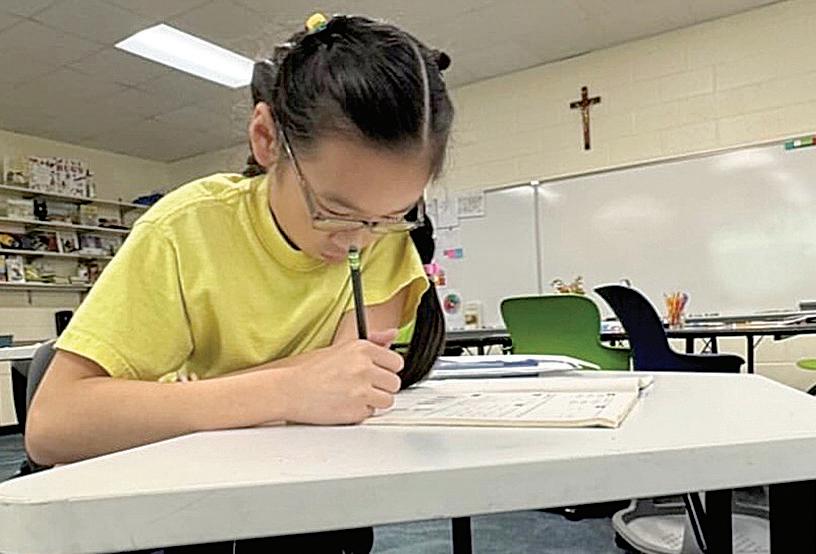
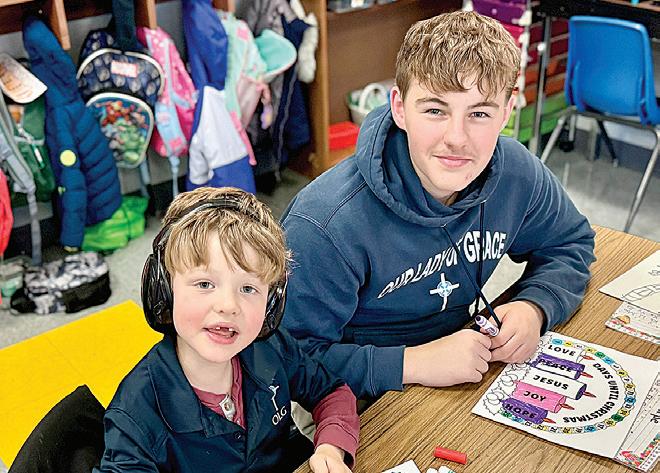
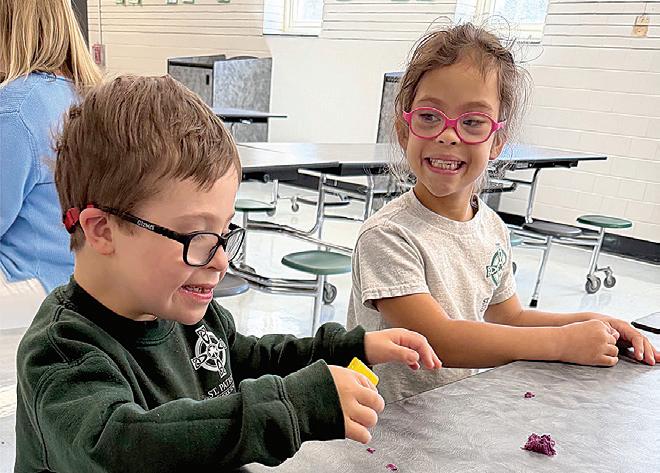
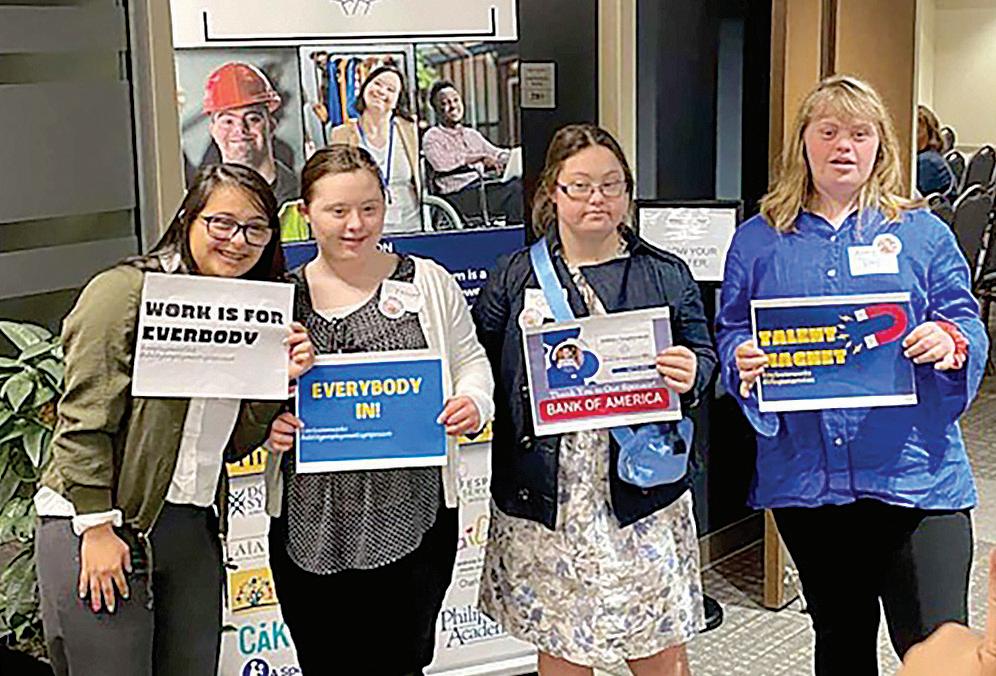
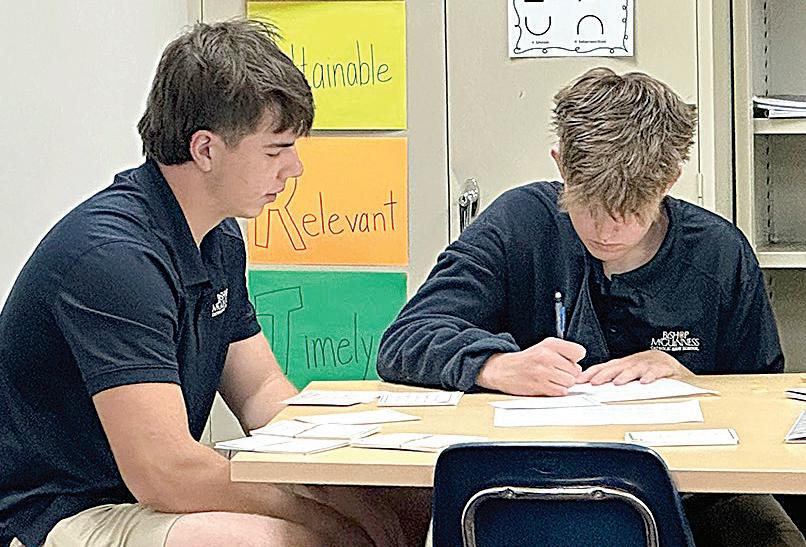
“We want parents to know that whatever dream they hold for their child – whether it’s continuing on to college or stepping confidently into the world of work – we have programs designed to help them reach that goal. Just as importantly, we strive to ensure these students feel fully included in the life of the school. Building meaningful social connections with their general education peers is a vital part of their growth, and it reflects the heart of our mission to see every child recognized, valued and supported.”
St. Ann and Our Lady of the Assumption schools, Charlotte
For students in grades 2-5 with special learning needs who need a hybrid educational approach that delivers both instruction in a self-contained classroom and general education classes. Instruction in core subjects is adapted to each student’s ability level.
www.stanncatholic.org/academics/special-learning
www.olacatholic.org/academics/special-learning
Our Lady of the Assumption School, Charlotte; Our Lady of Grace School, Greensboro
For elementary and middle school students with learning disabilities. At Our Lady of the Assumption, in grades 2-5, PACE primarily uses a self-contained setting, with daily classes alongside general education peers. In grades 6-8, the goal is to remediate reading/writing weaknesses, so students may eventually be included in a general education classroom with learning support. In Greensboro, the program is for PK-8 students who require a small classroom setting and specialized instruction in academics and social skills.
www.olacatholic.org/speciallearning
St. Patrick School, Charlotte
www.olacatholic.org/academics/special-learning
For K-5 students with Down syndrome. Students receive a quality, faith-based education in a classroom setting where each of them can progress toward their own individual potential. Basic academic and life skills are taught. Elementary students in the Catholic Academy or Charlotte Catholic High School.
www.saintpatrickschool.org/specialprograms
Our Lady of Grace School, Greensboro
For PK-8th grade students with high-functioning autism. QUEST offers structured, individualized instruction in social skills, academics and language. It is designed for students who benefit from inclusion opportunities with their peers – both in the classroom and during social activities.
www.olgsch.org/learn-at-olg/quest-program.cfm
Holy Trinity Catholic Academy and Charlotte Catholic High School, Charlotte
The Options Program at Holy Trinity Catholic Academy emphasizes inclusive learning by allowing students to learn alongside their peers for most of the school day while providing specialized instruction in reading and math to support their individual needs. Holy Trinity’s program prepares students for entry into Charlotte Catholic’s Pathways Program. Students participate in individualized, structured instruction that strengthens essential life skills, workplace readiness, social communication, community navigation and college and career readiness.
www.htcms.org/academics/options-program
Bishop
McGuinness High School
www.charlottecatholic.org/departments/options-program
“Our Modified Academic Program is a community that is built on connection, care, and commitment. As teachers, we love to partner with families and celebrate each student’s individual growth throughout their time at St. Ann School.”
The St. Gabriel Program offers students with intellectual disabilities and/or high-functioning autism structured, individualized instruction in the areas of social/life skills development, academic course work, and math and/or language acquisition. St. Gabriel is an educational program for students whose learning needs require a smaller classroom setting, specialized instructional strategies, and, at times, a separate curriculum. The goal of the program is to develop the whole child to become successful in all kinds of environments.
“I want each student to feel loved and respected, and to know that they matter. Every child has unique strengths and it is absolutely OK for those strengths to look different from others.”
Elizabeth Jenkins, principal Our Lady of the Assumption School, Charlotte
“There is a joy you see in parents when they watch their students in this program … the students are able to both be educated at their appropriate levels and also to be included in all school activities.”
“We share God’s unconditional love with each child, equipping them with faith and virtue to follow His will for their life.”
“The inclusion program has helped her academically and to develop social and people skills which will be critically important as she moves into a job life after school.”
“After a successful first year, we are excited to expand the St. Gabriel Program to serve more families across the Triad seeking a Catholic high school education for their children.”
Claire Willis, principal Bishop McGuinness High School, Kernersville
Saint Leo Catholic School in Winston-Salem is seeking a faith-filled elementary teacher who is passionate about inspiring students to grow academically, spiritually, and personally.
Recent college graduates are encouraged to apply! We offer mentorship, strong leadership, and a supportive faculty committed to helping new teachers thrive in Catholic education.
Qualifications:
■ Elementary teaching certification (or eligibility)
■ Commitment to the mission of Catholic education
■ Strong communication and collaboration skills
■ Practicing Catholic preferred
If you are called to make a lasting difference in the lives of children, we invite you to apply.
Please submit a cover letter and résumé to Mrs. Katie Nance, Principal, at info@stleocatholic.org
Saint Leo Catholic School 333 Springdale Avenue Winston-Salem, NC 27104
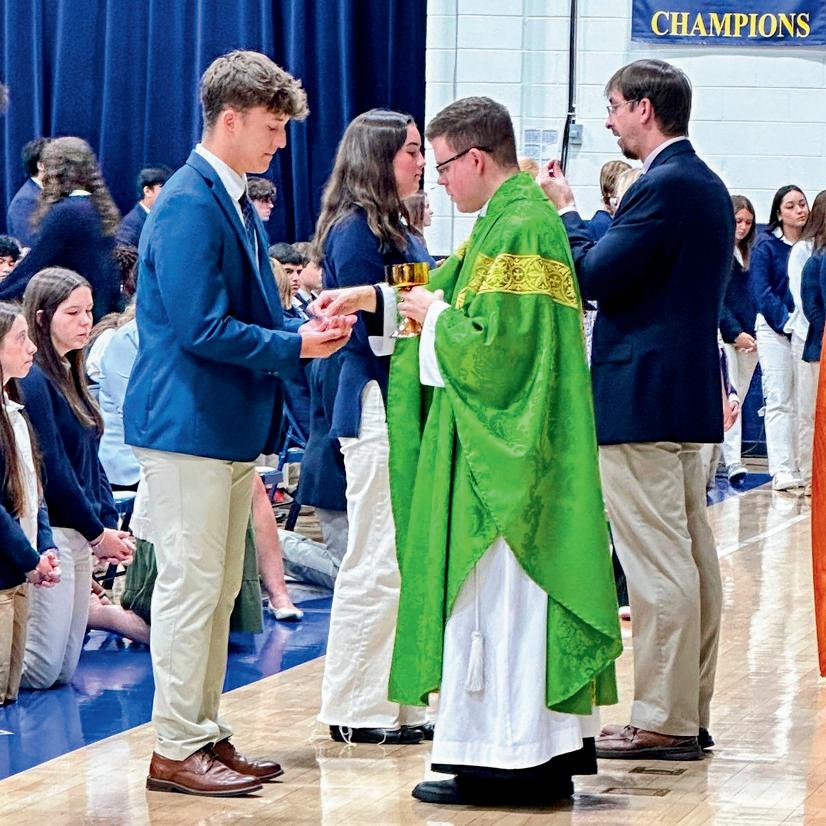
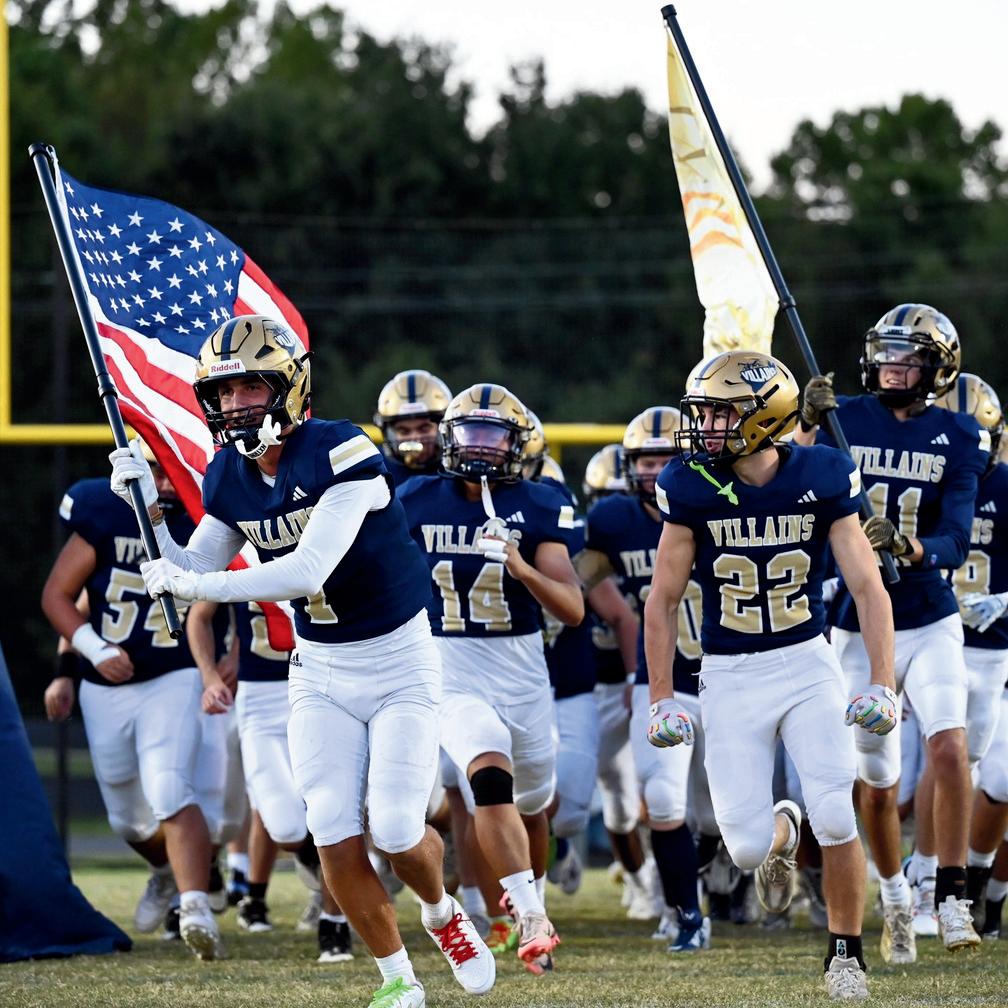
CHARLOTTE — The Diocese of Charlotte’s Forward in Faith, Hope, and Love campaign is funding $195,000 in tuition assistance this fall that will help students at five diocesan schools receive a Catholic education.
The 2013 FFHL campaign funded capital projects, endowments and other needs across the growing diocese. Included in the $65 million campaign was a tuition assistance endowment available to the diocese’s 20 schools.
This year’s funds are going to five diocesan schools that applied for the 2026-2027 school year: Asheville Catholic School, $59,456; Bishop McGuinness High School in Kernersville, $83,557; Our Lady of Grace School in Greensboro, $21,314; Sacred Heart School in Salisbury, $23,888; and St. Michael School in Gastonia, $6,785.
The funds are expected to help participating Catholic families who have the greatest financial need.
The FFHL Tuition Assistance Endowment, with a market value of over $5 million, is administered by a committee consisting of the diocese’s schools superintendent, chief financial officer and members of the diocesan school board. Available income from the endowment is distributed to qualifying diocesan schools that apply each year for student financial aid.
An endowment is a permanent fund, the principal of which is never touched, but the income from which can be used
according to the wishes of the donor organization or person. Endowments provide a way to generate income and help sustain the long-term strength and viability of the recipient parish, school or ministry.
To date, a total of $1,409,324 in distributions from the FFHL Tuition Assistance Endowment has been awarded to the diocese’s schools.
“The FFHL campaign continues to have a significant and meaningful impact in our diocese,” added Jim Kelley, diocesan director of development. “The over $1 million in tuition assistance that has been distributed to date helps students receive an education that will literally change their lives.”
To qualify for the funding, the school must receive local parish support of at least $500 per participating Catholic student and must have awarded all of its tuition assistance funds it already has for that school year. Schools that do not receive $500 per student in parish support may be considered if there are extenuating financial circumstances that preclude this level of support.
Qualifying schools may request funds from the endowment for participating Catholic students with a financial need.
The FFHL Tuition Assistance Endowment is one of seven endowments funded through the FFHL campaign.
— Catholic News Herald
Founded in 1959, Bishop McGuinness Catholic High School is proud to be the largest non-public high school in North Carolina’s Piedmont Triad. Located just minutes from Greensboro, Winston-Salem, and High Point, our 42-acre campus offers a safe, nurturing environment where students can thrive academically, socially, and spiritually. Through exceptional academics, extracurricular activities, athletics, and a deep commitment to spiritual growth grounded in the Gospel, we provide an outstanding high school experience.
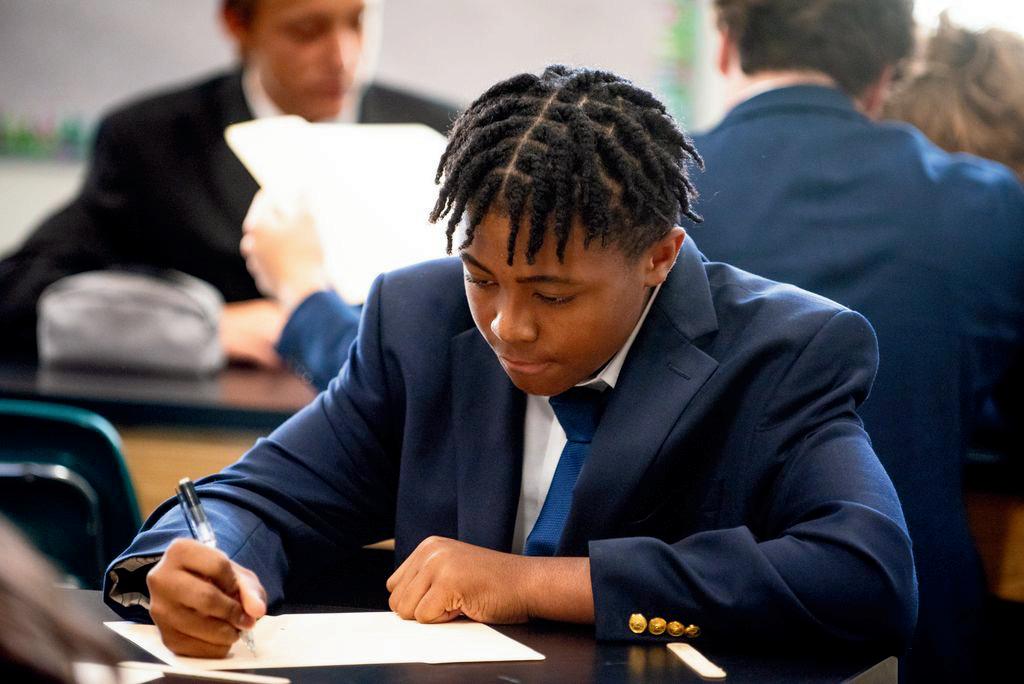
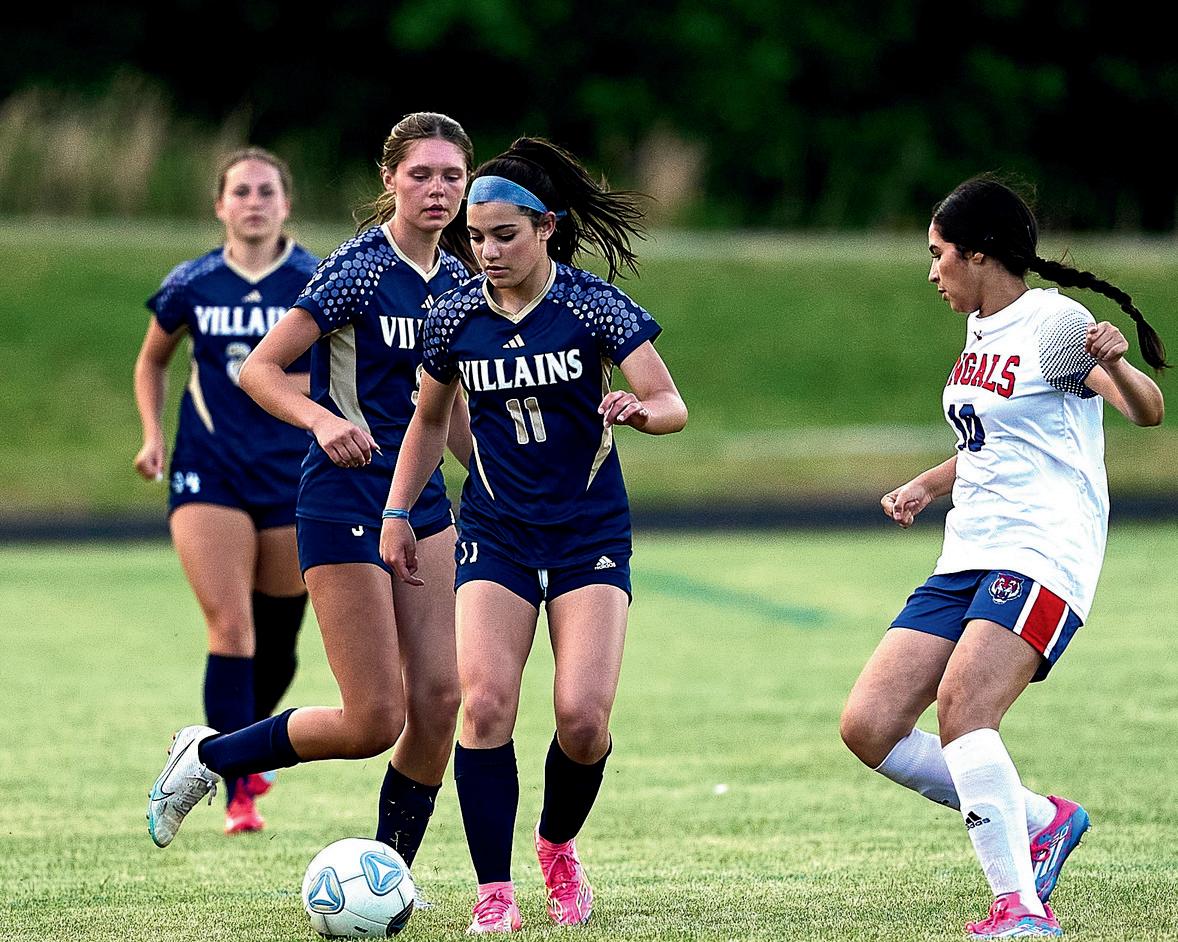
CHARLOTTE — The Diocese of Charlotte Foundation manages 106 endowments with a total market value of more than $23 million that generate income to directly aid the diocese’s schools and their students:
n Ad Meliora Endowment Fund: Financial support for facility improvements and beautification initiatives at Christ the King Catholic High School.
n American Schlafhorst Scholarship Endowment Fund: Scholarship assistance for students at Charlotte Catholic High School.
n Archibong Family Endowment Fund: Tuition assistance for Bishop McGuinness Catholic High School students who are African American, Indigenous or students of color.
n Asheville Catholic School Endowment Fund: Financial support to retain quality teachers, offer scholarship assistance, provide continuing education for teachers and enhance the school’s curriculum.
n Joseph and Margaret Baldi Endowment Fund: Tuition assistance for children of parishioners at St. Leo the Great Catholic Church to attend St. Leo Catholic School in Winston-Salem.
n Heidi Hogan Bell Memorial Endowment Fund: Provides for the general needs of Charlotte Catholic High School.
n Bishop McGuinness Catholic High School Endowment Fund: Provides for the general needs of this school in Kernersville.
n Joan W. Books Endowment Fund: Tuition assistance for children of Immaculate Conception Catholic Church to attend Immaculata Catholic School in Hendersonville.
n Don and Mary Gay Brady Endowment Fund: Tuition assistance for students at Our Lady of Grace Catholic School in Greensboro.
n Elizabeth Allen Brown Endowment Fund: For the general needs of Catholic elementary and secondary schools and Catholic campus ministries in the Asheville area.
n Father Pat Cahill and Michael Miller Endowment Fund for Academic Support: Academic support at Asheville Catholic School.
n Carr and Jurczyk Family Endowment Fund: Faculty member awards at Immaculate Heart of Mary Catholic School.
n Molly Cassidy Scholarship Endowment Fund: Scholarship assistance to parishioners of St. Pius X Church to attend St. Pius X School, both in Greensboro.
n Catholic Education Endowment Fund: Scholarships for students attending Catholic elementary schools in the diocese.
n Charlotte Catholic High School Alumni Association Board Discretionary Endowment Fund: For the general needs of Charlotte Catholic High School at the board’s discretion.
n Charlotte Catholic High School Alumni Association Scholarship Endowment Fund: Scholarships for graduating seniors to attend a college of their choice.
n Charlotte Catholic High School Endowment Fund: Benefits Charlotte Catholic High School.
n Sister M. Joanice Cohen & Sister M. Elizabeth Fowkes, IHM Endowment Fund: Financial support to promote long-term recruitment, training and development of teachers at Immaculata Catholic School in Hendersonville.
n Cornelius Alexander Davis II Tuition Assistance Endowment Fund: Tuition assistance for students at St. Leo the Great Catholic School in WinstonSalem.
n Digger Dawson Scholarship Endowment Fund: Scholarship assistance for students from Immaculate Conception Catholic Church attending Immaculata Catholic School in Hendersonville.
n Derhofer Family Endowment Fund: Tuition assistance for students at Bishop McGuinness Catholic High School in Kernersville.
n Deussen Scholarship Endowment Fund: Scholarships for Catholic high school education in the greater Charlotte area.
n Stephen and Jessica Dey Options Endowment Fund: Benefits the “Options” programs at diocese schools.
n Diocesan Educational Endowment Fund: Tuition
More than $9 million has been distributed from 106 endowments to directly benefit students and schools.
assistance for students within the diocese attending a Catholic elementary or high school.
n Faucette Endowment Fund: Financial assistance for the educational ministry of the diocese’s schools.
n Barbara Fellerhoff and Jim Coddington
Endowment Fund: Tuition assistance for students at of Asheville Catholic School.
n FFHL Tuition Assistance Endowment Fund: Established through Forward in Faith, Hope, and Love Diocesan Campaign, this fund provides tuition assistance for Catholic schools in the Diocese of Charlotte.
n Gayden and Janell Gauthier Family Endowment Fund: Technology and infrastructure updates and tuition assistance for students of Immaculate Conception Catholic Church to attend Immaculata Catholic School, both in Hendersonville.
n Mary Gay and Don Brady Endowment Fund: Tuition assistance for faculty members’ children in the Piedmont-Triad area Catholic schools to attend Bishop McGuiness Catholic High School in Kernersville.
n O’Brien and William Edward Gibbs Endowment Fund: Tuition assistance for students at Asheville Catholic School.
n Gismondi Family Scholarship Endowment Fund: Scholarship assistance for children of St. Mark Catholic Church parishioners to attend Christ the King Catholic High School in Huntersville.
n Bobby Grant Memorial Endowment Fund: Tuition assistance for students attending Bishop McGuinness Catholic High School in Kernersville.
n Megan Healy Scholarship Endowment Fund: Scholarship assistance for students at St. Patrick Catholic School in Charlotte.
n Edith and George Hilbert Endowment Fund: Financial support for the education of students at Asheville Catholic School.
n Holy Family Catholic Church Scholarship Endowment Fund: Catholic school tuition assistance (K-12) for members of Holy Family Catholic Church in Clemmons.
n Holy Trinity Catholic Middle School Endowment Fund: Supports the general needs of Holy Trinity Catholic Middle School.
n Immaculata Catholic School Scholarship Endowment Fund: Scholarship assistance for students at this school in Hendersonville.
n Immaculate Heart of Mary Catholic School
Endowment Fund: Tuition assistance for students at this school in High Point.
n Roger Kavanagh Tuition Assistance Endowment Fund: Tuition assistance for students at St. Pius X Catholic School in Greensboro.
n Knights of Columbus 11911 of St. Eugene for Asheville Catholic School Endowment Fund: For the general needs of this school.
n Isaac A. Kohl Scholarship Endowment Fund: Scholarship for students matriculating from St. Pius X Catholic School to Bishop McGuinness Catholic High School.
n Leeolou Family Scholarship Endowment Fund: Scholarship assistance for Mecklenburg Area Catholic Schools families.
n LeFeber Endowment: General needs of Immaculata Catholic School in Hendersonville.
n LoBianco Family Endowment Fund: Tuition assistance for students attending diocesan Catholic schools.
n Alexander and Brenda Lyerly Endowment Fund: Scholarship assistance for children with financial need to attend Catholic schools in the Diocese of Charlotte.
n Lorraine J. Malphurs Endowment Fund: Student testing fees at St. Pius X Catholic School in Greensboro.
n Manley Endowment Fund: Tuition assistance for students of families at St. Eugene Catholic Church to attend Asheville Catholic School.
n Catherine McAuley Scholarship Endowment
Fund: Scholarships to Catholic students attending Mecklenburg Area Catholic Schools.
n Bryant McDermott Endowment Fund: Scholarship assistance to students of Charlotte Catholic High School and Holy Trinity Middle School in Charlotte.
n Francis J. McGrail Scholarship Endowment Fund: Scholarship assistance to students of Immaculate Heart of Mary Catholic School in High Point.
n Leonard F. McGinley Family Endowment Fund: Tuition assistance for children of Holy Family Catholic Church in Clemmons.
n Lee McGuiness Endowment Fund: Benefits the Charlotte Catholic High School Alumni Association.
n Sandy McMonagle Endowment Fund: Tuition assistance for students at Our Lady of Mercy Catholic School in Winston-Salem.
n Mecklenburg Area Catholic Schools (MACS) Education Endowment Fund: Assistance to the nine MACS schools in the Charlotte area.
n Mecklenburg Area Catholic Schools (MACS)
Special Needs Endowment Fund: For MACS’ students with special needs.
n Dr. Stanley Michalski Jr. Endowment Fund: Assistance for the MACS band programs.
n Katelyn Mitchell Student Athlete Scholarship Endowment Fund: For the benefit of a student-athlete in sixth, seventh or eighth grade at St. Pius X Catholic School in Greensboro.
n Eleanor C. Murphy Educational Trust Scholarship Endowment Fund: Provides scholarships for students from Sacred Heart Catholic Church in Salisbury.
n Monsignor Lawrence C. Newman Endowment Fund: Tuition assistance for students at Our Lady of Mercy Catholic School in Winston-Salem.
n Victor M. Nussbaum Jr. Educational Endowment Fund: Tuition assistance for students at St. Pius X Catholic School in Greensboro.
n Chris and Margaret Onulak Endowment Fund: General needs of Asheville Catholic School.
n Our Lady of Grace School Endowment Fund: General needs of this school in Greensboro.
n Our Lady of the Assumption Catholic School Fund: General needs of this school in Charlotte.
n Poutré Family Endowment Fund: General needs of Immaculata Catholic School in Hendersonville.
n Quinn Family Endowment Fund: General needs of Immaculata Catholic School in Hendersonville.
n George L. Repass Memorial Tuition Endowment Fund: Tuition assistance for students at Bishop McGuinness Catholic High School in Kernersville.
n Sister Geri Rogers Endowment Fund: Tuition assistance for students of Our Lady of Mercy Catholic School in Winston-Salem.
n Clark G. Ross Scholarship Endowment Fund: Scholarship assistance for Catholic high school students from Catholic parishes in Mecklenburg, Iredell, Cabarrus and Rowan counties.
n Clark G. Ross St. Therese Catholic Church Scholarship Endowment Fund: Assistance for college age parishioners at St. Therese Catholic Church in Mooresville.
n Ruggieri Family Endowment Fund: Tuition assistance at Bishop McGuinness Catholic High School.
n Sacred Heart School Catholic Endowment Fund: General needs of this school in Salisbury.
n Sheridan-Mangan Endowment Fund: Tuition assistance for students at Asheville Catholic School.
n Monsignor Joseph S. Showfety Endowment Fund: Tuition assistance for students enrolled in Catholic grade school or high school and reside in Guilford or Forsyth County.
n Monsignor Joseph S. Showfety Bishop McGuinness Catholic High School Endowment Fund: Tuition assistance for students of this school.
n Sisters of Mercy Scholarship Endowment Fund: Tuition assistance for students at St. Michael Catholic School in Gastonia.
n Sisters of St. Joseph Endowment Fund: Tuition
assistance for Bishop McGuinness students.
n Victoria Sleeman Scholarship Endowment Fund: Scholarships for students of Immaculate Conception Catholic Church to attend Immaculata Catholic School in Hendersonville.
n Frank Spinks Endowment Fund: Professional development activities for the staff at Immaculata Catholic School in Hendersonville.
n Mary Spinks Endowment Fund: Scholarship assistance to minority students at Immaculata Catholic School in Hendersonville.
n Michelle Stanley Scholarship Endowment Fund: Tuition assistance at St. Mark Catholic School in Huntersville.
n St. Ann Catholic School Endowment Fund: General needs of this school in Charlotte.
n St. Frances Cabrini Scholarship Endowment Fund: Tuition assistance for St. Pius X Catholic School students from first-generation families.
n St. Gabriel Catholic School Endowment Fund: General needs of this school in Charlotte.
n St. Joseph Scholarship Endowment Fund: Scholarship assistance for students at Asheville Catholic School.
n St. Lawrence Council (1695) Student Scholarship Endowment Fund: Financial assistance for the educational needs of council members’ and deceased members’ children.
n St. Leo Catholic School Endowment Fund: General needs of this school in Winston-Salem.
n St. Mark Catholic School Endowment Fund: General needs of this school in Huntersville.
n St. Mary’s Catholic Church Scholarship Endowment Fund: Tuition aid for the children of parishioners from St. Mary’s Catholic Church who attend Our Lady of Grace Catholic School or St. Pius X Catholic School, both in Greensboro, or Bishop McGuinness Catholic High School in Kernersville.
n St. Matthew School Endowment Fund: General needs of this school in Charlotte.
n St. Michael School Endowment Fund: General needs of this school in Gastonia.
n St. Patrick Catholic School Endowment Fund: General needs of this school in Charlotte.
n St. Pius X School Endowment Fund: Tuition assistance for students at this school in Greensboro.
n Michael Sullivan Endowment Fund: For general fine arts department needs at Charlotte Catholic High School or non-profit support compatible with known interest of Michael Sullivan.
n Theresa Lasecki Talbert Scholarship Endowment Fund: Tuition assistance for students at Bishop McGuinness Catholic High School in Kernersville.
n Remo and Carolyn Termini Endowment Fund: Scholarships for students attending Asheville Catholic School.
n John Michael Thompson Endowment Fund: Tuition assistance for students at Sacred Heart Catholic School in Salisbury.
n F. Joseph Treacy Endowment Fund: Scholarship assistance for students in all nine MACS schools.
n Villalon Family Endowment Fund: General needs of Bishop McGuinness Catholic High School.
n Sabrina Watt Endowment Fund: Tuition assistance for students attending MACS schools.
n Florence B. Werden Memorial Endowment Fund: General needs of Immaculata Catholic School in Hendersonville.
n Kurtis D. Williams Flight Scholarship Endowment Fund: Flight-related assistance for aviation students at Bishop McGuinness Catholic High School in Kernersville.
n Sister Paulette Williams Scholarship Endowment Fund: Scholarships for graduating Charlotte Catholic High School seniors to attend a college of their choice.
n Mary Jane Winfrey Endowment Fund: General needs of Asheville Catholic School.
n Woelfel Family Endowment Fund: Students’ educational purposes at Our Lady of Grace Catholic School in Greensboro.
n Wos-Dejoy Endowment Fund: Tuition assistance for students at St. Pius X Catholic School in Greensboro.
n Sister Emma Yondura Endowment Fund: Tuition assistance for students at St. Leo Catholic School in Winston-Salem.
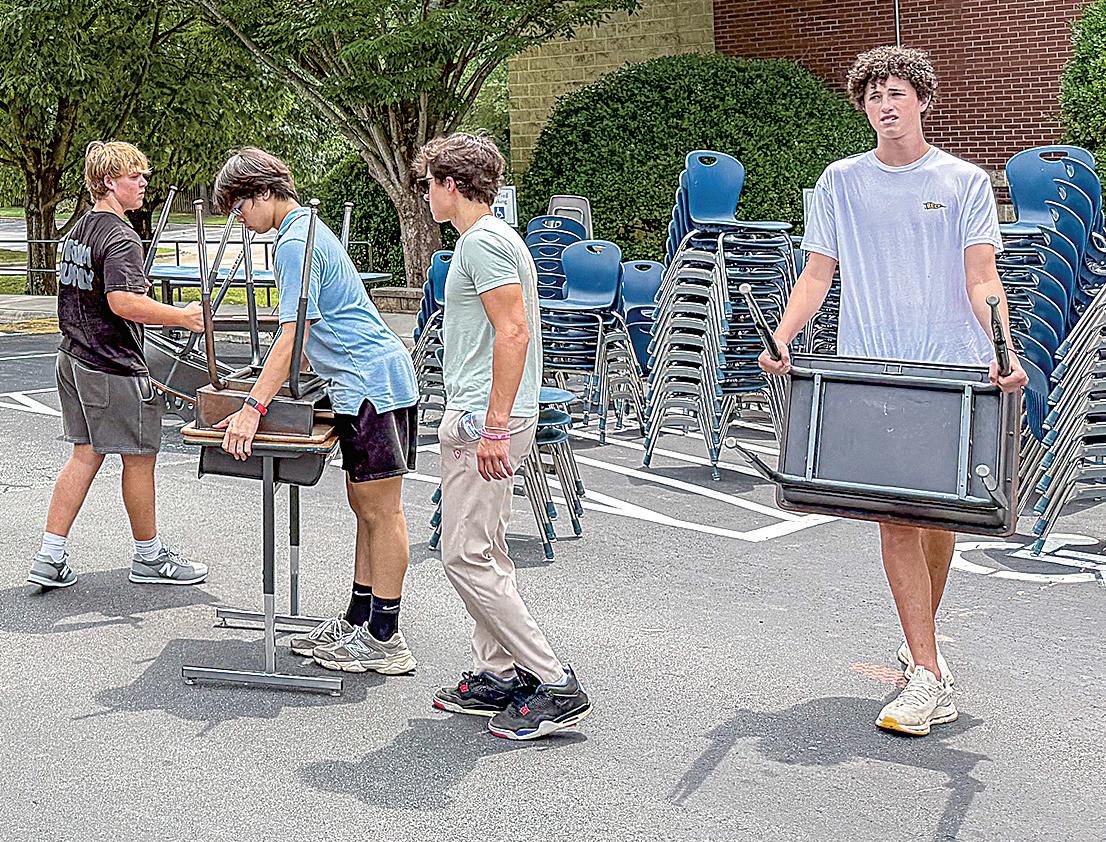
replaced the natural turf on its athletic field with artificial turf. The next phase of the project includes installing a playground.
Sacred Heart School in Salisbury is completing an art room funded by a $166,000 Shea Homes grant. To convert a shared space into a fully functional art room, a wall was sealed and soundproofed, storage for art supplies and a sink were incorporated, and interior finishes were upgraded to promote creativity. Existing furniture was replaced with flexible seating to accommodate students of varying ages.
St. Ann School in Charlotte is spotlighting students with audiovisual and lighting enhancements to its performance stage in the gym, as well as the installation of acoustical panels in the cafeteria, all funded by its annual fund.
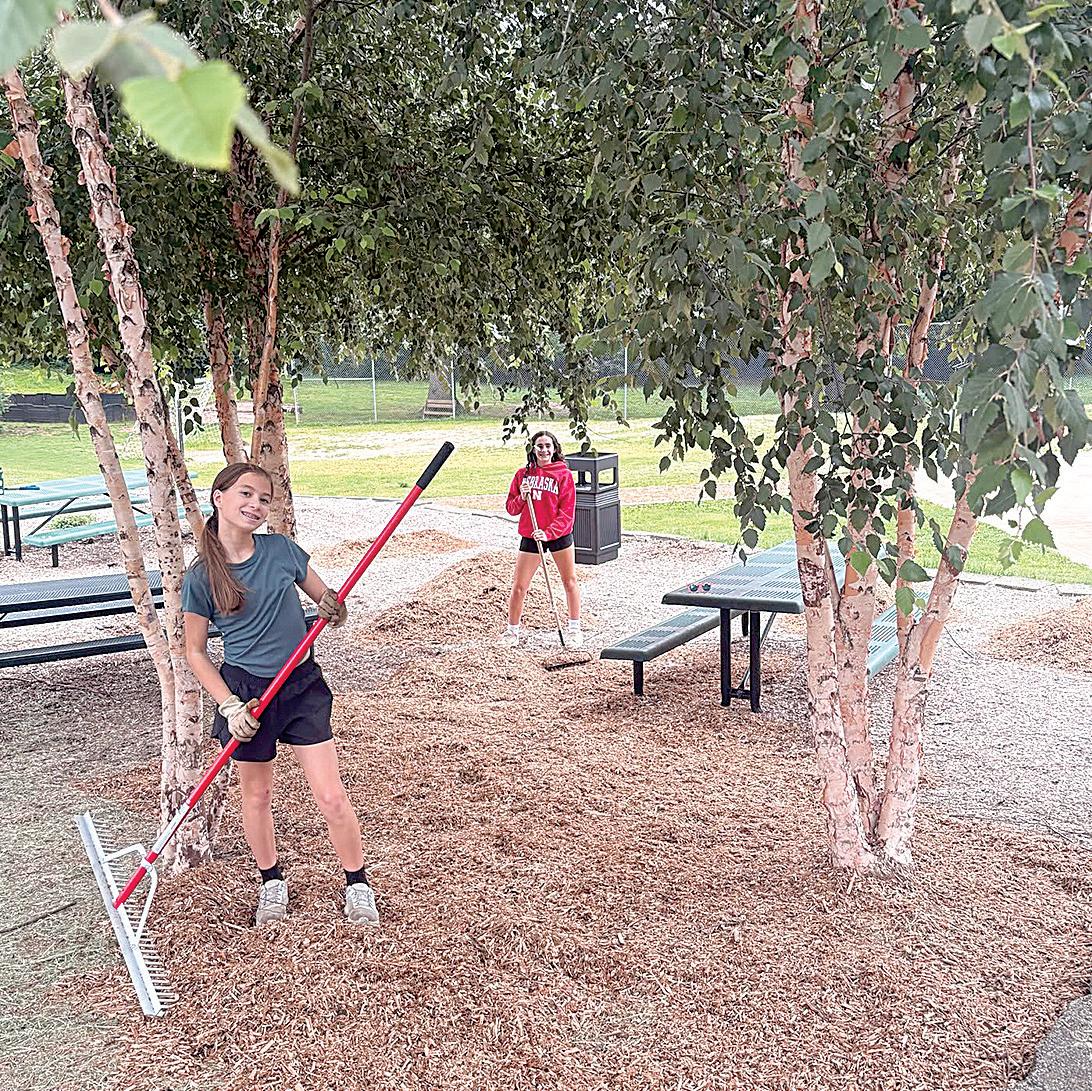
WINSTON-SALEM — The community gathered Aug. 1 for an end-ofsummer tradition at St. Leo School: Mulch Day. Parents, students and staff volunteers helped get the playground ready to welcome students for the start of the school year.
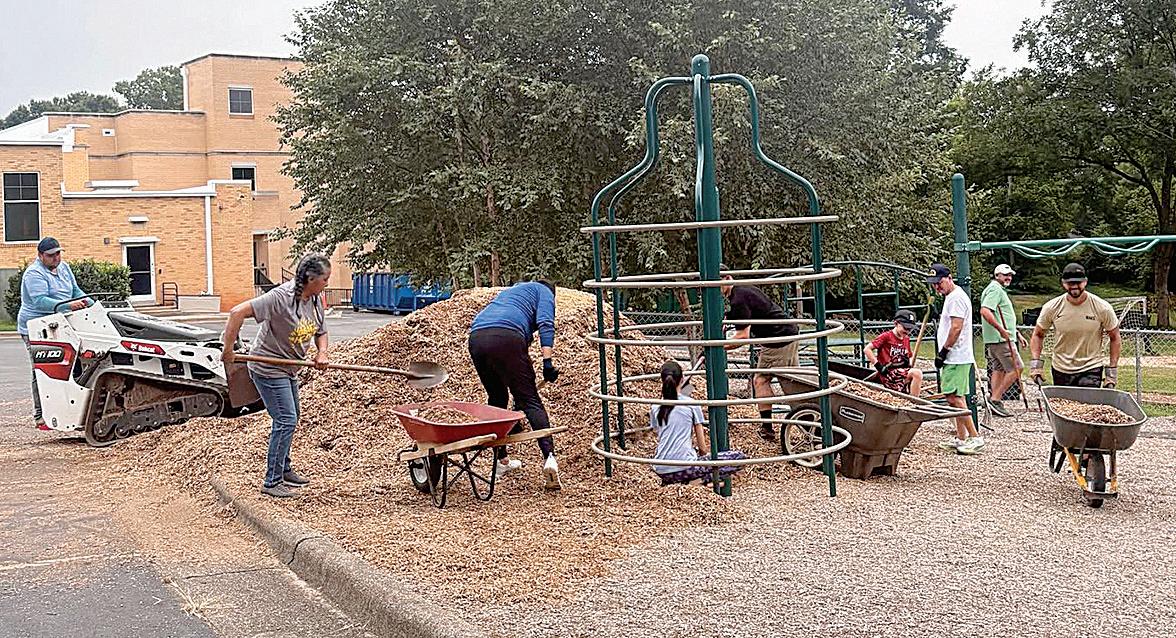
Monroe said, “and she will be a great fit for our school system with her past experiences and skillset.”
“I am excited and blessed to serve as the next principal of St. Matthew Catholic School,” Eaton said. “Throughout my years in Catholic education, I have been grateful for the opportunity to help students grow academically and in their faith. I look forward to partnering with the faculty, staff and families of St. Matthew as we continue the tradition of educating saints and scholars.”
Charlotte Catholic High School has named Michael Seeley, a long-time education leader and administrator, as its president.
Most recently he was president of the Lafayette Catholic School System in Indiana, where he provided strategic and operational leadership across multiple campuses, overseeing enrollment, advancement, finances, governance and long-range planning.
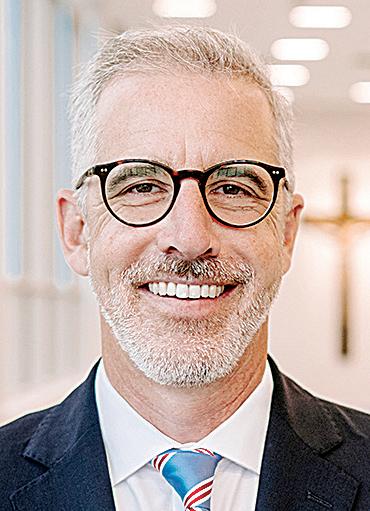
Seeley has more than two decades of senior leadership experience in both Catholic and independent school settings, including the University of Notre Dame, Phillips Exeter Academy and Culver Academies. He has done extensive work in institutional advancement, admissions and enrollment management, and also worked closely with boards, donors and diocesan leaders.
As president of Charlotte Catholic, Seeley will focus on the school’s long-range planning, community relationships, financial and operational management and fundraising. He will partner in leading the school with longtime principal Kurt Telford.
“I am looking forward to this new chapter, which not only allows me to work with Michael but also to return to my true love of working closely with students and teachers as principal,” Telford said.
Seeley added, “I look forward to working alongside dedicated and passionate students, teachers, staff and families as we fulfill our shared mission to graduate not only scholars and athletes but disciples of Christ.”
— Catholic News Herald and Diocese of Charlotte Catholic Schools Office
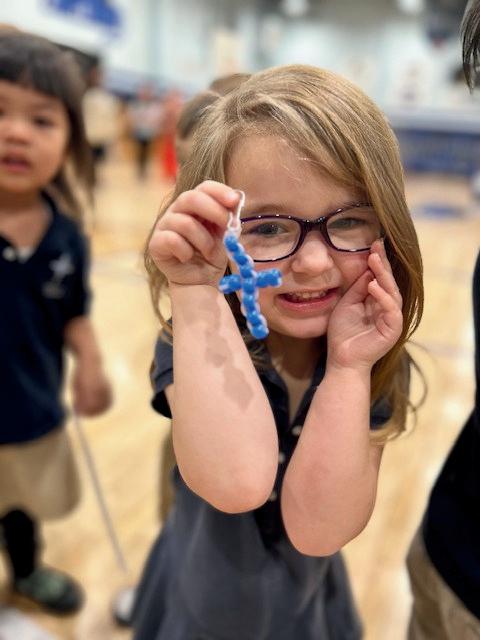
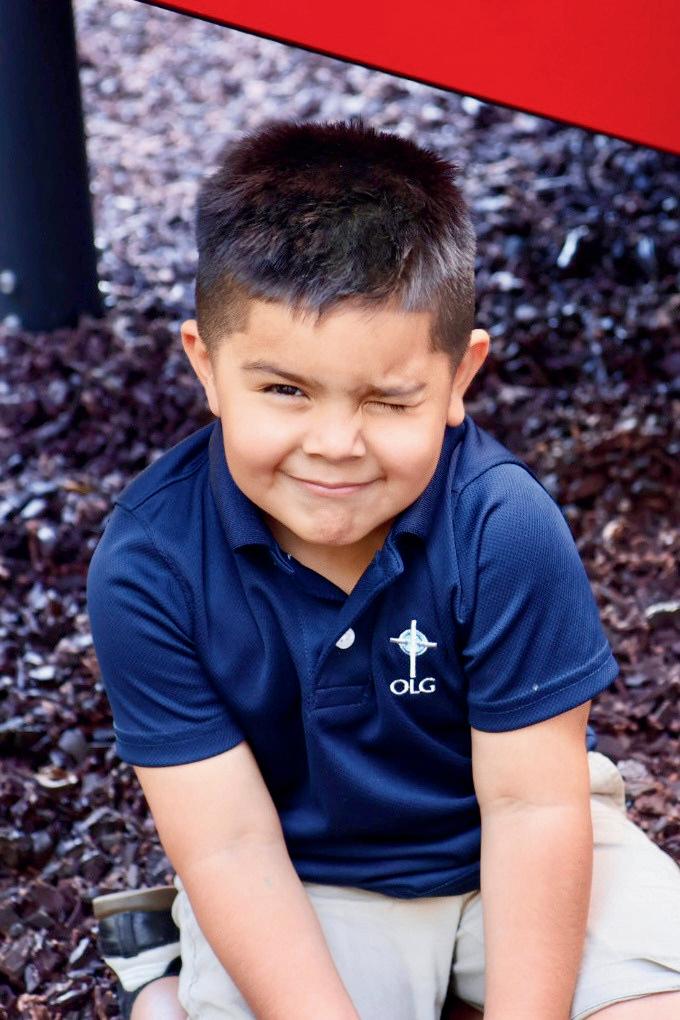

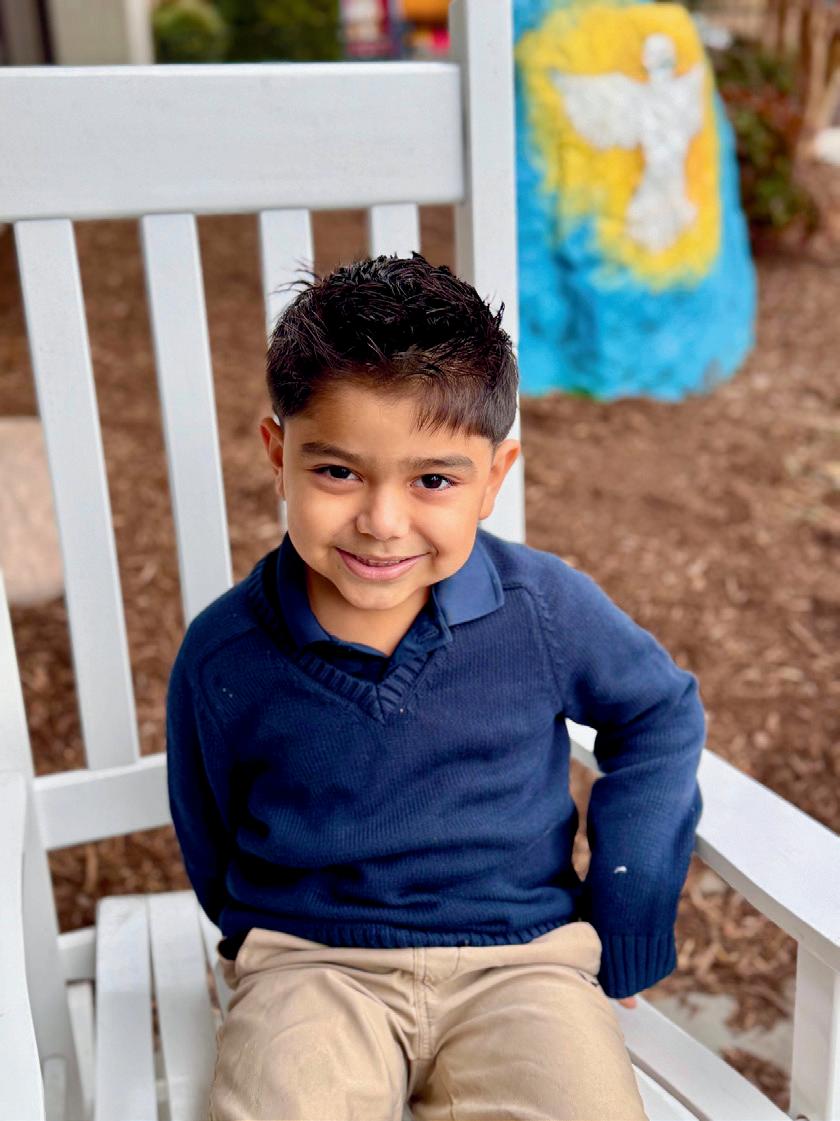

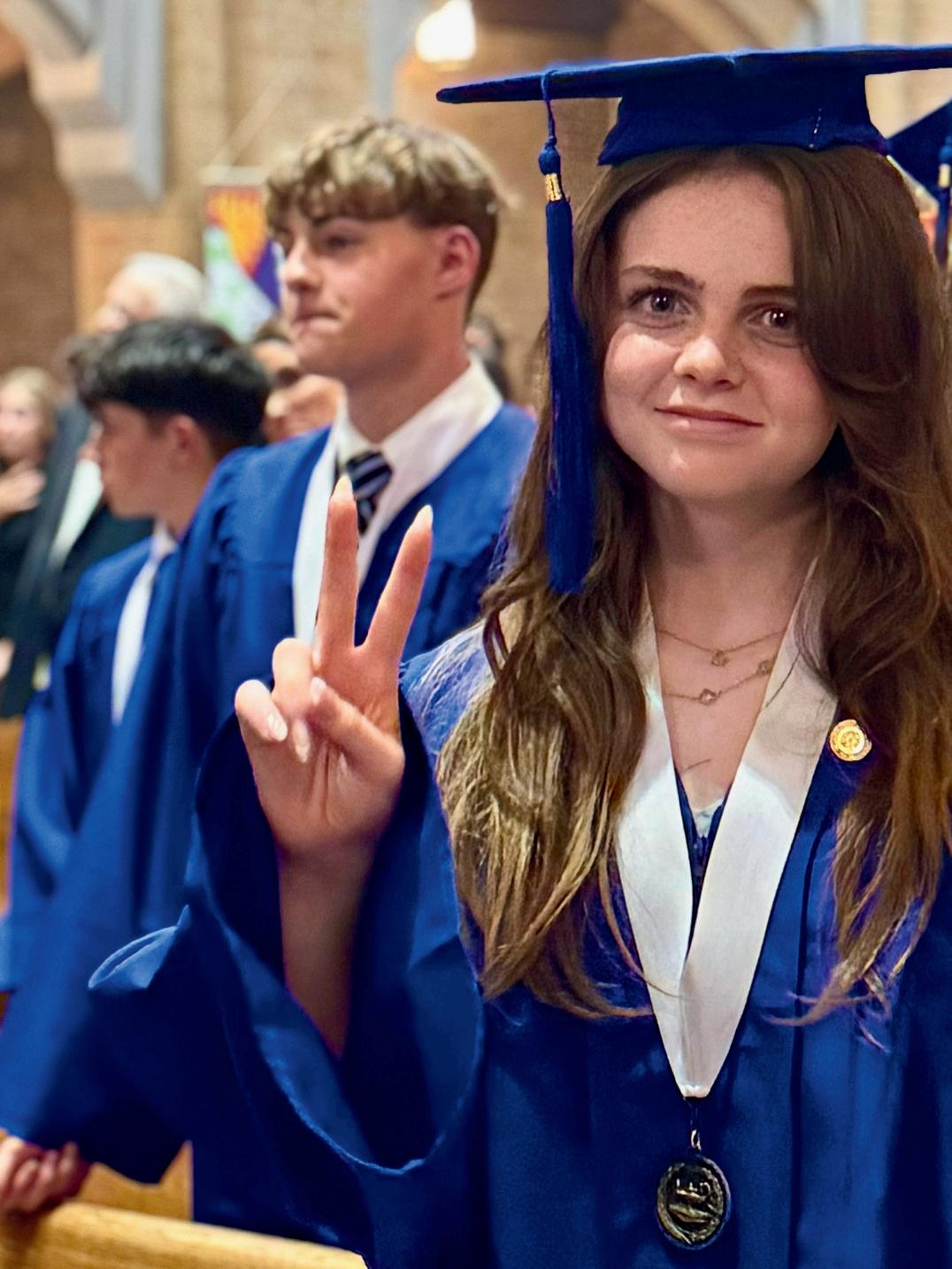
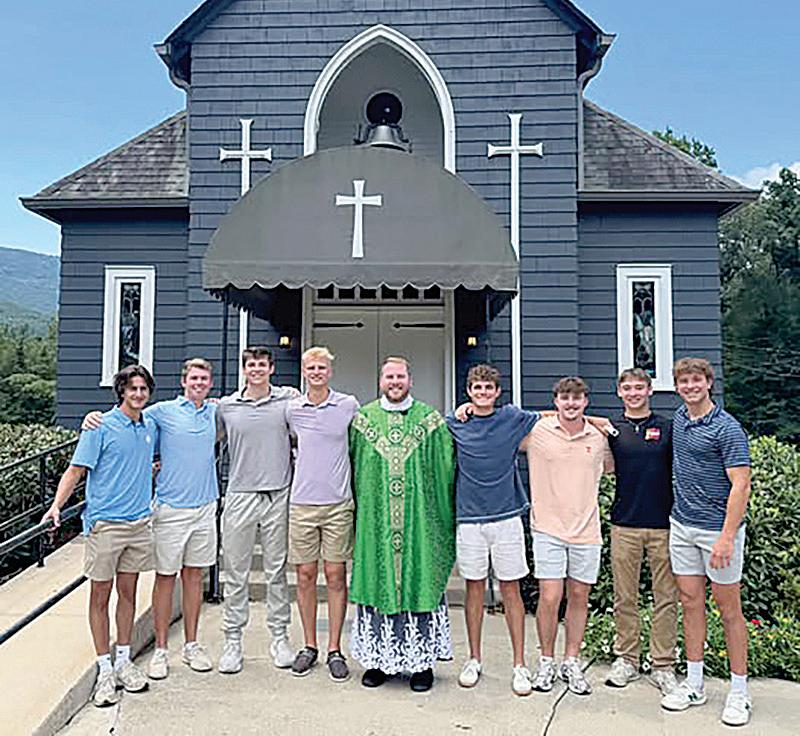
SWANNANOA — Members of the Christ the King Class of 2025 visited Father Aaron Huber in his new parish home: St. Margaret Mary Church in Swannanoa. The late July visit reunited Father Huber, who spent three years as chaplain at the high school before assuming the role of parochial administrator at St. Margaret Mary July 1, with some of his former students. Seeing these young men connect with the priest who walked alongside them through retreats, Masses, celebrations and everyday moments was a beautiful reminder that the relationships formed in Catholic schools are built to last.
“While his address may have changed, the love, gratitude, and faith they share remain the same,” the school wrote in a Facebook post. “Thank you, Father Huber, for the lasting impact you’ve had on these graduates and so many others. Your CTK family will always be grateful.”
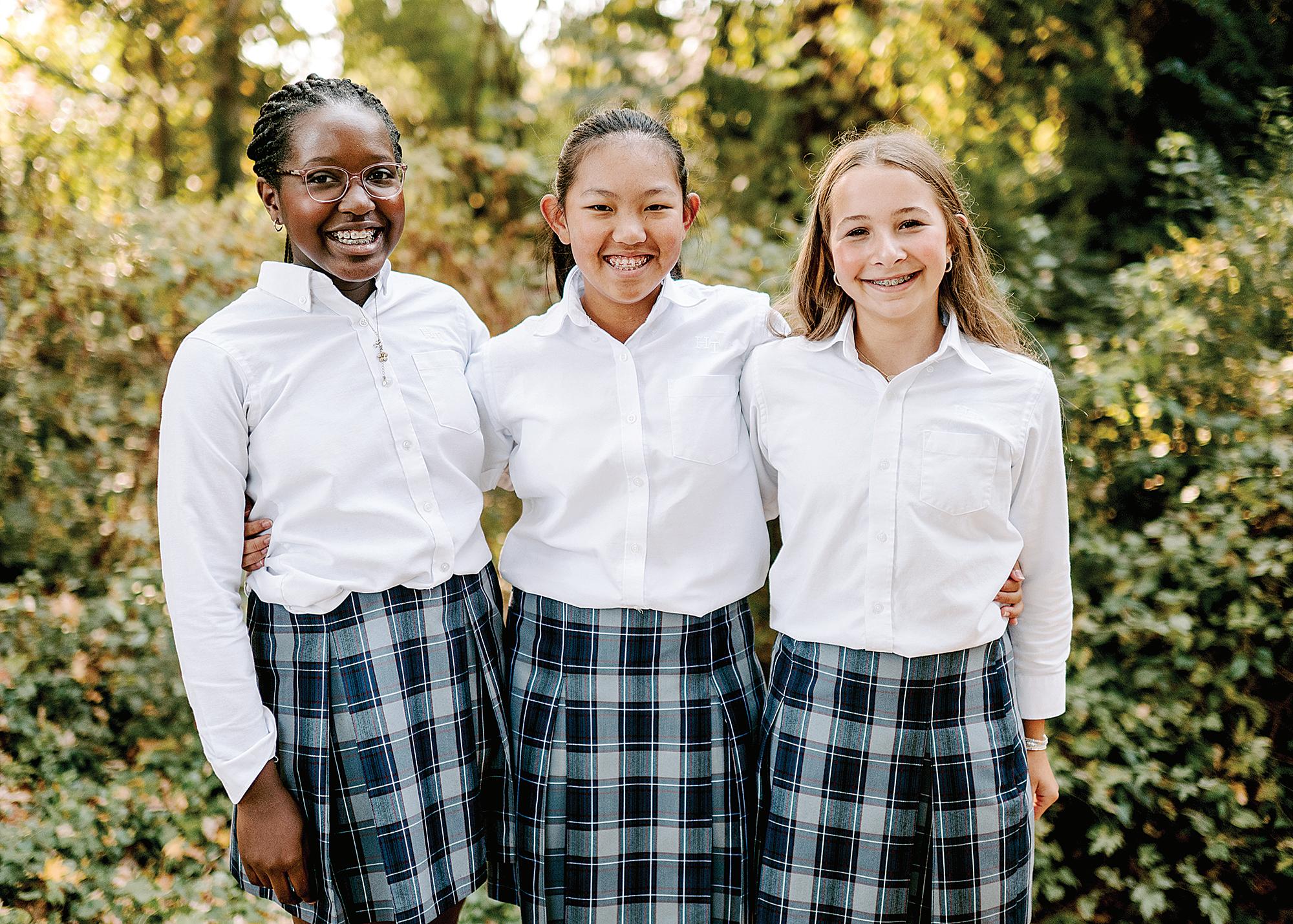

■

LISA M. GERACI
lmgeraci@rcdoc.org
EL CERINAL, Guatemala — Este mes de julio, 17 misioneros de tres parroquias de la Diócesis de Charlotte, incluidos ocho estudiantes de Charlotte Catholic High School, viajaron para apoyar los esfuerzos misioneros en El Cerinal, Guatemala, y colaborar en los preparativos para la dedicación de una iglesia cuya construcción iniciaron en 2022. El padre Joshua Voitus, párroco de la parroquia St. Vincent de Paul en Charlotte, encabezó el viaje de una semana, acompañado por otros dos nuevos miembros del clero: el diácono Daren Bitter, de la parroquia St. Matthew en Charlotte, y el padre Juan Miguel Sánchez, sacerdote secretario del obispo Michael Martin.
La misión comenzó con la iglesia St. Gabriel de Charlotte en 2022, cuando los organizadores Chris Turley y John Bonner establecieron vínculos con la comunidad y comenzaron la campaña para construir una nueva iglesia. Bonner y Turley presentaron a un nuevo grupo de misioneros una Iglesia de Nuestra Señora del Monte Carmelo casi terminada y una comunidad llena de católicos fieles, deseosos de prosperar física, mental y espiritualmente.
“Dios nos miraba a través de los ojos del pueblo guatemalteco mientras nosotros nos convertíamos en las manos y los pies de Cristo”, dijo el diácono Bitter. “Es fascinante porque uno puede decir literalmente que estamos construyendo una iglesia. Y sí, se trata del edificio y de las bancas, pero en última instancia se trata de las personas. En ambos sentidos, estamos construyendo una casa para Cristo”.
A pesar de los impresionantes paisajes de colinas cubiertas de cafetales y de las brumosas aguas de la Laguna El Pino, asentada sobre suelo volcánico, se encuentra el caserío de El Cerinal. Está compuesto por pequeñas viviendas con lonas que sirven de puertas y pisos de tierra. La electricidad es intermitente y el agua que ocasionalmente llega por las tuberías no es potable.
Aunque el 85% de la población de este pequeño pueblo es católica, la comunidad también sufre una sequía espiritual: un solo sacerdote atiende 10 parroquias dispersas por toda la provincia de Santa Rosa.
Cada domingo se celebra una única misa a las 6 de la mañana. La confesión, la misa diaria, la adoración eucarística y la unción de los enfermos – al igual que el agua – son lujos prácticamente inaccesibles.
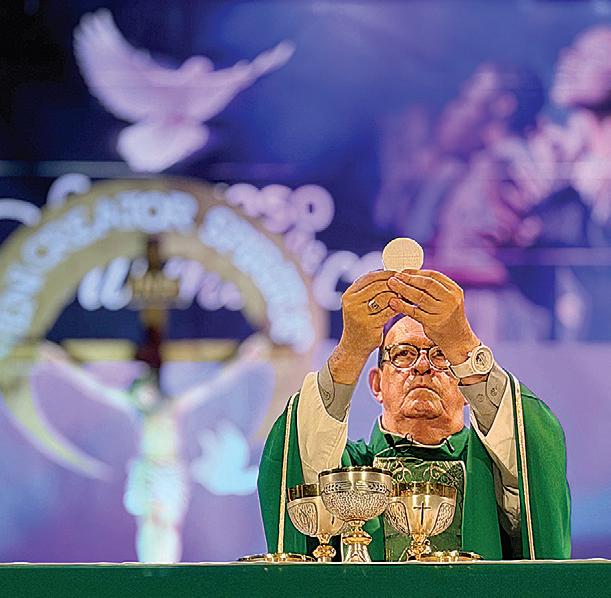
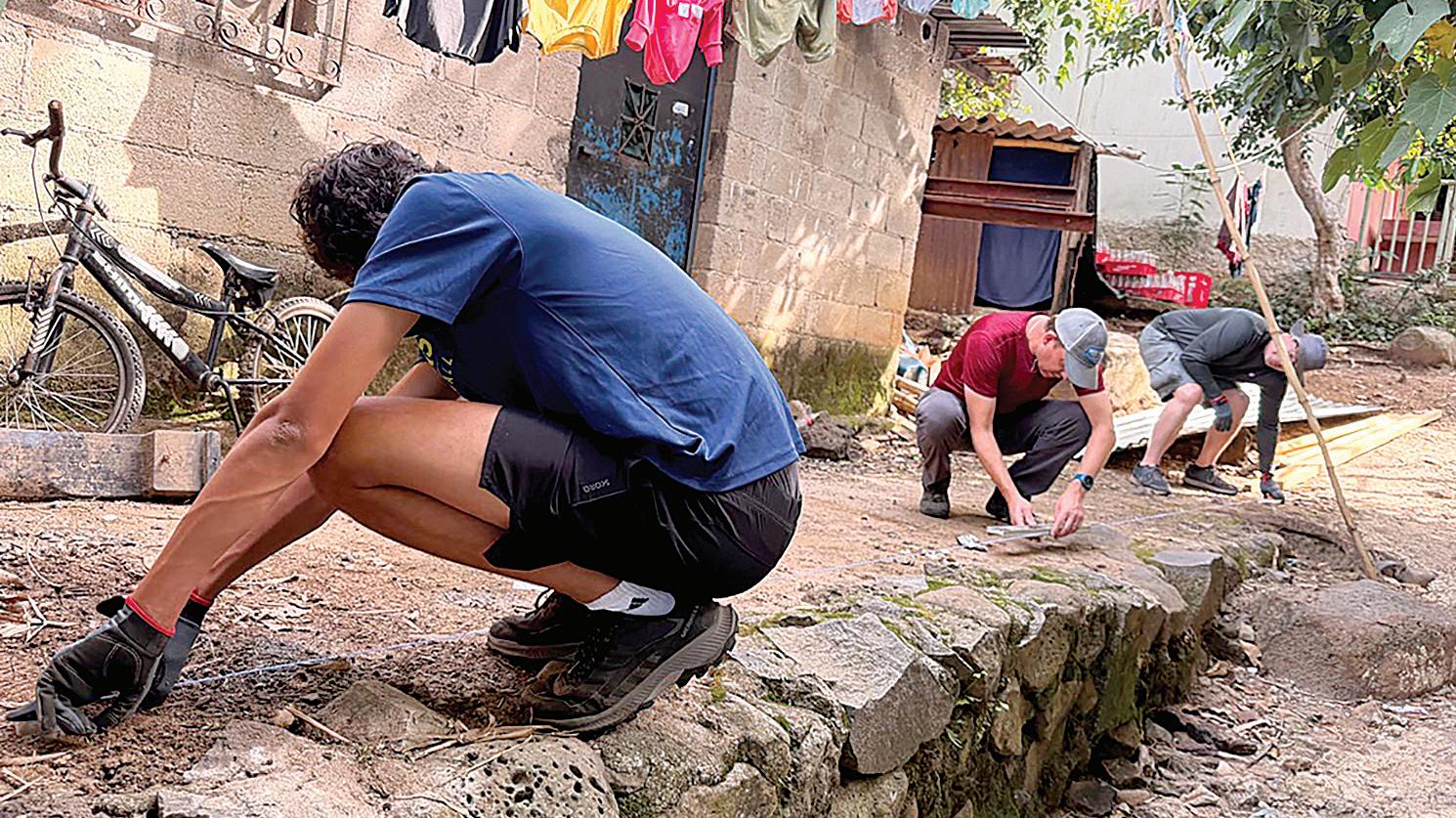
FOTOS PROPORCIONADAS
(En el sentido de las agujas del reloj, desde arriba) Misioneros de la diócesis llevaron a cabo importantes proyectos de construcción en la aldea de El Cerinal. Los niños participaron en la Escuela Bíblica de Vacaciones dirigida por los misioneros. El padre Joshua Voitus, párroco de la parroquia San Vicente de Paúl, encabezó el viaje misionero.
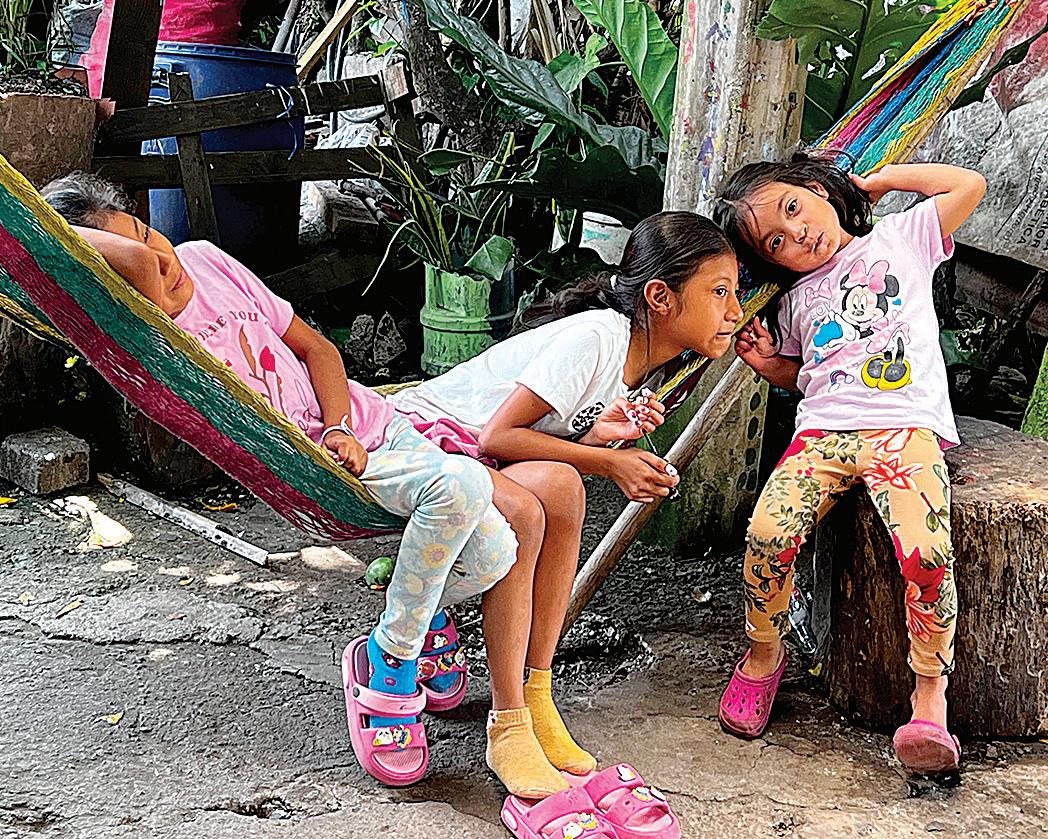
El padre Voitus, el diácono Bitter y el padre Sánchez celebraron la misa diaria en español. Un sonriente poblador conocido como Don Chilo caminaba una hora y media de ida y otra de regreso, apoyándose únicamente en una pierna y unas muletas, para asistir cada día. “Fue conmovedor verlo”, comentó el diácono Bitter.
UNA SEMANA DE AMOR Y CARIDAD
Más de 60 niños corrían, brincaban y llegaban cada día a la iglesia para participar en actividades de coloreado, manualidades, cantos y lecciones de fe dentro de la Escuela Bíblica de Vacaciones organizada por Turley. Bonner y su equipo instalaron 21 sistemas
KANNAPOLIS — El 1 y el 2 de agosto se llevó a cabo el decimocuarto Congreso Carismático, Sanando Heridas en A.L. Brown High School en Kannapolis. Bajo el lema, ‘Sanando Heridas’, la conferencia annual reunió a cientos de personas de fe para dos días de sanación y espiritualidad acompañados por los sacerdotes colombianos padre Jose Eugenio H y padre John Mario.
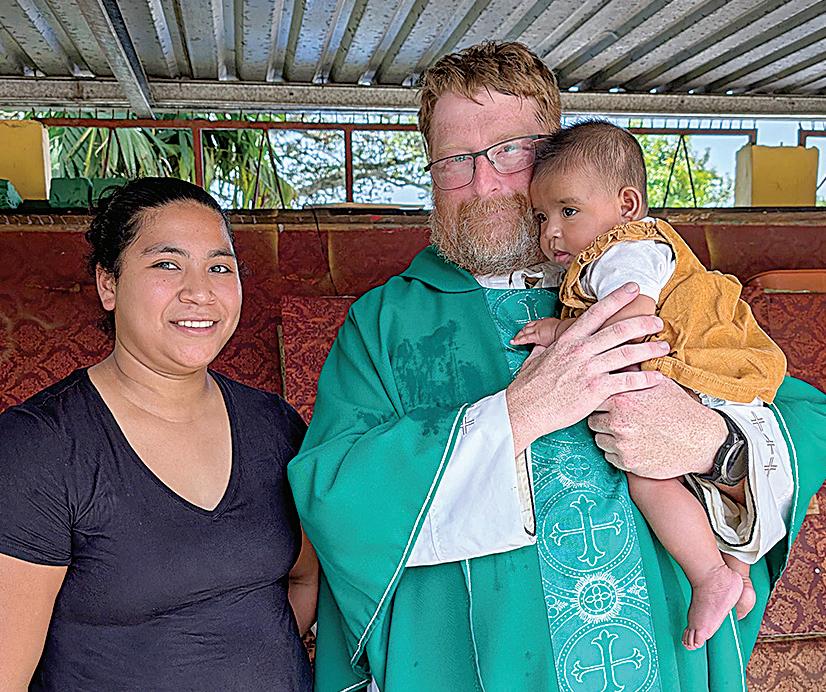
de filtración de agua para los habitantes. El clero y otros misioneros recorrieron los senderos de tierra que conducen a las viviendas, deteniéndose en cada puerta para orar, entregar medicamentos básicos de venta libre y conocer las necesidades de las familias.
A lo largo del camino también fueron evidentes pequeños actos de la providencia de Dios. Uno de ellos quedó grabado en la memoria de Turley, quien caminaba junto al padre Voitus durante una visita domiciliaria cuando encontraron a varias mujeres desconsoladas, arrodilladas junto a un ataúd. “Estaban orando para que llegara un sacerdote porque no habían podido encontrar a ninguno que celebrara el
funeral de su familiar”, recordó Turley. El padre Voitus, quien habla español con fluidez, celebró inmediatamente una misa de funeral.
“Para mí fue un milagro que apareciera precisamente cuando estaban rezando por un sacerdote”, dijo.
El padre Sánchez y el padre Voitus bendijeron hogares, administraron la unción de los enfermos a personas confinadas en casa y escucharon confesiones improvisadas cuando se las solicitaron.
“Cuando hay sacerdotes adicionales, la comunidad se siente bendecida. Mientras visitábamos a las familias, el 90 por ciento nos pedía una bendición o una oración”, explicó el padre Sánchez. “Las casas no son cómodas según los estándares de Estados Unidos, pero la gente es feliz. Esa es la parte que más impacta. A veces asociamos la felicidad con el lujo y la comodidad, pero en realidad nace del corazón”.
Erika López, quien participó por primera vez como misionera y es originaria de Guatemala, anhelaba compartir con sus hijos los recuerdos de su infancia. Mientras recorría la comunidad junto a su hijo, no pudo contener las lágrimas al reencontrarse con una cultura que casi había perdido. “La conexión fue inmediata; no había ninguna barrera, solo un sentimiento compartido de amor”, expresó López. “Me trajo de vuelta esos recuerdos de la infancia de aquel pequeño lugar lejano que alguna vez conocí”. Al finalizar la semana, aunque hubo momentos sin electricidad, sin aire acondicionado y sin agua, al grupo le costó despedirse. En la misa final, el “adiós” se convirtió en un “hasta luego”.
Las lágrimas fueron abundantes y brotaron con libertad, señaló el diácono Bitter. Dentro de 51 semanas, el grupo tiene previsto regresar acompañado de más misioneros provenientes de otras parroquias y escuelas. En un plazo de diez años, Turley imagina visitar El Cerinal cuatro veces al año con distintos grupos, trabajando desde la piedra angular que colocaron hace algunos años en este pequeño caserío con pocas esperanzas materiales, pero con una fe inmensa.
“Este viaje es mucho más que personas que quieren desconectarse, dejar el teléfono a un lado y dedicar tiempo, dinero y energía”, afirmó el diácono Bitter. “Se trata de difundir el amor de Cristo mediante la oración, la experiencia compartida como una sola familia humana y hacer que el mundo sea un poco más pequeño”.
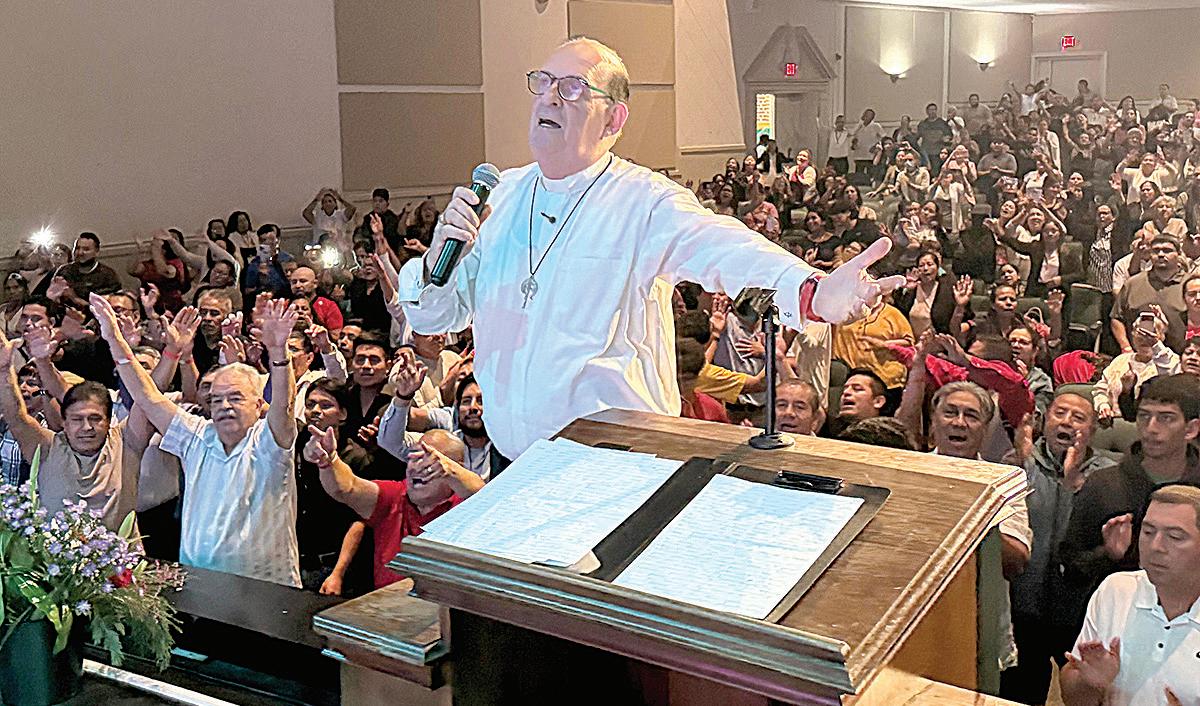
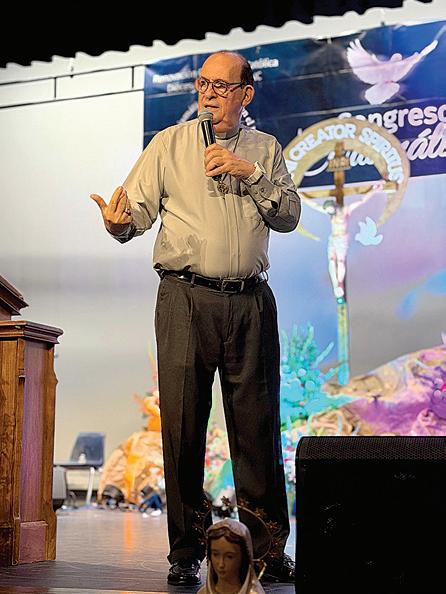
Al retomar sus audiencias generales tras un receso de verano de un mes, el Papa León XIV instó a los católicos a integrar más plenamente la Liturgia de las Horas en su vida cotidiana, señalando que la oración pública de la Iglesia es un antídoto contra un mundo marcado por la tecnología, el consumismo y una mentalidad centrada en la eficiencia.
“Cada semana y cada día, la Eucaristía y la Liturgia de las Horas son el aliento de la vida de la Iglesia que hace circular al Espíritu Santo a través de su Cuerpo”, dijo el 5 de agosto.
Debido al calor veraniego de Roma, el Papa celebró la audiencia en el interior de la Basílica de San Pedro en lugar de en la Plaza de San Pedro; sin embargo, esta vez se llevó a cabo en la basílica en lugar de en el Aula Pablo VI. Durante su procesión hacia el altar, el Papa se detuvo para estrechar la mano a los asistentes y bendecir a los bebés y los rosarios.
Continuando con su serie de catequesis sobre los documentos del Concilio Vaticano II, el Papa León reflexionó sobre la “Sacrosanctum Concilium”, la Constitución sobre la liturgia. Dijo que “es el Espíritu Santo el que nos enseña a rezar”, y que los cristianos se unen a Cristo al ofrecer alabanza y acción de gracias a Dios por medio del poder del Espíritu Santo. Unida a la Eucaristía, la Liturgia de las Horas santifica el ritmo del día, dijo el Papa. Comienza con la oración de la mañana, continúa al mediodía y por la tarde, y concluye con la oración de la noche, cuando los fieles se encomiendan a la paz de Dios.
“Cada hora es un acto de esperanza”, afirmó. “Durante nuestra peregrinación terrenal velamos con toda la Iglesia esperando el regreso glorioso del Señor”.
La Liturgia de las Horas es la oración diaria oficial de la Iglesia, que consiste en salmos, lecturas de las Escrituras, himnos y oraciones recitadas en momentos específicos a lo largo del día. El Papa León señaló que la tradición de la oración “ya no se transmite” ni siquiera en muchas familias cristianas, a pesar de que la oración es una “dimensión fundamental de nuestra humanidad”. En sociedades y contextos “dominados por una mentalidad centrada en la eficiencia y en el consumismo”, la oración puede parecer “algo inútil e irrisorio”, dijo el Papa. En un mundo “donde la ciencia y la técnica pretenden dar todas las respuestas”, agregó, la oración puede parecer una forma de evasión.
La fiesta de la Asunción de la Santísima Virgen María, se celebra en toda la Iglesia el 15 de agosto. Esta fiesta tiene un doble objetivo: La feliz partida de María de esta vida y la asunción de su cuerpo al cielo.
El dogma de la Asunción se refiere a que la Madre de Dios, luego de su vida terrena fue elevada en cuerpo y alma a la gloria celestial.
Este Dogma fue proclamado por el Papa Pío XII, el 1º de noviembre de 1950, en la Constitución Munificentisimus Deus: “Después de elevar a Dios muchas y reiteradas preces y de invocar la luz del Espíritu de la Verdad, para gloria de Dios omnipotente, que otorgó a la Virgen María su peculiar benevolencia; para honor de su Hijo, Rey inmortal de los siglos y vencedor del pecado y de la muerte; para aumentar la gloria de la misma augusta Madre y para gozo y alegría de toda la Iglesia, con la autoridad de nuestro Señor Jesucristo, de los bienaventurados apóstoles Pedro y Pablo y con la nuestra, pronunciamos, declaramos y definimos ser dogma divinamente revelado que La Inmaculada Madre de Dios y siempre Virgen María, terminado el curso de su vida terrenal, fue asunta en cuerpo y alma a la gloria del cielo”.
Ahora bien, ¿por qué es importante que los católicos recordemos y profundicemos en el Dogma de la Asunción de la Santísima Virgen María al Cielo? El Nuevo Catecismo de la Iglesia Católica responde a este interrogante:
“La Asunción de la Santísima Virgen constituye una participación singular en la Resurrección de su Hijo y una anticipación de la resurrección de los demás cristianos” (966).
La importancia de la Asunción para nosotros, hombres y mujeres de comienzos del Tercer Milenio de la Era Cristiana, radica en la relación que hay entre la Resurrección de Cristo y la nuestra. La presencia de María, mujer de nuestra raza, ser humano como nosotros, quien se halla en cuerpo y alma ya glorificada en el Cielo, es eso: una anticipación de nuestra propia resurrección.
Más aún, la Asunción de María en cuerpo y alma al cielo es un Dogma de nuestra fe católica, expresamente definido por el Papa Pío XII hablando “ex-cathedra”. Y ... ¿qué es un Dogma? Puesto en los términos más sencillos, Dogma es una verdad de Fe, revelada por Dios (en la Sagrada Escritura o contenida en la Tradición), y que además es propuesta por la Iglesia como realmente revelada por Dios.
En este caso se dice que el Papa habla “excathedra”, es decir, que habla y determina
Nueva Coordinadora del Ministerio Hispano para la Vicaría de Albemarle
SALISBURY — La Dra. Nydia E. Román Rodríguez, Ed.D., ha sido nombrada Coordinadora del Ministerio Hispano para la Vicraría de Albemarle, con efectividad a partir del 3 de agosto, anunció la Oficina del Ministerio Hispano de la Diócesis de Charlotte.
Originaria de Puerto Rico, Román se trasladó a Carolina del Norte en 2018 junto a su esposo, después de que él aceptara un puesto de trabajo en la industria textil. Posee un doctorado y una maestria en Educación con especialidad en Orientación y Consejería de la Universidad de Puerto Rico. Inspirada por la fe católica de su
algo en virtud de la autoridad suprema que tiene como Vicario de Cristo y Cabeza Visible de la Iglesia, Maestro Supremo de la Fe, con intención de proponer un asunto como creencia obligatoria de los fieles Católicos.
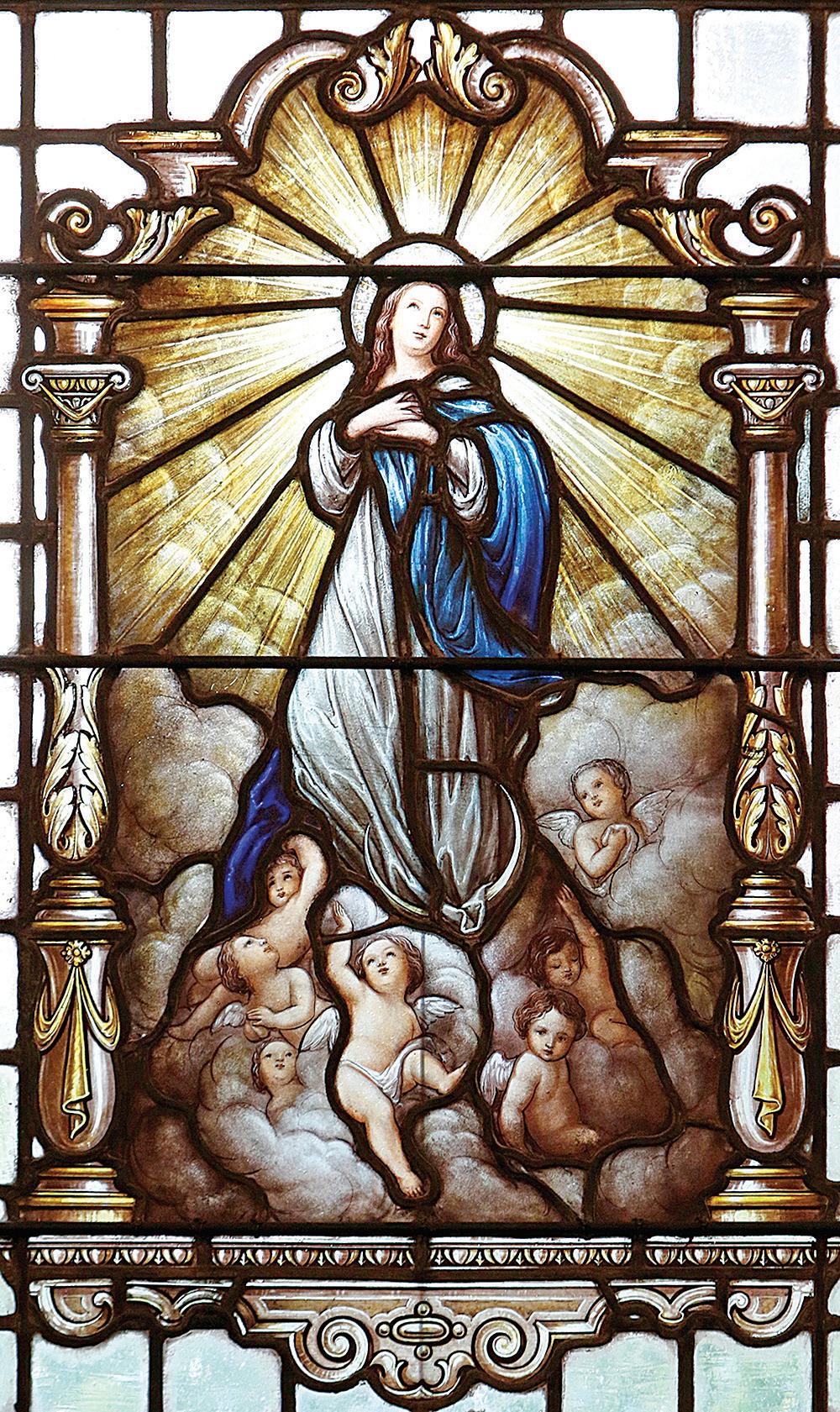
GREGORY A. SHEMITZ | OSV NEWS María aparece representada en una vidriera de la iglesia de Santa María en Manhasset, Nueva York, en esta fotografía de archivo. La fiesta de su Asunción se celebra el 15 de agosto.
El Nuevo Catecismo de la Iglesia Católica (966) nos lo explica así, citando a Lumen Gentium 59, que a la vez cita la Bula de la Proclamación del Dogma: “Finalmente, la Virgen Inmaculada, preservada libre de toda mancha de pecado original, terminado el curso de su vida en la tierra, fue llevada a la gloria del Cielo y elevada al Trono del Señor como Reina del Universo, para ser conformada más plenamente a su Hijo, Señor de los señores y vencedor del pecado y de la muerte”.
Y el Papa San Juan Pablo II, en una de sus Catequesis sobre la Asunción, explica esto mismo en los siguientes términos: “El dogma de la Asunción afirma que el cuerpo de María fue glorificado después de su muerte. En efecto, mientras para los demás hombres la resurrección de los
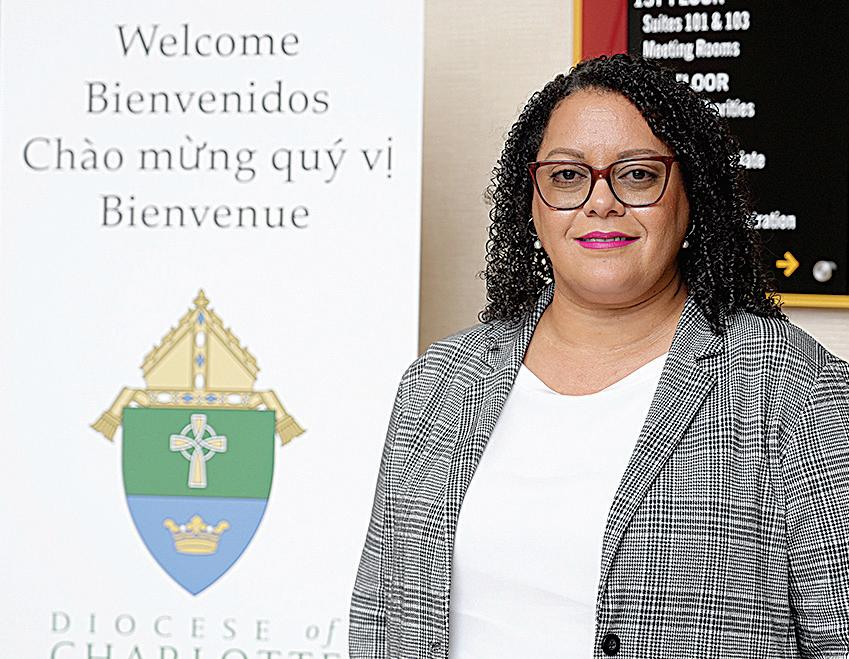
cuerpos tendrá lugar al fin del mundo, para María la glorificación de su cuerpo se anticipó por singular privilegio” (San Juan Pablo II, 2 julio 1997).
“Contemplando el misterio de la Asunción de la Virgen, es posible comprender el plan de la Providencia Divina con respecto a la humanidad: después de Cristo, Verbo encarnado, María es la primera criatura humana que realiza el ideal escatológico, anticipando la plenitud de la felicidad, prometida a los elegidos mediante la resurrección de los cuerpos” (San Juan Pablo II , Audiencia General del 9 julio 1997).
Continúa el Papa: “María Santísima nos muestra el destino final de quienes `oyen la Palabra de Dios y la cumplen’ (Lc. 11, 28). Nos estimula a elevar nuestra mirada a las alturas, donde se encuentra Cristo, sentado a la derecha del Padre, y donde está también la humilde esclava de Nazaret, ya en la gloria celestial” (San Juan Pablo II, 15 agosto 1997) Los hombres y mujeres de hoy vivimos pendientes del enigma de la muerte. Aunque lo enfoquemos de diversas formas, según la cultura y las creencias que tengamos, aunque lo evadamos en nuestro pensamiento, aunque tratemos de prolongar por todos los medios a nuestro alcance nuestros días en la tierra, todos tenemos una necesidad grande de esa esperanza cierta de inmortalidad contenida en la promesa de Cristo sobre nuestra futura resurrección.
Mucho bien haría a muchos cristianos oír y leer más sobre este misterio de la Asunción de María, el cual nos atañe tan directamente. ¿Por qué se ha logrado colar la creencia en el mito pagano de la reencarnación entre nosotros? Si pensamos bien, estas ideas extrañas a nuestra fe cristiana se han ido metiendo en la medida que hemos dejado de pensar, de predicar y de recordar los misterios, que como el de la Asunción, tienen que ver con la otra vida, con la escatología, con las realidades últimas del ser humano.
El misterio de la Asunción de la Santísima Virgen María al Cielo nos invita a hacer una pausa en la agitada vida que llevamos para reflexionar sobre el sentido de nuestra vida aquí en la tierra, sobre nuestro fin último: la Vida Eterna, junto con la Santísima Trinidad, la Santísima Virgen María y los Angeles y Santos del Cielo. El saber que María ya está en el Cielo gloriosa en cuerpo y alma, como se nos ha prometido a aquéllos que hagamos la Voluntad de Dios, nos renueva la esperanza en nuestra futura inmortalidad y felicidad perfecta para siempre.
— ACI Prensa
esposo tras el fallecimiento de su suegro, Román se involucró profundamente en
la parroquia del Sagrado Corazón en Salisbury. Ha servido como lectora en la Misa, participado en el movimiento Emaús, formado parte de la representacion del Vía Crucis el viernes Santo y colaborando en la enseñanza de la Liturgia de las Horas. Rodríguez dijo que espera poner al servicio de la comunidad hispana de la Vicaría de Albemarle su experiencia en el campo de la educación y su amor por la Liturgia de las Horas. “Me he dado cuenta de las necesidades que existen en la comunidad Hispana, que somos Católicos porque nos bautizaron, pero hay mucho desconocimiento de cómo es la fe Catolica,” dijo Román. “Cómo tengo la facilidad de enseñar creo que puedo ayudar a la comunidad Hispana a acercarse a los sacramentos, la liturgia y la oracion.”
— Brian Segovia
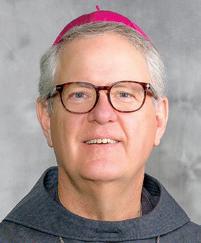
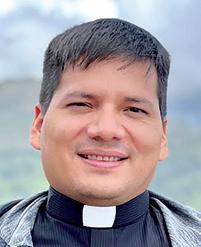
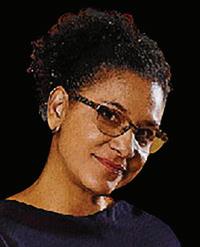
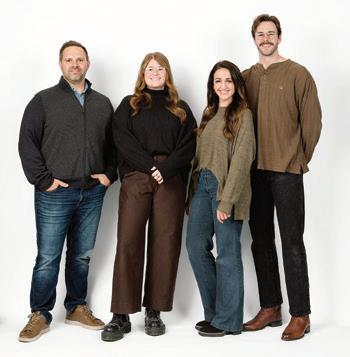
Procesión
Confesiones,
Más
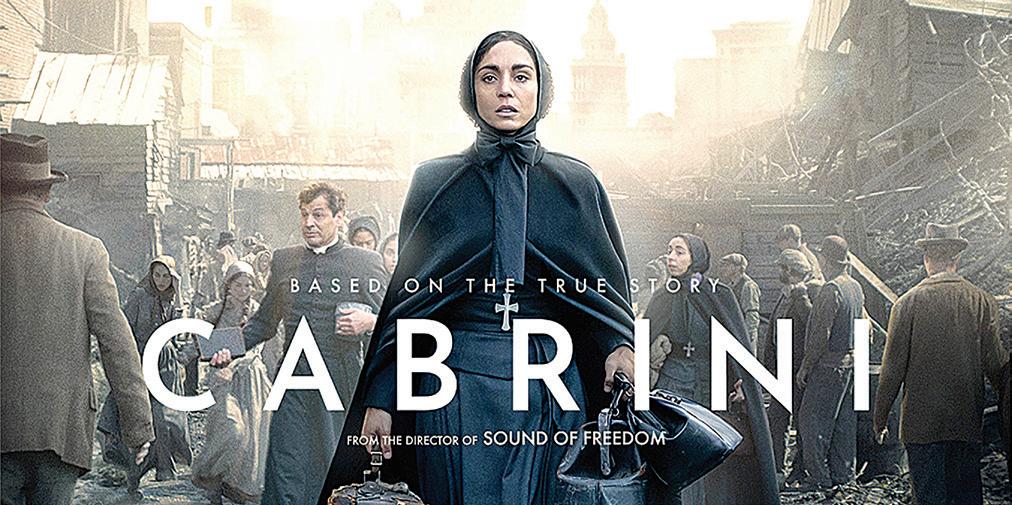

PETER JESSERER SMITH OSV News
WASHINGTON, D.C. — The U.S. Catholic bishops are preparing a nationwide call to prayer and action, with an official launch date of Aug. 18, to mobilize Catholics to address the rising abortion rate and the increased availability of an abortion-inducing drug.
“Every abortion involves the death of a child and harm to the mother. Now, with easier access to abortion pills, the abortion rate is tragically climbing, along with increased health risks,”
Archbishop Paul S. Coakley of Oklahoma City, president of the U. S. Conference of Catholic Bishops, and Bishop Daniel E. Thomas of Toledo, chairman of the USCCB Committee on Pro-Life Activities, said in joint remarks.
According to an estimate from Guttmacher Institute, a research firm for the abortion industry, 1.12 million abortions took place in 2025, marking a 21% increase from 2020. Guttmacher said 2020 marked “the last year of comprehensive national estimates” before the 2022 U.S. Supreme Court’s Dobbs v. Jackson Women’s Health Organization decision. Dobbs overturned the 1973 Roe v. Wade decision and its related abortion precedents, returning the matter of abortion back to the legislative branch.
Guttmacher found the figures for 2025 were largely unchanged from the prior year, but suggested abortion numbers overall may be an undercount due to
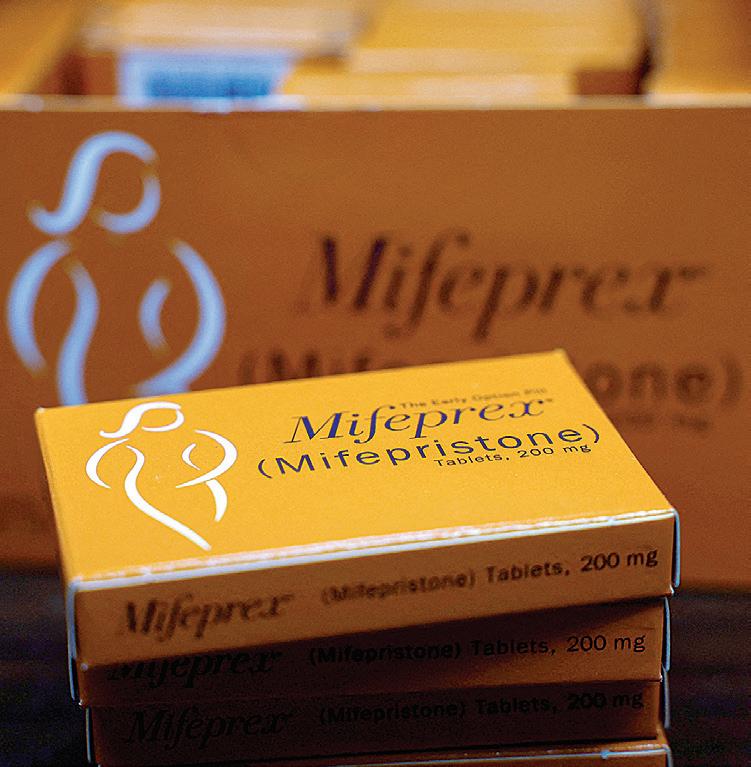
people acquiring abortion pills in advance or obtaining them by means other than U.S. abortion clinic providers.
Abortion rates in the U.S. bottomed out in 2017, when they were estimated to be just over 862,000, and began increasing again in the first Trump administration, which also approved the first generic for mifepristone, commonly called “the abortion pill,” in 2019. The pill is commonly used in combination with
misoprostol for early abortion, although the same combination is also used in some miscarriage care protocols that were more recently recommended for consideration by the American College of Obstetricians and Gynecologists.
More than six of 10 abortions in the U.S. are performed through a combination of mifepristone and misoprostol, according to recent estimates.
A federal policy permitting distribution by mail of mifepristone was first issued by the Biden administration following the Dobbs decision. The policy has thus far been left in place by the second Trump administration, which approved a second generic for mifepristone in 2025.
The Department of Justice has also sought to block state challenges to the policy pending a promised safety review by the Food and Drug Administration. But the status and timeline of the FDA review are unclear.
Archbishop Coakley and Bishop Thomas stated that the FDA “has enabled a nationwide mail-order abortion industry by allowing abortion pills to be prescribed in telehealth appointments and sold both at neighborhood pharmacies and online, circumventing state laws that protect life in the womb.”
“This leaves women vulnerable to suffering an abortion alone at home, without any medical supervision,” they said. “It also sets up additional opportunities for exploitation by violent partners or human traffickers.”
The bishops said that from the official
start of the campaign through the end of October, when the Church in the U.S. marks Respect Life Month, “the USCCB Committee on Pro-Life Activities is inviting Catholics to join a focused effort of prayer and action to stop the spread of abortion pills.”
They urged Catholics to seek “the intercession of St. Joseph, Defender of Life” as well as to send messages to pharmacies and pharmaceutical companies that are involved.
The USCCB is gearing up to mobilize Catholics all over the U.S. with resources in time for the Aug. 18 launch of the campaign.
“We are setting up a simple online platform allowing users to click and send one message that will go to multiple entities, such as brick-and-mortar pharmacies and online pharmacies, distributors and pharmaceutical companies,” Kat Talalas, assistant director for pro-life communications at the USCCB’s Secretariat of Pro-Life Activities, told OSV News. “We are also developing educational resources about the abortion pill, which will help explain distinctions between miscarriage care versus ending the life of a child in an abortion.”
The Catholic Church teaches that all human life is sacred from conception to natural death, and as such, opposes direct abortion. Following the Dobbs decision, U.S. Church officials have reaffirmed the Church’s concern for both mother and child, and have called for enhancing support to those made vulnerable to abortion through poverty and other factors.
KATIE V. JONES
Catholic Review, OSV News
BALTIMORE — Maryland native and Dominican Father Justin Bolger was hoping to hear some “whooping and hollering” July 29 when he and his band, The Hillbilly Thomists, performed at Sts. Philip and James, a Baltimore parish served by members of his religious order. And the crowd did not disappoint, according to a video clip posted July 30 to the band’s social media of its members playing “Holy Ghost Power” on stage in the parish’s social hall, with band member Father Thomas Joseph White, rector of the Pontifical University of St. Thomas Aquinas in Rome, at the microphone. The July 29 stop was the fifth stop on a 10-city tour by the bluegrass and folk band, made up entirely of Dominican friars, that included an Aug. 1 performance at Kingfisher Folk Festival in Asheville.
The 2026 Strange Land Tour is scheduled to end Aug. 8 – the feast of St. Dominic – in Nashville for Dominican Fest at the Dominican Campus, home to three schools run by the Dominican Sisters of St. Cecilia.
The tour celebrates the band’s sixth album, “Strange Land,” with 10 new songs that hit streaming platforms July 28. The band performs a mixture of
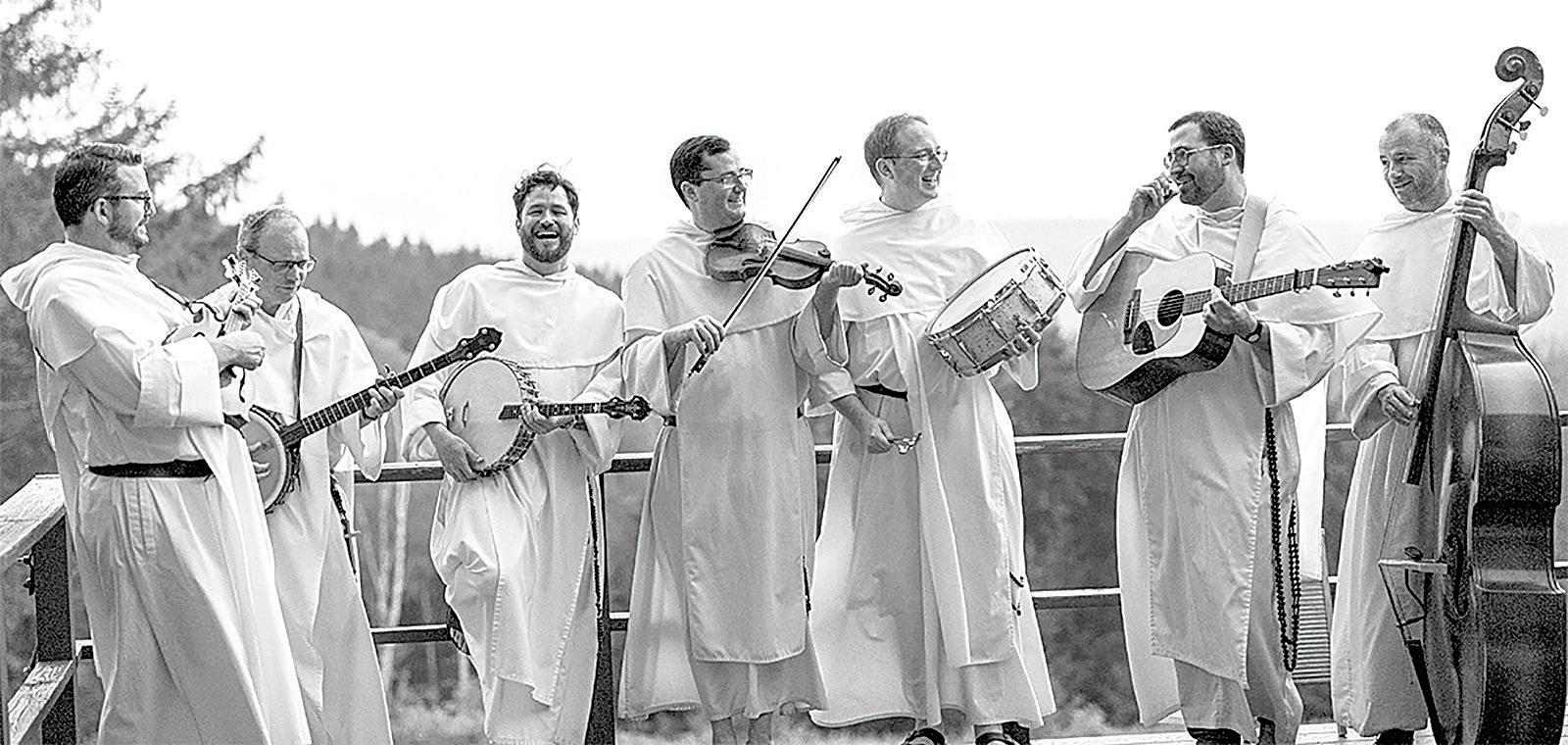
bluegrass, folk, gospel and original songs composed by the Dominican friars. It was founded by members of the Dominican Province of St. Joseph, which encompasses the northeast United States and is one of four Dominican provinces in the U.S.
“We often receive messages and testimonies from folks who have been inspired by our music,” Father Bolger
told the Catholic Review, the news outlet for the Archdiocese of Baltimore, in an email ahead of the Baltimore show. “I would also say the music we play seems to resonate with families. I think kids enjoy the quirky nature of the tunes, and parents enjoy some of the deeper themes.”
The band released its debut, eponymous album in 2017. It has since released four
other albums: “Living for the Other Side” (2021), “Holy Ghost Power” (2022), “Marigold” (2024) and “Carols” (2025).
Father Justin Bolger said he was looking forward to a “fun homecoming,” as family in the Baltimore area includes his brother Father Jesse Bolger, a priest of the Baltimore archdiocese.
“I come from a big musical family. I played in bands in Frederick and in Baltimore during high school and college,” Father Justin Bolger said. He and his sister had a record deal and toured the country before he entered the Dominicans at age 32.
Father Bolger serves as chaplain for the Catholic community at Brown University and Rhode Island School of Design. He lives in the Dominican priory on the campus of Providence College.
“I’ve been very blessed as a Dominican friar, especially with this musical ministry,” Father Bolger said of his side gig with the band.
“One of the songs I wrote is called ‘Good Tree,’ and borrows and combines various scriptural references to trees,” Father Bolger wrote. “Other songs we write are more about human life, its difficulties and even tragedies, and how God is providently at work guiding us through even the lows of life.”
BROWNSVILLE, Texas — Bishop Daniel E. Flores of Brownsville said he is “grateful to God” that a foreign-born religious sister, detained by immigration authorities in late June, can remain in the U.S. as her case is processed. But, he warned, the outcome of the proceedings – which include the risk of third-country deportation –“remains an open question,” with others facing a similar plight.
In a July 29 statement, the bishop expressed “some relief” that Sister Leticia Ugbaoja would be permitted to “remain in our community while her case is allowed to move forward.”
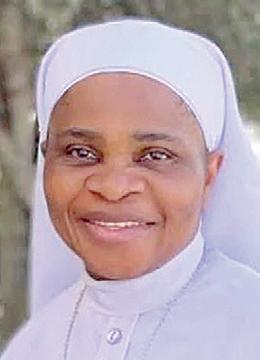
Sister Leticia – a member of a Nigerianbased congregation and a registered nurse – has served in the McAllen, Texas, area for more than a decade.
She was detained en route to Mass June 28 by U.S. Immigration and Customs Enforcement agents and held for several hours, until several congressional representatives intervened to secure her release.
Her 2019 application for asylum had been denied, but she holds valid work authorization and has complied with all immigration requirements, her attorney confirmed in a July 23 press conference.
Bishop Flores urged prayer and accompaniment for “the many individuals and families who live in fear and anxiety as they seek a way to resolve their immigration status.”
WASHINGTON, D.C. — The Trump administration issued a new rule July 28 that could send hundreds of thousands of asylum seekers directly into deportation proceedings, a policy change that Catholic immigration advocates warned could leave many applicants at risk of deportation before their applications are even considered.
The Department of Homeland Security and U.S. Citizenship and Immigration Services cast the rule change as an effort to reduce the 1.4 million pending asylum cases. The rule change took effect immediately, foregoing a public comment period.
A document implementing the rule estimated that the change could impact nearly 445,000 people, just over 30% of cases in the affirmative asylum backlog.
Elizabeth Carlson, supervising senior attorney at the Catholic Legal Immigration Network, also known as CLINIC, said July 29 that “CLINIC strongly opposes this new USCIS rule, which was issued without providing the public an opportunity to comment before taking effect.”
The rule change came shortly after a religious sister was detained by U.S. Immigration and Customs Enforcement agents for several hours June 28 (see story above) while walking to Sunday Mass in Texas near the U.S.-Mexico border.
WASHINGTON, D.C. — Jennie Bradley Lichter will step down as president of the March for Life Education and Defense Fund, she said in a July 30 statement.
“This note is to wish you the fondest farewell, as I will be stepping down as president of the March for Life effective tomorrow, July 31,”
Bradley Lichter said in a statement. “My next chapter will be a new one for me: full-time mom.”
Organizers of the March for Life – first founded in protest of the Roe v. Wade Supreme Court decision, which was overturned in 2022 –describe it as the nation’s largest annual human rights demonstration.
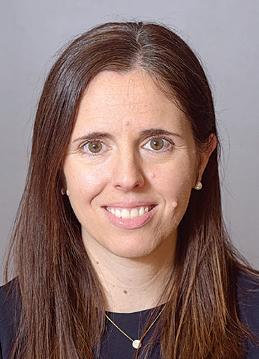
The March for Life will seek new leadership while the pro-life movement faces a number of key challenges, such as preserving the Hyde Amendment, the recent approval of a new generic abortion drug, a policy permitting the distribution of that drug by mail, and a rising abortion rate.
Bradley Lichter said in a statement that the role of March for Life president was the “highlight of my professional life.” But, she said, “it has become very clear that my family needs more of my time and my active presence than I’m able to give while leading the March for Life. And so I must step away.”
SANTA FE, New Mexico — Archbishop John C. Wester of Santa Fe issued a July 27 statement defending religious liberty for Muslims and other faith communities, after tensions over the planned construction of a mosque in Albuquerque.
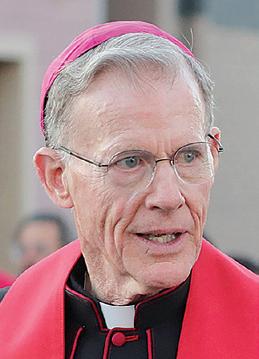
The controversy has even seen an altercation take place at a local Catholic parish, with police arresting a man for brandishing a gun at a Catholic pastor and his staff after the priest informed the man’s girlfriend, a prominent mosque opponent, that racism was a grave sin that could condemn her to hell.
The archbishop did not address the incident in his statement, which joins the voices of other faith leaders who are supporting efforts by the Albuquerque Islamic Center to build a mosque in Albuquerque’s North Valley, which has been the focus of public debate.
“Our Muslim neighbors have the same Godgiven and constitutionally protected right to worship freely as every other faith community, including our own,” said Archbishop Wester. “Defending that right is not only a civic duty but a core element of Catholic teaching.”
He deplored “any hostility toward Muslims” through “rhetoric, suspicion, or opposition to their places of worship” as “incompatible with the Gospel of Jesus Christ, who commands us
to love our neighbor without exception.”
The archbishop added, “Fear of the other is not a Christian virtue. Hospitality is.”
NEW YORK — A federal judge temporarily shielded on July 30 four orders of women religious and Catholic healthcare ministries from enforcement of a New York state law allowing physicians to aid terminally ill adults in dying by suicide.
The Catholic entities – the Carmelite Sisters for the Aged and Infirm, the Dominican Sisters of Hawthorne, the Missionary Sisters of St. Benedict and the Little Sisters of the Poor –previously sued the state, arguing the law would require them to facilitate such deaths for their patients in violation of their faith.
U.S. District Judge Anne M. Naracci’s temporary restraining order also sets an Aug. 20 deadline for New York Attorney General Letitia James to respond.
James’ office did not immediately respond to OSV News’ request for comment.
Bishop John O. Barres of Rockville Centre, New York, said in a statement issued through Becket, the firm representing the Catholic entities, “New York cannot force the Church to answer suffering with suicide or abandon the sick and dying when they need care most,” he said.
“Until our legal fight is resolved, this temporary agreement keeps our ministries free to serve every patient according to the Gospel,” the bishop said.
WASHINGTON, D.C. — A bipartisan pair of lawmakers announced July 30 they will form
and co-chair a new caucus in the U.S. House aimed at the prevention of human trafficking. Reps. Chris Smith, R-N.J., and Kweisi Mfume, D-Md., said the Frederick Douglass Trafficking Victims Protection and Prevention Caucus – named in honor of the abolitionist and statesman – will work to advance legislation to prevent human trafficking, prosecute traffickers, strengthen support and protection for victims, and facilitate greater cooperation to prevent the issue through partnerships between government, law enforcement, private and faithbased organizations.
Mfume noted they made the announcement on the annual World Day Against Trafficking in Persons. “Human trafficking is modernday slavery and a scourge on our collective humanity,” Mfume said.
The Frederick Douglass Trafficking Victims Protection and Prevention Caucus will also be bicameral, Smith’s office said, as Sen. Marsha Blackburn, R-Tenn., plans to form a complementary caucus in the Senate.
UNITED NATIONS — The Holy See’s Permanent Observer Mission to the United Nations called on the international community to make ending homelessness a priority, saying the issue must be addressed to build sustainable cities where every person can flourish and contribute to the common good.
In a July 28 message prepared for the U.N.’s 2026 high-level meeting on the New Urban Agenda, the mission said the continued presence of homelessness “should trouble the conscience of the international community.”
The statement stressed that everyone deserves a place to call home, describing housing as more than a commodity or financial asset.
— OSV News and Catholic News Service
CASTEL GANDOLFO — Pope Leo XIV spoke with Tom Llamas of NBC News July 29 about being the first American pope, his diverse ancestry and whether he might be coming to the U.S. soon.
“You are the first American pope. It’s something you don’t speak about often,” Llamas noted, asking, “How important is being American to you, and what do you love about America?”
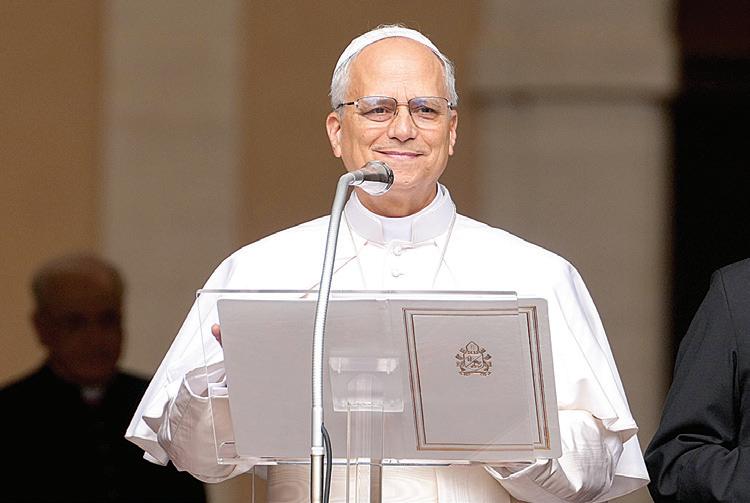
“First of all, just to clarify, I think of myself more as the pope who happens to be American,” Pope Leo responded, “not to belittle what it means to be American. I was born in the United States, my family is still in the United States. I have great love for America. But I understand my mission having a very important dimension, which is precisely being pastor of a universal Church and having a voice and opportunity to speak to people throughout the world. So, I will put things in that order.”
“And yet, at the same time,” he added, “I will acknowledge that for myself as well as the people of the United States, judging by the response that we’ve seen since May 8 of last year, that there is great significance in being the first American pope.”
Speaking to Llamas at a July 29 Concert for Peace at Castel Gandolfo outside Rome, which featured Andrea Bocelli and an interfaith choir of 200 children from conflictaffected regions around the world, Pope Leo said he loves “so many things” about America.
“What America stands for, the sense of freedom, the sense of opportunity, the sense of having invited, for generations, people from around the world to be part of America,” he said.
Discussing his ancestry, he noted that, “I come from a family that – my grandparents were immigrants. On my mother’s side, we have people who were both slaves and slave owners. There’s a history of, if you will, growing up in the kind of experience that helps me to recognize, myself, one of the greatest wealths of the United States. And I continue to hold the principles that have been a part of being American for so many years. That will continue.”
Llamas asked if Americans can expect a papal visit soon.
“They will see me there,” Pope Leo replied, “by coincidence, today we were looking at the calendar for the next couple of years. Nothing is set in stone yet, but I certainly hope to be there soon.”
ANDY DROZDZIAK OSV News
U.K. bishops welcomed new Catholic Prime Minister Andy Burnham’s approach to palliative care as Catholic charities urged him to turn to his faith to support the poor and to take action on the climate crisis.
Archbishop John Sherrington of Liverpool, the lead bishop for life issues for the Bishops’ Conference of England and Wales, has welcomed Burnham’s call “for palliative care services to be properly funded.”
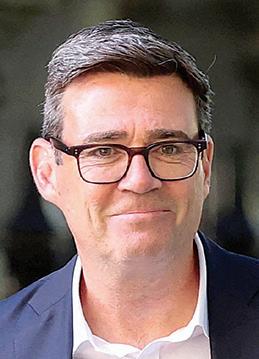
The prime minister has stated that palliative care and social care funding need to be “fixed” so that vulnerable people can have “peace of mind” about the care that they receive toward the end of their life.
“It is highly significant that the prime minister has confirmed his position about the need for proper palliative and social care ahead of the Second Reading of the fundamentally flawed Terminally Ill Adults (End of Life) Bill in September,” Archbishop
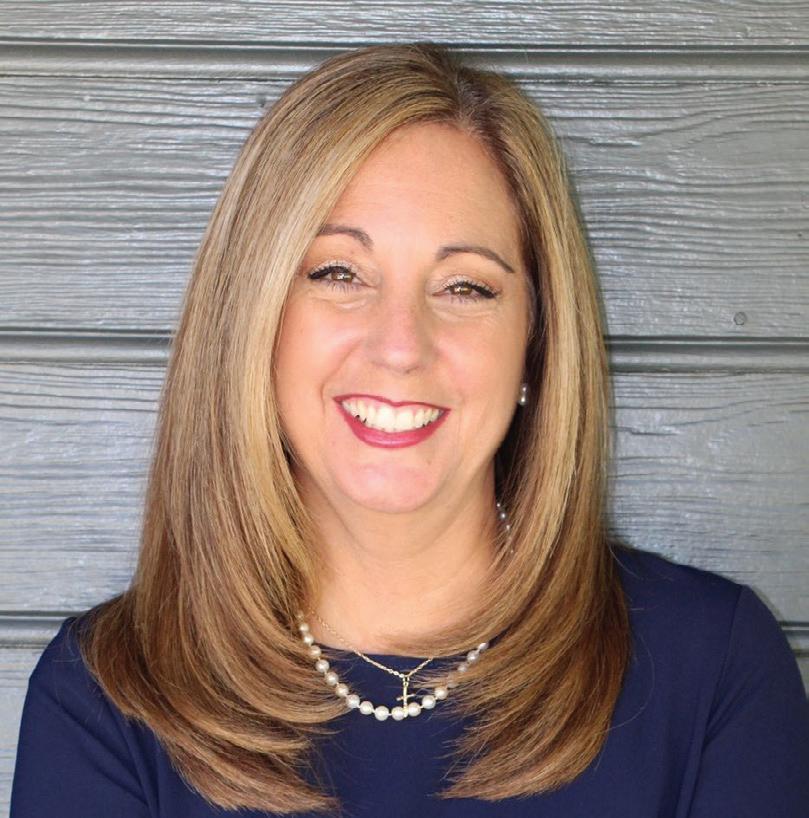
Sherrington said in a July 29 statement.
After the first attempt to legalize assisted dying failed in the British Parliament in the spring, another attempt to introduce the bill is scheduled for Sept. 11.
‘It’s about putting the right values and the right standards at the heart of government.’
Andy Burnham UK Prime Minister
“People who are dying are vulnerable and need compassionate care and spiritual accompaniment until their last breath,”
Archbishop Sherrington said, urging parliamentarians “to vote against this dangerous legislation” during the Sept. 11 session “and to work together to ensure that our palliative and social care services
can be held up as examples of truly dignified care at the end of life for all.”
CATHOLIC TEACHING UNDERPINS POLITICS
Burnham, the U.K.’s first Catholic-born prime minister, has long spoken about the influence his faith has on his political outlook, saying: “Catholic social teaching underpins my politics.”
No sooner had Burnham started work as prime minister than messages came in, urging him to put his faith into action.
Burnham’s Catholic influence was seen even before he took office as he visited homelessness charity The Passage in London hours before being appointed. The values and ethos of The Passage come from the teachings and example of St. Vincent de Paul. During his opening speech as prime minister, Burnham vowed to “end rough sleeping in our country.”
“It’s about putting the right values and the right standards at the heart of government,” he said July 20.
Caritas Salford is a charity supporting homeless and poor people in Greater Manchester and Lancashire, where Burnham was previously mayor. Burnham, a former altar boy, previously served as culture secretary and health secretary before taking on the role of mayor in 2017.
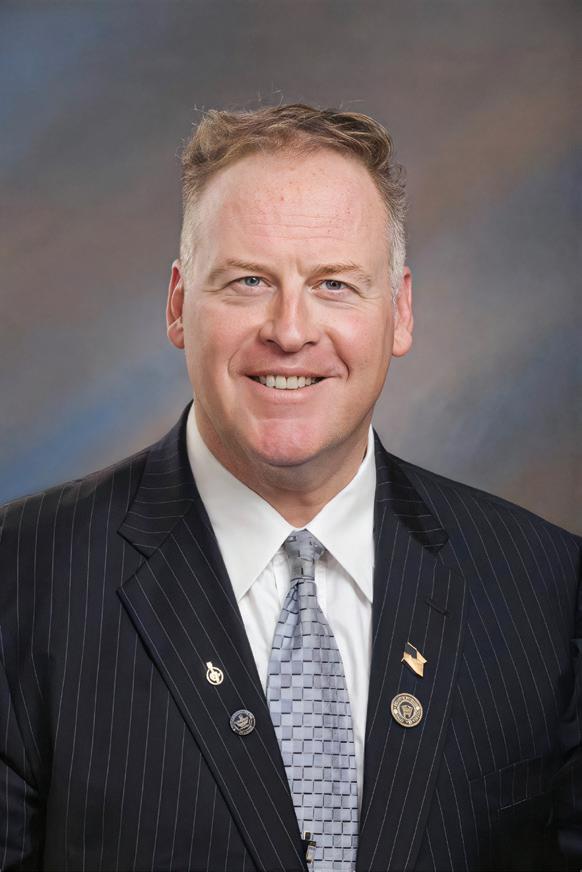
Caritas Salford Director Patrick O’Dowd described Burnham as “a leader who is certainly aware of the importance of Catholic social teaching.”
A NEW ROLE FOR POLITICS
In October 2025, giving a lecture for the religious think tank Theos, Burnham called for a new way of doing politics that has “trust, community, faith, belief, connection” at its heart.
Ending homelessness is not the only issue Catholics would like the new prime minister to address through his Catholic lens. The U.K. Catholic aid agency CAFOD is urging Burnham to call on his Catholic faith to take decisive action on the climate crisis and supporting poorer countries.
The government announced in February 2025 that the overseas aid budget would be cut from 0.5% to 0.3% of gross national income.
Neil Thorns, CAFOD’s director of advocacy and education, said, “The issue of overseas aid is critical. We want the aid budget to be restored. For us as Catholics, it’s an expression of our solidarity with our brothers and sisters.”
Thorns added that Burnham needs to focus on “financial reform issues” and enable “countries to work for their future to flourish.”
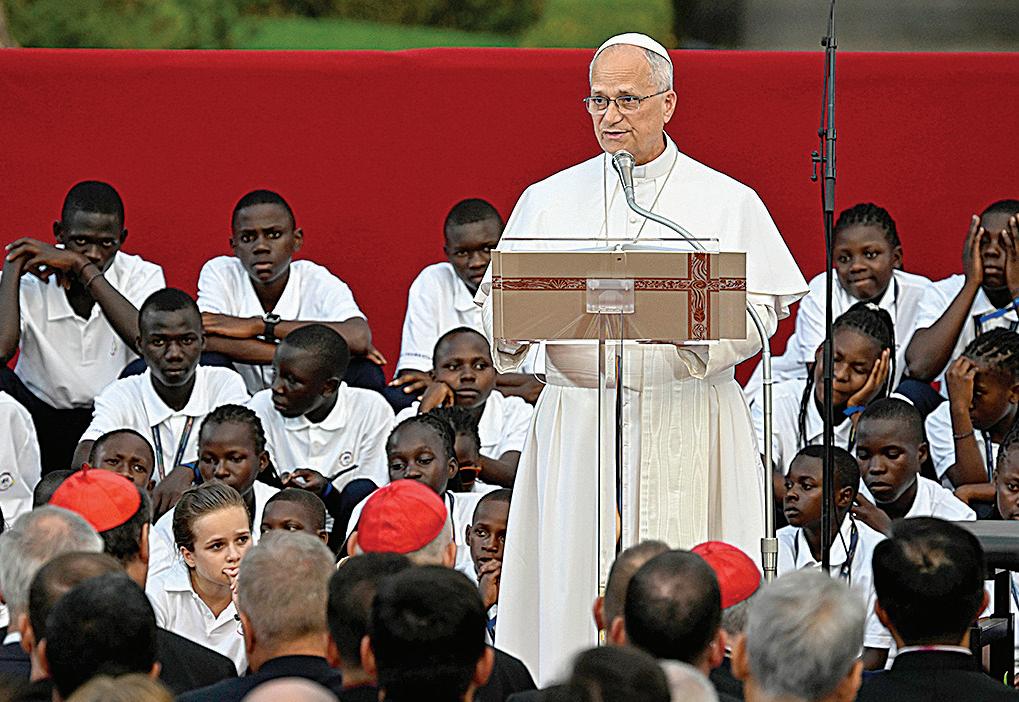
MATTEO PERNASELCI, VATICAN MEDIA | OSV NEWS PHOTO Pope Leo speaks at the Canticle of Peace event in the Pontifical Gardens in Castel Gandolfo, featuring a performance by Italian tenor Andrea Bocelli and a 164-member children’s choir.
CASTEL GANDOLFO — Pope Leo XIV reflected on the power of sacred music to draw people closer to God after Andrea Bocelli led 164 young singers in a July 29 concert in the Pontifical Gardens at Castel Gandolfo.
Addressing the choir made up of children from the Holy Land, Uganda and Italy, the pope said, “The beauty of music invites us to encounter the one who is beauty itself.”
He added, “It is significant that Sacred Scripture and the Liturgy of the Church speak of ‘choirs of angels and saints’ when describing the joy of heaven,” and explained that believers “behold God together and find in Him the fullness of happiness.”
The choir, part of the Andrea Bocelli Foundation’s “Voices Of” program, concluded with “Amazing Grace,” while Bocelli also performed “Panis Angelicus” for the pope.
The evening, part of Jubilee celebrations marking the 800th anniversary of St. Francis’ death, also featured readings from “The Canticle of the Sun” and ended with the children presenting the pope with gifts from their home countries.
MEDJUGORJE, Bosnia-Herzegovina — A statue of the Virgin Mary was cleaned and an outdoor altar repaired in Medjugorje after a July 28 overnight attack, as police detained a Polish suspect and Church leaders urged restraint.
The vandalism at Apparition Hill – a major pilgrimage site – left the statue defaced with black spray paint and offensive messages, and an altar burned. Despite the damage, the shrine remained open as workers quickly restored the site.
A Polish Catholic filmmaker who said he knew the suspect called for caution in judging him, citing personal struggles while stressing the act was unjustifiable. “Why am I writing this? Because in moments like this it is very
easy to pass judgment,” Jan Sobierajski wrote in a Facebook post. “Just look at the internet – full of harsh comments, condemnation and publishing the image and data of a person who found himself in a dramatic moment of his life.” He said the man had faced serious personal difficulties, including losing his job, the breakdown of his marriage and other crises. At the same time, the Catholic filmmaker stressed that such struggles do not excuse the alleged act.
The parish also urged prayer over anger as Medjugorje prepares for its annual youth festival.
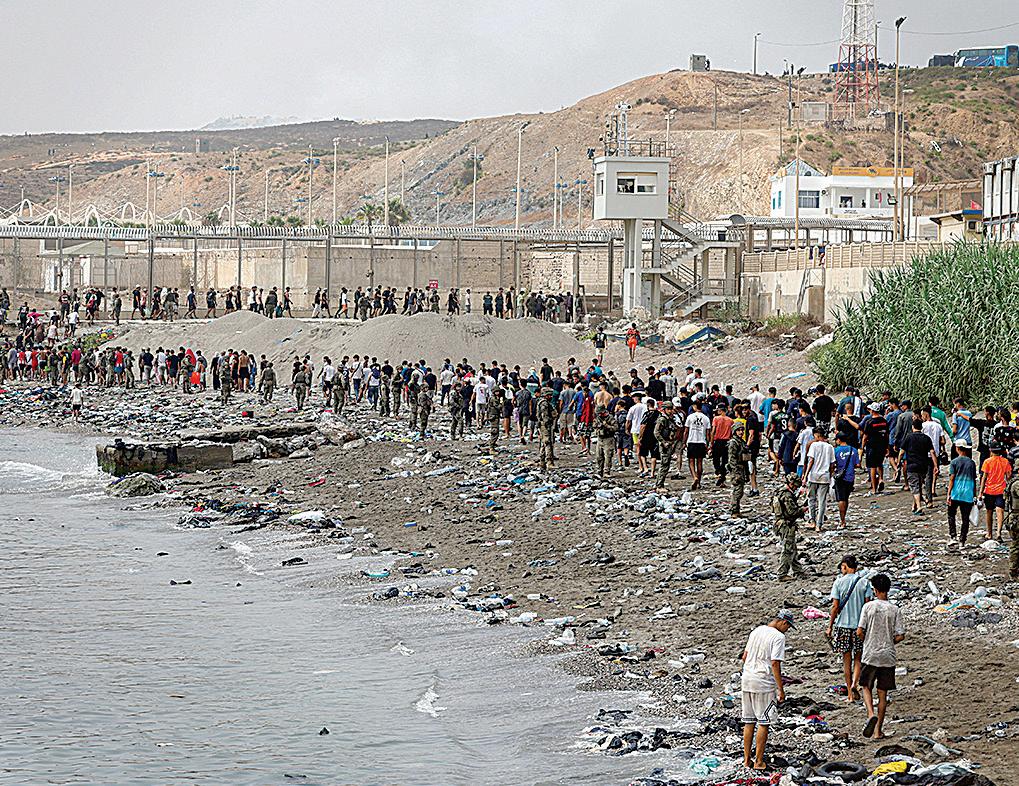
People in Ceuta, Spain, walk toward the country’s border with Morocco July 31, leaving Spain amid mass crossings of migrants on foot
CEUTA, Spain — The Diocese of Cádiz and Ceuta is offering emergency assistance to civil authorities after more than 60,000 migrants crossed from Morocco into the Spanish enclave of Ceuta, creating the largest migration crisis in the territory’s history.
The sudden influx increased the enclave’s population by nearly 50%, forcing thousands of people to sleep in streets and public parks.
At least 19 migrants died while attempting to swim around border breakwaters, and officials expect the death toll to rise as search and rescue operations continue.
In response, local Catholic leaders announced that special collections taken at parishes over the weekend will directly fund diocesan migrant centers providing immediate food and emergency aid.
Church leaders also urged the faithful to pray for those suffering and for government officials tasked with managing the emergency. The crisis has sparked sharp political backlash across Europe.
The Diocese of Cadiz and Ceuta announced that collections over the upcoming weekend would be used to assist the diocesan-run migrant center.
GAZA CITY, Gaza Strip — A Catholicsupported hospital in Gaza City sustained damage after an Israeli airstrike hit a nearby residential apartment late July 29, according to the Catholic Near East Welfare Association’s

Pontifical Mission in Lebanon and Syria.
The blast shattered windows and doors at Al-Ahli Arab Hospital and damaged an elevator serving its diagnostic center, though the hospital itself was not directly struck.
Hospital manager Mousa Ayad said the explosion traumatized patients and staff, underscoring the ongoing strain on Gaza’s health system despite the October 2025 ceasefire.
He said hospitals continue to face shortages of medicines, equipment and basic supplies, while thousands of patients remain on surgical waiting lists or need treatment outside Gaza.
Local emergency officials also reported an increase in strikes on residential buildings and said evacuation orders often leave families unsure where attacks will occur.
Civil Defense crews cited equipment shortages that delayed their response, while aid workers said the conflict’s psychological and humanitarian toll remains severe.
“Even after more than nine months of the ceasefire, the war’s impact is still present in every part of daily life,” said Mousa Ayad, a manager at the hospital.
A crime that deeply shocked Egypt’s Coptic community and broader public has reached its legal conclusion after the family of Father Arsanios Wadid confirmed that Egyptian authorities have executed the man convicted of murdering him.
The sentence was carried out after all stages of litigation were completed and the defendant had exhausted his available legal appeals, bringing to an end a case that lasted more than four years from the killing to the execution of the final judgment.
According to the attorney representing the priest’s family, Egyptian authorities carried out the death sentence, the most severe punishment under the country’s law, after investigators and the courts found the defendant responsible for intentional murder.
The case dates back to April 7, 2022, when Wadid, a priest of the Coptic Orthodox Church of the Virgin Mary and St. Paul the Apostle in Alexandria’s Karmouz-Moharam Bek district, was participating in a weekly parish gathering
at one of the city’s beaches. As participants were boarding buses following the gathering, Wadid, who was wearing clerical attire and helping organize their departure, was attacked from behind and fatally stabbed.
Those present restrained the assailant and handed him over to security forces. Wadid was taken to a hospital, where he died from his injuries.
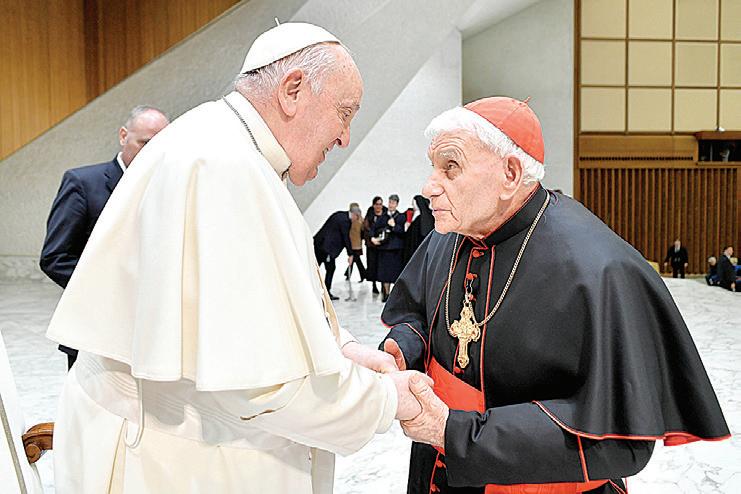
to the former prison camp in Albania.
Pope Leo writes to cardinal, 97, who spent 18 years in labor camps
SPAÇ, Albania — Cardinal Ernest Simoni, 97, returned to Albania’s former Spaç prison camp, where he secretly celebrated Mass during 18 years of forced labor, to celebrate Mass July 31 and honor those who suffered and died there.
In a letter read at the end of Mass, Pope Leo XIV praised the cardinal’s witness, writing, “No chain is strong enough to imprison a conscience illuminated by the Gospel, no night is so long that it can prevent the dawn the Lord prepares for His children, and no prison is deep enough to separate a person from the love of God.”
Arrested on Christmas Eve 1963 after offering Mass for the soul of assassinated President John F. Kennedy, Cardinal Simoni ministered clandestinely throughout his imprisonment. Pope Leo urged future generations never to forget Spaç as a call “to respect the inviolable dignity of every human person, the value of freedom, and the commitment to peace.”
— OSV News and Catholic News Agency
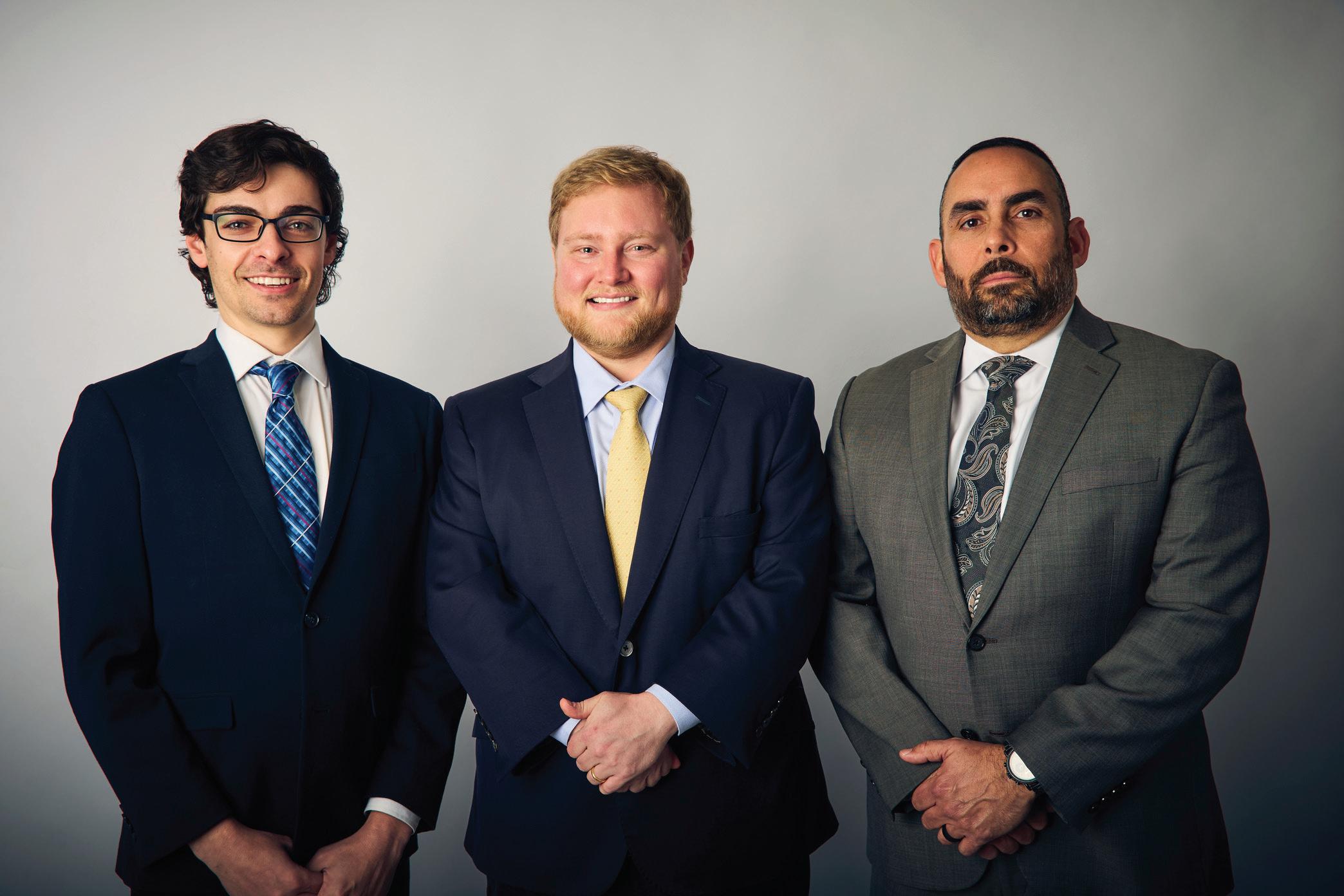
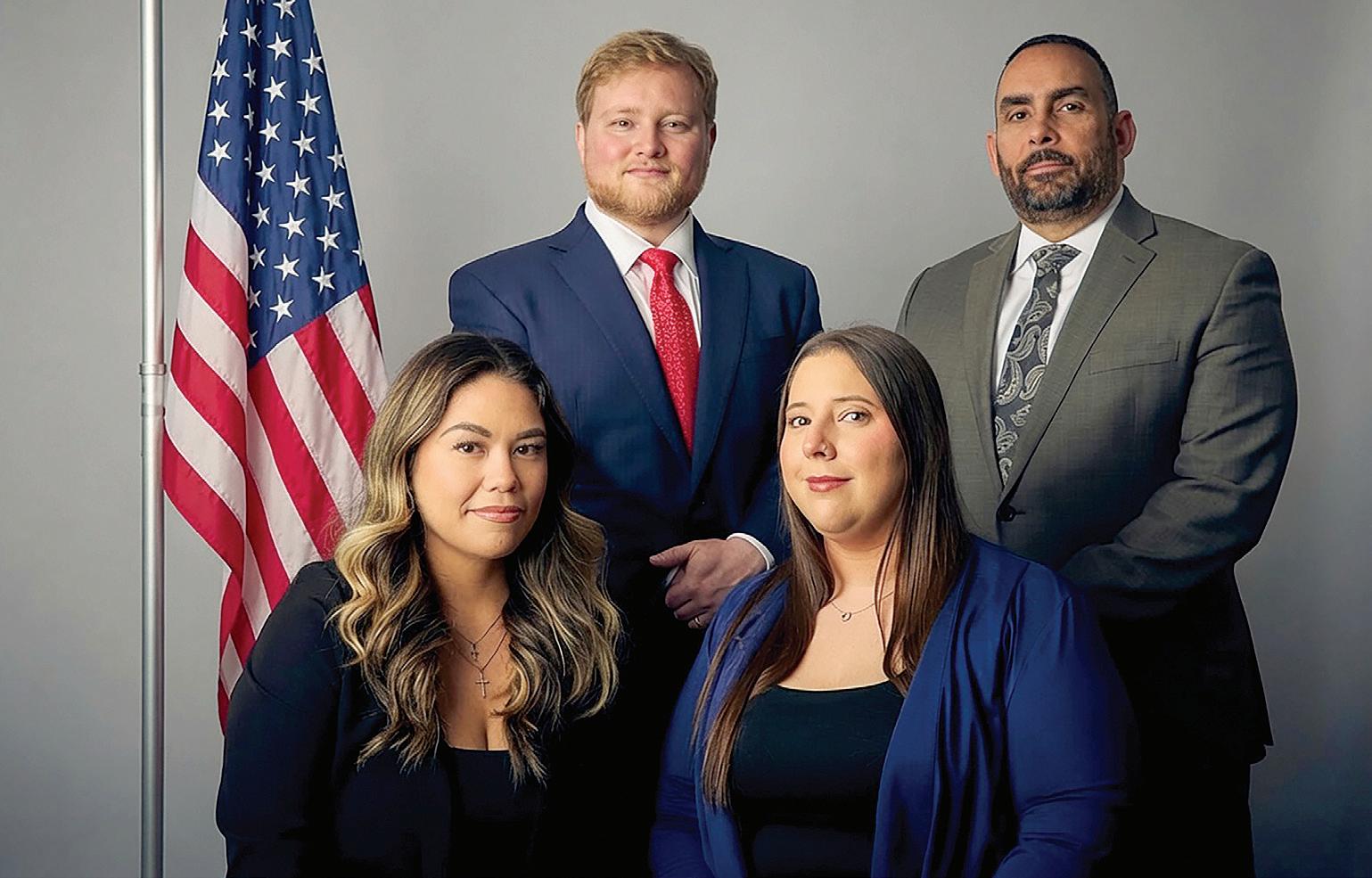
Mother Teresa said, “If we have no peace, it is because we have forgotten that we belong to each other.”
Most of us can attest to belonging to some type of group, whether it be family, friends, fraternities, teams or neighborhoods. However, peace does not come from just the sense of belonging to a group. True peace comes from God. Therefore, the most important belonging relates to being in relationship with God. Jesus tells us that as the body of the Church, we are each living stones that make up the Church with Himself as the cornerstone. Each of us builds the spiritual body of the Church through human belonging. The Church is not the physical stones and mortar of a structure – rather it is our connected souls as Christians. We make up the body of the Church or the body of Christ. As Christ, we have a job: to save souls, encouraging one another in the pursuit of sainthood, for this is how we attain heaven.
Christ, by His life, death and resurrection, has laid the foundation. We build upon that foundation to support one another in a Christ-centered life (1 Peter 2:4-5). This is the belonging that St. Teresa refers to – the belonging that brings peace because we have a unified mission to lead one another on the path of salvation.
TO CREATE BELONGING, TAKE PART
To build the Church together as one body, we must belong to one another. Doing everything together, such as in the sacrament of the Eucharist, creates belonging. Research into Catholic education reveals that the more we build relationships between staff or between staff and students, the more of an impact we make in the formation of the Christian disciple, whether student or adult.
The disciples knew this. Paul tells us that the disciples had everything in common. They sold property to support the good of the group. They took care of one another, broke bread together and prayed together.
Do we feel this belonging? If we work within the Church using our time, talent and treasure, we likely feel this belonging. If we just come to sit in the pew, listen and fulfill our obligation, we may not get a sense of the union Christ intended us for.
In fact, when Jesus says that at the end of time all will be brought under His feet, He means everyone in the world. He calls on us, His body, His Church, to bring this about through belonging, through charity.
Therefore, to accomplish Christ’s mission, we should not tear one another down, whether face to face or through the silent shield of social media.Despite our good intentions, we so easily become addicted to social media, gossip in the breakroom, hateful emails, constant complaining or avoiding others. These actions fracture our belonging and our relationship with the Holy Trinity.
The goal is love. God is love. What allows us to attain to His perfection is grace: the grace Mary was filled with that allowed her to say yes to God, even in danger, uncertainty and poverty. She trusted and found peace.
If we are in line with God, then we bear His light inside our soul. We only have to see where the rays of this immense and compassionate light are directed to realize that they are emanating from us, and fall on the world. This light softens our eyes so that we see one another through the lens of charity, not jealousy, greed or anger. We are not just building an institution, a Church, but we are building Christ Himself. The Church is the body of Christ. He gives of His body freely to us to make us completely one with Himself. We are not alone. We are not meant for existence behind a screen. We are meant to teach and to guide. To be a witness, you must be present. We must make a resolve to step out of our culture, which is all too caught up in social media and devices.
This takes special thought and attention in each heart and in each home. It requires a different way of raising our children, a different way of interacting with friends, a different importance and central focus. Let Christ be in the center and love be the focus.
Ever since I was young, I have felt a calling to help the homeless.
It started with my mom, who always carried bottles of water in the car so we could share them with people we drove by. We also packed bags of hygiene supplies and food for my dad to hand out as he drove his concrete truck through the streets of Charlotte.
In elementary school, instead of birthday gifts, I would ask my family to give me Bibles to donate to the homeless shelter.
Fast forward several years, while I was discerning seminary in high school, and I learned that Matthew Hennessey, a seminarian and one of my high school friends, had started a homeless ministry called The Prayer Walk. It struck my heart, and I asked if I go on one.
My first walk was scheduled for a freezing Friday evening, when the forecast called for relentless rain. I texted Matthew, “Are we still doing the prayer walk because it’s raining?” His response was something along the lines of, “Yes, because they are out there, so we will be out there with them.”
We bundled up and started our walk, passing out handwarmers, food, water and some raincoats Matthew had received. The people in my group were getting cold and tired, so when we realized our charitable hearts were fading a little, we prayed a decade of the rosary for the homeless and for the grace to keep pushing through.
I left that walk with a deeper appreciation of the comforts I took for granted, including a warm, dry bed to sleep in.
Four years have passed, and our volunteers have increased.
It started out as two groups, on average, of three people walking down Tryon Street with sandwiches, water and various clothing items. Thanks to volunteers from the seminary, the Daughters of the Virgin Mother and several of our priests, we now average about four to five groups of three people, splitting up to bring food, hygiene packs and sleeping bags to people at bus stops and in nearby parks.
We have also received donations. Our two largest and most frequent donors are St. Gabriel Parish, which provides funding for the supplies we need each month, and Knights of Columbus Council 770, which donates coats every year and provides financial support. Soon we will have a donation drop-off box at the Diocese Pastoral Center, where people can leave non-cash donations, such as old clothes or backpacks, hygiene supplies, or non-perishable food like bars and chips. (Look for details in an upcoming issue of the Catholic News Herald.)
Beyond the material goods we bring, one of the most important parts of the walk is simply getting to know the people we meet. We collect their names so we can add each person to our prayer list, keeping them in our prayers long after the walk has ended. It is a small way of reminding them, and ourselves, that they are known and loved by name.
WALKING INTO THE FUTURE
Now that Matthew has graduated from St. Joseph
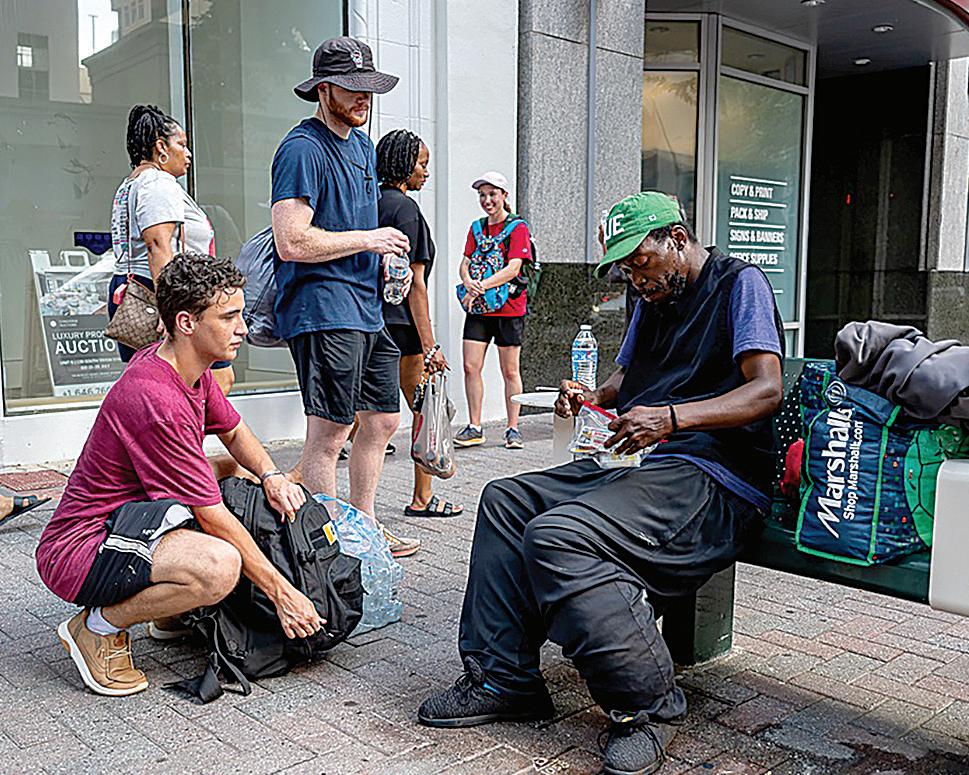
College Seminary and will be moving on to his next stage in formation for the priesthood, Pierre Westhoff and I have taken over the prayer walks.
This has given us a chance to think seriously about where we want to take the ministry next. Our biggest goal moving forward is growth, not just in the number of volunteers, but in the number of parishes standing behind this work. Right now, our support comes from a small, faithful group, and we would love nothing more than to see that circle widen. The more parishes that get involved, the more hands we have on the street each week and the more people in our diocese who come to see this ministry as their own.
Getting more people involved means more than just showing up for a walk. We are hoping to build a pipeline of volunteers who can commit to this on a recurring basis, along with parishioners who are willing to organize donation drives, prepare hygiene packs or simply spread the word. Every sandwich made, every pair of socks donated, and every person who shows up on a cold night allows this ministry to keep reaching people who are so often overlooked. You can also take part by praying for the safety of the people who are out on those streets every day.
We are in the process of building a website for The Prayer Walk so potential volunteers can learn how to get involved, parishes can find out how to partner with us, and donors can see what is needed and where to drop things off. It will also let us tell the story of this ministry to people who may not have heard of it, and invite them to be part of it.
What began as two small groups walking down Tryon Street has become something much bigger than Matthew, Pierre or I ever expected. As we step into this next chapter, our hope is that The Prayer Walk continues to grow, not for its own sake, but because every new volunteer and every new parish means more people on the streets of Charlotte who know they have not been forgotten.
MICAH BURGESS is a seminarian at St. Joseph College Seminary in Mount Holly from St. Gabriel Church in Charlotte. To volunteer or donate to The Prayer Walk, email him at maburgess@rcdoc.org.
Brett Salkeld writes, “Teaching students what to think without teaching them how to think is dangerous and irresponsible.” In his book “Educating for Eternity: A Teacher’s Companion for Making Every Class Catholic,” Salkeld makes an argument for Catholic education that goes beyond the utilitarian preparation for employment and trains a student to think like a Catholic. Salkeld is a theologian for the Archdiocese of Regina, Saskatchewan, in Canada. He lives in Regina with his wife Flannery and their seven children.
Charlie Camosy: I imagine that your book is responding to a particular need. What is your sense of how “Catholic” Catholic education actually is in U.S. Catholic schools?
Brett Salkeld: I think there is a huge spectrum here. I hear intriguing stories all the time about great teachers, great schools and great programs, and I also hear laments about schools with no real sense of Catholic identity. There’s no doubt that there are real challenges on this front. But there are also lots of people who are deeply committed to making their Catholic schools genuinely Catholic. I want to do anything I can do to support them.
Toward that end, my book is about teaching every subject from a Catholic point of view. That’s not the only thing necessary to deepen the Catholic identity of a school, of course, but it is an increasingly important one, especially as the cultural default position – on a whole range of issues – has less and less in common with a Catholic perspective. It is very easy to imagine that there is some “neutral” position from which subjects might be taught and that teaching from a Catholic position compromises the purity of the subject area. The truth is, though, we are always teaching from some point of view or other; there is no neutral. The education we provide is aimed at some good, or set of goods, whether we have taken the time to be intentional about this or not. In a Catholic school, the final aim of education is communion with God. This does not mean we are not also aimed at objectives like gainful employment or responsible citizenship, but those goods are seen in proper perspective when they are not imagined to be the ultimate reasons for an education. In fact, seeking God first protects these other goods from becoming idols.
Camosy: Chapter four has a bold title: “Catholicism Makes Everything Interesting.” Could that possibly be the case?
Salkeld: Ha! Yes, I certainly think so. I mean, one reason I am Catholic is because a Catholic worldview makes reality so intriguing. The conviction that there is such a thing as truth, that we humans can know true things, and that the truth of things matters is essential for developing curiosity. If truth is inaccessible or nonexistent, then why study anything except for your own material advantage?
Getting a job is good, but it’s hardly enough to excite a student about chemistry. An education that is aimed only at acquiring worldly goods is boring. The pursuit of transcendent matters like goodness, truth and beauty is always exciting.
More than this, as I argue in the chapter you mention, things like science and history do not even come to exist, at least as we understand them, without the worldview imparted by the Bible –especially the doctrine of creation. The existence of science and history seems so straightforward to us as to not require any explanation, but in truth, it’s only a Christian worldview that makes them seem that way. So, it is not simply that Christianity makes science or history exciting, though it certainly does that; it is rather that the Christian worldview made them possible.
Camosy: Some readers might be a bit skeptical about the “Science” chapter –especially if they think of faith and science as opposed to each other.
Salkeld: The science chapter is key, precisely because of this attitude. Teachers are going to face students who have been taught by popular culture to think of science and faith as opposed.
One of the things I do in this chapter is to walk through some of the history of the development of science and show that the roots of what we call modern science are in fact theological. Modern science emerges when and where it does because of a whole set of presuppositions about reality, and our capacity to know about it, that were worked out by scholastic theologians in the high Middle Ages. Something like the theory of evolution, for example, is a great example of what those theologians called “secondary causality.”
This was a way of distinguishing God’s action (primary) from the natural actions of the created order (secondary).
Of course, it’s a mistake to jump from this perfectly legitimate distinction to the conclusion that there is no need for any causality beyond that found in the natural order, as contemporary atheism tends to do. That order cannot account for itself. But recognizing that the question “why is there anything at all?” is a different kind of question than “how did this thing become the kind of thing it is?” was essential for the development of a scientific worldview. Catholic science teachers need to be equipped to have these kinds of conversations because it is often in science class where students’ biggest questions about faith come to light. In a Catholic school, science teachers need to be experts in science, but also in the relationship between science and faith.
There is a real opportunity right now to put forth a positive vision of education, and of the human person, that will resonate with many parents and communities seeking something better for their kids.

‘Make us a Church that goes forth, able to reach out to the peripheries, to console those who are lonely, and to sow fraternity and connection instead of giving in to indifference.’
Pope Leo XIV
From online story: “Pope Leo XIV’s August prayer intention is ‘for evangelization in the city’”

The Catholic News Herald reached the Facebook and Instagram feeds of more than 687,000 people in English and Spanish last month. The most talked about post? Coverage of Diocese’s response to the deadly quakes in Venezuela. Join the conversation: www.facebook.com/CatholicNewsHerald
On YouTube over the past 30 days ending Aug. 5, videos produced by the Catholic News Herald have been viewed more than 10,000 times. The most popular video? St. Matthew Church hosts Venezuelan friends and family.
Over the past 30 days ending Aug. 5, 53,800 visitors to www.catholicnewsherald.com have viewed a total of 67,000 pages. The top trending headlines are:
n Amid losses in Venezuelan earthquakes, Charlotte shares stories of panic and hope ....... 1,101
n Bishop Martin appeals to SSPX faithful: ‘The door of the Church is open’ 1,030
n OLC parishioner to lead Catholic Daughters of the Americas 870
n Catholic funeral guide ............................................................................................................................... 611
n Local student wins AI competition at Catholic University 437
n St. Joseph College Seminary welcomes record class of 10 seminarians................................ 402
n Father Peter Ascik: AI shortcuts block our path to education, wisdom 337
Join the conversation online

The Catholic News Herald welcomes letters from readers. We ask that letters be originals of 250 words or fewer, pertain to recent newspaper content or Catholic issues, and be written from a perspective of Christian charity.
To be considered for publication, each letter must include the name, address and daytime phone number of the writer for purpose of verification. Letters may be condensed due to space limitations and edited for clarity, style and factual accuracy.
Pinterest.com/ charlottecnh

The Catholic News Herald does not publish poetry, form letters or petitions. Items submitted to The Catholic News Herald become the property of the newspaper and are subject to reuse, in whole or in part, in print, electronic formats and archives.
E-mail: catholicnews@rcdoc.org
Mail: Letters to the Editor Catholic News Herald 1123 S. Church St. Charlotte, N.C. 28203