MYANMAR 08
100 YEARS ANNIVERSARY 04
A PRAYER TO THE CREATOR 19

MYANMAR 08
100 YEARS ANNIVERSARY 04
A PRAYER TO THE CREATOR 19
PO Box 1668
North Sydney NSW 2059
info@catholicmission.org.au
1800 257 296
@catholicmission
@catholicmission
@catholicmissionTV
catholicmission.org.au
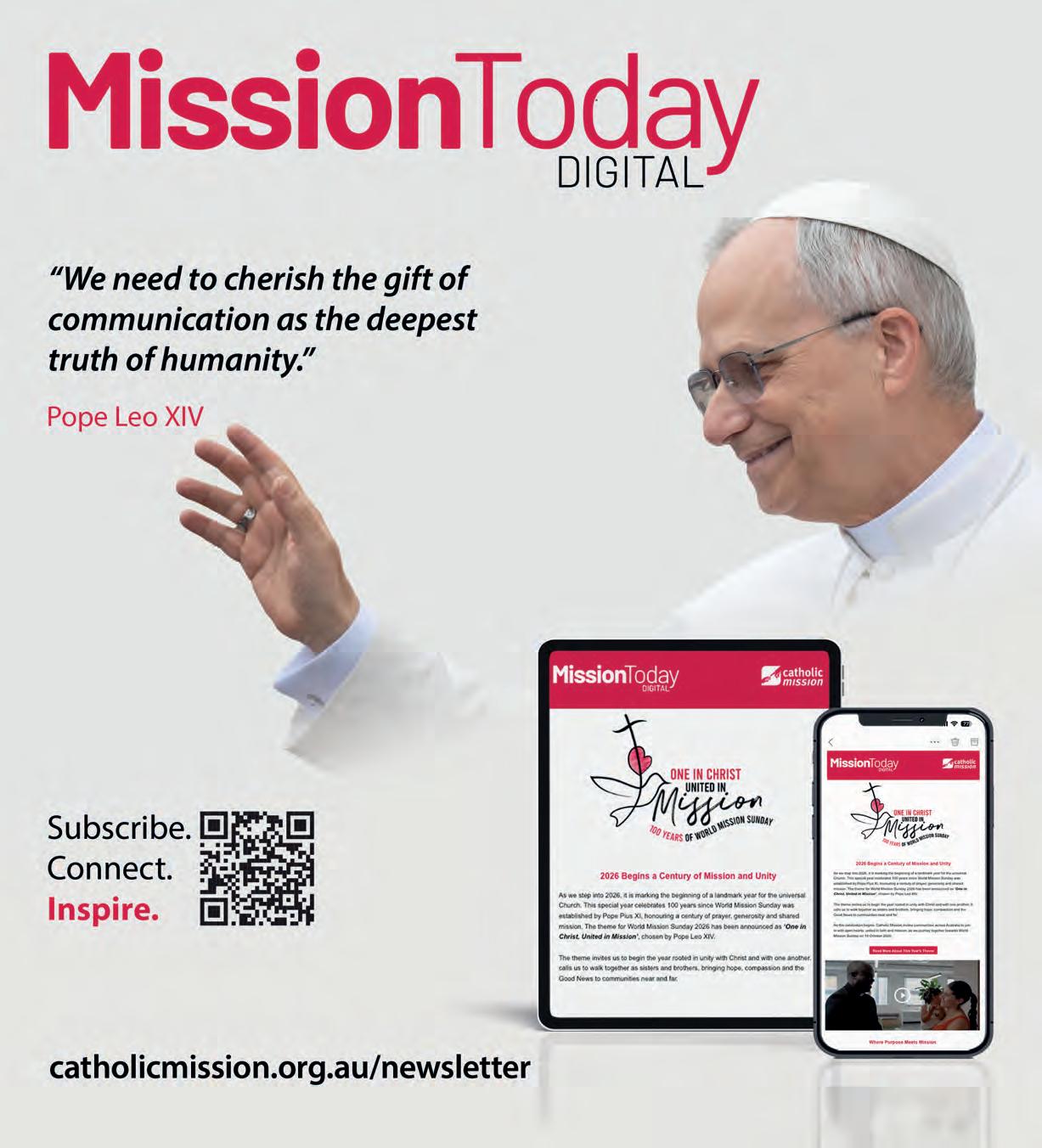
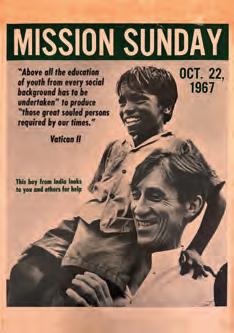
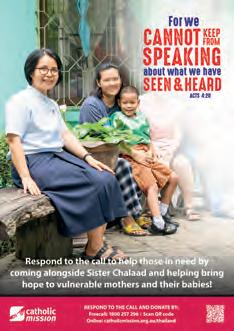
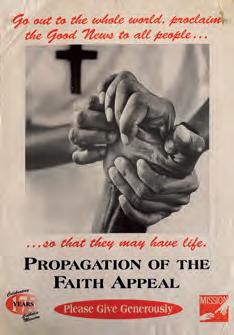
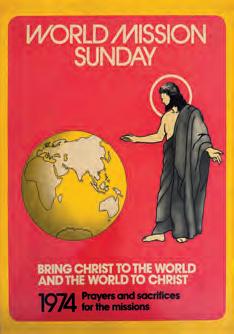
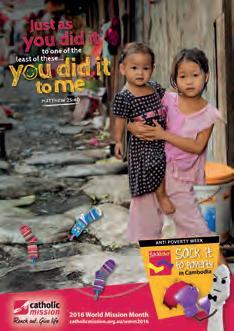
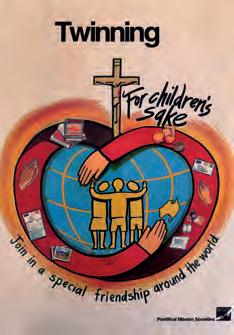
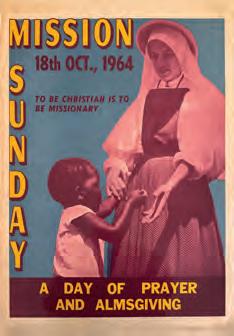
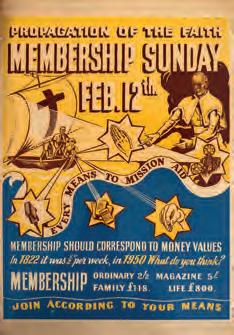
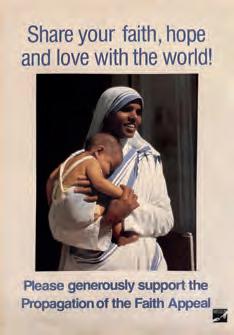
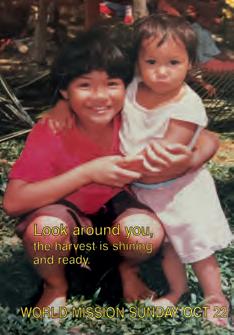
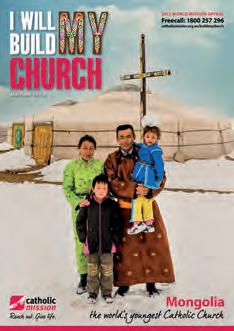
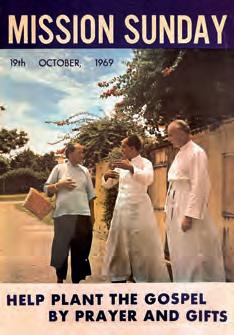
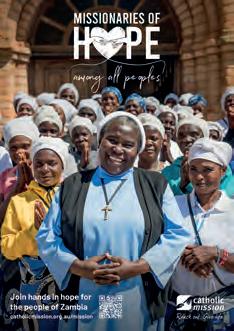
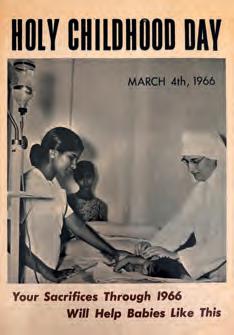
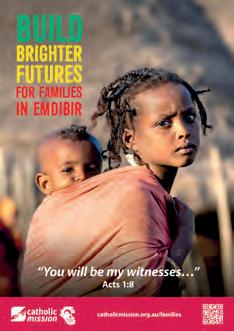
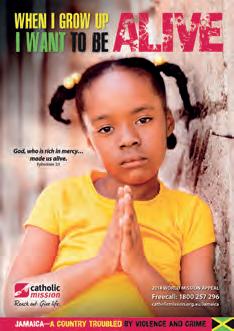
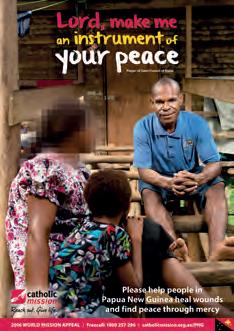
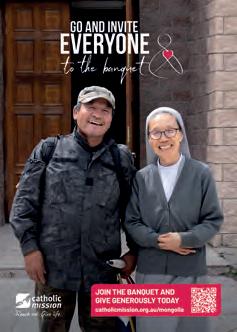
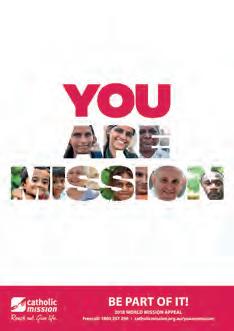
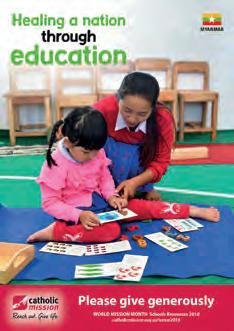
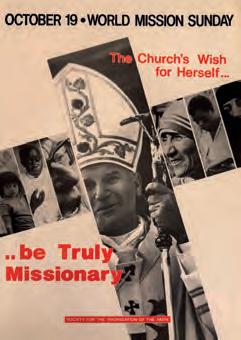
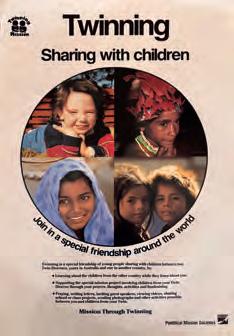
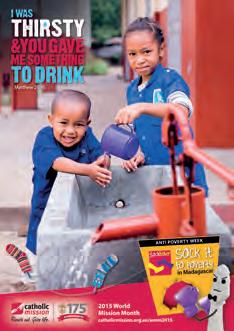
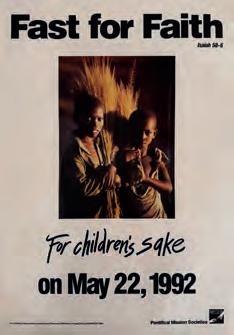
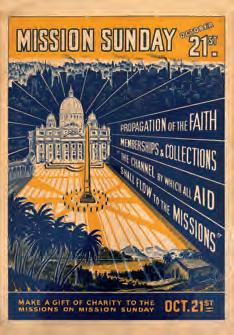
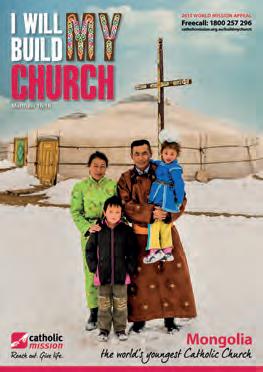
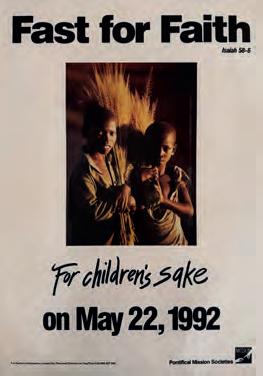
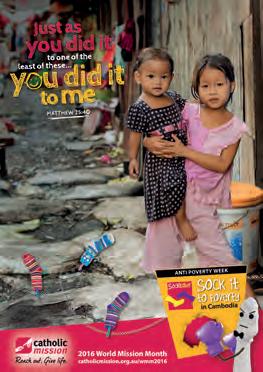
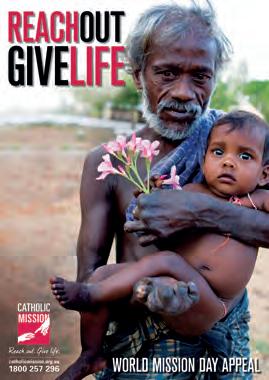
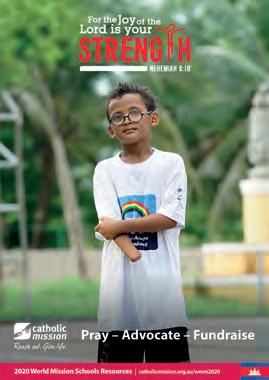
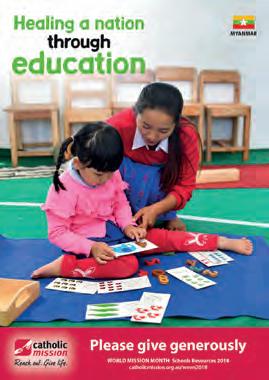
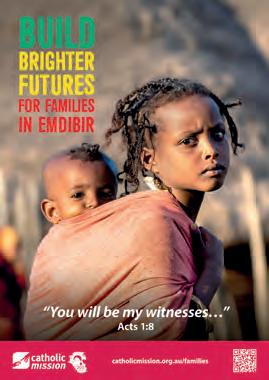
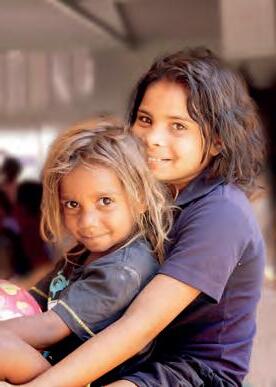
Cover image: Posters from a century of faith in action and the 2026 logo theme ‘One in Christ, united in mission’.
Editor: Astrid Delayre
Contributors: Dario Cowdery, Liesje Barrat, Isabella Giannasca, Lawrence Gigliotti, Pauline Garland, Mark Raue, Shay Bloxham, Jenny Collins-White
Photos: Simone Medri, Catholic Mission partners
Design: Maria Fernanda Ramos, Smarta By Design
Printed by: BMS Group
Names of people under 18 years have been changed.
Catholic Mission acknowledges that we live and work on the land of Australia’s First Peoples. We pay our respect to the ever- p resent spirituality of Elders past and present.
This publication may include images of deceased persons.
Copyright Catholic Mission 2026 ABN 52 945 927 066

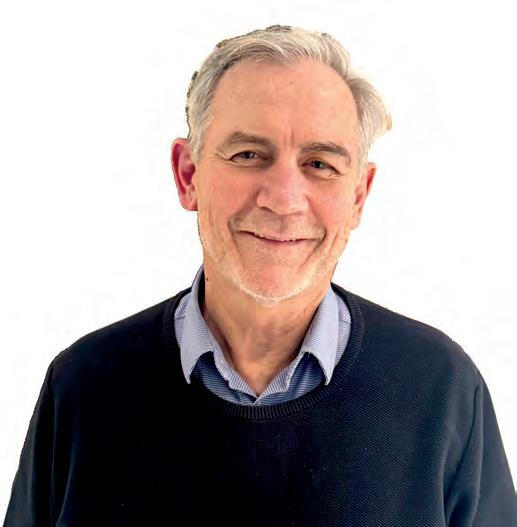
It is with a sense of gratitude, hope and joy that I share a few thoughts with you in this edition of Mission Today for the first time as National Director of Catholic Mission. It is an honour and a privilege to assume this appointment as Fr Brian Lucas completes his term.
For the past 10 years, Fr Brian has generously shared his wisdom, pragmatism and commitment to the Gospel. His attention and intention in leading this work of mission have been unique and unforgettable, and many good works have flourished due to his fine leadership. On behalf of Catholic Mission staff, we thank him and send our best wishes.
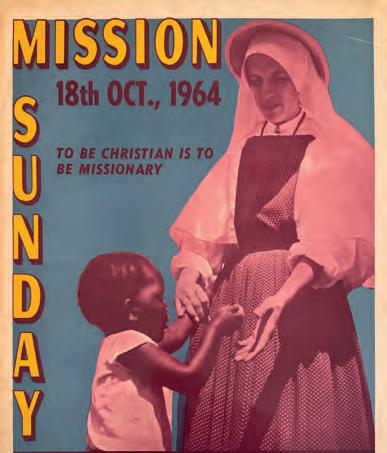
2026 is another milestone year for Catholic Mission, the work of the Pontifical Mission Societies, as we celebrate the 100 year anniversary of World Mission Sunday.
World Mission Sunday was established by Pope Pius XI in 1926 for the universal Church as a special witness and celebration of God’s mission to all the peoples of the world. This 100 year celebration honours a century of prayer, generosity and shared mission. The theme chosen by Pope Leo XIV for this year’s World Mission Sunday is ‘One in Christ, united in mission’. The Pope is inviting us all to be rooted in unity with Christ and with one another. He calls each one of us to walk together in right relationships, bringing hope, compassion and love as an expression and encounter for people near and far with our loving God.
This expression and encounter can be seen in the following pages of this edition, where we read about the people of Myanmar, His Eminence, Cardinal Charles Maung Bo SDB, and Fr Salai Michael MSP.
At this moment, our world, people and creation are seemingly more fractured, divided and suffering. The work of mission and the focus of the World Mission Sunday theme are so pertinent for our times, for individuals, for communities and for countries to come together, to heal and to be in right relationships. Our participation in God’s mission of forgiveness, compassion and love brings hope and healing, and is a sign and presence of God’s life and love for us all.
May you find inspiration and affirmation for your mission in this edition.
Peace,

Peter Gates National Director

Let missionaries be outstanding in charity, patience and humility, so that by their example they may draw many to Christ.”
Rerum Ecclesiae, Pope Pius XI, 1926
Published in 1926, Rerum Ecclesiae marked a defining moment in the life of the Church’s mission, helping to shape the spirit of what would become World Mission Sunday. In this landmark document, Pope Pius XI called the whole Church to renew its missionary commitment, champion local leadership within mission territories, strengthen the organisation of missionary efforts, and proclaim the Gospel through both word and compassionate service.
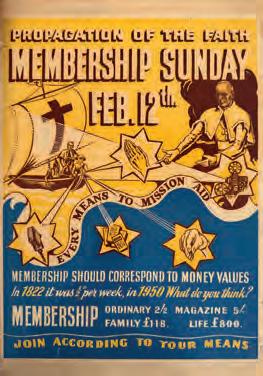
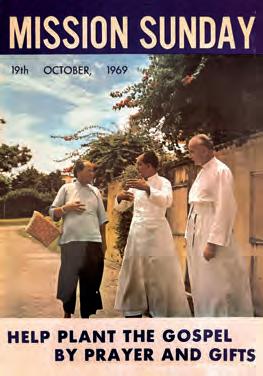
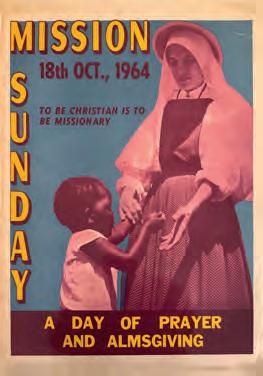
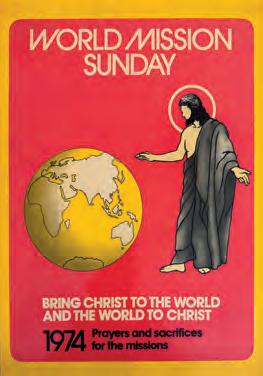
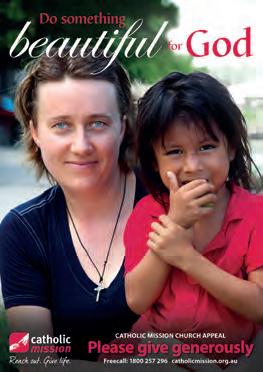
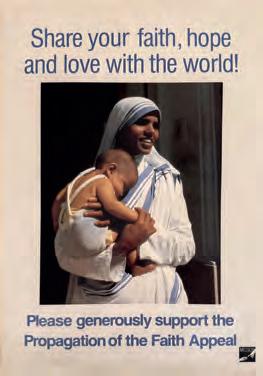
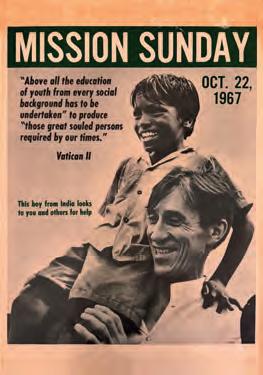
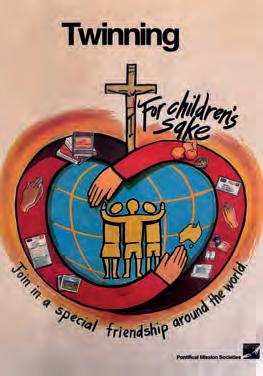
At the heart of this journey, Rerum Ecclesiae outlined essential principles that continue to guide missionary life today. It affirmed the importance of nurturing local leadership, respecting the dignity and richness of every culture, embracing mission as a shared responsibility, and witnessing the Gospel through both word and compassionate service.
The enduring impact of missionaries
Inspired by this vision, generations of missionaries have walked alongside communities, not only proclaiming the Gospel but building schools, supporting healthcare, and fostering hope in the most challenging circumstances. Their presence has helped shape vibrant, self-sustaining local Churches, where faith is lived, shared and carried forward by the communities themselves.
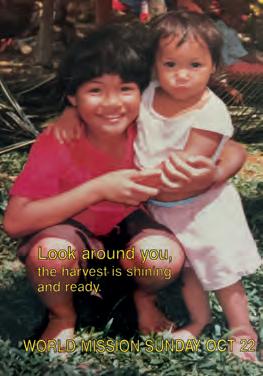
As we mark 100 years of World Mission Sunday, the Church gathers in a spirit of unity, prayer, and generosity. Across continents, communities come together to celebrate a shared calling that transcends borders, languages, and cultures – a living expression of a Church united in Christ and sent forth in mission.
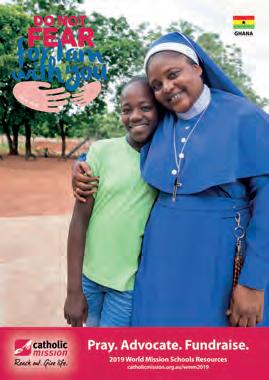
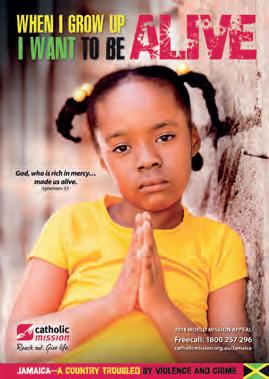
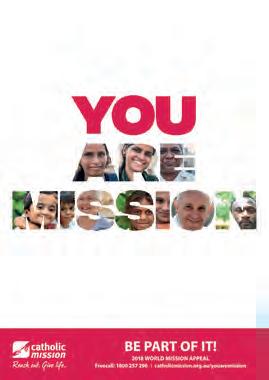
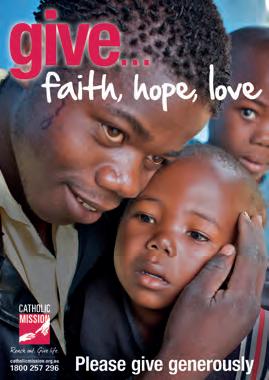



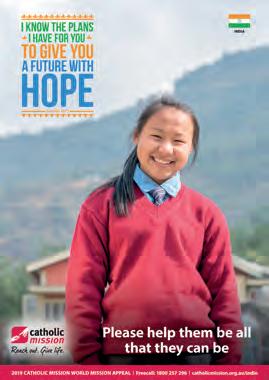
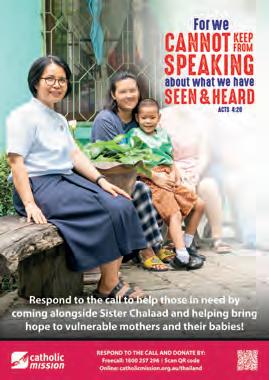
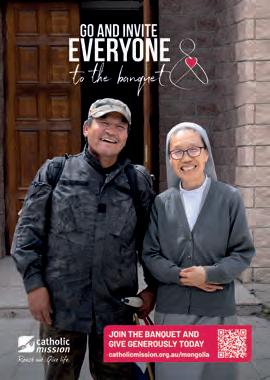
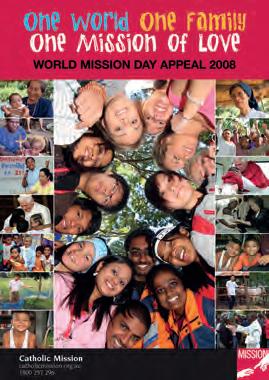
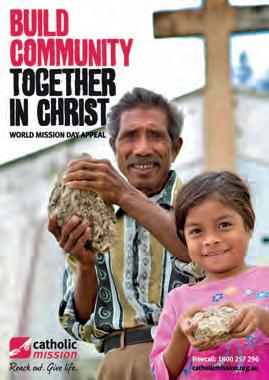
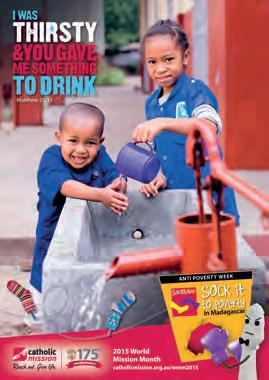
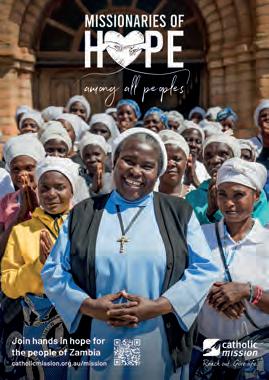
Thank you for everything you will do to help me help missionaries throughout the world.”
Pope Leo XIV, 2025 World Mission Sunday video message
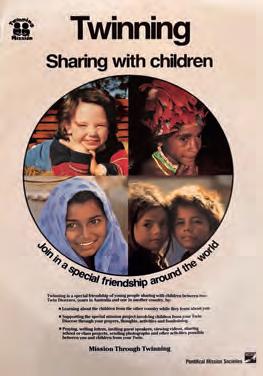
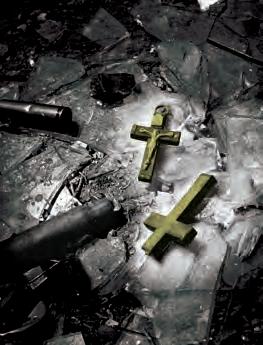
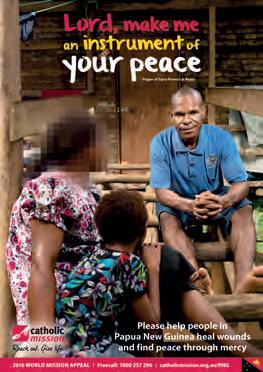
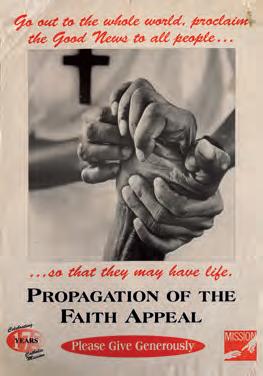
In Australia, Catholic Mission invites you to join us in celebrating 100 years of faith in action: a century of lives transformed and dignity restored. We celebrate every child who has discovered the joy of learning; every mother who has safely welcomed new life into the world; communities where hope has replaced uncertainty and daily bread is no longer a question but a shared blessing.
This is a story of people coming together, lifting one another up, and shaping a future rooted in resilience and possibility. It is also a story of presence, of walking alongside those in need, offering care, compassion and faith in moments of hardship. In each of these encounters, we witness the beauty of our shared humanity. In every act of love, no matter how small, Christ is made present, because each one of us is called to be a missionary.
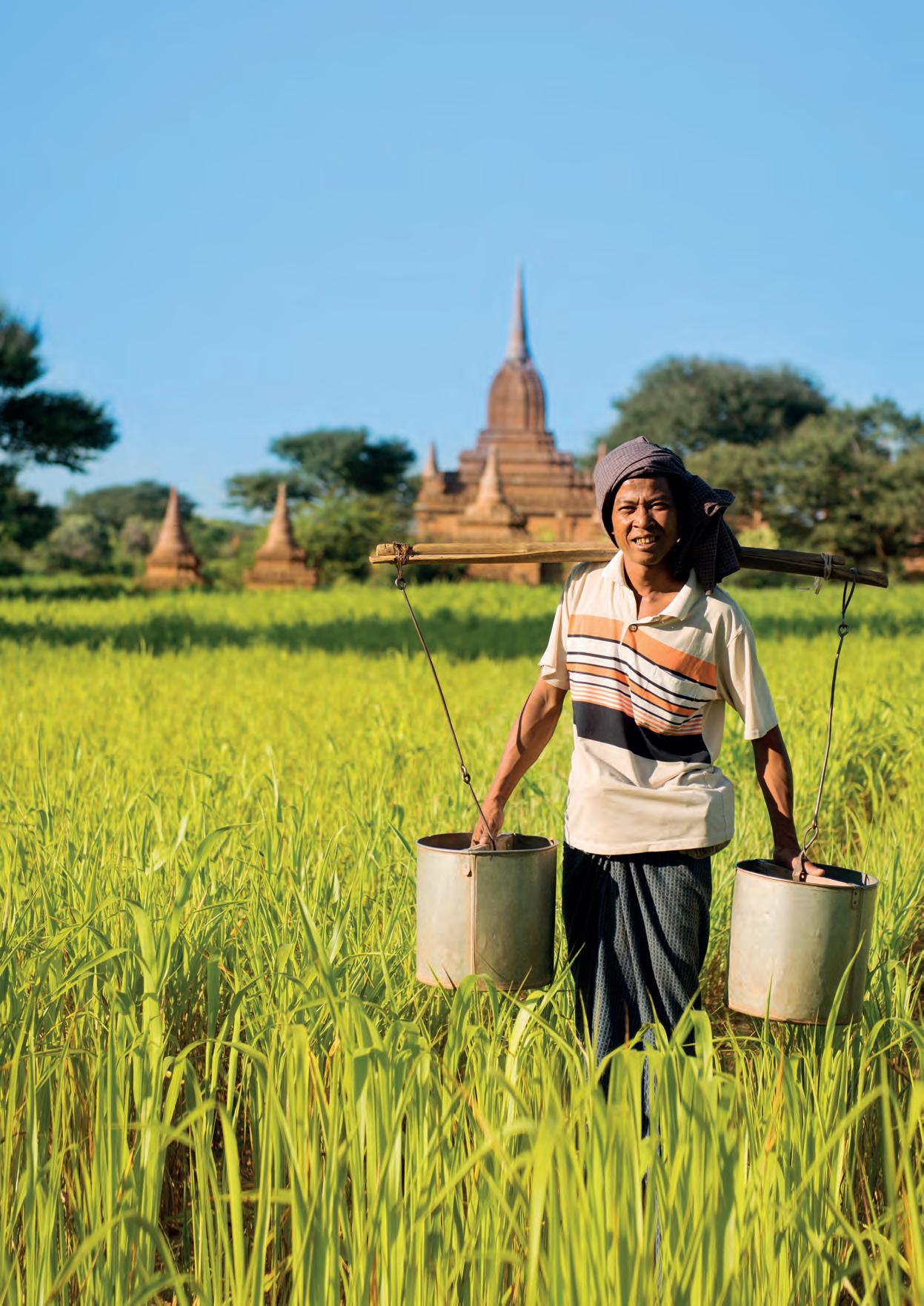
Languages: Burmese (official), with many ethnic languages including Shan, Karen, Chin and Kachin
Capital: Naypyidaw
Population: Approximately 57.7 million
Catholic faith: Around 1.3% of the population
Number of dioceses: 16
Economy: Agriculture, natural gas, jade and gemstone mining, manufacturing
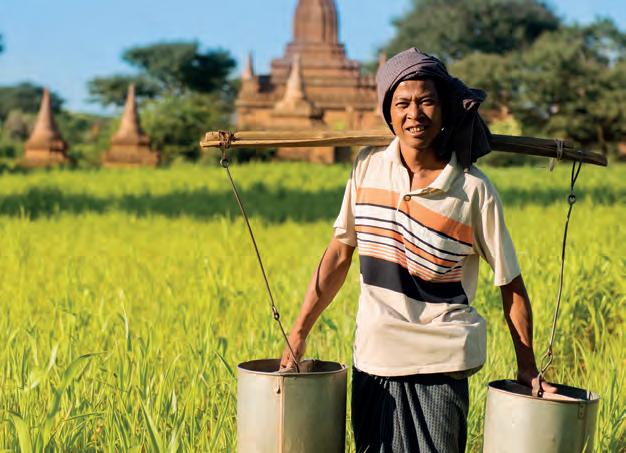
Located in Southeast Asia and home to more than 57 million people, Myanmar has faced profound social and economic disruption in recent years. Once considered a country with growing development potential, ongoing political instability and conflict have significantly affected the daily life of millions.
Since 2021, internal violence and insecurity have displaced more than 3 million people across the country, with 1.8 million forced to flee their homes in the past year alone. Many families have been driven from their homes, seeking safety in temporary shelters, forests or neighbouring regions – often with limited access to food, healthcare, safe water, and schooling. Displacement has disrupted entire communities, particularly in rural areas where resources were already scarce.
Across the country, needs continue to grow. An estimated 18.6 million people now require humanitarian assistance, including around 6 million children. Rising food prices, job losses, and restrictions on aid delivery have increased pressure on households already struggling to meet their basic needs. For many families, securing enough food, maintaining stable incomes and accessing healthcare have become daily challenges.
Environmental pressures further compound these hardships. Flooding, drought, and land degradation increasingly threaten agricultural livelihoods, which remain the main source of income for many rural communities. When crops fail, food insecurity deepens and economic vulnerability grows.
Children and young people are among those most affected. Millions have experienced interruptions to their education due to school closures, displacement, or lack of resources. Healthcare services are also under significant strain, leaving many communities without consistent access to medical care.
Yet even amid these difficulties, communities across Myanmar continue to show remarkable resilience. Strong local networks, faith communities, and grassroots organisations remain vital sources of support, helping families navigate an uncertain future while working to maintain hope and stability in the face of ongoing challenges.
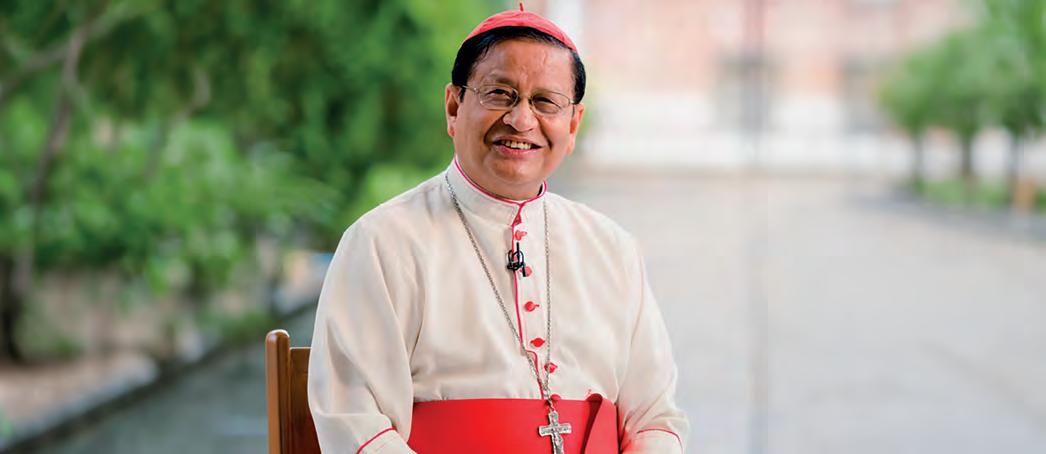
His Eminence, Cardinal Charles Maung Bo SDB, Archbishop of Yangon, is Myanmar’s first cardinal and a recognised pastoral leader who has spent his life accompanying communities through decades of hardship, conflict, and social change.
Born in Monhla Village in 1948, he joined the Salesians of Don Bosco as a young man and was ordained a priest in 1976. From the beginning of his ministry, he served in remote and vulnerable communities where education, pastoral care, and human dignity were often under threat.
In 1990 while serving as Bishop of Lashio, Cardinal Bo saw the urgent missionary needs of northern Myanmar and founded the Missionaries of St Paul. From a small and humble community it has grown into a missionary congregation dedicated to reaching remote areas and accompanying communities through faith, service, and hope.
Appointed Archbishop of Yangon, the largest city of Myanmar, in 2003 and appointed cardinal in 2015, Cardinal Bo is considered a respected voice for peace, reconciliation, and human rights in Myanmar and beyond. His leadership has consistently focused on strengthening the Church’s presence among the people
most in need and those affected by displacement, poverty, and political instability. Inspired by the Salesian charism, he sees the education of young people as essential to rebuilding society, believing that schools provide not only knowledge, but stability, dignity, and hope.
Under his guidance, the Archdiocese of Yangon has prioritised education as a cornerstone of its pastoral mission.
“Without the education of the children, Myanmar will not have a future at all,” Cardinal Bo explained, emphasising that education must nurture young people intellectually, morally, and spiritually so they can help shape a more just society.
Through his partnership with Catholic Mission, Cardinal Bo continues to support initiatives that expand access to quality education across Myanmar. Projects such as Shwe Hintha Private School reflect his conviction that long term commitment to communities can transform lives and create lasting change.
For Cardinal Bo, hope remains the guiding force of his ministry. As he often reminds those he serves:
Let us hope. Hope is the stream that runs through the desert of pes simism.”
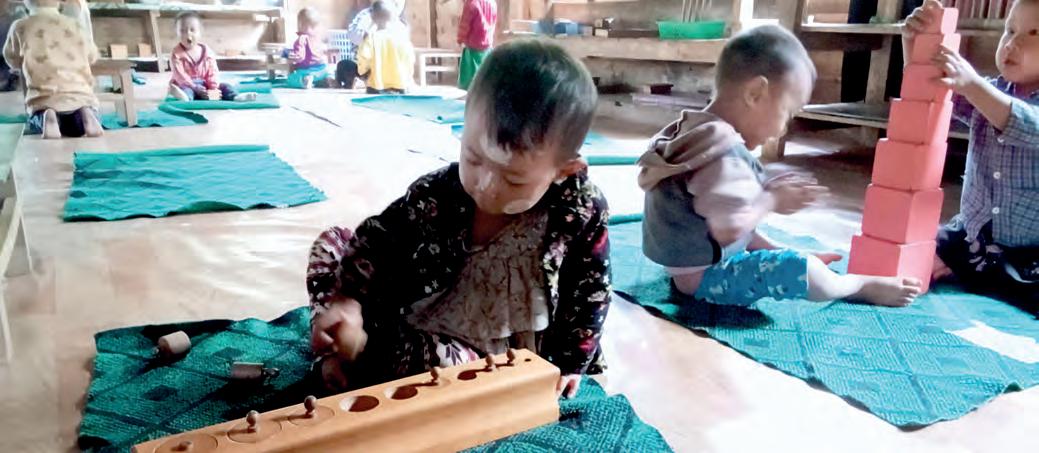
One of the initiatives that reflects Cardinal Bo’s vision for education in Myanmar is the Pyinya Sanyae Institute of Education (PSIE) in Yangon.
First supported by Catholic Mission in 2018, the institute was established to strengthen education in Myanmar by preparing teachers to serve in rural and disadvantaged communities. With the endorsement of Cardinal Bo, the program equips educators with child-centred teaching approaches before they return to their villages to support the learning of vulnerable children.
At its inception, the project responded to long-standing challenges in Myanmar’s education system. However, today its goals are even more urgent.
Since the global pandemic and escalating internal conflicts, Myanmar has faced an increase in internal violence, economic hardship, and widespread displacement. Nearly 3.6 million people are now internally displaced, and millions of children have had their schooling disrupted as communities flee violence and schools close across the country. In many remote areas, schools now rely on volunteer teachers with little formal training.
In this fragile context, the work of PSIE has become essential.The institute continues to train young people from rural
areas and regions affected by conflict to become qualified teachers who can return to serve their own communities. Through diploma level training and short courses that equip volunteer educators with practical teaching skills, PSIE helps sustain learning where education systems have fractured.
Despite power outages, travel restrictions, and ongoing insecurity, the program has continued to grow. A total of 87 students have enrolled in recent years, with graduates now teaching in 13 locations across Myanmar including villages, temporary schools, and communities supporting internally displaced families.
In a country facing immense challenges, every teacher trained through PSIE becomes a bridge of hope for the children they serve. For Cardinal Bo, education remains one of the most powerful ways to restore dignity and hope. He shared,
The whole Myanmar Church made education a priority. Without the education of the children, Myanmar will not have a future at all. With your generous support we can see the benefits for children from different places, diverse cultures, beliefs and religions.”
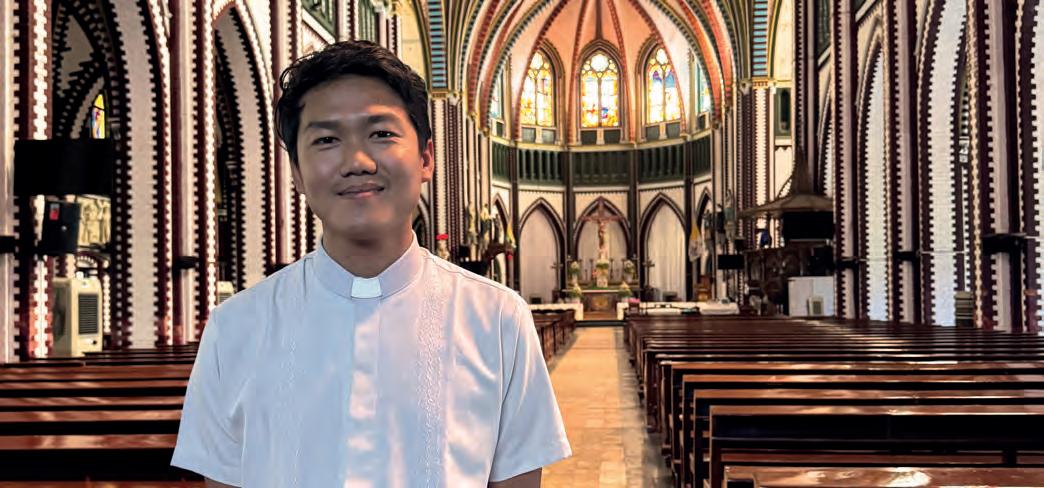
From a small village in the Ayeyarwady region of Myanmar, to leading an essential sustainable mission, Fr Salai Michael MSP discovered his vocation through a deep longing.
In Ka Beh, where Fr Salai was raised, the isolation meant the parish priest would visit only twice a year. Yet those rare visits were filled with joy.
“When I was about six years old, I felt a deep desire to be someone who could bring the sacraments and the closeness of God to the children and the people of my village,” Fr Salai recalled.
That childhood conviction would shape the course of his life.
In 2007, he joined the Missionaries of St Paul, a congregation founded in 1990 by Cardinal Bo. Inspired by the call that ‘each new generation needs new apostles’, the community embraces the charism Ad Gentes, bringing the Gospel to remote and conflict-affected regions across Myanmar and beyond. After years of formation, Fr Salai was ordained in 2018 at St Mary’s Cathedral in Yangon.
Today, as Secretary of the Missionaries of St Paul, he leads an integrated mission that weaves together faith,
social development, and ecological responsibility. One of the key initiatives in bringing these elements together is the Ecological Farming Project. At the heart of his work is a sustainable farming program that upgrades boarding hostels, promotes organic agriculture and trains young people in vocational skills.
“We don’t just farm; we train religious leaders and the Catholic laity in conflict transformation and peacebuilding. We all are the real agents of peace,” he said.
For Fr Salai, priesthood is inseparable from service to the poor.
I realised that my life was meant to be given so that God could be made available to the poor and the underprivileged.”
Drawing inspiration from Jesus’ mercy, St Paul’s witness and the Beatitude ‘Blessed are the peacemakers’, he envisions a Church that is resilient and self-sustaining.
His dream is bold yet simple: a reborn Church in Myanmar, united in mission, empowering communities to move from dependency to dignity, and becoming a living sign of God’s compassion and peace.
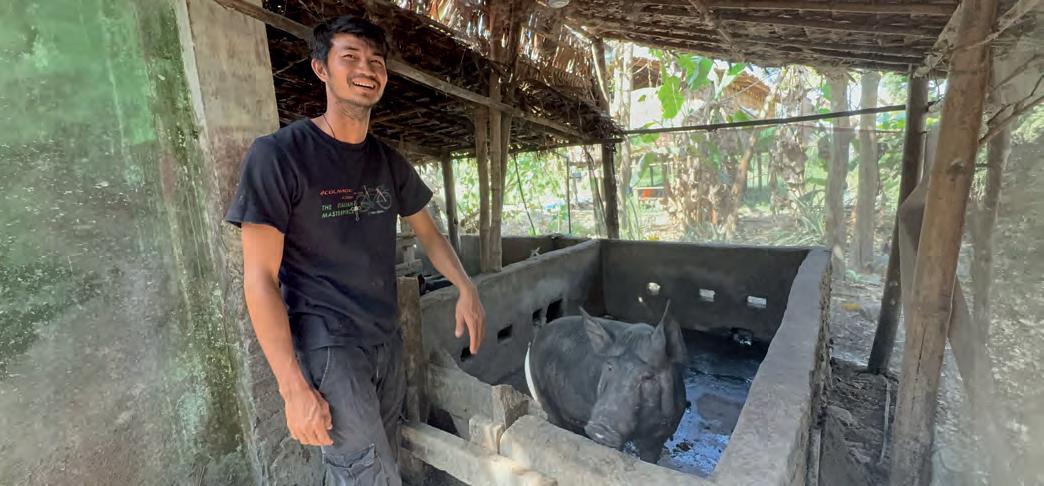
This year, we continue to support the work of the Church in Myanmar, where communities are facing ongoing instability and internal conflict, leaving millions internally displaced.
Together with Cardinal Bo and Fr Salai, Catholic Mission is walking alongside local communities to help establish sustainable solutions driven by the Myanmar people.
By providing the right tools and focusing on capacity building, communities can flourish and take ownership of their own future. These principles are at the heart of the recently established Ecological Farming Project, led by Fr Salai.
“Training and capacity building are central (to the project),” Fr Salai explained. “Whether it is teachers for the school or farmers for the land, I provide skills and knowledge so that they can manage, innovate, and sustain the project themselves. Over time, external support is reduced, and leadership is fully handed over to the local community.”
Through this initiative, the Missionaries of St Paul in Myanmar are strengthening their long standing mission of caring for vulnerable children and families through a sustainable ecological farming
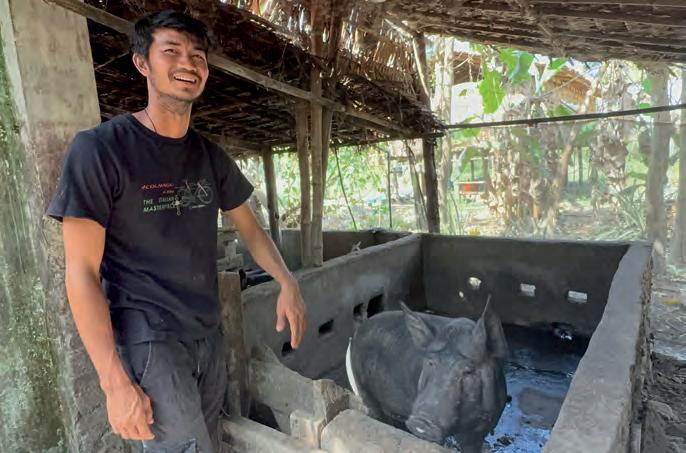
program. By cultivating up to 20 acres of farmland with organic rice, beans and vegetables, and establishing an eight acre integrated fishpond system, the project will provide reliable food for at least 100 conflict-affected families each year, as well as supporting 300 children with access to safe accommodation, stable meals, and education.
At the same time, 150 local young people will receive training in ecological farming, aquaculture, and leadership. These practical skills will enable them to build livelihoods within their own communities, rather than leaving in search of uncertain opportunities elsewhere.
By combining sustainable agriculture, youth formation, and community support, the project is expected to benefit more than 500 people locally. This self-sustaining model of mission will then be replicated in other regions of Myanmar.
For Fr Salai, the vision is clear:
My project of sustainable mission empowers the locals to lead by focusing on ownership, capacity and dignity, rather than dependency on charity.”
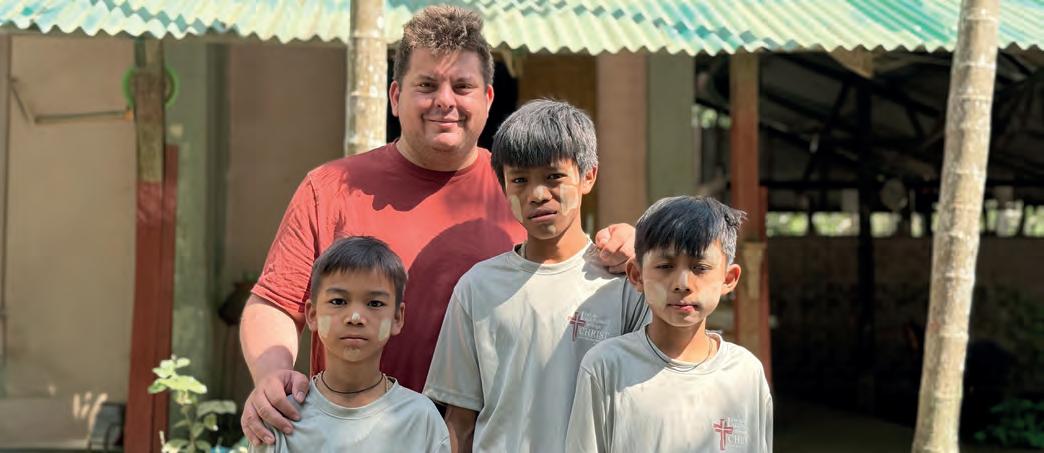
At Catholic Mission, our Mission Development framework and guiding principles are the cornerstone of all our projects, with capacity building playing a vital role. We believe that a thriving community is a self-reliant community, equipped with the skills, confidence and structures needed to care for itself and all its members.
True mission is not about short term solutions. It is about walking alongside communities so they can shape their own future. By working directly on the ground with local people, we can better understand their realities, listen to their aspirations and collaborate on solutions that respond to real needs rather than imposed ideas.
In Myanmar, this vision is embodied in the work of Fr Salai. In partnership with Catholic Mission and local communities, he is leading what he describes as “an integrated mission of Missionaries of St Paul to transform the Catholic Church in Myanmar into a self-sustaining force for change”.
For Fr Salai, the starting point is always participation.
“I begin by involving the community from the very start, listening to their needs, inviting them into decision-making, and
ensuring that the projects belong to them,” he said. “This way, they see it not as something given from outside, but as something they have built together.”
The Ecological Farming Project is one example of how this collaborative approach shapes initiatives, by combining organic agriculture, skills training and leadership formation. It is not focused solely on food production, but also on restoring dignity, building livelihoods, strengthening environmental stewardship and forming local leaders who can guide their communities forward.
“This is how sustainability is achieved –by shifting from charity to empowerment, from dependence to leadership, and from outside aid to community-driven mission,” Fr Salai explained.
His long term vision is clear.
For me, success is not measured by buildings or programs alone, but by the transformation of hearts and lives: a community that is resilient, self-sustaining and filled with leaders who serve with humility and hope. That is what a thriving community looks like 10 years after the mission has taken root.”
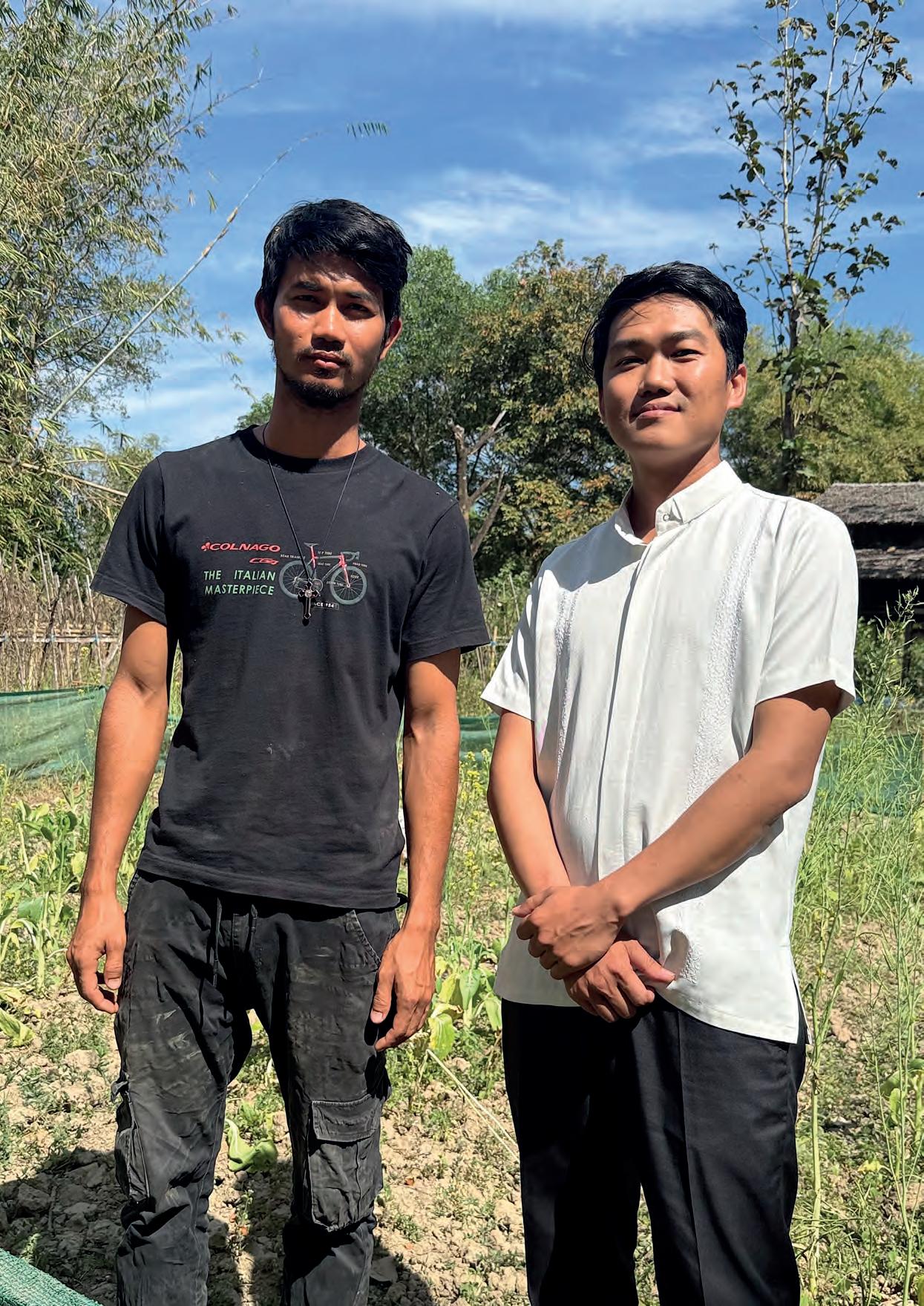
many people in the community.
Talking Mission is an interview corner which, over the past few years, has collected many stories of hope from around the world. They inspire us, as each interviewee shares in their own words how they turn mission into action.
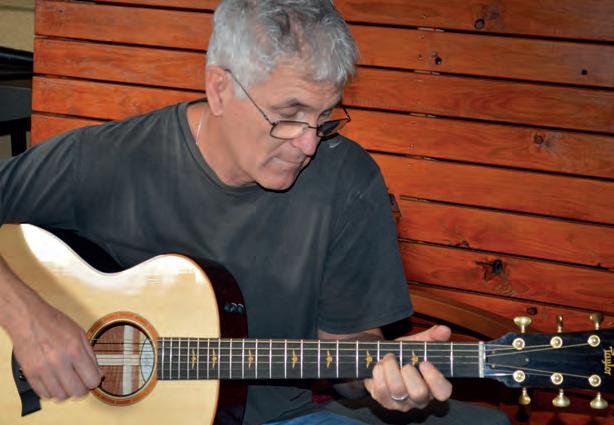
For this special edition of Mission Today, we spoke with Mark Raue, Province Director of NSW/ACT at Catholic Mission and a talented composer, who puts his heart and faith into creating inspiring songs that convey the love of God. He has written a special song to mark the 100 year anniversary of World Mission Sunday.
Can you please introduce yourself and share about your work at Catholic Mission, but also as a composer?
I am the Catholic Mission Province Director for NSW/ACT and reside in Kiama on the beautiful south coast of NSW. I had a long career as a teacher, Religious Education Consultant and Principal in Catholic schools prior to joining Catholic Mission three years ago.
I have always had a deep connection to Catholic Mission, and as a composer and musician, have written numerous songs for their various campaigns over the years. The best known song would probably be the Mission anthem, The Face of God, which goes back almost 30 years.
You have recently written a song called ‘One Mission’. Can you please share what inspired you to write it and the meaning of the song?
My wife, Louise, and I have written and recorded hundreds of songs over the years, and we largely write about themes of mission, justice and ecology. We have published eight albums and like to describe the music as ‘songs that stir the conscience’. They are not really hymns or liturgical pieces, but more songs that can be used in other reflective, education or prayer settings.
When I read Pope Leo XIV’s World Mission Sunday message for 2026, ‘One in Christ, united in mission’, I was immediately drawn to his focus on unity amongst diversity. The words easily lent themselves to become memorable song lyrics with a very clear message.
In your song, the line ‘many voices, many people, different lives, but one heart unites us’ is very powerful. What does unity in mission mean to you in today’s world?
The diversity of people with unique backgrounds and experiences is actually a strength in our world. I see it in the people who work alongside me at Catholic Mission. We are all different and have different roles and responsibilities, but we need to be singing from the same song sheet, singing with one voice, as it were. And that unity, Pope Leo reminds us, comes from our shared mission – that all may have life to the full. Some see diversity as a problem, but that is only if we have no common ground or unity of purpose. The Church and the world are beautiful in their diversity, but even more beautiful when we are united in Christ and heading in the same direction. Pope Leo is a wonderful person to model that unity.
Your lyrics speak about people leaving their homes, others giving generously, all working in solidarity. Have you witnessed these realities lived out in your own experience of mission?
Absolutely! Each October, we share the stories of those who have left their homes and are building communities in distant lands – Timor-Leste, Mongolia, Zambia and this year, Myanmar and Malawi. But that vocation is not for everybody, and the people in those environments need people like us here in our relatively comfortable homes in Australia to support them with prayer, storytelling and resources. When school students, parishioners or other supporters do that, they are generously standing in solidarity with those on the margins. This is a living example of being one in Christ and united in mission.
Looking back on the 100 year legacy of World Mission Sunday, what gives you the most hope for the future of mission?
The Church is, by definition, missionary in nature. It is fundamental to who we are. World Mission Sunday helps to remind us that we are not just a devotional Church, but equally called to be an active agent in transforming the world. This message is universal and transcends space and time, so it will endure no matter what other things change in our Church and world. This is why I came to work at Catholic Mission and why I am ever hopeful that mission will continue to be a driving element of the Church into the future. And Pope Leo, one who worked in cross-cultural mission for decades, makes me even more confident.
If there is one message you would like listeners to carry with them after hearing this song, what would it be?
Hearts open wide – with no distinction or limitation – is the missionary call. All of us have a part to play, no matter who we are, as long as we remain united in our purpose to bring fullness of life to everybody.
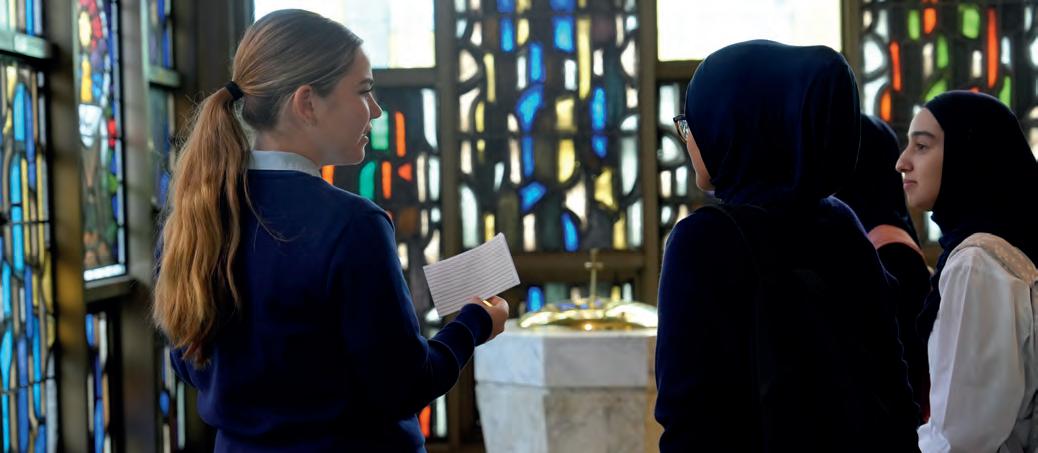
Interfaith Encounters program promotes friendships and understanding between students from different faiths and cultural traditions.
With the rise of racial and religious tensions in Australia, community-driven responses that promote inclusivity, compassion and unity are needed more than ever.
Since 2020, Catholic Mission has been delivering an Interfaith Encounters program which is helping to break down barriers between students from different faith and cultural backgrounds.
The program brings together senior secondary students (Years 10-12) from different schools in Sydney, providing them with a safe space for inclusive, respectful and mutual learning about each other’s beliefs and traditions. The outcomes have been heartwarming as students develop new friendships, celebrate difference, deepen faith, promote peace and social cohesion.
At a time when Islamophobia and antisemitism are on the rise around the world, the program offers hope for the future, as students become champions of much-needed community harmony and inclusion.
This year, the program is expanding with even more schools participating, and the faiths of Judaism, Islam and Christianity represented.
New initiatives will include Truth Telling resources, piloting a Buddy program
and an Ecology component. The latter will address the sharing of wisdom from different faiths relating to the care of nature and the vulnerable. It will draw on resources such as Pope Francis’ Laudato Si’ (Care for our Common Home) and Al-Mizan: A Covenant for the Earth
A newly-released report by the Centre for Western Sydney indicates the Interfaith Encounters program is making a difference to participants’ lives.
Key findings include a noticeable improvement in the students’ attitudes towards cultural and religious diversity, and a significant decrease in prejudice, particularly towards Jewish Australians.
Students who were surveyed also expressed increased confidence when engaging in interfaith activities, and a greater willingness to stand against racism.
They said the program effectively encouraged connections across different religious groups and promoted critical reflections on bias, stereotypes and social harmony.
Proudly funded by the NSW Government through the COMPACT program, and delivered in partnership with Together for Humanity, the Centre for Western Sydney and the Challenging Racism Project, the program is showing that we can bridge divides and build a brighter future for all.
Loving God, creator of our human family, you birthed/formed/shaped all human beings equal in dignity; pour forth into our hearts a fraternal spirit and inspire in us a dream of renewed encounter, dialogue, justice and peace. Move us to create healthier societies and a more dignified world, a world without hunger, poverty, violence and war.
May our hearts be open to all the peoples and nations of the earth. May we recognise the goodness and beauty that you have sown in each of us, and thus forge bonds of unity, common projects, and shared dreams. Amen.
From Fratelli Tutti (Encyclical letter on Fraternity and Social Friendship) Pope Francis 2020