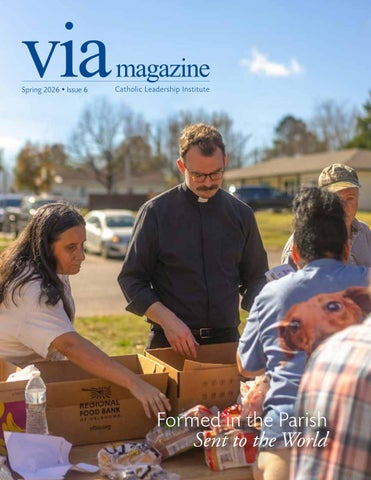
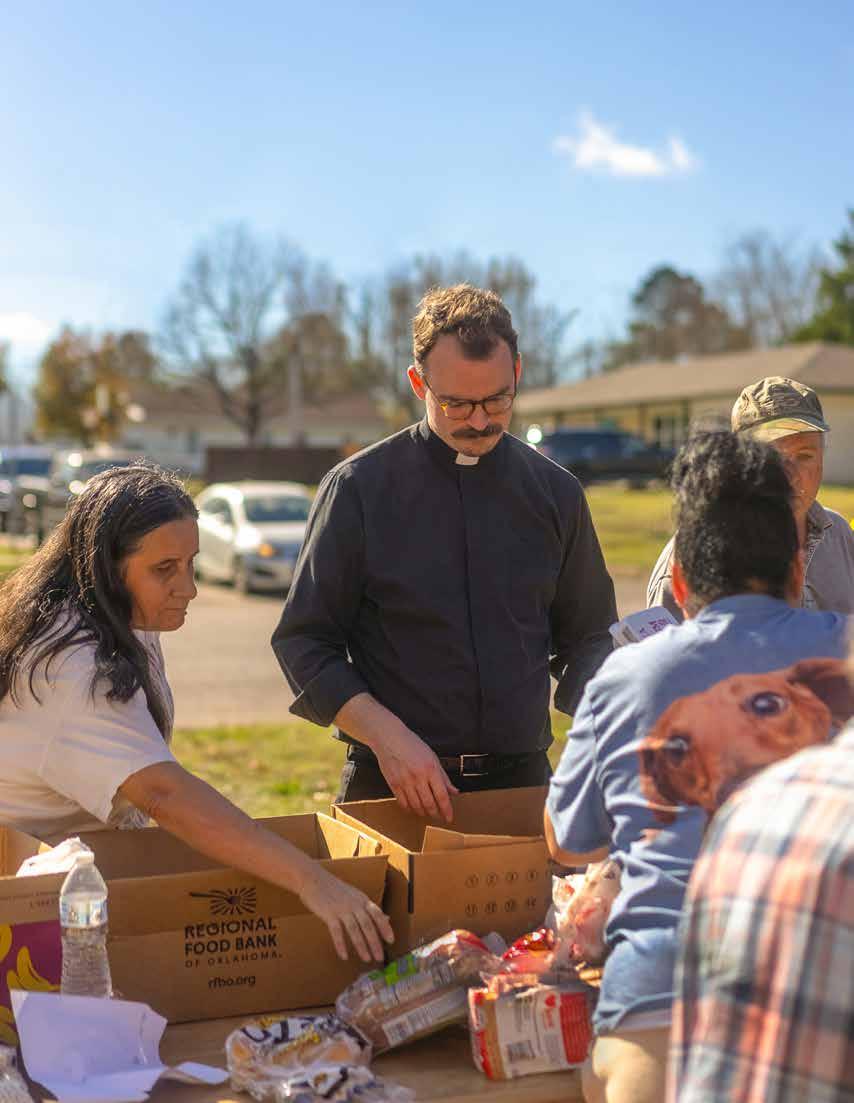
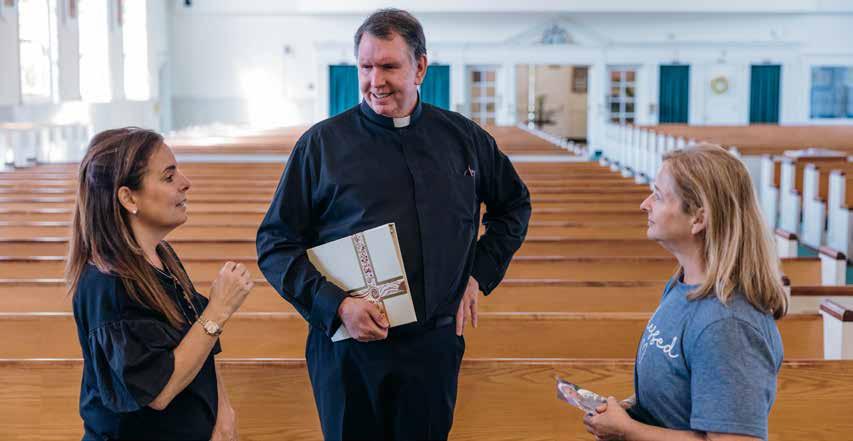
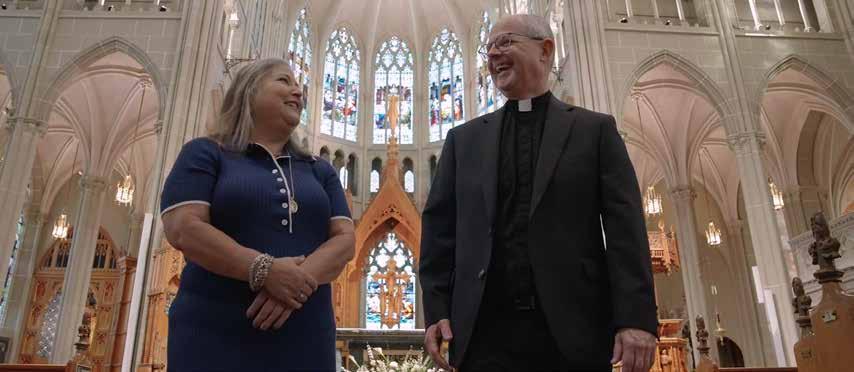
Fr. Robert Duck, pastor at Next Generation Parishes St. Michael, St. Stephen, and St. Teresa in the Diocese of Tulsa, joins parishioners as they prepare food for hungry neighbors.
From the Desk of Dan Cellucci
Dear Friends in Christ,
There is a large bell in our office in Malvern, Pennsylvania that we ring only on special occasions, often to celebrate great opportunities to support the Church or the generosity of those who sustain our mission. This spring, however, I have one million reasons to ring it as we mark the Disciple Maker Index’s one millionth survey response.
It’s a staggering number of surveys, but what matters most to me is what it represents: one million voices — one million people who took the time to share their experience of faith, beliefs, and practices as Catholics. Since our first survey in 2014, we have witnessed not only the power of those voices, but also what happens when the Church listens. Across the country, leaders have engaged in the data and in the lives of the people they represent, and it is making a difference.
We’ve gained not just data, but connection between insight and action, the head and the heart.
And when we listen — really listen — we begin to see how deeply everything is connected. Individual voices become a collective call. Patterns emerge. Needs become clear. And with that clarity comes responsibility.
In this issue, you’ll see those connections come to life. In places like St. Brigid in Tulsa (page 4), and in the reflections of Bishop Timothy Senior (page 9), we see how listening leads to renewal. This is the heart of our work and at the heart of the Church: a communion of persons, united as the Body of Christ.
In Christ,
DAN CELLUCCI President & CEO
LISTEN TO DAILY LEADERSHIP ON THE HALLOW APP!
Now on the Hallow App, Dan Cellucci’s daily series offers brief, practical reflections on life and leadership from his book, Cleanup on Aisle Mine. Each reflection provides simple, meaningful insights to help you apply authentic leadership to your walk of faith. Dan’s 3–4-minute tracks fit easily into your daily routine, offering encouragement, clarity, and often some laughter at any part of your day.
One Million Voices, One Living Pulse
The historic millionth Disciple Maker Index (DMI) survey completed in early 2026 is more than a collection of data — it’s a living pulse.
One million voices, young and old. Lifelong Catholics and new converts. Deeply engaged parishioners and those still searching for connections. They come from parishes of every size, in every region, across diverse cultures and communities.
They are the Church.
And we learn from them.
These voices give Church leaders real, tangible insights and facts that serve as a foundation for planning and spiritual growth efforts. We don’t have to deduce the strengths and opportunities of our communities or guess the impact our welcome or pastoral presence has on its members. They tell us, and we respond.
The pulse of the Disciple Maker Index gives us the sound of a Church that is alive and wanting to grow. Let’s take a closer look, below.
The Disciple Maker Index expands our capacity to listen, bringing forward the faith journeys, beliefs, practices, doubts, and hopes of people across the Church. And when listening deepens, renewal begins.
In the months ahead, our team will continue to unpack key insights from the Disciple Maker Index, offering a clearer picture of where the Church is today and where she is being called to grow. Stay connected with us to explore what we’ve learned and to help shape what comes next: www.catholicleaders.org/email-sign-up.
Scan the QR code to receive emails >
Formed in the Parish. Sent to the World.
By Mary Serafino, Director of Communications
What might be a typical Thursday afternoon trip to the grocery store for some people is, for Fr. Jack Knight, something more: an encounter.
“Okay, Lord,” he prays, “Who do you want me to encounter? How can I be your eyes, ears, mouth, hands, and feet out in the world?”
This shift — from seeing parish life as something contained within church walls to something lived out in everyday places — changes everything. For Fr. Knight, discipleship means going where people already are: gyms, gas stations, coffee shops, and other everyday spaces. And as a pastor, he knows his role is not only to serve, but to model that way of life for his parish.
That kind of leadership is a response to grace, selfreflection, and accompaniment.
In 2025, Fr. Knight and his parish, St. John Vianney in the Archdiocese of Atlanta, entered a new iteration of Catholic Leadership Institute’s Next Generation Parish service — one designed for the Church navigating a rapidly changing cultural landscape. The shift reflects something deeper than a program update. It reflects a renewed apostolic urgency.
“The parish has to be sent,” shares Leadership Consultant John Smestead, who is part of the initiative in the Archdiocese of Atlanta. “We can’t wait for people to come to us anymore.”
That outward movement is at the heart of the renewal. The Church is leaning more confidently into her apostolic identity, proclaiming the Gospel not only within parish campuses, but through lives lived visibly and intentionally in the world.
For Fr. Knight, this shift became personal through the addition of discipleship practicums, where parish staff and key leaders are trained to enter public spaces with a missionary mindset. “It opened my eyes,” he said, “to see the hunger for God in the people we encounter every day.”
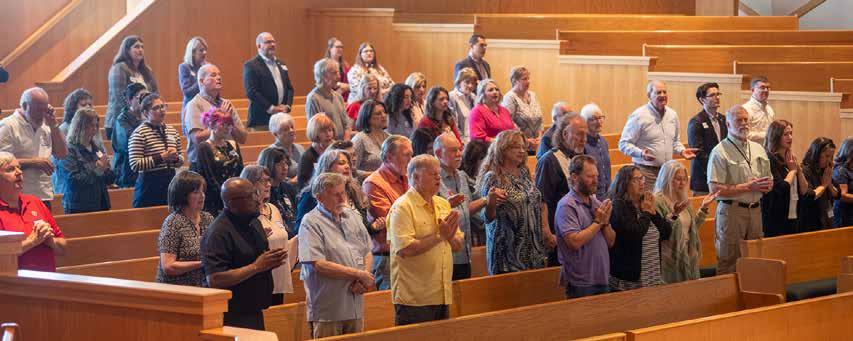
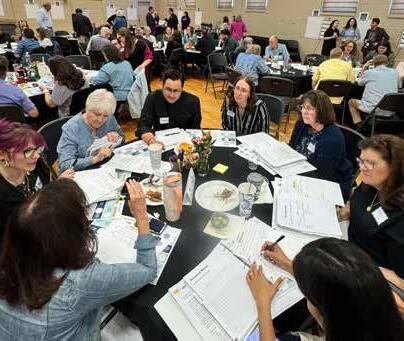
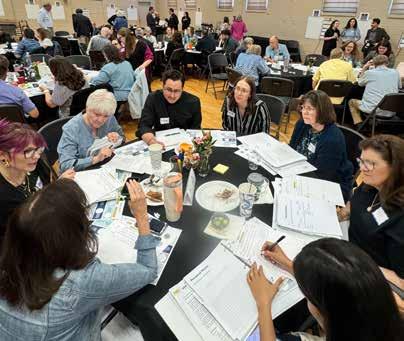
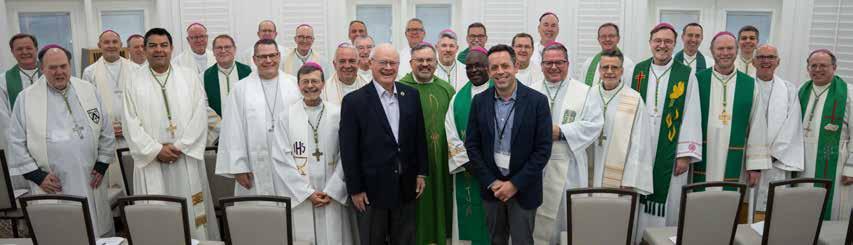
In March, pastors, parish staff, and key volunteers engaged in Next Generation Parish in the Diocese of Tulsa, gathered for a Mass and in-person session. Bishop David Konderla offered the Mass, spoke to participants, and participated in the activities.
What began as a change in mindset is becoming a way of life — one that extends far beyond a single parish or diocese.
This is only the beginning.
In a rural Oklahoma town in the Diocese of Tulsa, Next Generation Parish at St. Brigid Parish is bearing fruit in a different but equally powerful way.
When Fr. David Medina began the process three years ago, he set a clear priority: “I wanted the members of the community first — and most importantly — to fall in love with Jesus Christ. Then they will desire to serve God by serving others.” The results have been transformative.
WHAT IS NEXT GENERATION PARISH?
Continued on page 6 >
Next Generation Parish is a two-year journey that transforms parish life through prayerful discernment, leadership formation, and guided accompaniment. Grounded in the unique charism of each community, the heartbeat of Next Generation Parish affirms that every parish can become a living witness of faith marked by deepened discipleship, shared responsibility, intentional worship that extends beyond the Sunday experience, and a missionary impulse that meets both the challenges and opportunities of today’s Church.
THE FOUR PHASES OF A NEXT GENERATION PARISH
Growth in sacramental participation and spiritual renewal is unmistakable. This Easter alone, 16 catechumens entered 1 2 3 4
INVITATION (3 MONTHS)
A time of discernment for pastors, parish staff, and key volunteers.
DISCOVERY (6 MONTHS)
A season of spiritual formation, coaching, planning, and apostolic ministry practicums.
ACCOMPANIMENT (1 YEAR)
An action phase to implement pastoral plans, apostolic spirit and a culture of discipleship within the community.
REFLECTION (3 MONTHS)
A time to evaluate growth, celebrate what God has done, and adjust for the future.
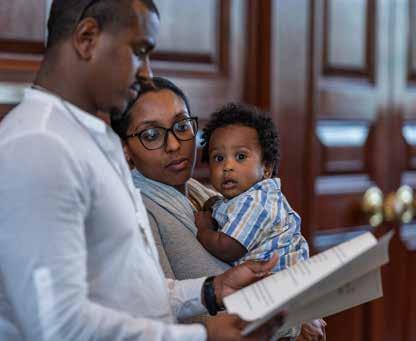
Allentown A young family attends Mass offered by Bishop Alfred Schlert in the Diocese of Allentown.
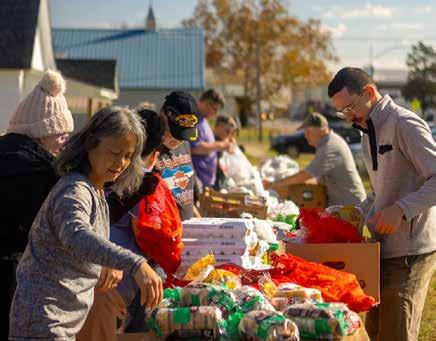
Parishioners at St. Michael, St. Stephen, and St. Teresa Catholic Church collect food for hungry neighbors.
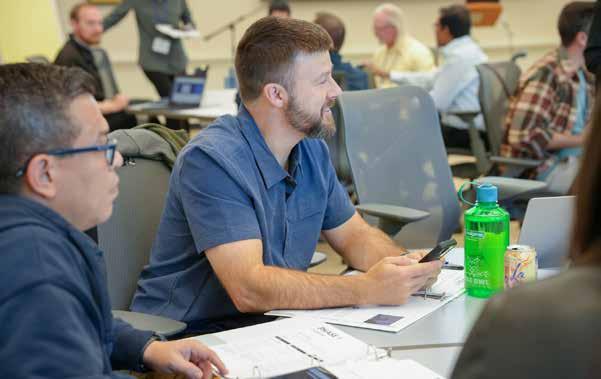
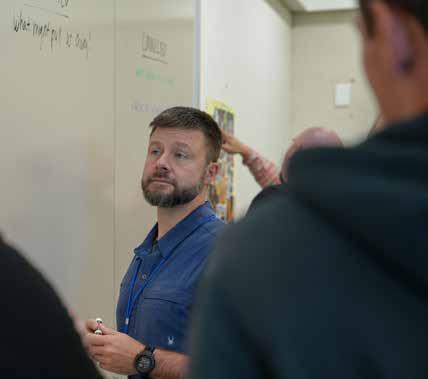
In March, parish leaders in the Archdiocese of Atlanta addressed actionable implementation of their parish priorities and plans in the Next Generation Parish process.
the Church — double the number from the previous year. Through the Disciple Maker Index, parishioners report increased confidence in Church teaching.
Even more striking, young men in the parish are now discerning the priesthood — something the parish has never seen before. In fact, prior to renewal, 76% of parishioners reported they had never invited a man to consider a priestly vocation.
Programs, too, have been transformed into places of encounter.
Feed My Sheep is a weekly parish initiative that invites those in need to sit at the table and be served with care by parents alongside their children. “There is no difference — no skin color, no language, no background.” Fr. Medina said, “Everyone comes together.”
Miguel, a local restaurant owner, offers his resources to support the ministry, seeing it as a way to share the blessings he has received. Service is not an obligation; it is a response. Whether donating meat and other supplies or helping provide what is needed for the weekly meal, Miguel has become an important part of the ministry’s work. “If we have the opportunity to share, why not?”
What is happening in Tulsa looks different from what is happening in Atlanta. The contexts are different. The people are different.
But the movement is the same.
Next Generation Parish, in its renewed form, is built for exactly this reality — not for one type of parish, but for the Church as she is today. It meets parishes where they are and invites them not to stay, but to go.
It begins with a simple but urgent question: where is the Spirit calling us now?
In her work with Next Generation Parish, Leadership Consultant Manager, Stephanie Bosse, is seeing parishes take this question further: “Who are we serving? Who aren’t we serving? And how do we make those two meet up a little bit better?”
When parishes are formed to encounter Christ deeply, they become communities that go out, find others, and bring them to Him. “At its heart, this is what we’re doing: helping people move from head to heart, learning how to reflect, respond, and ultimately lead themselves and others more intentionally in discipleship.”
WHAT’S ON YOUR MIND FOR PARISHES TODAY?
Via Magazine invites readers to help shape future installments of Quintessentials — our thought leadership resource series designed to support and inspire parish leaders. If there’s a topic, challenge, or emerging trend you’d like to address, we want to hear from you. Your insights can help guide meaningful conversations and practical resources for parishes everywhere. Submit your suggestions and be part of the dialogue shaping the future of parish leadership.
Scan QR code to submit your topic suggestions. >
NEW TO THE THOUGHT LEADERSHIP LIBRARY
With over 35 years of accompanying pastors and parish leaders, our team has seen the full range of challenges that come with leading a parish. While each community is unique, many of the needs related to people, facilities, finances, and ministries are often shared. Rather than asking leaders to reinvent the wheel or create additional work for themselves, Catholic Leadership Institute offers a complete library of free resources called Quintessentials — practical steps for common parish and diocesan efforts.
Our two newest Quintessentials are now available for download: 5 Steps to Implementing Effective Parish Programs and 5 Steps to Set Up Multi Parish Pastoring for Success
5 STEPS TO IMPLEMENTING EFFECTIVE PARISH PROGRAMS
While new parish programs are often easy to create, sometimes they add more work than impact. This resource encourages parishes to think strategically about how and why they launch programs — from clarifying the intended audience to mapping out what should be considered after a program concludes.
This guide is for pastors, key parish leaders, and staff who are involved with overseeing and future-casting programs at their parish. Several of the steps can also be applied on a diocesan level.
Only 28% of parishioners strongly agree that their parish equips them to talk about faith by providing high-quality events to which they can invite others.
5 STEPS TO SET UP MULTIPARISH PASTORING FOR SUCCESS
As dioceses adapt to changing realities, multi-parish leadership has become increasingly common. Our team has been accompanying pastors who lead multiple parishes or single parishes with several worship sites and have identified essential starting points for building unity, shaping culture, and cultivating a sense of belonging during times of transition.
Diocesan leaders who support pastors in these settings will find actionable guidance to help clergy feel prepared rather than overwhelmed. Pastors can also use this tool to organize their teams, motivate volunteers, and confidently lead their communities into the future.
Scan the QR code to explore these resources and the full Quintessentials library. >
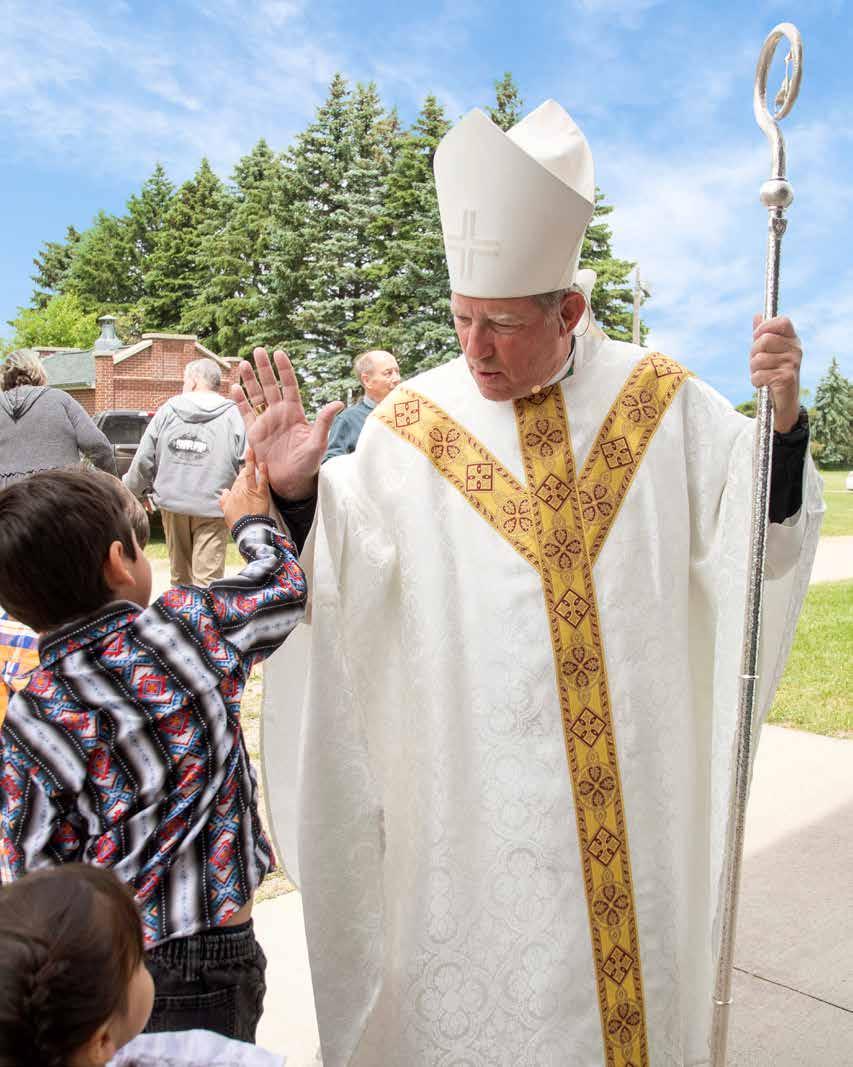
a greeting and high-five to a young family after offering an annual Rural Mass for the
Bishop Robert Gruss offers
Diocese of Saginaw.
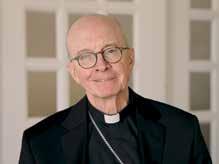
When Bishop Timothy Senior was appointed the bishop of the Diocese of Harrisburg in 2023, he didn’t pretend to have all the answers. Like any bishop stepping into a new diocese, he was entering unfamiliar ground: new people, new dynamics, a different history. In an effort to find support, he turned to a familiar face in Catholic Leadership Institute to assist him with the transition.
Every effective leader must listen before he can lead. In the case of a bishop, he must earn trust, often while carrying the weight of expectations from every direction.
That’s what makes Bishop Senior’s recent comment about his experience with Episcopal Transition Support stand out. Reflecting on the experience, he said, “I felt like I had won the lottery.”
Not because the work was easy, but because he wasn’t doing it alone.
Through his partnership with Catholic Leadership Institute, Bishop Senior was able to begin his ministry by hearing directly from his priests, staff, and the faithful. Instead of guessing at priorities, he could see them clearly. Instead of rushing to act, he could take the time to understand.
It’s easy to see bishops only in their role: teaching, leading, making decisions. But moments like this remind us that they are also stepping into something new, often at great personal cost, trusting that the Church will meet them there.
The right kind of support can give a bishop space to lead well from the beginning.
Bishop Senior’s experience in Harrisburg is still unfolding. But his first impression says a lot, as does his gratitude to the generous benefactors who make this and efforts like this possible at Catholic Leadership Institute.
Scan to watch a video of Bishop Senior sharing the story in his own words. >
This year, 30+ bishops gathered together in sunny Florida for the annual Bishops’ Session with a topic focused on their own episcopal ministry: A Bishop’s Role in an Apostolic Age: Fostering Presbyteral Zeal and Shaping Diocesan Priorities. Throughout the week, the bishops examined their own pastoral priorities, readiness, and focus. In one session, bishops even wrote letters to their successors, using it as a chance to reorient their current ministry where needed. This event is fully funded by the generosity of benefactors who love and support the Shepherds of the Church.
“I am incredibly grateful for Catholic Leadership Institute’s session for bishops. This is my second time, and this session in particular really spoke to needs, we as bishops have in our ministry. The fraternity I got to share with brother bishops was priceless. CLI has really created an experience that is the epitome of excellence and unparalleled in its support of bishops.”
Archbishop Nelson Pérez Archbishop of Philadelphia
DISCOVERING THE FOUNDATION OF GREAT
By Nicole Jones, Digital Communications Manager
Throughout history, God has given unique gifts to each person. For some, these gifts are apparent from a young age, while for others, they may remain hidden or only partially realized until the right person, opportunity, or experience brings them to light. For Fr. Matthew Hoelscher, a priest of the Diocese of Peoria, Eius has allowed him to recognize his gifts in a new light and use them in ways he never thought possible.
“The most poignant self-revelation throughout the Eius process has been that God has given me gifts,” Fr. Matthew said about his experience with Catholic Leadership Institute’s ongoing priest formation.
“[My gifts] are easy to downplay at times. I’m steady, cautious. I like to receive a lot of input. I’m naturally introverted… but I’ve always seen [these traits] as poor leadership.”
Fr. Matthew is learning how to channel his gifts as a competent and confident leader, discovering that skills and traits he once believed worked against strong leadership, such as prudence, are actually the foundation of great leadership. “Although these traits might be different from some of my classmates and other priests, there is goodness in them,” he remarked.
Such self-reflection comes from prayer, fraternity, and accompaniment – particularly from the Leadership Consultants who support and listen to the priests throughout their time in the Eius service.
Jeff Pattison has served as a Leadership Consultant for Catholic Leadership Institute for three years, and through his time walking with priests, he has a deep
LEADERSHIP
respect for what true accompaniment means. “At its heart, accompaniment means walking alongside another person with attentiveness, respect, and trust in the work that God is already doing in his life,” Jeff said.
A priest’s experience in Eius is less about instruction and far more about discovery, helping priests see more clearly what God is already stirring in their hearts and ministries. Jeff said, “I listen carefully, affirm the many ways priests are already serving faithfully, and create space for reflection that helps them recognize the gifts, wisdom, and grace God has already placed within them.”
At the heart of it all is the knowledge that God always makes good choices. Fr. Matthew’s leadership as a pastor now reflects this truth with confidence in himself through the Lord: “[God] has called me to this moment, He is going to lead, and He’s going to do it through the gifts I have. I can trust Him.”
Scan the QR code to watch a brief video with Fr. Matthew Hoelscher on-site at Eius. >
ALUMNI UPDATE
“Communities that are built to evangelize form communities that can weather change.”
When I arrived as a new pastor to St. Anne Catholic Church in the Diocese of Tulsa, we used the Disciple Maker Index survey in 2013 to scan the environment and set a spiritual benchmark for the parish. We used this information to create a strategic plan that became the building block for the parish’s future growth spiritually as well as in numbers. After three years we took the survey again and celebrated our growth. That second Disciple Maker Index then drove the second pastoral plan.
The Disciple Maker Index gave me a live update on the spiritual health of my community. This changed how I preached regarding discipleship and personal responsibility in the spiritual life. The data also gave us focus on ministries and programs that needed to be added or taken away.
With each passing year, the data continues to speak about the original assumptions of parish life. Strong pastoral leadership from the clergy, strong culture of hospitality that welcome people in, dynamic and sacred liturgies with strong preaching — all are profoundly formative.
FR. GARY KASTL
Vicar General for the Diocese of Tulsa
A Clear Identity in a Diverse Community
By Nicole Berlucchi, Engagement and Mission Advancement Associate
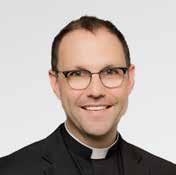
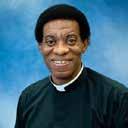
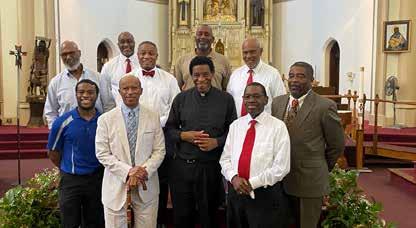
As pastor of St. Benedict the Moor Parish — a mission parish for Black Catholics in the Diocese of Pittsburgh — Fr. Matthew Hawkins leads a Next Generation Parish community whose very identity embodies welcome, reverence, and joyful belonging. His approach is rooted in his own journey into the Catholic Church and shaped by a conviction that a parish can be both deeply rooted and broadly embrace others.
Fr. Matt’s path into Catholicism included honest questions about race, belonging, and identity — particularly what it means to be both Black and Catholic. What he encountered was a Church alive with vibrant liturgy, authentic community, and faithful accompaniment. Fr. Matt shares, “As a pastor, I recognize the beautiful responsibility of honoring St. Benedict the Moor parish’s rich history within the Black Catholic community while ensuring that its doors remain open to anyone seeking Christ.”
In its Next Generation Parish journey, St. Benedict the Moor chose three parish priorities: Liturgy, Evangelization, and Discipleship. These were selected not only with the Black Catholic community in mind but also considering Protestant neighbors (many of whom send their children to the parish school) and other members of their diverse congregation that gathers each Sunday. “This is a parish where its uniqueness does not dilute its Catholic identity, it strengthens it,” Fr. Matthew said.
LITURGY THAT CELEBRATES AND UNIFIES
The parish envisioned a liturgy that feels celebratory, drawing strong participation from all who attend. One simple but powerful decision to incorporate Latin chant and hymns has become a unifying thread. With parishioners from many countries and dialects, the familiar cadence of Latin offers common ground, restoring a sense of home for immigrants while honoring the Church’s universality.
Fr. Matt’s pastoral vision is to build a community where community extends beyond the final hymn. He recalls a season in his life when post-Mass conversations formed
into a dinner group — friendships where personal stories and faith reflections deepened his faith and built community. He also remembers once being asked to usher for Sunday Mass as a teenager — a small ask that instilled in him a deep sense of responsibility and belonging.
These memories drive Fr. Matt’s commitment to the parish’s priorities. Today, St. Benedict the Moor continues that culture: inviting more people into ministries, recognizing gifts, and forming disciples who build up the Body of Christ.
CALLING FORTH GIFTS
This inviting spirit has a face: Lisa-Joy Finch, a long-time parishioner known for spotting visitors, taking them by the hand, and leading them to a front pew beside her and her mother. Lisa-Joy’s presence captures the parish’s charism — honoring the past, embracing the present, and preparing for the future — making a home for the newcomer without losing sight of the parish’s history and heart.
St. Benedict the Moor’s identity is its strength: a mission parish rooted in Black Catholic heritage, joyfully Catholic in worship, and radically hospitable to a diverse and ecumenical neighborhood. Under Fr. Matthew’s steady leadership, St. Benedict the Moor is an example of what happens when a parish knows “who” it is, offers that identity as a gift, and makes a home for others to belong.
NEXT GENERATION PARISH “FROM COAST TO COAST”
At the end of 2025, the Next Generation Parish journey concluded for the Archdiocese of Los Angeles and the Archdiocese of Philadelphia. Both archdioceses were confronted with the effects of a global pandemic and came out on the other side with strength, commitment, and growth in sacramental trends, beliefs, and so much more.
SOME HIGHLIGHTS INCLUDE:
Archdiocese of Philadelphia
• St. Cecilia: Spiritual growth more than doubled, with 56% now saying the parish helps them grow as Catholics (up from 25%).
• Annunciation Parish: Youth aren’t just attending — they’re leading, now serving on the Parish Implementation Team.
• St. David: Financial vitality followed spiritual renewal, with $67,550 more received the year after their offertory initiative.
Archdiocese of Los Angeles
• St. Rita: Mass attendance more than doubled from 1,446 to 2,984 weekly worshippers.
• St. Gregory the Great: Baptisms surged from 60 to 215.
Archdiocese of Los Angeles, California
Archdiocese of Philadelphia, Pennsylvania
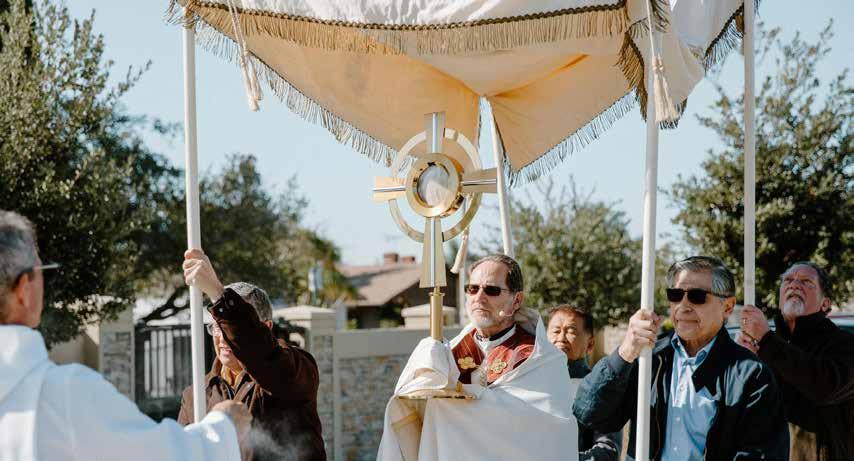
Fr. Ron Clark, Pastor of St. Dorothy in the Archdiocese of Los Angeles, leads a procession with the Blessed Sacrament in the parish’s neighborhood.
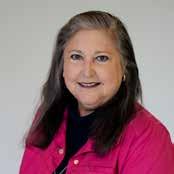
Remembering Carla Molina, Beloved Colleague and Friend, Rest in Peace
Small in stature but immense in spirit,
Carla touched nearly every corner of Catholic Leadership Institute’s ministry with her warmth, wisdom, and unmistakable presence. Her legacy lives on in the dioceses and parishes she served, the bishops, priests, and lay leaders she formed, and the countless colleagues she encouraged both personally and professionally.
Carla worked tirelessly for the Church she loved. With her charisma, business acumen, and pastoral intuition, she walked with leaders through moments of challenge and renewal, helping them recognize their gifts. She restored wavering confidence, nurtured a spirit of continual learning, and often offered a needed intercessory prayer.
Her deep affection for the shepherds of the Church was unmistakable. She willingly offered her time, attention, and care, often going far beyond expectations to ensure that bishops and priests felt supported as shepherds. Many of them spoke of her not simply as a consultant, but as a trusted companion and faithful witness.
Carla became a steady, encouraging voice to many young women and led Serving God’s Kids mission trips. Her
advocacy for vulnerable children continued through her leadership roles supporting orphanages, where she worked tirelessly so each child would be known, valued, and loved.
Even throughout her cancer diagnosis and treatments, Carla remained oriented toward the Lord, facing profound suffering with humility, discretion, and grace — never drawing attention to herself but quietly offering her pain for others. In her physical weakness, she revealed a deep spiritual strength that inspired those who knew her. Her life continues to illuminate our ministry.
As a bold champion of the Gospel Message, Carla’s voice still echoes in our hearts, as if closing a session once more with her signature: “Goooooooo! Go make disciples of all nations!” We pray that Carla is interceding for us, and that the example of her life urges us forward to the love and joy of Jesus.
Listen to this video and message from Carla, shared just over a year before her death. >
When a First Gift Becomes a Spark
By Rebecca Reilley, Associate Vice President, Mission Advancement
Ed and Ginger Mitchell have always believed that generosity has the power to transform communities. When Archbishop Gregory Hartmayer invited them to learn about Next Generation Parish, a new, future-focused initiative for the Archdiocese of Atlanta, they responded first with discernment and prayer.
For the Mitchell family, philanthropy is not just a value, it is a legacy that impacts more than themselves. When Ed and Ginger established their foundation, they used a hands-on approach to teach their children the joy of giving. Now, all three Mitchell children serve as fellow trustees, discerning together how they can support initiatives that strengthen the communities they love.
Ed was struck by Next Generation Parish in two particular ways: firstly, Archbishop Hartmayer’s conviction that parishes in the Archdiocese of Atlanta could thrive with the right support. Secondly, he was impressed with Catholic Leadership Institute’s proven approach, rooted in data, professional tools, and practical leadership formation. After years of leadership in the Air Force and the business world, Ed knew these methods are uniquely capable of empowering pastors and parish teams to build vibrant, mission-driven communities.
The Mitchells discerned that Next Generation Parish was a powerful way to strengthen the Church’s presence at a time when the world needs the hope of the Gospel more than ever. Their response was bold: in addition to their generous commitment, they offered a matching challenge, encouraging others to join them in supporting the parishes participating in Next Generation Parish.
They knew their own gift could make a significant impact and inviting others into the mission would multiply that impact even further, especially when given freely and for a greater good.
Ed shared: “I have traveled all around the world and have done and experienced a lot. Nothing compares with the message of Jesus Christ. He surpasses all. I believe the world will be a better place with a thriving, vibrant Church.”
The Mitchells utilized stock transfers to fulfill their gift in support of the Archdiocese of Atlanta Next Generation Parish. This unique vehicle for support is a creative, alternative way for benefactors to invest in Catholic Leadership Institute’s mission.
Thanks to the Mitchell family, and to other benefactors who joined them, 13 parishes in Atlanta are now equipped with the formation, coaching, and planning needed to thrive and reach others outside the parish walls.
At Catholic Leadership Institute, this generosity fuels a confident hope: that the Catholic faith in Atlanta will be ignited and that more people will come to know and proclaim the Good News of Jesus Christ.
Scan the QR code to learn more about how you can support Catholic Leadership Institute. >
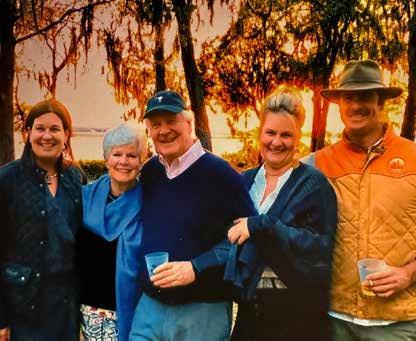
The Mitchell Family, from left to right: Amanda, Ginger, Ed, Jennifer and Edward.
301 Lindenwood Drive #310 Malvern, PA 19155
PRAYER FOR LEADERS
Dear Lord,
We pray that you will create among us Catholic leaders; individuals made in your image who will apply your teachings in their lives and positively impact our families, our workplaces, our communities, and our Church. Help us to inspire those with whom we come in contact to share their God-given talents, to do your will and to find a place in your kingdom where their deepest joys and the world’s deepest hungers meet and cry for their special qualities and abilities. Make us leaders, Lord, leaders with strength and courage to follow you. Leaders who make your love visible to the world in all of our words and actions. Amen.
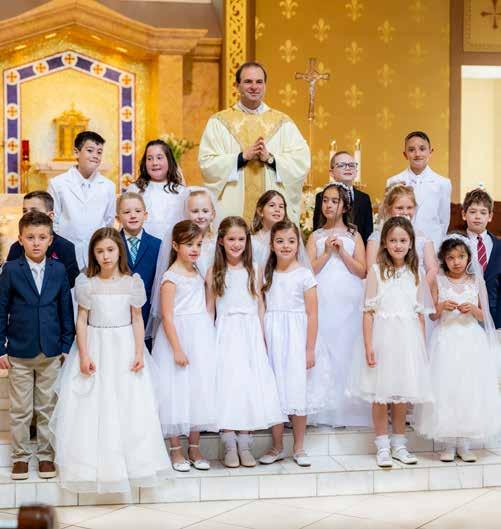
Fr. Eric Banecker with First Communicants at St. Mary Magdalene Parish in the Archdiocese of Philadelphia.