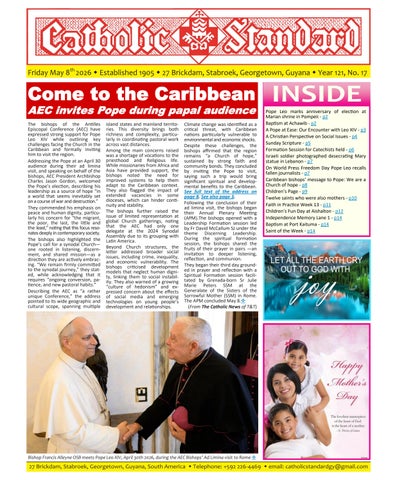

Come to the Caribbean AECinvitesPopeduringpapalaudience
The bishops of the Antilles Episcopal Conference (AEC) have expressed strong support for Pope Leo XIV while outlining key challenges facing theChurch in the Caribbean and formally inviting himto visit the region.
Addressing the Pope at an April 30 audience during their ad limina visit, and speaking on behalf of the bishops, AEC President Archbishop Charles Jason Gordon, welcomed the Pope’s election, describing his leadership as a source of hope “in a world that seems inevitably set onacourseofwaranddestruction.”
They commended his emphasis on peace and human dignity, particularly his concern for “the migrant, the poor, the last, the little and the least,” noting that thisfocusresonatesdeeplyincontemporarysociety.
The bishops also highlighted the Pope’s call for a synodal Church one rooted in listening, discernment, and shared mission as a direction they are actively embracing. “We remain firmly committed to the synodal journey,” they stated, while acknowledging that it requires “ongoing conversion, patience, andnewpastoralhabits.”
Describing the AEC as “a rather unique Conference,” the address pointed to its wide geographic and
island states and mainland territories. This diversity brings both richness and complexity, particularly in coordinating pastoral work acrossvast distances.
Among the main concerns raised was a shortage of vocations to the priesthood and Religious life.
While missionaries from Africa and Asia have provided support, the bishops noted the need for improved systems to help them adapt to the Caribbean context. They also flagged the impact of extended vacancies in some dioceses, which can hinder continuityand stability.
The bishops further raised the issue of limited representation at global Church gatherings, noting that the AEC had only one delegate at the 2024 Synodal Assembly due to its grouping with Latin America.
Beyond Church structures, the letter addressed broader social issues, including crime, inequality, and economic vulnerability. The bishops criticised development models that neglect human dignity, linking them to social instability. They also warned of a growing “culture of hedonism” and expressed concern about the effects of social media and emerging technologies on young people’s
Climate change was identified as a critical threat, with Caribbean nations particularly vulnerable to environmentalandeconomicshocks
Despite these challenges, the bishops affirmed that the region remains “a Church of hope,” sustained by strong faith and communitybonds. Theyconcluded by inviting the Pope to visit, saying such a trip would bring significant spiritual and developmental benefits to the Caribbean. See full text of the address on page 8. See also page 3.
Following the conclusion of their ad limina visit, the bishops began their Annual Plenary Meeting (APM).The bishops opened with a Leadership Formation session led by Fr David McCallum SJ under the theme Discerning Leadership. During the spiritual formation session, the bishops shared the fruits of their prayer in pairs an invitation to deeper listening, reflection, and communion. They began their third daygrounded in prayer and reflection with a Spiritual Formation session facilitated by Grenada-born Sr Julie Marie Peters SSM at the Generalate of the Sisters of the Sorrowful Mother (SSM) in Rome. The APM concludedMay 8.❖
Pope Leo marks anniversary of election at Marian shrine in Pompeii - p2
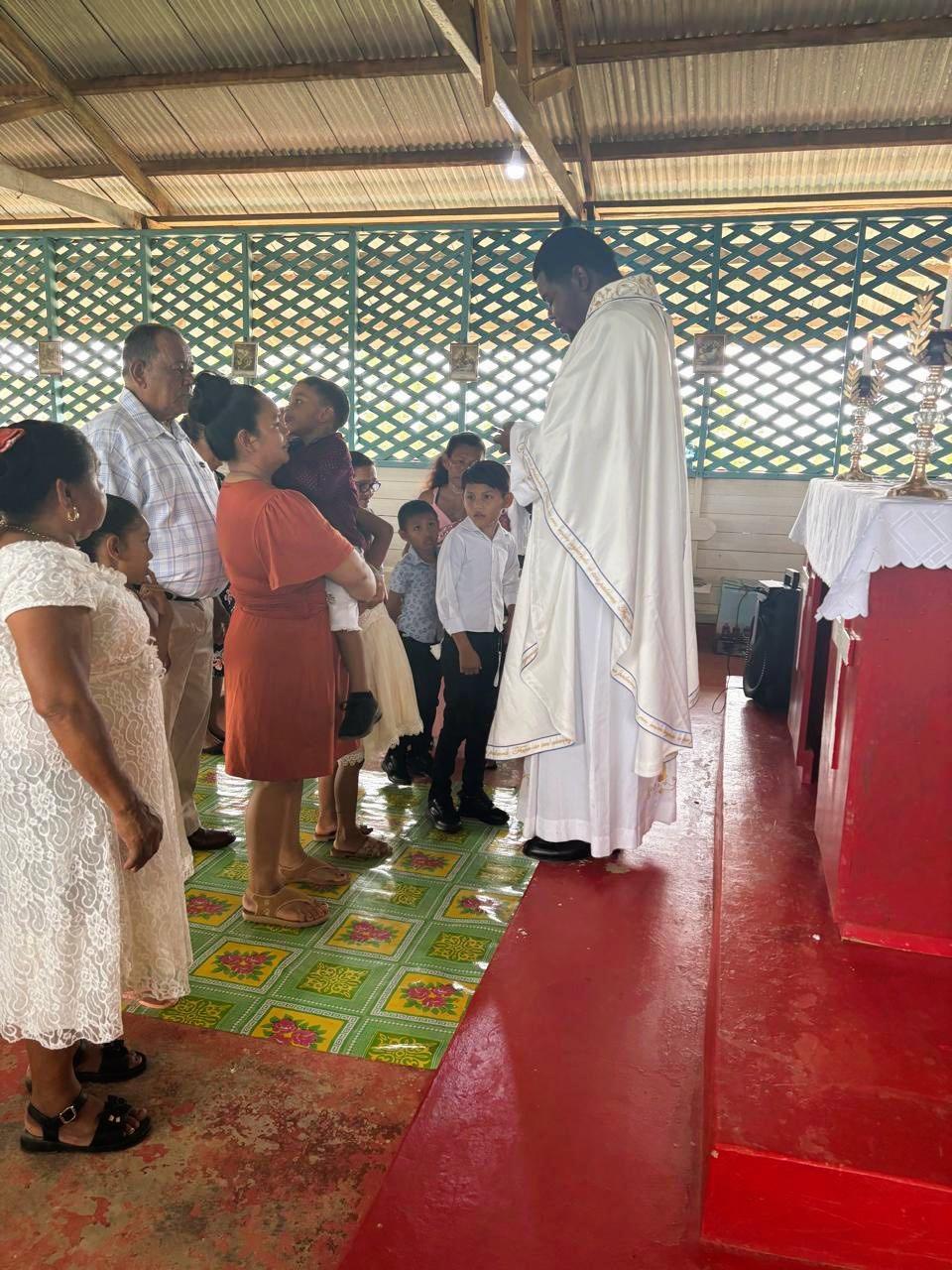
Baptism at Achawib - p2
A Pope at Ease: Our Encounter with Leo XIV - p3
AChristianPerspective on Social Issues - p4
Sunday Scripture - p5
Formation Session for Catechists held - p6
Israeli soldier photographed desecrating Mary statue in Lebanon - p7
On World Press Freedom Day Pope Leo recalls fallen journalists - p7
Caribbean bishops’ message to Pope: We are a Church of hope - p8
Children’s Page - p9
Twelve saints who were also mothers - p10
Faith in Practice Week 13 - p11
Children’s Fun Day at Aishalton - p12
Independence Memory Lane 1 - p14
Baptism at Port Kaituma - p14
Saintof the Week - p14

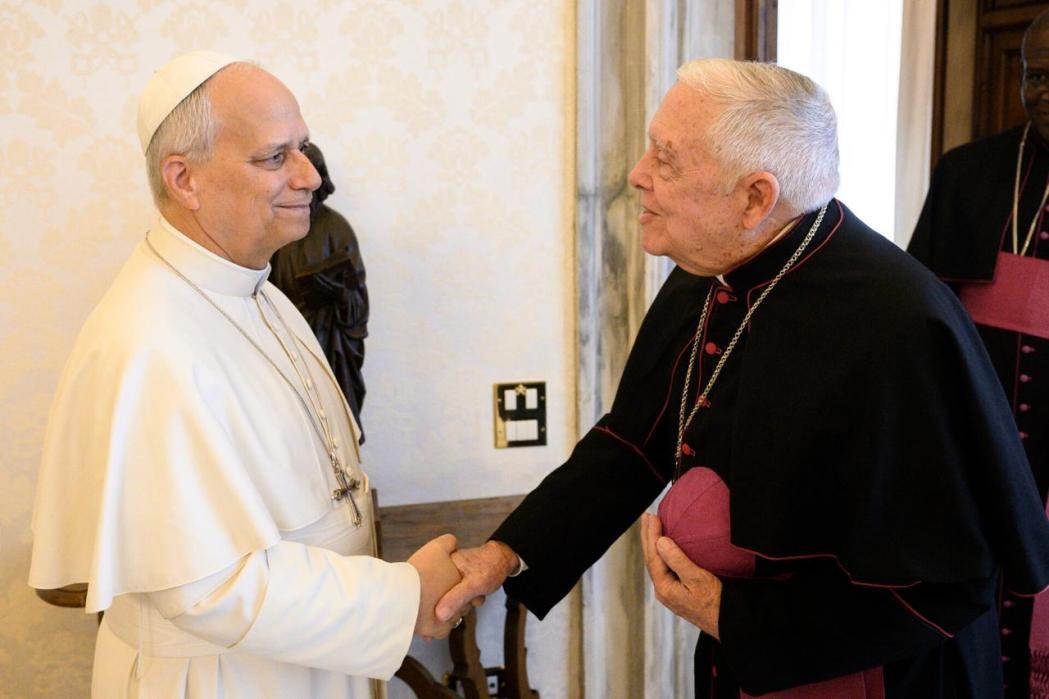
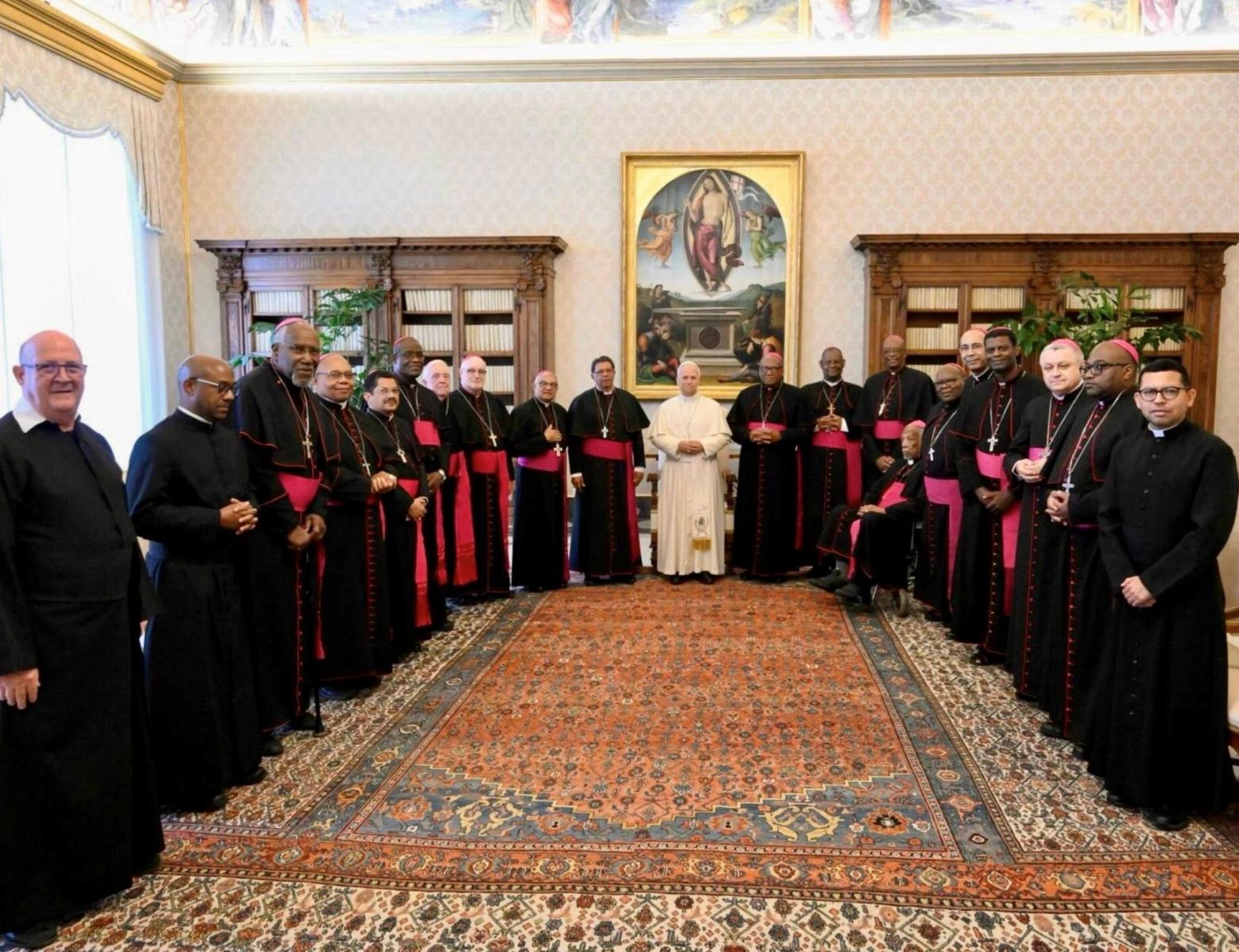
Bishop Francis Alleyne OSB meets Pope Leo XIV, April 30th 2026, during the AEC Bishops’ Ad Limina visit to Rome ❖
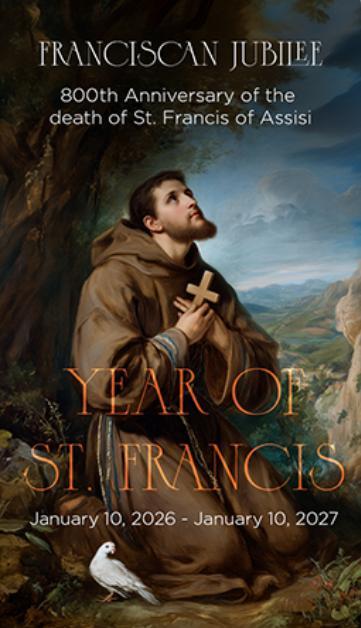
Year of St. Francis Jubilee Prayer
Saint Francis, our brother, you who eight hundred years ago went to meet Sister Death as a man at peace, intercede for us before the Lord.
You recognized true peace in the Crucifix of San Damiano, teach us to seek in Him the source of all reconciliation that breaks down every wall.
You who, unarmed, crossed the lines of war and misunderstanding, give us the courage to build bridges where the world raises up boundaries.
In this time afflicted by conflict and division, intercede for us so that we may become peacemakers: unarmed and disarming witnesses of the peace that comes from Christ.
Amen - Pope Leo XIV
Pope Leo XIV marks anniversary of election at Marian shrine in Pompeii
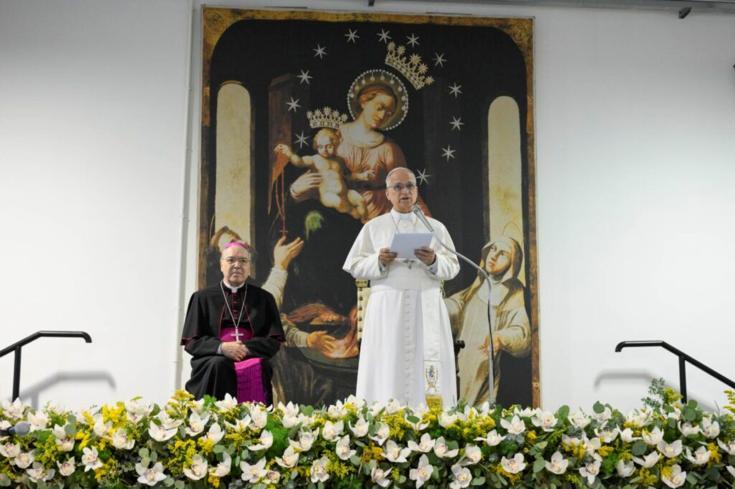
(ICN) - Pope Leo XIV marked the first anniversary of his pontificate on Friday, May 8, with a visit to the southern Italian cities of Pompeii and Naples.
The Pope celebrated Mass in the square in front of the Shrine of Our Lady of the Rosary, and recalled that he was elected Pope on the Feast of Our Lady of the Rosary of Pompeii. "I therefore had to come here, to place my service under the protection of the Blessed Virgin," he said in his homily. "Moreover, having chosen the name Leo places me in the footsteps of Leo XIII, whose many merits include the development of an extensive Magisterium on the Holy Rosary."
The Pope recalled the words of his predecessor, St John Paul II, at the Shrine in 2003 at the end of the Year of the Rosary: "Today, as in the times of ancient Pompeii, it is necessary to proclaim Christ to a society that is distancing itself from Christian values and is even losing the memory of them."
Turning to the mystery of the Annunciation, the Holy Father noted that the Hail Mary is an invitation to joy, since the angel Gabriel's words reminded Mary that God's caress of mercy has come in Jesus into our world wounded by sin.
The Blessed Virgin Mary, he added, leads the Church along the path to welcome Jesus, as her "Here I am"
that the prayer of the Rosary is rooted in salvation history.
When we pray the Rosary, he said, we renew our love for God, as all acts of love toward Our Lady lead us "back to Jesus and brings us to the Eucharist, which is the source and summit of all Christian life."
"The Rosary has a Marian form, but a Christological and Eucharistic heart," he noted, recalling that many generations of Christians have been shaped by the Rosary.
The prayer of the Rosary, added the Pope, is capable of reaching mystical heights while containing a treasury of the most essential Christian theology.
"For what is more essential than the mysteries of Christ, than His holy Name, pronounced with the tenderness of the Virgin Mother?" he said.
"It is in this Name, and in no other, that we can be saved."
Pope Leo XIV went on to say that the Rosary points our hearts to the needs of the world, especially the importance of the family and the desire for peace.
He recalled the many wars still being fought in our world, saying they call for renewed commitment, which is both political and economic, as well as spiritual and religious.
"Peace is born within the heart," said the Pope. "We cannot resign ourselves to the images of death that the news presents to us every day."
Pope Leo invited everyone to pray the Rosary for peace, so that God's divine power of love may save the world.
"Through Mary's intercession," he said, "may there come from the God of peace an overflowing outpouring of mercy, touching hearts, calming resentment and fratricidal hatred, and enlightening those who bear special responsibilities of govern-
Pope Leo XIV speaks as he visits the Pontifical Shrine of the Blessed Virgin of the Rosary of Pompeii near Naples, Italy, before celebrating Mass in the piazza outside May 8, 2026, on the first anniversary of his election as the first American pontiff. He visited 400 sick and disabled people inside of the shrine. (OSV News photo/Simone Risoluti, Vatican Media)
By Archbishop Charles Jason Gordon
Nobody warned us about the pickleball
We had come to Rome as the bishops of the Antilles Episcopal Conference eighteen bishops, one diocesan administrator, and two general secretaries carrying the weight of our people: the geopolitics that threatens our peace, the parishes stretched thin by poverty, the migrants knocking on their door, the families battered by storms. We had prepared our addresses. We knew what an ad limina visit was. And then, somewhere in the middle of nearly two hours with Pope Leo XIV, the conversation turned to sport. Tennis first. Then pickleball. And the Pope lit up.
I have been thinking about that moment ever since not as a footnote, not as the charming human detail you tuck at the end of a report to soften it, but as a key. A small, unexpected thing that unlocks the meaning of everything around it. Because a man who can receive a question about pickleball with genuine delight, in the middle of a conversation about hurricanes and missionaries and the future of the Church, is a man who is not performing. He is not managing the meeting. He is simply present. Free. And it was that freedom that ease in his own skin that made everything else in the room possible.
A Latin American Pastor
To understand what we encountered, you have to understand where this man was formed. Robert Francis Prevost is often introduced as the first American pope. That is true, but only
encounter with Christ with others, especially on the peripheries. Pope Francis carried that vision to Rome. So, in his own register, does Leo XIV. You feel it in the way he conducts a meeting.
He Opened the Session
When the formal portion of our audience concluded, he did not close the session. He opened it. He invited us into conversation not consultation, not Q&A, but the kind of exchange where someone genuinely wants to know what you have seen and what you are carrying. In our address we had asked him to visit our region. He responded with a question: had a pope ever visited the Antilles? We told him about John Paul II Jamaica, the Bahamas, Saint Lucia, Trinidad and Tobago. No pope had returned since. He received that not as data to be filed but as a reality to be held.
Two days after our visit, we received an answer to another question we had raised better representation at synodal meetings in Rome. At the General Secretariat for the Synod of Bishops, Cardinal Mario Grech told us that the Holy Father had personally instructed him to give us fuller participation in the upcoming synod. He had not merely listened he had heard, and acted.
Catholic education: be careful before you close anything. Schools are not buildings. They are the future.
He Let the Weight Land
Then one of our brothers spoke. His diocese had been devastated by Hurricane Melissa. He named it plainly the destruction, the exhaustion, the long road still ahead, the gratitude for solidarity received, and the honest truth that solidarity, however generous, does not rebuild what a storm takes. Pope Leo did not rush to reassure him. He did not reach for a phrase. He listened. He let the weight of it land. In that stillness I witnessed the Aparecida instinct of accompaniment walking with people in their reality rather than administering responses to their problems.
On synodality, the bishops pressed him: what does it actually mean on the ground in a region like ours? He was clear and unhurried. Synodality is not democracy the Church does not govern by vote. But neither is it uniformity. It is something more demanding: learning to listen together, across difference, for the voice of the Spirit. We raised the growing presence of missionaries from Africa and Asia in the Caribbean the gifts they bring, and the difficulties when formation does not prepare them for our context. He engaged it with unexpected tenderness: the missionary who
comes has left his security behind and is cut off from his own people and culture. A new initiative of the Dicastery for the Evangelisation of Peoples, he told us, would address deeper formation
And Then, Pickleball
And then, tennis. And pickleball.
I cannot tell you exactly how we arrived there. These things happen in conversations that are truly alive. But I can tell you what it revealed. Aparecida does not produce cautious, managed pastors. It produces people freed by encounter who know that the Gospel is not a burden to be administered but a joy to be shared, carried in their laughter, in their willingness to be surprised. Holiness does not make a person smaller. It makes them more present, more alive, more capable of meeting you where you are.
We Came Home Carrying Something
We came home carrying something I want to offer you. Not a protocol summary. A witness. We met a pastor shaped by Latin America’s poor, by decades on the periphery, by the Augustinian restlessness that only finds rest in God one who asked before he spoke, listened before he answered, and received the reality of our people without softening it prematurely.
His first words from the balcony last May were simple: “Peace be with you.” They were not a sentiment. They were a report from someone who has found it. We came home carrying a little more of it.❖
The AEC Bishops met with Pope Leo XIV on Thursday April 30th 2026, during their Ad Limina visit to Rome, held April 27th to May 2nd. (Vatican News photo)
A Christian Perspective on Social Issues From illegal to inspiration
By GHK Lall
hand, and the mysterious ways that life can turn out.
An illegal immigrant in the United States. Not once, but twice; the third time proved to be his blessing. There was a call that took him past soldiers on the rampage, forbidding deserts, unaffordable betrayal, and the stain of deportations. Evelio Menjivar-Ayala, a survivor of Salvadorean killing fields, a former prisoner in Mexico, a two-time US deportee, was recently named by Pope Leo XIV as the new Bishop of West Virginia. In an era and a world of harsh immigration policies, there is now Bishop Evelio, a man of God who knows the traumas of being an illegal immigrant in the US. A deportee who overcame that handicap twice, and now stands as a sub vicar of Christ in the heart of Appalachia, the rugged coalmine country that is West Virginia. It’s a tough place to be a new bishop. Like the Guyana of today, it can be a horror chamber to speak with a different voice.
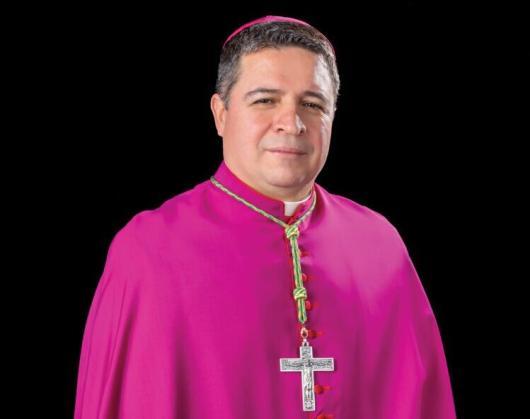
Evelio Menjivar-Ayala of Washington is pictured in an undated photo. On May 1, 2026, Pope Leo XIV named Bishop Menjivar-Ayala as bishop of Wheeling-Charleston, W.Va. The diocese comprises the entire state of West Virginia. (OSV News photo/courtesy Archdiocese of Washington)
Never discount the hand of God. Never give up hope in God. For all things are possible with God. Here’s a name to make the heart sing: Evelio Menjivar-Ayala. His story is as tortured as it is inspiring. A testimony to God’s mercies, his ever-helping
West Virgina is now Donald Trump country, its people having crossed from being reliable Democrats to identification with the man in the White House. Immigration has been his call to arms, and draconian policies and worse enforcement his signature policy. I am an immigrant, one who gave decades of the prime years of my life to the United States. I wouldn’t want to be an immigrant in today’s America. So, there is appreciation for the role that is now Bishop Evelio’s to live, the hard road on which he must walk. His past experiences will stand him in good stead. His struggles, his failures, his successes, will all combine to identify with and be energized for the care of the flock that Almighty God entrusted into his hands. The lesson of Bishop Evelio is that the will of God cannot be thwarted.
Neither puny man, nor princes with seemingly unlimited power, can stand against the will of God, the work of the Lord, and deny it. Things can be grim for those who have it hard in this country. A country that is such a worldwide sensation, that there is little time for God, and that some men even see themselves as gods. A country that has been given so many gifts in abundance, that no one should be without, scrambling to keep their head above water.
There is a time for everything, as the Good Book says so wisely. Illegal immigrant Evelio Menjivar endured a time in that weak, lost, and dangerous condition. Bishop Evelio now has the opportunity to come into his own time under the guiding hand of God. Clearly, he is a man of great resourcefulness, a servant of unceasing devotion, a man in whose hands God has placed his precious flock. Pope Leo XIV has shown members of the one, holy, Catholic, and apostolic church what it is to be quietly courageous. The Holy Father has manifested the spirit of Jesus, who stood unflappably before the powers of his time, rabbinical and Roman, and asserted: this is the will of the Father. It must be done. In the face of compelling power, the not-so-new spiritual leader embodies what it is not to shrink from, nor to yield, the high moral ground. In the appointment of Evelio Menjivar-Ayala to the bishopric, there is a simple message: do not mess with the work of the Lord. Do not take the place of God. And, most of all, remember what it is to treat every man as a child of God, a brother under heaven.
Gracious and loving God, we thank your for the gift of our priests.
Through them, we experience your presence in the sacraments. Help our priests to be strong in their vocation.
Set their souls on fire with love for your people.
May the Holy Spirit be with newly appointed Bishop Evelio MenjivarAyala. May God guide us all to kneel before only Him.❖
Grant them the wisdom, understanding, and strength they need to follow in the footsteps of Jesus. Inspire them with the vision of your Kingdom.
Give them the words they need to spread the Gospel.
Allow them to experience joy in their ministry.
Help them to become instruments of your divine grace.
We ask this through Jesus Christ, who lives and reigns as our EternalPriest. Amen

Growth is the only evidence of life.’ Saint John Henry Newman (1801-1890)
Bishop

First Reading Acts of the Apostles 8:5-8. 14-17
They laid hands on them, and they received the Holy Spirit.
Philip went to a Samaritan town and proclaimed the Christ to them. The people united in welcoming the message Philip preached, either because they had heard of the miracles he worked or because they saw them for themselves. There were, for example, unclean spirits that came shrieking out of many who were possessed, and several paralytics and cripples were cured. As a result there was great rejoicing in that town.
When the apostles in Jerusalem heard that Samaria had accepted the word of God, they sent Peter and John to them, and they went down there, and prayed for the Samaritans to receive the Holy Spirit, for as yet he had not come down on any of them: they had only been baptised in the name of the Lord Jesus. Then they laid hands on them, and they received the Holy Spirit.
Responsorial Psalm Psalm 65 Response: Cryout with joy to God alltheearth. or Alleluia!
1. Cry out with joy to God all the earth, O sing to the glory of his name. O render him glorious praise. Say to God: ‘How tremendous your deeds’ Resp.
2. ‘Before you all the earth shall bow; shall sing to you, sing to your name!’ Come and see the works of God, tremendous his deeds among men. Response
3. He turned the sea into dry land, they passed through the river dry-shod. Let our joy then be in him; he rules for ever by his might. Response
4. Come and hear, all who fear God. I will tell what he did for my soul: Blessed be God who did not reject my prayer nor withhold his love from me. Response
Holy Scripture, the Word of God, is filled with so much meaning for us each and every week, if we only listen carefully and absorb what we are
Second Reading 1 Peter 3:15-18
In the body he was put to death, in the spirit he was raised to life.
Reverence the Lord Christ in your hearts, and always have your answer ready for people who ask you the reason for the hope that you all have. But give it with courtesy and respect and with a clear conscience, so that those who slander you when you are living a good life in Christ may be proved wrong in the accusations that they bring. And if it is the will of God that you should suffer, it is better to suffer for doing right than for doing wrong.
being told. In the last verse of today’s First Reading we hear, “Then they laid hands on them, and they received the Holy Spirit.” It is speaking of Sts. Peter and John who traveled to Samaria to more or less confirm those who had been baptized there.
In fact, most historians believe that the laying on of hands in the New Testament is the origin of the Sacrament of Confirmation. In the Apostolic Constitution on the Sacrament of Confirmation Pope Paul VI affirmed that laying on of hands in the sacrament of confirmation
Why, Christ himself, innocent though he was, had died once for sins, died for the guilty, to lead us to God. In the body he was put to death, in the spirit he was raised to life.
GospelAcclamation Jn 14: 23
Alleluia, alleluia!
Jesus said: ‘If anyone loves me he will keep my word, and my Father will love him, and we shall come to him.’ Alleluia!
The Gospel John 14:15-21
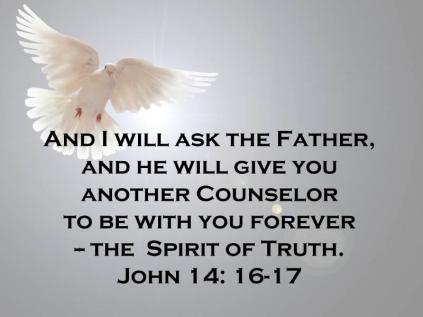
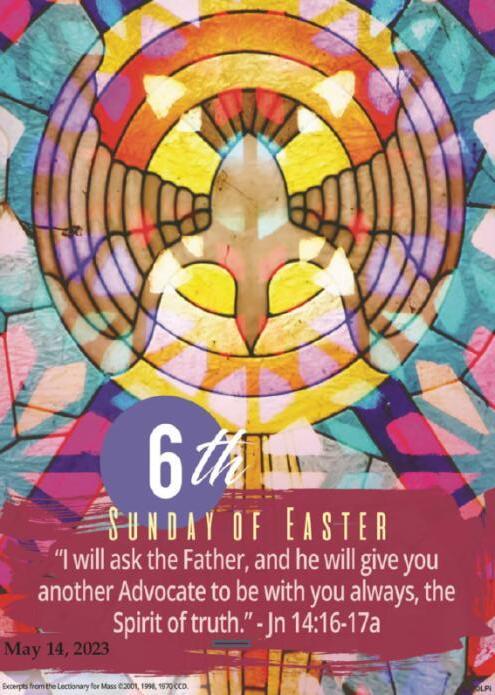
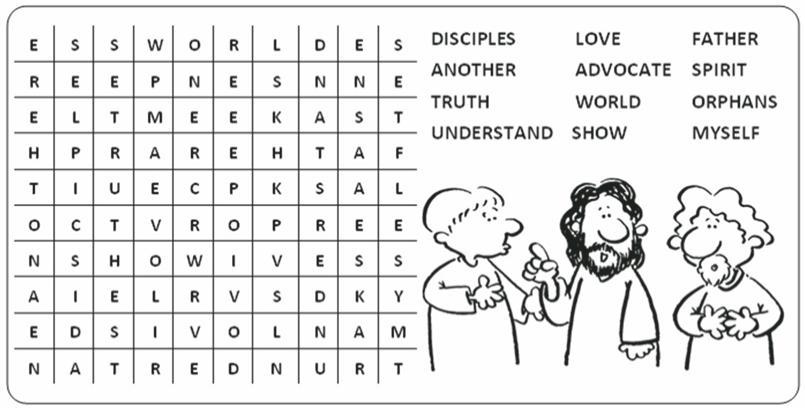
I shall ask the Father, and he will give you another Advocate Jesus saidto his disciples: ‘If you love me you will keep my commandments. I shall ask the Father, and he will give you another Advocate to be with you for ever, that Spirit of truth whom the world can never receive since it neither sees nor knows him; but you know him, because he is with you, he is in you. I will not leave you orphans; I will come back to you.
In a short time the world will no longer see me; but you will see me, because I live and you will live.
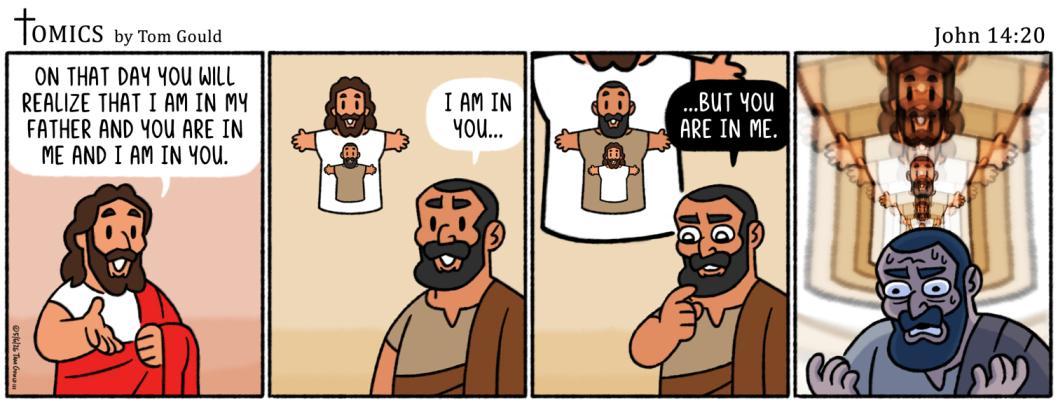
On that day you will understand thatI am inmy Father and you in me and I in you.
Anybody who receives my commandments and keeps them will be one who loves me; and anybody who loves me will be loved by my Father, and I shall love him and show myself to him.’❖
continues the grace of Pentecost (on Sunday, May 24 this year).
If you have been confirmed, you have experienced the “laying on of hands.” That means the Holy Spirit has been called to bless, sanctify, transform, and give grace to you. You have received the Holy Spirit, which is the ongoing life of the Church. You have been anointed with the Spirit of God. That means you have been called to not only live out that Spirit, but also to live a life which shares that Spirit with your parish and with others.
When the priest or Bishop imposes hands, it is called epiclesis, a Greek word that means “invocation.” The “laying on of hands” is an important part of the ordination of priests and deacons. St. Paul reminded us all in his First Letter to Timothy, “Do not neglect the gift you have, which was conferred on you through the prophetic word with the imposition of hands.”❖
[http://www.catholicsteward.com/blog/ ]
Diocese holds Formation Gospel Reflection
Jesus says that if we love him we will keep his commandments. When he said this he was not talking about the Ten Commandments of the Old Testament. He was talking of new attitudes and values in our relationship with God, with others and towards life in general. His teaching requires a whole new outlook towards life and towards interpersonal relationships. We are not to return evil for evil because revenge does not achieve anything except more darkness and division. We are not to judge and condemn our neighbour. Leave this to God who alone knows all the facts. Do not be afraid and worried when times are rough. You just have to continue trusting in God. Do not make false gods of money, clothing, jewels and the like as if these were the most important things in life. But most important is living a life worthy of being a child of God and everything else will fall into place.
The teachings of Jesus are completely different from the values and attitudes which are found in the world. While the world demands revenge and a tit-for-tat mentality, Jesus demands that we love our enemies and be kind to those who we don’t like or who are unkind to us. He tells us to forgive unconditionally those who sin against us and we shall have nothing to fear about our own sins for God will forgive them. We are people of the light and so we must let our light shine out before people. Our light will help others find their way to the Father. He tells us to love one another as he loves us. Based on the values of the world, doing what Jesus demands seems impossible but we would not be Christians if we try to live otherwise. ❖
[From: Journeying with the Word of God, The Religious Education Department, Diocese ofGeorgetown, Guyana ]
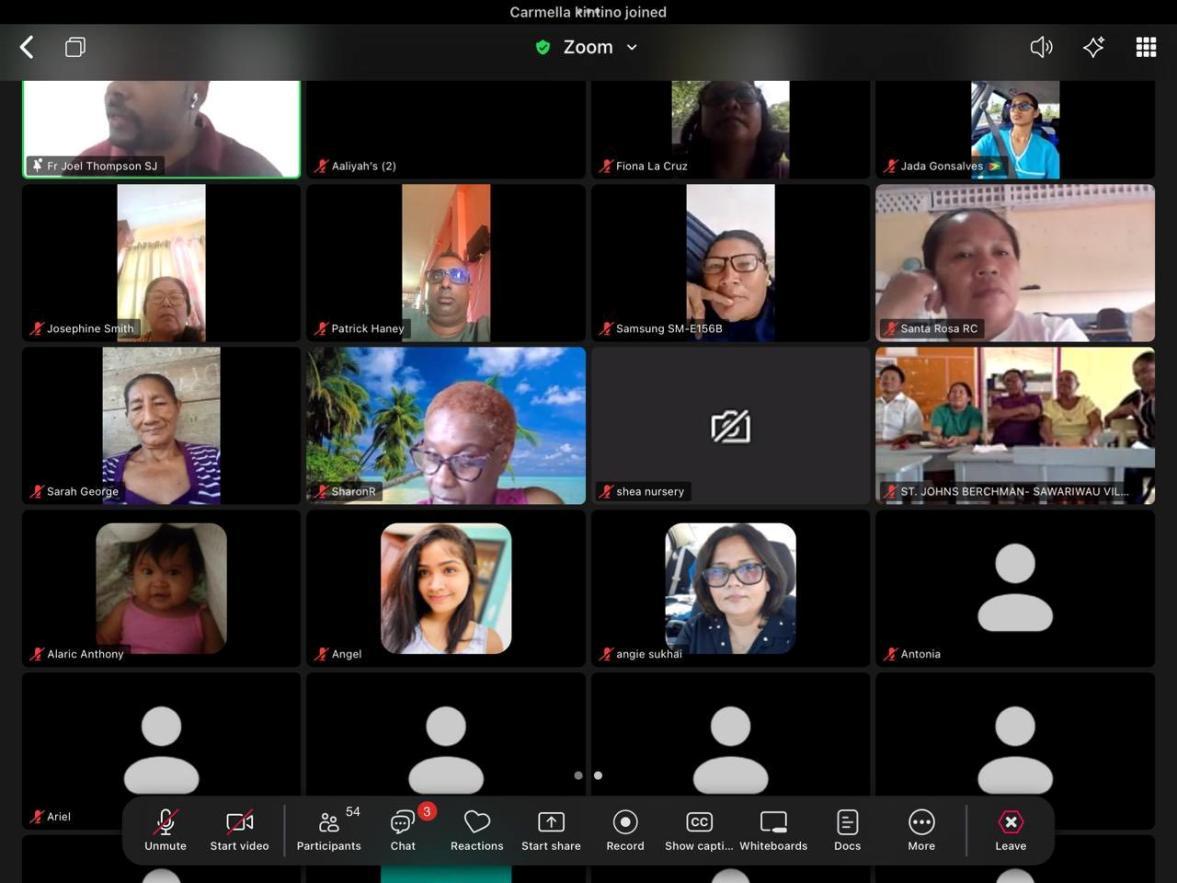
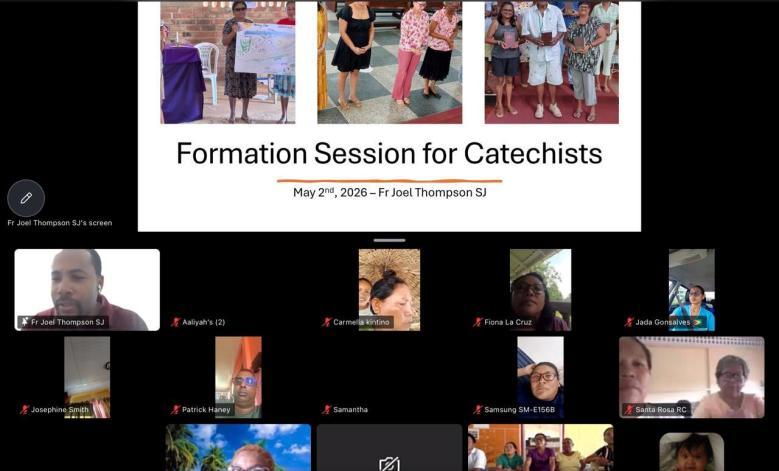
On Saturday May 2nd, the Diocesan Faith Formation & Liturgical Commission, in collaboration with the Religious Education Department, held an online formation session for Catechists. The session saw over 60 Catechists from acrosstheDiocese.
In her opening remarks, Mrs. Angie Sukhai, Coordinator of the Religious Education Department, thanked all the Catechists for their tireless commitment in this very important ministry of the Church, after which the Gospel of the day was read. This was followed by a brief mediation and sharing. Fr. Joel Thompson, SJ then led the formation session. The session provided an opportunity for catechists to share their challenges and hopes for faith formation today.
In his presentation, Fr Joel reflected on the role of the Catechist, the realities of young people today, and the need for a relationship-centered approach to catechesis. He emphasized that catechism is not simply about passing


ship with GodandtheChurch.
He highlighted four essential elements for catechesis in Guyana today: fostering a personal relationship with God (prayer and spirituality), building community, encouraging discussion
7639.
and participation, and promoting service and outreach. He also presented a draft model for a two-year DiocesanConfirmation programme. Fr. Joel also encouraged the ongoing accompaniment of couples after marriage andofparentsafterbaptism.❖
For 121 years, the Catholic Standard has been sharing the Gospel of Jesus Christ.
Now reaching 10,000+ followers on Catholic Media Guyana Facebook plus going straight to your inbox and WhatsApp, our vibrant weekly e-paper is a trusted source which delivers informative and inspiring stories from across the diocese and around the world.
Want to promote your business or event? Advertise with us! Call 675-4542 or email catholicstandardgy@gmail.com ❖
Journeying with the Word of God
onto the
of
a video call with other priests on May 6, said : “Honestly, this issue really provoked us, especially after theapology regarding thecross.
‘Lack ethics and values andarebigoted’ “It also shows that there are individuals within the (Israeli) army that lack ethics and values and are bigoted. This reflects a great deal of fanaticism,” Father Felefli said, confirming that the Virgin Mary statue was still intact and not broken, but he called such actions “unethical,” the BBC said.
Attack on nun near the Cenacle
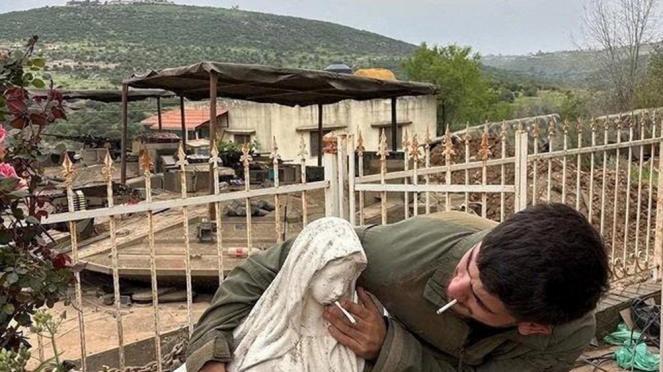
(OSV News) Outrage has grown as a photo surfaced of an Israeli soldier desecrating a statue of the Virgin Mary in Lebanon. Concerns are mounting about increasing anti-Christian behavior as Israel continues war in the MiddleEast.
In a photo shared online May 6, an IDF soldier can be seen holding a cigarette over the mouth of Mary. Responding to the photo, newly appointed IDF spokesman Lt. Col. Nadav Shoshani said the soldier’s conduct “completely deviates from the values expected of itspersonnel.”
‘Measures will be taken againstsoldier’
“Following an initial review, the image in question was taken several weeks ago. The incident will be investigated, and command measures will be taken against the soldier in accordance with the findings,” Shoshani said in an account that has since been taken over by a new IDF spokeswoman,Ariella Mazor.
According to The Times of Israel, the military’s initial assessment of the photo was that it was taken several weeks ago in the Leba-
nese village of Debel, the same area where an Israeli soldier was photographed more than two weeks ago striking the head of a statue of Jesus with the blunt side ofanaxe.
The latest incident drew outrage, including a statement from Poland’s Ministry of Foreign Affairs, which said that such “actions offend the religious sentiments of Christians.”
All states must protect ‘this fundamental right’
Noting the right to freedom of thought, conscience and religion guaranteed by the Universal Declaration of Human Rights, Poland’s foreign ministry office said that “every state has a responsibility to respect this fundamental right,” including Israel.
“In Poland, insulting religious feelings is a punishable offense.
Repeated incidents involving representatives of the State of Israel that violate the religious sentiments of Christians undermine efforts to promote peace and cooperation in the Middle East,” it said.
Speaking to the BBC, Father Fadi Felefli, who spoke to Pope Leo on
The desecration came a little over a week after the assault of a French nun in Jerusalem by an Israeli settler. The Times of Israel reported May 7 that Yona Schreiber, a 36-year-old man fromtheWest Bank settlement of Peduel, was indicted and charged with assault “motivated by hostility toward a religiousgroup ” The nun, who worked as a researcher at the French Biblical and Archaeological School of Jerusalem, was attacked April 28 near the Cenacle, the site of the Last Supper. A video posted on X showed Schreiber knocking the nuntothegroundandkickingher.
A Maronite Catholic convent was reportedly “demolished,” according to L’Osservatore Romano, in Yaroun, in southern Lebanon.
Father Ibrahim Faltas,vicar of the Custody of the Holy Land, wrote in Vatican News commenting on escalating violence toward Christians, places of worship and religious freedom in the region: “In whose name and for what motivation can sacred places be destroyed and outraged, human beings offended and humiliated, religious signs and symbols trampled upon?” he asked.❖
On World Press Freedom Day Pope
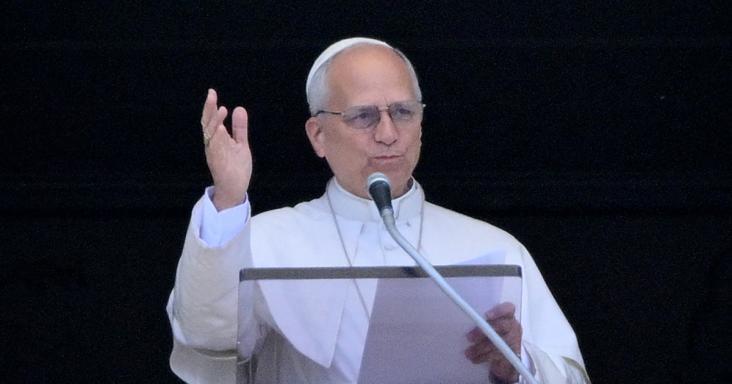
Speaking after the Regina Coeli, he linked the issue to Christian witness, stating that “fraternity and peace are our calling” in a world marked by conflict and restriction.
Addressing pilgrims gathered in St Peter’s Square, the Pope said that the right to report freely is often violated – sometimes blatantly, sometimes in more subtle ways”, and urged remembrance of the many journalists and reporters who have fallen victim to wars and violence”. His remarks coincide with mounting international concern over media conditions. According to the Reporters Without Borders 2026 index, global press freedom has reached its lowest level in more than two decades, with more than half of countries classified as facing “difficult” or “very serious” conditions.❖
(The Catholic Herald )
MAKING THE WORD OF GOD YOUR OWN
Step 1: Lookattoday’sReadingsprayerfully.
1st Reading: After the Samaritans received the Word of God, the apostles visit them to confirm them with the Gift of the Holy Spirit.
2nd Reading: Jesus was put to death but rose in the power of the Spirit.
Gospel: As Jesus prepares to leave his first disciples, he reminds them of his promise to always be present to his Church through the Holy Spirit.
Step 2: ApplyingthevaluesoftheReadings toyourdailylife.
1. In the Second Reading Peter seems to be suggesting that Christians can expect to be misunderstood. What part of the Christian lifestyle do you think can cause misunderstanding?
2.By his commandments Jesus is referring to a whole new lifestyle. Do you think you are living that lifestyle?
3.Why would you say it is not easy to live as a disciple of Jesus in the modern world?
4.We don’t keep Jesus’ commandments to make him love us; we keep his commandments because we know he loves us. What is this statement saying to you?
Step 3: Accepting the message of God’s Wordinyourlifeoffaith
The Spirit Jesus talks about will live in me and make me want to show it. I will be helpful to others, thankful for my life, truly sorry for my sins, forgiving and compassionate, full of light and peace, calm and steady. The Spirit living in me will make me whole and good, pure of heart, full of life and patient. The Spirit will make me live.
Step 4: Somethingtothink&prayabout
1.As part of the baptism ceremony, we are called upon to renounce Satan and all his works and all his empty promises. But while we may reject the father of lies, he won’t be finished with us. Satan still continues to work against us, telling lies such as that alcohol or drugs or lots of money offer security and happiness, that some people are superior to others, that some people are to be used to fulfil our own ambitions. However, we have to listen to the Spirit of truth and live according to what we hear.
2.Pray for the strength and courage you’ll need to help create the future you hope for. ❖
[From: Journeying with the Word of God, The Religious Education Department, Diocese of Georgetown,
]
Guyana
A soldier smokes and pushes another cigarette
mouth
a statue of Mary in Debel, Lebanon, in this picture obtained from social media and released May 6, 2026. (OSV News photo/Social Media via Reuters)
Pope Leo XIV on Sunday May 3 marked World Press Freedom Day in St Peter’s Square, recalling journalists killed by war and warning that press freedom is increasingly violated worldwide.
Caribbean bishops’ message to
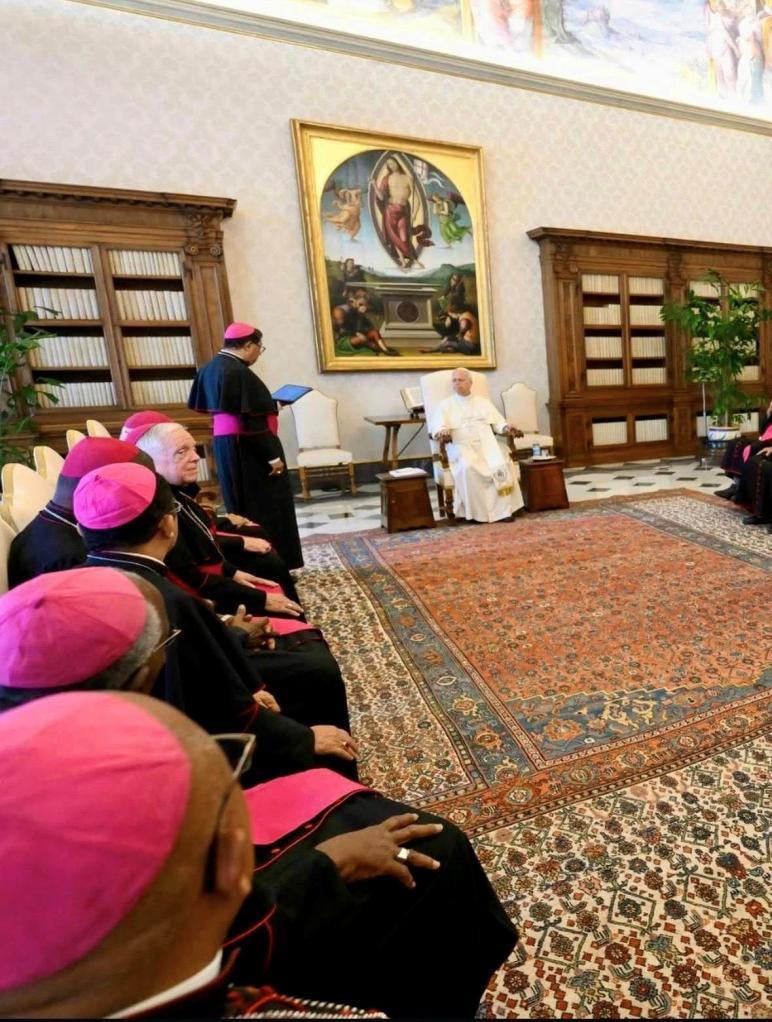
Below is the address given by Archbishop Charles Jason Gordon of Trinidad & Tobago, President of the Antilles Episcopal Conference, during the bishops’ April 30 audience with PopeLeo XIV: Your Holiness,
On behalf of the bishops of the Antilles Episcopal Conference, I greet you with filial affection and deep communion in the Lord. We thank Almighty God for your election as the Successor of Peter and for the hope your ministry has already inspired throughout the Church. Your clarion call for peace in a world that seems inevitably set on a course of war and destruction. Your witness that highlights the dignity of each human especially the migrant, the poor, the last, the little and the least is especially refreshing in a world intoxicated with the star and the influencer. Your call to continue building a synodal Church, one that walks together in listening, discernment, and mission, with all people has resonated deeply with the faithful in the Caribbean.
We are particularly grateful for the spiritual tone you have brought to your pontificate, shaped by the rich heritage of Augustinian spirituality. The Augustinian vision of a Church that seeks God together, journeying as
diocese of Hamilton, Bermuda, and as far south-east as the Diocese of Cayenne on the South American Continent.
Synodality
Holy Father, the bishops of the Antilles remain firmly committed to the synodal journey of the Church and to the implementation of the Final Document of the Synodal Assembly. Across our dioceses, we have begun to cultivate spaces of listening, discernment, and participation among clergy, religious, and lay faithful. The path toward a more synodal Church has not been without its challenges. It requires ongoing conversion, patience, and new pastoral habits. Yet we are convinced that the Holy Spirit is leading the Church in this direction, and we remain steadfast in our commitment to accompany our people on this journey.
Pastoral Realities
opment, one that prioritises growth without sufficient attention to human dignity and the common good, has led to the underdevelopment of large portions of our populations. This has contributed to persistent patterns of crime, violence, and social instability across many of our nations.
Flowing from this same model is the emergence of a culture of hedonism, where consumption, individualism, and immediate gratification often displace deeper values of solidarity, sacrifice and responsibility. This cultural shift presents significant challenges for evangelisation, family life, and the moral formation of our young people.
a community of hearts united in charity and truth, speaks powerfully to the pastoral reality of our region. In a world marked by fragmentation and division, your witness reminds us that the Church is called to be a communion, one heart and one mind in God, seeking
the truth through prayerful listening to the Holy Spirit.
Structural Realities of the Territory
The Antilles is a rather unique Conference comprising territories of current and former British, Dutch, and French colonies and dependencies in the Caribbean. The Conference has five (5) archdioceses, fourteen (14) dioceses and two (2) missions sui iuris. These particular Churches minister to Catholics in thirteen (13) independent nations, six (6) British Overseas Territories, three (3) Departments of France, three (3) countries of the Kingdom of the Netherlands, and three (3) municipalities of the Netherlands proper The Antilles is a rather unique Conference.
The Antilles Episcopal Conference is very geographically and culturally diverse and expansive. As far west as the diocese of Belmopan-Belize City in Central America, far north as the
At the same time, we wish to share some pastoral realities that weigh heavily on our hearts. Many dioceses in the Antilles face a severe shortage of vocations to the priesthood and religious life. The generosity of missionary priests and religious from Africa and Asia has been a great blessing to our Church. However, their presence also invites us to develop better structures of orientation and formation so that they may be accompanied in understanding the cultural, social, and ecclesial context of the Caribbean. We are also concerned about the length of time that some dioceses remain without an appointed ordinary. Extended periods of vacancy can create uncertainty and hinder pastoral continuity in small local Churches that already face limited resources.
Additionally, during the Synodal Assembly of 2024, the Antilles Episcopal Conference had only one representative due to our placement within the larger CELAM grouping. While we value our communion with the Church in Latin America, the unique pastoral realities of the Caribbean, spread across many islands, languages, and cultures, would benefit from a more proportionate representation in global ecclesial gatherings.
Another challenge facing our dioceses is financial sustainability. Several local Churches struggle with limited economic resources while striving to maintain their missionary mandate, support pastoral ministries, and respond to the social needs of their communities.
Holy Father, beyond these ecclesial concerns, we also carry in our hearts the broader pastoral challenges affecting our societies. We observe that a false model of economic devel-
We are also increasingly concerned about the impact of social media on the neural and cognitive development of our youth. The rapid expansion of digital technologies, together with the growing presence of artificial intelligence, is reshaping how young people think, relate, and learn. While these tools offer many possibilities, they also raise serious questions about attention, critical thinking, identity formation, and the capacity for authentic human encounter. As bishops, we benefit from the tools of the postmodern communication technology as it allows us, stretched across a vast expanse of water, to build fraternity and collegiality in meeting online monthly.
Finally, the fragility of our economies remains a pressing concern, particularly in the face of the climate crisis. As small island developing states, our nations are especially vulnerable to rising sea levels, extreme weather events, and environmental degradation. These realities not only threaten our economic stability but also the very livelihood and future of our people.
Holy Father, despite these challenges, the Church in the Antilles remains a Church of hope. Our people possess deep faith, vibrant cultural traditions, and strong community bonds. We entrust our mission and our region to your prayers and pastoral guidance, and we assure you of our own prayers for you as you shepherd the universal Church.
Holy Father we your bishops of the Antilles ask on behalf of our people and Governments that you consider visiting us. We are small and the periphery that is vulnerable to climate and geo politics as we saw with Venezuela. We believe a visit from you, Holy Father would bring many graces both spiritual and human developmental to our young and fragile nations. One Government has already formally written and others will once you signal to us your willingness.
With gratitude and filial devotion, we ask for your apostolic blessing upon the bishops, clergy, religious, and faithful of the Antilles.❖
Dear Girls and Boys,
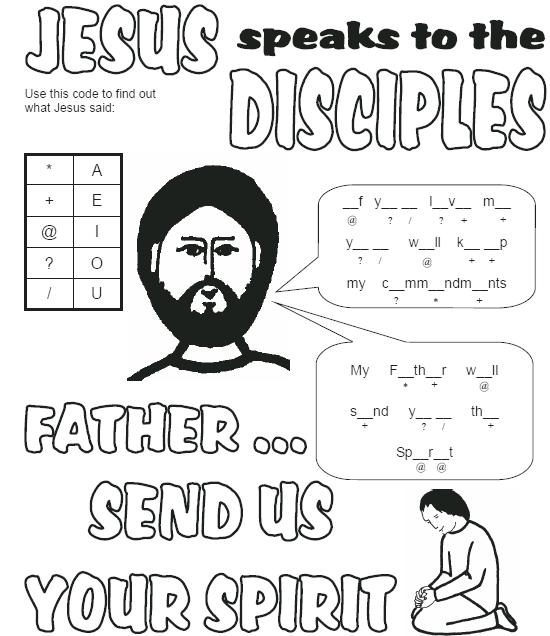
Today’s Gospel reading is actually last week's reading continued. In last week’s Gospel reading, Jesus was trying to comfort his disciples. He knew that he would soon return to heaven and his disciples would be left alone. "Don't worry" he told them, "I am going to prepare a place for you, but I will come again, and when I do, you will come and be with me."
The disciples didn't fully understand, so in this week's Gospel, Jesus continues... " If you love me, you will do what I have taught you and I will ask the Father to send a helper who will never leave you." The helper that Jesus was talking about is the Holy Spirit. Jesus asked the Father and he sent the Holy Spirit to live in us and help us to follow Jesus and obey his teachings.
You know, when we try to explain how the Holy Spirit leads us day by day, most people can't understand it. Jesus said, "The world can't accept it because they don't know him and they can't see him." Do you know what they can see? They can see how we treat other people. They see when we are generous, loving, caring, helpful, and kind. It has been said, "You are the only sermon some people will ever hear." That is what we need to remember, we are the sermon, the only sermon some people will ever hear.
Jesus said, "If you love me, you will obey what I command." What did Jesus tell us to do? He said, "Love one another as I have loved you." Then he asked the Father to send the Holy Spirit to help us. When others see how knowing Jesus has changed the way we treat other people, then they will want to know him too.
Father, as the Holy Spirit leads us day by day, help us to follow and to obey. In Jesus' name we pray. Amen. ❖
Twelve saints who were also mothers
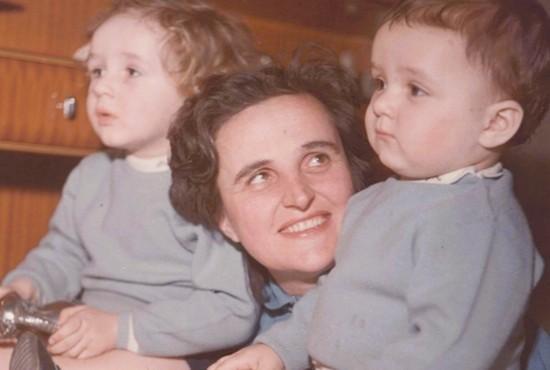
(OSV News)“The secret of happiness is to live moment by moment and to thank God for what he sends us each day.” This wise insight seems like something a good mother would say and in this case, one did. It’s a gem from St. Gianna Molla, a Catholic wife, physician and mother who died in 1962 after selflessly prioritizing her unborn baby’s health over her own during a difficult pregnancy.
St. Gianna is among dozens of Catholic mothers whom the Church has canonized for their faith, charity and holy virtues. To mark Mother’s Day May 10, here is a list of a dozen others who can intercede for our own mothers, whether they are with us in this life or have passed on to the next.
1. St.Helena(c.248-c.328)
Helena was the mother of Constantine, the Roman emperor who in 313 ended the persecution of Christians throughout the empire. She was born in Asia Minor, married a Roman general named Constantius Chlorus, and gave birth to Constantine in 274 in what is now Serbia. She became a Christian in 312, and thereafter was known for her devotion, prayerfulness and generosity to the poor. In about 326, she went to the Holy Land, where she spent her last years humbly doing the housework in her convent but also building churches on holy sites. She reportedly found the “true cross” of Calvary. Her feast day is Aug. 18.
2.St.Monica(331-387)
This North African laywoman married Patricius, and St. Augustine of Hippo was their eldest child. She tried to bring him up a Christian but also was ambitious for his worldly success. He scorned Christianity and had a son with his mistress. In 383 Monica followed Augustine to Italy, where she was a follower of St. Ambrose. Three years later, Augustine was baptized. Monica fell ill and died before their return to Africa. Years before, a bishop had famously counseled her: “It is not possible that the son of so many tears should be lost.” Her feast day is Aug. 27.
3. St. Emmelia of Caesarea (diedc.375)
St. Emmelia is from a family of saints. Her husband is St. Basil the Elder, a lawyer and son of St. Macrina the Elder. Of their 10 children, four are canonized: Sts. Basil the Great, Gregory of Nyssa, Macrina the Younger and Peter of Sebaste. St. Emmelia was dedicated to her children’s education and knowledge of Scripture. After raising her children, St. Emmelia with her daughter Macrina renounced their high standard of living and formed a small monastic community of nuns on the family’s estate. Her feast day is May 30.
4. St. Margaret of Scotland (c. 1045-1093)
Margaret may have been born in Hungary of a German mother, but as the granddaughter of an English king was brought to England. She took refuge in Scotland after the Norman conquest and in 1070 married King Malcolm III. They had two daughters and six sons; one son also became a saint. Deeply religious, she used her influence to bring the Scottish church in line with Rome, and was noted for caring for orphans and the poor. She died four days after her husband’s murder; they were buried at Dunfermline Abbey. She was canonized in 1250. Her feast day is Nov. 16.
5. St. Hedwig of Silesia (c. 1174-1243)
A laywoman from Bavaria, in southern Germany, Hedwig married the duke of Silesia, in southern Poland. Henry I encouraged his wife’s numerous charitable activities, one of which was founding an abbey of Cistercian nuns at Trzebnica. The couple vowed to live chastely after their seventh child was born in 1209. When Henry died in 1238, Hedwig moved to the abbey, where her daughter Gertrude was abbess, but without becoming a nun. She used her fortune to aid the poor and suffering nearby, and is remembered for increasing German influence in Silesia. She was canonized in 1267.
Her feast day is Oct. 16.
6. St. Elizabeth of Hungary (1207-1231)
Elizabeth’s short life was nonetheless full; she had a happy marriage and children, was a secular Franciscan, and was so devoted to the poor and sick that she gave away royal robes and founded hospitals. The daughter of a Hungarian king, Elizabeth married a nobleman of Thuringia, Louis, at age 14. He complained about the expense of her many charities until he witnessed a miracle involving Elizabeth, bread and roses. After he died during a Crusade, she became a Third Order Franciscan at Marburg, Germany, where she founded a hospital to care for the sick. Elizabeth is the patron of bakers, young brides, widows, those falsely accused, countesses and secular Franciscans. She was canonized in 1235. Her feast day is Nov. 17.
7. St. Bridget of Sweden (c. 1303-1373)
Bridget, or Birgitta, married a Swedish nobleman and they had eight children, including St. Katherine of Vadstena. About 1335 Bridget was appointed chief lady-in-waiting at the Swedish court. After she was widowed in 1344, she founded the Order of the Most Holy Savior, known as Brigittines. Bridget spent much time in Rome, living austerely and caring for the poor and sick. She died there after a pilgrimage to the Holy Land. Bridget claimed to have visions and inspirations throughout her life, prompting both influence and controversy. She was canonized in 1391. Her feast day is July 23.
8. St. Frances of Rome (1384–1440)
This laywoman and foundress, born a Roman aristocrat, married Lorenzo Ponziano when she was 13; they had several children. In 1409, their palazzo was pillaged by Neapolitan soldiers and Lorenzo was exiled for five years, returning home a broken man. He died in 1436. Frances, known for her great charity during epidemics and civil war, organized a ladies society dedicated to self-denial and good works. It became the Oblates of Tor de Specchi, which she directed for her last four years. She is the patron saint of motorists, perhaps because she was guarded for 23 years by an archangel visible only to her. Her last words were: “The angel has finished his work. He is beckoning me to follow.” She was canonized in 1608. Her feast day is March 9.
9. St. Jane Frances de Chantal (1572-1641)
At 20, Jeanne-Francoise Fremyot of Dijon, France, married Baron Christophe de Rabutin-Chantal. They were happy, but after eight years she was widowed and left with four children. In 1604 St. Francis de Sales became her spiritual director; they collaborated on the founding of the Order of the Visitation of Holy Mary, designed for women unsuited for the more rigorous life of other religious communities. At her death there were about 80
Visitation convents. St. Vincent de Paul, a contemporary, called her “one of the holiest people I have ever met on this earth.” St. Jane Frances de Chantal was canonized in 1767. Her feast day is Aug. 12.
10. St. Louise de Marillac (1591-1660)
Born in Auvergne, France, Louise married an official of the royal court, Antoine Le Gras. Following his death in 1625, and despite strained finances and bouts of melancholy, she was an active supporter of St. Vincent de Paul’s charitable works and became co -founder with him of the Daughters of Charity. She drew up the first draft of their rule. By the time of her death, the order had established 40 houses in France, and Daughters of Charity were looking after the sick poor in Parisian parishes and sheltering hundreds of women. St. Louise de Marillac was canonized in 1934. Her feast day is March 15.
11. St. Elizabeth Ann Seton (1774-1821)
Raised Episcopalian in colonial New York City, Elizabeth married William Magee Seton, a merchant. The couple had five children. William died in 1803 in Italy, where Elizabeth learned about Catholicism from the family who gave her hospitality. Wars had bankrupted the family’s shipping business. After becoming a Catholic in New York in 1805, the now-poor Elizabeth was abandoned by old friends, but accepted the offer of a Baltimore priest to open a school for girls there. In 1809 she founded the U.S. Sisters of Charity, whose schools and orphanages grew in number. She became the first native -born U.S. saint in 1975 and is the patron of converts. She was canonized in 1975. Her feast day is Jan. 4.
12. St. Zelie Martin (18311877)
Zelie Martin was a woman of deep religious faith and an industrious work ethic as a lacemaker. She and her husband, St. Louis Martin, had Zélie nine children, five of whom survived to adulthood. Their most famous child is St. Thérèse of Lisieux, a doctor of the Church, but their daughter Léonie Martin, a Visitation sister, also has an open cause for canonization. She and Louis were known as affectionate and loving parents, but Zélie’s writings reveal challenges she faced as a mother, some a result of the neglect and poverty she experienced as a child. She died of breast cancer when Therese, her youngest daughter, was 4 years old. In 2015, Zelie and Louis became the first married couple to be canonized together. Their feast day is July 12. ❖
St. Gianna Beretta Molla is seen with her children in this 1959 photo. The Italian doctor and mother, who sacrificed her own life for the life of her child, was canonized by Pope John Paul II in 2004. OSV News photo/courtesy Diocese of Springfield
Mary: The Mother who always points us to Jesus
Fr Joel Thompson SJ
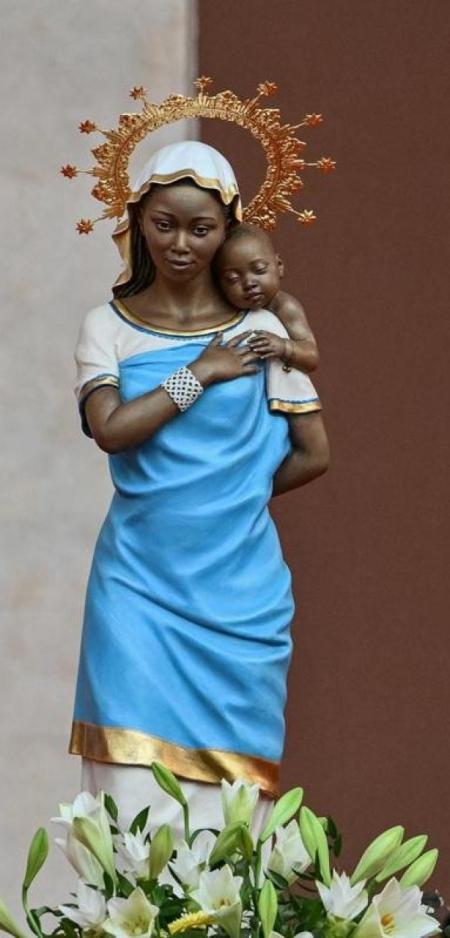
Whenever churches are shown in movies, I always carefully look to see whether they are Catholic or not. Catholic Churches have certain key thingslikethealtar, the tabernacle, the crucifix, and very often, there is an image or statue of Mary. For many of us, this is normal. For some other Christians, it can be confusing. We are often accused of worshipping Mary and of giving her too much importance.
These are good questions. However, the Church’s position is clear. Catholics do not worship Mary. We worship
God alone (Father, Son, and Holy Spirit). Mary is honoured, loved, and venerated because of her unique role in God’s plan. Everything we believe aboutMary leadsusbackto Jesus.
What does Scripture Say?
Mary first appears in the Gospel as a young woman chosen by God. At the Annunciation, the angel Gabriel comes to her and says: “Hail, full of grace, the Lord is with you” (Luke 1:28). The Annunciation is the moment when God invited Mary to become the mother of Jesus. Mary’s answer was one of faith: Let it be done to me according to your ” (Luke 1:38). Because of her obedience and trust, the Son of God entered the world.
This is why Catholics see Mary as the New Eve. Eve disobeyed God; Mary obeyed. Through Eve’s disobedience, sin entered the world. Through Mary’s ” Christ our Saviour came into the world.
Mary is also present at the beginning of Jesus’ public ministry. At the wedding feast of Cana, when the wine runs out, Mary brings the need to Jesus. Then she says to the servants: “Do whatever he tells you” (John 2:5). These important words show us her true role. Mary does not draw attention to herself. She points us always to Jesus.
This is also why we ask Mary to pray for us. At Cana, she interceded for the couple in need. Christians believe that, in heaven, she continues to pray for the Church. We do not pray to Mary as if she were God. We ask her to pray with us and for us, just as we might askaholyfriend orsaint topray forus.
Mary is also present at the Cross. Jesus says to the beloved disciple, “Behold, your mother,” and to Mary, “Woman, behold, your son” (John 19:26–27). The Church has long seen here a deeper meaning: Mary becomes mother not only of John, but of all disciples. This is why Catholics call her Mother of the Church. In Acts 1:14, we also find Mary praying with the disciples before Pentecost. She is there with the early Church,waiting fortheHoly Spirit.
What We Believe
Now, we turn to some of the core teachings about Mary and some of the titlesgiven toher.
First, Mary is called Mother of God. This does not mean that Mary existed before God or created God. It means that the child she bore is truly God and truly man. Jesus is not half-God and half-human. He is one divine Person, the Son of God, who became man. Therefore, Mary is rightly called Mother of God because she is the mother of Jesus, who is God. The Council of Ephesus affirmed this in 431, andtheCatechismteachesthatMary is “Mother of God” because she is mother of the eternal Son of God made man(CCC 495).
Second, the Immaculate Conception does not mean thevirgin birth ofJesus. This is a common misunderstanding. The Immaculate Conception means that Mary, from the first moment of her own conception, was preserved from original sin by the grace of God. We might say that the grace of Jesus’ death and resurrection was applied to Mary before she was born, preparing her to be a pure and holy dwelling place for the Son of God. The Catechism says that Mary was “redeemed from the moment of her conception” (CCC 491). She was saved by Christ in auniqueandbeautiful way.
Third, the Church teaches Mary’s perpetual virginity. This means that Mary was a virgin before, during, and after the birth of Christ. Some people ask about the “brothers and sisters” of Jesus mentioned in the Bible. The Church understands these as close relatives/cousins and a common way ofspeaking in thebiblicalworld.
Fourth, we celebrate the Assumption of Mary on August 15. This means that when Mary’s earthly life was completed, she was taken body and soul into heavenly glory. The early church had no tradition of a tomb for Mary. The Catechism teaches that her Assumption is a special sharing in her Son’s Resurrection and a sign of the resurrection promised to all Christians (CCC 966). Again, this teaching is Christcentered. Mary’s glory comes from
Christ and shows us our destination, which is to be holy, redeemed, and alivewith Himforever.
Marian Prayer
The Rosary also helps us understand Mary. It is a prayerful meditation on the life of Christ through the eyes of Mary. In the Joyful, Luminous, Sorrowful, and Glorious Mysteries, we reflect on the Incarnation, the Kingdom, the Cross, and the Resurrection. A wellprayed Rosary leads us deeper into the Gospel.
What about Marian apparitions, such as Guadalupe, Lourdes, or Fatima? The Church investigates these carefully. Some have been judged worthy of belief, but they are not equal to Scripture or Church dogma. We are not obliged to believe every private revelation. Their usual message isvery biblical.We are told to repent, pray, turn back to God, seek peace, and follow Jesus morefaithfully.
Honouring Mary
So why honour Mary? Because God honoured her first. Elizabeth said, “Blessed are you among women” (Luke 1:42). Mary herself said, “All generations will call me blessed” (Luke 1:48). To honour Mary is not to take glory away from Jesus but to praise God for Hisgrace.
Mary is the greatest disciple, the most faithful saint, and the mother who alwayssaysto the Church, “Do whatever he tells you.” That is the heart of Catholic devotion to Mary. We walk with Mary to Jesus. During this month, as we place flowers before her image, we can ask for her help to let Christ bloom again in us. Holy Mary, Mother of God, pray for us sinners, now and at thehourof ourdeath. Amen.❖



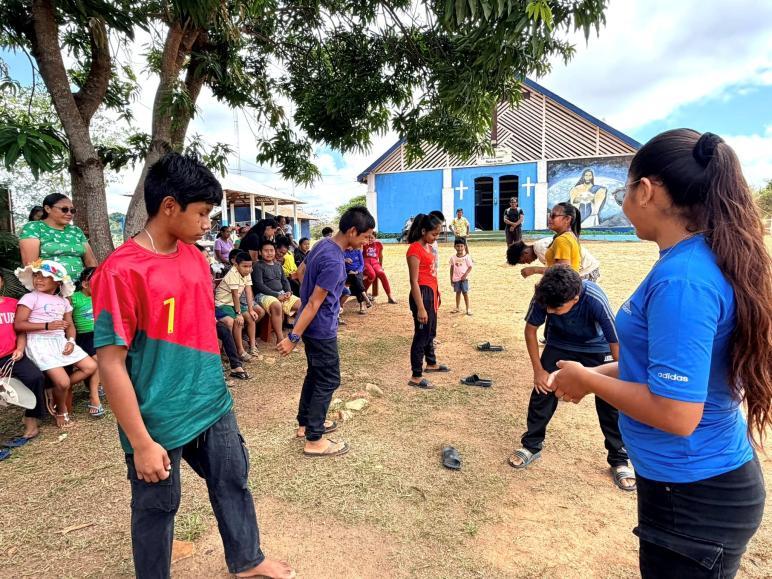
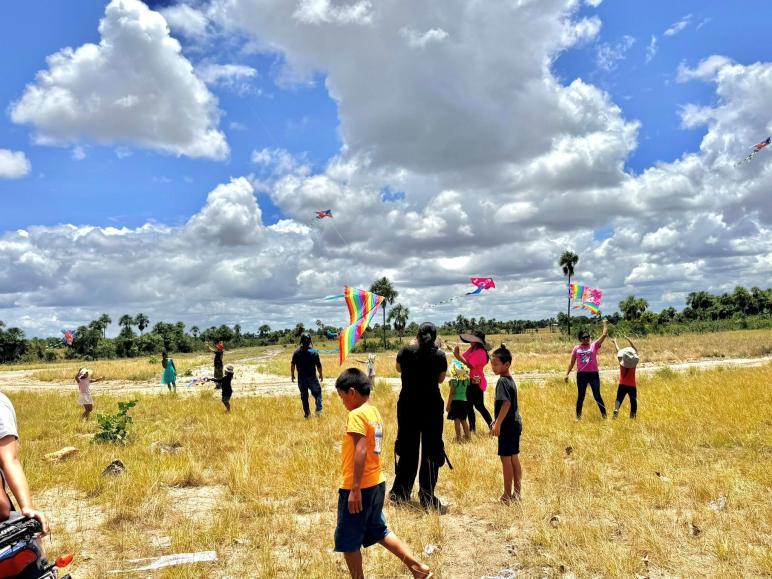
Children’s Fun Day at Aishalton
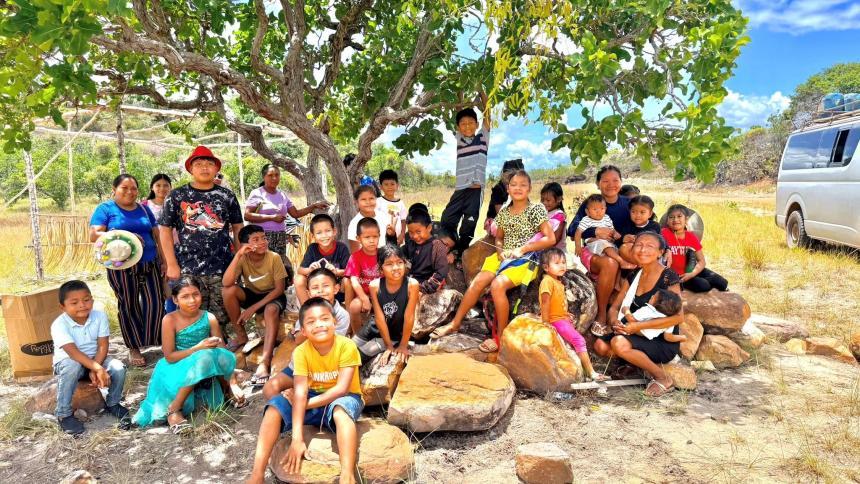
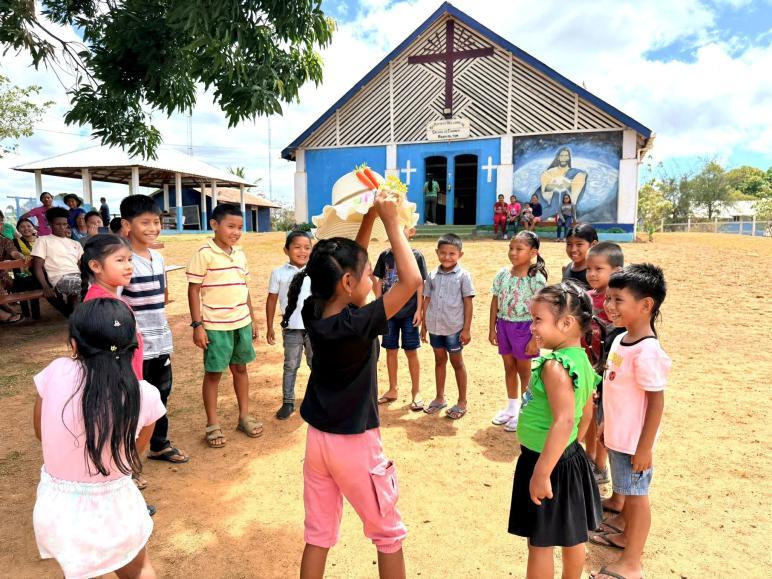
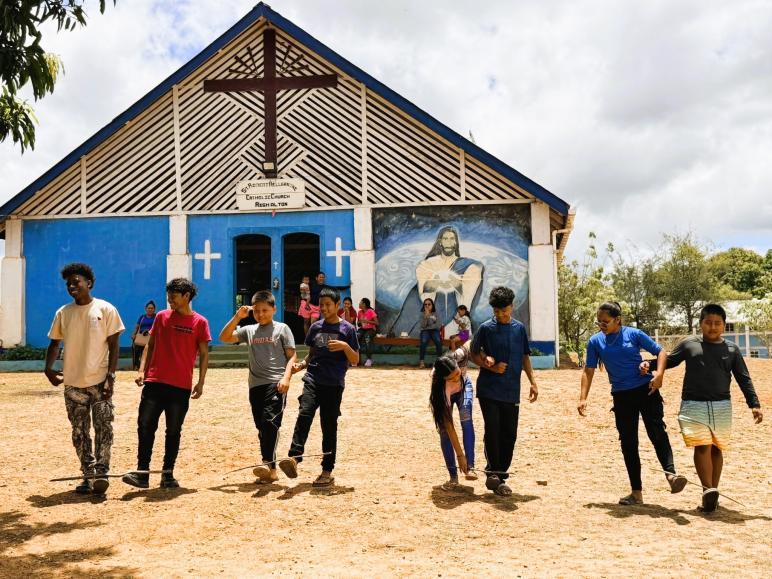
(April 6th). The day began with Praise and Worship. The children then participated in a variety of outdoor games, followed by lunch where they
To end the day, they were taken to the racing track behind Makawau, where they had lots of fun flying kites. It was a day filled with laughter and moments
Adapted from Robert

Independence Memory Lane
By Francis Canzius
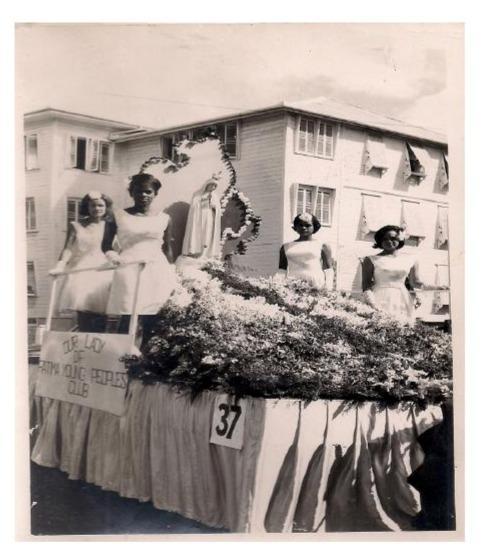
The Independence Float Parade 1966
As part of Guyana’s Independence celebrations in 1966, a Float Parade was organized.
The photo shows the float designed by the Young People’s Club of Our Lady of Fatima Church.
The float featured a prominent map of Guyana with a statue of Our Lady of Fatima standing in front of it. Hundreds of flowers decorated the float and four young women stood at each corner of the platform.
Walking in front of the float were other youths who strewed petals in the path of the float.
Saint of the Week
with Diplomats, Government
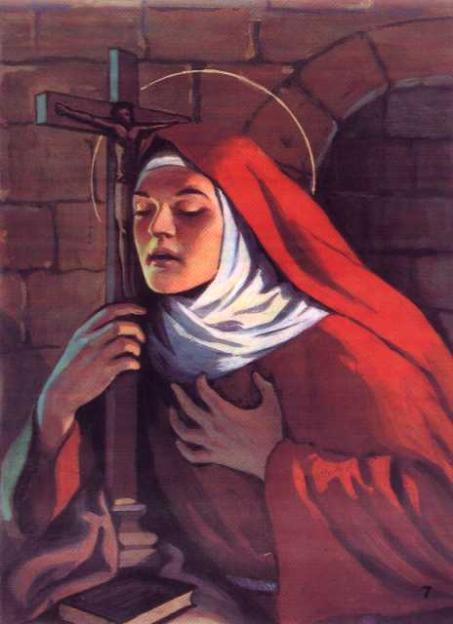
Margaret was born of farming parents in Laviano, Tuscany, Italy. Her mother died when Margaret was seven and her father remarried. Life with her stepmother was so difficult that at the age of 17 Margaret ran away with a young man, and bore him a son out of wedlock. Somewhat like St. Augustine she prayed for purity but not just yet. After nine years, her lover was murdered without warning. This crime shocked Margaret into a life of penance.
In 1277, three years after her conversion, Margaret became a Franciscan tertiary. Under the direction of her confessor, who sometimes had to order her to moderate her self-denial, she pursued a life of prayer and penance at Cortona. There she established a hospital and founded a congregation of tertiary sisters. The poor and humble Margaret was, like Francis, devoted to the Eucharist and to the passion of Jesus. These devotions fueled her great charity and drew sinners to her for advice and inspiration. She was canonized in 1728. She is a patron saint of penitents, single mothers and midwives.❖
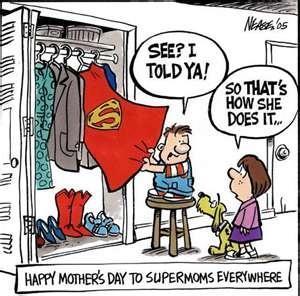
On the Lighter Side
May 16th - St. Margaret of Cortona (1247-1297 )