
AEC sends message of solidarity
The following is a June 25 press release from the President of the Antilles Episcopal Conference (AEC), Most Rev. Charles Jason Gordon, expressing the solidarity and prayers of the bishops of the AEC with the people of Venezuela followingthetwinearthquakes: MESSAGE OF SOLIDARITY TO THE PEOPLE OF GOD IN VENEZUELA
The bishops of the Antilles Episcopal Conference have received with
clergy, religious women and men, and all the faithful of our constant prayers. As Saint Paul reminds us, "If one member suffers, all suffer together" (1 Corinthians 12:26).
Though the Caribbean Sea separates our shores, the communion we share in Christ makes us one family in faith.
The peoples of the Caribbean know well the wounds that natural disasters leave behind. We know the anguish of waiting for news of loved ones, the grief of lives lost, and the long work of rebuilding
Popesendsaidtoearthquake-struckVenezuela - p2
Pope Leo opens Consistory, asks Cardinals to be ‘Builders of Christ’s Communion’ - p3
AChristianPerspective on SocialIssues - p4
Sunday Scripture - p5
Pope warns traditionalist society on ordination of bishops - p6
Church leaders prepare for 2027-28 synodal assemblies - p7
As fuel shortages deepen Cuba’s humanitarian crisis, nuns struggle to sustain ministries - p8
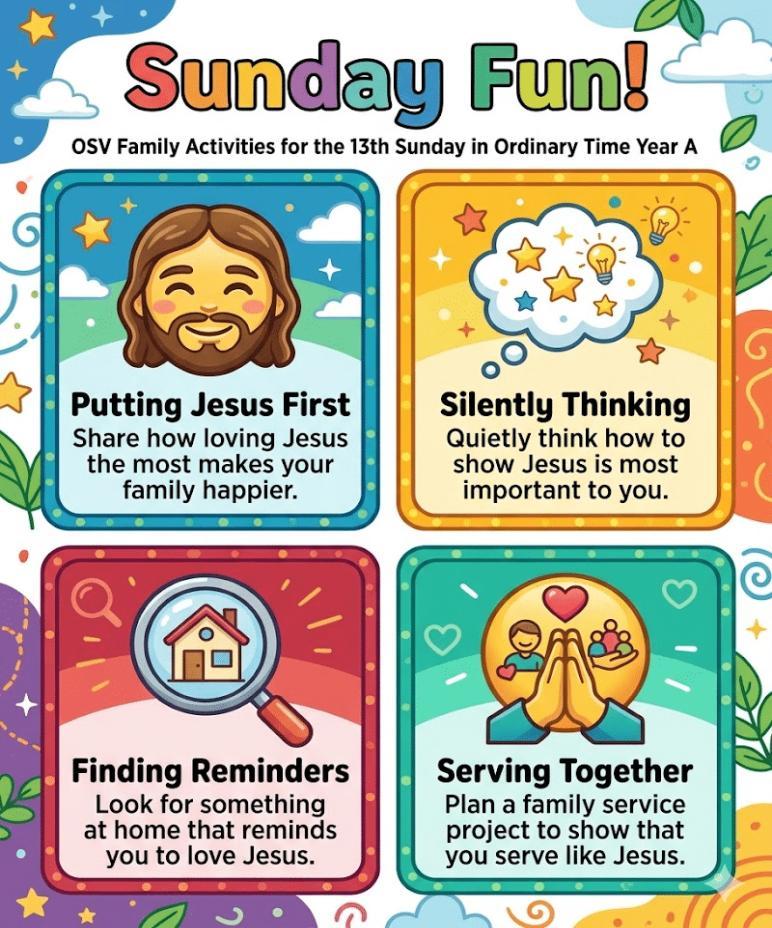
Children’s Page - p9
Growing in Grace Week 88 - p10
Faith in Practice Week 20 - p11
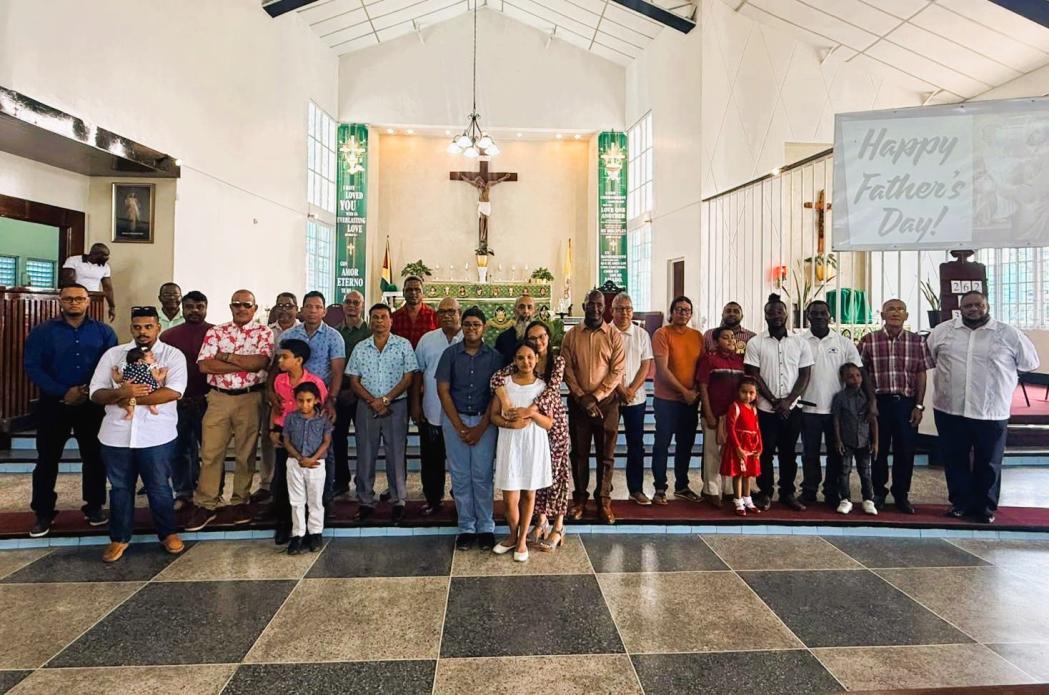
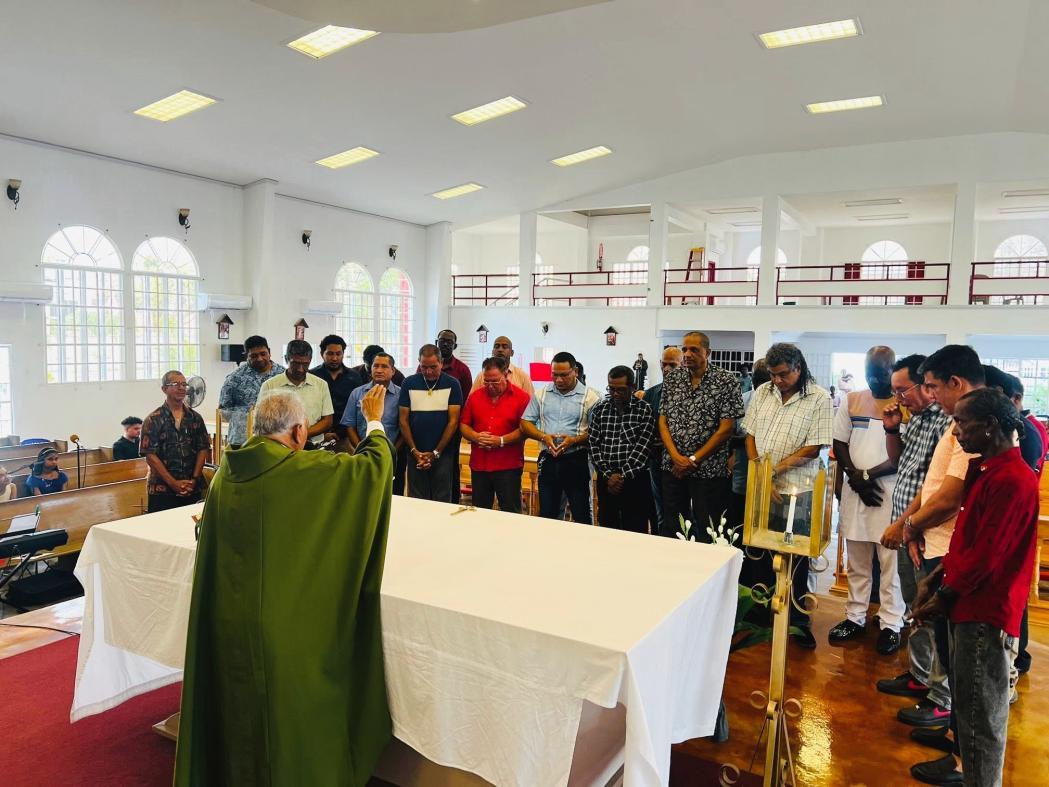
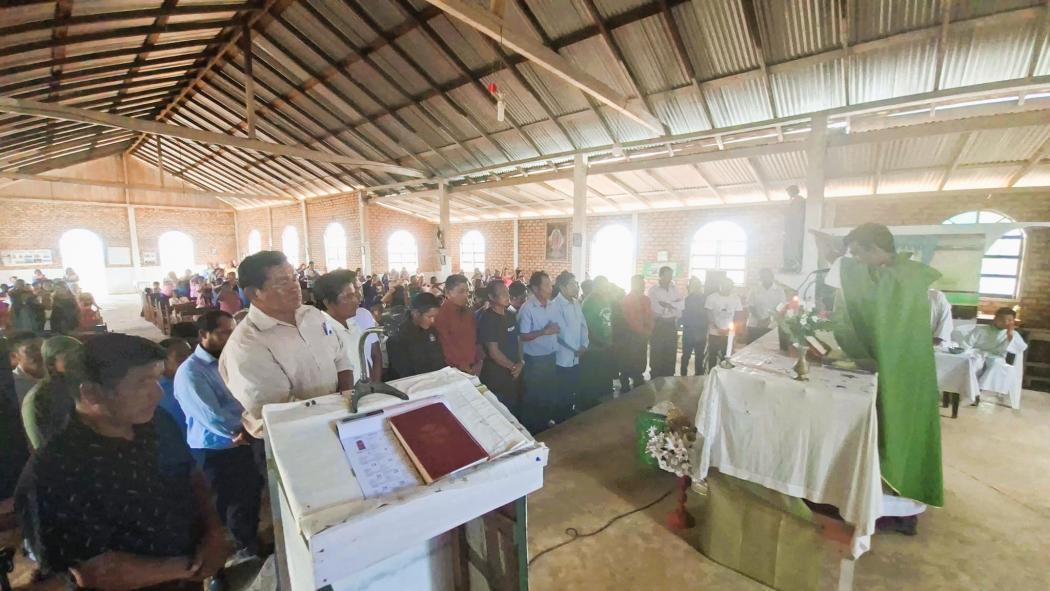
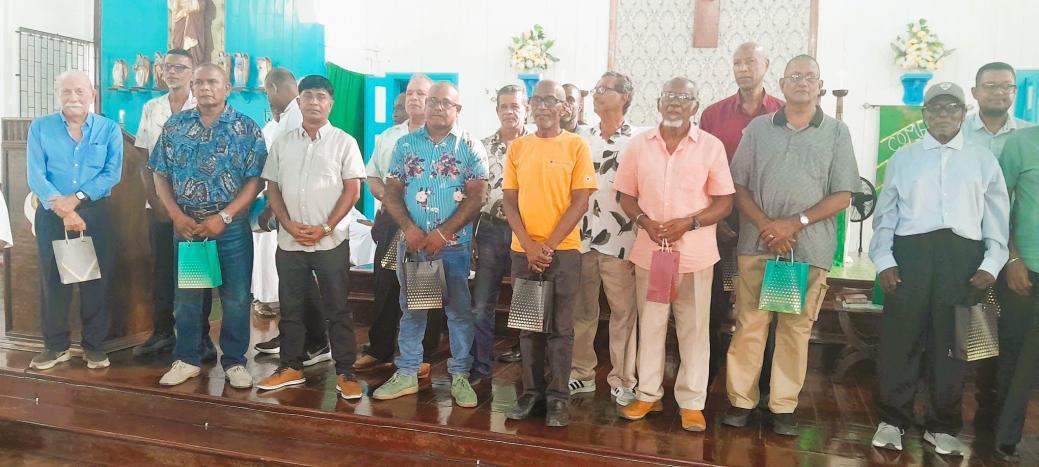
Father’s Day at Kurukabaru - p12
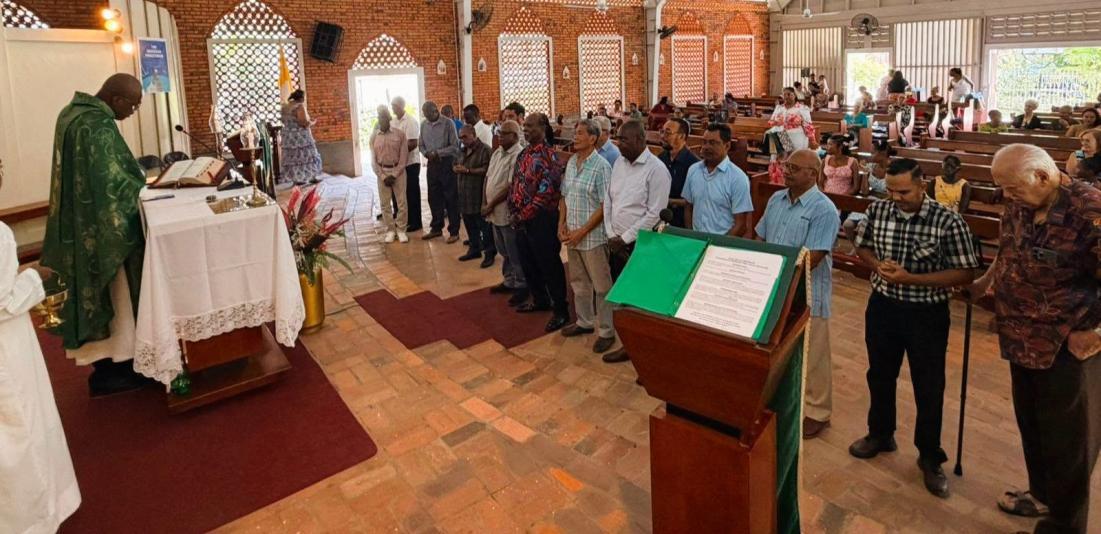
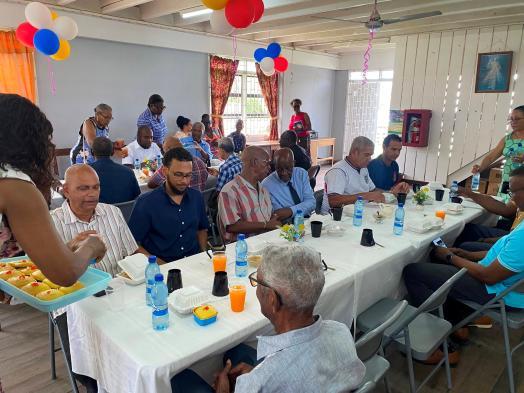
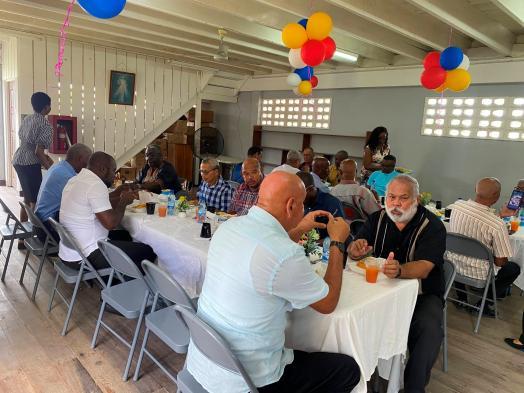
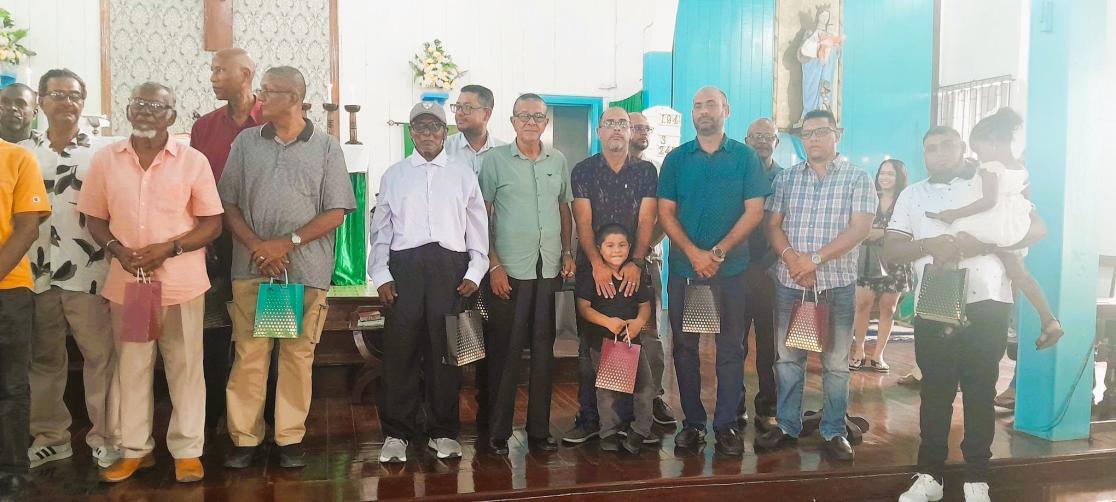
Father’s Day across the Diocese - p14
Yet we have also witnessed how faith gives courage, neighbourly love becomes an instrument of God's stands
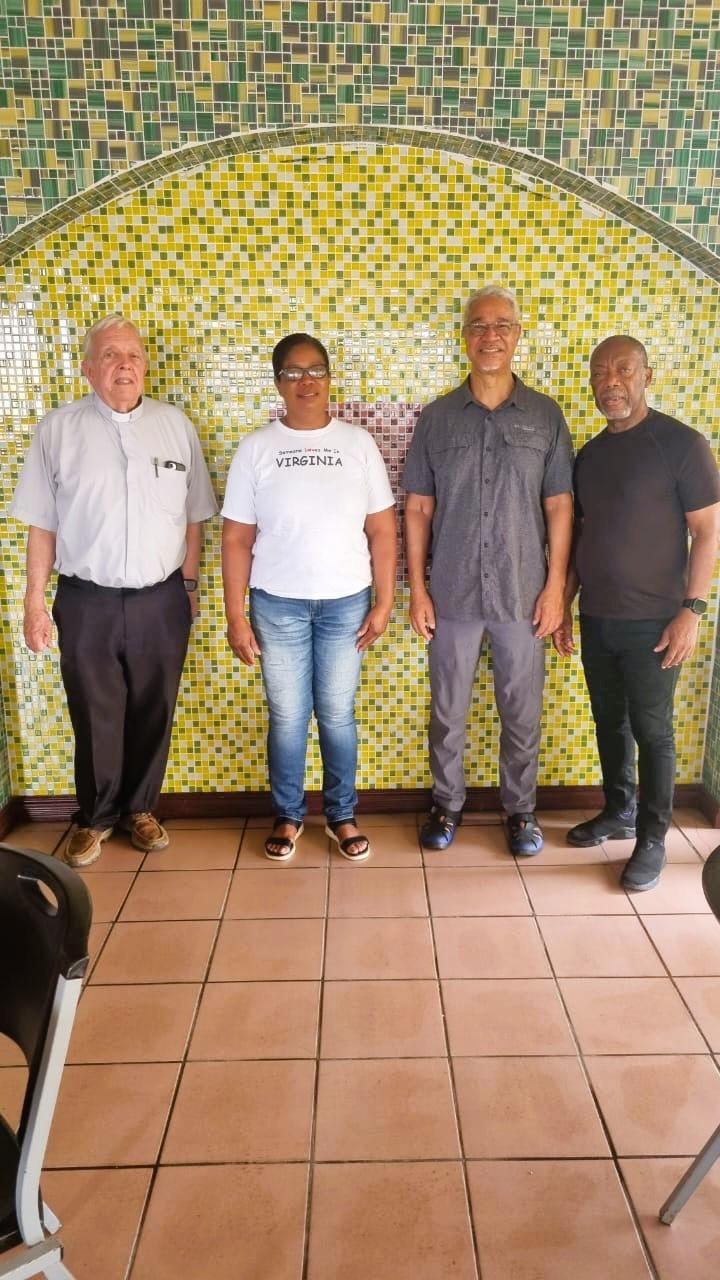
CTCT theologians visit Guyana in
Sunday June 28th
11:00hrs –Mass at St. Paul, Mahaica
Tuesday June 30th
17:00hrs – St. Joseph Mercy Hospital Board Meeting (Virtual)
Wednesday July 1st
7:00hrs – Mass at Missionaries of Charity, Symth Street
Sunday July 5th
7:00hrs – Mass at St. Thomas the Apostle, Enmore
together theologians, clergy,
proud to host this significant looks forward to welcoming
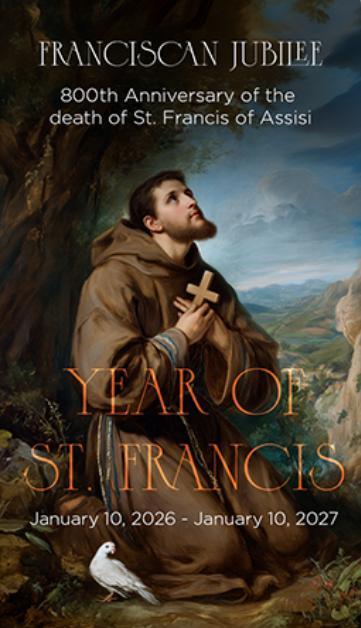
Year of St. Francis Jubilee Prayer
Saint Francis, our brother, you who eight hundred years ago went to meet Sister Death as a man at peace, intercede for us before the Lord.
You recognized true peace in the Crucifix of San Damiano, teach us to seek in Him the source of all reconciliation that breaks down every wall.
You who, unarmed, crossed the lines of war and misunderstanding, give us the courage to build bridges where the world raises up boundaries.
In this time afflicted by conflict and division, intercede for us so that we may become peacemakers: unarmed and disarming witnesses of the peace that comes from Christ.
Amen - Pope Leo XIV
Pope Leo sends aid to earthquake-struck Venezuela
(Vatican News) - More than 920 people are reported dead, with many more injured and countless others believed to be trapped after two powerful earthquakes struck Venezuela on WednesdayJune 24.
As rescue efforts continued and the full scale of the disaster began to emerge, Pope Leo XIV on Thursday June 25 sent an initial emergency donation of one hundred thousand euros through the Apostolic Almoner's Office.
The Holy See says the aid, coordinated with the Apostolic Nuncio to Venezuela, Archbishop Alberto Ortega Martín, and the Archbishop of Caracas, Archbishop Raúl Biord Castillo, is only a first step, with further assistance to follow in response to the needs identified by the local Church.
The Pope's contribution comes as Catholic communities across the country open parish buildings to shelter displaced families and organize emergency assistance through local Caritas networks.
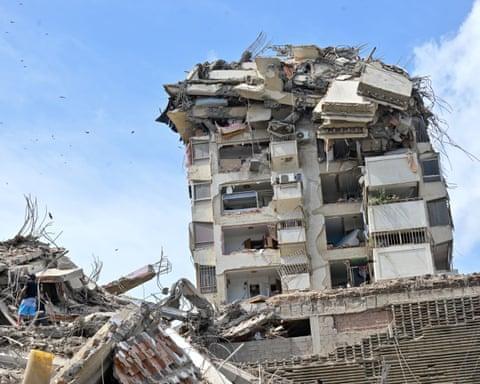
Rescue teams are searching scores of collapsed buildings following Wednesday evening's earthquakes, which measured 7.2 and 7.5 in magnitude.
Caracas' Simón Bolívar International Airport remains closed, while the worst devastation has been reported in the coastal state of La Guaira, north of the capital, where dozens of buildingshavecollapsed.
Authorities say at least 920 people have been killed and nearly 3,000injured, though officials warn the toll is expected to rise as rescuers continue to dig through the rubble.
More than twenty aftershocks have rattled the region, with tremors felt as far awayasColombia.
President Delcy Rodríguez has declared a national state of disaster and emergency, describing La Guaira as a "disaster zone."
Interior Minister Diosdado Cabello has urged residents to remain outdoors and away from damaged buildings as engineers assess the stability of critical infrastructure.
The damage is widespread and severe. Churches, including Caracas Cathedral and several parish churches, have suffered structural damage, while seminaries and other Church buildingshavealso been affected.
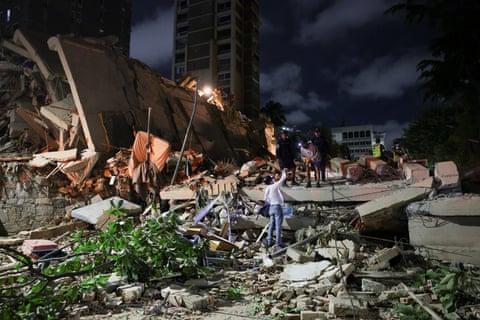
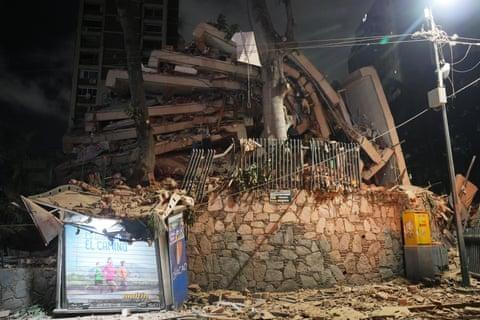
of Christ's compassionate presence among those who suffer.
We commend to the Lord those who have lost their lives and pray for the consolation of those who mourn.
May He protect those in danger, strengthen the injured and displaced, and sustain all engaged in rescue, relief, and recovery. We remember especially the civil authorities, emergency personnel, healthcare workers, volunteers, and all who are serving generously in this time of trial.
We express our solidarity with the Venezuelan Episcopal Conference as it continues toaccompanythe People of God with faith, pastoral charity, and hope. We are confident that the Church in Venezuela will remain a
beacon of consolation, mercy, and steadfast love, helping countless people encounter the healing presence of theRisen Lord.
We also remember the many Venezuelans living throughout the Caribbean and across the world who anxiously await news of their families and loved ones. May they find comfort in the solidarity of the universal Church and in the assurance that they arenot alone.
The faithful throughout the Caribbean will remember the people of Venezuela in the celebration of the Holy Eucharist and in personal prayer.
As one family of faith, we entrust Venezuela to the maternal protection
of Our Lady of Coromoto, Patroness of Venezuela. Through her intercession, may God grant strength to the afflicted, wisdom to those who lead, courage to those who serve, and perseverance to all engaged in rebuilding.
Though the earth has trembled beneath your feet, may your hearts remain firm in Christ, our sure foundation. Confident in His Resurrection, we remain united with you in prayer, trusting that neither suffering nor death can separate us from His love.
MostRev.CharlesJasonGordon Archbishop of Port ofSpain
President Antilles EpiscopalConference
rescue teams race against time in the hope of finding more survivors beneath the
Pope Leo opens Consistory, asks Cardinals
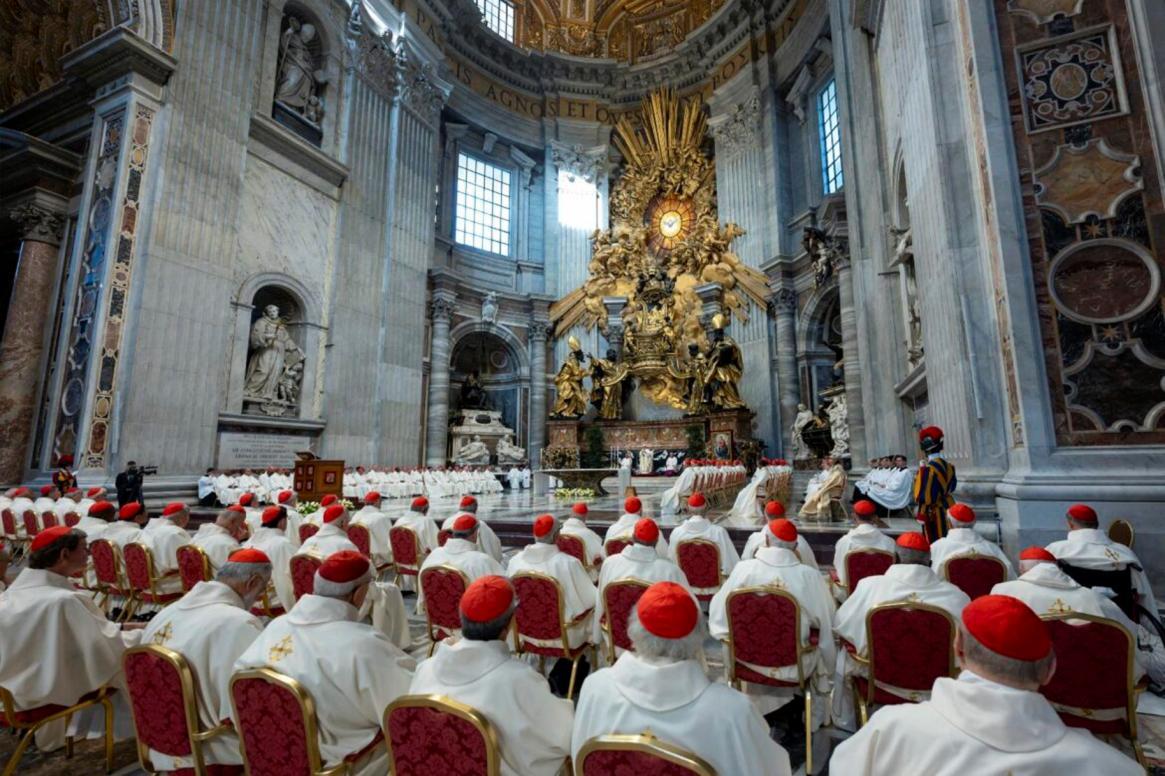
VATICAN CITY (OSV News) Pope Leo XIV opened the second extraordinary consistory of his pontificate June 26, urging cardinals to help him discern what the Holy Spirit is saying to the Church today and reminding them they are not “guardians of particular interests,” but disciples called to communion in Christ.
In his opening speech for the two-day meeting June 26-27, the pope told the cardinals gathered in the Vatican’s Paul VI Hall, his ministry “cannot be carried out alone” and called on the College of Cardinals to support him by offering frank and sincere counsel.
“I am counting on you to help me discern what the Spirit is saying to the Church today. I need your support: strong, explicit, and public. I need to feel sustained by you, as by brothers,” Pope Leo said.
“Help me to listen to what is emerging in the Churches, to recognize the signs of hope that often grow in silence, but also to not ignore the struggles, misunderstandings, and resistance that can slow down our journey. I need your freedom, your frankness, and your loyalty. Sincere advice is always an act of communion,” he told the cardinals.
It is the second time this year that Pope Leo has gathered the world’s cardinals together. Out of the 241 current members of the College of Cardinals, 178 cardinals participated in the June consistory.
Cardinals from Africa, Asia, Europe, Oceania and the Americas traveled to Rome for the consistory, in which they are set to discuss evangelization, synodality and the pope’s recent encyclical “Magnifica Humanitas” on safeguarding of the human person in the age of artificial intelligence.
The consistory opened with Mass celebrated by Pope Leo in St. Peter’s Basilica, where he urged cardinals to “ask for the gift of peace in unity.”
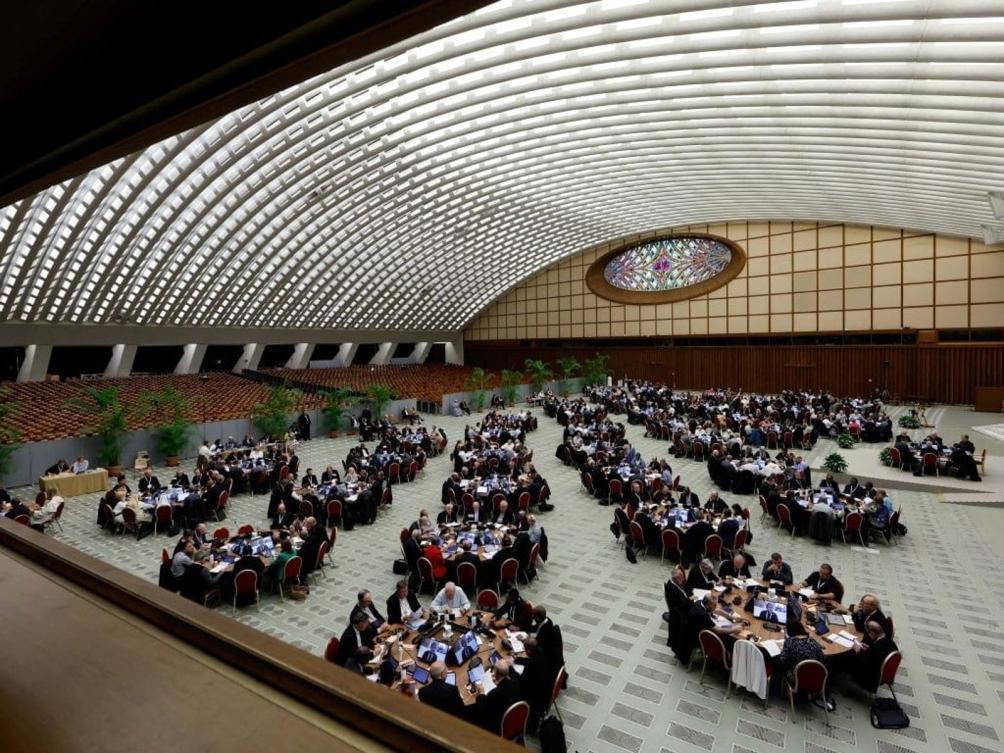
Before the first session of the consistory, the hymn “Veni Creator Spiritus” was intoned in the Paul VI Hall. Cardinals were divided into small discussion groups seated at round tables, a format more similar to that used during the Synod on Synodality than the traditional open-forum structure used during the pontificates of John Paul II and Benedict XVI in which cardinals addressed the entire college with brief interventions.
Eight of the working groups are made up of cardinal electors serving as ordinaries, including nuncios and retired ordinaries, and 10 more groups are made up of cardinals serving in the Roman Curia and nonelectors who are over the age of 80. Cardinal Rueda Aparicio, the Archbishop of Bogotá, Colombia,moderated the first session. Among those seated together, U.S. Cardinal Raymond Burke could be seen sitting at the same round table as Cardinal Timothy Radcliffe for the morning’s discussion.
Pope Leo stayed in the hall until the beginning of the small group discussions and returned to listen to the group presentations and the prayer of the Angelus.
Cardinal Victor Manuel Fernández, prefect of the Dicastery for the Doctrine of the Faith, introduced the second session in the afternoon, taking up the theme, “The culture of power and the civilization of love,” drawn from the fifth chapter of “Magnifica Humanitas.” Among the issues addressed by Pope Leo in that chapter are the risks posed by technology when used irresponsibly, especially in warfare.
Saturday’s sessions will focus on the Church’s contribution to the common good in a time of fragmentation, as well as the implementation of outcomes from the Synod on Synodality.
“Let us entrust these days to the Holy Spirit, that he may make us docile to his voice and grant us the grace to seek together what best serves the Gospel and the good of the People of God,” Pope Leo told the cardinals.
Pope Leo acknowledged that this “style of ecclesial discernment” requires “patience and sometimes raises questions,” but encouraged the cardinals to “engage wholeheartedly in the group work.”
“I am well aware that, for many of us, this is not the usual way of conducting a consistory,” he said. “Yet this too is part of the journey along which the Lord is leading us.”
“We too learn synodality by practicing it; we learn together to grow in communion,” he added.
Over the two days, cardinals will take part in four sessions discussing their view of the world, peace, the common good and synodality. In his opening address, Pope Leo said that all of these four topics “converge on a single question: how can we help our Churches today to proclaim the Gospel with greater fidelity, freedom, and credibility?
”
Friday morning’s first session included a biblical meditation by Cardinal Grzegorz Rys of Krakow. Groups were asked to reflect on what sufferings and tensions most deeply affect the communities in their care, and what signsof hopeareemerging.
According to the Vatican, cardinals discussed increasing polarization in societies, the lack of religious freedom in many parts of the world, the crisis of the family, migration, individualism and the rise of loneliness, and secularization, among other topics, in the first session.
In his remarks, Pope Leo also clarified how he understands the concept of synodality, explaining that some have interpreted synodality as a diminishment of authority when “in reality, it helps us to understand more deeply the meaning of authority itself, which exists to safeguard communion, to foster the participation of all, and to guide the Church’s common journey.”
“In the face of the wounds of the world, the building up of the common good, and the mission of the Church, synodality points to a way forward: listening, discerning, and taking responsibility together for the choices that the Lord entrusts to us,” he said.
Of the 241 cardinals in the Catholic Church, 117 are eligible to vote in a conclave. All cardinals, including those older than 80 and therefore ineligible to take part in a conclave, are invited to participate in an extraordinary consistory although not all are usually able to attend due to either health or sometimes geopolitical reasons.
“We have gathered around the altar of the Lord, at the tomb of Saint Peter, to begin this Consistory. From every corner of the world, we have come to celebrate this Eucharist,” Pope Leo said in his homily for the consistory’s opening Mass in St. Peter’s Basilica.
“This diversity of emotions and thoughts now comes together and finds its luminous center in Christ, who himself addresses us, saying: “I am the true vine” (Jn 15:1). Through Jesus, grace and truth flow into our lives (cf. Jn 1:17), renewing us from within. These divine gifts are also the life-giving nourishment of the Consistory that we inaugurate today.”❖
Cardinals gather for a Mass in St. Peter's Basilica at the Vatican June 26, 2026, which opened an extraordinary consistory June 26-27. (OSV News photo/Simone Risoluti, Vatican Media)
A Christian Perspective on Social Issues
By GHK Lall
All over, already time for real solvers
It’s been daily. Nightly, too. Overhead. Underfoot. It seems like it’s raining all over the world. Georgetown, not Georgia. The interior, no stranger to deluges and swamps. Flooded out. Backed up. Grey and grim. Surprising that some Guyanese have not cracked up in the face of relentless assaults from above. What is, raises a single question: why? There is nobody home to provide a straight answer, if any at all is given. The same question persists: Why? Why is this still happening? Again, and again. Not that it should be totally dry. But the floods shouldn’t be a bad as they are. After all that was done. Or should have been.
Money has neither been low nor slow in coming. One billion, then a hundred, and another hundred billion, and still more billions. The more the billions that were shared out for flood prevention (or reduction), the more the water levels rise. It is not the imagination. Try navigating the gullies and valleys in the closing hours of the dawn. While on a lashing, raining, crawling journey to do a chore. Or to worship in the Church. Take a different route, if only to get a firsthand look at some other streets and sidewalks. The only difference is that the waters may come in higher, broader and longer stretches across the length and width of Georgetown and beyond. Beyond has no boundaries. The boundaries could encircle a village, a community, or a whole region. Houses jutting out like lonely marooned islands, their occupants under lockdown with nowhere to go and nothing to do.
What happened to the money, all of those billions, then more billions? If I hear about pumps and kokers again, I shall lose it, start screaming. If I read about drains being attended to, and plans and visions, I could deteriorate to such an extent that a mild disorder
may be my way of healing. Like electricity, a shortage of places for the swelling rainwaters to go, cause numerous Guyanese endless headaches. Like electricity, hundreds of billions have been spent for an improved way of life for city dwellers and hinterland inhabitants, and matters seem to get worse and not any better. Like a shortage of electricity, when an excess of floodwaters arrives, the damage that’s left behind can linger for a long season, then more.
What’s the solution? Not another speech intended to be warming, inspiring. They have lost all value, never had. For all the difference that those have made. Not another campaign meant to be reassuring, for all that is generated is more theater. Guyanese-wet, miserable, despairingneed answers. They need what offers the persuasive. The money is there. The will must be in the right places and help to get one community after another from where they are today, to there -all those higher, drier places, that should be.
My take is that the wrong people with the wrong mindsets and the wrong approaches have been entrusted to get Guyanese near and far from underwater. Those waters that come and slowly go. Often not at all, until
they are good and ready. Because there is no place for them to go. There are some people who know about floods and how to deal with them. They have a history; centuries of it. They live with a reality. Below sea level, with millions at risk. People, not dollars. Terrible have been their calamities. But determined their will, and with one difference that stands out from Guyana. Their will is honest. Their visions have been untainted by miscellaneous ideas of how to take special care of the billions in flood relief set aside. None of that extra care that has characterized flood billions in Guyana, which leave citizens high as treetops and not daring to set a foot below. Clearly, the job is too big for Guyanese minds and Guyanese hands. Capacity deficits long lamented about. Let the folks, the experts at flood control, come and take charge. Who is better than the Dutch at keeping their waters at bay, and their people going? Who is half as good, with results to match? It is time all this jumping around, zigzagging around, and contributing to the ongoing cycle of rain and flood and damages (and dread) all come to an end. This is where I stand. All I have to say. Stay dry. Stay prayerful, faithful. Before God, not puny man.❖

Gracious and loving God, we thank your for the gift of our priests.
Through them, we experience your presence in the sacraments.
Help our priests to be strong in their vocation.
Set their souls on fire with love for your people.
Grant them the wisdom, understanding, and strength they need to follow in the footsteps of Jesus.
Inspire them with the vision of your Kingdom.
Give them the words they need to spreadthe Gospel.
Allow them to experience joy in their ministry.
Help them to become instruments ofyour divine grace.
We ask this through Jesus Christ, who lives and reigns as our Eternal Priest. Amen

‘Growth is the only evidence of life.’ Saint John Henry Newman (1801-1890)

FIRST READING 2 Kings 4: 8-11, 14-16
One day as Elisha was on his way to Shunem, a woman of rank who lived there pressed him to stay and eat there. After this he always broke his journey for a meal when he passed that way. She said to her husband, “Look, I am sure the man who is constantly passing our way must be a holy man of God. Let us build him a small room on the roof, and put him a bed in it, and a table and chair and lamp; whenever he comes to us he can rest there.” One day when he came, he retired to the upper room and lay down. “What can be done for her then?” he asked. Gehazi answered, “Well, she has no son and her husband is old.” Elisha said, “Call her.” The servant called her and she stood at the door. “This time next year,” he said, “you will holda son inyour arms.”
RESPONSORIAL PSALM Psalm 88
Response: I will sing for ever of your love, O Lord.
1. Iwillsing foreverofyourlove,O Lord; through allages my mouth will proclaim your truth. Of this I am sure, thatyourlove lasts for ever, that your truth is firmly establishedas theheavens.
2. Happy thepeople who acclaim sucha king, who walk,O Lord, in the light of your face, who find their joy every day in your name, who make your justice thesource of their bliss. R/
3. For it is you, O Lord, who are the glory of their strength;
it is by your favour that our might is exalted: for our ruler is in the keeping of theLord; our king in the keeping of the HolyOne of Israel. R/
SECOND READING Romans 6: 3–4, 8-11
You have been taught that when we were baptised in Christ Jesus we were baptised in his death; in other words, when we were baptised we went into the tomb with him and joined him in death, so that as Christ was raised from the dead by the Father’s glory, we too might live a new life.
But we believe that having died with Christ we shall return to life with him: Christ, as we know, having been raised from the dead will never die again. Death has no power over him any more. When he died, he died, once for all, to sin, so his life now is life with God; and in that way, you too must consider yourselves to be dead to sin but alive for God in Christ Jesus.
GOSPEL Matthew 10: 37-42
Jesus instructed the Twelve as follows:
Our First Reading from Second Kings, chapter 4, features Elisha. You may recall that Elisha was plowing in a field when the prophet Elijah called him to follow him. Something happened at
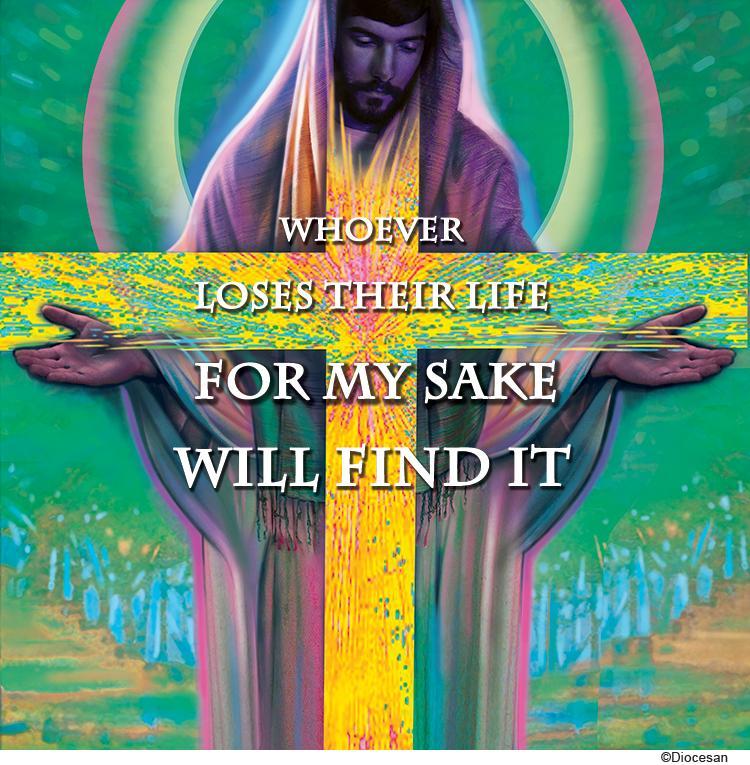
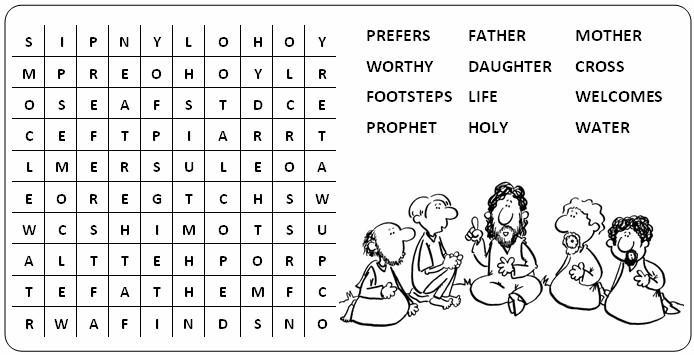
“Anyone who prefers father or mother to me is not worthy of me. Anyone who prefers son or daughter to me is not worthy of me. Anyone who does not take his cross and follow in my footsteps is not worthy of me. Anyone who finds his life will lose it; anyone who loseshis life for my sake will find it.
“Anyone who welcomes you welcomes me; and thosewhowelcomemewelcometheonewhosentme
that moment and Elisha chose to do it, which is what brought him to this point in his journey (as reported in today’s Holy Scripture). We often address the fact that each of us is called as well. Our calling, like Elisha’s and like those of Christ’s Apostles, is really not that much different.
Christ said, “Follow Me,” and the Apostles basically dropped everything, ceased pursuing what they were doing
“Anyone who welcomes a prophet because he is a prophet will have a prophet’s reward; and anyone who welcomes a holy man because he is a holy man will have a holy man’s reward.
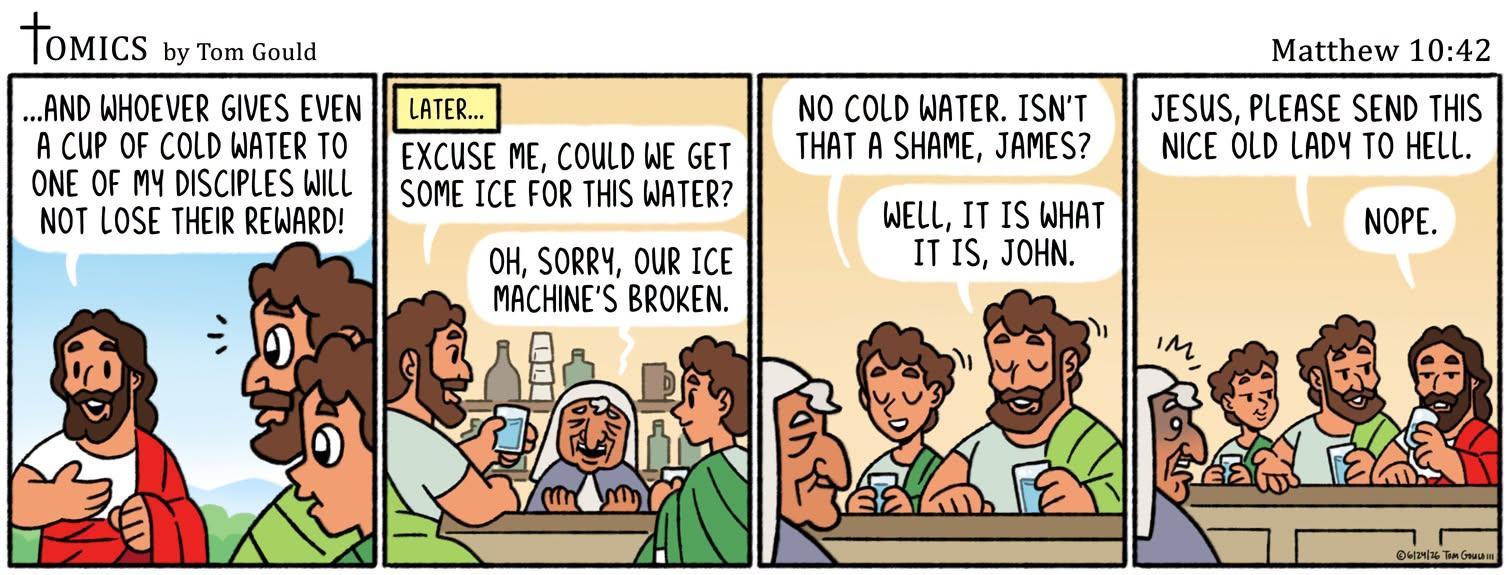
“If anyone gives so much as a cup of cold water to one of these little ones because he is a disciple, then I tell you solemnly, he will most certainly not lose his reward.”❖
in some cases with good jobs and vocations and followed Christ. We are called to follow the Lord from the moment of our Baptism, but how many of us actually take that calling seriously?
It is not just a question of hearing the call; the key is whether we are listening for it? It is there, but we must be aware of it in order to respond.
Elisha’s call and our calls are signs of God at work. God has a plan for each of
us. We are the means by which God’s work is continued in our parishes, in our communities, and in the Church. God’s ministry on earth will be carried out and accomplished. None of us is the entire ministry; we can all be replaced. However, by the same token in God’s eyes we are absolutely necessary. Are we ready to respond? Are we ready to be disciples of the Lord? ❖
[http://www.catholicsteward.com/blog/ ]
Gospel Reflection
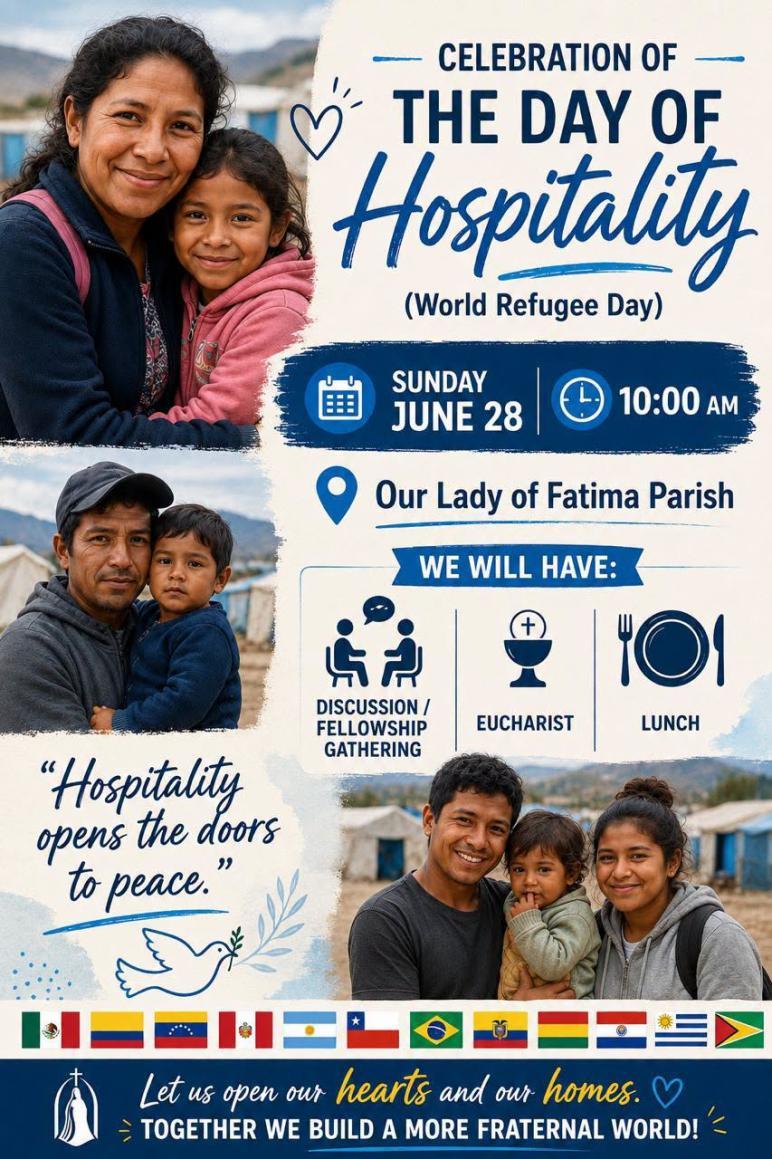
Jesus said if anyone gives so much as a cup of cold water to one of his disciples, he will not lose his reward. To give a cup of water is not a big thing. An act doesn’t have to be big in order to mean a lot. The spirit in which it is done, the person for whom it is done and the circumstances under which it is done, can make what at first may seem like a small deed very large. In the end it is not how much we do and how often we do it that matters but how much love we put into it. Hospitality to a friend is not big thing because there is no risk involved. There is also the likelihood that the favour will be returned. But hospitality to a stranger is a great thing. In the first place, you will gain nothing in return and there is a risk involved. Hospitality is all about an open heart.
Jesus’ words in the Gospel were originally addressed to the apostles. This does not mean that they apply only to those who succeed the apostles - the missionaries, priests and religious. They apply to each of the baptised. Jesus calls to each of us to make our personal contribution to the missionary activity of the Church. We have to do so by the example of our lives and by word and ministry. Our lives must affect those around us in a positive, life-giving way. It means we have to take our faith out of the church building and into the world out there. And it means being prepared to have our world turned upside down. It may mean confronting people on issues of everyday life. And it will never be easy. ❖
[From: Journeying with the Word of God, The Religious Education Department, Diocese of Georgetown, Guyana ]
society on ordination of bishops
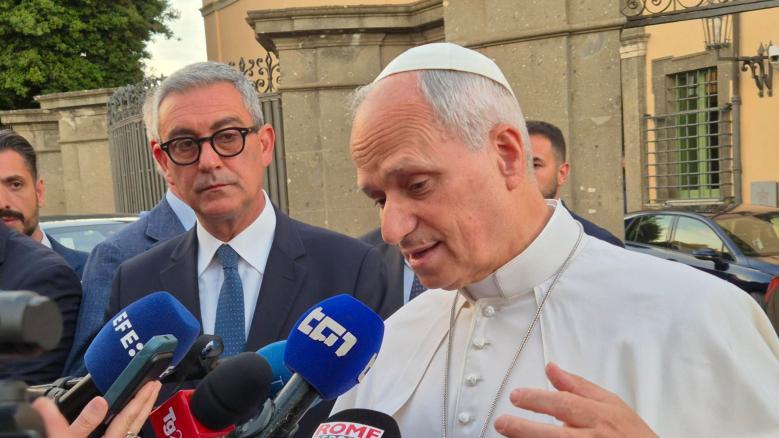
(CathNews) - Pope Leo XIV has cautioned that the planned ordination of Society of St Pius X bishops could push the group toward schism, urging them again to stop and remain in communion with the Church. Source: EWTN News.
“We have invited them, and I am still considering making another appeal, to say: ‘Do not do this. Let us try to live communion in the Church.’ But it is their choice. They must understand what it means for them and for the Church,” the Pope said, responding to journalists’ questions outside Villa
Barberini in Castel Gandolfo June 16.
The Society of St Pius X said it plans to consecrate four priests as bishops on July 1 without the permission of Pope Leo XIV.
The Vatican warned on May 13 that doing so without a papal mandate would constitute “a schismatic act” and carry the penalty of excommunication. The consecrations are set to take place at its seminary in Écône, Switzerland.
“Certainly, division among Christians is always a painful matter,” the Pope said.
“But they refuse to accept certain fundamental elements of the Church, beginning with various points of the Second Vatican Council. And if they make those choices, I am sorry. But we must move forward.”
The SSPX exclusively celebrates the Traditional Latin Mass and has rejected certain teachings and reforms of the Second Vatican Council, particularly regarding religious freedom and the Church’s approach to other faiths.❖
on defiance of Vatican II in open letter
(OSV News) The traditionalist Society of St. Pius X issued an open letter to Pope Leo XIV and the College of Cardinals asserting its adherence to Catholic tradition while proceeding with plans to consecrate four new bishops without a papal mandate.
In a statement that included a 28-page
“Profession of Faith” published June 24, the traditionalist society, commonly known as SSPX, said the Catholic Church is facing pressures from within and without that “which push her in every possible direction, except it seems to us the right one.”
“It is not for the Society of Saint Pius X to indicate the path to follow, but rather for the two-thousand-year Tradition of the Church, faithfully guarded and transmitted by the Apostolic See through the centuries, and which many


now regard, in practice, as an outdated reality, subject to perpetual development,” the society said.
The letter was signed by several leaders of the movement, including Father Davide Pagliarani, superior general of the SSPX, and Bishop Bernard Fellay, his predecessor and the society’s first counselor general.
Archbishop Lefebvre’s 1988 ordination of 4 bishops
Bishop Fellay was one of four bishops consecrated without a papal mandate by the society’s founder, Archbishop Marcel Lefebvre, in 1988. The ordination prompted St. John Paul II to excommunicate Archbishop Lefebvre (1905-1991) and the bishops. The excommunication of the bishops was lifted by Pope Benedict XVI in 2009.

In February, Father Davide Pagliarani, superior general of the SSPX, announced the society would proceed with the consecration of new bishops July 1, following a breakdown in communication with the Vatican after requests for an audience with Pope Leo went unanswered.
Cardinal Victor Manuel Fernández, prefect of the Dicastery for the Doctrine of the Faith, offered to continue dialogue with the SSPX on the condition that the society suspend its decision to consecrate new bishops.
After the SSPX chose not to accept, Cardinal Fernandez said the consecration of bishops without a papal mandate would be considered “a schismatic act” and would incur excommunication.
(please turn to page 10)
For 121 years, the Catholic Standard has been sharing the Gospel of Jesus Christ.
Now reaching 10,000+ followers on Catholic Media Guyana Facebook plus going straight to your inbox and WhatsApp, our vibrant weekly e-paper is a trusted source which delivers informative and inspiring stories from across the diocese and around the world.
Want to promote your business or event? Advertise with us! Call 675-4542 or email catholicstandardgy@gmail.com
Pope Leo XIV talks to reporters outside the papal villa of Castel Gandolfo June 16 (EWTN News/Hannah Brockhaus)
2027-28 synodal assemblies the Word of God
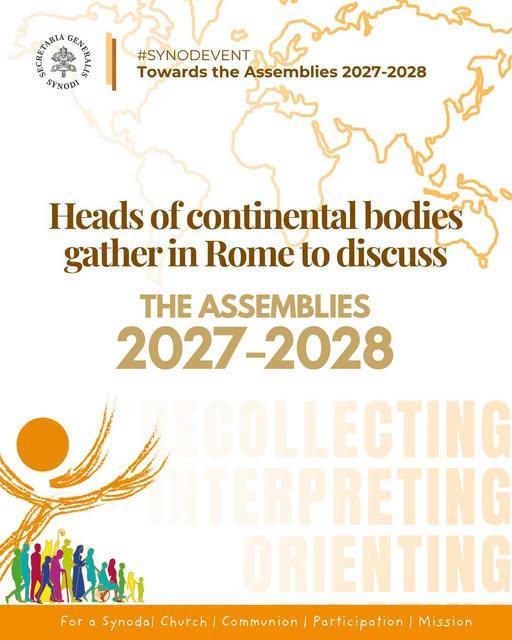
(CathNews New Zealand) - The heads of the Church's continental bodies gathered in Rome this week for three days of meetings dedicated to the next phase of the Synod on Synodality. Source: Vatican News
The gathering, from June 23-25, brought together representatives
Middle East and North America, accompanied by coordinators of the continental synodal teams.
The gathering comes as the Church continues the implementation phase of the Synod on Synodality following the conclusion of the XVI Ordinary General Assembly of the Synod in Octo-
Participants were meeting in light of the recent publication of Towards the Assemblies 2027 2028: Stages, criteria, and tools for Preparation, which is intended to guide the next stages of the synodal journey.
Before the gathering, the General Secretariat of the Synod said the three days of work would focus on listening to “ principal developments in the implementation of the Final Document of the XVI Ordinary General Assembly of the Synod of Bishops”, while fostering the exchange of experiences from different regions of the world and identifying “common dynamics and issues requiring further shared reflection”.
Part of the programme was dedicated to accompanying local churches and regional groupings of churches as they continue to implement the synodal process. Particular attention was to be given to the role of communication in supporting that work.
The final day of discussions focused on the continental assemblies, described as “one stage in the broader journey of ecclesial assemblies that will culminate in the assembly of October 2028”.
Participants reflected on questions surrounding participation and representation, expected outcomes and the role of the General Secretariat in accompanying the process.
Pope Leo XIV was scheduled to meet the participants at the headquarters of the General Secretariat of the Synod on June
MAKING THE WORD OF GOD YOUR OWN
Step 1: Lookattoday’sReadingsprayerfully.
1st Reading: A childless woman offers hospitality to Elisha, a man of God. God rewarded her with a child.
2nd Reading: Paul explains the meaning of baptism. Through baptism we are united with the death and resurrection of Christ.
Gospel: The Gospel passage stresses the sacrifices involved in being missionaries of Jesus and also the greatness of even the smallest act of hospitality offered to those missionaries.
Step 2: ApplyingthevaluesoftheReadings toyourdailylife.
1.In the Gospel we read of Jesus instructing the apostles for their missionary life. In what way is Jesus instructing us also?
2.Jesus says, “Anyone who finds his life will lose it; anyone who loses his life for my sake will find it.” What do you understand by these words?
3.Today’s Gospel tells us that there was a great cost to discipleship in the early days of Christianity. Do you think these “costs” still exist today?
4.It is said that hospitality is not so much about open doors as it is about open hearts. In what wayisthisstatementcorrect?
Step 3: Accepting the message of God’s Wordinyourlifeoffaith.
Christian life does not mean some effort and a few occasional good deeds or a season of repentance, prayer and activity. And it certainly is not limited to being in church on Sunday. It means regulating all our thoughts, words and actions according to the laws of God.
Step 4: Somethingtothink&prayabout
1.“Dying to self” means changing your present life style, attitudes, actions, relationships, etc. in order to develop a “new self”. Reflect on the changes you will have to make in your life in order to give meaning to the words “dying to self”.
2.As a Christian the things I do to help and comfort others need not be big. They must, however, come from the heart. Actions that come from the heart are actions that lie at the heart of the Gospel. It is good to consider why you do things to help others, to see if your motive lies in wanting to personally feel good or to genuinely help others. ❖
[From: Journeying with the Word of God, The Religious Education Department, Diocese of Georgetown, Guyana ]
Francis and members of the Synod of Bishops on synodality offer
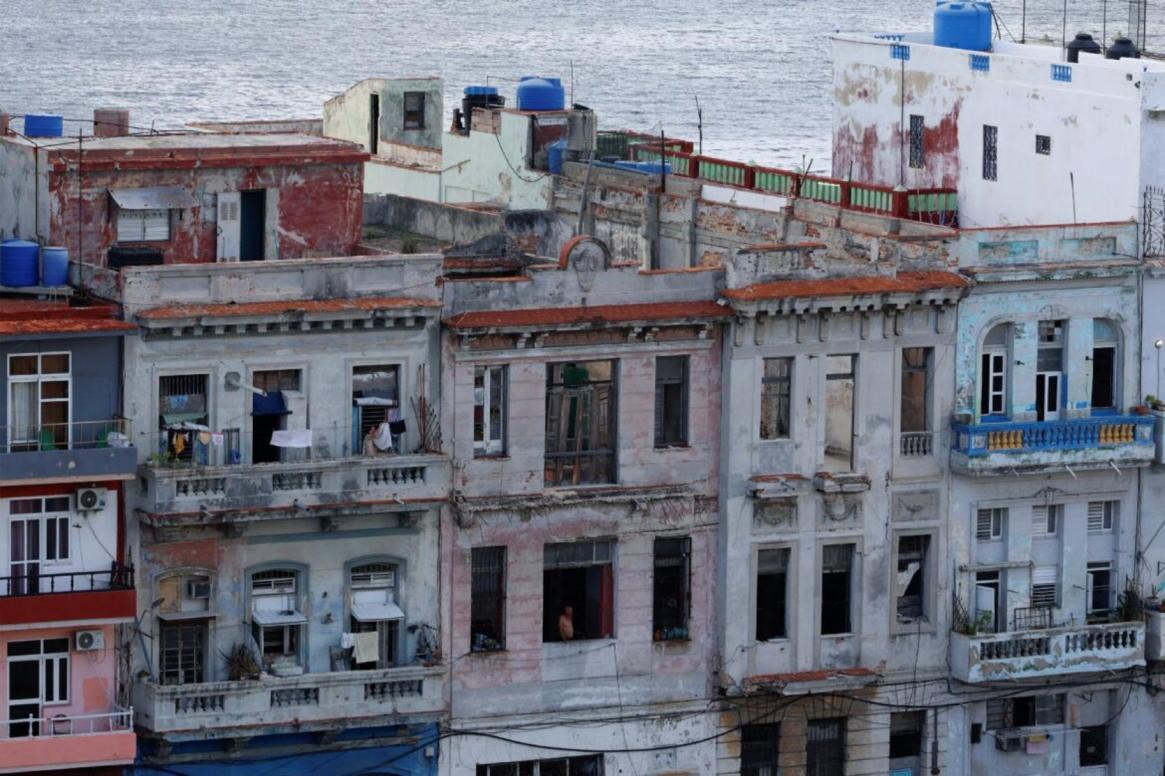
SAN SALVADOR, El Salvador (OSV News) A group of religious sisters in Havana have told priests in Cuba in that the lack of electricity has made it difficult for them to continue their ministry, leaving some to wonder how long a remaining reserve will last if the U.S. keeps blocking fuel from reaching the island.
“The remaining supply will be rationed so that there is enough for everyone,” the Discalced Carmelites in Havana wrote to priests in a message made available to Global Sisters Report June 3. Using a machine that uses electricity, the contemplative sisters produce hosts, unleavened bread consecrated by priests at Mass, for all the parishes on the island.
Fuel is one of many essentials the U.S. is stopping from entering Cuba as it seeks to bring the government to its knees and create regime change, even as ordinary Cubans, which also includes nuns and religious life serving missions there, suffer the consequences.
“Daily life for Cubans has become a challenge, and as religious sisters we enter into that dynamic of the struggle for food and the shortage of what is necessary to carry out our mission,” Sister Noemy Ayala, a Carmelite Sister of St. Joseph, based in Havana, told Global Sisters Report June1.
Some religious communities have left
Religious communities that have been unable to secure basics to continue their mission work have left altogether, said Bishop Arturo González Amador, head of the Cuban bishops’ conference, in a May 20 interview with Aid to the Church in Need. He didn’t
say how manyhave left.
The scarcity of food, water, fuel and medicine along with the threat of war has brought Cuba to its “saddest moment,” he said.
“Cuba is suffering,” said Bishop González, describing an island where the only people who stay are those unable to leave and where some pass out during Mass because of hunger. It’s a situation so dire that a person who needs medical attention, including surgery, has to procure his or her own materials pain medicine, suture thread and needle before heading to the hospital, he said.
While Cubans have suffered material limitations for decades due to U.S. sanctions and economic mismanagement, the ouster in January of Venezuela’s Nicolás Maduro whose government had long supplied the island with subsidized oil and other necessities sent the island into unprecedented distress this year. Some say the current crisis is much worse than Cuba’s “special period,” an economic crisis in the 1990s produced by the collapse of the Soviet Union, which yielded widespread hunger and deathon the island.
Even China and Russia, which have strategic interests in the island because of its proximity to the U.S., have been unableto help.
Russia tanker changed course
The New York Times reported May 28 that a Russian tanker that appeared headed for Cuba changed course, crushing the hopes of humanitarian groups that had been waiting for fuel so they could distribute food around the island.
precarious, the future entirely uncertain.”
Late last year, Alena Douhan, special rapporteur of the United Nations Human Rights Council, called on the United States to lift sanctions against Cuba, saying continuing the policy would havea highhumanitarian cost. The crisis has hit the poor, the elderly who live alone, retirees and single mothers, the hardest, Bishop González said. And it’s also affected the life of churchgoers.
The Easter Vigil, for example, had to be moved to the daytime, not only because of the lack of electricity, but also because of worries of burglaries and muggings of churchgoers on the way home, Bishop González said in the interview.
Cubans fear being hungry, weak and helpless
Ordinary Cubans fear finding themselves hungry, weak and helpless in the middle of a violent conflict that could erupt at any moment between the U.S. and the regime that’s controlled the island since1959.
Cuba is a communist country. Its constitution guarantees religious liberty, although its leaders do restrict some religious practices. About 60% of the country’s 11 million people are Catholic.
Sister Noemy, whose community of three sisters serves children and the elderly, said that while they can offer love, hope and a little bit of food, they can’t do it if children can’t make it into their daycare center because there is no transportation or water. Electricity, which the sisters use to pump potable water, randomly comes and goes.
“We have to live with the uncertainty that the power could go out at any moment … and when it does, we have no water because the pump cannot get started,” she said. “For a religious sister, living in Cuba today means navigating and taking on a series of structural and economic challenges that require an enormous capacity for adaptation and resilience. These challenges are not only material but also take up a large part of people’s mental load and time.
”
Need transportation, connections to get necessities
Before a person on the island can secure food, they first have to find transportation but also connections to obtain necessities, she said. And not everyonehasaccessto that.
“There are people who come in saying they haven’t eaten in days and don’t know who to turn to. Food cannot be preserved due to the lack of electricity, and recently there have been frequent fainting spells during (church) services because many people haven’t eaten,” Bishop González told ACN. “Everything is a struggle for survival. The present is
“Fear reigns,” Bishop González said. “The fear of war is tremendous; it is part of the daily concerns of many people there is constant talk about it, which causes distress, especially among children and the elderly. On the street, you hear: ‘We can’t take any more of this pain, and we have no one to turn to.'”
The U.S. recently charged former Cuban president Raúl Castro with murder and other crimes over the 1996 downing of two planes between Cuba and Florida, and members of the U.S. military reportedly met with Cuban counterparts in late May, sparking speculation ofan invasion.
Many Catholic church organizations, including religious congregations, have told Cubans they will stay no matter what happens. Even as resources dwindle, religious communities that run soup kitchens, for example, have been finding creative ways to feed the hungry as the need increases, Bishop González said.
An increasingly aging country
“What remains is an increasingly aging country, left with only the elderly, without resources and with minimal pensions,” he added. “The church’s task is to keep the spirit alive, to give hope where there is none, to listen and to accompany.”
For women religious like Sister Noemy, that task involves taking the day moment by moment, relying on prayersand faith.
“This is what our days are like, filled with people’s anguish and despair, and this is where our mission becomes a constant act of listening and a shared anguish,” she said. “But above all, the most important thing is that we feel the power of the prayers of many people both on and off the island who accompany us in prayer.”❖
People stand on their balconies in Havana during a blackout June 17, 2026. (OSV News photo/Norlys Perez, Reuters)
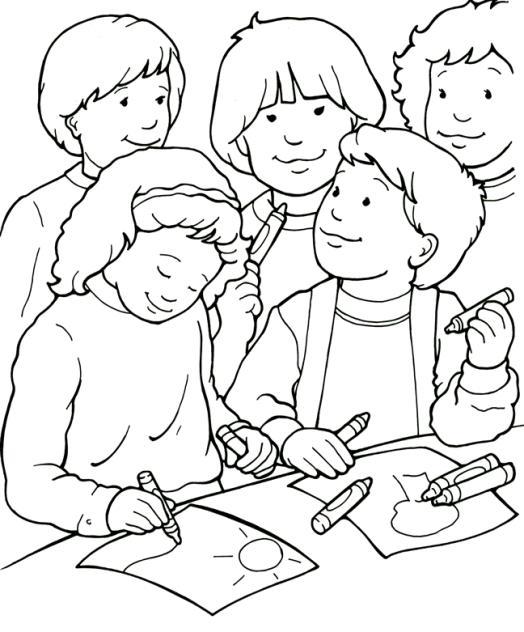
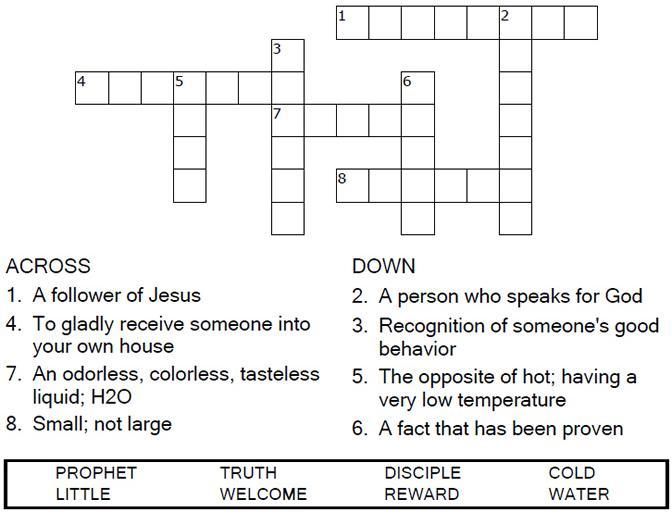
Dear Girls and Boys,
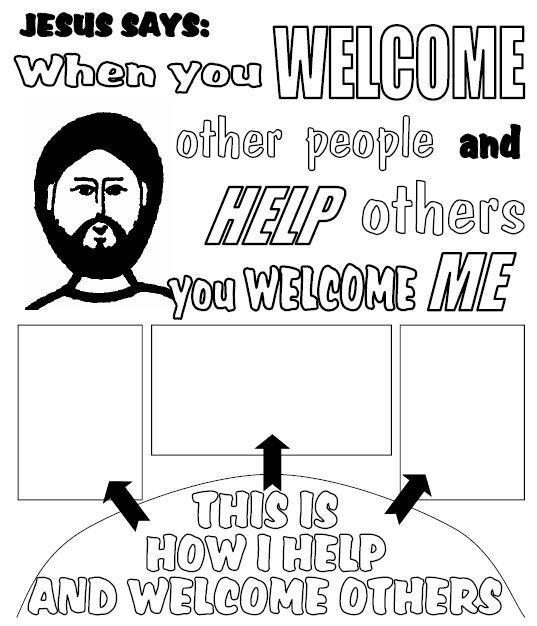
Welcome what does the word "welcome" mean? It means to receive someone in a warm and friendly way. Are people always welcome in our homes?
Do we welcome people into our homes if they are a different race than us? Do we welcome people into our homes if they don't have as much money as we do?
How about in our church? Do you think that we make everyone feel welcome in our church? Do we speak to those people who are visiting our church that we do not know? If someone comes to our church and they are not dressed the way we are dressed, do we make sure that they are made to feel welcome?
Jesus said, "Anyone who welcomes you welcomes me." If we turn that around, we will understand that if we do not welcome others into our homes and into our churches, it is the same as if we are refusing to welcome Jesus. We wouldn't do that, would we?
Well, let's put the welcome mat out and let's be sure that we mean it!
Dear Father, help us to remember that when we refuse to welcome others to our homes and to our church, it is the same as refusing to welcome you. In Jesus' name we pray. Amen. ❖
Traditionalist society doubles down
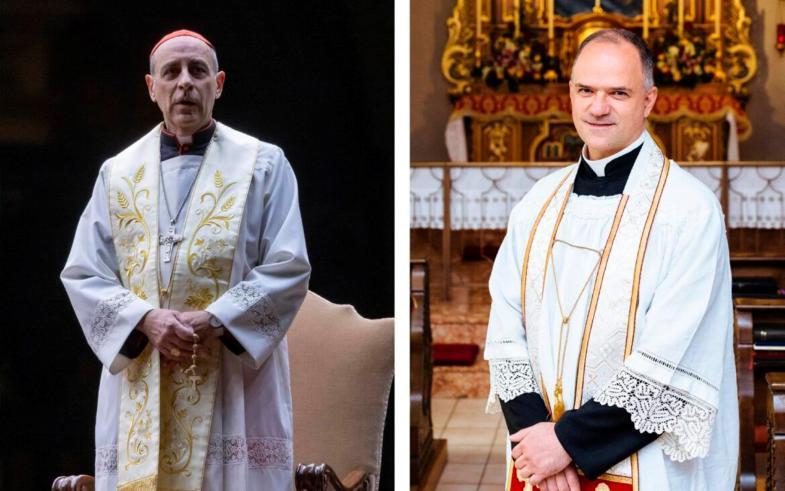
Cardinal Víctor Manuel Fernández, prefect of the Dicastery for the Doctrine of the Faith, and Father Davide Pagliarani, superior general of the traditionalist Society of St. Pius X, are pictured in a combination photo. (OSV News photo/Pablo Esparza, CNS/Jean-Matthieu Gautier, KNA via CPP)
Speaking to journalists outside the papal summer residence at Castel Gandolfo June 16, Pope Leo said that while he considered making a final appeal to them to maintain communion with the Church, the decision to proceed “is their choice.”
‘We must move forward’
“Certainly, division among Christians is always a painful point. But they refuse to accept certain fundamental elements of the Church, starting with several points from the Second Vatican Council,” the pope said. “If they make that choice, I am sorry, but we must move forward.”
The SSPX said it believed that faith, “contained in Tradition and taught by the constant Magisterium,” is the foundation of unity in the Church and the means of “establishing union and communion among the members of the Mystical Body of Christ.”
“We are persuaded that, in the unstable and extremely perilous context that now confronts us, the finest contribution one can offer to the universal
Church is that of a sincere and integral profession of Catholic Faith,” the society said.
Nevertheless, the traditionalist society expressed its hope that the “Profession of Faith” would one day serve “as a basis for an honest discussion with the Holy See, in a spirit of peace, brotherhood, and charity.”
In the 28-page declaration, the society said it embraced “the entire truth of the Catholic Faith,” while denouncing so-called “errors” that obscured doctrine, disfigured liturgy and disintegrated “Christian social order, gravely harming the salvation of souls.”
Ecumenism cited as ‘modern’ error
Among the “modern errors” the society noted was ecumenism, which it said was predicated on the “idea that the Holy Ghost would not refuse to use separated communities as means of salvation.”
The SSPX also rejected “the idea that non-Christian religions might reflect a
ray of truth which illumines every man, or might be legitimate paths by which God positively leads men to salvation.”
According to the Second Vatican Council’s Decree on Ecumenism, “Unitatis Redintegratio” (“The restoration of unity”), while the means of salvation rest upon the Catholic Church, separated churches and communities are not “deprived of significance and importance in the mystery of salvation.”
Furthermore, the Vatican II Declaration on the Relationship of the Church to Non-Christian Religions, “Nostra Aetate” (“In Our Time”), states the Catholic Church does not reject what is true and holy in non-Christian religions, which often “reflect a ray of that Truth which enlightens all men.”
In its “Profession of Faith,” the traditionalist society also rejected postconciliar liturgical fullreforms, which it believed departed “considerably from the traditional liturgy,” and “brought Catholic liturgical expression closer to Protestant conceptions.”
A slight against synodality
Making a slight against synodality, which Pope Leo XIV has said was “intrinsic to the life of the Church,” the SSPX said it rejected “synodalist conceptions” that would transform the Catholic Church “into a consultative, parliamentary, or democratic structure” and subject to fluctuating opinion or outside pressure.
The society also rejected the concept of religious freedom, which, according to the Vatican II declaration “Dignitatis Humanae” (“Of the Dignity of the Human Person”), is regarded as a fundamental right.
Instead, the SSPX argued that heads of state have a “right and duty” to favor the Catholic Church and oppose other religions and “false forms of worship.”❖
By Renika Anand
Redemption Lies in Remembrance
Richard von Weizsäcker, a past German president once said “Seeking to forget makes exile all the longer; the secret of redemption lies in remembrance.”
To err is human nature. Something even more human than the act of committing an error, is the feeling of guilt and the need for redemption that follows. As we maneuver through the consequences of the mistakes we make, it is easy to forget that we are not meant to be perfect. We are imperfect creatures who spend our lives seeking moments and memories when we feel closest to the state of perfection. So, even in the moments when we seem to be in the darkest places, or in the moments when we seem to have made irredeemable choices, there is still a way for us to feel whole again. We are like flowing water. We may meet obstacles in our paths, or even find ourselves becoming stagnant for a small moment. Yet, we will always move forward to a new destination, as long as we have hope in redemption.
I have swept away your offenses like a cloud, your sins like the morning mist. Return to me, for I have redeemed you.
- Isaiah 44:22 ❖


Creating a Culture of Vocation in Guyana
Fr. Joel Thompson SJ
If we want more vocations in Guyana, we must create a culture where young people understand and live their faith, hear God’s call, discover their gifts, and are encouraged to answer with courage.
On June 24th, I celebrated my fourth anniversary of priestly ordination and my fifteenth year as a Jesuit. Anniversaries invite gratitude and as I thank God for my own vocation, I also thank my family, the Church, my teachers, communities, and the wider culture thathelped form me.
Ordinations are joyful occasions in our diocese, but they are also very rare. That is why we need to speak more openly about vocation and ask how we can create a culture where young people feel free to listen to God’s call and live their faith.
The Call Leaves a Mark I first learnt the word “vocation” from Church, but from my mother. She often said that being an educator was her vocation. For her, and for many teachers like her, teaching was not about making millions. It was about service. We all know teachers who live simply, work quietly, and go beyond what is required to educate the next generation, often using their own time and resources.
My mother used to tell my brother and me that you could identify female teachers in public places, like bank lines, by looking at their shoe heels, often worn down from pacing up and down in classrooms. That image stayed with me and reminded me that vocation leaves marks on us.
This means EVERY person has some God-given gift or talent. I often tell young people this. Sometimes we discover our gifts through exposure, encouragement, challenges, and success. Imagine if Lionel Messi had never been exposed to football, or Mozart had never touched a piano. The world would have been robbed of extraordinary gifts.
Love is the driving force behind vocation. A vocation is not simply doing what you like. It is doing what you love, in service of others, for the
therefore, ask the Lord of the harvest to send out labourers into his harvest” (Matthew 9:37–38). I find this verse consoling because it shows that Jesus experienced what we experience today. There is plenty good work to be done like proclaiming the Gospel, caring for the poor, visiting the sick, teaching the young, and responding to those who fall through the cracks. Yet the labourers are few.
In the Jesuit order, no Guyanese has entered after me in these fifteen years.
A word also to parents. If your child expresses interest in a vocation you did not imagine for them, do not simply shut it down. Some parents say they want priests, sisters, teachers, nurses, and servants of the poor, but when their own child shows interest, they say, “No, not you. Not my precious child.” Well then, who? Make it make sense!
Yes, parents have dreams for their children. But God may also have dreams for them. A healthy Catholic spirituality mustleaveroomforGod’scall.
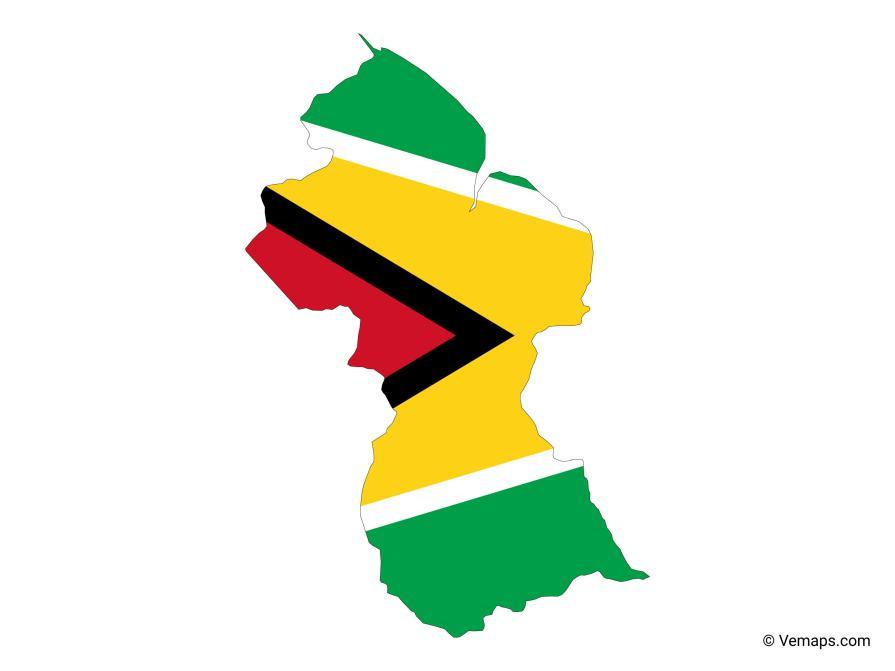
The word “vocation” comes from the Latin vocare, meaning “to call.” The Catechism teaches that God calls every person to seek Him, know Him, and love Him with all their strength (CCC 1). St Paul also reminds us that “there are varieties of gifts, but the same Spirit” and that these gifts are given “for the common good” (1 Corinthians 12:4–7).

every sacrament of Reconciliation, and every word or action is done to remind people thatGod loves them.
Building a Culture of Vocation
If we want more vocations in our Church and society, we must build a culture of vocation. For me, this means four things: prayer, encouragement, engagement, and example. First, prayer. Jesus says, “The harvest is plentiful, but the labourers are few;
people encouraged me. Sometimes our culture zooms in on the negative and magnifies mistakes. That makes people afraid to try.
We see this even in Church. Many people are afraid to read at Mass because they fear that if they mispronounce one word, people will talk about it all week. Yes, give feedback. But do not crush people. “Encourage one anotherdaily”. (Hebrews 3:13).
Third, engagement. I speak often with young people, and I am surprised how many say no one has ever asked them seriously what their gifts are, what they love, or what they feel called to do. Too many leave school with no deeper sense of purpose beyond “Ah want mek money” or “get plenty subjects.” There is nothing wrong with working hard and wanting a good life. But life is more than earning.
We need to ask young people: What brings you joy? What are you good at? What problems in the world move your heart? How might God be calling you to serve?
Finally, example. Young people need to see adults who live their vocation and faith with joy, not bitterness and criticism. It is better to light a candle than curse the darkness. Don’t become a person who critiques everything but offers no solutions. If every teacher, nurse, parent, priest, religious, farmer, public servant, and businessperson lived their work as service, our Church and society would be transformed.
I am grateful for my vocation and for the culture that created it. May we all continue to discern our vocation, encourage one another, and ask God to sustain us in the work He has called us to do. To anyone discerning their vocation and reading this, if today you hear God’s voice, “do not harden your hearts” (Psalm 95:8).❖
at Kurukabaru
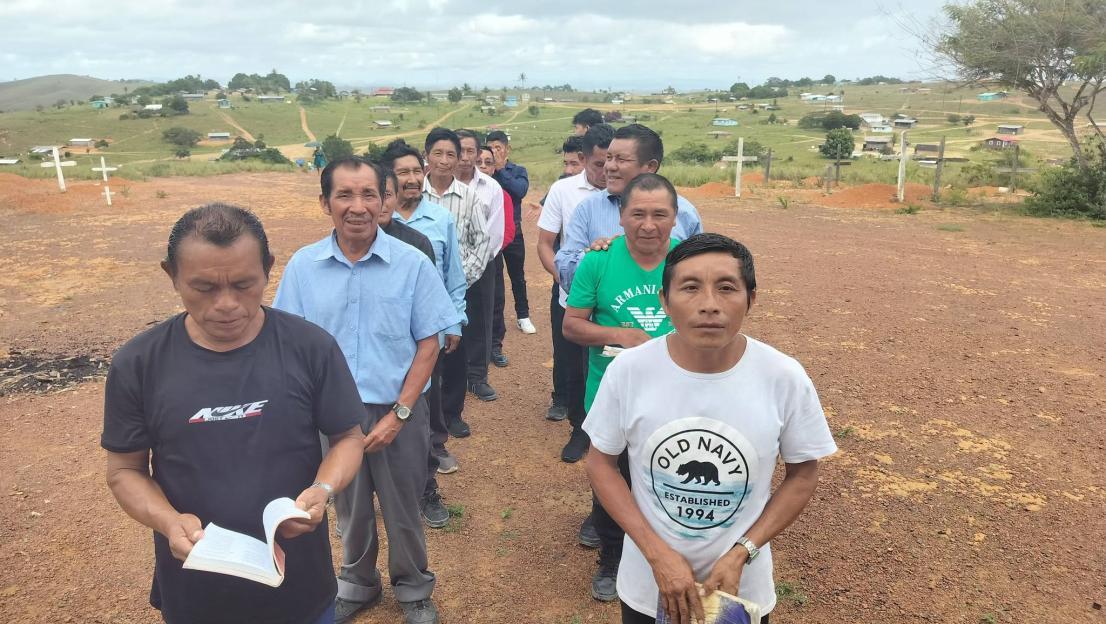
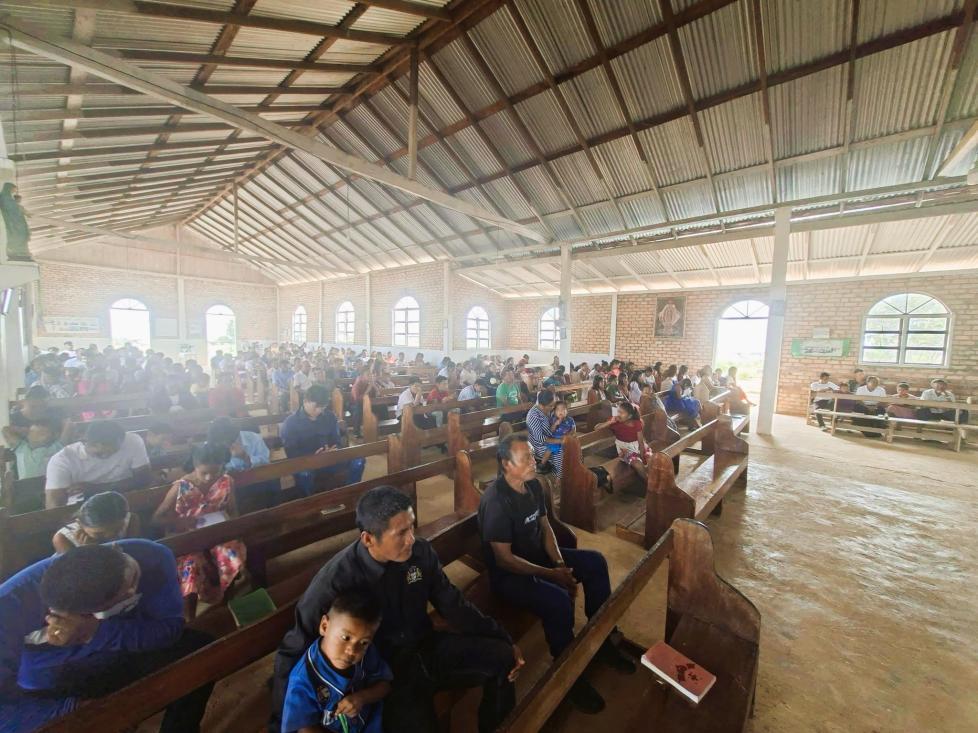
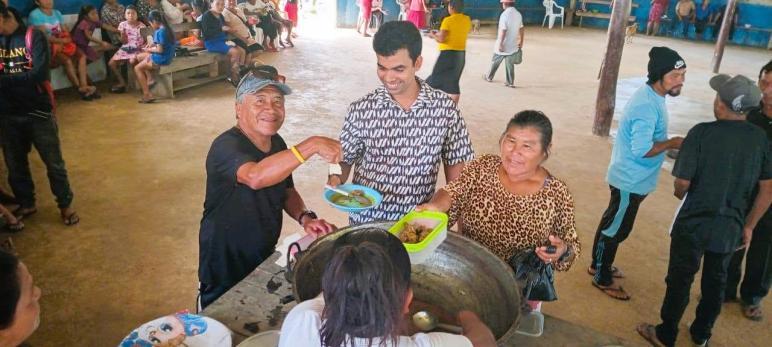
Last Sunday June 21st, St Joseph’s Church, Kurukabaru, North Pakaraimas, Region 8, Essequibo, Guyana, celebrated Father’s Day in a wonderful
This was followed by lunch in the benab, and a game. May God continue to bless them all. ❖

June 29th
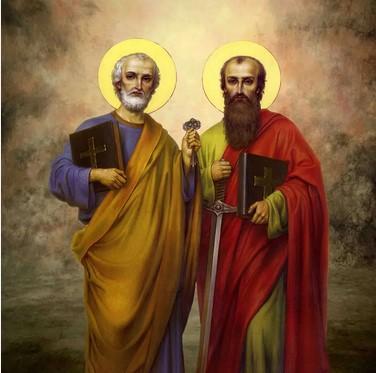
Saints Peter & Paul (d. 64 & 67)
On June 29th the Church celebrates the feast day of Saints Peter & Paul. As early as the year 258, there is evidence of an already lengthy tradition of celebrating the solemnities of both Saint Peter and Saint Paul on the same day. Together, the two saints are the founders of the See of Rome, through their preaching, ministry and martyrdom there.
Saint Peter was the first to recognize that Jesus was “the Messiah, the Son of the living God,” The Acts of the Apostles illustrates his role as head of the Church after the Resurrection and Ascension of Christ. Peter led the Apostles as the first Pope and ensured that the disciples kept the true faith.
Saint Paul was the Apostle of the Gentiles. His letters are included in the writings of the New Testament, and through them we learn much about his life and the faith of the early Church.
Historical accounts cite Saint Peter being martyred in 64 AD and Saint Paul in 67 AD.❖ [franciscanmedia.org]
Fatima
Sacred Heart
Plaisance
Holy Rosary
Holy Spirit
Kurukabaru