
Caribbean bishops issue pastoral letter on sexual
TheBishopsoftheAntillesEpiscopalConference (AEC) have issued a comprehensive pastoral letter on sexual and gender identity, calling on Catholics throughout the Caribbean to respond to contemporary questions about sexuality and gender with what they describe as “truth, dignity, compassion and hope.”
Published on July 26, the Feast of Saints Anne and Joachim, the 23-page document is addressed particularly to parents, educators, catechists and policymakers, whom the bishops say have a critical role in shaping future generations.
The full text of the pastoral letter is available at: https://aecbishops.org/pastoral-letteron-sexual-and-gender-identity/ Writing as bishops of the English, French and Dutch-speaking Caribbean, they say they are responding to “a sense of deep pastoral responsibility and moral urgency” amid rapid cultural changes.
“The Caribbean has long been a crucible of resilience and creativity. Yet, today, we stand at a crossroads,” the bishops write. “In a
US Bishops call for an end to racial bias in
Saturday, August 1st
8:00hrs – Youth Convention
Sunday, August 9th
8:00hrs – Mass at Sacred Heart 10:00hrs –Youth Convention
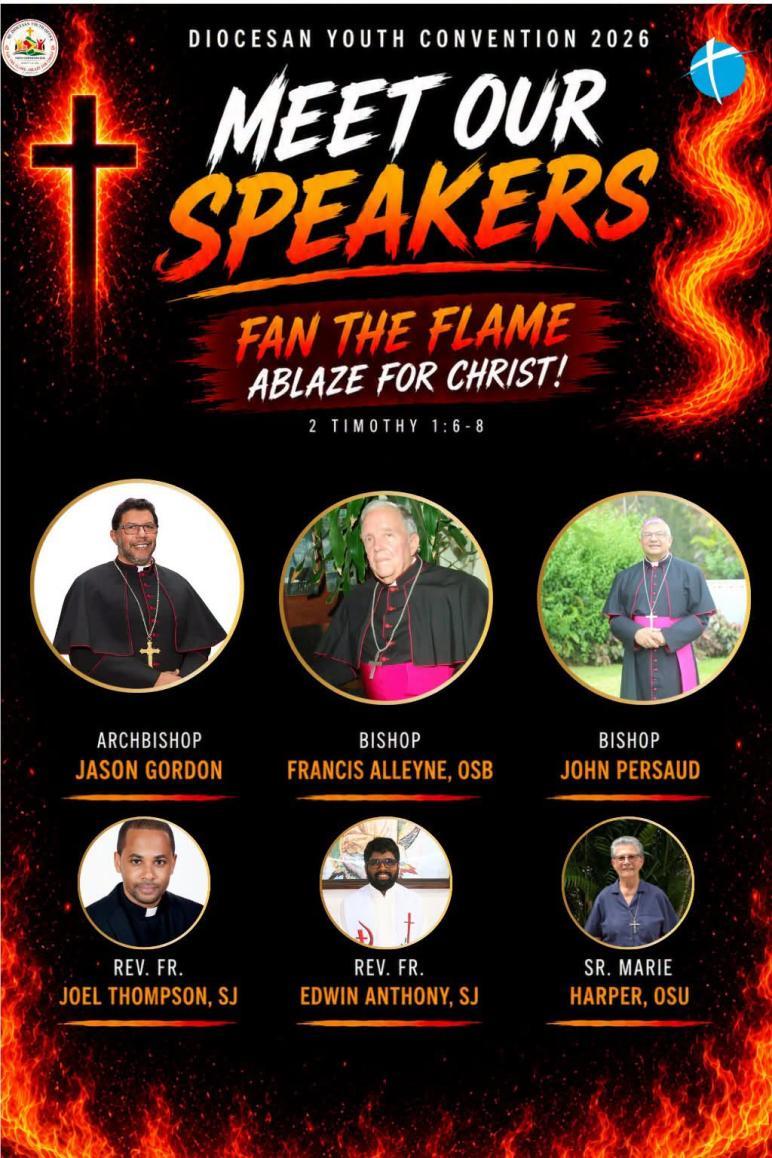
Francis Alleyne OSB
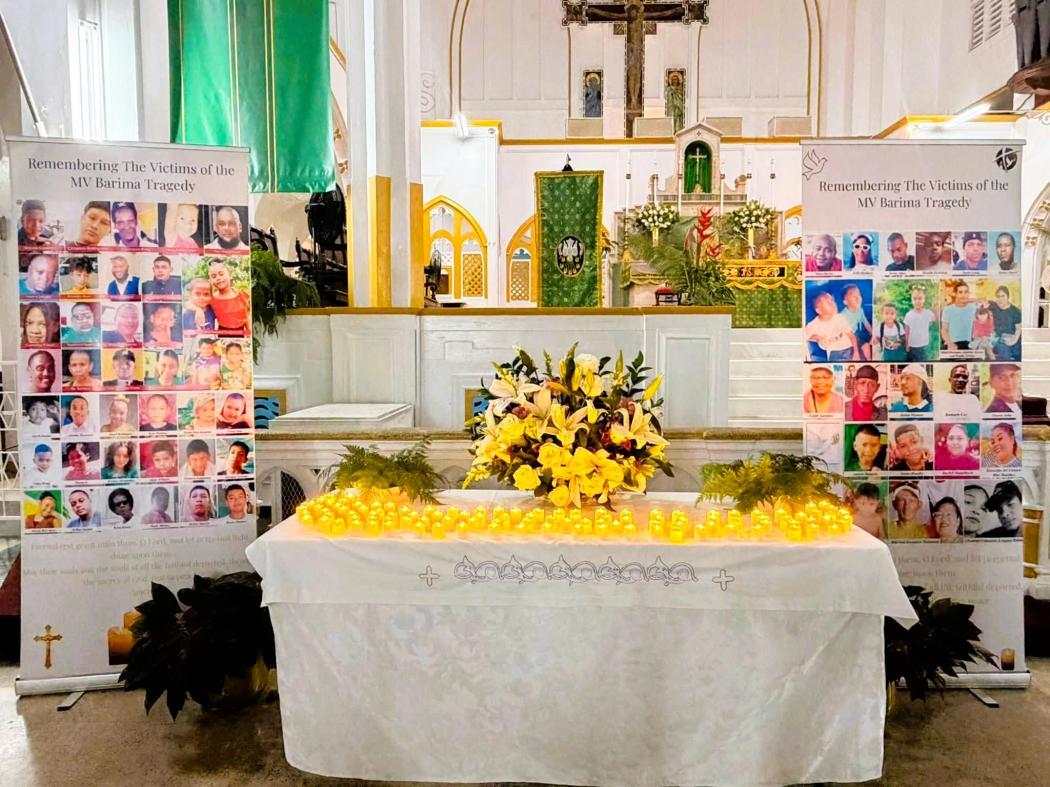
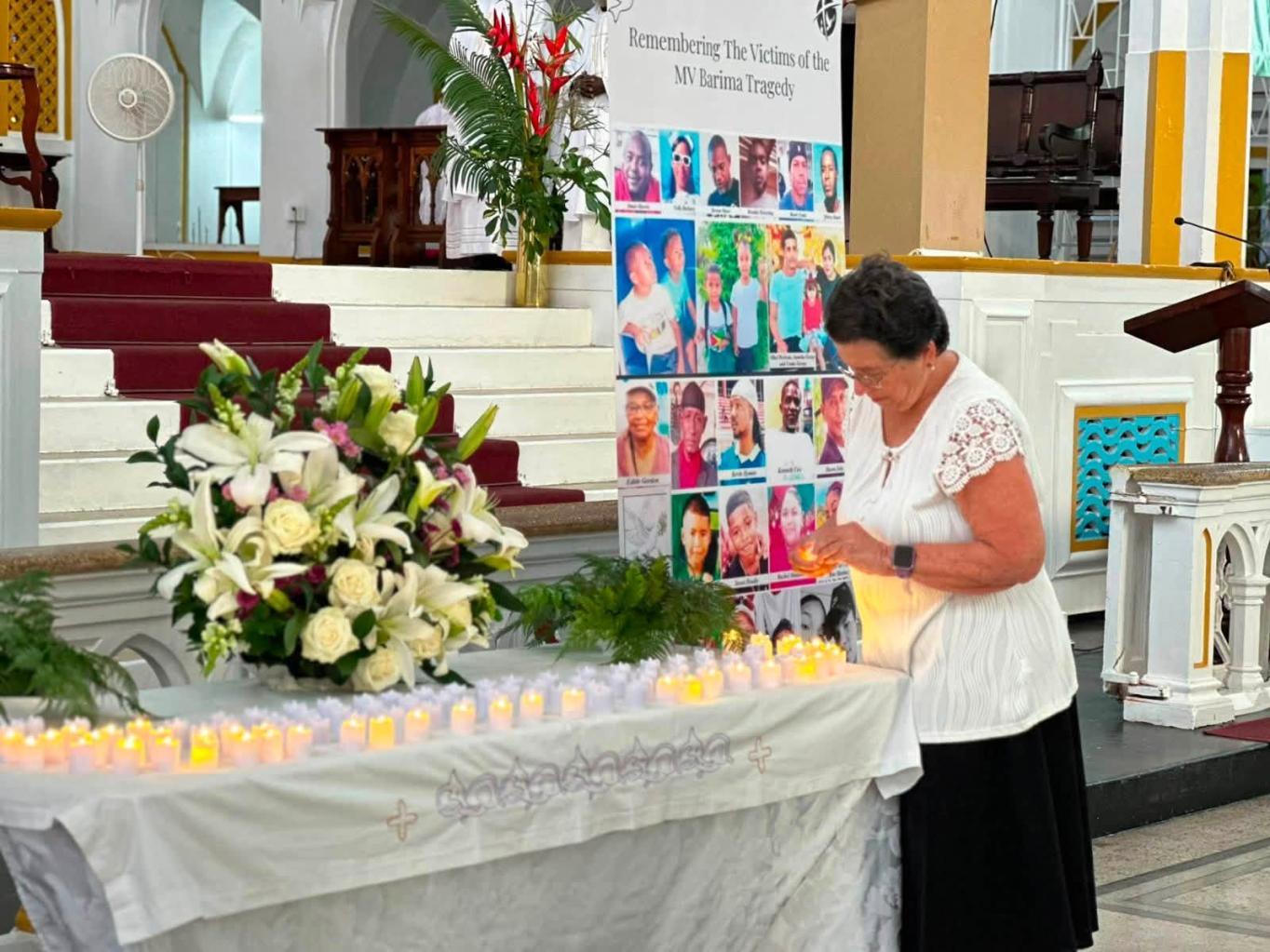
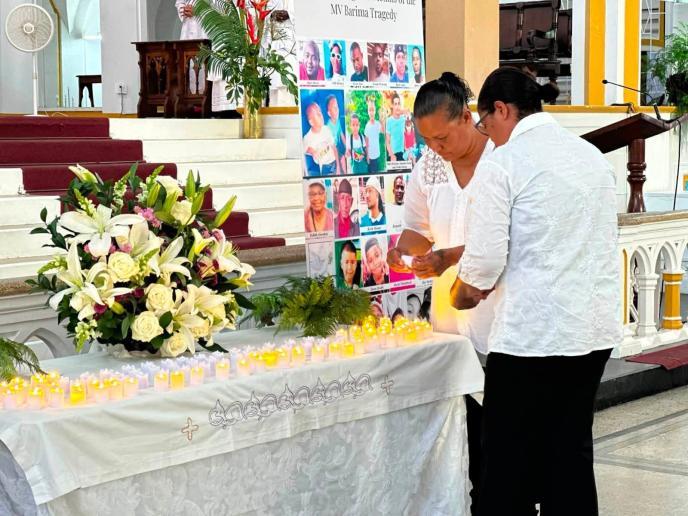
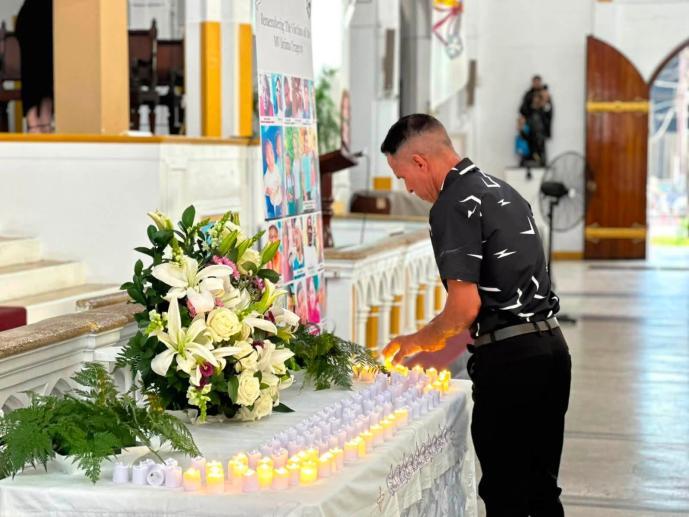
A memorial to the victims of the MV Barima tragedy is seen during the Mass of Consolation and Prayer held at Brickdam Cathedral on Wednesday, July 29th. The illuminated candles represent each of the 73 people known to have perished, as well as the approximately 30 persons who remain missing.❖ (Please see article on page 14)
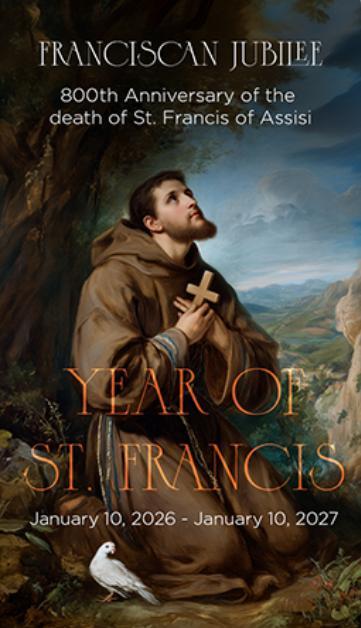
Year of St. Francis Jubilee Prayer
Saint Francis, our brother, you who eight hundred years ago went to meet Sister Death as a man at peace, intercede for us before the Lord.
You recognized true peace in the Crucifix of San Damiano, teach us to seek in Him the source of all reconciliation that breaks down every wall.
You who, unarmed, crossed the lines of war and misunderstanding, give us the courage to build bridges where the world raises up boundaries.
In this time afflicted by conflict and division, intercede for us so that we may become peacemakers: unarmed and disarming witnesses of the peace that comes from Christ.
Amen - Pope Leo XIV
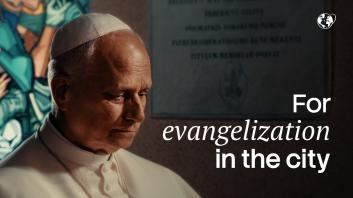
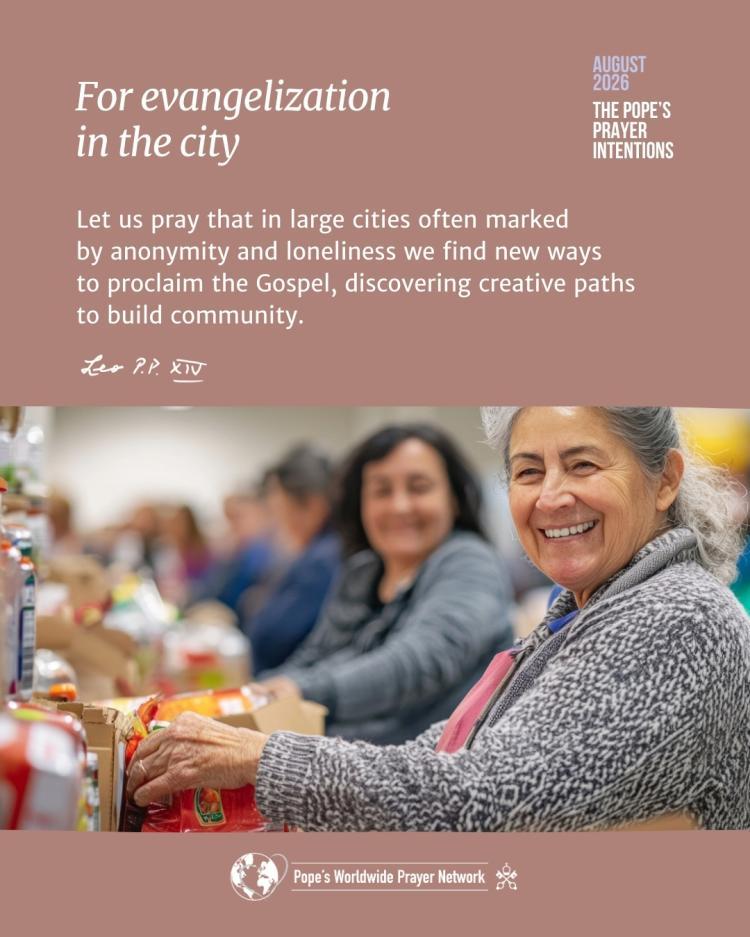
(Vatican News) - Pope Leo XIV has urged Catholics across the globe to join him this August in praying for evangelizationinthecity.
He released the monthly “Pray with the Pope” video on Friday July 31, which is prepared by the Pope’s WorldwidePrayerNetwork.
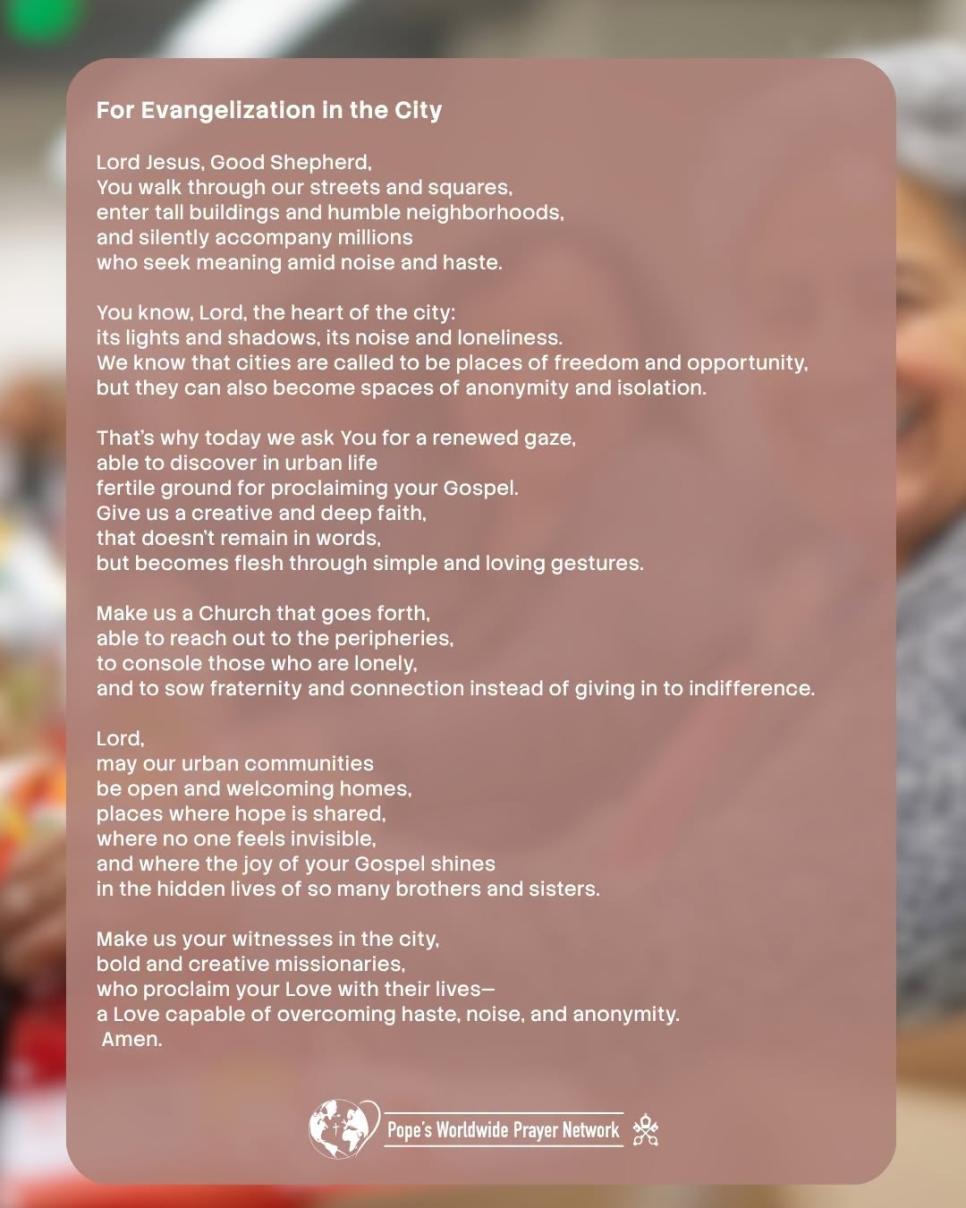
In his prayer, Pope Leo asks the “Good Shepherd” who “walks through our streets and squares,” to “enter tall buildings and humble neighborhoods,” and to “silently accompany millions” of people who “seek meaning amid noise and haste.”
The Chicago-born Pope acknowledges that while cities are meant to be places of “freedom and opportunity,” they can also become “spaces of anonymity and isolation.”
Thus, he expressed his hope that urban environments may provide “fertile ground" for proclaiming the Gospel.
The Holy Father also prayed that the faithful make “simple and loving gestures,” and do so together as a community that “ forth,” and combats indifference and isolation with presence and fraternity.
Today, almost 45% of the world population lives in urban areas. Demographic growth has led to a high concentration of people, generating social and community challenges, including loneliness that affects the mental health of many people,especiallyyoungpeople.
The Pope’s Worldwide Prayer Network
Founded in 1844 as the Apostleship of Prayer, the Pope’s Worldwide Prayer Network is a Pontifical Work entrustedtotheSociety ofJesus.
In December 2020, Pope Francis established this Pontifical Work as a Vatican Foundation and approved itsfinalstatutesinJuly2024.
It is present in over 92 countries, forming a spiritual community of more than 22 million people who seek to live each day with availabilitytoGod’smission.
At the center of its mission are the monthly prayer intentions of the Pope, inviting its members to focus on the pressing challenges facing humanity and the Church’s mission.
its source, music leads us to God
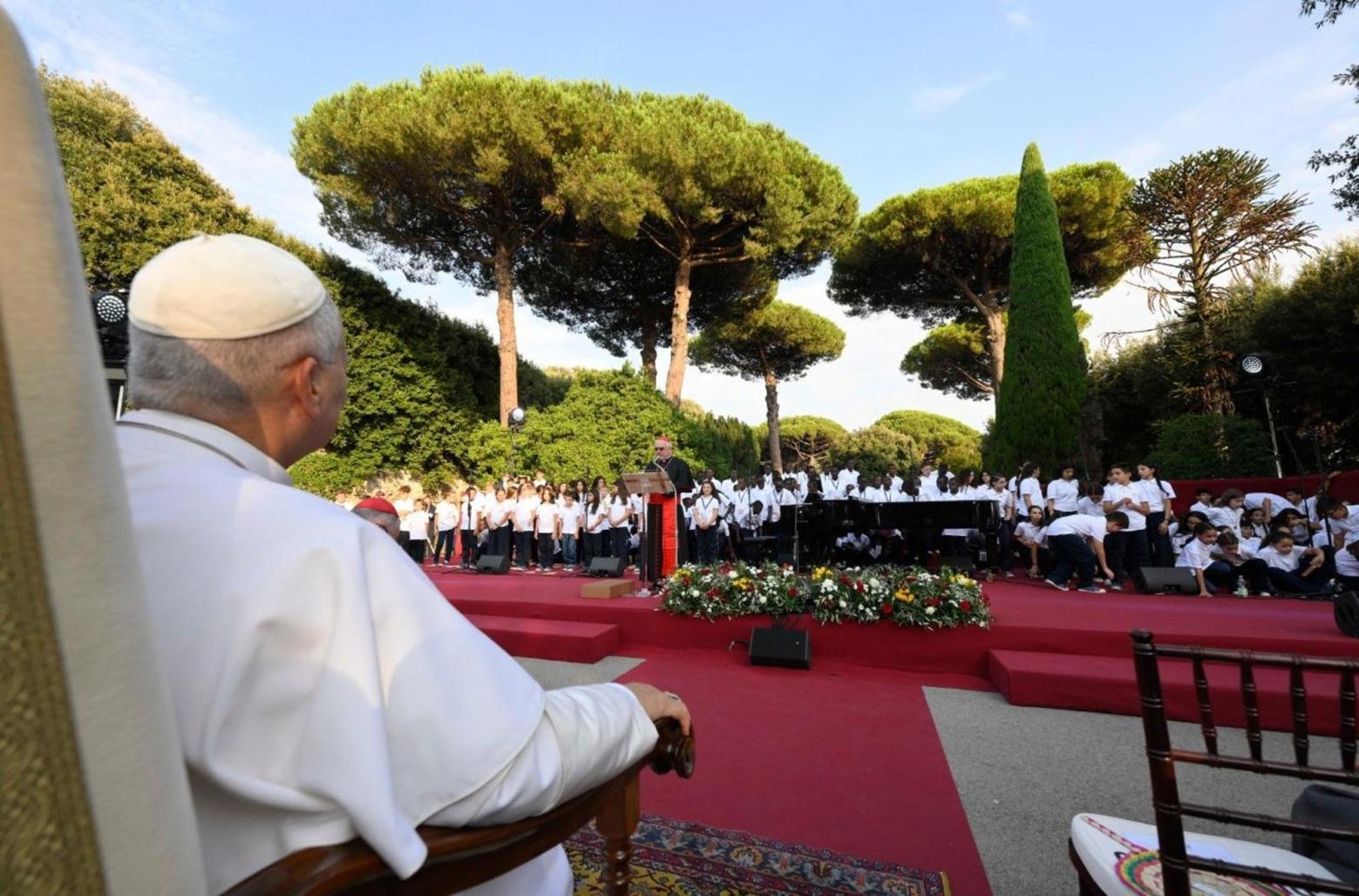
CASTEL GANDOLFO (OSV News) As dusk settled over the Pontifical Gardens of Castel Gandolfo on July 29, Pope Leo XIV listened as Andrea Bocelli led 164 young voices in a hymn, prompting the pope to offer a reflection on how beauty can lead us to God.
“The beauty of music invites us to encounter the one who is beauty itself,” Pope Leo remarked after the international children’s choir performed with the tenor in the Vatican’s Borgo Laudato si’ gardens.
“It is significant that Sacred Scripture and the Liturgy of the Church speak of ‘choirs of angels and saints’ when describing the joy of heaven,” he added, “not because they are literally singing all the time, but because united in love they behold God together and find in him the fullness of happiness.”
The pope sat before the choir as Bocelli led children and teenagers from the Holy Land, Uganda and Italy in singing “Amazing Grace” as the final song of the evening. The Italian tenor also sang the Latin hymn “Panis Angelicus” for the pope.
‘The experience of beauty
’
The children’s choir was made up of participants in the Andrea Bocelli Foundation’s “Voices Of” program, which pairs choral singing with educational workshops for children in communities affected by poverty, conflict or limited access to schooling.
“My dear young friends, as you were singing, did you notice how music drew all of us into an experience of something new, something that was greater than any one of us alone could create? This is the experience of beauty,” Pope Leo told the choir.
When one seeks beauty, the pope added, “we discover not simply something, but Someone. We encounter God our Creator.”
The young singers, ranging in age from 8 to 19, traveled from Bethlehem and Jerusalem, the Ugandan village of Nabikabala, and the Italian cities of Naples and Camerino to take part in the performance, the culminating moment in a 10-day program in Italy sponsored by the charitable foundation. Choir members from Haiti were unable to travel because of ongoing instability in the country,
organizers said.
“Continue to cultivate the gifts that God has given you, and allow them to lead you towards him,” Pope Leo told the young singers. “He is everything we are looking for in life, the one who alone can quell our restless hearts.”
“Remember that you have been made for great things, and that this world is not enough to quench your thirst for meaning and happiness,” he said.
Part of St. Francis jubilee
The night of musical performances and prayer, held in the Borgo Laudato si’ gardens near the papal summer residence where Pope Leo spent much of July, was part of the jubilee year celebrations marking the 800th anniversary of the death of St. Francis of Assisi.
Sister Alessandra Smerilli, whom Pope Leo recently named the prefect of the Dicastery for Promoting Integral Human Development, read aloud St. Francis’ 1225 poem “The Canticle of the Sun” praising God’s creation, while other members of the Roman Curia read excerpts from writings of past popes and passages of Scripture
between songs under the garden’s Roman pines.
In attendance at the concert were about 500 employees of the Dicasteries of the Holy See, the Governorate of Vatican City State and offices of the Roman Curia.
At the conclusion of the performance, children from the choir presented Pope Leo XIV with gifts from their home countries. Cardinals and members of the Curia were then invited to a dinner reception in the gardens as the sun set.
Cardinal Fabio Baggio, director general of the Laudato Si’ Center for Higher Education, said the event reflected the mission of Borgo Laudato si’ as “a place where faith becomes an encounter and peace is built by caring for individuals, communities, and creation.”
“Let us entrust this ‘Canticle of Peace’ to the Lord, so that the song that rises from this place today may reach hearts, cross borders and become a seed of hope for the world,” the cardinal said.❖
Pope Leo XIV with the ABF Voices choir, consisting of 164 children from the Holy Land, Uganda and Italy (@Vatican Media)
A Christian Perspective on Social Issues
Emancipation
By GHK Lall
Humankind was created, born, with an instinct to be free. An irrepressible instinct that will fight through chains. Insights amidst the burdens of grim times for that elusive freedom. The liberty that is the birthright of all men and women. There is no color barrier. No scripture that can be used to justify one man seizing the freedom of another man. Then compelling him to a drudgery existence in captivity. For all men were created in the image and likeness of God Almighty. So, who and what, whatever the means, is being enslaved?
Slavery wasn’t just a crime against humanity. Slavery was a cardinal sin, the sin of sins. No quantity of kindness, no tender care and compassion, can compensate for taking away another’s freedom. Nor suffice for standing over him with a whip to ensure that he stays that way, know who is his master. There is only one master. The one who willingly gave himself to the slavery of death. So that a wicked world can be freed. From the bondage of death. From the dismal nature of darkness, and a life stuck under its clouds.
If ever there was an injustice, slavery was it. And, if there was only one injustice left in the world, then slavery had a monopoly over that one injustice. Men with righteous, Godfearing hearts fought against the evil of slavery. O Lord, but it did take time: that long, cruel drag of time. Centuries of it. All the while, in seasons of suffocating heat, and seasons of killing chill, the feet hobbled, the lashes multiplied. But the spirit refused to die. There is a God of salvation. From him, emancipation will come. Come it did; and even then, with conditions and qualifications attached. Some free, some still to be set free. But only after the passage of another five years. Man’s inhumanity can be the height of indecency, often the worst of evils. Slavery was of such character. Emancipation came through the hearts of other men turned in a different direction. To fight to be rid of this odious institution. To smear with shame over what diminishes human beings to standing lower than animals. I grapple in thinking of who held the dirtiest hand. The slave, the slave owner, or the slave driver? For the man who celebrates the prosperity of his evils, still has a god to face. I remember the earthly torments of Lazarus. I remember how the roles are reversed in the life thereafter. The earthly is temporary in its riches. The afterlife is an eternity in its torments. The scales of divine justice weighed and delivering their verdict. The fight against the evil of slavery was a noble struggle. A victory finally; liberty at long last for the beneficiaries. It’s a freedom to be treasured.
One to be shared. In turn, to be used so that others can also savor freedom in its many different attributes. Guyana has been blessed with an underwater treasure that could help this whole nation flourish. Economic freedom is here. The rich potential. Financial freedom is the inheritance of every citizen of this divinely blessed society. It ought not to be withheld from anyone. Not at this time when there is so much available to be shared. It should not be minimized to the negligible, when so many are faced with hunger and poverty. There must be the disposition to gather the fruits of this land, and distribute them fairly and always with a close degree of equity. When lived with those in mind, it is a different kind of emancipation. Emancipation from greed. Emancipation from the self-enriching, to the detriment of others. Those Guyanese weak, and vulnerable need the new, the next level, emancipation that could be had from the gifts of the earth, be they offshore or on land. Economic emancipation. Its time has come. Already it has been delayed too long. There are those in Guyana who need bread. They should not be given a stone.
The joy of physical emancipation should now be complimented by a host of other freedoms. Freedom from fear. Freedom from need. Freedom from being without. A long road to freedom was traveled. A new one challenges. Blessed Emancipation Day to all present here.❖
Gracious and loving God, we thank your for the gift of our priests.
Through them, we experience your presence in the sacraments. Help our priests to be strong in their vocation.
Set their souls on fire with love for your people.
Grant them the wisdom, understanding, and strength they need to follow in the footsteps of Jesus.
Inspire them with the vision of your Kingdom.
Give them the words they need to spreadthe Gospel.
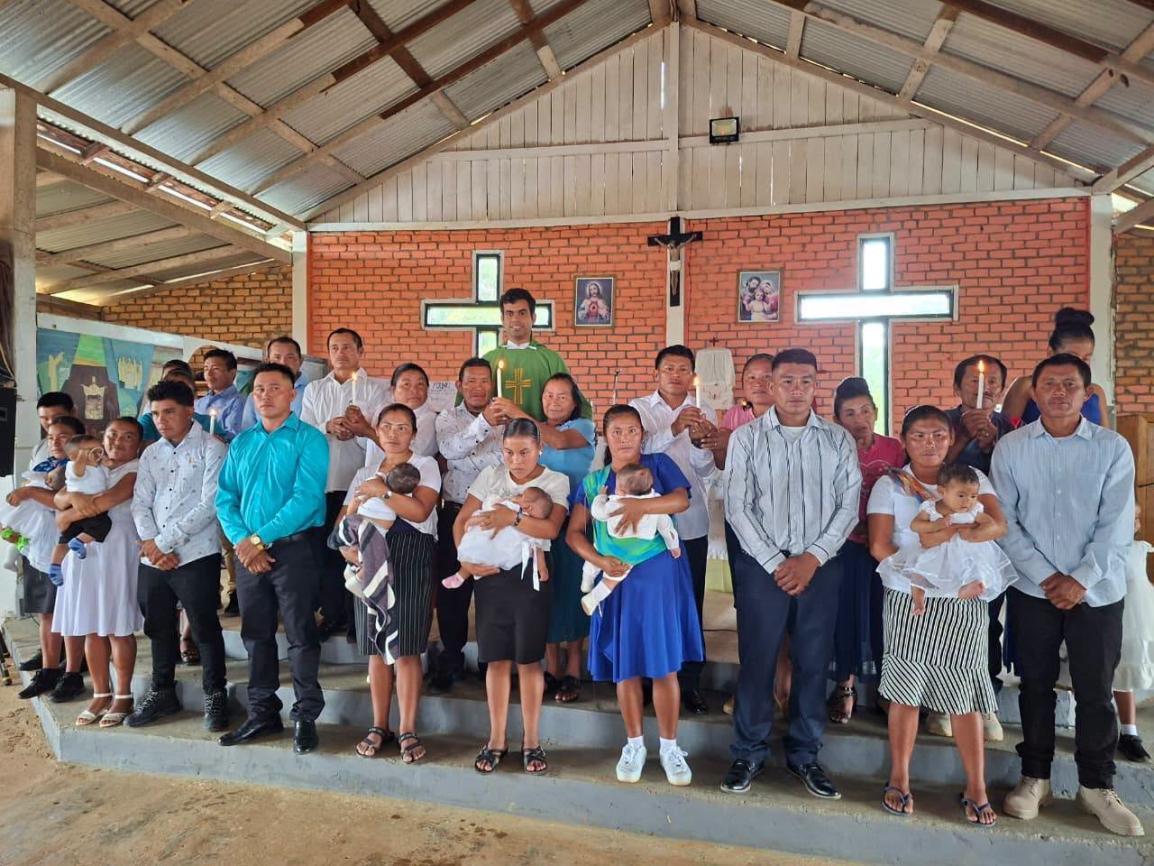
Baptism at Kurukabaru
Allow them to experience joy in their ministry.
Help them to become instruments ofyour divine grace.
We ask this through Jesus Christ, who lives and reigns as our Eternal Priest. Amen

Seven children were baptized at St. Joseph's Church, Kurukabaru, North Pakaraimas, Region 8, Essequibo, Guyana on Sunday July 12th.



FIRST READING: Isaiah 55:1-3
Come and eat
Thus says the Lord:
Oh, come to the water all you who are thirsty; though you have no money, come!
Buy corn without money, and eat, and, at no cost, wine and milk.
Why spend money on what is not bread, your wages on what fails to satisfy?
Listen, listen to me, and you will have good things to eat and rich food to enjoy.
Pay attention, come to me; listen, and your soul will live.
With you I will make an everlasting covenant out of the favours promised to David.
RESPONSOIAL PSALM: Psalm 144
Response : You open wide your hand, O Lord, you grant our desires.
1. The Lord is kind and full of compassion, slow to anger, abounding in love. How good is the Lord to all, compassionate to all his creatures. Resp.
2. The eyes of all creatures look to you and you give them their food in due time. You open wide your hand, grant the desires of all who live. Response
3. The Lord is just in all his ways and loving in all his deeds. He is close to all who call him, call on him from their hearts. Response
SECOND READING: Romans 8:35. 37-39
No created thing, can ever come between us and the love of God made visible in Christ
Nothing therefore can come between us and the love of Christ, even if we are troubled or worried, or being persecuted, or lacking food or clothes, or being threatened or even attacked. These are the trials through which we triumph, by the power of him who loved us.
For I am certain of this: neither death nor life, no angel, no prince, nothing that exists, nothing still
By: The Diocesan Stewardship
Today’s readings should inspire the Christian steward with deepened gratitude to our God, Who loves us with such fierce and tender love. We
thing, can ever come between us and the love of God made visible in Christ Jesus our Lord.
Gospel Acclamation
Alleluia, alleluia!
Lk 19: 38
Blessings on the King who comes, in the name of the Lord!
Peace in heaven and glory in the highest heavens! Alleluia!
Or Mt 4:4
Alleluia, alleluia!
Man does not live on bread alone, but on every word that comes from the mouth of God Alleluia!
GOSPEL: Matthew 14:13-21
They all ate as much as they wanted.
When Jesus received the news of John the Baptist’s death he withdrew by boat to a lonely place where
must make an intentional response every day to return love for Love.
In our Second Reading, from Romans, St. Paul reminds us that nothing and nobody can keep God from loving us.
No anguish, distress, persecution, famine and we might add pandemic, economic loss, relationship strife nothing can keep our God from His faithful love for us. God has got us in the palm of His hand.
And yet, this reassurance is only the beginning of God’s gifts to us.
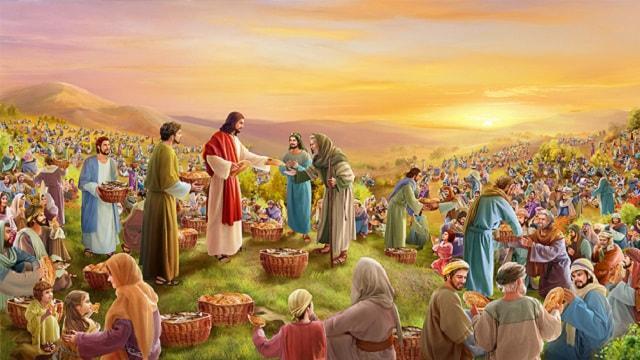
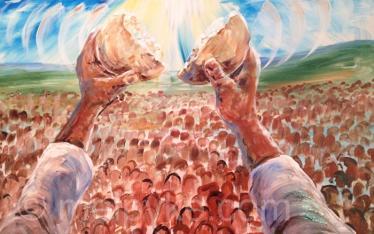
Our Gospel passage from Matthew recounts the miracle of the multiplication of the loaves and fish. This of
they could be by themselves. But the people heard of this and, leaving the towns, went after him on foot. So as he stepped ashore he saw a large crowd; and he took pity on them and healed their sick.
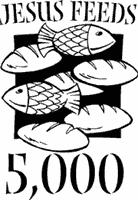
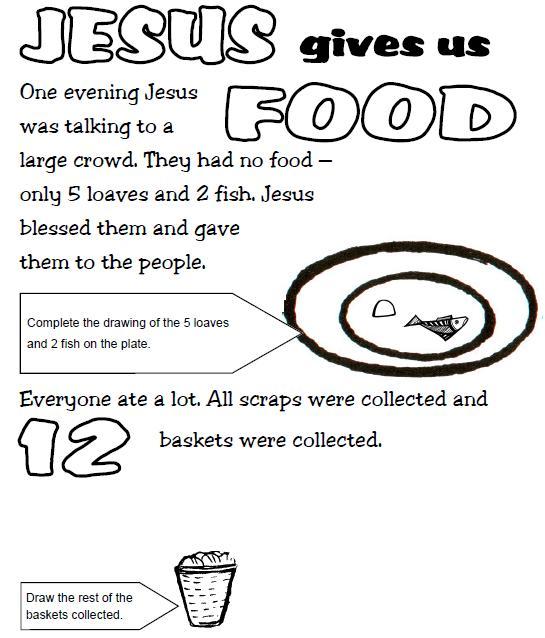
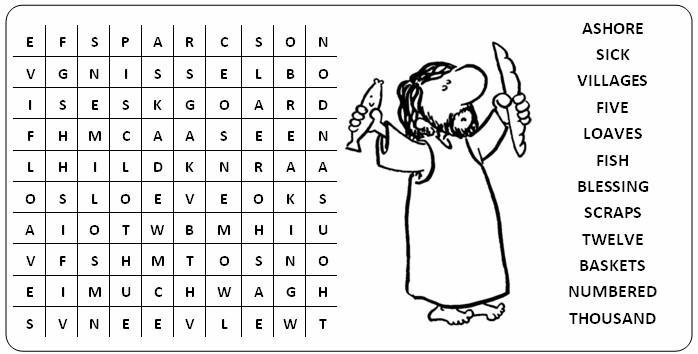
When evening came, the disciples went to him and said, ‘This is a lonely place, and the time has slipped by; so send the people away, and they can go to the villages to buy themselves some food’. Jesus replied, ‘There is no need for them to go: give them something to eat yourselves’. But they answered ‘All we have with us is five loaves and two fish’. ‘Bring them here to me’ he said. He gave orders that the people were to sit down on the grass; then he took the five loaves and the two fish, raised his eyes to heaven and said the blessing. And breaking the loaves handed them to his disciples who gave them to the crowds. They all ate as much as they wanted, and they collected the scraps remaining; twelve baskets full. Those who ate numbered about five thousand men, to say nothing of women and children. ❖
course, is a foreshadowing of the miraculous gift the Eucharist, which feeds us not with bread but with the Body, Blood, Soul and Divinity of Jesus.
Let’s look at the opening verses of this passage, for they reveal a little of the tender heart of Jesus for all of us.
“His heart was moved with pity for them, and he cured their sick.” What generous and compassionate love He shows.
But even that is not enough for our Lord. He remains with them, ministering to and teaching them well into the evening. The disciples suggest that
Jesus should send them away so that they could buy some food. But Jesus will not hear of it. He insists that the disciples feed them right then and there. And then, He provides the miraculous abundance of food out of the few loaves and fishes the disciples could round up.
What a privilege for those disciples to participate in Christ’s miraculous plan for His people. This privilege is ours, too, as Christian stewards. Let us make a grateful response to such amazing love. ❖
[www.catholicsteward.com/blog/ ]
to come, not any power, or height or depth, nor any created
Where Was God? A Word of Hope after MV Barima Tragedy Gospel Reflection
The miracle in the today’s Gospel is a miracle of generosity. There is the generosity of the disciples who, with the little they had, made the miracle possible. On the surface, it was a small thing - five loaves and two fishes. But for them it was a big thing for it was all they had. It is easy to give something we won’t really miss. But when the gift is needed by the giver as by the receiver, that is true giving. It calls for sacrifice!
On a wider scale, however, being generous is really not always about giving things. More often it is about giving of ourselves, our time, our energy, our gifts. Giving things can be easy but giving of oneself is never easy. It is easy to reach out to others when it doesn’t inconvenience us much. However, it is another matter when our presence matters, when we have to set aside our plans and forget about ourselves. This is what sacrifice is all about. Feeding the hungry is one of the works of mercy all Christians are called upon to be involved in. It is something we could do and should do but it is clear that none of us is in a position to feed all the hungry with whom we are in contact. However, this does not mean there is nothing we can do, either individually or as a group. St Teresa of Calcutta said that she was able to feed thousands of people a day because of the generosity and assistance of many people, many of whom were by no means wealthy. Many of us feel that because our contribution will be small it will make no difference and so we do nothing. But anything and everything helps. Enough grains of rice will fill the plate. Also, our giving, small though it may be, can be an example for others to follow. The disciples only had five loaves of bread and two fishes but their generosity is giving what they had was enough.❖
[From: Journeying
By Fr. Joel Thompson, SJ
Guyana is living through a dark moment. Everywhere we turn, we see news of the ferry disaster. Around one hundred people, including children, are now believed to have died. Behind every number is a name, a family and a home with an empty chair. We mourn the dead, hold the bereaved close and remember the survivors, many of whom will carry the trauma of that night for years.
“Where was God?” This is a familiar cry throughout Scripture. From the cross, Jesus prayed, “My God, my God, why have you forsaken me?” (Mk 15:34). When Lazarus died, Jesus wept (Jn 11:35). Wisdom assures us that “God did not make death, and he does not delight in the death of the living” (Wis 1:13). This tragedy was not a punishment from God, and those who died were not worse sinners than others. Jesus rejected this thinking, teaching that those killed when the tower of Siloam collapsed were not greater sinners than others (Lk 13:1–5) Where, then, was God? God was not absent. He was in passengers helping children, fishermen turning towards danger, rescuers searching through darkness, medical workers receiving
survivors and families supporting one another. Above all, God was present in the suffering. In Jesus Christ, God entered grief, terror and death from within. The cross tells us that God shares our pain and carries it with us. The resurrection tells us that death will not have the final word.
If God was present, why did he not prevent it? We cannot fully answer that mystery. Perhaps God was speaking through the concerns raised and the warning signs that went unheeded. God does not override human freedom. Sometimes what appears to be God’s silence is our failure to listen and act. That responsibility rests especially with those entrusted with public safety, not with the passengers.
We give thanks for every life saved and for the courage and generosity shown. The loss might have been even greater. Gratitude must never minimize the pain of families who lost everything. Gratitude and grief live in our hearts.
“The Lord is close to the brokenhearted; and those who are crushed in spirit he saves” (Ps 34:19).
How will we live differently after this tragedy? Faith must also tell the truth.
An 87-year-old public ferry served a vital route; passenger records did not
match the number believed aboard; and survivors raised concerns about heavy loading and mechanical trouble. A transparent and independent investigation must establish the facts. Responsibility cannot stop with one or two people if a system allowed danger to become normal. Human negligence, weak oversight and disregard of warning signs are not “acts of God.”
Our grief must become moral resolve. We must demand safer vessels, honest inspections, accurate manifests, trained crews, effective emergency systems and real accountability. The poor and those who depend upon public transport, especially our hinterland and Indigenous communities, must never receive a lower standard of safety. Their lives are not worth less.
As Church, we stand with the bereaved and the survivors. We offer prayer, presence, counselling and practical help. We will mourn with those who mourn, seek truth with courage, and work for changes that honour the dead by protecting the living. In this dark hour, Christ remains beside us and calls us to become his hands of consolation, justice and hope.❖
Candles are lit during the Mass of Consolation and Prayer for the victims and survivors of the MV Barima tragedy
US Bishops call for an end to racial
Journeying with the Word of God
of God and, therefore, grieve all situations where human life is brought to an unnatural end.”
With these words, Bishop Daniel E. Garcia, chairman of the US Conference of Catholic Bishops’ Subcommittee for the Promotion of Racial Justice and Reconciliation, and Bishop Brendan J. Cahill, chairman of the Committee on Migration, begin the pastoral reflection they issued in light of several recent immigration enforcement encounters resulting in the loss of life in the United States.
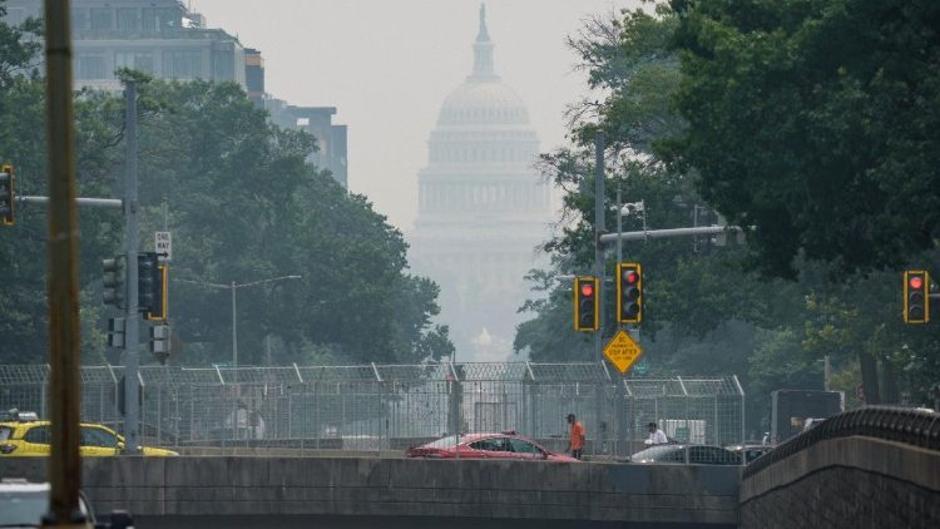
The Bishops' reflection, published on July 20, 2026, on the website of the United States Conference of Catholic Bishops, expressed sorrow for the lives lost. While affirming the necessary work of civil authorities, it stressed that law enforcement must never compromise human dignity or human life.
'Power of the state must be exercised within limits of the moral law'
In the statement, the Bishops reiterated, “We continue to

Dear Editor,
The GHRA is carefully following the statements of Defense Counsel and of the Director of Public prosecutions (DPP) regarding the seventy-two murder charges brought against three accused persons in the MV Barima tragedy. Lawyers for the accused have raised the points of intent and of protection against selfincrimination and the DPP has come out with a statement. When taken in conjunction with
in a humane manner and with respect for fundamental human rights, including the rights to life and due process.”
Bishop Garcia and Bishop Cahill insisted, “The power of the state must always be exercised within the limits of the moral law.”
“To that end,” they continued, “we call for accountability, transparency, and justice, which require that meaningful reforms be made to our immigration system.”
Concerns over racial profiling
Recalling the words of the US Bishops last November, they reiterated, “We are disturbed when we see among our people a climate of fear and anxiety around questions of profiling and immigration enforcement.”
Racial profiling, they stated, “not only violates God-given dignity, but also inflicts profound harm on individuals, families, and communities by fostering fear, eroding trust, and increasing the risk of unjust and even tragic outcomes.”
The Bishops acknowledged that
their pastoral concerns were distinct from what civil law itself may permit.
Diminishing or disregarding human dignity cannot be normalized
“Acts that diminish or disregard the dignity of any person or group of people,” Bishop Garcia and Bishop Cahill stressed, “should never be normalized in our society.” They identified “the dehumanization of immigrants, regardless of their legal status” and “the vilification of law enforcement officers” as two examples of attitudes that should never be normalized. Finally, they joined in praying for the souls of those killed, for their families, for the nation, and for all those entrusted with the duties of public service. They also prayed “for an end to dehumanizing rhetoric, racial prejudice, and violence and for a renewed commitment to recognizing the inherent dignity of every person as a child of God.”
“We plead,” they concluded, “for the intercession of Mary, Our Mother, who is the model of perfect faith in times of grief, hardship, and uncertainty.”❖
charges in MV Barima Tragedy
the announced Commission of Enquiry, the filing of murder charges appear intended to show that the government is taking massive action.
The GHRA would like to stress the importance of observing the rule of law in everything that is done in pursuit of the truth about the sinking of the MV Barima with its extensive loss of life; the imperative need to ascertain the facts, underlying causes, and corrective measures required. Against this
background, the GHRA is particularly alert to the importance of respecting and protecting the rights of the accused.
The GHRA would also like to underline the importance of the ruling party showing inclusiveness towards the Opposition in the aftermath of the disaster. Wisdom and justice demand this.
Executive Committee
Guyana Human Rights Association (GHRA) July 29 2026
MAKING THE WORD OF GOD YOUR OWN
Step 1: Lookattoday’sReadingsprayerfully.
1st Reading: These words of comfort were addressed to the exiles in Babylon. The prophet announces that what really satisfies cannot be bought with money but is a gift from God.
2nd Reading: Nothing can come between us and the invincible love of God which enables us to triumph in our trials.
Gospel: Even though Jesus is tired and saddened by the bad news he received, he is moved with compassion when he sees the needs of the crowd. He satisfies their hunger.
Step 2: ApplyingthevaluesoftheReadings toyourdailylife.
1.Paul tells us that our trials and tribulations can actually bring us closer to God. How have you felt the hand of God in your life when you were down and out?
2. There is an interpretation of the miracle story that says that the generosity of the disciples with the five loaves and two fishes moved the people to share their own food. Share your thought on this idea.
3. Paul is clear that nothing can come between us and the love God has for us. In what way do you feel the love of God that Paul is talking about?
4. “To those who have to go without a proper meal a day, food may be the only form in which God may appear.” In what way does this statement make sense to you?
Step 3: Accepting the message of God’s Wordinyourlifeoffaith.
God continues to work the multiplication miracle today through the hands of his followers, through us all. When we give to others, we are caught up in the feeling of our own generosity and therefore in the generosity of God. We see the needs of others and so have a new and better understanding of them. It is not enough to just send money. We need to be person-ally involved in the giving. In this way, we build a sense of fellowship as well as a love of God.
Step 4: Somethingtothink&prayabout
1.Do you know anyone who shares the little they havewithothersorwhois willingtoforgettheirown situation in order to respond to the needs of others? Why do you think that person acts in that way?
2.Reflect: How can I make the miracle of multiplication possible in my own life? In what way can I be a part of the solution of the problem of world hunger?
3.Share a time in your life when you received God’s gifts through the hands of another.❖
[From: Journeying with the Word of God, The Religious Education Department, Diocese of Georgetown, Guyana ]
Why monks outlive other men: Inside a 30-year study of European monasteries
(EWTN News)
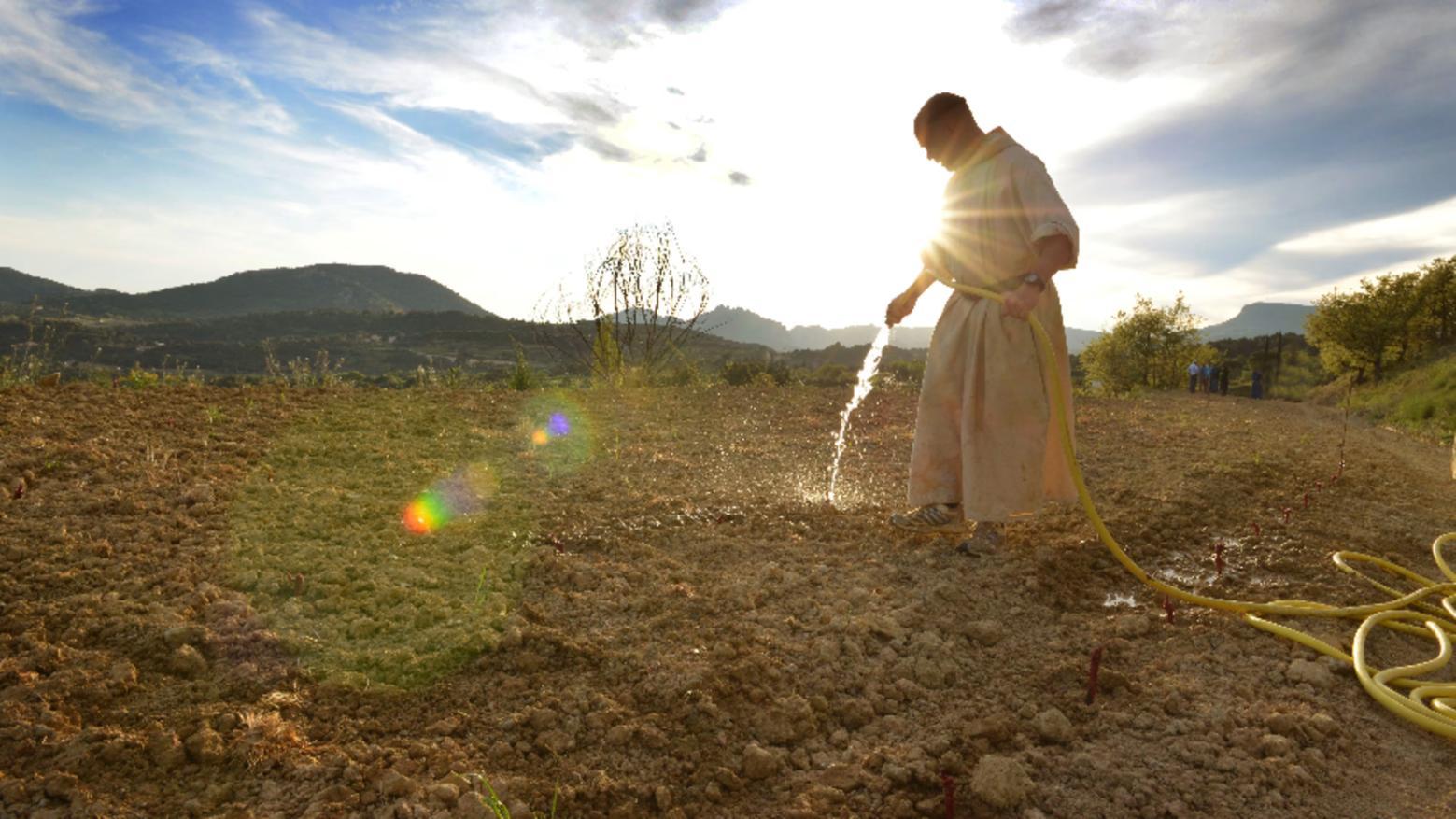
of German and Austrian monasteries suggests that much of the gap between how long men and women live comes down to how men live, not to biology.
The lifespan gap between monks and nuns almost disappears inside the cloister, and community life with a rule of life, scheduled prayer, and purpose contributes to successful aging.
These are some of the findings of "The German-Austrian Cloister Study" conducted by Marc Luy of the Vienna Institute of Demography at the Austrian Academy of Sciences. The research project to study health, aging, and life expectancy investigated the factors of health and longevity that revealed the so-called "successful aging" that is, a long and healthy life.
The research has drawn fresh attention in Europe this month after Benedictine Brother David Steindl-Rast marked his 100th birthday on July 12, as CNA Deutsch, the German-language sister service of EWTN News, reported.
It started in 1997 with a focus on the members of menʼs and womenʼs religious orders, as they have a very similar life and are easy to study. They resemble one another in daily regime, nutrition, living conditions, faith, and many other aspects that influence health and longevity, the study explains.
Around 16,600 order members participated (more than 9,000 nuns, with the rest monks) in Germany and Austria with a few members living in Switzerland and Italy. The
went back as far as 1890 to consult the archives of numerous religious communities, which are helpful in providing data. Somewhat surprising results emerged.
About one year of difference in life expectancy between the two sexes is attributed to biological factors, according to the study. The bigger sex differences in life expectancy in the population are caused by non-biologically caused mortality of men and not by the low mortality of women, as is often believed.
The research also questioned the wellknown saying that “women are sicker, but men die quicker.”
Luy set out two hypotheses at the start of the project. The first is that “the overall reversal in sex morbidity and sex mortality differentials occurs because conditions that figure importantly in morbidity are not very important in mortality, and vice versa.” The second is that it is “very likely that longevity is directly related to the absolute number of life years in ill health,” which means that “women show higher morbidity rates not because they are female but because they are the sex with higher life expectancy.”
Men in religious orders live on average about five years longer than men outside the cloister, and monastic life seems to reduce some of the risks that shorten life. Such communities provide an ordered daily routine and a structured schedule for work, eating, and prayer, long-term relationships,
What is more, in a monastic community, people take care of one another, and physical or mental decline is usually recognized sooner. Likewise, chronic stress is reduced and prayer helps with emotional stability.
The main person behind the project, German social scientist Luy, who has been working in Austria since 2008, told EWTN News that it would be “interesting” to include religious orders from other countries. However,
“this is a matter of resources,” he said.
“Nonetheless, I would not expect different results than those we have obtained from several orders in Germany and Austria,” he added.
Yet “being a monk or a nun does not necessarily mean living an easy and peaceful life,” Slovak religious Sister Cecília Kasanová told EWTN News.
The Dominican sister has been living for six years in the Monastery of St. Dominic and Sixtus of Our Lady of the Rosary in Rome, which safeguards the ancient Marian icon known as the "Advocata," carried across Rome by St. Dominic.
Although she admitted that a balanced lifestyle can influence longevity, “famous long-lived monks or nuns went through suffering, war, persecution because of their religious beliefs, or imprisonment.” Sister Cecília said she thinks it is “amazing” that those monks and nuns “had the strength to persevere and not give up.”
She acknowledged the good of a day proportionally divided into moments
of silence: personal prayer, study, work, daily Mass, regular confession, ments, too, when they talk, such as community meetings and celebrations, as well as time to relax and to receive visitors at the entrance. Furthermore, consecrated life in a community of nuns may improve the life of visitors, Sister Cecília observed. It is “a great gift for me personally, for the Church and for the world,” as “we live exclusively for the Lord” and pray for those who come. Those faithful “often feel better because they are listened to, accepted, knowing that they are not alone in what they are experiencing, because we accompany them with prayer,” she stressed.
A monastic life thus shows that we should “put God first,” as he “gives meaning to everything we do and to who we are. He is our God and at the same time a faithful friend,” the Slovak nun said.
In a letter dated July 16 and published by the Vatican on July 22, Pope Leo XIV wrote to mark the 70th anniversary of the Conference of Major Superiors of Men in the United States. He encouraged them to consider community life “as a place of sanctification and a source of inspiration, witness, and strength in your apostolate.”
According to the pontiff, who is a member of the Augustinian order himself, “it is precisely through sharing everything in common, including material goods, spiritual experiences, apostolic ideals, and charitable service that the hidden presence of the risen Lord is made manifest among you.”❖
Dear Boys and Girls,
One day Jesus and his disciples wanted to have some time to relax. They got into a boat and went away to a quiet place to rest. When they arrived, there were people there waiting for Jesus to teach them and heal the sick. Jesus had wanted to rest, but when he saw the people, he loved them so much that he forgot all about being tired. He healed the sick and taught the people about the kingdom of heaven.
Soon it was time to eat. The disciples went to Jesus and asked him to send the people away so that they could get something to eat. "They don't need to go away," Jesus said, "you feed them."
"All we have is five loaves of bread and two fish" the disciples answered.
Jesus told the disciples to bring him the loaves and fish and to tell everyone to sit down on the grass. Jesus took the loaves and fish and looked up to heaven and gave thanks. He then gave the food to the disciples to give to the people. Everyone ate until they were satisfied. Then the disciples picked up the leftovers and there were twelve baskets full! The Bible tells us that there were five thousand men who were fed plus all the women and children.
Can you imagine feeding a whole town of people with just five small loaves of bread and two fish? With Jesus, anything is possible!
Dear Jesus, help us to remember that when we give what we have to you, even a little bit is more than enough. In your name we pray. Amen. ❖
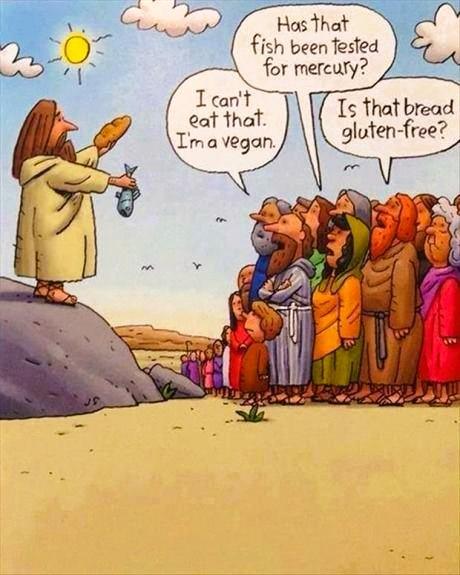
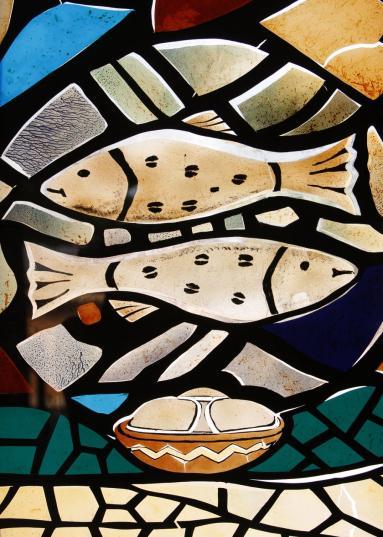
Jesus can feed a crowd with a little food.
Caribbean bishops issue pastoral letter on sexual and gender identity
where human identity is increasingly understood as fluid and selfconstructed, the foundational truths about the human person are being obscured or even denied.”
Grounded in faith and science
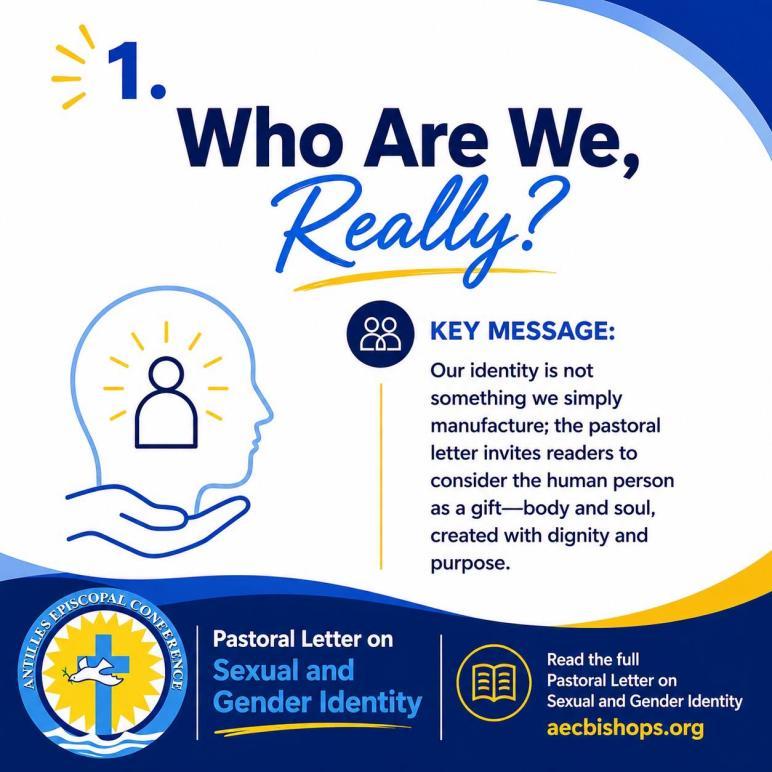
The letter presents what the bishops describe as a theological, scientific and pastoral reflection on human sexuality and gender identity. It draws on Scripture, Catholic teaching, natural law, contemporary biology and the works of theologians and authors including St John Paul II and Abigail Favale.
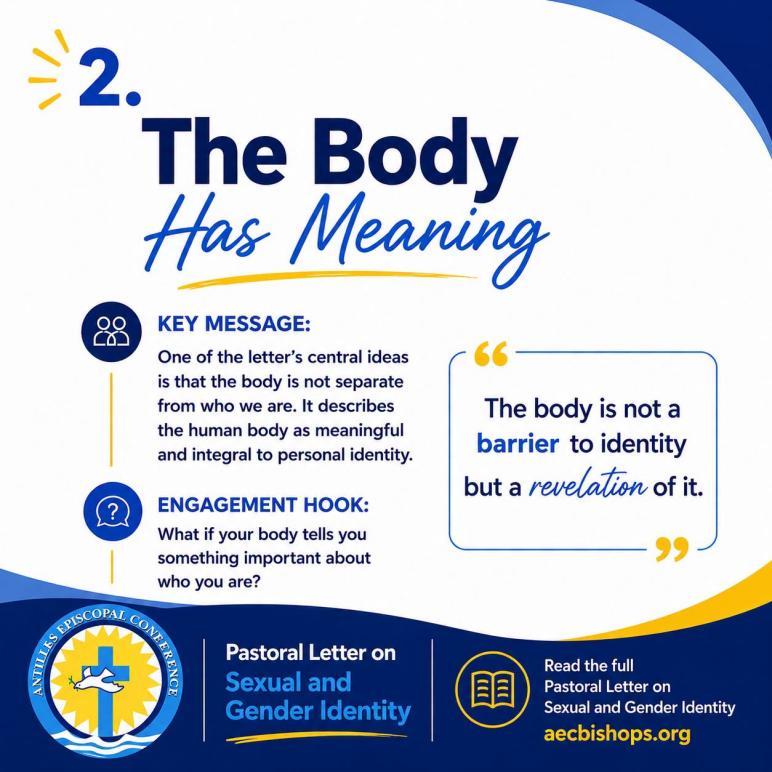
Central to the documentis the Church’s teaching that every human person is created as a unity of body and soul, male or female, in the image of God.
“The human body is not an accessory to identity, but a sacrament of the person,” the bishops state, inviting parents, teachers, religious and civil leaders to promote “a vision of human flourishing that is fully human, fully Christian, and deeply Caribbean.”
The pastoral letter argues that biological sex is an objective reality established at conception and distinguishes between biological sex and what it calls contemporary gender ideology. It maintains that human beings are created male or female and rejects the notion that biological sex exists on a spectrum.
A call for compassion
While firmly presenting Catholic teaching, the bishops repeatedly stress that every person must be treated with dignity and respect.
Addressing those who experience same-sex attraction, the bishops write that such persons “must be treated
with respect, sensitivity, and compassion” and, like all Christians, are called to holiness.
The letter also addresses those experiencing gender-related distress. “We must be clear: persons are not ideologies,” the bishops write. “Every individual who experiences genderrelated distress must be treated with reverence, compassion, and patience.”
Authentic pastoral care, they add, involves accompanying people “towards truth, healing, and communion with God.” The bishops emphasise that their intention is not to condemn but to accompany.
“We speak not to condemn but to illuminate, not to judge hearts but to form consciences,” they write. “Our duty is to walk with all people, especially the young, the confused, the hurting, offering them accompaniment and clarity rooted in love and ordered towards truth.”
Guidance for Church and society
Beyond outlining Church teaching, the pastoral letter offers practical guidance for Catholic schools, parishes and families.
Among its recommendations, the bishops call on Catholic educators to present Christian anthropology clearly, accompany those struggling with identity with welcome, respect, and understanding, protect children from what they describe as ideological influences, strengthen formation in chastity and vocation, and engage governments in advocating for policies that uphold human dignity and parental rights.
The document also includes pastoral
(From Front Page)
case studies intended to help teachers, catechists and pastoral workers respond compassionately to questions from children and young people about gender identity and sexuality while remaining faithful to Catholic teaching.
‘Truth and love’
In their concluding message, the bishops acknowledge that the issues surrounding sexuality and gender identity have become increasingly prominent across Caribbean societies but insist that the Church must continue speaking with both conviction and compassion.
“We believe that the truth about the human person is not a burden but a liberation,” they write. “We believe that clarity and charity must walk hand in hand.” They conclude by encouraging Catholics to approach the issue with courage and hope. “His truth is not a weapon to wound but a light to guide,” the bishops write. “Our Caribbean people deserve the truth. Our children deserve clarity. Our Church must not remain silent.” ❖
(From The Catholic News of T&T, August 2-8, 2026)

In Memoriam
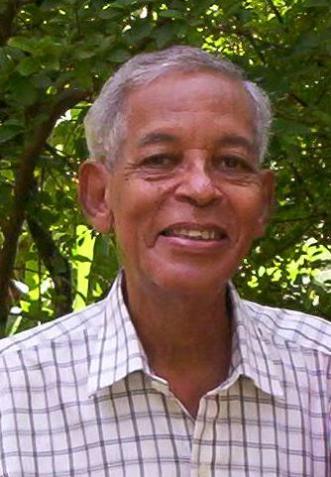
Aubrey Francis Collins
We remember our beloved Aubrey Francis on the sixteenth anniversary of his going to the Father on Monday, August 2nd 2010. With thanksgivingfor all he was to us:
Joan;Ian,Andrea,Naomi, Joanne;Rene,Serafin;Tatianna; andotherrelatives.
May Godcontinue togrant him eternalhappiness
Our Faith Beyond Sunday (Hint: It’s more than Pray, Pay and Obey) Catholic Social Teaching | Part 1
Fr. Joel Thompson SJ
Some people separate their faith from the way they live and participate in society. Religion, they argue, is a private matter between themselves and God. Yet this view is neither biblical nor Catholic. Faith shapes every part of life, including how we treat others and work for the common good. In this column and the next, we will explore what Catholic Social Teaching means and how it calls us to help build a more just and humane society.
What We Believe
The MV Barima disaster has left Guyana grieving and angry. At this point in our nation’s “development,” it raises difficult questions like: What kind of society are we building? Who benefits from development, and who continues to carry the greatest risks?
Some Catholics imagine that our public duty is mainly to “pay and obey”: pay our taxes, obey the law, avoid trouble and leave politics to politicians. Faith, meanwhile, is limited to prayer and Sunday worship. Worship does not remove us from the world. It nourishes us and sends us back into it! The dismissal at the end of Mass tells us to “Go in peace, glorifying the Lord by your life”. We are sent on mission for the rest of the week. Am I only a Catholic on Sunday for 1 hour?
Concern for society, especially for the poor, runs through Scripture. God heard the cries of the Israelites in slavery and came to rescue them (cf. Ex 3:7–8). As Psalm 34 assures us, “The Lord hears the cry of the poor.” Jesus was born into a poor family, announced good news to the poor, and identified himself with the hungry, the stranger, the sick and the prisoner (cf. Lk 4:18; Mt 25:31–46). In the first Christian community, believers shared what they had so that “there was not a needy person among them” (Acts 4:34).
This is the biblical heart of Catholic Social Teaching, sometimes called the Church’s “best-kept secret.” It begins with the affirmation that every person is created in God’s image and possesses a dignity that cannot be bought, earned or taken away. Society should therefore enable everyone to live with dignity and contribute to the common good. The earth’s goods are meant for all, and our relationships with God, oneanotherandcreationshouldflourish
Why It Matters
In Magnifica Humanitas, Pope Leo XIV asks Catholics to practice these principles in family life, work and society (cf. MH 47). Development, he explains, is truly human when it places people, rather than accumulated wealth, at its centre. Genuine progress includes not only money and buildings, but also quality education, healthcare, safety, honest institutions, healthy communities, cultural identity, good relationships and care for our common home (cf. MH 83–84).
When you think about development in Guyana, do you mainly imagine
have more. Economic growth cannot be called genuine development while the rich grow richer and the poor continue to struggle.
Structures of Sin
The MV Barima disaster reminds us that injustice is not only the result of individual wrongdoing. Discrimination and neglect can become embedded in laws, institutions, economic systems and accepted habits. St John Paul II called these “structures of sin.” They continue harming people even when many individuals consider themselves decent and law-abiding.
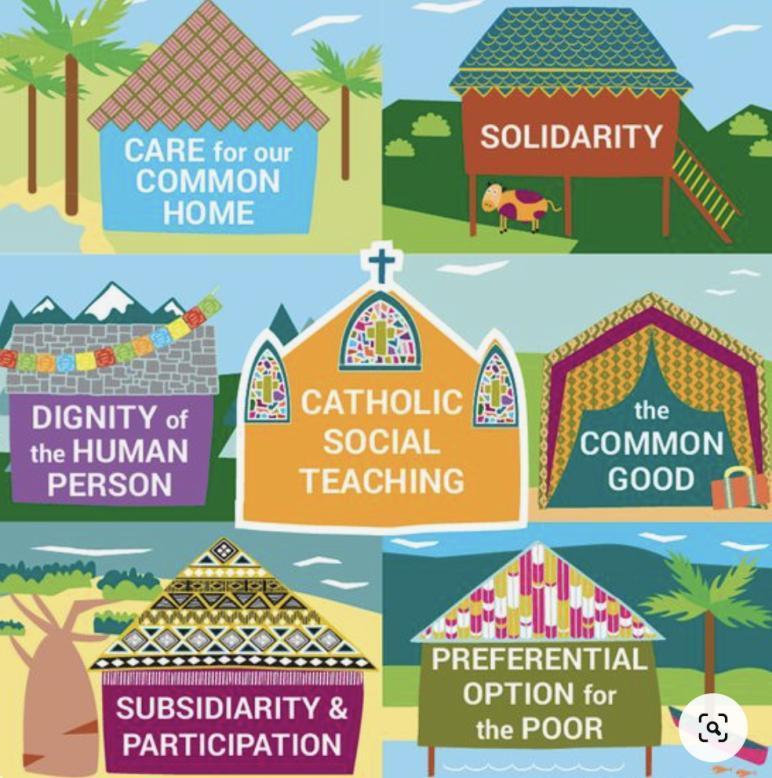
skyscrapers, fast cars and cash grants? Or do you imagine a better quality of life for everyone and the preservation of our beautiful environment? Technology and economic growth are not automatically signs of genuine progress.
Are people safer? Can families flourish? Are hinterland and rural communities heard? Are public services reliable? Are the poor being lifted up, or being asked to bear the costs of progress? Development should help people to be more fully human, not simply enable some to
How to Live It
Catholic Social Teaching calls us to become a Samaritan Church. The Good Samaritan did not stop at sympathy or prayer! He crossed the road, treated the wounded man, used his resources and ensured continued care. We must offer direct help while also asking why people are repeatedly left wounded and what must change to make the road safer. Prayer must lead to action, including action for structural change.
Not everyone is called to march with a placard. Peaceful protest is only one form of civic action. Every Catholic, however, is called to participate. But how?
We participate when we become informed and vote according to issues, conscience and the common good, not simply according to party loyalty, race or personal favours. A Christian voter should ask which policies protect human dignity, especially for those at the bottom.
We participate through honest work. Refusing bribes, corruption, careless shortcuts and mediocrity is social action. Doing our work carefully is a Catholic value, particularly when our decisions affect public money, safety or human lives. We should also examine our consciences for ways prejudice, racism or silence may contribute to another person’s exclusion.
We participate through the corporal works of mercy. Does my parish know who is hungry, homeless, sick, lonely or imprisoned? Do we visit prisoners and support their families?
We participate by writing to public officials, attending community meetings, supporting trustworthy organizations, reporting wrongdoing and contributing time or money to good causes. Silence can protect injustice. How might my silence be contributing to the plight of the poor?
Finally, we participate by examining our way of life. Do I know the difference between needs and wants? Does my consumption harm other people or the earth?
Politics and faith require more than paying and obeying. We share responsibility for the society we become. The Eucharist calls us to carry Christ from the altar into the office, classroom, market, hospital, village, public service and polling place. After the MV Barima tragedy, prayer must become a commitment to action. With God’s help, let us build a Guyana in which no community is forgotten and no one is left in need.❖




MV Barima tragedy: Mass of Consolation and Prayer held
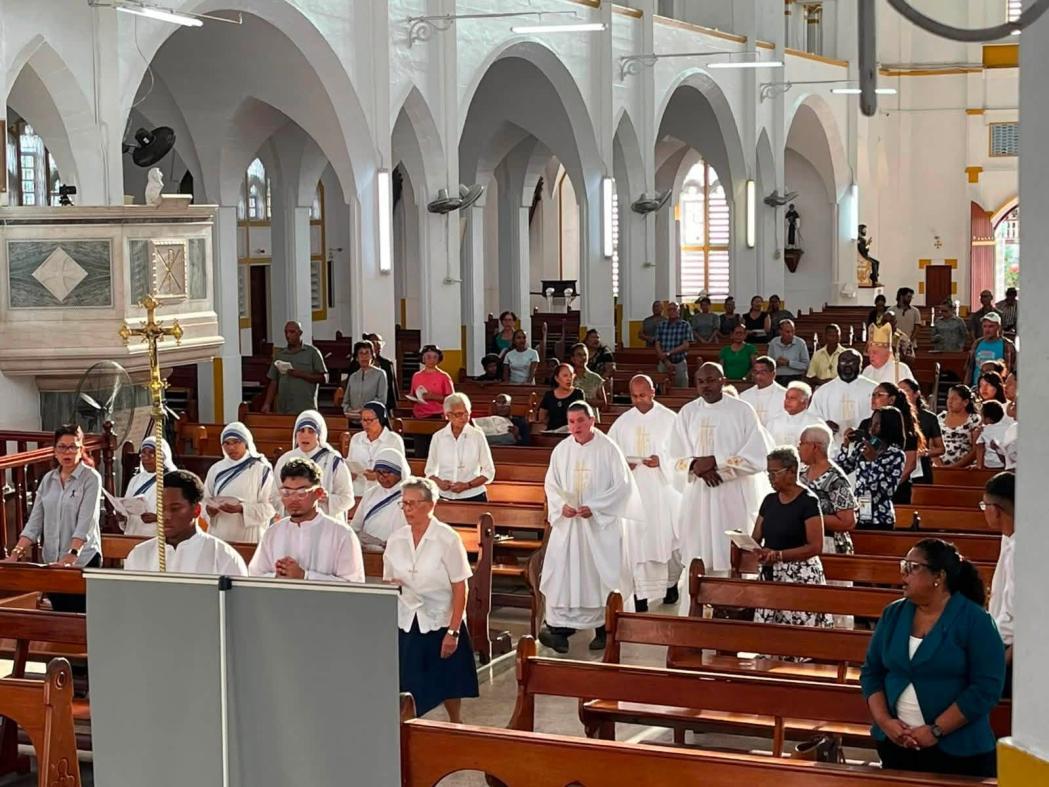
A Mass of Consolation and Prayer for the victims and survivors of the MV Barima tragedy was held on Wednesday July 29th at the Cathedral of the Immaculate Conception, Brickdam,Georgetown
On the night of Saturday July 18th 2026, the MV Barima Ferry, en route from Georgetown to Port Kaituma, sank in the Atlantic Ocean. It is estimated that 179 persons were on board. There are 76 survivors, and 73 people have been confirmed dead, with some 30 still missing.
The mass was celebrated by Bishop Francis Alleyne OSB, along with Fr. Ronald Fernandes SJ, Fr. Carl Philadelphia and other priests of the Diocese. During the Mass, photomontages of victims were displayed alongside a flowerbedecked table, on which was placed candles representing each of the 73 persons known to have perished, as well as the approximately 30 persons who remain missing. After the homily, the names of those who died were solemnly read out and the candles lit, accompanied by the tolling of bells.
The following Prayers of the Faithful were then prayed: For those who were rescued from the MV Barima tragedy, that the Lord will continue to strengthen, comfort, and heal them from the physical and emotional wounds they have endured.
For those who have died, that the Lord may welcome them into His eternal embrace.
For those who remain missing, we pray for their loved ones that they may be given courage, hope, and peace during this painful time. We pray for all persons who are offering guidance and counselling to the persons suffering from the
and support to the bereaved families.
Let us pray for our beloved nation as we mourn this tragedy: that God will bring comfort those who grieve, strengthen families who are hurting, bring peace to our communities, and unite our nation in compassion, prayer, and support for one another. May this time of sorrow remind us of the sacred and preciousness of life and inspire us to stand together in Faith and Hope and Love.
Lord, and let perpetual light shine upon them. May the souls of all the faithful departed, through the mercy of God, rest in peace. Amen Bishop Francis then closed by praying: Heavenly Father, hear the prayers we have offered with faith and trust. Through the intercession of the Blessed Virgin Mary, Star of the Sea, comfort those who mourn, strengthen those who suffer, and bring us all safely to Your eternal peace. Through Christ our Lord. Amen.
Saint of the Week
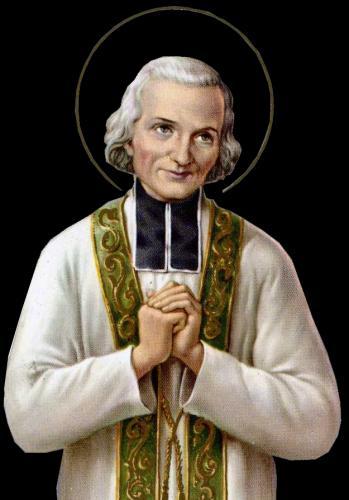
August 4th : St. John Vianney (1786-1859)
A man with vision overcomes obstacles and performs deeds that seem impossible. John Vianney was a man with vision: He wanted to become a priest. But he had to overcome his meagre formal schooling, which inadequately prepared him for seminary studies. His failure to comprehend Latin lectures forced him to discontinue. But his vision of being a priest urged him to seek private tutoring. After a lengthy battle with the books, John was ordained. Situations calling for “impossible” deeds followed him everywhere. As pastor of the parish at Ars, John encountered people who were indifferent and quite comfortable with their style of living. His vision led him through severe fasts and short nights of sleep.
With Catherine Lassagne and Benedicta Lardet, he established La Providence, a home for girls. His work as a confessor is John Vianney’s most remarkable accomplishment. In the winter months he was to spend 11 to 12 hours daily reconciling people with God. In the summer months this time was increased to 16 hours. Unless a man was dedicated to his vision of a priestly vocation, he could not have endured this giving of self day after day.
The mass concluded with the
Many people look forward to retirement and taking it easy, doing the things they always wanted to do but never had the time. But John Vianney had no thoughts of retirement. As his fame spread, more hours were consumed in serving God’s people. Who, but a man with vision, could keep going with ever-increasing strength?
In 1929, Pope Pius XI named him the patron of parish priests worldwide. ❖ [www.americancatholic.org]