
global family summit marking
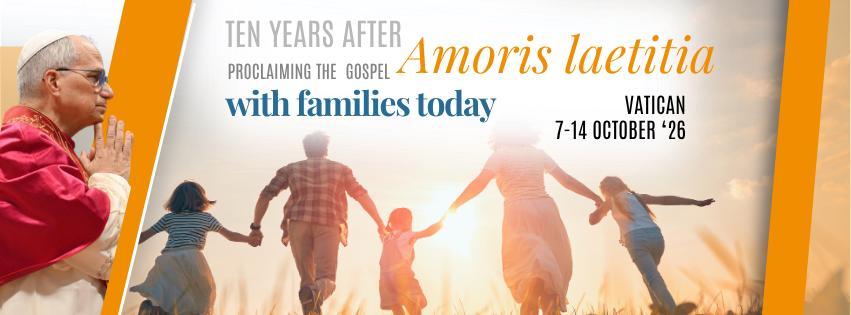
(OSV News) The Vatican has released the framework for a fall meeting with the heads of Eastern Catholic Churches and presidents of bishops’ conferences, marking the 10th anniversary of “Amoris Laetitia” and focusing on the Church’s pastoral approach to families.
Pope Francis issued his postsynodal apostolic exhortation on the pastoral care of families. It was published after the 2014 and 2015 Synods on the Family.
The Oct. 7-14 gathering is intended “to proceed, in mutual listening, to a synodal discernment on the steps to be taken in order to proclaim the Gospel to families
today,” not only in light of “Amoris Laetitia” but also “taking into account what is currently being done in the local Churches.”
The Vatican described the initiative as part of an ongoing process of “pastoral conversion,” emphasizing renewed evangelization rooted in lived experience.
(please turn to page 8)
Popebestowspalliumson35newarchbishops - p2
In Lampedusa, Pope urges Christians to provide safe harbour to migrants - p3
A Christian Perspective on Social Issues - p4
Pope Leo expands Vatican's anti-corruption and financial watchdog - p4
Sunday Scripture - p5
The Word and the World - p6
47 years since Fr. Bernard Darke was killed - p7
Children’s Page - p9
Growing in Grace Week 89 - p10
Faith in Practice Week 22 - p11
Pope Leo starts his summer break at Castel Gandolfo with cheerful welcome - p12
Saint of the Week - p14
Sunday July 12th
7:30hrs – Mass at Cathedral
Monday July 13th
6:30hrs – Mass at Ursuline Convent
Sunday July 19th
7:30hrs–Mass atSt. Josephthe Worker - Linden
10:00hrs – Mass at Our Lady of Mount CarmelLinden
15:00hrs – Mass at Our Lady of Lourdes – Silver Hill
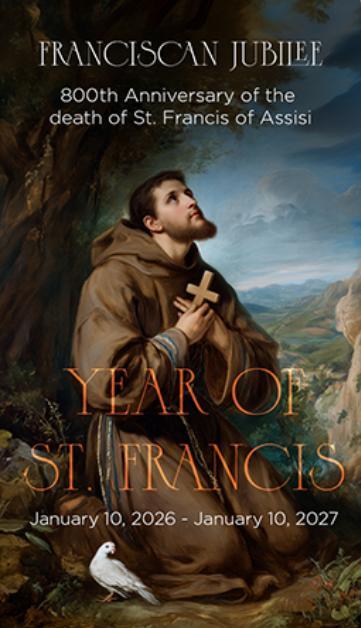
Year of St. Francis Jubilee Prayer
Saint Francis, our brother, you who eight hundred years ago went to meet Sister Death as a man at peace, intercede for us before the Lord.
You recognized true peace in the Crucifix of San Damiano, teach us to seek in Him the source of all reconciliation that breaks down every wall.
You who, unarmed, crossed the lines of war and misunderstanding, give us the courage to build bridges where the world raises up boundaries.
In this time afflicted by conflict and division, intercede for us so that we may become peacemakers: unarmed and disarming witnesses of the peace that comes from Christ.
Amen
- Pope Leo XIV
Pope bestows palliums on 35 new archbishops
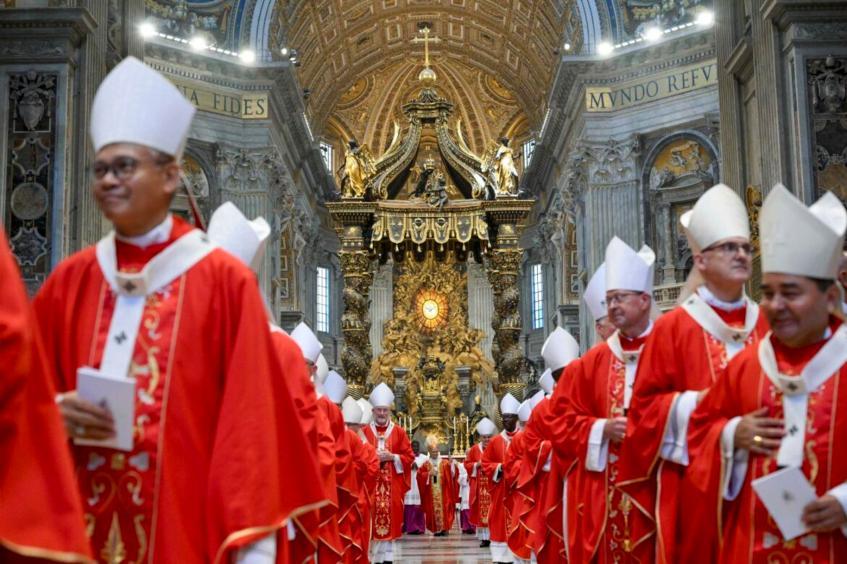
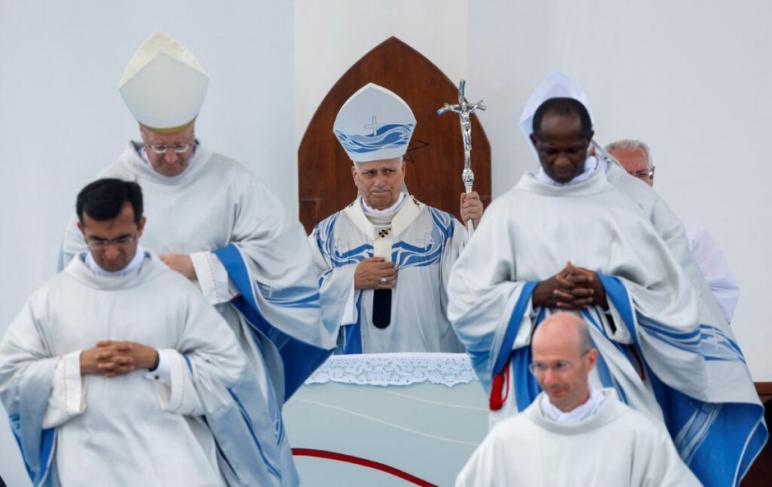
Prelates process after Pope Leo XIV celebrated Mass with the blessing and imposition of the pallium on new metropolitan archbishops on the feast of Sts. Peter and Paul in St. Peter's Basilica at the Vatican June 29, 2026. (OSV News photo/Simone Risoluti, Vatican Media)
VATICAN CITY (OSV News) On the feast of Sts. Peter and Paul, Pope Leo XIV personally placed the pallium on the shoulders of 35 metropolitan archbishops, urging them to follow the example of the patron saints of Rome in being “builders of unity” and “servants of thetruthincharity.”
“LetuspraytoSaintsPeterandPaul that they may sustain us on our journey of communion in the footsteps of the Savior,” the pope said in his homily in St. Peter’s BasilicaJune29.
Sts. Peter and Paul, who were both martyred in Rome, are venerated as the patron saints of the Eternal City, which marks the solemnity with fireworks, flowers, and much celebration.
Colorful handcrafted floral carpets
The Via della Conciliazione, the broad avenue leading to St. Peter’s Square, was decorated with colorful handcrafted floral carpets in honor ofthefeast,whileinsidethebasilica the centuries-old bronze statue of St. Peter was adorned with vestmentsandapapaltiara.
But the heart of the city’s celebration was the Mass with the 267thsuccessorofPeteratthemain altar of the basilica, built over the tomb of St. Peter and filled with cardinals and bishops for the occasion.
Pope Leo presented the woolen bands to archbishops from across the globe, including newly
appointed archbishops of Kraków, Calcutta,CapeTown,Cebu,Brisbane andLahore.
Four American archbishops were among them: Archbishop Ronald A. Hicks of New York, Archbishop James F. Checchio of New Orleans, Archbishop James R. Golka of Denver and Archbishop Mark S. RivitusoofMobile,Alabama.
Unity with the pope, servicetothefaithful
Thepallium a3-inch-widewoolen bandadornedwithcrosses,with14inch strips hanging down the front and back is a liturgical vestment symbolizing unity with the pope and service to the faithful. Metropolitan archbishops wear it when celebrating Mass within their ecclesiasticalprovince.
“Thesebandsofwhitewooladorned with crosses indeed express the commitment of every Shepherd andalsoofeveryChristian totake upon their shoulders the brothers andsistersentrustedtothem,likeso many lambs of theLord’s flock,” the popesaid.
Inpresentingthepalliums,PopeLeo XIV revived a tradition originally established by St. John Paul II in 1983 of personally placing the vestment on each archbishop’s shoulders. Pope Francis had in 2015 returned the practice to local nuncios presiding over the imposition of the pallium in each archbishop’shomearchdiocese.
In his homily, Pope Leo drew on the symbols traditionally associated with the two apostles, keys for St. Peter, and a sword and book for St. Paul, to illustrate what he called the Church’s path toauthenticunity.
‘Findingtheproper levers within’
“A key does not break down doors; rather, it opensand closes them by finding the proper levers within,” thepopesaid.
“In the same way, communion within the Church is not built by clinging rigidly to one’s own position, but by seeking, in all hearts, pointsofencounterinthe Truth,” headded.
Reflecting on St. Paul, PopeLeosaidtheapostle “allowed himself to be transformed by the power of God’s word, which rescued him from the way of violence and led him onto the path oflove.”
The Mass was attended by some of the 178 cardinals who gathered in Rome for an extraordinary consistory June 26-27, during which they discussed the pope’s recent encyclical “Magnifica Humanitas” and implementation process of the SynodofBishopsonsynodality.
Orthodox Ecumenical Patriarchatedelegation
Also present was a delegation from the Orthodox Ecumenical Patriarchate of Constantinople, who joinedPopeLeoattheconclusionof Mass in praying at the tomb of St. Peter in the crypt beneath the basilica’smainaltar.
“Dear friends, it is important for us today to look to these two Saints PeterandPaul tounderstandhow we, in turn, can be apostles and builders of unity, and generous servants of the truth in charity,” PopeLeosaid.
“Peter’s example is an invitation to every Christian to become a builder of unity, placing God at the center of one’s life and drawing close to one’s brothers and sisters, attentive to their circumstances and needs,” he said. ” In this way, we learn to live with one another in charity, so that the message might be fully proclaimed.”❖
In Lampedusa, Pope urges Christians
Pope Leo celebrates Holy Mass, as he visits the island of Lampedusa, a key entry point for migrants crossing the Mediterranean Sea, during a pastoral trip, Italy, July 4, 2026. REUTERS/Remo Casilli
LAMPEDUSA, ITALY (OSV News) Pope Leo XIV traveled to the tiny Italian island of Lampedusa July 4, laying a wreath at the graves of migrants who drowned trying to reach Europe and celebrating an open-air Mass in which he called on Catholics to be Good Samaritans offering compassion to those who suffer attempting make the perilousjourneyby sea.
“I have not come to give speeches, but to celebrate the Eucharist, the supreme sign of Christ’s presence among us. Jesus’ gesture of breaking bread to give himself gives meaning and strength to our daily acts of assistance and sharing,” Pope Leo told the crowd before offering Mass in a field overlookingLampedusa’smainport.
“Yes, this is a place where gestures speak more than words,” he added.
“But gestures, to be human, require a heart. This is why we have gathered here: to draw from Christ the love that only He can give us, so that the world of today and tomorrow may be more human,foreveryone.”
The treacherous journey of migrants
Lampedusa has for years been one of the main gateways to Europe for migrants crossing the Mediterranean from Tunisia and Libya, a journey that hasclaimedthousandsoflives.
In April, the Italian coast guard recovered 19 bodies and rescued 58 people after intercepting a distressed dinghy about 80 nautical miles south of Lampedusa, according to the Associated Press. Last August, a boat carrying nearly 100 migrants capsized in international waters near the island, killingat least 26 people.
During his homily, Pope Leo described the seas surrounding Lampedusa as “as dangerous as the one that led down from Jerusalem to Jericho” in Jesus’ parable of the Good Samaritan in the GospelofLuke.
“Here you have seen not just one, but thousands of human beings fallen into the hands of robbers who have taken everything from them, beat them
brutally and walked away, leaving them half-dead,” he said. “The sea has claimed the lives of others we feel their presence, which challenges us no less than that of those who have landedinneedofattentionandaid.”
Remembering those who have perished
The pope landed on the island, which sits closer to the coast of North Africa than to mainland Italy, just before 9 a.m. His first stop was a cemetery, where he laid a floral wreath on the tombs of migrants who died at sea. The pope then visited the “Porta d’Europa,” or “Gateway to Europe,” a monument on the island, where he walked hand in hand with migrant children on the windy summerday.
About 14,000 migrants arrived on Italy’s shores in the first six months of 2026, according to the UNHR. Nearly 60% of that number arrived in Lampedusa, which is only about 8 squaremiles insize.
While walking along the island’s rocky coastline, the wind blew the pope’s zucchetto off his head, which his personal secretary Msgr. Edgard Rimaycunaquicklyretrieved.
From there, the pope traveled to the Favaloro Pier, where he blessed a plaque dedicating the pier to the late Pope Francis and greeted a group of migrants accompaniedby theRedCross before celebrating the Mass with about 4,000people inattendance.
“I have come to thank you, brothers and sisters of Lampedusa, for the solidarity that so many of you have shown,” the pope told the crowd at the Mass. “The miracle of compassion is an inner revolution that brings forth within us God’s ‘heart’ and broadens ourthoughts, heartsandlives.”
An important moment to pray
Amongthose present at the papalMass was 24-year-old Giuseppe Capizzi, who traveled eight hours on an overnight ferry with about 70 other people from his parish of St. Francis in Cancicatti,
Sicily,toattendMasswiththe pope.
“I’ve been looking forward to this day for a long time, and I’m absolutely thrilled,” CapizzitoldOSVNews.
Father Mikolaj Dobosz from Warsaw, Poland, traveled even farther to be present attheMass.
The Polish priest, who has devoted the past few years to welcoming Ukrainian refugee mothers and children at his parish, said that he felt this was an important moment to pray with the pope for migrants and for people who aresuffering.
“We workin Poland a lot with migrants, not from Africa or (the) Middle East, but from Ukraine mainly. I work with kids from Ukraine, and I’m really happy to pray with the pope for the people who are suffering,” FatherDoboszsaid.
One of the few Americans in the crowd for the papal Mass on U.S. Independence Day was Father Daniel Groody, a professor of theology at the University of Notre Dame and a member of the Vatican Dicastery for IntegralHumanDevelopment.
“Pope Leo, especially now on the Fourth of July, is signaling what true freedom is about. True freedom is about the capacity to love,” Father GroodytoldOSVNews.
“I think he’s continuing the tradition of the Church that has always recognized that everybody is created in the image and likeness of God, and that he really wants to bring out the dignity that’s oftendiminishedintoday’ssociety.”
In the footsteps of Pope Francis
Pope Leo’s visit comes 13 years after Pope Francis visited Lampedusa in July 2013, drawingattentiontotheislandby choosing it asthedestinationof hisfirst trip outside Rome after his election as pope, as a gesture of solidarity with migrants smuggledfrom NorthAfrica.
During his visit, Pope Francis celebrated Massonan altar built from thewoodof wrecked migrant boats and condemned what he called the “globalization of indifference” toward people risking theirlives to reachEurope.
Migration has remained a concern for Pope Leo since his May 2025 election.
In June, he met with migrants and local aid organizations in Spain’s Canary Islands, another major entry point for people crossing from Africa, where he called on governments to establish legal and safe pathways for migration, strengthen rescue and assistance efforts, while alsospeakingofthe “right not to have to migrate,” or the right of people to remain in their homelands free of hunger, war, persecution and violence.
“It’s just a great expression that Pope Leo, at the beginning of his pontificate, really has decided to come here to Lampedusa, as Pope Francis did, to recognize the Church must always be onthemargins,” FatherGroody said.
“The Church must always be accompanying those who are struggling to live amore dignified life and to really highlight the importance of the
connection between faith and justice that’sreally integraltoourfaith.”
Salvatore Sortino, who directs the International Organization for Migration’s coordination office for the Mediterranean, said that even as overall crossing numbers have declined since Pope Francis’ visit, the proportion of migrants who die at sea or fall victim to accidents during the journey has risen.
On Lampedusa, the IOM works with Italian authorities and humanitarian partners throughout the reception and assistance process, identifying trafficking victims and other vulnerable migrants so they can be referred to appropriate authorities and transferred to suitable facilities on the Italian mainland.
“The importance of search-and-rescue operations remains a central element of protection in the Mediterranean,” Sortino told Vatican Radio. “But opening legal pathways is eventually therealanswer.”
‘In God we all have a safe haven’
Pope Leo’s Lampedusa visit came a day after the pope delivered a virtual address to a gathering at the National Constitution Center in Philadelphia, which awarded him its 2026 Liberty Medal for advancing religious liberty and freedom of conscience, in which he spoke passionately about the importance of the “right to life” from the moment of conception to natural death.
In his homily in Lampedusa, the Pope Leo saidthat Jesus’ parableofthe Good Samaritan “tells us that love is always rooted in freedom, and freedom lies in thedecisionswemake.”
He said that “before any intellectual consideration or ideological conviction, the encounter with those who lie before us, stripped of everything, calls usto be closetothem.”
“There are also those who choose not to be a neighbor,” the pope commented, adding, “it is time to recognize and affirm that religious affiliation must never become a reason for discrimination, as if faith had boundaries rather than being a universalcallto salvation.”
“There isno love ofGodwithout loveof neighbor, and there is no neighbor if I do not draw near. To pause, to be moved, to bend down, to weep before another’s pain as Jesus did means entering into the dynamic of love, the very movement in which God has revealedhimself,” Pope Leo said.
An image of Our Lady of Portosalvo, Italian for “Our Lady of Safe Harbor,” to whom Lampedusa’s historic Marian shrine is dedicated, stood near the altar throughout theMass.
“St. Augustine liked to describe human life as a voyage across a stormy sea and one’s destiny as a safe and secure harbor,” Pope Leo said. “In God we all have a safe haven, and every Christian community is called to be a reflection ofitonearth.”❖
A Christian Perspective on Social Issues Guyana
By GHK Lall
Guyanashouldbebetter. Faraheadof where it is. Morally and spiritually. Quietly and expansively. I think this andsaythis,because Religious houses are well-attended on Sundays. It’s the day reserved for the Lord. Christians do so, Catholics do. Others also. So, what about the other days? Those remaining days in the week, where there are the noises of disagreement and dispute. Loud and sharp. Unyielding and unforgiving. Seems that the teachings and solemnities of Sunday fade quickly. Flee for safety in the face of pressures that force to avoid living them. The question that I face is: what is Sunday, therefore? Form over faith could be one condition that comforts. Hence, the issues to be faced in houses of worship, in communities, in wider society are carefully sidestepped. It’s not turning the other cheek. It’s turning one’s back on scriptural guidance, socialteachings.
Here’s a question. More a thought than a question: Jesus didn’t turn his back on his mission, his call. Daily he went about his lifesaving work. Daily learned men and powerful men waited in ambush for him. To trip him and bring him down. See! A man of straw. But one who talks of the grace of the spirit. Through calumny and heavy duty adversity, he went out and persevered. Against all arrayed in resistance; all that they threw at him. In GodtheFather,hetrusted.
So, where are we, Christians? Where am I, as a Catholic? Regarding the quality of reverencein theholy spaces of God? In the kind of social system, the human environment, I inhabit? In the moral and ethical standards that are demanded for a better state and a better me? Leaving the interest needed, and the struggle for that, to others isn’t anhonest option. The record of the Gospels is of Jesus going against the odds, the forces of his day, and laying out a revolutionary new order. One built on faith and love. Also, as driven by genuine unselfishness and a self-sacrificing nature. God gives. God can remove. It’s what I do in between with his gifts that count. The things prioritized. The company separatedfrom,leftbehind.Thestruggles inwhichtheremustbeengagement. Pursuit of nearness to power can distort and diminish. Money, and more of it, are huge considerations in today’s society. In a time and a world that prioritize profits, the safekeeping of the soul can be jeopardized.
Sunday still features heavily. But to where have all the great truths shared disappeared? Time is tight. Circumstances intervene. Looks like Jesus just got lost amid the big happenings of the day. To get and then get more ahead of neighbor. So, there is this quest, this race, to get more. There are those who can make sweet things happen, who know how to play on a Christian’ tues. Make him or her forget them. Or put them on the shelf for the moment. For the moment often ends up being a long one. An unending one, and to the point where even Sundays in the sanctuary rises to the level of a challenge. A heartache at the beginning. Then more comfortable as time passes. Soon that becomes a state of mind, and a way of life. Jesus goes off many a personal radar. Not fully. Just to the edges. So, also, his call to Christianduty.
When the pursuit of prominence and prestige (and money) transforms into a continuing endeavor, who has time for the plight of the poor? How many are willing to give some serious consideration to their condition, want to make a representation for them? The call: “Tend my sheep”, comes to mind. What des that mean in its fullest significance? The issue at hand is how long does it stay in mind. We hear the teachings, absorb their profoundness. Then what? Time to get past Sunday, to get on with the treasures waiting to be reaped the rest of the week. And the next week. In time, the weeks blur intoone. Tobecontinuednextweek ❖
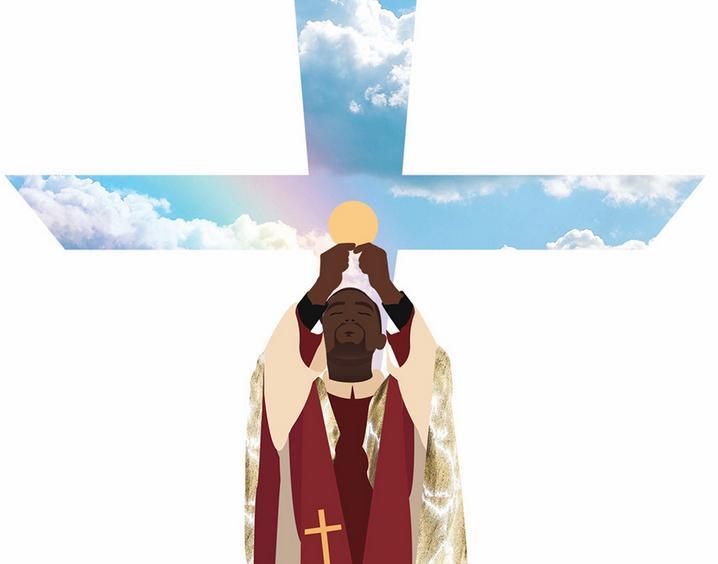
Gracious and loving God, we thank your for the gift of our priests.
Through them, we experience your presence in the sacraments. Help our priests to be strong in their vocation.
Set their souls on fire with love for your people.
Grant them the wisdom, understanding, and strength they need to follow in the footsteps of Jesus.
Inspire them with the vision of your Kingdom.
corruption and financial watchdog
(Aleteia) - Pope Leo XIV promulgated new statutes of the Supervisory and Financial Information Authority (ASIF) by a decree on Tuesday, June 30, 2026. This body leads the Vatican’s fight against money laundering and the financing of terrorism and of the proliferation of weapons of mass destruction. ASIF can nowsupport all Vatican entitiesin this mission by acting as an “alternative dispute resolution system” in the financial domain.
As he has done regularly since the beginning of his pontificate, the Pope, with his background in canon law, continues to bring certain Vatican organizations up to standard. He does this by integrating the numerous reforms adopted by Pope Francis On Monday, he signed a chirograph (decree) that was made public on Tuesday, promulgating the new ASIF statutes. Founded by Pope Benedict XVI in 2010, the organization's previous statutes wereapprovedbyPopFrancisin2020.
The updated statutes take several important normative developments into account. Notable examples include the 2022 apostolic constitution Praedicate Evangelium, the 2023 law reinforcing financial transparency and the fight against money laundering and terrorism financing, and the Roman Curia's new personnel regulations published in 2025.
Expanded surveillance and resolution
One notable development is ASIF’s duty of vigilance against “the financing of the proliferation of weapons of mass destruction.” Pope Francis had extended the organization's prerogatives to include this as early as 2013, but it was strangely absent from the 2020 statutes. The framework of ASIF’s surveillance mission is also clarified. It now explicitly includes the “reception of reports of suspicious activities, operational analysis, strategic analysis, and internal and internationalcollaboration.”
Until now, ASIF’s mission focused on overseeing the financial activities of the Institute for the Works of Religion (IOR), sometimes informally and imprecisely called the “Vatican Bank.” The authority has now been entrusted with other missions, notably bringing “support to other public authorities” acting in the microstate. Theoretically, this could include the Administration of the Patrimony of the ApostolicSee(APSA),theVatican’sprincipalfinancialorgan. In addition, its legal affairs office can now serve as an “alternative dispute resolution system” concerning all IOR financial operations. It also guarantees respect for “fundamental rights” within the framework of ASIF's activities.
Restructuring leadership and funding
The new statutes clarify that funding provided by several Vatican entities will be determined by the Council for the Economy. This organ supervises the economic functioning oftheVaticanandwillnowdirectlyoverseeASIF. (pleaseturntopage6)
Give them the words they need to spreadthe Gospel.
Allow them to experience joy in their ministry.
Help them to become instruments ofyour divine grace.
We ask this through Jesus Christ, who lives and reigns as our Eternal Priest. Amen

‘Growth is the only evidence of life.’ Saint John Henry Newman (1801-1890)
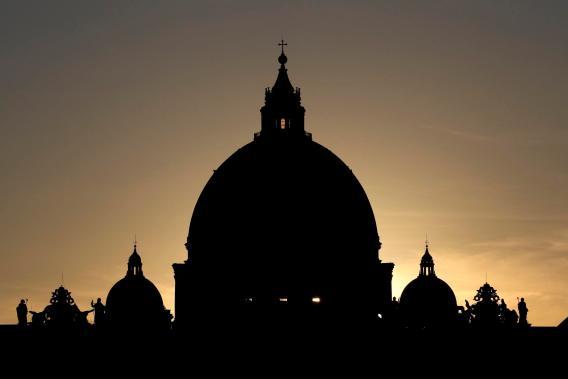
A file photo shows the dome of St. Peter's Basilica at sunset at the Vatican. (CNS photo/Paul Haring)

First Reading Isaiah 55:10-11
The rain makes the earth give growth. Thus says the Lord:
As the rain and the snow come down from the heavens and do not return without watering the earth, making it yield and giving growth to provide seed for the sower and bread for the eating, so the word that goes from my mouth does not return to me empty, without carrying out my will and succeeding in what it was sent to do.
Responsorial Psalm Psalm 64
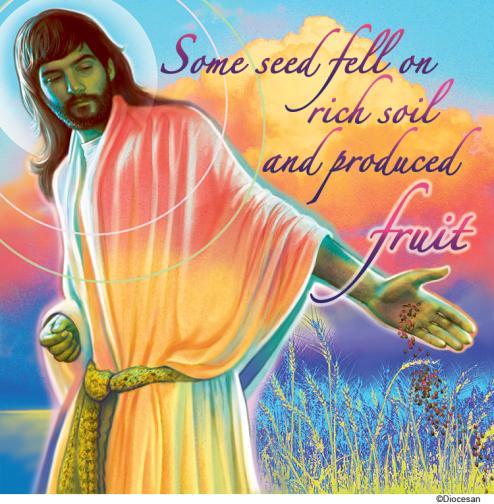
Response: Some seed fell into rich soil and produceditscrop.
1. You care for the earth, give it water, you fill it with riches. Your river in heaven brims over to provide its grain. Response
2. And thus you provide for the earth; you drench its furrows, you level it, soften it with showers, you bless its growth. Response
3. You crown the year with your goodness. Abundance flows in your steps, in the pastures of the wilderness it flows. Response 4. The hills are girded with joy, the meadows covered with flocks, the valleys are decked with wheat. They shout for joy, yes, they sing. Response
Second Reading Romans 8:18-23
The whole creation is eagerly waiting for God to reveal his sons.
I think that what we suffer in this life can never be compared to the glory, as yet unrevealed, which is waiting for us. The whole creation is eagerly waiting for God to reveal his sons. It was not for any fault on the part of creation that it was made unable to attain its purpose, it was made so by God; but creation still retains the hope of being freed, like us, from its slavery to decadence, to enjoy the same freedom and glory as the children of God. From the beginning till now the entire creation, as we know, has been groaning in one great act of giving birth; and not only creation, but all of us who possess the first-fruits of the Spirit, we too groan inwardly as we wait for our bodies to be set free.
In today’s Gospel Reading from St. Matthew, Christ is asked why He speaks in parables. His response in part is the statement, “To anyone who
Gospel Matthew 13:1-23
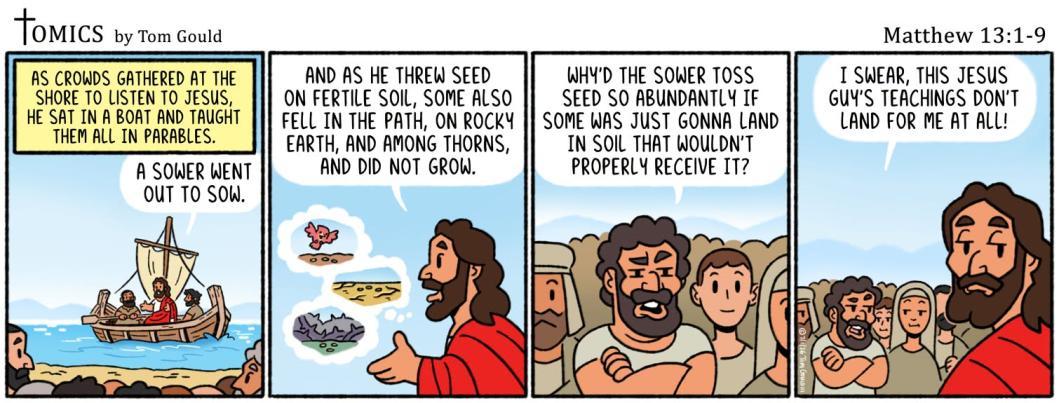
A sower went out to sow.
Jesus left the house and sat by the lakeside, but such large crowds gathered round him that he got into a boat and sat there. The people all stood on the beach, and he told them many things in parables.
He said, ‘Imagine a sower going out to sow. As he sowed, some seeds fell on the edge of the path, and the birds came and ate them up. Others fell on patches of rock where they found little soil and sprang up straight away, because there was no depth of earth; but as soon as the sun came up they were scorched and, not having any roots, they
has, more will be given and he will grow rich; from anyone who has not, even what he has will be taken away.” Christ’s parables, of which there are many, may not always make sense to us, unless we consider them carefully. Christ’s speaking in and relating to parables has everything to do with what we call The Word. If we listen conscientiously to the Word (represented by our readings at Masses and to the homily we hear), we may, and perhaps even should,
withered away. Others fell among thorns, and the thorns grew up and choked them. Others fell on rich soil and produced their crop, some a hundredfold, some sixty, some thirty. Listen, anyone who has ears!’
Then the disciples went up to him and asked, ‘Why do you talk to them in parables?’ ‘Because’ he replied ‘the mysteries of the kingdom of heaven are revealed to you, but they are not revealed to them. For anyone who has will be given more, and he will have more than enough; but from anyone who has not, even what he has will be taken away. The reason I talk to them in parables is that they look without seeing and listen without hearing or understanding. So in their case this prophecy of Isaiah is being fulfilled:
You will listen and listen again, but not understand, see and see again, but not perceive.
For the heart of this nation has grown coarse, their ears are dull of hearing, and they have shut their eyes, for fear they should see with their eyes, hear with their ears, understand with their heart, and be converted and be healed by me.
‘But happy are your eyes because they see, your ears because they hear! I tell you solemnly, many prophets and holy men longed to see what you see, and never saw it; to hear what you hear, and never heard it.
‘You, therefore, are to hear the parable of the sower. When anyone hears the word of the kingdom without understanding, the evil one comes and carries off what was sown in his heart: this is the man who received the seed on the edge of the path. The one who received it on patches of rock is the man who hears the word and welcomes it at once with joy. But he has no root in him, he does not last; let some trial come, or some persecution on account of the word, and he falls away at once. The one who received the seed in thorns is the man who hears the word, but the worries of this world and the lure of riches choke the word and so he produces nothing. And the one who received the seed in rich soil is the man who hears the word and understands it; he is the one who yields a harvest and produces now a hundredfold, now sixty, now thirty.’ ❖
grasp the meaning. The Word is filled with the deeper truths of the Bible. God opens our eyes and ears to these truths, but we must be amenable to them and must be willing to try to understand them. Too often we merely listen and do not hear. We go through the motions, when our total concentration should be on what we are being told. First of all we need to appreciate that only God can open the eyes and ears of each of us.
One of the popular phrases about stewardship is “an attitude of gratitude.” That is so important. On a bad day, even the most hardened of us can find one thing for which to be grateful, and that can adjust everything in our thought processes. Are we closed to the teachings of Jesus? If we open our minds and concentrate, the Lord’s teachings may unfold to us like nothing we have ever experienced previously. ❖
[http://www.catholicsteward.com/blog/ ]
Gospel Reflection
In both today’s First Reading and the Gospel, the example of the sowing of seeds is given as a symbol of the Word of God taking root in our hearts. The rain that falls is important for crops to grow to provide food. We must remember that Isaiah lived in a country on the edge of a desert where rain and occasional snow fall was crucial for making the land fertile and so ensure the survival of the people. The prophet sees the annual miracle of growth after rain as a powerful symbol for the Word of the Lord. Through his Word, God is continually calling us to better and more worthwhile lives. For us it is a struggle to make the voice of God the most important voice in our lives. God’s voice is not like that of a dictator. God speaks to us as gently as a loving father speaks to his children. But God’s Word can be very effective and if we give it the opportunity of good soil to grow, it can change people’s hearts.
The Gospels are filled with parables. The parable is a story of everyday happenings that everyone was familiar with but which carries a message. This was Jesus’ favourite method of teaching. He taught in parables because the truth can at times be so painful that we are not able to take it straight. We have to dress it up so that it can be more acceptable. A short story has another advantage. It can contain a great truth that goes to the heart of the matter. The parable of the sower is addressed to the great crowd gathered by the shore of the lake. The lavish sowing of the seed is a symbol of the mystery of the Kingdom of God. The sower is generous, even wasteful of the seed. He scatters it around, giving the most unlikely ground the opportunity to receive the Word. The places where the seed falls serve as examples of different responses to the gift of the Word of God. It may be necessary to reflect on our response to the Word. ❖
[From: Journeying with the Word of God, The Religious Education Department, DioceseofGeorgetown, Guyana ]
TheWordandtheWorld
Should Honour and Honesty be kept out of Sports?
By Mike James
“Should Politics should be kept out of Sports” used to be popular topic at secondary school and other Debating Clubs. Over time the prevailing view at community, national, regional and international levels favoured the proposition that sporting arenas should remain a haven from political divisiveness. Sports should and do serve strictly as a unifying space for friendly competition, shared noble values and international sister and brotherhood.
Originally established as Citius,Altius, Fortius ("Faster, Higher, Stronger"), the International Olympic Committee updated its motto in 2021 to add "Together" to emphasize and trumpet global solidarity and unity in Fair Play through Sport.
These noble goals have served to justify the billions of dollars of public and private expenditure on international sporting events of which the World Cup is the premier example with its motto and assertion that “Football Unites the World”.
Of course, everyone knows that behind the noble ideals lie the immense profits generated by the world’s most powerful financials interests exemplified by the designation “Official Sponsor of the World Cup 2026” whose advertisements hold us captive at every TV broadcast and especially the newly created advertisement shots, euphemistically named “hydration breaks”.
All are aware of the massive corruption scandals in internation sport such as the one associated with the national delegate votes to award the 2022 venue to Qatar and the envelopes with US$40,000 in cash allegedly distributed to Caribbean delegates at their 2011 a meeting in Trinidad by a Qatari official to secure votes for the Qatari bid which let to the resignation of top Fifa officials (to refresh memories see https://en.wikipedia.org/wiki/ Caribbean_Football_Union_corruption_scanda l)
The current massive international football crisis over Fifa’s INDEPENDENT committee’s decision to suspend its issuing of a red card to a US player following a public appeal by the world’s most powerful politician has officially put to rest the notion that politics does not dominate international sport.
But what was (and continues to be) the impact of this crisis on players and public alike. The international outrage and immediate collapse of credibility of the head of Fifa (far more devastating than his fawning unilateral pantomime of creating and awarding the inaugural "FIFA Peace Prize – Football Unites the World" just for the politician).
The impact of the latest political interference with the rules of FIFA on the US football team was stunning and visible to the world to see. Entirely innocent of the fraud themselves but
corruption and
Furthermore, the functions of the president and the board of ASIF have been suppressed. A director and a vice director, both appointed by the pope, will direct the organization going forward. During a sede vacante the period following the death or resignation of the pope the director must resign and entrust the vice director with the charge of current affairs.
The Secretariat of State no longer appoints the organization’s personnel; this is now the ASIF director's


made scapegoats by their own national Soccer Federation which had endorsed the plan to give them an unsought and humiliating advantage over their next opponents and so increase FIFA income in US, they were unrecognizable on the field as a team that had brought so much pride to their country and themselves in their previous matches.
Their Belgian opponents who had played to mediocre results in previous games, were suddenly transformed into the representatives of 7 billion overnight standard bearers of 7 billion football followers, including millions in the US who were willing them on with every pass of the ball, to witness to the world that fraud and dishonesty, even when perpetrated by the world’s richest and most powerful, cannot have the final say.
The US team and millions of their supporters have recognized that the loss of the game against Belgium was nothing in comparison with the shame and humiliation they would have suffered around the world and in future soccer history for having won not on their own merits but by cheating and fraud. Real victory, on the soccer field, as in all life, is measured in a paradoxical but eternal truth. Whoever seeks to save their life will lose it. Only those who are prepared to lose the game of football and the game of life for the sake of Honour and Honesty, will save it.❖
financial watchdog (From
responsibility. However, the Secretariat of State still intervenes in hiring consultors, who must collaborate “on a free basis.” Finally, the new statutes insist on the necessity of maintaining archives.
ASIF was originally called the Financial Information Authority (AIF). It was created at the end of Pope Benedict XVI's pontificate under pressure from Moneyval, the European body for fighting money laundering and the financing of terrorism. The European organization had pushed the Vatican to

conform to international norms. Published in 2024, Moneyval's latest report praised the progress the Vatican has made in this domain. Nonetheless, ASIF’s reputation was tarnished in 2023 following the Vatican justice system's conviction of its former president René Brülhart and former director Tommaso Di Ruzza. They were fined for failing to report and denounce an irregular operation in the context of the so-called “London building” trial. Bothmenhaveappealed. ❖
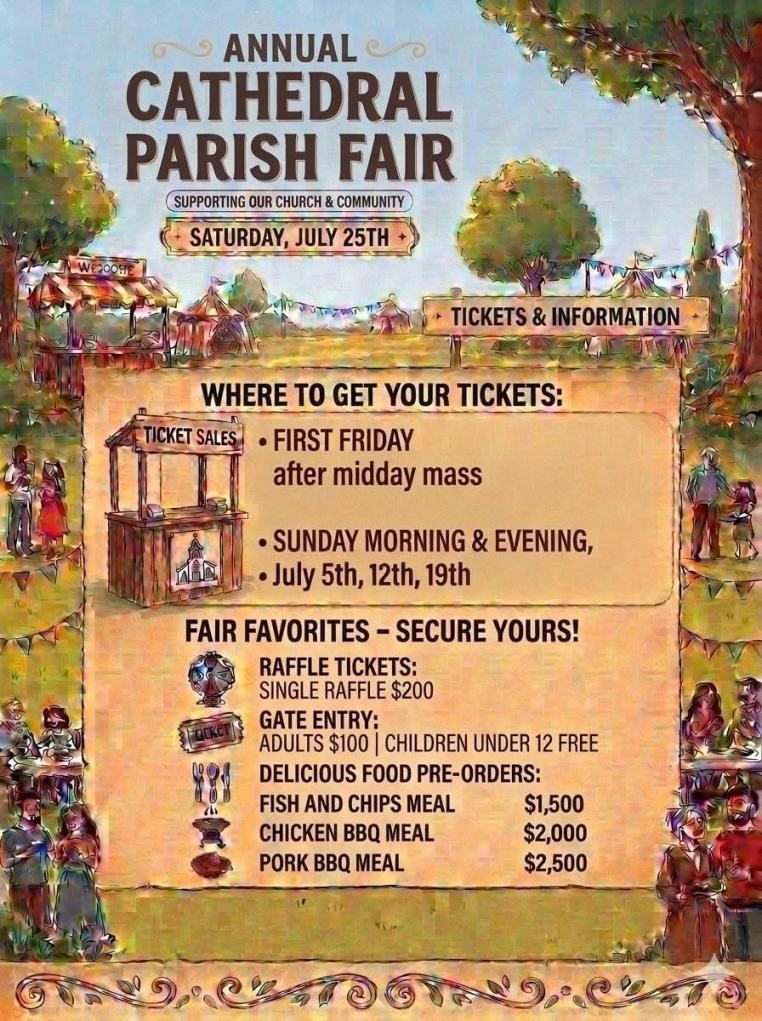
For 121 years, the Catholic Standard has been sharing the Gospel of Jesus Christ.
Now reaching 10,000+ followers on Catholic Media Guyana Facebook plus going straight to your inbox and WhatsApp, our vibrant weekly e-paper is a trusted source which delivers informative and inspiring stories from across the diocese and around the world.
Want
promote
business or event? Advertise with
47 years since Fr. Bernard Darke SJ was killed
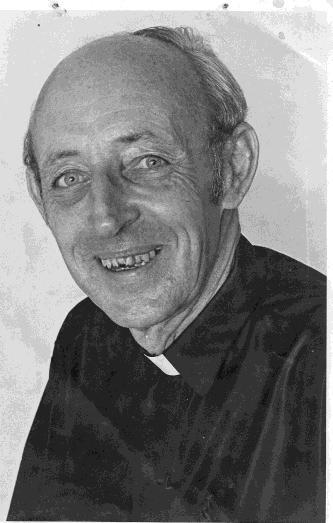
July 14th will mark 47 years since Jesuit priest Fr. Bernard Darke was murdered on Brickdam in Georgetown. Fr. Darke was killed because he was mistaken for Fr. Andrew Morrison SJ, who was the Editor of the Catholic Standard at that time.Fr.Morrison had incurred the wrath of the thengovernment because he was one of the persons at the forefront of the struggle for democracy and humanrightsinGuyana.
On Saturday, July 14th 1979, the Working People’s Alliance was holding an anti-government demonstration at the Magistrate’s Court where some of their leaders were answering what many felt were politicallymotivated charges. The demonstration followed the police van which was carrying the leaders past St. Stanislaus College on Brickdam.
Fr. Darke - who taught Scripture and Maths at St. Stanislaus College and was also the Scout Master there - took a break from marking end of term exam papers and went out to take photos of the demonstration. (Fr. Darke was also a photographer for the Catholic Standard). He noticed Mr. Mike James (who was the Assistant Editor of the Catholic Standard at the time) and who had been covering the case in Court, and his wife, Maria. Suddenly the crowd was attacked by a gang of young men armed with staves, cutlasses and knives. Mr. James was attacked by three men, and fell to the ground, bleeding. Fr. Darke, on the other side of the road, was photographing the attack. The attackers then turned on Fr. Darke, and he started to run, but was encumbered by his cameras, strung around his neck. They beat him with staves, continuing to beat him when he fell, and took his camera.As Fr. Darke was rising, a fourth man stabbed him in the back with a bayonet. He was taken to hospital, but died that evening, at around 6 pm, fromarupturedlung.
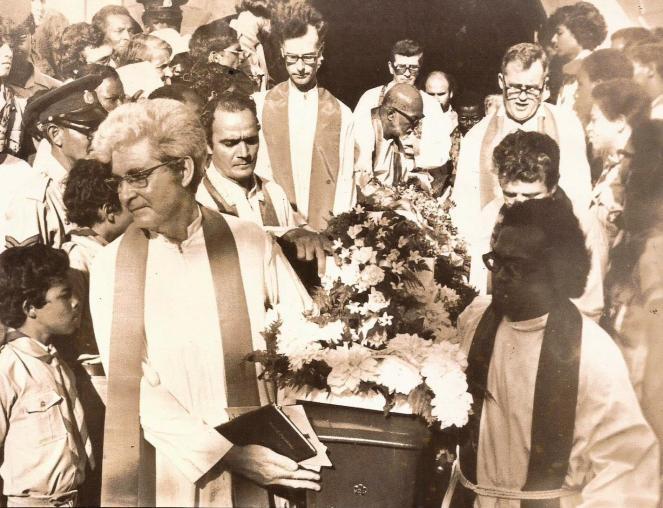
Fr. Darke’s funeral took place on Wednesday, July 25th, 1979 at the Cathedral of the Immaculate Conception,Brickdam,Georgetown.
After a short service at St. Stanislaus College, Fr. Darke’s coffin was carried to Brickdam
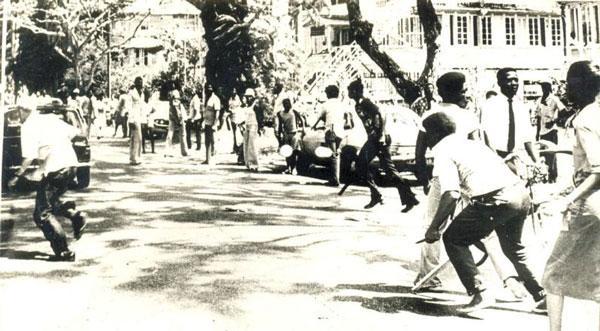
Father Bernard Darke SJ (left), on the morning of Saturday July 14th, 1979, being chased across the road by members of the House of Israel cult, one with bayonet in hand (3rd from right) and another with stave in hand (4th from right) before being beaten and stabbed. He died later the same day.
Cathedral by a group of Scouts, while crowds of people walked alongside. More than six thousand people crowded into the Cathedral and overflowed onto the streets outside. Those unable to get in listened to the service thoughapublicaddresssystem.
Some thirty priests, led by Fr. Robert Barrow, the Jesuit Superior, concelebrated the funeral mass. Bishop Benedict Singh and Anglican Bishop Randolph George, Chairman of the Guyana Council of Churches, wereintheSanctuary.
The homily was delivered by Bishop Singh. He preached on Luke 23: 26 34, which speaks of Simon ofCyreneand the weeping of the women of Jerusalem, and finished with the words: “Father, forgivethem...”.
Bishop Singh addressed the young people present: “Bernard would want you to become men and women who would never let hatred govern your actions,” he told them, adding that they should “be sorry not for Bernard but for the violence that caused his death and for those who supported violence by failing to speakout.”
Fr. Darke was buried in the Jesuit tomb at Le Repentir cemetery. A memorial cross and stone on
Brickdam mark the place where hewaskilled.
Journeying with the Word of God
Bernard Darke was born in the UK in 1925 and became a Jesuit in 1946, after wartime service in the Royal Navy. During formation at Heythrop, he maintained his involvement in the scouting movement and developed an interest in photography. Following ordination in 1958, he came to Guyana in 1960 and taught at St Stanislaus College, where he transformed the scout troop and took the scouts on many trips to the Interior. Fr. Darke continued to develop his photography skills and built a dark room at his community house. His aim was to produce reliable documentation of people and events, which would improve communications between communities, people andcultures.
Fr. Darke was not a public figure and was never involved in politics or controversy; which is why his murder during a political demonstration sent shockwaves through the Christian community of GuyanaandthewiderCaribbean. ❖
(Sources include Justice: the struggle for Democracy in Guyana 1952-1992 by Fr. Andrew Morrison SJ and Saints News & Views: Volume 22, Issue 3 - 8 Sept.,2015)
MAKING THE WORD OF GOD YOUR OWN
Step 1: Lookattoday’sReadingsprayerfully.
1st Reading: Just as God cares for the earth by sending rain to make it fruitful so he sends his lifegiving Word to us.
2nd Reading: Paul reflects on the fact that moving to a spiritual life can involve great suffering but can also lead to great joy.
Gospel: The Gospel story is one of Jesus’ betterknown parables. He compares the Word of God to a seed falling on the ground.
Step 2: ApplyingthevaluesoftheReadings toyourdailylife.
1. In the First Reading the prophet Isaiah says, “The word that goes from my mouth does not return to me empty.” What do you think he is saying with those words?
2.People may receive God’s Word but there are so many other interests in their lives that the most important things get crowded out. Reflect on whether this is your situation.
3.In the Gospel the Word of God is compared to a seed being sowed. If the seed is to produce a good harvest, it must be planted in good soil. Are you offering the Word of God the proper soil for it to grow and produce in you?
4.The Gospel presents us with a great challenge today: am I open to God’s Word? What kind of “soil” am I for God’s Word?
Step 3: Accepting the message of God’s Wordinyourlifeoffaith
God does not only speak to us in the Sacred Scriptures. God also speaks to us through the events in our lives. But it is the Scripture that helps us to understand what God is saying to us in those events. God’s Word comforts, guides, inspires and challenges us. The seed of God’s Word, once dropped into the human heart, never dies. It is never too late to act on the Word of God.
Step 4: Somethingtothink&prayabout
1.The Word of God does not come to us as a judgement but as a friend. We have to listen to our friend, the Word, and act on what we hear. Our friend calls us to a different, fruitful, more enriched life. If we refuse to listen to our friend, we will eventually be losers. How do you intend to allow God’s Word to have an impact on your life?
2.Think of one person who needs the hope you have in your life. Make a plan to share that hope with the person during the coming week.
3.Pray that you will be good ground for the seeds the Lord sows. ❖
[From: Journeying with the Word of God, The Religious Education Department, Diocese of Georgetown, Guyana ]
Fr. Bob Barrow SJ (front left) - then Jesuit Superior in Guyana - and other priests bear Fr. Darke’s coffin out of the Cathedral of the Immaculate Conception following the funeral mass on Wednesday, July 25th, 1979.
Vatican unveils agenda for global family summit (From P1)
Participants are expected to reflect on how families themselves contribute to the Church’s mission, not only as recipients of pastoral care but as active agents of evangelization. The framework dated July 3 and released July 6 by the Vatican said that families embody the Gospel in “daily relationships, choices, fragility and hope,” and calls for continued openness to renewal, asking for “the courage to persevere on this path,” while “always welcoming the Gospel anew in the joy of being able to proclaimittoall.”
The meeting will include listening sessions, the sharing of concrete pastoral experiences, and dialogue with experts. Its goal is to discern “the direction in which the Holy Spirit is leading us today,” while recognizing and supporting what is already being lived out in families and local Church communities. The themes are divided into five daily sessions by the organizersofthefamilysummit.
, beauty and challenges
The first topic discussed will be “Families today: reality, beauty and challenges” aimedat “discerning the signs of the times through the experienceof families and the Church’s pastoralcommitmenttoday.”
This part aims at “attentive listening to the concretelives of families and tothe experience of those who accompany them, recognizing together both the beauty of love as it takes shape in daily life and the fragilities that often affect it.”
The Vatican listed “precarious employment and housing, illness, the challenges of raising children, emotional loneliness, and the care of family members with disabilities, the elderly, or those who are not selfsufficient,” as challenges that families facetoday.
Among questions asked during the session will be: “How do the transformations of our time affect the experience of love between man and woman, generation of life, care, the transmission of the faith, and the missionoftheChurch?”
Young people and the discovery of the vocation to marriage
The second day will be focused on the young people “andthe discovery of the vocation to marriage” and is aimed at “listening to young people and accompanying them in discovering the valueofmarriage.”
“In many parts of the world, young people live in contexts in which confidence in the possibility of building a stable marital and family project has weakened due to economic, social and cultural factors,” the Vatican said, pointing out that the meeting will address several challenges connected to upbringing of young people in families.
One of them is what “language, experiences, and educational and spiritual pathways help children, adolescents and young people today to recognize the value of marriage?” with the other asking “What witness can couples and families offer?” and how can they contribute to “accompanying young people in their emotional, relationalandsexualgrowth?”
Pope Leo XIV, traveling to Spain June 612, encouraged young people to not be afraidtomarry.
After one of the young men on the stage mentioned he was a newlywed, Pope Leo went visibly off the cuff to urge young people to “not be afraid of marriage. Do not be afraid of forming a family!”
Married life. The first years of marriage: a decisive time
Listening to and accompanying couples “in the early years of married life and at every stage of life” is a third-day topic of the discussion titled “Married life. The first years of marriage:adecisivetime.”
“The experience of couples in the first years of married life calls for particular attention,” the Vatican said. “This is an especially important phase for strengthening the marital bond and facing together the changes that accompany the beginning of family life, such as the birth of children and the challengeofbalancing family and work, while discovering ever new meanings ofconjugalandfamilylove.”
The Vatican noted in its preparatory note that “it is during these early years that many of the human and spiritual resources are cultivated that will help spouses navigate the different seasons offamilylife.”
Looking at this stage of marriage bears weight as according to Pew Research Center, 4 in 10 divorces occur in the first decade of marriage, with 16% of couples divorcing in the first four years, and 24% between the fifth and ninth year of marriage.
The Vatican announced that in that phase of the discussion, some of the questions asked will be: “What forms of accompaniment are most effective in supporting couples, particularly during the first years of married life?” as well as “How can spouses be helped to recognize and develop their relational, spiritual, generative and parental resources?”and “Which experiences demonstrate the fruitfulness of networks of families capable of supporting one another and, in turn, becoming a source of accompaniment and witness for others?
” :
accompanying and supporting “Walking with families in complex situations” is the fourth stage of discussion, titled “In the difficulties of life:accompanyingandsupporting.”
“Particular attention is directed to couples and families who, at every stage of married life, encounter relational, social or spiritual difficulties, situations in which the Gospel is called to draw ever closer,” the July 6 release said.
“Failure, fragility, the gap between the ideal and reality, and the complexity of life situations also become places in which the work of God’s grace may be recognized and where persons can be accompanied with respect, patience andhope,” theVaticansaid.
In this fourth day of the family summit designed around “Amoris Laetitia,” participants will be asking “What steps havebeentakentosupportthoseliving in situations of fragility or difficulty?” as well as “What forms of resistance continuetoemerge?”
The discussion will also draw on the
ways Christian communities can be built “in which those who have experienced suffering, abandonment, separation and divorce may truly feel listened to, involved and coresponsible.
” Christian families as subjects of the Church’s mission
The last day of the discussions will be focused on “Christian families as subjects of the Church’s mission” and will discuss the theme of “Embracing conjugal and family love as an impetus formission.
”
“Spouses know well that one never ceases to learn the languages of love, dayafterday,” theVaticansaid.
“WithinChristiancommunities,couples have a distinctive way of responding to the common vocation to love. In a rapidly changing world, the contribution of families to the Church’s mission is more necessary than ever in fostering an ‘apprenticeship in enduring love,’ with the benefits this brings to personal, ecclesial and social life.”
The framework said that “Despite the challenges posed by the pace of contemporary life, families remain the primary setting in which the faith is handed on to new generations, therefore participants will ask “How can the experience of couples and families be valued as a place of human, spiritual, ecclesial and social growth?” and “How can the contribution of families to the Church’s evangelizing mission and to the pastoral conversion of Christian communitiesbe recognized andsupported?
”
The pope made the announcement about the meeting on the feast of St. Joseph, saying that he was convening the meeting “in light of the changes that continue to impact families in an effort to proceed, in mutual listening, to a synodal discernment on the steps to be taken in order to proclaim the Gospel to families today, in light of Amoris Laetitia and taking into account what is currently being doneinthelocalChurches.”
“I entrust this journey to the intercession of Saint Joseph, guardian of the Holy Family of Nazareth,” he added. ❖
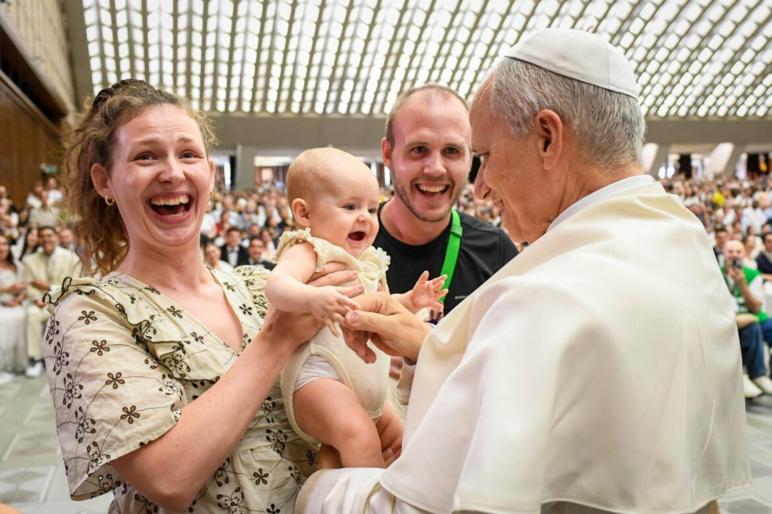
Pope Leo XIV greets a baby and family at the conclusion of his weekly general audience in the Paul VI Audience Hall at the Vatican Aug. 27, 2025. (CNS photo)
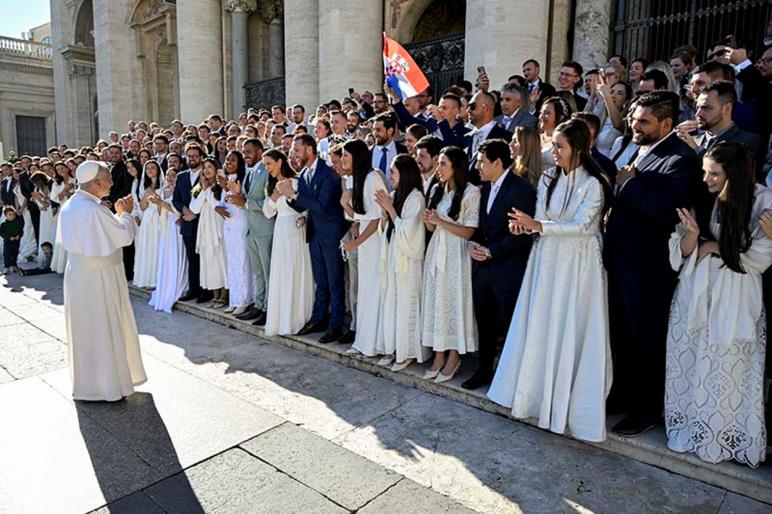
Pope Leo XIV greets dozens of newlywed couples who came to St. Peter’s Square at the Vatican for his blessing after his general audience Nov. 12, 2025. (CNS photo/Vatican Media)
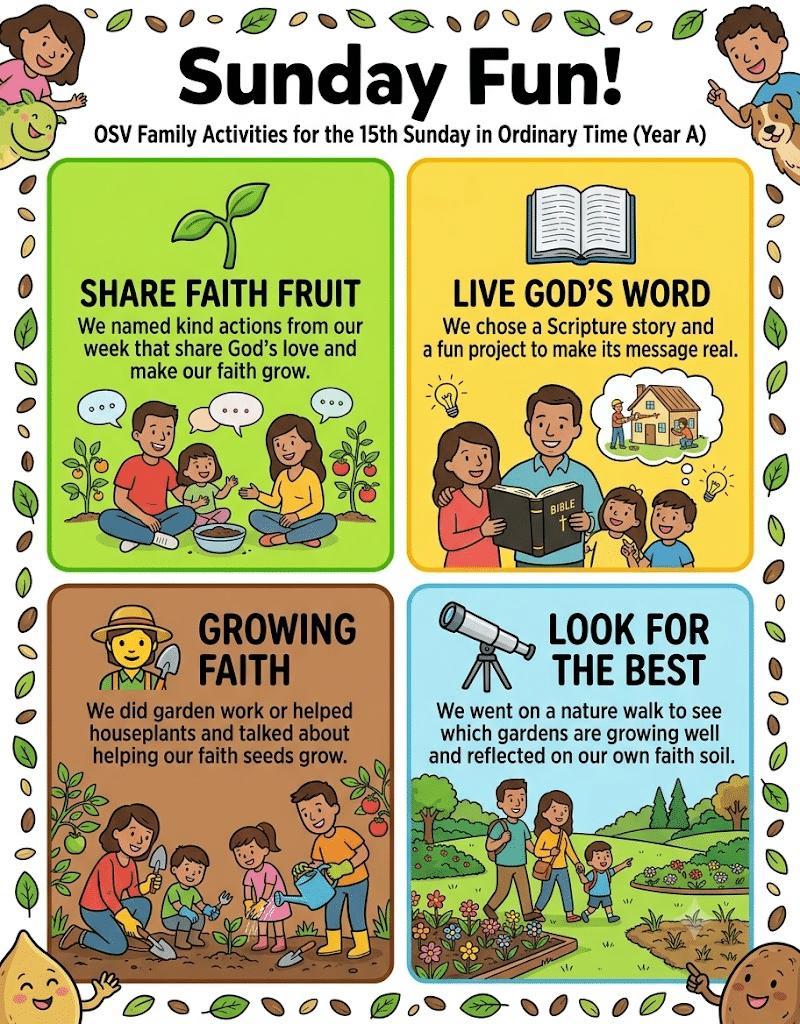
Dear Girls and Boys,
Have you ever planted anything? Perhaps you took some seeds and planted a garden of vegetables. If so, you know that the type of soil that you have is very important to the success of a garden. If the ground is too hard, or full of rocks and weeds, you probably won't have a very good crop of vegetables.
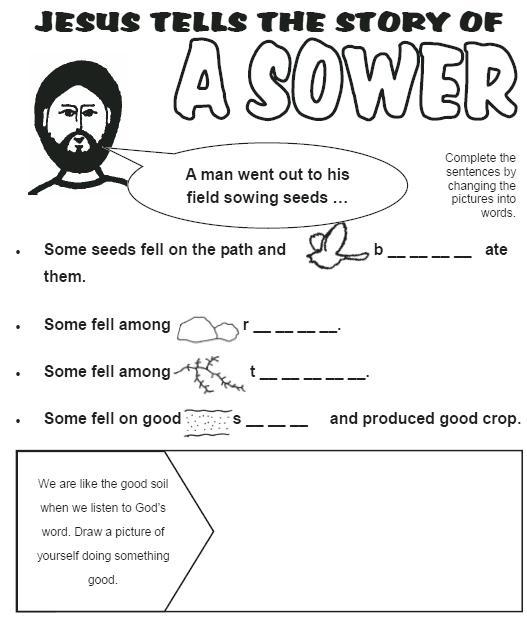
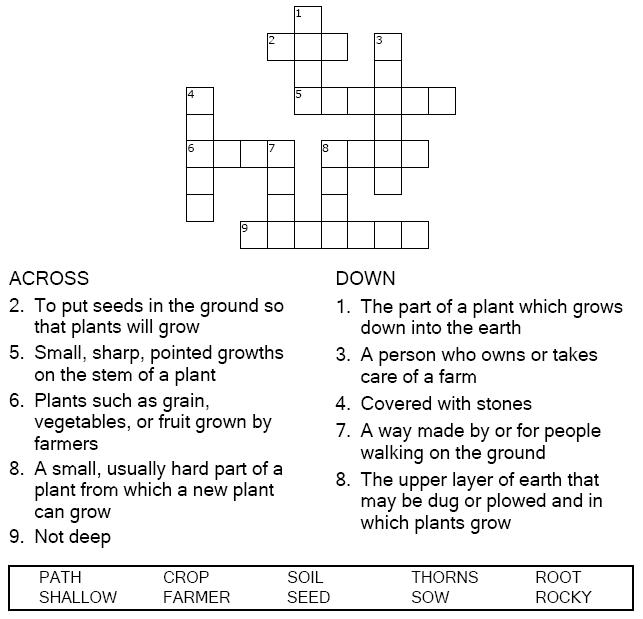
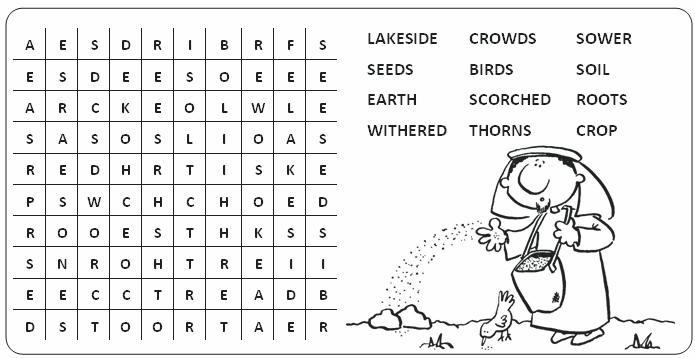
In our Gospel reading today, Jesus told a story about a man who went out and planted some seeds. This story that Jesus told is usually called "The Parable of the Sower," but actually, the story is more about the soil than it is the sower or the seed. Some of the seed that was planted fell on the path where the ground was very hard. The seeds just lay on top of the ground and the birds came and ate the seeds. Some of the seed fell on rocky ground. The seeds sprang up quickly, but when the sun came, the plants dried up because they didn't have good roots. Some of the seeds fell among weeds and plants grew for a little while, but the weeds took over and choked them out. Fortunately, some of the seed fell on good soil and the plants grew strong and healthy and produced a good crop.
In Jesus' story, the Word of God is the seed, and we are the soil. Often, when we come to Mass, the priest is preaching the Word, but we aren't really paying attention. Perhaps we are thinking about what we are going to do that afternoon or about what we did yesterday. We are hearing the Word, but we are not listening. That is like throwing seed on the top of the ground. It won't ever grow into anything in our life. There are other times when we hear the Word and we get excited about it, but then our excitement fades and we drift away. That is like the seeds that fall on the rocky ground. The plants spring up, but then die because the roots are too shallow. Sometimes we hear the Word and we believe what it says, but we want to keep on doing the same things we have been doing. That is like planting the seed in with a bunch of weeds. I can tell you what will happen, the weeds will soon take over! When we hear the word, and we listen and try to understand what it says and put it into practice in our daily life, then we are like good soil. We are like soil where the seed takes root and grows and produces a plentiful harvest. That is the kind of soil that Jesus wants us to be. What kind of soil are you?
Dear Jesus, we want to be like the good soil. Help us to listen to God's Word and put it into practice in our daily life. In your name we pray. Amen. ❖
By Renika Anand
Beyond the Noise
Kat Cole, an American businesswoman once said “Focus on things that are small enough to change, but big enough to matter.”
Have you ever experienced a day where it seemed like you were stressed-out and busy during every single moment, but did not seem to get anything important done? It is not only physical labour that is often tiring, but also the mental weight of carrying multiple worries for long periods of time. Although it is human nature for us to worry about our lives and the people around us, we strangely tend to choose the wrong things to worry about - things that are transient, and whose impact rarely extends beyond ourselves. This means that rather than focussing our energy on matters that can help us be productive and leave a positive effect upon the world, we allow ourselves to be drained by small and insignificant obstacles.
Time is a gift. If utilised correctly, we can change it into a tool or a weapon to shape the world. If we do not spend it wisely, it will drain away like sand between our fingers. We must thus ensure that when we seem to be spending large amounts of time, it is on something that truly matters and not momentarynoisethatdistractsus. Turn my eyes away from worthless things; preserve my life according to your word.
- Psalm 119:37 ❖


Family and Faith | The Domestic Church in Guyana
Fr. Joel Thompson SJ
“As the family goes, so goes the nation and so goes the whole world in which we live.” St John Paul II If you were asked to list three ways of strengthening Guyanese society, what would your response be?
When we speak about strengthening society, we often think first of the economy (more cash grants and jobs), education (more schools), infrastructure (roads), or things like political institutions and security. All of these matter, but I would like us to focus on the smallest cell of society, the home. Before a child enters a classroom, before a citizen casts a vote, before a young person attends church, there is usually a home. The family is the first place where a person learns what life means, what love feels like, and whether the world is safe enough to trust.
Vision and Reality
In the Christian vision, the family is rooted in the faithful love of husband and wife, open to life, and called to form children in love and responsibility. Genesis says, “Therefore a man leaves his father and his mother and clings to his wife, and they become one flesh” (Genesis 2:24). However, we also know the Caribbean reality. Many of our families and homes do not fit the “perfect” picture. Some children are raised by single mothers, grandparents, aunts, older siblings, step-parents, or relatives abroad who support from a distance. Some homes carry the pain of absent fathers, broken relationships, migration, poverty, addiction, infidelity, or violence. Stepbrothers and stepsisters are common. Some families are blended across races and cultures. This is our Caribbean and Guyanese reality.
The Domestic Church
learn about God, love, respect, and forgiveness? Sunday school? The priest? Granny? Parents and households are the first preachers of the faith, by word and example (monkey see monkey do). Children in Guyana begin nursery school at 3 years old but before that, their first school is the home. The first 1000 days of a child’s life critically shape their lifelong well-being.
The Importance of Family
The first gift a family gives is belonging. A child who is loved learns, without needing a lecture, that he or she has value. In a healthy family, people learn to love and to be loved, to forgive and to be forgiven, to speak truth without cruelty, and to correct without humiliating. The Catechism
Parents and guardians have a special role. Children need guidance, discipline, structure and boundaries, but they also need room to grow. Families nurture gifts and vocations. Sometimes parents try to live through their children, forcing them to fulfil dreams that were never really theirs. Sometimes, out of love, parents hover over every decision and never allow their children to make mistakes (helicopter parenting). Saint Paul gives a wise warning: “Fathers, do not provoke your children to anger, but bring them up in the discipline and instruction of the Lord” (Ephesians 6:4). A family should be a place where talents are discovered, affirmed, and shaped, not a place where children are crushed by comparison or fear. Many children often hear “why can’t you be like so and so”.
Sign of the Cross before meals, a blessing before a child leaves for school, a decade of the Rosary once a week, reading the Sunday Gospel, or asking, “What should we thank God for today?” Joshua’s words are a beautiful family motto: “As for me and my household, we will serve the Lord” (Joshua 24:15).
If Guyana needs stronger communities, safer villages, more responsible citizens, more vocations, and a more vibrant Church, we must care for the family. Parishes should not only prepare people for baptisms and weddings (hatch and match). We must accompany families after the celebration. We must support single parents, encourage fathers, protect children, care for grandparents, and help young people understand that love is not just

The Church calls the Christian family the “domestic church.” This expression was given prominence by the Second Vatican Council, which taught that the family is “so to speak, the domestic church” (Lumen Gentium, 11). The Catechism also says that the Christian family is “a domestic church” (CCC 2204). This means that the home is meant to be a small Church, where faith is received, practiced, tested, and handed on. Who is responsible for teaching children to make the Sign of the Cross or to pray? Where should they first
calls the family “the original cell of social life” and says that family life is an “initiation into life in society” (CCC 2207). If the family is weakened, society feels it. If the family is healed, society is strengthened. Some of the social decline we see in Guyana is linked to the neglect of family life. The family is also a school of holiness. Holiness does not mean that nobody quarrels, loses patience, or makes mistakes. It means that we slowly allow God’s grace to shape how we speak, apologize, and serve. No family is perfectly holy, but every family is called to become holy. We are on a journey.
Listening is one of the most neglected family virtues. Many parents speak to children, but do not always listen to them. Many children hear correction, but not affirmation. Affirmation means “I love you as you are.” A home becomes more Christian when people make time to hear what another might be trying to express such as fear, loneliness, temptation, pressure, confusion or hope.
The domestic church is also a school of prayer. This does not mean that every family must gather every night with candles and hymn books. For some homes, that may be possible. For others, it may begin with the
a feeling, but involves sacrifice and commitment.
The future of society is being formed in the family. Around the table, on the veranda, in the yard, during quarrels, chores, prayers, and conversations, human beings are shaped. When families become more patient, honest, prayerful, and forgiving, Guyana becomes stronger. When homes become small schools of love, the Church becomes more alive.❖
Castel Gandolfo with cheerful welcome
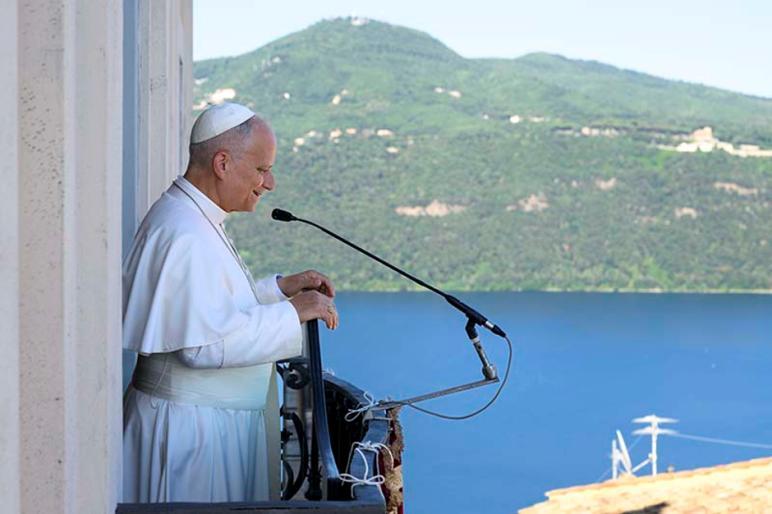
(OSV News) When the papal coat of arms was hung at the balcony of the papal Castel Gandolfo residence July 5, locals knew that their main summer protagonistwasontheway.
On Sunday afternoon, after praying the Angelus at the Vatican, Pope Leo XIV came to the picturesque lake town for overthreeweeksofsummerrest.
The joy was visible among those waitingtogreet him.
“Good evening, Castel Gandolfo!” the pope said, welcoming the cheering crowds from the balcony. “Welcome!” someone shouted out from below with the distance between the pope and the people much smaller than in the grand Apostolic Palace in the Vatican.
“Thank you,” the pope answered to the cordial laugh of the crowd. “I’m very happy to be here among you, to be able to spend the next few weeks with some rest, some prayer, some reading, andhopefully some sports,” hesaid.
Calling coming to Castel Gandolfo “always an important moment,” he thanked the locals for the hospitality andfor “beingbrothersandsisters.”
“I assure you of my prayers always, but especiallyduringthe nextfewweeks.”
The Prefecture of the Papal Household said on July 5 the pope would move to Castel Gandolfo “for a period of rest, until Monday, July 27,” saida statement released just before the pope prayed theAngelus.
Rumors that he would spend a longer summer break in Castel Gandolfo had been circulating since April when news broke that the papal summer residence in Castel Gandolfo would temporarily close as renovations began in preparation for Pope Leo’s stay this summer.
According to an April 16 report by the Catholic television news agency Rome Reports, work on the residence began in May ahead of the pope’s anticipated arrivalinJuly
The papal residence at Castel Gandolfo
served as the summer residence of popes from 1626 until the election of Pope Francis, who chose to remain at the Vatican rather than retreat to the coolerhilltopresidenceoutside Rome.
On May 10, 1626, Pope Urban VIII became the first pope to spend time in a place known as a perfect summer escape from the Roman heat for local residents.
Castel Gandolfo, the papal summer residence, stands on the ruins of Emperor Domitian’s first-century villa, later developed into a medieval castle by the Gandolfi and Savelli families beforepassingto theHolySee in1604.
Expanded and enriched by successive popes, it fell into disuse after 1870 but was restored following the 1929 Lateran Pacts, with its gardens unified and the Vatican Observatory relocated there in1934.
Located about 15 miles southeast of Rome, the town has long relied on an influx of tourists during the pope’s stay.
Pope Francis later converted the palace into a museum and opened the villa’s gardens to tours, drawing visitors yearround rather than only during the summermonths.
The Castel Gandolfo property spans more than135 acres, including 74 acres of gardens and 62 acres of farmland, along with three residences and a farm with chickens, rabbits, assorted fowl, cowsanda smalldairyoperation.
The grounds also include fruit and olive orchards, vineyards, hayfields, vegetable patches, aromatic herbs, flowerbeds and plants often used to decorate papal apartments and meetingroomsattheVatican.
One of the largest summer events is the feast of the Assumption of Mary on Aug. 15, when the pope traditionally celebrates Mass for the town and thousandsofvisitors.
In the summer of 2025, Pope Leo celebrated Mass for the town on the Marian feast day, as well as Masses in severalnearbycities.
Before coming to Castel Gandolfo, Pope Leo prayed the last Angelus from the
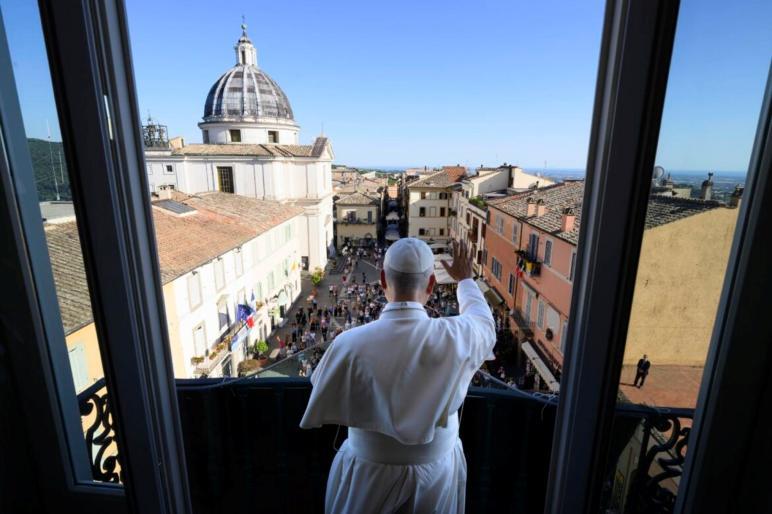
Aposolic Palace window in the Vatican, recalling after the prayer Father Francis Xavier Truong Buu Diep whom the Church beatified in the first-ever beatification ceremony held in Vietnam
July 2. Killed in 1946 in hatred of the faith “in odium fidei” in Latin “amid oppression and violence, he defended the rights of the people and did not abandon his parishioners,” the pope said.
“May his intercession and prayers
strengthen all those who proclaim the Gospel in situations of persecution today.” people in prayer
The pope also said, “I continue to remember in my prayers the victims of the earthquake and all the Venezuelan people.”
“May the Lord sustain them in this time ofgreat hardship,” he added ❖
Pope Leo XIV speaks to visitors from the balcony of the papal Castel Gandolfo residence in Italy July 5, 2026. (OSV News photo/Simone Risoluti, Vatican Media)
Pope Leo XIV greets visitors from the balcony of the papal Castel Gandolfo residence in Italy July 5, 2026. (OSV News photo/Simone Risoluti, Vatican Media)


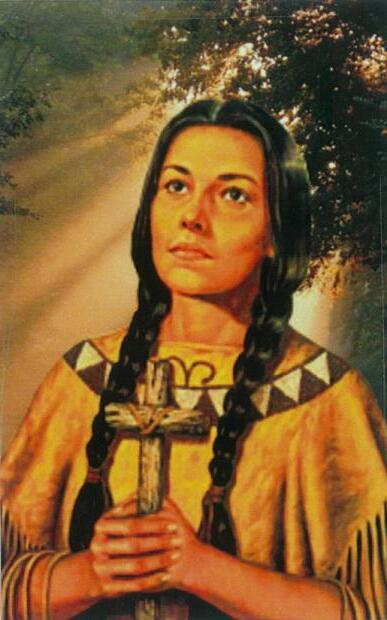
Kateri was born near the town of Auriesville, New York, in the year 1656, the daughter of a Mohawk warrior. When she was four, Kateri lost her parents and little brother in a smallpox epidemic that left her disfigured and half blind. She was adopted by an uncle, who succeeded her father as chief. She was moved by the words of Jesuit missionaries, but since her uncle objected to the presence of the missionaries, fear of him kept her from seeking instruction. She refused to marry, and at 19 finally got the courage to take the step of converting. She was baptized with the name Kateri (Catherine) on Easter Sunday.
Her conversion incurred great hostility, and she was treated like a slave. Because she would not work on Sunday, she received no food that day. Although she had to suffer greatly for her Faith, she remained firm in it. Her life in grace grew rapidly. She was powerfully moved by God’s love for human beings and saw the dignity of each of her people.
She was always in danger, for her conversion created great opposition. On the advice of a priest, she stole away one night and began a 200-mile walking journey to a Christian Indian village near Montreal, Canada. Here she lived a life dedicated to prayer, penitential practices, and care for the sick and aged. She was devoted to the Eucharist and to Jesus Crucified. She died on April 17th, 1680 at the age of twenty-four. She is known as the "Lily of the Mohawks". Saint Kateri Tekakwitha is a patron of the environment and ecology. ❖
July 14th: St. Kateri Tekakwitha