
Pope Leo’s Corpus Christi Mass and procession in Spain draw 1.2 million
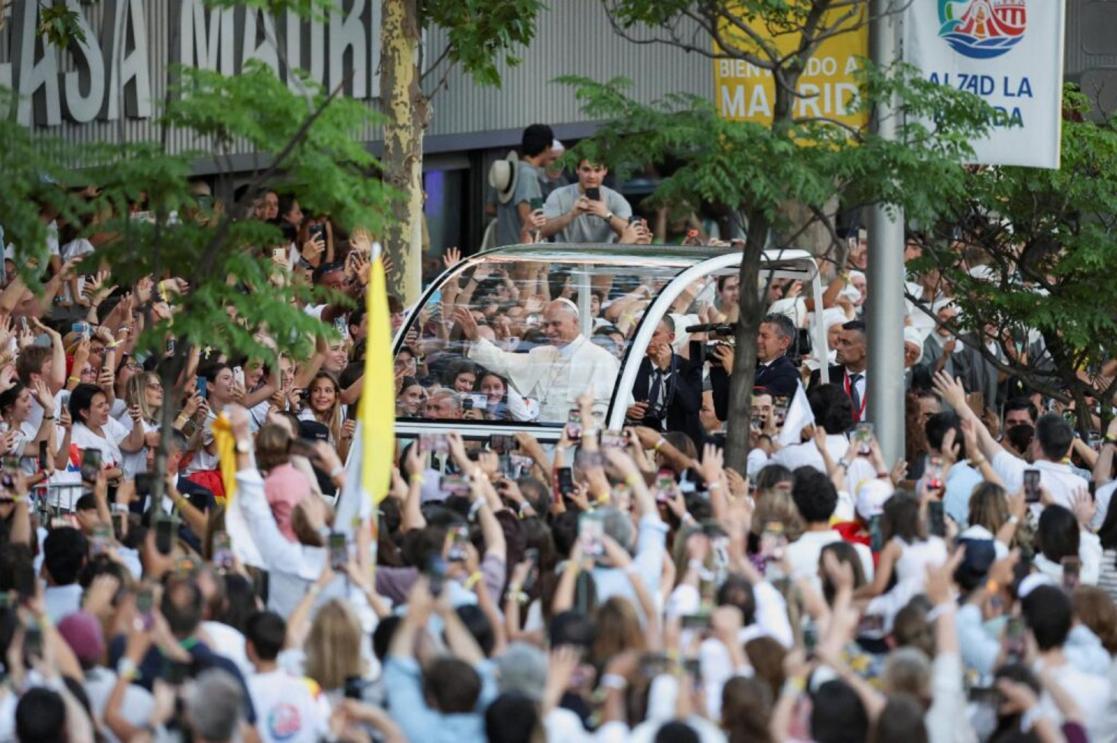
MADRID (OSV News) More than 1.2 million people filled the streets of Madrid as Pope Leo XIV celebrated Mass and led a Eucharistic procession through the heart of the Spanish capital June 7 for the solemnity of Corpus Christi, the liturgicalfeast celebrating the Most HolyBodyandBloodofChrist.
“We are gathered around the Eucharist, the gift of Christ’s living presence among us. He who wished to offer us his life so that we might enter into communion with the Father and become his children, is here as the living Bread come down from heaven, to nourish us with the very life of God, with a love stronger than death,” PopeLeosaidinhishomily.
“JustasChrist giveshimselfasfood in the Eucharistic celebration, the procession shows that he is not confined to the church, but comes out to meet us,” he added. “Jesus travels the streets, crosses the squares and visits our neighborhoods, dwelling in the settings of ourdailylives.”
Eucharistic grace to
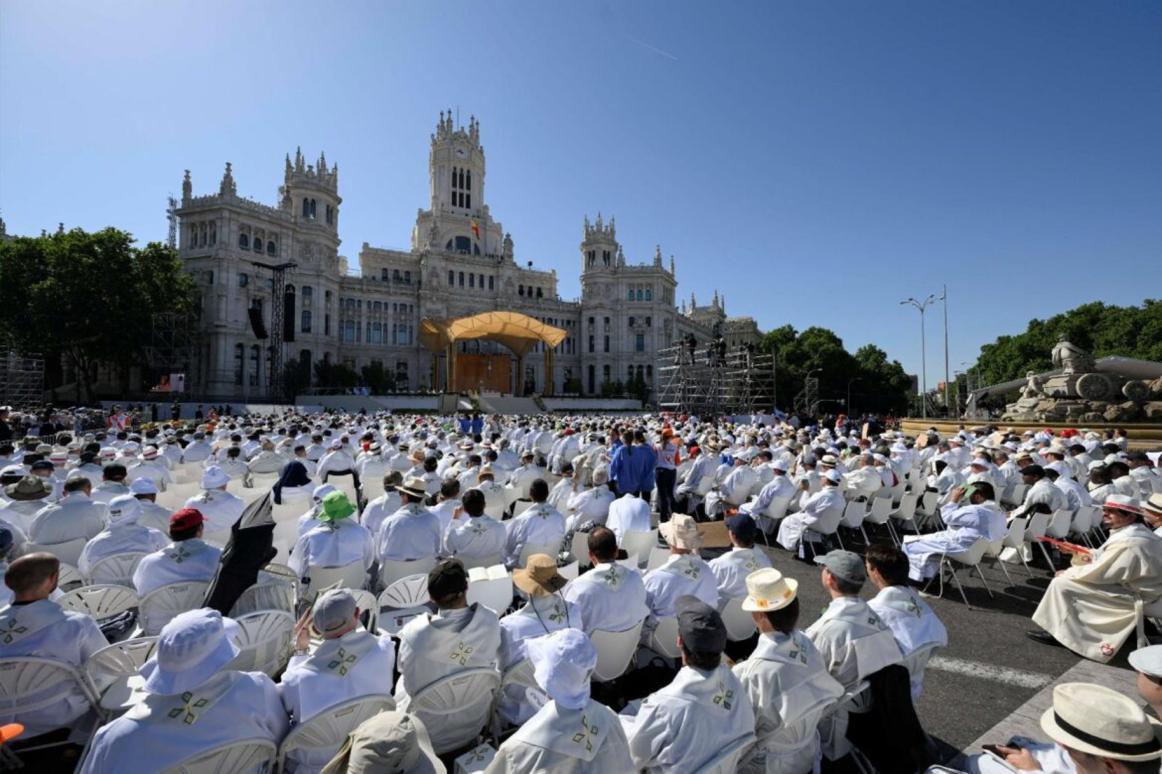
The pope offered Mass in the Plaza de Cibeles, the city’s iconic neoclassical fountain square where several of Madrid’s grand avenues converge, before leading the
through streets adorned with elaborate floral carpets crafted by local artisans from more than 30,000carnations.
Children who recently received the sacrament of First Communion )
‘Be human as Christ is,’ Pope Leo XIV tells half a million youth in Madrid - p2
Popeblessestowerofworld’stallestchurch - p3
A Christian Perspective on Social Issues - p4
Sunday Scripture - p5
Pope to Charismatic Renewal: Let Spirit lead you to communion, charity, mission - p6
Becoming ‘detectors of grace’ - p7
At Tenerife, Pope Leo urges traffickers to stop and repent, or face divine justice - p8
Children’s Page - p9
First Communion at Hague - p10
Growing in Grace Week 87 - p10
Faith in Practice Week 18 - p11
Pope’s return flight to Rome delayed by mechanical problems - p12
Lego announces new set designed after Spain’s Sagrada Família basilica - p12
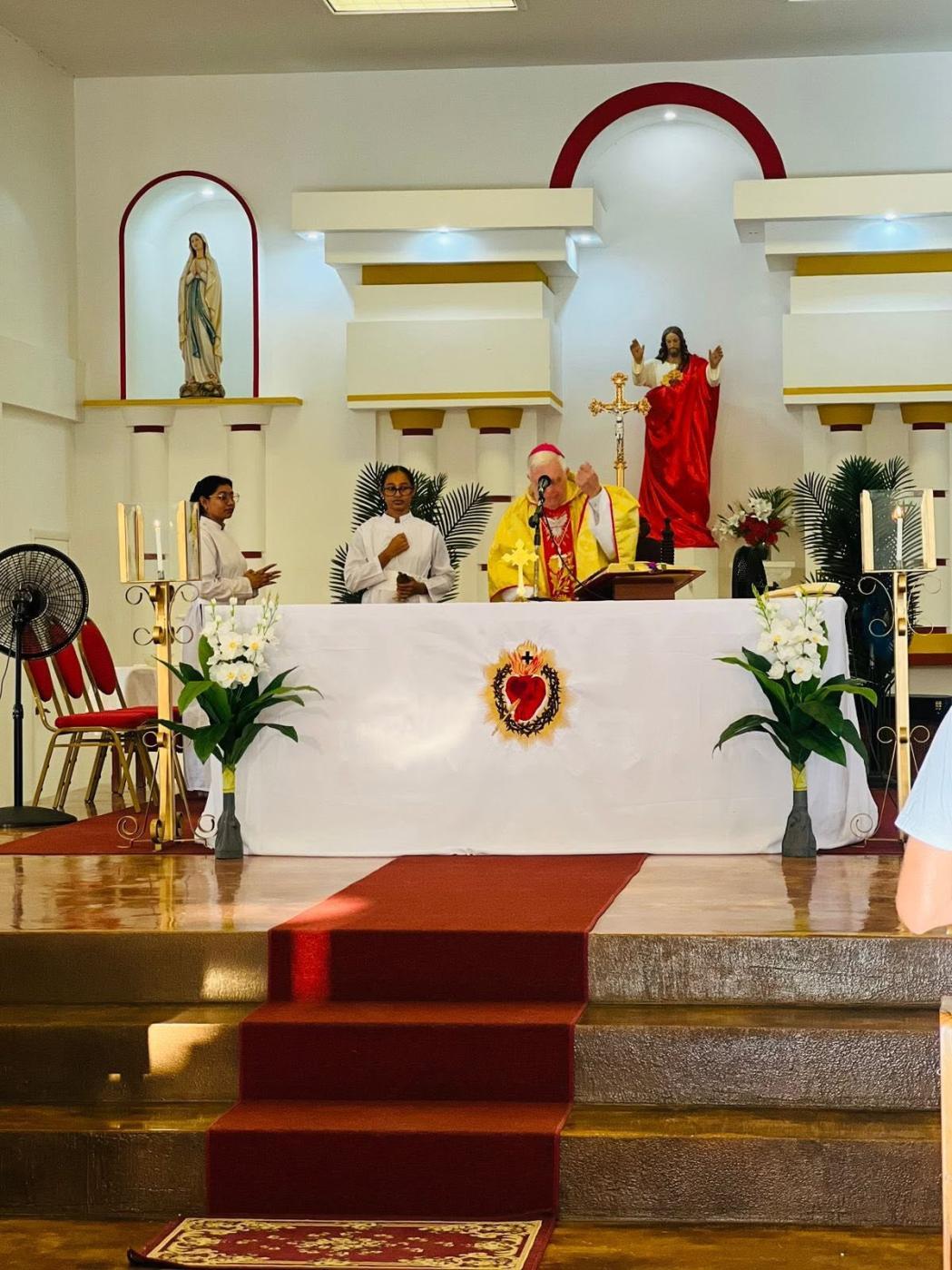
Sacred Heart Church celebrates Feast Day - p14
Bishop’s Engagements
Sunday June 14th
13:00hrs – Mass of Christian Burial for Bishop Emeritus Wilhelmus De Bekker at St. Peter and Paul Basilica, Paramaribo.
Monday June 15th
16:00hrs– Returnfrom Suriname.
Wednesday June 17th
9:00hrs–PresbyteralCouncilMeeting(Hybrid)
Thursday June 18th
17:00hrs – Conference on Theology in the CaribbeanToday (CTCT)Meeting
Saturday June 20th
16:00hrs – Marian Academy Graduation Ceremony
Sunday June 21st
9:00hrs - Conference on Theology in the CaribbeanToday (CTCT)Visit
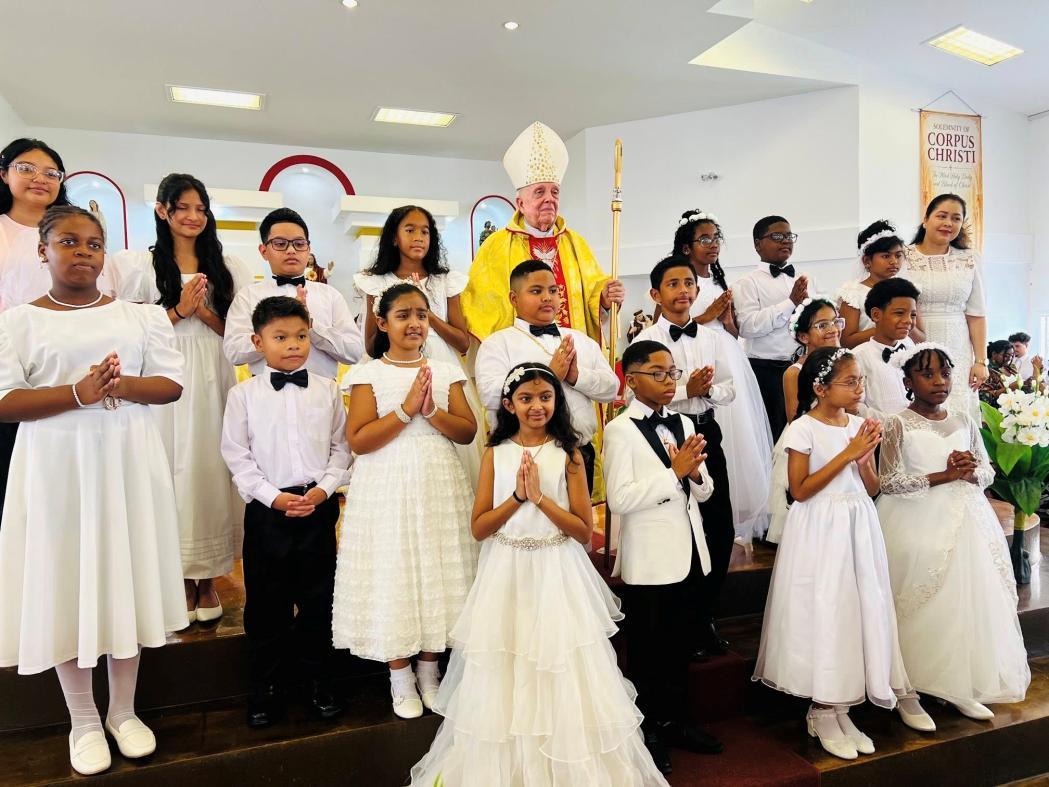
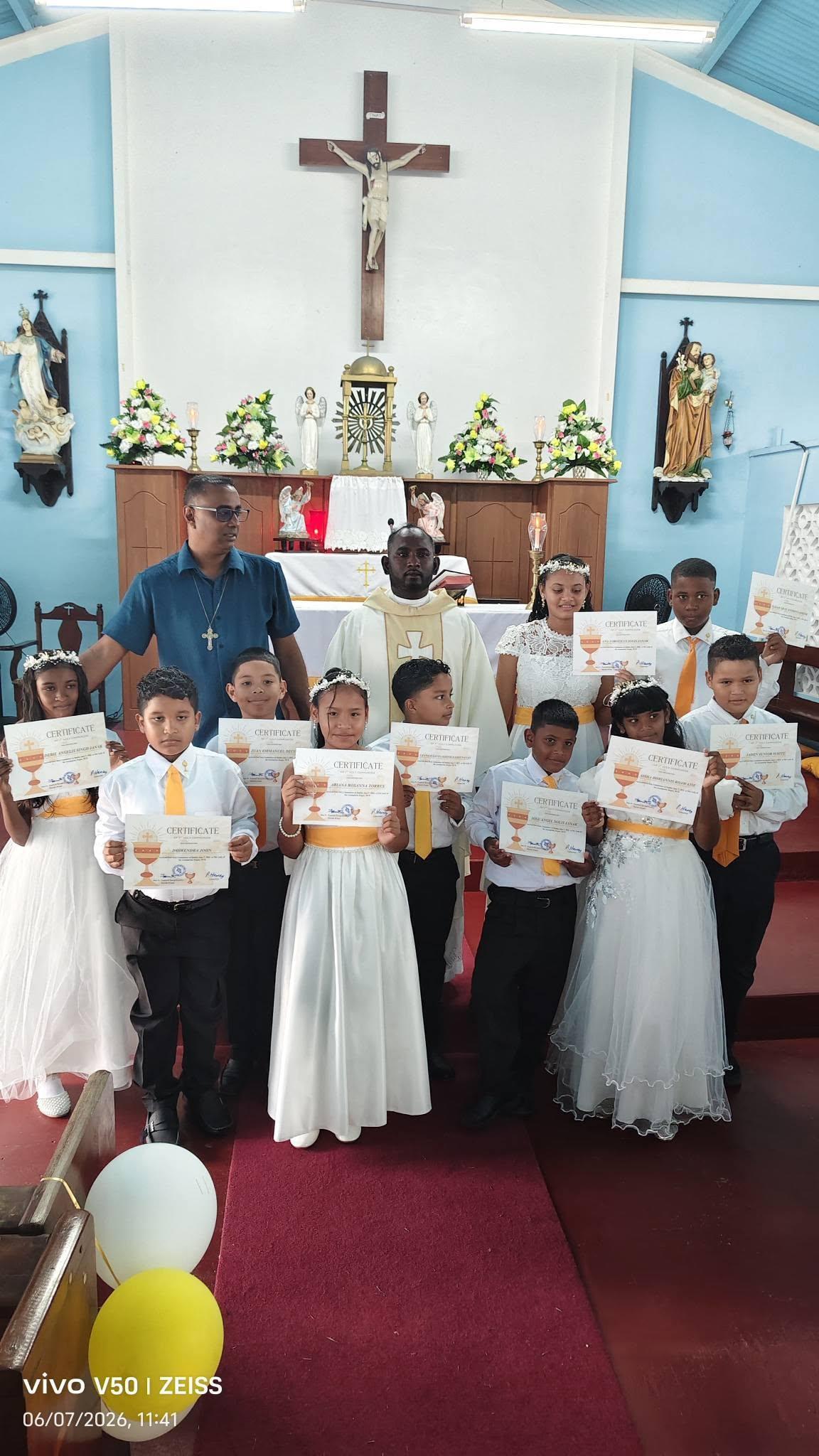
Last Sunday June 7th – Corpus Christi – children of the Cathedral of the Immaculate Conception received their First Holy Communion at the Central Cluster’s Joint Mass at Sacred Heart church, Main St, Georgetown.
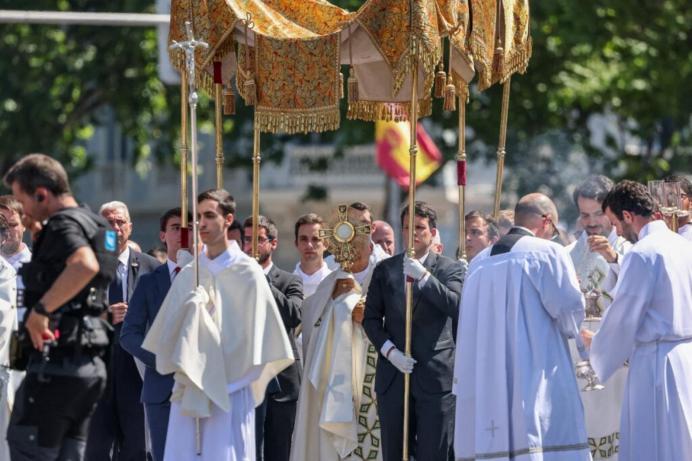
Pope Leo XIV carries the monstrance as he leads the Corpus Christi procession at Plaza de Cibeles in Madrid June 7, 2026, during his apostolic journey to Spain. (OSV News photo/Yara Nardi, Reuters)
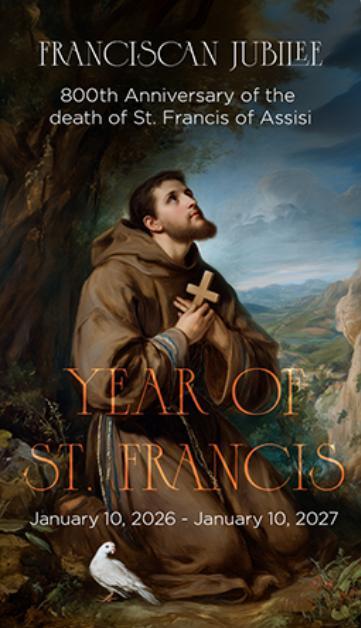
Year of St. Francis Jubilee Prayer
Saint Francis, our brother, you who eight hundred years ago went to meet Sister Death as a man at peace, intercede for us before the Lord.
You recognized true peace in the Crucifix of San Damiano, teach us to seek in Him the source of all reconciliation that breaks down every wall.
You who, unarmed, crossed the lines of war and misunderstanding, give us the courage to build bridges where the world raises up boundaries.
In this time afflicted by conflict and division, intercede for us so that we may become peacemakers: unarmed and disarming witnesses of the peace that comes from Christ.
Amen - Pope Leo XIV
themis simplyto “behuman.”
“The mission I entrust to you is precisely this: that you be human,” the pope said during an evening prayer vigil in Madrid’s Plaza de Lima.
“Yes, be human: men and women of flesh and blood! Not mere appearances, but trustworthy faces.” “Be humanasChrist is,” heurged.
The gathering drew approximately 500,000 people and combined music, testimonies, Marian devotion and Eucharistic adoration in what organizers described as a “festival of faith.” Young people began arriving hours before the pope’s appearance, filling the plaza and surrounding streets in the heart of the Spanish capital.
Massive crowd greets Pope Leo
The scale of the gathering became apparent as Pope Leo tried to reach the stage. The journey along Madrid’s Paseo de la Castellana stretched for more than 20 minutes as the popemobile moved slowly through the sea of pilgrims, repeatedly stopping while Pope Leo greeted the faithful. Along the route, he embraced worshippers lining the barriers and kissed dozens of babies passedforwardby theirparents.
Many others watched from apartment balconies and terraces overlooking the broad boulevard, creating a continuous presence along the route connecting the city center to thevigilsite.
When he finally arrived at the stage in Plaza de Lima, the welcome only intensified. Thousands of young people waved Vatican and Spanish flags and broke into chants of “Esta es la juventud del Papa” (“This is the pope’s youth”). Pope Leo appeared visibly moved as he paused to take in the scene before Cardinal Jose Cobo of Madrid began the final part of the evening’sprogram.
Dialogue with the youth
In a departure from the formal settings often associated with papal events, the dialogue unfolded on a stage arrangedlike alivingroom.
The exchange followed aperformance from “Godspell,” the musical produced by “Zorro” actor Antonio Banderas, which helped set the tone for anevening organizers described as a “festivaloffaith.”
During a dialogue with young people, Pope Leo reflected on saints who shaped his spiritual life, including St. John Chrysostom, St. Thomas of Villanova and St. Turibius of Mogrovejo, the Spanish missionary bishop who evangelized Peru in the 16thcentury.
Asked about his own missionary years in Peru, the pope said he most treasured the witness of faith shown by people who faced hardship withoutlosinghope.
“As I proclaimed the Gospel, I too was transformed by it,” he said. “ I have seen how the Word of God can transform conflict into peace, can be a source of reconciliation, peace, and justice.
”
Leo also encouraged young people to seek silence amid the noise of contemporarylife.
“When we seek silence, we choose what not to listen to and which noises not to let distract us,” he said. “It is in silence that we come to understand that ideologies pass away, while the truthalwaysremains.”
Pope Leo connected that invitation directly to the Eucharistic adoration that followed and during which the entire squarefellsilent.
“Eucharistic adoration, which we share this evening, is the perfect place to be silent, to open our hearts, and to ‘be’ ourselves in the presence oftheLord,” hesaid.
Turning to the role of Christians in contemporary society, Pope Leo reminded the crowd that “Jesus’ disciples are always people of their time, but never prisoners of a passing era.”
He urged young Catholics to become missionaries in today’s world, including in digital spaces, and challenged them to be “the salt ofthe earthandthelight oftheworld.”
A blend of prayer and Spanish
Before Leo arrived at Plaza de Lima, s luminous mysteries, with meditations offered by young people and accompanied by sacred art from Madrid’s Prado Museum.
This part of the vigil was the prelude of the city’s “White and Yellow Night,” during which some of Madrid’s most important museums, including the Prado, opened their doors free of charge to pilgrims and visitors ahead of the pope’s Mass and the Corpus ChristiprocessiononSunday.
As they waited for Pope Leo’s arrival, giant screens replayed images from the visits of St. John Paul II and Pope Benedict XVI to Spain. Special attention was given to the 2011 World Youth Day vigil at Madrid’s Cuatro Vientos airfield, where pilgrims endured extreme heat and a violent storm before joining Pope Benedict inEucharisticadoration.
Organizers addressed a-then-stillabsent and popemobile-riding Pope Leo directly,urginghim:
“Fifteen years after World Youth Day Madrid 2011, where young people discovered that together we are stronger than the elements, today more than ever we want to welcome you, Holy Father. Inspire us as your predecessors inspired our parents, grandparents and older brothers and sisters.”
Father José Gabriel Vera Beorlegui, spokesman for the Spanish bishops’ conference, said the pope’s visit comes at a moment when many people are searching for hope amid globalinstability.
“The visit ofPope Leo XIV to Spain isa reason for joy for the whole Church,” he said. “People are anguished by war, anger, violence, lies and corruption in the world. Christ is the light that will help the Church in Spain, but also Spanish society, move forward.”
As darkness settled over Madrid, the music and celebrations gave way to silence as hundreds of thousands of young people joined Pope Leo in Eucharistic adoration, bringing to a close an evening that connected Spain’s Catholic past with a new generation being called to shape its future.❖
Pope Leo blesses Sagrada Familia’s Tower of
BARCELONA, Spain (OSV News)
Leo XIV blessed the newly completed Tower of Jesus Christ at Barcelona Sagrada Familia basilica June 10, inaugurating the crowning spire that makes the iconic church the tallest church the world and urging people to lift their gaze to Christ “who alone reveals to us the truth about God and the truth about ourselves.”
Pope Leo offered Mass inside the basilica and formally inaugurated the Tower of Jesus Christ, which stands at more than 564 feet, before a crowd of thousands gathered inside and around the SagradaFamilia.
“By looking at Christ, we can see the world with renewed eyes: the tower of the cross then becomes a banner of charity, for God loves us in this way, transforming an instrument of death into a signofhope,” thepope said.
100th anniversary of Gaudí’s death
Spain’s King Felipe VI welcomed the pope upon his arrival at the basilica. Before Mass, Pope Leo descended to the basilica’s crypt to pray at the tomb of Antoni Gaudí, the visionary Catalan architect who devoted 43 years of his life to the design and construction of the basilica before his death in 1926 at age 73. The papal Mass fell on the 100th anniversary of Gaudí’s death.
Known as “God’s architect,” Gaudí’s cause for canonization advanced last year when Pope Francis declared him venerableinApril2025.
Pope Leo paid tribute to the visionary
That is why, if we do not believe in Jesus Christ, we remain in sin, and not only do we die, but we bringabout thedeathofourneighbor.”
Basilica a century in the making Pope Leo paid tribute to Gaudí and to all who have labored on the basilica
builder in his homily, reflecting on
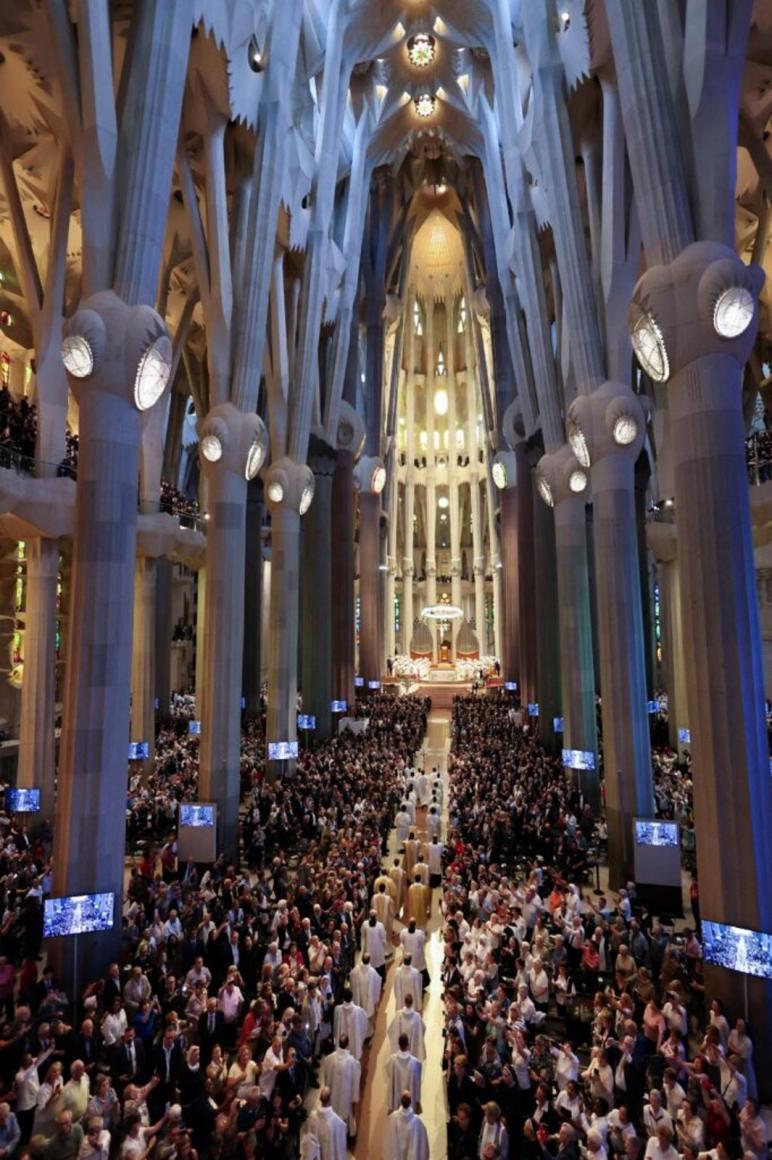
pope spoke, casting dancing colors on the soaring columns. Trumpets sounded as a choir of 500 people sang hymns from the high galleries on either side of the basilica, as multiple children’s choirsharmonized aroundthe apse.
Pope Leo pointed to the Sagrada Familia as a testament to the power of art and beauty to drawpeople closer to God.
“In her wisdom, the Church thus renews the ‘Biblia pauperum’ of the ancient cathedrals, which are in themselves rich messages of evangelization,” he said, invoking the medieval tradition of visual depictions of the Scripture designed to communicate the faith to thosewho couldnotread.
“In this age in which image is so prevalent, it becomes even more evident how art and beauty are privileged channelsofevangelization,” hesaid.
The Sagrada Familia’s three facades dedicated to the Nativity, the Passion and the Glory of Christ embody this vision architecturally. Gaudí designed them so that sunlight illuminates each portal at the moment most consonant withits theologicalmeaning: dawnlight for the Nativity, the setting sun for the Passion and full midday light for the Glory facade.
Gaudí’s design drew inspiration from
both Christian doctrines and the observation of nature. The basilica is filled with organic forms inspired by natural elements. Its central nave columnsevokea forestoftrees.
Tower of Jesus Christ
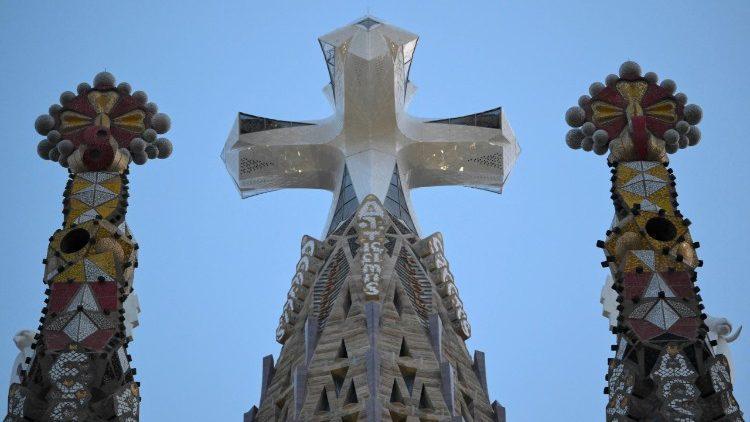
The Tower of Jesus Christ is now the tallest structure in Barcelona, and it makes the Sagrada Familia the tallest churchintheworld.
Gaudí designed the tower to stand precisely half a meter below the summitof the nearby Montjuïc hill, believing the work of human hands should not surpass the work of God. At its crown stands a four-armed cross of glass and white enameled ceramic, roughly 17 meterstall and13meterswide, bearing the inscription: “Tu solus Sanctus, Tu solus Dominus, Tu solus Altissimus”
“Youalone are Holy,Youalone areLord, Youalone areMost High.”
“In Jesus’ cross, our faith reaches its summit,” the pope said. “This cross shines by day, reflecting the sunlight, and shines by night, illuminating the city like a lighthouse overlooking the Mediterranean. Yes, the light of Christ shines in the darkness, even though the darkness has not received it.”
Strong words on war, abortion
An estimated 9,000 people attended the papal Mass inside the basilica, while an estimated 120,000 people worshipped from outside. In his homily in the Sagrada Familia, Pope Leo issued a forceful appeal against abortion, war andtheexclusionofmigrants.
“Dear brothers and sisters, we cannot believe in Jesus and promote war. We cannot believe in Jesus and kill the innocent even before birth. We cannot believe in Jesus and abandon those who suffer,those who weep,thosewho fleefrommisery,” thepopesaid.
The pope reflected on the day’s Gospel reading from John, in which Jesus tells the Pharisees, “you will die in your sins unlessyoubelievethatIamhe” (Jn8:24)
“These are strong words,” Pope Leo said. “They are an invitation to salvation that is, a call to freedom extended by Christ, who desires for us theultimate,eternalgood.”
“As God made man, he becomes for us Emmanuel, the source of grace and forgiveness, of salvation and new life,”
Together with Gaudí, as we commemhis death, we remember and give thanks to all the supporters and benefactors, the artists and the workers who cooperated in the construction of an architectural masterpiece, which is also an eloquent catechesis made of stones, colors and light.” The foundation stone of the Sagrada Familia was laid in 1882. The project was initially entrusted to architect Francisco de Paula del Villar before passing to Gaudí in 1883, who transformed it into one of the most ambitious building projects in modern history, comprising three facades, five naves and 18 towers. The portionbuilt by Gaudíwasdeclared aUNESCO WorldHeritageSite in2005.
Unfinished masterpiece
Despite the completion of its crowning tower, the basilica remains unfinished; work is still ongoing on the baptistery, the sacristy, the Chapel of the Assumption, the cloisters and the Glory Facade. It is projected that the basilica will not be completeduntil2036.
Pope Leo embraced that incompleteness as a spiritual metaphor. “Much more than a monument, the Basilica of the Sagrada Familia remains a work in progress today, reminding us that the Christian life is always a journey, because it is a project that God is carrying out,” he said.
“The fact that it is incomplete is not a flaw, for it bears witness to a desire; it does not signify a shortcoming, but rather expresses a promise that we wish to honor with consistency,” he added. “Our gratitude thus becomes a commitment as we cooperate in God’s plan that is, in the edification to whichhe himselfcallsus.”
“Since we are the temple of the Holy Spirit, this work consists in our very lives, which God conceives as a masterpiece thatwearetocreatetogether.”
Fireworks celebrate the tallest church in the world
After Mass, the pope presided over the formal blessing of the Tower of Jesus Christ. The inauguration ceremony concluded with a dazzling interactive light show and a live musical performance by the Escolanía de Montserrat, the oldest boys choir in the world, followed by fireworks from the basilica’s towering spires. A drone show in the sky illuminated the face of Gaudí, as well the architect’s words, “First you needlove, thentechnique.”
“As we lift our gaze toward him, the crucified and risen One, let us commit ourselves to lifting up those who lie in the dust,” the pope said. “And let us show in this way that the Sagrada Familia is the tallest church in the world, not so as to stand out in worldly rankings, but rather to guide the steps of the people of God who make their pilgrimage in Spain, with the cross illuminating their path, like a lamp burning brightly as we await the return oftheBridegroom.”❖
Members of the clergy process in for the start of Mass at the Basilica of the
The Tower of Jesus Christ at the Basilica of the Sagrada Familia (Vatican Media)
A Christian Perspective on Social Issues
Land of too much water
By GHK Lall
Guyana has earned the recognition of the Land of Many Waters. Currently, it’s too much water. For the last couple of weeks and counting. Water intruding everywhere. In places where it shouldn’t be. Underfoot. Under the house. Sometimes, the pools are under the bed. This is the worst type of marketing brochure for this oil rich Republic. In the frankest telling, it’s what should not be. Not in volume before the eyes. Not in the broad spaces, where all that can be seen is water. And more water.
An old ground is revisited. The New Market Street emergency entrance of the Georgetown Public Hospital. An expanse of floodwaters that stretches the length of the street. Absorb this, then think of the implications of it: the drains long roamed by rodents and parasites rise to meet and blend with the waters on the street. I shouldn’t have to tell one citizen, one outpatient, one visitor, one worker at the ‘Big Hospital’ who is taking what from where; what’s on their footwear, cling to their pants. Or how they themselves are exposed. How others could be exposed due to their presence.
It didn’t matter. New Market Street, the Ogle Int’l Airport, Lethem, many other parts of towns and villages, with few places across Guyana spared an undesired soaking. Then the drying out. Then the cleaning up. Then the counting of the damage and starting over. And then hovering on the edges of all those, the big speeches from the big bosses about the big things that they have in mind.
Said before. Budgeted before. Hundreds of billions released before. Same result as before. Where is Guyana going wrong? I think the more appropriate question is where have all the billions gone? More spending on drainage and irrigation, more on pumps and propping up kokers, and yet there is still more of the same misery. Were those billions, a mere good half of them, put to the best use possible? That is, doing what is of the most benefit for Guyanese? It can’t be. How can it, when the same old sequence is repeated year after year. Sharp promises made. Sweet cash allocated. A blur of activity to do something. Anything to give the impression of commitment and devotion. A standard of busyness to complement the speeches about putting the people first. The floods come, cause
their own devastations, then they recede. Only for more of those to come back again, and leave the same in their wake.
It is almost a time of national wakes, so to speak. How to sleep, be at peace, in a soggy environment? I am talking about inside the family home, not one or a dozen. Or one community or a score of them. But everywhere the eye can see, and voice that can be heard, or every screen that the lips could read. When money is no object, there should never be any of these watery trails of carnage. Again, what happened to the millions and billions? As long as the usual brethren are around those millions and billions, Guyanese will be left with little but to wring their hands, wring their clothes, wring their carpets and mats (if still worth saving) and wring their ears. Not again. Not allowing anyone to take them for fools and
use them. Guyana can end up with more oil than Saudi Arabia and Venezuela. But once there are those who have their own ideas about how best to manage the dollars of taxpayers, then floodwaters and cost always be their bosom companions. Some simple decency and honesty around the proper circles of Guyana could make a difference. But can an army of addicts and spendthrifts pull themselves up by the shoelaces and start down a different path? Difficult to the point of intolerable, for sure. Still, doable. The Dutch can be Guyana teachers. A third of their country and million 21 feet below sea level, yet flooding is as rare as an eclipse. Where have we gone wrong and how do they have it right, are questions worth pursuing. Again, honesty and ethics must carry the day. If not, the flood will come, probably wash some away.
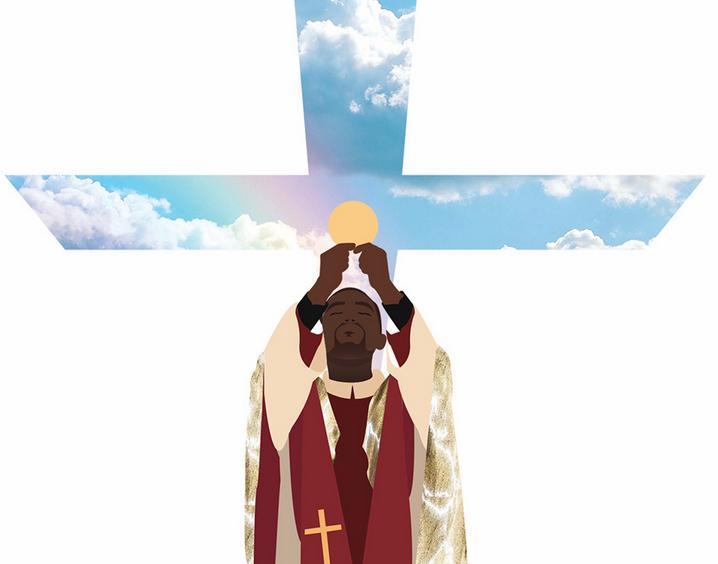
Gracious and loving God, we thank your for the gift of our priests.
Through them, we experience your presence in the sacraments.
Help our priests to be strong in their vocation.
Set their souls on fire with love for your people.
Grant them the wisdom, understanding, and strength they need to follow in the footsteps of Jesus. Inspire them with the vision of your Kingdom.
Give them the words they need to spread the Gospel.
Allow them to experience joy in their ministry.
Help them to become instruments of your divine grace.
We ask this through Jesus Christ, who lives and reigns as our EternalPriest. Amen


Saint John Henry Newman (1801-1890)

FIRST READING Exodus 19: 2-6
I will count you a kingdom of priests, a consecrated nation.
From Rephidim the Israelites set out again; and when they reached the wilderness of Sinai, there in the wilderness they pitched their camp; there facing the mountain Israel pitched camp.
Moses then went up to God, and the Lord called to him from the mountain, saying, “Say this to the House of Jacob, declare this to the children of Israel, ‘You yourselves have seen what I did with the Egyptians, how I carried you on eagle’s wings and brought you to myself. From this you know that now, if you obey my voice and hold fast to my covenant, you of all the nations shall be my very own for all the earth is mine. I will count you a kingdom of priests, a consecrated nation.’ ”
The Word of the Lord.
RESPONSORIAL PSALM Psalm 99
Response: We are his people, the sheep of his flock
1. Serve the Lord with gladness. Come before him, singing for joy. Response
2. Know that he, the Lord, is God. He made us, we belong to him, we are his people, the sheep of his flock. Resp.
3. Indeed, how good is the Lord, eternal his merciful love.
He is faithful from age to age. Response
SECONDREADING Romans 5: 6-11
Now that we have been reconciled by the death of his Son, surely we may count on being saved by the life of his Son
We were still helpless when at his appointed moment Christ died for sinful people. It is not easy to die even for a good person – though of course for someone really worthy, a man might be prepared to die –but what proves that God loves us
The readings for the 11th Sunday in Ordinary Time provide us with profound insights into the essential aspects of living the stewardship way of lifeon our Christian journey.
In the first reading from Exodus, we witness the encounter between God and His chosen people at Mount Sinai.
is that Christ died for us while we were still sinners. Having died to make us righteous, is it likely that he would now fail to save us from God’s anger? When
The Lord, through Moses, reminds the Israelites of His faithfulness and the covenant He has established with them. This reminds us of our vocation as stewards and disciples. They invite us to embrace the call to stewardship by recognizing our responsibility to care for God's creation and to generously share our gifts with others.
In our second reading from Romans, St. Paul beautifully articulates the depths of God's love for humanity. He reminds us that while we were still sinners, Christ died for us, reconciling us with God and offering us the gift of salvation. As stewards, we are called to gratefully recognize God's
we were reconciled to God by the death of his Son, we were still enemies; now that we have been reconciled, surely we may count on being saved by the life of his Son? Not merely because we have been reconciled but because we are filled with joyful trust in God, through our Lord Jesus Christ, through whom we have already gained our reconciliation.
The Word of the Lord.
GOSPEL
Matthew 9: 36; 10:8
He summoned his twelve disciples and sent them out.
When Jesus saw the crowds he felt sorry for them because they were harassed and dejected, like sheep without a shepherd. Then he said to his disciples, “The harvest is rich but the labourers are few, so ask the Lord of the harvest to send labourers to his harvest.”
He summoned his twelve disciples, and gave them authority over unclean spirits with power to cast them out and to cure all kinds of diseases and sickness.
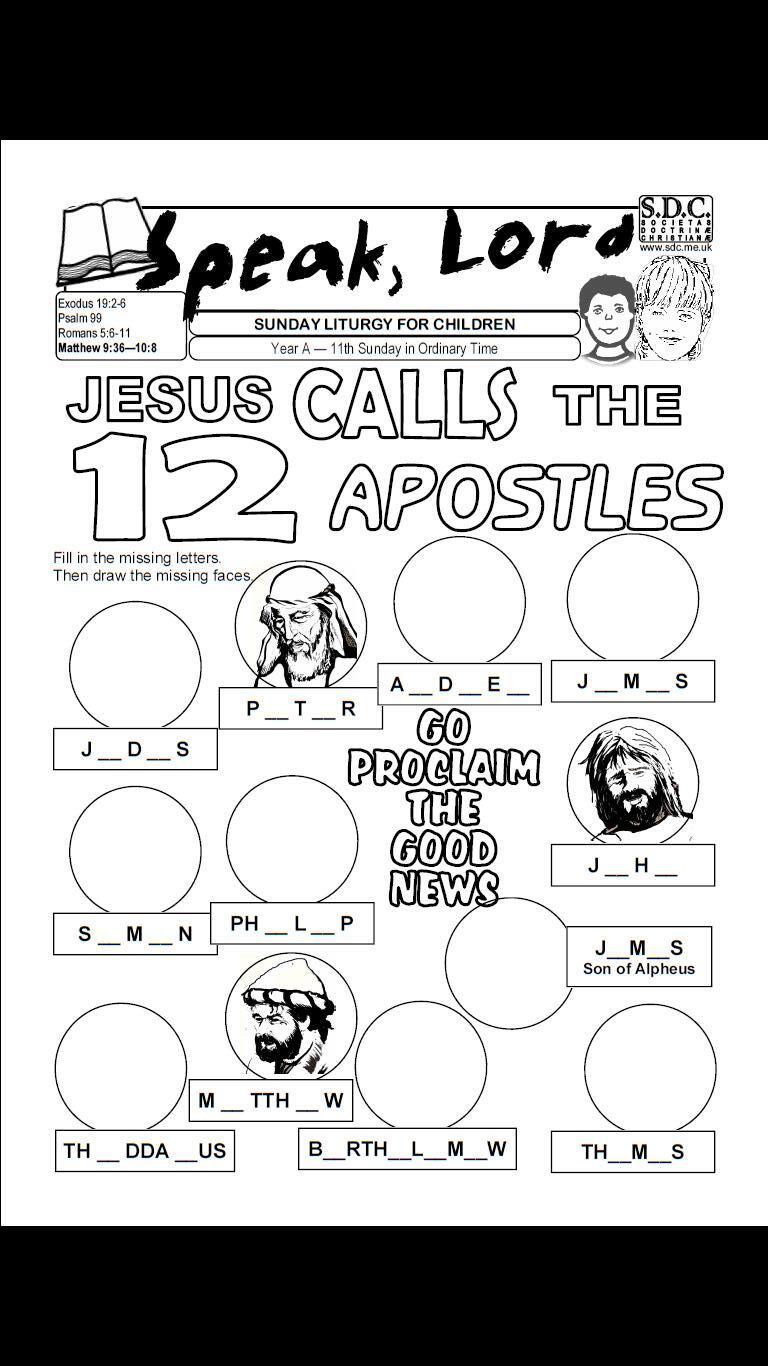
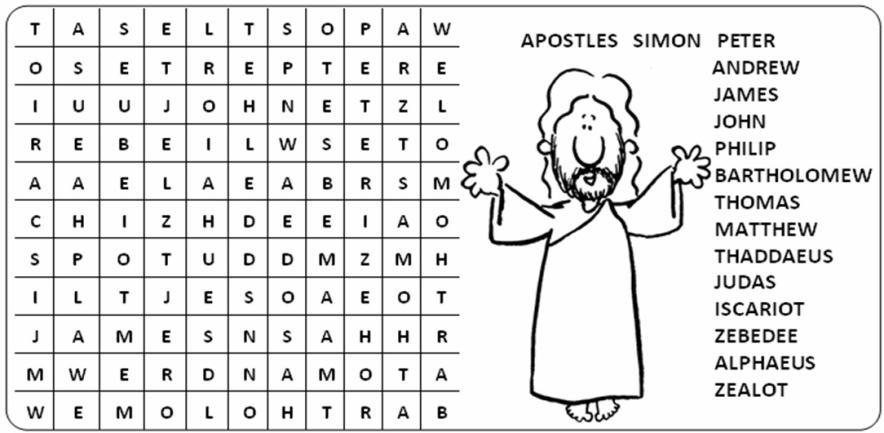
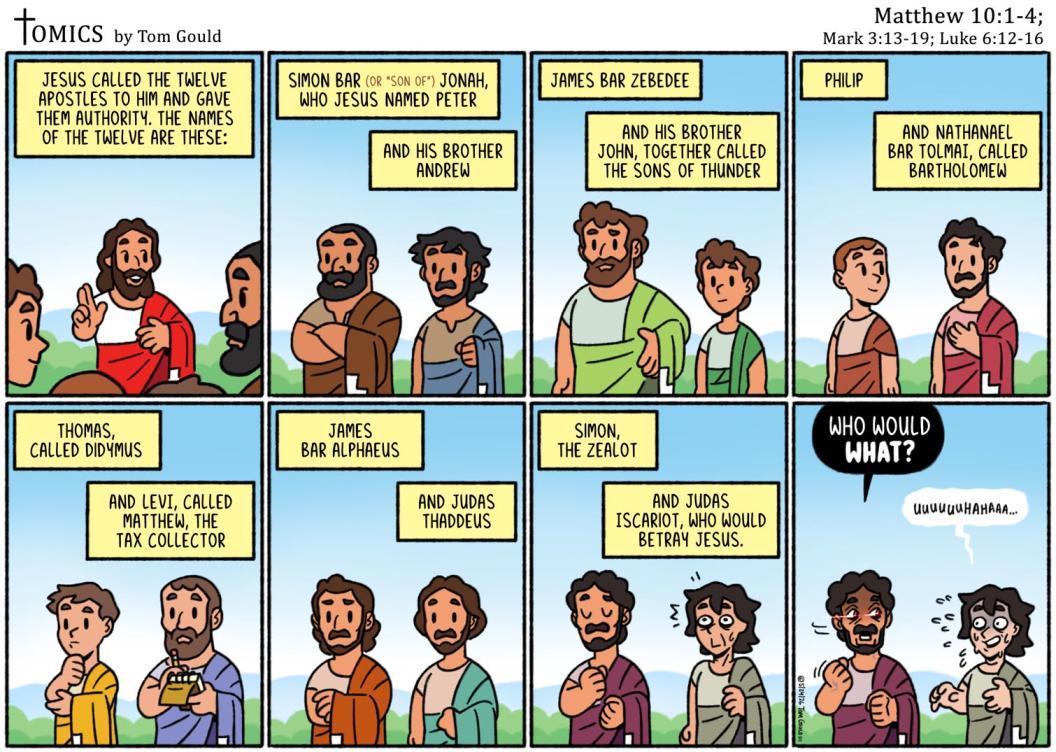
These are the names of the twelve apostles: first, Simon who is called Peter, and his brother Andrew; James the son of Zebedee, and his brother John; Philip and Bartholomew; Thomas, and Matthew the tax collector; James the son of Alphaeus, and Thaddaeus; Simon the Zealot and Judas Iscariot, the one who was to betray him. These twelve Jesus sent out, instructing them as follows:
“Do not turn your steps to pagan territory, and do not enter any Samaritan town; go rather to the lost sheep of the House of Israel. And as you go, proclaim that the kingdom of heaven is close at hand. Cure the sick, raise the dead, cleanse the lepers, cast out devils. You received without charge, give without charge.”
The Gospel of the Lord.❖
abundant love and respond by using our gifts and resources to build His kingdom. In our stewardship and discipleship, we discover the joy of participating in God's redemptive work, bringing hope and healing to a broken world.
The Gospel reading from Matthew recounts how Jesus is moved with compassion as He sees the crowds who are like sheep without a shepherd. He commissions His disciples, empowering them to continue His mission of healing and preaching the Kingdom of God. Like the Good Shepherd, we are called to have hearts filled with empathy and
concern for those who are lost, suffering, or in need. Stewardship challenges us to extend a helping hand, offer comfort, and meet the physical,emotional, and spiritual needs of our brothers and sisters in Christ. By living a life of stewardship and discipleship, we are challenged to move beyond our comfort zones, embracing the call to serve and witness to the transformative power of Christ's love. This requires a willingness to step out in faith, be empowered by the Holy Spirit, and to be instruments of God's grace and healing. ❖
[www.catholicsteward.com ]
Pope to Charismatic Renewal: Let Spirit
Reflection
In the same way Jesus called the first Apostles around him and gave them a mission, so too he is calling us all. Jesus wants us to go out into our communities, our streets and villages, our work places, clubs and markets. He sends us out especially among the poor and lonely, to those most in need. He wants us to speak his words of comfort to his people. He wants us to show that the Good News of God’s compassion and forgiveness is available to all regardless of who they are. We are now his Apostles, his hands and feet, sent out to the lost sheep of our communities. We may not be able to do everything but we can do something.
It is interesting to consider the kinds of men Jesus chose to be his apostles, the ones he sent out to proclaim the Good News that the kingdom of God is close at hand. They were ordinary people who had no special qualifications. Some were fishermen and one was a hated tax collector. They were far from perfect and had the same faults we find in ourselves. One even ended up betraying Jesus. They were all very human people which show that we don’t have to be perfect and talented to be called by Christ. He continues to call disciples today. In order to become a disciple of Jesus in your community, you don’t have to be a brilliant, well-educated person who can speak well before a crowd. You don’t even have to be a saint, at least not at first. All that is needed is a willingness and an open heart. You need also to recognise the gifts and talents our Creator God has given to every one of his people. ❖
[From: Journeying with the Word of God, The Religious Education Department, Diocese ofGeorgetown, Guyana ]
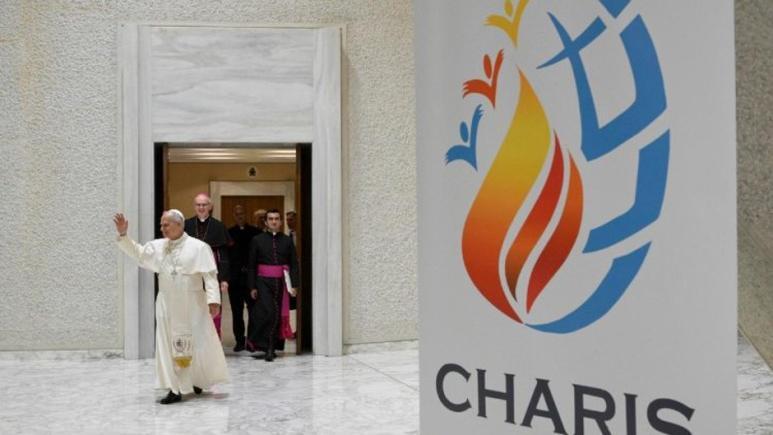
(Vatican News) - Pope Leo XIV welcomed representatives of the Catholic Charismatic Renewal to the Vatican on Saturday May 30. Greeting members of communities, prayer groups, and evangelization schools from around the world, as well as leaders of CHARIS, the international service body of the Renewal, the Pope described the movement's spiritual vitality as one of thegiftswithwhichGodhasblessedthe Church.
The Catholic Charismatic Renewal was founded in the late 1960s and today encompasses prayer groups, communities, and evangelization initiatives across theworld.
It places particular emphasis on the action of the Holy Spirit in the lives of believers through prayer, worship, Scripture and missionary outreach. Since 2019, the various expressions of the Renewal have been brought together through CHARIS, established by Pope Francis to foster communion andservice.
Reflecting on the movement's development in the decades following the Second Vatican Council, Pope Leo recalled the appreciation shown by his predecessors.
He noted that Saint Paul VI saw in the Renewal a response to the growing secularization of society, while Pope St. John Paul II highlighted its missionary impulse and Pope Benedict XVI praised its emphasis on the gifts of the Holy Spirit.
The Pope also recalled Pope Francis' description of the Renewal as a "flood of grace" intended for the entire Church.
Five pillars of the Charismatic experience
Expressing his desire to strengthen the relationship between the See of Peter and the worldwide family of the Catholic Charismatic Renewal, Pope Leo reflected on five key dimensions of its spiritual experience: baptism in the Spirit, prayer of praise, the Word of God,communion,andcharity.
Beginning with baptism in the Spirit, he said the shared journey of faith within the Renewal has its source in "the personal experience of the Holy Spirit," which enables the grace of Baptism to become effective in the lives of believers and leads them to a deeper awarenessofGod'slove.
The Pope explained that through this encounter, "God ceased to be a mere idea and became the real and ultimate expressionoffatherhood."


7639. Send
The Holy Spirit, he said, brings reconciliation, peace and freedom, while opening believers to hope and to the certainty that nothing can separate themfrom theloveofChrist.
"From this experience of the Holy Spirit comes the inner desire to be witnesses and heralds of his love," he said, as he encouraged members of the Renewal to bring God's consolation to those sufferingfromlonelinessandemptiness
Prayer shaped by praise
Turning to prayer, Pope Leo reflected on the place of praise and worship within the Charismatic tradition. The experience of the Holy Spirit, he explained, gives rise to a more spontaneous and sincere dialogue with God and opens the heart to thanksgivingandadoration.
"Worship and praise, which are so characteristic of your gatherings, are essential aspects of Christian prayer," he said. He noted that the Renewal has helped many rediscover these dimensions of prayer and bring them backto theforefrontofChristianlife.
Nourished by Sacred Scripture
The Pope also highlighted the importance of the Word of God within the life of the Renewal. The same Spirit who inspired Sacred Scripture, he said, continues to make it alive and active in the Church today.
"Scripture hastherefore become foryou a wonderful source of spiritual nourishment that enlightens and comforts," he said, adding that it serves as a source of discernment for daily choicesandenrichescommunalprayer.
Unity as a fruit of the Spirit
Turning then to reflect on communion, Pope Leo stressed that "the Holy Spirit
isthe wellspringofcommunion."
He recalledthe longstandingtraditionof praying to the Holy Spirit for Christian unity, he said members of the Renewal have a particular appreciation for the Spirit's role in building harmony within the Church and fostering relationships withChristiansofotherdenominations.
The Holy Spirit, he explained, creates unity among the various charisms and communities of the Renewal while strengthening bonds throughout the widerChristianfamily.
Love expressed in charity
Concluding his reflections, the Pope focused on charity, describing it as one oftheclearest fruitsoflife inthe Spirit. "The renewed presence of the Spirit has awakened in you a new capacity to love," he said, a love directed both towards God and towards neighbour, particularly thosewhosuffer.
Praising the many charitable initiatives that have emerged from the Renewal, Pope Leo encouraged members to remain attentive to the poor and vulnerable. "I invite you, then, to keep alive this love for the poor, which revealsthetruefaceofGod," he said.
A call to humble service
Bringing his address to a close, the Pope encouraged members of the Renewal to continue their mission within the Church.
"Put yourselves at the service of your dioceses and parishes," he urged. "Take care never to give way to the desire for self-promotion, or the pursuit of power orpersonalprestige."
Pope Leo concluded by praying that the Spirit would always be "a light and a source of strength" on their personal andcommunaljourney.❖
For 121 years, the Catholic Standard has been sharing the Gospel of Jesus Christ.
Now reaching 10,000+ followers on Catholic Media Guyana Facebook plus going straight to your inbox and WhatsApp, our vibrant weekly e-paper is a trusted source which delivers informative and inspiring stories from across the diocese and around the world.
Want to promote your business or event? Advertise with us! Call675-4542 oremail catholicstandardgy@gmail.com ❖
Becoming ‘detectors of grace’ Journeying with the Word of God
By Fr Donald Chambers
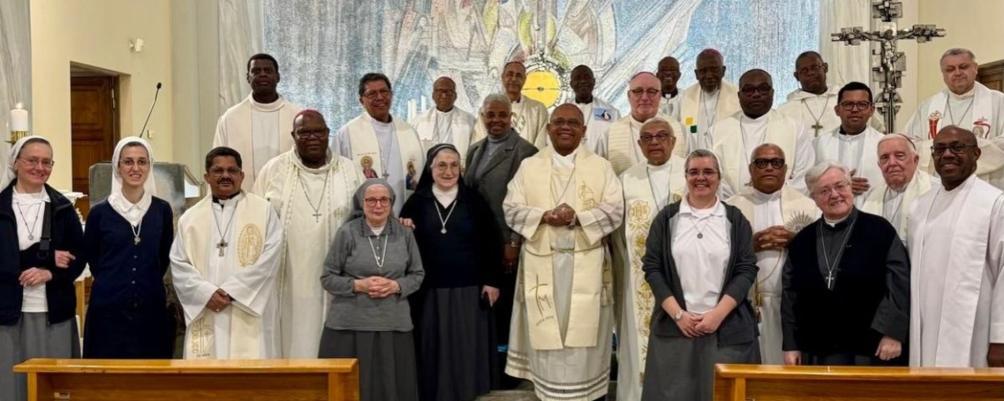
During the recent retreat day of the bishops of the Antilles Episcopal Conference in Rome, Sr Julie Peters of the Sisters of the Sorrowful Mother offered a phrase that lingered in my heart long after the recollection ended.
She challenged the bishops to become “detectors of grace”.
It is a striking expression. In a world where many of us have become highly skilled at detecting weakness, failure, and fault, the call to become “detectors of grace” feels both deeply Christ-like and profoundly countercultural.
Too often, our personal relationships, politics, workplaces, families, and even Church communities are shaped by suspicion and criticism. We easily notice people’s flaws, inconsistencies, and idiosyncrasies.
Social media has intensified this tendency, rewarding outrage, sarcasm, and public humiliation. Many people now live with a quiet fear of being judged, dismissed, or condemned.
Synodal leadership invites another way. At the heart of synodality is the belief that the Holy Spirit is already at work in people, cultures, communities, and even in difficult situations.
The synodal leader, therefore, is not simply a manager of problems or a guardian of structures. A synodal leader is someone formed to notice grace, to recognise where God is already moving, healing, calling, and transforming.
This does not mean ignoring sin, weakness, or the need for conversion. Rather, it means beginning first with the recognition thatgrace precedes us.
God is always already present before we arrive with our judgments, plans, or solutions.
Jesus Himself modelled this approach repeatedly throughout His ministry. One of the clearest examples is His encounter with the Samaritan woman at the well in John’s Gospel (Jn 4:1–42).
By the cultural standards of His time, she was someone many would avoid or dismiss. She was a Samaritan, a woman, and someone whose complicated personal history made her vulnerable to public judgement.
Yet Jesus approaches her not first as a sinner to condemn, but as a person carrying deep thirst and hidden possibility. Jesus begins with dialogue. He listens. He asks for water. He creates space for encounter. As the conversation unfolds, Jesus gently reveals the truth about her life, but withouthumiliationor cruelty. Remarkably, He also recognises her spiritual hunger and her capacity for faith. He sees grace already alive within her. By the end of the encounter, the woman who arrived at the well, isolated and burdened, becomes a missionary to her community, proclaiming: “Come and see a man who told me everything I have ever done.” Jesus detected grace where others may only have detected failure.
This is precisely the kind of leadership synodality seeks to form. A synodal leader learns to ask differentquestions.
Instead of asking only, ‘What is wrong here?’ the synodal leader also asks, ‘Where is grace already present?’; ‘What gifts are emerging?’; ‘What is the Holy Spirit trying to bring to birth?’. Such questions transform the culture of leadership. Communities flourish when people feel seen not merely for their failures, but also for their God-given gifts and possibilities. Young people grow when their creativity is affirmed. Families heal when their sacrifices are recognised. Cultures become spaces of evangelisation when their hidden wisdom and resilience are honoured.
Even struggling parish communities can discover new hope when leaders notice small signs of faithfulness, compassion, generosity, and perseverance.
Yet becoming detectors of grace requires formation. It demands
contemplative eyes and listening hearts.
Sr Julie’s retreat reflections on St Francis of Assisi highlighted precisely this inner conversion. St Francis learned to listen deeply to God, to the poor, to creation, and to the movements of his own heart.
He gradually moved from control to stewardship, from isolation to friendship, and from institutional maintenance to the accompaniment of people. Such transformation enabled him to perceive God’s presence in places others ignored.
The formation of synodal leaders, therefore, cannot focus only on administration, strategy, or efficiency. Important as those are, synodal formation must also cultivate attentiveness to grace. Leaders must learn to listen before reacting, discern before judging, and accompany before correcting. This kind of leadership is neither naïve nor passive.
Detectors of grace still challenge communities toward deeper conversion and growth. Jesus did this constantly. But correction rooted in love and hope bears far more fruit than criticism rooted in superiority or fear.
Our Caribbean societies desperately need such leaders today in politics, schools, families, workplaces, and churches. We need leaders capable of recognising the sacred dignity hidden beneath struggle, disappointment, and imperfection. Ultimately, to become a detector of grace is to learn to see as Christ sees.
It is believed that no person, culture, or community is beyond the reach of God’s transforming love. And perhaps that is one of the deepest calls of synodality itself: to become a Church that notices grace first, and from that place, walks together toward fuller conversion and communion ❖
Fr Donald Chambers of the Archdiocese of Kingston, Jamaica, is the General Secretary of the Antilles Episcopal Conference.
MAKING THE WORD OF GOD YOUR OWN
Step 1: Lookattoday’sReadingsprayerfully.
1st Reading: God speaks to Moses and reveals his intentions to enter into covenant with the Israelites and to make them his special people.
2nd Reading: Paul points out that the fact that Christ died for sinners is clear proof that God loves all, good and bad alike.
Gospel: Jesus empowers his disciples to share in this mission. He sends them out to announce the coming of God’s kingdom and to minister to those in need.
Step 2: ApplyingthevaluesoftheReadings toyourdailylife.
1.Jesus called the twelve apostles to serve the helpless, dejected lost sheep. He is also calling you. For what life of service do you think Jesus is calling you?
2.God did not create Judas to become a traitor who would betray Jesus. Judas became a traitor because of the choices he made as a free person. Do you by your choices betray Jesus and what he stands for?
3.What does it mean for disciples of Jesus to be a reconciling presence in the world today?
4.Compare the attitude of Jesus with the attitude of the religious leaders to the poor. Where does your attitude lie?
Step 3: Accepting the message of God’s Wordinyourlifeoffaith.
As a Christian community, we are called by our Creator God to be a reconciling presence in our world. As disciples of Jesus, we share in his mission to proclaim the kingdom and to minister to those in need. We may not be able to do much as it depends on the gifts and talents we have and are willing to use in the service of others. What we can do is help others experience God’s love and concern by our relationship with them.
Step 4: Somethingtothink&prayabout
1.Do you ever thank God for having chosen you to be his beloved child: How do you show gratitude for being called by the Lord?
2.What do you think you can do during the coming week as a concrete act of service to those who are less fortunate, dejected and helpless?
3.There are many evils that need to be removed before we can sense the nearness of the kingdom of God. We have to get rid of the lack of concern, divisions, exploitation of others for selfadvancement, so many ordinary people harassed and miserable. How can you play a part in making the kingdom of God present in the world today?❖
[From: Journeying with the Word of God, The Religious Education Department, Diocese of Georgetown, Guyana ]
Sr Julie Peters (centre) and other members of the Sisters of the Sorrowful Mother with bishops/ administratorsoftheAntillesEpiscopal Conference.(PhotofromAECFacebook page)
to stop and repent, or face divine justice
(OSV News) On the final day of his apostolic visit to Spain, Pope Leo XIV issued a scathing rebuke to human traffickers and those exploiting vulnerable people, demanding they “stop,” “repent,” andmakeamends.
The pope made his appeal June 12 during a meeting at the Plaza del Cristo de La Laguna on the Spanish island of Tenerife with organizations that help migrants integrate intosociety.
“From this square, I wish to address a clear message to those who take advantage of people’s desperation, to those who organize death routes, traffic in human beings, withhold documents, exploit workers, threaten women, deceive families and turn the suffering of others into a business. Stop. Repent!” thepopeexclaimed.
“For every life lost, every family deceived, every body subjugated, every woman threatened, every worker exploited, you will have to appear beforedivine justice,” hewarned.
mafia: ‘Breakthosechains’
“Break those chains and free those you hold in bondage. Return what has been taken and make amends as much as youcan.Repent whilethere isstilltime, for God’s mercy can reach even the most hardened sinner, but it enters only through the narrow gate of truth, justiceandconversion,” the popesaid.
Arriving in Tenerife in the morning, the pope began his day by meeting with migrants living at the “Las Raices” Center, a temporary migrant reception center near the airport overlooking the island’smountains.
The center currently houses 685 migrants,manyofwhommigratedfrom Africa.
Welcoming Pope Leo to “Las Raices,” its director, Ernesto Mayoral, said that since its opening in 2021, the center has housed more than 54,000 migrants and has offered “a dignified, humane, and organized initial reception at an especially difficult time, immediately upontheirarrivalbysea.”
Among those present hoping to catch a glimpse of the pope was Aliu Ceesay, a 16-year-old migrant who arrived a month ago on the Canary Islands in search of work to support his family in Gambia.
Speaking to journalists, Ceesay, a Muslim, said he had been following the popeonline and “wantedto see him.”
“He is so kind, so good. He doesn’t care if we are black or white, Muslim or Christian.Hewantstohelpus,” hesaid.
Treacherous voyage in search of a better life
After a welcoming address by Bishop Eloy Alberto Santiago of Tenerife, the pope heard the testimonies of two migrants who spoke about the pain and suffering of leaving their homes to embarkon atreacherousvoyage on the AtlanticOceaninsearchofabetterlife.
Speaking to the migrants and volunteers briefly in Spanish and English before delivering his address in
French, the pope noted the Church’s celebration of the solemnity of the Sacred Heart, which “symbolizes God’s merciful and infinite love for every human being,” and falls on June 12 in 2026.
“As I look at your faces and listen to your stories, I also think of your hearts wounded by so many difficulties, yet also comforted by the love you have received from other open, generous and merciful hearts,” he said. “Christ’s heart suffered and was pierced out of love, and he was also comforted by compassionate people who eased his pain.”
The pope encouraged migrants to share the “treasures of your humanity, of your dreams and of your culture, which you have brought to these islands” and to “be open to receiving what is offered toyou.”
Migration, he said, “can become an opportunity for encounter and mutual enrichmentamongpeoples.”
A little girl steals the show
migrant inthisdiocese forsevenyears.” The priest recounted that “the beautiful adventure of helping” migrants has been “a hard but enrichingexperience.”
“I am a witness to the dedication and generosity of these people, which leads me to proclaim that it is worth it to keep helping, that it is necessary to keep joining wills and hearts, and for us Christians, to discover in those who arrive the suffering flesh of Christ,” he said.
Don’t lookaway,migrants ask
A Senegalese migrant, Mbacke, began by thanking the pope “for not looking theotherway.”
“Thank you for receiving young people like me who arrive alone, without family, and who are only looking for an opportunity to start over,” he said.
“Holy Father, I ask you to keep reminding the world that behind every young migrant there is a dream, a mother who prays, and a life that deserves anopportunity.”
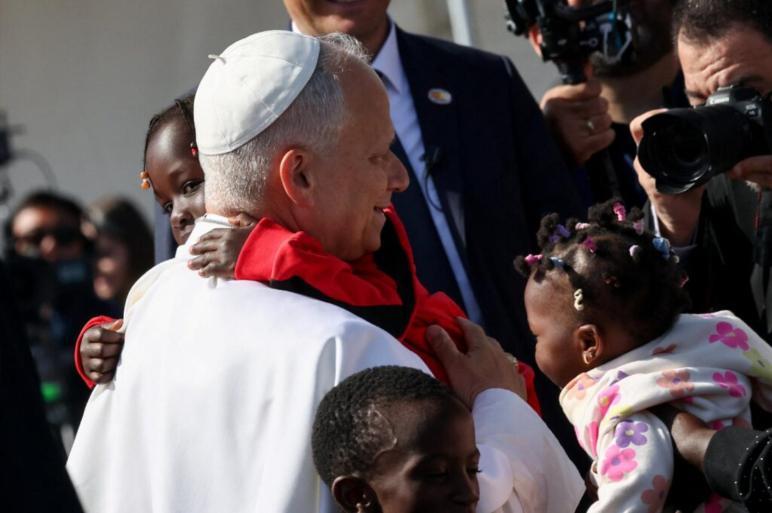
As he made his way to greet the hundreds of migrants present, a little girl in a red jacket, arms outstretched toward the pope, asked to be carried. Pope Leo obliged, holding the girl in his armsashe continuedto greet people.
He was then escorted to one of many tents lined with bunk beds and greeted eachresident atthemigrationcenter.
After leaving “Las Raices,” the pope was driven to the Plaza del Cristo de La Laguna for his meeting with the island’s migration organizations. Riding around the square in his popemobile, he greeted the 4,000 people present.
Pope Leo was seen asking his driver to stop before walking over to a man in a wheelchair and greeting him. He then made the rest of the way to the main stage on foot, greeting others present alongtheway.
At the meeting, the pope heard the testimony of Father Darwin Rivas, a Venezuelan priest, who said he was “a
After receiving help from the Fundación Don Bosco, Saldarriaga said that her journey did not end with her independence and stability, but “continues on the path of giving back the love and support that in some way wasprovidedtome.”
“At this moment, I am part of the Caritas volunteer team because I understand that my experience can serve asa bridge forotherpeoplein my samesituation,” she toldthe pope.
“When accompaniment is from the heart, from faith, we not only get ahead, but we contribute and help to buildcommunity.”
Stories of pain, hope and searching
Drawing on the testimonies he heard, Pope Leo, speaking in Spanish, centered his Plaza del Cristo de La Laguna address on the experiences of those who arrive with stories “of pain, of hope and of searching” as well as those who welcome migrants on the islandofTenerife.
“In a city without walls, the heart too is called to open wide to welcome those who bring these stories with them,” he said. “That is why we need to learn the language of closeness, which is understood more with hands than with words.”
Christian charity, he said,
“flows from the love of God poured into the heart of the believer” and “in the presence of the needy, faith becomes concrete and love for Christ is transformed into deeds.”
The pope noted that integration “does not mean erasing the history of those who arrive or demanding that they leave behind everything that is part of theirmemory.”
Instead, he explained, it is a “reciprocal journey: those who arrive learn to inhabit a new land, and those who welcome them learn to expand their own homes without diluting their identity or closing their hearts to the encounter.
”
Khalid Allad, a migrant from Morocco, said that like many, he left his home
“seeking an opportunity to build a dignified and secure future for myself andmy family.”
On his first attempt, the small boat he was on had capsized, killing 20 people. He arrived in Tenerife in 2020 and said he was about to end up on the street until he received help from Fundación Don Bosco, a Salesian organization that helpsyoungmigrants.
“Today I feel that in the Canary Islands I have not only found an opportunity, but also a home where I can work, contribute, and live with dignity as part ofthiscommunity,” he said.
Pope Leo also listened to the testimony of Thalia Johana Saldarriaga Diago, a migrant who hails from Colombia. She recalled living with her brother until “circumstances changed and from one day to the next we found ourselves withouta roofoverourheads.”
Pope Leo stressed that “every welcoming society has responsibilities toward those who arrive,” ensuring that their dignity flourishes, and in turn, “those who arrived as strangers can rediscover bonds, rebuild trust and feellike alivingpartofacommunity.
”
“This is a precious form of mercy,” he said. “We are speaking, above all, of people created in the image and likeness of God, rather than of legal categories or problems to be managed.”
Addressing Catholics directly, the pope called for integration to “not be reduced to a social undertaking” but rather to be an integral witness to Christ’s love.
“Evangelization is sharing, with respect and humility, the treasure that sustains our action and our hope,” he said. “A Church that welcomes is also a Church that proclaims, offering Christ without imposing him and which, at the same time, receives the Gospel from the handsofthepoor.”❖
Pope Leo XIV hugs a child at the “Las Raices” migrant center in San Cristobal de La Laguna, Tenerife, Canary Islands, Spain, June 12, 2026, where he met migrants and humanitarian organizations as part of a seven-day apostolic journey to Spain, with visits to Madrid, Barcelona and the Canary Islands. (OSV News photo/Yara Nardi)
Dear Girls and Boys,
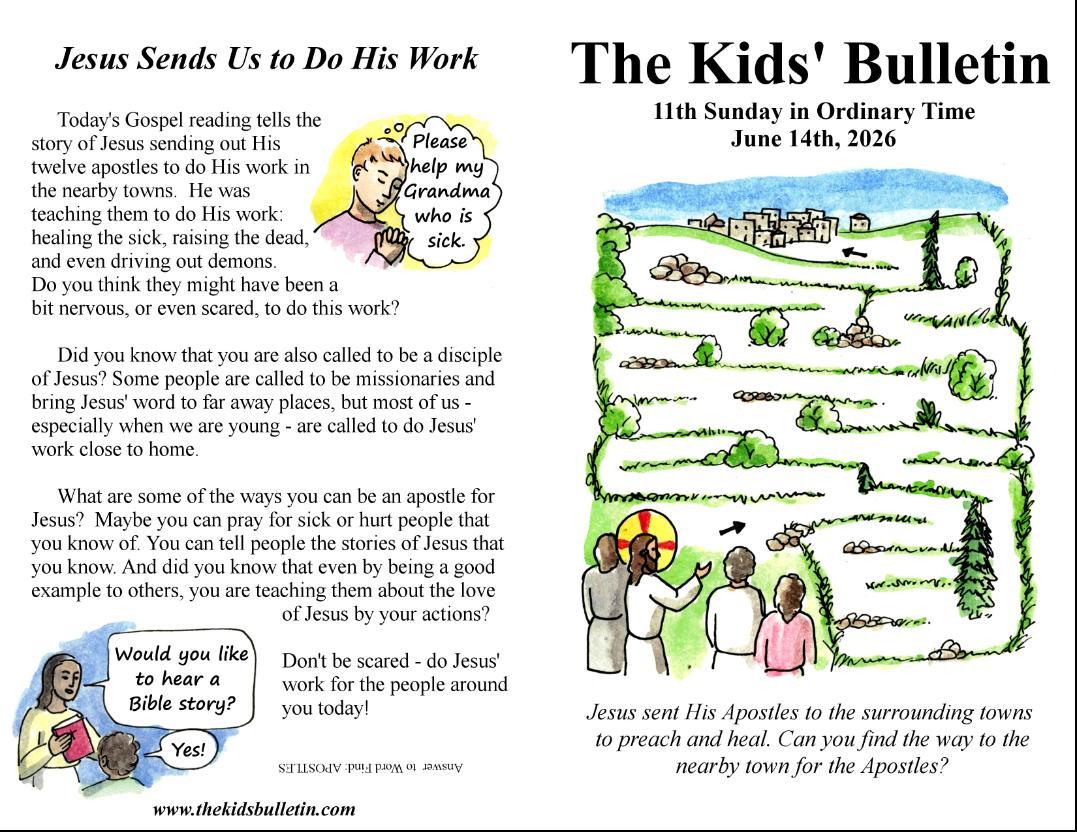
Today we return to Ordinary Time, having celebrated Easter, Pentecost, Trinity Sunday and Corpus Christi. In the coming weeks we are going to hear more about the work of Jesus and his disciples. This passage of the Gospel comes when Jesus is preparing the twelve disciples for the task, the mission, he is sending them out to do.
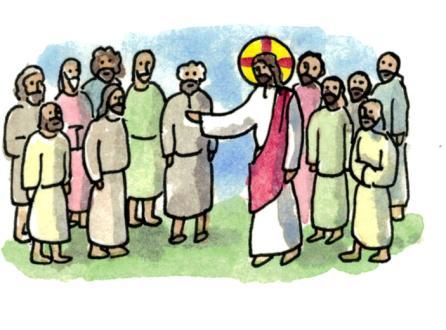
Today's Gospel reading tells the story of Jesus sending out His twelve apostles to do His work in the nearby towns. He was teaching them to do His work: healing the
By Renika Anand
The Unpredictability of Life
Christopher Walken once said “At its best, life is completely unpredictable.”
The tides and the weather often change in unexpected ways. Despite our best efforts to control them, or at the very least, predict them, we are caught off-guard time and again. This does not mean that these unpredictable things cannot be beautiful. In fact, oftentimes, the most beautiful days bloom in the midst of unexpected weather and tides. Similarly, we can neither control nor predict the nature of life. We can, however, learn to accept its unpredictability andfind beauty init.
Human lives are short, and they find unexpected paths to traverse. We cannot allow our value and peace to depend on how perfectly we can predict or plan the course of our lives. Instead, we must learn to find peace and gratitude no matter what we experience every day. Most importantly, we must also learn to make an impact on the world in the short and unpredictable time that we have received to live here.
Why, you do not even know what will happen tomorrow. What is your life? You are a mist that appears for a little while and then vanishes - James 4:14 ❖

First Holy Communion at Our Lady of the Assumption church, Hague, West Coast Demerara, Sunday June 7th - Corpus Christi
Catholic, Gay, and Loved by God
Fr. Joel Thompson SJ
“Do not be conformed to this world, but be transformed by the renewing of your minds, so that you may discern what is the will of God…” (Romans 12:2).
Every June, many parts of the world celebrate Pride Month to honour LGBTQ+ people and their history. It is meant to celebrate acceptance, equality, and the courage of people who have feltrejected or hidden.
Social media often turns Pride Month into a polarized fight. Some celebrate their sexual orientation and the dignity of LGBTQ persons. Others ask whether Pride Month is celebrating sin. How should Catholics respond to LGBTQ Catholics who say, “I do not want to hide who I am”?
In this article, I outline that Catholics are called to something deeper than arguing online. We are called to know what the Church actually teaches, to discern God’s will, and to accompany our LGBTQ brothers and sisters with respect.
LGBTQ People and Human Dignity
“God created humankind in his image male and female he created them” (Genesis 1:27). Every human being, whether straight, gay, black, white, Indian, Indigenous, Chinese, short, tall, young, old, or differently abled, is made in the image and likeness of God. This means thatevery person has a dignity (precious value) that no one can take away. A person’s dignity does not come from popularity, looks, success, sexuality, race, or social approval. It comes from God. Therefore, any Catholic approach to LGBTQ persons begins with the affirmation that such persons are beloved children of God. Being gay does not make someone less human, less Christian, or less loved by God. The Catechism teaches that persons with homosexual tendencies “must be accepted with respect, compassion, and sensitivity” and that “every sign of unjust discrimination” should be avoided (CCC 2358). For this reason, the Church, including in Guyana, has advocated for repealing laws that criminalize consensual same-sex acts. It may help to clarify language. Some people say “gay” to describe their personal identity. Others prefer “same-sex attraction” or “sexual orientation.” Sexual orientation usually refers to a stable pattern of attraction. The Church makes an important distinction between the person, the attraction, and sexual acts. A person is always to be loved and respected. Attractions are not the same as chosen actions. Moral responsibility concerns what we freely choose to do with our desires.
Just follow your heart?
Should we always act on our desires? Every human being feels the pull of sexual desire. If we simply acted on every desire, we would live as if we had no freedom or self-control. We can govern our passions, or we can be dominated by them. We can follow God’s commandments, or we can ignore them in favour of our own.
Every Catholic is called to practice chastity in a way suited to their state of life (CCC 2349). This is not the same as celibacy! In the Catholic view, sexual expression belongs within marriage, which is a lifelong covenant between one man and one woman, ordered toward faithful love and openness to life. The unitive and procreative meanings of sex are not meant to be separated.
Jesus himself refers to Genesis when he teaches about marriage: “From the beginning of creation, ‘God made them male and female’… and the two shall become one flesh” (Mark 10:6–8). Therefore, the Church teaches that sex outside marriage is sinful. This applies to everyone. It applies to heterosexual people who are unmarried, adultery, pornography, masturbation, hookups, and any use of another person for pleasure outside the covenant of marriage. Since the Church understands marriage as between a man and a woman, it also teaches that homosexual acts are not morally permitted (CCC 2357).
So, if I am not married, I shouldn’t be having sex?
Is this hard? Yes, very. Chastity is not easy for anyone. But the Church does not teach chastity as punishment. It is the integration of our desires so that we learn to love as whole persons, not simply follow every desire. We all need grace, confession, friendship, prayer, community, and mercy.
According to current Catholic teaching, if a person is not in a valid marriage, he or she is called to chastity. This is not only for LGBTQ persons but for everyone.
At the same time, Catholics must be honest about the pain many LGBTQ persons have experienced. Some have been bullied, rejected by family, insulted in church, or made to feel that God hates them. That is not the Gospel. Jesus was firm about sin, but he was merciful toward sinners. He ate with those whom others rejected and looked at people with love. We Christians, must never make people feel that they are outside the reach of God’s mercy.
Pope Francis captured this pastoral attitude when he famously said, “Who am I to judge?” He was not saying that there is no moral truth but was reminding us that a person sincerely seeking God must not be treated with contempt. Pope Leo XIV has also reminded us that the Church should not reduce all morality to sexual questions. Justice, equality, freedom, care for the poor, and religious freedom are also moral issues. A Catholic cannot be strongly moral about sexuality and then careless about racism, corruption, poverty, abuse, or violence.
The Church teaches that anyone can ask for a blessing. A blessing is a prayer asking God for help, grace, healing, conversion, and protection. The Vatican document Fiducia Supplicans allows spontaneous, non-liturgical blessings for couples in irregular situations, including samesex couples, provided these blessings are not confused with marriage and are not made into a formal rite.
Can Catholics join a Pride parade?
This requires discernment. If a Pride event encourages sexual immorality, mocks Christian faith, or celebrates ideas directly contrary to Catholic teaching, then a Catholic should not participate in that. But if Catholics are present at a gathering to affirm human dignity, stand against violence, bullying, or unjust discrimination, or accompany friends and family with love, the question requires discernment. We should ask what our presence supports and whether it witnesses to Christ or simply follows the spirit of the age.
During Pride Month, Catholics should not be conformed blindly to the world, nor should we respond with cruelty. We should renew our minds in Christ by defending the dignity of every person, upholding the Church’s teaching on marriage and sexuality, and accompanying those who feel excluded.
Our deepest identity is that we are children of God, created in his image, redeemed by Christ, and called to eternal life. ❖
Pope’s return flight to Rome delayed by mechanical problems
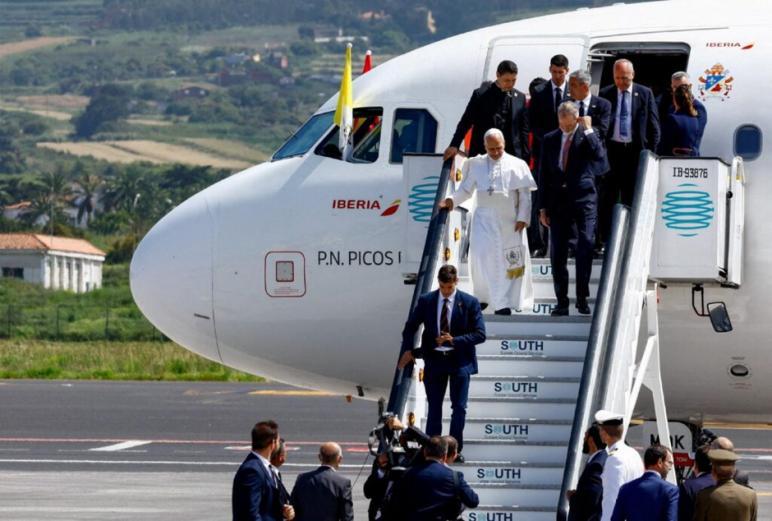
TENERIFE, Spain (OSV News) After Pope Leo XIV’s flight from the Canary Islands to Rome was grounded due to mechanical failure before take off June 12, Spain’s King Felipe VI offered the pope a ride home to Rome on the king’sprivatejet.
The papal plane, a chartered Iberia Airlines plane, was scheduled to depart Santa Cruz de Tenerife at 3 p.m. local time.
After passengers had been seated for more than an hour and a half, the captain came on the intercom with the kind of announcement no passenger ever wants to hear: There had been “an incident with one of the aircraft systems.”
Shortly after, King Felipe VI boarded the aircraft himself and Pope Leo got offoftheplane.
A subsequent update from the pilot indicated maintenance crews were attempting to restart the engine by towing the aircraft to face into the wind, suggesting a tailwind may have contributedtothefailure.
and
June 12, 2026. (OSV News photo/Borja Suarez, Reuters)
journalists.
Veteran Vatican correspondent Valentina Alazraki, who has covered more than166papalforeigntripssince1979, was among those aboard the papal plane. Alazraki spoke with OSV News during the long delay on the papal plane about past travel incidents while traveling with St. John Paul II in the 1980s.
“I remember that in 1986, on our way back from India to Rome, it was snowing. We flewover the city several times but we couldn’t land, so the pilot flewtoNaples,” shesaid.
“Together with the pope, we took the trainandarrivedinRome,” shesaid.
In 1988, bad weather also caused an unplanned landing in South Africa while the papal plane was en route to Lesotho. Alazraki said it was a politically sensitive situation, as John Paul had excluded South Africa from his African itinerary in protest of apartheid. The group was subsequently driven across theborder.
Pope Leo and King Felipe walked together across the tarmac, where the king’s private Falcon jet was waiting.
The Vatican confirmed Pope Leo would depart aboard the royal aircraft at approximately 6 p.m. local time, with
The effort was unsuccessful. Iberia issued a statement confirming the technical problem could not be repaired on site and that a replacement aircraft was being dispatched from Madrid. All passengers, including cardinals, Vatican security personnel and approximately 80 journalists, were askedtodisembark.
an expected arrival in Rome around 11 p.m. The remainder of the Vatican delegation and the press corps would follow hours later on Iberia’s replacementflight.
Due to the change in aircraft, the pope did not hold his customary in-flight press conference with traveling
As King Felipe’s jet took off shortly after 6 p.m with Pope Leo on board, the king remained on the tarmac and watched the departure alongside local authorities as did the Vatican press corps, disappointed at the missed opportunity to interview the pope at 30,000feetintheair.❖
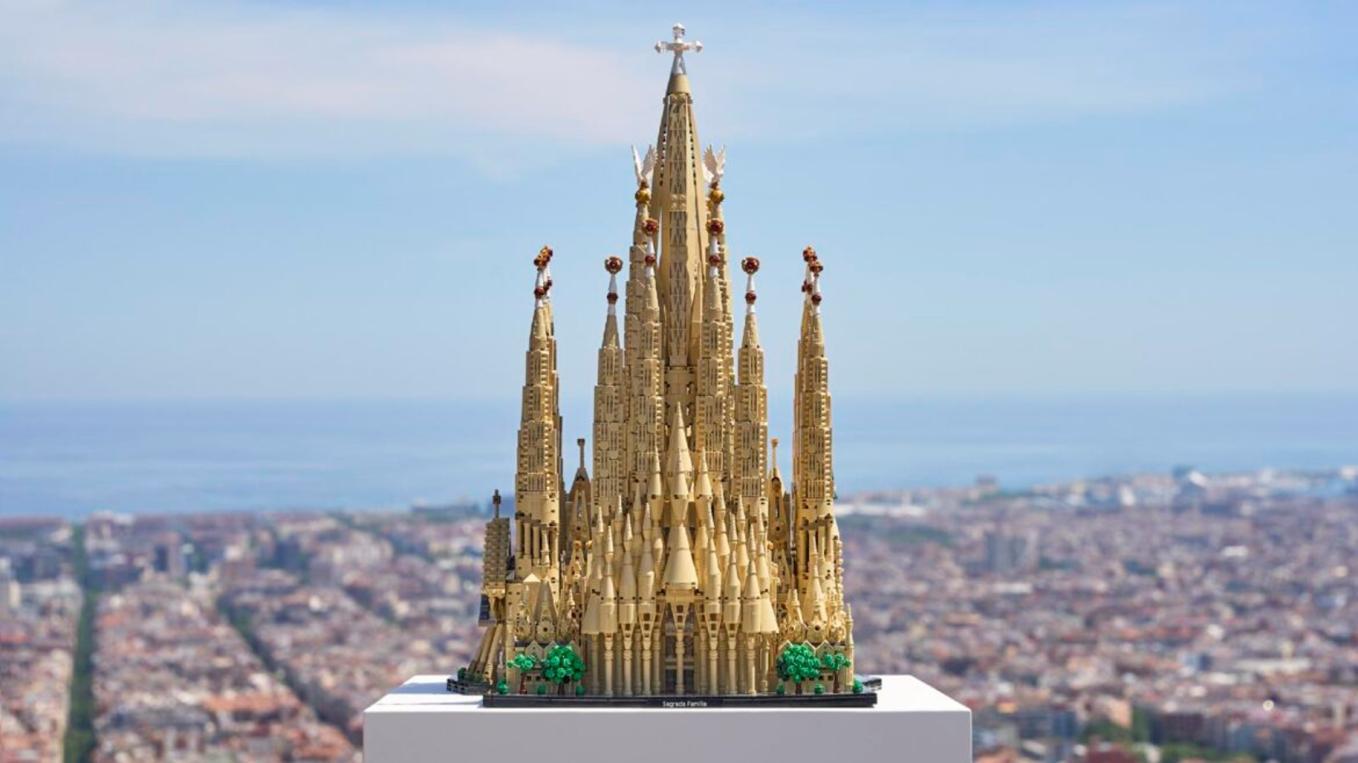
BILLUND, Denmark (OSV News) To commemorate the centennial year of the death of famed architect Antoni Gaudí, who designed Spain’s Sagrada Família basilica, The Lego Group announced June 4 the release of a new model kit of the church, calling it one of the world’s “most recognizable and ambitious” buildings.
The announcement came shortly before Pope Leo XIV was scheduled to visit the church in Barcelona June 10 to mark the anniversary of Gaudí’s death and inaugurate its recently completed tower.
The still-unfinished Basilica of the Holy Family in Barcelona has been under construction since 1882. Its central and
tallest spire, the Tower of Jesus Christ, was finished in February. Its other spires each represent central figures in the Church, including the Twelve Apostles, the four evangelists and the VirginMary.
The original neo-Gothic design of the basilica, intended to resemble the shrine in Loreto, Italy, was altered two
years after the laying of the cornerstone due to differences between Bocabella and the project’s first architect, Francisco de Paula del Villar. The project was then continued byGaudí(1852-1926).
The Sagrada Família set containing separate Lego elements is the largest Lego building set ever released, by piece count, the company said. The Lego model of Barcelona’s landmark basilica includes a stainedglass window effect, as well as other details, including its Passion facade and
We felt an immense responsibility to do justice to the Sagrada Família through this design,” Lego architecture designer Rok Žgalin Kobe said in a statement. “Our goal was to honor s vision with the utmost respect, capturing the rhythm of the basilica’s construction, its extraordinary complexity and ambition, and translating that into an immersive buildingexperience.”
This is not only the largest LEGO set ever, but a model of one of the most ambitious architectural works in the Žgalin Kobe continued. Balancing scale and precision, while remaining faithful to a living monument that has been evolving for more than a century, was a unique design challenge and one we’re incrediblyproudof.”
Over the course of his life, Gaudí came to see his architecture as an effort to bring people closer to God, according to multiple accounts of his life. His sainthood cause is underway. He was declared “Venerable” by Pope Francis inApril2025.❖
Pope Leo XIV
Spain’s King Felipe VI leave the plane on which the pope was due to depart following a delay for maintenance issues, at Tenerife Norte–Ciudad de La Laguna Airport, Canary Islands, Spain,
A Lego version of the Sagrada Família basilica in Barcelona, Spain, is depicted in this undated photo. The new set, part of Lego's Architecture portfolio series depicting iconic buildings from around the world, is available for preorder and is in stock globally Nov. 1, 2026. (OSV News photo/courtesy The Lego Group)
Pope’s Corpus Christi Mass in Spain draws 1.2 million
petals and religious sisters carried candles near the front of the long procession of priests and bishops, culminating with a golden canopy under which Pope Leo carried the large monstrance containing the Blessed Sacrament. People in the crowd knelt down and tossed flowers as the Eucharist passed by.
In his homily, Pope Leo reflected on the power of Eucharistic grace to transform people’s lives.
“It is not merely a matter of bringing out the monstrance, but of allowing ourselves to be brought out of our selfishness and indifference, of a comfortable, private faith, so as to respond to his invitation to conversion, to change our perspective, and to welcome his presence which transforms us,” the pope said, telling Spaniards to live their faith courageously in the public square.
The task of Spain today and in the future, the pope said, is to “ensure that the religiosity which has shaped and defined this country for centuries is not a museum of the past to be visited, but a school of faith from which to draw even today.”
In a country struggling with extreme political polarization and unhealed wounds of the Civil War, the pope said the living faith can transform society as “no one can kneel before the Lord” and at the same time “despise their brother.”
Catholic roots of Spain can be “a school” that “teaches us of the gratuitousness of love that becomes a gift, so that it may flow among us and break the chains of all selfishness,” and one “from which we learn that God is a real presence and that we too are called to be present in the realities and challenges of society, not shying away, but personally committing ourselves to the building of the common good.”
As Pope Leo passed by in the procession, he may have recognized one of the faces in the crowd.
Twenty-eight-year-old Erci Torres from Peru, was confirmed by Pope Leo when he served as her bishop at the Santa Rosa de Lima parish in Chiclayo. Today she lives in Madrid and was thrilled to see the pope again.
“It was a very unforgettable experience,” Torres told OSV News. “And to imagine that he is now the pope is incredible.”
During the Mass, Pope Leo invoked St. Manuel González García, an early 20th -century Spanish bishop who passionately urged people to recognize the real presence of Jesus in the Eucharist. Today the saint is known as “the bishop of the abandoned tabernacle” because on his tomb in the Blessed Sacrament Chapel of Palencia Cathedral, it is written, “I ask to be buried next to a tabernacle, so that my bones after my death, like my tongue and my pen in life, may always be repeating to those who pass by: ‘Jesus is here! Jesus is here! Do not leave him abandoned!'” Pope Leo said, “His life reminds us that
the Eucharist should be honored not only during great celebrations or on special occasions, but also through the silent fidelity of those who accompany the Lord with a humble and quiet friendship that is nourished day by day.”
The pope also drew on the poetry of St. John of the Cross, who, while imprisoned in Toledo around the time of Corpus Christi in 1578, found the Lord in the darkness of his cell, which the pope described as “a presence from which emanates a light that never fades.”
Special moment for
Madrileños
Crowds lined the major avenues leading to the plaza for hours before the Mass began, with 2,300 Eucharistic ministers needed to distribute communion to the assembled faithful. About 400 musicians provided music for the liturgy, including an orchestral ensemble.
Among the crowd was the Adam family, eight siblings who waited together for hours to take part in the papal Mass. Seventeen-year-old Patricia Adam is the second oldest of the 8 siblings. Her older sister played violin in the orchestra for the papal Mass.
“For me, my Catholic faith is living a relationship with God and with Jesus in intimacy,” Adam said. “Being here with my family means a lot because it is not just a relationship one to one, but all together with God.”
Nearby 23-year-old Lucia waited with her four siblings and 17 cousins as they attended the Mass together.
“Faith has always been so important to me,” she said. “I have an aunt who is a nun. She is from the Missionaries of Charity. She’s my best example of faith.”
artisans from the Galician town of Ponteareas, working alongside more than 160 volunteers. The 16 large carpets depicting Eucharistic and Christian symbols lined the streets.
“The solemn processions held on this day have for centuries shaped the piety, art, music, architecture and life of the Spanish people,” Pope Leo said.
“Even today, they still express and manifest the spiritual sentiments of this country through the beauty and elegance of the floral carpets, the altars erected in the streets, the carefully crafted monstrances and stands, the hymns and the liturgical vestments.”
For Spaniards, Corpus Christi remains one of the country’s most beloved
public expressions of faith and an example of how deeply rooted popular piety remains in Spanish culture.
“This is not an exhibition,” the pope said. “It is a profession of faith in the presence of the risen Lord, who is alive and continues to walk among us, who becomes bread to satiate our hunger for life, and visits the recesses of our hearts and history, even those shrouded in darkness.”
“May the Lord Jesus, present in the Eucharist, transform you into bread that is broken, given, and offered, so that a life of fullness may spring forth for you, for your families, and for your country.”❖
The elaborate floral carpets lining the Calle de Alcalá were created by
The faithful attend a Mass celebrated by Pope Leo XIV at Plaza de Cibeles in Madrid June 7, 2026, during his apostolic journey to Spain. (OSV News photo/Simone Risoluti, Vatican Media)
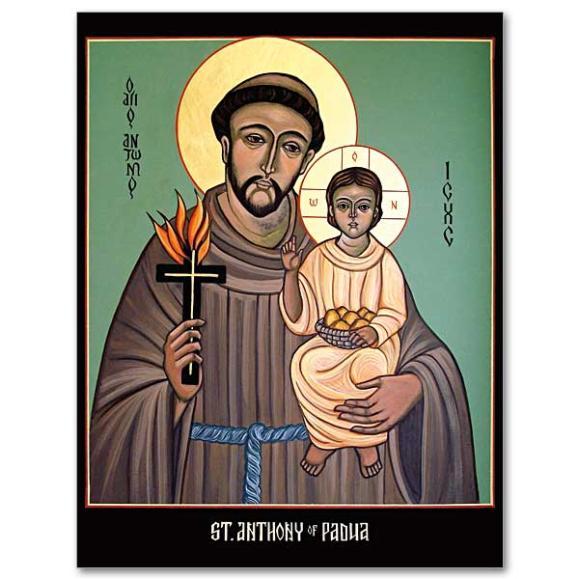
Saint of the Week
invites us to come to Him, for He aged the faithful to recognize that nityoffaith,it isan opportunityto nurture our relationship with God, to reflect together, and to deepen our knowledge and understanding
Through the intercession of the Sacred Heart of Jesus, may all be strengthened in faith, renewed in s love with those around them.
Lisbon, Portugal in 1195. By the age of fifteen he asked to be sent to the Abbey of Santa Cruz in Coimbra, the then capital of Portugal. Following his ordination to the priesthood, he was named guestmaster and was responsible for the abbey's hospitality. When Franciscan friars settled a small hermitage outside Coimbra dedicated to Saint Anthony of Egypt, Fernando felt a longing to join them. Fernando eventually received permission to leave the Abbey so he could join the new Franciscan Order. When he was admitted, he changed his name to Anthony. He went to Italy and was stationed in a small hermitage where he spent most of his time praying, reading the Scriptures and doing menial tasks. At an ordination where no one was prepared to speak, the humble and obedient Anthony hesitantly accepted the task. The years of searching for Jesus in prayer, of reading sacred Scripture and of serving him in poverty, chastity and obedience had prepared Anthony to allow the Spirit to use his talents. Anthony’s sermon was astounding to those who expected an unprepared speech and knew not the Spirit’s power to give people words.
Recognized as a great man of prayer and a great Scripture and theology scholar, Anthony became the first friar to teach theology to the other friars. Soon he was called from that post to preach to the Albigensians in France, using his profound knowledge of Scripture and theology to convert and reassure those who had been misled by their denial of Christ's divinity and of the sacraments.
After he led the friars in northern Italy for three years, he made his headquarters in the city of Padua. He resumed his preaching and began writing sermon notes to help other preachers. He was only 36 years old when he died in 1231 and was canonized less than one year afterward. He is the Patron Saint of Lost items, the Poor & Travellers. ❖ [franciscanmedia.org ]