urges
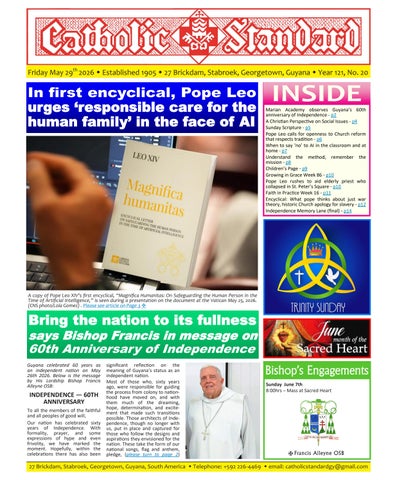
urges
responsible care for the human family’ in the face of AI
of
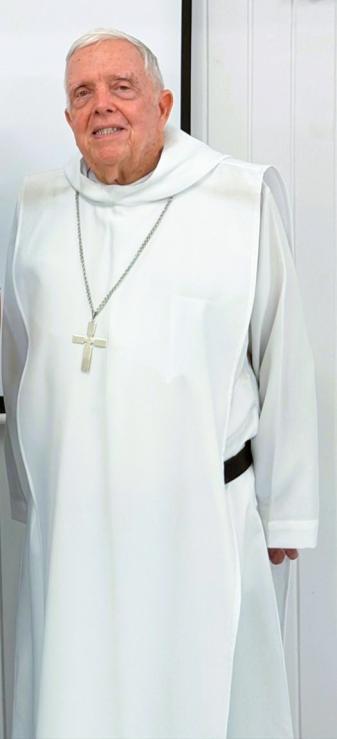
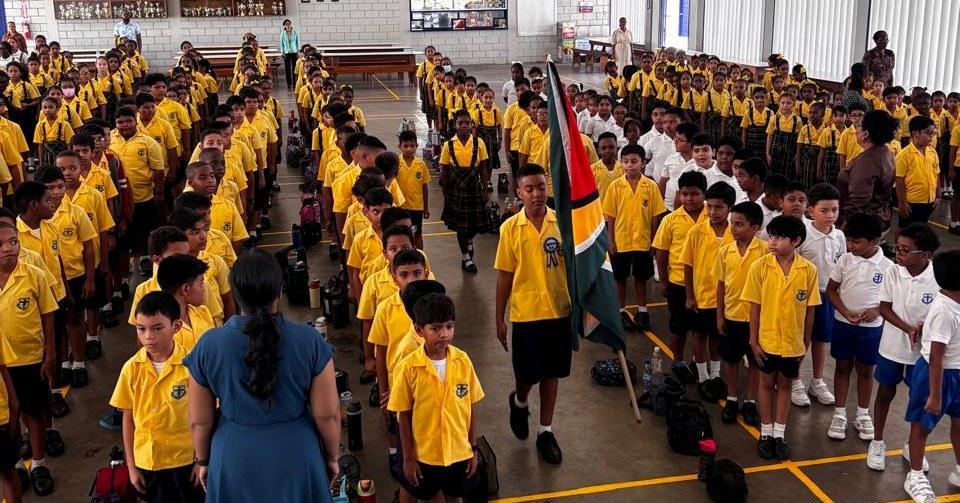
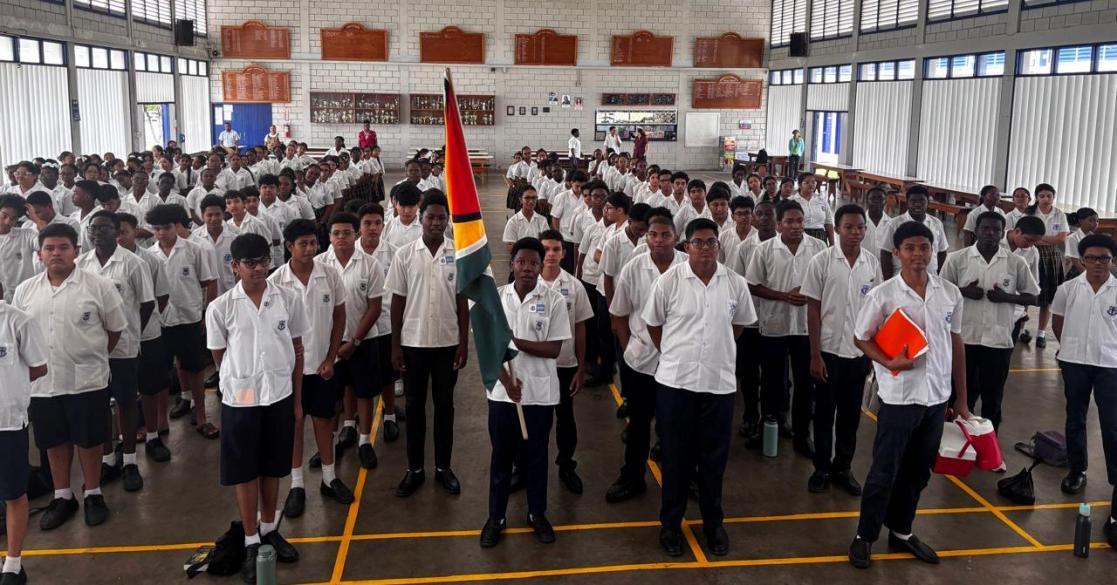
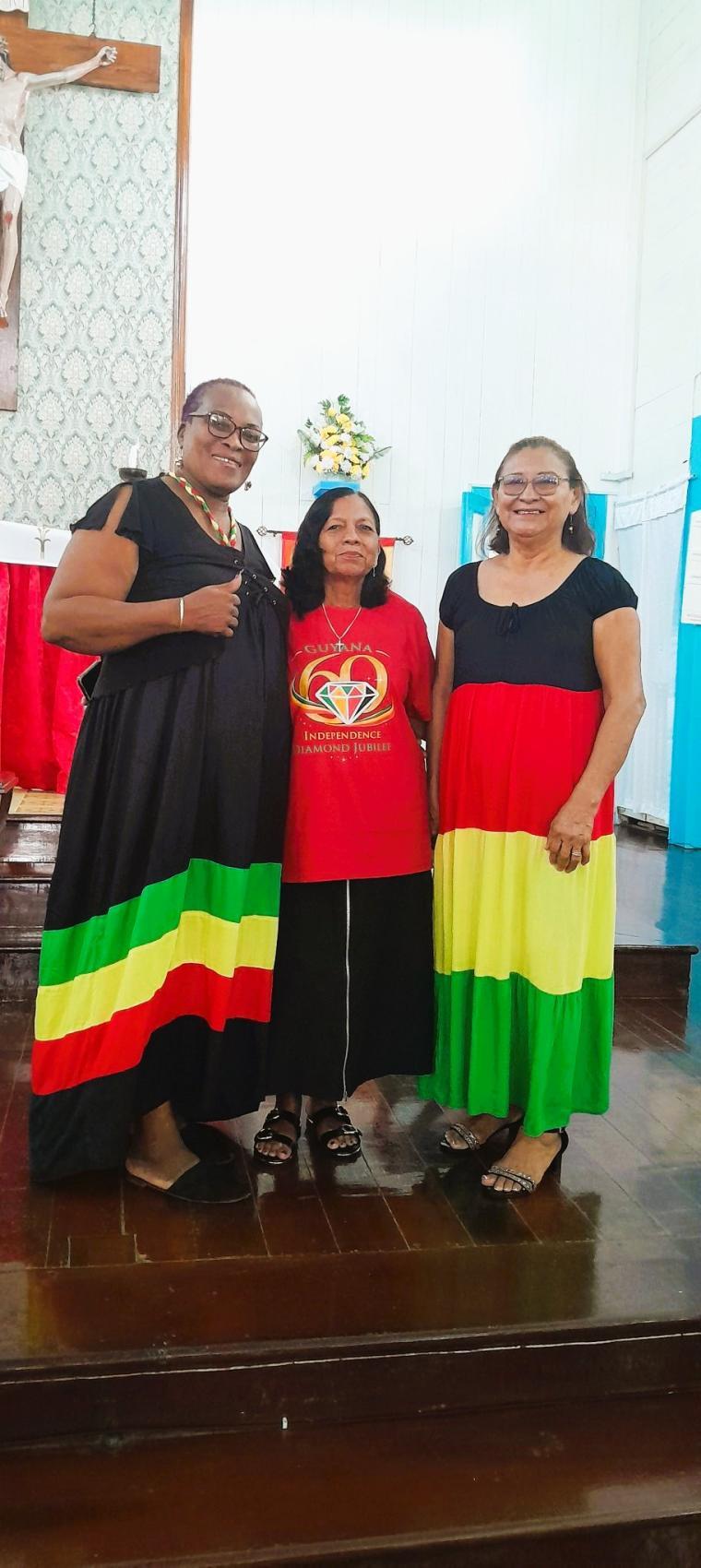
Guyana celebrated 60 years as an independent nation on May 26th 2026. Below is the message by His Lordship Bishop Francis Alleyne OSB: INDEPENDENCE 60TH ANNIVERSARY
To all the members of the faithful and all peoples of good will, Our nation has celebrated sixty years of Independence. With formality, prayer, and some expressions of hype and even frivolity, we have marked the moment. Hopefully, within the celebrations there has also been
significant reflection on the meaning of Guyana’s status as an independent nation.
Most of those who, sixty years ago, were responsible for guiding the process from colony to nationhood have moved on, and with them much of the dreaming, hope, determination, and excitement that made such transitions possible. Those architects of Independence, though no longer with us, put in place and captured for those who follow the designs and aspirations they envisioned for the nation. These take the form of our national songs, flag and anthem, pledge, (please turn to page 2)
Marian Academy observes Guyana’s 60th anniversary of Independence - p2
A Christian Perspective on Social Issues - p4
Sunday Scripture - p5
Pope Leo calls for openness to Church reform that respects tradition - p6
When to say ‘no’ to AI in the classroom and at home - p7
Understand the method, remember the mission - p8
Children’s Page - p9
Growing in Grace Week 86 - p10
Pope Leo rushes to aid elderly priest who collapsed in St. Peter’s Square - p10
Faith in Practice Week 16 - p11
Encyclical: What pope thinks about just war theory,historic Church apologyforslavery - p12
Independence Memory Lane (final) - p14
Sunday June 7th
8:00hrs – Mass at Sacred Heart
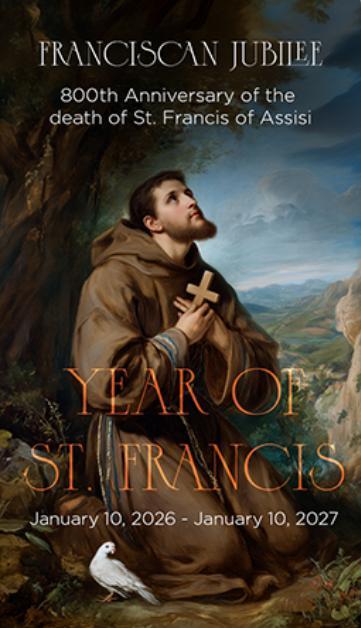
Saint Francis, our brother, you who eight hundred years ago went to meet Sister Death as a man at peace, intercede for us before the Lord.
You recognized true peace in the Crucifix of San Damiano, teach us to seek in Him the source of all reconciliation that breaks down every wall.
You who, unarmed, crossed the lines of war and misunderstanding, give us the courage to build bridges where the world raises up boundaries.
In this time afflicted by conflict and division, intercede for us so that we may become peacemakers: unarmed and disarming witnesses of the peace that comes from Christ.
Amen - Pope Leo XIV
coat of arms, and motto: “One People, One Nation, One Destiny.” Much thought and attention would have gone into the formulation of a Constitution, and around all of this there would also have been commentary and discussion on the importance and significance of becoming and being an independent nation.
In our faith traditions, we have testimony and written records of the founders and followers of the faith throughout time. In our Christian tradition, we have the Gospels and writings of the early Church, the lives of the Saints, alongside doctrine and catechesis. What we seek to achieve is not merely information and knowledge about the faith, but also an understanding of the spirit with which those who have gone before us lived the faith. We seek to capture their zeal and passion, their witness, and the ways in which they brought the core of the faith into every aspect of their lives.
In a similar way, a nation has its history and a compendium of documents, events, and actors, all of which have impacted the formation and present status of the nation. Our dear land of Guyana has its own unique history and present reality, from which a distinctive way forward can be shaped a way especially influenced by the unique makeup of our place and people, and grounded in patriotism, dedication, commitment, and a shared belief in what is possible and what is most deserving of our attention.
I have valued memories of the late Anthony Pantin, former Archbishop of the Archdiocese of Port of Spain. When questioned about some religious practices and innovations that had become popular, even if they possessed some merit, he would comment: “These are not the things on which the Church was founded.” I think too of the response of Gamaliel in the Acts of the Apostles when the early Church, in its beginnings, was questioned about its soundness and authenticity. He
said: “If this enterprise does in fact come from God, you will be unable to destroy it.” (Acts 5:34–39)
While we take this moment to celebrate the anniversary of Independence, it is even more important that, on a daily basis, we together live out the soundness, authenticity, and spirit of its origins, with a focus on the desire to bring the nation to its fullness as a people and as a nation standing shoulder to shoulder with other nations.
“God guard you Great Mother and make us to be More worthy our heritage, land of the free”.❖

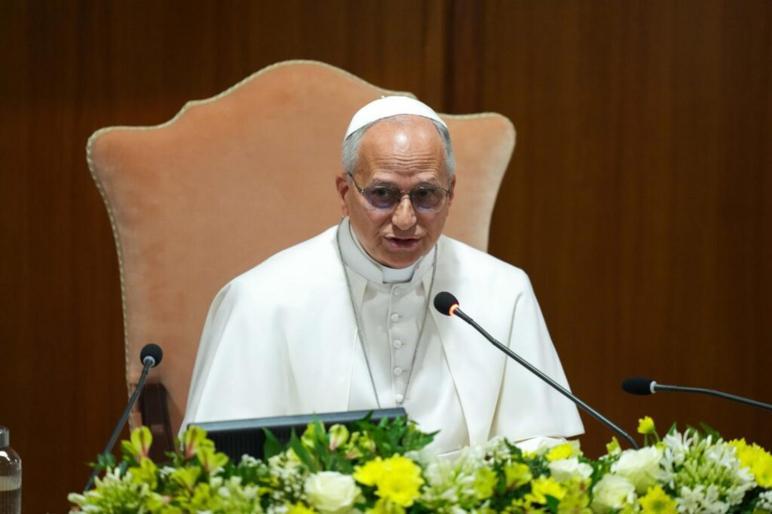
Pope Leo XIV speaks at a presentation of “Magnifica Humanitas” at the Synod Hall at the Vatican May 25, 2026., the first encyclical of his papacy, which focuses on the rise of artificial intelligence. (CNS photo/Lola Gomez)
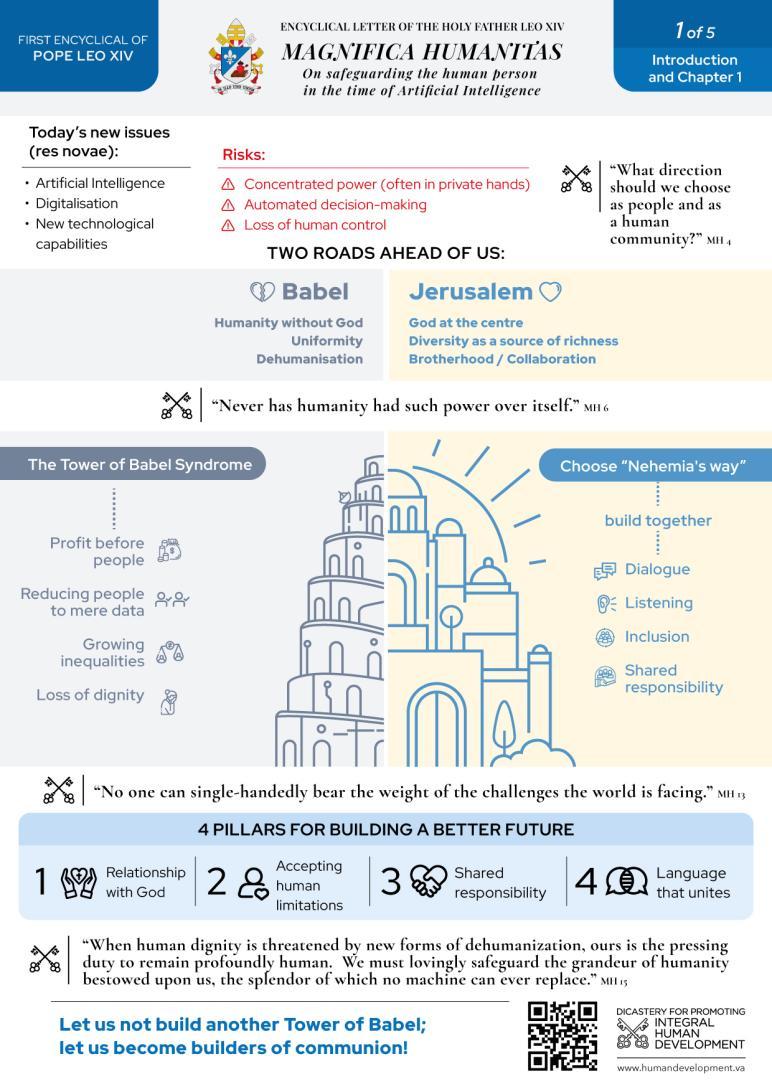
VATICAN CITY (OSV News) Pope Leo XIV published his landmark encyclical on artificial intelligence “Magnifica Humanitas” May 25, comparing the attempt to build an AI future that excludes God to the “Tower of Babel” and underlining the need to safeguard human dignity as it is “threatened by new forms of dehumanization.”
“The risk of dehumanization of building a future that excludes God and reduces the other to a means is an ancient and ever-new temptation that today takes on a technical guise,” Pope Leo wrote in his first encyclical, “Magnifica Humanitas: On Safeguarding the Human Person in the Time of Artificial Intelligence.”
“In the era of artificial intelligence, when human dignity is threatened by new forms of dehumanization, ours is the pressing duty to remain profoundly human. We must lovingly safeguard the grandeur of humanity bestowed upon us and revealed in its fullness in Christ, the splendor of which no machine can ever replace,” he said.
AI misuse compared to ‘TowerofBabel’
Pope Leo opens the first encyclical of his pontificate by saying that humanity today faces a pivotal choice “either to construct a new Tower of Babel or to build the city in which God and humanity dwell together.” Using the Biblical Genesis narrative, the pope warns against the “‘Babel syndrome,’ namely the idolatry of profit that sacrifices the weak” and the pretense that everything, “including the mystery of the person,” can be translated into “data and performance.”
“Calling for prudence, rigorous evaluation and even, at times, a slower pace in adopting AI does not mean opposing progress; instead, it is an exercise of responsible care for the human family,” Pope Leo wrote.
The lengthy papal document is divided into five chapters and touches on wide ranging issues related to AI, including the prospect of massive unemployment, the future of education, the protection of human freedom, excessive screen time for young people, cryptocurrencies, economic disparities, transhumanism, cyberattacks and the application of Catholic social teaching principles.
Pope Leo dedicated the final chapter of the encyclical to AI in warfare and the need for “rigorous ethical constraints” and proactive peacebuilding “to curb the technological arms race.”
The American pope points to Martin Luther King Jr., St. Teresa of Kolkata, Dorothy Day, St. Maximilian Kolbe and others as examples that “history can also change when individuals truly take the dignity of everyone seriously.”
In “Magnifica Humanitas,” Latin for “Magnificent Humanity,” the pope calls on Christians not to be “passive spectators” or “mere commentators on what is crumbling,” but to take a proactive role in building the future by cultivating community and in-person relationships, educating young people to love wisdom, spending time with the poor and the lonely, being a voice for justice, defending objective truth, and treating the digital world as “a new continent to be evangelized.”
“It is not our part to master all the tides of the world, but to do what is in us for the succour of those years wherein we are set, uprooting the evil in the fields that we know, so that those who live after may have clean earth to till,” the pope wrote, quoting J.R.R. Tolkien’s “Lord of the Rings: The Return of the King.” He added that it is “small and steadfast acts of fidelity that serve as a bulwark against dehumanization.”
‘Slowing things down when everything is accelerating’
In the encyclical, Pope Leo says that the idea of a “more moral AI” is not enough if that morality is only determined by a few.
“What is needed is a more active political involvement that is capable of slowing things down when everything is accelerating, and of protecting the opportunities for communities still to be able to participate and ask questions,” he said.
The pope argues that “we cannot consider AI to be morally neutral” and underlines that ethical discernment cannot be limited to “asking whether we are using a system for good or bad purposes,” but must also “examine how that system is designed and what vision of the human person and society is embedded in the data and models that guide it.”
Pope Leo added that data cannot be left solely in private hands and “should not be treated as something to be sold off or entrusted to a select few,” calling for appropriate regulation and
creative thinking to “manage data as a common or shared good.”
Unemployment as a ‘grave evil’ and ‘socialcalamity’
Pope Leo addresses the looming specter of mass unemployment due to the adoption of AI, saying this would be “a true social calamity that especially requires the State to exercise responsibility.” He cites St. John Paul II’s 1981 encyclical on human work “Laborem Exercens,” noting that his predecessor recognized that unemployment is “a grave evil,” with Pope Leo adding that “exposing many to forced inactivity, a lack of responsibility and the absence of daily tasks and stimuli” could lead to “human and cultural impoverishment.”
“The pursuit of greater profits cannot justify choices that systematically sacrifice jobs, because the human person is an end, not a means, and the economic order must remain subordinate to human dignity and the common good,” Pope Leo said.
“Without bold decisions, the prospect of greater poverty and inequality looms large, (please turn to page 13)
By GHK Lall
One People, On Nation, One Destiny is a wonderful national motto. Now, if only it could be for Guyana. Where each Guyanese see the other as part of that vision. Vision has to become practice. Daily actions give substance to those six beautiful words strung together in a jewel-encrusted line. In life, there is reality to be faced. The harder that it is to come to grips with, the fewer are those ready to take up the challenge. National unity is one such hard reality. Many Guyanese want it. Where are the citizens ready and willing to work to get to it? Talking helps. But there is so much else waiting for a beginning, that first step. Unless there is ventilation of what has divided this nation and its peoples, talking then becomes what comforts, with quick moving on following. It still troubles that those who insist that they are for national unitydo not want to hear about a National Truth and Reconciliation Commission. It is not the perfect antidote, but it assists in understanding what has ripped Guyanese apart. If not, all there will be is the same endless finger-pointing, the uninterrupted cross-eyed, crossways condemnations of who is guilty and who is innocent, who is right and who has always been wrong. If a small family, or a little community, cannot exist in this manner, what prospects a nation?
What prospects for national unity, where every new positive is an opportunity to push-up the few favored and pushout a multitude of those who incurred the wrath of those who have power and control? There’s the arrival of oil, and plenty of it for this tiny nation. What a development that holds many ingredients to heal a fractured nation, a split and vexed people! At least, the poverty that has hounded Guyanese of all walks of life could have been eased. With diligent effort, cross-sectional poverty could have been of the past. To reduce to a nutshell, when the economics is better, the raw sharpness of Guyana’s divisive politics is lesser. When citizens can spend sensibly and still save something, they may still harbor animosities
and resentments. But those would be at slower, lower levels.
Guyana is polarized. Guyana is more polarized. Guyana is now most polarized, never at this pitch at any time in its independent history. The volume from the ground is deafening. Doesn’t let up. Doesn’t fade away. How does any society survive beyond the basics, ever manage to fulfill its potential? Much of this is talked about; but there’s an absence of will, of those prepared, to work for it. To be disciplined themselves. To be agents of change in their own circles. To be different when the conversations and assertions take on an edge, when slurs and putdowns fly furiously.
Christians read, hear, and know the call to be One Body in Christ. Nevertheless, to get closer to that Oneness in Christ has proven to be challenging. Personalities. Perceptions about worldly persuasions. Practices that don
spiritual life. These have all been bones of contention that wounds the body of Christ. If in God concealed (or open) ways of thinking, if despite the call of sacred scripture, oneness in Christ is still stop of limited progress, then national unity may amount to one of those soothing dreams that never result in any real life parallel, or equivalent. When leaders live what they preach, lead through broad inclusion that leave little room for differences, national unity is then given a chance. When followers are corrected, and they correct others, that hate and division are not condoned, then national unity can develop some flesh, grow some muscle. National unity may be had. But when what it is said publicly is lived privately, practiced among followers. When leaders hold citizens accountable, and citizens push leaders, then unity may have space to
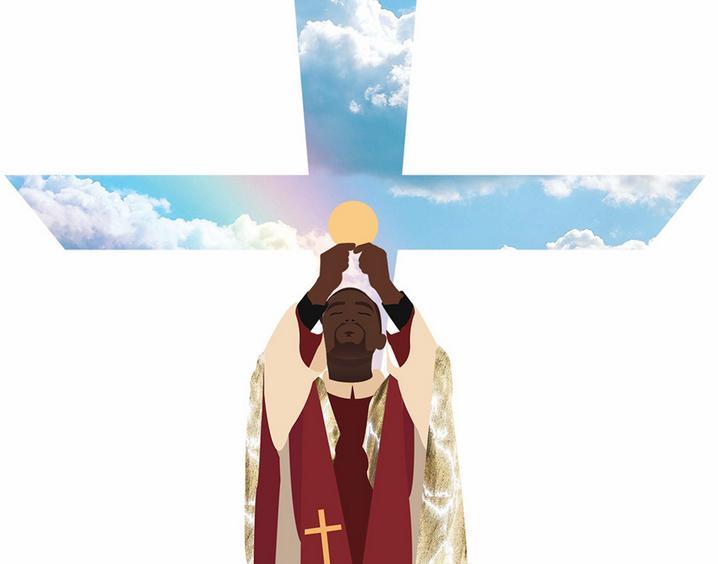

Gracious and loving God, we thank your for the gift of our priests.
Through them, we experience your presence in the sacraments. Help our priests to be strong in their vocation.
Set their souls on fire with love for your people.
Grant them the wisdom, understanding, and strength they need to follow in the footsteps ofJesus. Inspire them with the vision of your Kingdom.
Give them the words they need to spreadthe Gospel.
Allow them to experience joy in their ministry.
Help them to become instruments ofyour divine grace.
We ask this through Jesus Christ, who lives and reigns as our EternalPriest. Amen


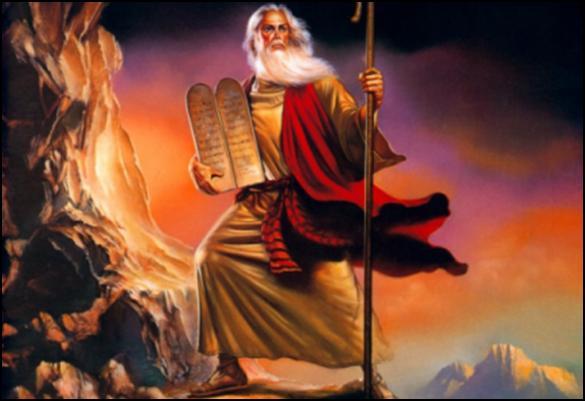
First Reading Exodus 34:4-6. 8-9
Lord, Lord, a God of tenderness and compassion.
With the two tablets of stone in his hands, he went up the mountain of Sinai in the early morning as the Lord had commanded him. And the Lord descended in the form of a cloud, and Moses stood with him there.
He called on the name of the Lord. The Lord passed before him and proclaimed, the Lord, a God of tenderness and compassion, slow to anger, rich in kindness and faithfulness; And Moses bowed down to the ground at once and worshipped.
‘If I have indeed won your favour, Lord,’ he said ‘let my Lord come with us, I beg. True, they are a headstrong people, but forgive us our faults and our sins, and adopt us as your heritage.’
The Word of the Lord.
Responsorial Psalm: Daniel 3:52-56
Response: To you glory and praise for evermore.
1. You are blest, Lord God of our fathers.
To you glory and praise for evermore. Blest your glorious name.
To you glory and praise for evermore.
2.You are blest in the temple of your glory. To you glory and praise for evermore.
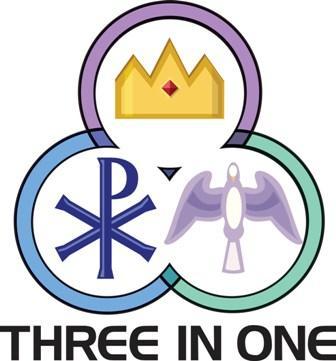
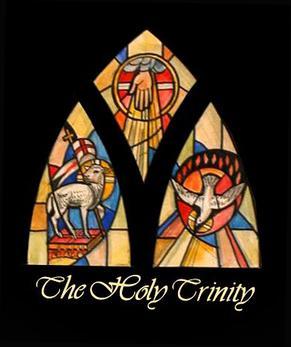
Today we celebrate the feast of the Most Holy Trinity. The Catechism of the Catholic Church tells us that the Holy Trinity is the “central mystery of the Christian faith” (261). The concept of the Triune God Three Persons in

3.You are blest on the throne of your kingdom.
To youglory andpraise for evermore.
4.You are blest who gaze into the depths.
To you glory and praise for evermore.
5.You are blest in the firmaments of heaven. To you glory and praise for evermore.
Second Reading 2 Corinthians 13:11-13
The grace of the Lord Jesus Christ, the love of God and the fellowship of the Holy Spirit. rothers, we wish you happiness; try to grow perfect; help one another. Be united; live in peace, and the God of love and peace will be with you. Greet one another with the holy kiss. All the saints send you greetings.
The grace of the Lord Jesus Christ, the love of God and the fellowshipof the HolySpiritbe withyou all.
The Word of the Lord.
Gospel Acclamation Apoc 1:8 Alleluia, alleluia!
Glory be to the Father, and to the Son, and to the Holy Spirit. the God who is, who was, and who is to come Alleluia!
one God is truly a mystery, almost too lofty for us ordinary people to even begin to grasp. Can the truth of the Holy Trinity teach us anything as everyday Christian stewards? Actually,yes!
St. John Paul II described the Holy Trinity is a “Divine Family,” a community of Persons Who give themselves completely to each other and Who wishes to share Itself, Its life, with us. These concepts are at the very heart of the stewardship way of life. As stewards, we too, are called to
GOSPEL:
John 16:12-15
For God sent his Son into the world so that through him the world might be saved.
Jesus said to Nicodemus, God loved the world so much that he gave his only Son, so that everyone who believes in him may not be lost but may have eternal life.
For God sent his Son into the world not to condemn the world, but so that through him the world might be saved. No one who believes in him will be condemned; but whoever refuses to believe is condemned already, because he has refused to believe in the name of God’s only Son.
The Gospel of the Lord. ❖
share ourselves and our lives with others.
Our Gospel passage from John reminds us that the stewardship way of life is nothing more and nothing less than the imitation of our Most Holy Trinity. “God so loved the world that he gave his only Son so that everyone who believes might not perish but might have eternal life.” He gave Himself, in the person of His Son, for love of us. We must love this God back now by giving ourselves, our lives, to Him.
Amazingly, the more we give of ourselves to God in love, the more we will find the “grace of the Lord, the love of God and the fellowship of the Holy Spirit within us.” The God of the universe this mysterious, Triune God invites us to an ever-deepening intimacy with Him when we make our lives a loving gift to Him and to others through the stewardship way of life. ❖
[www.catholicsteward.com/blog/]
Many learned papers and books have been written to try to explain the Trinity, God as Father, Son and Spirit. It is one of those great mysteries of life, not in the sense of being something hidden but rather of something so full of meaning that we can never get to the bottom of it. Humans know that there is a God. We learn this mainly from the Scriptures. And we try to understand and create images of what this God is like. But all images we develop to explain God will be limited because they are human images and so are inadequate to capture God. We may catch a glimpse or a characteristic or an aspect of God but these images are not God. So from Scripture we learn of God as Father and as Son and as Holy Spirit but we are only striving to understand the nature of God with these images. Maybe it is only sufficient to know that God is the being and doing and sharing of love. As God’s people we are drawn into that love.
On important dates, for example, on birthdays, we have the habit of giving gifts to those who are close to us. We do this because of the love we feel for those people. Over and over in the Gospels we are reminded of God’s love for us. And resulting from that love, we have from God the gift of his Son. It is a gift that can only result in new life if properly recognised and used. This gift has serious consequences for us in the choices we make and the lives we live in this world. Everything we are and want to be must be modelled on God’s gift to us. To do otherwise is to refuse that gift, to turn our backs on all that Jesus stood for and taught through his dealing with others, especially with those who saw him as the enemy. We see him at his best in the concern he shows for the poor and those in need of love and compassion. This is his great example for us to follow. ❖
[From: Journeying with the Word of God, The Religious Education Department, Diocese of Georgetown, Guyana ]
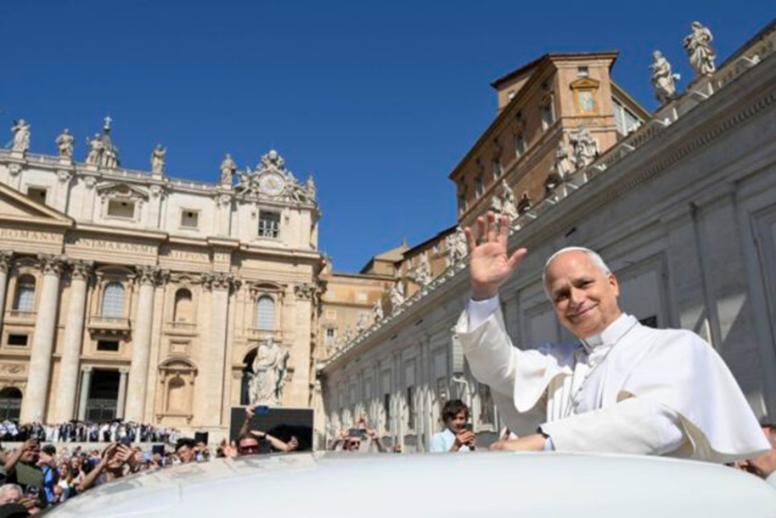
Pope Leo XIV greets visitors and pilgrims from the popemobile while riding around St. Peter’s Square at the Vatican before his weekly general audience May 27, 2026. (CNS photo/Vatican Media)
VATICAN CITY (CNS) Amid renewed tensions between the Vatican and traditionalist Catholics over the teachings of the Second Vatican Council, Pope Leo XIV defended Church reform as a legitimate process that adapts to current needs while remaining rooted in authentic tradition.
During his May 27 general audience in St. Peter’s Square, the pope said authentic renewal of the liturgy is acceptable and encouraged when the Church first engages in careful theological and pastoral study and then makes sure that “any new forms adopted should in some way grow organically from forms already existing.”
“In a particular way, I encourage everyone to respect the texts and norms of the liturgy with openness, humility, trust in God’s greatness and with sincere fidelity to ecclesial communion,” he said in his address to English speakers.
His remarks came weeks after the traditionalist Society of St. Pius X announced plans to move forward with ordaining new bishops without papal approval, despite warnings from the Vatican’s Dicastery for the Doctrine of the Faith that such an act would be schismatic and carry automatic excommunication for the


members involved in performing and receiving the consecrations.
In a May 13 statement published by the dicastery’s prefect, Cardinal Víctor Manuel Fernández warned that “this action will constitute ‘a schismatic act'” and that “formal adherence to the schism constitutes a grave offense against God and entails the excommunication established by the law of the Church.”
Founded in 1970 by Archbishop Marcel Lefebvre, the Society of St. Pius X has long opposed several teachings and reforms associated with Vatican II, particularly regarding the liturgy, ecumenism and religious liberty. Earlier this year, the group announced plans to consecrate bishops without papal authorization July 1, a move that would deepen its rupture with Rome.
In February, SSPX Superior General Father Davide Pagliarani, who resides at the society’s headquarters in Switzerland, met with Cardinal Fernández, but the society later reaffirmed its intention to proceed with the consecrations.
Addressing French-speaking visitors during the general audience, the pope prayed that “a liturgical renewal, faithful to the authentic tradition, may consolidate ecclesial communion and
Message us giving your name & numberat +592 701-7639. Send us an email at catholicstandardgy@gmail.com under the heading CS Subscription, andincludeyourname ❖ Subscribe to the Catholic Standard
the full participation of the faithful.”
Throughout his general audience catechesis, Pope Leo repeatedly framed liturgical reform as part of the Church’s living tradition rather than a break from the past.
Quoting Pope Pius XII and the Second Vatican Council’s Constitution on the Sacred Liturgy, “Sacrosanctum Concilium,” the pope said the Church “grows, matures, develops” while safeguarding the integrity of doctrine. He also reiterated the council’s call to preserve “sound tradition” while remaining opento “legitimate progress.”
The pope said changes within the liturgy had taken place throughout the Church’s history in order to help the faithful participate more fully in the Paschal mystery and to allow the Church’s worship to become embodied within different cultures throughout history.
“Today, this energy must be renewed in continuity with the authentic and living Catholic tradition, that is, in accordance with a dynamic aimed at introducing believers to the fullness of the truth,” he said.
Citing Pope Benedict XVI, Pope Leo said tradition and progress should not be viewed as opposites, recalling Benedict’s image of tradition as “a river” that carries its source within itself while continuing to flow forward. At the same time, the pope stressed that any reform within the Church must be approached carefully and with ecclesial authority. Referencing “Sacrosanctum Concilium,” he said reforms should only occur when “the good of the Church genuinely and certainly requires them” and after “careful theological, historical and pastoral” study.
“I therefore urge all those called to prepare the celebration of the divine mysteries, in particular priests who exercise the ministry of liturgical presidency, to always uphold that respect for the texts and regulations of the liturgy which springs from an inner attitude of openness and trust in God, manifesting humility before His greatness and sincere fidelity to ecclesial communion,” he said.❖

For 121 years, the Catholic Standard has been sharing the Gospel of Jesus Christ.
Now reaching 10,000+ followers on Catholic Media Guyana Facebook plus going straight to your inbox and WhatsApp, our vibrant weekly e-paper is a trusted source which delivers informative and inspiring stories from across the diocese and around the world.
Want to promote your business or event? Advertise with us! Call 675-4542 or email catholicstandardgy@gmail.com ❖
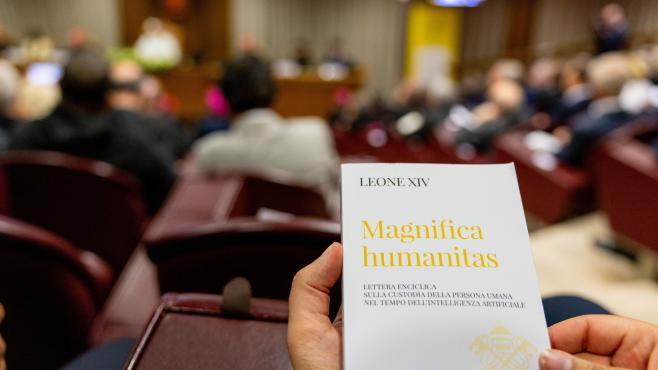
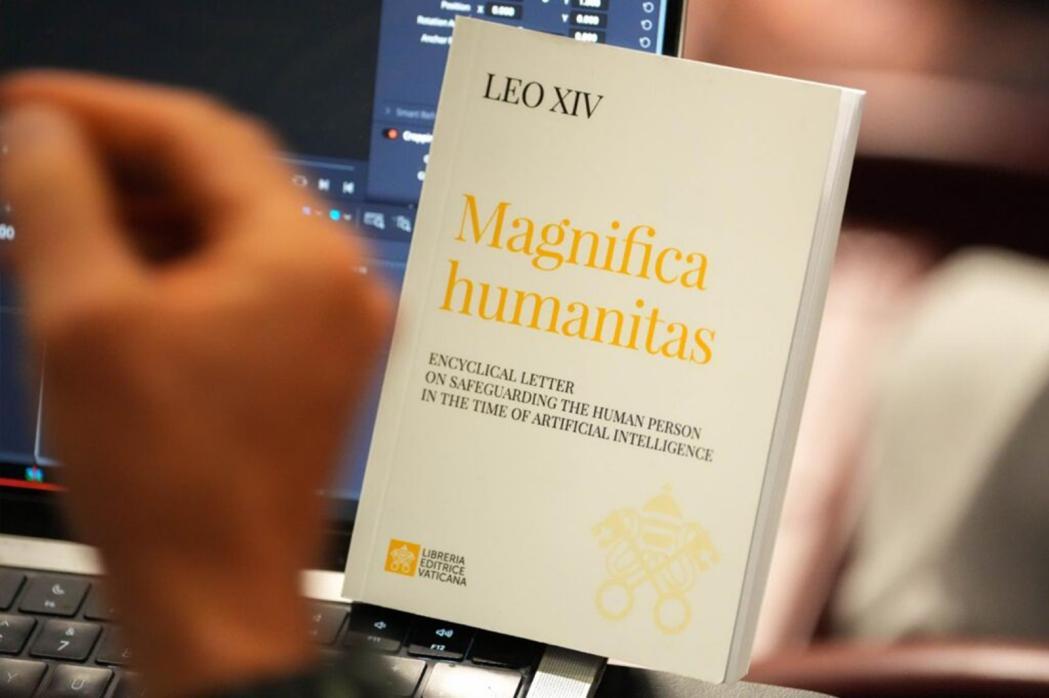
A hard copy of Magnifica Humanitas, Pope Leo XIV’s first encyclical, is held by an attendee at the document’s presentation on May 25, 2026, in the New Synod Hall at the Vatican. | Daniel Ibanez/EWTN News
(EWTN News) – Pope Leo XIV devotes a substantial portion of his first encyclical, Magnifica Humanitas, to the impact of the digital revolution on education and family life.
The pontiff acknowledges that “rapid technological transformations reveal just how unprepared we are on the educational level.” He warns that “the pervasiveness of digital media fosters a culture of immediacy and hyperstimulation, which gives rise to fatigue, boredom, and apathy concerning the effort required for seeking the truth.”
In response, he emphasizes that education “is a long journey requiring patience and therefore needs time for development and for engagement with reality beyond appearances,” something he considers “fundamental,” because as he recalls every technology “shapes those who use it.”
The risk of extinguishing the desire to ask questions
In the encyclical, Leo XIV does not offer ready-made answers or an easy list of tips. Rather, he issues a broad call to rethink what it means to educate people in the use of artificial intelligence and its implications. Ultimately, as he himself states, it is a matter of educating people “to decide when and for what purpose it oughtnotto be used.”
“The speed and ease with which answers or summaries can be obtained risk extinguishing the desire to ask questions, which is a process that bears fruit only over time,” the pope writes. To illustrate this point, he turns to the Seventh Letter of the Greek philosopher Plato, from 353 B.C., a cornerstone of Western thought.
“We must learn, then, how to exercise restraint in the use of AI and to protect our young people from the promise of the perfect machine, from that subtle temptation which renders human thought seemingly superfluous precisely when it is most needed,” he suggests, recalling that, as Plato said, the deepest and most important realities are
Leo also identifies several pressing challenges within education in the face of the emergence of artificial intelligence.
“Many educational systems struggle to keep pace with change and to support the integral development of students,” he notes.
learned only with great time and effort.
‘Early and unsupervised exposure’
The pope also warns about the negative impact on sleep, attention, and emotional regulation caused by “early and unsupervised exposure to digital devices and social media.”
This is compounded, he continues, “by easy access to violent or degrading content that offends sensibility, to pornographic and hypersexualized material, to messages that trivialize the body and emotions, and to proposals that normalize risky behavior.”
“Having a personal mobile device at too early an age and using it without adult supervision can exacerbate young people’s vulnerabilities, foster addiction, and expose them to isolation, bullying, and cyberbullying, as well as to pressures to share intimate images or sensitive information,” he warns.
In this regard, the pontiff acknowledges that it is difficult for parents to resist on their own the “influence of business models that monetize attention and time.” Hence his call for “an alliance among policymakers, educational institutions, and families that is capable of concretely supporting adults in this task.”
“Farsighted public policies are needed,” he insists, “to oppose the immediate interests of platforms, concentrated in a few hands, when they conflict with the well-being of minors.”
Along these lines, without pointing to any specific government, he speaks positively of legislative initiatives promoted in countries such as Australia, France, and Spain, and urges the promotion of “setting age limits, holding service providers accountable rather than shifting the whole burden of control onto families, and for providing specific protections against all forms of online sexual exploitation and violence. Thus can children and adolescents, who are entrusted to our care, be genuinely protected asa precious treasure.”
The development of information technologies and AI is causing curricula designed for another era to be obsolete, while school organization, spaces, assessment methods, and the very role of the teacher must be rethought order to promote an authentically integral education that addresses every dimension of the person.”
“It is necessary to support the ongoing formation of teachers throughout their professional lives, so that they can engage positively with new technologies, helping students to use them responsibly, critically, and creatively rather than passively succumbing to their influence,” he says.
The Holy Father also identifies a challenge of an intellectual and wisdom-based nature. “Without careful attention, an educational system lacking in a love for truth may emerge, in which an incessant flow of information replaces the essential exercise of research, reflection, and discernment,” he laments.
In this context, he warns of the proliferation of a fragmented knowledge, while “it becomes difficult to grasp reality as a whole, to ask profound questions about meaning, or to develop authentic, critical, and creative thought.”
“A genuinely healthy attitude is needed, requiring rhythms that incorporate silence, in-depth study, reading, and judicious analysis, for without these elements inner freedom may be compromised,” he proposes.
The Church’s social doctrine, the pope says, calls for a renewed educational alliance among families, schools, Christian communities, and public institutions. This takes concrete form when principles are translated into educational goals: educating in sobriety and a sense of limits; in recognizing the right of others and of future generations to enjoy the goods received or created by human ingenuity; in freedom and responsibility; and in a sense of transcendence and the common good.
“Schools are not called to follow the pace of the digital world but to offer that which the digital sphere by itself cannot provide, namely a shared time for learning and developing trustworthy relationships,” he concludes.❖
MAKING THE WORD OF GOD YOUR OWN
Step 1: Lookattoday’sReadingsprayerfully.
1st Reading: God is revealed to Moses on Mount Sinai as a God who is faithful to his promises and rich in tenderness and compassion.
2nd Reading: Paul encourages the Corinthians to live in peace and love. The same blessing in the passage is used as a greeting at Mass.
Gospel: God’s love for us is shown by the sending of his Son to save us all. All who believe in him will be saved.
Step 2: ApplyingthevaluesoftheReadings toyourdailylife.
1.Jesus is the gift of the Father to us. How do you translate the meaning of this gift to our time and place?
2.How does it feel to know that our God is a God of tenderness and compassion, faithfulness and kindness, a God who is quick to show mercy to those who turn to him for forgiveness?
3.God is all around us. In what way do you see the presence of God in the world? What makes you sure of the existence of God?
4.Read the Gospel again slowly. Reflect on its message and consider these questions: what experience in your life helps make this passage come alive? How especially do the words: “God did not send his Son to condemn the world” strike you?
Step 3: Accepting the message of God’s Wordinyourlifeoffaith.
Today’s Readings remind us to reflect on the images we have of God. These images should change as we grow and develop in faith but it is unfortunate that many of us go through adult life with the same images of God we picked up in childhood. However, as we reflect on the God we have grown to know, we realise that we have to examine our lives to see if we are trying to imitate the qualities of our God.
Step 4: Somethingtothink&prayabout
1. Examine your life. Do you reflect the qualities of Jesus, God’s gift to us, in your family, community, workplace, etc.?
2. “God loves us, not because we are good, but because God is good.” What is this statement saying to you about the nature of God?❖
[From: Journeying with the Word of God, The Religious Education Department, Diocese of Georgetown, Guyana ]
By Fr Donald Chambers
The transmission of faith has always been at the heart of the Church’s mission. From the first disciples gathered around Jesus to Christian communities across the Caribbean today, the Church exists so that each generation may encounter Christ and pass that encounter on to the next.
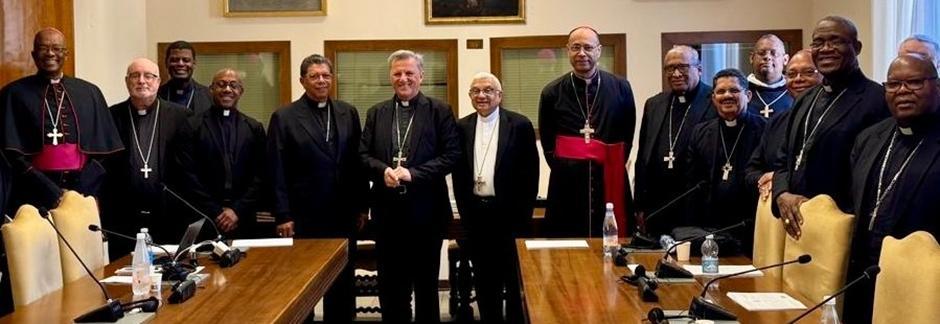
Yet as the Church embraces synodality, some have mistakenly treated it as the goal. The recent ad limina visit of the bishops of the Antilles Episcopal Conference to Rome offered an important clarification that synodality is the vehicle. The mission remains the transmission of the faith.
During their meeting with the Dicastery for the Doctrine of the Faith, Cardinal Víctor Manuel Fernández posed a central question to the bishops: how is the faith in Jesus Christ transmitted today in the Antilles?
The question arose from a growing awareness that many traditional channels of faith formation, especially the family and Catholic schools, are no longer as effective as they once were.
Cultural fragmentation, secularisation, migration, digital media, and economic pressures have weakened many of the structures that previously sustained Christian identity.
Yet the Cardinal insisted that the Church has too often focused on teaching doctrine and moral rules, neglecting how faith is communicated. Faith is not transmitted merely through information. It is transmitted through encounter, witness, relationship, and community. The kerygma,
the joyful proclamation that Jesus Christ loves, saves, and accompanies us, must once again be central.
This insight is closely connected to synodality. Synodality is fundamentally a way of being Church, rooted in listening, participation, communion, and shared mission.
During the bishops’ dialogue with the Secretariat of the Synod, Cardinal Mario Grech reminded them that synodality is a lived experience that requires practice and conversion. Synodality teaches the Church to walk together, listen deeply, and create spaces where people encounter Christ through authentic relationships.
But we must be careful not to confuse the method with the mission. The Church’s mission remains evangelisation: the transmission of faith from one generation to another. Synodality enables this mission by creating the conditions for faith to be credibly received, experienced, and lived. In many ways, synodality is the renewed pastoral style needed to communicate the Gospel in a fragmented world.
This became evident throughout the ad limina conversations. The bishops repeatedly returned to the importance of authentic community. One bishop observed that some Catholic men had experienced stronger fraternity and a sense of belonging in secular organisations than in parish life.
That observation should trouble every parish community. If people cannot encounter communion within the
Church, the Church’s proclamation of Christ loses credibility.
The Gospel cannot be transmitted effectively in isolated or impersonal communities. Synodality addresses this challenge directly. It invites parishes, schools, and dioceses to become spaces of encounter rather than merely administrative or sacramental centres.
It seeks to move the Church from maintenance to mission, from passive reception to active participation, and from clerical isolation to shared discernment.
Yet all of this matters only insofar as it serves the greater purpose of helping people encounter Jesus Christ.
Pope Leo XIV reinforced this perspective during the AEC bishops’ audience with him. Reflecting on synodality, he clarified that it is neither democracy nor uniformity, but a way of being Church in which diverse members listen together for the voice of God.
The Holy Father consistently linked this synodal vision to the Church’s pastoral mission: supporting families, strengthening Catholic education, accompanying priests, and nurturing missionary disciples. Synodality was never presented as an end in itself but always connected to the Church’s evangelical mission.
The Dicastery for Communication offered another important insight. Communication, they explained, is not fundamentally about technology or media platforms but about relationships and encounters. In the digital age, the Church cannot simply broadcast information; it must com-
municate in ways that foster communion and human connection.
Again, the emphasis is not on methods alone but on fostering meaningful relationships with Christ and one another.
For the Caribbean Church, this clarification has significant implications. In our enthusiasm for synodal formation, consultations, and discernment, we must constantly ask: how does this help us transmit the faith?
If synodality becomes disconnected from evangelisation, it risks becoming another ecclesial exercise without transformative power. The transmission of faith requires communities that radiate joy, belonging, credibility, and hope.
It requires bishops, priests, Religious, and laity who authentically witness to Christ in both personal and communal life. It requires liturgies that foster encounter, catechesis rooted in relationship, and parishes capable of genuine communion.
Synodality makes this possible by renewing the Church’s relational fabric. It teaches us to listen before speaking, to discern before acting, and to walk together rather than alone.
In a fragmented world, this synodal style becomes a prophetic witness. The mission entrusted by Christ remains the same: to proclaim the Gospel and make disciples. Synodality is the path by which the Church seeks to fulfil that mission today. ❖
Fr. Donald Chambers of the Archdiocese of Kingston, Jamaica, is the General Secretary of the Antilles Episcopal Conference
Dear Girls and Boys,
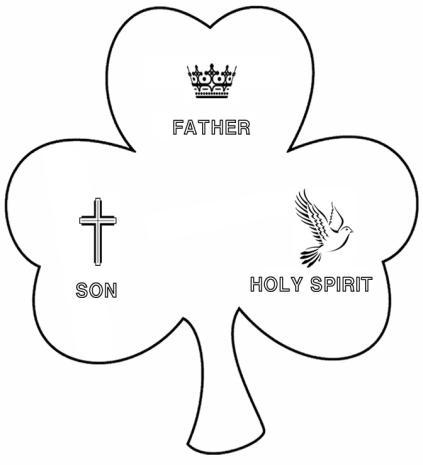
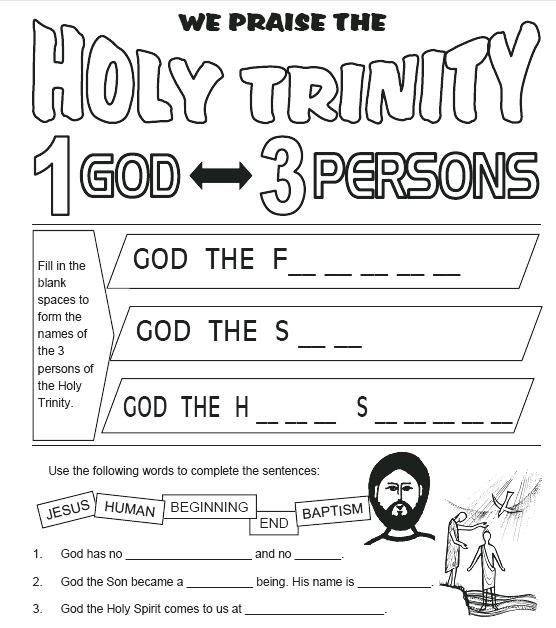
Today is a special day in the church: it is the Solemnity of the Most Holy Trinity, also known as Trinity Sunday Trinity means three. The Bible says there is "One God and Father of all," but God is made up of three persons – the Father, the Son, and the Holy Spirit. That is what we call the Trinity. When we make the Sign of the Cross we say “in the name of the Father, and of the Son and of the Holy Spirit”. When someone is baptized the priest says, “I baptize you in the name of the Father, the Son and the Holy Spirit.” When you hear those words –Father, Son and Holy Spirit we are talking about the Trinity one God in threepersons
God so loved the world...
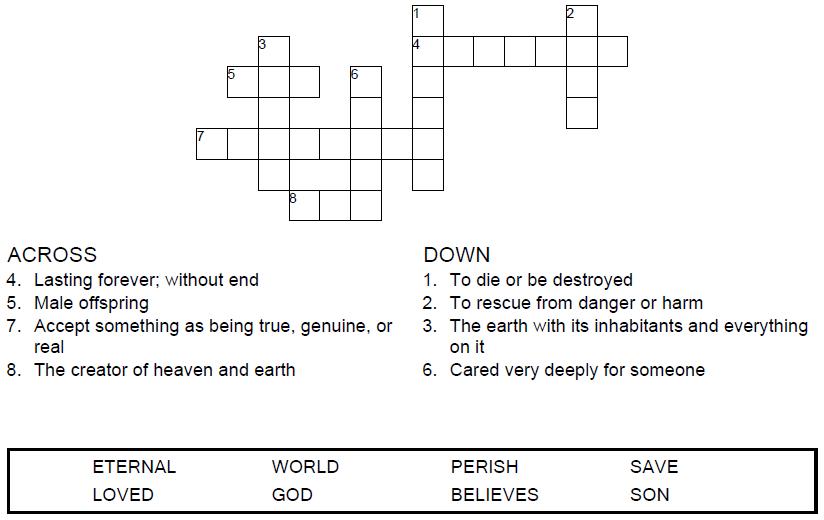
In today's Gospel, we hear the most famous words in the whole Bible: "God so loved the world that He gave His only Son."
Think about that God loves YOU so much that He sent Jesus, His own Son, just for you! Not because we are perfect, but because He loves us that much. Jesus didn't come to tell us off or punish us. He came to save us and bring us closer to God. All we have to do is believe in Him.
You are so loved! Not sometimes, not maybe ALWAYS. God looked at the whole world and said, " best for them worth everything to God.
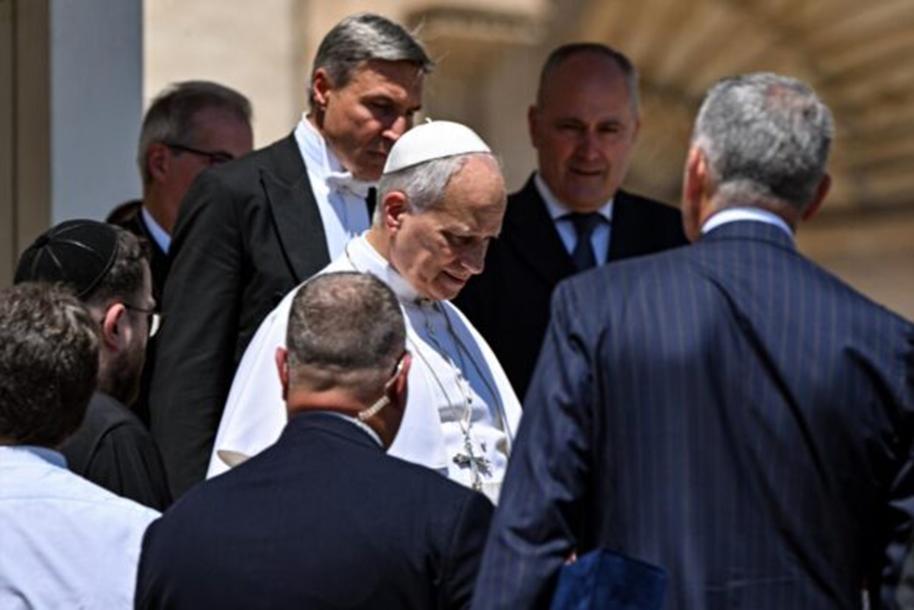
VATICAN CITY (Vatican News) When a priest collapsed in St. Peter’s Square at the end of the general audience Wednesday May 27, Pope Leo XIV rushed to his aid.
The priest was 81-year-oldFather Diego Semeraro, from the southern Italian region of Puglia, who felt faint due to the strong heat in Rome on the day of the audience.
As soon as the elderly priest fell, Pope Leo hurried over, descending from the platform where he had been greeting pilgrims and kneeling down next to Father Semeraro to see if he was all right.
Father Semeraro, who is celebrating the 60th anniversary year of his ordination,
had traveled to Rome with his brother Father Franco Semeraro to present Pope Leo with a photo album containing photographs of relics of St. Augustine, taken when the relics arrived in his hometown of Martina Franca about 20 years ago.
‘It was an extraordinary thing’ “It was an extraordinary thing,” Father Franco, his brother, told Vatican News, describing the event.
As the pair approached the platform for the traditional handshake with the pope that occurs at the end of the general audience, Father Diego began to feel ill.
“After standing three hours in the sun, my brother felt faint, he fell quite badly,
and now he’s a bit sore, but thank God he is fine now,” Father Franco explained.
Pope Leo XIV “was the first to kneel down and go help him,” Father Franco said, describing the surprise of Father Diego himself, who exclaimed, “Your Holiness, is that really you?”
A rosary from the pope
The pope then shook his hand and gave him a rosary. After the incident, the priest was taken to the Vatican emergency room for an examination, which reportedly showed no problems.
Father Diego later had lunch after the general audience and celebrated Mass ❖
By Renika Anand
Jessica Lange, an American actress and photographer once said “Acceptance and tolerance and forgiveness, those are life-alteringlessons.”
Entering life with an understanding of the paths we are meant to walk is a valuable gift to possess. For some people, their identity and values are founded early, during the course of their lives. For many others, it is something they build gradually, as they gain new experiences and memories. Those undergoing the process of building their identities may find themselves becoming extraordinarily different versions of themselves in their process of metamorphosis.
As we encounter new people every day, we must do so with the gentle understanding that every person is at a different point in their individual journeys. Although we may not understand their processes of growth, we must accept that everyone deserves to be treated with kindness and respect. Every person who occupies a place here alongside us has already been accepted by God. Thus, it is our responsibility to ensure that we do not make anyone feel unwelcome in the very place they are meant to be.
Accept one another, then, just as Christ accepted you, in order to bring praise to God - Romans 15:7❖


Fr Joel Thompson SJ
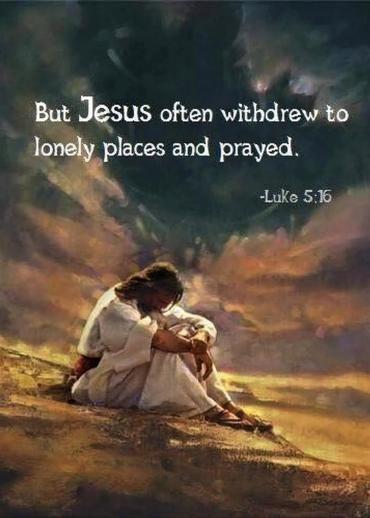
“Jesus would withdraw to deserted places and pray” (Luke 5:16)
Jesus looked upward and said, “Father, I thank you for having heard me” (John 11:41)
Throughout the Gospels, we read of Jesus praying. He prays before important decisions (e.g. choosing the apostles), in moments of sorrow (the night before his crucifixion), in moments of mission, and even from the Cross.
If Jesus, the Son of God, made time for prayer and lived in constant conversation with his Father, what about us?
Prayer is one of the easiest and hardest things in our lives. It is easy because we can pray anywhere, at any time, with any words. It is hard because we are often distracted, tired, busy, discouraged, or unsure whether God is really listening. Many of us spend more time on our phones than we do talking to God.
The Catechism beautifully describes prayer as the raising of our mind and heart to God or the requesting of good things from God” (CCC 2559). Prayer is conversation with God. It is bringing our real life before the Lord and allowing Him to speak to us.
God Wants to Hear From Us
Sometimes people feel they must be holy before they can pray. They say, “Father, please pray for me, God won’t want to hear from me”. They think, “I have too many sins. God will not listen to me.” But that is not the God that Scripture reveals to us.
Sinners can and should pray! In Jesus’ parable of the Pharisee and Tax Collector, the tax collector did not dare even to look up to heaven, but said “God be merciful to me, a sinner!” (Luke 18:13). Another example of a sinner praying is found in Psalm 51. This was King David’s prayer of repentance after he committed adultery with Bathsheba and had her husband killed. It begins “Have mercy on me God…” God hears the prayers of the poor and of sinners. He hears the prayer of the confused, the tired, the angry, the wounded, and the ashamed. We do not pray because we are perfect. We pray because we need God.
One of the most important questions about prayer is: what is my image of God? Do I see God as a judge waiting to condemn me? A policeman waiting to catch me slipping? Or do I know Him as a loving Father?
In the parable of the prodigal son, the father does not wait with a punishment speech. He runs to meet his son, embraces him, and brings him home (Luke 15:11–32). Jesus teaches us to pray, “Our Father” (Matthew 6:9).
If prayer is simply conversation, why do many of us find it so hard at times? Some say, “I do not have time.” Others say, “I pray, but nothing happens.” Others say, “God does not answer me.” Sometimes we may feel that we are only talking to ourselves. However, silence does not mean absence. Even Jesus prayed with the words of Psalm 22: “My God, my God, why have you forsaken me?” (Matthew 27:46). That prayer begins in distress, but the psalm itself moves toward trust and hope. Jesus teaches us that feelings of abandonment/loneliness can become prayer. The saints speak about dryness in prayer. There are times when prayer feels empty and God seems silent. This does not mean we are praying badly. Sometimes God is drawing us beyond feelings into deeper faith. Love is not only emotion. Prayer is not only about feeling close to God but about being committed when we feel nothing.
Yes. We pray badly when prayer becomes completely selfish, when we only ask for our own comfort, or when we ask God to harm another person. Prayer is meant to change our hearts, not bend God to our will. Prayer is not magic! Magic is attempting to bend God to our will while prayer is bending our hearts to his will.
A good question after prayer is: am I different? Am I more patient? More forgiving? More honest? More generous? More open to God’s will?
Prayer involves listening and not only speaking 100% of the time. Many of us speak to God, but do we make time to sit quietly and listen?
We can use words, silence, Scripture, music, images, the Rosary, the Mass, or even our tears. As soon as we open our eyes in the morning, we can begin there. Before touching our phones and worrying about the day, we can say, “Thank you, Lord”.
We can pray using Scripture. The ancient practice of lectio divina helps us read a short passage slowly, listen for a word or phrase that touches us, speak to God about it, and then listen to him.
We can pray with sacred images, allowing a scene from the life of Christ to draw us into conversation with Him. Some call this visio divina. We can pray while walking, while cooking, while travelling, while sitting in church, or while lying awake at night.
The Psalms are helpful. There are psalms of praise, thanksgiving, protection, sorrow, repentance, anger, fear, and trust. They teach us that nothing is off limits with God. We can speak to Him about temptation, sexual urges, fear, jealousy, sin, grief, anger, and confusion. God already knows our hearts, so let us not hide. We also need communal prayer. The Mass is the highest prayer of the Church because in it we are united to the sacrifice of Christ. The Rosary helps us meditate on the mysteries of Christ with Mary. Family prayer, parish prayer, and prayer groups remind us that faith is not private. Jesus says, “Where two or three are gathered in my name, I am there among them” (Matthew 18:20).
When we lack words, simply say “Speak, Lord, your servant is listening.” (1 Samuel 3:10). Or let your tears pray. God wants to hear from us. Let’s speak with him today. ❖
VATICAN CITY (CNS) In his first encyclical, Pope Leo XIV used a sweeping reflection on artificial intelligence to question whether the Catholic Church’s centuries-old just war framework remains valid in modern warfare and to ask pardon for the church’s role in slavery.
The pope’s 82-page encyclical, “Magnifica Humanitas” (“Magnificent Humanity”), primarily focuses on the ethical development of artificial intelligence and the dangers posed by autonomous weapons, concentrated technological power and the erosion of human dignity. But within the document, Pope Leo also makes several broader interventions on war, violence and historical injustice.
In discussing such topics, he questioned the Catholic teaching of just war theory in modern warfare and wrote aboutslaveryinanunprecedentedway
Just war theory accepted for centuries
The just war theory, largely created through the writings of St. Augustine and St. Thomas Aquinas, has been accepted for centuries throughout Catholic teaching, to determine whether warfare could be morally justified under strict conditions. It states that a nation must try its best to avoid violence by considering the human cost, just cause and an effort to engage in diplomatic negotiations. It has recently been used by the Trump administration to justify the ongoing conflict in the Middle East.
But Pope Leo wrote the theory has become increasingly insufficient in an age shaped by advanced weaponry and artificialintelligenceand“isnowoutdated.” “Humanitypossesses far more effective and capable tools for promoting human life and resolving conflicts, such as dialogue, diplomacy and forgiveness,” he wrote. “The use of force, violence and weapons reflects a relational poverty that always has disastrous consequences for civilian populations.” Additional criteria to consider before warfare
The pope also introduced additional criteria he said should be considered before warfare, including ensuring a clear chain of responsibility when
automated technologies are used in combat, establishing a “moral timeframe for making judgments” in an era when artificial intelligence can accelerate military decisions, and safeguarding civilians.
Elsewhere in the encyclical, Pope Leo addressed the Catholic Church’s participation in the “scourge of slavery,” in broader terms than many of his predecessors. Previous popes have apologized for more specific instances like Christian involvement in the transatlantic slave trade, but Pope Leo appeared to frame the Church’s responsibility more institutionally.
“It is impossible not to feel deep sorrow when contemplating the immense suffering and humiliation endured by so many in stark contrast to their immeasurable dignity as persons infinitely loved by the Lord,” he wrote. “For this, in the name of the Church, I sincerely ask forpardon.”
Novel approach to 2 subjects in particular
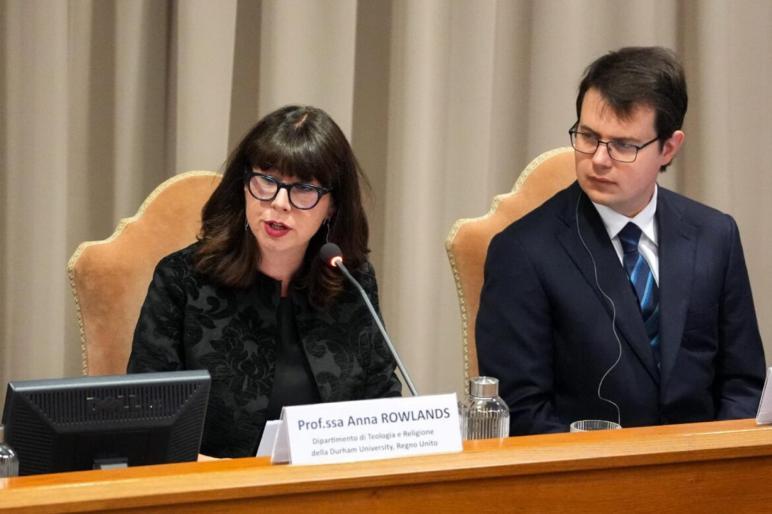
The pope’s comments immediately drew attention because both subjects, just war theory and institutional responsibility for slavery, are novel approaches. Anna Rowlands, professor of political theology and Catholic social doctrine at Durham University in England, spoke with Catholic News Service about the significance of the pope’s statements and how they fit within the broader themes of “Magnifica Humanitas.”
This interview has been edited for clarity and length:
CNS: So talking about the fact that this first encyclical is addressing a lot of the issues that he’s brought up throughout his papacy, something that really struck us was his just war theory and how he said that it was outdated. I wanted to get your thoughts on that. If it is outdated, is there going to be a new theory that replaces it? Do you see tenants of that throughout this encyclical?
Rowlands:So, actually, Pope Leo is joining a conversation that’s been going on for some time through recent encyclicals and wider documents of the Church about exactly how we keep the dynamism of the Church’s commitment to peace as the only true end goal in sight. So the just war tradition
was developed obviously from the early Church, from the first centuries, including Augustine’s very significant contribution to that, St. Thomas Aquinas’ contribution, and then into the modern era, that tradition was developed in order to try to work out how you can keep peace to the world and a sense that you could build sustainable, stable human communities that were committed tojustice.
‘A moral architecture’ for thinking about world
So the question is, how much does the just war theory which is a theory, it’s a way of thinking together about how you achieve those ends how fit is it as a framework, as a kind of moral architecture for thinking about the world that we’re in now.
And in recent papacies, not simply Pope Leo at this moment, but in recent papacies, there’s been an attempt to reevaluate the usefulness of that theory to the modern moment. Without rejecting the theory outright, the evaluation has been: sometimes it can be too easy to deploy the just war theory in the world we live in now, too quickly to defend violence and intervention and force, rather than to pauseback from it.
So the question is, can just war theory sometimes be pushed towards justifying violence where we might want to see peace? So it’s not that the Church has refused that tradition, and we saw Pope Leo do this very recently, he drew from the just war tradition in relation to Iran and the conflict of Iran, to say you need to remember this doesn’t meet the criteria of just war theory.
That’s what many of the American bishops, the U.S. bishops, are also saying. So we still deploy that. You can see its usefulness and importance there.
A just peace for all in global order
But what the encyclical is doing, is saying, but don’t rely on that alone, and we need to continue this live discernment about the performance, the moral performance of just war theory. How much does it help us reach the true ends, which are a just peace for all within a global order and also within nations. And so in this moment, the encyclical is pushing us to say, you can’t use just war theory as a legitimate way to rush towards aggression and violence. And we need to find almost just war theory plus in order to enable us to really reach the ends of just peace. And remember, that’s the focus. It’s not just is there a textbook consideration that allows us to legitimatedomination.
And what’s really important here is he’s evaluating adjustable theory in a tech era. Because everything in this document is looking at what does it mean to live in a time, an era, a moment where tech we’re sitting here mic’d up, now you’re in front of a laptop we’re totally tech-mediated in the conversation.
What does that do to warfare? And he’s very clear that it pushes to impersonalization, it pushes to a rapidification, a speeding up of decisions. And it
seems to mean that we have a much less embodied understanding of what any use of violence, even if it might be in self defense, legitimate, what that really entails and how you create reflective intervals, true transparency and accountability. So if you read the bit of the document that comes after his critical critique of just war theory, he sets out some of the conditions, he calls them criteria for judgment that help us think what would we do now given the context of modern warfare that we’re in now? So he wants us to morally evaluate performance and theory, almost look beyond it into a framework that includes it,but takes us beyond. And he gives us some new criteria for a very tech driven era of warfare.
Church’s long tolerance of slavery CNS: Something else that we found very interesting was I think this was kind of one of the rare moments where we saw him ask for forgiveness for the Church’s long tolerance of slavery. Can you tell me a little bit about what you thought about that, and do you think that it was time? Do you think that it really is going tobe impactful?
Rowlands: Yeah. So when I first read those paragraphs in the document, I was really struck by them. And I was struck by them for two reasons from two different perspectives. One is that the apologies that we have for slaves from the Church before, from John Paul II’s time onwards, including Pope Francis, have by and large been an expression of the deepest of sorrow and regret for the involvement of individual Christians in legitimating what is always illegitimately ownership and subjugation of a another human being. What this text does is move us slightly more in the direction of talking about the Church and the language of the Church, not merely individual Christians.
So there’s much more of a sense of a collective ownership of what is done in the name of the Church. There’s a kind of movement of language frame there which I think is about bringing the question of slavery and the legacy of slavery into a collective space of accountability, responsibility and discernment.
That links to the second part that struck me really centrally, which is it’s not just a sort of sudden moment of sort of a apologizing for slavery, it’s in the context of thinking about contemporary slavery now and the fact that in a tech era where there are new forms of subjugation and slavery, and Dr. (Leocadie) Lushombo talked in her intervention today about those new forms of slavery in the digital era, the extracted industries, the mining, the trafficking of people and so forth. He’s basically saying to us, we don’t want to be in another moment of history in 100 years where we are finding that we are apologizing once again because we didn’t deal with the slavery of our own era now. So he’s saying, if I’m going to say that with authority, which I’ve mastered urgency now, I must also deal with the historical past.❖
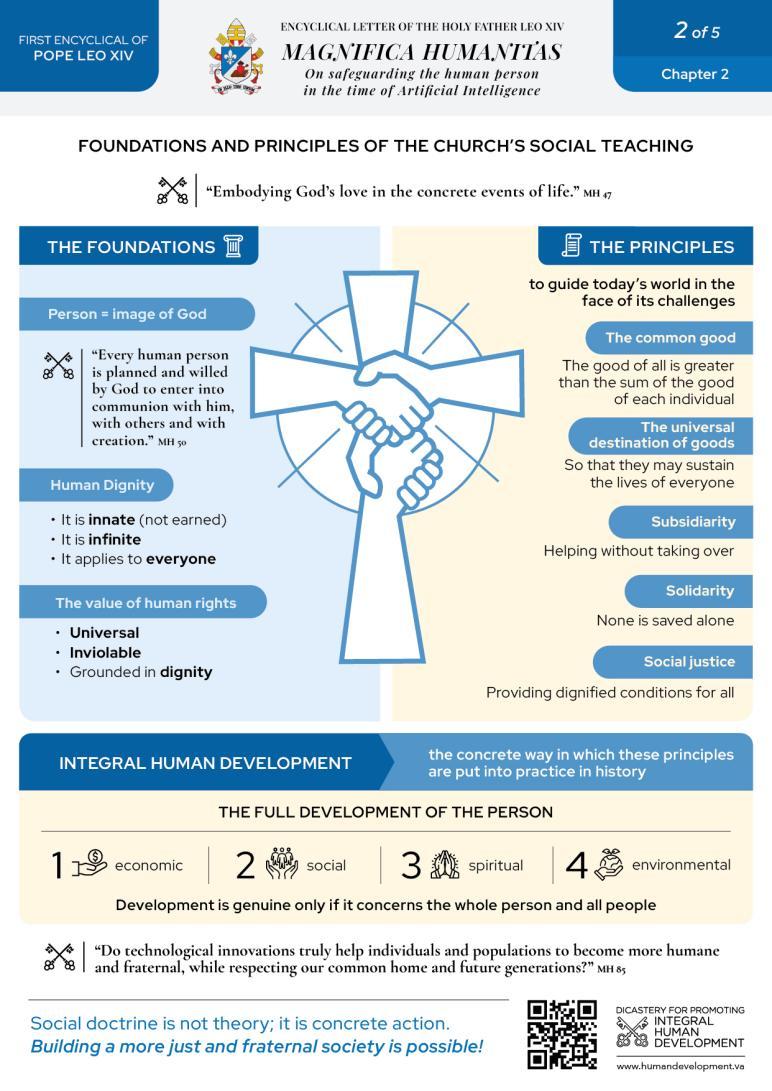
which would leave many individuals marginalized, stranded and surrounded by the machines and automated systems that have replaced them,” he added.
God created humans for communion, not efficiency
Pope Leo writes that AI promises efficiency but the “new ways” of working are not necessarily better, describing how “contrary to the advertised benefits of AI, current approaches to technology can paradoxically de-skill workers, subject them to automated surveillance and relegate them to rigid and repetitive tasks.”
“When efficiency becomes the ultimate measure of value, human beings are tempted to see themselves as a project to be optimized rather than as persons called to relationship and communion,” Pope Leo said.
Truth is a major theme in the encyclical by the Augustinian pope. He said that in the face of incessant flows of information, opinions, images and sophisticated algorithms that can influence decisions, it is imperative to “cultivate hearts that love the truth, prefer what is right despite the most appealing content and pursue wisdom rather than immediate results.”
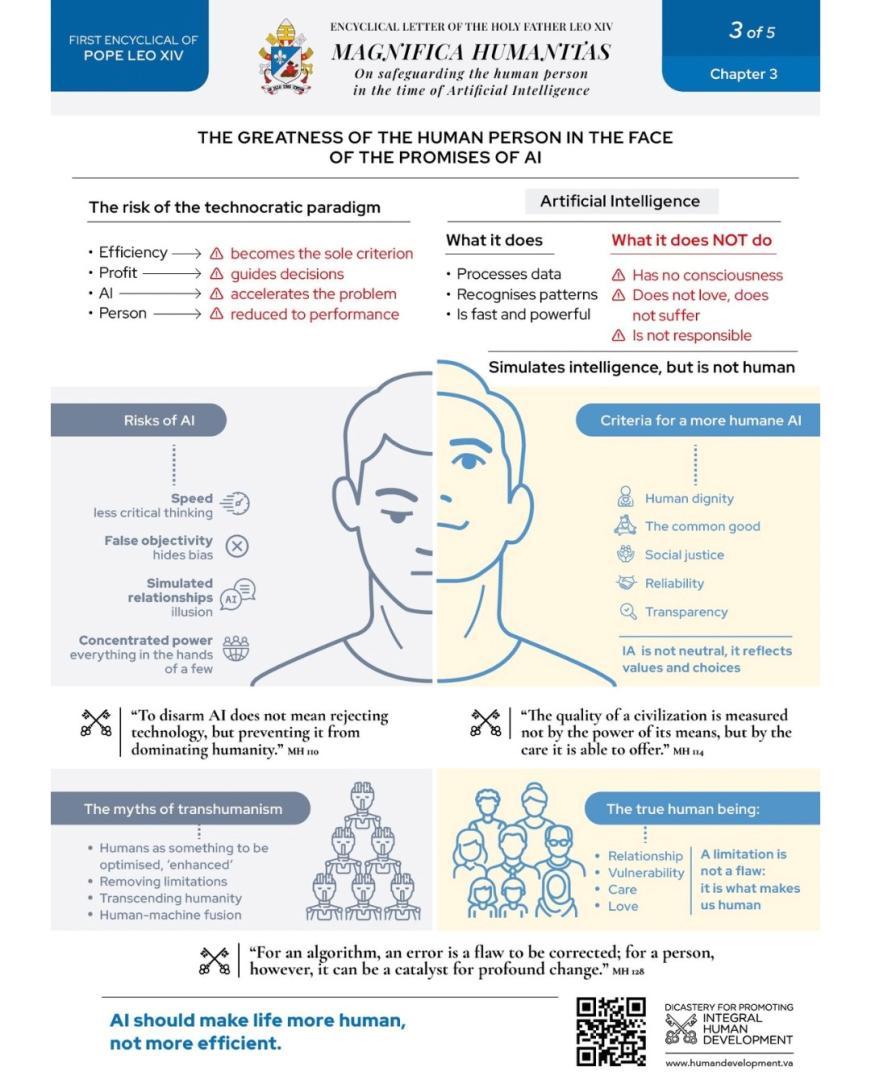
“We must always keep before us the truth about God and humanity, just as Christ has revealed them to us. We must lay aside an individualistic and technical view of humanity,” he said.
Quoting Pope Benedict XVI, he added, “Modern man is wrongly convinced that he is the sole author of himself, his life and society. This is a presumption that follows from being selfishly closed in upon himself.”
The pope underlined that “the search for truth is an essential element of democracy,” and that “indifference to the truth leads, slowly but surely, to a descent into totalitarianism.”
He said people must “promote an ecology of communication,” in which public policy establishes norms “so that the decision-making behind content selection and its development becomes more transparent and protects personal data.” On a cultural level, he called for “a strengthening of intermediary organizations, serious journalism and forums for debate,” for families and schools to gain formation in using digital tools, and for universities to strive for the “integration of knowledge.”
“Our first task is neither to demonize nor idolize technological tools, but to utilize them on the basis of a fundamental principle, namely that truth is
a common good and not the property of those with power or influence,” he said.
Social control and the ‘digitalattentioneconomy’
Pope Leo called for “education in digital sobriety” due to subtle forms of addiction in today’s “digital attention economy,” in which digital platforms that are “designed to capture users’ time and attention” weaken “their inner freedom.”
He warned of the risk of “social control made possible by the massive collection of data and use of algorithmic systems.”
“When every action movements, purchases, relationships and preferences leaves a trace, a new form of power emerges, namely the power to profile, predict and influence behavior, often without individuals being fully aware of it,” he said. “If such kinds of data are used to make decisions affecting concrete opportunities such as access to credit, employment or essential services there is a risk of undermining freedom and discriminating against the most vulnerable.”
Pope Leo XIII and Catholic socialdoctrine
Pope Leo XIV places his writing on the age of artificial intelligence within the context of the magisterial tradition of Catholic social doctrine, also known as Catholic social teaching. The first chapter of the encyclical provides an overview of what each pope has contributed to the Church’s social magisterium from Pope Leo XIII to present, highlighting key ideas that are particularly relevant today. The second chapter provides definitions of key principles of Catholic social doctrine from the “common good” to “subsidiarity.” Pope Francis and St. John Paul II are both frequently quoted throughout the encyclical.
Pope Leo XIV signed “Magnifica Humanitas” on May 15, the 135th anniversary of “Rerum Novarum,” Pope Leo XIII’s foundational 1891 social encyclical on labor and capital written during the Industrial Revolution.
“While new economic and technological networks can generate exclusion, isolation and dependencies, the Church nourished by the Eucharist is called to make visible a different paradigm, one that preserves human connections, gives a voice to the invisible and ensures that processes are aimed at respecting people’s dignity,” Pope Leo said.❖
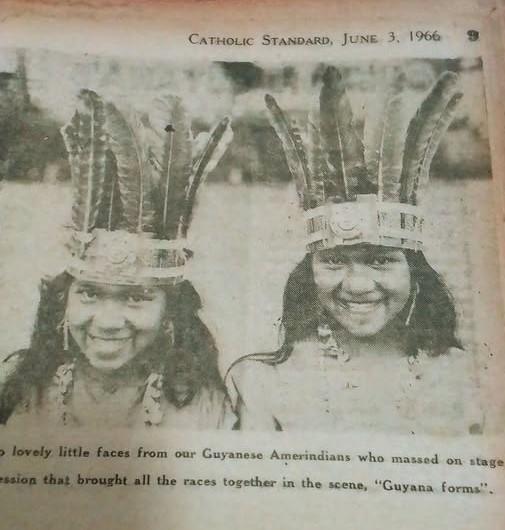
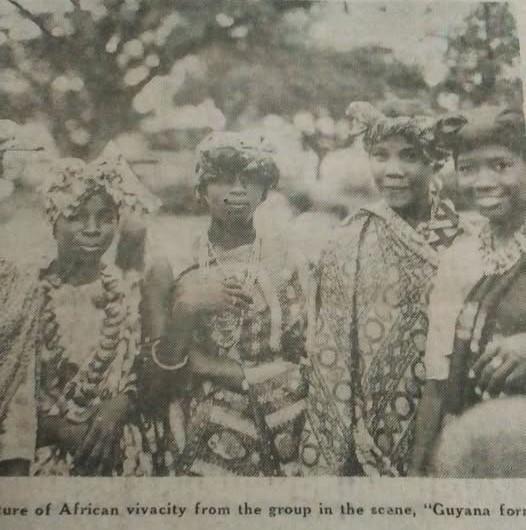
The afternoon of May 24th 1966 saw a large crowd on the grounds of St. Stanislaus College on Brickdam for the story of the Catholic Church in British Guiana, portrayed mainly by Youth
The pageant lasted for almost two hours. The youths portrayed the start of the mission in Santa Rosa, the arrival of the Ursuline Sisters in 1847, the arrival of the Jesuits in 1857, the founding of St. Stanislaus College in 1866, the arrival of the Sisters of Mercy in 1894, the start of the Rupununi Mission
in 1909, and the destruction by fire of the previous Cathedral and the building of the new one 1913 1925. A model of the wooden Cathedral was set on fire.
Other highlights were the founding of St. Joseph Mercy Hospital, the St. Vincent de Paul Society and the Ladies of Charity and the establishment of the Diocese in 1956. The event closed with an open-air concelebrated Mass at which Bishop Guilly was the Chief celebrant. All the organizing, sound effects and other groundwork were done by Messer’s Bunny Fernandes, Ronald Savory, Desmond Faria and John Thys.
The photos, from the Catholic Standard of June 3, 1966, show young people at the pageant in Amerindian and African attire. ❖
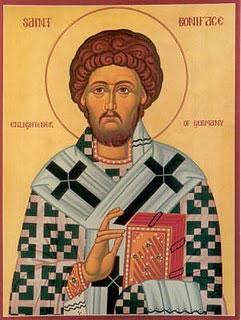
June 5th: St. Boniface (circa 675-754 )
Saint Boniface, known as the apostle of the Germans, was an English Benedictine monk who gave up being elected abbot to devote his life to the conversion of the Germanic tribes.
Boniface was born in Devon, England, about the year 675. After years as monk and teacher, he went to evangelise the Germanic peoples. Ordained bishop, he was given wide-ranging papal commissions throughout Germany and Gaul. He founded monasteries and established dioceses, presided at Synods, and liased with kings.
Boniface is remembered as a determined missionary, and as a church organiser and reformer, whose work shaped the future of Europe. He was killed in the Netherlands in the year 754. ❖
[franciscanmedia.org&salfordliturgy.org.uk]