;
-saysPopeLeoXIVinmessagefor
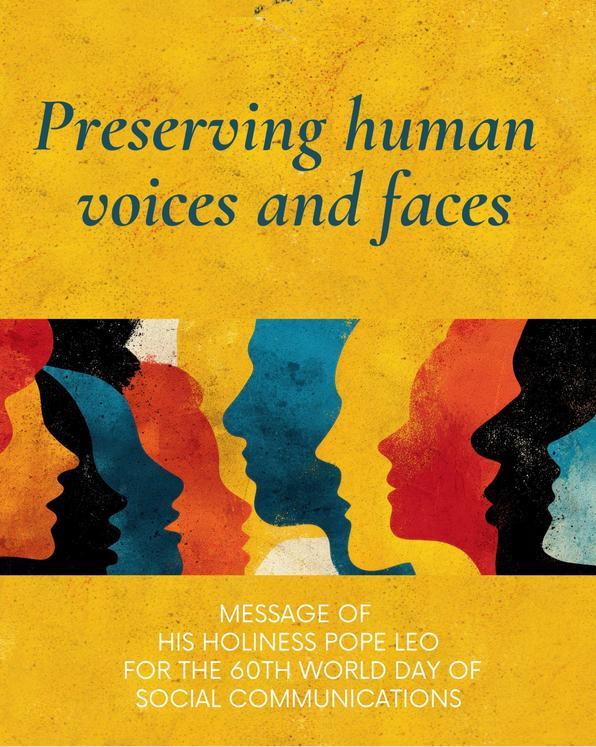
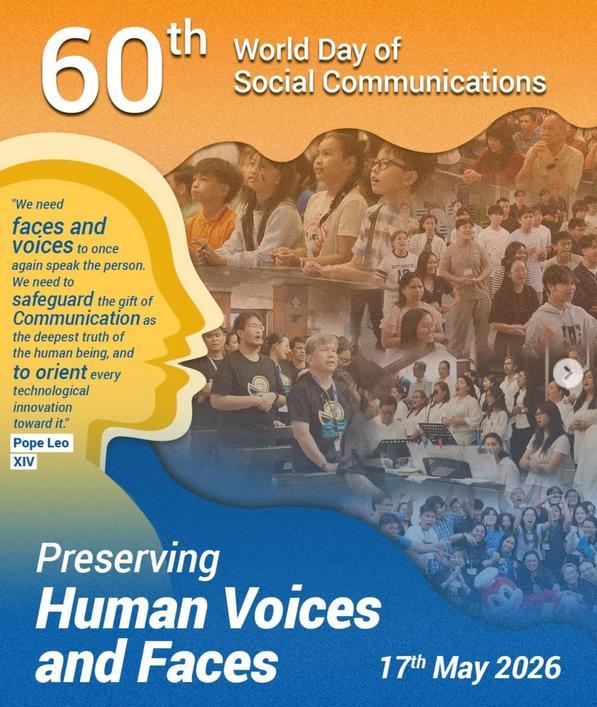
(EWTN News) - In his first message for the 60th World Day of Social Communications, Pope Leo XIV warns that artificial intelligence and digital technologies can undermine human relationships and distort reality unless they are guided by responsibility and rooted in education.
The pope’s message, titled “Preserving Human Voices and Faces,” emphasizes the uniqueness of every person and the need to protect what he calls the “sacred” signs of human identity in an era increasingly shaped by AI-generated content.
“Our faces and voices are unique, distinctive features of every person,” Pope Leo XIV writes. “Faces and voices are sacred.” He states that safeguarding them ultimately means “safeguardingourselves,” since the challenge posed by AI is “not technological,but anthropological.”
The pope cautions against surrendering human judgment to algorithms and automated systems, particularly those built to maximize engagement on social media.
“Although AI can provide support and assistance in (please turn to page 12)
Laudato Si’ Week 2026 - p2
Vatican releases document on integral ecology within the family - p2
AEC Bishops’ Ad Limina and Annual Plenary Meeting - p3
AChristian Perspective on Social Issues - p4
Sunday Scripture - p5
Missionary Childhood Association Mass and Mission Rosary - p6
Pope Leo prays where St. John Paul II was shot on feastof Our Lady of Fátima - p7
Address given by Archbishop Gordon at the opening of the AEC’s APM - p8
Children’s Page - p9
Church embraces science to find God in Creation,says Pope Leo - p10
Growingin Grace Week 85 - p10
Faith in Practice Week 14 - p11
Independence Memory Lane 2 - p14
Saintof the Week - p14
Sunday May 17th
07:30hrs–MassinLinden
Monday May 18th
06:30hrs–MassatUrsulineConvent
Saturday May 23rd
10:30hrs – Retreat with Cathedral Confirmation Candidates
‘From Hope to Action’
May 17 – May 24
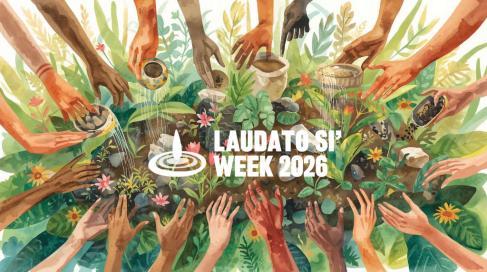
Each year, the global Church unites to celebrate Laudato Si’ Week an annual moment of prayer, reflection, and concrete action inspired by Laudato Si’ by Pope Francis.
In 2026, from May 17–24, Catholics across continents will once again respond together not just with words, but with action.
What is Laudato Si’ Week?
Laudato Si’ Week is a global celebration commemorating the publication of Laudato Si’, the encyclical that calls humanity to care for our common home and embrace integral ecology.
It is more than an anniversary. It is a renewed invitation to:
• Pray deeply
• Reflect honestly
• Act concretely
Every parish, school, university, hospital, movement, religious community, family, and individual is invited to participate.
Hope in Action
In a world facing ecological crisis and social fragmentation, hope is not passive optimism — it is a decision to act, and during Laudato Si’ Week 2026, Catholics around the world are invited to transform that hope into concrete steps for our common home, inspired by Laudato Si’ and lived through the global movement of the Laudato Si’ Action Platform.
The Core Invitation: Take One Concrete Action
The invitation is intentionally simple: Choose one action. Make it count during this week.
That action mightbe:
• Reducing energy use in your institution
• Hosting a prayer service or dialogue
• Reviewing purchasing practices
• Beginning a long-term sustainability commitment
• Caring for a local ecosystem
• Engaging youth in ecological leadership
The power is not in perfection. The power is in participation ❖ [laudatosimovement.org]
integral ecology within the family
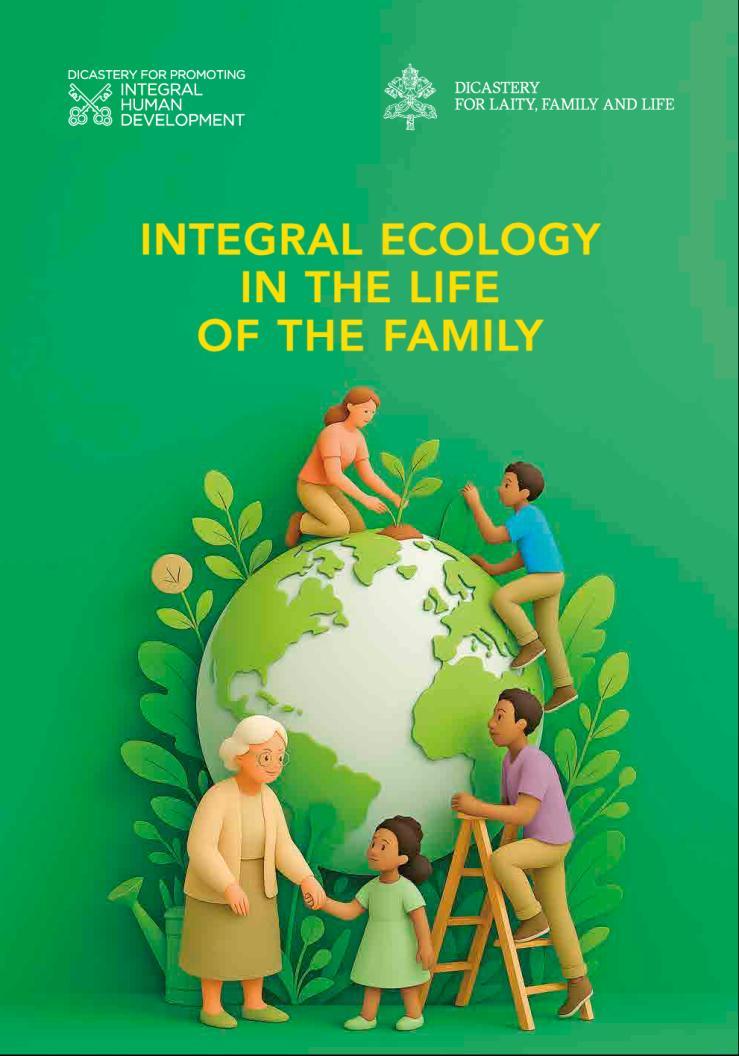
(Vatican News) - The Vatican has published a document focused on living the care for creation and for human life within the family, entitled “Integral Ecology in the Life of the Family.”
Released on April 27, the text is intended to be a response to Pope Francis' and Pope Leo XIV’s appeals to listen to the cry of the poor and of the Earth and offer a concrete response, according to a press releasepresentingthe initiative.
The document draws from the principles of the post-synodal Exhortation Amoris Laetitia and the teachings of the Encyclical Laudato si’ .
The text is the result of the joint efforts of the Dicastery for Promoting Integral Human Development and the Dicastery for Laity, Family, and Life, and was developed with the direct involvement of theologians, consultants,and married couples.
Families are the soil from which society grows
“Family values are the fruitful soil from which all of society grows. In order to care properly for our common home and for all people, families must be the model,” wrote the Prefects of the two Dicasteries, Cardinal Michael Czerny and Cardinal Kevin Farrell.
“Many families are attentive in caring for our common home and caring for others, their minds set on the hope that is Jesus Christ. The values of the family are consistent and fundamental to the care of our common home and of our neighbors,” they continued.
“What are the values of the family?
Members of the family learn selflessness, patience and dedication, openness and protection of life, so that they can flourish, complementarity and reciprocity, intergenerational connections and solidarity with other families, and the transmission of knowledge and traditions.”
Guidelines & suggestions
The document offers guidelines to families, Church groups, and individuals to help them address the current environmental challenges and to promote the integral development of every person.
The first part of the text presents fundamental concepts based on Pope Francis’ most significant writings, while the second part the heart of the volume contains thematic chapters that reflect seven objectivesfrom Laudato si'
These include: listening to the cry of the earth, listening to the cry of the poor and the vulnerable, adopting and promoting ecological economics, adopting ecological lifestyles, integral ecology and education, ecological spirituality in the family, and families participating in community life.
Each chapter is divided into four sections: an explanation of the topic, implications of the topic, questions for reflection and discussion, and a listof proposed actions.
The press release notes that although the document is dedicated to families, it can be useful to all, as care for creation and the promotion of human dignity are topics that affecteveryone.
Families, it says, as the constitutive element of society, can become the motorofthisprofoundculturalchange “Integral Ecology in the Life of the Family” is available for free in 5 languages on the official websites of bothDicasteries.❖
AEC Bishops’ Ad Limina and Annual Plenary Meeting
Conference
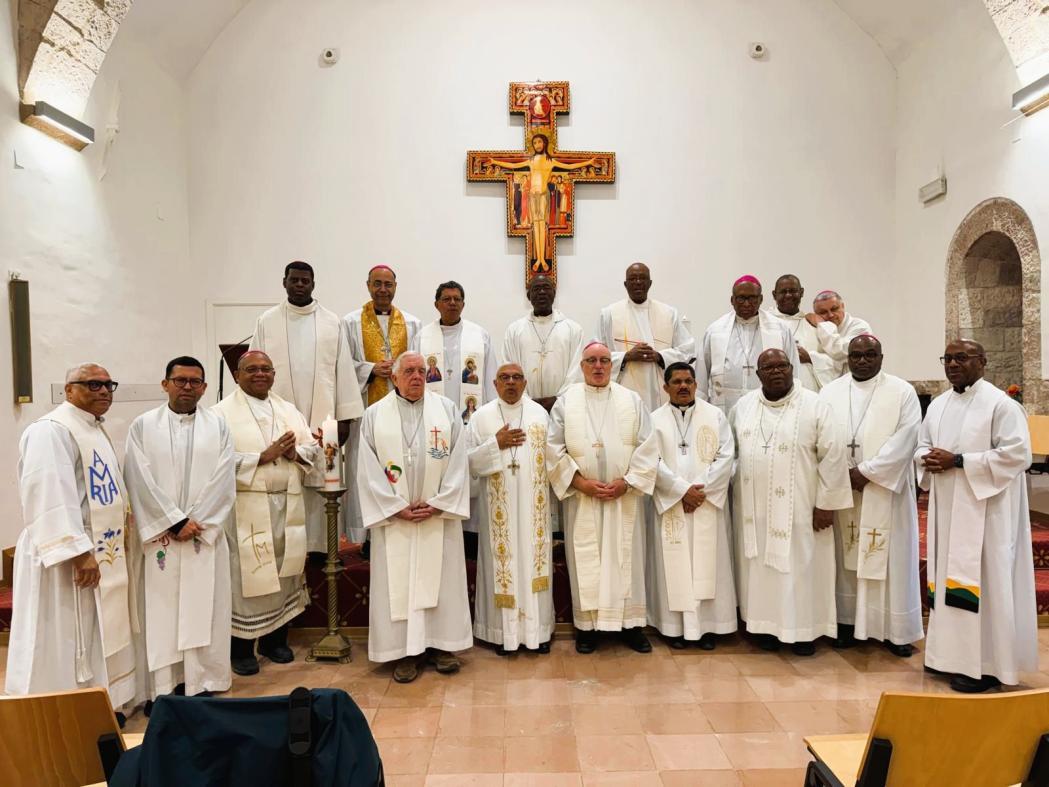
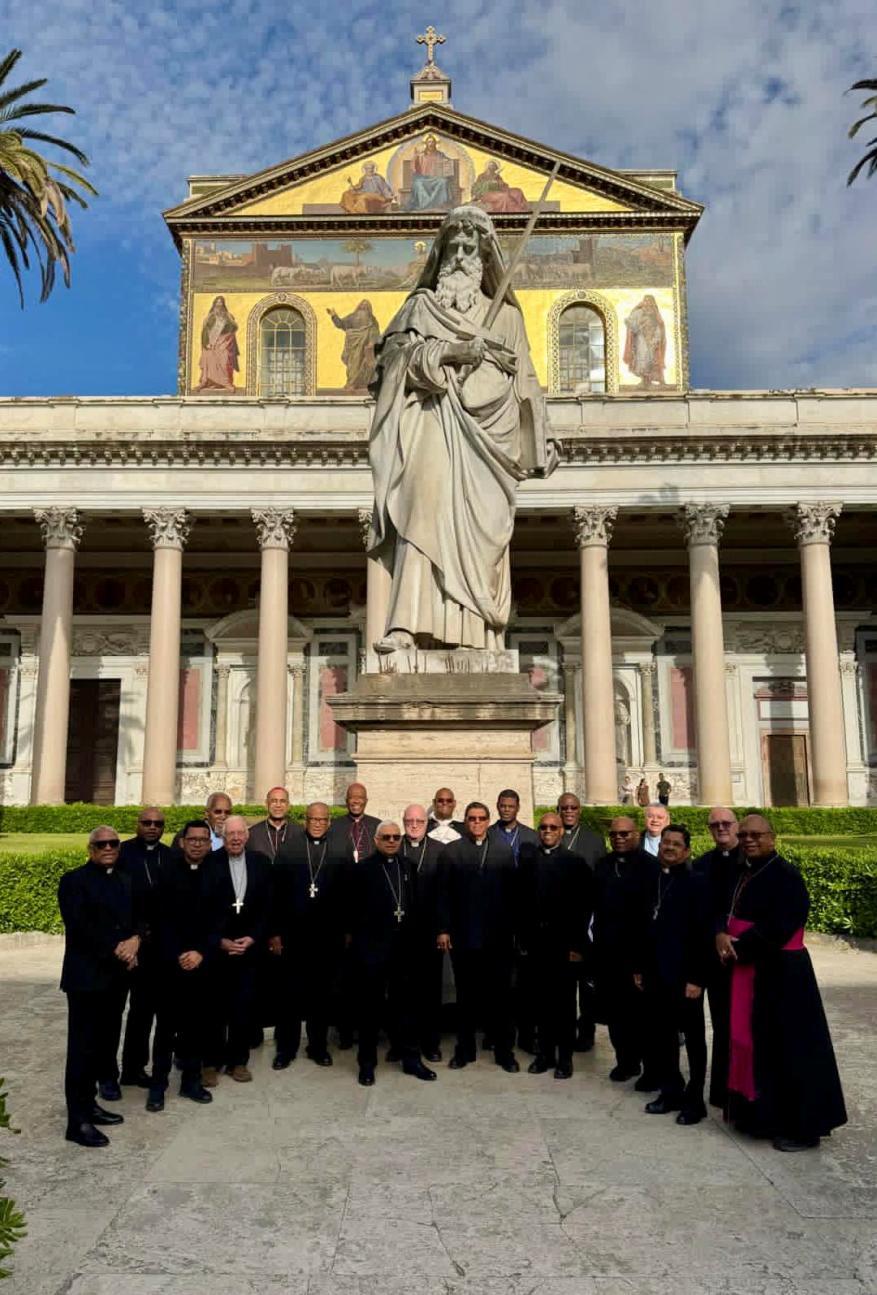
The Bishops of the Antilles Episcopal Conference (AEC) have concluded a two-week pilgrimage to Rome marked by the Ad Limina Apostolorum Visit and the Annual Plenary Meeting of the Conference.
From April 27 to May 2, 2026, the Bishops participated in the Ad Limina Apostolorum Visit, the mandatory pastoral pilgrimage during which bishops meet with the Holy Father and the Dicasteries and Offices of the Holy See. During the visit, the Bishops engaged in fruitful dialogue with numerous Vatican offices, including the Dicasteries for Laity, Family and Life; Clergy; Divine Worship and the Discipline of the Sacraments; Culture and Education; the Doctrine of the Faith; Promoting Integral Human Development; and the Promotion of Christian Unity. Meetings were also held with the Pontifical Commission for the Protection of Minors, the Secretariat of State, the General Secretariat of the Synod of Bishops, and other key offices of the Holy See.
enriching, encouraging, and deeply pastoral. The encounter strengthened their communion with the Successor of St. Peter and renewed their commitment to evangelization throughout the Caribbean region.
The pilgrimage also included the celebration of Holy Mass at the four Major Basilicas of Rome: the Archbasilica of St. John Lateran, the Basilica of St. Mary Major, and the Basilicas of Saints Peter and Paul. At St. Mary Major, the Bishops prayed at the tomb of the late Pope Francis, while at the tombs of Saints Peter and Paul they renewed their commitment to apostolic ministry.
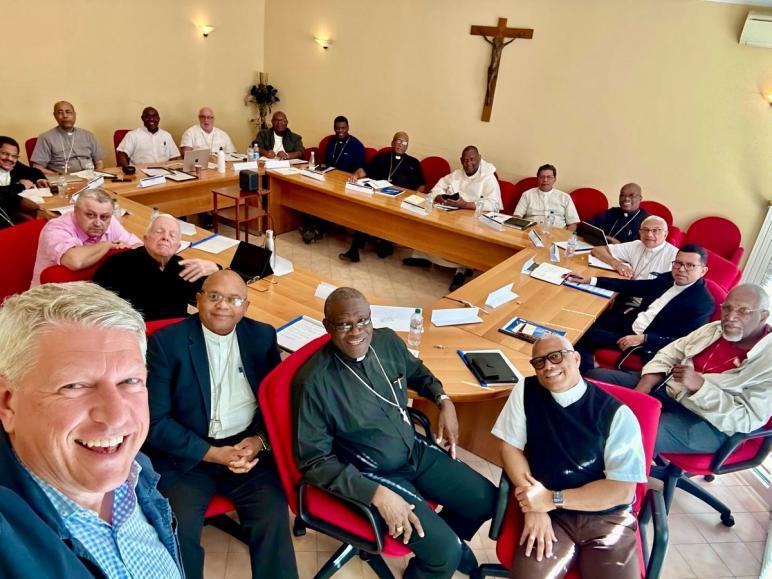
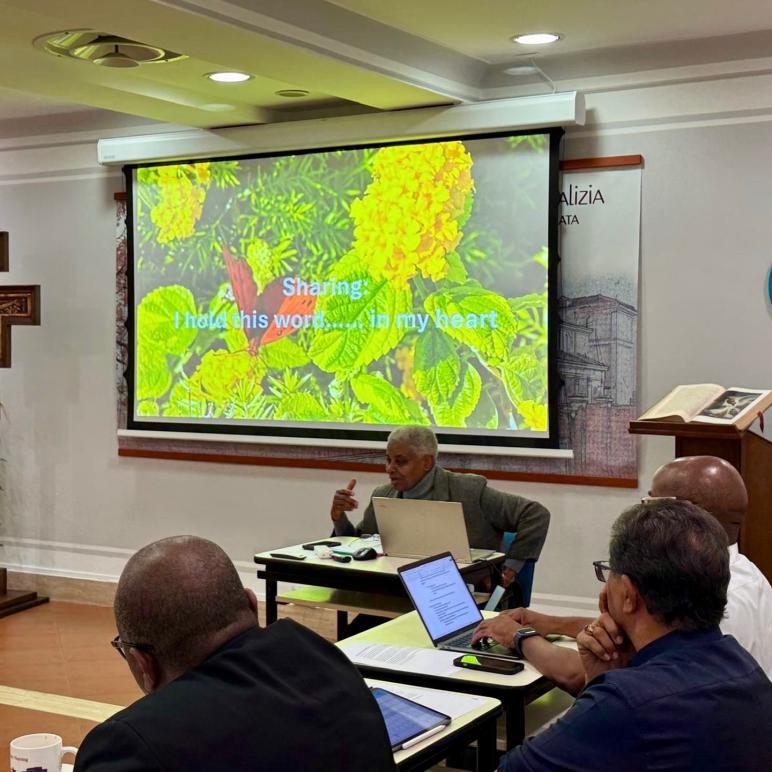
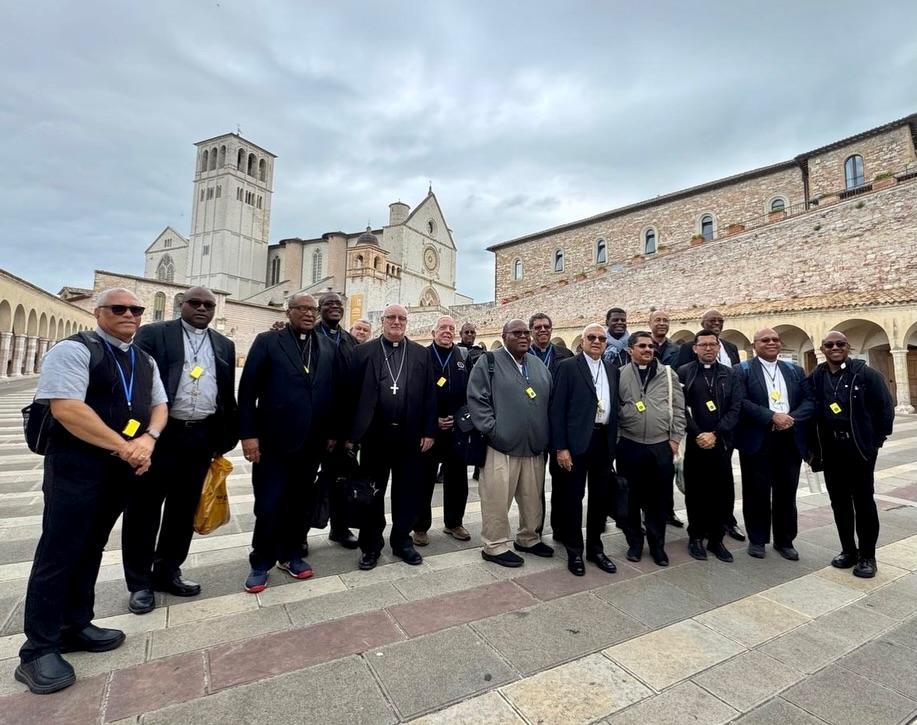
The second week, from May 2 to May 8, 2026, focused on ongoing formation, spiritual renewal, pilgrimage, and the Annual Plenary Meeting of the AEC. Activities included a two-day workshop on synodal leadership facilitated by Fr. David McCallum, SJ; a retreat directed by Sr. Julie Peters, SSM; a pilgrimage to Assisi; and the business sessions of the Annual Plenary Meeting.
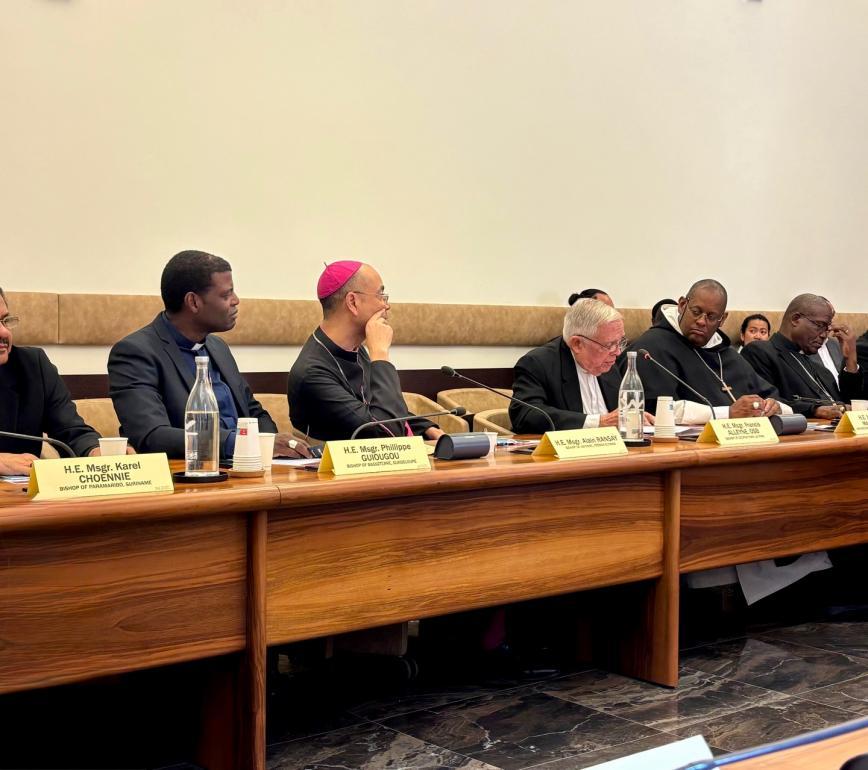
During the final business sessions of the Annual Plenary Meeting, the Bishops discussed matters affecting the life and mission of the Church in the Caribbean and adopted several pastoral resolutions to strengthen evangelization, synodality, formation, social outreach, and ecclesial collaboration throughout the Antilles. Among the important resolutions
adopted was the decision that the AEC Mass for on September 1, or the nearest Sunday, following its recent promulgation by the Holy See. Bishops will promote this celebration within their dioceses as part of the
The Bishops invite the faithful throughout the region to continue praying for the Church and to renew their commitment to the Gospel mission entrusted to all the baptized. United with the Holy Father and the Universal Church, the Bishops remain steadfast in proclaiming Jesus Christ and fostering communities of faith, hope, peace, and communion throughout the Caribbean.❖
The AEC Bishops at the Basilica of Saint Paul Outside the Walls, Wed. April 29th
A Christian Perspective on Social Issues
By GHK Lall
Pope Leo XIV: a masterclass in getting position across
He is proving to be a leader of fierce determination. A man who will make the courageous decisions in the face of fire already kindled; and the fires sure to come. Justas how Jesus didn’t backdown before continual assaults, so also his vicar on earth stands firm. Pope Leo XIV goes about the call of his pontificate quietly; no frills, no flair. For sure, he does not play to the crowd. He uses the tools of his time to ensure his messages have the most lasting resonance, gain the broadest traction. Like name, like nature. Pope Leo XIV is one of lionlike disposition. A man of peace does not confront. He works to convince. A man of truth doesn’t have any point to prove. He simply does what comes naturally, which is part of his spiritual apparel, his spiritual instincts. In a world that rages with anger, impatience, and disdain for those who differ, he is steadfast. The plight of migrants and treating them with dignity. The
horrors of Ukraine and Gaza and Iran, and that’s not the way it should be. It is not how disputes should be resolved: at the point of a gun, from a rain of explosives. For when war is all that is known, all that is tried, then it is what comes to be loved, seen as the first and only remedy to difficult situations.
Whereas they are those in the midst who are quick to denounce to damnation, Pope Leo seeks to defuse. I think it helps to recall that marvelous account from the Gospels that trapped a helpless woman in the hands of a crowd bent on drawing blood. In the heat of the sun at its heights, Jesus stood his ground and left his words: who is without blemish step forward and be the first to raise that hand of final condemnation. To defuse under the pressure of loud tumult, a sizable crowd, and amid the lust for so-called righteous vengeance calls for a tremendous amount of courage. This is what Pope Leo XIV is attempting, and succeeding a little step at a time, through his simple consistency.
What other world leaders, men with huge and powerful armies and endless weaponries, have failed to do, or failed to make an impression, the Holy Father has been able to set himself apart. By offering means of remedying, and not by condoning retaliating. In standing for peace, and not being a cheerleader for the destruction of life.
My wish and prayer have been that other religious leaders with enormous
followings would use the weight of their flock (and the teachings of Jesus) to come out on the side of peace, of respect for the sacredness of human life. And, of respect for the rights of others, no matter how despised they may be to the eye.
In a world that is walking backwards, the current holder of St Peter is daring to walk in the way of Jesus. Quiet calm amid the storms. A role model for Roman Catholics, for others, in how he has stood tall in one storm after another, and weathered them. This is the consecrated role to which he has been called, and he has been inspiring at it. The larger world is filled with too much hate and rage, the fears that come from both. A soothing voice is needed. A strong presence is required. What would Jesus do and how would he be, if he were there? This is what and this is how, insofar as it is within the range of human possibilities.
No one has to make a barrage of noise. Or make a monster of others. Simply, remember the path trod by the apprentice carpenter and his flock of fishermen and others. In the wider world, it is difficult to disagree. In the world of Guyana, and in this time of great speeds and developments, to disagree is to incur wrath and desecration. The way of Jesus still must be clung to, somehow. There is the Holy Spirit that Jesus sends, the counselor to whisper and guide. Pope Leo XIV absorbs richly, practices doggedly,goes forward boldly.❖
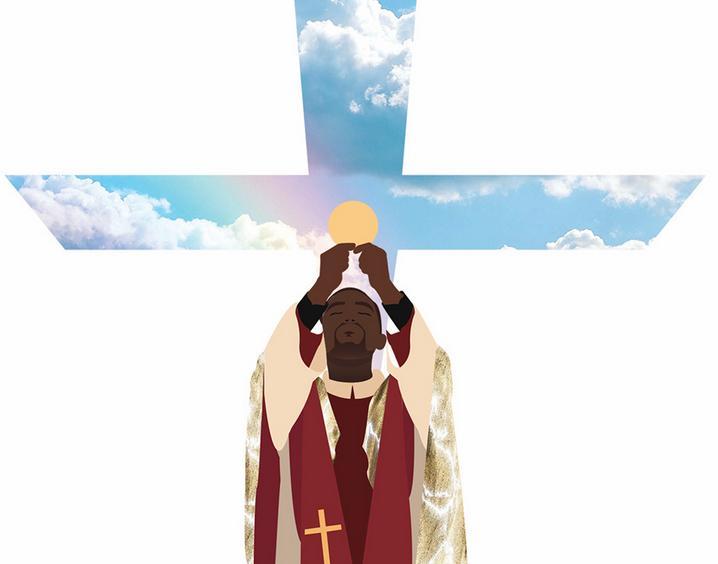
Gracious and loving God, we thank your for the gift of our priests.
Through them, we experience your presence in the sacraments.
Help our priests to be strong in their vocation.
Set their souls on fire with love for your people.
Grant them the wisdom, understanding, and strength they need to follow in the footsteps of Jesus. Inspire them with the vision of your Kingdom.
Give them the words they need to spread the Gospel.
Allow them to experience joy in their ministry.
Help them to become instruments of your divine grace.
We ask this through Jesus Christ, who lives and reigns as our EternalPriest. Amen
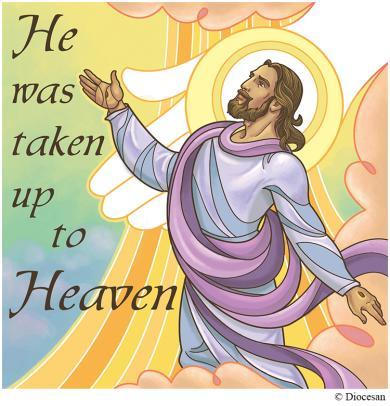


First Reading Acts 1:1-11
He was lifted up while they looked on.
In my earlier work, Theophilus, I dealt with everything Jesus had done and I taught from the beginning until the day he gave his instructions to the apostles he had chosen through the Holy Spirit, and was taken up to heaven. He had shown himself alive to them after his Passion by many demonstrations: for forty days he had continued to appear to them and tell them about the kingdom of God. When he had been at table with them, he had told them not to leave Jerusalem, but to wait there for what the Father had promised. ‘It is’ he had said ‘what you have heard me speak about: John baptised with water but you, not many days from now, will be baptised with the Holy Spirit.’ Now having met together, they asked him, ‘Lord, has the time come? Are you going to restore the kingdom to Israel?’ He replied, ‘It is not for you to know times or dates that the Father has decided by his own authority, but you will receive power when the Holy Spirit comes on you, and then you will be my witnesses not only in Jerusalem but throughout Judaea and Samaria, and indeed to the ends of the earth’.
As he said this he was lifted up while they looked on, and a cloud took him from their sight. They were still staring into the sky when suddenly two men in white were standing near them and they said, ‘Why are you men from Galilee standing here looking into the sky? Jesus who has been taken up from you into heaven, this same Jesus will come back in the same way as you have seen him go there.’
ResponsorialPsalm
Psalm46
Response: God goes up with shouts of joy; the Lord goes up with trumpet blast. or Alleluia!
1. All peoples,clap your hands, cry to God with shouts of joy! For the Lord, the Most High, we mustfear, greatkingover all the earth. Response
2. God goes up with shouts of joy; the Lord goes up with trumpet blast. Sing praise for God,sing praise, singpraise to our king,singpraise. Response
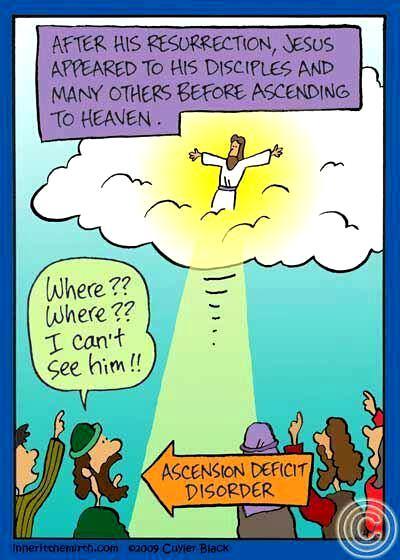
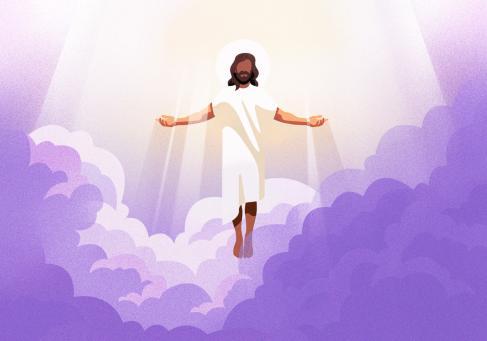
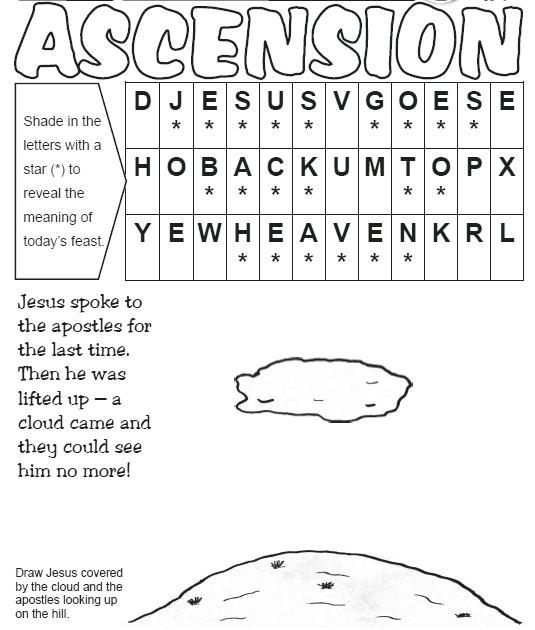
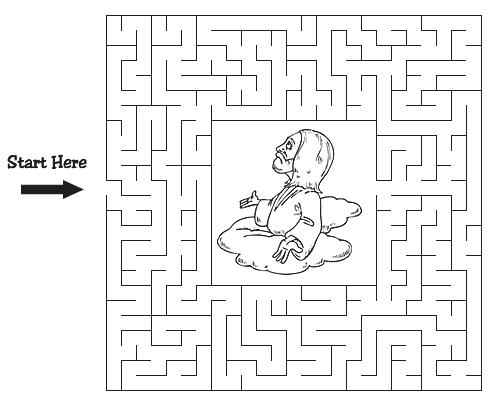
Today, we celebrate the great feast of the Ascension of our Lord, that glorious moment when Jesus, 40 days after His resurrection, was lifted up quite literally into heaven, as the
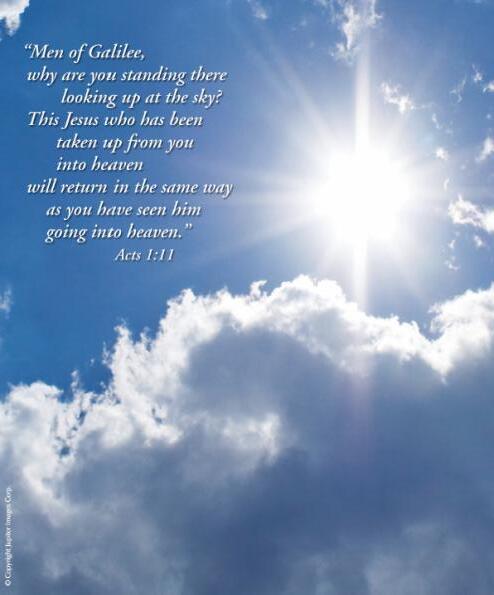
apostles watched in stunned amazement. It is recounted in both our first reading, from Acts, as well as the Gospel passage, from Matthew. It must have been an extraordinary thing to witness.
But the first reading tells us that the apostles were not permitted to simply bask in the moment for very long.
“While they were looking intently at the sky as he was going, suddenly two men dressed in white garments stood
3. God is kingof all the earth. Singpraisewithallyourskill.
God is kingover the nations; God reigns on his holy throne. Response
Second Reading Ephesians 1:17-23
He made him sit at his right hand in heaven
May the God of our Lord Jesus Christ, the Father of glory, give you a spirit of wisdom and perception of what is revealed, to bring you to full knowledge of him. May he enlighten the eyes of your mind so that you can see what hope his call holds for you, what rich glories he has promised the saints will inherit and how infinitely great is the power that he has exercised for us believers. This you can tell from the strength of his power at work in Christ, when he used it to raise him from the dead and to make him sit at his right hand, in heaven, far above every Sovereignty, Authority, Power, or Domination, or any other name that can be named not only in this age butalso in the age to come.
He has put all things under his feet and made him, as the ruler of everything, the head of the Church; which is his body, the fullness of him who fills the whole creation.
Gospel Acclamation Mt 28: 19
Allelluia, alleluia!
Go, make disciples of all the nations; I am with you always; yes, to the end of time. Alleluia!
Gospel Matthew28:16-20
All authority in heaven and on earth has been given to me.
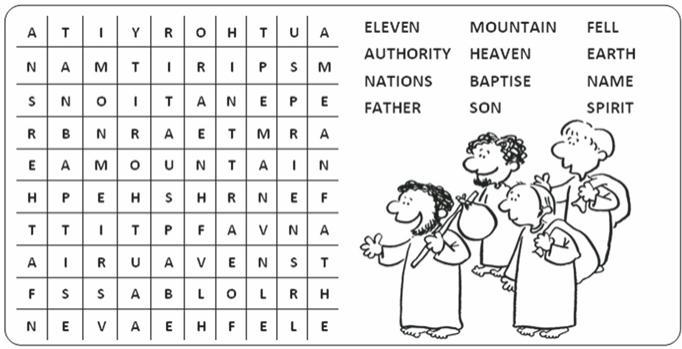
The eleven disciples set out for Galilee, to the mountain where Jesus had arranged to meet them. When they saw him they fell down before him, though some hesitated. Jesus came up and spoke to them. He said,
‘All authority in heaven and on earth has been given to me.
Go,therefore,make disciples of all the nations; baptise them in the name of the Father and of the Son and of the Holy Spirit, and teach them to observe all the commands I gave you.
‘And know that I am with you always; yes, to the endof time.’ ❖
beside them. They said, 'Men of Galilee, why are you standing there lookingatthesky?'”
In other words, “Don’t just stand there, do something!”
This verse is a call to each one of us Christian stewards this very day. We have been given every grace and blessing through the Mass and all of the sacraments, through the Word of God, the rich teachings of our faith,
and even our talents and our material possessions.
And like those first apostles, we are not meant to just stand here, but to do something with these gifts in love and gratitude to the One Who gave them to us. We are called,just as much as the first apostles “to be [His] witnesses to the ends of the earth,” not with our own power, but through the power of the Holy Spiritinus.❖
Gospel Reflection
Read the wrong way, the story of the Ascension of Jesus can give the impression that he went away and left his disciples alone with the task of completing the work he started. This kind of interpretation is, however, far from the truth. The Ascension is not about Jesus going away but about him being even more present to us than he could ever be as a man, in one place and at one time in history. Through the Ascension, he is now with his followers at all times and in all places, through the Holy Spirit. Now he is no longer limited to the small group of Jews who came into contact with him while he was preaching and teaching and serving some 2000 years ago. Now the whole world can reach out to him because he is present and available to all.
Jesus ascended to the Father so that he can be present to the Church in new ways. In our Church community we experience him in his Word, in his Name, in his ministers, in the sacraments, in our rituals and in our people. And the people as community find that the Ascension leads to the challenge to spread the Word throughout the world. It is comforting to know that this is possible through the power of the Holy Spirit. Today’s celebration, then, calls on us to deepen our faith in the new presence of Jesus among us. It tells us that while we live in the expectation that the Lord can return at anytime, he is present to us in many other ways. It tells us that it is as a Church community that we experience Jesus’ presence among us and that we must work together to carry out the task he has given to us. ❖
[From: Journeying with the Word of God, The Religious Education Department, Diocese of Georgetown, Guyana ]
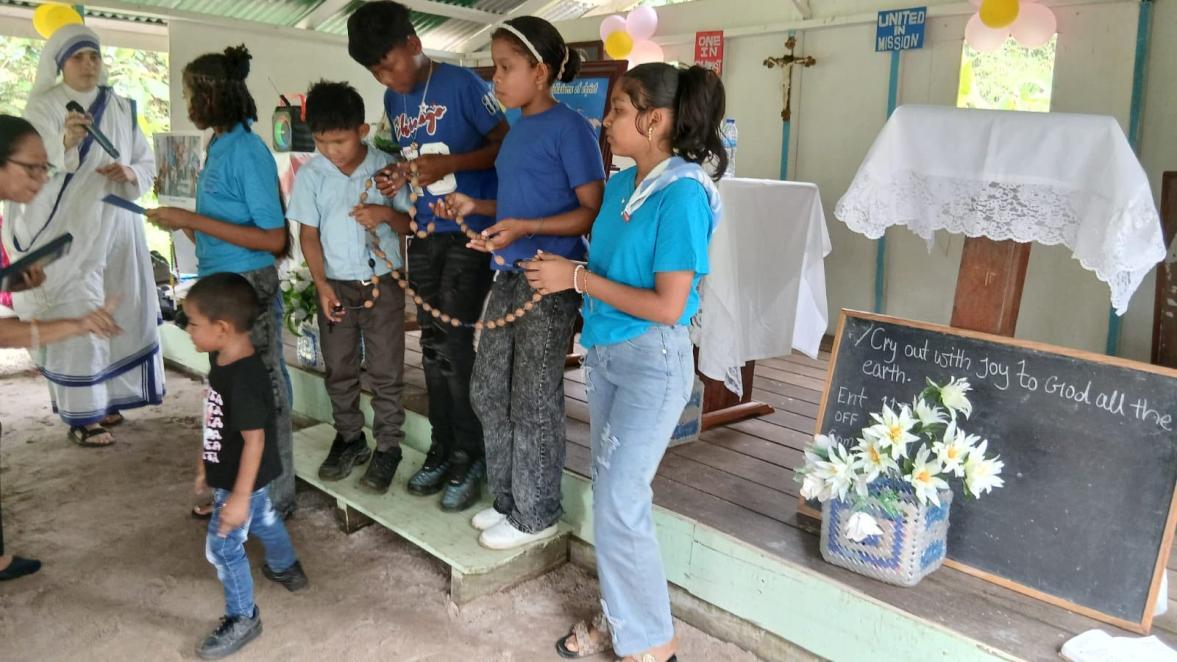
On Saturday, May 9, 2026, approximately 40 Missionary Childhood Association (MCA) children, from the East Bank Cluster, along with coordinators and parents, gathered at St. Teresa of Calcutta Church, Timehri, for Holy Mass and theMissionRosary.
Children from St. Catherine of Siena, Kuru Kururu; Little Flower, Land of Canaan; St. Jerome, Supply; and St. Joseph Husband of Mary, Diamond, were present.
In his homily, Parish Priest Fr. Ronald Fernandes SJ, explained the importance of Baptism and following Jesus in His mission of caring for others through the commandment of love, while focusing on the Mission Theme 2026: “One in Christ, United in Mission.”
Following Mass, Sr. Ann Providence, MC, led a session on the Mission Rosary. She engaged the children by having them identify the continents on a world map while explaining the significance of each continent represented in theMissionRosary.
The children actively participated throughout the celebration by proclaiming the Scripture readings, leading the intercessory prayers for each continent, and praying the Rosary. Groups, dressed in the colours representing the five continents of the


us giving your name & numberat +592 701-7639. Send us an email at
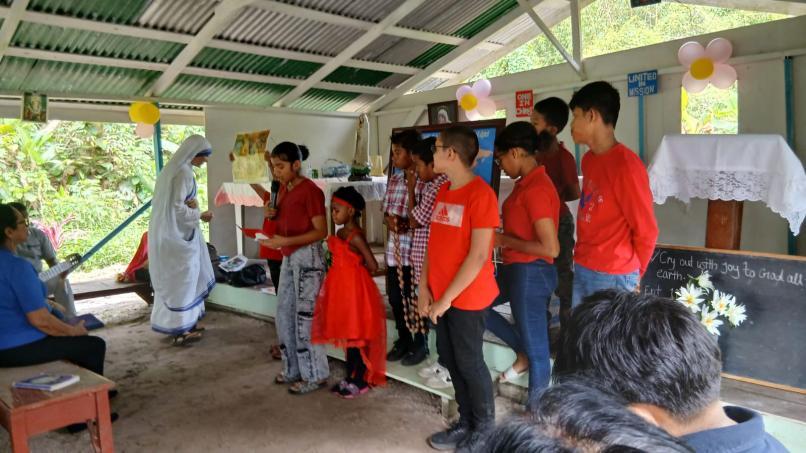
Mission Rosary, came forward to read the prayers, sing a verse of “God’s Spirit is in My Heart,” and lead one decade of the Rosary. The gathering concluded with the hymn “We Are Going with Jesus.” Afterwards, the children shared food and refreshmentstogether.
The event highlighted the unity, joy, and faith of the children as they gathered in community and deepened their awareness of their call to be child missionaries.
May more leaders throughout our Diocese join our children in prayer and

sacrifice for peace in our world, especially for children who are suffering. Through the intercession of Our Blessed Mother Mary, particularly under her apparition at Fatima, may our children continue to grow in their baptismal call to be “One in Christ, United inMission.”
“O my Jesus, forgive us our sins, save us from the fires of hell, and lead all souls to heaven, especially those most in need of Thy mercy.”❖ (Catholic Media Guyana FB)
For 121 years, the Catholic Standard has been sharing the Gospel of Jesus Christ.
Now reaching 10,000+ followers on Catholic Media Guyana Facebook plus going straight to your inbox and WhatsApp, our vibrant weekly e-paper is a trusted source which delivers informative and inspiringstories from across the diocese and around the world.
Want to promote your business or event? Advertise with us! Call 675-4542 or email catholicstandardgy@gmail.com ❖
Pope Leo prays where St. John Paul II was shot on feast of Our Lady of Fátima
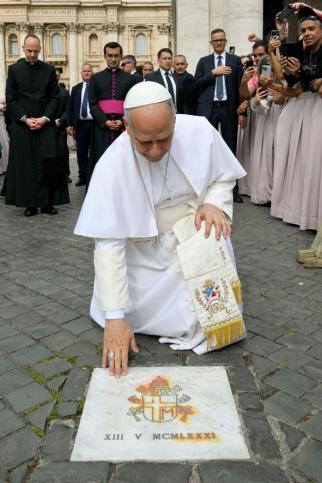
Pope Leo XIV touches the plaque marking the spot in St. Peter’s Square where St. John Paul II was shot in an assassination attempt on May 13, 1981. Leo stopped at the plaque during his own general audience on the feast of Our Lady of Fátima, May13,2026.Credit:VaticanMedia
(EWTN News) - In an unexpected gesture as he was greeting people at the general audience in St. Peterʼs Square on Wednesday, May 13, Pope Leo XIV stopped at the exact spot where, 45 years ago, St. John Paul II was shot in anassassination attempt.
Leo got out of the vehicle and remained in silence to pray before the white marble plaque marking the place where the Polish pope was struck by four gunshots fired by the Turkish gunman Ali Agca on May 13, 1981. Leo then knelt and touched the plaque before continuing his ride around the square.
The attack on John Paul II coincided with the anniversary of the apparitions of Our Lady to three shepherd children in Fátima, Portugal.
The shooter, Mehmet Ali Ağca, was apprehended immediately and later visited by the pope who forgave him and called for his pardon. After serving 20 years in an Italian prison, he was deported to Turkey in 2000.
Days after the attempt on his life, while still recovering, John Paul II read the third part of the secret of Fátima, until then known only to the popes and later made public. Written by one of the seers, Sister Lucia, it describes the vision of the Holy Father “afflicted with pain and sorrow,” praying “for the souls of the corpses he met on his way.”
Pope John Paul II never ceased to express his gratitude to the Virgin Mary for saving his life. “One hand fired; another guided the bullet,” he said in an interview with the French writer André Frossard. After being discharged from the hospital and resuming general audiences in St. Peter’s
Journeying with the Word of God
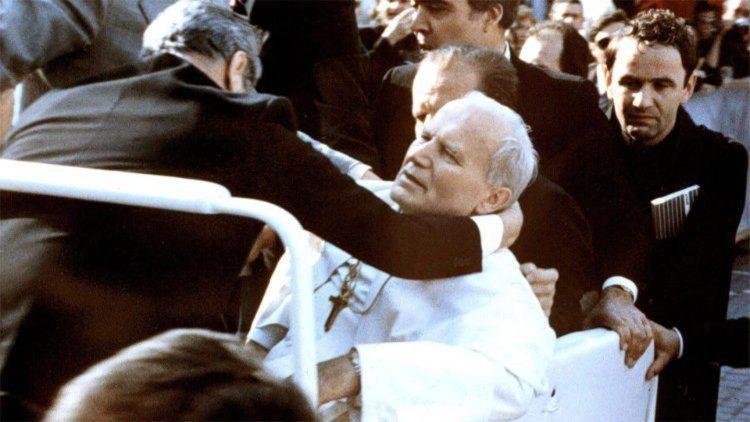
Angelo Gugel, private attendant to three popes, holds Pope John Paul II as he lies injured in his jeep in St. Peter's Square on May 13, 1981, after being shot. Gugel, the pontifical butler and witness to modern papal history, died at age 90 Jan. 14, 2026. He stood silently behind Pope John Paul for nearly three decades and contributed to saving the pope on the day of the assassination attempt. (OSV News file photo)
Square following five months of hospitalization, he also said he had experienced “the extraordinary maternal protection which proved stronger than the deadly projectile.”
In 1982, St. John Paul II celebrated Mass in Fátima and consecrated the world to the Immaculate Heart of Mary. On May 13, 2000, he beatified the shepherd children Francisco and Jacinta at the Portuguese shrine.
‘Mary, model of the Church’ Today, Leo XIV wanted to underscore that the attempt on John Paul II’s life was not fatal “thanks to the protection of Our Lady, as he himself confirmed in many ways.”
For this reason, he explained, he dedicated his May 13 catechesis to “the Virgin Mary, model of the Church” and to his predecessor, whosemotto was “Totus Tuus.”
The pope thus continuedhis cycle of catechesis on the Second Vatican Council, pausing on the final chapter of the dogmatic constitution on the Church, Lumen Gentium, which is dedicated to the Virgin Mary. Leo said Mary “is hailed as a preeminent and singular member of the Church, and as its type and excellent example in faith and charity.”
“Mary is the perfect model of what the whole Church is called to be: a creature of the Word of the Lord and mother of the children of God, begotten in docility to the action of the Holy Spirit,“ the Holy Father said.
”Furthermore, as she is the believer par excellence, in whom we are offered the perfect form of unconditional openness to the divine mystery within the communion of God’s holy people, Mary is an excellent member of the ecclesial community.”
He also explained that the Virgin Mary is the “woman who is the icon of the Mystery,” who was
granted the grace to live “the extraordinary experience of becoming the mother of the Messiah.”
“In her, both God’s gratuitous election and her free consent of faith in him shine forth. Mary is therefore the woman who is the icon of the Mystery, that is, of the divine plan of salvation, once hidden and now revealed in its fullness in JesusChrist,” he said.
In the Virgin Mary, he continued, there is also reflected “the mystery of the Church: in her, the people of God find the representation of their origin, their model, andtheir homeland.”
Model of maternal charity
In the mother of the Lord, the Church contemplates its own mystery, “not only because she finds in her the model of virginal faith, maternal charity, and the spousal covenant to which she is called but also and above all because in her she recognizes her own archetype, the ideal figure of what she is called to be,” Leo said.
The reflections contained in Lumen Gentium, he concluded, teach us to love the Church and to serve within her the fulfillment of the kingdom of God, which is coming and which will be fully realized inglory.
He invited the faithful to allow themselves to be challenged by the example of Mary, virgin and mother, with concrete questions: “Do I live my participation of the Church with humble and active faith? Do I recognize in her the community of the covenant that God has given me to respond to his infinite love? Do I feel that I am a living part of the Church, in obedience to the pastors given by God? Do I look to Mary as a model, an outstanding member and mother of the Church, and ask her to help me be a faithful discipleof herson?”❖
MAKING THE WORD OF GOD YOUR OWN
Step 1: Lookattoday’sReadingsprayerfully.
1st Reading: We read a description of the Ascension of Jesus into heaven and of his promise to send the Holy Spiritto his disciples.
2nd Reading: Paul explains the meaning of the Ascension – God raised Jesus about all powers and made him head of the Church and Lord of all creation.
Gospel: Jesus commissions the apostles to preach the Gospel to all nations. He promises to remain with them always.
Step 2: ApplyingthevaluesoftheReadings toyourdailylife.
1.How, in your opinion, is the Church carrying out the work Jesus entrusted to it? Are there any areas in which you feel the Church is failing?
2.Jesus promises his disciples the power of the Holy Spirit (First Reading). What kind of power do you think Jesus wishes for his followers?
3.Jesus told his disciples to teach all people to observe all the commands he gave to them. What are these “commands” that Jesus gave to them?
4.In the First Reading and the Gospel, Jesus gives a mission and makes a promise to his disciples. What does this mission and message mean to you?
Step 3: Accepting the message of God’s Wordinyourlifeoffaith.
Jesus ascended to the Father but he left a deep and lasting sense of his presence in the world. He is with us now and forever. Today we do not celebrate his leaving but rather his glorious presence with us. The Holy Spirit, which is God’s gift to us, helps us to work with and for Jesus as we carry out the mission he has assigned to all his followers .
Step 4: Somethingtothink&prayabout
1.One thing is certain is that faith does not change the world inwhich we live butfaith can change the way we see and experience the world and all our relationships. And it is in the way we see and understand the world from our faith position that we are empowered to make whatever changes we see necessary.
2.Pray that you will be a faithful witness for Christ in the world in which you live, in all you say and do.❖
[From: Journeying with the Word of God, The Religious Education Department, Diocese of Georgetown, Guyana ]
Church’s mandate: from maintenance to missionary communion
Below is the address given by Archbishop Charles Jason Gordon of Trinidad & Tobago, President of the Antilles Episcopal Conference (AEC), at the opening of the Conference’s AnnualPlenaryMeetinginRome,Italy:
BrotherBishops,
We came to Rome as pilgrims. And pilgrimage, as we know, is never simply travel. It costs something. There was tiredness on this journey. There was illness. There were moments when the body reminded us that we are not simply administrators of the Gospel but bearers of it in fragile, mortal flesh, like every pilgrim before us. But we arrived. And pilgrims who arrive carry something home that those who stayed behind do not have. What we received in these days was worth the cost and it now belongs to the wholeChurch we serve.
Twenty years from now, only three of the men in this room will still be in active ministry. From the Upper Room to this room, every generation of bishops has carried one irreducible responsibility: to hand on the faith to the next generation. Not to manage it. Not to preserve its institutional forms. To hand it on living, burning, capable of transforming a life. That chain of transmission runsthrough us. Who will stand beside them? And before that: from what kind of Church will those future shepherds be drawn? And before even that: have we handed on to this generation what was handed on to us?
Across every meeting, every dicastery, every conversation including our audience with the Holy Father one invitation emerged with profound clarity:
The Church in the Caribbean is being called from maintenance to missionary communion.
That is the grace we now bring home. Not as a memory. As a mandate. There is no renewal of mission without conversion. That is what this mandate demands conversion personal, pastoral, and ecclesial.
What Rome confirmed In every dicastery without exception we were received. We were listened to. Space was made for real conversation, not merely protocol. Brothers, when was the last time our own people experienced that from us? When we arrive in our parishes, our presbyterates, our schools do the people of God find a Church where they are genuinely heard? Or a Church that is efficiently managed?
The synodal Church is not an option among others. It is the form the missionary Church must now take. Not synodality as programme or methodology but a conversion of ecclesial culture. A Church that listens before it speaks. That discerns before it decides. That walks with her people rather than directing them from a distance. The dicasterieswereunanimousonthispoint.
The crisis facing our local Churches is not primarily structural. Structures, for the most part, still exist. The crisis is anthropological and spiritual.
Formation has weakened. Encounter has weakened. The living proclamation of Jesus Christ has too often been replaced by the maintenance of religious practice. A Church in maintenance mode cannot fulfil its apostolic mission. It cannot hand on what it is no longer proclaiming.
The question that has not left me
There was one encounter during these days that has haunted me and I believe it must be placed at the centre of our discernment together.
In our meeting with Cardinal Víctor Manuel Fernández, Prefect of the Dicastery for the Doctrine of the Faith, he asked us a question. Not once. He returned to it again and again, with evident pastoral urgency: How do we hand on the kerygma?
This was the guardian of the Church’s proclamation not instructing us. Asking us. Searching with us. Because this is a question the whole Church is carrying.
And I must be honest with you, brothers: I struggled to give a compelling answer.
That struggle is where the Holy Spirit begins its work in us. Because this question is not about methodology. It is about whether we are fulfilling the most fundamental responsibility of our apostolic office. The apostles received the faith not to administer it but to give it away urgently, personally, at the cost ofeverything.
We are their successors. And we are being asked whether we know how to do what we were ordainedto do.
The hunger we cannot ignore Generation Z shaped by digital saturation, radical fragmentation, and a loneliness previous generations did not know is searching. For faith. For meaning. For transcendence. For something that does not dissolve when the screen goes dark.
This hunger is not absent from our Caribbean reality. It is here. It is alive. And it is largely unanswered.
What our young people are searching for is not a programme. Not a youth group, not a retreat, not a Catholic school that produces good examination results. What they are searching for what every human heart
They emerge. The evangelisation of this generation and the fostering of vocations are not two pastoral initiatives. They areone.
What we are being asked to imagine
I am not coming to this plenary with conclusions. I am coming with Cardinal Fernández’s question because I believe it is the question the Holy Spirit is placing before us. How do we hand on the kerygma? How do we give the next generation not a maintained religion, but a living encounter with the risen Christ?
This morning, brothers, the Holy Spirit began to answer that question through us. In our discernment together we named something that I believe must now govern everything we do in the days, months, and years ahead: The kerygma, proclaimed and lived in its simplicity, clarity, and power, forms disciples who build healthy relationships and transform Antillean societies That statement deserves to be received slowly. The kerygma is not the beginning of faith after which something else takes over. The kerygma proclaimed and lived, in its simplicity, its clarity, its power is itself the forming force. It forms disciples. And disciples, formed by encounter with the living Christ, do not retreat from the world. They build. They heal. They transform their families, their communities, their societies. This is the answer to Cardinal Fernández’s question. Not a methodology. A way of life. A Church so alive with the proclamation of the risen Christ that her members cannot help but become agents of transformation wherever they are placed.
The answer will not come from Rome or Europe, or any model formed in a context not our own. It will emerge as it is already emerging from this room. From our shared faith, our
shared history, our shared knowledge
It will come ultimately from our synodal engagement with our people, listening deeply and discerning the movement of the Holy Spirit. Synodality , keeping it
So, I invite us to hold these questions
Where are the young people in our dioceses already searching and are we present to them where they are searching?
What would it take to move from managing faith to awakening it and where is that awakening already happening?
What would it mean to make the proclamation of the kerygma in its simplicity, clarity, and power the apostolic commitment that reshapes everything else?
A mature Church draws from her history not only her history of grace, but her history of wound guided by the Holy Spirit who alone knows how to makeboth redemptive. That discernment ours together has begun. It must now continue with our people our priests, our consecrated, and our laity.
Brother Bishops, before I close, I want to leave us with one image. Eight hundred years ago, a young man in Assisi heard the Gospel and took it literally. He did not seek the approval of the powerful or wait for the structures to change. He gave his life completely, joyfully, without reserve. And the life of the Church was never the same again. Eight centuries of renewal, mission, and sanctity flowing from one surrendered life. The young people of the Caribbean are waiting. Not for a programme. Not for a strategy. For witnesses. For shepherds who have encountered the risen Christ and cannot keep silent about it. From the Upper Room to this room, the chain of transmission has held. Through men far less resourced than we are. In circumstances far more hostile than ours. With nothing but the Word of the risen Christ and the fire of the HolySpirit.
It holds now. Through us. We are the ones He has sent.❖(From The Catholic News of T&T)
The Antilles Episcopal Conference visits the Basilica of St Francis of Assisi. Photo: AEC Facebook page
Jesus Ascends into Heaven
Dear Boys and Girls,
When Jesus was ready to return to heaven, he took his disciples aside to make sure that they understood everything that had happened to him. He explained why it was important for him to be crucified and to be raised from the dead to fulfill what the Scriptures had said about him. He also told them that he was going to return to his Father in heaven, and that the Holy Spirit would come to be with them.
At first, the disciples were sad that Jesus would be leaving them, but then the Bible tells us that Jesus opened their minds so they would understand. Then, an amazing thing happened. The Bible tells us that Jesus lifted his hands and blessed his disciples. While he was blessing them, he left them and was taken up into heaven. We don't know how all of this looked, but in our imagination we can see the disciples standing and watching as Jesus ascended higher and higher until he disappeared from view. Were the disciples sad? No way!
The Bible tells us that when Jesus had ascended into heaven, the disciples worshiped him and returned to Jerusalem with great joy. There they stayed continuallyinthetemple,praisingGod.
We are here today for the very same purpose. We have come into the temple to worship him with great joy!
Dear Father, we thank you for sending Jesus, your only Son, to die for our sins. We know that he has risen from the dead and has returned to heaven. Bless us today as we worship him with great joy! Amen. ❖
Church embraces science to find
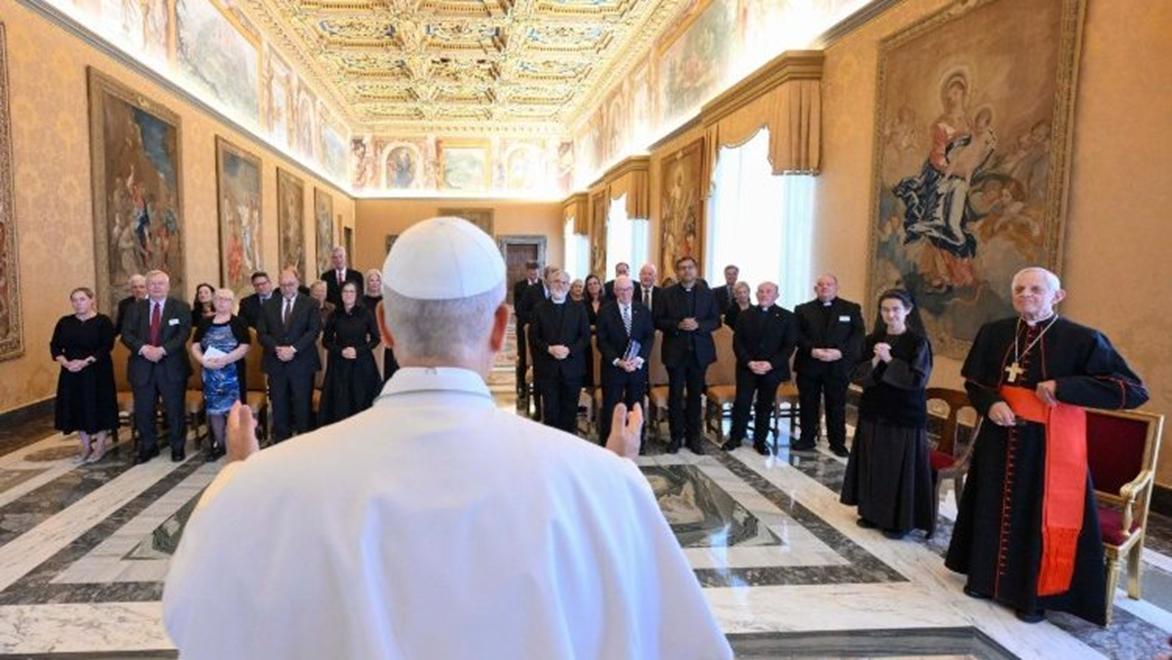
(Vatican News) - Pope Leo XIV held an audience on Monday May 11 with the Board of the Vatican Observatory Foundation.
In his address, the Pope recalled that Pope Leo XIII re-founded the Vatican Observatory in 1891, at a time when science was being presented as a rival source of truth to religion.
The 19th-century Pope said he was re-founding the institution so that, “everyone might see clearly that the Church and her Pastors are not opposed to true and solid science, whether human or divine, but that they embrace it, encourage it, and promote it with the fullest possible devotion.”
However, in our own times, both faith and science face a more insidious threat from those who deny the very existence of objective truth, said Pope Leo XIV.
“Too many in our world refuse to acknowledge what both science and the Church plainly teach,” he said,
“that we bear a solemn responsibility for the stewardship of our planet and for the welfare of those who dwell uponit,especiallythemostvulnerable, whose lives are imperilled by the reckless exploitation of both people and the natural world.”
The Church’s desire to study the heavens through astronomy, he added, shows that she embraces “rigorous, honest science” as an essential aspect of her identity.
Human beings enjoy the God-given gift to gaze with wonder at the sun, moon, and stars,said Pope Leo.
As we gaze at the night sky, we enjoy a treasury of beauty open to rich and poor alike, which the Pope noted remains one of the last truly universal sources of joy in our divided world.
“Contemplating the heavens invites us to see our fears and failings in the light of God’s immensity,” he said.
Pope Leo XIV went on to lament that man-made light has blinded us to the lights God has placed in the heavens,
which he said makes the work of the Vatican Observatory more important than ever.
The work of the Vatican Observatory Foundation, he said, helps students study astronomy through summer schools and workshops.
In this way, the Foundation allows the Vatican Observatory’s telescopes to remain “places where the glory of God’s Creation is encountered with reverence,depth,and joy.”
In conclusion, Pope Leo XIV urged the faithful to never lose sight that the Christian religion is based on the Incarnation, since God made Himself known through His Creation and sent His only Son to redeem it.
“The hunger to understand Creation more fully,” he said, “is nothing less than a reflection of that restless longing for God, which lies at the heart of every human soul.” ❖
By Renika Anand
Brave enough to ask
Kiera Cass, an American author, once said “Accepting help is its ownkind of strength.”
Strength and courage can take many different forms. Oftentimes, it is easy to believe that the most powerful form of courage is to stand against and survive every obstacle all by ourselves. Unfortunately, this is not true. The most powerful form of courage is allowing yourself to be vulnerable enough to ask for a helping hand when you are struggling. Life is not meant to be a journey that is taken alone. Although we begin it and end it by ourselves, the true meaning and beauty of life arises from the bonds we build - from the helping hands that we both extend and accept in times of need.
It is tempting to lose hope in one another when we are experiencing periods of difficulty. However, if we choose to be optimistic, we can find God in each other. Sometimes, the answers to our prayers may be right in front of us. We only need to be brave enough to ask.
“Ask and it will be given to you; seek and you will find; knock and the door will be opened to you. - Matthew 7:7 ❖


Pope Leo XIV meets with the Board of the Vatican Observatory Foundation , May 11 2026 (Vatican Media)
Choosing Life: A Catholic Vision of Human Dignity
Fr Joel Thompson SJ
“I came that they may have life, and have it abundantly” (John 10:10)
These words of Jesus give us a beautiful way to understand the Catholic “culture of life”. God does not want us just to exist. He wants us to live fully, with dignity, love, peace, and hope. The Church teaches a consistent ethic of life. This means that human life must be protected and respected from womb to tomb, i.e., conception until natural death.
Why are our lives sacred? Every human being has dignity (precious value) because we are all created in the image and likeness of God (Genesis 1:27). St John Paul II, preached of a culture of life to refer to a society that respects and cherishes all human life, especially the most vulnerable. This culture of life includes the elderly, the sick,the unborn,the poor,the migrant/ refugee,theprisoner,thepersonwitha disability, the victim of violence, and even those who have done wrong.
What We Believe
The Catechism teaches that “human life is sacred” because from its beginning it involves the creative action of God (CCC 2258). Life is not something we gave ourselves, but a gift. Because of this, no one has the right to treat human life as disposable.
What about murderers? Don’t they deserve the death penalty? A culture of life shapes how we think about crime and punishment. People are often shocked and surprised to learn that the Catholic Church consistently opposes the dealt penalty. The Church teaches that the death penalty is “inadmissible” because it attacks the dignity of the human person (CCC 2267). Even a person who has
committed a terrible crime does not lose their dignity before God. Justice is necessary, but revenge is not Christian. St John Paul II forgave the man who shot him as he was on his way to the hospital. Jesus forgave those who executed him as he hung on the cross (see Luke 23:24). The Church believes in the safe detention and rehabilitation of those convicted. More well known is that the Church opposes abortion. From the first moment of conception, human life must be respected and protected (CCC 2270). This teaching can be difficult for some people, especially when painful situations are involved: poverty, fear, rape, youth, or lack of support. These situations require compassion, not condemnation. But the Church still insists that unborn life must be protected.
The Church also opposes euthanasia. Euthanasia is the intentional ending of a person's life in order to eliminate suffering, whether because of sickness, old age, pain, disability, or despair (tired of living). Euthanasia is morally unacceptable because it puts an end to the lives of persons who are sick,disabled,or dying (CCC 2277).
At the same time, the Church does not teach that every possible medical treatment must always be used. A person may refuse treatment that is excessively burdensome, dangerous, extraordinary, or disproportionate to the expected outcome (CCC 2278). For example, an 80 year old refusing chemotherapy is not the same as euthanasia. We must not intentionally kill, but we also do not have to prolong suffering by every possible medical means. What we must always offer is care, pain relief, prayer, dignity, and accompaniment.
Why It Matters
Viewing all life as sacred matters because many lives are treated as less valuable. The elderly person may be seen as a burden. The sick person may be seen as useless. The poor may be ignored. The prisoner may be written off forever. The person with Down syndrome, disability, mental illness, or addiction may be treated as less important.
Jesus never looked down at anyone. He showed a “preferential option for the poor”. He touched the sick, welcomed children, forgave sinners, noticed the poor, and showed mercy to those others rejected. The Gospel teaches us that dignity is not based on social class, success, strength, beauty, usefulness or money.
This challenges us in Guyana. Many people complain about harsh or careless treatment in hospitals and health centers. A pro-life society must care for the sick with patience, respect, and compassion. Doctors, nurses, caregivers, and relatives are called to protect not only the body, but also the sacredness of the person. Frequent ethical training for our health workers wouldhelpstrengthenacultureoflife. Domestic violence and murder are also life issues. Anger, jealousy, alcohol, and poor communication turn homes into places of fear. Violence never solves problems. Jesus taught mercy,forgiveness,and peace.
Substance abuse is also connected to the culture of life. St Paul reminds us:
Spirit” (1 Corinthians 6:19). Alcohol and drug abuse (e.g. vaping) damage both bodies and families. Drunk driving kills innocent people. Addiction contributes to domestic violence, neglect, and broken homes. The Catechism teaches that temperance helps us avoid excess, and it warns against the abuse of food, alcohol,tobacco,or medicine (CCC 2290).
Living a Culture of Life
We choose life when we care for children before and after birth. It is not enough to say that a child should be born. That child must also be loved, fed, protected, educated, and accompanied. Children need stable homes, guidance, affection, discipline, and support.
We choose life when we care for the elderly. We choose life when we visit the sick, feed the hungry, support pregnant mothers, help those struggling with addiction, and encourage families to seek help before violence begins.
We choose life when we reject revenge and believe that even prisoners can repent and change. We also choose life by caring for our own bodies by eating properly, resting, exercising, avoiding excess, and asking for help when we are not well. “You shall not kill” does not only mean that we must not murder. It also calls on us to preserve and protect our lives and the lives of others. Every person matters. Today, let us hear the words of God and “Choose
World Communications Day message (From
managing tasks related to communication,in the long run,choosingto evade the effort of thinking for ourselves and settling for artificial statistical compilations threatens to diminish our cognitive, emotional, and communication skills,” he writes.
The pope also highlights new risks in online interaction, noting how difficult it can be to tell whether one is engaging with a real person. “As we scroll through our feeds, it becomes increasingly difficult to determine whether we are interacting with other human beings or with ‘bots’ or ‘virtual influencers,’” he writes, warning that chatbots can be used for “covert persuasion” and may “become hidden architects of our emotional states.”
Pointing to the growing capacity of AI to fabricate content including “parallel ‘realities’” the pope underscores the dangers of misinformation and calls for renewed commitment to verification and field reporting. He warns that “failure to verify sources” can “fuel disinformation,” deepening “mistrust,confusion,and insecurity.”
Rather than calling for a halt to innovation, the pope urges discernment and governance, proposing what he describes as “a possible alliance” with digital technology but only on clear foundations. “This alliance is possible but needs to be based on
three pillars: responsibility, cooperation, and education,” he writes.
On responsibility, the pope addresses tech platforms, developers, lawmakers, and the media, urging them to prioritize the common good over profit and to ensure transparency and protections for human dignity. He also calls for clear labeling of AI-generated content: “Content generated or manipulated by AI are to be clearly marked and distinguished from content created by humans,” he writes.
The pope stresses the need to protect the work of journalists and creators: “The authorship and sovereign ownership of the work of journalists and other content creators must be protected. Information is a public good,” he writes.
Education, he adds, is essential for building critical thinking and digital citizenship, and it should reach every generation. “As Catholics, we can and must contribute to this effort, so that individuals especially young people can acquire critical thinking skills and grow in freedom of spirit,” Pope Leo XIV writes, adding that such literacy should also reach “older adults and marginalized members of society.”❖


Memory Lane Saint of the Week
By Francis Canzius
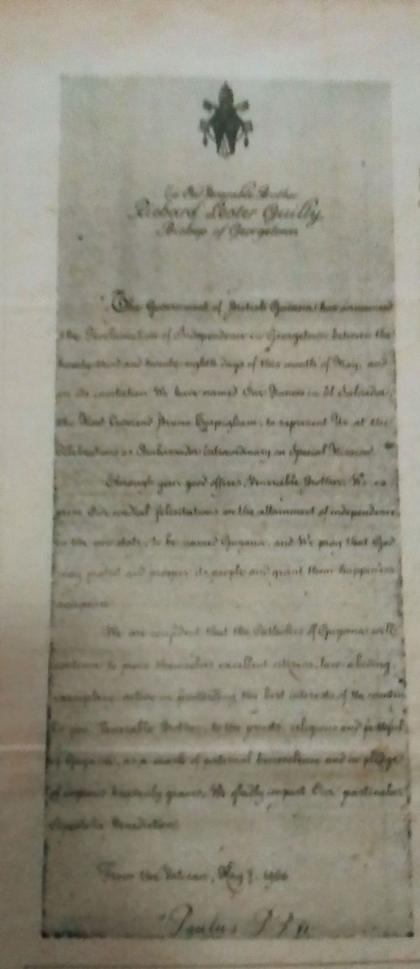
Pope Paul VI’s message in 1966
To our Venerable brother, Richard Lester Guilly, Bishop of Georgetown.
The government of British Guiana has announced the proclamation of Independence in Georgetown from the 23rd to the 28th days of the month of May and on its invitation we have named our Nuncio in El Salvador, the Most Reverend Bruno Tropighani to represent us at celebrations as Ambassador extraordinary on special mission.
Through your good offices, Venerable Brother, We express
Our cordial felicitations on the attainment of independence by the new state to be named Guyana, and We pray that God may protect and prosper its people and grant them happiness and peace.
We are confident that the Catholics of Guyana will continue to prove themselves excellent citizens, law abiding, exemplary, actions in forwarding the best interests of the country. To you Venerable Brother, to the priests, religious and faithful of Guyana, as a mark of paternal benevolence and in pledge of copious heavenly graces, We gladly impart Our particular Apostolic Benediction.
May 7th, 1966
Sgd. Paulus PP,VI ❖
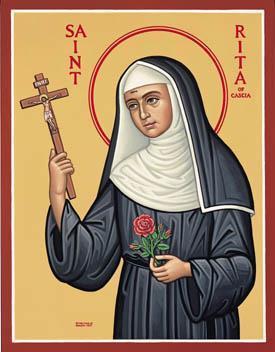
May 22nd - Saint Rita of Cascia (1381 – May 22, 1457)
Born at Roccaporena in central Italy, Rita wanted to become a nun but was pressured at a young age into marrying a harsh and abusive man. During her 18-year marriage, she bore and raised two sons. After her husband was killed in a brawl and her sons had died, Rita tried to join the Augustinian nuns in Cascia. Unsuccessful at first because she was a widow, Rita eventually succeeded.
Over the years, her austerity, prayerfulness, and charity became legendary. When she developed wounds on her forehead, people quickly associated them with the wounds from Christ’s crown of thorns. She meditated frequently on Christ’s passion. Her care for the sick nuns was especially loving. She also counseled lay people who came to her monastery.
Rita lived as a wife, mother, widow and nun, buried her family, helped bring peace to her city - and never lost her faith in God, or her desire to be with Him. ❖
[From: franciscanmedia.org & salfordliturgy.org.uk ]