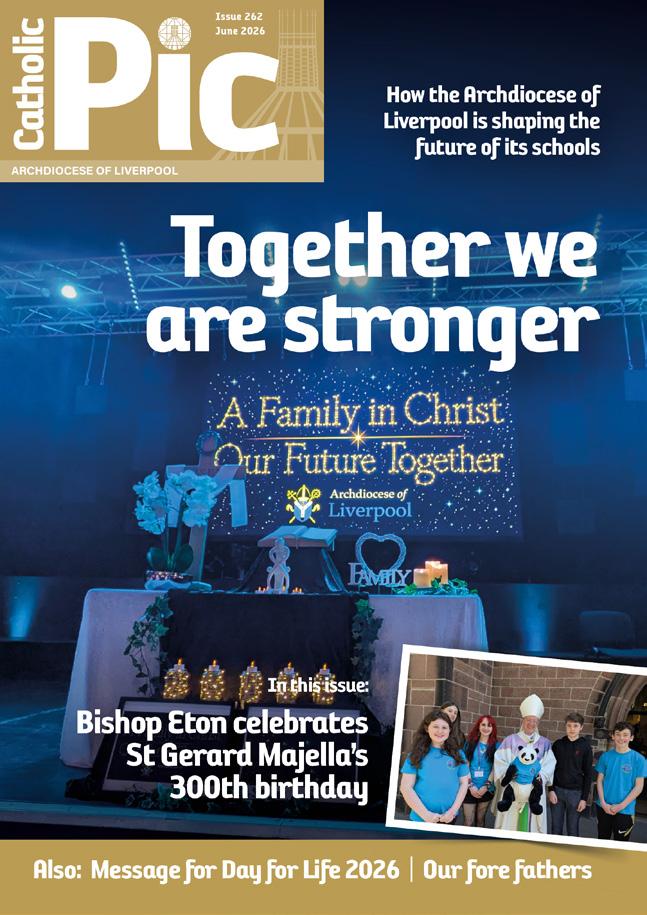
How the Archdiocese of Liverpool is shaping the future of its schools
Together we are stronger
Also: Message for Day for Life 2026 In this issue: Bishop Eton celebrates St Gerard Majella’s 300th birthday

Have you ever thought about becoming a school governor?
Help shape the future of Catholic education
St Joseph Catholic Multi Academy Trust is looking for practising Catholics to become Foundation Governors across our family of schools.
You don’t need previous experience, just a passion for helping children and young people flourish.
Why become a governor?
• Make a real difference to children’s lives
• Support Catholic education in your local community
• Be part of a welcoming team
• Develop new skills and experience
• Full training and support provided
We welcome people from all backgrounds and professions.
Our Mission
“Transforming children’s lives through a world-class, Catholic education.”
Christ is at the centre of everything we do. Working in partnership with the Archdiocese of Liverpool, St Joseph Catholic MAT was established in 2022 to provide transformative educational opportunities for children and young people across the North West.
Could you help support the next generation?
Scan the QR code to find out more about becoming a Foundation Governor:
You can also contact us directly for more information: governance@sjcmat.co.uk
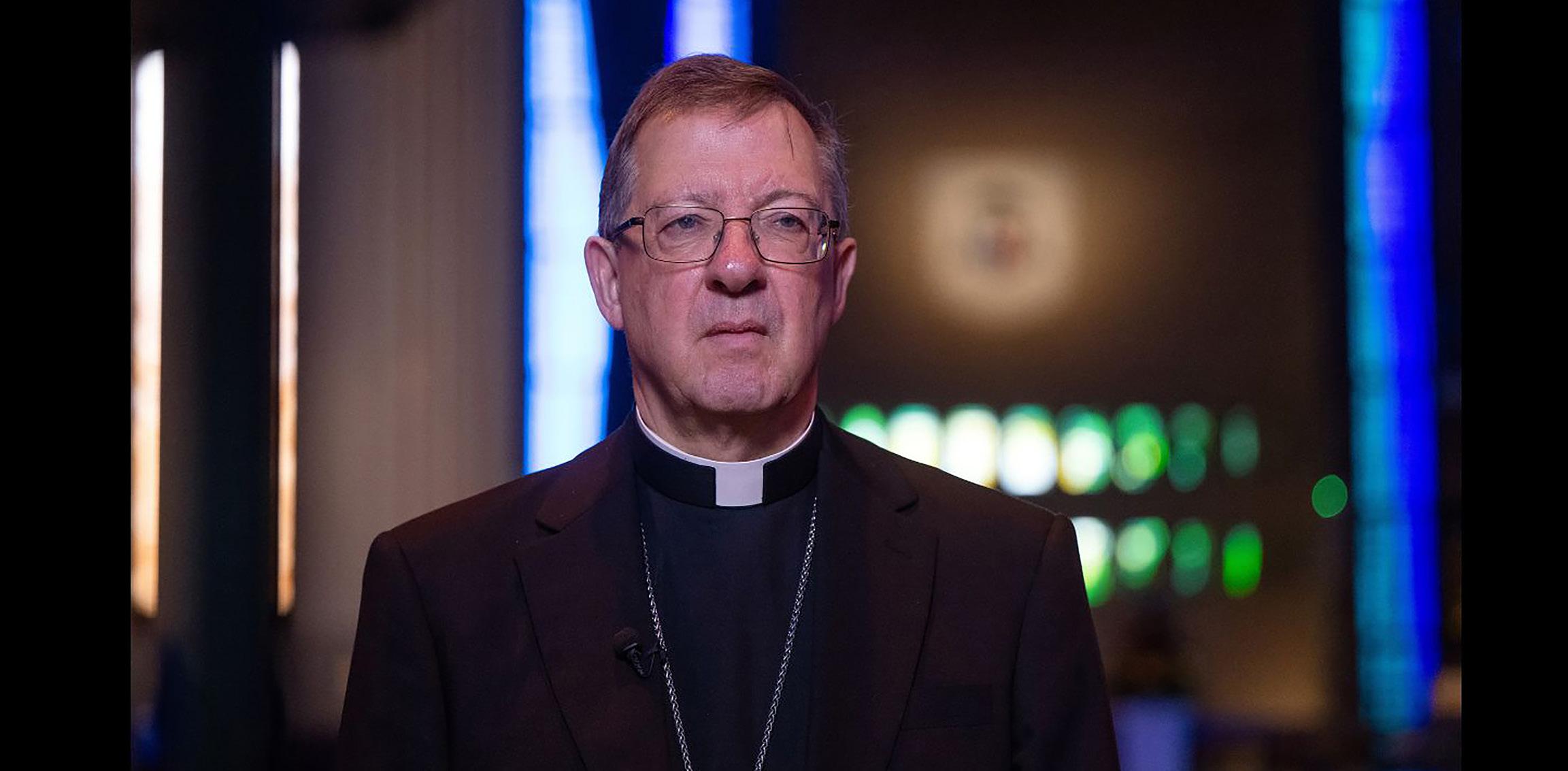
From the Archbishop’s Desk
During late April, many eyes were focused anxiously on the House of Lords and whether the Assisted Dying Bill would run out of time for scrutiny and debate. This happened, and so the Bill fell. Many healthcare professionals and experts in palliative care supported the opposition to the Bill. As the lead bishop for life issues, I had argued against this bill which would have permitted assisted suicide. This would have crossed the watershed that a person may not intentionally end their own life or that of another person. Now I wait and see whether attempts to carry the Bill forward into the next Parliamentary session will succeed. If so, we will need to hold fast again and both pray and campaign against it.
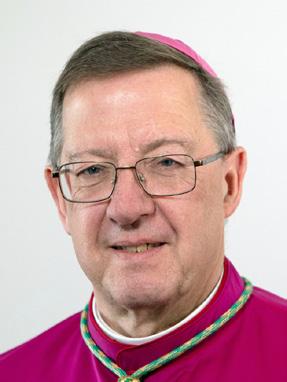
The Bill has raised again the need for expert and accessible palliative care for all. This is concerned with all dimensions of the person who is terminally ill, including spiritual and emotional care, and includes family and friendships.
After Easter, I celebrated the Sacrament of the Sick at Our Lady of the Assumption in Gateacre, and consecrated an icon showing St Peregrine, patron of cancer sufferers, watching over the church and people of the parish. He is an intercessor for those who are suffering from terminal illness and now a favourite saint of the parish. The beautiful icon was written by Sr Stella (a Benedictine Cistercian) of Our Lady of Hyning Monastery. The Service was very moving, and many people thanked Fr Stephen Pritchard for this liturgy and icon. In sickness and old age, the sacrament of the sick is for the living, not the dying, and may be celebrated more regularly to strengthen the sick person.
I also celebrated a Mass to mark the 300th anniversary of the birth of St Gerard Majella at Bishop Eton with Fr Tim Buckley and the community. St Gerard Majella is a patron of mothers experiencing difficult and complicated pregnancies. He reminds us of the suffering of mothers during pregnancy, especially if it leads to miscarriage or a stillbirth. In the past, the Church and society did not deal well with this grief. Many older mothers still carry this pain with them and need healing and prayer. We entrust those babies who died before birth to our merciful and loving Father for their future in heaven.
These thoughts lead me towards the Day of Life to be marked in our parishes on 21 June. In preparation I wrote recently, “God chose to enter the world as an unborn child, embracing the fullness of human existence from its earliest stage. The Word became flesh and dwelt amongst us. His coming reveals that at every point of development, the child in the womb is a unique and irreplaceable human person. This truth is now even reflected in certain civil procedures such as the granting of baby loss certificates to bereaved parents who lose a little one during pregnancy.” We are invited to reflect on the humanity of the unborn child and to acknowledge with compassion the deep grief experienced by parents who lose a child before or shortly after birth.
With my prayers and blessing.
Archbishop John Sherrington Archbishop of Liverpool
Monthly prayer intentions
JUNE
For the values of sports. Let us pray that sports
Editor Harriet Anwyl
Editorial
Catholic Pictorial Magazine, St Margaret Clitherow Centre, Liverpool Archdiocesan Office, Croxteth Drive, Liverpool L17 1AA Tel: 0151 522 1007 Email: CatholicPic@rcaol.org.uk
Advertising Sales team 0151 709 7567 sales@cpmmmedia.com
Contributor Katie Parry
Website: www.catholicpic.co.uk
Twitter: @PicCatholic
Youtube: CPMM Media
4 Main Feature Together we are stronger
7 Sunday Reflections
8 From the Archives Our fore fathers
9 News News from around the archdiocese
14 What’s On What’s happening in the archdiocese
15 Cathedral Record
16 Pastoral Ponderings
17 Profile Monsignor John Butchard
18 Catholic Life
28 Pic Extras Mum’s the word News from the KSC
29 Youth Ministry
30 Dialogue and Unity
“Catholic education contributes to the common good by helping students to learn about their common home and the gift of creation, live justice and forgiveness, speak the truth, and act with love. It develops each student and their gifts to find purpose and meaning in life. The student will then use their gifts for the common good of society.”
Archbishop John Sherrington on why Catholic education matters
Together we are stronger
How the Archdiocese of Liverpool is shaping the future of its schools.
By Simon Hart
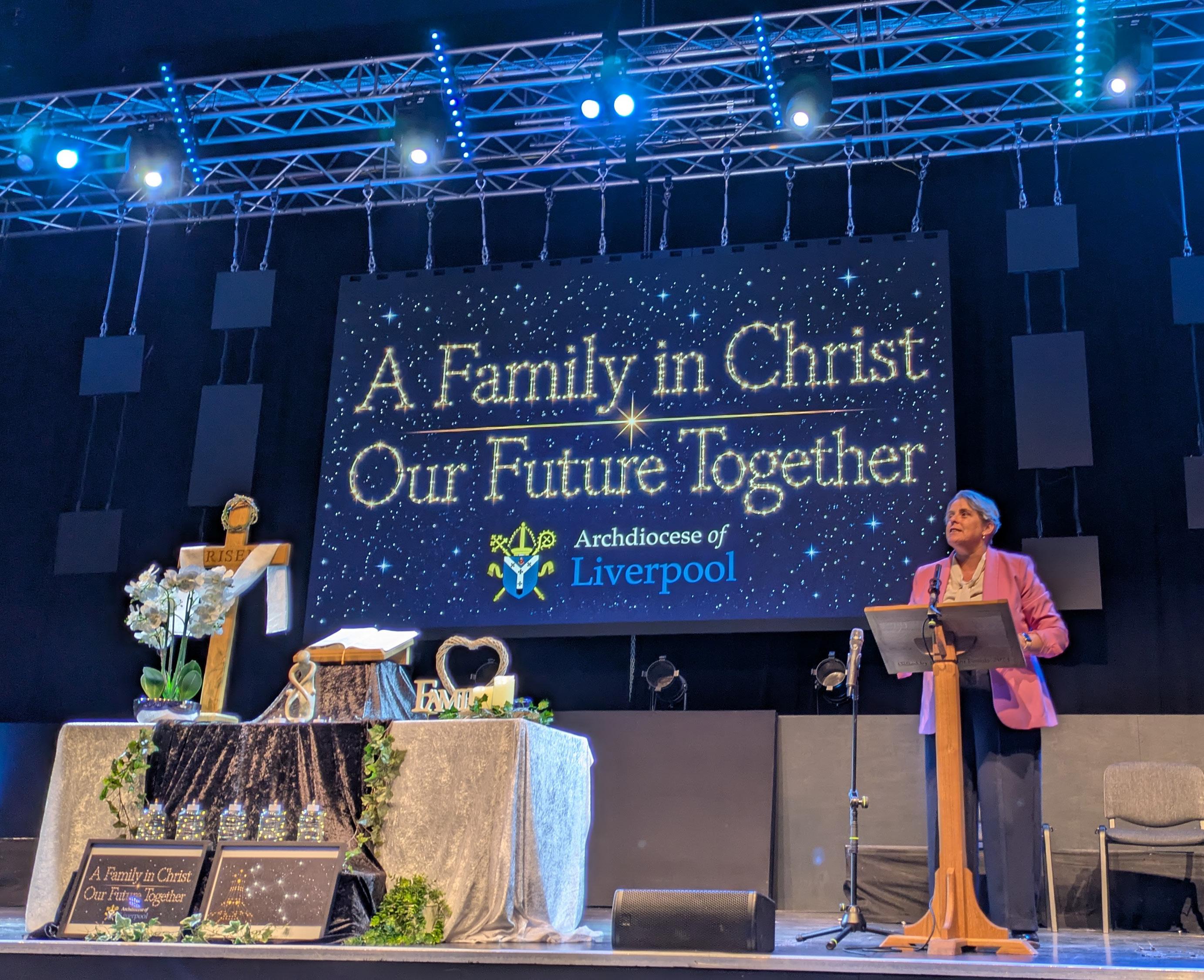
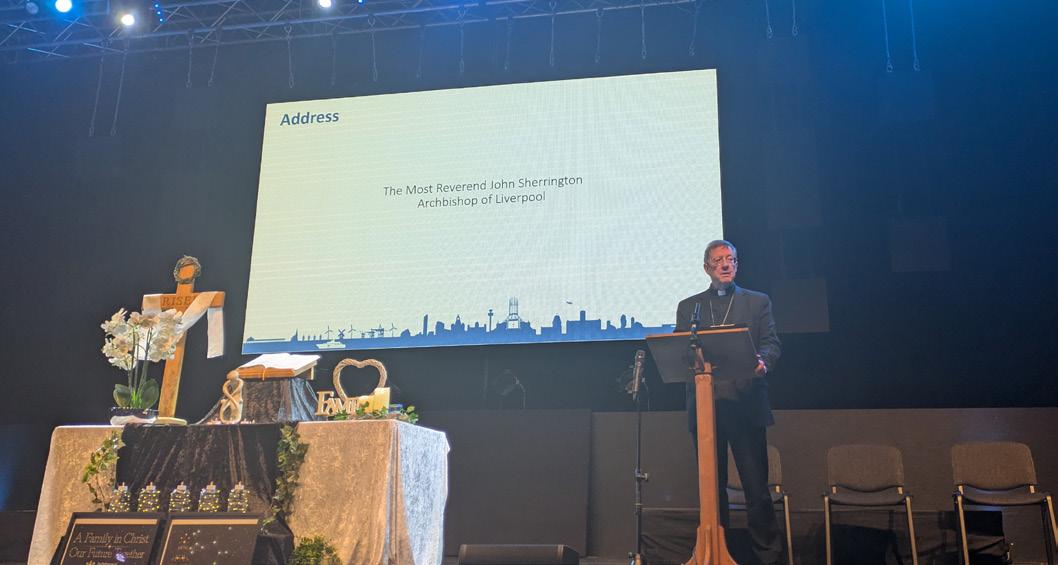
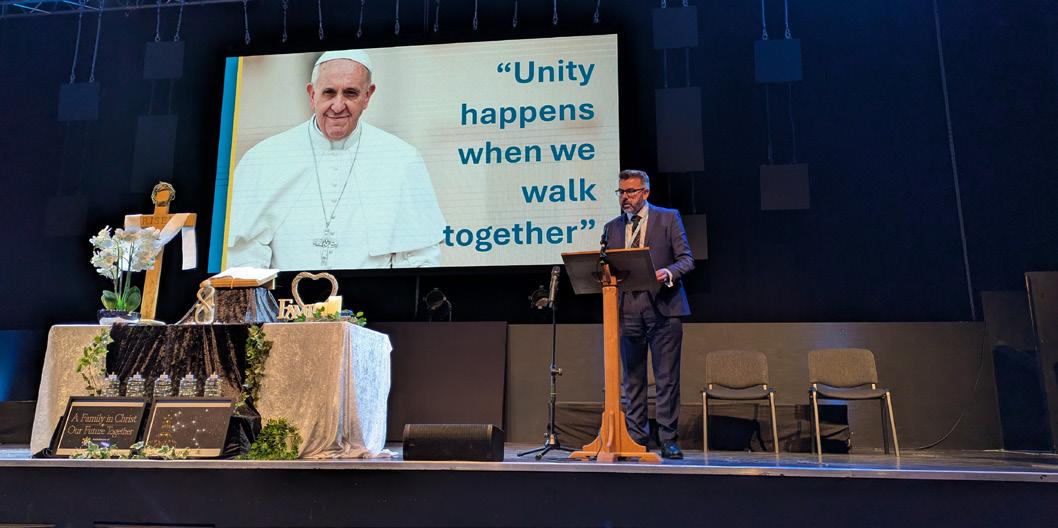
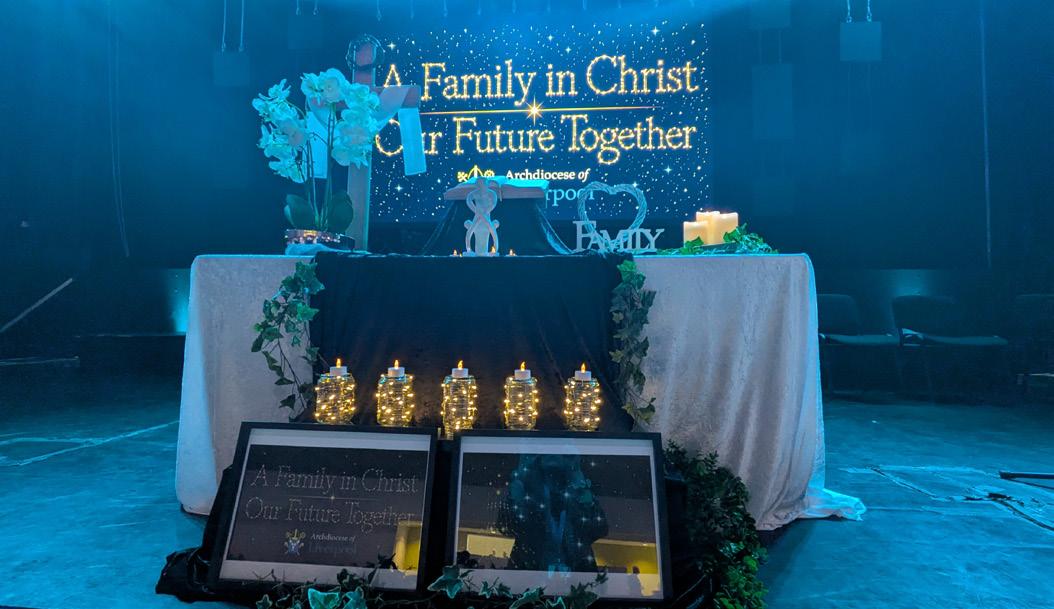
On Tuesday 29 April at the St Margaret Clitherow Centre in Liverpool, Archbishop John Sherrington stood up and addressed head teachers and school governors from across the Archdiocese of Liverpool.
The focus of his talk was the new vision for Catholic schools in the archdiocese, and he cited Pope Leo’s apostolic letter ‘Drawing New Maps of Hope’ and, specifically, its reference to “educational constellations”. He said: “Where in the past there was rivalry, now we ask the institutions to converge – unity is our most prophetic strength. We can think of our network of schools as part of the educational constellation of stars which shine out across the archdiocese.”
Archbishop Sherrington repeated his talk 24 hours later at The Edge in Wigan as part of the two-day launch of a new academisation strategy for schools in the archdiocese.
Currently there are two Catholic multiacademy trusts (CMATs) operating in the archdiocese: the St Joseph Catholic Multi-Academy Trust, covering Liverpool and St Helens, and the Pope Francis Catholic Multi-Academy Trust, overseeing Sefton and Lancashire.
With the new strategy, the archdiocese will create a third such structure, Our Lady of Lourdes North West, and invite schools from Halton, Warrington, Wigan and Knowsley to join it. The aim is to have every one of the archdiocese’s 221 schools operating within a MAT by 2032, with the option for schools in the area run by religious orders to join a CMAT if they wish to do so.
In explaining the need for this new strategy, Archbishop Sherrington cited the situation facing schools across the archdiocese. He said: “We face many challenges: a declining birth rate, less financial support of schools, ageing properties, in some cases diminishing support from local authorities, competition from other schools and parental choice about which schools to choose. Within the Catholic sector, there are many children who aren’t supported at home in their faith, there’s less recruitment into teaching and leadership, and it’s more difficult to find foundation governors.
“The present context means we need to move from independence to greater interdependence and build together our future as a family of schools in Christ. I support the proposal to build the academy framework as a means of protecting our schools for the future
to ensure that we can continue to offer excellent Catholic education to the future generations. This has been my experience in the Diocese of Nottingham and then the Diocese of Westminster. It’s the preferred model of other dioceses in England.
“I believe we are better together, working together to serve the mission, having greater support for staff, and keeping control of our educational system for the future generations of Catholic children and others. Together we are a constellation of stars offering hope in our archdiocese.”
‘A series of waves’
According to Joan McCarthy, director of education for the Archdiocese of Liverpool, the process will be gradual. “We’re going to run this in a series of waves,” she explained. “You have a process that involves the trust, the DfE [Department for Education], the local authority concerned, and ourselves –and that takes about six months. We’ll take in about 15 to 18 schools each time, and
then each trust will work on getting them on board. A wave could be somewhere between 12 to 18 months.”
The first wave is already rolling with Joan McCarthy, and her colleagues having already held meetings with a number of schools. “We want to make sure governors feel their questions are answered,” she said.
Echoing Archbishop Sherrington, she sees academisation as a way of “securing the future of Catholic education” in the region. Currently, a school that is part of the local authority is funded by the authority – which can take the decision to close it. Academies operating within a MAT, by contrast, receive their funding directly from central government. They must pay 5.5% of that funding to the central trust board, yet in return, as McCarthy explained, they receive “opportunities in staff and pupil development which are harder when you’re a single school. They’ll be able to access more services than they currently can do.”
Education in the archdiocese
85,000 children 221 Catholic schools 3 Catholic multiacademy trusts
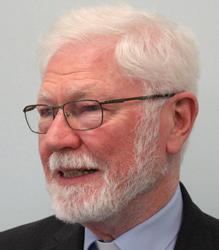
Andrew Truby, the CEO of St Joseph’s CMAT, which currently has 10 academies, bolsters this view when speaking of the “protective structure” his trust provides, citing the example of access to resources for SEND (Special Education Needs and Disabilities) pupils. “There’s a challenge to meet the increasing need of SEND in schools and each school cannot possibly provide all the different specialisms that you’d need, but together we can,” he said. “We can say, ‘OK, so how do we pool our SEND resources to make sure we’ve got enough speech and language specialists, enough autism specialists, whatever it might be that we need?’.”
Another significant point concerns the size of the trusts, with McCarthy explaining that “a hub model” will ensure an understanding of each school’s local context. “If I give an example, Pope Francis will have Lancashire schools and Sefton schools. They’re very different areas with very different needs. One size doesn’t fit all, so we’ll have regional hubs and a dedicated senior leader from the trust who’ll work and engage with that trust.
“The Archbishop was really clear that he didn’t want schools to lose their identity,
so we’ve got to ensure that they’re still part of their cluster and their family and the community which they serve in, and we think that’s the way we can ensure that that’ll happen.”
To return to Archbishop Sherrington’s address, he touched also on the history of Catholic education in the archdiocese, citing “the building of schools before churches” following the restoration of the hierarchy in 1950. “Catholic education has a special mission for the poorest and most fragile families in society in the same way that Jesus reached out to the sick, the poor and those most in need,” he reflected.
Today, when over one quarter (27%) of Catholic school pupils in the archdiocese are eligible for free school meals, that social component remains crucial –and the spiritual one too. Archbishop Sherrington added: “In the Archdiocese of Liverpool, according to the 2024 Catholic Education Service figures, we educate 85,314 children in 221 Catholic schools and colleges. This is much greater than the Mass-going population, which is only about 29,000, and so is an important work of the Church in Her mission to evangelise.

“We need to develop a wider missionary spirit for evangelisation which is also a challenge about how parishes, families, and schools interact and transmit the faith together. We must build on the principle that parents are the first educators of their children in the faith. The school cannot be separated from its local context which shapes the minds and hearts of pupils, students and staff. Each student lives out of a narrative and then encounters the gospel narrative when they arrive in the Catholic school. We can help to broaden the hearts and minds of students by the Christian narrative and help each to know, in the words of St John Henry Newman, that God has created each child for some definite service. We are called to help each student discover their purpose in life.”
And together, he believes, there is a better chance of achieving that aim. As he reiterated at the launch event: “The challenges we face today are faced better together with a focus on the values of interdependence and solidarity.”
For more details, please see www.liverpoolcatholic.org.uk/ department/education/academies
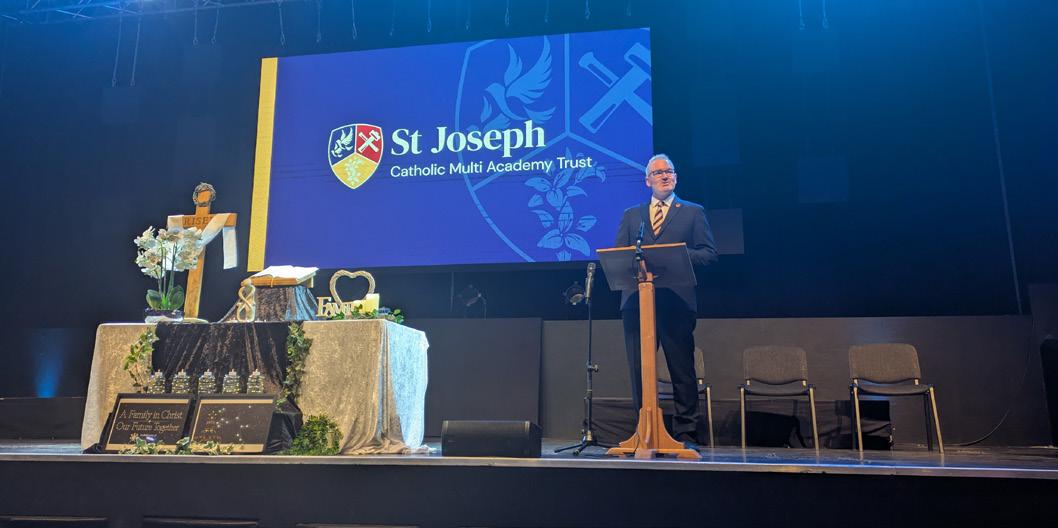

Archbishop John Sherrington speaking to headteachers
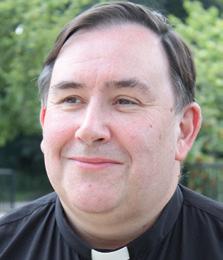
Andrew Dawson, CEO of Pope Francis Catholic Multi Academy Trust
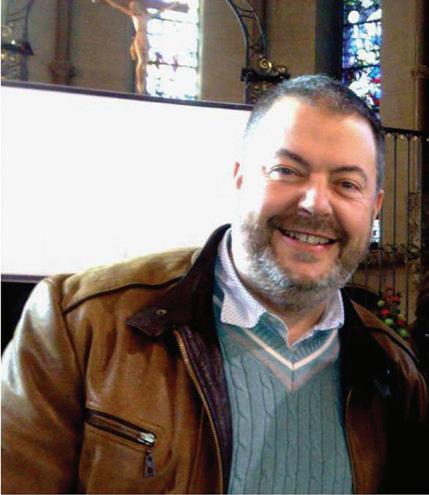
Andrew Truby, CEO of St Joseph Catholic Multi Academy Trust
Sunday reflections
On a liturgical note
Saint Peter and Saint Paul – pray for us!
On the final Sunday of this month, we keep the solemn remembrance of two of the great figures of the early generation of the Church, Peter and Paul, both of whom were put to death in the city of Rome.
Although they were different characters and their coming to Christ was unique, they are often invoked together as patrons of the city of Rome and almost founding fathers of the Catholic community. There is a hymn which is sung at evening prayer on the Feast of Peter and Paul which refers to the two saints as ‘princes’ of the Church, two pillars of the Church, the witness of whom to their faith in Jesus made Rome a ‘happy’ place.
“These are your princes, happy Rome! Their precious blood clothes you, their home.
We praise not you, but praise their worth, Beyond all beauty of the earth.”
Now Rome is indeed a very beautiful city but, as the hymn puts it, the true beauty
Sunday thoughts Mgr
Shortly after retirement from the Isle of Man, I was asked to join the rota of a handful of priests who celebrate Mass each Friday at 1.05pm in the Parish Church of Our Lady and Saint Nicholas at the Pier Head.
And yes, it’s an Anglican church. How did this come about?
St Mary’s Highfield Street, prior to its closure in the year 2000, had a daily midday Mass well supported by those working in the city. My dad, who worked in the Liver Building, was a daily Massgoer at Highfield Street in the days when the Downside Benedictines ran the parish.
Founded by the Jesuits in 1707, and located in Edmund Street, it was the first Catholic church to be built in an English town since the Reformation. Burnt down in 1746, it was rebuilt disguised as a warehouse until that too was attacked and partially destroyed in 1759. Thirtynine years later, the church came under the care of the Benedictines.
The Irish Potato Famine saw the city’s population rise to almost half a million. The new parishioners’ pennies paid for a magnificent replacement Pugin church which opened in 1845. When the Lancashire and Yorkshire Railway was extended further into the city, the church was moved, stone by stone, to Highfield Street. This building, too, was destroyed in the May Blitz of 1941.
Canon Philip Gillespie
of a place – the beauty which cannot ever be erased or destroyed – is the holiness of the lives lived in that place. T.S. Eliot puts it very beautifully in his play ‘Murder in the Cathedral’, a play about another much later (English) martyr, St Thomas of Canterbury:
Our disconcerting king
“For wherever a saint has dwelt, wherever a martyr has given his blood for the blood of Christ, there is holy ground, and the sanctity shall not depart from it, though armies trample over it, through sightseers come with guide books looking over it.”
June is often referred to as a month of devotion to the Sacred Heart of Jesus and in many of our parishes it will also be the month in which we will celebrate the First Holy Communions for our children. What unites the Sacred Heart, the gift of the Holy Eucharist, and the witness of the martyrs? The answer is a generous and self-giving love, which knows how to serve and to sacrifice.
John Devine OBE
The church was rebuilt to a modern design and reopened in 1953.
Demolition of surrounding tenements saw the number of parishioners fall from 10,000 at the turn of the century to 120 in 1999. Meanwhile, the Benedictines had withdrawn and the parish had been taken over by a succession of diocesan priests, including Father Tony Hitchen. Fr Michael Gaine was the last parish priest before the church’s closure and eventual demolition.
Over the years, ecumenical links had flourished between Highfield Street and Our Lady and St Nicholas. When Fr Stephen Pritchard was given pastoral oversight of the city centre in 2000, the imaginative decision was taken to transfer celebration of the Friday lunchtime Mass from St Mary’s to ‘St Nic’s’. Canon Nicholas Frayling, the rector, was happy to welcome the lunchtime Catholic community. Fr Stephen celebrated the weekly Mass himself for 10 years prior to the establishment of the current rota. The tradition endures to this day thanks to the hospitality offered by the current rector, the Revd Philip Anderson. One further detail reinforces the partnership: originally founded in the 13th century, St Nic’s was also destroyed in the Blitz and rebuilt after the war.
If you’re near the Liverpool waterfront on a Friday at 1.05 pm, why not join us?
Little Heather comes into our centre every day. She is heavily sedated because of her mental illness. Each day she settles down on one of our sofas and sleeps. I marvel at the gentleness and compassion that our volunteers lavish on this vulnerable woman.
I love watching a DVD that has been made of the song ‘Indescribable’. It speaks to me of the wonder of God and the extraordinary outburst of creative energy and love that is God. When I hear the phrase ‘The Power of God’, some clear words come into my mind: Almighty, Great, Judge of the Earth, and Mighty King. These words summon images of ancient kings wearing suits of armour and sceptres and crowns.
However, Scripture reminds us that our God’s power is about love. Think of the suffering servant songs written by Isaiah. That love was made flesh within a person who was humble, lowly, and filled with a spirit of service, Jesus. I think the scandal that shocked early Christians still shocks us today: that the power of God is most known to us through Jesus and His way of living.
The Gospels reveal to us Jesus’ use of power: humble, peaceful and kind. It is the kind of power that transforms deadness into fullness of life. This kingdom is not a concept, a doctrine or a political programme; it is a person, Jesus of Nazareth. This kingdom is created in our hearts: it is there that the Lord wants to reign first. That involves letting go of anything that has power over our lives other than Christ. If you want to know how real the kingdom is within you, ask yourself how the values of justice, compassion, mercy and, ultimately, love figure in your life.
Ronald Rolheiser wrote that Jesus is “clear, as were the great Jewish prophets, that, at a point, religion is about how we care for the poor, pure and simple. There is perhaps no more frightening text in scripture than Jesus’ teaching on the last judgement in Matthew’s Gospel, chapter 28. He tells that, on the last day, we will be judged by God on one basis: did we care for the poor? Did we give bread to the hungry, drink to the thirsty, clothe the naked?”
And so the question is whether we are prepared to be love and compassion in the world and let the kingdom loose, not for what we will get out of it, not for any reward, but simply because our hearts have been so touched by love that we cannot help it.
Father Chris Thomas
Our fore fathers
by Neil Sayer, Archdiocesan Archivist
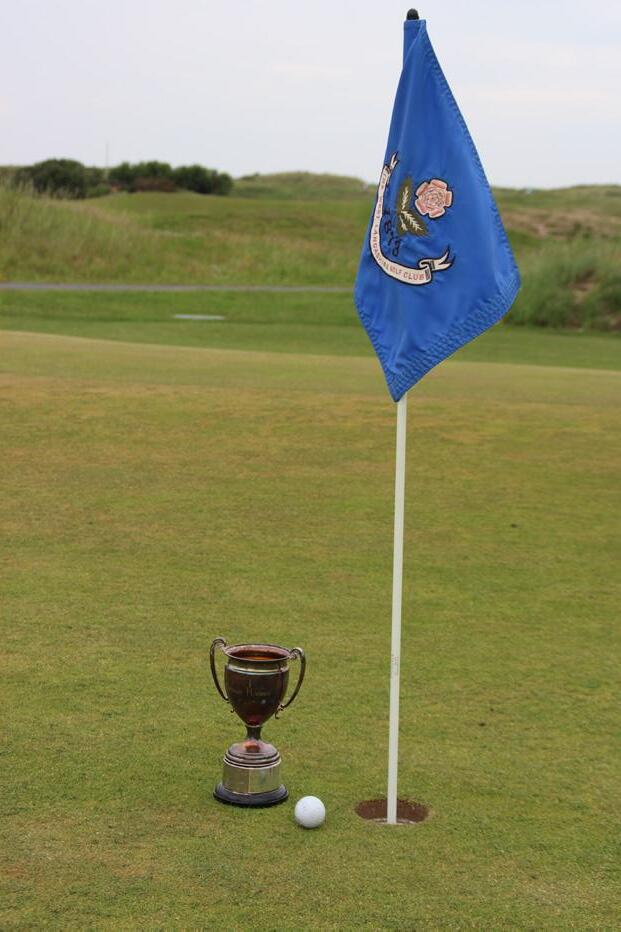
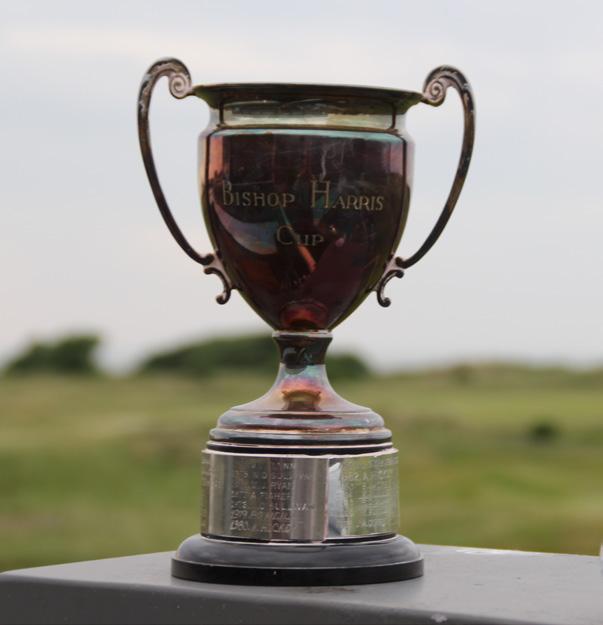
A recent donation to the archives was a golfing trophy, which begged the question - where are all the others?
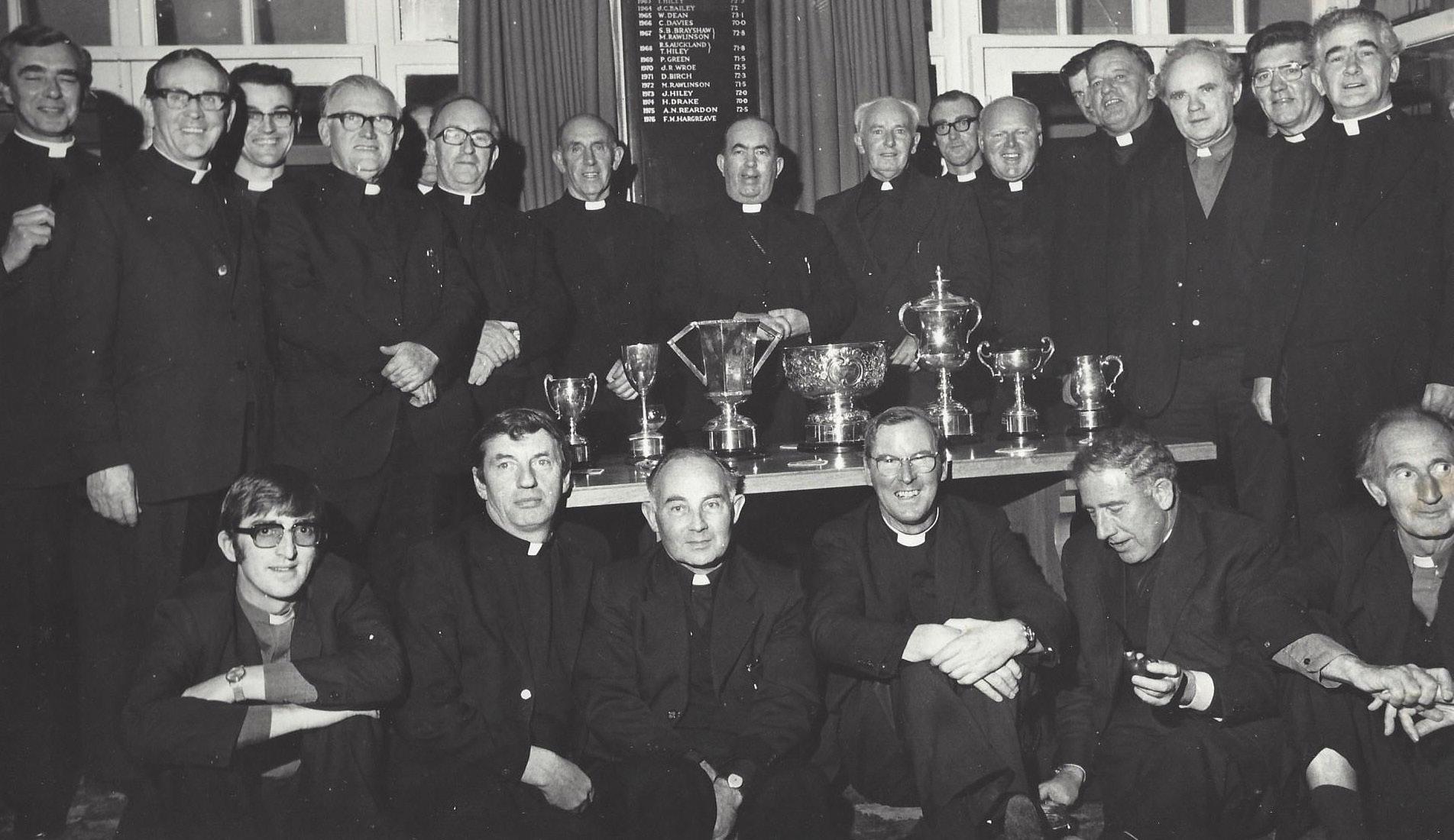
Our priests first competed for the Bishop Harris Cup in 1967, and the late Fr Peter Fox must have been its last winner in 2000, as it came to us among his effects, proudly engraved. His obituary noted that he was a life member at Southport and Ainsdale Golf Club, and that “Above all, he enjoyed the company of his brother-priests, especially on his golfing days.” The number of photographs of golfing clergy that appeared in the pages of the Pic in the 1970s and 1980s shows that he was far from alone in his sporting preference.
The Liverpool Clergy Golf Association held its annual meeting and dinner in October, usually at the Southport and Ainsdale Golf Club. Photographs of the event often have an array of trophies on display, so over the course of the year there must have been many opportunities for priests to shine on the golf course. There was a winter league for the golfing fraternity, and they also had the chance to compete for the Cathedral Cup, the Leeming Trophy, the Archbishop Beck Cup, the John Smith Trophy (presumably sponsored by the brewery associated with many Catholic clubs), the Universe Cup, the Walsh Trophy, the Christine Connell Trophy and the Canon O’Sullivan Trophy. There was even a Catholic Pictorial Cup, as old as this publication. On his way to winning that cup in 1975, Fr Bernard Jackson of Sacred Heart, Liverpool, managed a hole-in-one at the 9th of the West Derby Golf Club. This competition must have been open to more than just the diocesan clergy. In March 1982 some 38 “churchmen” competed for it, and it was won by a Methodist minister, “the only non-Catholic competitor”. Some priests were regular winners, like Fr Michael O’Neill, a Mill Hill Missionary, who won it two years running in the late 1980s.

clubhouse. What did it offer to our clergy? Fr Patrick Kelly of St Bede, Widnes, won the Cathedral Cup in 1975. A keen sportsman who had by then been playing golf for 12 years, he practised every week at Hillside, “where he and a dozen others hold their own competitions.” According to him, it offered a break from the cares of parish administration, and he liked the social aspect of the sport: “The golf course is one of the few places where the clergy can meet”, he said. Even priests have a day off.
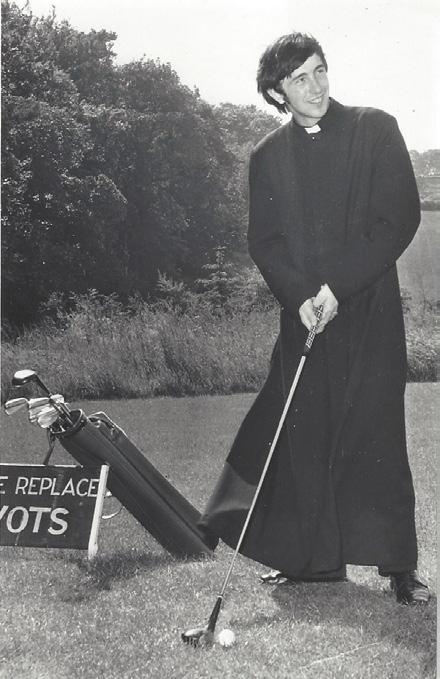
Perhaps the priests who trained at our own seminary at Upholland had an advantage: there was, after all, a 9-hole golf course in the grounds of the college. A college golf club was established “to bring about some improvement in the standard of play.” In order to join the club, a student had to “convince the Committee that he can play sufficiently well not to impede and obstruct other players.” Seems fair enough.
For some people, a round of golf is a way of doing business, for others it may be a walk and a bit of exercise on the way to the
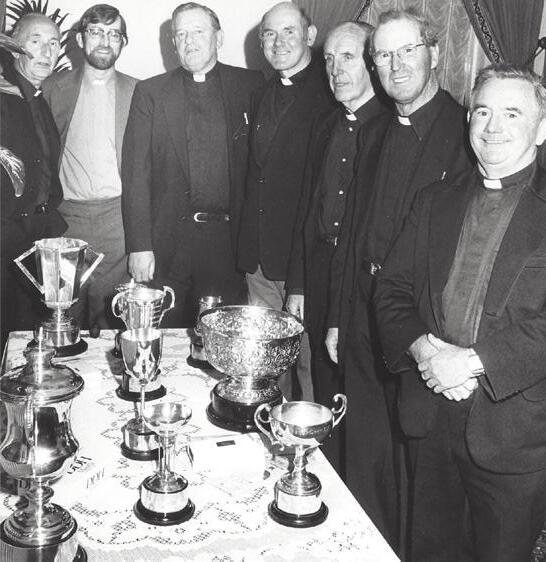
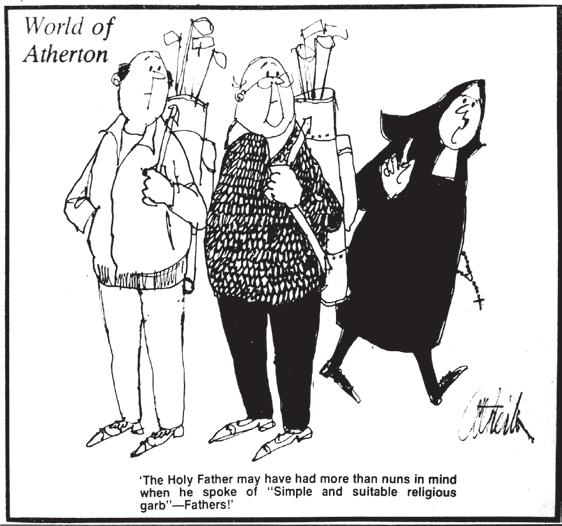
Clergy Golf Association annual meeting, dinner and prize-giving at Southport and Ainsdale Golf Club, 1977. The prizes were presented by Bishop Gray (back centre), a non-golfer, though he “did admit to having once had a (Fr Peter Fox is at front left)
An array of trophies at the golfing awards ceremony 1985. Fr Fox has had time grow a beard.
Below: Tony Duffy, a student from Salford Diocese at Upholland College, on the college golf course, 1975

News diary
If you’ve got any news from your parish that you’d like featured e-mail us with the details at: CatholicPic@rcaol.org.uk
Bishop Eton celebrates St Gerard Majella’s 300th birthday
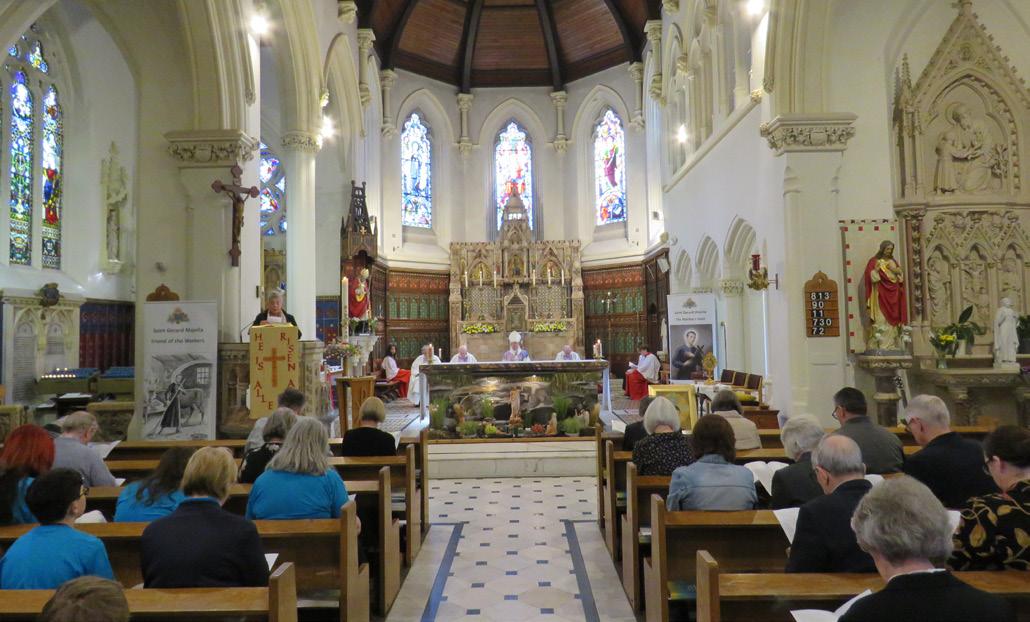
It is not often that, in one go, you can be blessed with a relic, attend Mass presided over by an Archbishop, and hear a newly premiered hymn, but Saturday 25 April at Bishop Eton provided all that and more.
The day celebrated 300 years since the birth of Saint Gerard Majella, a Redemptorist brother who was known as a wonder worker and became the patron of mothers and their children because of his remarkable intervention which saved a young mother and her baby.
Father Tim Buckley, the parish priest, wore a stole depicting St Gerard that had been specially prepared for this and similar events that the Redemptorists are holding across England and Wales in 2026. Indeed, Fr Tim stressed that miracles through the intercession of St Gerard are not consigned to history. He noted that he is continually meeting people who testify to the truth of this, quoting from a recent letter sent after a day in Wakefield in January, honouring St Gerard. The writer, who had travelled for three hours in freezing fog for a friend who had been struggling for years to conceive, reported that the friend was now expecting a baby. The letter concludes: “Your parish has given an amazing gift to a desperately sad couple who were praying for a miracle.”
The midday Mass at Bishop Eton began with a hymn (‘St Gerard, pray for us’) written by one of the music team, which focused on St Gerard’s many struggles, culminating in his untimely death from tuberculosis aged 29. Archbishop John Sherrington concelebrated with the Redemptorist priests and gave a thoughtful homily covering Gerard’s life and pointing out that while he has been described by one preacher as “God’s little madman”, he teaches what it is to be a wholehearted follower of Jesus. The Mass ended with Archbishop John blessing the congregation with St Gerard’s relic and a final hymn to St Gerard written by Fr Francis Hall, whose cure from a seemingly terminal illness at 30 was attributed to a Novena to Our Lady of Perpetual Succour, whose icon was entrusted to the Redemptorists in 1866 and displayed throughout the day in the Lady chapel.
There were also opportunities for people to receive blessings and a period of Exposition of the Blessed Sacrament later in the day, culminating in a Taizé experience of prayer around the cross.
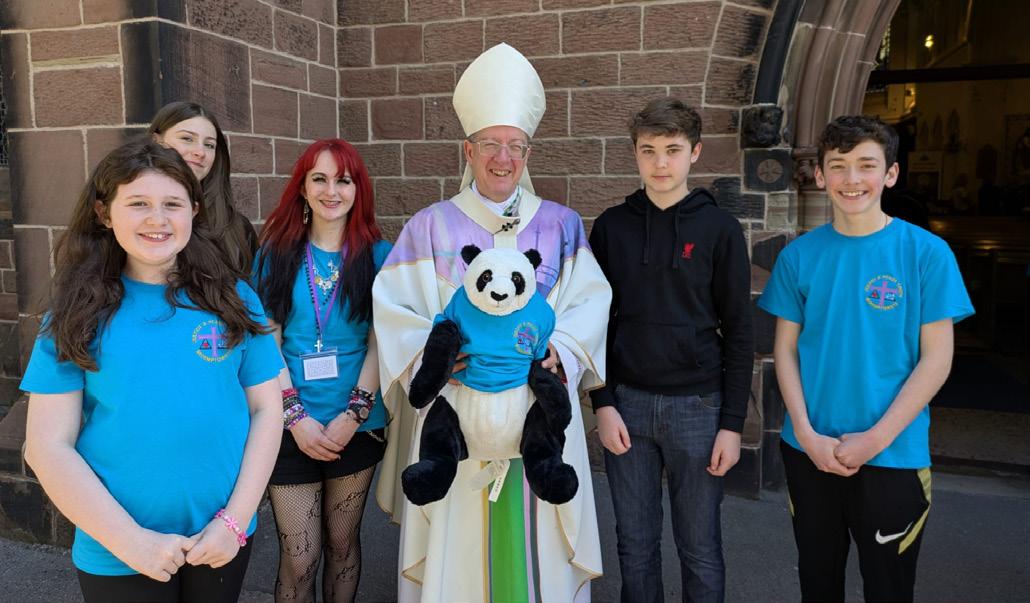
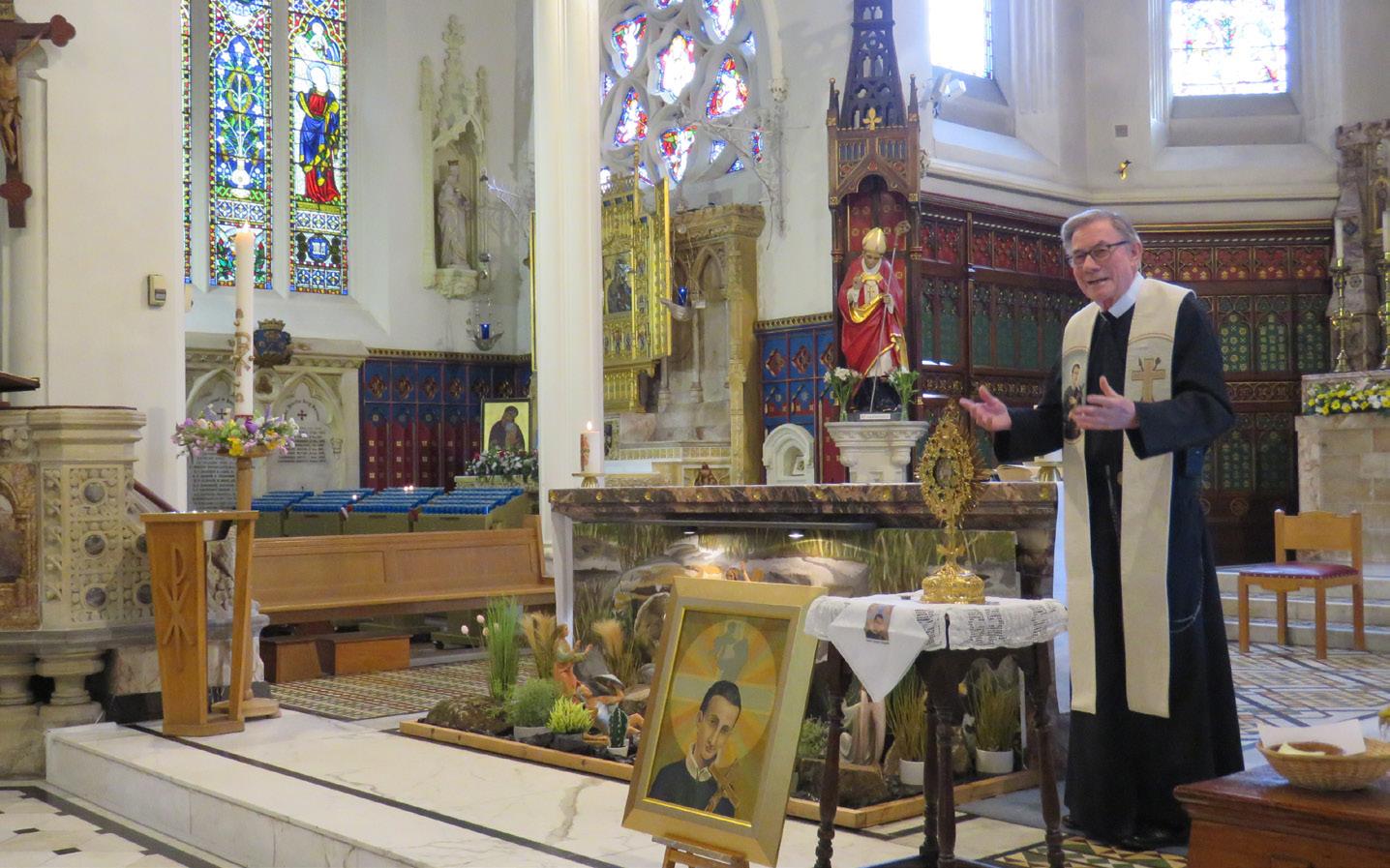
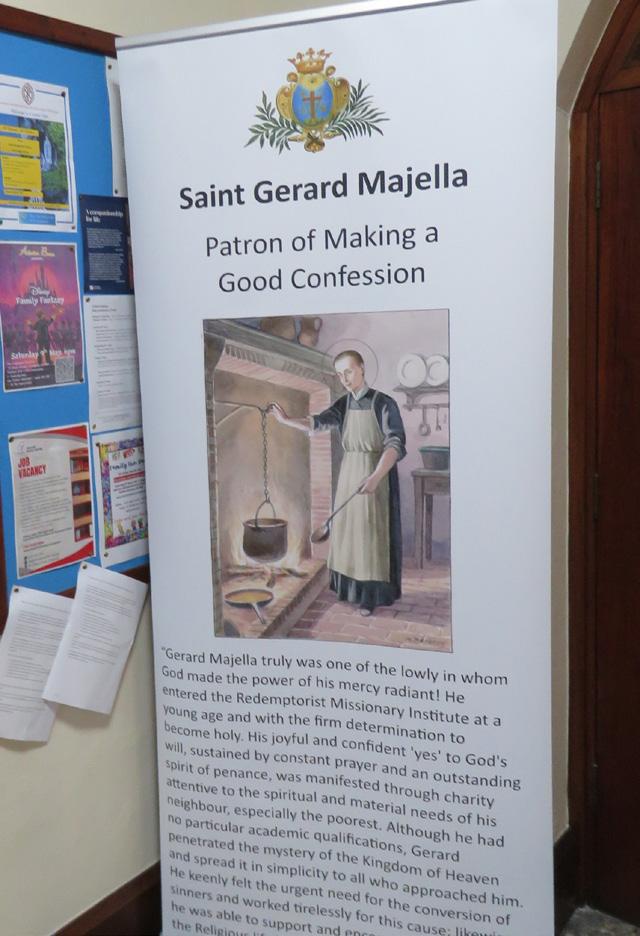
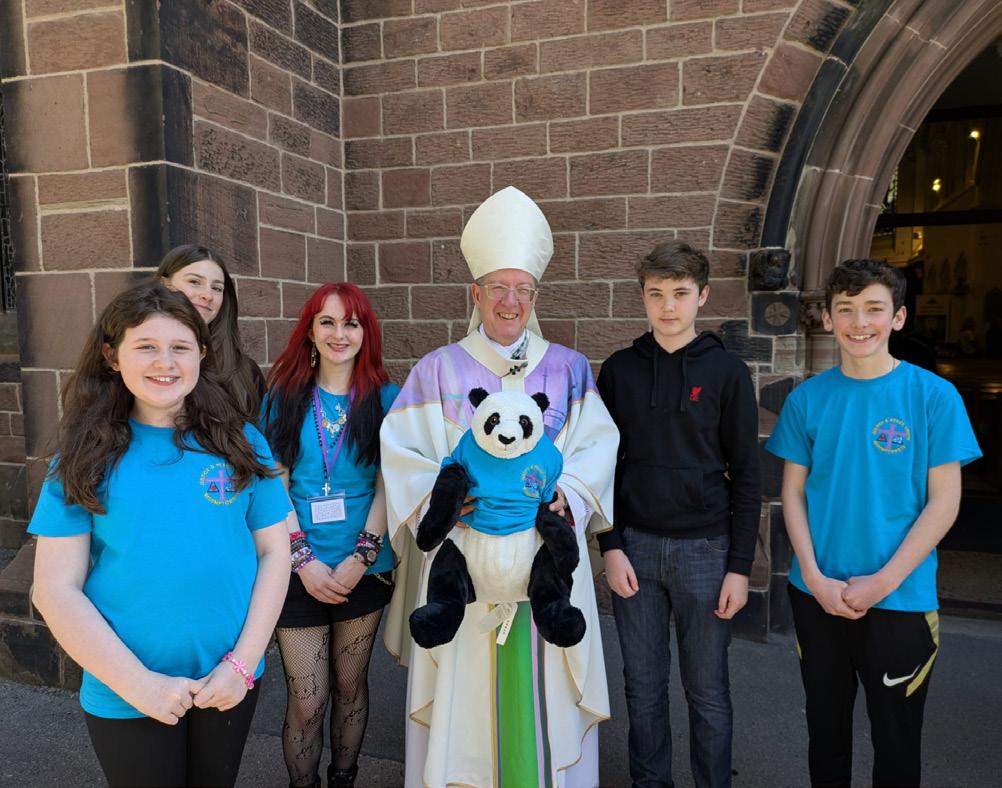
A ‘bear-y’ warm welcome: Archbishop John meets the youth group as they ‘paws’ for celebration outside the church
Fr Tim Buckley welcomed all to his parish on this special day
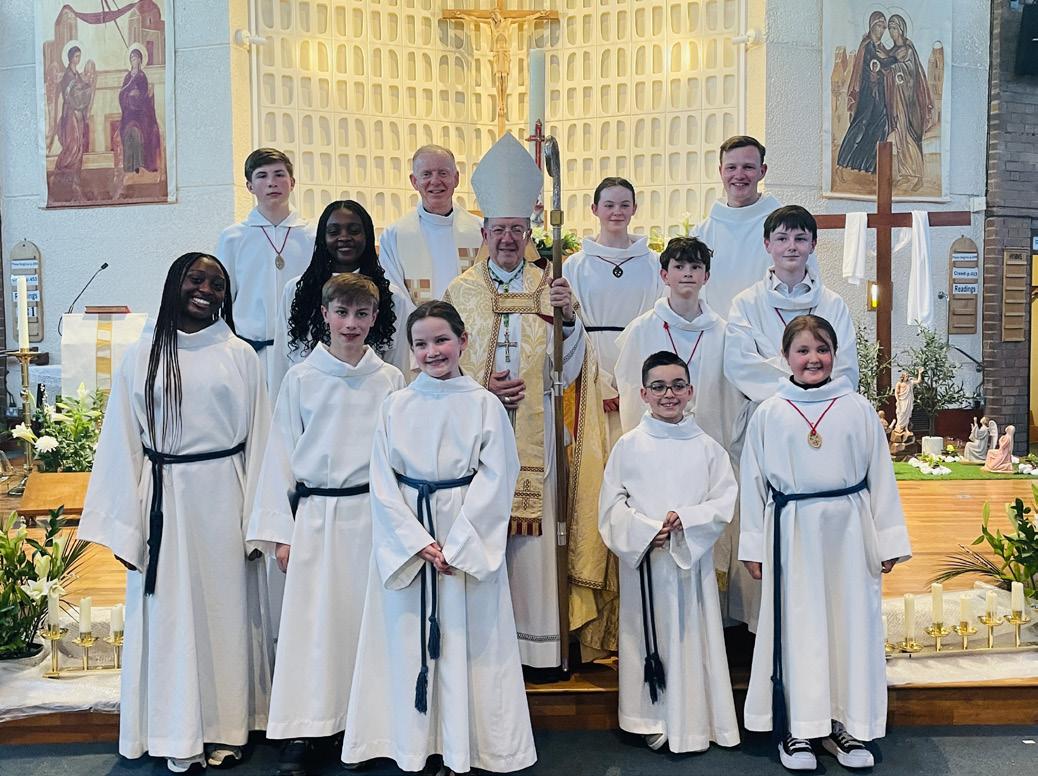
Southport Altar Servers Honoured for Dedicated Service
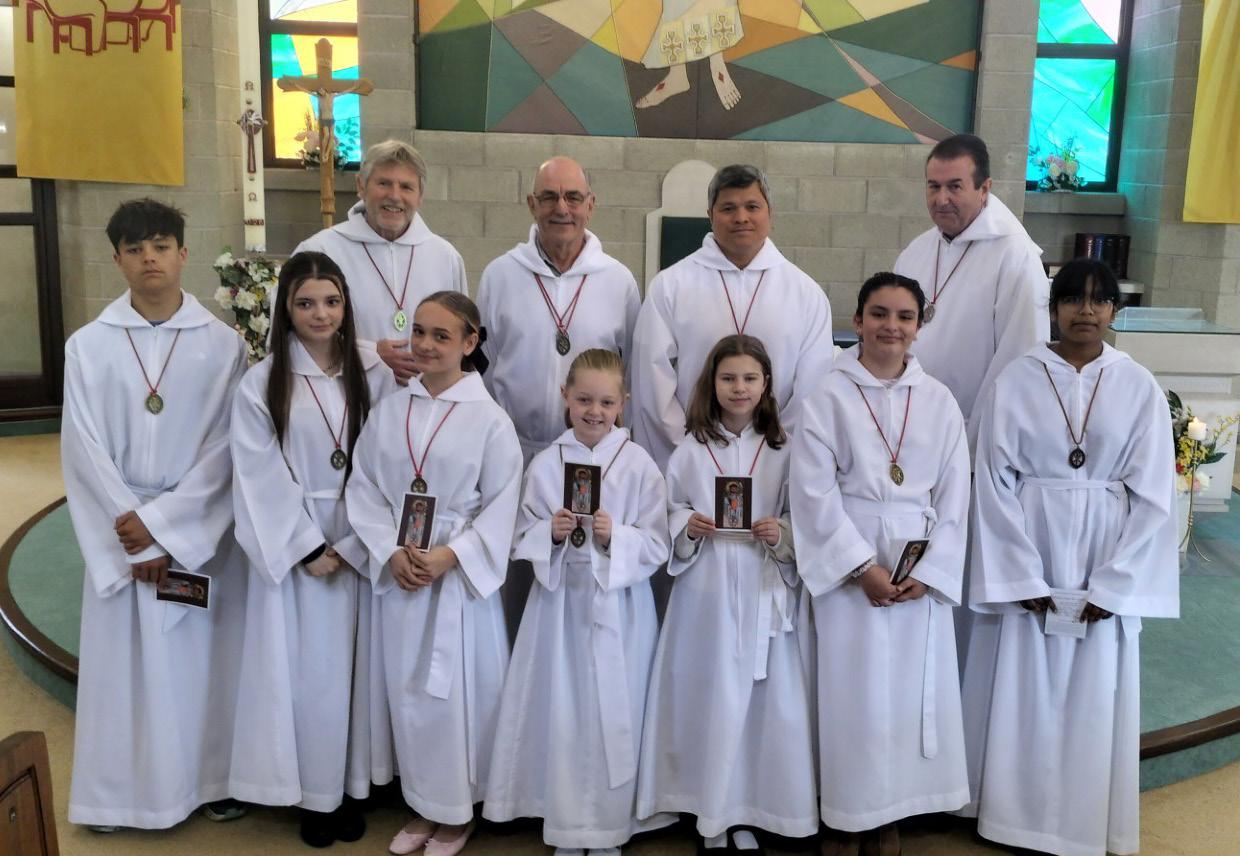
Altar servers from St Marie’s Church and St Patrick’s Church were recognised for their dedication during a special presentation on 26 April, when Bronze and Silver Guild of St Stephen medals were awarded.
The medals were presented by Fr John Heneghan during celebrations at the two Southport churches, with new servers formally welcomed into the Guild of St Stephen alongside those receiving awards for long service.
Senior Server Clive Baines described the occasion as “a lovely day” and spoke of the encouragement it gives to see both young people and adults stepping forward to serve at the altar.
“How blessed we are here in Southport that young people and older people are stepping forward to serve at the altar,” he said.
Clive also praised the strong links between the parishes and St Patrick’s Catholic Primary School, describing the school as “a credit to Southport, the community and these amazing churches.”
He added that the altar serving team’s commitment is helping the numbers continue to grow. “The altar serving team are so dedicated in what they do, that’s why the number of altar
servers is building up month on month,” he said. “Watch this space for more servers coming forward.”
The Guild of St Stephen supports and encourages altar servers in their ministry at Mass, recognising dedication and faithful service within parish life.
Forty Years of Christian Unity in Crosby and Waterloo
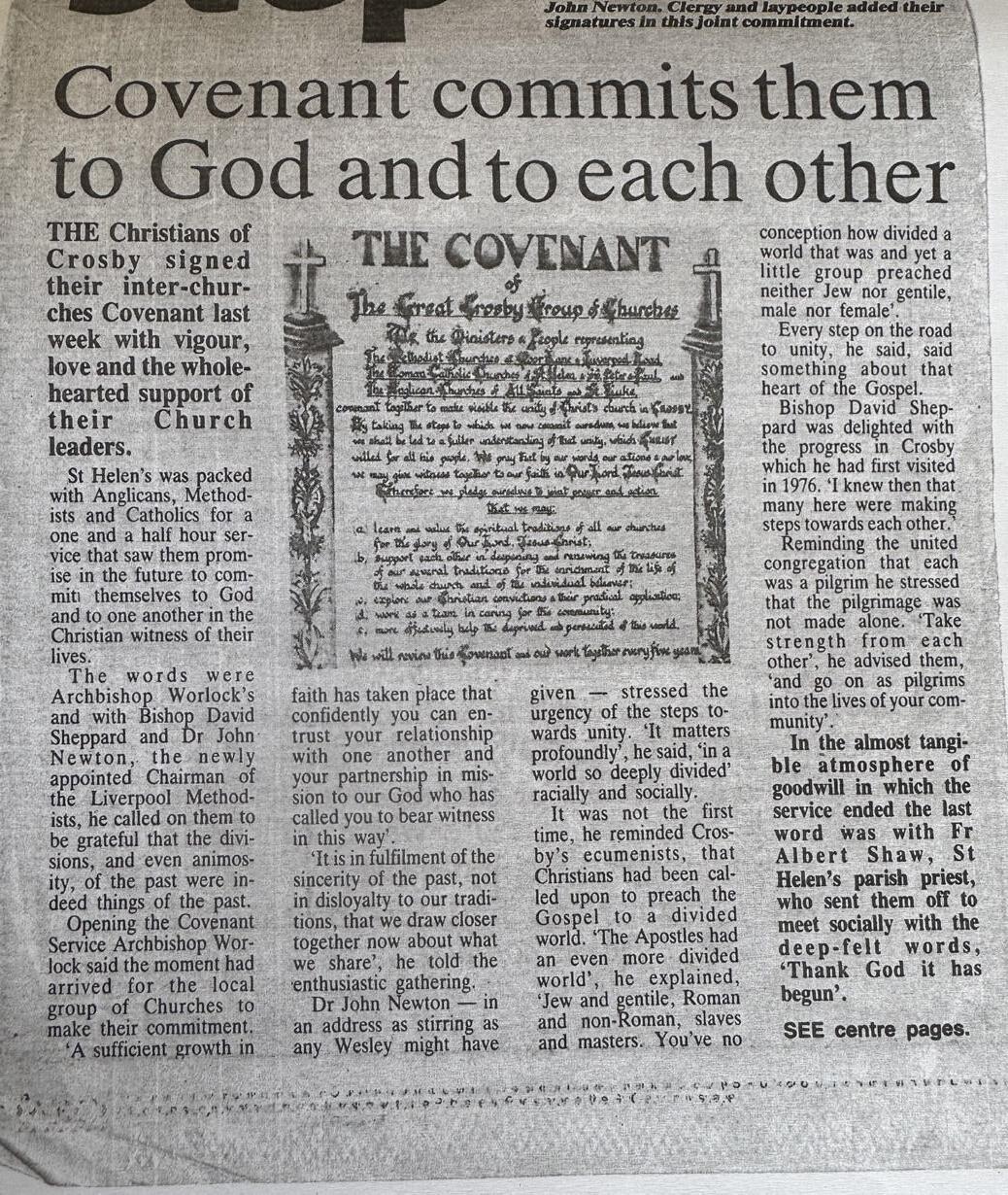
Churches Together in Crosby and Waterloo will celebrate a remarkable milestone this year as the ecumenical group marks the 40th anniversary of its founding covenant.
On 11 September 1986, six churches in Great Crosby – two Roman Catholic, two Anglican and two Methodist – formally signed a Covenant committing themselves to prayer, friendship and shared Christian witness. Among those present at the signing were Archbishop Derek Worlock and his secretary at the time, Fr John Furnival, now Monsignor Canon Furnival of SS Peter and Paul Church.
Shortly after the covenant was signed, the churches also established Crossroads Café, which still serves the local community today. Run by volunteers, the café offers affordable meals and refreshments alongside a warm welcome for visitors from Crosby and beyond.
Four decades on, the group continues to flourish. One of its longest-running traditions is a weekly united prayer service held every Thursday morning, rotating between the churches. The gatherings remain well attended and continue to strengthen relationships across denominations.
Another enduring initiative is the Welcome-in Scheme, launched in 1987. Volunteers visit people who have recently moved into the area, offering information packs about local services, schools, churches and community activities, as well as a voucher for free refreshments at Crossroads Café.
Throughout the year, the churches also come together for events including the Week of Prayer for Christian Unity, Lenten talks and discussions, and a popular Good Friday Act of Witness in Crosby Village.
Following the closure of one Methodist church and the later inclusion of members from the former Churches Together in Waterloo group, the organisation has expanded and now includes Roman Catholic, Anglican, Methodist, United Reformed and United Free churches.
Reflecting on the anniversary, members paid tribute to Canon Furnival’s “constant enthusiasm for ecumenism” and his dedication to keeping the group active and united over many years.
The group’s Unity Prayer continues to guide its mission: “United in your love, Heavenly Father above, we give thanks and rejoice, praising God with one voice.”
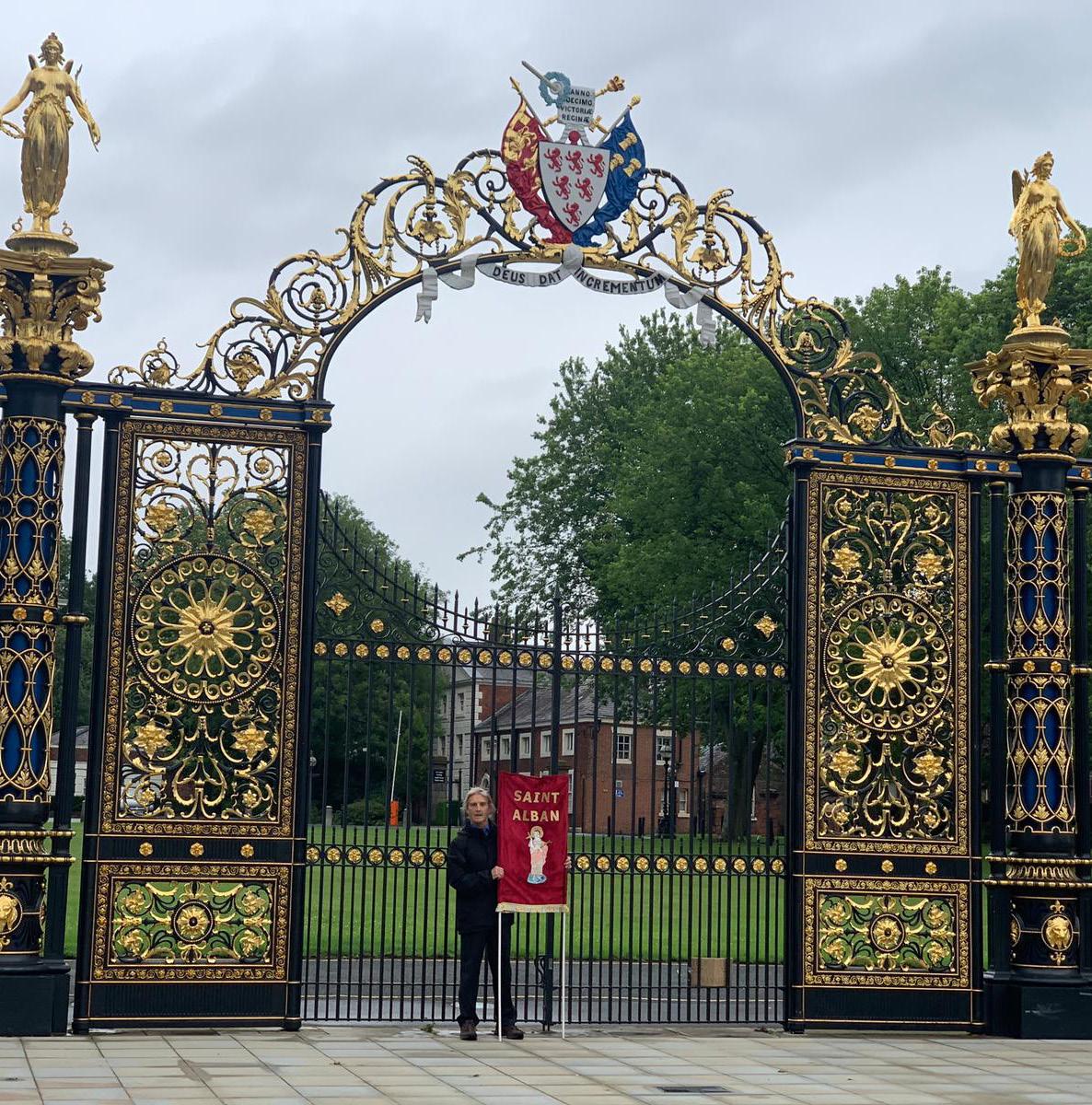
Parishioners Rally to Protect Warrington Walking Day Tradition
Parishioners from Sacred Heart and St Alban’s are calling on the community to support Warrington Walking Day after fears emerged that the nearly 200-year-old tradition could be at risk.
Founded in 1834, Walking Day has long brought together churches, schools and families in a public procession of Christian witness through the town centre. Accompanied by bands, banners and community groups, it has become a cherished part of Warrington’s identity.
However, with Warrington Borough Council no longer able to fund and organise the full event, the traditional procession will not take place this year. Instead, a special Walking Day Heritage Event will be held at Bank Park on Saturday 4 July from 10am–3pm.
For many parishioners, the pause has raised concerns about the future of the tradition.
“My first walk was in 1957 with St Alban’s School,” said parishioner Phil Chadwick. “You felt proud. You were representing your Church, your school and your community.”
Phil has taken part in Walking Day almost every year since, even walking the route during the Covid pandemic when the event was cancelled.
“If it stopped, we wouldn’t just lose a tradition; we’d lose an identity,” he said. “For a few hours, everybody belongs to something together. We need more of that, not less.”
Parishioner and former St Alban’s teacher Angela Dawe described Walking Day as “inseparable from family life,” with generations of her family taking part over the years.
“It teaches children where they come from,” she said. “It teaches community, faith, respect and belonging. Once traditions like this disappear, it’s very hard to bring them back.”
Her granddaughter, ten-year-old Iris Miller, who walked last
year in her Communion dress, added: “It felt special, as if we were part of something important.”
Parish families are now encouraging people across Warrington to support the heritage event and help ensure Walking Day continues for future generations.
Walking Day Heritage Event, Saturday 4 July, 10am - 3pm, Bank Park.
Blessing of Icon of St Peregrine and Anointing of the Sick
Our Lady’s Church, Gateacre, has begun a new ministry of prayer and healing following the blessing of a newly commissioned icon of St Peregrine, consecrated with sacred chrism by Archbishop John Sherrington.
The icon, dedicated to St Peregrine—patron saint of those suffering from cancer and serious illness—was created in response to growing pastoral need within the parish.
Fr Stephen Pritchard explained that the idea emerged from parishioners requesting prayers for those affected by cancer and long-term illness. “This area has some of the highest rates of cancer in the city of Liverpool,” he said. “If you lived just a mile away, your life expectancy would be eight years more. The parish promotes health and wellbeing in many ways, and we also wanted there to be a shrine for people to bring their prayers.”
During his homily, the archbishop spoke of how “sickness creates fear, but Jesus is the one who controls the sea and calms the storm; confidence in sickness is an invitation to trust Jesus. ‘Do not be afraid’ he says.” He spoke of how the Sacrament of the Sick is for the living, and that sharing this sacrament publicly is a powerful witness to Christ’s healing ministry in the Church.
Following the blessing, the Archbishop anointed those present who were living with a range of illnesses and health challenges. The installation of the icon marks the beginning of a new strand of
parish life. A monthly Mass will now be held at which the Sacrament of the Sick will be available.
The church will also remain open each morning for private prayer before the icon of St Peregrine, offering a place of hope, consolation and prayer for all who visit.
Message for Day for Life 2026
Day for Life takes place this year on 21 June. Archbishop John Sherrington, Bishop John Keenan and Bishop Kevin Doran have shared a message reflecting on this year’s theme.
“The Wonder of the Child in the Womb”
Every year our Day for Life falls on Father’s Day and we wish fathers a blessed day. Today we remember with gratitude the loving care and direction our parents gave to us, whether they are still with us or have gone to the Lord.
Parenthood is a vocation of joys and hopes, of griefs and anxieties. On this year’s Day for Life, we acknowledge the particular grief of mothers and fathers who have lost a child before birth or in infancy. Mother’s Day and Father’s Day can be especially difficult for parents who experience the loss of an infant. Such loss often takes its bodily toll upon the mother, and it can leave fathers feeling helpless and unsure of how to support their family, or of how to express their own grief.
The Church wants to be especially close to parents who have suffered the loss of an infant. We try to offer spiritual support through the pastoral care and blessing of our priests, and through the comfort of our liturgy. You only have to reach out to your priest or deacon if you would like to know more about this.
Just as importantly, many parents find consolation in their faith and its assurance that every child, including those who lose their life before they are born or soon after, is created, willed and deeply loved by God from all eternity. We have the Lord’s promise from the Scriptures that: “Before I formed you in the womb I knew you, and before you were born, I consecrated you” (Jer 1:5).
The Word of God reveals the sacred humanity of the unborn child and perhaps helps us understand why we feel such profound grief at the loss of a baby. Parents instinctively grasp how precious and unique the child is whom they have lost and whom they may already have called by name. They know how no other child can ever replace them.
Science is clear that life begins at fertilisation when a new and unique living human being comes into existence. Every technological development in recent decades has given us
insight into how life in the womb unfolds for each of us. At conception, our gender, genetic makeup, and eye and hair colour are already determined. As early as five weeks, our heart begins to beat. By ten weeks, we can move and respond to touch and, beginning two weeks later, we have the capacity to feel pain. By eighteen weeks, our mother can sense our movement in the womb. By twenty-seven weeks, we can recognise the voices of our parents. For some decades, parents have been able to observe some of these stages through ultrasound scans during pregnancy. The more we learn about the science, the more we understand the teaching of the Church on the unique value of the unborn baby.
This understanding, however, is not complete without the recognition that, from the beginning, every human being is not just a body but also an immortal soul, with a unique and eternal connection with God, our Creator.
It is because of what both science and faith reveal to us that the Church and many people of good will have always held that the unborn child merits the full protection of the law, and why we have always rejected elective abortion.
This Day for Life 2026, we reflect on the wonder of human life from the moment of fertilisation. We remember how the Lord Jesus Christ Himself sanctified and experienced the beginning of life in the world as an unborn child, hidden in the womb of Mary. Mary knew that she was carrying the Son of God – God and man – as soon as He was conceived. John the Baptist leapt in his mother Elizabeth’s womb when Mary greeted her. Our Lady treasured Our Lord in her heart and womb until His birth.
We, in our turn, commit ourselves to work and pray for our society to cherish the value of every little one, especially those at the earliest stage of human life, and to help our parish communities support all those in our midst who have suffered the loss of a child.
what’s on June
Wednesday 3, 10, 17 June
General Catechist Course
6:30pm – 8:30pm
If you want to be a catechist, or would like to refresh your knowledge, this course is for you. Sessions will include Catechist and kerygma, We believe, We pray, We celebrate, Catholic Social Teaching, safeguarding, family catechesis and catechesis for people with additional needs. All current and aspiring catechists are welcome.
St John Fisher, Moorfield Road, Widnes, WA8 3JA
Sign up here: archdioceseofliverpool.org/ CatechistCourse or contact Moses at m.mui@rcaol.org.uk for more information.
Friday 5 June
Monsignor John Butchard Diamond Jubilee Celebration
Holy Rosary, Aintree
6:00pm
There will be a Mass of Thanksgiving to celebrate the Diamond Jubilee of Monsignor John Butchard. All are very welcome to attend.
Holy Rosary, Altway, Aintree, L10 2LG
Saturday 6 June
Pilgrim Walk for Young Adults
Our Lady Help of Christians, Portico
The Archdiocesan Young Adult Group will be taking part in a pilgrim walk at Our Lady Help of Christians Church in Portico. Everybody aged between 18 and 35 is welcome to attend.
Our Lady Help of Christians, Portico Lane, Eccleston Park, L34 2QT
Sunday 7 June
Youth Alive Mass
St Mary (Lowe House), St Helens
5:30pm
Animate Youth Ministries will hold their annual Youth Alive Mass at St Mary (Lowe House), St Helens. Refreshments will follow Mass. All are welcome to attend.
St Mary (Lowe House), St Helens, Crab Street, WA10 2BE
Thursday 11, 18, 25 June
Marriage Preparation Course
St Monica’s Parish Centre, Bootle
6:30pm – 8:30pm
Are you getting married in the Catholic Church? Take time out from wedding planning to focus on your relationship and prepare for married life together. The course, which runs on consecutive Thursdays, explores topics including communication, forgiveness and parenthood. The course costs £50 per couple.
St Monica’s Parish Centre, Bootle, Stewart Avenue, L20 9JD
For more details and to sign up, visit: archdioceseofliverpool.org/marriageprep26
Sunday 14 June
Centenary Celebrations
St Anthony of Padua, Mossley Hill
11:00am
St Anthony of Padua Church will celebrate its centenary with Mass at 11am, followed by celebrations throughout the day. The church will remain open to visitors and there will be a parish celebration in the afternoon. All are welcome.
St Anthony of Padua, Mossley Hill, Greyfriars, 1 Elmsley Road, Mossley Hill, L18 8AY

Sunday 14 June
Lourdes Fundraising Football Match
12:00pm – 2:00pm
Come along and help raise money for the Liverpool Archdiocesan Lourdes Pilgrimage Association. Cash donations will be accepted on the day, or donations can be made through the JustGiving page below. Marine Travel Arena, L23 3AS
For more details, or to donate, visit: www. justgiving.com/page/lourdesfootball
Thursday 18 June
Sefton Coast South Deanery Women’s Faith and Friendship Meeting
St Helen, Crosby
7:00pm
The latest Sefton Coast South Deanery Women’s Faith and Friendship Meeting will take place in the parish hall at St Helen’s, Crosby. The meeting will include discussion on the proposed pastoral plan for the area.
St Helen, Alexandra Road, Crosby, L23 7TG
Tuesday 23, 30 June
Summer Evenings at Irenaeus: Paul, an Apostle of our Time
The Irenaeus Project, Liverpool
7:00pm
The Irenaeus Project will host a series of Scripture evenings exploring Paul, an apostle of our time. Strawberries and cream will also be available. All are welcome to attend. A Zoom link is available by contacting centreirenaeus@gmail.com.
The Irenaeus Project, Liverpool, 32 Great Georges Road, Waterloo, L22 1RD
Saturday 27 June
General Catechist Course
St John Fisher, Widnes 6:30pm – 8:30pm
If you want to be a catechist, or would like to refresh your knowledge, this course is for you. Sessions will include Catechist and kerygma, We believe, We pray, We celebrate, Catholic Social Teaching, safeguarding, family catechesis and catechesis for people with additional needs. All current and aspiring catechists are welcome.
(see 3 June listing for address and contact information)
Saturday 27 June – Sunday 28 June
Marriage Encounter Weekend
St Margaret Clitherow Centre, Liverpool
The Marriage Encounter Weekend is an opportunity to explore your relationship at a deeper and more intimate level. Thousands of couples in the UK have benefitted from a Marriage Encounter experience.
St Margaret Clitherow Centre, Liverpool, Croxteth Drive, L17 1AA
To sign up, visit: archdioceseofliverpool.org/ MarriageEncounter
Saturday 27 June
Cantonese Mass
Metropolitan Cathedral of Christ the King, Liverpool 2:00pm
All Cantonese-speaking Catholics are welcome to attend Mass in the Blessed Sacrament Chapel.
Metropolitan Cathedral of Christ the King, Liverpool, Mount Pleasant, L3 5TQ
Sunday 28 June
Summer Garden Party
The Irenaeus Project, Liverpool 3:00pm
The Irenaeus Project will hold its annual Summer Garden Party, including Mass and a barbecue. All are very welcome to attend.
The Irenaeus Project, Liverpool, 32 Great Georges Road, Waterloo, L22 1RD
See more event details on our website: www.liverpoolcatholic.org.uk
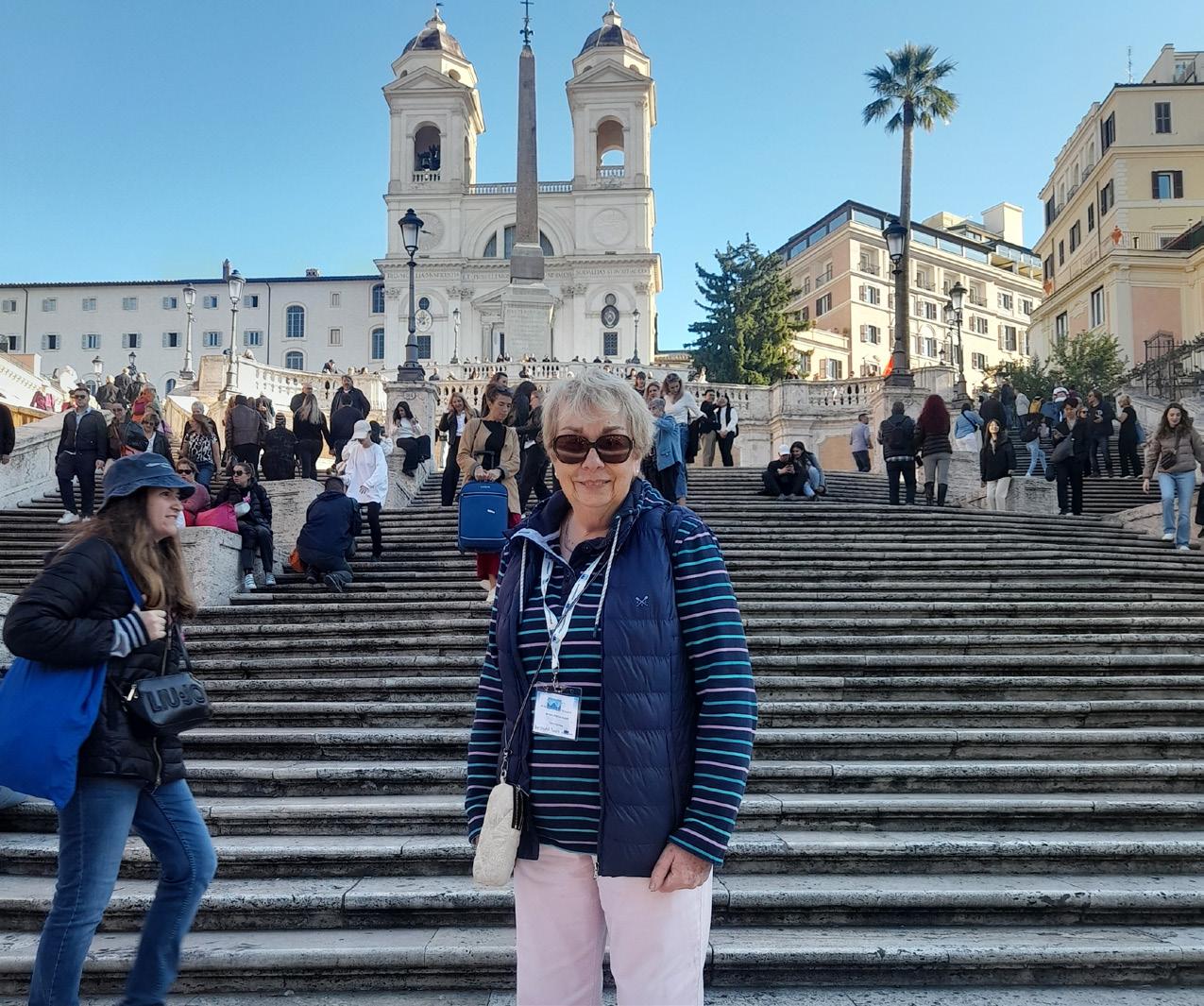
Jottings of a Roman Pilgrim
By Pat Murphy
My first pilgrimage to Rome was when I was in my mid-teens with my parents. After a memorable and relaxing week on the Adriatic coast, we travelled by train for a pilgrimage week. The week was made special, as our guide was a security guard at the Vatican. In his words, “he had to make sure the Pope was safely in bed at night.”
It was in the days before budget airlines and the vast numbers that visit the city today. The Trevi Fountain (and other fountains) were black, the churches were dimly lit, and a hotel breakfast was strong black coffee, bread, and jam. I can vividly remember our first full day visiting St Peter’s Basilica. No queues in those days. You just walked up to the steps of the Basilica, and as long as you were not wearing shorts or a sleeveless top, the security guys allowed you in.
For me, it certainly had the wow factor. Michelangelo’s’ beautiful Pieta was not behind the security screen it is today, and you could stand within about six feet of the sculpture. I don’t think I had ever seen anything so perfect in my life. I think we spent a couple of hours in the Basilica, just drifting from altar to altar, vast carvings and paintings at each, and to the Blessed Sacrament altar, where we shared a quiet pilgrim prayer. We touched the foot of the 13th century statue of St Peter (I think he looks so much better now the bronze has been cleaned) as so many pilgrims have done over the decades, and of course saw the tomb of St Peter.
We were amazed at the size and scale of the building, built over the site where it is believed that St Peter was crucified. We did everything. Visited the sacristy, and tombs. Took the lift up to the dome and climbed numerous steps to the balcony where the huge statues of Christ and the 12 Apostles look down over the square (no health & safety in those days!) and we took photographs standing below these statues. Somewhere, I still have a photo standing next to a cherub’s head that was taller than I was.
We were lucky to be staying in a hotel very close to the Vatican museum, so I was able to pop back to visit the Basilica a few times during that week. I have been to Rome many times since, but the first visit will always be special to me. It also helped me very much to get good grades in future art exams!
This month, we celebrate two great saints of Rome: St Peter & St Paul. Two martyrs of our faith who shaped Christianity, and who are worthy of the beautiful buildings in Rome in their name. St Peter & Paul pray for us.
Cathedral Record
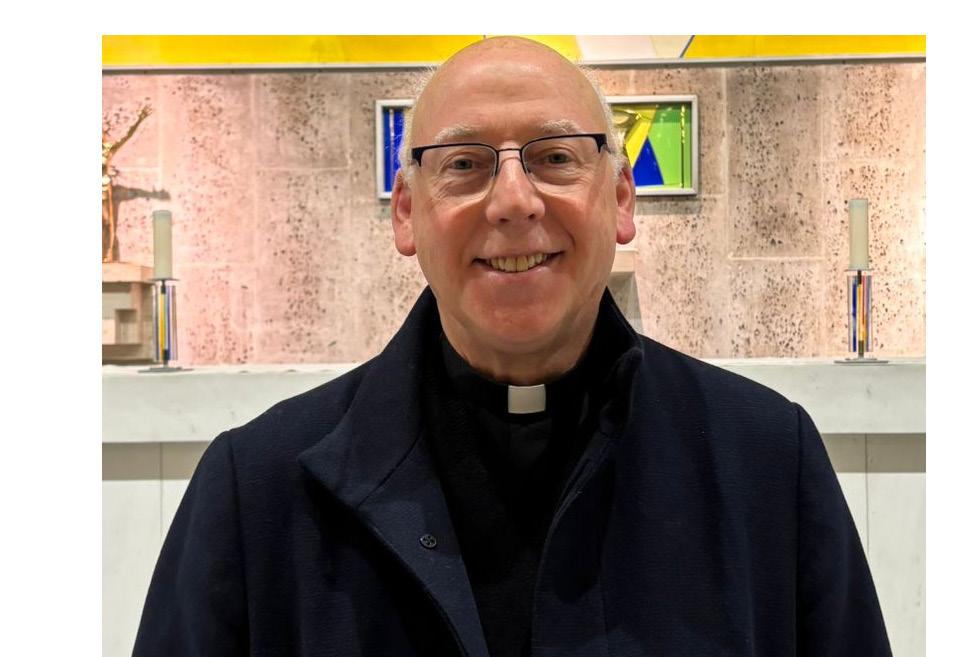
Canon Anthony O’Brien –Cathedral Dean
Next year, we will be celebrating our cathedral’s 60th anniversary, and this month a small committee are beginning the process of beginning planning a number of events and exhibitions to celebrate the platinum jubilee.
Most of these will take place on the weeks on either side of our anniversary in May. One of the big favourites from previous anniversaries has been a celebratory flower festival, and we are beginning to ask for expressions of interest from flower arranging societies and parish teams from around the North West to be involved in this so that we agree themes for the various areas within the building. Please get in touch with us if you wish to be involved.
We celebrate the Feast of Corpus Christi on 7 June - the afternoon service for the Solemnity will be a choral benediction celebrated in the main cathedral at 3pm. The annual ‘Be a chorister for a day’ Sunday for prospective choristers to get an experience of singing in the choir is on Sunday 14 June. Following this, we will have a week of auditions and voice trials for all the boys and girls who have applied this year. The parents are the ones who come nervous and anxious for their child, the children generally take it all in their stride.
The Annual Union of Catholic Mothers Mass is at 2pm on Saturday 20 June. Also, the Annual Good Shepherd Mass for schools to celebrate their support for the work of our local charity, Nugent, will be celebrated at 10:30am on 25 June by Archbishop Sherrington. On the final weekend of June, we celebrate the Solemnity of Saints Peter and Paul.
Pastoral ponderings
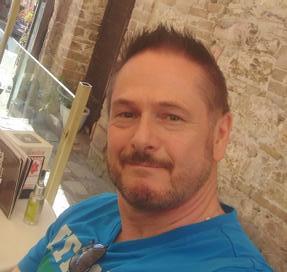
by Dominic Redcliffe
Hello from Rome to everyone at home.
After a cool and changeable Spring here in Rome, in weather terms, the Mediterranean warmth and sunshine have settled and summer has definitely arrived. The warmth means having a gelato is a given, and there are quite a few little independent ice-cream parlours (or gelatoria) within walking distance of college. At the moment, my favourite ice-cream is a cherry and coconut mix. I think that a visit to the gelatoria is justified in that it helps me learn the Italian names of different fruits and flavours!
Not only does it really feel like summer now, but June brings many special days in the Church’s liturgical calendar too. This month brings the Solemnity of Corpus Christi, the Solemnity of the Most Sacred Heart of Jesus. and then at the end of June, the Solemnity of Saints Peter & Paul.
I am in a privileged position of being half an hour from St Peter’s Basilica and having the Basilica of St Paul Outside the Walls opposite college. I just have to walk across the road, Viale di San Paolo, and I’m there. The basilica is ‘outside the walls’ because the first church on the site was beyond the old walls around Rome. Constantine the Great ordered a church to be built over the burial place of St Paul, who was martyred nearby around AD 65 – 67.
Being in Rome for most of the year gives me the opportunity to experience places much more than a visitor who is here for a few days, and St Paul’s is a good example. I can visit the basilica without any effort, even it’s just for a few minutes, to spend some time in prayer or to light a candle to remember people at home, by the place where St Paul is buried.
In January each year, the Holy Father visits the Basilica for Evening Prayers to remember the Conversion of St Paul and Week of Christian Unity. However, it’s the proximity of being by a holy place with the direct connection with St Paul that I find inspiring.
A reading from the Acts of the Apostles (Acts 22) really makes me think. Paul is being questioned on his preaching about Jesus, by the authorities. Paul is confined in the barracks, and he is given a clear message and mission,
The following night the Lord stood by him and said, ‘Take courage, for as you have testified to the facts about me in Jerusalem, so you must testify also in Rome.’
For our parishes and schools of the archdiocese who are dedicated to Saints Peter & Paul, prayers for you (and everyone else) from Rome.
Until next time,
Dominic
You Will Be My Witnesses
Written by Moses Mui, Training Coordinator
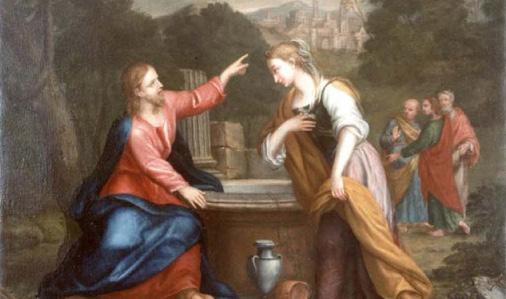
The Directory for Catechesis describes the catechist as “a witness of faith and keeper of the memory of God”, emphasising that the mission of catechesis is rooted not merely in teaching doctrine, but in bearing witness to a personal encounter with Jesus Christ. A catechist communicates faith most authentically when their life reflects the Gospel they proclaim. In this way, witness becomes the foundation of credibility.
The encounter between Jesus and the Samaritan woman at the well in John 4 offers a powerful biblical model of this role. At the beginning of the story, the woman approaches the well carrying personal burdens, social isolation, and a fragmented spiritual life. Jesus meets her with compassion and truth, revealing himself as the source of “living water” (John 4:10). Through this encounter, her life is transformed.
Significantly, the Samaritan woman immediately becomes a witness. After speaking with Jesus, “she left her water jar and went away into town” (John 4:28). The abandoned water jar symbolises a shift in priorities; her encounter with Christ becomes more important than her former concerns. She tells others, “Come, see a man who told me all that I ever did. Can this be the Christ?” (John 4:29). Her testimony does not arise from theological expertise, but from personal experience. She shares what she has seen and heard.
This mirrors the vocation of the catechist described in the Directory for Catechesis. The catechist preserves
and reawakens the memory of God’s action in human history, helping others recognise Christ’s presence in their own lives. Like the Samaritan woman, catechists are called to point beyond themselves towards Jesus.
The story also demonstrates that witness is strengthened through humility. The Samaritan woman’s past does not disqualify her from mission; rather, her experience of mercy enables her to become a sign of hope. Similarly, the Directory states that catechists, recognising their own frailty before God’s mercy, continue to witness faithfully. Their imperfections do not weaken their mission but reveal the transforming power of grace. Ultimately, the role of the catechist as witness is not to present a flawless image of faith, but to testify that Christ changes lives. Through authentic witness, rooted in encounter, memory, and mercy, catechists invite others to discover the living water that alone satisfies the human heart.
Are you a catechist looking for spiritual refreshment? No matter what kind of catechesis ministry you are involved in (e.g., Baptism, First Holy Communion, Confirmation, children’s liturgy, RCIA or marriage preparation), there is a great opportunity for you to refresh your vocation of being a catechist. On Saturday 4 July, the Annual Day for Catechists will be taking place at St Joseph’s Prayer Centre in Formby. Led by Fr Luke Dominic Onwe, there will be spiritual input and practical discussion on the day. For more information, please contact Moses at m.mui@rcaol.org.uk
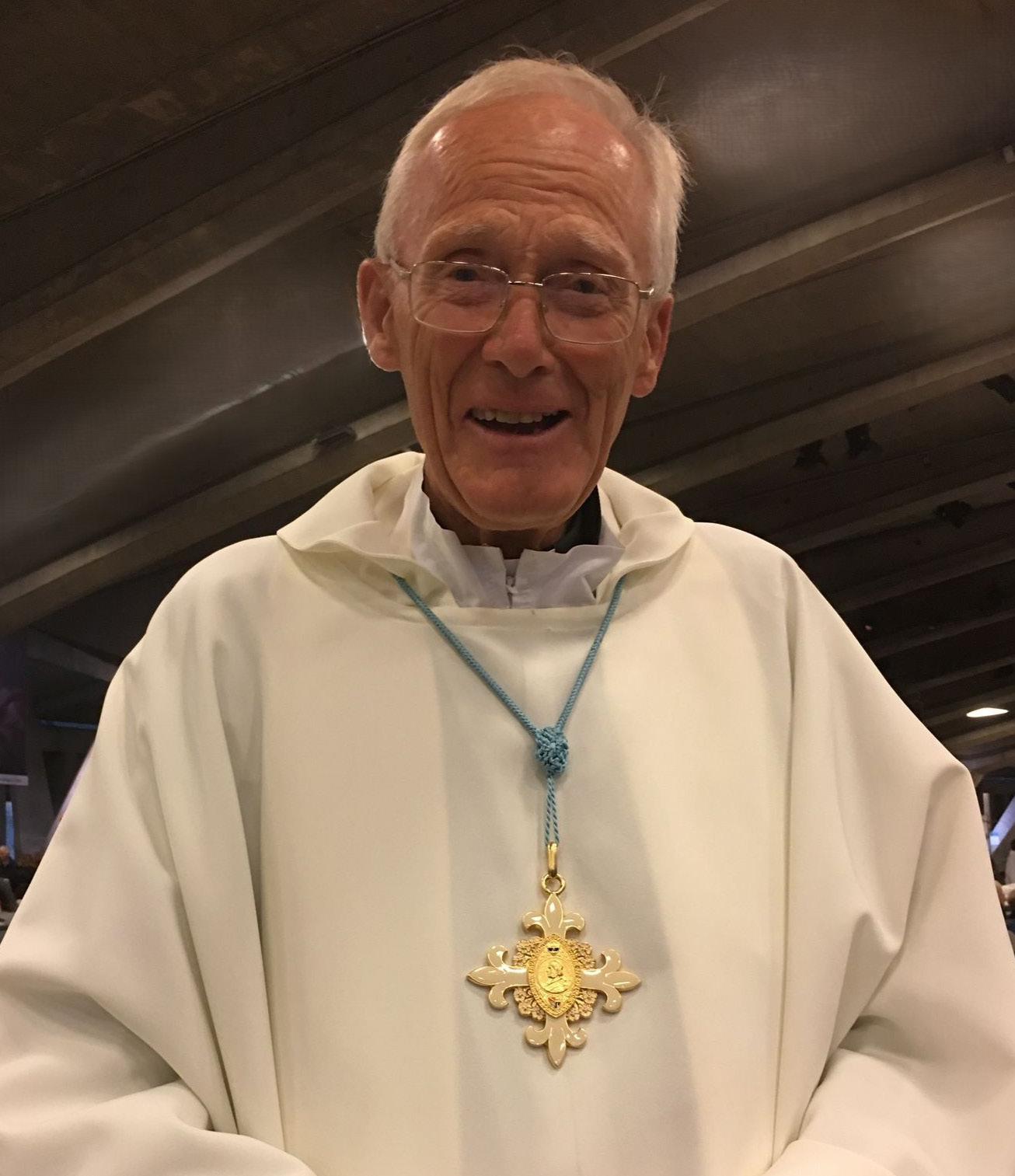
At 6pm on Friday 5 June at Holy Rosary Parish, Aintree, a special Mass will take place. It is a Mass to celebrate the diamond jubilee of one of the Archdiocese of Liverpool’s longest-serving priests, Monsignor John Butchard.
Mgr John was 24 when he was ordained at St Joseph’s, Upholland, on 4 June 1966. One of four priests ordained that day, he recalls that “we were only allowed to have six of our family and friends as guests”. The next day, he celebrated his first Mass at his home parish of St Anne’s, Ormskirk.
A diamond jubilee is, inevitably, a moment for reflection, yet Mgr John is wary of being “self-indulgent”. Rather, he will “try to look at my life in terms of the people I’ve lived with and worked with, because they’ve been the support that’s kept me going.”
There is much to look back on, starting with his first posting to St Luke’s, Whiston. “There were four priests in the house, including myself, so it’s a very different experience to nowadays,” he notes. “What I really enjoyed about my time there was being chaplain to Whiston Hospital.”
From there, in 1969, he began a 21-year spell at St Joseph’s, Upholland – first teaching in the junior seminary and then, for 16 years, serving as bursar. “I entered into 21 years of work in various ways as the college changed from being a seminary to being a wider resource for training the people of God,” says Mgr John, who has especially fond memories of Upholland’s “small residential domestic staff” – a group who, as he explains, had “spent their early years in the care of the Sisters of the Sacred Hearts of Jesus and Mary and formed a little community. And I, as it were, was the lead person in that little community.”
It was towards the end of his time at Upholland that he became a Monsignor, yet he remembers that period as particularly challenging. “The last years were very hard because all the work that made it Upholland had changed out of all recognition.”
The subsequent chapters of his priesthood were spent in parishes. “I went to St Joseph, Penketh, as parish priest from 1990 through to 2000,” he recalls. “I then went to Holy Rosary and remained there until I retired in 2016. Both were wonderful parishes, with dedicated people living their lives as Catholic Christians. They were a great joy to be with. It’s the people of the parish that give fulfilment to what you’re doing.”
A central thread running through Mgr Butchard’s years as a priest is Lourdes. He has not missed a Liverpool Archdiocesan
Monsignor John Butchard
Celebrating 60 years as a priest
By Simon Hart
Pilgrimage to Lourdes since 1968 and was pilgrimage director for 25 years from 1991. “I worked in every possible job there was over the years. And at the same time, it was a personal devotion to a place I’d come to love very much.”
In his view, the “pilgrimage experience” offers a vital opportunity for growth. “It widens your view, widens your experience of people, widens your contacts, and so deepens your faith and your prayer,” he affirms.
Today, at 84, Mgr Butchard still “finds great fulfilment in covering for priests in various parishes” and he believes that “the beauty of being a secular priest is you never know what the next day will bring in terms of somebody wanting your help.”
This leads to a final reflection on how the priest’s role has changed over the 60 years since his ordination. “My years of training coincided with the Second Vatican Council,” he observes. “New emphasis was given to seeing church membership in terms of ‘You are the people of God, a royal priesthood’. I’ve always tried to put that into practice with all the people I’ve come into contact with, while still holding onto the value of being a ministerial priest within the people of God.
“If I compare it with when I was first ordained, in 1966 the ordained priest at St Luke’s, Whiston, did many of the works within the community which are now done by commissioned members of the people of God such as readers, Eucharistic ministers, catechists. We’re still developing those ideas, and this is what gives me hope for our onward journey in faith.”
Catholic life Walking Pilgrimage of the Month
JUNE
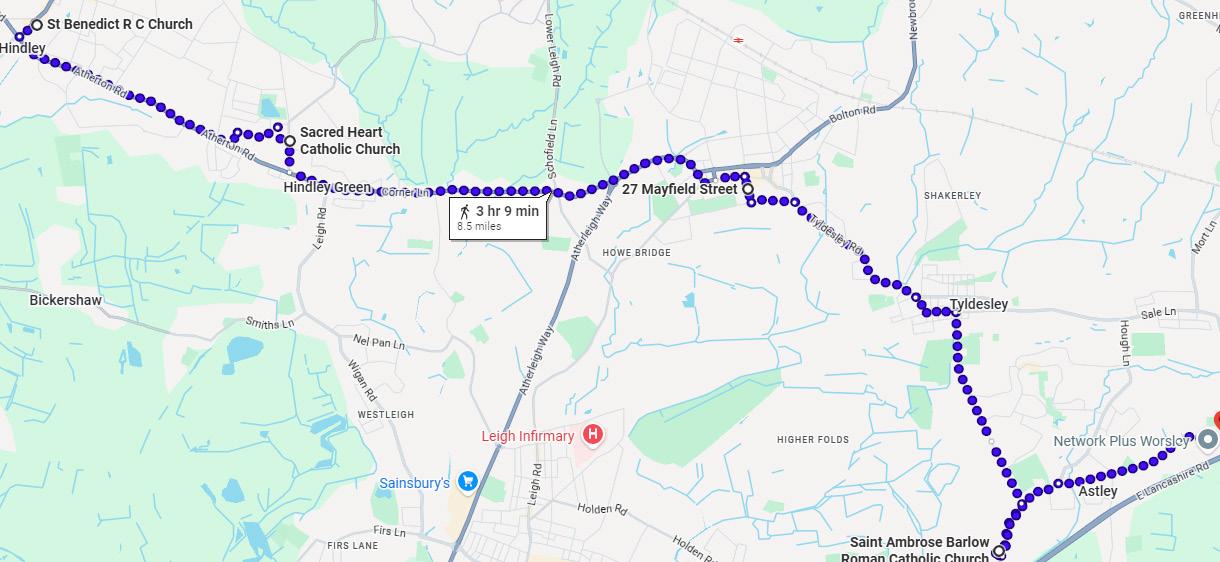
Families of Parishes Pilgrimage Walk - Wigan and Leigh Family 4
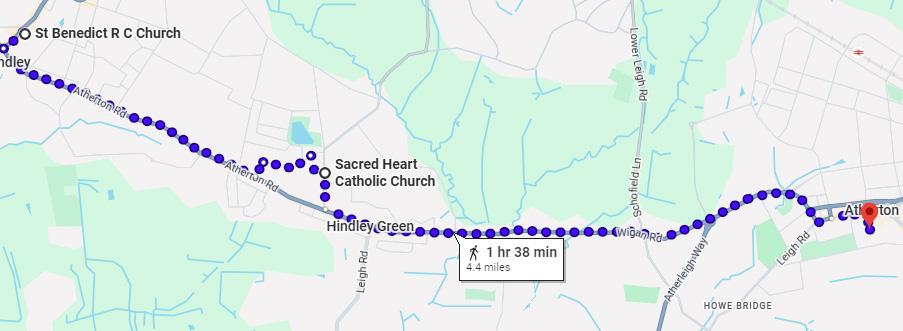
Leg 1: St Benedict and St John Rigby Parish
Distance: 4.3 miles
Time: 1 hr 38 minutes
Start: St Benedict, Hindley
Begin at St Benedict in Hindley, one of the oldest parishes in the archdiocese. The mission was first established in 1650, over 375 years ago, and the church has stood in its current location since 1869, almost 160 years. Today, it is under the pastoral care of Fr Leo Cooper. If you wanted to start this on the Saturday, Mass is at 5pm, making this a lovely way to begin an evening walk through Hindley and Atherton.
Stop 1: Sacred Heart, Hindley Green
The first stop on this pilgrimage will take you into Hindley Green and Sacred Heart church. It’s a straight forward walk, along Atherton Road. This is the first Church in the parish of St John Rigby, under the pastoral care of Fr Carl Mugan. Sacred Heart has served the people of Hindley Green since 1901, with the current church built in 1932.
Distance: 1.7 miles
Time: 39 minutes
Stop 2: St Richard of Chichester, Atherton
Your second and final stop of the first leg is St Richard of Chichester, the second church in the parish of St John Rigby. The parish dates back to 1894, and the current church has stood since 1928. Whilst there, say a prayer for all those who have gone before in that parish over the last century or so, and that the parish continues to thrive. Take a moment, too, to congratulate yourselves on completing the first leg of the walk.
Distance: 2.6 miles
Time: 59 minutes
Our latest Families of Parishes walk takes us to the outskirts of Wigan and Leigh, incorporating the parishes of St Benedict, Hindley, St John Rigby, Atherton and Hindley Green and St Margaret Clitherow, Astley and Boothstown.
As there is a significant distance between some of the churches, you may wish to split this walk into two parts — perhaps over a weekend — starting in one parish on one day and completing the second leg the next.
Total Distance: 8.5 miles
Total Time: 3 hrs 9 minutes
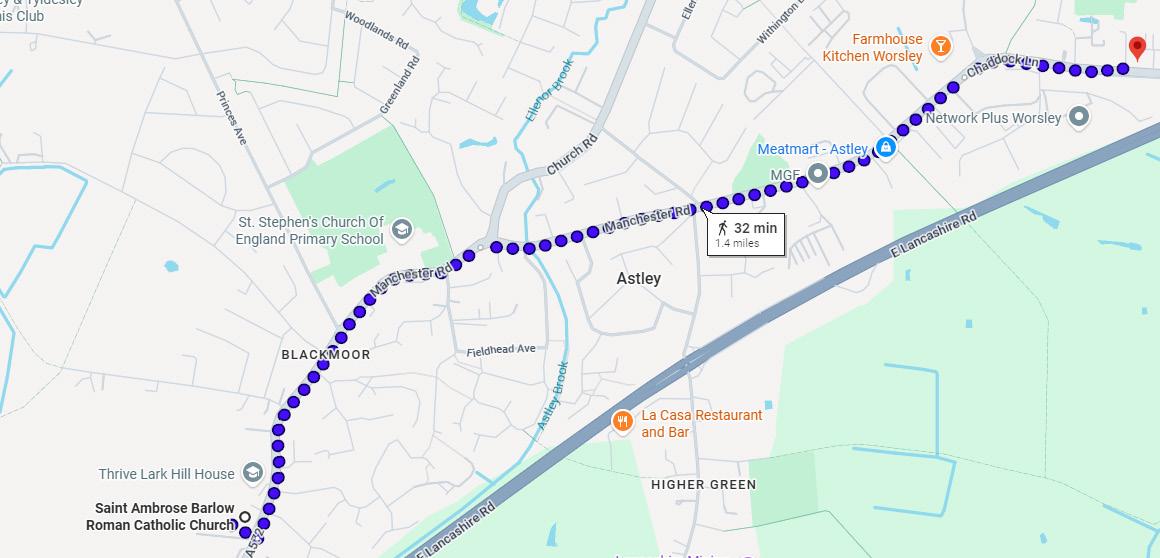
Leg 2: St Margaret Clitherow Parish
Distance: 1.4 miles
Time: 32 minutes
(Please note: this is only a suggested split. If you feel able to continue directly from St Richard of Chichester to St Ambrose Barlow – a further 2.7 miles, approximately 59 minutes – you could complete the pilgrimage in one day.)
Start: St Ambrose Barlow, Astley
For the second leg, begin at St Ambrose Barlow, the first church in the parish of St Margaret Clitherow, under the pastoral care of Fr Francis Agada. The newer of the two churches, the mission was established in 1965, with the current church build in 1981. If you are beginning on a Sunday, Mass starts at 11am, offering a good opportunity to pray quietly before setting off on your journey.
Stop 1: Holy Family, Boothstown
Your final stop is Holy Family in Boothstown. Like several churches on this route, it has a history stretching back before the 20th century. The parish was established in 1897, with the current church standing in its present location since 1930. Last year, it celebrated its 95th anniversary.
When you arrive, just take a moment to take in your surroundings and reflect on the achievement of completing this pilgrimage walk. Whether you did it in one go, over two days, or in smaller sections, it is something to be proud of.
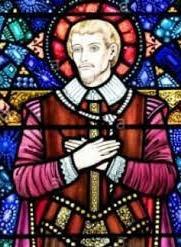
St John Rigby
St John Rigby was born in Harrock Hall, just outside Wigan, and martyred for his unwavering loyalty to the Catholic faith as a layman.
“A curious sequence of events are recorded in the account of the trial. Although shackles were placed around his wrists and riveted closed, on three separate occasions they mysteriously fell from his wrists and onto the floor. After this, his jailer was so spooked, he refused to try to put them back on again…eventually, he was hung, drawn and quartered in Southwark on 21 June 1600. We are told that he was so animated by an unearthly strength that as his heart was torn from his body, he tried to defend his life by wrestling it back from his torturers, until he succumbed to exhaustion and his inevitable death, as he was beheaded.”
Rev Andrew Unsworth
Care for Creation
Days to remember
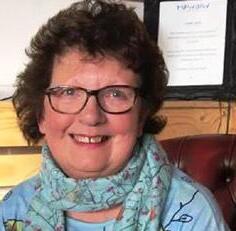
by Dr Jennifer Jones, Scientist and nature writer
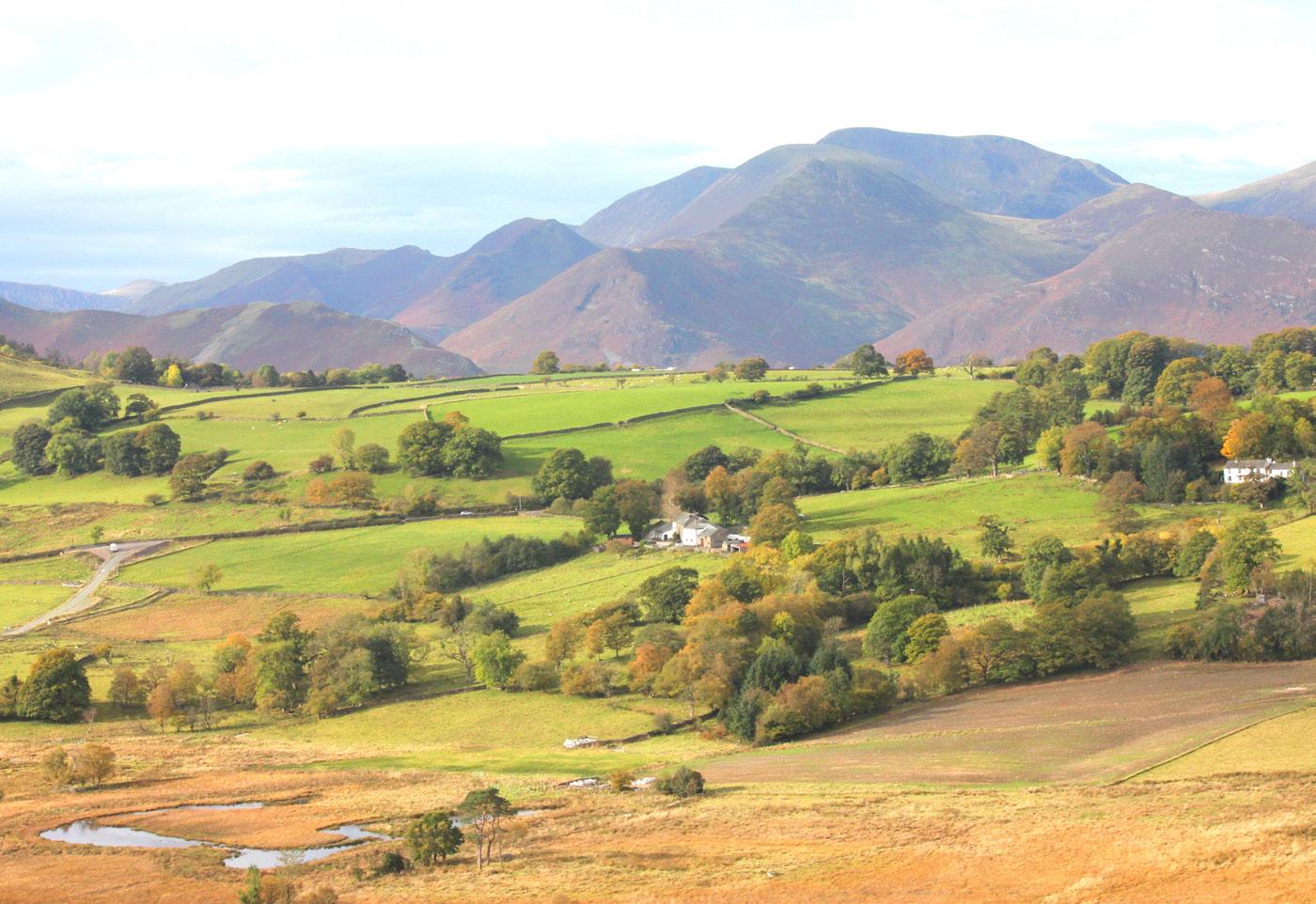
I wonder if, like me, you find that some months are filled with important dates: birthdays, anniversaries, baptisms, First Holy Communions, and so on. Well, June is diary month in our family.
It seems as though there is something significant happening every day. My diary almost shouts at me to make sure that I remember them all. I should perhaps also call June the Care for Creation month. There are so many environmental awareness days that I need to add them to my diary as well.
Here in the UK, June is often the month that we sense – or hope – is one characterised by good weather, lush vegetation, sparkling beach days and much more, but of course that is not the case everywhere. Perhaps that’s why June is an important month for environmental awareness globally. The United Nations invites us to celebrate World Environment Day on 5 June, followed by World Oceans Day on 8 June. The World Day against Child Labour is marked on 12 June, there is a call to focus on the World Day to Combat Desertification and Drought on 17 June, while 20 June is World Refugee Day. Of course, within the Church, we have the beautiful feast of Corpus Christi on 7 June and, finally, let’s sneak in Father’s Day on 21 June. That’s a lot of days to remember.
It is impossible in the space available here to write something about all these days,
each relevant in its own way to caring for creation. So, I shall focus on World Environment Day as it is all-encompassing. Marking the day in 2013, Pope Francis said, “We are called not only to respect the natural environment, but also to show respect for, and solidarity with, all the members of our human family.” Here then, he shows us the inextricable link between care for the environment and care for our fellow humans.
The theme for World Environment Day this year is climate change action and solutions for a sustainable future. No-one can claim today to be ignorant of the impacts of climate change, both here and elsewhere in the world: rising seas, wildfires, drought, harvest failures, and melting glaciers are just some of the signs of our stressed climate system. On this World Environment Day, we are all called to take action to prevent further change.
Azerbaijan is the host for the day for 2026. We may not be aware immediately of that country’s efforts to reduce climate change impacts. Azerbaijan is a country of enormous biodiversity, ranging from subtropical forests to alpine ecosystems. As a signatory to the Paris Agreement, it is committed to reducing its greenhouse gas emissions by 40% by 2035. It is modernizing its water industry and climate-resilient agriculture to strengthen adaption in those areas affected by
drought. It has an Action Plan to reduce plastic waste, its marine and coastal systems are protected by conservation programmes, and it is working hard to restore damaged ecosystems to enhance biodiversity resilience.
What can we do to mark the day? Let’s take Azerbaijan as our guide. What are we doing individually to reduce our greenhouse gas emissions? If time allows, we could get off the train or bus a stop or two sooner and walk the rest of the way to our destination, or reduce heating in our homes or workplaces. Are we careful with how we use water? What are we doing with our plastic waste? Most Merseyside local authorities now collect hard plastic, and many supermarkets also have soft plastic collection points. Is anything happening locally to protect ecosystems? Many of our parks and nature reserves have ‘Friends of …’ groups who always welcome volunteers: that is not only good for the environment, it has been shown to be beneficial to our physical and mental health.
Perhaps your school or parish is working towards the Live Simply award: speak to your teams to find out more about their activities.
For a moment let us return to Pope Francis’ words of 2013. He said, “we are losing the attitude of wonder, contemplation, and listening to creation”. Perhaps this June we can take time to wonder, contemplate, and listen to creation. That may be by simply sitting outdoors somewhere and meditating on what we see. The more we gaze on plants or trees, or listen to birds, or feel the air on our face, the more we’ll engender a sense of wonder. If we try this in a public place, we can gaze on all the passers-by, note how different they are, and recall that each is made in the image and likeness of God. Can there be anything more wonderful to engender an attitude of wonder than that? Sometimes our contemplation and listening can lead us to prayer.
Lastly, but definitely not least, let us all find time during June to remember the planet and its inhabitants and pray for those hardest hit by the impacts of climate change. Happy World Environment Day!
Merseyside pupils unite for St John Bosco’s Primary Olympics
More than 60 pupils from primary schools across Merseyside descended on St John Bosco Arts College, Croxteth, to participate in its Primary Olympics event.
Returning for its second year, St John Bosco’s Primary Olympics allows Year 4 and 5 pupils to utilise the secondary school’s sports facilities, introducing them to a wider range of physical activities.
This year’s Primary Olympics saw pupils from St Matthew’s Catholic Primary School, Walton, St Albert’s Catholic Primary School, Knowsley, Our Lady and St Philomena’s Catholic Primary School, Fazakerley, Leamington Community Primary School, Norris Green, and Croxteth Community Primary School compete in events such as javelin, long jump and obstacle relay.
Year 5 pupil from St Albert’s Catholic Primary School, Cedric, said: “It felt great to take part!”
St Matthew’s Catholic Primary School was crowned the winner of this year’s event after finishing with 76 points and demonstrating standout performances in the tug of war and 50m race.
Mrs Claire Wharmby, events and transition lead at St John Bosco Arts College, said: “With the fantastic facilities we have here, the Primary Olympics is the perfect opportunity for children to get involved in sports events that may not be available to them in their primary school. Well done to all primary schools who competed and congratulations to St Matthew’s for taking home the winner’s shield!”
St John Bosco Arts College’s Primary Olympics is now an established event within the school’s transition programme which supports pupils in upper Key Stage 2 to become more familiar and confident in the secondary school environment before joining. Other events in the school’s programme include the primary production, summer school, taster days, Year 5 fun day and primary choir of the year.
Headteacher, Mr Darren Gidman, commented: “Our Primary Olympics is a great example of how we welcome our future students to St John Bosco and into our Salesian family long before their first day as Year 7s. Transitioning to secondary school is a significant milestone in a child’s education journey, and by opening our doors to our linked primary schools, we help pupils build new friendships and familiarity.”
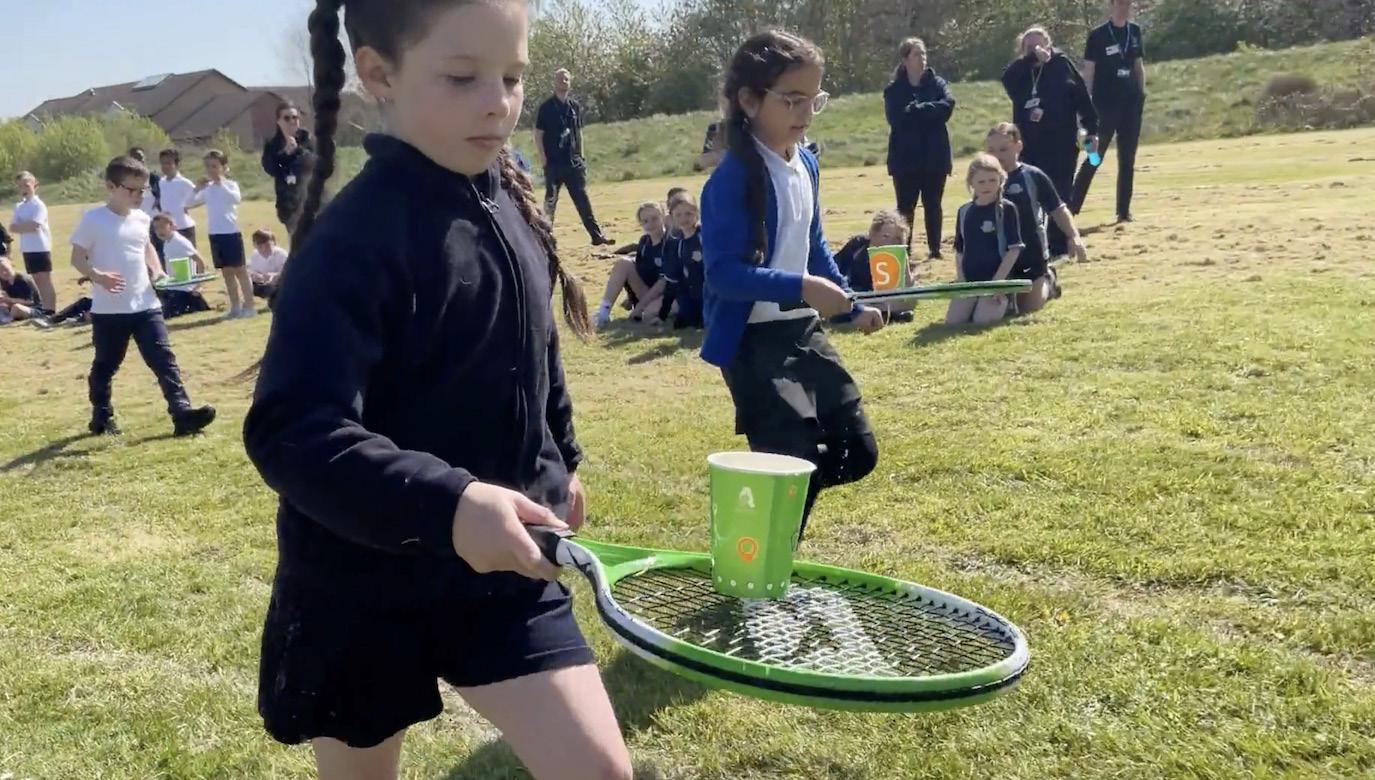
Saint Marie’s marks 60 years
Saint Marie’s Catholic Primary School proudly marked its 60th anniversary, celebrating six decades since the current school building first opened in April 1966.
Before this, the school had been situated on Almond Brook Road since 1897, but mining subsidence forced its closure and the construction of a new site.
The anniversary celebrations began with a thanksgiving Mass held in the school hall, bringing together past and present pupils, governors, staff, parents and members of the wider school community. Former headteachers and staff were also in attendance, adding to the sense of occasion. The service opened with ‘Praise to the Lord the Almighty,’ the same hymn sung at the school’s original opening and blessing 60 years ago. Father Vijay presided over what was a deeply meaningful and memorable Mass.
Further festivities reflected both the school’s rich history and its vibrant present. These included a ‘Through the Decades’ dance showcase, an outdoor picnic, the creation of time capsules, and tree planting. Together, the activities symbolised growth and the future.
Reflecting on this milestone, Faye Jackson, headteacher said: “This anniversary is a special opportunity to celebrate the rich history of Saint Marie’s and the generations who have shaped our school community.
“It was particularly meaningful to gather for Mass and share the same hymn sung at the opening of our building sixty years ago. As we mark this milestone, we look ahead with hope, remaining committed to providing the very best education for our children, rooted in faith and community.”
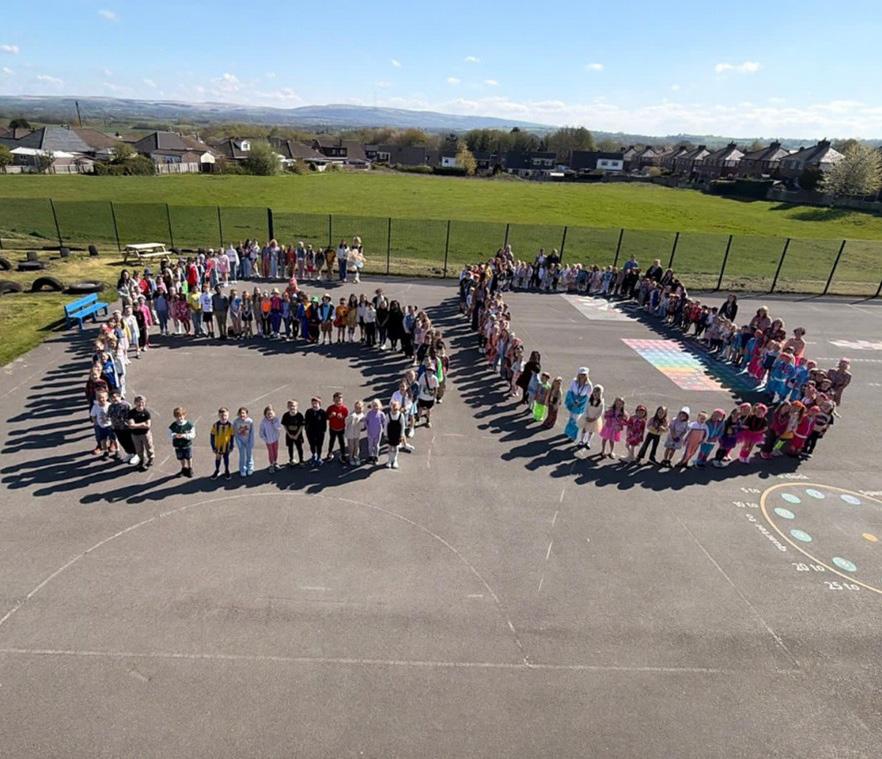
All Hallows students mark key moments in their faith journey
More than 90 Year 8 students at All Hallows Catholic High School have been preparing since January for the Sacrament of Confirmation, an important milestone in their Catholic faith.
As part of this journey, they participated in a dedicated off-timetable day to deepen their understanding of the sacrament, explore the Gifts of the Holy Spirit, and reflect on the saint’s name they wished to choose.
Candidates and their families attended a special preparation Mass at St Teresa’s, with parish priests from St Teresa’s, St Oswald’s and Leyland St Mary’s. This led to two Confirmation services at Leyland St Mary’s Church, celebrated by Bishop Tom Neylon.
During the services, students renewed their baptismal promises and gathered around the altar to be anointed with the oil of Chrism, a sign of strength in faith. Each candidate received the Gifts of the Holy Spirit, and Bishop Tom took time to speak with them individually about their chosen saint and its significance. The celebrations concluded with a group photograph, marking a joyful occasion.
Meanwhile, students from Years 7 to 10 have been completing their Faith in Action Award, honouring their contributions to the Catholic life of the school. Students reflected on how they have lived out their faith through service, leadership and innovation, with 37 students submitting their work to the archdiocese.
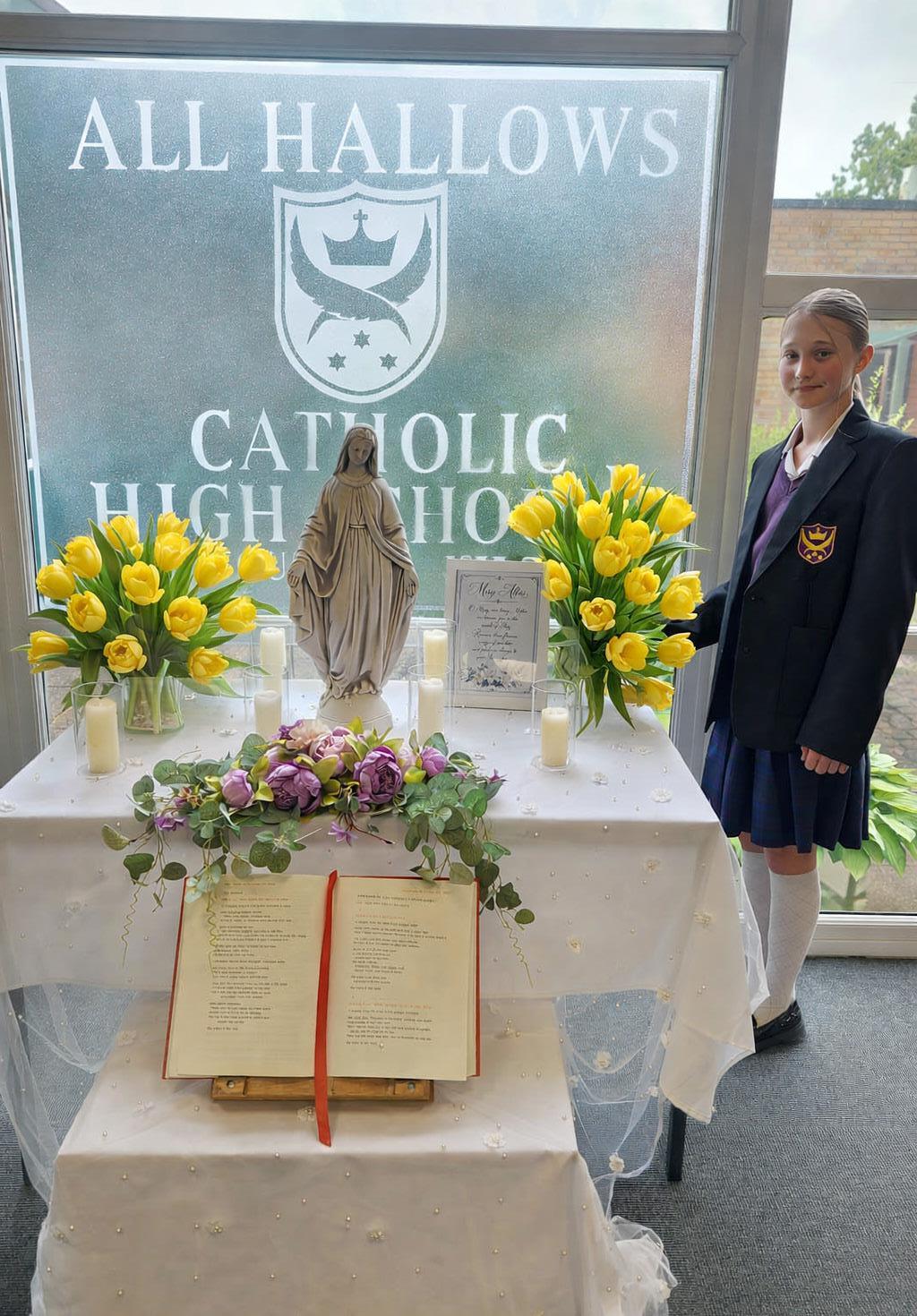
During May, the school also created a May Alter in honour of Our Lady. Students brought in flowers as offerings, helping to create a peaceful space of prayer and devotion, reflecting their love for Mary.
St Mary’s girls and boys are national football champions
Four talented football teams from St Mary’s College in Crosby reached the finals of the English Schools’ FA Small Schools Cup, with three of the teams winning their finals.
The cup finals took place at Stoke City’s bet365 Stadium on Tuesday 19 May. The under-13 girls team beat Lambrook School from Berkshire 4-3 on penalties after a close match which saw the scores level at 1-1 at the end of normal time. Goalkeeper Rosie Hughes, aged 12, was the school’s shoot-out hero after a second half goal from Matilda Gray had drawn the girls level. Penalties scored by Meara McBride, Matilda Gray, Aoibheann Pugh and Eloise Townsley ensured captain, Sailor Howard, lifted the cup.
The under-13 boys team beat Royal Russell School from Croydon 4-1 in their final and the under-14 boys team rounded off a remarkable day with a 3-0 victory over Lingfield College from Surrey.
Goals from Theo Freeman, Caden Walker, Joel Wood and player of the match, Harry Hanlon, sealed the win for the under-13

boys team whilst Oscar Townsley, Ethan Mann and Terence Etim scored for the under-14 boys. Jacob Woods was voted player of the match for his performance in the under-14 final, having achieved the same accolade in last year’s under-13 victory.
The under-12 boys team finished runners up in their final. They also reached the semi-final of the Sefton Small Schools Cup.
Many St Mary’s students, parents and staff travelled to Stoke to cheer on the teams whilst those remaining at school watched the matches live online.
St Mary’s principal, Mike Kennedy, commented: “Everyone at the school has been thrilled with the success of our girls and boys football teams who have gone from strength to strength as the season has progressed.
“I would also like to congratulate staff members Sally Townsley (girls’ football coach), Tom Manley (boys’ football coach) and Derek Williams (head of boys’ PE), who have played such an important role in nurturing the talent of these young players and helping them become national champions.”

education news
A Family in Christ: Why This Matters for Catholic Education Year 11 take part in special Mass for success
I have spent many years in Catholic education, and one truth stands out: Catholic schools change lives. I have seen young people grow in confidence and faith, and flourish because they are known, valued, and loved. I have also witnessed the dedication of staff, governors, clergy, and families who make this possible every day.
Catholic education has never been simply a career for me; it is part of a lifelong vocation to serve young people and their communities. That is why our efforts are centred on preserving and strengthening this gift for future generations.
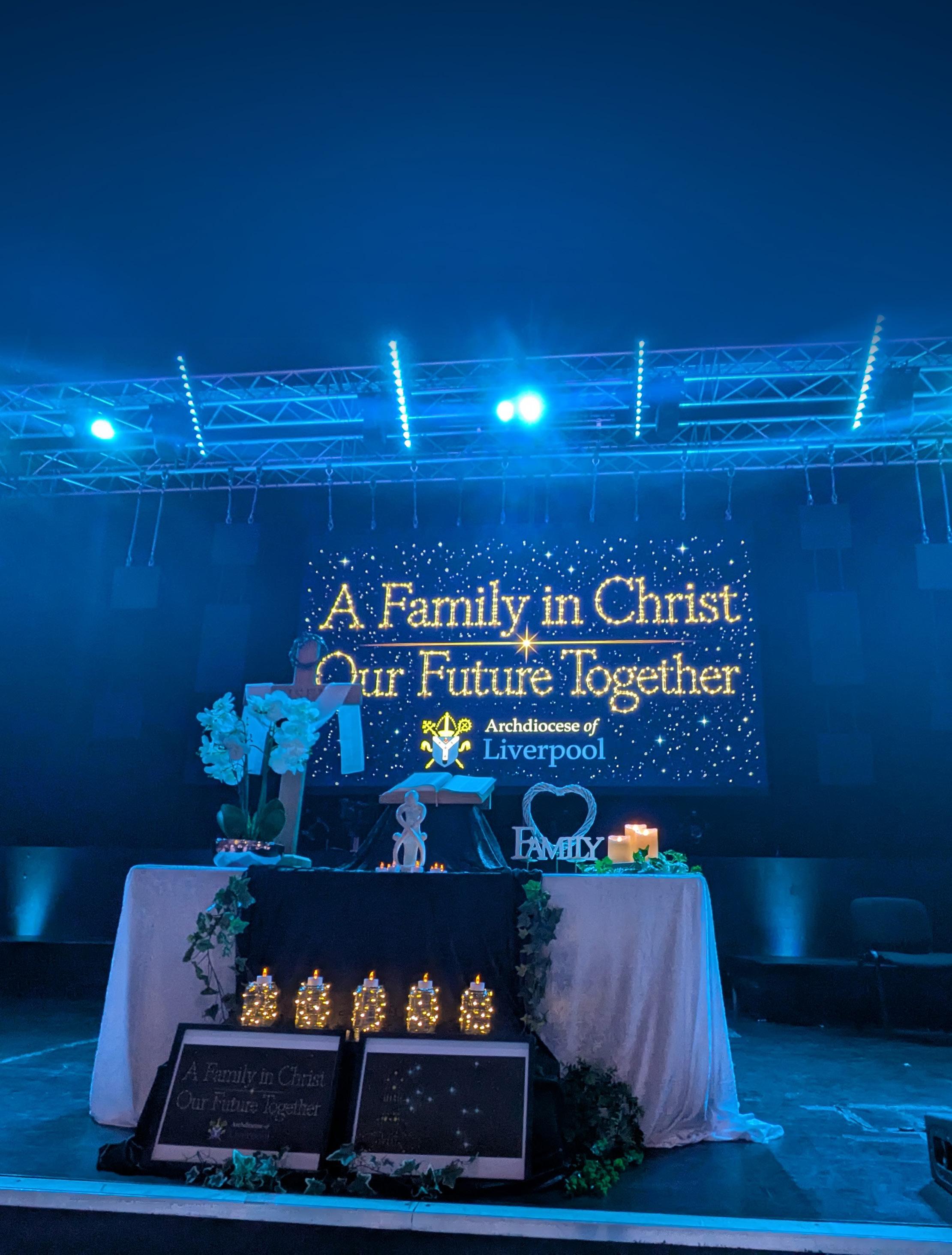
The launch of our strategy, Family in Christ – Our Future Together, marks an important moment. It is a commitment to keeping Catholic education strong, faithful, and sustainable in a changing world.
Our schools achieve so much, but we cannot ignore growing challenges – financial pressures, difficulties recruiting staff, and changing pupil needs. Responsible leadership means facing these realities and preparing for the future. Our duty is to sustain Catholic education today, and to protect and strengthen it for generations to come.
Change in schools can feel unsettling, especially when schools are at the heart of communities. But when change is guided by shared purpose, listening, and collaboration, it becomes an opportunity.
Catholic schools are not isolated institutions – they are part of a wider family. When we work together, we are stronger. By sharing expertise, resources, and leadership, we can better support one another and respond to challenges with confidence.
In simple terms, this strategy will bring schools into closer partnerships so they can support each other more effectively. This will happen gradually and thoughtfully, with full support. What will not change is what matters most. Our schools will remain places where children are nurtured, encouraged, and formed in faith. What will change is the strength of the support around them.
At its heart, Family in Christ – Our Future Together is about mission. It’s all in the name:
• Family – a community of belonging and care
• Christ – our foundation in faith
• Future – preparing young people for life and service
• Together – achieving more as one
This reflects the principle of solidarity: that we are responsible for one another.
Change is never easy, but I remain hopeful because of the strength and dedication within our Catholic communities. This is not about losing something precious, it is about protecting it. Catholic education has transformed countless lives. By working together, with faith and confidence, we can ensure it continues to flourish for generations to come.
Joan McCarthy, Director of Education
Year 11 students at St Gregory’s Catholic High School recently participated in a special Mass for success as they prepared for their upcoming GCSE examinations, a pivotal time in their academic journey.
The celebration, led by Father Dave and Deacon Dan, provided a meaningful moment for students to focus on their hard work and dedication.
The Mass created a calm and prayerful space in the midst of a busy revision period, allowing students to come together as a year group in faith and unity. Through prayers and reflection, students were encouraged to remain focused, trust in their abilities and approach their exams with confidence and perseverance.
Speaking about the students’ efforts, school chaplain, Mrs Whitlow, said: “It has been wonderful to see how committed and focused our students are. Their behaviour during the Mass was explementary and their dedication to their studies is truly inspiring. We pray that this spirit carries them through their exams.”
Staff at St Gregory’s continue to support students not only academically but also spiritually during this important time, recognising the pressures that exams can bring. The Mass for success served as a reminder that students are not alone, but supported by their school community and guided by their faith.
St Gregory’s extends its heartfelt thanks to Father Dave and Deacon Dan for leading such a thoughtful and uplifting service. The school wishes all its Year 11 students, and every other young person sitting their GCSEs this summer, the very best of luck.
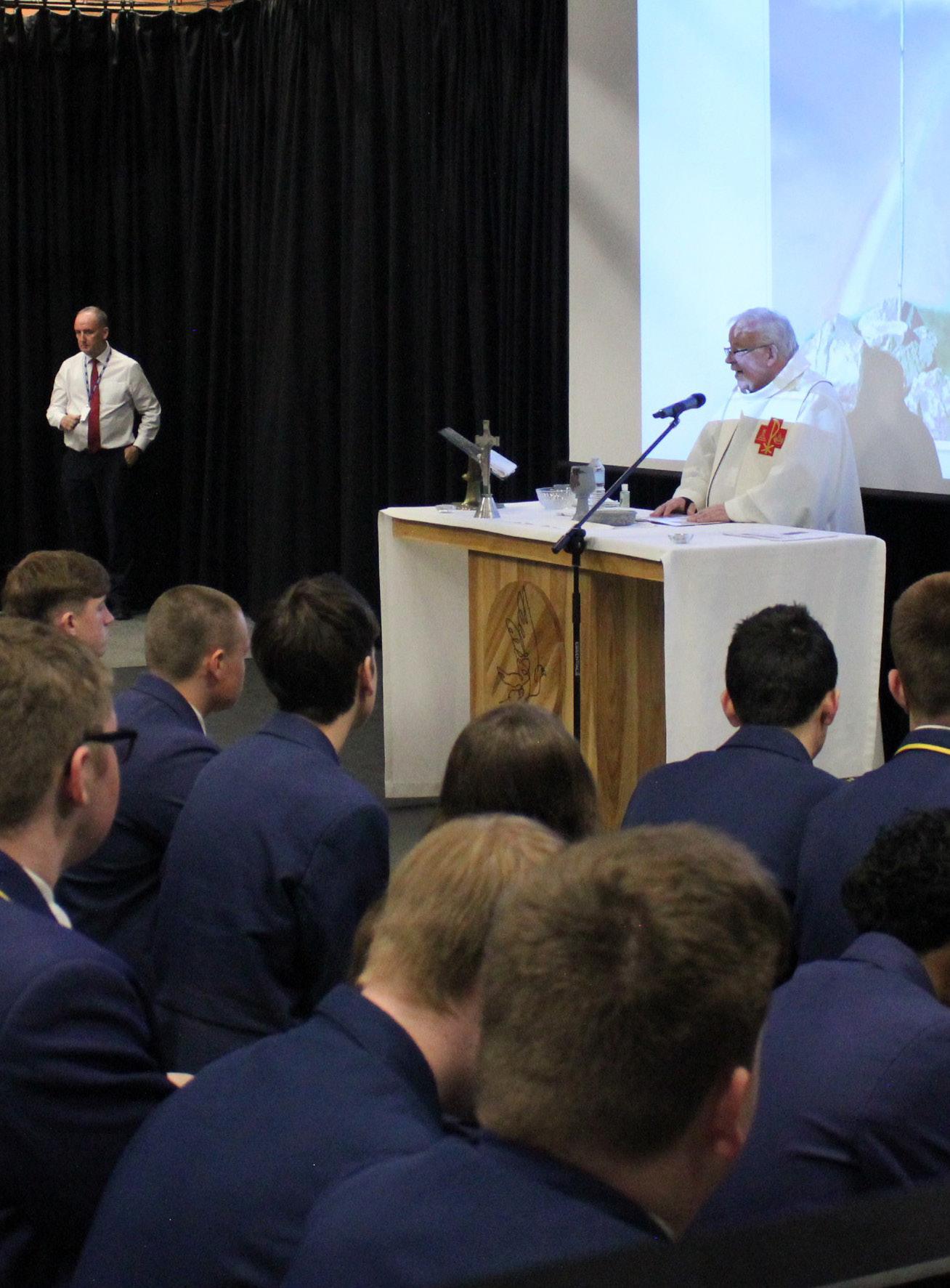
Planting the seeds of tomorrow
St Ambrose Catholic Academy, part of St Joseph Catholic Multi Academy Trust, has much to celebrate following the recent Catholic Schools Inspectorate report that recognised its unwavering commitment to faith, community and excellence.
Inspectors praised the way the school community lives out its mission statement, “With Jesus, we plant the seeds of tomorrow,” describing it as a “joyful expression of Christ’s love.” This ethos is evident throughout academy life, from the relationships between pupils and staff to the sense of service shown through charitable outreach, environmental projects and support for local families.
The report highlighted the inspirational leadership of headteacher, Mrs Christine Harris, whose vision for Catholic education was recognised as a driving force behind the academy’s success. Governors described her as “the shining light at the top of the lighthouse,” reflecting the admiration and trust felt across the academy community.
Inspectors also celebrated the academy’s culture of inclusion and pastoral care, noting that every individual is “valued and included.” Pupils were commended for being “welcoming, friendly, polite and very well-behaved.”
Whether through meaningful prayer and liturgy, creative approaches to religious education or dedicated support for families, St Ambrose Catholic Academy continues to nurture young people academically, spiritually and personally.
Headteacher, Mrs Christine Harris, said: “As a school family, we are so proud that the report recognises what we see and feel every day.
“I feel especially proud of our children, who show such kindness and respect in the way they treat one another and truly live out our Gospel values. The report reflects daily life at St Ambrose. We are a place where every child is known, valued and supported, and where staff go above and beyond to help them grow into thoughtful, compassionate young people.”
This inspection outcome is a testament to the dedication of staff, governors, pupils and families alike. Together, they continue to ensure that St Ambrose is a thriving Catholic community where children are empowered to grow in faith, love and purpose.
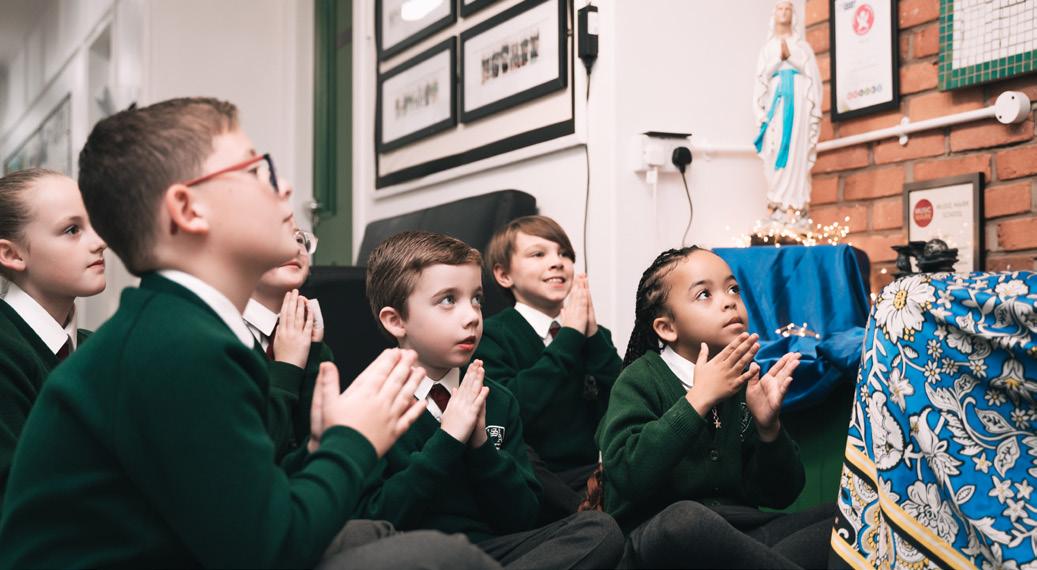
Broughton Hall’s ‘Grow Your Tenner’ challenge continues to spread kindness
Students and staff at Broughton Hall Catholic High School continue to embrace the spirit of generosity and compassion through the school’s inspiring ‘Grow Your Tenner’ challenge.
Launched during Lent as part of the school’s ‘Cup of Kindness’ McAuley project, students were encouraged not simply to give something up, but to give something extra for others.
Rooted in the Mercy values and Catholic Social Teaching, each form group was given £10 and challenged to ‘grow it’ by doing something meaningful that will raise money for a charity of their choice through acts of service, creativity, and fundraising.
Although the project began during Lent, its message and mission have continued throughout this half term, with students showing incredible enthusiasm, teamwork, and community spirit.
Students organised cake sales, cookie stalls and a special lolly ice sale at the school gates as students left for half term, complete with music playing across the tannoy to create a joyful atmosphere.
One of the highlights of the project so far came on the final day before the Easter break, when each year group performed their Passion liturgy. To mark the occasion and celebrate the sense of togetherness across the school community, students helped organise ice cream vans on site.
A Year 7 student involved in helping to organise the event said: “It’s been really fun helping to organise things because everyone has joined in and it feels nice knowing we’re helping other people while doing something together as a school.”
The fundraising efforts are continuing next term with even more exciting ideas already planned, including raffles, sporting competitions, entertainment events and even a staff car wash.
The project has beautifully reflected Broughton Hall’s mission of living as ‘One Heart and One Mind in Faith, Hope and Love.’ Through simple acts of kindness and service, students have shown that even small ideas can make a big difference to others within the wider community.
The ‘Grow Your Tenner’ challenge has become much more than fundraising, it is a powerful example of faith in action and the Mercy spirit being lived out every day at Broughton Hall.
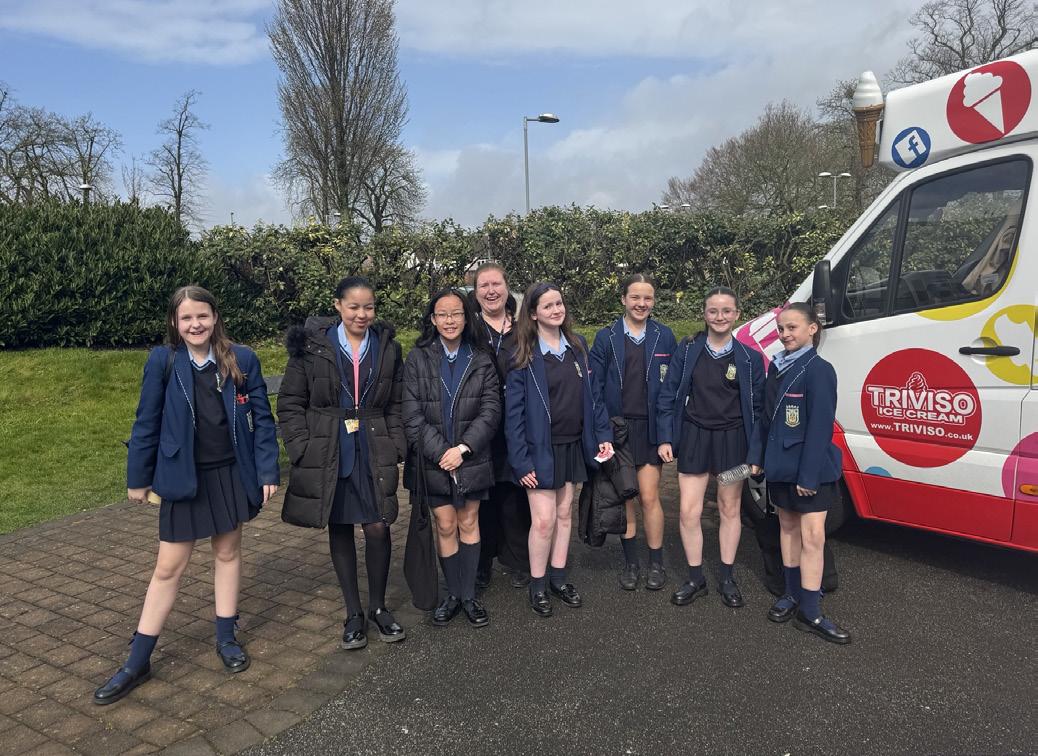
Two headteachers bring one vision into reality
For a long time, staff at St Cecilia’s Catholic Primary School, Tuebrook have had a vision for an outdoor prayer space for their pupils, but with limited funds and limited green space, this has been a challenge.
Retiring last summer, headteacher, Phillipa Agate, wanted to leave a gift with the school that she has loved and served for 13 years. Her very generous donation was given with a view to creating this much wanted prayer space. New headteacher, Suzanne Hurst, led the staff and pupils to bring this dream into reality. Their newly created prayer garden now provides an oasis for the children and staff to come together to pray and reflect.
The climate ambassadors are using the space to create more biodiversity and have enjoyed planting and tending to the flowers. Year 6 student, Bibbi, said: “It was fun planting and watering the flowers. I felt honoured to help with creating our prayer garden.”
The faith leaders led a beautiful Celebration of the Word and invited their parish priest, Canon Conor Stainton Polland, to bless the garden.
Desiire in Year 2 commented: “The prayer garden makes me feel calm and joyful. It is prayerful and invites Jesus to be with us.”
Mrs Hurst reflected on this new addition to the school, saying: “Our prayer garden is a truly special space for our children. A place of peace, reflection and wonder within the heart of our school. It gives pupils the opportunity to pause, think quietly, pray and connect with nature and with one another in a calm and meaningful way. I am delighted to have such a beautiful environment that supports our children’s wellbeing, spirituality and sense of belonging.”
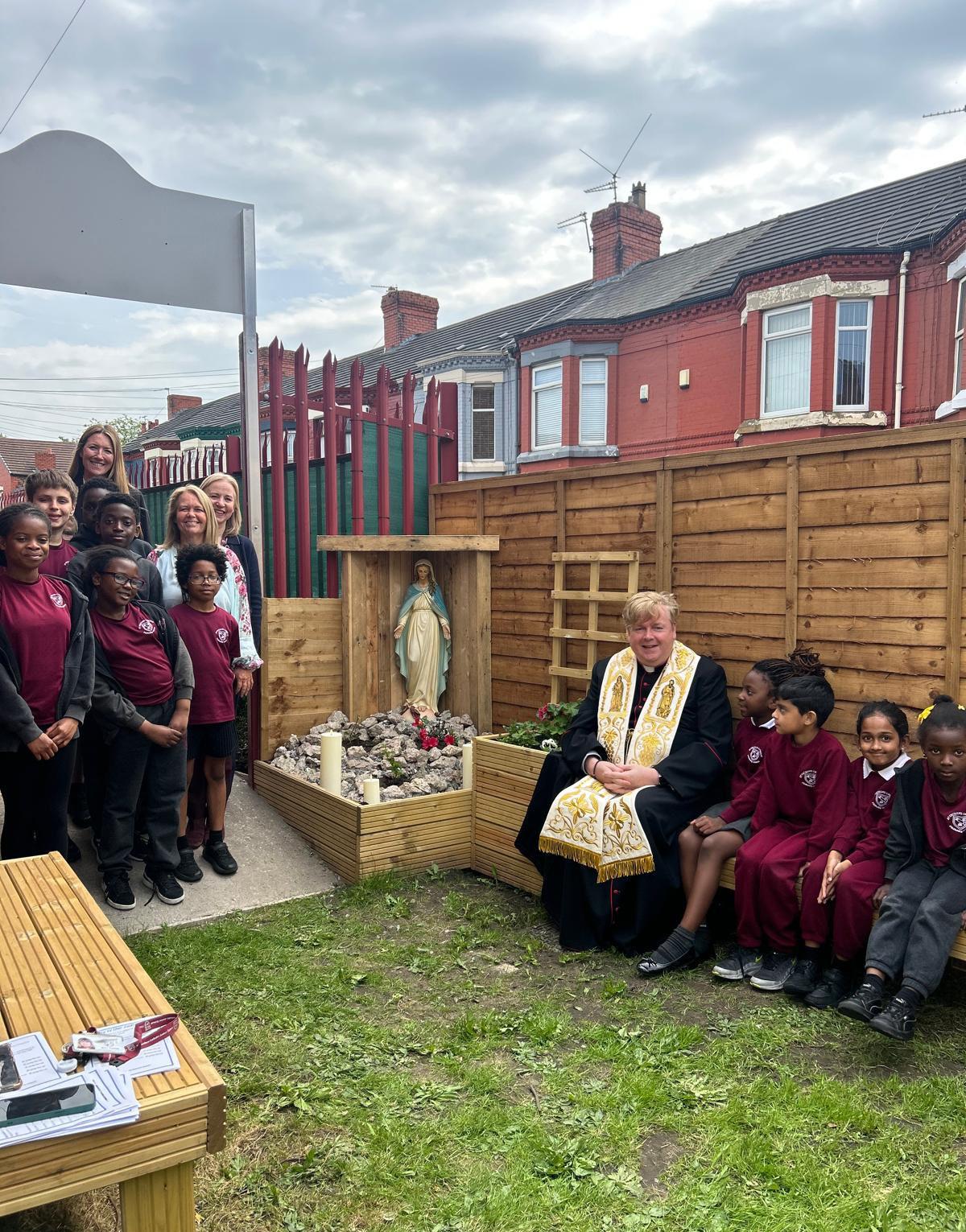
St Mary’s pupils bring joy across the generations at local care home
Pupils from St Mary’s Catholic Infant Primary Academy have formed a heartwarming partnership with residents of Elmtree House Care Home in Newton-le-Willows.
The partnership has seen the school choir visit the care home multiple times, performing for residents during key events, including seasonal celebrations and special milestone birthdays.
The relationship began after St Mary’s launched its school choir and looked for opportunities to perform locally. One pupil suggested visiting Elmtree House, where her greatgrandmother lives, and the idea quickly developed into a series of memorable visits for both children and residents.
Since then, the choir has performed at the care home on a number of occasions, including Christmas celebrations, Valentine’s Day and, most recently, a resident’s 100th birthday party.
Pupils celebrated the milestone event by performing songs, presenting flowers and gifts, and sharing handmade cards. ‘On Top of the World’ by The Carpenters had residents, children and families singing and dancing together.
Jessica Kennedy, activities co-ordinator at Elmtree House, said: “We have developed strong links with St Mary’s Catholic Infant Primary Academy, which has enhanced the happiness and wellbeing of our residents. When they join in with activities together, a unique intergenerational bond is formed. The presence of the children brings a lot of laughter and joy, together with a renewed sense of enthusiasm.”
The regular visits have also helped reduce feelings of isolation and encouraged a stronger sense of community among residents.
Year 2 pupil, Oney, said: “I love singing at Elmtree because it makes the residents feel happy and loved. They join in with our actions. They even gave us a huge heart with their names on it to say thank you.”
Executive headteacher of St Mary’s Catholic Infant Primary Academy, Mrs Samantha Birchall, said: “The connection between our choir and Elmtree House has been something quite special. Our pupils have grown in confidence and compassion through every visit, and it is clear how much happiness the children bring to the residents. We look forward to continuing this exciting partnership.”
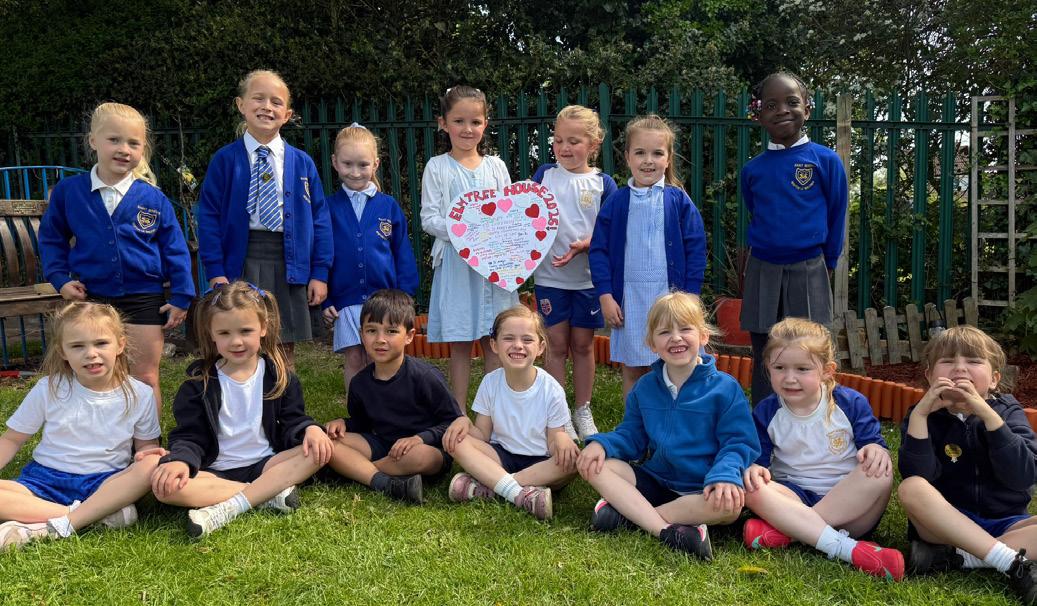
Hope Academy celebrates ‘Outstanding’ Joint Denominational Inspection
Hope Academy, part of All Saints Multi Academy Trust, has achieved ‘Outstanding’ in all areas following its latest Joint Denominational Inspection by the Diocese of Liverpool and the Archdiocese of Liverpool.
The academy has been awarded the highest possible judgement across all areas, including the school’s distinctive Christian life, the effectiveness of collective worship, the quality of religious education, and the impact of leadership and management in developing the Christian life of the school.
The report described Hope Academy as “a shining example of a joint denominational community that is wholly Catholic and wholly Church of England”, commending the strong partnership between the school, local churches, dioceses, and the wider community.
It highlighted the positive and inclusive environment within the secondary school, stating: “Students and staff are valued and respected as members of the Hope community. They regard school as a ‘happy and safe place where all belong, connect and do hard work’.”
Inspectors praised the academy’s collective worship provision as being “at the foundation of the school’s
Christian character”. They highlighted the positive impact of the school’s chaplaincy, prayer spaces and student leadership opportunities.
Religious education was identified as the highest-achieving area of the Key Stage 4 curriculum, and leadership across the academy was commended for ensuring its mission and values are embedded throughout daily life. Inspectors acknowledged the dedication of staff, governors and All Saints Multi Academy Trust in creating a nurturing and aspirational environment.
Mrs Marie Adams, principal of Hope Academy, said: “This report reflects the dedication and ambition that define our entire school community.
“I am incredibly proud of our students, staff, governors and families, who work together every day to create a culture where young people feel valued, supported and inspired to achieve their very best.”
Miss Heather Duggan, CEO of All Saints Multi Academy Trust, said: “This outstanding inspection outcome for Hope Academy is a moment of real celebration for the whole Trust community and a strong reflection of our mission that we are ‘Better Together’.”
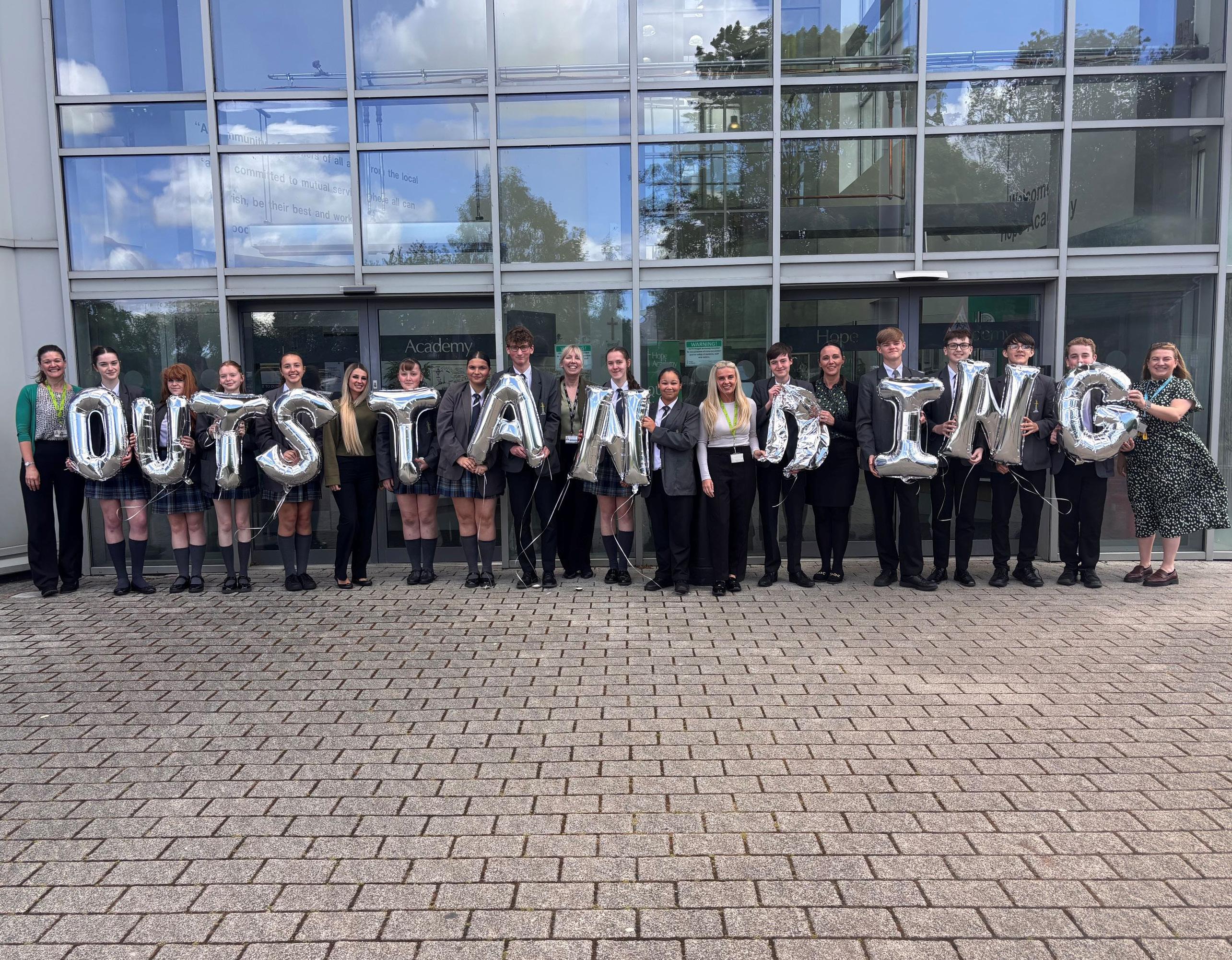
A meaningful blessing inspires primary school community
Our Lady’s Bishop Eton Catholic Primary School has marked the Feast of Our Lady of the Annunciation with a deeply meaningful celebration, centred on the blessing of a newly donated statue of Our Lady and a historic foundation stone dating back to 1912.
The statue, generously gifted by The Sisters of the Cenacle, now holds a prominent place within the school’s newly created prayer space, alongside the convent’s original foundation stone. The occasion was made particularly significant through a special blessing led by Fr Tim Buckley, with pupils from Year 4 taking an active role in the liturgy.
The celebration provided an opportunity for the school community to reflect on the Annunciation as a moment of faith, humility, and acceptance of God’s will, connecting these values with their daily lives. Pupils were able to deepen their understanding of Mary’s importance within the Catholic tradition.
Speaking after the event, Rachel Davidson, headteacher, expressed heartfelt gratitude for the donation: “We are incredibly thankful for this most generous gift. The statue is not only a beautiful addition to our school but a spiritual gift that will inspire prayer and reflection for many years to come. It now takes pride of place in our newly created prayer space, serving as a daily reminder of Our Lady’s example of faith and devotion. We are very grateful to Sr. Kate and her companions for their kindness and generosity in making this possible.”
Sr. Kate, of the Sisters of the Cenacle, also reflected on the significance of the donation, saying: “It gives us comfort to know that it will be going to a place where it is appreciated.”
The presence of the 1912 foundation stone further enriches the significance of the space. Together, these symbols serve as a powerful testament to the enduring legacy of faith shared between the school and the Sisters of the Cenacle.
The celebration stands as a reminder of the strength of Catholic community and tradition, and the importance of creating spaces where faith can be lived, experienced, and nurtured by future generations.
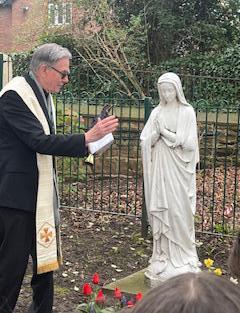
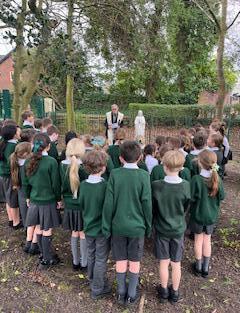
Now is the time to enter the Educate Awards!
There is still plenty of time for Catholic schools to enter this year’s Educate Awards – and it has never been easier to do so!
With the deadline for submissions on Thursday 16 July, schools, colleges, nurseries and multi academy trusts have seven weeks to draft their entries.
Entering the awards is very straightforward. First, head to educateawards.co.uk, explore the 21 categories and review the accompanying criteria to identify which award best showcases your achievements.
Draft an entry of up to 800 words in a Word document, highlighting your impact, successes and the difference your school is making. Please also include a short summary of the submission (up to 200 words).
Schools can also provide supporting evidence, such as photos, a video and any associated data. However, this is completely optional!
Then, simply submit your entry via the Educate Awards website.
Don’t forget it is completely free to enter, and you can enter as many categories as you wish. If your nursery, school, college or multi academy trust is shortlisted, you get two FREE tickets to the glittering event, which includes a drinks reception, sumptuous three-course gala dinner and an evening of entertainment, celebrating excellence in education across the region.
Last year’s winners have spoken about the value of entering and the positive impact recognition can have on their school community.
St Edward’s College was the 2025 winner of the Most Impactful Communications Award, sponsored by CPMM Media Group.
Principal, Lee Anthony Fabia, said: “Winning the award was a tremendous honour for St Edward’s College, and being named a finalist for Most Inspirational Secondary School was equally rewarding.
“We would strongly encourage other schools to enter the Educate Awards. The process provides a valuable opportunity to reflect on your practice, celebrate your achievements, and showcase the positive difference your school makes within its community.”
Director of education at the Archdiocese of Liverpool, Joan McCarthy, added: “The Archdiocese of Liverpool is delighted to support Educate Awards 2026. It is a wonderful opportunity for us to celebrate the achievement, hard work, and dedication of the people working in our schools.
“I would strongly encourage all schools to consider entering. It is fantastic to be shortlisted, and the event is always a great evening. Thank you to the team at the Educate Awards for their excellent work.”
Find out more details on how to enter this year’s Educate Awards, here: educateawards.co.uk/ how-to-enter/

Mums the Word
A couple of years ago, Saint Margaret Mary’s UCM performed a ‘musicals’ show to raise money for charity. The opening song was ‘There’s No Business Like Show Business’ but – typical UCM – the words were changed to ’There’s No Union Like Our Union’. This is very true.
The Union of Catholic Mothers first started in 1913 to support married women and their families. That is still part of our aims and objectives as we help married Catholic women to appreciate the sacramental character, responsibilities, and permanence of marriage and to live in unselfish love, observing the laws of God and His Church.
Those aims and objectives by which we try to live are as follows:
• To assist them to bring up their children as practising Catholics and public-spirited citizens;
• To teach Christian values in family life and to ensure for their children a Catholic education;
• To offer love, sympathy, and practical help to the family in difficulty;
• To foster vocations in life, especially Christian marriage and family life and in the priesthood and religious life.
In addition, we have lots of fun. Each foundation organises its own events and outings. We have our annual pilgrimage to Walsingham, which is always very enjoyable. The highlight for me is our bi-monthly Masses, which are held in a different church each time. All members make an effort to attend the Mass, which is celebrated by our chaplain, Father David Potter. Our Mass in May was at St John Fisher in Widnes. It was a beautiful Mass, and Fr Mark Moran, the parish priest, concelebrated with Monsignor John Butchard.
We have our annual Mass at the Metropolitan Cathedral on Saturday 20 June. This is so special and we are all looking forward to it. Please think about joining us, you would be very welcome. There really is no union like our union.
Maureen Finnegan,
Archdiocesan vice-president
Over a century of service
News from the Liverpool Province of the Knights of St Columba
Spreading the word of our work
The cornerstone of the Knights’ continued success in supporting the Church and raising money locally, regionally and nationally is the increasingly diverse communication pathways that we use. This very article is an example of that, as is the recent edition of News Knight – our newsletter – which highlights the vibrant life, faith and service of the Knights of St Columba, rooted firmly in our core principles of charity, unity and fraternity.
Across the UK and beyond, our order continues to support the mission of the Church while nurturing the spiritual and communal life of its members and their families. Highlights from the recent edition include:
• A strong reaffirmation of solidarity with Pope Leo XIV. In a statement from Supreme Knight Brother Michael Akinrele, the order expresses unwavering support for the Holy Father amid recent public criticism. Emphasising the Pope’s role as a messenger of peace and unity, the Knights call on brother members and faithful Catholics to pray for global leaders and to work towards reconciliation in a world marked by conflict and division.
• This commitment to peace is echoed in a statement from the Bishops’ Conference of Scotland, urging political leaders worldwide to pursue dialogue over conflict. With reference to ongoing global crises, the bishops highlight the devastating impact of war and encourage Catholics to unite in prayer and action for justice, reconciliation, and respect for human dignity.
• Recognition of the valuable contribution of the Knights to diocesan life is affirmed by Archbishop Bernard Longley of Birmingham. He praises their prayerful witness and describes the order as a vital source of support for clergy and parishes. Archbishop Longley also encourages Catholic men to consider joining, noting that involvement in the Knights fosters spiritual growth, friendship, and active participation in the Church’s mission.
• Internationally, the life of the Church is marked by moments of both remembrance and hope, such as Anzac Day commemorations honouring sacrifice and the continuing witness of faith communities worldwide. At the same time, events such as the appointment of Father Stuart Chalmers to a prestigious academic role underline the global reach and intellectual contribution of the Church.
Any information that you would like to share for the newsletter can be sent to: news-knight@ksc.org.uk.
We also produce our own magazine, Columba, which is available both digitally and in print. These are sent out directly to each grand knight for distribution among members, with copies also sent to clergy. To contribute an article or information, email: columba.magazine@ksc.org.uk.
In addition, we are active on social media, so please follow us on Facebook and Instagram (@knightsofstcolumba). You can also visit our website – ksc.org.uk – which has undergone improvements recently.
Mass of Installation
Finally, a celebration of the installation of new brothers from across the province took place on Saturday 23 May following the 6pm Mass at St John Fisher in Widnes. A reception was held afterwards in the parish centre.
If you would like to learn more about the KSC or visit your local council, please email me at Philonline2@btinternet.com.
Phil Woods, Provincial Grand Knight - Province 2 Website: www.ksc.org.uk Facebook: The Knights of St Columba Instagram: @knightsofstcolumba
Time to walk the walk
The recent Youth Ministry review open meetings provided plenty of food for thought, writes youth ministry coordinator Sarah McGeehan.
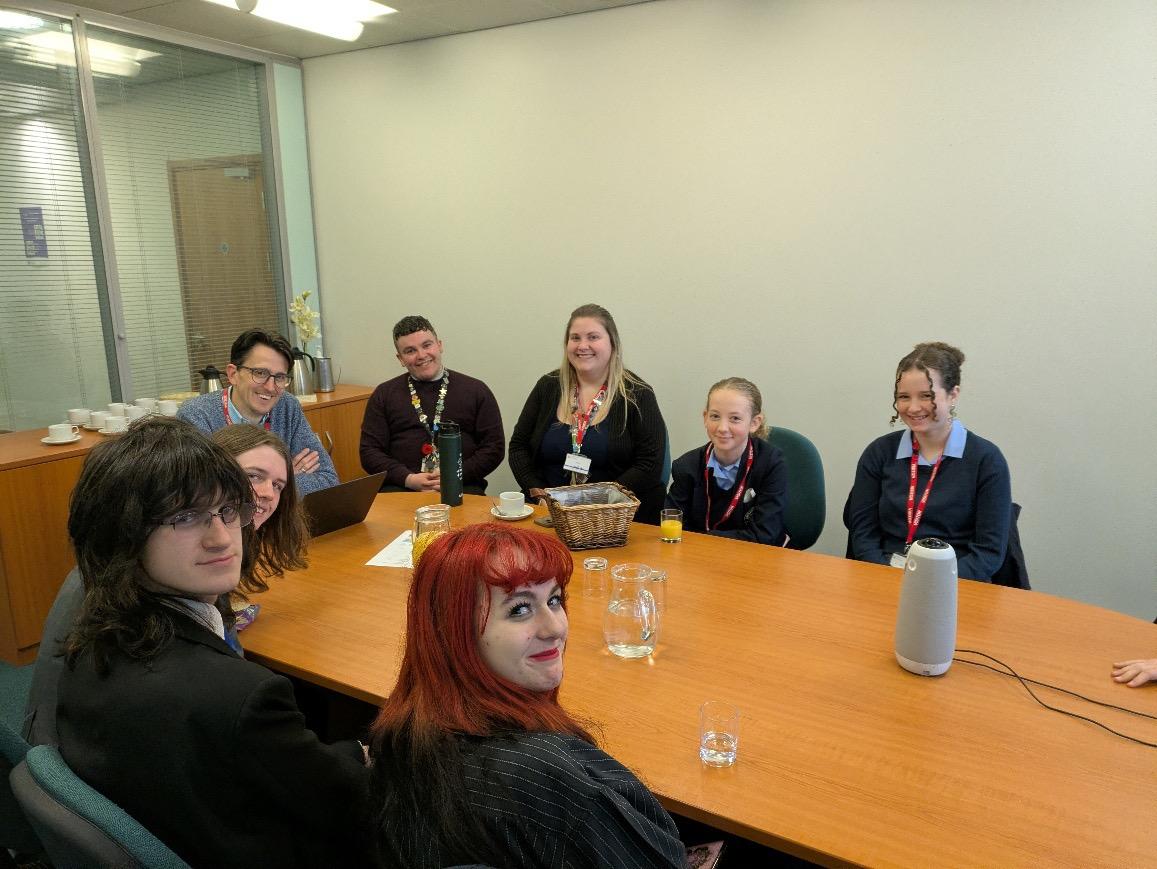
You know that feeling when you plan a party, organise a time, a date, a venue, provide refreshments, maybe even decorations, and invite everyone and then wait to see who will turn up…
I was really hopeful that we would be able to hear from a wide range of people at the two Youth Ministry Review open meetings that we were holding at the end of April, one at Saint Joseph’s, Wrightington, and the other at St Monica’s, Bootle.
We had invited everyone using email, social media, parish bulletins and the Catholic Pic. We spread it by written word and word of mouth. And then waited with bated breath.
The meetings were held in response to one of the main concerns that came out of the Synodal discussions: what are we to do about the young people in our Church, and how do we reach out to those who don’t currently engage?
The process of reviewing youth ministry had already begun in the autumn when a group of experienced priests, catechists, deacons, teachers, youth workers, and charity workers met together twice to discuss the situation and share ideas. This became a more formalised process when Danny Curtin – who works as a facilitator for charities and Church organisations to help them fulfil their missions – was engaged by the Archdiocese of Liverpool to conduct a wider-held conversation.
Danny started with one-to-one chats with people experienced in the field of youth ministry through parishes or schools. Next came the group meetings involving chaplains, young adults and teenagers. Then the day finally arrived for the open meetings - and we were thrilled when over 70 people of various ages came out across two evenings to share their ideas, make suggestions, and support the work of youth ministry.
They were asked to reflect on why they had come to the meetings and what made them happy or sad when they thought about young people and the Church. Group conversations flowed easily and there was plenty of enthusiasm, care, and concern for youngsters and their faith.
Guided by Danny, the conversation turned to how the Church was helping and also in which areas it might be failing young people.
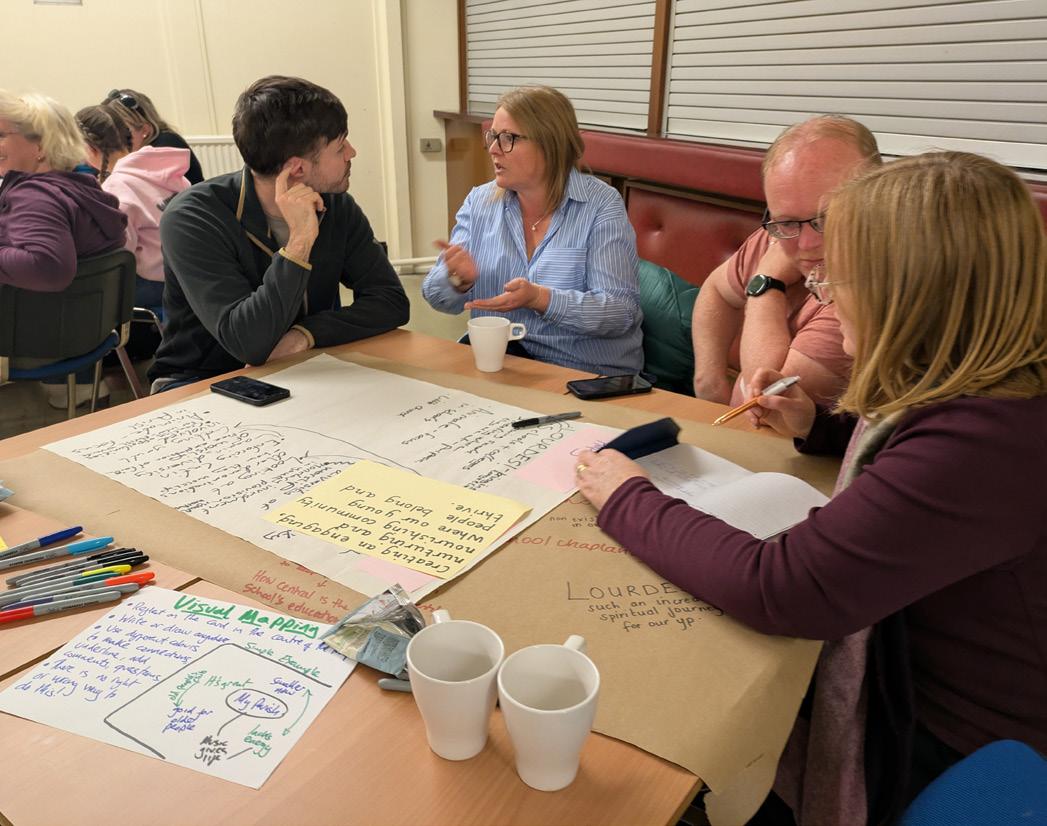
There was much to celebrate and rejoice in. The mood turned more reflective as we discussed how we, as a Church, could be doing more. Although this was the most challenging part of the conversation, it was also the most fruitful.
Many excellent and varied suggestions were put forward including paid youth ministry workers; how to use IT and communication effectively; ways to build community; training programmes; diversity in youth liturgy; follow-up after Lourdes and Confirmation; family formation; retreats; and youth councils. All these ideas will be brought together in a report which will be made public in the coming months. There is still so much work to be done. The next steps are to call together a working party to bring together a vision for youth ministry for our archdiocese over the next decade, a vision which will be based on all we heard.
Our priority now is to continue to listen to more young people and to include them and their ideas in the process, so we can strive to fulfil their needs, help them develop their spiritual lives, and empower them to take their place in the Church. This will mean putting concrete plans into place. We’ve talked the talk, but now it’s time to walk the walk.
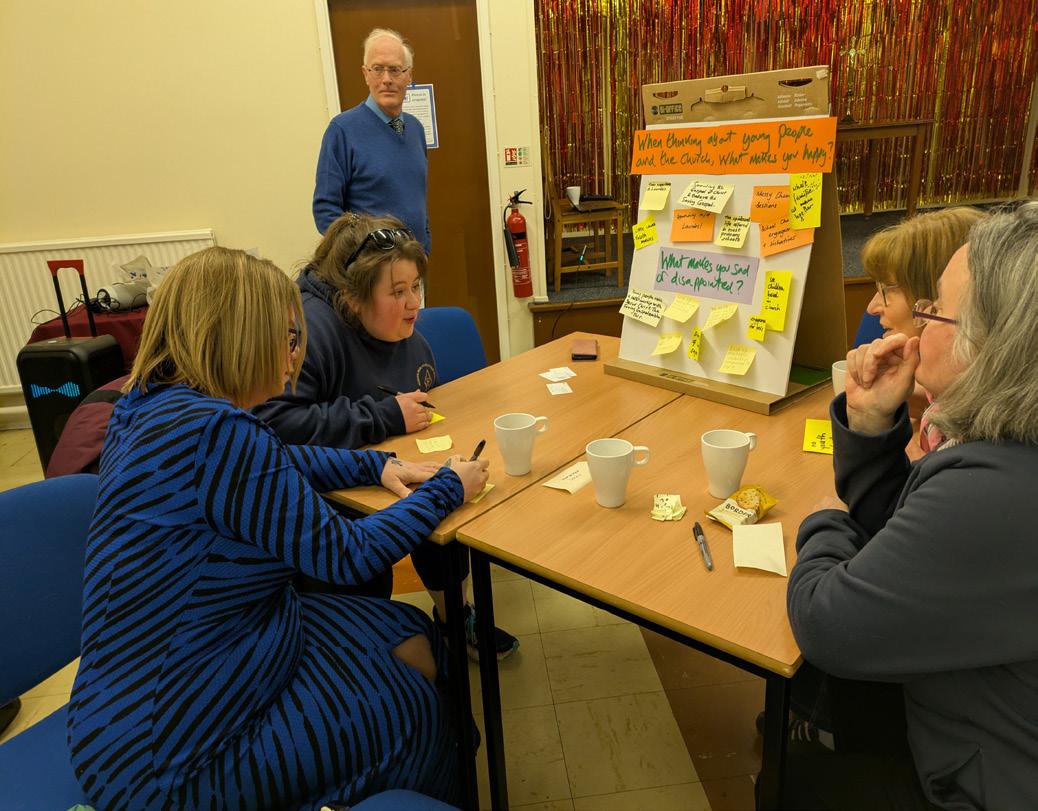
Dialogue and Unity
Why interreligious dialogue is more vital than ever
By Rev. Deacon Paul Rooney
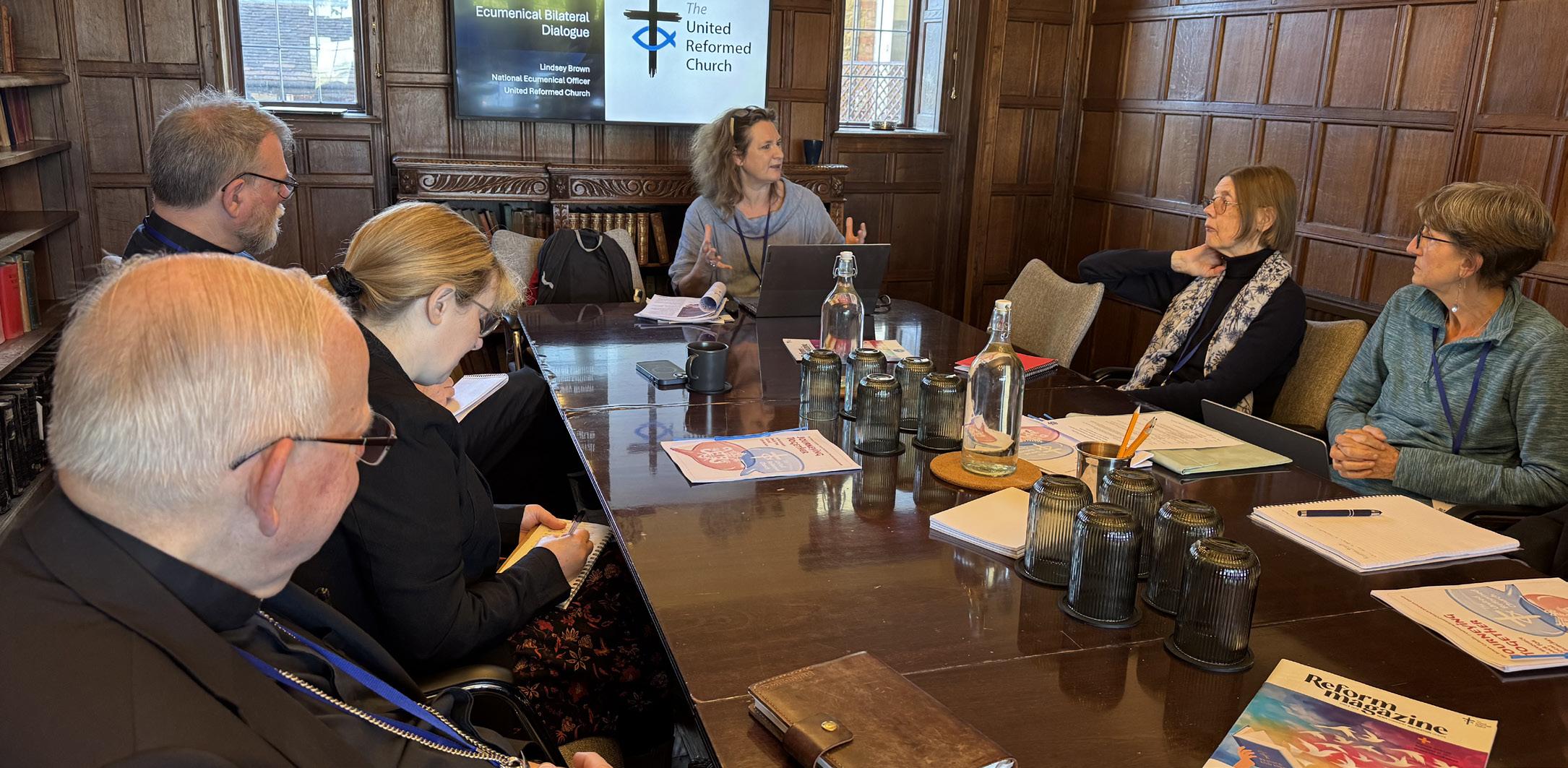
The Catholic Bishops’ Conference of England and Wales (CBCEW) actively conducts interreligious and ecumenical dialogue through its dedicated Department for Dialogue and Unity. At a national level this focuses on strengthening relationships with other Christian denominations, the Jewish community and other faiths. To complement this at a local level, the Archdiocese of Liverpool has its own Dialogue and Unity Commission. This body advises the archdiocese on inter-church and interfaith relations and relates to key bodies and initiatives. Two of its members, Father Moses Ariho and Deacon Paul Rooney, represented the archdiocese at the annual Ecumenical and Interreligious Co-ordinators’ Conference in Northamptonshire on 28 and 29 April.
Fr Moses serves as a diocesan interfaith adviser, having replaced Cardinal Michael Fitzgerald in the role, and has a parish ministry at St Vincent de Paul, Liverpool. Deacon Paul is the Assistant Director for the Diaconate and has decades of experience working as an environmental geographer in the ecumenical setting of Liverpool Hope University. He serves in the parish of St Wilfrid, Widnes.
The conference provided an opportunity for representatives from around the country to hear from one another and share best practice, and to receive updates from CBCEW staff regarding official national dialogues and other ecumenical and interreligious activities.
The ecumenical input to the conference included a presentation by Ms Lindsey Brown of the United Reformed Church (URC) on the recently completed third phase of the Roman Catholic-URC dialogue group’s conversations and the resource pack for churches, ‘Journeying Together’, produced by the group as part of their work. Fr Martin Browne OSB, official of the western section of the Dicastery for Promoting Christian Unity, gave a presentation on how Pope Leo XIV is shaping ecumenical and interreligious dialogue.
The conference also discussed the significance of the 60th anniversary of Nostra Aetata, the Second Vatican Council’s declaration on interreligious relations. The anniversary serves as a
milestone to renew our commitment to dialogue with Jewish, Muslim and other religious communities and reminds us of the need to address contemporary challenges. Fr Michael Barnes SJ presented his work to translate Nostra Aetate and provide a fresh look of this declaration after 60 years and how its message is still relevant to our world today. This translation reveals that interreligious dialogue is the way to go if the world is to attain peace.
The year 2026 marks a critical juncture for interreligious and ecumenical dialogue, with global leaders, such as Pope Leo XIV, emphasising that the urgency for building bridges is greater than ever. As the world faces increasing polarisation, identity-based conflict and the weaponisation of religious differences, proactive dialogue is viewed not merely as a diplomatic tool, but as a vital, transformative and ‘unarmed’ pathway to peace.
Reflecting on the conference, Deacon Paul said “Ecumenical and interreligious collaboration is essential for tackling global crises, such as hunger and the impact of climate change, uniting all in shared action and solidarity. Through this work we are able to explore how communities of faith can build a more peaceful society.”