2026 – 203 0
Environmental Sustainability Strategy
Inquisitive minds. Kind hearts. Purposeful futures.
Acknowledgement of Country The Cathedral School of St Anne and St James acknowledges the Wulgurukaba and Bindal peoples, the Traditional Custodians of the land and waters on which we learn. We recognise their deep and enduring connection to Country — to the land, the waterways, and the living ecosystems of the Townsville region.
We pay our respects to elders past and present and extend that respect to all Aboriginal and Torres Strait Islander peoples within our community and beyond. We acknowledge that the wisdom to live sustainably on this land, in its deepest sense, has always been practised here. The wisdom of First Nations people in caring for Country, through knowledge of seasons, species, water, and land, is a living tradition. We commit to learning from this wisdom as we shape the future of our campus and our community. As we commit to caring for the places we inhabit and the futures we are shaping, we do so with gratitude for what this Country teaches us.
May we walk gently upon it.
2 | 2026 – 2030 ENVIRONMENTAL SUSTAINABILITY STRATEGY
Inquisitive minds. Kind hearts. Purposeful futures.
Contents From the Principal
5
About This Plan
6
Our School
9
Our Sustainability Vision
10
Our Six Priority Megatrends
10
Our Commitments
11
Completed and Current Practices
13
Sustainability Action Plan
20
Project Prioritisation Matrix Three Phase Action Plan 2026–2030
THE CATHEDRAL SCHOOL
21 22
2026 – 2030 ENVIRONMENTAL SUSTAINABILITY STRATEGY | 3
What kind of world are we preparing our students to lead? 4 | 2026 – 2030 ENVIRONMENTAL SUSTAINABILITY STRATEGY
Inquisitive minds. Kind hearts. Purposeful futures.
From the Principal There is a question I find myself returning to often as I walk our campus each morning: What kind of world are we preparing our students to lead? It is not a new question for schools, but it has never felt more urgent, more alive, or more full of possibility than it does right now. At The Cathedral School, we have always understood education to be about far more than academic achievement. Since our founding, the values of Respect, Responsibility, Engagement, and Service have shaped not only how we teach, but how we think about our obligations to one another and to the world we share. It is no coincidence that these same values form the most natural foundation imaginable for a commitment to sustainability.
THE CATHEDRAL SCHOOL
To respect the natural world. To take responsibility for our impact upon it. To engage deeply and honestly with the challenges our planet faces. To serve future generations with the same care we hope to show our students today. The Cathedral School's Sustainability Strategy is, at its heart, an expression of these values in action. What excites me most as I introduce this strategy is that we are not starting from scratch. Across our campus, thoughtful and committed work has already been quietly underway in classrooms, in gardens, in the choices made by staff, and in the curiosity of our students. This strategy does not mark the beginning of our sustainability journey; it marks the moment we choose to pursue it with greater intention, coordination, and visibility. It is our commitment to doing this work not by chance, but by design.
To give that design both rigour and direction, we have adopted the BGA Sustainability Framework as our guiding structure. This framework provides us with a shared language and a coherent pathway. One that connects our campus operations, our curriculum, and our community in a way that is meaningful, measurable, and enduring. It ensures that our efforts are not isolated gestures, but part of a genuine and evolving whole. That word community is perhaps the most important one in this entire strategy. Sustainability cannot be the project of a single committee or the passion of a few dedicated individuals. It must belong to all of us. I am extending a genuine invitation to every student, staff member, and family in our community to see themselves as an active participant in this shared journey.
Your ideas, your energy, your questions, and your leadership matter here. The students who walk through our gates each day are not simply the inheritors of a changing world they are its future stewards, and we have a profound responsibility to equip them with the knowledge, the habits of mind, and the sense of agency to meet that responsibility with confidence and hope. This strategy represents our promise to take that responsibility seriously. I look forward to walking this path together with curiosity, with commitment, and with the deep sense of care for people and place that has always defined who we are at The Cathedral School. LUKE B AI L L S Principal The Cathedral School of St Anne and St James
2026 – 2030 ENVIRONMENTAL SUSTAINABILITY STRATEGY | 5
About This Plan This Sustainability Strategy provides The Cathedral School with a clear, coherent, and practical direction for sustainability across all aspects of school life. It considers how the campus is designed and operated, how learning is delivered, how the school connects with its community, and how decisions are made around procurement and investment.
The Strategy is structured around five key themes, based on the best practice themes of the Independent Schools Block Grant Authority that reflect best practice in school-based sustainability: 1. Energy and Carbon 2. Total Water Cycle 3. Cool and Healthy Spaces 4. Nature-Based Solutions 5. Zero Waste and Circularity These themes draw on established sector guidance and have been adapted to suit Cathedral’s context, priorities, and future direction. This approach supports alignment with the School’s Master Plan and positions Cathedral for long-term stewardship, operational efficiency, and compliance with current and emerging requirements.
6 | 2026 – 2030 ENVIRONMENTAL SUSTAINABILITY STRATEGY
The Strategy has been developed through: • Establishment of a Sustainability Steering Committee, bringing together expertise from facilities management, curriculum, leadership, and the broader school community • Review of existing sustainability initiatives, infrastructure, and practices across the campus
This is a living document. The Action Plan will be reviewed and updated annually. Stage 1 focuses on capturing and formalising existing initiatives to establish a strong baseline. Stages 2 to 5 set the forward direction, with targets and milestones refined over time as capability, data, and opportunities evolve.
• Consideration of global megatrends relevant to the school, including climate resilience, responsible consumption, biodiversity and regeneration, emerging technologies, and healthy, connected environments • Consultation with staff, students, and key stakeholders to identify priorities and opportunities • Benchmarking against leading schools and recognised sustainability frameworks to ensure a practical and future-focused approach
Inquisitive minds. Kind hearts. Purposeful futures.
THE CATHEDRAL SCHOOL
2026 – 2030 ENVIRONMENTAL SUSTAINABILITY STRATEGY | 7
8 | 2026 – 2030 ENVIRONMENTAL SUSTAINABILITY STRATEGY
Inquisitive minds. Kind hearts. Purposeful futures.
Our School The Cathedral School of St Anne and St James has been educating young people in North Queensland since 1917. Founded as St Anne’s Church of England Girls’ School by the Sisters of the Society of the Sacred Advent, the school moved to its current 24-acre campus in Mundingburra in 1958 and became fully coeducational in 1980. Today, Cathedral is Townsville’s only independent Anglican school, a place with more than a century of history and a living commitment to the flourishing of every student in its care. Our single campus sits approximately six kilometres from the Townsville CBD, offering a genuinely integrated
THE CATHEDRAL SCHOOL
school community from Early Learning through to Year 12, with boarding available from Year 7. Approximately 150 boarding students, many from rural, coastal, and island communities across North Queensland and beyond call Cathedral home. International students also form part of our community, bringing global perspectives that enrich the learning experience for all. Cathedral is shaped by Anglican values and a whole-person philosophy. Academic rigour sits alongside a rich and varied co-curricular life. Students have access to a wide range of sporting, cultural, performing arts, community service, and leadership opportunities; from music ensembles, choirs, drama, and debating, to outdoor education experiences that take students into the reef, rainforest, and outback environments of North Queensland.
Community service is deeply embedded in school culture through programs such as the Leo Club, the Duke of Edinburgh’s Award, and a range of student-led initiatives.
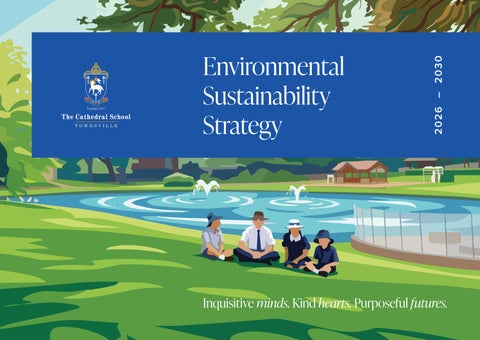
A freshwater lagoon and wetlands system forms the ecological heart of the campus, supporting active biodiversity and providing a living classroom for environmental learning.
Robotics, public speaking, and international exchange programs extend learning well beyond the classroom. Whatever a student’s passion or purpose, Cathedral offers pathways to discover and develop it.
Our school motto, Talium dei Regnum - Of Such is the Kingdom of Heaven speaks to a long tradition of educating not just for academic success, but for character, service, and a meaningful life.
Underpinning all of this is a pastoral care structure that ensures every student - day student or boarder is known, supported, and valued as an individual.
Our purpose: Inquisitive minds. Kind hearts. Purposeful futures reflect who we are and who we aspire to be.
Our campus itself is a distinctive environment. Mature rain trees, some more than a century old define the character of the grounds, providing natural shade and a sense of permanence that few school campuses can match.
This Sustainability Strategy is an expression of that purpose: a commitment to ensuring that the environment in which our students learn, and the values they carry into the world, reflect genuine care for people, place, and planet
2026 – 2030 ENVIRONMENTAL SUSTAINABILITY STRATEGY | 9
Our Sustainability Vision “Our vision is to live and learn sustainably, creating a school community where care for people, place, and planet shapes every action. Sustainability at Cathedral is not a single initiative but a shared responsibility expressed through our culture, our spaces, and our learning.” Grounded in our school values of Respect, Responsibility, Engagement, and Service, our sustainability vision connects directly to the kind of purposeful futures we are shaping for our students. To respect the planet is to respect each other. To act responsibly toward our environment is the deepest expression of service. To engage with the sustainability challenges of our time is to prepare our students for the world they will inherit and lead.
Our Six Priority Megatrends The QIS BGA School Sustainability Guide uses megatrends as a foundational step in building a school sustainability strategy. Rather than jumping immediately to actions and targets, the Guide asks schools to first look outward to understand the broader forces at play, and then inward, to consider how those forces intersect with the specific context, values, and opportunities of their own community. This process of contextualisation is what makes a sustainability strategy genuinely school-specific rather than generic. The Cathedral School’s Sustainability Steering Committee identified six global megatrends as most relevant to our community and our context.
10 | 2026 – 2030 ENVIRONMENTAL SUSTAINABILITY STRATEGY
These megatrends frame the challenges and opportunities that our sustainability work must address: Climate Resilience:
Emerging Technology:
Responsible Consumption:
Healthy and Smart Environments:
adapting to and mitigating the impacts of a changing climate, particularly relevant in Townsville’s tropical environment
rethinking how our community uses, purchases, and disposes of resources
Biodiversity and Regeneration:
protecting and restoring the living systems on and around our campus
harnessing innovation to improve our environmental performance and prepare students for a technology-shaped future
designing spaces that support physical and mental wellbeing for all members of our community
Local and Community:
connecting our sustainability work to the broader Townsville community, First Nations knowledge, and local ecosystems
These global megatrends were endorsed and aligned to community and school stakeholder consultation and align with the Schools existing and emerging compliance requirements, school strategic plan and master plan.
Inquisitive minds. Kind hearts. Purposeful futures.
Our Commitments Our commitments reflect Cathedral’s values and connect our vision to action. The integration of sustainability within teaching, operations, and community life ensures that principles such as respect, responsibility, engagement, and service are consistently reflected in every aspect of our activities. Energy and Carbon We use energy wisely and model care for creation through responsible choices. • Reduce energy use through efficient design, smart systems, and renewable generation. • Monitor energy performance to guide learning and support better decisions. • Model energy-smart behaviour and build future-focused learning about energy. • Design all new developments to reflect sustainable, low-energy principles. • Strengthen community understanding of how energy choices shape our environment and future.
THE CATHEDRAL SCHOOL
Total Water Cycle We respect water as a shared and precious resource that sustains our environment, wellbeing, and learning. • Manage and conserve water to support biodiversity, climate resilience, and daily life. • Capture and reuse water through efficient systems and thoughtful design. • Integrate water stewardship into learning through observation, data, and reflection. • Maintain green spaces that are water-efficient, restorative, and climate-aware. • Deepen community understanding of the connection between water, climate, and wellbeing. Cool and Healthy Spaces We design and care for spaces that nurture wellbeing, belonging, and learning within our living campus, framed by the lagoon, rain trees, and generations of community connection. • Maintain natural shade, ventilation, and biodiversity for comfort in our tropical climate. • Create inclusive and active spaces that reflect our history, setting, and identity.
• Apply sustainable, climateresponsive design to support learning and wellbeing. • Encourage shared responsibility for caring for the spaces that sustain health and community. • Deepen community understanding of how healthy spaces support learning, connection, and wellbeing. Nature-Based Solutions We care for creation by protecting and enhancing our natural environment as a living classroom. • Restore and protect the lagoon, rain trees, and green spaces as key habitats. • Use planting and landscape design to support biodiversity and moments for reflection. • Embed outdoor learning across year levels to strengthen connection to place.
Zero Waste and Circularity We use resources wisely and rethink waste as opportunity for learning and community impact. • Build a culture of responsible consumption and visible low-waste habits. • Strengthen systems for recycling, composting, and sustainable purchasing. • Provide hands-on opportunities to turn waste into learning, creativity, and innovation. • Develop flexible, future-ready approaches to emerging waste challenges. • Strengthen community understanding of how resource choices and circular practices create shared benefit.
• Support service and stewardship projects within and beyond the school grounds. • Deepen community understanding of how natural systems, culture, and place support a thriving environment.
2026 – 2030 ENVIRONMENTAL SUSTAINABILITY STRATEGY | 11
12 | 2026 – 2030 ENVIRONMENTAL SUSTAINABILITY STRATEGY
Inquisitive minds. Kind hearts. Purposeful futures.
Completed and Current Practices The Cathedral School has already made significant investments in sustainability across its campus and has established the governance foundations to drive this work forward.
The Cathedral School already undertakes a range of activities that contribute to environmental stewardship, resource efficiency and healthy learning environments. Many of these initiatives have developed organically through campus development, facilities management, curriculum activities and community engagement.
Many of these achievements have not been formally documented or communicated. The table below captures what is currently in place as well as the strategic and governance work already completed. This forms the baseline from which our forward plan is built.
Prior to the development of this Sustainability Strategy, these initiatives were not formally documented or mapped against a best practice framework. As a result, while sustainability practices are already occurring across the campus, the level of formal alignment, documentation and communication varies across different areas of the school.
THE CATHEDRAL SCHOOL
The development of this strategy provides an opportunity to begin bringing these activities together within a more coordinated framework. The following table provides an initial overview of current initiatives and emerging opportunities aligned to the sustainability themes.
This approach recognises that sustainability is an evolving area of practice and that the strategy will continue to develop over time as new initiatives, partnerships and learning opportunities emerge.
Through the implementation of the action plan, the school will progressively strengthen the mapping of sustainability initiatives across governance and leadership, teaching and learning, resource management, community engagement and the physical environment.
2026 – 2030 ENVIRONMENTAL SUSTAINABILITY STRATEGY | 13
Theme
Completed and Current Initiatives Large-scale rooftop solar photovoltaic system installed across the campus, generating substantial on-site renewable energy and delivering ongoing reductions in grid electricity consumption and operational costs. The system represents a significant capital investment in the school’s long-term energy resilience and carbon reduction pathway and returns significant contributions.
Energy & Carbon
Real-time solar monitoring system in place, providing measurable data on energy generation and cost savings across the campus. This data is currently held at the operations level and represents a significant untapped opportunity both as a communication tool to demonstrate the school’s renewable energy achievements to the community, and as a live learning resource for students and staff. Occupancy-sensing smart lighting installed throughout all classroom and learning spaces, automatically adjusting to real-time occupancy and eliminating unnecessary energy draw across the school day.
Smart air conditioning systems with automated two-hour timers installed across all learning spaces, ensuring conditioning operates only during active periods and preventing energy waste outside scheduled use. Structured facilities management walk-arounds conducted regularly by operations staff to identify and address energy inefficiencies across plant, equipment, and building systems throughout the campus providing a practical, ongoing mechanism for continuous improvement.
Applicable Megatrends • Climate Resilience • Emerging Technology • Climate Resilience • Emerging Technology • Healthy & Smart Environments • Climate Resilience • Healthy & Smart Environments • Emerging Technology • Climate Resilience • Healthy & Smart Environments
• Climate Resilience
All recently completed buildings, including the Learning Hub and Dining Hall redevelopment, designed and constructed to passive energy-efficiency standards, incorporating natural ventilation, thermally comfortable open learning environments, and climate-responsive design principles suited to the tropical North Queensland context.
• Climate Resilience
Swimming pool heated via solar thermal system, reducing reliance on conventional energy sources for aquatic facility operation, an often overlooked but meaningful application of renewable energy across the campus.
• Climate Resilience
All new capital works certified against recognised sustainability standards as a mandatory component of the design and construction process, embedding environmental performance into the school’s-built environment from the outset.
• Climate Resilience
14 | 2026 – 2030 ENVIRONMENTAL SUSTAINABILITY STRATEGY
• Healthy & Smart Environments • Emerging Technology • Emerging Technology
• Responsible Consumption
Inquisitive minds. Kind hearts. Purposeful futures.
Theme
Completed and Current Initiatives
Applicable Megatrends
On-site bore water supply historically connected to the adjacent hospital catchment provides a significant and reliable • Climate Resilience source of non-potable water for campus irrigation. This infrastructure currently services the rear portion of the grounds • Local & Community and represents an important long-term water security asset independent of the mains supply.
Total Water Cycle
Freshwater campus lagoon functions as a living stormwater management system, receiving and filtering surface runoff through natural wetland processes. The lagoon reduces peak discharge during tropical rainfall events and protects downstream waterway quality a critical function given Townsville’s high-intensity wet season rainfall patterns.
• Climate Resilience • Biodiversity & Regeneration
Active algae bloom management program in place to maintain lagoon health and ecological function, using monitoring • Biodiversity & Regeneration and targeted intervention to sustain water quality year-round particularly important during the wet season when • Climate Resilience nutrient loads increase. Site-wide stormwater management practices in place across campus hardstand, carpark, and building areas, directing surface water appropriately and minimising erosion, pollutant runoff, and localised flooding risk. Water-efficient fixtures including low-flow tapware and dual-flush cisterns incorporated into recently completed buildings as part of the certified sustainable construction standard embedding water conservation into new campus infrastructure as a matter of course. Swimming pool and aquatic facilities actively managed to minimise water consumption through appropriate chemical management, backwash scheduling, and evaporation control. The pool is solar heated, with water and energy management working in combination to operate the school’s aquatic program as responsibly as possible.
THE CATHEDRAL SCHOOL
• Climate Resilience • Climate Resilience • Responsible Consumption • Climate Resilience • Healthy & Smart Environments
2026 – 2030 ENVIRONMENTAL SUSTAINABILITY STRATEGY | 15
Cool & Healthy Spaces
Theme
Completed and Current Initiatives
Applicable Megatrends
Extensive mature rain tree canopy including individual specimens estimated to be over a century old provides substantial natural shade and passive cooling across core campus zones, significantly reducing ambient temperatures and creating comfortable outdoor environments without mechanical intervention. The canopy is one of the most significant natural cooling assets of any school campus in North Queensland.
• Climate Resilience
Dedicated arborist maintenance program in place to assess, manage, and protect the health, safety, and longevity of the school's significant rain tree population recognising this canopy as both a heritage and ecological asset that is central to the campus cooling strategy.
• Climate Resilience
Distributed natural learning areas with shade structures, seating, and landscaping positioned throughout the school grounds, supporting outdoor learning, passive recreation, and community gathering across all year levels in a climateappropriate and welcoming setting. The Rock Centre, Wonder Hub, Early Learning Centre and Junior School playground provide purposefully designed indoor-outdoor spaces that support active learning, play, and community life each incorporating elements of shade, ventilation, and natural materials appropriate to the tropical environment. All recently completed capital works incorporate climate-responsive design elements including elevated ceilings, cross-ventilation, deep eaves, shading, and thermal mass reducing reliance on mechanical cooling and supporting student and staff wellbeing across the full school day.
• Biodiversity & Regeneration • Healthy & Smart Environments • Biodiversity & Regeneration • Healthy & Smart Environments • Healthy & Smart Environments • Local & Community • Healthy & Smart Environments • Local & Community • Climate Resilience • Healthy & Smart Environments
Boarding facilities provide a comfortable, well-maintained residential environment for approximately 150 students, with • Healthy & Smart Environments ongoing investment in facilities that support health, rest, and belonging for students living on campus — many from • Local & Community remote and regional communities across North Queensland.
16 | 2026 – 2030 ENVIRONMENTAL SUSTAINABILITY STRATEGY
Inquisitive minds. Kind hearts. Purposeful futures.
Theme
Completed and Current Initiatives
Applicable Megatrends
The campus freshwater lagoon and surrounding wetland corridor supports significant and diverse native biodiversity. As an integrated ecological habitat within a built school environment, it is an exceptional and rare asset — providing a living classroom for environmental education, scientific observation, and direct community connection to local ecosystems.
• Biodiversity & Regeneration • Climate Resilience • Local & Community
Active revegetation and habitat restoration work underway around the wetland margins and lagoon foreshore, • Biodiversity & Regeneration progressively expanding the ecological value of the site and increasing native vegetation cover to support biodiversity • Climate Resilience and reduce erosion.
Nature-Based Solutions
Nominated employees act as wildlife carers on campus, supporting the school with in-house expertise to manage, protect, and appropriately respond to wildlife encounters in a safe and responsible manner. These are existing staff with informal responsibilities in this area. Established outdoor education program integrating curriculum-connected experiences across reef, rainforest, and outback environments, embedding place-based learning, ecological literacy, and direct connection to the natural systems of North Queensland into the school's educational culture from Junior to Senior School. The Connection Place, a dedicated outdoor gathering and reflection space unveiled at the school’s centenary in 2017, provides a designed landscape environment for community connection, commemoration, and informal outdoor life, integrating nature and heritage into the heart of the campus. Yarning circle on campus provides a permanent, purposefully designed space for First Nations cultural learning, ceremony, and reflection, acknowledging the ongoing connection of the Wulgurukaba and Bindal peoples to Country and embedding culturally inclusive practice into the fabric of campus life. Duke of Edinburgh's Award program and Leo Club provide structured opportunities for students to engage in environmental conservation, community service, and outdoor challenge, building ecological stewardship and active citizenship as core dimensions of the Cathedral experience. A thriving herb garden has been set up next to the Food Technology classroom, allowing students to actively participate in planting, harvesting, and utilising fresh herbs during hands-on food education. This approach connects learning to location, seasonal changes, and understanding where food comes from. Integrated pest and weed management program in place across campus grounds, with activity recorded on STS registers to ensure compliance, traceability, and ongoing protection of the site's biodiversity values.
THE CATHEDRAL SCHOOL
• Biodiversity & Regeneration • Local & Community • Biodiversity & Regeneration • Local & Community • Climate Resilience • Local & Community • Healthy & Smart Environments • Local & Community • Biodiversity & Regeneration • Local & Community • Biodiversity & Regeneration • Local & Community • Responsible Consumption • Biodiversity & Regeneration
2026 – 2030 ENVIRONMENTAL SUSTAINABILITY STRATEGY | 17
Zero Waste & Circularity
Theme
Completed and Current Initiatives
Applicable Megatrends
Dedicated recycling infrastructure installed throughout the campus, including clearly labelled and segregated bins for cans, plastics, and general recyclables across all school precincts, providing accessible, visible, and consistent pathways for responsible resource separation.
• Responsible Consumption
Paper and cardboard recycling systems in active operation across office, classroom, and administration facilities, reducing landfill contribution from the school's day-to-day operations.
• Responsible Consumption
BYOD (Bring Your Own Device) program and school-wide digital-first communications in place across Middle and Senior School, significantly reducing reliance on printed materials for learning, administration, and community communications, embedding low-waste habits into daily school life. Second-hand uniform scheme in place, enabling families to pass on quality uniforms for reuse within the school community, reducing consumption, lowering the cost of schooling, and providing a visible and practical demonstration of circular economy principles. Formal Modern Slavery procurement policy adopted across school purchasing, embedding responsible supply chain considerations into the school's commercial and contractual relationships and demonstrating ethical procurement leadership across the organisation. Structured food ordering and inventory management processes in place in the Food Technology classroom, reducing food waste through intentional planning, appropriate portion management, and stock control aligned to curriculum requirements. Construction and demolition waste management requirements embedded into recent major capital works including the Learning Hub and Dining Hall redevelopment, ensuring responsible handling, sorting, and disposal or reuse of building materials as part of the certified construction process.
18 | 2026 – 2030 ENVIRONMENTAL SUSTAINABILITY STRATEGY
• Responsible Consumption • Emerging Technology • Responsible Consumption • Local & Community • Responsible Consumption • Local & Community • Responsible Consumption • Responsible Consumption • Climate Resilience
Inquisitive minds. Kind hearts. Purposeful futures.
THE CATHEDRAL SCHOOL
2026 – 2030 ENVIRONMENTAL SUSTAINABILITY STRATEGY | 19
Sustainability Action Plan Stage 1 (2026 – 2027): Foundation, Baselines, and Immediate Actions Stage 1 has three parallel workstreams that run simultaneously throughout the period:
Workstream 1: Baseline & Audit
Workstream 2: Immediate Actions
Workstream 3: Planning & Governance
• Energy audit: consumption, solar generation, hot water, building envelope
• Sustainability Dashboard: design and scope audience-specific views (parents see energy savings as $ reinvested in student resources; students see environmental equivalents; Board sees ROI)
• Prioritisation matrix applied to all identified projects
• Water audit: mains consumption, bore coverage, fixture map, lagoon flows
• Sustainability storytelling: begin sharing the stories already happening: Wildlife Carers, solar achievements, lagoon and aquatic life, turning leaf matter into mulch
• Waste audit: streams, volumes, diversion rate
• Sustainability Innovation Challenge: scope and pilot for student participation
• Shade and cool space audit: campus map of gaps • Biodiversity register • Curriculum sustainability audit from ELC to 12 • Audit findings benchmarked against all six Cathedral megatrends to identify where current initiatives align and where gaps remain
• Behaviour signage: lights, AC, water, fans in all learning and communal spaces • Cultural and Heritage Trail: Sustainability Committee and Student Sustainability Guardians begin planning trail throughout the school (ongoing across all years) • Food Technology: incorporate local and sustainable produce into purchasing decisions • Canteen: establish sustainability and local procurement targets • Container deposit scheme: expand collection points; proceeds directed to student sustainability fund (program already active) • Clean-Up Australia Day: continue and grow existing participation as a community event • Strategy published on website; communicated across all channels
20 | 2026 – 2030 ENVIRONMENTAL SUSTAINABILITY STRATEGY
• Detailed action plans developed per theme (with owners, budgets, timelines) following audit completion • Student Sustainability Guardians formally established • Steering Committee quarterly operating rhythm confirmed • Grant opportunities mapped; first applications prepared • First annual sustainability report published (baseline data across all themes and megatrends) • First Nations consultation commenced for cultural planting plan
Inquisitive minds. Kind hearts. Purposeful futures.
Project Prioritisation Matrix
Env. Impact
Feasibility
Cost-Benefit
Edu. Value
Community
Sustainability Dashboard
★★★
★★★
★★★
★★★
★★★
Every project and initiative identified through this strategy has been assessed against five criteria to determine priority and sequencing. Criteria are rated on a three-point scale (★ Low / ★★ Medium / ★★★ High). Projects scoring highest overall are actioned earliest. The matrix is reviewed annually as baseline data becomes available and new opportunities emerge.
Storytelling & Sustainability Comms
★★★
★★★
★★★
★★★
★★★
Behaviour Signage (all themes)
★★★
★★★
★★★
★★★
★★★
Lagoon & Heritage Trail
★★★
★★★
★★★
★★★
★★★
Composting / Organics Program
★★★
★★★
★★★
★★★
★★★
Biodiversity Register
★★★
★★★
★★★
★★★
★★★
Local & Sustainable Procurement
★★★
★★★
★★★
★★★
★★★
Criteria applied:
Bore Irrigation Extension
★★★
★★
★★★
★★
★★
LED Lighting Upgrade Program
★★★
★★★
★★★
★★
★★
Sustainability Innovation Challenge
★★
★★★
★★★
★★★
★★★
Rainwater Harvesting
★★
★★
★★★
★★
★★
E-Waste Recycling Pathway
★★
★★★
★★★
★★★
★★
Env. Monitoring (Temp/RH/UV)
★★
★★
★★
★★★
★★
Sustainability Plan / Master Plan
★★★
★★
★★★
★★
★★★
• Environmental Impact • Operational Feasibility • Cost-Benefit and ROI • Educational Value • Community Significance Projects rated ★★★ across three or more criteria are flagged as high priorities and form the backbone of the Stage 1 and Stage 2 action pipeline.
THE CATHEDRAL SCHOOL
Initiative / Project
2026 – 2030 ENVIRONMENTAL SUSTAINABILITY STRATEGY | 21
Three Phase Action Plan
Table 1 Preliminary Action Plan Phases - note Phase timeframes to be determined upon detailed planning activities.
Action / Initiative
Phase 2
Phase 3
How We Will Measure It
Annual sustainability update in all community communications and at parent events
Strategy embedded in school identity; externally referenced in grants and sector reporting
Website engagement; community survey awareness; grant applications referencing strategy
Phase 1
Terms of Reference endorsed; quarterly meeting schedule set; action register in place
Annual review cycle embedded; progress tracked against this plan; subcommittees active
Strategy refreshed for 2028– 2030 period; governance model mature and selfsustaining
Meeting minutes and action register maintained; items actioned between meetings
Phase 1
Matrix criteria agreed; all identified projects assessed and ranked; pipeline documented
Projects actioned per priority ranking; matrix reviewed with updated audit data
Annual pipeline review Major projects delivering measurable outcomes; pipeline document; % of high-priority actions completed on schedule continuously updated
Establish annual sustainability progress reporting
Phase 1
First sustainability report published baseline data across all five themes and six megatrends
Years 2 and 3 reports demonstrate measurable improvement vs. baseline
Full five-year improvement story documented and publicly available
Map and pursue grant funding opportunities (QIS BGA and others)
Phase 1
Grant landscape mapped; eligible projects identified; first applications prepared
Grants program embedded At least one grant received and project delivered; lessons as annual strategic activity; captured for future applications consistent funding pipeline
Phase 1
Action plans reviewed and Detailed action plans for all five updated annually; budgets themes produced following aligned to capital and audit completion; owners named operational planning
Plans achieving targets; lessons from Years 1–3 informing Years 4–5 priorities
% of Year 1 actions completed; targets set and tracked in annual report
Phase 1
Guardians group operational; Terms of Reference endorsed; Year 5–12 representation confirmed; first project scoped in partnership with Steering Committee
Guardians presenting annually to Board; partnering with external organisations; program a recognised part of Cathedral life
No. of student members; projects led; year level representation; Board presentations
Priority
Phase 1 2026-27
Governance and Strategy Publish and communicate the Sustainability Strategy to the whole community Establish Sustainability Steering Committee operating rhythm and governance Develop and apply project prioritisation matrix
Develop detailed theme-level action plans (owners, budgets, timelines)
Establish Student Sustainability Guardians
Strategy on website; newsletter Immediate feature; assembly presentation; Action Board briefing delivered
Guardians advising on strategy; leading at least two campus sustainability projects per year; ELC–Year 4 connected
22 | 2026 – 2030 ENVIRONMENTAL SUSTAINABILITY STRATEGY
Annual report published to Board, community, and QIS BGA; targets reported against Grants applied for vs. received; $ value leveraged; projects funded externally
Inquisitive minds. Kind hearts. Purposeful futures.
Action / Initiative
Priority
Phase 1 2026-27
Phase 2
Phase 3
How We Will Measure It
Initial Action
Solar performance summary in newsletter; feature on Annual solar and energy website with generation data update in sustainability report; and dollar savings equivalent; savings clearly articulated story integrated into broader sustainability storytelling program
Solar ROI and carbon impact embedded in school's external narrative
Community awareness survey; newsletter open rates; community understanding of solar impact
Initial Action
Clear, consistent signage installed in all learning spaces, bathrooms, staffrooms, and common areas
Signage refreshed; effectiveness audited via observation and student survey
Behaviour embedded in campus culture; signage updated for new buildings
Observed reduction in energy waste behaviour (facility walkarounds); student survey
Phase 1
Energy audit completed; consumption baseline Audit findings actioned across established; solar net position lighting, AC, hot water, and calculated; hot water and glazing older building envelope reviewed; findings benchmarked against megatrends
Ongoing monitoring vs. baseline; audit repeated in Year 4 to measure progress
kWh consumed vs. generated annually; net grid draw; $/ student energy cost vs. baseline
Develop sustainability communication dashboard Phase 1 Phase 2 (energy, water, waste, biodiversity)
Dashboard scoped; audiencespecific views designed — parents see energy savings as $ reinvested in student resources; students see environmental equivalents (trees, emissions); Board sees ROI summary
Dashboard expanded with additional data streams; used in annual reporting and community events
No. of data inputs displayed; community visits online; termly update published; stakeholder feedback
Conduct lighting audit and implement LED upgrade program
Phase 1 Phase 2
Room-by-room lighting audit LED upgrades completed in all completed; site plan produced; priority older buildings; WELSupgrade priorities and costs equivalent standards applied identified
Full campus on high-efficiency lighting; LED upgrade program complete
% of campus on LED or equivalent; kWh reduction attributed to lighting; cost savings
Assess window/door sealing, glazing, and shading in older buildings
Phase 1 Phase 2
Assessment brief prepared; desktop review of building ages and likely glazing types
Remaining envelope improvements completed; post-upgrade energy data collected
Energy performance data from upgraded vs. unimproved buildings; comfort survey
Energy and Carbon Communicate solar achievements and financial savings to the school community Install behaviour signage — lights, AC, fans, and screens in all spaces Complete campus energy audit — consumption, generation, hot water, and building envelope
THE CATHEDRAL SCHOOL
Dashboard live and accessible online; displayed on campus; updated termly with current data
Full assessment completed; priority sealing, shading, and glazing upgrades costed and completed
2026 – 2030 ENVIRONMENTAL SUSTAINABILITY STRATEGY | 23
Action / Initiative
Priority
Phase 1 2026-27
Phase 2
Phase 3
How We Will Measure It
Phase 3
Baseline energy audit data collected; net-zero options noted for future evaluation
Audit data analysed; feasibility of battery storage and additional solar assessed as part of capital planning
Net-zero pathway document endorsed by Board; first capital actions (battery storage or additional solar) funded if viable
% reduction in grid energy draw vs. baseline annually; carbon emissions trajectory; Board decision documented
Ongoing
Requirement confirmed and documented in all new project briefs from Year 1 onwards
All Year 2–3 capital works meeting certification requirements; first postoccupancy reviews completed
Post-occupancy data from new buildings used to inform future design briefs
% of capital works achieving sustainability certification; postoccupancy energy data
Initial Action
Signage at lagoon, bubblers, taps, and irrigation controls explaining water systems and conservation
Signage expanded across boarding and all new precinct areas; refreshed where needed
Water stewardship visible and understood across the whole campus community
Community and student survey; observation of waterconscious behaviour
Initial Action
First interpretive signs installed at lagoon; lagoon featured in newsletter and on school website; integrated into sustainability storytelling program
Full interpretive trail established around lagoon and wetlands with ecological and stormwater story
Lagoon profiled in annual sustainability report and curriculum; ecological function celebrated
Community awareness survey; educational visits to lagoon; curriculum units using lagoon
Phase 1
Water audit completed; mains consumption baseline set; bore irrigation coverage mapped; all fixtures documented; lagoon inputs/outputs recorded; findings benchmarked against megatrends
Audit findings actioned; priority fixture upgrades and irrigation improvements scoped and funded
Annual water monitoring embedded; Year 4 audit demonstrates improvement vs. baseline
Annual mains water consumption (litres/student/ year) vs. baseline; bore coverage %
Energy and Carbon continued… Evaluate net-zero pathway options based on audit findings (battery storage, additional solar, renewable tariffs) Require sustainability certification and postoccupancy review in all new capital works Total Water Cycle Install water conservation and education signage at key campus locations Develop lagoon interpretation and community communication
Complete campus water audit — mains consumption, bore coverage, fixture map, lagoon flows
24 | 2026 – 2030 ENVIRONMENTAL SUSTAINABILITY STRATEGY
Inquisitive minds. Kind hearts. Purposeful futures.
Action / Initiative
Priority
Phase 1 2026-27
Phase 2
Phase 3
How We Will Measure It
Phase 1
Feasibility and cost plan completed; extension to front of school and remaining unserved areas scoped; staged implementation plan agreed; grant application prepared
First stage of bore irrigation extension implemented; front of campus connected; mains irrigation significantly reduced
Bore irrigation covering full or near-full campus; mains irrigation for landscaping eliminated or minimised
% of campus irrigated by bore vs. mains; mains water saving attributed to extension (litres/ year)
Map all water fixtures and Phase 2 plan WELS-rated upgrades Phase 3 (taps, toilets, showers)
Fixture map completed as part of water audit; WELS ratings recorded for all existing fittings
Priority upgrades completed in highest-use areas; WELS compliance required in all new builds
Average WELS rating across All fixtures meeting minimum campus; estimated water WELS 4-star standard; upgrade savings from upgrades (litres/ program complete year)
Investigate and install rainwater harvesting infrastructure
Phase 2 Phase 3
Preliminary options noted in water audit; no Year 1 capital commitment; included in Year 2 planning
Options assessed; pilot location agreed; first rainwater tank installed and connected to non-potable use (irrigation or toilet flushing)
Additional harvesting capacity installed; volume of mains water displaced measured annually
Volume of rainwater harvested annually (litres); mains water displacement
Install pool cover and review pool water management
Phase 2 Phase 3
Pool evaporation audit completed; cover options costed and presented to leadership
Pool cover installed; chemical, backwash, and evaporation management reviewed and optimised
Pool water efficiency optimised; annual savings documented
Estimated water saving from pool management (litres/year); chemical use reduction
Document and formalise campus stormwater management plan
Phase 2 Phase 3
Stormwater management practices documented; neighbour impact assessment scoped
Formal stormwater management plan endorsed; any drainage improvement works underway
Plan reviewed and updated; stormwater resilience confirmed; neighbour impacts mitigated
Stormwater management plan in place and current; neighbour impact assessment completed
Investigate greywater or stormwater reuse for nonpotable uses
Phase 3
Preliminary feasibility noted in water audit; included in longerterm capital planning
Feasibility study completed; options and capital costs presented to Board
Business case decision documented; implementation under way if approved
Volume of mains water potentially displaced; decision rationale documented
Total Water Cycle continued…
Scope and stage bore water irrigation extension to front and full campus
THE CATHEDRAL SCHOOL
2026 – 2030 ENVIRONMENTAL SUSTAINABILITY STRATEGY | 25
Action / Initiative
Priority
Phase 1 2026-27
Phase 2
Phase 3
How We Will Measure It
Celebrate rain tree canopy Initial and passive design Action features in community communications
Rain tree heritage story in newsletter; passive design features of new buildings published on website; integrated into sustainability storytelling program
Annual feature in sustainability report; rain trees used as centrepiece of campus identity comms
Campus character and bioclimatic design embedded in school identity; recognised in sector
Community engagement metrics; school pride and connection survey; media references
Develop long-term arborist and canopy management plan
Phase 1
Arborist-endorsed management plan for rain tree population completed; native supplementary species list agreed
First supplementary native shade species planted in agreed locations; rain tree health monitored
Native shade canopy established in priority areas; rain tree succession planning active
Rain tree health status (annual arborist report); number of native shade species planted
Phase 1
Audit completed; shade coverage map produced; priority improvement areas identified with costings
Top three priority shade improvements implemented (shade sails, seating, native planting)
All identified shade gaps addressed; outdoor learning areas meeting tropical comfort benchmarks
% of outdoor learning areas with adequate shade; before/ after temperature data; student survey
Phase 1
Monitoring scoped; pilot sensors in 2 outdoor and 2 indoor learning spaces; baseline data collection begins
Full monitoring network across key outdoor and indoor spaces; data published in annual report
Monitoring data informing capital planning and curriculum; multi-year trends visible
Temperature, humidity, UV, and air quality readings at all monitored points; year-on-year trend
Phase 2
IEQ assessment brief prepared; older buildings and boarding facilities identified as priority
Full assessment completed (air quality, mould risk, acoustics); remediation plan developed and funded
All identified IEQ issues resolved or managed; postremediation monitoring in place
Air quality readings; mould incidence reports; acoustic assessment results; remediation complete
Phase 2
Audit findings available; improvement options costed for Year 2 budget consideration
Three highest-priority areas improved; monitoring data confirms thermal benefit
All priority improvements completed; outdoor space utilisation data collected
No. of outdoor learning areas improved; before/after temperature comparison; usage data
Sustainability principles documented; applied to active capital project briefs immediately
All Year 2–3 capital works meeting climate-responsive design criteria; sustainability formally referenced in planning documents
Full integration of sustainability strategy into Master Plan complete; post-occupancy data used to refine design criteria
Master Plan updated to reference sustainability strategy; % of capital works meeting criteria
Cool and Healthy Spaces
Complete campus shade gap assessment - outdoor learning and recreation areas Install environmental monitoring temperature, humidity, UV index, and air quality Assess indoor environmental quality (IEQ) in older buildings and boarding facilities Implement priority shade and outdoor comfort improvements
Integrate sustainability strategy into Master Plan Phase 3 and all capital works briefs
26 | 2026 – 2030 ENVIRONMENTAL SUSTAINABILITY STRATEGY
Inquisitive minds. Kind hearts. Purposeful futures.
Action / Initiative
Priority
Phase 1 2026-27
Phase 2
Phase 3
How We Will Measure It
Initial Action
Feature stories published across newsletters, social media, and website wildlife carer program, solar achievements, lagoon ecology, how leaf matter is turned into mulch; students involved in capturing and sharing stories
Storytelling embedded in school comms calendar; annual sustainability story series; student journalists and photographers involved
Storytelling a recognised part of Cathedral's identity; campus ecology stories attracting community and media interest
No. of stories published; community engagement metrics; student involvement in content creation
Initial Action
Herb garden expanded; Food Technology purchasing formally considers local and sustainable produce; first local supplier relationships documented
Student-led growing, harvesting, and cooking program operational; composting linked to garden; local produce proportion tracked
Garden expanded to include vegetables; additional KLAs using garden; produce volume tracked; local sourcing targets met
Student hours in garden; curriculum units using garden; annual produce harvested (kg); % local produce in Food Technology
Commence campus biodiversity register – Year 1 lagoon, wetlands, rain trees, and campus species
Register commenced; lagoon, wetlands, and known species documented; methodology established; findings benchmarked against biodiversity and regeneration megatrend
Register substantially complete; first annual update published; habitat quality baseline set
Register updated annually; year-on-year species comparison available; trends visible
Species count documented; habitat quality index; annual update published
Commence First Nations planting consultation and develop cultural planting plan
Cultural planting plan Consultation with Wulgurukaba endorsed; first plantings and Bindal representatives completed; interpretive commenced in a respectful, signage developed in community-led process partnership
Cultural native landscape established and maintained; ongoing partnership active
Community engagement events; species planted; partnership maintained; signage installed
Nature-Based Solutions
Sustainability storytelling – Wildlife Carers, solar, lagoon, leaf mulch and campus ecology
Expand herb garden and integrate local and sustainable produce into Food Technology
Phase 1
THE CATHEDRAL SCHOOL
2026 – 2030 ENVIRONMENTAL SUSTAINABILITY STRATEGY | 27
Action / Initiative
Priority
Phase 1 2026-27
Phase 2
Phase 3
How We Will Measure It
Ongoing
Sustainability Committee and Student Sustainability Guardians jointly plan trail scope; key stops mapped across the full school (lagoon, wetlands, yarning circle, rain trees, solar, garden, Connection Place, boarding precinct, new buildings)
Trail launched with interpretive signage at minimum six stops; Guardians lead tours for new students and community; curriculum-integrated across year levels
Trail extended and refreshed; digital layer explored; annual student-led tours embedded in school calendar; visitor usage tracked
No. of interpreted stops; student Guardian-led tours per year; visitor and community usage; curriculum integration
Phase 2
Habitat features installed Options assessed; most across campus; student feasible features identified; first involvement in construction habitat installations scoped and monitoring
Monitoring data collected on species using habitat features; features maintained and added to
No. of habitat features installed; species observed using them; student involvement hours
Phase 2
Program plan designed; student stewardship role defined; first planting event scoped for early Year 2
Annual planting events embedded; minimum 100 native plants per year; lagoon margins prioritised
Native plantings established and self-sustaining in key areas; biodiversity register reflecting growth
No. of native plants established and surviving annually; species diversity; lagoon margin cover
Establish structured student stewardship Phase 3 projects across year levels
Stewardship project framework designed; links to Duke of Edinburgh, Leo Club, and curriculum mapped
At least one structured stewardship project per year cohort; Junior and Senior participation
Stewardship embedded as cocurricular structure from ELC to Year 12; outcomes tracked
No. of students in stewardship projects annually; projects completed; curriculum connections
Formally connect outdoor education program to BGA Phase 3 sustainability themes
Outdoor education program mapped to sustainability themes; opportunities for explicit connection identified
Camp and outdoor programs documenting sustainability theme connections in curriculum materials
Student nature literacy outcomes measured; outdoor ed recognised as sustainability learning pathway
Curriculum mapping completed; student nature literacy data; external program recognition
Nature-Based Solutions continued…
Cultural and Heritage Trail — throughout the school (ongoing across all years)
Introduce wildlife habitat features across campus (possum boxes, bee hives, insect hotels) Establish annual native revegetation and planting program
28 | 2026 – 2030 ENVIRONMENTAL SUSTAINABILITY STRATEGY
Inquisitive minds. Kind hearts. Purposeful futures.
Action / Initiative
Priority
Phase 1 2026-27
Phase 2
Phase 3
How We Will Measure It
Upgrade bin and waste sorting signage across all campus precincts
Initial Action
Clear visual signage and consistent bin labelling at all waste stations; studentdesigned where possible
Signage refreshed; contamination rate audited; highest-error locations targeted
Signage system maintained and updated as campus evolves; contamination rate below 10%
Recycling contamination rate (waste audits); before/after comparison; student survey
Continue and grow CleanUp Australia Day as a whole-school community event
Initial Action
Existing participation expanded; families and community formally invited; waste collected and reported
Annual event embedded in calendar with growing community attendance; waste data published
Multi-year participation streak; event a well-known fixture of Cathedral's community calendar
No. of participants annually; volume of waste collected; community attendance vs. prior year
Initial Action
Existing scheme acknowledged; collection points expanded and clearly labelled; proceeds formally directed to student sustainability initiatives
Regular scheduled collections; proceeds fund a named student-led sustainability project annually
Container deposit embedded in campus culture; proceeds tracked and reported in annual report
No. of containers collected per term; $ returned; student fund projects delivered
Initial Action
Canteen purchasing reviewed; sustainability and local procurement targets set; first local supplier relationships established; single-use packaging audit commenced
Targets met or progress demonstrated; local produce proportion tracked termly; packaging changes implemented
Canteen procurement meeting sustainability targets; local sourcing embedded in supplier contracts
% local produce; % single-use items eliminated; supplier sustainability audit; costbenefit tracked
Phase 1
Waste audit completed; streams mapped and volumes Year 2 repeat audit completed; measured; diversion rate improvement vs. baseline calculated; targets set for Years measured; targets reviewed 2–5; findings benchmarked against megatrends
Annual waste audit embedded; Annual waste diversion rate %; waste stream breakdown; vs. diversion rate improving yearYear 1 baseline on-year toward 80%+
Phase 1
Organic waste collection partner identified; trial commenced with tuckshop or kitchen; hygiene protocols established
Program extended to boarding; Volume of organics diverted from landfill annually (kg); on-site composting linked to partner collections per term garden; volume data tracked
Zero Waste and Circularity
Expand container deposit scheme and direct proceeds to student sustainability fund
Establish sustainability and local procurement targets for canteen
Complete campus waste audit and establish stream-by-stream baselines and targets
Trial and implement composting and organic waste recovery program
THE CATHEDRAL SCHOOL
Program fully operational; all tuckshop and kitchen organic waste diverted from landfill
2026 – 2030 ENVIRONMENTAL SUSTAINABILITY STRATEGY | 29
Action / Initiative
Priority
Phase 1 2026-27
Phase 2
Phase 3
How We Will Measure It
Phase 1
Certified recycler identified; first BYOD device collection event held; process documented for staff
Student-led e-waste program operational; annual collection events; supplier take-back explored
All school technology waste diverted from landfill; program embedded in BYOD renewal cycle
Volume of e-waste collected (kg); no. of devices recycled; student involvement
Phase 1
Tuckshop packaging audit completed as part of waste audit; priority changes identified
Packaging changes implemented; single-use plastics significantly reduced
Waste-free tuckshop target largely achieved; packaging audit repeated
% of single-use plastics eliminated; packaging audit score vs. baseline
Phase 1
Procurement audit scoped; categories identified for Year 2 review
Procurement audit completed; sustainability criteria developed and applied in major rounds
Sustainable procurement policy formalised and embedded in procurement processes
% of procurement spend meeting sustainability criteria; supplier audit outcomes
Phase 2
Sustainable uniform options Community survey findings researched; community documented; supplier research consultation completed; scoped for Year 2 preferred option(s) trialled
Material sustainability formally considered in all uniform procurement decisions
Community satisfaction survey; % of uniform range meeting sustainability criteria
Phase 2
Circular economy principles mapped to curriculum; pilot unit or project identified for Year 2
Zero Waste and Circularity continued… Introduce e-waste and technology recycling pathway Review tuckshop and catering packaging against waste-free principles Review sustainable procurement across key categories (uniforms, technology, consumables) Explore sustainable uniform options and material lifecycle review Embed circular economy principles in design, technology, art, and food subjects
Students working with recycled Circular design embedded across technology, design, art, and reclaimed materials in at and food subjects least two learning areas
30 | 2026 – 2030 ENVIRONMENTAL SUSTAINABILITY STRATEGY
No. of curriculum units using circular principles; materials diverted from waste in classroom
Inquisitive minds. Kind hearts. Purposeful futures.
Action / Initiative
Priority
Phase 1 2026-27
Phase 2
Phase 3
How We Will Measure It
Initial Action
Sustainability stories published across newsletters, social media, and website from Term 1; staff briefed; content calendar established with Student Sustainability Guardians contributing
Regular sustainability features embedded in comms calendar; community engagement events active
Sustainability is a recognised part of Cathedral's external identity and brand
Engagement metrics (reach, open rates); community survey; media mentions
Year 1
Audit completed; existing sustainability content mapped across all year levels and KLAs; gaps identified; benchmarked against six Cathedral megatrends
Priority curriculum enhancements developed, piloted, and embedded in relevant units
Sustainability meaningfully integrated across multiple KLAs at every year level P–12
% year levels with explicit sustainability learning; curriculum map updated annually
Phase 1
Challenge framework designed; linked to real campus sustainability problems identified through audits; pilot scoped for Year 2
First challenge cohort participates; strongest ideas assessed and implemented on campus
Annual challenge embedded; campus improvements delivered from student ideas each year
No. of students participating; ideas implemented on campus; community awareness of outcomes
Phase 2
Minimum two formal partnerships scoped: Traditional Custodians, local environmental or community organisations
Three or more formal partnerships operational; joint activities and curriculum connections delivered
Partnerships embedded in school community life, events, and curriculum
No. of active partnerships; joint projects delivered annually; students involved
Ongoing
First report published: Year 1 baseline data across all five themes, six megatrends, and governance measures
Years 2 and 3 reports demonstrate measurable improvement across multiple themes
Full three phase narrative available; report available to proactively include with any grant opportunities.
Report published annually
Education, Curriculum and Community
Launch sustainability communication and storytelling program
Conduct curriculum sustainability audit — ELC to Year 12
Sustainability Innovation Challenge scope and launch for student participation Establish external sustainability partnerships (Traditional Custodians, community orgs, sector) Produce annual sustainability progress report
THE CATHEDRAL SCHOOL
2026 – 2030 ENVIRONMENTAL SUSTAINABILITY STRATEGY | 31