


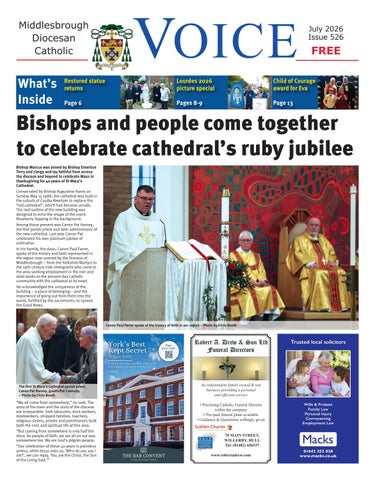
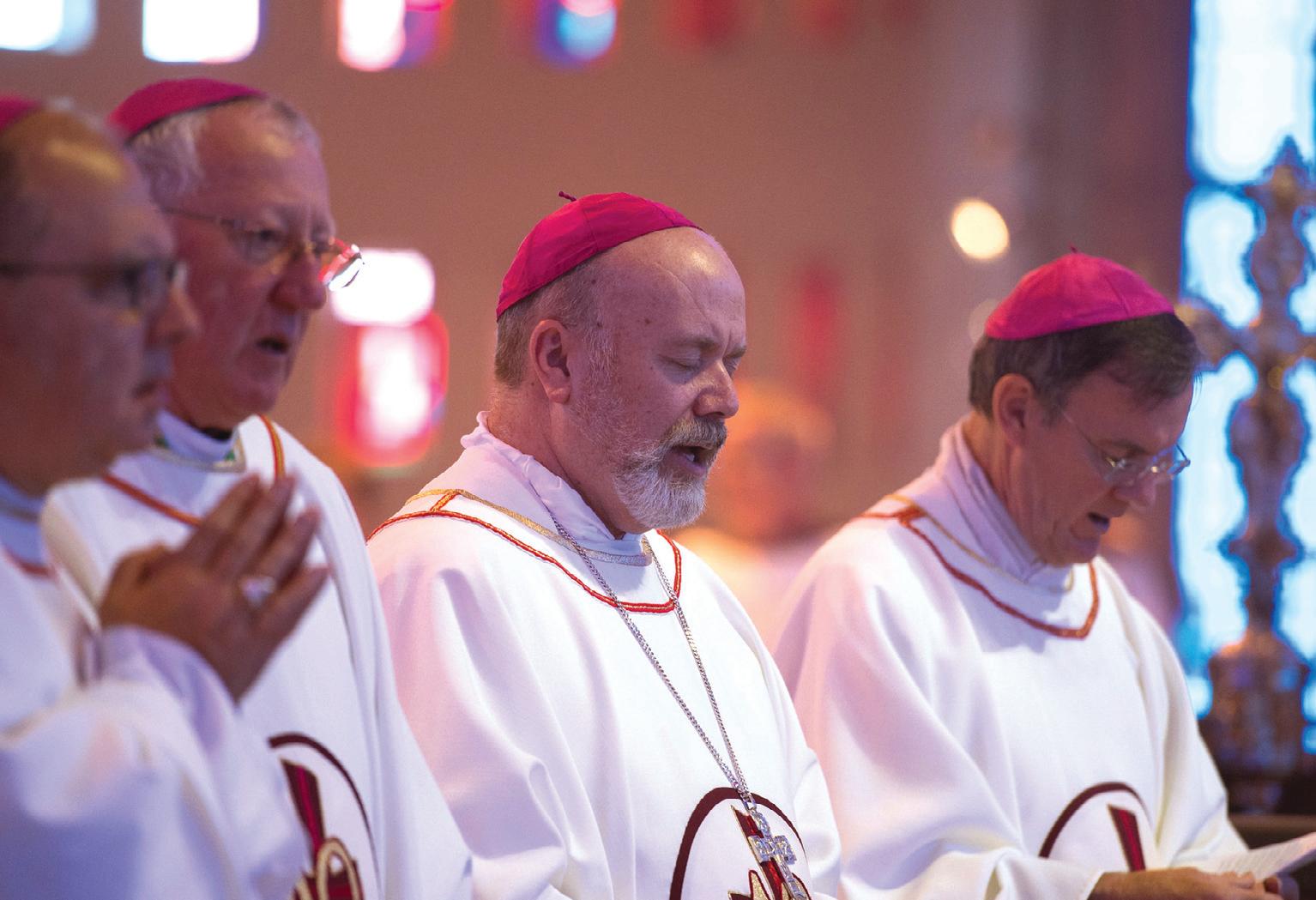
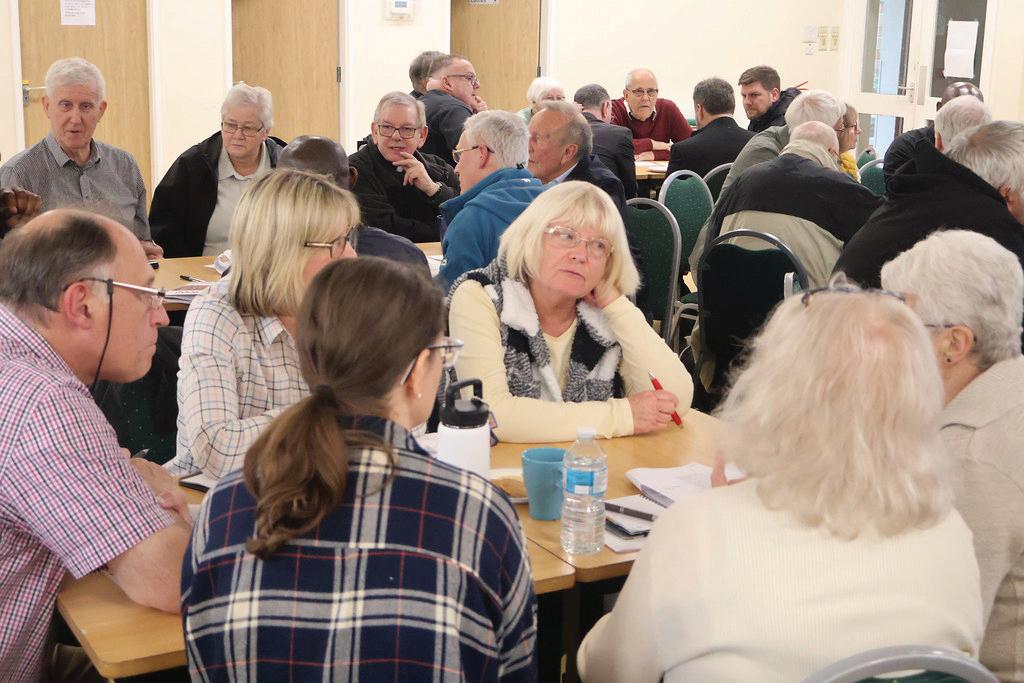
Bishop Marcus was joined by Bishop Emeritus Terry and clergy and lay faithful from across the diocese and beyond to celebrate Mass in thanksgiving for 40 years of St Mary’s Cathedral.
Consecrated by Bishop Augustine Harris on Sunday May 15 1988, the cathedral was built in the suburb of Coulby Newham to replace the “old cathedral”, which had become unsafe. The roof outline of the new building was designed to echo the shape of the iconic Roseberry Topping in the background.
Among those present was Canon Pat Harney, the first parish priest and later administrator of the new cathedral. Last year Canon Pat celebrated his own platinum jubilee of ordination.
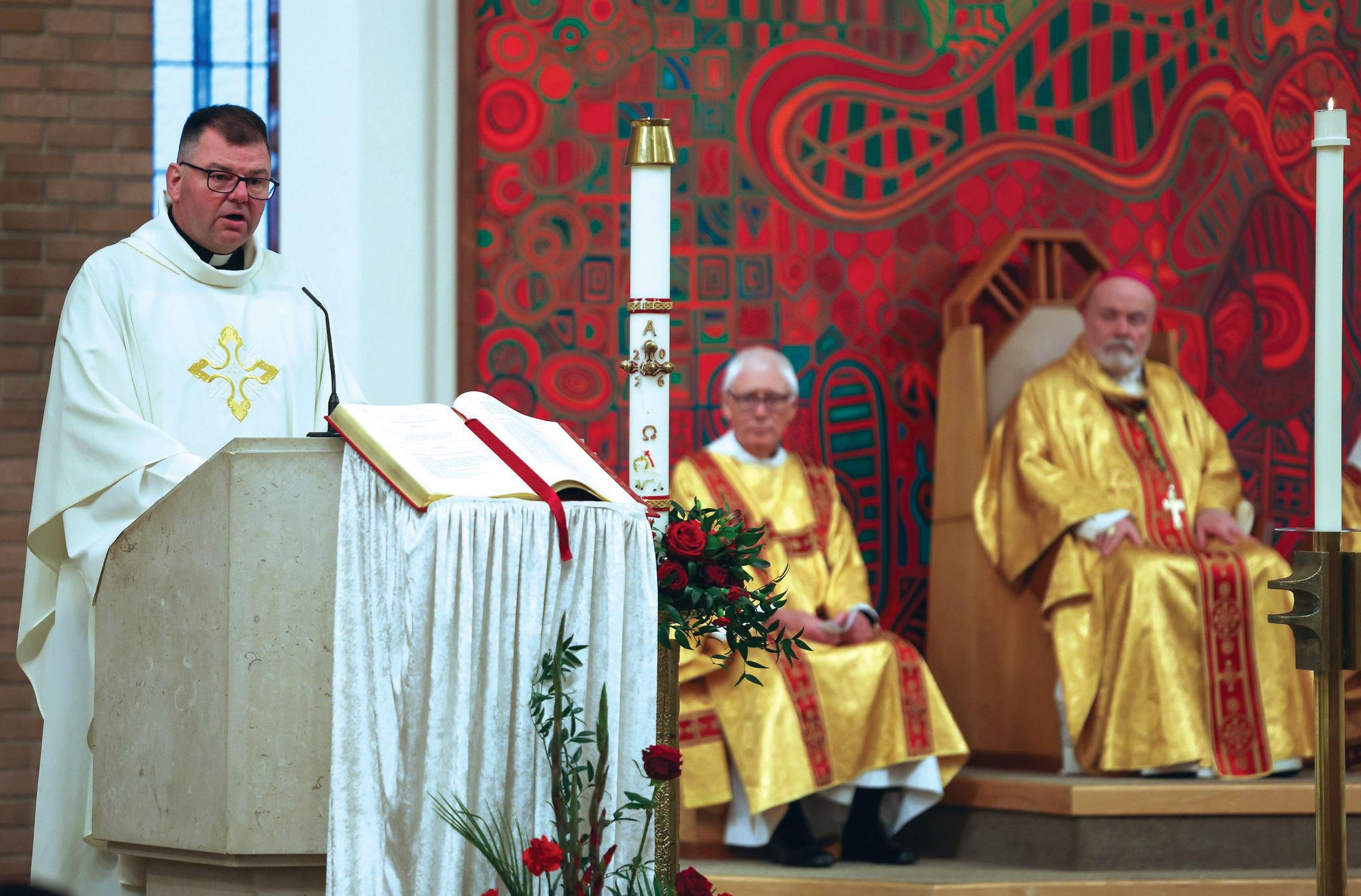
In his homily, the dean, Canon Paul Farrer, spoke of the history and faith represented in the region now covered by the Diocese of Middlesbrough – from the Yorkshire Martyrs to the 19th-century Irish immigrants who came to the area seeking employment in the iron and steel works to the present day Catholic community with the cathedral at its heart. He acknowledged the uniqueness of the building – a place of belonging – and the importance of going out from there into the world, fortified by the sacraments, to spread the Good News.
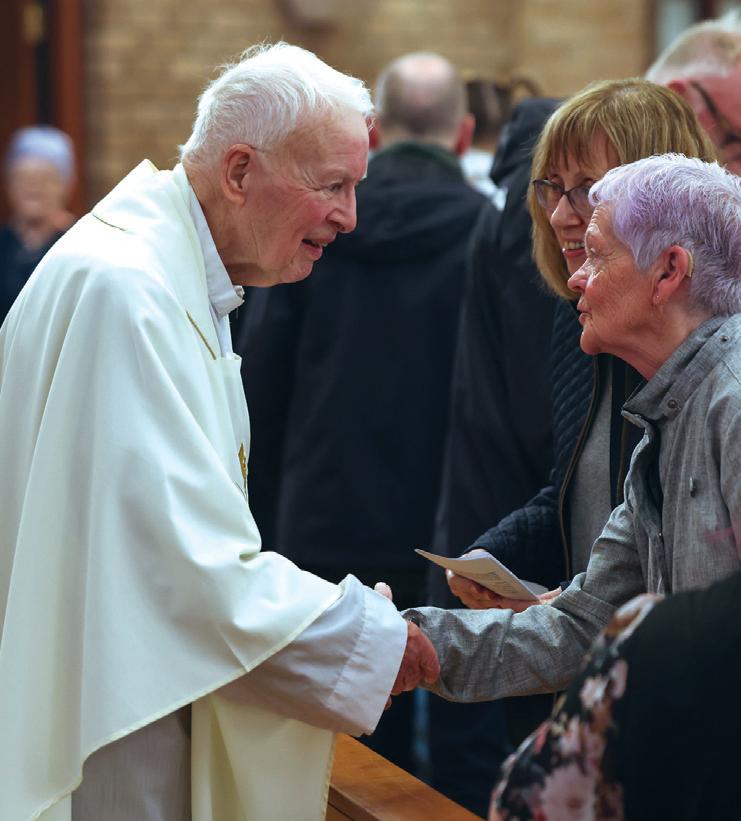
“We all come from somewhere,” he said. The story of the town and the story of the diocese are inseparable. Irish labourers, dock workers, steelworkers, shipyard families, teachers, religious sisters, priests and parishioners built both the civic and spiritual life of this area. “But coming from somewhere is only half the story. As people of faith, we are all on our way somewhere too. We are God’s pilgrim people.
“Our celebration of these 40 years is pointless unless, when Jesus asks us, ‘Who do you say I am?’, we can reply, ‘You are the Christ, the Son of the Living God.’”

At the presentation of his first social encyclical, Magnifica Humanitas, Pope Leo XIV appealed for artificial intelligence to be placed firmly at the service of humanity, warning against technologies that foster domination, exclusion and war.
The Holy Father described the current technological revolution as an “epochal turning point” comparable to the upheaval confronted by Pope Leo XIII during the Industrial Revolution.
“Artificial intelligence already touches many areas of our lives and affects decisions that shape human coexistence”, he said, noting that it is also “dramatically changing how war is waged.”
Drawing a direct parallel with Pope Leo XIII’s landmark 1891 encyclical Rerum Novarum, Pope Leo XIV said the Church today is likewise called to interpret the “new things” of the age in the light of the Gospel and the dignity of the human person.
He explained that Magnifica Humanitas emerged from extensive listening to scientists, engineers, educators, political leaders and families concerned about the future of younger generations.
At the same time, he said he had heard “very troubling voices” regarding autonomous weapons systems and algorithms capable of denying access to healthcare, employment or security based on unjust and prejudiced data. From that process of discernment, the Pope said, came a conviction expressed clearly in the encyclical: “artificial intelligence needs to be disarmed.”
Acknowledging the forcefulness of the phrase, Pope Leo XIV said the gravity of the present moment requires words capable of “awakening consciences and indicating paths forward for humanity.”
Recalling the Church’s longstanding support for nuclear disarmament, the Pope said every great technological power must be accompanied by moral discernment and public accountability.
“In a similar sense, artificial intelligence now demands to be ‘disarmed,’ freed from logics
that turn it into an instrument of domination, exclusion or death,” he said.
Quoting St Paul’s exhortation to “keep awake” (1 Thessalonians 5:6), the Holy Father warned that peace itself is endangered whenever technology weakens humanity’s critical sense and moral vigilance.
Yet the Pope stressed that the task before humanity is not merely to restrain dangerous technologies, but also to build a more just future together.
Reflecting on his years as a missionary in Peru, Pope Leo XIV recalled the devastation caused by torrential rains and floods in 2017, saying he learned there that rebuilding involves far more than restoring physical structures.
“It means repairing bonds, restoring trust, and reawakening hope in the future,” he said, adding that “no one rebuilds alone”.
The Pope then turned to the biblical figure of Nehemiah rebuilding the walls of Jerusalem, presenting the image as a model for the ethical construction of the digital age.
“Artificial intelligence can be a construction site of history from within a horizon of communion, in which technical progress learns to serve human life,” he said.
Citing St Paul VI’s teaching that authentic development concerns “each man and the whole man”, Pope Leo XIV insisted that no one must be excluded from digital transformation and that human beings can never be reduced to “productivity”, “cognitive performance” or “mere data”.
“The person bears within him – or herself – a freedom, an interiority and a vocation to love and worship that no machine can replace or block,” he said.
The Holy Father called for cooperation among nations, institutions, technology developers, and those most affected by technological systems in order to ensure that advances in artificial intelligence benefit the entire human family rather than “a privileged few”.
Pope Leo XIV reaffirmed the Church’s desire to contribute “with humility and frankness” to global conversations on artificial intelligence,
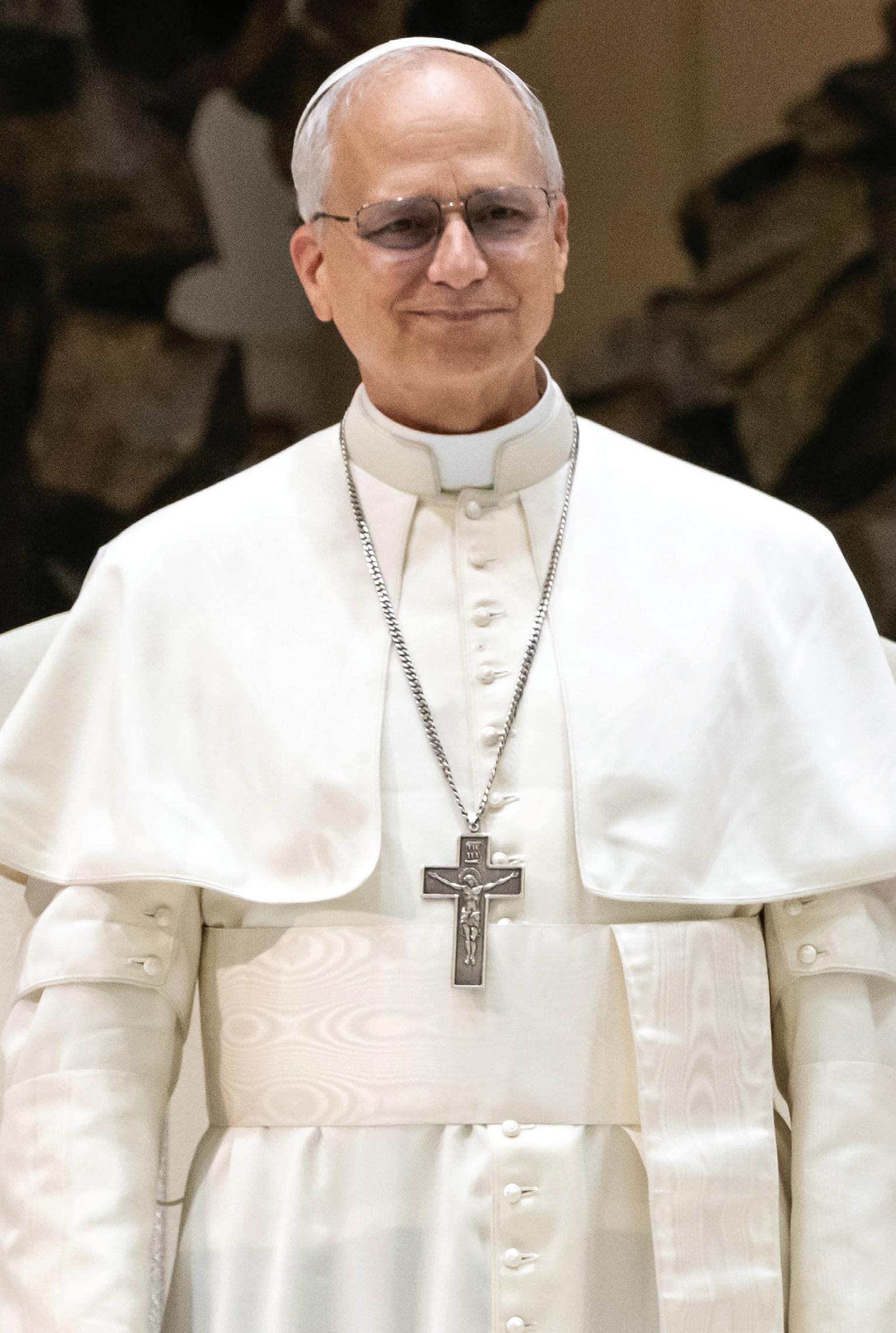
not by offering technical expertise, but by safeguarding a vision of the human person rooted in dignity, conscience and openness to God.
Inviting all people to become “artisans of hope”, the Pope urged believers and nonbelievers alike to work together toward “a
We are called to build a civilisation
Recently, I found myself having one of those conversations many parents will recognise. My children were asking why some of their friends have smartphones while they do not. It led to a discussion about social media, the internet and how technology can shape the way we see ourselves and others. As a parent, I know my children are growing up in a world increasingly influenced by artificial intelligence and helping them navigate that world can sometimes feel daunting. Yet these questions are not just for young people. Many of us are still learning how to use technology well. We have all experienced the benefits of being more connected, informed and productive.
At the same time, many people are concerned about the impact technology can have on relationships, mental wellbeing and our understanding of what it means to be human. Stories of teenagers and adults turning to AI for companionship, advice or counselling raise important questions about how we build authentic human connections in an increasingly digital world. Perhaps this is one
reason why Pope Leo XIV chose artificial intelligence as the subject of his first encyclical, Magnifica Humanitas. Since the beginning of his pontificate, he has spoken frequently about the opportunities and challenges AI presents.
Like Pope Leo XIII before him, whose encyclical Rerum Novarum helped shape modern Catholic Social Teaching, Pope Leo XIV is inviting the Church to reflect on one of the defining issues of our age.
At the heart of Magnifica Humanitas is a profound affirmation of the dignity of every human person. Pope Leo reminds us that each of us is created, chosen and loved by God. Whatever advances technology may bring, this truth must remain our starting point.
The Pope writes: “The key issue is not the use of technology as such, but the vision that underlies it. If the human being is treated as something to be perfected or surpassed, it becomes easier to accept that some lives are less useful, less desirable or less worthy” (MH, 117).
These words challenge us to think carefully about the kind of society we are building. Technology is never neutral. It reflects our values, priorities and understanding of the human person. The question is not simply what AI can do, but what it should do, and whether it helps us to flourish as human beings.
more human and fraternal society”. Entrusting the initiative to the Virgin Mary, whose Magnificat “sings of the greatness of God who uplifts the lowly”, the Holy Father prayed that the “civilisation of love” envisioned by St Paul VI and St John Paul II may continue to mature in history.
doctrine become incarnate in ecclesial life” (MH, 89).
While it would be easy to feel overwhelmed by the pace of change, Pope Leo’s message is ultimately one of hope.
He reminds us that we believe in a kingdom that can grow from the smallest mustard seed and invites us to work together to build a “Civilisation of Love”.
He points to practical ways of doing this: using words that heal rather than divide, building peace through justice, listening to those who suffer, renewing dialogue and strengthening cooperation between peoples and nations.
Above all, he reminds us that these efforts are sustained and nourished by prayer, noting that, “Only to the extent that we are open to the Holy Spirit will these principles of social
In the concluding chapter, Pope Leo invites all believers “to contemplate, in the face of the Son of God, the grandeur of humanity that shines a light also on the era of AI” (MH, 233). That invitation is for all of us. As technology continues to develop, how can we ensure that it strengthens rather than weakens our relationships? How can it help us encounter one another more deeply, rather than retreat into isolation? And how can we use these new tools in ways that honour the dignity of every person?
Perhaps our task is not to fear the future, nor simply to embrace every innovation uncritically, but to keep our eyes fixed on Christ.
In doing so, we can deepen our appreciation of the gift of human life, grow in communion with one another and with the Lord, and play our part in building a civilisation of love here in the Diocese of Middlesbrough.
Nicola Sweetman
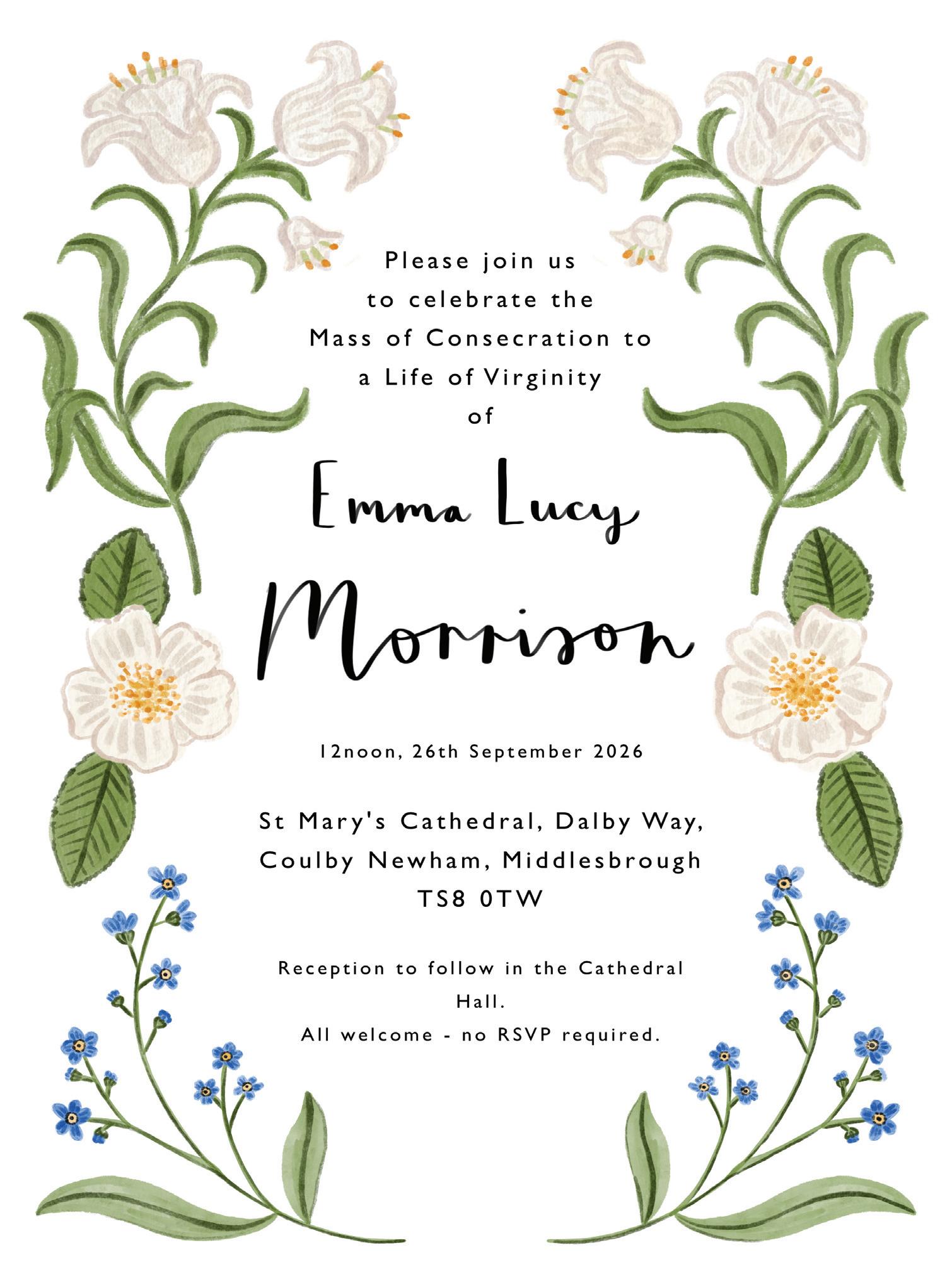
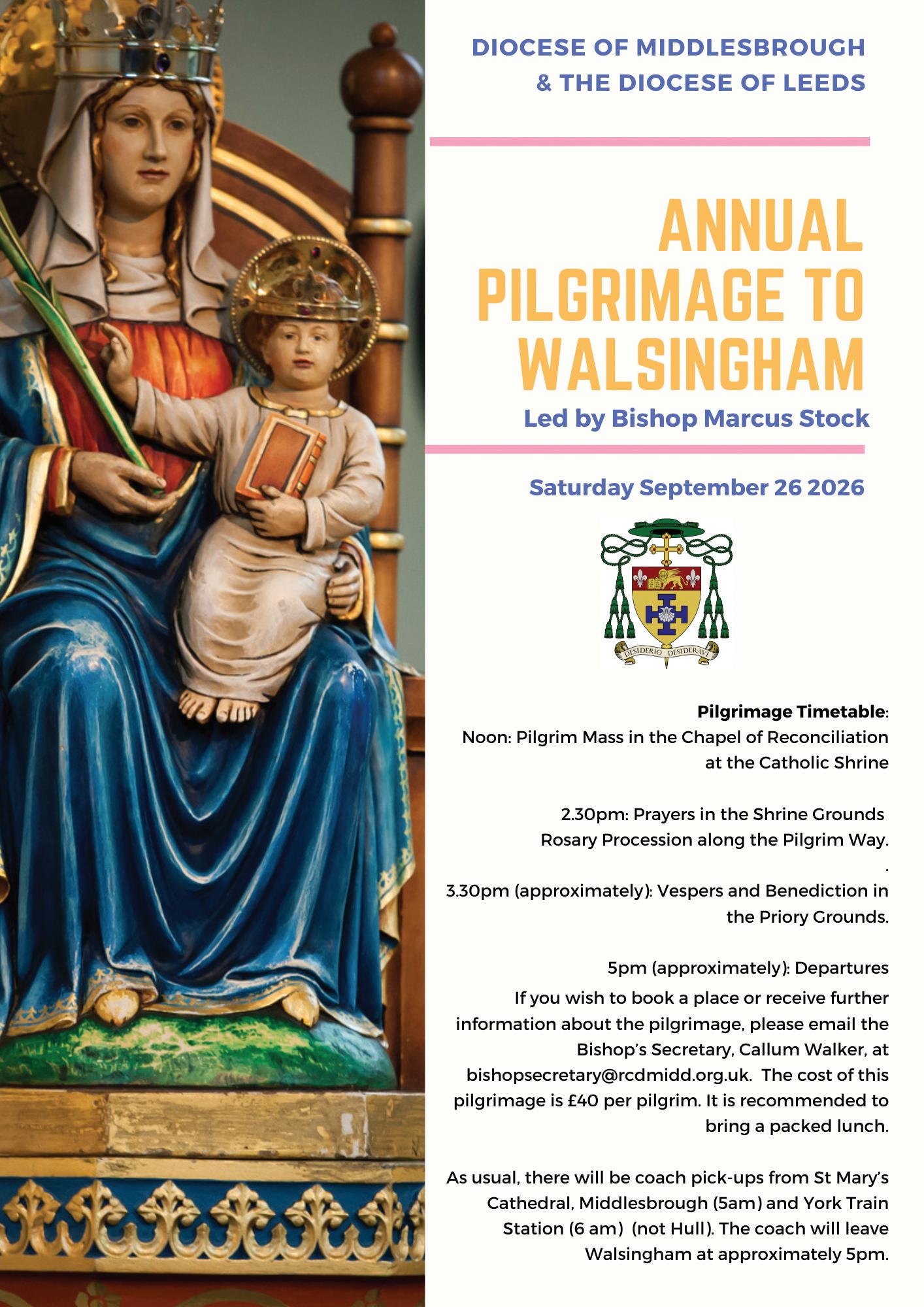
I am delighted to invite the whole diocese to celebrate my consecration in St Mary’s Cathedral at noon on Saturday September 26.
I first wrote a piece for the Voice on consecrated virginity in December 2023, shortly after I was first accepted for formation by Bishop Terry.
Since then, it has continued to be such a blessing to share in more depth what this vocation is with people from across the diocese and beyond.
Among the many ups and downs of my formation, one of the real highlights which is on my mind as I prepare for September was attending the consecration of my friend Bethan, who was consecrated by Bishop (now Archbishop) Richard Moth.
I was privileged to be one of her attendants (a bit like bridesmaids!) meaning I had a front row view of the beauty of this rite. A reflection Bethan shared with me afterwards was how much more both the laity and the clergy of her diocese “got it” after seeing the actual rite of consecration.
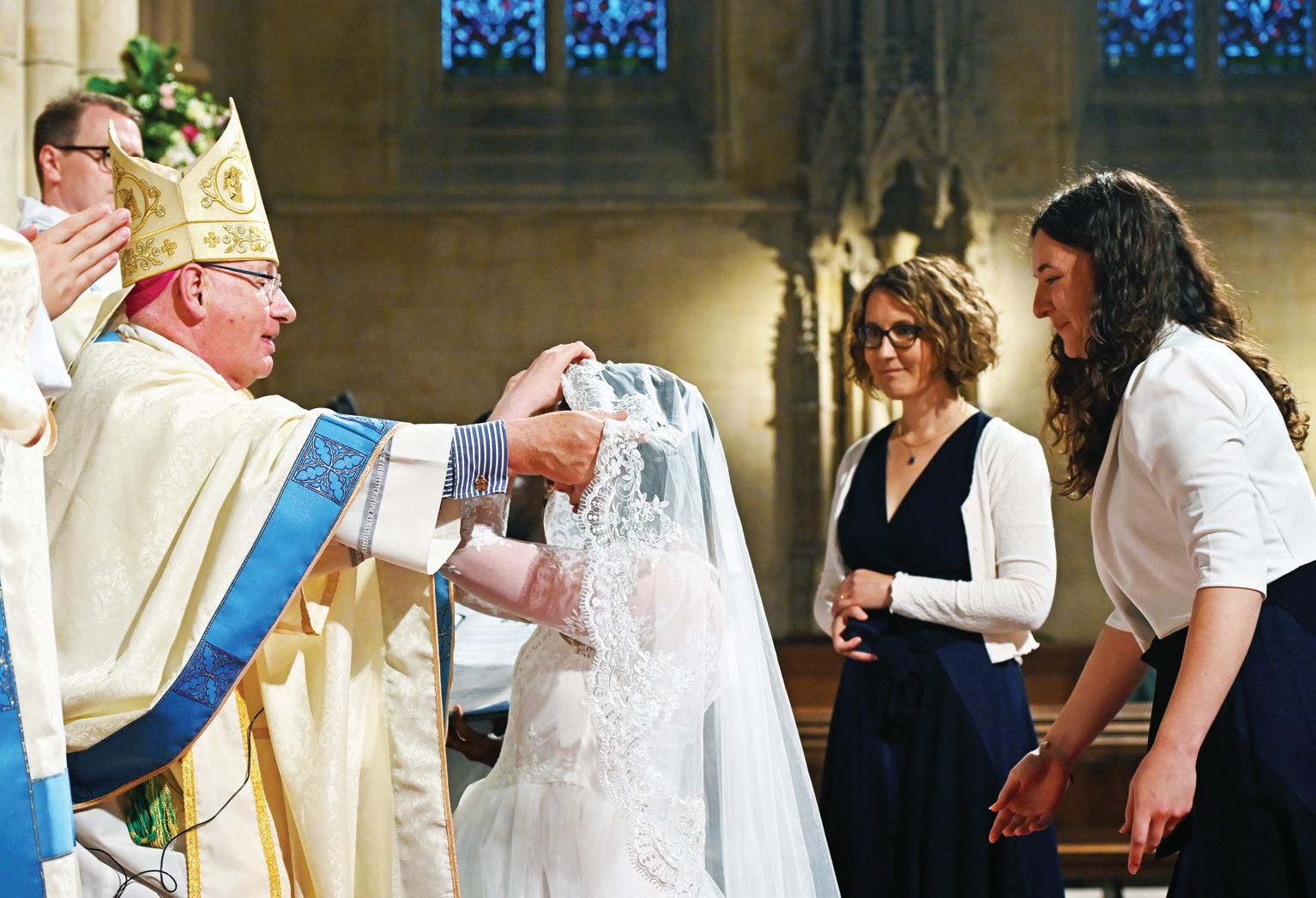
During the rite, consecrated virgins are presented with three “insignia of consecration”, which indicate to us as consecrated women and the Church what this vocation is about.
We are given a ring, which I will wear every day as a sign of our bond with both Christ and the Church, and a veil, which is an expression of the bridal nature of this vocation (however, unlike religious sisters, consecrated virgins generally only wear their veil on the day of consecration). The final insignia is a book of the Liturgy of the Hours, as an encouragement to constant prayer for the Church and the world.
The rite of consecration also holds beautiful imagery pointing towards both the universal vocation of each of our baptisms and the more mysterious bridal nature of the virginal consecration.
During the rite, the woman to be consecrated carries a candle, both as a reminder of our baptismal candle and the parable of the ten bridesmaids in which Jesus refers to himself as the bridegroom.
Similarly, on the day it is the norm that women wear a white dress, which outwardly to our family and friends will look very much like a wedding dress. However, for Christians it also reminds us of our white baptismal garments.
The overlap between the baptismal and the bridal imagery points toward the fact that the bridal relationship at the heart of the consecration is not just a “nice thing” for me personally as a young, unmarried woman, but that this relationship with Jesus the Bridegroom is calling for the whole Church as the bride, and that every Christian, whether young or old, married or unmarried, male or female, is invited to live a deeply personal, prayerful and intimate relationship with the Lord.
A question I am frequently asked when I share with people that I am preparing for this consecration is, “What will you do?”
The answer is the only “job” that we have to do is prayer. The rest of our life and our vocation depend on the personal charisms of the woman, and her discernment of what the Holy Spirit is calling her to.
In my life at present this means that I will continue to be involved in my parish
community and will continue work as a doctor, but will also continue to discern whatever activities and ministries God is calling me to in each season of my life.
The Gospel reading I have chosen for the consecration Mass is Mary and Martha – it is one of my favourite Gospel stories, hearing how these two women wanted to welcome Jesus.
However, it is also a significant reminder for me as I start living out this vocation, and to each one of us, of Jesus’ invite that we are “distracted and worried by many things, but there is need of only one thing”.
The point of the vocation of consecrated virginity is not to do one thing or another, but an invitation to listen to and live in complete relationship with the Lord.
One of the most important aspects of consecrated virginity to me is that it is a diocesan vocation, reflected by the fact that the consecration is meant to be performed by the diocesan bishop, in the diocesan cathedral.
Some of the most encouraging moments in my discernment and journey to being consecrated have been being at events with the Diocese of Middlesbrough community over the past few years, so I am excited t0 share this special day with the diocese, and I hope many of you are able to join the celebration on September 26.
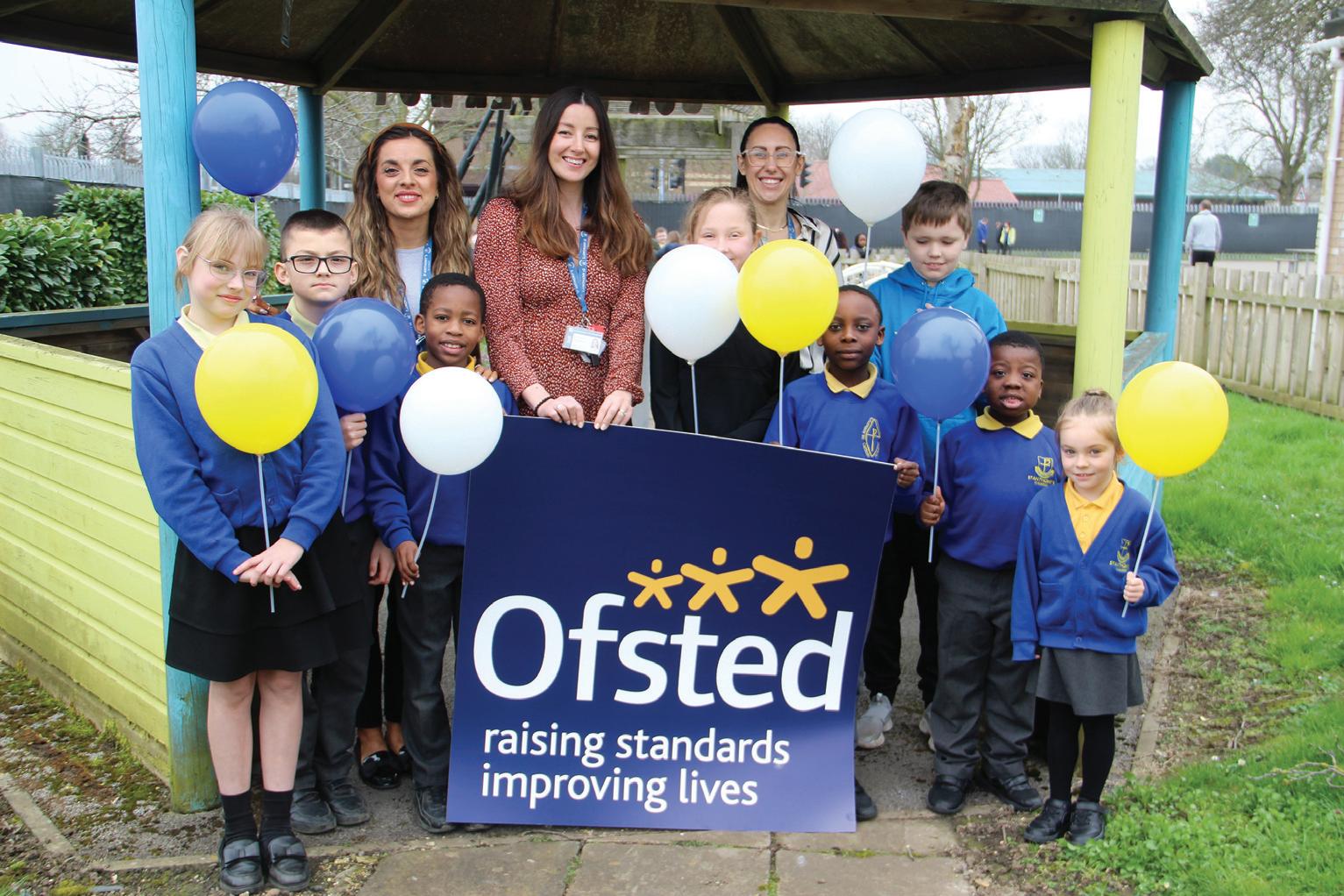
St Anthony’s VC Academy in Hull is celebrating after a positive outcome in its latest Ofsted inspection.
Inspectors described being greeted by a “warm, calm and supportive” environment where pupils feel safe, included and known as individuals.
The report confirms that the school is meeting the expected standards of education and care, highlighting several key strengths.
Inspectors praised the “Sparkle” ethos, noting that pupils follow well-established routines and maintain positive attitudes toward learning.
Innovative strategies such as the “walking bus” and breakfast clubs have successfully brought attendance figures close to national averages.
And they said the school’s “inclusive culture” provides timely, well-matched support for pupils with SEND and those from disadvantaged backgrounds.
Ofsted found a vigilant culture where safeguarding is treated as everyone’s responsibility.
While acknowledging that historical achievement has been variable, the report noted that recent curriculum improvements are already yielding better progress. At the end of key stage two, outcomes are now broadly similar to the national average.



Headteacher Jess Storch said: “Our staff work tirelessly to ensure every child feels safe, happy and excited by their learning. We are excited to continue this journey to make St Anthony’s even better.”
Chair of governors Danielle Greensmith credited the “tireless efforts of staff, the resilience of students and the support of families” for the positive report.
Rachel McEvoy, CEO of St Cuthbert’s RC Academy Trust, added her congratulations, noting that the school’s dedication to highquality education is evident throughout the findings.
“Supported by the trust, school leaders are already acting on recommendations to further embed curriculum changes and ensure consistency in handwriting and early years language development,” she said.
“This collective commitment ensures St Anthony’s continues to build on its strong foundations, allowing every child to flourish.”
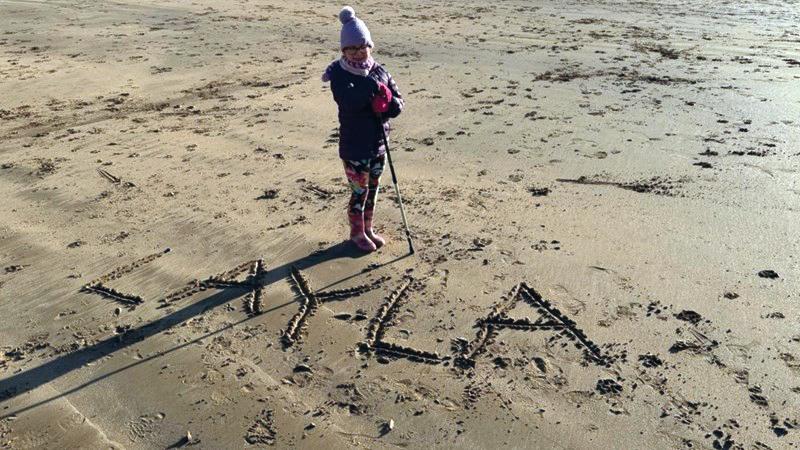
An eight-year-old pupil from St Mary’s VC Academy in Market Weighton swapped her schoolbooks for hiking boots during the halfterm holidays.
Inspired by her lessons on global citizenship, Layla set her sights on conquering Ben Nevis, the United Kingdom’s highest mountain. The trek was more than just a personal challenge – it was a mission to support Catholic charity CAFOD.
Layla was inspired to act after learning about the hardships faced by those living without basic necessities at school.
She said: “My school has taught me so much about helping other people. I have realised how fortunate we are, but there are less fortunate people in the world that need our help.
For example, some people do not even have safe water to drink.”
The St Mary’s community and schools across the St Cuthbert’s RC Academy Trust rallied behind Layla’s efforts and her JustGiving campaign raised an impressive £1,000 before she even reached the foot of the mountain.
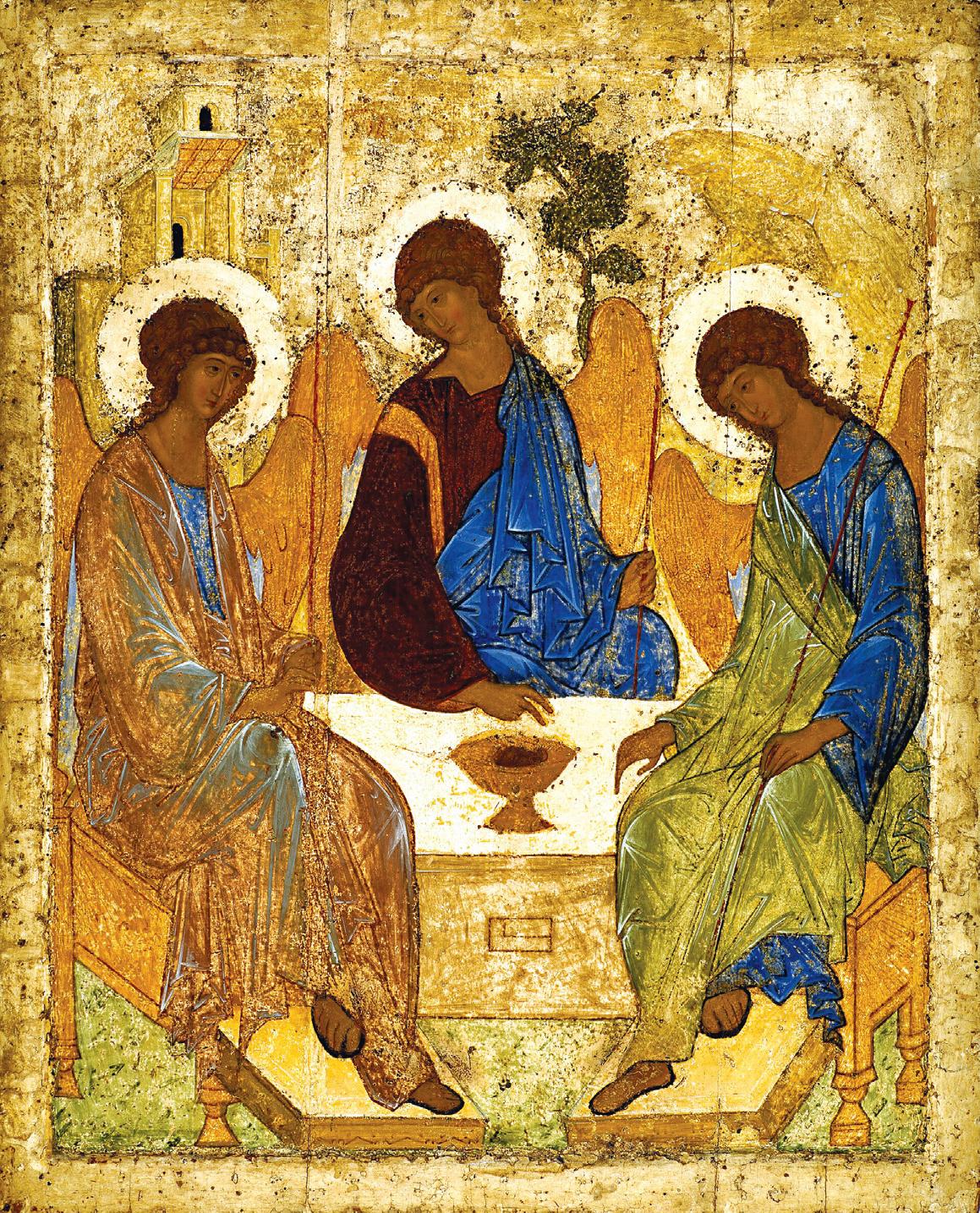
As he reflects on the Easter gospels and the mystery of the Trinity, FATHER TOM O’NEILL explains how Christ’s saving work draws every one of us into the very life of God.
Trinity is not a word to be spoken. It is an awareness to be lived. We don’t explain Trinity. We locate it within us and around us. And we point it out, just like parents point out everyday things to their children.
The nature of our creator is a collection of different persons. Yet all together they make one. Our creator has made all “his” creatures reflecting their creator. We learn best about our creator and ourselves by looking at and pondering ourselves and his creation.
We begin with ourselves. If I sit and ponder my wonderful creation – the person that is me, with thousands of different parts constantly in process, all these individual parts within me, giving and receiving one other still retain autonomy. It is these individual parts working together that give me “life in abundance”. Their very nature is to give and receive and be connected and if one part fails to do this, I become sick, as a body and as a person.
Now when I come outside, all the mysteries going on in my own body to the millions of people, all wonders of creation just like me. I am connecting with them, and as I do, I am fully alive and so are they.
All people everywhere are similarly connecting with each other. And all creation is acting in the same fashion. The birds in the air, the fish in the sea, the dogs playing in the fields, parents with their children, people with their friends. The sun, moon and stars are all working and rotating as one. We are all part of this great mystery unfolding in each of us and around us. We call this mystery God. We are part of him and he is part of us. We creatures are already part of our creator – yet not fully part. We are constantly in the process of becoming.
All this helps explain our complex thoughts and feelings – at
times to be alone, and other times we yearn for the company of others. We are groaning for completion. Evidence of Trinity is flowing in our bodies and out of us. There are thousands of miracles going on in us, and a collection of these miracles makes one person and a gathering of these persons makes one family.
We are seeing, living and knowing Trinity in our families and all around us. Open this vision out now to community and the whole of humanity – all Trinity –many, yet one. Look out further to the sun, moon and stars in their millions, yet all rotating and synchronising as one.
Our own planet Earth settled on the oceans underneath while the clouds carry oceans overhead, to water our earth and provide for our needs and all creatures of earth, sea and sky. All are many – yet one with each other and needing to be one to survive and multiply. Trinity is but a word. If we are not careful, we will reduce it to words and talk words. But the Word was made flesh. And here is the place to look for it, and where we will find it or not find it at all. It is in us and among us. In Jesus’ words, “The Kingdom of God is among you. It is within you.”
The Trinity is flowing out of you and me and everybody. The Trinity is all around us. It is in the plants and animals. It is in the planets and stars. It is in all the activity of nature and humanity. We are all in God and God is in all of us. All is Trinity: many yet one. We are most ourselves, much happier and most alive when we synchronise with this process. We are connected to our creator and all of creation. As we pray in the Morning Prayer of the Trinity, “Lord Jesus, fill us with your Spirit again so that we may dwell in you and you in us.”
In these fleeting moments we are living as our creator lives and it is the life he intends for us too.
from mcgearymedia.co.uk or from Amazon.
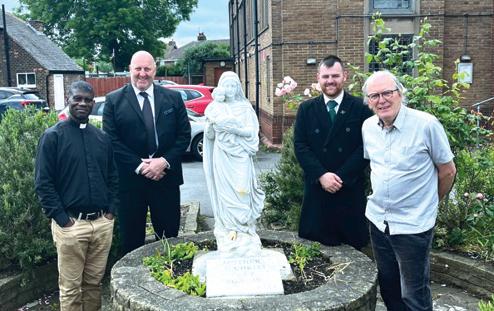
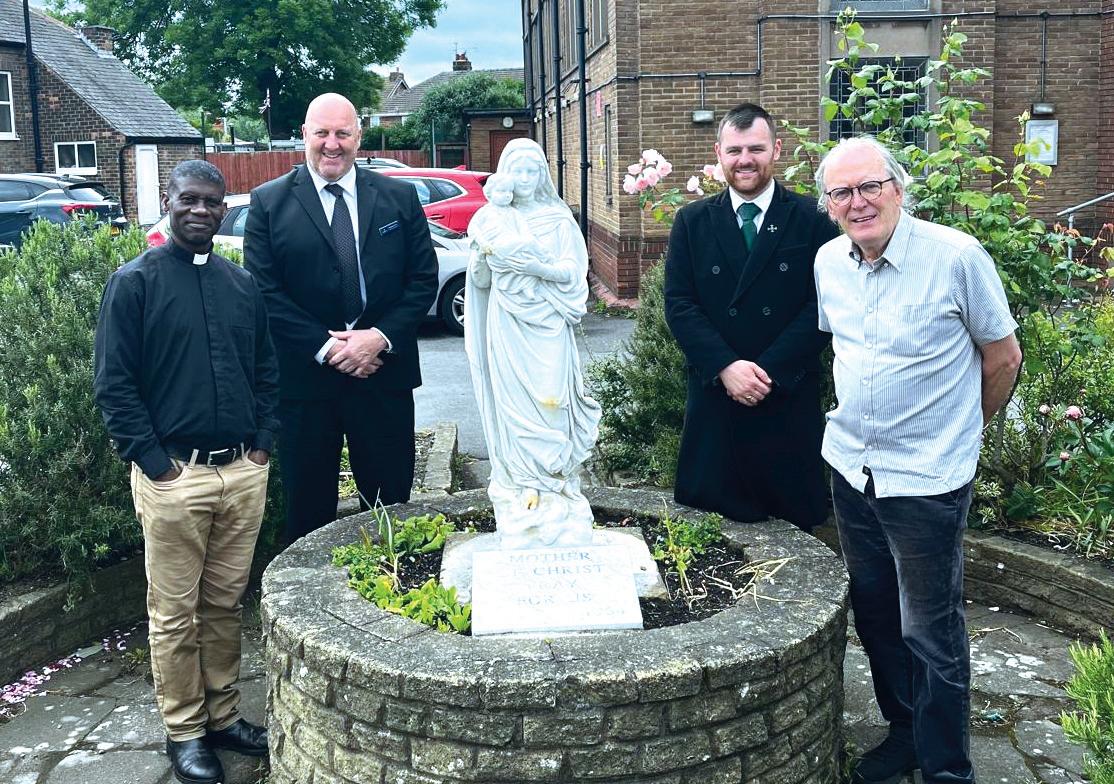
Parishioners of St Alphonsus Church in North Ormesby can once again find inspiration, comfort and solace in the presence of Our Lady after our much-loved statue was restored.
The statue of the Blessed Virgin Mary was vandalised on December 30 last year in a deeply upsetting incident for the parish and our neighbours, for whom it is a cherished symbol of faith, prayer and devotion.
There followed an outpouring of support from the local community and Relph Funeral Directors contacted the parish to offer their assistance in restoring and reinstalling the statue at no cost to the church.
Thanks to their generosity the work was completed and the statue has now been returned to its place, restored to its original dignity and beauty.
The statue stands once again as a visible reminder of faith, hope and the loving care of our Blessed Mother.
We had the pleasure of welcoming representatives of Relph Funeral Directors to the Church Hall to express our sincere appreciation for their generosity, kindness and community spirit.
Their thoughtful support transformed a distressing situation into a powerful witness of goodwill and solidarity.
Acts of kindness such as theirs remind us that even in the face of unfortunate incidents, compassion and neighbourly support continue to shine brightly.
We are deeply grateful for their contribution and for the role they have played in restoring this treasured symbol of faith to our parish community.
May God bless all who contributed to this restoration and all who continue to support the life and mission of our parish.
LUCA SETTIMO, Professor of Theology at the University of Nottingham, continues his series of reflections on the meaning of some key biblical words.
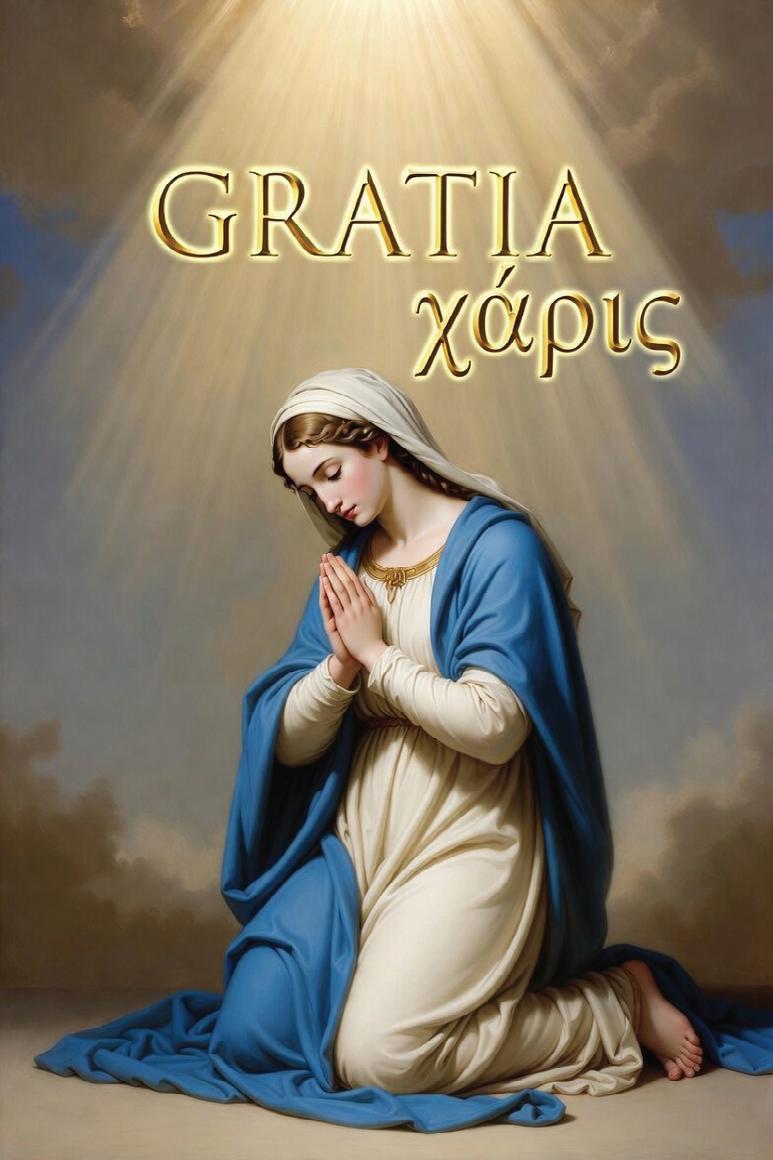
Within the Bible, “grace” is expressed with the Greek word charis and with the Hebrew term hesed. These terms express the Lord’s love, which is directed towards human beings, who, through sin, have distanced themselves from God. The notion of grace is already present in the Old Testament, which explains that divine generosity flows over, redeems, blesses, forgives and transforms God’s creatures.
Also, the notion of faithfulness (expressed by the Hebrew emet – a term I examined in February’s Voice – expresses some aspects of divine grace. In particular, we read: “The Lord, the Lord, a God merciful and gracious, slow to anger, and abounding in steadfast love/goodness (hesed) and faithfulness/truth (emet)” (Exodus 34:6). Despite the limitations and miseries of his people, God does not fail to show his “gracious” and saving love: “It was not because you were more numerous than any other people that the Lord set his heart on you and chose you – for you were the fewest of all peoples. It was because the Lord loved you” (Deuteronomy 7:7-8).
In this way we can approach St Paul’s understanding of charis, which appears 155 times in the New Testament. To understand this word’s profound meaning, it is interesting to note a curious fact: the words “charity” and “charm” derive from this Greek word. Grace is therefore nourished by love. It represents the free and benevolent entrance of God into the night of man gripped by the “flesh” (see March’s column). God is the first to set out on our paths in search of us, as the apostle affirms in Romans 10:20 by recalling a passage from Isaiah (65:1).
This act is precisely grace, without which we would continue, on the one hand, to sink into our sin and, on the other, to try in vain to escape from it by observing the works imposed by the law. Instead, we need a
strong hand that lifts us up from the mud of sin.
Using this framework, we can understand Romans 3:24: “…they are now justified by his grace as a gift, through the redemption that is in Christ Jesus”. Faith is nothing other than the free and joyful acceptance of the saving grace that is offered to us in Christ. It is a self-abandonment to God so that the freely given divine love can dwell in us. This is what happened at the very beginning of Mary’s life: divine grace immediately burst into her (see Luke 1:28), preserving her from radical human frailty, from the “flesh” in the Pauline sense of sinfulness. This helps us to understand the doctrine of the Immaculate Conception in view of the generation of the Son of God in her.
Grace also brings with it other particular and specific gifts for each of us: they are the “charisms”, which, as it is evident from this term, are derived from charis
Let us now move to the Hebrew term hesed, which can also be translated as grace: this term expresses the feeling that drives the faithful to do an act of charity (rather than the idea of a compulsory duty and of a task that needs to be done as an obligation).
Hesed is one of the Old Testament’s most relevant words, both from a theological and a spiritual point of view, appearing 245 times (127 in the Psalms alone). Hesed defines the covenant between God and his people as a bond between two people who love one another.
In the temple of Jerusalem, a priest celebrates God the creator and saviour by reciting a sort of litany that lists the acts of love performed by the Lord towards his people: to each phrase the assembly responds with the antiphon: “O give thanks to the LORD, for he is good, for his steadfast [eternal] love [hesed] endures forever.” (Psalm 136:1).
This psalm is so-called the “Great Hallel (praise)”, sung in the rite of the Passover feast. This praise was certainly sung by Jesus himself. From hesed derives the adjective Hasid, which indicates a faithful who
consecrates his whole being and his work to God.
The plural form hasidim indicates the names given to the members of a Jewish community known as the Hasidic Jews who, since the 18th century, lived mainly in Poland and Ukraine. They were swept away by the horrors of Nazism, yet their spirituality survives today and is especially well known through the writings of the Austrian philosopher Martin Buber. Hesed is an important notion in the history of biblical spirituality, beginning with the covenant given by God at Sinai and developed by the prophets through the symbol of the covenant of marriage, starting with Hosea in the eighth century BC. Based on his unhappy marital experience, Hosea outlined the negative aspects of infidelity.
Just as his wife had abandoned him to follow other lovers, so Israel turned its back on its Lord, choosing idols, especially the god of the indigenous population of the promised land (the Canaanites).
This is why the Bible uses terms such as adultery, prostitution and betrayal to define Israel’s infidelity towards its “husband” (the
Lord) and thus breaking the hesed that represents the bond of fidelity that unites it to him and which he continues to keep alive. The faithful, then, prays: “How precious is your steadfast love [hesed], O God!” (Psalm 36:7a). It is the awareness of always being under the loving gaze and affectionate protection of the Lord to whom one is united in a “spousal” bond: “Your steadfast love [hesed], O Lord, extends to the heavens … All people may take refuge in the shadow of your wings” (36:5,7b).
I wish to acknowledge Cardinal Gianfranco Ravasi, former president of the Pontifical Council for Culture, for granting me permission to use his material originally published in Italian.
A YouTube video entitled “The biblical notion of grace”, which explores this concept in greater detail, is available on my YouTube channel (youtube.com/@LucaSettimo-7).
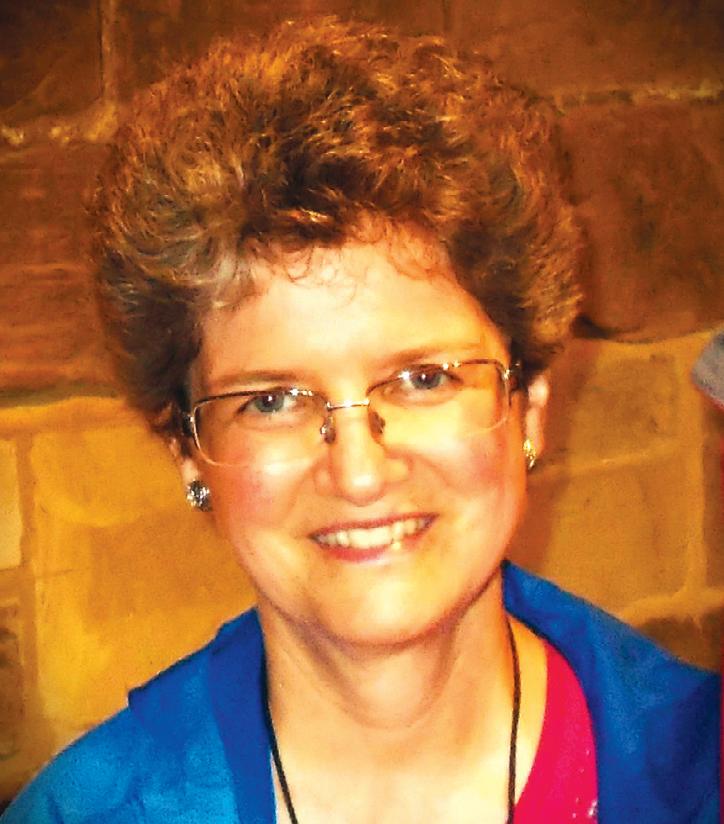
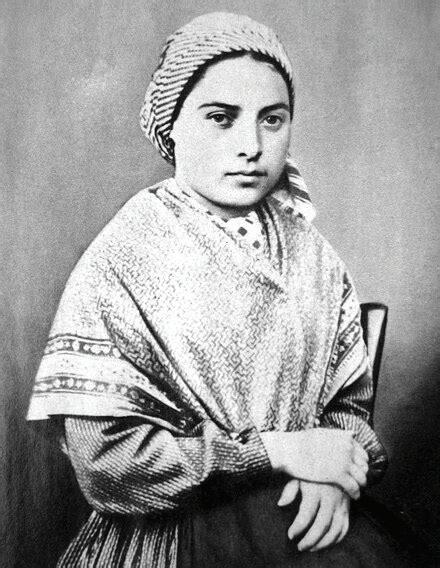
During this year’s Diocese of Middlesbrough Pilgrimage to Lourdes, I had a chance to go to the St Bernadette Museum. There were many interesting things to see concerning this humble peasant girl who, in 1858, was favoured by apparitions of Our Lady.
The thing that penetrated my heart the most was a handwritten account of Bernadette’s third encounter with “The young lady”, the first in which Our Lady spoke to her.
She wrote: “She looked at me as a person who speaks to another person.”
Bernadette was 14 years old, extremely poor, illiterate and suffering from chronic asthma.
Yet, Our Lady looked at and spoke to her “as a person”. She used the formal form of “you” in French when she addressed her, something that Bernadette was not accustomed to hearing because of her lowly status, and which was a mark of respect.
Our Lady entrusted Bernadette with a special message for the world, asking for prayer and penance. She identified herself to Bernadette as the Immaculate Conception, which convinced her parish priest of the authenticity of the apparitions. God (and Our Lady) chooses the humble by preference.
We live in a world that defines us by so many criteria: nationality, social status, wealth, intelligence, looks, talents. Yet we are all created with equal dignity.
At Madonna House in Combermere, Canada, we receive many live-in guests. During the 1960s and 70s, Catherine Doherty, our foundress, remarked that many of the young people who were coming suffered from poor self images.
So, one day she took her bright red lipstick and wrote on the top of a mirror in one of our
guest dormitories: “God’s Image”, so that when people looked at themselves, they would recognise who they truly were! (The words on the mirror are still there!)
Our eyes can be mirrors, too, reflecting to others that they are made in God’s image. By a look of love, kindness, acceptance and trust we can restore or affirm someone’s dignity. I witnessed this in Lourdes! The loving attention our handmaids, brancardiers and medical staff gave to our supported pilgrims was a beautiful sign of this person-to-person gift of self.
Seeing the fruits of joy and peace that this produced during that pilgrimage was a highlight of that trip. Nothing can replace personal encounters of this kind. No new technology, no matter how amazing and useful, can replace the human person.
In Pope Leo XIV’s first encyclical, Magnifica Humanitas (Magnificent Humanity), he speaks of the limits of AI: Artificial intelligences do not undergo experiences, do not possess a body, do not feel joy or pain, do not mature through relationships, and do not know from within what love, work, friendship or responsibility mean. (Paragraph 99)
Let us, like Our Lady, look at others as “a person who speaks to another person”. Then people will come to know their dignity, and we shall together become the magnificent humanity we were created to be.
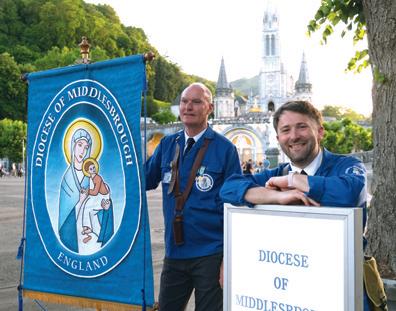
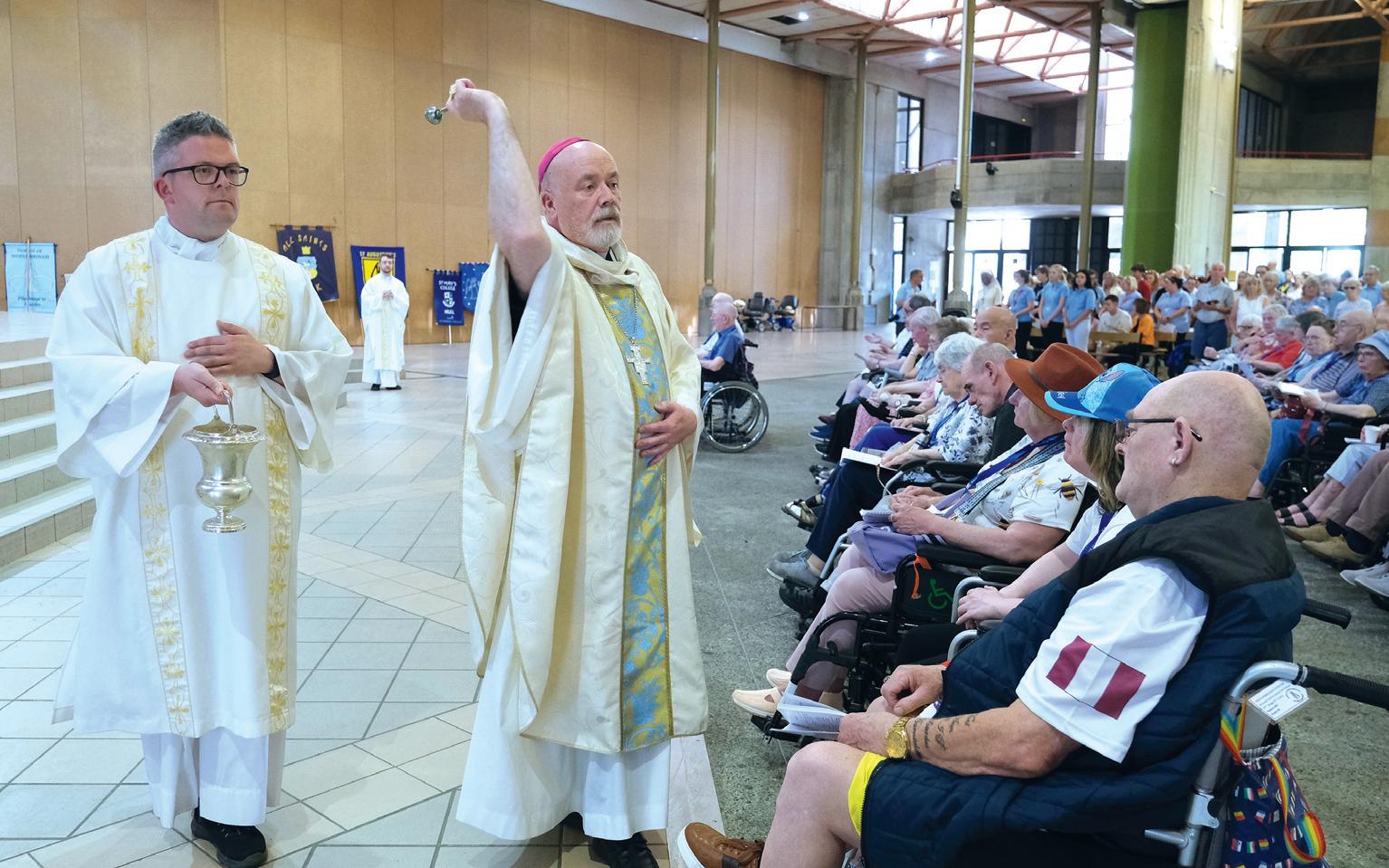
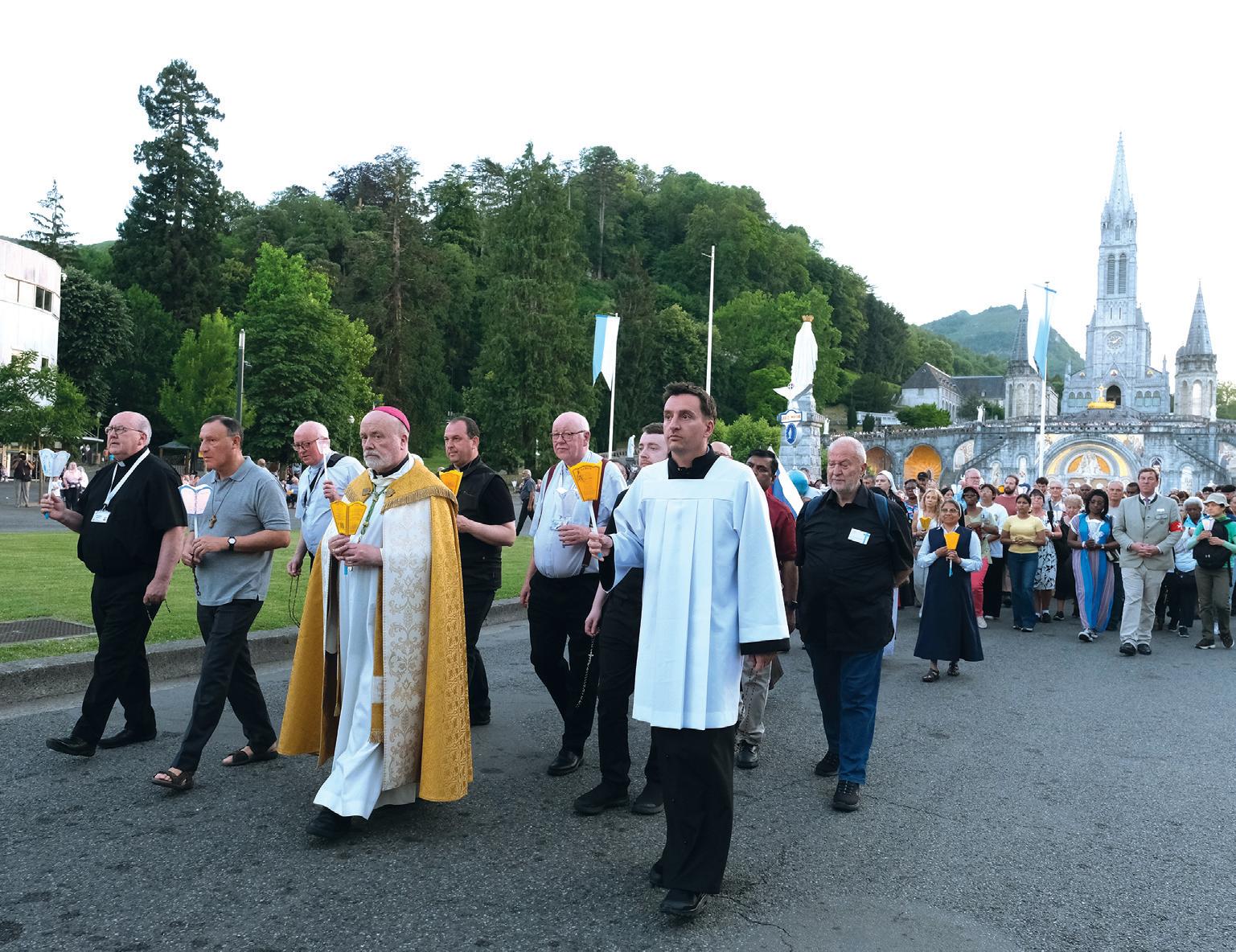
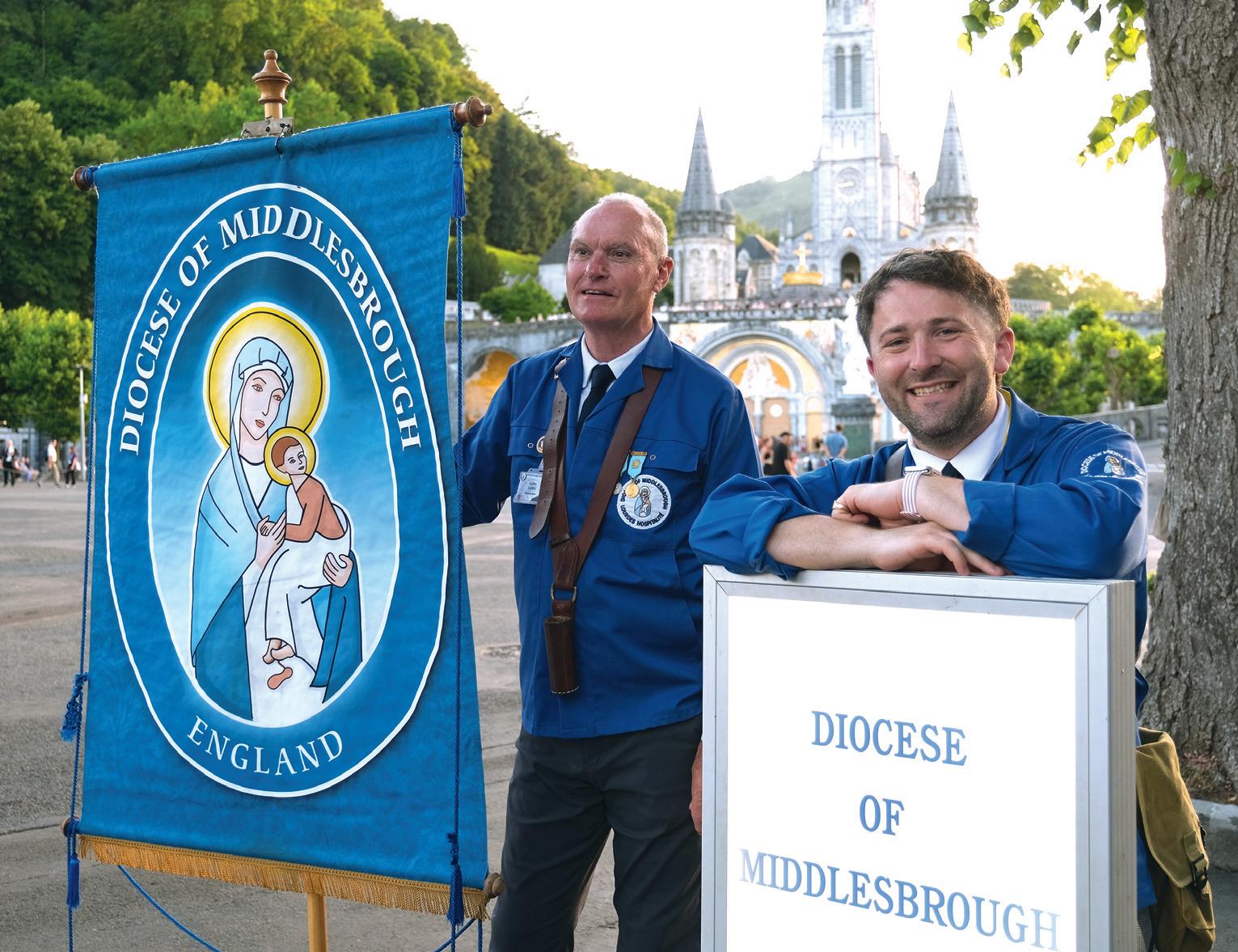
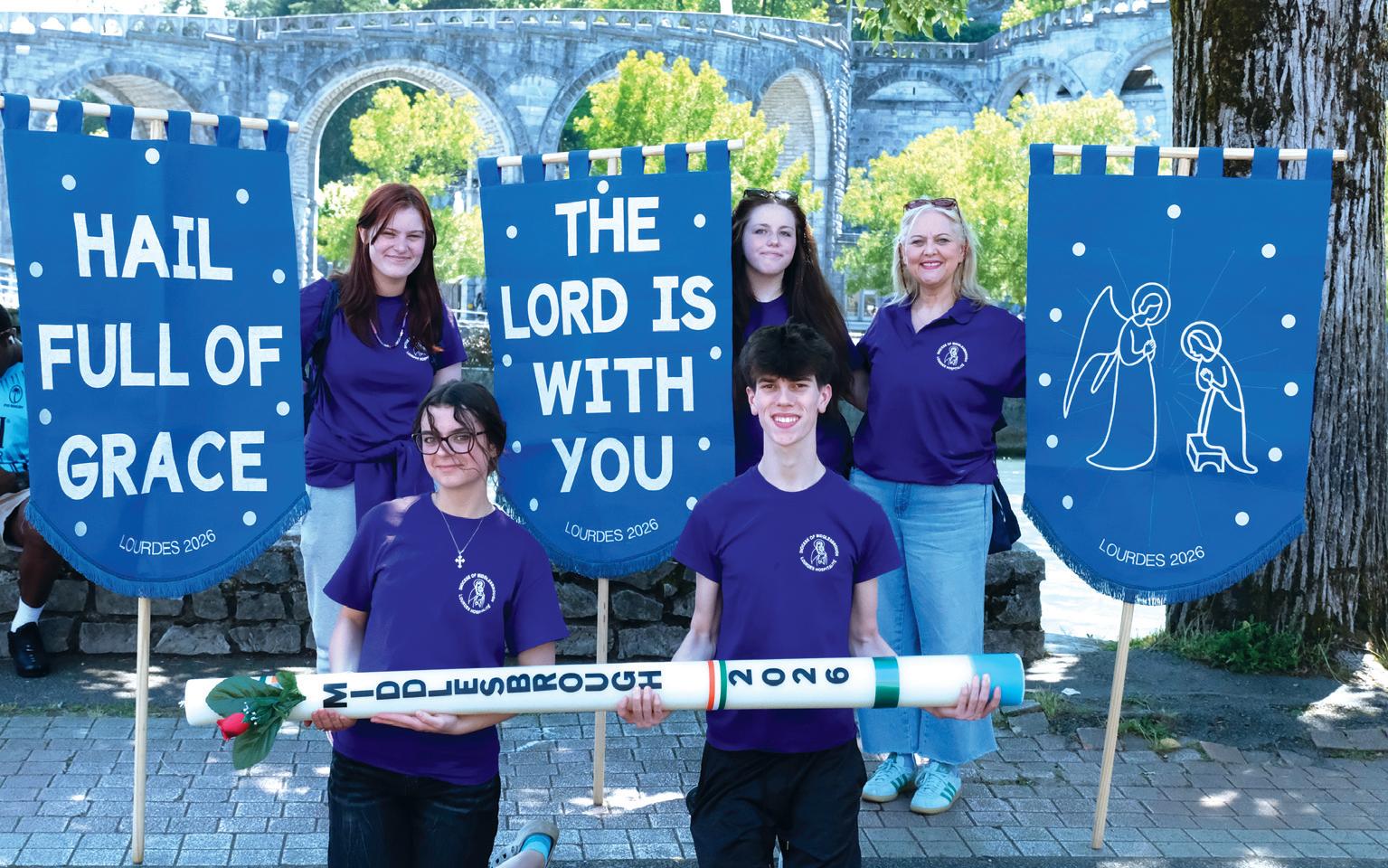
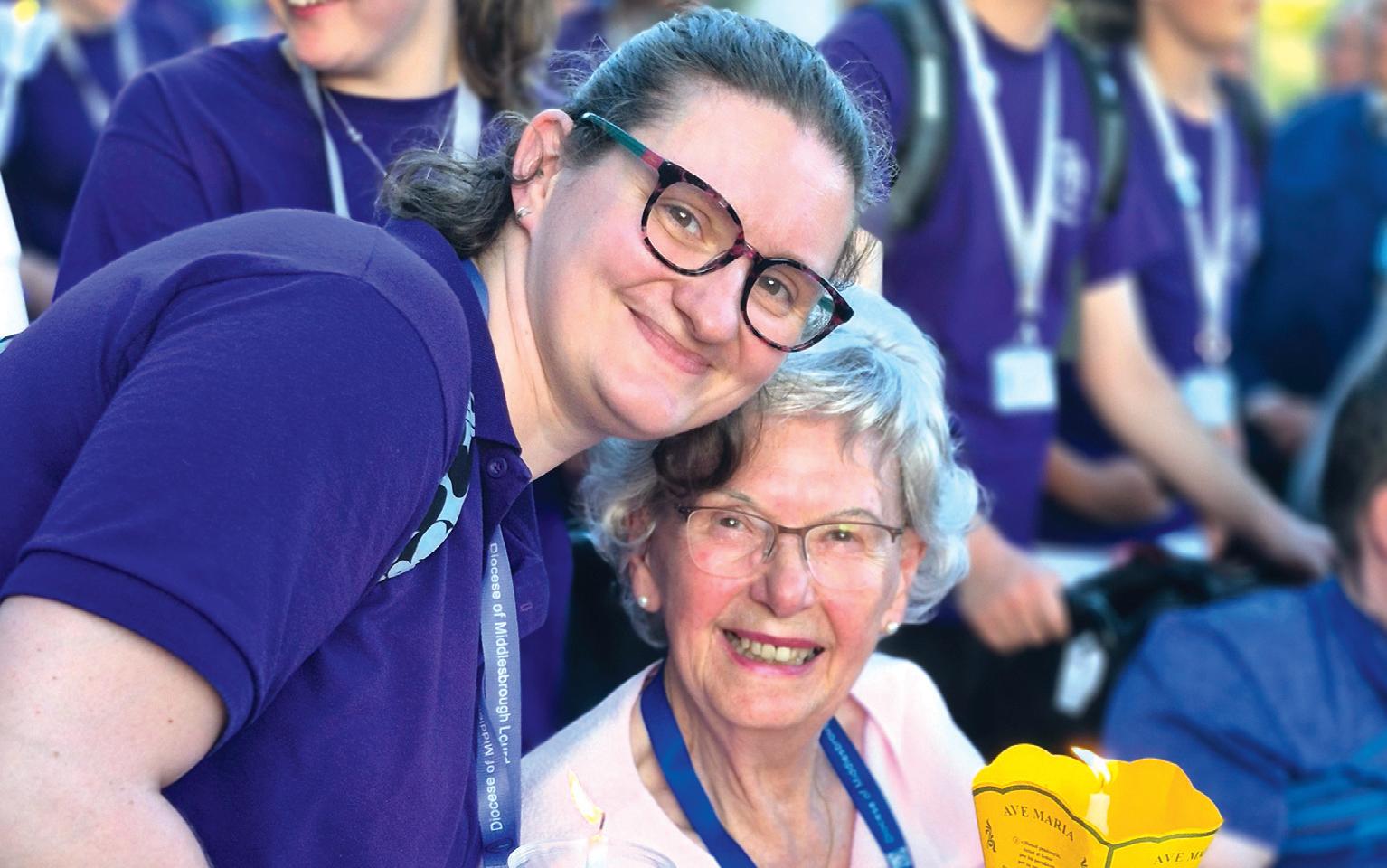
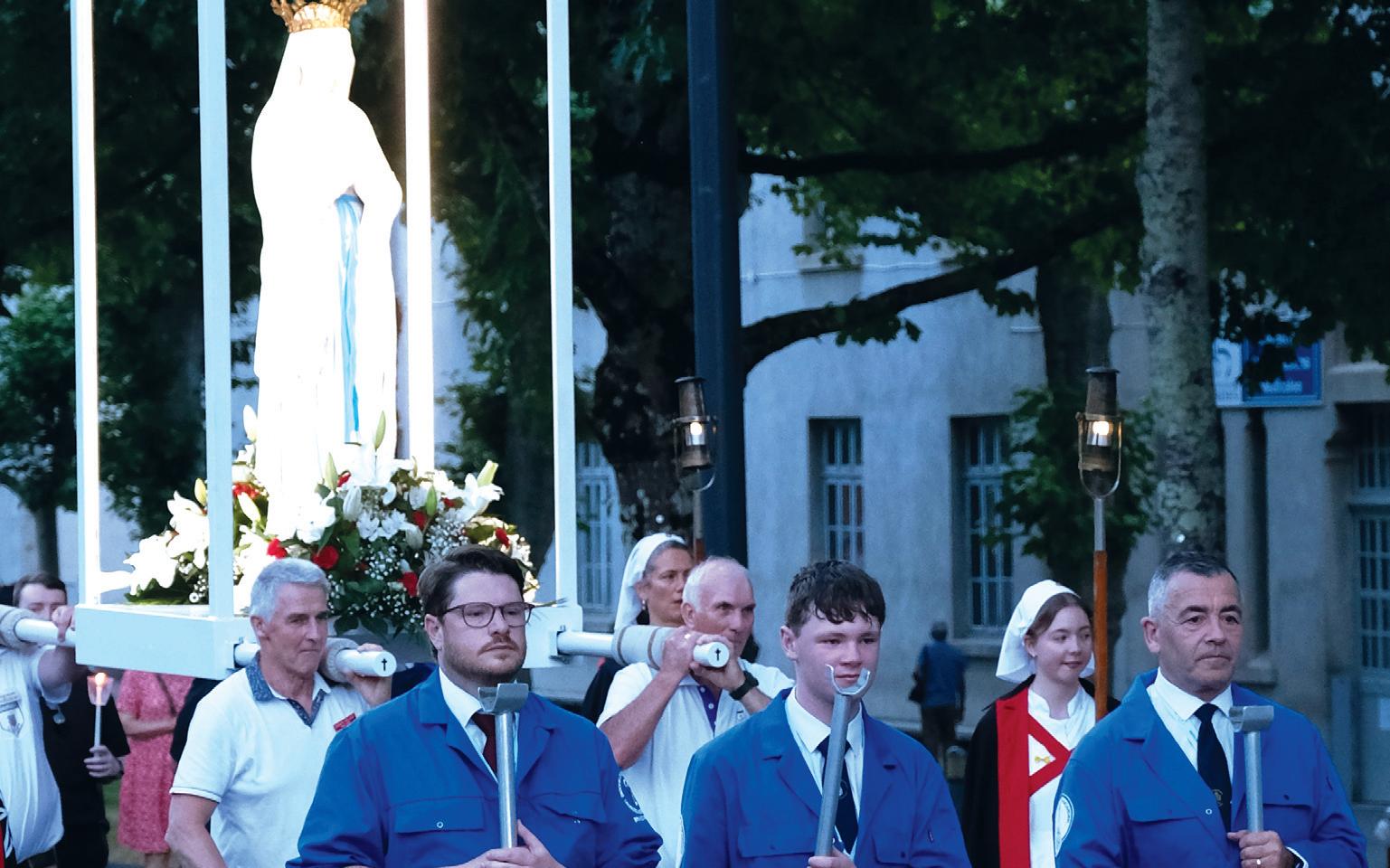
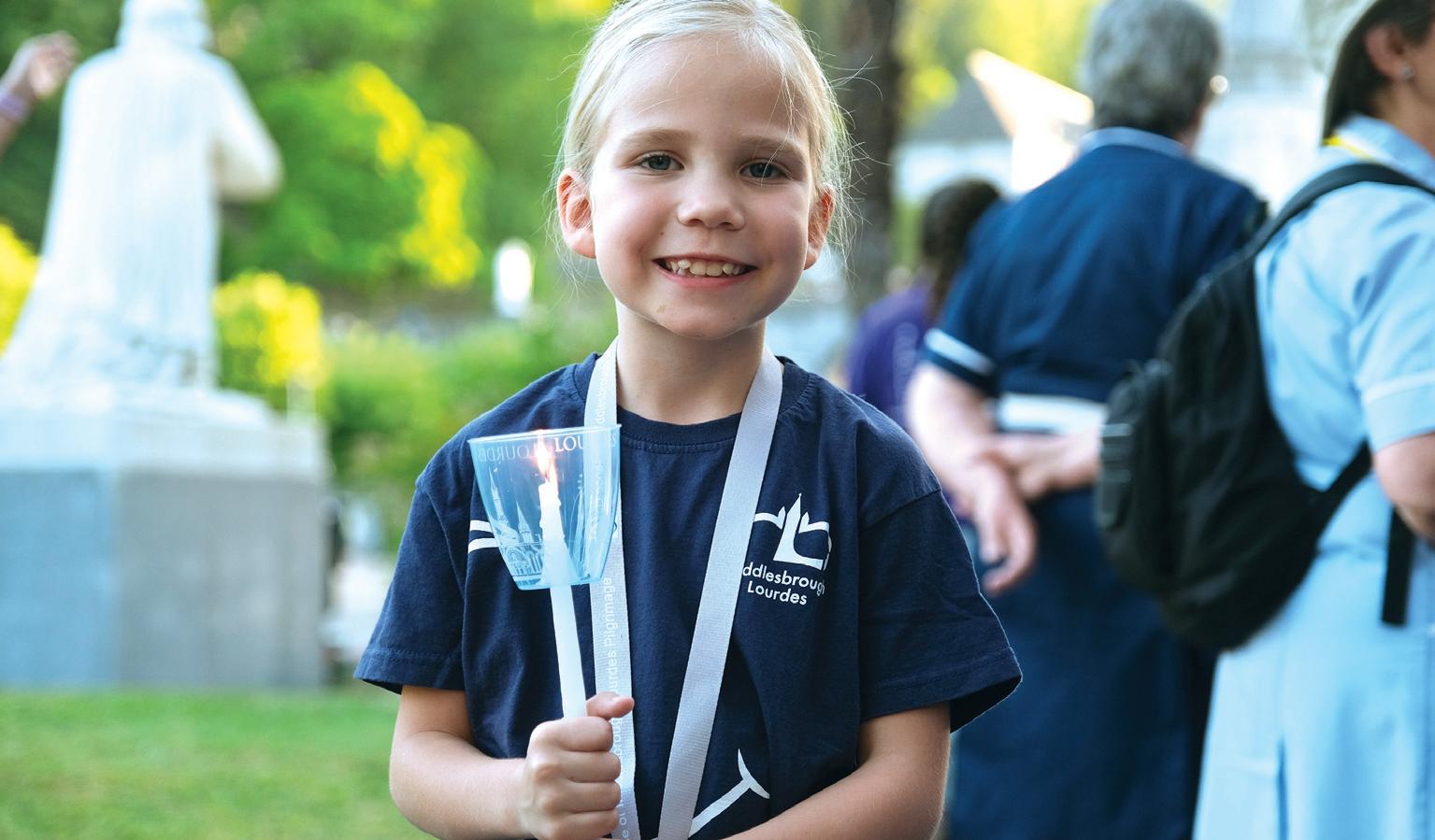
Pilgrimage director Mark Taylor shared a message of heartfelt gratitude after the success of our 73rd annual Diocesan Pilgrimage to Lourdes.
“I want to take this opportunity to thank you again for all you have done over our week in Lourdes,” he said.
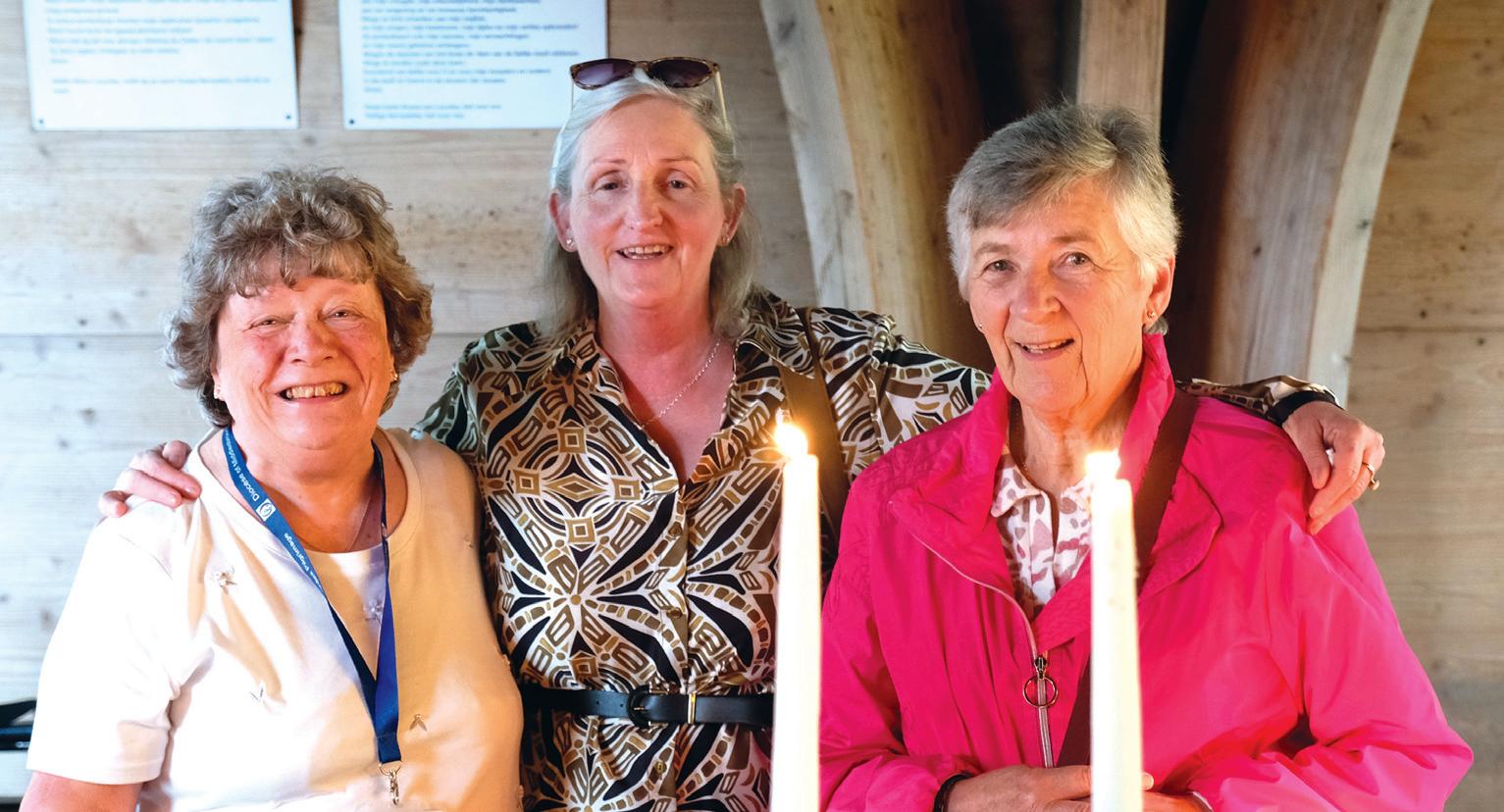
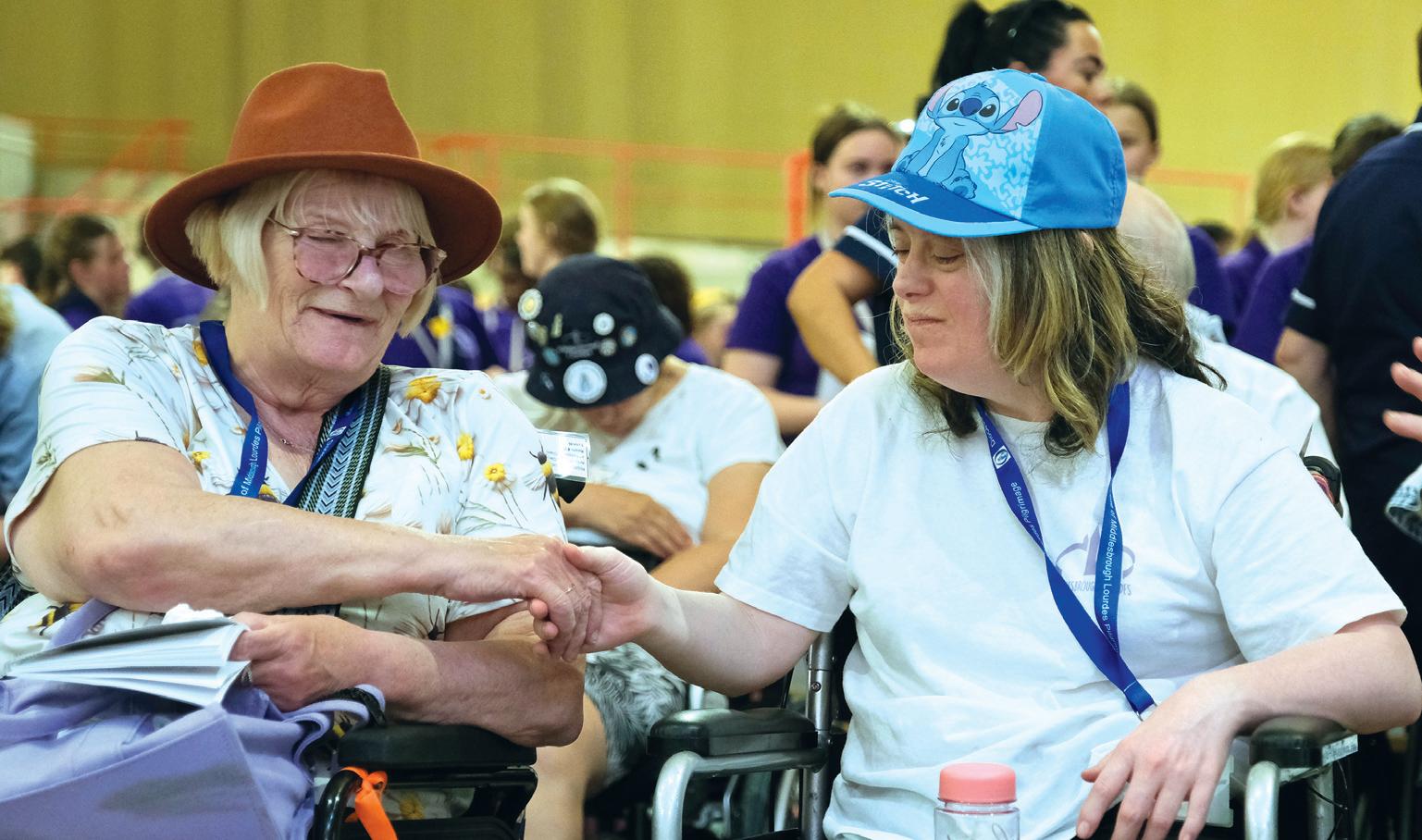
“The feedback from our supported pilgrims and others has been extremely positive, and I know that this is down to your unstinting work, love and care.
“It never ceases to amaze me when I see what can be achieved when we answer the call of Our Lady."
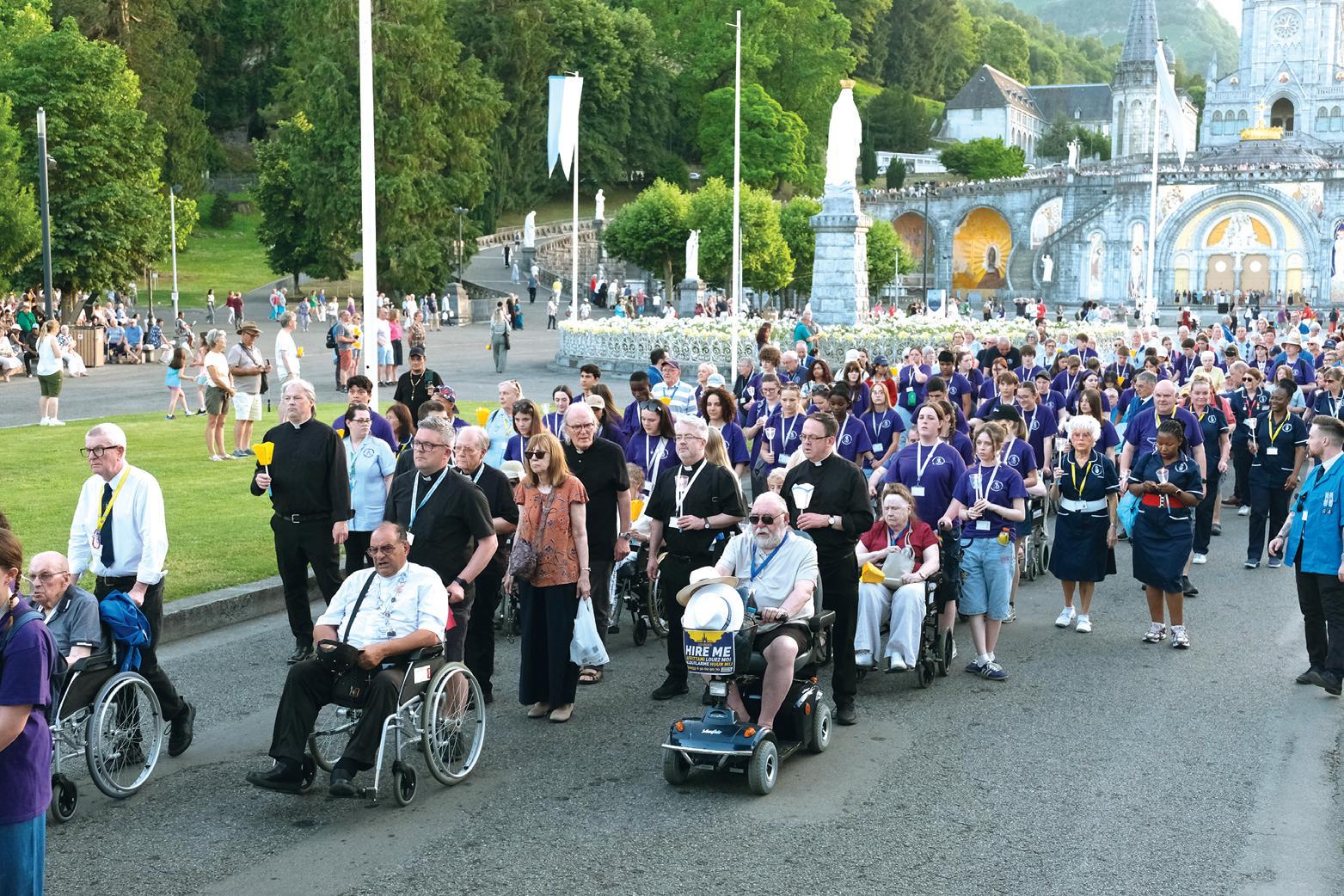
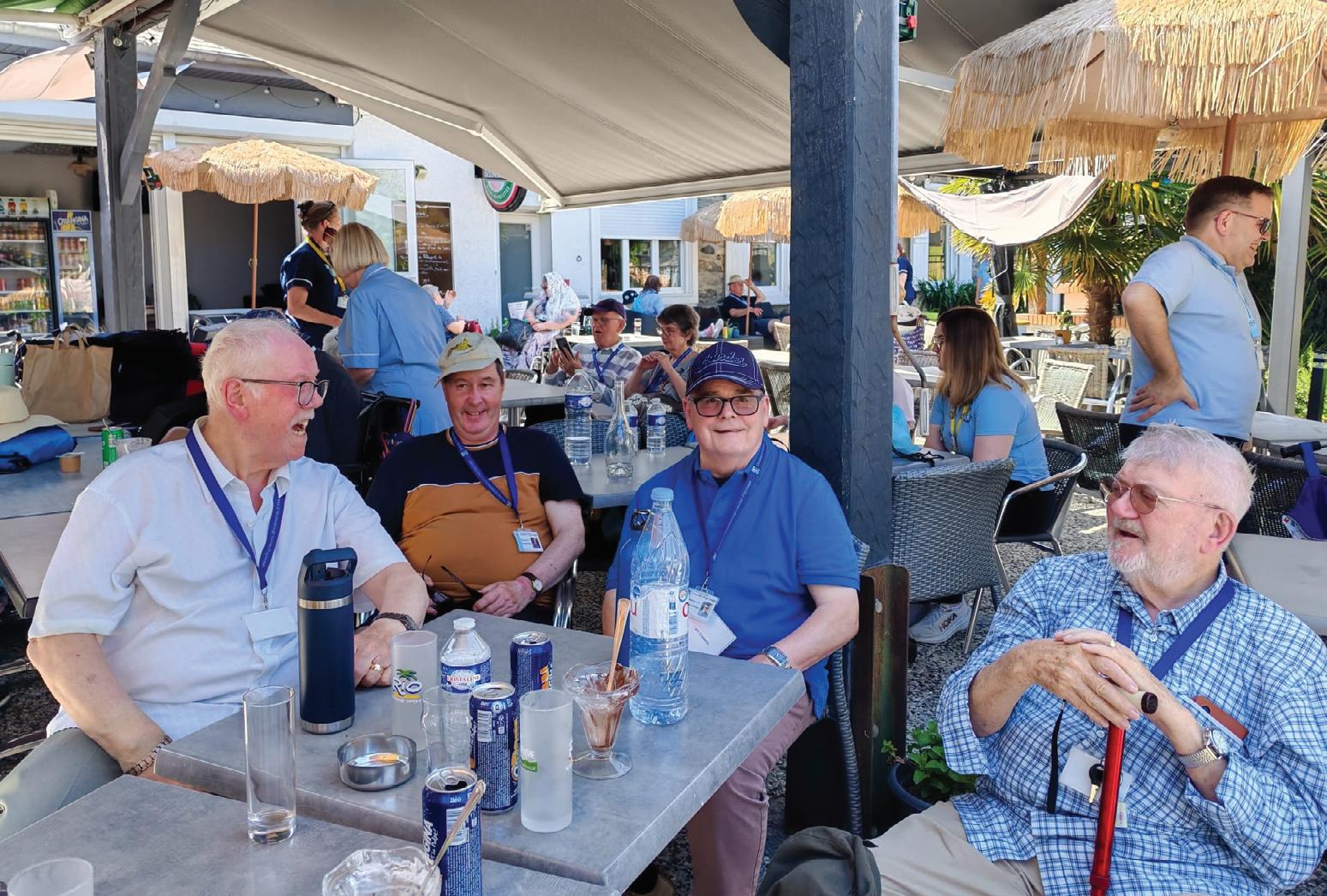
This spirit of shared dedication brought together hundreds of the faithful from across the diocese for a time of prayer, reflection and community.
Led for the first time by Bishop Marcus, pilgrims of all ages journeyed to southern France where they were blessed with sunny weather.
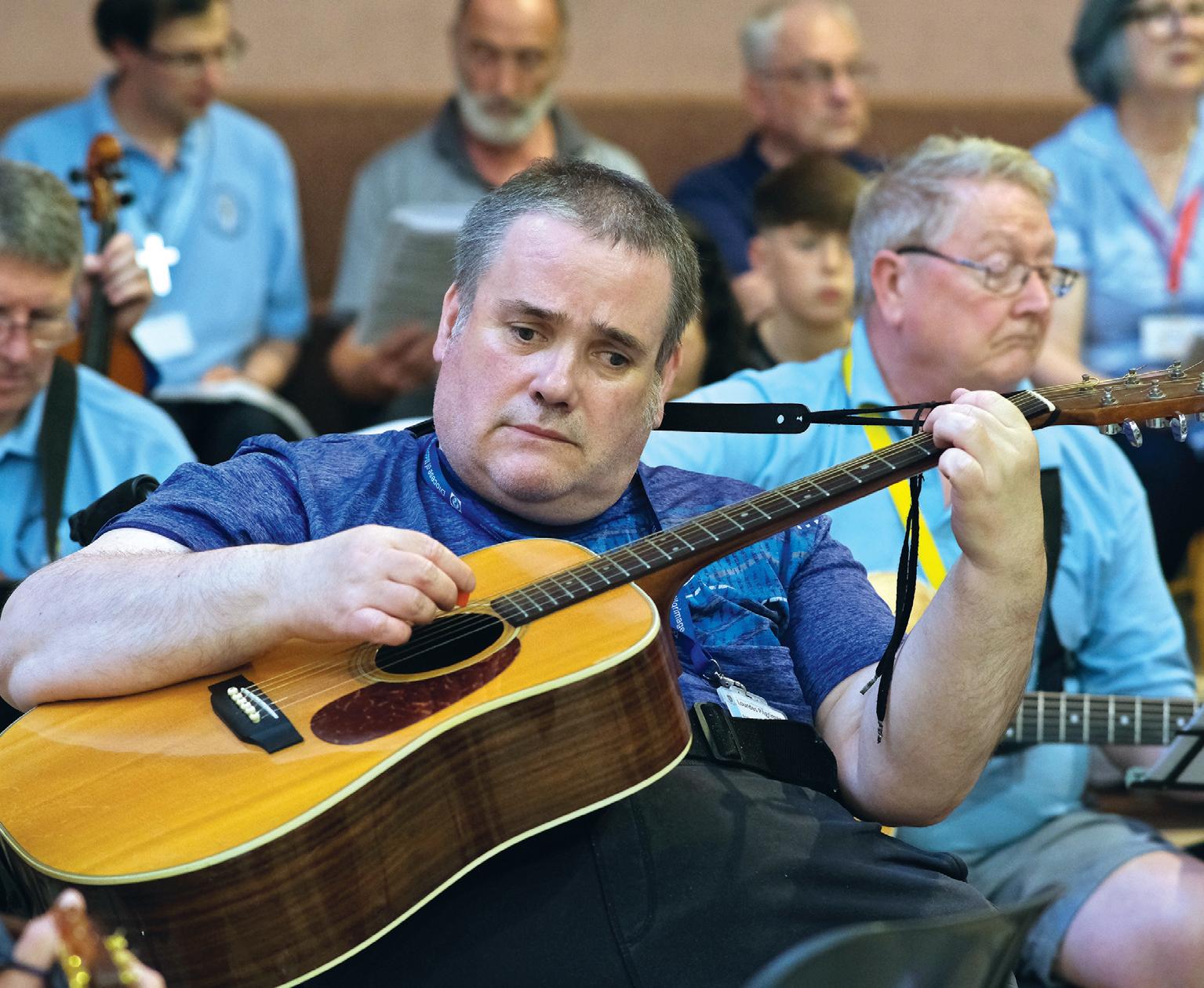
Pilgrims took part in a full programme of daily services, including the moving Mass of Anointing, the Grotto Mass and the Reconciliation Service, all accompanied by uplifting hymns from our music group.
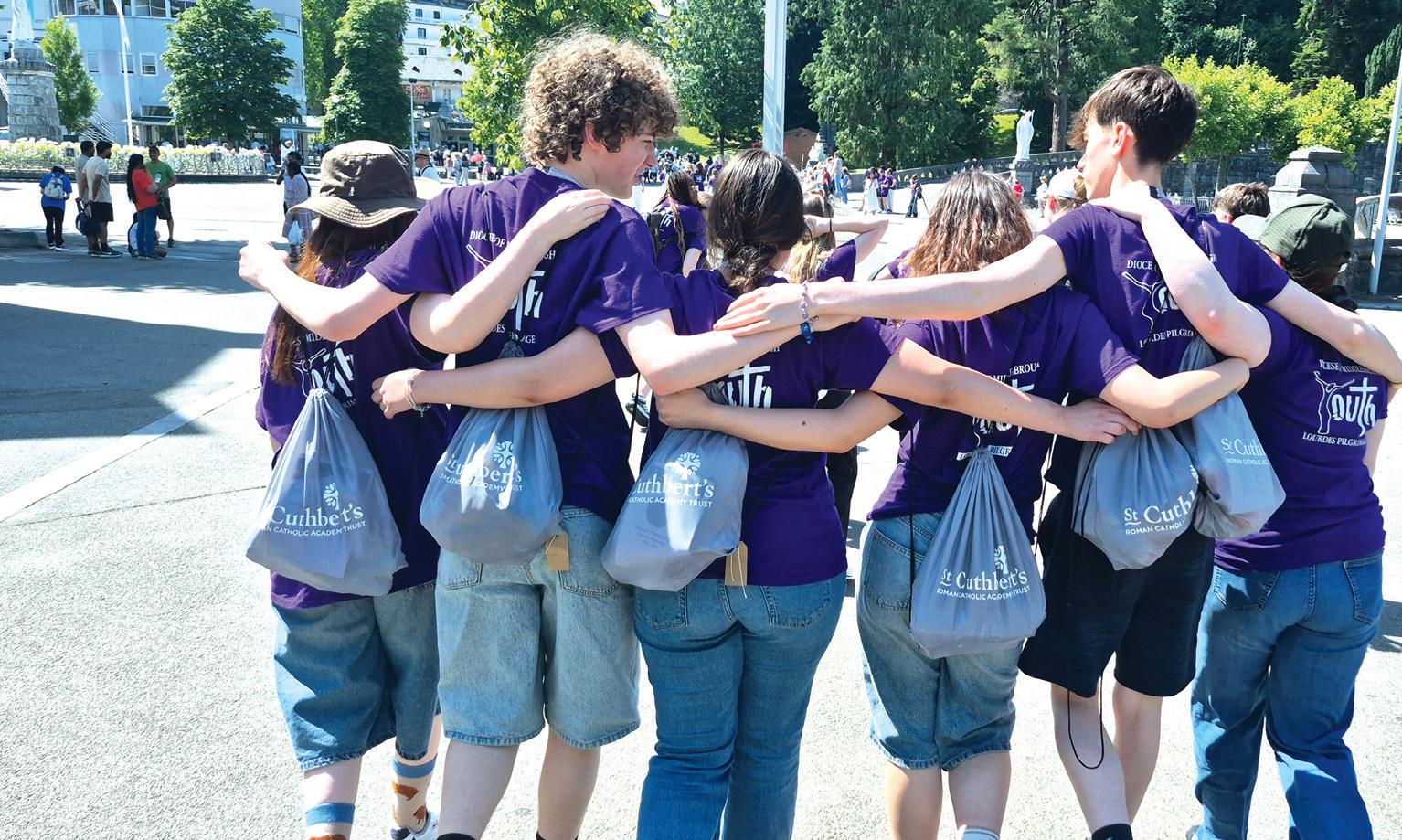
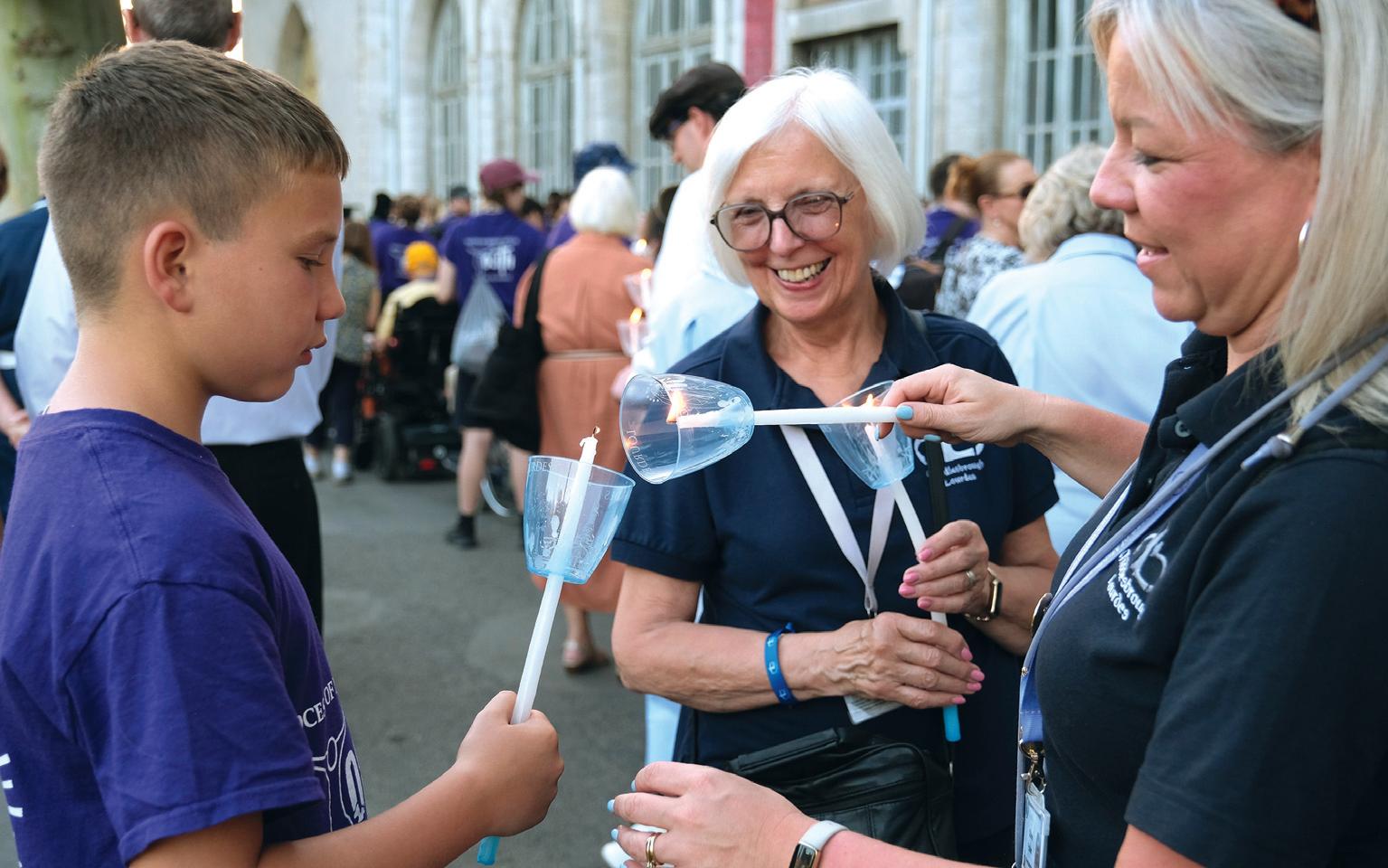
The exceptional care provided to our supported pilgrims was central to the week’s success. This vital work was carried out by our dedicated Hospitalité teams, who were enthusiastically aided by our young people, including groups from every secondary school in the diocese and their committed teaching staff.
They returned home sharing stories of personal transformation and rekindled faith.
Our bishops have issued an invitation to the faithful to renew their devotion through the upcoming National Eucharistic Congress, Adoremus 2026, on Saturday October 10.
The congress, in London, will bring together bishops, priests and people, while parishes are encouraged to unite with the national event locally through parish Masses, Holy Hours and Blessed Sacrament processions. Footage from the events will also be broadcast to enable remote participation.
The national gathering will bridge two of London’s historic cathedrals, beginning at St George’s Cathedral in Southwark and
concluding at Westminster Cathedral:
• 10.30am: Presentations on Eucharistic Art and Life (refreshments available for early arrivals)
• Noon: Adoremus Mass, celebrated by Archbishop John Wilson of Southwark
• After Mass: Keynote address, The Eucharist: Our sacrament of hope in dark times, by Cardinal Timothy Radcliffe OP, followed by a break for packed and picnic lunches
• 3pm: Public Eucharistic Procession from St George’s Cathedral to Westminster Cathedral Space will be available for attendees to watch
the start of the procession at St George’s, follow its route or join delegates for the concluding liturgies at the Cathedral of the Most Precious Blood, Westminster:
• 5pm: Solemn Benediction, led by Bishop James Curry
• 6pm: Holy Mass
• 7.30pm, 8.30pm, 9.30pm: Holy Hours led by youth ministry teams from Westminster,
Southwark and other dioceses
• Midnight to 6am: All-night vigil to close the congress
Parishes are encouraged to begin planning local celebrations to sync with the national itinerary.
For more information visit cbcew.org.uk/adoremus-2026.
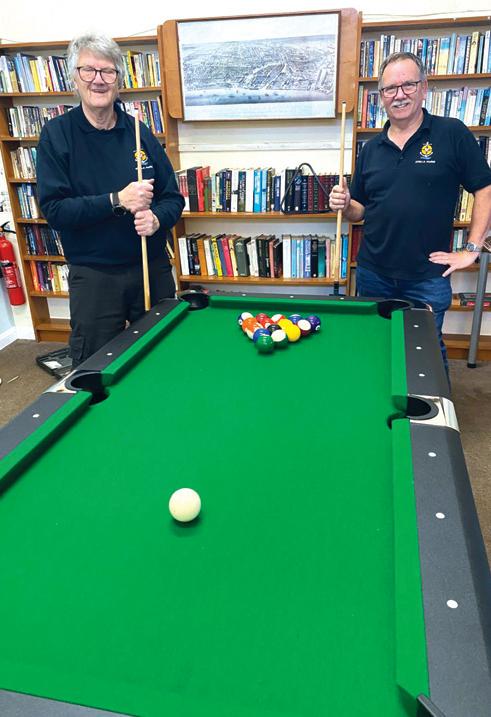
Thanks to money donated from parishes, topped up with some grants, we recently made alterations to Hull’s Seafarers Centre by dividing a large room in two to create a games area for seafarers’ use.
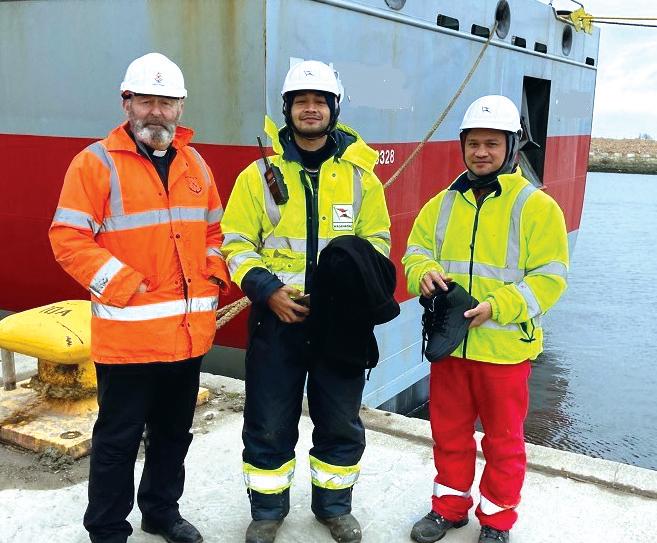
The new pool table, table football and darts board, plus an extra sofa, have made an excellent addition to the centre, which is run by Stella Maris, and are certainly popular with seafarers who visit us. Sadly, most seafarers get very little time ashore, with as little as four hours at a time between watches and not even that if they are in and out of port within 24 hours, so time to relax ashore is much appreciated. On behalf of our visiting seafarers, thank you all for your generosity, be it with your cash, clothing, Christmas hats and especially your prayers. They are all very much appreciated.
• This year’s Sea Sunday is on July 12, with the theme “Harbours of Hope: The Church Alongside Seafarers”. A second collection will take place in our churches for Stella Maris, the official maritime charity of the Catholic Church, to support its work with seafarers and fishers in the UK and around the world. See article on page 15 for more details. Gerry

Members of York University’s SVP1833 group are continuing in Blessed Frederic Ozanam’s footsteps.
In 1833, 19-year-old Frederic, along with a group of fellow students at the Sorbonne, Paris, founded the St Vincent de Paul Society (SVP).
Like Frederic and his friends, York University’s SVP1833 group work to turn their concern for others into action. They regularly help in the local community with gardening and visiting a care home in Heslington.
A particular focus is helping homeless people in the centre of York. Twice a week, they hand out food and other essential supplies to homeless people, including sleeping bags, wipes, tissues, cereal bars, crisps and plasters. They also buy items they need or specifically request, such as hot meals, drinks or clothing.
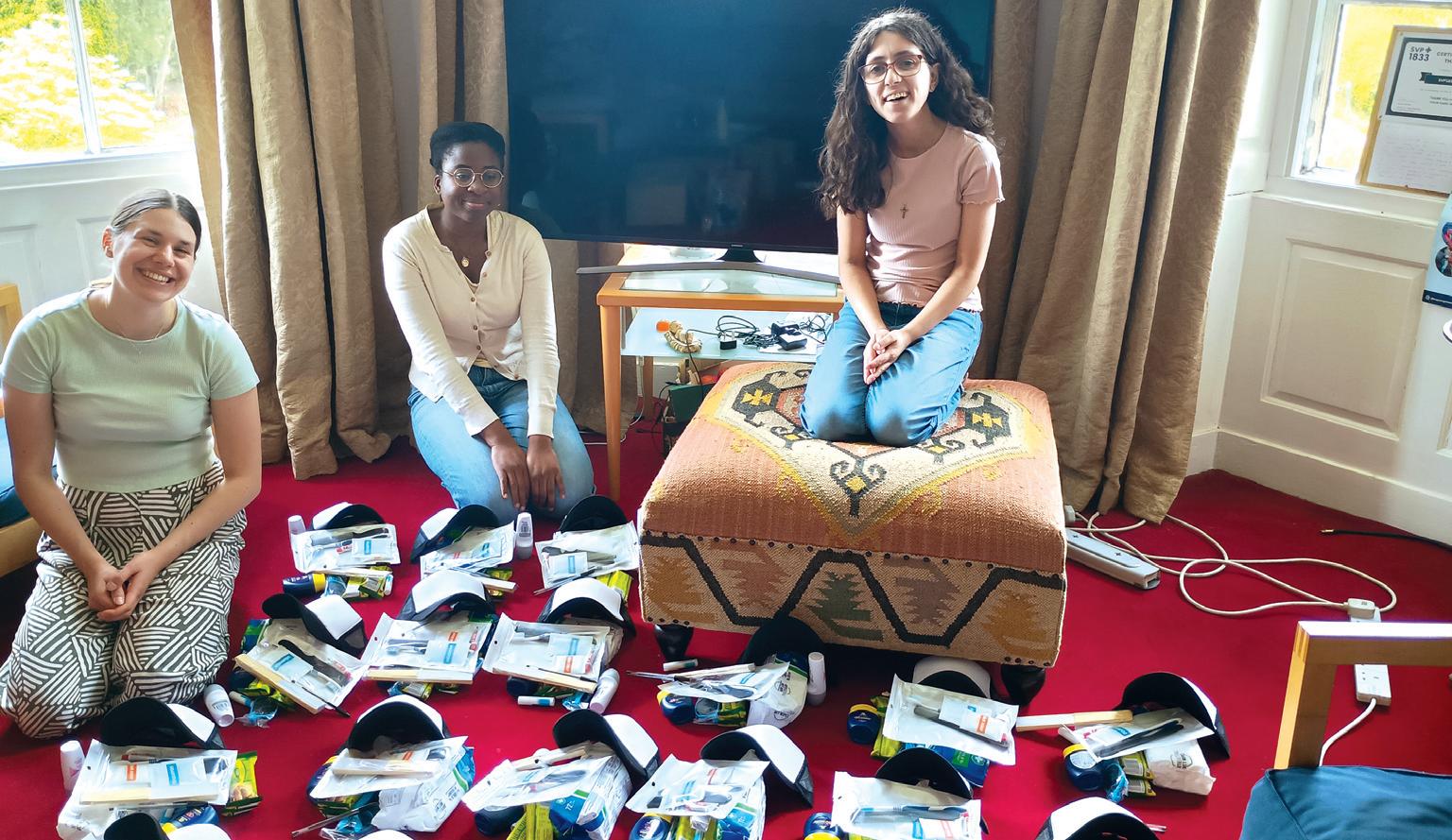
Earlier this year, the group made 20 packs of essential items such as hats, gloves, socks, feminine hygiene products, books, cereal bars, wipes, tissues, hand warmers, bars of soap, deodorant, waterproof ponchos and inflatable pillows, along with handwritten cards, to hand out to the homeless. They also raised over £2,000 for supplies by sleeping out overnight in the garden of the chaplaincy, More House.
At the end of term, when other students were celebrating the end of exams or packing up ready to go home, members made summer versions of the packs for the homeless, containing sunscreen, sun hats and fans, along with the essentials. The packs were distributed as part of the Corpus Christi Procession that took place in York in June.
Patricia Nobbs
Middlesbrough SVP Central Council President
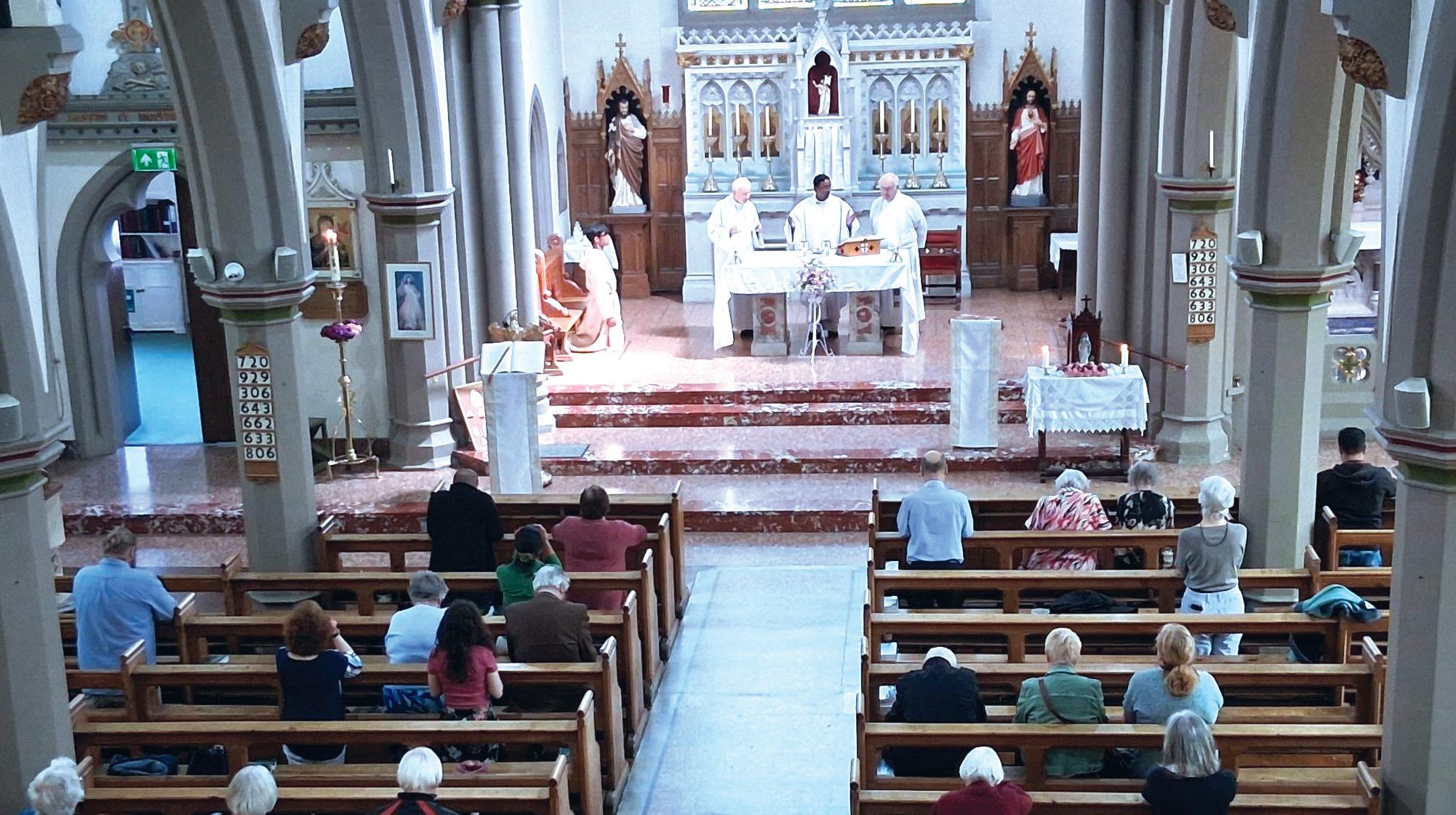
It’s always a highlight of the SVP year at St George’s in York when parishioners come together for the Mass of the Anointing of the Sick.
This year more than 40 parishioners took part in the Mass and lunch that followed at our nearest meeting place, the Victoria Public House. Mass was concelebrated by Father Jose Michael, Canon Twomey and Canon Harney and the lunch afterwards provided a valuable opportunity for relaxation and chat, with music provided by Steve Cassidy.
Thank you to everyone who attended the Mass and social, to Elizabeth and Norman for the music, to our clergy for concelebrating the Mass, the Victoria for the hospitality and to St George’s SVP members for organising the event and making it such a success.
David Harper


1 Wednesday
5.30pm Sung Evening Prayer and Benediction at St Mary’s Cathedral. Join us every Wednesday for a time of prayer and quiet reflection before the Blessed Sacrament (term-time only).
2 Thursday
7pm An Evening of Flowers at St Mary’s Cathedral, presented by the Justice and Peace group to support street children in the Congo and the education of orphaned quadruplets in Ghana. Tickets £12.
3 Friday
Events, articles and photographs for the August edition of the Voice are due by this day.
4 Saturday
11am Catholic women are invited to share an hour of feminine communion including meditation, via Zoom. Text Barbara on 07796 117704 with your mobile number and email address so she can add you to the WhatsApp group, or email catholicwomenmdl @gmail.com for Zoom link.
7pm Catholic charismatic prayer group meets on first Monday each month at St Bede’s Pastoral Centre, Blossom Street, York. For more information, contact Sharon on cdscsmiddlesbrough@gmail.com or 07932 420809.
7 Tuesday
10am Coffee at the Cathedral. Tea, coffee and treats every Tuesday after 9.30am Mass. A warm welcome and friendly atmosphere. Make new friends and enjoy some fellowship. Those who are alone especially welcome. 10am Christian Meditation Group meets online. Further information from Terry Doyle terry-doyle@live.co.uk. This takes place every Tuesday.
6.30pm Knights of St Columba Council 29 meets at St Mary’s Cathedral.
8 Wednesday
7pm The Hull Circle of the Catenian Association will hold a meeting at the Lazaat Hotel in Cottingham, followed by Mass and a buffet-style meal. If interested, email Charles Cseh at hullcirclesecretary@gmail.com.
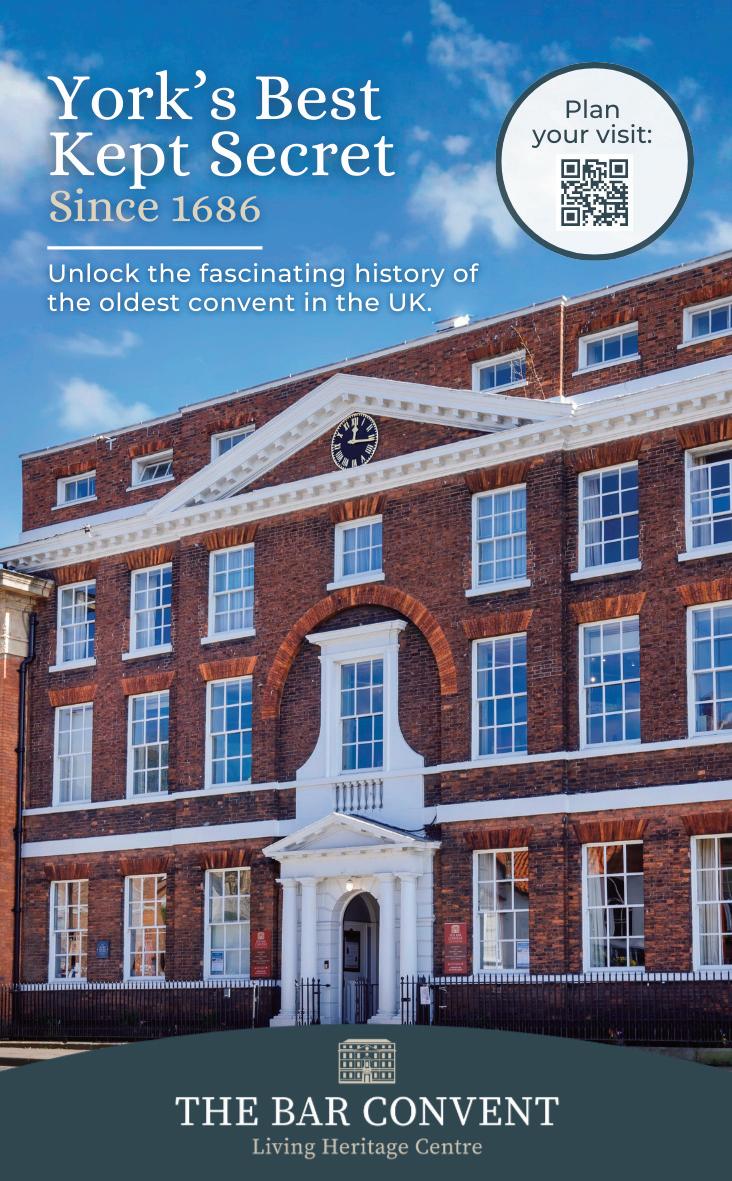
friends at the Chapel of the Bar Convent. Doors open from 2.30pm.
13 Monday
2pm Music for the Mind, an hour of fun and music for people living with dementia, their friends and carers with Trish McLean. All welcome.
14 Tuesday
12.45pm Catholic Women's Luncheon Club meets every second Tuesday of the month at the Kingston Theatre Hotel, Kingston Square, Hull. Gather at 12.45pm, lunch at 1pm. All ladies in the Hull and East Riding area welcome. Call 01482 446565 or email jayne.wilson24@ymail.com.
18 Saturday
7pm Irish dance with Dermot Hegarty at the Erimus Club, Cumberland Road, Middlesbrough TS5 6JB. Contact John Brown on 07871 958412.
19 Sunday
3pm Catholic Fellowship Mass at St Anne’s, Ugthorpe, with Father Roger Guiver.
12th July is
13th July is Sea Sunday.
Please pray for seafarers and fishers and support the Catholic charity ministering to them: Stella Maris (formerly known as Apostleship of the Sea).
To donate, go to www.stellamaris.org.uk/donate
6pm Mass in Italian in the Father Kelly Room, Our Lady, Acomb, York. Followed by refreshments. All welcome.
6 Monday
9.45am-10.25am Beverley Christian Meditation Group meets online. Further information from christianmeditation.beverley@gmail.com. This takes place every Monday.
9 Thursday
7.45pm Middlesbrough Catenians meet at Middlesbrough Cricket Club, Green Lane, TS5 7SL. Contact Peter Carey on 01642 317772 or Chris Rhodes on 01642 319161.
12 Sunday
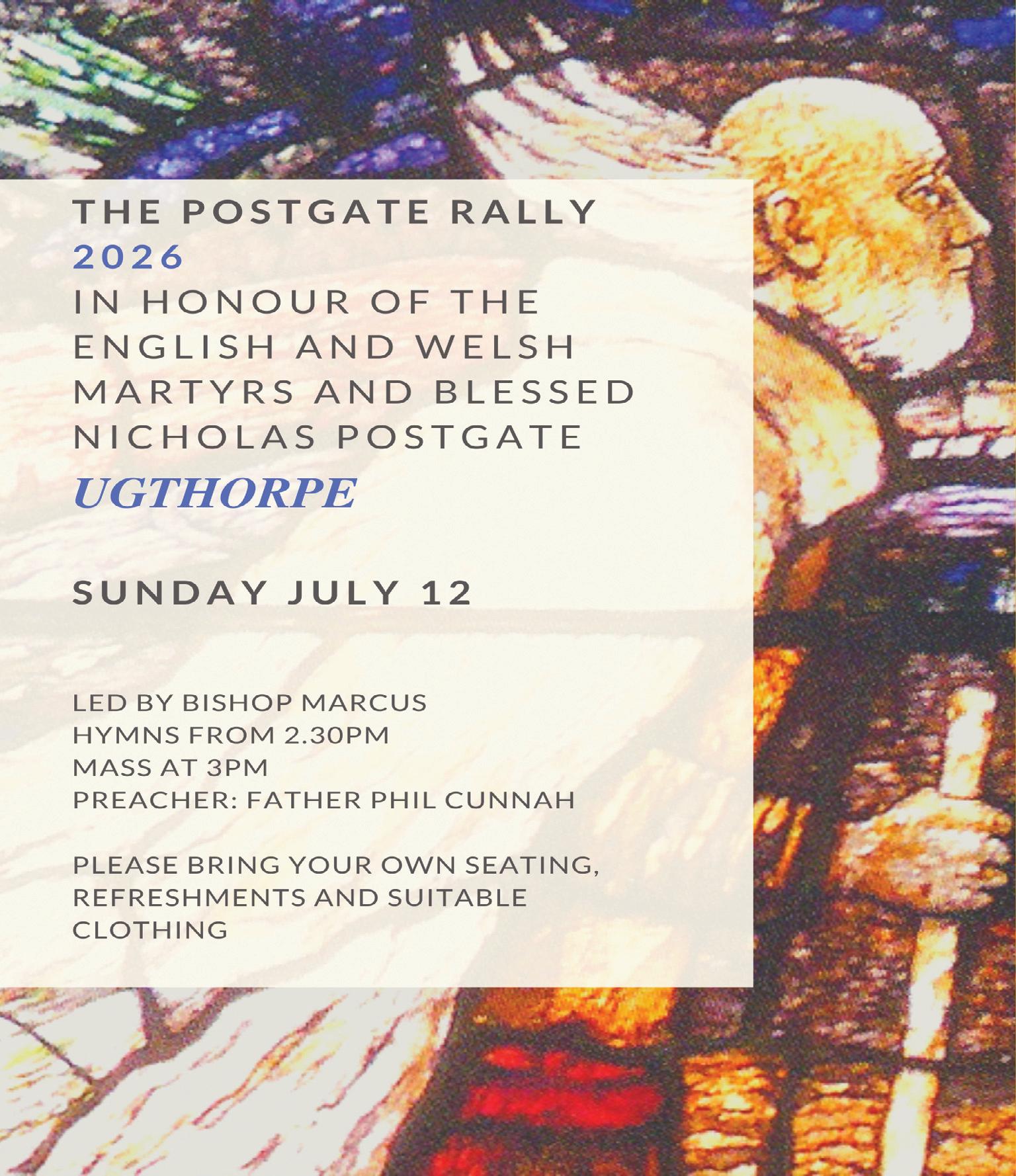
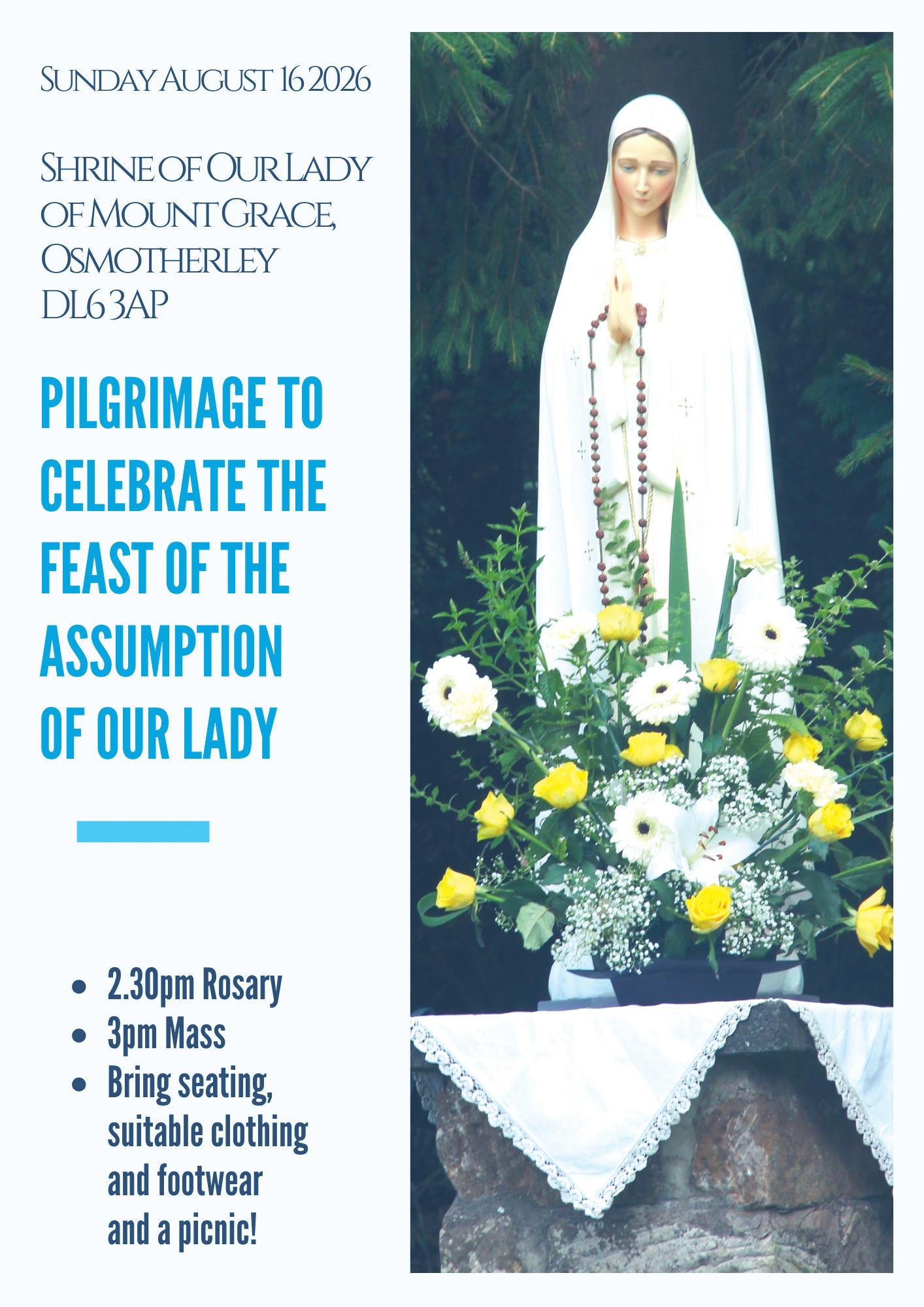
2.30pm Postgate Rally at Ugthorpe, with Mass at 3pm. All welcome. 3pm Mass for LGBT+ community, family and
25 Saturday Noon LGBT+ social gathering at the Bar Convent, York. All welcome
If you have any events that you would like to include in the Out and About section, please email heidi.cummins@rcdmidd.org.uk.
The Places of Worship Renewal Fund is designed to support the repair of England’s treasured places of worship and is targeted at places of most need.
A total of £92m has been allocated over four years with £23m per annum for the fund, which is funded by the Department for Culture, Media and Sport and delivered by Historic England.
The Places of Worship Renewal Fund supports urgent repairs and essential
Copy and photographs for inclusion in the Catholic Voice should be sent to: The Editor, Middlesbrough Diocesan Catholic Voice, Curial Offices, 50a The Avenue, Linthorpe, Middlesbrough, TS5 6QT.
Tel (01642) 850505, email catholicvoice@rcdmidd.org.uk
Deadline Friday July 3 for August edition.
Where possible please send articles in Word and photographs as jpegs. Please confirm when you send in your photographs that those who appear in them have given their permission for publication.
improvements to listed places of worship in England. Grants ranging from £10,000 to £1,000,000 will be awarded for capital works that keep buildings safe, open and in public use.
Any listed building in England of any faith or denomination can apply, provided it is used for worship for a minimum of six times a year, is a dedicated place of worship and can show the works are necessary, deliverable and aligned with the fund’s requirements.

Priority will be given to projects in areas with the greatest need for investment and those that bring most community benefit.
For more information, visit historicengland.org.uk/advice/grants/whatwe-fund/places-of-worship-renewal-fund.
• If any parishes wish to apply, please contact the Diocesan Historic Churches Committee at hcc@rcdmidd.org.uk and fundraising officer Dan Woodgate at fundraising@rcdmidd.org.uk.

The Diocese of Middlesbrough would like to point out that while every care is taken with advertisements placed in the Catholic Voice, publication does not suggest an endorsement of any views expressed.
Sometimes emails go missing. If you have sent an item for the Voice and it has not been used, please email the editor at communications@rcdmidd.org.uk.
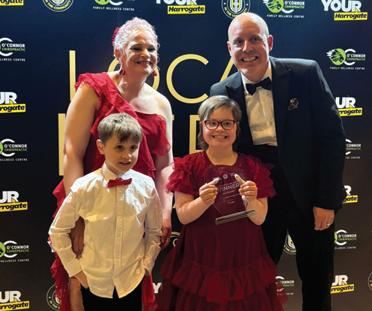
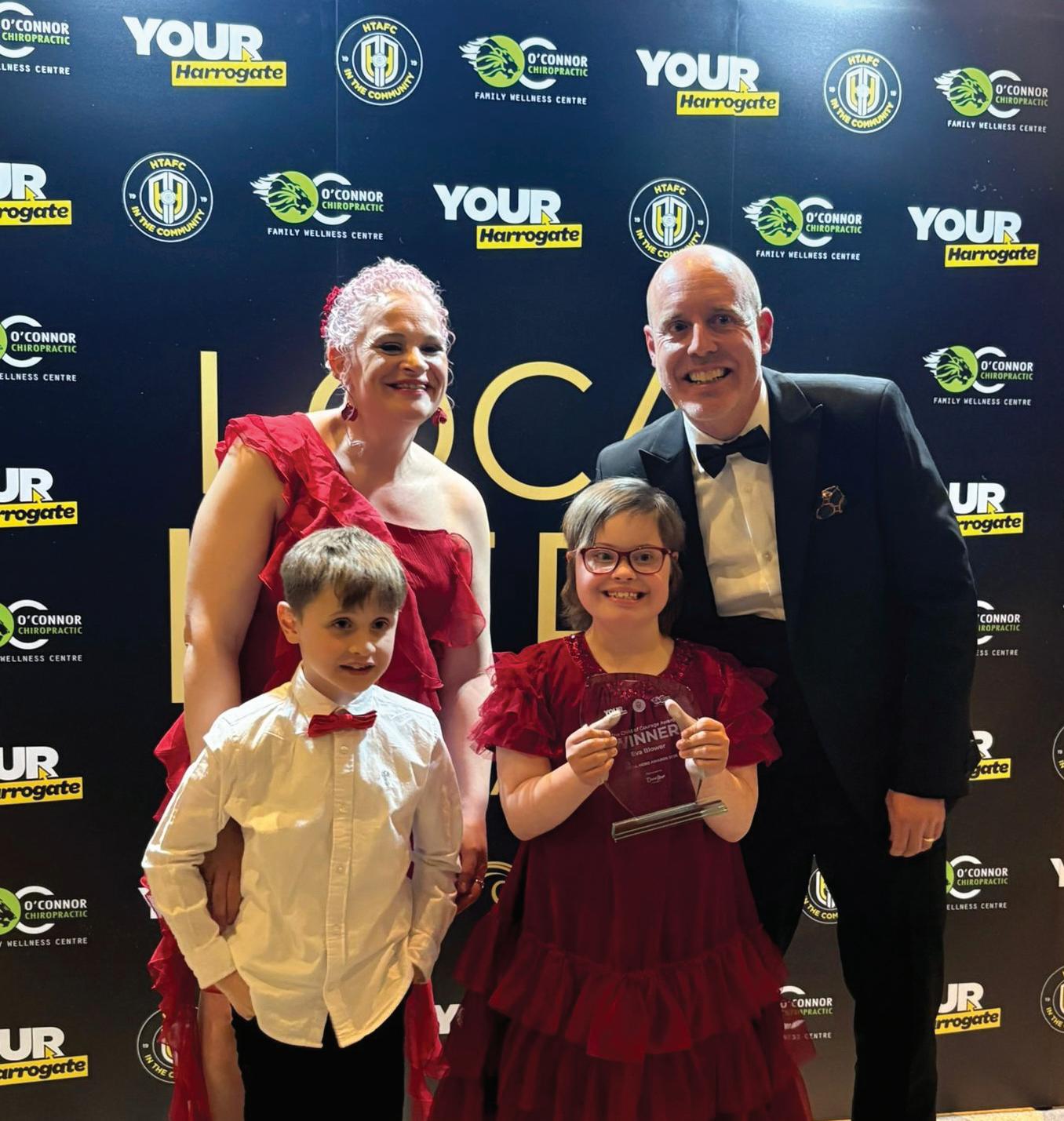
A very special 10-year-old has been honoured at the Local Hero Awards after being named Child of Courage for her remarkable resilience in the face of serious illness.
Eva, who has Down syndrome, was presented with the award at a ceremony in Harrogate attended by her family.
She was nominated in recognition of her courage and positive spirit throughout a long and difficult medical journey.
As a baby, Eva underwent several major operations on her heart and bowel.
Despite early challenges, her family say she has always brought joy to those around her with her cheerful nature.
Last year, Eva was diagnosed with leukaemia. She spent several weeks receiving intensive treatment at Leeds General Infirmary, including chemotherapy and immunotherapy, during which she lost her hair and significant weight.
She continues to receive treatment but is able, when possible, to attend school for short periods between hospital visits.
“She is still receiving treatment but manages a few hours at school between her trips to hospital. She always keeps us smiling,” said Eva’s grandma, Barbara Rovardi. “We are very proud of her achievement.”
Pope Leo to visit France in September
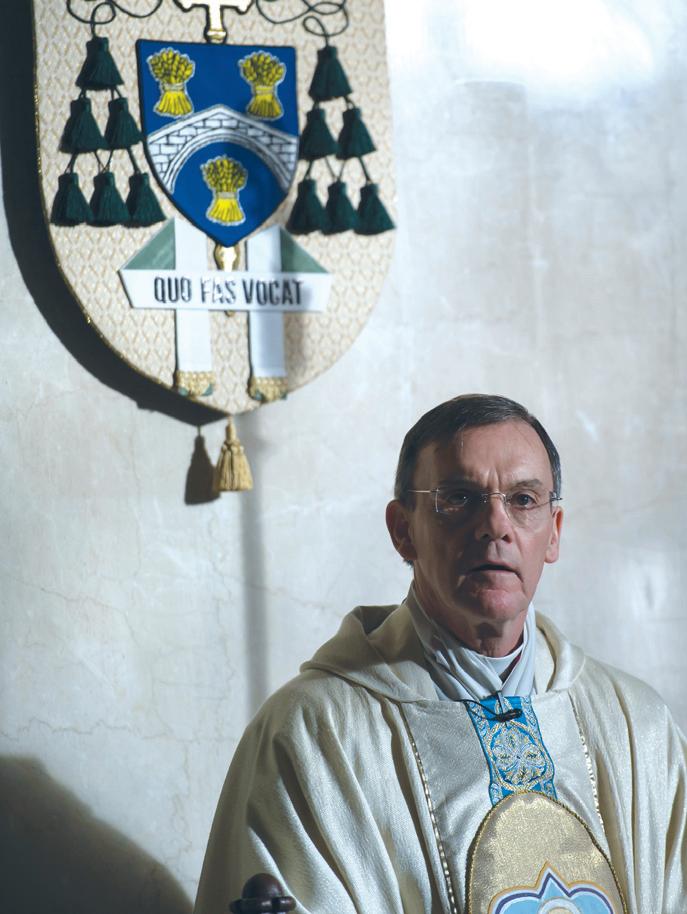
Pope Leo XIV will make an apostolic journey to France in September, marking the first official papal state visit to the country in 18 years, since Pope Benedict XVI journeyed to Paris and Lourdes in 2008. The visit comes as a response to invitations from the French president, its ecclesiastical authorities and the director general of UNESCO. As part of the visit, Pope Leo will be a “pilgrim among pilgrims” in Lourdes on Sunday September 27.
Bishop John Arnold has been elected president of Caritas Europa and will serve a four-year term from May 2027, while continuing in his role as Bishop of Salford. Elections for key positions in the organisation took place at its regional conference in Zagreb, Croatia. Caritas Europa is a network of 49 organisations from 46 countries.
The One Hope Project Academy is a sixmonth online worship school for aspiring worship leaders, musicians and songwriters who want to invest in their leadership and grow in their practical skills to help them serve in their local parish or group and go deeper in their journey of faith. For more information, visit onehopeproject.co.uk/ohpacademy.
A poll of more than 10,000 people appears to show there is no public mandate in any British constituency to revive the failed Kim Leadbeater assisted dying bill. The Whitestone Insight poll on behalf of think tank The Other Half shows a majority in all 632 constituencies believe MPs should not support any law pushed through without full scrutiny and approval from both the Commons and the Lords. Legalising assisted dying did not rank as a top-five priority anywhere. Voters overwhelmingly agreed Parliament should focus on fixing the NHS and improving palliative and endof-life care.
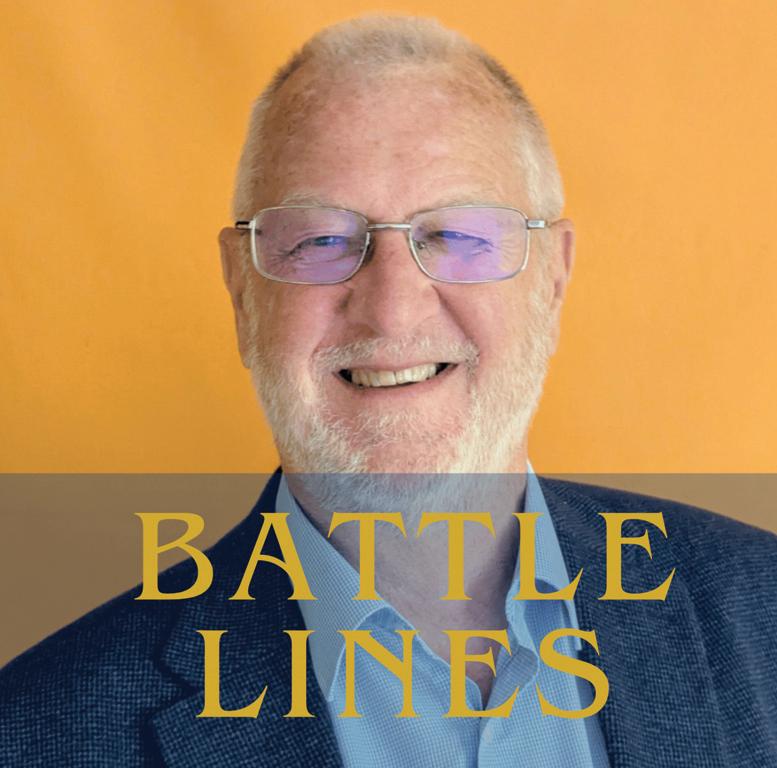
SIR JOHN BATTLE, MP for Leeds West from 1987 to 2010 and a minister in Tony Blair’s government, continues his regular column in the Voice. Sir John, who was made a Knight Commander of the Order of St Gregory the Great by Pope Benedict and was knighted in the 2022 New Year Honours, is chair of the Diocese of Leeds Justice & Peace Commission and has a deep commitment to Catholic Social Teaching.
May has long been the month of workers’ dignity and rights, with May 1 marked as International Workers Day.
In 1955, Pope Leo XII declared May 1 as the feast day of St Joseph the Worker to emphasise the dignity of workers. This year that focus has come to the forefront.
The foundational encyclical of Catholic Social Teaching, Rerum Novarum: On Capital and Labour, was published in 1891, challenging both state socialism and unregulated capitalism and championing the intrinsic dignity of the worker and the right to both a “just wage” and to “organise” by joining trade unions to campaign for fair conditions.
To mark the 135th anniversary of Rerum Novarum, our Holy Father Pope Leo XIV recently published Magnifica Humanitas, an encyclical addressing the challenges posed by artificial intelligence and stressing the need for AI to be “placed firmly at the service of humanity”, not least given its potential impact on work for future generations.
Pope Leo’s encyclical, subtitled “On safeguarding the human person in the time of artificial intelligence”, insists that each human person must remain at the centre: “The person bears within him or herself a freedom, an interiority and a vocation to love and worship that no machine can replace or block.”
He writes that he is fearful of AI replacing
and not assisting humans in the workplace: “The pursuit of greater profits cannot justify choices that systematically sacrifice jobs, because the human person is an end, not a means.”
The previous week, the Catholic Social Action Network (CSAN), an agency of the Bishops’ Conference of England and Wales, published The Dignity of Workers in the 21st Century, a series of papers prepared by a working group of experts to address the background and future challenges.
It was launched at a recent symposium in Westminster Cathedral Hall in order to spark a debate based on Pope St John Paul II’s comment in his encyclical Laborem Exercens (1981): “…human work is a key, probably the essential key, to the whole social question, if we try to see that question really from the point of view of people’s good. And if the solution – or rather the gradual solution – of the social question, which keeps coming up and becomes ever more complex, must be sought in the direction of ‘making life more human’, then the key, namely human work, acquires fundamental and decisive importance” (para 3).
We need to spark deep conversations in our Church, our parishes and wider society on, “Where will our children and grandchildren work? What are they called to do in the future?”
In our own context, former Labour minister Alan Milburn has just published his interim report on why there are nearly a million young people who are not in education, employment or training (referred to as NEETs).
His enquiry found that 58% of these NEETs have never had a job and that 15% of graduates have been unable to secure employment. He describes young people caught in a “perfect storm” where the first rung on the career ladder is out of reach, where employers want “work readiness” as well as qualifications but where training in adaptability and communication is not part of school training.
Problems with mental health are hitting young people hardest, not least since Covid. Employers want “work experiences” but the lack of it is a Catch 22.
Most youngsters want work but entry-level employment has been declining for years and sadly a young person who is on benefits until the age of 24 is unlikely ever to be employed.
Their job applications go out into a void (and are now AI-rejected) with no response or acknowledgment and as a result, “the silence kills hope”, as one young person put it.
Since retirement in 2010, I’ve been involved in a local men’s mental health walking group in my neighbourhood. It is a classic inner-city neighbourhood marked by poverty, the challenges of drugs and alcohol and broken relationships, with low educational expectations.
Four large tower blocks of flats have been taking in single men, including from the nearby remand prison, for years. By 2010 the blocks had the highest male suicide rate in the country.
Our regular Friday men’s walking group largely comes from the blocks, although it now often receives referrals from health authorities as well.
Our walk includes a call at a coffee shop for small group introductions before returning for a shared meal. One regular with learning difficulties has been looking for work as a litter picker with the local council for years, but his lack of functional literacy disqualifies him.
Recently, a young member who has been unemployed was too terrified to go for his job centre assessment as he believed he would be signed up to fight in Ukraine or Iran. As a result of his failure to attend, his benefits were stopped, including his rental allowance, and he was evicted onto the street.
Most have incredible difficulty trying to find work and it’s not for want of trying. Tragically, the age range of the greatest suicide risk, which was between 50 and 80 years of age when we started in 2010, is now between 20 and 40.
The crude binary of pitting “welfare” against “work” ignores deeper structural and farreaching issues that need addressing together.
Notably, the common use term “welfare” has recently adopted the negative American meaning as term of abuse, neglecting the key fact that our welfare benefits payments include support such as Working Tax Credit, for people and families who are actually in work on minimum wages that are too low to support themselves and their families.
In effect, it is a subsidy to low-wage-paying employers (including highly profitable major brands). The danger of interpreting “welfare” in a negative, restrictive sense was why Beveridge insisted that we should always refer to “social security”, a term we now seem to neglect.
“In-work poverty” remains a key problem, nor will cutting benefits simply drive people into work now. So Alan Milburn asks us to stop blaming young people and to focus on the need for radical systemic change, working with education, business, health and into-work support and, crucially, with young people themselves. His recommendations will be published in the autumn.
The plight of young people in our society should become our moral cause.

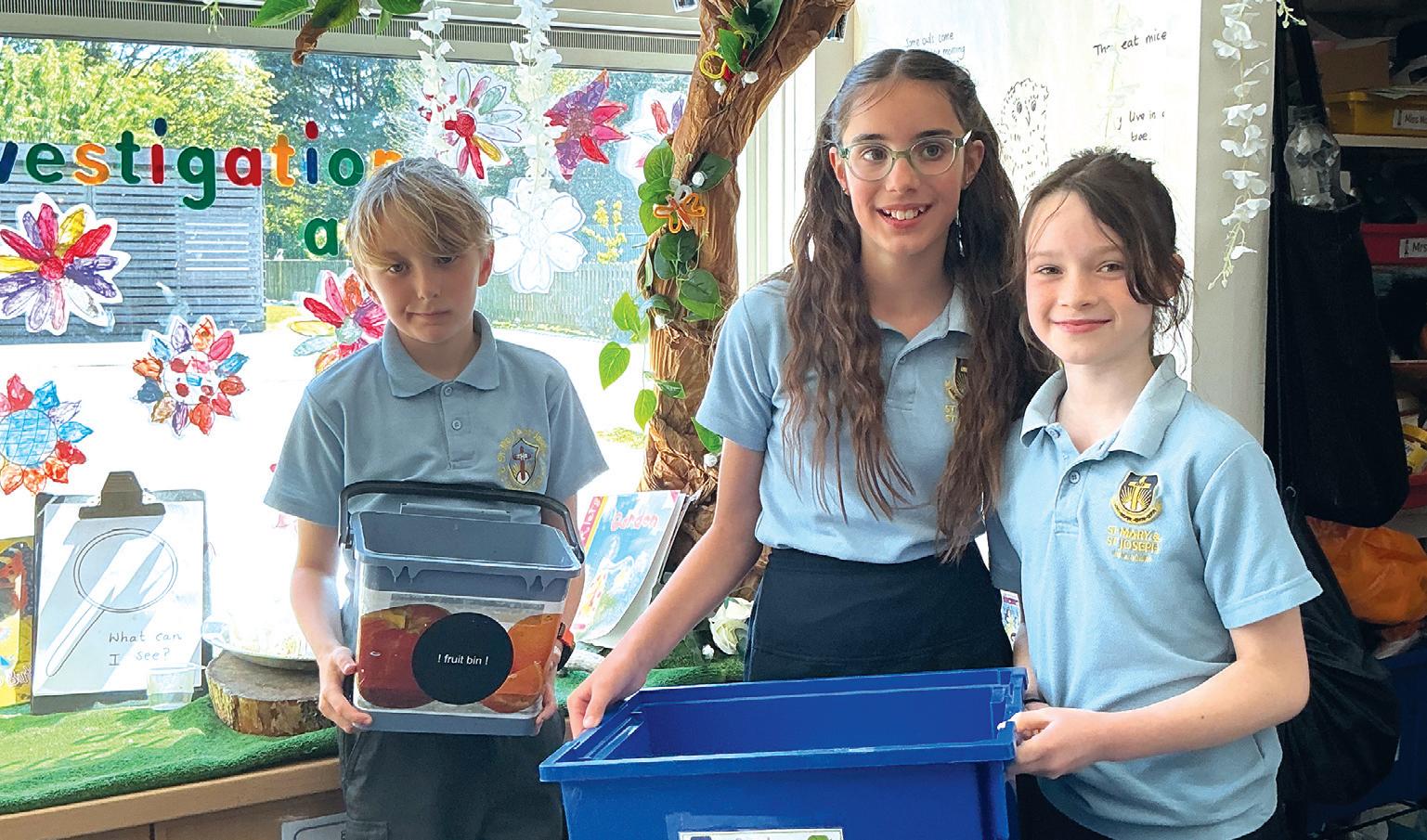
Inspired by the teachings of Laudato Si’ and a commitment to protecting our common home, St Mary and St Joseph’s VC Academy (SMSJ) in Pocklington is showing that small steps can lead to significant change.
As part of St Cuthbert’s Roman Catholic Academy Trust, the school is successfully embedding environmental stewardship into its culture, campus and curriculum.
Sustainability is quickly becoming a way of life at the school, which has officially joined the Let’s Go Zero campaign, and staff and pupils at the school have been pledging to reduce their environmental impact significantly.
Alongside a designated staff Sustainability Champion, the pupils’ Eco Warriors Club meets weekly to lead practical initiatives, from installing battery collection points to creating hand-drawn posters that remind peers to conserve water and electricity.
Daily “waste monitors” ensure that recycling is handled correctly, proving that the
youngest members of the community can lead the charge.
The school grounds are being reimagined as a thriving, biodiverse hub. Innovation and upcycling are at the heart of this transformation. Pupils have planted wildflowers to support local pollinators, alongside fruit trees and raspberry bushes. They have used old pallets as bug hotels, discarded tyres have been transformed into vibrant planters, a water butt is being put in place for rainwater harvesting and there is a composting system for fruit waste, which will eventually feed the school’s allotment. The school’s curriculum has also moved outdoors to provide hands-on experiences. Weekly Forest School sessions in partnership with Go Wild mean pupils can explore ecosystems and build habitats. The SMSJ mission extends beyond the gates of the academy. By regularly redistributing pre-loved uniforms, they are promoting recycling and supporting local families.
Recent geopolitical tensions have put the plight of seafarers in the headlines.
The disruption to shipping in the Strait of Hormuz resulted in an estimated 20,000 seafarers stranded on board ships, facing heightened risk and considerable mental strain. Sadly, several have also been killed.
Seafarers are increasingly finding themselves working in areas of conflict, far from home and uncertain about the future. Caught in the crossfire, many are fearful, anxious and lose hope. Their ordeal can negatively impact their physical and mental wellbeing.
Meanwhile, their families follow events anxiously, often with little news and no certainty about their loved ones.
These incidents also serve as a powerful reminder of how much we all depend on seafarers to keep essential goods moving around the world. Seafarers are key workers. Yet they are often an invisible workforce who quietly and diligently go about their duties at sea, largely unseen by most of us.
Help in crisis
Stella Maris, the official maritime agency of the Catholic Church, exists to provide pastoral and practical support to seafarers. In times of conflict and crisis that mission becomes even more urgent.
As the war in Ukraine enters its fourth year, Stella Maris continues to support seafarers and their families, providing essential services in extremely difficult circumstances.
This includes psychological care, online financial resilience training, guidance and safety kits to help protect seafarers in dangerous waters and support for people facing emotional strain and economic instability.
Core funding from Stella Maris has also helped ensure frontline services can continue without interruption.
From our experience supporting seafarers and their families in Ukraine, we know how much ongoing support will be needed for seafarers affected by the Middle East crisis once they leave the region, and Stella Maris chaplains and volunteers are ready to offer assistance.
Sea Sunday
On July 12, churches around the world celebrate Sea Sunday, a day for people to come together to pray for seafarers, fishers and all who work at sea, and thank them for the vital role they play in our lives.
The Gospel on Sea Sunday is about the Parable of the Sower. Jesus delivered this parable beside the Sea of Galilee, a significant location for his ministry.
The work of Stella Maris is like that sowing. Many seafarers find strength in faith and comfort in prayer. Each conversation with our chaplains or volunteers, each act of practical help and each prayer said with a seafarer can be a seed planted in a life.
The daily ship visits by Stella Maris chaplains and volunteers in the diocese can become a source of hope in times of crisis. It reminds seafarers of the Church’s care for all who work at sea.
This Sea Sunday, we pray for all seafarers, fishers and those who work at sea. Lord, guide us to care for them with responsibility and respect. Stay with all who travel the seas. Protect them, guide them and bring them safely home. Amen.
stellamaris.org.uk
We are approaching the time of our annual celebration to pray and respond together to the Cry of Creation.
This special Season of Creation, from September 1 to October 4, is a time when we celebrate God as Creator and acknowledge Creation as the divine continuing act that summons us as collaborators and partners to love and care for all that is created. It is a time to unite and use our prayers, our voices and our efforts to care for Creation.
This year’s theme is “Living Water”, with the biblical text from Ezekiel 47 1-12, portraying God’s life-giving water flowing from the temple of God. We are
called to immerse ourselves in the water by actively safeguarding and working for renewal of our common home.
The Season of Creation website contains a guide for an ecumenical prayer service that can be used at any time during September.
The service gives us the opportunity to both renew our relationship with God the Creator and commit to practical action for environmental and climate justice.
The guide contains ideas for prayer and ways to incorporate and reflect on this year’s theme and symbol. Our wellbeing is interwoven with the wellbeing of the Earth.
Visit seasonofcreation.org to find out more.
Barbara Hungin
The WeBelieve Festival returns from Friday July 24 to Monday July 27, bringing thousands of Catholics together from across England and Wales. Hosted at the historic St Mary’s College, Oscott, in Birmingham, the event is a vibrant celebration of Catholic faith, community and heritage. The four-day festival offers an opportunity to experience the diverse traditions and charisms flowing through the Church, with speakers, sacraments and fellowship designed to inspire an authentic encounter with Jesus Christ. All are welcome. For more details, visit webelievefestival.com.
Radio Maria England has officially relaunched as Radio Maria United Kingdom (Radio Maria UK), marking a major milestone in its mission to serve Catholics and people of faith in all four home countries. Launched in Cambridge in 2019, the station is part of a global, listenerfunded network spanning 85 stations. It operates without advertising or partisan politics, relying on a dedicated mix of professionals and volunteers. Find out more or listen live at radiomaria.uk.
Parishes are being invited to become members of the Yorkshire Historic Churches Trust, which relies upon the support of churches, donors and local communities to continue its work in preserving the county’s rich Christian heritage. Membership costs £50 a year and funds help ensure that grants remain available for churches in need. The trust distributes around £100,000 annually in grants to Christian places of worship, both listed and unlisted, for repair, restoration and maintenance projects. To join or donate, visit yhct.org.uk/donate.
Ignacy Niedzwiedzki-Kusztelak and Joshua Colborn have been accepted for formation to the priesthood in the Diocese of Leeds. Please keep them in your prayers as they prepare to begin their propaedeutic year at the Royal English College of St Alban in Valladolid, Spain, from September. Please continue to pray for vocations.
The sixth World Day for Grandparents and the Elderly will be held on Sunday July 26, the Feast of St Anne and St Joachim. The Holy Father has chosen the theme: “I will never forget you” (cf Isaiah 49:15).
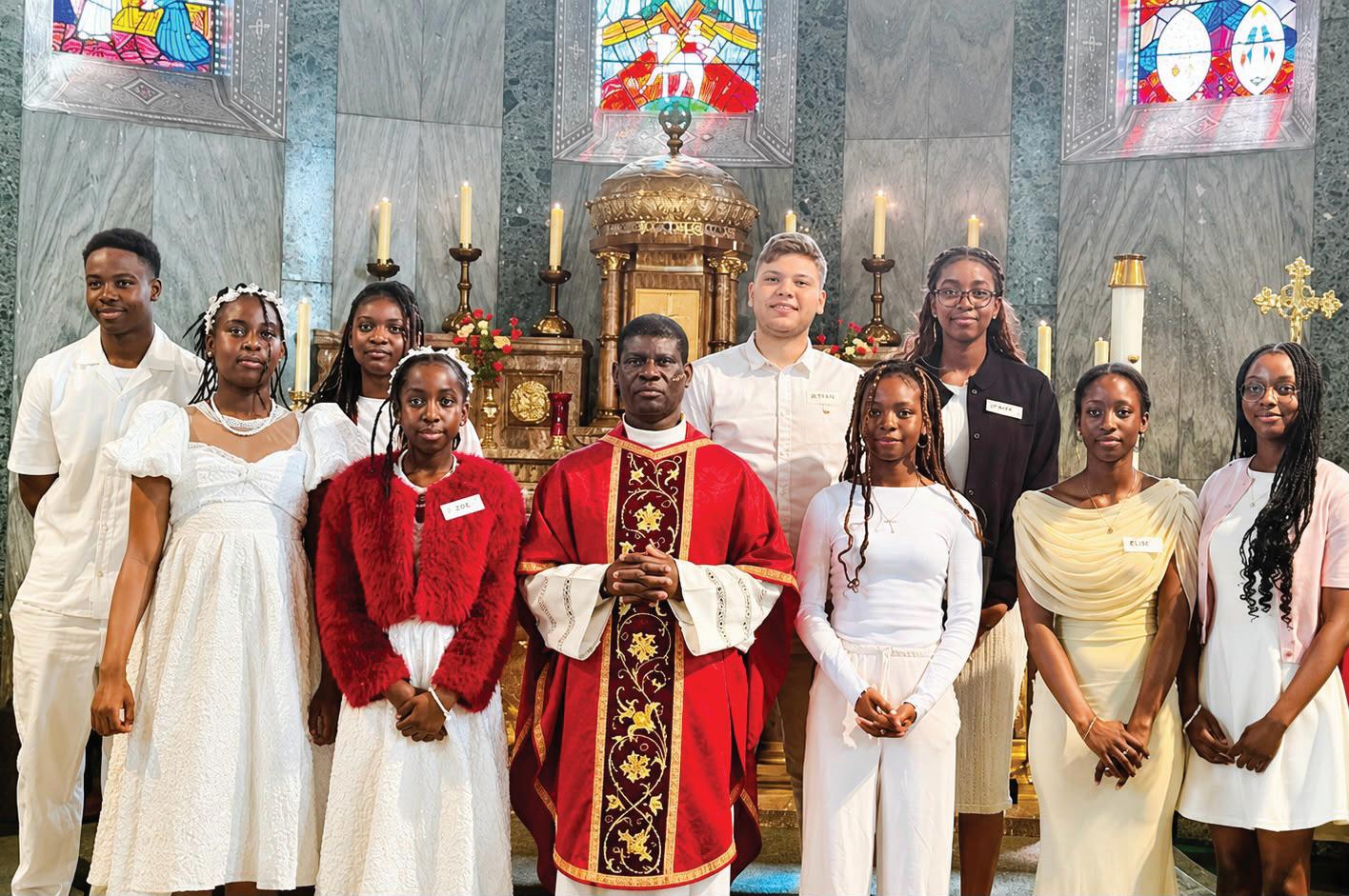
Nine young people received the Sacrament of Confirmation in a very special celebration at Sacred Heart Parish, Middlesbrough, on Pentecost Sunday.
It was a joyful and colourful occasion that brought together parishioners, families, sponsors and friends to witness and celebrate this important milestone in the faith journey of our young people.
Six of the candidates were from Sacred Heart Parish and three from St Alphonsus Parish, North Ormesby.
During the celebration of Holy Mass, parish priest Father John Idio OMV conferred the Sacrament of Confirmation on behalf of the Apostolic Administrator, Bishop Marcus. Through the anointing with sacred chrism and the laying on of hands, the candidates were strengthened by the gifts of the Holy Spirit and commissioned to live as faithful witnesses of Christ in the Church and in the world.
The liturgy was prayerful, uplifting and filled with the joy of Pentecost, the feast that commemorates the coming of the Holy Spirit upon the Apostles.
The parish choir enhanced the celebration with beautiful and inspiring music, helping to create a spirit of reverence and thanksgiving throughout the Mass.
We thank their teachers and congratulate all the newly confirmed and pray that the Holy Spirit will continue to guide, strengthen and inspire them as they grow in faith, hope and love.
May they remain active members of the Church and courageous witnesses to the Gospel in their daily lives.