

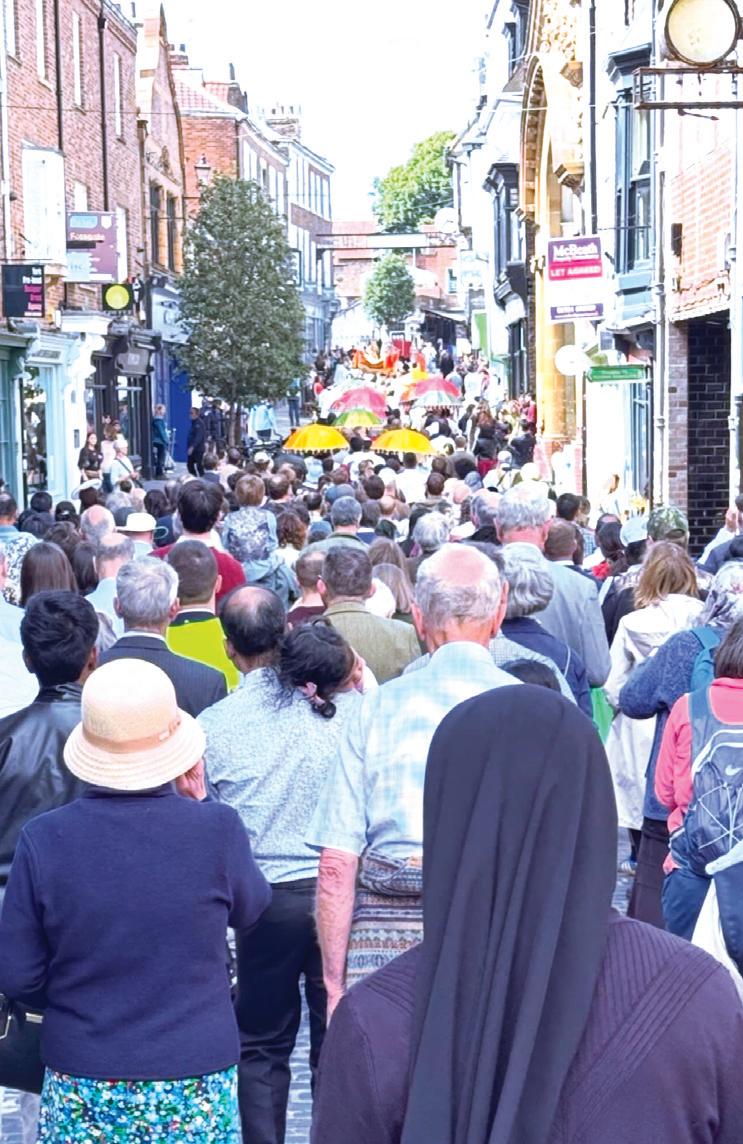
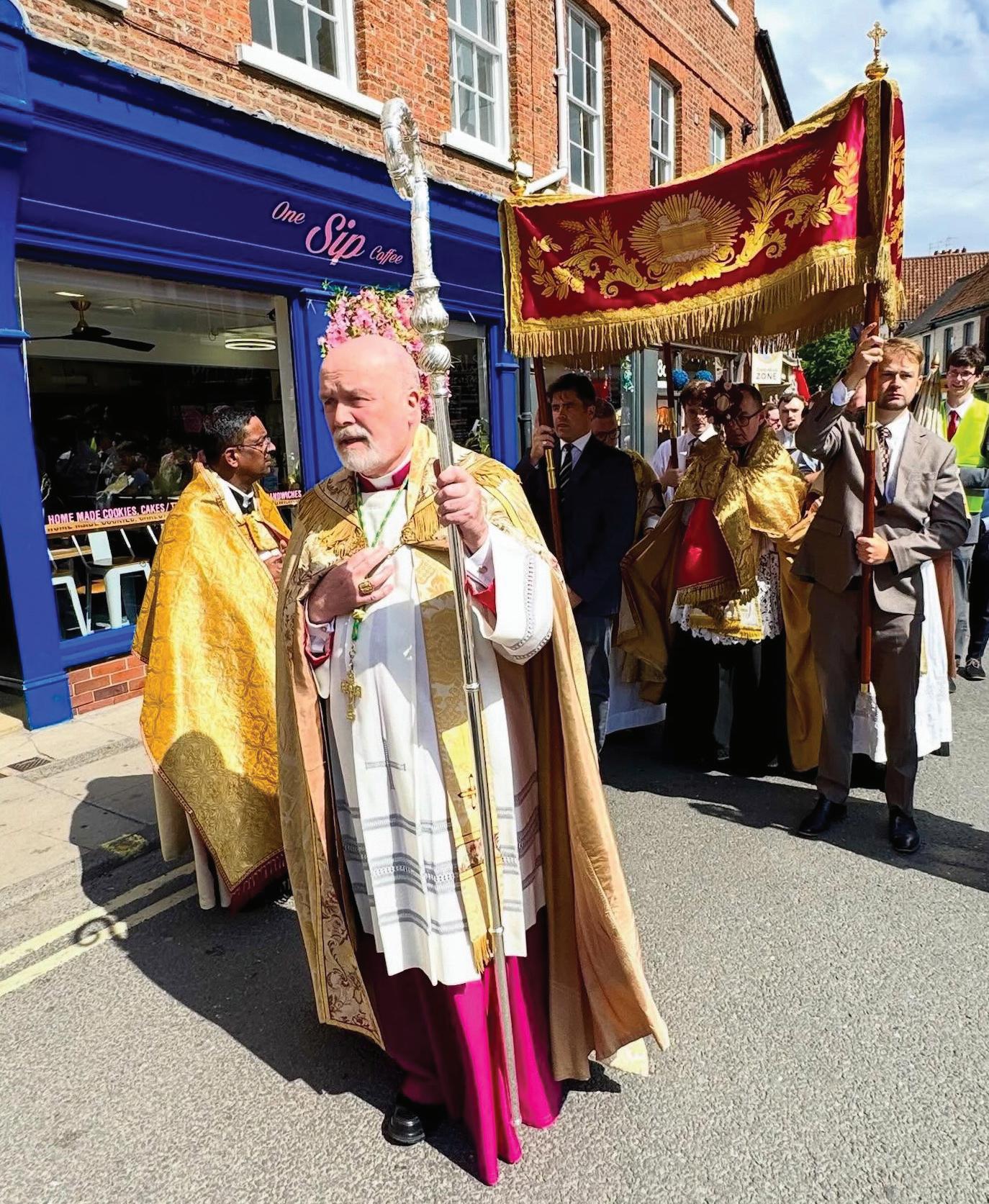
The Catholic community turned out in force for a procession through the streets of York to celebrate the Feast of Corpus Christi. Bishop Marcus led the procession, which began at St George’s Church and continued along a one-mile route to St Wilfrid’s Church (York Oratory) for Benediction of the Blessed Sacrament.
The Lord Mayor, the Sheriff of York, the Master of the Gild of Freemen and other civic dignitaries were in attendance, along with brass musicians from the University of York. St George’s was pro-Cathedral of the Diocese of Beverley from 1850 to 1864, followed by St Wilfrid’s from 1864 to 1878, so it was fitting that Bishop Marcus should walk between the two.
In his homily at Mass earlier in the day, Oratory parish priest Father Daniel Seward Cong Orat said: “The very first journey made by the incarnate Son of God was from Nazareth to Ein Karem, enclosed within the womb of his Blessed Mother.
“Mary walked along through the hill country of Judea, following the route of the Ark of the Covenant 1,000 years before. We call Mary the Ark of the Covenant because she was the first Eucharistic vessel, carrying Jesus along the road.
“The Eucharist is not only the sign; it is the reality. We must approach with reverence, with faith, with awe and also with trust and gratitude, because what Moses glimpsed in shadow, we receive in its fulness: the Body, Blood, Soul and Divinity of Jesus Christ.
“Many will see him and will not know him, but can we not hope that he will cast out evil, touch hearts, turn from sin, inspire conversion and pour out his mercy on all whom he will pass?
“We can do our simple part by pouring out all the outward tokens of our love, by pointing to the one whom we carry. If the Blessed Sacrament passes you, and you can kneel, kneel down. Above all, be present. Our Lady didn’t send a letter to Elizabeth; she took Jesus to her.
“Our Holy Father Pope Leo, in his encyclical, Magnifica Humanitas, presents the Blessed Sacrament as the antidote to the virtual world of loneliness, in which individuals are reduced to algorithms and human relationships are obliterated by artificial intelligence.
“The Pope says: ‘The spirituality that we need is a Eucharistic spirituality, that is a spirituality of ecclesial unity in love.’
“In other words, to receive and to worship the Lord in Holy Communion is never a purely individual act. It must be Communion; it must lead us to a shared witness; it must lead us to look outwards and to bring about the Kingdom of God in the world.”
Special thanks go to all the servers, singers, flower arrangers, canopy bearers, those who carried ornaments and the clergy for helping make this such a great occasion of unity for the Catholic communities of the city.
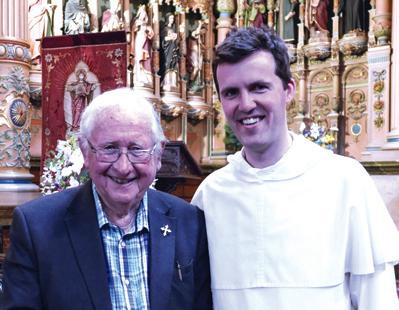
Angela's sponsored Camino pilgrimage Page 7


FATHER TIMOTHY WHITWELL, who this summer takes over from Monsignor Gerard Robinson as parish priest at St Joseph’s, Stokesley, St Margaret Clitherow, Great Ayton and St Mary’s, Crathorne, tells us how much he’s looking forward to returning to our diocese…
From earliest childhood memories I have been happiest when in the rustic charm of North Yorkshire.
Born near Malton and raised near the Howardian Hills, I am only too aware that as I prepare to become the parochial administrator of Stokesley, Great Ayton and Crathorne, I am returning to the place, that in my heart and mind, I consider home, this side of the Heaven.
We know that ecclesial boundaries move and change over the decades and going back through the centuries, I wonder if our cherished Northern Saints would have had the same conceptual understanding of defined territories that we observe today?
So, it is then, that Catholic communities and consecrated places have always been nestled in leafy dales, along fast running clear streams, as well as on coastal cliff tops and quiet hamlets, which all grew into the sacred landscape of beloved Yorkshire.
As an honoured (North) Yorkshireman I have always delighted in God’s created order and favourite places are undoubtedly the North York Moors, Yorkshire Dales, Cleveland Hills and Nidderdale.
Raised in the Vale of York and nurtured in the Church of England, I feel humbled that the ordained ministry I have been privileged to exercise has been formed in places as diverse as Mirfield, Leeds, Berwick Hills, Carlin How and Loftus.
As well as serving in parochial and cathedral settings, I also have experience of hospital chaplaincy in Bradford, as well as school chaplaincy and teaching involvement near Robin Hood’s Bay, Lichfield, Peterborough and Nottingham.
I am very much looking forward to returning to the Cleveland Hills and walking the Esk Valley and The Stray at Marske with my beloved
Labrador.
It will be very good indeed to rekindle old memories but with fresh faces in Crathorne, Great Ayton and Stokesley. I am truly thrilled and humbled that Bishop Marcus has asked me to move to North Yorkshire and serve the good and faithful people in the new parishes entrusted to my pastoral care.
As I write these short lines, I am presently packing up my home after eight years in Beeston where I have been parish priest of two wonderful churches. We often talk about our Christian heritage in terms of journeying; such journeying may be defined from place to place, sometimes involving physical and emotional distances that demand fortitude and endurance.
While another reading may suggest it is the travelling of the soul and the pathway of faith, from one area of the Christian map to another. Indeed, without the saints making journeys, our faith could never have become global and wide reaching.
Over 2,000 years it has involved the courage of the pilgrim and a warm welcome to the stranger with a willingness to grow and explore through shared experiences within the love and peace of him who first loved us, until Christ be formed in us.
Over the years I’ve been fortunate to participate and lead pilgrimages to Rome and Assisi, which has in successive years reminded me that difficult or new landscapes encountered by people of faith in earlier times help shape the Church of today.
My recent pastoral experience in Leeds has enabled me to value the diverse membership of the Church throughout the world in such a way that creates opportunities to help shape what it means to be a parish priest in vibrant parishes when the Catholic faith is experiencing a great revival in England.
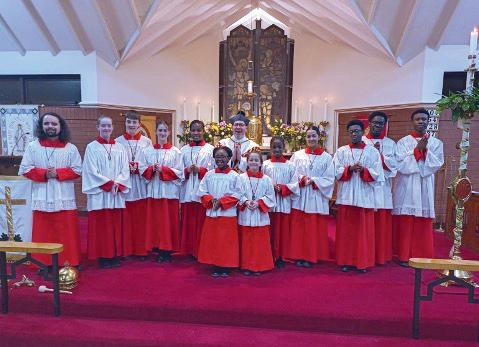
My own journey of faith began in an Anglican parish church in a North Yorkshire village where there was a deep sense of belonging in a safe and happy community of lovingkindness; as an altar server and chorister, so began my love of the glorious Anglican choral tradition and sacred ritual.
While studying in Durham, Oxford, Mirfield and Leeds, I became aware of the importance of divine liturgy which furthered a vocation to become a clergyman, being made deacon in York Minster and then ordained in the Church of the Ascension, Berwick Hills, Middlesbrough.
Twenty years or so later and inspired and sustained by the ministry and intercession of St John Henry Newman, I was received into the Catholic Church by the now Archbishop John Wilson when he was diocesan administrator of the Diocese of Leeds.
Archbishop John’s generous willingness to support my onward journey saw me study at St Mary’s College, Oscott, for two years before Bishop Marcus ordained me to the sacred priesthood in St Anne’s Cathedral and then serving in Bradford and Leeds.
So now, as I walk with my beloved hound by the Wharfe or the Swale or enjoy a day off riding my horse atop Yorkshire’s loveliest dales, I exceedingly rejoice that the Lord bids
me welcome once again in North Yorkshire, by the manifold kindness and grace of our dear bishop. I am also grateful to my predecessor, Monsignor Gerard Robinson, for his gracious welcome to the diocese and his help, which has allowed a smooth transition for the new parishes.
The pilgrimage of faith for us all continues to unfold and as for me, I sincerely hope and fervently pray that, unworthy though I am, I may be given the Divine Assistance to serve, lead and teach as I look forward to welcoming young and old at Holy Mass at Stokesley, Great Ayton and Crathorne from the Sunday when we together celebrate the Solemnity of the Assumption of the Blessed Virgin Mary, Mother of Priests and Mother of the Church, Our Lady of Walsingham.
St Margaret Clitherow, pray for us
St Joseph, pray for us
St Mary the Virgin, pray for us
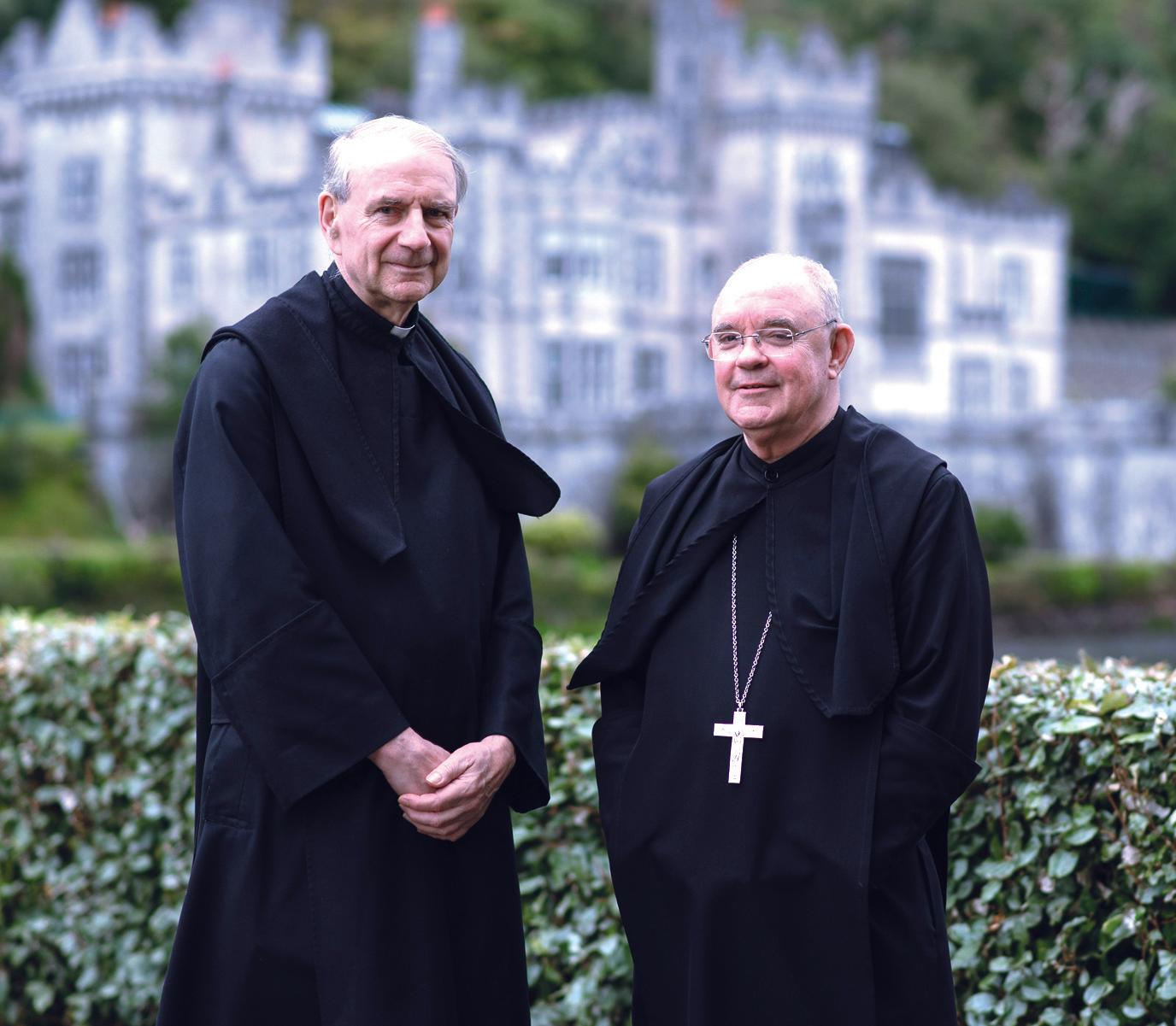
The English Benedictine Congregation (EBC) has elected Dom Robert Igo OSB, Abbot of Ampleforth Abbey, as its new president during the 100th General Chapter at Kylemore Abbey, County Galway.
Dom Robert, who will also continue to serve as Abbot of Ampleforth Abbey, succeeds Abbot Christopher Jamison OSB of Worth Abbey, who completed nine years of dedicated service as president of the congregation.
Accepting his election, Dom Robert addressed members of the congregation gathered at Kylemore Abbey and the wider Benedictine communities of the EBC as he began his four-year term, thanking the General Chapter for the trust they had placed in him.
He expressed his deep love for his own community and for the EBC and promised to serve to the best of his ability, saying he felt “monastic life had much to offer to a world hungry for meaning and purpose”. Paying tribute to his predecessor, the congregation acknowledged Abbot Christopher’s leadership and service over the past nine years, in particular acknowledging his significant work to help the congregation grow in mutual understanding and fraternity.
The election marked the conclusion of the landmark 100th General Chapter, during which 40 delegates from the congregation’s 16 monasteries gathered to reflect on the life and mission of the Benedictine family.
Alongside leadership elections, discussions focused on the future of monastic life, engagement with younger generations, and responding to the challenges presented by declining vocations.
This year’s General Chapter was significant for several historic reasons. It was the first time in the English Benedictine Congregation’s more than 400-year history it was held in Ireland, and the first occasion on which it took place in a women’s monastery, the Monastery of the Immaculate Conception at Kylemore Abbey.
Events were hosted in Kylemore Abbey’s new monastery, education and retreat centre, which opened in 2024 and marked the establishment of the first new enclosed women’s monastery in Ireland in almost 400 years.
The milestone gathering highlighted both the congregation’s rich heritage and its ongoing commitment to discerning its future in a changing world.
The consultation process across the dioceses of Hallam, Leeds and Middlesbrough has now been completed, marking an important milestone in the discernment surrounding the proposed unification of the three dioceses.
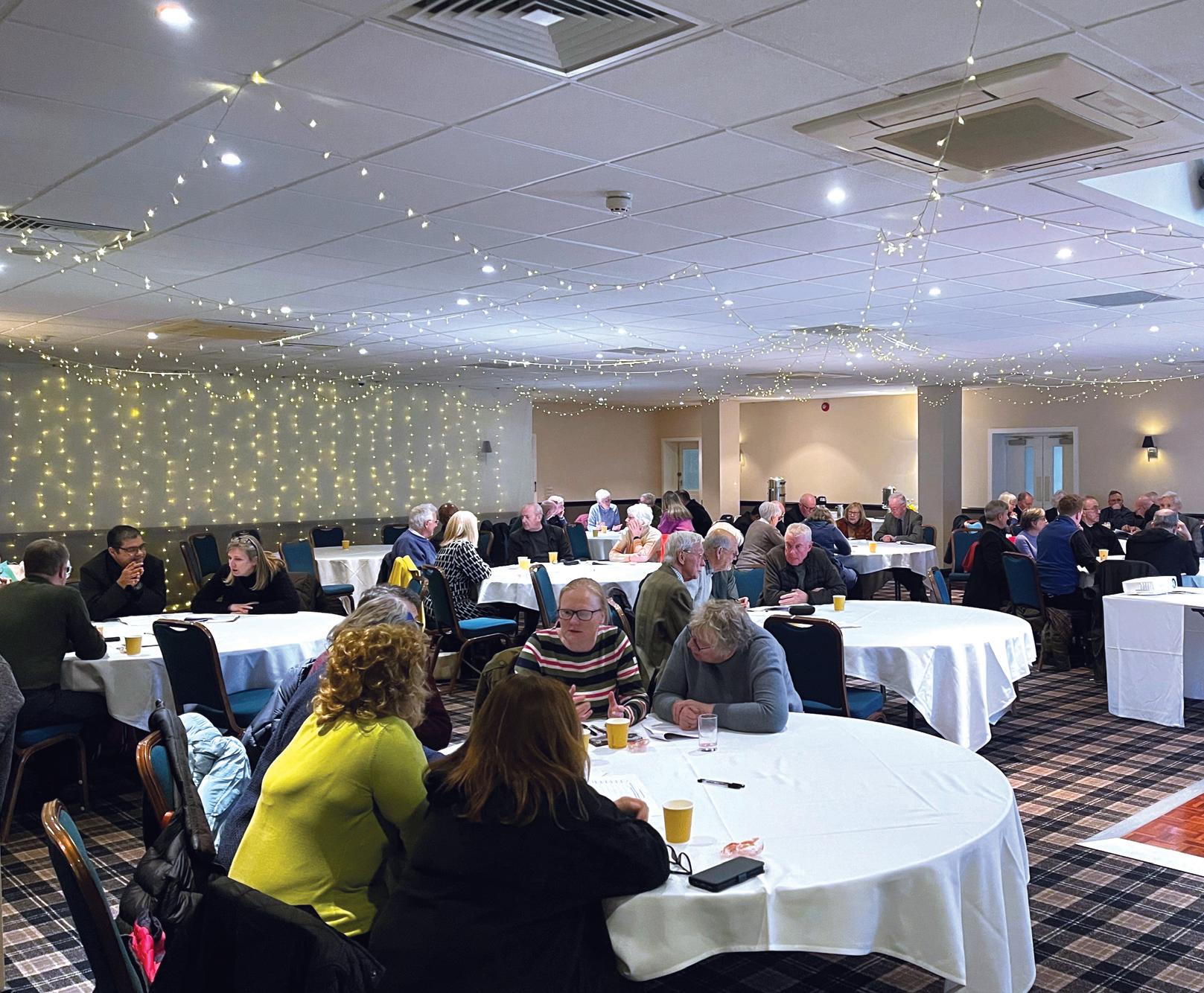
Over recent months, clergy, religious and lay faithful have come together to share their experiences, hopes, concerns and aspirations for the future of the Church in our region.
The breadth and depth of engagement have been encouraging, reflecting a genuine commitment to the life and mission of the Church and a willingness to participate in this important process of discernment.
Several common themes emerged consistently throughout the consultations. One of the strongest messages was the importance of effective communication.
Participants recognised that clear, timely and transparent communication will be essential throughout the next stages of the process. Many expressed a desire to remain informed and involved as plans continue to develop, recognising that trust and confidence are built through openness and dialogue.
Another significant area of discussion centred on the role of Bishop Marcus. Many respondents reflected on the increasing responsibilities placed upon bishops today and the practical challenges that a larger unified diocese could present.
Alongside these concerns, however, there was also a strong recognition of the opportunities to develop new models of leadership, collaboration and shared responsibility, ensuring that Bishop Marcus is supported by clergy and lay leaders alike in carrying forward the Church’s mission.
The consultations also highlighted a spirit of hope and realism regarding the opportunities that unification could bring.
While acknowledging that change can be challenging, many participants spoke
positively about the possibility of working more closely together, sharing resources more effectively, strengthening ministries and reducing unnecessary duplication.
There was a widespread sense that any future structure should enable the Church to become more responsive, more collaborative and better equipped for evangelisation and service.
One theme that resonated particularly strongly was the importance of listening to young people. Across all three dioceses, respondents emphasised that the future of the Church depends on engaging younger generations more intentionally.
There was a shared conviction that young people should not simply be consulted occasionally but should be recognised as active participants in shaping the Church’s future, bringing their gifts, perspectives and faith to the heart of its mission.
Although each diocese brought its own unique experiences and local priorities, the consultations revealed an interesting degree of shared vision.
Respondents consistently expressed a desire for a Church that is outward-looking, missionary in its outlook and rooted in collaboration, while remaining attentive to the pastoral needs of local communities.
The completion of these consultations represents not the end of the process but the beginning of its next phase. The responses from across Hallam, Leeds and Middlesbrough are now being carefully reviewed and synthesised into a comprehensive report, which will be written by Bishop Marcus and then submitted to the Holy See.
This report will faithfully reflect the contributions made throughout the consultation process and the key themes that have emerged.
Alongside the preparation of this report,
further work will now focus on exploring how any future unified diocese could best serve the mission of the Church.
The guiding question is not simply how structures might change, but how those structures can better support evangelisation, pastoral care and the proclamation of the Gospel in today’s world.
The consultation process has demonstrated the generosity, faith and commitment of the people of our three dioceses.
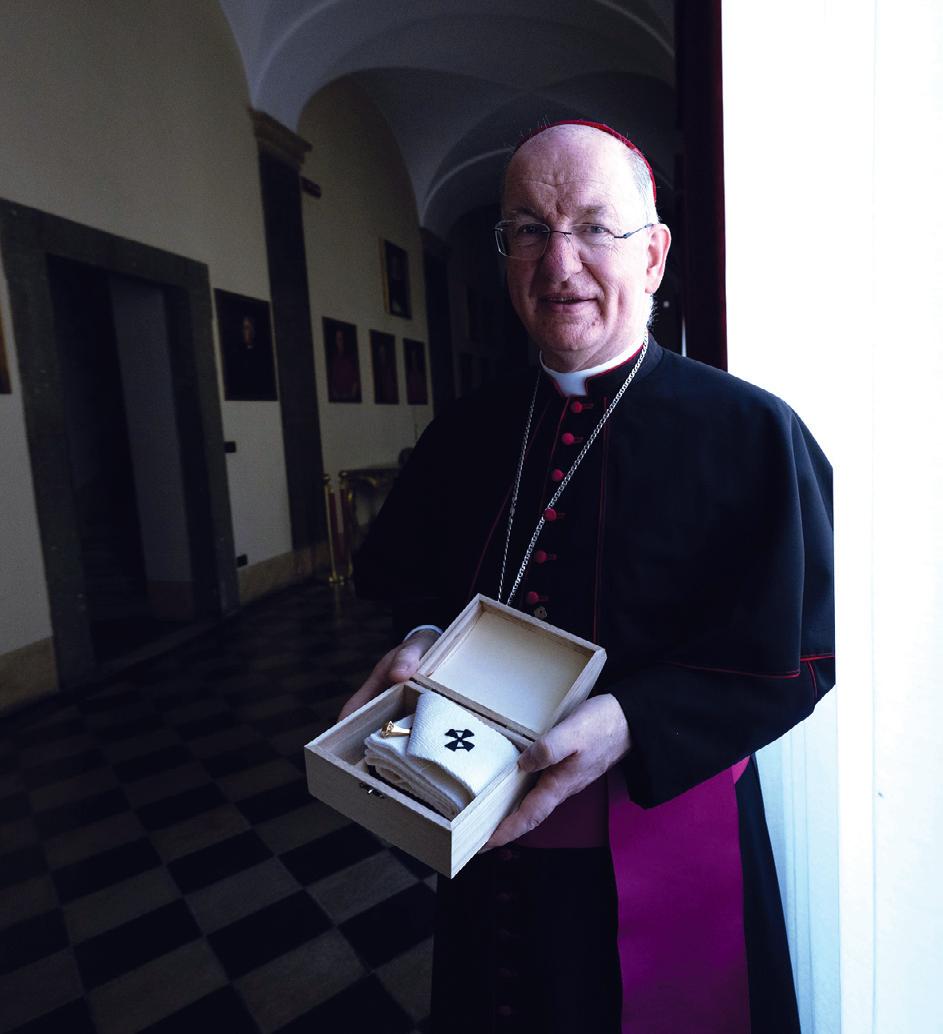
Archbishop of Westminster Richard Moth received the pallium from Pope Leo XIV at a Mass held in St Peter’s Basilica in Rome on the Feast of Saints Peter and Paul. The pallium is traditionally bestowed by the Pope to metropolitan archbishops as a symbol of their authority and unity with the Holy See, representing their role as shepherds entrusted with the care of their local churches within the universal Church.
Speaking to the Bishops’ Conference after the event, Archbishop Moth explained some of the rich symbolism and meaning behind this simple but unusual vestment. He said: “The pallium itself is a small strip of unbleached white wool with crosses on it that goes around the shoulders and a piece at the front and back. Yet in its simplicity, it is very rich.
“The fact that it’s been given to you by the Holy Father means that there is a real sense of sharing in the work of the Holy Father as a shepherd of the flock and of carrying the sheep, going out after the lost sheep, bringing back the stray.
“It is weighed down by three little nails, reminding us of the nails in the person of Jesus on the cross. So there is a sense too of sharing in the Lord’s cross, picking up your cross and following him. It’s all there in this, this really rather simple vestment.”
The Pallium Mass was an opportunity for bishops of the world to gather for this important feast. It also formed the conclusion of a two-day meeting of all the cardinals, and Archbishop Moth described it as a moment which showed “the universality of the Church”.
“It’s very humbling,” he said. “I was one of a number of
new archbishops and there was a real sense of being with them and among them in taking on this wonderful office, and of closeness to the Holy Father.
“There was an opportunity after Mass to have a very brief word with him as well, which was an expression of that closeness, which is part of what the vestment is all about.”
Everyone who has taken part has made a valuable contribution to this important discernment and we thank you for your time and support.
As the work continues, we remain grateful for the openness with which people have shared their views and ask for continued prayers as the next stage of this journey unfolds under the guidance of the Holy Spirit.
Monsignor Gerard Robinson VG
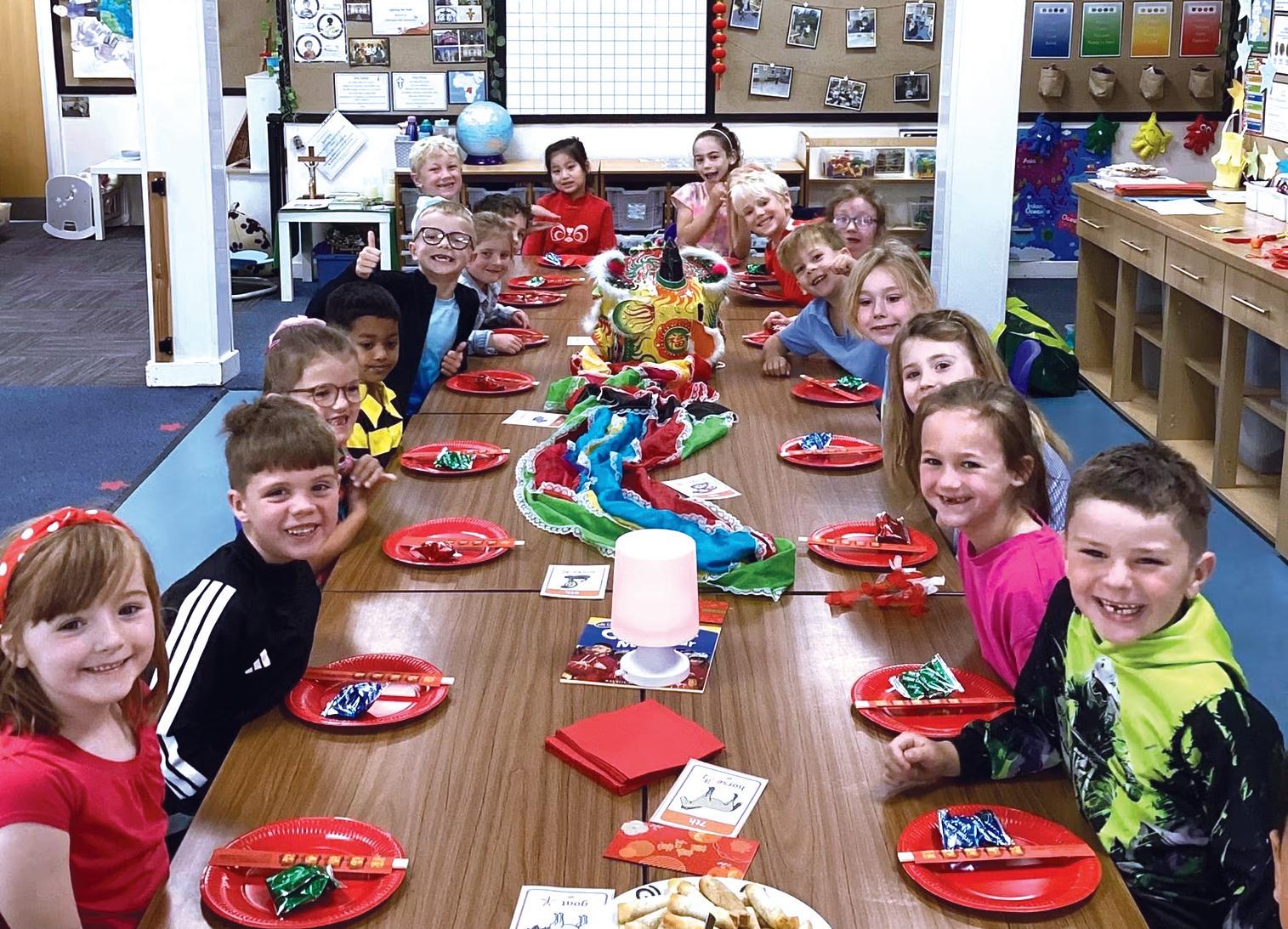
Children at St Aelred’s in York were delighted to celebrate our Day of Many Colours, a special occasion giving thanks for the many countries, cultures and nationalities that make up our school family. �
Children wore bright, colourful clothing, including outfits representing their nationality and culture, reminding us that we are all made in God’s image.
Throughout the day, pupils visited different classrooms to learn about cultures, traditions and communities from around the world.
Together, we celebrated the richness of God’s family while growing in understanding, respect and love for one another. It was a wonderful celebration of unity, diversity and community spirit.
Headteacher Claire Hughes said: “We were delighted to support Mission Together, the children's branch of Missio, through our Day of Many Colours. �
“The day was a wonderful celebration of the many cultures that are such an integral part of our school community. It was a joy to celebrate with our children, many of whom proudly brought their national flags and wore



A member of Nicholas Postgate Catholic Academy Trust Tedder Avenue, Thornaby, Stockton-On-Tees TS17 9JP
Executive Head Teacher: Mr M Ryan
Head of School: Miss H Lickess Tel: 01642 765639
Email: enquiries@ctking.npcat.org.uk
traditional clothing representing their heritage.
“The day fostered a real sense of unity throughout the school and reminded everyone in our community that it is our unique backgrounds, experiences and cultures that bring us together. �
“We are proud to celebrate the diversity that makes our school such a welcoming and vibrant place.”
Here’s what some of the pupils had to say…
“It was so fun. I got to teach my friends about The Philippines where my family is from.” –
Year 2 pupil
“It was the best day ever. We had Chinese food and learned all about China and we also learned about India and did an Indian dance.” – Year 1 pupil
“We learned about people in Brazil and did samba drumming. It was a really fun day learning about lots of different countries.” –
Year 4 pupil
Staff and pupils at St Thomas More Voluntary Catholic Academy in Hull were delighted to welcome Greg Finn from Mark 10 Mission for a whole-school Mission Day centred on prayer and our relationship with Jesus.
The day began with a whole-school Celebration of the Word, where pupils and staff gathered in prayer and reflection.
It was a special opportunity for the school community to pause, listen to God’s Word and think about how Jesus is present in our lives.
Throughout the day, Greg visited each class to lead prayer and worship sessions tailored to the children’s ages.
Through stories, reflection and prayerful activities, pupils were encouraged to think more deeply about their personal relationship with Jesus and how prayer helps us grow closer to him.
The sessions were engaging and thoughtful, helping the children understand that prayer can take many forms and can be part of our daily lives.
Greg reminded us that prayer does not have to be complicated – it’s simply taking time to speak and listen to Jesus.
As the day drew to a close, pupils were given
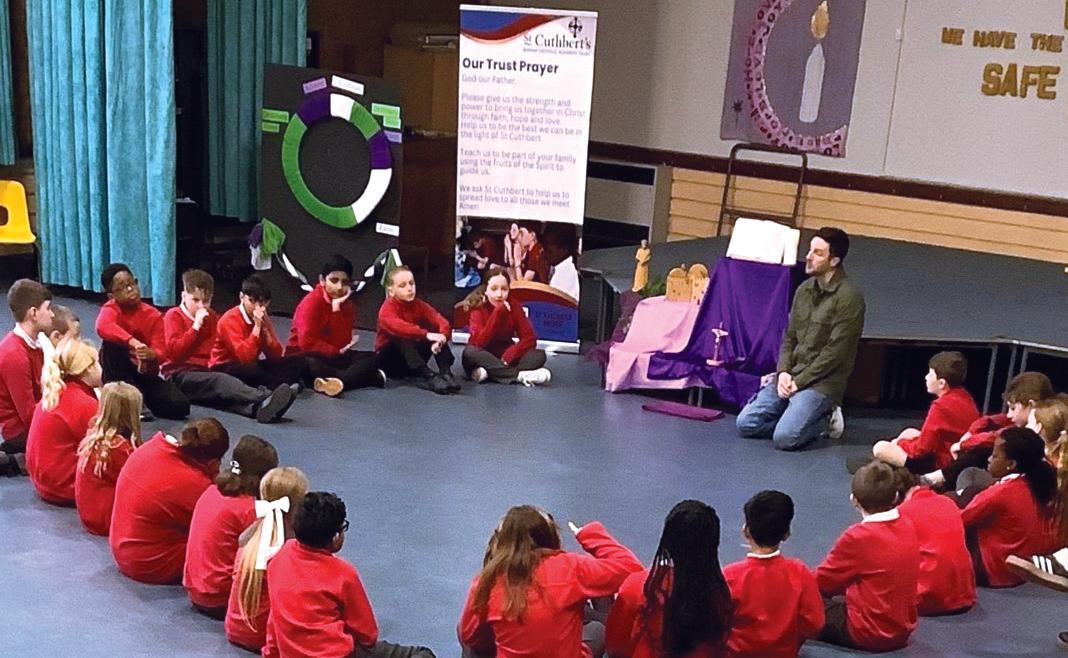
a simple but meaningful mission: to dedicate a little time each evening to pray and continue developing their relationship with Jesus.
It was a joyful and reflective day for the whole
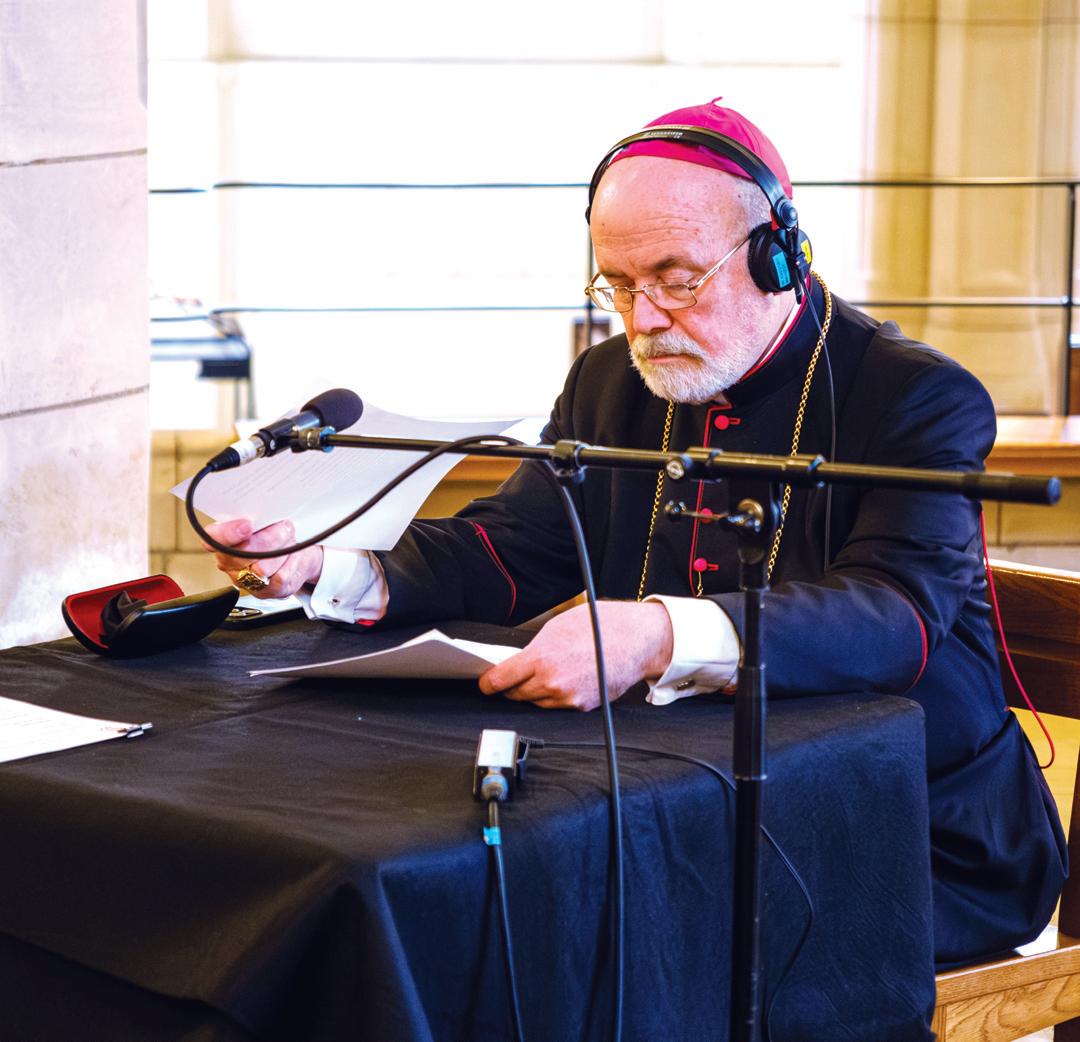
Bishop Marcus presented the BBC’s Daily Service for the Feast of SS John Fisher and Thomas More.
The programme offers space for spiritual reflection, featuring a Bible reading, prayer and a selection of sacred music recorded at Leeds Cathedral.
The service was recorded with the Leeds Cathedral Senior Girls Choir, scholars and visiting singers from Vanderbilt University. Under the direction of choral director Joseph Tilling and accompanied by organist Benjamin Newlove, the choir performed Faith of Our Fathers, Holy God We Praise Thy Name and Viadana’s Exulate Justi.
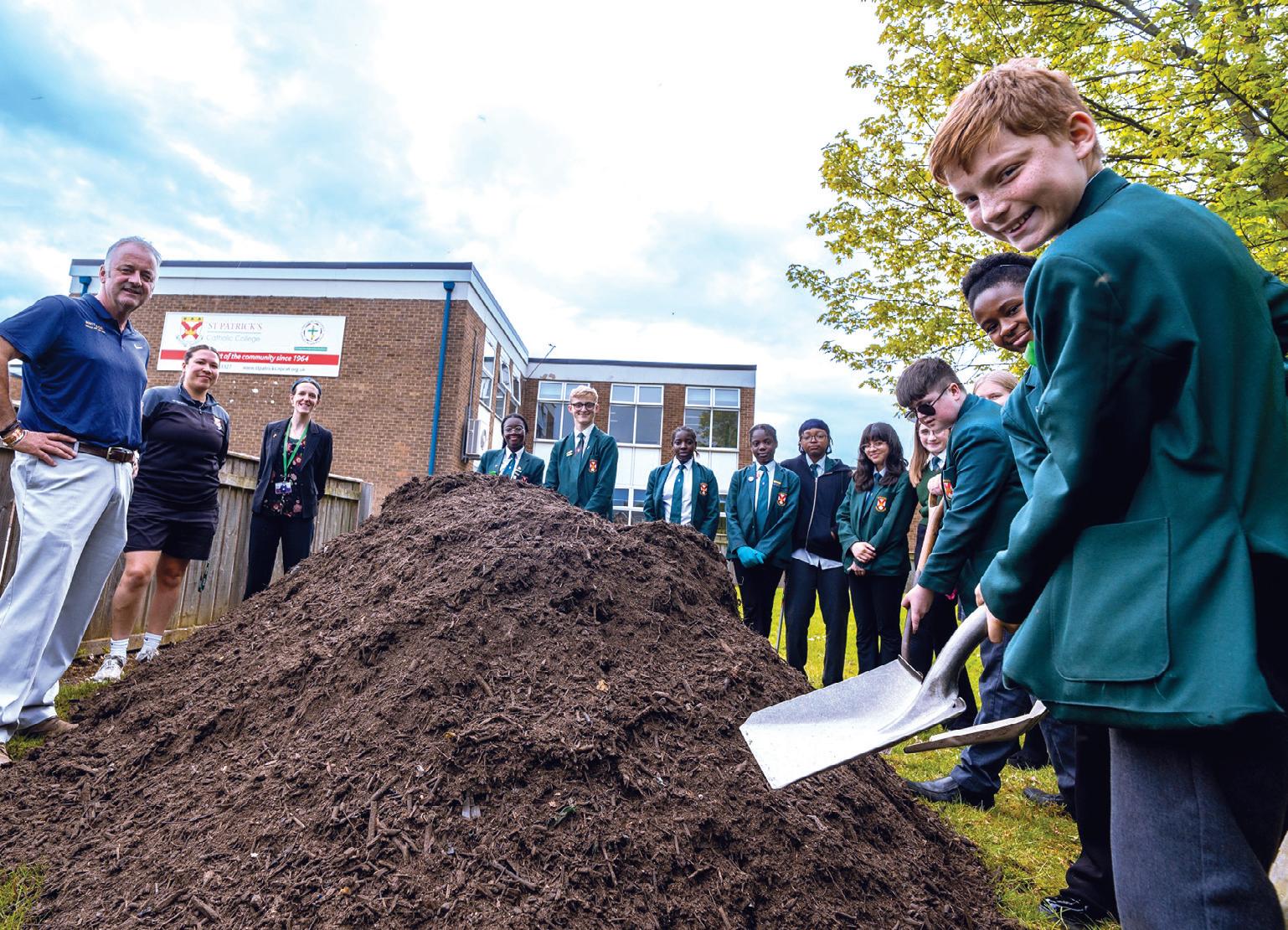
A former pupil is helping the current St Patrick’s Catholic College community bring their plans for a school garden to life.
Peter Scott, a director of Teesside recycling firm Scott Bros, visited the Thornaby school for the first time since leaving in 1992 to donate several tonnes of recycled compost and stone chippings.
The idea for the garden came from the pupil leadership team, who wanted to create an outdoor space where pupils can learn about gardening, sustainability and the environment.
To support the project, Scott Bros supplied high-grade accredited compost made from green waste, along with recycled 10mm chippings – produced at its wash plant from construction and excavation waste – to create pathways around the raised beds. Parents, teachers and members of the wider community have also donated gardening tools and supplies.
Victoria Gunn, associate assistant leader at St Patrick’s Catholic College, said: “It gives our pupils the chance to learn about life cycles, growing food and caring for the environment, which links closely to our Catholic Social Teaching themes around stewardship and respect for the world around us.
“It will also create a calm space where pupils can work together and take pride in building something for the school community.”
Pupils have already embraced the project and are excited to begin growing fruit, vegetables and flowers.
Milo, a Year 10 pupil, said: “I think everyone will learn a lot from having the garden, especially about looking after plants and nature. It might even encourage people to grow things at home.”
Haniel, also in Year 10, added: “It’s bringing people together and it’s really positive for the school. I’m excited to see everything start growing.”
Jacob, a Year 7 pupil, added: “I’m really looking forward to growing raspberries because they look really good and taste nice as well!”
Peter said supporting the school was especially meaningful because of his own and his family’s connection to St Patrick’s.
“I came here, my father came here, my brother and my cousins all came through St Patrick’s, and as soon as I heard about the project, I wanted to help,” he said.
“It’s great that the pupils will learn not only about growing things but also about
sustainability and how recycled materials can be reused in a really positive way.”
Miss Gunn added: “We’re incredibly grateful
to Scott Bros for supporting this project. It’s lovely to see that connection between current and former pupils continuing.”
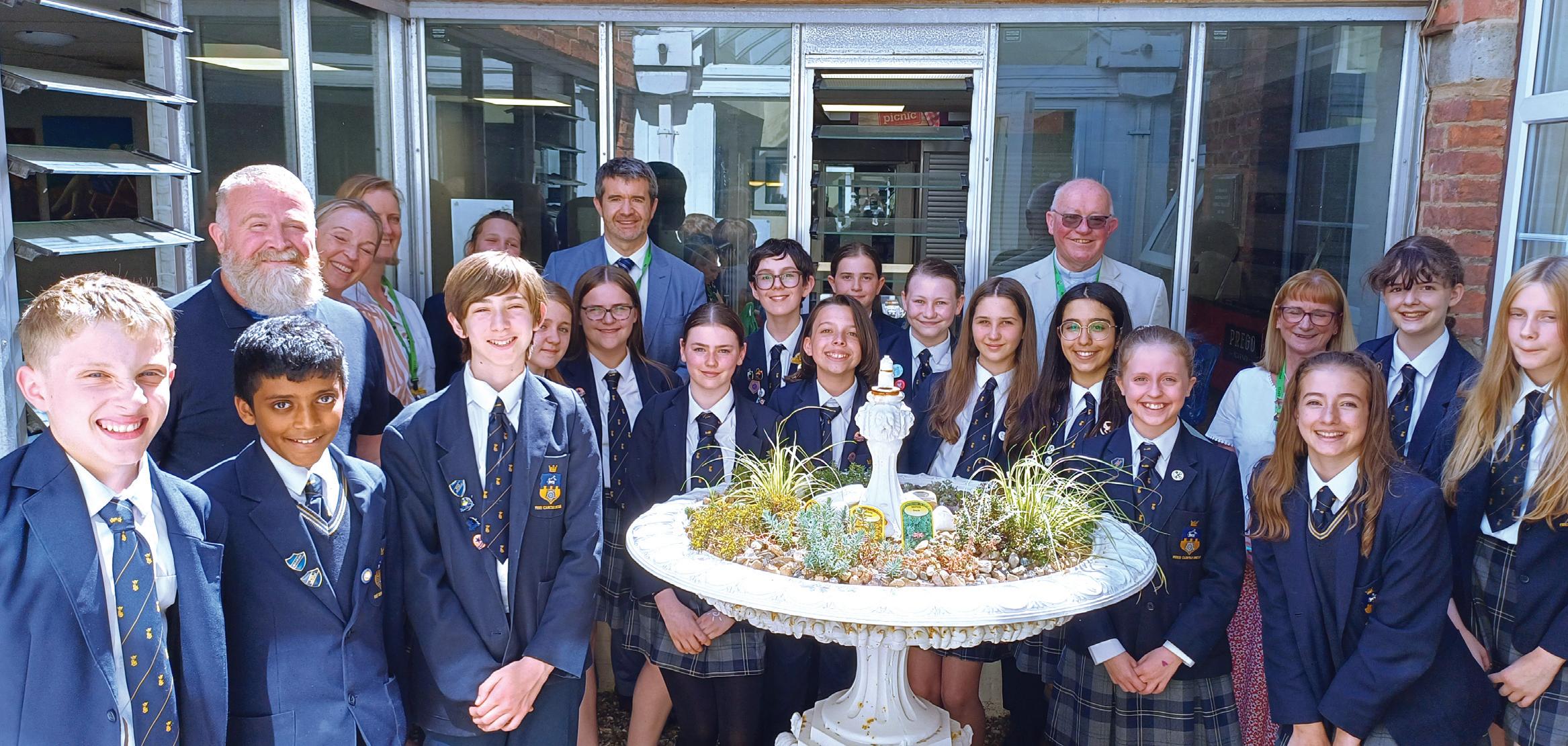
The sun shone beautifully for the blessing and dedication of the renewed memorial garden at All Saints Lower School in York.
Our Year 7 and 8 Growing in Faith Together (GIFT) teams have worked hard to make the space look presentable.
Canon Michael Loughlin led a short service and we were joined by Anna and Adrian from Mindful Memorials, who generously supported the provision of the memorial plaque for the garden.
We hope the space will provide an opportunity for calm and reflection for students and staff.
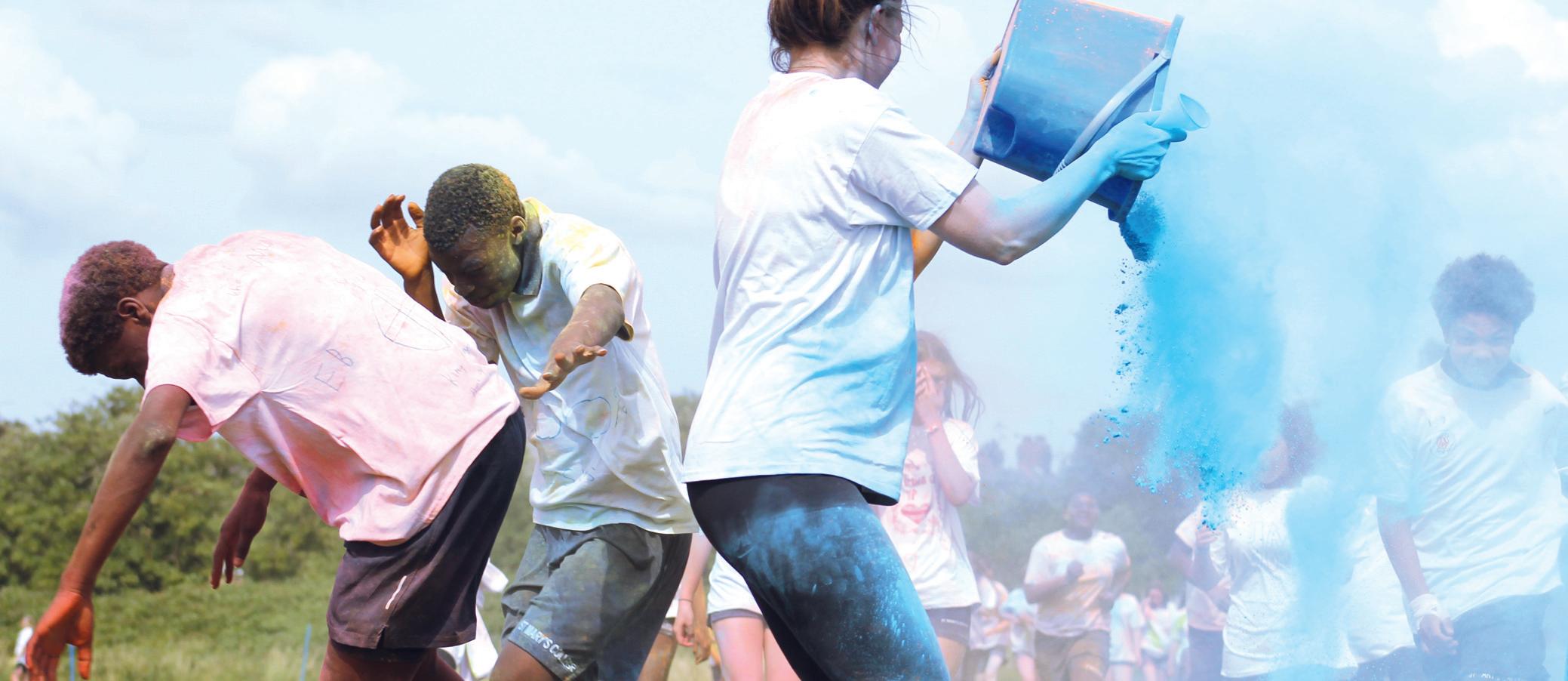
Year 10 pupils at St Mary’s College in Hull stepped away from their usual summer-term timetables to immerse themselves in a full-day celebration for their annual Mission Day.
This year’s event was dedicated to celebrating the Year of St Francis. Throughout the day, pupils explored the history of the saint’s life, reflecting on how his teachings of peace, nature and humility can impact and inspire modern lives. The day was packed with engaging activities spread across the school site. Pupils delved into scripture to uncover the spiritual inspiration behind St Francis’ actions, connecting his wisdom with contemporary values.
The inspiring day culminated in a celebratory colour run, where pupils and staff ended up covered head to toe in bright powders as they crossed the finish line together. School leaders praised the pupils’ enthusiasm, saying they were fitting witnesses to the St Mary’s mission statement: “With God, all things are possible.”
Catholics from Hull and the surrounding area gathered at St Charles Borromeo Church for a special Call to Mission Day led by Dominican priest and speaker Father John Church OP.
Although primarily aimed at young adults aged 18 to 34, the event attracted Catholics of all ages who came together to reflect on faith, mission and evangelisation in today’s world.
The day began with Mass at St Charles before participants attended the first session, “Your Mission”, in which Father John explored a fundamental question: What is the point of being a Christian, and what is our mission?
Drawing on Christ’s words, “As the Father sent me, so I send you”, Father John challenged the common assumption that mission belongs only to priests, religious or overseas missionaries. Instead, he emphasised that every baptised Christian is called to participate in the Church’s mission.
He reminded participants that at the end of every Mass, Christians are sent out into the world to live and share their faith. Mission, he said, is not an optional activity but part of the very identity of the Church and every believer.
Father John reflected on three Gospel images used by Jesus – salt, light and yeast – as models for Christian discipleship. Through the examples of St Gianna Beretta Molla, St Pier Giorgio Frassati and St Bartolo Longo, he illustrated how ordinary Christians can transform the world through faithful witness, joyful service and personal conversion.
A recurring theme throughout the morning was that God has entrusted each person with a unique mission. Participants were encouraged to consider how their own gifts, talents and circumstances might be used for the building up of God’s Kingdom.
After lunch at the Kingston Theatre Hotel, the afternoon session, “Our Mission”, was led by Father John and Patrick Doyle OP. Through discussion and reflection, participants explored how the themes of the morning could be applied to parish life and to the wider mission of the Church.
The event formed part of an ongoing effort to encourage Catholics to deepen their faith and respond more fully to Christ’s call to be missionary disciples in everyday life.
LUCA SETTIMO, Professor of Theology at the University of Nottingham, continues his series of reflections on the meaning of some key biblical words.
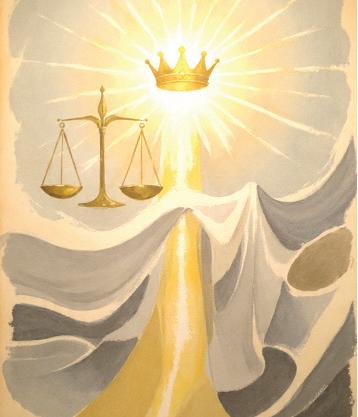
We continue our exploration by examining the biblical notions of justification and righteousness. In Galatians 2:16, St Paul refers three times to the notion of justification: “yet we know that a person is justified not by the works of the law but through faith in Jesus Christ. And we have come to believe in Christ Jesus, so that we might be justified by faith in Christ, and not by doing the works of the law, because no one will be justified by the works of the law.”
The concept of the “justification by faith” has been the subject of debate and division between the Catholic Church and the Protestant Church since the 16th century, despite a joint declaration between Catholics and Lutherans in 1999 highlighting the commonalities found on this fundamental topic.
The Greek word Dikaiosyne (justification) is found 92 times in the New Testament; this term is associated with the verb dikaioun (to justify). The starting point for this is the “righteousness” of God; that is, his salvific will towards human beings. Notably, it is God who takes the first step towards man (Romans 10:20).
The human being, with his freedom, can accept or reject the divine grace which provides righteousness. The acceptance of this grace is precisely what faith represents. Faith is a free, voluntary and joyful adhesion to the divine gift of grace, which is accompanied by the liberating love of God. The final state of the authentic Christian faithful is precisely Dikaiosyne (justification) or being made righteous by God who rescues us from evil and sin, and who rescues us from sarx (the flesh – see March’s Voice, available online).
Man may have the illusion to “justify”, that is to “save” himself, through the works of the law. But it is as if someone wants to escape from quicksand by themselves, without
having the help of a strong external hand of someone who stands on a stable rock.
This is what Paul explains when he denounces the illusion of those who think of having a righteousness of their own: “I regard everything as loss because of the surpassing value of knowing Christ Jesus my Lord. For his sake I have suffered the loss of all things, and I regard them as rubbish, in order that I may gain Christ and be found in him, not having a righteousness of my own that comes from the law, but one that comes through faith in Christ the righteousness from God based on faith” (Philippians 3:89).
Should we then eliminate or devalue righteous actions and good deeds? Certainly not. However, they are not the ultimate cause of our salvation but rather they are the necessary “fruits” that flow from the “justification” freely given by God in Christ.
In fact, when we are justified (rendered righteous) and the grace is in us, we spontaneously perform acts of “love, joy, peace, patience, kindness, generosity, faithfulness, gentleness and self-control” (Galatians 5:22-23). These virtuous deeds are the signs of the authenticity of our “justification” and of our true faith.
The equivalent Hebrew word for righteousness and justification is sedeq. We read that the faithful, like Abraham, “believed the Lord; and the Lord reckoned it to him as righteousness” (Genesis 15:6).
From the Hebrew root sedeq comes a constellation of terms that have to do with rectitude, law, moral honesty, but also liberation, fullness and peace.
There are in total 523 words in the Old Testament deriving from sedeq. The value of this word (in Hebrew) covers different meanings; namely: rectitude, law, moral honesty, but also salvation, liberation, fullness, peace, loving fidelity and even victory.
Man has a duty to safeguard social justice; in particular, judges have an important task
when they issue a sentence in a court of law (Deuteronomy 1:16).
Nevertheless, God is the guarantor of this supreme moral value: “You love righteousness and hate wickedness... Righteousness and justice are the foundation of your throne; steadfast love and faithfulness go before you” (Psalms 45:7; 89:14).
The prophets reaffirm the profound connection between faith and justice, between worship and a righteous life.
The declaration of Amos (eighth century BC) is strong: “I hate, I despise your festivals, and I take no delight in your solemn assemblies. Even though you offer me your burnt offerings and grain offerings, I will not accept them; and the offerings of well-being of your fatted animals I will not look upon. Take away from me the noise of your songs; I will not listen to the melody of your harps. But let justice roll down like waters, and righteousness like an ever-flowing stream.”
(Amos 5:21-24; see also Isaiah 1:1-20).
There is a need for a righteous existence because “in the path of righteousness there
is life... [and] righteousness delivers from death” (Proverbs 12:28; 10:2).
The king-Messiah, then, will be recognised precisely because “with righteousness he shall judge the poor, and decide with equity for the meek of the earth; he shall strike the earth with the rod of his mouth, and with the breath of his lips he shall kill the wicked. Righteousness shall be the belt around his waist, and faithfulness the belt around his loins” (Isaiah 11:4-5).
Indeed, according to Jeremiah, he will be called “The Lord is our righteousness” (Jeremiah 23:6). God’s righteousness brings salvation (Isaiah 45:8): it is through the justification granted by God that the ultimate reconciliation between heaven and earth, between God and humanity, becomes possible.
• I wish to acknowledge Cardinal Gianfranco Ravasi, former president of the Pontifical Council for Culture, for granting me permission to use his material originally published in Italian. A YouTube video entitled “The biblical notion of justification/righteousness,” which explores this biblical concept in greater detail, is available on my YouTube channel (youtube.com/@LucaSettimo-7).
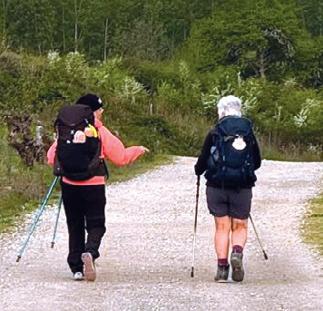
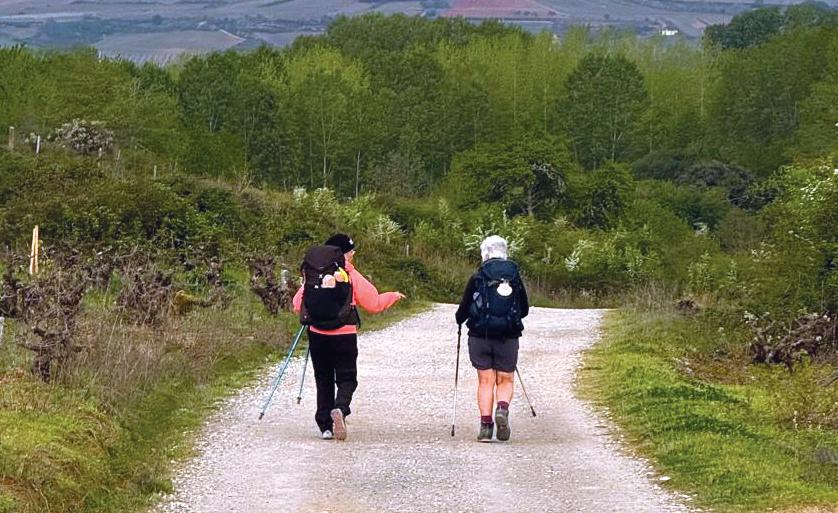
“We’ll sponsor you, Angela!” said one elderly lady at St Hilda’s parish in Whitby, and her friend nodded vigorously.
I had been telling them how I would be walking the Camino from the Pyrenees to Santiago de Compostela and felt I should do it as a sponsored walk but couldn’t see a way forward.
Later, another person unexpectedly offered to sort out the administrative side and in the same conversation it became clear that my Camino would be made in memory of three well-beloved parishioners, Anthea and Chris Dove and Sandra Turner, whose loving and caring natures had made them so central to everything concerned with Justice and Peace in St Hilda’s.
From there the choice of charities became obvious: Whitby Food Bank and Purple Rose, a drop-in centre for the marginalised in Stockton. And so a new project began, and the Spirit blew gently through our parish and touched many hearts.
After only a few days, everything was in place. All I needed to do was to fly out to northern Spain and then one snowy March morning begin walking westwards from the Benedictine monastery of Roncesvalles.
St Hilda’s parish, both past and present, was in my heart as I offered the time of pilgrimage to God’s glory, service and the coming of God’s kingdom.
Being in relationship – with God, with others and with yourself (Mark 12: 30-31) – is the heart of any parish but it is also central to the Camino, where you walk and share your life story with fellow pilgrims and listen with nonjudgemental interest to theirs.
As the priest at Sunday Mass in the mountain village of O Cebreiro noted, there is no conflict on the Camino: pilgrims live in peace with each other, listening and attentive to each other’s needs, but also realising that life with all its adversities has brought each one of them to this way that leads them towards Santiago.
It is not for nothing that the early Christians called their faith “the Way” and recognised that it was a journey inviting spiritual growth, and this is indeed what happens on the Camino.
Whatever the many reasons for being there, and they are not all religious (in fact, sadly, very few have that as their starting point), the
Camino teaches every pilgrim what they need to know for the next step in their spiritual lives if they are open to it.
Everyone walking the 33 days or so from the Pyrenees realises at some point that they are living in the present moment, the past no longer holds them in its throes and the future is as yet unknown, but that they can trust in their experience of the present moment and that, despite any hardships, all will ultimately be well.
As Christians, we believe it is in this present moment that we experience the presence of God wherever we are and can trust in his infinite love and compassion for each of us. It is here that healing can take place, and many pilgrims witness to this as they reflect later on the transformative effects of the Camino on their lives.
Back home in Whitby people shared my journey, following online, on WhatsApp and through conversations and, more importantly, praying for me and with me.
After 780 kilometres walking through all kinds of terrain and temperatures from 0 to 28 degrees C, I finally arrived at the cathedral in Santiago and the end of my pilgrimage.
As the priest there said, the experienced pilgrim knows the real Camino only begins when you return home and take into everyday life what you have learned. How true!
Once back home, I told a little about my experiences at a social event at which Susan Mansaray from Purple Rose gave a moving account of how she came to set up the charity.
This was well attended, as was a previous fundraising social before I reached Santiago. With great joy and gratitude, we presented the charities with an incredible £2,035.
The generosity of parishioners and their friends, including those from other local churches, is truly amazing, as the parish had a different Lent Project supporting Mary’s
Meals that ran at about the same time. This project collected old or foreign coins as well as other direct donations and was equally well supported, with 14 kilos of coins being collected. A £925 donation was made to Mary’s Meals, which helps so many hungry schoolchildren.
The social awareness and community spirit shown is no doubt a source of great joy for our parish priest, Father Michael Sellers.
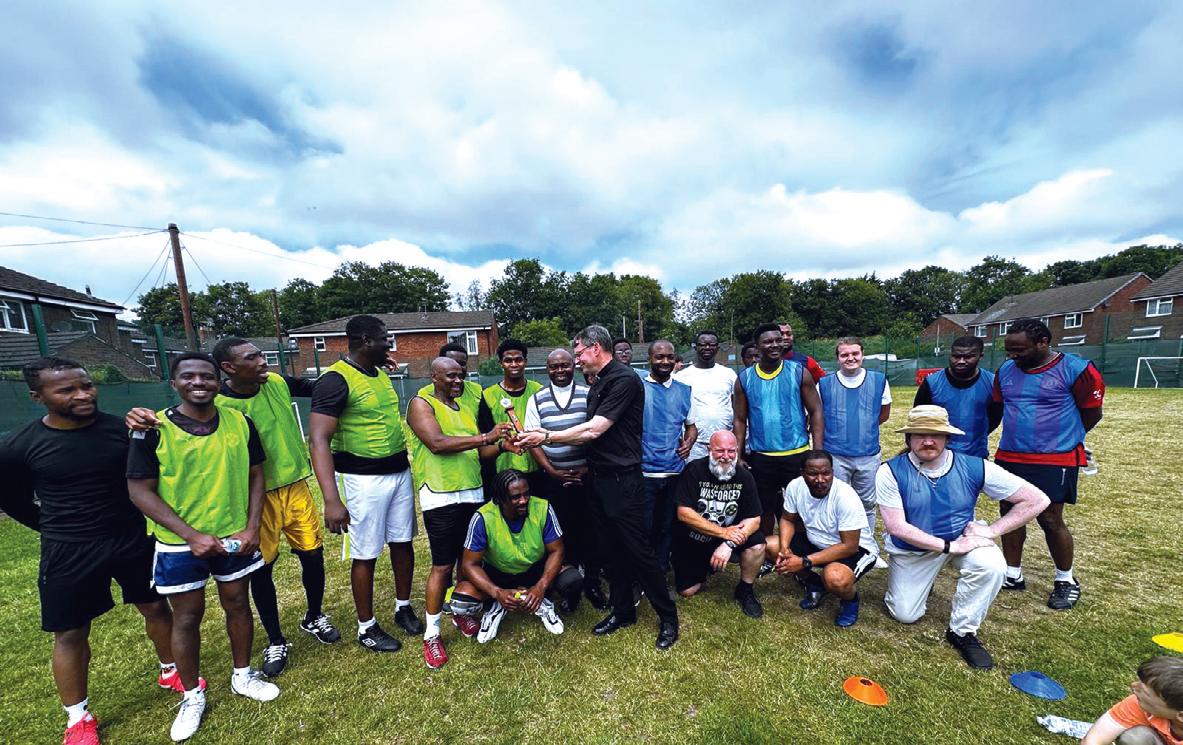
Holders St Vincent’s once again took the honours in the second annual inter-parish Father’s Day five-a-side football match in Hull.
St Vincent’s beat neighbours Our Lady of Lourdes & St Peter Chanel 7-2 to retain the trophy.
Parishioners provided a feast for the crowd and there were also games, a raffle and children’s fun.
This event is not only a fun day but also a fundraiser, raising £600 towards a new church hall and presbytery.
Adrian Crummay
Right: Teams at the annual inter-parish Father’s Day five-a-side football match in Hull, with Father William Massie handing over the trophy
This month of August has two very special feasts. On Thursday August 6 we celebrate the Transfiguration. Jesus goes up Mount Tabor with Peter, James and John, his brother and is transfigured in their sight.
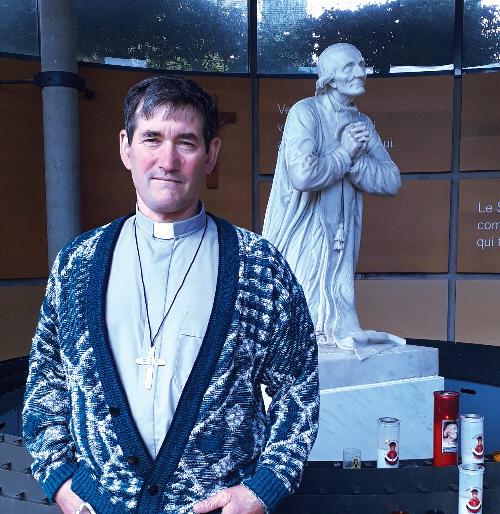
He converses with Elijah and Moses as they talk to him about his Passion. Afterwards, Jesus tells his disciples that this event was so that they would be prepared for his suffering and death.
As most of us remember, the other feast is the Assumption of Mary, on Saturday August 15. We believe she was taken, body and soul, into heaven and so did not undergo corruption.
She is the first fruits of the Resurrection of Christ, which includes the Resurrection of the Body. It is not just a celebration of the resurrection of his body. Mary’s Assumption is the fulfilment of the Lord’s promise to her and to all that our bodies will also participate in the eternal glory that God has prepared for “all who love him”.
What has the first to do with the second? When Jesus is transfigured, we are told that his face shone like the sun and that his clothes were whiter than any bleach could make them.
It is a foreshadowing of his resurrection and the new way of being that his father has ordained for him. It is a declaration of the profound dignity of the human person, created in the image of God. And so also is the Assumption of Our Lady. It is another declaration of the care and renewal that God the Father has planned for all his children.
In our mother house of Madonna House in Canada, it is not unusual to have a picnic on the Feast of the Transfiguration.
But the Assumption of Our Lady, a solemnity in the church, always has a Sunday schedule for the community. That day we acknowledge not only the dignity of the human person, but in particular the dignity due to women.
The chapel is festooned with flowers and there is a table outside the chapel filled with the many flowers of our gardens. Several men attend the table and make corsages for the ladies as they come to morning Mass. We acknowledge the motherhood of Mary as mother of God.
We were inspired by a priest named Joseph Raya, who was pastor in Raleigh, North Carolina, many years ago. Just before the feast, he would buy armfuls of roses. On the feast of the Assumption, he had the young men in his parish stand on the corners of downtown streets and hand out roses to every woman who passed by.
What a tradition! What a way of proclaiming what we believe: the dignity of the human person and the personal love that God has for each of us. God wants to show that love through us to others.
Every Sunday we proclaim in the Creed that we “believe in the resurrection of the body and life everlasting”. This is one way of proclaiming that faith. What else might we do? Happy feast!
Father Kieran Kilcommons
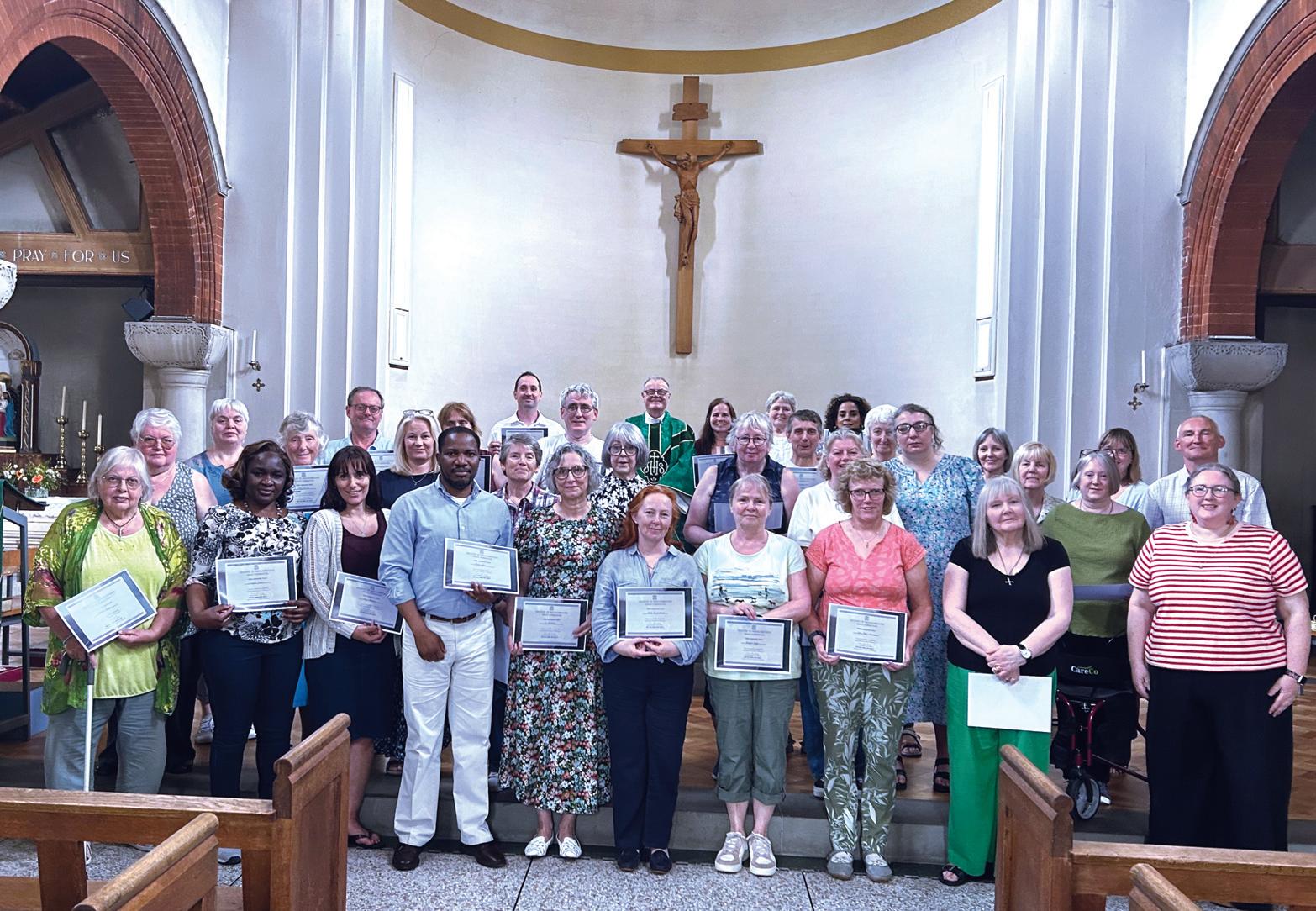
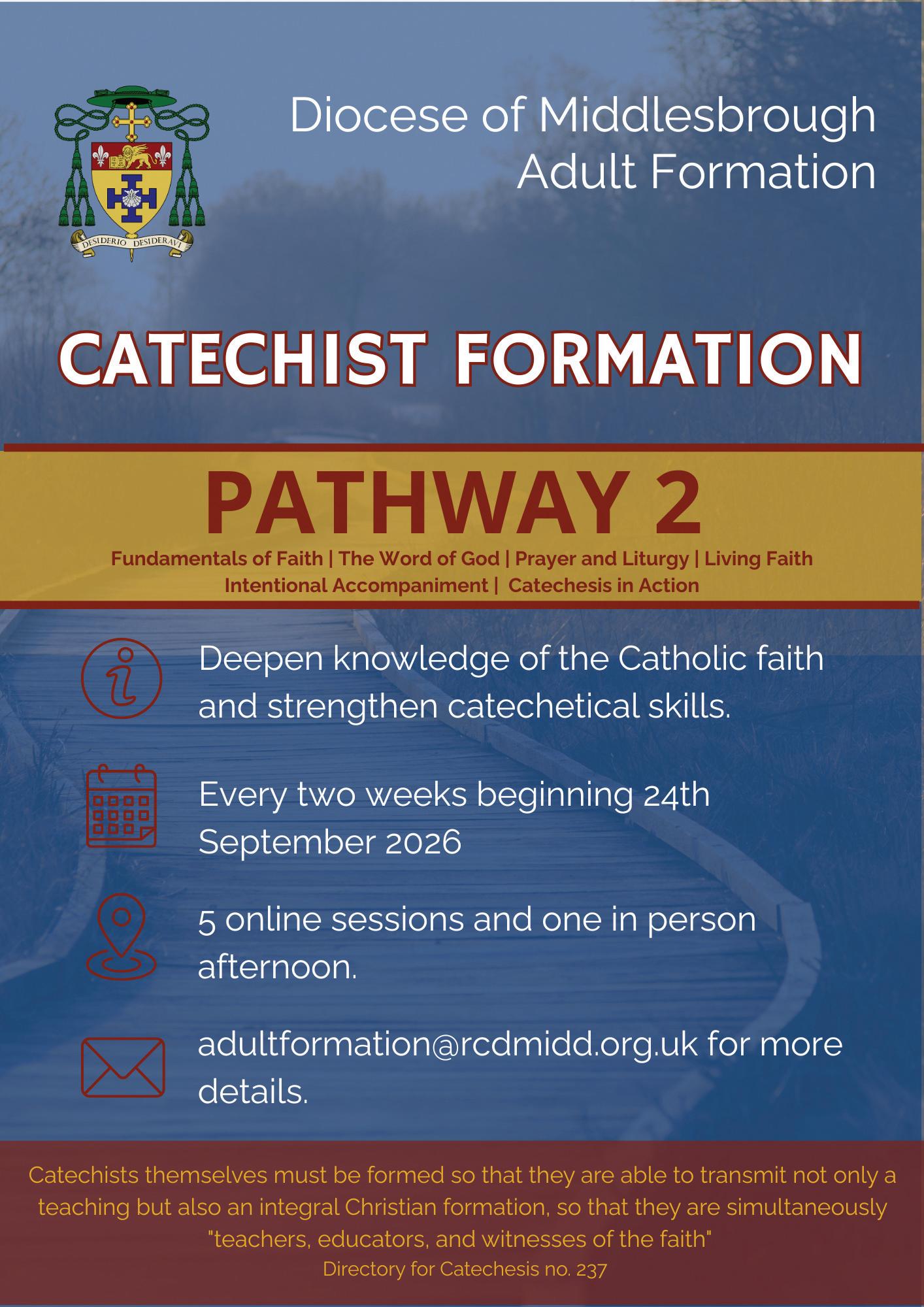
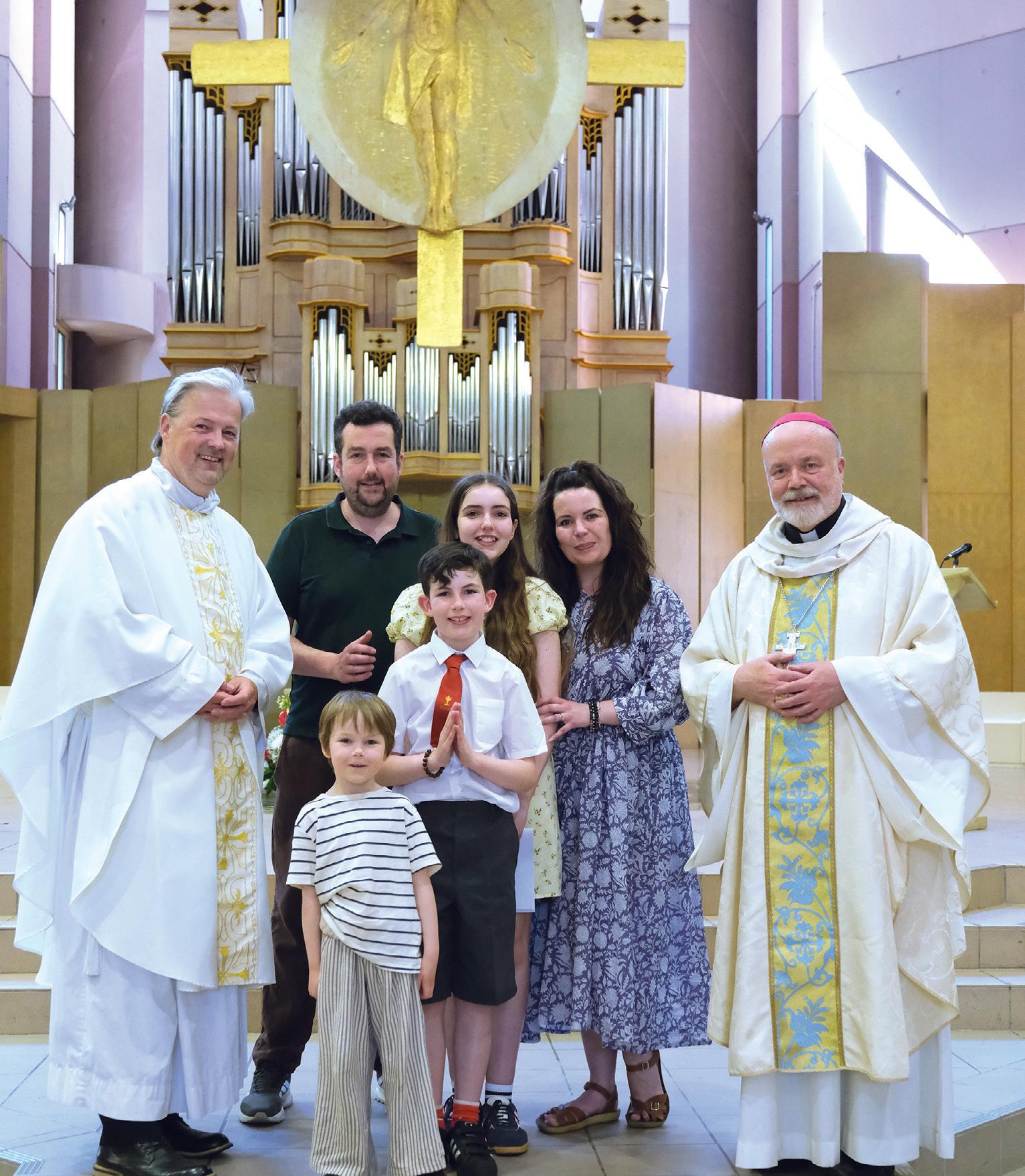
Forty-eight catechists from parishes all over the diocese met to follow Catechist Formation Pathway 1 over four online and inperson sessions.
The course was led by adult formation coordinator Nicola Sweetman, who shared her wisdom and experience, making the content relevant to everyday life, accessible to all and very enjoyable.
Sessions helped participants to explore what catechesis is and how it can be done. It covered encounter with Christ and accompanying others as they journey through spiritual curiosity to discipleship.
Participants learned about the tasks of catechesis, such as leading others to knowledge of the faith and introducing them to community life, as well as sources that can
be used to help others learn such as the Word of God, the lives of the saints and Christian art and architecture.
Throughout the course there was an emphasis on importance of community and growing in faith together.
The sessions provided a great opportunity to meet people working in different parishes, working with both children and adults and to share experiences of catechesis.
The course included those new to catechesis as well as those with a wealth of experience over many years. There really was something for everyone, no matter their starting point.
The final session concluded with a joyful celebration of Mass, in which Canon John Lumley offered words of encouragement and inspiration, as well as blessing catechists as they continue God’s work in parishes.
Julia Hedley-Jones and Claire Roberts-Clark English Martyrs, York
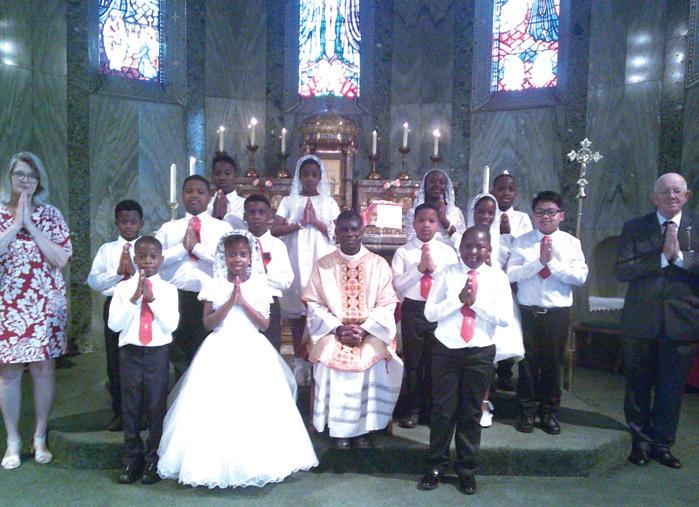
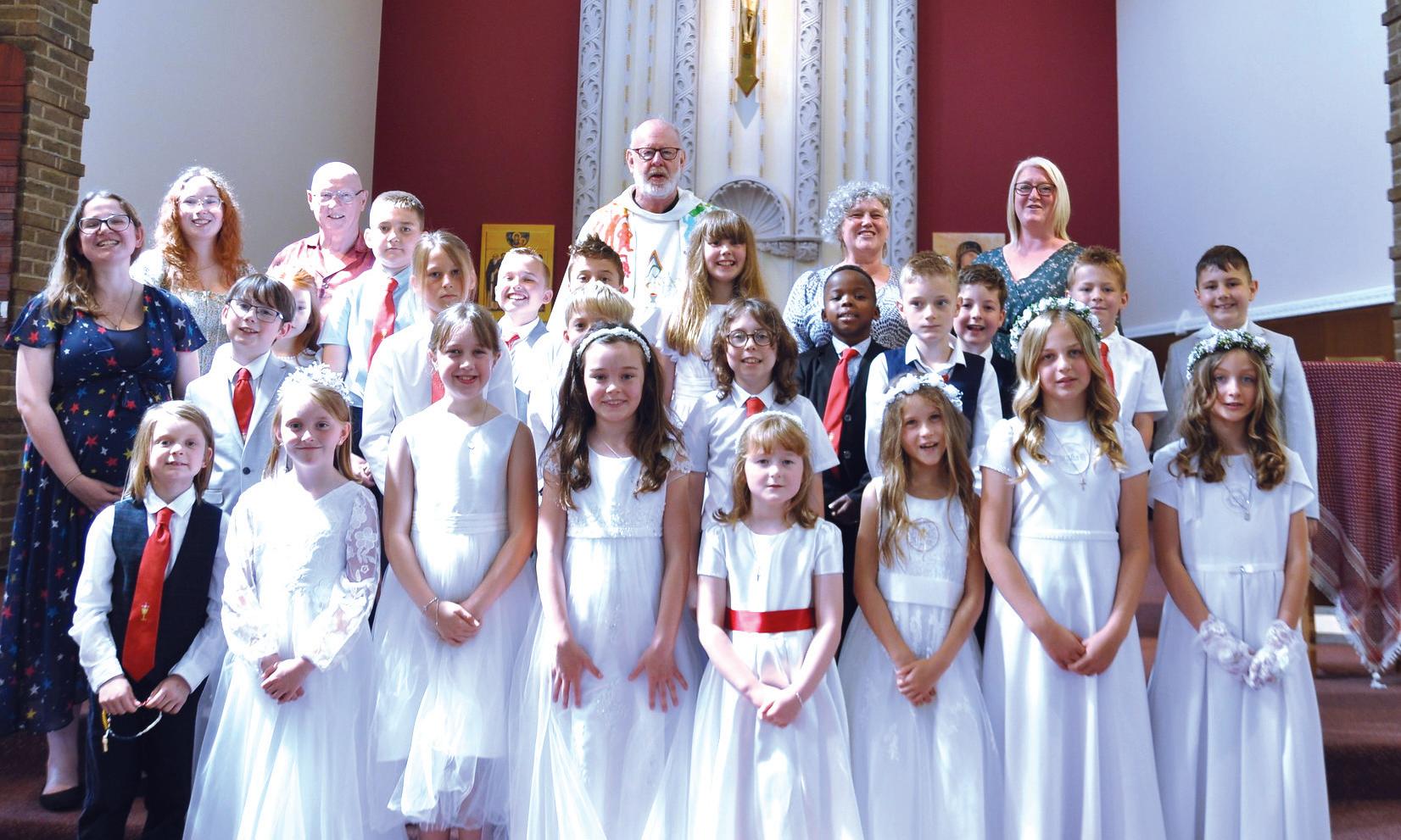
Parish priest Father John Idio thanked two dedicated catechists who have prepared their last group of children to make their First Holy Communion.
Peter Loughlin and Sandra Cross have done the job at Sacred Heart, Middlesbrough, for 12 years and are now handing over to a new generation.
But first they spent 12 months working with this year’s celebration, which took place on the Feast of Corpus Christi.
Peter and Sandra will both be missed and their hard work within the parish and for the children is very much appreciated.
SHAWN RAS, a Dutch-born historian and parishioner of Our Lady of Lourdes and St Peter Chanel in Hull, continues his series of articles about Church history with the story of the Great Schism of 1054 and the leaders who broke Christendom…
Theodosius the Great, Emperor of the Romans, together with his co-emperors, followed the complex Roman system of administrative governance.
In 380, they issued the Edict of Thessalonica, which decreed that Catholic Orthodoxy (from the Greek words Catholicos, meaning universal, and Orthodoxia, meaning righteous or correct opinion, thus the “universal correct opinion”) should be the formal religion of the Roman Empire. He officially condemned Arianism and other early heresies, as established by the Council of Nicaea (see January’s article).
Issues were already rife in this period.
Following the Emperor Justinian I’s (527-565) reconquests of the Western Roman Empire, earning him the epithet “the Great” and sainthood in the Orthodox Church, the emperor instituted a system of governance of the Christian Church that, in many ways, still exists today, namely the Pentarchy, meaning the rule of five in Greek.
In this system, the five most important cities of Christendom and their bishops became the most influential church leaders. With Rome taking precedence, followed by Constantinople, by tradition the city of the apostle Andrew, then Jerusalem, the city of Christ, Antioch, the city of Peter’s first Church, and finally Alexandria, the city of the Apostle Mark.
It is no coincidence that these five were also the wealthiest and largest cities in the
Roman Empire. Over time, only Rome and her Eastern counterpart Constantinople (initially known as Nova Roma or New Rome) would remain the most important.
These two cities remained prominent following the Islamic conquests of the other three in the seventh and eighth centuries. They also featured three important figures. The pope, in Rome, and the emperor and patriarch in Constantinople. Following the rule of the Eastern Roman Empire over Italy and Rome under what was then called the Exarchate of Ravenna, a sort of client state, tensions between east and west began to rise.
It started with controversy over the conversion in Spain of the Visigoths, whose conversion rituals were instituted much faster than elsewhere, with much more acceptance of syncretism and pseudoheretical thought.
From here arose one of the early (and lasting) disagreements between the two churches, that of “filioque” (ask your priest!). This article is not about that disagreement, however.
By the 11th century, things came to a head again, this time about the nature of the Eucharist. As you will know well, reader, in our tradition the host is made of unleavened bread. You may be surprised to learn that in Eastern traditions, the host is made of leavened bread, which is cut during the preparation of communion.
The patriarch at the time, named Michael I Cerularius (patriarchate 1043-1059), denounced Pope Leo IX (papacy 1049-1054) for these practices. Where in the past the popes had been forced to accept the rule of Constantinople on account of their overlordship over the aforementioned Exarchate of Ravenna, the fall of that state to
the Lombards, and subsequently the Carolingian Franks, had given the papacy a sense of independence.
Leo IX wrote a letter to Michael, stating the known forgery, the “Donation of Constantine”, as evidence that, by the word of the most famous Roman emperor, the patriarch should mind his own business.
This letter also proved the complete supremacy of the successor of Peter over all other bishops. Armed with this letter, Pope Leo IX sent a cardinal to negotiate with the East.
The issue quickly rose that his envoy had no intention of peaceful resolution, and following a disagreement with the primate of the East, announced an excommunication on the patriarch. This was rather controversial,
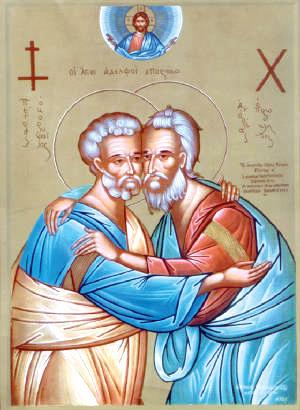
since at the time the legate announced this act, Pope Leo IX had passed away and the seat was vacant.
Angered by this act, Patriarch Michael returned the favour and excommunicated the legate and all his associates (being the cardinals of Rome). This is considered by many to be the formal moment at which East and West split from each other.
Perhaps the greatest split in the history of Christendom, it has led to great conflicts.
The Crusades happened not long after, including the disastrous Fourth Crusade.
Soured relations prevented Western Christians from saving the holy city of Constantinople from the Ottoman Turks. Distant relations between denominations caused the rift between Russia and Europe and sowed the seeds for the spiritually disastrous Protestant Reformation.
So why bring this event up now? The current successor of Andrew the Apostle is His All Holiness Bartholomew, Ecumenical Patriarch of New Rome and the East.
Bartholomew ascended the throne in 1991 and is known as the Green Patriarch for his environmentalist agenda.
Bartholomew became a great friend to three popes, St John Paul II, Benedict XVI and Francis, and has fostered positive relations with Leo XIV.
In recent months, news outlets have reported an ever-growing improvement in East-West relations, with increased dialogue existing between the two Churches, especially in the third ConstantinopleMoscow schism of 2018.
What was broken almost 1,000 years ago may be restored in our lifetimes – and that, reader, is something worth learning more about.
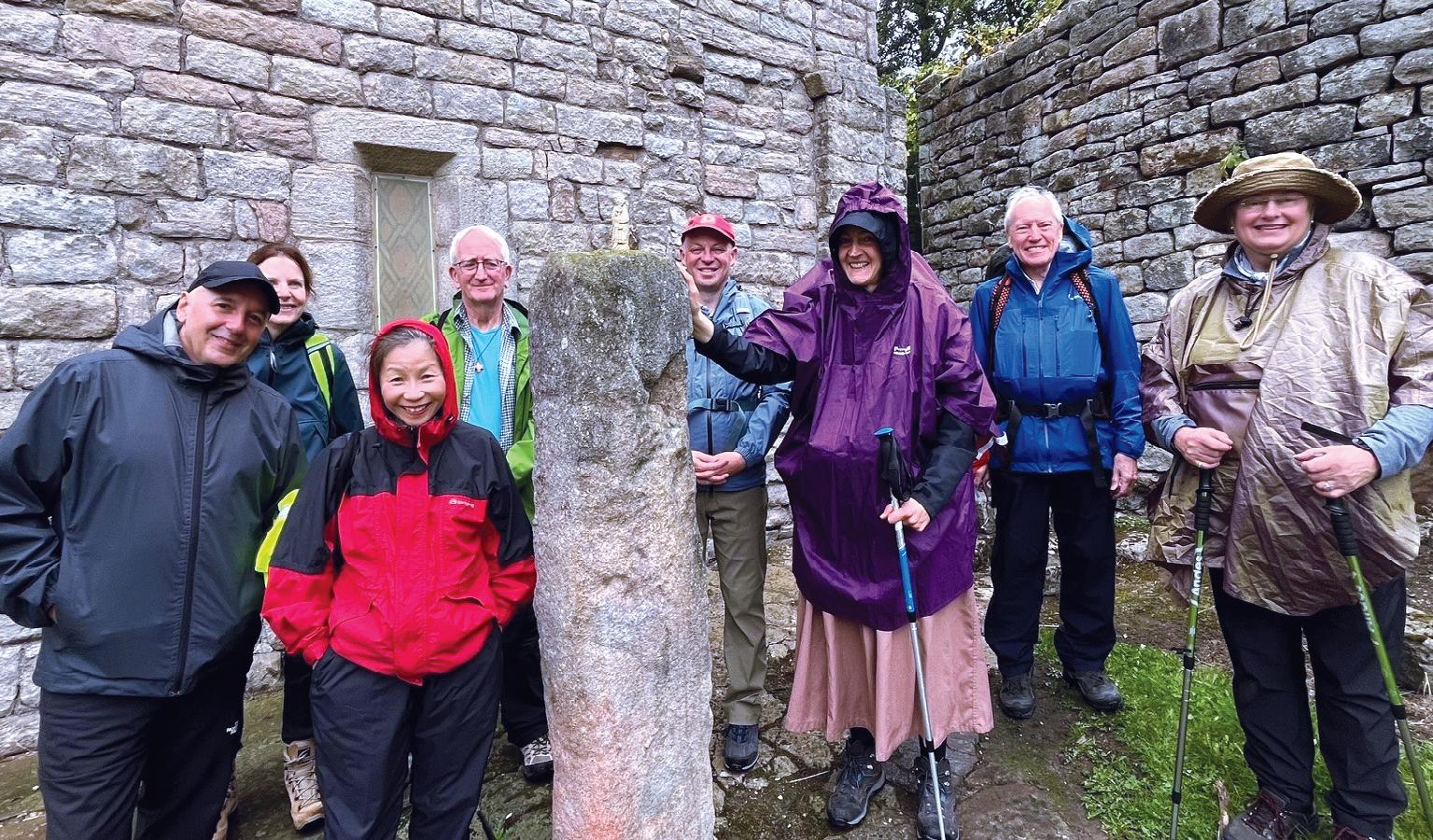
A small band of pilgrims from the Diocese of Hallam and Diocese of Leeds will walk England’s Longest Way to Walsingham this September.
Starting with Mass at Leeds Cathedral on Saturday September 12, the group of “Perpetual Pilgrims” will follow the St Mark’s Way route of last year’s Jubilee Pilgrimage of Hope, via St Marie’s Cathedral in Sheffield and the Catholic Cathedral of St Barnabas in Nottingham.
Then, striking out east through the Diocese of East Anglia, they will continue on the St Luke’s Way to Walsingham.
Those walking the whole route will cover a total distance of at least 230 miles – that’s 50 miles longer even than the revived medieval route of the London to Walsingham Camino!
“Day Pilgrims” will be welcomed to walk a stage of the pilgrimage through their parish or deanery and may join for devotions or provide hospitality at the beginning or end of each day.
In this Year of St Francis, this sustainable diocesan pilgrimage will pass through the
English countryside on foot and occasionally on public transport.
Visiting the Padley Martyrs’ Shrine and other sacred sites along the way, this new Camino will celebrate our country as the Dowry of Our Lady, as well as having the aim of closer collaborations between three linked-yetdistinct northern Catholic dioceses: Leeds, Hallam and Middlesbrough.
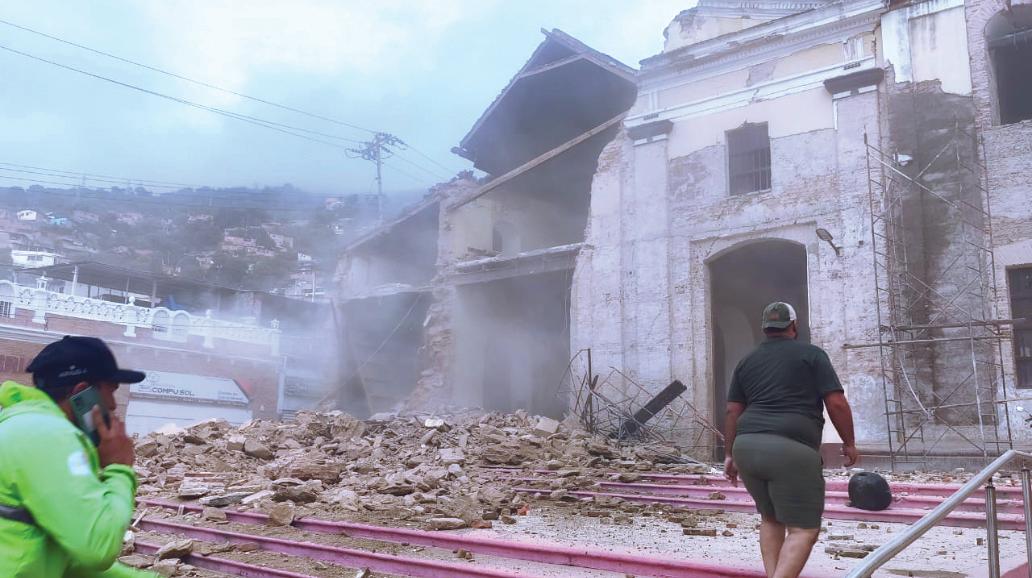
The pilgrimage came about because late last year, the Holy Father appointed Bishop Marcus as Apostolic Administrator of the Diocese of Middlesbrough. Arrangements were then made for Bishop Marcus to lead the two dioceses’ annual day-pilgrimages to Walsingham as a joint event on Saturday September 26.
Just a few months later, in March, Pope Leo added the Diocese of Hallam to Bishop Marcus’s responsibilities and the idea was born of a Camino Walk to Walsingham, through Hallam, setting off two weeks in advance.
It is scheduled to reach the National Catholic Shrine in time to greet Bishop Marcus and
Catholic bishops have voiced their support for the Just Peace Coalition’s Time to Act campaign.
The campaign, organised by the Just Peace Coalition of churches and charities, which includes CAFOD, Christian Aid and Pax Christi England & Wales, is calling for “a just peace for all who call the Holy Land home”.
It encourages people to raise their voices by writing to their local MP, speaking out against injustice and advocating for change.
In a message of endorsement, lead bishop for the Holy Land Bishop Jim Curry said: “The Holy Land is sacred to Jews, Christians and Muslims alike. It needs to be a place where the dignity of every person is recognised and protected.
“Lasting peace can only be built on a foundation of equal human and civil rights; justice and mutual respect for all. Israelis, Palestinians and people of every religious belief and understanding.
“I warmly support the Time to Act campaign
and the call for a future in which every person can live peacefully, free of violence and intimidation, knowing that their Godgiven dignity is upheld.
“It is vital that our government listens to those calling on the international community to help bring about a just peace and ensure that international law is respected and upheld.”
Bishop Stephen Wright, chair of trustees of CAFOD, added: “In his recent encyclical Magnifica Humanitas, Pope Leo reminds us that ‘all of us, at every level, can contribute to building the foundation of peace, which is justice.
“We do not merely seek any kind of peace –such as an absence of conflict at any cost –but instead, the true peace born of justice’.
“Time to Act offers an opportunity for all of us to play our part in responding to the call to work urgently for a just peace in the Holy Land.”
Learn more about the Time to Act campaign at justpeacecoalition.com.
The Bar Convent Living Heritage Centre will this year take part in the York Mystery Plays Festival for the first time.
Every four years the streets of the city are transformed into an immersive historic stage as part of a local tradition dating back to medieval times.
The Bar Convent will host a programme of special events that includes performances, exhibitions, talks and trails.
You can join the Bar Convent for a special exhibition, Women in the Mystery Plays, until August 29.
The Bar Convent’s Dr Hannah Thomas said:
“The discovery of the incredibly rare medieval Arma Christi prayer scroll has enabled us to
pilgrims who have travelled down for the day by coach from Leeds and Middlesbrough.
Perpetual Pilgrim Rowan Morton-Gledhill, from the Diocese of Leeds, said: “Taking the Longest Way to Walsingham isn’t a record attempt or endurance test – and these events are not just ‘joint jaunts’!
“However the way is travelled, and whatever
explore and reinterpret our medieval heritage and connections across the city.
“York Mystery Plays Festival is such a befitting partnership for us with its religious content, our medieval links, both histories intertwining with the reformation and the fact that the Arma Christi scroll depicts the Journey to Calvary.
“We are incredibly excited to showcase our collections to new audiences and for people to experience our garden in a new and exciting way.”
Women in the Mystery Plays is included in admission to the Bar Convent exhibition from Monday to Saturday, 10am to 5pm, last admission 4pm.
the distance, the People of God from Leeds, Hallam and Middlesbrough will be following in the footsteps of Catholic pilgrims throughout the ages as we make our spiritual journey in praise of God and to honour Our Lady. We will be walking together along the well-trodden paths of prayer and penitence, which are at the heart of every pilgrimage.”
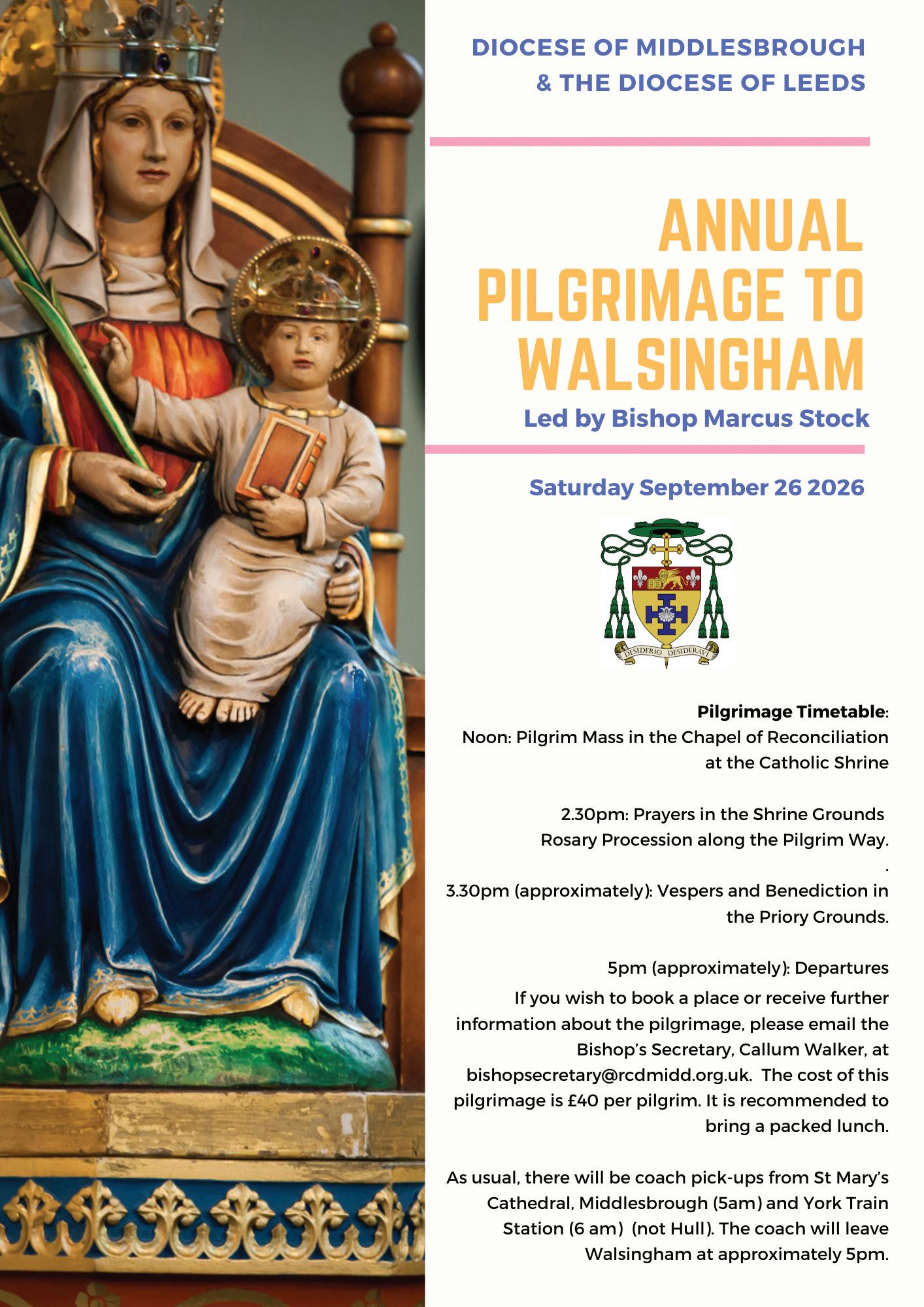
CAFOD has launched an emergency fund for those affected by the two devastating earthquakes that struck Venezuela in June.
Thousands have been confirmed dead and thousands more are still missing, while many more have been injured or displaced.
Bishop Nicholas Hudson, chair of the International Affairs Department of the Catholic Bishops’ Conference, said: “I wish to express my deepest solidarity with and prayerful support for all those men, women and children affected by the two devastating earthquakes.
“The Catholic Church in England and Wales stands alongside our brothers and sisters in Venezuela at this time of immeasurable suffering.
“We also remember those within our own communities who have family and friends affected by this disaster and who will be deeply concerned for their loved ones.
“I echo the words of Archbishop Raúl Biord Castillo of Caracas that the people of Venezuela might find ‘comfort in God and in solidarity and charity’.
“We pray for all those who face such hardship, loss, and uncertainty. We encourage support for the humanitarian response through CAFOD’s emergency fund, which is helping to provide vital assistance and hope to those in need.”
Visit caford.org.uk to donate to CAFOD’s emergency appeal.
Meanwhile, Aid to the Church in Need (ACN) has approved a first support package of €100,000 (£86,410) to help the Church in Venezuela respond to the tragedy.
The aid will help to support priests, religious communities and other pastoral workers who are sheltering families, helping survivors and
offering spiritual support in the wake of the tragedy.
To support the ACN appeal, visit acnuk.org.

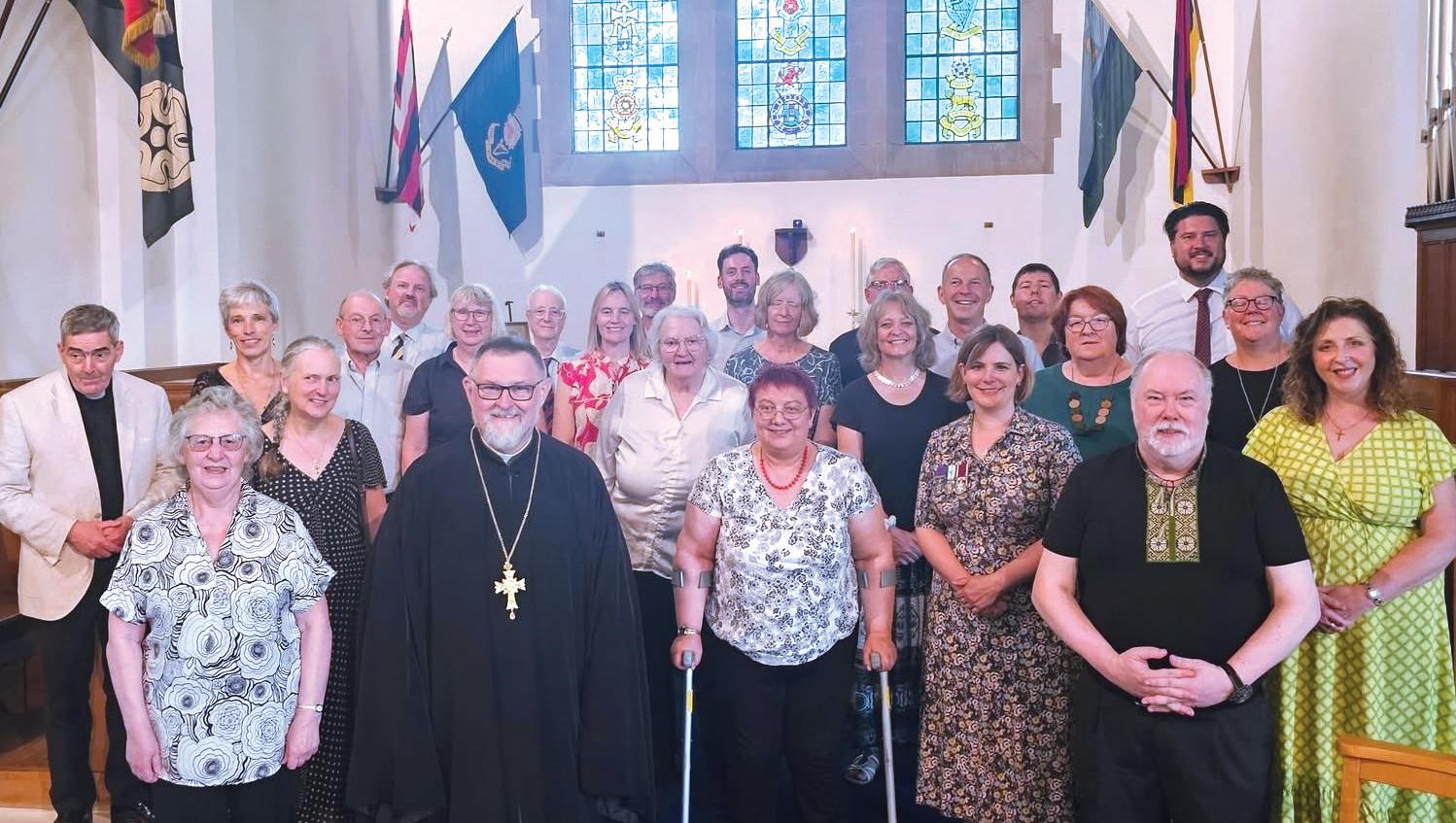
An icon of Our Lady of Victories was welcomed to the Garrison Church of St Wilfrid, Strensall, near York, during a Solemn Pontifical Mass.
The celebration took place on the Feast of Our Lady of Perpetual Succour, who is patron of our diocese as well as being patron of the Diocese of Hallam and the Diocese of Leeds. The icon was commissioned by the Catholic Military Association, of which she is patron, and has been written in Ukraine ahead of finding a permanent home in the Military Cathedral in Aldershot. Strensall is the first location of a UK tour.
The celebrant, Bishop of the Forces Paul Mason, was joined by the Very Reverend Father Mykola Matwijiwskyj MBE, vicar general of the Ukrainian Eparchy.
Clergy and servers from local parishes also attended the Mass, along with the Lord and Lady Mayor of York.
Music was provided by the Rudgate Singers of York, who were celebrating the 30th anniversary of their foundation and were directed by Steven Maxson, diocesan director of music.
It included two traditional Ukrainian hymns, along with the Gregorian Chant propers of the Feast of Our Lady of Perpetual Succour and polyphony by Byrd, Palestrina and Victoria.
Huge congratulations to Hull City, who will represent the diocese in the Premier League this season after winning the Championship play-off final at Wembley Stadium.
The Tigers beat diocesan rivals Middlesbrough 1-0 in what is often dubbed the world’s most valuable football match because of the riches that await the winners in the nation’s top division.
The game was marked by the friendly relations between the two sets of fans, which is illustrated here by Hull fan Jeremy and Boro fan Benedict.
The two became friends after meeting at the Faith Summertime retreat last year and were delighted to bump into each other outside the famous stadium before the game.

1 Saturday
11am Catholic women are invited to share an hour of feminine communion including meditation, via Zoom. Text Barbara on 07796 117704 with your mobile number and email address so she can add you to the WhatsApp group, or email catholicwomenmdl@gmail.com for Zoom link.
6pm Mass in Italian in the Father Kelly Room, Our Lady, Acomb, York, followed by refreshments. All welcome.
3 Monday
9.45am-10.25am Beverley Christian Meditation Group meets online. Further information from christianmeditation.beverley@gmail.com. This takes place every Monday.
7pm Catholic charismatic prayer group meets on first Monday each month at St Bede’s Pastoral Centre, Blossom Street, York. For more information, contact Sharon on cdscsmiddlesbrough@gmail.com or 07932 420809.
4 Tuesday
10am Coffee at the Cathedral. Tea, coffee and treats every Tuesday after 9.30am Mass. A warm welcome and friendly atmosphere. Make new friends and enjoy some fellowship. Those who are alone especially welcome.
10am Christian Meditation Group meets online. Further information from Terry Doyle terry-doyle@live.co.uk. This takes place every Tuesday.
6.30pm Knights of St Columba Council 29 meets at St Mary’s Cathedral.
Copy and photographs for inclusion in the Catholic Voice should be sent to: The Editor, Middlesbrough Diocesan Catholic Voice, Curial Offices, 50a The Avenue, Linthorpe, Middlesbrough, TS5 6QT. Tel (01642) 850505, email catholicvoice@rcdmidd.org.uk Deadline Friday August 7 for September edition.
Where possible please send articles in Word and photographs as jpegs. Please confirm when you send in your photographs that those who appear in them have given their permission for publication.

7 Friday
Events, articles and photographs for the September edition of the Voice are due by this day.
9 Sunday
3pm Mass for LGBT+ community, family and friends at the Bar Convent Chapel. Doors open from 2.30pm.
10 Monday
2pm Music for the Mind, an hour of fun and music for people living with dementia, their friends and carers with Trish McLean. All welcome.
12 Wednesday
7pm Hull Circle of the Catenian Association meets at the Lazaat Hotel, Cottingham, followed by a meal. Email Charles Cseh at hullcirclesecretary@gmail.com
16 Sunday
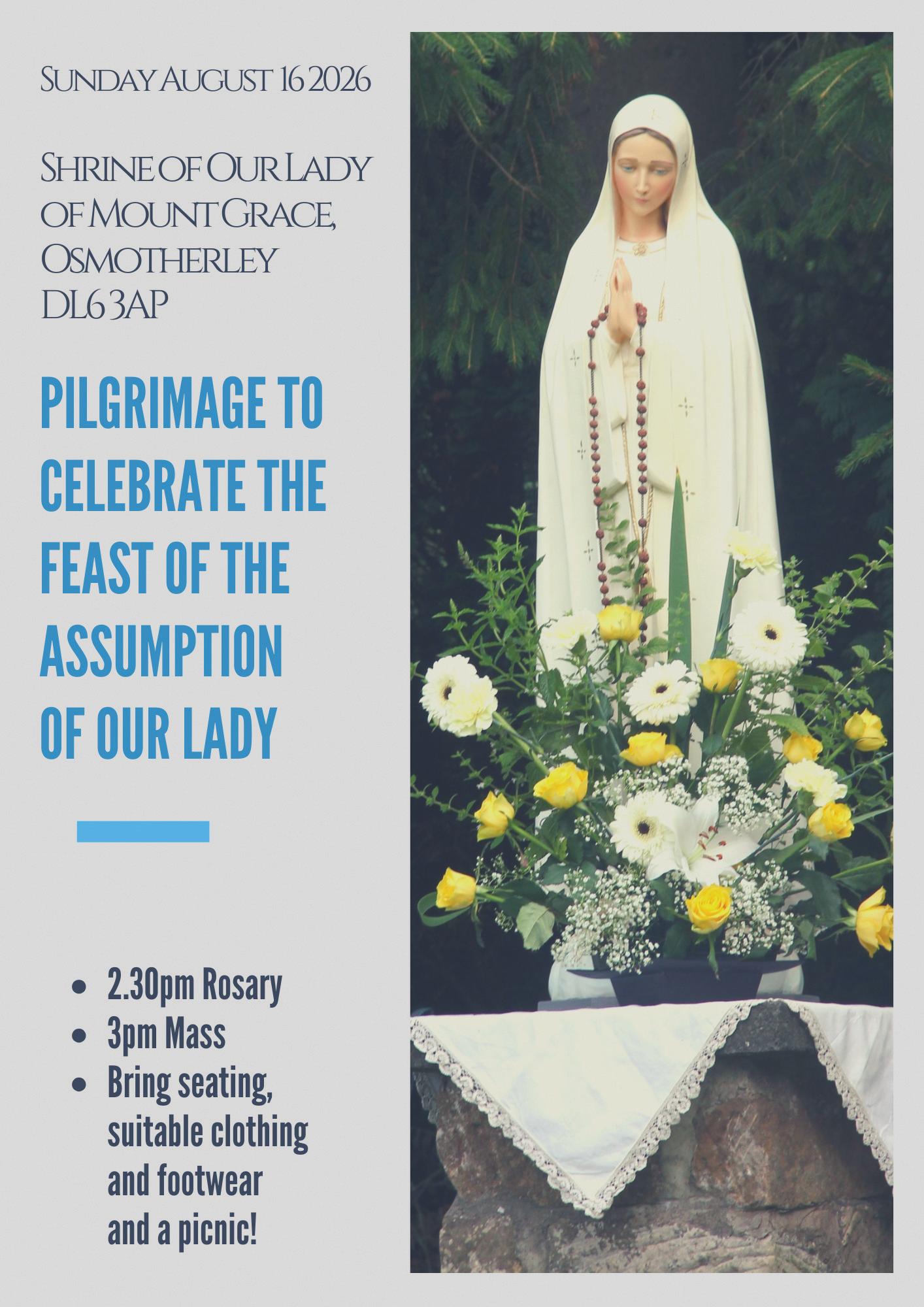
3pm Assumption Pilgrimage to Shine of Our Lady of Mount Grace, Osmotherely DL6 3AP. Rosary from 2.30pm.
29 Saturday
Noon LGBT+ social gathering at the Bar Convent, York. All welcome.
If you have any events that you would like to include in the Out and About section, please email heidi.cummins@rcdmidd.org.uk.
Forthcoming events at St Mary’s Cathedral
Thursday October 15
The Sixteen Live in Concert
As part of their prestigious annual Choral Pilgrimage, the internationally celebrated choir The Sixteen, led by Harry Christophers, will perform within the cathedral’s resonant acoustics. Known for their precision and historically informed style, their performance promises to be a musical highlight of the year.
Friday November 6
Gary Stewart’s Graceland
Celebrating the 40th anniversary of Paul Simon’s iconic album, Gary Stewart and his band will deliver a dynamic full-album performance. Expect energetic vocals, tight rhythms, and the vibrant spirit that has made this show a favourite on UK stages.
Saturday December 12
Christmas at the Cathedral featuring Cantabile
Closing the jubilee celebrations with seasonal joy, the esteemed local choir Cantabile will present a festive concert brimming with hope and renewal, perfectly marking the transition into the new liturgical year.
Visit middlesbroughrccathedral.org or ticketsource.co.uk/middlesbroughcathedral.

Schools, families and other groups, as well as individuals, are welcome to join the Friends of the Lady Chapel.
Members are united in the spirituality of our diocesan Marian shrine through an annual Mass and daily prayers and also receive newsletters and invitations to events. A suggested membership donation is £10 a year for an individual or a family group. Visit ladychapel.org.uk/friends for more information.
Father Anthony Storey’s booklet describing
the history of the Lady Chapel, which was updated by Father Neil McNicholas, is available from the Curial Office, St Mary’s Cathedral or the Lady Chapel itself, priced £1.
Have you ever thought about leaving a legacy to the Friends of the Lady Chapel in your will? By doing so you will help to preserve this important shrine to Our Lady for future generations and bequests are free of inheritance tax.
You can also donate using this QR code.

Age UK North Yorkshire & Darlington is recruiting volunteers for three support services for older people and their families. The Check In & Chat service offers regular phone calls for social interaction and wellness checks. The Let’s Connect Welfare Check provides daily check-ins via text or call, alerting a contact if missed. Heart and Home Companions delivers weekly home visits for companionship and social support. To learn more or volunteer, email Clare Hardie at clare.hardie@ageuknyd.org.uk or Sally Clement at sally.clement@ageuknyd.org.uk.
Pope Leo XIV has appointed Archbishop Richard Moth as Apostolic Administrator sede plena et ad nutum Sanctae Sedis of the Diocese of Northampton. This is a temporary role, by which the Holy See ensures that the pastoral governance of a diocese continues when it is not possible for a diocesan bishop to exercise his office. Archbishop Moth will continue to live and work at Archbishop’s House in Westminster, while providing support to the people and clergy of Northampton.
Please pray for Danny Murphy, from the Diocese of Leeds, who will be ordained to the diaconate at Leeds Cathedral at 11am on Saturday October 17 and Peter Holland, from the Diocese of Hallam, who will be ordained to the diaconate at St Marie’s Cathedral, Sheffield, at 11am on Saturday November 7.
Christian Democracy UK has launched a parliamentary petition calling on the government to maintain effective VAT relief for repairs to historic churches by reinstating and improving the Listed Places of Worship Grant Scheme (LPWGS). The scheme, which enabled Catholic and other congregations to reclaim VAT on essential repairs and returned over £300m, ended in March and was replaced by a more limited £92m competitive fund, leaving many historic churches facing the full 20% VAT rate on vital maintenance work. A petition is available at petition.parliament.uk/petitions/764991.
Pope Leo XIV has appointed Father Stephen Wang as the new Bishop of the Diocese of Arundel and Brighton. Ordained to the priesthood on January 3 1998, Father Wang has spent the last five years as Rector of the Venerable English College, one of two English and Welsh seminaries in Rome training men for the priesthood.
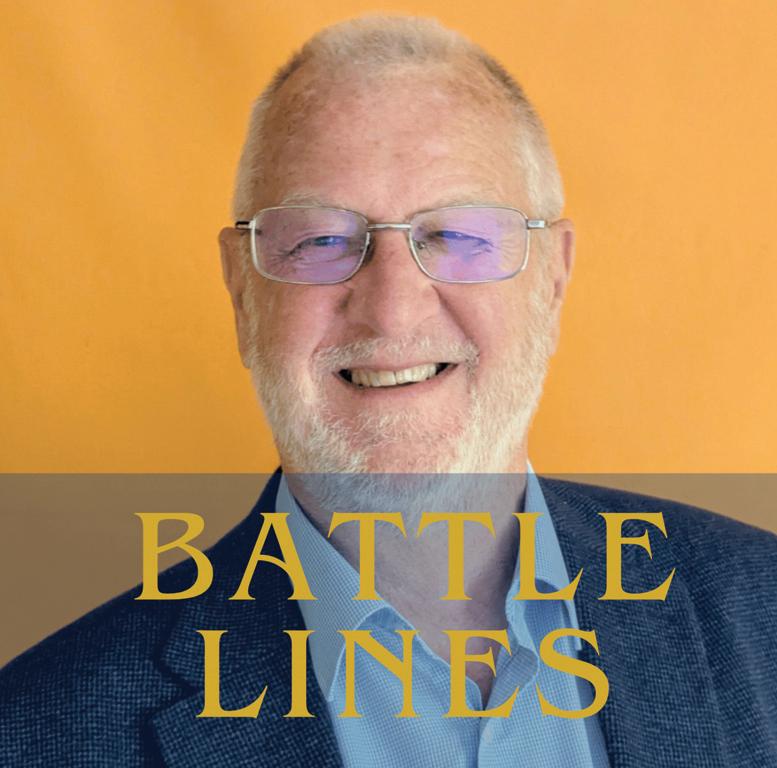
SIR JOHN BATTLE, MP for Leeds West from 1987 to 2010 and a minister in Tony Blair’s government, continues his regular column in the Voice. Sir John, who was made a Knight Commander of the Order of St Gregory the Great by Pope Benedict and was knighted in the 2022 New Year Honours, is chair of the Diocese of Leeds Justice & Peace Commission and has a deep commitment to Catholic Social Teaching.
We recently had a wonderful Mass of Thanksgiving with the Carmelite Sisters of Woodhall. It was a gathering of longstanding members and friends of the Leeds Diocesan Justice and Peace Commission to give thanks to God and the sisters for their prayerful and practical encouragement and support for some 50 years.
Now the Woodhall Carmelite monastery is closing and the remaining sisters are moving to other communities in Britain. it was a farewell mixture of joyful memories and the sadness of the end of an era.
Yet were we there just to “draw a line and move on”, wish the sisters well with grateful memories and speculate on the future of the monastery property? Or were we being invited to develop something of that
Carmelite charism and their contemplative lives in our own prayer and practice in our future work for justice and peace?
Contemplative Carmelite Sisters live lives of silent prayer, solitude and isolation, deeply rooted in the spirituality of St John of the Cross and of St Teresa of Avila, living simply and serving the Church, all while in continuous prayer for the world and its needs.
The chosen Gospel for the Mass from St Matthew was deliberately challenging; Jesus going straight to the three key areas of Christian practice, almsgiving (charity), fasting and prayer, and telling us to do it all in secret, “and your Father who sees all that is done in secret will reward you”.
This invitation to turn inwards, withdraw and focus on developing our interiority at first sight seems to contradict a mission sense of outreaching and social justice and peace action in our world today. How can secret prayer, fasting and almsgiving be the drivers of action for justice and peace?
We all struggle to hold together prayer, that “contemplation in a world of action”, and sometimes unnecessary binary opposition is set up between acting for justice and peace and developing personal prayer. But how could the Carmelite’s contemplation be reconciled with acting in our world for justice and peace? Are we just talking of two separate kinds of life?
In his book, Contemplation in a World of Action, the Cistercian monk Father Thomas Merton writes that “the important thing is not whether one is in a monastery or in the world, but whether or not one is living as a true disciple of Christ in the state of work to which one has been called by Christ”.
He adds: “If the struggle for a ‘better life’ is in reality only a selfish yearning to acquire more money, more power, more self-
satisfaction, then the Christian should realise he is forgetting his obligation to live for others and for Christ” (p 234).
In our present world, turning us increasingly into self-focused, self-centred, indulgent self-seeking if not narcissistic products of individuation (cf the ubiquitous “selfie”) we are being driven to being always “performative” and regularly respond to synthetic anger.
If our first input upon waking up is the news bulletin, emails or social media, we are being set up for a negative, hostile day. Sometimes we rise from sleep stimulated to fight people we don’t even know.
It’s hard to see how a brief morning prayer of “raising our hearts and minds (together) to God” can get a look in.
Yet in that Gospel passage, Jesus gently asked us to “be careful”, to become quietly self-aware, self-reflexive, and to recognise that we may be increasingly part of the problem. He calls us to empty ourselves of self-interest and keep ourselves always in the context of God our Father, calling us to become brothers and sisters sharing a common parent.
Archbishop Dom Helder Camara was once asked by a journalist whether he really had conversations with Christ in his evening personal prayer “vigil”.
“Do I really talk to Jesus?” he replied. “There’s no need to talk; thinking is enough. I try to recover unity with Christ and with him I relive the meetings of the past day. I think, for instance, about the mother who told me about the problems she has with her husband with her children and how hard she finds it to feed them and through this very real mother, whom I know by name, I think about all the mothers throughout the world throughout the ages, the poor ones, the rich ones, the happy ones, the unhappy ones.
“Or I think about the man I saw working in the street, emptying dustbins. He didn’t dare offer me his hand. Work isn’t what soils our hands, my friend. Self-centeredness is what soils them. And this working man, Francisco, reminds me of working men throughout the world, throughout the ages. Then I say to Christ, our brother, ‘Lord, 2,000 years after your death, injustice are growing worse and worse.’ Reviewing the day like this, I find time passes very quickly.”
Father Miguel Elizondo, a renowned spiritual director working in Latin America, quoted a letter someone handed to him that opened: “I was looking at you as you were getting up this morning, hoping you would speak to me – even if it were only a few words to ask my opinion about something, to thank me for something nice which happened to you yesterday… But I noticed that you were very busy looking for the right clothes to wear for going to work. I kept waiting for you awhile while you were rushing around the house getting organised. I suppose you were too busy to say anything to me. But that’s all right. There’s plenty of time. Perhaps it doesn’t occur to you that I’m always here for you. I have more patience than you imagine. Again I’ll wait, with nothing except my love for you, hoping that sometime today you might find a little time for me. Have a good day. Your friend, Jesus.”
Father Elizondo added: “Our prayer is above all a quality of life, an orientation of our… It moves out from God to all the relationships in our lives. Prayer, then, is not so much an act as a personal attitude – an attitude drawn from a person’s life as a whole under God, the God of Jesus... It is an attitude, a relationship of one person to another. What is communicated is not deeds or words, but the self. That is the central point of what Jesus came to tell us.” (Jesus and Prayer, The Way, 2006).
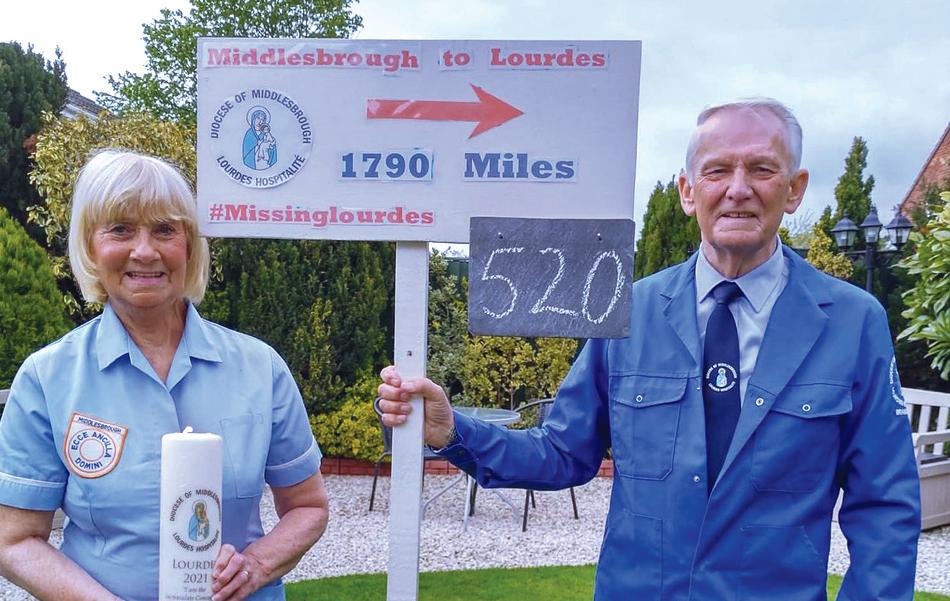
There was some very sad news for everyone connected with our pilgrimage with the death of our former Lourdes head handmaid Helen Pennington.
Helen, who was a parishioner of St Clare’s in Brookfield, Middlesbrough, passed away peacefully in James Cook University Hospital on Monday July 6 after a short illness.
She served our pilgrimage for many years, alongside brancardier husband John, and was loved by all for her warm personality, dedication and mischievous sense of fun.
Helen’s son Lee said: “Mam lived a life of unwavering Christian faith, compassion and selflessness. She dedicated her life to helping others, always putting the needs of those around her before her own.
“Her kindness, generosity and love touched countless lives, and she leaves behind a legacy that will never be forgotten.
“Priests described Helen as a prime example of true Christian faith, which is a testament to
the way she lived her life with humility, love and devotion to God and to others. I am immensely proud to have called her Mam.”
Lee thanked everyone for the love, prayers and support the family received during this heartbreaking time.
He said: “Your kindness has brought us comfort when we have needed it most. May Mam rest in the eternal peace of Christ, reunited with those who have gone before her.”
Members of our Lourdes family were due to form a guard of honour at Helen’s funeral at St Clare’s on Monday July 20.
They joined family and friends at St Francis Social Club afterwards to celebrate Helen’s life, share memories and remember the incredible woman she was.
Our Lady of Lourdes, pray for her St Bernadette, pray for her May she rest in peace. Amen
As I write this, we are experiencing another period of extreme heat, which is a powerful reminder of the challenges facing our environment.
As we prepare for the Season of Creation in September, it’s good to focus on our own diocese and to reflect that we are blessed with the beauty of the North York Moors, the Yorkshire coast, the Tees estuary and our many parks and green spaces. They are treasures entrusted to our care.
Pope Leo continues to remind us that the Earth is “our common home” and
that caring for creation is an essential part of Christian discipleship. It is not simply an environmental issue but a spiritual one. When we protect God’s creation, we show love for our neighbours – especially the poorest, who are often most affected by
environmental damage.
Many parishes across our diocese are already taking positive steps, from reducing energy use in church buildings and church halls to encouraging wildlife-friendly churchyards and supporting community gardening projects. Many are also engaging with the Live Simply initiative.
These practical actions are signs of hope, showing that small changes, made together, can have a lasting impact.
During this year’s Season of Creation, it
would be good for each of us to consider whether there is more we could do to play our part by reducing waste, repairing rather than replacing, conserving energy, planting for wildlife and choosing to walk or use public transport whenever possible.
September is also the month to bring prayer and thanksgiving for the beauty of creation into our liturgies, recognising that beauty as a reflection of God’s love.
“The earth is the Lord’s, and everything in it.” (Psalm 24:1)
Barbara Hungin
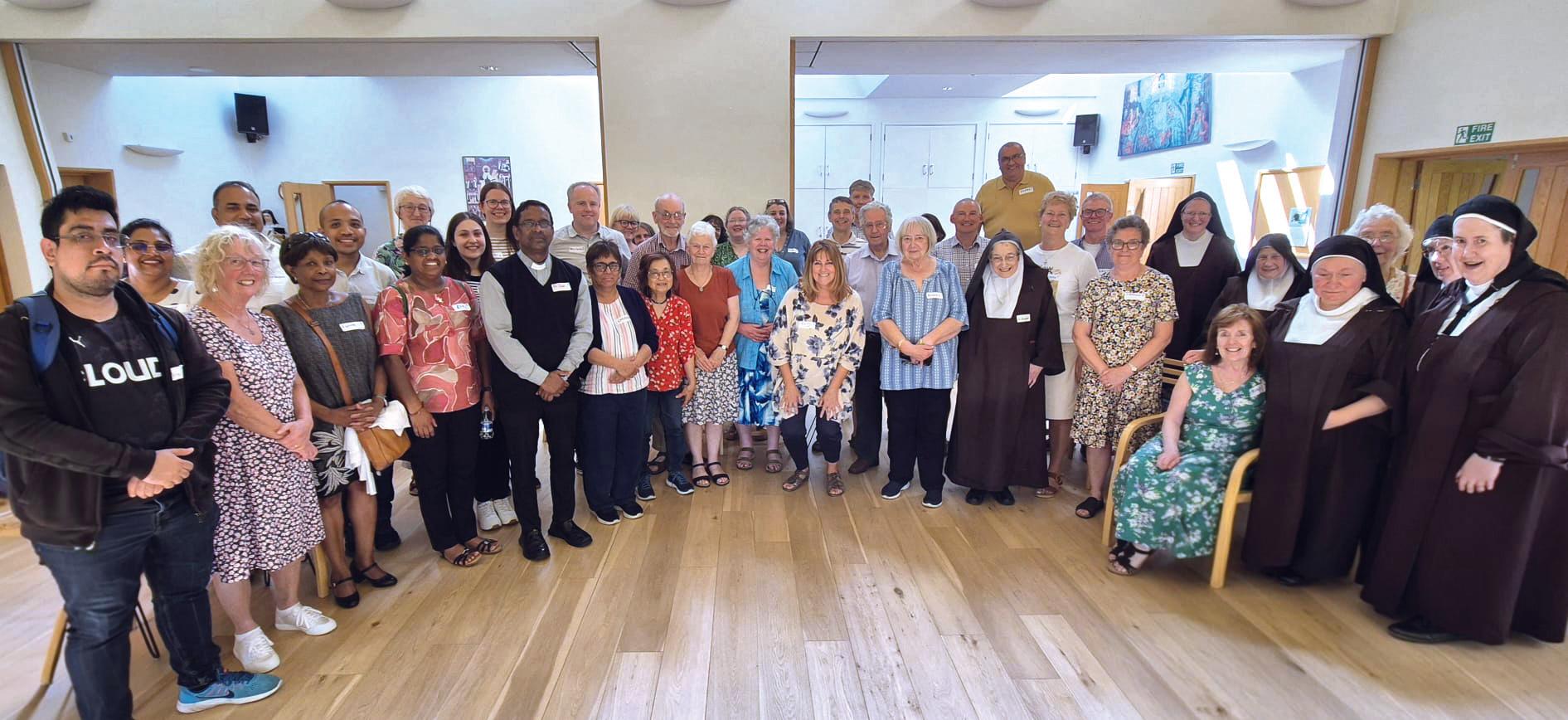
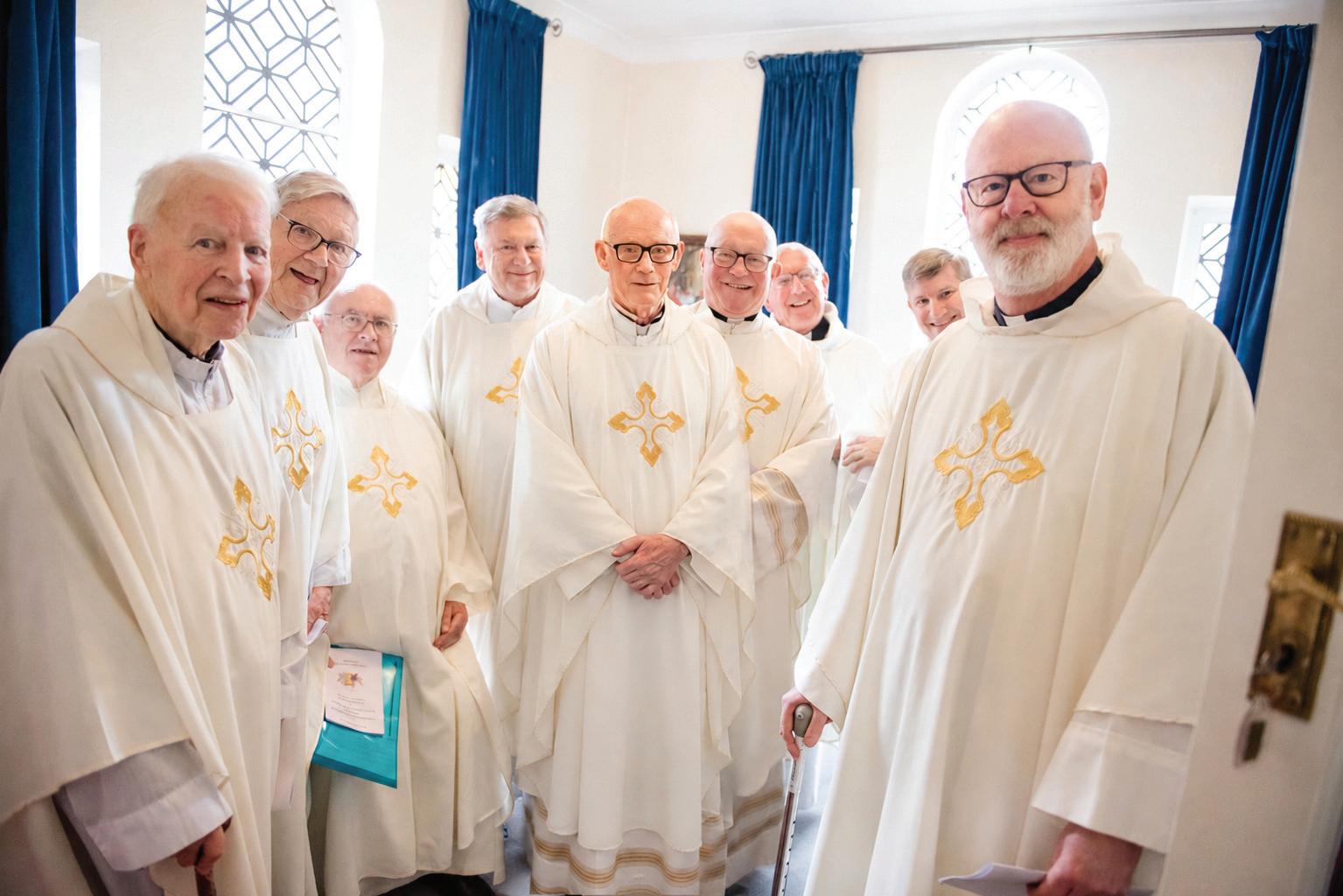
Thicket Priory near York was the venue for a Day of Parish Renewal for St George’s Church in York.
In a day led by our diocesan adult formation coordinator, Nicola Sweetman, parishioners were encouraged to explore what God is calling us to do through prayer and reflection.
Around 40 parishioners attended for the day, which was initiated by Father Jose Michael.
A big thank you to Nicola for leading the session and for creating a calm, reflective and prayerful environment for us, and for enabling us to practice some structured methods of prayer and reflection.
The Carmelite Sisters provided us all with the usual warmth and hospitality of Thicket Priory, including refreshments and musical accompaniment for the Mass and the final session of the day. Thank you to everyone involved in making the day such a great success.
David Harper