Diocesan Catholic Bishop’s


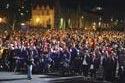
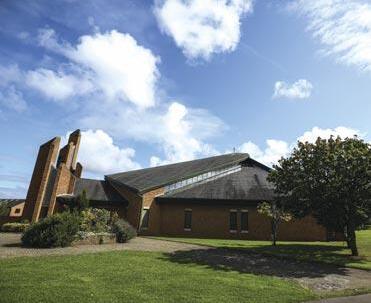
A new collection of Catholic walking pilgrimage routes has been published, including one that starts at St Mary’s Cathedral.
Hearts in Search of God is a three-year project to encourage people of all faiths and none to experience a pilgrimage walk in their own area.
Looking back on last month, the main highlight for most people surely was the King and Queen’s Coronation. Even if you are a staunch republican, you couldn’t have missed it!
Certainly “Coronation” and “Monarchy” and the rituals surrounding the ceremony have formed a part of many people’s conversations over these last months and certainly the media would not let us forget it. It's all very splendid, magnificent and triumphal.

Yet, the origins of kingship and monarchy in the Judeo-Christian traditions have rather a less sparkling ancestry. For the Hebrew people, the King was God. God protected the people and gave them laws to guide them and make them secure in the land. In the First Book of Samuel, we hear how the people demanded to have a king just like the other nations surrounding them. In so doing they showed their lack of trust in God and his prophet and the rejection of God’s rule over them. Even so, God chose a king from among the people and gave them his spirit so that he would lead them rightly. So, the monarch ruled with the blessing of God and filled with God’s spirit. Again, in the Book of Samuel, we are told that God chose Saul and Samuel anointed him. The anointing is the sign of being set apart for a God-given task, and the assurance that all the gifts necessary to complete that task are also given in abundance. And that is still the meaning of anointing in the ritual of coronation today. Similarly, those who are baptised, confirmed and consecrated in Holy Orders are anointed, set apart for special tasks and given the gifts necessary to fulfil these tasks.
One of the titles the Monarch has in these islands is “Defender of the Faith”. The origins of this title go back to the time of Henry VIII, on whom it was bestowed by Pope Leo X in 1521 in recognition of his theological defence of the seven sacraments and the authority of the Pope. King Charles has on several occasions described himself as the Defender of Faiths. So, it will be interesting to see how this aspiration works out in the reality of everyday life.
The combination of ancient and modern ways are mini versions of the long and arduous journeys across Europe that mediaeval and more recently celebrity pilgrims have trodden. The ways start at each of the 22 Catholic cathedrals in England and Wales and strike out through town and countryside to one or more local shrines.
The shortest distance is just 10 miles, which the organisers say is easily achievable in a day. The walk in our diocese is 26.3 miles and leads from St Mary’s Cathedral to the Shrine of Our Lady of Mount Grace at Osmotherley.
Organisers say the new routes are greener, too. Walking to some of Christendom’s holiest sites can mean beginning or ending the journey with an inter-continental flight – but local pilgrims leave much smaller carbon footprints.
A new website provides walking guides, GPX files, prayers and other resources for the inner and outer journeys on the largely off-road paths and tracks.
There are downloadable “Pilgrim Passports” and at the end of your walk you can get an official certificate, like the testimonium available at the end of the Camino di Santiago de Compostela
and the Via Francigena, as seen in the BBC TV series, Pilgrimage.
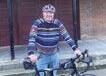
The man behind this project is retired GP Dr Phil


Continued from Page 1
This is what King Charles said soon after his accession, speaking to a gathering of religious leaders at Buckingham Palace:
As a member of the Church of England, my Christian beliefs have love at their very heart. By my most profound convictions, therefore – as well as by my position as Sovereign – I hold myself bound to respect those who follow other spiritual paths, as well as those who seek to live their lives in accordance with secular ideals.
So, we pray for King Charles, therefore, that he may constantly secure and preserve for the people entrusted to his care their freedoms, especially for their religious freedom.
In blessed hope,
1-2 Annual Diocesan Pilgrimage to Lourdes
6 Attends meeting of Bishop’s Council, Middlesbrough 10.30am
7 Visit to St Bede’s School, Marske 9am
8 Visit to Sacred Heart Secondary School, Redcar 9am
9 Celebrates Confirmations in Coastal Deanery, St Peter’s Church, Scarborough 7pm
11 Attends the Institution of Lay Funeral Leaders, Acomb 9.30am

12-16 Attends Diocesan Retreat for Diocesan Clergy at Ampleforth Abbey
17-18 Parish visitation to Redcar and Marske 4pm
19 Attends meeting of Northern Church Leaders via Zoom
20 Attends Council of Priests meeting, Middlesbrough 1.30pm
Celebrates Confirmations in Central Deanery at Our Lady, Acomb 7pm
21 Visit to St Mary’s School, Market Weighton 9am
22 Visit to St Benedict’s School, Redcar 9am
Celebrates Confirmations in Central Deanery at St Wilfrid’s, York 7pm
24-25 Parish visitation to Market Weighton
27 Attends DTEC meeting via Zoom 10.30am
28 Attends CSAN AGM and Board Meeting, Romero House London 1.30pm
29 Visit to St Gabriel’s School, Ormesby 9am
30 Visit to Corpus Christi School, Middlesbrough 9am
Continued from Page 1
Despite sciatica, he has so far walked seven of the ways and plans to complete the rest over the next two years.
A former CEO of Caritas Social Action Network (CSAN), Phil says: “I hope the ways might be useful to Catholic charities for fundraising walks, but you don’t have to be formally religious or be walking as part of a big group to follow them.
“Walking allows us all to pay attention, to notice small things and to enjoy ordinary places. I hope the new ways will be an opportunity for Christians to deepen their faith, but also for people of all faiths and none to experience a pilgrimage in a Catholic context and with the minimum financial and environmental cost.
“To go on pilgrimage is to take part in a practice which is ancient and universal. Walking pilgrimages are slow, humble journeys in constant contact with the earth.
“They encourage awe at the magnificence of creation. As pilgrims, we are marginal people, always on the move, vulnerable to the elements
and dependent on the kindness of strangers. We make these ‘covenantal journeys’ because we walk where others have trod, hoping many will follow.”
The inspiration and name for the Hearts in Search of God initiative come from Pope Francis’ words about pilgrims: “Whoever they may be — young or old, rich or poor, sick and troubled or curious tourists — let them find due welcome, because in every person there is a heart in search of God, at times without being fully aware of it.”
Visit pilgrimways.org.uk to find out more.
This September will see the inaugural Peace Walk in Middlesbrough, which will involve ecumenical and interfaith groups across the area coming together to promote peace and reconciliation.
The International Day of Peace is observed around the world each year on September 21. Established in 1981 by a unanimous United Nations resolution, Peace Day provides a globally shared date for all humanity to commit to peace, and to contribute to building a Culture of Peace.
The Peace Walk is being planned by Middlesbrough Council and representatives from the town’s interfaith community. We will visit places of worship along the
route to renew and commit to our understanding of all faiths and none.
Bishop Terry said: “I am delighted to support this new initiative, which hopefully will become an important date in the ecumenical and interfaith calendar.
“Pope Francis has spoken of the importance of the International Day of Peace: ‘The time has come for religious leaders to cooperate more effectively in the work of healing wounds, resolving conflicts and pursuing peace. We must be peacemakers, and our communities must be schools of respect and dialogue, with those of other ethnic and religious groups…’
“This is also my message to those involved
in planning the inaugural event in Middlesbrough, and with a hope that our own faith community will walk with others in September.”
We will keep you up to date with developments through the Voice. In addition, if you would like to serve on the working party, therefore supporting our diocese in a very practical way, then please let me know. Visit internationaldayofpeace.org to find out more about International Peace Day or contact me on 01642 700075 or email jnhinman@gmail.com for more information on the Middlesbrough walk.
John Hinman, Member of Peace Day working groupGuisborough-born singer Charlotte Potter returned to her hometown for a delightful concert at St Paulinus Church, along with pianist Alison Gill.
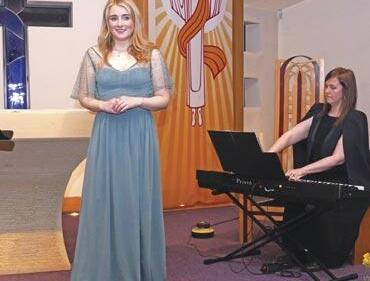
Born in 2000 in Guisborough, Charlotte recently started her final term at the Guildhall School of Music and Drama in London, where she is studying Classical Voice.
St Paulinus Parish organised the concert, with the help of Mike and Gel Heagney.
A donation from ticket sales went to Macmillan Cancer Support and Target Ovarian Cancer, two charities close to her heart.
Charlotte said: “This is such a beautiful church and it’s wonderful to be back in my hometown performing.
“I’m more excited about performing because it’s a room full of familiar faces, which is so lovely and something I don’t get very often in the south of England.”
Charlotte sang classical, sacred and secular pieces including works by Handel, Mozart, Schubert and Puccini, as well as Lloyd Webber, Gilbert and Sullivan, Rodgers and Hammerstein and Teesside folk legend Vin Garbutt.
The programme included favourites such as Ave Maria, Panis Angelicus, O mio babbino caro, Pie Jesu and Some Enchanted Evening. Accompanist Alison, who has also studied at the Royal Academy of Music in London, played two solo pieces.
Charlotte attended Laurence Jackson Secondary School in Guisborough and the
prestigious Chetham’s School of Music in Manchester.
She has performed solos with a range of vocal ensembles across the country and with Lesley Garrett.
She has also been invited for three summers to perform recitals in Bagni di Lucca, Italy.
Last November Charlotte had the great
honour of joining the Band of the Royal Fusiliers at Durham Cathedral as their soloist for the 2022 Festival of Remembrance, and she is looking forward to this year’s event, as well as being guest soloist at a proms concert at the O2 City Hall, Newcastle, in October.
Brian GleesonA warm welcome to Bishop Stephen Wright, who is the new chair of CAFOD’s board of trustees.
As well as chairing CAFOD board meetings and regular one-to-ones with our director Christine Allen, Bishop Stephen will be the primary liaison with the Catholic Bishops’ Conference of England and Wales, acting as a spokesperson for CAFOD.
Bishop Stephen, who is based in the Archdiocese of Birmingham, takes over from Bishop of Salford John Arnold, who had been chair for 13 years.
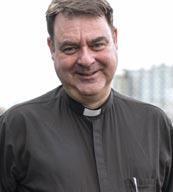
Bishop Stephen is a longstanding CAFOD
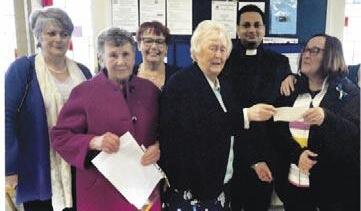
supporter, helping to raise awareness and funds. Last year he raised £1,600 as part of the Walk Against Hunger challenge.
“It is a privilege to be following in the footsteps of Bishop John, who has been a tireless champion for CAFOD,” Bishop Stephen said.
“He has steered the organisation remarkably well, standing in solidarity with the poorest communities around the world. I look forward to doing the same, working alongside our talented and committed trustees, employees, partners, volunteers and supporters.
“Pope Francis’ call to care for our common home lies at the heart of CAFOD’s work. Our Catholic mission is to serve our sisters and brothers throughout the world who are in need, recognising this can only be achieved by caring for the environment too. May the Lord continue to bless this work.”
A celebratory welcome Mass in March was also an opportunity for staff and supporters to say their farewells to Bishop John.
“I will remain a committed friend of CAFOD and I wish Bishop Stephen the best as he takes on this rewarding and exciting role,” Bishop John said.
Our outgoing chair, Bishop John Arnold, the Bishops’ Conference lead on the environment, led an interfaith visit to the Vatican to share with Pope Francis their commitment to caring for our common home.
The delegation included faith and civic leaders, including the deans of Manchester and Salford cathedrals and the Mayor of Greater Manchester, Andy Burnham. This delegation is the first of its kind, with clergy from the Anglican and Methodist churches and Sikh, Hindu, Jewish and Muslim faiths represented.
As well as meeting Pope Francis, delegates also met Caritas International, the Dicastery for the Promotion of Integral Human Development and Cardinal Peter Turkson, to
investigate ways faith communities can work together to care for our common home and our human family around the world.
In his address to the Pope, Bishop John reflected on the example the Holy Father has given to all faiths and none, in shining a light on the climate emergency.
“We thank you for your leadership in alerting the world’s attention to the urgent dangers of climate change and the need for ecological conversion,” he said.
“Following statements of your predecessors, particularly Pope St John Paul II and Pope Benedict XVI, your encyclical Laudato Si’ spoke not only to members of the Catholic Church but to all Christians and to all people of goodwill.
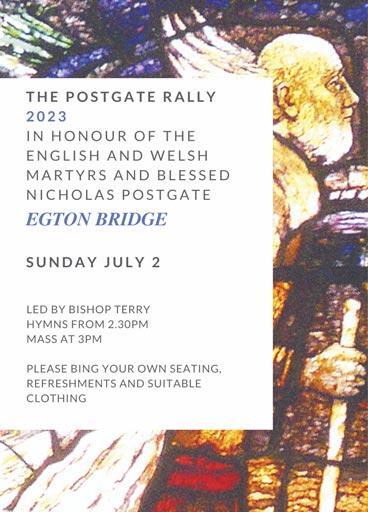
Our annual pilgrimage to Holy Island is on Saturday July 8.
This year it is a joint pilgrimage with the Archbishop Romero Trust, which promotes the life and work of St Oscar Romero of El Salvador, who was assassinated as he was celebrating Mass on March 24 1980.
We will be joined by Clare Dixon, our head of Latin America and the Caribbean, Julian Filochowski, director of the trust, and Father Jim O’Keefe and Father Chris Hughes, who will concelebrate our Mass on the island.
Here’s our timetable for the day…
10am: Meet at Purdy Lodge café, A1 and travel in convoy to Holy Island causeway.
11.30am: Meet at 1st refuge on Holy Island causeway to walk & reflect. Approx. 2hr walk. Non-walkers are welcome to join us at St Aidan’s Catholic Church at noon for a short reflection.
3pm: Mass in St Mary’s Church
4.30pm: Depart from Holy Island
It’s always a great day out – we hope to see you there!
Carol“It has been received and welcomed by countless millions of people, of different faiths and none. Through your appeal, we have recognised not only the damage we have done and which we continue to afflict on our common home but also the urgent need to repair and protect the wonders of our world, with its biodiversity and the complexity of creation, of which we are guardians.”
He ended by asking the Holy Father for his blessing on their commitment to work together to help all members of our diverse faiths to understand the catastrophe facing our world, adding that we cannot leave this complex problem simply to politicians or industry.
St Mary’s College in Hull was chosen as one of just 15 winners from more than 1,500 entries across the UK to have their own illustrated bench created and displayed at the Tower of London during the Coronation celebrations.
Taking inspiration from teaching resources developed by Historic Royal Palaces – the charity that cares for the Tower of London –students designed colourful benches around the theme of values for a new era.
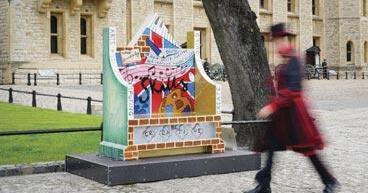
Children and young people from across the UK were invited to think about their hopes for the future, alongside the symbolism of the Coronation, and to create their own bench designs as a visual representation of these ideas.
St Mary’s students worked with global public art producers Wild in Art to refine their illustrations before their bench was brought to life and installed at the Tower of London during the celebrations.
The students have been invited on a VIP class trip to the tower as a reward for their efforts. There they will see the Crown Jewels, take part in themed activities and see their bench in situ.
A panel of judges selected the 15 winners for their imaginative approaches and thoughtful design.
Head of school Maria Stead said: “I had every faith we would be able to win this most prestigious of awards because of our amazing, highly innovative and creative Art &
Design Department, not to mention the talent of our students.
“Our coronation bench had a place in history while being seen by millions across the world. What an achievement!”
After being displayed in London, the bench will be brought back to Hull and showcased in a central area of the school so staff, students and visitors can experience the special piece forever.
Head of creative arts at St Mary’s Rachel Postill said: “What I particularly like about
the design is that it captures a vast range of skills people may be good at, from academic skills such as computing and programming to manual skills like bricklaying.
“It demonstrates their significance and equal importance in one piece of art.
“The students are most excited about travelling to London. Some have never been there before, and to go to the Tower of London and see their design on display is an unbelievable, once-in-a-lifetime opportunity. We all feel very lucky.”
Priests and sisters caring for those living in war zones are living each day “as if it is their last”.
Aid to the Church in Need (ACN)’s head of projects for Ukraine, Magda Kaczmarek, who has returned from her third project trip to the country since the Russian invasion, said the Church is ministering to the faithful in parts of the country where there are still running battles. She said: “The whole of society is suffering. Millions of people have lost their means of subsistence and had to leave their homes.
“Their world has collapsed, they don't have work. Helping people in this situation is a work of mercy and a big challenge for the local Catholic churches.”
ACN has supported more than 300 projects in Ukraine, amounting to over £8m helping priests and religious communities to minister to those affected by the war.
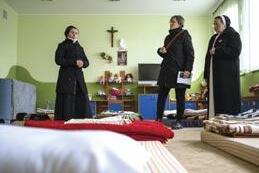
Ms Kaczmarek said: “It is important for us to go there, to see the situation on the ground, but it is very dangerous to travel to the most difficult regions in eastern Ukraine.
“However, we are in contact with the priests, sisters and bishops who live there. They tell us about conditions, and how they try to live each day as if it were their last.”
ACN has provided emergency aid for Kharkiv Diocese, among others, in eastern Ukraine. Soon after the conflict began, the charity set up a programme to provide for the essential needs – including heating, lighting, water and food – of the diocese’s 57 priests, as well as the 54 members of religious communities, enabling them to continue their vital ministry. But with fierce fighting still engulfing the eastern part of the country, there is an ongoing haemorrhaging of the civilian population.
Ms Kaczmarek said: “Fifteen million people have left eastern Ukraine, seven million of them are in Poland or Western Europe, one million have gone to Russia and seven million are internally displaced in western or central Ukraine.”
An “inspirational” Thornaby school is celebrating after being judged to be outstanding in all areas by Ofsted – with no areas for improvement highlighted.
Five inspectors visited St Patrick’s Catholic Primary and spoke to staff, parents and governors and some of the school’s 420 pupils.
“The rich curriculum develops pupils both socially and academically,” their report says. “Pupils enjoy learning and are appreciative of the high-quality teaching.
“Behaviour is exemplary. From the early years, pupils learn a strong moral code and take responsibility for their actions.
“Relationships between staff, pupils and parents are very positive. Leaders provide a wealth of enrichment activities. Pupils flourish in this inspirational school.”
Inspectors praised the way the school’s ecowarriors encourage care for the environment and the school’s charitable fundraising and commended support for children with special educational needs and/or disabilities.

Executive headteacher Mark Ryan, who also leads Christ the King Catholic Primary in Thornaby and St Thérèse of Lisieux Catholic Primary in Ingleby Barwick, said: “This is a wonderful acknowledgement of what a special school St Patrick's is. We are especially proud of our children and
appreciate the support we receive from parents and carers.
“We are also grateful to our governors, who work tirelessly and selflessly. We are indebted to our wonderful staff and for the support we receive from our trust. We feel blessed each day that we can lead and work with dedicated and talented people.”
Head of school James Conwell added: “We are delighted for our school and parish community, from our hardworking children and supportive parents to our dedicated staff and governors.
“St Patrick's is an inspirational place for everyone and it’s great to see our children flourish every day.
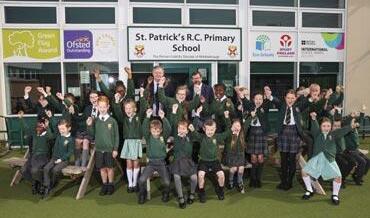
“This is a truly wonderful report and one to be immensely proud of. We believe our children get the best possible start in life because of how we work together as part of the St Patrick’s family.”
Chair of governors Gary Wilson said: “St Patrick's is a wonderful place and everyone associated with the school, including parents, carers and children, should be rightly proud of what they have achieved.”
St Patrick’s is one of 38 schools throughout Teesside and North Yorkshire that makes up Nicholas Postgate Catholic Academy Trust (NPCAT).
NPCAT CEO Hugh Hegarty said: “This report is
an acknowledgement of the fantastic learning opportunities and experiences realised daily at this wonderful school.
“All the staff work relentlessly to live out the vision and work collaboratively with parents and the parish community in an assured manner that reflects their commitment and highest professionalism.”
St Patrick’s was also rated outstanding in its latest Diocese of Middlesbrough inspection.
Our founder, Blessed Frédéric Ozanam, said: “Embrace the whole world in a network of charity.”
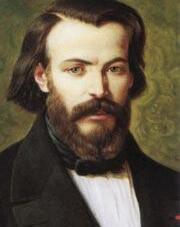
His words ring as true today as they did in 1833 when he founded St Vincent de Paul to help others in times of crisis.
The SVP in England and Wales, with our 8,500 members, is part of a large, international network and has been carefully nurtured over generations by dedicated Vincentians.
This is our story, and it is wonderfully Christian. A small band of passionate individuals coming together seeking wise
guidance in order to organise themselves to take on the world. This is what we try to do today. This is what they did 190 years ago.
In the Diocese of Middlesbrough we have eight conferences in Hull parishes, 11 in York and across to the coast and 13 in Middlesbrough and the north.
They range in number from four to 20 members, all working and praying together regularly. Some members actively visit while others join us in prayer and at events and fundraising.
Examples of our work range from visiting the housebound, supporting families in need,
Thicket Priory, at Thorganby near York, was the beautiful venue for St George’s parishioners to come together for our first parish retreat for three years.
Around 60 parishioners took part in a day of prayer, reflection and above all, listening to each other.
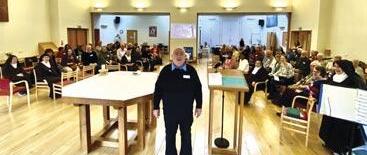
We considered Pope Francis’ call for us to be welcoming parishes and where St George’s Parish is on that journey, as well as taking in
a short video by Father Stephen Wang on “The Holy Sacrifice of the Mass”, which is part of the Sycamore Shorts resources. The most frequent question the following day was, “When is the next retreat?”
A huge thank you to the Carmelite Sisters for their very generous hospitality and rich contributions to the day.
Dave Harperphoning the lonely, supporting refugees and asylum seekers and the homeless, visiting prisons and providing warm places and places of friendship.
We are often called on to provide necessities such as white goods or food for families, as well as helping to pay fuel bills.
We are funded from our own members’ pockets, by kind donations from parishioners, legacies and have a “cost-of-living fund” nationally we can tap into if we find a need but cannot pay out of our local funds. Do you have a conference in your parish? Do you know what their needs are? Could you offer help, even just an hour occasionally? For more information, or if you need our help, please contact Frances francesg@svp.org.uk or Sharon Sharonp@svp.org.uk for a chat or advice and we can link you with someone in your area.

The St Vincent de Paul Society (SVP) is looking for a volunteer to take up the role of Mini Vinnies development officer.
Mini Vinnies is a vibrant programme, usually based in a primary school, that introduces children to the SVP, social justice issues and living faith through action.
The SVP is an international volunteering organisation that gives practical help and support to those in need.
As a development officer, you will volunteer to support teachers and talk to pupils about how they can get involved.
The role is flexible but needs people with some availability during school hours (at least two mornings or afternoons per month).
We will give full training, supply resources and cover costs. Most your time will be spent
helping schools maintain their groups and share activity ideas, as most primary schools in our diocese already have Mini Vinnies. To find out more, email patn@svp.org.uk.
St Bernadette’s Catholic Primary School in Nunthorpe, Middlesbrough, has marked half a century of inspiring young people.
The golden jubilee celebrations were launched with a visit from Radio Tees and former pupil Charlotte Brammer reporting on the “Career Journeys” campaign, which invited former pupils to share how St Bernadette’s helped shape their careers.
The campaign received an overwhelming response, with hundreds of former pupils sharing stories of success and accomplishment.
The alumni who responded now work in a wide range of roles, including engineers, artists and doctors.
The school collated all the responses and created a fantastic display, reminding current pupils that they too can achieve anything they set their minds to.
The visit was just one of the exciting events head of school Sarah Brady planned to mark the 50th anniversary.
Retired staff, governors and invited guests from Nicholas Postgate Catholic Academy Trust joined staff and pupils for an uplifting
Canon John Lumley was joined by former pupil Father James Benfield as children from the Year 4 First Holy Communion class led readings and prayers while the school choir beautifully enhanced the singing.
Canon John talked about the parable of the mustard seed and how it grows from something small into something wonderful, through nurture and love.
He complimented the school staff on how the children at St Bernadette’s grow in a similar way in love and compassion through their guidance and care.
After Mass, our special guests were given a tour of the school by executive headteacher Paul Conway and enjoyed sharing memories of their time spent at St Bernadette’s.
They also enjoyed looking through the school’s original logbook. Later, they were joined by former pupils who came to take a trip down memory lane, looking at photographs spanning each of the five decades that adorned the school hall walls.
The next day was party time, as we invited children and staff to come into school in their
party clothes or 1970s attire. Each class held discussions on the charism of the school and made celebratory flags to take home in the morning.
By the afternoon, though, the party was in full swing as they were transported back in time for a Top of the Pops show, with each class performing a hit from the decade. The school staff even performed a dance
 Pat Nobbs
routine carefully choreographed by Felicity Lloyd Wallace. The winning performances came from Year 5 singing Bohemian Rhapsody and Y2 with Staying Alive.
Celebrations are continuing into the summer term and the school invites past pupils and staff to drop in and enjoy the photo montage compiled by Lynne Kemp.
Louise Pennick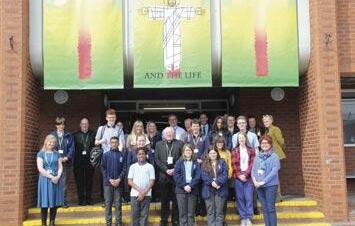
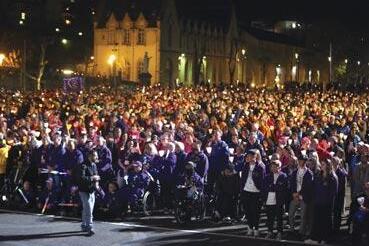
International Catholic charity the Hosanna House and Children’s Pilgrimage Trust (HCPT) has celebrated its biggest Easter pilgrimage to Lourdes since the Covid-19 pandemic. Nearly 1,000 disabled and disadvantaged children and young people, aged eight and over, enjoyed a life-changing week away. An army of volunteer helpers, priests and nurses supported them.
Two archbishops and eight bishops led the pilgrimage. HCPT volunteers organised the liturgy for the week with the theme “The Good Shepherd”.
In his homily during the main Mass of the week, celebrant Archbishop Malcolm McMahon of Liverpool said: “Like sheep, we have to follow the shepherd. That means following Jesus. We know that is a wonderful thing to do because He will lead us to joy and to happiness. He will lead us in a way which leads to his Father in Heaven.”
Children came dressed as shepherds and sheep and a Gospel animation brought to life the story of the “lost sheep”. Four generations of one family brought up the offertory gifts.
The Mass included HCPT favourites Rise and Shine and Sing it in the Valleys. With more than half the people on the pilgrimage aged under 30, there was plenty of lively dance,
drama and visuals broadcast on enormous screens. Thousands watched the event live on the internet.
The pilgrimage comprised more than 3,500 people, 2,341 from England, Scotland and Wales, and the rest from sister organisations in Belgium, Croatia, Ireland, Italy, Poland, Romania, Slovakia, Spain, Switzerland, the West Indies and the USA.
Conditions experienced by the hundreds of children taking part included learning difficulties (33% of participants), behavioural problems (22%) and autism (19%). Other common conditions included asthma, Down’s syndrome and epilepsy.
HCPT’s pilgrimage groups each wore colours unique to their group and were prominent within the shrine area and at other sites around the town connected to St Bernadette.
HCPT swelled the torchlight procession on Tuesday evening and the Blessed Sacrament procession on Thursday, carrying colourful banners.
It being a children’s pilgrimage, there were also opportunities in the week for arts and crafts, singing, parties and fancy dress. Sporting celebrities including former England footballer Wayne Rooney gave online messages of support.
The pilgrimage is a major undertaking for all
concerned. All volunteer helpers are trained to support the children and young people and to keep them safe. To transport the UK contingent to Lourdes and back, HCPT chartered 10 flights each way from local airports.
HCPT’s pilgrimage season continues from May to October at its Hosanna House facility. The house, in the hills above Lourdes, will host more than 1,500 pilgrims of all ages, many of them with disabilities or life-limiting conditions.
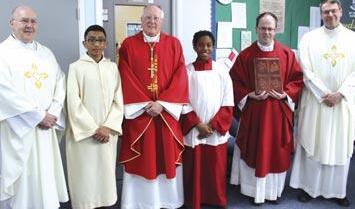
Bishop Terry visited St Mary’s College in Hull to bless the new school chapel, a haven for peace, contemplation and reflection. The school is looking forward to welcoming staff and pupils to this blessed space. Our photos show Bishop Terry with pupils and with Monsignor Gerard Robinson, Father Richard Marsden and Father William Massie.
Parish groups, individuals and families are all welcome for the annual Stella Maris Day of Prayer and Pilgrimage to Holy Island on Saturday June 24.
Prayers will be said on the grass outside St Mary’s Church at noon, with Holy Mass celebrated by Bishop Paul Mason inside at 3pm.
Safe crossing times are from 10am to 6pm.
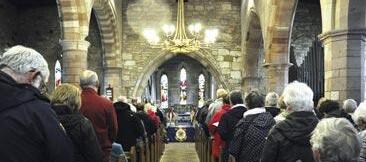
For more information, contact Deacon Peter Barrigan on 07713 924504. Our picture shows Mass at a previous Stella Maris pilgrimage to Holy Island.
In last month’s Voice, adult formation coordinator Deacon David Cross wrote about how your parish needs you. This month and next we will hear from people who have responded to the invitation to get involved in one or more of the many parish ministries available to us…
Twenty years ago I was diagnosed with breast cancer and required a full mastectomy. It was a traumatic shock, as my brother had died from cancer when he was 27. I was 44. I had been carving out a career in teaching,
married with two children, and I found myself in York Hospital feeling vulnerable, abject and so angry with God.
Why me? Why now? While in hospital I received Holy Communion from Sister Anne and Deacon Phil Black and found the whole experience of being visited by the chaplaincy team so comforting and realised God was carrying me through this awful time. The operation was successful. Two years later I had reconstruction and yet again met members of the chaplaincy team and received the strength of the Lord through Holy Communion.
I promised myself and God that I would pay this kindness back by trying to become a member of the chaplaincy team. When I retired, I became a Eucharistic Minister. What joy it brings me to give Holy Communion to my fellow parishioners and when required, to take the Blessed Sacrament into the homes of the housebound. In 2015 I retired and by January 2016 I was on the chaplaincy team. I meet such wonderful spiritual people every visit, who teach me about faith. I am privileged and honoured to walk along a tiny section of patients’ life paths while they too are feeling so vulnerable, praying with them and giving them the precious gift of Holy Communion.
At the start of lockdown, I was asked if I would be the temporary lay Roman Catholic chaplain, and I am still there. I now realise God was showing me a different path to serve him. Why not me? Here I am Lord!
Sue Ellis, St Margaret Clitherow, Haxby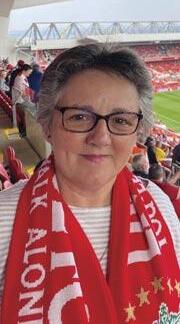
When I was younger I served at St Joseph’s, but I thought I’d grown out of it. After Covid I drifted back into serving at St Peter’s, initially just to help out. I already knew the basics, and both churches have an altar server who’s been doing it for years –and has a medal to prove it – so there’s always someone to go to for advice. I’m usually thurifer, and I help to set things up before Mass and clear up afterwards. I’ve also trained younger servers as numbers have gone back up, and I sort out who’s going to do which job each week, as well as dealing calmly with the occasional forgotten item or unexpected change.
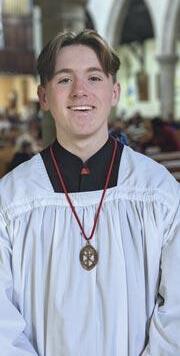
Since going back to serving I’ve realised the beauty in it. Helping on the altar isn't a simple job that just needs to be done. There's a way in which it has to be done to enhance the Mass – in a respectful way, with confidence and even elegance.
It’s been great to feel that I have a role in the Mass. There’s a sense of responsibility and focus and a great joy in doing it well.
There’s always a job for a new altar server to do, from lighting the thurible to carrying a candle, and it’s good to feel part of a team.
Brandon, altar server at St Peter’s, Scarborough
The main purpose of my job is to support the priest with administrative duties. Administrative work takes up lots of time, particularly when priests look after multiple parishes. Having someone to look after the parish office allows the priest to spend more time fulfilling their vocation.
I am often the first point of contact via email and phone for enquiries around baptisms, funerals and weddings, as well as bookings for use of the hall and visits to the Lady Chapel. I maintain the registers, look after health and safety admin and any repairs that might be needed to make sure our buildings are looked after. Together with catechists and volunteers, I coordinate dates and invitations to preparation courses, and I try to support any events in the parishes where I can. There are lots of things I like about this job. It is very varied but I love a curve ball, such as when people are working on their family history and looking for baptism entries. I’ve also had an increase in queries from nonCatholic schools who would like to visit the cathedral as part of their learning, which has led to five schools visiting since September. It’s great to welcome young people and see their awe when visiting.
Christa Kamanga, Parish Administrative Assistant for St Mary’s Cathedral, including St Francis and St Clare of Assisi, Middlesbrough, and the Shrine of Our Lady of Mount Grace, Osmotherley
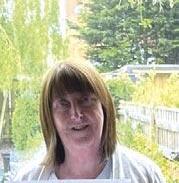
As a Minister of the Word, I take my turn on the rota to read the first reading, second reading or bidding prayers on different occasions. There may also be occasional other events or readings that are required, where ministers help out as they can.
I was introduced to reading at Mass at primary school, and first made a Minister of the Word when at University in London, at the Gower Street Chaplaincy, in my early 20s. Reading scripture aloud has always helped give it more depth and meaning for me as, although the Bible is composed of written documents, it helps to bring alive the oral tradition through which much of scripture was originally passed down.
In that respect, it is important for me to try to bring out the meaning of the Word through how it is read as much as reading it itself: reading is not a performance, but it is about letting the Holy Spirit inspire us through the Word of God and the prayers we read. Scripture has a few tricks up its sleeve (the reading from Acts about Pentecost, for example!), but there is always something that can be brought out and discovered or rediscovered each time.
The official description of my ministry is to make sure the parish is aware of the importance of safeguarding children and vulnerable adults and promoting good and safe practice.
On a practical basis this means having involvement with parishioners who work with these groups, in particular catechists, Eucharistic ministers and the SVP.
The busiest part of my job is ID verification for DBS applications to take up these roles in the parish and to be volunteers on the diocesan pilgrimage to Lourdes.
In a recent Confirmation meeting, I discussed with the candidates that many saints are ordinary people living good lives and that we are all called to be saints. When I was asked, the next day, about my ministry as parish safeguarding representative and what I enjoyed about it, I realised I meet such people all the time.
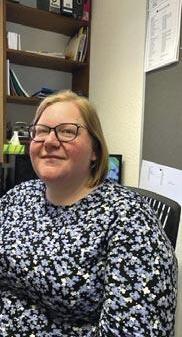
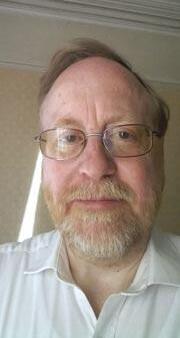
Saints love people and are generous, going out of their way to help others with their time and talents – look no further than our catechists and members of the SVP and our Lourdes volunteers.
Saints are humble, doing whatever they do quietly, and making the most of their talents to create a better world. I am lucky that all those I meet through my ministry are such people, putting God above all else and using their talents for his work.
Broadhead,A big thank you to all those who have contributed to this month’s article. We hope you find their short stories inspiring and that you feel moved to offer yourself for ministry in your parish.
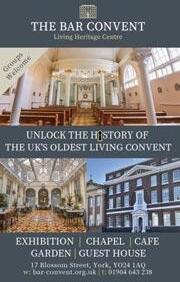
The oldest living convent in the UK has unveiled the recent restoration work of its stunning 18th-century chapel, which was built in complete secrecy when Catholicism was still illegal.
The Bar Convent, in Micklegate Bar, York, was established in 1686, just seven years after Blessed Nicholas Postgate was martyred for treason.
Special collections manager Dr Hannah Thomas said: “We are thrilled to have been able to complete this restorative project on our beloved chapel.
“The convent was one of only two permanent Catholic communities to open after Henry VIII closed them all down. Both were run by the sisters of this congregation.
“In 1749, Mother Superior Ann Aspinall had grand plans to construct a beautiful chapel for the sisters and school pupils to use, but Catholicism was still illegal, so this was extremely risky.
“She very cleverly found ways to disguise the construction work taking place inside the house by undertaking an ambitious and costly project that transformed the whole building, adding a whole new façade to the building and a Georgian parlour, which can both still be seen today. This work on the
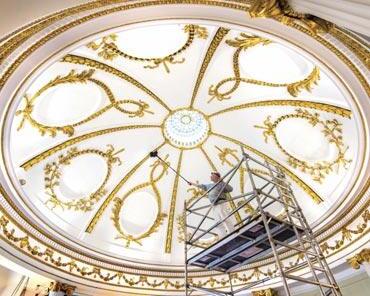
outside of the house also handily enabled her to disguise the real building project taking place inside the house.
“The sisters also hid entries in the account books so that, if the authorities were to glance through them, they wouldn’t find anything suspicious.
“The work took 20 years to complete, and when finished, the chapel was quoted as being ‘the most commodious and beautiful in these parts’.
“It is remarkable that this chapel reached completion without ever being detected by the authorities, let alone that it still survives today and remains a place of continued worship and welcome.
“It holds such local, national and international significance that it is crucial it receives the utmost care and protection that it deserves.”
Today, the religious order, now known as the Congregation of Jesus, is a global network. The Bar Convent is a living heritage centre which is open to the public and welcomes all faiths and none.
The chapel is free to visit, and Mass is celebrated on Fridays at noon. The convent also houses the relic of St Margaret Clitherow.
Many people know about the Camino de Santiago, the Way of St James.
This network of pilgrimage routes starts in several European countries and leads through France or Portugal to Spain, all finishing in the city of Santiago de Compostela in Galicia, north-west Spain.
Deacon Neil Galloway, now an RAF padre, recently talked to the Cleveland Newman Circle and explained how military people, from recruits to veterans and others, can be helped by walking the Camino.
Deacon Neil views the Camino as a vehicle for healing. “Just walking” can be a spiritual practice when it involves developing selfesteem, connecting with the natural world and conversations with friends and
strangers.
Having served in the RAF from the age of 17, he knows about service life from the inside. He said the military is not just a career, but a way of life.
People who join the military are “doers” who leave normal society to serve for a greater good, sacrificing freedom, time and sometimes limbs and even life.
The military mentality likes structure, but removing controls and walking the Camino can help build resilience.
Walking builds physical resilience and helps pilgrims let go of the need to compete and achieve.
Simply “being” builds mental resilience and connecting with others through joint
experiences and conversations builds spiritual resilience.
Together with other chaplains, Deacon Neil has led many groups on the Camino.
Each day is lightly structured with prayer and two reflections, planting seeds for thought on the journey. Silence and solitude are difficult for many people today, but walking side by side they can talk together, or just think.
Psychiatrists can help with scars to the mind caused by PTSD, the camaraderie, communication and accompanying possible on the Camino can help heal scars to the soul, sometimes known as a “moral injury”. This commonly results in guilt or shame about actions or lack of actions by which
someone else was harmed. It can lead to depression, anxiety and even suicide. Walking the Camino can bring about increased self-knowledge and healing. There are many other walks where meditation and discussing events can lead to inspirational insights and healing. Deacon Neil reminded us we are all pilgrims on the road of life. The spirituality of the Camino, stepping aside from our normal lives, can bring us too to an Emmaus moment.
For information about Cleveland Newman Circle, email p.egerton123@gmail.com or call 01642 645732.
Judith BrownJune is the month that we celebrate the feast of Corpus Christi, the feast of the Most Holy Body and Blood of Christ. Sometimes we forget Christ gave himself to us in the Eucharist so that he could be with us, indeed so that he could dwell within us.
Christ’s presence within each and every one of us means I can always find God present within me, and I can ask for his strength, peace and grace at all times. It also means I cannot pretend to have the luxury to hate any other person since he dwells also in them; rather, I must love my enemy and strive to find God in them. Christ says, “As the Father has loved me, so I have loved you; abide in my love. I have said these things to you so that my joy may be in you and that your joy may be complete. This is my commandment, that you love one another as I have loved you. No one has greater love than this, to lay down one’s life for one’s friends.” John 15:9, 11-13 NRSV
This truth has profound consequences for a world struggling with loneliness. We can feel lonely when we find ourselves isolated from other people, when we are in a strange, foreign place without the comfort of friends and/or family. We also, on a deep, interior level experience as loneliness our separation from God, caused by Original Sin; such loneliness, only God can fill.
I struggled a lot with loneliness in the past. I used games, online videos and other such distractions to numb it. I used to resent the feeling of loneliness that would come upon me when I felt rejected, ignored or misunderstood. But then I discovered God is present to us, even amid our loneliness. I found Christ was with me in the very moment in which I felt most alone. So now, although some struggles with loneliness still exist, loneliness calls me to a beautiful place of encounter with Christ. When I feel rejected, ignored, misunderstood or lonely, I
try to identify with Christ’s sufferings and turn to his presence in me. In this place of meeting, I can join him in his sufferings (like at Calvary or in Gethsemane) and he joins in mine. This communion between Christ and me is especially strengthened in receiving him in the Eucharist at Mass. At the same time, Holy Communion increases my awareness of his presence in others around me, some of whom are also struggling with loneliness. When I feel alone, I can be tempted to isolate, and that’s when I am called to reach out to someone who’s also lonely, bringing Christ to them and encountering him in them.
May Christ’s encounter with us in Holy Communion comfort us in our loneliness and strengthen us to be instruments of such comfort to others in their loneliness.
Mathieu Dacquay
A Middlesbrough couple toasted family, friendship and faith at a special lunch to mark their diamond wedding anniversary.
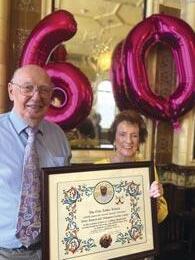
Peter and Margaret Carey tied the knot at the Sacred Heart and English Martyrs Catholic Church in Thornley, East Durham, 60 years ago on April 17 1963.
In response to a tribute from Tom Robertshaw, Peter said: “Margaret and I thank the Lord for our faith. It has enabled us to fulfil our obligations to each other. We say thank you, dear Lord, for our health and longevity, for our siblings, all who are still with us and for our good luck.

“We thank you for our family, children, grandchildren and for our greatgrandchildren, and for the people who have joined the family through love and partnership.
“Margaret and I are proud and grateful for such talented offspring and very much aware of their talents and skills, which they use to make the world a better place.
“And finally, we give thanks for the friendships we have treasured through the years. They have made our lives richer and happier than most can deserve. Some, sadly, have gone before us, some are separated by distance, but memories and true stories will never leave us.
“Friendship, faithful friendship, is of great value to us all, and Margaret and I wish to raise a toast to family, friendship and faith.”
The couple are parishioners and Ministers of the Word at St Gabriel’s, in Middlesbrough, with Peter also serving as Father of the House of Middlesbrough Catenians.

2 Friday Events, articles and photographs for the July edition of the Voice are due by today.
4 Sunday 10.30am Mass for Father Peter Keeling’s 60th anniversary at St Francis of Assisi, Acklam, Middlesbrough, followed by refreshments in the parish hall.
5 Monday


9.45-10.25am Beverley Christian Meditation Group meets online. Further information from christianmeditation.beverley@gmail.com. This takes place every Monday.
6 Tuesday 10am Christian Meditation Group meets online. For further information email terry-doyle@live.co.uk. This takes place every Tuesday.
7pm Knights of St Columba Council 29 meets at St Mary’s Cathedral, Middlesbrough, beginning with Mass at 7pm in the chapel.
7pm Anthony Storey Memorial Lecture via Zoom. The Diocesan Justice and Peace Commission welcomes CAFOD executive director Christine Allen as this year’s speaker. To register, email bhungin@yahoo.co.uk.
7 Wednesday
5.30pm Vespers and Benediction at St Mary’s Cathedral, Middlesbrough. This takes place every Wednesday.
8 Thursday
7.45pm Middlesbrough Catenians meet at Middlesbrough Cricket Club, Green Lane, Middlesbrough TS5 7SL. Contact Peter Carey on 01642 317772 or Chris Rhodes 0n 01642 319161 for further information.
10 Saturday
3pm Lourdes Thanksgiving Mass at St Mary’s Cathedral with refreshments to follow at St Augustine’s School Hall, Gunnergate Lane, Middlesbrough TS8 0TE.
6.30pm Golden Jubilee Mass for Father Tom O’Neill, Holy Name of Mary Church, The Avenue, Linthorpe, Middlesbrough.
7.30pm The Eddie White Sacred Heart Irish Dance with Pat Jordan. All dances take place at the Erimus Club, Cumberland Road, Middlesbrough TS5 6JB. Contact John Brown on 07871 958412.

11 Sunday
10.30am Golden Jubilee Mass for Father Pat Keogh followed by a social gathering with refreshments at the Chapel on the Hill.
3pm Mass for LGBT+ Catholics, family and friends at the Bar Convent Chapel. Doors open from 2.30pm.
12 Monday
2-3.30pm Music for the Mind, for people who enjoy singing and connecting memories, St Mary’s Cathedral Hall, Middlesbrough. There
is no charge and everyone is welcome. Tea, cake and biscuits, followed by fun. For details call 01642 710179. You can also join in on the Diocese of Middlesbrough YouTube page.
13 Tuesday
1pm The Catholic Women's Luncheon Club meets every second Tuesday of the month, apart from August, at the Kingston Theatre Hotel, Kingston Square, Hull. Gather at 12.45pm. All ladies in the Hull and East Riding area welcome. Call 01482 446565 or email jayne.wilson24@ymail.com.
14 Wednesday
7pm The Hull Circle of Catenian Association meets in Lazaat Hotel, Cottingham, for annual charter dinner, with meal following the meeting. Email Charles Cseh at hullcirclesecretary@gmail.com.
18 Sunday
3pm Middlesbrough Fellowship Mass, St Clare’s, Low Lane, Middlesbrough TS5 8EB.
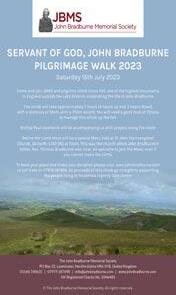
24 Saturday to 25 Sunday
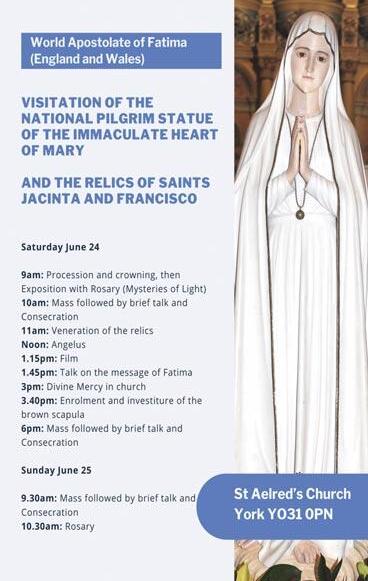
The Centenary Pilgrim Virgin Statue of the Immaculate Heart of Mary and relics of Ss Jacinta and Francisco of Fatima visit St Aelred’s Church, York. Full programme of prayer and devotions. Everyone invited to pray the Rosary and hear the story of Fatima.
24 Saturday
Noon LGBT+ social gathering in the café at the Bar Convent, York. All welcome.
If you have any events you would like to include in the Out & About section, please email Heidi.Cummins@rcdmidd.org.uk

Executive headteacher of St Augustine’s and St Gerard’s primary schools in Middlesbrough Martin Macauley has been appointed diocesan deputy director of schools.
Director of schools Kate Bailey, who succeeded Kevin Duffy after his retirement last year, said: “Martin brings with him extensive leadership experience and primary expertise that we hope will further enhance the provision the schools’ service offers to all diocesan schools and I look forward to welcoming him to the team.”
Martin will take up his new role in September, ready for the start of the next academic year.
Peter Markey, a well-known member of the congregation at St Mary’s in Crathorne and former teacher in Middlesbrough, passed away on April 3 aged 95.
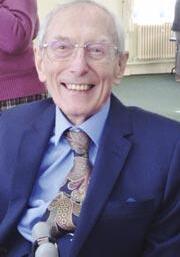
Peter was born to working-class Catholic parents in Batley on November 16 1927 and attended St Bede’s Catholic Grammar School in Bradford before gaining a place at Leeds University to study chemistry.
He did his national service in the Royal Artillery before returning to Leeds University to do research for a PhD. He met his wife, Barbara, and they married in St Anne’s Cathedral, Leeds, in 1953.
In 1970, Peter’s job moved him to ICI Wilton on Teesside and the family moved to Hutton Rudby, where he and Barbara became
involved in village life, including helping organise Hutton Rudby Show. They also helped establish ecumenical activities with Anglicans and Methodists in the village, especially the annual collection for Christian Aid, and were faithful attenders at ecumenical services in the parish.
In 1980 Peter left ICI to train as a teacher. He taught science and RE at St George’s and its successor school, St David’s, for 10 years before retiring in 1991.
After Barbara died in 2000, he became increasingly involved with the churches at Crathorne and Osmotherley and the Lady Chapel, Mount Grace, as well as taking part in pilgrimages to Lourdes and Iona and retreats at Ampleforth. He also attended meetings of
Cleveland Newman Society.
Peter devoted his life to helping others and served as chairman and treasurer of Rudby Parish Council.
He enjoyed driving those attending the weekly day centre in Church House and was involved in the annual bonfire and firework display and the Remembrance Sunday parade.
Father Bill Charlton led a requiem Mass in a very full St Mary’s on April 26, before burial in Rudby burial ground.
Peter is survived by his two daughters, Alison and Roz. He will be deeply missed by all those whose lives he touched, especially his family and friends.
A much-loved private garden often described as Teesside’s favourite will be open for charity once again for two weekends this summer.
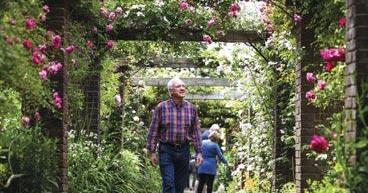
Tudor Croft, Stokesley Road, Guisborough, TS14 8DL is a stunning five-acre garden that was built in the 1930s on a sloping site with a flowing beck and many waterfalls and pools.
It was created by a wealthy brick manufacturer and has spectacular views up to Highcliffe, the famous landmark overlooking Guisborough.
The garden is cleverly laid out in linked areas and is crammed with nooks, crannies and many surprises, which make it a fascinating place for children and visitors of all ages. It has featured twice on TV’s Gardeners’ World and in many magazines.
Today, the garden is a haven of flowers from all over the world and is beautifully maintained by a team of gardeners and volunteers.
After their record-breaking snowdrop weekends earlier this year, owners Mike and
Gel Heagney are now looking forward to welcoming visitors to their home once again to raise funds for Kids Kabin and Mind in Middlesbrough.
“Every time we open, some of our visitors tell me they are amazed that such a beautiful garden exists on Teesside,” said Mike.
The garden will be open from 11am to 4pm on Saturday, June 17 (music from Teesside Wind Band) and Sunday June 18 (soprano Charlotte Potter). It will also be open on Saturday June 24 and Sunday June 25, with more musical entertainment on offer.
Free parking will be signposted, and admission is £7.50, with accompanied children free. There is good wheelchair access.
On sale will be a large range of plants grown by the gardeners at Tudor Croft, including many unusual, special and hard-to-find varieties.
There will be homemade afternoon teas served on the manicured lawns, as well as wine and prosecco.
Twitter: @MbroDiocese

Facebook: facebook.com/MiddlesbroughDiocese

Flickr: flickr.com/photos/middlesbroughdiocese/
Ten years after two archbishops went missing in Syria, the date of their abduction has been chosen as a day to remember all the region’s abducted Christians.
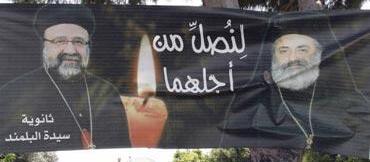
The announcement was made at a Middle East Council of Churches event to mark the anniversary of the kidnapping of GreekOrthodox Metropolitan Boulos Yazigi and Syriac-Orthodox Metropolitan Gregorios Yohanna Ibrahim in 2013.
Christians across the region will observe April 22 as the Ecumenical Day for the Abducted and the Forcibly Absented.
Metropolitan Ephrem Maalouli of Aleppo and Alexandretta, who was appointed as
Metropolitan Yazigi’s successor by the Antiochian Greek-Orthodox Synod, said their communities still hope the two prelates will return.
In a message sent to Catholic charity Aid to the Church in Need (ACN), he said: “We have no information, neither positive or negative, so we are living with our hope.”
The two were seized in the area between Aleppo and the Turkish border as they travelled to negotiate the release of two priests who had been abducted by jihadists. Their driver, Deacon Fatha' Allah Kabboud, was shot in the head and killed. No one claimed responsibility.
When Father Bill Serplus heard about a group of cyclists planning a sponsored 112mile ride to raise money for Christian Aid, he was interested in getting involved.
And when he was told the exact route the ride would take, the challenge was on!
The riders will tour historic Yorkshire abbeys, with 5,400 feet of climbing, starting from the 12th-century Guisborough Priory and visiting Rievaulx and Bylands, then across the Vale of York to Fountains.
They then turn north for the ride back to Guisborough, passing Swainby Abbey on the way.
Rievaulx Abbey is a great favourite with Father Bill’s parishioners at St Aelred’s, York, who have always tried to follow the call to friendship as a way to Christ, which our
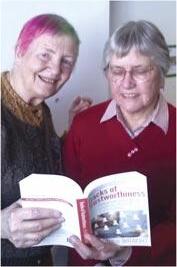
Heather Wraight has written Tracks of Trustworthiness, an informative and enjoyable book about being a trustee. Filled with examples every parish and school might relate to, Heather outlines how to identify aims and obligations and carry them out in the light of the Gospel.
“It’s hugely enjoyable and a useful book for any parish chair and parish priest, and members of committees of any kind,” said fellow author Mary Callan, who described the book as well-researched and readable.
patron saint advocated.
Once the decision was made, Father Bill’s training began with a ride to Selby and back to put 30 miles in his legs, then a circular route to Stamford Bridge, across to Pocklington and back to York.
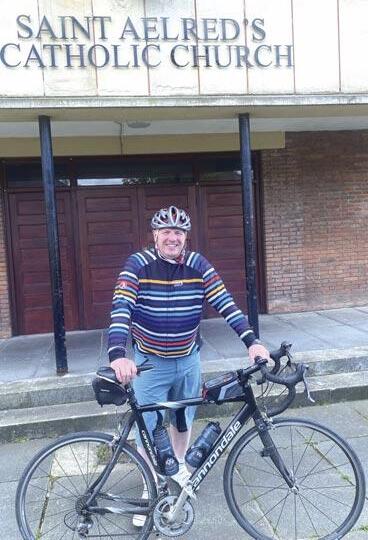
Then Father Bill cycled the first part of the route from Guisborough to Rievaulx, on to Bylands, up to Coxwold with a detour back to York, covering half the distance done – 56 miles.
The ride was due to take place on Saturday May 20 and you can find out how he did in next month’s Voice Sponsorship has been very generous and will contribute to the battle to eradicate global poverty.
Kath StubbsTo order, or for more details, visit tracksoftrustworthiness.uk.
When the 5,000 had eaten enough, Jesus said to the disciples, “Pick up the pieces left over, so that nothing gets wasted.”
Eco Shops are pop-up shops in schools and community venues of supermarket food that, because of over-ordering, misprinting on the packaging or other minor imperfection, would otherwise be thrown away.
They prevent this perfectly good food from going to landfill and instead helps local communities.
Anyone can visit their community Eco Shop (with their own shopping bag), and for a donation of £2-3 can choose ten items they want from a range of high-quality supermarket food.
The food changes each week, and as well as cupboard items they offer a range of seasonal fresh fruit and vegetables. Some now have chilled and frozen food as well.
Eco Shops originated in 2018, when Middlesbrough’s Park End Primary School worked with Middlesbrough Environment City to develop a project that helped tackle the growing levels of surplus food by making it available to families of pupils of their schools.
FareShare delivered surplus food and the pupils’ Eco Squad ran a pop-up shop, which they called an Eco Shop. Today
many primary and secondary schools and community groups have well-established Eco Shops.
FareShare, the country’s largest redistribution charity, redistributes fresh, in-date and good-to-eat surplus food from the food industry.
From the beginning of the Covid pandemic, their contributions helped us at St Mary’s Cathedral to provide substantial food parcels for an increasing number of struggling families.
The food industry wastes 6m tonnes of food every year in the UK and over 3.2m tonnes of the food that goes to waste is still edible. That’s enough for 1.3bn meals. Locally, Eco Shops and the Middlesbrough Food Partnership are working to reduce food waste and tackle food insecurity. Eco Shops also empower local people and organisations to come together and make a difference within their communities.
Although their primary function is to distribute this surplus food, other benefits to help local communities ensue, such as signposting to other support, recipes, clothes donations, and book swaps.
Listening to the words of Pope Francis, “Throwing away food
is like stealing from the table of the poor and hungry,” gives us much to reflect on, both personally and globally.
Middlesbrough Food Partnership has a Food Action Plan on its website to achieve its vision to make the town a place where local people can eat good quality, healthy food that is easy to buy, offers value for money and is produced locally wherever possible.
The Justice and Peace Group at St Mary’s Cathedral is working with the community council to open the Coulby Newham Eco Shop at the Coppice Community Centre on Tuesdays from 2pm to 4pm.
It is a joint venture with David Branson and Jeff Nicholson from Coulby Newham Community Council. We did not have space in the cathedral for it so housing association Thirteen have offered the Coppice Community Centre.
There’s lots of work in setting it up to succeed and run on a not-for-profit basis, with all funds going to supply more food for the shop.
The Eco Shop website produced by Middlesbrough Environment City lists local shops and offers information on how to set up or support one. Visit ecoshop.org.uk to find out more.
Teresa LythSt Paulinus, Guisborough, parishioner IAN MCLEAN, wrote this reflection after a joyful experience while walking in Guisborough Woods…
Then Peter got down out of the boat, walked on the water and came towards Jesus. But when he saw the wind, he was afraid, and beginning to sink, cried out, “Lord save me!”
Jesus reached out his hand and caught him. “You of little faith,” he said. “Why did you doubt?”
Are there not times when we too doubt in the saving grace of God? When our faith in the Lord is bruised and shaken by all that surrounds us, by injustice, poverty, war, our own sinfulness?
In such times, where can we turn to renew our faith in the eternal love that God has for us, his children?
Certainly, it can be renewed by opening our hearts in prayer, in our reading of scripture, in the Holy Eucharist and by opening our hearts and minds to the ever-present, precious gift of the Holy Spirit. There are, however, times when a chance encounter, a sequence of events, often seemingly trivial, speak to us so clearly of the abiding love of God that doubt disappears, and the presence of the divine spirit within us is rekindled. Guisborough Woods, a sea of mud following recent rain. A mother walks with her daughter, who is at that most wonderful of ages when a child is just gaining confidence in their first tentative steps, when all the
The Society of Saint Gregory (SSG) is holding a summer school in Liverpool on the theme of the “Joyful Proclamation of the Gospel”.
Speakers include Bishop John Arnold, Professor Claire Ozanne and David McLoughlin, who will talk about the Vatican II documents, with time for questions afterwards. Workshops will focus on parish ministry. Both residential and day delegates are welcome and bursary funding is available.
The summer school is at Liverpool
Hope University, Hope Park Campus, Childwall L16 1JD from 3.30pm on Wednesday July 26 to after Mass and lunch on Saturday July 29.
For further details and an online booking for residential places, visit ssg.org.uk/summer-school-2023 or email summerschool@ssg.org.uk. For non-residential places, email summerschool@ssg.org.uk.
The SSG exists to promote study, understanding and good practice in the music and liturgy of the Roman Catholic Church.

The Diocesan Justice and Peace Commission is delighted to welcome Christine Allen as this year’s speaker for the Anthony Storey Memorial Lecture, “Signs of Hope in a Troubled World”.
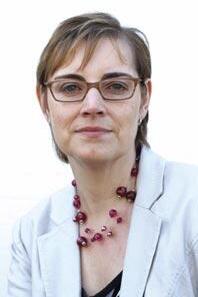
Christine has been the director of CAFOD since the spring of 2019. She held leadership positions at two faith-based international development organisations – Christian Aid and Progressio – for the previous 17 years. Her career began as a field worker with the Justice and Peace Commission in the Archdiocese of Liverpool in 1987 and as CAFOD’S campaigns coordinator in 1989. She brings a wealth of energy and experience to her work and plans to use the lecture to explore what it means to be a sign of hope at many levels and where we get our inspiration to be signs of hope.
She will also reference CAFOD’s work, supporters and partners and the wider influence of the Church as a witness to hope.
We have again arranged the lecture on Zoom and are repeating last year’s timing on a weekday evening.
The lecture is on Tuesday June 6 at 7pm. To register, email bhungin@yahoo.co.uk.
Barbara Hunginboundless wonders of God’s creation are still new and exciting, and waiting to be experienced.
The child, walking unaided in that independent way that says, “I can do this myself!”, stumbles and falls, bottom first, into a puddle thick with mud.
I can see that first immediately recognisable tremor of her mouth as the tears well up in her eyes. Her mother looks down at her, smiles, and with eyes filled with love, reaches out her hand.
The child stretches out her hand for it to be grasped and held by the sure, loving hand of her mother.
Words are spoken that I cannot hear, but the child’s tears cease, and she is lifted onto her feet to reassert her newly found
independence.
Much like this mother’s love, the love of God is always with us, unseen, but ever at our side, ready to pick us up when we falter and fall. And just as this child had the utmost faith and trust in her mother’s love, we too must have faith that when we do fall, as at times we all surely must, we need only stretch out our hands to feel the unwavering and compassionate hand of God, once again lifting us up.
God of love. In our times of doubt and despair, when we feel far away from you, give us the grace to know that we have only to stretch out our hands and you will be there at our side, to lift us up, and to hold us in the tender embrace of your loving arms.
The Catholic Union is to host a webinar with Father Mark Vickers on his book, God in No 10: The Personal Faith of the Prime Ministers, from Balfour to Blair. The online event will feature a discussion between Father Mark and Catholic Union deputy director James Somerville-Meikle. People taking part can ask questions.
God in No 10 is an account of the personal faith of the 20th-century British prime ministers. Lord Charles Moore launched the book at an event in Parliament last year and it has received positive reviews.
Father Mark read History at Durham University and practised with a London law firm. After studying for the priesthood at the English College in Rome, he was ordained for the Diocese of Westminster in 2003. He is currently a parish priest in West London.
Father Mark said: “I once thought my future lay in politics. God, however, had other plans, and I have no regrets. Researching and writing the book allowed me
to combine two passions: faith and politics.
“Surprisingly, no one had ever covered the prime ministers’ personal faith.
“There are many surprises, challenging received wisdom: sceptics and seances in the early 20th century and increasingly devout Christians in the later period. I look forward to sharing my findings on this Catholic Union webinar.”
The webinar builds on the Catholic Union’s proud history of leading public discussion on Catholic matters, including its annual Craigmyle Lecture and a new “Pub Talk” series, which started earlier this year. The webinar is on Tuesday June 20 from 6.30m to 8pm. It is free to attend and open to everyone.
However, you must register in advance at eventbrite.com/e/catholic-union-webinar-god-in-no-10tickets-623526654007 to receive a link to join the talk.
(From June 1983 Catholic Voice)
An exploratory meeting for the setting up of a Pastoral Council for the Hull area was held at St Stephen’s Pastoral Centre, Hull, in April. The meeting began with an address by Bishop Kevin O’Brien who said it was an important gathering – a group of Catholics coming as a community to look at itself and at something God has put before us to do in the 20th century. This was shown to us in the new Code of Canon Law and in the Documents of Vatican II.
The aim of setting up a Pastoral Council, Bishop O’Brien said, is to see to the pastoral needs of an area, under the guidance of the Bishop. A good representation of the whole community was needed to carry this out.
(From Log Book of St Hedda’s School, Egton Bridge)
Rev. Manager, Father Storey, visited school after three months’ absence from home owing to ill health. Merit holiday granted (half day) for good attendance during past four weeks. Operetta performed by school children as a “Welcome Home” to Father Storey.
David Smallwood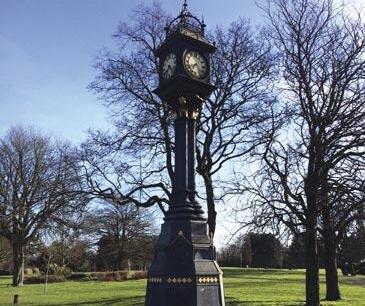
Teesside Apollo Male Voice Choir is giving a concert to raise money to launch a fund to restore the Victorian clock in Middlesbrough’s Albert Park.
Each year the choir is invited to lead the singing at the Remembrance Service at the Cenotaph opposite the park’s main gates. Bronze memorial plaques flank the walls, with the names of the town’s fallen listed in alphabetical order.
But when the flags are lowered as a tribute to their sacrifice and eyes turn to the roll of honour on the walls, the clock that overlooks the proceedings is stuck at 7.20, as it has been for many years.
The choir is supporting Middlesbrough Council by holding the Clock Concert to raise money to repair the elderly timepiece.
“We need as much support as possible,” said choir member Peter McTiernan. “There are many parties who attend the Service of Remembrance annually who I'm certain would be interested in supporting the event.
“The clock has a striking mechanism and it would be great if it could strike the eleventh hour on Remembrance Sunday.”
The Teesside Apollo Choir began in 1887, and


not even the two world wars stopped them from singing.

Peter said: “We are alive and kicking and always looking for new members, especially top tenors. We suffer somewhat being victims of our own success, with people thinking they are not good enough or that they can't read music.
“You will never know unless you try, and reading music is not a requirement. Come along and meet one of the longestestablished male voice choirs in the country – you won’t be disappointed.”
It’s thought the clock project could cost as much as £25,000 and the choir hope this event will be a springboard to more initiatives and donations to not only add poignancy to the annual remembrance event but also bring the timepiece back into use for future generations.
The concert takes place in the Old Courtroom, Middlesbrough Town Hall, on Wednesday June 7 at 7.30pm (doors open at 6.30pm).

Tickets are £10 from the Apollo Choir by calling 01642 821866 or Middlesbrough Town Hall Box Office on 01642 729729.