Catholic South West is a monthly newspaper for Catholics in the Plymouth, Clifton and Portsmouth Dioceses It is published by Bellcourt Ltd
AIMS
To build community in the South West by sharing stories relating to Catholic life around the South West
To encourage readers to get more involved in - or start - projects and initiatives in the local area
To provide thought-provoking articles to help readers deepen their Faith
GET INVOLVED
We need your help!
Articles: We need your local articleswe can only include what we get So if you have an article or just a photo with a short description - please send it in
Ideas: We need your ideas for the paper and we need your ideas in the paper If you have any thoughts on what we should include - or if you are thinking about starting a new initiative - get in touch - we’d love to support it!
Readers: If you can encourage other readers in your parish please do so
Advertising: We rely on advertising - if you know of anyone that would benefit from promoting their business, event or anything else to parishioners throughout the South West, do let us know.
SUBMITTING EDITORIAL
To send in editorial or to get in touch please contact us at: CSW - Bellcourt Ltd N2 Blois Meadow Business Centre Steeple Bumpstead Haverhill, Suffolk
CB9 7BN
csw@cathcom org 01440 730399
ADVERTISING
To advertise in Catholic South West please contact us on 01440 730399 ads@cathcom.org
DATES
Catholic South West goes to parishes on the last full weekend of the month It is printed around the middle of the month - so if you would like to advertise or send in editorial please do it as early as possible
Wanted Parish Correspondents
The Catholic South West is looking for a Parish Correspondent in your parish to send in local news for publication in this Newspaper. All items to be emailed to csw@cathcom.org before 10th of the month
Holy Hour for the Dignity of Life
The Bishops of England and Wales prayed a Holy Hour on 19 April for the dignity of all human life as peers in the House of Lords continue to debate whether to make Assisted Suicide law.
Parishes and Catholic communities of our two nations were asked to unite and hold a Holy Hour on the same day as the Bishops.
EDITORIAL GUIDELINES
1) Think of the readers: If you are writing about an event, think about the readers that don t know anything about it Outline what happened, but focus on why people go, why it is important to them, or some teaching that was given Make sure readers learn something from your
This was to present a unified, prayerful front to offer this petition to Our Lord for the dignity of life from conception to natural end and to pray that assisted suicide will not become law.
In a Lenten statement, the Archbishop of Liverpool, the Most Reverend John Sherrington, reaffirmed the Church’s principled objection to the Terminally Ill
article - they don t just want to know who was there and what snacks were available!
2) Keep it brief: Make sure you make your point - but keep it brief and punchy
3) Pictures: Send pictures as they are - even if they are very big to email Don t reduce them in size or put them inside a Word document They look fine on the screen but terrible in the paper!
LEGAL INFORMATION
(Adults) End of Life Bill, and urged Catholics to pray for parliamentarians debating the Private Members’ Bill in the House of Lords. Archbishop Sherrington, the Lead Bishop for Life Issues for the Bishops’ Conference, asked for a special prayerful focus on those who are suffering near the end of their lives and those who care for them.
Please note that opinions expressed in this paper and on any linked sites or publications are not necessarily those of the Publishers, Editor, any Diocese or the wider Roman Catholic Church. Every reasonable effort is
made to ensure that due acknowledgement, when appropriate, is made to the originator of any image submitted for publication It is understood that those submitting material for publication in CSW either hold the copyright or have arranged for publication with the appropriate authority
GATHER 2026
“I will put my spirit within you, and you shall live.”
March.
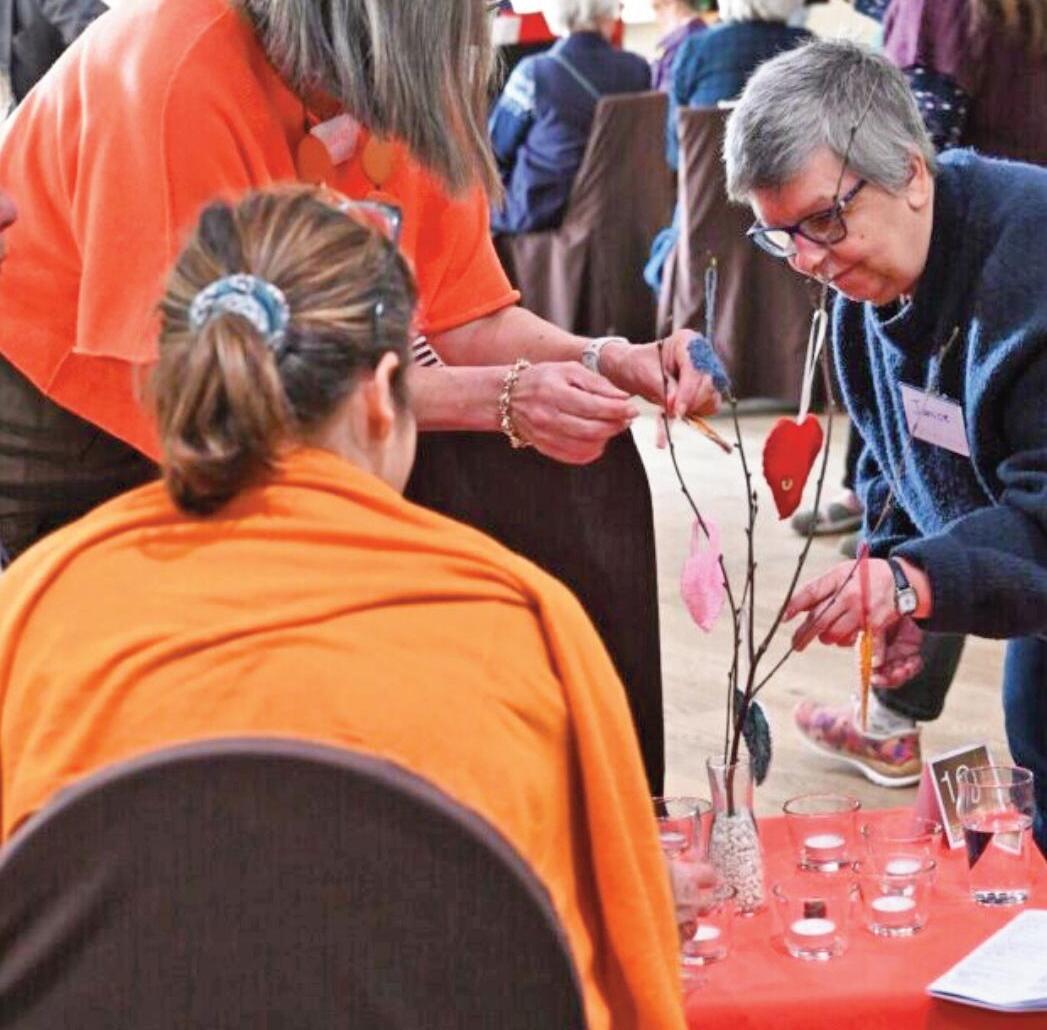
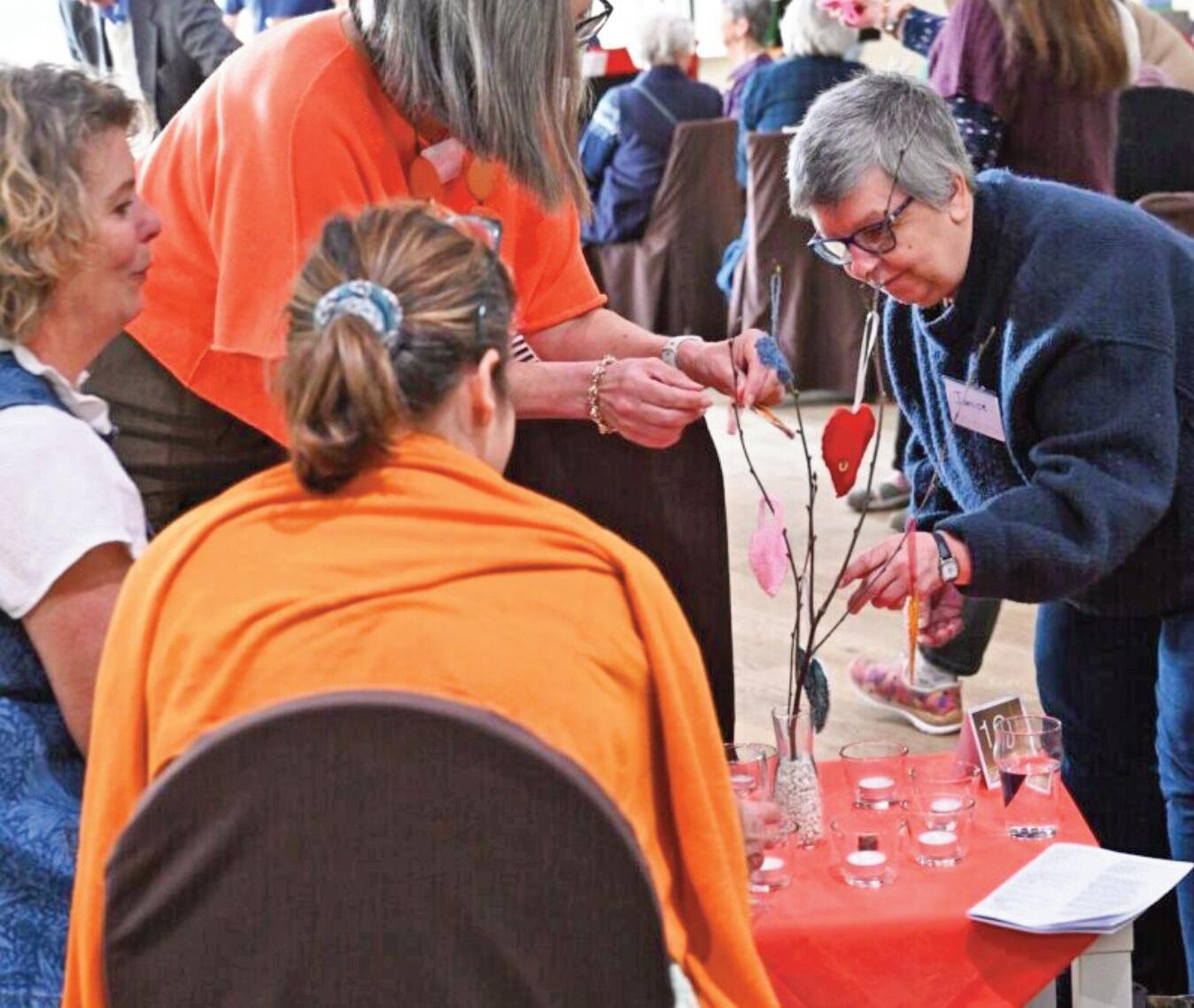
“GATHER 2026 was a deeply prayerful and hope-filled weekend of faith, friendship and formation, bringing together 130 delegates from across the Diocese and beyond in Torquay on the fifth weekend of Lent. Shaped by the theme, “I will put my spirit within you, and you shall live,” the conference offered a joyful and nourishing space in which participants could reflect on the renewing work of the Holy Spirit in the Church and in their own lives.
This year’s conference focused especially on synodality as a lived experience. Avril Baigent, co-founder of the School for Synodality and Director of Pastoral Development in the Diocese of Northampton, opened the weekend by sharing the fruits of the Synod so far and exploring its potential for the renewal of parish communities. Through her guidance, delegates engaged in Conversations in the Spirit in small, facilitated groups, learning a prayerful and attentive way of listening, discerning and sharing together. What began, for some, with hesitation soon became one of the most valued aspects of the weekend, with many speaking of the depth of the conversations, the joy of genuine encounter and the sense that the Holy Spirit was truly at work among them.
On the second day, Fleur Dorrell, Biblical Apostolate Manager for the Bishops’ Conference and creator of The God Who Speaks, offered three rich and inspiring sessions. Drawing on the Book of Tobit, she explored themes of journeying, accompaniment and listening together in faith, helping delegates to see the wisdom of scripture as a living resource for the Church today. Later, through reflection on sacred art, she opened up creative and contemplative ways of encountering God, inviting participants into deeper attentiveness through beauty, silence and imagination. These sessions were again followed by Conversations in the Spirit, which many found energising, life-giving and spiritually fruitful.
The conference was greatly blessed by the presence of Bishop Nicholas, who joined participants on Saturday afternoon, shared reflections on his own journey and
spoke of his experiences at the Synod gatherings in Prague and Rome. He also celebrated the concluding Mass, helping to root the conference firmly within the wider life and mission of the Church, and encouraging all present in the call to grow ever more deeply in synodality.
A particularly valued contribution also came from David Wells, whose long association with these conferences stretches back more than twenty years to their original beginnings. Drawing together the themes and experiences of the weekend, he offered a thoughtful and encouraging sense of the road ahead, helping participants to look to the future with confidence and hope.
As ever, the liturgical life of GATHER was central to the experience. Morning and evening prayer, together with the final Mass, were among the highlights of the
weekend, beautifully supported by music and shared worship. Fellowship also flourished beyond the formal sessions, especially over meals and at the conference dinner, where new friendships were deepened and the warmth of the community was evident throughout.
The presence of Pauline Books and Media added another welcome dimension to the weekend, offering a carefully selected range of resources that extended the conference experience and supported ongoing faith formation.
The conference owed a great deal to the generosity and commitment of the GATHER Team, who served throughout with joy, warmth and care: Sarah Barreto, Angela Folland, Susanne Kowal, Maria Quinn, Rebecca Selby, Mark Skelton, Jonathan Stewart and Liz Toy. Grateful thanks are also due to the Livermead Cliff
GATHER 2026 was marked by a strong sense of renewal, shared discernment and joyful hope. It offered a living experience of the Spirit at work drawing people together, deepening faith, and encouraging the Church to move forward with courage, openness and trust. As David Wells told us afterwards, ‘It’s a humble story of 22 or so weekends, which can be best summed up by the conversations in the bar. As one participant said to me last Saturday evening “These weekends have kept me in the Church”. “Why?” I ask myself. Perhaps the stories we also need to tell, are the stories of those on the receiving end.’”
Sarah Barreto has shared a short article about the GATHER conference which took place from 20–22
Hotel, Torquay, whose staff and manage ment once again provided generous hospitality and excellent service.
Washing the Feet of Prisoners
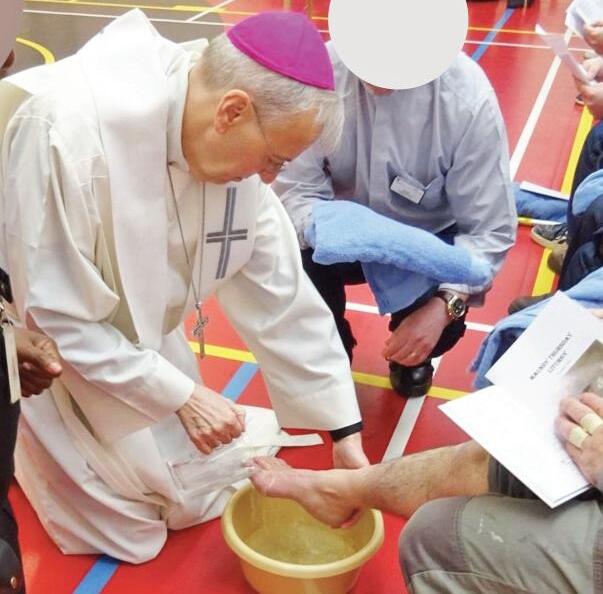
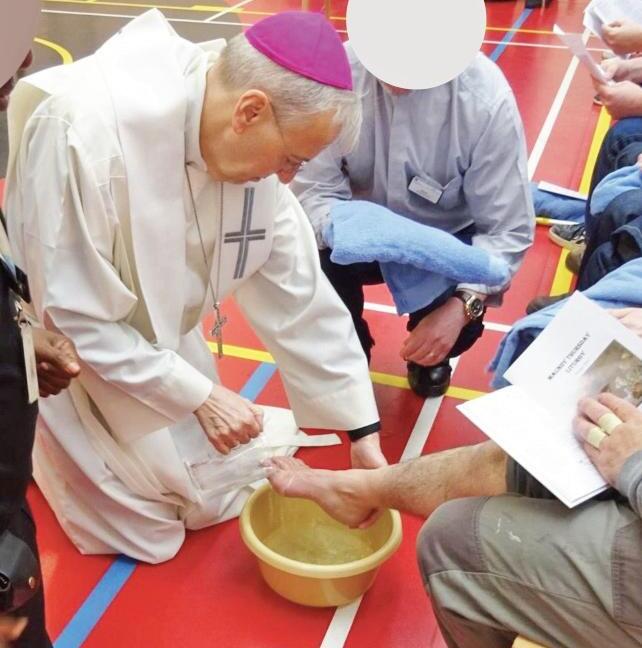
On Maundy Thursday, Bishop Nicholas Hudson visited HMP Channings Wood, a men’s prison near Newton Abbot in Devon. He was accompanied by lead Prison Chaplain, Fr Anthony Onuoha. At the prison, Bishop Nicholas celebrated a Liturgy of the Word, during which he washed the feet of twelve prisoners.
“We wash each other’s feet because Jesus told us to; and because it reminds us we are servants,” Bishop Nicholas told them.
“Did you know that Jesus spent his last night on earth in prison?” he asked the prisoners. “I’ve seen the kind of place: it’s a hole in the ground; and it’s awful. He comes to be with you today to wash your
feet as a way of saying, ‘Know that I am with you; I suffer with you’. And he calls us to treat our neighbour, even our fellowprisoner, with respect.”
“Maundy” comes from the Latin mandatum, or commandment, reflecting Jesus’ words “A new commandment I give you, that you love one another as I have loved you.” [John 13:34]. Maundy Thursday begins the Easter Triduum, the period which commemorates the passion, death, and resurrection of Jesus; this period includes Good Friday and Holy Saturday, and ends on the evening of Easter. The liturgy commemorates the Washing of the Feet and Last Supper of Jesus Christ with the Apostles.
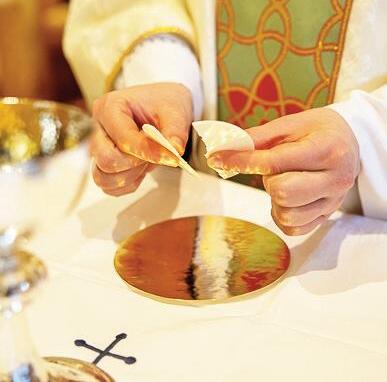
What is the Liturgical Year?
Recently, I was gifted a grandfather clock and on the top section of the clock face was a section with a smiling moon and numbers from one to twenty-nine and a half. I was intrigued with this and googled what this was all about. I soon learned that it was the lunar moon cycle. Although it is not as common to measure time based on the lunar moon cycles as our ancestors would have done in times past, it was still intriguing to learn about, especially in light of the recent lunar flyby mission of Artemis II.
Time is intertwined in our lives. Our daily schedule is around time – what time I get up – what time I have lunch – what time do I finish work. No matter if we look at an antique grandfather clock or the latest version of the Apple watch on a wrist, we tend to structure our days around time. In addition, we measure our life, in terms of yesterday, today, and tomorrow. Of course, in God, there is no time. The notion of ‘eternal’ is something very difficult for human minds to grasp, as we are so ingrained in time. However, God works within time with creation and salvation history. Hence, the celebration of the liturgy occurs within time and space.
Liturgically we have difficult cycles. We have the annual cycle, which begins with the First Sunday of Advent and ends with Our Lord Jesus Christ, the King of the Universe. Throughout the year, the Paschal Mystery of Christ unfolds before us, with special focus on the Incarnation, the Nativity, Epiphany during the Christmas Season, and the Death and Resurrection of Jesus, which we prepare for during Lent, and what we celebrate during the Easter Triduum, which culminates with the Ascension and
Pentecost. Also, within the annual cycle, we have the celebration of different saints, which we call the sanctoral cycle. We have a weekly cycle, with Sunday, the Day of Resurrection as the focus. And lastly, we have a daily cycle, from the rising of the sun in the morning to its setting at night. The mystery of Christ is inexhaustible, and although we will never be able to grasp it, our faith and understanding deepens over time. The liturgical calendar is a structure system of liturgical celebrations that take place over the course of a year. Specially, the celebration of different mysteries of the life of Christ, of Mary, and the Saints. By which we are slowly immersed into the life of Christ.
Over the years, through the repetition of the celebration of feasts, different elements of the mystery of Christ speak to us at different times of our life. What is at the heart of the liturgical year is the Paschal Mystery – the life, death, and resurrection of Jesus Christ. In a sense this is the master key in unlocking history, salvation, and time. “Christ yesterday and today, the Beginning and the End, the Alpha and Omega. All time belongs to him and all the ages. To him be glory and power through every age for ever. Amen” are words we hear during the celebration of the Easter Vigil when the Paschal Candle is engraved. Time sanctifies us and the liturgical year is sacramental in the sense that the different liturgical celebrations through the year form and shape time. All things in life take time, and our participation within the liturgical year, assists with our growth to full maturity in Christ.
Fr Anthony Fyk
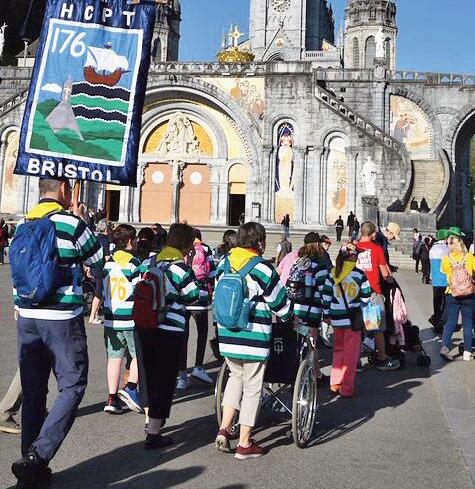
HCPT Lourdes Group 176 celebrate 70th anniversary
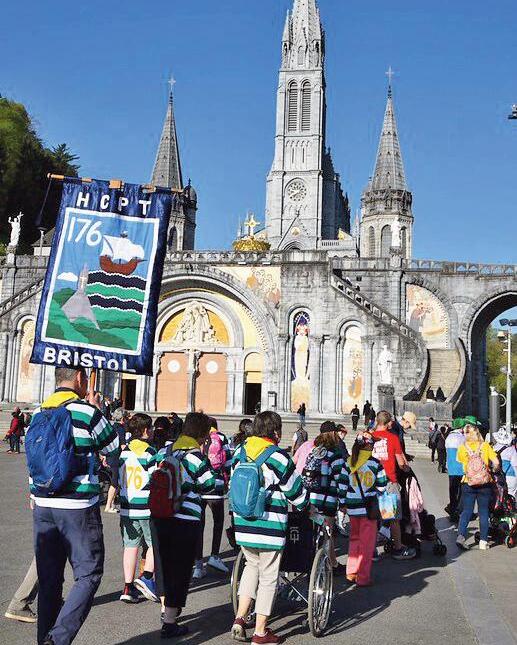
The HCPT Children’s pilgrimage Group 176, led by Canon Tom Finnegan, travelled to Lourdes during Easter week as part of the charity’s 70th anniversary celebrations. The group brought together pilgrims from Bristol, Portishead, Clevedon, and Trowbridge, including seven young people with a range of needs, each contributing their own personality, energy, and joy to the journey.
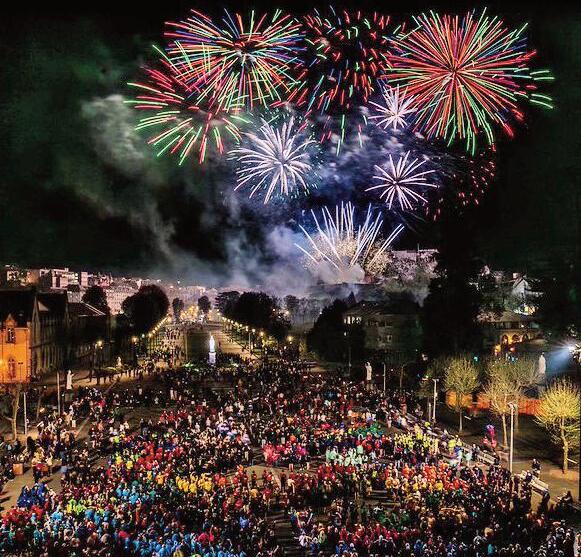
During their time in Lourdes, the group participated fully in the HCPT programme, including the Trust Mass, group liturgies, visits to the Grotto, and the moving torchlight procession, which concluded with a celebratory fireworks display. These moments provided opportunities for both reflection and celebration, deepening the spiritual significance of the pilgrimage.
The theme of the pilgrimage, “Together in Love,” was evident throughout the week and shaped every aspect of the experience. It was seen in the care and
support shown to one another, the new friendships that developed, and the strong sense of community that formed within the group. Each day reflected a shared spirit of inclusion, belonging, and mutual encouragement.
As the week progressed, the young people embraced every activity with enthusiasm—whether singing, participating in the Lourdes experiences, or spending time together socially. Their joy, courage and resilience were a constant inspiration to those around them and clearly demonstrated the meaning of being “together in love.”
The pilgrimage was made possible through the dedication, prayers and generous support of parish communities and from many individuals in the Clifton Diocese. Overall, it was a deeply meaningful and joyful celebration of faith, inclusion, hope and love, honouring both the present experience and the long legacy of HCPT.
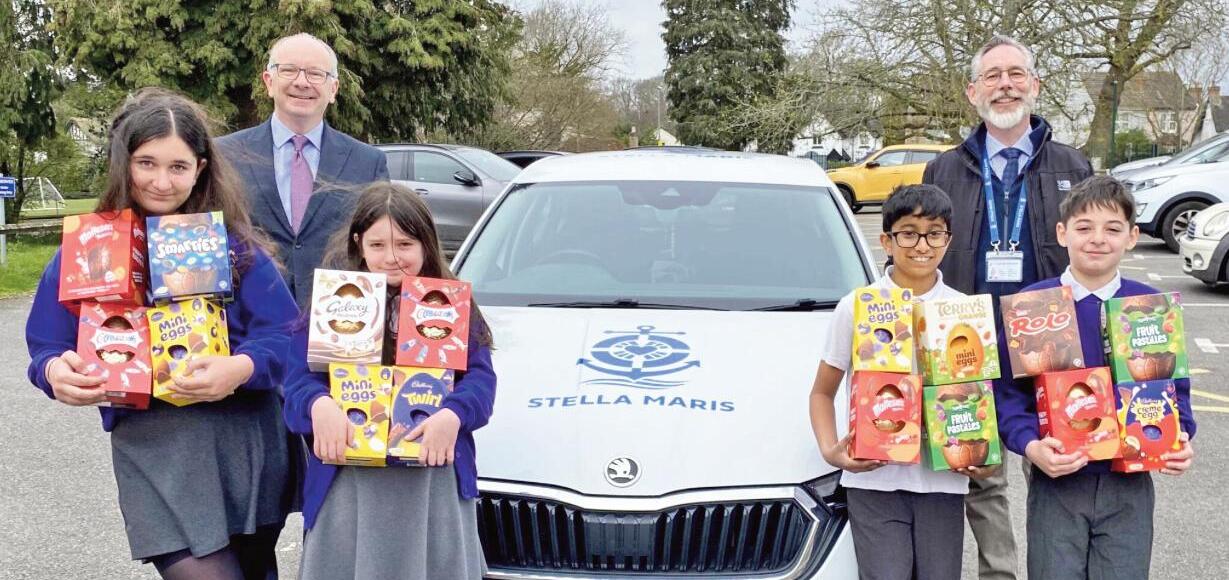
Well done to the pupils of St Peter’s who collected over 300 Easter Eggs to donate to Stella Maris!
Richard Cunningham, Executive Headteacher of St Peter’s Catholic Primary School, Waterlooville writes:
Well done to the pupils of St Peter’s who collected over 300 Easter Eggs to donate to Stella Maris. The charity visits seafarers in the ports of Portsmouth and Southampton to offer those far from home an Easter chocolate gift along with religious artefacts to support them in their faith. Current global conflicts have added even more risk to the work of seafarers in certain global waterways, so our support and prayers are needed more than ever for the seafarers who keep our supermarket shelves stocked and our consumer items in supply.
Thank you to all the families and staff who donated Easter Eggs for this great cause.
Pray with the Pope
For resources on how to Pray with the Pope, either on your own or in groups, use this QR code.
For priests in crisis
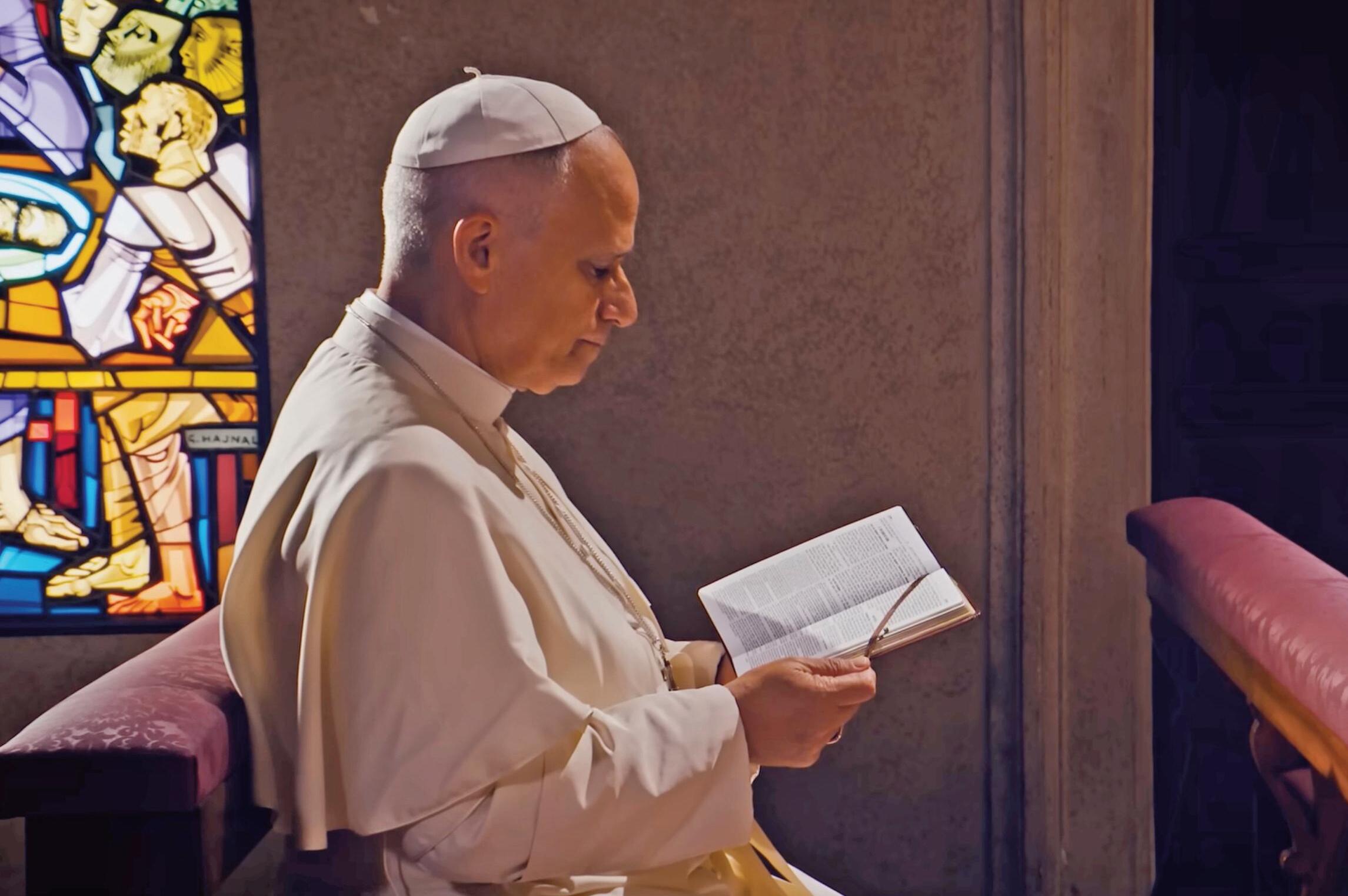
In the life of the Church, priests are called to accompany, support and serve their communities. But they themselves can go through difficult moments in which they need closeness and support. With this in mind, Pope Leo XIV, in his prayer intention for the month of April, invites us to pray for priests experiencing a crisis, that they might experience the nearness of God and his people, and rediscover hope and joy in their vocation.
In this month's intention, the Holy Father thinks especially of priests “when loneliness weighs heavily, when doubt clouds their hearts, and when exhaustion seems stronger than hope." He prays that they might rediscover that "they are not mere functionaries or lonely heroes, but beloved sons…and pastors sustained by the prayer of their people." Likewise, he invites the entire community to care for them through being near, sincere listening, and constant prayer, recognising that they too need to be supported on their journey.
Pope Leo prays
In the name of the Father, and of the Son, and of the Holy Spirit. Amen.
Lord Jesus,
Good Shepherd and companion on the journey, today we place in your hands all priests, especially those going through moments of crisis, when loneliness weighs heavily, when doubt clouds their hearts, and when exhaustion seems stronger than hope. You who know their struggles and wounds, renew in them the certainty of your unconditional love. Let them feel they are not mere functionaries or lonely heroes, but beloved sons, humble and cherished disciples, and pastors sustained by the prayer of their people.
Good Father, teach us as a community to care for our priests: to listen without judging, to give thanks without demanding perfection, to share with them the baptismal mission of proclaiming the Kingdom in word and deed, and to accompany them with closeness and sincere prayer. May we support those who so often support us.
Holy Spirit, rekindle in our priests the joy of the Gospel. Grant them healthy friendships, networks of fraternal support, a sense of humour when things don't go as expected, and the grace to always rediscover the beauty of their vocation. May they never lose trust in You, nor the joy of serving your Church with a humble and generous heart.
Amen.
Scripture Focus
By Fr Jeremy Corley
Clothed with Power from on High
We live in an age of space travel. Astronauts can be launched into space and even spend several months on the International Space Station. Billionaires can book a ticket for a flight into space for a few minutes. Unmanned space probes are exploring ever further across the solar system. There are dreams of sending a manned spacecraft to land on Mars.
Humans have always been fascinated by space – the vast expanse above us in the skies, with the moon and stars. Although modern scientists have sent probes to explore the planets and galaxies nearest to earth, there are distant constellations and supernovas that are far beyond human exploration at the moment.
For the ancient pagans, the heavens were the abode of the gods. For the Jews of biblical times, heaven was the dwelling place of God. But we do not have to understand this in a geographical sense. God is vast and limitless, like space. God is above us and around us, like space. God is almighty and beyond our control, like the forces from space.
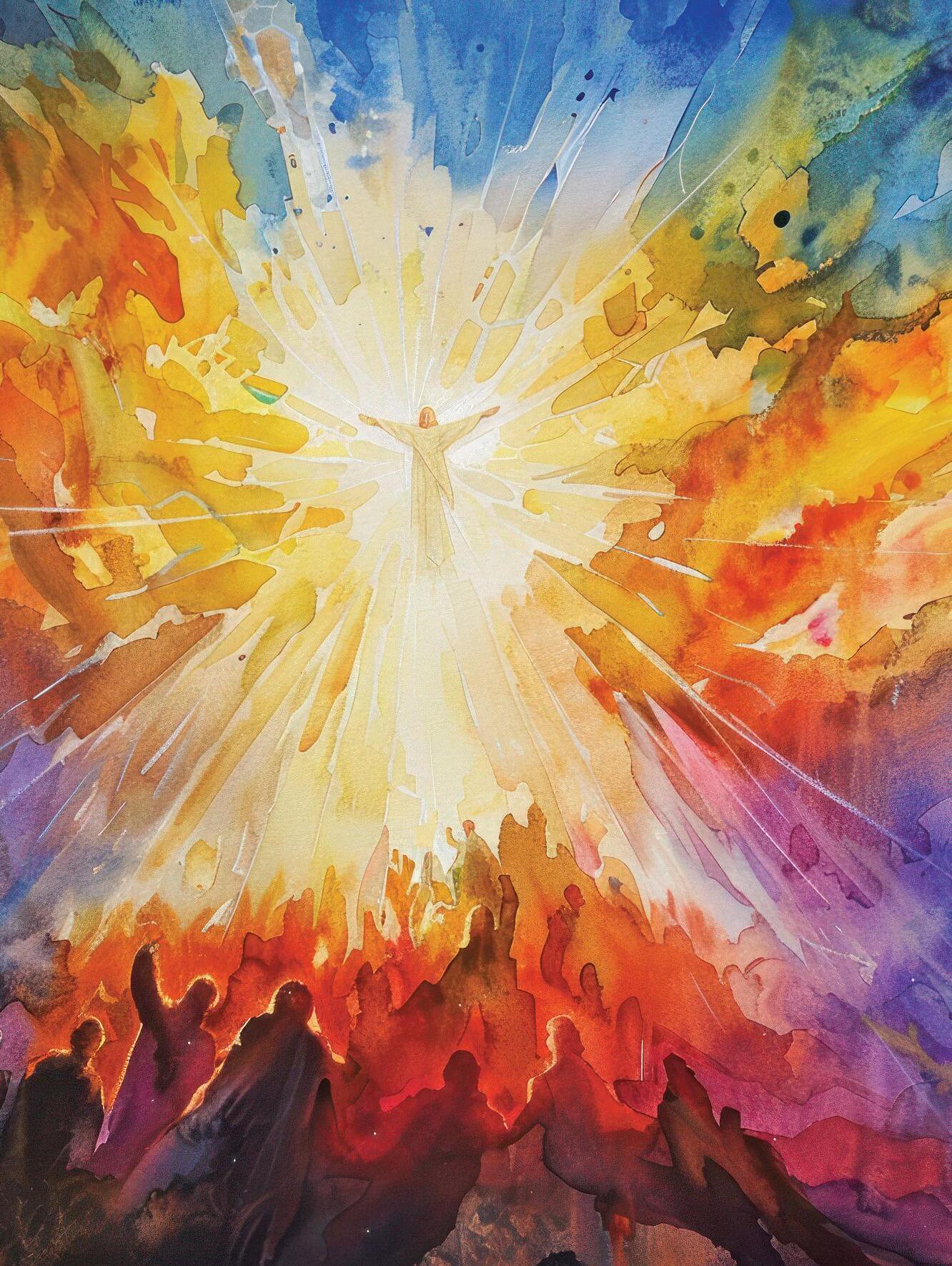
Near the end of May we celebrate Ascension Thursday (29 th May), when Jesus bids farewell to his disciples. The Acts of the Apostles portrays Jesus ascending into heaven, until the cloud of God’s presence hides him from their sight. But we do not need to understand it geographically as a case of space travel –how many miles did Jesus go upwards from the earth? Instead, this is the final appearance of Jesus after his resurrection. As he bids them farewell in
Luke’s gospel account, he blesses them and tells them to wait prayerfully for the coming of the Holy Spirit.
He makes them a wonderful promise in the gospel: in a short while they will be clothed with power from on high. What they would be unable to do by human power, the Holy Spirit would enable them to do. They would be given the power to live like Jesus and spread his love and forgiveness to those around them. They would receive the strength to endure in times of opposition and hardship. And sometimes they would be given the power to heal the sick.
The first apostles would be his witnesses in Jerusalem, and then close by in Judea and Samaria. Thereafter his followers would spread the Christian message across the Mediterranean – and the Acts
of the Apostles tells us of the apostle Paul arriving to preach in Rome. In later times, right up till today, the good news of Jesus would be proclaimed all over the world.
We cannot live as Christians without the power of the Holy Spirit, first given to each of us in baptism and confirmation. As we look forward to Pentecost, we pray that the Holy Spirit may continue to inspire us to follow Jesus. May the Holy Spirit help us to live by Christ’s teaching and bear witness to him by our actions towards family and work colleagues and in our community.
Come O Holy Spirit, fill the hearts of your faithful, and enkindle in them the fire of your love!
View from the Pew
By Dr Jay Kettle-Williams
Why do dogs bark at night?
The Quechua Indians of Peru will tell you that in the countryside, particularly at night, you can hear the mountains, large and small, speaking and talking to each other in much the same way as parents and offspring. Animism is a belief system fundamental to many indigenous cultures. Animism embraces the idea that all physical phenomena - including animals, plants and physical features - possess a distinct physical essence. Sir Edward Burnett Tylor (2 October 1832 – 2 January 1917), English anthropologist and professor of anthropology, reintroduced the term animism (faith in the individual soul or anima of all things and natural manifestations) into common use. He regarded animism as the first phase in the development of religions.
The Indians will then tell you why dogs bark at night. That’s because dogs can see supernatural beings, spirits roaming the townships and countryside during the hours of darkness.
Spiritism was founded by Hippolyte Léon Denizard Rivail (3 October 1804 – 31 March 1869), known by the nom de plume of Allan Kardec, was a French educator, translator and writer. Spiritism is the belief system recognising the existence of spirits and their ability to communicate with the living.
Tylor and Rivail got me wondering to what extent philosophy could be the stepping stone to religion or whether there’s but a thin line dividing the two. So I did the modern thing. I went to Copilot:
‘Philosophy and religion differ most clearly in their methods and foundations: philosophy relies on reason, while religion relies on faith. Both explore meaning, morality, and existence, but they do so in fundamentally different ways.
‘Philosophy is the systematic study of reality, knowledge, ethics and logic using critical thinking, rational argument and evidence. It encourages questioning, debate and scepticism.
• It does not require belief in the divine.
• Its conclusions are always open to revision.
• It aims to understand the world through reason and analysis.
‘Religion is a communal system of beliefs, practices and rituals centered on the divine or sacred. It typically involves:
• Faith in a higher power
• Sacred texts and doctrines
• Worship, ritual and community
• Moral teachings grounded in revelation
Despite their differences, both ask the same big questions:
• Why do we exist?
• What is good?
• What happens after death?
• Is there a God?
Philosophy analyses these questions through argument; religion answers them through faith and tradition. Their histories are deeply intertwined, and many religious thinkers (like Aquinas or Maimonides) used philosophy to clarify or defend religious beliefs’.
-o0o-
Reason, we are told, is what separates us from the animals. But maybe it’s not unreasonable to think that members of the animal kingdom might see more than the Quechua Indians ever give them credit for.
I remember visiting a zoo once when I was overseas. There were two chimps in a cage. One of the two performed what struck me as an incredible acrobatic feat. I smiled and clapped involuntarily. The other chimp looked at me, smiled, looked back adoringly at his fellow ‘cage-mate’ and started clapping along with me. Then his chum joined in. And we all clapped together. And then there’s that video clip, which recently went viral, of a young orangutan watching the classic confidence trick: ‘The Shell Game’ or ‘Three shells and a pea’. I leave you to hunt for that on the internet.
Animism and Spiritism apart, our Catholic faith embraces respect not only for Mother Earth but also for the animal kingdom which inhabits it. St Francis and Pope Francis’ Encyclical Laudate Si’ alone bear cogent witness.
I am for ever reminded of the lyrics of the 1970 folk-pop song ‘Big Yellow Taxi’ as interpreted by Joni Mitchell: ‘They paved paradise and put up a parking lot’.
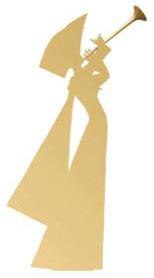
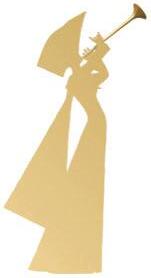
Notes, Acknowledgements and Attribution: Accompanying image (Statue with Blowing Horn) after the sculpture Exultate Jubilate by Philip Jackson; Texts/References adapted and/or adopted from http://en.wikipedia.org under the terms of the Creative Commons Attribution-ShareAlike License 4.0: /
Dr J L Kettle-Williams is an experienced business communications consultant and wordsmith (tutor, writer, translator).
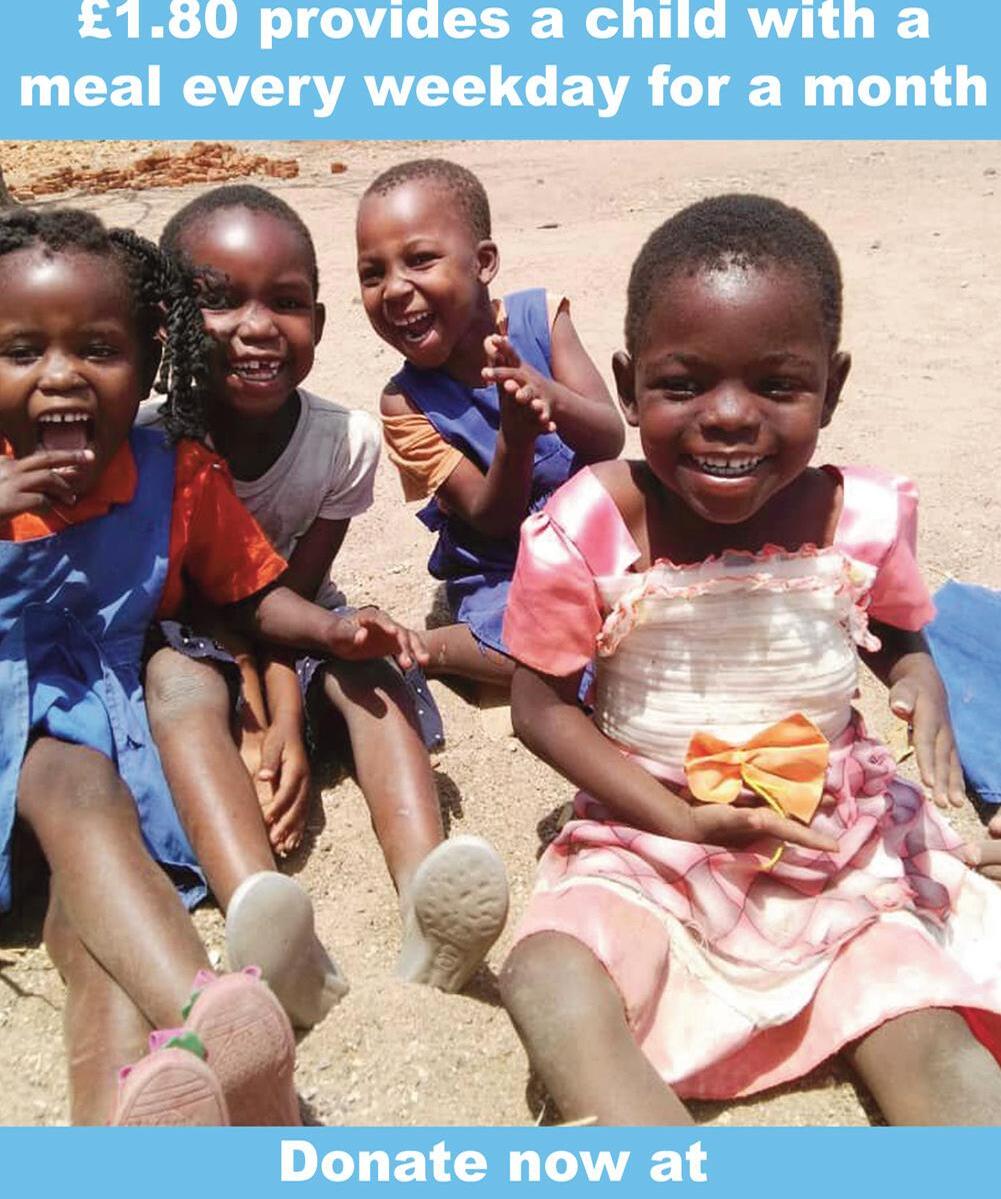
£1.80 provides a child with a meal every weekday for a month
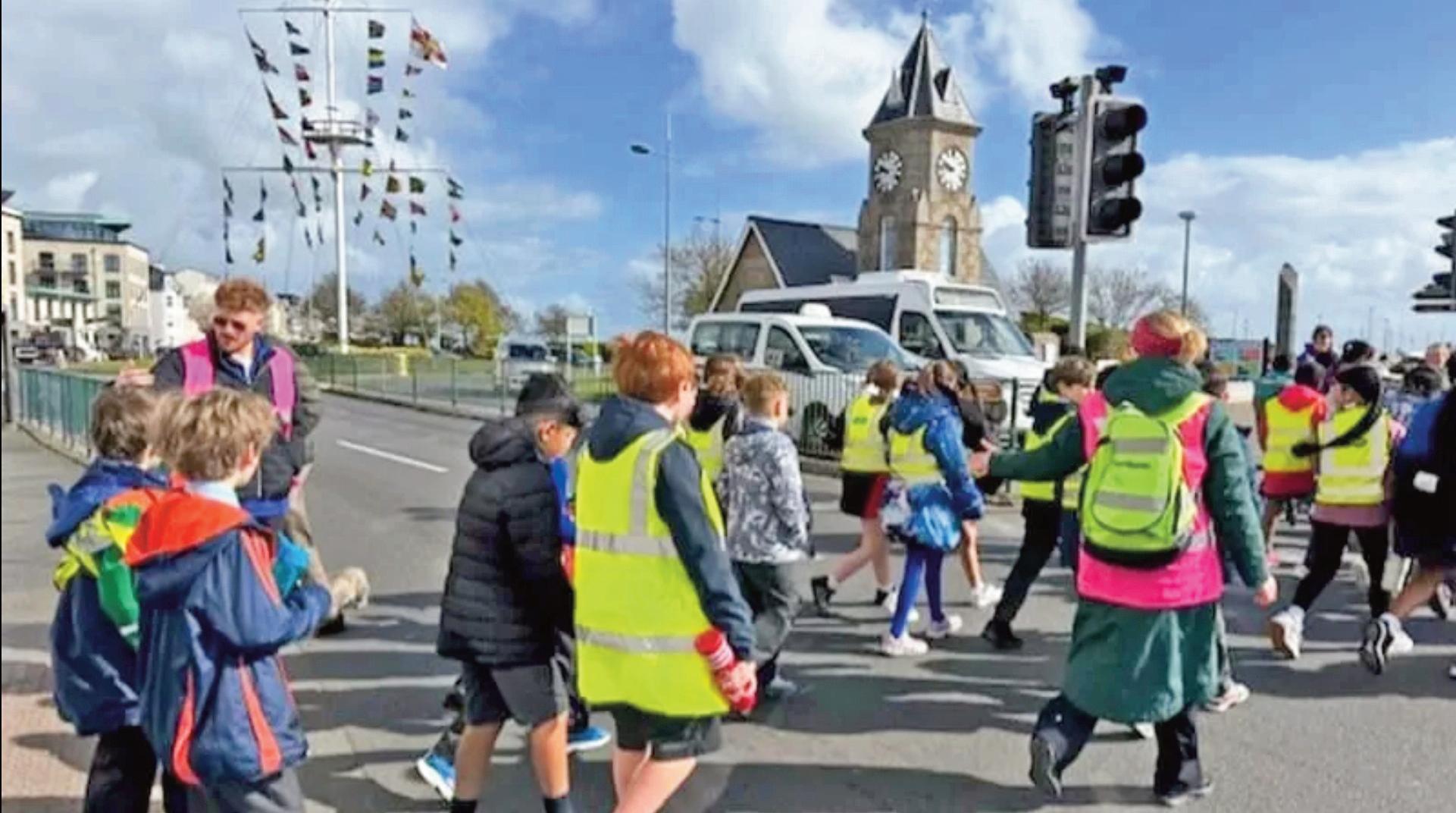
Guernsey Pupils ‘Walk for Water’
Elizabeth Dene, Chair of Governors for the Voluntary (Catholic) Schools Cluster in Guernsey shares news from two of the Catholic Primary schools on the island.
As part of their Lenten fundraising, the pupils at Guernsey’s two Catholic primary schools, St Mary and St Michael and Notre Dame du Rosaire Catholic Primary Schools, embarked on sponsored walks to raise money for The Eleanor Foundation –a Guernsey based charity which provides clean water and supports school communities in the East African country.
The pupils from St Mary and St Michael walked from their school at Rue des Monts to Bordeaux and back earlier this
week, while Notre Dame’s pupils yesterday walked from their school in St Peter Port to Our Lady Star of the Sea Catholic Church at Rue des Monts for a joint end of term Mass.
The children have been learning about John the Baptist and the importance of water during Lent. The schools said the children have been exploring how water is a sign of new life, cleansing, and belonging in faith.
The children have been taught that many families around the world do not have access to clean, safe water as we do. In response to this, both schools chose to support The Eleanor Foundation with its
work in Tanzania. The ‘Walking for Water’ events were intended to reflect the daily journeys many other children must make simply to collect water for their families from wells miles away from their homes.
Allister Carey, the founder of the Eleanor Foundation, spoke with the children from both schools during Lent to explain to them why clean water is so important. He told them their sponsored ‘Walking for Water’ events will make a big difference to the lives of children and their families living in the areas where the charity focuses its work. He explained that each shallow well will provide clean, safe water for about 1,000 people and mean that
children, especially girls, will not have to walk long distances to collect water, which all too often will be contaminated with bacteria, for their families.
Mr Carey also told the children that their efforts had inspired an anonymous supporter of the charity to pledge fifty pence for every £1.00 the children raised through sponsorship. The sponsorship total stands at £5,814 and with the generous pledge from the anonymous donor the total amount raised, bringing the total to under £9,000, meaning that five communities will benefit from wells built with the fundraising from the two schools.
Pope in Cameroon: The peace of Christ calms life's storms
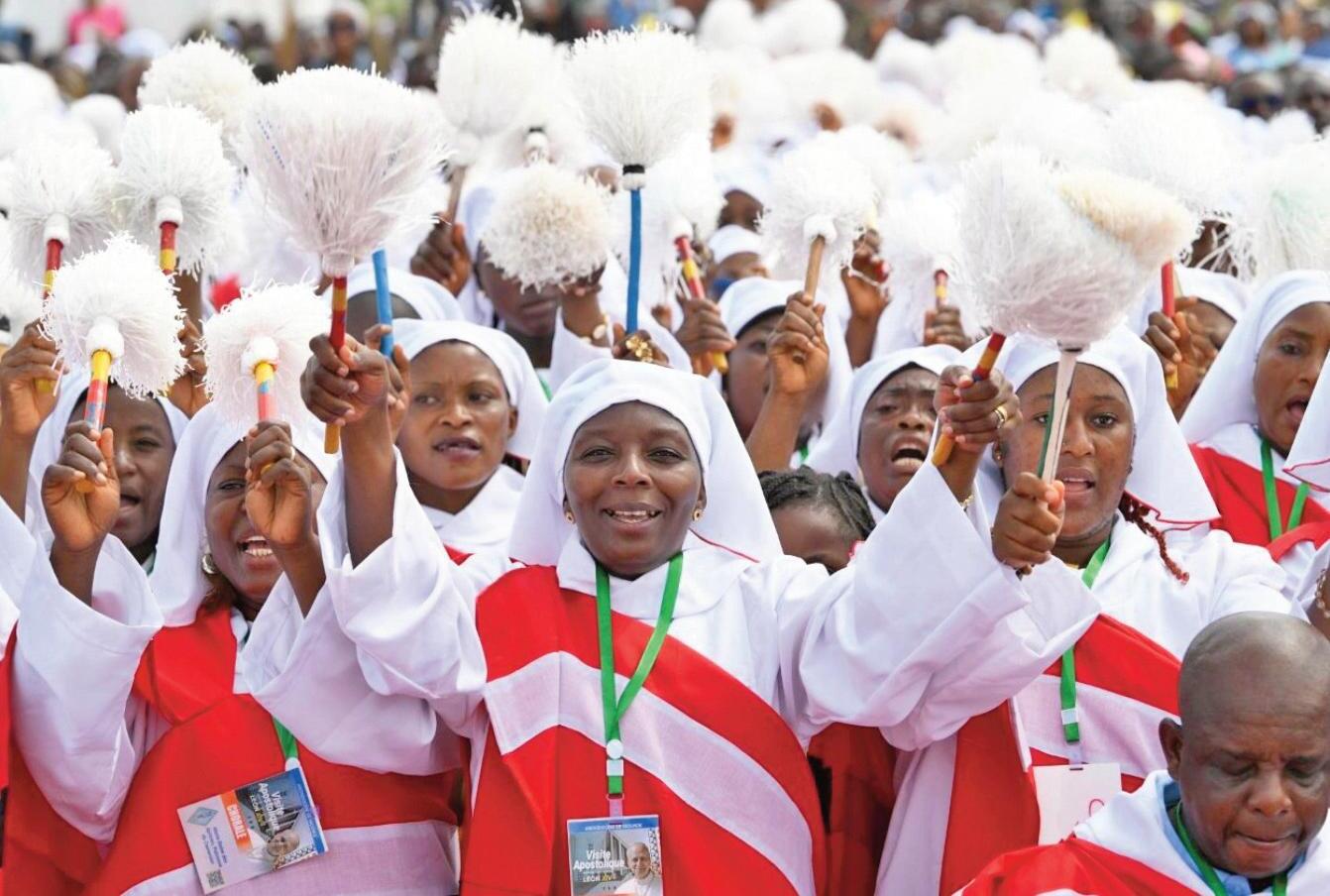
Around 200,000 people gathered for Mass with Pope Leo at Yaoundé-Ville Airport, today. Many had camped out the night before, and hundreds of thousands of others followed it in areas surrounding the venue. The festive celebration marked the culmination of the Pope's four day visit to Cameroon before heading to Angola, the next destination in his pastoral journey to Africa.
The Holy Father expressed his profound gratitude for the welcome he recieved and the moments of joy and faith experienced together.
In his homily given in French, the Pope reflected on the Gospel reading recounting on how Jesus' disciples navigated the strong winds while crossing the lake of Tiberias with feelings of fear and doubt. The Pope recalled how the Church down through the ages has "navigated many storms and 'strong winds'", just as we must in our own lives. At times, life's tribulations can make us feel overcome by adverse forces, he acknowledged. Yet, we must always remember, he said, that "Jesus is with us always, stronger than any power of evil" and "Jesus does not abandon us, just like he did not abandon the disciples on the Sea of Galilee."
The Pope said knowing Jesus never abandons us allows us to get up after every fall and not allow the storms of life to stop us. "We go forward always with courage and trust." While "faith does not spare us from tumult and tribulations", we can be assured that Jesus is with us. "He does not immediately calm the storm, but comes to us in the midst of the danger, and invites us, in our joys and sorrows, to remain together with him, like the disciples, in the same boat."
As Jesus is with us, we must also be close to those who are afraid and suffering, the Pope said, saying we must "draw near to them" and "embrace them" since "no one must be left alone to confront life's adversities." This is why every community needs to create and support one another with mutual aid, especially "when faced with crises -- be they social, political, medical or economic -- everyone can give and receive assistance according to their own capacity and needs."
Jesus' exhortation "do not be afraid" is spoken to each one of us individually and as a community, the Pope explained, and
it gives us encouragement to confront problems and challenges, especially related to poverty and justice, all together with a sense of common responsibility.
"Faith does not separate the spiritual from the social. Indeed, it gives Christians the strength to interact with the world, responding to the needs of others, especially the weakest. The isolated efforts of individuals are not enough for the salvation of a community: instead, what is needed is a communal commitment, which integrates the spiritual and moral dimensions of the Gospel in the heart of local institutions and structures, making them instruments for the common good, and not places of conflict, self-interest or sterile struggles."
The Pope recalled how the first disciples faced the challenges of sharing the faith and living in community, overwhelmed with the immense challenges that emerged. But they gathered together, discussed the issues, and then united in prayer to discern how best to share the Good News and be attentive to those suffering among them, assisting widows and orphans.
"Listening to the voice of the Holy Spirit and being attentive to the cry of the suffering, they not only avoided division within the community, but they also equipped it with new instruments suitable to its growth, transforming a moment of crisis into an occasion of enrichment and development for everyone."
In conclusion, Pope Leo bade farewell to the congregation, recalling how everyone will return to their daily lives and "the Church continues on its course towards the final goal, thanks to the grace of God and the commitment of every person." He encouraged everyone to treasure and remember "the beautiful moments that we have experienced together alive in our hearts," and as we face life's difficulties to always "make space for Jesus, allowing him to enlighten and renew us every day by his presence."
"The Church in Cameroon is alive, young, blessed with gifts and enthusiasm, energetic in its variety and magnificent in its harmony. With the help of the Virgin Mary, our Mother, may your joyful presence continue to blossom. And may the strong winds, which are never lacking in life, be an occasion for growth in the joyful service of God and your brothers
and sisters through sharing, listening, praying and the desire to grow together."
After a farewell ceremony at the Cameroonian airport, Pope Leo walked with Cameroon's Prime Minister, Joseph
Dion along a long red carpet to the foot of the aircraft waiting to take him on the next leg of his Apostolic Journey - to Angola.
You can use both sets of clues to solve the puzzle: the solutions are the same.
CRYPTIC Across
7 Dead set, if else fails, to make 18 when in Rome (6,7)
8 I am the Spanish waiter in Messiah! (8)
9 Mountain in Joshua can be seen in section of Horeb, altitudinally (4)
10 Friend from Troy, one leaving an ecclesiastic band (7)
12 Drama queen's back to support the lead in Dallas –the Dynasty chap? (5)
14 Youngster gets sophisticated in front of the king... (5)
16 ...one in Judah has Henry bound by kinky Joe to tree (7)
19 It's the first name in jeans for Matthew! (4)
20 Early Christian sect which barely made it out of 21? (8)
22 To which place did Jesus ride a girl's horse? (5,2,6)
CRYPTIC Down
1 Esau's people's place, where style's in ascendant (4)
2 First of Issachar's successors really annexed extra land here (6)
3 Exist, being raised in African surroundings, to name brother of 2 (7)
4 Passage from article is on the Spanish uprising (5)
5 Missionary's desirable little home in Darjeeling? (6)
6 Drugs prisoner detained by the Pope is ascetic (8)
11 Get trees from 11 or 16 by the thousand, to rebuild lone Philistine city... (8)
13 ...and cedars from here to build Jerusalem, the French and British find later (7)
15 Queensland site's stop-start finish confused CIA and the Navy (6)
17 God's pupil is confronted by a very large introduction (6)
18 Is she, looking up, last one raising any cash at Christmas? (5)
21 First family's home study is situated below, note (4)
QUICK Across
7 Latin hymn translated into a popular carol by a canon of Westminster Cathedral (6,7)
8 Christ or the Messiah, as named from a reference in Isaiah (8)
9 Where Moses commanded Joshua to build an altar (4)
10 White vestment like a double-Y embroidered with crosses, worn by the Pope (7)
12 Dynast and hymnodist from humble origins, integral to both Testaments (5)
14 Young bird, especially of domestic fowl (5)
16 Kings of Israel and Judah sharing the same name (7)
19 Son of Jacob cursed by his father for attacking Shechem (4)
20 Early Christians who aimed to return to man's primitive innocence (8)
22 Hill overlooking Jerusalem where Solomon built an altar (5,2,6)
QUICK Down
1 Mountainous region south of the Dead Sea in OT times, also called Seir (4)
2 Name God gave to Jacob... (6)
3 ...and one of Jacob's twelve sons (7)
4 Extension of the nave in a church (5) 5 Nun and
missionary dedicated to helping the poor in India (1910-1997) (6)
6 Ascetic 5th century British theologian (8)
11 One of the five Philistine cities (8)
13 Area north of biblical Israel famous for its cedar trees (7)
15 Queensland resort city facing the Great Barrier Reef (6)
17 Greatest of all the gods of ancient Egypt (6)
18 Joyful religious song celebrating the birth of Christ (5)