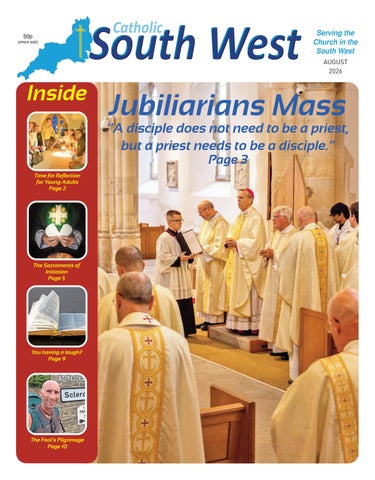

Jubiliarians Mass
Time for Reflection for Young Adults Page 2
The Sacraments of Initiation Page 5
You having a laugh? Page 9
The Fool’s Pilgrimage Page 10
“A disciple does not need to be a priest, but a priest needs to be a disciple.”
3

CONTACTS & DETAILS
Catholic South West is a monthly newspaper for Catholics in the Plymouth, Clifton and Portsmouth Dioceses It is published by Bellcourt Ltd
AIMS
To build community in the South West by sharing stories relating to Catholic life around the South West
To encourage readers to get more involved in - or start - projects and initiatives in the local area
To provide thought-provoking articles to help readers deepen their Faith
GET INVOLVED
We need your help!
Articles: We need your local articleswe can only include what we get So if you have an article or just a photo with a short description - please send it in
Ideas: We need your ideas for the paper and we need your ideas in the paper If you have any thoughts on what we should include - or if you are thinking about starting a new initiative - get in touch - we’d love to support it!
Readers: If you can encourage other readers in your parish please do so
Advertising: We rely on advertising - if you know of anyone that would benefit from promoting their business, event or anything else to parishioners throughout the South West, do let us know.
SUBMITTING EDITORIAL
To send in editorial or to get in touch please contact us at: CSW - Bellcourt Ltd
N2 Blois Meadow Business Centre Steeple Bumpstead Haverhill, Suffolk
CB9 7BN
csw@cathcom org 01440 730399
ADVERTISING
To advertise in Catholic South West please contact us on 01440 730399 ads@cathcom.org
DATES
Catholic South West goes to parishes on the last full weekend of the month It is printed around the middle of the month - so if you would like to advertise or send in editorial please do it as early as possible
Wanted Parish Correspondents
The Catholic South West is looking for a Parish Correspondent in your parish to send in local news for publication in this Newspaper. All items to be emailed to csw@cathcom.org before 10th of the month
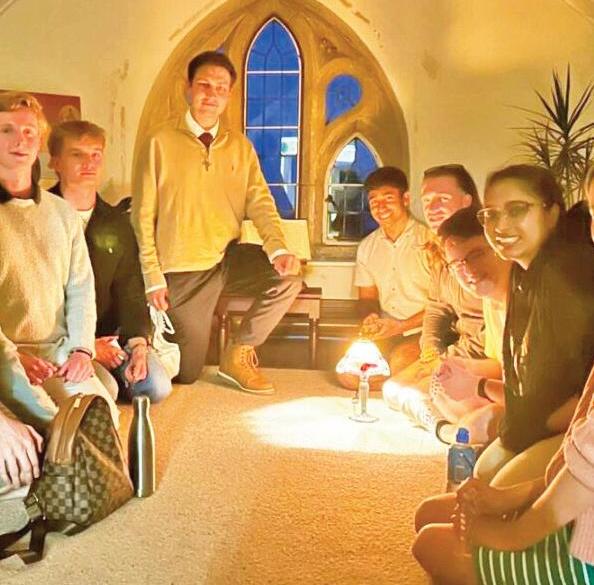
Time for Reflection for Young Adults
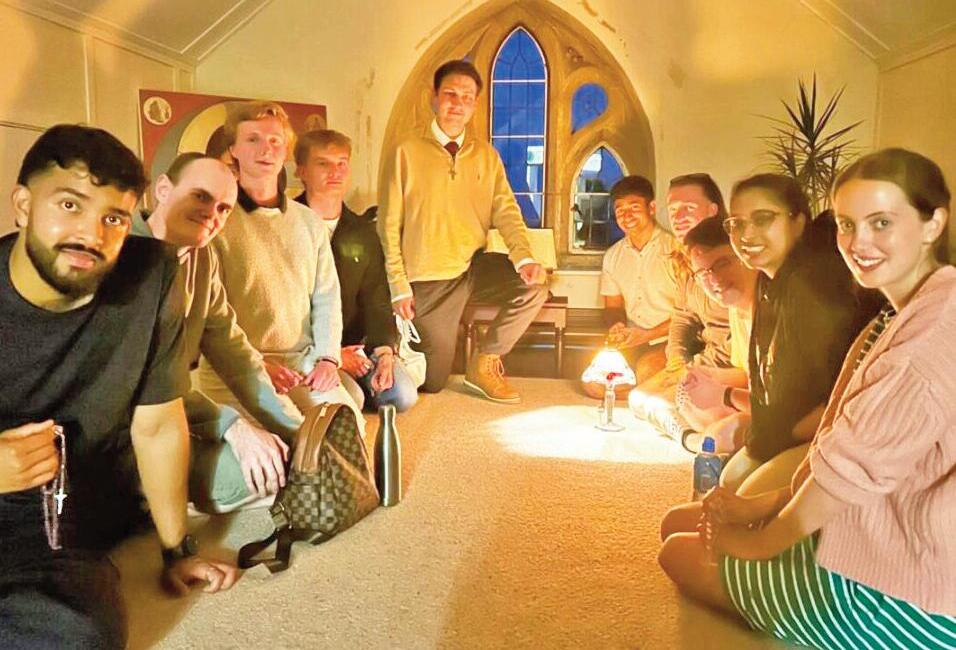
The Diocese of Plymouth Youth Events recently organised a young adults retreat at Sclerder Abbey. These events are aimed at people aged 18-30s and give participants an opportunity to slow down, a chance to explore their faith, deepen their relationship with God and build relationships with others from across the Diocese. The following is feedback from one of the participants:
“The retreat was like a dream; once I had returned from it I felt as if no time had passed at all. But in memory I remember an abiding experience; The Abbey in its beauty, clothed in Cornish stone and the gardens (The Green Abbey), adorned with the Sclerder community like jewels and us, for a time, to share in the community. We attended Mass and wondered at the singing, shared their meals with each
EDITORIAL GUIDELINES
1) Think of the readers: If you are writing about an event, think about the readers that don t know anything about it Outline what happened, but focus on why people go, why it is important to them, or some teaching that was given Make sure readers learn something from your
other in joy and piety. Our merrymaking flowed from this; above all our shared experience reminded me very much of the importance and Godliness to be found in humour and playfulness. Father Jude gave us much wisdom in his talks on Genesis 2:15, on which we focused during the retreat, his testimony about his own vocation will stay with me forever. He graciously allowed me to serve during Mass, in which I believe I found a part of my calling.
In truth every one of us found something unexpected at the Abbey, and I think everyone has made at least a few lifelong friends, at least for my part I have. There is no doubt that Jesus was by our sides guiding us, whether it was in morning prayer with the community, during our Gardening where we planted seeds in
article - they don t just want to know who was there and what snacks were available!
2) Keep it brief: Make sure you make your point - but keep it brief and punchy
3) Pictures: Send pictures as they are - even if they are very big to email Don t reduce them in size or put them inside a Word document They look fine on the screen but terrible in the paper!
LEGAL INFORMATION
prayer (truly enlightening, mine is named Stephen), during our art when we awakened our childish, creative spirit, in our free time which we spent down by the sea, in our synods, Adoration, Confession, Rosaries, Ignatius prayer and personal testimonies. I had no vision or big apparition or answer from God. But I still came away with answers to questions I didn’t know I had, and abundant friends. All credit goes to the organisers from the Diocese and the members of the community at the Abbey, in their guidance we could do nothing but be with Our Lord and be happy.”
If you would know someone who might be interested in future opportunities to come together with other young people in the diocese for a moment of peace, faith and reflection in a busy life – please contact Youth@prcdtr.org.uk.
Please note that opinions expressed in this paper and on any linked sites or publications are not necessarily those of the Publishers, Editor, any Diocese or the wider Roman Catholic Church. Every reasonable effort is
made to ensure that due acknowledgement, when appropriate, is made to the originator of any image submitted for publication It is understood that those submitting material for publication in CSW either hold the copyright or have arranged for publication with the appropriate authority
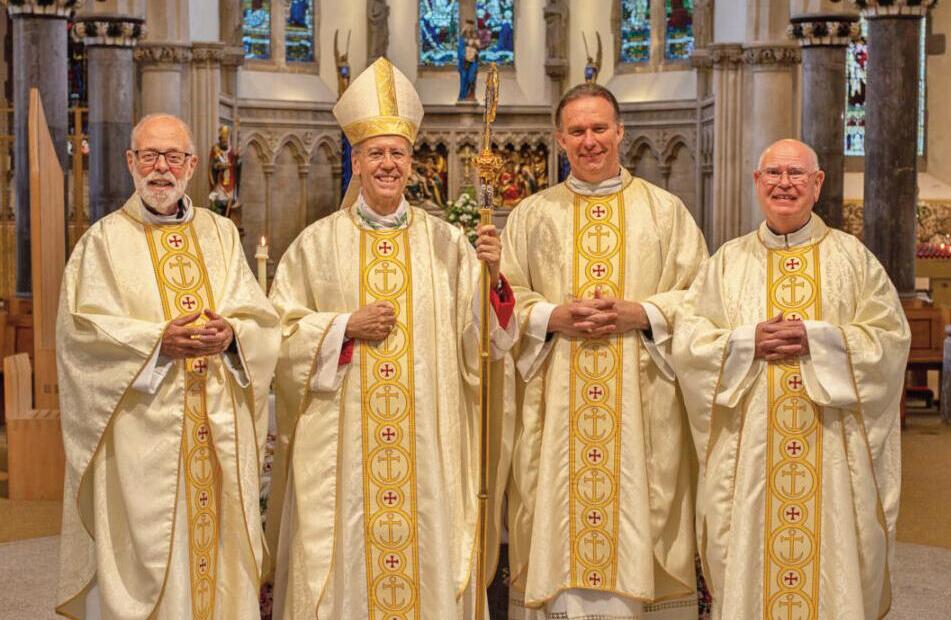
Bishop Nicholas Hudson and Jubilarian Priests mark significant Ordination Anniversaries
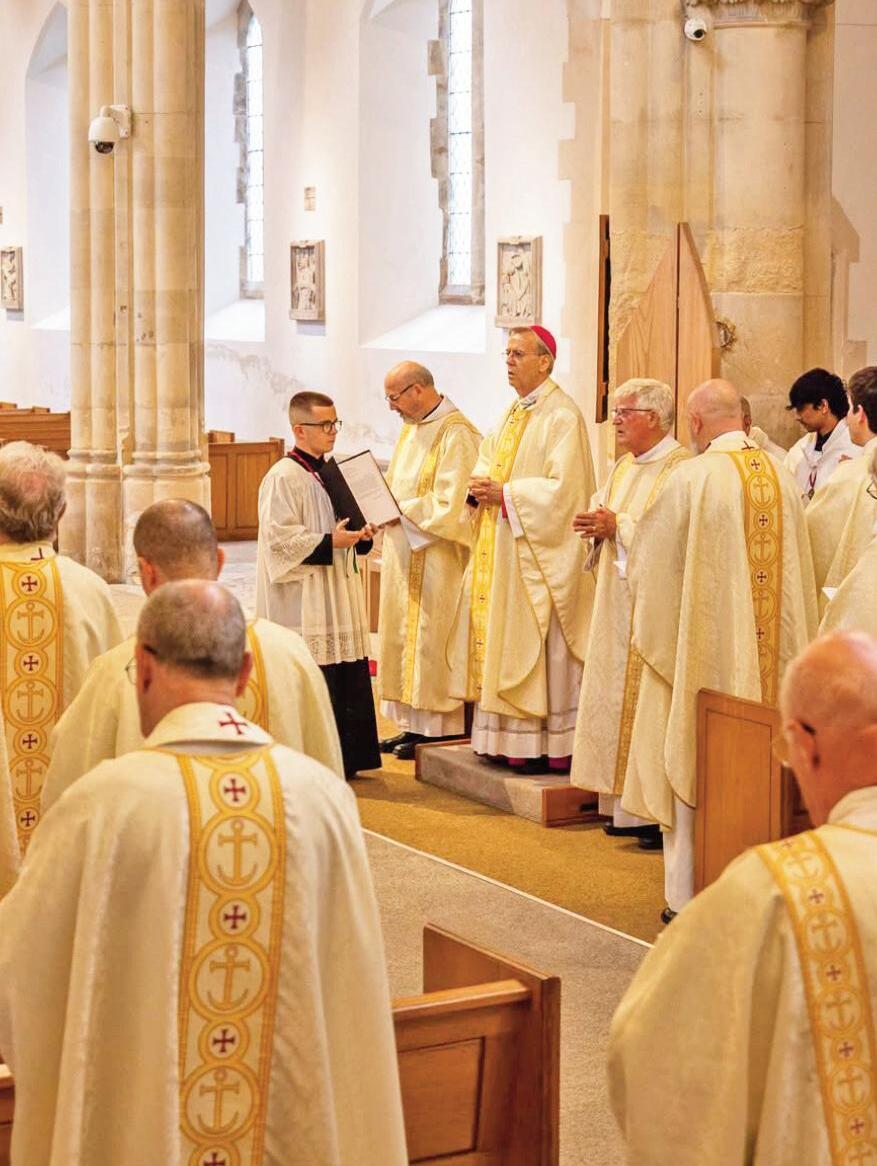
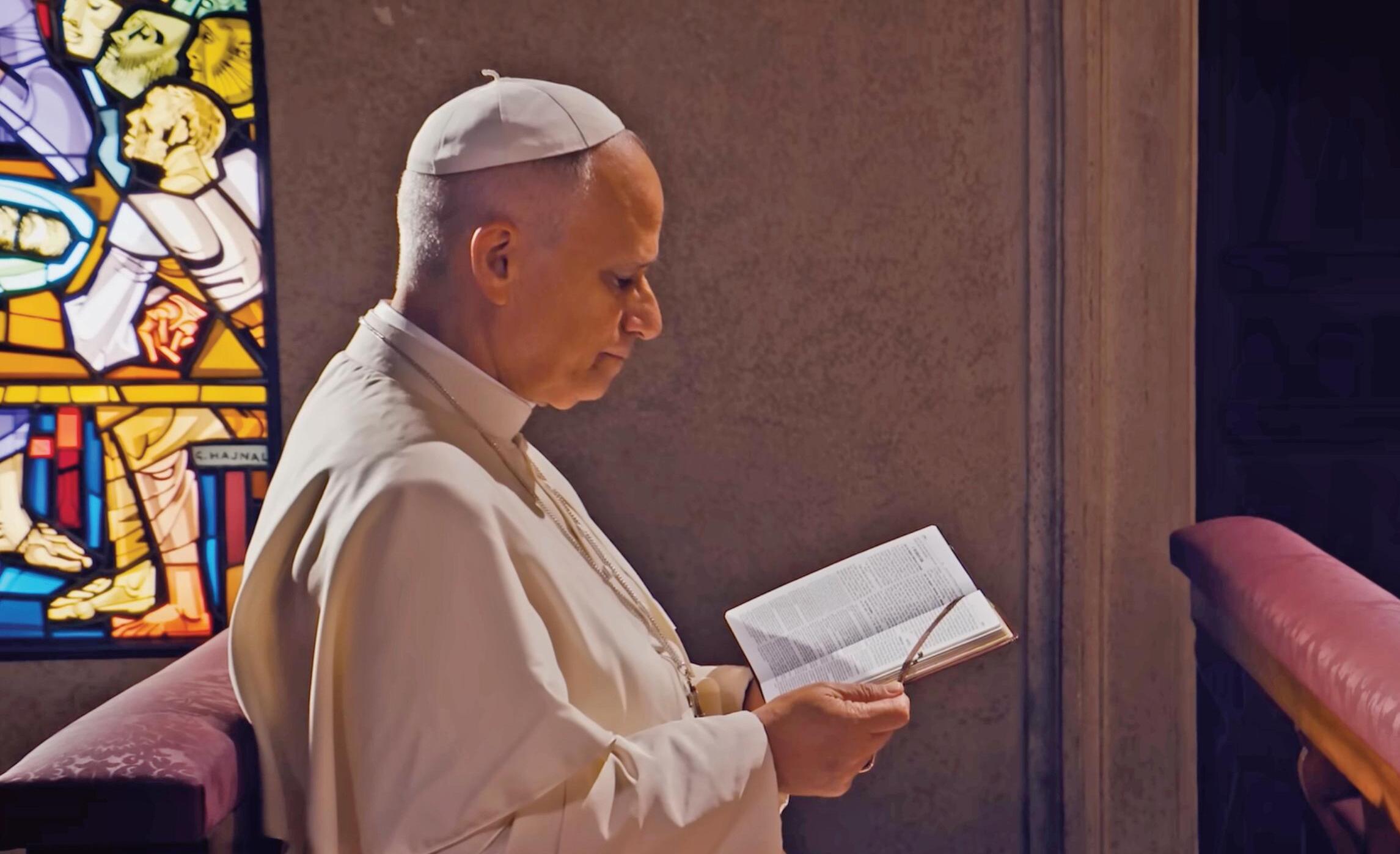
Priests celebrating significant anniversaries of ordination – Golden, Ruby, and Silver Jubilarians – were remembered at a Jubilarians’ Mass in the Cathedral Church of St Mary and St Boniface in Plymouth marking decades of priestly service and ministry. Bishop Nicholas Hudson, who is celebrating his Ruby anniversary, began the Mass by sharing: “I am deeply moved to come alongside Fr Gerard Wilberforce, Canon John Webb and Fr Anthony O’Gorman as they celebrate their Golden, Ruby and Silver Jubilees respectively; and I celebrate my Ruby Jubilee of priestly ordination too.”
In his homily, Bishop Nicholas shared a personal story from Rome: walking through the city with an old university friend, Philip, and his four children, they met a young British diplomat, Nicholas, and his four children. Bishop Nicholas
found himself saying that he had baptised seven of these eight children. When asked, with a teasing smile, by Nicholas whether baptism gave him “some kind of proprietary rights” over the children, he reflected that what he really meant was that he holds them “in his heart” – that line which “captures so much of what it means to be a priest: ‘I will hold your people in my heart’.”
He described this as capturing “both what we do and are”: the sacraments administered, the couples married, and especially “the sick and housebound” accompanied “through illness into death” over a lifetime of ministry – people he said priests “hold in our hearts forever… right up into eternity.”
Quoting his former seminary Rector, Monsignor Jack Kennedy, on the occasion of his own Ruby Jubilee he recalled the
words: “The priest needs to be a disciple of Christ. A disciple does not need to be a priest but a priest needs to be a disciple.”
Remembering Cardinal Hume’s prayer before the cross, Bishop Nicholas repeated his words: “If ever you can’t pray, just look at the cross.” He also spoke of Saint Mother Teresa’s challenge and wisdom that “The Holy Hour before the Eucharist should lead us to the Holy Hour with the poor,” and her encouragement to priests to “celebrate every Mass as if it were your first.”
Bishop Nicholas also spoke of attending an early morning Mass with Pope St John Paul II, finding him already “praying before the Blessed Sacrament.” As he prayed, the Pope passed “between his fingers, every minute or so, another piece of paper,” each one carrying an intention
brought to him for prayer. Bishop Nicholas reflected that both Pope and Cardinal alike had taught priests “to hold in our hearts the people who had asked our prayers and to ask Jesus to hold each one of them in his Sacred Heart too.”
Recalling Saint Francis’s words when he was very close to death: “We have scarcely begun to love the Lord.” Bishop Nicholas suggested that every Jubilarian, regardless of how many years they have served, “can all surely say the same.”
The bishop ended his homily by reflecting on Cardinal Hume’s own insights into his life of prayer: “I may not have been successful. But I have been faithful.” Bishop Nicholas suggested “that is surely all that will matter ultimately.”
The image from left to right: Fr Gerard Wilberforce, Bishop Nicholas Hudson, Fr Anthony O’Gorman and Canon John Webb. credit
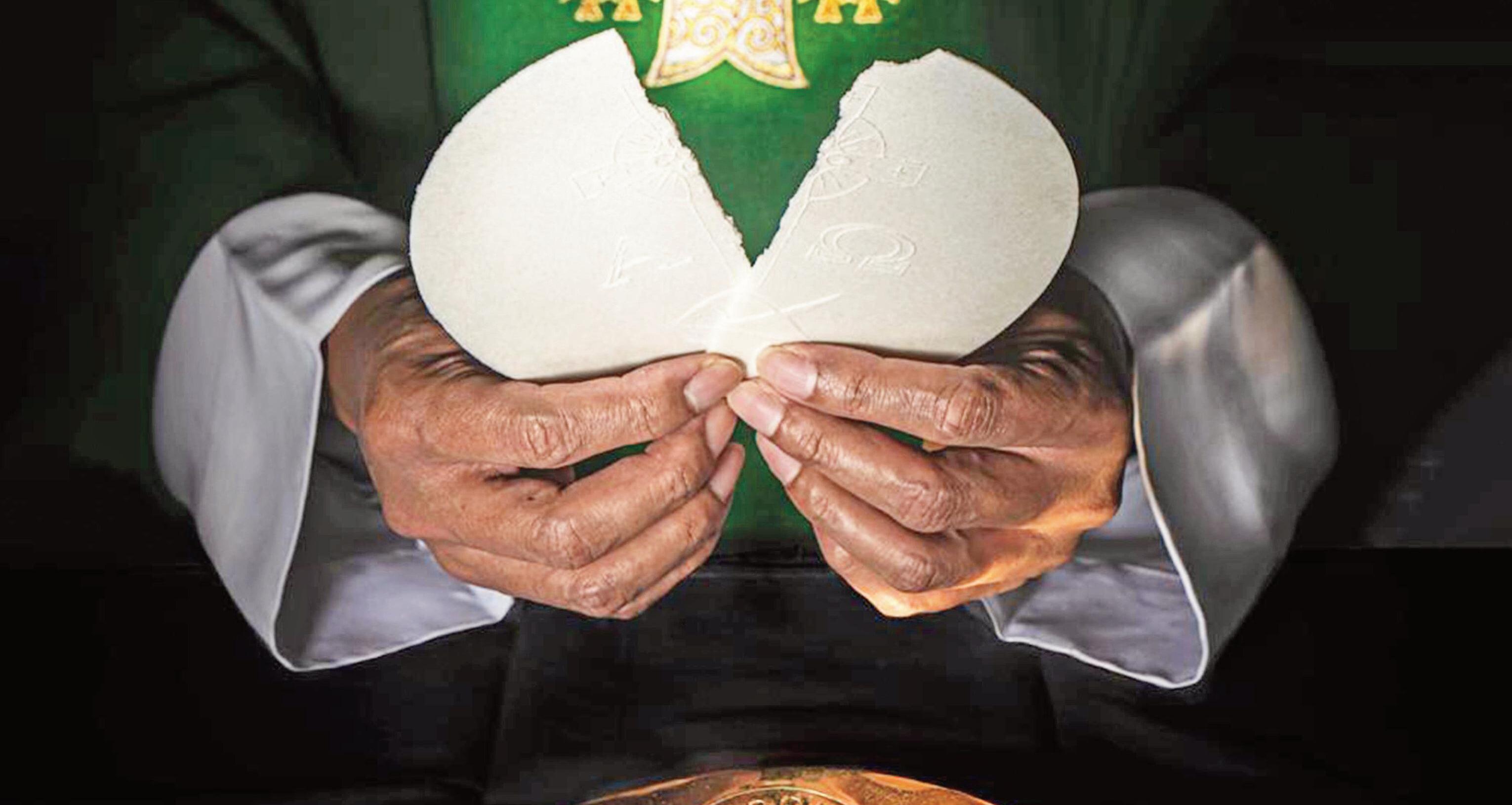
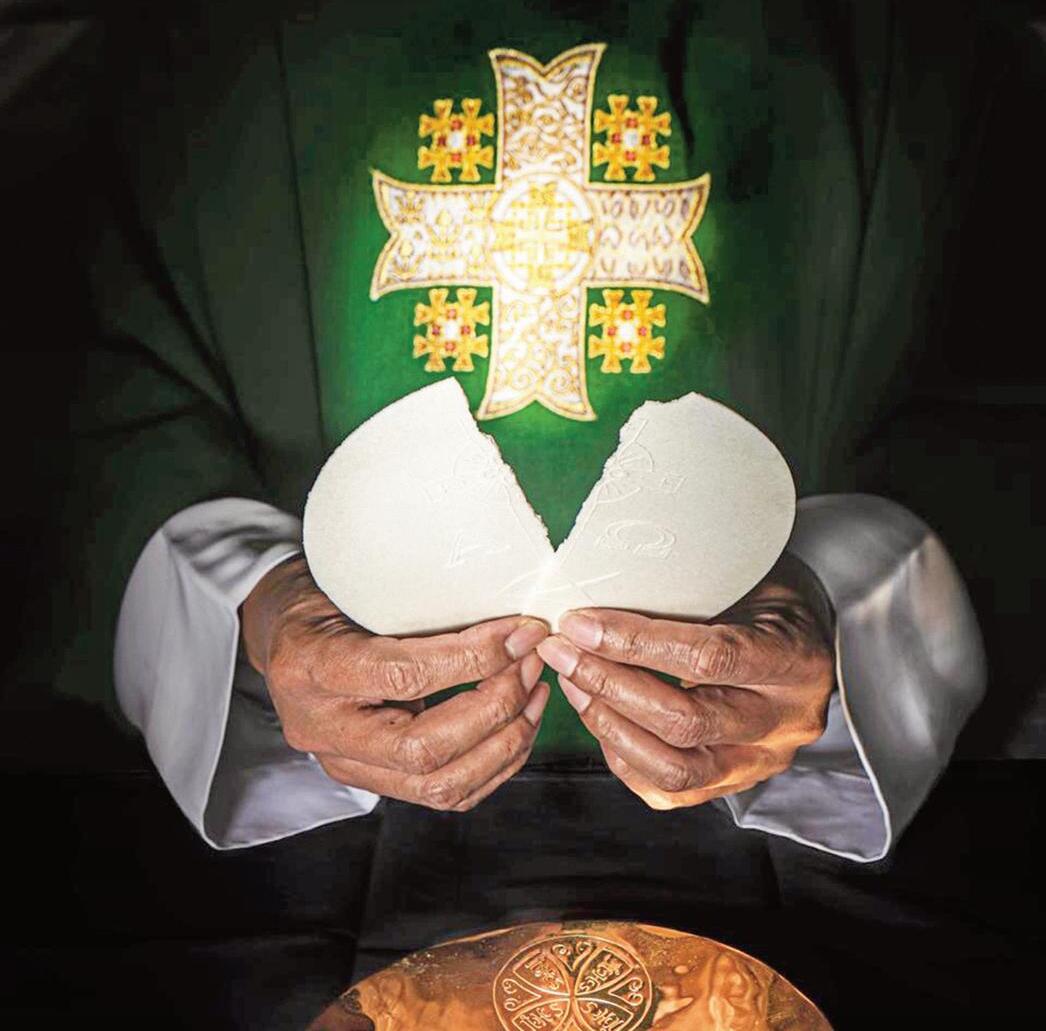
The Sacraments of Initiation - Eucharist

The Danish film Babette’s Feast is set in a remote, religious 19th century Danish village, which follows two sisters who shelter a French refugee by the name of Babette. When Babette wins a lottery, she spends her money to prepare a French feast. This meal transformed the rigid and cold community through the power of her culinary art, into a forgiving, loving, and elevated community. It is amazing what this meal accomplished for that community.
We have now reached the culmination of the sacraments of initiation with the Eucharist. The Lord, on the day before he was to suffer and die, in the context of the Passover meal, gifted his followers the sacrifice of his body and blood – the gift of himself. Over the centuries, taking the command of the Lord to continue this celebration, the Church has developed prayers and rites for this celebration. The Church reminds us that “The Lord’s Supper or Mass gathers together the people of God, with a priest presiding in the person of Christ, to celebrate the memorial of the Lord or Eucharistic sacrifice.” (GIRM 7). It is the fruits of the Lord’s Supper or the Mass that give us the Eucharist.
We hear in the Gospel of John, “Anyone who eats this bread will live for ever; and the bread that I shall give is my flesh, for the life of the world…anyone who does eat my flesh and drink my blood has eternal life and I shall raise him up on the last day…he who eats my flesh and drinks my blood lives in me and I live in him.” The Eucharist is a means of communion with
Jesus Christ – we live in him and he lives in us – we are drawn into the life of Jesus Christ in Holy Communion, and into his Body which is the Church. Over time our attitude, our words, and our actions grow and mature in love, which is Christ. But it is important to stress that the Eucharist is not a private affair. We usually enjoy a meal and a glass of wine with others. When we receive the Eucharist, it is not just about communion with Christ but with each other. Paul reminds us, “the fact that there is only one loaf means, though there are many of us, we form a single body because we all have a share in this one loaf.” Through our reception of the Eucharist, we grow deeper in one faith and are united by a bond of charity between each other. After all, we are all receiving the one and same Eucharist. Every time we gather to celebrate the Eucharist together, it should foster unity and charity between us and not discord and division.
The Eucharist is the gift of Christ himself, and with any gift, we accept it in our brokenness and weakness, and with a sense of gratitude and confidence. It is food along our journey of life, and it reminds us that Christ is always present in all the circumstances of life. We all desire love and acceptance, and we find this in the Eucharist, communion with God. As Babette’s feast transformed the community, the Eucharist transforms us to be more loving, more caring, more compassionate, more forgiving, and more peaceful, all of which we share with the world around us.
Fr Anthony Fyk
CATHOLIC CHILDREN’S SOCIETY (PLYMOUTH)
ANNUAL APPEAL 2026
“Through love, serve one another.” Galatians 5:13 and fridges. They require all such applications to be accompanied by a referee. The process from application to supply is usually within two to three weeks.
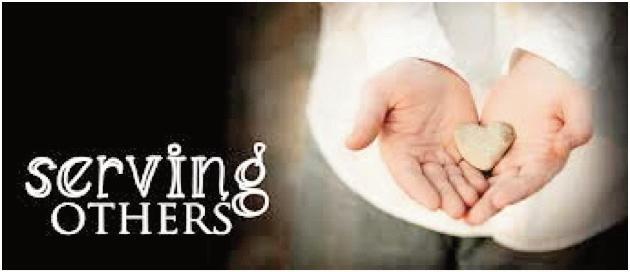
The Catholic Children’s Society based in the Diocese of Plymouth is once again holding its Annual Appeal over the Bank Holiday weekend of Saturday, 29th and Sunday, 30th August 2026. The theme of this year’s Annual Appeal is ‘Grateful Hearts – Serving Others’ and the charity is once again asking for your support please as so many families continue to struggle to provide the basic essentials for their children.
CCSP, the only Catholic children’s charity in the Diocese, aims to help vulnerable families through their Essential Grants programme by purchasing vital items such as children’s beds and mattresses, school uniform and shoes as well as white goods including cookers, fridge/freezers and washing machines. They continue to receive many requests for their financial support and it’s hard to imagine that there are children who do not have a proper bed to sleep on, or suitable shoes to wear to school. Thank you to Bishop Nicholas for his encouraging words of support.
“These are challenging times for many families experiencing financial hardship. Such families are often in temporary accommodation after fleeing abuse or the breakdown of relations or the loss of their jobs due to illness and circumstances beyond their control.
The Essential Grants Programme exists to provide essential items to help relieve families’ needs. CCSP warmly encourage applications from such families for school uniforms, shoes, beds, mattresses and bedding, clothes for children and newborn babies, cots, bottles, chests of drawers, wardrobes, alongside white goods such as cookers
CCSP also need trustees. If anyone is interested in offering their time, please contact the office on 01364 645420 and ask to speak to the Chair, Shelagh Fearnley. They would love to hear from you.
Feedback from the families that they have supported has been overwhelming as the grants really do make a massive difference to the lives of families living in our Diocese which includes Devon, Cornwall and parts of Dorset.
“I thank you very much for your email and for the wonderful news. I am truly grateful to the panel of trustees for approving my application and for the support being provided. Thank you again for all your help and support rendered to me and my children. It means so much.”
“Good morning, thank you so much for letting me know such wonderful news. I really appreciate your support ! We needed mattresses so much and now we will be able to sleep well. God bless you ! Many thanks for mattresses and for my son’s school uniform and shoes. Have a lovely day!”
“That's great, thank you very much. I do appreciate the immense support. Thank you very much, you have done more than enough for us - my kids and I are grateful.”
“Thank you. I cannot tell you how appreciative mum was for this. You really are making changes to people's lives. Kind regards.”
“Thank you so much to you all and for turning this around so quickly for the family, please do pass on my thanks. Mum will be REALLY chuffed and relieved.”
“Just to say a big thank you for this grant, it will make such a difference to mum. Thank you so much for everything. You are an absolute life saver. Thank you more than anything for helping.”
Alongside the Essential Grants programme, CCSP offer high quality Bereavement and Loss training for staff in schools and other communities via our trained Rainbows GB Director. We also work with schools to promote our Good Shepherd programme where we ask school children to think of others less fortunate than themselves by raising funds to support our Essential Grant programme.
CCSP could not continue to do what it does without the support of their loyal supporters in the parishes. Please support this year’s Annual Appeal as much as you can over the weekend of 29th and 30th August 2026 or alternatively, please consider helping in other ways, as we are always looking for help. Please call 01364 645420 for more details or visit www.ccsplymouth.org.uk for alternative ways to get involved or donate throughout the year. THANK YOU !


Saturday 29th and Sunday 30th August 2026
“Through love, serve one another.” Galatians 5:13






Making the world a better place, inspired by the Gospel
In recent weeks, Bishop Nicholas has been visiting schools across the Diocese of Plymouth. He has visited our Catholic Secondary Schools in Plymouth (Notre Dame and St Boniface College), St Cuthbert Mayne Catholic/Church of England School in Torquay. He has also visited the Polish Saturday School in Plymouth.
Catholic schools in our diocese welcome those of all faiths and none. The Gospel values-driven approach of our schools offers a wonderful opportunity for our students.
Bishop Nicholas said “It has been a pleasure to meet staff and pupils in schools in the Diocese of Plymouth. Our schools not only focus on academic excellence but seek to create an environment which goes beyond academic success — enabling students to develop into thoughtful, caring individuals ready to make a positive contribution to the Common Good.”
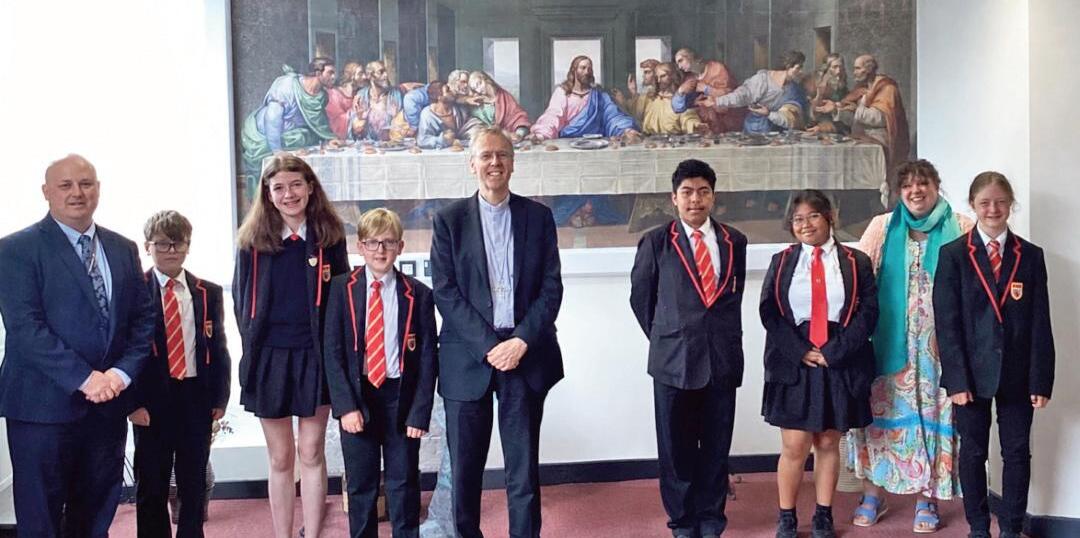
“At the heart of our schools is a strong emphasis on Gospel values such as humility, compassion, forgiveness, and service to others. I heard from students
about how they are encouraged to treat others with kindness, to be honest, and to contribute positively to their communities”
Let us pray for all the staff and pupils in our schools and give thanks for their hard work and dedication.
Centenary of St Peter’s, Bude
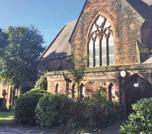
On 27 June, the Catholic Parish of St Cuthbert Mayne celebrated one hundred years since the construction of the Church in Bude, Cornwall. Bishop Nicholas attended the Mass and celebration.
“I am deeply moved to join you in celebration this centenary day of St Peter’s church, opened on the Feast of Saints Peter and Paul, 29th June 1926. We honour the memory of all those laypeople and priests who made possible the building of this church and the growth of its mission – from the first Parish Priest, Father Joseph Henry du Moulin-Browne, through his nine successors, down to Father David Annear, who was here from 2010-18 and remains a most popular visitor, and the arrival of your current Parish Priest, Canon John Deeny.”
“You have a wonderful patron in Saint Peter. He is one of my favourite saints because he allowed the Lord to pick him up and set him on his feet again. Peter was beloved too of his successor, Pope Francis, who used to say we can never imagine we have sunk so low as to be incapable of being raised up by Christ. I ask Saint Peter’s intercession for all who worship in this church named in his honour, that each of you will grow in your faithfulness to Christ and draw others to know him by your words and example and simply living out the Catholic faith.” said Bishop Nicholas Hudson.
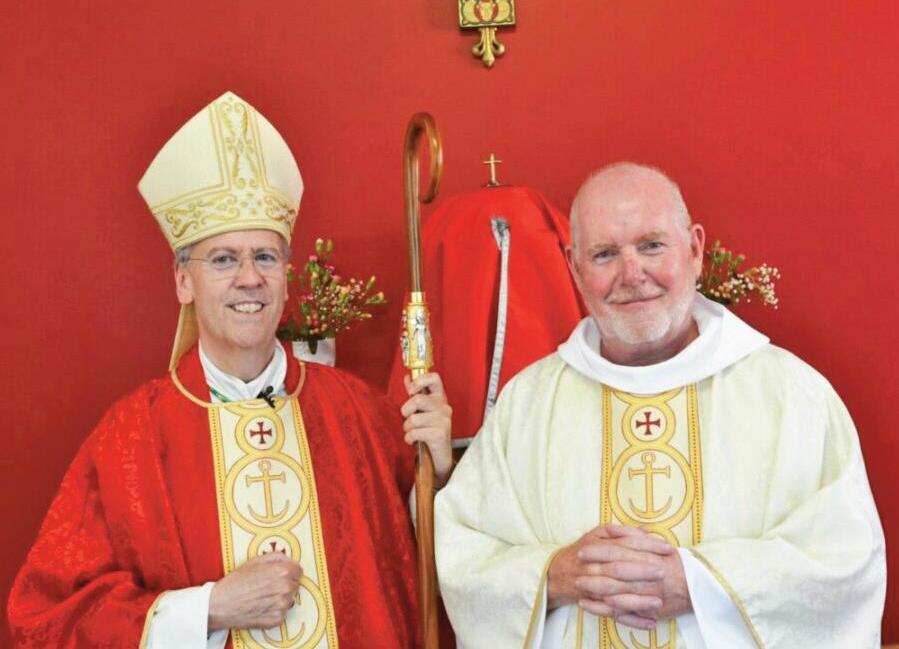
The church was built in 1926 by the Canons Regular of the Lateran from Bodmin. The church was served from Launceston until 1976, when it became a separate parish. It is now once again served from Launceston.
Image: St Cuthbert Mayne School
Evangelisation Through Art
The Mission of the Diocese of Plymouth, through the Vicariate for Evangelisation and Catechesis, is growing as a Diocese of Proclamation. Meaning that the faithful are so transformed in relationship with Jesus that they seek to “Go into the whole world and share the Good News” and are equipped and confident to introduce Him personally to others. This is the mission of the whole church, the Great Commission.
Our diocesan evangelisation team work to form us to evangelise and to create opportunities for evangelisation.
Most recently the team organised a successful art event in Yelverton. The Evangelisation Through Art exhibition at Holy Cross Church attracted over 220 visitors, showcasing work from 7 artists and creating a strong community response as well as spontaneous visits from visitors to the area. The objective was to host an event that would open hearts and stir souls. The artists were ready to engage with visitors using their art as a stimulus for meaningful engagement that, with grace, might open a faith conversation leading to Jesus.
A similar event organized independently by the Holy Family Parish in Penzance was also very successful in bringing new people in to visit the Church and learn more about our Faith. This event uses the media of quality concerts, artwork and themed flower arrangements by parishioners and others to engage and attract people. Most importantly there were parishioners with a strong desire to share Jesus’ good news and introduce Him personally where they could.
Art is a powerful tool for spiritual engagement. Across the centuries and across cultures, art has connected Christians of every generation with the story of salvation in Jesus Christ in which they participated in their own time and place. Visitors to our events are given the opportunity to experience deeper connections to faith through Jesus. Art helps open conversations, inspire reflection, and highlight God’s presence and healing in people’s lives and the world at large.
Pray with the Pope
For resources on how to Pray with the Pope, either on your own or in groups, use this QR code.
In his prayer, the Pope recognised that the Lord has created each of us in love and called us to live in fullness.
"Each person is a sacred gift that reflects your face," he said, "from the first instant of existence to the final breath of their journey on earth."
He continued, "we ask for the grace to recognize and protect the unique and unrepeatable value of every human being."

He expressed his wish that we learn to "welcome life unconditionally," to "tenderly care for fragility," to "accompany each stage with respect," and "to bravely defend those who have no voice."
Pope Leo asked the Lord to forgive us when we fall into indifference or the culture of discard, and when we fail to see in others a being worthy of love.
"Give us a new heart, always ready to choose life," he said, "and generous hands that protect it through concrete actions."

In his recent encyclical, Magnifica Humanitas, Pope Leo reminds us that “For centuries, the Christian tradition has maintained that human beings are not confined by the boundaries of their own nature; rather, they are called to selftranscendence, not through an escape from reality or a contempt for their limitations, but through their fulfilment in love.” Art can be a means of exploring self-transcendence and love.
Building on this success, the initiative continues with exhibitions planned in Kingsbridge in July, Totnes in August and Newquay in September, inviting more people to come to know God’s love and truth through art.
You can find out more about learning to evangelise naturally, or about forthcoming exhibitions by contacting Michele.thompson@prcdtr.org.uk.
Respect for Human Life
Lord of life,
You created us in love and called us to live in fullness. Each person is a sacred gift that reflects your face, from the first instant of existence to the final breath of their journey on earth.
Today we ask for the grace to recognize and protect the unique and unrepeatable value of every human being.
May we learn to welcome life unconditionally, to tenderly care for fragility, to accompany each stage with respect, and to bravely defend those who have no voice.
Forgive us, Lord, when we fall into indifference or the culture of discard, when we fail to see in others a being worthy of love.
Give us a new heart, always ready to choose life, and generous hands that protect it through concrete actions.
Make your Church a living witness of the Gospel of life, an open home where every life is celebrated, where no one feels unwanted, and where dignity is always honored and protected.
Lord Jesus, may we love life as you love it: with tenderness, fidelity, and self-giving. May we proclaim, in words and actions, that every human life is worth the total gift of ourselves.
Amen
Image Credits: Debbiestovellart.com
Scripture Focus
On Thursday 6th August, we celebrate the feast of the Transfiguration of our Lord. This is one of the most inspiring feasts in the church’s year, recalling a key moment in Jesus’ life.
Peter has recognised Jesus as the Messiah. Now Jesus warns his disciples that as Messiah, he will have to suffer rejection and ultimately be crucified, yet on the third day he would rise again. At that time, the disciples could not understand this teaching.
So: a few days later, Jesus calls the three disciples he chose first (Peter, James and John) and takes them privately up a high mountain. There his appearance is totally changed for a short while, and the disciples get a glimpse of heaven.
Although they have often looked at Jesus’ face, now they see it as radiant as the sun, while his ordinary clothes are now shining brightly, as white as the light.
By Fr Jeremy Corley
Our Hope of Glory
Then two ancient figures from Israel’s history appear to them out of heavenly glory Moses and Elijah. Now Jesus is in company with Moses, the giver of the Jewish Law, and Elijah, the great prophet.
It is no accident that Jesus is seen with Moses and Elijah, because these two figures reached heavenly glory at the cost of many struggles. Moses was the one who once liberated the people of Israel from their slavery in Egypt, just as Jesus would liberate us from our slavery to sin.
But Moses also faced great struggles while leading the chosen people through the desert, as they often fell back into sin and idolatry. So too, Jesus would face strong opposition from his own people, and their leaders would hand him over to the Romans for execution.
Finally, after a long life, Moses died and was buried near the border of the promised land, but the last chapter of the Book of Deuteronomy says that no one knows his burial place. Hence, some later
Jewish traditions claimed that Moses had been taken up into heaven. After Jesus’ burial, his tomb would be found empty, and he would be seen ascending into heavenly glory.
The other ancient figure who appeared was Elijah, the great prophet of justice. He called the people to return to the one true God, and he rebuked King Ahab for the murder of the vulnerable farmer Naboth. Jesus also called his hearers to repentance and proclaimed God’s righteousness, especially in the Sermon on the Mount.
Elijah suffered great persecution from King Ahab for calling people to conversion and speaking out in defence of the poor. Jesus himself faced opposition and persecution, that led to his crucifixion. At the end of his earthly life, Elijah was taken up to heaven in a whirlwind. So too, after his death and resurrection, Jesus would ascend into heavenly glory. His dazzling white clothes were just a foretaste of his future glory.



The transfiguration offered encouragement to Jesus’ chosen disciples to keep up their hope, despite Jesus’ suffering and death. Their glimpse of heavenly glory also encouraged them in later years, when they faced persecution as followers of Jesus.
Amid the difficulties of our daily living, it can sometimes be easy for us to lose hope. Yet at certain times in our lives, we may experience a kind of rare glimpse of heavenly glory. We can treasure these precious moments, because they offer us hope and encouragement.
The feast of the Transfiguration reminds us that God can uplift us in tough times with glimpses of heavenly glory. May God uphold us in our difficulties, and may God uplift all who are currently in need.


View from the Pew

By Dr Jay Kettle-Williams
You having a laugh?
I was still a young lad when my father, a haemophiliac with Christmas Disease who always referred to himself jokingly as ‘a bleeding nuisance’, dropped a chisel into his hand and severed the artery between thumb and index finger. A tourniquet quickly applied saved his life but he was not out of danger until after a long period in hospital.
He was confined to a 6-bed male surgical ward. His ‘ward-mates’ proved to be keen and effective practitioners of that selfdeprecating humour, so incomprehensible to many foreigners, so well practised, in my experience, by Brits and by so many members of the Jewish community, of which Frankie Vaughan – not renowned for being a comedian, was a member, constantly cracking Jewish jokes one after the other.
Born Frank Fruim Abelson (3 February 1928 – 17 September 1999), famed as ‘Mr Moonlight’ for his signature song ‘Give me the moonlight …’, Frankie occupied the hospital bed next to my Dad’s. The ward’s own ‘crazy gang of 6’ kept members’ spirits up, ever in good humour. Come the end of visiting hours, patients and visitors alike would all be splitting their sides, everyone in stitches (No pun nor danger intended). ‘God has given us a sense of humour. He’ll want us to use it.’
Humour is very much culture-bound yet perhaps not appreciated to the same degree at any one time within the culture to which it is ascribed: ‘Allo! Allo!’, Rik Mayall, Benny Hill, ‘The Life of Brian’, Jackie Mason and Adrian Edmondson could well be cases to prove my point. Well, ‘One man’s humour …,’ they say. So history, surely, also comes into play. In addition to being culture-bound, humour can also be time-bound. And no doubt somebody, some day will be compiling a doctoral thesis – if they haven’t already done so – perhaps entitled ‘On the synchronic and diachronic analysis of humour: a comparative cross-cultural study with reference to the capsules of time and space.’
But seriously: There are many modern and contemporary Jewish comedians constituting a rich seam of iconic male and female exponents. They represent a wide range from the classic days of standup, sitcoms and screenwriting right up to
the touring acts of today. By way of a quick reference, all you need do is go online and key in ‘The Funniest Jewish Comedians Of All Time’ or just click: The 100+ Funniest Jewish Comedians Ever, Ranked
Jewish comedians have profoundly shaped comedy, blending cultural insight, wit and social commentary across generations. And that prompts my interest in tracing their heritage back in time. I can’t help but wonder what Jewish humour would have been like in the past. Has it changed in any way? How different would Jewish humour of yesterday be from that of today? Presumably there would be evolution, if only spurred on by cultural developments apart from the lapse in time. But what made people chuckle long ago? Did the Apostles have a sense of humour? What would have made them chuckle? What jokes would have been doing the rounds in Christ’s day? There’s probably no evidence from the time – the Romans must have been the butt of some barbs - but The Bible can help shed some light, be that from The Old Testament (compiled between 1200 and 165 BC) or The New Testament (compiled between 50 and 100 AD).
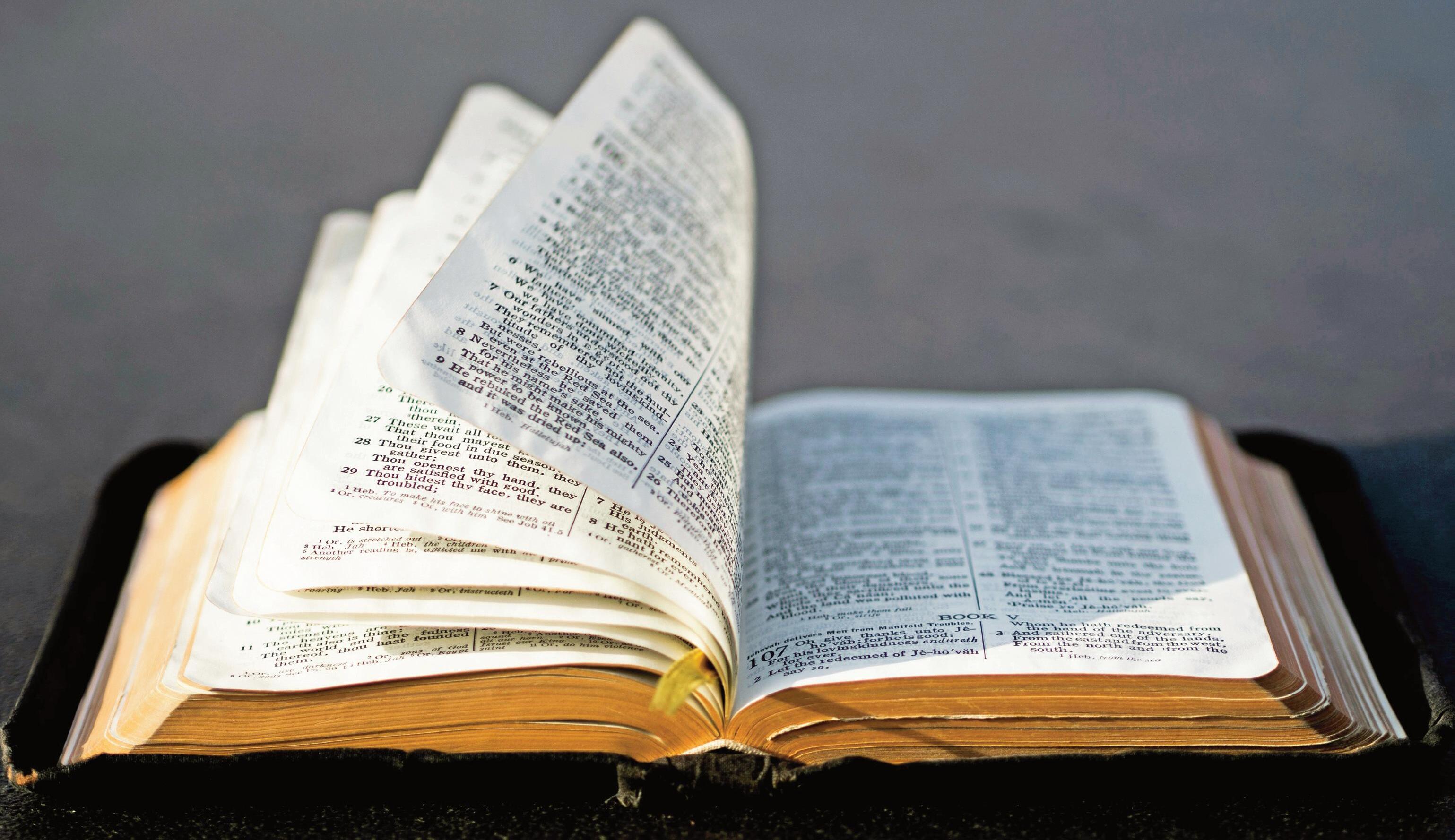
Is there humour in The Bible? Well, scholars maintain that both the Hebrew Bible and the New Testament deliberately contain humour, in part if not wholly with roots in immigrant life and historical challenges. That humour appears in many hues: irony, satire, wit … Perhaps we don’t see it. We could well be blindfolded: we are no longer privy to the non-transferable cultural clues and prompts of yesteryear; we might read text


in English without picking up on any levity, however subtle, on the part of the originators. By way of example: some scholars note wordplay in the original Aramaic/Hebrew text. We can but read translations. ‘Traduttore, traditore’, the classic Italian adage, reminds us that no two languages share the same syntax, idioms or cultural context.
Jesus certainly used humour. Once you see it, I’m told, it’s as plain as the nose on your face. His humour is not jocular in the modern Edinburgh fringe way but of comic exaggeration, absurd imagery, witty retorts and imagery – jointly and severally part of the classic toolbox for ancient Jewish teachers following the longestablished rabbinic technique. The one, taken the absurd-imagery repertoire, about a camel and the metaphorical eye of the needle would certainly have amused folk for its total absurdity. But I doubt whether that’ll be enough to have us rolling in the aisles. Suggested reading: Wit and Humor of the Bible: A Literary Study by Marion D. Shutter; Humor in the Gospels by Terri Bednarz
Notes, Acknowledgements and Attribution: Accompanying image (Statue with Blowing Horn) after the sculpture Exultate Jubilate by Philip Jackson; Texts/References adapted and/or adopted from http://en.wikipedia.org under the terms of the Creative Commons AttributionShareAlike License 4.0: /; Photograph (Unsplash): The Bible (Aaron Burden)

Dr J L Kettle-Williams is an experienced business communications consultant and wordsmith (tutor, writer, translator).



The Fool’s Pilgrimage – Five Days of Silence
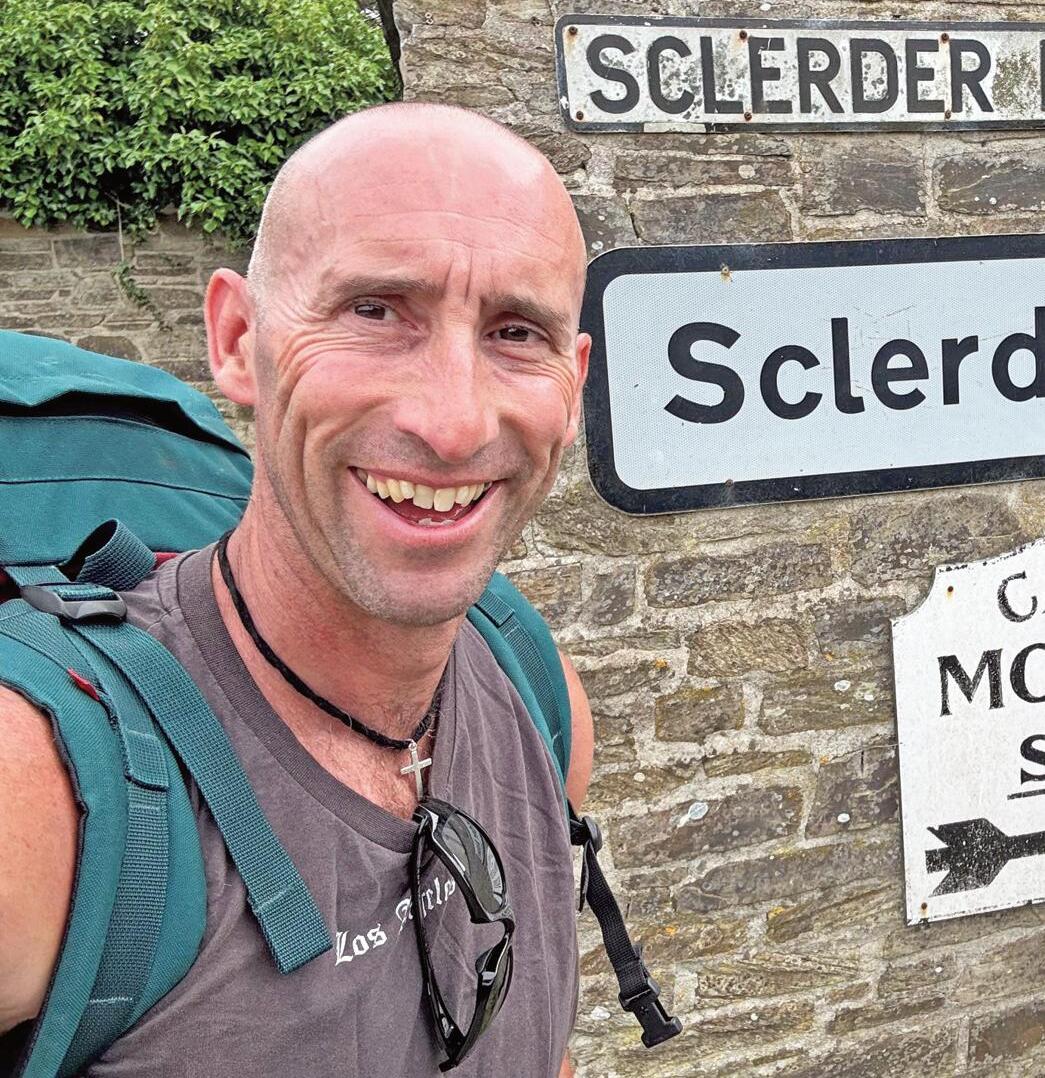
This was my fifth visit to Sclerder—a retreat not simply from noise and distraction, but a gentle laying aside of self… and, on this occasion, an unexpected encounter with a rather determined bee!
It was also my longest retreat: five nights. When Lisa signed my “permission slip”, I made sure to get it booked before she had time to persuade me otherwise. But, in truth, she was probably happier with her own peace and quiet for a few days!
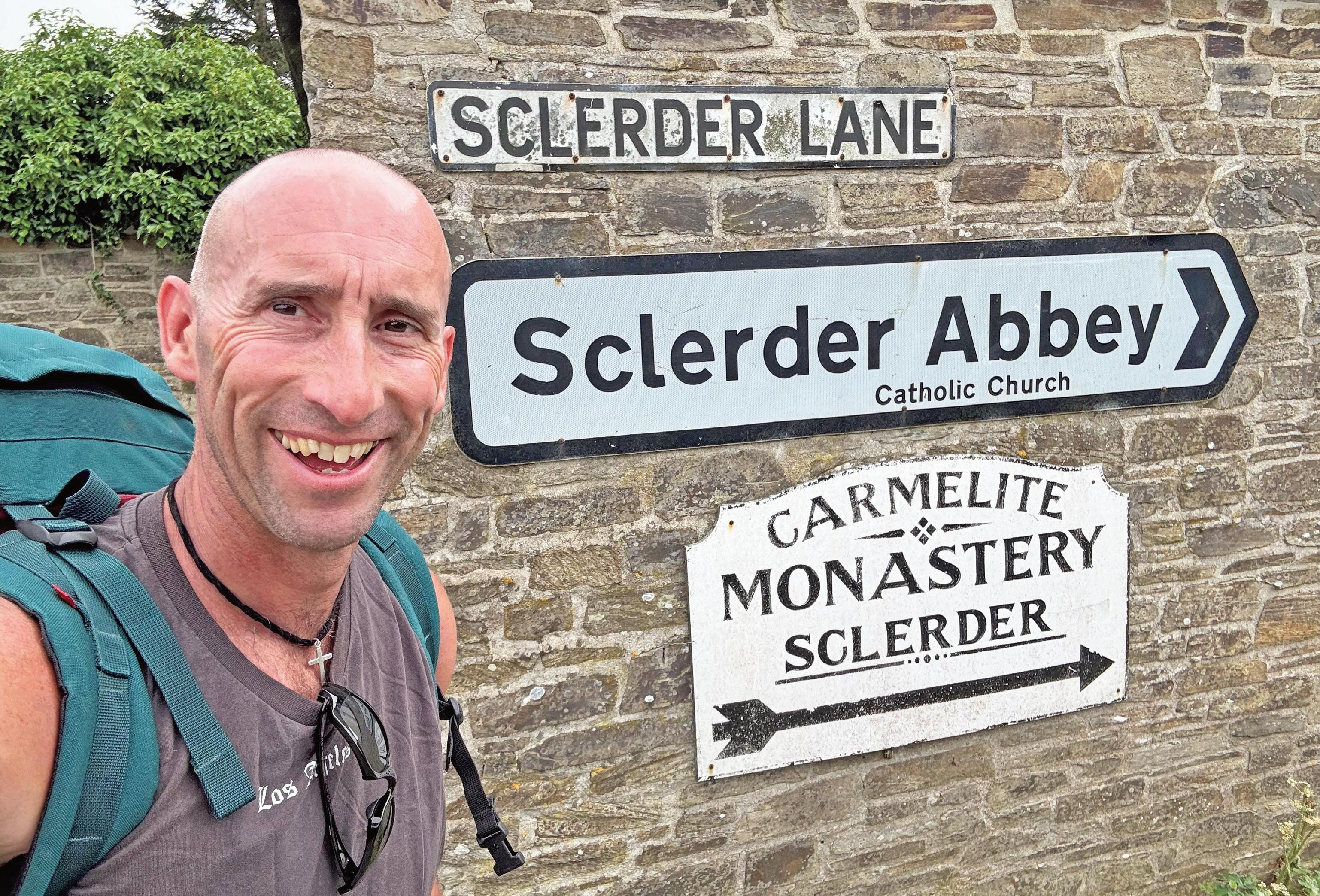
Sclerder is tucked quietly away just off the A387 between Looe and Polperro. Home to the Chemin Neuf Community, it is a place of generous hospitality where you’re made to feel welcome from the moment you arrive.
Usually I’d drive, leaving my car in the car park. But as both of my daughters are now driving, it seemed only fair to leave our second car at home. So, I packed my old rucksack—the one my Mum and Dad bought me for my nineteenth birthday, nearly thirty years ago—caught the train, then the bus, before walking the final kilometre.
It transformed the journey into something more than travel. It became a pilgrimage. The Fool’s Pilgrimage.
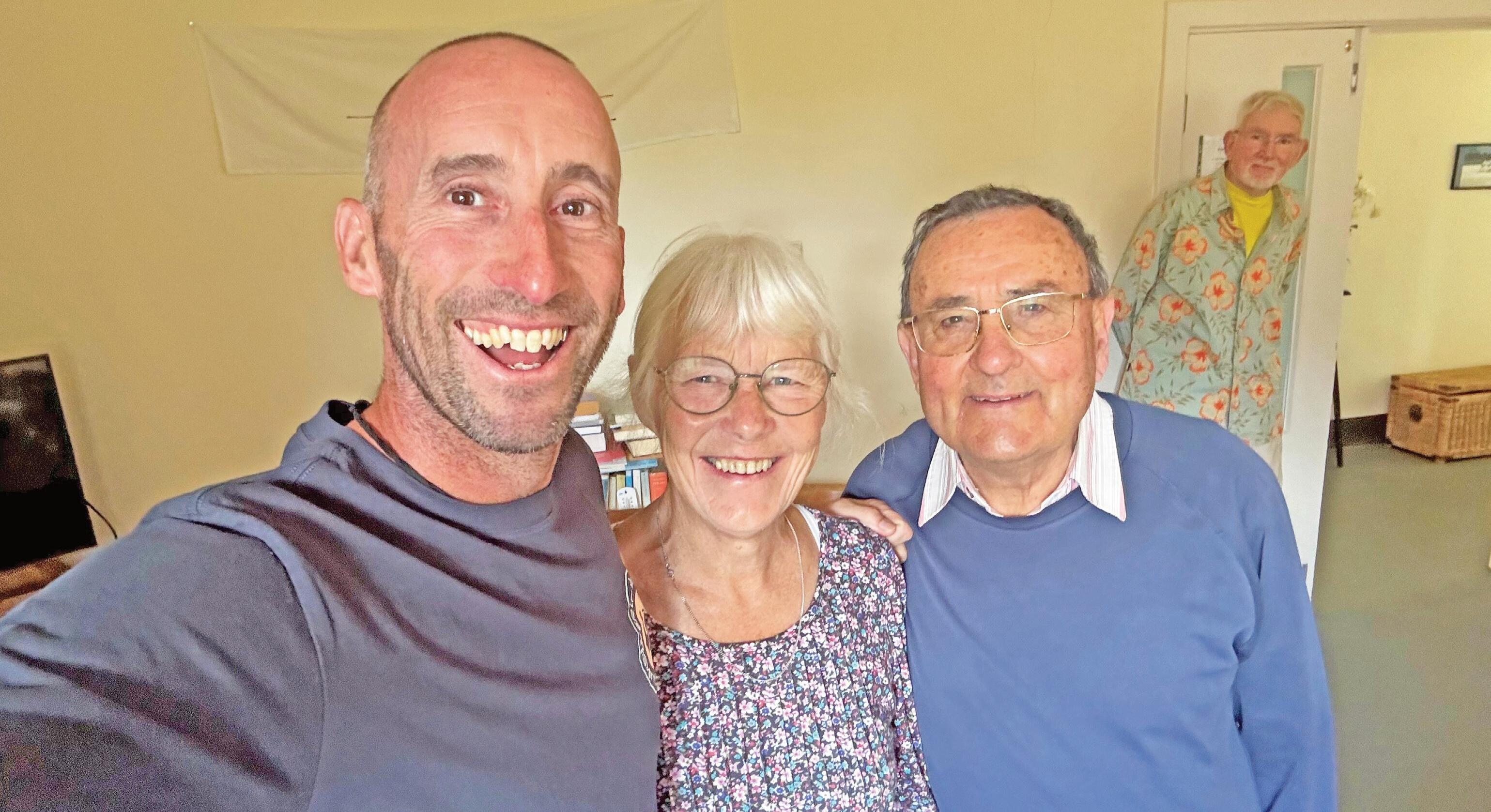
Fr Adrian was waiting to welcome me, together with Elaine, Mary-Jane and Ruth, who looked after us so wonderfully throughout the retreat. Together they formed the Plymouth Diocese Spirituality Team, gently accompanying each retreatant with wisdom, encouragement and the occasional nudge towards whatever might help us to notice what would probably help.
The setting itself seems to invite silence.
Nestled in a sheltered valley only a short walk from Talland Bay, Sclerder is surrounded by woodland, open fields and the ever-present rhythm of the Cornish coast. Whether you understand that spiritually or simply through the restorative power of nature, the combination of sea air, ancient trees, birdsong and open horizons has a remarkable way of quietening the mind and awakening a deeper awareness.
I love walking.
My legs have not always served me well and they certainly have their aches and pains these days, but I remain deeply grateful for them. Walking the coastal paths and woodland trails has become part of my prayer.
In fact, when Lisa saw my step count, she wondered whether I’d accidentally booked myself onto a walking holiday instead of a silent retreat!
For me, the two are inseparable.
Walking has become one of the most contemplative forms of prayer I know.
The gentle rhythm of walking often leads naturally into what St Ignatius of Loyola calls a colloquy—simply a conversation between friends.
And who am I talking to? Sometimes God the Father, sometimes Jesus, sometimes the Holy Spirit.
Sometimes one of the saints or angelic beings who seems especially close that day, sometimes, if I’m honest, myself.
It reminds me of my old Irish nan. When I was a teenager, I once caught her talking to herself and asked who she was speaking to. Without missing a beat she smiled and replied, “Well, in order to find their equal, the Irish have to converse with themselves… or the Almighty.” I’ve never forgotten it.
I’m only about 39% Irish, but I think her reasoning still stands.
Whether we call it prayer, reflection or simply thinking out loud, there is something profoundly human about speaking our thoughts into the silence. More often than not, somewhere within that gentle conversation, we discover a reply.
The Plymouth Diocese Spirituality Team bases its retreats on the Spiritual Exercises of St Ignatius. As a fitness trainer, I rather like the word exercises. They remind me that prayer is not simply something we think about—it is something we practise.
One of the greatest discoveries I’ve made along my merry journey of discovery is that there is a broad river of meditation.
Some people picture crossed legs, empty minds and incense, others imagine monks in silent monasteries, yet meditation is simply the practice of becoming more deeply aware.
At one end of the river lies the simplest form of meditation: awareness of the breath, feeling the gentle rhythm of breathing.
Listening to the birds, noticing the breeze.
Allowing the body to settle, simply becoming present, nothing complicated, nothing forced, just noticing.
As the river flows, awareness becomes gratitude, gratitude becomes reflection, reflection becomes conversation, conversation becomes prayer, prayer becomes contemplation.
The river continues to widen, carrying us
gently towards communion and oneness with God and with each other.
Each stage is different, yet none is greater than another. They are simply different depths along the same river.
For me, the journey often begins by creating a sacred space—a quiet room, a candle and a simple prayer. Then, whenever possible, I step outside.
Walking slowly through woodland, fields or along the coast awakens something deeper. The sights, sounds, scents and textures of creation become companions rather than distractions.
Creation itself begins to pray.
The more attentive I become, the less separate I feel.
Not that I become creation, but I become more aware that I belong within it.
Every breath I take was once breathed by another living creature. Every birdsong becomes praise. Every crashing wave reminds me that life—and time—are always moving.
This movement through awareness has been described in different ways throughout Christian history.
St Ignatius of Loyola invites us to find God
in all things. Every sense becomes a doorway through which God gently speaks, drawing us towards consolation rather than desolation.
St Teresa of Ávila describes the soul as an Interior Castle with many rooms. Prayer is not about climbing towards God but discovering that He has been waiting for us all along in the deepest chamber of our own hearts.
St John of the Cross reminds us that even darkness can become a place of encounter. Silence, uncertainty and apparent absence are often not abandonment but invitation. The soul slowly learns to let go of striving and simply remain with Love.
These are not competing methods. They are different paths through the same landscape.
Some days meditation is simply sitting quietly with the breath, some days it is an attentive walk-through nature, some days it is praying with Scripture, some days it is resting silently before God without words, some days it is wrestling through the dark night until peace quietly arrives.
Continued on next page
Every one of these is meditation, every one of these is prayer, every one of these is enough.
Perhaps every river eventually finds its way to the sea.
The broad river of meditation is rather like that. We each enter it at different places, travel at different speeds and are carried by different currents, yet all are gently being drawn towards the same destination—the infinite ocean of God’s love.
During these days at Sclerder I came to appreciate how a place can quietly teach this truth. The silence, the chapel, the ancient trees, the coastal paths and the gentle rhythm of each day all invite the same movement: from distraction to awareness, from awareness to presence, from presence to communion.
Perhaps meditation is not really about trying to find God at all, perhaps it is learning to become still enough to notice
that He has been walking beside us all along.
And then… Just as I was sitting in complete wonder, watching three butterflies dancing effortlessly upon the breeze, an indignant bee decided I had become just a little too contemplative and promptly stung me on the head!
Nothing like a sharp reminder that we’re still gloriously human.
As I sit here a couple of days later, gently rubbing the still-tender bump on the top of my head, I can’t help but smile.
Because, somehow, I think God was in that moment too.
Perhaps even the bee was part of the retreat, helping me attain another level of awareness - but that’s another story.
Sometimes grace arrives as stillness, sometimes it arrives with wings…and occasionally with a sting.
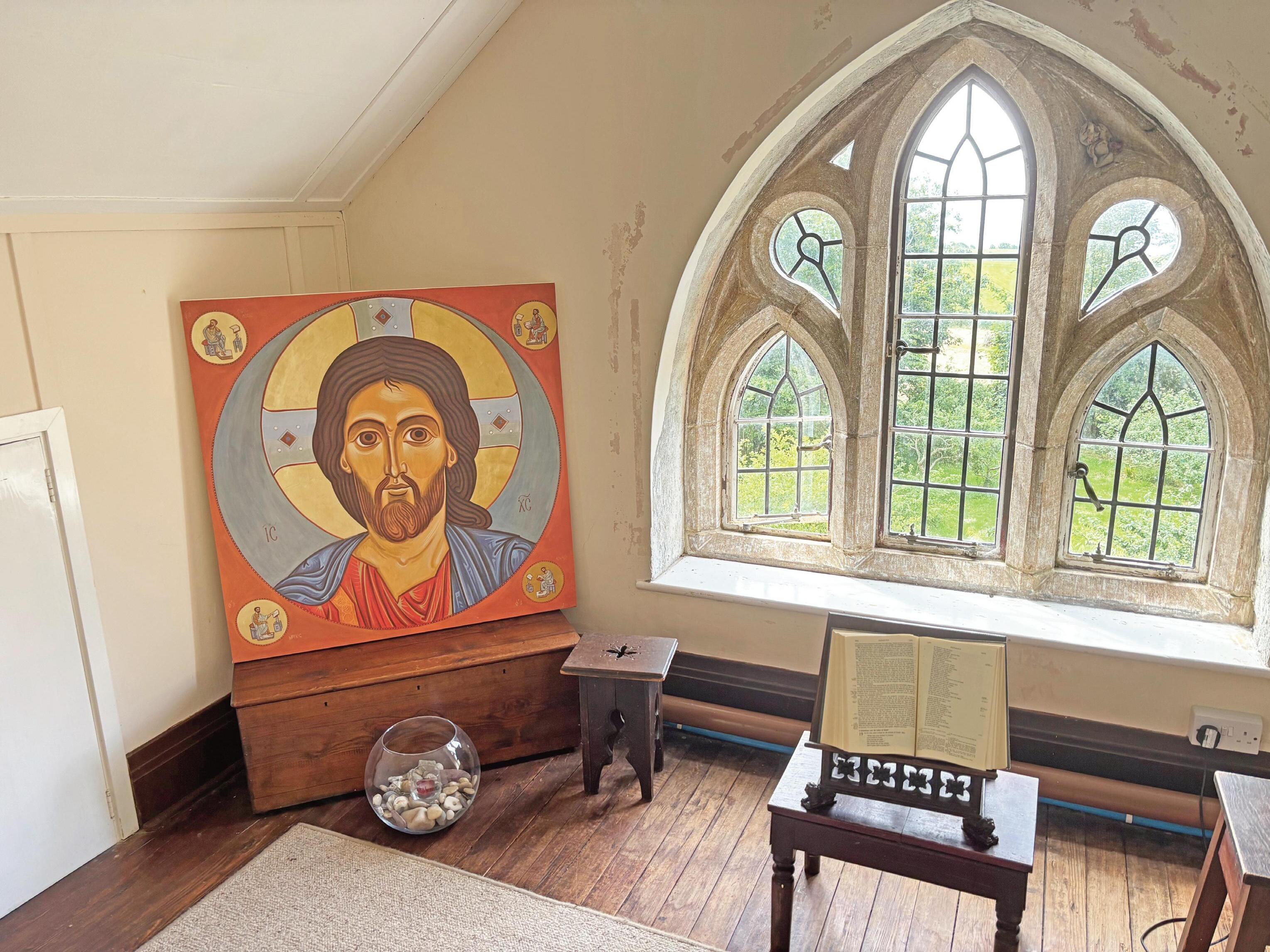
As I left Sclerder and shouldered my old rucksack once more, I realised that perhaps a retreat doesn’t end when we walk back through the gate.
us.
Waterways Chaplaincy
I found my vocation as a Waterways Chaplain while living on the waterways myself. When you live on a boat, you begin to see life differently. You notice the quietness, the beauty, the slowness but you also see the struggles that many people carry beneath the surface. It was there, among the marinas and towpaths, that I first became aware of the desperate need. People imagine the waterways as peaceful and idyllic, and they often are, but they are also home to individuals facing loneliness, poverty, illhealth, and the kind of hidden hardship that rarely reaches public attention. Being part of that world opened my eyes and stirred something in me that felt unmistakably like a calling.
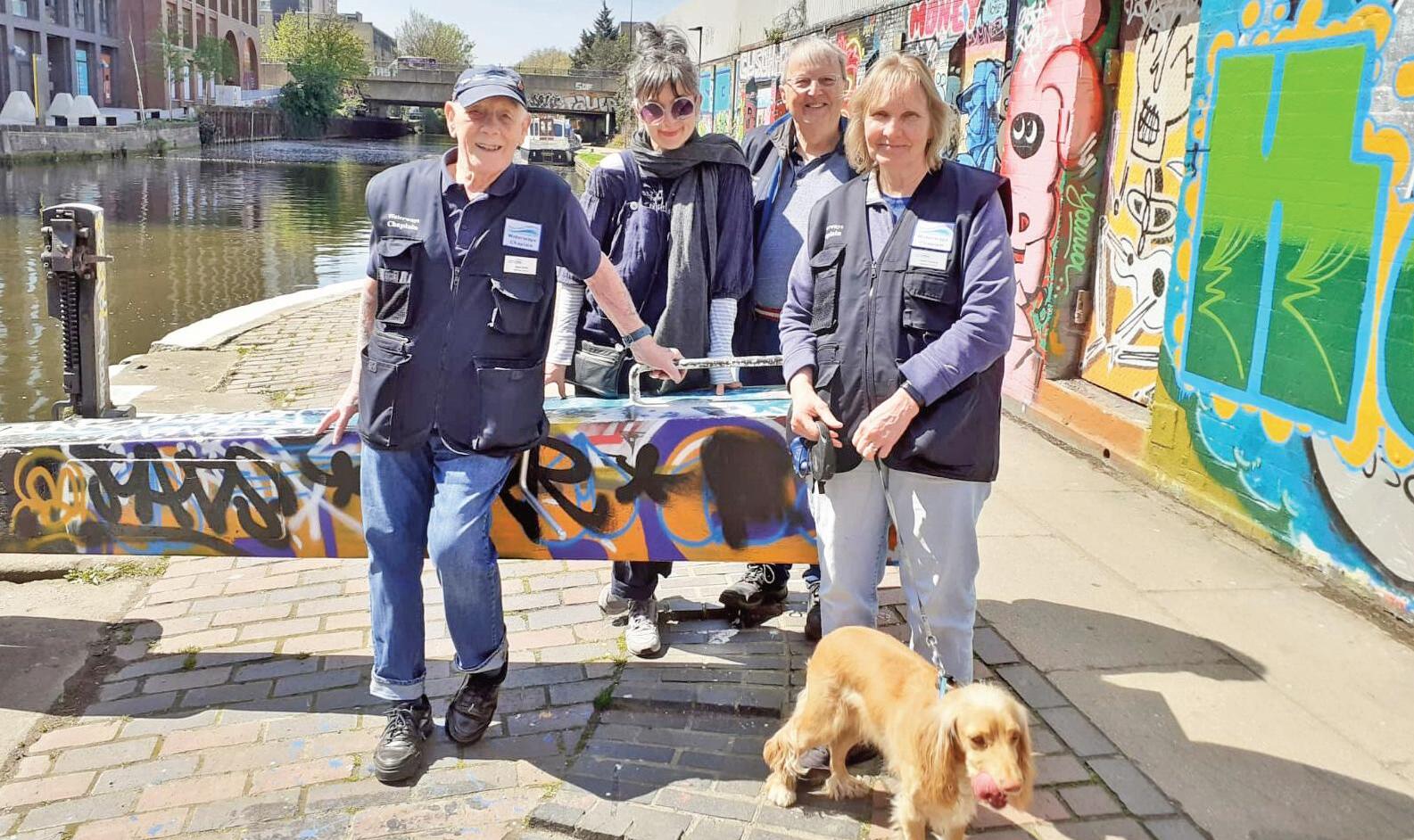
The Waterways Chaplaincy is a charity that offers care and support to anyone and everyone on and around the navigable inland waterways of the UK. What makes this ministry distinctive is that we do not wait behind a desk or inside a church building for people to come to us. Our calling is to go out to walk the towpaths, visit marinas, knock on boat doors, chat with dogwalkers, and simply be present in the everyday life of the waterways. We aim to be seen, to be approachable, and to be available to listen, to chat, and, if asked, to offer support and care to anyone in need.
As a volunteer chaplain, much of my ministry looks beautifully ordinary. I might spend an afternoon walking a stretch of canal, stopping to talk with boaters who are moored up for the day. Sometimes it’s a fiveminute conversation about the weather or the state of the locks. Other times, someone invites me aboard for a
cup of tea, and the conversation gently opens into something deeper worries about finances, struggles with health, the weight of bereavement, or the loneliness that can settle in during long winter months. These encounters cannot be scheduled or predicted. They unfold naturally, in God’s time, and I have learned to trust the Spirit’s prompting in each one.
Over time, relationships grow. Trust builds. And it is often through these steady, gentle connections that more complex issues come to light. Many boaters face challenges such as poverty, poor health, financial difficulties, or the effects of trauma and isolation. As chaplains, we walk alongside them, helping where we can signposting to services, raising safeguarding concerns when needed, helping people access healthcare or benefits, or simply being a consistent, compassionate presence in a world where many feel unseen. Sometimes the help is practical: carrying water containers, finding a lost dog, helping someone navigate a difficult form. Sometimes it is emotional or spiritual: offering prayer when invited, listening without judgement, or holding hope for someone who feels they have run out of their own.
One of the most beautiful aspects of this ministry is that it is offered to everyone people of all faiths and none. Conversations about God arise naturally, never forced. They grow out of relationship, respect, and genuine care. I have found that people on the waterways often have a deep spiritual hunger, even if they would never describe it in religious
terms. They appreciate authenticity, gentleness, and the simple reassurance that they are not alone.
Being a volunteer chaplain has taught me patience, flexibility, and a deeper trust in God’s quiet work. Some days the towpath is full of conversations; other days it is silent. Some weeks I feel I have made a real difference; other weeks I simply show up and walk. But I have come to see that this ministry is not about quick fixes or dramatic results. It is about longterm faithfulness being there, week after week, as a sign of God’s love moving quietly along the water.
What continues to move me is how this ministry brings about gradual transformation. Not through grand gestures, but through presence, compassion, and the steady reassurance that every person is worthy of care. I have seen people regain confidence, reconnect with services, rebuild relationships, and
rediscover hope. And I have seen how simply being listened to truly listened to can be lifechanging.
If you feel drawn to a ministry of presence, compassion, and gentle accompaniment, I warmly encourage you to consider becoming a Waterways Chaplain. Training and support are provided, and volunteers come from all walks of life. And if chaplaincy itself isn’t for you, there are many ways to support the work: through prayer, through practical donations, through raising awareness, or simply by holding this community in your heart.
Dr Corinna Priest
If you would like to know more or explore becoming part of this ministry, please get in touch, scan the QR code.

It begins there. The silence simply comes home with
Dan Sobey
The Attic Oratory


CRYPTIC Across
7 Pool, outside Jerusalem, is a store of grain by morning (6)
8 Quiet after drink by the river in the Syrian city (6)
9 Felix's wife needs a doctor, getting sick in America (8)
10 Police officer close to Egypt reportedly finds a Christian sect member (4)
11 Pulls apart sick pun? (7)
14 Biblical prophetess's name for a Scottish town (5)
15 Midlands city cricket captain loses toss in the end (5)
17 One's reflective after transposing Yeats into the church (4-3)
21 Short recording following the appearance of old poet (4)
22 In Persia he, curiously, becomes a Jew (8)
24 Dangerous plant genus, dock, making a comeback in the borders of Asia (6)
25 Partly responsible, ambushing Canaan town (6)
CRYPTIC Down
1 Stories he tells sending up type of transport (4)
2 Road on which social climber turned up displaying orna mental shrub (6)
3 A boy king, son of Eliiphaz (6)
4 Native American's upset losing ring, one coming from Indonesia (5)
5 Clergyman's study down under is being curtailed (6)
6 Record at a pub, one New York's supporting, being a January fixture (8)
12 ‘Birth of a Nation's only half on – at six on telly, either side – at Christmas (8)
13 Top South Australian carnivore's kind of pouch (3)
16 Report Viking retreat in a valley near Jerusalem (6)
18 One killed in Susa is a boy found upset within Ionia's bounds (6)
19 Guard hurled the first of lances to be commandeered... (6)
20 ...Lance earl used to break up joust (5)
23 Biblical country's macho overthrow (4)
QUICK Across
7 Underground pool; once a major water source for Jerusalem (6)
8 Second city of Syria (6)
9 Wife of procurator Felix who heard Paul's case (8)
10 Member of a Christian sect; one descended from the ancient Egyptians (4)
11 Pulls apart; works out (7)
14 UN Secretary General 1997-2006; Scottish town (5)
15 Add fuel to: keep (a fire) going (5)
17 Middle-of-the-road illumination (4-3)
21 Roman poet remembered for his elegiac verses on love (43 BC - AD 17) (4)
22 Member of a strict sect of Judaism (8)
24 Genus of the family commonly known as belladonna or deadly nightshade (6)
25 Town of Canaan where Jehu killed Ahaziah (6)
QUICK Down
1 Fabricator of the truth; perjurer (4)
2 Japanese dwarf trees and shrubs (6)
3 Grandson of Esau and son of Eliphaz (6)
4 Son of Japheth, father of people who lived in Greece and Asia Minor (5)

5 Position of an ordinand on successful completion of training (6)
6 Day after Twelfth Night (8)
12 Theological doctrine that Jesus Christ had no human father (8)
13 Fluid container; bag (3)
16 Valley separating Temple Mount from the Mount of Olives (6)
18 Notable among the enemies killed by the Jews at Ahasuerus’ citadel in Susa (6)
19 Protect; ward off (6)
20 Assegai, for example (5)
23 Biblical country in south-west Asia to the east of the Tigris River (4)
Across: 7 Siloam, 8 Aleppo, 9 Drusilla, 10 Copt, 11 Unpicks,
14 Annan, 15 Stoke, 17 Cat's-eye, 21 Ovid, 22 Pharisee, 24 Atropa,
25 Ibleam. Down: 1 Liar, 2 Bonsai, 3 Amalek, 4 Javan, 5 Deacon,
6 Epiphany, 12 Nativity, 13 Sac, 16 Kidron, 18 Adalia, 19 Shield,
20 Spear, 23 Elam.