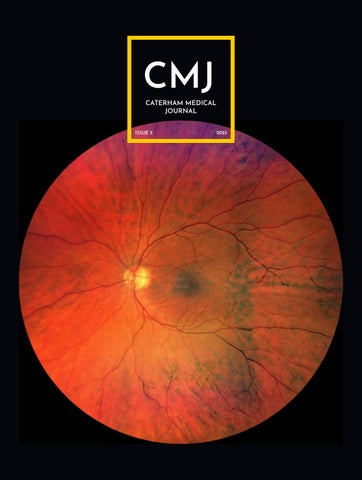
CMJ CATERHAM MEDICAL JOURNAL ISSUE 5
2025
1
Introduction by Dan Quinton Welcome to the latest edition of CMJ, the magazine of The Wright Society. I set up The Wright Society with the aim of something bigger and better than just a ‘school medics’ society’. A Society that not only helps aspiring medics, dentists and vets from Caterham School achieve their dreams but instils the highest qualities in our pupils and demands the highest standards. A Society that promotes critical thinking, confident public speaking and a genuine love of medicine related science rather than just ticks boxes required for an impressive UCAS personal statement. Our Patron Dr Wright, after whom the society is named, and I are committed to helping students from the wider community who do not have access to private education and we are very proud of our many pupils from partner schools. The demands on any student applying for medicine, dentistry or veterinary medicine and the commitment they need to show are above and beyond any other degree at any university in the country. No career is more important to society than
2
our next generation of medics and so for me it is beyond doubt the value of helping them achieve their aims. The Society thrives not because of me and Dr Wright but the contributions of its members, and in particular the President and Vice Presidents. This year I have had the pleasure of working closely with Joel Veldtman (President) and VPs Leané Beukes and Emily van As. The time, care and energy they have put in to drive it forward with me has been nothing short of extraordinary. Most recently giving up so much time to take the new L6th through the various sections of the UCAT exam. I cannot thank Joel, Emily and Leané enough for all they have done. It has a been a pleasure working with them. I wish them and all the U6th all the best in their future careers in whatever area of medicine they are applying for. In the volatile world we live in, these amazing young people give me hope for the future. I hope you enjoy reading this edition of CMJ which reflects the quality and standard of all we do week in week out.
Message from the Endorser Professor Van As I was honoured to be invited to deliver this year’s Wright Society Annual Medicine Lecture to a packed Humphrey’s Theatre, where I spoke about my career in medicine and the latest advances in treating prostate cancer. It felt like the meeting was a success, but what stood out most was the remarkable calibre of the students. The questions that followed were not only insightful but delivered with a confidence far beyond their years. In an era where education is often measured by exam results, the students of the Wright Society embody something far more valuable which is a genuine curiosity, a drive to understand rather than merely memorise, and a passion for learning that extends beyond the classroom. If policymakers seek an example of what true education should inspire, they could learn from the Wright society. The CMJ is a testament to this intellectual vibrancy, consistently producing work of exceptional quality. It is my great pleasure to endorse both the Wright Society and this year’s edition of the magazine. At the heart of this society’s success is the dedication and passion of Dan Quinton, whose leadership and resilience in the face of personal challenges serve as an inspiration to his students. The Wright Society thrives because of his energy, compassion and genuine warmth. Mentors like Mr Quinton ignite curiosity, nurture talent, and will be a hugely positive influence on this next generation of medical minds. I have no doubt that the students of the Wright Society will go on to make extraordinary contributions to the field of medicine. 3
Contents Introduction by Dan Quinton . . . . . . . . . . . . . . . . . . . . . . . . . . . . . . . . . . . . . . . . . . . . . . . . . . . . . . . . . . . . 2 Message from the Endorser by Professor Van As . . . . . . . . . . . . . . . . . . . . . . . . . . . . . . . . . . . . . . . . . . . . 3 Oxteders . . . . . . . . . . . . . . . . . . . . . . . . . . . . . . . . . . . . . . . . . . . . . . . . . . . . . . . . . . . . . . . . . . . . . . . . . . . . . . . . . 5 Professor Van As on Oncology at the Annual Wright Society Lecture . . . . . . . . . . . . . . . . . . . . . 6 Visiting St. Thomas’ Hospital, lecture on pain management . . . . . . . . . . . . . . . . . . . . . . . . . . . . . 7
By Joshua Kwok, Wayne Lam & Adrian So
Bridging Science & Communication in Modern Dentistry by Rajan Prashad . . . . . . . . . . . . . . . . 8 The Art of Reassurance by Emily Jackson . . . . . . . . . . . . . . . . . . . . . . . . . . . . . . . . . . . . . . . . . . . . . . . . . . 9 Dr Joe Lipton Interview by Kay’ien Wong . . . . . . . . . . . . . . . . . . . . . . . . . . . . . . . . . . . . . . . . . . . . . . . . . . 10 Med Student Interview by Emily Van As . . . . . . . . . . . . . . . . . . . . . . . . . . . . . . . . . . . . . . . . . . . . . . . . . . . 12 The Medicine Application Process by Joel Veldtman . . . . . . . . . . . . . . . . . . . . . . . . . . . . . . . . . . . . . . . 14 The Four Pillars by Isabelle Hibbert & Kayla Prashad . . . . . . . . . . . . . . . . . . . . . . . . . . . . . . . . . . . . . . . . . 16 Robotic Surgery by Isabelle Hibbert . . . . . . . . . . . . . . . . . . . . . . . . . . . . . . . . . . . . . . . . . . . . . . . . . . . . . . . 17 Mental Health amongst Youths by Sarah Yap . . . . . . . . . . . . . . . . . . . . . . . . . . . . . . . . . . . . . . . . . . . . . 18 Pnuemothorax ‘Collapsed Lung’ by Emily Halvitigala Don . . . . . . . . . . . . . . . . . . . . . . . . . . . . . . . . . . 19 G6PD deficiency ’ by Joshua Kwok . . . . . . . . . . . . . . . . . . . . . . . . . . . . . . . . . . . . . . . . . . . . . . . . . . . . . . . 20 EILO- Exercise Induced Laryngeal Obstruction by Ella Baker . . . . . . . . . . . . . . . . . . . . . . . . . . . . 21 Silicosis by Kayla Prashad . . . . . . . . . . . . . . . . . . . . . . . . . . . . . . . . . . . . . . . . . . . . . . . . . . . . . . . . . . . . . . . . . 22 The Science of Sleep by Sherene Lai . . . . . . . . . . . . . . . . . . . . . . . . . . . . . . . . . . . . . . . . . . . . . . . . . . . . . . 23 How EBV affects XIAP-deficient patients by Sarah Yap . . . . . . . . . . . . . . . . . . . . . . . . . . . . . . . . . . . 24 The Darwin Society by Ava Floyd . . . . . . . . . . . . . . . . . . . . . . . . . . . . . . . . . . . . . . . . . . . . . . . . . . . . . . . . 25 History of the NHS by Kay’ien Wong . . . . . . . . . . . . . . . . . . . . . . . . . . . . . . . . . . . . . . . . . . . . . . . . . . . . . . 26 Meet the Medics . . . . . . . . . . . . . . . . . . . . . . . . . . . . . . . . . . . . . . . . . . . . . . . . . . . . . . . . . . . . . . . . . . . . . . . 28 Past Issues . . . . . . . . . . . . . . . . . . . . . . . . . . . . . . . . . . . . . . . . . . . . . . . . . . . . . . . . . . . . . . . . . . . . . . . . . . . . . . 31 4
Oxteders The Wright Society (TWS) offers guidance and advice for aspiring medical students from Caterham school but also offers help to students from Oxted school; each week the aspiring medics from Oxted come to Caterham to listen to the sessions. Medicine is an ultracompetitive course to get into so guidance from Mr Quinton and the upper sixth students can be very helpful.
One student from Oxted says this: “I find TWS really useful as it shows me all the steps, I need to complete in order to become a medic; recently the deep dive into each section of the UCAT has been very informative and has helped me to understand what the UCAT involves. The society also has had speakers that give talks in the session, which again increase my knowledge and understanding of the medical world. TWS is also where I found out about all the work experience and volunteering I need to complete in order to have a successful application to med school, which I had no idea of before, meaning that I could quickly start reaching out to try and get these experiences. Additionally, the opportunities that TWS provides, such as the 4th year medicine lecture at St Thomas’ and the annual Wright Society lecture has increased my experience and knowledge about what it would be like to be a medical student and a doctor.” Another student says that she finds TWS very helpful as you are around people with the same goals as you and the support and advice offered for the application process is really useful. She also finds the opportunities for wider experiences extremely valuable. 5
Professor Van As on Oncology at the Annual Wright Society Lecture On Monday 3rd of March, Caterham school had the pleasure of welcoming Professor Nicholas Van As, a clinical oncologist at the Royal Marsden Hospital, who delivered this year’s highly anticipated annual medicine lecture. His talk provided an exploration into prostate cancer research, offering insights into innovations in radiotherapy and the role of cutting-edge technology in treatment. Prostate cancer is one of the most commonly diagnosed cancers in the UK and affects thousands of men each year. Professor Van As shared insights from his work in clinical trials, focusing on the development of a novel radiotherapy technique called Stereotactic Body Radiotherapy (SBRT), which uses a Cyberknife machine to treat prostate cancer. He compared this treatment option with a more familiar surgical procedure which involves the use of the Da Vinci robotic system. Professor Van As highlighted that, although the journey to implementing Cyberknife technology was not without its challenges, the eventual acceptance of this treatment has marked a significant breakthrough in oncology. We are incredibly thankful to Professor Van As for his brilliant talk, as well as to Mr Quinton and Mrs Brown who helped organise this event. It was attended by a large audience, all interested in learning about the latest advancements in cancer care – from students and aspiring medics, to parents and staff. These annual lectures have undoubtedly become a can’t-miss event! 6
Visiting St. Thomas’ Hospital, lecture on pain management By Joshua Kwok, Wayne Lam & Adrian So
sharp, localised pain, whilst unmyelineated C nerves transmit slow and diffuse pain.
In February, the Wright society was fortunate enough to attend a lecture on pain management for fourth year medical students, given by consultant anaesthetist Dr. Joe Lipton in the Guy’s and St. Thomas’ NHS Trust Education Centre. The lecture covered a range of topics, from the recognition, assessment, and treatment of pain to investigating the difference between spinal and epidural anaesthesia. When speaking on the recognition of pain, we learnt about the adverse effects of pain on a patient. Physical examples included increased blood pressure, insomnia, and a heightened risk of pulmonary embolisms , especially in post-op patients. As such, it came naturally that treating pain helped to alleviate emotional instability and anxiety. The difference between nociception and pain was also relatively new to us; the former described the transmission of electrical signals to the brain, whereas the latter focused on the actual sensation of discomfort. The subjectivity of pain was also discussed, the key takeaway being that the patient’s own sensations of pain must never be underplayed or disregarded, despite possibly contradicting their physical state and appearance. The portion of the talk on the physiology behind pain opened our eyes to new biological knowledge; myelinated A-δ nerves transmit
Following that came the assessment of pain, which introduced us to methods used to classify and determine the severity of pain. Verbal and numerical pain scales are irreplaceable, but objective indicators such as heart rate and pressure also provide ample support. It is of note that identifying the cause of pain is of the utmost importance; it completely influences the course of action to be taken. The various types of pain were also mentioned, including acute/chronic, nociceptive/neuropathic, and cancer/non-cancer. Following that, we were introduced to multimodal pain management – a strategy which encompasses various medications to comprehensively manage pain. Sodium ion channel blockers, alpha-2 agonists, transcutaneous electric nerve stimulation (TENS), and neuro stimulation are all among popular treatment methods. Oral analgesic drugs such as the conventional paracetamol and antiinflammatory ibuprofen are also pivotal. If called for, regional analgesia using sedatives, as well as opiates are utilised for more severe pain. The final segment detailed spinals and epidurals - the injection of local anaesthesia into the spinal canal or epidural space to cause neuraxial block. Hovering around the meninges, the differing procedures and resulting effects for both methods of achieving neuraxial block were explained in depth. Yet, the side effects it brings are rather offputting; itching, nausea, vomiting and motor block are just among a few adverse effects. Despite initially being slightly hesitant, as the lecture was targeted at 4th year medical students, we were all pleasantly surprised by how much we enjoyed it. It was a truly invaluable opportunity, giving us, aspiring medics, a glimpse into the extensive knowledge required by a doctor. 7
Bridging Science & Communication in Modern Dentistry By Rajan Prashad
The Wright Society hosted a captivating talk from Dr Simon Nocton - a dental implant specialist and oral and maxillofacial surgeon. He began the talk by sharing the remarkable science behind dental implants and their vital role in replacing missing teeth. Constructed from titanium or zirconia to bond and integrate seamlessly with the surrounding bone tissue. This would make them the perfect material to replicate the missing tooth. But the talk wasn’t just about the science of dentistry, it focused on the art of communication. He emphasised the importance of using images and 3D X-rays not only in diagnosing treatment, but to show patients to help them better understand 8
their treatment. He also discussed the new game changing digital impressions which are going to replace the older and more traditional Alginate impressions. These 3D images would make it even easier for patients to see their treatment plan and to understand the dentist’s intentions. Personally, my favourite bit of the talk was when Dr Nocton described the fascinating uses of Leukocyte-platelet Rich Fibrin (L-PRF) in bone healing and tissue regeneration – used to aid bone grafts and help the stability of the implant. For aspiring dentists including myself, Dr Nocton’s insights into patient centred care and innovation sparked my drive to explore the field of implants and to pursue a career in dentistry.
The Art of Reassurance By Emily Jackson What is the difference between cognitive and affective reassurance? Cognitive reassurance is the process of providing a patient with information and educating them to change their knowledge and beliefs. This is a long-term form of reassurance as it provides a deeper sense of stability by allowing the patient to understand their illness, symptoms or treatment. On the other hand, affective reassurance focuses on creating a rapport with a patient and showing empathy to reduce their anxieties. This can be done verbally in primary care settings through the use of comforting phrases, but may also come in the form of praise or physical touch in high-stress or emergency treatments. The problem of affective reassurance It is crucial that both forms of reassurance are applied during consultations, however this can be neglected in medical teaching. Reassurance is often seen as a tick-box exercise; over-used, bland statements such as ‘nothing to worry about’ are uttered so that consultation notes can be neatly rounded off with ‘patient reassured’. It is found that nothing is medically wrong, but the fact that the patient’s concerns have not been fully recognised leads to poor patient satisfaction. Finding the right balance Cognitive reassurance is associated with improved patient satisfaction, but it is not independent of affective reassurance. In order for cognitive reassurance to work, it must align with the patient’s emotional concerns. Listening carefully, giving the patient plenty of
time to express their worries, and responding in an interested manner provides the affective reassurance necessary to tailor the comfort the patient needs. By focussing the information provided on answering questions or relieving anxieties, the patient is provided with the knowledge needed for longterm reassurance as well as comfort from feeling they have been listened to. We have two ears and one mouth for a reason: actively listening is crucial for building the rapport needed for affective reassurance. Putting it into practice A 30-year-old female has presented to her GP with extreme abdominal pain. All scans and tests have come back normal, so she is ‘reassured’ that nothing is wrong. However, she is experiencing severe difficulties in daily life as a result of her symptoms. She cannot sleep, she is extremely anxious that there is something serious going on that her tests have not uncovered, and she finds it immensely challenging to continue caring for her 4-year-old son. She desperately wants to understand the cause of her symptoms, what treatments could be available and how long it will take for her to feel better. In this scenario, a doctor needs to give the patient plenty of time to communicate her concerns. It may help to empathise by saying ‘this sounds very difficult for you’ or asking ‘what would you like to know from me?’. Referring her on for more specialist investigations would be the optimal next step. By doing this, the patient will feel comforted from being listened to and understood, and will gain some hope from the promise of a specialist referral. 9
Interview By Kay’ien Wong
Dr Joe Lipton
1. Why did you choose to go into medicine? I came into medicine a bit later than all of you aspiring medics, since I completed an undergraduate degree in Psychology prior to applying. This was because I was unsure of what I wanted to do professionally at higher education, so I chose broader A-Levels with a mixture of science, humanities and even music. During the time I was studying Psychology, I met a few medical students that joined our course for their intercalation, and their sense of direction enabled me to realize the appeal of medicine. When I was at school, I had done five years of weekly voluntary work surrounding children with special educational needs; there was even a student with severe cerebral palsy that I loved caring for. This formative experience, combined with scientific interest, showed me that medicine was my passion, and I haven’t looked back since.
10
2. What does a typical day of an anesthetist look like at St. Thomas’ Hospital? Are there any misconceptions of what anesthetists do? Anaesthetists are really at the interface of surgery and medicine, and we do more than just putting people to sleep! There is no typical day; generally, what happens always varies. On a personal note, I anesthetize for quite a big spectrum of operations. On one day, I might look after low risk, low complexity patients after day case surgeries, and on another day, I am responsible at an emergency unit that revolves around unpredictability, high pressure and high complexity patients. I also have a specialist interest in anaesthesia around vascular surgery, and when you look at the bigger picture of anaesthetics, there is a wide range amongst the practice. For example, you could be involved in paediatrics, obstetrics, or even a sub-speciality like patients who have undergone heart surgery. There is also a non-clinical element; the Wright Society has experienced me as an educator, but I am also involved in organizing and designing education programmes for medical students. Many of my colleagues also have an interest in clinical research, quality control, or even management in their department!
3. What are some of your hobbies, and how do you balance this with work life? I was a pretty decent cellist during my time at secondary, but entering medicine does put a strain on your hobbies. At the moment, I am combining a busy career with a young family, so for me, I haven’t quite had the time to branch out to my hobbies. Work-life balance is very important, and I currently spend most of my free time with friends or family. During my training, however, the on-call commitment took up a significant amount of my time, so being really disciplined about making time for yourself is a habit you want to get into early. 4. What is the most difficult obstacle you’ve encountered in medicine, and how did you overcome it? Getting into medical school itself is quite an obstacle; entering as a graduate, the competition ratios were quite steep, and that was challenging for me as I was completing my undergraduate. I think motivation was a huge drive for the entrance exams and interviews, and I personally recommend everyone be brave and practice talking to people, in preparation for the interviews. Later on in my career, I found postgraduate training to be quite tough. It’s 12 and a half years away from being a consultant, and in that time, you move hospitals regularly and do postgraduate exams. Even in my 30s, I am still balancing these exams alongside having children, mortgages, and just the trappings of adulthood. Another really difficult thing was the night shifts, and my advice to all of this is to prepare yourself mentally for these years; it may seem hard, but in the background, you are investing in yourself by gaining all the knowledge to be an outstanding professional. 5. Is there anything medical school didn’t prepare you for?
has a unique story behind them. There are management structures that might confuse you, or politics and personalities that you may disagree with. As a junior resident, you need to understand who are the people to get on your side, and often times, it’s not just the consultant but also the ward clerk or the team of nurses. Navigating teamwork and how to be a good colleague is something that is difficult to asymilate in medical school, because there isn’t much pressure of responsibility. In my experience of working in the emergency department, sometimes people will come in with minor and niche injuries. During those times, it’s hard to take a textbook approach if you’ve never encountered something like this before, so you really have to revert to the basics. 6. Doctors communicate with their patients and colleagues constantly. What is something you think is key towards effective communication? Listening is a huge component. Sometimes you can be too keen to give your point of view, but you haven’t properly established what they need to know. It’s important to ask the right questions, and have them answer with no interruptions. 7. Do you have any words of advice towards aspiring medics? Please try to keep hold of that optimism and enthusiasm you currently have! When I met the Lower Sixth students at the session, I was delighted to see how engaged you were with all the fantastic questions you asked. If you can bring that same energy to the workplace, it will really enhance the atmosphere, and liven things up in difficult situations. It’s unfortunate that the NHS system is strained, and I’ve had many encounters with those that feel burned out and cynical. Furthermore, try to approach questions with curiosity and build constructive relationships, as medicine is like a team sport.
I think medical school doesn’t prepare you for the complex hospital system, especially for the interactions with patients; there’s a huge variety of backgrounds, and everyone you meet 11
Interview By Kay’ien Wong
Newcastle Med Student
How did you find the whole process of getting into med school? Probably quite tricky, I had two attempts. The 1st time round I didn’t fully understand the importance of the UCAT. I thought I’d perform well at interview and that you needed a good personal statement, this was before Mr Quinton got really involved, the advice I’d heard was to focus on writing a really good personal statement. I came out with a UCAT score that was top 25% and I’m thinking, oh that’s brilliant. I then applied to the top universities I really wanted to go to and didn’t get interviews for any of them. I didn’t plan a Gap year and was never going to do the backup degree option. Did taking a gap year help once you started university? Big time, I was a more mature person when I came out. I worked in a healthcare environment and grew a lot as a person because I spent a lot more time on my own with people that weren’t my own age. And my communication skills got so much better. And looking back now, it made it so much easier coming into university, meeting new people and also being a better medical student. I’m happy it happened. Biggest difference between medical school and what you expected it to be like? You’re not babied as much as you are at school. No one 12
checks if you’re doing the work and you’re only found out if you miss out on loads of lectures or if you mess up your exams. And I think that I kind of struggled with having no past papers questions. For my A level and GCSE’s I got good at knowing the type of questions I was going to be asked. I’m sure most medics find that the best way to get through A levels is by memorising the mark schemes. You can’t do that in medical school. For our first exam we had no idea what the questions were going to be, no idea how to answer them, all we had were really vague learning outcomes. For example, explore the differentials of chest pain. You can think of a hundred of things that could come under this, and the word explore is as vague as you can make it. You have to try to learn everything, and when it then comes to the exam it’ll be the most random, niche thing ever. In A-levels is possible to try to learn everything, but that’s so difficult when it gets to med school, because of the volume of stuff you need to learn, you can go as deep as you want, and there’s always going to be a question that you haven’t covered. You have to accept that you’re not going to learn anywhere near everything. What’s the most difficult thing about med school? Most universities now try and get you clinical exposure really early on and that can be the most difficult thing especially in the first few weeks and months. Suddenly seeing, oh this is real now, like these people are very ill. It can be difficult especially when you see someone your age. You have upsetting, sensitive
conversations with people in really desperate circumstances and try keep yourself calm as well as keeping them calm. They do try and throw you in the deep end and you gain skills really quickly on how to remain calm and ask questions sensitively. I mean you have to talk about personal, difficult things with people, that they don’t share with anyone else, and I think that’s the most difficult thing I found initially. That’s all completely unique to medicine. What’s your favourite thing about medical school? As a medical student you have to work hard. But its unbelievably fun, meeting all the new people, all the new societies, literally being able to do whatever you want, when you want. It is incredibly satisfying when you work hard, and it pays off. The first two years are really tough academically. But then when you get to 3rd year, you have enough knowledge that you can begin to see that “I might be able to have the skills to become a doctor eventually”. Like in a GP practise, in 3rd year you’re able to lead the whole consultation yourself. And then the doctor comes in after and you present to them, and they then decide what to do. For an example of the kind of things I’ve seen, there could be a patient with black poo. Essentially, they could have had a bleed in their upper GI tract, and it then gets digested leading to the colour. This can be really serious, so you take their whole history, do the examination and then present it to the doctor, recommend that they should go to A&E, and the doctor agrees, and then that kind of thing is very satisfying. So, when all the hard work pays off and you can actually help people, it is really satisfying.
that are thinking of dropping out or who have already dropped out. And that’s often because its not what they thought it would be. So, you’ve got to do your research, talk to people in medical school. Get work experience, and I mean like care home stuff. People think, oh, I don’t wanna go to a care home, but those kinds of things, talking to people, listening to their problems that’s a lot of what being a medical student is. Try immersing yourself in as much medicine as you can to see what it’s like, if you struggle to get work experience, there’s a lot of materials online after COVID, like YouTube videos, and TV shows. What’s your advice to people starting medicine in September? You’ve got to remember to enjoy it and there’s life outside of medicine. You don’t have to make 1000’s of flash cards in the first week. It okay to be “behind” as well, most people are, I’ve never been ahead of my work, ever. And there will be people who seem to know everything and are ahead of their work – and come to lectures already knowing the content. You shouldn’t compare yourself to them. You’ve gone from a school where not everyone’s trying to apply to medicine, not everybody’s got that same determination and competitiveness, you might be used to being in the top 10% in school, but you’re unlikely to be in the top 10% in med school and that’s ok. Make sure to get a balance, enjoy university life, especially in the first year. Also remember comparing yourself to others is the biggest mistake some people make when they start.
What is your advice to those wanting to apply to med school? I’d say make sure it’s something you actually want to do. Don’t ever get pushed into it by anyone that says you should do it. It is really hard work and there are people who I’m friends with
13
The Medicine Application Process
Work Experience and Reading Work Experience, reading books about a career in medicine and keeping up with the news are essentials for any applicant’s personal statement and are great titbits for answering questions at interview.
By Joel Veldtman
1 2 Making the decision to apply Unlike most other courses medicine has a direct path into a very specific career. Before applying applicants must make sure that they are certain that medicine is the path for them. This gives them the resilience for the often-gruelling application process and ensures that they make the best decision for their futures.
14
Choosing Medical Schools Medicine degrees take 5 to 6 years to complete so it is important that applicants are happy to go to every university they apply to. When making this decision applicants must weigh up the differences in courses and how much they like the university’s city as they will be spending so much time there.
3
Personal Statement Interviews
This is an applicant’s first opportunity to sell themselves to their chosen universities. It can be very challenging as an applicant to both show their interest and suitability for medicine but also to include all the work experience and reading you have done for their application.
After sending off their applications, interviews are the final barrier to entry into med school. They wildly vary between medical schools but typically cover the same broad themes of teamwork skills, ethics, scientific knowledge and understanding of a career in medicine.
5 4
6
UCAT Arguably the most arduous part of the application, the UCAT consists of 4 subtests designed to assess applicant’s intellectual suitability for medicine. These subtests test applicant’s verbal reasoning, decision making, quantitative reasoning and situational judgement. The UCAT typically takes at least 100 hours to prepare for effectively.
The Wright Society has weekly meetings for both Caterham’s medicine applicants and from other schools where students receive expert guidance on each stage of their applications from Mr Quinton and older students who have successfully completed the process. Most medical schools accept only 9% of their initial applicants so this support can enable aspiring medics to climb to the top of the fierce competition.
15
The Four Pillars of Medical Ethics By Isabelle Hibbert & Kayla Prashad
Beneficence Beneficence is a core principle in medical ethics, it is the moral duty of a doctor to promote the best course of action in the best interest of the patient; the principle of beneficence is to act with empathy and dedication always placing the patients welfare at the core of every decision.When making decisions, doctors must decide which treatment is the most suitable for the patient, this is one form of beneficence from a doctor. An example of beneficence is if a colleague is running late because they are stuck in traffic, you have a duty to act in the best way for patients, and so beneficence dictates that you stay on that ward so that the patients receive the optimal care that they deserve.
Autonomy Autonomy is especially important and allows the patient to give their opinion, deciding for themselves what they think is best. This means that the patient has access to their medical data and records, is given full confidentiality and must give consent (if they are over 16). An example of autonomy is, you are an oncologist and have diagnosed a patient with colorectal cancer and you give them all the information about treatments and a surgery which could be lifesaving. The patient has decided to not go ahead with this after hearing about the benefits and risks of the surgery and as a doctor, you must respect their decision as the patient can make the decision. However, there are times when autonomy cannot be used, for example in accident and emergency. Here the Emergency Doctrine is needed, this doctrine states that if someone is involved in an emergency and does not have the capacity to make a decision at the given time, you as the medic use beneficence and non-maleficence to give the patient the best treatment possible, 16
without being recriminated. Another time when someone might lack autonomy is if they are mentally incapable of making a choice, if they are over the age of sixteen, the Mental Capacity Act (2005) states that a trustworthy and responsible adult will be allowed to make an informed decision about that person’s health with the best interests in mind.
Justice Justice is in medicine is about fairness and the ethical distribution of care. It requires medics to treat each patient with equal amounts of respect. This can be ensuring that different types of people are given care that is specific to them. For example, dermatologists must learn about how different types of skin will react. Another challenge that the pillar of justice counters is the distribution of resources, ensuring care is given to each person based on their need not their backgrounds, socioeconomic status or personal circumstances.
Non- maleficence Non- maleficence or the commitment to do not harm lies at the heart of medicine. Medics must never purposefully worsen a patient’s condition, whether it is physical or mental.In some ways non-maleficence is similar to beneficence but they differ in two keyways. Firstly, it acts as a threshold for treatment; if one of the treatment causes for more harm than good then it should not be considered for the patient. Secondly beneficence is used more in specific situations such as determining treatment and picking the best option for that individual whereas non-maleficence is constant in clinical practice. There are many ways in which this must be implemented: ensuring that a patient has the correct drug or making sure that patients receive the best or least risky operation.
Robotic Surgery By Isabelle Hibbert
What is robotic surgery?
The Lindbergh Operation
Robotic surgery has been a growing field since 1980 when a machine called the PUMA 560 was used for neurosurgical biopsies. Today, surgeons commonly use the Da Vinci Surgical System, it has performed over ten million surgeries and procedures worldwide. The machine is operated by a surgeon using a console equipped with controls and a high-definition 3D view. The robotic arms are fitted with surgical instruments and a camera, which can be moved with an accuracy of less than one millimetre.
Robotic surgery also allows surgeons to perform procedures across large distances. In 2001, a surgeon in New York successfully operated on a patient in France in what is now called the Lindbergh Operation. Using the ZEUS Robotic Surgical System, the surgeon performed a cholecystectomy (removal of the gallbladder) on a 68-year-old female patient in Strasbourg; it was a highly successful surgery.
What are the benefits? The Da Vinci System benefits patients in two main ways: first is that surgical outcomes become more consistent with fewer outlier cases. The second is that the dexterity of the robot allows for minimally invasive surgery in areas of the body where this was not previously possible; such as for paediatric patients or procedures involving the heart, kidney or prostate. Since, minimally invasive robotic surgery only requires small incisions in the skin, the patient recovery is faster which reduces time in hospital by 50%. In addition to this, patients suffer significantly less pain, and the risk of infection is reduced by 20-30%.
The future Innovations in the field of nanobots and 3D printing are likely to improve and complement robotic surgery in the future, but it is the promise of Artificial Intelligence (AI) is likely the most important next step in robotic surgery. The data has been collected from every operation on a Da Vinci robot for over 20 years, and this can now be used with AI techniques to further improve surgical outcomes. For example, AI can build a 3D map of the surgical site which identifies critical structures like nerves, blood vessels or tumours and can highlight these on the screen for surgeons. Additionally, AI could take over simpler tasks such as maintaining the camera position, allowing the surgeon to concentrate solely on the critical parts of the procedure. 17
Mental Health amongst Young People By Sarah Yap
What is Mental Health? According to the World Health Organisation (WHO), mental health is a state of mental wellbeing that enables people to cope with stress, realise their abilities, learn well and work well, and contribute to their communities. It is a vital component that underpins our individual and collective abilities to make good choices, build relationships and shape the world we live in which can be influenced by a variety of factors, including biological, environmental, and psychological conditions and social media. Why is it important? Good mental health allows young people to deal with stress and difficult emotions, develop healthy relationships and work productively, which is essential to enhancing one’s quality of life. Currently, it is an impending growing crisis, as poor mental health has contributed to an increase in various mental disorders, such as depression and anxiety. This could significantly impact their academic performance, emotional well-being, social & family relationships, and overall daily lifestyle. In light of the scale and gravity of these implications, early intervention and 18
detection are crucial in building a strong foundation for holistic well-being amongst young people. Prevention of the escalation of poor mental health is vital because it reduces the likelihood of major long-term problems, reduces the severity of symptoms, and makes treatment more effective. How can we help these young people? Helping young people struggling with poor mental health requires a combination of support, understanding, and practical steps. First, we can create a supportive environment by offering others a listening ear. Second, we can be empathetic, by displaying understanding and compassion. Third, we can encourage these young people to seek professional help to identify any underlying issues and learn of ways to cope. Overall, with our collective effort, we can improve mental health amongst young people.
Pneumothorax ‘Collapsed Lung’ By Emily Halvitigala Don
What is Pneumothorax? Pneumothorax, also known as a collapsed lung, is a condition that occurs when air leaks into the pleural space (the space between the lungs and chest wall.) Air in the pleural space can build up and press against the lung causing it to partially or fully collapse. The two main types of pneumothorax is spontaneous and traumatic. Spontaneous Pneumothorax A spontaneous pneumothorax is a collapsed lung that happens without an injury. In some cases, the cause remains unknown, as no underlying health conditions or diseases are present (primary spontaneous pneumothorax). In other cases it can occur when the air pockets in the lungs (blebs) rupture and release air into the plerual space. This can be dangerous if symptoms- such as sudden sharp pain when breathing or coughing goes unnoticed. Fortunately, spontaneous pneumothorax is usually benign and resolves on its own. On the other hand, secondary spontaneous Pneumothorax is caused by certain
lung diseases such as asthma. This occurs when the lung is blocked, leading to bulging areas that can burst. This would be classified as a medical emergency, immediate care is required due to its association with a higher mortality rate. Traumatic Pneumothorax Typically, injuries and medical procedures can cause a traumatic pneumothorax, this may be a result of a blunt force (such as a fall/crash) or a penetrating wound (such as a knife stab) that damages the lungs and airways. The damage allows air to leave the lung and collect between the lung and the wall of the chest. Consequently, air from the collapsed lung may also leak into the skin of the chest or neck. This leads to symptoms such as: swelling in the chest wall; crackling of the skin and pressing on the chest giving an almost ‘bubble wrap’ feel. Latrogenic pneumothorax is a collapsed lung that occurs when a medical procedure (Lung biopsy or a central venus line) accidentally perforates the lung, allowing air to leak into the pleural space. 19
G6PD deficiency By Joshua Kwok What is G6PD deficiency? G6PD deficiency is a genetic disorder which disallows the synthesis of the G6PD enzyme, affecting approximately 400 million people worldwide. 83.9% of G6PD deficiency arises from single-base substitutions in the 18 kilobase G6PD gene, located on the bottom end of the X chromosome. Individuals who manifest symptoms must only have the recessive version of the gene, which is also termed the recessive allele. This also explains the higher prevalence in males than females: as females have 2 X chromosomes, if a single dominant allele is present, the recessive allele’s presentation will be suppressed. Whereas in males, who have 1 X chromosome only, presence of the recessive allele will immediately be presented. Pathophysiology of G6PD deficiency G6PD deficiency affects the HMP shunt. This pathway normally produces antioxidants which protect red blood cells from damage caused by reactive oxygen species and free radicals – reactive compounds which steal electrons from molecules, consequently damaging cellular components. Affected individuals will have poor HMP shunt function and a decreased supply of antioxidants, thus increasing the susceptibility of their red blood cells to damage. Acute Haemolytic Anaemia Haemolytic anaemia – the death of red blood cells alongside the reduction in haemoglobin’s ability to carry oxygen – is one of G6PD deficiency’s main complications. Sudden exposure to triggers (such as the ingestion of fava beans) would cause an influx of reactive oxygen species, unable to be neutralised due to the lack of 20
antioxidants. They oxidise the heme group in red blood cell haemoglobin from a ferrous Fe2+ state to a ferric Fe3+ state, forming methaemoglobin, which oxygen is unable to bind with. Splenic macrophages then remove methaemoglobin by destroying the cells, ultimately resulting in acute haemolytic anaemia. Further complications may also develop, such as breathlessness and an elevated heart rate. Diagnosis and treatment G6PD deficiency can be identified through physical signs such as yellowing of the skin, dark-coloured urine and an enlarged spleen. However, laboratory tests such as complete blood counts (CBCs), blood smears, molecular screening of the G6PD gene, and fluorescent chemicals which test for G6PD enzyme function are also widely employed. As with all genetic disorders, G6PD deficiency cannot be fully treated. Treatment is therefore focused on the management of symptoms. Citric acid transfusions aimed at neutralising free radicals are usually administered. Severe cases of haemolytic anaemia may call for blood transfusions. If situations become increasingly concerning, babies may require exchange transfusions, a process whereby their unhealthy blood is replaced with healthy donor blood. Yet, the most straightforward form of management continues to be removing nearby triggers and avoiding any future contact with them if possible. Examples of triggers include food, such as fava beans and soya products, whilst drugs to avoid include aspirin antibiotics.
EILO
Exercise Induced Laryngeal Obstruction By Ella Baker Induced laryngeal obstruction (ILO) is the narrowing of the vocal fold or supraglottic structures in response to a trigger or stimulus. When this occurs during exercise it is referred to as exercise-induced laryngeal obstruction (EILO). EILO typically affects adolescent athletes, with a predominance in women and occurs when an athlete is working near the peak of their exercise intensity. It subsides within a few minutes of completing exercise. The larynx is a narrow and complex valve that regulates access to the lower airways and controls large proportions of airway resistance during breathing. A crucial function of the larynx is the maintenance of maximal opening during exercise to facilitate deep breathing. During exercise the vocal folds are abducted (widened) during inspiration followed by a small adduction (narrowed) during expiration - allowing air to move in and out of the lungs. In a person with EILO, during high intensity exercise there is inappropriate, adduction of the vocal folds during inspiration restricting the flow of air. The cause of this is still not proven. Symptoms and Side effects A wide range of symptoms and side effects have been recorded as a result of EILO. The symptoms of EILO typically develop when the person’s requirement for ventilation is at its greatest and the symptoms often resolve within 2-3 minutes of stopping exercise. EILO usually affects the inspiration phase of breathing and
can cause a wide range of issues. These include shortness of breath, wheezing, throat tightness and chest tightness. These symptoms are caused by the obstruction of airflow due to the adducted vocal cords during high intensity exercise. While the symptoms usually subside quickly, they can lead to ongoing hyperventilation which lasts much longer. As well as physical symptoms athletes with EILO often suffer from anxiety as the symptoms can be distressing.
Due to the limited treatment options available, EILO is often left undertreated. This can lead to people with EILO altering their lifestyle and reducing their level of physical activity which can have further psychological effects. Diagnosis and Treatment Clinical diagnosis of EILO can be based on the presentation of symptoms as EILO symptoms occur during inspiration and does not report with symptoms at rest. Symptoms typical of EILO may not be solely specific to EILO and
can commonly be associated with asthma, which can lead to misdiagnosis. Many patients suffer from EILO and asthma, however patients suffering from EILO will report issues during inspiration which differs from asthma. The best diagnostic technique for EILO is a continuous laryngoscopy during high intensity exercise to observe the changes in the larynx. The visualization of the larynx also allows the doctor to assess the severity of the laryngeal obstruction when the athlete is most symptomatic. Treatment of EILO is still a difficult process as currently there is a lack of well-designed, controlled studies of treatment strategies with most treatment strategies being based on anecdotal success. Current treatment strategies include speech therapy and biofeedback, with surgical treatment rarely used in extreme cases. Biofeedback involves patients being provided with respiratory education during laryngoscopy to understand breathing techniques that cause the larynx to open. The use of these techniques has to then be repeated and practiced during exercise afterwards until it becomes a part of an automated pattern. Speech therapy generally involves educating the patient on paced exercises and techniques to optimise laryngeal function during exercise. As well as techniques to regulate the inspiratory flow targeting abdominal breathing. Slowing down the breathing rate and breathing lower is thought to prevent the adduction of the vocal fold.
21
Silicosis The unheard effects of volcanic ash on the lungs By Kayla Prashad
Silicosis is a chronic lung disease which occurs after inhaling lots of crystallised silica dust. The main symptoms include: shortness of breath, fatigue, and a persistent cough. It usually develops later in life, approximately 10-20 years after exposure to fine silica particles but for some people it can occur after just a few months of heavy exposure. There are two types of chronic silicosis: • Simple Nodule Silicosis: silicosis affects a pattern of small and irregular areas of the lungs • Complicated/Conglomerate Silicosis: silicosis affects a larger area of the lungs, leading to massive fibrosis (a type of scarring). What can it lead to and who is likely at risk of this disease? Silicosis can lead to chest infections and later, lung conditions, these include: tuberculosis, COPD, pulmonary hypertension, lung cancer and heart failure which can potentially lead to death. People most at risk of developing this disease are those who work in the sectors of stone masonry, construction and demolition alongside sand blasting and worktop manufacturing. What does fine silica do to the lungs? Silica is a form of quartz found in soil, brick and stone, silicosis is a form of pulmonary fibrosis 22
which causes the scarring of the lungs and increases the difficulty to breathe. The particles of silica must be of a respirable size to reach the distal airspaces of the lungs. When silica particles enter the lungs, most of the quartz is deposited in the upper lungs and when inside the alveolus, it activates the macrophages to release cytokines, hence stimulating fibrogenesis resulting in the production of excess scar tissue. What treatments are available? Treatments are limited as lung damage is irreversible, however there are things that the patient can do to alleviate the condition and stop it from worsening, these include: reducing or stopping exposure to the silica particles and if the person smokes, to stop smoking and having regular tests for tuberculosis. Sometimes, if patients are struggling (ie they have low oxygen levels in their blood or have difficulty breathing), they can be offered home oxygen therapy, this is prescribed by a GP or specialist and is when a person breathes in air that contains more oxygen than normal through a mask. Other forms of treatment could be Bronchodilators – this relaxes muscles in the lungs and widens the bronchi, this medicine is helpful in controlling breathlessness. It is rare but lung transplants could be a choice in the very severe cases.
The Science of Sleep By Sherene Lai What Is Sleep? Sleep is a vital physiological process that allows the body to rest and the mind to process and organize information. It consists of two forms: non-REM (Rapid Eye Movement) sleep and REM sleep. Non-REM sleep helps repair tissues, build muscle, and strengthen the immune system through progressively deeper phases. REM sleep, characterized by vivid dreams and high brain activity, consolidates learning and regulates emotions. A typical night’s sleep includes 4–5 cycles of these stages, each lasting about 90 minutes. What Happens During Sleep? Sleep is far from a passive state. While asleep, the brain forms new neural connections, enhancing memory and learning, while the immune system generates molecules to fight off infections. The body also undergoes critical repair, restoring muscles and clearing toxins from the brain, including beta-amyloid plaques linked to Alzheimer’s disease. These restorative processes highlight why sleep is essential for overall health. The Role of Circadian Rhythms Circadian rhythms are controlled by a biological clock located in the brain. These rhythms are highly sensitive to light. This triggers melatonin production at night and suppresses production during the day, when light is sensed. This explains why people with total blindness often have trouble sleeping, as they are unable to detect and respond to these light cues. Exposure to irregular light patterns, such as those from screens or jet lag,
can disrupt these rhythms, resulting in poor sleep. Therefore, it is important to maintain consistent exposure to natural light during the day and minimizing artificial light at night. The Importance of Sleep Drive Sleep drive is the body’s natural mechanism that builds a need for sleep over the course of the day. Unlike hunger, which can be resisted, sleep drive becomes irresistible, often forcing the body to rest through microsleeps, which are brief moments of unconsciousness, even during unsafe situations like driving. To maintain a healthy sleep cycle, avoid long naps late in the day, as they can weaken your natural drive for nighttime sleep. Why is sleep important? A healthy amount of sleep is essential for brain function, particularly “brain plasticity,” the brain’s ability to adapt and process new information. Without sufficient sleep, the brain struggles to retain what has been learnt and to store memories effectively. Sleep also acts as a detoxification process, clearing waste products from brain cells. Beyond brain health, sleep is essential for overall physical well-being. Deprivation of sleep intensifies conditions like depression, high blood pressure, migraines, and seizures. It also weakens the immune system, increasing vulnerability to illness and infection. Sleep influences metabolism as well, in which just one sleepless night can impair insulin sensitivity, temporarily creating a prediabetic state in otherwise healthy individuals. 23
How EBV affects XIAP-deficient patients By Sarah Yap
Why write on this topic? I chose to write specifically on the relationship between the Epstein-Barr Virus (“EBV”) and X-linked inhibitor of apoptosis (“XIAP”) deficiency because this topic hits close to home - two of my brothers suffer from this rare disease which is “estimated to occur [only] in 1–2 per million live male births”. Having witnessed first-hand how EBV negatively impacted the lives of my immunocompromised siblings, I have always been keen to learn more about the intricacies of EBV and XIAP-deficiency. What is EBV? The Epstein-Barr Virus is one of the most common human viruses in the world - it has infected more than 90% of the world’s population, especially in childhood, but usually does not cause any symptoms. EBV spreads through bodily fluids, primarily saliva, and there is currently no vaccine to protect against EBV infection. EBV is also the most common cause of infectious mononucleosis, a disease infecting B cells in the immune system, which is common among teens and young adults. 24
Some symptoms include extreme fatigue, swollen lymph nodes, sore throat and fever. What is XIAP-deficiency, and how does EBV affect XIAP-deficient patients? XIAP deficiency is a rare genetic immunodeficiency disease that is caused by mutations in the XIAP or BIRC4 gene. As its name suggests, this disease is “X-linked” and henceforth occurs almost exclusively in males who only have one X chromosome unlike females. Meanwhile, “inhibitor of apoptosis” is a protein that helps prevent the process of programmed cell death. The main clinical features of XIAP-deficiency include, amongst other things, an increased susceptibility to EBV, and hemophagocytic lymphohistiocytosis (HLH) which is a disease where one’s immune system attacks itself instead of a foreign invader like a virus. In essence, XIAP-deficiency results in a weakened immune system that leaves one more vulnerable to EBV infections, HLH and infectious mononucleosis. Nevertheless, research has shown that one possible treatment for XIAP-deficient patients may be a bone marrow transplant.
By Ava Floyd Darwin Society is one of the many societies run in the science department at Caterham School but some may say the best. At Darwin we focus on all things biology, and we have exciting talks on a wide range of topics. In this last year alone, we’ve had presentations on CRISPR Cas-9 technologies to organ transplants to biological weapons - no two weeks are the same! As all presentations go beyond the scope of A-levels, Darwin truly is a great opportunity for eager biologists to extend their knowledge beyond the school curriculum, which somehow manages to gloss over some of the most interesting parts of biology. We started the year with presentations from Upper Sixth Students to set the bar with their extensive knowledge of the A-level course coupled with lots of experience in preparing presentations. After some insightful talks on the topics of Synaptic Pruning and A Miracle Cure for Acne from the presidents, the torch was passed on to the Lower Sixth to prepare and give their own presentations. They rose up to the challenge amazingly, giving some fabulous talks with minimal guidance from their seniors.
the 6th form who put themselves forward to research and present on a topic of their interest. After painstaking research presenters get the opportunity to develop their public speaking skills when practicing their talks with myself, my co-president Jayson Wong and Miss Harry. On the day, the presenters are always faced by a large audience made up of students from 3rd year and upwards, eager to learn more. After a 30-minute presentation the audience gets to ask whatever questions they like for 10-15 minutes, really pushing the presenters to the limits of their biology knowledge. Conducting your own research, handling the public speaking nerves and being able to cope with a barrage of questions are such important skills for later in the lives of students, in particular aspiring medics. That is why my copresident and I are honoured to take on the role of guiding the next generation of biologists to reach new heights by encouraging them to push their limits and develop new skills.
We also take the time to prepare students for the annual Biology Olympiad by going through practice questions with older students who have the benefit of nearly having finished the A-Level course. Despite being notoriously tricky we have had some great outcomes from the Olympiad this past year. However, the greatest challenge lies in the hands of the presenters - the top biologists from 25
History of the
By Kay’ien Wong A Brief Overview of the NHS The National Health Service (NHS), founded in 1948, is a publicly funded healthcare system in the United Kingdom that provides free medical care to residents. At its inception, the NHS was built on three fundamental principles: healthcare should be comprehensive by addressing the needs of everyone, universally accessible, and based on clinical need rather than the ability to pay. Over the decades, the NHS has achieved remarkable milestones in medical care, such as facilitating the world’s first IVF birth and performing the first triple transplant involving the heart, lungs, and liver. Despite these achievements, the system
continues to face significant challenges, including workplace controversies and growing pressures that strain its operations. Why Was it Established? In the late 19th century, the government’s laissez-faire approach led to minimal spending on healthcare, resulting in limited accessibility and widespread illness. Recognizing the growing issues, local authorities pushed for change, leading to the establishment of the National Health Insurance (NHI) in 1911, which made health insurance compulsory for the working class. However, the coverage did not extend to workers’ families, leaving many women and children without adequate treatment. Additionally, the healthcare system was fragmented and inefficient. Independent hospitals struggled with overcrowding and long waiting lists, while GP practices often refused care to those unable to pay. After World War II, in 1945, the Labour Party was elected to government, with widespread public support for reforming the healthcare system.
26
Aneurin Bevan, the Minister of Health, envisioned a comprehensive national health service funded by tax revenue, providing free hospital care, ambulance services, maternity care, and more. This vision became a reality on the 5th of July 1948, when the NHS was launched as the world’s first universal healthcare system, accessible to all. 5th of July 1948, the NHS was the first universal health system to be available to all. NHS Values vs. Medical Ethics Medical ethics play a crucial role in guiding doctors to ensure patient safety and maintain trust in the profession. The four pillars of medical ethics are closely aligned with the core values of the NHS, reflecting the foundation of the patient-doctor relationship. “Working together for patients” and “improving lives” embodies beneficence by prioritizing patient welfare. The principle of justice, which ensures fairness and the fair distribution of resources, is reflected in the NHS value that “everyone matters.” “Commitment to quality of care” aligns with non-maleficence, emphasizing the importance of avoiding unnecessary harm while prioritizing patient safety. Lastly, “respect and dignity” corresponds to autonomy, emphasizing the need
to respect patients’ freedom of choice and fully inform them about medical procedures. Current Issues of the NHS The NHS currently faces a large obstacle of insufficient funding; the demand for healthcare services rise, but the lack of funding puts strain on this by restricting resources and increasing wait times. The government has recognized this concern and for the recent Autumn Budget, an extra 25.7 billion pounds had been distributed towards NHS spending. However, a substantial part of inefficiency comes from staff shortages, especially with the cost-of-living crisis amongst doctors. The long journey through medical school means that doctors incur huge debts during their undergraduate years, and with well below inflation pay rises, many are taking industrial action. The first walkout in March 2023 has led to 15 months of strikes, and the consequences are unfavorable towards both doctors and patients. During the 2024 summer, 61,989 inpatient and outpatient appointments were rescheduled, and 23,001 staff were absent from work. To address these issues, the government must invest in long-term workforce planning, and strategies in recruitment. 27
Meet the medics Kay’ien Wong Hello, my name is Kay’ien and I’m an aspiring medic! I found interest in Medicine when I was younger, reading scientific magazines that detailed the human body and its functions. Coupled with the satisfaction I gain when helping others, becoming a doctor seemed like a suitable career path. TWS has helped me massively, in developing public speaking skills as well as an introduction into medical topics. All the guest speakers have provided great insight into the realities of Medicine, and I’m thankful to Mr Quinton, Joel, Emily and Leané.
Maya Paranthaman I am intrigued by the challenge of diagnosing and solving complex medical problems, while being able to build trusting relationships with patients and help make a real difference to patients’ quality of lives. The Wright Society has helped me by providing opportunities I would not have otherwise, for example, enabling me to attend enriching talks delivered by guest speakers. Also, I greatly appreciate the support and encouragement from Mr Quinton and U6 members so I can pursue my ambition for medicine.
Emily Halvitigala Don I want to be a medic because I am passionate about helping others and fascinated by the science behind medicine. The Wright Society has played a crucial role in shaping my aspirations by hosting talks from vets, dentists, and doctor. These sessions have given me valuable insights into the diverse fields within medicine and reinforced my desire to become a doctor. Seeing the different sides of healthcare has helped me appreciate the dedication and empathy required to excel in this career, and I am eager to make a positive impact in the future.
Adrian So I want to do medicine because it combines my passion for science with the opportunity to influence and aid others. I am drawn to its problem-solving aspect most, and I love how similar it is to solving a puzzle. Ask the right questions, notice the right details and everything clicks. While this obviously only pertains to some branches of medicine, it still is what draws me most to it, as well as using my knowledge to help others. The depth of its content fascinates me and I am eager to learn more about it in the future. 28
Sherene Lai
I aspire to be a doctor because it fulfils my passion for helping others and my fascination with science. Medicine offers a unique opportunity to make a positive impact on lives while fostering continuous learning and growth. The challenges and diversity of the profession inspire me, as each day brings new opportunities to create meaningful change. The Wright Society has been invaluable in my preparation for medical school, offering engaging talks, such as on the impact of moral injury, which have deepened my understanding of this fulfilling career.
Felicity Murphy I would like to be a vet because I enjoy helping animals and would like the opportunity to broaden my knowledge in order to make a difference in the world. Being a vet would provide variety and challenge in day-to-day life allowing me to grow both professionally and as an individual. It would enable me to help both people and animals making the job rewarding as I would be creating a safer place for both animals and humans.
Emily Jackson (Oxted) Medicine has become the perfect focus for me, as both a career and a vocation, as I have always had an interest in science and love working with people. As an external student, I am so grateful to have been given the opportunity to be part of The Wright Society. The talks we have received from visiting medics have really cultivated my eagerness to pursue medicine, whilst also giving me an insight into the skillset required. The society is an exceptional support to us as aspiring medics.
Kayla Prashad TWS fuelled my passion and determination to pursue a career in medicine, it has allowed me to be part of a growing cohort of medics who feel the same admiration I do for the life sciences. TWS is imperative for me as it provides an invaluable support network. The leaders have provided me with feedback which is indispensable to me for the medical application process and beyond. Particular areas which interest me are Diabetes and the endocrine system, cardiology and maxillofacial surgery – inspired by TWS.
Wayne Lam Since childhood, I’ve possessed an unwavering determination to pursue a career in medicine. I derive great satisfaction from navigating intricate medical scenarios and harbour a profound fascination for human physiology. This career path resonates with my diverse interests in various medical specialties and my empathetic disposition, igniting my drive to alleviate patients’ suffering in critical conditions. So far in this term, The Wright Society invited multiple medical practitioners to introduce us to this career. Providing us more details on it and let us learn more. 29
Meet the medics Joshua Kwok My passion for pursuing medicine is derived from the capability of improving one’s quality of life. That capacity is extremely rewarding. A lot of jobs can provide a great satisfaction, however, the meaningfulness, the sense of duty and the art of communication involved with being a doctor is incomparable. Moreover, it is not solely about a career, but it is also about progressing to become a better individual with selflessness, integrity and empathy for life. Despite the expectedly tough journey, such challenge ahead does not deter me but rather excites and motivates me to work harder.
Ella Baker I wish to be a medic because I find chemistry and biology very interesting as it explains at cellular and atomic levels why everything in the human body works the way it does and how incredible it is that the human body can function and gives humans the abilities they have without going wrong more often. Studying medicine gives me the opportunity to develop this interest further while also fulfilling a purpose and helping people. The wright society helps to achieve this goal by explaining what universities are looking for in their students and also giving a realistic insight into life as a medic with many engaging talks from visiting medics.
Soomin Oh My passion for becoming a medical person began with a genuine interest in biology and chemistry. I have always been fascinated by the practical application of biochemistry, a field that has profoundly influenced the world by pursuing the promotion and extension of human life, the fundamental goal of biochemistry. The Wright Society provided valuable insights into my abstract, somewhat ambiguous ambitions to study medicine. The guideline organized my understanding of what it actually means to be a medic and the level of commitment that professions seek for.
Danielle van der Merle
I aspire to be a doctor because it fulfils my passion for helping others and my fascination with science. Medicine offers a unique opportunity to make a positive impact on lives while fostering continuous learning and growth. The challenges and diversity of the profession inspire me, as each day brings new opportunities to create meaningful change. The Wright Society has been invaluable in my preparation for medical school, offering engaging talks, such as on the impact of moral injury, which have deepened my understanding of this fulfilling career.
30
2020 - 2021
2021 - 2022
President: Max Fogelman Vice President: Louie Steel
President: Rosie Home Vice President: Michelle Wong
2022 - 2023
2023 - 2024
President: Holly Cook Vice President: Sally Henley
President: Justin Leung Vice President: Katie Roberts
C AT E R H A M SCHOO L